The Cinnamon Route

by Maganjeet Kaur

The Museum Volunteers hosted a talk by Ian Burnet on 25 January 2014 on his two books, The Spice Islands and The East Indies. Spices, native to islands in the Malay-Indonesian archipelago found their way to Africa, the Middle East, India and China through trade voyages made by the intrepid, sea-faring Indonesians. The earliest proof comes from the journey made by cloves from its homeland in the Maluka Islands in Eastern Indonesia to Syria where cloves buds dated to 1721 BC were found preserved in a ceramic jar in the ancient city of Terqa.

Bas-relief of Borobudur Boat

One of the routes taken by these Malay-Indonesian traders was the direct sea-route from Indonesia to the island of Madagascar off Eastern Africa. The Malagasy people of Madagascar are descended from these Indonesian traders as shown by their language as well as DNA analysis which places their nearest living ancestors on the island of Kalimantan.

This ancient sea-route has been dubbed the ‘Cinnamon Route’ by modern researchers.  Although the term is a bit of a misnomer as cinnamon is native to Sri Lanka and the correct term would have been ‘cassia’ which grows in South-east Asia, these journeys saw spices from the Indonesian islands reach Africa and the Middle East millennia ago.

replica of Majapahit Boat, on display at Muzium Negara
Replica of Majapahit Boat, on display at Muzium Negara

How did they make the journey across open seas? The Greeks have described Malay vessels plying the Indian Ocean as early as the first century AD. Further clues as to the design of the vessels comes from the five bas-reliefs of ships on the walls of Borobudur, a 9th century Buddhist monument. This design survived through the centuries as evidenced by Majapahit boats of the 14 century; a replica of which can be found at Muzium Negara.

How best to determine if the ships on the bas-reliefs at Borobudur were really capable of making this open sea journey than by building an actual life-size ship and sailing it along the Cinnamon Route. This is exactly what Philip Beale did with the help of Indonesian shipwrights under the leadership of Assad Abdullah.
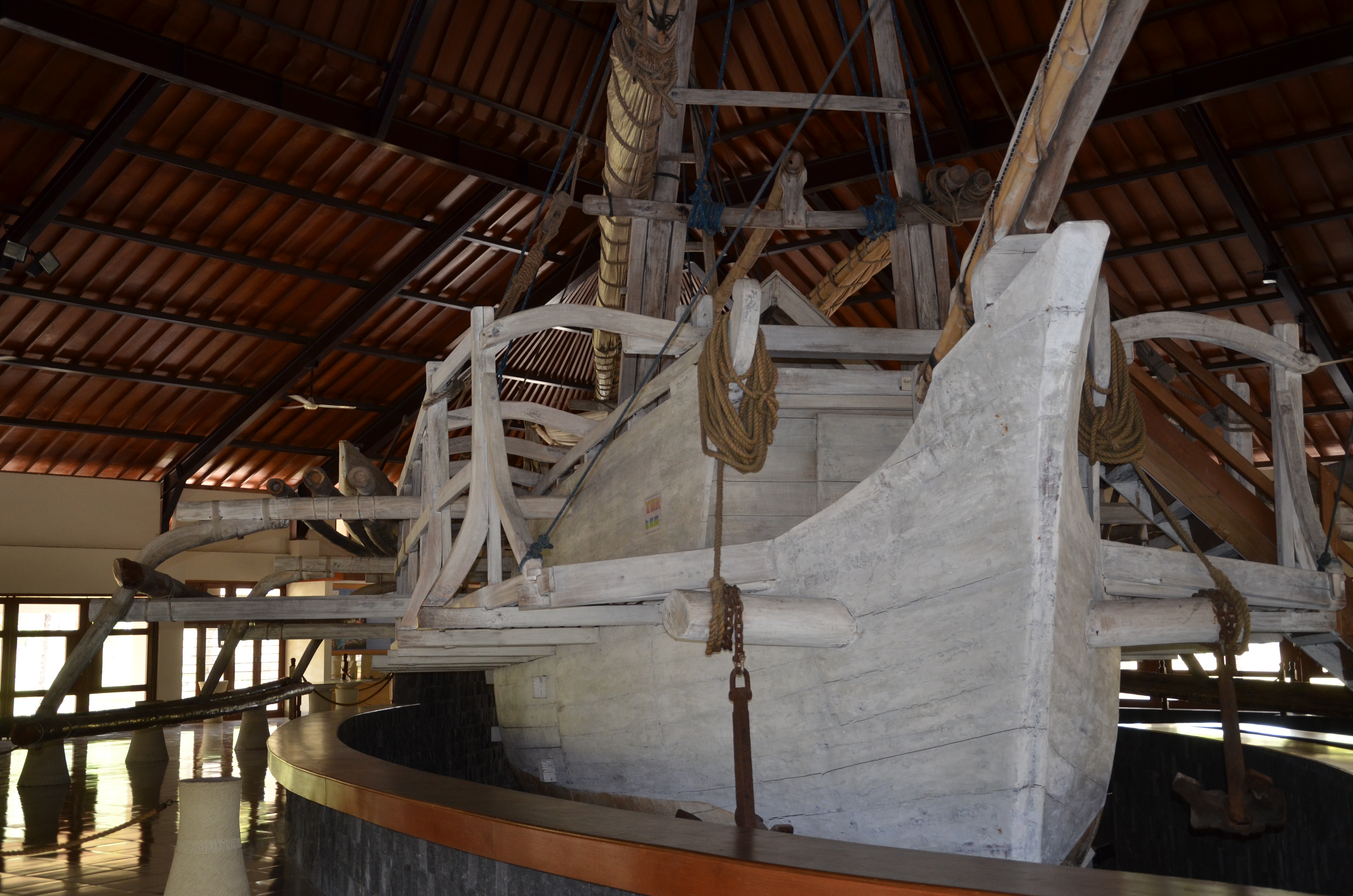
The Samudra Raksa
The Samudra Raksa, now housed at the Borobudur Museum

The Samudra Raksa (Defender of the Seas) set sail from Jakarta on 15 August 2003 and reached Seychelles on 12 September 2003. From here, it sailed south passing the Comoros to Madagascar. The journey did not end at Madagascar and the ship sailed further south rounding the Cape of Good Hope to reach Cape Town on 5 January 2004. On 23 February 2004 Samudra Raksa reached Accra in Ghana and the journey terminated here.
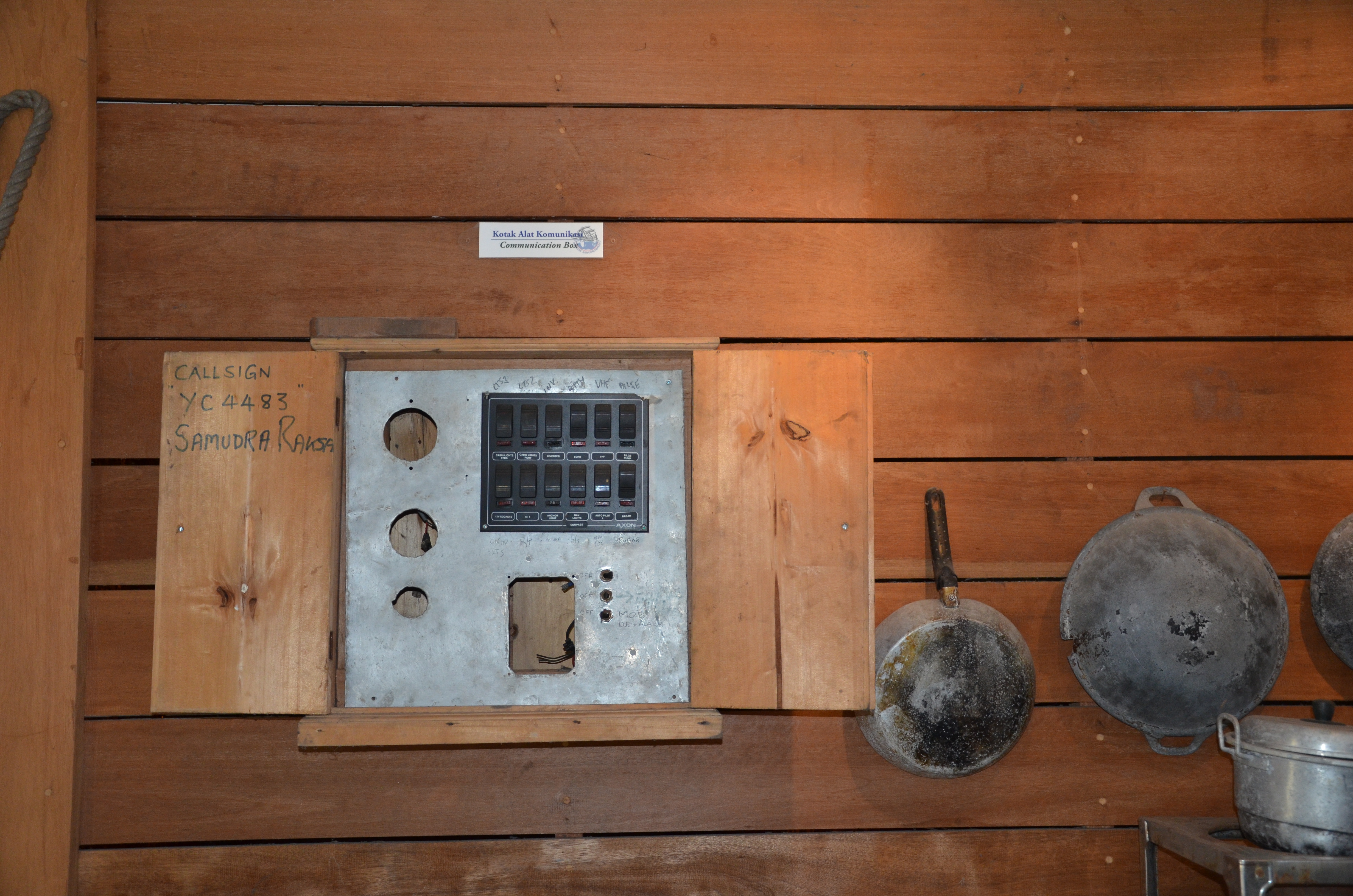
Communications equipment on the Samudra Raksa
Communications equipment on the Samudra Raksa (at Borobudur Museum)

This journey led by Philip Beale not only showed that it was feasible for Borobudur ships to made open-sea voyages across the Indian Ocean from Indonesia to Africa but that there was also the possibility that these ships rounded the Cape of Good Hope to western Africa, making the Indonesian seafarers the first to achieve this feat. There is circumstantial evidence pointing to this by the presence of yams, taro, bananas and Asian rice in West Africa in the first millennium AD.

The Samudra Raksa is now housed at the Borobudur Museum.
Beads for Beauty

by Maganjeet Kaur

This is an on-going exhibition at Muzium Negara until 31 Mar 2014. The exhibition showcases the usage of beads in Malaysia both for personal adornment and for the decoration of belongings such as baby carriers.

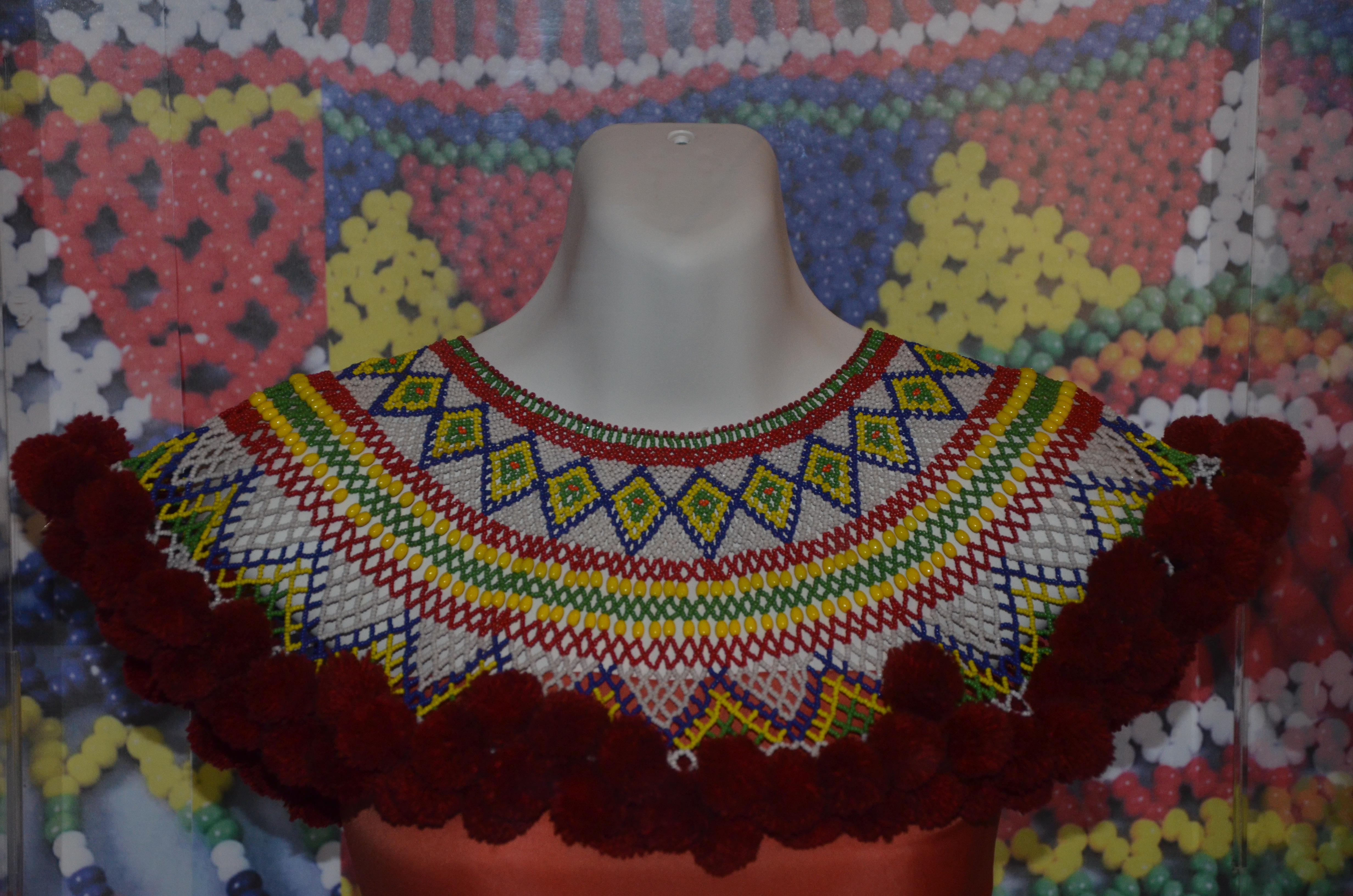
This bead collar, known as Marek Empang, is worn together with the traditional attire of the Iban

Beads have been used as jewellery in all cultures and are among the oldest artefacts found at archaeological digs around the world. Early jewellery used to be made of bones, teeth, shells and pebbles and the earliest jewellery found to-date are made of shells from the marine snail Nassarius. Dated to 85,000-100,000 years ago, beads made of Nassarius have been found in caves in Israel, Morocco and Algeria.

062
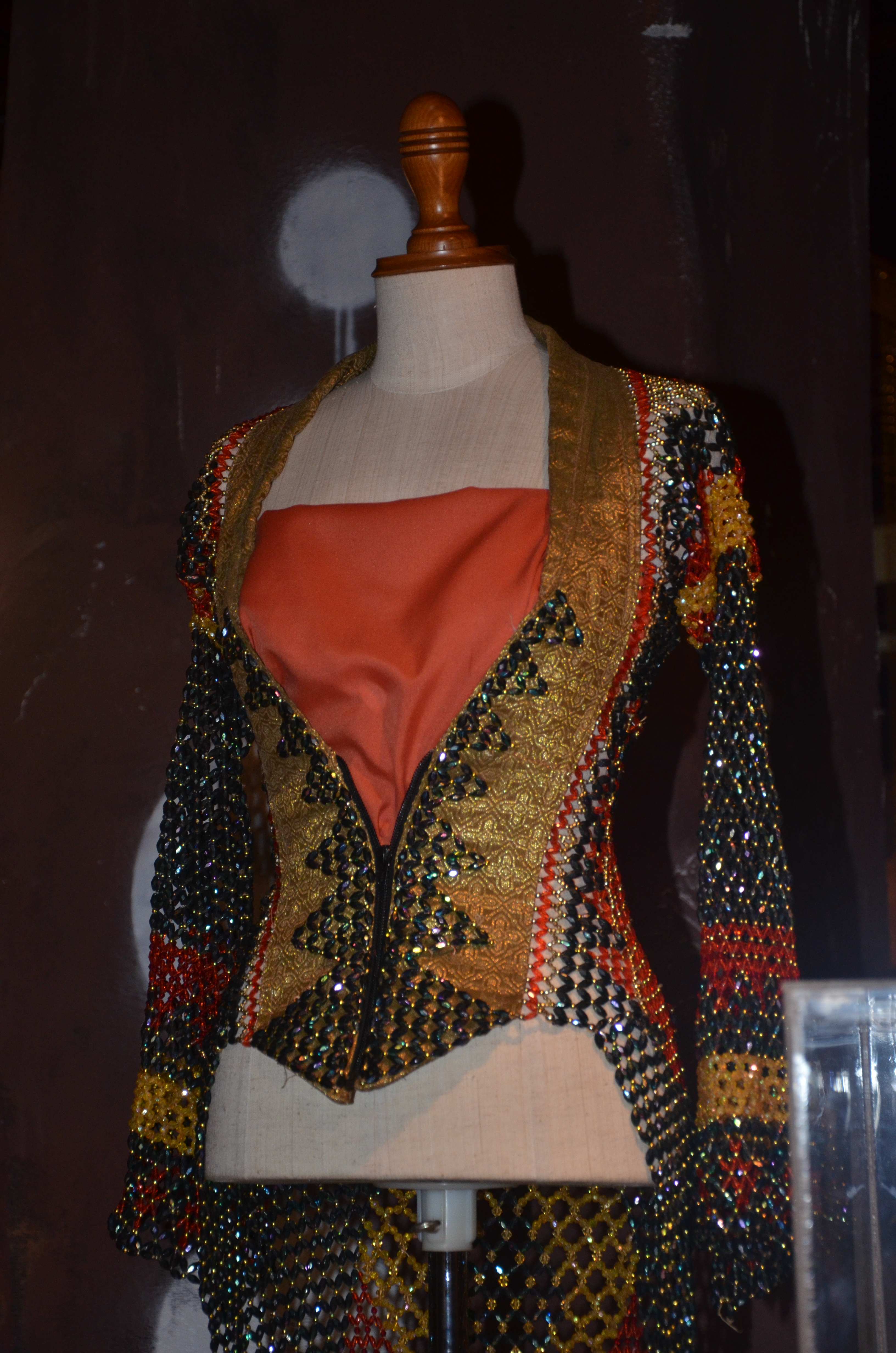
This is an ‘Inang Menora’ dress that originated at Tanah Merah in Kelantan. This dress was worn by the Mak Yong or Menora dancers and was used to still the mind in healing rituals.

The Malay word for beads is manik which is derived from the Sanskrit word manikya meaning precious stones. The earliest beads made of glass and precious stones found in South-east Asia came from India, most likely the South Indian bead making facility at Arikamedu and beads became a major trade commodity in South-east Asia. Regional manufacturing centres later developed at Kwan Luk Pat in Thailand, Mantai in Sri Lanka and Oc-eo in Vietnam. Beads were produced locally from the 7th century and bead manufacturing centres developed at Kuala Selinsing (Perak), Sungai Mas (Kedah) and Santubong (Sarawak). In the 1800s, Venetian and Bohemian glass beads were introduced by European traders. The diversity of patterns and their mesmerizing colours made these favourites for personal adornment.

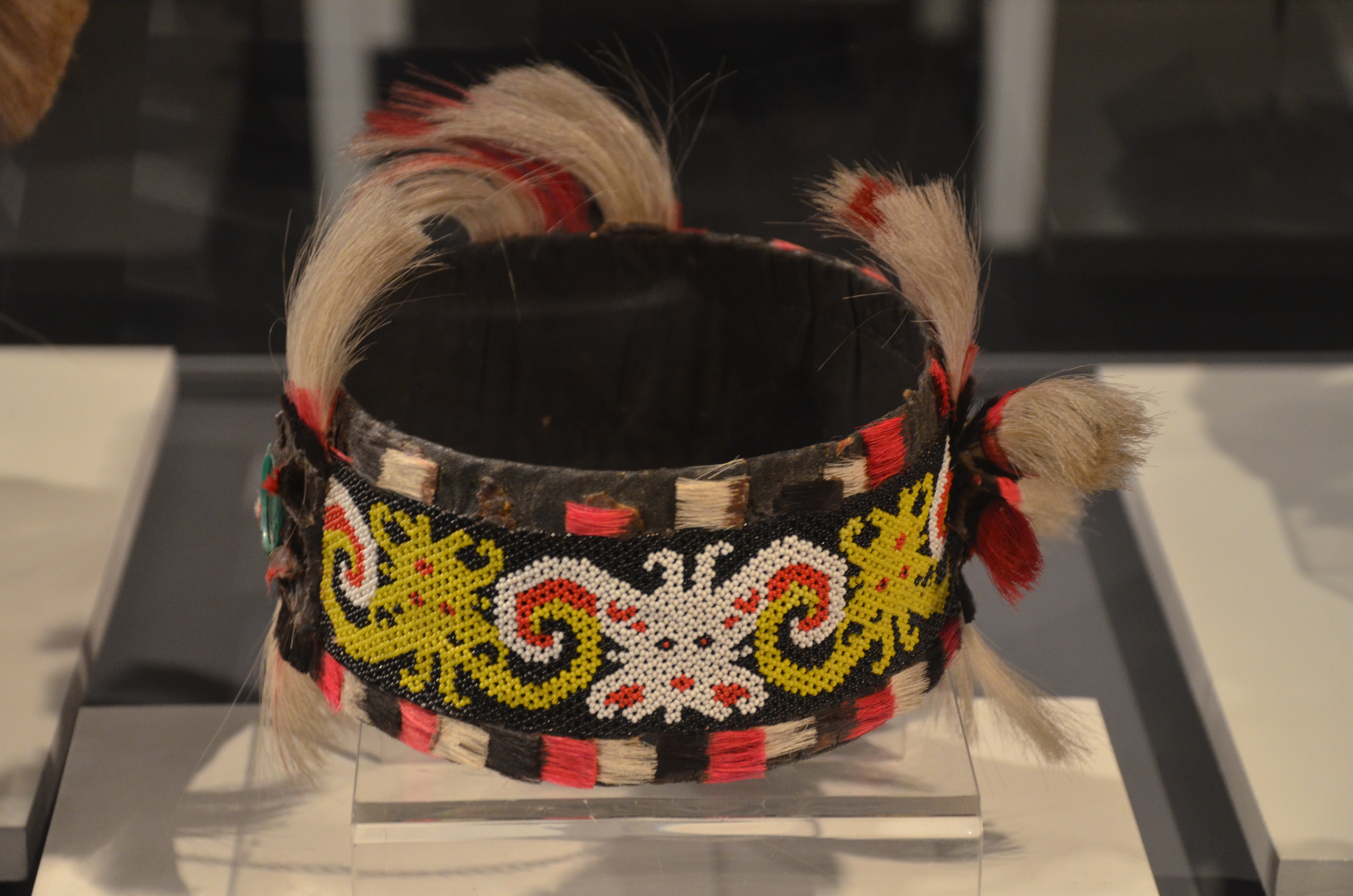
This headdress is worn by the women of Dayak Kenyah. It is decorated by yellow and white beads in the motif of ancestral spirits. It is also decorated with white horse hair at the top.

Starting out as jewellery, beads were later adopted as symbols of wealth depicting the social status of the person wearing them. Beads were also treated as currency, for example for the Lun Bawang community, 50 beads of bao tulong buror (straw beads) equals the value of a buffalo. Some beads were believed to have special powers and were used as an intermediary when performing ceremonial rituals.

Heirloom beads were considered special and not traded. Reattaching heirloom beads required a ritual to summon the spirit of the bead and required special skills to do so.

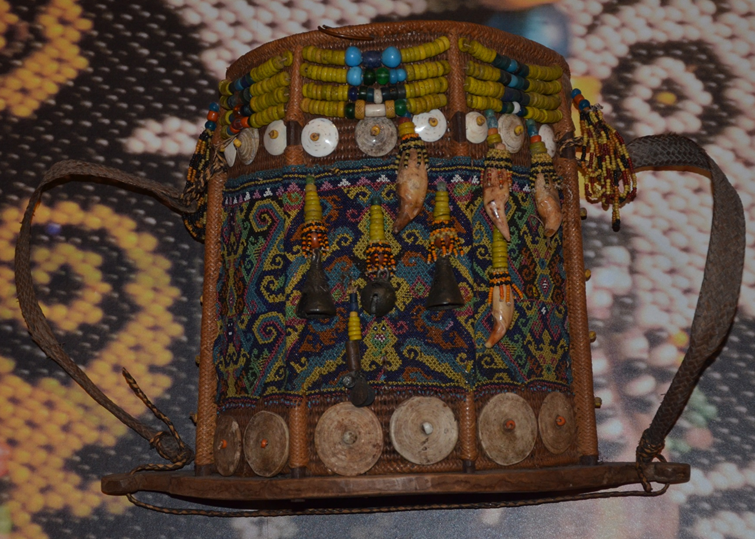
baby carrier

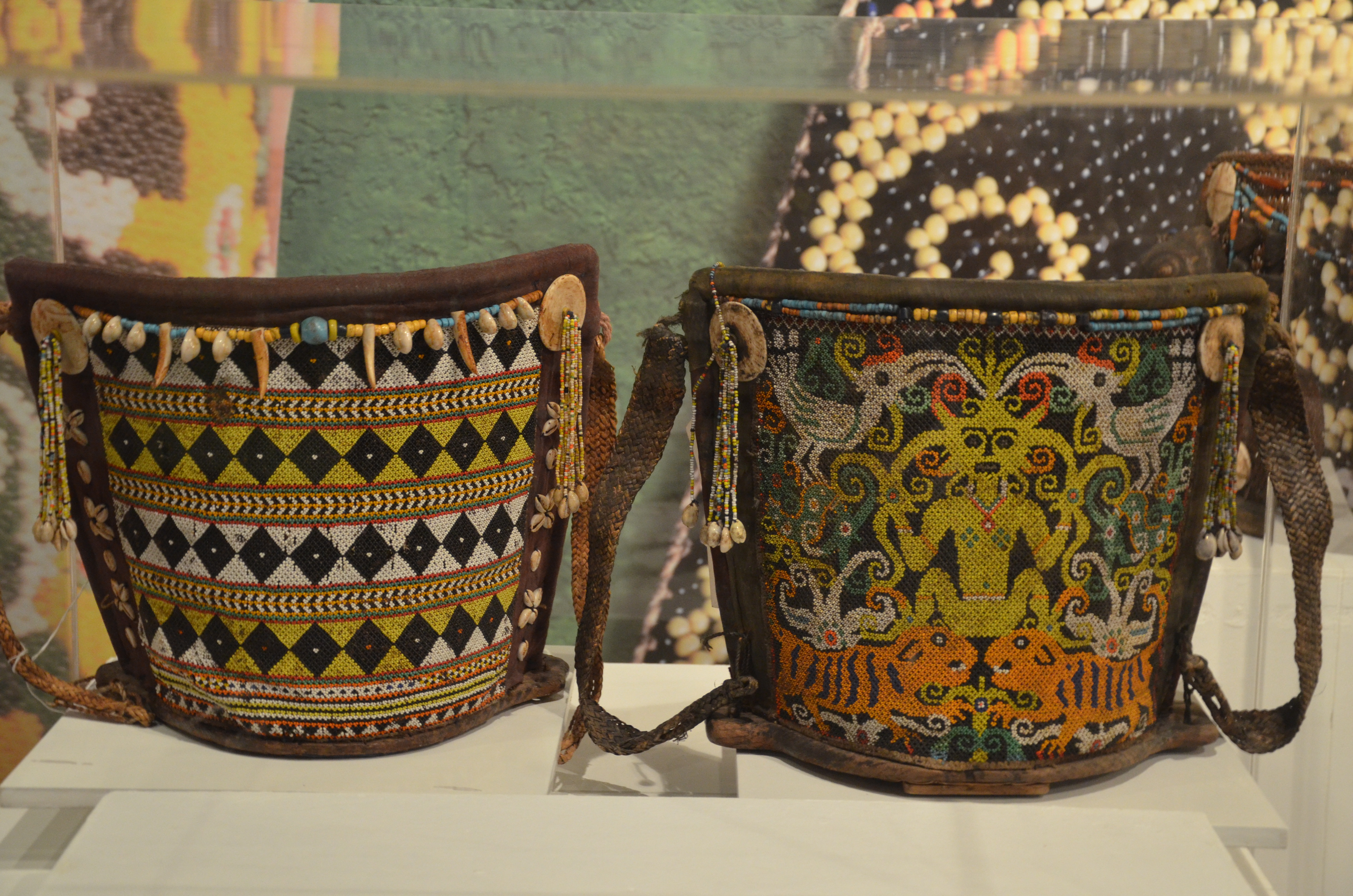
The baby carrier in the picture above is decorated with beads, shells and the canine teeth of a tiger. The shells and teeth produced a clinking sound which is believed to ward off evil spirits. The number of canine teeth hung gave the indication of the sex of the baby; even number for a girl and odd for a boy. This baby carrier would have been used to carry a baby girl as there are 4 canine teeth hung.

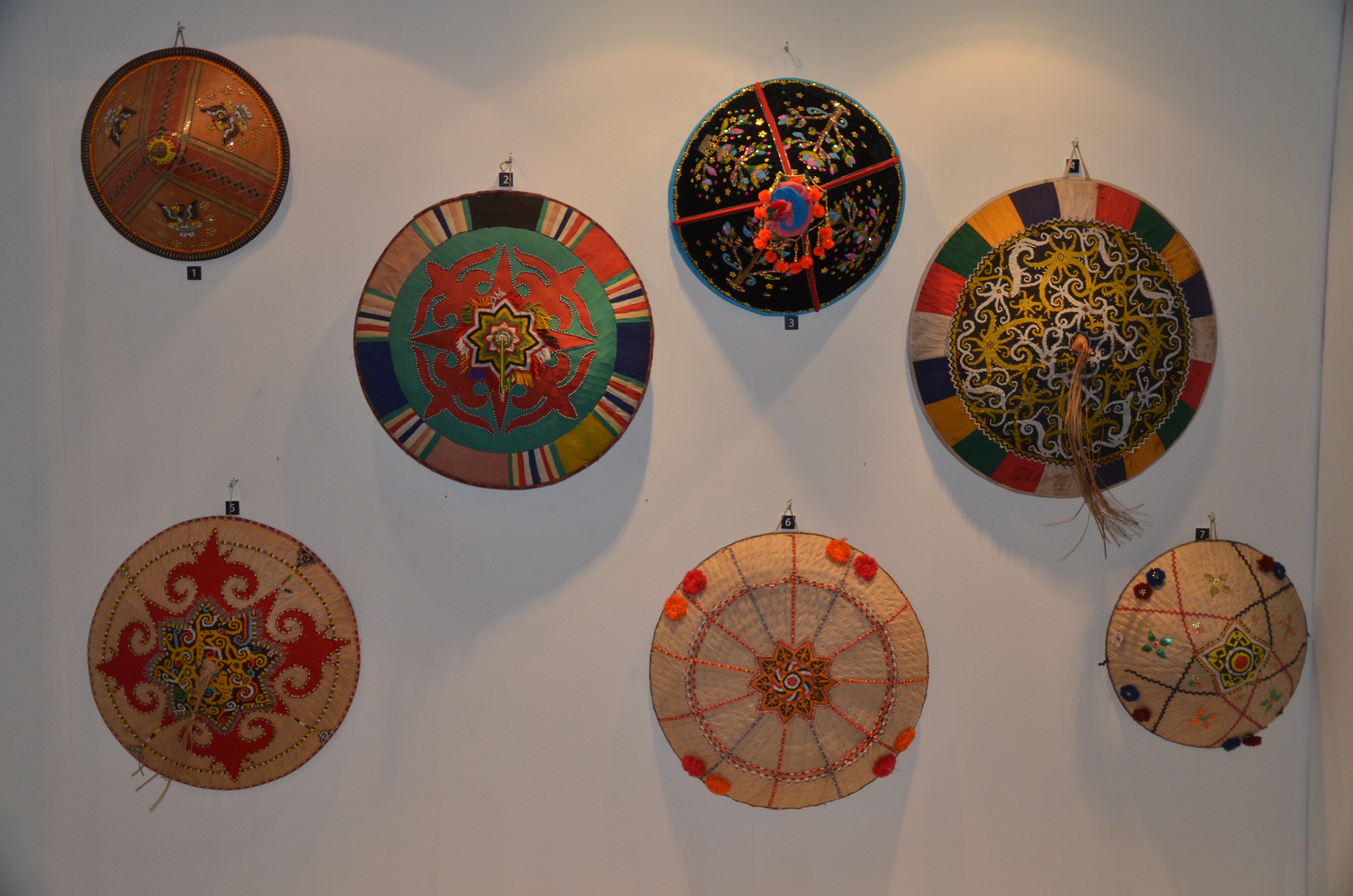
Woven sun hats from Sarawak known as 'Terendak'
Woven sun hats from Sarawak known as ‘Terendak’
132

Baby carriers in Sarawak are made of bark, rattan or wood and decorated with beads.

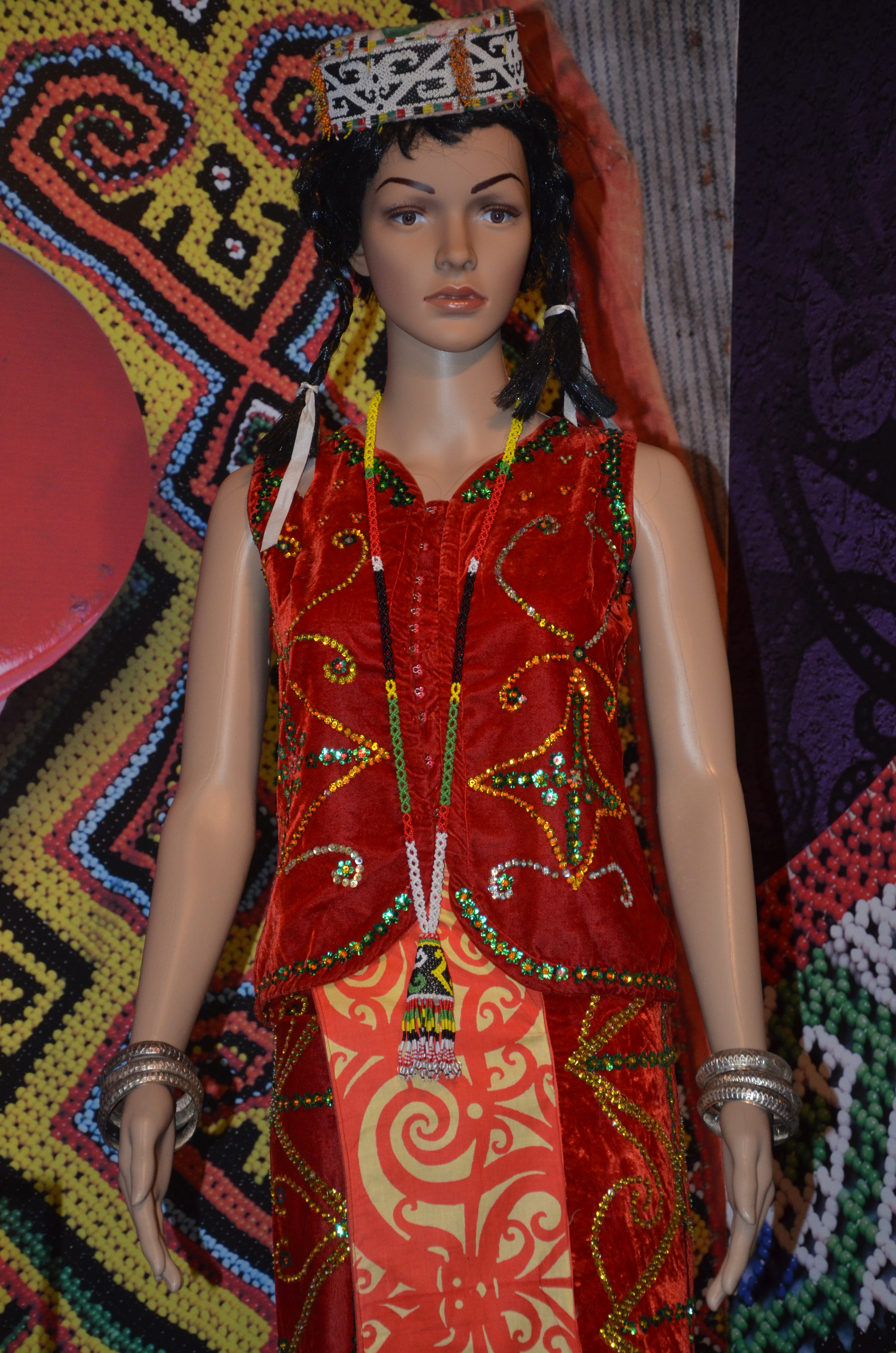
Traditional costume of the Orang Ulu women
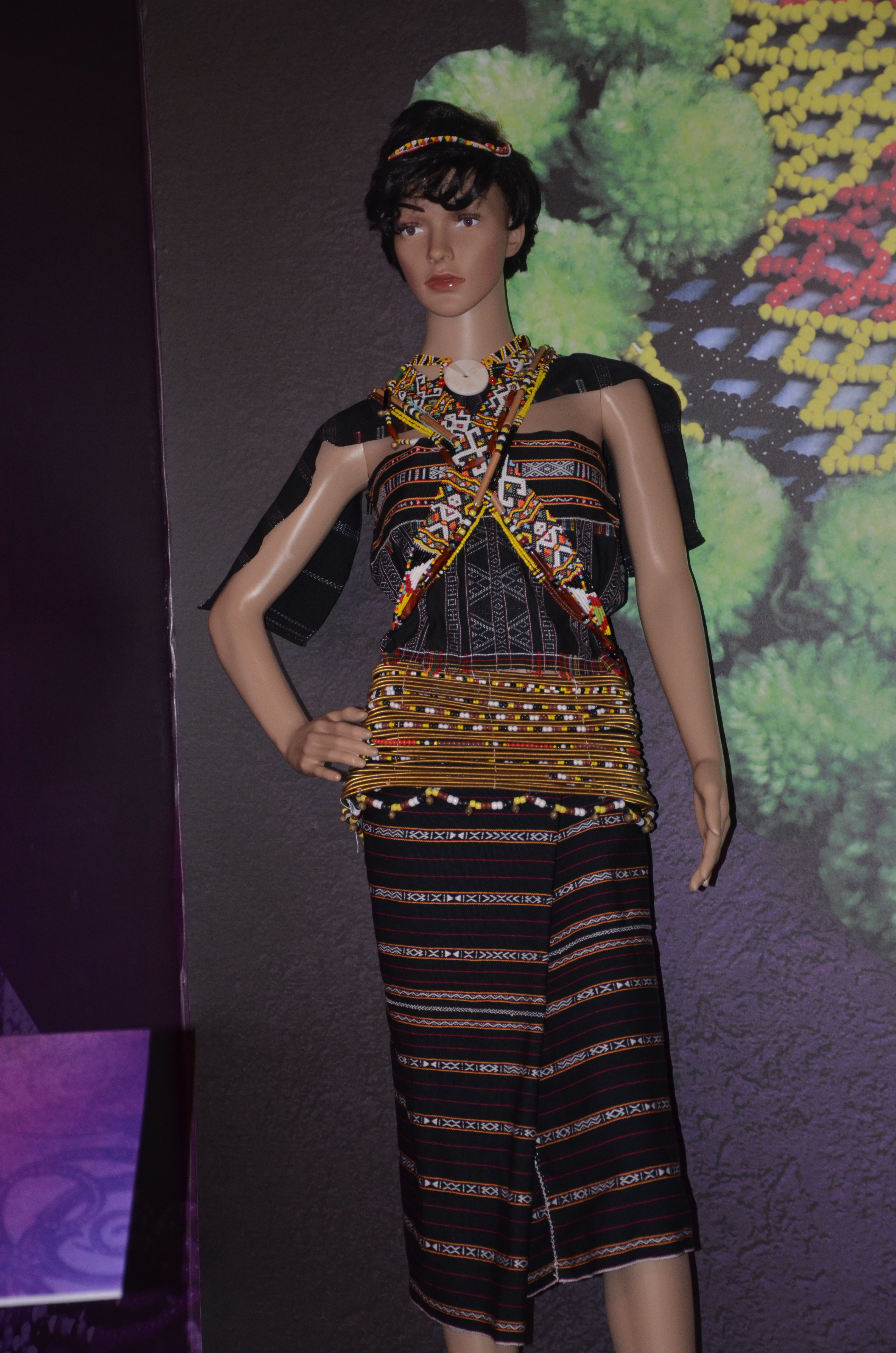
Traditional costume of the Rungus women