Symbolism Behind the Screen

Muzium Negara has, in its collection, around 500 wayang kulit (shadow play) puppets and 200 of these are currently on display at an exhibition titled ‘Symbolism Behind the Screen’. There are also puppets on loan from Fusion Wayang Kulit that depict characters from comics and science fiction. Do take the time to visit the exhibition which runs until 28 February 2017 at Muzium Negara.

In a wayang kulit performance, the puppeteer (known as Tok Dalang) manipulates the puppets in a raised hut which has a white screen stretched across the front hiding him and the puppets from view of the audience.  A lamp behind the puppets casts shadows on the screen and this is the basis of the performance.

The wayang kulit is considered a microcosm of the universe while the Tok Dalang, manipulating the puppets, is taken as symbolising God. Dalang means ‘priest’ in Sanskrit; the Tok Dalang was also trained in magic rituals and many dalang functioned as bomoh or practitioners of Malay magic. In fact, in days gone by, the Wayang Kulit was not just a performance art but was also used in spirit exorcism ceremonies. In the wayang kulit universe, the sun is represented by the lamp while banana trunks, used as a resting place for the puppets, represent the earth. Humans perceive the universe through the screen.
20161207_114230
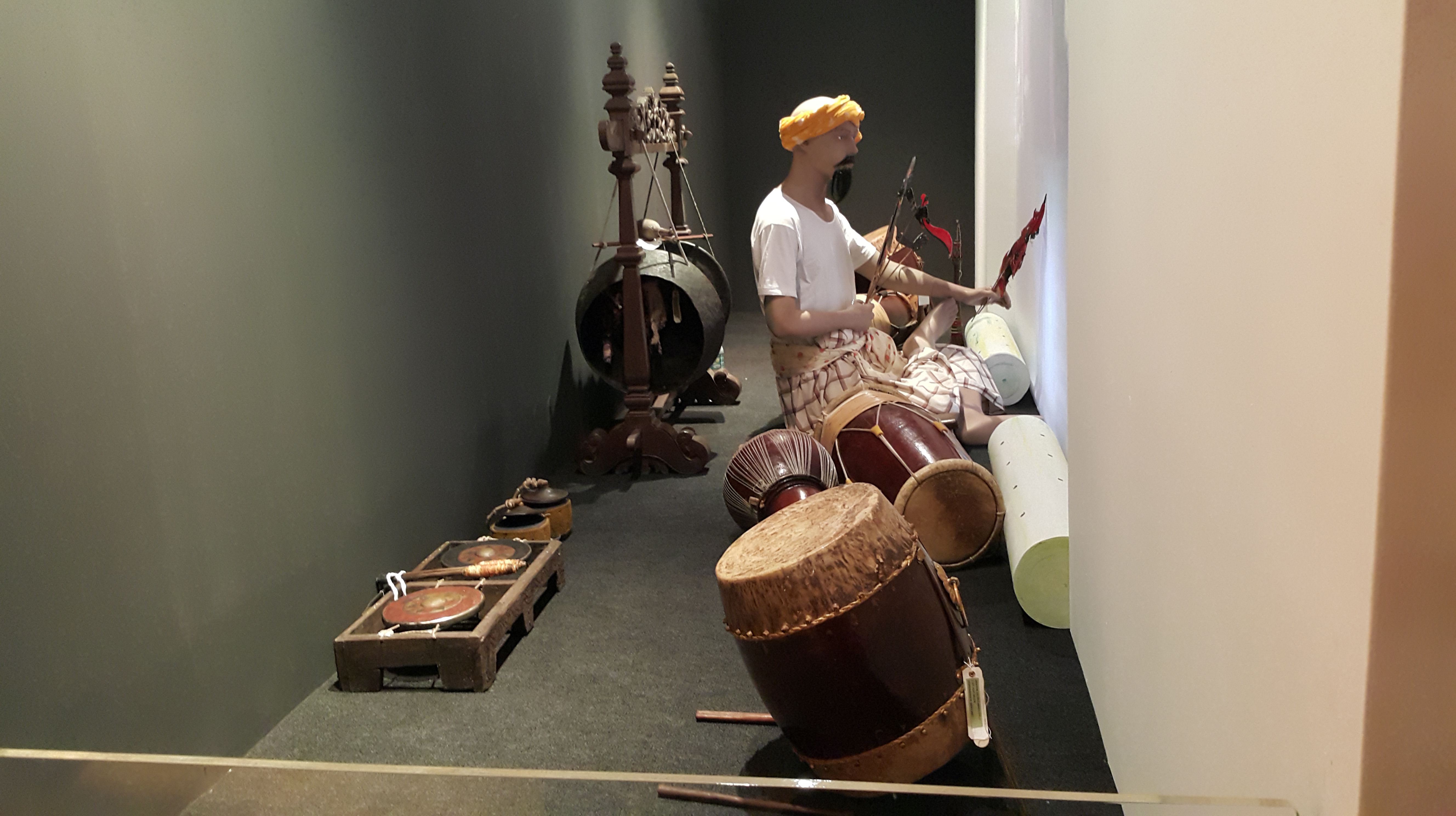
Behind the screen. The diorama shows the Tok Dalang in the process of placing the puppets on the banana trunks. The ‘good’ puppets will be placed on the trunk on this right while the ‘evil’ puppets will be placed on his left.
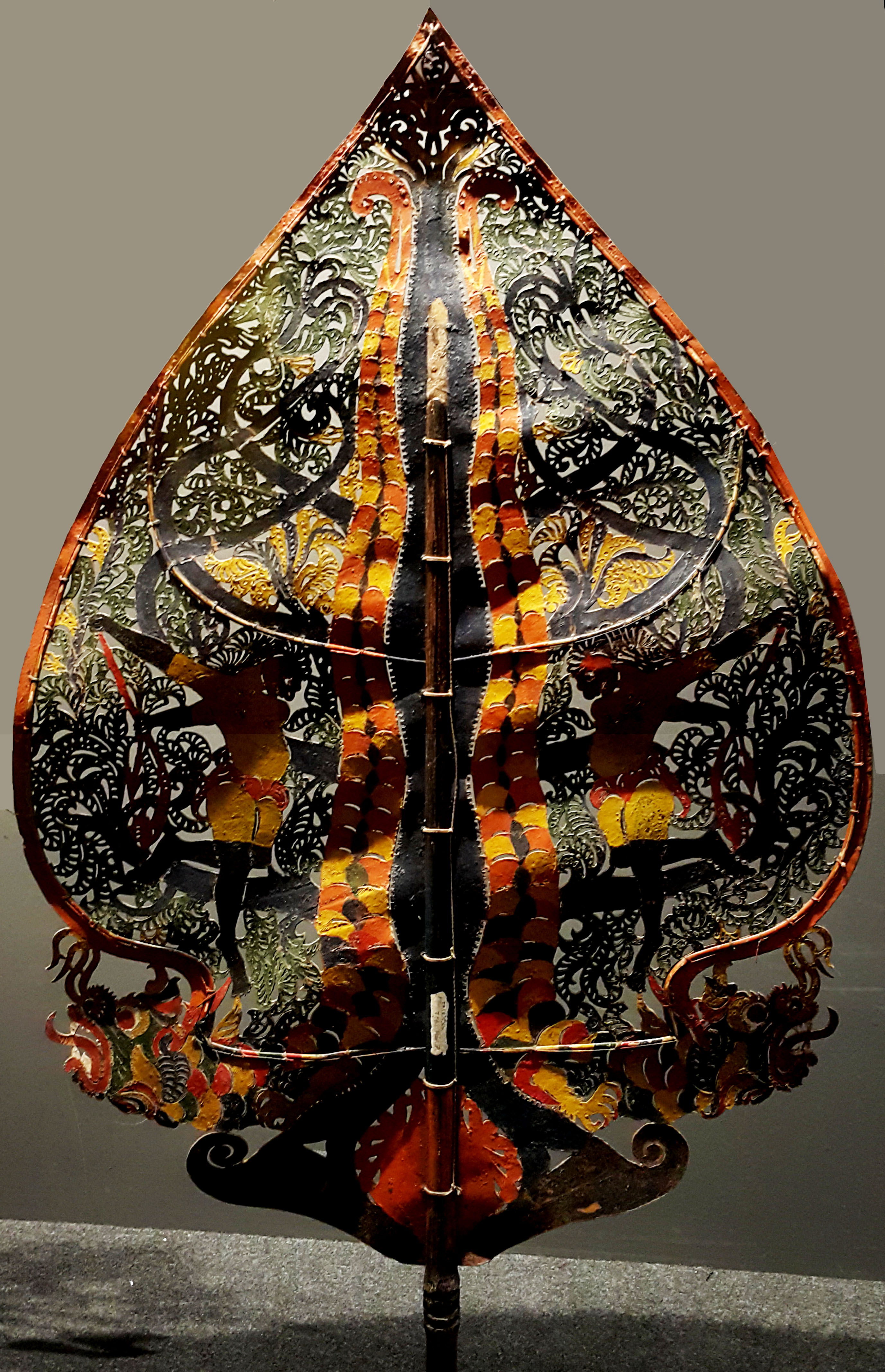
pohon-beringin
Example of a ‘pohon beringin’

Perhaps the most important prop is the pohon beringin (tree of life) which represents all life in the universe. This tree, seen both at the start and end of the story, symbolises the start of the universe and the end of the world. The tree is divided into three parts: the top represents the sky and includes motifs of birds, the middle represents earth and includes animals, while the bottom represents the supernatural world.


A touch-screen kiosk at the exhibition provides substantial information on the symbolism behind the rituals conducted before, during, and after a performance. For example, a feast is held during the ‘theatre opening ceremony’ in order to ensure the performance goes well. During this time, the musical instruments are blessed so that they will succeed in attracting and holding the attention of spectators. An offering  consisting of 25 items placed on a large tray is also made.
20161129_141249
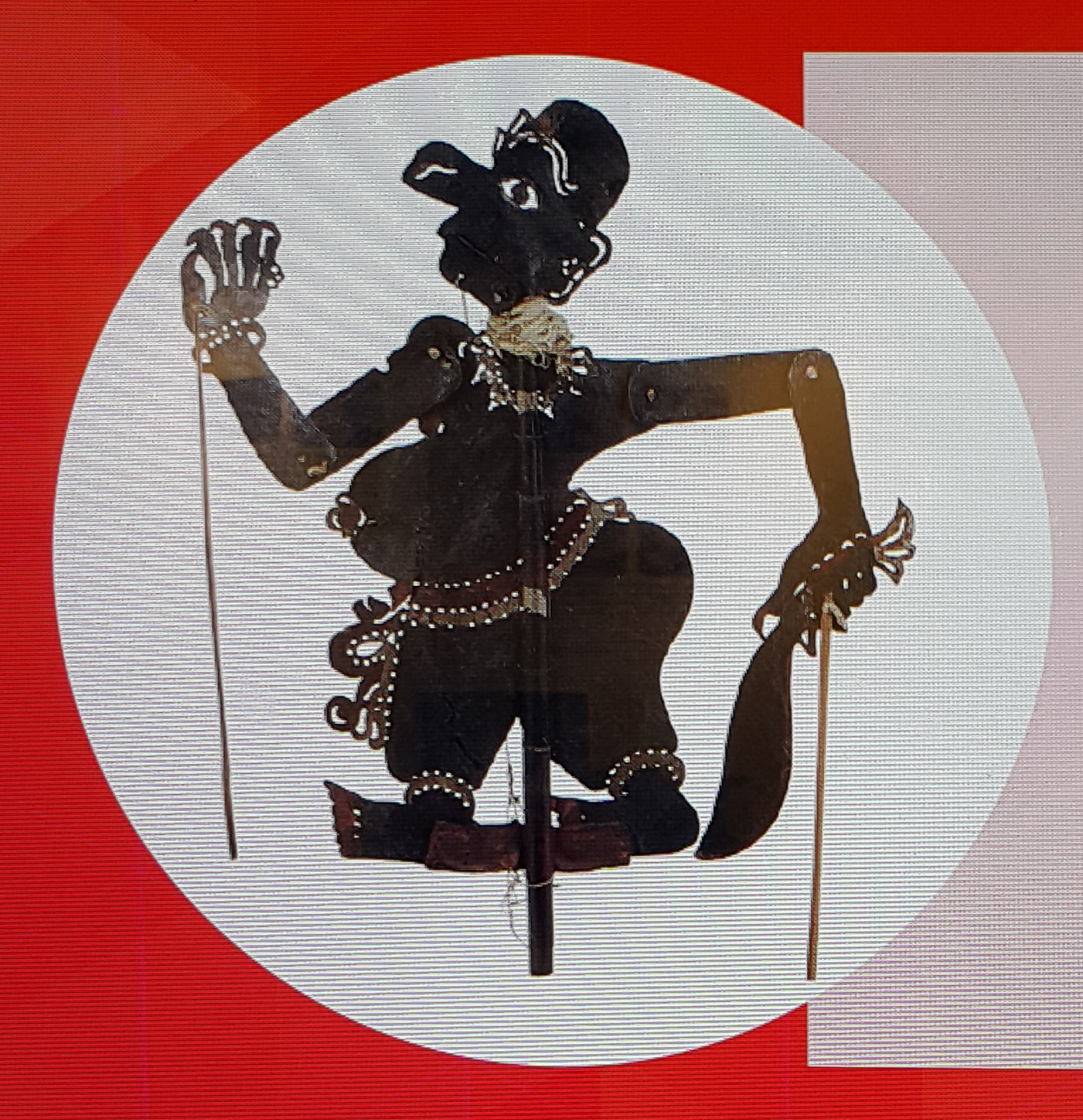
Pak Dogol, a Kelantan Wayang Kulit character that bears similarities with the Javanese Semar. This character is portrayed with a shaved head and a prominent high-bridged nose. His only clothing is a pair of long trousers which does not cover his distended stomach, thus revealing a protruding navel. He carries a parang golok.

Apart from the conventional wayang kulit characters, i.e. Sita Dewi, Sri Rama, Hanuman, and Ravana, the exhibition also displays a host of other puppets including demonic and animal characters as well as the Punakawan (e.g. Semar) that provide comic relief. Wayang Kulit’s foray into science fiction started with the the production of the ‘Peperangan Bintang’ performance inspired by the Star Wars movies. Its success spurred a new line of puppets including Superman, Batman, Wonder Woman, and Flash. These are also on display.
20161207_120443
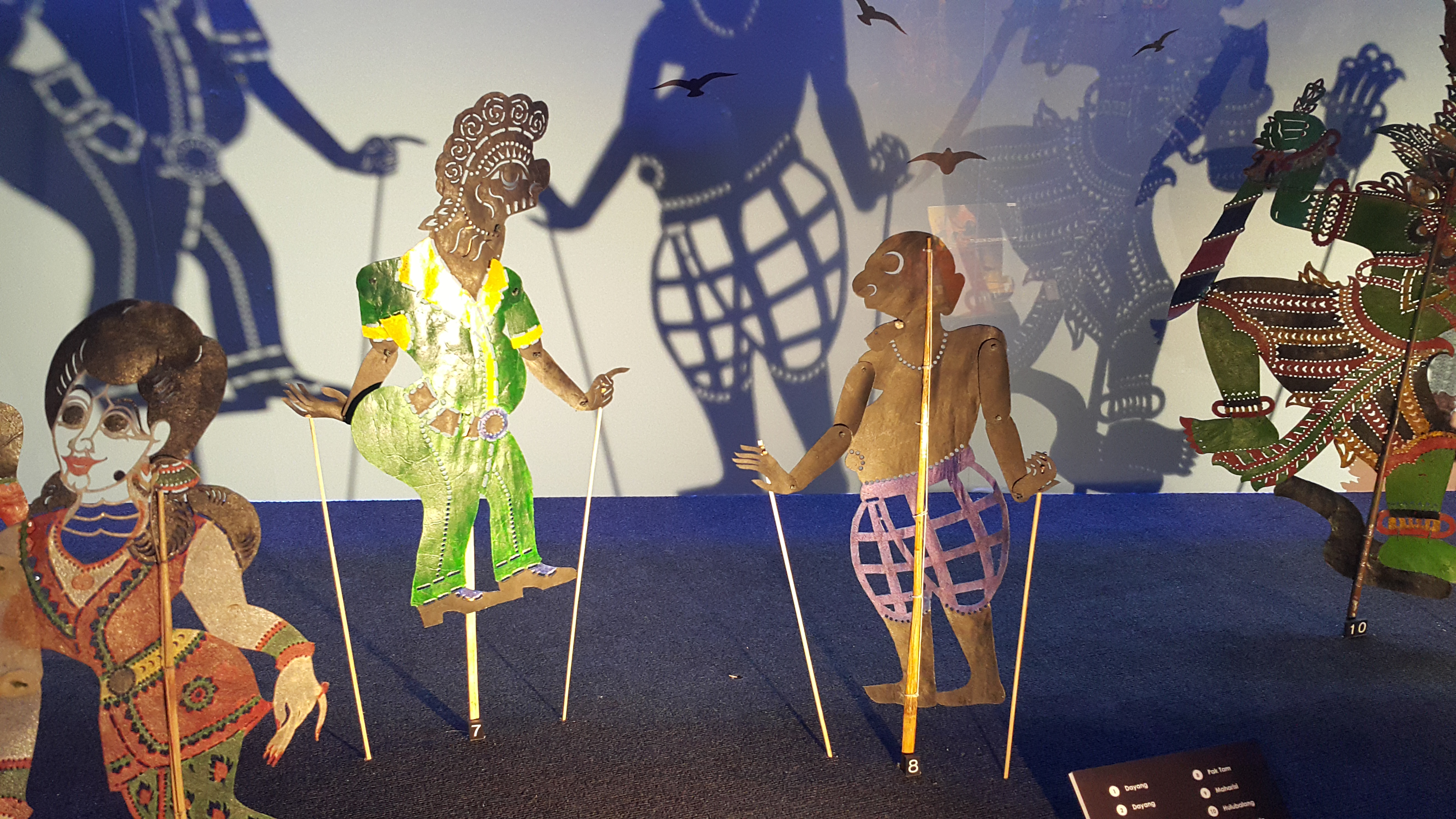
A selection of puppets from the Wayang Kulit Gedek, one of the five wayang kulit types showcased at the exhibition. From left to right: Puteri Suni, Atung, Pak Tam, and a Hulubalang (palace guard)


Istana Satu

by Maganjeet Kaur

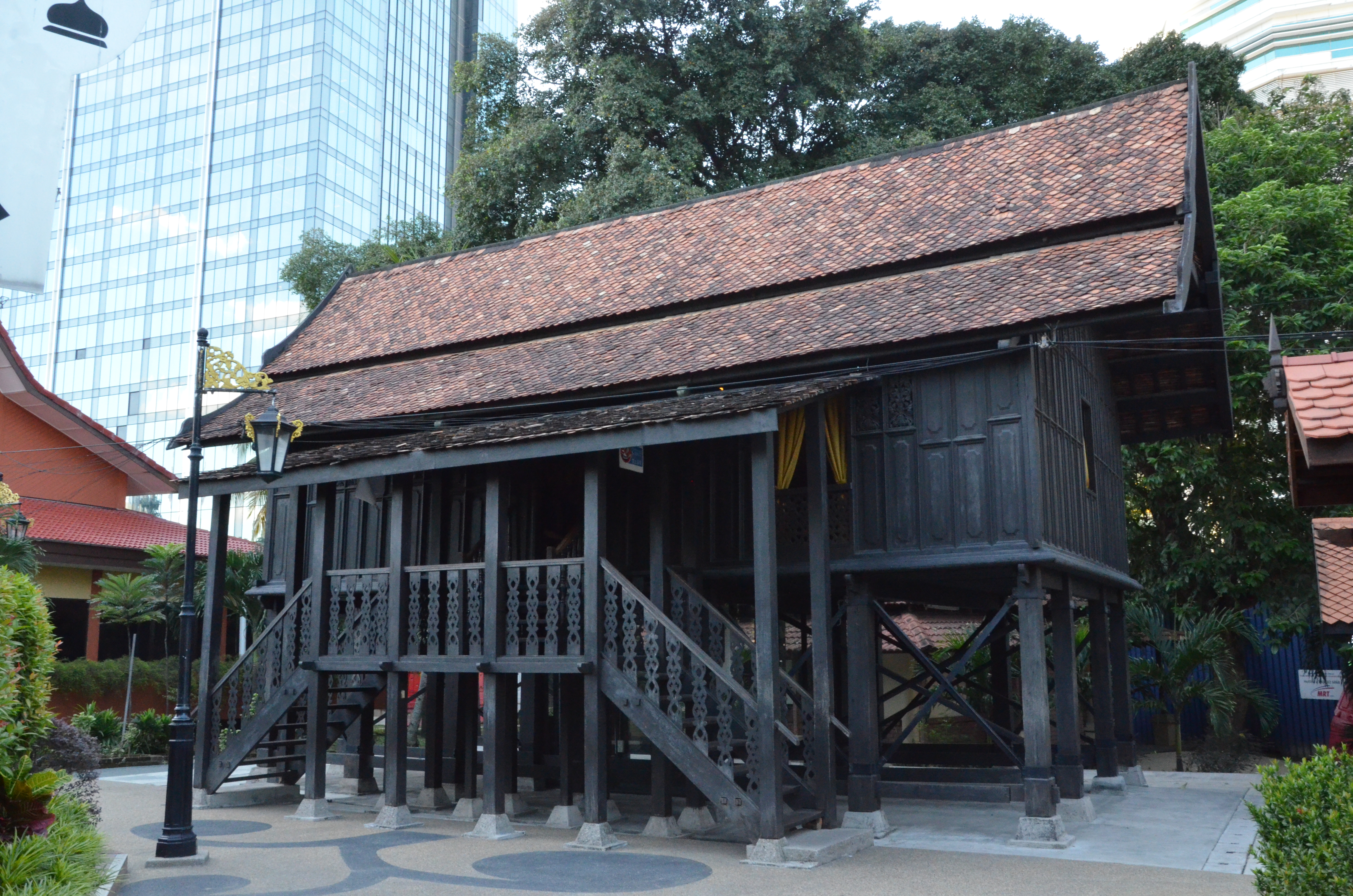
The beautiful, traditional Malay house adorning the grounds of Muzium Negara is Istana Satu, a palace belonging to the Terengganu royalty, which was acquired in 1972 by the Federation of Museums. Its reconstruction on the grounds of Muzium Negara was completed in April 1974.

Built high on pillars, it conforms to the long roofed, 12-pillared architectural style of Terengganu. Traditional houses in Terengganu are generally 6-pillared or 12-pillared, a reference to the number of pillars holding the roof structure. These tall pillars, which can raise the floor of the house as high as eight feet, not only protected the house from wild animals and floods but also warded off ground dampness prevalent in our humid climate.

Seven steps lead to the verandah of the palace. This number is intentionally odd as, according to Malay superstitious practice, a person should leave the house with his/her right foot first. With an odd number of steps, the journey away from the house will again start with the right foot.

dsc_0492
Malay craftsmanship is evident through the beautiful wood-carvings, both inside and outside the palace. The tiered roof is unique to the northeast states of Terengganu and Kelantan.

A traditional 12-pillared Terengganu house has three sections – the serambi (verandah where guests are also received and entertained), Rumah Ibu (Mother’s house, comprising the living and sleeping areas), and Dapor (kitchen, which also includes the dining area). Rumah Ibu, the main section of the house, is named as such as the mother occupies an important position in Malay culture.

Istana Satu originally comprised two units: the Federation of Museums only acquired one unit while the other unit was purchased by a private individual. In the original palace, the Rumah Ibu would have been a  structure separate from the Dapor but linked with it.

20170103_105900
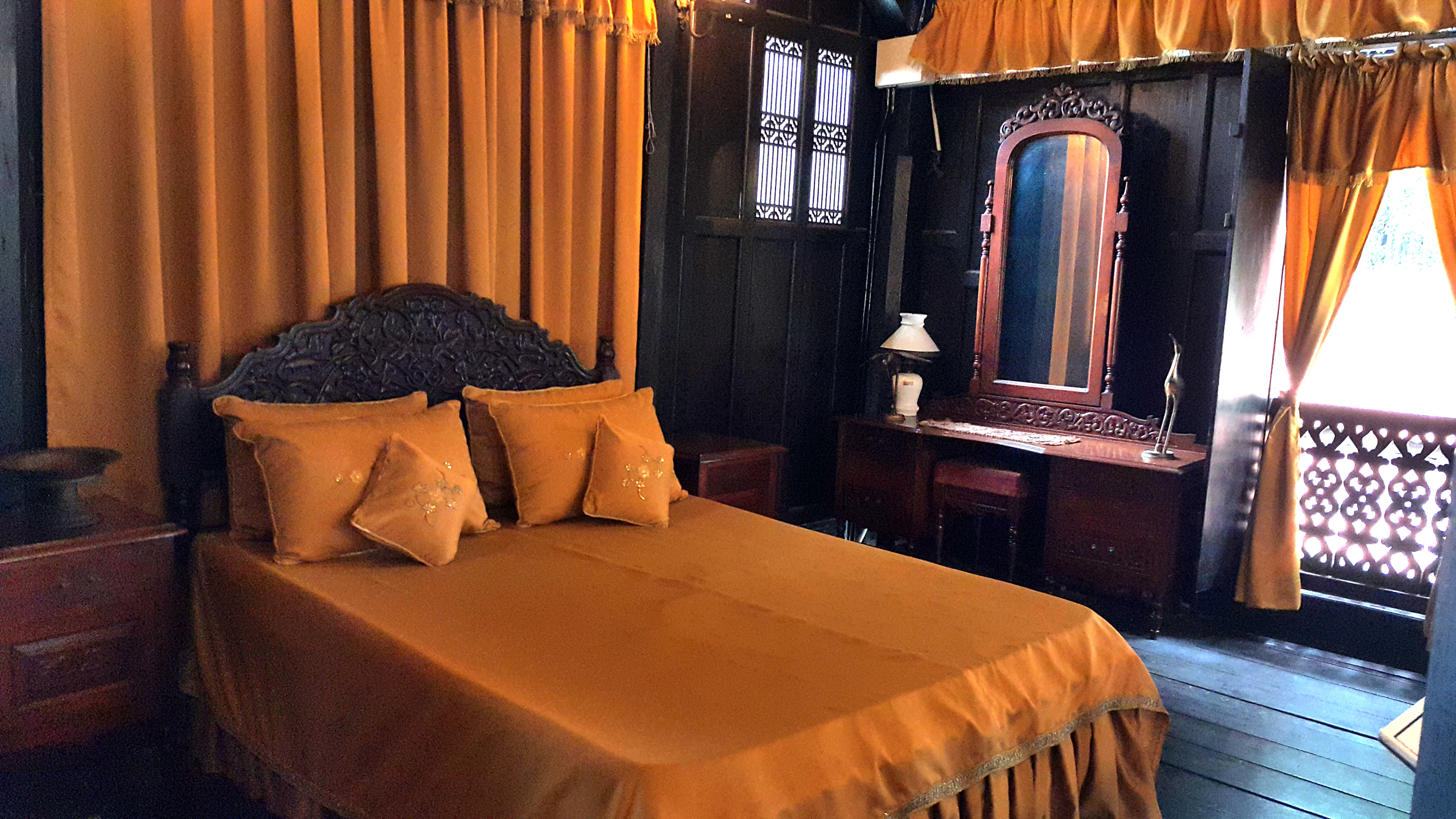
The royal bedroom. Tekat needlework can be seen on the pillows. This technique uses gold or silver thread to create embroidery on satin silk and velvet. Tekat became part of the royal Malay tradition.

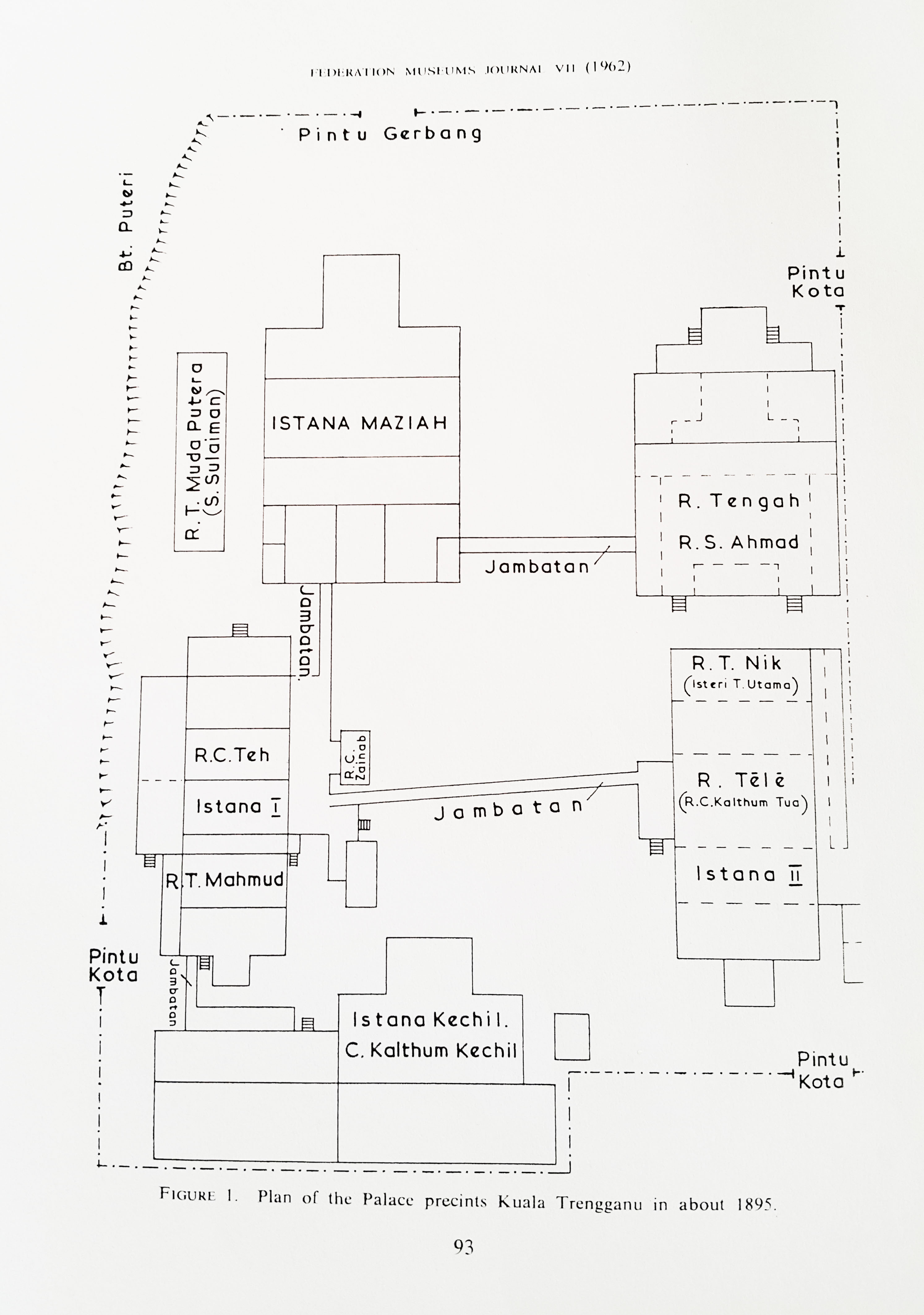
The Sultan’s palace in Kuala Terengganu has traditionally been located at the foot of Bukit Puteri. Sultan Baginda Omar (r. 1831, 1839-1876), wresting control of Terengganu in 1839, initially stayed in a fort on Bukit Puteri but later moved down the hill to this traditional site. He built a timber palace, Istana Hijau, on this site but it was gutted in 1882 by a fire that also destroyed 1600 other houses. This incident occurred during the reign of Sultan Zainal Abidin III (r. 1881-1918) who then built Istana Satu (First Palace) enclosed in a large compound known as Kota (fort). Other buildings were added within Kota and in 1895, the imposing Istana Maziah became the official residence of the Sultan.

Do saunter into Istana Satu the next time you visit the museum, leaving your shoes at the base of the steps.

20170107_085410
Kota, circa 1895. Taken from the Federation Museums Journal, Vol VII, 1962, pg 93. Istana Satu was connected via a bridge to Rumah Tele making it convenient for the Sultan to visit the occupants. Rumah Tele was built in 1888, in time for the King of Thailand to occupy it during his visit to Terengganu in February 1889. This building has been reconstructed on the grounds of the Terengganu State Museum.