Konfrontasi

by Goh Yoke Tong

The Indonesian-Malaysian or Borneo confrontation was an undeclared war, from 1962 to 1966, that stemmed from Indonesia’s opposition to the formation of Malaysia. The term ‘Confrontation’ was coined by Indonesia’s Foreign Minister, Dr Subandrio, in January 1963, and has come to refer to Indonesia’s efforts to destabilise the new federation, with a view to breaking it up. The conflict resulted from Indonesia’s President Sukarno’s belief that Malaysia, which became official on 16 September 1963, represented a British attempt to maintain colonial rule behind the cloak of independence granted to its former colonial possessions in the South East Asian region.
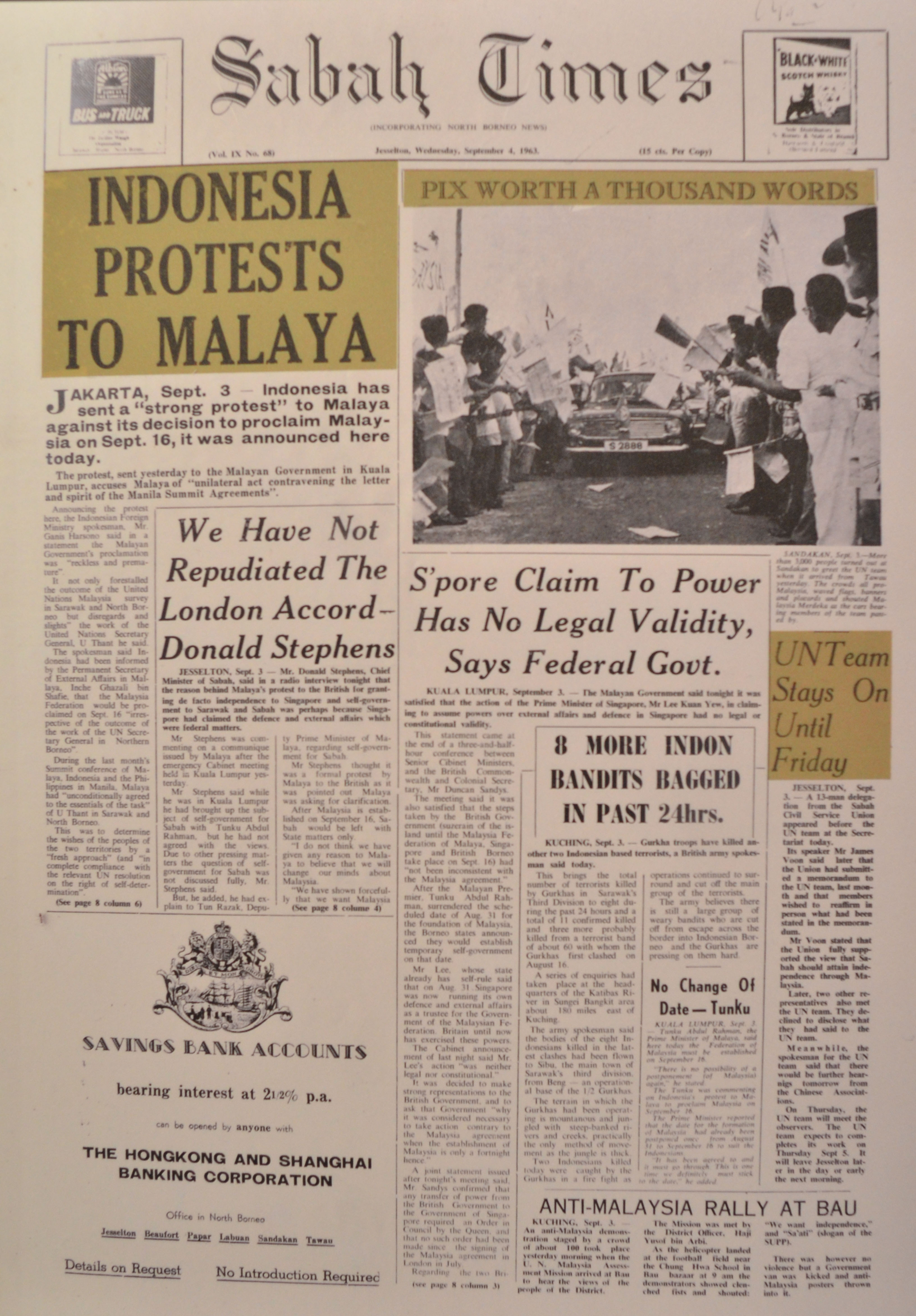
Headlines, Sabah Times, Wednesday, September 4, 1963. Photographed at ‘One Malaysia One Story’ exhibition at Muzium Negara in August 2016.

In the late 1950s, the British Government had begun to re-evaluate its force commitment in the Far East. As part of its withdrawal from its South East Asian colonies, Britain moved to combine its colonies in Borneo with the Federation of Malaya (which had become independent from Britain in 1957) and Singapore (which had become self-governing in 1959). In May 1961, the British and Malayan governments proposed a larger federation called Malaysia, encompassing the states of Malaya, Sabah, Sarawak, Brunei and Singapore.

By the close of 1962, Indonesia had achieved a considerable diplomatic victory, which possibly emboldened its self-perception as a notable regional power and thus its ability to extend its dominance over its weaker neighbours in the region. It was in the context of Indonesia’s success in the Netherlands’ West New Guinea dispute that Indonesia cast its attention to the British proposal for the formation Malaysia. Opposition to Malaysia also favoured Sukarno politically by distracting the minds of the Indonesian public from the appalling realities at home as evidenced by gross mismanagement, nationalistic policies that alienated foreign investors and rife corruption. Everyone in Indonesia felt the hardships of high inflation and food shortage. Sukarno also had dreamed of an Indonesia that was like the glorious ancient Srivijaya and Majapahit empires.
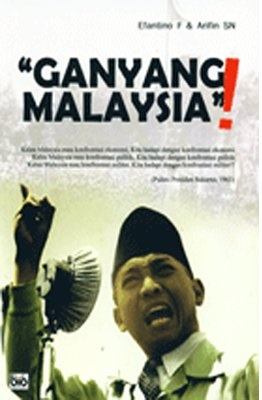
The ‘Ganyang Malaysia’ or ‘Crush Malaysia’ campaign was initiated by Sukarno on 27 July 1963.

Sukarno argued that Malaysia was a British puppet state, a neo-colonial experiment contrary to that of revolutionary Indonesia, and that the creation of Malaysia would perpetuate British control rather than ending its colonial domination over the region. He argued that this had serious implications for Indonesia’s national security as a sovereign nation especially in light of the fact that Britain would continue to have military bases in Malaya, Sabah, Sarawak, Brunei and Singapore, which are a stone’s throw away from Indonesia’s backyard.

Similarly, Philippines made a claim to North Borneo or Sabah, arguing that they had been historically linked through the Sulu Sultanate. Manila maintained that the area was once owned by the Sultan of Sulu, and because Sulu is now part of modern Philippines, that area should therefore belong to Philippines through the principle of extension. While Philippines, under President Macapagal, did not engage in armed hostilities with Malaysia unlike Indonesia, diplomatic relation was severed after the former deferred in recognising the latter as the successor nation of Malaya.

As for Brunei, Sultan Omar was undecided on whether he would support joining Malaysia because of the implied reduction of his influence as the head of state and significant amounts of Brunei’s oil revenue being diverted to the federal government in Kuala Lumpur to be shared among the proposed states of Malaysia. Brunei was to be the tenth state of Malaysia, whose sultan would be eligible to be the king of the country on a rotational basis for a five-year tenure and the sultans of Malaya had made it clear that he would have to wait his turn. This did not go down well with him as he could not foresee the prestige of being a king in his lifetime due to his place in line. Furthermore, AM Azahari, a Brunei politician and veteran of Indonesia’s independence movement who was against colonial rule, also opposed joining Malaysia on similar grounds as Indonesia.
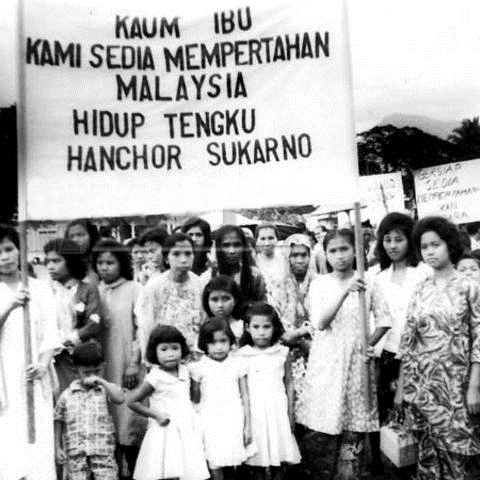
Malay women pledging to defend Malaysia in 1965. Photo taken from https://en.wikipedia.org/wiki/Indonesia%E2%80%93Malaysia_confrontation

In December 1962, Brunei faced a revolt by the North Kalimantan National Army (NKNA), which was backed by Indonesia and was pushing for Brunei’s independence instead of it joining Malaysia. In response to the revolt, the British and other Commonwealth troops were sent from Singapore to Brunei, where they crushed the revolt within days by securing Brunei’s capital and ensured the Sultan’s safety. The insurrection was an abject failure because the poorly trained and ill-equipped guerillas were unable to seize key objectives such as capturing the sultan of Brunei, seize the Brunei oil fields or take any British hostages.

Following NKNA’s military setback in Brunei, small parties of armed insurgents began infiltrating Malaysian territory along the Indonesian border in Borneo on sabotage and propaganda missions. The first recorded incursion of Indonesian troops was in April 1963 when a police station in Tebedu, Sarawak was attacked. After the formation of Malaysia in September 1963, Indonesia declared the ‘Crush Malaysia’ campaign leading to the escalation of cross border incursions into Sabah and Sarawak, which had then ceased to be British territories. Indonesia also began raids in the Malaysian Peninsula and Singapore in 1964. To repulse the infiltrators and prevent their incursions, the British and other Commonwealth troops remained at the request of Malaysia. Together with the Malaysian troops, they engaged in successful offensives against the Indonesian troops.

The intensity of the conflict began to subside following the events of the ‘30 September Movement’ and General Suharto’s rise to power in Indonesia. On the night of 30 September 1965, an attempted coup by the Indonesian Communist Party took place in Jakarta, which was successfully put down by Suharto. In the ensuing confusion, Sukarno agreed to allow Suharto to assume emergency command and control of Jakarta. The train of events that were set off by the failed coup led to Suharto’s power consolidation and Sukarno’s marginalisation, who was placed under house arrest soon after the transfer of power was completed. Peace negotiations were initiated during May 1966 before an agreement was ratified in August 1966 with Indonesia recognising Malaysia and officially ending the conflict. In March 1967, Suharto was able to form a new government in Indonesia that excluded Sukarno.
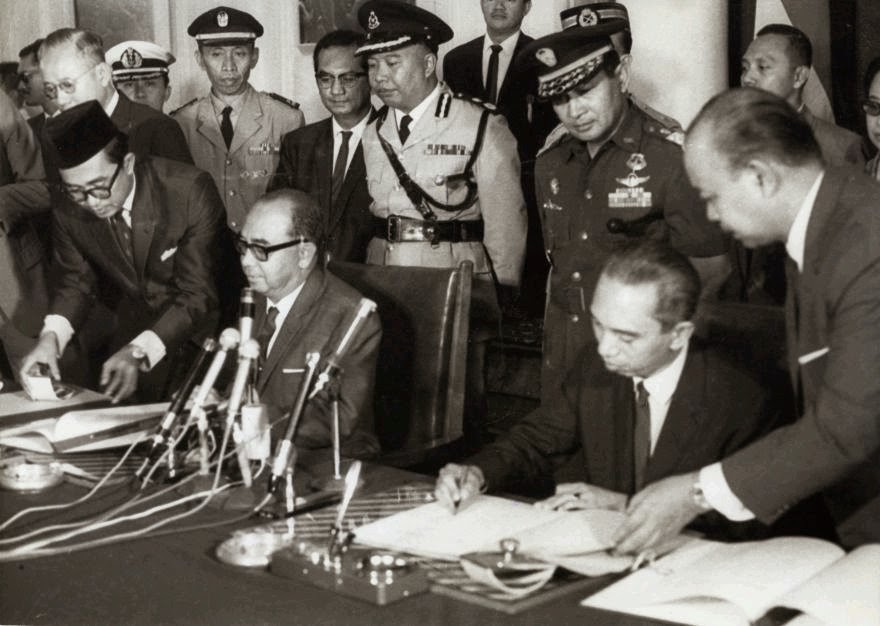
Jakarta, 12 August 1966: The peace treaty was ratified by Malaysian Deputy Prime Minister, Tun Abdul Razak, and the Indonesian Foreign Minister, Adam Malik. Photograph taken from http://indonesia-zaman-doeloe.blogspot.my/2014/09/penandatanganan-normalisasi-hubungan.html

REFERENCES:

  • Genesis of Konfrontasi : Malaysia, Brunei & Indonesia 1945 to 1965 – Greg Poulgrain (1998)
  • Crossroads : A Popular History of Malaysia & Singapore – Jim Baker (2014)
  • Chronicle of Malaysia – Philip Mathews (2007)
Dato’ Kong or Na Tuk Kong or La Tuk Kong or Dato’ Keramat or 拿督尊王, who are they?

by Jean-Marie Metzger

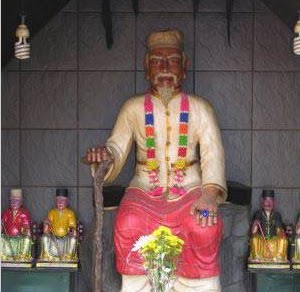
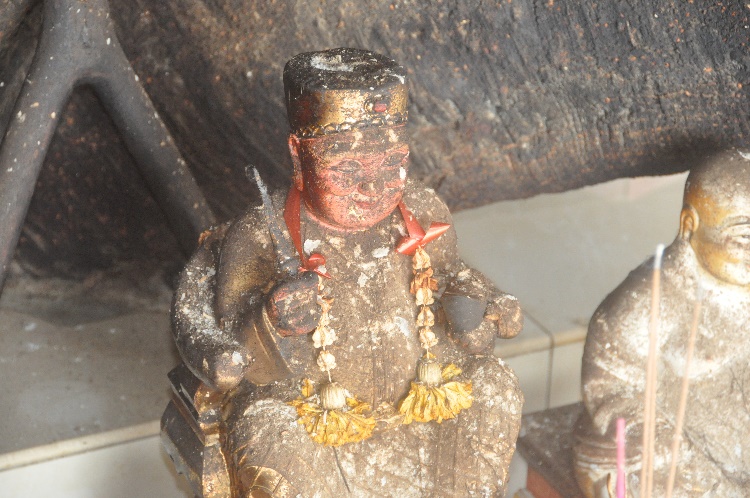
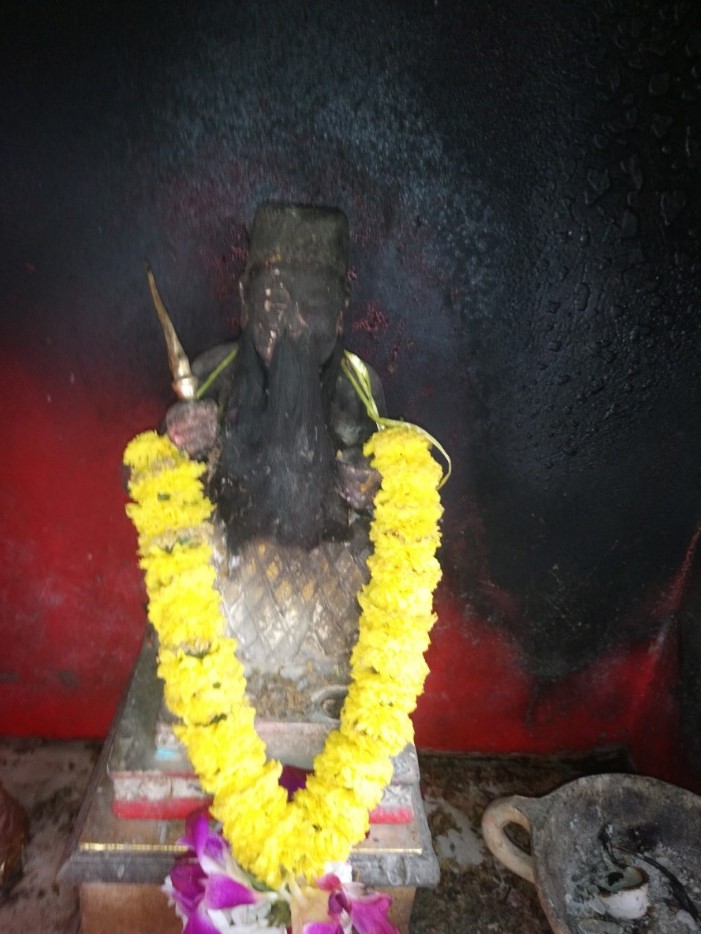
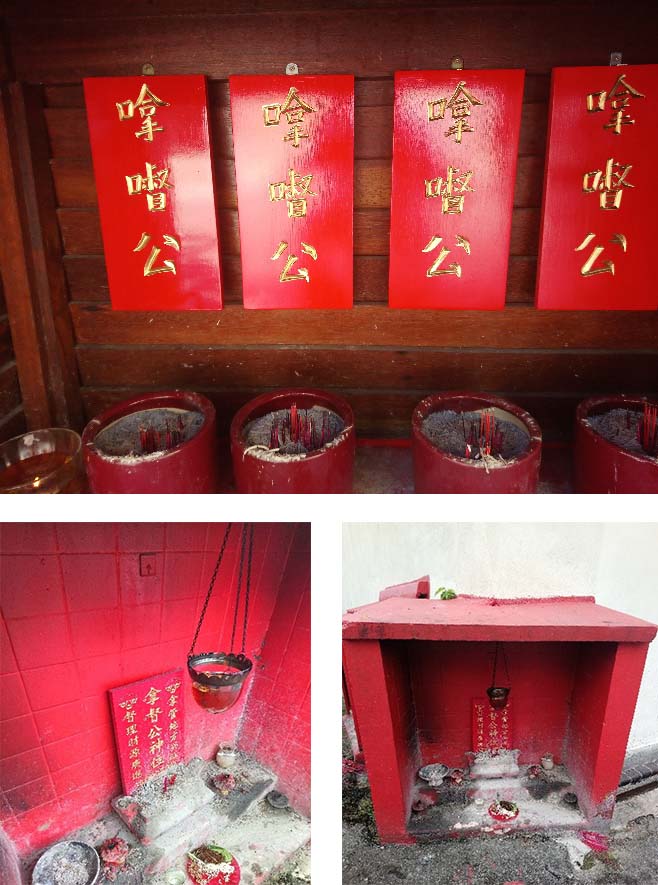
Wherever you go in Malaysia, be it countryside, villages, cities, or golf course, you will often encounter little red shrines on the side of the road, or at the entrance of houses or temples, or at the boundaries of a land plot.  Sometimes these shrines are empty with only some inscriptions that, of course, unless you are fluent in Chinese, you will not understand. However, even if the shrine is empty of any statue, offerings are still present, which are witness of a cult to some kind of deity or spirit. Fortunately for the layman, mostly if he is not Chinese, a statue will be present and…surprise! It is clearly a Malay figure. So who is he? How comes a Malay is present and worshipped in a Chinese shrine?

“Empty” shrines in Penang (©J. M. Metzger 2017)

It seems this is a direct legacy of early animism that infused Malay and Chinese religions. Called Dato’, or Datuk, in Malay, often associated with the word keramat, it represents a spirit of the place. Dato’ means ‘grandfather’ in Malay and the earliest presence of this word dates back to Srivijayan times. What does keramat mean? It is related to the miracles accomplished by Muslim Sufi saints or more generally to “high places” (places of worship according to Mr Bellamy in the Selangor Journal, quoted by W. W. Skeats, “kramat may be roughly translated prophet or magician”).

Altogether, the Dato’ can be associated with either early pre-Muslim animism, to Sufi Islam, or to Chinese Taoism, some also relate it to Hindu-Buddhism.

When the first Hakka immigrants arrived in Malaya in the early 15th century, they paid respect to all the ‘earth spirits’ (tree, water spring, rock or hill – the penunggu of early Malay culture) that were worshipped by the locals. This was not far different from the practice of Taoism which, linked to nature, worships its different spirits (the shen). The Dato’ Keramat, either legendary figures once human, or prominent persons, such as famous silat warriors, pious Muslims, or even shamans (bomoh), later become deities. This was very similar to the Taoist practice by which a famous figure may become a shen and worshipped as such (for example Guan Di –general of the Three Kingdoms–, or much later Sin Sze Ya).

Therefore, it was not difficult for the Chinese immigrants to adopt local practices which led to worshipping a Malay-Muslim figure in a typical Chinese shrine.

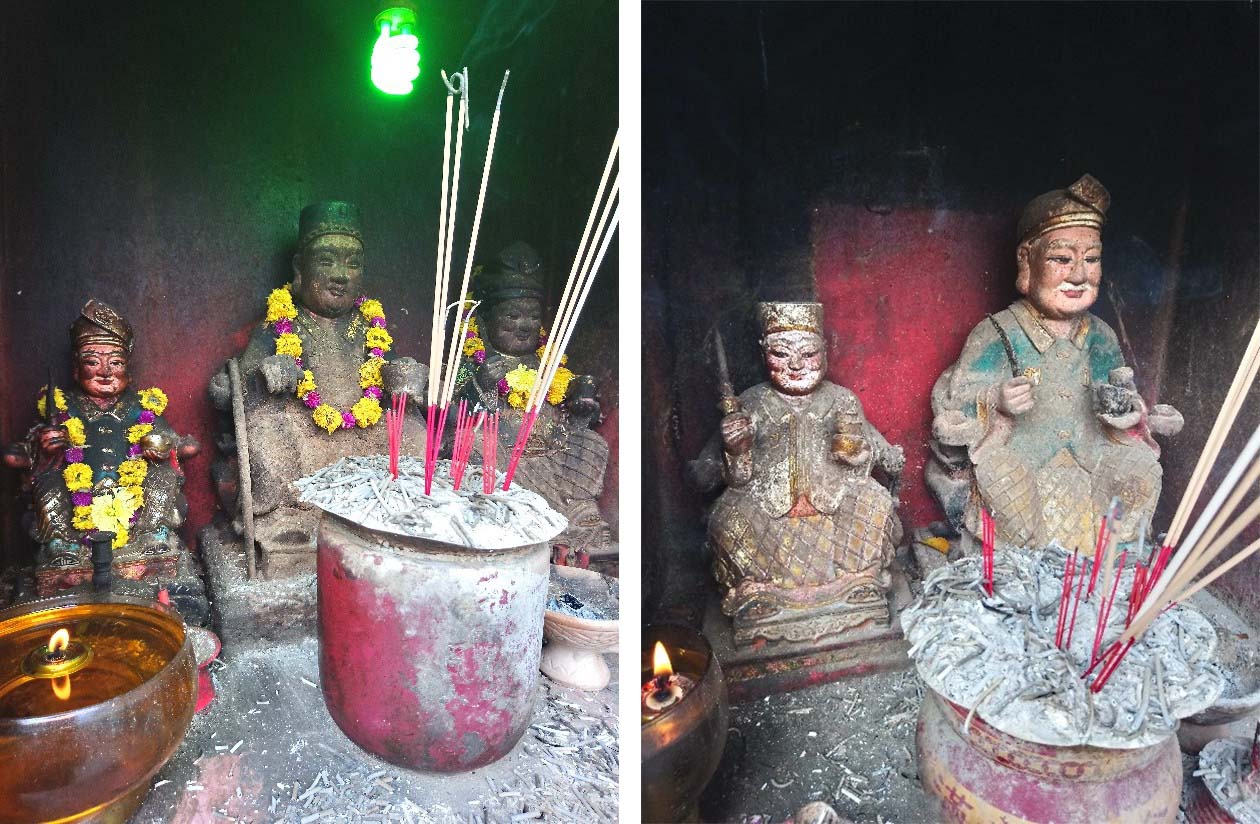
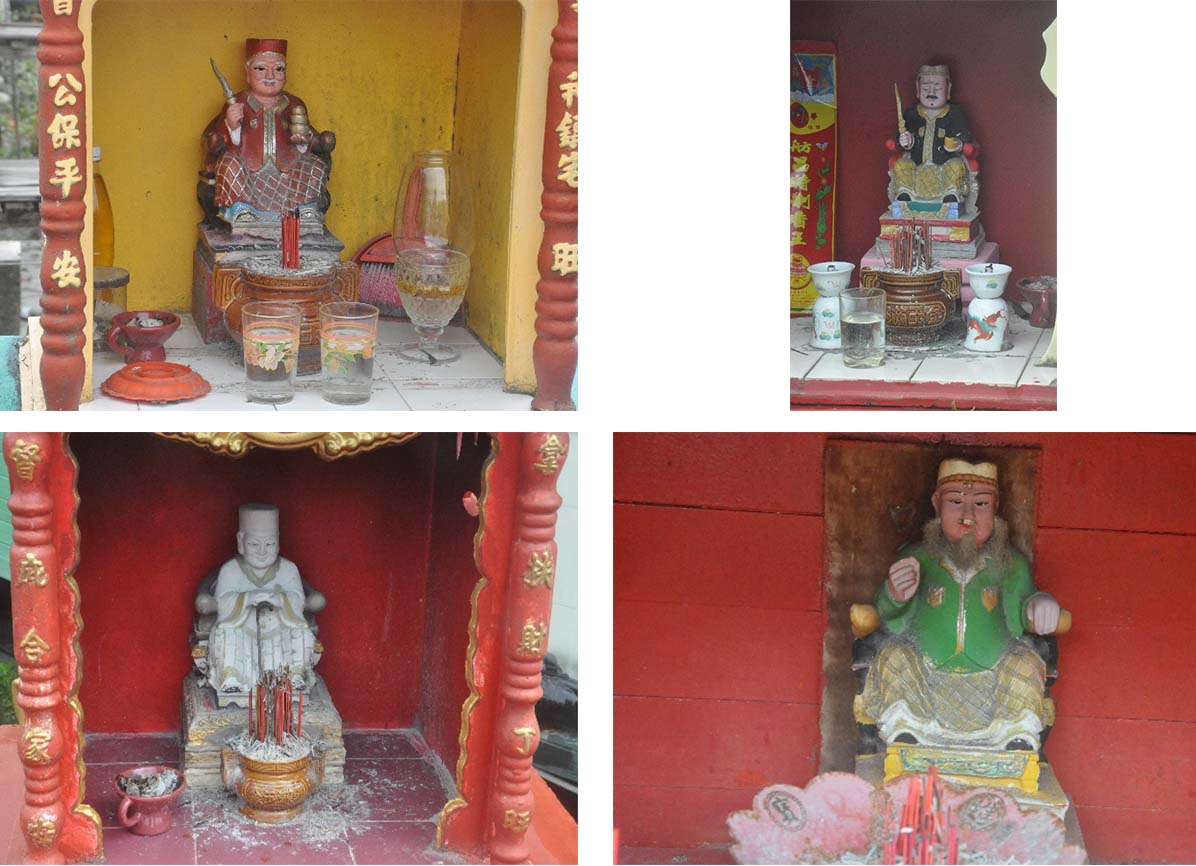
While the Dato’ Kong (Na To Kong or La To Kong in Chinese), which means  ‘great Grandfather’, is generally associated with trees, or more generally is considered the protector of the place where it stands, the tradition of Dato’ Keramat, often also called Datuk Panglima, lists nine of them:

  • Datuk Panglima Ali (Ali)
  • Datuk Panglima Hitam (Black)
  • Datuk Panglima Harimau (Tiger)
  • Datuk Panglima Hijau (Green)
  • Datuk Panglima Kuning (Yellow)
  • Datuk Panglima Putih (White)
  • Datuk Panglima Bisu (Mute)
  • Datuk Panglima Merah (Red)
  • Datuk Panglima Bongsu (Youngest)
Datuk Panglima Putih, with DP Merah, DP Kuning and DP Hijau (©Shih Perng Liew)

Associating colours with the deities is a legacy of Hinduism, while the Tiger attribute may refer to Shiva; colours could also refer to the five elements and directions in Chinese belief: white=metal/west, red=fire/south, yellow=earth/centre, green=wood/east, black=water/north.

Apart from these, there are numerous Datuk. Some consider that there are 108 Datuk, identifying them with the 108 Ruesi of Hindu-Buddhism, characters who are gifted with spiritual and magical powers (Buddha, as well as Shiva, are considered Ruesi).

At the KDE Golf club in Ampang, there is a Datuk Panglima Hussein shrine. This shrine may be related to Nakhoda Hussin, quoted by W. W. Skeat in Malay Magic as a jin presiding over water, rain, and streams, who has a kramat, or holy place, in Bukit Nyalas (Johor). This would be consistent with the fact that a stream runs across the premises of the club.

Datuk Panglima Hussein at KDE Golf club in Ampang (©J. M. Metzger 2017)

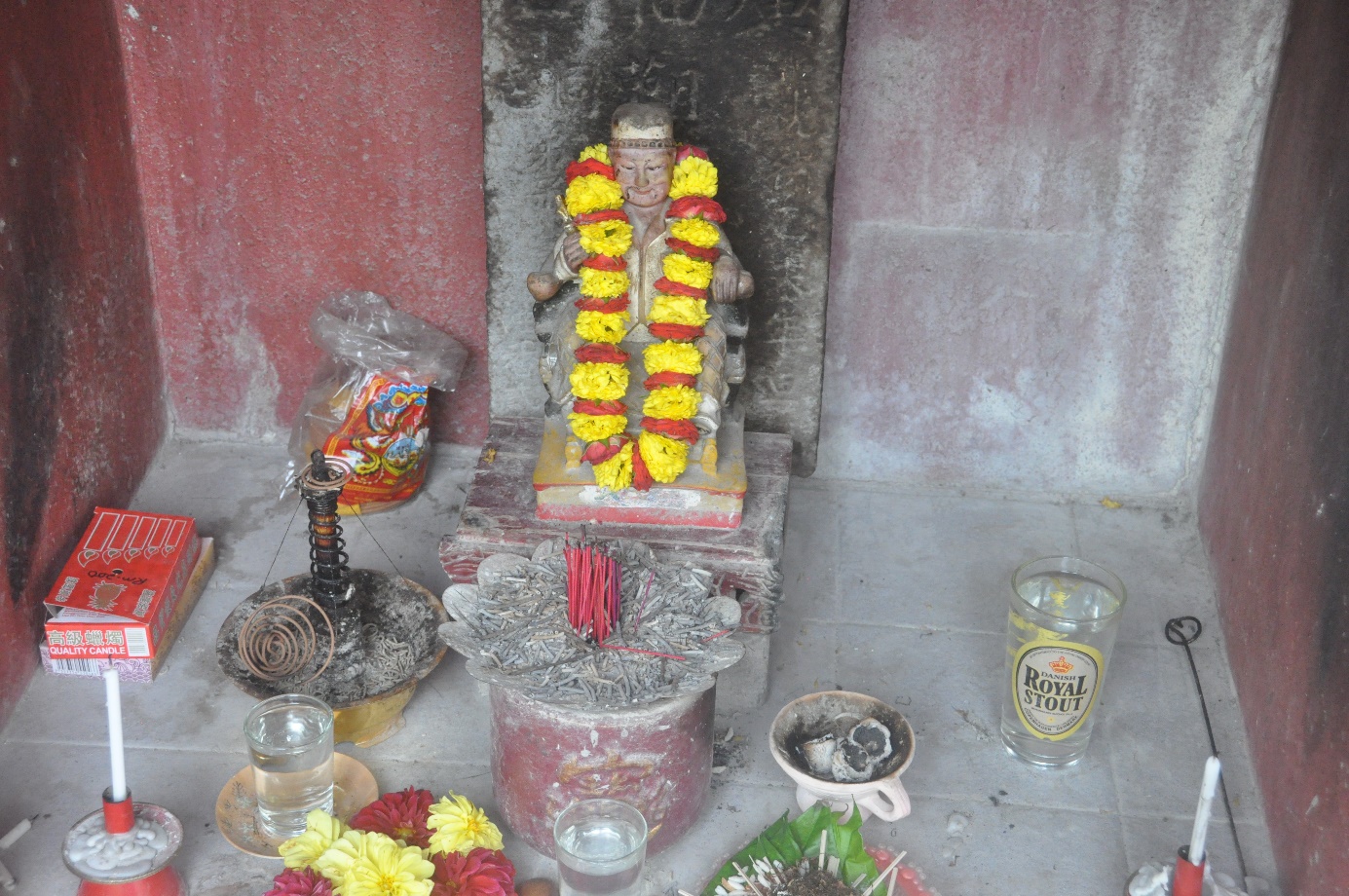
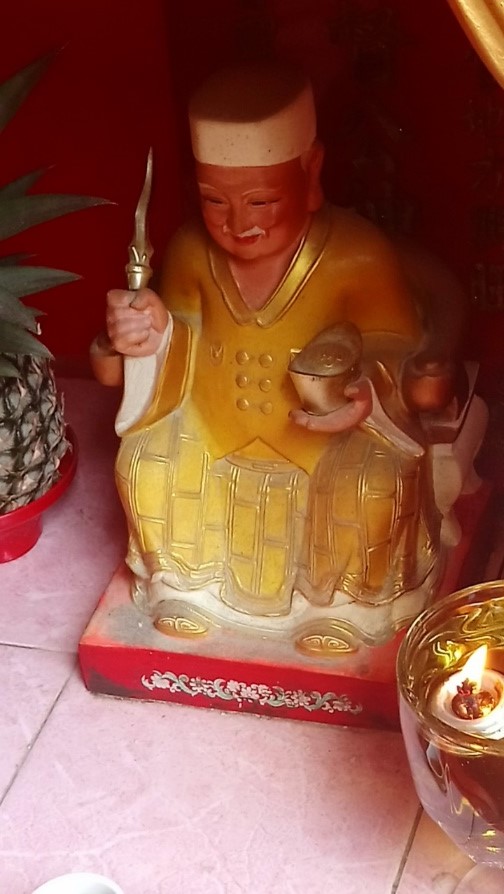
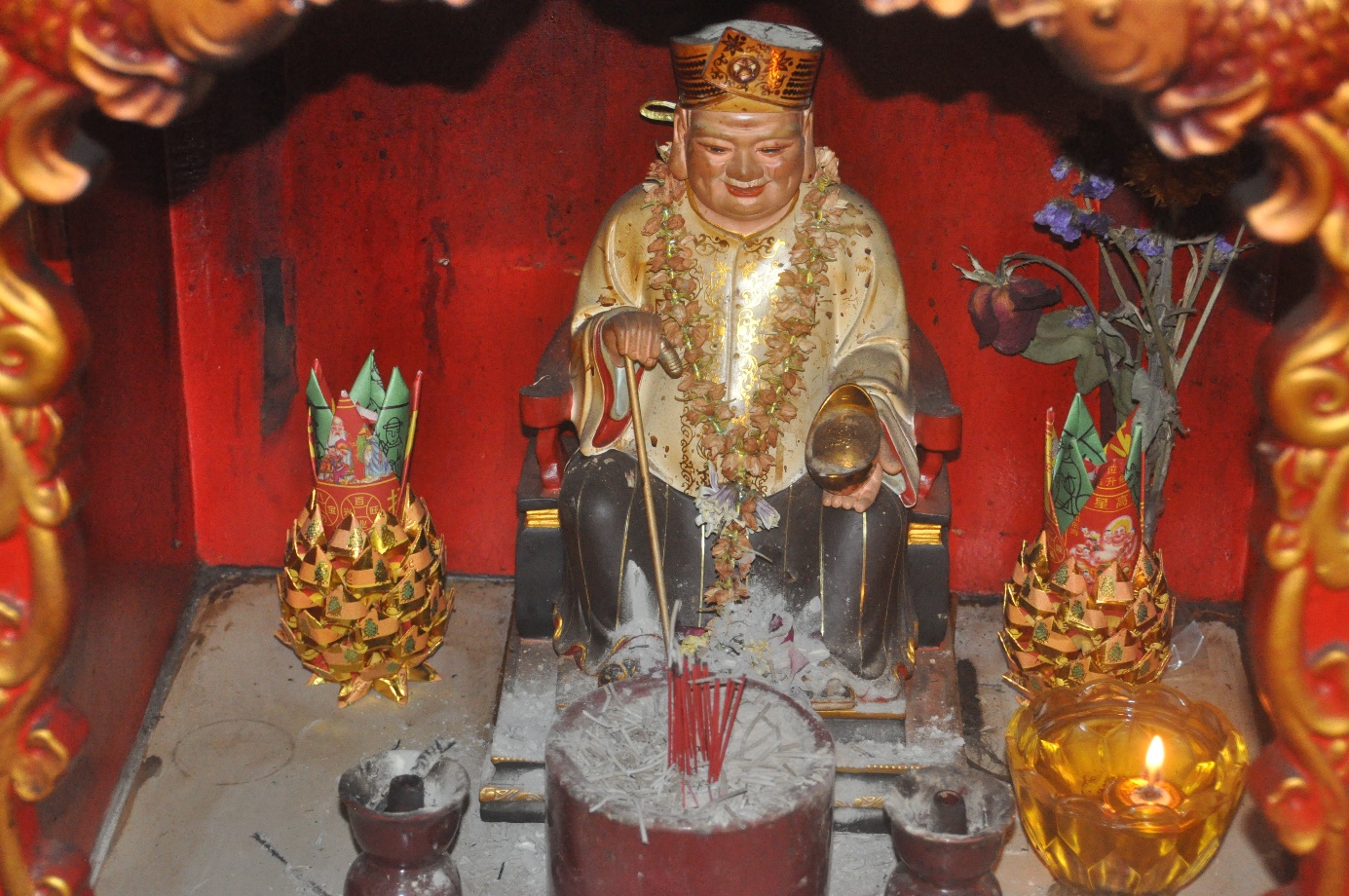
Dato’ Kong shrines are generally situated outside buildings, be it a temple or a house. In some cases, it may be placed inside a tower, but often at the entrance of the car park, as is the case with Integra Tower in KL (is this because fortune flows in at the toll barrier?). When the statue of the Dato’ Kong is present in the shrine, which is the most frequent situation, it cannot be mistaken for any other deity, as it has all the attributes of a Malay: he usually wears a songkok or a haji white hat, sometimes a tengkolok, and often holds a keris. This Malay attire does not exclude holding a Chinese gold ingot, to bring the appropriate wealth to the worshippers, or showing the long ears of Buddha as a symbol of wisdom.

In Penang and along the coast of Perak, there are female Datuk, called Nenek.

Offerings may vary (betel leaves, bananas, eggs, chicken…cigars and coffee are much appreciated by Datuk Panglima Harimau), but, of course, pork and alcohol are strictly forbidden!

Dato’ Kong, tree spirit, at Chew Jetty in Penang (©J. M. Metzger 2017)
Dato’ Kong, tree spirits, at the entrance of Guan Yin Temple in Penang (©J. M. Metzger 2017)
Dato’ Kong in the back garden of Guan Yin temple in Penang (©J. M. Metzger 2017)
Dato’ Kong in Klang (©J. M. Metzger 2017)
Private homes in Pulau Ketam (©J. M. Metzger 2017)
Dato’ Kong Sin Sze Si Ya Temple, Kuala Lumpur (©J. M. Metzger 2017)
Dato’ Kong at the entrance of the car park of Integra Tower in Kuala Lumpur (©J. M. Metzger 2017)

Now, what can we learn from the omnipresence of Dato’ Kong in Malaysia:

  • That the Chinese immigrants respected the local culture
  • That the Chinese pray to whatever may work and bring them good fortune
  • That Malaysia has always been a land of syncretism and mix of cultures throughout the centuries

Sources:

  • The Three Chinese Wisdoms (in French), Cyrille J.D. Jarry, Ed. Albin Michel (2010)
  • Malay Magic, Walter William Skeats (1900)
  • http://www.lersi.net/108-ruesi/

MV trainees on a guided tour of Melaka – Part 2

By Leslie Muri

(Batch 28’s trip to Melaka – after lunch)

Were we walking in the footsteps of Parameswara?  Had Admiral Cheng Ho passed this way?  Did Princess Hang Li Po grace this riverbank with her 500 maidens on their way to Bukit Cina?  Did Laksamana Hang Tuah sail by this spot on his voyage to Majapahit?  Fast-forward over 500 years and after lunch we found ourselves walking along the river pathway beside Hard Rock Café, turning the corner at Jalan Tukang Besi along side Kiehl’s.  Obviously, Melaka is still a centre of commerce today, but now for consumers.

This narrow old street is now a haven for backpackers, with scant evidence of its namesakes, tinsmiths.  Within a block its name magically transforms to Jalan Tukang Emas with even fewer signs of goldsmiths.  However it has acquired another popular name, Harmony Street, for important places of worship of several different religions are found close to each other on the street.

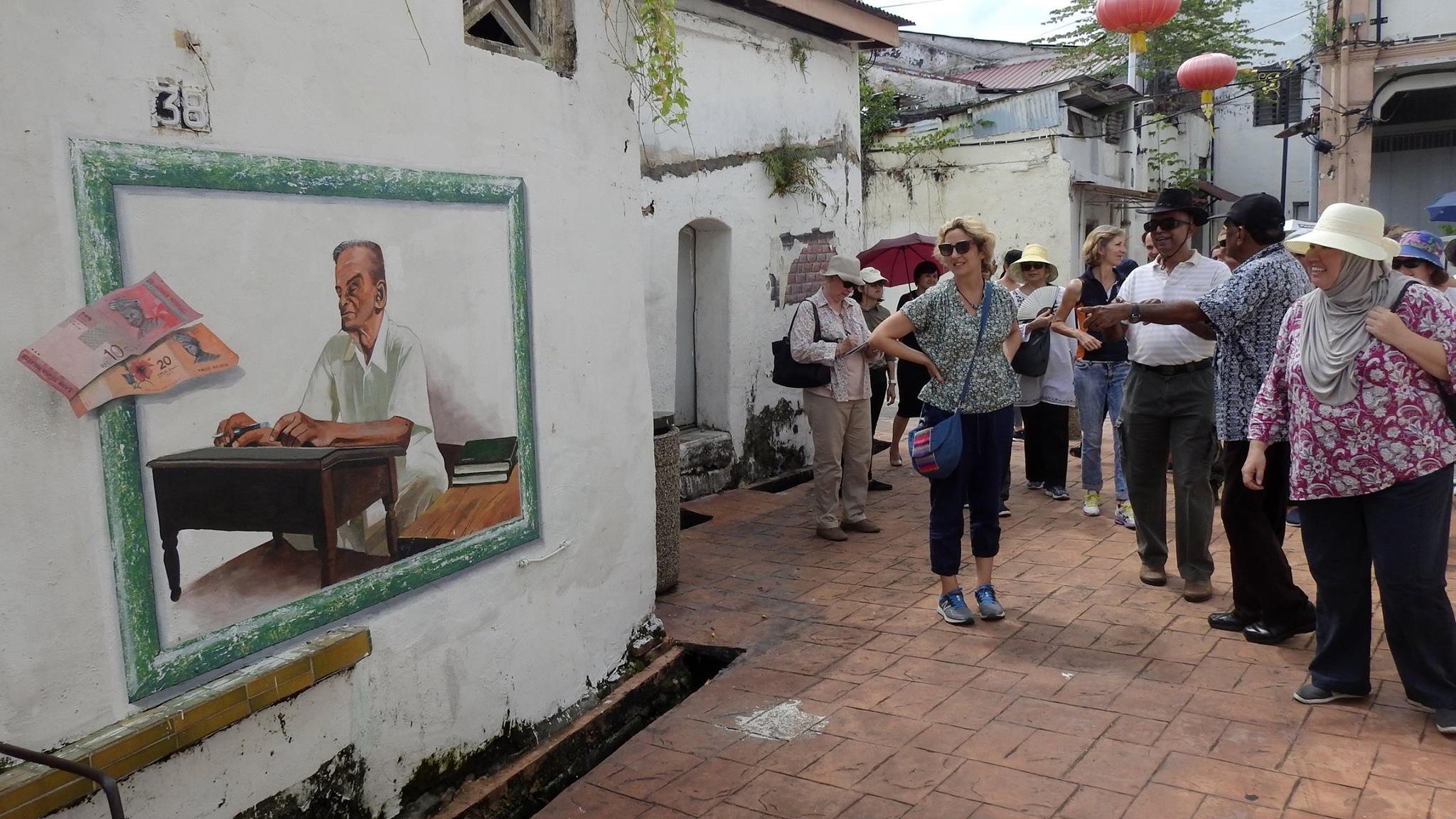
Along the way, we were treated to a delightful detour to see whimsical street art in an alleyway.  We met a charging water buffalo who had left his padi fields behind, a Chinese girl at her window with her woven and lacquered basket, a demure Malay girl draped in a sarong opening a shutter, a Chettiar money changer, an escaping Sang Kancil leaping from a window, a pair of rambunctious orang utan who have just tossed banana peels onto the road, a tin smith bent over his fire and children pulling each other on upi, the fallen palm fronds.

Street art

Craftsmen still ply their trades along narrow streets, many of which Lingam described to us as ‘dying trades.’  The rattan shop sported dim sum steamers, marketing baskets, back scratchers and the infamous rattan stick, sometimes used to beat the dust out of mats and pillows and sometimes the sillies out of wayward children.  The plants in pots growing right in front of his shop formed a modest at-hand medicine chest as there were cures for coughs, centipede stings and flavourings for curry.  Another common tradesman of old was the tinsmith who fashioned pots and pans, kerosene lamps and mended leaking containers.  Craftsmen who make the carved Chinese name boards were at work.  Calligraphers and tombstone makers were there.  There were funeral shops, where hell money and possessions for the afterlife are produced and paraphernalia for prayers are sold, popular on All Souls’ Day once a year.  As Lingam pointed out, the next generation does not want to do these jobs anymore.  The skills may die, but we hope their values do not fade away.

Inside a rattan shop

The first house of worship we came upon was Sri Poyyatha Vinayaga Moorthy Temple, the oldest Hindu temple in Malaysia.  It was erected on land given to the Chitty community by the Dutch in 1781 and built by Kapitan Thaivanayagam Chitty, head of the community.  Being dedicated to Vinayaga or Ganesha, it features a sculpture of the elephant deity, with altars honouring his mother, father and Lord Murugan, his brother.  Interestingly some aspects of Dutch influence are found in its design, as it does not have a round tower covered with carved deities but a flat one with three niches for relief images.  Our guide, Mr. Lingam, showed us the place at the temple entrance, where coconuts, which are pure, are offered to fulfill vows. Good events, such as marriages or births, involve offerings of fruit, while sad events like funerals are without fruit.

Sri Poyyatha Vinayaga Moorthy Temple

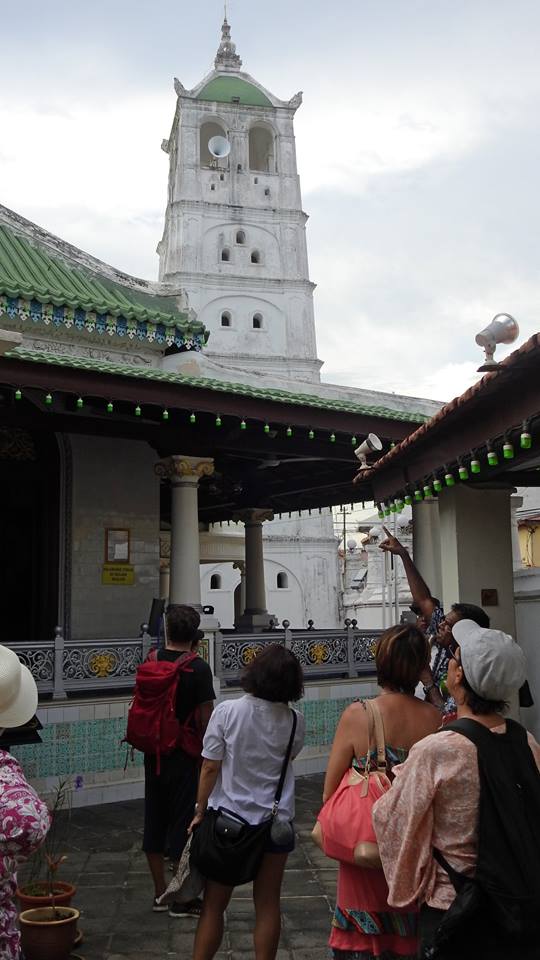
The Kampong Kling Mosque, so named because of the South Indian Muslims who built it during the Dutch era, was our next stop.  The mosque, at the corner of Jalan Tukang Mas (or Jalan Tokong) and Jalan Hang Lekiu was first built of wood in 1748 and later reconstructed in brick and cement in 1872.  Although not the oldest mosque in Malaysia it is one the earliest and reflects Sumatran, Chinese, Hindu and Malay architectural aspects, just as Melaka of old was home to many cultures.  The three-tiered roof is typical of Melaka mosques, while the minaret resembles a pagoda.  English and Portuguese glazed tiles were used and the columns are Corinthian in style.  Mr. Lingam showed us the structure used in slaughtering livestock during the Hari Raya Korban or Aidil Adha observations.

Kampong Kling Mosque

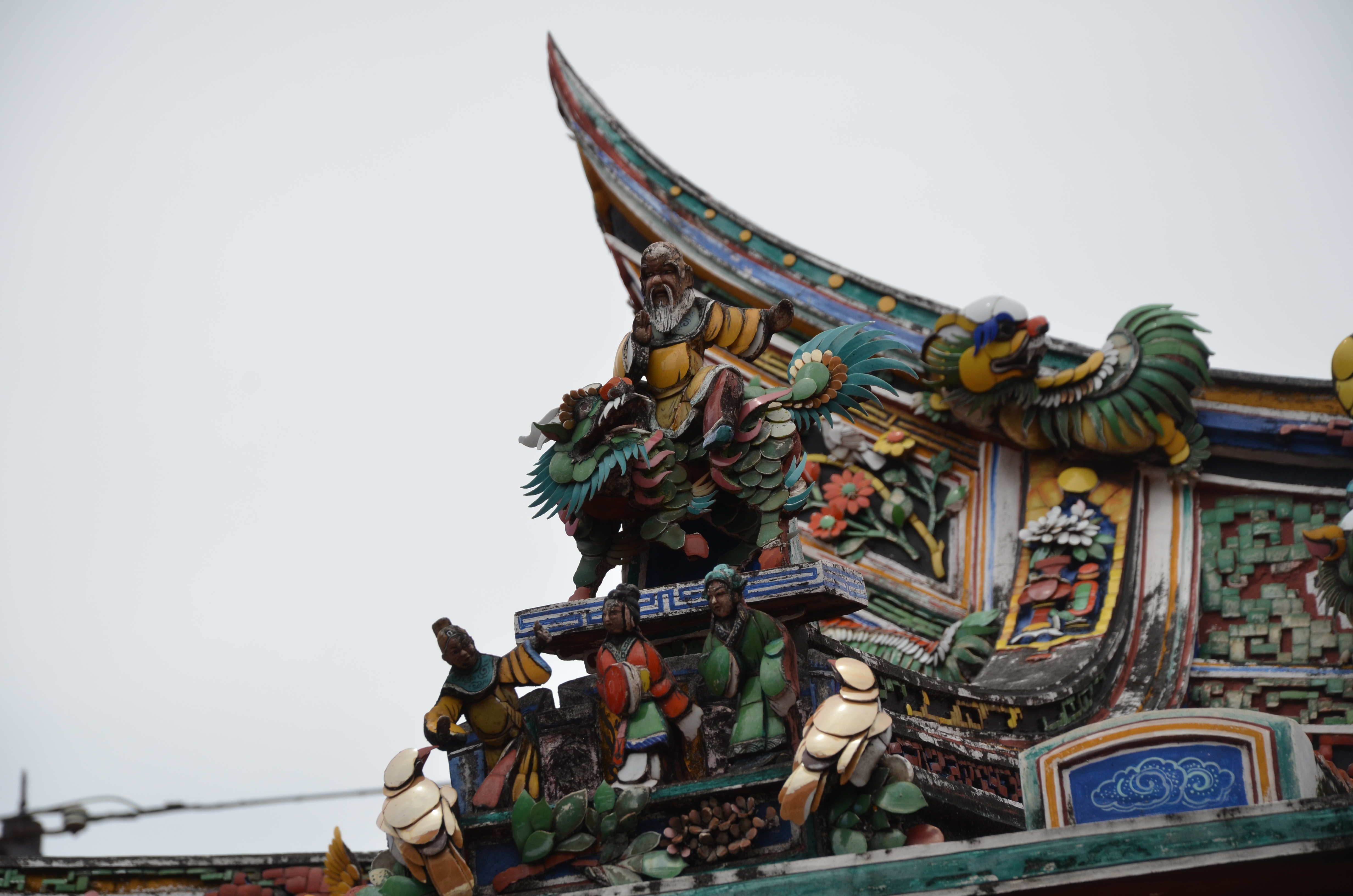
Lastly, we came to the oldest Chinese temple in Malaysia, the Cheng Hoon Teng Temple, where Confucianism, Taoism and Buddhism are all practiced.  The building of the temple, in 1645, was under the patronage of Kapitan Cina, appointed by the Dutch to oversee the Chinese Hokkien community.  The beautiful corners of its roof soaring heavenward tie in with the Chinese name, Merciful Cloud Temple.  The elaborate building materials and experienced craftsmen were all brought from China.  Additions and refurbishments were made in 1704 and 1801.  The central prayer hall honours goddess Kwan Yin while smaller surrounding chambers are devoted to scholars, ancestors and other deities.  Traditionally an empty lot is found across the street from temples for the temporary staging of Chinese operas, but this temple is fortunate to have a permanent building for operas across the road.

Decoration on archway leading to the Cheng Hoon Teng Temple

Beside the opera house is a Malay kampong house, which was rescued from certain oblivion and restored.  Features of such wooden houses have been preserved here such as; stilts which; keep the occupants above floods, allow a protected storage place for rice on the ground, provide a cool place to sleep on a hot afternoon and allow cooling breezes to pass under the floor.  Typical of Malay houses but found only in Melaka are the concreted front entry steps decorated in colourful tiles.  Three sections of the house provide a visiting area in the front verandah, a sleeping area in the slightly higher centre and a kitchen/cooking area in the lower back area.

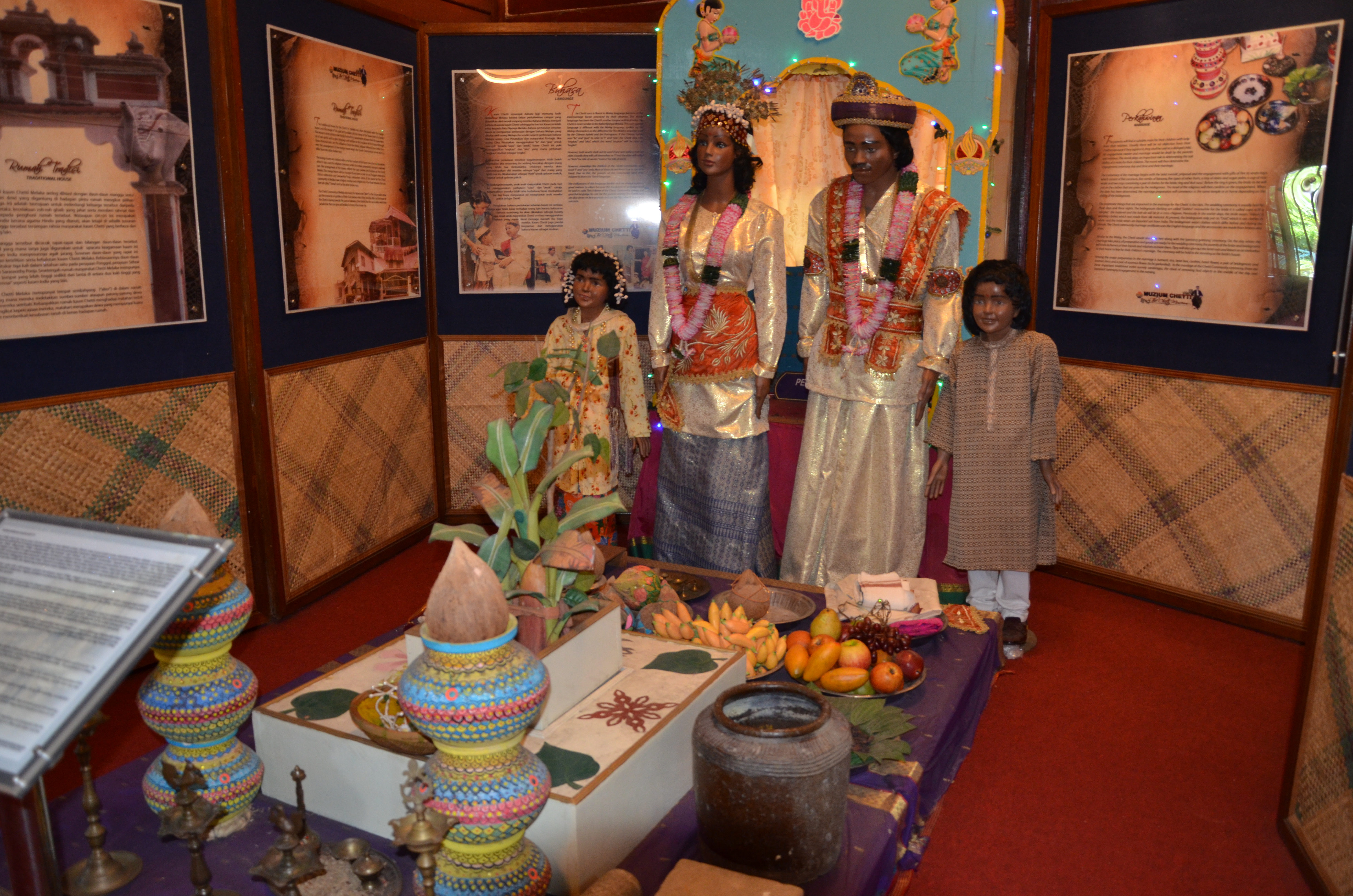
Our last stop was a visit to the Chitty Museum on Jalan Gajah Berang.  The origins of this fascinating community were among the Hindu traders from South India who arrived during the period of the Melaka Sultanate.  Having to depend on the monsoon winds, they have to stay in Melaka for about six months between changes in the monsoons. This extended layover allowed for intermarriage with the local women, thus producing the group known as Indian Peranakans or Chitties.  They soon adopted Malay food, dress, some customs and language, while retaining their Hindu religion.  They flourished during the Sultanate and under the Portuguese, but not under the Dutch who maintained a trade monopoly for themselves.  They then turned to various crafts such as gold smithing and eventually to agriculture.  Today many Chitties work as clerks and technicians.  To this day they speak Malay infused with Tamil and words from other languages and maintain many of their elaborate rituals, such as complex wedding observations and extended ceremonies related to childbirth and girls’ coming of age.  Beef is not part of their diet. They are not to be confused with Chettiars, who were more recent Indian immigrants from a mercantile community, involved in money changing, money lending and land businesses.

Diorama showing a Chitty wedding at the Chitty Museum

We applaud the MV trainers, for arranging this trip, which gave us so much insight into Melaka of the past and present.  Having experienced so much first hand we will definitely remember what we saw, heard and learned.  Who can forget the searing memory of reading the gravestone in Christ Church of the mother and her three children who all died of diphtheria within 15 days of each other in the 1850s? Lingam was an ever-respectful guide who willingly shared his knowledge of all things Melakan.  He also set a standard for us to live up to.  It was a great day and a good time was had by all.

Click here to view Part 1 of this story.

Fruit from the Melaka tree