Visit to the Malaysian Chinese Museum (27 March 2019)

by Janet Wong and Margaret Yeo
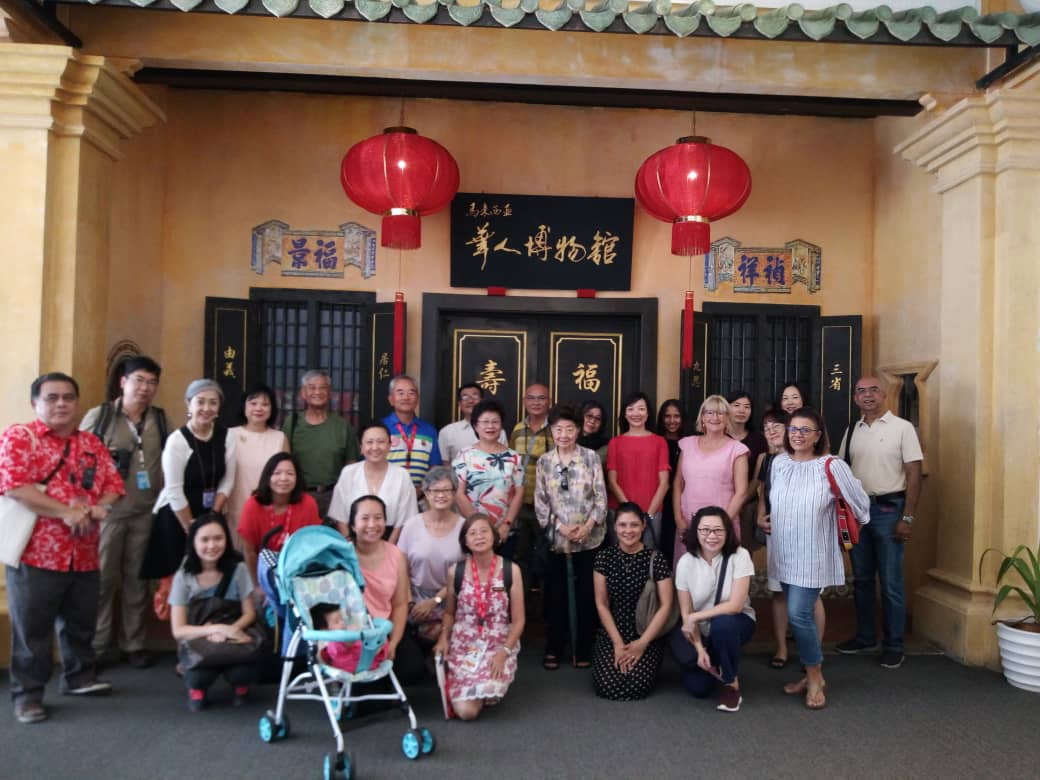
30 Museum Volunteers from the National Museum visiting the Malaysian Chinese Museum on 27th March 2019, photo by Mona Tan.

Established by the Federation of Chinese Associations of Malaysia (Hua Zong), the Malaysian Chinese Museum at Wisma Huazong in Seri Kembangan, Kuala Lumpur opened its doors to the public in 2018. The museum tells the story of the Chinese in Malaysia through a delightful mix of text, graphics and historical reconstruction.

In the 15th century and possibly earlier, there were diplomatic relations between China and Malacca. During the Ming Dynasty, Admiral Zheng He made no less than five grand voyages to Malacca. The Malaccan rulers also travelled to China to pay tribute in the Imperial Court.
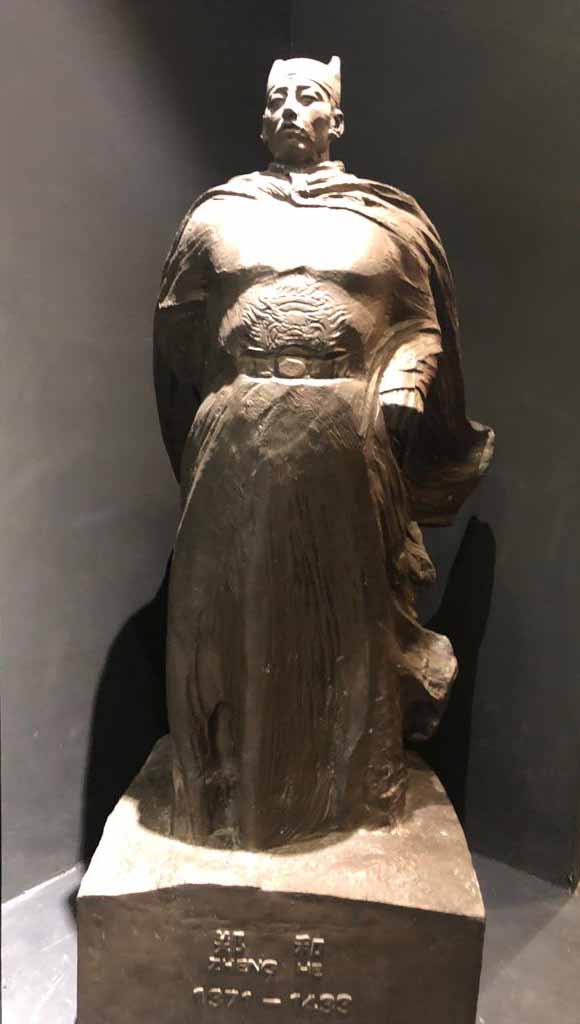
Statue of Admiral Zheng He. Photo by Margaret Yeo.
Part of a Chinese map showing the Malay Archipelago. Photo by Janet Wong.

During the late Qing Dynasty, unrest and famine in China and the promise of greener pastures abroad led the Chinese to make their way to South East Asia. However, life here after a tempestuous journey was almost always harsh (especially for those in bondage), and often migrants resorted to opium and alcohol to block out their pitiful existence.

An opium user. Photo by Margaret Yeo.

The Chinese migrants were grouped based on their place of origin in China, and many formed triads to protect their interests. The triads fought over control of resources such as the mines, and this sometimes led to wars eg. Perang Larut, fought between the Hai San Society and Ghee Hin Society.

A fight between triad members. Photo by Margaret Yeo.

There were also migrants who became successful businessmen, such as Tan Kah Kee. In 1860, Tan Kah Kee travelled from Xiamen, Fujian to Singapore (then part of the Straits Settlements) to help his father with the family business (rice trading). Eventually, he built a business empire stretching across sectors such as rubber, manufacturing, canneries, real estate and rice trading. The museum has statues of Tan Kah Kee and his son-in-law, Lee Kong Chian, also a prominent businessman.

Besides that, along with the people came their culture and naturally the industries to support that culture. In the museum, there are reconstructions of several shopfronts.

During the Japanese Occupation (1942-1945), the Chinese here suffered grave casualties and cruel treatment. Some joined the Malayan Peoples’ Anti-Japanese Army (MPAJA), which fought hard against the Japanese invaders. After the war, eight MPAJA members received awards for their anti-Japanese efforts.

An MPAJA member awarded the Star of Burma by Lord Mountbatten. Photo by Margaret Yeo.

After World War II, many of the MPAJA members joined the Malayan Communist Party (MCP), which became embroiled in armed conflict against the British colonial government. This eventually led to the declaration of the Malayan Emergency, during which measures such as the introduction of identity cards and creation of New Villages were implemented. A diorama at the museum reconstructs the situation during the Emergency, which officially ended in 1960 with the victory of the Malayan forces.

After independence in 1957, the Chinese have gradually integrated into Malaysian society without sacrificing their cultural identity, as can be seen from the reconstructions of Chinese markers of culture such as the religion, cuisine and forms of entertainment.
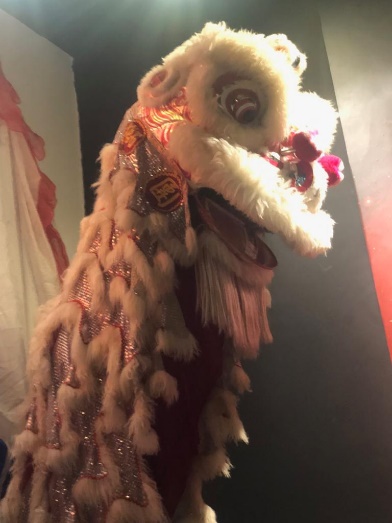
Lion dance. Photo by Margaret Yeo.
Offerings to the Jade Emperor on his birthday. Photo by Ong Li Ling.

Furthermore, Chinese education continues to be upheld. The museum traces the development of the Chinese education system in Malaysia. It is to be noted that outside China and Taiwan, Malaysia is the only country that provides Chinese education from primary to tertiary level. The groups of Chinese educationalists responsible for this achievement, amongst them Jiao Zong and Dong Zong, are acknowledged in the museum.

Last but not least, the museum has a breathtaking miniature display of a bustling marketplace where the different races in Malaysia can be seen working together for the betterment of the nation, in a depiction of the present and hopefully, the future as well.

A bustling marketplace. Photo by Janet Wong.

All in all, while the museum occupies a mere 10,550 square feet, the space has been very cleverly used and the museum is well worth a visit.

At the conclusion of the guided tour, the museum presented our library with a book entitled “A Journey Through History: The Chinese and Nation-Building in Malaysia”. We would like to express our heartfelt gratitude for the hospitality and the special gift. We would also like to thank Mona Tan for organising this trip.

Three Museums

by Eric Lim

The first quarter of 2019 was very eventful for me. I made two overseas trips, the first to Guangzhou, China, in January followed by an 18-day sojourn to the North Island of New Zealand, between February and March. Taking these excellent opportunities, I visited the local museums and I would like to share my experiences with you.

1. Archaeological Site Museum of Nanyue Palace in Guangzhou

The history of Guangzhou started more than 2,000 years ago. Qin Shi Huang, the first emperor of the Qin Empire succeeded in unifying the Lingnan Region, which comprised 3 prefectures namely Nanhai, Guilin and Xiang.

The Qin dynasty ended when military captains staged revolts causing great upheavals in the Central Plains of China. Zhao Tuo took over and established the Nanyue Kingdom with Panyu (original name of Guangzhou) as its capital. The Nanyue Kingdom was ruled successively by 5 kings and endured 93 years until it was obliterated by Emperor Wu of the Han Dynasty in 111 BC. Since then, Guangzhou was further developed by another 10 cultural strata, right up to the Republic of China.

The museum sits between shops fronting the Beijing Road and dwellings on the other side, with the main entrance located at Zhongshan 4th Road. As the name suggests, the focus is on the historic site of the palace and garden of the Nanyue Kingdom. The royal garden consists of a large stone pond and a crooked stone brook. The latter was discovered in 1997 and it meanders from the north to south, a distance of 160 metres. It is the earliest and the best-preserved royal garden discovered so far in China.

The palace of the Nanyue Kingdom

During the excavation of the pond, a large quantity of the remains of turtles was found at the bottom, implying the animals might have been kept as pets in the royal garden. Chinese authorities also found that stone structures used in the construction of the royal garden were built with materials similar to those of Western stone structures, thus testifying to the meeting of East and West in Guangzhou in ancient times.

Exchanges between the Chinese and Western cultures

Besides the site of the palace and garden of the Nanyue Kingdom, there is also the palace site of the Nanhan Kingdom, which includes the Nanhan courtyard paved with fabulous butterfly peony square bricks. At the exhibition building for Guangzhou’s ancient wells, visitors can see over 500 wells built during the different dynasties. During excavations at this site, many valuable artefacts were found. Over 100 pottery jars were unearthed from the wells constructed by the Eastern Han Dynasty (25-20 BCE).

(Left) Well of Eastern Han Dynasty 25-220 BC (Right) Well of Qing Dynasty 1644 – 1911

Towards the end of 2004, hundreds of inscribed wooden slips were excavated from the wells built during the Nanyue Kingdom. These are the very first of such artefacts ever discovered in the region that provide great value for academic research.

There is no admission fee to visit the museum but visitors must get tickets at the main entrance by showing personal ID cards or, in the case of foreigners, by showing passports.

2. Auckland War Memorial Museum in Auckland

The Auckland Domain is Auckland’s oldest park and it is located just outside Auckland’s CBD. This spacious 75 hectares park is also one of the largest parks in the city and it has been developed around the cone of the extinct Pukekawa volcano. Sitting proudly atop it is the Auckland War Memorial Museum.

Auckland War Memorial Museum

The museum is housed in a large neo-classical styled building and is considered as one of the finest heritage buildings. It was opened in 1929 to commemorate the loss of 18,166 New Zealanders who died in the First World War. Today, AWMM is one of the top tourist attractions. The museum is divided into 3 levels:

Ground Level – This level examines the diversity of Maori and Pacific Island cultures. It also talks about the movement of people from South East Asia to the islands in “Near Oceania” 5,000 years ago, then progressing further to the distant island groups in “Remote Oceania” such as New Caledonia, Vanuatu, Fiji, Tonga and Samoa between 3,500 – 3,000 years ago. By then, these people were known as the Lapita people, the immediate ancestors of the Polynesians. Then after “The Long Pause”, a period of over 1,000 years, they started sailing again after the development of larger ocean-going canoes reaching as far North as the Hawaiian islands and as far South as Aotearoa New Zealand 800 years ago. It was believed that the Polynesians have sailed as far as South America and brought back kumara and gourd.

Movement of people from SEA to the Pacific Islands and New Zealand

Level One – Talks about the Natural History of New Zealand, from geological origins to its ancient flora and fauna. The Moa was the tallest bird known and the female grew as tall as 3 metres, measured in an upright standing position. This level also highlights the uniqueness of many New Zealand birds, which are flightless, large, dull or dark in colour and slow breeders. Of course, there is mention of the Kiwi, national pride of New Zealand.

The Moa

Level Two – This gallery is named Scars on the Heart. It is a war memorial centered mainly on the First and Second World Wars. There is also a section that talks about Kiwis being called into action in Asia, namely in Malaya, Borneo and Vietnam.

The first New Zealanders that fought in Asia were based at the Changi Air Base in Singapore from 1949 to 1951, during the time of the Malayan Emergency, and they remained in the country until 1989. Their engagement grew larger during the time of the Confrontation over Borneo in 1964. In the 1960’s, pressured by the American government, New Zealand committed resources to the Vietnam War.

We were again given the spotlight, this time on the stained glass ceiling above the main foyer, which depicts the Coat of Arms of all British Dominions and Colonies during the First World War. The Coat of Arms of Malaya and Straits Settlements are proudly displayed on this glass ceiling.

Coat of Arms of Malaya and Straits Settlements on glass ceiling (extreme left and second left)

A portrait of Sir Edmund Hillary, who was born in Auckland, is also on display. On 29 May 1953, Sir Edmund and his Sherpa guide, Tenzing Norgay, became the first climbers to reach the peak of Mount Everest.

The general admission fee to this museum is NZ $25.00 and the highlights guided tour is an additional NZ $15.00.

3. Navy Museum in Devonport

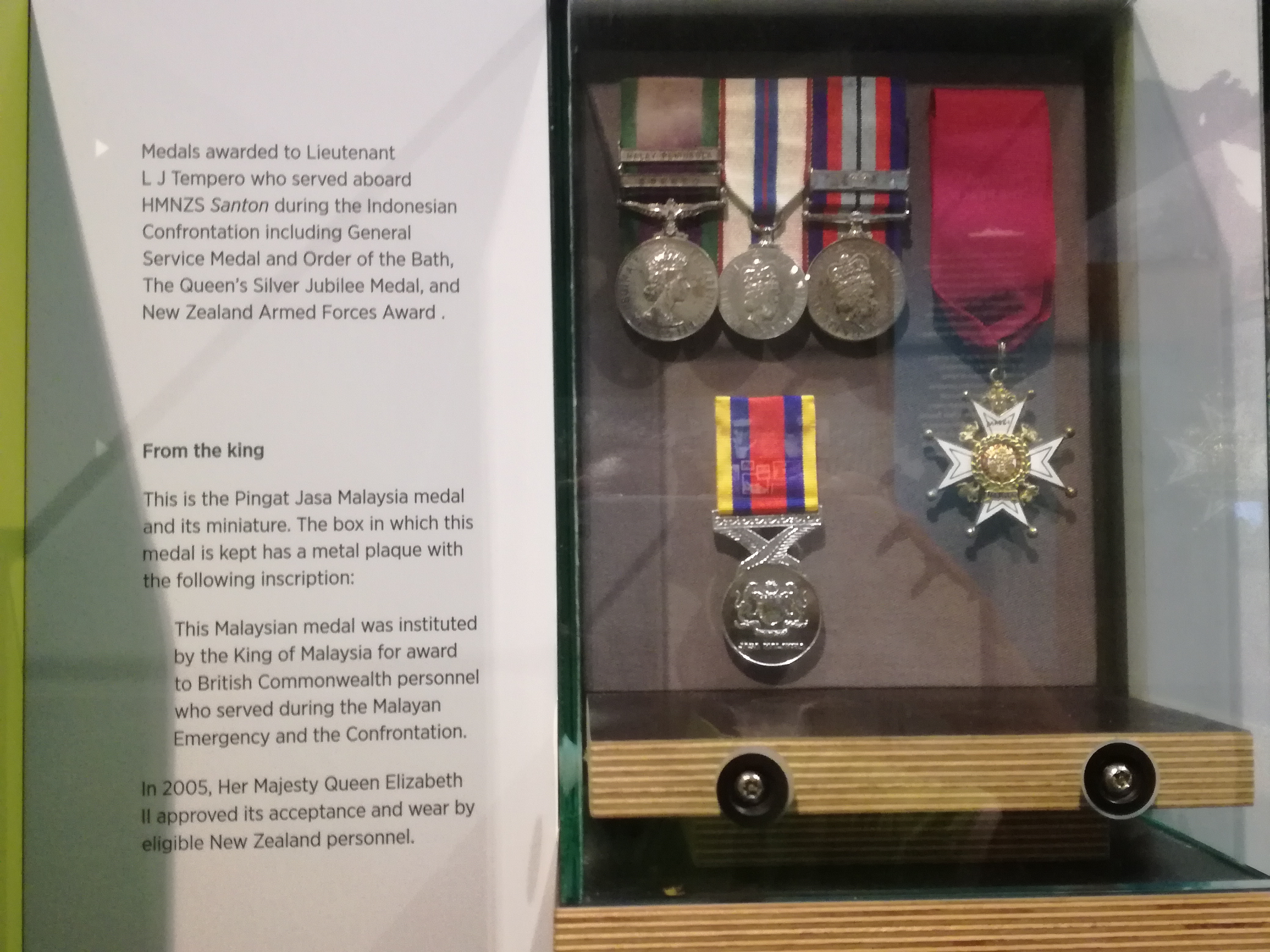
Still in Auckland, I also visited the Navy Museum in the village of Devonport. Here, visitors can learn about New Zealand’s contribution at sea in the major conflicts of the 20th century and as well as during peace-time. Again, the Malayan Emergency and Confrontation are highlighted. The museum is open seven days a week, 10.00 am to 5.00 pm and admission is free.

Malaysian Medals awarded to British Commonwealth personnels who served during the Malayan Emergency and Confrontation