Malay Architecture in Terengganu

by Ong Li Ling

I attended a talk on Malay Architecture at Petronas Gallery recently. I was so impressed by the slides shown by Mr Alex Lee that I decided to visit his resort – Terrapuri (The Land of Palaces) at Pantai Penarik, Terengganu.

Mr Alex is a Peranakan who grew up in Marang. He has been collecting old Malay houses since he was 20 years old. In order to build Terrapuri Heritage Village, he secured an 8-acres piece of freehold land in Setiu in 2005. Alex took 4.5 years to build this resort. The resort has 22 villas but only 15 are open at present. The resort usually has full occupancy in the months of July and August. Alan Hoh was employed as the conceptual artist and Oon Soon designed the logo of the resort based on the ancient Istana arch.
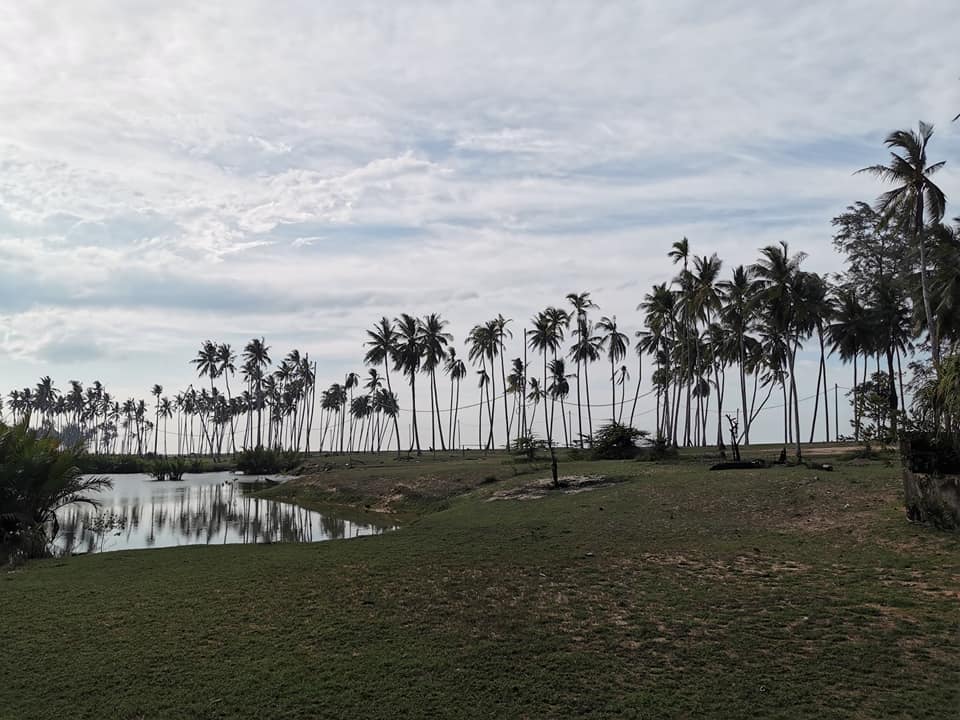
Kampung Kuala Baru is part of the Setiu wetlands, which is why the climate is so hot. There are nine ecosystems present including mangrove forest, beach, lagoon and BRIS forest.

The local ulama chooses the suitable location for the house. Old Malay houses are constructed using traditional Malay Geomancy principles. The house is based on the length of the matriarch’s outstretched arms, which is called a depa (wingspan). For example, a house can be 10 depa wide. The owner needs to take accurate measurements; “crow measurements” may result in the owner falling sick. On the other hand, prosperity will ensue if the ular cinta mani measurement is followed, i.e. the height of the main pillar (tiang seri) is an exact round number.

I flew to Kuala Terengganu airport and my Grabcar took around 45 minutes to get to Setiu. After ringing the bell, the resort staff opened the gate to let us in.
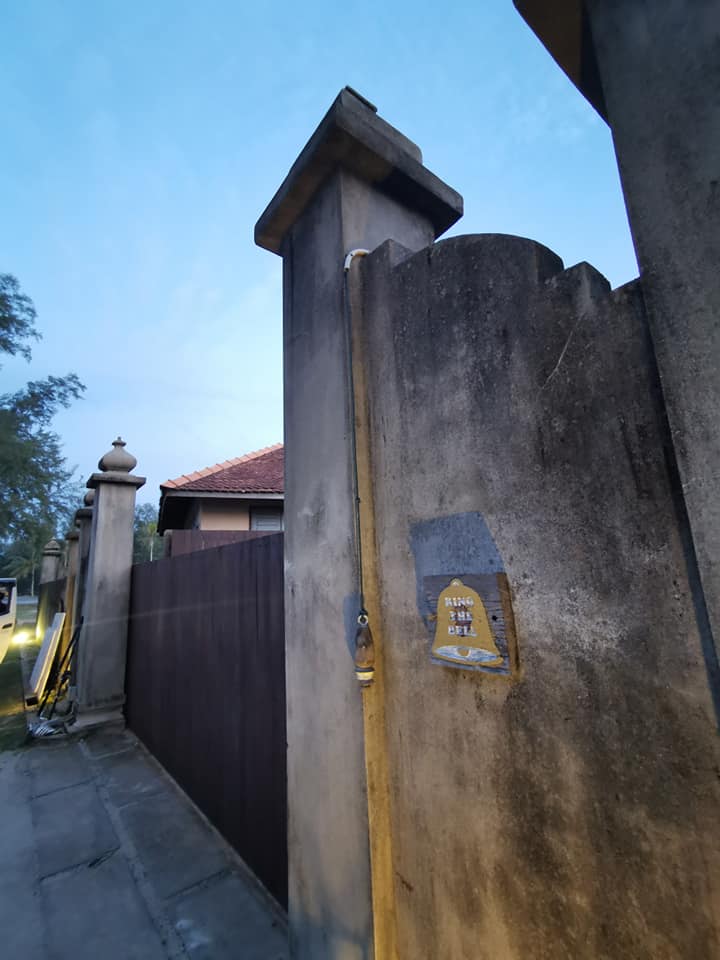
The first thing I noticed was the Double Gater layout, a typical architecture during the Langkasuka period. The Langkasuka Kingdom is believed to have been established in the 2nd century CE. It lasted till the 15th century when it was replaced by the Pattani Kingdom.
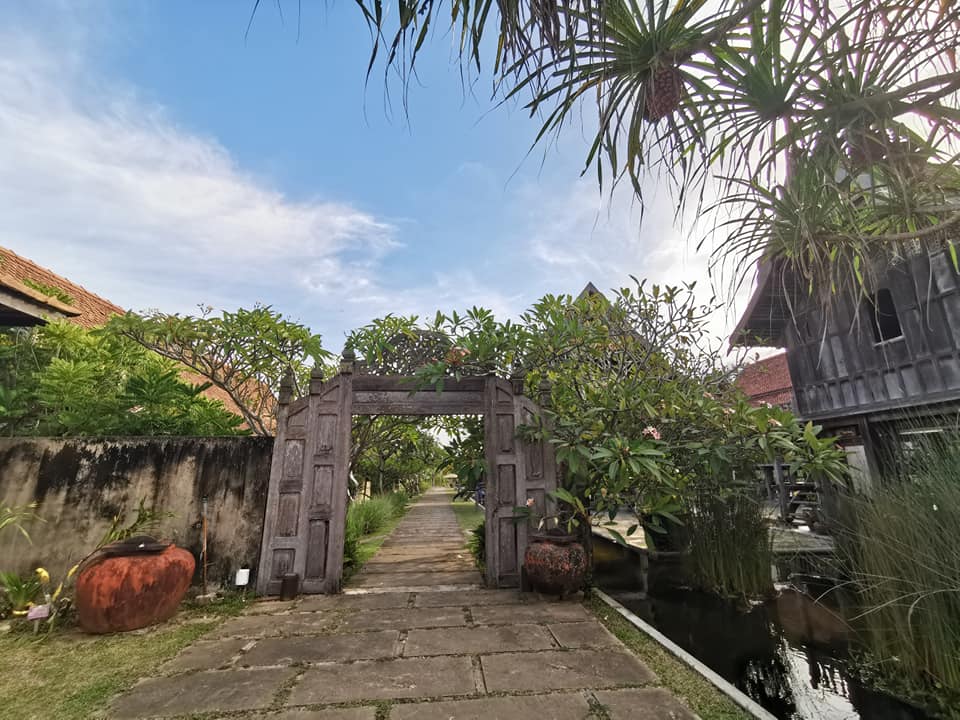
I admired the sobek (filigree-like woodcarving with old floral carving), which was popular back then. In the old days Kala was used to ward off evil. I also saw several stupa influenced by Buddhism.

I checked into my villa, known as Rumah Binjai Rendah. The typical Terengganu house is known as the Rumah Bujang. It has a gable roof and the outline of a makara. The makara is a mythical half terrestrial, half aquatic animal and it is the vehicle of Ganga, the River Goddess. It is also a symbol of fertility. The Singgora roofs represent the scales of the Makara. Grooved windows are usually reserved for royalty.

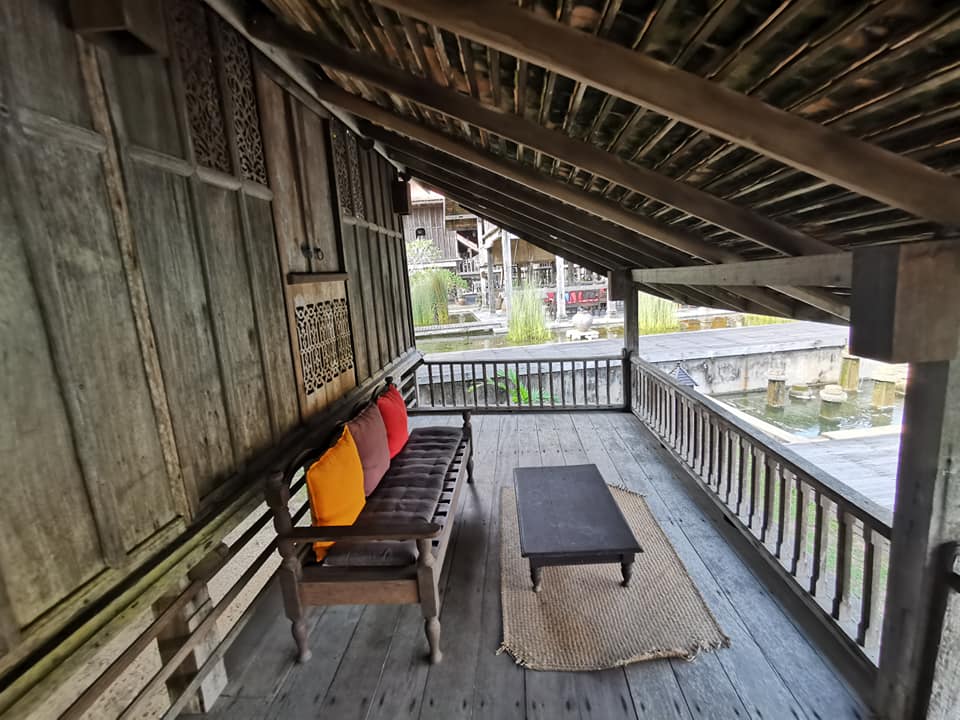
The number of steps of the staircase is always an odd number. You step with your right foot first and want to end up on your right foot. This is also the belief in Hinduism.
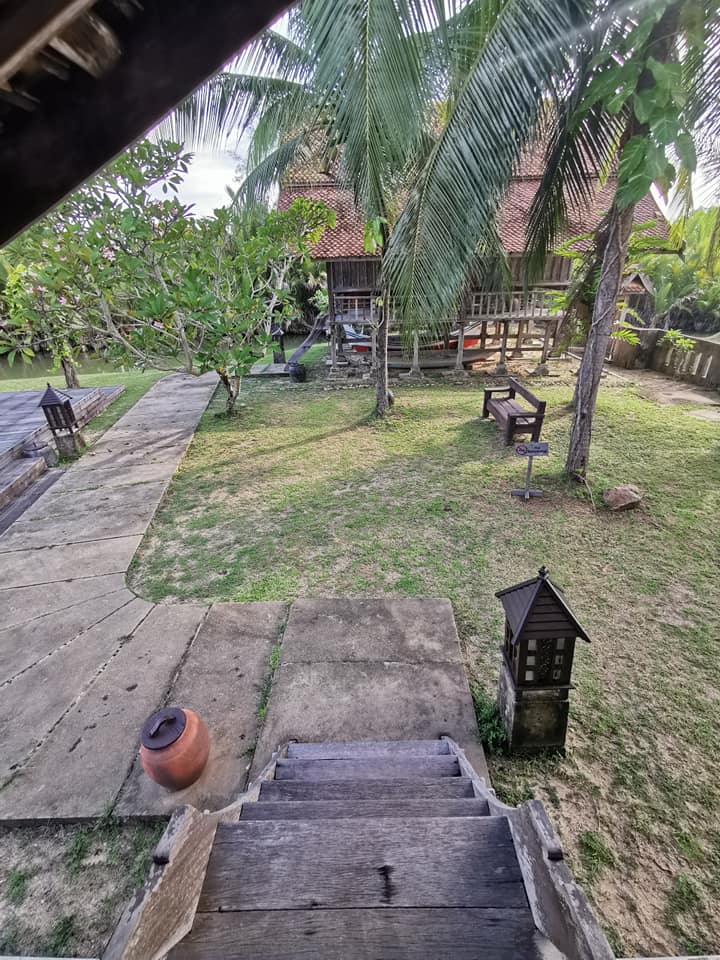
There are 6 units of Malay houses in the central courtyard. The resort can organise makyong, wayang kulit, main puteri (trance) and gamelan performances upon request.
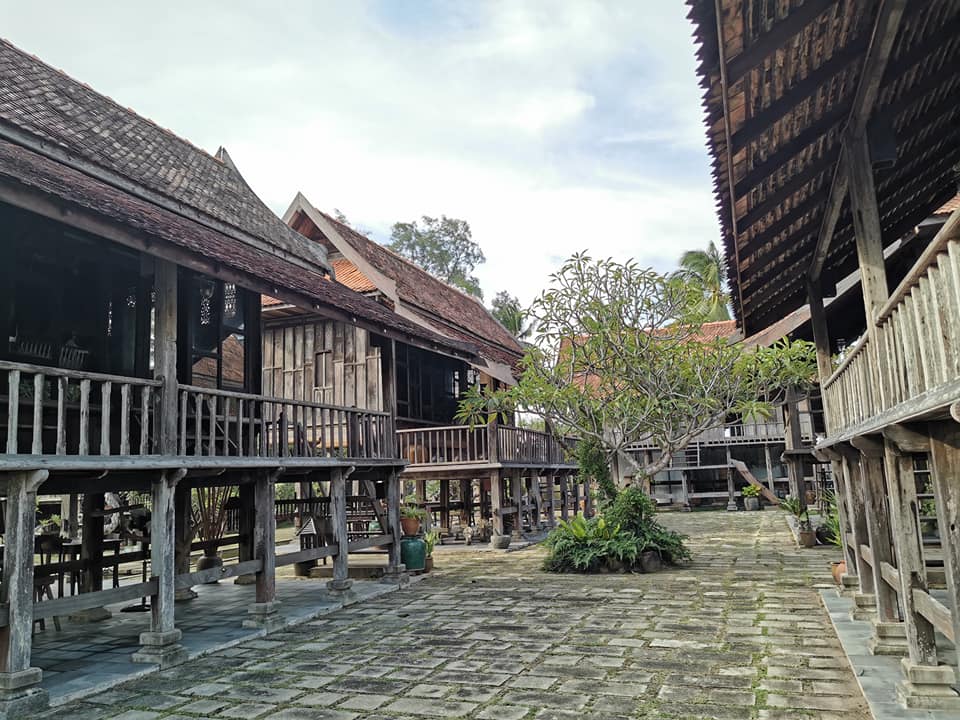
The Rumah Berang (from Kuala Berang) houses a table used by Tunku Abdul Rahman. The 8-seater hardwood table was the very same one used by our first prime minister when he chaired a meeting with folks from Kampung Atas Tol in Kuala Terengganu.
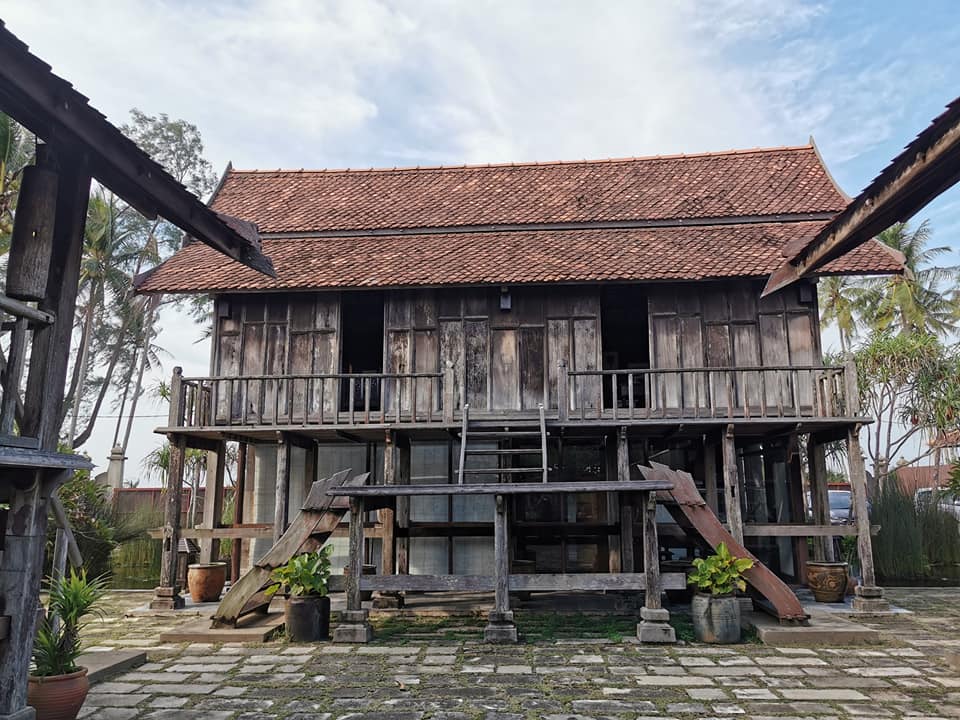
The Resort Gallery is housed in Rumah Teluk Pasu which is a Rumah Tiang Enam (6 pillars). All houses in this resort are more than 100 years old.
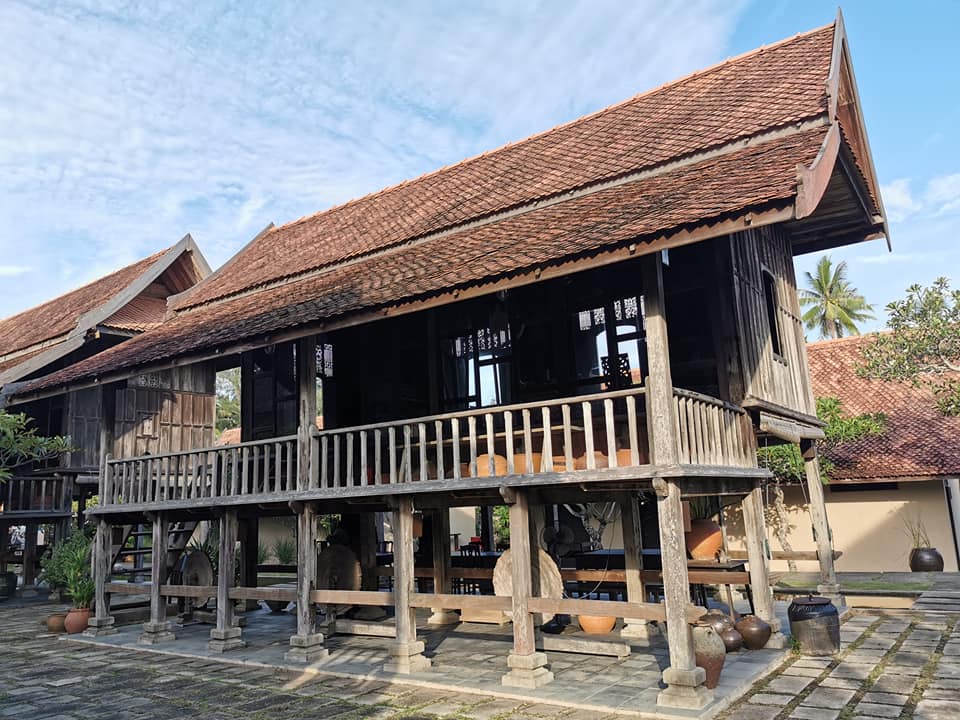
It is customary for the owner to place a needle or coin made of iron under the main pillar (tiang seri) of the house as it is a symbol of semangat waja (courage, strength). This is an old practice. The bangau or egret carving has two faces. In the Mahabharata, the bangau is a makara and it is a symbol of money. The Perahu Bangau is carved with images of characters from the Mahabharata epic. The sanga can be found at the back of boat and it is carved in the shape of a bangau.
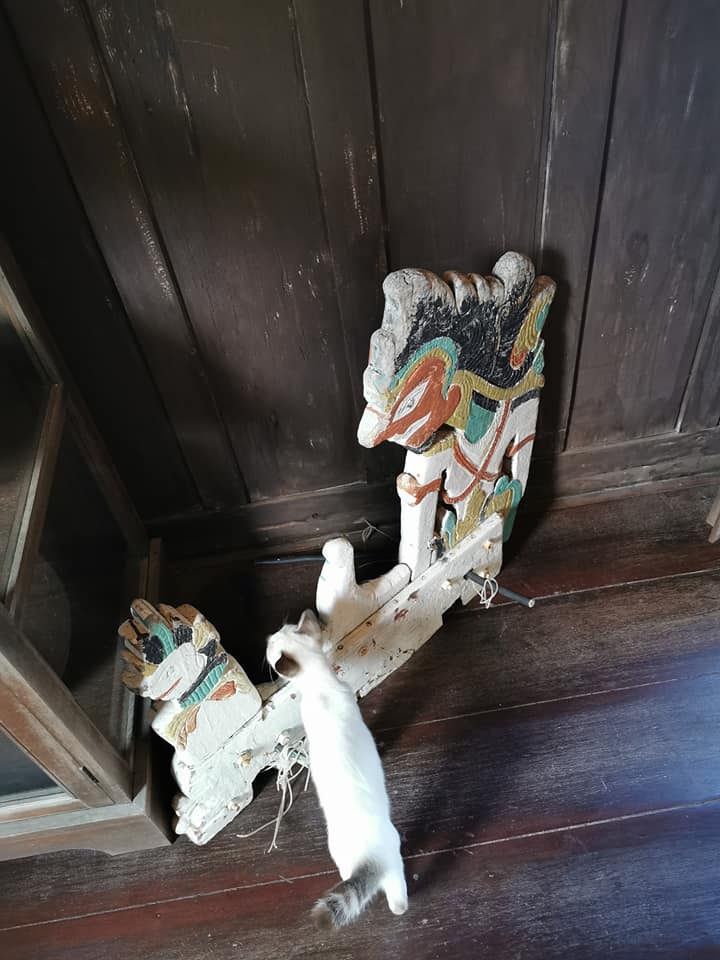
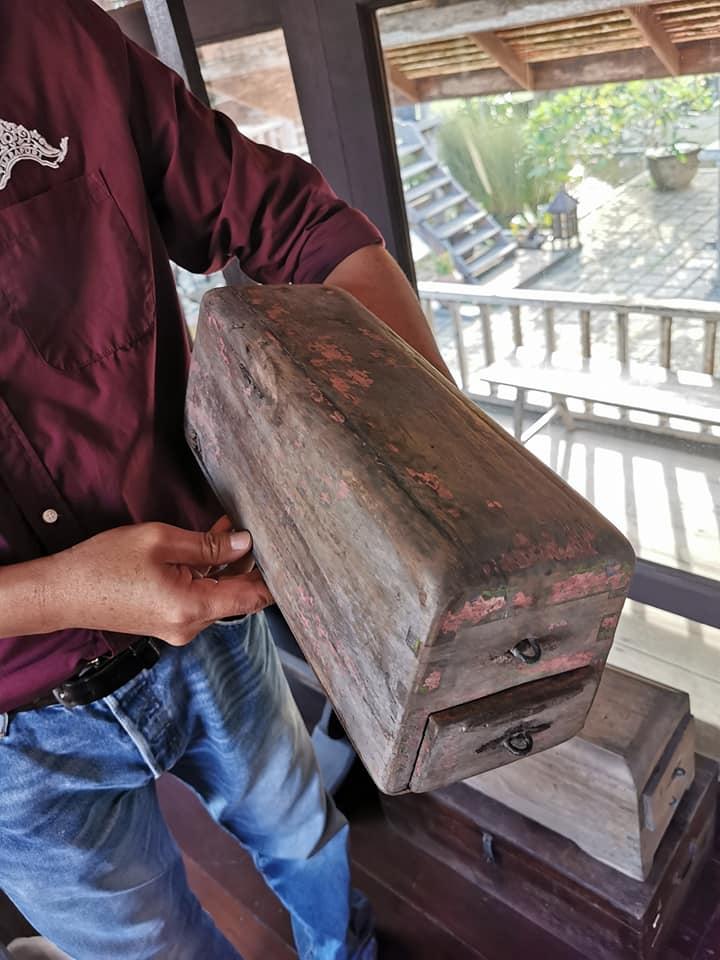
The kotak kelaut is where fishermen place their cigarettes and other personal items. This box can be used as a flotation device or safety tool should the boat capsize.
A laksa maker. In addition, brass-ware can be seen at the bottom of the stand.

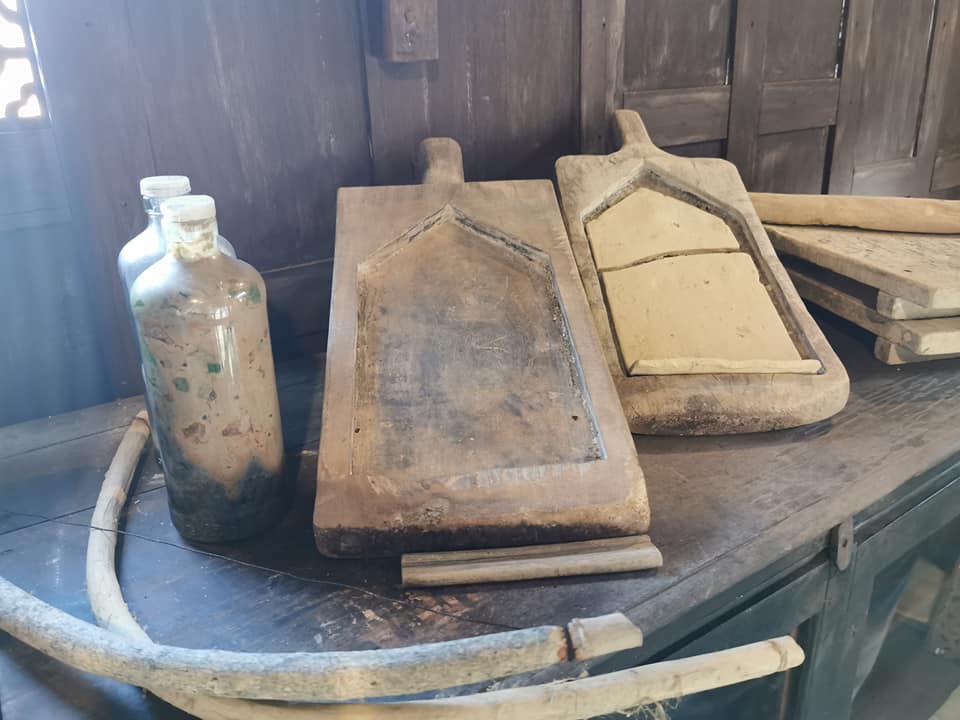
This mould was used to make Singgora roof tiles.
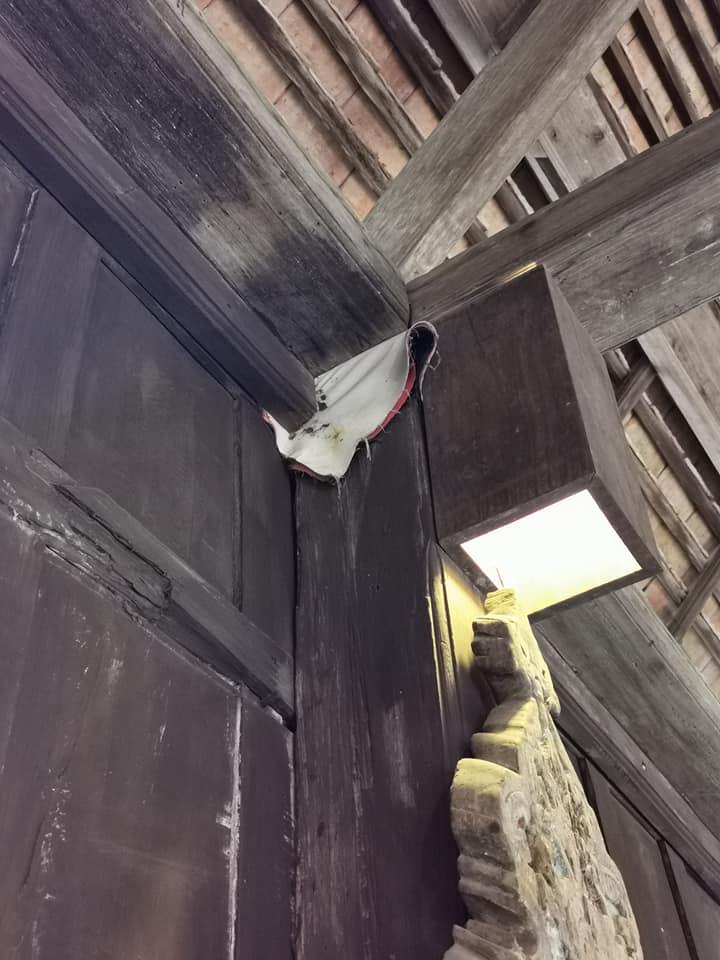
This cloth is called the bunga halang or bendera pendekar (warrior flag). It protects the house from evil spirits. Every pillar has this cloth tied at its top. Later, due to Islamic influence, Arabic words were inscribed on top of the white cloth.
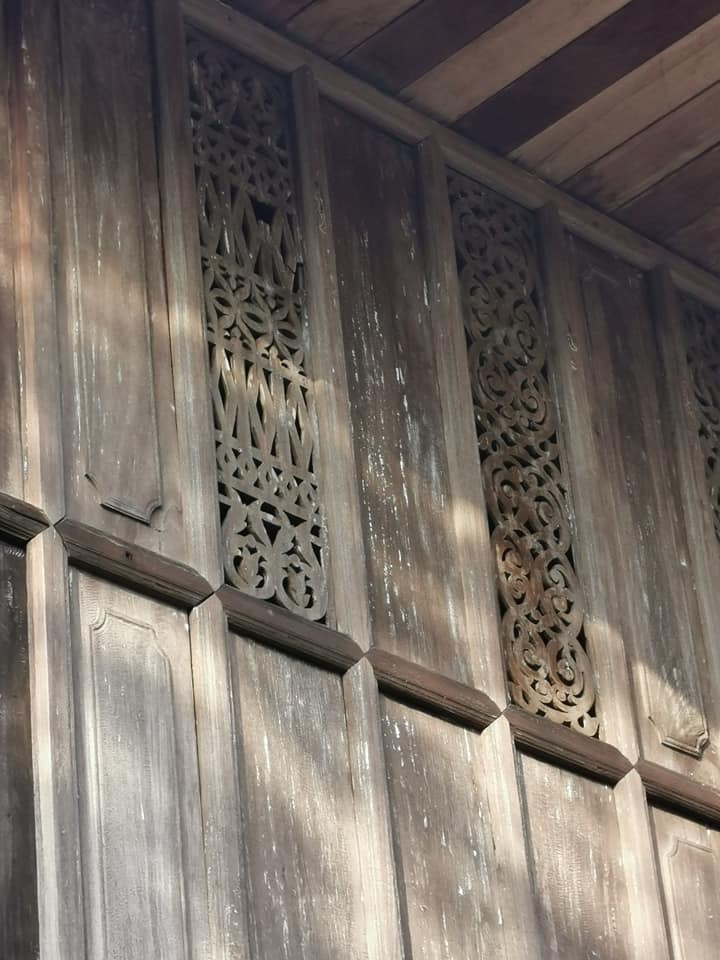
The carving on the left is geometrical. It has the bunga cina motif. The unduk unduk (seahorse) motif at the bottom protects the house from bad spirits. The carving on the right resembles two eyes and a mouth. It is a kala motif.
A few other design elements can be seen below.

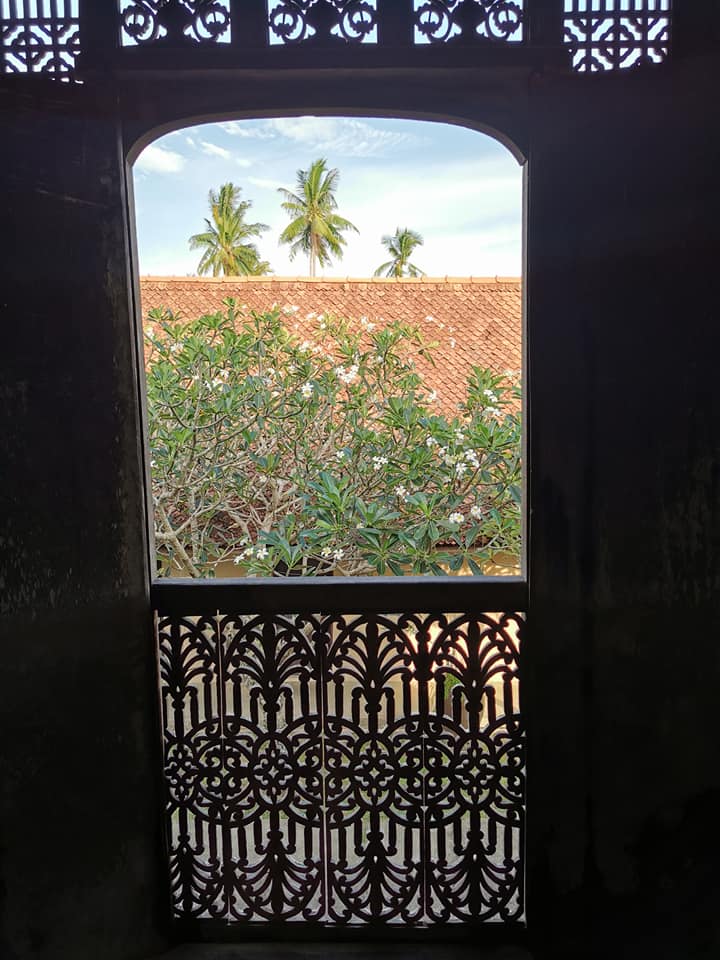
The Baris Laksamana originates from the Ramayana epic in which it protects Sita from dangers. It is now used as a pagar rumah and has the lam alif Islamic wording (there is only one God).
This is a Pagar Musang. It looks like a door but we cannot walk out.
This beautiful wall is known as Dinding Janda Berhias.
Some houses have bamboo walls or dinding pelupuh.

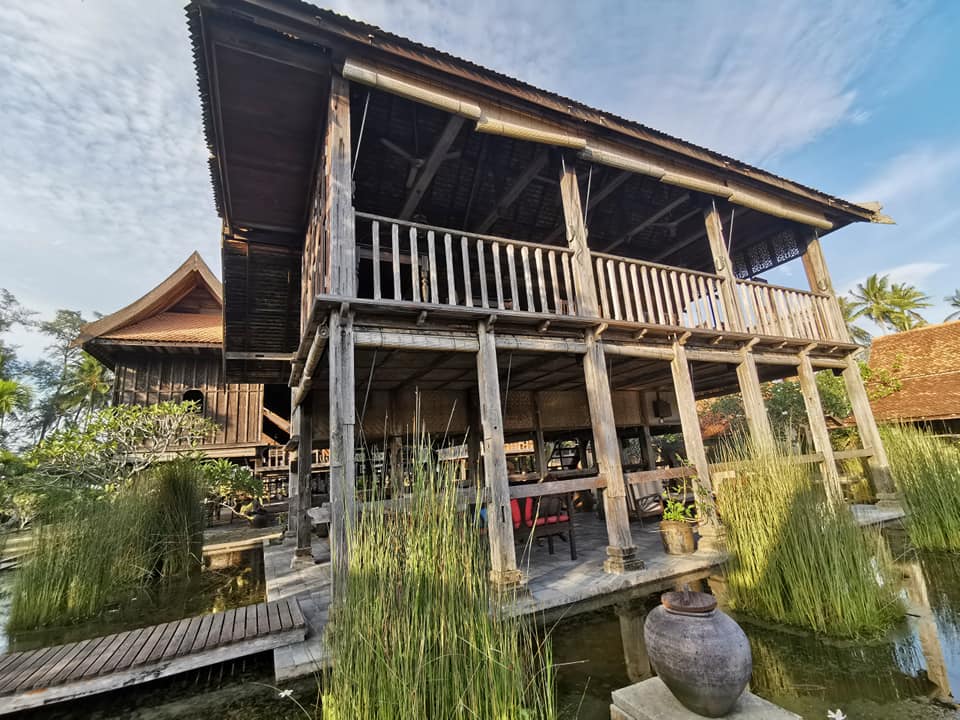
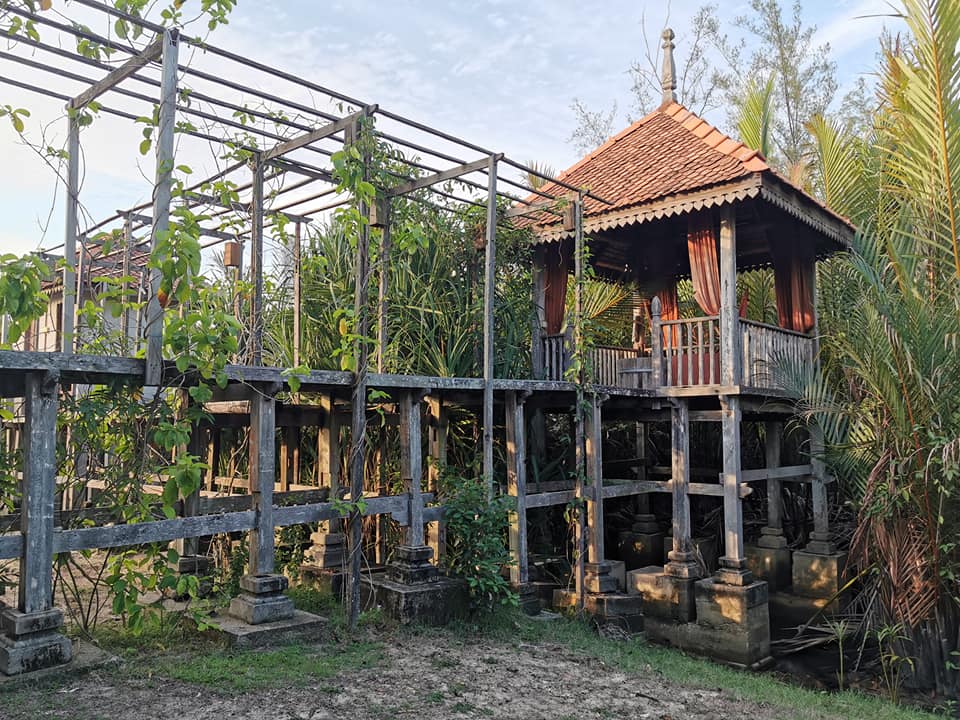
Rumah Tanjung is an 8-pillar house. It was used for the shooting of the movie Merung Mahawangsa and Legenda Budak Setan. The kerecut grass installation in front of the house was designed by famous water colour artist Chang Fee Ming. He called this artwork Standing Proud. Kerecut grass can be used to make mats.
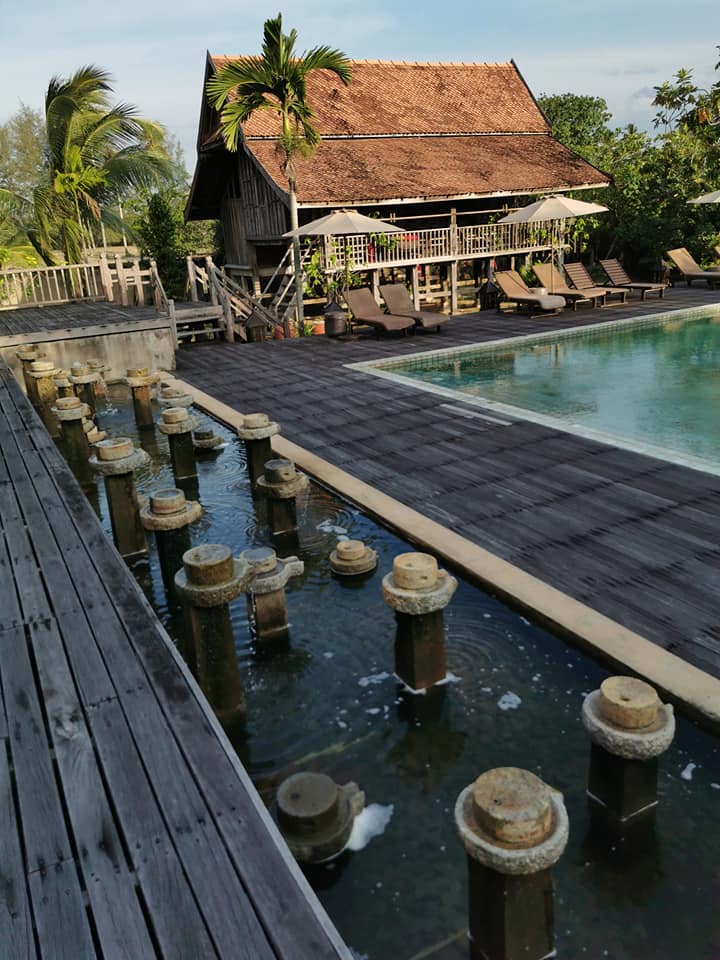
The Kisaran Semangat installation looks like a grinder or mill wheel.
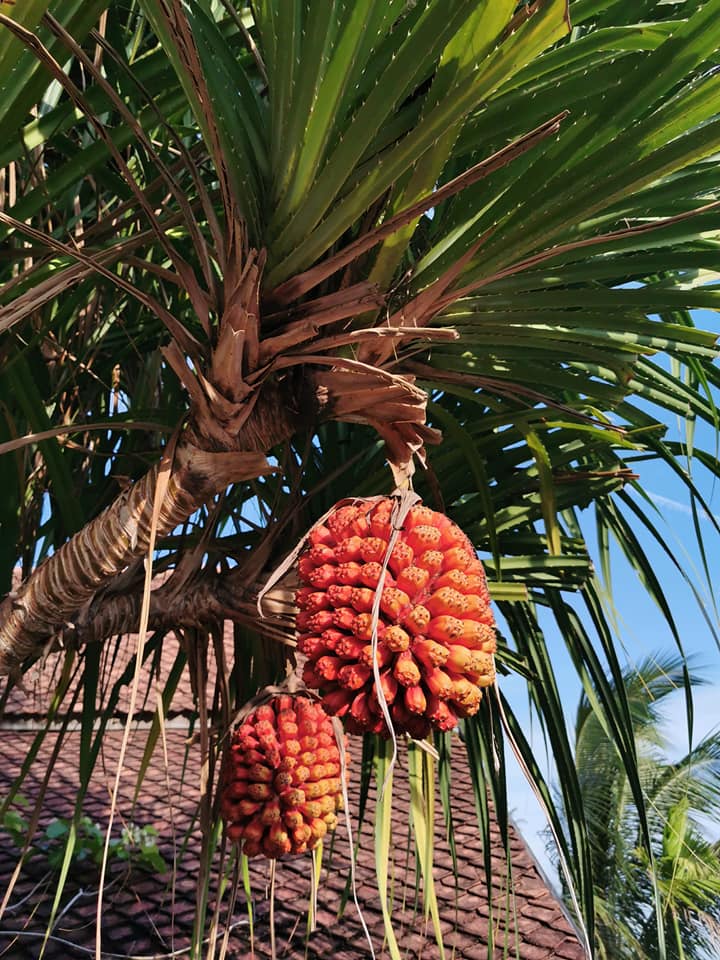
I admired the orange pandan fruit (right). It is called Pandan Laut as it grows by the sea. The white Bunga Keledang or Bunga Kerak Nasi can be found on the resort. In Terengganu it is called Bunga Tikam Seladang.
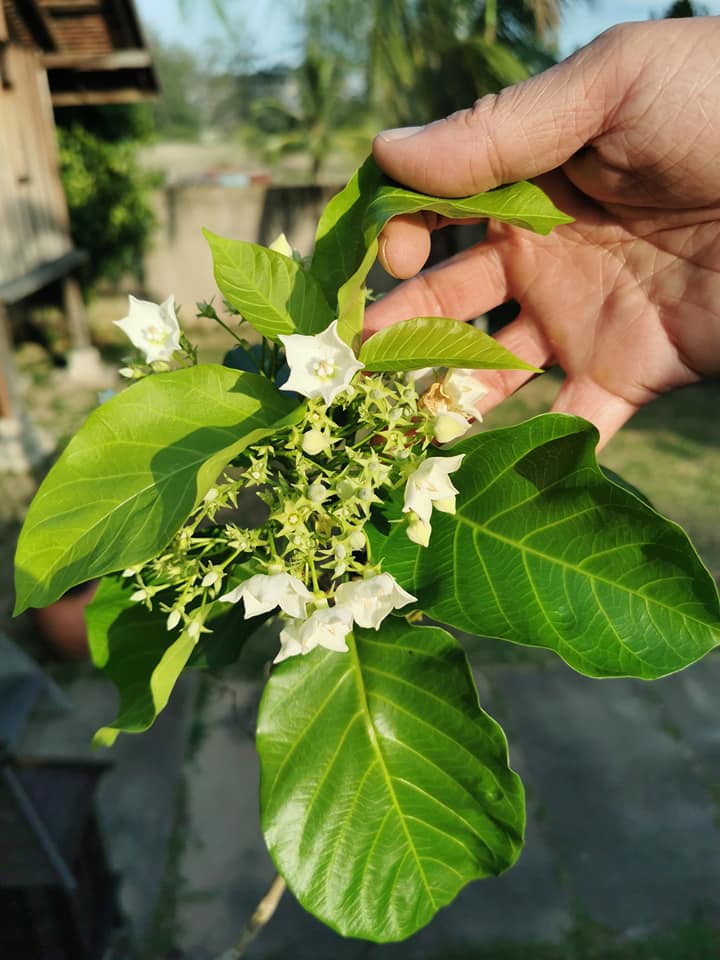
The Rumah Jeram has a Chinese Peranakan interior design. It is believed that Cheng Ho on his 4th journey to Malaya instructed his men to go into Kampung Jeram to get water.
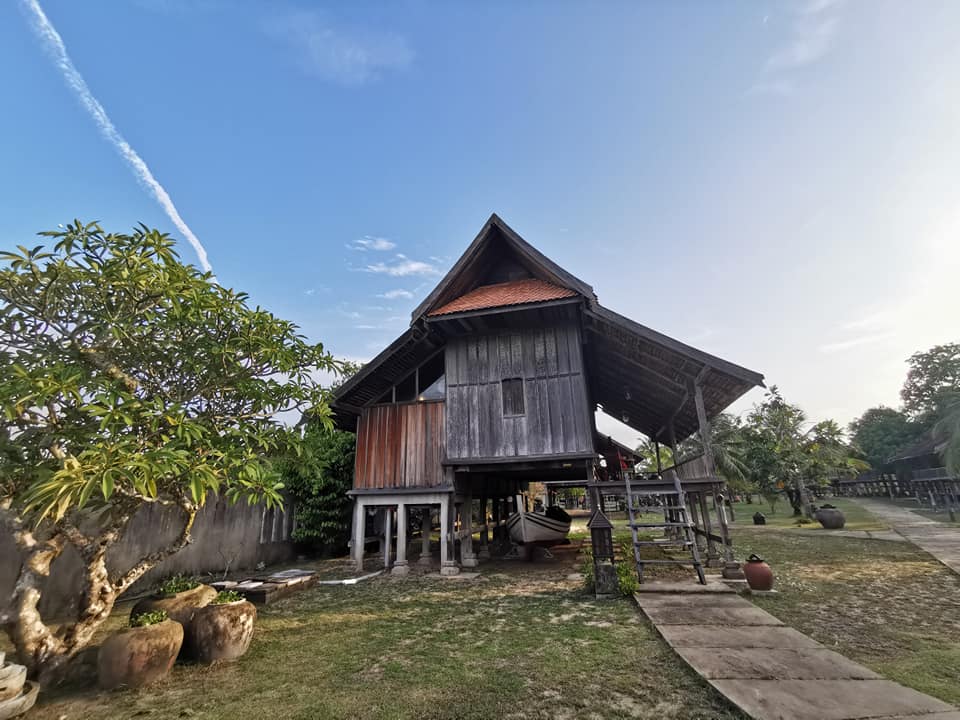
Boats, the main form of transportation in the past, were stored below the house.
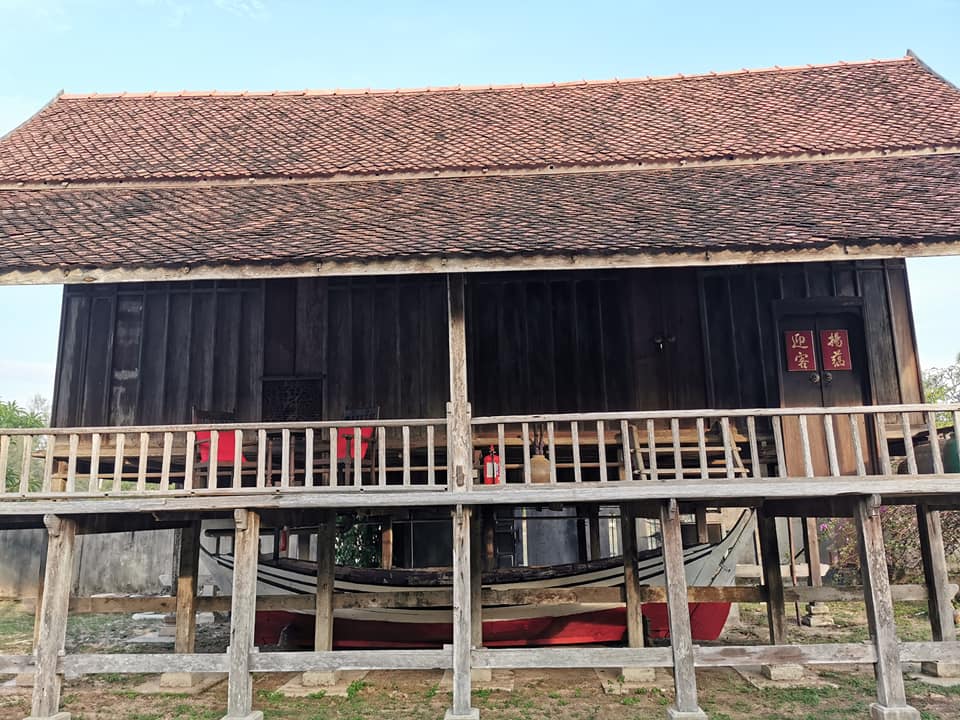
This is a Baloh rice barn to store paddy.
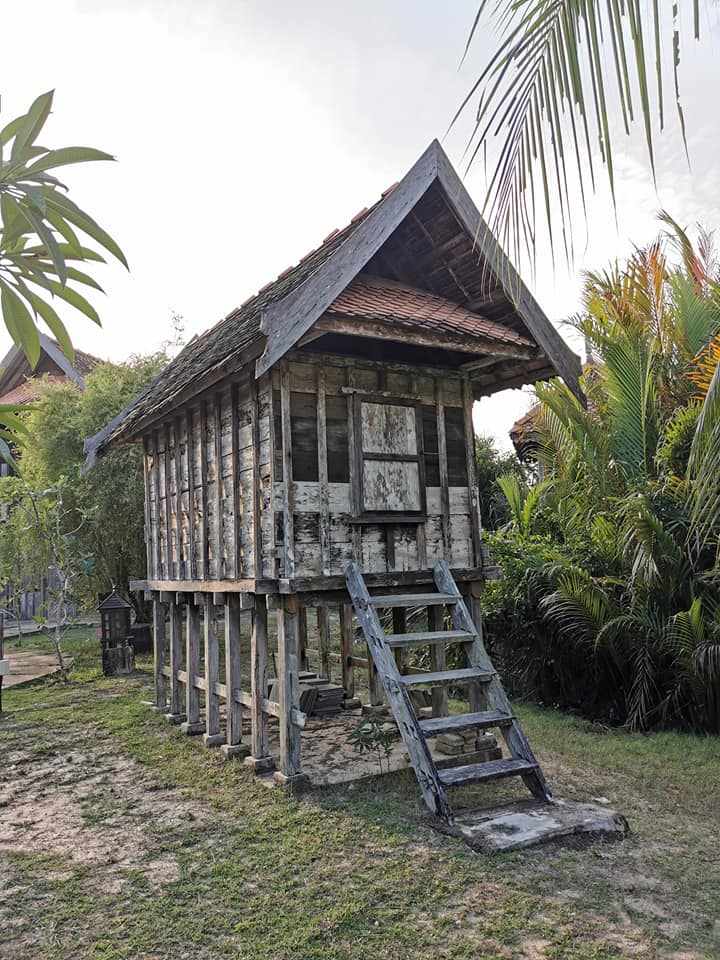
An arch from the Istana at Jalan Kota in Kuala Terengganu.

A spa house where guests can enjoy mandi bunga and massage. Notice the stupa at the top; it indicates Buddhist origins.
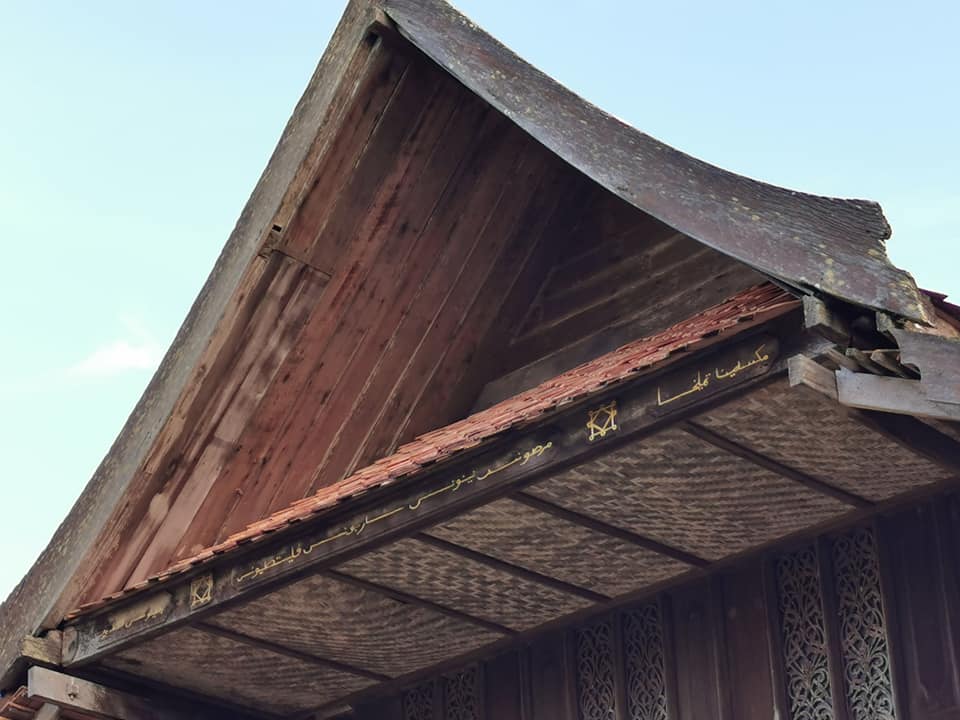
Jawi inscription related to the Wali Tujuh.
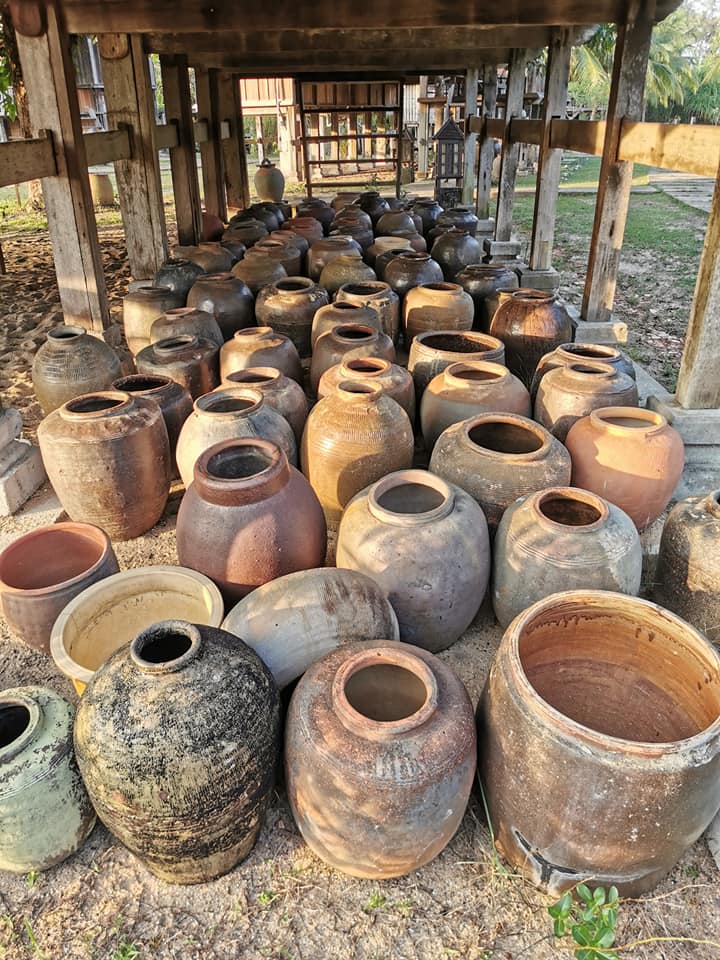
Salted fish and preserved mangoes were stored in urns. There were no freezers back then and salt was expensive.
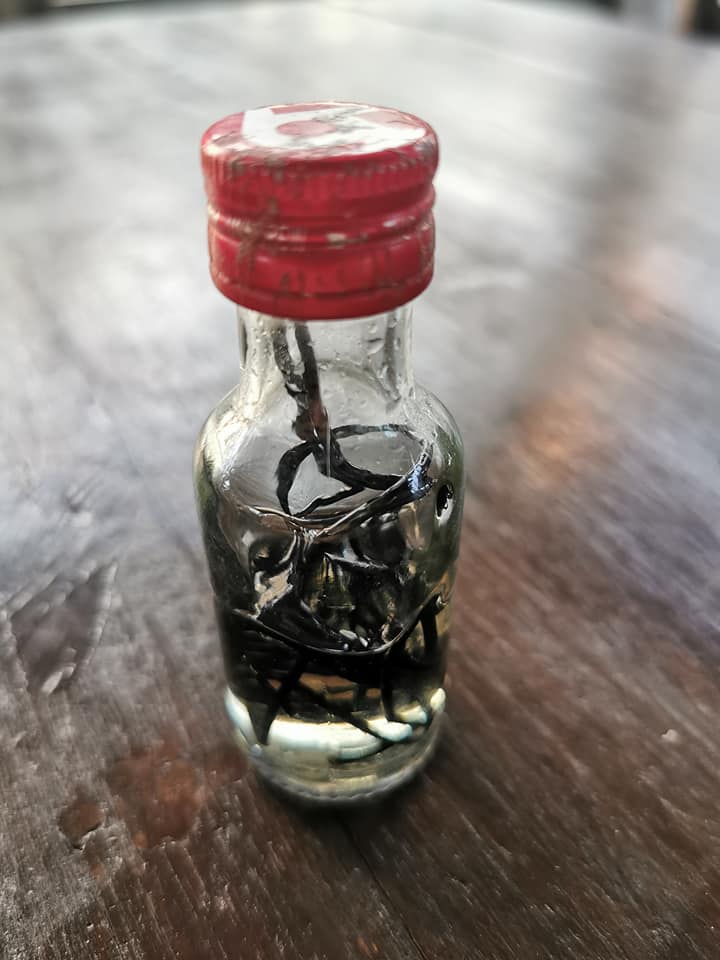
The tiang seri is usually the middle pillar underneath the rumah ibu. Minyak Canuar Kampung or Minyak Seri is placed at this pillar. It is made from coconut oil. It serves to bring radiance (berseri) to the people in the house.
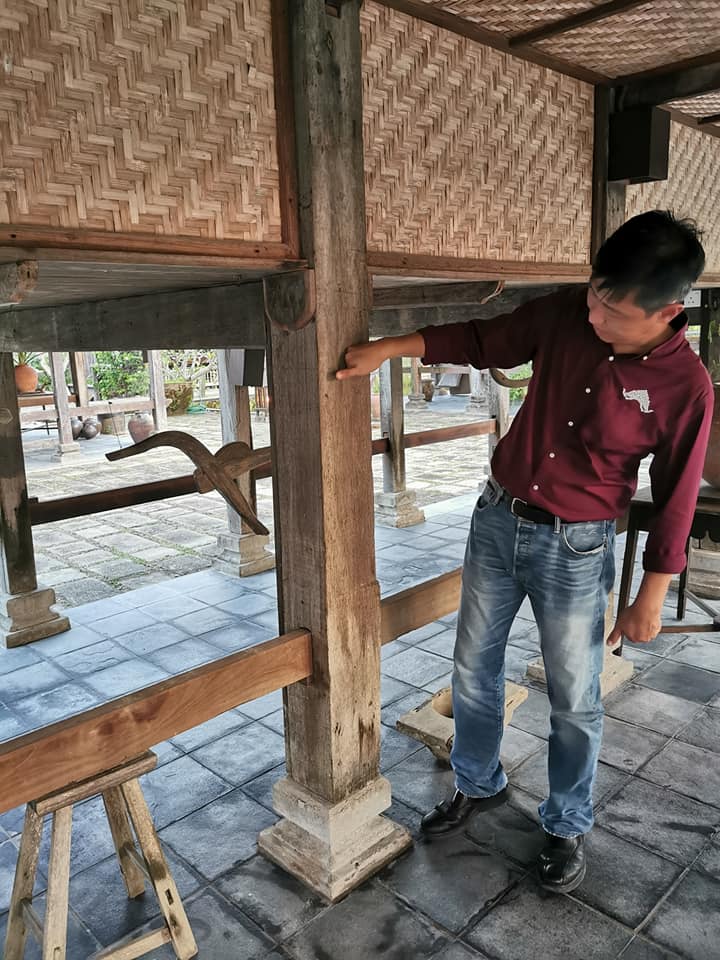
The houses are constructed with bendul beams. Nails are not used in the construction of the houses.
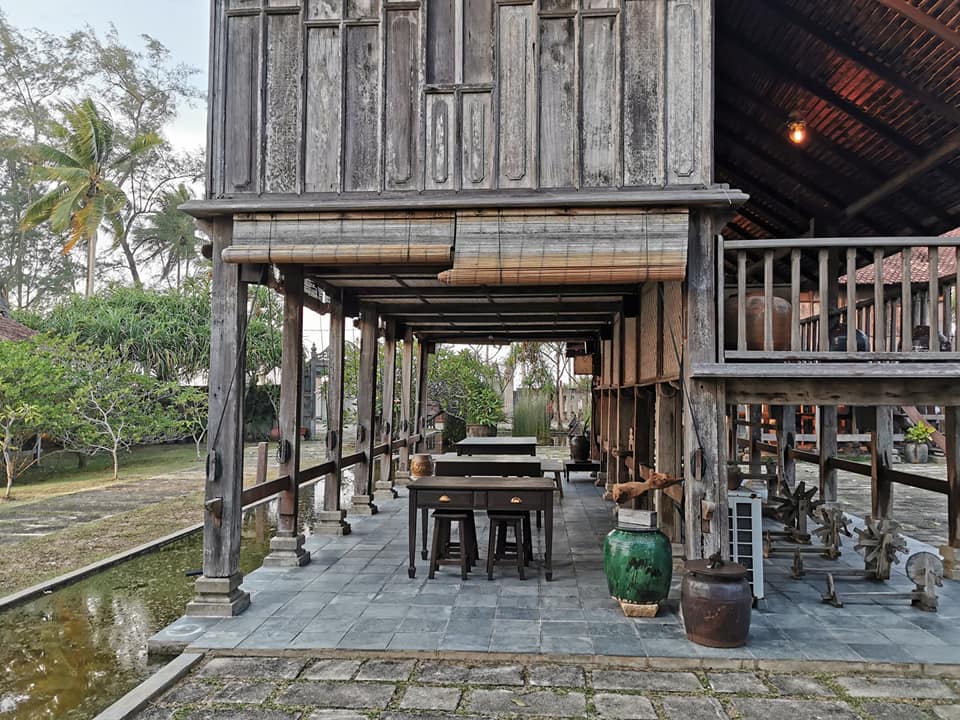
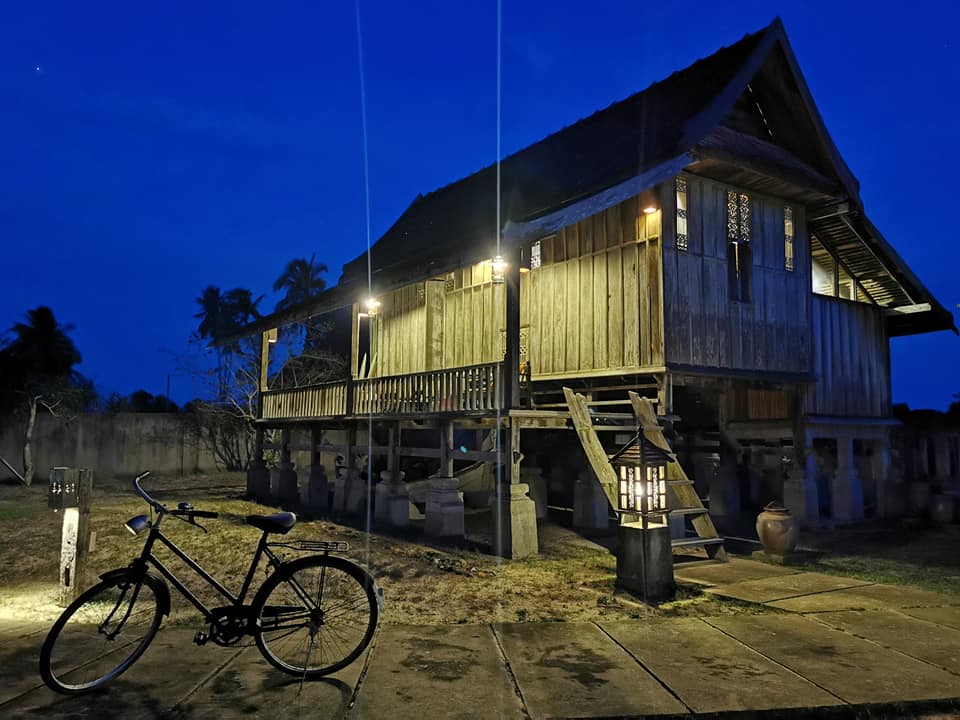
Terrapuri in the evening. A big thank-you to Mr Alex Lee for showing me around his lovely resort.
The Batek People

by Ong Li Ling

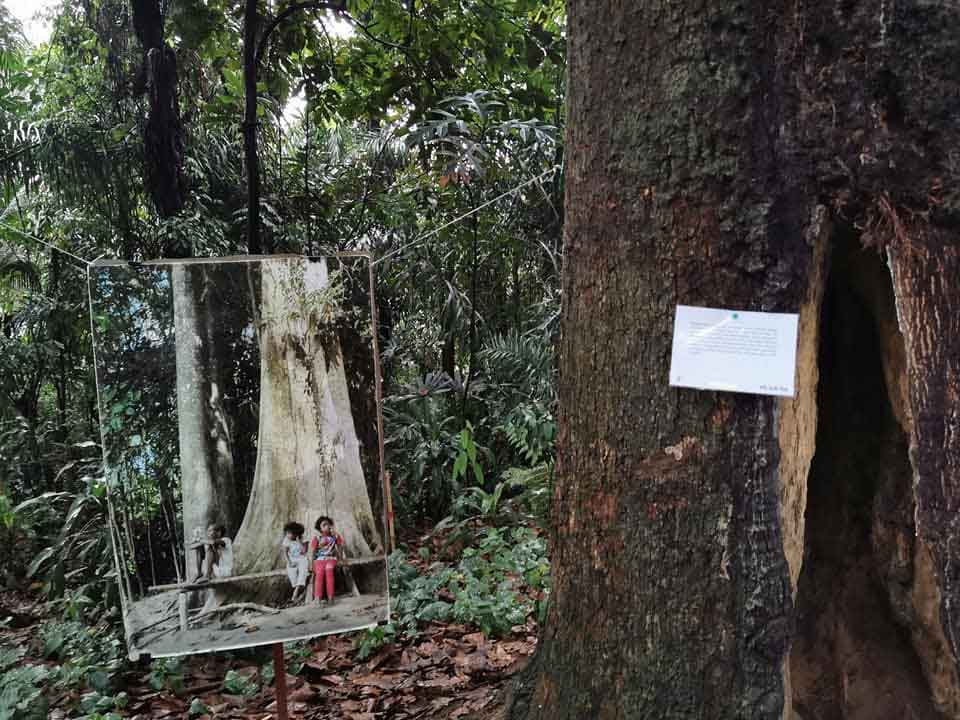
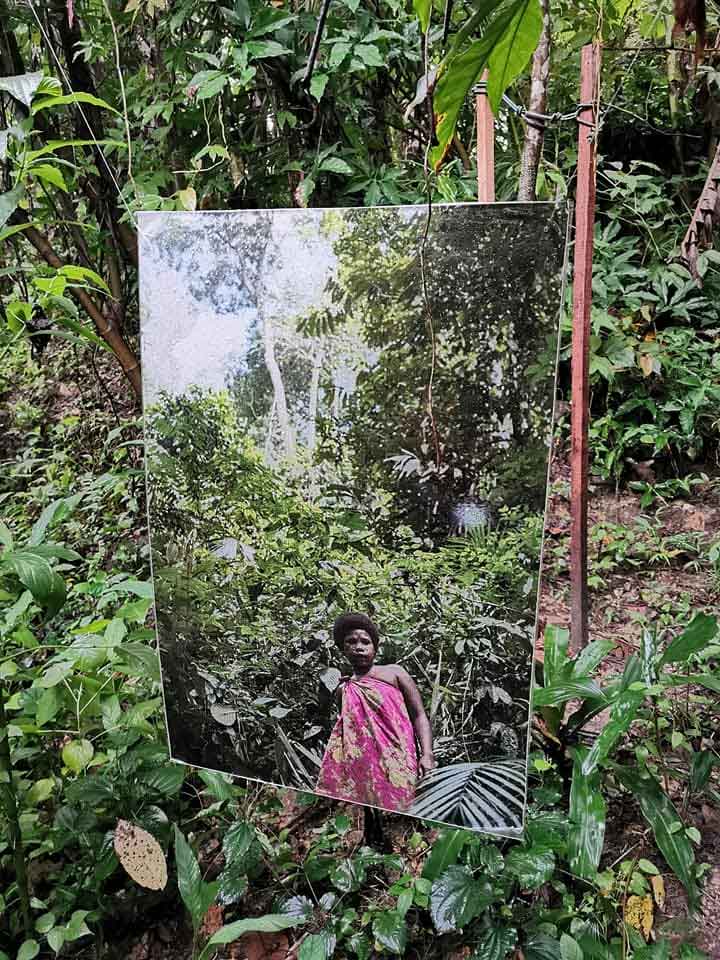
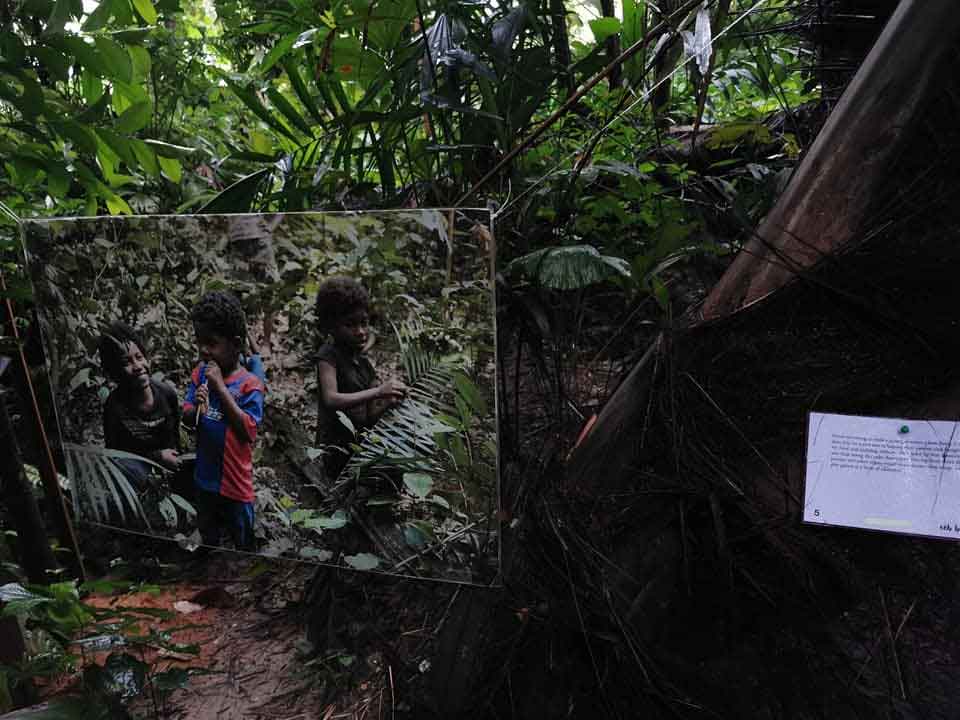
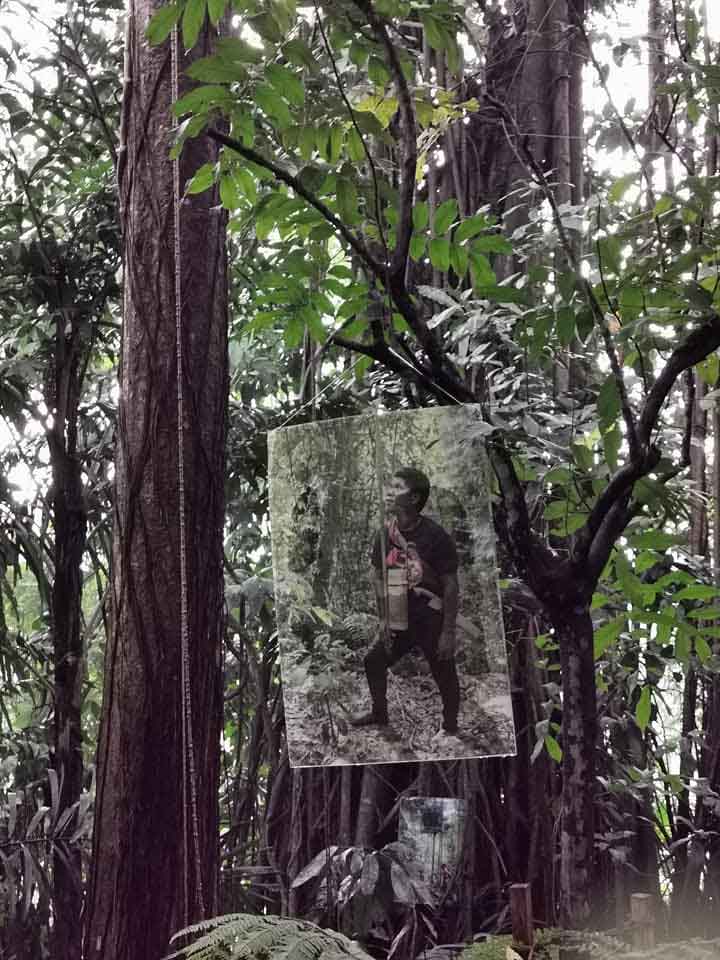
I recently attended a curatorial tour of Mahen Bala’s Ceb Bah Heb Elders of Our Forest exhibition at the Taman Tugu Nursery Trail. This exhibition is part of a documentary looking at the life of Batek people. The exhibition is on until the 21st of July; do go check it out. The documentary itself looks at the relationship between the forest and its people. You can find more details on the documentary here.

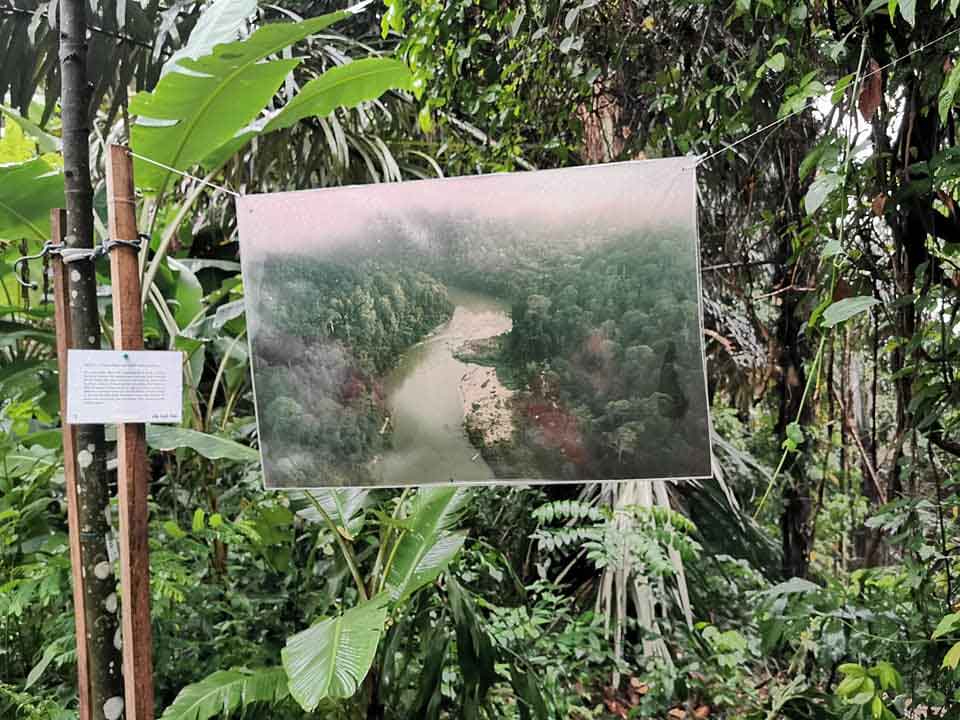
Below is an aerial photograph of Sungai Tembeling. At present, the left hand side of the river is still properly preserved. Unfortunately, the right side has been exploited. If you only live in the jungle, you will never see land this way. The Batek do not see land the way Google Maps, Waze and city folk see land. The Batek use trees and mountains as markers. The coloured structures in the photograph are Batek settlements.

Traditionally the Batek are nomadic and hence they had no proper settlements. Due to pressures from outside and their inability to continue living off the forest, they are changing their lifestyles. Our government is telling them to stay put in order to participate in the lucrative eco-tourism business. This is against their ancestral practice as they are used to travelling and foraging. This photograph shows what the typical Batek person does all day. They are waiting for tourists to pop over so that the curious tourist can take photos with them. Reminds me of the Long Neck women I saw in Myanmar. The tour guides will give them a token amount to “add to the authenticity” of the jungle tour. This shows how hard it is for the Batek people to live off the forest today.

The Batek only take what they need from the forest. Whatever they hunt or forage will be brought back to the village to be shared. They have respect for the animals they kill. They believe bad luck will befall them if they break the taboos.

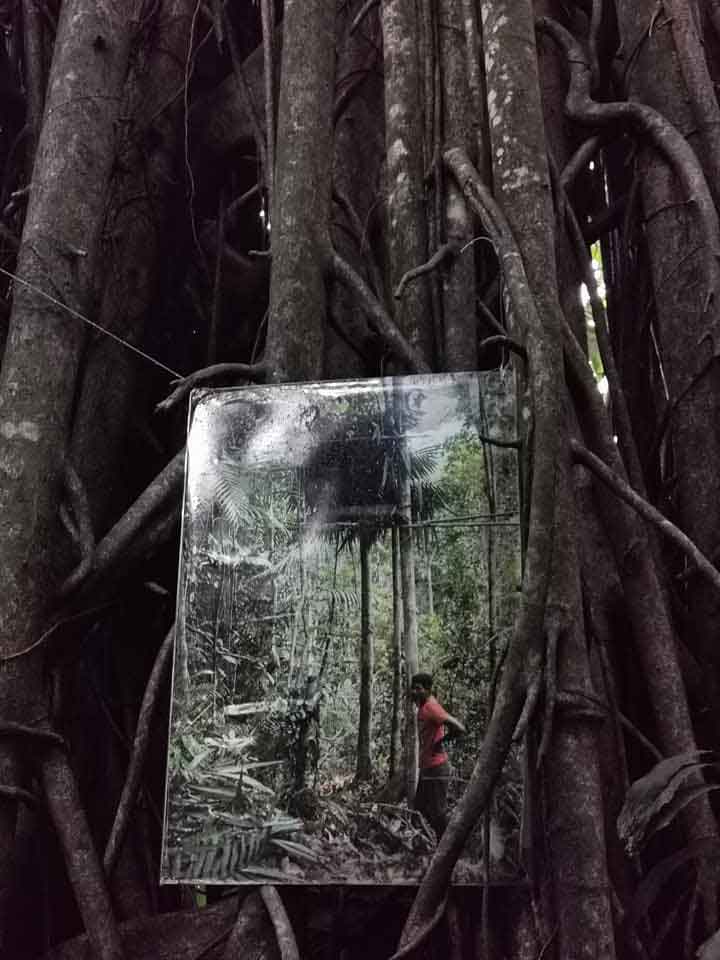
This photograph shows a typical Batek family and the structures they build. This structure is called a Hayak, Lintus or Lean To. Once they decide where to spend the night, the whole family is involved in setting up their home for the night. When they are ready to move, the shelter is returned to the forest and so their impact on the jungle is minimized. The Batek view the seasons differently than we do. During the fruiting season, they live entirely on fruits. During the flower season, they survive by harvesting honey.

The children are involved with the running of the community from a young age. As soon as they are able, they learn survival skills such as how to use the parang and how to weave batik. This period is also an important time for bonding, as the elders will tell the children folk tales. The children are taught that every member of the family is important.

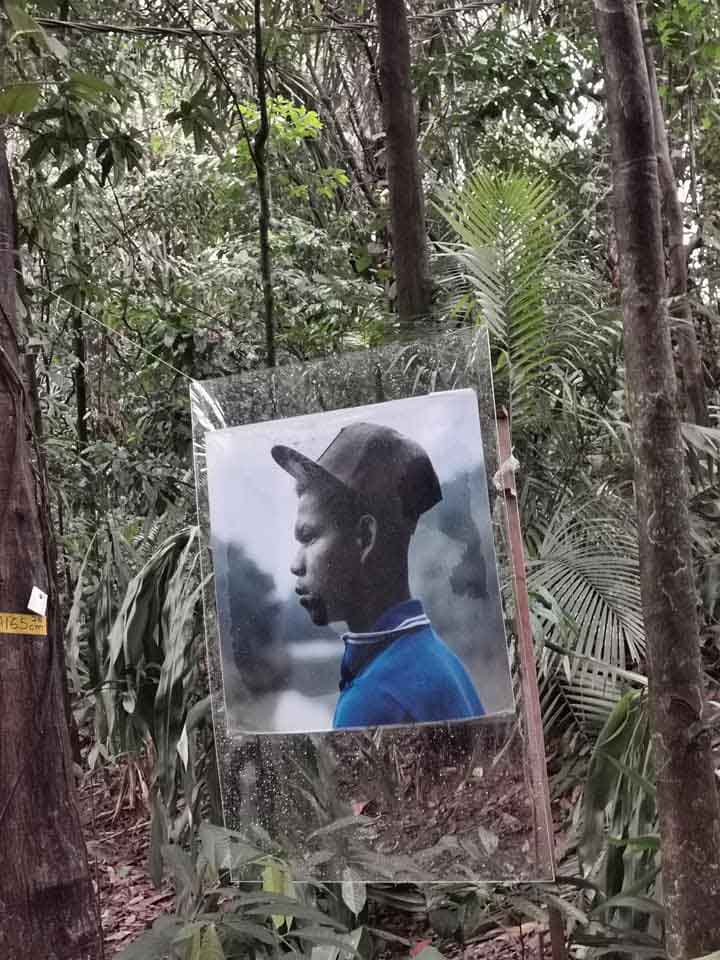
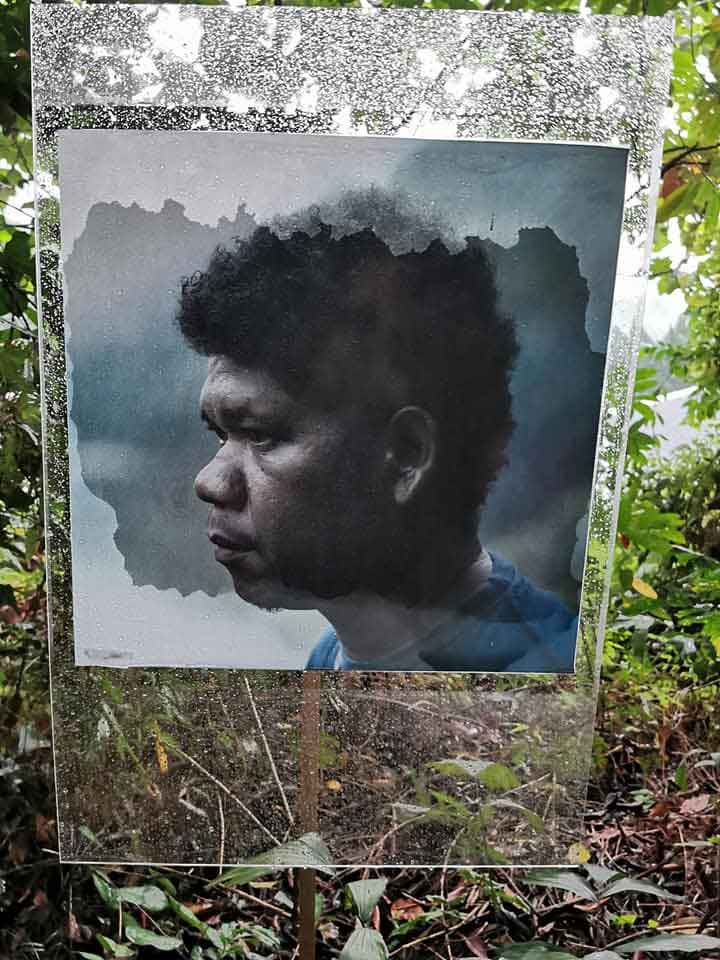
This is a photograph of Mr Di. He is holding a blowpipe and he carries a canister of darts around his neck. The blowpipe is an important asset to the Batek and they keep their blowpipe from cradle to grave. It is the most important of their material possessions. Batek people are egalitarian in that they consider both genders as equals. Women can also hunt and forage food and men can take care of children. This equal partnership relationship is now changing as they are forced to stay in one place and men are forced to do work requiring hard labour. Hence, the women stay at home to look after their kids. We can see the damage that this has done to their community. Modern civilisation is forcing our ideas and our “modern” ways of life on them and they have no other choice but to follow.

This is a photograph of Mr Di’s son. In general, the Orang Asli are depicted negatively in the media. We often see them when there is negative news e.g. protest against deforestation. The way these articles are written are so negative towards the Orang Asli that many think that “they have not caught up with our modern world”. Mahen made sure that his photographs show that the Batek as dignified and empowered. Some Orang Asli groups have traditional costumes and they wear these with pride. However, they have been directed to wear the costumes for the sake of tourism and that is not a good practice. Just in case you are wondering, the Batek do not have a traditional costume.

This is an important photograph as it shows the burial site of a deceased Batek. They will choose the highest tree that they can climb and they will build a simple structure. They will then start a fire to keep animals away. The Batek believe that the soul will fly to heaven. This location is kept a secret, as they do not want outside disturbance. It was reported in the news recently that the Kelantan government exhumed the body of a Batek, did a post mortem and then buried the body according to Islamic rites!

The Batek gather and share stories whilst hunting e.g., “I saw a herd of elephants next to the river”. This allows them to form a shared mental map of the area. They have a ground view of the land and whenever people share stories, they can imagine what else is happening on their land. The Batek use trees that really stand out as waypoints to navigate the terrain.

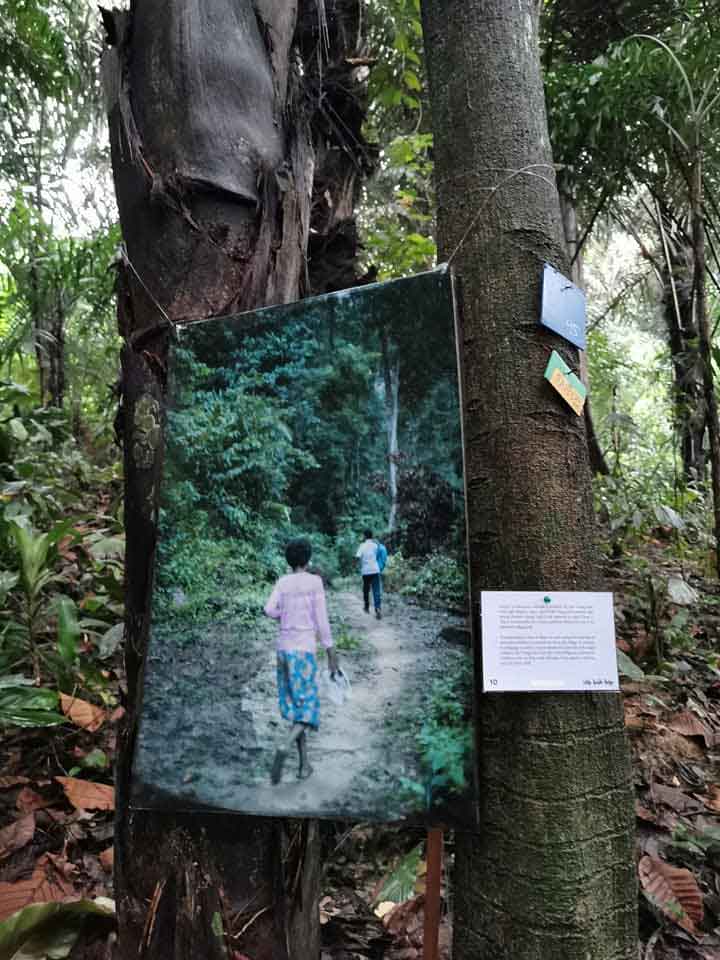
This photograph shows some Orang Asli children going to school. Most of them have trouble getting to school due to transportation. Some Orang Asli kids travel 12 hours per day to receive an education and so it takes amazing determination and grit. The cost is another challenge, as their parents cannot afford shoes and uniforms. They are sometimes discriminated against by teachers and hence they do not find school enjoyable. After a while, they feel so discouraged they prefer to stay at home and help their parents. Mahen met many bright Batek kids. Some quit school before the age of 14 due to these challenges. The statistics show that out of 100 who attend primary school, only six are expected to finish Form 5.

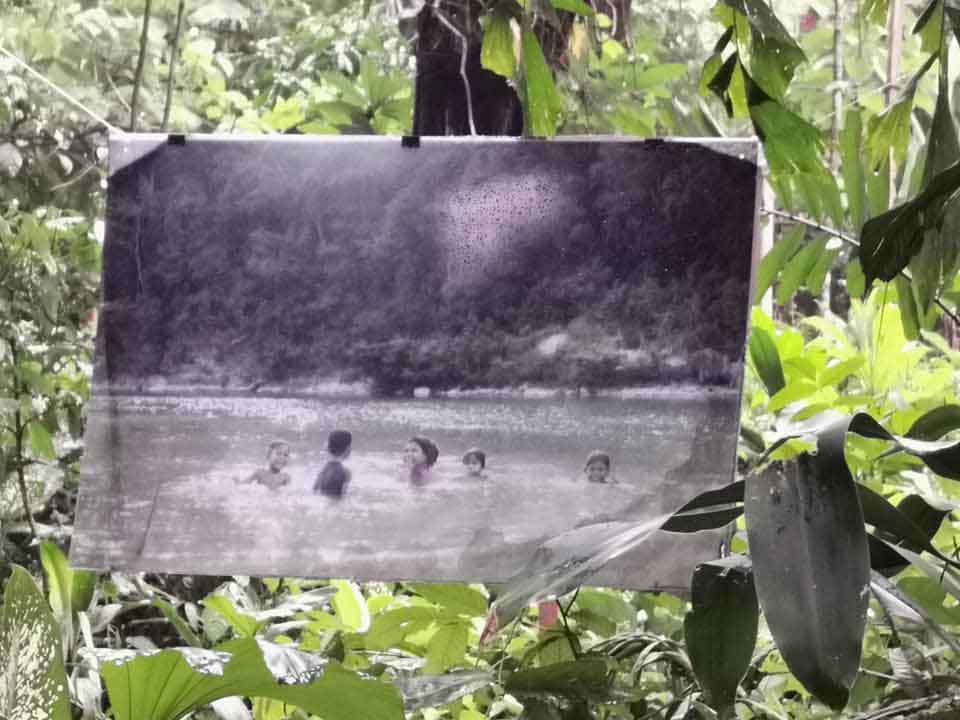
This photograph shows the Orang Asli children happily bathing in the river. Most of us will find it difficult to swim in these rivers due to the currents.

This final photograph depicts Mr Di against the backdrop of construction and development. It encourages us to reflect on the Batek way of life versus our way of life. We can still live as Malaysians and go back home and practise our traditional way of life. So why is it that we force Batek people to change and adapt to our way of life? According to the statistics, there are only 1500 Batek people left. It is only fair that we acknowledge their customary rights to their land. The Batek are well versed in the medicinal values of forest plants but if you are a researcher, it may not be in the Batek people’s best interest to publish these secrets in journals. We can assume that greedy pharmaceutical companies will come and grab the knowledge and then patent this knowledge for their commercial benefit. When that happens, there is little else left for the Batek to survive on.

Nam Hooi Wooi Koon – a Cantonese Clan Association

by Ong Li Ling

Several site excursions were organised as part of the Georgetown Heritage Celebrations 2019. I was fortunate enough to join the tour of the Nam Hooi Wooi Koon Cantonese Clan Association. Mr Adrian Pak (President of the Association) and Mr Johnny Yee (Honorary Secretary) led the informative tour and also provided the background information for this blog piece.

Our guides explained to us that Nanhai District is located in Foshan City China and has a history of 2,000 years. In 214 BC this place in Guangdong China was known as Nanhai County and, in 1992 it was renamed Nanhai District. The Nam Hooi Wooi Koon is a Cantonese Clan Association with members comprising of immigrants from Nanhai. It has been estimated that there are around 400,000 Nanhai Chinese living outside China and they are scattered around the world.

Some famous Nanhai figures that you may have heard of are revolutionary leader Kang Youwei, reformer Kang Tongbi, martial artist Wong FeiHung, martial artist Ip Man, actor Leung Ka-Fei and father of Engineering Zhan Tianyou. During the 1890s, Nanhai immigrants, Chen Yuqin and Zhou Xingyang, controlled the Penang opium market. They were the founding members of the Kwangtung Association, Nam Wah Ee Hospital, Chinese Town Hall and the Ng Fook Tong School in Penang.

Nam Hooi Wooi Koon was established in 1828, which means it will celebrate its 192nd anniversary come October 2019. Nam Hooi Wooi Koon is the oldest Overseas Establishment certified by the Nanhai Association in China. Within 77 years after its establishment, Nam Hooi Wooi Koon occupied its own building and it also operated 4 other shop houses and a funeral parlour. Coincidentally, the 1st (Bai Yupei), 11th (Bai Yuzhan), and the 21st President who is also the sitting President (BaiYubin) are from the Bai (Pak) family.

To make it easier for members to stay informed, Nam Hooi Wooi Koon started a Facebook Page and an official website in 2002. They also established a brotherhood Association with 2 other clan associations namely the PunYue (Panyu District) and Soon Tuck (Shunde, District).

Georgetown is a UNESCO World Heritage Site with more than 5000 buildings of interest. Nam Hooi Wooi Koon is one of 82 Category 1 buildings, reflecting the authenticity of its cultural landscape. The length of this building is 200 feet, which is rare in Penang. The front faces Chulia Street and the back faces Kampung Malabar.

We started our tour at the front door. The words Nam Hooi Wooi Koon (in Cantonese) is solidly moulded on a concrete style signboard above the door. Instead of using gold coloured paint, “gold leaves” were stuck onto the letterings to make the words stand out. You can see with a pair of 7 lettered Chinese couplets on either side of the door. It reads Nan Yu De Zhi Peng Cheng Yuan  and Hai Guo Tong Xin Yan Hui Zhang. This phrase was composed by Lingnan calligrapher Lin Qihan in 1904. The roofing and engraving on the exterior beams has a unique wooden flowery architectural design and showcases the expert craftsmanship of the artisan.

Once you enter the front door, you will see a Tai Pak Kong (Fu De Zheng Shen) on your left. It is also known as Tudi Gong (Diety of the Earth). Everything except the deity was repainted in early 2019. A specialist was hired to do the repainting and lacquering and he replicated the same colouring style as indicated in the archived photos. You will notice that this is the typical style adopted from Southern China. Tudi Gong is the Main Protector of the Community and Land.

Moving on, we were shown the United Nam Hoi Association Affiliates plaque on the left wall. This initiative was launched in Oct 2017. Members can establish trade with China via the Malaysia Nam Hoi Commercial Division.

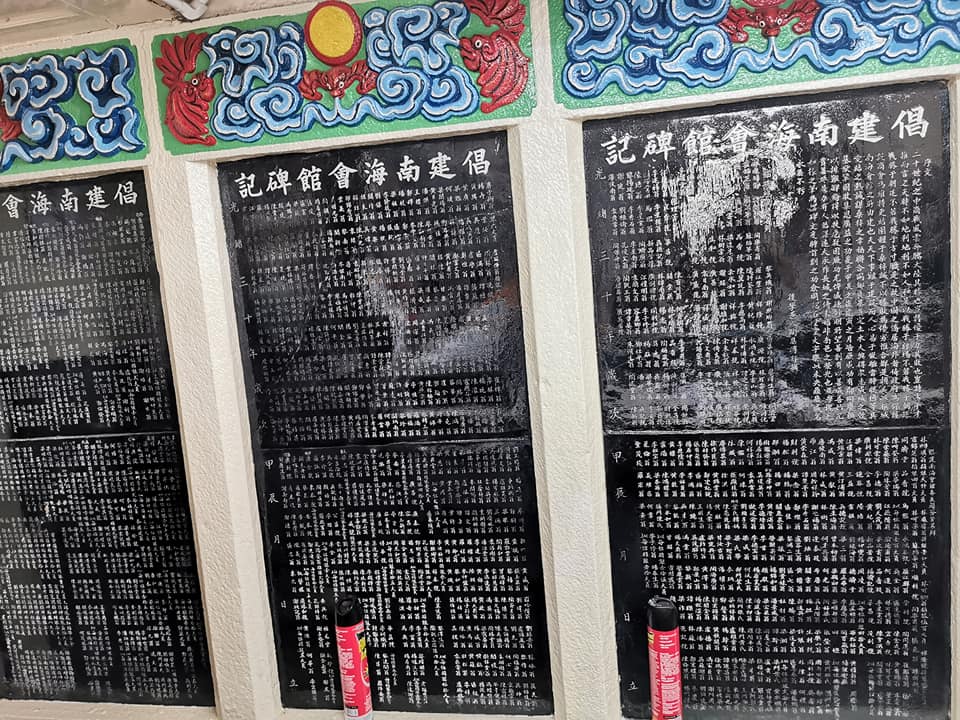
We noticed the black tablets behind the counter on the right. In the 30th Year of Emperor Guangxu many enthusiastic members donated to the building fund, and their names were engraved in white lettering against a black background stone tablet. Carving a list of names onto a stone is a common practice in clan houses and kongsi. If you look carefully you may find the names of your great-great-grandfathers, great grandfathers or grandfathers engraved on the tablets. Members contributed not more than a few ringgit but it meant a lot to the association, as the value of money was big back then.

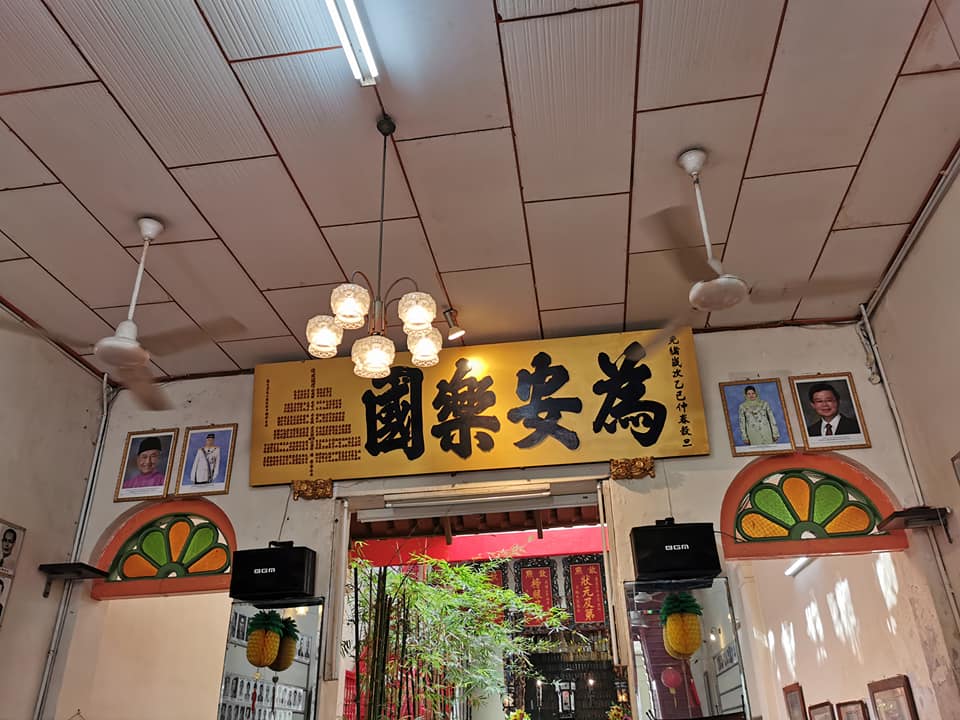
We looked up to admire the Golden Congratulatory Plaque. The previous plaque which was put up in 1905 collapsed in 2000  due to termites  and a replica was put in its place .The board is engraved with the 4 letters of ‘Wei An Le Guo’.

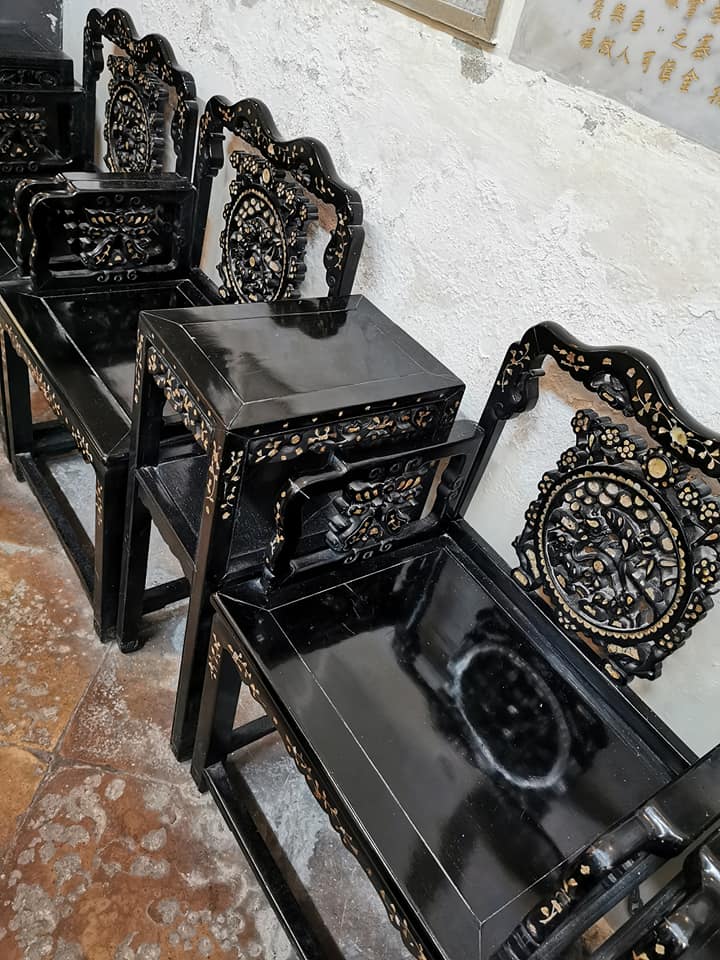
There are lots of rosewood Ching Dynasty and Guangxu era antique furniture in the Hall. Rose wood is strong and free of termites. The more you sit on the chairs the more it shines and it will also cool you down when ambient temperatures are high.

There used to be 2 large Qing Dynasty vases on the stage. Unfortunately these priceless artefacts were stolen. The Association has since installed a CCTV to prevent future occurrence of theft.

We were brought to the inside section of the building where we admired the 2nd air well. As this air well has not been sealed, rainwater pours in when it rains.

Netting has been installed to prevent bats and swallows from coming in.

We looked up and noticed 5 red plaques hanging from the ceiling. These plaques are the pride of Association as they are given only to outstanding Chinese Scholars. These 5 pieces were originally from Nan Hai and they were bestowed to Nan Hai children who got into the Honorary List after sitting for the Qinghai Imperial Examination (example The Champion Zhuangyuan and The Flower Tanhua). These Scholars were eventually promoted to senior positions such as Ministers in the Imperial Palace.

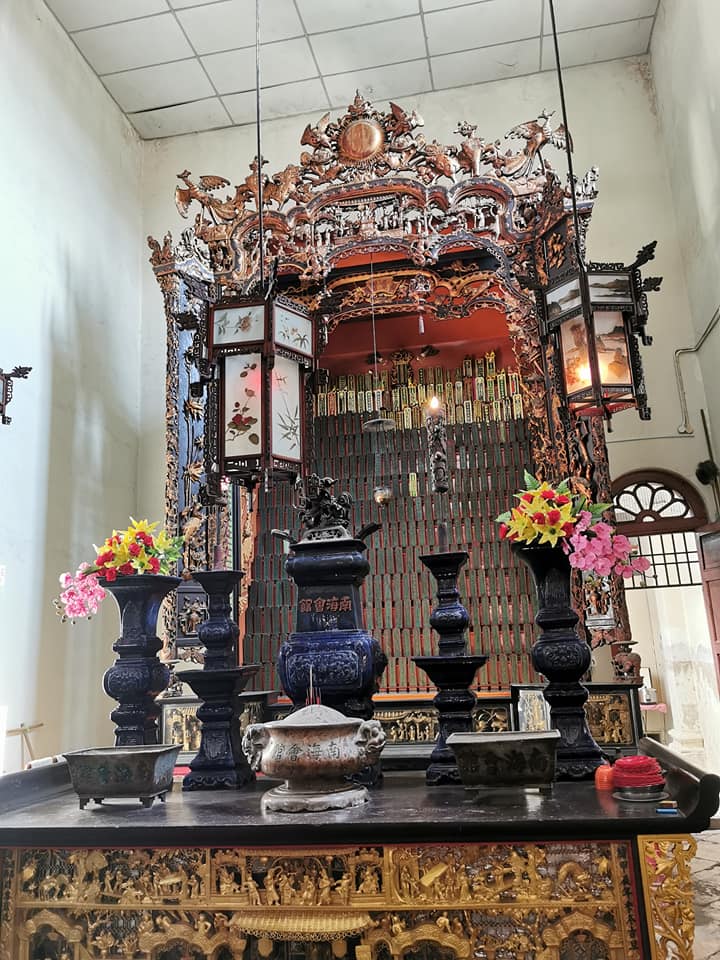
At the end of the inner hall, there stood a high Chinese-style altar with numerous ancestral tablets. These tablets commemorate the dead. Their families often come to this alter during the Cheng Beng Festival instead of visiting the tomb.

The altar is more than 2 stories high. It is rare to find wooden structures of that height especially after the Communist rule in China. On the altar, we admired exquisite carvings of deities that told of Chinese folk tales. We also saw flowers, fishes and others of wooden frameworks with golden leaves stuck on. This altar is one of the prominent antique pieces in Nam Hooi Wooi Koon. Nanhai was famous for porcelain making and the vases at the front of the altar were imported many years ago to decorate the altar. The vases are made of single porcelain pieces and are deemed as priceless antiques.

Visitors can go to the praying area at the back of the building to ask for their blessings. There is a stone altar with the Sheji Zhi Shen (God of Society) and Bai Hu Ye (White Tiger God). If you make an offering to the God of Society/Community, you will be blessed with good weather and a good millet harvest. The White Tiger God is a Protector God. If you feel you are experiencing a bout of bad luck, you can pray to the White Tiger God for a smooth sailing year ahead. This God is said to open its mouth during certain times of the year. Devotees rub the mouth of the Tiger with a piece of lard for good luck.

This stone altar is visited by many Penangites and is open to the public throughout the year. There is no entrance fee and all are welcome to visit and pray for good luck. Many come at the start of the Chinese New Year. The Cantonese come in droves to ‘Ta Siew Yan’ (Da Xiao Ren) i.e. “Beat up the Villain”. Those who hinder your progress and growth, those who oppose you and are obstacles to your progress are deemed as ‘siew yan’ villains.

Some visitors will engage the services of the Resident Lady who is well versed in chanting poetic mantras, which get rid of bad luck. She will hit a red paper cutting representing the human shape of the villain. The ‘villain’ will be beaten up using a Chinese wooden clog while she chants the Mantras. An angpow can be given to the Lady as an appreciation for her services. You can also present an offering to the Tiger God.

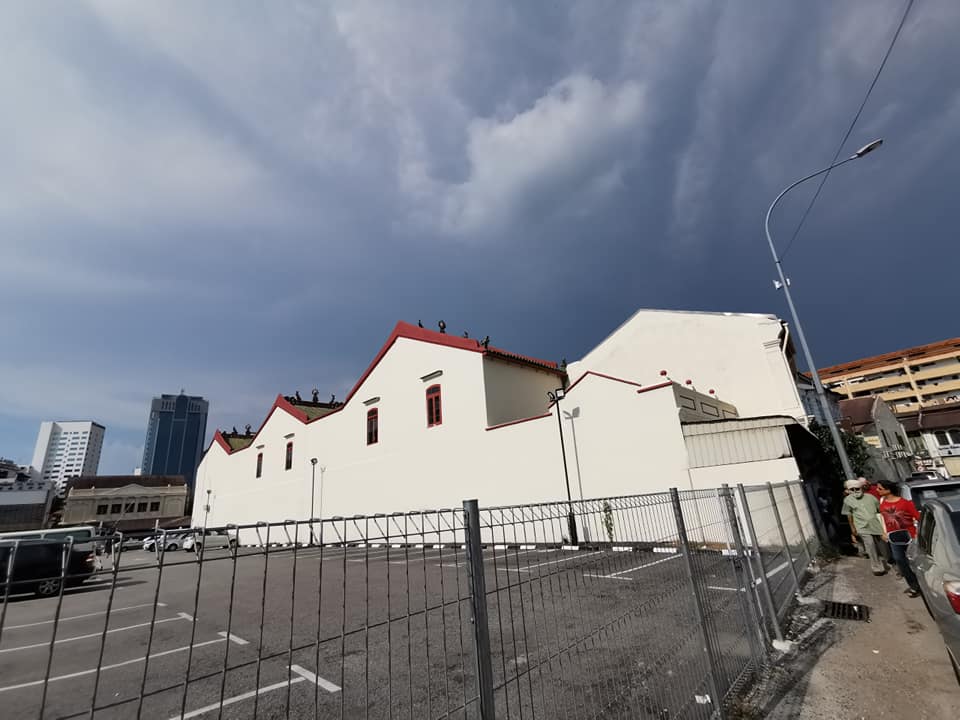
We admired the side of building from the outside; 200 feet is considered long for a Penang building. The Association would like to commission a mural on this wall to depict Nanhai history and culture sometime in the near future.

We then walked upstairs to the 1st floor and admired the red staircase which is over 100 years old.

On the upper level, we saw 2 more altars with ancestral tablets. These tablets are exclusive to the Nan Hai people and they can purchase a tablet for nominal amount.

From the upper level, we can see a big ball on the rooftop, which represents a Pearl. This pearl radiates light in all directions. Next to the pearl are fishes, which symbolise abundance to fengshui believers.

Ceiling is old style
This sink has been in use since British colonial days. The tap is the original tap and it is still in good working condition.
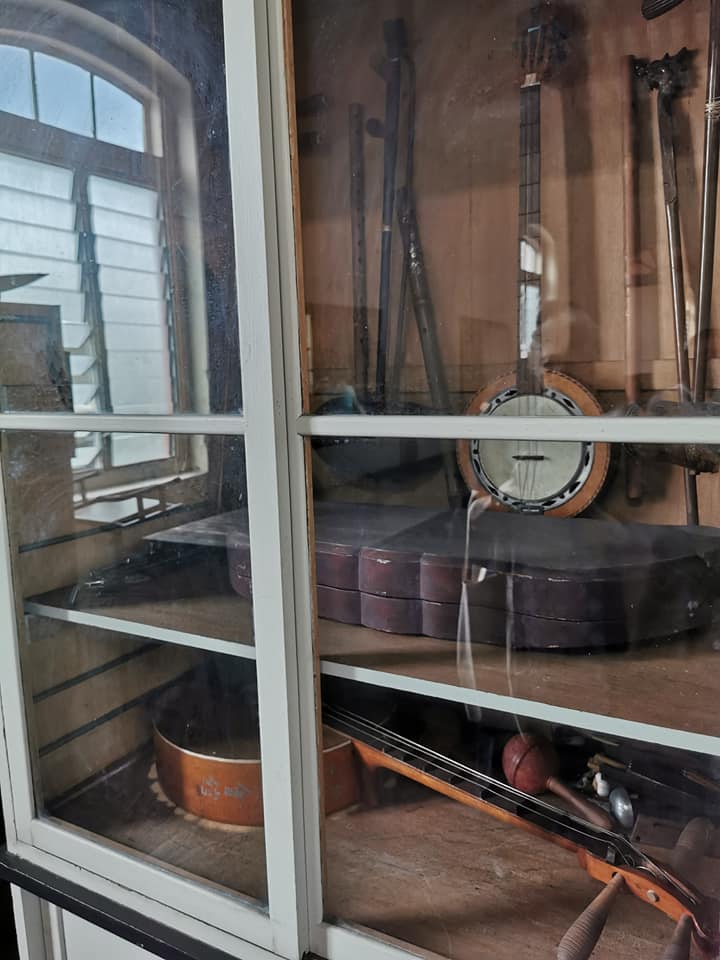
Old Chinese musical instruments, now museum-quality pieces. Members can participate in the Chinese Opera Group, which uses newer musical instruments.

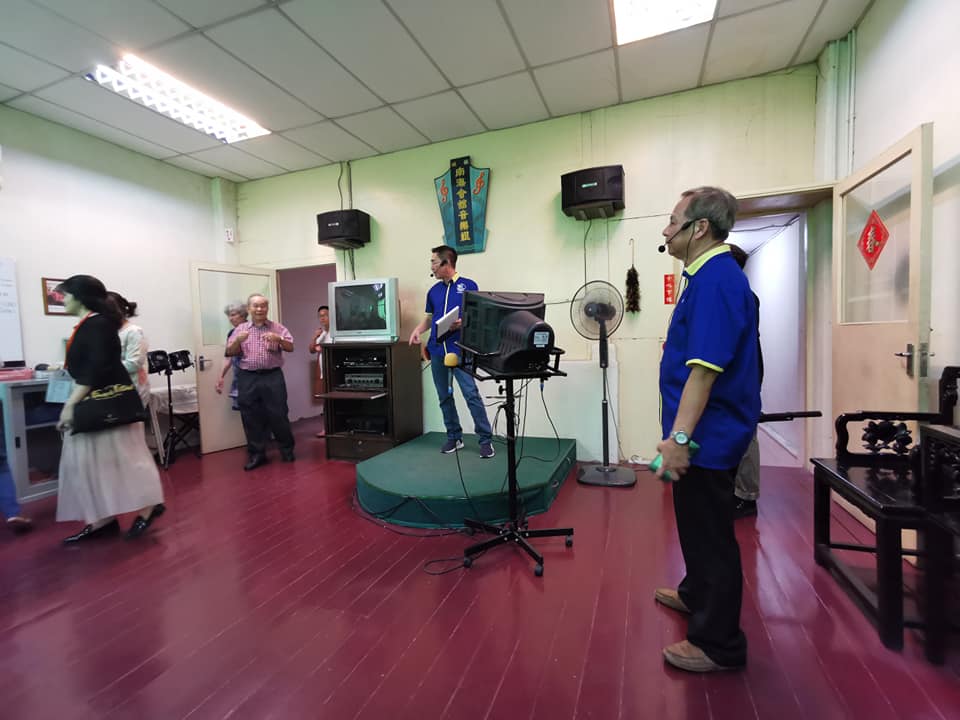
We were then brought to the air-conditioned karaoke room, which is location at the back portion of the upper level. Initiated by the Association’s Past President, Mr. Lee GH, karaoke is an effective way to engage teachers and members alike. A competition is organised once a year to showcase budding talents.

The third altar located upstairs.

We were treated to yummy Cantonese snacks whilst we enjoyed the Chinese opera karaoke performed on stage. Big thanks to Mr Adrian Yap, Mr Johnny Yee and the association members for the educational tour and warm hospitality.

Cultivation and use of Opium before the 16th century

by Stuart Wakefield

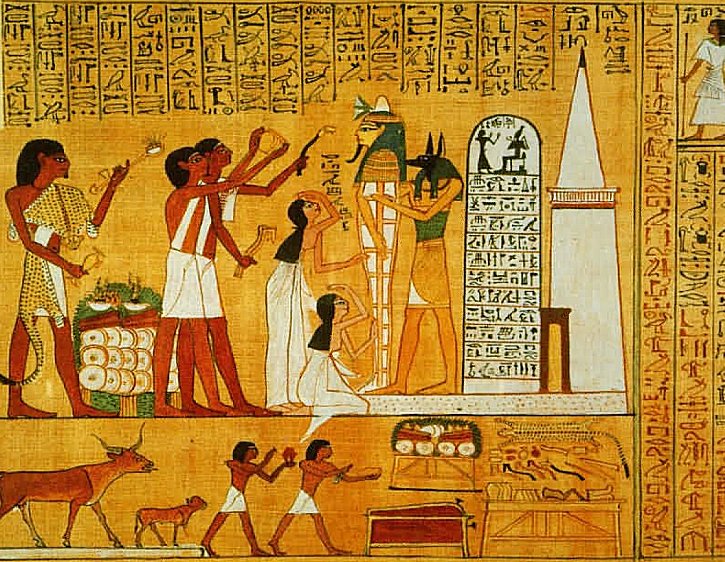
Opium is derived from the seeds of the papaver somniferum plant, which is related to the common cabbage. Fossilised poppy seeds have been found that date back over 30,000 years to Neanderthal man. The first written record of poppies was written on Sumerian clay tablets that have been dated at around 5,000 BCE. These referred to opium as hul gil, the ‘joy plant’ that was used to produce opium in Mesopotamia.[i] As opium gained in popularity, it was first traded westwards to Assyria and Egypt before spreading along established land trade routes, (which subsequently became known as Silk Roads).[ii] An early Egyptian medicinal text, the Ebers Papyrus, dated around 1,550 BCE, records opium being mixed to produce a children’s sedative, and was specifically used as a remedy for infant teething problems. It has been suggested that mother’s offered their nipple to suckling babies smeared with poppy juice to stop them crying, and this practice spread over time to both Europe and India. Whilst its pleasurable effects were known, it was also used to overcome bowel disorders, and was even claimed to be an antidote for poison. By the fourteenth century, maritime trade dominated due to a lack of political control along the land route, which increased opium availability in South East Asia.

A page from the Ebers Papyrus scroll, which was an encyclopedia of medicine in ancient Egypt. Photo taken from http://www.ancientpages.com/2016/02/03/the-ebers-papyrus-most-famous-plant-medicine-encyclopedia-of-ancient-egypt/

Opium was undoubtedly a valued trade good, and being easy to grow with a relatively low cost of production, extensive cultivation resulted in many regions. Poppy plants take approximately three months to produce opium and thrive in warm climatic conditions that are common in the Middle East, though they can be grown in a wide variety of locations. One acre of poppies can produce from three to five kg of raw opium, although both quality and yield deteriorate in less than ideal growing conditions. The flowers are normally coloured red or orange, although the colour may vary from white to purple, and the four petals are initially hidden within two outer sepals.[iii] The calyx is thrown off as the flower develops, and, following fertilization, the petals drop away to reveal from five to eight poppy capsules, which have the appearance of miniature pomegranates.[iv] The capsules are lightly lanced a few times to avoid damaging the interior cavities. The puncturing causes the milky latex to ooze out, which is then scraped off and then air dried when it turns dark brown.[v]

The historical significance of the opium trade is open to debate, with some claiming that it played a key role in major historical events including wars fought by Alexander the Great, The Huns and the Mongols.[vi] The first contact between the west and China occurred when a Greek expedition came to Kashgar around 200 BCE.[vii] It is apparent that opium use in Asia had been well established by the fifteenth century as a consequence of trade from the Middle East and India. However, after the fifteenth century, Asian trade and use of opium increased dramatically under the influence of European Charter Companies such as the Dutch VOC (Vereenigde Oost-indische Compagnie) and the English East India Company.

Some historians suggest that opium may have been introduced into China by returning sailors or Tibetan Buddhist priests from Africa or India as the early as the first century BCE. However, it is generally accepted that Arabic merchants brought opium first to India and subsequently to China between 400 and 900 BCE.[viii] Opium was produced by some ethnic minorities in southern China to raise money to pay tributes to the Han Chinese Emperors.  Chinese traders also introduced opium growing to South East Asian minority cultures.

Opium smoking in China in the 19th century. Photo taken from
https://dissolve.com/stock-photo/Opium-smoking-China-19th-century-After-19th-century-rights-managed-image/102-D869-77-835

Some sources suggest that opium was primarily used by the lower classes, although it is quite possible that its wide availability and broad based appeal as a medicine led to its widespread use. An Indian folktale relating to opium suggests that recreational users will become ‘[…] as mischievous as a mouse, as fond of milk as a cat, as quarrelsome as a dog, as unclean as a monkey, as savage as a boar, as strong as an elephant and, as spirited as a queen!’ A 10th century CE Chinese poem advised of the opium poppy being made into a drink “fit for Buddha”. The 1916 China Year Book stated that ‘The poppy has been known in China for 12 centuries, and its medicinal use for nine centuries,’ and was introduced by Arab traders.[ix] Textual evidence in an eight century Chinese Pharmacopoeia manual suggests that ‘[…] Muslim traders were carrying opium from West to East Asia […] the medicine was prescribed for diarrhoea […] and for that frequent complaint in traditional medical lore, male impotence.”[x] Some historians have drawn parallels between the trades in opium to China and in tea from China. Both were regarded as desirable and worthy of consumption, with the Dutch Physician Cornelis Bontekoe making extravagant claims for the medicinal properties of tea and recommending consumption of up to fifty cups a day. However, unlike opium, tea joined tobacco, coffee and cocoa as luxury products in a lucrative but limited European market.[xi]

Historians have pointed out that smoking was unknown before Columbus returned from the New World with tobacco, and conclude that, prior to the sixteenth century, opium had always been taken orally.[xii] Whilst not being contradictory, other sources point out that opium smoking was well established in Java by 1690.[xiii] Others suggest that a smoking culture appeared in China during the seventeenth century, although the Chinese initially considered the practice to be barbaric.


Opium Den by Vincent G. Stiepevich. Photo taken from
http://www.johncoulthart.com/feuilleton/2012/03/03/opium-dens/

[i] Dr. Anil Aggrawal, Narcotic Drugs, The Story of opium, Ch 2, (New Delhi, 1995); <https://www.opioids.com/narcotic-drugs/chapter-2.html&gt;, [accessed 6 June 2017].

[ii] Drug Enforcement Administration, Museum & Visitor Centre; <https://www.deamuseum.org/ccp/opium/history.html&gt;,

[iii] Study, Flower Sepals; <http://study.com/academy/lesson/flower-sepals-function-definition-quiz.html&gt;,

[iv] Study, Calyx in flowers; <http://study.com/academy/lesson/calyx-in-flowers-definition-form-quiz.html&gt;,

[v] Frontline, <http://www.pbs.org/wgbh/pages/frontline/shows/heroin/etc/history.html>, [accessed 12 June 2017]

[vi] All Empires History Forum, Ancient Opium Trade Routes; <http://www.allempires.com/forum/forum_posts.asp?TID=23558 >, [accessed 7 June 2017].

[vii] British Museum, Chinese Trade; <http://www.britishmuseum.org/pdf/Chinese_trade.pdf >,

[viii] Facts and Details; Opium in China; <http://factsanddetails.com/china/cat11/sub74/item139.html&gt;, [accessed 11 June 2017].

[ix] Ellen La Motte, Schaffer Library of Drug Policy, The Opium Monopoly, XV The History of the Opium Trade in China; <http://www.druglibrary.org/schaffer/history/om/om15.htm&gt;, [accessed 6 June 2017].

[x] Opium Regimes: China, Britain, and Japan, 1839-1952, Part III, Drugs Taxes and Chinese Capitalism in SE Asia, edited by Timothy Brook and Bob Tadashi Wakabayashi, University of California Press, 2000.

[xi] Frank Dikötter, Lars P. Laamann, Zhou Xun ‘Narcotic Culture: A History of Drugs in China’ Hurst, London, 2004, 11

[xii] CBS News

[xiii] Englebert Kaempfer