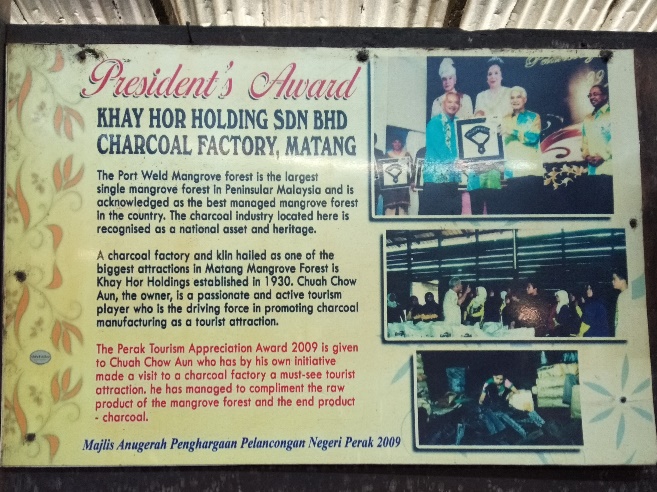
Charcoal is a controversial fuel these days due to climate change and atmospheric pollution fears. Nevertheless, this fuel was a standard feature in the kitchens of most Malaysian houses. It is still being used although on a much reduced scale. Making charcoal is not a matter of just heating wood until it is burnt. It is more involved than that requiring the right type of wood and the right method. However, it is still a very basic process with no high tech blast furnaces or machinery. A recent visit to the Khay Hor Holdings Sd. Bhd. Charcoal Factory provided me with good insight on how charcoal is made.
This signboard is of the dealership but it involves the same people
The factory is located in Kuala Sepetang, formerly and better known as Port Weld. Kuala Sepetang is within the Matang mangrove forest reserve, which at 40,000 hectares is the largest and best-managed mangrove forest in Malaysia. The west coast of the peninsula has many other mangrove forests, Kuala Selangor for example, but they do not replant the chopped trees thus depleting the forest. Matang, however, is recognised as a good model of sustainable mangrove forestry and conservation.
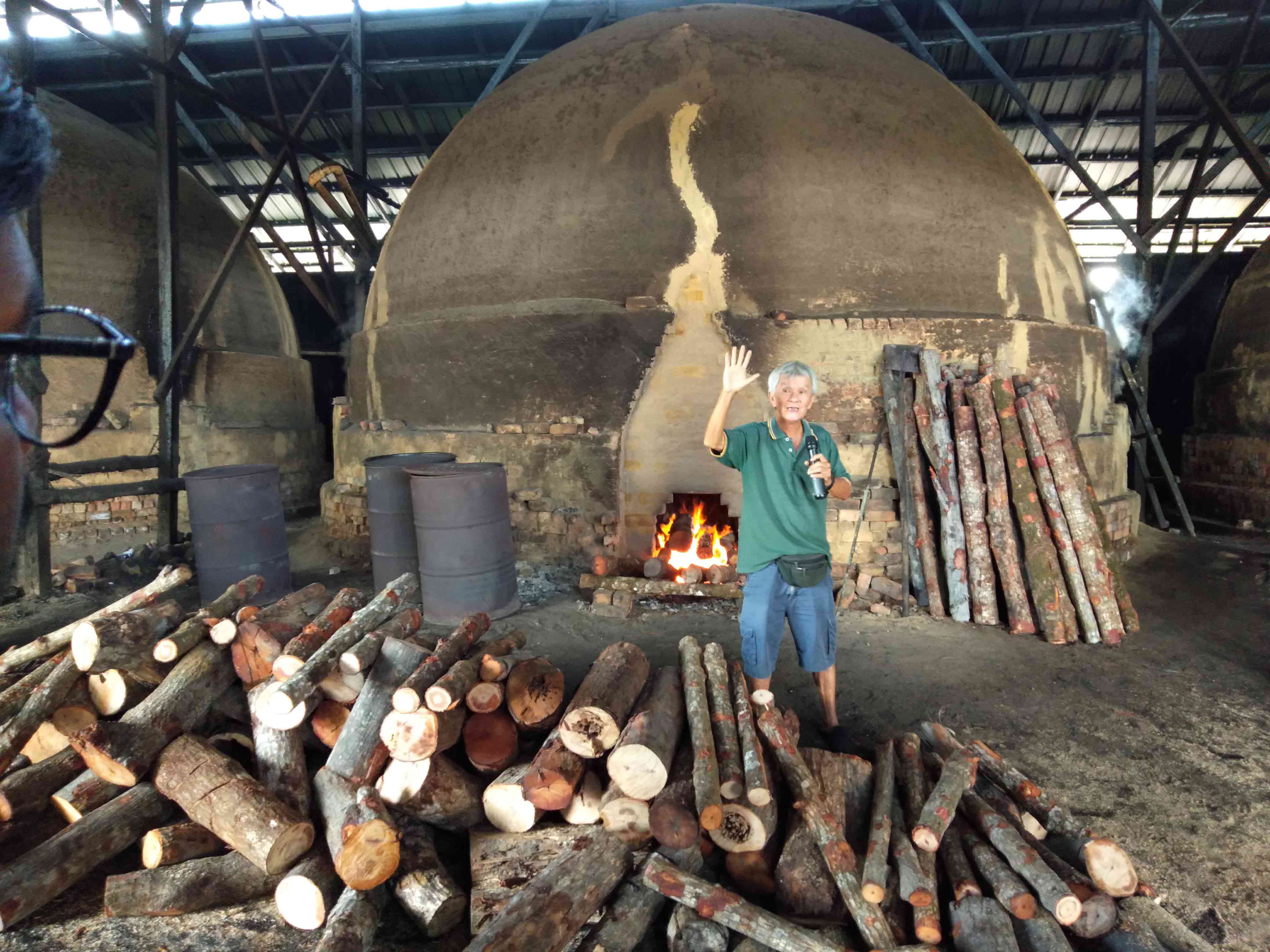
There are a few factories in the area, but the one we visited was the only factory that gave a tour. This was led by Mr. K. Y. Chuah, a member of the owning family, who, in his work clothes of a sports shirt, shorts and sandals, gave us a spirited and engaging tour of the factory and its operations.
Mr Chuah explaining the process
Among the mangrove, the two species most commonly used are Rhizophora apiculata and Rhizophora mucronata. Mangrove trees are locally referred to as bakau. Any wood can be made into charcoal. However, these species can withstand high heat. The charcoal-making process involves high heat to remove the water content in the wood. This is smoked out rather than burnt out. It also gives a shine to the charcoal.
The wood from these trees is initially very heavy, as we found out when carrying one of the logs, because of high water content. In fact, this wood will sink in water and not float like other woods, because there is no air space due to water saturation. It is after all a mangrove swamp tree.
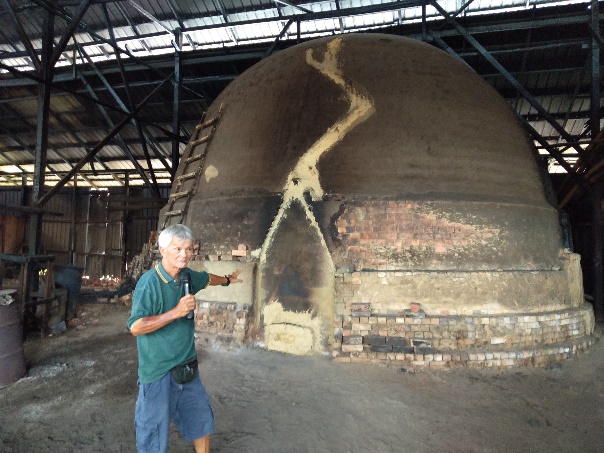
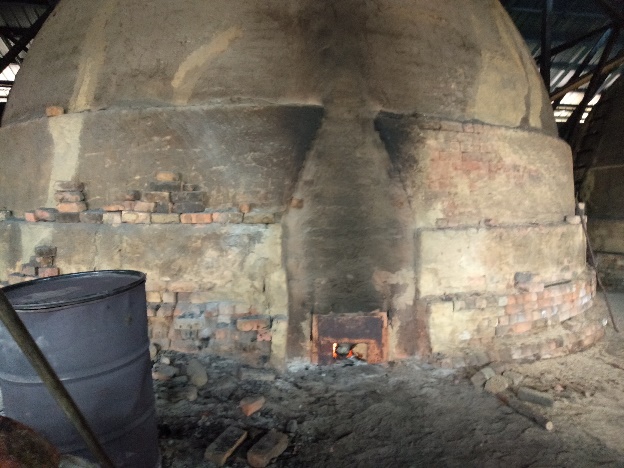
The kiln is igloo shaped and there are six of them located in a large shed. The bricks used are of the same type as used in housing. The structure is plastered with very fine clay and sand to seal the kiln completely. It does take an expert to do this perfectly. The kilns are all 7m in height by 6.7m in width. These sizes are specified by the Forestry Department to make it easy to calculate the duty to be paid.
The igloo-shaped kiln
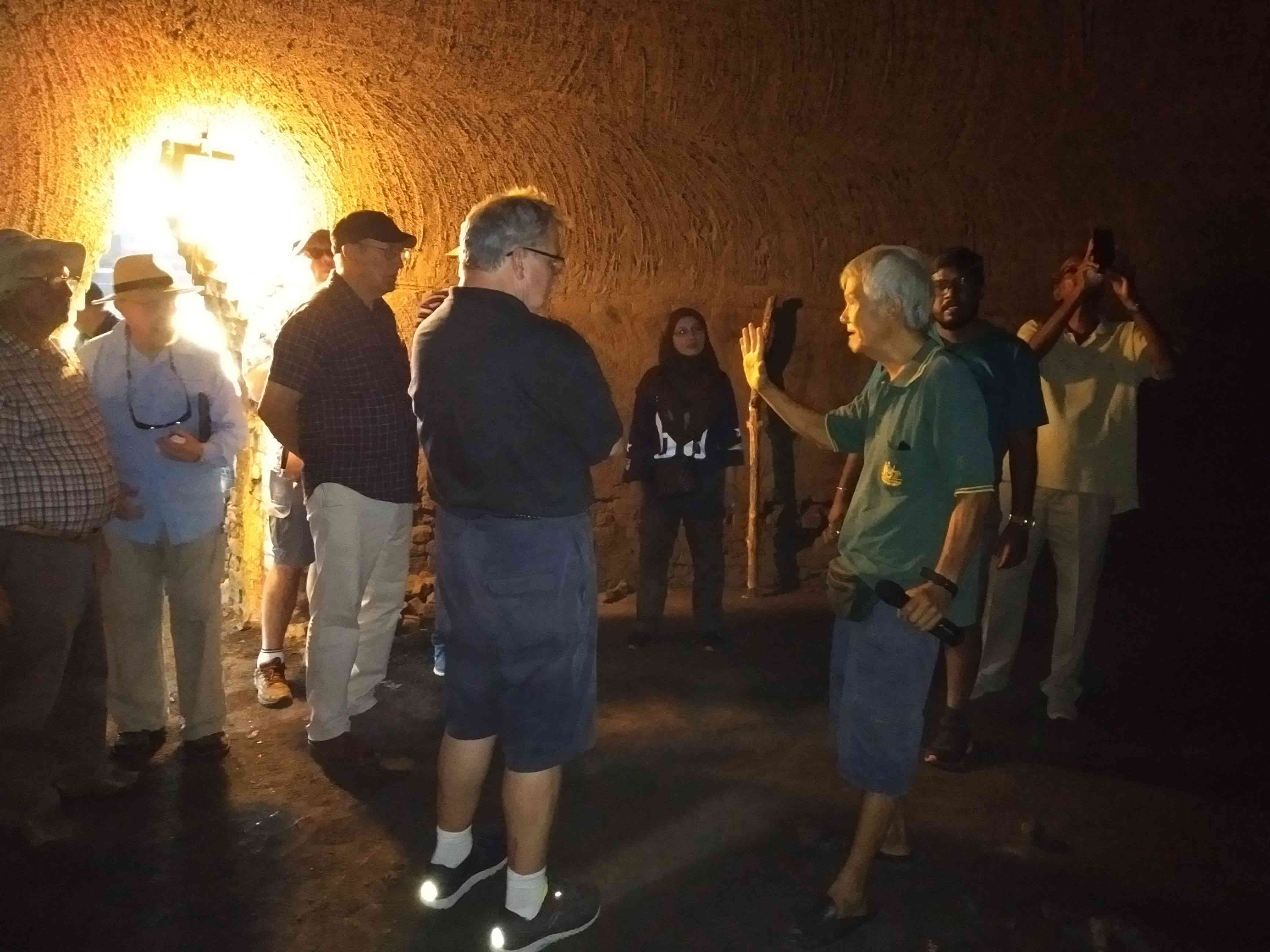
Inside the kiln
Wood is stacked to fill up the kiln. It will weigh some 50 tons inside. This is high because of the water content of the wood and when the process is completed, it will weigh some 10 tons only. The fire is not inside as the wood is not burnt. The fire is on the outside and it is the heat that slowly goes in to heat the wood and remove the water content. There are six flues or vents around the kiln to allow the vapour to escape. Simply put, heat goes inside and heats the wood to release the water content.
Wood stacked in the kiln
The first stage large fire
This is just the first stage with the fire burning for 14 days. Workers in three shifts have to check every 3 to 4 hours to top up the wood and keep the fire consistently going. If not topped up and the fire lowers, the oxygen leaks inside and the fire follows inside and burns the wood.
A close-up of the fire just outside the kiln
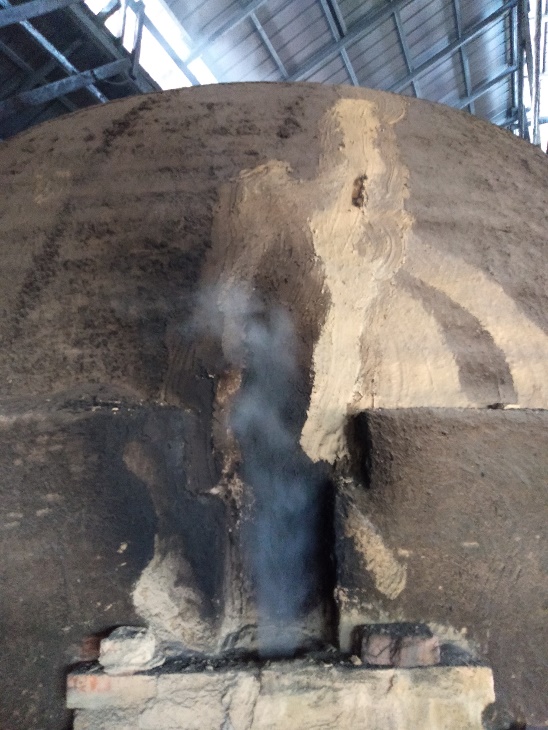
Vapour coming out of the vent
The vapour comes out of the vents. It is in fact steam, which is very hot and has a strong pungent odour. Expertly smelling and seeing the colour, as well as using a thermometer to be sure, the workers will know when it is ready to reduce the fire to a smaller one. Through experience, the workers know how to control the slow fire. It is still hot inside but the vapour is reduced and, thus, not as hot as before. This will continue for another 11 days after which there is no longer any vapour. The workers then shut down the fire and seal the kiln completely. It will take another 7 days to cool it down completely.
The second-stage slow fire
Third-stage cooling off
Finally, the kiln opening will be hacked, the bricks removed and the charcoal taken out. The six kilns in this factory are used in turn to continuously produce charcoal.
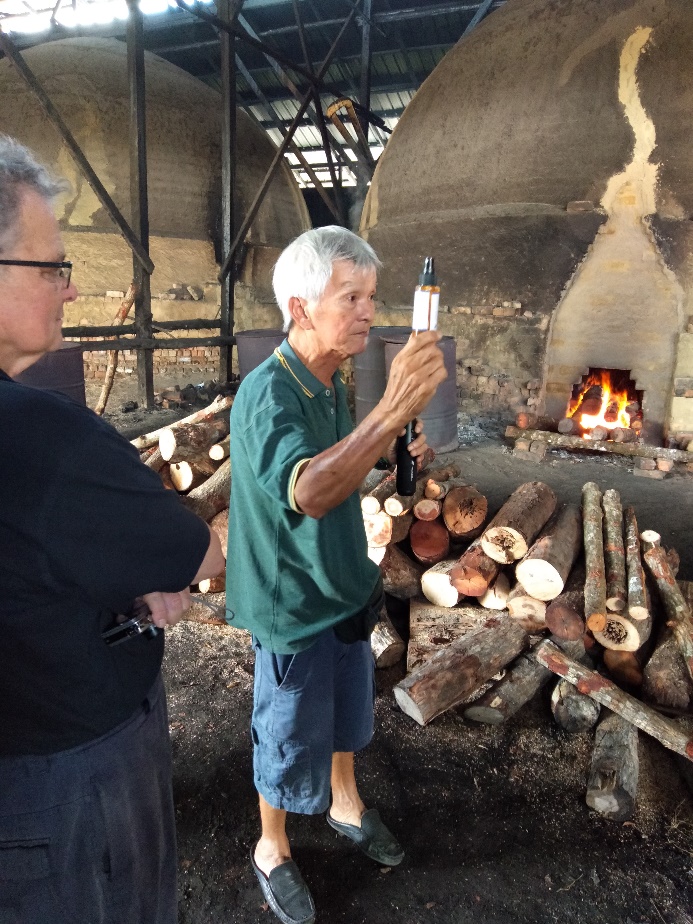
The condensed vapour is referred to as vinegar; it is liquid oil, which is collected. Mr. Chuah extolled the virtues of this and of other products, which can be used as mosquito repellents and soaps with no chemicals added.
Mr Chuah holding a bottle of the Charcoal Vinegar
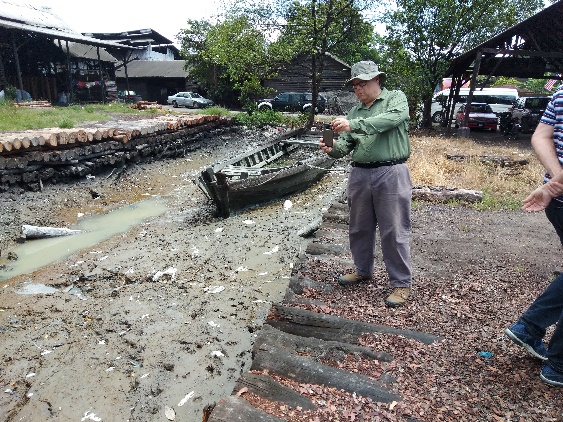
The factory is in a swamp area and the stench takes some getting used to. The canal by the side is used to bring in the wood from the forest. It is a tidal canal and therefore used on certain days only. Contract workers are paid to cut and transport the wood and are paid after delivery. As the forest is harvested, the cutters have to go in deeper and so it takes longer to bring the wood in.
The canal in the dry
Water comes up to the jetty edge
The Forestry Department annually allots the specific lots for harvesting and they have to use their allotment. Otherwise, the following year’s allotment will be reduced or the licence cancelled. The replanting is also managed by the Forestry Department but tendered to contractors.
Mr. Chuah explained that Japan buys 70% of the production and they insist on these species. According to him, the Japanese despite being very high tech still believe in charcoal. They use it as barbeque fuel as more people prefer traditional methods. For those who can afford it, houses are built with a layer of charcoal beneath to keeps the houses warm in winter and it absorbs odour. In addition, among its many other uses, charcoal is also used as an absorbent.
All in all, it was a very interesting tour and appreciation of charcoal. Questions were in our minds as to whether charcoal is environmentally friendly to use. It is not fossil fuel and it is touted as being green. However, how much of the carbon released is recaptured by reforestation?
Recently, an exhibition with the theme “A History of Malaysia – Sino Interactions” was held at The Mines 2, Sri Kembangan, Selangor. It was organized by The Federation of Hokkien Associations of Malaysia and supported by the Embassy of The People’s Republic of China in Malaysia.
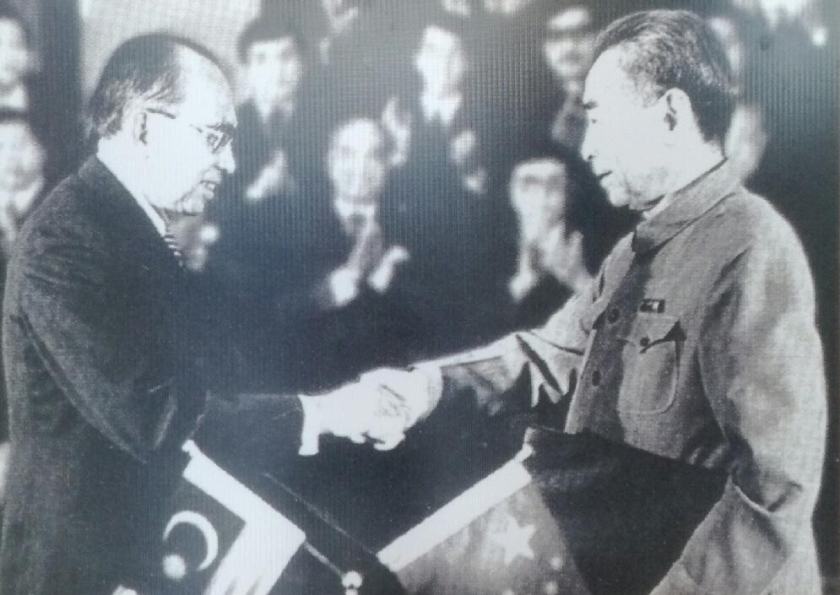
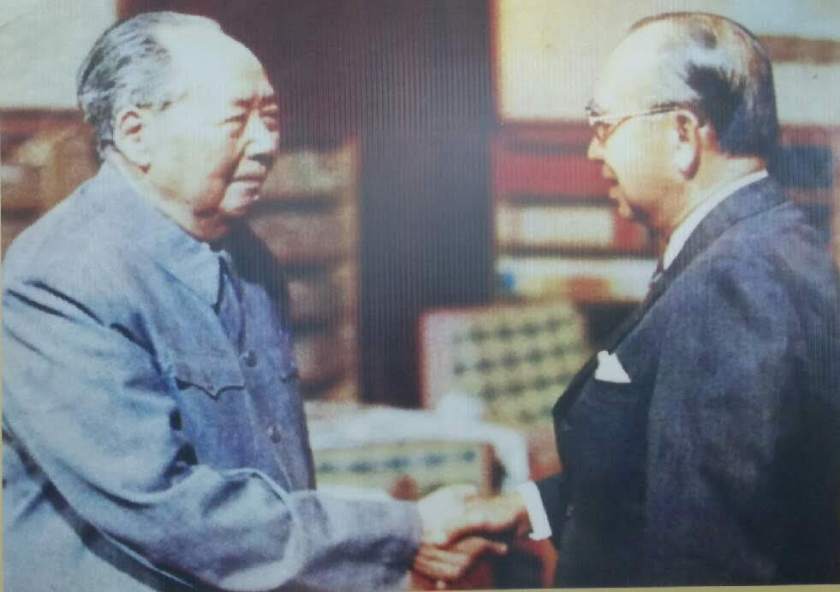
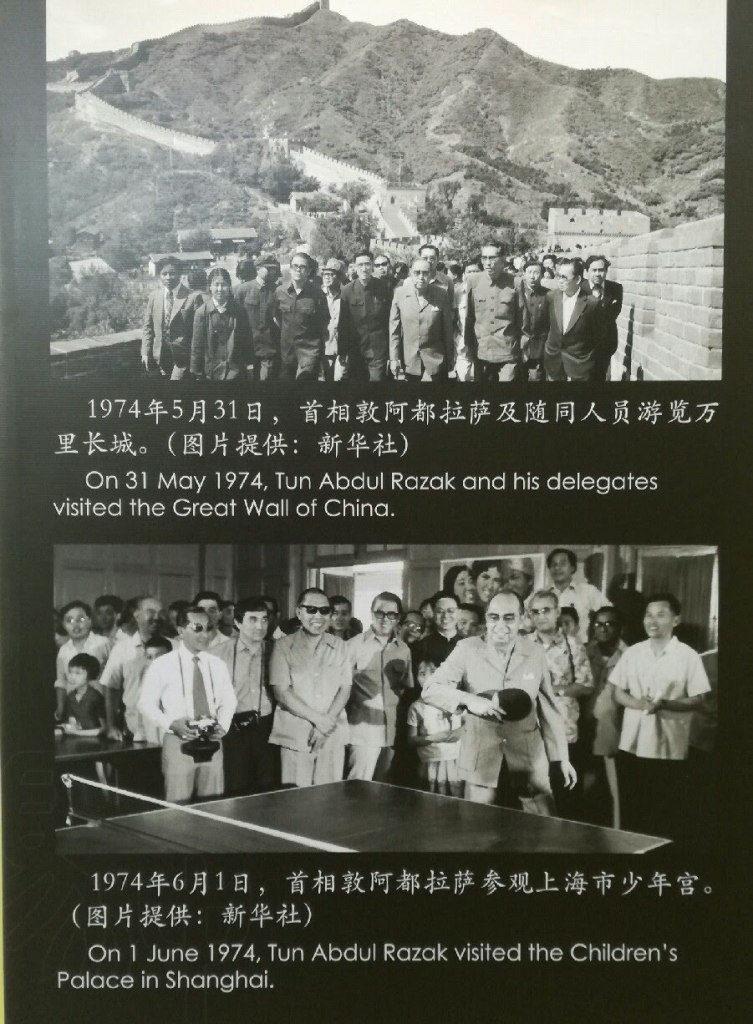
The exhibition highlighted the good ties between The People’s Republic of China and Malaysia. Diplomatic relations between the two countries started in 1974 when the then Prime Minister Tun Abdul Razak visited China and met Chairman Mao Zedong and Premier Chou Enlai. Today, China is one of our major trading partners and our export to China has increased to record highs. Local Musang King durians and white coffee are sought-after items in China.
The
exhibition covered four sections as listed below. Exhibits were mostly in
pictures with information written in Chinese and English, plus a few records
and publications.
2000 years of Malaysian-Sino interactions before 1974,
Ethnic Hokkien Chinese and their roles in Malaysian-Sino cultural exchanges,
A historical review of the 45 years of Malaysian-Sino diplomatic relations, and last but not least
Sheer endeavour to reform the Divine Land of the People’s Republic of China and the formation of Malaysia.
Section 1
In this section, we learn about the historical and cultural interactions between the two countries that took place nearly 2000 years ago. The Chinese record, Di Li Zhi Hanshu, mentions a kingdom named Duyuan, which some researchers believed to be at Kuala Dungun. However, some researchers also believe that it could be located in Kra Isthmus. This was the earliest Chinese record of contact with the Malay Peninsula and it was during the reign of the Western Han Dynasty. In the Songshu record during the Yuanjia Period in the 5th Century CE, there were mentioned of two ancient kingdoms, Pohuang and Gantuoli. Other records include a book written by Zhu Fan Zhi in the Song Dynasty and Dao Yi Zhi Lue written by Wang Da Yuan during the Yuan Dynasty.
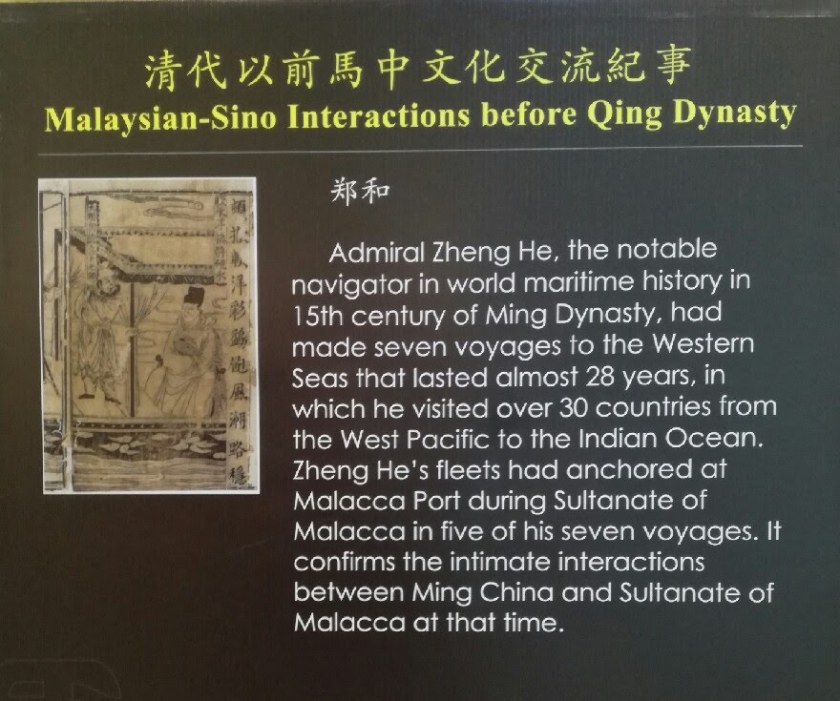
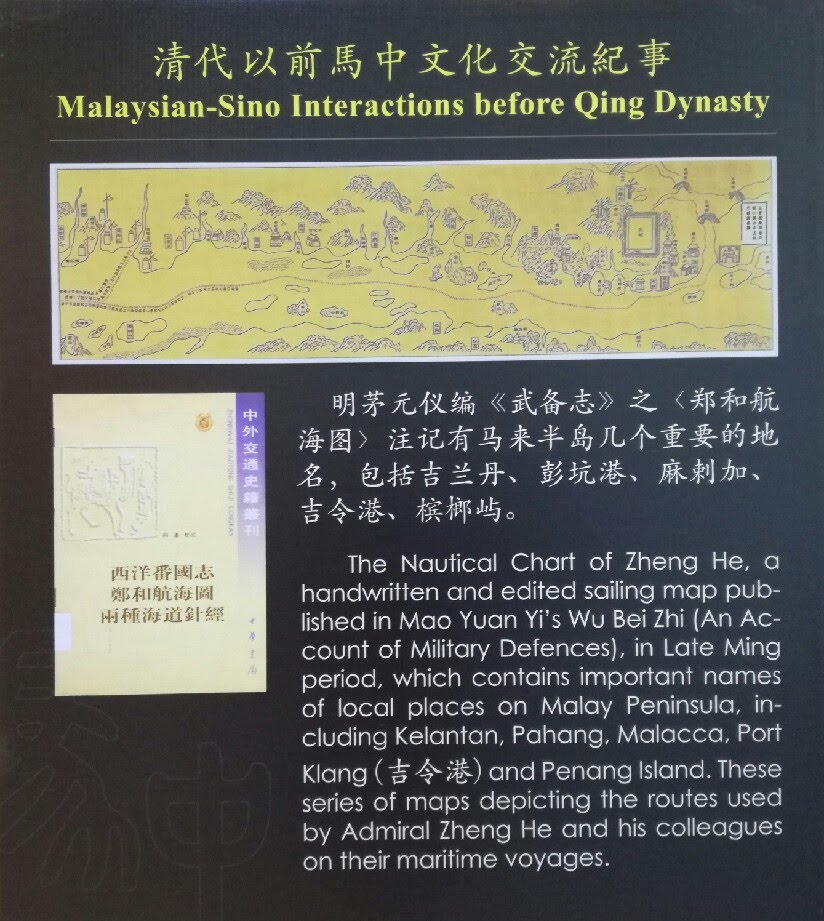
When Malacca grew in stature from a little fishing village to an international entrepôt during the 15th Century CE, China played an important part in its transformation. It was during the time of the Ming Dynasty that the Chinese fleet under Admiral Zheng He made visits to over 30 countries spanning the west Pacific to the Indian Ocean; Malacca was a major stopover for the Chinese. It was also during the Ming Dynasty that saw the earliest Chinese immigration to our country. Contributions of early Chinese immigrants were mentioned and one of the notables was Cheong Fatt Tze (1840-1910). He was initially based in Penang but later shifted to Singapore when it became established as a well-known trading port. Later, he was summoned by the Emperor of China and was promoted to be the Minister of Agriculture, Industries, Roads and Mines for the provinces of Fujian and Guangdong.
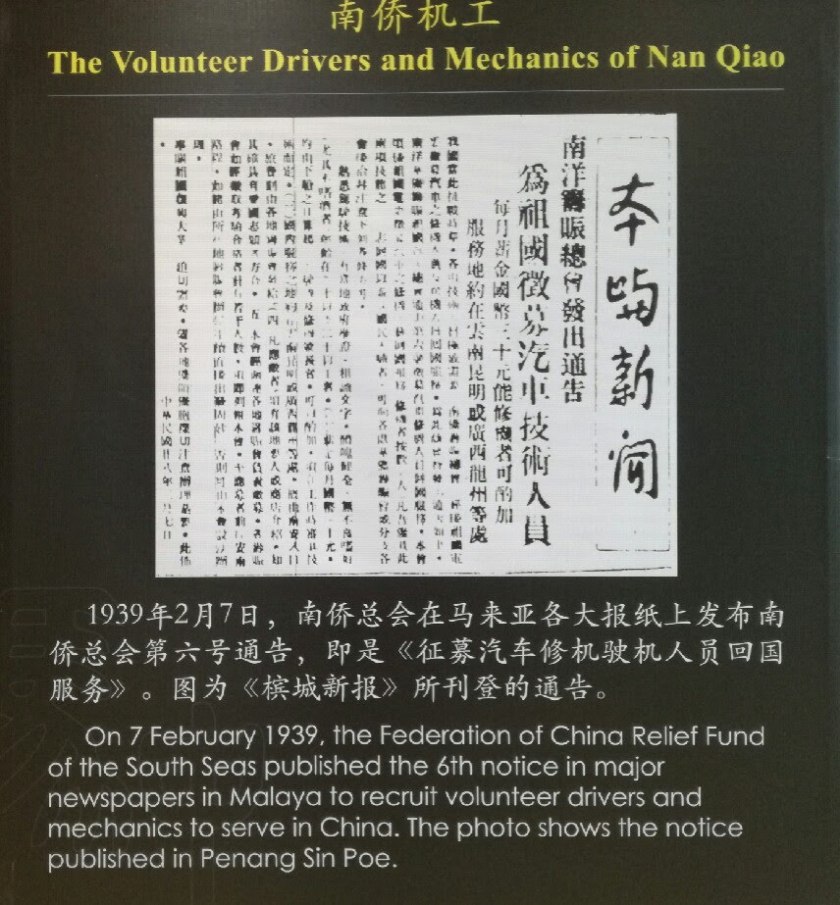
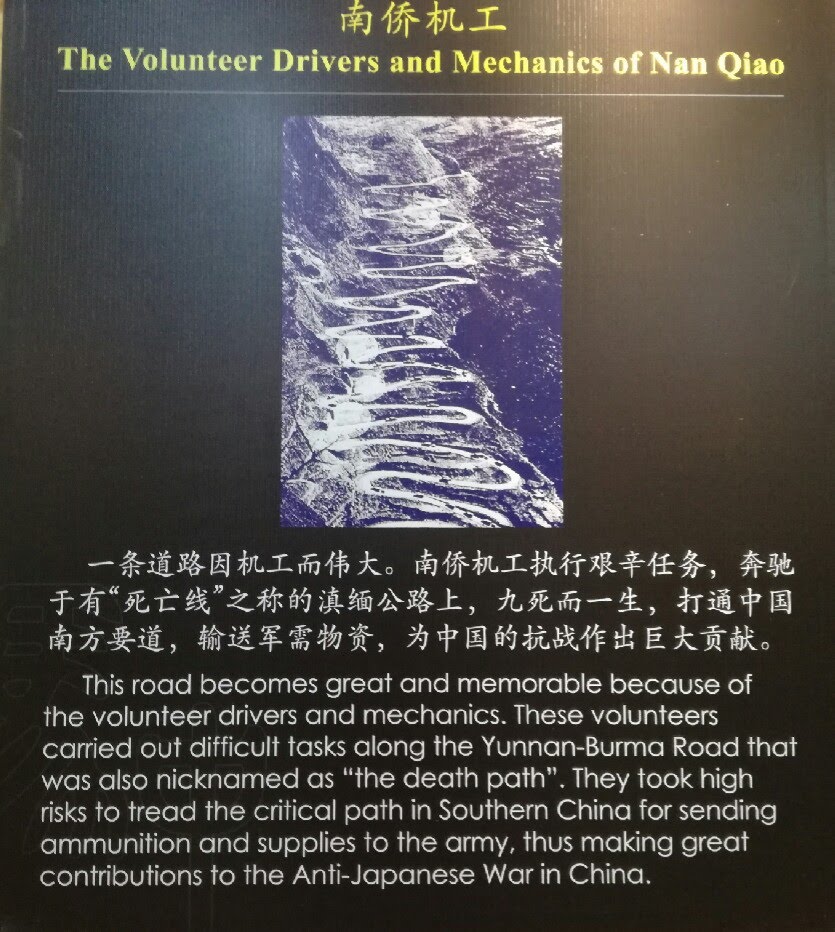
Moving forward to the era of The Republic of China, the exhibition showed pictures of local support for the Chinese Revolution led by Dr. Sun Yat Sen in overthrowing the Qing Dynasty in 1912 and in the fight with the Japanese in the Second Sino-Japanese War from 1937-1945. Tan Kah Kee responded positively by setting up funds for the Chinese to fight in the war. Besides parting with their money and valuables, Malayan Chinese were even willing to fight in the battlefields. One picture showed an advertisement in a Chinese newspaper of the recruitment of volunteer drivers and mechanics to serve in China. They were tasked to transport ammunition and supplies travelling the treacherous road linking Burma (Myanmar) and Yunnan with a section consisting of twenty-four bends.
Section 2
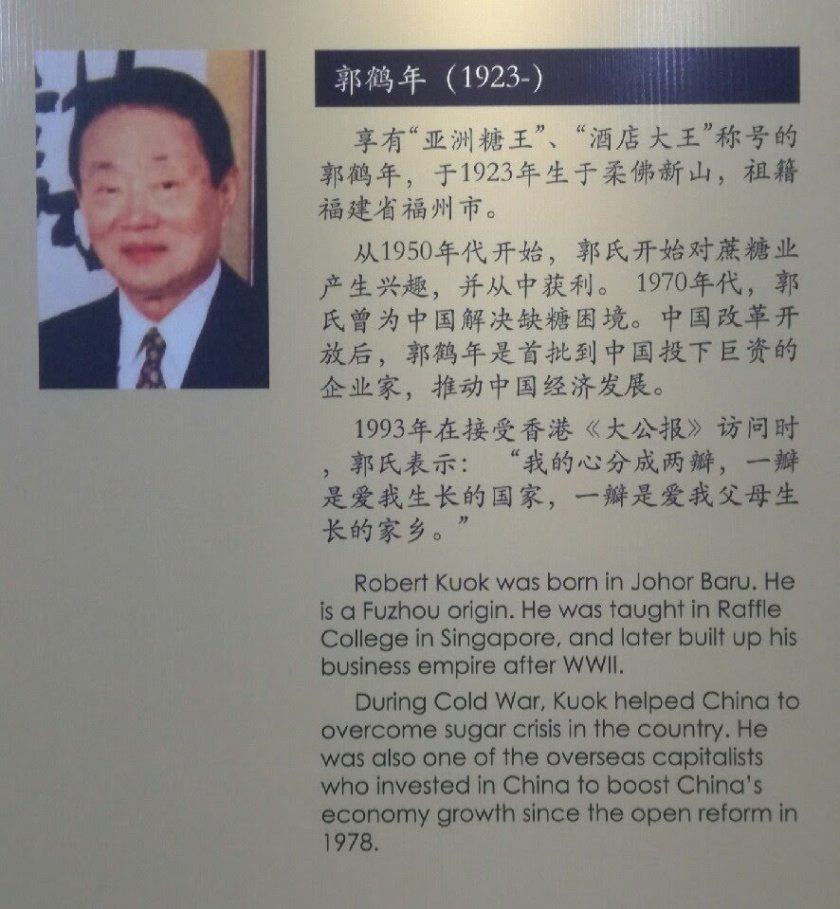
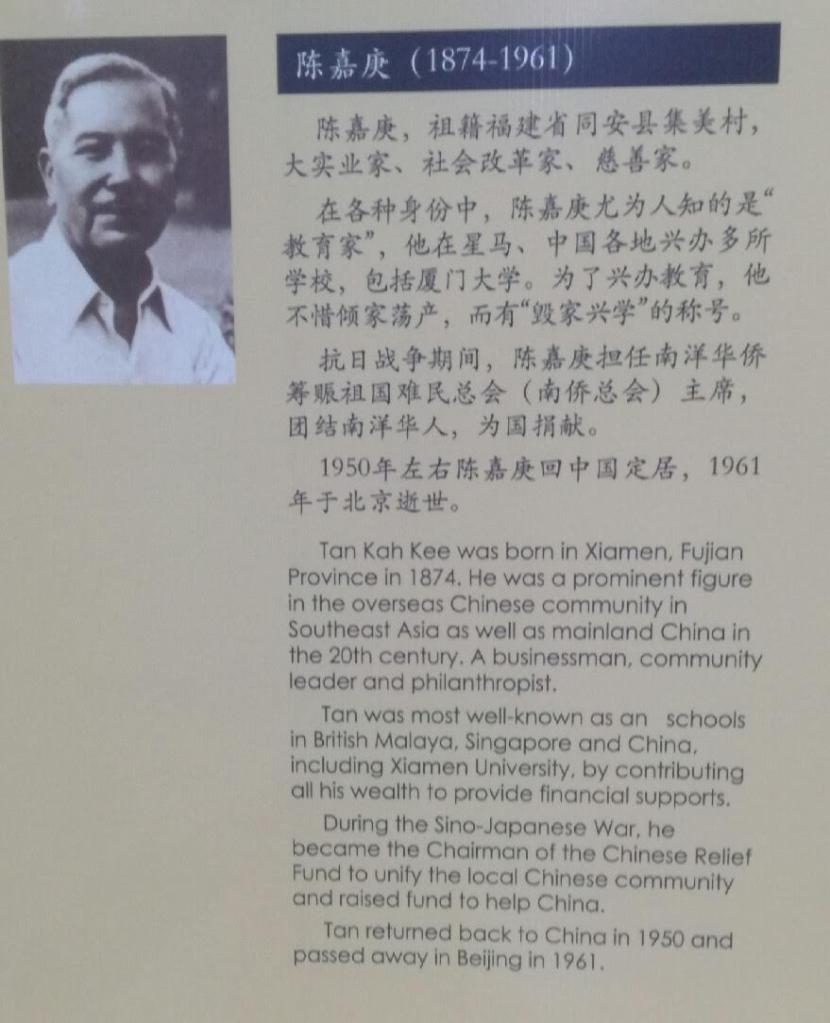
This section talks about the formation and role of the Federation of Hokkien Associations Malaysia (FHAM) and the contributions made by its members. The FHAM was formed in 1957 and today it comprises 211 member associations. Some of the well-known members include:
Tan Kah Kee (1874-1961). He was born in Xiamen, Fujian
Province and became a successful businessman, leader and philanthropist. He
contributed financially to the building of Chinese schools in British Malaya,
Singapore and China. Xiamen University is one of them. He returned to China in
1950 and passed away in Beijing.
Robert Kuok. He was born in Johor Bharu in 1923 and he
is of Fuzhou origin. In his autobiography, he mentioned his love for China. He helped
China overcome its sugar crisis and he became one of the overseas capitalists
who invested in China and helped its economic growth since the reform in 1978.
YB Tan Sri Dato Michelle Yeoh. Born in Ipoh in 1962, she
is of Hokkien descent from Tong An county. Michelle is an international actress
who made her name first in Hong Kong acting with Jackie Chan in the “Police
Story” movie series. She struck stardom in the “Crouching Tiger, Hidden Dragon”
movie in 2000. Then on to Hollywood where she starred in a James Bond movie and
the recent “Crazy Rich Asians” (2018).
Datuk Lee Chong Wei. Born in Perak in 1992, his ancestral
hometown is Nan’an. He is considered a legend in badminton having being ranked
No.1 for a consecutive of 349 weeks. He won three silver medals in the
Olympics. His rivalry with Lin Dan of China has always been heated topics for
badminton fans all over the world.
The above is a highlight of just four of its members. The exhibition also included an expanded list of successful business people, educators, entrepreneurs and many more.
Section 3
Section 3 tells us of the relationship between both countries for over 45 years. In 1971, The People’s Republic of China or commonly known as China today, was admitted to the United Nations after the 21st time of voting on its application. Malaysia was one of the 76 countries who voted in favour of China. In May of 1971, Tan Sri Tengku Razaleigh Hamzah who was then the chairperson of PERNAS led a team of delegates to the Canton Fair and they were received by the Premier of the State Council of China, Chou Enlai and the Vice Premier Li Xianian. This meeting marked the establishment of bilateral trade relations between the two countries. This was followed by a visit by Chinese officials to our country in the same year.
The historical visit to China by Tun Abdul Razak was held from 28 May to 2 June 1974. Malaysia was the first nation in Southeast Asia to take steps to normalise ties with China. Since then, every Prime Minister of Malaysia had paid official visits to China. For the record, Tun Dr Mahathir had made nine visits to China, the last time was in April 2019. Five of our Yang Di Pertuan Agongs also paid official visits to China. They include the late Sultan Azlan Shah of Perak, Tuanku Ja’afar of Negri Sembilan, the late Sultan Salahuddin Abdul Aziz Shah of Selangor, Tuanku Syed Sirajuddin of Perlis and Sultan Mizan Zainal Abidin of Trengganu.
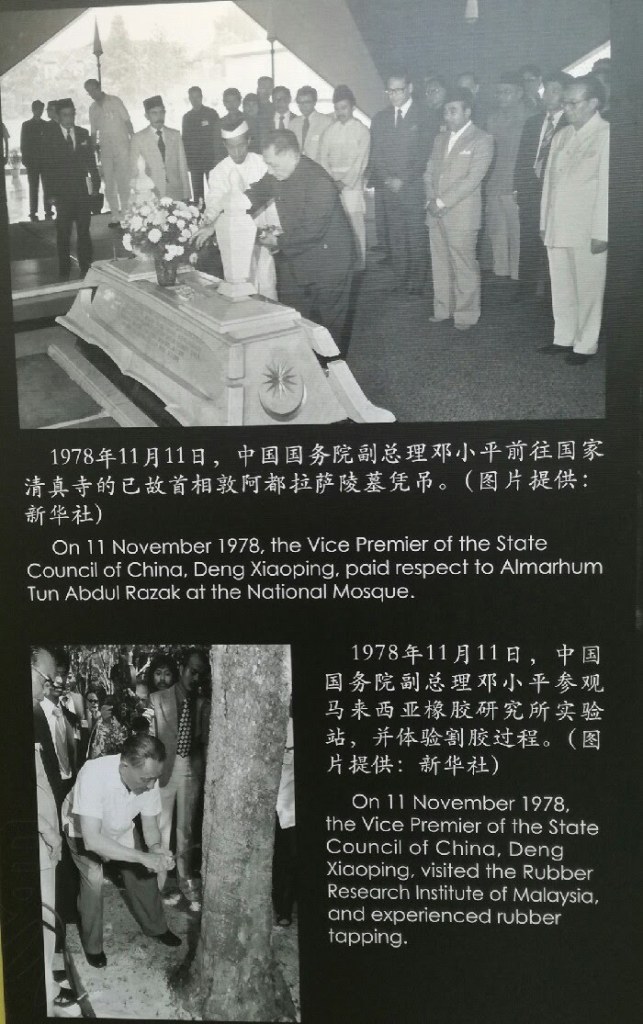
Chinese leaders also made official visits to our country. They include Jiang Zemin, Hu Jintao, Xi Jinping, Li Peng, Zu Rongji, Wen Jiabao, Li Keqiang and the then Vice Premier of the State Council of China Deng Xiaoping who came in 1978. During his stay in our country, Deng paid respect to Almarhum Tun Abdul Razak at the National Mosque.
Section 4
The last section, starts by focussing on Modern China. In 1979, the setting up of Shenzhen Special Economic Zone marked an important step forward in China’s opening up to the outside world. On October 10, 1987 saw the opening of the first KFC outlet in Beijing. Then on 16 October 2003, Yang Liwei became the first Chinese “taikonaut” who completed China’s first space trip. At 8.00 pm on 8/8/2008, the opening ceremony of the 29th Summer Olympic Games was held at the Beijing National Stadium a.k.a Bird’s Nest. In 2022, Beijing will host the Winter Olympic and Paralympic for the first time. The last row of pictures at Section 4 put the spotlight on the Formation of Malaysia. It revealed some interesting information that may not be available in mainstream media. Some of these are highlighted below.
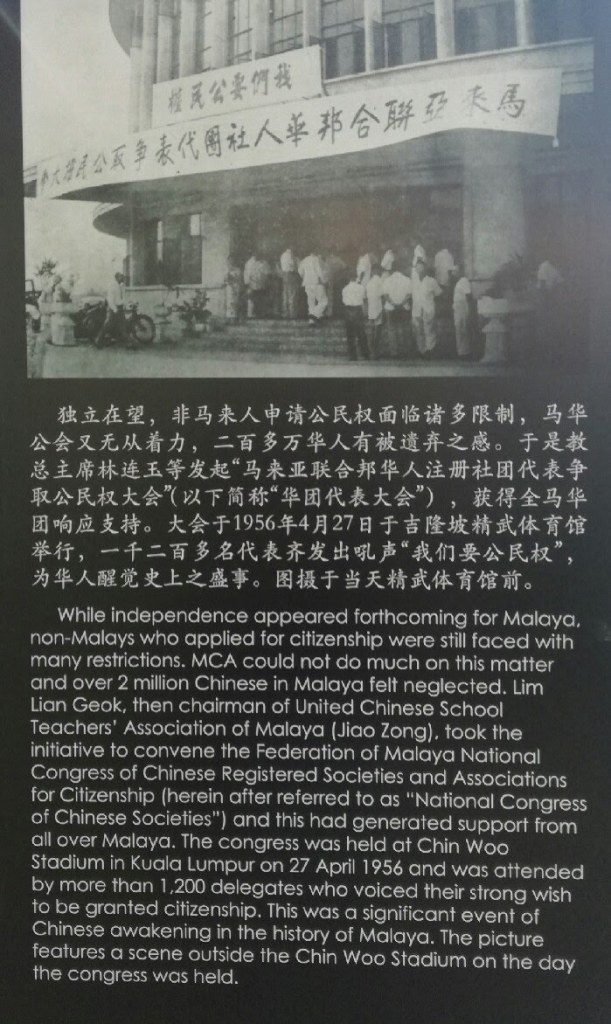
It was said that just before our independence, over 2
million Chinese in Malaya felt neglected due to many restrictions when applying
for citizenship. This prompted Lim Lian Geok to set up the National Congress of
Chinese Societies at a gathering held at the Chin Woo Stadium; it generated
support from Chinese all over Malaya. A memorandum was signed by 1,094 Chinese
associations. In it was a demand for constitutional reform with three main
suggestions – Chinese language as an official language, adoption of the
principle of Jus Soli and equal rights and obligations. It further
stressed that it was “reflecting the views of Chinese opinion generally in
the country”. Chinese Malayans were defined as Chinese who treated this
country as their permanent homeland. This was a significant event of Chinese
awakening in the history of Malaya.
Did you know that the first Alliance rally was held on
20 January 1955 in Kajang, a town where the Chinese were the majority?
The first general election in our country was held on
27 July 1955 and the Alliance Party won 51 out of 52 seats. However, only 20%
of the population were eligible voters, and out of this number, Chinese voters
were a mere 11% as compared to 84% of Malay voters. With that in mind, UMNO
demanded to contest in 90% of the seats. The move was opposed by Tunku who had
threatened to resign, and after negotiations, it was decided that UMNO would
contest in 35 seats, MCA in 15 and MIC in 2.
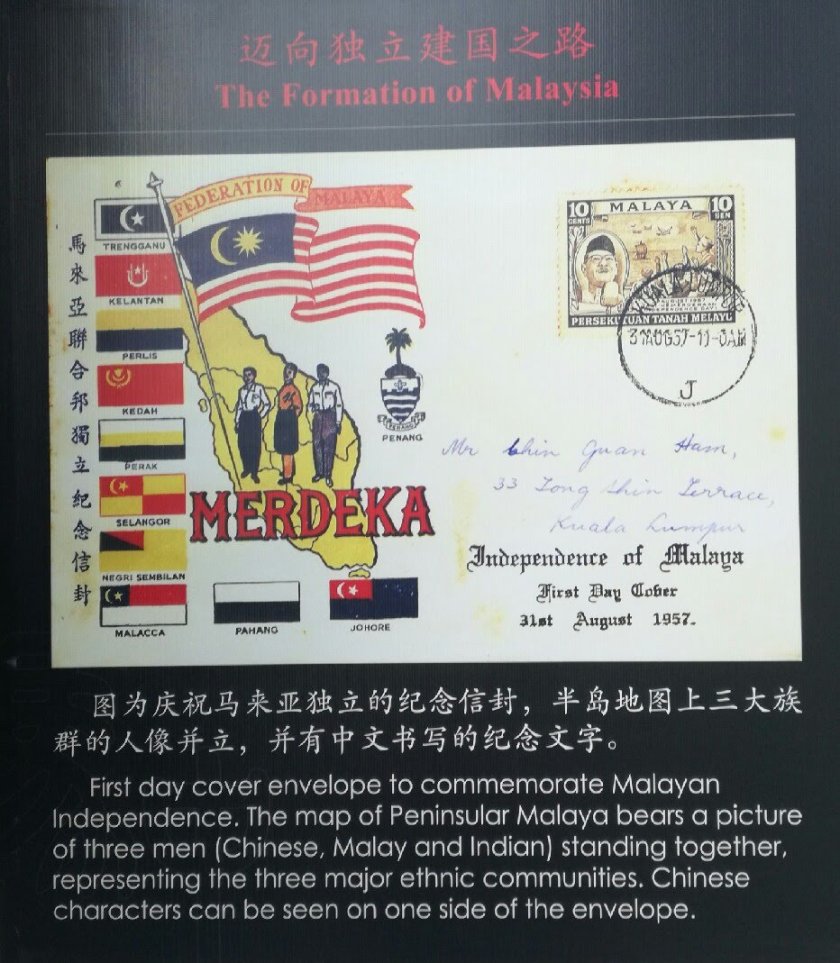
The first day cover to commemorate the Independence of
Federation of Malaya on 31 August 1957 shows a picture of three men – Malay,
Chinese and Indian, representing the three main races in our country. A closer
look shows Chinese characters written on the left side of the envelope.
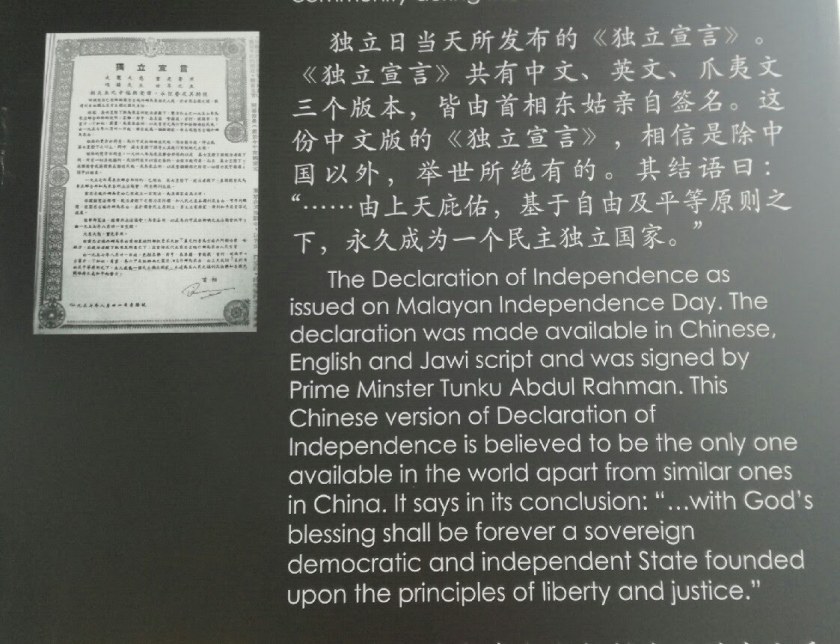
The Declaration of Independence was made available in
three different languages, namely English, Chinese and Jawi and it was signed
by Tunku Abdul Rahman. The Chinese version is believed to be the only one
available in the world apart from similar ones in China. It ends with the
following “….with God’s blessing shall be forever a sovereign democratic
and independent State founded upon the principles of liberty and justice”.
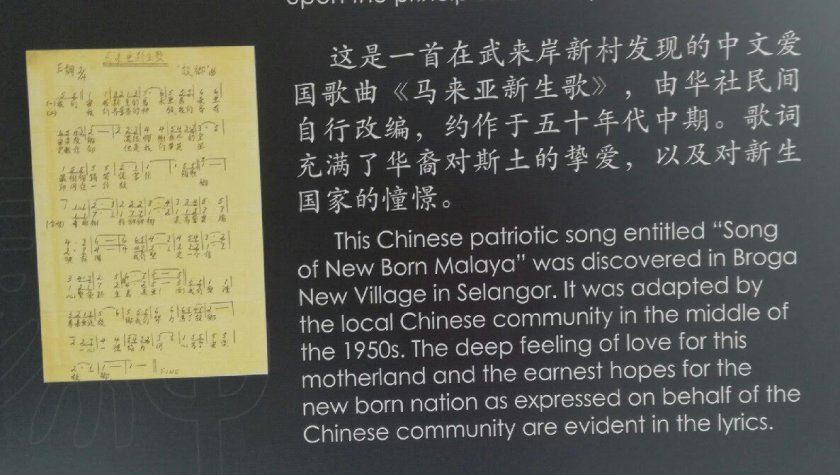
A patriotic song entitled “Song of a New Born
Malaya”. The lyrics tell about the deep feeling of love for the Motherland
and the earnest hopes for the new-born nation. This song was discovered in
Broga New Village.
The
exhibition provided a good understanding of the relationship enjoyed by both
countries. It also highlighted the contributions of local Chinese to Malaysia
and their fostering of greater relationships with The People’s Republic of
China.
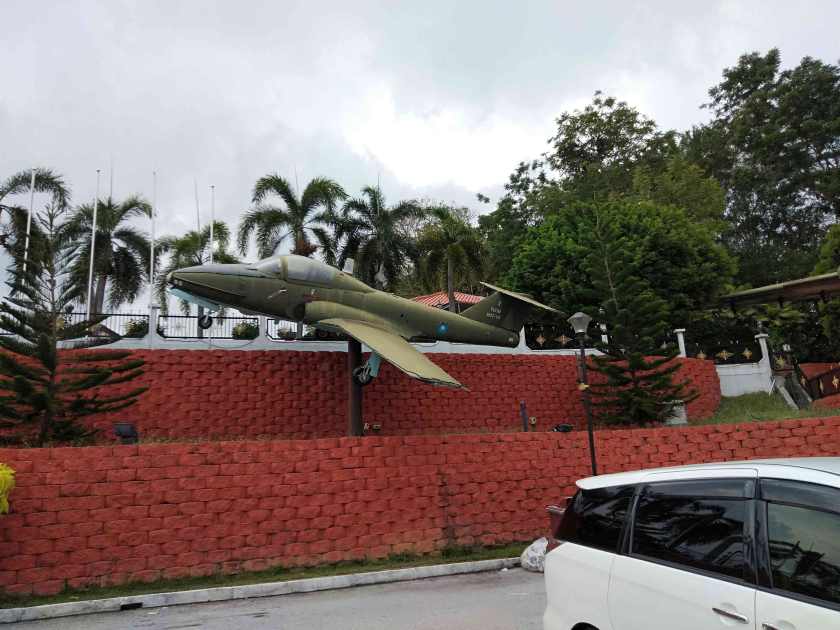
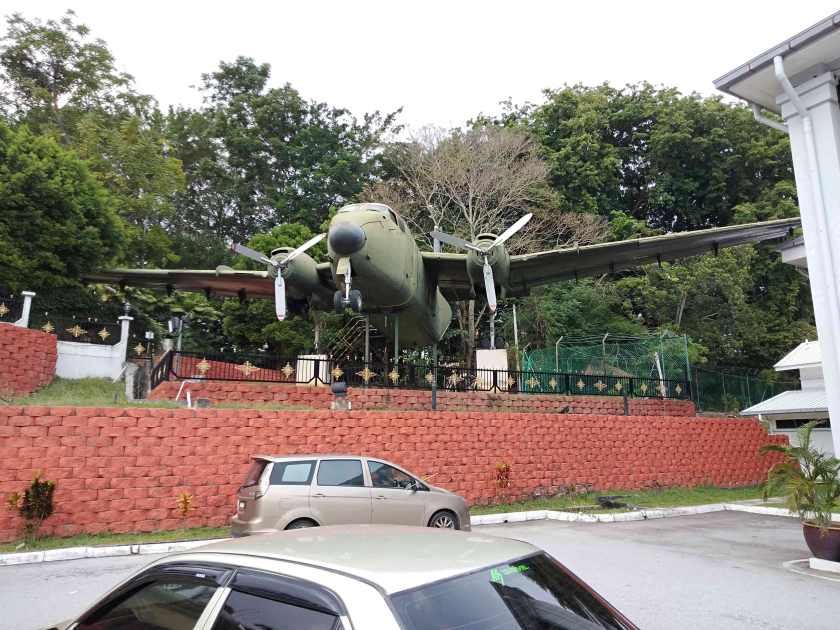
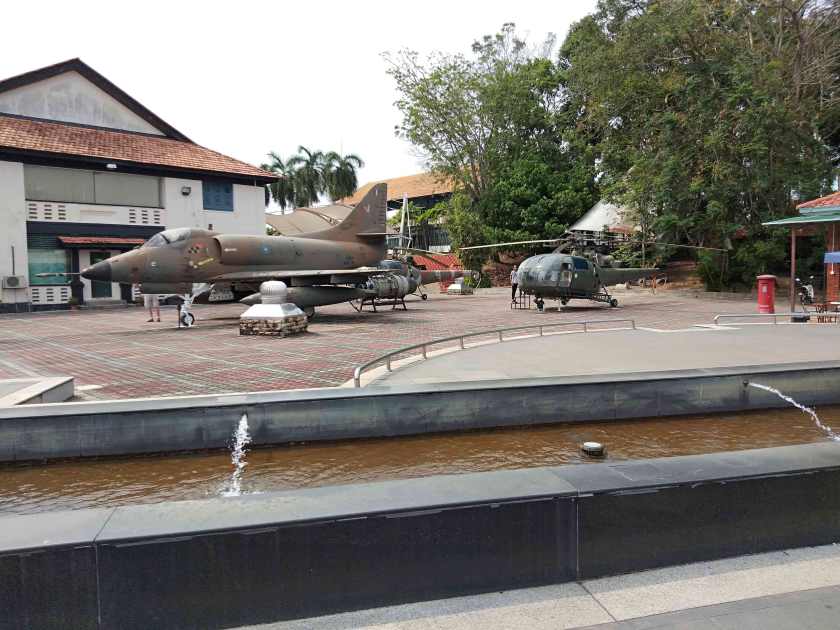
This was a long day. The first stop was theArmy Museum Port Dickson. It is a small museum but filled with interesting displays and exhibitions. For airplane buffs, there is an armed Canadair CL-41G, locally renamed Tebuan, the first fighter jet of the Royal Malaysian Air Force. There is also a de Havilland Canada DHC-4 Caribou transporter and an A4 Skyhawk. For artillery gun buffs, there is a good display of artillery guns.
The Tebuan
Caribou
A4 Skyhawk
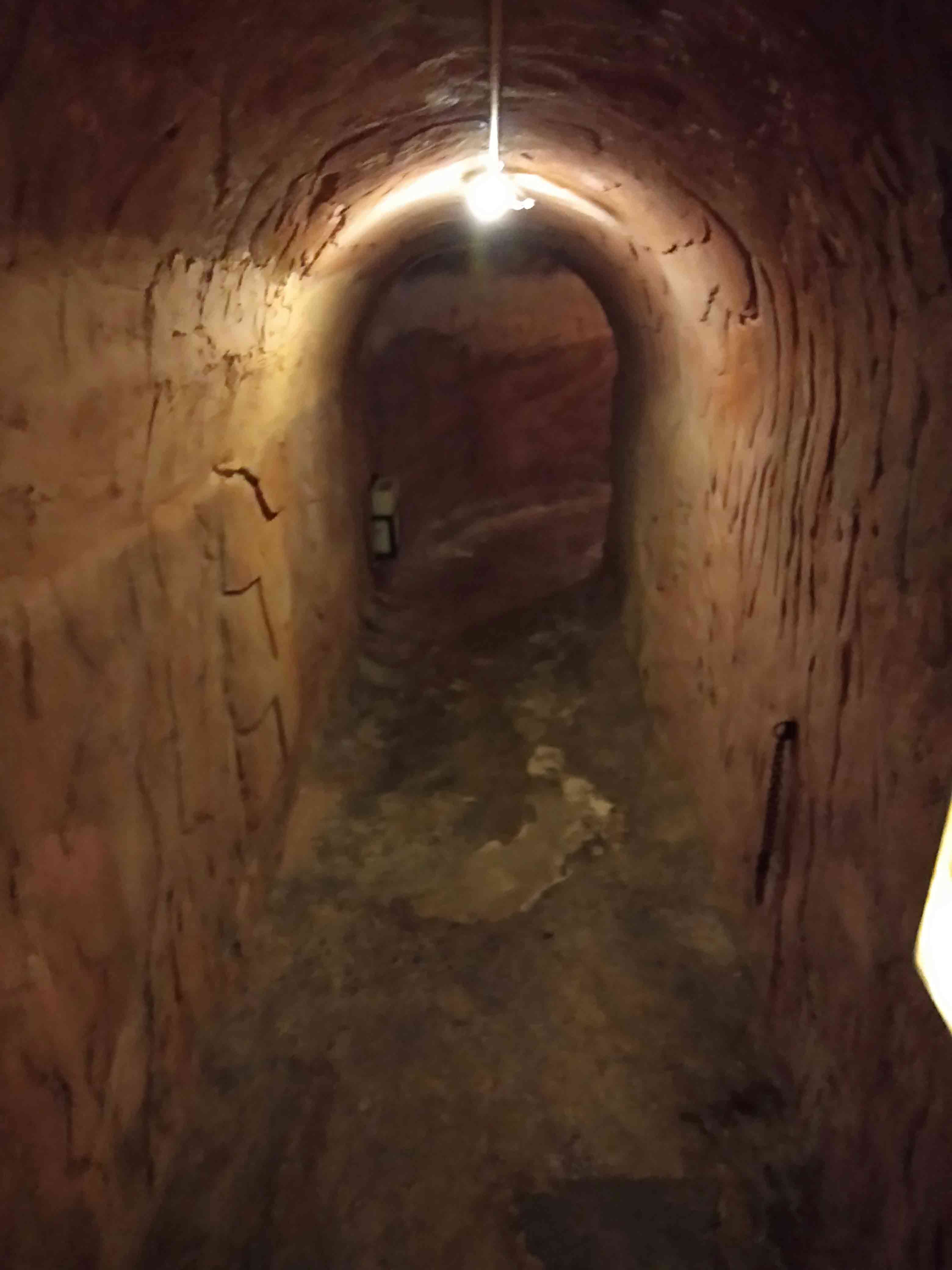
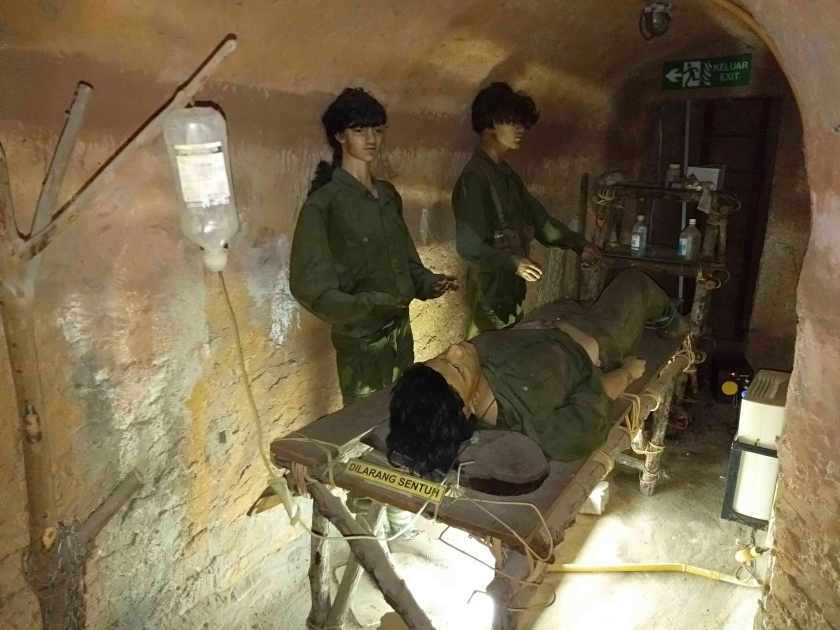
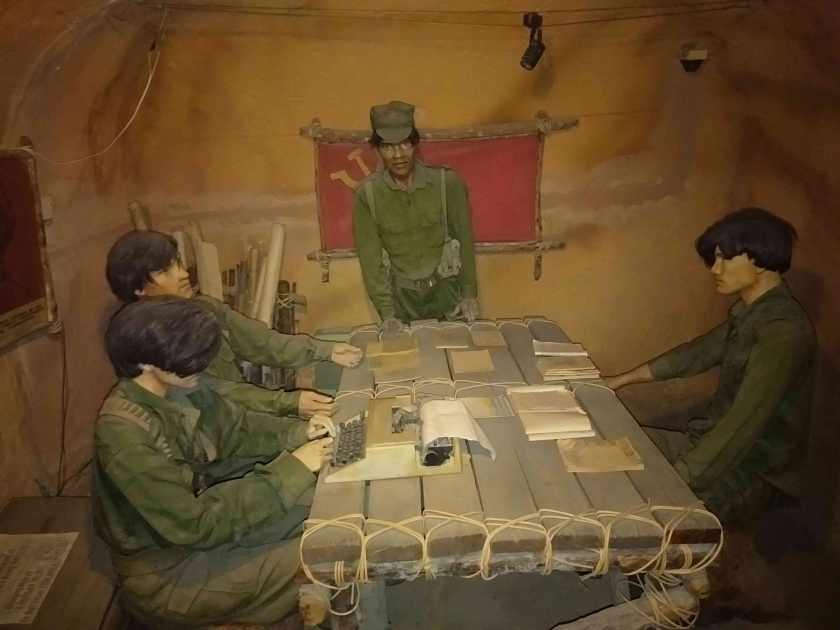
Among the many displays, there were exhibition halls portraying the Melaka Sultanate, the British era and some others. However, the main attraction is a full replica of a communist tunnel system. As you walk along inside, you can see the medical supplies they had, the various arms used, a diorama of a surgery and a meeting room. This is very impressive but you must be cautious if you have a problem in closed spaces.
The tunnel
The surgery
The meeting room
We then had a long drive to Kampar and a lunch pack to nourish us on the way. Kampar is along the old trunk road south of Ipoh and it is the first real location where the British forces put up a reasonable defence against the Japanese advance. The British plan was to stop or delay the advance and the Japanese plan was to seize it for the Emperor as a New Year’s gift. However, the Emperor only got his gift on 2nd January 1942.
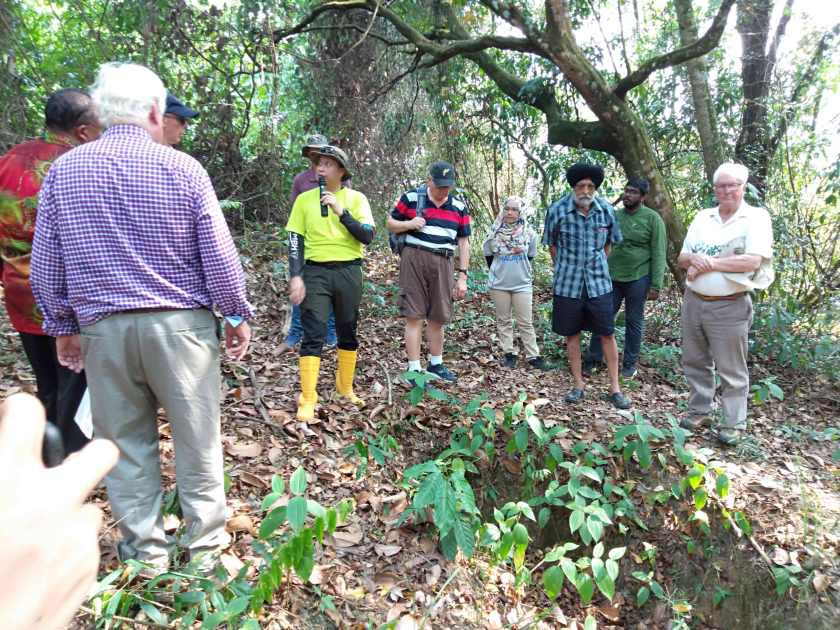
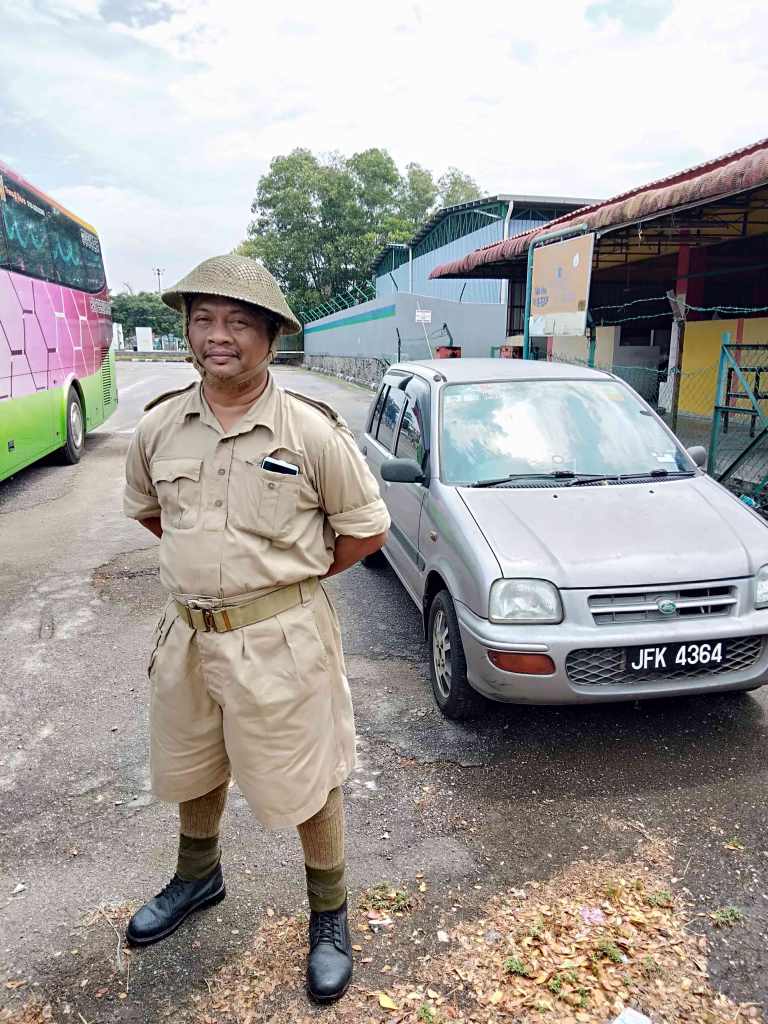
The town has hills opposite overlooking the town and this provided a good place for an attack on the Japanese from high ground. Here we had the assistance of Encik Shaharom Ahmad, a Malaysian Military Historian and Researcher and his colleague, Hisham, dressed in period uniform. Also assisting was Mr. Santokh Singh, a retired teacher and another enthusiast in present day casuals. Shaharom, Hisham and Rizal are members of the Malaysian Historical Group. Though members are not academics, their keen interest and knowledge is a credit to them all. With metal detectors, they have found artefacts and have also spent money to buy the period uniforms.
The ridges are not very high, about 120m as we were told. There are three ridges i.e. Thomson Ridge, which is now a housing estate; Cemetery Ridge, which remains as such; and the Green Ridge, which has been left alone, so far. On 30th December 1941, the Japanese arrived and the battle started. Ultimately, the Japanese suffered heavy losses of about 500 or an unknown number. At one point, they even had to withdraw but the British pulled back because of Japanese reinforcements coming in from Teluk Anson (now Teluk Intan). This was considered a success for the British as the advance was delayed but the British still had to retreat to Slim River.
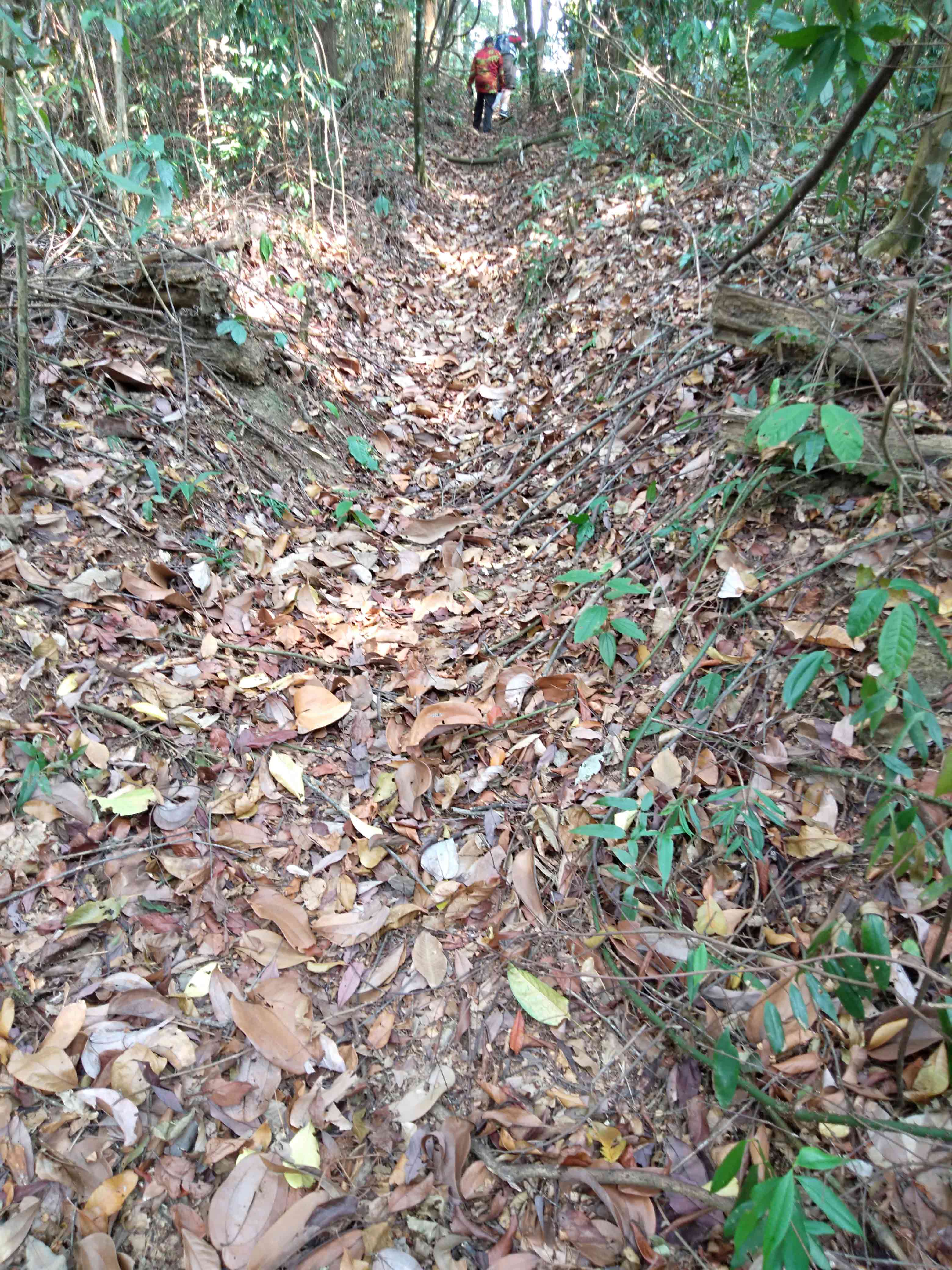
We climbed the Green Ridge and saw the trenches that remain, though overgrown. There the remnants of the artillery gun positions and trenches leading higher up to a larger area where the headquarters was set up. From here supplies were sent down to the positions. Now looking so serene and quiet, it must have been hell on those four days in the past.
A trench, now shallow
Shaharom explaining the gun pit together with Santokh
Take away the vegetation and that is how it was
A section of Kampar, now such a peaceful place
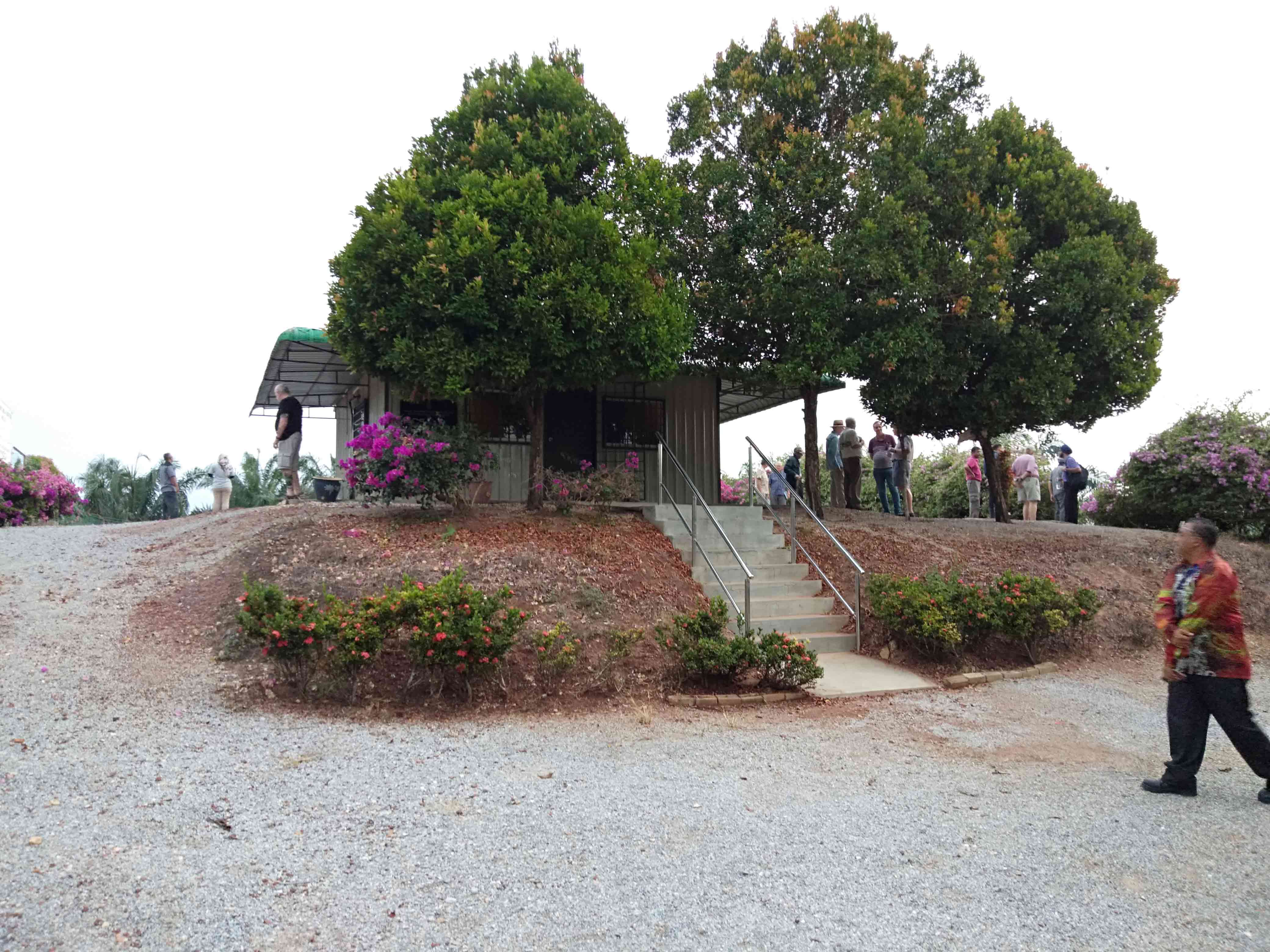
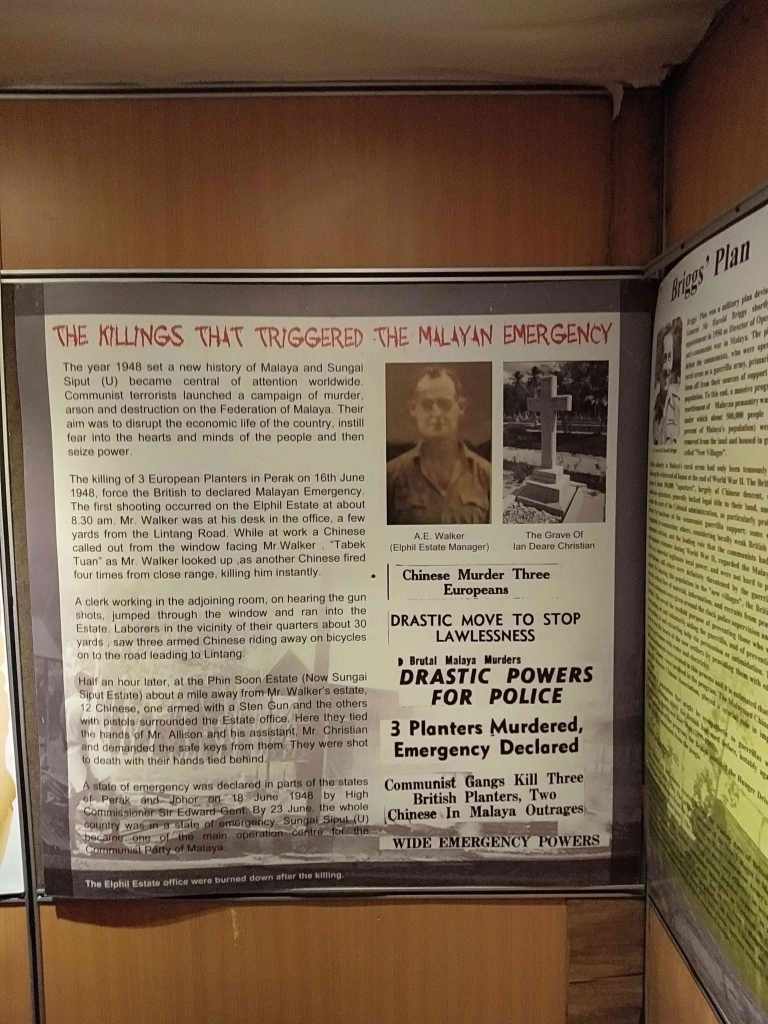
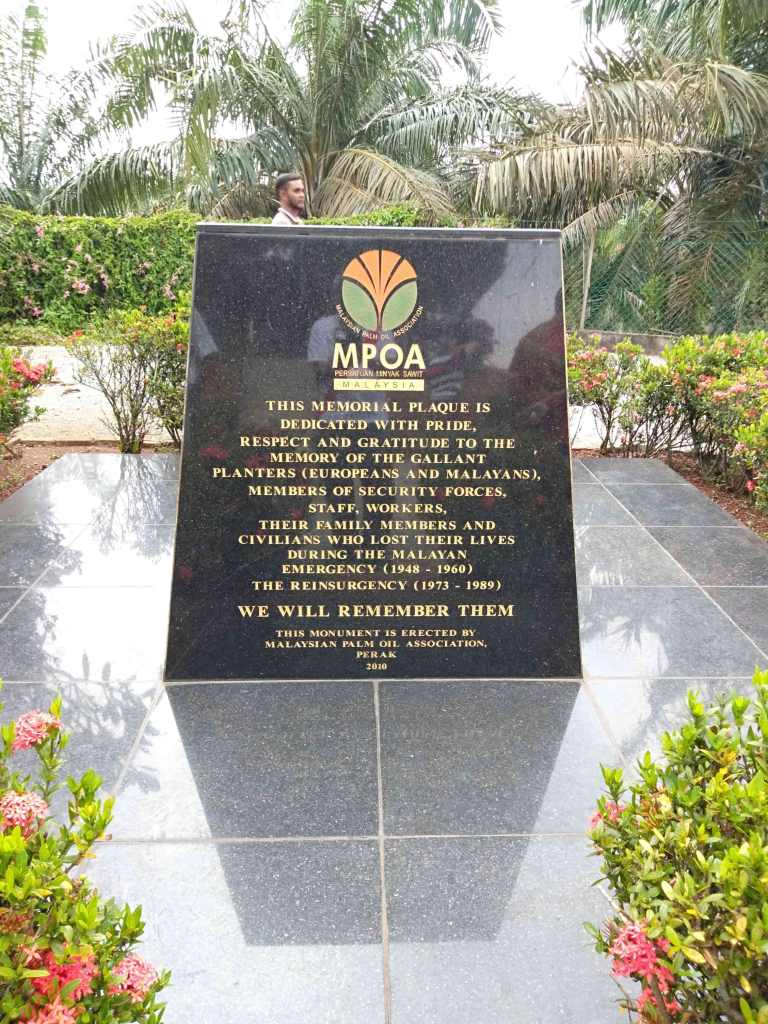
After Kampar we made another ‘Quantum Leap’ and proceeded to the Sungai Siput Estate, formerly known as the Phin Soon Estate, now well known as the spot where two of three British Planters were shot sparking the Emergency. The bungalow is no more but a monument and a gallery have been erected. The gallery had many posters and pictures. We were assisted by Mr. Harchand Singh Bedi, a Military Historian Researcher, with his immense knowledge. The monument was placed by the Malaysian Palm Oil Association. The estate is owned by the National Land Finance Cooperative Society, which is maintaining the gallery.
The gallery at Sungai Siput Estate
A typical poster
The monument
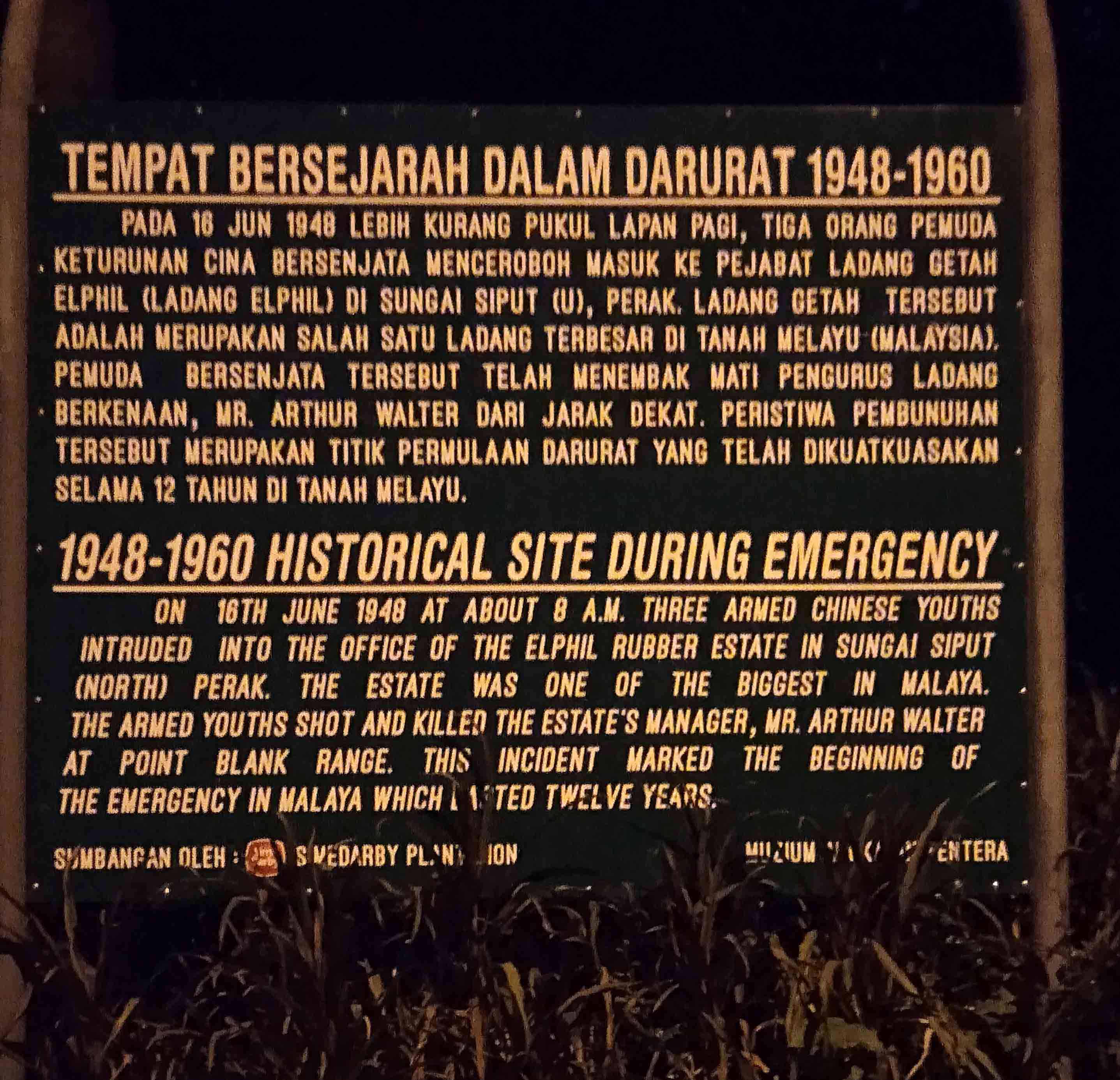
It was already late evening and on the way we stopped at the entrance of Elphil Estate now owned by Sime Darby. This was the scene of the first shooting of the British Planter and now there is only a board at the entrance marking the area. Unfortunately, the name on the board is Walter instead of Walker. This board was put up by the Army Museum Port Dickson and I am making attempts to contact them to correct this error.
It was a long day and we checked into the Weil Hotel just after 9pm. At Kampar we had been joined by 4 officials from Tourism Malaysia and the Director of the Northern Region Tourism Malaysia. They accompanied us for the same earlier reason to get to know the various sites so that they can create memorials or plaques to permanently recognise and remember these historical sites.
Tour – Day 4
The next day saw us at the nearby Ipoh Railway Station, which the older locals will remember for the lamb chops in its first class ‘dress for dinner type’ restaurant and later on, in ‘casuals allowed’.
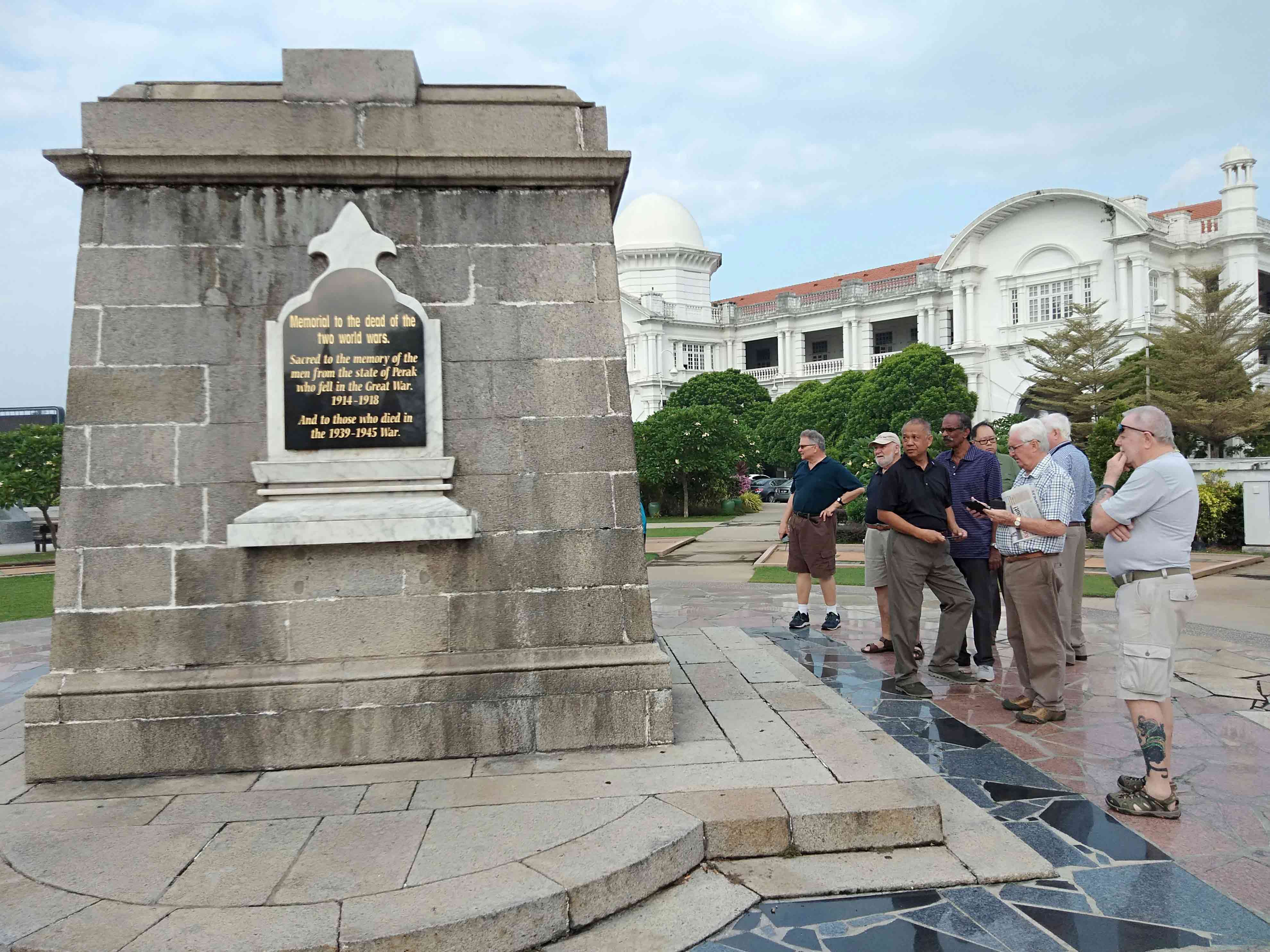
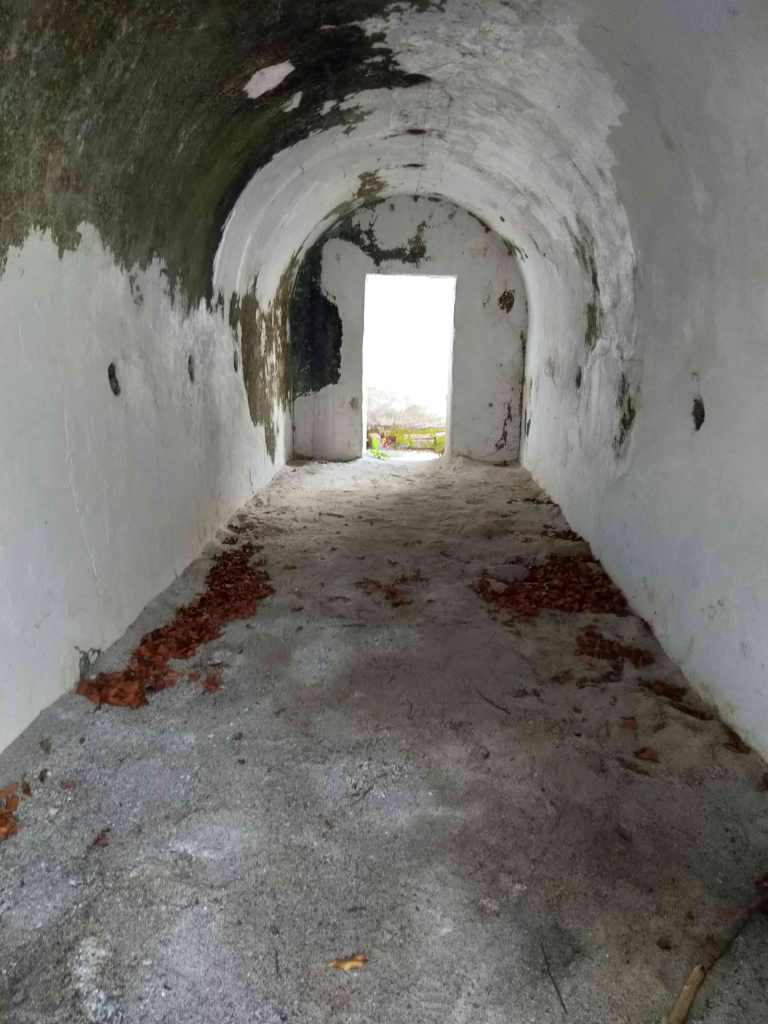
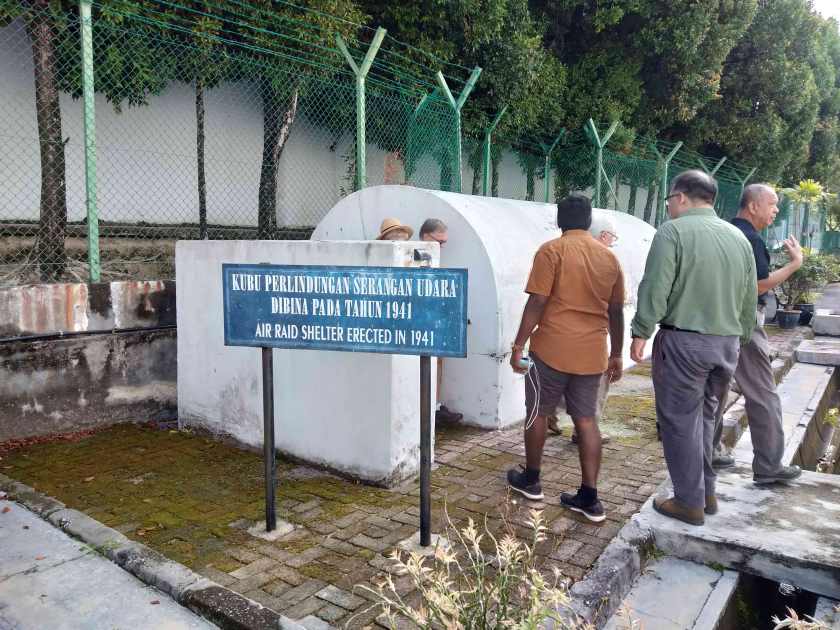
In front of the station, there is the Cenotaph erected in 1927 commemorating Remembrance Day in honour of the fallen in World War 1, but now including those fallen in the World War 2, the Malayan Emergency and the Confrontation. We then moved nearby, Ipoh being a small city, to the Saint John’s Anglican Church. This place suffered some damage in Japanese aerial bombing meant for the railway station, intending to destroy the trains carrying ammunition of the retreating British forces. The church also has a small air raid shelter.
The Cenotaph
Inside the air raid shelter
Air raid shelter
The St. Michael’s Institution in Ipoh also has a place in the war. Retreating from Jitra downwards, the British 11th Indian Infantry division suffered heavy losses. Within this this division the 2nd East Surrey and the 1st Leicestershire Regiment were so badly reduced that they had to be amalgamated to form the British Battalion. This unit remained till the end in Singapore. This amalgamation was done at St. Michael’s and later the school became a Japanese Prisoner of War camp.
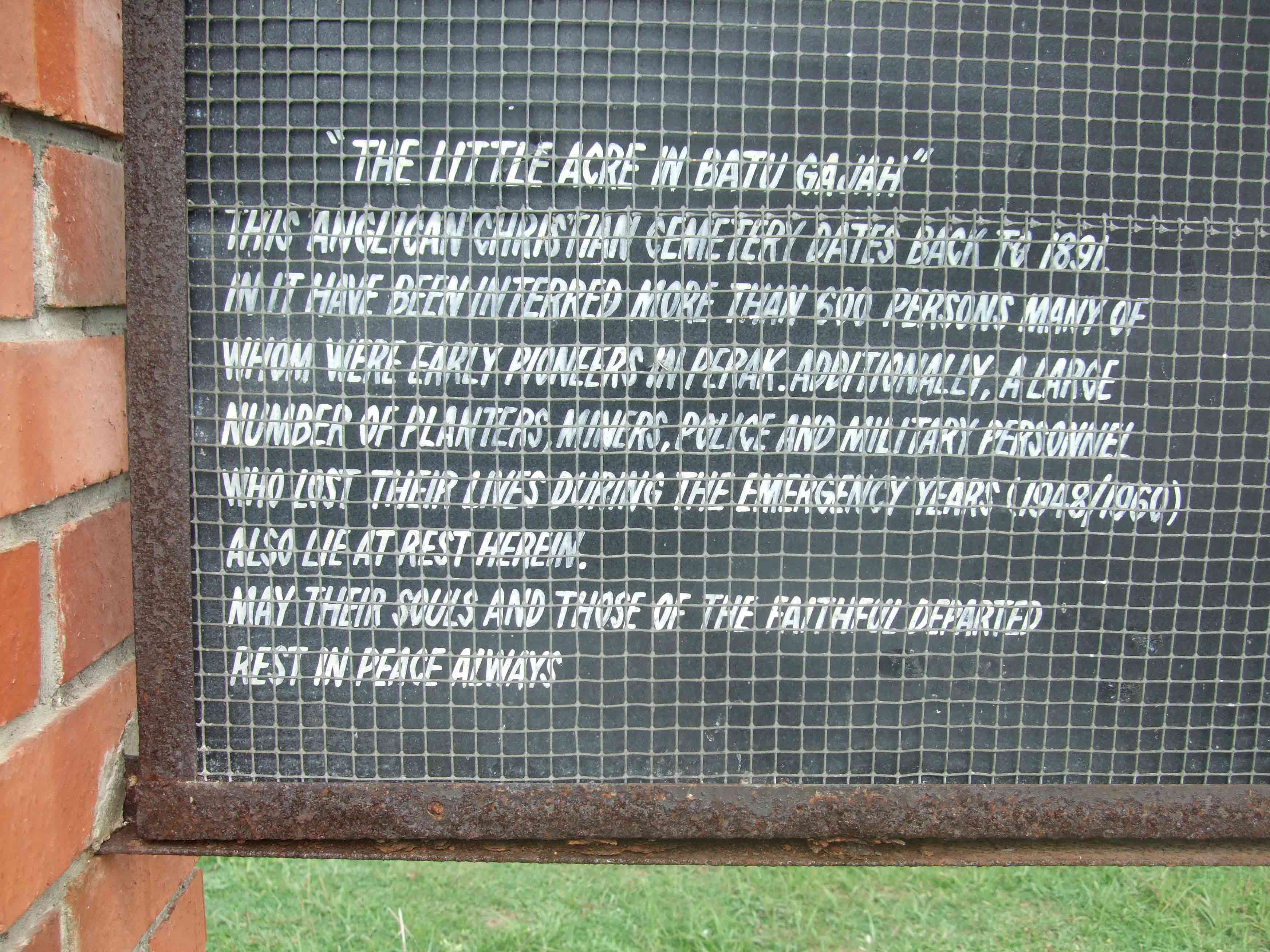
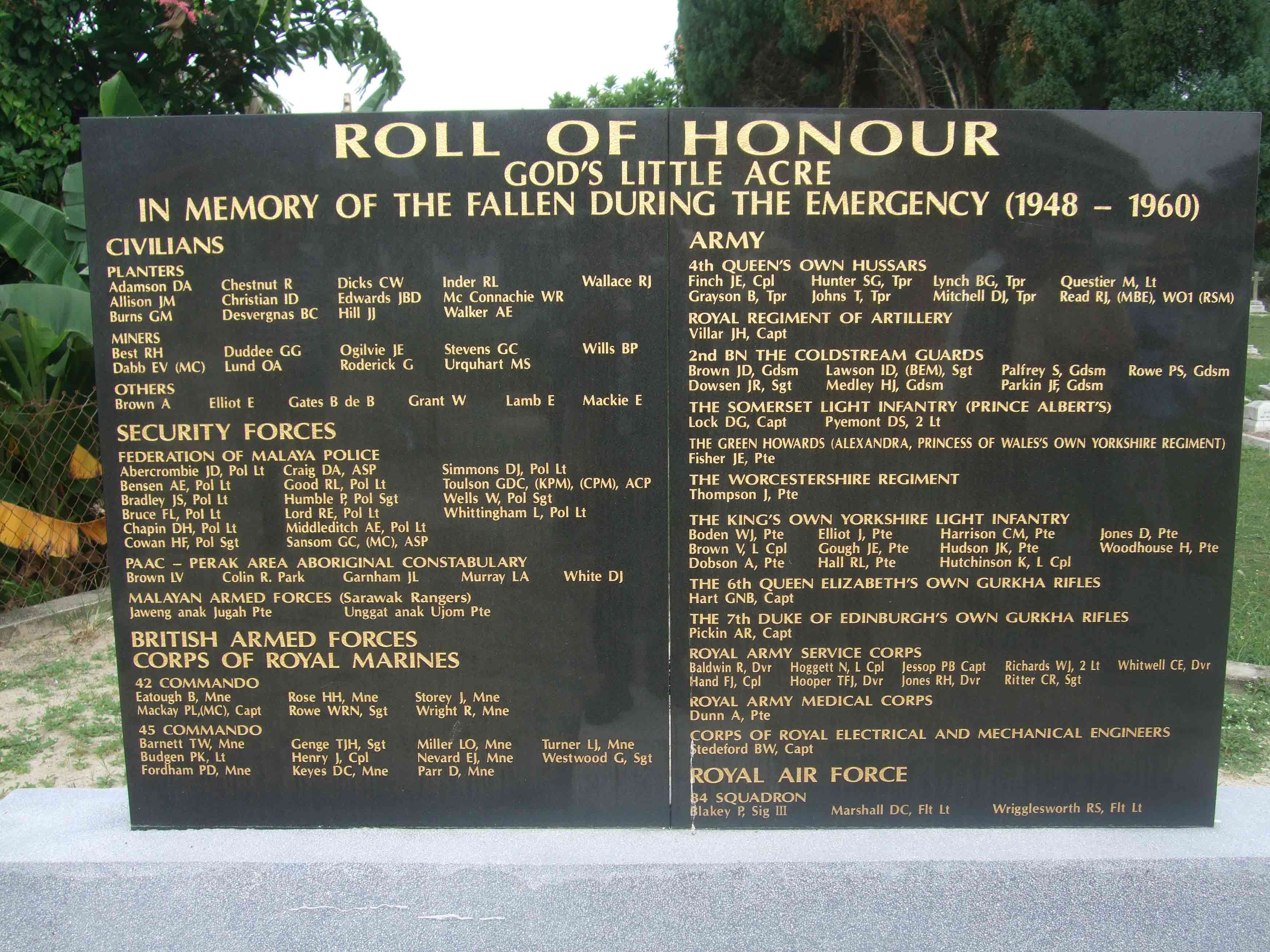
We then travelled to Batu Gajah where the famous cemetery known as God’s Little Acre is situated. Here are graves of the three planters who were killed during the Emergency, as well as graves of many civilians, military and police who fell during the Emergency. This is a very old cemetery and there are also many graves of very early residents of Batu Gajah; the oldest that I saw was dated 1886.
At the entrance of God’s Little Acre
The Roll of Honour
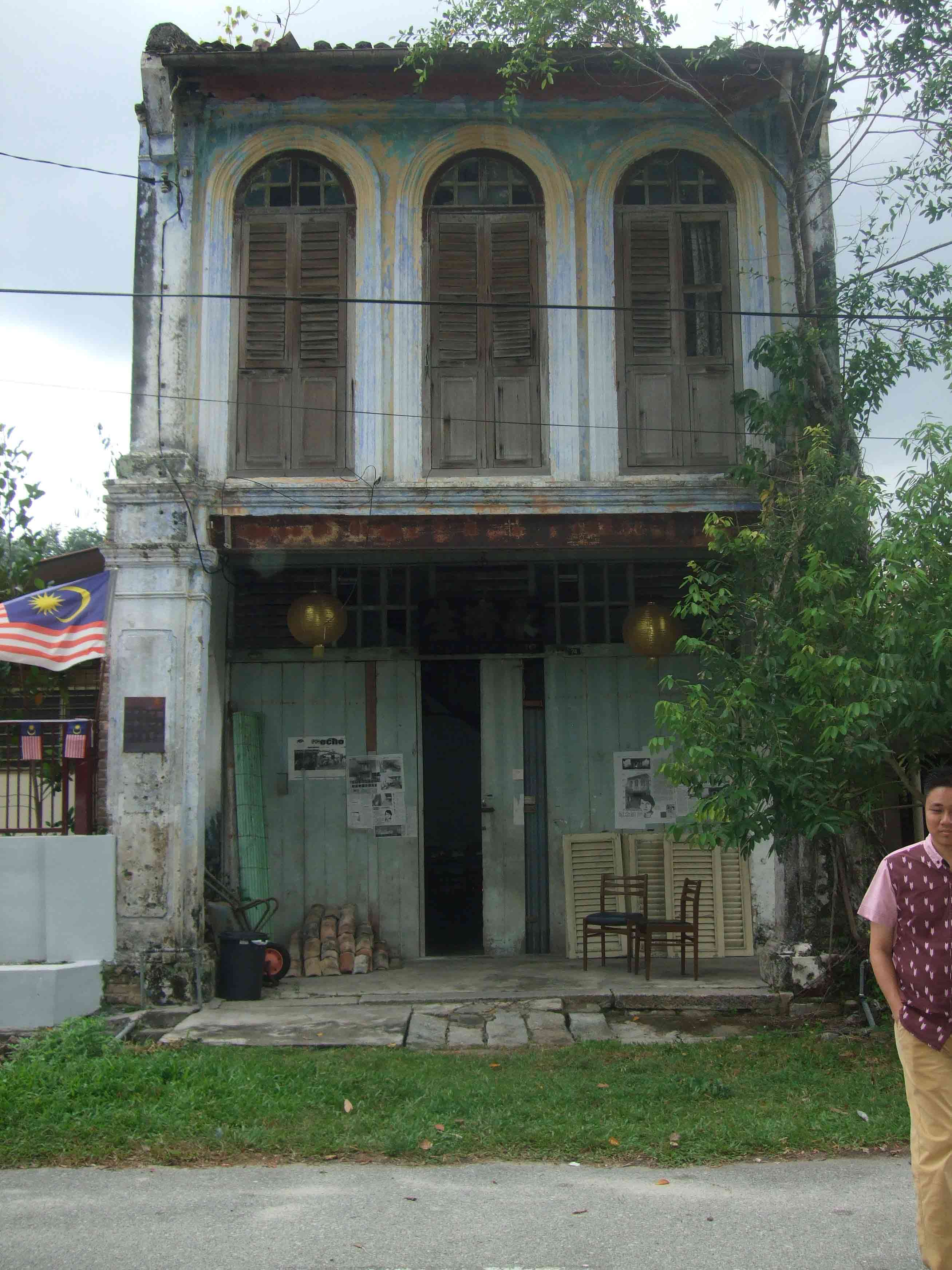
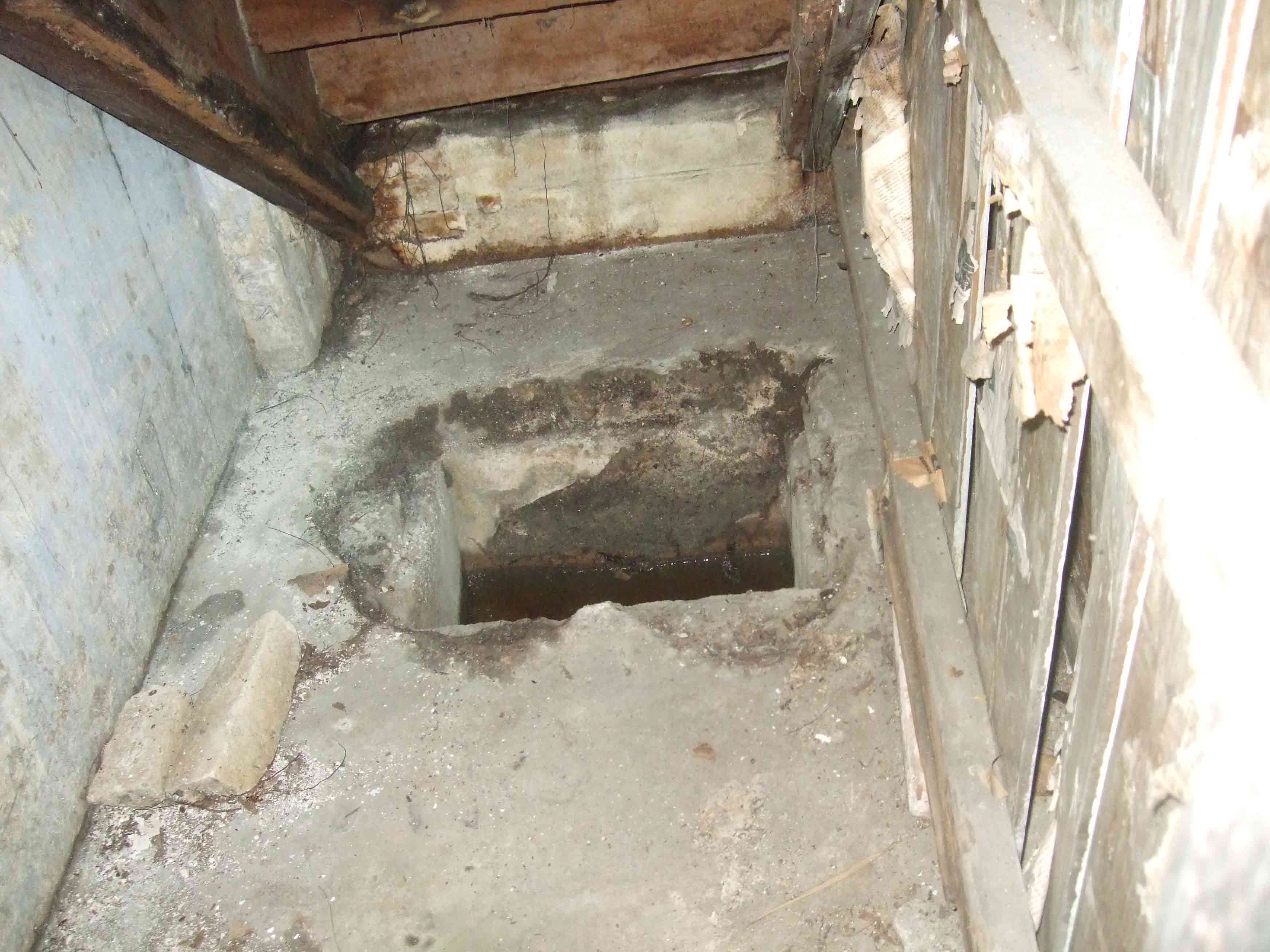
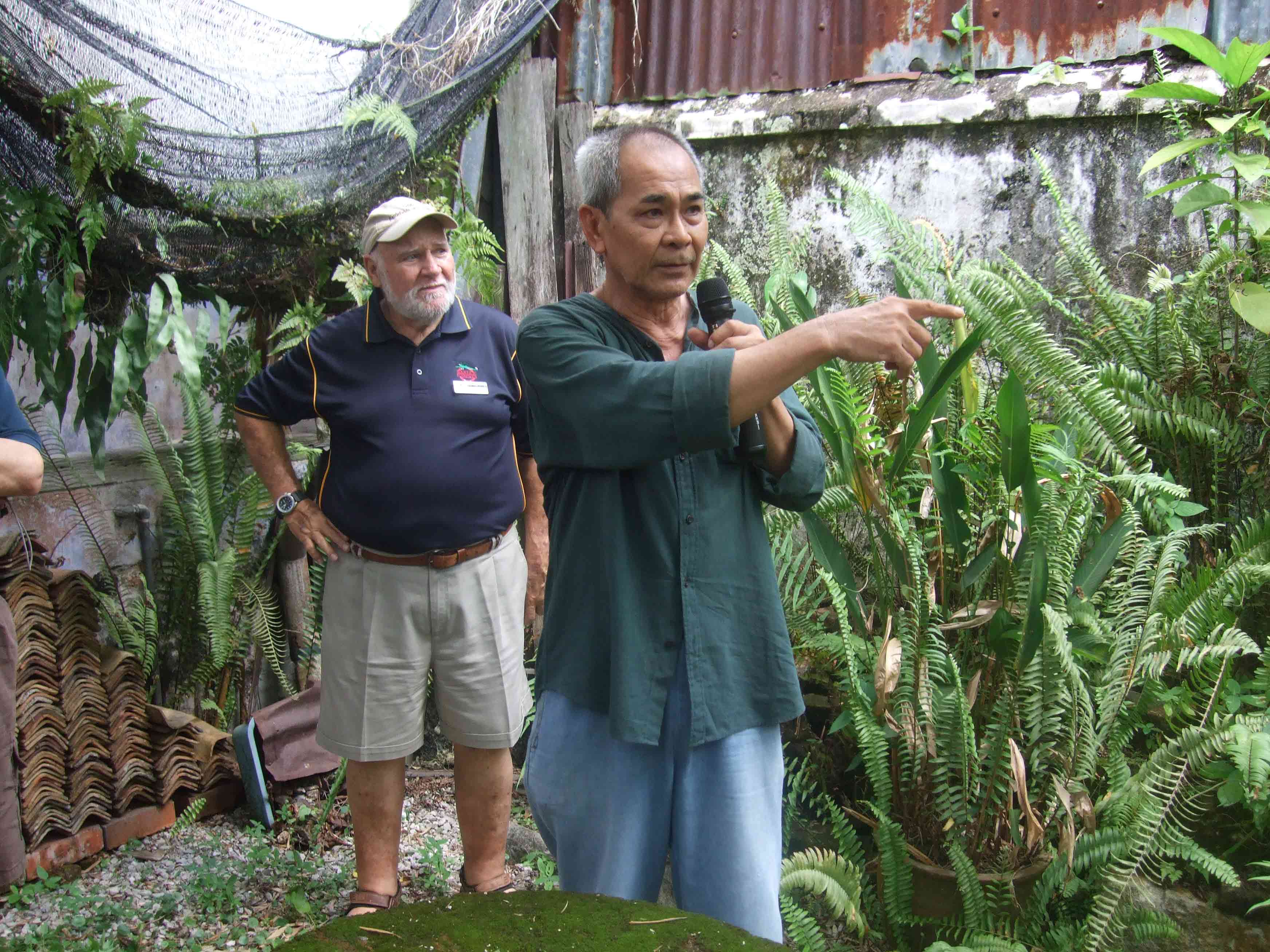
Next stop was a town called Papan where the Malayan heroine, Sybil Karthigasu, lived during World War 2. She helped the communist soldiers of the Malayan Peoples Anti-Japanese Army and was tortured for it by the Japanese. After the war she was sent to England for medical treatment where she died after some years. Later she was reburied in the cemetery next to the St. Michael’s Church. She was awarded the George Medal for Bravery. The house is sadly in total disrepair and Mr. Law Siak Hong, President of the Ipoh Heritage Society, has taken a great interest to restore the house to a decent form. Nothing belonging to the family remains and the only reminder is the hole under the staircase where they hid the radio set, radios being banned then with serious consequences if found. Later on Sybil’s daughter donated a cabinet.
Sybil’s house in Papan
Hole under the staircase in which the radio set was hidden
Mr. Law Siak Hong giving a tour
After lunch in a nearby Pusing, we left for Taiping. Passing the well-known beautiful Lake Gardens, still peaceful despite very large crowds of people, we arrived at the Taiping War Cemetery. Here are the graves of those killed in action during the war, the Japanese Occupation and those posted here after the war but before the Emergency. Among some 800 graves, about 500 are unidentified. The Christian and non-Christian graves are in two separate sections; they are maintained by the Commonwealth War Graves Commission.
Some members of the Taiping Heritage Society were at hand to meet us, led by their President Mr. Yeap.
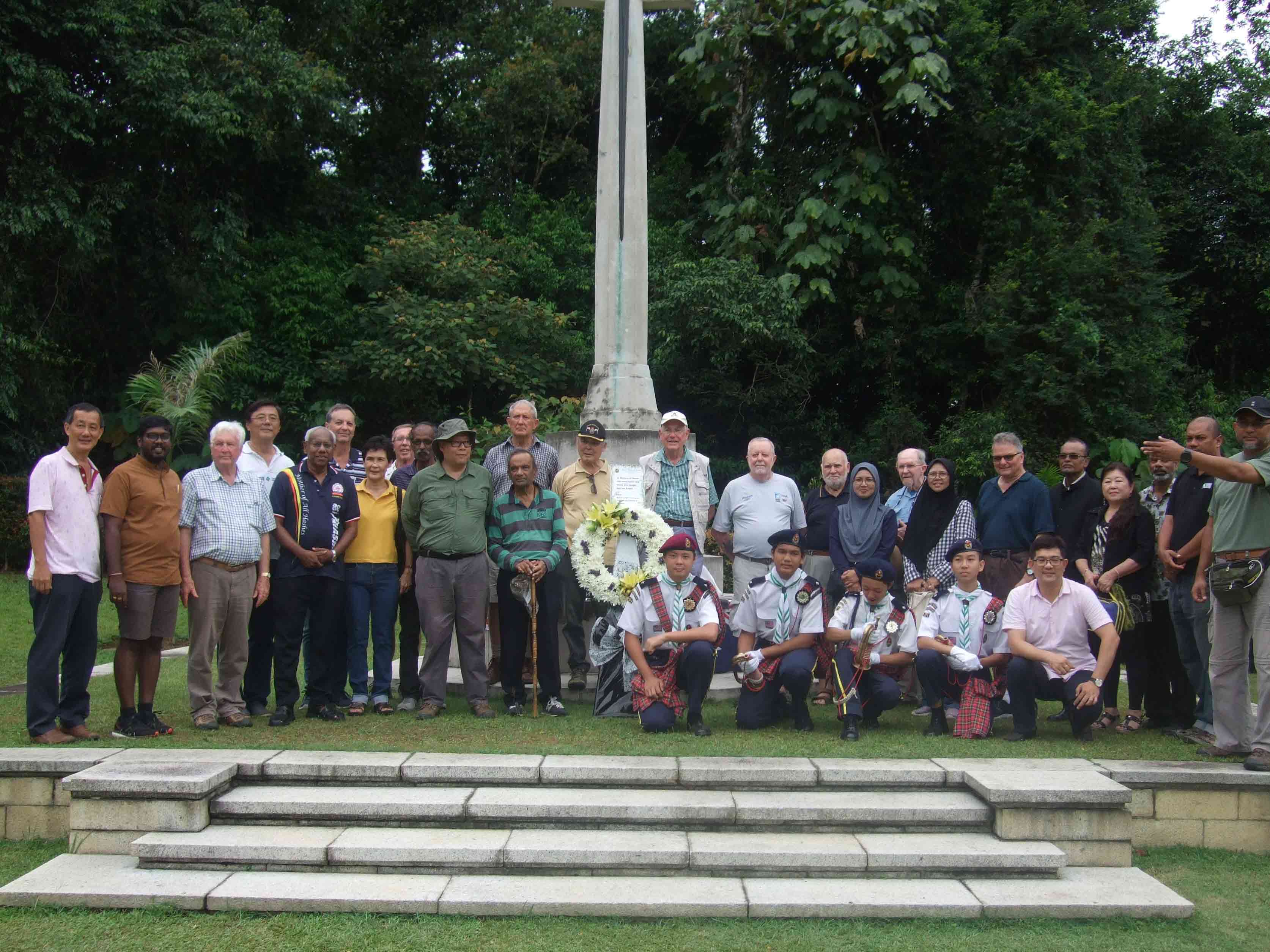
A formal ceremony was held at the Cross of Freedom with a prayer and a short sermon by Reverend Dr. Philip Mathius. This was followed by the Oath by Lt. Col. John Morrison accompanied by the Last Post by three buglers of a local Scout Troup. A wreath was laid by Commodore (Rtd.) Arasaratnam of the Royal Malaysian Navy accompanied by Colonel Dr. Robert Likeman.
The Taiping Heritage Society then hosted us to tea at the New Club, which had been founded in 1892 by members of the Perak Club (founded in 1885) in protest of the Perak Club’s rule of restrictive membership to high-ranking officials. We returned at night for our dinner here.
Tour – Day 5
The next morning was a mix of history and places of general interest. We started at the Spritzer Plant, in case you did not realise, a Malaysian company producing natural mineral water. Water is pumped from an aquifer 400 feet below, purified and bottled. The Plant is situated just below the hills, which are behind it.
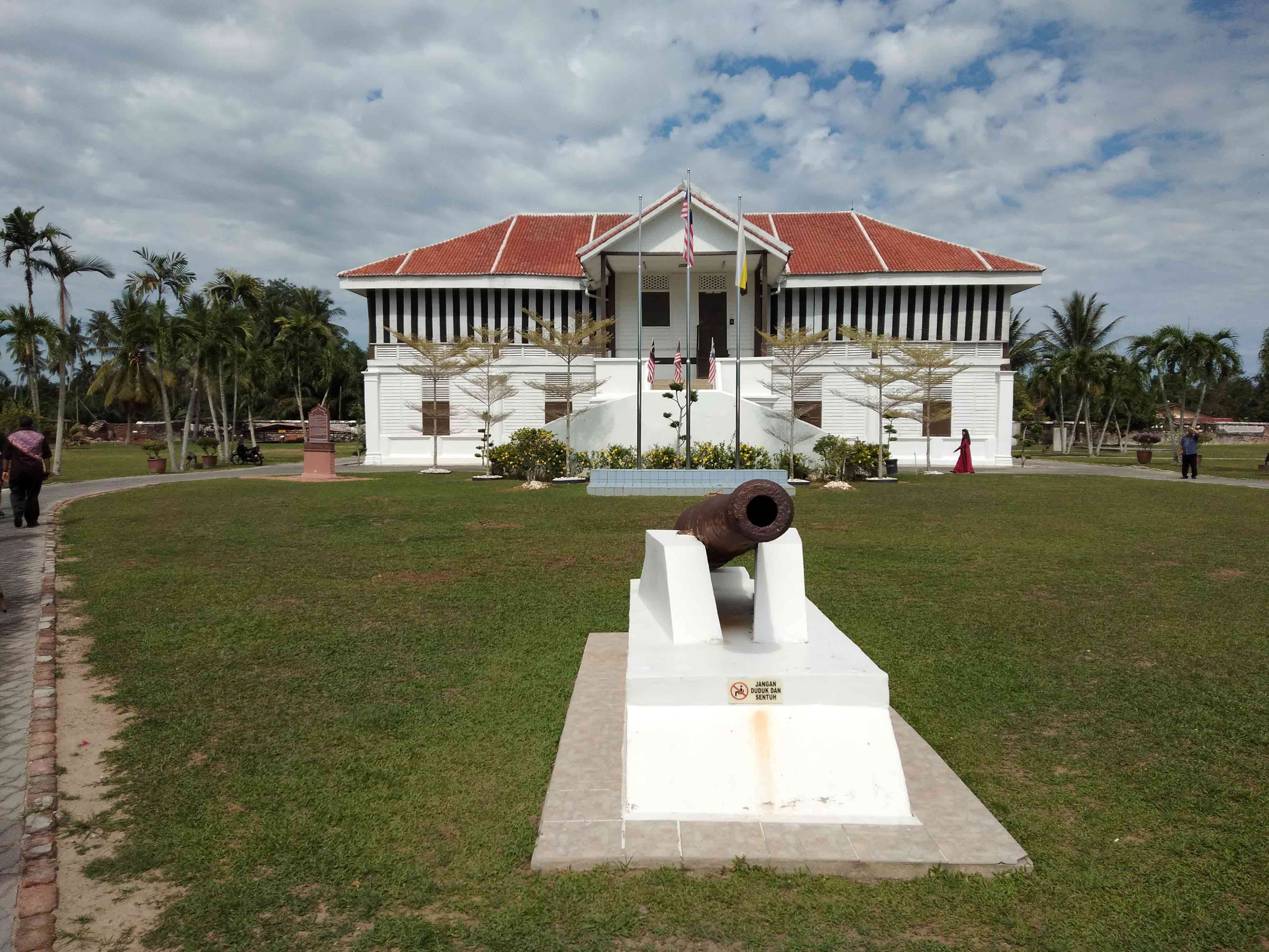
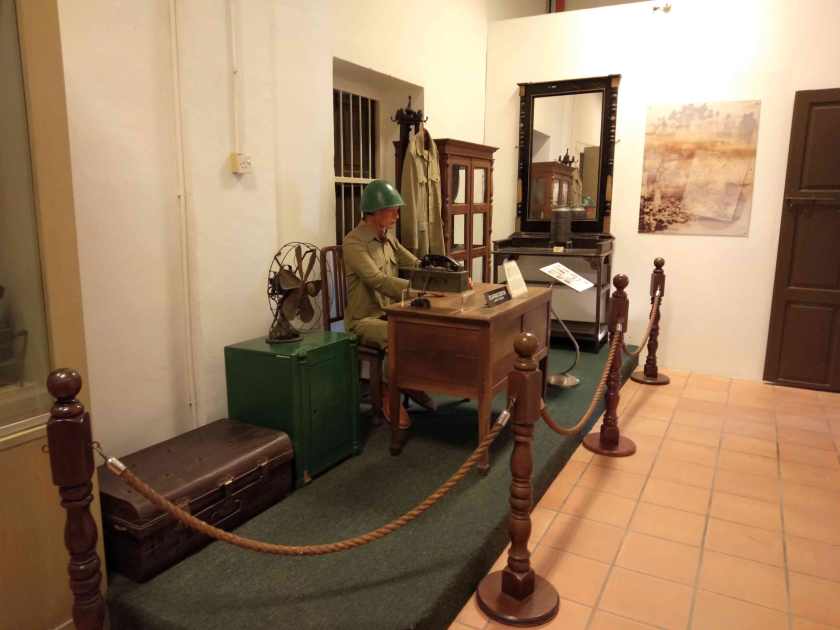
We stopped at the Matang Museum, a historical building built by Orang Kaya Menteri Ngah Ibrahim, the son of Cek Long Jaffar who is credited for opening up the Larut district for tin mining. The building has variously been a Teachers College, Japanese Army headquarters, a Malay school and now a museum.
The Matang Museum
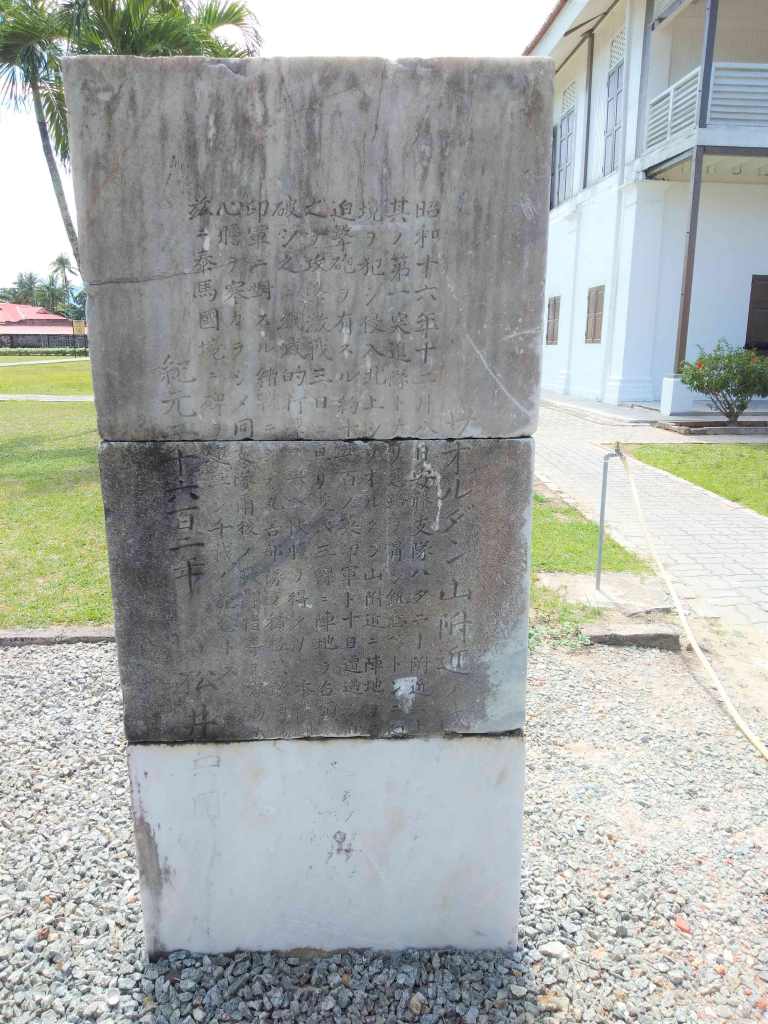
stone stele
This museum is off the beaten track and is well worth a visit. One side of the perimeter wall was damaged when a Japanese fighter plane crashed into it. There are many displays and artefacts including about tin. But at the back are stone pillars, or stele, which is a Japanese memorial to their soldiers killed in the invasion at the Thai Malayan border.
We stopped at a charcoal factory in Kuala Sepetang, or once known as Port Weld. Mr. Chuah from the factory gave us a tour. This factory produces high quality charcoal from bakau, a swamp wood. Much of it is exported to Japan. The bakau is cut from the surrounding swamps. But it is well controlled with replanting and is monitored by the forestry department. Incidentally, making charcoal is not just burning the bakau. It’s a much longer and involved process. Another blog another day.
Mr. Chuah explaining how charcoal is made
Inside the empty oven
We then travelled on to Penang and checked into the Royale Chulan Georgetown. This is in the old Boustead building, which were once offices and warehouses by the quay.
Tour – Day 6
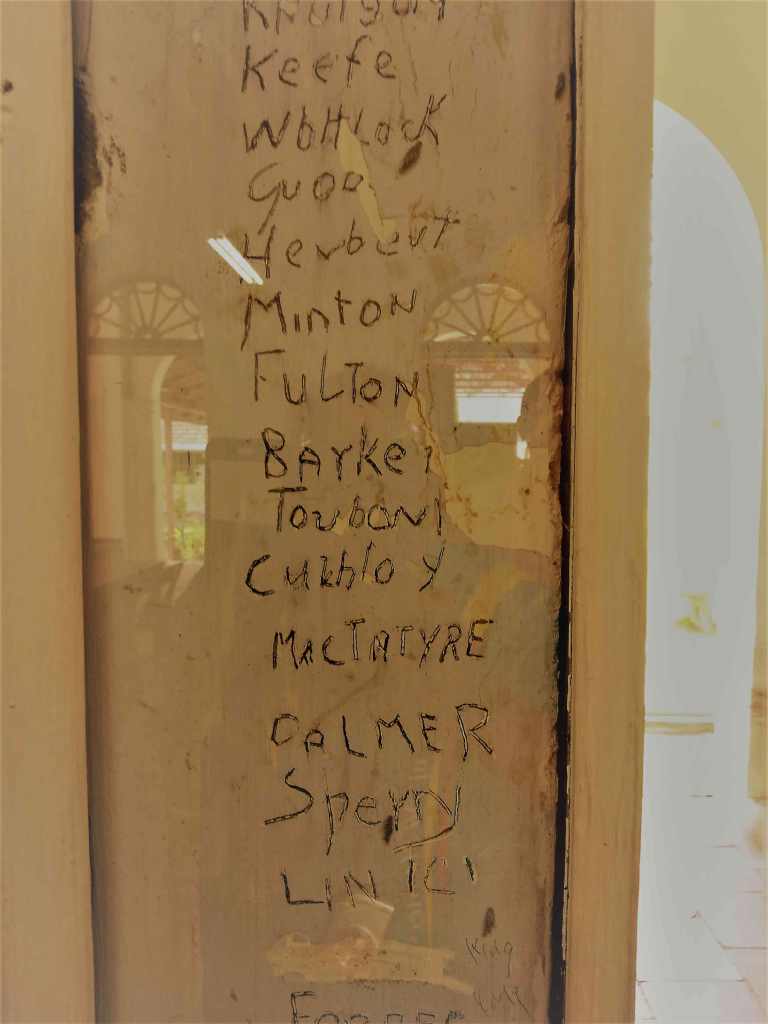
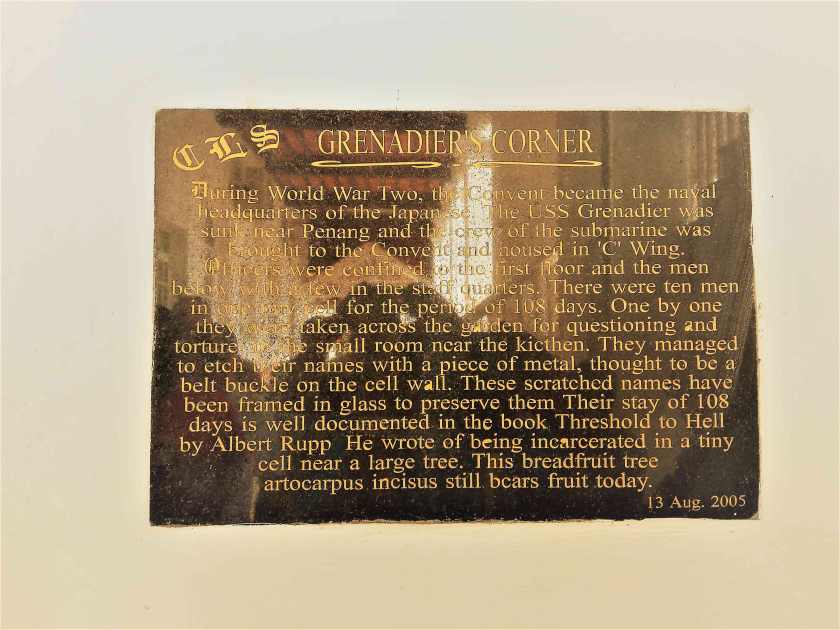
On this day, we went to the Convent Light Street. Here we observed in a classroom the names of Prisoners of War from the American submarine USS Grenadier. This submarine was sunk near Phuket and some of the prisoners were interned for 108 days in this school, which was then the Japanese Naval Headquarters. The names were etched using their belt buckles on the door and walls of a classroom. The school has preserved these by putting a glass casing over them. A plaque has also been installed.
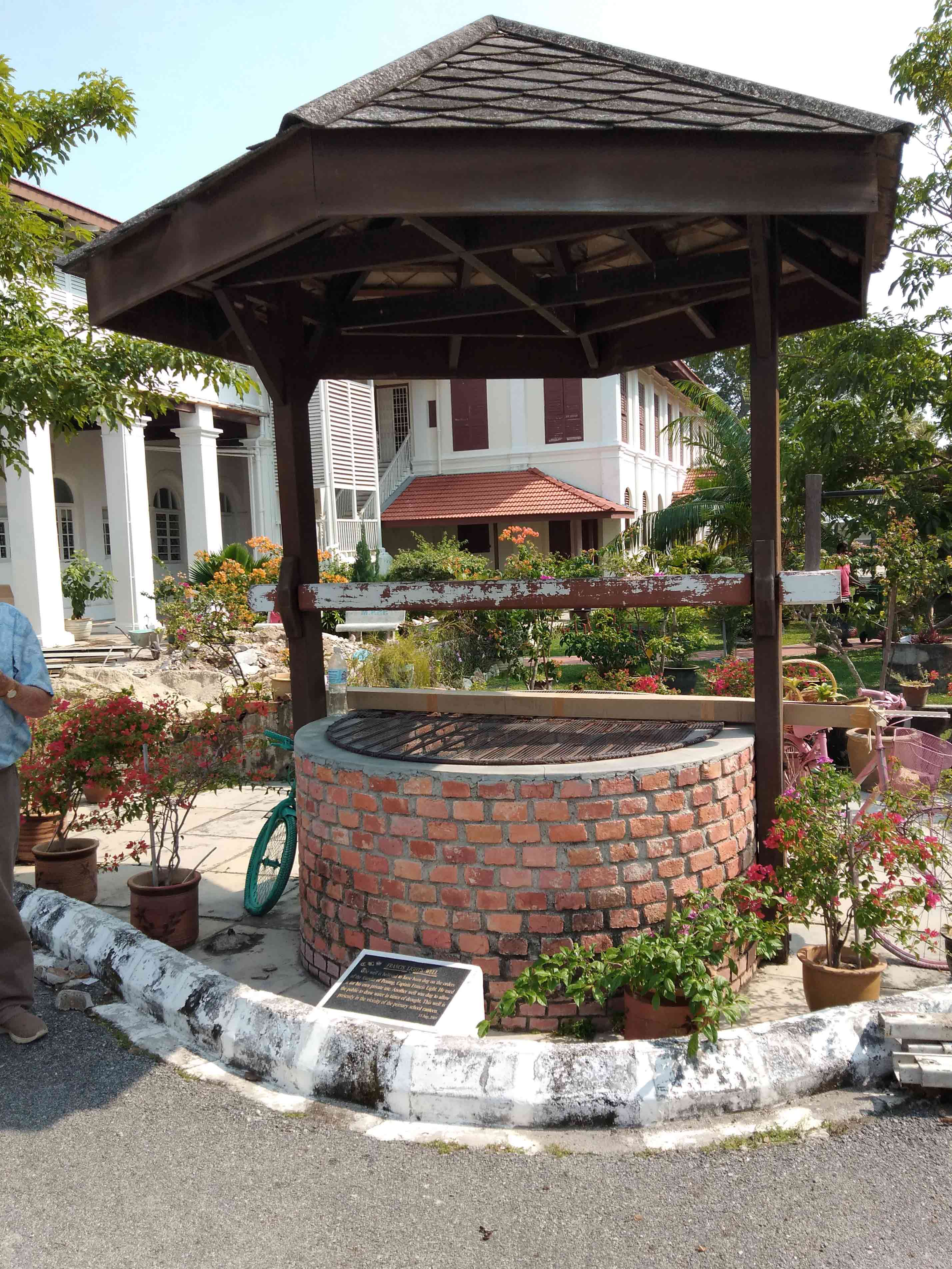
This school was not always a school. It was built around the bungalow of Sir Francis Light, the Founder of modern Penang. It was later the Government House and the offices of the early Penang Government. There is even a well in the compound used for Francis Light and another for the public.
Francis Light’s personal well in the school compound
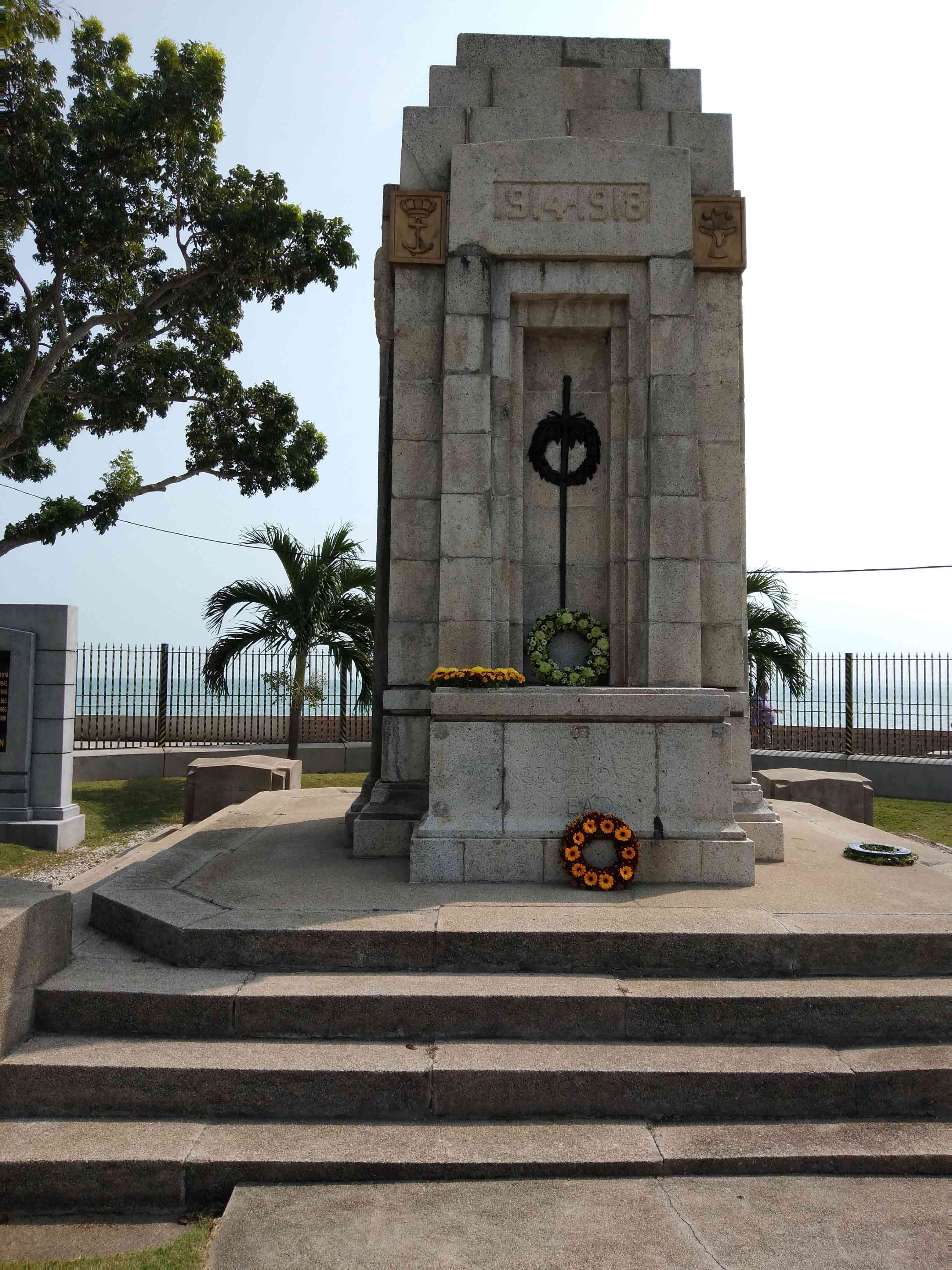
The next stop was the Cenotaph at the Penang Esplanade. This is placed by the Penang Veterans Association in honour of the fallen in the wars from the First World War to the Communist Re-Insurgency.
The Cenotaph at the Esplanade Penang
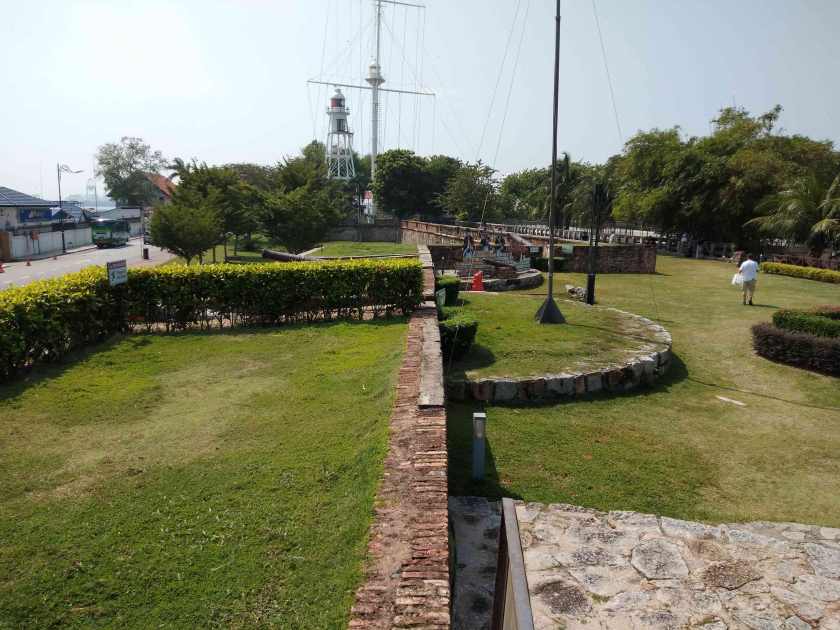
Fort Cornwallis was not to be missed. Exhibits are sparse and only a part of the wall exists. But it is well maintained and conservation works promise new discoveries.
On the fort
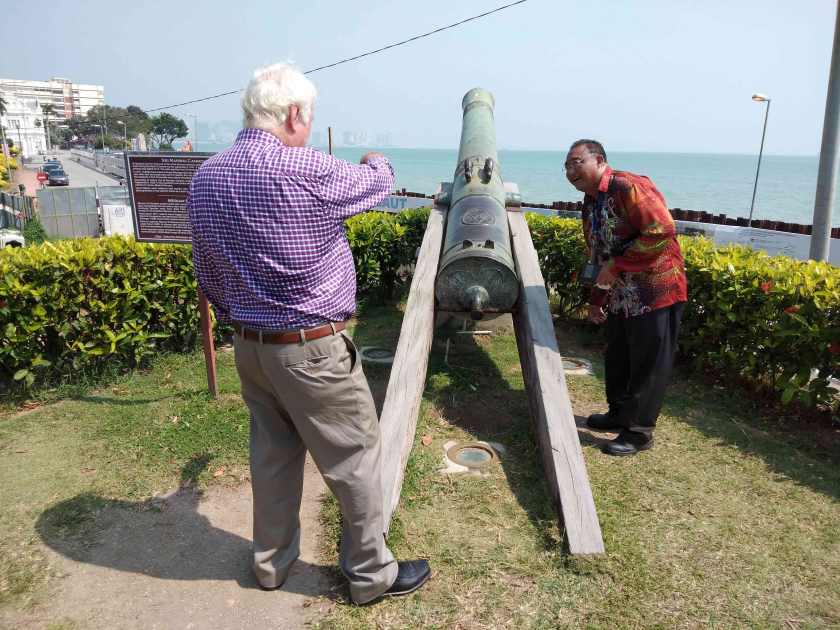
Sri Rambai cannon
Excavation works
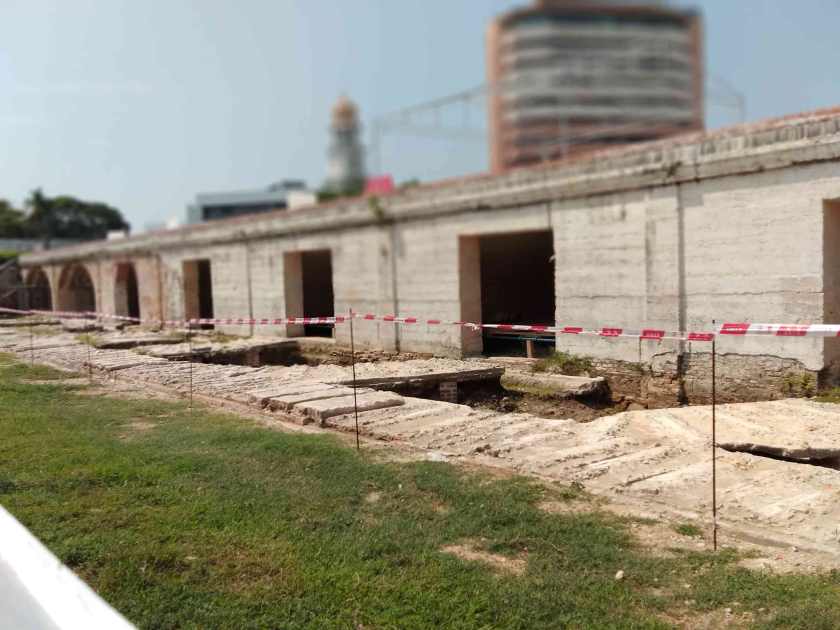
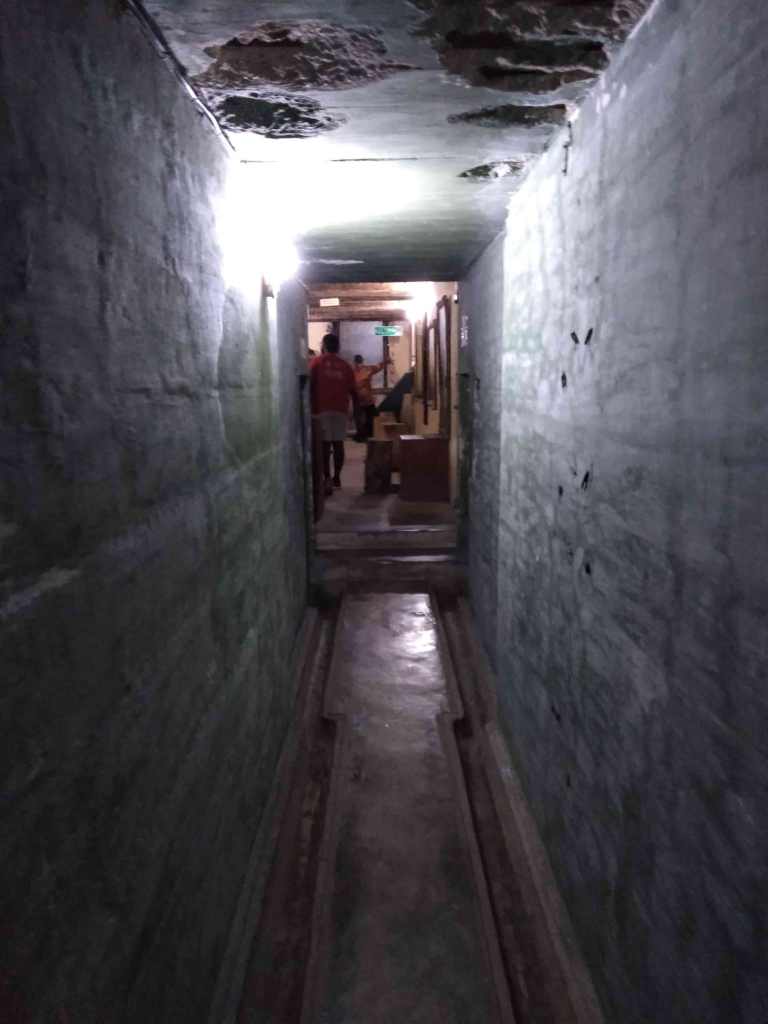
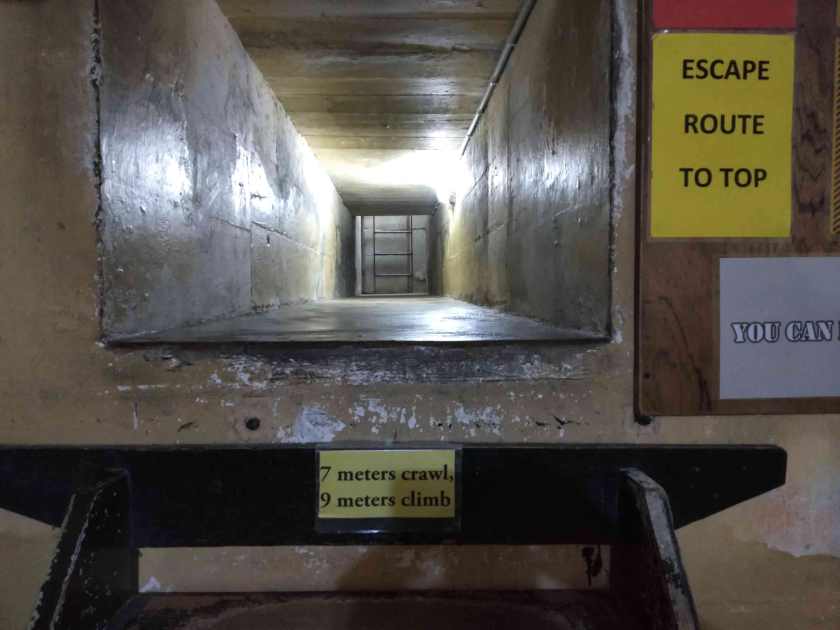
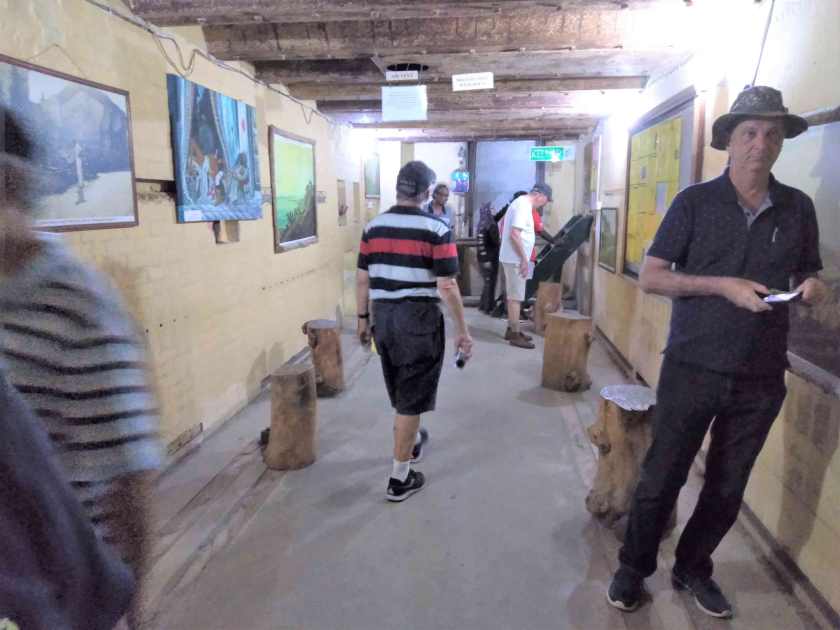
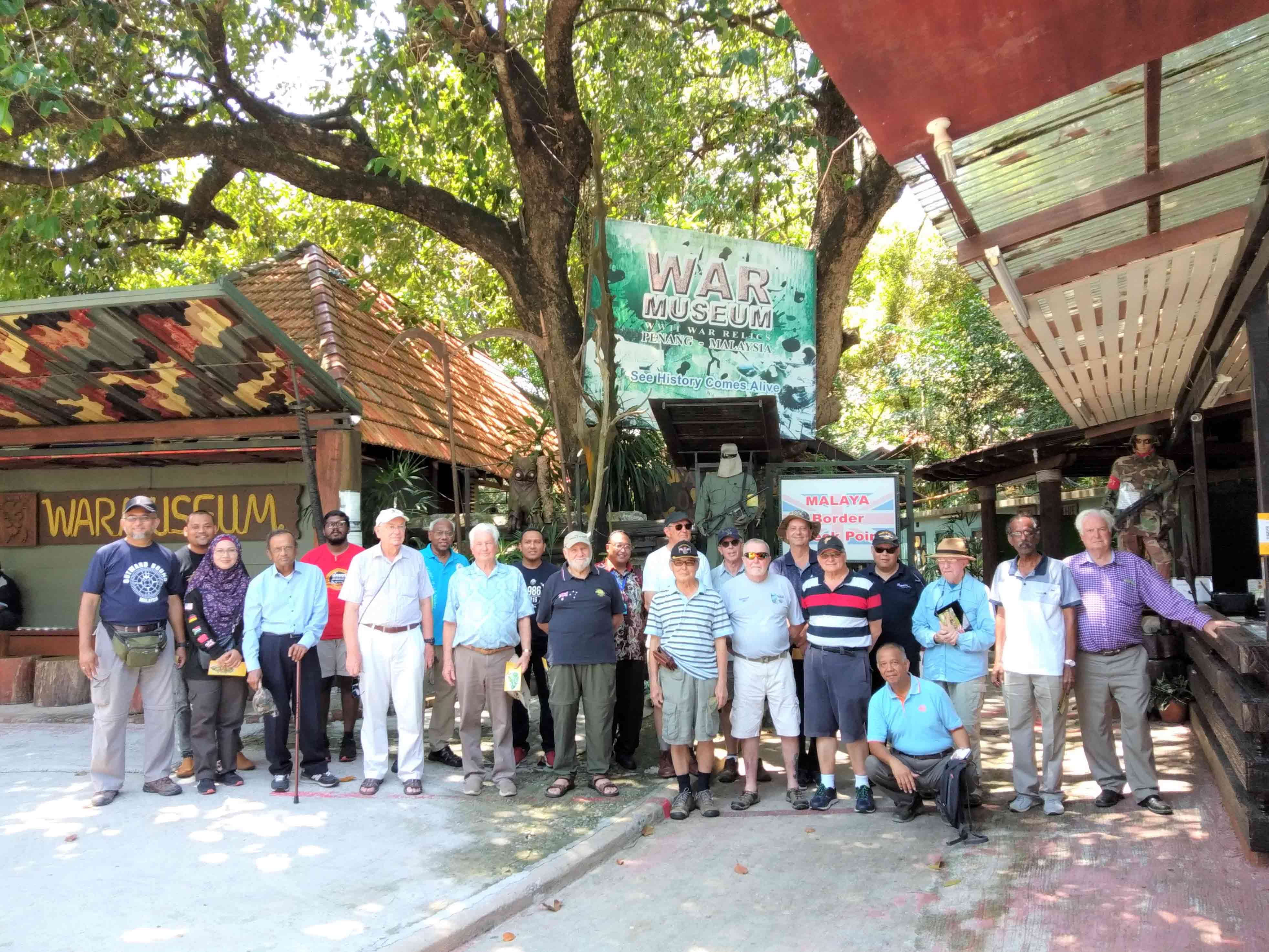
The final stop was the Penang War Museum in Batu Maung. Having lived in Penang in the early sixties, this place was for me and I am sure many other Penangites, a total surprise, not having known of its existence all this time. Located in the south east corner of Penang, it was built in the early 1930’s and was equipped with anti-aircraft guns, cannons, barracks, pillboxes, tunnels and facilities for the occupants. It was evacuated by the British in their retreat in December 1941. It was taken over and used by the Japanese to protect shipping, as well as a prison. After the war, it was abandoned and disappeared in the overgrowth.
However, in the 1990s, an entrepreneur, Johari Shafie, started a company and with the Penang State Government restored the fort and created a war museum. It was opened in 2002. I personally found it to be an interesting place and spent quite some time such that I was the last back on the bus.
One of the tunnels
The escape tunnel
Underground ammunition storage
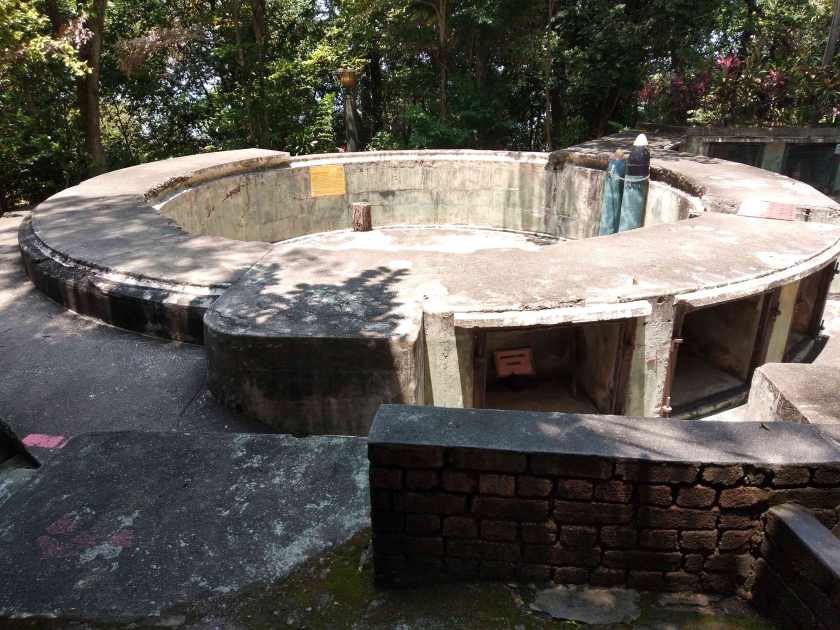
Anti-aircraft gun emplacement
Lunch was at the Queensbay Mall where we separately wandered in the food court for a variety of not just Penang fare. We returned to the hotel and gathered again for dinner. This was at the TOP View Restaurant Lounge on the top (of course), 59th floor of the KOMTAR Penang. Participants were given a Certificate of Participation. One of the group, Colonel Dr. Robert Likeman, was inducted as a member of the Council of Fellows of the War History Institute. There was Malaysian Cultural dance by four dancers organised by the Tourism Malaysia.
We boarded the bus back to the hotel with farewells to mark the end of a very well planned and enjoyable tour of the Malayan battle sites. An eye opener even to me as a Malaysian with a keen interest in our history.
‘Malaya at War’ was the title of a conference held in Kuala Lumpur on 10th and 11th August 2019. It was organised by the War History Institute, Holiday Tours & Travel Sdn. Bhd. and the Malaysian British Society. As the Research Director of the War History Institute, Mr. Seumas Tan, mentioned, there should be more stories about local war heroes as this would lead to more interest in Malaysia’s war history and consequently more visits to places associated with it. This will, in turn, generate military history tourism.
The Conference
The Keynote Address was by our first Royal Malaysian Navy Chief, Rear Admiral Tan Sri Dato’ Seri (Dr) K. Thanabalasingam. This was followed by Professor Brian P. Farrell of the National University of Singapore on the Defence of Malaya 1941-1942. An interesting first person account of the sinking of the Repulse was given by a survivor – Rear Admiral Guy Richmond Griffiths AO DSO DSC RAN (Rtd.). He is currently the Patron of the HMS Repulse Survivors Association. Kuala Lumpur at War 1939-1945 was covered by Andrew Barber, a Military History Researcher.
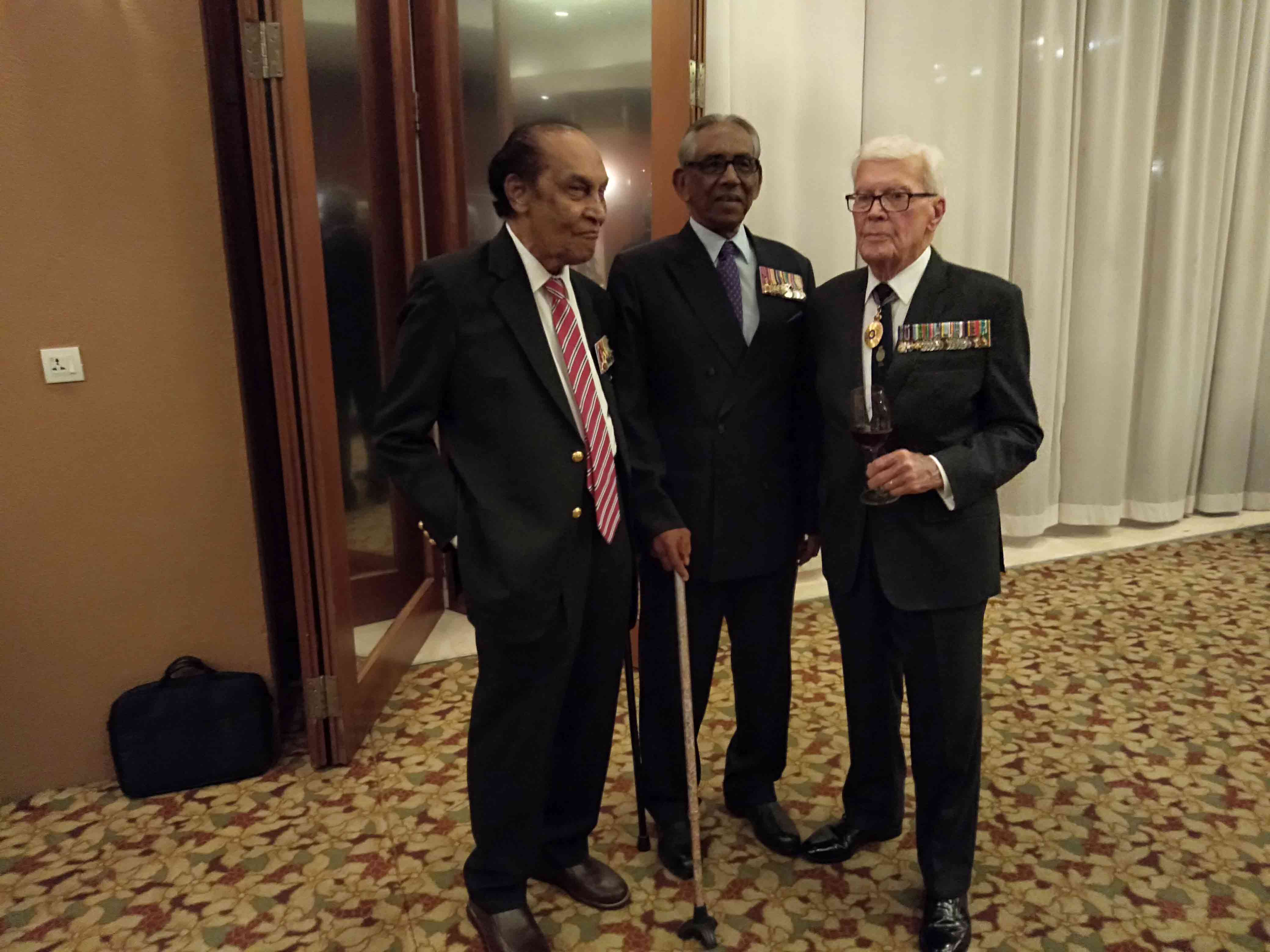
Most distinguished (looks belie their age): L- R: Tan Sri J. J. Raj Jr, Rear Admiral Tan Sri Dato’ Seri (Dr) K. Thanabalasingam Rear Admiral Guy Richmond Griffiths AO DSO DSC RAN (Rtd.
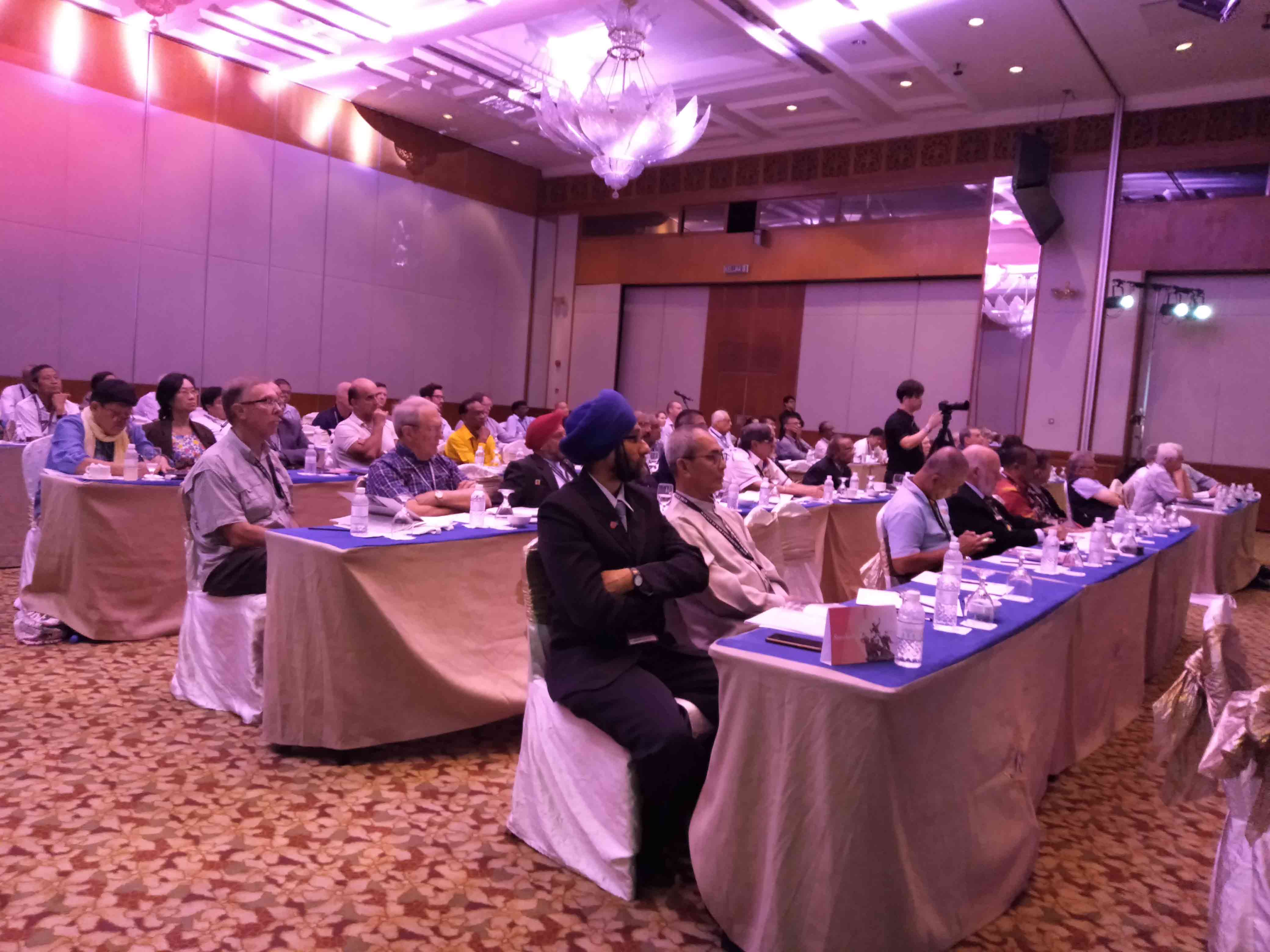
The participants
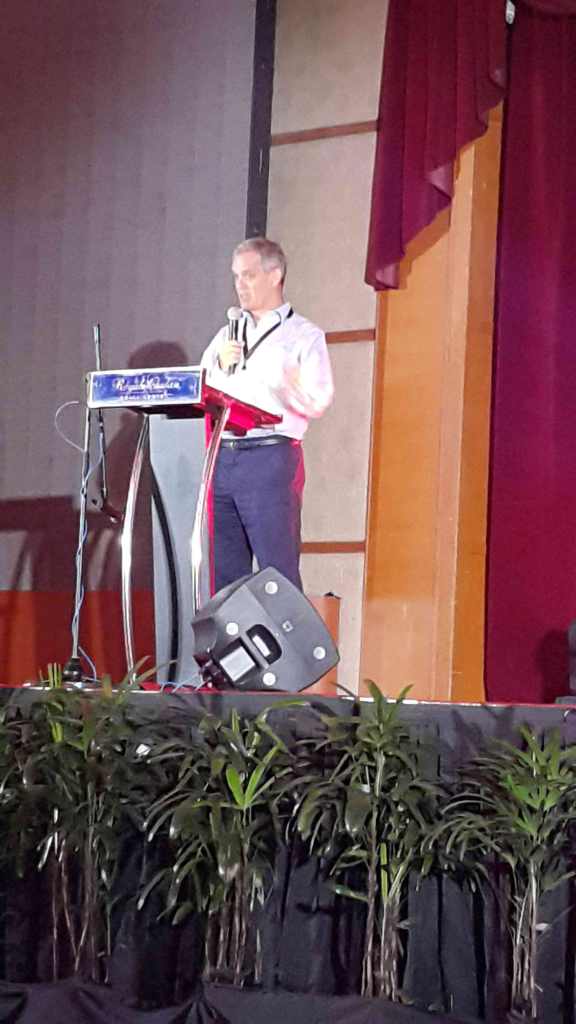
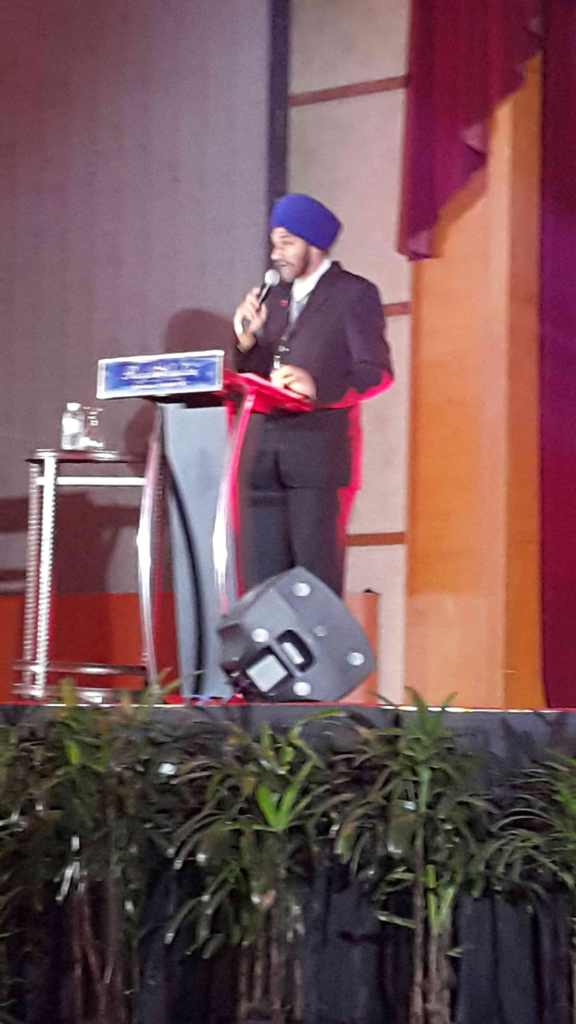
Malaysian speakers were next starting with Mr. Harchand Singh Bedi, a Military History Researcher, who spoke on the Battle of Kampar 1941-1942. The story of Sybil Karthigasu was presented by Mr. Law Siak Hong, President Ipoh Heritage Society. War leaves behind a trail of wreckages and relics and Encik Shaharom Ahmad, a Malaysian Military Historian and Researcher, gave an illustrated description of airplane wreckages, bridges and pillboxes. A panel of speakers then gave their viewpoints on battlefield tourism and their involvement in promoting this. The panel comprised of Seumas Tan, Research Director War History Institute Sydney Australia, who acted as the moderator; George Yong and Zafrani Arifin, Malaysian Battlefield Guides; Henry Ong, Head Business Development Holiday Tours & Travel Sdn. Bhd.; and Dennis Weatherall, Australian Military Historian and Accredited Battlefield Guide.
Brian Farrel
Andrew Barber
Harchand Singh Bedi
Shaharom Ahmad in period costume
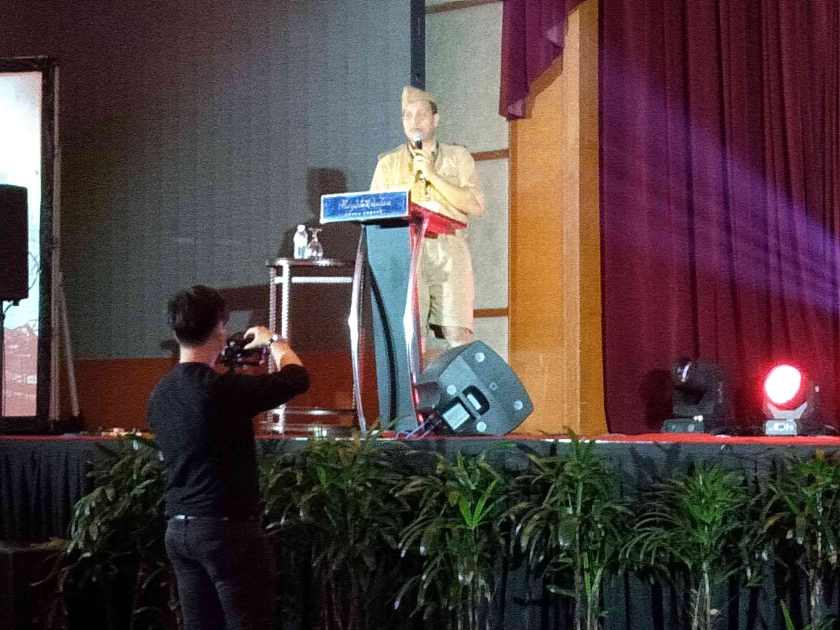
The next day began with the topic on the Malayan Emergency (1948-1960) which was very much a war but for various reasons called an emergency. This was covered by Mr. Christopher Hale who is a documentary producer and non-fiction writer. The famous Bukit Kepong Incident was described by Tan Sri J. J. Raj Jr., a Retired Commissioner of Royal Malaysian Police. He was the Officer in Charge of the Police District and was involved in the incident. From the Nanyang Technological University Singapore, Associated Professor Dr. Kumar Ramakrishna spoke on the Role of British Propaganda during the Emergency. The Conference was closed with a skit describing how a couple of Communists pressured a local couple for food. However, they were ambushed and killed. This skit was by the Malaya Historical Group all in period dress and uniform.
Tan Sri J. J. Raj Jr
The Tour
The Conference was followed immediately by a 6-day tour of the battle sites and memorials as well as a few other places of interest. The group comprised organisers Seumas Tan and Henry Ong, guide Zafrani Arifin and 2 officers from Tourism Malaysia. There were fourteen other participants, of which five were Malaysians. The remainder nine participants were Australians including one who had been here during the Emergency and another during the Confrontation.
The following is a description of the tour and a brief explanation of the battlefields, the battles and memorials. It is not meant to be a detailed description of the various battles as this will be too lengthy. The description also follows the tour route and not the specific battle routes as this involved a lot of criss-crossing and backtracking; it was not a straightforward fall back. These intricate details can be read from numerous books and the internet.
The route for the first day follows the start of the Australian forces’ involvement against the advancing Japanese army. As Australian Lieutenant General Gordon Bennet wrote in his book Why Singapore Fell, “Australians go in to bat”, a cricketing term. Their objective was to stop this advance and even drive the Japanese back, if not to delay the onslaught. The Japanese had been rapidly advancing down south largely on the west coast road with forces spread out on the fringes of the road, in the rubber estates and in the jungle, in fact everywhere in a broad sweep. They also had air cover in many places operating from occupied airports. Surprisingly, they also seized boats in Penang and Muar to get ahead and behind the British lines. The Forces, i.e. British Army, may have delayed the Japanese slightly and caused some losses, inflicted heavy damage, but they ultimately had to retreat into Singapore.
While this is where the Australian forces joined the war, the entire army here comprised of Australian, Indian and British units. Many units have been retreating from up north and were exhausted. Units had to be regrouped as each suffered losses.
Tour – Day 1
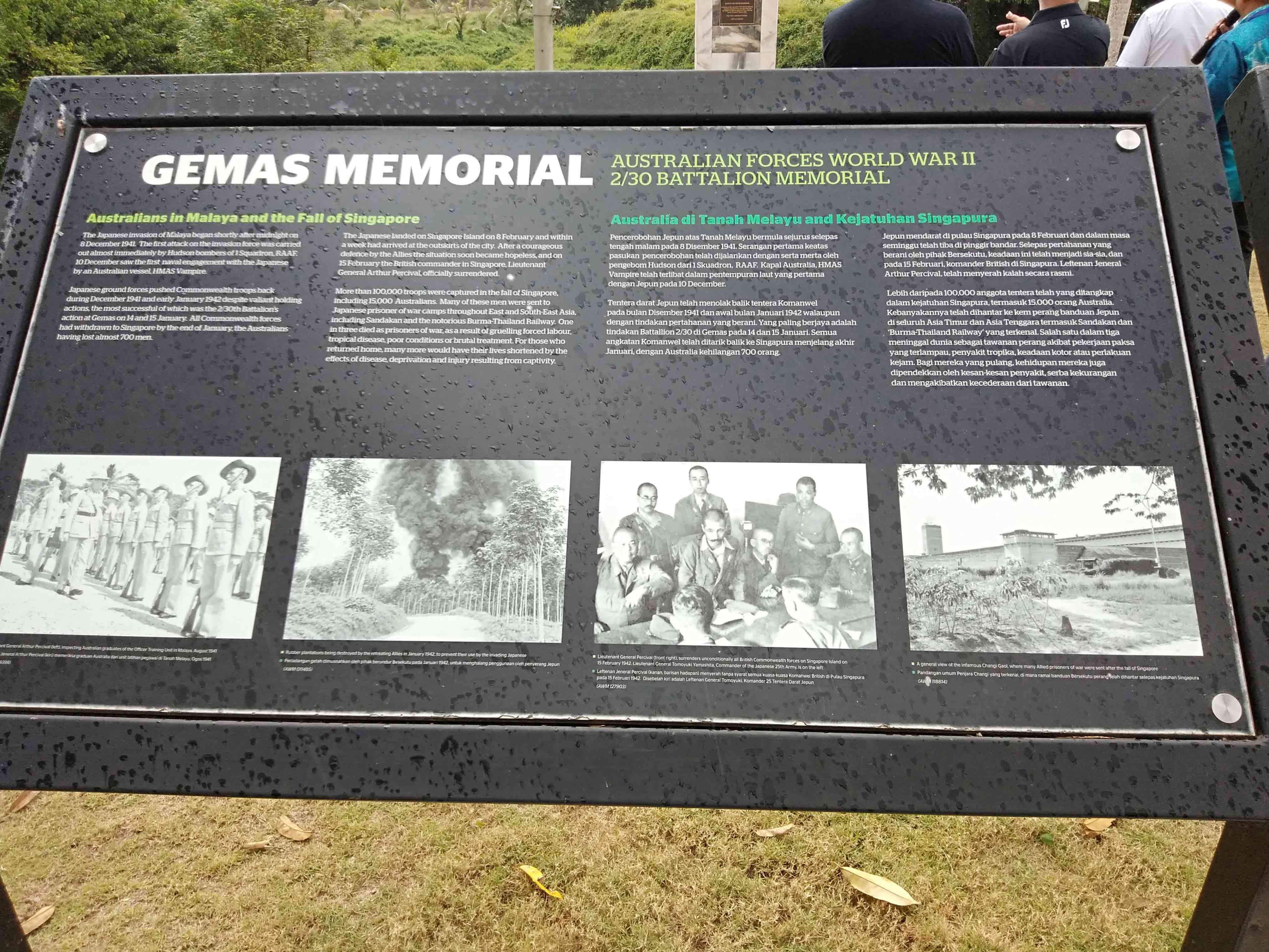
On the first day, we set off for Sungai Kelamah War Memorial in Gemencheh. This is along the old road south and close to Gemas. The Japanese, who had rumbled down at speed, arrived here on 14 January 1942. An Australian ambush party had already laid explosives under the bridge and awaited the Japanese. Bridges were routinely destroyed in war to stop or delay the advancing enemy forces.
The memorial at Gemencheh
At 4.10 pm, after some 300 Japanese troops had crossed, the Australians blew up the bridge killing about 30 Japanese on the bridge. Australians were also ranged along hillsides further back and fired on Japanese who had crossed. It is estimated that nearly 500 to 700 were killed with minimal losses for the allied troops. As far as they were concerned, the ambush was a success.
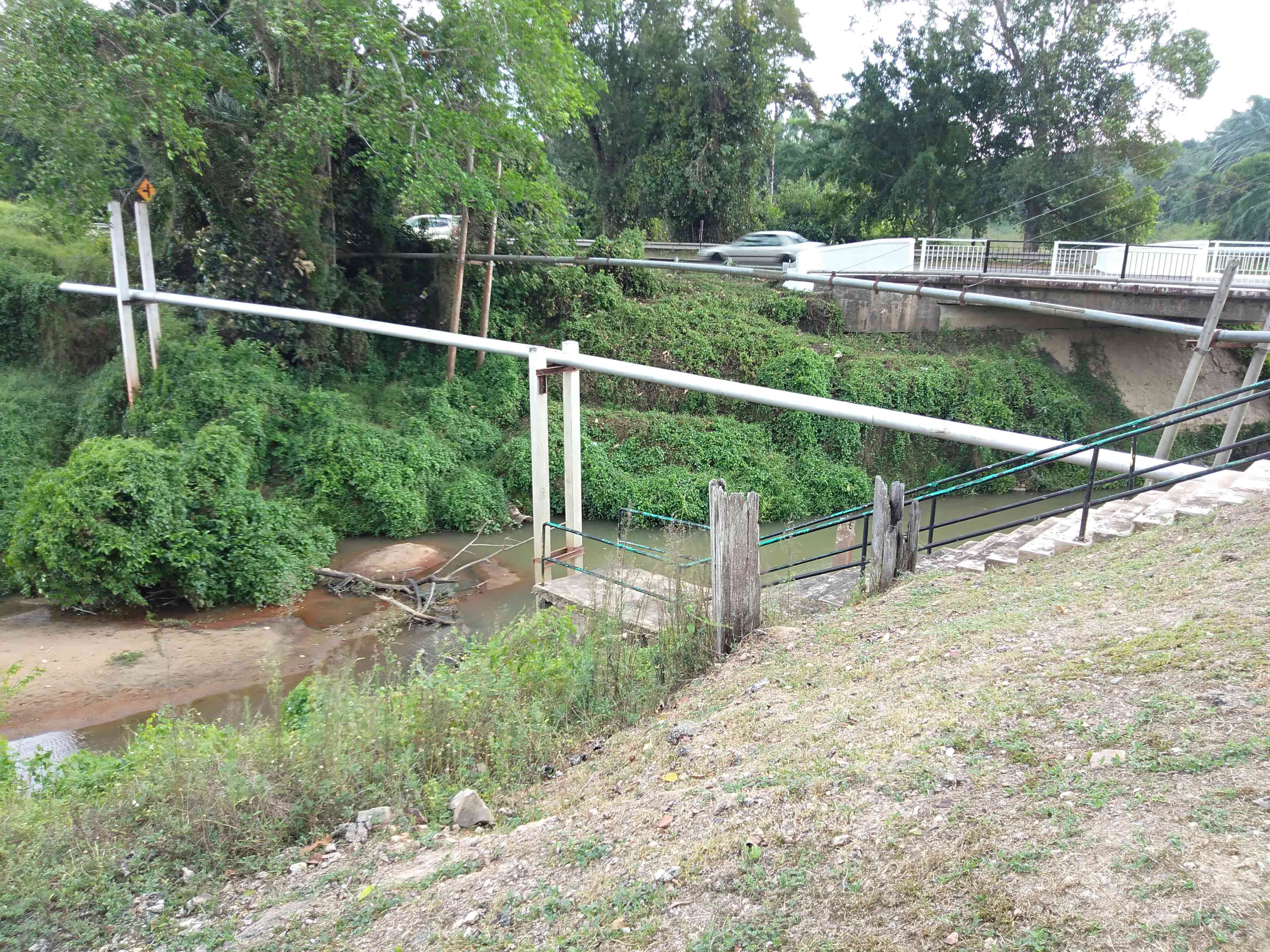
Remnants of the bridge. A new bridge can be seen in the background.
Nevertheless, in due course, the Japanese had gotten ahead behind them as the Australian ambush party withdrew towards Gemas, continuously avoiding Japanese advance parties who got behind Australian lines. Generally, withdrawal was not a simple matter in war as they were constantly harassed and fought with by the Japanese behind the lines and by heavy aerial bombings. Many units or soldiers become lost or trapped and had to find their way to their units or other units. The bridge was quickly rebuilt by the Japanese using timber from a local sawmill. Retreating forces destroyed the machinery but did not think the timber would be useful. In war, fuel, machinery, vehicles even street signs or anything that will give an advantage to the enemy is removed or destroyed.
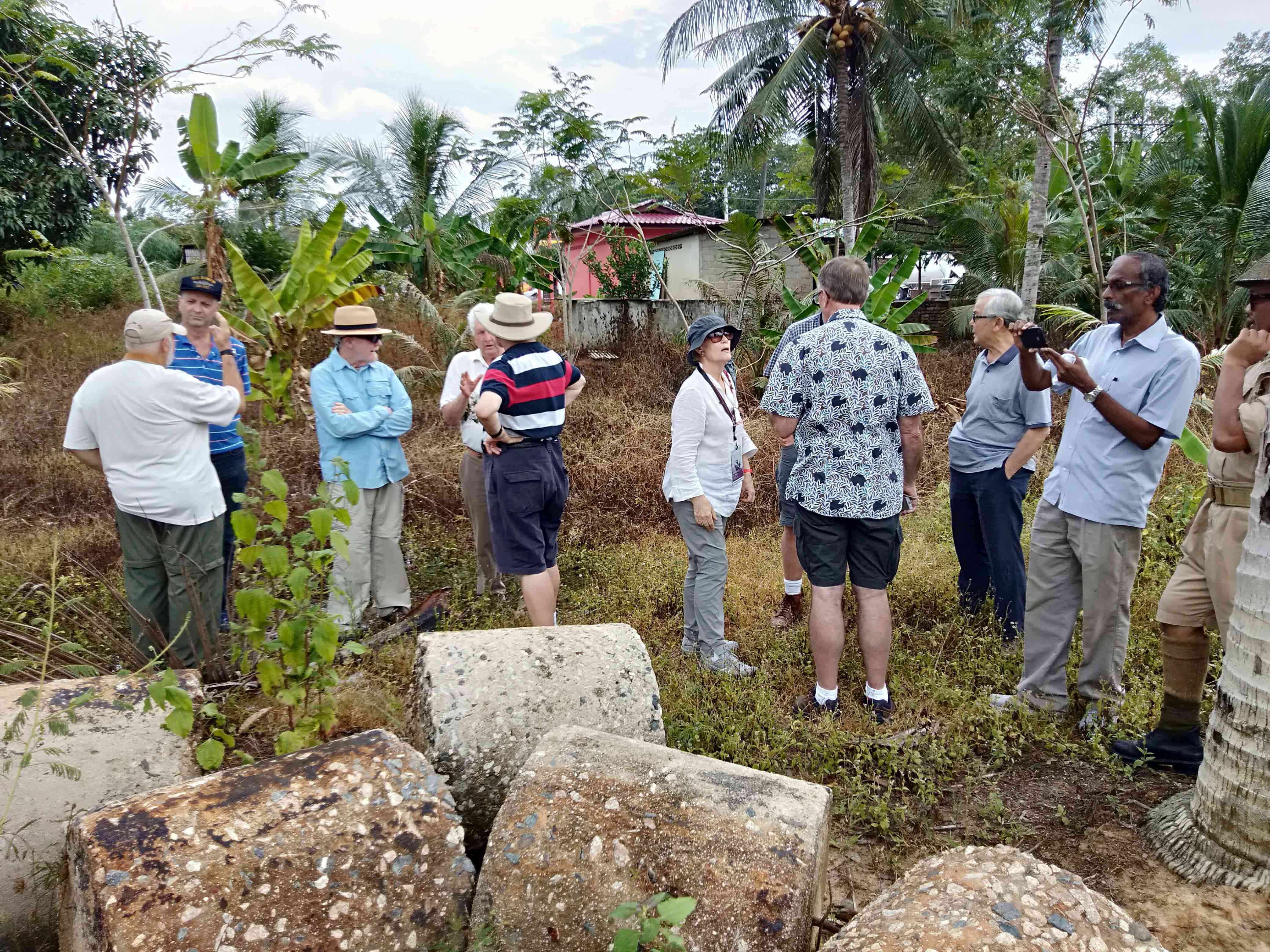
Today we see a memorial site and the remnants of the bridge. Further away we also saw anti-tank cylindrical concrete blocks intended to halt advancing tanks.
Anti-tank blocks and us
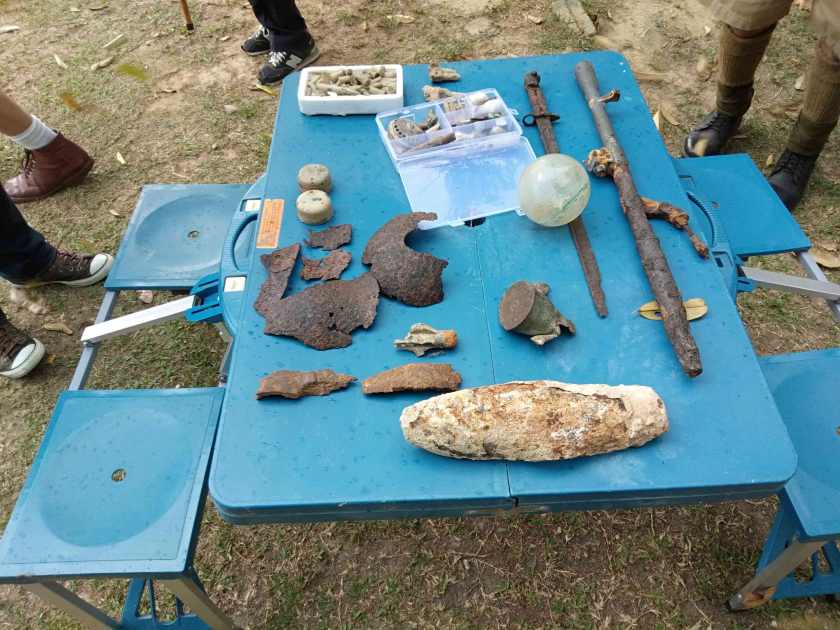
A local enthusiast, Rizal, showed us around dressed in the Commonwealth Forces uniform. This uniform was worn by Australian soldiers on the way to the Middle East and when they were diverted to Malaya, they fought in this uniform. Over time Rizal has collected many artefacts, all rusted with time.
War artefacts recovered at the site
Rizal in period costume
Today, the road has been realigned and a new bridge built.
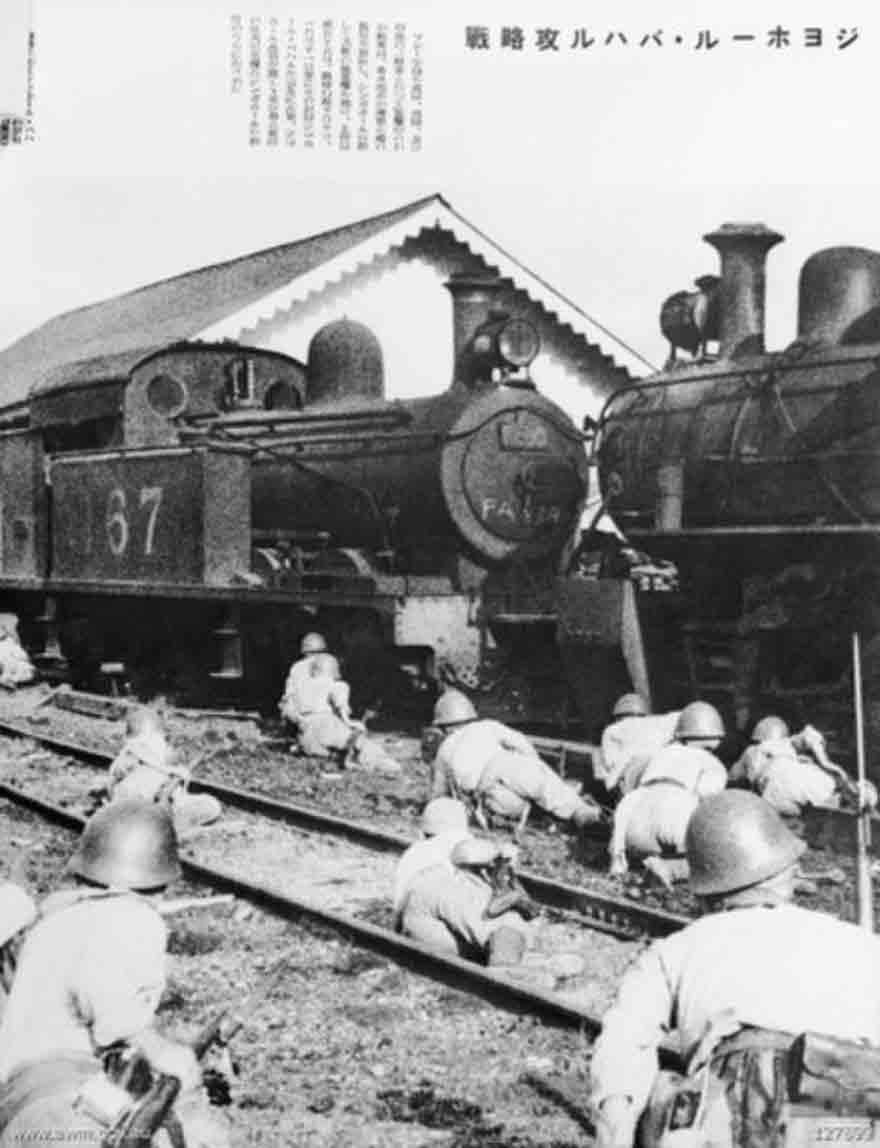
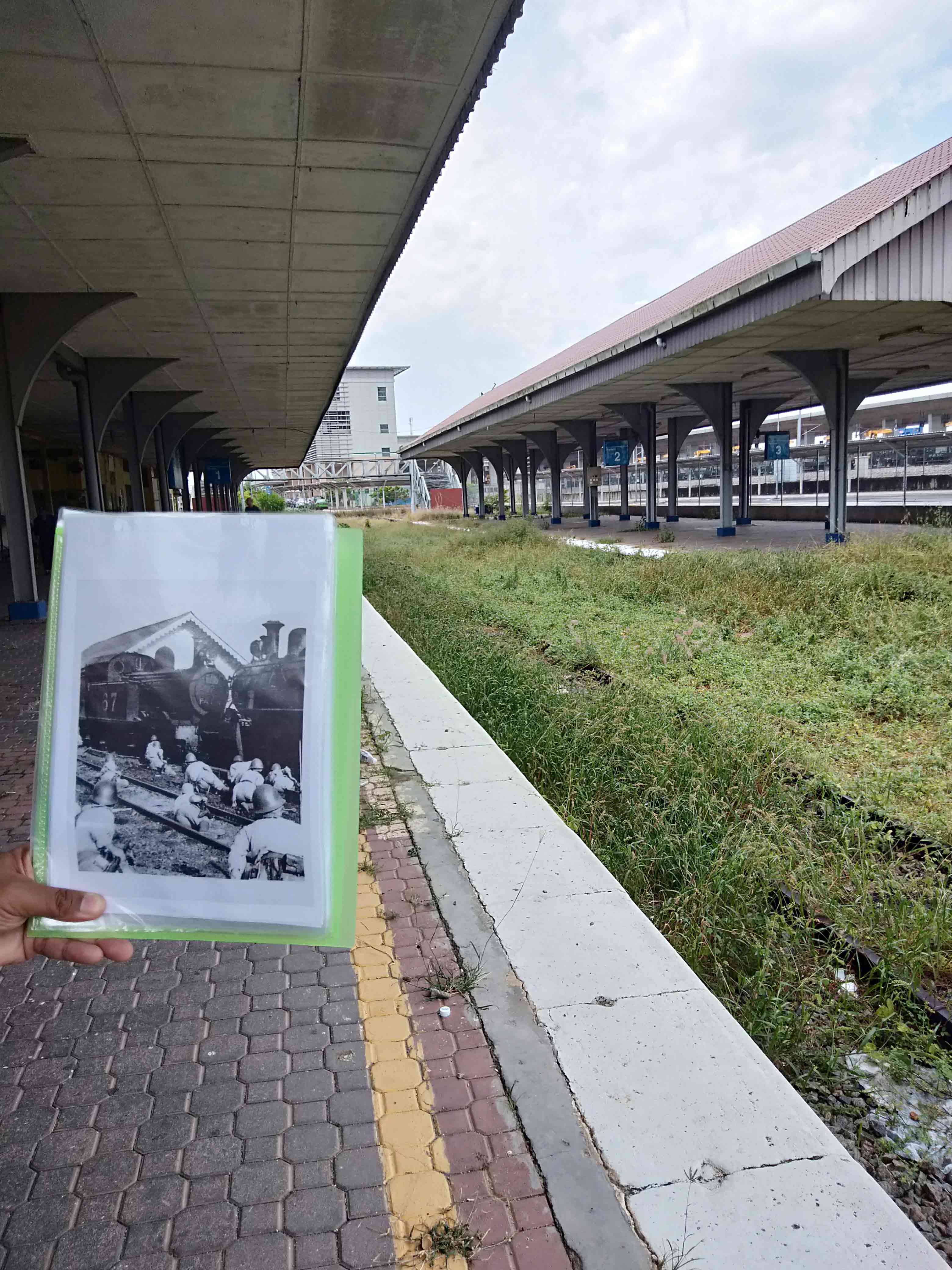
We proceeded to the Gemas Railway Station. We were shown a photo of Japanese troops crawling along the lines anticipating enemy attacks.
The Gemas Railway Station – then and now
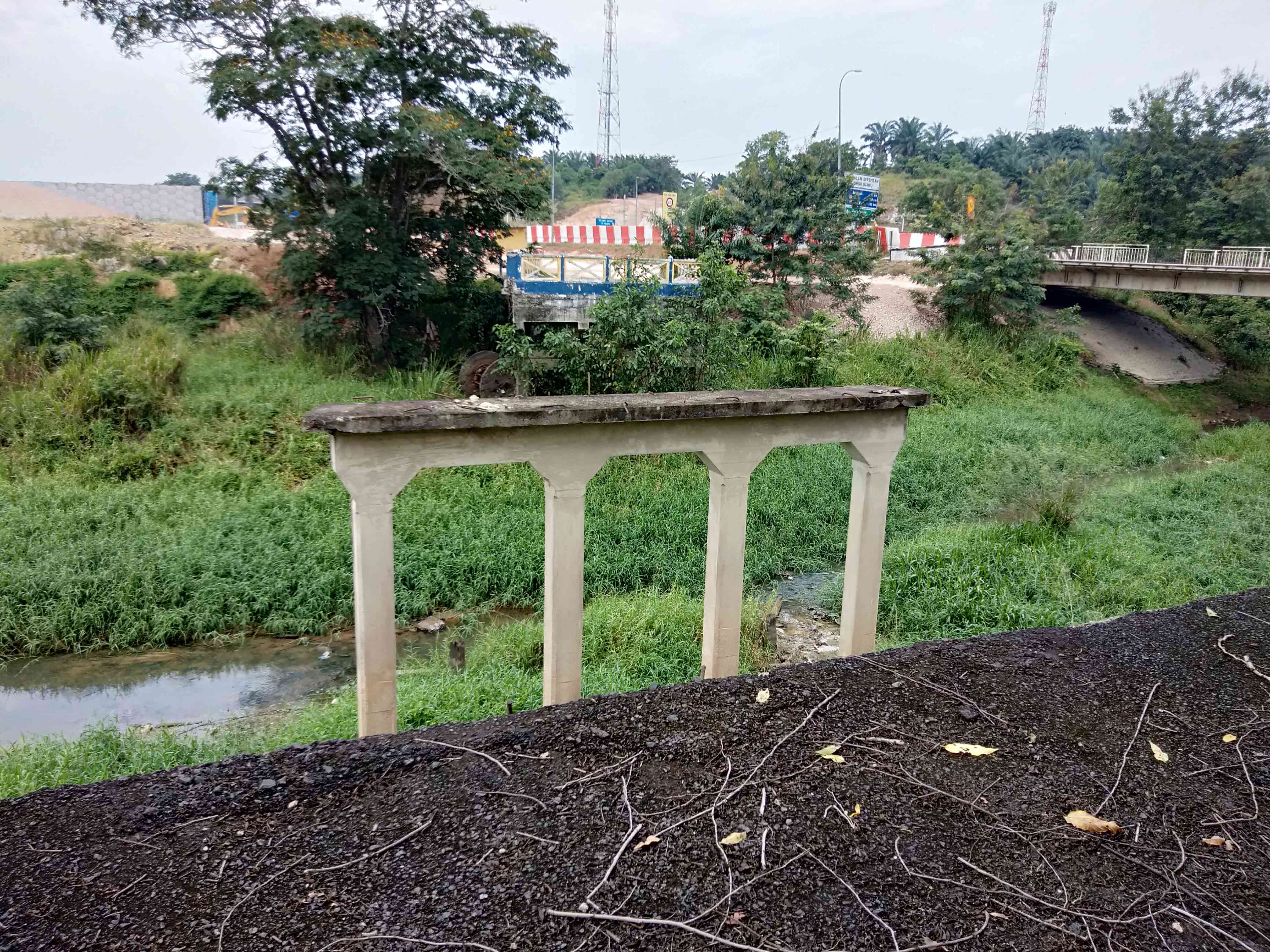
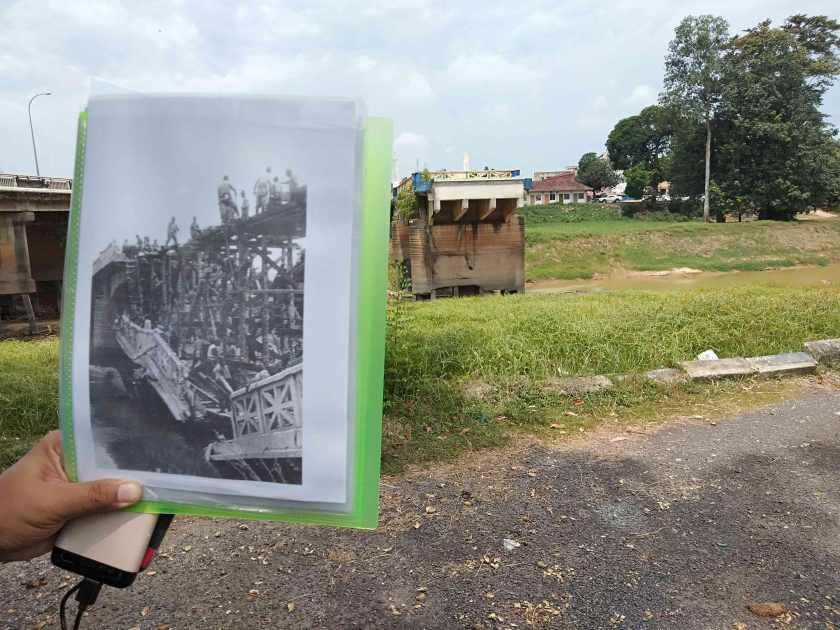
The next stop was the Gemas Broken Bridge. Today you can still see the remnants as seen in the photo below while a new bridge has been built nearby.
Gemas Broken Bridge
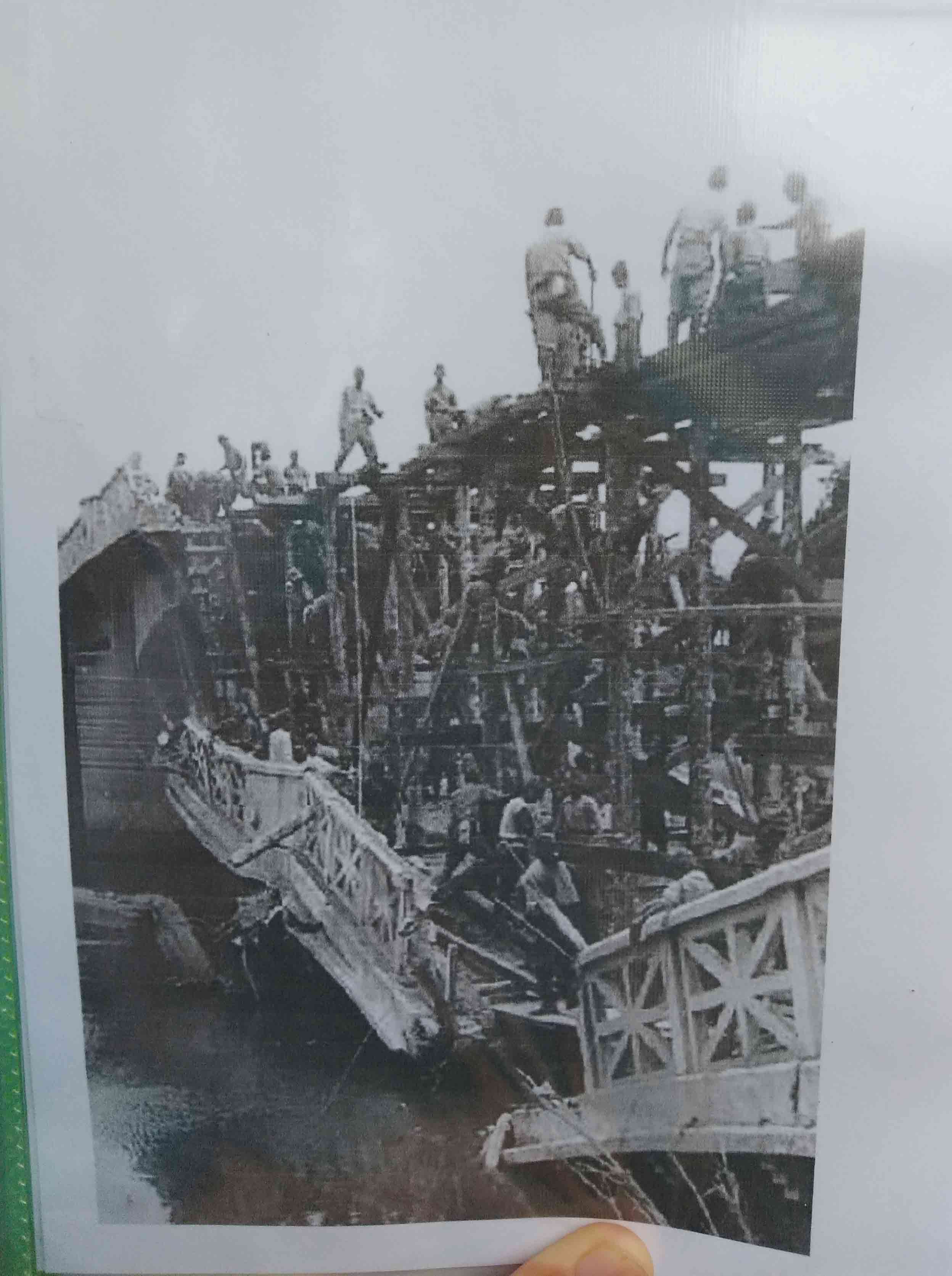
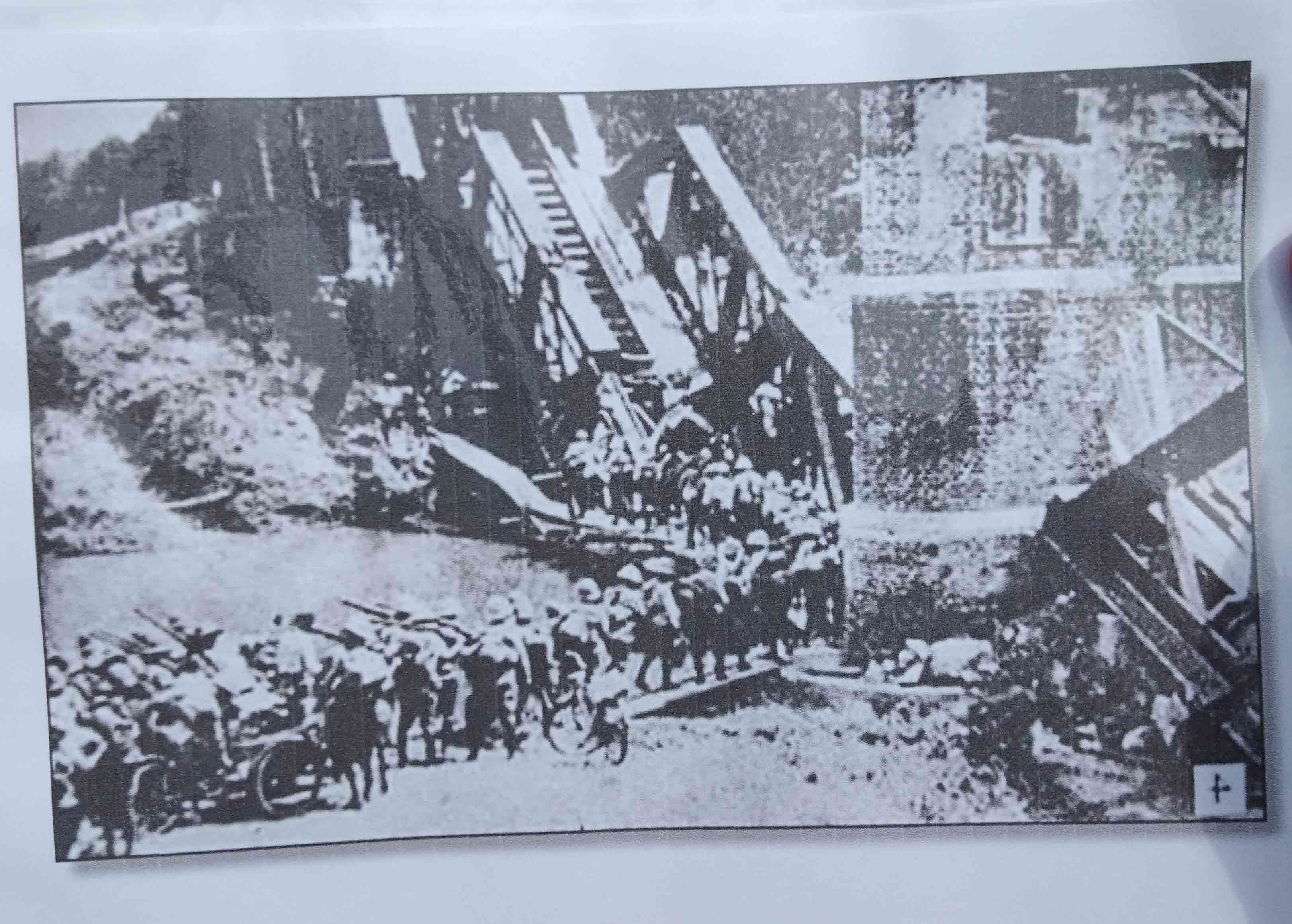
Next was the Buloh Kasap Bridge, which shared the same fate as the other bridges. A then and now photo shows how the bridge was rebuilt at speed by the Japanese. The ends of the bridge are still intact today. On one side damage from artillery shells can be seen. Markings on the concrete pillars below show that the bridge was built in March 1926.
Buloh Kasap Bridge – then and now
One section of the bridge today
Photo of the Japanese rebuilding Buloh Kasap Bridge
Both these unusable bridges seem to be painted and maintained by the local Council, but attempts to contact the Council to confirm this is still ongoing. Before the next bridge, we stopped for lunch at the VIP Hotel, a small yet beautiful hotel.
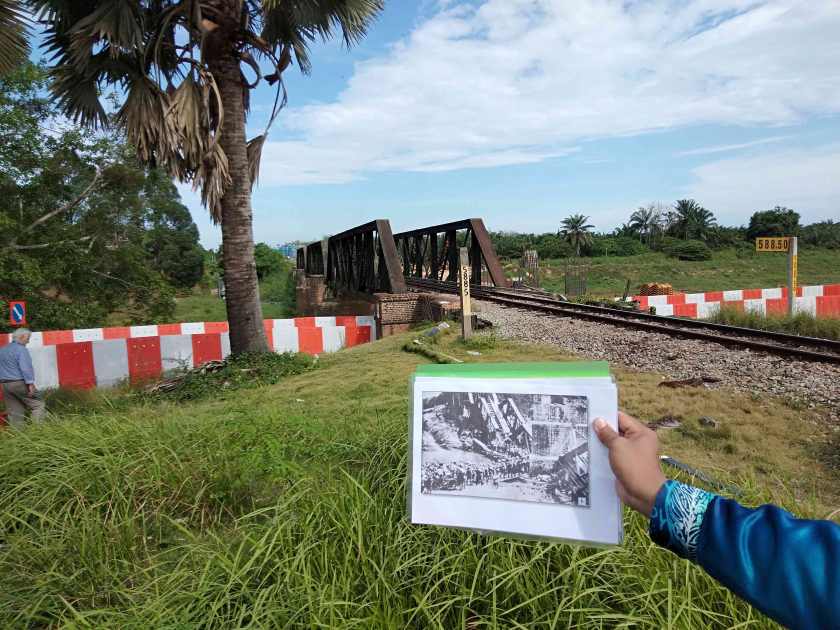
The Segamat Railway Bridge was also blasted and quickly rebuilt. Any advancing army will expect bridges to be blown up and are therefore prepared to rebuild them. It is a matter of speed to get it up and let the forces cross onward. Materials are usually sourced locally as in Gemencheh.
Segamat Railway Bridge – then and now
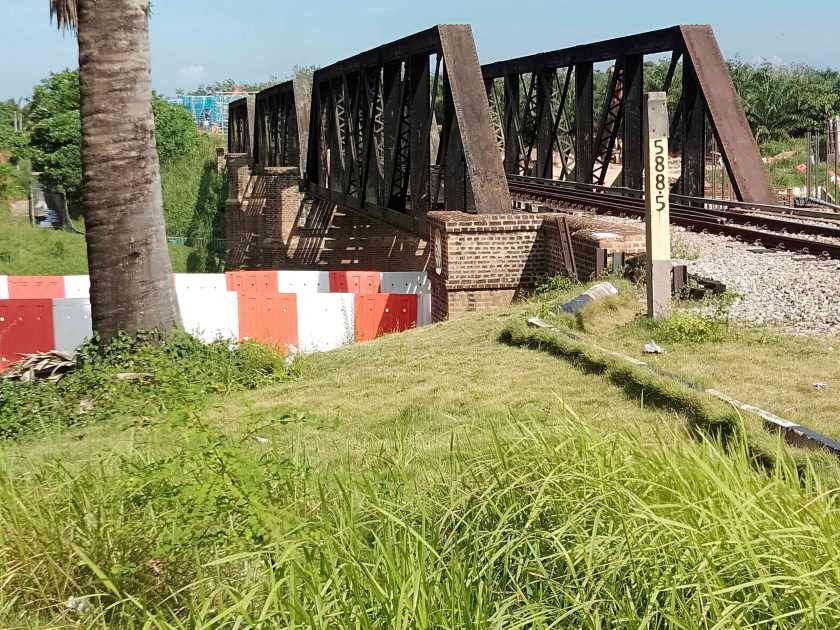
Segamat Railway Bridge
The photo shows the Japanese rebuilding the Segamat Railway Bridge
It is fortunate to have the then and now photos as it helps in imagining the various happenings. Unlike other bridges that have been replaced with realigned roads and new bridges, the Segamat Railway Bridge was repaired after the war and it is still in use. Our night stop was at the Ramada in Melaka.
Tour – Day 2
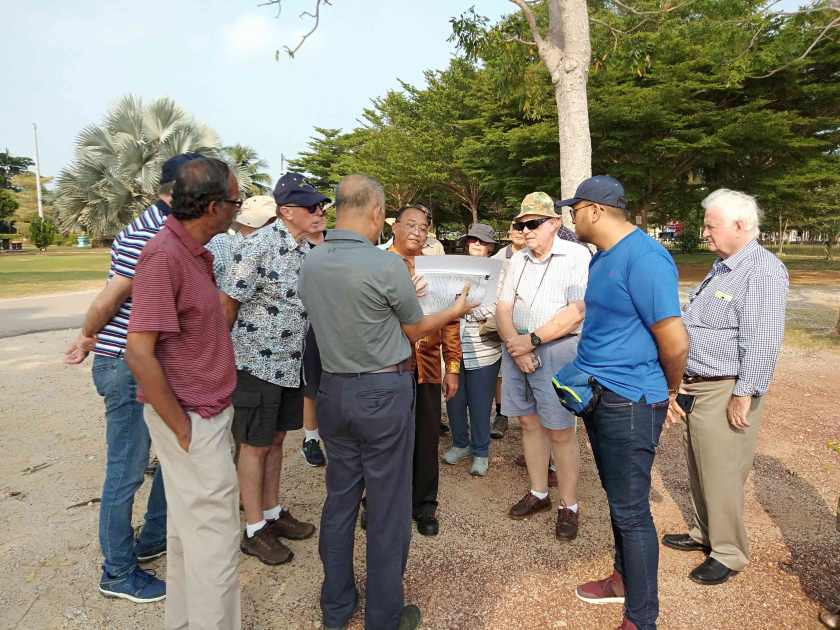
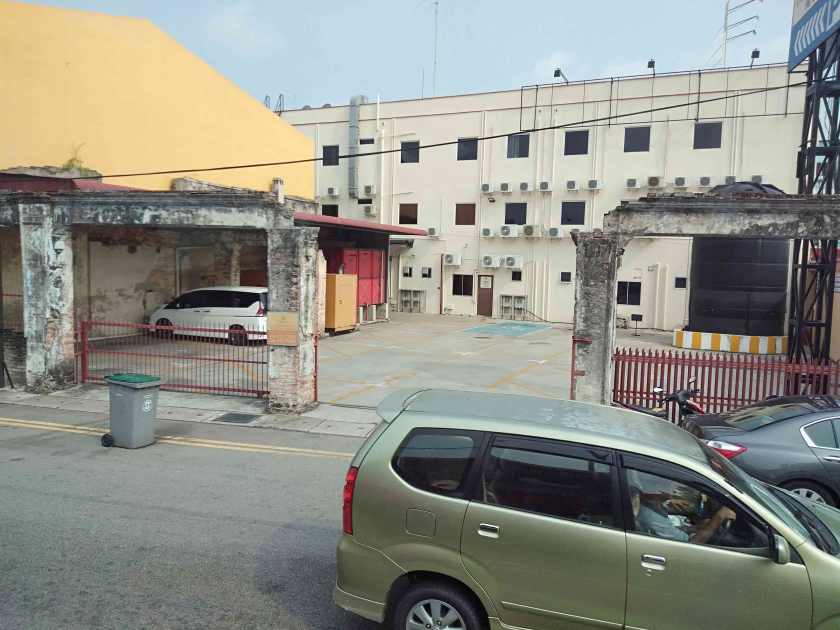
The second day saw us in Muar town. The local Tourism Officer boarded the bus and gave us a tour of the town. Of interest was the remains of the bombed out building behind the present Streetview Hotel.
Briefing by Zafrani
Bombed building in Muar
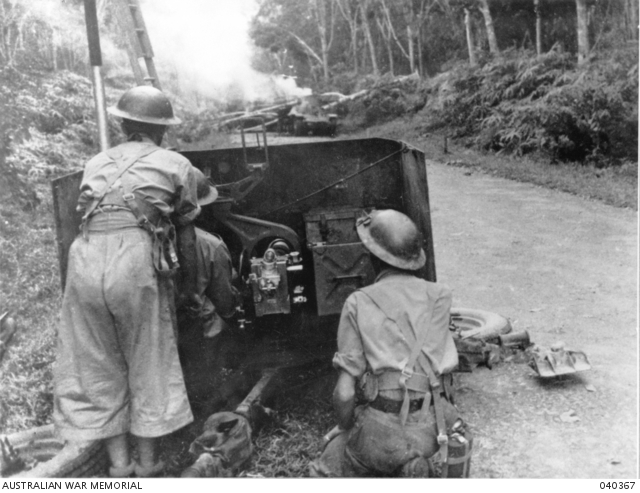
We then got on the road, headed southeast and after 5kms arrived outside of Bakri. This is the location of the famous photo of 2 gunners with the anti-tank gun. They managed to do damage to the advancing tanks. Below I quote the caption to the photo from the Australian War Memorial website. (https://www.awm.gov.au/collection/040367/). This caption and the photo say it all.
BAKRI, MALAYA, 1942-01-15 (actually 1942-01-18). GUNNERS OF 13TH AUSTRALIAN ANTI-TANK BATTERY USING A 2 PDR (pounder) ANTI-TANK GUN ACTION AGAINST JAPANESE TYPE 94 LIGHT TANKS AT A ROAD BLOCK. THE FORWARD TANK HAS BEEN SET ON FIRE WHILST OTHER TANKS ON THE OTHER SIDE OF ROAD BLOCK, WHICH IS A FELLED RUBBER TREE, HAVE BEEN DISABLED.
The caption to this photo in Wikipedia reads “Australian 2 pounder gun of 13th Battery, 4th Anti-Tank Regiment, firing on Japanese Type 95 Ha-Go light tanks of the 14th Tank Regiment on the Muar-Parit Sulong road on 18 January 1942. [1] Sergeant Charles Parsons and his crew were credited with destroying six of the nine tanks in this engagement.” (https://en.wikipedia.org/wiki/Battle_of_Muar).
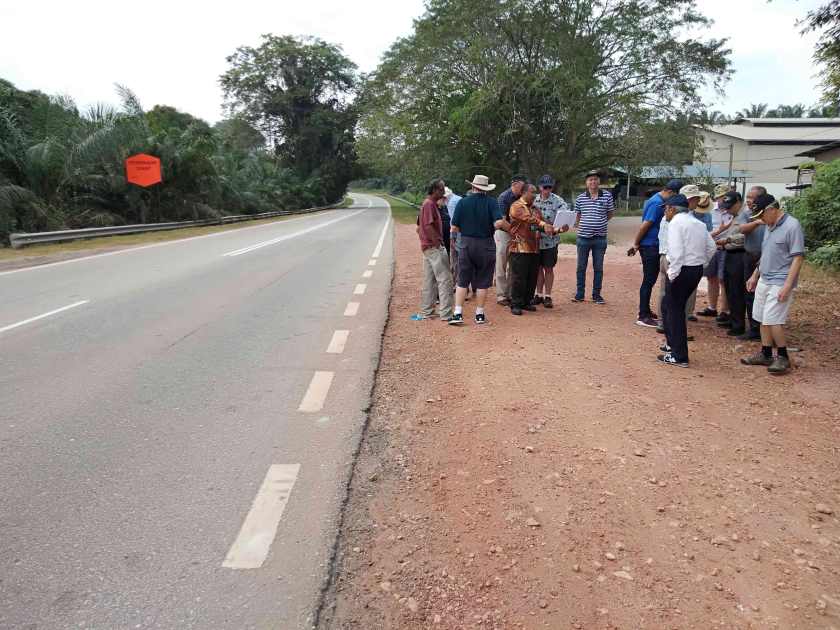
The hillock on the right is all that remains of the original as in the photo. A huge swath of land has been cleared behind this for a large industrial estate. We hope this location will at least be marked. This was the purpose of having the two officers from the Tourism Malaysia so they will appreciate the locations and provide feedback on the importance of this and other locations and place a memorial or a plaque.
Interestingly, the gunner, Sergeant Charlie Parsons, mentioned is connected to the family of the daughter-in-law of one of our participants on tour. He found this out when he posted pictures of the tour in his Facebook and she informed him!!
Bakri battlepoint – then and now
Detailed situation report
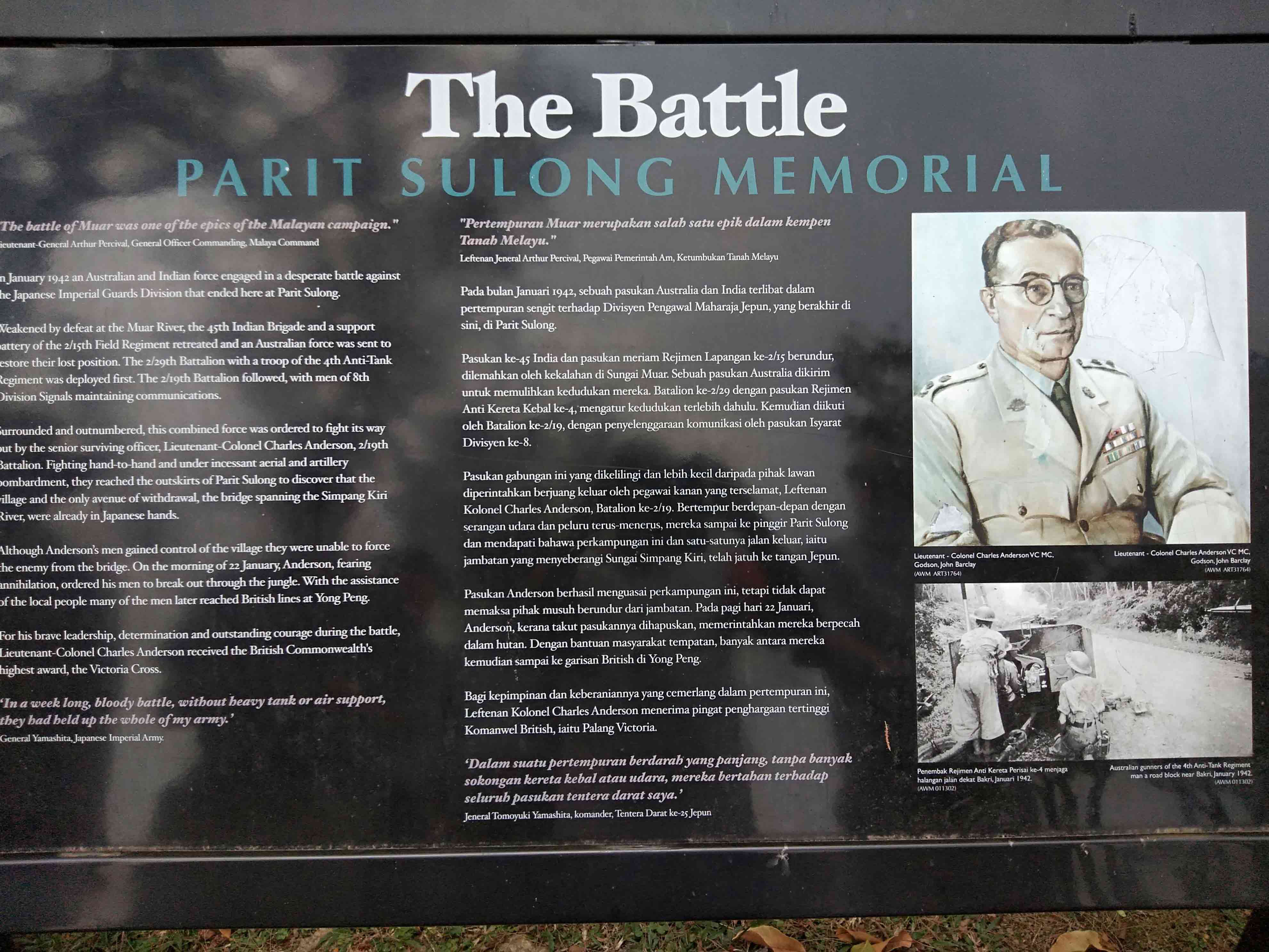
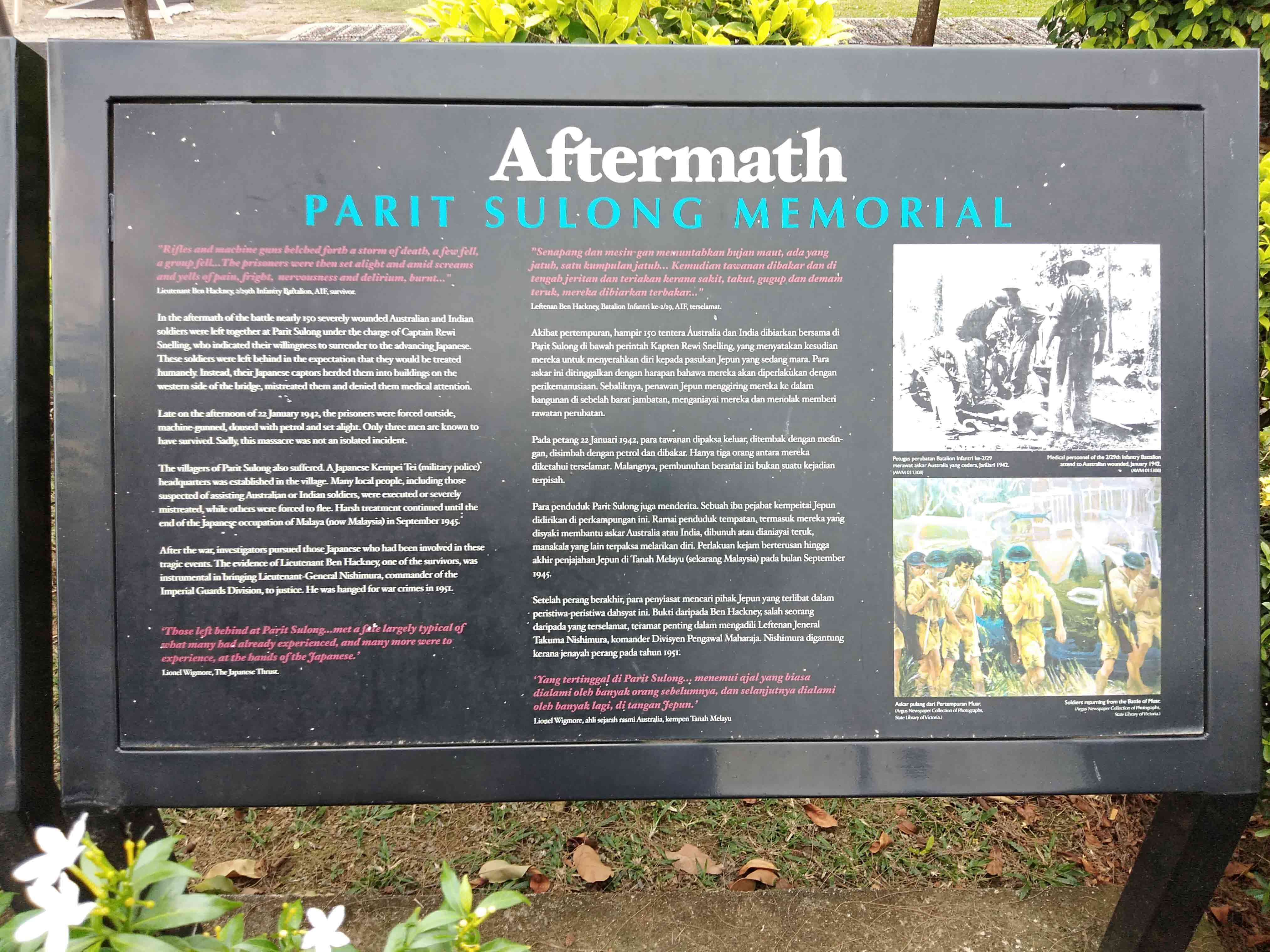
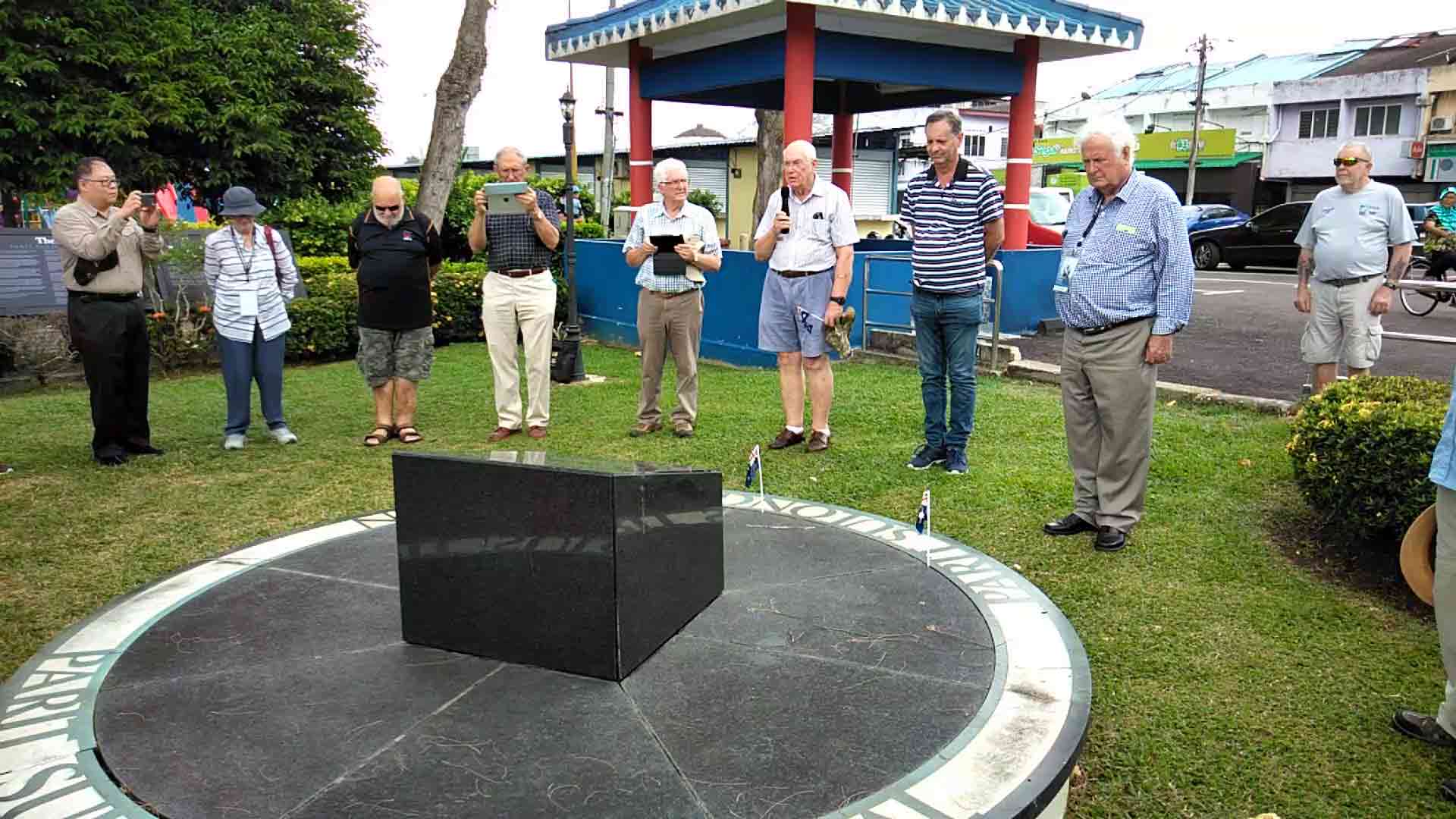
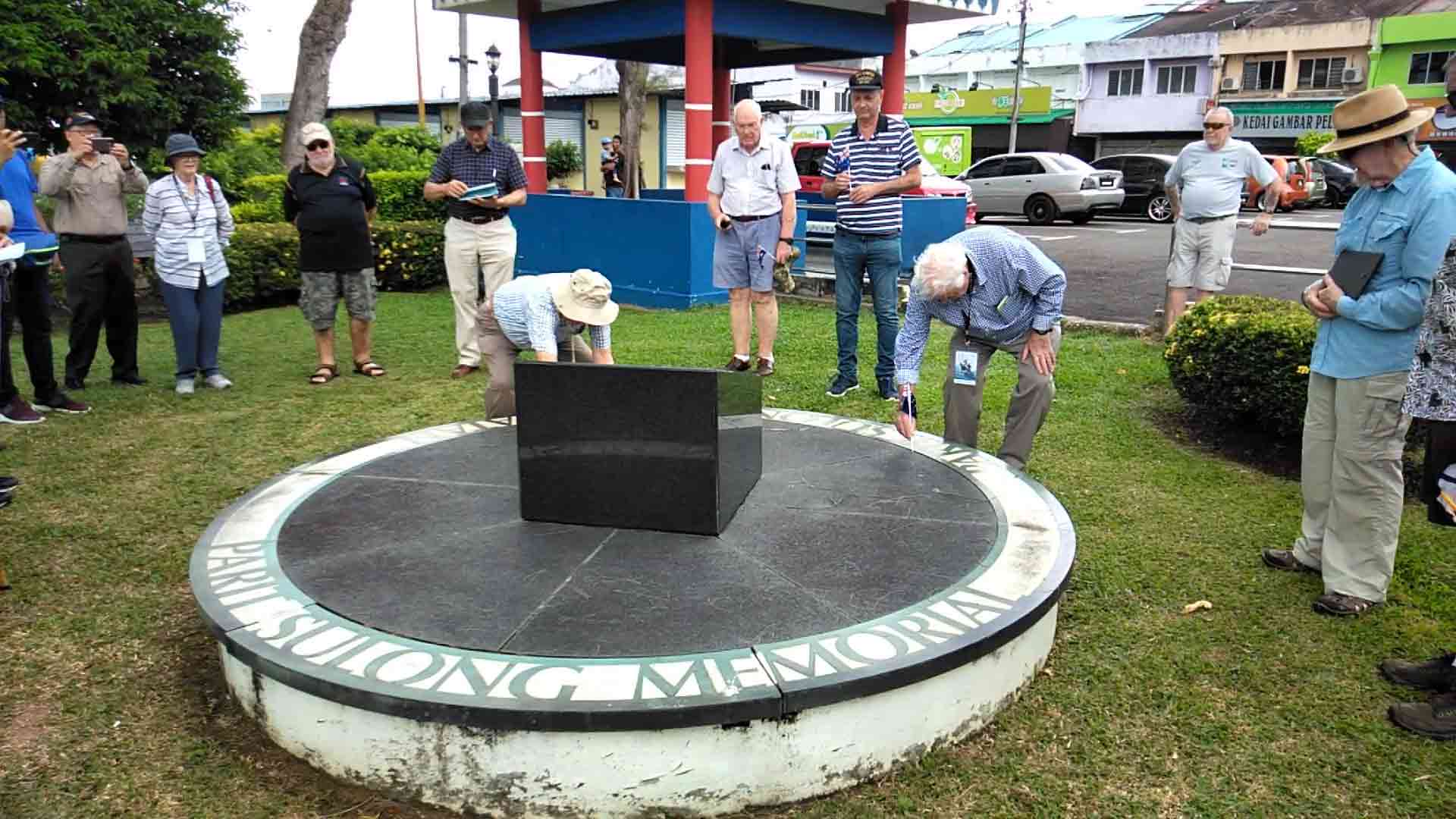
Further south at Parit Sulong, which was taken by the Japanese on the 21st January 1942, we stopped at the Parit Sulong Memorial. A memorial ceremony was held and the following oath recited by Colonel Dr. Robert Likeman, who was one of our group. This is always recited at Australian memorial services.
They shall grow not old, as we that are left grow old:
Age shall not weary them, nor the years condemn.
At the going down of the sun and in the morning
We will remember them.

Lest we forget.

(A Verse from For the Fallen by Laurence Binyon)
Small Australian flags were placed on the memorial. We then crossed the road to an area that contained abandoned JKR quarters. It was in this area that some 150 prisoners and wounded Australian and Indian soldiers were held captive and then massacred. The Japanese General Takuma Nishimura was later sentenced to death for this.
The Oath by Colonel Dr. Robert Likeman
Placing of flags
After Parit Sulong and many other small battles, the British forces had to withdraw to Singapore.
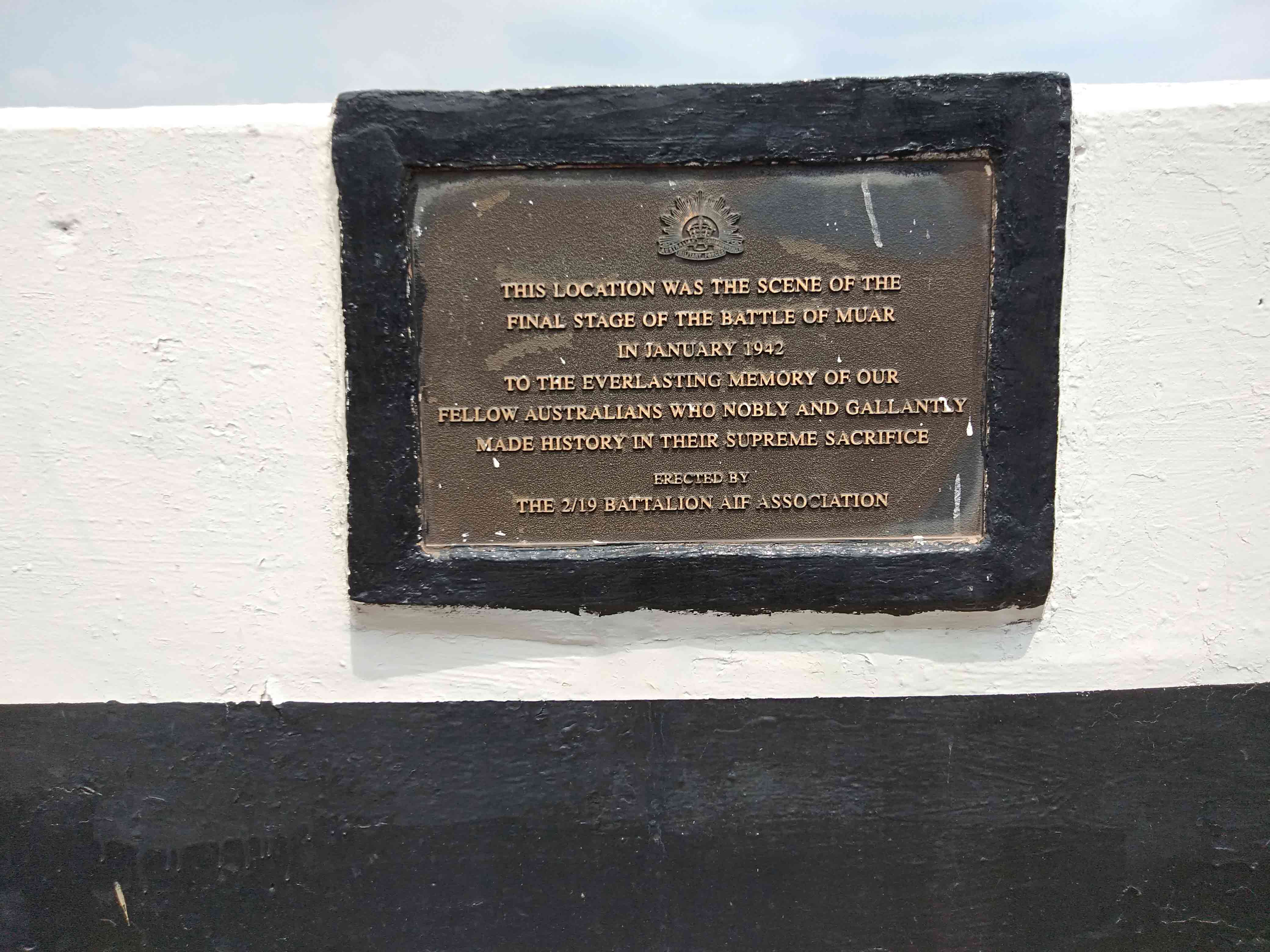
The plaque on the bridge at Parit Sulong
It is a simple to read about battle sites. It can be another matter to visit them and see the actual spots where it all happened. War is a terrible thing in itself. Being at the sites can evoke emotions though it all happened in the past. We see and we move away.
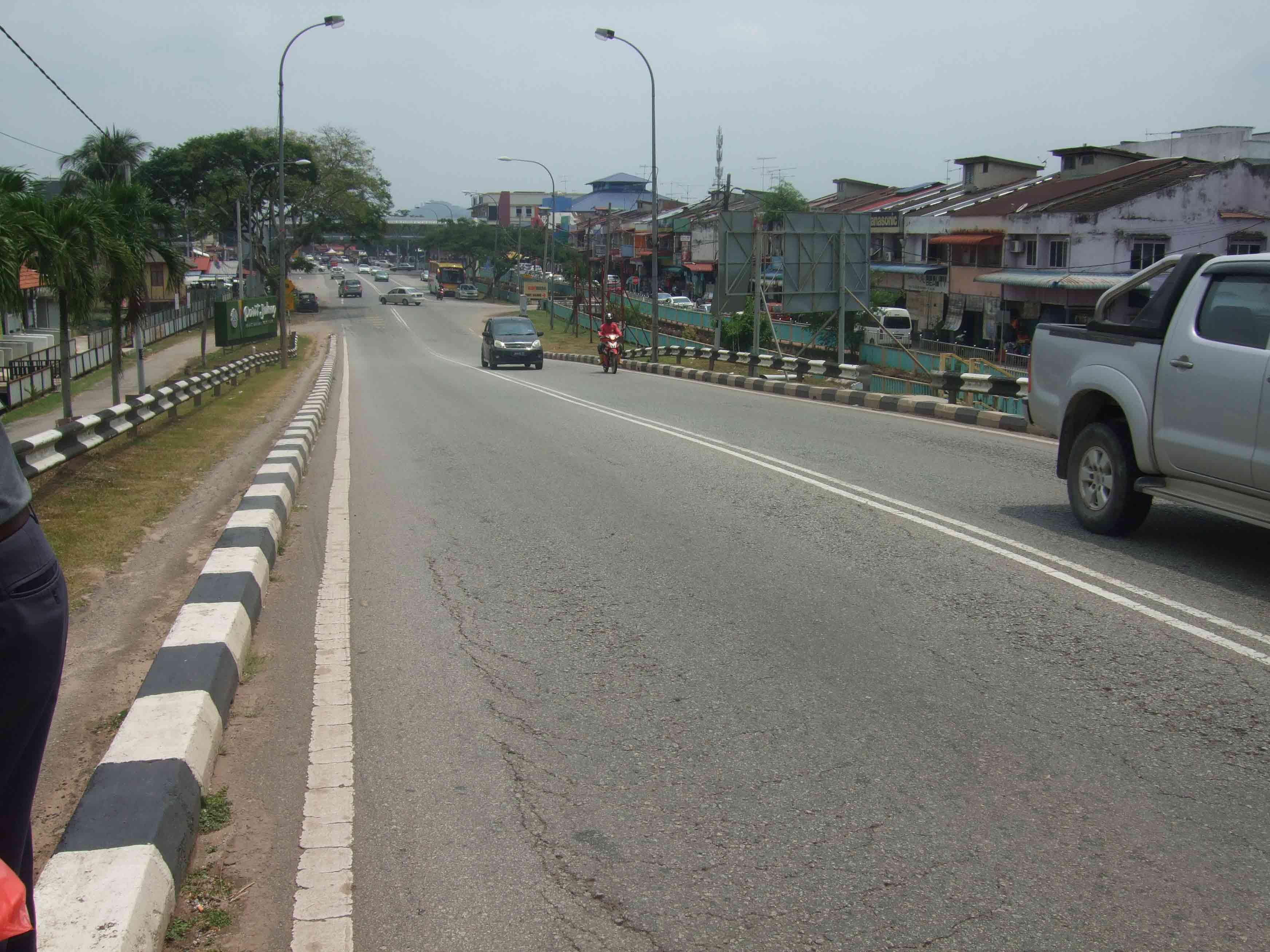
Parit Sulong – how many know the past of this town
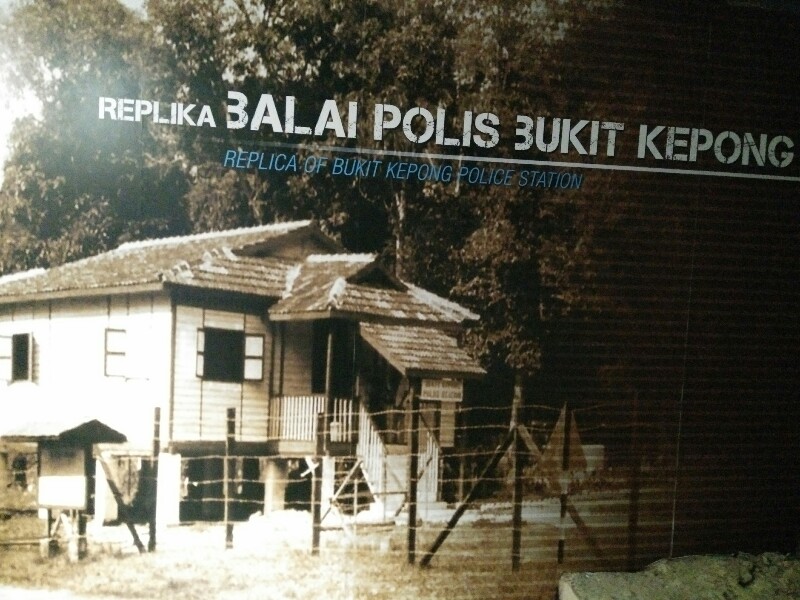
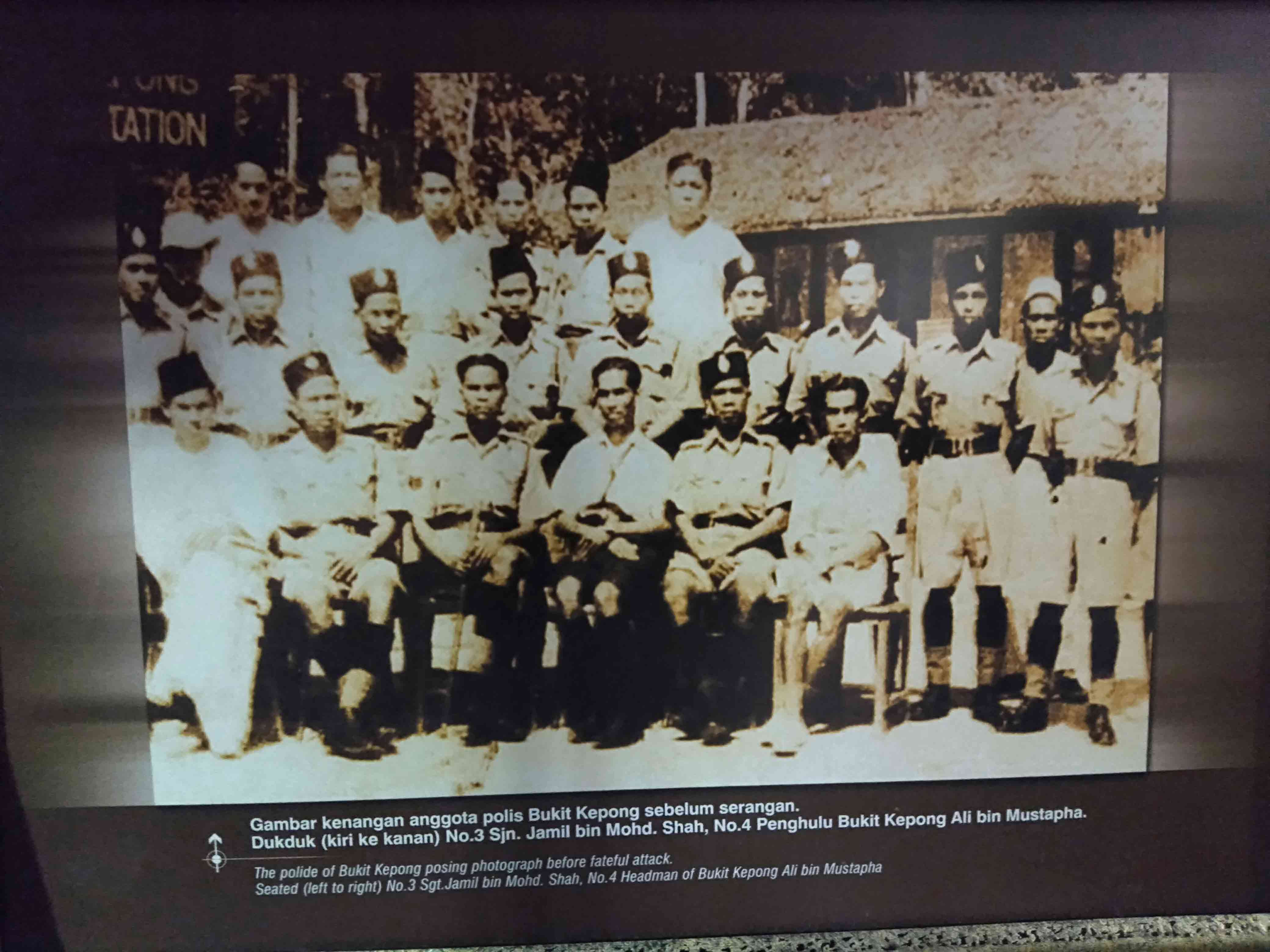
Then we made a “Quantum Leap” (refer old TV series) from the War to the Emergency – to Bukit Kepong, the scene of the annihilation of the wooden riverside police station by the communists on 23rd February 1950. Bukit Kepong is about 60km from Muar town. From the hillside across the station about 180 communists led by Muhammad Indera, looked down on the police station. In the police station were 25 policemen led by Sergeant Jamil Mohd. Shah. At 4.15am, the firing started. The police stood their ground, refusing surrender despite their families being killed as well. The station was set on fire and through all this the police defended the station. After 5 hours, it was over and the communists left leaving only four policemen and nine family members as survivors. This story as with the others is overwhelming.
Today, unfortunately the station has not been rebuilt. However, a gallery has been set up – Galeri Darurat Bukit Kepong or Emergency Gallery Bukit Kepong. On display are pictures and videos not just about the incident but also a lot more about the emergency, the independence, guns etc. There are also personal artefacts of the policemen and their families on display such as the household items of cups and saucers etc. etc.
Galeri Darurat Bukit Kepong
A replica of the station on a poster
The police at Bukit Kepong before the attack. Sergeant Jamil Mohd. Shah is seated third from left.
The day finished with our travel back to the Ramada and a good night’s rest before the next day’s events.













 Museum Volunteers, JMM