Two Colonial Monuments and a Malay Fort

by Eric Lim

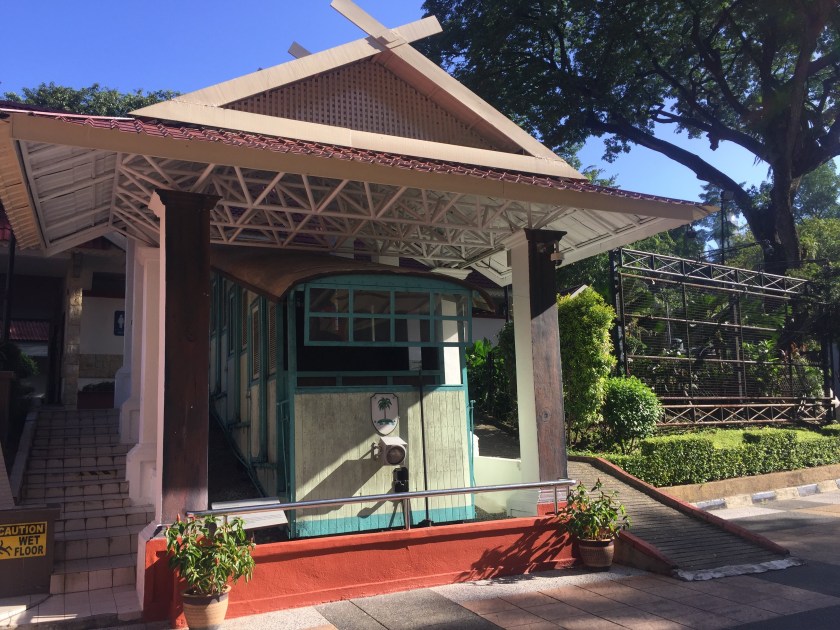
I would like to bring your attention to two monuments located on the grounds of the National Museum. It is a pity that these monuments are hidden away in an obscure corner outside the main building. To access them: if you are entering the car park via Jalan Damansara, look out for a white archway that serves as one of the entrances to the National Museum (through the car park). Take the steps on the right (in between the archway and the locomotive) to reach the monuments. If you are already in the outside compound of the museum, locate the Bukit Bendera Penang Railway coach pavilion, and then take the steps on its right. Upon reaching the top, turn right for a further few steps. These two monuments are the King Edward VII bronze bust on a marble pedestal and the statue of Sir Frank Swettenham.
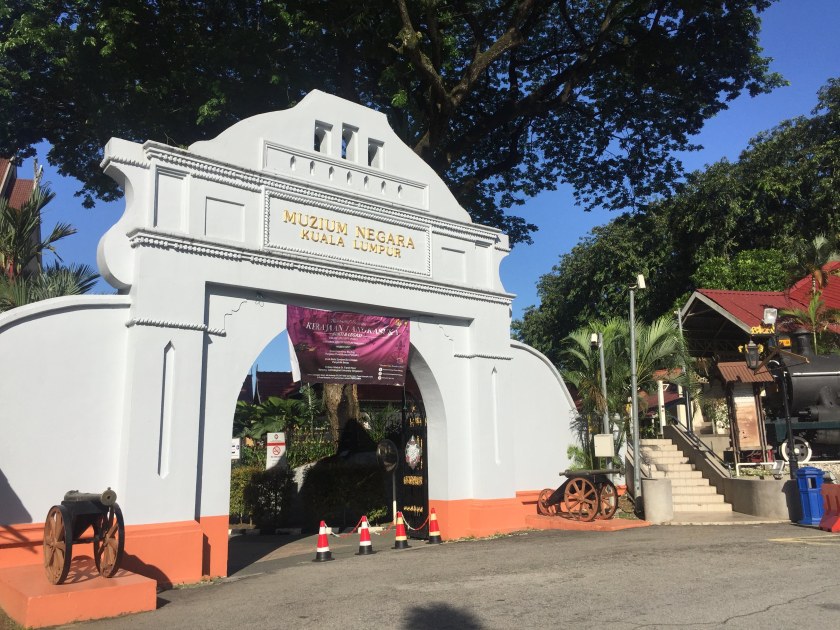
Before looking at the history of these two colonial monuments, it would be good to examine the white archway, which is a replica of Kacapuri Archway, one of two archways located at the Kuala Kedah Fort (the other archway is called the British Archway). Incidentally, there is also another replica (smaller in size) of the Kacapuri Archway at Gallery C in the main building.
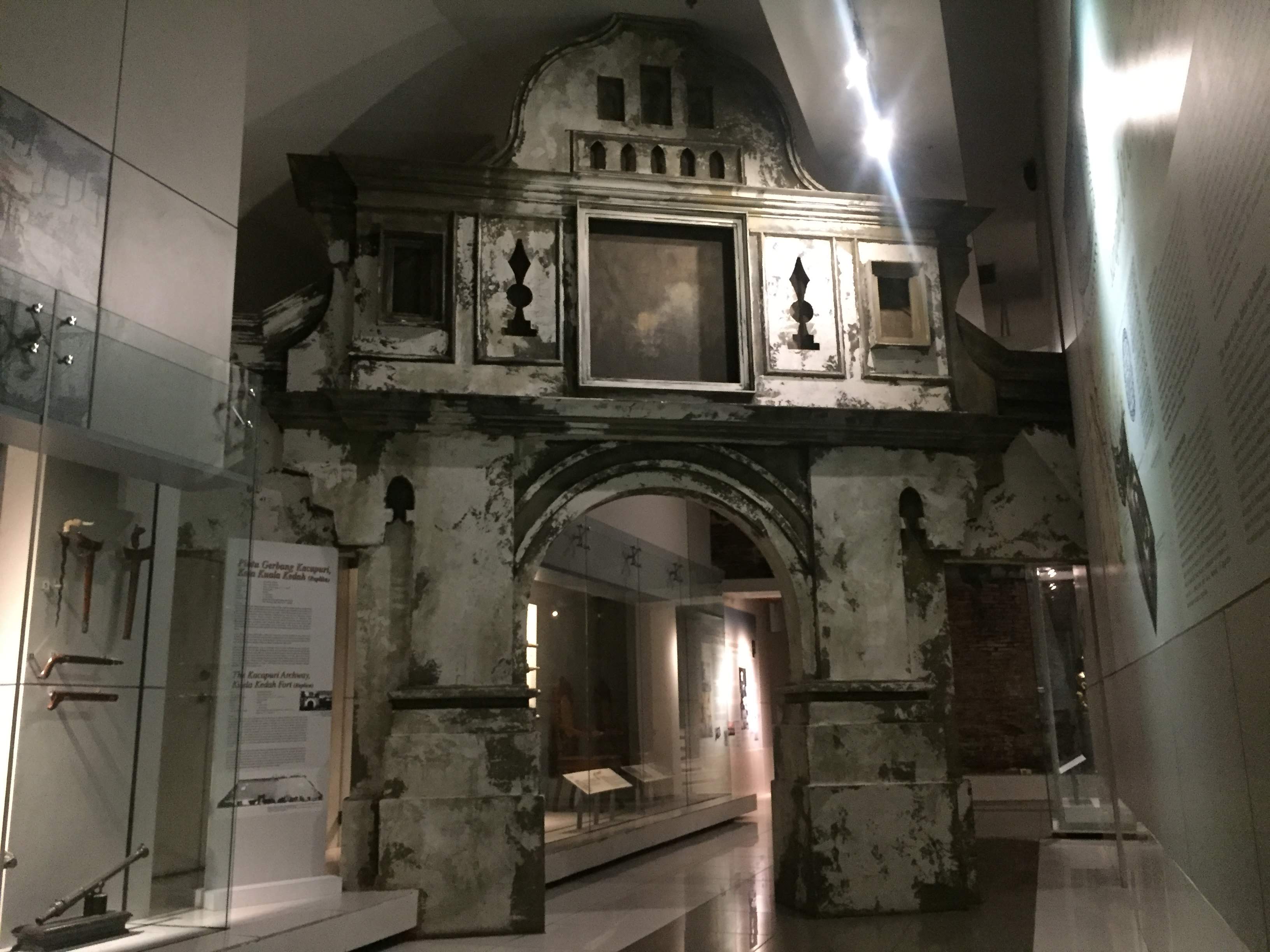
Replica of Kacapuri Archway at Gallery C

The original fort was built during the reign of Sultan Sulaiman Shah II (1602-1619) with the help of the Portuguese who then used it as their military outpost. In 1619, Sultan Mahkota Alam of Aceh sent a fleet to destroy the fort and the Portuguese were ousted while 7,000 Malays including Sultan Sulaiman were taken captive. Next came the Bugis, who sided with the ruling Sultan Muhammad Jiwa against a power struggle with his younger brother in 1724. The feud ended two years later when the Bugis succeeded in driving away the enemy but it devastated Kedah. War broke out again in 1771; this time, the Bugis gave their support to dissident forces who wanted to depose Sultan Abdullah Mukarram Shah II, the 20th Sultan of Kedah. The Bugis managed to take control of the fort but Sultan Abdullah later obtained help from Captain Francis Light of the British East India Company (EIC), and the British recaptured the fort for Sultan Abdullah. Construction of the present fort then took shape and Sultan Abdullah immediately went on to strengthen the walls of the fort with stonework and bricks. He also purchased cannons from the British and Dutch, which were placed around the fort. The fort was completed in 1780.
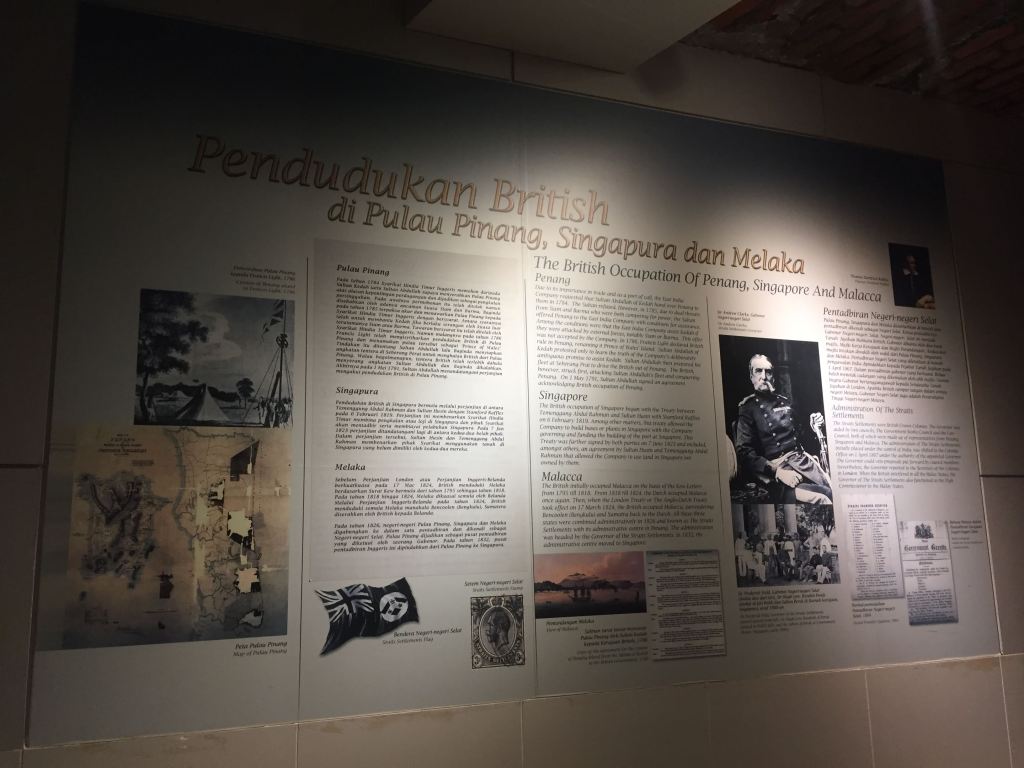
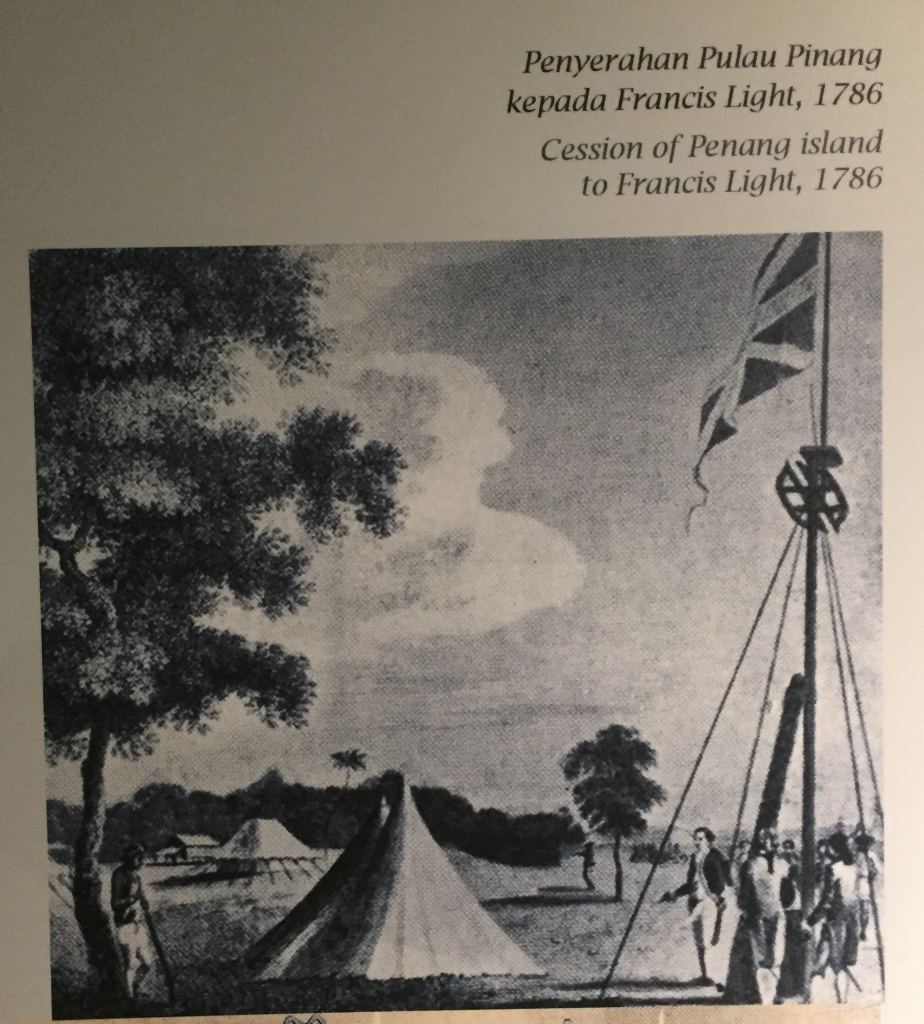
The fort was then used by the EIC who in return, agreed to protect the Sultan from any attacks, in particular from its northern neighbour, the kingdom of Siam. This prompted the Sultan of Kedah to cede Penang Island to the EIC. In 1786, Francis Light declared British rule in Penang and named the island Prince of Wales Island and the town, Georgetown, in honour of King George III. However, the promise of protection by the British was never kept. The Siamese made a surprise attack in 1821 and the then Sultan of Kedah, Sultan Ahmad Tajuddin Halim Shah II, fled to Penang. In 1831, Tunku Kudin, the son of the Sultan of Kedah, and his men managed to drive the Siamese away from Kedah but the Siamese returned with a stronger force to take over the fort once again. It was the same story again in 1838, but that was the final time the Siamese laid siege to the fort. During the period of the Japanese Occupation (1941-1945), the fort was used as a military base by the Japanese. Today, the area is called Kuala Kedah Fort Historical Complex and it was certified as a ‘historical land site’ by the Department of Museums and Antiquities on 31 August 1978.

King Edward VII

King Edward VII was born on 9 November 1841 in Buckingham Palace, London. He was the second child and first son of Queen Victoria and Prince Albert and was given his father’s name and christened Albert Edward. Growing up, he was given rigorous education but he did not measure up to it. He was also forbidden to have a career in the army by his parents. In his role as Prince of Wales, he made many Royal Visits overseas that gained him popularity. In 1860, he became the first heir to the British throne ever to visit North America. It was a four- month round trip between the United States and Canada. He also toured the Middle East and India. In 1863, Albert Edward married Princess Alexandra of Denmark and they were bestowed a son, Albert Victor, the following year. Prince Albert Victor did not live long and died before both his parents in 1892. After the passing of Queen Victoria on 22 January 1901, Albert Edward ascended the throne and chose the title King Edward VII (Queen Victoria was at that time the longest-reigning British monarch, until 9 September 2015 when the current Queen Elizabeth II surpassed her). King Edward VII ruled for 9 years and he passed away on 6 May 1910 of heart failure.
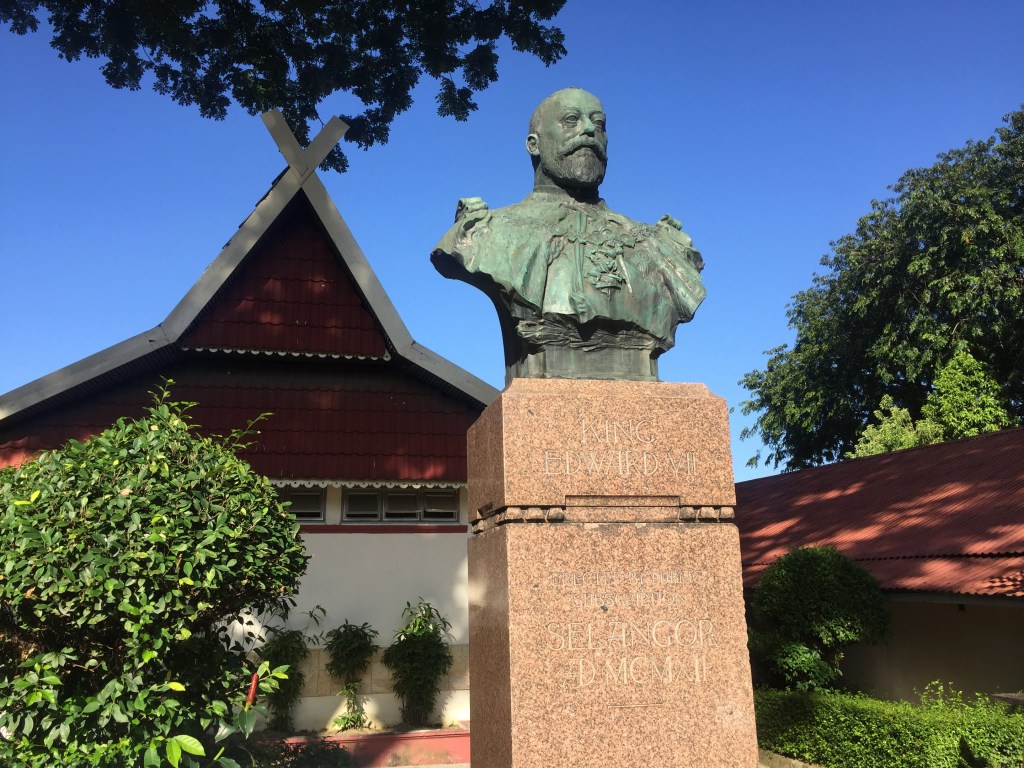
One year after the passing of King Edward VII, British officials in Kuala Lumpur decided to start a fundraising targeting two proposals – a memorial to the late King and upgrading works for the Straits and Federated Malay States Government Medical School in Singapore. A total of $2,446.89 (Straits Dollars) was collected for the memorial and $15,135.00 for the latter. The huge sum collected for the Medical School was made possible when local businessman Loke Yew contributed $15,000.00. In 1921, the medical school changed its name to King Edward VII College of Medicine.

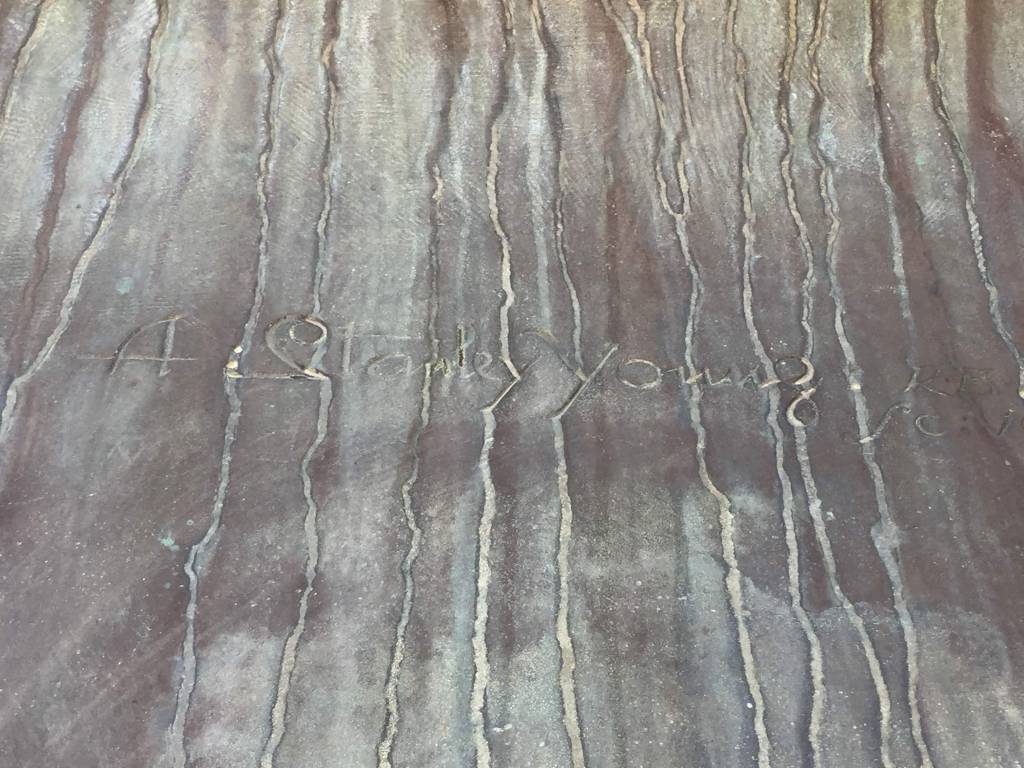
The job to make a bronze bust of the late King was awarded to a young sculptor in London by the name of A. Stanley Young. The memorial was completed and shipped out from London on 30 December 1911 and when it reached our shore, it was immediately erected in front of the Government Offices (now Sultan Abdul Samad Building). The unveiling ceremony took place on 16 April 1912, performed by Lady Brockman, the wife of the Chief Secretary and witnessed by the Sultan of Selangor, Sultan Alaeddin Sulaiman Shah. During the Japanese Occupation, the bust was removed and hidden away by Mr. K.S Maniam of the Public Works Department. After the war, it was returned to its original site and now, the monument sits at the National Museum.

Sir Frank Swettenham

Sir Frank Athelstane Swettenham was born in Belper, England in 1850. He arrived in our country as a young lad of 21 and learned the Malay language. This proved useful when he was involved in the Pangkor Treaty in 1874 as a translator on behalf of the Straits Settlements. After the first British Resident of Perak, J.W.W. Birch, was murdered, he became the British Resident for Perak for a while before moving to Selangor where he became the third British Resident of Selangor. He then returned to Perak and played a role in the formation of the Federated Malay States in 1896. He was appointed the First Resident General of the FMS from 1 July 1896 to 4 November 1901, taking up residence at Carcosa in Kuala Lumpur. While in office, he attended the First Durbar of the FMS held at Istana Negara at Kuala Kangsar in July 1897. From 1901 to 1904, he was the Governor and Commander-in-Chief of the Straits Settlement; he retired in 1904. Sir Frank Swettenham was also a well-published author. His first book was “Vocabulary of the English and Malay languages” written in 1881. The book was printed at the Government Printing Office in Singapore. Upon retiring, he returned to London and died at a ripe old age of 96 on 11 June 1946.
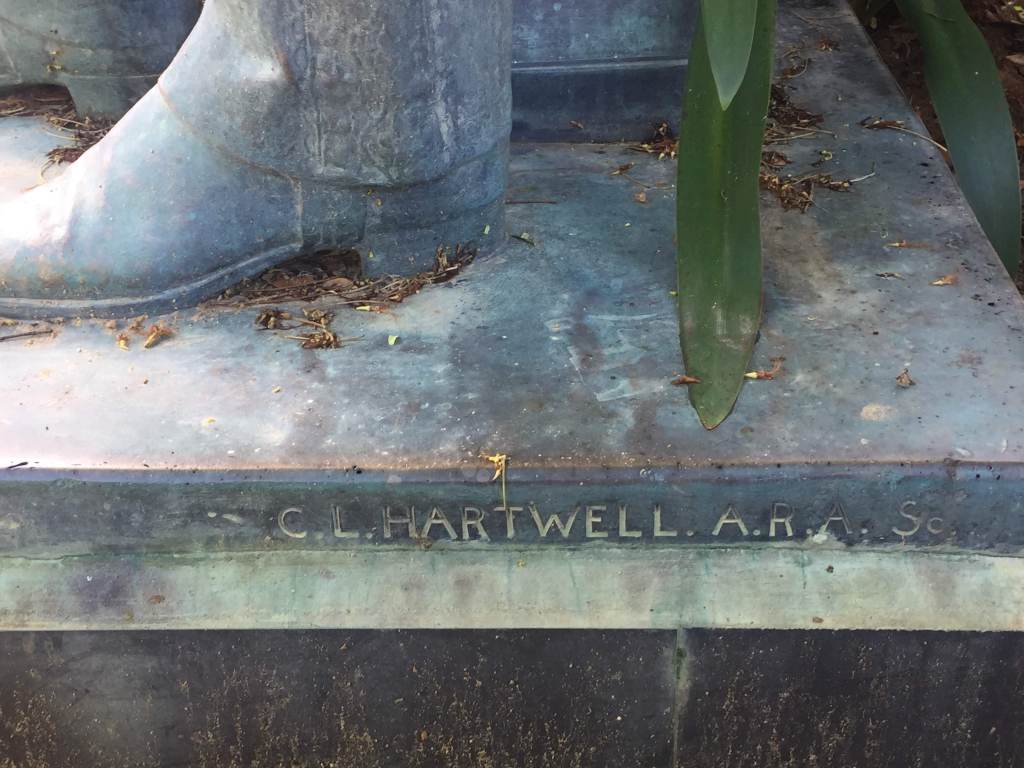
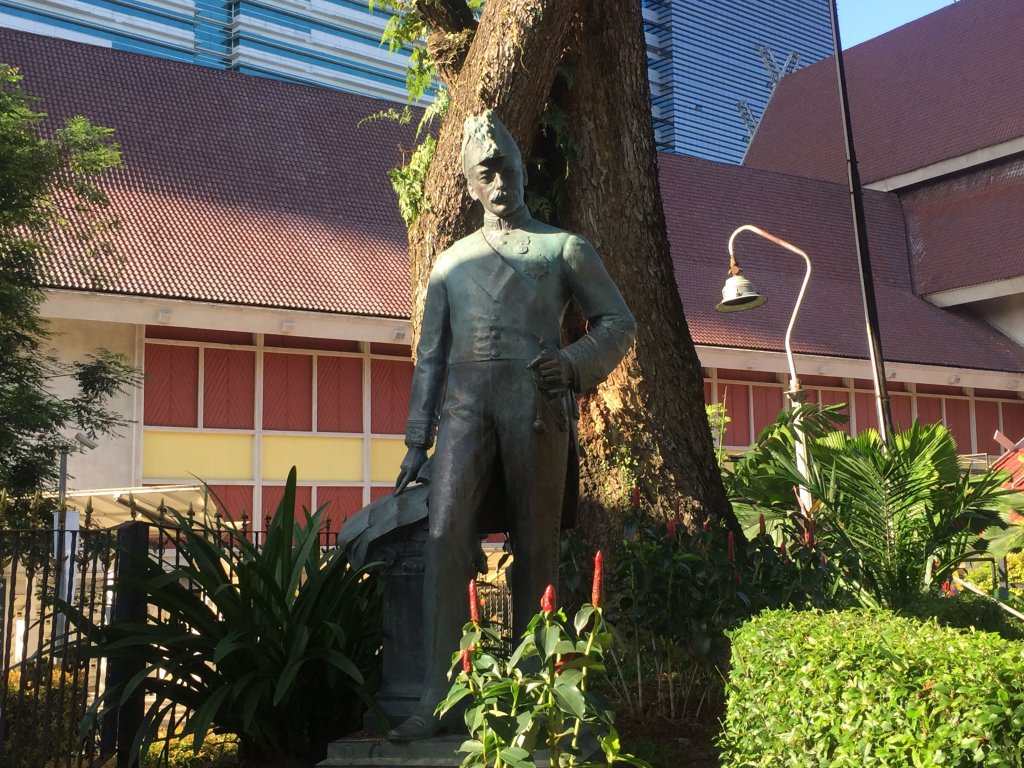
Sir Ernest Woodford Birch, the eldest son of J.W.W. Birch, was the eighth British Resident of Perak, from 1904 to 1911. When he retired, he initiated a fundraising project to build a monument to commemorate the services and contributions of Sir Frank Swettenham. The monument took the form of a bronze statue made by a well-known English sculptor by the name of C.L Hartwell, A.R.A of London. The statue was erected at the front right-hand corner of the Government Offices (now Sultan Abdul Samad Building), facing Gombak River. The unveiling ceremony on 19 January 1921 was attended by the sultans of Perak, Selangor, Pahang and Negri Sembilan as well as High Commissioner Sir Lawrence Guillemard, Chief Justice Sir John Murison and Sir Ernest Birch. The statue was removed during the Japanese Occupation but re-erected on the original site on 15 October 1946. A month later, sultans from nearly all the Malay States attended the unveiling of the restored statue by the then highest British officer, Sir Edward Gent. It was again moved in 1964 and today, the statue of Sir Frank Swettenham stands on the grounds of the National Museum, next to the bronze bust of King Edward VII.

Footnote

Coming event – Festival Kota Kuala Kedah (Kuala Kedah Fort Festival)

                         18-21 March 2020 @ Muzium Kota Kuala Kedah.
A Bronze Frog Drum

by Maganjeet Kaur

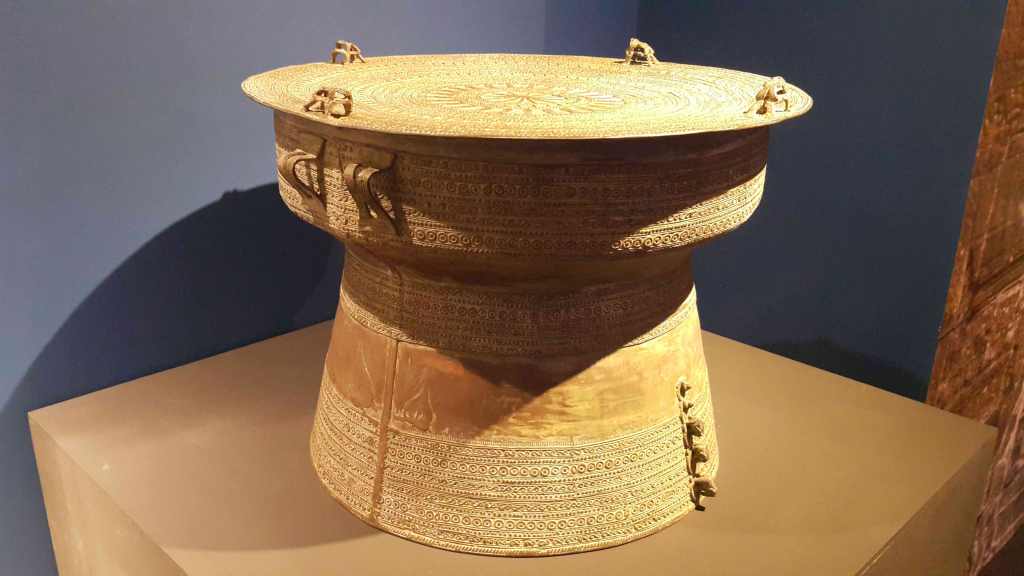
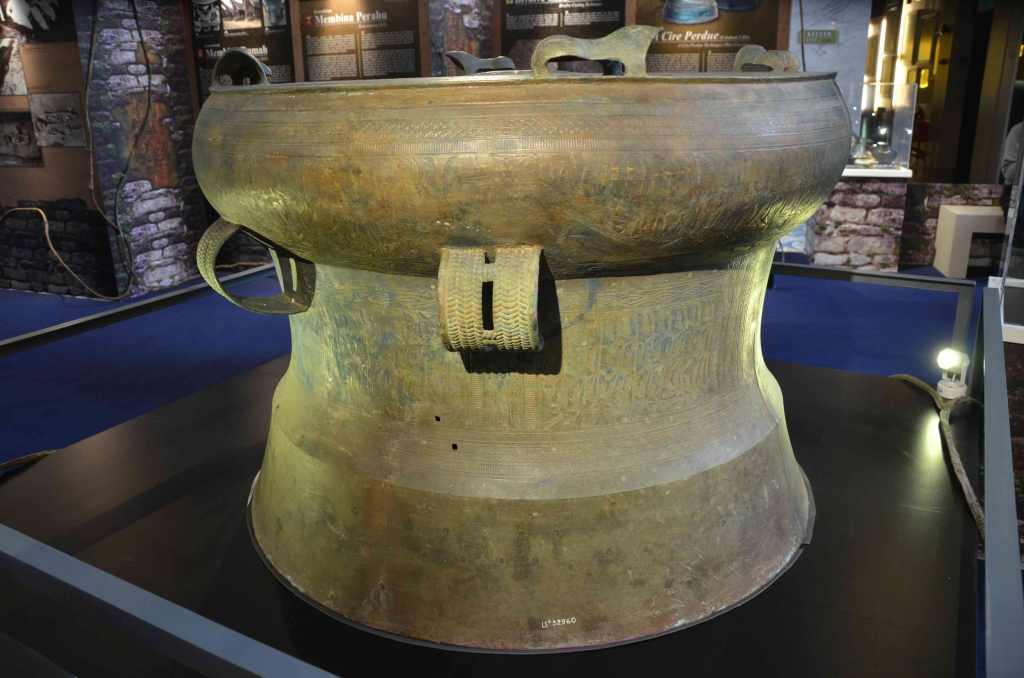
The solitary bronze drum standing exposed at the Lost Kingdoms exhibition (ongoing until April 2020) at Muzium Negara is an intriguing representation of an ancient drum-casting tradition from Vietnam. Its shape identifies it as a Type III in the Heger I-IV bronze drum classification system. This classification was developed by Franz Heger, an Austrian ethnographer, in an attempt to categorise the diversity of bronze drums derived from the Dong Son culture in northern Vietnam.

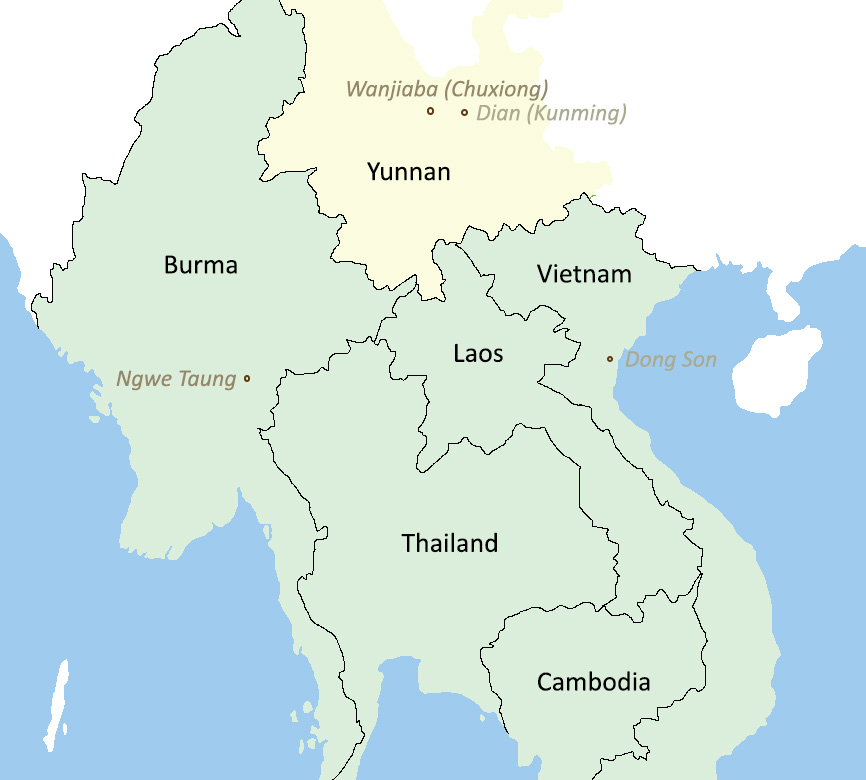
‘Dong Son’ is the name given to the bronze-age culture extending across the Red, Ca, and Ma river valleys in northern Vietnam from around 500 BCE to the third century CE. The intricate mushroom-shaped drums produced by this culture have been found distributed widely in Southeast Asia and in southern China. They were regalia of power, gifted to local chieftains to seal trade agreements. All the drums manufactured at Dong Son fall into the Heger Type I category; they are simply known as Dong Son drums. Both the bronze drums on display in Gallery A, National Museum of Malaysia, are of Heger Type 1.

Drums in the Types II to IV categories were local adaptations of Dong Son drums. Their distributions were therefore limited; the Heger Type III drums were found only in Myanmar, Laos and Thailand. In terms of shape, the Heger Type III drums are smaller and less bulbous. Unlike Dong Son drums, their tympanums (beating surface) extend over the top, resembling a lid.

The Karen and their Drums

The majority of Heger Type III drums were found in Myanmar, the prized processions of the Karen, a Sino-Tibetan ethnic group inhabiting the highlands between Myanmar and Thailand. According to Karen legends, their homeland was in the upper reaches of the Yellow River in China; they migrated southwards via Yunnan, China, and reached Myanmar around 600-700 CE. In Yunnan, they became acquainted with the bronze drum and its associated culture. Dong Son drums imported into Yunnan gave rise to a local tradition known as the Dian drum. Compared to the Dong Son drum, the upper segment of the Dian drum is cup shaped. The Karen prototype drum probably developed in Yunnan, its shape adopted from the Dian drum.

The Karens have continued to use their drums into the historical period and they may have thus preserved the ancient cultural practices of Dong Son and, especially, Yunnan. The drums served many functions, not least in instilling fear in an enemy and during celebrations after a victory in war. Reverberating in the hills, the pleasing tones emanating from the drums placated Nat spirits residing in trees, streams, rocks and other objects in the natural environment, thus ensuring these spirits would look kindly on the Karens and help them in times of need. The drums were also beaten to invite ancestor spirits to partake in feasts as well as to witness important ceremonies such as weddings and funerals. It was important to conciliate ancestor spirits as they could intercede with Nat spirits on behalf of the Karen.

The Karens practised dry-rice farming and the drums were beaten in agricultural rituals during the planting and harvesting seasons. Their basic slash-and-burn farming methods made them dependent on heavy rainfall and the drums accompanied a ritual dance to summon rain. It is thought that the low-frequency pitch produced by the beaten drum induces frogs to crock and croaking frogs are a harbinger of rain. Thus, Heger Type III drums are also known as rain drums or frog drums. All Karen drums have three-dimensional frogs embedded on their tympanum, an indication of the usage of these drums.

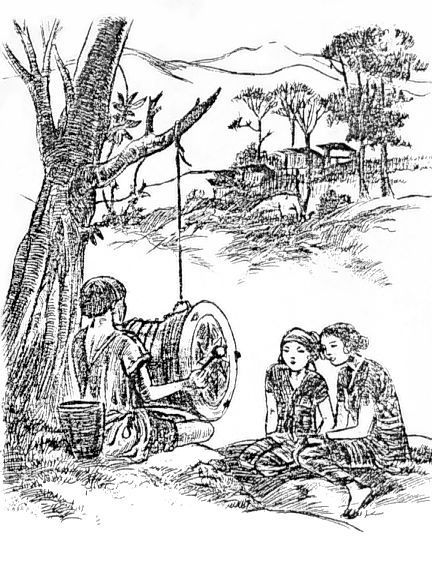
A drawing of a Karen frog drum being played. The drum is suspended by a rope, which is passed through one set of handles. This allows the drum to hang freely just above the ground. The musician, sitting on the ground, keeps the drum steady by inserting his big toe in the handle near the ground. He plays the drum by beating the tympanum with a padded stick and the body of the drum with thin pieces of bamboo. Image: Wikimedia Commons (public domain)

By the 19th century, the Karens had lost the knowledge to manufacture bronze drums and the drums were cast for them by Shan craftsmen, who were noted for their metalsmithing work. These craftsmen were based at Ngwe Taung, a small town located about 14 kilometres south of Loikaw. By this time, Karen culture had influenced other tribal groups such as the Lamets and Khmu in Laos and they too adopted the frog drum into their rituals. Annually, in October-November, at the end of the rainy season, all the various tribal groups would converge at Ngwe Taung to purchase these drums. On estimate, a hundred drums were produced and sold at Ngwe Taung annually.

Designs on the Drum

Tympanum of the exhibited drum

The rain drum displayed at the Lost Kingdoms exhibition has a 12-ray star at the centre of its tympanum. A star in this space is common to all Heger drums with the only difference being in the number of rays. Generally, for Heger Type III drums, the older drums have eight rays while the newer ones twelve. The symbology behind the star is unknown although many theories abound. The star is the location where most of the drumming takes place and hence it is raised to strengthen the area. Heger Type III drums commonly have a butterfly motif between the rays of the star. This appears to be missing on the drum exhibited, another indication this drum is of later manufacture.

There are 21 decorative panels of varying broadness around the central star; each panel is separated by a pair of concentric rings. Majority of the designs on the panels are common geometrical motifs – dots, ‘S’ shapes and circles with a dot. The design on the fourth panel from the star is however unique. It looks like a stubby tree and it has few parallels on other drums. Another unique design is the motif on the 2nd, 10th and 16th panels, which also resemble trees; the repeating motif faces clockwise in the second panel and anti-clockwise in the other two. This drum is lacking the typical motifs that decorated older drums – ducks, fishes and rice grains.

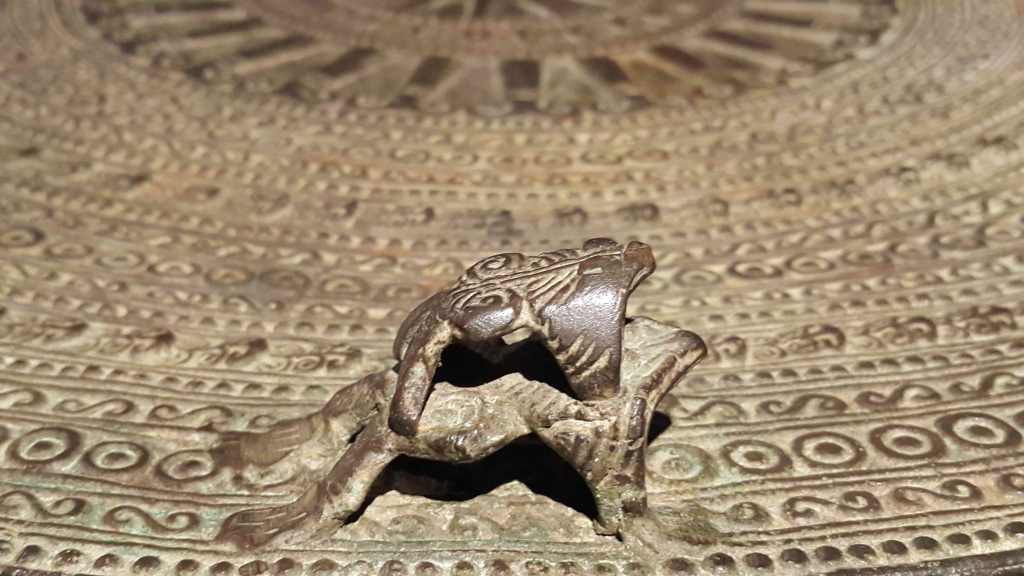
Four pairs of three-dimensional frogs have been placed in an anti-clockwise direction around the edge of the tympanum, straddling four decorative panels. In each pair, a smaller frog sits atop a larger one. Such superimposed frogs are a distinctive feature of Karen drums; some drums even have three superimposed frogs.

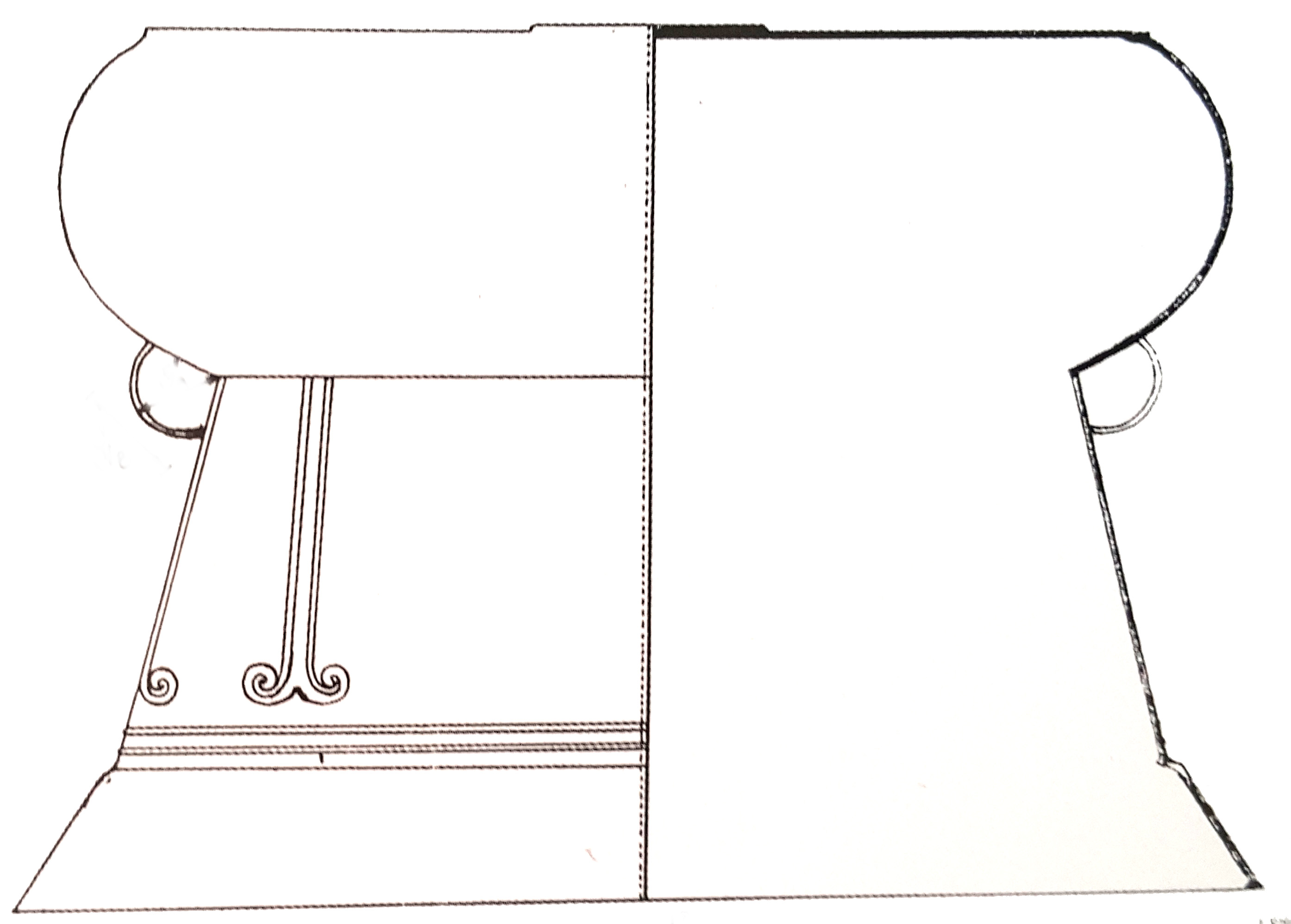
Drawing of a possible Wanjiaba drum, found in Myanmar. The design on the body resembles the tree-like motif (albeit more slender) on the fourth panel of the exhibited drum. Wanjiaba is a burial site located in Yunnan where a number of bronze drums were found. The history of these drums is disputed; they are classified as pre-Heger in the Chinese classification system and as Dong Son-derived in the Vietnamese classification. Image: Calo, Ambra (2014, figure 2.57).

The body of the drum can be divided into two segments – a bulging upper segment and a conical lower. The decorations on the upper segment are made up of the same geometric patterns as on the tympanum. This segment also contains two pairs of handles, decorated by vertical lines. Unusually, each pair of handles is placed directly under a pair of frogs; their usual position is between the frogs.

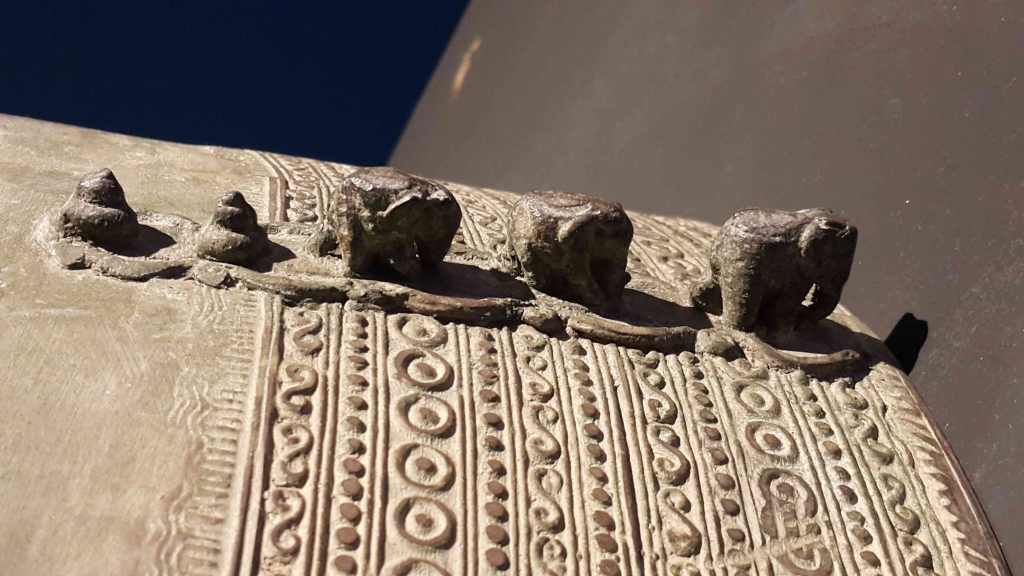
The conical lower segment is divided into three sections. The top and bottom sections have the geometrical patterns seen on the tympanum while the middle section is plain. An interesting depiction on the bottom-most section is a procession of three elephants and two snails walking towards the base of the drum. This is common on Karen drums but not present on Dong Son drums. However, unlike on the exhibited drum, the animals are usually placed under a pair of handles. Elephants were a symbol of wealth while snails are another iconography of rain – snails come out into the open when it is raining.

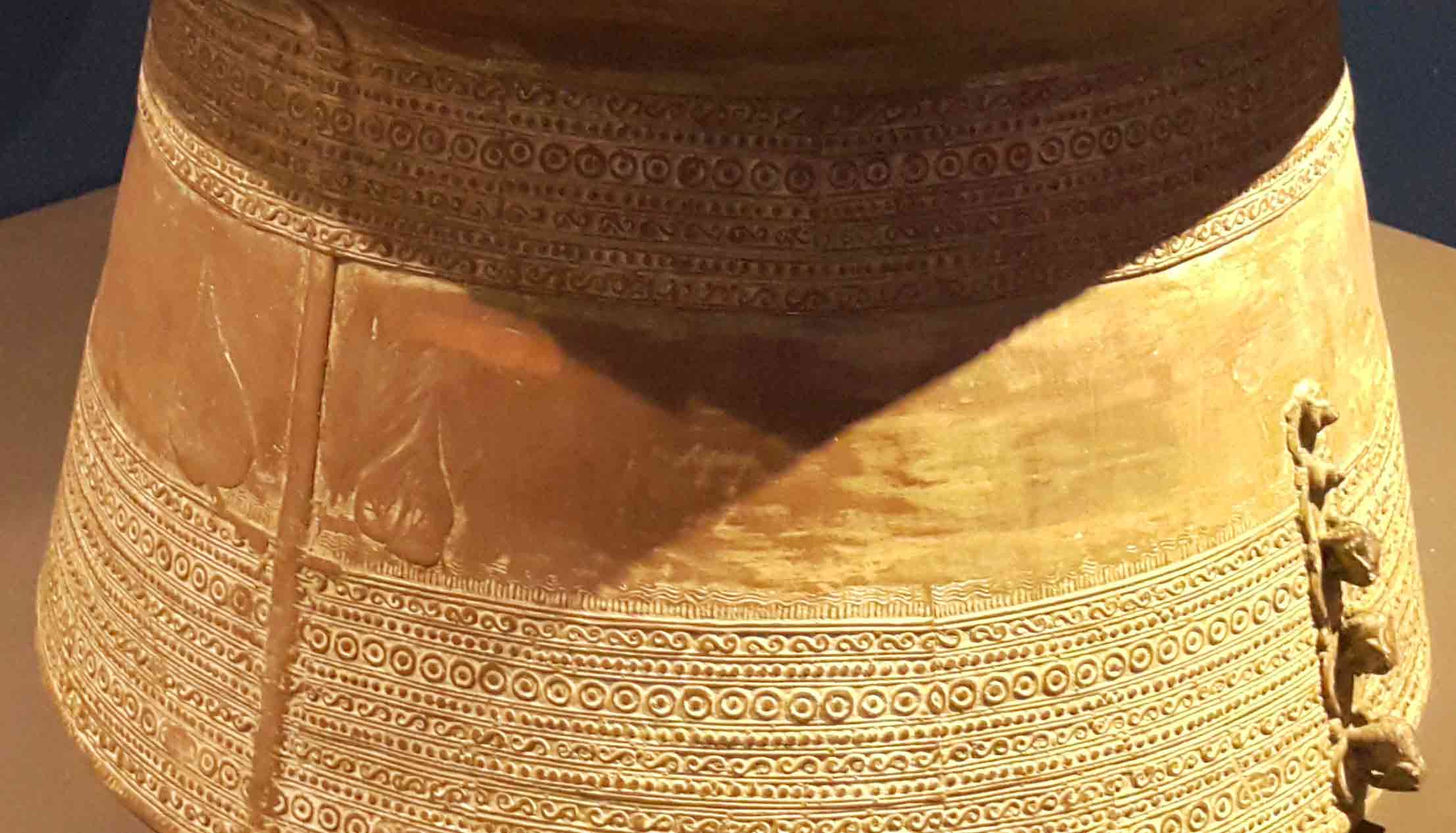
The middle section is seemingly plain but it does have some enigmatic symbols. Art historian Richard Cooler has likened the Karen frog drum to a ‘magic pond’; the middle section does have symbols that could indicate a pond-like environment. Straight vertical lines separate the ‘pond’ from the lower section and the chevron-like pattern above the lines can be seen as representing eddies in the pond. Notice that the snails are in the pond section of the drum. Additionally, there are two taro leaves (daun keladi in Malay) in the pond section; the taro is a tropical plant that thrives in a wet environment and hence is common around ponds and lakes.

Undecorated section of the drum

In summary, the Heger Type III drum on display at the Lost Kingdoms exhibition is believed to be a later drum based on features such as 12 rays of the central star, missing motifs between the rays of the star and elephants/snails walking on a plant (the plant is not present on older drums). Although originating from the Karen tradition, this drum has a number of unique features. Designs on the tympanum does not include the conventional aquatic animals and rice grain motifs but instead includes tree-like motifs. Other atypical features are its placement of handles and inclusion of taro leaves. The drum may have been cast for a different tribal group.

Three other bronze drums at the exhibition, displayed in glass cabinets, are also from the Karen tradition. Two of these drums are much smaller compared to the one discussed in this article but their shapes are typical of Karen drums. The third drum has an atypical cylindrical shape. However, this third drum has the designs, especially the fish and duck motifs, typical of Karen drums. It also has some enigmatic inscriptions and is deserving of an article of its own. All four drums belong to the collection of the Department of Museums, Malaysia.

References

Adnan Jusoh and Yunus Sauman Sabin (2019) ‘Motif hiasan tiga (3) buah Gendang Gangsa di Muzium Matang, Perak’, ResearchGate.

Calo, Ambra (2014) Trails of Bronze Drums Across Early Southeast Asia: Exchange Routes and Connected Cultural Spheres, Singapore: Institute of Southeast Asian Studies.

Cooler, Richard M (1995 ) The Magical Bronze Pond: The Classification, Authentication and Significance of a Late Karen Bronze Drum

Cooler, Richard M (1995 ) The Karen Bronze Drums of Burma: Types, Iconography, Manufacture, and Use. Leiden: Brill.

Fraser-Lu, Sylvia (1983) ‘Frog Drums and their Importance in Karen Culture’, Arts of Asia.

Siti Munirah Kasim and Nasrul Azam (2020), email communications.