Fountain at Dataran Merdeka

by Eric Lim

In my last article, I wrote about two Colonial monuments that were initially located at the Government Offices, now renamed as Sultan Abdul Samad Building, at Dataran Merdeka. First, the King Edward VII bronze bust on a marble pedestal, which was positioned right in front of the building and unveiled on 16 April 1912. The second monument is the bronze statue of Sir Frank Swettenham, erected on the front right-hand corner of the building and facing Gombak River. It was announced publicly for the first time on 19 January 1921 and it was a grand occasion attended by the Rulers from the Federated Malay States and top ranking British officials at that time.

During the Japanese Occupation, both monuments were removed and hidden away. After the war, the monuments were returned to their original sites. Today, they are standing tall at the grounds of the National Museum. Besides these two monuments, which originated at Jalan Raja, another monument still exits at Jalan Raja – at Dataran Merdeka.

This only surviving monument is the Fountain, located at the southern end of Dataran Merdeka, close to the 95 metres tall flagpole and near the intersection between the old General Post Office, the current Textile Museum and the former National History Museum, which was closed in November 2007. Prior to becoming the museum, the building housed the Chartered Bank of India, Australia and China (today they are known as Standard Chartered Bank).

Information board next to the fountain

A close scrutiny of the information on the board next to the Fountain, facing Jalan Raja only provides a one line introduction – `At the corner of the square stands a fountain that was built in 1897`. It was no surprise with the absence of facts of its origin and history because since it was erected, it was already shrouded in mystery. This prompted the Malayan Historical Society in Kuala Lumpur to put the record right with the help of the National Archives. They published their findings in their half-yearly magazine called `Malaya in History` volume VIII / number 1 / December 1962 issue.

When the Fountain was completed, KLites believed it was built to commemorate the Chief Inspector of Police, Steve Harper of the Selangor Military Police who died at home in 1896. He was at his prime at the time of his passing. Steve was popularly known to the locals as `Tuan Steeb`. Steve was one of three brothers who were very popular and successful in Selangor. There was Alfred Harper who was the Chief Clerk of the Courts and it was reported that he died at about the same time as Steve. And the third brother, Archie Harper, who founded the well-known firm of A.C Harper & Co. Ltd., which were agents for the Straits Steamship Company and importer for Peter Dawson`s Scotch whisky. Archie was one of the early members of Selangor Club (now Royal Selangor Club) and he was the first and best three Honorary Secretaries of the club. Archie retired in 1906.
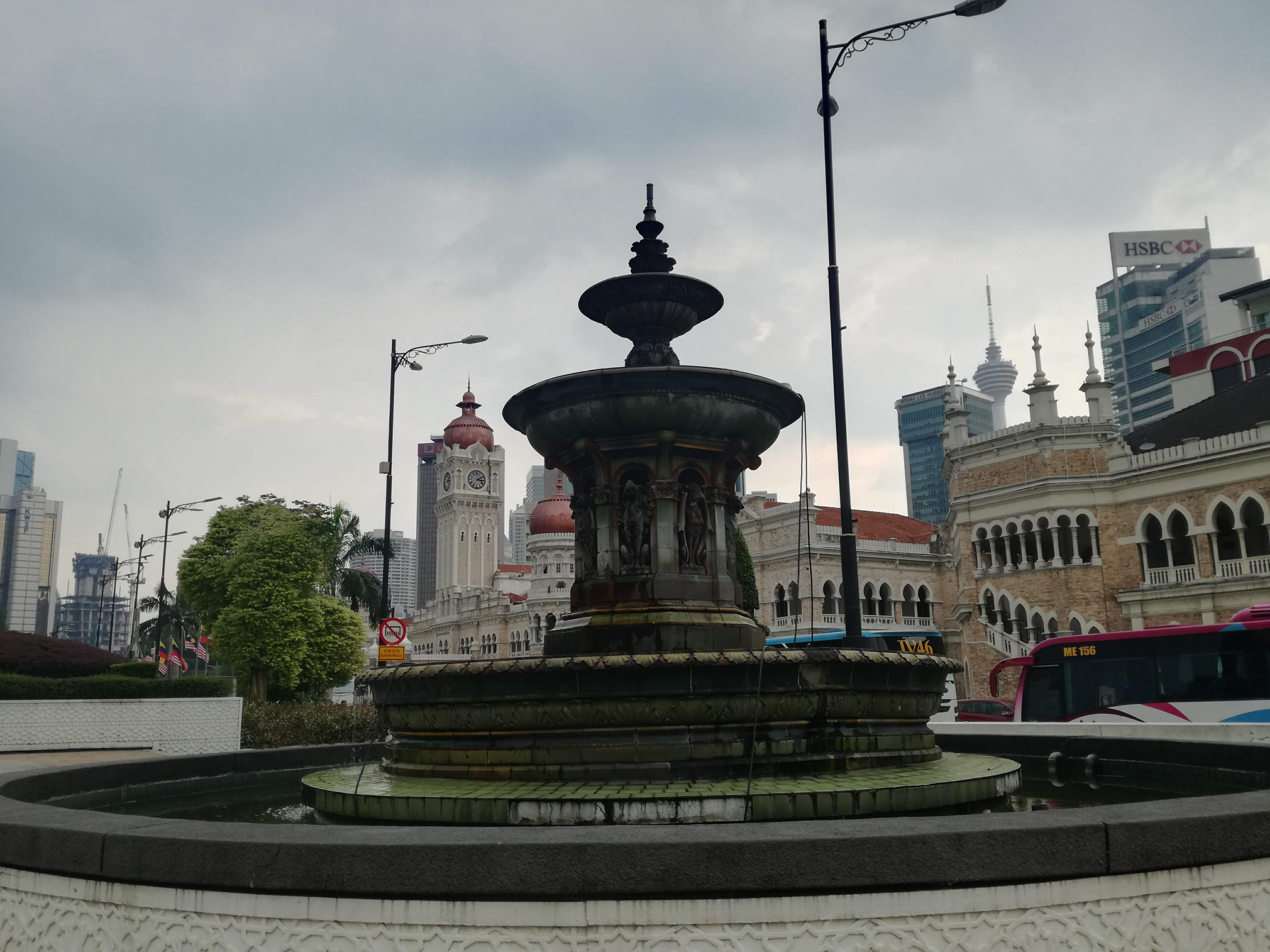
The fountain

The publication at that time, the Malay Mail (newspaper) and Selangor Journal (periodical), appeared to support this tradition. The former reported that a fund was started in January 1897 to commemorate the late Steve Harper and it went on to receive contributions from KLites. The newspaper also published the list of contributors from time to time and it further reported that the memorial should take the form of a drinking fountain to be erected at the central market (built in 1888, it is still called Central Market, located at Jalan Tun Tan Cheng Lock. However, it is no longer a wet market but now houses mostly arts and craft, and souvenir shops). The Fountain was finally completed later that year but it was constructed at the Padang (now Dataran Merdeka). KLites concluded that it was the cop’s fountain and believed it was moved from the central market to the present site at an earlier date.

A year later after the start of the collection of subscription for the Steve Harper memorial, the Malay Mail reported in its 18 April 1898 issue that Mr Bellamy, the Selangor State Deputy Superintending Engineer, had informed in a meeting that the Fountain at the Padang was built by the Kuala Lumpur Sanitary Board at a cost of four thousand dollars. He recommended that the contributions toward the Steve Harper memorial fund be used for other schemes. One of them was to buy school books for the underprivileged students attending the prestigious Victoria Institution.

The Malay Mail followed up on this pending issue and reported in its 2 May 1898 publication that a meeting was organized on 30 April and it was decided after a vote count that the scheme for the purchase of school books was adopted. The three who voted namely Towkay Loke Yew (wealthy businessman), Thambusamy Pillai (leader of the Tamil community and businessman) and Mr Shaw (Headmaster of the Victoria Institution) were appointed the trustees of the fund. (For the record, Towkay Loke Yew voted against the book scheme, instead proposed for another fountain to be erected).

The project to erect the Fountain was given out to an engineering firm Messrs Riley, Hargreaves & Co, which carried out the work in October and November 1897. The materials were imported from England. The company was also involved in the building of two bridges in Kuala Lumpur, on Market Street and High Street (today, they are Leboh Pasar Besar and Jalan Tun HS Lee respectively).

The Malayan Historical Society concluded that the Fountain was erected by the Kuala Lumpur Sanitary Board with their own funds and not erected to commemorate the late Steve Harper.

(The current location of the Fountain is not its original site. It was moved to the current position when the Dataran Merdeka project was completed in late 1989)

(The Kuala Lumpur Sanitary Board was formed on 14 May 1890 and their responsibilities include sanitation, upkeep of roads, lighting of streets, planning and other functions. It would eventually become the Kuala Lumpur Municipal Council (Majlis Perbandaran Kuala Lumpur) and now Kuala Lumpur City Hall (Dewan Bandaraya Kuala Lumpur).

References

Three Memorials on Jalan Raja, Kuala Lumpur – A note on their History from the National Archives, Malaya in History, vol. VIII (1), December 1962, pp. 39-40.

Rimba (1922) Bygone Selangor: A Souvenir, Kuala Lumpur: Charles Grenier & Son.

Discovering the stories of Melaka

by Karen Woo

On 27 February 2020, 14 participants from Museum Volunteers Batch 34 (Patricia, Katya, Grazia, Cen, Melissa, and Annie) and Batch 36 (Debbie, Veronika, Fazlin, and I) with our friends (Yvonne, Ryoko, and Melissa’s two children) made a day trip to Melaka. We gathered at the car park of the National Museum at 6:30 am. From there, our chartered van made its way to Melaka. Traffic was smooth and we arrived in Melaka at the Dutch Square at about 9 am where we met up with our guide, Colin Goh. Casper and Marliza (from Batch 36) also joined us during the tour in Melaka, making it a group of sixteen.

Colin introduced everyone to the history of Melaka from its founding by Parameswara, to the development of the Malay Sultanate of Melaka, and the important contributions made by its maritime laws to international maritime law. However, this followed with the decline of Melaka, to its conquest, first by the Portuguese, then the Dutch, and subsequently the British. 

Following the introduction, Colin showed us the sites in Melaka, some of which were already familiar to us, accompanied with stories told from his local perspective. A visitor to Melaka cannot miss visiting the Dutch Square where Stadthuys, Christ Church, Melaka Clock Tower, and water fountain are prominently located. However, interestingly, apart from Stadthuys and Christ Church, both Melaka Clock Tower and water fountain were not constructed by the Dutch but were proud contributions by the people of Melaka. The clock tower was erected by a Melakan Baba who made his fortune in Singapore, whilst the water fountain was built by the people to celebrate the anniversary of Queen Victoria.

First on our list of stops was Christ Church. The Christ Church, which was planned as a commemoration of a centenary of the Dutch occupation of Melaka in 1641, was only completed in 1753. Inside the church, the original pulpit and lectern were the only two remaining Dutch artefacts.  Colin also showed us the oldest Christian tombstone, which is part of the floor of the church. It is dated 1562, and it is for a lady by the name of Giomar.

The tombstone dated 1562 of Giomar found inside Christ Church

The famous Stadthuys was the office of the Dutch Governor and Deputy Governor, and it was later extended to provide residence for other high officials. The lower level was also used as a warehouse for the VOC. The Stadthuys would subsequently be occupied by the British; it is a museum today.

From there, we made our way up to St. Paul’s hill. It was a nice, shady walk with an elevated view of the Dutch Square, the vast area of reclaimed land (and buildings) with a glimpse of the replica of the Flor de la Mar in the far distance.

The view on the way to St. Paul’s hill with the replica of the Flor de la Mar in the distance

Our story continues on St. Paul’s hill. It is said that in 1521, upon deliverance from calamity in the high seas, a Portuguese captain, out of gratitude, built a small wooden church on the hill. Later, when St. Francis Xavier arrived, the Portuguese authorities gave him the piece of land to build a school and the small church was also enlarged. St. Francis Xavier used this location as a base for his missionary journeys to Japan and China. From this historical event, today, this church has established a friendship with a church in Kagoshima in Japan, and there have been exchanges between them.    

The white church on top of St. Paul’s hill served as a strategic landmark for navigators sailing down the Straits of Melaka. Upon spotting it, they would know that they were approaching Melaka.  These days, one could still see the white church peeping out from behind the Ramada and Emperor hotels.

St. Paul’s Church with statue of St. Francis Xavier on top of St. Paul’s hill

Apart from this, St. Paul’s Church had other important roles, including as a burial ground for the Dutch and the British and even as a hanging gallows. There were many tombstones on display inside and Colin regaled us with some interesting stories. My favourite undoubtedly is that of the wife of Jan Van Riebeck, founder of Cape Town in South Africa. He was posted to Melaka for two years. During that time, his wife passed away and was buried in this church. Later, a memorial was built in Cape Town for Jan Van Riebeck and the authorities requested for the tombstone of his wife. The British agreed, and today, a plaque marked the spot where the tombstone used to be. This is such a nice story, and today, the couple’s tombstones are reunited in the memorial.

The plaque to mark the spot of the tombstone of the wife of Jan Van Riebeck in St. Paul’s Church

With that, we bid farewell to St. Paul’s Church and made our way to our next must visit spot, the Porta de Santiago (of the fortress). However, did you know that this gate was not part of the fortress? It was actually known as Bort’s Gate (to the Dutch) or Old Gate (to the British). Nevertheless, those who used the gate called it Porta de Santiago. 

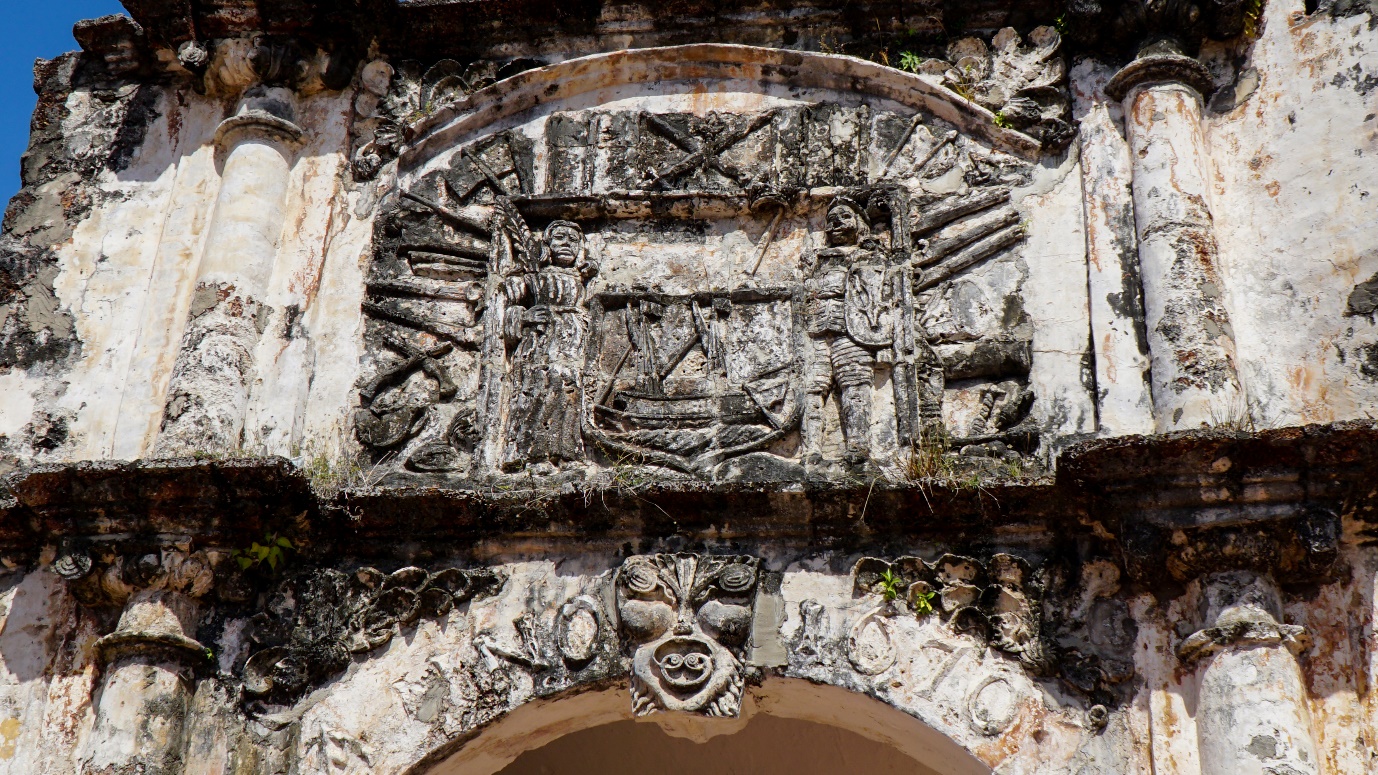
Focusing on the top of Porta de Santiago, Colin pointed out the Dutch emblem which comprises of a rectangle that is surrounded by battle weapons. Within the rectangle, a lady holding a stalk of wheat is placed on the left and a soldier bearing a shield with the words “VOC” is on the right, separated by a shield in the centre. On the front side of the Porta de Santiago, the year “1670” can also be clearly observed.

The Dutch emblem with the year “1670” on the front side of the Porta de Santiago

Colin also shared that some believed secret tunnels existed and connected the fortress to St. Paul’s hill and to St. John’s fort. The theory was that after the banishment of the Knights Templar in Europe, their remnants went to Tomar in Portugal and that order evolved into the Order of Christ. When the Portuguese came to Melaka, the Order of Christ, consisting of engineers and builders, also came along. Though the existence of the secret tunnels has not been proven, it certainly adds an air of mystery and intrigue to Melaka.

We then continued the next part of our tour to Bukit Cina by van. On the way, we passed by the Sacred Heart Convent, the Convent of Infant Jesus primary and secondary schools, and the previous site of the first Malay College in the country (before it was transferred to Kuala Kangsar). The graves in Bukit Cina date back to the Dutch era. At the foot of the hill, a temple was built for the descendants who visited the graves to perform their filial rites. There was also a famous well, Perigi Raja, that used to serve the best quality water, so much so that the Dutch built a wall, with guard posts, to protect the well, and water was delivered on a daily basis by bullock carts to the fortress.

Now, we come to the story of Li Poh. According to the people of Melaka, Li Poh was the daughter of a captain, rather than a Princess. This land was given to Li Poh and her people. Subsequently, the Dutch granted the land title to Cheng Hoon Teng temple, the oldest Buddhist temple in this country.

We were then dropped off close to Jonker Street heritage walk for the final part of our tour. Colin showed us the different styles of architecture left behind by the Dutch and the British. For example, there were some shop houses with Dutch frontage, which have no walkway, as opposed to others with the British walkways. We could also observe these changes by walking through the back lanes. This could be seen through the extension of the shop houses and the different styles of cramps used – the “C” kramp for the Dutch and the “X” cramp for the British.

The mirror image “C” kramp can be observed

Jonker Street itself went through changes – it used to be a bustling street that was a commercial and residential area for the working class. However, nowadays with the commercialisation of the street, the residents have moved out and the old-style coffee shops have also been replaced by cafes.  

Nearby is Jalan Tukang Emas (or Goldsmith Street), which used to house the goldsmiths from India during the Dutch colonial time.  Today, this street, which is also known as Harmony Street, is home to a Hindu temple, a mosque, and a Chinese temple, all located within close vicinity to each other.

After such a long day and being out in the hot sun, we were ready for our next adventure – lunch at Nyonya 63. The air-conditioned restaurant with its lovely oriental ambience was a welcome and pleasant interlude. Lunch was an absolute delight to our senses – we had chap chay, cincaluk omelette, assam fish, nyonya fried chicken, prawns cooked in prawn gravy, and buah keluak chicken. One of the group’s favourite was the prawns cooked in prawn gravy as the sweetness of the pineapple lent its flavour and mellowed the taste of the curry.  Buah keluak chicken, being a Nyonya speciality, is an acquired taste, highly recommended for everyone to try. We ended with the all-time favourite desserts, cendol, and ondeh-ondeh, courtesy of a friend of Annie’s.

After lunch, we had about an hour of free time before bidding our farewell to Melaka and its secret charms to make our way back to the National Museum. We had such an enjoyable time and were making plans for a return visit to Melaka. Would anyone like to join us for round two of Melaka? 

The 16 of us, peering from behind our hats and sunglasses, with Porta de Santiago and St. Paul’s Church in the background

Cheong Ah Peng, the Father of Kalumpang

by Karen Loh

An hour’s drive north from Kuala Lumpur on the North-South Expressway lies the town of Kalumpang. Situated in Hulu Selangor near Tanjung Malim, not many have heard of this small town much less its location. Founded by a tin miner, Kalumpang was unknown until the early 1900s and much of its development was due to the perseverance of one man – Cheong Ah Peng.

Cheong Ah Peng with his famous walking stick

Hailing from Guangdong, China, Cheong Ah Peng @ Chong Mun Peng or Cheong Hoong made his way to Malaya sometime around 1895 in search of tin. Cheong was fluent in Mandarin and Cantonese. He eventually learnt to speak Malay and a bit of English whilst living in Malaya. It is unclear how many places Cheong looked for tin in the early days but he eventually struck big in a hill at Hulu Selangor. The mine was in the hill itself and miners had to walk up the hill every morning to enter the mine.

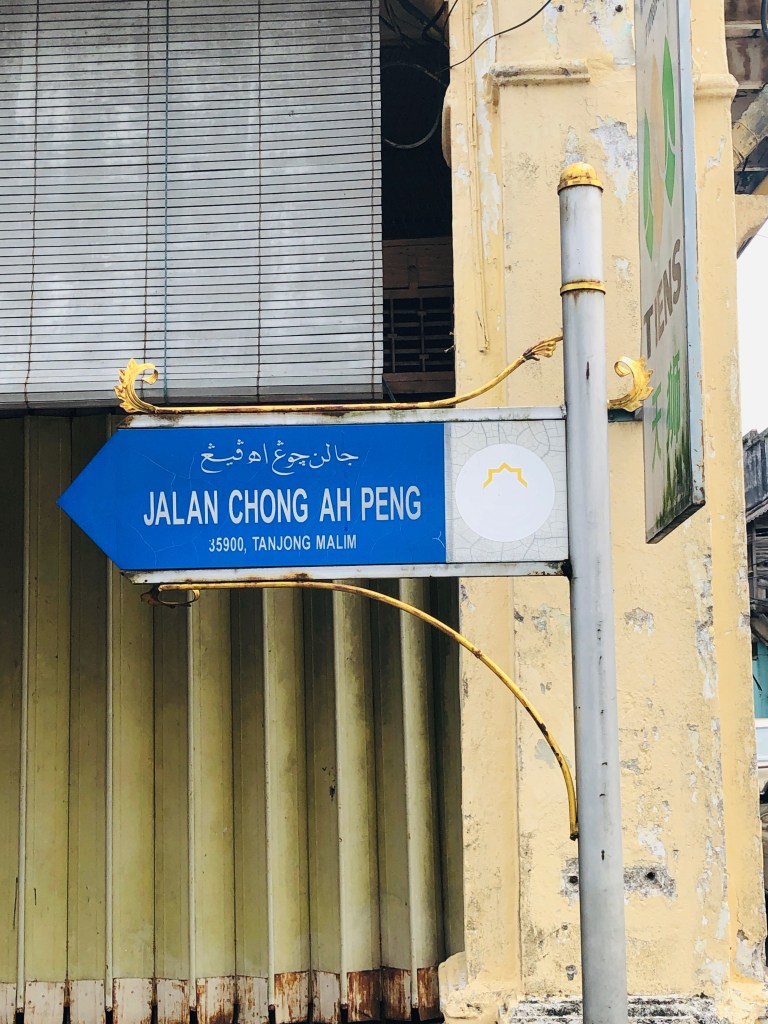
As more tin was mined from this hill generating much profit, Cheong built a row of nine double-story shophouses in Kalumpang (and similarly in Tanjung Malim), a Chinese temple close by, and a school for boys with male teachers. Later as the town of Kalumpang grew, more shophouses and houses were built together with a marketplace, a bus station, and a police station. Cheong even managed to secure five acres of land for a Chinese cemetery from the government. He became very rich, had two wives and three sons. He was recognised for his achievements by the Sultan of Selangor, who presented him with a walking stick and with this walking stick, the story goes that he would reprimand youths who dared to misbehave in his town. In 1924, Sultan Ibrahim of Johor also wrote a letter of commendation recognising Cheong as a progressive miner in Hulu Selangor. Such were his contributions that a road was named after him in Tanjung Malim.

The Chinese temple in Kalumpang

A Chinese newspaper; Malayan Thung Pau Daily News, published an article in October 1975 about Cheong Ah Peng, the town he built, and the tin miners who worked and settled there from early 1900. Here are excerpts from some of the tin miners’ stories:

A “My name is Yap. I came to Malaya when I was 14 years old. I came to work for Cheong Pak (uncle) who had a very big tin mine in the hill. I had to walk for 9 hours to reach the mine. The hilltop is a very lovely place to be on as the scenery is beautiful. From the top, one can even see the Straits of Melaka. The air is very cold around the hill. Cheong Pak was a very smart and nice man. Even though we were not allowed to take a day off from work, we had a big feast every time there was a festival. We culled chickens and ducks for the feasts and celebrated the festivals together. Some of the workers had to stay up in the hill to guard the mines. Cheong Pak built a long house for us to live in. Our days consisted of daily shifts of 4 hours per shift and we were paid every half year. During each payday, we used some of the money to gamble and Cheong Pak would join us too.

Besides working in the mines, we also grew vegetables during our free time. There were wild animals up in the hills. We encountered a black bear once and fortunately, no one was harmed. In 1926, the Government ordered the mine to be closed due to a very heavy thunderstorm that resulted in a severe landslide. It was rumoured that at least 10 men drowned but the workers were not from our mine. In fact, the people in our village were all very healthy and those who got sick were likely to have visited a prostitute den! Though we appealed to the Government not to close the mine as it still had tin deposits, we were still ordered to close it.”

B “I am Wong and 70 years old this year. I came to Malaya when I was 17 years old to look for work. My first job here was to dig out tin ore from the drains. The early miners believed that there were white crocodiles around the village but I have only ever caught one. With the help of 14 youths, we managed to trap the crocodile under a wooden bridge when the water was shallow. The crocodile was not white but grey in colour like any ordinary crocodile; it was 8 feet (2.4m) long and weighed over 100 kati (60 kg). Catching crocodiles seemed to be a favourite hobby for the people. Some even used dead chickens to lure the crocodiles though they often succeeded in catching only the smaller crocodiles weighing 10 kati (6 kg). We were paid every half year and I was the perfect gentleman as I did not go for the ‘dirty stuff’ (vices). With the money I saved, I got married and had eight children: 4 boys and 4 girls. Unfortunately, my wife passed away a few months ago.”

C “I am Siew and I remember that Cheong Pak was the person who lobbied for Chinese translation to be printed on railway tickets for our convenience, as most of us did not read English. Cheong Pak’s nickname was Sun Tai Wong (Mountain King). I was employed by Cheong Pak to guard and look after his buses. Cheong Pak owned a few buses and each bus could sit 23 passengers. Those days, a bus could travel 18 miles (29 km) with one gallon of petrol. Once there was a Japanese man who opened a photograph shop in Kalumpang. He turned out to be a spy. My second job with Cheong Pak was as a storekeeper in his mine. Everybody feared Cheong Pak, including Government officers as he was a fierce person and kept a revolver with him, which was a present from the Sultan at that time. Today, I believe that one of his daughters-in-law is living in Petaling Jaya and two of his grandsons, Cheong Loong Seng and Cheong Chap Ching are in Kuala Lumpur.

Today, there is only a small road in Kalumpang with 30 shophouses remaining and a population of about 3000 people. The original row of nine shophouses built by Cheong Pak was destroyed in a fire 50 years ago. The Cheong Fong Coffee Shop has a photograph of Cheong Pak with his friends. In this photograph, Cheong Pak is dressed in white, standing next to a car with his friends. It is believed that one of the people in the picture is Shuen Choong Sun (great man of China also known as Dr. Sun Yat Sen).”

Cheong, dressed in white, standing next to the cars in Kalumpang

D Leow, 74 years old. “I came to Kalumpang when I was 14 years old. When I arrived, Cheong Pak was already 50-60 years old. I remember my life with him around. He built two rows of houses at the Kuala Lumpur to Ipoh trunk road. When the houses were completed, many of the residents there rented the houses from him to start new businesses in the town. He was called Penghulu of Kalumpang.

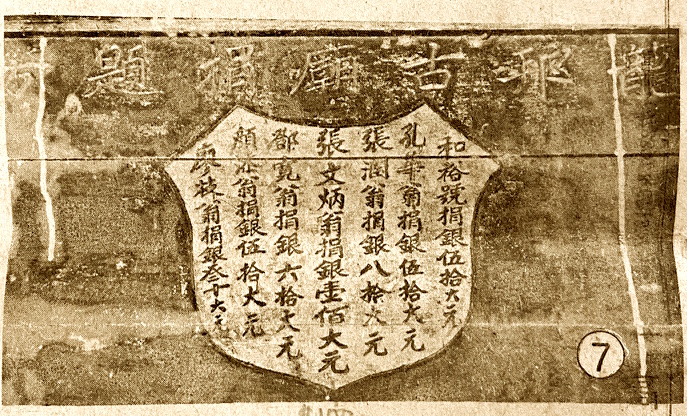
Cheong Pak was a very nice and generous man. He did everything he could to keep us happy. He even attended court sessions with us. We adored him. Wherever he went, he would carry his walking stick, which was given to him by the Sultan. He built the (Chinese) temple in Kalumpang, which Dr. Sun Yet Sen visited and stayed a few nights while in Malaya. The temple has since been renovated three times. Cheong Pak donated a lot of money for the renovation. There is a plaque in the temple, which list him as a major donor. In 1907, Cheong Pak received $6000 from the Government for a major renovation. An important deity in this temple is the Malay Datuk statue, which stands 3 feet (0.91 m) tall. Nobody knows his actual name but it was believed that he was Cheong Pak’s good friend. When he died, Cheong Pak commissioned a statue in his form to remember him.”

Cheong decided to return to China after a few unfortunate incidents, taking his first wife with him. Maybe it was bad luck, cruel fate or maybe it was just an accident when a big fire burnt down his shophouses and much of the town. A severe thunderstorm also caused his mine to flood and collapse. He never recovered from these losses. His daughter-in-law, Choo Yuen Heng shares her story:

I married into the Cheong family when I was 20 years old. I lived with my husband, Cheong Po Seng in Kalumpang before moving to Ipoh. My father-in-law was a very nice, humble and generous man who was liked by all the people in Kalumpang. Even though he could only speak a few words of English, he managed to get along with government people and during each festive season, he gifted them food and wine. Those who worked with him became very rich but my father-in-law was unfortunate. First, his tin mine collapsed due to a big flood and then his shophouses burnt down. To rebuild the houses, he took a loan from a bank but as he could not repay the loan, he ended up selling his shophouses in Tanjung Malim. When his businesses failed, he returned to China leaving his second wife and myself behind in Malaya. My husband died shortly after the war (WWII). My father-in-law died at the age of 83. My son never knew his grandfather. We were only informed of Cheong Pak’s death by some sources in China.
Choo Yuen Heng, Cheong’s daughter-in-law

Although Cheong Ah Peng returned to China, his descendants here in Malaysia and the people of Kalumpang today remember Cheong’s legacy as the tin-miner who developed the town, built a famous temple, a school, a cemetery, created jobs, and was much revered by the people of Kalumpang.

Letter of commendation from the Sultan of Johor in 1924.