From Private Collections to Public Institutions: Evolution of Museums and International Museum Day

by Annie Chuah Siew Yen

While the formal ‘museum’ did not emerge until the 17th century, collections of objects resembling this seemingly modern phenomenon date back thousands of years.

Museums have a long history going back to the 3rd century BCE, when the first known museums (of the ancient world) were opened in Egypt, Babylon and Mesopotamia. The oldest such in evidence was Ennigaldi-Nanna’s museum, dating from c. 530 BCE.

The remarkable woman Ennigaldi-Nanna, said to be the world’s first curator, was a Mesopotamian princess and priestess of the moon deity. Her museum, over 2500 years old, was centred on cultural heritage, and it is thought to have had an educational purpose. Along with her priestess role, Ennigaldi ran a scribal school for elite women. Thus, was founded for posterity the function and role of museums in preserving and curating items of cultural and historical value for education and enjoyment.
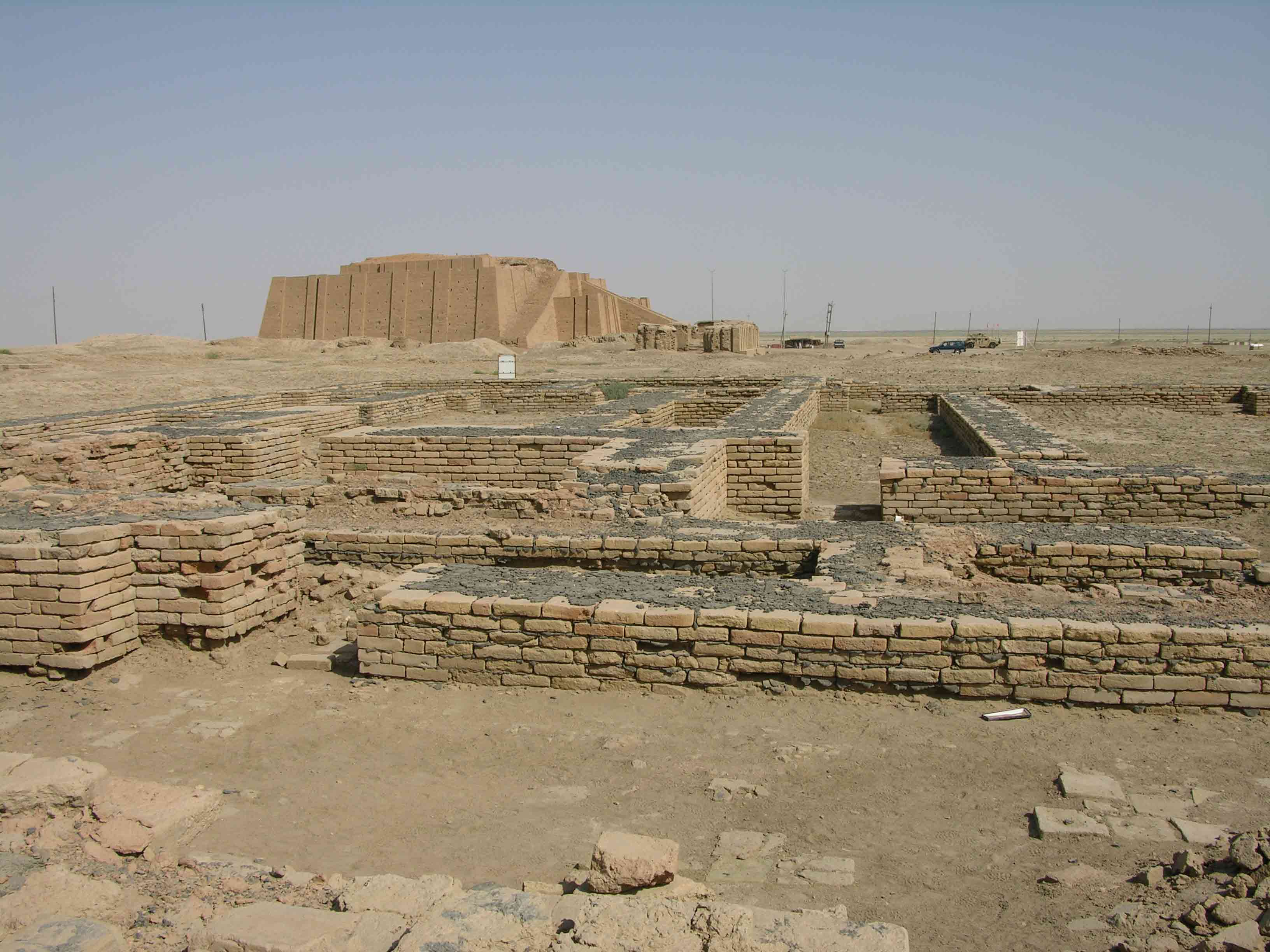
Ennigaldi-Nanna’s museum is thought by some historians to be the first museum, although this is speculative. It dates to circa 530 BCE. The curator was Princess Ennigaldi, the daughter of Nabonidus, the last king of the Neo-Babylonian Empire. It was located in the state of Ur (modern-day Dhi Qar). Image credit: Wikimedia Commons, attribution: M.Lubinski  CC BY-SA 2.0.

The early museums housed, cared for and displayed collections of curiosities in objects of cultural, artistic, spiritual and religious significance. The story of the world’s earliest museums shows the timeless appeal of conserving the treasures of past civilisations.

Although these institutions of antiquity were abandoned around 500 BCE due to deteriorating environmental conditions, museum culture spread to nearly every part of the world and today almost every country has at least one museum, no matter how small it may be. The concept of the museum has become a global concept that has survived through millennia.

The early museums were elitist and only the aristocrats could visit them. The public were excluded, but this focus has since shifted. Today, museums have redefined their missions, their goals and their functions, making their collections accessible to all – the researchers and the public. Still doubling as educational hubs and conservation centres, museums play a pivotal role in the preservation of culture and supporting the history of communities. Though they range in size and speciality, every museum’s mission revolves around the display and care of its collection, as well as continuous research on artefacts and thematic or general exhibitions.

The benevolent legacies of Elias Ashmole and James Smithson resulted in the establishment of institutions to further the cause of education and preservation of history.
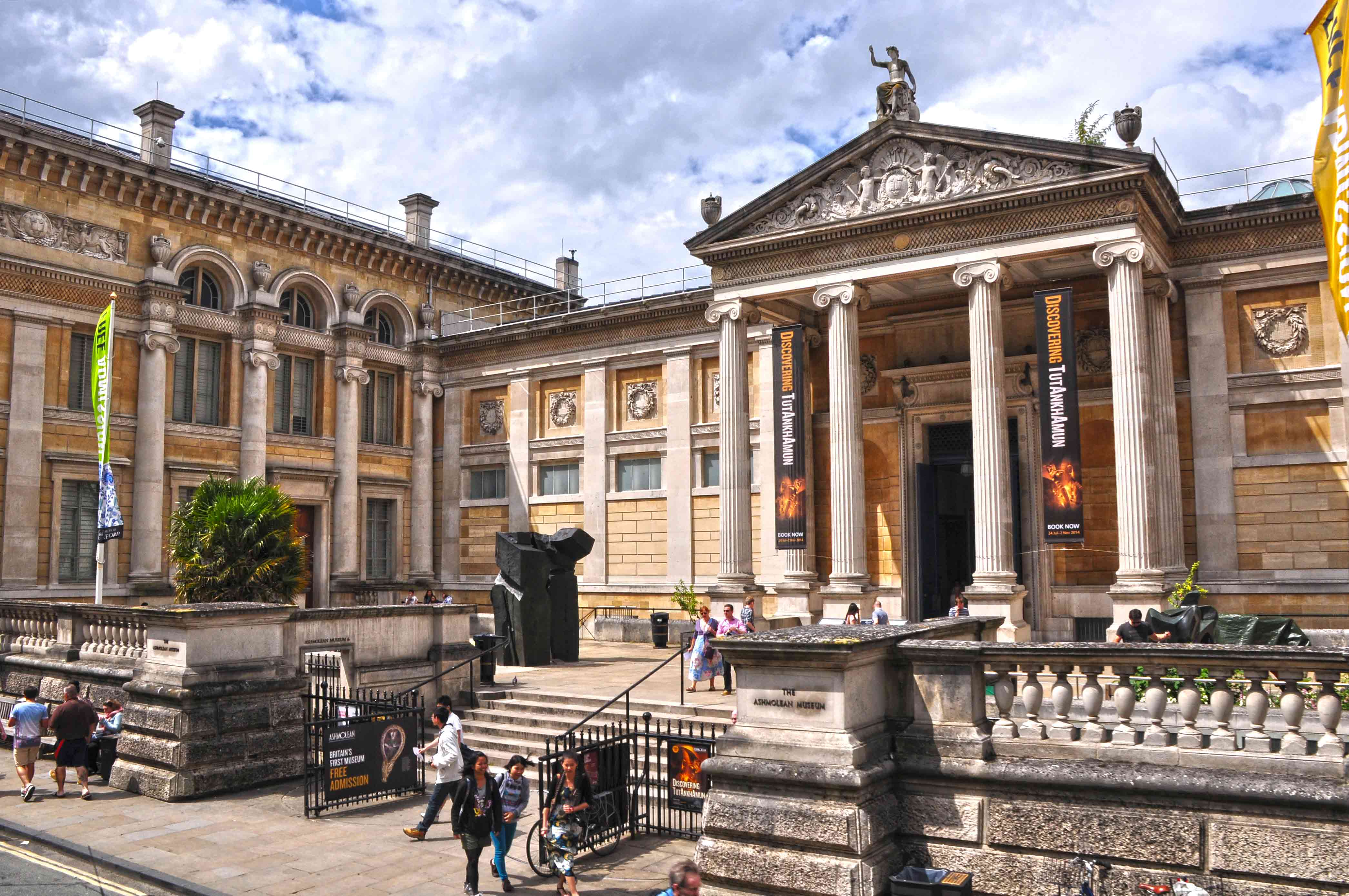
The Ashmolean Museum of Art and Archaeology, Oxford, UK. Image Credit: Wikimedia Commons, attribution: Lewis Clarke (CC BY-SA 2.0)

Ashmole’s vision was to create a centre for practical research and the advancement of knowledge of the natural world, which, in his own words, “is very necessary to human life, health and the conveniences thereof.” Ashmole’s vision of a ‘place of curiosity which fuels a quest for knowledge’ is still being realised in the Ashmolean Museum, founded in 1683. It is the University of Oxford’s museum of art and archaeology. Its world-famous collections range from Egyptian mummies to contemporary art, telling human stories across cultures and across time.

In 1829, Englishman James Smithson died at the age of 64 and left more than $500,000 (the equivalent of $9.6 million today) to the “United States of America, to found … an Establishment for the increase & diffusion of Knowledge”. In the annals of philanthropy, there exist few more inscrutable final testaments than this – Smithson had never set foot in USA. The Smithsonian, begun in 1846, is a group of 17 museums and research centres administered by the Government of the United States of America. It is a treasure chest for visitors and a guide to the most fascinating aspects of our world.

From the Ashmolean and British museums in the United Kingdom to the Smithsonian Museums in Washington, DC, the Greco-Roman collections of the Mediterranean region, the great museums of the Indian subcontinent, the Orient and the Occident in between, these repositories of knowledge promote better understanding of our collective heritage and foster dialogue, curiosity and self-reflection. Quite simply, without museums we would most certainly lose the tangible links to our past.

The world around us is constantly changing and has radically shifted since the days of the early museums. Can museums remain static and yet be relevant? The future of museums will have to be different from the past. Museums will need to do what they can to engage with their public through their displays, education and outreach programmes.

Created in 1946, the International Council of Museums (ICOM), an international organisation of museums and museum professionals committed to the “research, conservation, continuation and communication to society of the world’s natural and cultural heritage, present and future, tangible and intangible”, recognises the need for a new museum definition. This would reflect the new role of museums and the obligations and possibilities for museums. As the voice of museum professionals, ICOM makes recommendations on issues related to cultural heritage. Its forum of experts raises public cultural awareness through global networks and co-operation programmes.

In 2016, ICOM led a one-year reflection on museums and cultural landscapes, organised an International Conference in Catania on ‘Museums and World Cultural Heritage’, published a declaration on the subject and adopted a Resolution on the ‘Responsibility of Museums towards Landscape’.

“Museums have the capacity to promote good practices and standards of excellence, notably by following the ICOM Code of Ethics for Museums, to involve and empower local communities to care for their heritage and to be a vehicle for peace and reconciliation”.

Suay Aksoy – President, International Council of Museums (ICOM), Paris, France

ICOM established International Museum Day (IMD) in 1977 to increase public awareness of the role of museums in the development of society, and it has been steadily gaining momentum. In 2019, more than 40,000 museums held special events in more than 150 countries, including Malaysia through the Department of Museums, Malaysia (DMM).

DMM’s Official Facebook: https://www.facebook.com/nationalmuseumkl/

With the theme ‘Museums for Equality: Diversity and Inclusion’, IMD 2020 was held on 18 May to “celebrate the diversity of perspectives that make up the communities and personnel of museums, and champion tools for identifying and overcoming bias in what they display.”

With the theme ‘Museums for Equality: Diversity and Inclusion’, IMD 2020 was held on 18 May to “celebrate the diversity of perspectives that make up the communities and personnel of museums, and champion tools for identifying and overcoming bias in what they display.”

The poster for #IMD2020 aims at representing #Museum4Equality through figures that are both similar and diverse

DMM is a member of ICOM. With its Director General, Datuk Kamarul Baharin bin A. Kasim, as President of ICOM Malaysia, museums in Malaysia work in cooperation and in tandem with the ethics and ideals of ICOM International.

Muzium Negara (National Museum of Malaysia) in Kuala Lumpur was officially opened on 31 August 1963 and gazetted as an ancient monument and historical site on 4 April 1996. The new building was constructed on the site of the former Selangor Museum, which was established in 1898. Near the close of World War II in 1945, the right wing of the Selangor Museum was destroyed by accidental Allied bombing. The left wing continued to serve as the Federation’s museum until the first Prime Minister of the Federation of Malaya, Tunku Abdul Rahman, decided on the construction of a new building for the nation’s historical and cultural treasures.

The four galleries in the main building tell the story of the nation, from pre-history to post independence. The Music Gallery, the Malay World Ethnology Museum, and the Orang Asli Crafts Museum are in smaller buildings. Outdoor displays include transportation, past and present, burial poles and models of the megaliths found in Pengkalan Kempas, and the gateway to the Kedah Fort.

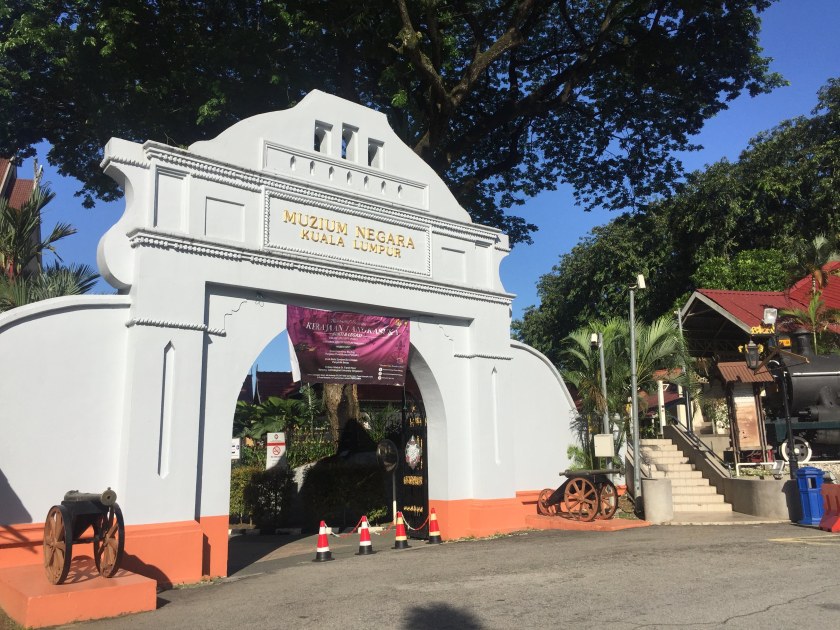
Research is one of the core services of the Department of Museums Malaysia (DMM) and plays an important role to the department’s role to preserve, maintain and disseminate knowledge about our heritage.

Exhibition, being the other core of DMM, is classified into Permanent, Temporary and Special exhibitions. The department collaborates with foreign embassies to host special exhibitions as in ‘The Great Steppe: History and Culture’ exhibition at Muzium Negara in October 2019. What a treat it was for Malaysians to view the most significant exhibits from Kazakhstan, and to be included in ‘The Procession of the Golden Man in the world’s museums’ international project.

DMM also co-operates with other national museums for the loan of artefacts that Malaysians may have the opportunity to appreciate the national treasures of other countries on their home soil. The recently-concluded ‘Lost Kingdoms’ exhibition, which featured 103 exhibits, was made possible with the co-operation of the DMM, the National Museum of Indonesia and the National Museum of Cambodia.
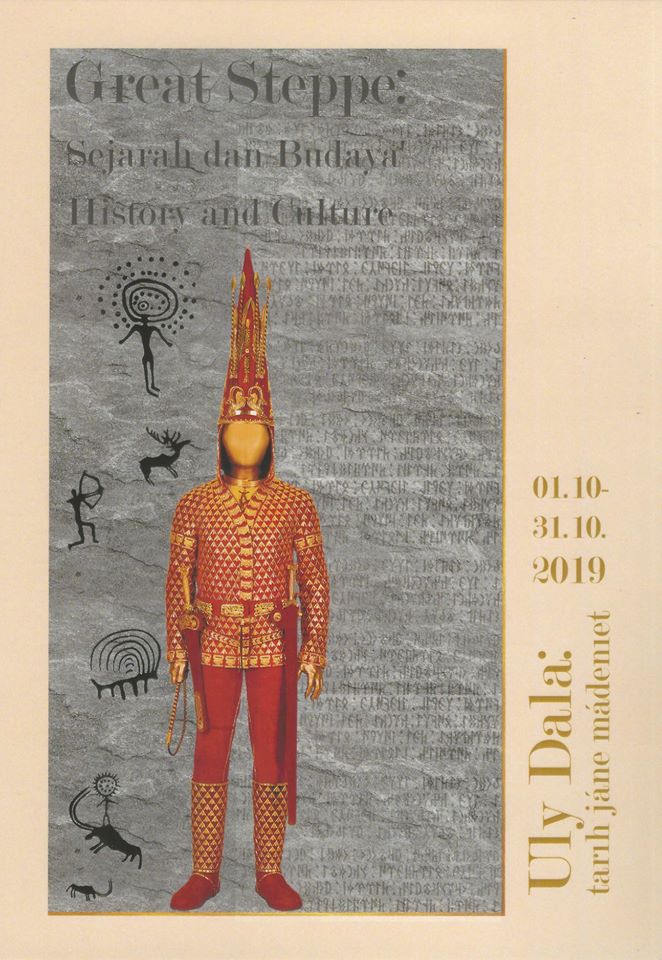
DMM’s working relationship with museum institutions globally provides knowledge development for Malaysians through events and special exhibitions regularly held.

By bringing exhibitions to the local communities and involving them in the care of their own heritage, museums reinforce the preservation of the world’s living memory and nurture the protection of intangible heritage. Museums also have the capacity to promote cross-cultural dialogue between local populations and visitors and for sustainable tourism.

The museum today tells the story of man the world over and how humanity has survived in its environment over the years. It houses things created by nature and by man. The prestige of museums has never been higher. Every city that wishes to be on the visitors’ map knows that it must build one. No foreign trip seems complete without visiting one.

References

https://icom.museum/en/about-us/missions-and-objectives/

https://en.wikipedia.org/wiki/List_of_Smithsonian_museums

https://www.ashmolean.org/article/the-story-of-the-worlds-first-public-museum

Time Pieces at the National Planetarium

by Maganjeet Kaur

The simplest method to study the heavens is to stick a stick into the ground and observe its shadow at different times of day. This is the basis of sundials and the ‘stick’ is known as a gnomon. Apart from telling time of day, the resulting sun angles can also be used to tell the time of year.

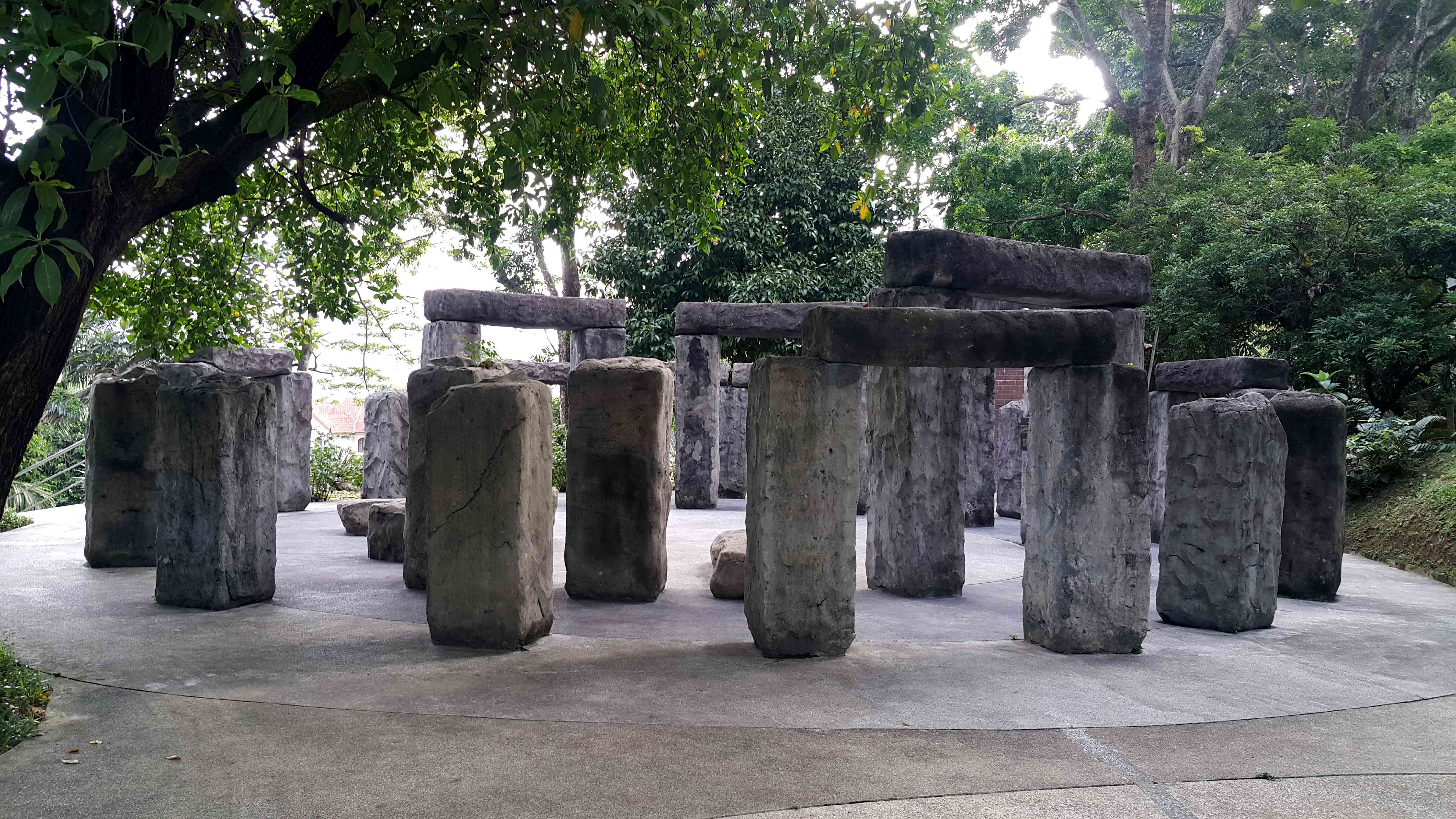
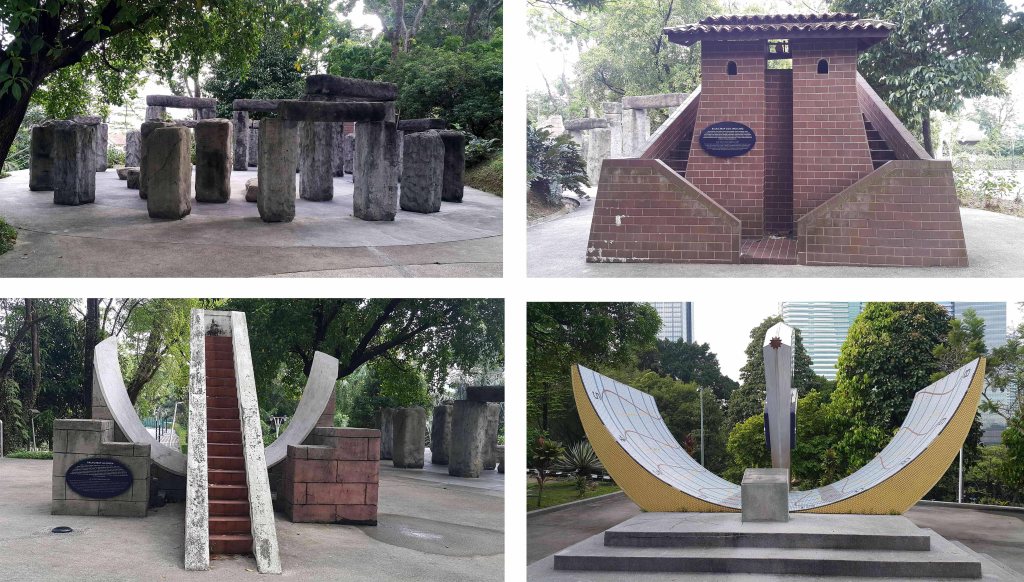
Residing in a serene corner on the grounds of the National Planetarium are miniaturised replicas of three famous astronomical observatories from different parts of the world together with Malaysia’s own iconic timepiece. These are more sophisticated than the stick but they function essentially as gnomons. The four timepieces tell different stories, each compelling in its own way. The mysterious Stonehenge continues to hide its secrets, defying the hundreds of researchers bent on probing its depths. As you walk the grounds, gaze at the Guo Shou Jing Observatory and be amazed at the astronomer that conceived this marvel. Imagine the intellectual discourses that would have taken place at the Jai Singh Observatory, not only among local astronomers but also among those from afar as Bavaria, France, and Portugal. Recapture the excitement of Merdeka at the Merdeka Sun Clock.

Stonehenge

Stonehenge replica at the National Planetarium, Malaysia

Stonehenge, one of England’s most visited sites, was once sold at an auction for £6600! On 21 September 1915, Cecil Chubb, a barrister, was sent to an auction by his wife, Mary, to buy dining chairs; he returned home, instead, as the proud owner of a few acres of ruins, much to Mary’s chagrin. Fortunately, Chubb’s intentions were to protect the monument and, three years later, he donated Stonehenge to the nation, receiving a knighthood in exchange.

While the experts agree that Stonehenge was built in different phases by different groups of people, possibly for different functions, there is no common consensus on the constitution of the phases and the functions of the stones. The structure dates to around 3000 BCE, reaching its present shape around 1800-1500 BCE. The original structure was a henge, a circular flat area surrounded by a ditch, with the only difference from other henges being in its size – a whopping 100 metres across. Outer and inner banks surrounded the ditch and 56 circular cavities ran along the inner bank. Named Aubrey holes after the person who first noticed them, the cavities were believed to have initially contained bluestones but were used in a later period for cremation burials.

Stonehenge Phase 1 (around 3000 BCE). Image credit: http://arthistoryresources.net/stonehenge/stonehenge.html

The stones at the centre of the circle started being erected in different phases from around 2500 BCE, possibly beginning with the five trilithons. These were followed by the other stones including the bluestones, sarsen circle, heel stone, slaughter stone, and the four station stones. Attempts to link Stonehenge with observations of the heavenly bodies have mostly been refuted. It has been pointed out that it was not necessary to build a huge stone structure in order to make astronomical observations that could easily have be done using simpler tools. However, researchers acknowledge that Stonehenge is aligned on its northeast to southwest axis with the occurrences of solstices. There is also an interesting link between the heel stone and the midsummer solstice. There are a number of other connections with astronomy but a detailed discussion on the astronomical functions of the various stones, while fascinating, is outside the scope of this article.

The heel stone with Stonehenge in the background. This is a solitary piece of stone 4.7 metres tall with a tapered top. It sits outside the Stonehenge circle, at the start of an avenue that leads to Stonehenge. Image credit: Flicker (attribution: diamond geezer)

Guo Shou Jing Observatory

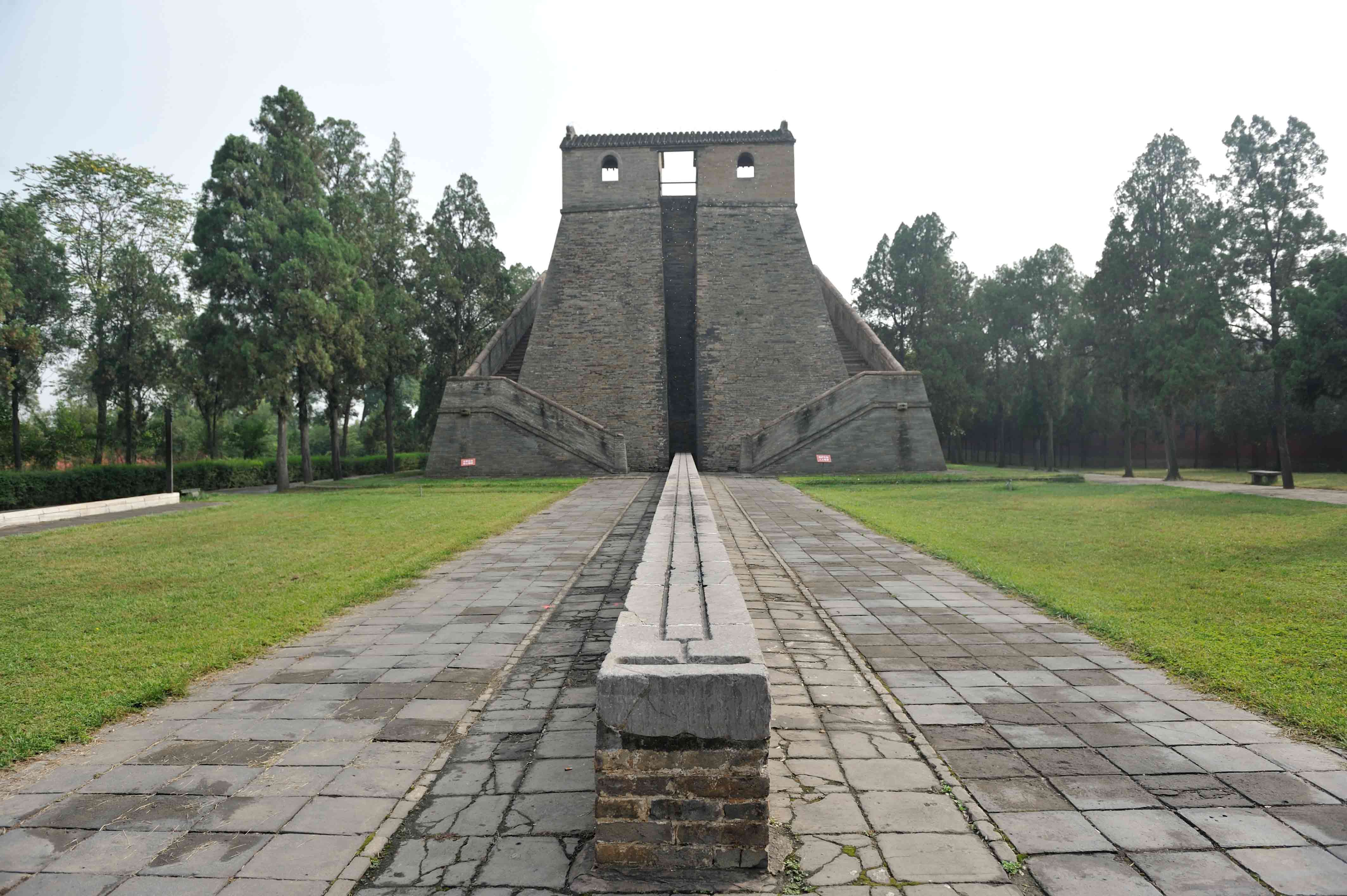
Replica of the Guo Shou Jing Observatory (Dengfeng Observatory) at the National Planetarium, Malaysia

This observatory was built in 1276 under orders by Kublai Khan, the founder of the Yuan dynasty in China. The observatory measures the sun’s shadow at noon and its variation throughout the year. It was named after the observatory’s creator, the renowned astronomer Guo Shoujing. The observatory lies near Gaocheng town, southeast of Dengfeng city in the Henan Province in China. Today, it is known as the Gaocheng Observatory or, more popularly, as the Dengfeng Observatory.

The observatory has two components: a platform formed by a truncated pyramid and a horizontal scale known as shigui.

The observatory at Gaocheng. Note the two components of the observatory: the large truncated platform and the horizontal scale in front of it. Image credit: Wikimedia Commons (attribution: Siyuwj, CC BY-SA 4.0)

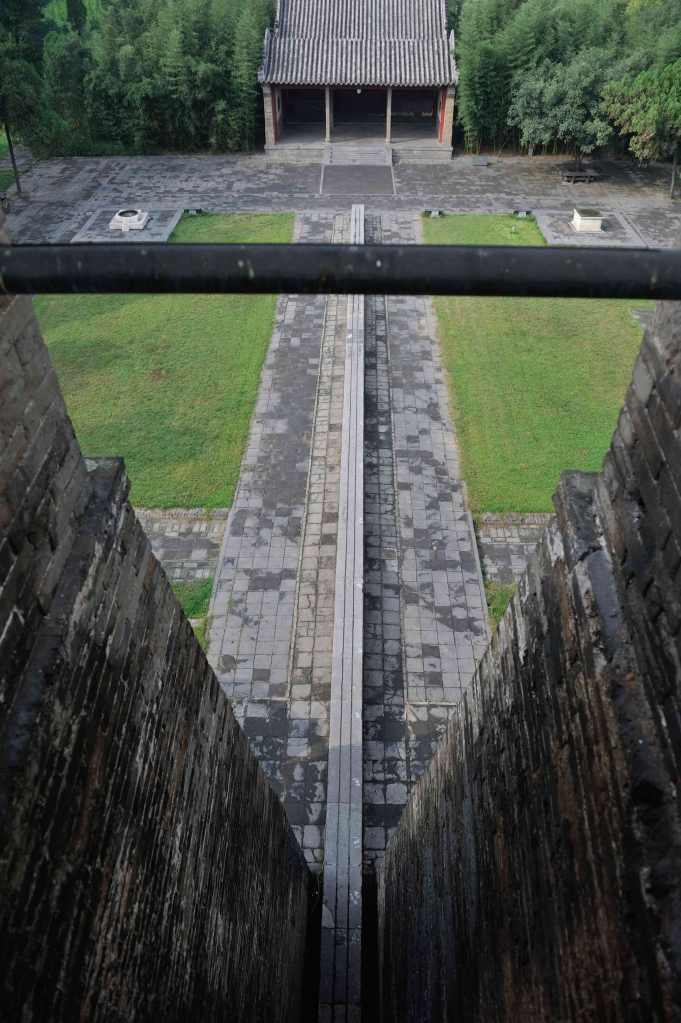
The platform is 9.45 metres above ground level. Two staircases run up to the platform, on which has been built two rooms, joined by a single roof. The rooms raise the height of the structure to 12.62 metres. Each room has a window facing north and overlooking the horizontal scale below. The rooms also have a second window facing each other; a horizontal rod connects the two rooms through these windows. This rod acts as the gnomon. The height of the structure from the base to this horizontal rod is 9.75 metres, which is exactly 40 chi, a standard unit of measure in ancient China. A typical Chinese gnomon at the time was 8-chi tall (1.98 metres) – an example is the Tang period gnomon close to the vicinity of the Dengfeng Observatory. However, Guo Shoujing recognised a link between the height of the gnomon and the accuracy of the measurements; the resultant 40-chi gnomon at Gaocheng was thus innovative. It is said that Guo Shoujing’s move to a 40-chi gnomon was inspired by Middle Eastern astronomy, which had innovated large instruments, e.g. the Maragheh Observatory (1259 CE) in Iran.

The horizontal scale extended to the north of the large platform. The horizontal rod (gnomon) installed on the platform cast a shadow on the scale and this was the basis of the astronomical measurements. The horizontal scale, poetically known as the ‘sky-measuring ruler’, measures 31.19 metres in length or 128 chi. Two parallel troughs, linked at the ends, would have held water to check its level.

The two rooms above the platform. Their windows look out to the north. Image credit: Wikimedia Commons (attribution: Siyuwj, CC BY-SA 4.0)

The Dengfeng Observatory became the first of 27 observatories built by Guo Shoujing in various places in China. He used his observatories to develop a new Shoushi (season-granting) calendar. However, most of the information on the length of the sun’s shadow for this calendar came from another 40-chi gnomon he built in Dadu. The calendar, which started in 1281, would continue to be used for 364 years – until the end of the Ming dynasty.

Jai Singh Observatory

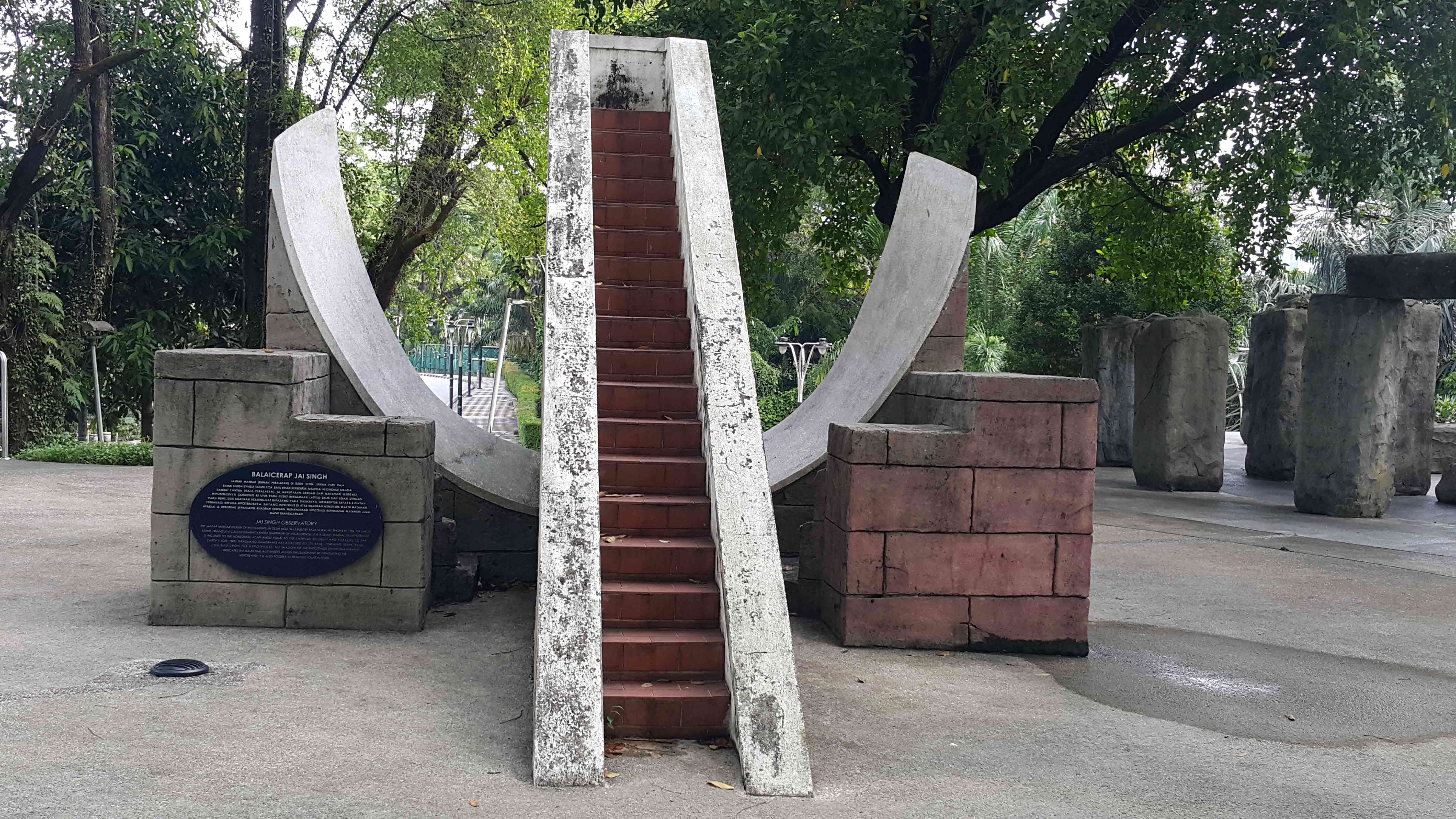
Replica of the Samrat Yantra (from the Jai Singh Observatory) at the National Planetarium, Malaysia

Pur means ‘city’ in Sanskrit and hence Jaipur, the breath-taking ‘pink city’, capital of Rajasthan, can be translated as the ‘City of Jai’. More specifically, it is the city of Maharaja Sawai Jai Singh II, who founded the city in 1726. Maharaja Jai Singh was an avid astronomer and he made a detailed study of Indian astronomical treatises. These go as far back as the Vedic texts (c. 1500-900 BCE), in which the study of stars and planets was known as Nakstravidya. He also studied Aryabhata’s famous treatise, Aryabhatiya (c. 476 CE), Varahmihira (c. 500 CE) and Brahmagupta (c. 598 CE). During the time that Jai Singh was carrying out his research, Middle Eastern and European knowledge of astronomy was very advanced and Jai Singh had their treatises translated into Sanskrit for his studies.

Sawar Jai Singh’s studies led him to recognise errors in the ephemerides, i.e. the trajectory of astronomical objects, used to calculate the imperial calendar and the astronomical tables. However, his existing brass instruments were not good enough for him to carry out the recalculations needed to correct the errors. Hence, he commissioned the construction of a jantar mantar (astronomical observatory) in Delhi. This would become the first of five observatories he would establish between circa 1721 and 1743. The others were at Jaipur, Ujjain, Varanasi, and Mathura. The observatory at Jaipur was the largest, in keeping with Jai Singh’s vision of his capital city having state-of-the-art architectural and astronomical edifices. With the exception of the observatory at Mathura, these observatories still exist and are heritage sites.

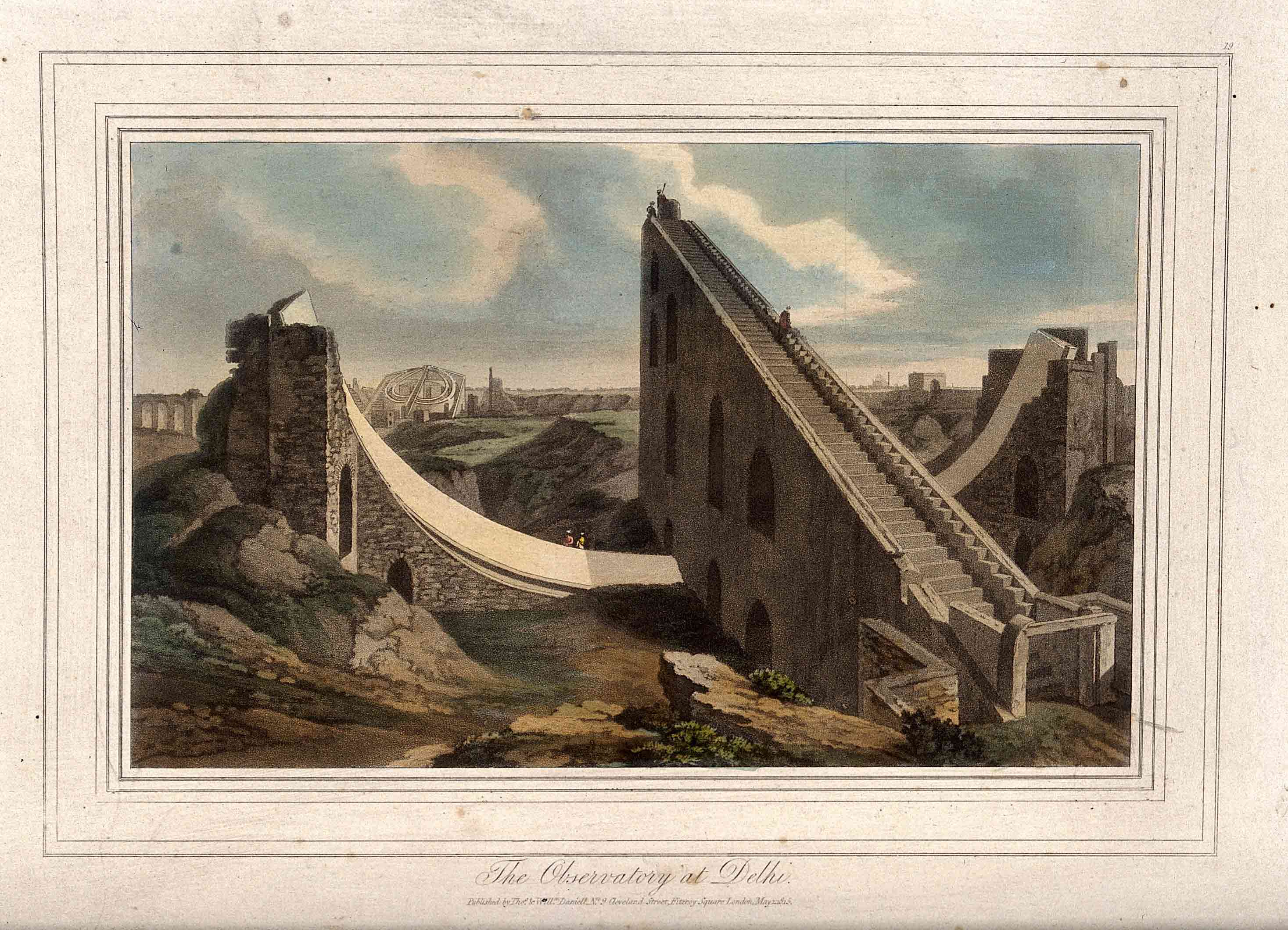
The information board at the planetarium specifies that the replica on its grounds is the Samrat Yantra (King of Instruments) from the Delhi Observatory. A Samrat Yantra is essentially a sundial usually with a triangular pyramid as its gnomon. It is flanked by two quadrants and the shadow of the gnomon on these quadrants measures the sun’s movement.

This drawing of the Delhi Samrat Yantra provides a good indication of its size. Illustrated by Thomas Daniell in 1815, currently in the collection of Wellcome Collection (Wikimedia Commons, CC BY 4.0)

The Samrat Yantra in Delhi has a colossal pyramid, measuring 21.3 metres in height. The hypotenuse of this right-angled triangular pyramid is parallel to the Earth’s rotation axis and the angle made by the hypotenuse and the horizontal is equal to the latitude of Delhi. The gnomon is flanked by two large quadrants, which lie on the plane of the equator. Their scales are graduated in a manner that allows the instrument to measure local time, right ascension, and declination. The Samrat Yantra allows measurements to a very high level of precision; both the Samrat Yantra at Delhi and Jaipur can measure time to an accuracy of two seconds.

Apart from the Samrat Yantra, the Observatory at Delhi has three other key instruments, each measuring different aspects of the movements of the heavenly bodies. These are: Misra Yantra, Jaya Prakasa Yantra and Rama Yantra. The Misra Yantra was built by Madho Singh, Jai Singh’s son. It is a compendium of five instruments including a Samrat Yantra.

Jantar Mantar at Delhi. Image credit: https://twitter.com/meissatech/status/481380967018287104 (modified to include labels)

Merdeka Sun Clock

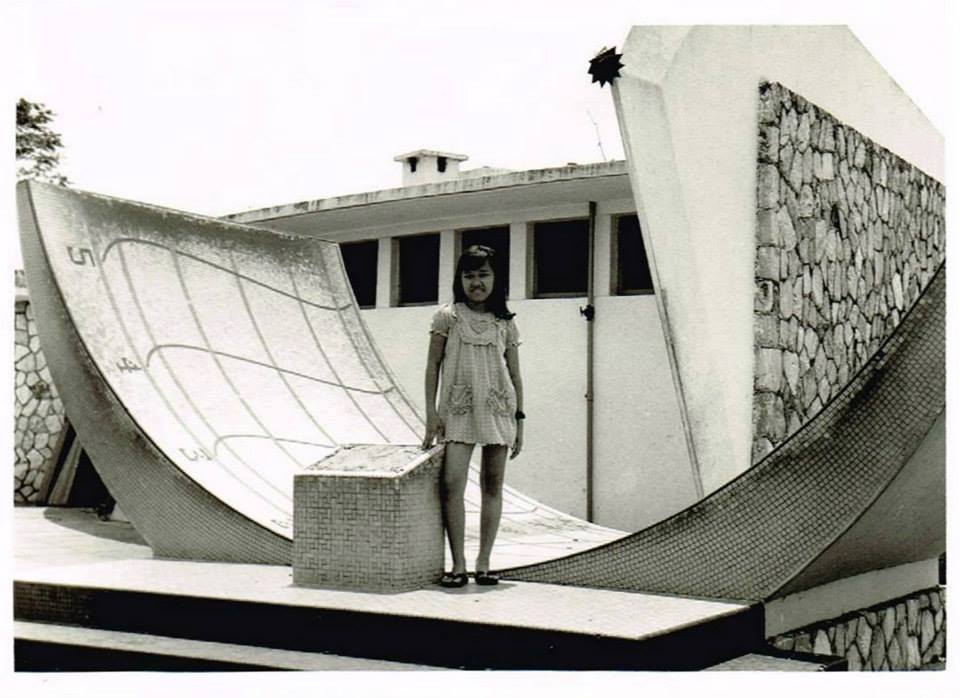
Originally installed at Merdeka Park, the Merdeka Sun Clock was moved to the National Planetarium in 1997. The Merdeka Park, a public park opened on 20 April 1958, was located outside Merdeka Stadium, venue of the declaration of Independence on 21 August 1957.

The Sun Clock at its original location at Merdeka Park. Image credit: https://reclaimmerdekapark.wordpress.com/2013/09/18/memories-of-merdeka-park-part-2/

This sundial was the brainchild of Dato’ Stanley E. Jewkes, who had designed the Merdeka Stadium, Merdeka Park and, later, the National Stadium. His decision to include a sundial in the park was inspired by the solar clocks in India and by Stonehenge.

Malayan symbols have been weaved into both the gnomon and the bowl onto which the gnomon’s shadow is cast – the bowl is in the shape of a crescent and the pointer of the gnomon is an 11-pointed gold star representing the 11 states of Malaya (Sabah and Sarawak were not part of Malaya at that time). The clock measures time of year with zodiac signs used to represent months. Hour lines on a sundial are normally straight. However, the shape of the crescent bowl made this difficult and Jewkes compensated by building an equation of time into the lines. Two intersecting lines were drawn, differentiated by colour – one followed the sun as it moved north and the other as it moved south. An information board provides detailed instructions on measuring time using this solar clock.

Bibliography

Castleden, Rodney (2004) The Making of Stonehenge, Taylor & Francis e-Library.

Johnson-Roehr, Susan N. (2015) Observatories of Sawai Jai Singh II in C.L.N. Ruggles (ed.) Handbook of Archaeoastronomy and Ethnoastronomy, New York: Springer, pp. 2018-2028.

Lai Chee Kien and Ang Chee Cheong (2018) The Merdeka Interviews: Architects, Engineers and Artists of Malaysia’s Independence, Kuala Lumpur: Pertubuhan Akitek Malaysia.

Pearson, Mike Parker (2013) Stonehenge – A New Understanding: Solving the Mysteries of the Greatest Stone Age Monument, New York: The Experiment.

Powell, Jonathan (2019) From Cave Art to Hubble: A History of Astronomical Record Keeping, Springer ebook: https://doi.org/10.1007/978-3-030-31688-4

Pramod Kumar (1981) Sawai Jai Singh’s Observatories, Arts of Asia, Vol. 11 (5), pp. 127-134.

Xu Fengxian (2015) Dengfeng Large Gnomon in C.L.N. Ruggles (ed.) Handbook of Archaeoastronomy and Ethnoastronomy, New York: Springer, pp. 2111-2116.

Every Stone Tells a Story – 3

III. Prasasti


by Rose Gan

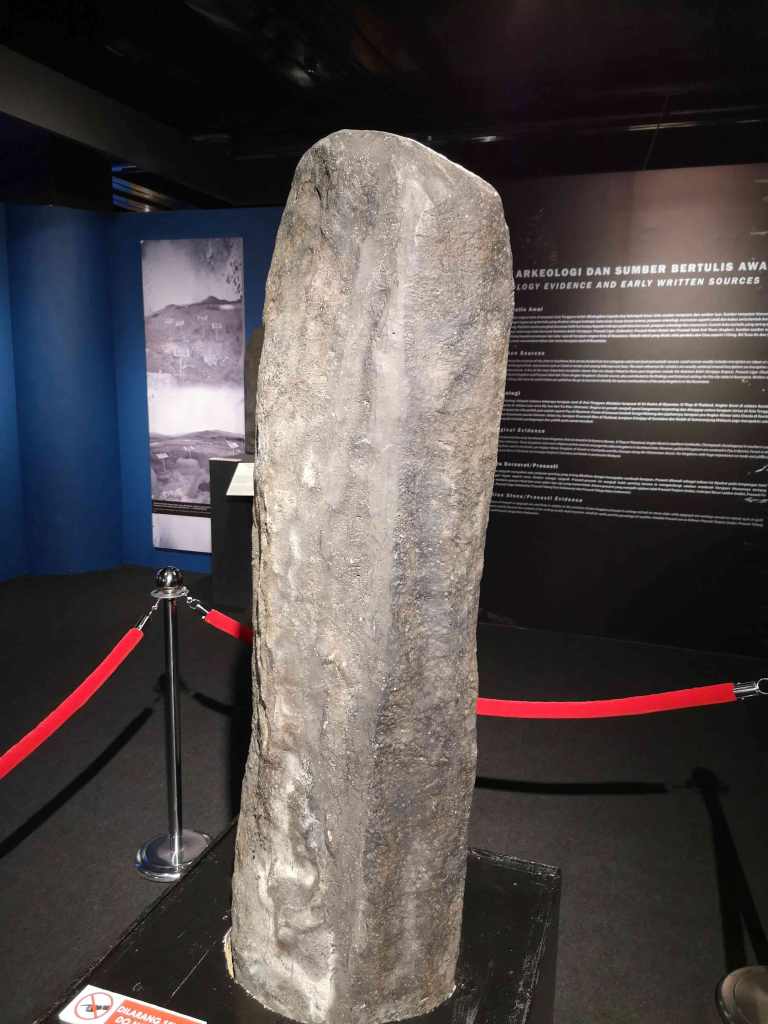
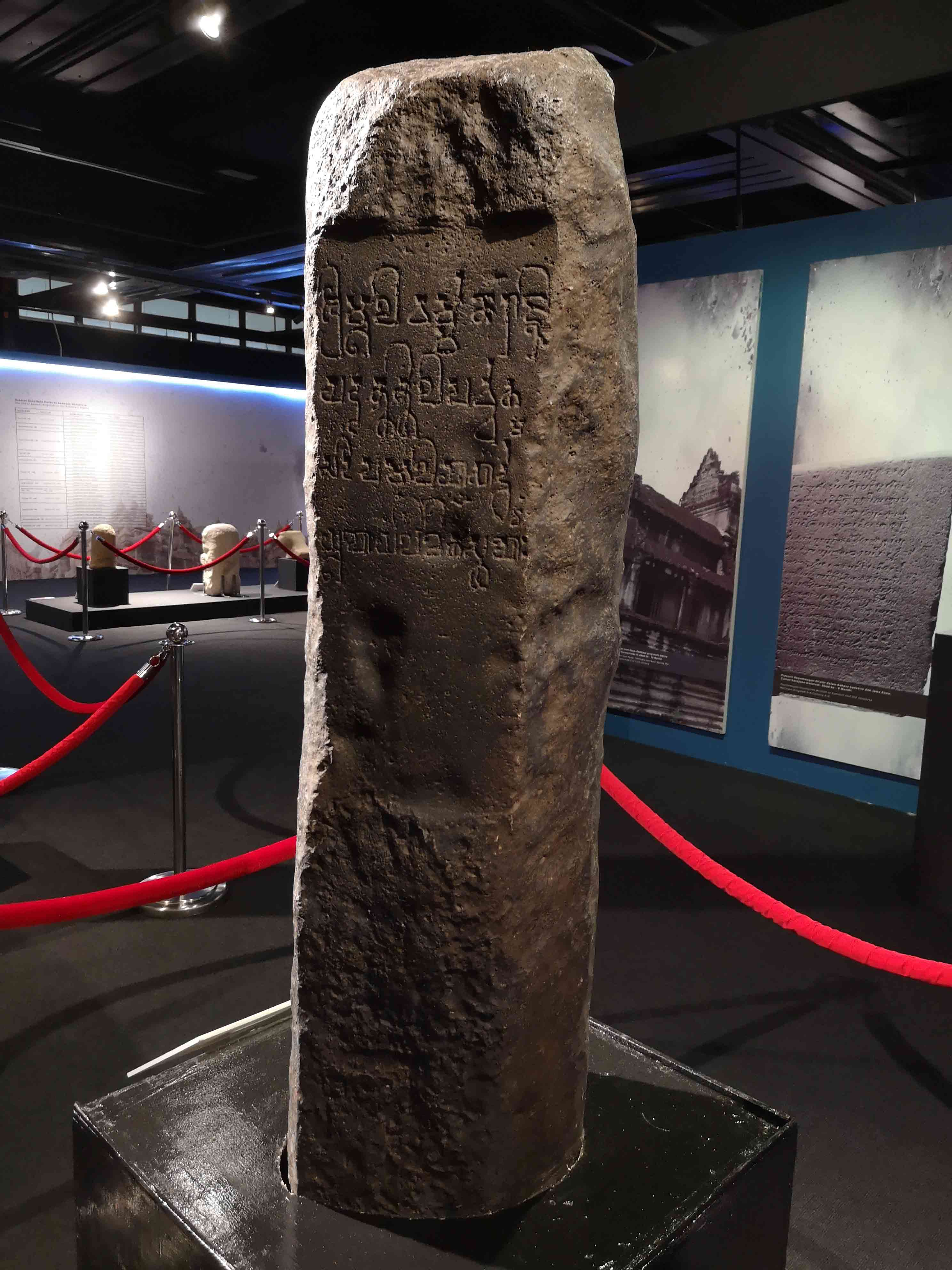
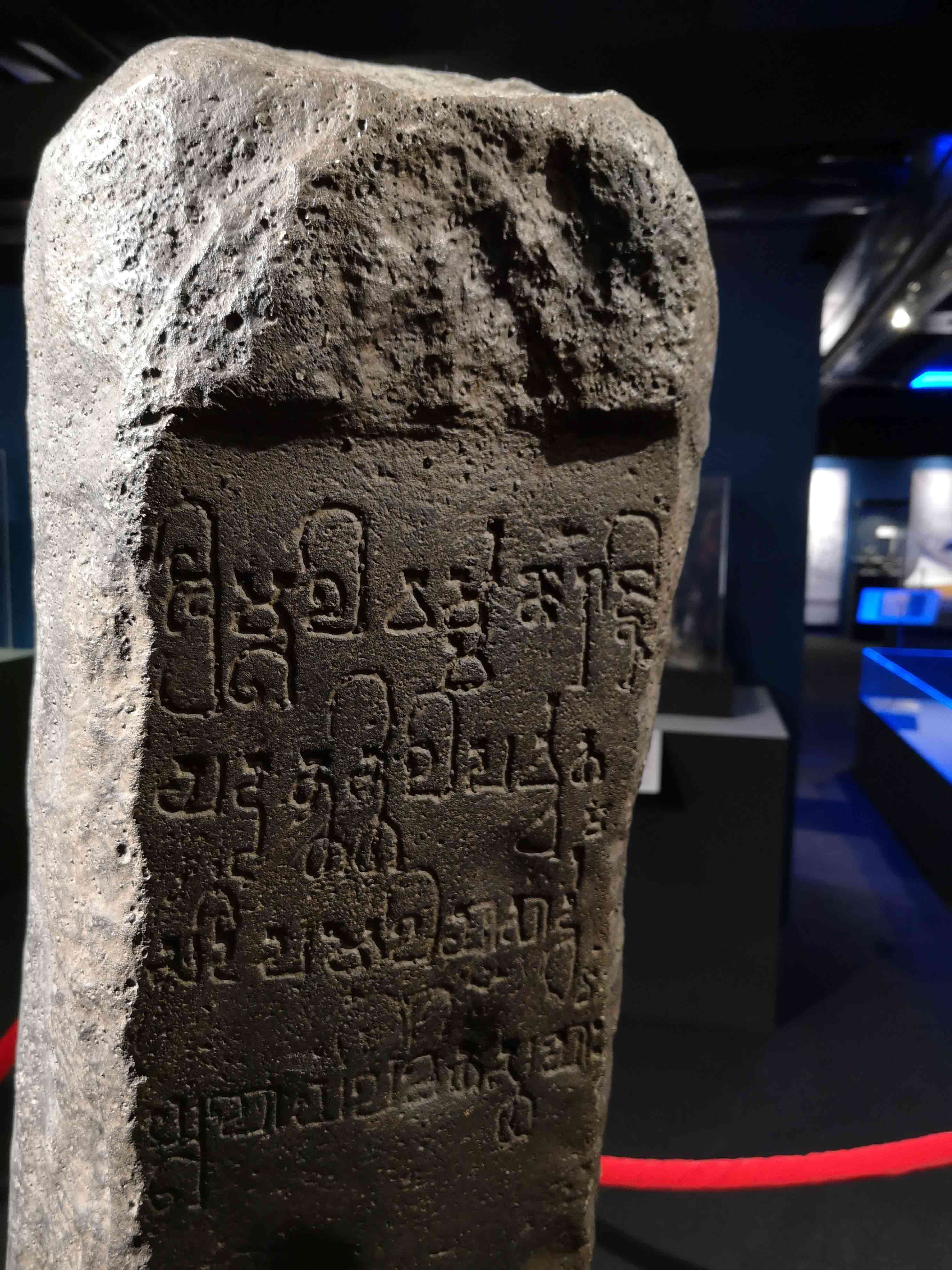
In a small annexe off the main Lost Kingdoms Exhibition a selection of inscribed stones (Malay: prasasti) stand erect, infinitely perplexing to the casual observer.  For the most part, they are less immediately pleasing to the eye than the more distinctive commemorative statues. Some of them are elegantly wrought, like the Kota Kapur, but most are little more than crudely shaped stones with faded chiselling, impossible for any but the expert to construe.

It is often easy in a museum to bypass the most valuable record of the past in favour of artefacts of more aesthetic charm. A jar of dust in the Prehistory Room of Muzium Negara hides a story of a cataclysmic super-volcanic eruption of devastating effect. The most humble exhibits can reveal unexpected insights; these inscription stone are such an example.
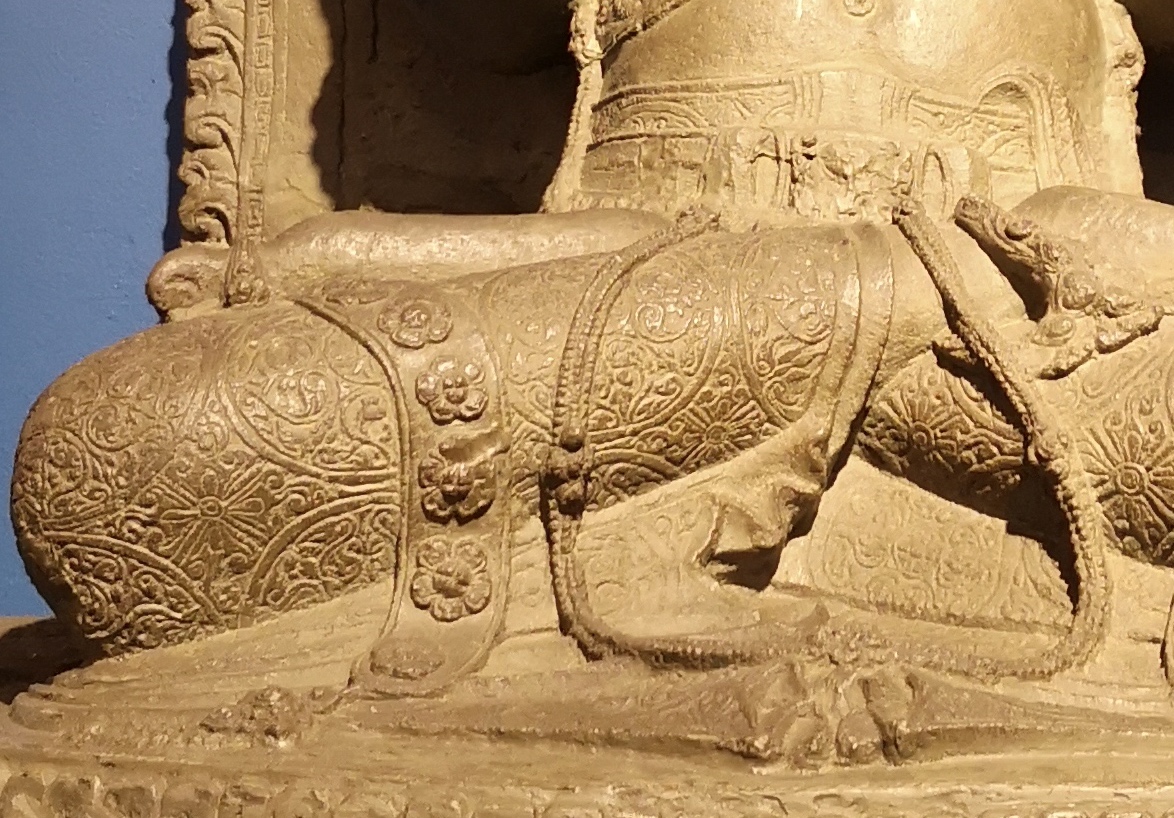
The following stones represent the early evolution of written language in the archipelago, and are the first evidence of the indigenous people recording their own story for posterity, at the point in time when prehistory became history. The first extant written evidence for South East Asia derives from external sources: China, India, the Arab world and Classical Europe. Although the accounts of other civilisations are important, their original purpose was to tell their own story, not that of the local people, which renders them an imperfect witness at best. Much of what they observe, they do not fully understand. Sometimes it is in their interest to purposely exaggerate or misreport. The opportunity afforded by these inscribed stones to hear the voice of the peoples of the archipelago for the first time is a vital part of our understanding of the early history of the region.

Of course, inscriptions have their limitations. Prasasti stones are not intended as a chronicle or complete record. They do not give access to everyday life or offer a historical account of events.  They only contain snippets, an opaque window into a snapshot in time. Yet, what they do offer is exact dates, indispensable in building up the chronology of the past. They contain information that is, for the most part, entirely factual, not subject to the obscurities of mythology or invention. Inscriptions reflect actual incidents, dynasties, statements of law or religion, records of battles, or the establishment of religious foundations. They are always dated and usually contain the name of the local king or lord, thus providing an invaluable framework for the study of a period. They are the essential building blocks required in assembling primary historical sources.

The featured Prasasti are written in an early Indic script known as Pallava, named for the dynasty in southern India where it originated. The Pallava dynasty lasted from c. 300 – 900 CE and was situated in the northern part of Tamil Nadu, around its capital at Kanchipuram. Variants of this script have been found throughout South East Asia: Vietnam, Cambodia, Thailand, Laos, Burma, the Malay Peninsula, and Indonesia, attesting to the importance of early trade contacts between the Tamils of the Coromandel coast and the region. In South East Asia, early Pallava script developed into Java Kuno (Old Javanese) and Old Malay, as well as Old Sundanese and Old Balinese. Post-Pallavan scripts later emerged amongst indigenous peoples, notably the Batak, the Lampungese and the Bugis, a testament to the far reach of this ancient form of writing.Each character represents a consonant accompanied by the vowel ‘a’. Alternative symbols are used to express other vowels and groups of consonants. As a result, the southeast Asian scripts derived from ancient Pallava are often referred to as hanacaraka scripts.  Letters are not uniform, some being twice the size of others, giving the script a grandiose and dramatic sense of contrasting strokes, especially in its earliest forms. Later versions are more standardised.

Yupa Stone

Yupa Stone © Rose Gan

This stone is one of a collection of seven similar andesite stones originating from a very early dynasty of east Borneo known as the Kutai Kingdom, situated in the Mahakam river valley of East Kalimantan, near the modern town of Samarinda. The stones are dated to the first decade of the fifth century CE, making Kutai the first known kingdom of the archipelago to develop a written language. The modern regency of Kutai in Kalimantan has recently been suggested as the future location of the new capital of Indonesia. If this goes ahead, the wheel would indeed have turned full circle.

The word Yupa refers on the actual inscriptions to the stones themselves. The yupa is a species of tree in India, used to make sacrificial posts to which animal offerings were tied during ritual slaughter. Stone yupas are distinctly rare in India; these are the only ones found in Indonesia. The stones contain the genealogy of King Mulawarman, considered to be the greatest ruler of the Kutai dynasty that had originated with his grandfather Kundunga, followed by his son Aswarwarman, and then his three sons, the most prominent of whom was Mulawarman. Aswarwarman and Mulawarman have typical Indic royal names, while the grandfather’s name appears wholly different. The assumption is that Kundunga was an indigenous leader, the founder of the dynasty. It is likely that his son Awarwarman was the first to accept Hinduism and Indic culture, rather than it being brought in by external settlers or conquerors. This is in line with the generally-held belief that Indic civilisation was adopted rather than imposed in South East Asia. The other stones describe the sacrificial rites and the gifts of gold, cattle, horses and land presented to the officiating priests. The stone on display attests the achievements and good character of Mulawarman.

Yupa Stone © Rose Gan

The Yupa stones are in Sanskrit, written in the Pallava script. They depict a thriving indigenous Indic kingdom in East Borneo, with active trading links to India and elsewhere, well established by around 400 CE. Other excavations in the area have revealed objects of Sivaite worship as well as Buddhist icons, suggesting the civilisation flourished over several centuries, and was probably also in contact with China.

Prasasti Tugu

Prasati Tugu © Rose Gan

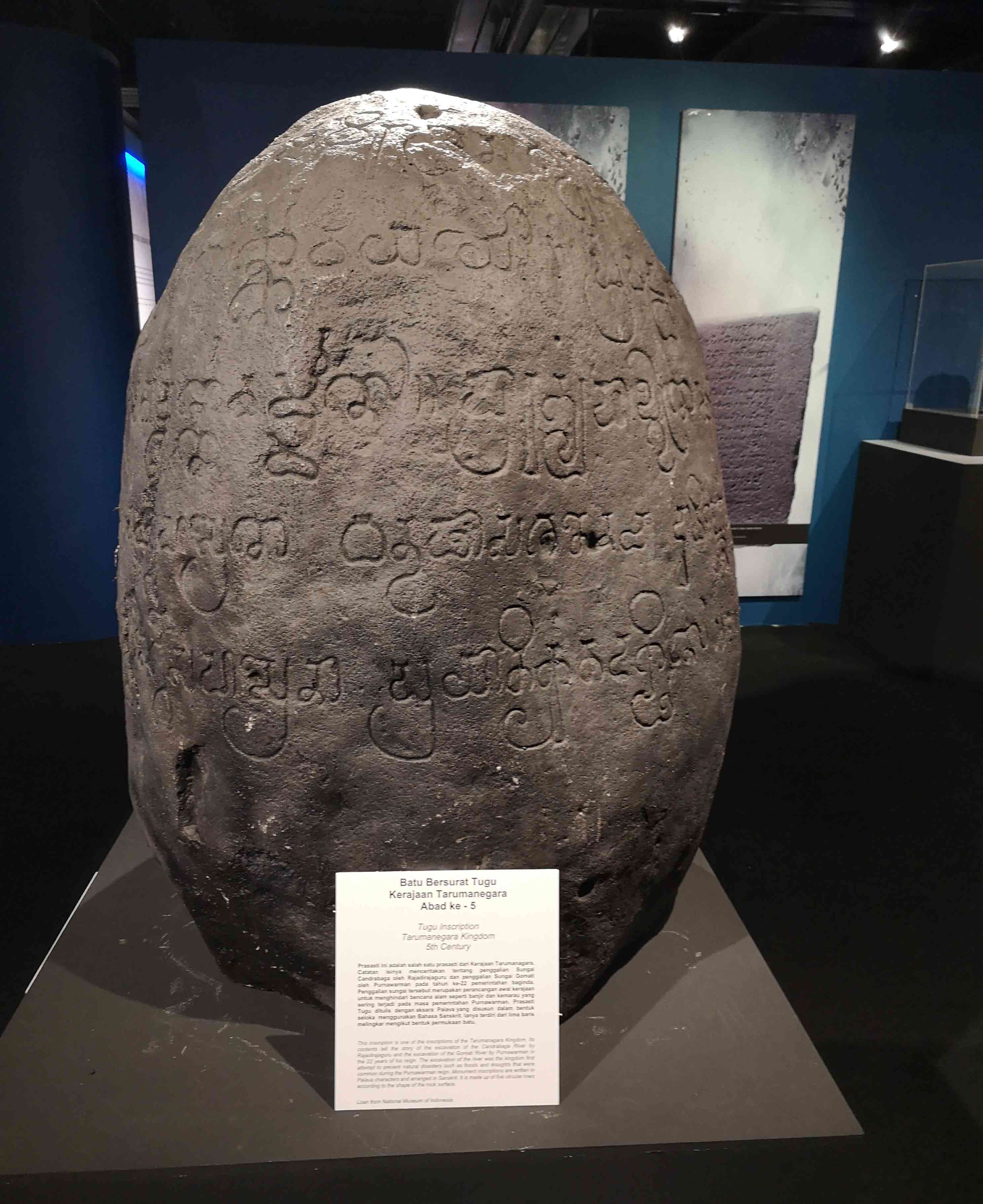
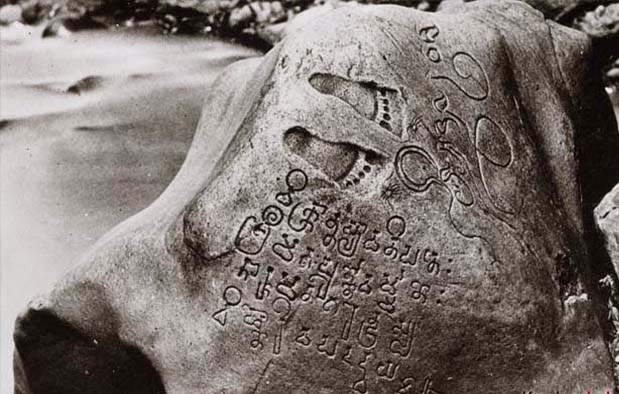
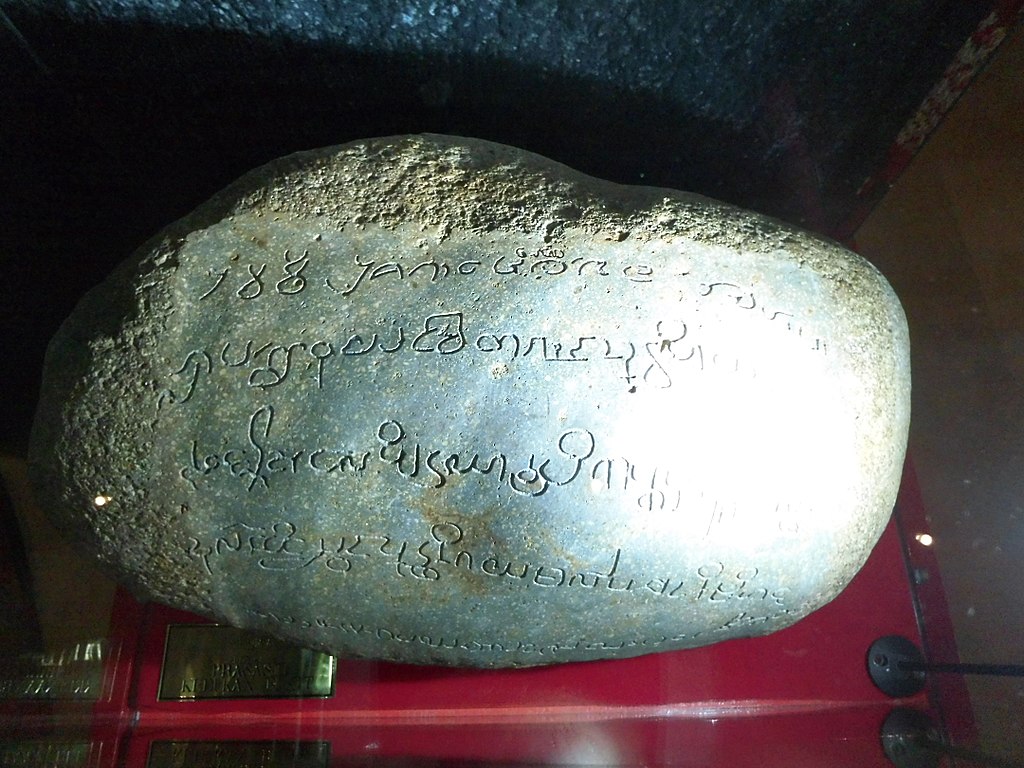
The Tugu stone takes us to West Java where a group of inscriptions were unearthed, dating to the mid fifth century. They are, unhelpfully, collectively also known as Prasasti Tugu. This stone is the oldest of the seven. These prasasti describe an organised state ruled by King Purnawarman of the Sundanese Tarumanagara Dynasty, situated in the area of today’s capital city Jakarta. This early Hindu dynasty is believed to have been founded in 358 CE by a king known as Jayasingawarman; it was his grandson Purnawarman (395-434 CE) who moved his capital to Sundapurna by the coast. This particular stone was found at Tanjung Priok, near the modern port of Jakarta.

The large egg-shaped boulder contains five verses of Sanskrit written in Pallava script, of a similar style to that found on the Yupa stones. The writing mentions the illustrious Raja Purnawarman and concerns the digging of a water channel in the 22nd year of his reign. The canal was more than 11 km in length and the engineering project was supervised by Brahmin priests. The king presented the priests with a gift of a thousand cows for their assistance. This attempt to alleviate flooding, still a real problem in the same area today, was quite an achievement at the time, particularly as, according to the stone, the work was completed in 21 days!

The most famous of the other Tugu stones is the Ciaruteun Stone, named after the river in which it was found at Kampung Muara near Bogor, where it can still be viewed. Replicas are on show at Museum Nasional Indonesia and the History Museum at Kota, Jakarta.  This is a much-loved stone because it contains a famous illustration of a very large pair of footprints; the accompanying script compares Purnawarman’s feet to those of Vishnu.  Other drawings depicted on the stone are spiders (meaning unknown) and symbols similar to later ikat motifs that no doubt had ancient significance and power. Children always love this stone, and can often be seen sketching it in the museum.
Sacred footprints are associated both with Buddhism and also the worship of Vishnu, indicating the people of this dynasty were Hindu-Buddhists. Indigenous folklore in Indonesia also regards both animal and human footprints as containing magical power, representing the spirits of their ancestors, a vivid reminder that these early civilisations had not entirely forsaken their earlier belief system. A Chinese pilgrim, Fa Hsien, stranded in Java for several months in 413 CE (possibly in Tarumanagara), wrote that the people of the area knew Hinduism and also practised animism, but that the knowledge of the Lord Buddha was scant. Chinese chronicles also record an embassy to China in 435 CE from King Purnawarman, and describe the kingdom of Tarumanagara as both Hindu and animist, with a small evidence of Buddhism.

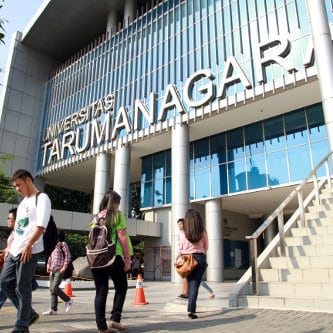
The Tarumanagara period flourished from the fourth to the seventh centuries, eventually coming under the influence of the empire of Srivijaya, after which it ultimately went into decline. A large private university in Jakarta, one of the oldest in Indonesia, is called Universitas Tarumanagara, recalling this early significant Indic civilisation in Java.

Kota Kapur

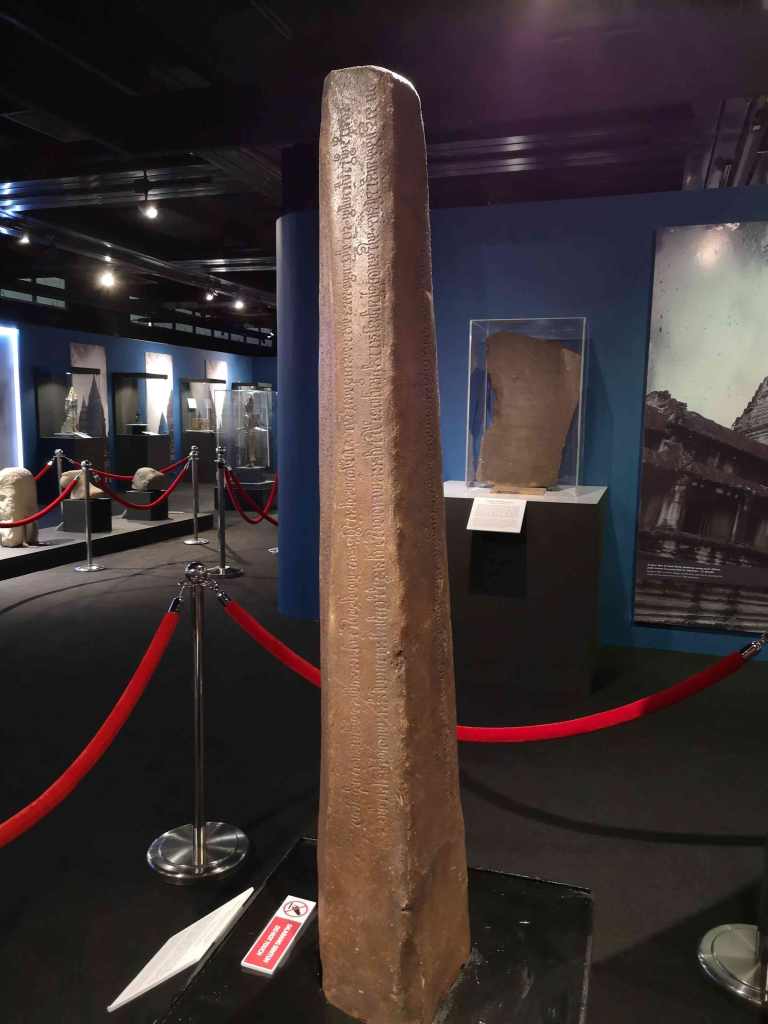
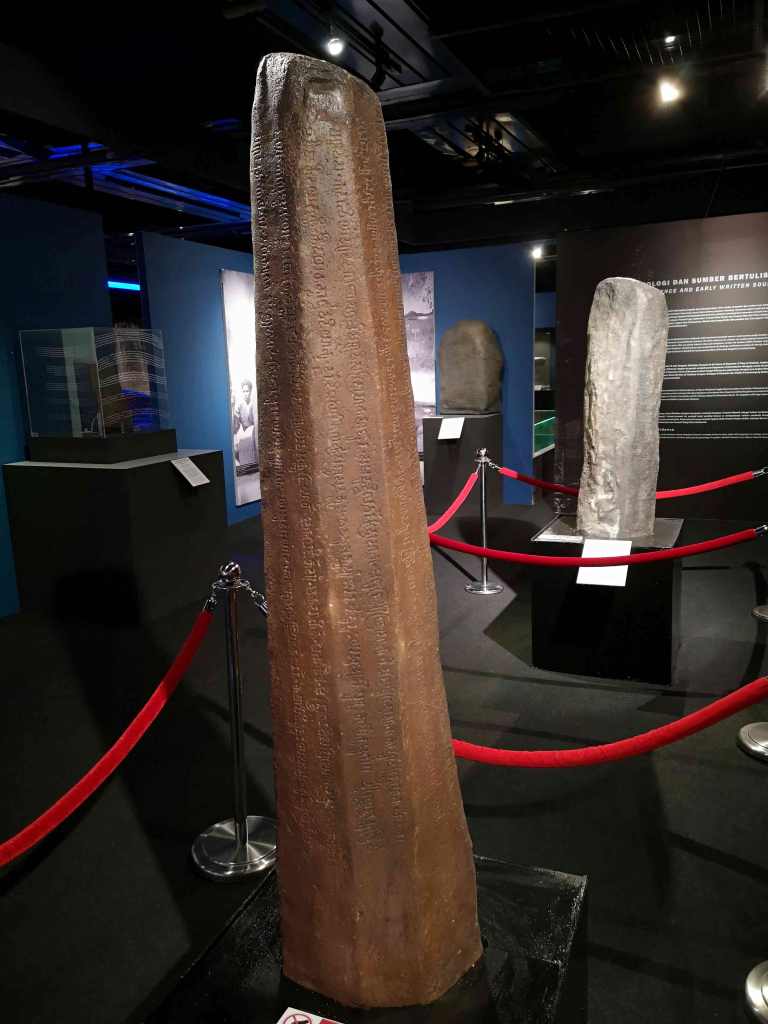
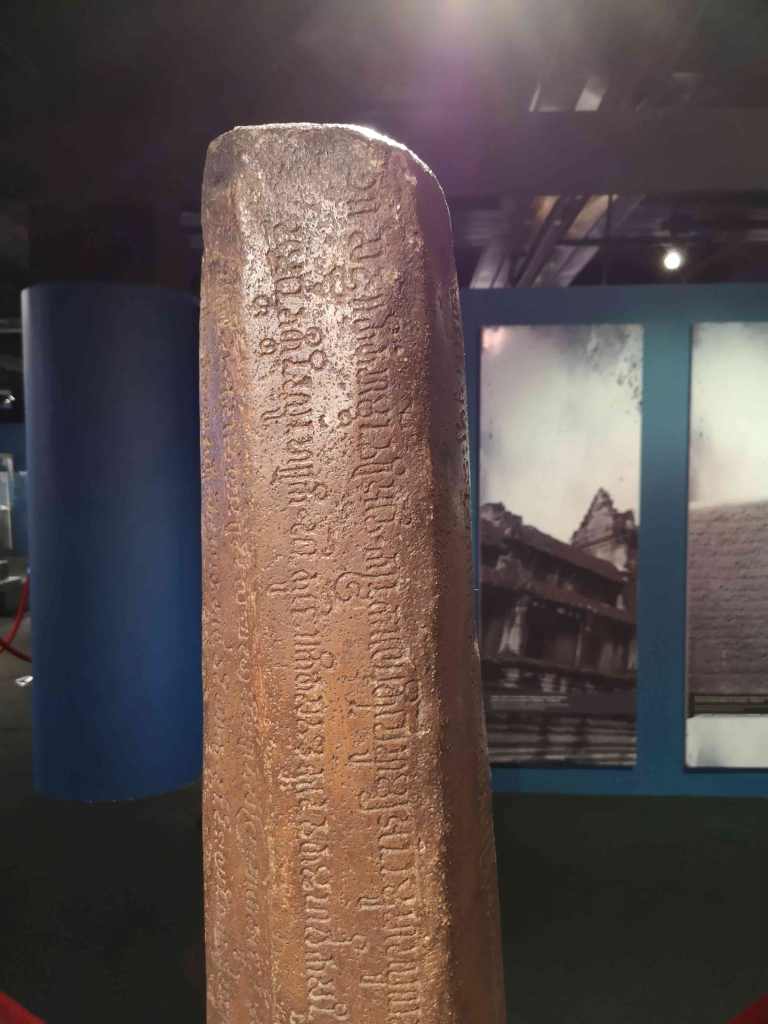
The elegant Kota Kapur stone follows on naturally from the Prasasti Tugu since it represents the supremacy of the empire of Srivijaya by the seventh century CE. Found on the island of Bangka that faces Palembang off the south east coast of Sumatra, the Kota Kapur is thought to have been brought there; this type of stone is not local to the island. The Kota Kapur is a six-sided obelisk bearing the Saka date of 608, i.e. 686 CE. The inscription is written in Pallava script but the language is Melayu Kuno (Old Malay), from East Sumatra. The text runs vertically down the needle-like stone, in an evolved version of Pallava; the words are now more standardised in size and uniform in shape.

This inscription is a statement of imperialism: it proclaims that the Kingdom of Srivijaya has authority over West Java, thus eclipsing that of the indigenous kingdoms. It lays a curse on anyone who does not show loyalty, which implies that there has already been resistance from Java. The inscription announces a military expedition to Java in order to restore Srivijayan control. It would seem the people of West Java did not at first willingly bend their knee! From this period on, Buddhism became more widespread throughout Java and beyond, blending with Hindu worship and local animistic practices. Srivijaya was based around Palembang and Jambi, but the empire was essentially maritime, generally less interested in physical conquest and the building of monumental structures, preferring to establish strong and stable trading monopolies.

The earliest known Srivijayan inscription is dated about four years earlier than Kota Kapur. The Kedukan Bukit, a more humbly wrought stone, has the distinction of being the first evidence of Old Malay in Pallava script, an important development in the evolution of the Malay language. The Kedukan Bukit stone was found on the river Musi, near Palembang, and proclaims a military victory against the Khmers. Despite Srivijayan preference for peace to enable trade, it appears that conflict was readily undertaken when necessary to assert the will of the empire. It also illustrates the vast area of South East Asia under nominal Srivijayan authority by the late 7th century.

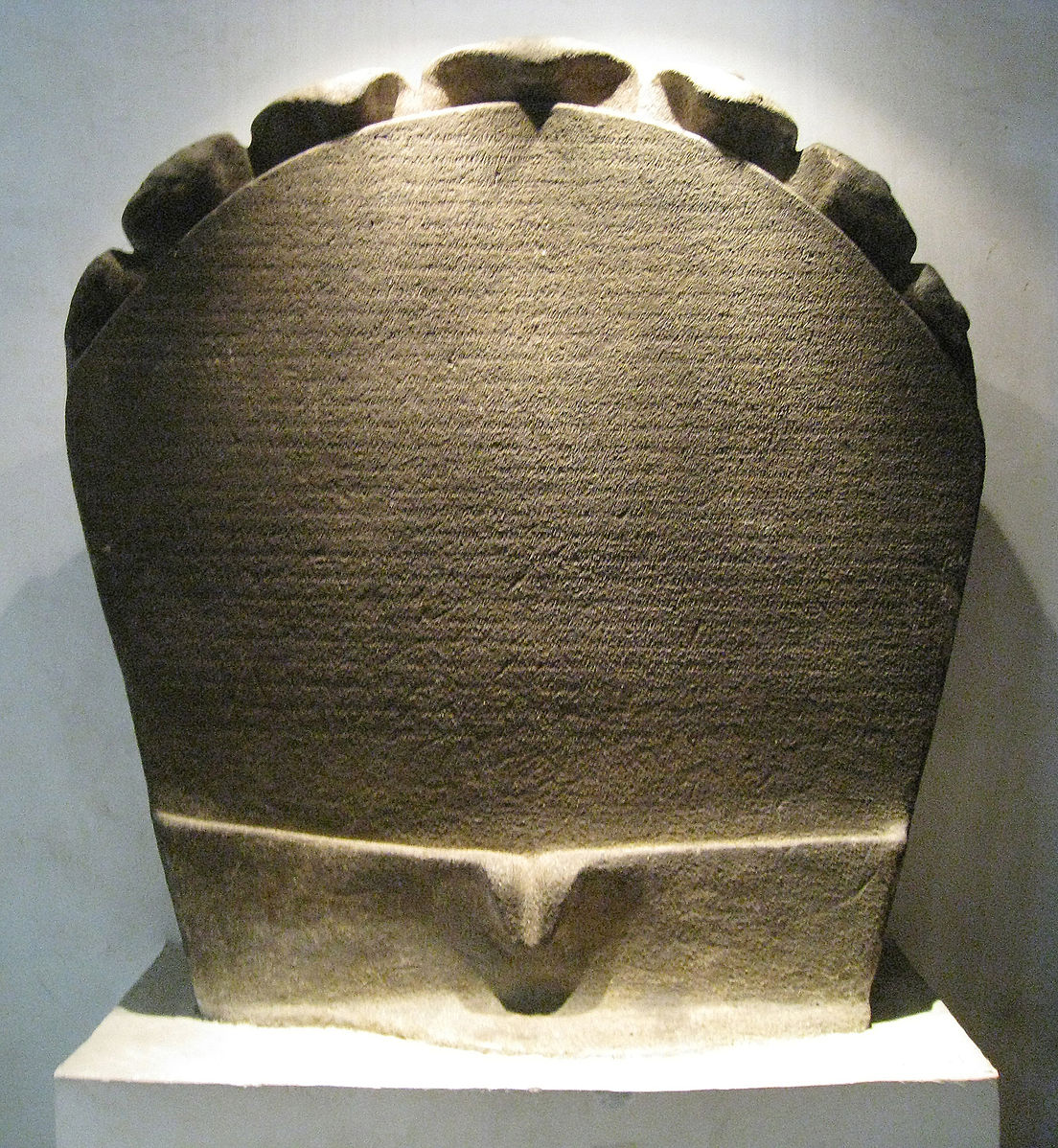
Another very imposing Sriwijayan prasasti usually associated with the Kota Kapur stone is the Telaga Batu dated 683 CE, and found at Palembang in East Sumatra. It reveals information about the oaths of loyalty mentioned on the Kota Kapur, apparently sworn by subject people to their maritime masters to ensure fidelity. Either the kings of Srivijaya were regularly challenged by their subjects or there was paranoia that they might be. Often known as The Cobra Stone, from the seven-headed naga that crests the arch, the text gives intricate details of the fate awaiting anyone who takes the oath and then commits treason. During a ritual, water was poured over the head of the stone to run down the body and gather in the yoni-like funnel at the base. It is thought that oath-takers would drink a cup of this water on the understanding that, should they break their oath, the water would turn to venom inside and destroy them from within. An interesting spin on Buddhist self-discipline!

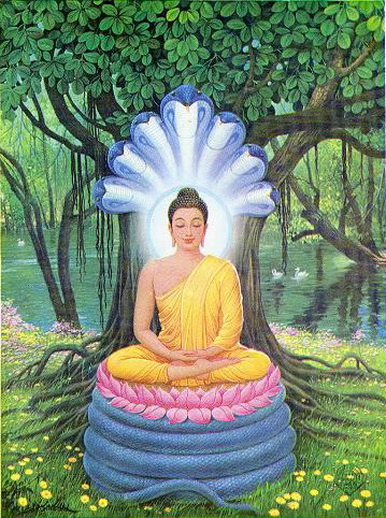
The Telaga Batu stone represents a complex syncretism of Buddhism, Hinduism and indigenous worship. The cobra, or Mucalinda, is the protector of the Buddha, often shown in images as shielding the Buddha from above under its hood.  The cobra also represents the powerful ancient indigenous worship of the naga spirit. The stone itself is a lingga and the spout a yoni, the dual male-female elements of the Hindu cosmos. These three Srivijayan stones, all dated to a four-year period of the later 7th century, shed vital light on the shadowy empire of Srivijaya and its relationship with the neighbouring kingdoms.

Bibliography

  1. Gan, Rose, ed. (2011) Museum Nasional Training Materials, 3rd edition:  Vol 1. History, Vol 4. Stones and Bronzes, MNI Jakarta
  2. Reichle, Natasha (2007), Violence and Serenity: Late Buddhist Sculpture from Indonesia, University of Hawai’i Press, Honolulu
  3. Sulistianingsih Sitowati, Retno and Miksic, John N, (2006) Icons of Art: National Museum Jakarta, BAB Publishing Indonesia
  4. Vogel, J. Ph. ‘The Yupa Inscriptions of King Mulavarman, from Koetei (East Borneo)’. Bijdragen Tot De Taal-, Land- En Volkenkunde Van Nederlandsch-Indië, vol. 74, no. 1/2, 1918, pp. 167–232. JSTOR, www.jstor.org/stable/20769898. Accessed 6 May 2020
  5. Zahorka, Herwig, (2007) The Sunda Kingdoms of West Java, Yayasan Cipta Loka Caraka, Jakarta

Every Stone Tells a Story – 2

II : Prajnaparamita

by Rose Gan

The Statue

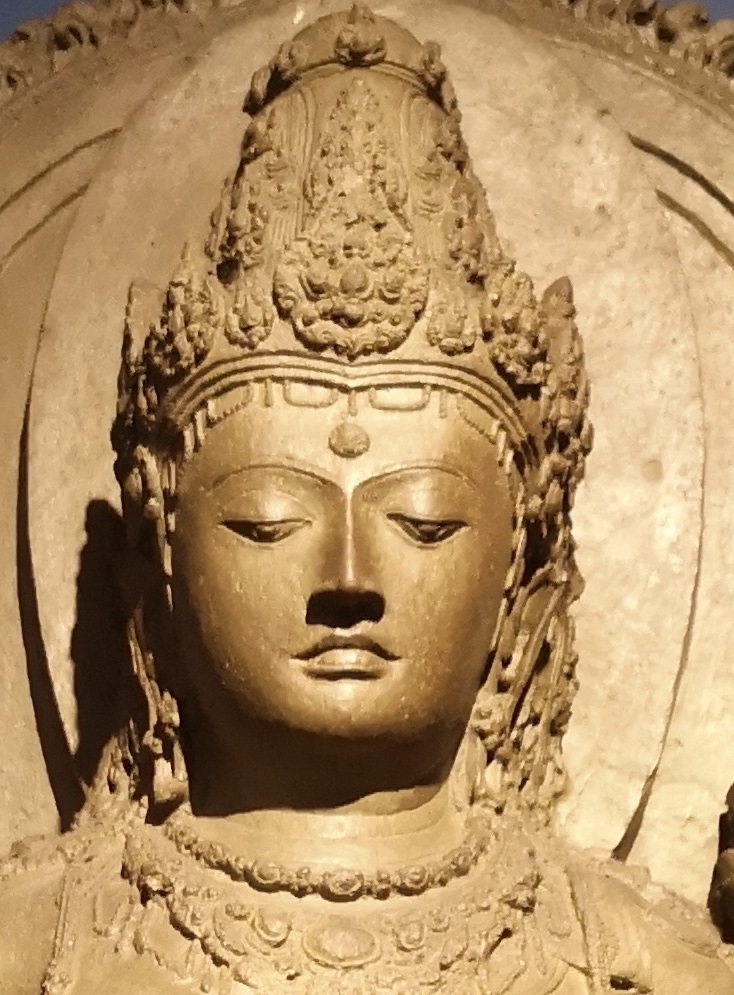
Many experts – and museum visitors – believe Prajnaparamita to be the finest of all East Javanese statues. It is of the highest craftsmanship with a sublime simplicity that elevates it amongst many other fine works of the period. Sculpted from pale rose andesite that gives the piece a warm glow, the goddess sits on a double lotus cushion set on a minimally decorated square plinth. The backrest is elegantly wrought but plainly adorned, bordered by a narrow column in a wave motif that continues around the arched top piece, transforming into a leafy effect at shoulder-height. Outlining her head is a halo-like oval, its plainness accentuating the bare symmetric features of the face. Prajnaparamita sits yogini-like in the padmasana posture, her hands in a dharmacakramuda gesture (the wheel of life) as befits her role as Mother of the Universe.

The figure bears all the expected attributes of a deity: the piled tresses of the jatamakuta crown surrounded by an ornate diadem; the lotus flower entwined around her left arm that holds up the tiny volume of the Sutra; the caste cord of pearls that wraps deftly around her body; and the rich necklaces and earrings that frame her face, their opulence in stark contrast to the heavenly bliss of her expression. She may be dressed as a queen but her countenance reveals the tranquillity of a god: the eyes are lowered, the visage is still and detached from the world, immortal.

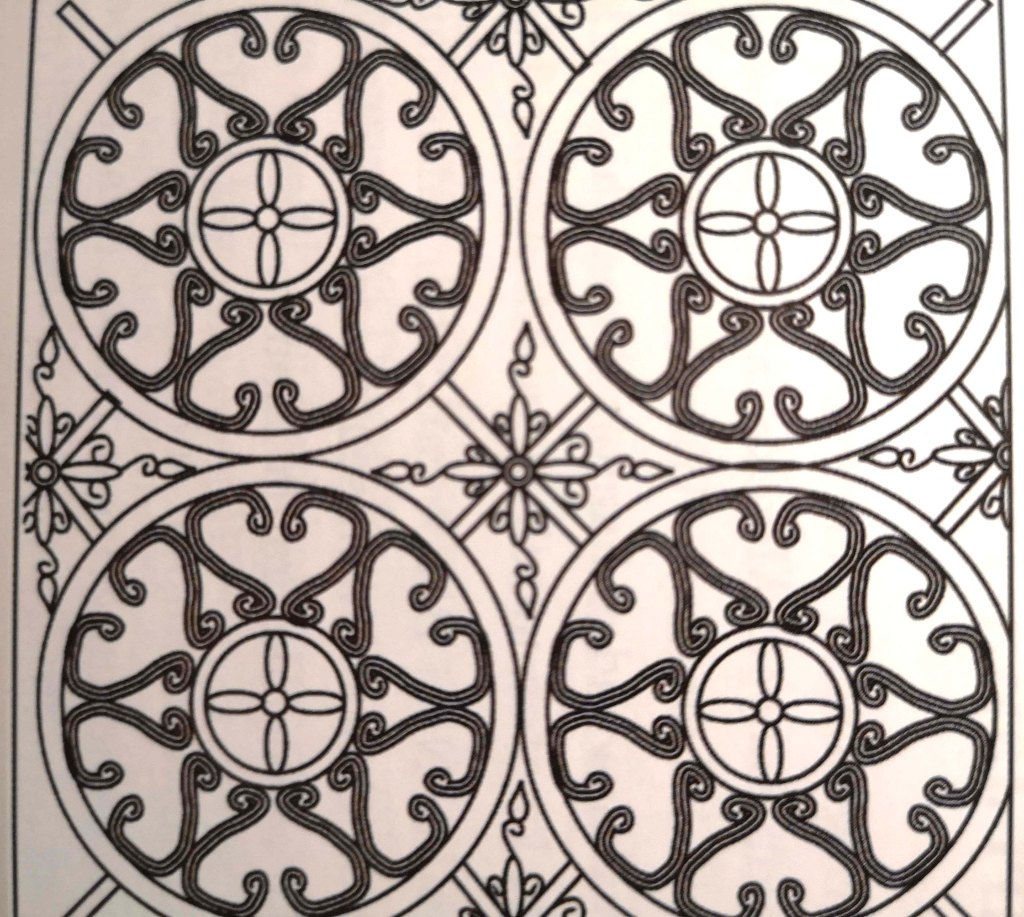
The Prajnaparamita is a remarkable piece of art. The delicacy of its sculpture is breath-taking. The caste cord hangs with artless naturalism, spilling over the edge of the lotus cushion on her right side. The detail on the batik sarong is astonishing; it is intricately patterned in a traditional ceplok design displaying the jelamprang motif, itself with sacred origins connected to the worship of Siva. The sarong is so skilfully re-created that it has the texture and sensuous drape of real cloth, in counterpoint to the serene stillness of the visage. The effect of the whole has the power of a Madonna and, given the subject matter, is a perfect example of reverence in art that stands equal to any medieval work in the Christian tradition.

Prajnaparamita in Buddhism

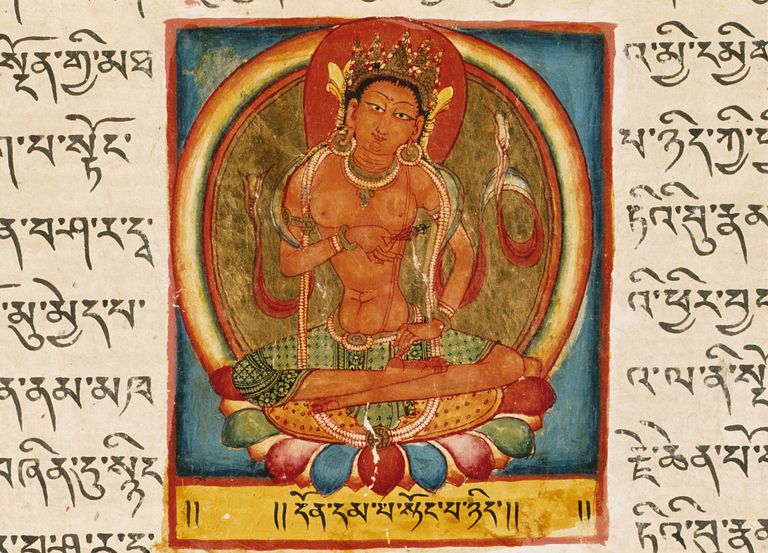
Prajnaparamita is the living embodiment of the Prajnaparamita Sutra, referenced by the book placed atop the lotus blossom at her left shoulder. The Sutras are the three sacred scriptures of Buddhism: the Lotus, the Heart and the Diamond Sutras. The Prajnaparamita is the extended version of the Heart and Diamond Sutras (which are merely summaries of the original), and is the earliest version of the Mahayana scriptures.

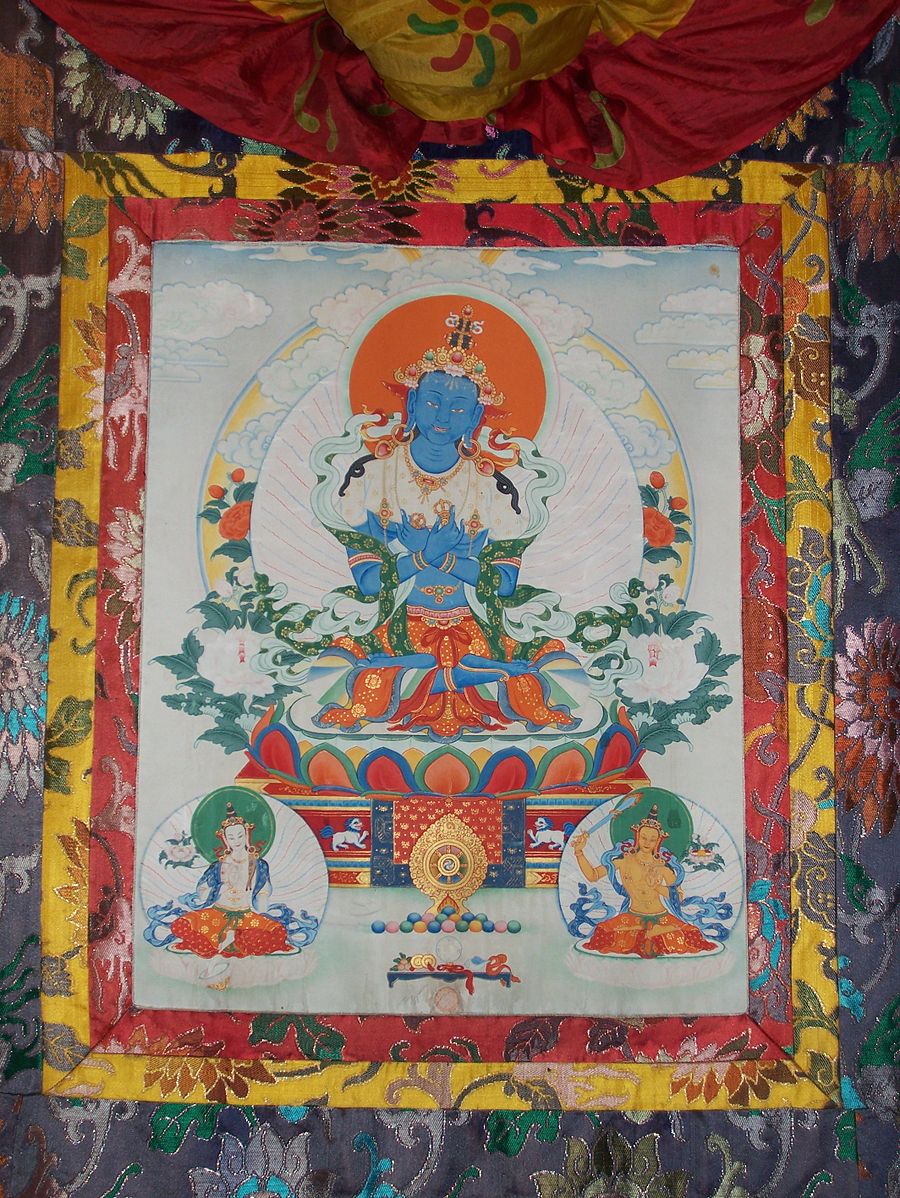
The Prajnaparamita image is thus the deification of this Book of Perfect Wisdom in the form of a serene goddess whose virtues include generosity, morality, proper conduct, patience, tolerance, honesty and kindness. In Tantric Mahayana Buddhism, she is the greatest female deity, the sakti (consort) of the Highest Buddha, Vajradhara, who is the Dharmakaya, the supreme essence of all Buddhas, from whom they originate and to where they will eventually return. Just as the universe is personified in the Buddha, so perfect knowledge and wisdom are deified as his consort. From Vajradhara springs the 5 Dhyana Buddhas of the Tantric Vajrayana Pantheon (In Sanskrit: vajra means diamond or thunderbolt). Vajradhara is always dark blue in colour and is usually illustrated in a cross-legged position embracing a vajra (sacred thunderbolt) and a bell in hands held against his heart.

The History

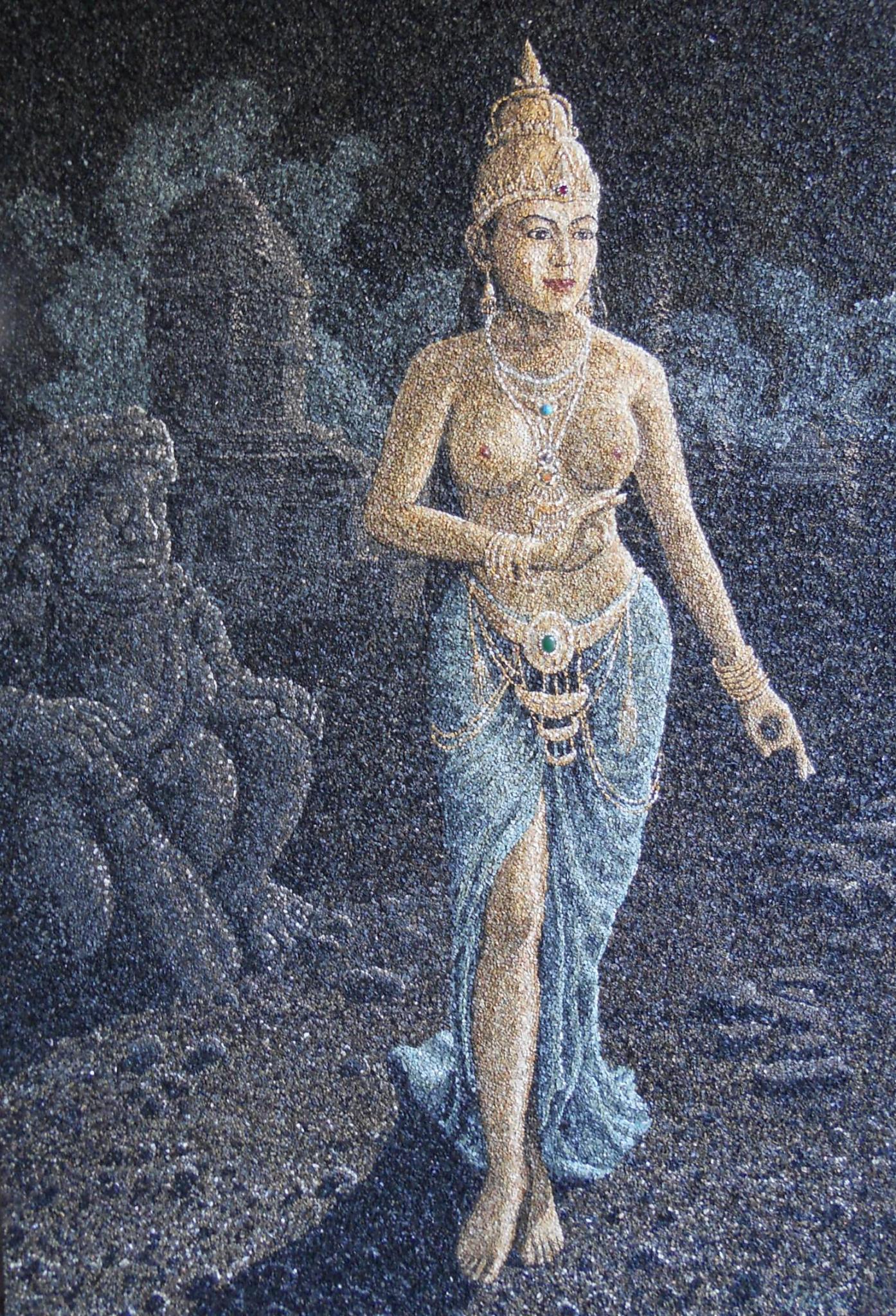
Yet, as in all these statues, there is so much more to decipher than the obvious. Beneath the sacred lies another story, immortalised in the Majapahit Pararaton (the Book of Kings), a fascinating blend of myth and history. Prajnaparamita commemorates the passage into immortality of a famous queen of East Java. The statue is commonly believed to be the memorial stone of Queen Ken Dedes, reputedly the most beautiful woman of her day, even now regarded in Java as the epitome of womanhood, just as Helen of Troy and Cleopatra are in the West. To be accorded the tremendous honour of becoming one with the highest female deity suggests that Ken Dedes was known in life for more than just her beauty.  The high regard in which she is remembered, even today, indicates her wisdom, kindness and impeccable conduct.

On his death in 1049, Airlangga divided his kingdom between his sons, Janggala and Panjula, in territory centred around Kediri in East Java. In retrospect it was perhaps the wrong decision, surprising for such a wise king as Airlangga, but he had few options. To have chosen between his sons would have resulted in civil war; the boys, born of different mothers, were sworn enemies. Airlangga’s strategy ultimately failed because the two men were constantly at war attempting to wrest sole power. The glorious kingdom built by their father was to suffer unrest and decline over the following century and a half, with only one distinguished king of Kediri, Jayabhaya (1135-1157) The final ruler of this dynasty, King Kertajaya, was particularly hated for both his cruelty and his lack of reverence to Vishnu, traditionally the favoured god in the region. In 1222, a commoner called Ken Agrok from Singhasari led a successful rebellion against King Kertajaya, cornering the royal family in a temple. The king killed himself and his family self-immolated, a shocking end to the line of Airlangga, leaving Ken Agrok to become the first king of a new dynasty, the Singhasari (also Singasari/Singosari).

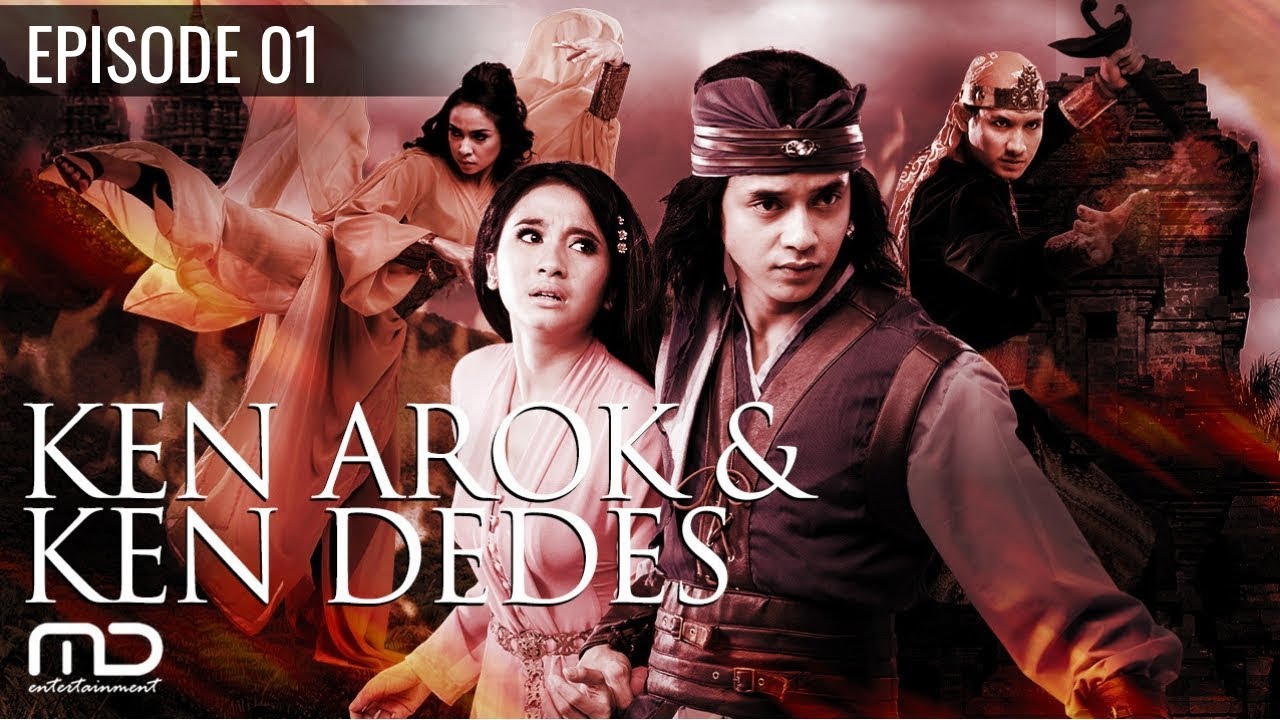
Ken Agrok (or Ken Arok) is one of the more colourful, if bloodthirsty, characters of Javanese stories, a favourite of film makers and novelists alike. Although an historic character, it is nigh impossible to extricate him from the realms of mythology.  His backstory is far from honourable. It is said that as a young man he dabbled in black magic and wizardry to raise himself from his humble origins (Ken was an honorific Javanese title). Although he was supposed to have turned from his worldly ways after spending some time with a Brahmin monk, his career is replete in examples of bad behaviour. One such story relates to his wife, Ken Dedes.

This beautiful young girl, the daughter of a Buddhist holy man, Mpu Purwa, became the obsession of the governor of a nearby province, one Raja Tunggul Ametung. He kidnapped her and forced her to marry him, an act for which Mpu Purwa cursed him, saying that he would not live long for what he had done to his daughter. Sometime later, after she had born a child, Ken Agrok saw Ken Dedes as she was being carried through the streets. A gust of wind blew her sarong open; he saw her naked legs and thighs and- so the story goes- glanced the place above, which to his surprise was lit in a golden light. Convinced that Ken Dedes was touched by divinity and that any child she bore would one day be a great ruler, he decided to claim her for himself. Ken Agrok killed Tunggul Ametung and took Ken Dedes as his wife.

There is no record of what this serene beauty thought of this turn of events or of the fact that for the second time she had been carried off by a brutal man against her will. Ken Dedes would, however, go on to become the first queen of Singhasari, and her children would indeed one day rule after her. It is believed she is the ancestor of the first Majapahit kings.

As often happens in legends, fate did not quite transpire as Ken Agrok had wished. Rather than one of his own children, it was Ken Dedes’ first child, Anusapati, son of her original husband Tunggul Ametung, who succeeded as the second king of Singhasari.  Anusapati revenged the murder of his father and the capture of his mother by assassinating Ken Agrok in 1228, only six years into his reign. If this statue (dated around 1300 CE) is Ken Dedes’ memorial stone, then it suggests she lived on for many years. Even if it was erected decades after her death, she must still have enjoyed a long life, and witnessed the reigns of several of her descendants. So perhaps Ken Dedes had the last word after all.

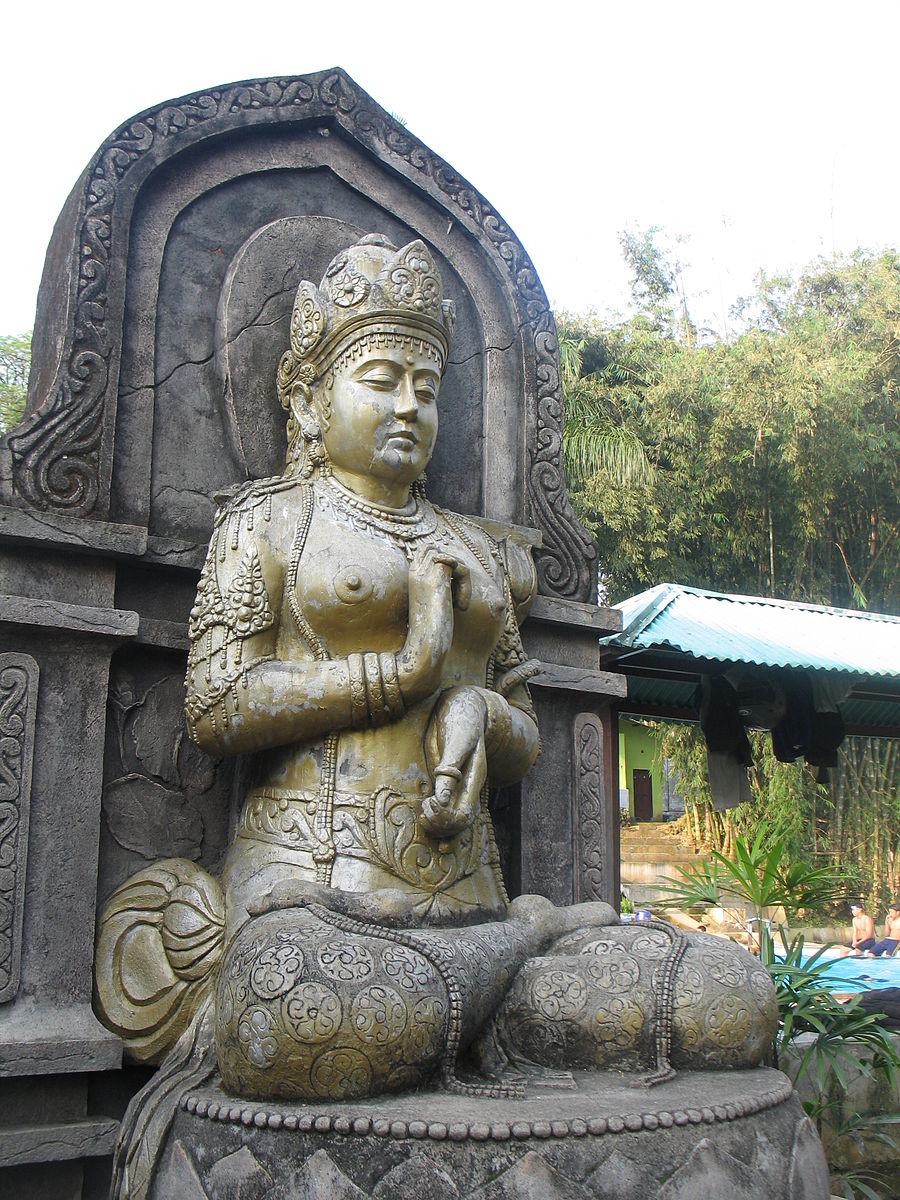
There are numerous other images of Prajnaparamita in East Java, as well as copies of the statue, although none are as accomplished as the original. This prevalence indicates the importance of the deity in the worship of the time. That the image has lived on even into the modern Islamic era is tribute to how powerfully she represents Java’s sense of history and culture. While it is never certain if the traditions that associate such a statue with an actual king or queen are accurate, given the equal status still accorded in Java to Queen Ken Dedes, there is little reason to reject the traditional viewpoint. Ken Dedes is even fondly referred to as ‘Ibu Batik’ (Mother of Batik) from the sarong that she wears in this statue.

The Prajnaparamita is reputed to have been found in Candi Singhasari (Malang, East Java), possibly in a side temple, still known as Cungkup Putri (The Dome of the Princess), located some distance from the main complex. In many ways this possible identification strengthens the connection between the statue and Ken Dedes. The statue was returned to Indonesia from Holland in 1978, quite fittingly during the state visit of Queen Juliana. The Museum Nasional Jakarta has two versions: the original housed in the Old Wing (Gedung Gajah), and a replica on show in the Treasure Room of the new Gedung Arca. It may be worth pointing out that the one on display at Muzium Negara may be the replica. 

Bibliography

  1. Kinney, Ann R. with Klokke, Marijke J, Kieven, Lydia (2003) Worshipping Siva and Buddha: The Temple Art of East Java, University of Hawai’i Press, Honolulu.
  2. Reichle, Natasha (2007), Violence and Serenity: Late Buddhist Sculpture from Indonesia, University of Hawai’i Press, Honolulu.
  3. Gan, Rose, ed. (2011) Museum Nasional Training Materials, 3rd edition:  Vol 1. History, Vol 4. Stones and Bronzes, Vol 7. Textiles; MNI Jakarta.
  4. Anshori, Dr. Yusak, Kusrianto Adi, eds. (2011) Keeksotisan Batik Jawa Timur: Memahami Motif dan Keunikannya, Kompas Gramedia, Jakarta.

Image References

  1. Prajnaparamita statue. Image taken by Rose Gan
  2. Prajnaparamita statue detail of face. Image taken by Rose Gan
  3. Prajnaparamita statue detail of batik sarong. Image taken by Rose Gan
  4. Diagram of jelamprang motif from sarong. Image taken from Keeksotisan Batik Jawa Timur: Memahami Motif dan Keunikannya
  5. Image of jelamprang ceplok pattern on batik: www.duniabelajaranak.id/wp-content/uploads/2017/09/batik-jlamprang3.jpg
  6. Prajnaparamita Sutra detail from Los Angeles County Museum of Art (pinterest): www.learnreligions.com/the-prajnaparamita-sutras-450029
  7. A 19th century Thangka (Tibetan scroll painting) depicting Vajradhaya. Image taken by Sylvain1972 May 2006: commons.wikimedia.org/wiki/File:Thangka_of_Vajradhara.jpg
  8. Ken Arok and Ken Dedes from Indonesian TV series (still taken from youtube)
  9. Ken Dedes in Indonesian modern art: indonesianmosaicstoneartpainting.files.wordpress.com/2012/10/kendedes-indonesianmosaicstoneartpainting-wordpress-com-62877-5978-5888.jpg?w=1394&h=2048
  10. Modern Prajnaparamita/ Ken Dedes statue. Candi Singhasari, East Java, Indonesia. Image taken by Gombang: upload.wikimedia.org/wikipedia/commons/thumb/b/b9/Ken_Dedes_as_Boddhisattva.JPG/900px-Ken_Dedes_as_Boddhisattva.JPG