A Very Rough Guide to MANTIN

by Eric Lim

Introduction

The town of Mantin, in the state of Negeri Sembilan, sits in a valley surrounded by hills. It is about 16 km northwest of the state capital, Seremban, lying close to the Negeri Sembilan-Selangor border. The town came into prominence as a tin mining town, then shifted to agriculture and today, it is known for a variety of produce such as jackfruit, mangosteen, rambutan and, of course, the King of Fruits, Durian.

History
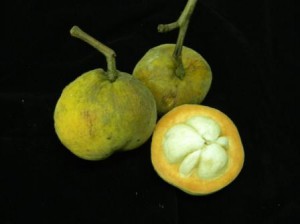
Originally, the town was known as Setul, the name of a fruit. This native fruit is also known locally as sentul or kecapi. Setul was located about eight miles away from Seremban. When the Kapitan Cina of Sungai Ujong, Sheng Meng Li, was killed in 1862, Chinese coolies decided to leave Sungai Ujong; many of them arrived and settled at a place slightly away from Setul, and the settlement eventually came be known as Mantin. Local legend has it that the name ‘Mantin’ came from a corruption of the words ‘mine tin’ or ‘many tin’, names which the British gave to the area with reference to its rich tin deposits. Subsequently, migrants from Huizhou, located on the southern Chinese province of Guangdong, came to work in the newly established tin mines in the area. They settled at Kampung Attap, which later became known as Kampung Hakka or Hakka Village.

On 1 February 1903, the Federated Malay States Railway line was opened from Bangi to Batang Benar, which is near Mantin. It was later extended to Seremban on 2 April the same year. The availability of train service brought new arrivals to the town and amongst them, the Sikhs who came to work as security guards in the mines. When the police station was established in 1910, another wave of Sikhs who worked in the police force arrived. Mantin was a favourite sanctuary and hiding place for refugees and, during the Japanese Occupation, Hakka groups from Titi in the interior Jelebu district came to seek refuge.

The town’s strategic location along Federal Route 1made Mantin a key pit stop for motorists plying the North-South trunk road. The town saw a decline when the North-South Expressway was opened in the early 1980’s but with the extension of LEKAS (highway connecting Kajang to Seremban) and the opening of the Mantin toll plaza on 31 December 2008, the town is regaining its glory.

Places of Interest
The Church of St. Aloysius

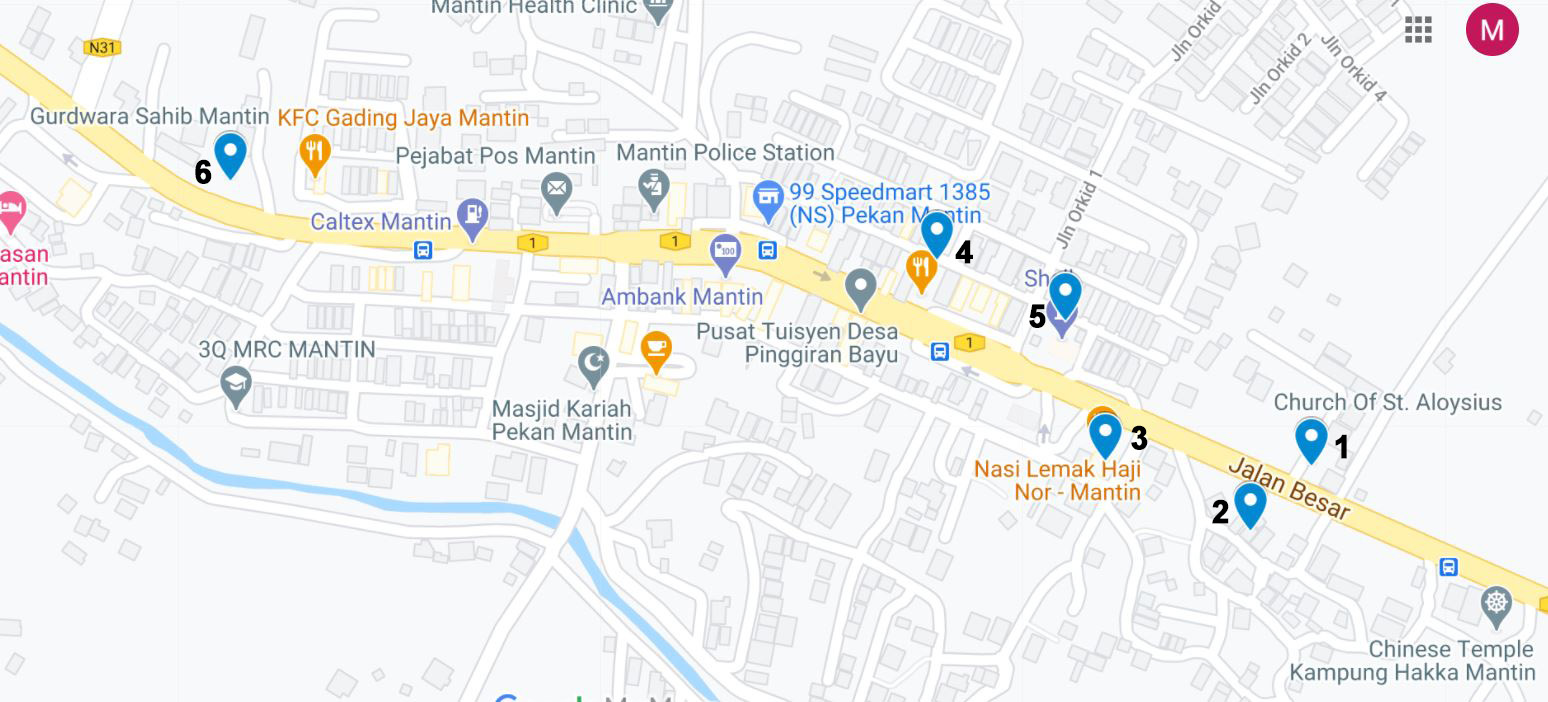
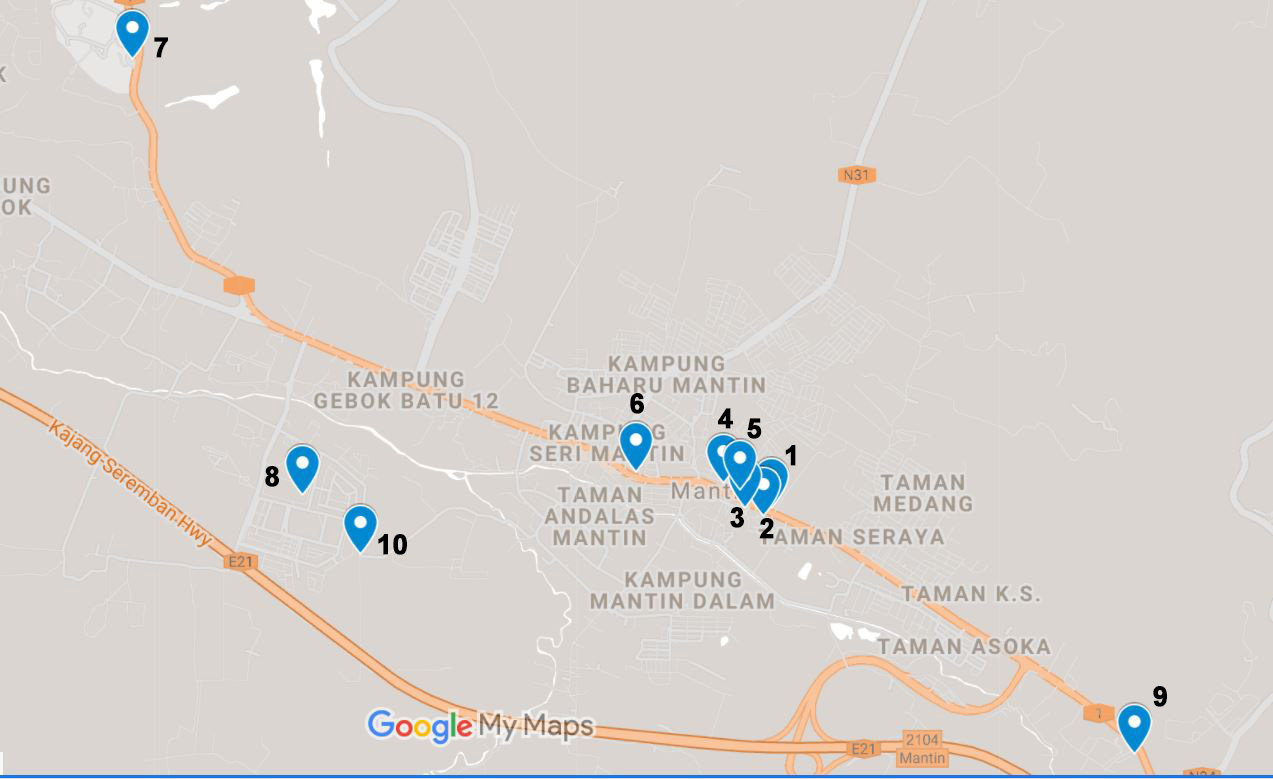
Located at Jalan Besar, the Church of St. Aloysius [1] has become the iconic landmark of Mantin. This neo-Gothic structure was erected in 1901 and it once housed a nunnery. The church is strategically located just opposite Kampung Hakka, the heartbeat of the town during its early years. Though it has been here for more than a century, the church is in good condition and is still an important place of worship for the local Catholic community. The Gereja Kebangkitan Kristus located at Kampung Belihoi, Mantin, is also under the administration of the Church. This chapel was established in 1950.
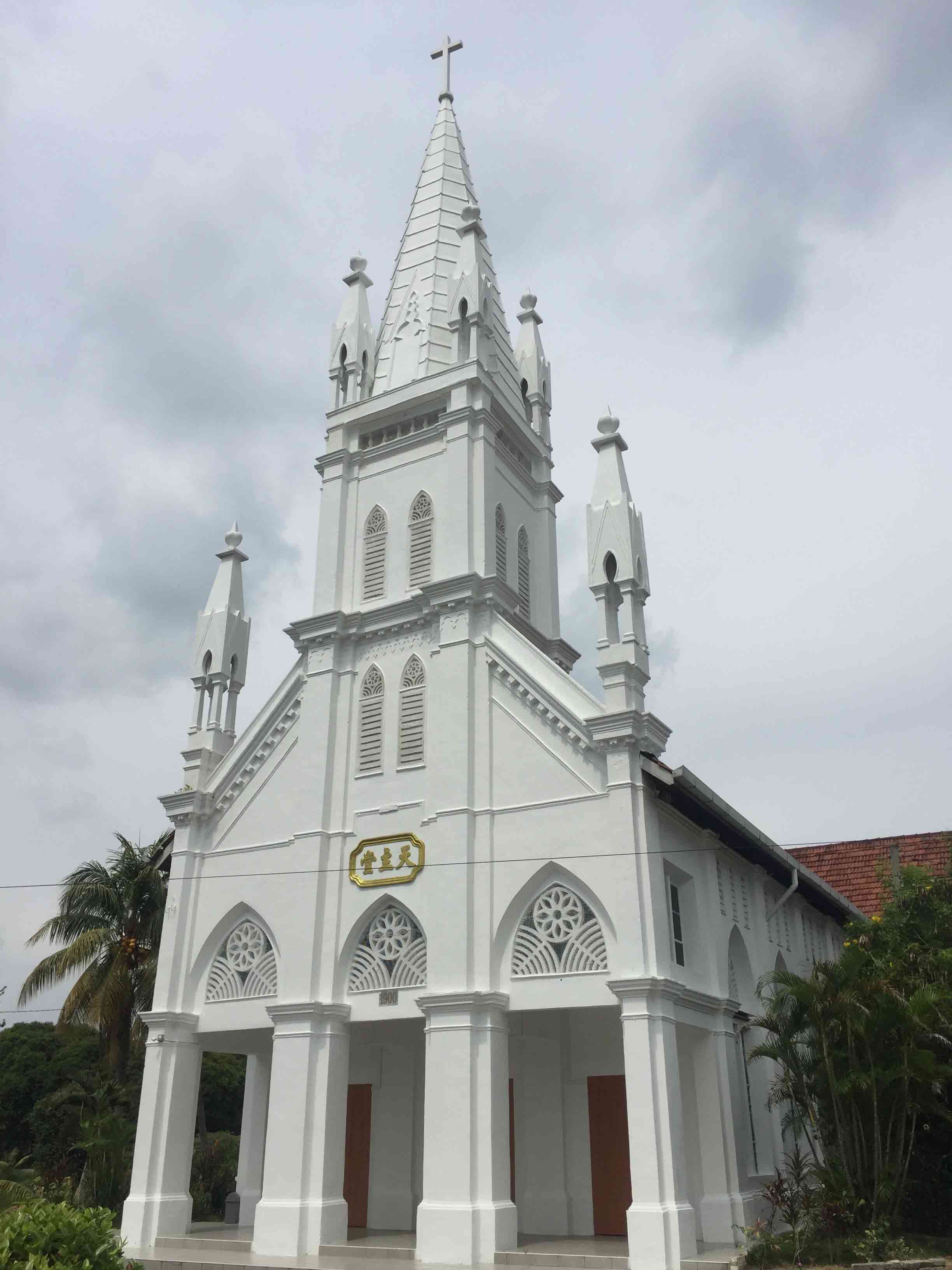
The Church of St. Aloysius. Image credit: Eric Lim

Kampung Hakka/Hakka Village

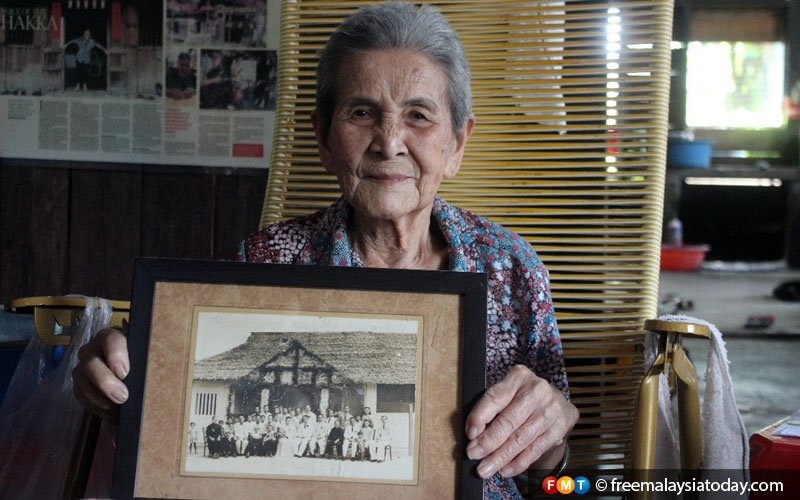
Just across the Church of St. Aloysius stand Kampung Hakka / Hakka Village [2]. It was the settlement of the pioneering Chinese coolies and, at its peak, Kampung Hakka was home to more than 300 families. It is situated along the banks of Sungai Setul and close to the heart of the mining activity. As the village grew, a school and a temple were added. The village was alienated to Majlis Perbadanan Nilai who later awarded the development of a new township to a private housing developer. Some of the villagers accepted compensation, abandoned their homes and left. Others decided to take their case to court. In 2013, the High Court ruled in favour of the developers but the villagers managed to obtain a stay order. The legal tussle is still going on and the villagers are awaiting clarifications from the state government. Kong Sook Koon, who at 93 could very well be the oldest resident, is determined not to be forced out. ‘Kampung Hakka is everything that matters’. Kampung Hakka is one of the oldest Hakka villages in our country.

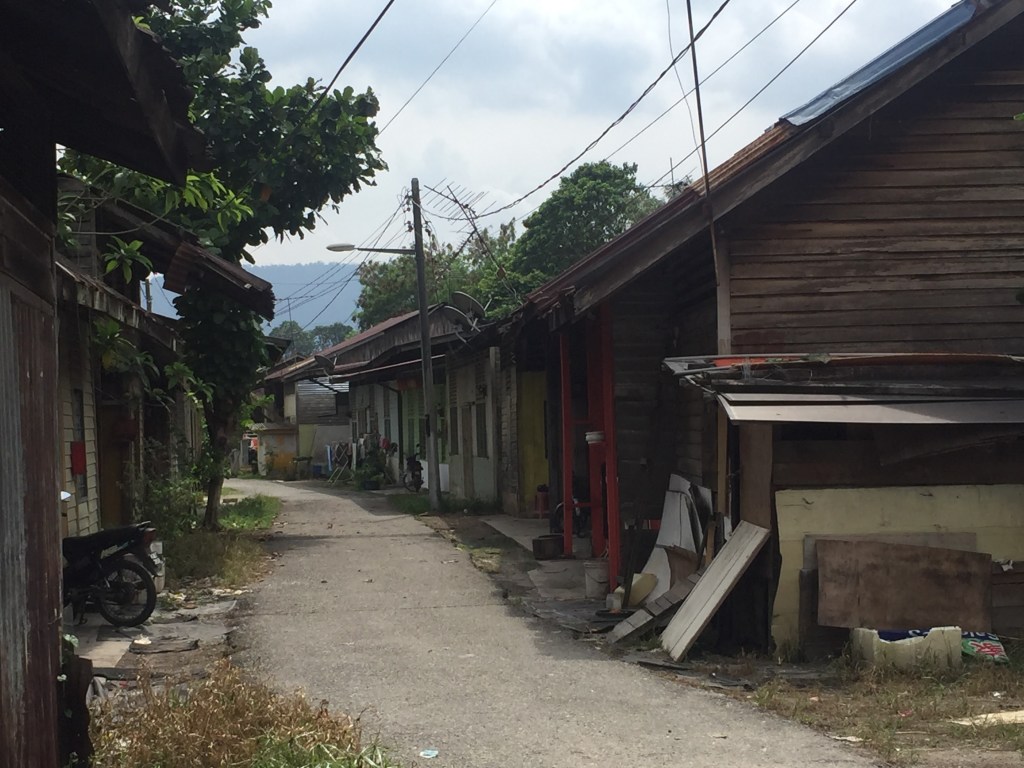
Mantin Chinese Methodist Church (CAC)

Just next to Kampung Hakka’ entrance is the location of the Mantin Chinese Methodist Church (CAC) [3]. This church was built in 1925 and the cost of the building was raised almost in full by the local congregation. As part of their expansion plan, the church also runs a kindergarten, Tadika Methodist Mantin, at nearby Taman Setul.
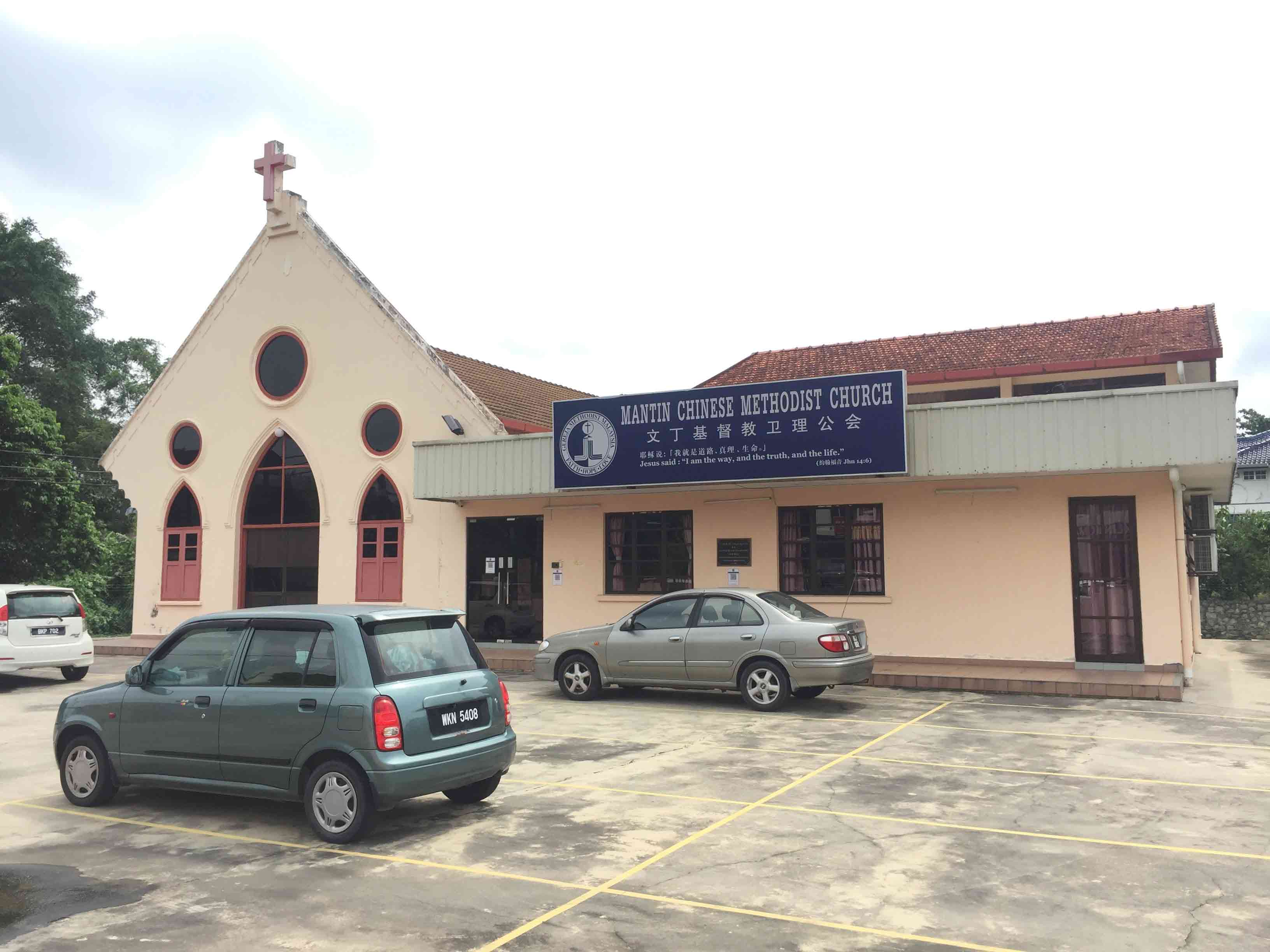
Mantin Chinese Methodist Church. Image credit: Eric Lim

Cinemas

If cinemas are used as an indication of a town’s success, then this small town can be rated as successful. There were two cinemas in Mantin, the first cinema was called Thai Wah [4] and later came Universal Theater [5], which was completed in 1961. The former was located at the current Old Mantin Hawker Centre while the latter was located between the hawker centre and the adjacent two rows of shophouses, both along Jalan Besar.

Gurdwara Sahib Mantin

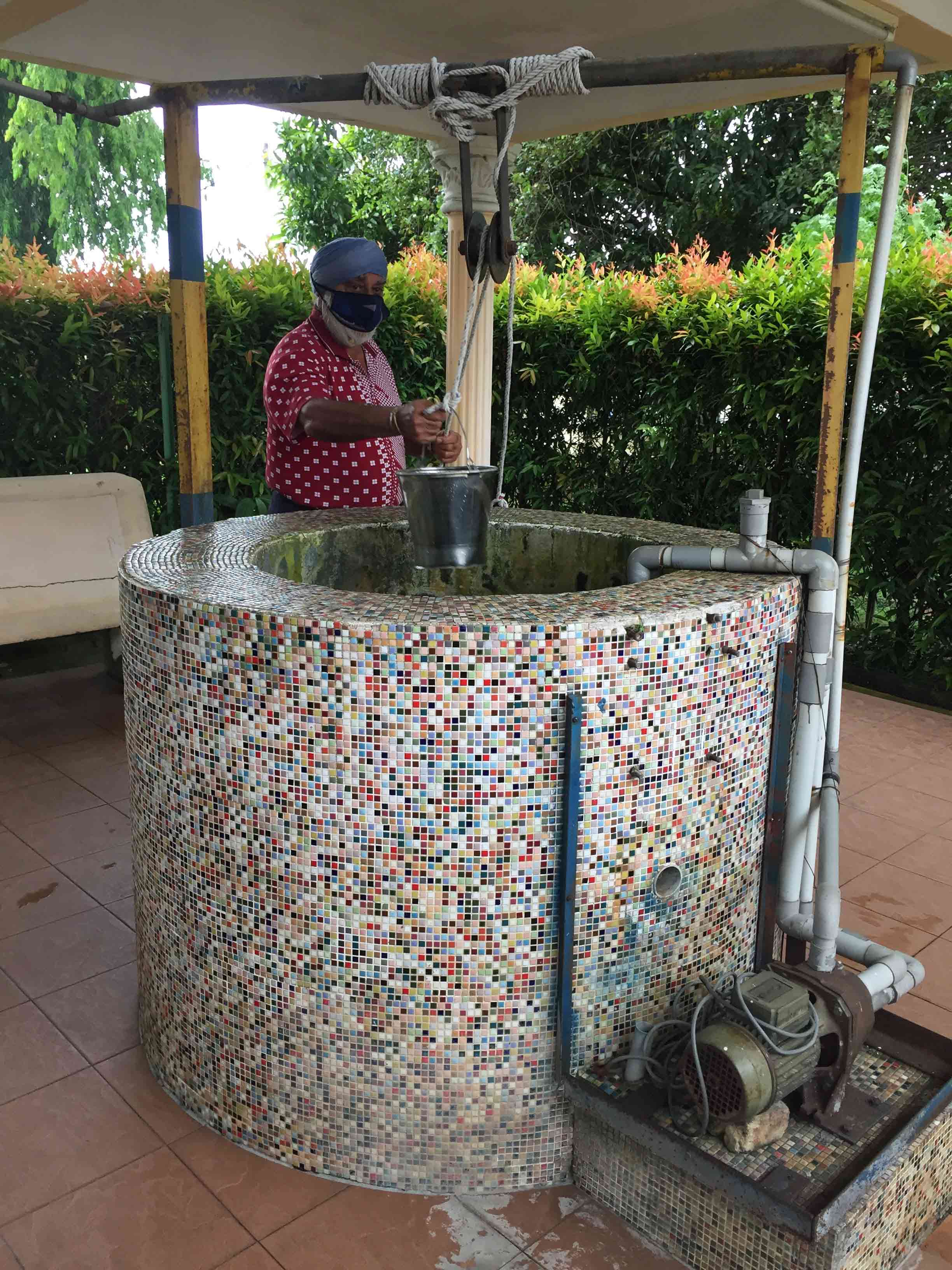
Still on the subject of places of worship, situated on elevated ground near the town’s T-junction is the Gurdwara Sahib Mantin [6]. Likely built in the early 1890’s, it is the oldest Sikh Gurdwara in Negeri Sembilan. The early Sikhs in the Mantin area were either employed as security guards in the various tin mines or they were policemen. A few of them raised cattle for their milk and owned bullock carts. The first temple building was made of wooden planks with an attap roof and later changed to zinc. In 1989, it was repaired and a new dining hall, kitchen and rooms were built to accommodate the Sikh sangat (congregation). A new single storey building was built at the back of the Gurdwara Sahib in July 2002. Mr Bagwan Singh mentioned an old discarded well on the premises, which was repaired and brought back to use again. He also said that the water from this well is believed to possess healing properties that could cure many ailments. The Gurdwara Sahib serves free food to its members and the public at its dining hall.
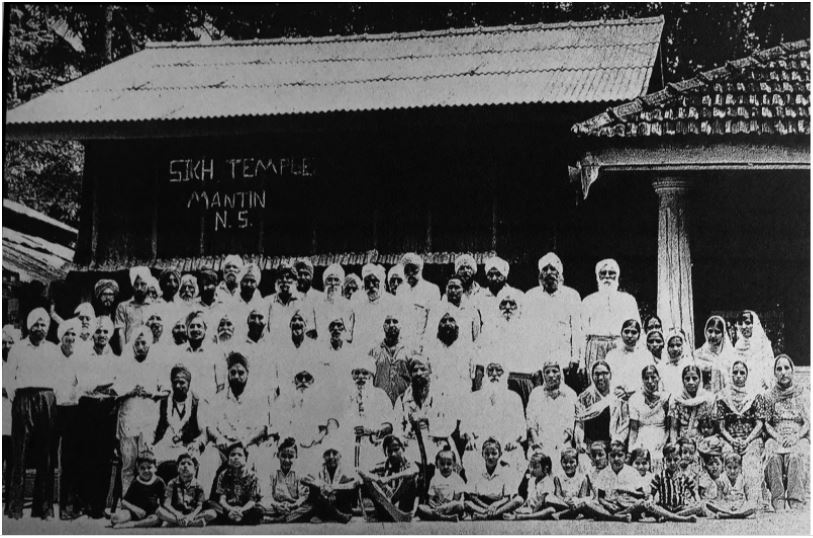
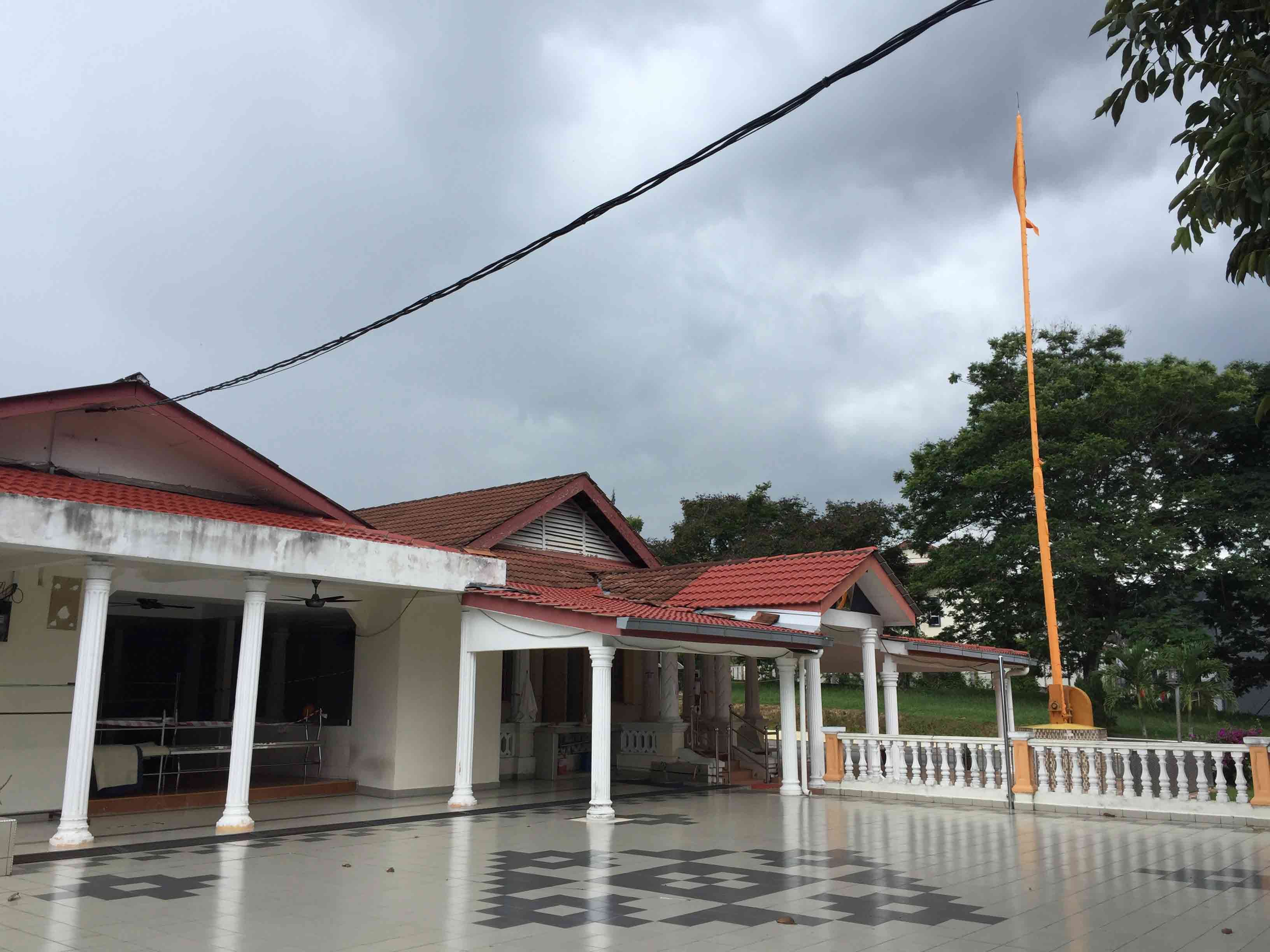
The first building with a zinc roof. Photo source: Saran Singh Sidhu – Gurdwara Sahib Mantin – Sikh Gurdwaras in Malaysia & Singapore. An Illustrated History 1873 – 2003 – Published by Sikh Naujawan Sabha Malaysia – First edition 2003 – pp 112 to 114.

(L) Gurdwara Sahib Mantin. (R) Mr Bagwan Singh at the well. Image credit: Eric Lim

Educational Institutions

Taking advantage of the conduciveness of the surrounding environment, many institutions of higher learning have set up bases in Mantin. The first to do so is Kolej Tuanku Jaafar [7], a co-educational international boarding school established in 1991. The school caters to pupils aged 3 to 19 and it has a diverse population of students from over 22 different countries. KTJ is spread across an 80-acre site just outside of Mantin.

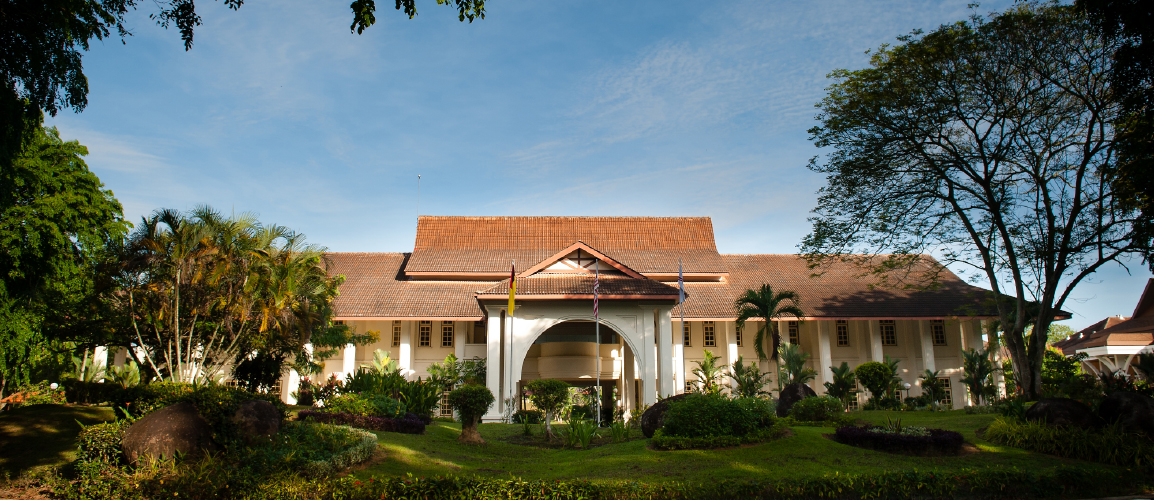
(L) Entrance to KTJ, image credit: Eric Lim – (R) KTJ, photo source : https://www.ktj.edu.my/

Next was Linton University College [8]. It was originally established in 1987 in Ipoh, Perak, and was known as Linton College. In 2005, Linton College was acquired by the KTG Education Group and the campus was relocated to the current location in Mantin. In March 2010, it attained university college status and was consequently renamed Linton University College. It provides programmes in Engineering, Built Environment, Information Technology, Business & Accounting and Applied & Visual Art. Today, the campus is also home to three of its affiliated institutes – Pertama Institute of Technology, Jati Institute and International Institute of Science Mantin. All four institutions provide programmes from Foundation right up to Masters.

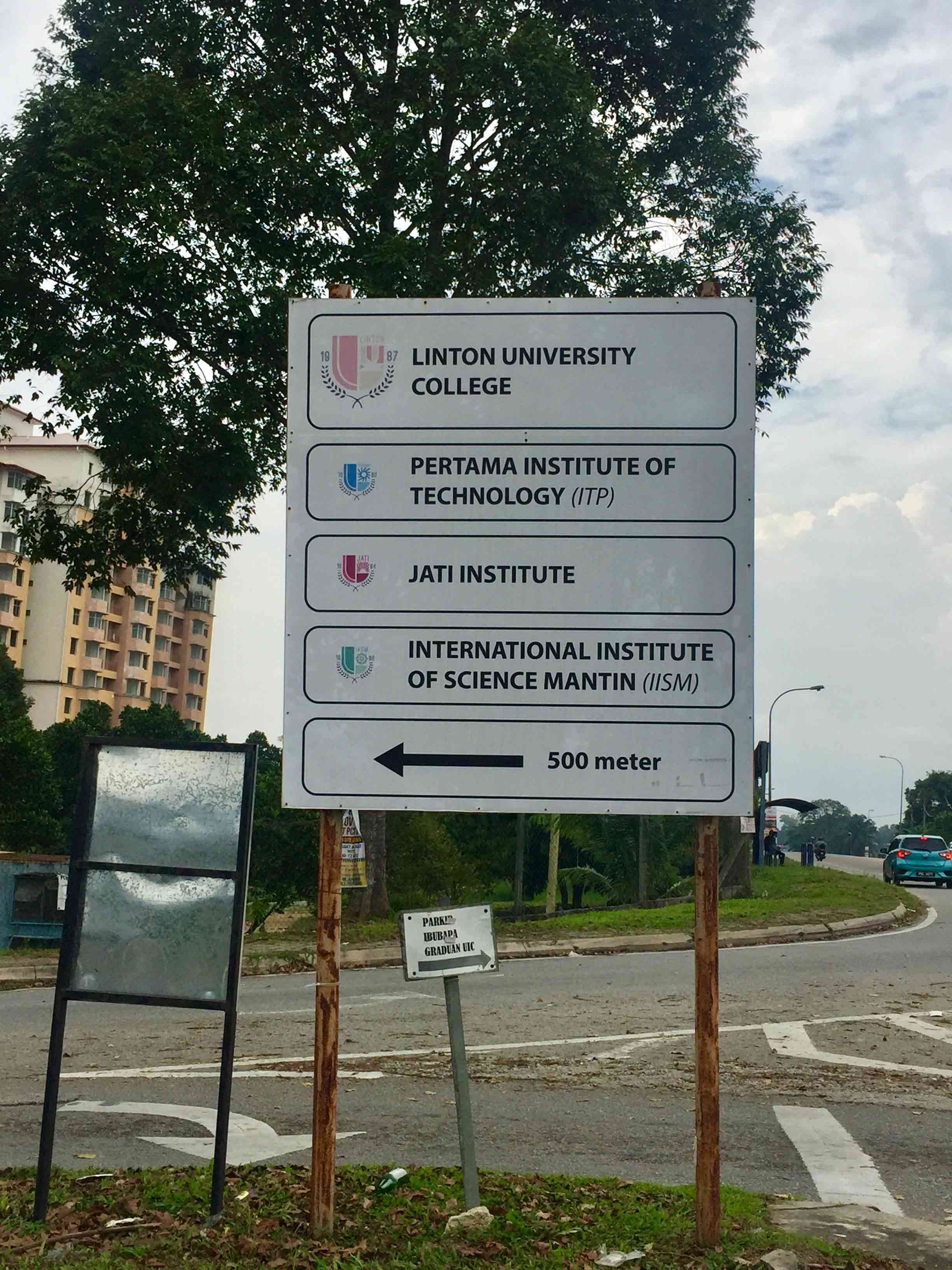
Linton University College & Sign board pointing to Linton University College. Image credit: Eric Lim

On the other end of the town, located at the 8 ½ Mile, Jalan Seremban-Mantin is the Negeri Sembilan Skills Development Centre (NSSDC) [9]. This skill centre is a joint project initiated by the state government and a group of private industries in Negeri Sembilan.

Orchards

When the town was facing a downturn, the locals turned to agriculture. Today, there are many durian and fruit orchards around the fringes of the town. My Durian Orchard [10] located on the west side of the town offers visitors the opportunity to learn and taste the different varieties of durian. It also undertakes to export unopened whole fruit and seedless pulps to major cities in China. Apart from durian, fruits such as rambutan, mangosteen, langsat, jackfruit and many others can be purchased at stalls along the main road from the north leading to the town.

Getting There

You have three options:

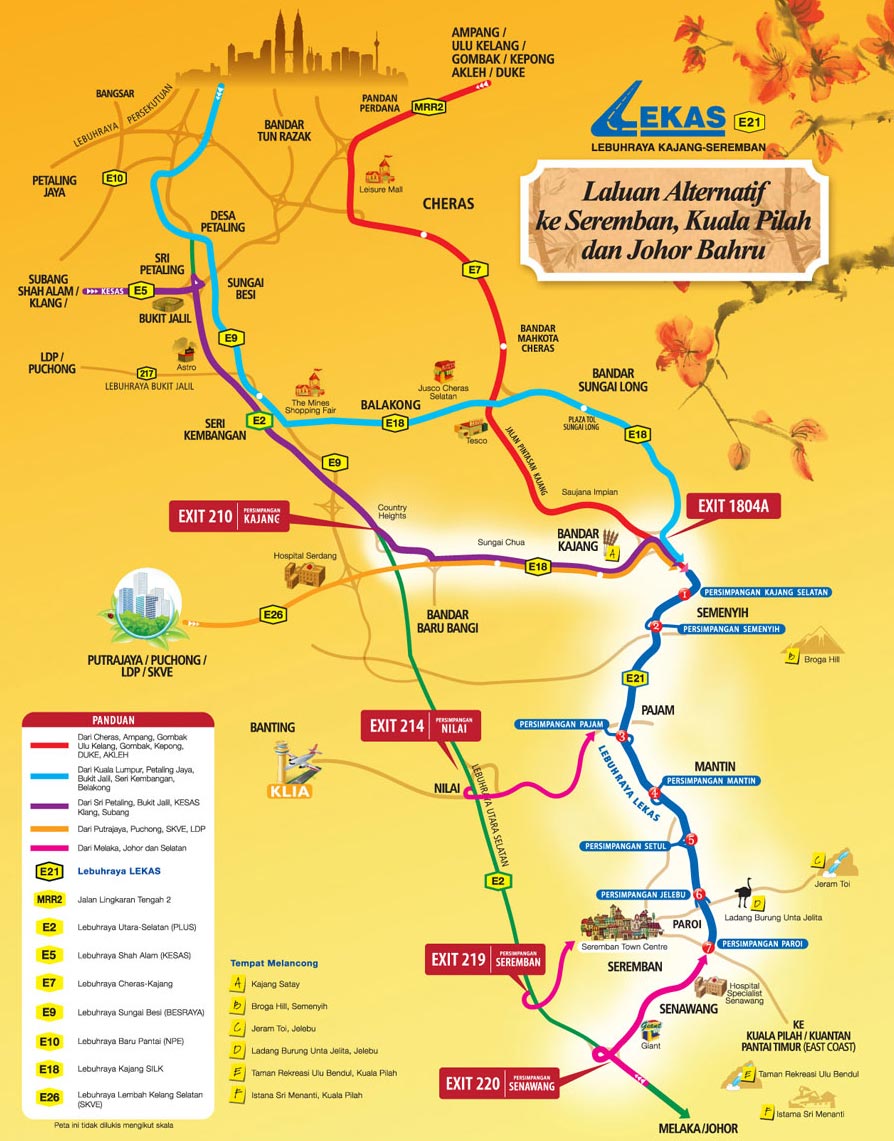
1) From Cheras, use the Cheras-Kajang Expressway (E7) that links to Kajang Dispersal Link Expressway / SILK (E18). Look out for Exit 1804 Kajang Perdana, then link to LEKAS (E21) and look out for the exit to Mantin.

2) Alternatively, exit Kajang Dispersal Link Expressway / SILK (E18) at Exit 1805 Kajang Prima Interchange to link to Federal Route 1 (the North-South trunk road) to Semenyih, Beranang and Mantin.

3) From KL city centre, use Jalan Sungai Besi to go to the North-South Expressway (E2). Exit at Exit 214 Nilai, and follow the sign to Pajam. You can then decide to use Federal Route 1 to Mantin (toll-free) or use LEKAS (toll road) and exit at Mantin.
References

Saran Singh Sidhu – Gurdwara Sahib Mantin – Sikh Gurdwaras in Malaysia & Singapore. An Illustrated History 1873 – 2003 – Published by Sikh Naujawan Sabha Malaysia – First edition 2003 – pp 112 to 114.

https://www.thestar.com.my/metro/focus/2017/10/23/a-town-that-tin-built-mantin-in-negri-sembilan-has-reinvented-itself-at-least-twice-in-the-last-200

https://www.freemalaysiatoday.com/category/nation/2019/02/03/court-backed-developers-loom-over-tin-mining-village-in-negeri-sembilan/

https://www.frim.gov.my/colour-of-frim/sentul-a-nearly-forgotten-but-nutritious-fruit/

https://www.archkl.org/index.php/parishes/89-church-of-st-aloysius

https://www.facebook.com/mantincmc/

https://www.facebook.com/NSSDC.HEP/

https://www.ktj.edu.my/

http://www.linton.edu.my/

http://mydurianorchard.com

Personal communications with Mr Bagwan Singh,

Personal communications with Dato’ Peter Lai, former state assemblyman of Mantin
Was Bujang Valley a Kingdom?

by Marie-Andree Abt

In our museum, Bujang valley (BV) is presented as the first Malay kingdom in the Peninsula, but, as far as I know before beginning this research, we have yet to find any artefact showing it was indeed a kingdom. I wanted to be sure and began to investigate. During my research, I learned a lot about BV, not always directly related to my research but I will share it anyway.

A kingdom is a country ruled by a king or a queen, as per Oxford advanced learner’s dictionary 7th edition.
Bujang valley (Malay: Lembah Bujang) “is a sprawling historical complex and has an area of approximately 224 square kilometres (86 sq mi) situated near Merbok, Kedah, between Gunung Jerai in the north and Muda River in the south. It is the richest archaeological area in Malaysia.” (Wikipedia, https://en.wikipedia.org/wiki/Bujang_Valley)
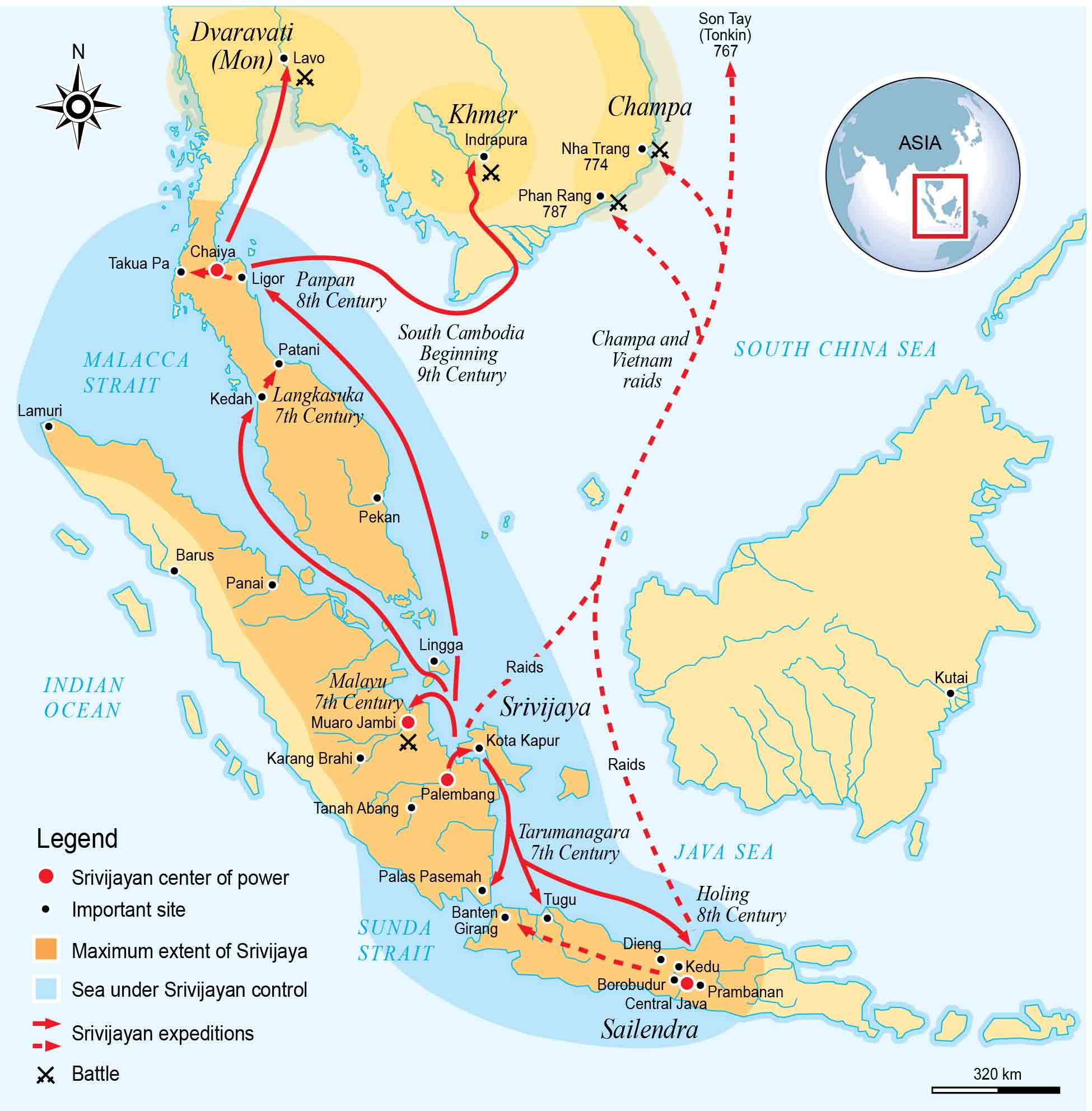
Srivijaya Kingdom was situated in South Sumatra, with its capital at present day Palembang. It was founded in the seventh century by Dapunta Hyang who led twenty thousand troops from Minanga Tamwan to Palambang, Jambi and Bengkulu. This event is recorded in the Kedukan Bukit inscription dated 16th June 683, setting its birth in the seventh century. Chinese sources called Srivijaya “Shi Li Fo Shi” and the Arabs “Sribuza”. Its wealth comes from trade with China, India and the Arabs. It extends to the Strait of Malacca up to Burma and part of Java, over kingdoms that had existed since the second century, if one believes Chinese sources. These kingdoms were trading local products such as benzoin, camphor, dammar, spices, aromatic woods, ivory, tin and gold with Srivijaya, who then sent all that farther. This way of ruling is often described as a mandala (explained later in this article).

In the eighth century, Srivijaya had links with the Sailendra, a Javanese dynasty (which built Borobodur). Srivijaya was a centre of Mahayana Buddhism studies and Sanskrit at least until the twelfth century. Some kings gave money not only to build a temple in South Thailand, but also to repair temples in India and Guangzhou. It had a very good administration with a datu (minister) for each kingdom.

The Indian Tamil Chola king attacked first Kedah then Srivijaya in the eleventh century. Srivijaya was clever enough to make believe that it was the other way around; Chinese envoys always thought that Chola was under Srivijaya rule! In a memorial presented to the Song emperor Huizong in 1106, the Song Shi (Song Annals) records: ‘The Chola kingdom is subject to Srivijaya. We wrote to its ruler on coarse paper’.

The capital of Srivijaya was moved from Palembang to Jambi, centre of the Melayu kingdom, which gave its name to the Malay language. It marks the beginning of the decline of Srivijaya who shared its power between Kedah, Kota Cina and Jambi, becoming Three Vijaya according to Chinese accounts. In 1292, Three Vijaya fell under the Singarasi (another kingdom of which little is known) who then quickly fell to Majapahit. Majapahit founded its wealth not only on trade but also on agriculture, being based on Java, a volcanic fertile soil area. It lasted until 1520 with the rise of Islam in Java.

Srivijaya around the 8th century. Image credit: Gunawan Kartapranata (CC BY-SA 3.0)

Indian written sources

The first to write about BV were the Indian. As early as the second century BCE, Indian writing related trade between BV and some ports of South India that lasted until the 10th century CE. Later, the inscriptions of Tanjore speak of a king of Kedah and Srivijaya and, in 1007, the Chola seemed to have already attacked Kedah. Scholars do not know why.

However, in 1025 the Chola king Rajendra, lobbied by Indian trading guilds fed-up of paying taxes to Srivijaya each time they send a boat in these waters, attacked Srivijaya. The description of this attack informed, “the Maharaja of Kedah and Srivijaya, named Samgramavijayottungavarman, was taken prisoner during the attack of Palembang”. Hence, it seems that, at this time, there was a king of Kedah, but ruling from Srivijaya since he obviously lived in Palembang. After the sacking of Srivijaya, a new Maharaja was enthroned – Sri Deva.

This new king could not “pay” anymore for the allegiance of his vassals and hence they sought independence. Among the first to do so was Kedah, who openly revolted in 1060. Sri Devi chose to make peace with the Chola Kingdom and sought their help to bring Kedah back into the Srivijaya mandala. In 1068, Virajendra, the ruler of Chola, attacked only Kedah, looted it and returned it, graciously, to Srivijaya. This uncommon event confused the Chinese who thought that Chola was under the rule of Srivijaya.

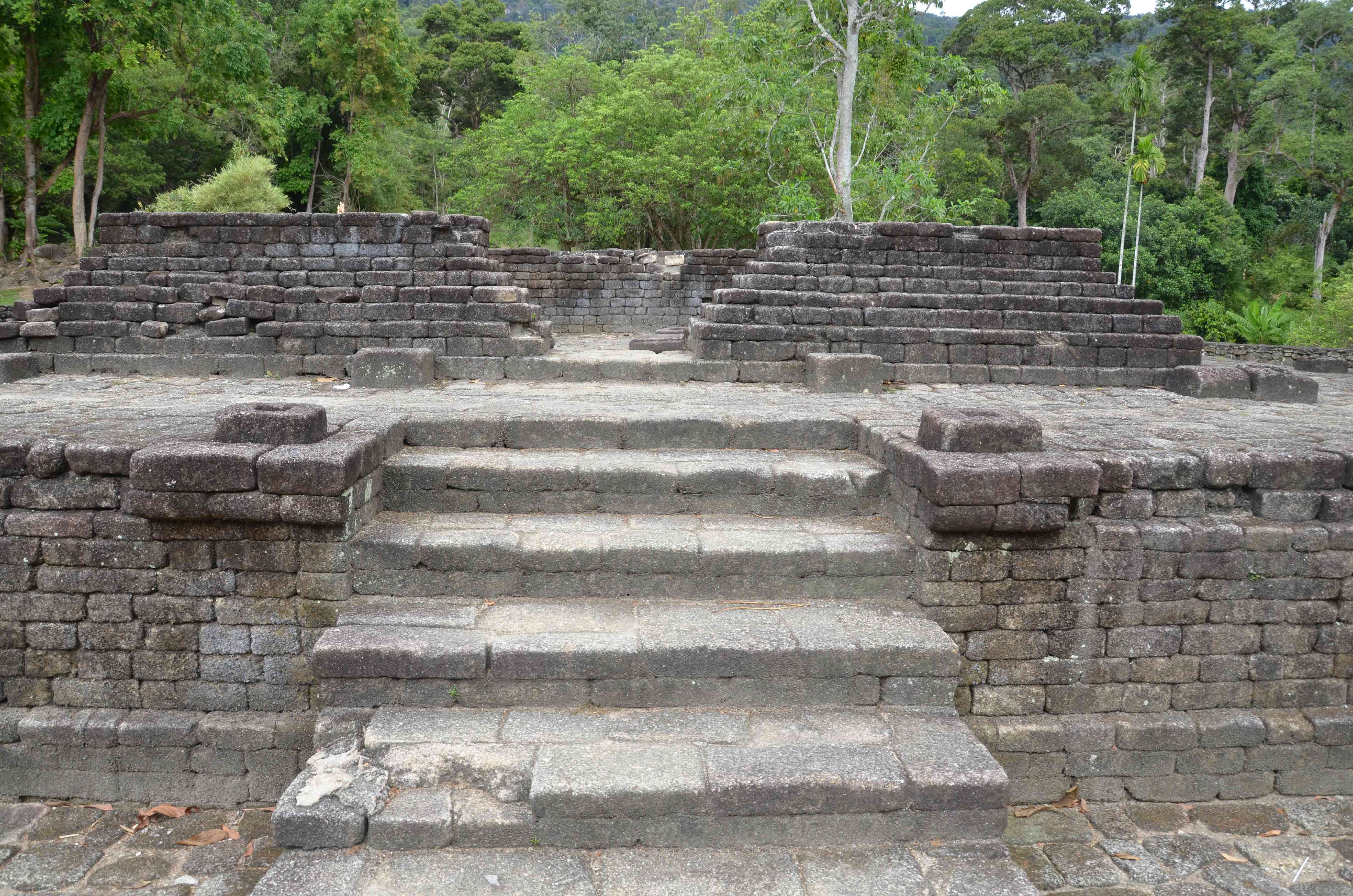
Candi Bukit Batu Pahat; the Merbok Archaeological Museum was built next to this candi

Chinese written sources

Chinese writings mention tributes given to China by the BV polity. In the Sui Shu (History of the Sui, completed in 636 CE), Kedah was called Chitu, Jietu, Geluo or Geluofashaluo. Two missions were sent from China in 607 and in 610. The first one left from Guangzou under the command of Chang Jun. It was bound for Chitu and Luocha. These two were the only destinations for the mission, showing the growing importance, at that time, of these transhipment centres for long distance Persian Gulf-India-China trade.

Chang Jun mentions that the capital of Chitu was named Sengzhi, perhaps located near the Muda River in what is now Kampung Sungai Mas. He describes it as a city surrounded by three concentric walls separated by one hundred paces each. “At each gate, there are painted flying spirits, fairies and Bodhisattva images… The king, we are told, is Li-Fu-Duo-Sai Qu-Tan (Riputro Gautama?). Behind his throne is  a golden crouching  bull and above it , one bejewel parasol and bejewelled fans left and right…Hundreds of Brahmans seated in rows facing each other on left and right. The practice of the residents was to respect Buddha and give special reverence to Brahmans. Indian music was played during the audience with the ruler. When the king sent a nayaka (leader or protector) as an emissary to China, with local products, he also sent a gold leaf letter”. Hence, it appears to be a Buddhist kingdom where Brahmans were key players advising the ruler and performing Indian-based ceremonies.

What is bothering me in this description is the presence of a triple enceinte. As far as I know, archaeologists never found any traces of these walls. Even, if their construction materials were used later as a source of stones or bricks for other constructions, they would have had some sort of foundations … that have not, yet, been found. So was Chitu really Kedah? In my opinion, it still needs to be proven. Other sources, including the Encyclopaedia of Malaysia: Early History, places Chitu in Kelantan. This makes more sense.

In the chronicles of the Tang dynasty (619 to 916 CE) translated by Winstedt, it seems that Kedah was called Kalah or Kora or Kala. It is said that this Kora has a king named Misi Pura Sri Pura and the customs of the people were the same as in Siam. But in the same book, Winstedt writes that Langkasuka was the former name of Kedah and that under the Liang dynasty (502 to 665 CE) people dated the birth of the country four hundred years earlier.

Seventy years after the Chitu mission, yet another name for Kedah in Chinese writing appears – Jietu, again a phonetic rendering of Kedah. In 671, the Chinese monk Yijing left Guangzhou and stopped over at Srivijaya where he studied Sanskrit. He then went to Kacha (probably Kedah) to board a boat to India. This was the first proof that Kedah may have been a major port of embarkation for the long journey to India. When he came back in 685, he noted that Kedah was now under Srivijayan rule. He explains that BV was the northern capital of Srivijaya, levying taxes on the merchandises coming from the West with Palembang, the southern capital, took care of the goods coming from the East.

There are also other sources showing that Jietu was an important port for merchants and monks on their way to India. The Xin Tang Shu notes that south of Panpan lay Geluo. Around 800, Jia Dan writes about Geluo, recording that it had 24 provinces – “It was a major trading port since the 9th century or earlier”. There is no evidence of diplomatic contact between Geluo and Tang China.

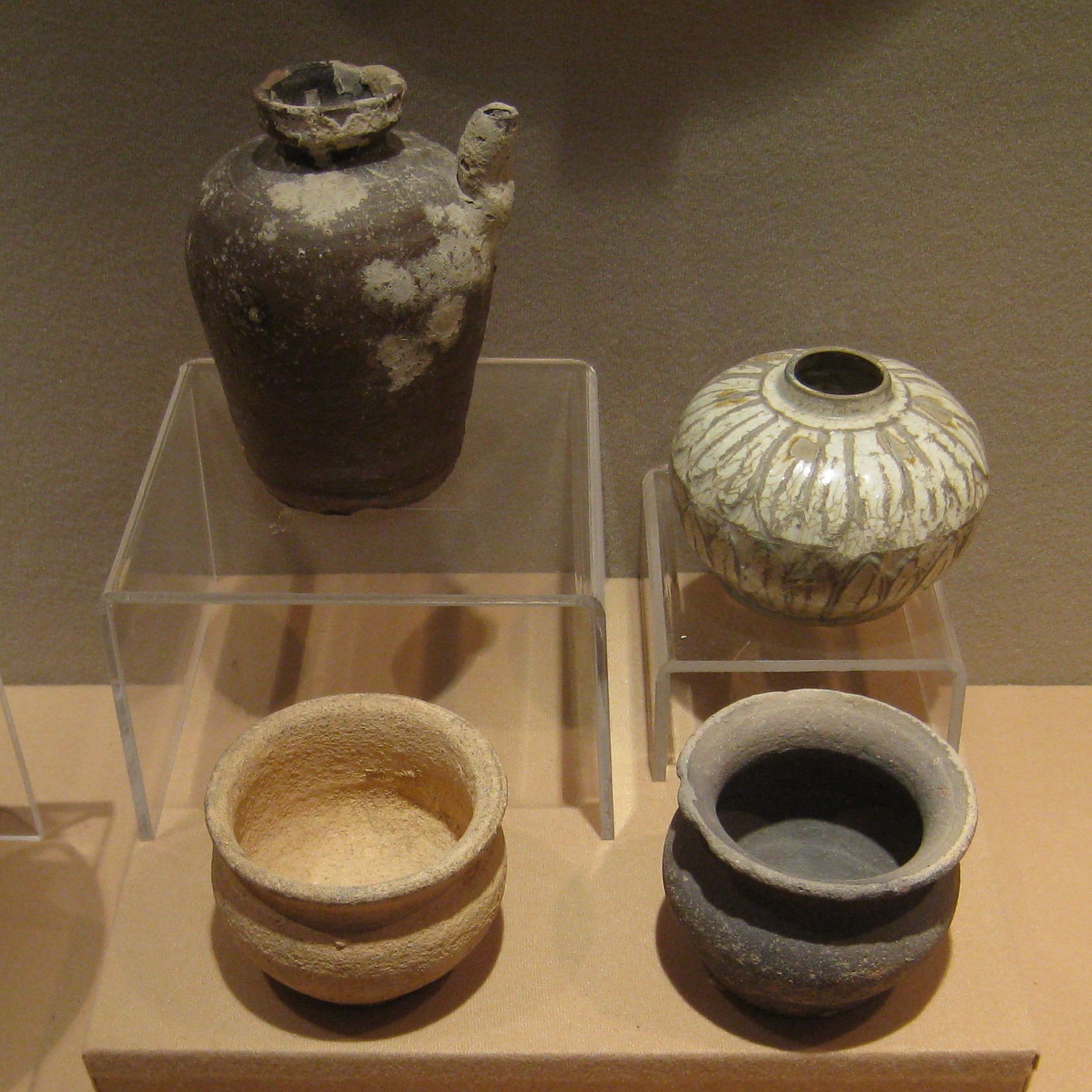
Bujang Valley pottery on display at the Merbok Archaeological Museum. Image credit: Anandajoti Bhikkhu (CC BY-SA 3.0)

Arab written sources

As early as the 8th century, Arabic navigational treaties mention Kalah. Several archaeologists have studied the writings of Arab or Persian merchants. According to as-Sin wa’l-Hind, Kalah was a kingdom located near the coast. Kalah-bar (government) was a kingdom under the control of al-Zabaj (Srivijaya). Sulayman describes Kalah as a colony of Srivijaya and an entrepôt trade centre where the traders called to obtain supplies of clean water. Abu Dalaf Misar stated that Kalah was a huge kingdom surrounded by walls, gardens, water, market and houses with a large population…”Kalah has its own social system that is really organised in terms of justice, treatment of offences and matters related to fines”… Katacha entrepôt developed rapidly since the fifth century and it is believed that the port existed since the early century CE. Kataha’s centre at that time was situated at today’s Sungai Mas. Various types of temple architecture and thousands of foreign ceramics are the best proof of it. Relative dating on inscriptions showed that Sungai Mas prospered since the fifth century. Later, the entrepôt was moved to Kampung Pengkalan Bujang.

Modern research

The discovery of glass fragments at site 18, Pengkalan Bujang, was reported by Quaritch-Wales in 1940. With the discovery of laterite stone blocks and bricks in the vicinity, Quaritch-Wales expects them to belong to a palace hall or a building structure in a palace. Ah! Finally proof of Kedah as a kingdom? … Not so sure.

Michel Jacq-Hergoualc’h explains in his Arts Asiatiques article in 1992 that Quaritch thought the main Indianisation of Kedah and South East Asia dated from 550 to 750 with a Pallava colonisation. Alastair Lamb restudied the same areas as Quaritch plus some others and concluded, “We can definitely not use periodization influenced by the too approximate and too partisan Quatrich work. For us, South Kedah is not a small kingdom created by Pallava, it is not even a Malay kingdom Indianised as Quatrich suggested.”

Overall, the study of Chinese ceramics shows that the trading activity moved to Kampung Sireh on Sungai Mudah for a few decades only. Then it moved to Melaka. Hence, from the fifth to eleventh century, BV was centred in Kampung Sungai Mas, South of Merbok River; it was mostly Buddhist if we believe the artefacts found at the candi. From the eleventh to early fourteenth century, the centre moved to Pengkalan Bujang, north of Merbok River and it became mainly Hindu. Beginning of the fourteenth century, it was moved again to Kampong Sireh, which silted at the same time Melaka became the predominant kingdom; so Kedah, as a port, started to decline.

In 2014, John Guy wrote on the formation of states in South East Asia. He does not know exactly how they functioned in term of political organization “whether they are best characterized by fiefdoms, polities, kingdoms or states is open to discussion”. O.W. Walters was the first to suggest they might work as a mandala-negara, an Indian model described in regional inscriptions as “radiating zone, strongest in its centre, weakest at the periphery with porous frontiers that intercepted adjacent tributary”. The peripheral states trade their local product with the more powerful one in the centre, who concentrate and finally send the goods further, creating a kind of loose federation based on trade.

I conclude by referring to Dr Nasha Rodziadi Khaw’s talk to the MV on 6th January 2021. He told us that Kedah trading ports existed from 6th century BC to 1371. It consisted of a confederation of trading polities for which no proof currently exists that they were kingdoms. Hence, so far, it seems we cannot conclude yet if BV was indeed a kingdom.

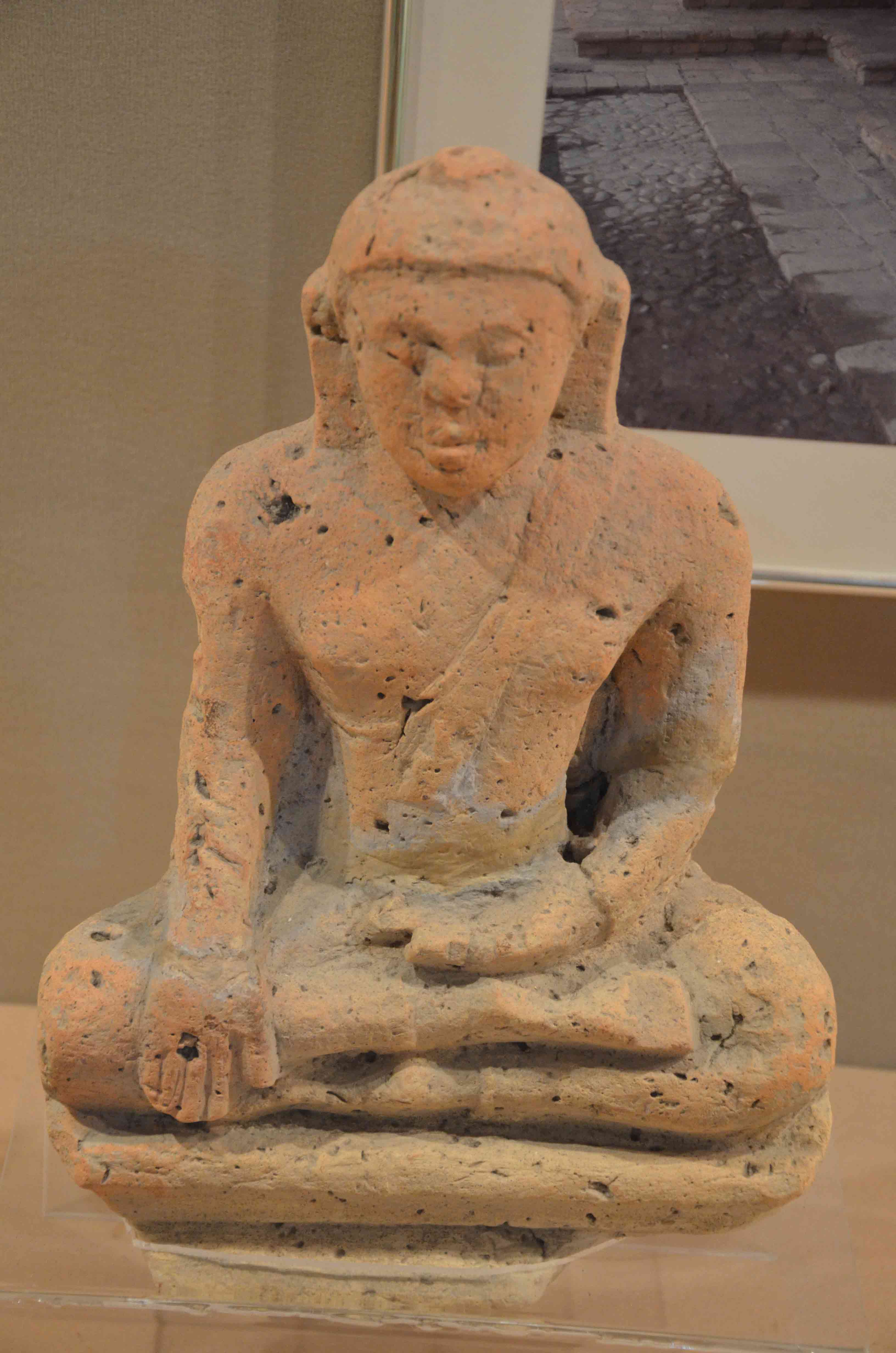
A sitting Buddha terracotta statue recovered at Site 21 Candi Pengkalan Bujang

References

Dr Cheah Boon Kheng, Early modern history, Archipelago press, 2001

Baker, Jim. Crossroads, Marshall Cavendish editions, 2008

Winstedt. R.O, History of Kedah

Guy John, Last kingdoms. Introducing early Southeast Asia, 2014

Wade Geoff. Beyond the Southern Borders: Southeast Asia in Chinese texts to the 9th century

Sulitiyono, Journal of marine cultures, volume 7

Ramli, Shuaimi Nik Abdul Rhaman, Zain Musa, Samsudin, Rodzi Abdul Razak. Arab-Persian merchants in the Malay peninsula based on foreign sources and archaeological data, Institute of Malay world and civilisation, Faculty of social sciences and humanities, School of history, politics and strategy, The national university of Malaysia.

Selvakumar, V. Commercial interactions between India and Southeast Asia during medieval period and future Interactions between ASEAN and India.

Jacq-Hergoualc’h Michel. Art asiatiques. 1992

Oxford advanced learners’ Dictionary ,7th edition

Munoz, Paul Michel. Early kingdoms of the Indonesian archipelago and the Malay peninsula. Dr Nasha Rodziadi Khaw. MV focus: History and archaeology of ancient Kedah, a reflection of multiculturalism in the Malay Peninsula.

Exhibition: Pandemic, Epidemic and Endemic

Do catch the ‘Pandemic, Epidemic and Endemic’ exhibition currently ongoing at Muzium Negara, scheduled to run until 31 March 2021. It is located in the hall between Galleries A and B. This is a small space but the exhibition packs a lot of information.

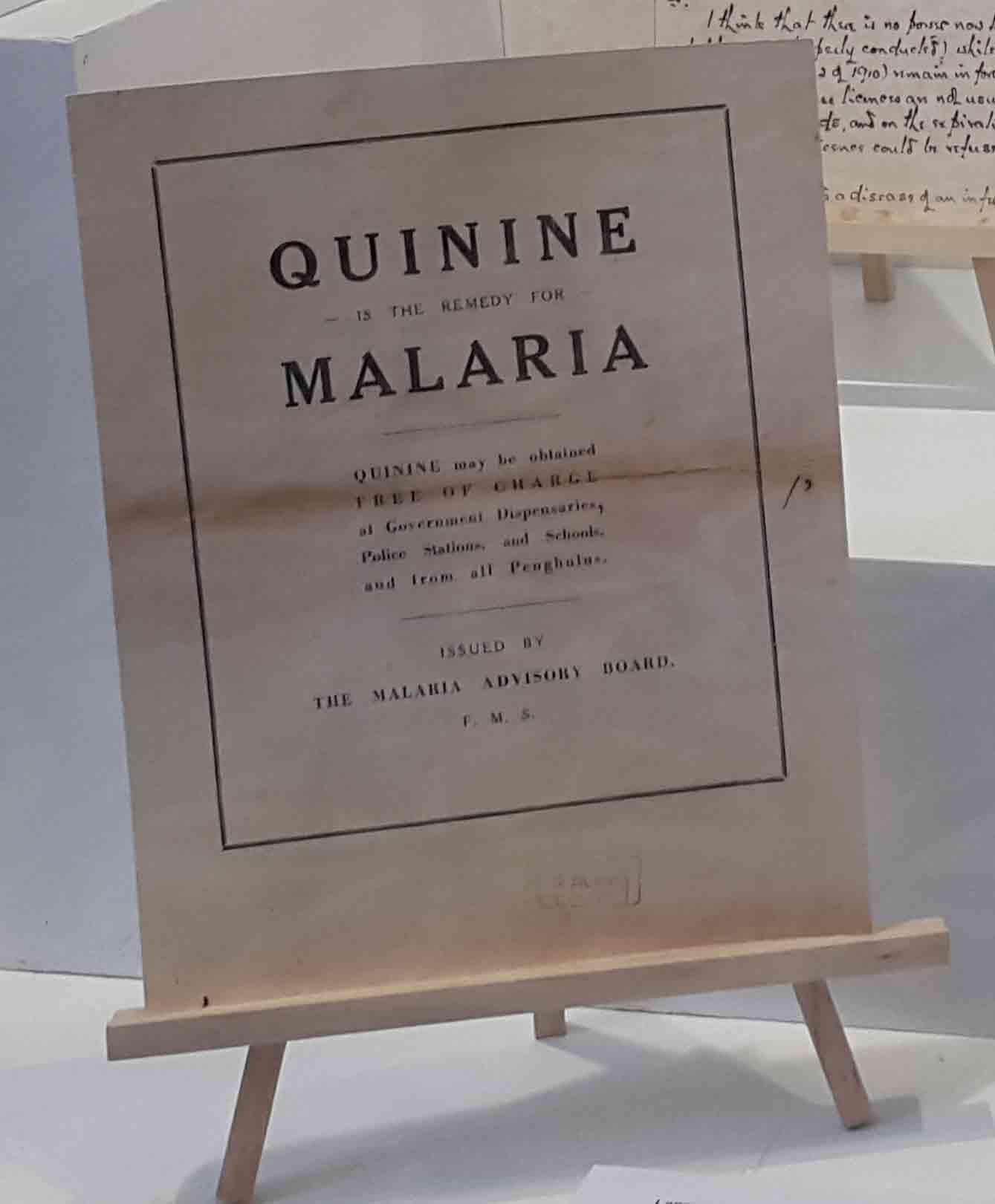
The bulk of the exhibits focus on the current Covid 19 pandemic, with display boards and dioramas tracing its history in Malaysia and globally. However, the exhibition also showcases other pandemics and epidemics including nipah, chikungunya, H1N1, H5N1, malaria, rabies and leprosy.

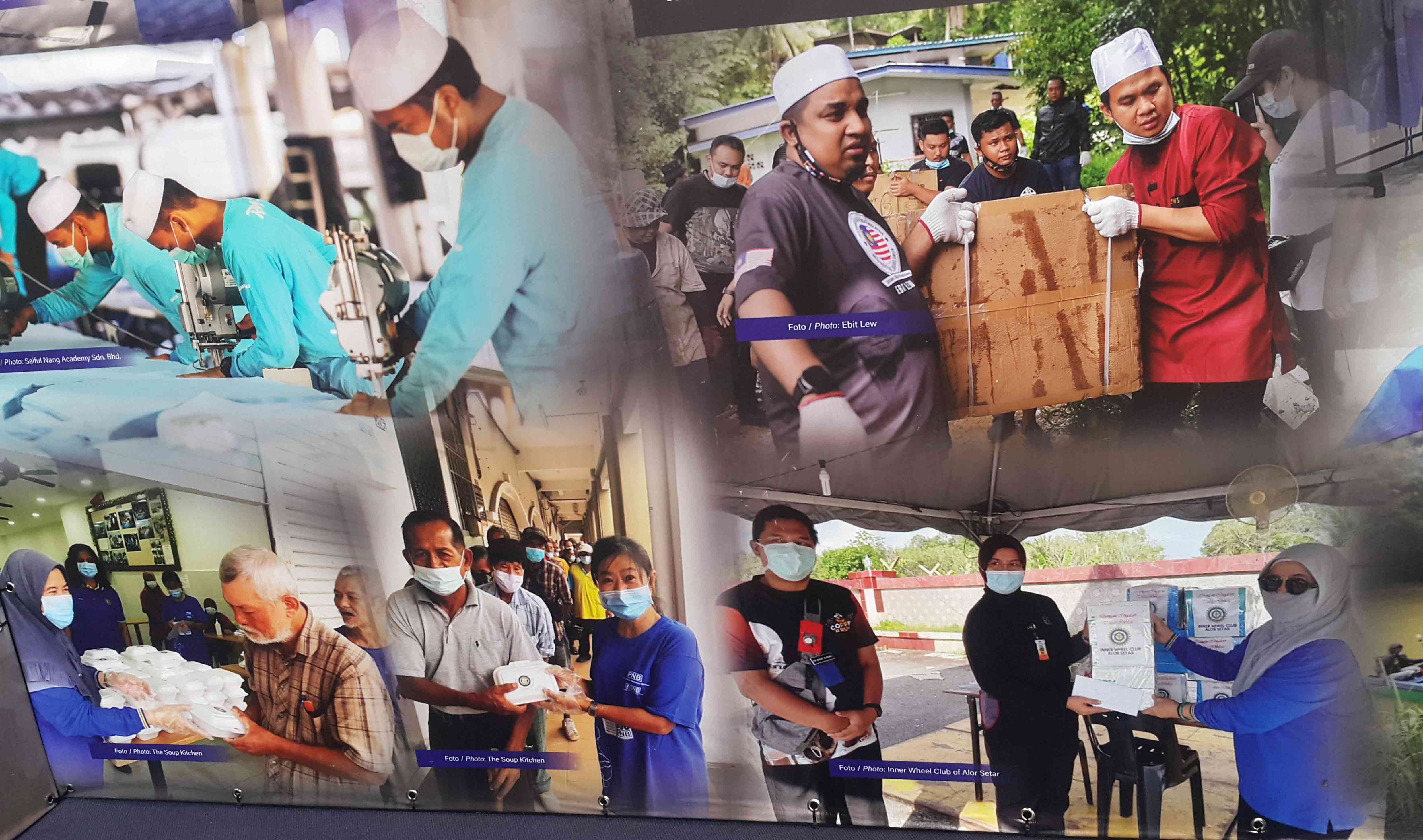
Having a heart… NGO’s helping the less privileged during the Covid-19 pandemic

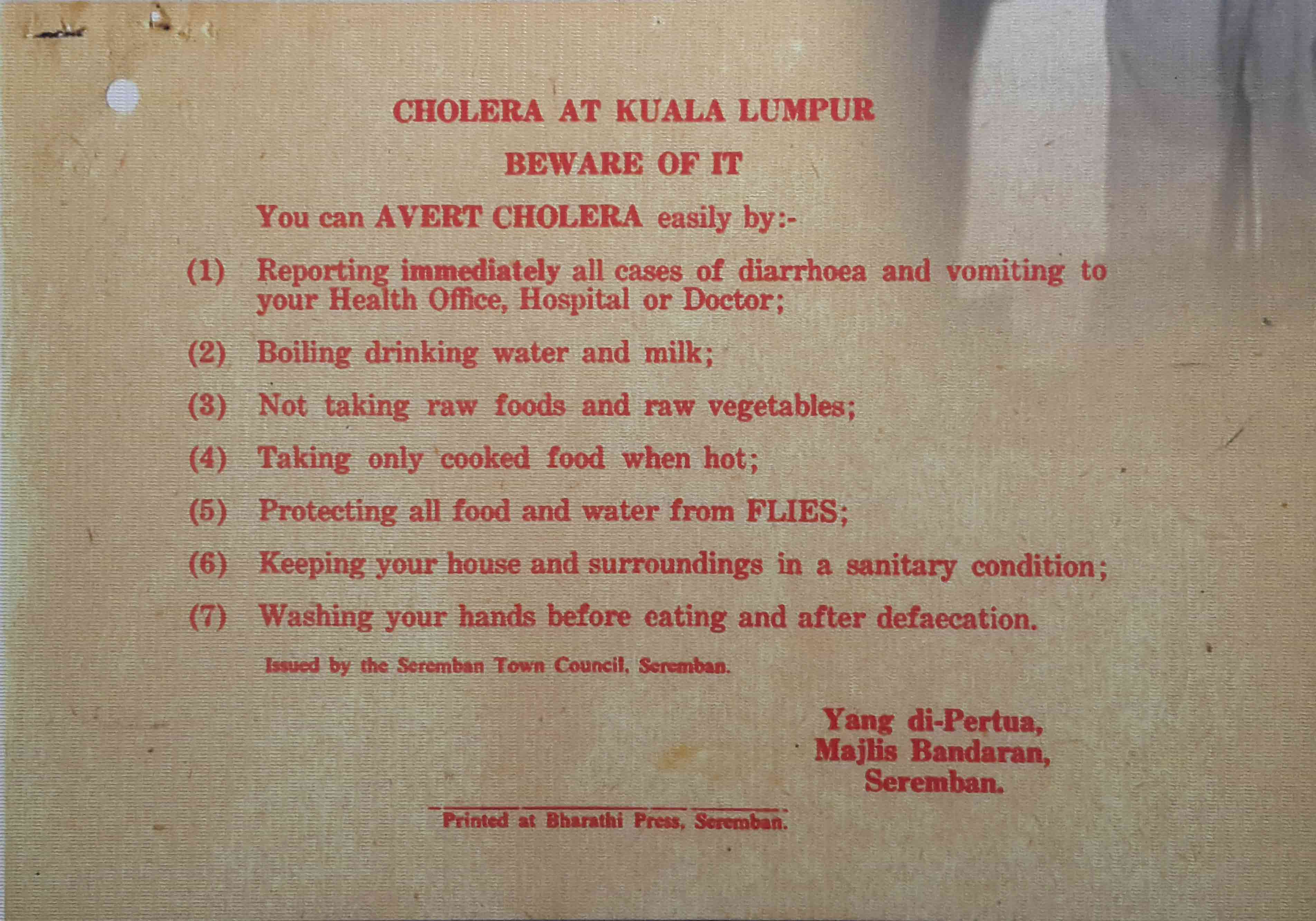
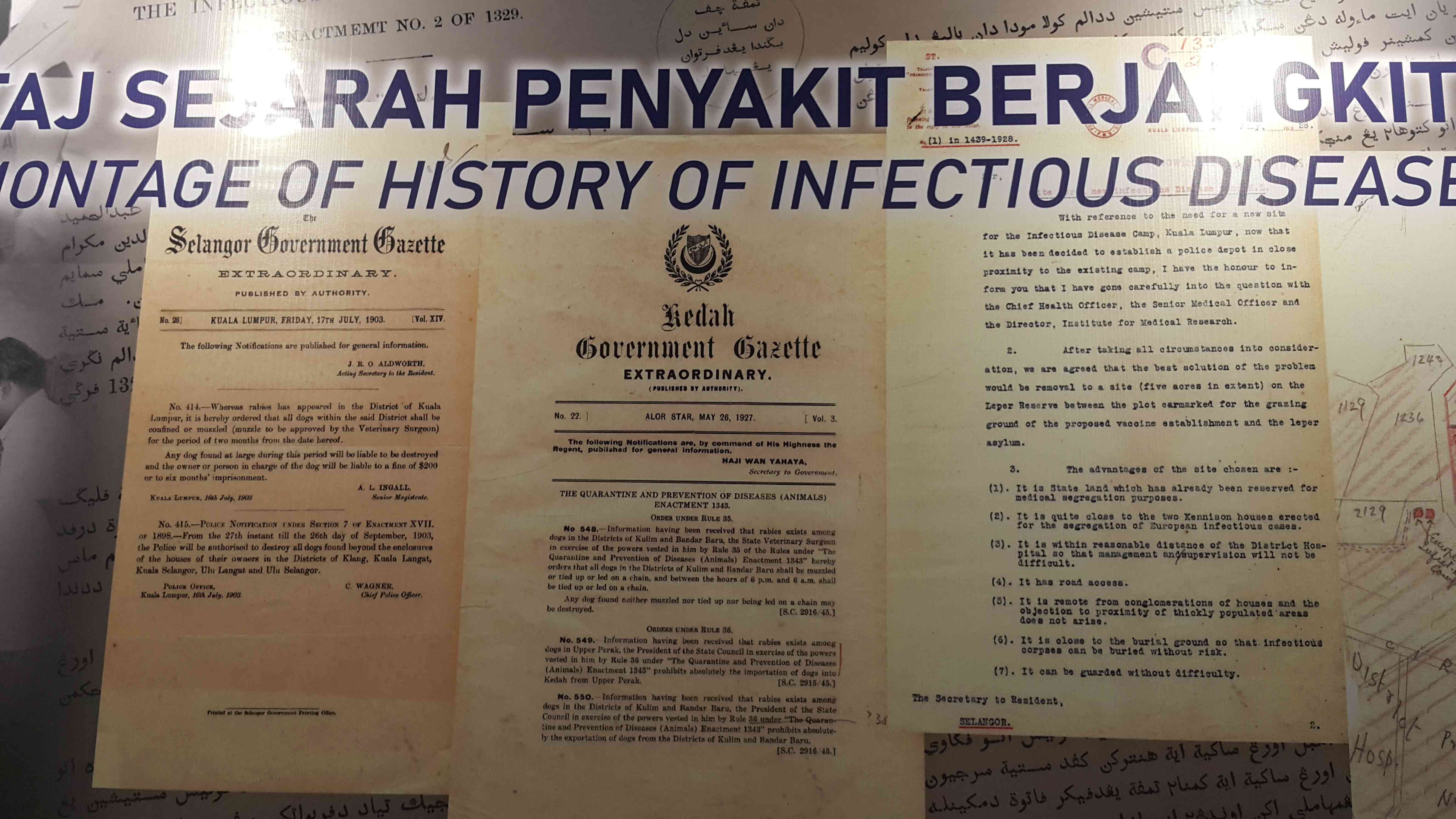
Interesting are the government gazettes and circulars of old in bids to contain the various outbreaks.

The exhibition also includes usage of alternative medicine such as pomegranate to cure cough, tapeworm as well as diarrhea, and hibiscus for fevers and as an antidote for poison.

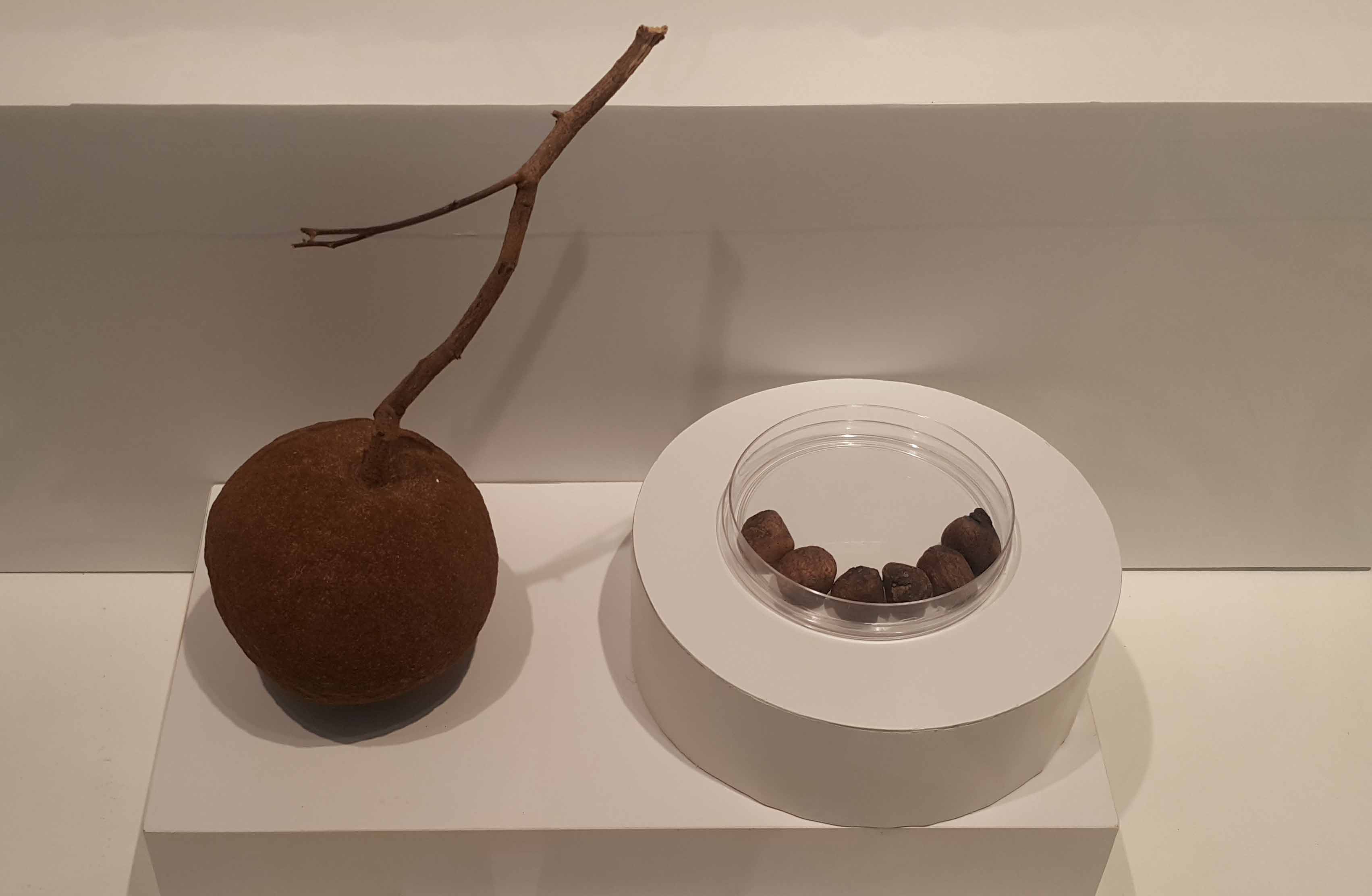
Chaulmoogra (Hydrocarpus wightianus) , known locally as buah kusta as it was used to treat leprosy before dapstone was formulated.
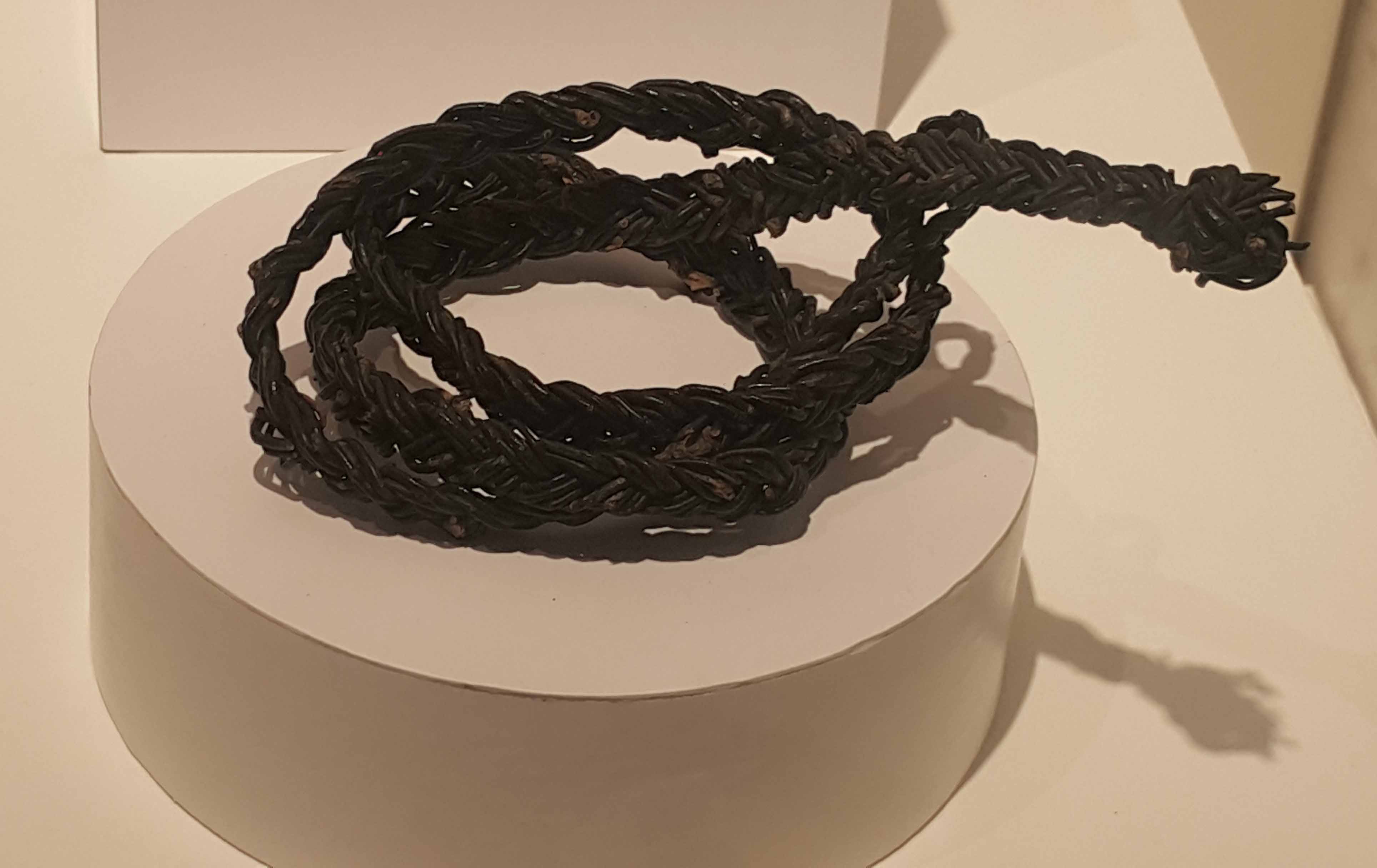
This belt is made from the sintok (Entada spiralis) root, used as a traditional medicine by the Orang Asli used to cure (among others) backache.
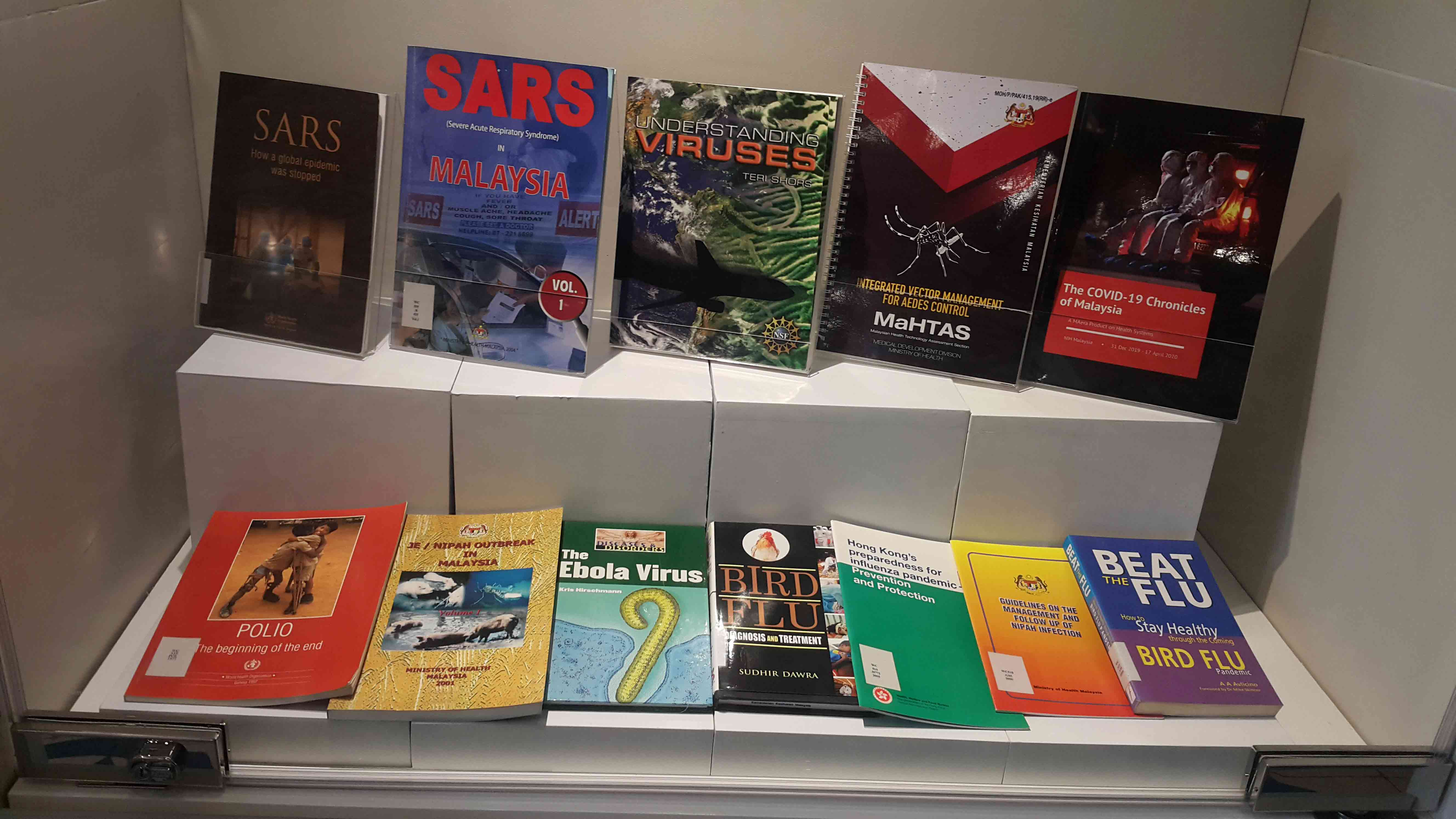
Some books on the various diseases

Many more interesting nuggets can be found at the exhibition. Do head to Muzium Negara where you can also catch another exhibition titled ‘The Power of Gold’ located at Gallery 1 in the JMM building.