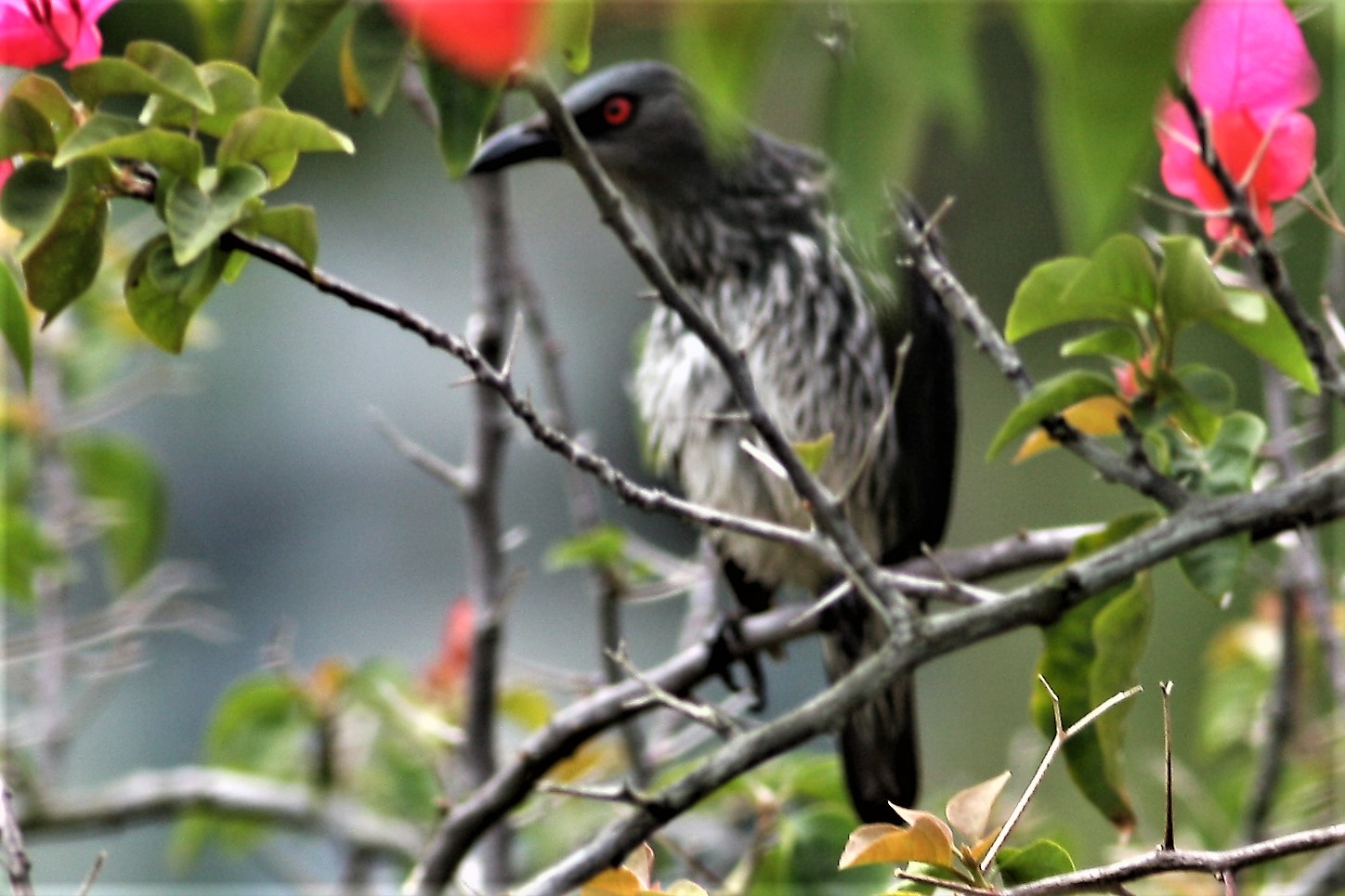
Shooting Birds: What one Museum Volunteer does during the Covid-19 Pandemic

by V. Jegatheesan

To paraphrase Lynn Thomson:

To be standing together in a frosty field, looking up into the sky, marvelling at birds and revelling in the natural world around us, is a simple miracle. And I wonder why we are so rarely able to appreciate it.”

Lynn Thomson, Birding with Yeats: A Mother’s Memoir [paraphrased]

A recent article in our blog titled ‘Volunteering at the Museum during the Covid-19 Pandemic’ by Karen Loh, touched on the Museum Volunteers’ organisation and its continuing work. It prompted me to reflect on the previous year. Museum Volunteers have largely carried on with normal life, as well as some new things in the sudden ‘time windfall’. Of course, there is the shopping, cooking, house cleaning because the house cleaner cannot come in, and the outdoor exercises. Tasks previously done on weekends are now spread out over the week. There are the unusual activities like cooking or baking foods you never did before and repairs you always wanted to do but put off. I, however, have found a way to indulge in bird photography just around my garden.

I am a keen amateur observer of birds, but I have only observed because I did not have a powerful camera. I do have powerful binoculars and used this to take notes and then refer to all the colour plates in the book I have on birds to identify them. A challenge in itself. Then, a good friend insisted I use his spare Canon EOS1 Ds Mark III, together with a 400mm and 70-200mm zoom lens. This truly opened up a completely new world nine months ago. Somehow, it seemed that the various birds knew their pictures were going to be taken, so they all appeared and posed for me. After that, some of them would not be seen for a long while or ever again.

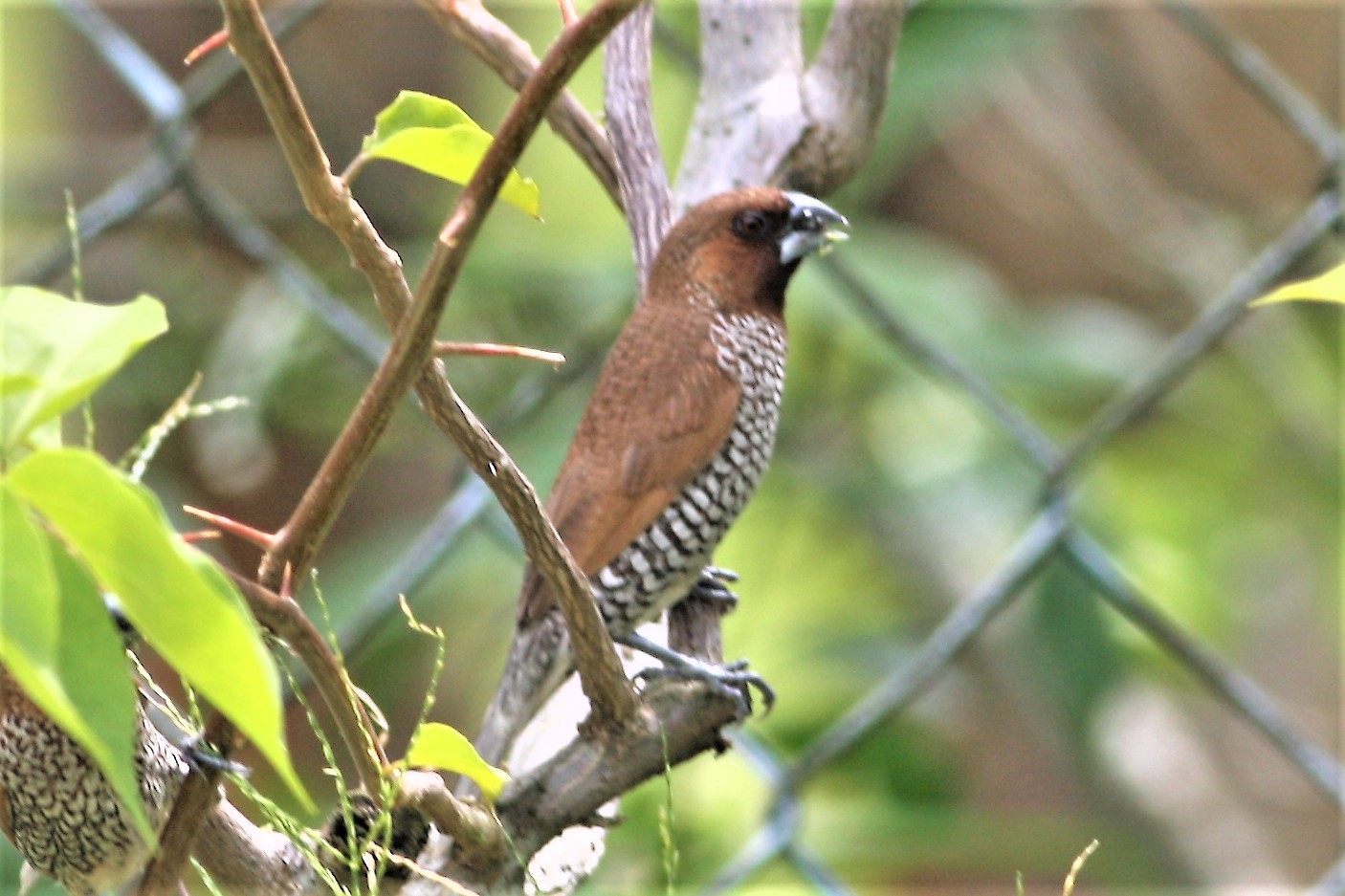
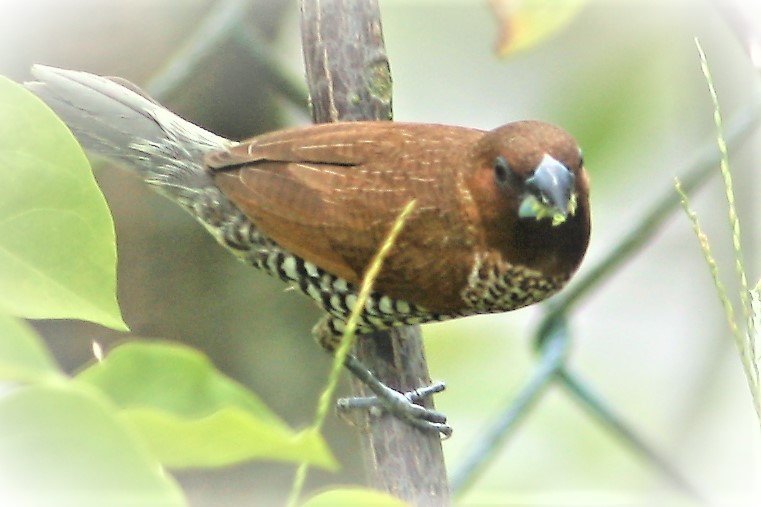
Being near Bukit Gasing helps making a collection just by being in the garden. However, it involves hearing new sounds, keeping the camera always on the ready and with its battery charged. The first pictures I took were of the Scaly-breasted Munia. They are certainly rare, at least in my garden, as I have never seen them again. They come in pairs and move slowly around a bushy plant, pecking away at tiny insects or seeds.

Scaly-breasted Munia

Mind you, bird photography is not just point and shoot. The quick dash to capture the pictures, the excitement and shooting it quick in case it flies off, all makes one nervous with a shaky hand resulting in a few slightly blurred initial pictures. However, unlike film, with a digital you can take as many pictures as you want until your hand steadies, because it is all free! All part of the fun!

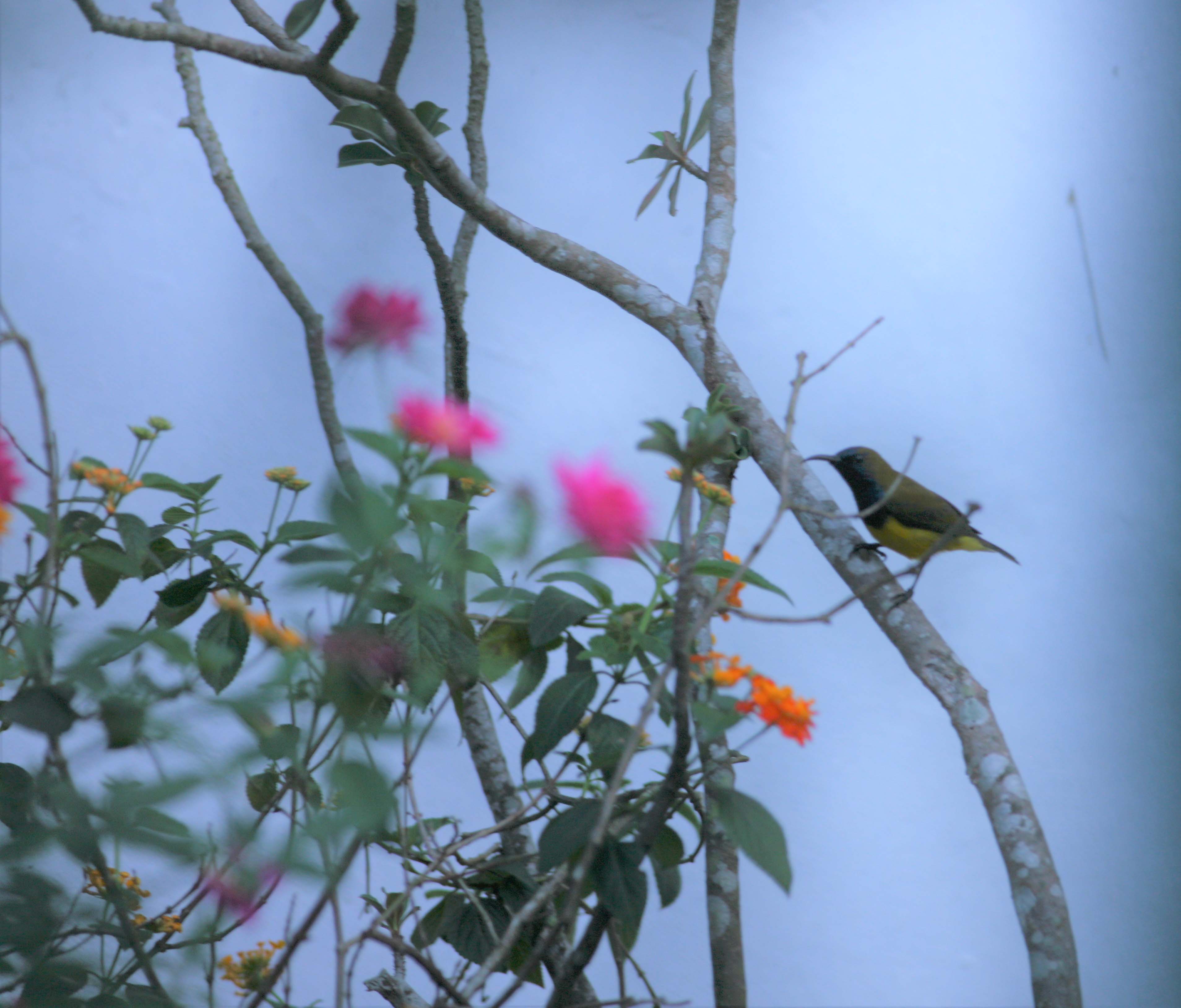
Then again, many birds sit high up a tree or they may be far away. Then, there are birds that never sit still but continuously flit about in the bushes such as this Olive-backed Sunbird. How does it feed at that speed I wonder?

Olive-backed Sunbird

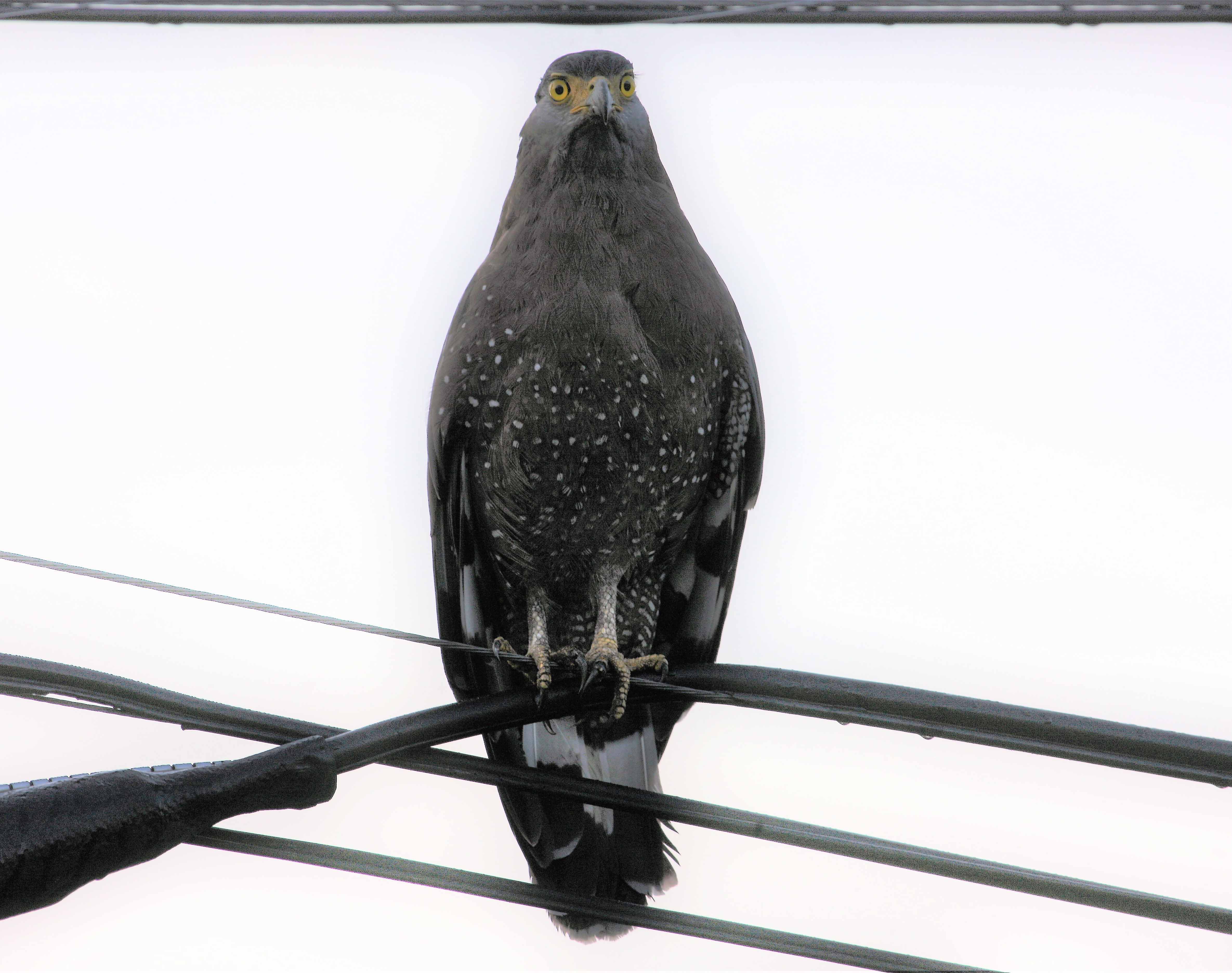
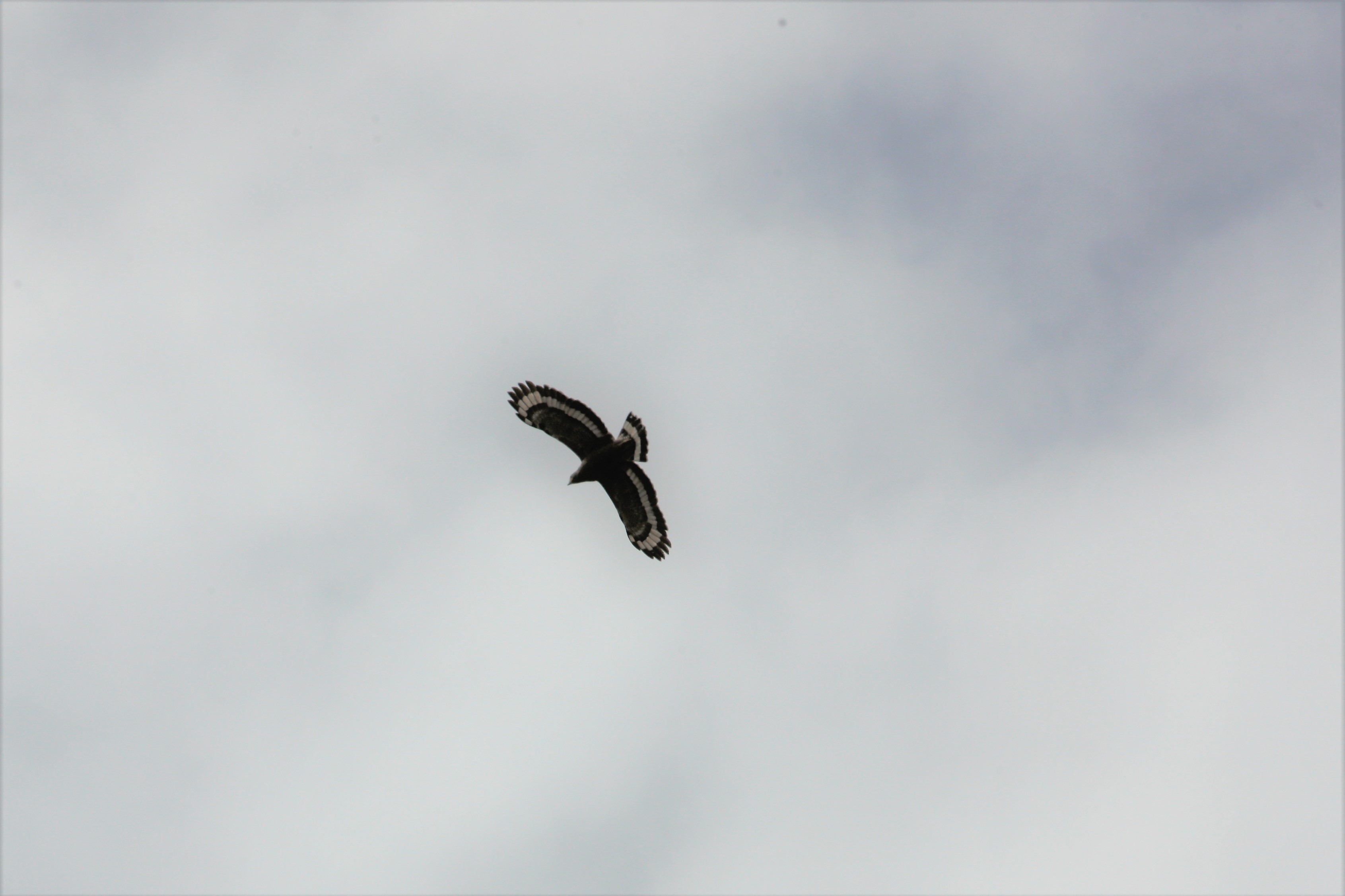
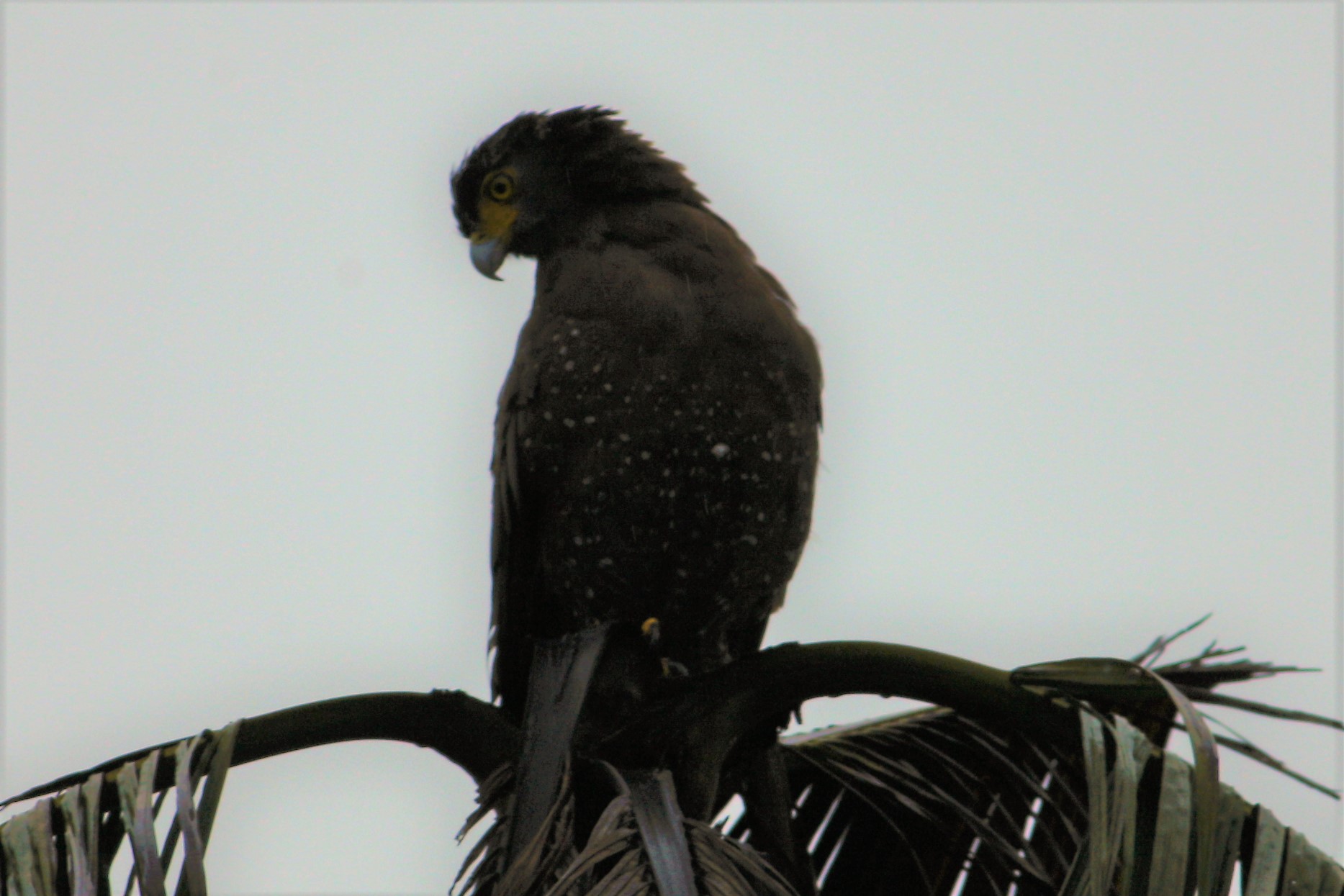
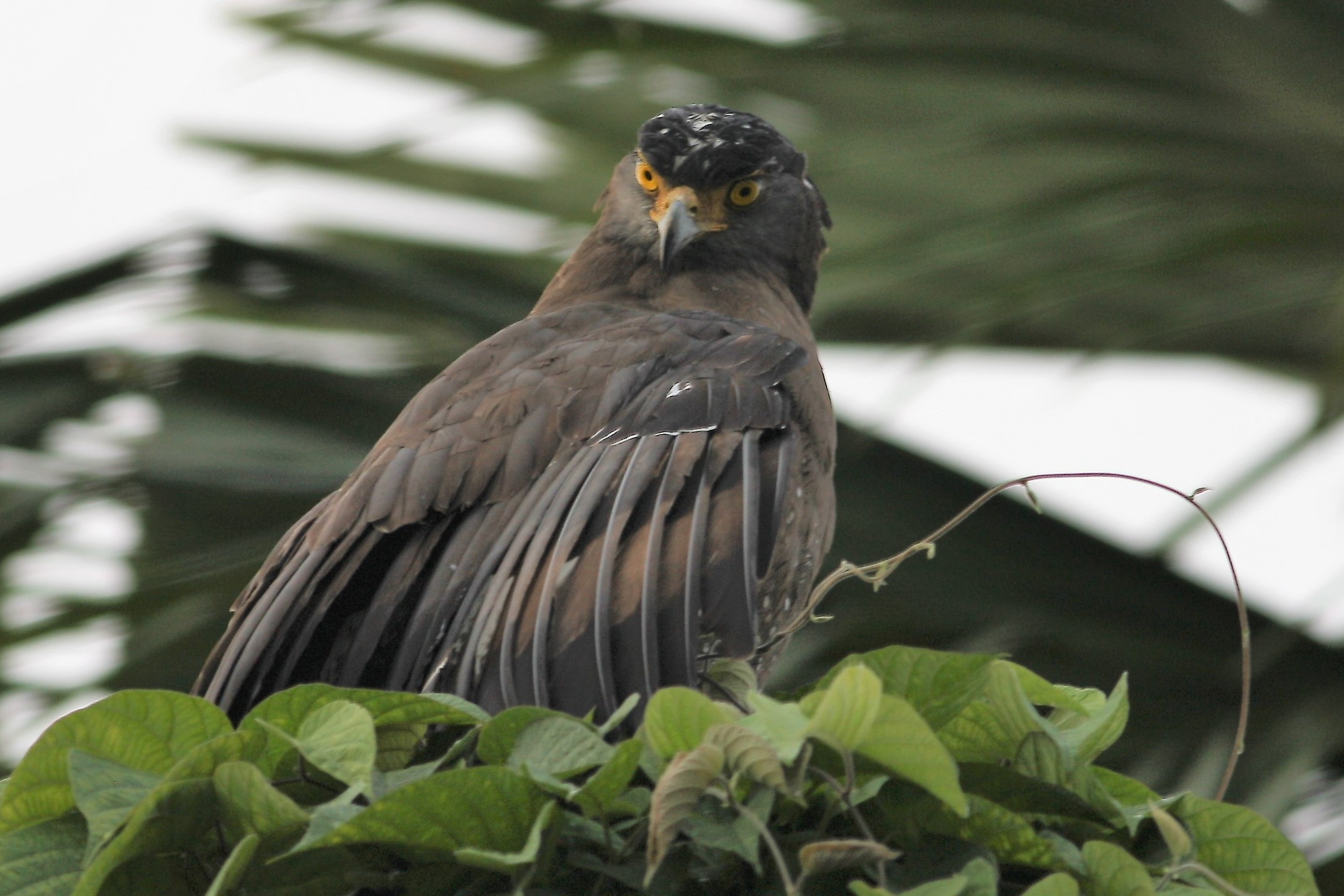
The Crested Serpent Eagle is a real treat. I first sighted it in the early morning on top of a dead pinang tree. A few days later, that vain bird (or maybe another) was on the top of the telephone pole right outside my front gate like a sentinel! Was it oblivious to my clicking away? It does make an appearance now and again in the late evening, perched regally looking around for prey, which could be snakes or frogs and rats. These eagles nest up in the bukit. On some hot breezy days sometime after 10am, they spread their wings and circle, ‘riding the thermals’ as the hot air lifts them higher and higher, till they disappear from view, with a call that sounds like a baby’s cry.

Crested Serpent Eagle. Clockwise from top-left: in flight, on telephone pole, on pinang tree, up close

If you see the eagle’s crown is ruffled, it is best to make a quick exit, as this means the bird is angry.

I must qualify that the comments I make here are based on my own observations over time and not from books – so please do not challenge me lah. While I could use scientific names like birderus whateverus, I prefer the simple names. Admittedly, I am not yet familiar with the sub-species. Only for a few birds, I can distinguish between male and female. While the explanations are simple, detailed descriptions like habitats, migration patterns, range etc., are avoided as this is all about my sightings only.

Naturally, other than the exotic birds, there are the few plebeian, or ‘commoner birds’. These will be familiar to all.

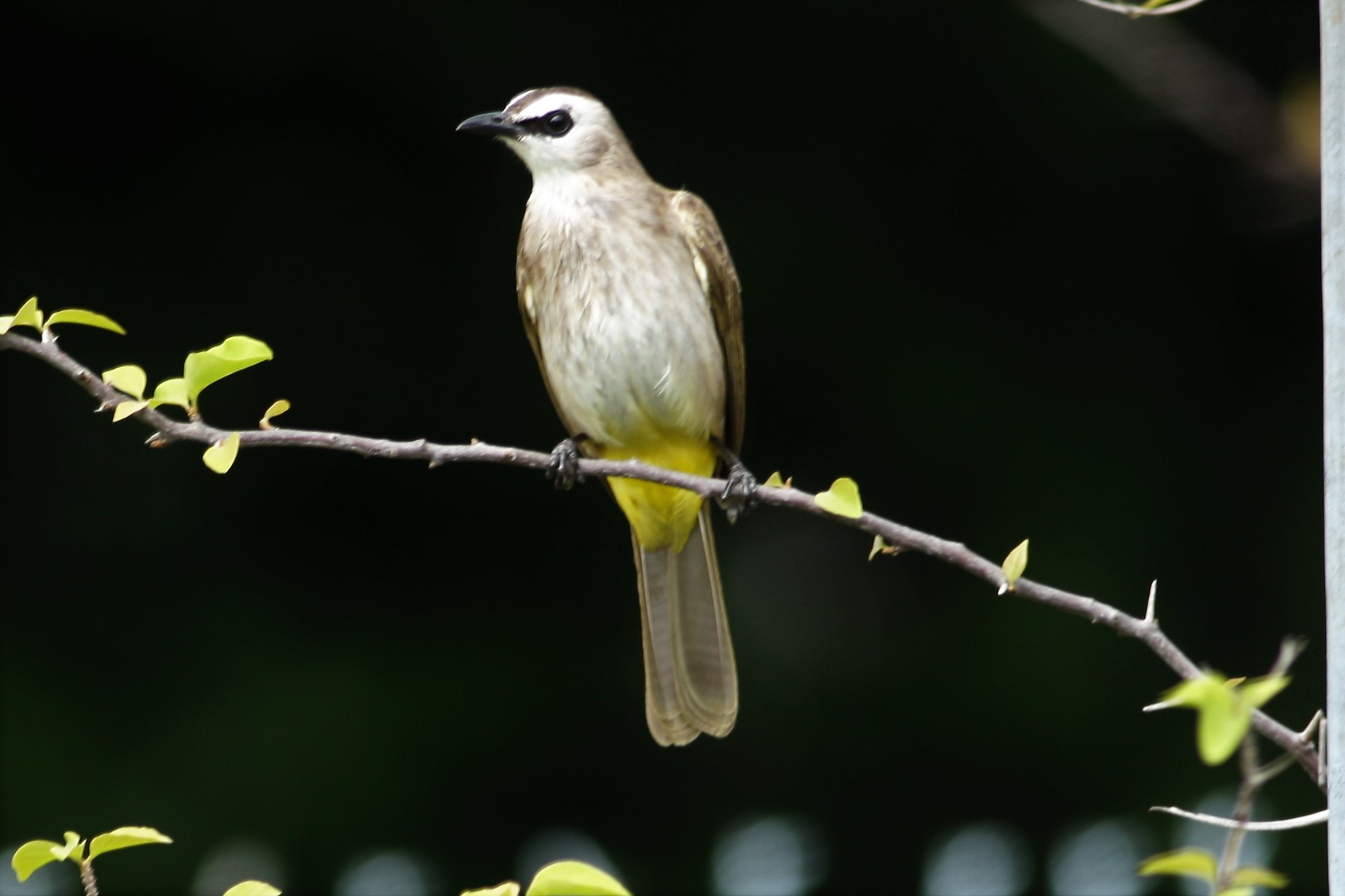
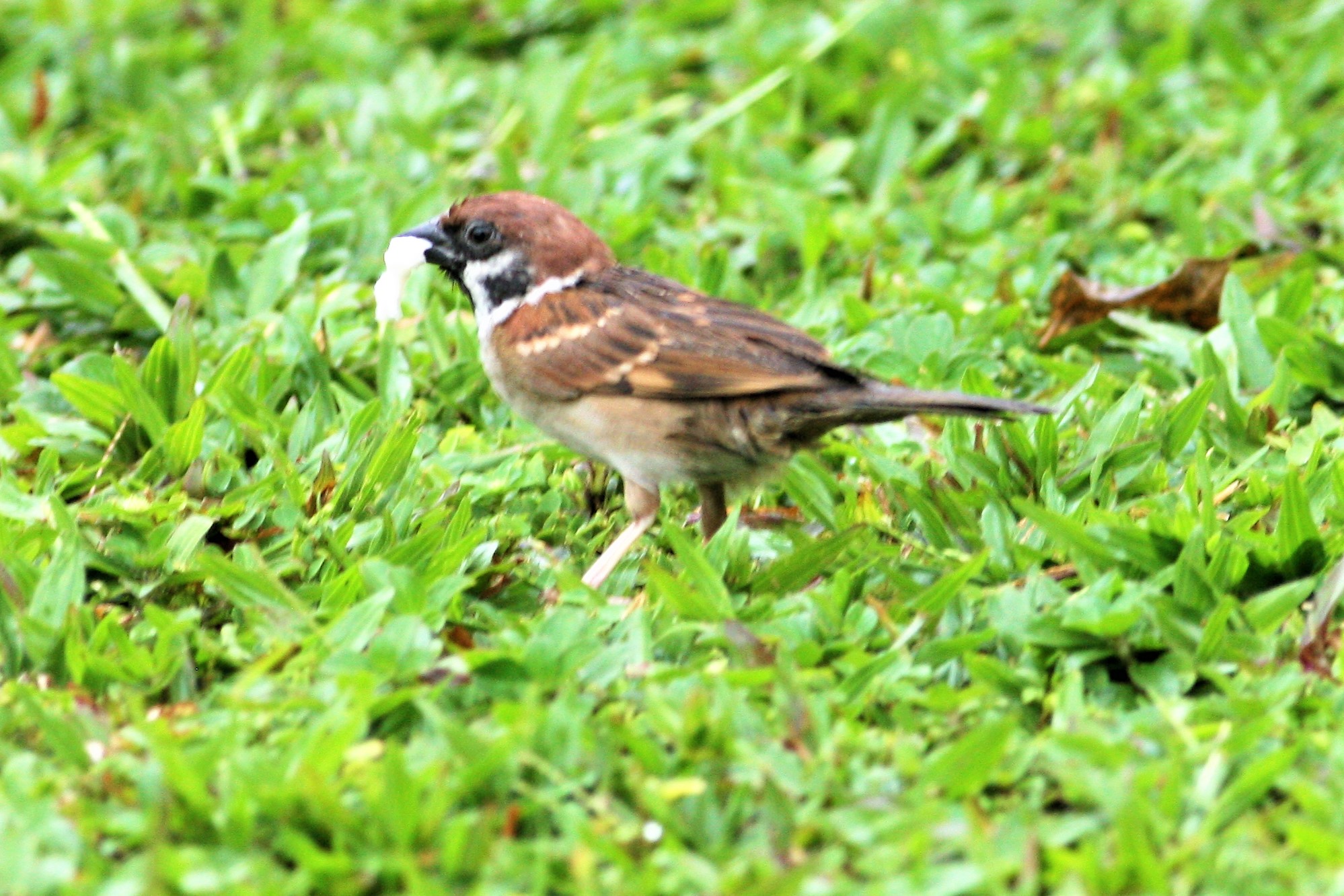
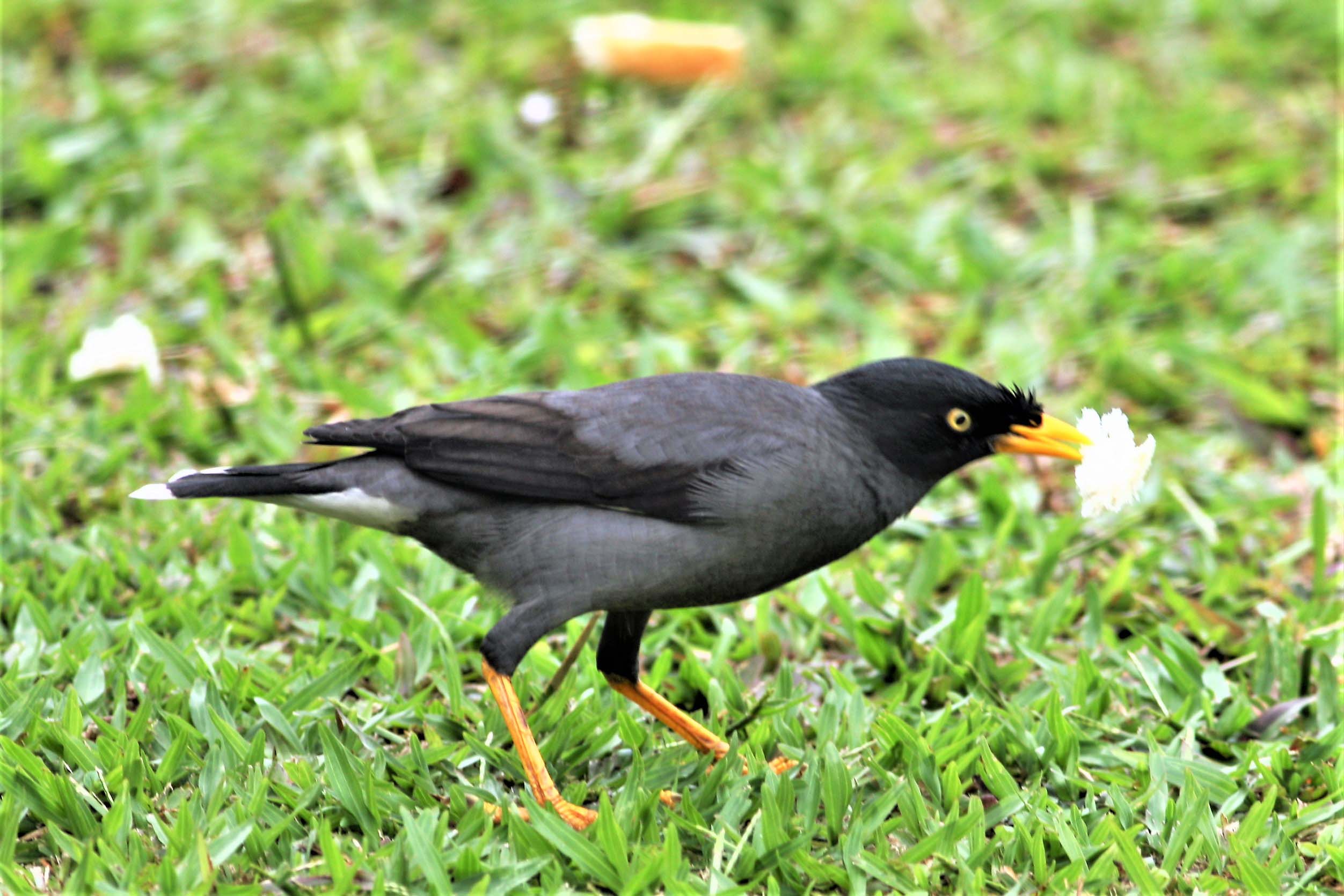
Clockwise from top-left: Yellow-vented Bulbul, Eurasian tree sparrow, Magpie Robin, Javan Myna

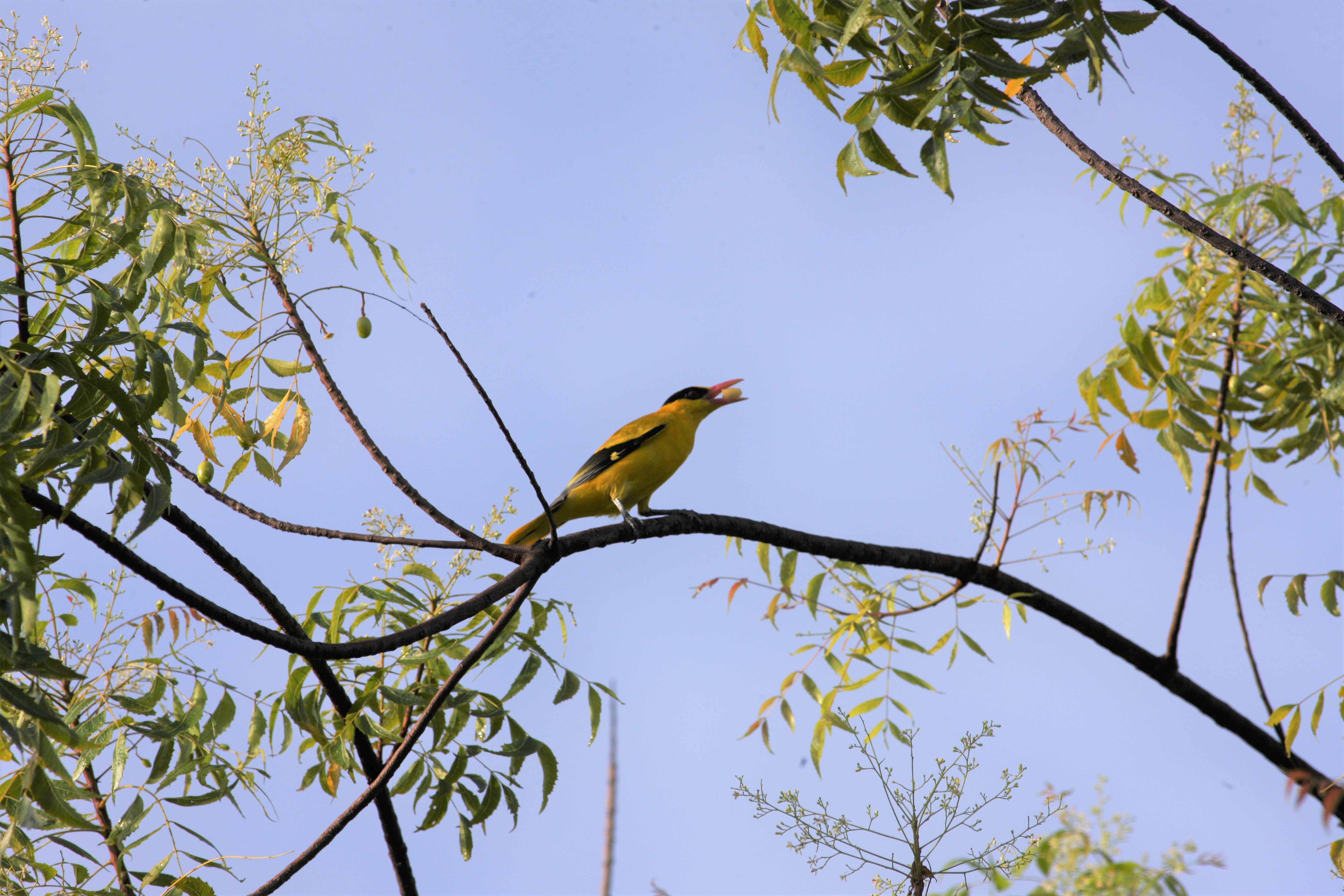
Black-naped Oriole with small fruit

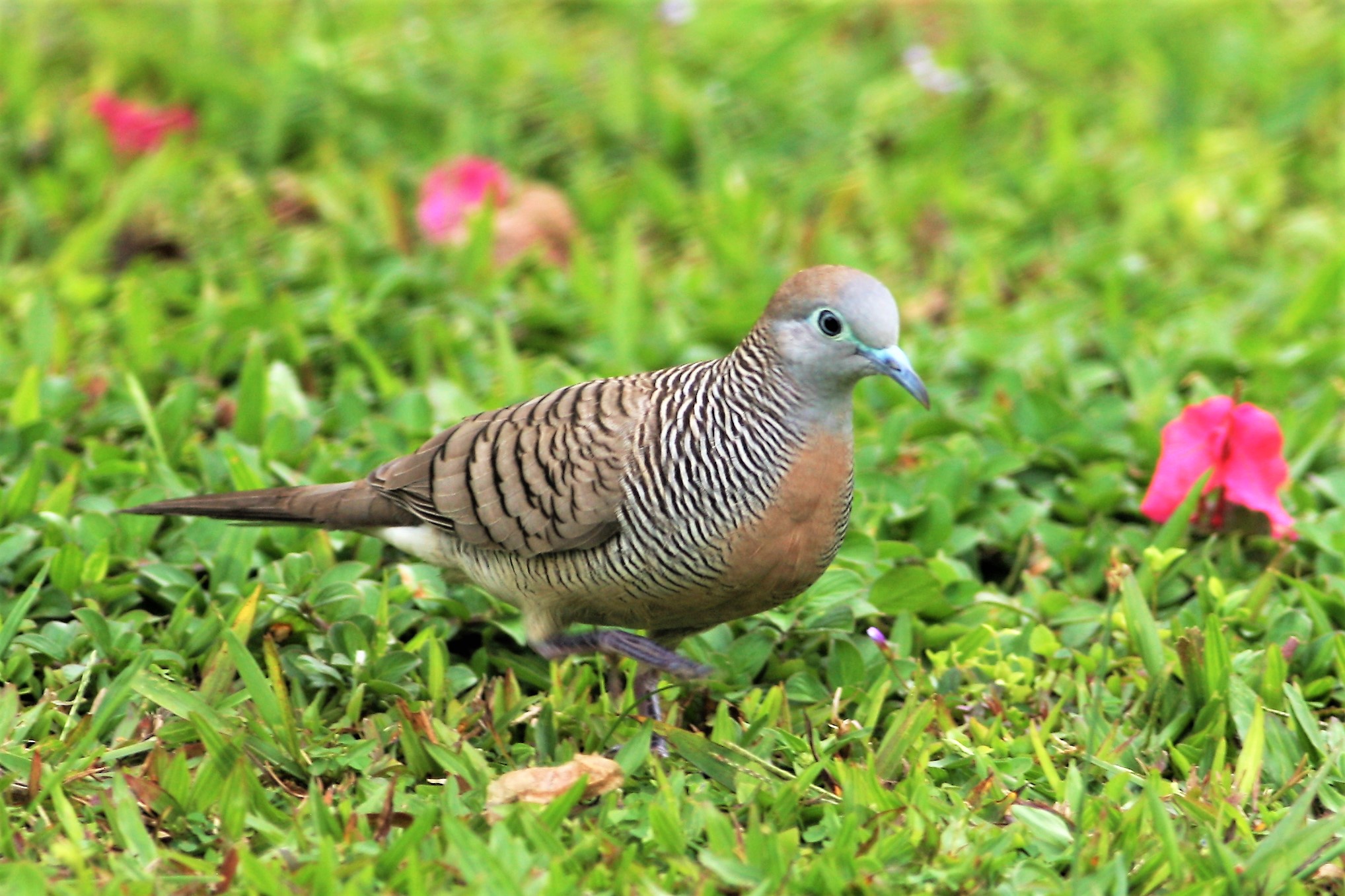
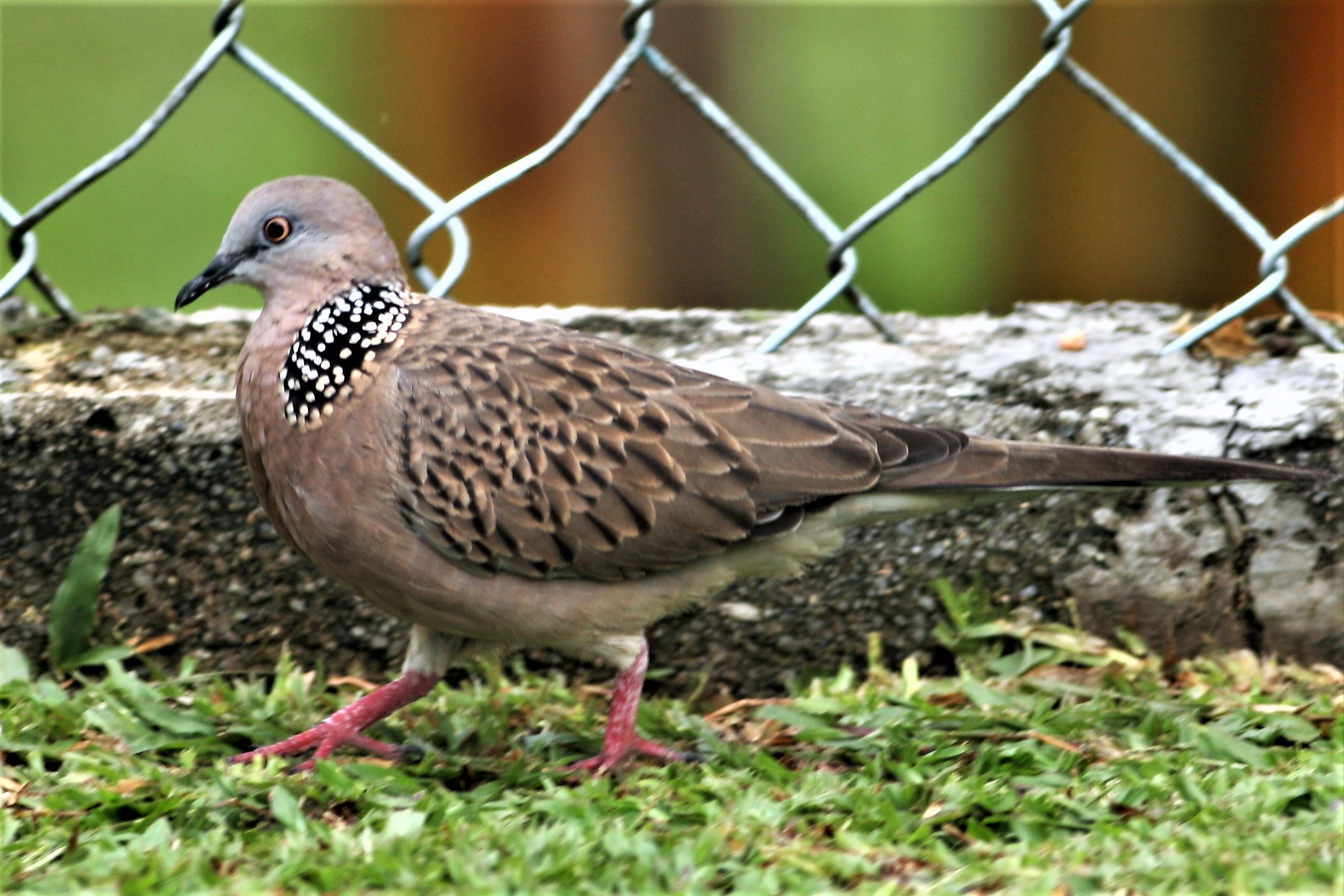
Left: Peaceful Dove, Right: Spotted Dove

Spotted Dive in flight

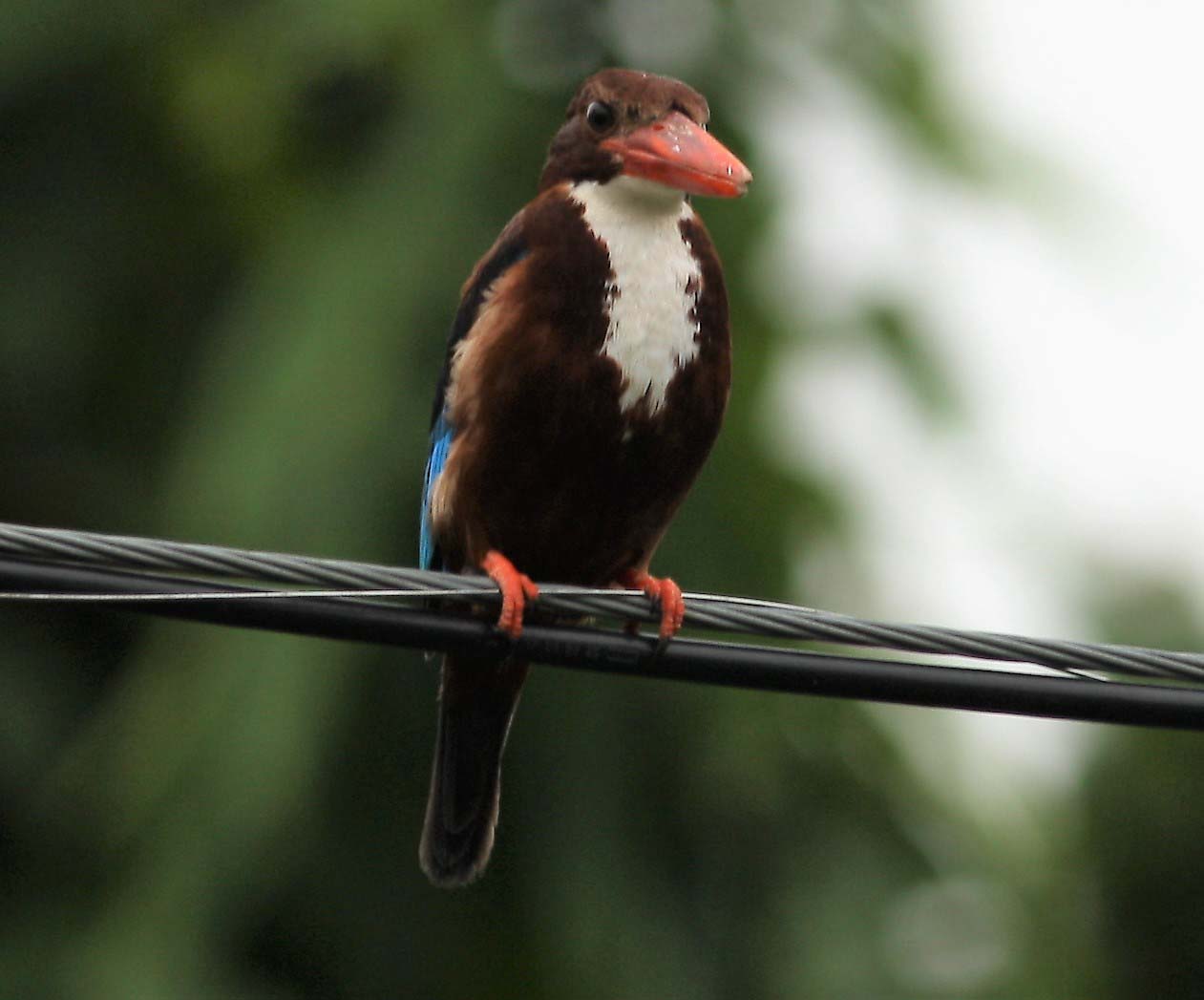
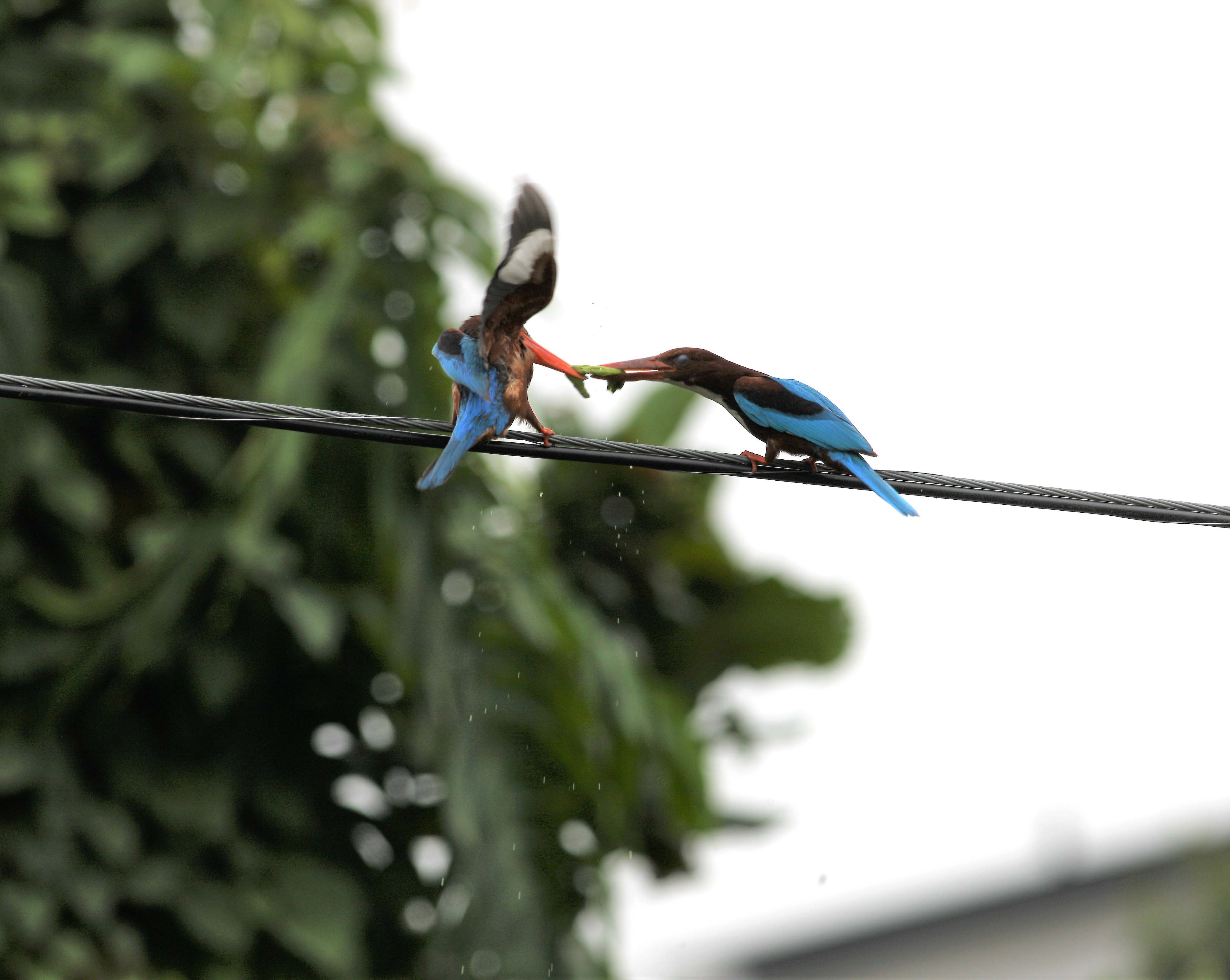
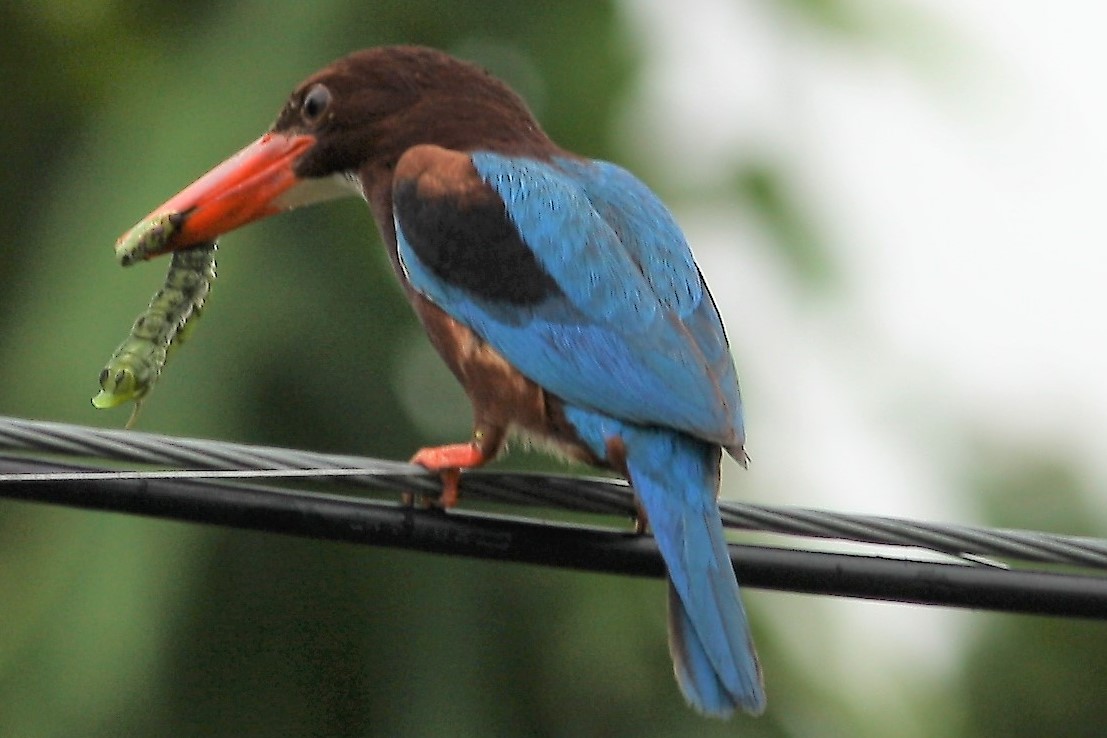
The Kingfisher comes by because of a monsoon drain nearby. It dives down into this drain and comes up with a guppy in its beak. A couple of wallops of the beak on the wire kills the fish, which then gets swallowed. They are also partial to worms and caterpillars.

Left: White-throated Kingfisher, Right: White-throated Kingfishers fighting for caterpillar

White-throated Kingfisher – the winner

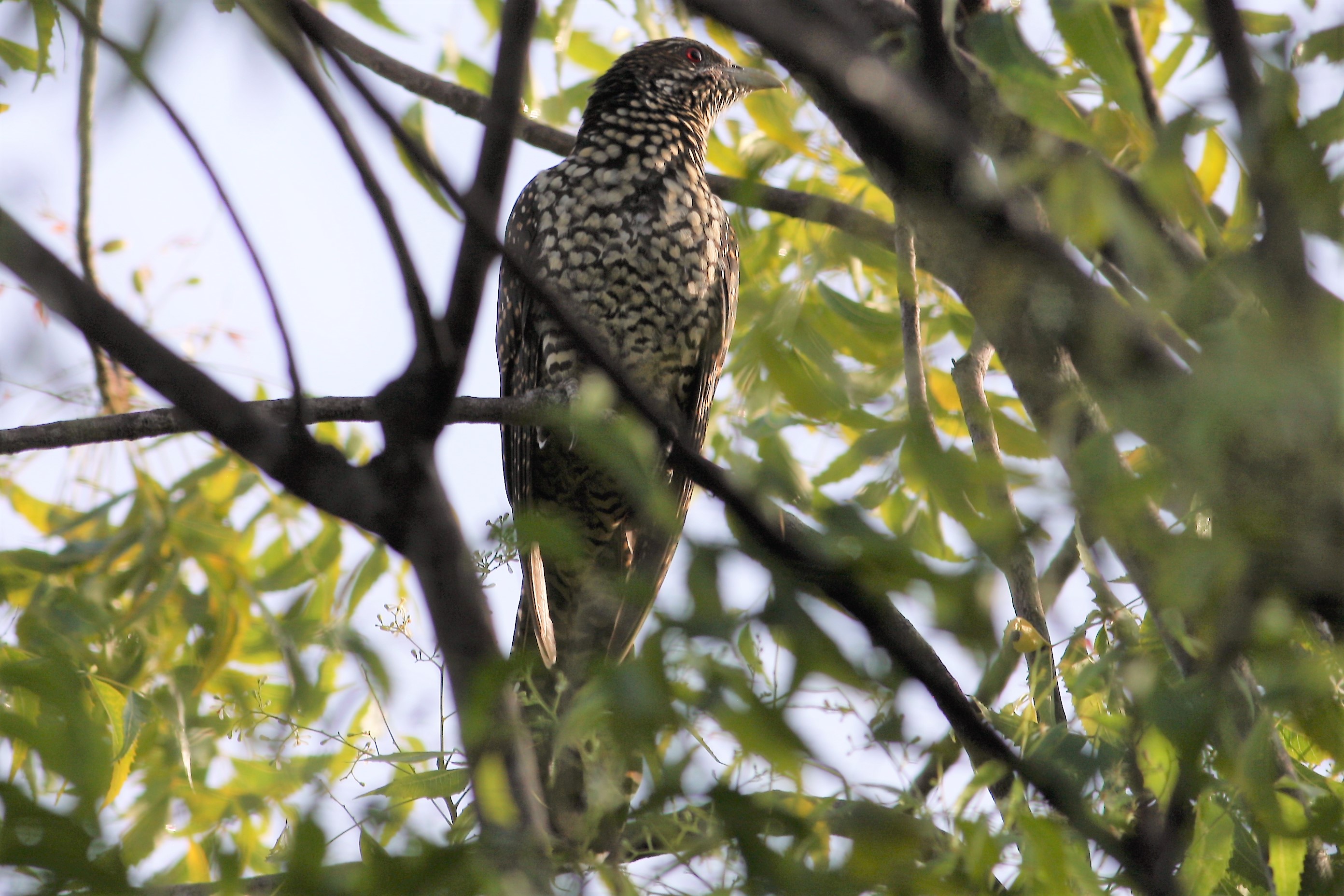
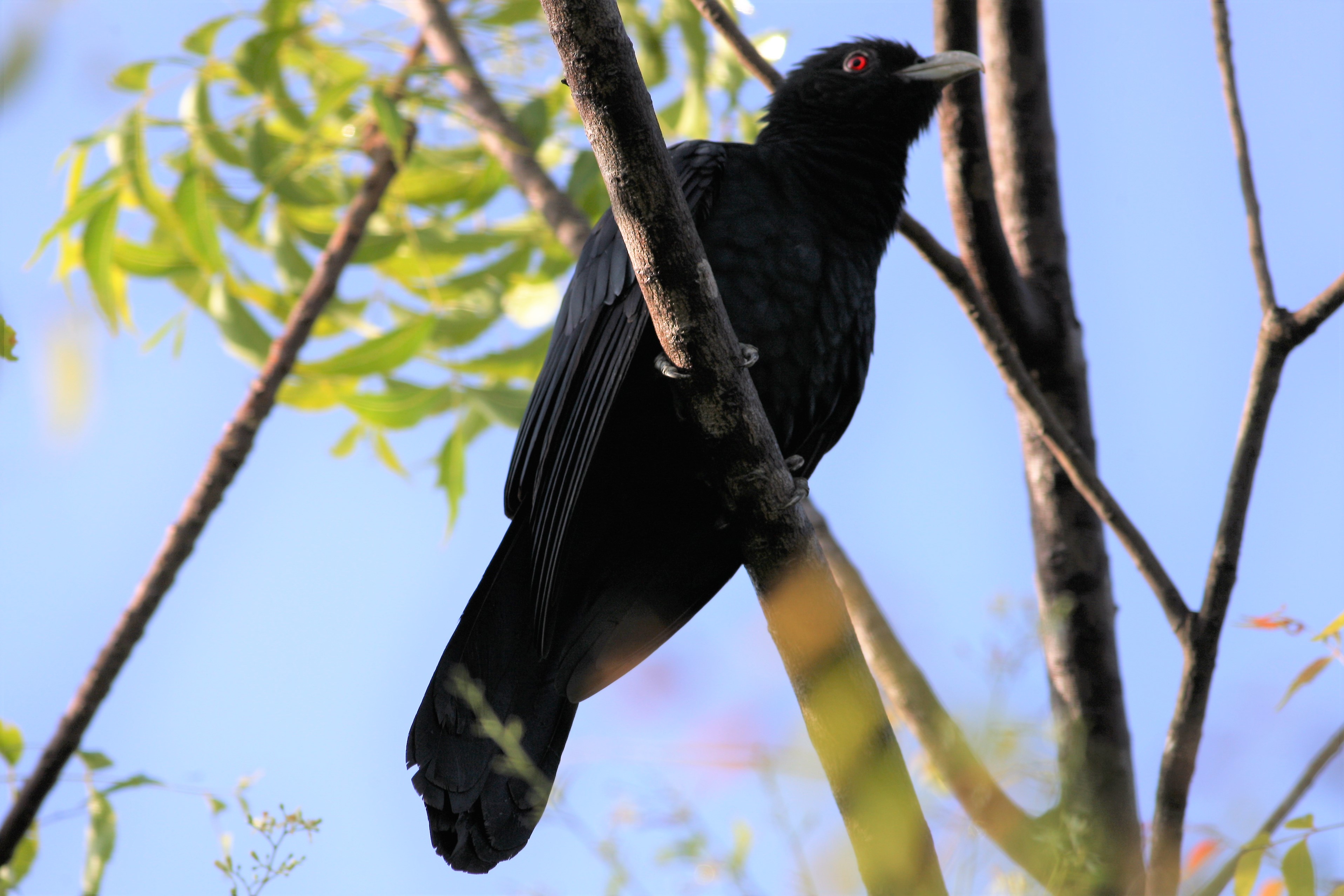
Then there are the seasonal birds, though some have become resident. I first sighted the Koel in this area, as well as in many other parts of the country in about the late 1980s, usually between November and March. Over the years it has become resident all over the country. A very shy bird which is almost always hidden in the trees and therefore difficult to photograph. But one of the ‘gems’ if captured on film.

Left: Female Koel; Right: Male Koel

Their call is a short continuous ‘woo woo’, which gets louder and louder. On a cool evening with the setting sun and a light breeze, the call truly sounds the knell of parting day. (Note to self:  get a video camera).

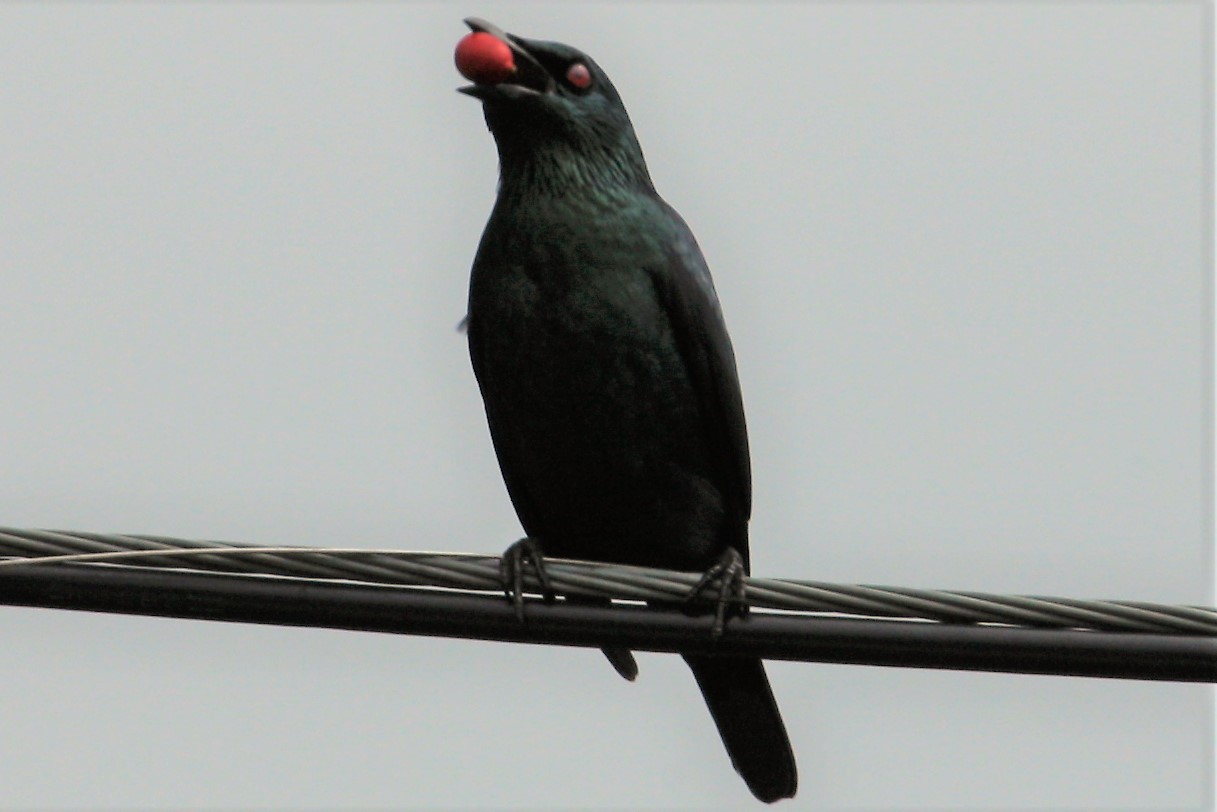
The Philippine Glossy Starling is a simple black beauty in low light but is really a glossy dark-green in full light. It usually flies in a small flock, roving from one plant to another to feed, stopping long enough to be photographed.

Left: Philippine Glossy Starling; Right: Immature Philippine Glossy Starling

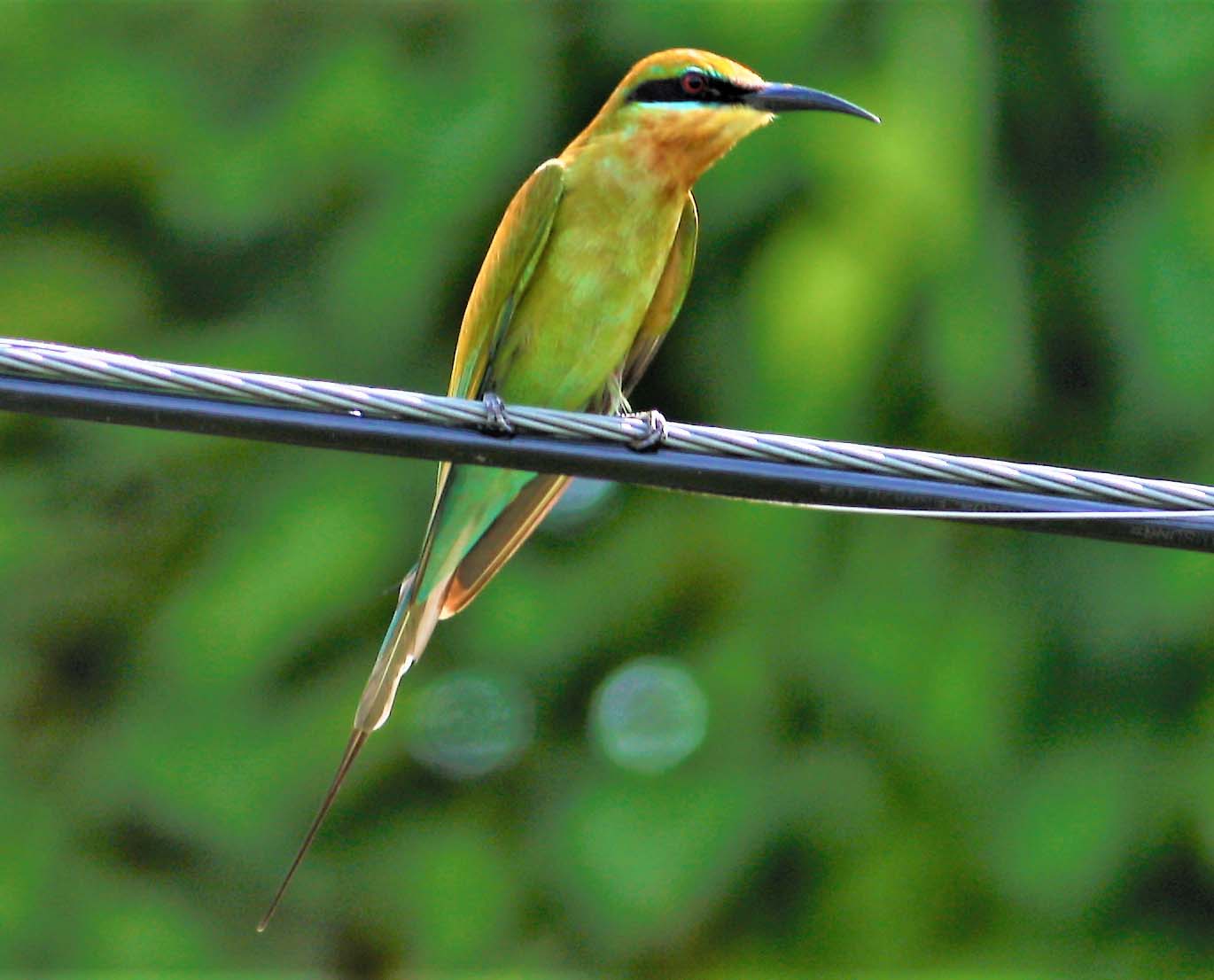
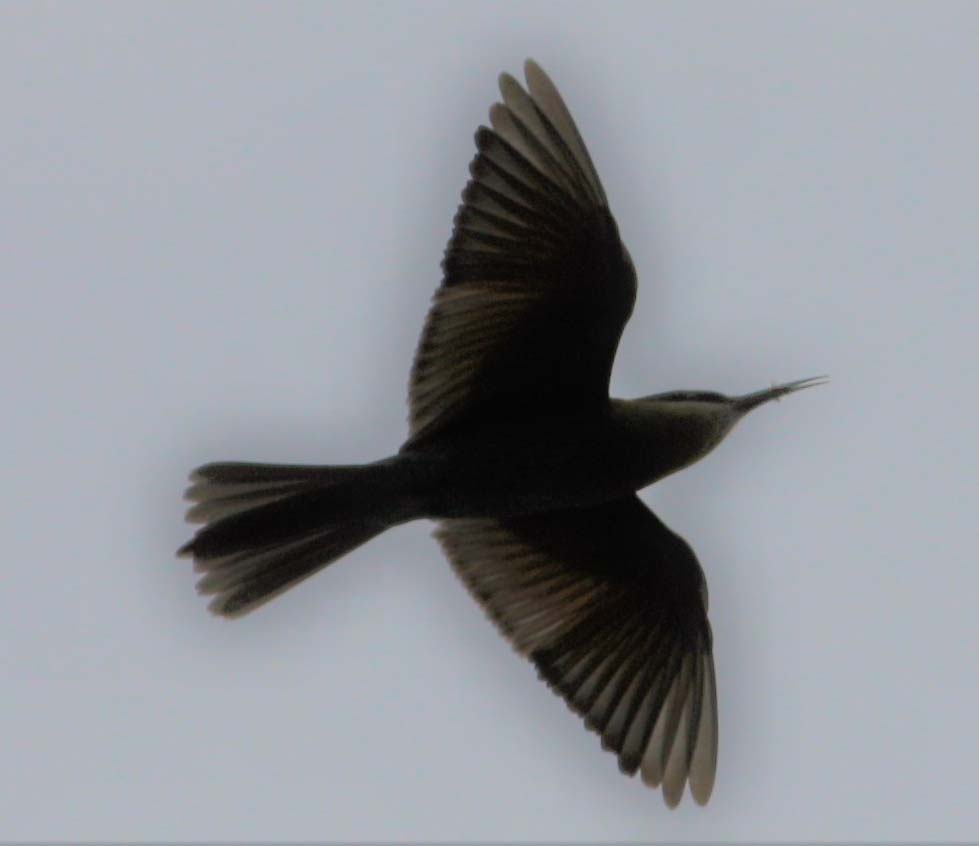
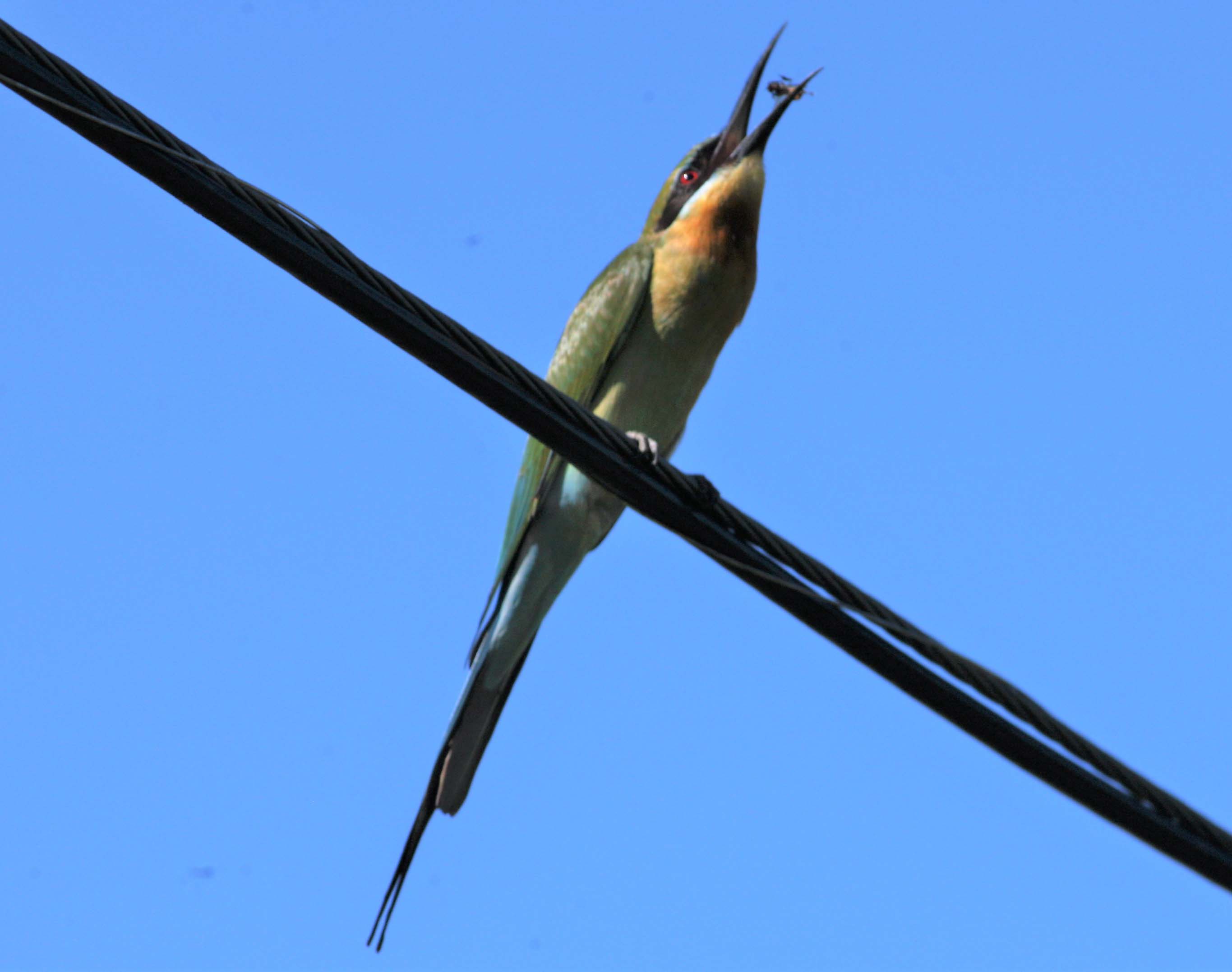
Another year-end bird is the Green Bee-eater, which I first saw at the Kuala Gula Sanctuary swamps ages ago. These are still year-end birds and remain so, except that there are stragglers staying on later than before. They sit on a wire, then dive or fly up and catch a bee mid-air and get back to the wire to eat. If the bee is a bit large, the bird beats its beak on the wire to kill the bee first.

Green Bee-eater, can be seen eating a bee

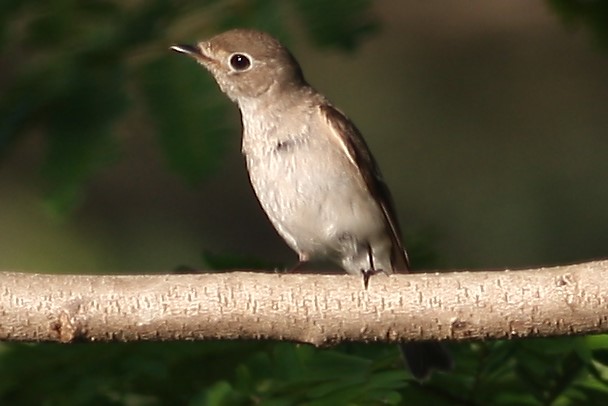
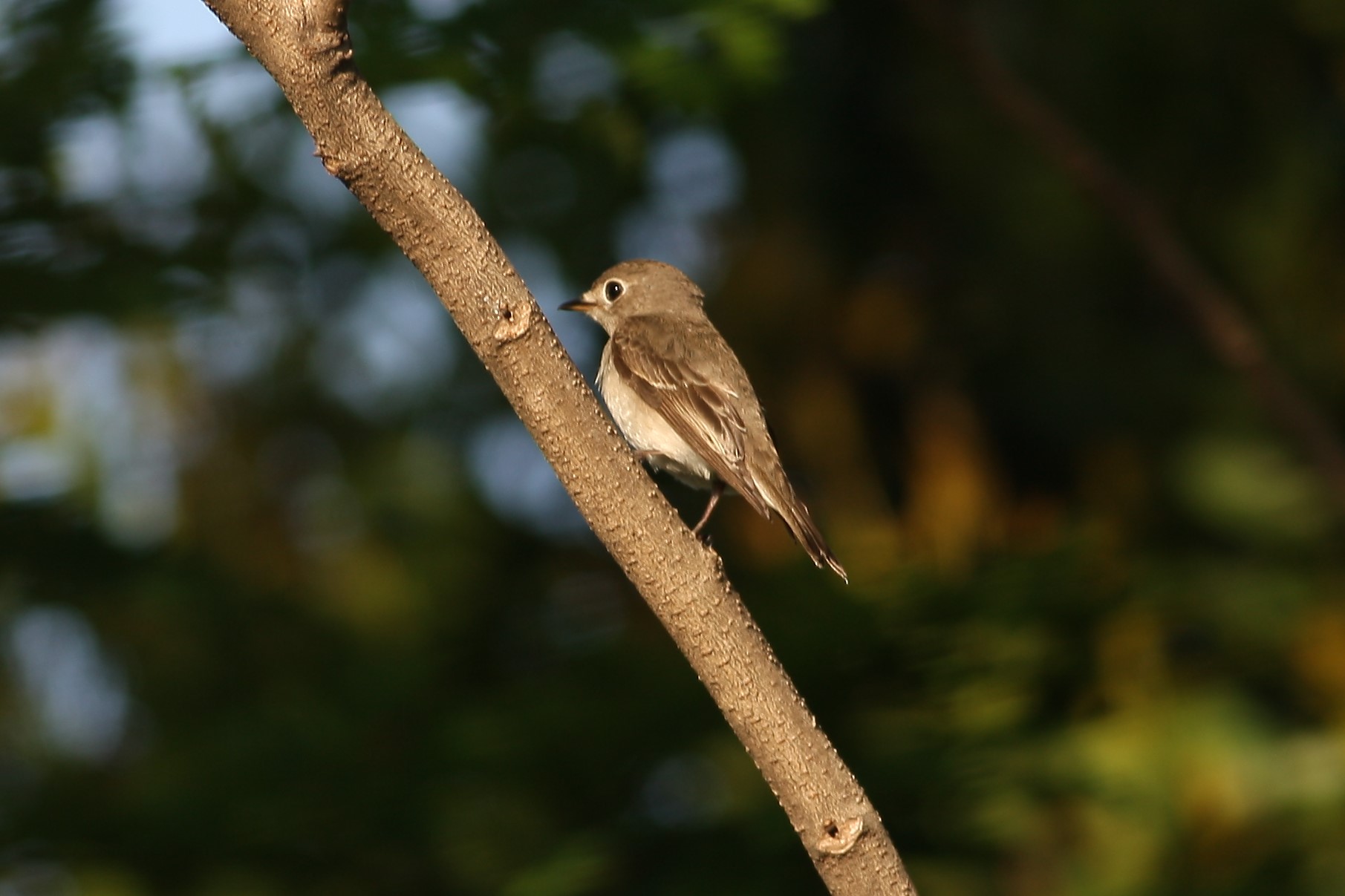
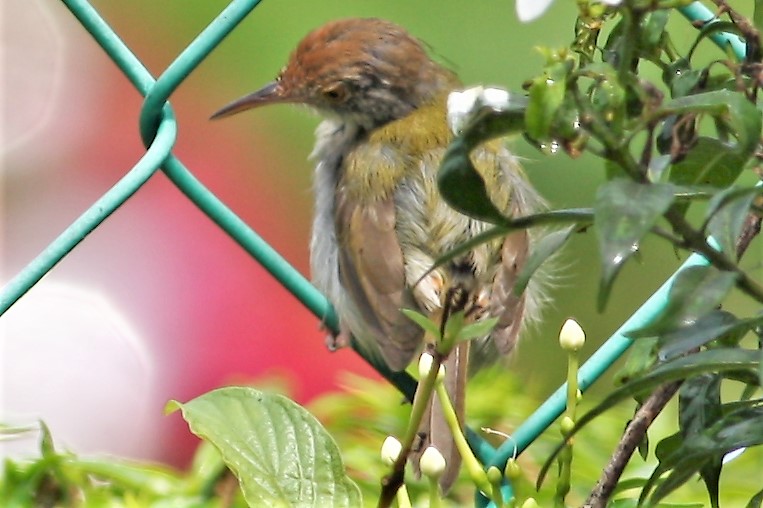
Some birds you hear but are difficult to see due to their size. They need some effort as they flit quickly in the bushes, pecking at unseen things on branches and twigs. Below are two examples – the Asian Brown Flycatcher and Common Tailorbird.

top: Asian Brown Flycatcher, bottom: Common Tailorbird

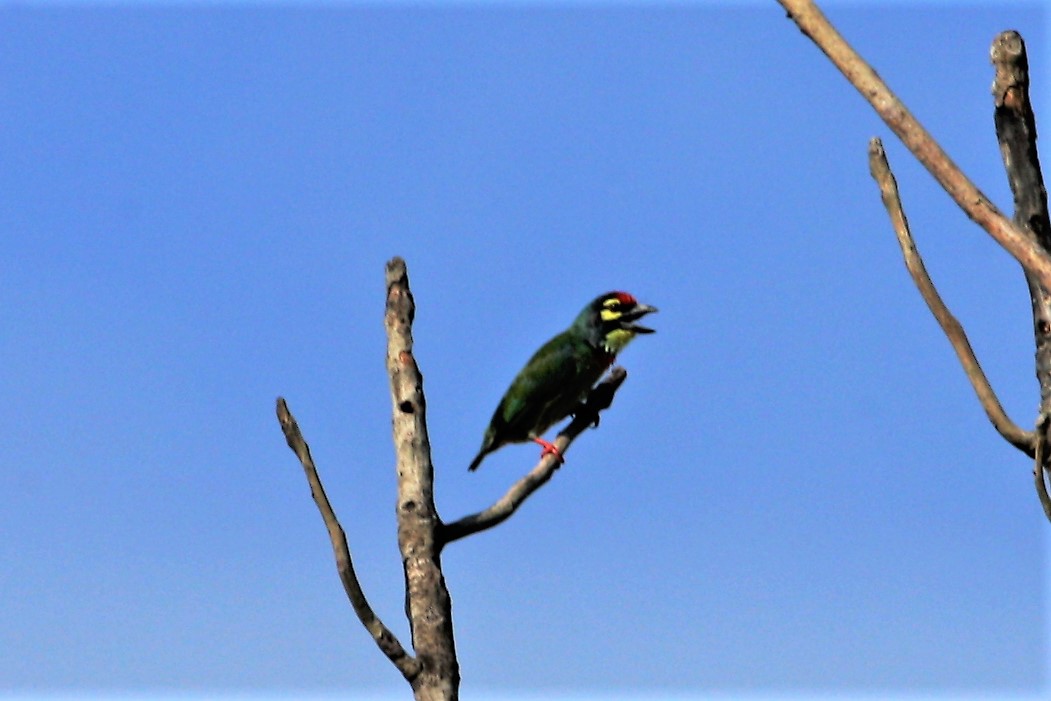
The Coppersmith Barbet has a strong voice. Its sound is a regular beat ‘tonk tonk tonk’ and it can go on for quite a while with short intervals, and a ‘sore throat tonk’ sometimes in between. The sound is similar to a coppersmith beating metal to shape it and hence the name of the bird.

Coppersmith Barbet

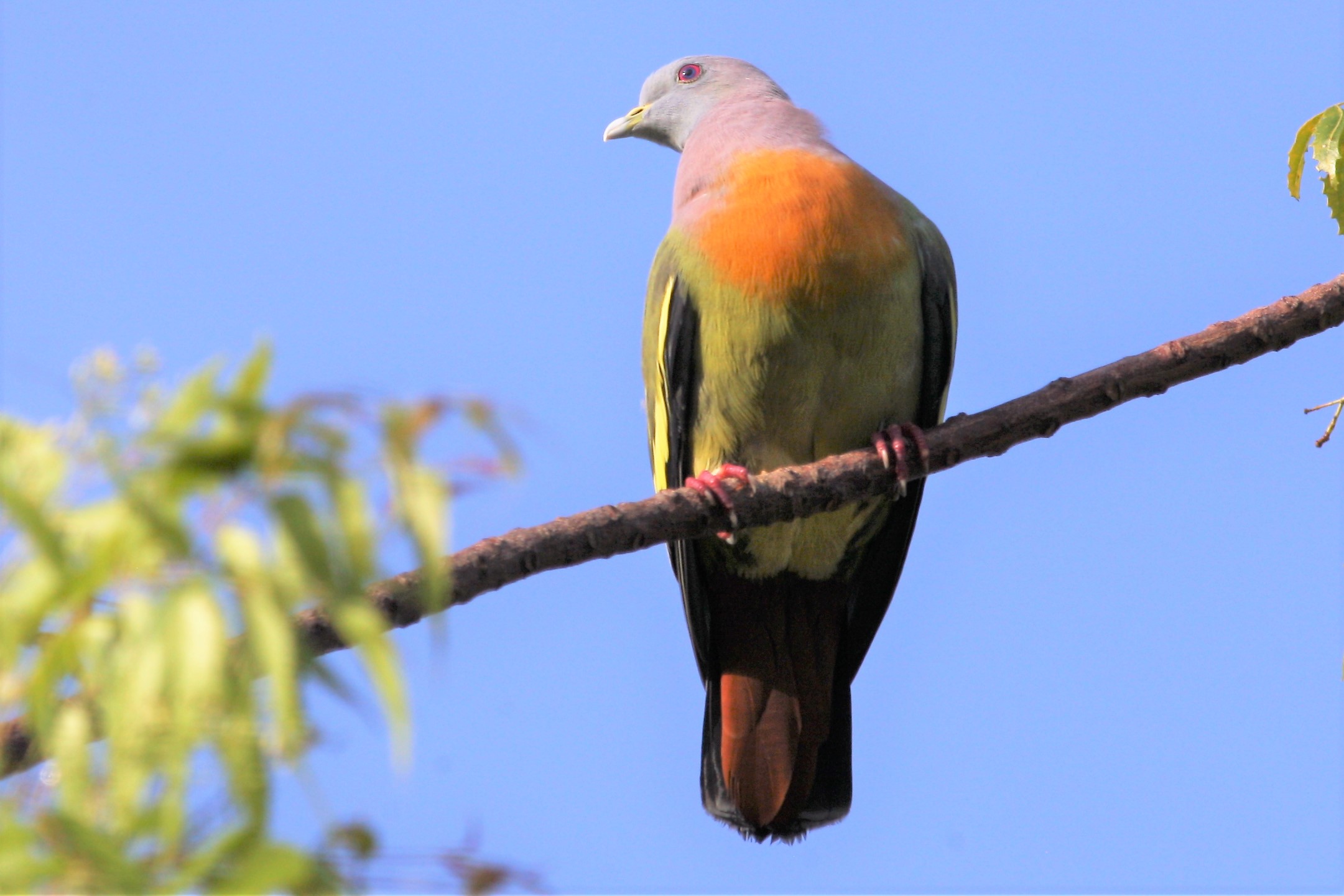
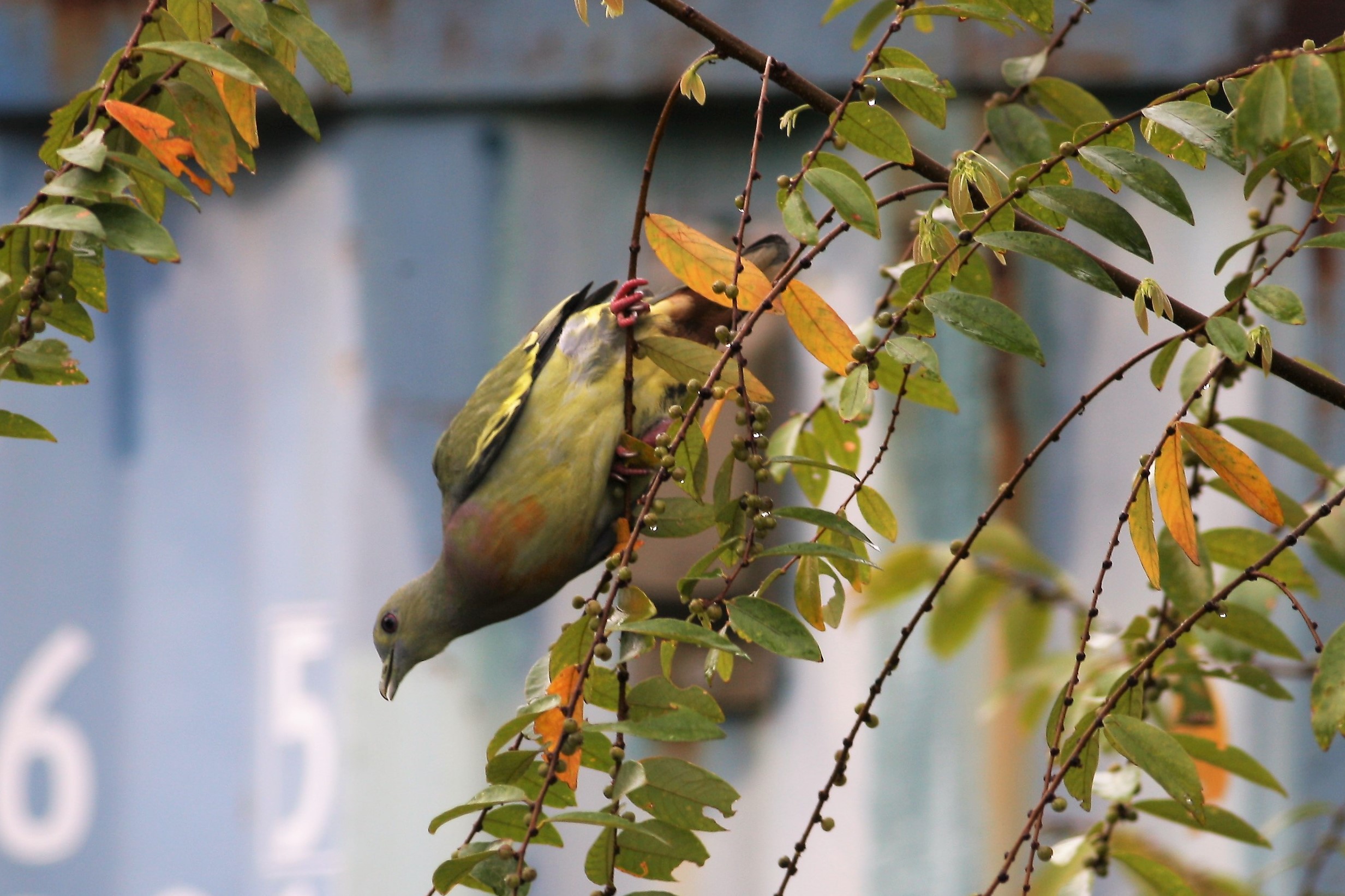
When I was shooting the Koel, along came this proud Pink-necked Green Pigeon and settled on a nearby branch.

Pink-necked Green Pigeon

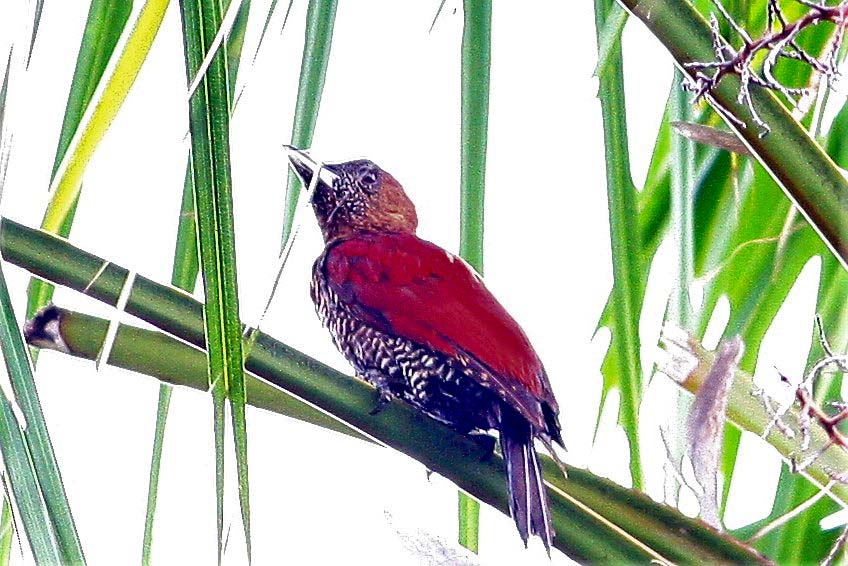
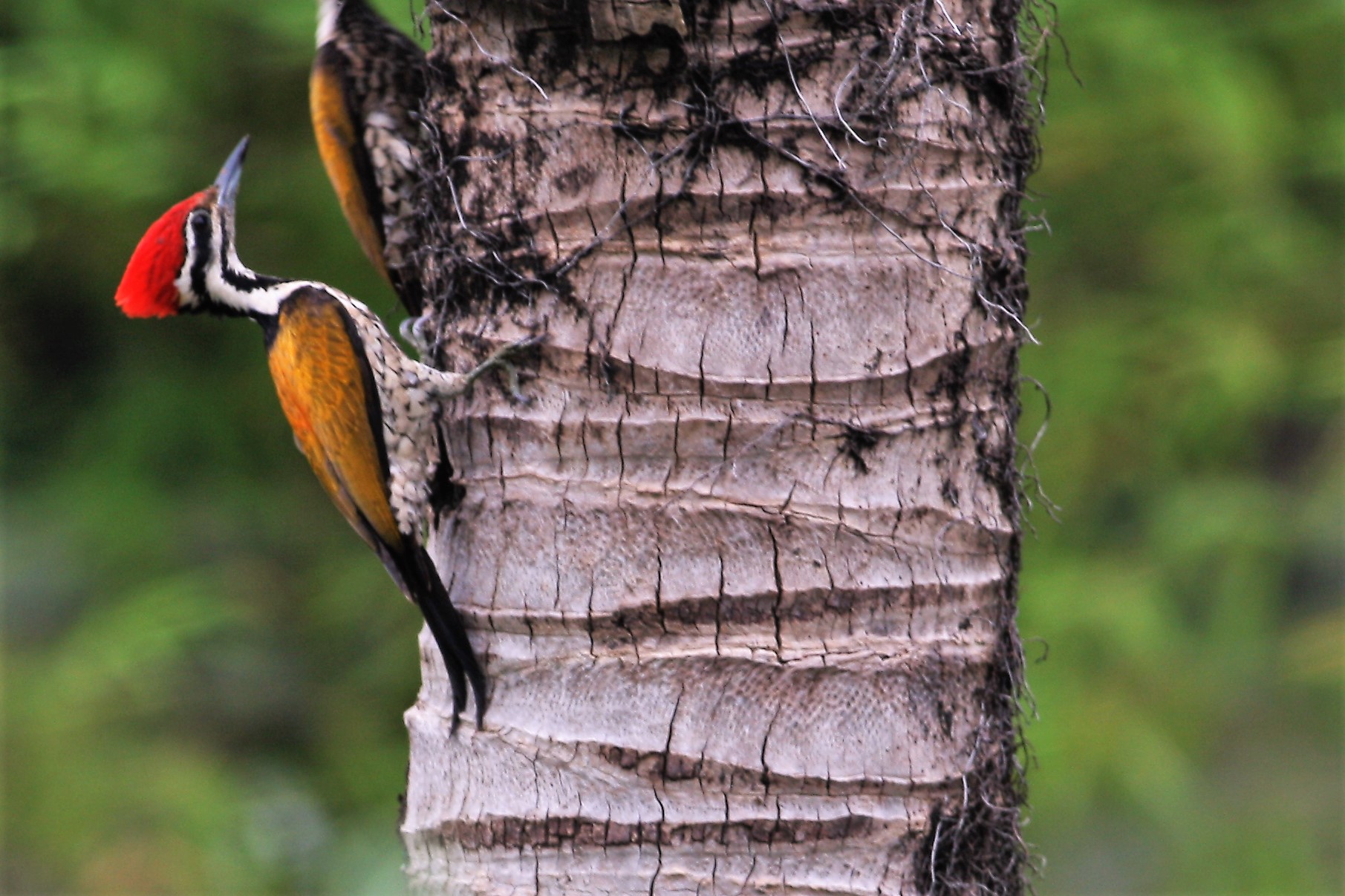
Now comes another set of very rare birds for this area; I have seen each of them only once and never saw them again. It was sheer luck of being at the right place at the right time.

Banded Woodpecker

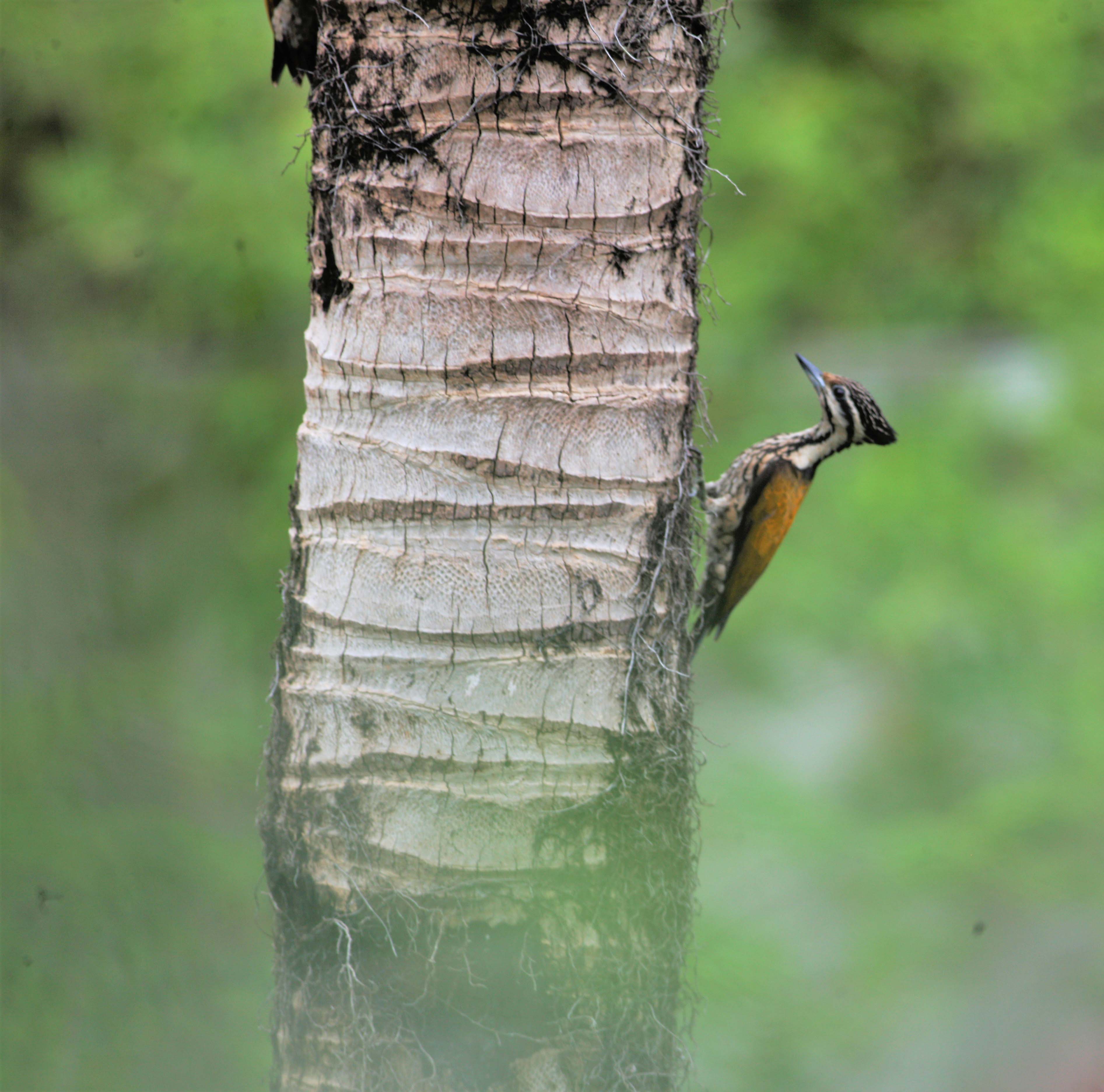
left: a pair of Greater Goldenback Woodpeckers; right: the female of the species

male Greater Goldenback Woodpecker (the redhead is the male)
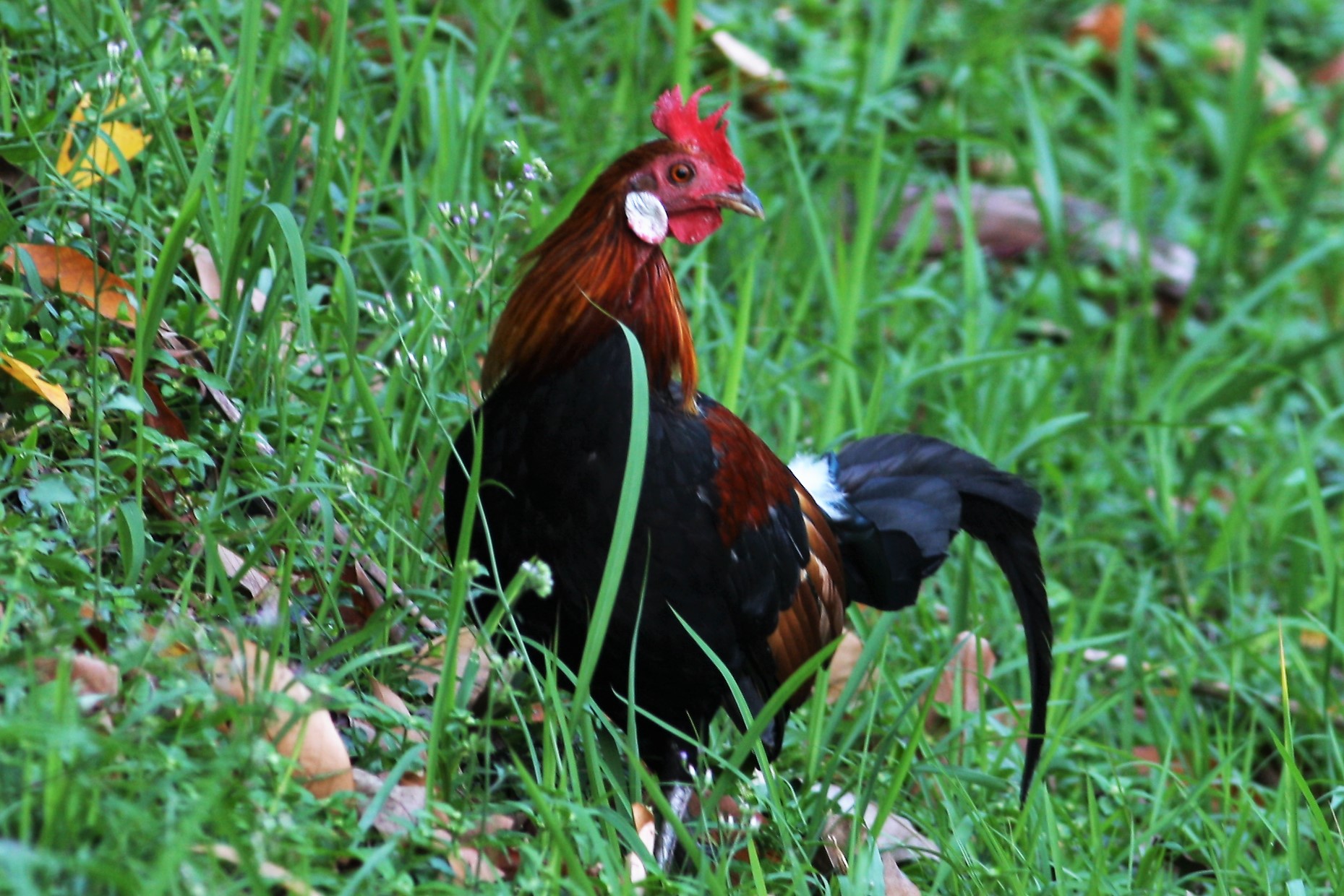
Wild fowl (ayam hutan)

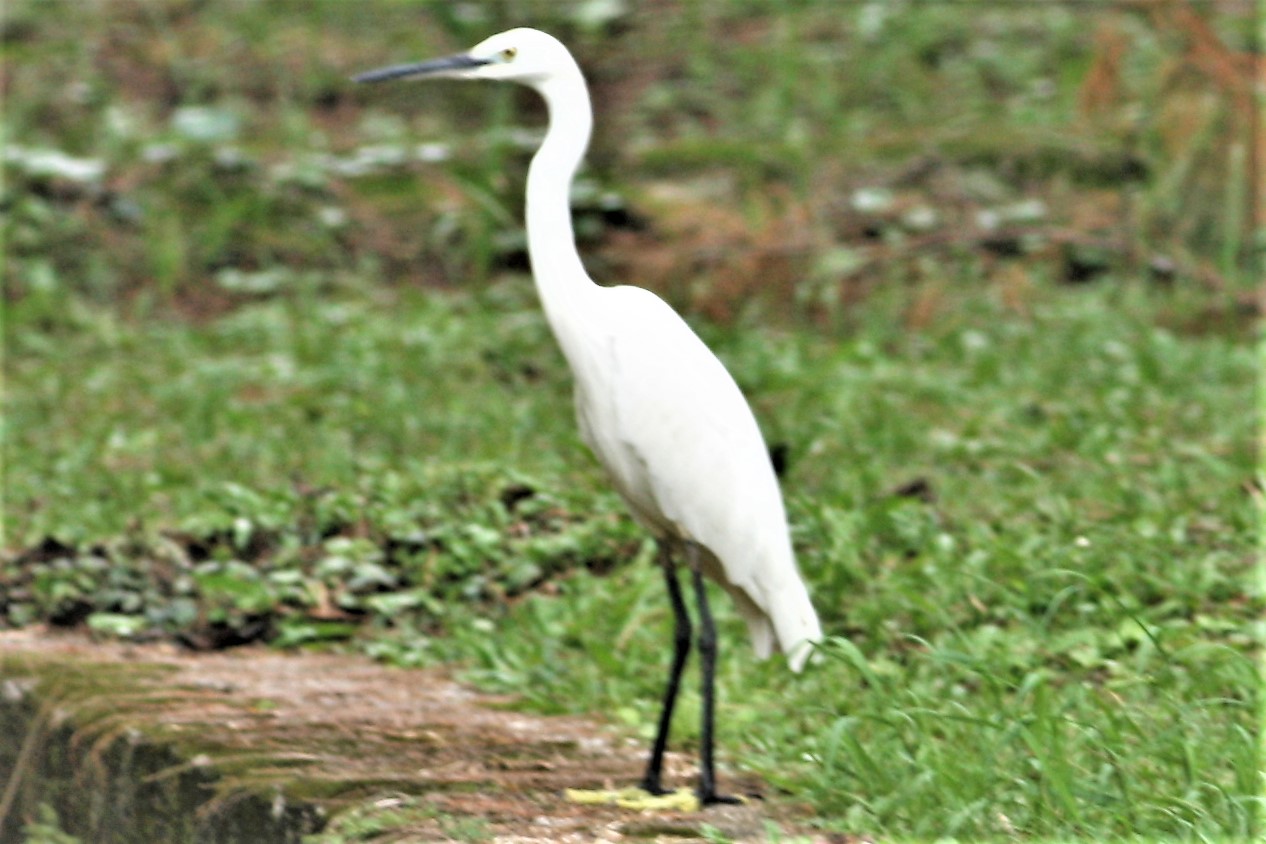
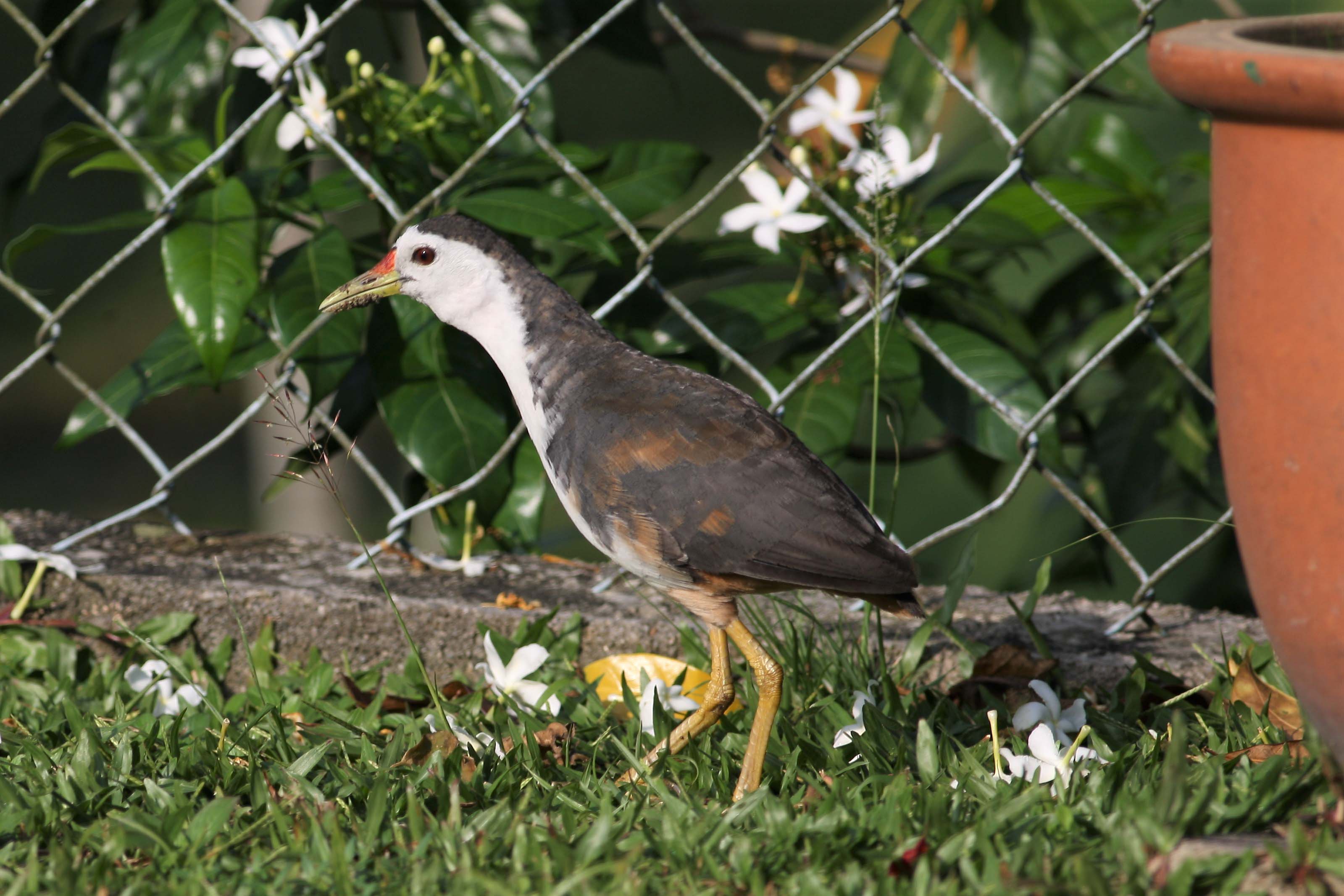
The Little Egret and White-breasted Waterhen do frequent the neighbourhood, but you need sharp eyes and have to be well hidden to get them.

Little Egret near the monsoon drain
White-breasted Waterhen

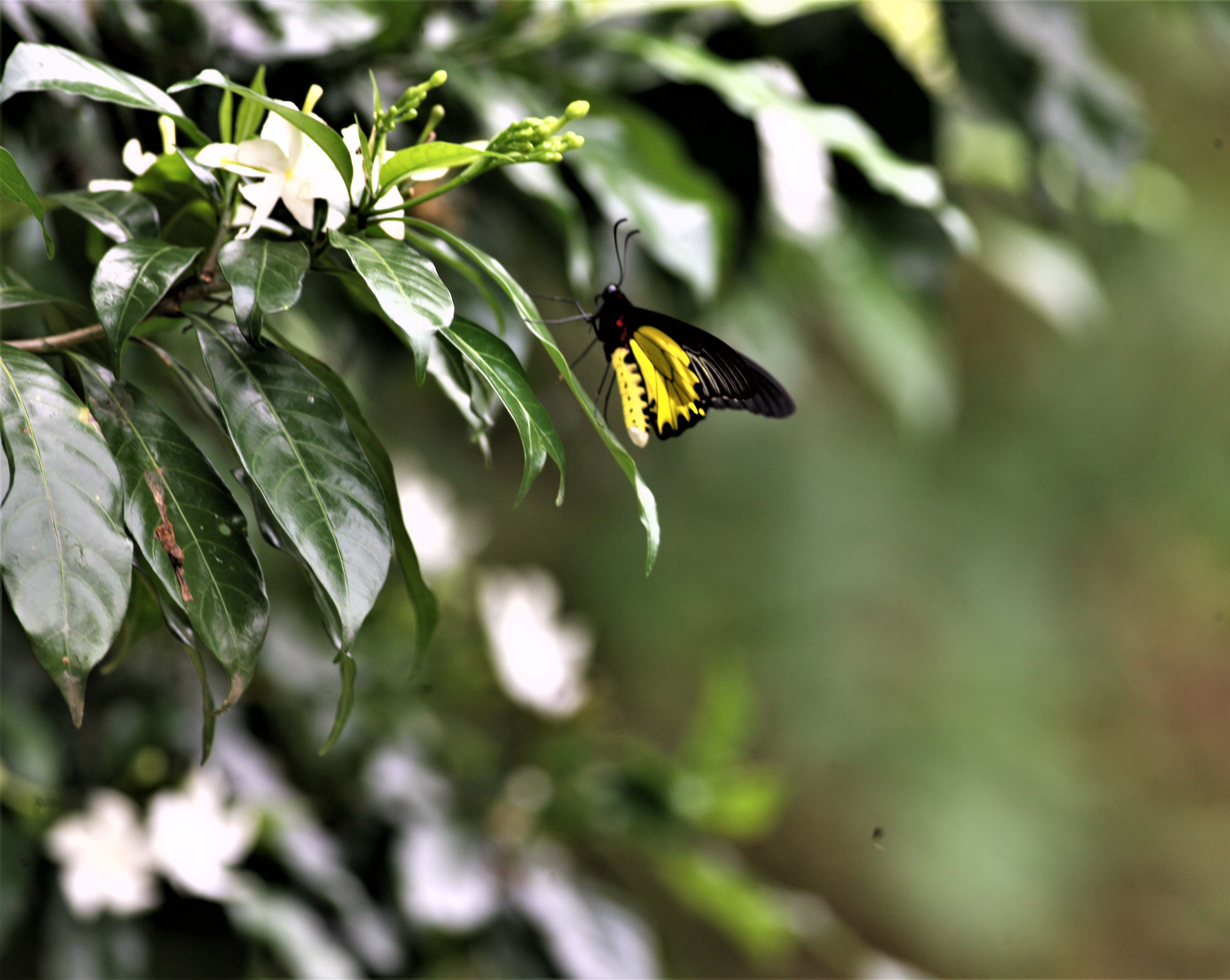
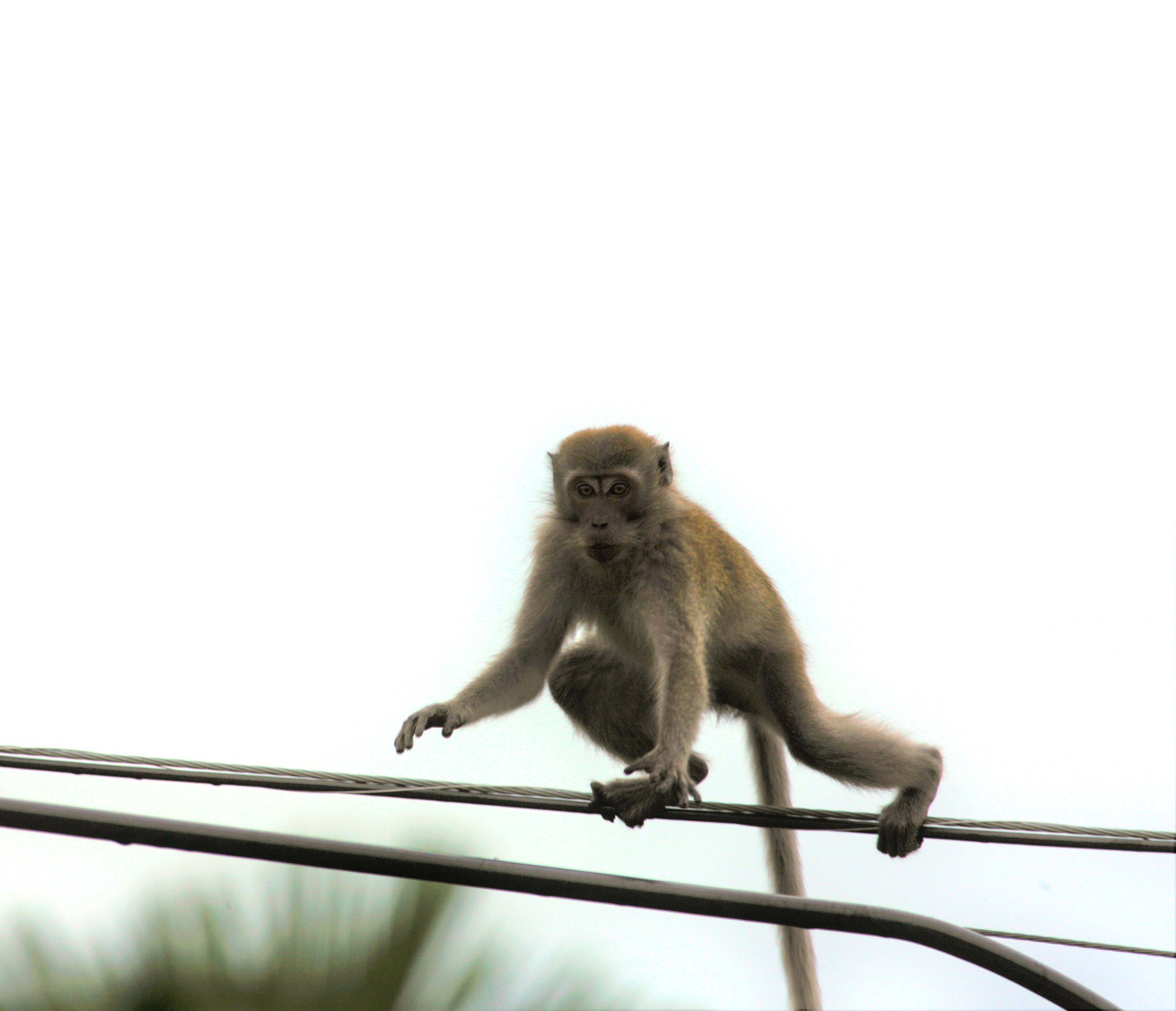
Other interesting creatures visited as well.

Left: Common Birdwing Butterfly; Right: Monkey

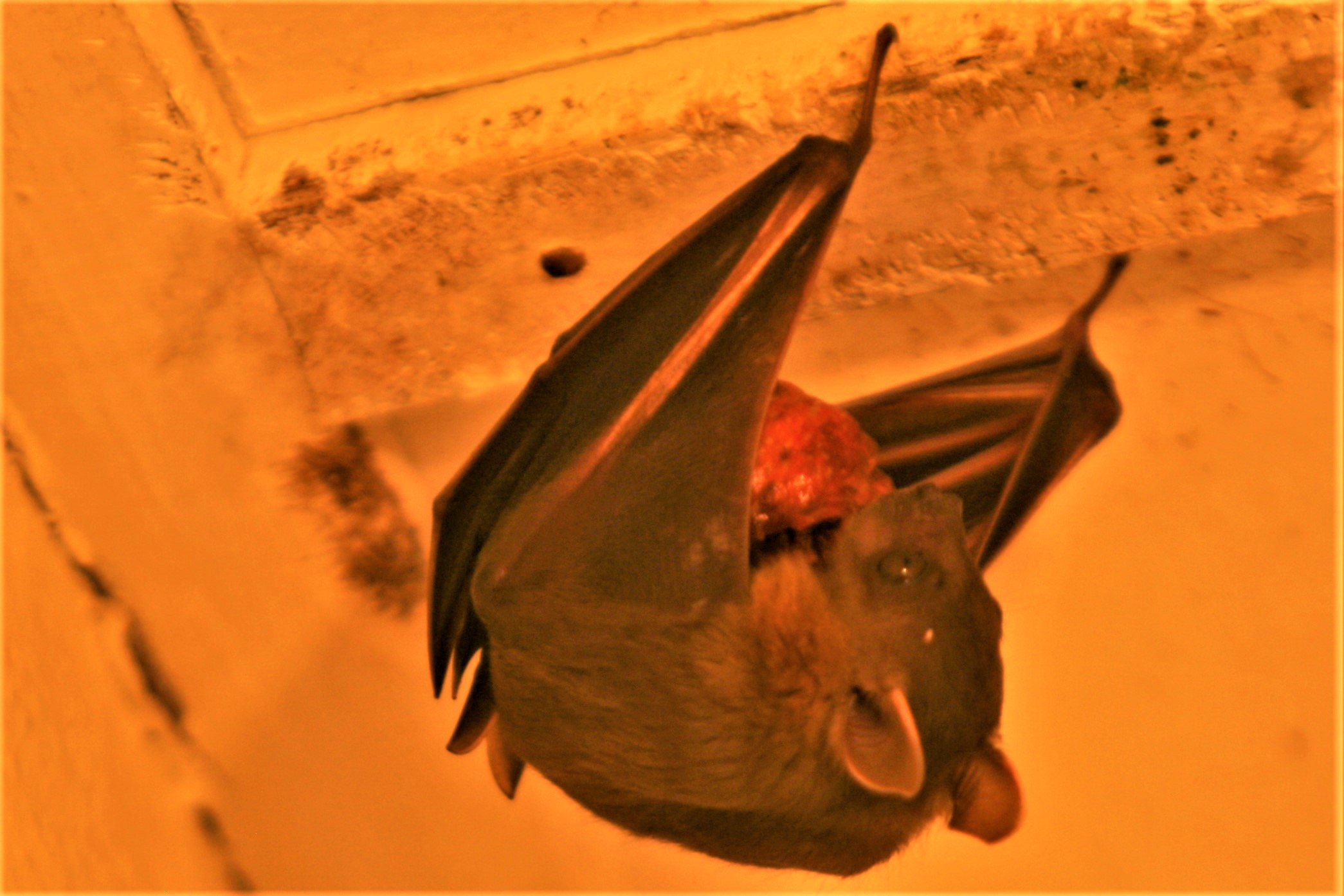
This bat used to hang from an outer ceiling all day for a few months; flying off in the evening, returning later in the night and then messing up the floor below. You can see why – it was eating a jambu air the night I took this shot.

Bat eating jambu air

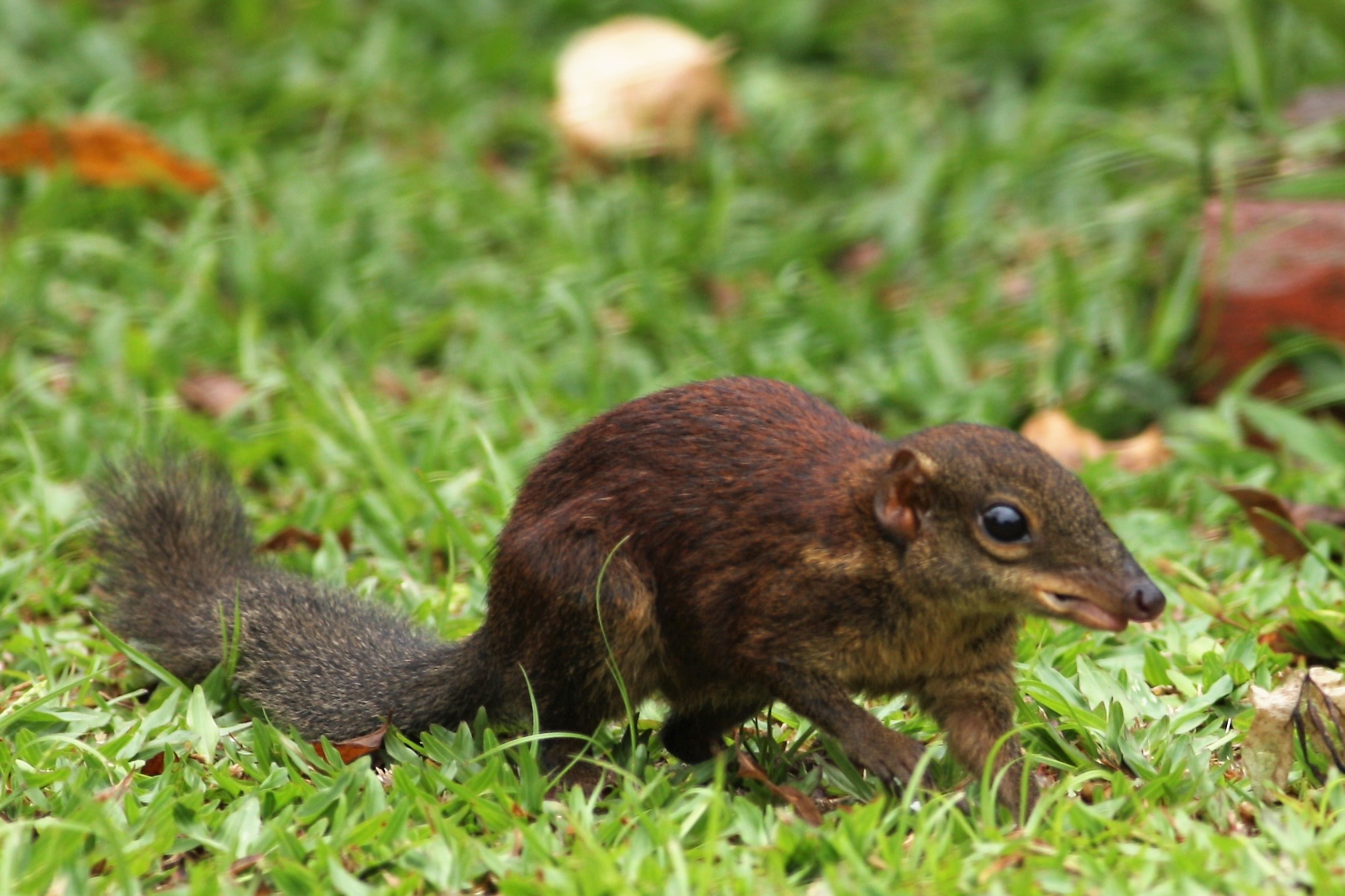
Then there is the pesky tree shrew; nevertheless a beauty of its own, unless it runs into the house.

Tree Shrew

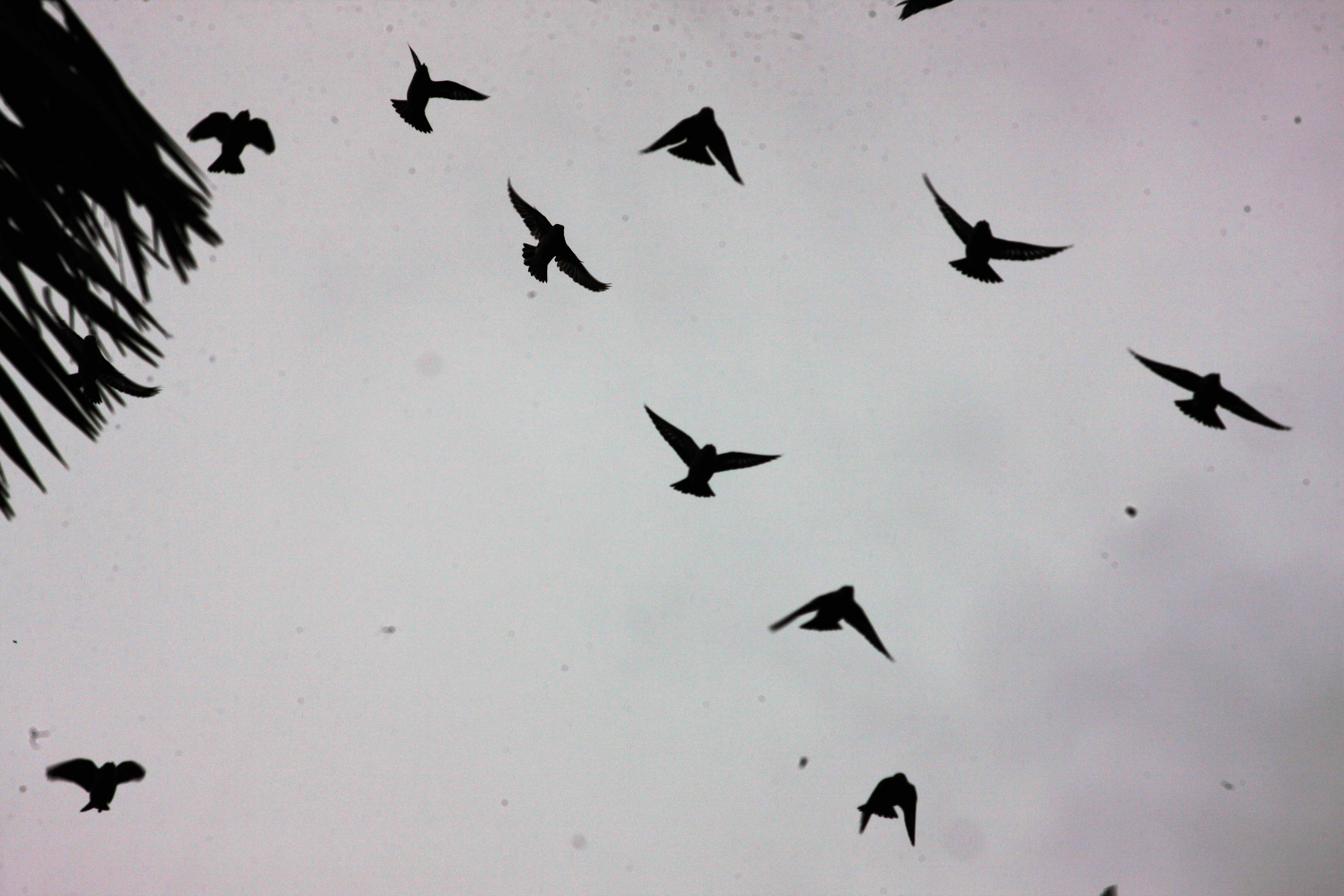
This last picture is of birds in a feeding frenzy after an evening rain – all flying so swiftly and up high.

Feeding frenzy after rain

I have yet to get a good shot of the common crow, which does fly by but up high. That is on my To Sight List, which also includes the Heron. For the Heron, I may have to make an exception and go to Taman Jaya to spot them in the ditches. Who knows what other birds I may find there!

When it is safe to travel, trips to Kuala Gula, Frasers Hill and other places are on the card. This will add variety to my personal collection, which I have titled ‘Birds Seen by Me’.

A Very Rough Guide to Dengkil

by Eric Lim

Introduction

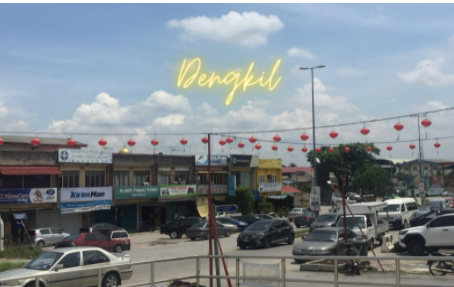
Dengkil town / Photo source : Eric Lim

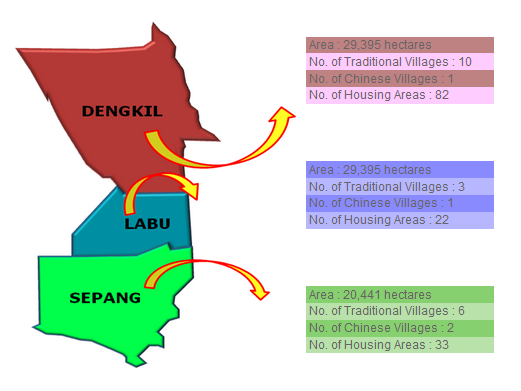
Dengkil, Sepang and Labu are the three mukim that make up the Sepang district. Sepang officially became a district on 1 January 1975, making it the ‘youngest’ district in the state of Selangor. Previously, Dengkil was part of the Hulu Langat district. Incidentally, Sepang is the local name of a shrubby plant found in the area; its wood produces a red dye that is used for dyeing textiles. The tree was a major source of red dye used throughout the world up until the end of the nineteenth century. Its scientific name is Caesalpinia sappan L and the tree is also found in India, Myanmar, Thailand, Indo-China and China.

District of Sepang / Photo source : Portal Rasmi PDT Sepang Kampung Dengkil

According to the district portal, Dengkil is the largest mukim and it comprises ten Malay kampungs, one Chinese new village, one Indian community village and 82 public housing developments. Dengkil has benefitted from its proximity to our country’s mega projects namely Putrajaya, Cyberjaya, KL International Airport and KL International Airport 2. Today, Dengkil is conveniently accessible via major highways like MEX, LDP, SKV4, ELITE, Putrajaya-Cyberjaya Expressway, North-South Expressway, Jalan Banting-Semenyih (B18) and Jalan Putrajaya-Dengkil (B15).

History

The first version on how the name ‘Dengkil’ came about originated from an aboriginal word ‘dingkil’, which was used to describe a type of durian that has less/no pulp but has large seeds. There used to be a lot of durian trees planted on the banks of Sungai Langat. The second version came from the word ‘dengkat’, which means the shallow bed of the river, in this case Sungai Langat. In the third version, Dengkil came from the name of a plant called Nibong Dengkil, which is found in the area. Incidentally, Nibong Dengkil was the original name of Telok Panglima Garang, located at the Kuala Langat district. The Chinese name for Dengkil is Long Xi (龙溪), or Ling Kay in Hokkien, which means Dragon River. Local Chinese believed that an ascetical dragon was living in the area for a very long time but the British chased it away by setting it on fire. The dragon was badly injured and spew out black blood, which later formed a river and thus the name Dragon River. Another name for the river is Sungai Air Hitam (black water river in English) which still exists until today.

Chinese migrants settled in Dengkil in the early 1920’s and worked in the tin mines and rubber estates. In 1950, during the time of the Emergency, British gathered scattered Chinese communities in Banting, Air Hitam, Batu 4 and Dengkil into the newly established Dengkil New Village (today Kampung Baru Seri Dengkil). The transition back to normalcy returned, and tin mining and rubber tapping again became the primary source of income. When tin mining reached its peak in the 1960’s, Dengkil had seven tin dredges. In 1969, a fire razed through the town and caused massive amounts of damage. Many families lost their possessions and decided to move to Pandamaran in Klang.

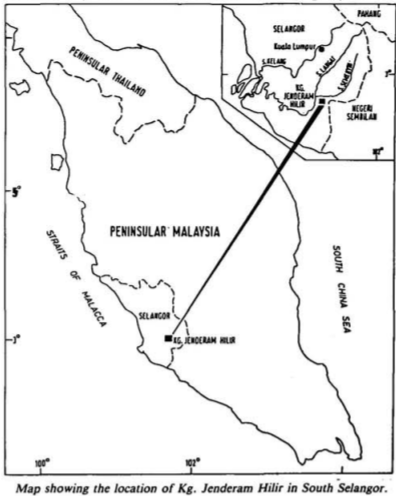
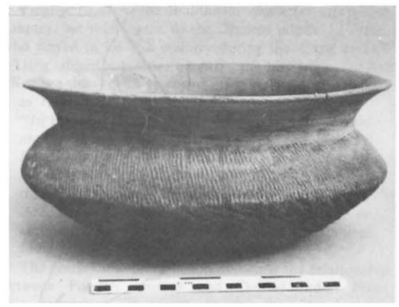
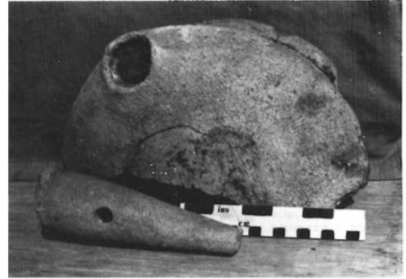
(left) Map showing location of Jenderam Hilir (top right) cord marked earthen pot (bottom right) leg and stand of tripod pot. Photo source : Ancient Finds From Kampong Jenderam Hilir

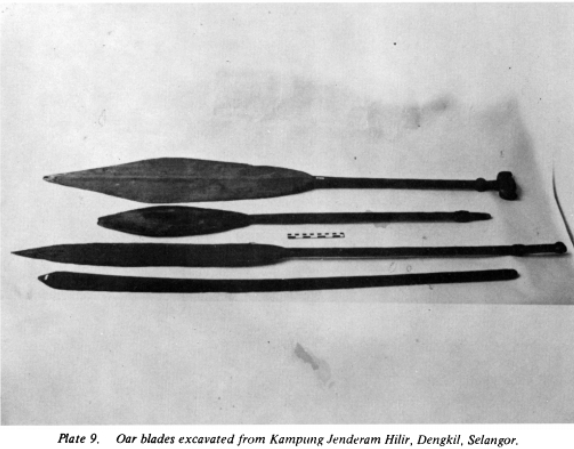
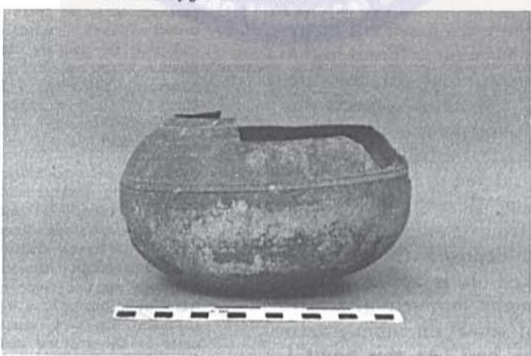
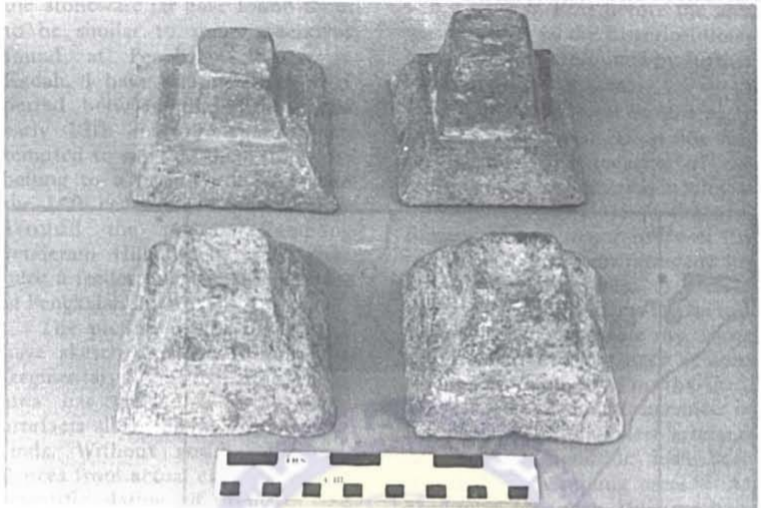
Kampung Jenderam Hilir, nine kilometres east of Dengkil, is the location of an archaeological site. Brian C. Batchelor (today Dr Daud Abdul Fattah Batchelor) first discovered the place in December 1975, and, in 1977, Professor Leong Sau Heng and the Museum Department conducted further studies at the site. Most of the artefacts were recovered from the Teck Lam Hong Tin Mining Sendirian Berhad tin mines; a large collection was from the Neolithic period. It includes a cord marked earthenware pot, large quantity of pottery sherds, legs / stands of tripod pots and stone adzes. It also yielded artefacts from a later historical period, such as bronze bowls, wooden boat paddles and oars, ceramic wares, a celadon bowl of Lung Chuan type, a small stoneware jar and tin ingots. In her research paper Ancient Finds From Kampong Jenderam Hilir, Professor Leong mentioned that Kampung Jenderam Hilir, located near the confluence of the Sungai Langat and Sungai Semenyih, was first occupied in the late Neolithic and its inhabitants made stone implements and pottery and were involved in agricultural activities. She also said the place might once have been a feeder point to the entrepot at Pengkalan Bujang. Feeder points refer to places which regularly send supplies of their local produce to the entrepot and this type of trading sites may be found in inland riverine areas (like Kampung jenderam Hilir) or on the coast (like Kuala Selingsing in Perak). Excavation was also carried out at Bukit Piatu, located directly on the opposite bank to Kampung Jenderam Hilir, and it yielded mainly pottery sherds.

(left) Oar blades (top right) Bronze bowl (bottom right) Tin ingots. Photo source : Ancient Finds From Kampong Jenderam Hilir

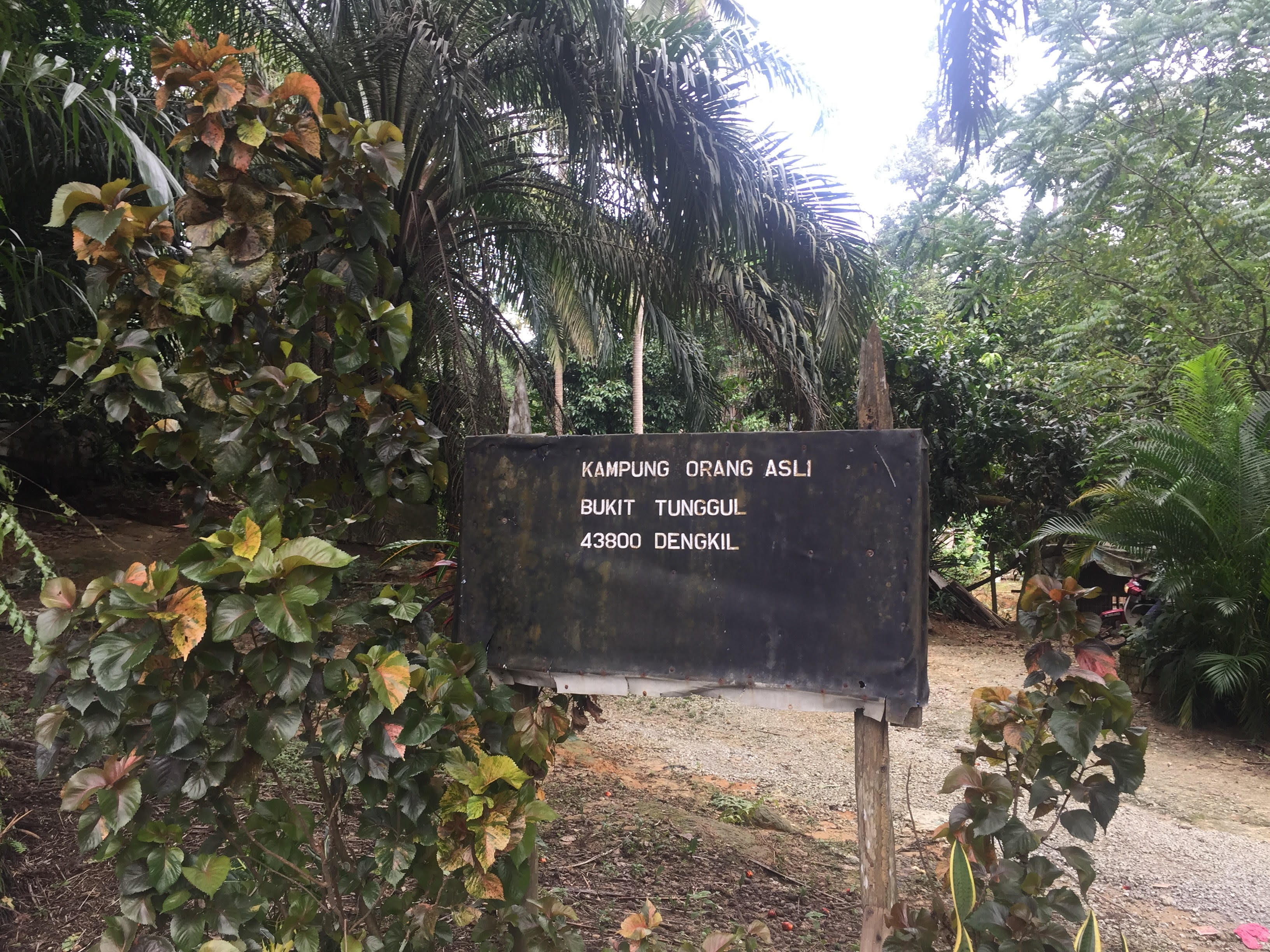
In 1993, the Selangor state government sold a piece of land at Bukit Tunggul for the development of a golf resort. Thirty-four families of the Temuan Orang Asli group were told to vacate their land. This was the second time they were asked to move. Originally, the Temuan were from Bangi and in 1974, the Government told them to move as the land was marked for the construction of Universiti Kebangsaan Malaysia. They resettled at Kampung Sungai Buah and Bukit Tunggul. The golf resort developer agreed to offer cash and build houses for them at Kampung Kechau Orang Asli Settlement, Semenyih. Many do not want to move there as that belongs to another group of Orang Asli. According to a press report in 2016, these families are still staying put on the land that now belongs to Bukit Unggul Golf and Country Resort Sdn Bhd without electricity and water supply.

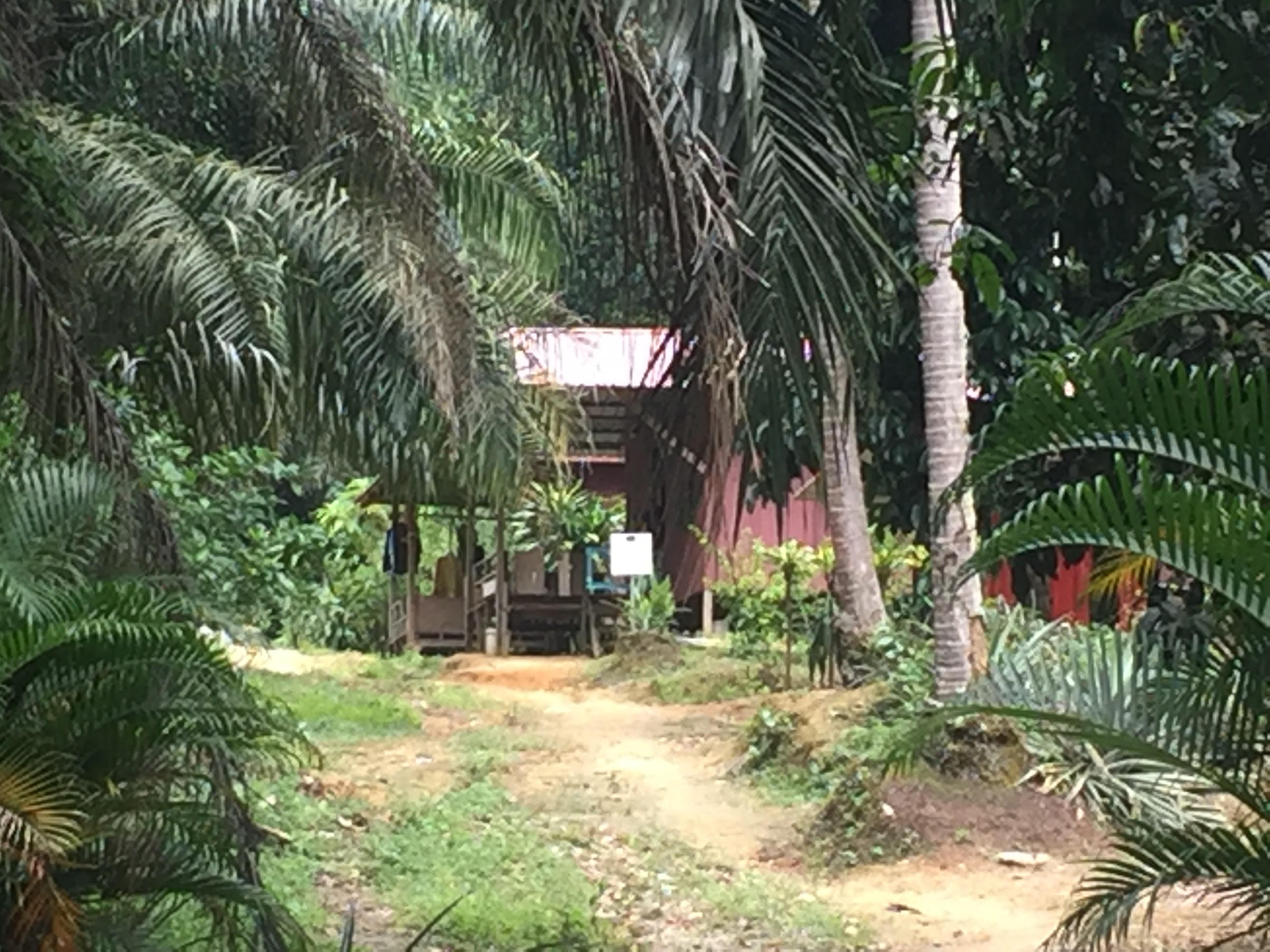
Kampung Orang Asli Bukit Tunggul / Photo source : Eric Lim

Places of Interest

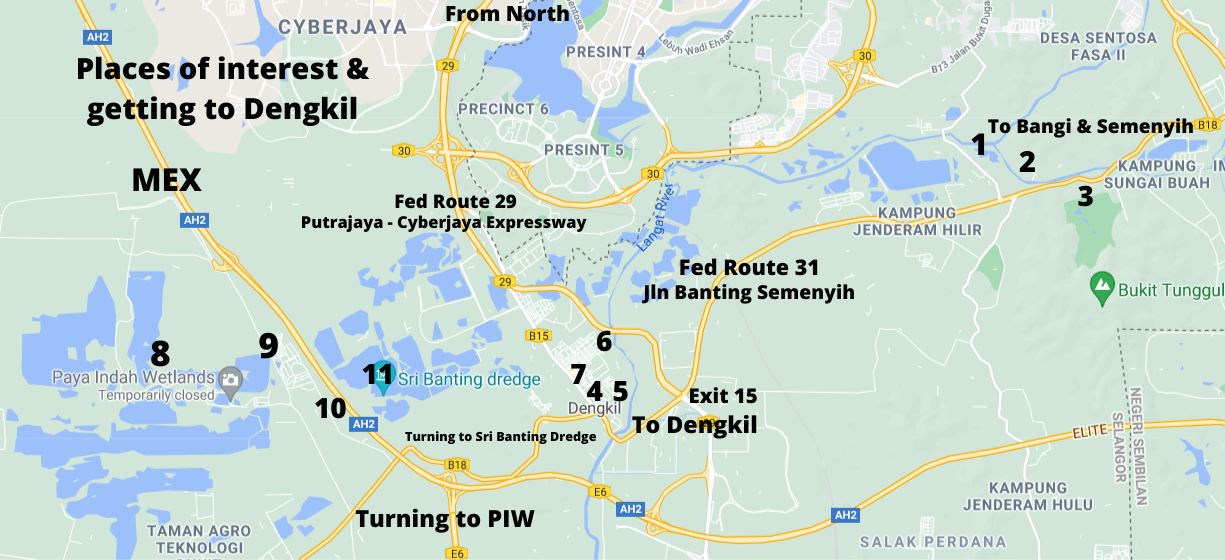
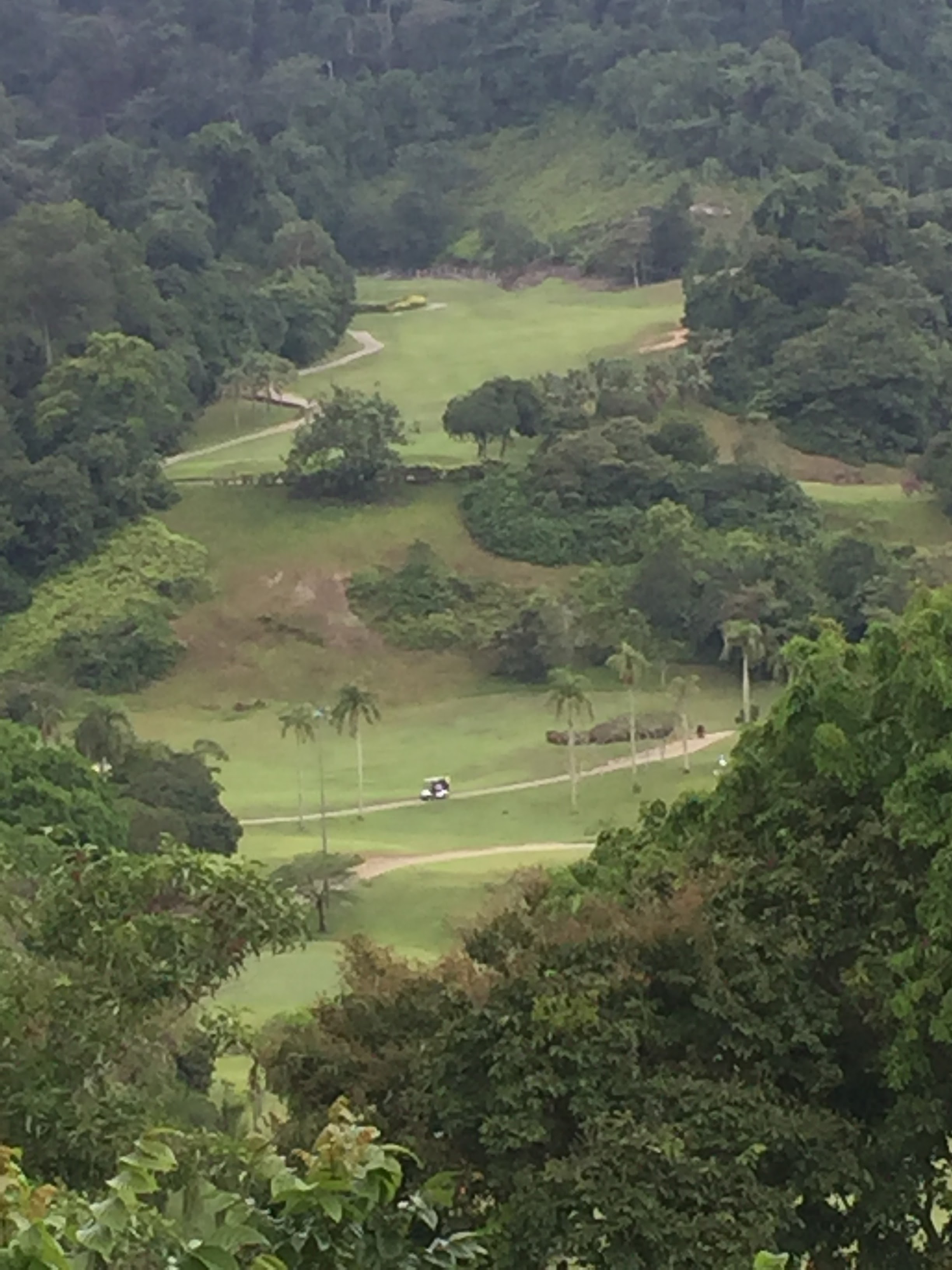
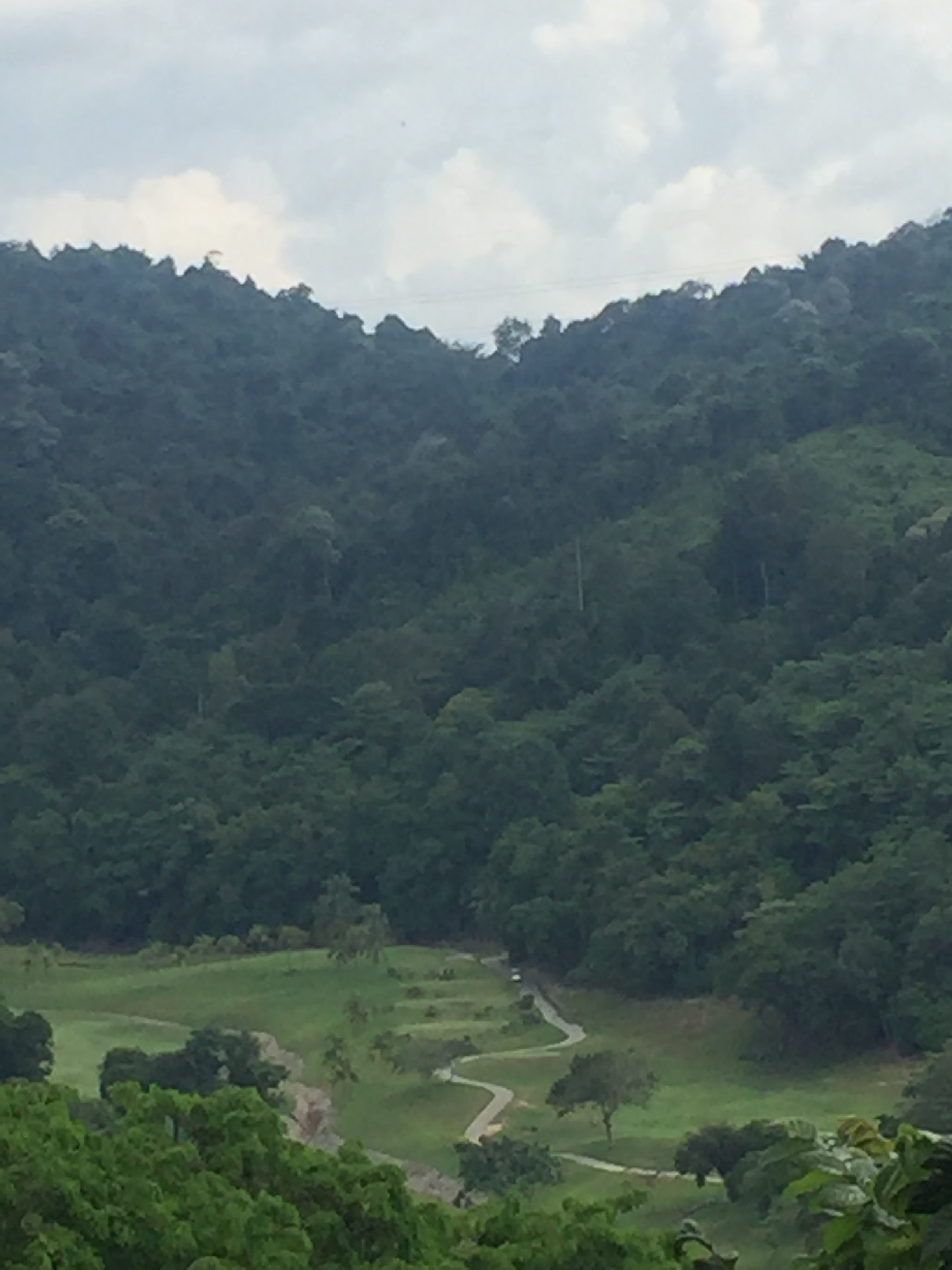
For fans of Dr Henry Walton ’Indiana’ Jones Jr., a visit to the archaeological sites of (1) Kampung Jenderam Hilir and (2) Bukit Piatu (today Kampung Bukit Piatu) are definitely a must-do. You may not find the Temple of Doom, Lost Ark or the Kingdom of the Crystal Skull but you will get to see an ex-tin mine, which is now a vast vacant sandy land, near the rivers. Start digging; you may chance upon the discovery of some Neolithic relics! Steeped in Orang Asli land issue controversy, the (3) Bukit Unggul Golf and Country Resort is a par-71, 5,858 metre long 18-hole hilly golf course. It was designed by American Ronald Fream and was established in 1994.

Bukit Unggul Golf & Country Resort / Photo source : Eric Lim

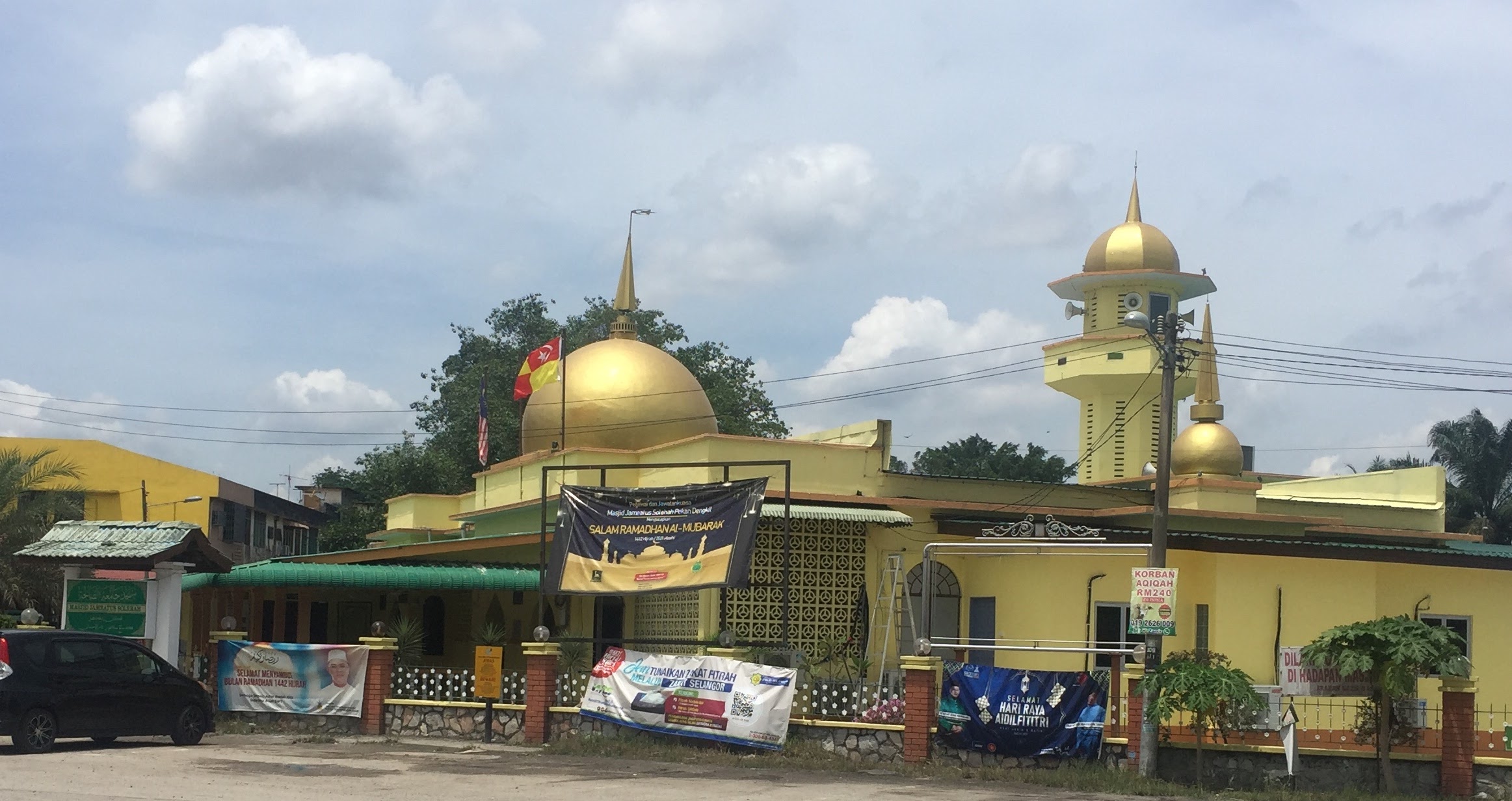
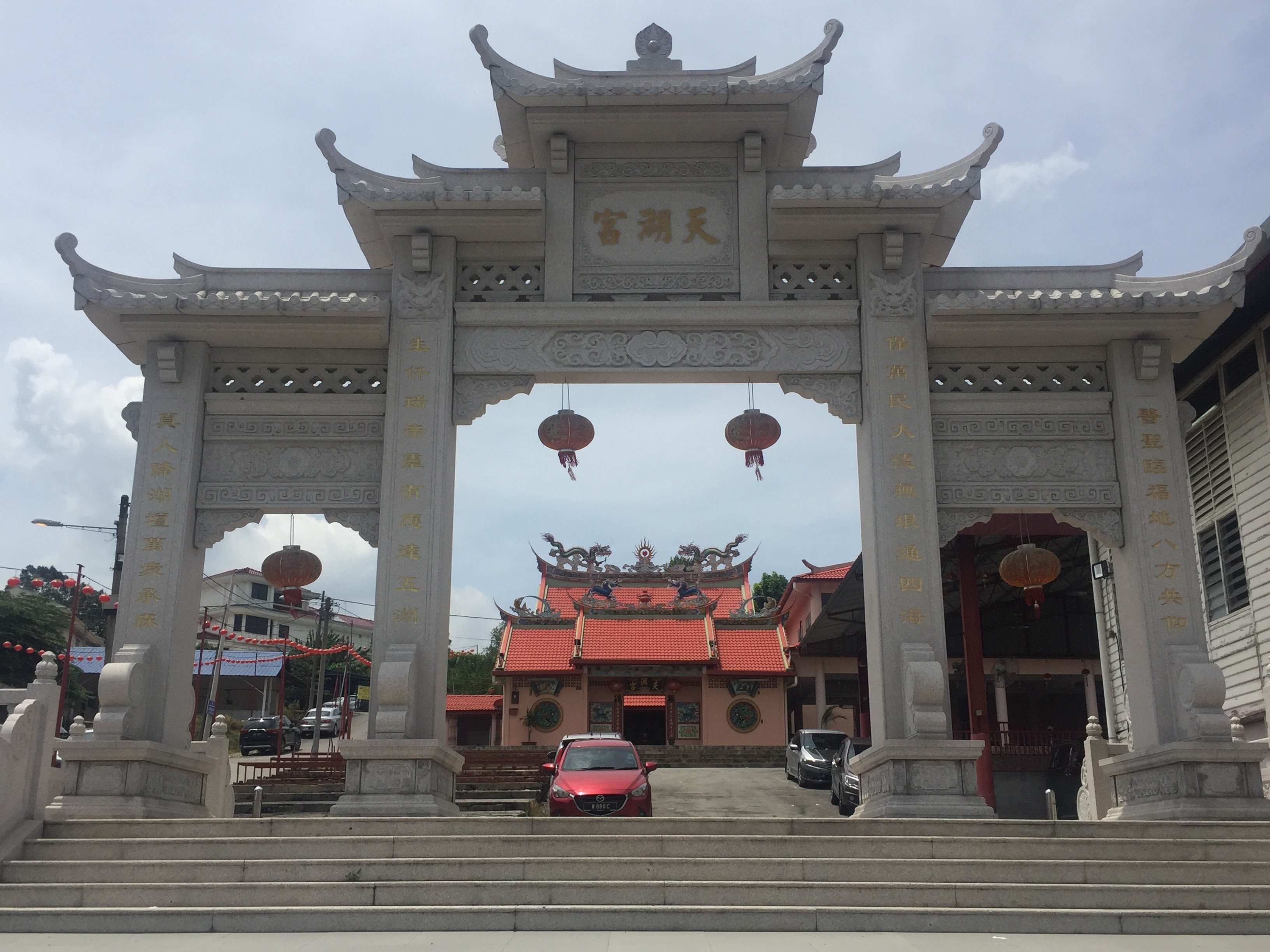
Places of worship are located at the town centre – (4) Masjid Jameatus Solehan Dengkil which is next to the Shell petrol station, (5) Tian Hu Gong temple, built in 1926 and dedicated to Chinese deity Nezha  (哪吒) and (6) Mariamman Temple at Taman Permata. Located close-by is the (7) Dengkil Police Station, which is located at the town’s T-junction overlooking Jalan Banting-Semenyih (B18) and Jalan Putrajaya-Dengkil (B15). It was established in 1928.

(L) Masjid Jameatus Solehan Dengkil (R) Tian Hu Gong temple / Photo source : Eric Lim

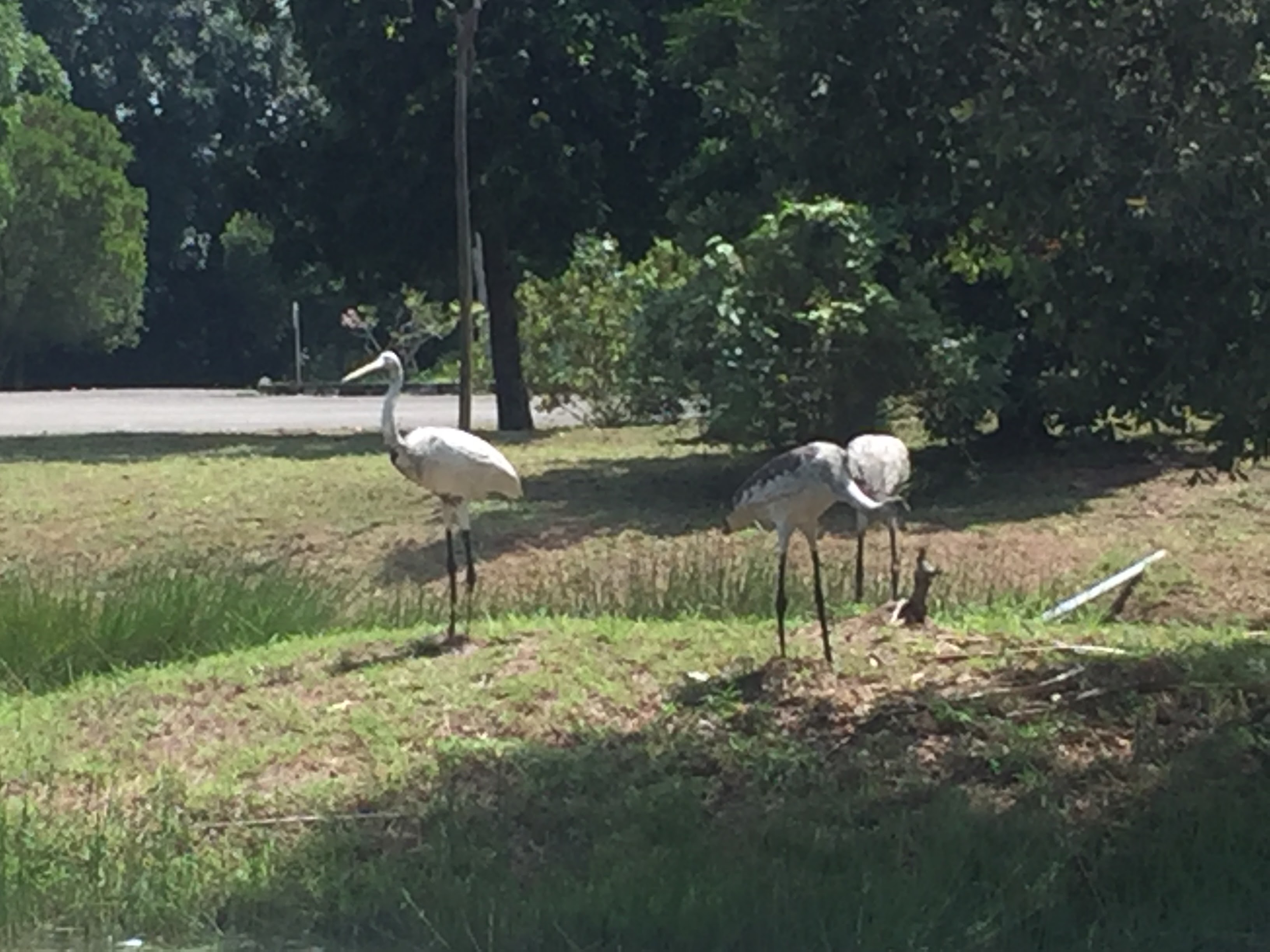
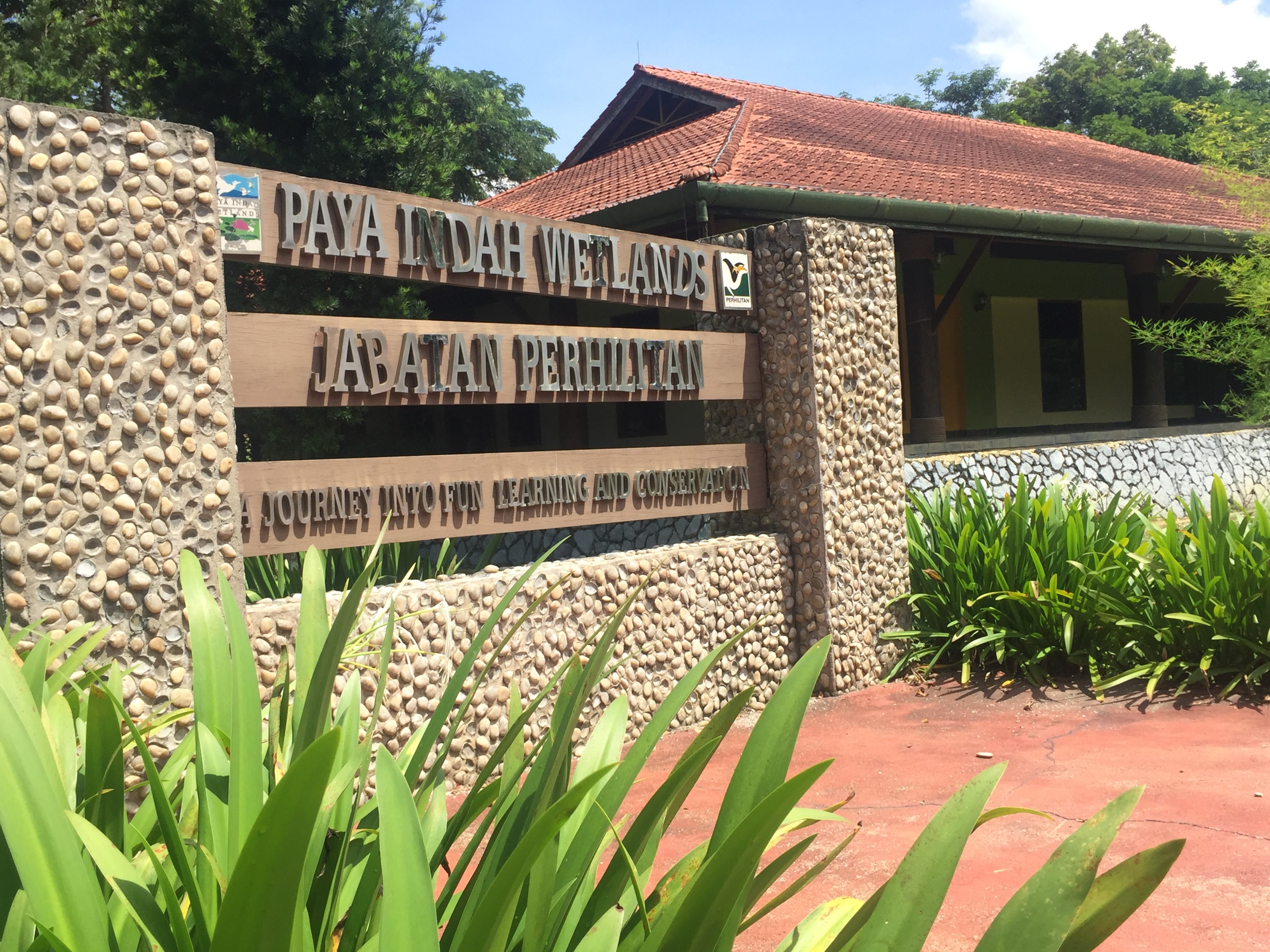
Using Jalan Banting-Semenyih (B18), about 6 km away from the Police Station heading to Banting is (8) Paya Indah Wetlands(PIW). On the right just before reaching the gate of PIW is the (9) former Paya Indah National Service Training camp. The three-month training programme for selected 18-year old youths started in December 2003. It was halted for a year in 2015 and finally abolished in August 2018. PIW was officially opened on 13 October 2001 by Tun Dr Mahathir Muhammad. The park is divided into three zones namely Recreation, Education and Conservation & Research. Walk-in visitors are only allowed to enter the Recreation zone while prior booking is required for the other zones. The activities at the Recreation zone include cycling, bird watching, fishing (charge for fishing rod), nature walk, photography, kayaking and paddle boat (chargeable), observation tower and feeding hippopotamus (at 10.00 am), pelican (10.30 am), crocodile (11.00 am) and porcupine (11.30 am). There are four hippopotamus, which are a gift from the Government of Botswana, and the crocodiles were transported to PIW from Langkawi. Chalet accommodation is available for rental.

Paya Indah Wetland / Photo source : Eric Lim

The current site of PIW was formerly a tin mine operated by Selangor Dredging Berhad (SDB). The Selangor government awarded a 1,200- acre mining concession to the company in 1963/1964. Due to its size, the company decided to use a dredge and it was commissioned in 1967. SDB became the first Malaysian company to have its own dredge. The dredge was the largest in the world and it operated around the clock. To facilitate operations, a village was built around the dredge and the workers stayed on site. The village became known as (10) Kampung Selangor Dredging and the settlement still stands today in Dengkil. A second dredge was commissioned in 1973. At its peak, the population of Kampung Selangor Dredging was 1,800, which included staff and their families. The land was returned to the state government in the 1980’s.

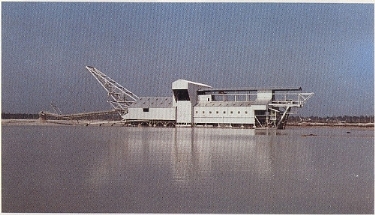
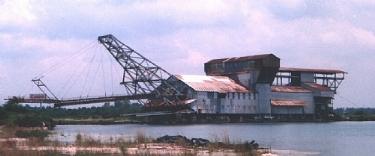
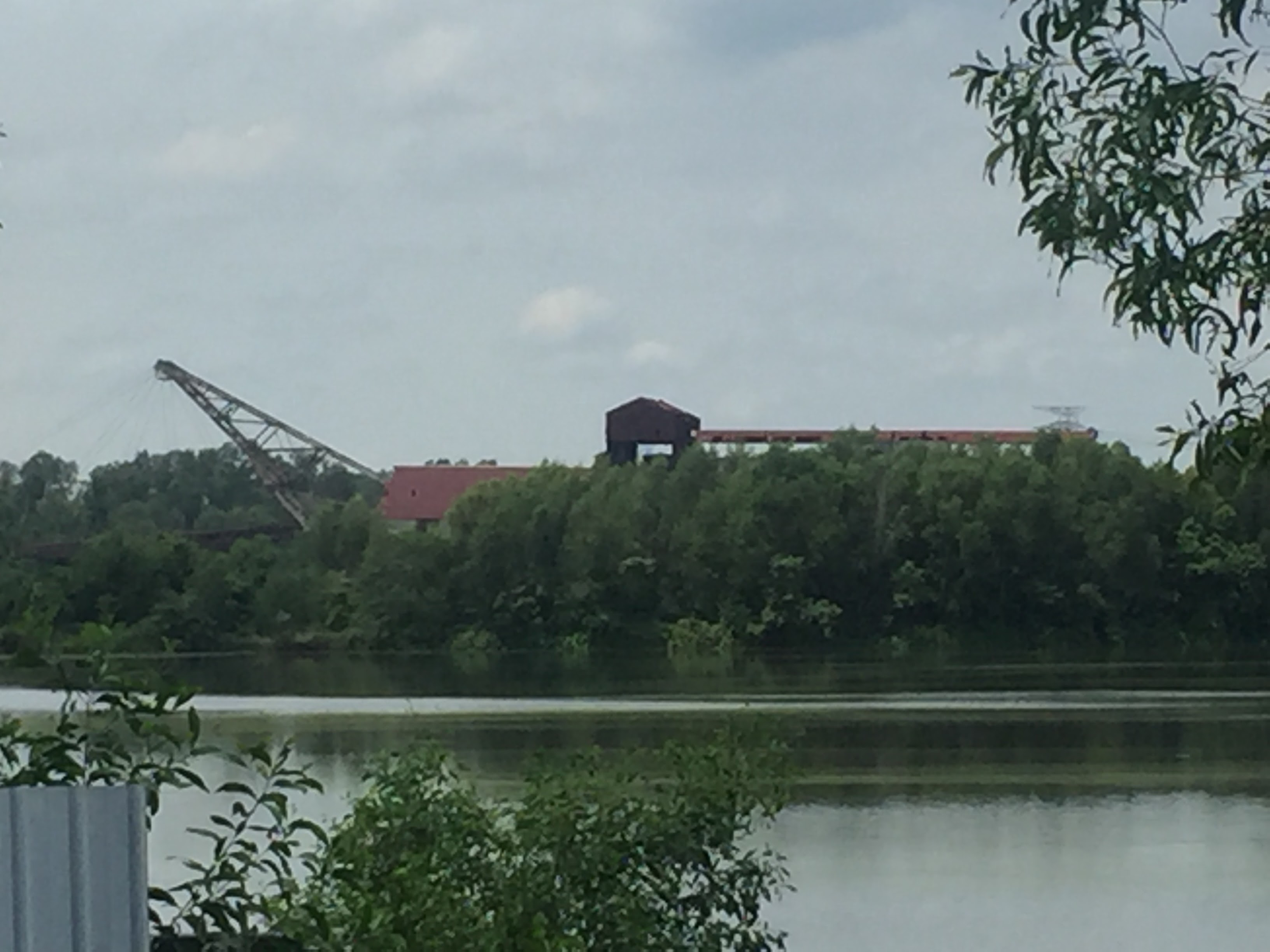
Still on the subject of ‘dredger’, currently there are only two in our country. The Tanjung Tualang Tin Dredge No.5 or TT5, located at Batu Gajah has been rehabilitated and revived into a tourist attraction. Weighing 4 500 tonnes, TT5 was built in England in 1938, rebuilt in 1963 and was retired in 1982. The last owner, Malaysia Mining Corporation, donated it to the Perak government in 2014. It opened to the public in late 2017 in conjunction with the Visit Perak Year 2017. I guess by now you should know the location of the other ‘dredger’. When PIW started operation, there was a tin dredge lodged at one of the lakes; this was Petaling Dredge No.9 owned by Petaling Tin Berhad. ‘PetD 9’ was constructed at the mining site in 1982 and was later sold off. The other surviving dredger is the (11)Sri Banting Dredge currently located at Kampung Dengkil. Built in 1974, this 5,000 tonnes structure is up for sale. To view it, follow the map that starts at the Dengkil Police Station to the site – https://goo.gl/maps/334qmjyGaSWrS5gBA

(L) PetD 9 (R) Sri Banting Dredge / Photo source : Sri Banting Dredge

Update – The writer visited Dengkil a day before it went under MCO and would like to make the following updates.

  1. The archaeological sites of Kampung Jenderam Hilir and Bukit Piatu are now located inside the Semenyih 2 Water Treatment Plant and entry to the sites may/will be denied.
  2. The Orang Asli are now staying at Kampung Orang Asli Bukit Tunggul, which is next to the entry road to Bukit Unggul Golf & Country Resort. They have access to water by sharing a water supply pipe but there is still no electricity supply.
  3. Many chalets in PIW are in a state of decay and visitors to the park are rare. 
  4. To reach Sri Banting Dredge, you have to walk the last one kilometre or so to the site.
Sri Banting Dredge (photo taken in May 2021) / Photo source : Eric Lim

Getting There

From the North, use Lebuhraya Damansara Puchong (LDP/E11) and exit at the end of the toll expressway at Serdang Interchange. Then enter Putrajaya-Cyberjaya Expressway (Federal Route 29) and exit at Dengkil East Interchange (Exit 15) to join Jalan Banting-Semenyih (Federal Route 31) to Dengkil.

In this Series

Please click HERE for a list of articles in the ‘A Very Rough Guide’ series.

References

https://www.thestar.com.my/metro/metro-news/2021/06/14/third-hippo-birth-at-wetland-sanctuary

Portal Rasmi PDT Sepang Kampung Dengkil

Caesalpinia sappan L

http://dengkil2014.blogspot.com/2014/11/sejarah-dengkil.html
Dragon tales and old charm

Bumi Satu Kampung Dalam 2 Negeri – i Kampung Baru . Imbasan Sejarah Kampung Baru Cina Selangor – Published by Jawatankuasa Tetap Pembangunan Kampung Baru Kerajaan Selangor -First edition 2012 – pp 148 – 149.

RECENT ARCHAEOLOGICAL DISCOVERIES IN PENINSULAR MALAYSIA 1976 – 1982 (page 59 & 60)

Ancient Finds From Kampong Jenderam Hilir

Time to resolve orang asli land issues near Dengkil
Personal communication with Mr Lee Kim Sin – Director of Kajang Heritage Centre

Mangsa Pembangunan : Orang Temuan di Sungai Buah dan Bukit Tunggul, Sepang, Selangor.

By Dr. Mohamed Salleh Lamry

Paya Indah Wetlands Introduction

Untitled (Selangor Dredging Berhad)

Opening of tin dredge delayed to year end

Sri Banting Dredge (also check Dredge supply > construction of new dredges)

Volunteering at the Museum during the Covid-19 Pandemic

by Karen Loh

The International Museum Day’s theme this year, “The Future of Museums: Recover and Reimagine” is appropriate in view of the current pandemic and its uncertain future. This article is about the Museum Volunteers’ (MV) experience as we navigated the series of lockdowns, which began on 18 March, 2020.

Volunteering at the National Museum (Muzium Negara)

Having a guide whilst visiting a museum, be it a docent, audio guide or booklet enhances a visitor’s experience. For one hour or so, the visitor journeys with the guide and travels back in time to a particular period through the displays and information boards on vitrines in the gallery. The artefacts are brought to life by factual stories imparted to them as they navigate that display. For example, the visitor does not only marvel at a 560-year-old shipwrecked celadon dish but follows its journey from the time it was first fired at Sisachanalai, Thailand. It was then loaded onto a ship destined for markets in South East Asia but the ship tragically sunk during a great storm. There it lay for 540 years until a marine archaeologist recovered it and it made its way to a museum vitrine, on display, having never served its original purpose.

How then can a visitor experience this journey with their docent when the guided tours have been cancelled and the museums closed due to the pandemic? Even as museums reopen to the public, the number of visitors is limited and guided tours restricted to fewer numbers in a tour group.

New Norm – finding a suitable video-conferencing/virtual meeting platform

When we began the first MCO on 18 March 2020, many of us took the lockdown as an opportunity to rest, spring clean, read the books we had kept aside to read later and indulge in television. Muzium Negara was closed indefinitely and all of our volunteer activities at the museum with it. As the two-week lockdown became four weeks then eight and so on, it became clear to the MV committee that some changes had to be made. We could not afford to sit around and wait for the museum to reopen. The first thing the committee had to do was to learn how to hold our meetings in some alternate mode like video-conferencing platforms. We had to adapt to today’s technology. The second thing was to get the members acquainted with the new technology. We all had to learn how to join an online meeting, turning on or muting our microphone, turning our video camera on or off and screen share, all of which are done effortlessly today. Not willing to pay for any service then, we looked at different video-conferencing platforms besides Zoom (which provided only 40-minutes free service), like Microsoft Teams, Skype, Google Meet where subscription payment was not required. While many of the video-conferencing platforms provide similar service, the committee decided to subscribe to Zoom after the second lockdown (MCO 2.0).

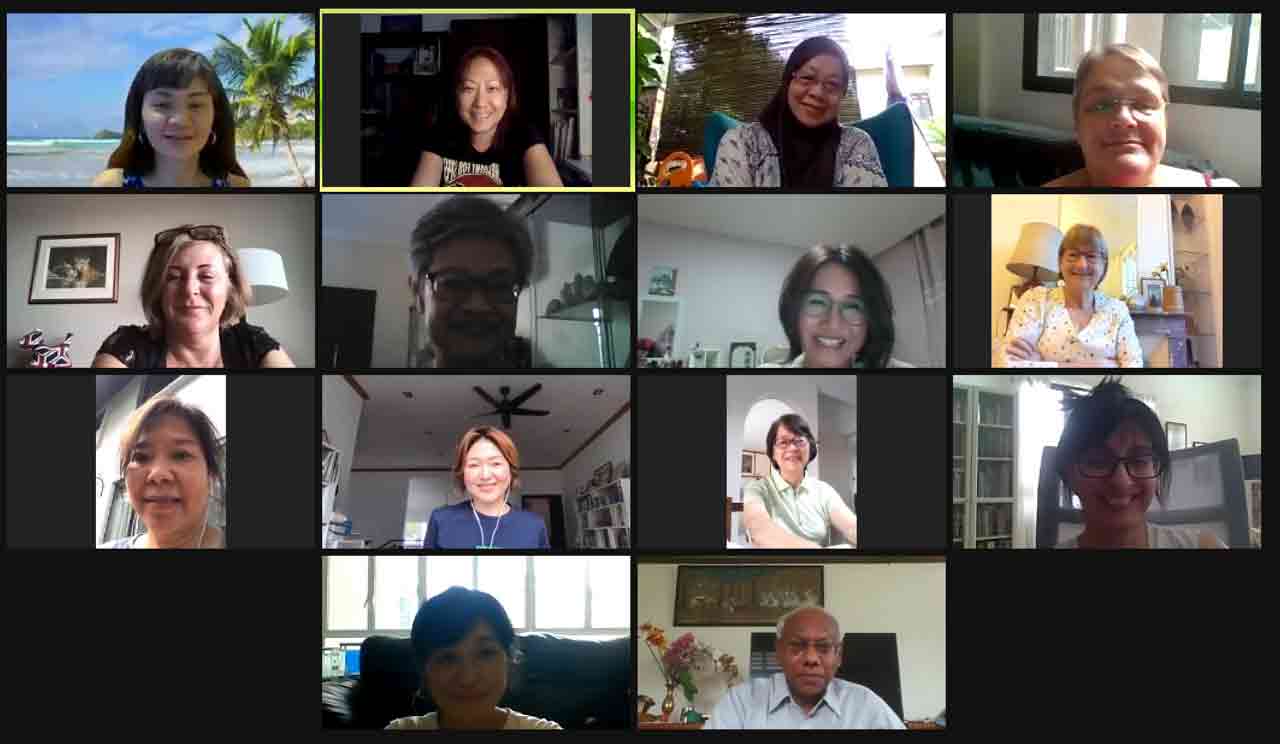
MV Committee in a Zoom meeting

The MVs who did not stop working – Research and Focus Teams

Although all of our guided tours and school programme activities came to a halt, our Research team and Focus team continued to operate. The Research team have a deadline to produce Muzings, which is MV’s annual digest. A draft copy of Muzings has to be submitted to JMM for approval before the end of every year until 2024. Besides discussing our articles and trying to solve problems in sourcing for research material, we also held in-house presentations online. This proved to be another learning curve as those who have done this would tell you that speaking to a computer screen with everybody else muted and video camera turned off is a very lonely experience.

The Focus team rolled out their first webinar in July 2020. We hosted the presentation from the IT lab in JMM with assistance from the IT technicians, using JMM’s Skype for business platform. The talk was given in-person by the speaker along with the Focus team present at the IT lab to our attendees online. Though the lab was limited to six people due to SOP, I think this little bit of human presence boosted the speaker’s morale. We also used the extra half hour before the start of a talk to interact with our members online. MCO 2.0 prompted us to subscribe to a video-conferencing platform. All talks from then on were conducted remotely. In retrospect, using a video-conferencing platform has been beneficial to the MV, for not only online meetings and webinars but also reaching out to speakers who do not live in the Klang valley. This has been the positive side of the pandemic. The Focus team and Research team have been able to reach out to speakers from around the world (taking into account the time difference of course). Seminars or conferences, which we had to travel to, to attend previously, could now be attended virtually in the comfort of our homes. It has certainly lessened our carbon footprint.

Interactive Projects at Muzium Negara – new forms of cultural experience

There were months in between the lockdowns when the museum was reopened. MVs used this opportunity to complete their training programme, which had been put on hold since 2019. Other projects such as the following were introduced:

i)  One-hour recorded tours by volunteer guides in four languages: English, French, Japanese & Korean. The tours highlight selected artefacts in each of the four galleries in the museum. The recorded tours have been posted on Muzium Negara’s Facebook page.

ii) Shorter five-minute recorded talks on one artefact in the museum in the language of the guide’s choice. These talks are posted on Muzium Negara’s Facebook and Instagram pages.

iii) Proposed MV activities at the museum after the lockdown: cooking and paper-folding demonstrations as well as a beginner’s level language course.

Looking forward – Results and Discussion

i) Sustainability of the volunteer training programme. In order to become a museum volunteer guide, all docents have to attend the 16-week MV training programme. This programme was cancelled for 2020 and 2021; the programme for 2022 is still under consideration. The training programme involves a classroom style in-person attendance and museum walk-throughs. While online training has not been explored, another option would be lesser numbers per session.

ii) Whether the museum is able to provide MV guides with face shields, face masks and/or wireless tour guide portable audio system for group tours.

Conclusion

There is a global vaccination programme going on with governments providing Covid vaccines for free. As more people are vaccinated, will our volunteer guides resume their duties when the museum reopens? Will visitors need to produce vaccine passports? If not, will our guides feel safe conducting in-person tours? Vice-versa, will visitors join a guided tour? Is the use of audio-guided tours the best alternative? There is still much to be discussed and decided.

Taking the AstraZeneca Vaccine

by Karen Loh

As with most people, my husband and I contemplated taking the AstraZeneca (AZ) vaccine when it was announced that it would be available to anyone on a volunteer basis. After talking to a few friends in the UK and France who had already taken the AZ vaccine, we decided to register. Yes, we read about the risks of blood clots, etc. but trusted the scientific reports that the benefits far outweighed the risks. I think I must have been one of the first batches of volunteers who registered as I was given the 3pm time slot on the first day of vaccination at Universiti Malaya (UM) on 5 May.

Before I knew it, it was the 5th of May and it was time to take the vaccine. Using Waze, I arrived at Bangunan Peperiksaan, UM around 2:45pm. For those who are also going to UM, there is plenty of parking available on its premises. The many signage placed around the premise were also helpful. From the entrance of the building, volunteers/staff were stationed at various stops to assist. The process went something like this:

Step 1

First stop, scan MySejahtera app with my phone.

Step 2

Show the person at the counter/desk my appointment slot. Only those who have an appointment that day will be allowed to enter the hall (If you have the same date with a family member, I read that you can go together irrespective of your different time slots. Just choose one of your appointment times).

Step 3

Temperature taken and a numbered card was given.

Step 4

Take a seat and wait to be called.

Step 5

The following stop was to confirm my identity. I was asked to scan the QR code with my MySejahtera app and produce my MyKad (or passport for expats). A few general Covid questions were asked – whether I had been in close contact with a Covid patient, been out of the country, where I worked. Two health consent forms were then given; these were to be filled out and signed later at the next stop (you can fill up the forms first and leave signature part for later as it has to be signed in front of the doctor).


Health consent form is double sided with one side in English and the other side in Malay

Step 6

The next stop is a quick consultation with a doctor. The doctor asked me whether I had any allergies, pre-existing health conditions, whether I was on any medication and then proceeded to brief me on the side effects of the vaccine. The most common side effects include a sore arm where the shot was administered, slight fever, mild headache, fatigue, muscle pain and nausea. She also warned that if any of these symptoms became severe and if rash appeared, to go to the nearest hospital or report the symptoms on MySejahtera. Fortunately, other than a headache I experienced the next day, my side effects were minimal. I was advised to take paracetamol for my headache.

The consultation desks where the doctors are seated

Step 7

Taking the AstraZeneca vaccine! As soon as the consent forms were signed (the doctor takes one form while I was given the other), I was ushered to a booth for the shot. I was instructed to place my left hand over my right arm, take a deep breath and then it was done. There was no pain at all, just a pinprick feeling over within seconds.

Vaccination booths at the back of the waiting area

Step 8

After the shot, I was asked to proceed to the waiting area for observation. The observation period is usually 15 minutes. After the wait, I had to scan MySejahtera app again to update my vaccination report, which has the vaccination date, vaccine number and batch number. A vaccination card was also issued and I was informed that that the second dose would be given after 12 weeks and the date confirmed later.

In conclusion, the AZ vaccination process was quick and efficient. It took less than one hour from Step 1 to the time I took this photo!

Tribute to Cikgu Lee

by Eric Lim

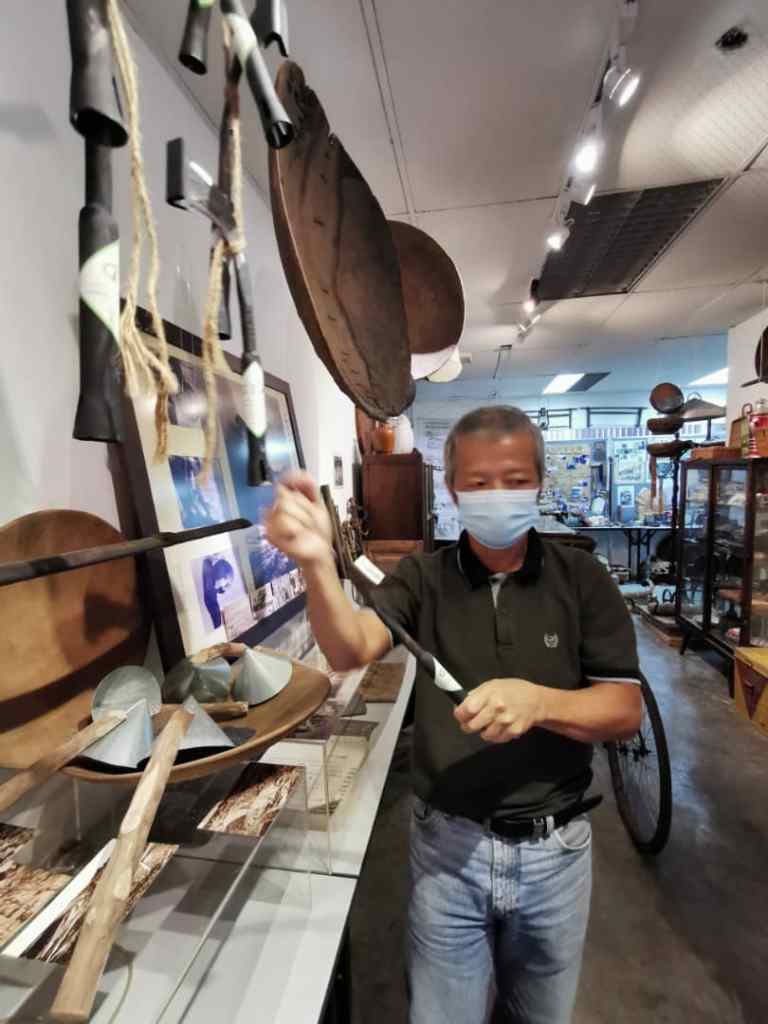
When my fellow Museum Volunteer sent a message asking whether I had heard news of the passing of Cikgu Lee, I brushed her off and told her that I had met him about a week ago at his centre and he was perfectly fine. Not too long after, the official news came from other Museum Volunteers of his passing. Cikgu Lee died of a heart attack and he was only 66 years old.

Lee Kim Sin, or affectionately known as Cikgu Lee, was from Merbok, Kedah. He was a teacher at SMJK Yu Hua, Kajang, before he stood for elections during GE 12 in 2008 for the Kajang state seat. He came out victorious with a majority of 3,268 votes. I met him for the first time when he attended one of our Tai Chi events at Mewah Club in 2010. My next meeting with him came ten years later, in early 2020 when he was the Director of the Kajang Heritage Centre located at Jalan Mendaling. I wanted his permission to bring visitors to the centre and, at the same time, request him to narrate the history of Kajang and the surrounding towns. Since then, I have been a frequent visitor to the centre.

Every time I set foot in the Centre, I learnt new things from Cikgu Lee. He was ever willing to share his knowledge with us. I still recall vividly that I told him that I was writing articles about places and he would immediately mention the major events that took place in the town. For example: Broga – thermal incinerator project, Rawang – protest against the construction of high tension electric cable towers, Tanjong Malim – Battle of Slim River, Dengkil – discoveries at Jenderam Hilir and Orang Asli land issue at Bukit Tunggul.

Cikgu Lee was also a keen researcher on the Sin Sze Si Ya temples in our country. He was passionate about the preservation and conservation of the town. For one of his projects, the Taman Tasik Sungai Chua, a former tin mine, he worked closely with the Kajang Municipal Council, and this project ultimately came to fruition. It was officially opened last year to great response from residents of Kajang; I am a frequent user.

Kajang as well as the cultural and heritage community will miss you dearly. Rest in peace, Cikgu Lee.

A Very Rough Guide To Tanjong Malim

by Eric Lim

Introduction

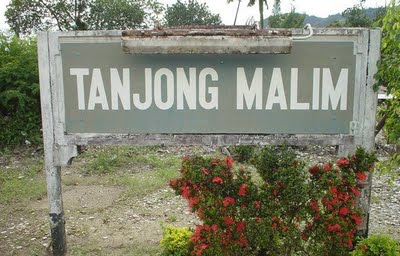
Just like the small town of Broga, Tanjong Malim is a border town. It lies at the boundary between Perak and Selangor with Sungai Bernam meandering across, serving as the divider. It is about 123 km from Ipoh, Perak’s capital, and 80 km from Kuala Lumpur, both via the PLUS Expressway/North-South Expressway E1. Traditionally, Tanjong Malim was a collecting and marketing centre for the surrounding rural population. This role is fast diminishing as Tanjong Malim is undergoing a process of rapid change. The establishment of the Proton industrial complex coupled with its recent RM 1.2 billion plant extension and with the upgrading of Institut Pendidikan Sultan Idris (IPSI) to Universiti Pendidikan Sultan Idris (UPSI), has transformed the once sleepy Tanjong Malim into a centre of manufacturing and high value services. It has become the main sub-regional centre of the Southern region of the state of Perak.

History

Sungai Bernam originates from Gunong Liang Timur on the Titiwangsa Range, which is a tri-border point between Perak, Selangor and Pahang. The river flows a distance of 216 km before discharging into the Straits of Malacca; around 65 percent of the river is located in Perak while the remaining in Selangor.

It was here at the Bernam Valley that the first slab grave (so named because the walls were constructed of large granite slabs) was discovered at Changkat Menteri, close to the bank of Sungai Bernam in 1895. It was later excavated in 1919 by H.C. Robinson, the then Director of Museums of the Federated Malay States (FMS) and R.O. Winstedt. Later, more slab graves were discovered, namely in Sungkai (1927 and 1930) and in Slim River (1936). The most recent discoveries of four slab graves were made by an archaeological reconnaissance team from Selangor State Museum headed by Associate Professor Leong Sau Heng. Two of the graves were located on a palm oil estate belonging to United Plantations at Changkat Menteri and the other two, also found near oil palm trees, at nearby Ulu Bernam. They were excavated in 1992 and 1993 respectively. Radiocarbon dating of the excavated graves has yielded dates from the 1st to 7th century CE.

Replica of a slab grave at the National Museum / Photo source : https://museumvolunteersjmm.com/2018/07/16/hidden-gems-prehistoric-burials/

Tanjong Malim first started as a settlement on a large cape along Sungai Bernam in the 18th century. The early settlers were Bugis and they rehabilitated the area and at the same time, planted jambu fruit (guava) trees along the banks of the river. Hence, the place was initially known as Kampung Jambu or Tanjong Jambu (tanjong/tanjung is Malay for cape). During the Pahang Civil War fought from 1857 to 1863, many Malays fled to the neighbouring states Kelantan, Selangor and Perak. Dato Haji Mustapha Bin Raja Kamala, a Rawa chief from Raub led a group and landed at Kampung Jambu and when he was the Penghulu (Chief), he named the place Kampung Kubu. Under his leadership, he opened up land, developed markets for trading and personally contributed to the building of the mosque and Police Station. Local lore has it that a representative of the British government came for a visit and witnessed the local praying. Later, he had a chat with them and asked if there was a word for their religious devotion and obligations. The reply was the word “mu’allim or alim”. He then offered to name the settlement Tanjong Malim (T/M), a name that has stayed until today.

In 1885, the tax office and police station were shifted from Kuala Slim to T/M. In 1894, T/M became the sub district headquarters and Douglas Francais William became the first Assistant District Officer. In 1896, a road connecting to Kalumpang in the Ulu Selangor district was completed and in 1898, the first road in town was tarred. On 1 November 1900, the train section between Kalumpang and T/M was opened fulfilling the suggestion made by Frank Swettenham when he became the Resident General of the Federated Malay States in 1896 by linking the Perak and Selangor railway system. T/M reached its pinnacle in 1922 when the Sultan Idris Training College (SITC) was established (more information below) and since then, it was known as an Education Town.

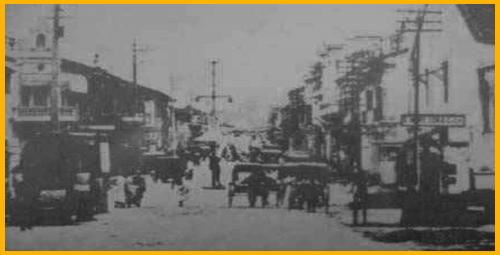
Tanjong Malim (circa 1920) / Photo source http://www.mdtm.gov.my/ms/pelawat/info-tanjong-malim

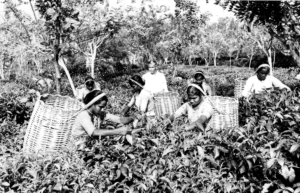
United Plantations started with the planting of rubber trees and subsequently went into coconut and oil palm. Interestingly in 1939, tea plantations were established at their Ulu Bernam Estate. The tea was packaged and sold on a commercial scale under the brand name of HornBill Tea. Tea production was phased out in 1971.

During the Japanese Invasion, one of the major battles fought was the Battle of Slim River. Japanese forces started the attack with tanks in the early morning of 7 January 1942 and five hours later, it was all over for the British and Indian forces. From here on, it was a straightforward march for the Japanese to Kuala Lumpur, which they captured on 11 January 1942. Frederick Spencer Chapman, a ‘stayed behind’ commando instructor was in T/M in the month of February 1942 and for a period of two weeks, became a real nuisance to the Japanese. Chapman and his team made daring raids as they harassed the Japanese and slowed them down. Their first raid was a bridge a mile south of the T/M railway station on 1 February 1942, followed the next day with a small girder bridge just south of Kampong Behrang train station. They also cut communication lines in the area. The demolition team was proving to be a handful that the Japanese held 2000 soldiers at T/M and Kuala Kubu Bharu to hunt them down. With no more supply of explosives, they left T/M on the night of 15 February 1942, which they learned much later was the day that Singapore fell to the Japanese. After the war, Chapman wrote about his four years spent in the Malayan jungle as a guerrilla fighter in a book entitled ‘The jungle is neutral’. During the Malayan Emergency (1948-1960), T/M was a hot spot for communist terrorists, who committed violence and acts of sabotage.

On 25 March 1952, a team of 5 civilians and 16 police personnel from the jungle squad went to a rubber estate located just outside of T/M to repair a water tank, which was sabotaged for the sixth time by communist terrorists. Upon arrival, the team was ambushed and 12 of them were killed including Micheal Codner (Assistant District Officer) and W.H. Fourmiss (Public Works Department engineer), eight were injured and only one survived, Yahya Paip who worked as the overseer. The killing at T/M made local and international headlines and it prompted the newly appointed High Commissioner General Templer to take immediate drastic action. A 22-hour curfew was imposed, schools closed, bus services stopped, a further reduction in rice ration and the town was cordoned with barbwires with the Home Guard manning the gates. This ‘collective punishment’ on the residents of T/M took effect on 27 March 1952. Hard as it may be, the exercise proved to work and the information received led the British to Kampung Simpang Ampat, which was close to the site of the killing; all 52 Malay families there were ordered to shift to a new settlement located behind SITC.

Home Guard inspection center in Tanjong Malim
Photo source : http://www.arkib.gov.my/en/web/guest/arkib-negara-malaysia (Tanjong Malim / Home guard inspection center in Tanjong Malim)

On 16 March 1966, the first tolled highway in Malaysia went into operation – the Tanjong Malim-Slim River tolled highway on Federal Route 1/main trunk road. Buses and lorries were charged RM 1.00, cars 50 sen and motorcycles 20 sen. It subsequently reverted to a toll-free section with the opening of the Tanjong Malim-Tapah segment of the North South Expressway in October 1993.

On 11 January 2016, the Sultan of Perak, Sultan Nazrin Muizzuddin Shah, declared Muallim as the 11th district in Perak. The new district covers the mukim (small district) of Slim, Hulu Bernam Barat (west) and Hulu Bernam Timur (east); the towns include Slim, Behrang, Proton City and Tanjong Malim. Prior to this, the area was part of the Batang Padang district.

Places of Interest

Universiti Pendidikan Sultan Idris (Sultan Idris Education University, first started as Sultan Idris Training College / SITC)

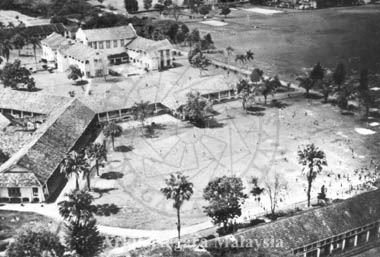
Prior to SITC, there were two Malay training colleges, in Melaka (established in 1900) and Matang, Perak (1913). In 1916, Richard Olaf Winstedt (involved in the excavation of the first slab grave as mentioned above) was appointed as the Assistant Director of Education (Malay schools) and he was sent to Java and The Philippines to familiarize himself with the native schools there. Upon his return in 1917, he made several recommendations and reorganization of the Malay education system to the Government. Central to these was the setting up of SITC. On 26 May 1917, T/M was officially chosen as the location of the college because it met all the requirements i.e. fertile land, close to the railway network, roads and river networks and a population of moderate number. On the same day, Sultan Abdul Jalil consented to name the college Sultan Idris Training College in conjunction with the name of the late Sultan Idris Murshidul Azzam Shah, the 28th Sultan of Perak who ruled between 1889 and 1916.

Construction work began in August 1919 on a 64 hectare land that was purchased for $49 000 and was completed in 1922. SITC was officially opened on 29 November 1922 by Sir George Maxwell who was then the Chief Secretary of the FMS. Oman Theodore Dussek was appointed as the first principal of SITC. Prior to this, he was the head of the Malay training college in Melaka. The first batch of 120 students came from the Straits Settlements and the FMS; they were all men. The academic programme consisted of ordinary schoolwork namely arithmetic, geography, language, history and Malay literature. Practical skills were learned through agriculture and handicraft.

Since its inception, SITC has gone through several name changes in accordance with its growing status as a teaching institution. The era of SITC ended in 1957 when it became known as Maktab Perguruan Sultan Idris (Sultan Idris Teachers College). The first batch of 140 female students was accepted on 13 January 1975. It was upgraded to an institute and was known as Institut Perguruan Sultan Idris (Sultan Idris Teachers Institute) on 21 February 1987. Its status as an institute ended when it was upgraded to university with the establishment of the Universiti Pendidikan Sultan Idris (Sultan Idris Education University) on 1 May 1997. At the start, there were only four faculties. Today, the number has increased to nine, offering Diploma and Degree programmes. In addition, the Institute of Postgraduate studies features Master and PhD programmes. UPSI’s main campus is the Sultan Abdul Jalil Shah campus located at T/M and the other is Sultan Azlan Shah campus located at Proton City. The latter was officially in operation on 20 February 2012.

National Education Museum

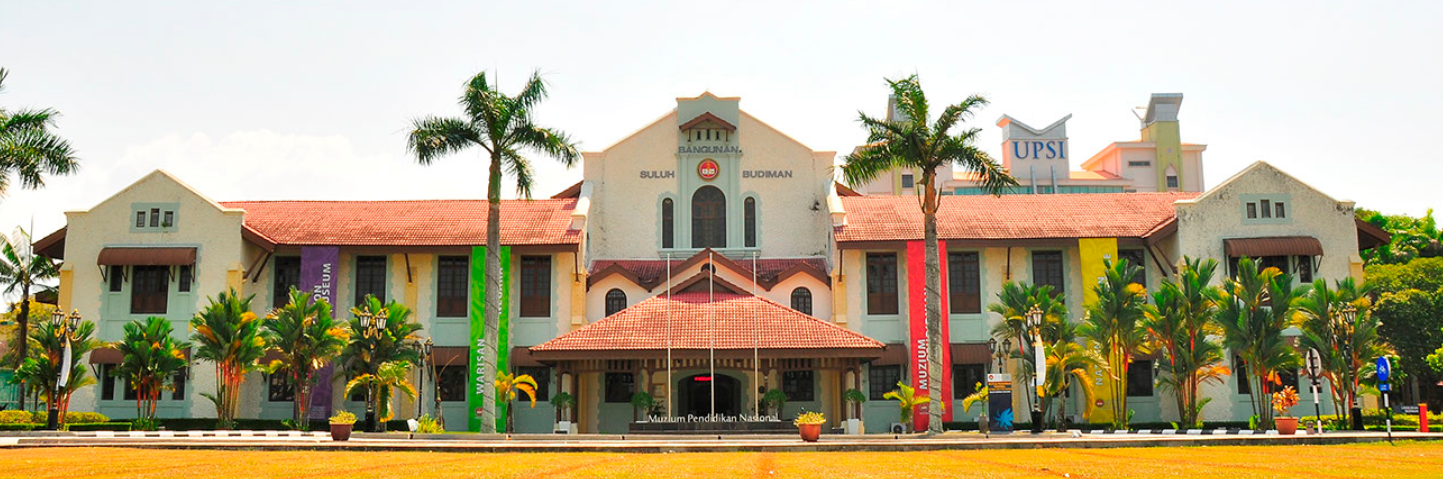
The National Education Museum is located inside the main campus of UPSI in T/M and is housed in the Suluh Budiman Building, which was the main building of SITC. The building, which had strong resemblance to the Notre Dame church in France and Salisbury in England, was designed by FMS architect, Leofric Kesteven, who also designed the Sultan Suleiman Royal Mosque in Klang. The building was gazetted as a National Heritage Building on 14 February 2009 and on 24 August of the same year work was carried out to convert it to a museum. It was completed in two years and on 19 July 2011, the museum was inaugurated by Her Majesty The Permaisuri of Perak, Tuanku Bainun. Today, the museum has 21 permanent exhibition galleries and one themed exhibition gallery that showcase the history of education in our country and the history of SITC.

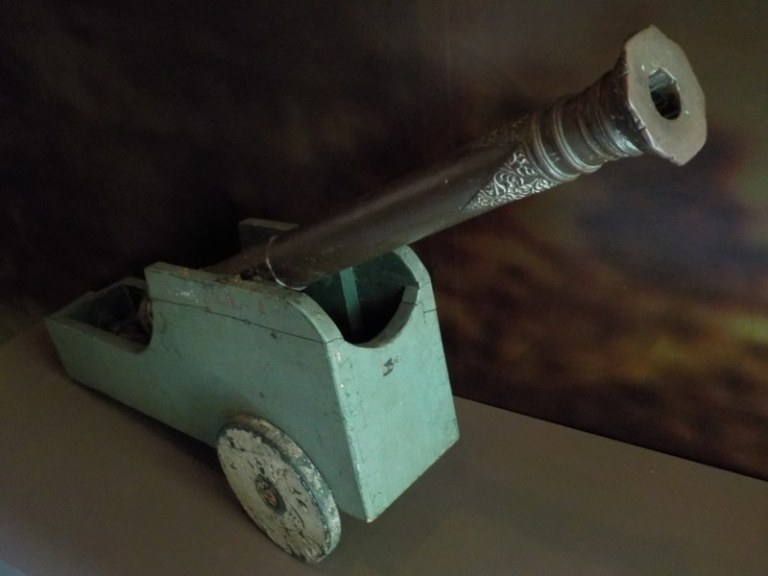
One interesting exhibit is an ancient cannon. It was used by Raja Mahadi’s camp to fight Tengku Kudin during the Selangor Civil War. The cannon was a gift from the people of T/M to SITC during its inauguration. The museum is open on Monday to Friday and admission is free. There are also interesting attractions outside the museum like Za’ba House, The Great Bell, former Japanese armed forces punishment site, bullet holed pole, just to name a few.

Old Town

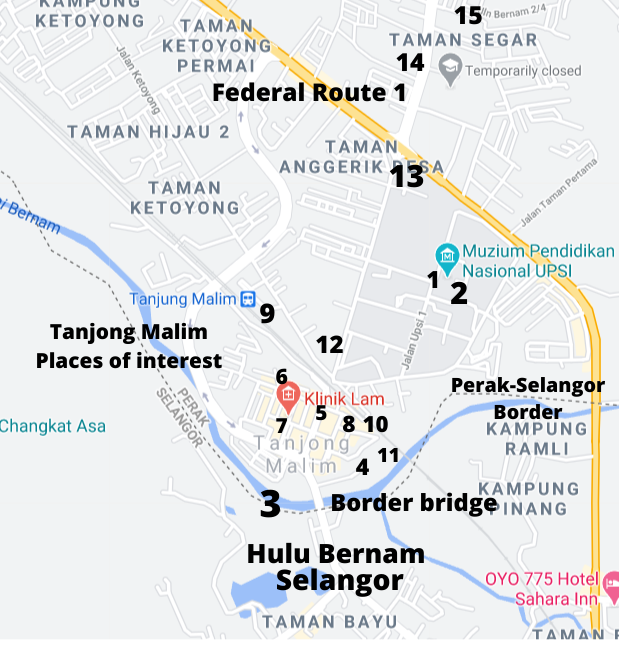
Coming from Hulu Bernam town, after passing the bridge across (3) Sungai Bernam, leads to the Old Town of T/M. Immediately after the bridge on the right is (4) Kampung Kubu, the birthplace of T/M. The district office has put in effort to spruce up the place including installing information boards on the history of the town. If planning a trip here, this would be an ideal starting point. When the British came and brought development to T/M, the Chinese followed suit. They built two rows of shophouses at the centre of the town. Some of these buildings are more than a hundred years old and are still standing, located at (5) Jalan Besar.

Two of the streets in this section are named after Chinese pioneers i.e. (6)Jalan Loke Yew and (7) Jalan Chong Ah Peng. Loke Yew was synonymous with tin mining and commercial agriculture. He also had extensive influence in the FMS. He has a road named after him in many major towns including Kuala Lumpur, Ipoh, Taiping, Seremban, Kuantan, Bentong, Singapore and T/M. Loke Yew invested in rubber and coconut in T/M. Chong Ah Peng came to Malaya in 1895 in search of tin, which he found in abundance at a hill just south of T/M, in a town called Kalumpang. With his fortune, he developed the town by building shophouses, school, temple, bus station and police station. He also built shophouses in T/M. There is also a street named after Dato Haji Mustapha Bin Raja Kamala. (8) Jalan Haji Mustapha Raja Kamala, leads to Kampung Kubu.

Today, T/M railway station provides Komuter (Tanjong Malim to Port Klang route) and ETS (intercity) services. The (9) old railway station which is still intact is about 100 metres from the new station, has been converted to a restaurant. The (10) Rest House, which was a popular stop for VIPs in its early days is now completely devoid of life. It appears to have closed down.

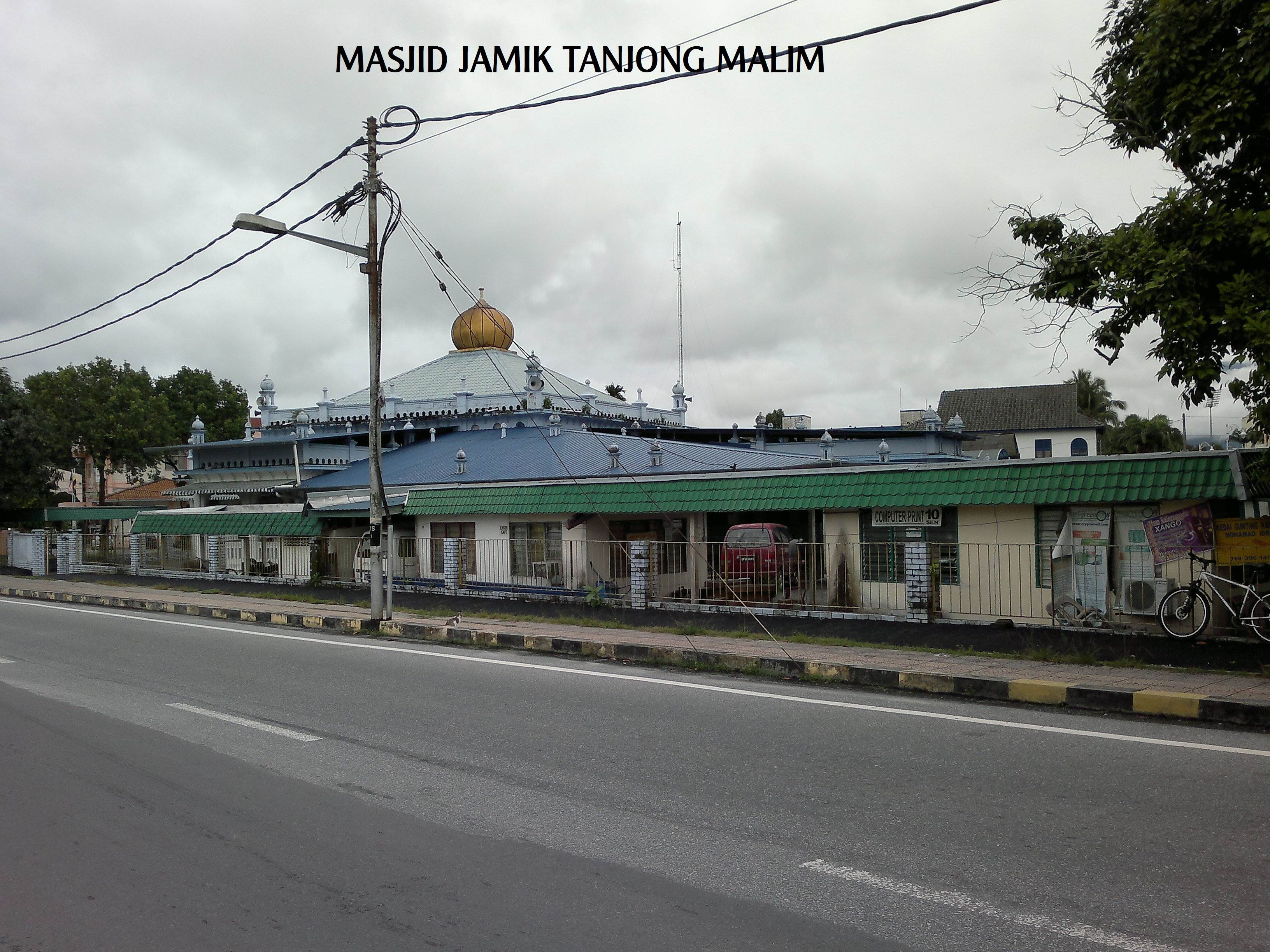
We next look at religious architecture in the town, starting with (11) Church of the Most Holy Redeemer, a Roman Catholic church. The old church was built in 1960. In 2007, the current building was constructed and it started being used in August 2009. Located close to the Police Station on Jalan Besar is (12) Masjid Jamek. The first Masjid Jamek was located at Kampung Kubu. When SITC was set up, it was not able to accommodate the increasing pilgrims, so a new mosque was built in 1926 at the current site. It was designed by a British architect and it was officially opened by DYMM Paduka Sultan Iskandar Shah on 15 June 1926. Further down Jalan Besar, at the junction of Jalan Temoh (main trunk road), is a Hindu temple, (13) Sri Thandayuthapani Temple. Typical of a South Indian temple, it has a large gopuram (monumental tower) at the entrance of the temple and walls that surround the temple complex.

Masjid Jamek / Photo source : Portal Masjid v1.0

Past the junction, the connecting highway is Behrang-Tanjong Malim Highway/Federal Route 193, which was formerly Jalan Slim. Located on the left is the (14) Gudwara Sahib Tanjong Malim. The first building was located near the current site of the Catholic High School and when the Sikh community bought a piece of land, a new building (at the current site) was built in 1931 and was declared open in early 1932. It was demolished in July 2003 to make way for the present Gudwara. Weekly prayers are held on Sunday mornings 8.00 to 9.00 am. Last but not least is (15) Fook Pau Lin, a Buddhist Mahayana temple located at Jalan Segar Utama, Taman Segar. The temple organizes dharma talks and cultivation of anapanasati meditation.

Getting There

There are two main ways to get to Tanjong Malim by car. Use the tolled highway – the North South Expressway E1 and Exit 121 to Tanjong Malim. For toll free, use Federal Route 1, the main trunk road. Another option is to use the Komuter service, take the Tanjong Malim-Port Klang route.

In this Series

A Very Rough Guide to Rawang

A Very Rough Guide to Broga

A Very Rough Guide to Mantin

References

Frederick Spencer Chapman – The jungle is neutral – Published by Marshall Cavendish International (Asia) Pte Ltd – Publication date 2014 / 03.

Neil Khor – Loke Yew. A Malayan Pioneer – Published by Zamilyn Sdn Bhd – First edition 2019.

(PDF) Functional changes of Malaysia’s small towns in the era of globalization: Evidences from Tanjong Malim, Perak

Sungai Bernam potential water source in Klang Valley, says Luas

Recent finds of more slab-graves in the Berman Valley, Peninsular, Malaysia

History & Milestones – United Plantations Berhad

Sejarah Awal Tanjong Malim

AKSI DAN REAKSI: KEKEJAMAN KOMUNIS DI TANJUNG MALIM DAN TINDAK BALAS BRITISH, MAC-APRIL 1952

Muallim is now Perak’s 11th district

A Review of the Educational Developments in the Federated Malay States to 1939

Muzium Pendidikan Nasional – UNIVERSITI NO.1 PENDIDIKAN | NO.1 EDUCATION UNIVERSITY (about museum & view museum)

UPSI National Education Museum – Muzium Pendidikan Nasional

About UPSI

Cheong Ah Peng, the Father of Kalumpang – Museum Volunteers, JMM

A Visit to the National Education Museum (18 September 2017)

Church of The Most Holy Redeemer Tanjung Malim

Portal Masjid v1.0

Gurudwara Sahib Tanjong Malim, Perak – Gateway to Sikhism

https://www.orangperak.com/sejarah-dan-asal-usul-tanjung-malim.html