A Very Rough Guide to Jugra

by Eric Lim

Introduction
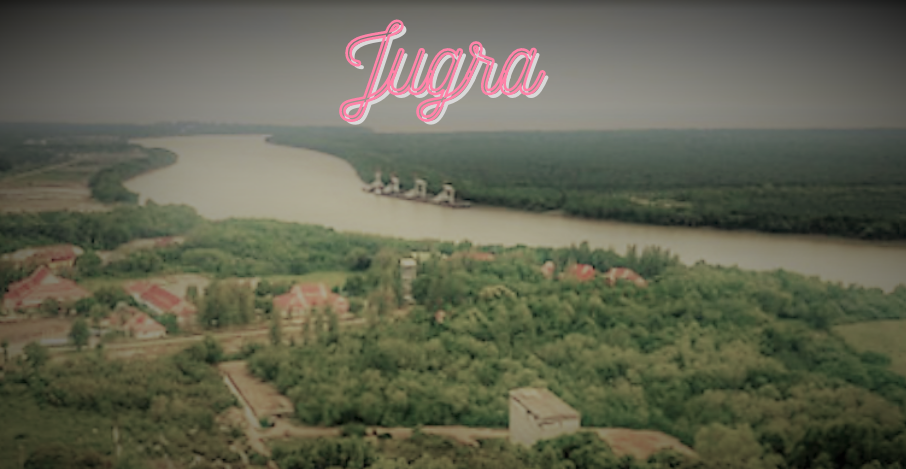
(3) Channel linking Sungai Langat and Straits of Malacca 
Photo source : Bukit Jugra – Visit Selangor

The starting point of Sungai Langat is at Gunung Nuang on the Titiwangsa Range. The river flows westward across the state of Selangor covering a total distance of 190 km, passing through Kajang, Dengkil, Jenjarom and Jugra before it drains into the Straits of Melaka,. This article focuses on the town of Jugra, which was the royal town and administrative centre of Selangor during the reign of Sultan Abdul Samad and the period of the British intervention in the state. Sadly, today, the town has been left out of the state economic activity and it has slid into obscurity.

History, Tales and Remnants

The discoveries of large quantities of pottery shards, legs/stands of tripod pots and stone adzes at Kampung Jenderam Hilir near Dengkil proved that the Sungai Langat basin had been inhabited since the Neolithic times, believed to be between 3,000 – 4,000 years ago. The area later became a feeder point and regularly supplied local produce to the entrepot at Bujang Valley. At the height of the Melaka Sultanate in the middle of the 15th century CE, Sultan Mansur Shah made his son, Paduka Sri China, the Raja of Jeram near Langat. When the Sultanate of Selangor was set up following the installation of Raja Lumu as Sultan Salehuddin by Sultan Mahmud of Perak, the state was divided into five semi-autonomous districts based on the five major rivers in the state, namely Sungai Bernam, Sungai Selangor, Sungai Klang, Sungai Langat and Sungai Lukut. The settlements were at the estuaries, namely Sabak Bernam, Kuala Selangor, Klang, Bandar Langat (aka Bandar Temasya) and Lukut respectively.
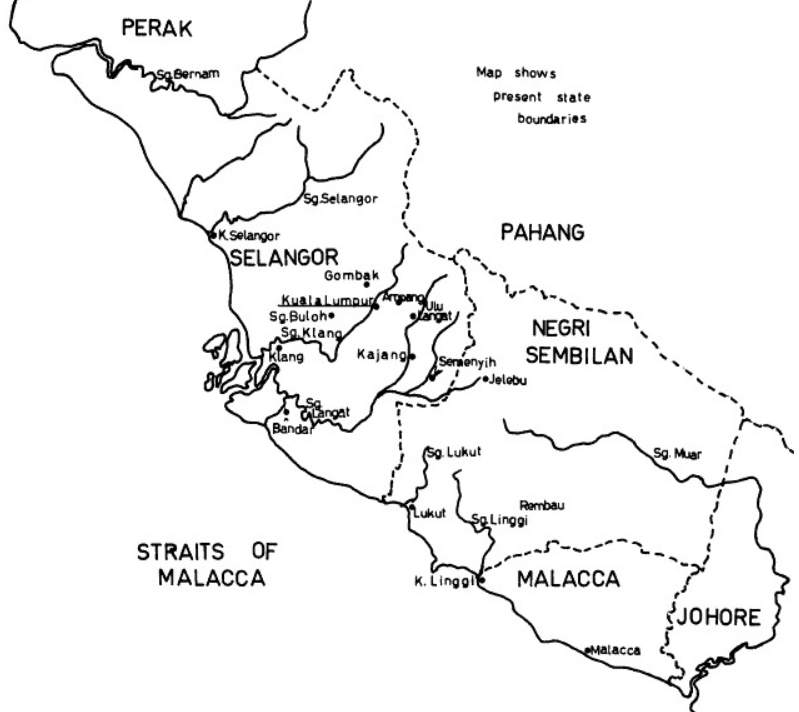
Rivers in Selangor in the 19th century CE / Photo source : The Peopling of Ulu Langat

Up until the third Sultan of Selangor, Sultan Mohamed (1826-1857), Kuala Selangor was the main administrative town and capital of Selangor and Raja Abdul Samad was assigned the charge of Kuala Selangor while his father, Raja Abdullah, ruled the Langat Valley.  When Raja Abdul Samad took over the reign as the fourth Sultan of Selangor in 1857, he retired from Kuala Selangor and chose to reside in his ancestral fief of Langat, thus moving the capital to Bandar Langat. His eldest son, Raja Musa, who assumed the title of Raja Muda was put in-charge of Kuala Selangor. During the turbulent time of the Klang War/Selangor Civil War from 1867 to 1874, Sultan Abdul Samad issued a letter dated 26 June 1868 that delegated wide executive powers to his son in-law, Tunku Dhiauddin Zainal Rashid or Tengku Kudin in short, and Langat given as a gift to him.

The war was initially fought at Klang and it then spread to Kuala Selangor, Ulu Selangor and finally landed at Kuala Lumpur. After seven long years of fighting, in March of 1873, Tengku Kudin and his allies Yap Ah Loy and Pahang forces recaptured Kuala Lumpur. In November the same year, Kudin’s forces and a Pahang contingent retook Kuala Selangor, the last stronghold of Raja Mahadi in Selangor and it signalled the end of the war. In the middle of 1878, Tengku Kudin relinquished his position as Viceroy of Selangor and returned to his home state of Kedah.
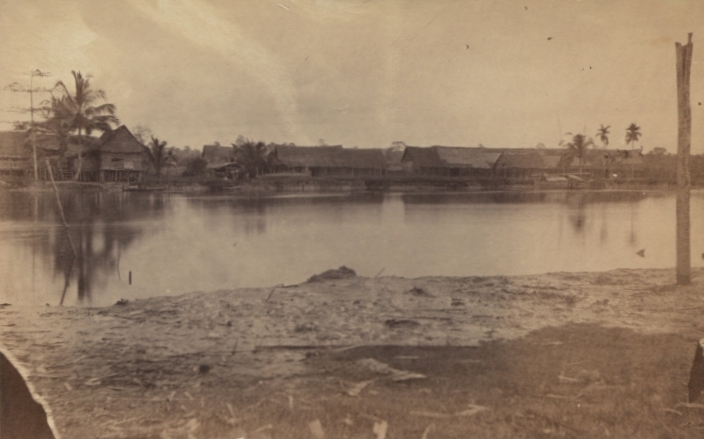
(1) Settlement at Kuala Jugra / Photo : Wikimedia Commons
(2) Sultan’s fortified stockard at Bandar Langat 
 Photo source : Let’s learn more about one of Selangor’s greatest rulers, Sultan Abdul Samad

After the war, and after a court trial at (1) Kuala Jugra to settle a piracy case that happened in November 1873 in Selangor waters, Colonial rule in Selangor was established. John Guthrie Davidson became the adviser and aide to Tengku Kudin in Klang and a young Frank Swettenham of the Straits Settlements Civil Service was appointed the Assistant Resident in August 1874. He was to reside at the (2) Sultan’s fortified stockade by the river which according to him, was flooded twice daily! During his incumbency, Swettenham made many field trips, travelling the length and breadth of the state, including the key mining towns of Hulu Langat, which took him extra days to arrive and Kuala Kubu, where he commented on the gigantic dam that the locals had constructed. Davidson’s position as the first Resident of Selangor was confirmed the following year and at the same time, Swettenham left Bandar Langat and moved to Perak.
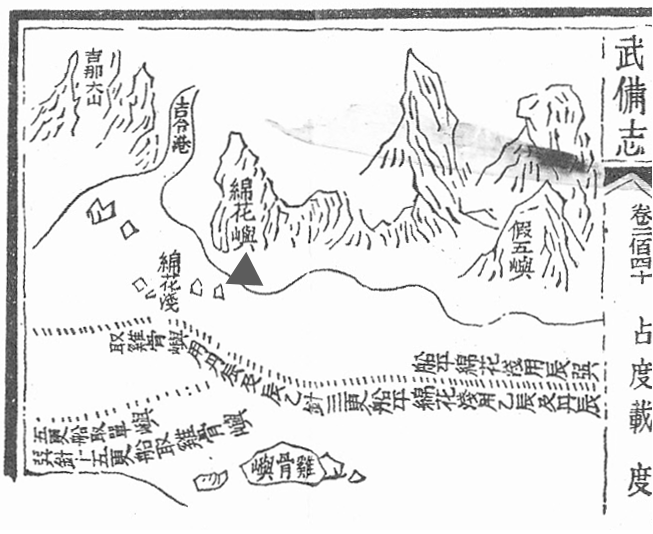
Chinese source showing the location of Bukit Jugra which the Chinese called Mian Hua Yu (綿花嶼)  /Photo source : Wikimedia Commons

The next phase was the development of the royal capital, which was shifted to Jugra, a Malay village south of Bandar Langat. The hill at Jugra was already a known spot and had served as a natural guiding beacon for seafarers in the Straits of Malacca for centuries. The earliest record came from the Chinese source through the sailing charts that recorded the expeditions of Admiral Zheng He in the early 15th century CE. They were published in a book in 1628 and it showed the location of Bukit Jugra, which the Chinese called Mian Hua Yu (綿花嶼) or Cotton Islet in English. Legend has it that when the Malacca Kingdom was ousted by the Portuguese in 1511, Puteri Gunung Ledang escaped and arrived at Bukit Jugra with her husband. One day, she killed her husband and buried him at the foot of the hill and their two cats turned into ‘rimau keramat/ghost tigers’ guarding the grave ever since. ‘Even to this day she pays periodical visits to Jugra Hill’. The hill was also mentioned in ‘The Oriental Navigator, Or, New Directions for Sailing to and from the East Indies’, an important guide to navigating the seas to the far reaches of Asia, which was first published in 1794. Bukit Jugra was known as Parcelar Hill, and the book mentions another hill with a similar name i.e False Parcelar Hill, which is Bukit Jeram today, located at Kuala Selangor. The name ‘Parcelar’ derives from the Arabic word ‘balasar’, which literally means above the head.
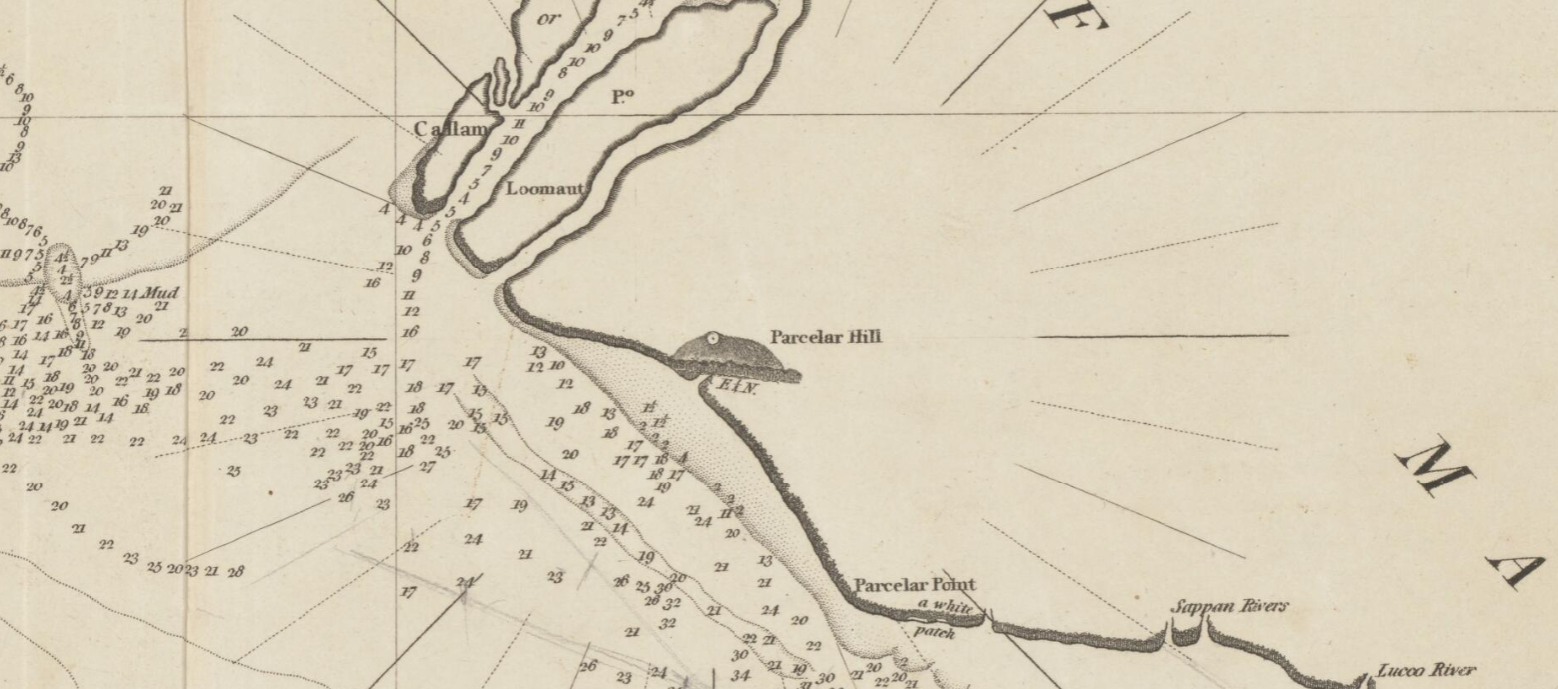
Parcelar Hill mentioned in ‘The Oriental Navigator, Or, New Directions for Sailing to and from the East Indies’ / Photo : Plan of Salangor, and of the coast of Malaya, from Point Caran to Parcelar Hill, including the Strai…

In the 1850’s, some Americans opened a tin mine upstream of Sungai Langat at Sungai Tangkas near Rekoh but was later met by altercations from the locals as they did not possess any consent and the mine was soon abandoned. They travelled down to Bandar Langat and while there, made a significant contribution by improving the communications in the area. They succeeded in making a (3) canal to provide a shortcut from Sungai Langat and the Straits of Malacca at the Jugra inlet (see the top/first photo). The canal later turned into a channel and a reference was made in 1877 that Emily Innes, wife of District Officer James Innes, had used the channel to transport her goods and chattels including a piano, which was a wedding present from her parents, in a big cargo boat from Bandar Langat to Bukit Jugra. At the summit of Bukit Jugra, the British had built a lighthouse to guide ships approaching Jugra. The locals said that during the construction, the waters in the area had turned red for thirty days and at the expiry, cockles, which were abundant, suddenly disappeared. In 1976, another concrete tower was built, this time equipped with the state-of-the-art navigational equipment. Today, there are (4) two lighthouses at Bukit Jugra; the taller was built during the colonial era.
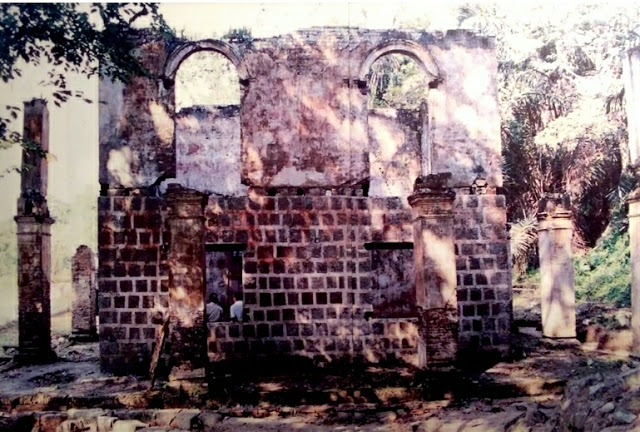
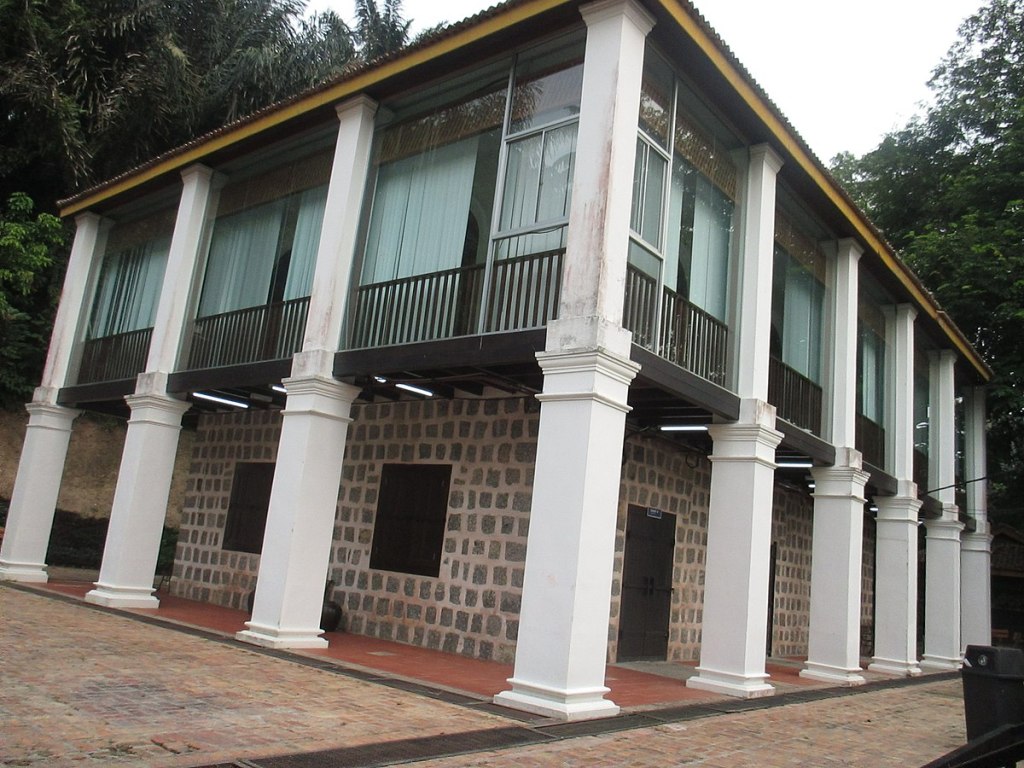
The British started developing Bukit Jugra between 1875 and 1876 and probably the first building constructed was the police station. It was said that Tengku Kudin had initiated the construction. It was to be the first police station in Selangor. A twenty-two year old Harry Charles Syers arrived in March 1875 to set up the police force and he recruited Malays from rural districts of Malacca. One of his early accomplishments was the crushing of Sutan Puasa’s suspected uprising in Ulu Langat in October 1875. H.C. Syers moved on to become the first Federal Commissioner of Police. The ruins of ‘Rumah Pasung’, name given by the locals for the police station, were discovered by the state archaeology team in 2001 and restoration work was carried out the following year and since 2013, it has served as the (5) In-Situ Museum. Some parts of the old police station are preserved, such as the granite walls, flooring, two pillars and the jail cell.
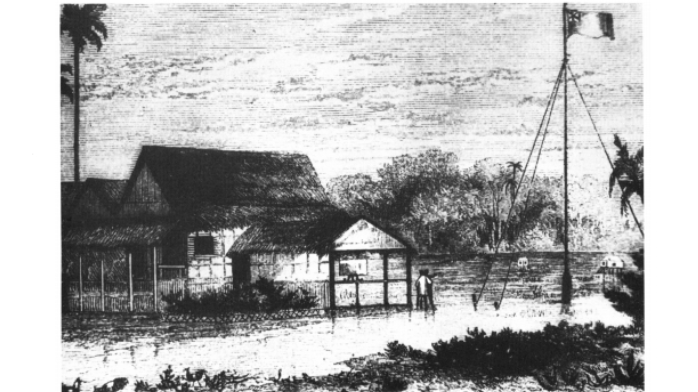
James and Emily Innes’s first residence at Bandar Langat in 1876 before the move to Bukit Jugra
Photo source : EMILY INNES 1843-1927

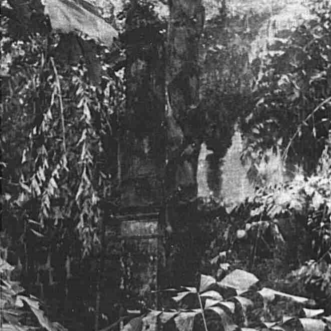
Next to be built was the (6) Jugra District Office. Similar to the police station, the District Office was a two-storey granite and brick building and it also housed a bank and a court. It was by no coincidence that the building housed a bank and a court. The District Officer was indeed a Tax collector and Magistrate! The building has disintegrated and, today, only its ruins can be seen. It is located on the same road that leads to the lighthouses and next to the Chinese cemetery. When the (7) District Officer Residence was ready in 1877, James Innes and Emily moved in immediately. Those days, sightings of tigers in the open were quite common and particularly so in the Kuala Langat district. There was also news of people being killed by tigers. James reported an encounter with a tiger in his garden when he was reading the newspaper. Luckily, nothing bad happened to him. Today, it would be difficult to locate the building, as it may have been completely demolished. The photo below, taken before 1985, showed only one upright pillar.
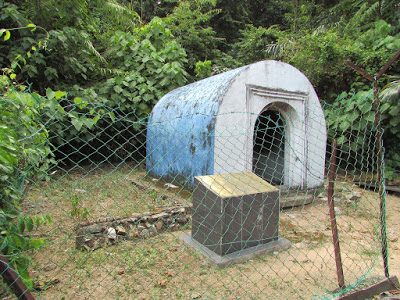
Located about 300 metres from the Jugra District Office is the (8) Bukit Jugra Ammunition Store. This bunker-like structure with only one entrance was used to store ammunition for the police force and it is strategically located facing Sungai Langat to facilitate the movement of ammunition to and from the store. There is another similar ammunition store albeit a larger one located near Kota Raja Mahadi in Klang.
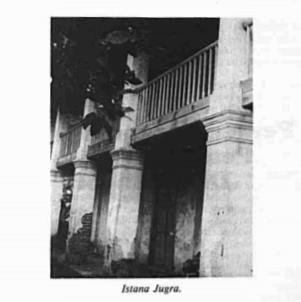
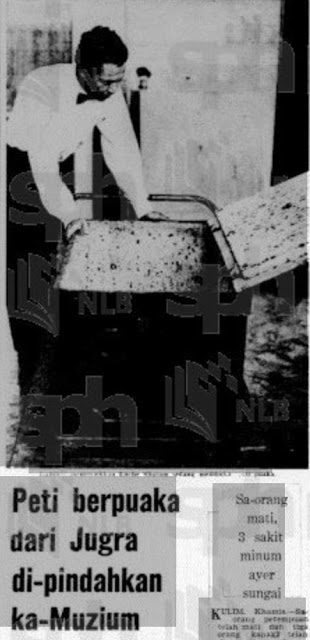
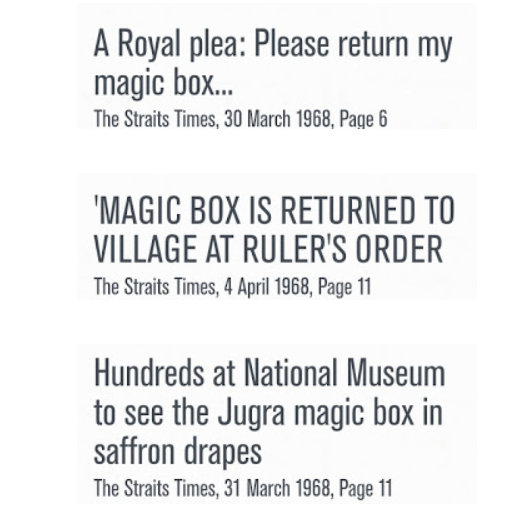
In 1876, Sultan Abdul Samad felt secure enough to move away from his stockade to his new residence, (9) Jugra Palace/Istana Jugra, which was also known as Istana Sedang Masa, located at Bukit Jugra. His stockade at Bandar Langat was destroyed and he told Swettenham that ‘he very much prefers his house and garden at the hill’. The palace went on to become his main residence for the rest of his life. When he passed away, the palace was abandoned and left to deteriorate. However, one item was left behind i.e. an iron chest. In 1968, Dato Shahrom Yeop who was then the Director of the National Museum had obtained special permission from Prime Minister Tunku Abdul Rahman to move the item to the museum for an exhibition. Incidentally, Tunku was once the District Officer of Kuala Langat. Since its arrival at the museum, strange noises could be heard from the empty chest! In less than a week, it was returned to Jugra, even then the strange phenomena continued – the journey to Jugra took seven hours, a crane was needed to lift the chest and finally, it took just the caretaker and an assistant to carry it up to the room on top of the stairs! The chest is now being kept by one of the descendants in Kampung Permatang Pasir.

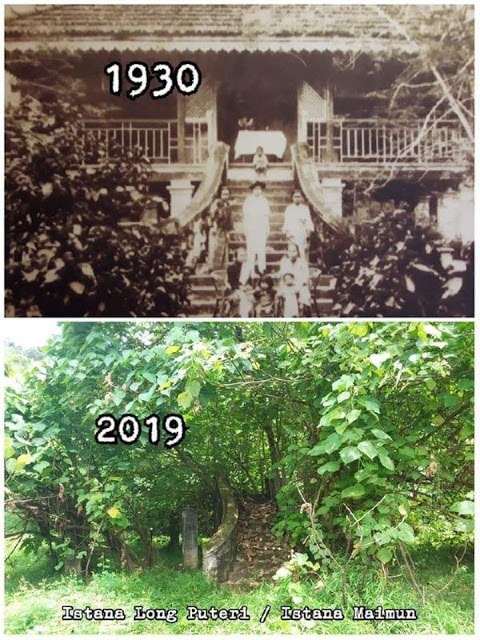
Within walking distance from Jugra Palace is the site of what used to be (10) Long Puteri Palace, the official residence of Sultan Abdul Samad’s granddaughter, Raja Long Puteri. In the 1930’s, the place was inhabited by Raja Sakiah Raja Mustar. Today, both buildings have almost ‘disappeared’ except for some tall pillars that stood out at Jugra Palace and the remains of the stone staircase of fourteen steps at the latter. Visiting these two buildings would be quite impossible as both are now within private property.
Sultan Abdul Samad passed away on 6 February 1898 at the age of 93. During his reign, the Resident and the state government was moved from Klang to Kuala Lumpur in 1880 while Jugra remained the royal town. In 1886, Sultan Abdul Samad attended the opening of the railway from Klang to Kuala Lumpur and spent three weeks in Kuala Lumpur. In 1897, after the British had established the Federated Malay States, Sultan Abdul Samad attended the first Durbar, meeting of the Malay Rulers of the four member states at Kuala Kangsar. As the most senior Sultan, he delivered the speech of welcome to the Governor. British officials also noted Sultan Abdul Samad preferred tin ingots rather than silver dollars as his personal reserves and he was reputed to have a hoard of tin worth $100,000. He was buried at (11) Jugra Royal Mausoleum, the Selangor royal family mausoleum since 1886. The mausoleum complex also contained the graves of his children, Raja Muda Musa who died in 1884, Raja Kahar and Tunku Alfiah. The mausoleum is open to visitors.
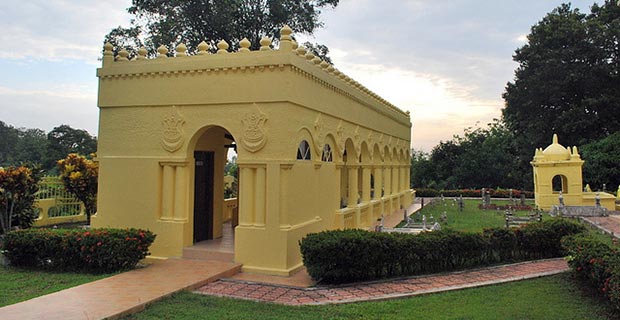
Jugra Royal Mausoleum / Photo source : Makam Sultan Abdul Samad – Visit Selangor

When Raja Musa died, his son Raja Suleiman was made the heir apparent to the throne when he was appointed as the new Raja Muda in 1887. Thus, when Sultan Abdul Samad passed away, Raja Sulaiman became the fifth Sultan of Selangor and he took the name Sultan Alaeddin Sulaiman Shah, ruling for 40 years, from 1898 to 1938. He was a pious Sultan and was very close to Islamic scholars. One of them, Shaykh Tengku Mahmud Zuhdi, was appointed as the Religious Advisor of the state of Selangor with the title of Shaykh al-Islam Setia DiRaja Selangor. Sultan Alaeddin had written at least three religious books in Jawi and one of the books was once used as a textbook for religious schools in Selangor. In July 1903, Sultan Alaeddin attended the Second Durbar, which was held at the Federal capital, Kuala Lumpur.
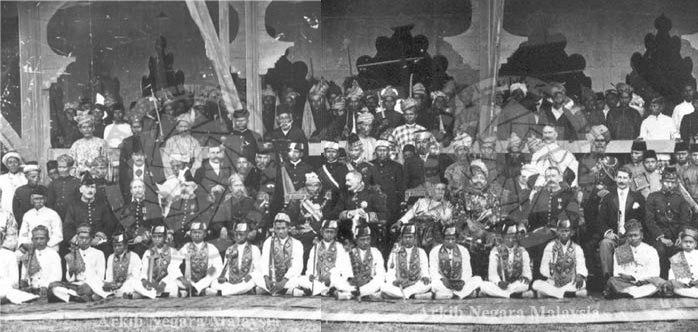
Sultan Alaeddin (seated fifth from left) at the Second Durbar.
Photo source : Durbar: predecessor to the Majlis Raja-Raja | SembangKuala

Sultan Alaeddin commissioned the construction of two buildings at Kampung Bandar, which is situated away from Bukit Jugra. Both constructions were funded entirely by Sultan Alaeddin. The (12) Bandar Palace/Istana Bandar was built in stages starting from 1899 and finally completed in 1905. It was said that the palace was designed by the Sultan who was inspired by the Sultan Abdul Samad building in Kuala Lumpur. The entire building is constructed of bricks and covered by lime plaster while the staircases and doors are carved from local hardwood. It underwent two renovations i.e in 1914, the rear facade was added with ornaments and inclusion of a fence, then a front entrance was added in 1925. His grandson, Sultan Salahuddin Abdul Aziz Shah who later became the eighth Sultan of Selangor, was born here on 8 March 1926. Sultan Alaeddin lived in this palace for 33 years until his death in 1938. It then went into disuse when the sixth Sultan of Selangor, Sultan Hisamuddin Alam Shah moved to Istana Mahkota Puri in Klang. It was used as a Japanese base during the Japanese Occupation.

At the end of 1980’s, the palace went through major restoration work undertaken by the Selangor state government who turned it into a District Handicraft Centre, which did not last long. It was used as a  Maahad Tahfiz school by the Selangor Islamic Religious Department from 1997 to 1999 then left vacant until 2008 when it was certified as a National Heritage building. Upon completion of rehabilitation works, it was handed over to the Malay Customs and National Heritage Corporation of Selangor (PADAT) in December 2010 and was made a tourist attraction in the district. It underwent conservation work in 2015 and there was a plan to turn it into a Living Museum or Royal Gallery to preserve and educate future generations of this national heritage.
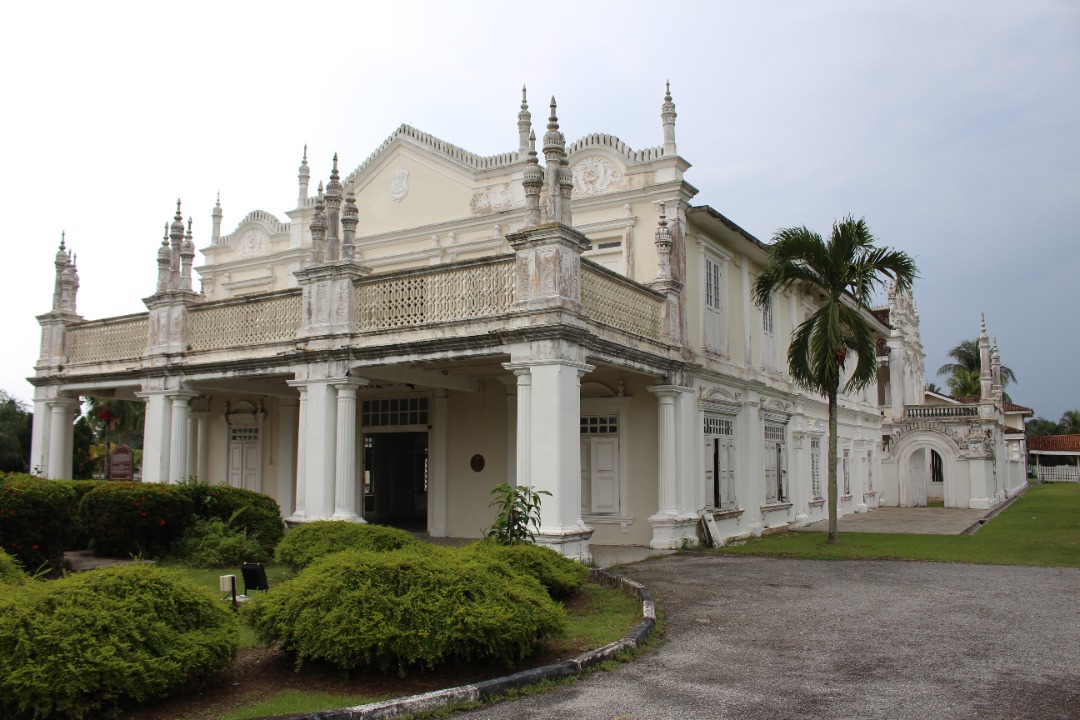
Bandar Palace / Istana Bandar. Photo source: Dennis Ong
Sultan Alaeddin Royal Mosque / Masjid DiRaja Sultan Alaeddin 
Photo source : Sultan Alaeddin Masjid in Malaysia..🇲🇾 | Masjid, Mosque, Taj mahal

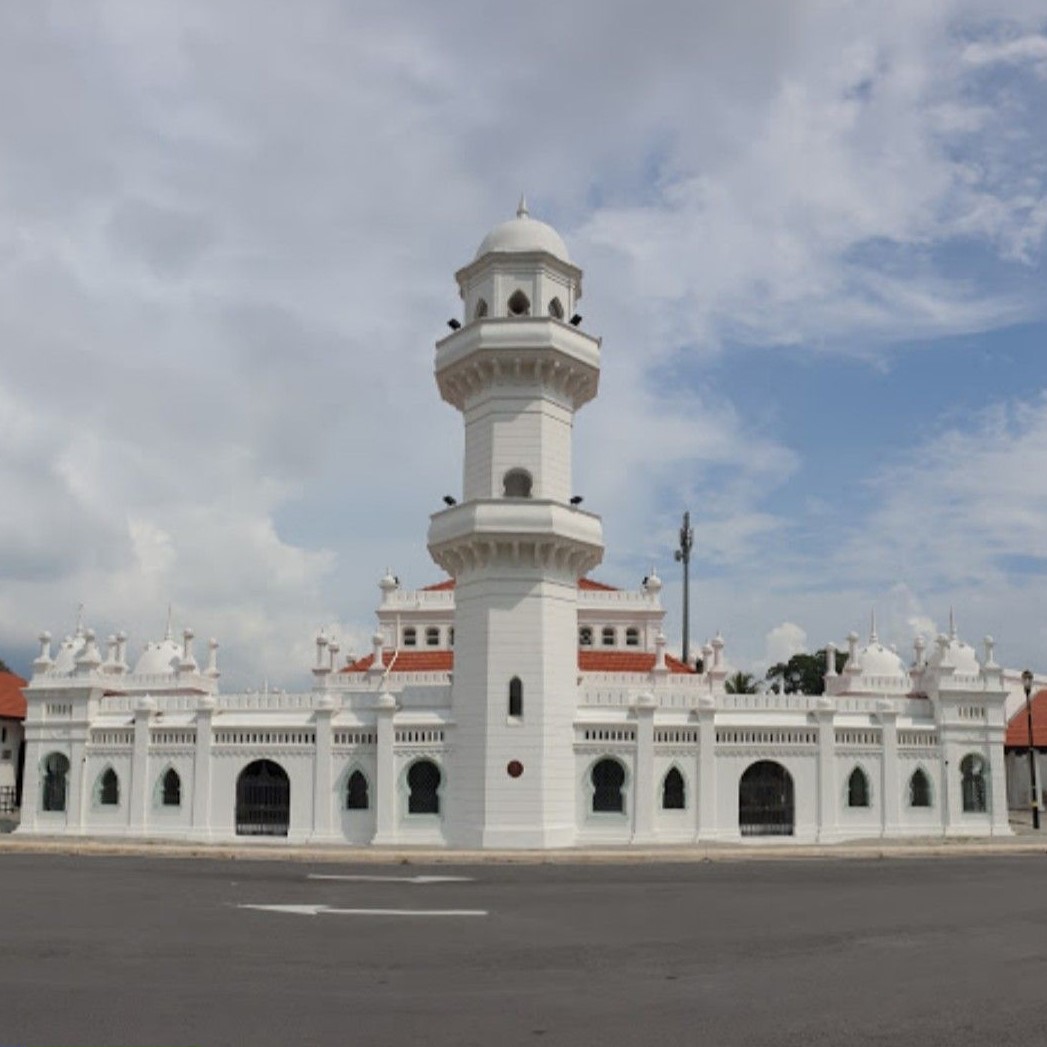
The (13) Sultan Alaeddin Royal Mosque/Istana DiRaja Sultan Alaeddin, also known as Masjid Bandar, Masjid Alauddin, Masjid Sultan Suleiman, is situated close to Bandar Palace. It was inaugurated on 18 June 1924 and the design was believed to have originated from the Deli Kingdom in Medan, Sumatra. It was earlier known for its yellow or mustard colour; today the mosque is painted white. Sultan Alaeddin used to deliver sermons here even on Aidilfitri and Aidiladha. This century-old mosque is still being used and maintained by the residents. Prior to this mosque, there was another mosque, (14) Raja Muda Musa Mosque/Masjid Raja Muda Musa located next to the Kampung Bandar Royal Tomb/Makam DiRaja Kampung Bandar. It was built in 1875 and was the first mosque built in Kampung Bandar. The mosque was badly damaged in 1920 and a temporary one was built just outside the mosque. The congregation moved over to Sultan Alaeddin Royal Mosque when it was opened.

(15) Sekolah Kebangsaan Bandar located on the same street as Bandar Palace and Sultan Alaeddin Royal Mosque is the first school in Kuala Langat district and one of the oldest in the state. It was originally known as Sekolah Melayu Bandar Dandan Bakti Raja and was established on 13 March 1898. It started with an enrolment of 53, all boys. The first headmaster was Burok Bin Haji Ahmad who worked until 31 December 1922. In 1952, the school moved to the current site, which is close to the mosque.
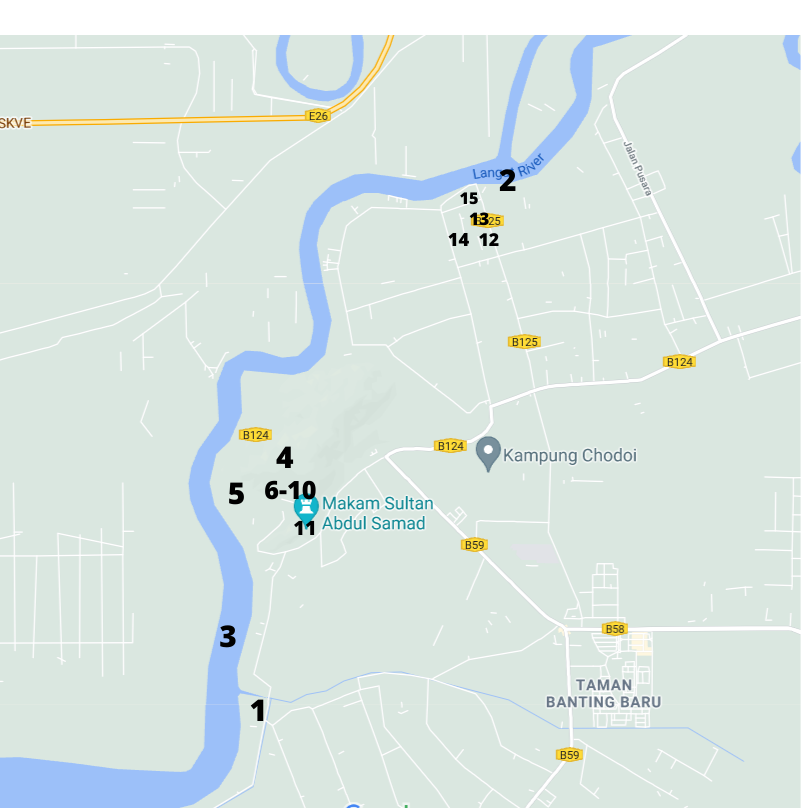
Location map

Getting There

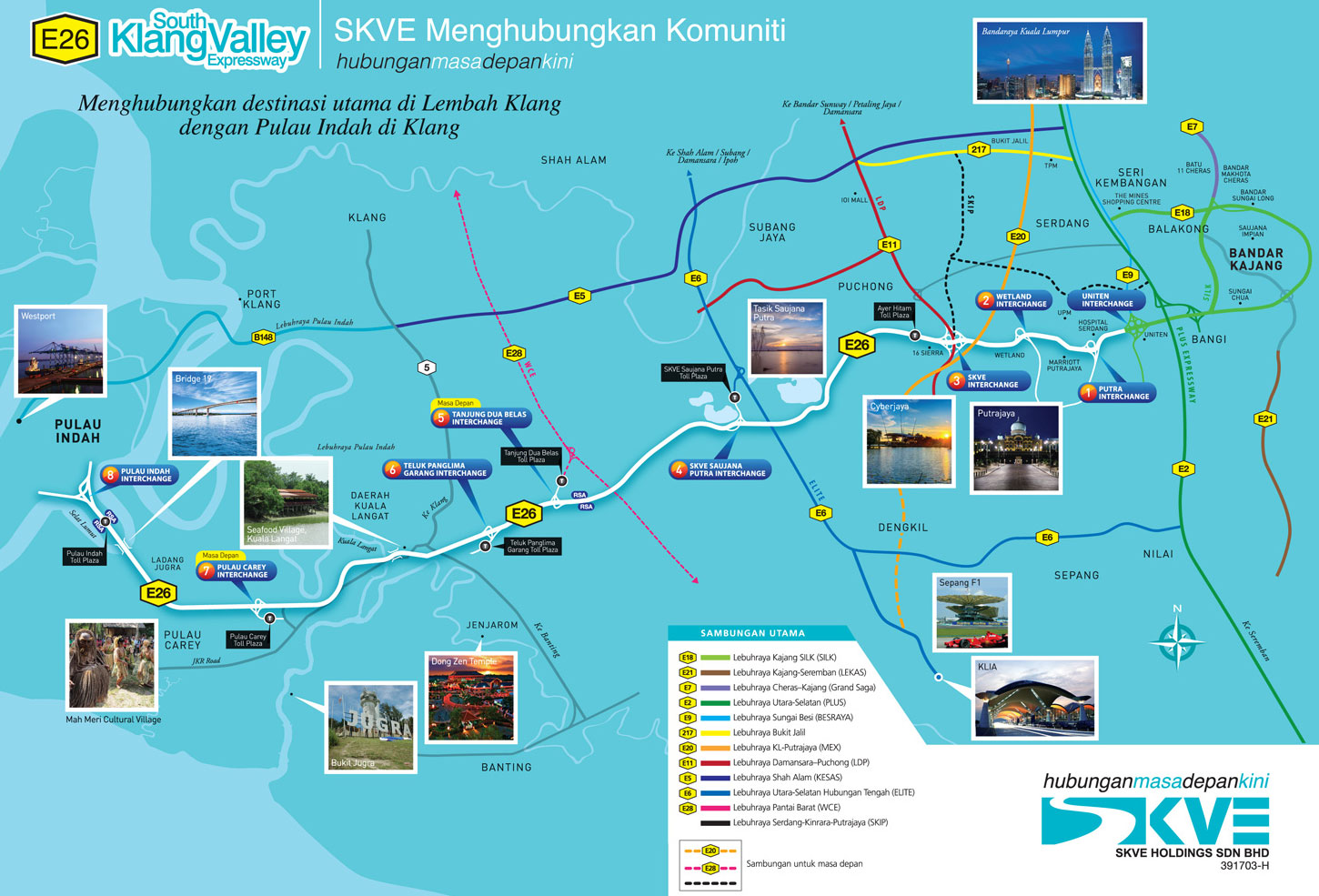
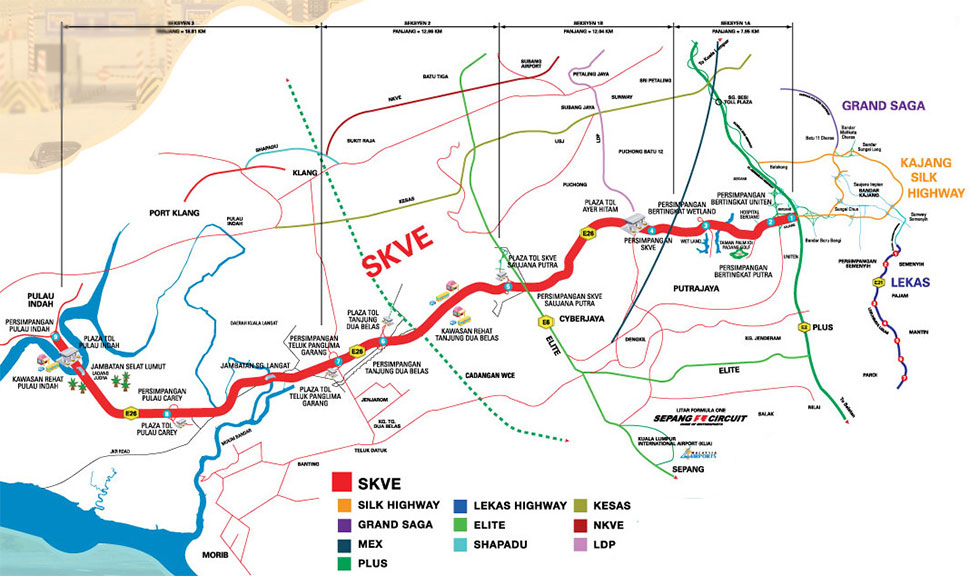
From Kuala Lumpur, use Plus Highway (E2) southbound. Exit at Exit 209 UPM to join Jalan Sungai Besi and continue on to join South Klang Valley Expressway (SKVE) at Ayer Hitam toll plaza. Continue and exit at Teluk Panglima Garang toll plaza and after the toll plaza, keep left to Jenjarom. Drive past Jenjarom and head towards Banting. When approaching Banting, watch out for signage to Kampung Bandar and Bukit Jugra.
In this Series

Please click HERE for a list of articles in the ‘A Very Rough Guide’ series.

References

The Peopling of Ulu Langat

TUNKU KUDIN IN SELANGOR (1868 – 1878)

Plan of Salangor, and of the coast of Malaya, from Point Caran to Parcelar Hill, including the Strai…

Bukit Jugra – Visit Selangor

Let’s learn more about one of Selangor’s greatest rulers, Sultan Abdul Samad

A History of Selangor (1766 – 1939) (page 38, 39 & 46)

EMILY INNES 1843-1927

Sejarah Pasukan Polis di Selangor

Selangor dahulu dan sekarang (page 13 – 29)

A Careless, Heathen Philosopher? (page 95)

Misteri Peti Besi Berpuaka di Jugra

http://www.ombakbergigi.com/2019/11/hidden-history-3-istana-long-puteri.html

Makam Sultan Abdul Samad – Visit Selangor

SULTAN ALAEDDIN SULEIMAN SHAH | KOLEJ SULTAN ALAEDDIN SULEIMAN SHAH

Durbar: predecessor to the Majlis Raja-Raja | SembangKuala

Jugra’s ancient royal link: A visit to Kuala Langat sheds more light on a mysterious envelope

Istana Bandar Jugra – Visit Selangor

Masjid Diraja Sultan Alaeddin – Visit Selangor

EDISI KHAS (page 30)
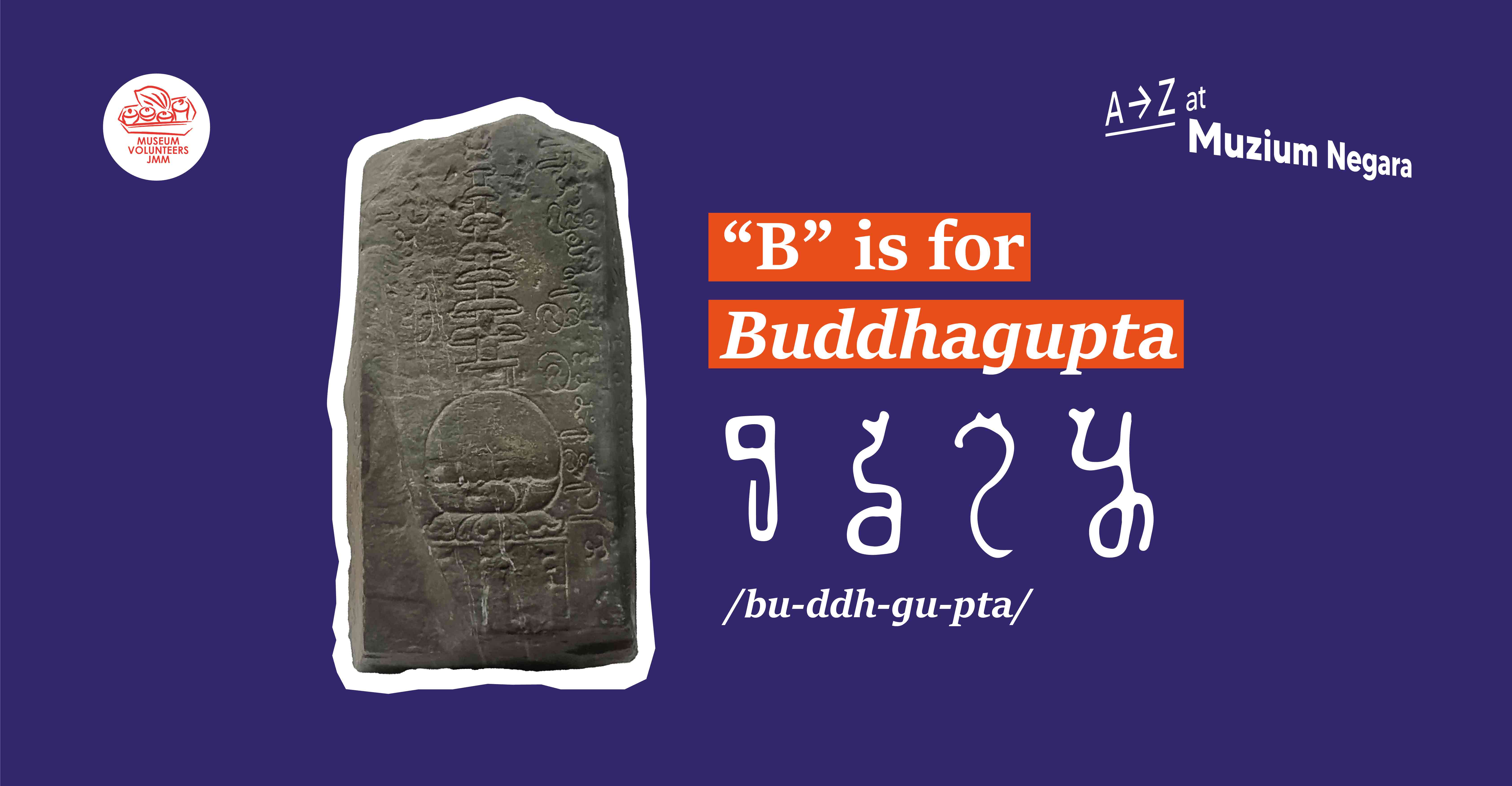
B is for Buddhagupta

by Maganjeet Kaur

Image credit: Dennis Ong

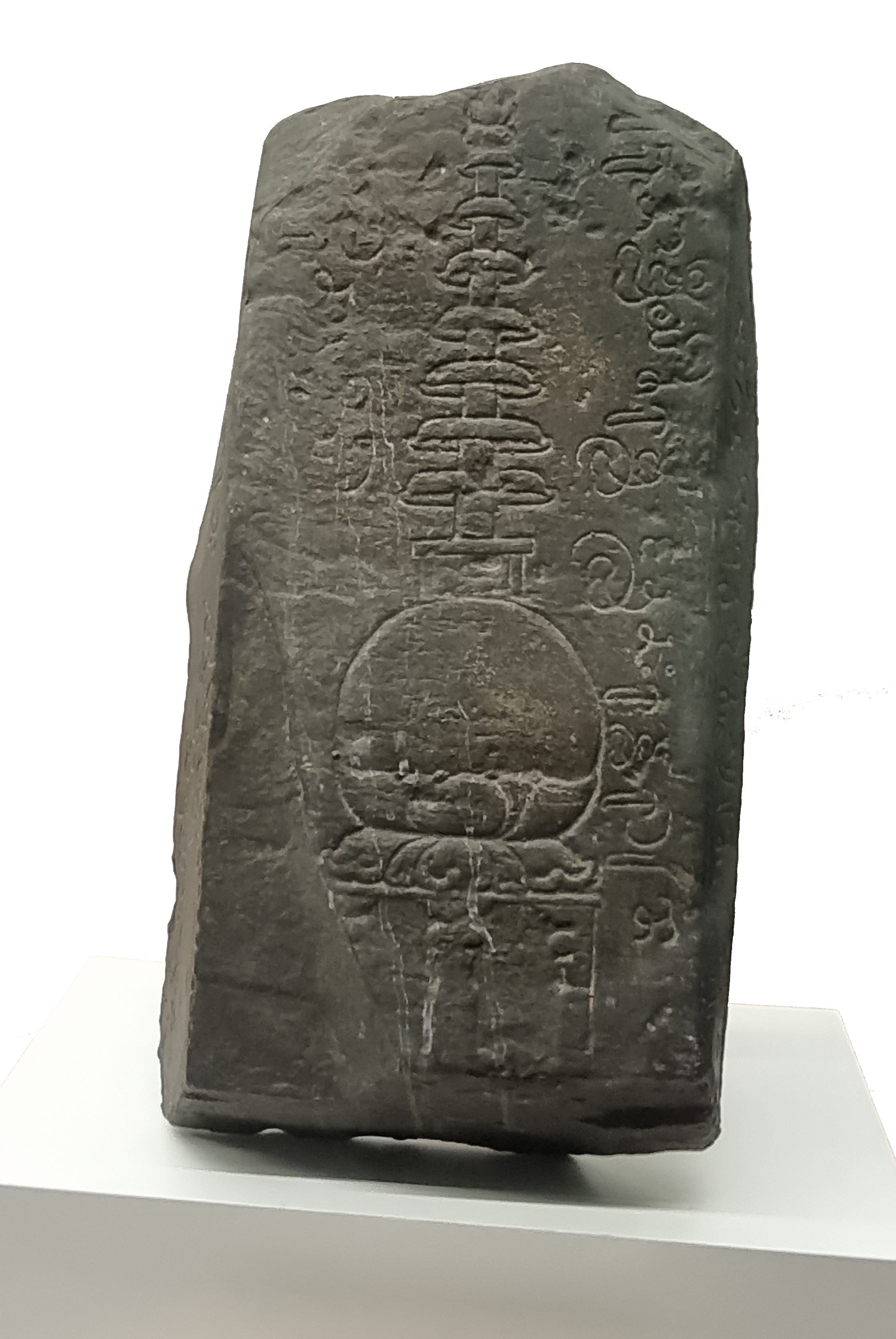
Mahanavika1 Buddhagupta was a mariner who lived possibly in the second half of the fifth century CE. The title ‘Mahanavika’ bestowed on him implies he was a skilled navigator while his given name, Buddhagupta2, identifies his religious affiliation. Hailing from Raktamṛttika, his visit to the northern Malay Peninsula has entered into the annals of history though a stone stele he donated to a local shrine.

Replica of the Buddhagupta Stone at the National Museum, Malaysia. Found in 1834, Captain James Low gifted the stone to the Asiatic Society of Bengal in January 1835 and it is currently on display at the Indian Museum in Kolkata. A replica was gifted by the Indian Government to the National Museum in 1961. Incidentally, another replica was gifted in 2018 by the Indian Prime Minister to the Singaporean Prime Minister. Image credit: Maganjeet Kaur

Only the upper part of this stele has survived; it measures 66 centimetres in height, between 29 to 34 centimetres in width and 8 to 9 centimetres in depth. The main feature on this slab is the representation of a stupa with an almost spherical dome, in itself unusual given that they are typically semi-hemispherical.

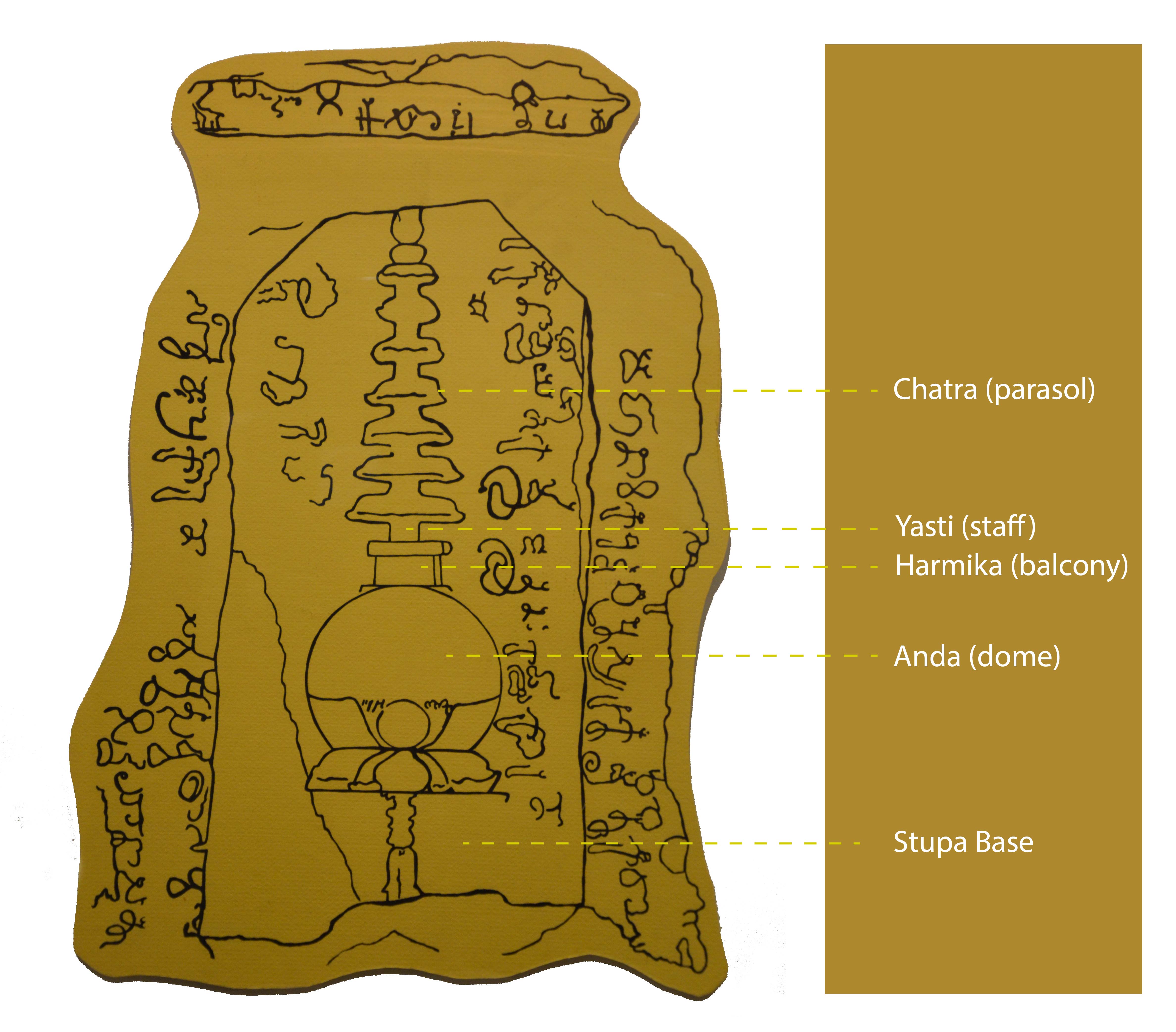
A balcony can be seen on top of the dome and rising from this is a staff carrying seven parasols of diminishing sizes ending in two semi circles. The dome sits within the upturned petals of a lotus blossom while downward petals of the lotus frame the base. This base is decorated by three pilasters – the pilaster in the centre is shown complete while the two side pilasters are in halves. Alternatively, these could have been pillars. The stone is broken off under the pilasters/pillars – the base could have been resting on a plinth as in the case of the Kampung Sungai Mas inscription.


A drawing of the stupa at the Bujang Valley Archaeological Museum. Note that only the central pilaster/column has been traced. A handbook published by the Indian Museum in Calcutta (Kolkata) in 1883 describes the stupa as a Burmese pagoda while Jane Allen finds similarities with a Gupta-period relief on the façade at Ajanta Cave 19 in Maharashtra (India). Image credit: Maganjeet Kaur

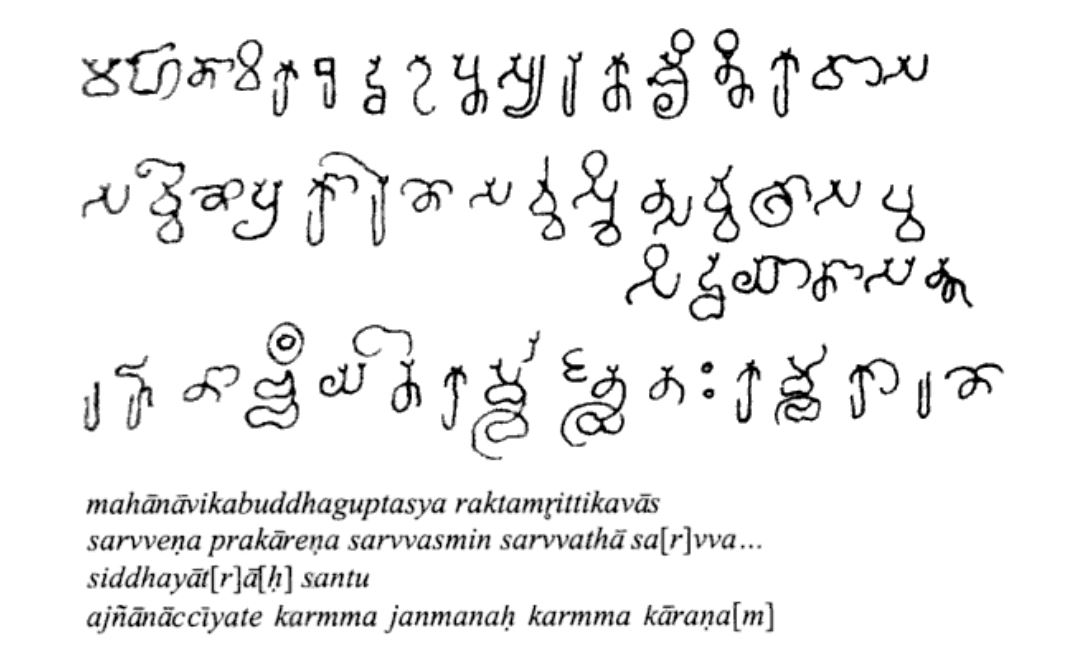
Inscriptions run along the sides of the stupa as well as along the sides of the slab. The language is Sanskrit and the script Pallava. There are two parts to this inscription. The inscription that runs along the right side of the stupa is a karma verse that can be translated as:

Through ignorance, karma is accumulated. The cause of birth is karma. Through knowledge karma is not accumulated. Through absence of karma one is not reborn.3


This verse has also been found on inscriptions at two locations in southern Kedah – Kampung Sungai Mas and Bukit Meriam – in both cases coupled with the Buddhist Ye Dharma Hetu credo. The coupling of the karma and the Ye Dharma Hetu verses has not been found in India or Sri Lanka and, hence, could have been a local blending of philosophies.

The second part of the inscription mentions a Mahanavika Buddhagupta from Raktamṛttika giving thanks for a successful voyage. The inscription likely continues onto the broken-off piece of the stele and hence this inscription is not complete. The translation by Kern4 of the surviving inscription is below.

Right-hand side of stele: ‘Of the eminent shipowner Buddhagupta resident at Raktamrttika…’

Left-hand side of stele: ‘In every way, from everything, in every respect, all… who has performed a successful journey’


Raktamṛttika translates to ‘red earth’. This location was initially identified with the Chitu mentioned in Chinese records, which also translates to ‘red earth’; it is believed to have been located in Kelantan. Another possibility is the Raktamṛttika Mahavihara mentioned in the writings of Hiuen-Tsang (Xuanzang), a Chinese traveller to India in the seventh century CE. He wrote that the most learned men in the kingdom congregated at this vihara. Its location has been identified with the archaeological site at Rajbaridanga in West Bengal, India.

First line: right-hand side of stele; second line: left-hand side of stele; third line: right of stupa.
The writing style of this inscription bears close similarity with those found in West Java from the fifth century; the Buddhagupta stele is thus epigraphically dated to this period. Image credit: http://skyknowledge.com/pallava.htm (this inscription is as per JASB, 17(2), plate IV)

And… just for fun… an attempt to transliterate one line of the Pallava script.

The Pallava consonant indicated for ‘gu’ was possibly incorrectly copied on this drawing as it does not transliterate to ‘gu’. A close look at the artefact in the museum shows that it is inscribed as per the image shown above this image. The consonant ‘s’ should be a conjunct with another consonant, which cannot be made out as the inscription has broken off. Image credit: Maganjeet Kaur (base image taken from JASB, 4, plate III)

The stele was discovered in 1834 by Captain James Low while he was excavating some ruins at a sandy site in Seberang Perai (at its border with Kedah). Low did not leave behind any further details of the location but later researchers speculate it to be Guar Kepah, a sandy site at Penaga on the southern bank of Muda River.

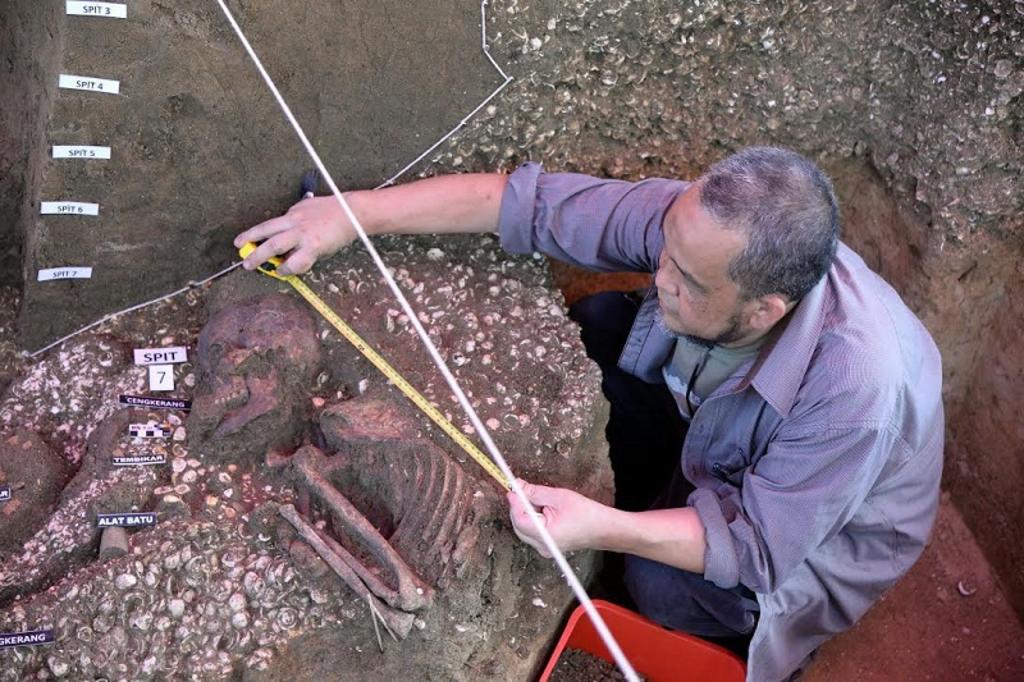
Guar Kepah has other calls to fame. At one time coastal, it lies on an old beach ridge and it was previously made up of shell middens, i.e. mounds made up mainly from remains of edible molluscs and other kitchen waste. The shell midden at Guar Kepah was recorded in 1860 by G.W. Earl as being six metres high; by 1936, this had been reduced to less than two metres due to quarrying activities for lime. Shell middens signal the presence of prehistoric settlements and the Guar Kepah site was in occupation during the Hoabinhian and the Neolithic. Excavations during the colonial period had unearthed 41 skeletons and the discovery in 2017 of ‘Penang Woman’, a 5,710 year-old skeleton, puts the focus back on Guar Kepah.

With such a long history, it is thrilling to think that the shell mounds may have back dropped a stupa of the design shown on the stele. Guar Kepah is not done revealing its secrets and we can only hope that future discoveries will illuminate the Buddhagupta period, shedding light on the community that resided in the area at the time.

Buddhagupta Stone’s find-spot is speculated to be Guar Kepah, which has a history stretching to the Hoabinhian. This image shows Professor Mokhtar Saidin, director of Universiti Sains Malaysia’s Centre for Global Archaeological Research (CGAR), examining the ‘Penang Woman’ skeleton found at Guar Kepah. Image credit:
https://www.todayonline.com/world/asia/carbon-dating-confirms-penang-woman-5710-years-old

1 ‘Navika’ is a Sanskrit word translated initially as ‘sea-captain’. However, present-day scholarship leans towards ‘navigator’ as the more accurate meaning. ‘Mahanavika’ thus translates to ‘Great Navigator’.

2 Names identifying religious affiliation were common. As an example, among the 193 Indic inscriptions discovered at Hoc Cave on Socotra Island in Yemen, many were personal names indicating religious affiliation with Vishnu, Siva, Kartikeya or Surya. Incidentally, Budhagupta was also the name of an emperor of the Gupta Dynasty, reigning between c. 476 and 495 CE. The navigator who arrived on the shores of Kedah may have been named after him.

3Jacq-Hergoualc’h (2002, 216)

4Kern (1907, 96)

References

Allen, Jane. (1986-87). An Inscribed Tablet from Kedah, Malaysia: Comparison with Earlier Finds. Asian Perspectives, 27(1), 35-57.

Anderson, John. (1883). Catalogue and hand-book of the archaeological collections in the Indian Museum. The Order of the Trustees, Calcutta. https://www.indianculture.gov.in/rarebooks/catalogue-and-hand-book-archaeological-collections-indian-museum

Bahadur Chand Chhabra. (1965). Expansion of Indo-Aryan culture during Pallava Rule. Munshi Ram Manohar Lal.

Bulbeck, David F. (2005). The Guar Kepah Human Remains. In Zuraina Majid (Ed.), The Perak Man and other Prehistoric Skeletons of Malaysia (pp. 383-423). Penerbit Universiti Sains Malaysia.

Jacq-Hergoualc’h, Michel. (2002). The Malay Peninsula: Crossroads of the Maritime Silk Road (100 BC–1300 AD). Translated by Hobson, Victoria. Brill.

Journal of the Asiatic Society of Bengal (JASB) , 1835, 4, plate III.

Journal of the Asiatic Society of Bengal (JASB), 1848, 17(2), plate IV.

Kern, H. (1907). Concerning some old Sanskrit Inscriptions in the Malay Peninsula. Journal of the Straits Branch of the Royal Asiatic Society, 49, 95-101.

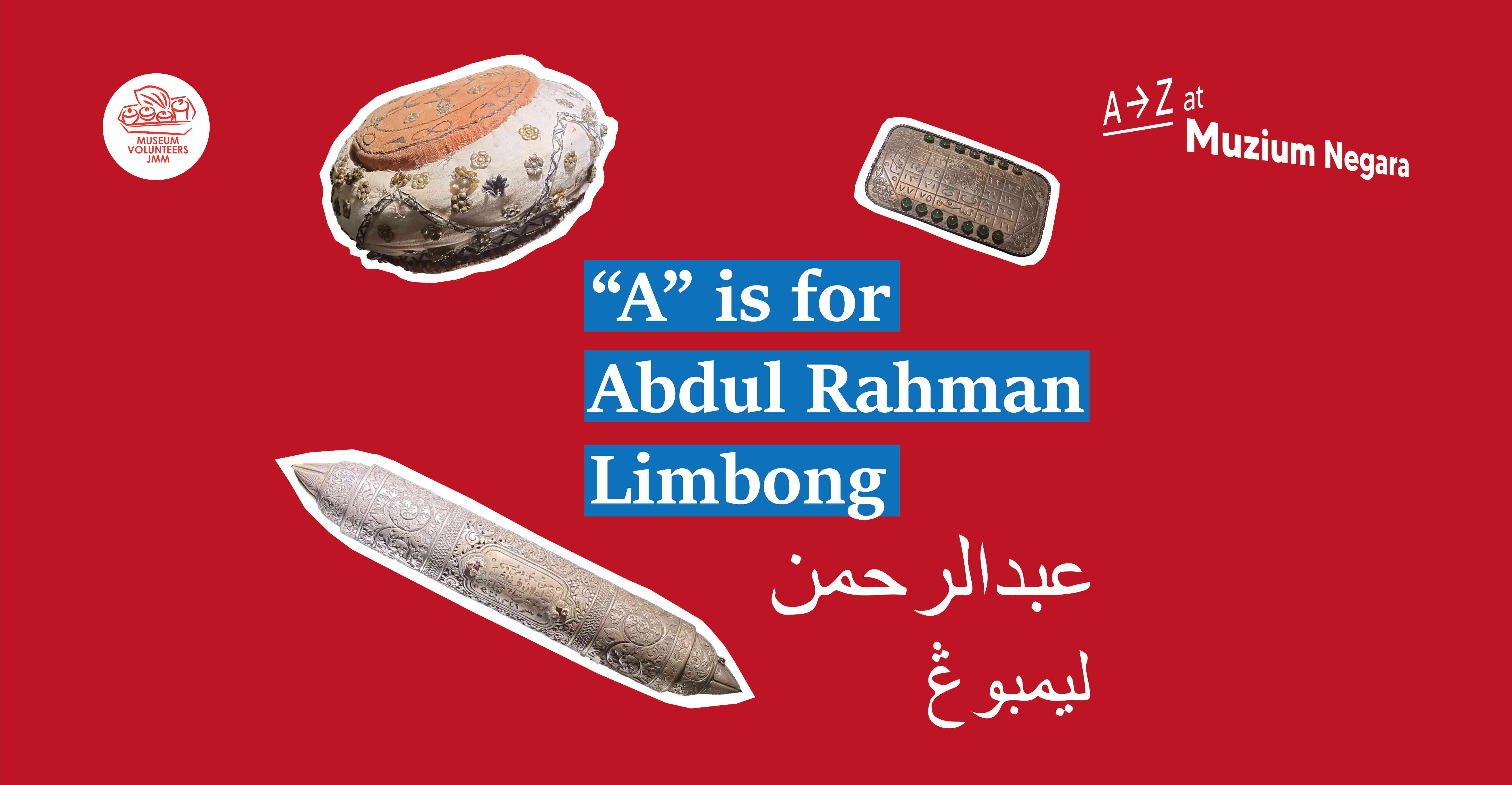
A is for Abdul Rahman Limbong

by Maganjeet Kaur

Image credit: Dennis Ong

Muzium Negara has on display a few personal items that belonged to Haji Abdul Rahman bin Abdul Hamid, a religious scholar and freedom fighter from Kuala Terengganu. Born in 1868, Abdul Rahman was a successful entrepreneur with business dealings as far as Menara (today Narathiwat) in southern Thailand. His frequent visits to Limbong in Kemaman to trade as well as to preach earned him the moniker ‘Limbong’, which was tacked to the end of his given name. Some simply called him ‘Tok Limbong’. In spite of his wealth, he was down to earth, generous and ready to help; this made him well known especially along the middle part of the Terengganu River. He was very versatile; apart from trade, he had agricultural concerns, practised silat and was a religious teacher.

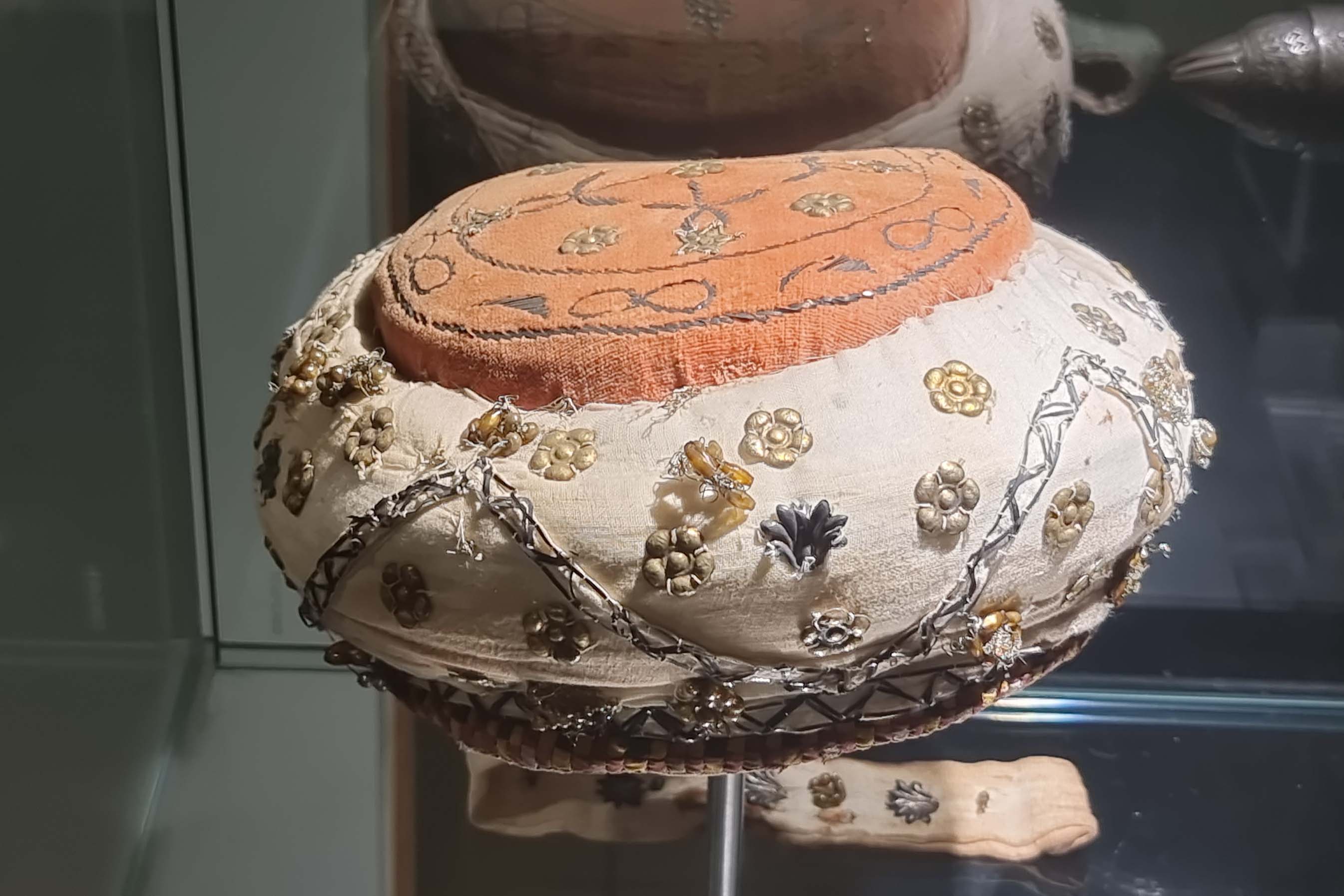
For day to day use, Haji Abdul Rahman wore either Malay attire or jubah. His footwear was the terompah (wooden clogs) and he wore a Kopiah (headgear). The headgear displayed at Muzium Negara is an elaborate embroidered piece, decorated with beads.

History remembers him for the role he played in protesting against the land and forest management laws introduced by the British. Forest produce, such as timber, attap, rattan and eaglewood, was an important source of revenue for the state. Taxation on these products had been in place even before British intervention – Malay district chiefs, through royal grants, exercised monopoly over their purchase. However, the rates were flexible and, importantly, transactions were mainly through barter. The British introduced a much higher tax rate for jungle products and included many additional items into the taxable list. Their tax collection process was also more efficient as they completely replaced the barter system with cash. In addition, permits were required before trees could be felled preparatory to dry-rice cultivation. All these measures put a huge burden on the peasantry.

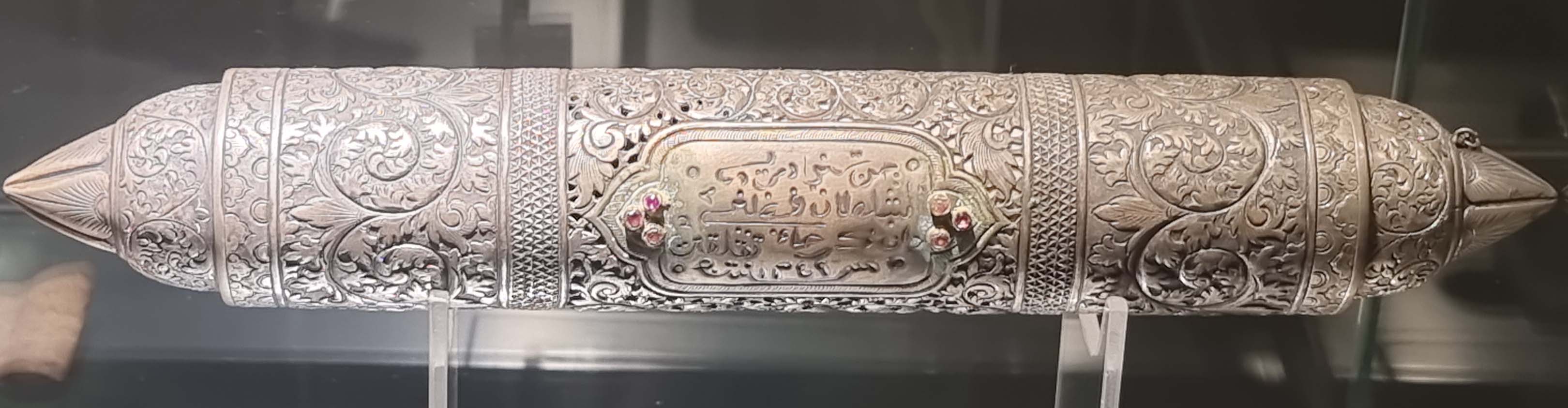
This artefact is a container used by Haji Abdul Rahman to keep his watikah, letters of instruction from the Sultan.

In 1921, in an effort to end shifting cultivation, the government introduced a license to cultivate land on a temporary basis, with a hefty fine for non-compliance. The following year, a group of farmers disregarded the law and worked the land in Beladau without permit, supported by Haji Abdul Rahman. When 43 of these farmers were served with warrants for their rebellion, Haji Abdul Rahman applied for a special attorney’s license to defend them during their trial. However, too many supporters turned up in court, some bearing weapons, and Haji Abdul Rahman’s refusal to cooperate with the authorities saw him lose his special license. His license as a religious teacher and permit to hold circumcisions were also revoked. He was viewed with concern as his ability to garner support and rile up a crowd pegged him as a powerful and dangerous leader.

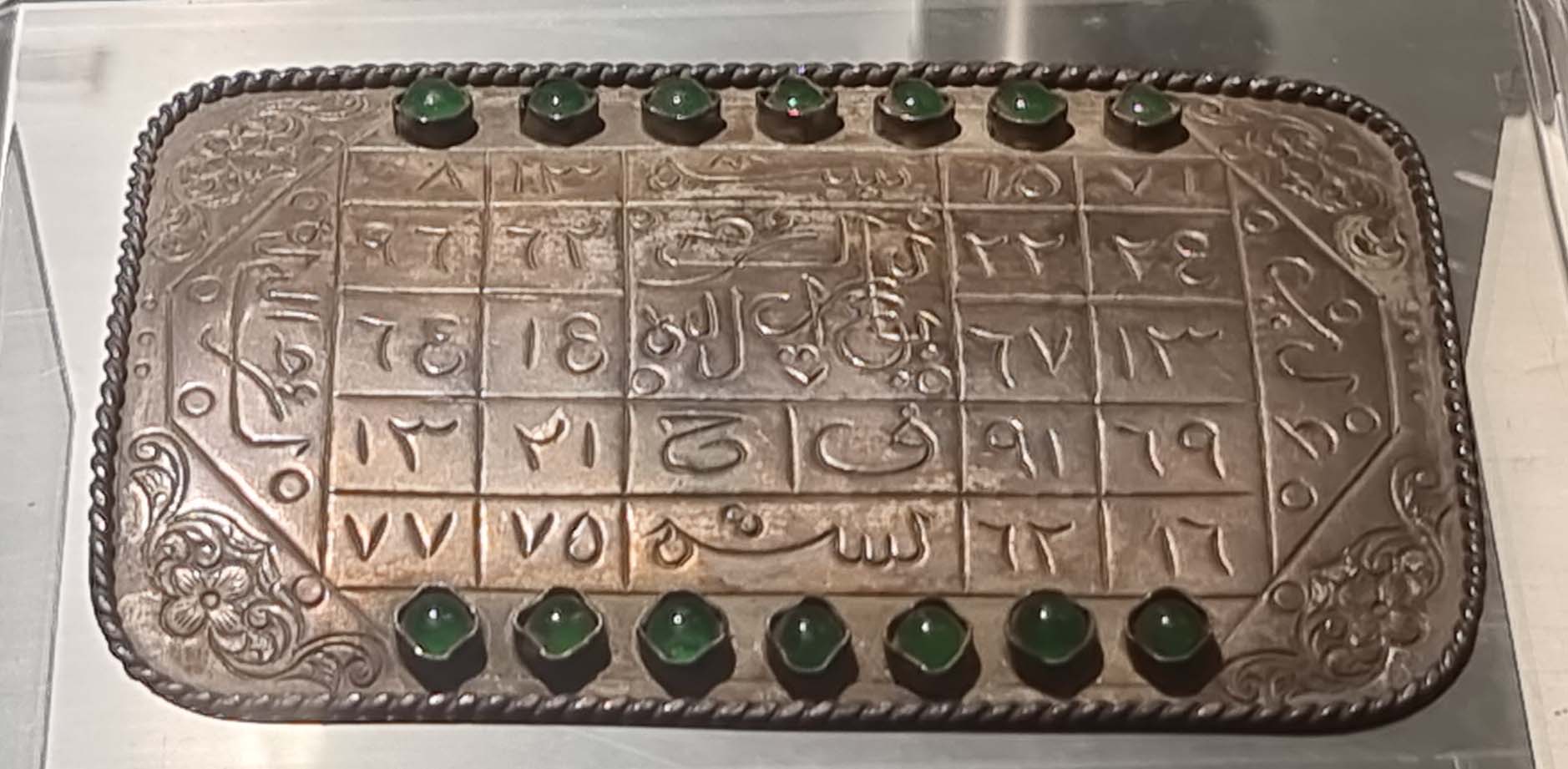
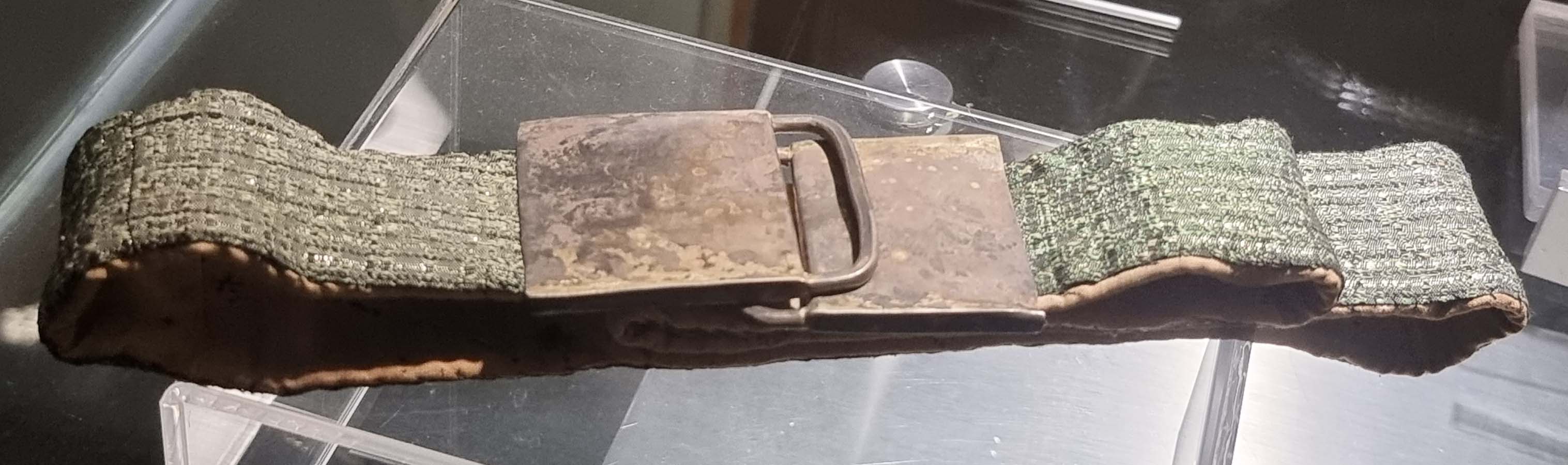
This belt buckle was used by Haji Abdul Rahman as a talisman. An Arabic phrase is surrounded by numerals (in Arabic) and set with green stones along the edges.

Discontent over the land duties and royalty over jungle produce continued to mount. The Malay chiefs were also unhappy losing their customary claims over land. On 20 May 1928, with a conviction that the land belonged to God and that the State had no right over it, around 2,000 people marched to Kuala Berang. The District Officer and the police, made up of a sergeant and four men, made a prudent retreat and summoned help. A team of 25 policemen later caught up with the dissidents in Kuala Telemong. Here, after failing to disperse the crowd in spite of repeated warnings, the police fired one volley, killing eleven men including one of the key leaders of the rebellion, i.e. Lebai Deraman, better known as To’ Janggut  (not be to confused with the Kelantanese rebel leader). Further reinforcements arrived the next day from the Federated Malay States and the dissidents finally dispersed.

Twelve other ringleaders were arrested and given long prison sentences coupled with hard labour. Haji Abdul Rahman, though he did not take part in the actual disturbance, was identified as the leader behind the incident and he was exiled to Mecca.

A belt used by Haji Abdul Rahman is also displayed at the museum.

References

Berhanundin bin Abdullah, Kamaruzaman bin Yusoff & Mansoureh Ebrahimi (2015). Haji Abdul Rahman Limbong (1868-1928): Fighter against the Colonialist. Mediterranean Journal of Social Sciences, 6(6), 281-289.

Kathirithamby-Wells, Jeyamalar (2005). Nature and Nation: Forests and Development in Peninsular Malaysia. NIAS Press and NUS Press.

Last Year’s Riots in Trengganu. (1929, 31 December). The Straits Times. https://tinyurl.com/pzc7xpyv

Tuan Azam Tuan Johan. (2007, 21 May). Descendant sheds more light on Tok Limbong. The Star. https://www.thestar.com.my/news/community/2007/05/21/descendant-sheds-more-light-on-tok-limbong

A Very Rough Guide to Jenjarom

by Eric Lim

Introduction

FGS Dong Zen
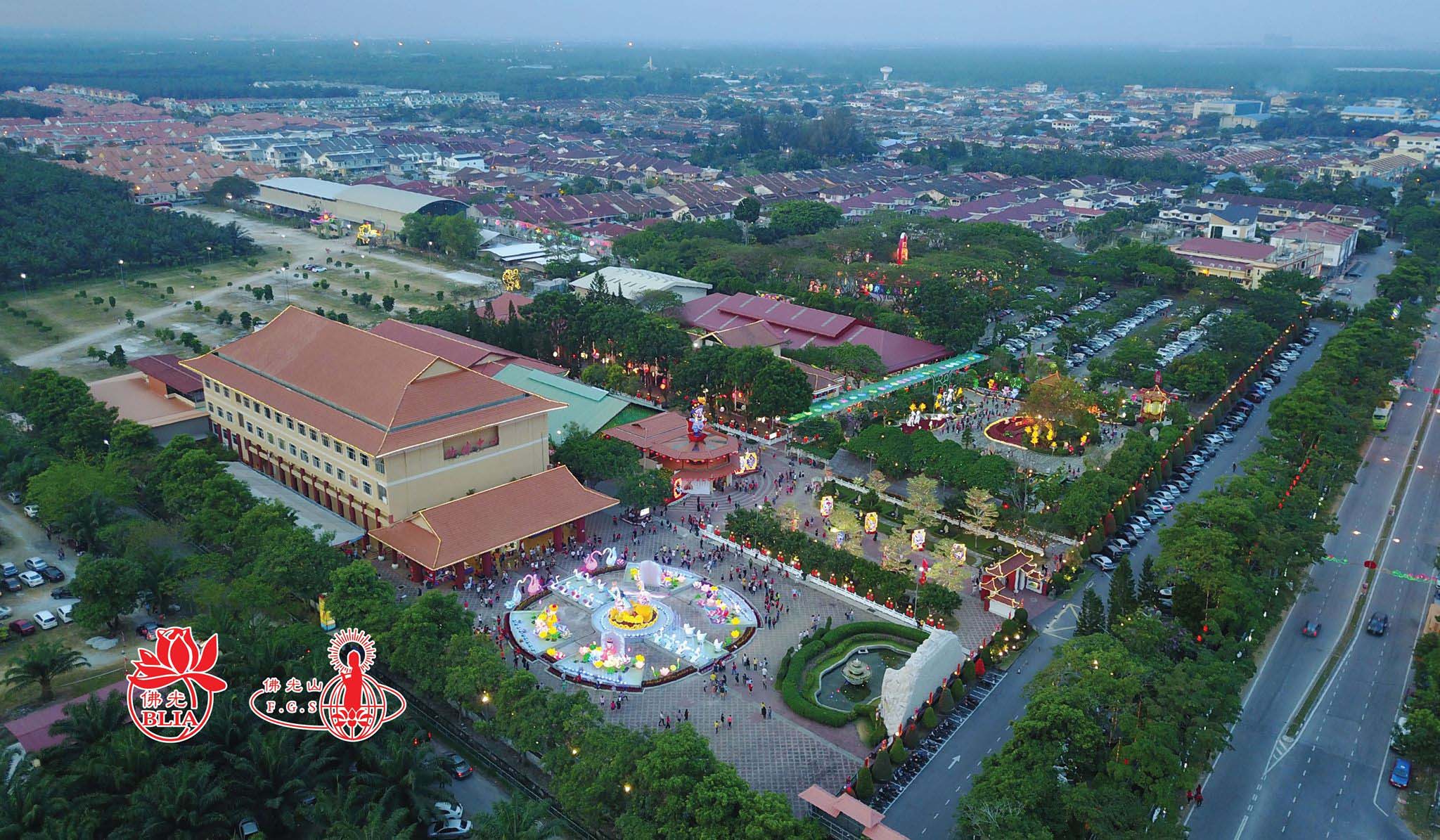
FGS Dong Zen / Photo source :  Fo Guang Shan Malaysia – Home

In my last article (on Dengkil), I wrote about the discovery of Neolithic and later historical period artefacts at the confluence of Sungai Langat and Sungai Semenyih near Jenderam Hilir. Sungai Langat is one of the main sources of water supply for the state of Selangor. In this article, I shall follow the path of Sungai Langat further west, from Dengkil to Jenjarom. Located in the district of Kuala Langat, Jenjarom is about 54 kilometres from Kuala Lumpur and 24 kilometres from Klang town. Since its early days, it has been an agricultural town and today, it is turning into a popular tourist spot.

History

Ixora Plant
Ixora plant / Jenjarum. Photo source : Unsplash

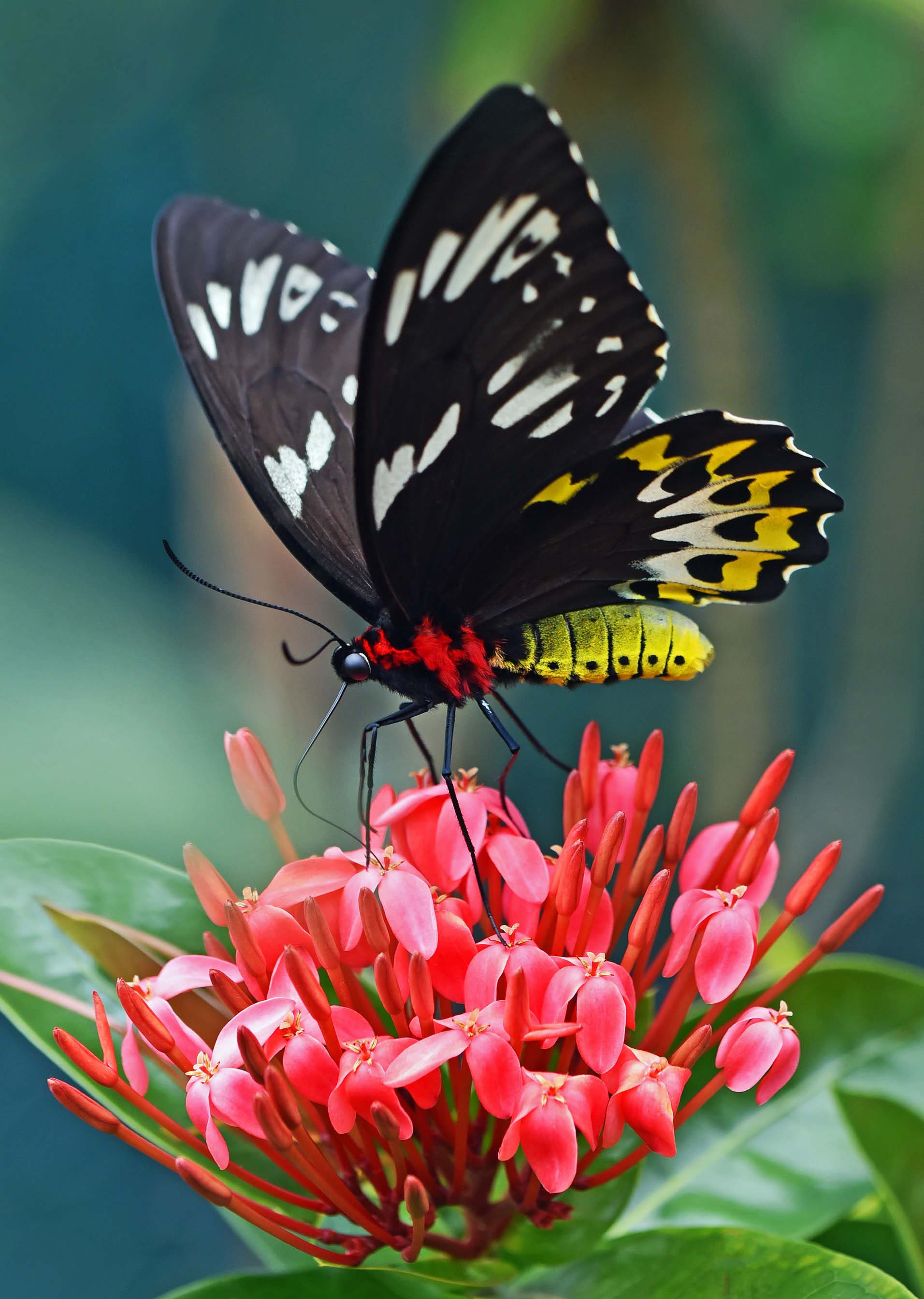
The origin of the town’s name has two potential sources – from a river/stream and a plant. Sungai Jarom, which is a tributary of Sungai Langat, has a distinctive feature that looks like a needle (jarum in Malay) and thus the name. The Ixora is a flowering shrub that grows well in tropical Asia. The plants produce large clusters of tiny flowers and they flower all year round. In Malaysia, it is known by the following names – jarum jarum, jejarum, jenjarum, siantan, tabung jarum and pecah periuk.

The Banjar, an ethnic group native to South Kalimantan in the island of Borneo, were the earliest inhabitants in the area. They arrived in the 1920’s and at about the same time or slightly later, Chinese immigrants arrived. They were mostly Hokkiens from Nan Tian village, Anxi in the Fujian Province and they called their new residence Chap Si Gi, which means 14 miles, the distance to Klang. They were given land by the British for the cultivation of rubber trees. Besides rubber trees, they also cultivated coffee plants, tea and coconut.

Coffee growing in our country started as early as in the 1870’s and Selangor was historically the peninsula’s largest coffee producer. The estates were located around Klang and Kuala Lumpur. However, the industry did not last long due to the fluctuation in coffee prices, coffee leaf rust (disease) attacking the farms and the switch to rubber, which became the dominant cash crop. On the other hand, tea growing at Bukit Cheeding has survived until today (more information below).

The earliest school in Jenjarom was the Aik Kuan Chinese School, which was established in 1924. During the Emergency, its name was changed to Sekolah Rendah Cina Jenjarom and today, it is Sekolah Rendah Kebangsaan Cina (SJKC) Jenjarom. Kampung Baru Jenjarom was set up in 1950 behind the town. From an initial population of 4,500, it grew to 18,000 in 1995 and by 2012, it went up to 25,000; it was then, one of the largest Chinese New Villages in Selangor. Today, it is known as Kampung Seri Jarum.

(L) Hormat Rafei / Photo source : Portal Kerajaan Negeri Selangor Darul Ehsan; (R) Aishah Ghani at sworn-in ceremony in 1978 / Photo source : Aishah Ghani

Jenjarom was under the Telok Datoh state constituency from 1959 to 1974. This constituency was abolished and re-created as Teluk Datuk in 1995 and, following a re-delineation exercise, it was renamed Banting in 2018. Four-term state assemblyman, Dato Seri Haji Hormat Bin Rafei became Selangor Menteri Besar from 1976 to 1982. He took over from Dato Seri Haji Harun Bin Haji Idris who resigned in 1976. At the Federal level, Jenjarom comes under the Kuala Langat federal constituency. The Member of Parliament (MP) for three-terms, from 1974 to 1986, was Aishah Ghani, who was then the head of Wanita UMNO. Aishah’s early involvement in politics was in 1945, as a leading member of AWAS (Angkatan Wanita Sedar, the women’s wing of PKMM (Parti Kebangsaan Melayu Malaya or Malay Nationalist Party). She was appointed as the Minister of Social Welfare in 1973 and served until 1984. She then became the Permanent Chairman of Wanita UMNO from 1984 until 19 April 2013 when she passed away at the age of 89. The current state assemblyman is Lau Weng San (PH-DAP) and the MP is Xavier Jayakumar Arulanandam (formerly PH-PKR, now Independent).

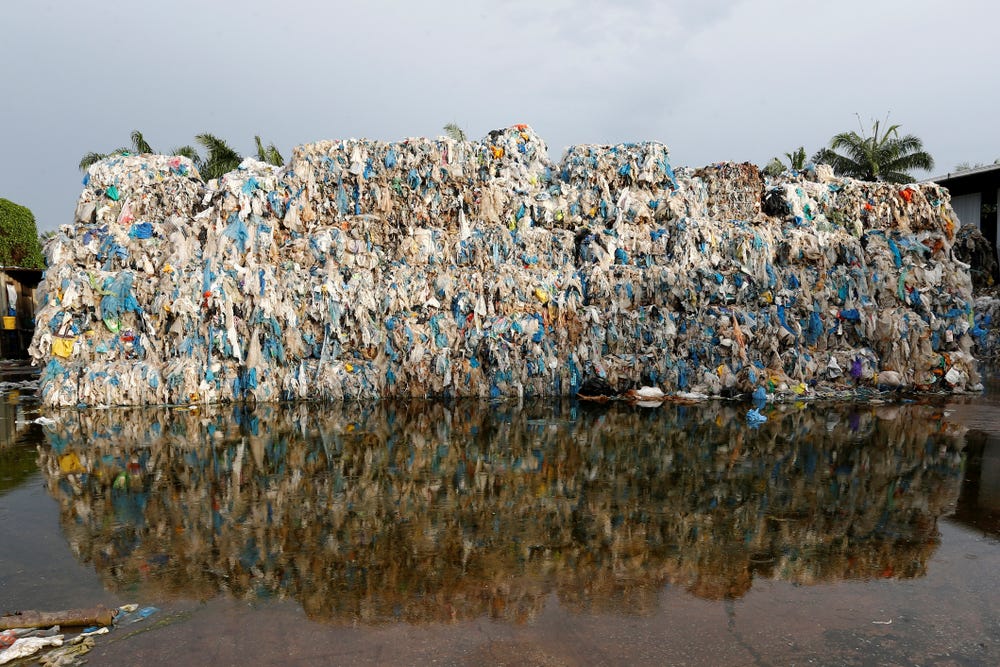
Plastic waste outside an illegal recycling factory in Jenjarom / Photo source : Malaysian Town Covered in 19,000 Tons of Plastic Waste: Photos

Moving forward to the beginning of 2018, residents of Jenjarom were having sleepless nights as they had difficulty breathing due to the putrid scent. They soon found out that it was the smell of burning plastic and it came from the illegal plastic recycling factories that were mushrooming in the township. Due to the town’s proximity to Port Klang, it became an ideal dumping ground. Greenpeace reported that plastic waste exported from the US to Malaysia in the first seven month of that year had doubled from the previous year. The Minister in-charge at that time, Yeo Bee Yin, took action by closing down the illegal factories, agreed to add plastic to the Basel Convention to combat the dangerous effects of plastic pollution worldwide and sent back the plastic waste to the exporting countries. The Government also suspended the operations of the 114 permitted factories and told them to re-apply under stricter criteria. One year after the discovery, residents of Jenjarom ‘can breathe normally and there are no more health problems. Jenjarom has been given a new lease of life’.

Places of Interest

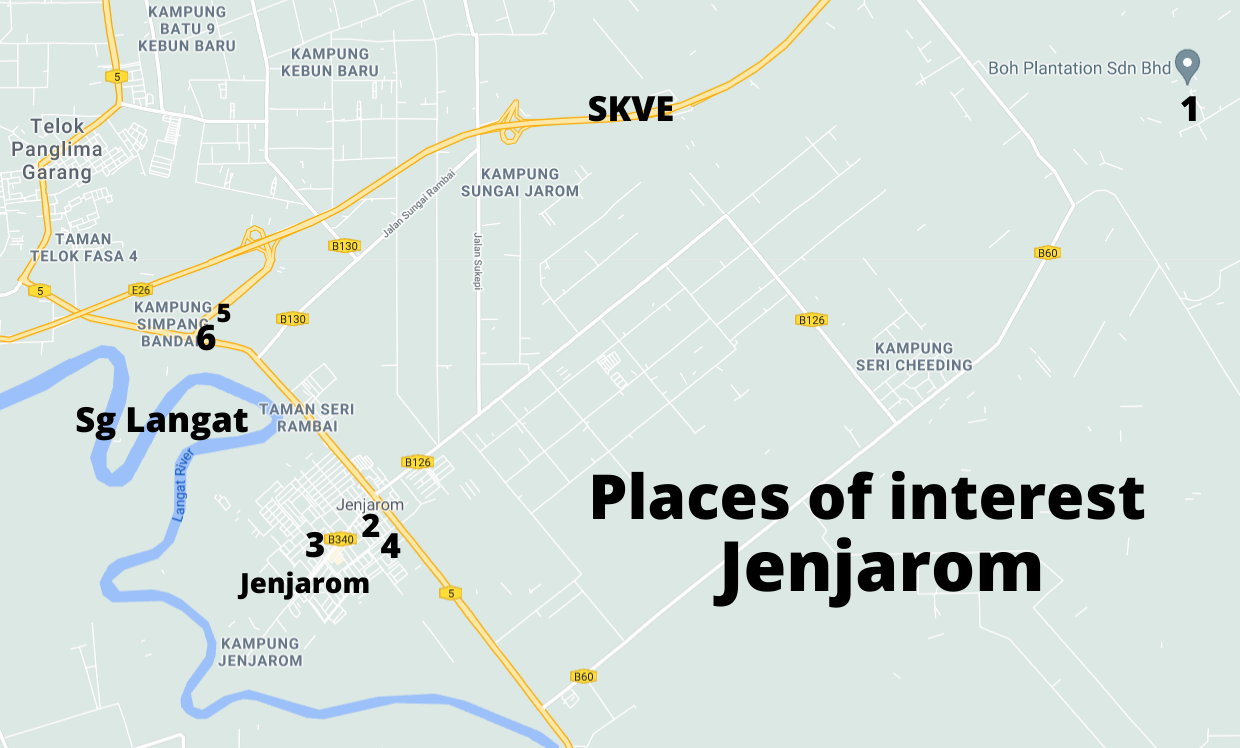
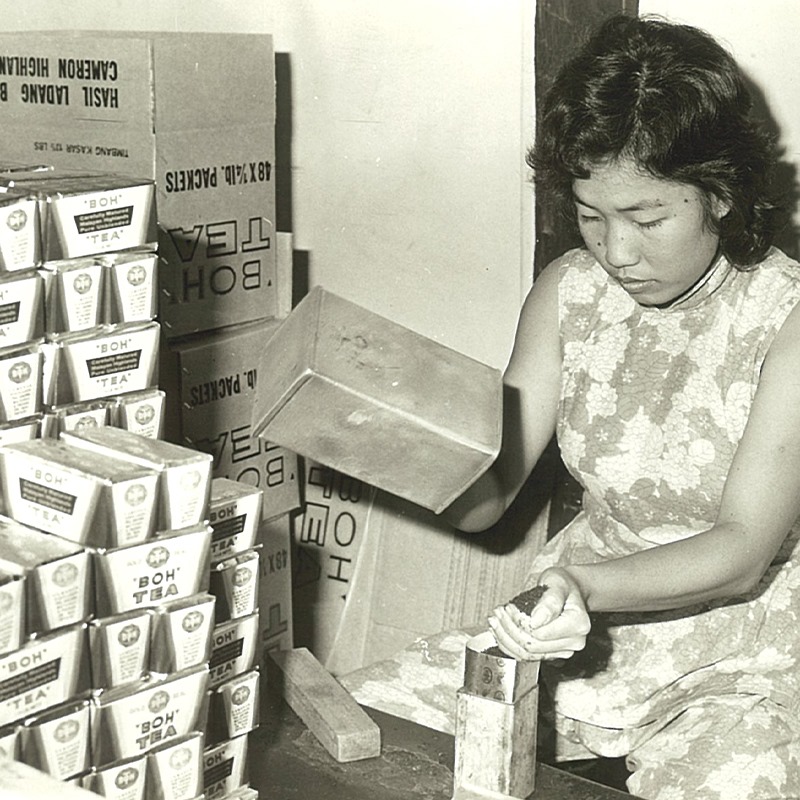
The tea plantation at Bukit Cheeding, just outside Jenjarom town is owned by (1) BOH Plantations Sdn. Bhd. This is where lowland tea is grown and BOH is one of two companies that grow lowland tea in our country. Here, specially designed vehicular harvesters are utilized to pluck the green leaves. Bukit Cheeding is BOH’s only packaging plant. BOH’s other tea gardens are all located at Cameron Highlands, namely the first garden at Habu which was established in 1929, Sungai Palas and Fairlie. The current CEO is Caroline Russell who is the granddaughter of the founder, John ‘Archie’ Archibald Russell. In a news report on 6 December 2019, BOH is offering 651 acres of its Bukit Cheeding plantation for sale. It also mentioned that the land has been zoned for housing. BOH Bukit Cheeding is not open for walk-in visitors and prior permission must be obtained from Majlis Daerah Kuala Langat (MDKL/Kuala Langat District Council).

Photo source : BOH Tea Facebook

The (2) Wanshou Palace (仁嘉隆萬壽宮) located at Jalan Sungai Buaya is a unique temple. It is a unification of four temples, namely Shizhu Temple, Tongluo Temple, Guanyin Pavilion and Yufu Palace. The construction of the first temple was completed on 14 June 1965 on a piece of land given by the Government. In moving with the times, Wanshou Palace was registered as an official organization on 28 March 2000. They were also successful in getting the adjacent land from the government and the reconstruction of the temple went ahead in 2012 with a budget of six million ringgit.

Wanshou Palace / Photo source : 仁嘉隆萬壽宮

Further down Jalan Sungai Buaya is the location of (3)馬來西亞佛光山東禪寺 Fo Guang Shan Dong Zen Temple which is a must-visit site in Jenjarom. FGS Dong Zen is one of the many branches of FGS, which was founded by Venerable Master Hsing Yun in 1967. FGS Dong Zen was built in 1994 and it occupies an area of 16 acres. The temple complex comprises a main shrine with a large seated Buddha, Lumbini garden, Zen garden, Waterdrop Teahouse, Sutra calligraphy hall, Dong Zen Institute of Buddhist Studies, Fo Guang Yuan art gallery, exhibition halls, meditation halls and more. Every Chinese New Year, the temple grounds will be transformed into a glittering wonderland of red lanterns, illuminated gardens, flotillas and colourful displays. This Lantern and Flora Festival will be on display throughout the Chinese New Year celebrations.

FGS Dong Zen
FGS Dong Zen / Photo source : Fo Guang Shan Malaysia – Home

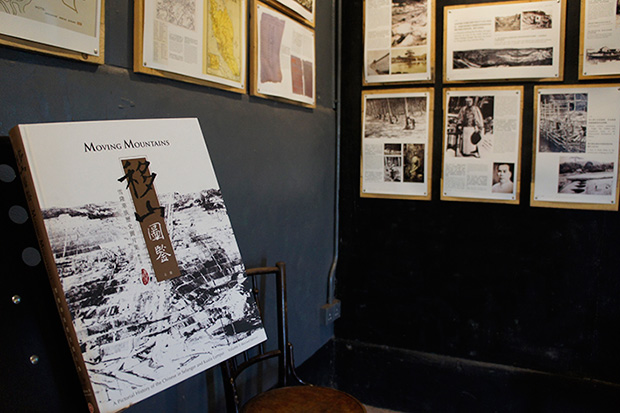
Next, to shift focus to some food and beverage outlets that have appeared in Jenjarom in recent times. Starting with (5) Mansion 1969, this cafe-cum-heritage gallery started business in 2016. Incidentally, the building was built in 1969. Besides the many antiques that are on display, the wooden walls are filled with historical information taken from the pages of ‘Moving Mountains : A Pictorial History of the Chinese in Selangor and Kuala Lumpur’ published by the Centre for Malaysian Chinese Studies; one of the partners of the cafe was involved in the editing of the book. The cafe serves local and Western dishes. Two years later, they started another F&B outlet at the car park outside of Mansion 1969, which they called (6)NightBus 127. Bus 127 used to be the only public transportation between Banting and Klang and it operated in the evenings. An old bus that has been renovated and brought back to life, now serving as the main dining area, is proving to be a crowd puller. The cafe serves western food and operates from 5.00 pm to midnight. And last but not least, one of the partners started another outlet at Kampung Sungai Jarom which he called (4) Pak Teh Kopitiam. The cafe is housed in a 1950’s built village house and started operations in 2019. They serve breakfast and lunch, plus many vegetarian foods and is pork-free.

Historical information on the wooden walls of Mansion 1969 / Photo source : Mansion 1969: A family home turned cafe-cum-heritage corridor in Jenjarom

Getting There

To get to Jenjarom from Kuala Lumpur, use Plus Highway (E2) southbound. Exit at Exit 209 UPM to join Jalan Sungai Besi and continue on to join South Klang Valley Expressway (SKVE) at Ayer Hitam toll plaza. Continue driving and exit at Teluk Panglima Garang toll plaza and, after the toll plaza, keep left to Jenjarom.

In this Series

Please click HERE for a list of articles in the ‘A Very Rough Guide’ series.

References

http://www.arabis.org/index.php/articles/articles/plantation-history/the-malaysian-plantation-industry-a-brief-history-to-the-mid-1980s

Portal Kerajaan Negeri Selangor Darul Ehsan

Aishah Ghani

Jenjarom folk reclaim their right to pollution-free life

Malaysian Town Covered in 19,000 Tons of Plastic Waste: Photos.

BOH Tea – Malaysia’s Most Popular Tea Brand since 1929 – BOH Tea

6 December 2019: Boh plantation partially for sale; Salary increase in Malaysia remains at 5%

仁嘉隆萬壽宮

Fo Guang Shan Malaysia – Home

Fo Guang Shan Dong Zen Temple – Visit Selangor

Mansion 1969: A family home turned cafe-cum-heritage corridor in Jenjarom

SKVE, South Klang Valley Expressway (E26) – klia2.info