By Hani Kamal
It was a warm morning on May 20th 2023 when Professor Gary shared with us the stories from his book. They were his father’s stories from the past, of wartime sufferings and post-war endeavours in the 1940s to 1950s. He started off by telling us why he named the book as such. The title of his book was taken from a Chinese/Cantonese saying (the Professor used a lot of Cantonese throughout the talk):
说如果天要塌下来用作毯子
Shuō rúguǒ tiān yào tā xiàlái yòng zuò tǎnzi
This literally means if the sky falls, just use it as a blanket to cover. Meaning, whatever happens, take it easy as there are no hardships or problems that one cannot solve.
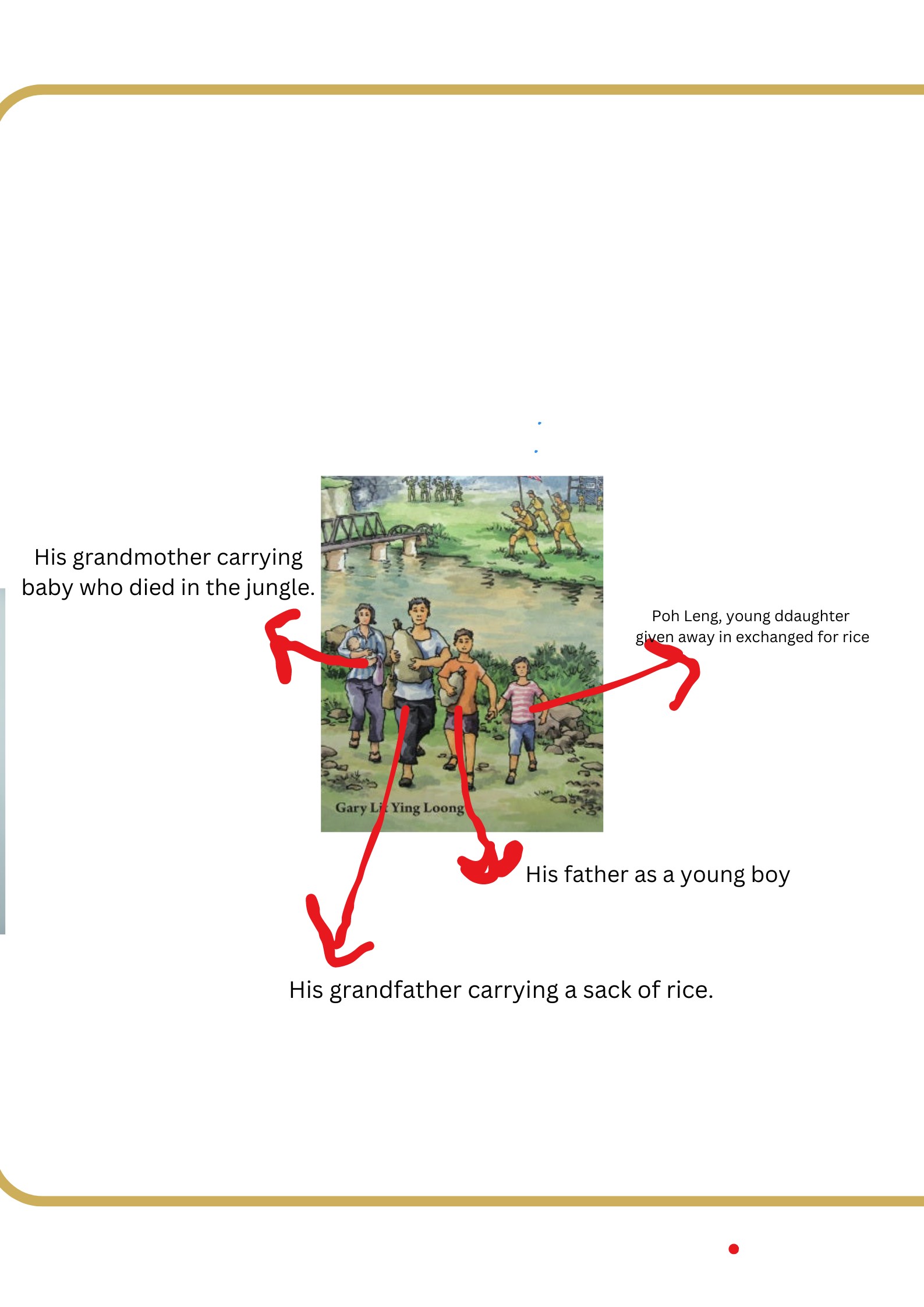
He explained the picture shown on the cover of the book: the family running towards Kampar Hill, away from the advancing Japanese troops.
Gary just retired as an academician from Nanyang Technological University Singapore and is presently a Visiting Professor at some universities in Asia and Europe. It was during the Covid pandemic lockdown that he started to write this book. He also waited until his father’s passing to record and share his memoirs of those tumultuous years. “I had to wait for three events to come to pass before I could publish my father’s memoirs,” confides Lit, elaborating: “The first was that the Communist Party of Malaya (CPM) laid down its arms, and the second, the death of its leader, Chin Peng. The third was the passing of my father.”
It was not just an oral account of his late father, but he also went on to conduct extensive interviews and he documented the events that took place. He spoke about two difficult periods – during the Japanese Occupation and the post-war aftermath by the British Administration. Gary wanted history to be seen from the view of common folks and not “top-down” accounts as written by the British administrators. In doing so, hidden truths about the past can be reviewed.
He went on to share with us the importance of Kampar Hill, which was strategic for the retreating British soldiers fighting the advancing Japanese troops. Kampar Hill was the last line of defence for the British. Each and every time he passes by Kampar Hill, he can feel the hills coming alive with fighter jets flying past, roaring tigers and the droppings of bombs. When the Japanese occupied Malaya, schools in Kinta Valley such as ACS in Kampar and SMI in Ipoh were used as detention/torture centres. Up until now, students claim some classrooms are haunted, “ada hantu” (there are ghosts).
Gary also shared with us his interviews with a few war survivors who were brutally tortured. What took part were gruesome tortures and murders among the Chinese in Malaya also called Sook Ching (ethnic cleansing) as the Chinese were anti-Japanese and supported the fights that took place in mainland China. At this point, I noticed one or two MVs left the room as the events and details depicted were too intense to bear.
His account of the New Villages was not short of more suffering. Prof broke into his Cantonese again when he spoke about what happened to the villages. How women folks called the village security guards “牛头马脸 Niútóu mǎ liǎn”. Meaning the head of an ox and the face of a horse. For the Chinese, these are equivalent to the guards of hell.
Prof spoke for almost one and a half hours, the signs to stop were raised, and with permission from the audience, he spoke about his late brother, Kapt. Lit Ying Wai. The late Kapt Lit was a fighter pilot with RMAF (Royal Military Arm Force of Malaya). It was hard for Senior Lit to allow Kapt Lit to join the RMAF as he may have to fight his own relatives such as Ah Keong, was their cousin who joined the Communist Party of Malaya (CPM). Tragically, Ah Keong died during a power struggle within the Party, a case of false ideology and broken dreams. Kapt Lit succumbed to his injuries in a road accident after the war. He was only 31 years old.
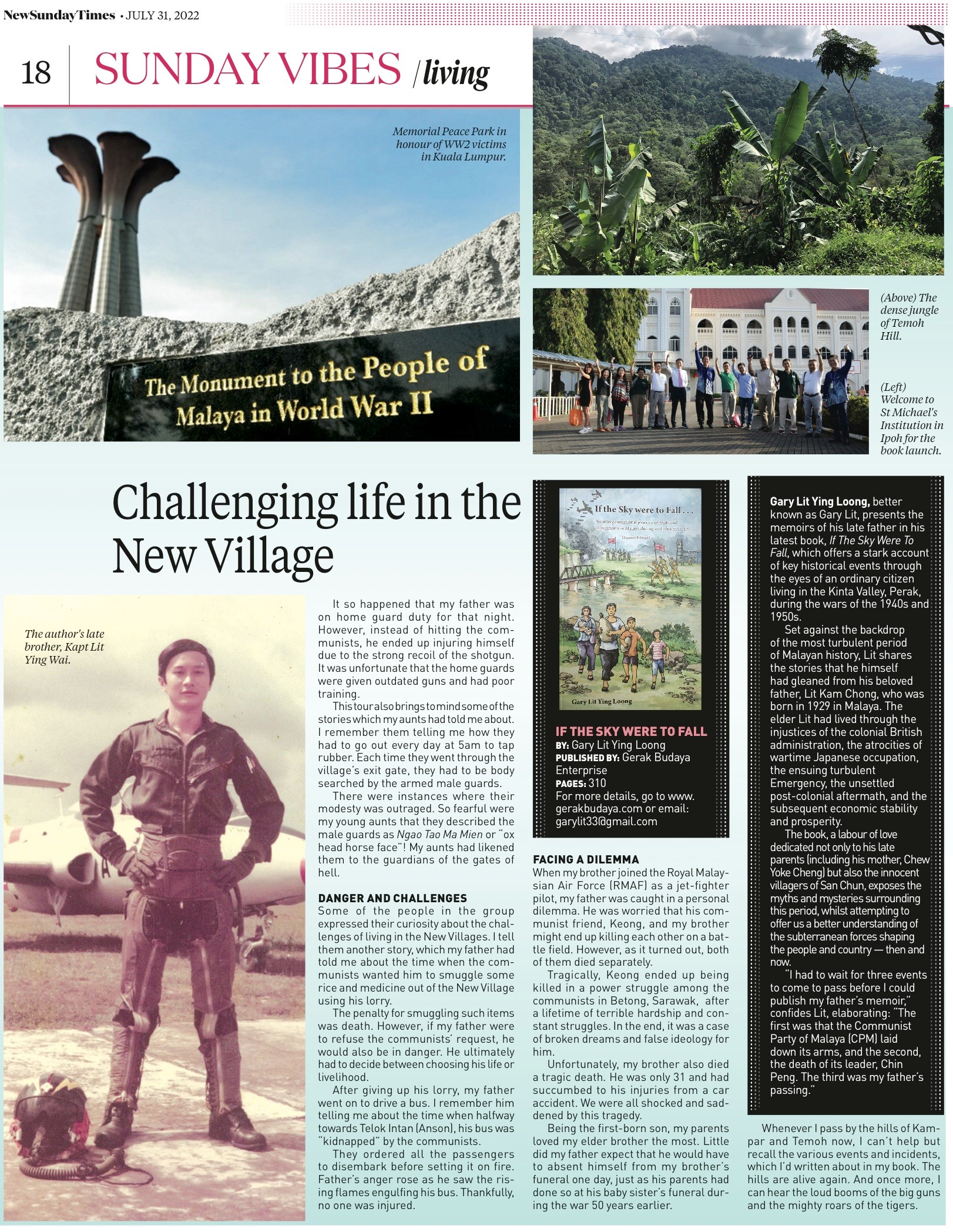
An article was written by Gary Lit and published in the Sunday Times.

 Museum Volunteers, JMM