Muzium Seni Kraf Orang Asli (MSKOA)
By Yun Teng
Many visitors to Muzium Negara tend to focus on the main four galleries, unaware of the other galleries on the premise. One of the lesser-known galleries, in my opinion, is the Muzium Seni Kraf Orang Asli (MSKOA) located near the car park. I was once red-faced when vising the MSKOA with a friend, despite being a qualified Muzium Negara volunteer guide, I struggled to grasp the context from the captions provided next to the exhibits. Hence I promptly registered for Reita Rahim’s upcoming talk as soon as the poster was released.
Reita Rahim, a former graphic designer turned freelance craft researcher, has dedicated the past 20 odd years to documenting the customs, beliefs, practices and way of life of the Orang Asal, while training them to improve their crafts via colour management and quality controls.
She began her talk with the clarification that the indigenous on the Peninsular is referred to as “Orang Asli’, in Sarawak they are the ‘Dayak’ and ‘Orang Ulu’, and in Sabah they are the ‘Anak Negeri’. Collectively they are referred to as ‘Orang Asal’.
Her talk was very informative. I shall attempt to record everything in detail, for the benefit of my fellow volunteer guides. Points taken are placed into different categories, for easier reading.
Population
| Malaysia (Peninsular) | Taiwan | |
| Population | 0.64% (2019) (1) | 2.5% (3) |
| Life expentancy | About 20 years lower than the national rate. (2) | 10 years lower. (4) |
| Source | iDAMAK, June 2021, KKM collected it during COVID vaccination project Masron, T.; Masami, F.; Ismail, Norhasimah (1 January 2013). “Orang Asli in Peninsular Malaysia: population, spatial distribution and socio-economic condition”. J. Ritsumeikan Soc. Sci. Hum. 6: 75–115. | (3) Data and official document extracted Wikipedia: 臺灣原住民族 (4) Excerpt from a talk https://youtu.be/HAMf7m23M_w |
Style of Living
| Events | Description | ||||||
| New borns | New borns and young toddlers are considered vulnerable in the family. They need to be well taken care of before going out to explore the world. Note: Do not freely photograph them. It is a required courtesy to ask permission before taking any photos of them. | ||||||
| Amulets | A ‘durian-like’ fruit that can be found in the gallery is one of their protection amulets. The seeds found inside the fruit is glassy and sharp. See photo below.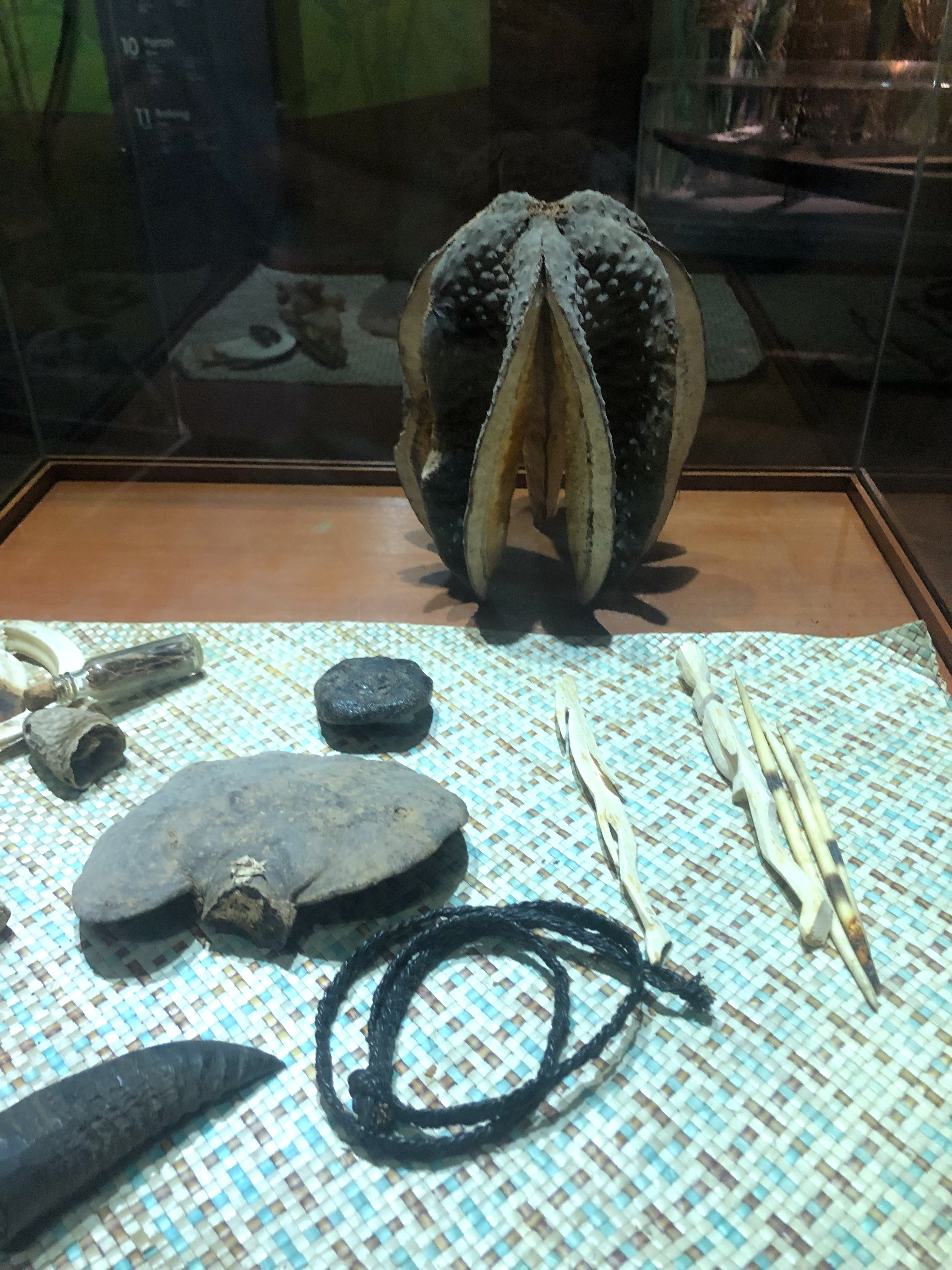 (Photo by Yun Teng) | ||||||
| Agriculture | According to their beliefs, heaven is called ‘Pulau Buah’ (Island of Fruits), thus named to represent a sense of security, since they were often challenged by poverty and hunger. | ||||||
Rice is the main staple food, followed by tapioca and yam. The Orang Asli eventually planted a variety of rice, some are endangered species. They ploughed and harvested rice in a variety of ways, using special tools (not a ‘sabit’), as shown below. 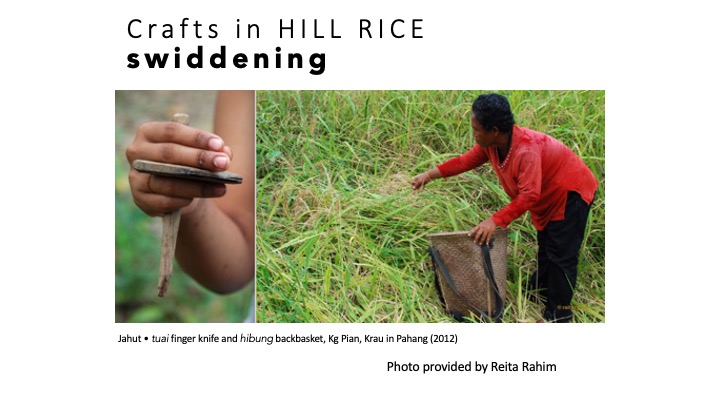 (Photo by Reita Rahim) | |||||||
| Orang Asal (Peninsular) | Penan | ||||||
| Rice swiddening | They rotate the crops every 5-7 years. They are not nomadic. | They are nomadic, hunting and gathering from the wild. They do not plant rice. | |||||
| Hunting | The blowpipe is a primary tool, sharp tips applied with poison from the Ipoh tree. A fine line is scored just below the tip to ensure it breaks off once it hits its target, ensuring the poison remains in the victim. | ||||||
| Blowpipes | Bamboo Pipes are made with bamboo (Temiang), straight in between segments, perfect for viewing and taking aim. They are two-layered, the inner pipe will nest within a wider outer pipe. | Wood Belahan techniques Wood is cut into half lengthwise, the inner part removed. | Wood A special technique is employed to drill a hole down the middle of the wood. | ||||
| Temiar | Semai | Semelai (Tasik Bera) | Penan Murud | ||||
| Bamboo is not popular amongst the Orang Asli of the South, since it is scarce in this area. | |||||||
| Fishing | Fishing techniques are inherited from their forefathers, using a variety of tools and traps to catch fish from rivers or clams from coastal waters. 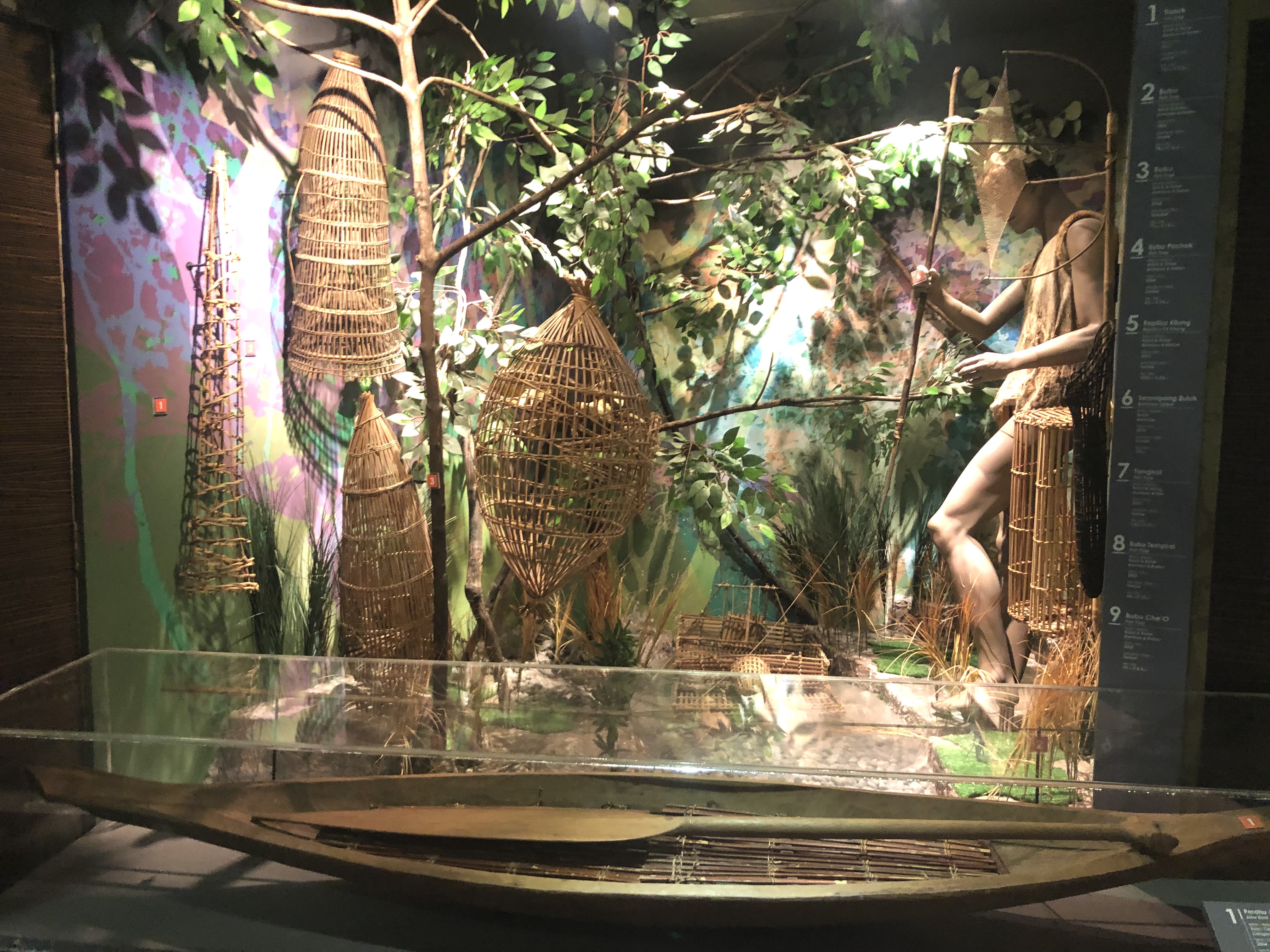 (Photo by Yun Teng) | ||||||
| Clothing | Clothes are made from the bark of a tree called “Artocarplus elasticus”, by pounding, soaking and stretching in order to make the material more ‘wearable’. | ||||||
| Accessories | They have accessories such as headgear, bead necklaces (some made of edible seeds), ear plugs or nose pricks. | ||||||
| Headgear and masks | Temiar | Mah Meri | Other Orang Asal | Dayak | |||
| They are the main group. They invented headgear. | Dance with masks. 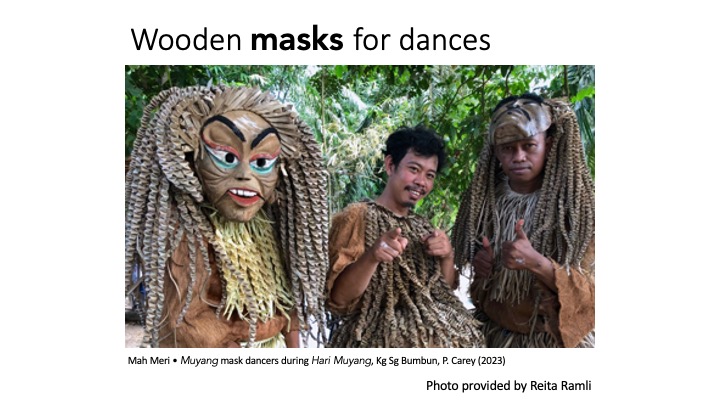 (Photo by Reita Rahim) | Now they see it as an identity. | Headgear made of beads. | ||||
| Masks | Masks were made with pieces of wood joined by articulated jaws. This practice is rarely seen these days as it involved a lot of workmanship. 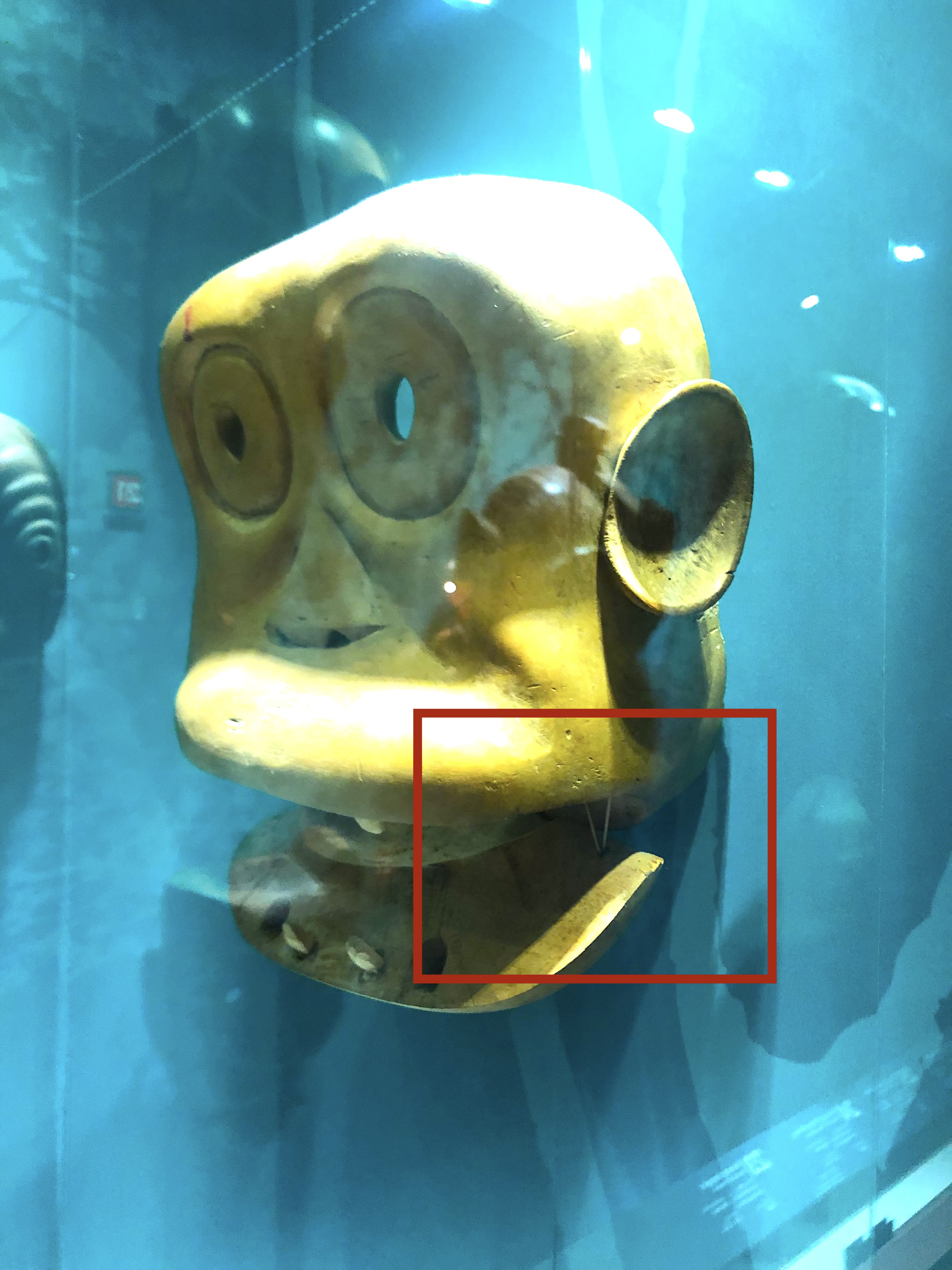 (Photo by Yun Teng) | ||||||
| Transportation | Some groups of Orang Asal used to live as sea nomads. They do not live that way anymore because the wood for making the boats, (which can be opened up naturally when the bark is dehydrated with a firing technique) can no longer be found in the jungle.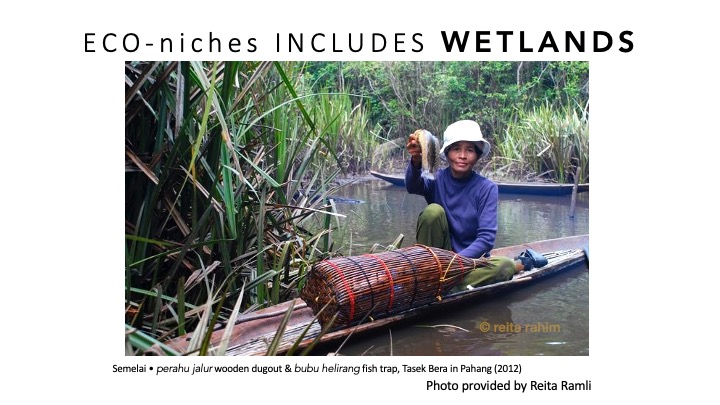 (Photo by Reita Rahim) | ||||||
| Entertainment | Some musical instruments are designed for ritual, whereas some for entertainment. | ||||||
| Musical instruments | Percussion instruments include the genggong & kelunthong and the gambang (there’s even a double-player one). The wind instruments are the flutes Selaung, pensol and si-oi. The string instruments include the mouth harps such as jurieg, kerab meroi, din keranting, banjeng and kereb lab. | ||||||
| Stampers dance (Ritual) | Magunatip (Entertainment) | Bamboo Dance (Festival) | |||||
| Semai | Aborigines from Sabah and Sarawak | Taiwan aborigines, the Ami tribe | |||||
| Arts | Crafts are made from materials they are able to gather. Most woodcrafts are made with wood from the Pokok Angsana, some made with Cengal and Pulai (commonly gathered but a soft wood). | ||||||
| Woodcraft | Mah Meri | Jahut | |||||
| Mostly about stories of their moyang (ancestor). | Mostly about spirits that make humans ill or feel uneasy. | ||||||
Illness and Healing
| Ancestry | Moyang |
| Realms in alternate | The other realm is in a reverse alteration. For instance: 1) Small in this world, big in the other. Hence, the food offered to ancestors has to be small so that ‘in the other world’ it is a big portion. 2) Day in this world, night on the other side, so a candle has to be lit. |
| Healing rituals | Healing with the power from their ancestors is very common among the tribes. The ancestors are summoned to a location with a particular collection of woven leaves where communication can be carried out.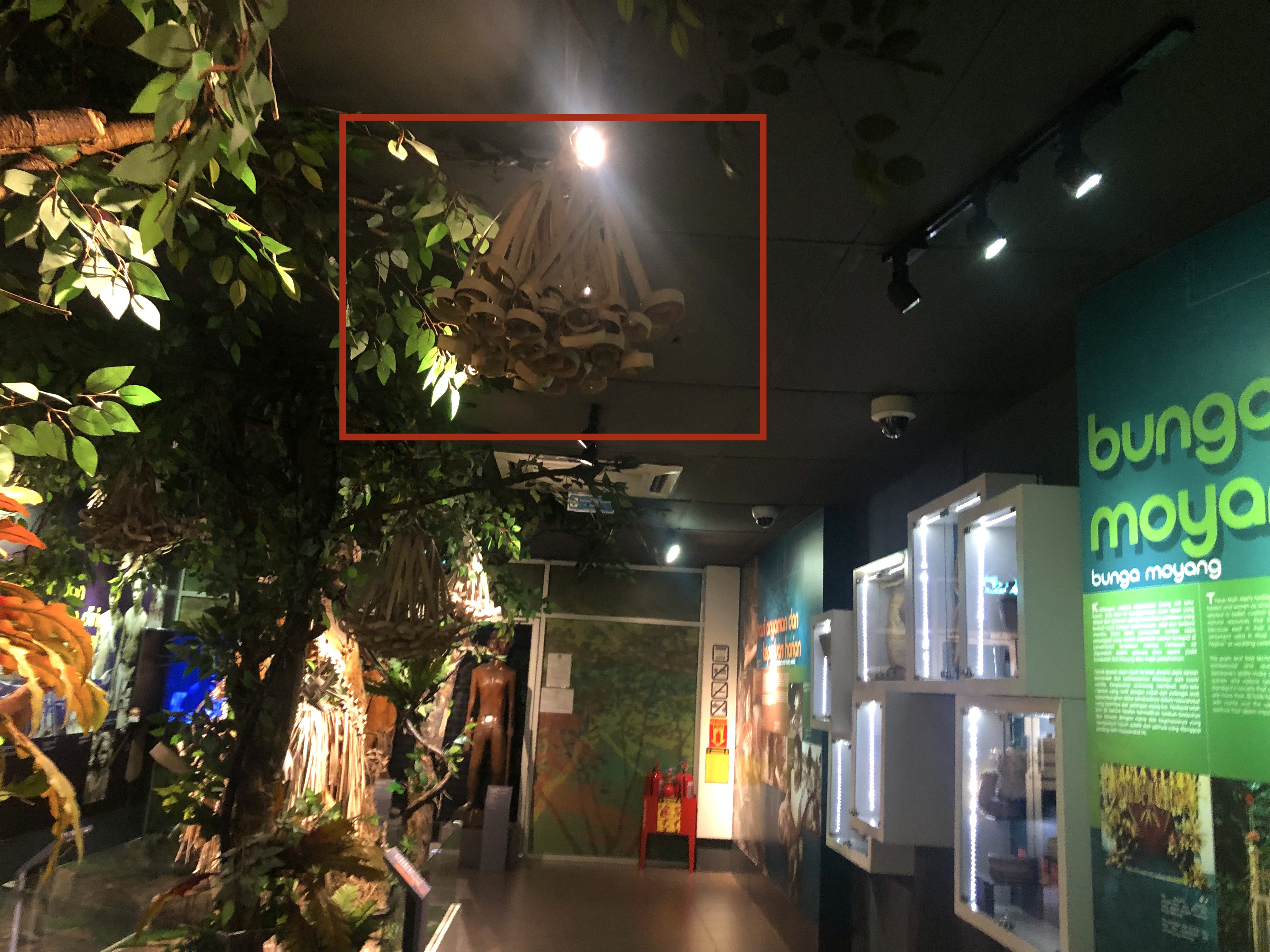 (Photo by Yun Teng) |
Death and Graves
Burial is a very important event. A proper grave is prepared for the deceased with their belongings placed on the grave and a tree planted to serve as a marking. On the sixth day, the deceased will be told to stay in the realm of the other world, everyone will move on then.
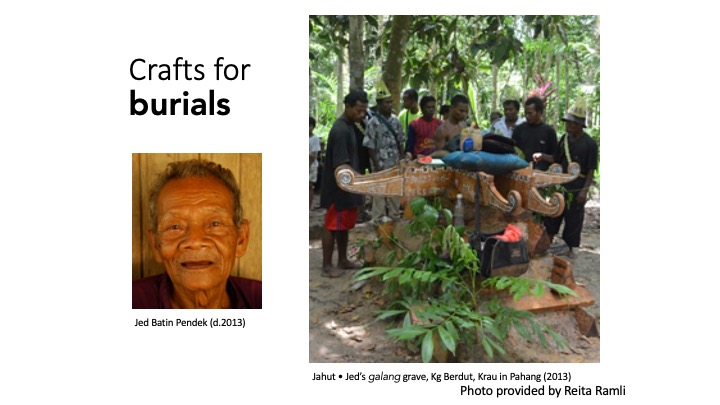
A burial side of Jahut. (Photo by Reita Rahim)
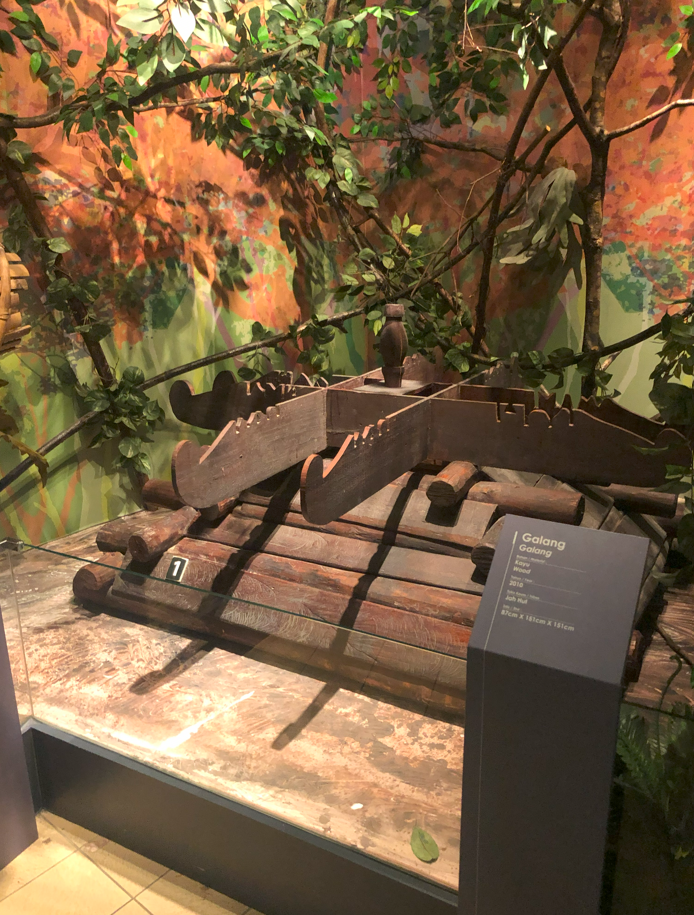
Burial side (artefact) in MSKOA. (Photo by Yun Teng)
With this brief documentation, I am now able to speak a little about the Orang Asli when I bring visitors to the gallery. There are still many more stories to learn. A two-hour talk can only provide a tiny glimpse into their universe.
This Muzium Seni Kraf Orang Asli (MSKOA) in Muzium Negara, and the one in Muzium Perak (Taiping) that I visited, are good places to start to better understand them. We should approach this understanding with due respect, embracing the uniqueness of their culture.

 Museum Volunteers, JMM