Spiritual Treasures of Islamic Art: Magic Bowls

Emna Esseghir 

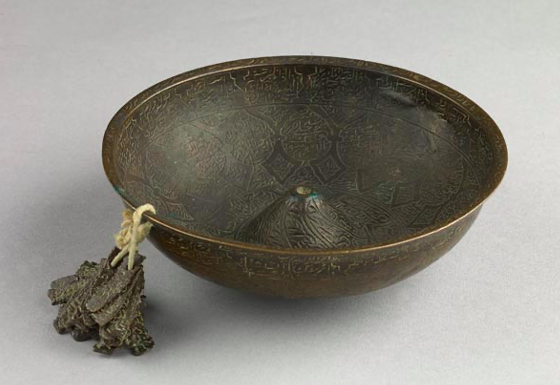
Magic bowl, engraved with Arabic inscriptions (Quranic verses and prayers) and with engraved brass tags (charms or ‘keys’) attached, exhibited at the British Museum.

(source: https://www.britishmuseum.org/collection/object/W_1921-1025-5)

The history of magic is a fascinating tapestry woven through the fabric of human civilization. Its roots extend deeply into ancient cultures worldwide, often entwined with religious practices, folklore, mysticism, and the pursuit of understanding the unknown.

Ancient civilizations across Mesopotamia, Egypt, Greece, and Rome held beliefs in magical practices, rituals, and individuals possessing supernatural abilities. These practices were often intertwined with religious ceremonies, healing rituals, and attempts to control natural forces.

In the Middle Ages, magic became associated with both mystical spirituality and the occult. Alchemists sought to transform base metals into gold and create elixirs of immortality, merging scientific experimentation with mystical beliefs.

During the Renaissance, the line between science, magic, and philosophy blurred further. Thinkers like Paracelsus explored the concept of a universal healing force, while figures like John Dee engaged in mystical practices and attempted to communicate with angels through rituals.

The Age of Enlightenment brought forth a shift toward empirical science, causing a divide between magical thinking and scientific reasoning. This era witnessed a decline in the societal acceptance of magical practices, which were often seen as superstitions or fraudulence.

However, interest in the occult, mysticism, and esoteric practices persisted in secret societies and among individual practitioners. The 19th and 20th centuries saw a revival of magical traditions, with movements like Theosophy, Hermeticism, and the study of ancient mystical texts gaining traction.

Today, magic persists in various forms, from stage illusions and entertainment to spiritual practices like Wicca, paganism, and various occult traditions. Modern practitioners often draw inspiration from ancient texts, folklore, and a diverse array of spiritual beliefs, seeking a deeper understanding of the mystical and the unknown within the framework of contemporary society.

Magic within Islam holds a complex and nuanced position. The Quran acknowledges the existence of magic, referring to it as real but also as a forbidden practice. Islamic teachings distinguish between miracles performed by prophets with God’s permission and acts of magic, which are considered acts of deception and disobedience.

The practice of magic, or “sihr” in Arabic, involves invoking supernatural forces to perform actions that are beyond natural laws. Islam strictly prohibits the use of magic as it involves seeking power from sources other than God, leading to falsehood and harm. Those who practice magic are considered to be engaging in activities that are contrary to the teachings of Islam.

However, Islamic traditions also acknowledge the existence of protective measures against magic, known as “ruqyah.” This practice involves reciting specific verses from the Quran or prayers seeking protection from harm caused by magic or evil spirits. It’s seen as a permissible form of seeking refuge in God’s guidance and protection.

The concept of jinn, spiritual beings made of smokeless fire, is often associated with magic in Islamic belief. Some believe that certain practitioners of magic use jinn to perform their sorcery, although such actions are condemned in Islam.

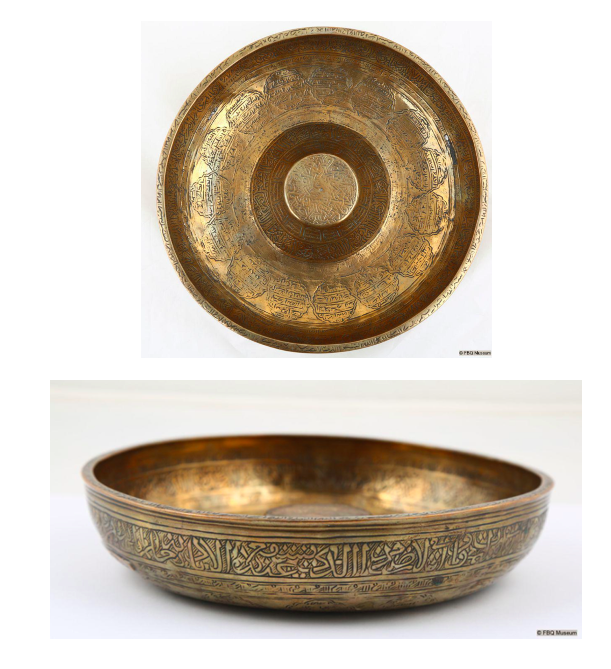
Magic Medicinal Bowl
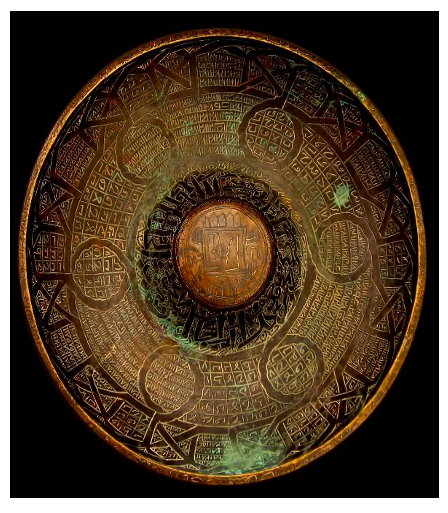
(Image source: https://www.michaelbackmanltd.com/archived_objects/islamic-magic-bowl/)

In the captivating world of Islamic artistry, an exquisite array of artifacts unravels a narrative beyond mere aesthetics, revealing a profound tapestry interwoven with spiritual beliefs and cultural resonance. 

Nestled among these treasures, the enigmatic allure of magical bowls unveils a saga that intertwines mystical beliefs, masterful craftsmanship, and spiritual rituals, encapsulating the essence of Islamic cultural depth. These enchanting vessels, revered for their mystical properties and spiritual significance, epitomize the intricate layers of understanding inherent in Islamic culture. 

Every meticulously inscribed stroke of calligraphy serves not only as a visual spectacle but as a deliberate conduit, meticulously chosen to harness the divine power believed to reside within these sacred words. 

Beyond their utilitarian function, these bowls held a revered status as conduits of celestial energy and reservoirs of ancient wisdom. The intricate symbols etched onto their surfaces transcend mere adornment, carrying profound layers of spiritual significance and serving as gateways to a realm beyond the physical. In some models, the inclusion of zodiac signs within these bowls further underscores the intimate connection between the celestial and earthly domains, symbolizing the celestial forces’ influence on human destinies and wellbeing. 

This harmonious integration of cosmic elements with healing or divination practices showcases the seamless interplay between the mystical and the tangible, a hallmark of Islamic cultural heritage. 

The act of filling these bowls transcended a mere ritual; it was a profound ceremony that bestowed the vessel with the potent energy encapsulated within the inscriptions. Partaking in the enchanted elixir was an act of unwavering faith, believed to harness the power of healing or unveil glimpses of the mysterious future. Far beyond their function as mere healing tools, these bowls embodied a collective consciousness, encapsulating the spiritual wisdom and intricate belief systems of their time. 

They stand as enduring reminders of the deep reverence accorded to language, writing, and the unseen forces believed to be encapsulated within these meticulously crafted artifacts. The timeless legacy of these magical bowls unveils a mesmerizing fusion of spirituality, symbolism, and material culture within Islamic traditions.

They serve as enduring testaments to the eternal quest for healing, guidance, and spiritual alignment, transcending the limitations of time and continuing to intrigue and inspire across generations.

Magic Bowl displayed in Shahaniya, Qatar.

(Image source: https://islamicart.museumwnf.org/database_item.php?id=object;EPM;qt;Mus22;22;en&cp)

Wrapped around this bronze bowl, one finds the protective embrace of Quranic verses, blessings, and mystical symbols—a blend that characterizes the Islamic magic bowls, crafted to shield against fear, ward off evil, and repel malevolent forces like the jinn. These artifacts, originating from Karbala in Iraq, a revered pilgrimage site for Shiite Muslims, have emerged across regions like Syria, India, and Iran since the 12th century. Contrasting with earlier Sasanian bowls adorned with Aramaic inscriptions, these Islamic counterparts, fashioned from metal instead of clay, serve a divergent purpose, seeking protection rather than invoking demonic entities.

Adorning the bowl’s exterior in the graceful thuluth style of Arabic calligraphy is the esteemed Throne Verse (Ayat al Kursi) from the Qur’an, renowned for its talismanic defense. A hexagram, evoking the legacy of prophet Sulayman (Solomon), accompanies this, while nearby inscriptions offer blessings for the body and senses. Symbolically, the vessel’s twelve panels pay homage to the twelve Imams in Shia Islam. Further enriching the significance, the inclusion of science letters (ilm al huruf) attributes mystical properties to the array of letters inscribed on these panels.

Magic bowl with attached prayer tablets. Probably 19th or 20th century, Iran.

(Image source: https://exhibitions.kelsey.lsa.umich.edu/pearls/objects/bowl2.html)

This model is adorned with intricate inscriptions and an array of zodiac signs, every surface of this metal bowl captivates the eye with its artistry. In the Islamic tradition, such magical bowls were revered for their dual purpose—either for healing or divination. Once filled, it was believed that these bowls infused the liquid they contained with the potent energy imbued in the inscriptions. People consumed this elixir in the hopes of finding relief from ailments or gaining glimpses into what the future held.

At the heart of this bowl lies a prominent central protrusion known as an omphalos or göbek in Turkish, meaning “navel.” Along the rim, a cleverly placed hole allowed for the attachment of a string of tablets referred to as kırk anahtar (forty keys) in Turkish. These tablets, adorned with bismillah prayer formulas, served a purpose akin to prayer beads or rosaries. While this specific bowl displays tablets linked by a string, other existing examples showcase tablets either attached to the rim with metal wire or arranged around the central omphalos. Regardless of their placement, these tablets produced a distinct rattling sound as the bowl was utilized, adding an intriguing dimension to its use.

In our museum we have one displayed in Gallery B
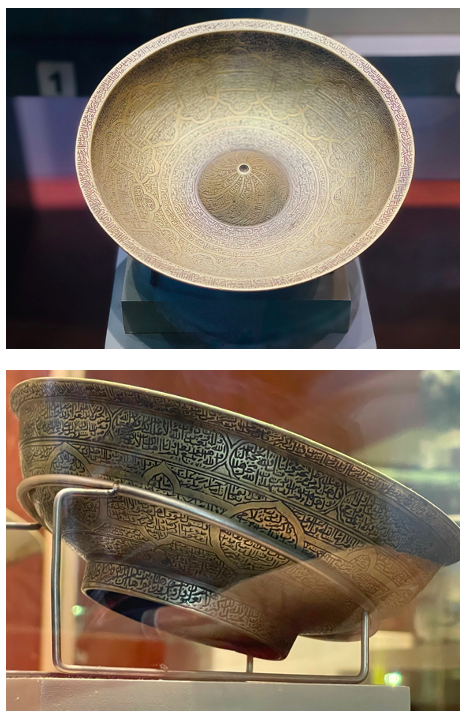
Bronze Bowl dated between14th and 15th century displayed in Gallery B, Muzium Negara. (Image source: Emna Esseghir)

As the previous example, this magical medicinal bowl typically incorporates intricate calligraphy, often Quranic verses or prayers for healing, along with elaborate geometric designs. These bowls are crafted with precision and care, sometimes using specific materials or techniques that are believed to imbue them with healing properties or spiritual significance

The combination of calligraphy and geometric design is intended to create a visually and spiritually powerful object believed to aid in healing or offer positive energy.

The Quranic verses can easily be distinguished from the first line on the bowl with recitations of prayers for the healing of the person who will use it, here some exemples of verses:

SURAH ASSAMAD:

( قُلْ هُوَ اللَّهُ أَحَدٌ (1) اللَّهُ الصَّمَدُ (2) لَمْ يَلِدْ وَلَمْ يُولَدْ (3) وَلَمْ يَكُنْ لَهُ كُفُوًا أَحَدٌ (4

Translation (sahih International) :

“He is Allah, One. He is the One, the Singular, Who has no peer, no assistant, no rival, no equal and none comparable to Him.”

The word (Al-Ahad) cannot be used for anyone in affirmation except for Allah within the Islamic Tradition.

SURAH YUNUS AYAT 107 

وَإِن يَمْسَسْكَ اللَّهُ بِضُرٍّ فَلَا كَاشِفَ لَهُ إِلَّا هُوَ ۖ وَإِن يُرِدْكَ بِخَيْرٍ فَلَا رَادَّ لِفَضْلِهِ ۚ يُصِيبُ بِهِ مَن يَشَاءُ مِنْ عِبَادِهِ ۚ وَهُوَ الْغَفُورُ الرَّحِيمُ

Translation (Sahih International)

“And if Allah should touch you with adversity, there is no remover of it except Him; and if He intends for you good, then there is no repeller of His bounty. He causes it to reach whom He wills of His servants. And He is the Forgiving, the Merciful”

References

History of Magic: https://en.wikipedia.org/wiki/History_of_magic

Magic Medicinal Bowl: https://www.michaelbackmanltd.com/archived_objects/islamic-magic-bowl/

Magic, Marvel, and Miracle in Early Islamic Thought:

https://www.cambridge.org/core/books/abs/cambridge-history-of-magic-and-witchcraft-in-the-west/magic-marvel-and-miracle-in-early-islamic-thought/BA6255F5E53C5DC6C3A96F5E69DF6B8D

The magical fringes of the Islamic faith:

https://www.seattletimes.com/entertainment/books/magic-in-islam-the-magical-fringes-of-the-islamic-faith/

Islamic magic-therapeutic bowls:

https://as.nyu.edu/research-centers/silsila/events/2018-2019/l_orientale–islamic-magic-therapeutic-bowls.html

Magic Bowl with Attached Prayer Tablets: 

https://exhibitions.kelsey.lsa.umich.edu/pearls/objects/bowl2.html
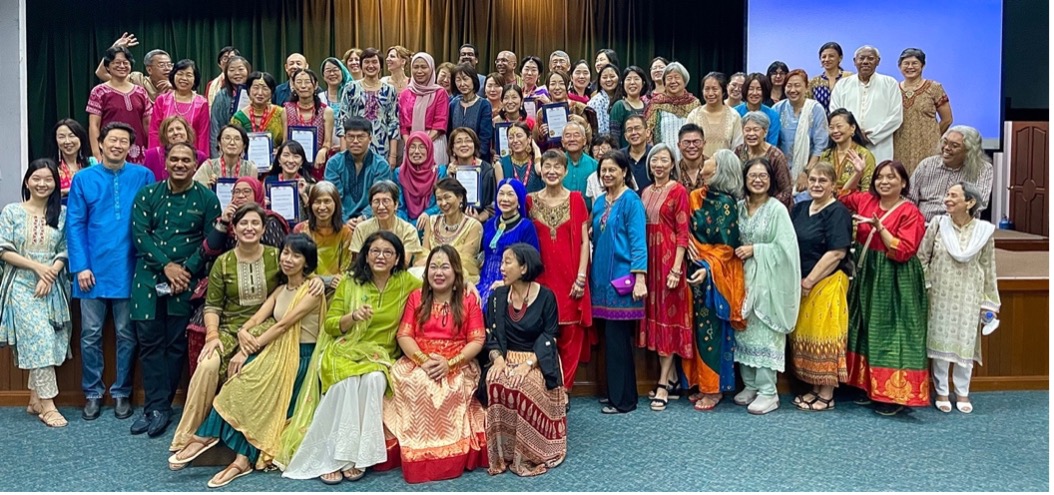
My Path as a Volunteer Guide at the National Museum

By Emna ESSEGHIR

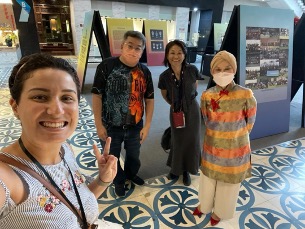
As I gazed at the group photograph of the museum volunteers captured at our year-end “MV Party”, all I saw were radiant smiles, spontaneous reactions, and newfound friendships. This was an opportunity for us all to give thanks and reconnect. Batch 40 MVs were especially jubilant as the party was also their graduation ceremony. As for the rest who attended, we were not short of being excited and spirited. I can most definitely attest this to be true for Batch 38, my batch!

How did this incredible journey unfold? Let me weave the tale of my enchanting odyssey towards becoming a volunteer guide at the National Museum. I’ll illustrate just how exhilarating my journey was. Who knows? This might just kindle the same spark within you to do the same.

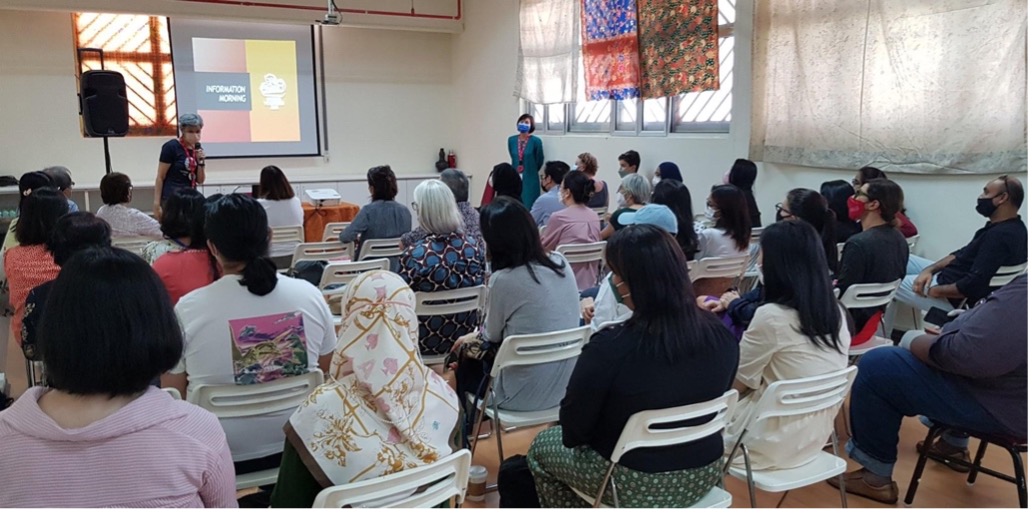
It all started in May 2022, upon the recommendation of two esteemed French-speaking guides. Stepping into the presentation room during an information morning session, I was met with a sea of eager faces, a diverse mosaic of different age groups and backgrounds, converging in pursuit of something magical. Throughout the session, I found myself to be further inspired to guide visitors through the museum’s treasures. The presence of existing experienced MVs added a sense of wisdom, while the discourse brimmed with motivation and passion. In that moment, a fervent thought surfaced, “I must be a part of this!”

I soon enrolled, and the thrill of being officially accepted was like a surge of electricity, igniting my excitement for the training which commenced in September 2022. Embracing the same anticipation, I felt as though I was a child eagerly awaiting to return school after a long summer vacation. I was bubbling with enthusiasm.

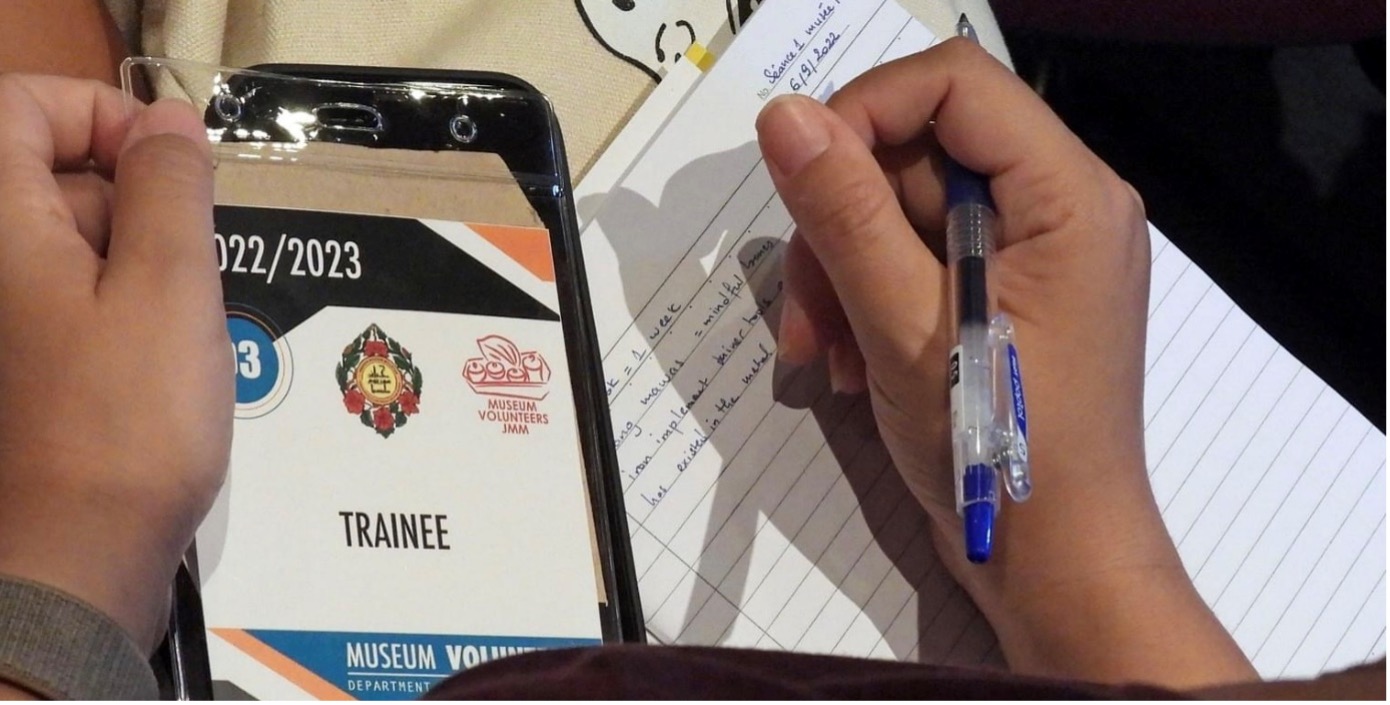
Before the training kicked off, I made a trip to the bookstore to get some stationery – notebooks, paper, and some colourful pens, like a burst of colours which aptly represented my readiness to dive headfirst into this adventure!

At last, the day of my first class arrived. The not-so-spacious MV Room was already buzzing with attendees. I quietly settled into a seat at the back of the room, observing the unfamiliar faces around me. Apart from a fellow French individual, I was a stranger among strangers, but hey, it was just the first day! 

As the roll call commenced, prompting us to sign next to our names, it felt like we were at school again. We were strongly encouraged not to miss any sessions unless absolutely necessary, with a cautionary note that repeated absence might hinder our progress. 

That was not an issue for me as Tuesday classes were a perfect fit for me. The training team’s introduction was warm and approachable. I have a tendency to infuse my initial impressions with positivity. Striving to be an attentive learner, I absorbed each detail like a sponge. 

It was revealed to us that the diverse topics crucial to Malaysia’s history will form the content of our training. Each of us will be put to the test by undergoing oral assessments of varying durations – 3, 7, and 15 minutes – fun I’d say! Notably, the assessment demanded a supporting written essay with a pre-determined format, character count, and referencing, not unlike an academic research paper!

We had our photographs for our future MV tags, this felt like an initial stride towards a promising journey. Our group was subsequently divided, each subgroup was entrusted to an experienced guide. I found myself under the guidance of Mr. Jega, who exuded an air of wisdom and commanded respect effortlessly. He seemed to possess an encyclopedic knowledge of the museum, almost as if he had been a part of its history from the very start. The setting up of a WhatsApp group with him was aimed at streamlining communication, and each student was tasked with randomly selecting their first three-minute topic. Mine turned out to be ‘tulang mawas.’ A quick dive into Google helped unravel the mystery behind this intriguing phrase! Well, it seemed like diving into reading and research was the name of the game! 

The early sessions posed a challenge, especially for a foreigner like me struggling with a new geography. Feeling lost was a familiar sentiment until a presentation on the ‘Bujang Valley’ prompted a strategic shift. 

I began prepping before class, diving into research to grasp, follow, and engage with the material. Waking up early had long become a routine, a habit cultivated since childhood. Progress was swift, and as the training advanced, I found myself increasingly enjoy reading and researching. Mr. Jega with his insistence for factualness, attention to detail, and kindness, helped polished my knowledge. Thankfully, my presentations sailed through on the first attempt. Our mentors – Jega, Rama, Debbie, Sibilla, and Anna – were stellar trainers. In the classroom, we were all learners, irrespective of our levels. The space fostered camaraderie, gradually breaking down barriers among us. I cherished the conversations I had with my two Korean friends seated in front, even before learning their names. Engaging with my friend Rueben, sometimes relying on his translation for English or Malay words, added to the friendliness. 

Mutual support bound us together. The visible disappointment in someone’s eyes when they had to retake a test was met with a reassuring word. As our journey progressed, the ties within our Batch 38 family strengthened, evolving into something truly priceless.

The passing weeks were a whirlwind, and our volunteer librarians, Jean and Lai Meng, were the pillars of unwavering support, guiding us on how to select suitable books as reference.

Each of us was tasked with experiencing at least three guided tours to absorb, contrast narrative styles, and explore various approaches. Personally, I dove headfirst into more than 10 tours, uncovering hidden gems with each visit. 

As we approached the program’s conclusion, the pivotal moment arrived when we needed to select a mentor for an extensive museum tour. I approached my guide, Mr. Jega, requesting to continue under his wing, and to my delight, he graciously accepted. 

The pride I felt was immeasurable—I aspired to navigate the entire museum in English, a language not native to me, but a challenge I welcomed with open arms! My decision led me through the four galleries, and oh, the tales I have from that journey! 

In our compact team, led by Mr. Jega, each member possessed a distinct style. I surmise this diversity was a common thread among other groups. Yet, amid this diversity, one remarkable and undeniable thread prevailed: the unprecedented unity among us! 

We freely exchanged resources and ideas, fostering an environment devoid of rivalry. We collectively believed in the power of shared knowledge, understanding that its distribution only magnifies its impact. Our mutual support was palpable, a cascade of motivation and encouragement. The elation I experienced witnessing my peers conquer galleries was akin to my own triumphs. Perhaps it’s ingrained in our culture or fostered by our group dynamic. Following Fuad in Malay or someone else in Chinese? Absolutely no issue there! Language barriers crumbled in the face of friendship. Being there, shoulder-to-shoulder with friends, providing unwavering support in times of struggle, is the very essence of our shared experience. In our realm, friendship speaks a universal language, unifying us beyond any linguistic boundaries.

I made it a point to be there for my buddies as they were there for me. That mutual support meant the world, there was no awkwardness among us. My first big win? Jega’s ‘good’ on my report on 26/01/2023. That maiden tour felt like an epic saga! They said it took two hours, but trust me, it felt more like a marathon – easily four hours. We stopped at every single artefact, diving deep into their stories. Mr. Jega wanted to make sure I knew the museum inside out. Round two, a few days later, 03/02/2023, and guess what? Nailed it! I was the first to wrap up, and my mentor’s comment – “completed successfully” – felt like a display of fireworks within me! But wait, it wasn’t a wrap yet, my gang hadn’t finished, and my buddies in other groups were still getting assessed, so I stayed on standby to lend a hand. 

Hey! I’m not some prodigy – everyone was worked hard, and it was beyond amazing! Every day, one of our mentors would blast out a success story on our WhatsApp group. The vibes were all about cheers and high-fives! And voilà! We aced our tasks, every single one of us. Personally, after acing it in English, I aced my French tour, guided by the fabulous Marie Andrée, our experienced French-speaking guide. What a ride!

Then came my very first official tour, and guess who was in my group? A VIP – a distinguished professor, a big shot in the tin world. Was I nervous? Not really nervous, but this thought kept popping up: ‘What if I blank out? What if I can’t find the right info?’ But then I told myself, ‘Come on, Emna! You’ve put in the work for this moment – you’ve got this!’ I had eight visitors in total, and you know what? I completely forgot it was my first tour. It felt like second nature, like I’d been doing this my whole life. Sharing my knowledge was an absolute blast! And you know what topped it off? The feedback was all thumbs up, which gave me a huge sense of peace.

That day, entering Gallery C, I ran into my mentor, Mr Jega. His smile and words of encouragement felt like a beacon of honour, affirming my efforts. The tours kept rolling – English, French, and most recently, Arabic. 

Peering out my window every day, I see the National Museum, a place that now feels like a second home, draped in its traditional Malay style. Memories rush in – cultural escapades, eye-opening visits, mind-boggling conferences, city jaunts, and delightful lunches. 

We’ve woven a tapestry of experiences, deeper than the mere tours. Opting for this program stands tall as one of my most pivotal choices since landing in Malaysia. 

Uncovering the layers of history in this remarkable land has been a rewarding quest. Yet, the real gem lies in the friendships, the extended family I’ve discovered along this path. This expedition continues, and I hope that our friendships endure, transcending the museum’s walls. 

A resounding thanks to everyone, near and far, whose contributions supported our journey. Your encouragement has been our fuel, and we’re driven not to disappoint.

Thank you! 

Focus Talk 18 November 2023: WAYANG KULIT

Speaker : Dato’ Kapten Professor Emeritus Dr Hashim Bin Yaacob

Write-up by Shirley Abdullah

In Malaysia and the Malay-speaking parts of Southern Thailand, Wayang Kulit may be classified into four categories;-

Wayang Kulit Siam (Wayang Kulit Kelantan)

Wayang Kulit Jawa (Wayang Kulit Melayu)

Wayang Gedek (Nang Talung)

Wayang Kulit Jawa (Wayang Purwa)

Prof Dr Hashim focused his talk on his personal experience as a practitioner of Wayang Kulit Siam . He also performed selections from  repertoires written by himself, with the assistance of his colleague, Che Su.  MV Anne was also roped in to perform as one of the characters and mustered a convincing turn as the evil protagonist  ! We could see that the performance involves a great deal of arduous effort and the tok dalang has to be highly skilled in order to accomplish a seamless performance.

Commenting on the evolution of various forms of wayang kulit  in Kelantan, he said that in the 1920’s, puppeteers from Kelantan were sent by the royal court to Java to learn the Javanese form of shadow play, primarily for performances within the confines of the royal households. However the stiff, archaic, classical styles generated little enthusiasm among viewers. “There was little movement, they kept repeating the same themes in the storylines, it was boring, thus it died a natural death, “ he said.

Wayang Kulit Siam is still performed in Kelantan, Terengganu, Kedah, Perak and Patani.  In the past, it was much cherished as a source of entertainment by village folks.. Often the performance is completed in a single night but Prof Dr Hashim recalls occasions, usually connected with wedding celebrations when the performances were extended over seven nights, and generated considerable excitement among enthralled rural audiences. 

The wayang kulit performances  take place on an open-air theatre (panggung) elevated about one metre above the ground.  Spectators will be seated in front on the grass or on benches .

The panggung represents the universe. The screen at the front of the stage , on which shadows of the puppets are projected, represents the world with images of people passing through.  The dalang gives life to the puppets by switching the lamp (symbolizing the sun) , on and off

The tree of life ( Pohon Beringin ) represents the elements  ( water, earth, air, fire.)

The Tok Dalang ( dalang ) narrates the story and mimics the voices of the various characters. To do this, he has to sing as well as modulate his voice for dozens of parts The puppets have a sharp split-bamboo point  on their base which is  stuck onto  a banana stem. This enables the dalang  to deftly switch puppets for different characters. 

Apart from being skilled in puppet manipulation, the dalang coordinates his performance with the orchestra who receive cues from him.

The orchestra comprises of  between seven to ten musicians, who play a double-reed oboe ( serunai ), gongs ( tetawak, canang), hand cymbals ( kesi ), and various drums ( gendang, gedumbak, gedung ).

The principal Wayang Kulit Siam storyline is based on Hikayat Maharaja Wana, a Malay version of the Ramayana. The original trunk story ( cerita pokok ) focuses on the rivalry between Rama and Ravana for Siti Devi’s hand. 

Branch stories (cerita ranting) were spin – offs invented by dalangs who used characters from the Ramayana but developed new story lines. This afforded them the opportunity to also highlight contemporary issues, and provide social commentary. Entertainment for the masses remained  the main focus  so performances were heavily laced with humour  and rousing music .

According to Prof Dr.Hashim, he is concerned that Wayang Kulit in its current state as an art form is fast approaching the point of extinction.

He is aware that not many people are interested in viewing wayang kulit performances, not to mention actively promoting it. This is also because not many are able to understand the language used during the performances. This is predominantly the Kelantanese dialect of the Malay language, which is challenging for even native Malay speakers from out of state. 

He also felt that wayang kulit performances failed to attract a younger audience because they did not incorporate contemporary elements.  Neither the traditional storylines nor the music had evolved or adapted  to satisfy the appetites of the younger generation. 

The banning of wayang kulit performances by the state government of Kelantan in 1998 had also dealt a serious blow to the art form. The negative perception created by the labeling of wayang kulit performance as haram and going against the teachings of Islam had a considerable impact especially in deterring the older generation from patronizing the art form. The ban has since been lifted in 2019.

Prof Dr. Hashim explained the reason for the initial ban on Wayang Kulit Siam performances.

 Wayang kulit is performed by a master puppeteer known as “Tok Dalang”. The tok dalangs were also  bomohs who served the local communities as Malay shamans and traditional medicine practitioners. They were steeped in traditions and rituals in which they claimed to act as intermediaries for spirits. 

The Tok Dalangs  performed rituals in conjunction with Wayang Kulit performances such as “Kenduri” (feast), “Buka Panggung” (rites to commence the theatre ) and “Berjamu” (ritual performance). These rituals involved the recital of invocations for appeasement of the spirits which constitutes “syirik” (associating others with God). During the performances, the dalang could also go into a trance. Ascribing power to anything other than the one God violates Islamic belief (monotheism). 

While Prof Dr. Hashim  was a dentistry professor at Universiti Malaya, he was already heavily involved in the Malay poetry scene. He ventured into performing poetry recitals in public in an attempt to curb a nervous condition when he first became a young lecturer. He strongly advocates public performance to anyone who wants to conquer stage fright ! Since then he flourished as a prolific poet with five anthologies of poetry publications and the prestigious Anugerah Sastera Perdana ( National Literary Award )  under his belt. 

His close friendship with the then Vice-Chancellor of Universiti Malaya Royal Professor Dr. Ungku  Abdul Aziz Ungku Abdul Hamid also influenced  his interest in culture and arts, as both shared a mutual interest in fostering  and promoting local art forms.

The Kelantan state government ban on wayang kulit in 1999 aroused his concern for  the future of the art form. Prof Dr. Hashim  draws from a family lineage of wayang kulit dalangs; his grandfather Jusoh was a revered dalang.

After being schooled for 7 years by renowned  Kelantanese dalang, Dollah Baju Merah and his pupil Ariffin Che Mat, he ventured into live performances as a dalang  in rural Kelantan. Instead of the traditional incantations to the spirits which accompanied traditional performances, he recites Islamic prayers during the opening and closing of the show. His intention is not to transform wayang kulit into Islamic wayang kulit but to make it compatible with government rulings as well as to popularize it and enable the art form to thrive. 

Prof Dr.Hashim made efforts to remove elements which are in conflict with Islamic teachings from the performance scripts. He has invested considerable time and effort to propagate a better understanding and appreciation of Wayang Kulit by writing books which provide translations of the language used in the performances and explanations of the story lines. To make wayang kulit more accessible to the man on the street, he uses standard Malay during his performances. He has also performed Wayang Kulit as a puppeteer not only in Malaysia but also in Singapore, Egypt, Indonesia ,India, Japan, and Korea He has also delivered his performances in various languages such as in Mandarin, English and Arabic.

While purists lament the decline of the art form in its original state, Prof Dr.Hashim stresses that adhering to the traditional style will only result in declining  audience numbers. He feels that wayang kulit plots should go beyond the traditional plots from the Ramayana. He has written scripts with unorthodox themes and many of them are humorous skits. When he was Vice-Chancellor of Universiti  Malaya in 2003, he taught wayang kulit as a 28- hour elective.for undergraduate students.

How did the practitioners of Wayang Kulit Siam and their audience, who were mainly Muslims, receive Hindu influenced storylines?

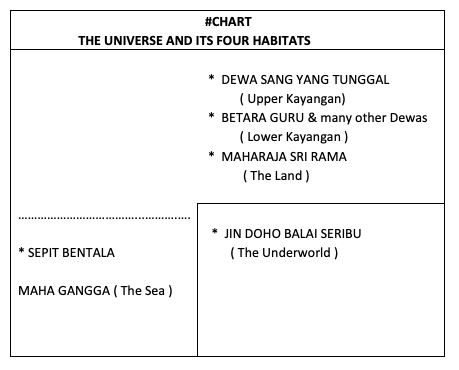
In his book, Prof Hashim explained that according to Dollah Baju Merah, the renowned master puppeteer , the Universe is divided into four habitats with their own inhabitants. 

Refer to the chart below :

CHART : THE UNIVERSE AND ITS FOUR HABITATS 

OF WAYANG KULIT SIAM ( WAYANG KULIT KELANTAN )

# Reference: Sejarah Dan Pengalaman Gaya Bahasa Wayang Kulit; Author : Hashim Bin Yaacob  Publisher: Pekan Ilmu Publications Sdn Bhd

The chief of the universe resides in the uppermost kayangan and he is known as Dewa Sang Yang Tunggal.  The term “Tunggal” means “one” which denotes the oneness of the Dewa, creator of the universe of the wayang kulit, who has great power over all things.

The ocean in Wayang Kulit Siam is ruled by a dragon – king called Sepit Bentala Maha Gangga, the underworld by a genie (Jin) called Jin Doho Balai Seribu  and the land by a mortal , Sri Rama.

“Sri Rama, the hero prince of Wayang Kulit Siam epitomizes the perfect man, at the very least in the physical form. What then are some of his attributes to warrant the privilege ? Whatever they are, they must be conjured up according to the taste of the day among the Wayang Kulit Siam supporters”, said Prof Dr.Hashim.

We are told that out of boredom and loneliness in the Uppermost Kayangan , Dewa Sang Yang Tunggal decided  to descend to earth to see the affairs of the world, disguised as a commoner. 

His willingness to suffer humility and become the servant of Maharaja Wana is viewed as a positive trait. The practice in humility  (  rendah diri ) and modesty is a distinctive feature of the social conduct in Malay society which persists until today.

Clear messages can be drawn from the varied dramatic repertoires, which may influence the general audience in leading their lives, in their code of conduct and in their perception of the world. Negative traits among humans such as ungratefulness, pride, greed, telling lies, slandering a person, ridiculing a person are also emphasized as undesirable traits.

The importance of forging  close ties among family members is also expounded. Sri Rama could always count on the help of his younger brother, Raja Muda Laksamana, and his son, Hanuman Kera Putih..

Prof Hashim feels that one of the most important messages is the respect accorded to learned individuals ( orang yang berilmu )  and the process of acquisition of knowledge  ( ilmu ) itself.  Wayang Kulit Islam  also emphasizes relationships between men and women through marriages. In its repertoires, we are constantly reminded of the love Sri Rama had for his wife, Siti Dewi  . Sri Rama had to face all odds and obstacles including fights against the demon king, Maharaja Wana,  in order to win back his wife after she was abducted.

Prof. Dr.Hashim feels that the positive messages in Wayang Kulit Siam are a reflection of the teachings in Islam and are imparted by dalangs through the heroes and villains of the various repertoires. He remains positive about the future of this treasured art form . He emphasizes that even though  it is necessary for the art form to evolve to ensure its survival, whatever efforts taken must ensure that the local identity of the people of the land should not be lost.