From Seed to Spirit: Tadau Ka’amatan

By Manjeet Dhillon

Celebrating the Harvest

Sabah’s annual harvest festival, Tadau Kaamatan, is a celebration deeply rooted in the Kadazandusun community’s cultural heritage. Centred around the rice harvest, the month-long event features rituals, traditions, and myths that highlight the grain’s significance. These myths, though diverse in origin, often share a unifying theme: the sacrifice of a beloved female relative. 

Historically and traditionally, Kaamatan was held at the first sighting of the full moon following the harvesting season. This period, known as “tawang” (literally meaning “full moon”), signified the perfect timing for the festival. The month-long celebration culminates on May 30th and 31st, highlighting the profound significance of rice for the indigenous communities of Sabah.
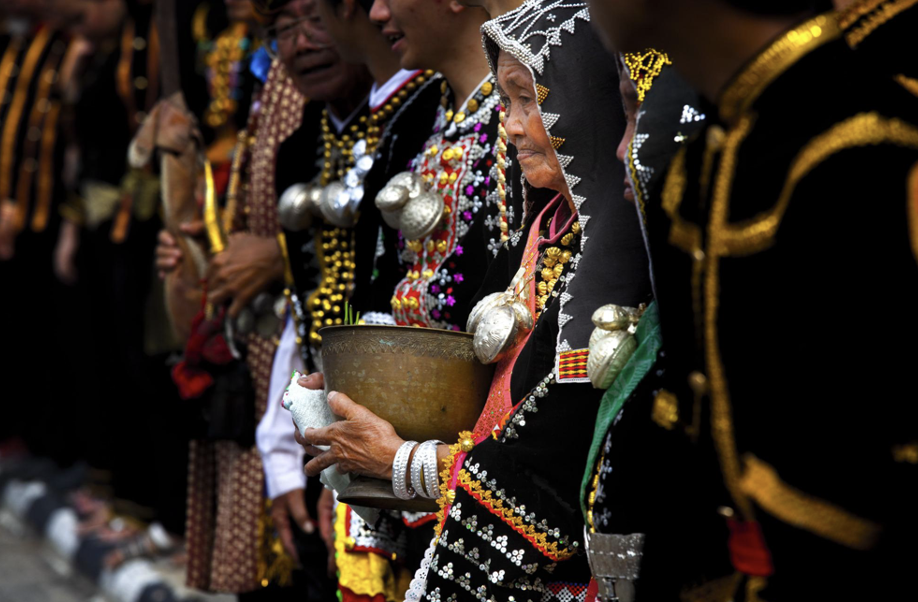
Credit: Sabah Tourism / Tsen Lip Kai

Rooted in Legend

The roots of Kaamatan stretch back centuries, intertwined with the Kadazan legend of Huminodun. This tale tells of a time when harmony reigned between a benevolent god, Kinoingan, and his people on earth. However, Kinoingan’s son, Ponompulan, disrupted this peace, leading to his banishment to Kolungkud, or the underworld, and a series of devastating plagues upon humanity.
Credit: Sunduan Do Huminodun (The Spirit of Huminodun) by Pangrok Sulap

Faced with drought and famine, Huminodun, Kinoingan’s daughter, made the ultimate sacrifice, she offered her own body to nourish the people. Through Huminodun’s sacrifice, her body transformed into various food sources: rice from her flesh, coconuts from her head, tapioca from her bones, ginger from her toes, maize from her teeth, and yams from her knees. and a variety of other edible plants sprang forth, ensuring the community’s survival.  

This bountiful harvest marked a turning point, and Kaamatan became an annual celebration to honour Huminodun’s sacrifice and express gratitude for the blessings of the land.

While the details differ, a similar theme of sacrifice for the community’s well-being emerges in the Murut (tagal) genesis myth of siblings, Olomor and Sulia. In this narrative, Olomor sacrifices his sister Sulia, following a vision during their rice field clearing. Seven days later, various plants sprout, including rice, highlighting the theme of sacrifice for the community’s well-being.

(While the details differ, a similar theme of sacrifice for the community’s well-being emerges in the Murut (Tagal) genesis myth of siblings, Olomor and Sulia. In this narrative, Olomor sacrifices his sister for the same purpose. As the story goes, Olomor and Sulia were clearing land to cultivate rice. Later that day, while resting, Olomor had a vision in which he saw Sulia being sacrificed to produce rice seedlings. Despite his guilt, he felt compelled to follow through with the vision. He brought Sulia to the clearing and killed her. Her body rolled on the ground, and her blood flowed to every corner of the cleared land. Seven days later, Olomor returned to find that various plants had sprouted, one of which was rice.)

Both Kadazan and Murut legends tell of sacrifices made for the community’s well-being. These stories highlight the deep respect these cultures have for the land and the rice harvest it provides.

A Journey of Rituals

The heart of Tadau Kaamatan unfolds through a series of rituals performed by the Bobohizan, a traditional priest or priestess. The six distinct rituals described below are typical of the Kadazandusun community of the “tangara” in the Penampang-Papar area.

  • Kumogos: Before harvest, a Bobohizan (priest/priestess) chooses the seven best rice stalks. These are left scattered in the field to appease any spirits and promise an offering after harvest.
  • Kumotob: Following Kumogos, the Bobohizan selects the best unharvested rice stalks. These are tied together and stored in a tadang (rice basket) for next season’s planting.
  • Posisip: The Bobohizan carries seven tied rice stalks to the rice hut and inserts them into a bamboo pole kept in the tangkob (container) while chanting prayers for Bambaazon, the rice spirit, to stay and bless the harvest.
  • Poiib: the Bobohizan carefully pours rice into the tangkob within the hut. This continues until all the rice is transferred, accompanied by chants beseeching the rice spirits to watch over the stored harvest.
  • Magavau: The most significant ceremony, Magavau restores Bambaazon’s spirit and offers food as a gesture of respect.
  • Humabot: This final stage explodes with joyous celebrations, featuring traditional dances, sports competitions, and the crowning of the Unduk Ngadau, a maiden who embodies the spirit of Huminodun.
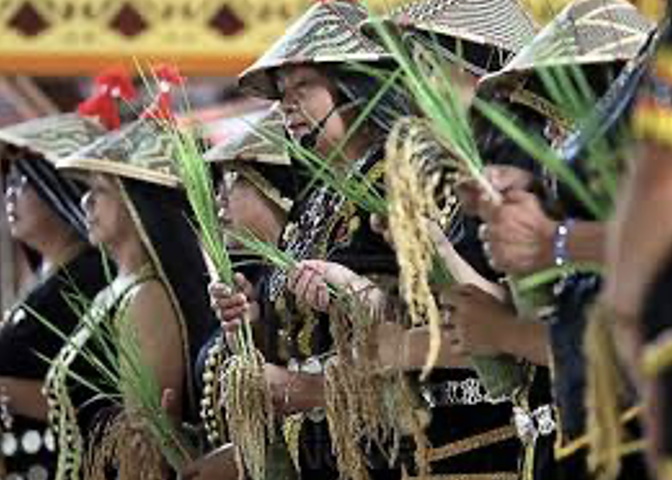
Credit: https://mpu2015kadazandusun.blogspot.com/
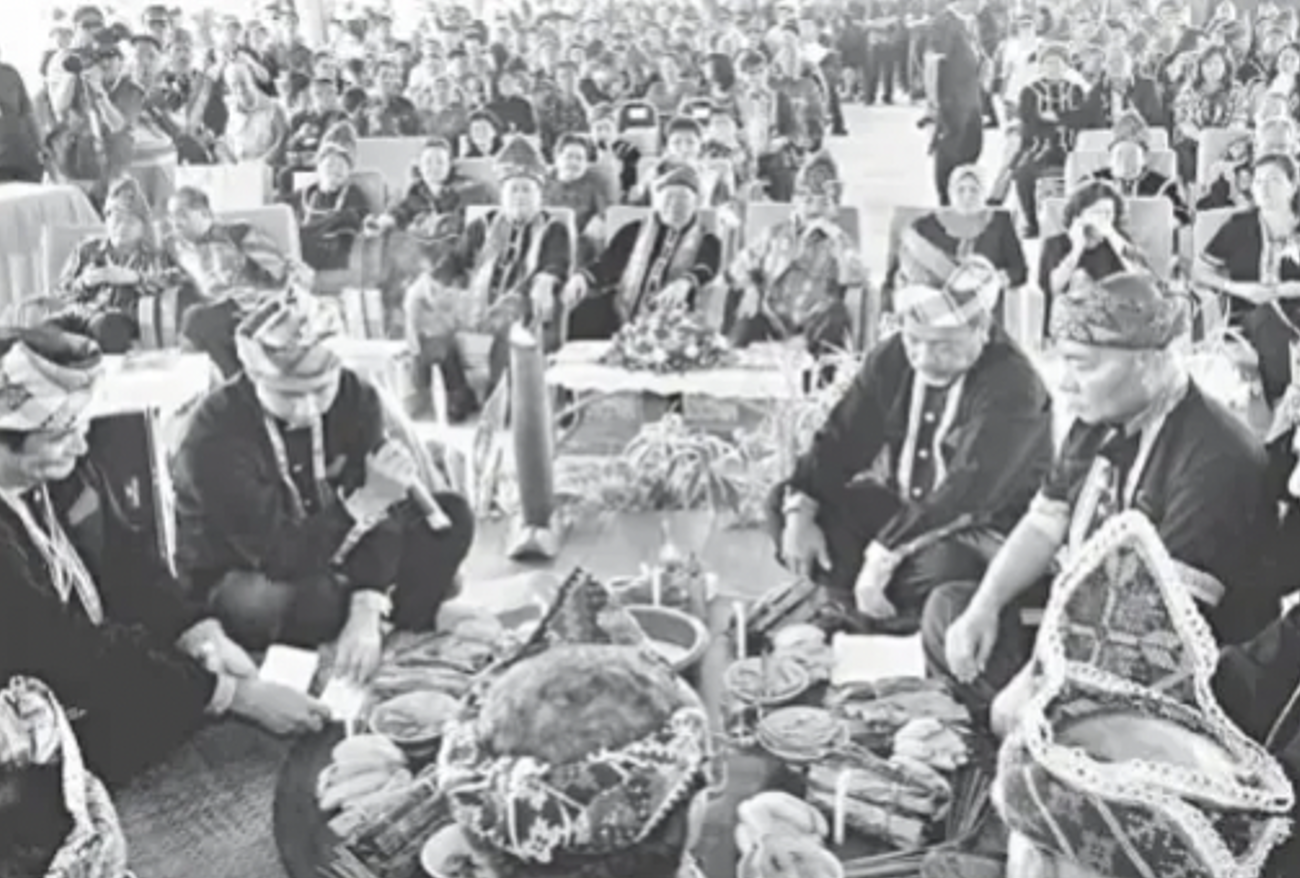
Credit: The Borneo Post

A Look at Specific Traditions

The Kadazandusun are not alone in celebrating this bountiful season. There are other indigenous communities that have each developed unique traditions to express gratitude for a bountiful crop and appease the spirits who ensure their success.

The names for the harvest festival vary across ethnicities. The Rungus call it “kokotual” and the Timugon Murut celebrate “orou napangaan nanantab.” While the festival’s core message of gratitude remains constant, the names and traditions vary across ethnicities. The Lotud Dusun of Tuaran focuses on intimate rituals with animal sacrifices and symbolic dances, while the Timugon Murut of Tenom holds a communal feast with “mansisia” celebrations. The Tagal Murut holds a lively seven-day celebration with activities like cockfighting and dancing. Meanwhile, The Rungus of Kudat perform rituals involving animal sacrifices and a “mongigol sumundai” dance throughout the night. Despite these ethnic variations, all celebrations share a common thread of thanksgiving and respect for the land.

A Celebration of Community

As Tadau Kaamatan reaches its peak, the Unduk Ngadau pageant takes centre stage. Held on May 31st, contestants from various districts embody the spirit and grace of Huminodun, the mythical figure who sacrificed herself for the harvest.  Through their elegance and cultural knowledge, they compete to be crowned the Unduk Ngadau, literally meaning “the sun at its zenith—the brightest point of the day” in Kadazandusun. 

While the Unduk Ngadau pageant captures the spotlight, Kaamatan also celebrates the rich musical heritage of the Kadazandusun people through a vibrant singing competition known as Sugandoi. The Sugandoi competition features age-group categories, ensuring traditional music resonates across generations.
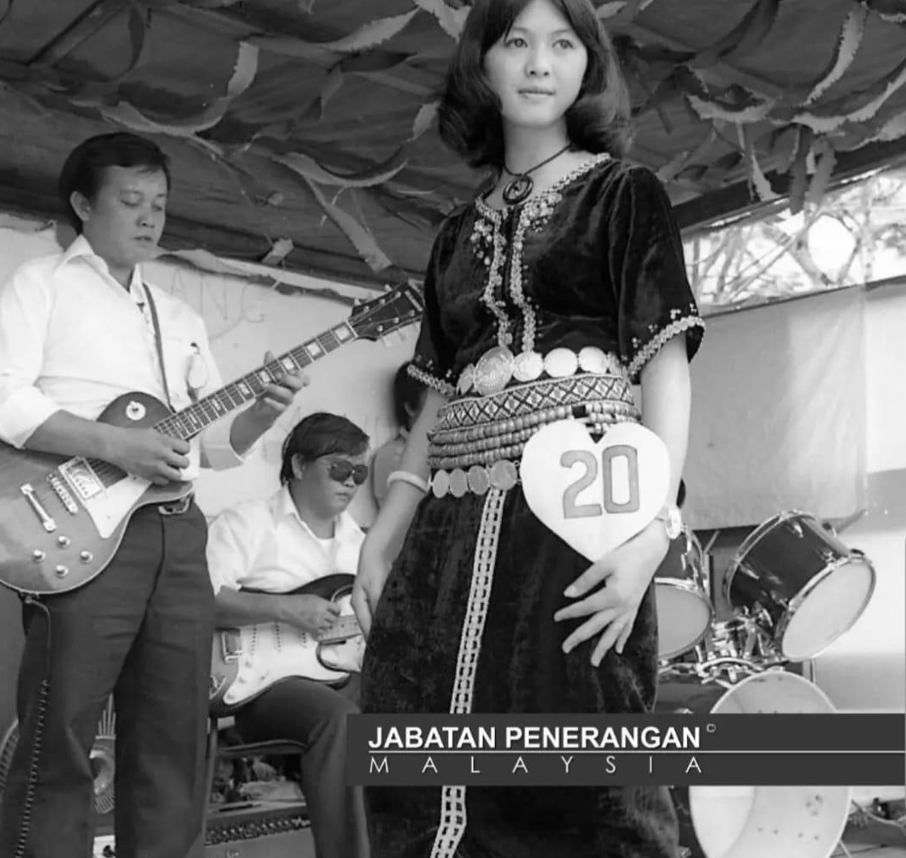
Credit : Jabatan Penerangan Sabah

Fun Fact: The Spirit Behind the Song: Did you know Sugandoi has a fascinating history?  For the KadazanDusun community, Sugandoi was once a “spirit” invoked by the Bobohizan (priestess) and housed in a large jar called a “Kakanan” by the Kadazan Tangaah tribe. This spirit was believed to watch over families and bring good fortune through a ceremony called “Moginakan.” During this ritual, the Bobohizan would chant incantations called “Monugandoi,” which praised the creator (Kinoingan) and the spirit of Sugandoi. These chants laid the foundation for the modern Sugandoi singing competition. No wonder the name stuck!

Adding to the atmosphere are traditional games and competitions. From displays of strength in arm wrestling (mipulos) and knuckle wrestling (mipadsa) to showcasing skills in blow piping (monopuk) and catapulting (momolositik), these games provide a fun and interactive way to experience Kadazan Dusun culture. Teamwork is tested in tug-of-war (migayat lukug), while balance and agility are on display during bamboo stilt walking (rampanau).

Credit: https://makangang2015.blogspot.com/

A Feast for the Senses

No festival is complete without a feast for the senses, and Tadau Kaamatan doesn’t disappoint. From the tangy zing of Hinava (raw fish) to the textures of Butod (sago grubs), the flavours of Pinasakan (braised fish), the tart tang of ambangan (wild mango), and the earthy warmth of Tuhau (wild ginger), Tadau Kaamatan is a feast for the senses. Lihing, a rice wine made from fermented rice and stored in clay jars, adds a special touch to the celebratory spirit.
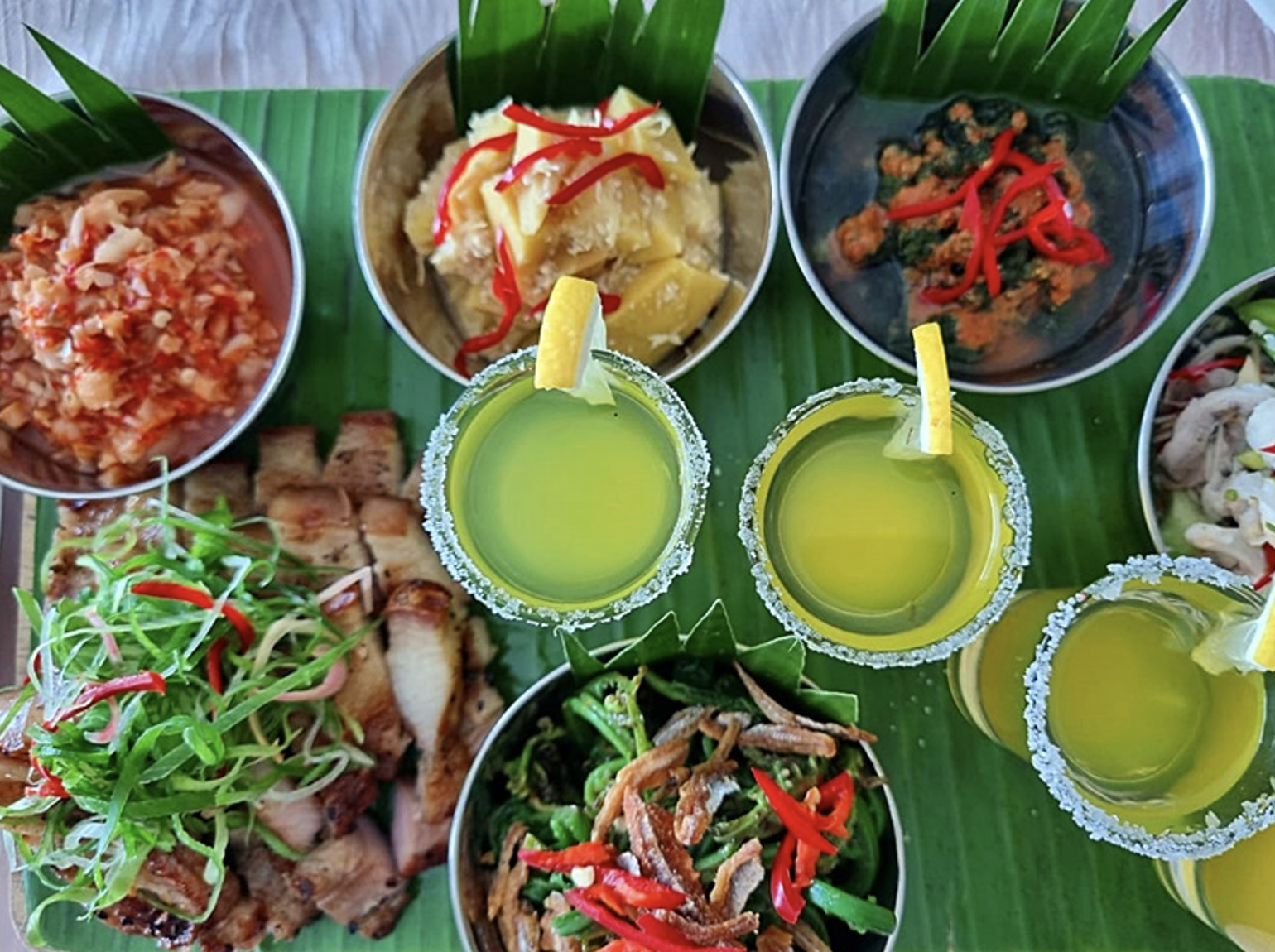
Credit: https://borneonews.net/

A Legacy Endures

Tadau Kaamatan is more than just a harvest festival; it’s a cornerstone of Kadazandusun identity and other ethnicities in Sabah. These age-old traditions, a vital link to the past, ensure their shared cultural heritage continues to thrive for generations to come. It’s a celebration of the land, its bounty, and the enduring spirit of these communities. 

References

  1. Kaamatan Special: The Rituals of Tadau Kaamatan (Harvest Festival) from http://www.e-borneo.com/insideborneo/leisure0205.shtml
  1. Huminodun: The Mystical Origin of the Kadazandusun People from https://www.flyingdusun.com/004_Features/010_Kaamatan02.htm
  1. Sabah’s Culture (Harvest Festival) from https://sourcesofknowledge.wordpress.com/2013/06/02/sabahs-culture-harvest-festival/
  1. Keningau, The Guide from https://pubhtml5.com/xvgw/junm/Keningau_The_Guide_2023/18
  1. Apa It Sugandoi from http://www.sentiasapanas.com/2019/05/sejarah-sugandoi.html#ixzz7UwYVDatb
  1. The Anthropological Profile of the Kadazandusuns of Borneo: The Kaamatan Rituals compiled by Allan G Dumbong from https://wayaantokou.blogspot.com/2005/12/
  1. Who is Huminodun?. Sumandak. Sino. Kadazan from http://borneobonita.blogspot.com/2017/01/who-is-huminodun.html
  1. Barlocco F., 2011. A Tale of Two Celebrations: The Pesta Kaamatan as a Site of Struggle between a Minority and the State in Sabah, East Malaysia. Asian Journal of Social Science from https://www.jstor.org/stable/43497845?seq=1
  1. Dusunology from https://www.facebook.com/sundayak777northborneo
  1. Kaamatan highlights spirit of peace and friendship this season by By Mariah Doksil from https://www.pressreader.com/malaysia/the-borneo-post/20160514/282411283538614
  1.  The Encyclopedia of Malaysia: Peoples and Traditions

The Sounds of Museum

By Sarjit Kaur

As visitors walk through the halls of the museum, they become enveloped in a symphony of sounds that pulse with centuries’ past. Each artefact and diorama emit a vibration, a sensation, telling stories of triumph and defeat, rituals and practices, layering and blending of cultures. Every journey is the start of a story… and what better way to pay homage to our stories than through the art of listening. 

Whispers of Stones and Ancient Artworks

The museum walls hold a world of ancient mysteries and forgotten civilizations, with stone tools and ancient artworks offering glimpses into the lives of our ancestors. Stones, once raw and jagged were skillfully crushed, smoothened, sharpened and refined, like a Chef’s set of knives that crush, cut and slice. 

Rock art, that adorn cave walls speak of a time when black charcoal and red hematite were splashed across limestone canvas, like a mural, capturing and documenting rituals and ceremonies. Each whispered their stories, the heart-beat of the people. 

Larger rocks were artistically sculpted into stone tablets, makaras and statues of beauty and grace. Towering megaliths, inscribed with salient iconography stand as silent custodians, bearing witness to the diverse layering yet harmonious practices that bound humanity.  

The sounds of diversity and harmony

Dong Son Drum and Bell

The Dong Son bronze drum and bell, found in various states of the Peninsular, bear motifs similar to those from Dong Son, North Vietnam, indicating long-distance land trade in South East Asia.

The Dong Son drum, a sacred instrument, was used during harvest festivals, weddings and burials to call upon nature and ancestral spirits. When struck, it produced a powerful, resonating vibration that filled the air.

The bell, likely hung around a ceremonial animal’s neck, served as a war warning and also used to store food for the wealthy. The bell’s rich, resonant tones marked its value and the social class of its owner, similar to today’s luxury items. 

The resonance of the Dong Son bell and drum

Gamelan: A Percussive Symphony

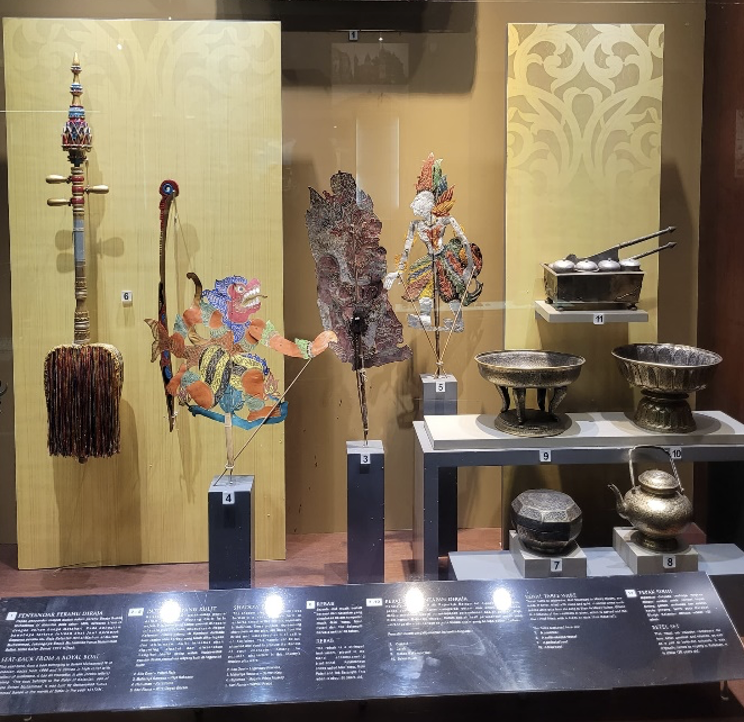
The Malay palace door invites visitors with its tranquil and grounding sound of the gamelan. Echoes of this ancient melody resonate with the soul of the Malay world. Where it was once the exclusive domain of aristocrats; the gamelan is now enchanting music for all!

Meanwhile… accompanied by an orchestra of gamelan music, the ‘Tok Dalang’ weaves epic tales in his Shadow Play; as audience cheered, laughed and reflected on the moral and spiritual lessons conveyed. 

The enchanting sounds of ancient instruments

The Sounds of Trade

The bustling trade activity in the Straits of Malacca resonated with the voices of Captains as they navigated and competed for harbouring space amongst ships. In this maritime symphony, traders conversed in 84 languages, striking deals and exchanging goods from distant lands. 

Spices like pepper, cloves, nutmeg and cinnamon were measured meticulously with conventional weighing instruments for proper governance. These aromatic treasures were sought-after in the markets of Europe, their scents mingling with the salty sea breeze. Silk fabrics and gold brocade, known for their luxurious feel and vibrant colours, were another commodity transported from the Silk route of China. Delicate and beautifully crafted porcelain ceramics exchanged hands, their chime ringing through the marketplace. 

Within the hustle and bustle, foreign traders forged connections with the land and its people. They fell in love not only with the promise of prosperity but also with the allure of the local women. While they settled amidst the shifting winds of trade and romance, they blended and became part of this vibrant Malay Archipelago. 

Waves of Tales

Seafarers braved and navigated open and treacherous seas. Their courage come alive through the sounds of their flowing sails and crashing waves on uncharted waters.  Their heroic journeys were threaded with peril and adventure, heavily relying on monsoon winds as their compass and invisible force.  

Stars twinkle overhead in the limitless sky, reflecting their aspirations for trade opportunities in distant lands. Yet, some never reach their destinations, as storms and hidden reefs swallow their voyage quest. Their ships sank together with their precious cargoes. 

The marine gateway of South China Sea holds treasures of countless blue cobalt porcelains. Though discoloured, they stood the test of time, telling sunken tales of their journey. Yet many goods were never discovered and remain thrones of the sea. Maybe they needed to be laid to rest, closer to their home…

Arms of Conflict

Iron ore which were smelted under fiery heat, gave birth to the legendary ‘keris’ Local artisans carved each sheath into superior pieces of art. Each blade carried stories of origin and purpose, evoking accounts of power, loyalty and friendship. The clashing of metal on metal, tells of battles fought and victories won or redeemed. 

Weapons evolved into modern instruments of war such as guns and large cannons, which ultimately met the same fate of devastation, whether it was the conquest of Melaka or the devastation of Pearl Harbour.  These events underscored the transformation of humanity from ‘hunters for survival’ to ‘conquering hunters’, driven by the pursuit of power and wealth. However, history teaches us that every rising power eventually faces its downfall…

Turning Wheels: A Twist of Fate

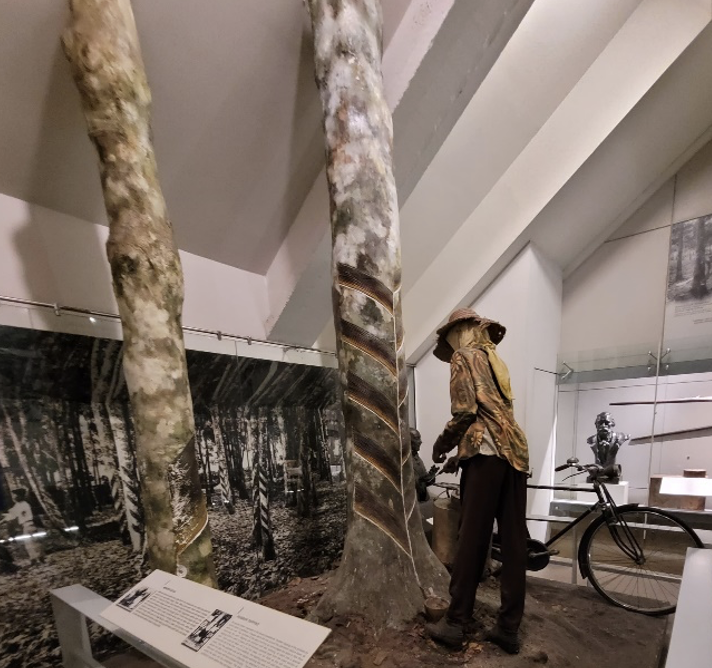
The wheels of the bicycle tirelessly spin in the terrains of rubber estates accompanied by a sonata of insect sounds. Where needed, the bell attached to the bicycle rings out, signalling the arrival of workers to tend to the rubber trees. The latex from the cup is collected and poured into a metal container, flowing like thick milk. Each drop was precious. Amidst the tranquillity of the estates, the occasional rustle of leaves and movements of wild animals, remind visitors of the natural yet tough conditions surrounding them. 

The industrious sounds of bicycle and latex

As the nation’s income surged from the export of rubber and tin, Malaya embarked on a transformative journey of infrastructure development, constructing railway tracks and roads to facilitate the transportation of these vital commodities. The rhythmic clatter of steel wheels on tracks and the hum of engines became the soundtrack of progress, echoing the promise of prosperity. This era witnessed an influx of migrant workers, their voices mingled with the sounds of construction, embodying the spirit of resilience and determination.  

However, a shadow loomed over Malaya on 8 December 1941. Bicycles – once the symbol of peaceful transportation; were swiftly transformed into instruments of war, as infantry soldiers mounted on them for battle. It forever altered the landscape of Malaya. The terror of war wounded many, a stark reminder of how fragile life can be, when peace is robbed of humanity. 

Education – The Song of Catalyst 

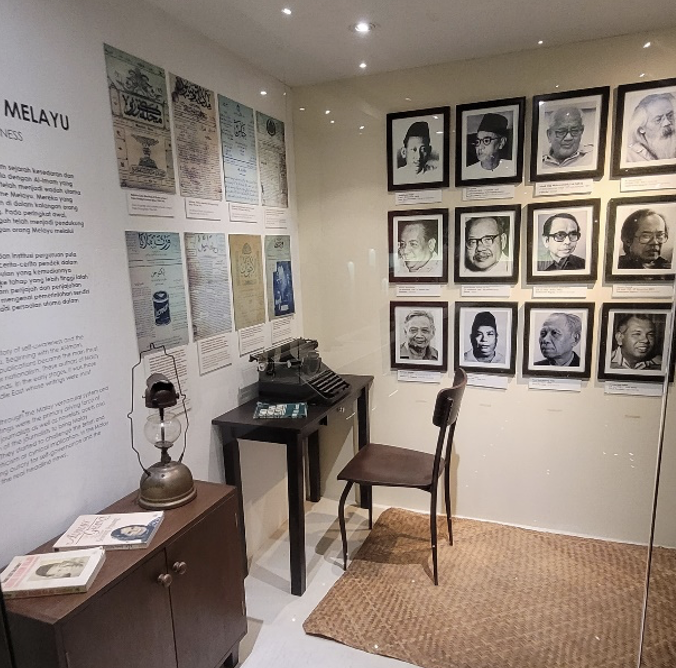
Schools served as reservoirs of knowledge, sparking enlightenment and offering a future, brighter than that of their ancestors. Within the walls of Malayan classrooms, a symphony of languages reverberated, celebrating diversity. 

Education served as the catalyst and bridge for expanding minds, fostering awareness and laying the groundwork for Malaya’s independence. From these halls, emerged writers, poets, activists and peacemakers who reshaped societal norms and fuelled the collective dream that – “We too can be the Masters of our Land!”

The liberating sounds of typewriter-keys clacking

Timeless Reminders of Songs

Amidst the echoes of the past, cultural songs and anthems serve as reminders of the more recent history.  ’Dondang Sayang pantuns’ and ‘Jingling Nona’ songs represent the rich cultural tapestry of Baba Peranakans and Portuguese Peranakans respectively – the blend of various cultures with the Malay culture.

‘Negaraku’ – our national anthem, symbolised the birth of a nation and became a uniting force among the people. It echoes thru the halls of the museum, for all to hear. And yet it brings goose bumps to older visitors and people of the land, who walked the pre-independence journey with courage and strength. 

The sounds of unison of an independent nation

The Sounds of Silence and Rhythm

In the silence of the museum, the sounds of history come alive, inviting us to immerse in the richness and diversity of the human history. 

Each sound, each note tells a story.  As visitors pause and listen, they become part of that story. Their own experiences merging with those of the past. It is a testament to the power of sound – both the silence and rhythm, to connect with our shared heritage, learnings from the past and into the future. The sounds of museum echoes thru the walls … a moving reminder of the beauty and resilience of the human spirit. 

Photo credit: Sarjit Kaur

Lost Diversity of Sundaic Borneo New Findings from Sarawak

Focus Talk with Professor Dr. Masatoshi Sone

Written by Manjeet Dhillon

Introduction: Unveiling Lost Diversity in Borneo

At the MV Focus Talk series, the subject of the day was ‘Lost Diversity of Sundaic Borneo: New Findings from Sarawak.’ Our speaker was Dr. Masatoshi Sone, who shared insightful findings from his recent expedition where he spent a good ten days in the coal fields of Ulu Rajang looking for fossils. The talk began with an exploration of Sundaland, the name of the ancient continent that once included Borneo, Peninsula Malaysia, Sumatra, and Jawa Island. Geologically, Kuala Lumpur is situated in the heart of this vast continent.

Sundaland: A Fragmented Ancient Continent

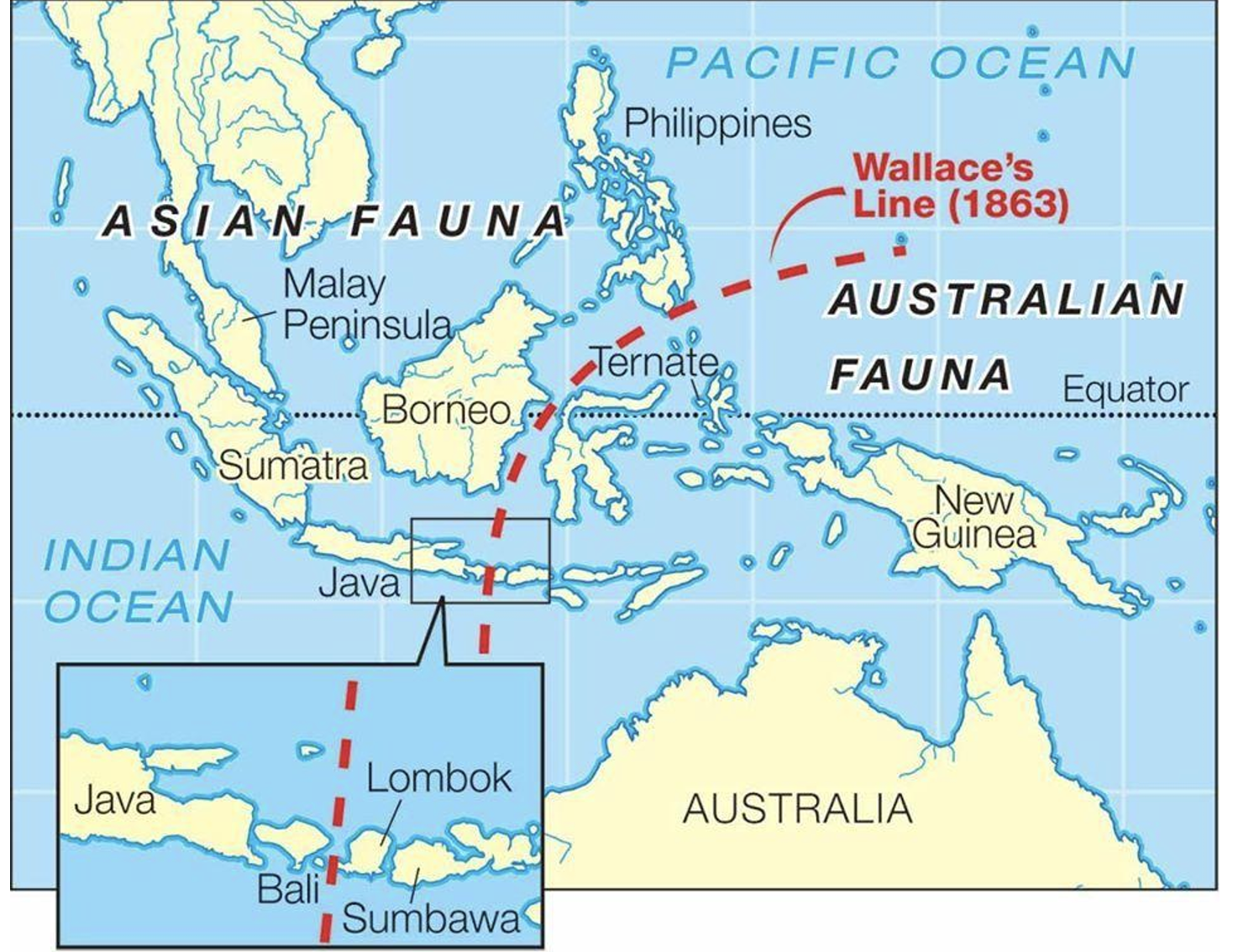
About 11,000 years ago, this was one big piece of land. As sea levels rose, Borneo became separated from mainland Asia and other islands.  The Wallace Line, named after Alfred Russell Wallace, a British naturalist who explored the region over a century ago, marks a transition zone between the distinct fauna of Asia and Australasia. This imaginary line runs from the Lombok Strait between Bali and Lombok in the south, all the way up through the Makassar Strait between Kalimantan (Borneo) and Sulawesi in the north.  The islands on one side, like Sumatra, are mostly volcanic within a subduction zone with tectonic plates. This goes all the way to the east, including the Komodo islands, Timor Leste, Papua New Guinea, and Australia.

Plate 1: Wallace’s Line

Following Wallace’s Lead: Biogeography and Island Evolution

During his expeditions, Alfred Wallace, a naturalist with a keen eye for geology, noticed a peculiar phenomenon. Many animals, including birds of the same species, were present in Sumatra but seemed to disappear as you moved towards Lombok and the regions west of it. Wallace identified a significant biogeographic boundary between Bali and Lombok. Surprisingly, this invisible line had a profound impact on the distribution of various bird species. Many birds, it appeared, were reluctant to cross even the narrowest stretches of open ocean water. Essentially, Wallace believed that species change over time so they could fit into new environments.

This led Wallace to observe that in Bali, you’d find thrushes, woodpeckers, barbets, trogons, paradise flycatchers, paradise shrikes, minivets, blue drongos, pheasants, and jungle fowl, but colourful exotic birds were a rare sight. In contrast, in Sulawesi, Papua, and Timor, parrots, cockatoos, and lories were abundant.

The Wallace Line extends further between Borneo and Sulawesi, although this boundary is not visible to the human eye. However, animals seem to sense or perceive this invisible division. It’s important to note that Wallace’s discoveries were primarily based on biological observations (where he spent many years obtaining samples of birds, insects and animals) rather than in-depth geological knowledge of the islands. His research led him to a conclusion: animals evolve by adapting to their specific environments rather than by migrating to new ones.

Fueled by a passion to understand how new species arise, Wallace joined an Amazon expedition in 1848 (with Henry Bates). Sadly, a shipwreck in 1852 claimed most of their collected specimens. Undeterred, Wallace embarked on a groundbreaking Southeast Asian voyage (1854) that spanned eight years. His meticulous collection efforts yielded a staggering 125,000 specimens, including the iconic flying frog, and significantly advanced our understanding of the natural world.

A Glimpse into Earth’s Geological Timeline

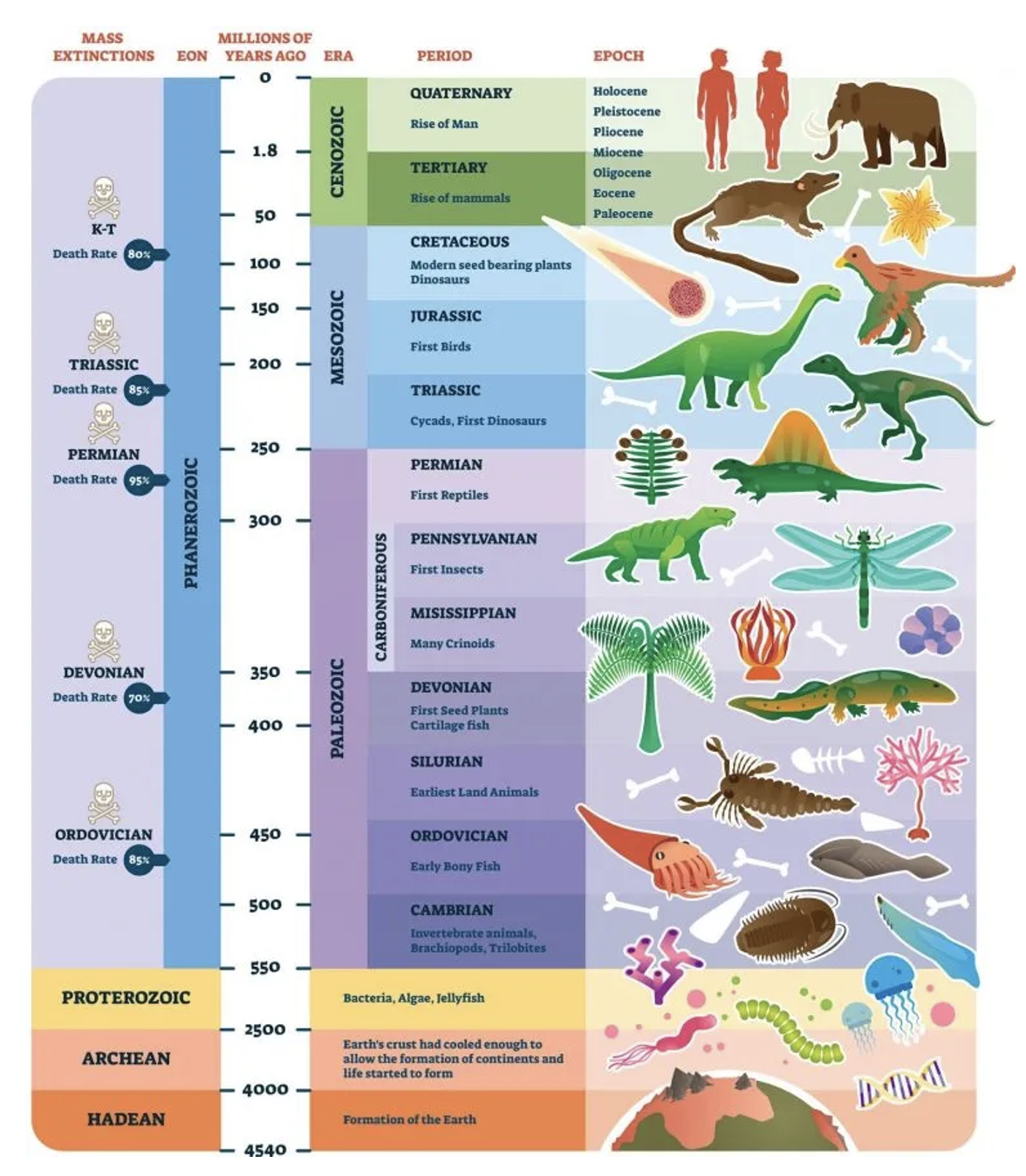
Next ,we looked into the Earth’s geological timeline, which spans an immense 4.6 billion years. A particularly noteworthy period within this timeline is the Cenozoic era, which commenced approximately 66 million years ago. During this era, we witnessed the emergence of mammals and birds, along with the gradual evolution of primates and early hominids.

In the midst of the Cenozoic era (at the boundary between the Cretaceous and Paleogene periods), a large meteorite crashed into our planet, specifically in the  area of the Caribbean Sea. This catastrophic impact spelled doom for the dinosaurs and many other species, opening the door for mammals to flourish and diversify.

As we consider Earth’s geological timeline, we find a key division between the Quaternary and Tertiary eras. This shift hinges on the transition from the Tertiary period, encompassing epochs like the Pliocene and earlier, to the Pleistocene and Holocene epochs of the Quaternary. This change mirrors significant shifts in climate, marked by a warming trend and rising sea levels. It’s also notable for the emergence of Homo sapiens, making it a pivotal juncture in our planet’s history.

Furthermore, the shift from the Pleistocene to the Holocene epochs indicates a transition from the last ice age, characterised by glaciers atop Mount Kinabalu. Interestingly, this transition aligns with Earth’s broader climatic cycle, suggesting that we’re gradually heading towards the next ice age in the grand scheme of geological time.

Plate 2: Geological Time Scale

Fossil Fuels: A Legacy of the Cenozoic Era in Malaysia

In the context of Malaysian geology, the Cenozoic period takes on paramount importance. This geological era witnessed the formation of numerous oil and gas (hydrocarbon) resources within the country. Throughout this time, a series of geological processes transpired, which included the accumulation of organic material and the creation of suitable conditions for the development of oil and gas reservoirs.

These developments have solidified Malaysia’s standing as one of the key regions for oil and gas production in Southeast Asia. Notably, substantial reserves can be found both onshore and offshore, underlining the nation’s significance in the oil and gas industry.

Borneo: From Sundaland to Fragmented Islands

Before the end of the ice age, Southeast Asia was part of a landmass known as Sundaland. This area connected many of today’s islands (Peninsula Malaysia, Sumatra and Borneo but also Java, Bali, parts of the Malay Peninsula, and other smaller islands in the region) into a single landmass due to lower sea levels caused by the extensive ice sheets.

As the Ice Age concluded, the rising sea levels, about 110 metres higher, submerged much of Sundaland, including the lowlands between the elevated regions of Peninsula Malaysia, Sumatra, Jawa, and Borneo. This flooding led to the formation of rivers like the Chao Phraya, Pahang, Pekan, Kuching, and Rajang rivers, which were previously part of the terrestrial landscape.

Sarawak’s Caves: A Treasure Trove for Prehistory

Looking at Sarawak, we have some famous caves such as Niah cave, and also Mulu. The caves in this region have been of interest to palaeontologists due to the discovery of prehistoric fossils and archaeological artefacts. These findings have contributed to our understanding of the region’s prehistoric past.

In archaeology,  the Niah caves (Sarawak – discovery of skulls in 1958) and Madai caves (eastern Sabah), contain remains of prehistoric human activity, where Niah is famous with coffins together with animal remains, These caves also hold animal remains alongside human artefacts, otherwise for most of Sarawak there is no paleontological record. Evidence suggests human activity in the area began around 30,000 years ago. Fossils, including those of tigers and tapirs, have also been found. Notably, these animals are no longer present in Borneo, having disappeared naturally before human arrival.

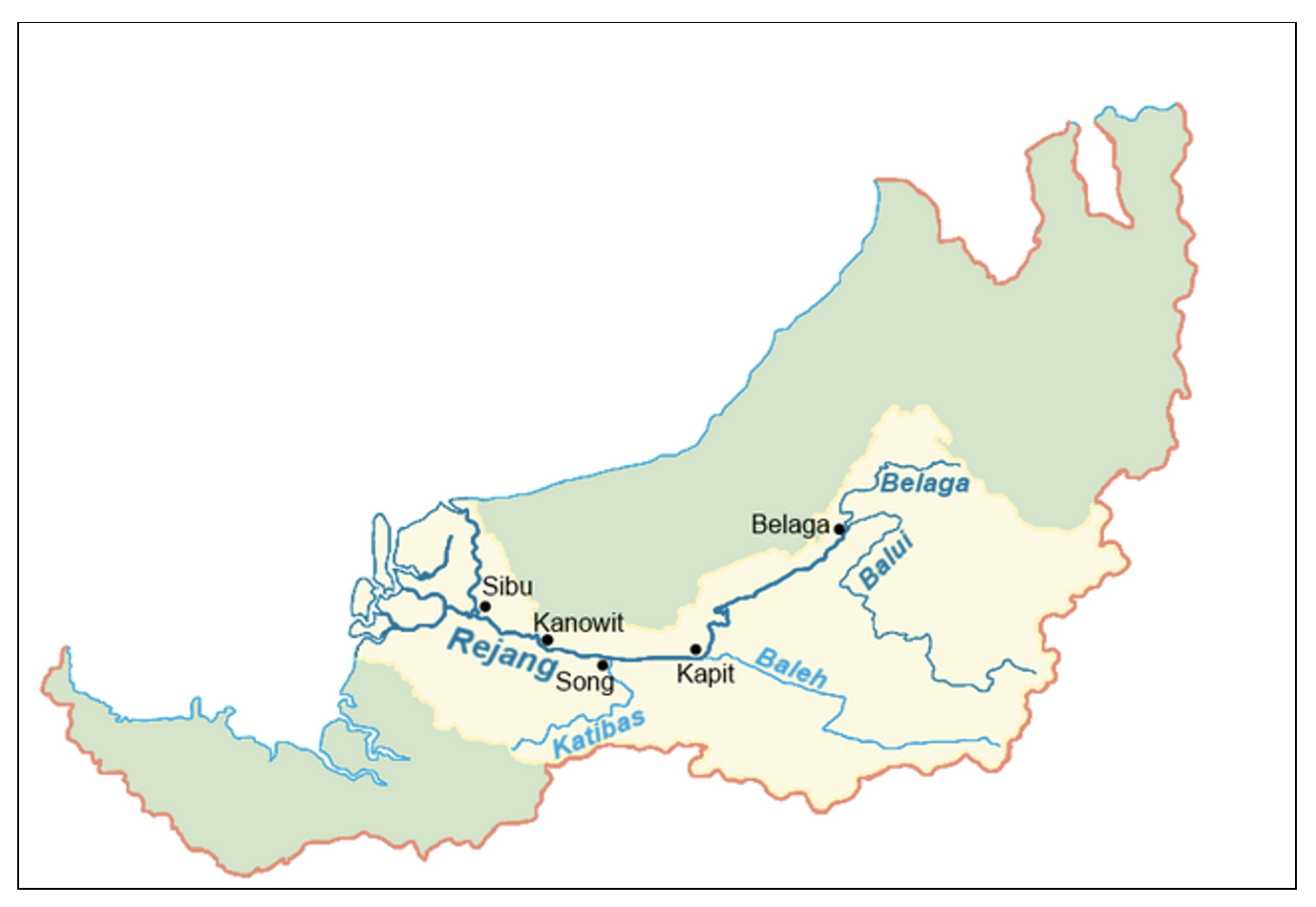
The third largest city in Sarawak is Sibu, where we can journey along the Rajang River (longest river in Malaysia) to Kapit, a town located inland along the river. The Rajang river also flows in the general direction towards the largest dam in Malaysia, the Bakun Dam which is located on the Balui River (a tributary of the Rajang River).  Here we now have two smaller rivers or tributaries merging with the Rajang River in Kapit, then continuing downstream towards the river’s estuary, where it meets the South China Sea. This is where the fresh water from the river mixes with the saltwater of the sea. 

Plate 3: Rajang river basin

Unearthing Borneo’s Past: The Rajang River and Fossil Discoveries

The Rajang River’s characteristics stand out in contrast to typical slow-flowing and meandering rivers in Malaysia, where it is a straight course and fast flowing. This might be because it originates in or flows through areas with steeper terrain, where the river descends more rapidly. As it approaches Sibu, the river transforms into smaller channels, creating a delta structure. This delta is the product of sediment deposits and the river’s interactions with the sea. It provides a favourable environment for a notable population of large crocodiles, making Sibu their known habitat.

Here at this delta, many fossil remains have been discovered such as spines, fins or ribs of fish. Fossils are often found in black or brown hues, indicating they have undergone the fossilisation process including phosphatisation.

Island Endemism: The Case of the Bornean Banteng

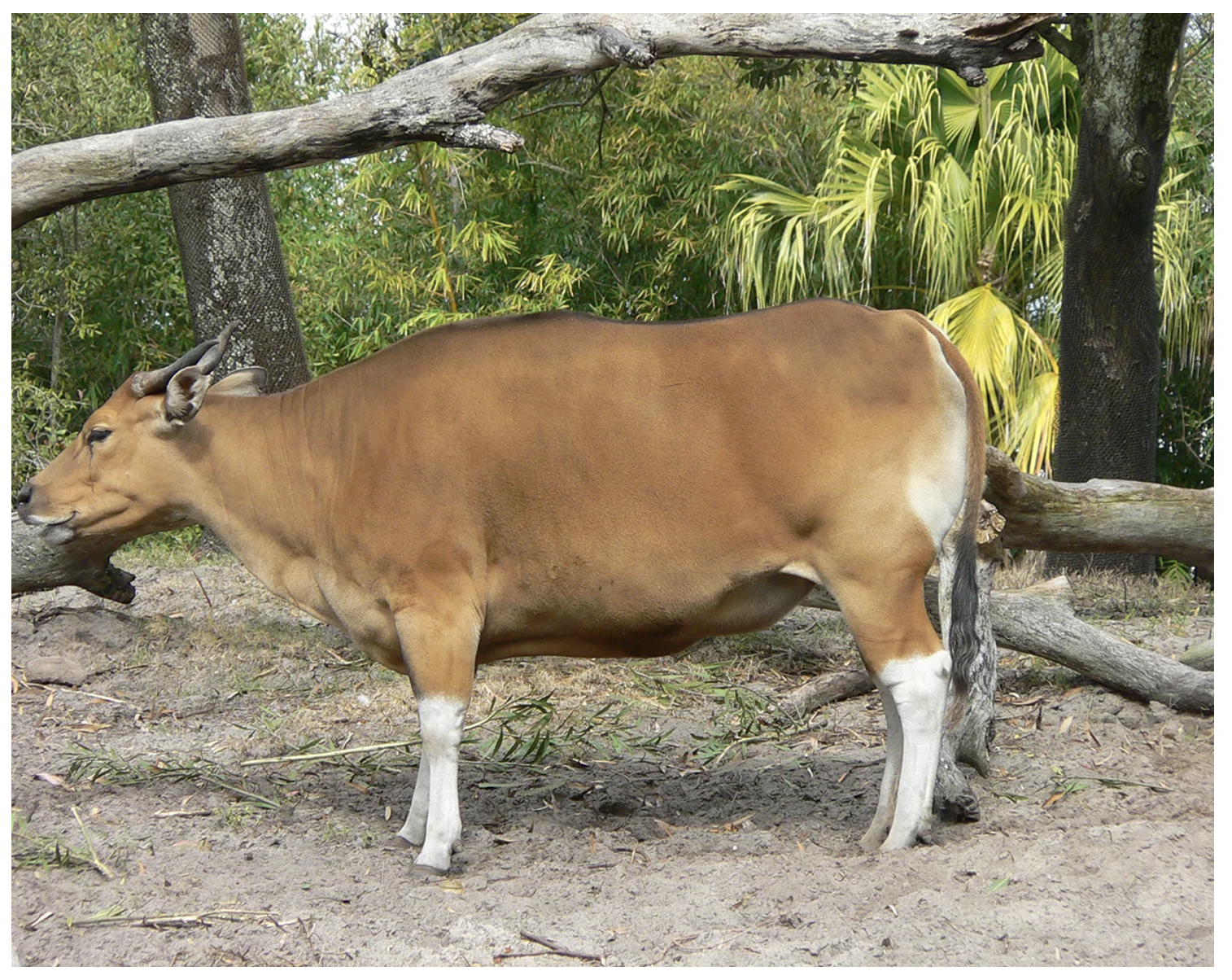
Fascinating fossil discoveries in Sabah include the premolars of the Banteng or Tembadau in Malay (species: bos javanicus), a wild cow species, which we understand has been here before humans and during Sundaic time as well. Bornean bantengs are smaller due to a phenomenon called “insular dwarfism” or “miniaturisation.”, where island-dwelling mammals tend to evolve smaller body sizes over time (same applies for African elephants and Asian elephants). This phenomenon is a remarkable example of how isolated island environments can influence the evolution of species, leading to unique adaptations and characteristics. The Banteng is facing a gradual decline in Sarawak and is on the brink of extinction in Malaysia. Currently, Cambodia hosts the largest population, followed by Australia. It’s important to note that these populations in Cambodia and Australia are not native but were introduced by humans.

Plate 4: Banteng (wild cow)

Echoes of the Past: Fossil Tapirs and Their Relatives

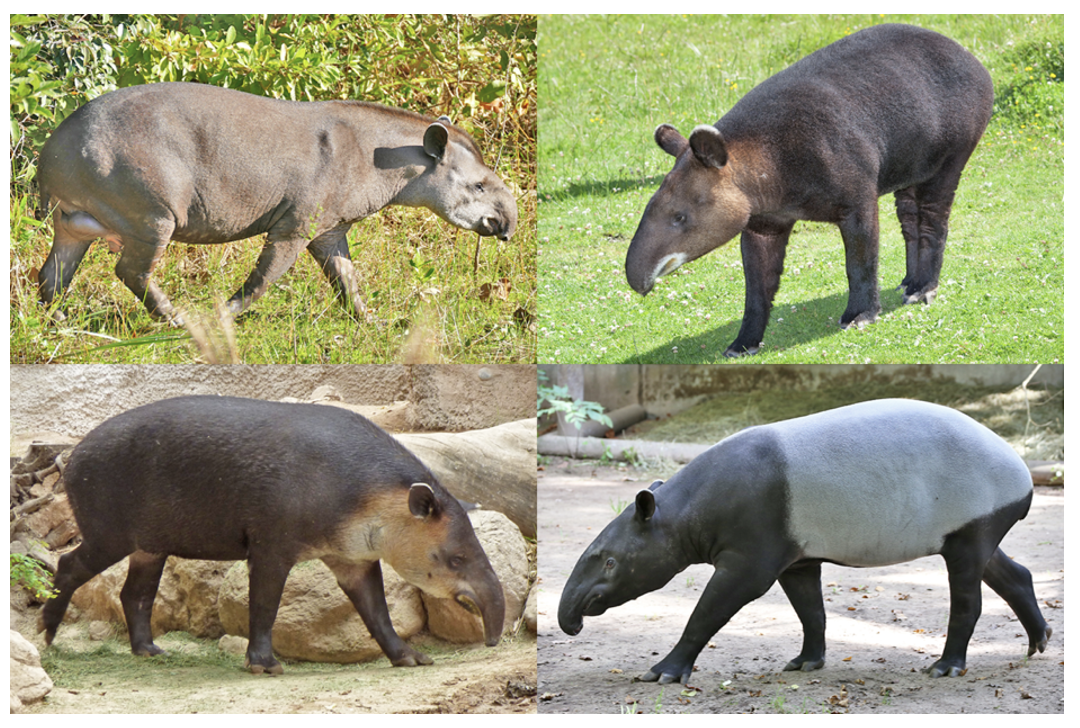
Fossils of tapirs, identified as a type of metatarsal belonging to the extinct Tapirus sp., have been found in the Niah and Madai Caves. However, these tapirs are not directly ancestral to the present-day Malayan tapir. While they may have shared similar black and white stripes, these extinct tapirs inspired legends of a mythical creature that came through China and could eat our trees.

There are four species (four genus) of Tapirs in the world:

  • Lowland Tapir (Tapirus terrestris)
  • Baird’s Tapir (Tapirus bairdii)
  • Mountain Tapir (Tapirus pinchaque)
  • Malayan Tapir (Tapirus indicus)

Plate 5: Tapir

Today’s DNA studies confirm the Malayan tapir as the sole surviving Asian tapir species, with its closest relative being the American tapir.  Evidence suggests tapirs originated in Eurasia, where they are now extinct.  The split between Malayan and American tapirs likely occurred around 25 million years ago, predating the most recent ice age.  This time frame coincides with periods of lower sea levels that exposed land bridges, allowing many mammal migrations  like horses, sheep, and even some Asian monkeys to move from Eurasia to North America and eventually South America.  While the tapir story might not directly involve the most recent ice bridge, it highlights how continental movements and changing sea levels have shaped the distribution of animals throughout history.

Extinct Tapir Diversity and Zooarchaeology

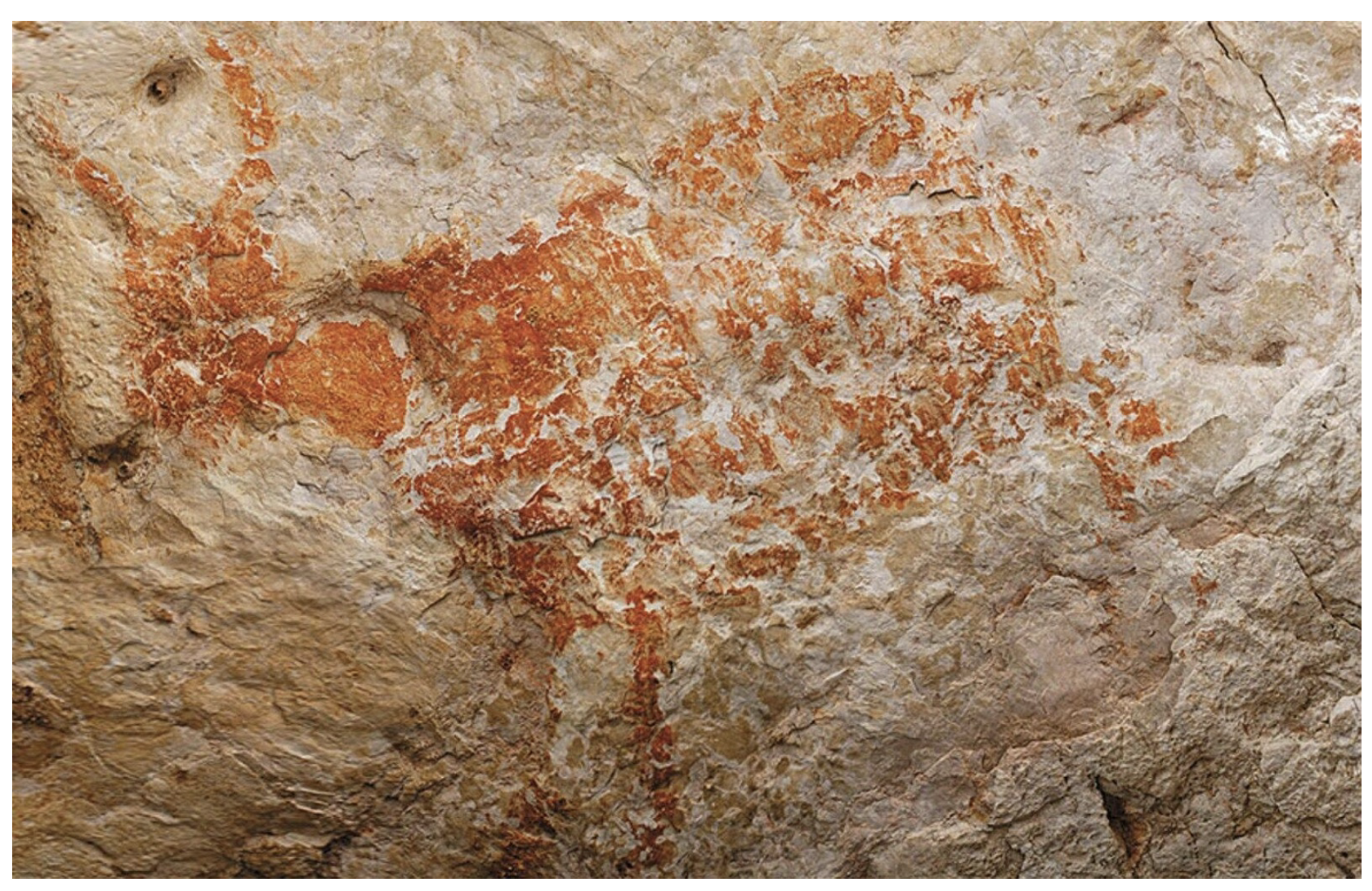
While the Malayan tapir is the only survivor in Asia, evidence suggests a greater diversity of tapirs once existed. A striking example comes from the Lubang Jeriji Saléh cave in East Kalimantan, Borneo. This prehistoric limestone cave, dating back to the Pleistocene epoch, features a large reddish-orange figurative cave drawing of animals. These depictions, alongside fossil remains like those of tigers now absent from Borneo, highlight the valuable role of zooarchaeology in reconstructing past ecosystems. By studying animal remains and artistic representations, we can gain insights into species that no longer roam these regions.

Plate 6: Cave drawing at Lubang Jeriji Saléh, East Kalimantan, Indonesian Borneo

Uncertain Fossil Identity and Regional Rhino Extinction

Some fossils unearthed in East Malaysia reveal animal hooves that could belong to either tapirs or rhinoceroses. Unfortunately, differentiating between them solely based on hoof characteristics is challenging. Sadly, rhinoceroses are already regionally extinct in East Malaysia. The last recorded Sumatran rhinoceros in Sabah died in 2015, prompting the government to declare its local extinction. However, there’s a glimmer of hope.  A small population of 10 to 20 individuals was discovered in East Kalimantan in 2016, highlighting the importance of conservation efforts for this critically endangered species.

Fossil Evidence of Sea Cows (Sirenia) in Sarawak

Aquatic mammal fossils, identified as sea cows (Sirenia) or dugongs, have also been unearthed in Sarawak.  These gentle giants, related to manatees found in Central America and the Caribbean, once thrived in the coastal regions.  They fed primarily on seaweeds.  Sadly, sea cows are now locally extinct in Sarawak.

One key characteristic that aids in identifying Sirenia fossils is their density.  Due to their composition of calcium carbonate, these bones are significantly heavier than most other animal remains.  This weight factor alerted Dr. Sone’s team to the possibility of a Sirenia fossil upon discovery.

The Enigma of the Tambun Cave Dugong

The Tambun limestone cave in Ipoh boasts archaeological paintings, estimated to be around 5,000 years old, featuring an image resembling a dugong. This poses a fascinating puzzle considering the significant distance between the current coastline and the cave’s inland location. Further research, potentially involving geological studies and a deeper analysis of the cave paintings, might shed light on this intriguing mystery.

Plate 7: Tambun (Ipoh) cave painting: dugong

The Story of the Suidae Family and the Bearded Pig

The Suidae family, encompassing wild pigs and boars, boasts a global distribution across Eurasia, North Africa, and the Greater Sunda Islands.  Evidence suggests their origin lies in Southeast Asia during the Pleistocene epoch (1.4 million to 11,000 years ago).  From this ancestral homeland, they likely migrated outwards into other parts of Eurasia.

Wild Pigs of Borneo: Bearded Natives and Introduced Relatives

Borneo boasts two distinct wild pig species, both belonging to the genus Sus. The first, and likely more familiar, is the wild boar (Sus scrofa).  While not native to Borneo, this species can interbreed with domestic pigs.  The second, and truly indigenous pig, is the bearded pig (Sus barbatus).  Fossil evidence, particularly differences in molar morphology, helps differentiate these two species.

Distribution patterns paint a clear picture.  The common wild boar, also known as the Eurasian wild boar, dominates across Eurasia, with introduced populations in Australia and northern South America.  In contrast, the bearded pig reigns supreme in Borneo, with a smaller presence in Peninsular Malaysia.  Interestingly, fossils from the Niah Caves reveal no evidence of the common wild boar, only the bearded pig.  This suggests that the wild boars currently found in Borneo were likely introduced by humans.

However, there’s a twist! Fossil discoveries in central Sarawak showcase the presence of both pig species even before human arrival.  This intriguing find remains an active area of research.

Summary

Understanding Borneo’s rich biodiversity, both past and present, is crucial for informing conservation efforts and protecting this irreplaceable natural heritage. Dr. Masatoshi’s team is currently exploring fossils of a fly and plant fossils in a coal mine in Sarawak.

Reading material from MV Library

Here are some books that would likely be excellent reading material for further exploration:

1. Borneo Biodiversity: Tropical Rainforests from the Heart of Southeast Asia (ISBN 9789811073447) by Eric D. Wikramanayake, Michael D. Sorenson, and Thomas J. Conway

2. Island Biogeography: Theory and Conservation Practice (ISBN 9780691166488) by David Wright

3. A Field Guide to the Mammals of Borneo (ISBN 9789834280635) by J. Payne, C. Francis, and K. Phillipps

4. The Quaternary Period (ISBN 9780131174749) by John A. Quaternary

5. Encyclopaedia of Malaysia: Volume 4. Early History by Dato’ Nik Hassan Shuhaimi Nik Abdul Rahman

6. The Malay Archipelago by Alfred Russell Wallace