The Secret of The Moon

MV Focus Talk with Emna Esseghir

Written by Noriko Nishizawa 
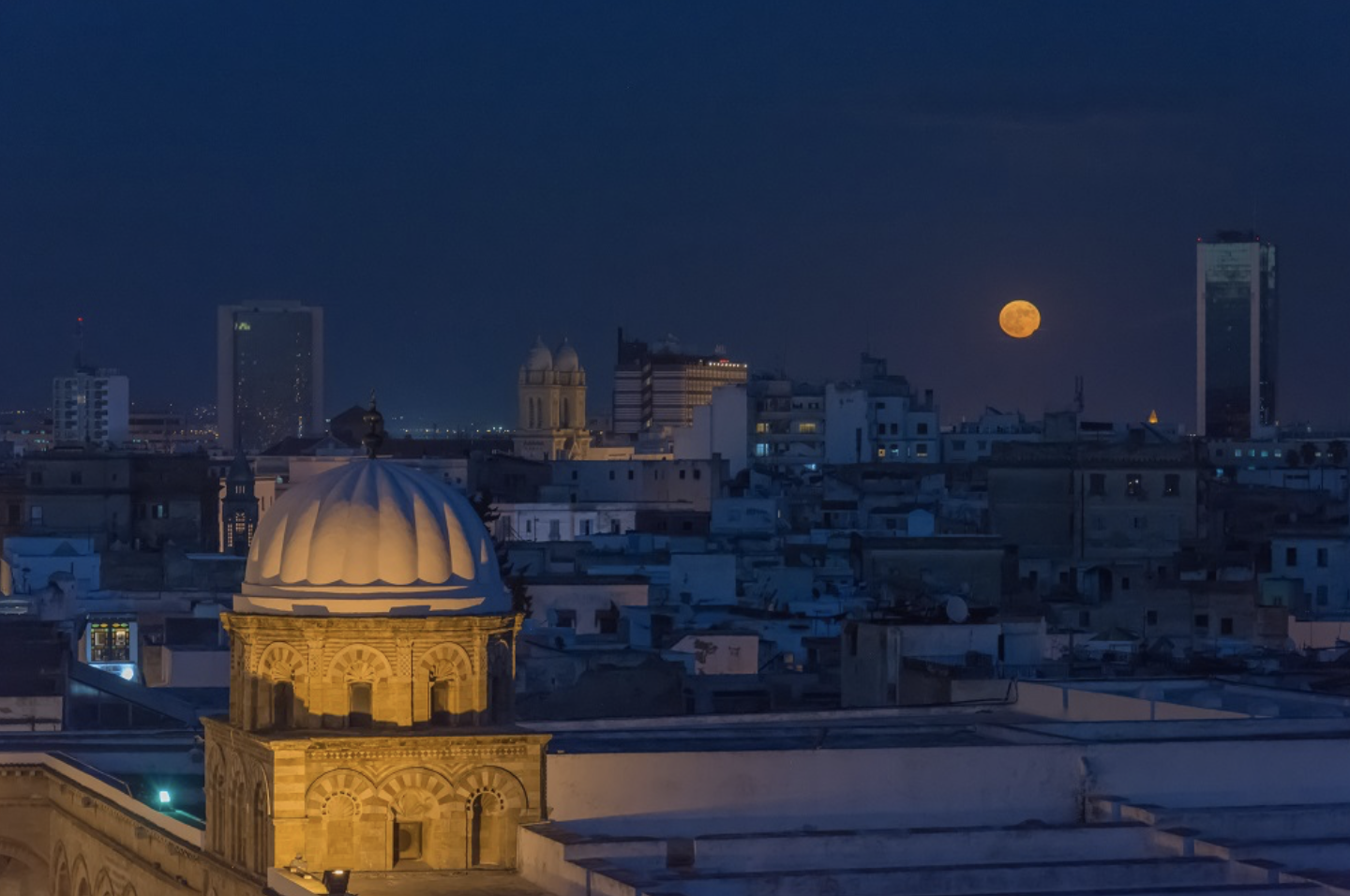
Zitouna mosque in Tunisia with full moon view (photo : http://www.tunisi.info)

On the eve of Ramadan 2024, our fellow museum volunteer, Emna Esseghir, gave us a very insightful talk about Ramadan. Emna hails from Tunis, Tunisia, and has been residing in Malaysia for the past six years. She has been a passionate volunteer guide at Muzium Negara since 2023. We affectionately refer to her as our Tunisian ambassador to Malaysia, as she has generously shared her knowledge of Tunisia and its culture with us. Her presentation provided a unique perspective on Islam, encompassing not only Tunisia and Malaysia but also offering a cross-cultural examination of Ramadan and Eid al-Fitr traditions and practices.
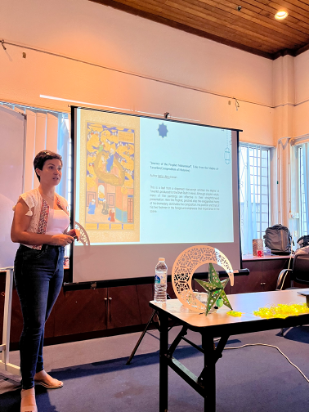
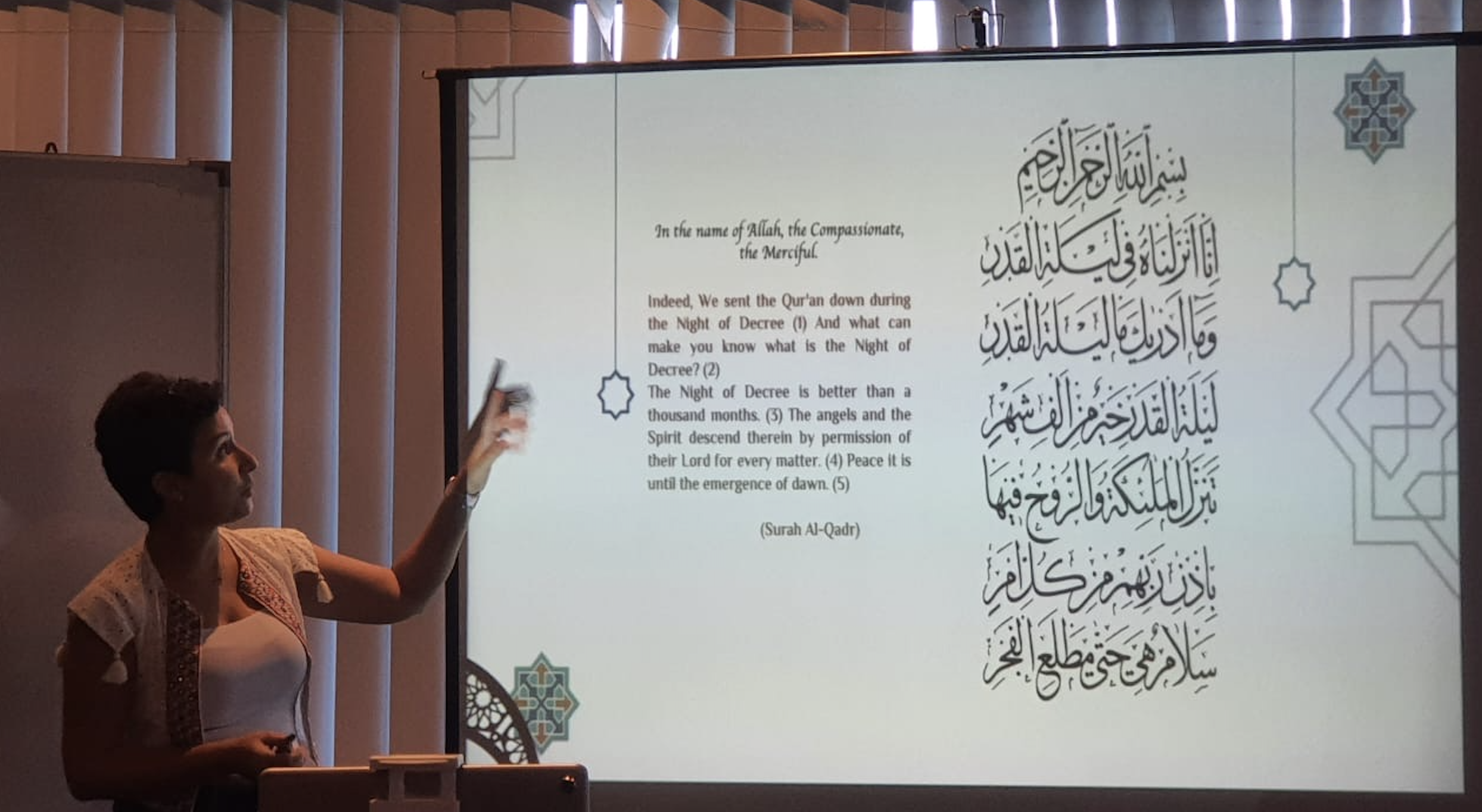
Emna Esseghir (photos: Noriko Nishizawa)

Brief History of Islam

It is believed that Islam started in 610 CE when 40-year-old Muhammad, who was born in Mecca in western Arabia, received his first revelation from the angel Gabriel. The night Gabriel appeared to him in a cave during a retreat is called the Night of Power/Destiny (Laylat al-Qadr).

Gabriel said to Muhammad, “Read in the name of your Lord…” until he learned the words by heart. The messages from Gabriel continued for the rest of his life, and these revelations were subsequently collected and codified as the Qur’an (literally “to read/recite” in Arabic), the Muslim holy book. The essence of Gabriel’s messages was simple: it affirmed the existence of one god, Allah, and declared that Muhammad was his appointed messenger. The messages also provided guidelines for proper behavior within the framework of a just and equitable society. Around that time, Mecca, the religious center, was a prosperous city, and the Kaaba, then a shrine and a place of pilgrimage housing the pagan deities, was worshipped by the Arabs. The Prophet Muhammad’s messages weren’t well received among the leaders of Mecca. In the face of opposition and persecution in Mecca, Muhammad and his followers emigrated north to another oasis town, Medina (Yathrib) in 622. This event, referred to as Hijrah/Hegira, proved to be a turning point for Islam because it marks the formation of the first community of Muslims. Muhammad continued to attract followers in Medina and also to fight off attacks against him and the faith with his army. Within a few years, Mecca largely embraced Islam as well, and the first thing Muhammad did upon his return to Mecca was to remove idols and rededicate the Kaaba to Allah. The Kaaba, which is a stone building, has become Islam’s holiest site, the Masjid al-Haram, and no matter where they are, Muslims always face in the direction of the Kaaba for prayer.
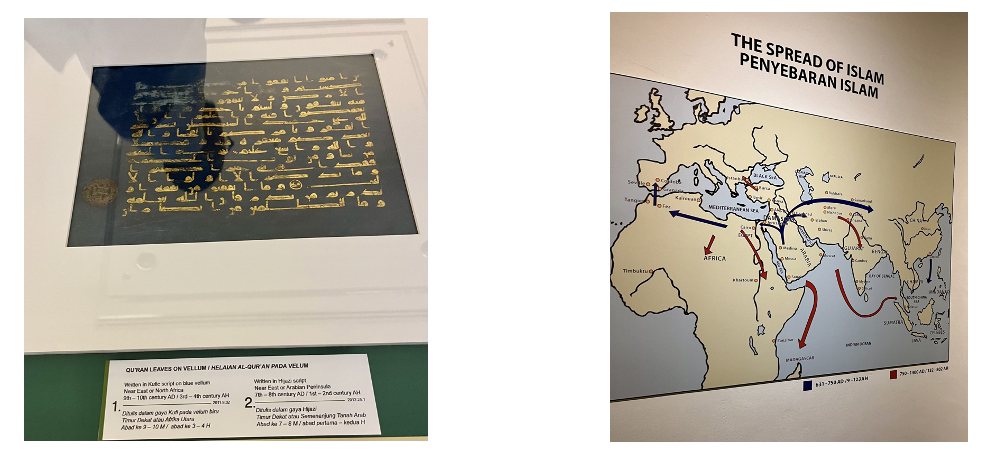
Leave from the Blue Qu’ran and The Spread of Islam at IAMM (photo: Noriko Nishizawa)

Muhammad died in 632, and the following 30-year period is called the Rashidun (rightly guided) Caliphate, led by a series of four caliphs. A caliph (a successor) is a representative of the Prophet who governs the Muslim community, both politically and religiously in the early period, and a caliphate is a political community governed by a caliph. First, Abū Bakr, who was Muhammad’s father-in-law and a close associate, was elected as the first caliph and then followed by Umar, Uthamān, and Alī. Under their commands, the Arab armies expanded the new faith and leadership in the Arabian Peninsula and beyond. They then conquered Syria, Palestine, and Egypt from the Byzantine Empire, and Iraq and Iran from the Sasanian Empire. The next caliphate, the Umayyad, conquered territory from Spain and Portugal all the way to India and Pakistan by the end of 750. The Ayyubid Caliphate became the largest and most powerful empire in the world by developing a religious, political, and cultural commonwealth. Interestingly, the conversion to Islam in the early period was quite slow because the expansion of the empires happened so fast. On the other hand, the spread of Islam in regions where Muslims are quite numerous today, like Indonesia, Malaysia, and sub-Saharan Africa, happened between the 13th and the 15th centuries quite quickly, through merchants and religious scholars.
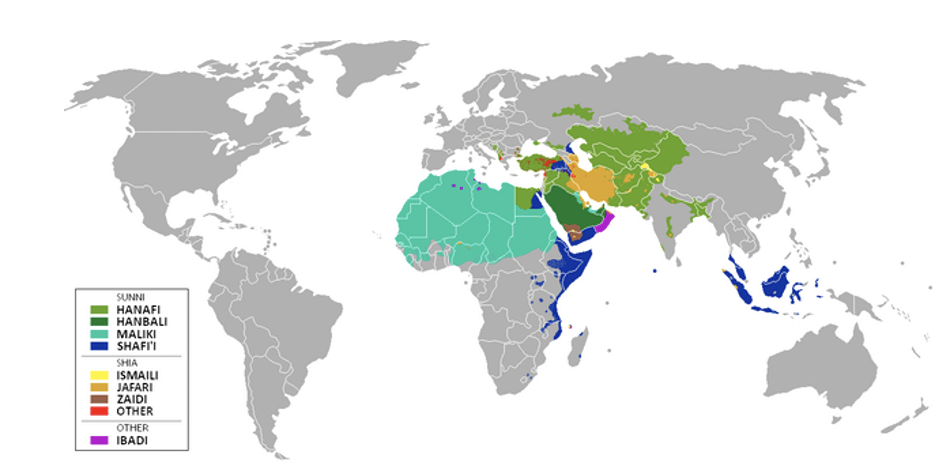
(Source: Wikimedia.org, this file is licensed under the Creative Commons Attribution-Share Alike 4.0 International license)

Emna showed us this map: Map of the Muslim World With the Main Madhhabs. She emphasized that as of 2020, there were 1.8 billion people, more than 25% of the world’s population, who practiced Islam, and Muslims were not only in Arab countries but also everywhere. Then she touched on the two main branches of Islam and some madhhabs/mazahib, referring to Islamic schools of thought. Sunni and Shia/Shīʿa are the two main branches of Islam, and around 85% of the Muslim population are Sunnis, with 15% being Shias (source: the Council on Foreign Relations). While Shias are concentrated mainly in Iran, Iraq, and Lebanon, Sunnis are the majority in more than 40 other countries. These two sects within Islam share most of the fundamental beliefs and practices of the religion, but they differ in doctrine, law, ritual, and religious organization.

The roots of the Sunni-Shia division can be traced back to the seventh century, soon after the death of Muhammad. Shias believe that Muhammad publicly designated Alī, his cousin and son-in-law, as the first in line of hereditary Imams (“leaders” in Arabic) from his family, whereas Sunnis believe that Muhammad did not explicitly declare a successor. Sunnis viewed the caliphs as both religious and political leaders in the early period. Over time, the caliphs functioned as political rulers, while the scholars (Ulamā/Ulema) were considered religious authorities and interpreters. For Sunnis, Imam is most commonly used as the title for a prayer leader at a mosque. In contrast, for most Shias, Imams are absolute leaders of the Islamic communities, since they believe that Imams should be spiritual descendants of Muhammad and are responsible for interpreting the faith, as well as improving the quality of their lives.
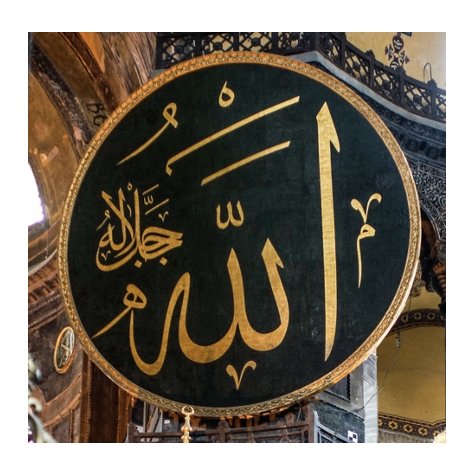
(Source: Calligraphy showing the word Allah in Arabic in Hagia Sophia, Istanbul, Turkey by Adam Kliczek, http://memoriesstay.com)

Madhhab means ‘a way’, and it is a method of interpreting the religion that binds a group or school of scholars together. Today, there are four major Sunni madhhabs: Hanafī, Hanbalī, Mālikī, and Shafi’i. For example, Tunisia is mostly Mālikī and Malaysia is Shafi’i. According to Emna, we don’t really see differences between Mālikī and Shafi’i in our daily life, but Mālikī, also called the ‘school of Medina’, could be a little more flexible in terms of customs and traditions compared to other Sunni madhhabs.

Understanding Ramadan: What You Need to Know About Ramadan

Overall:

(1) The term “Ramaḍān (رَمَضَان)” originates from an Arabic root denoting “extreme heat” or “dryness”. 

(2) Ramadan is the ninth month in the Islamic calendar and is considered one of the holiest months because it is devoted to fasting, one of the Five Pillars of Islam which are the core beliefs and practices of Islam.
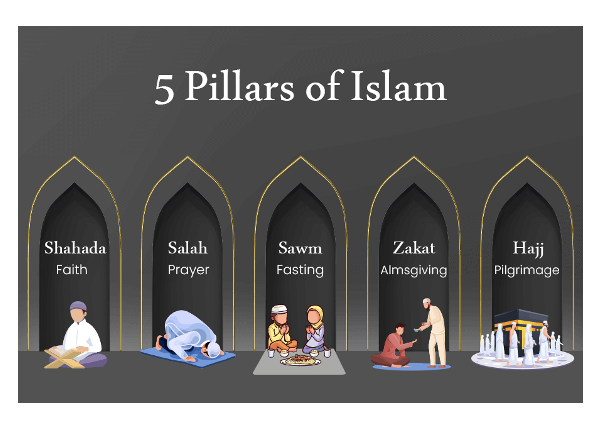
(Source:  The Ultimate Guide to The 5 Pillars of Islam by Resala Academy)

(3) Ramadan existed before Islam.  Ramadan is said to have been an important and holy month for the Arabs long before Muhammad introduced Islam.  They stopped fighting and tried to meditate at temples and caves during that time.  Muslims believe that the Night of Power happened during Ramadan.

The Islamic Calendar/The Hijri Calendar:

(4) The Islamic calendar plays an important role in the life of Muslims as it specifies the time for Ramadan, Eid al-Fitr, Hajj, etc.  Little is known about the pre-Islamic calendar; however, some historians maintain that it was similar to the modern Islamic calendar.  Although Arabs were already using the calendar based on lunar months, they didn’t have a specific number or term to register the year, and it became quite confusing.  As a result, the second caliph, Umar, introduced the new calendar in 639.  The Islamic calendar is a lunar calendar, and the Hijrah in 622 marks the beginning of the calendar.  It symbolises the Muslim’s journey to fulfill all the Five Pillars of Islam: renewing the faith constantly, performing prayers, paying annual Zakat (a financial obligation to donate to charitable causes), fasting in Ramadan, and fulfilling the Hajj (a once-in-a-lifetime pilgrimage made to the Kaaba).

Fasting

(5) Fasting was already a common religious practice among the pre-Islamic Arabs, and they used to fast on Āshūrā (the tenth day of Muharram) to observe the day God parted the Red Sea to allow Moses and his people to escape Egypt.  Muhammad also used to fast on Ashura.  Actually, Ashura has become an important mourning day for Shias, because it was the day Imam Husayn ibn Ali, the grandson of Muhammad, was martyred in the battle.  Even today many people still fast on Ashura.  As for the fasting during Ramadan, it is believed that Muhammad received a revelation regarding Sawn (fasting) from the angel Gabriel two years after Hijrah, and then he established fasting as one of the holy month’s (Ramadan) practices.

(6) Food and drink aren’t the only things Muslims have to abstain from.  There are other activities they also cannot participate in to cleanse their mind and soul. Fasting is obligatory for all Muslims who have reached the age of puberty, who are of sound mind, and who have good health.  However, those who are in pre-puberty, old and frail, sick, pregnant, breastfeeding, menstruating or travelling are excused, but there are other requirements they must abide by.

(7) Sunni and Shia practice fasting slightly differently.  Sunnis break their fast as soon as the prayer (maghrib) starts as the sun is no longer visible on the horizon.  Whereas Shias wait until the end of the prayer which  starts when the last ray of light vanishes and the sky becomes totally dark.

(8) Fasting is an act of worship bringing one closer to God, as well as a form of spiritual discipline and a means to empathize with those less fortunate. 

How to Observe Ramadan:

(9) Ramadan begins 10-12 days earlier each year because the Islamic calendar year is shorter than the Gregorian calendar, allowing it to fall in every season throughout a 33-year cycle.  The Islamic calendar follows the literal cycles of the moon, and each month of the calendar begins with the sighting of the early crescent moon.  Telescopes as well as astronomical calculations and technology are used to establish the moon’s appearance.  Consequently, the exact start of Ramadan is not confirmed until the day before, although an approximate start date is calculated in advance.  Also the exact timing varies from country to country, depending on when local Islamic authorities in each country declare the sighting of the new moon.  It is the same for the end of Ramadan.  Emna told us that in Tunisia’s case, the country still sent out someone in each state to a higher place to sight the moon.  It would be good enough to start Ramadan if even one of them (24 states) spots the moon.

(10) Ramadan is not all about fasting.  Some of the special practices during Ramadan include eating a special pre-dawn meal called suhoor/suḥūr before starting the daily fast at dawn, and then eating another meal called Ifṭār to break the fast at sunset.  During Ramadan Muslims also take part in extra worship such as Tarāwīḥ/Taraweehprayers (night prayers) observed by Sunnis in addition to the five daily prayers: Fajr (dawn), Zuhr (afternoon), Asr (late afternoon), Maghrib (after sunset), and Isha (night time).  Also, towards the end of Ramadan, many Muslims make a special charitable donation which goes to the less fortunate.
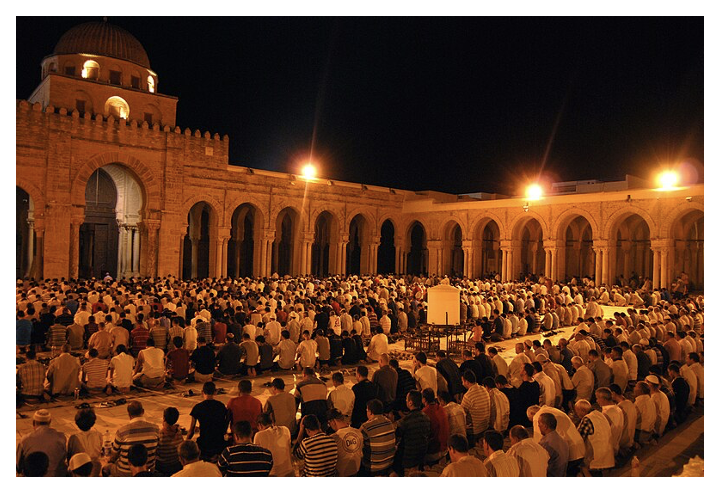
(Source: Tarawih prayer at the Great Mosque of Kairouan, Tunisia by Zied Nsir – this file is licensed under the Creative Commons Attribution-Share Alike 3.0 Unported license.)

(11) The Night of Power is one of the most sacred nights in the Islamic calendar, and it is believed to be a night of great reward and significance.  This night falls within Ramadan’s last 10 days.  Although it commonly considered as the 27th night, the exact date is unknown.  As a result, Muslims are encouraged to intensify worship and devotion during the last 10 nights of Ramadan, especially during the odd nights (21st, 23rd, 25th, 27th, and 29th ).

Ramadan Customs and Traditions:

(12) It is customary for many Muslims to break their daily fast and celebrate Eid al-Fitr by eating dates.  Of course, dates grow in many Muslim countries and are quite nutritious.  This custom goes back to the beginning of Ramadan, as it is said that Muhammad ate dates to break his fast.  

(13) The Ramadan drummers called Musaherati are one of the most important markers of Ramadan.  Every year these volunteer drummers would roam the streets in their neighborhoods an hour before dawn to wake up people to have suhoor, by drumming, calling out people’s names, and even reciting poems.  In the Ottoman and Andalusia cultures, the drummers even competed to claim who was the best!  Musaherati is another tradition that almost disappeared in most cities.  
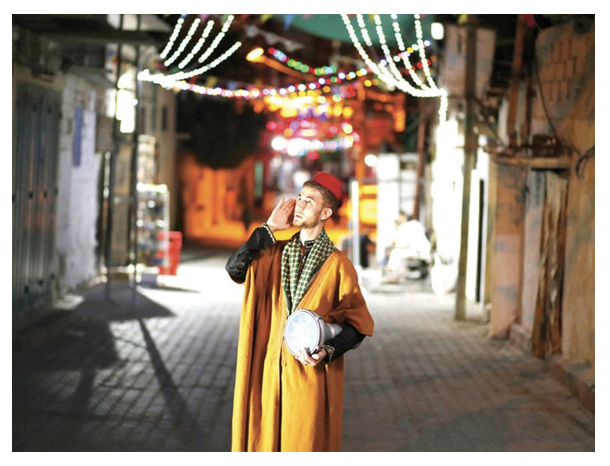
(Source: Musaherati by Gulf News credited social media)

(14) The adhān/azan (“announcement” in Arabic) is the Islamic call to prayer, usually recited by a muezzin who chants from a minaret five times a day.  It is not Ramadan specific, but it is important particularly during Ramadan because people wait for maghrib to break their daily fast.  According to Emna, although the call to prayer in each country sounds quite different, the words spoken in prayer are the same or very similar.  The most notable difference in wording are the slight variations between Sunni and Shia.  The beauty of the adhan lies in its melody – the rhythm and tone of the words captivate the listeners and make each adhan sound different.  The adhan was developed during the Ottoman Empire as a creative way for listeners to be able to tell the time of prayer just by hearing the tone of the adhan.

Eid al-Fitr:

(15) Eid al-Fitr known as the “festival of breaking the fast” marks the end of Ramadan and is celebrated during the first three days of Shawwāl, the 10th month of the Islamic calendar.  On the first day, people attend a special communal prayer at mosques during the day and then enjoy a feast with families and friends.
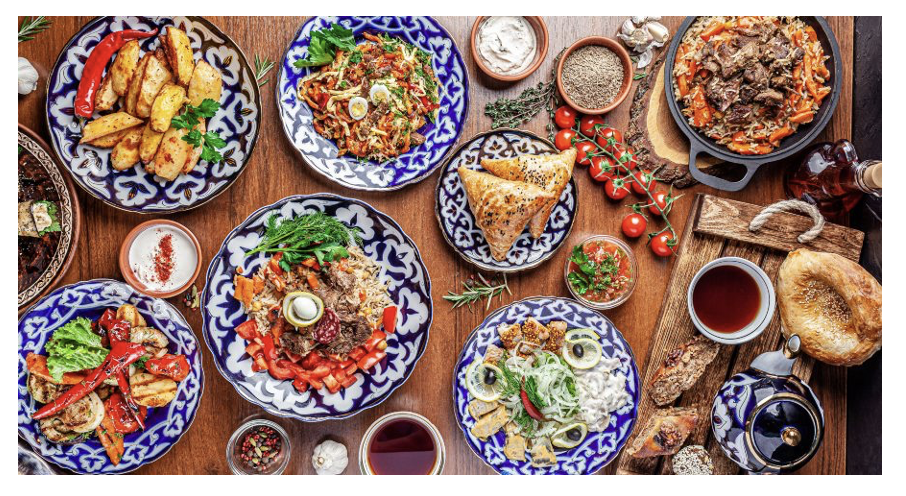
(Source:  Ramadan Food by NetCost Market)

Emna shared many of her own personal experiences of Ramadan and described how festive Tunis was during this special time.  All the shops and restaurants were open throughout the night, and there were many concerts as well.  She said Cairo was even more festive than Tunis!  

Emna enjoyed her mother’s cooking, and during Ramadan her mother made special dishes.  Her mother also prepared a lot of food to share with other people, especially those in need.  In Tunis, sometimes cannons were used for the call to prayer.  We could still experience all of them today.  

Emna concluded her talk emphasizing that Ramadan was not just about fasting, but was rather a time to help each other share joy.

References:

Suzan Yalman, The Birth of Islam https://www.metmuseum.org/toah/hd/isla/hd_isla.htm

Introduction to Islam, Khan Academy https://www.khanacademy.org/humanities/world-history/medieval-times/spread-of-islam

Sarah Pruitt,  Islam’s Sunni-Shia Divide, Explained https://www.history.com/news/sunni-shia-divide-islam-muslim

Ramadan, Britannica  https://www.britannica.com/topic/Ramadan

Indlieb Farazi Saber, The art of the adhan: The multiple melodies of the Muslim call to prayer https://www.middleeasteye.net/discover/adhan-muslim-call-prayer-melodies-maqams

UstazMuhammad Abdul Mateen Bin Hisham, 4 Intriguing Things You May Not Know About the Islamic Hijri Calendar https://muslim.sg/articles/4-intriguing-things-you-may-not-know-about-the-islamic-hijri-calendar

Dima Al-Sharif, AL Musaherati Tradition https://www.dimasharif.com/musaherati-ramadan-drummers/#:~:text=While%20during%20those%20days%20the,created%20specifically%20for%20the%20occasion.

Visit to the Province of Shandong, China

Written By Eric Lim

Introduction

In May 2024, I embarked on a journey to Shandong, China, with a group of 31 Malaysians. Our goal was to explore the cultural heritage and historical sites of this province. From the ancient significance of Mount Tai to the legacy of Confucius in Qufu, each destination revealed a unique aspect of Shandong’s history. Our itinerary included coastal cities like Qingdao and Yantai, known for their historical charm, as well as inland cities like Jinan and Zibo, where traditional customs thrive alongside modern developments. This narrative recounts our travels through Shandong, offering insights into its historical richness and cultural diversity.


Province of Shandong

Photo : Google map

Shandong (山东) is a coastal province located in the north east of China. Shandong, which means ‘East of the mountains’ consists of two distinct segments – inland zone, bounded by the provinces of Hebei, Henan, Anhui and Jiangsu respectively from north to south; and the Shandong / Jiaodong Peninsula, located between Bohai Sea to the north and Yellow Sea (Huanghai) to the south.  And lying across these vast stretches of sea is the Korean Peninsula. The Yellow River (Huang He) runs through the province and empties into the Bohai Sea. It is the second longest river in China, after the Yangtze River.

Shandong is now a major grain producer in China and its major crops include wheat, corn, soybean, kaoliang, spiked millets, sweet potatoes and the cash crops are peanuts, cotton, tobacco and fruits. Some of you may have eaten Shandong peanuts which are large in size, and are well suited for oil pressing, turning into peanut cooking oil. Shandong is rich in natural resources particularly crude oill (Shengli oil field) and coal (around Yanzhou and Tengzhou). There are also major iron ore deposits located near Zibo and Laiwu, and some bauxite is mined near Nanding, Zibo. Edible salt is produced on the coasts of the Shandong Peninsula. Shandong is also a cradle for many national giants in light industry such as brands like Haier Electronics, Hisense Electronics, Tsingtao Beer, Jinan Qingqi Motorcycle, Konfujia Liquor, Yangtai Dongyue, Jinan Heavy Truck, just to name a few.

The history of Shandong dates back to over 400,000 years with the discovery of the Yiyuan Man, the earliest Shandong human known by far, in the center of the province. Yiyuan Man is classified as archaic humans of the genus homo erectus from the middle Pleistocene age. Moving to the Neolithic Age, civilizations developed one after another, with the Longshan Culture noted for its highly polished black pottery (or egg-shell pottery). Shandong formed part of the territory of the Shang and Zhou dynasty. Shandong is also the birthplace of two great philosophers, Confucius (Kong Qiu / 551-479 BC) and Mencius (Meng Ke, Mengzi / 372-290 BC). The famous Venetian, Marco Polo, was appointed as Governor of Yanzhou in Jining Prefecture in the 1280’s by Kublai Khan, during his reign as the first emperor of the Mongol-led Yuan Dynasty of China. During the Qing Dynasty, a series of treaties and agreements were signed in which China was forced to concede many of its territorial and sovereignty rights to foreign imperialist powers especially Great Britain, France, Germany, United States, Russia and Japan. Shandong / Jiaodong Peninsula was occupied briefly by Japanese troops after the Sino-Japanese War 1894-1895. In 1898, Germany seized the port of Qingdao while the British gained control of the coastal town of Weihai. And with the advent of World War I, Japan took over German interests in the peninsula and made the Twenty One Demands compelling the Chinese to give official recognition to the renewed occupation. This took effect from 1919 to 1922. The Japanese continued their domination during the Sino- Japanese War of 1937 to 1945. After the war, it was a fight between Chinese Communists and the Nationalists, which resulted in the former taking control of Shandong by the end of 1948.

Another Shandong native that became the talking point of the whole nation was Jiang Qing. She was the third wife of Chairman Mao Zedong who rose to become the most influential woman in the People’s Republic of China, coinciding with the Cultural Revolution that was gripping the nation from1966 until 1976. After the death of Mao in 1976, Jiang and three others who formed the radical ‘Gang of Four’ alliance were arrested for their role of fomenting widespread civil unrest during the country’s turbulent history. She spent many years in jail and finally committed suicide in 1991.

We began our trip to the Province of Shandong by visiting the Shandong Peninsula – covering the coastal cities of Qingdao, Qixia, Yantai and Penglai – before moving to the Inland Zone, to Weifang, Zhoucun in Zibo, Qufu, Taian (Mount Tai scenic area) and completing the trip at Jinan, the provincial capital.

(1)Qingdao 青岛

We touched down at the Qingdao Jiaodong International Airport which is currently the largest airport in the province. It was officially opened to the public on 12 August 2021 and the terminal is designed in the form of a starfish with five connected airside concourses. This design is similar to the Beijing Daxing International Airport. For comparison, Qingdao Jiaodong International Airport is twice the size of Heathrow Airport. The International Air Transport Association or IATA code for this airport is TAO and it is located about 32 km from the city proper.

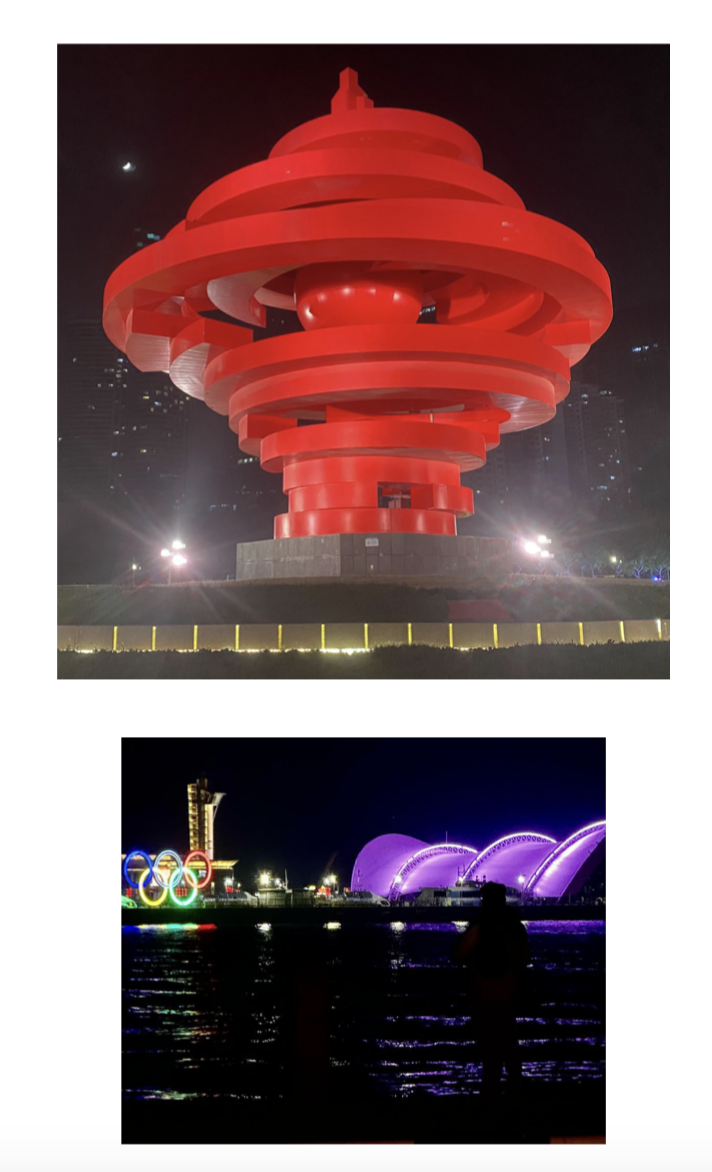
Qingdao has a rich history and offers several interesting sites for visitors. Notable places include the Tsingtao Brewery, founded in 1903, which is currently the sixth largest brewery in the world. Another key site is the May 4th Square, a large public square with a focal red sculpture called the May Wind, offering a panoramic view of the CBD, with government buildings to the north, the ocean to the south, and high-rises on the other two sides. Opposite the square is the Qingdao Olympic Sailing Centre, where the 2008 Summer Olympics sailing events were held.

(L) May Wing at May 4th Square / (R) Qingdao Olympic Sailing Centre. Photo : Eric Lim

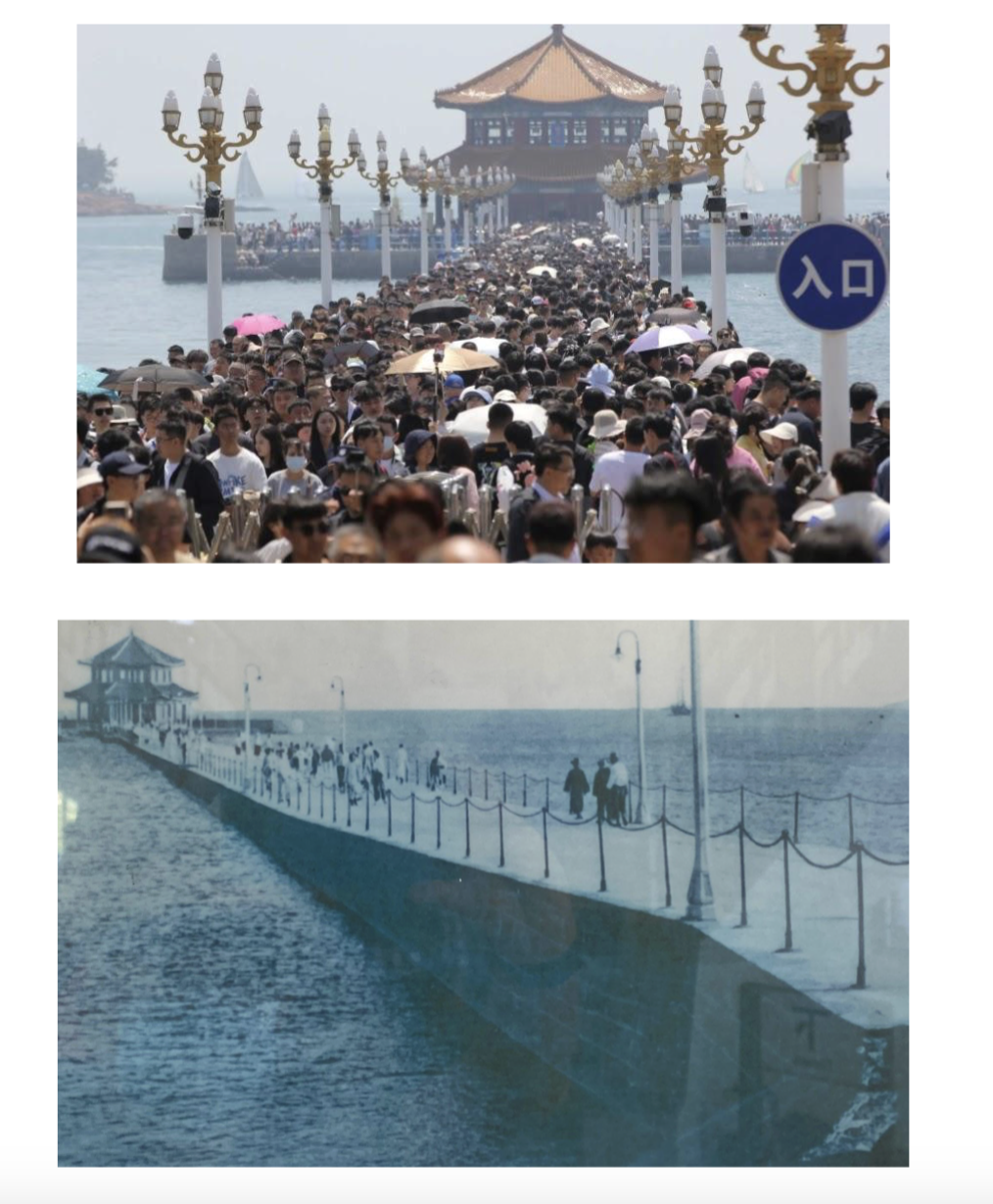
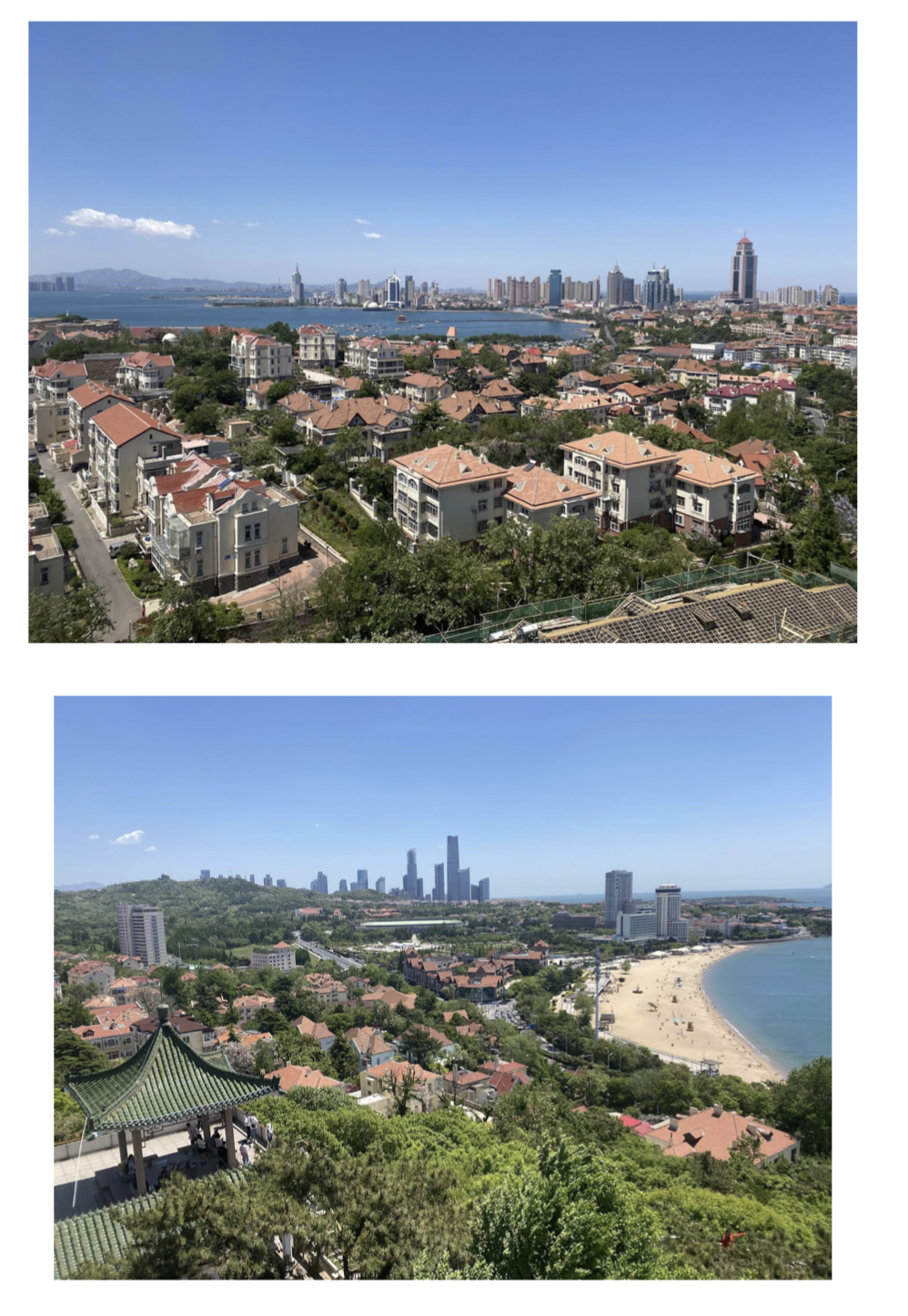
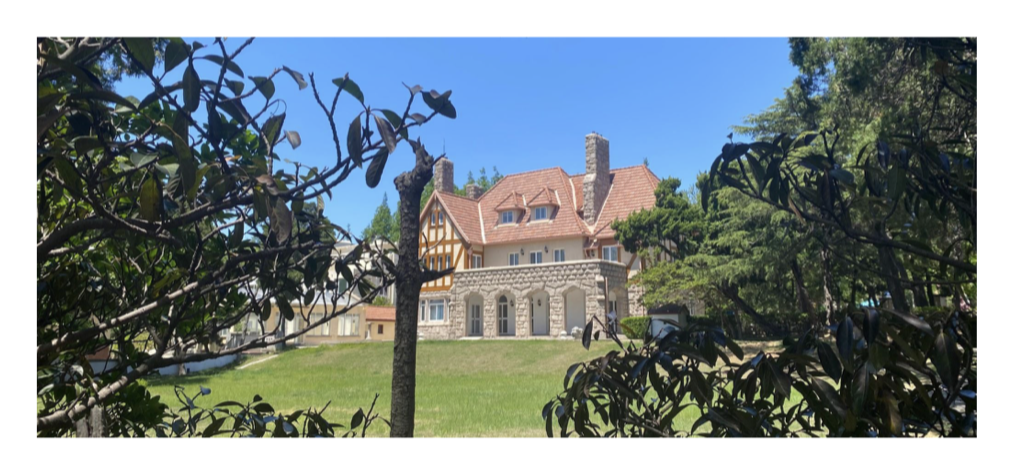
The next morning after breakfast, we went to West Shinan CBD where we visited Zhan Qiao, Xiaoyushan Park and Badaguan. Zhan Qiao is a famous pier and is the iconic symbol of Qingdao. Founded during the reign of the Qing Dynasty in 1891 and known then as Changhong Yuanyin, was originally built as a military dock and later, extended by the Germans to 440 meters long. At the end of the pier is the two-storey Huilan Pavilion which was built in 1931. Huilan Pavillion is the logo of Tsingtao Beer. Xiaoyushan Park (Little Fish Hill) was built in traditional Chinese style in 1983, offering a hilltop view of Qingdao. Badaguan scenic area was built in the early 20th century. The eight roads in the area were all named after China’s great ancient military forts. Most buildings in the area are villas with courtyards, typical of the modern European architectural style. Badaguan is a popular destination for wedding photography.

(L) Zhan Qiao during the recent May Day celebration, just like the old Chinese saying, “人山人海 ren shan, ren hai” (people mountain, people sea) (R) Old photo of Zhan Qiao / Photo: SCMP

View from Xiaoyushan Park / Photo : Eric Lim

European architectural villa at Badaguan / Photo : EricLim

(2) Qixia  栖霞 and Yantai 烟台

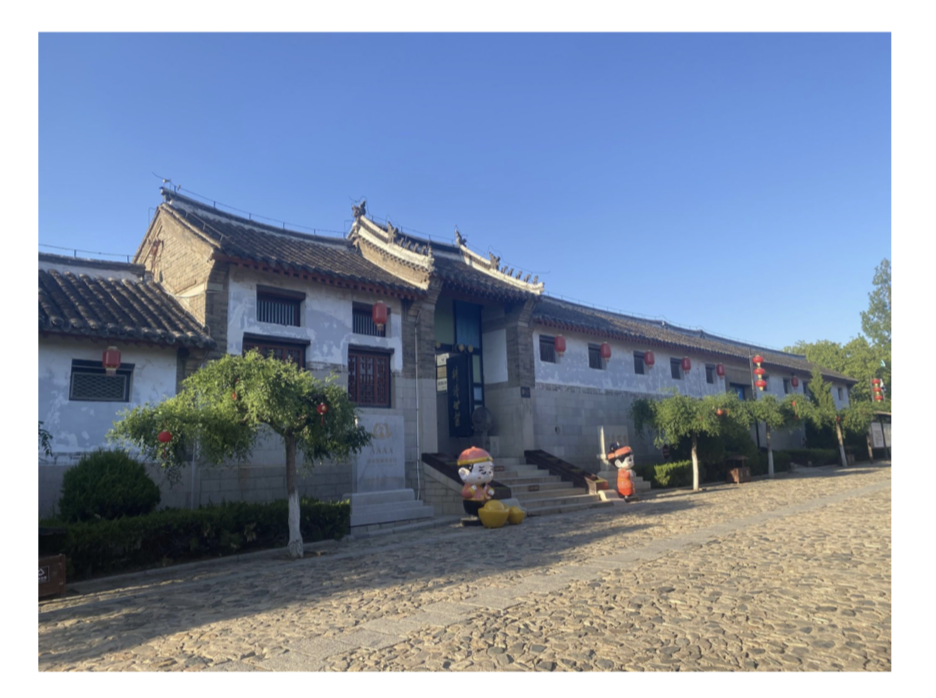
Still remaining within the Shandong / Jiaodong Peninsula, we continued our journey to the  neighbouring Yantai Prefecture where we visited Qixia, Yantai and Penglai. At the stopover at landlocked Qixia, which won the title of “The Apple Capital of China”, we visited the other famous attraction of the town, the Mou Family Manor

The residential complex that belonged to landlord Mou Molin was built during the Emperor Yongzheng period (1723-1735) of the Qing Dynasty (1644-1911). Since then, it had undergone 200 years of continuous addition, expansion and repair; and finally completed in the current form in 1935. Today it covers an area of more than 20,000 square meters with more than 480 rooms, and is one of the well preserved and largest family manors in China. The manor was used as the site for a popular television series aired in China in 2010 about the Mou family, appropriately titled “Mou Family Manor / 牟氏莊園 / Mou Shi Zhuang Yuan”.

The port city of Yantai was traditionally known as Zhifu (Chefoo). It was during the Ming Dynasty that the prototype of Yantai city was recorded when the Ming government proceeded to set up the Qishan Garrison in order to strengthen its coastal defense. In 1861, Yantai was opened to international commerce as a treaty port. However, Yantai and other ports of northern Shandong stagnated due to the rapid development of Qingdao by the Germans after 1898. Moving forward to 1958, Yantai Special Zone was established and in 1983, Yantai was set up as a prefecture-level city. 

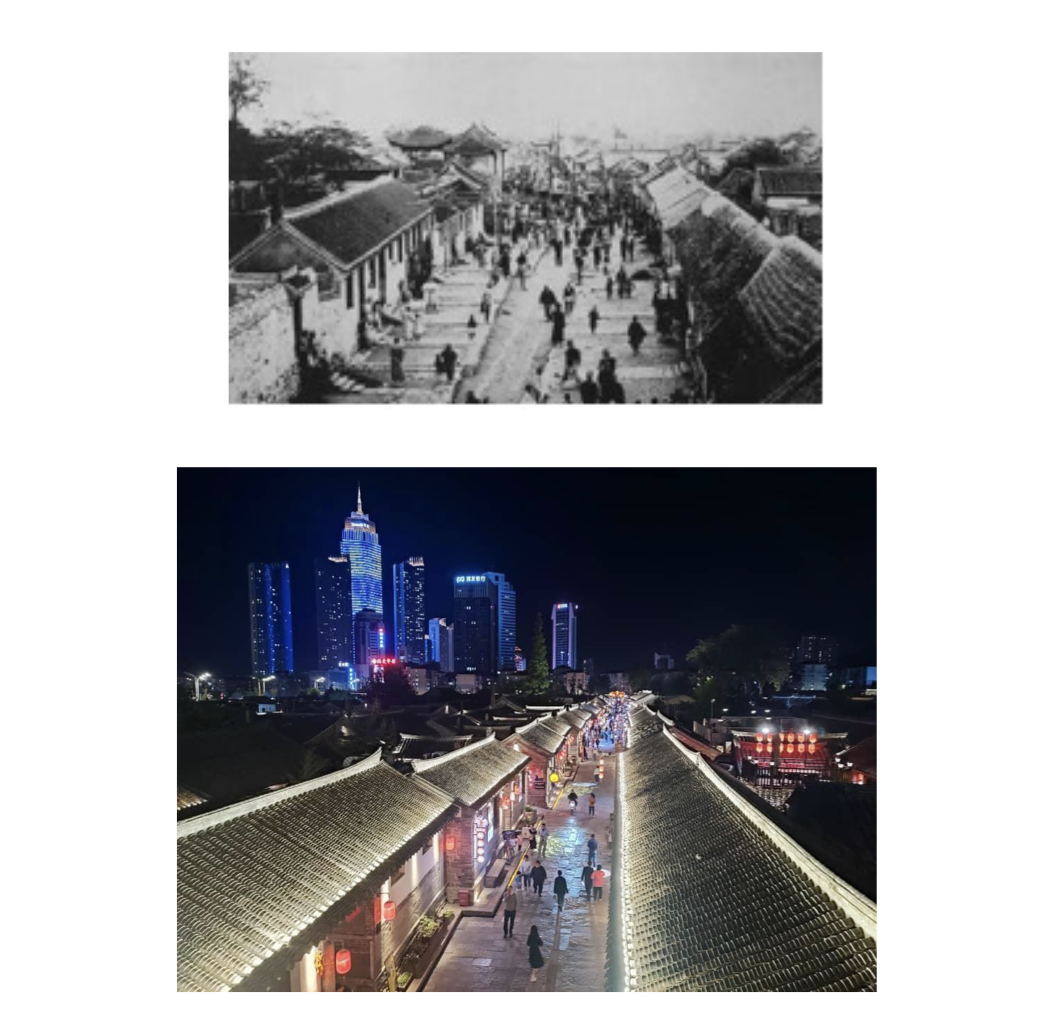
In 2017, Shandong Provincial government made a decision to restore and develop the entire old section of the city i.e. Suochengli district  into a AAAA rated tourist attraction (tourist attractions in China were graded according to criteria on a scale of A to the highest 5A). The opening was delayed due to the Covid pandemic and officially opened to the public during the Spring Festival in 2021. There are more than 280 restored cultural relics (buildings) and many of the old housing were converted into restaurants.

Entrance to Mou Family Manor / Photo source : Eric Lim

Old and new Souchengli District at Yantai / Photo source : Yantai – Suocheng District 所城里 – live2makan and Eric Lim.

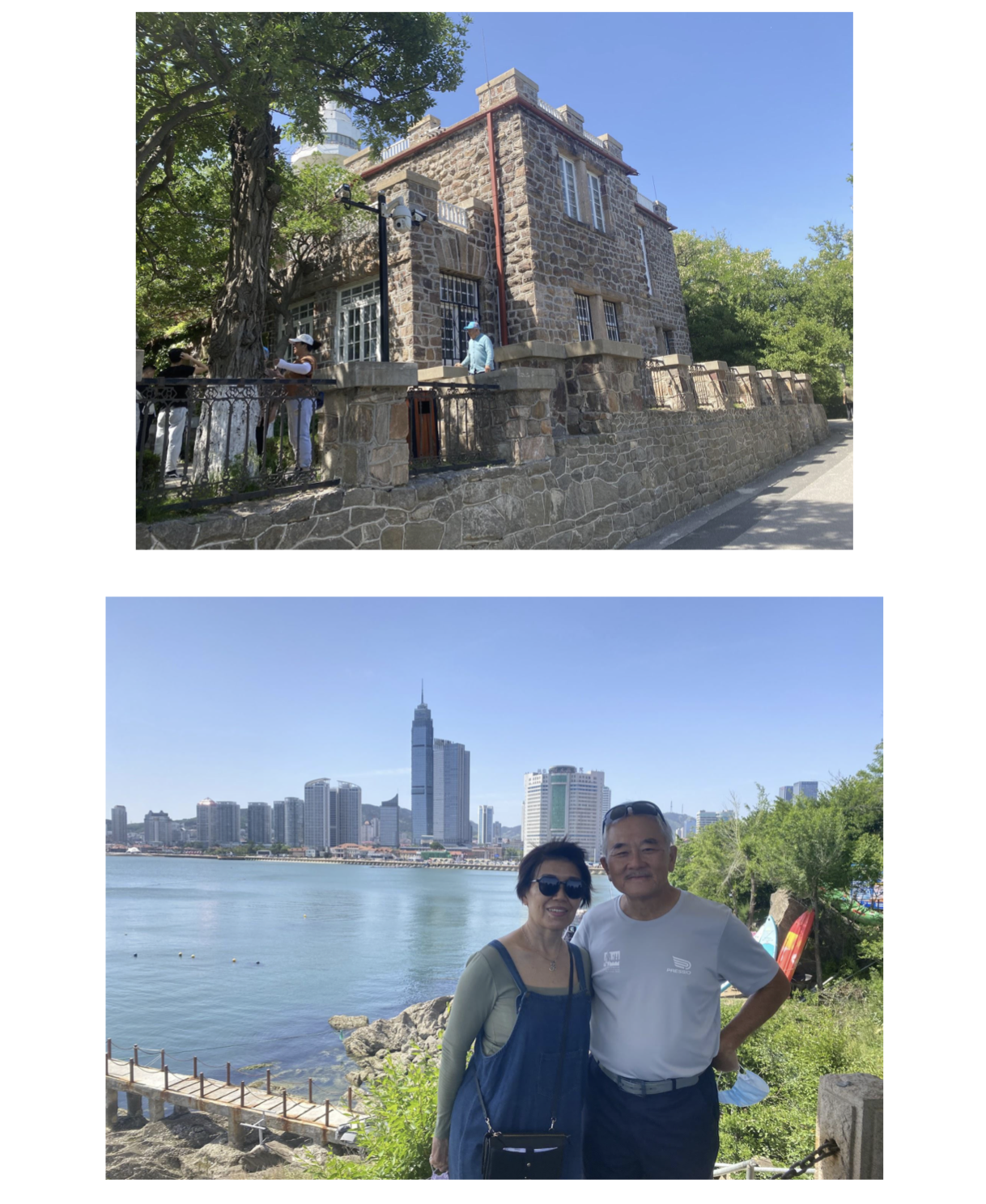
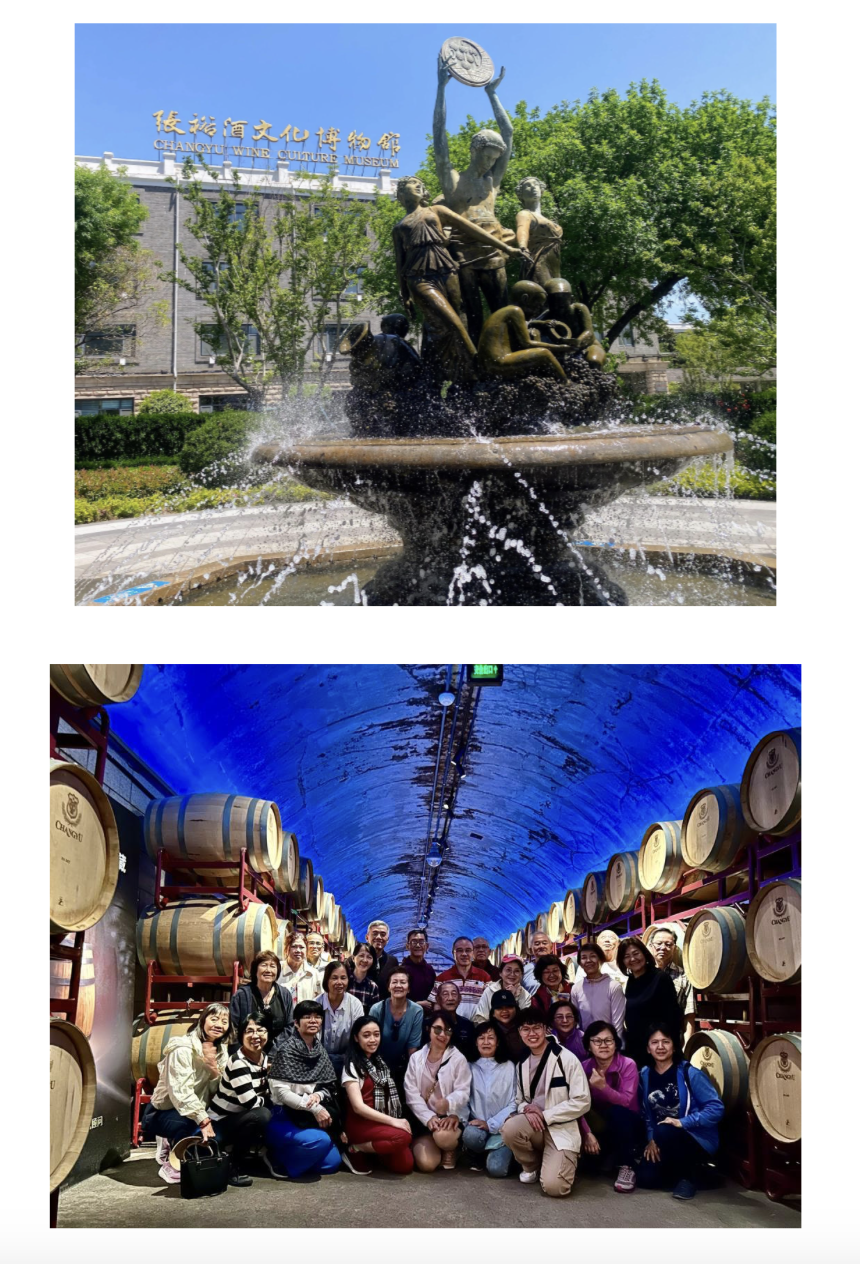
Yantai, which literally means ‘beacon tower’, derives from a lookout beacon built on a hill as part of a 15th century coastal defense system erected against Japanese pirates. Yantai Hill Park is one of the highest hills in the city and a popular tourist attraction. The peak of Yantai Hill  was the location of the old lookout beacon. Surrounding the hill are a large collection of historical Western architecture buildings including the former consulates and residence of the UK, US, Japan and Denmark which date from the 19th century. Today, these buildings are mostly converted into museums, with one specially dedicated to Yantai Beijing Opera art. Next on the itinerary was a visit to the ChangYu Wine Culture Museum, at the site of the former ChangYu Wine Company. Cheong Fatt Tze, a name most Malaysians are familiar with, founded the winery in 1892. Today, it is China’s oldest and largest Western-style winery which produces grape wines as well as brandy and a Chinese health liquor. An underground cellar was built in 1894 and it became the first underground wine cellar in Asia when it was completed in 1903. The cellar is still in use for wine storage. 

(Cheong Fatt Tze (Zhang BiShi) came to the Malay peninsula at a young age of 16. He went on to become a successful and powerful Nanyang business magnate, and was once regarded as the richest man in Malaya. He built a mansion on Leith Street in Georgetown and was dubbed ‘La Maison Bleu’ (the Blue House). In 1990, it was acquired and went into restoration to its authentic original form and it won the National Architecture Award for Conservation 1995, followed by winning the UNESCO Conservation Award 2000.)

Views of Yantai Hill Park / Photo : Eric Lim

ChangYu Wine Culture Museum  / Photo source : Eric Lim

(3) Penglai 蓬莱

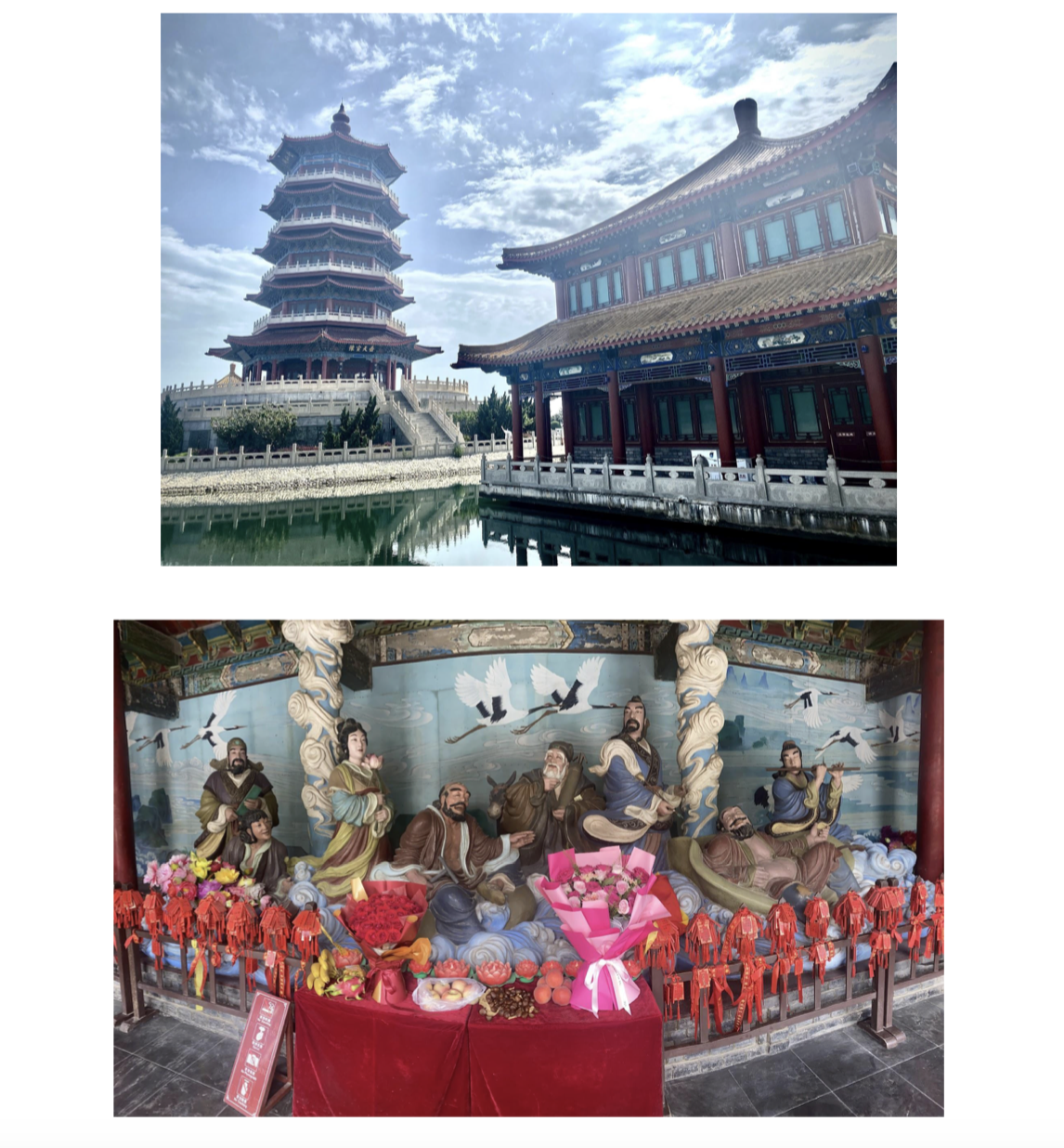
Penglai is about 75 km from Yantai, lying on the northwest corner of the Shandong Peninsula. It was formerly known as Dengzhou or Tengchow. It was the first port in the Shandong Peninsula to be opened to foreigners in 1858. And since ancient times, Penglai has been known as ‘Wonderland on Earth”. Penglai Pavilion scenic area is one of the earliest tourist sites in Shandong that is awarded the 5A rating (most important and best maintained tourist attractions in People’s Republic of China).It is a large park of ancient buildings, temples, palaces and towers. It was first constructed in 1061 during the Song Dynasty (960-1279). Penglai Pavilion is one of the ancient Four Great Towers of Ancient China, together with Yellow Crane Tower, Pavilion of Prince Teng and Yueyang Tower. It is famous for the Taoist legend of ‘8 immortals crossing the sea’. The legend goes that the eight immortals crossed the sea by using their unique powers after they got drunk in Penglai Pavilion. This magic inspired a popular saying in China that goes like this “when the eight immortals cross the sea, each one shows his special feat. Each tries to outwit the other”. In the modern context, it would mean “that everybody has his or her own way of dealing with things”. The site also attracts countless tourists to witness the wonders of mirages phenomenon known as ‘the Fata Morgana mirage’.The different temperature of the sea water and the coast line has resulted in the appearance of this optical illusion. 

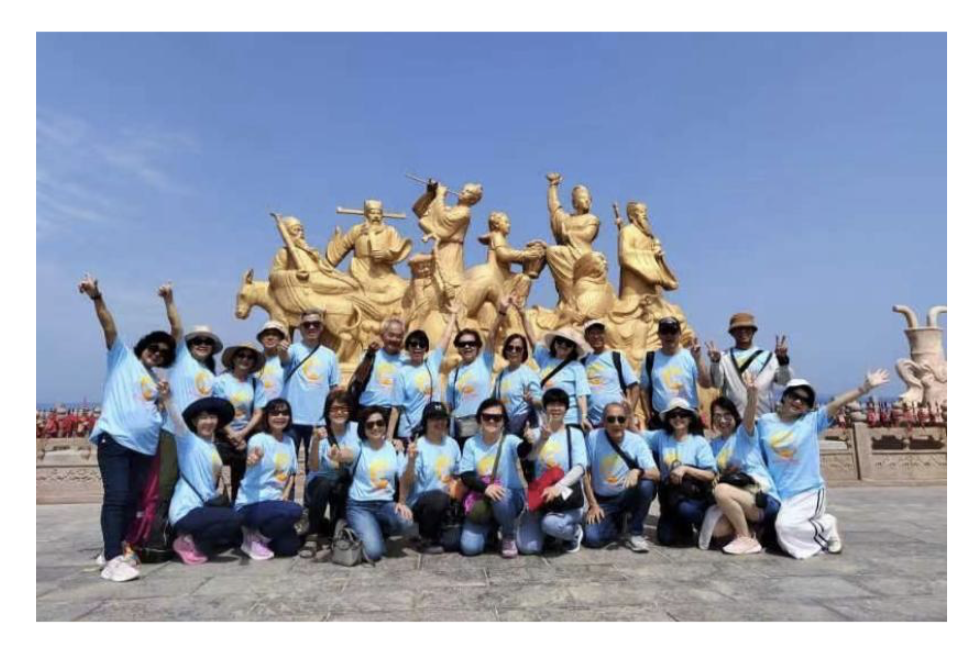
Not too far from Penglai Pavilion is the newer attraction called the Eight Immortals Crossing The Sea / Penglai Baxian scenic area  The entire site is built on a man made island that is shaped like a magic gourd floating above the sea. There are two major structures in the scenic area, namely  the majestic Wangying Tower and an ancient style pagoda Huixian Pavilion, that houses the statues of the Eight Immortals and other Taoist great masters.

Statue of the Eight Immortals at Penglai / Photo : Eric Lim

Eight Immortals Crossing The Sea / Penglai Baxian scenic area / Photo : Eric Lim

(4) Weifang 潍坊

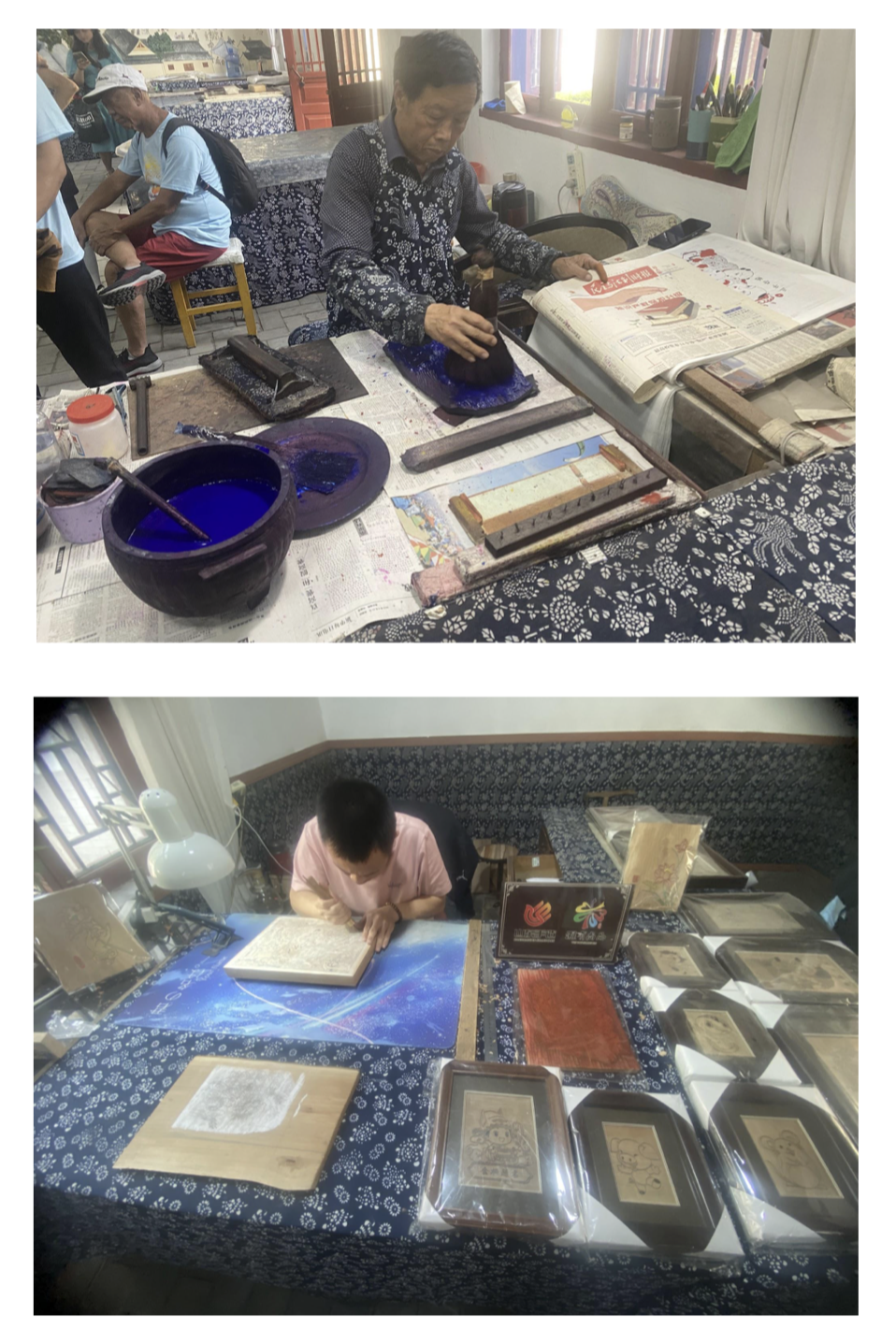
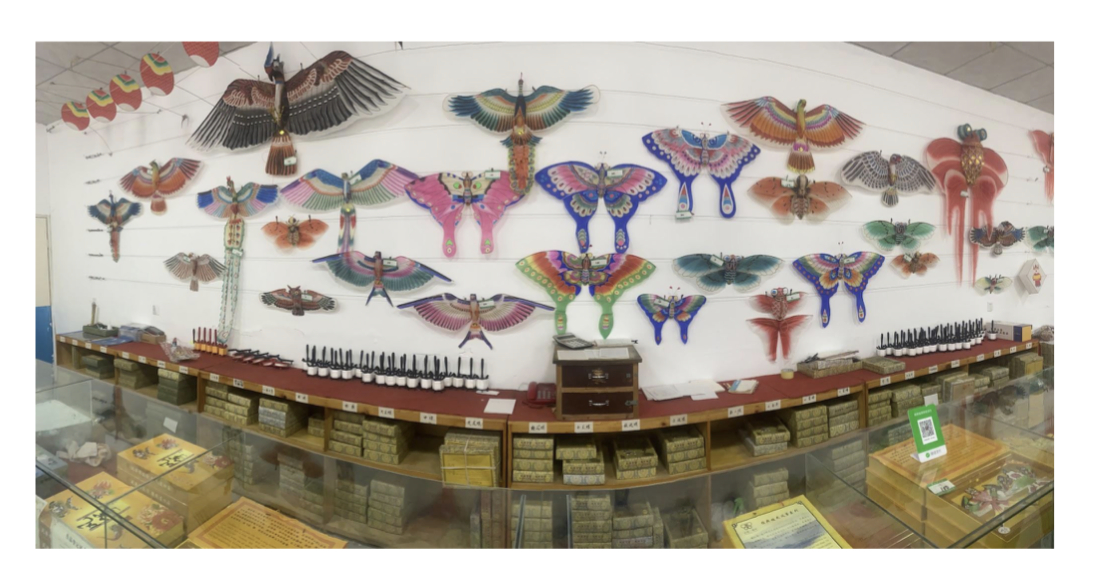
Having completed the coastal cities route, we next moved to the Inland Zone to the prefecture-level city of Weifang,which has a population of 9.3 million at the 2020 census. The city is also known as the ‘capital of kites / city of kites’.The first kite festival was held here in 1984 which attracted kite lovers from all over the world, and since then, the Weifang International Kite Festival is held every April. We made a stopover at the Hanting District of Weifang to visit the Yangjiabu Folk Art Grand View Garden. This site mainly exhibits the artistic style and delicate craftsmanship of Chinese New Year paintings, woodblock printings, kite production and Chinese paper cuttings. At the kite museum, one can learn the origin, research and development of Yangjiabu kites until today which have profound influence both in China and abroad. Weifang kites, represented by Yangjiabu kites, was named as’ National Intangible Cultural Heritage’ by the State Council of China in 2006. 

(Incidentally, we have our annual Pasir Gudang World Kite Festival in Johor. This year, the event was scheduled from February 24 to March 3. It was first held in 1995)

At Yangjiabu Folk Art Grand View Garden / Photo : Eric Lim

(5) Zibo 淄博

After the visit to Yangjiabu Folk Art Grand View Garden, we travelled to the next prefecture-level city of Zibo. Zibo was the centre of the ancient State of Qi during the Spring and Autumn (770-476 BCE) and Warring States (475-221 BCE) periods. Its capital Linzi was the most populous city in China at its peak. It became a centre of an important ceramic and glass industry. During the period of the Silk Route, Zibo was a major centre of silk supply. It then developed into a major industrial complex when the railway linking Qingdao and Jinan which was completed in 1904 passed through important market towns within Zibo. Today, it is home to petrochemicals, textiles and porcelain factories. Zibo’s greatest claim to fame came when the then FIFA President Sepp Blatter proclaimed the city as the birthplace of soccer based on its link to an ancient ball game.

It was quite late when we arrived at Zhouchun Ancient City, one of the urban districts governed by Zibo. During the Ming and Qing Dynasty, Zhouchun developed to be a major commercial town known as ‘No. 1 village in the world’ and its famous local product i.e Shaobing / Sesame Seed cake is also known as the ‘No. 1 Shaobing / Sesame Seed cake in the world’. Zhouchun Ancient City is currently regarded as a ‘living museum of ancient commercial architecture’. Unfortunately on the evening of our visit, we could not savour the famous Shaobing.

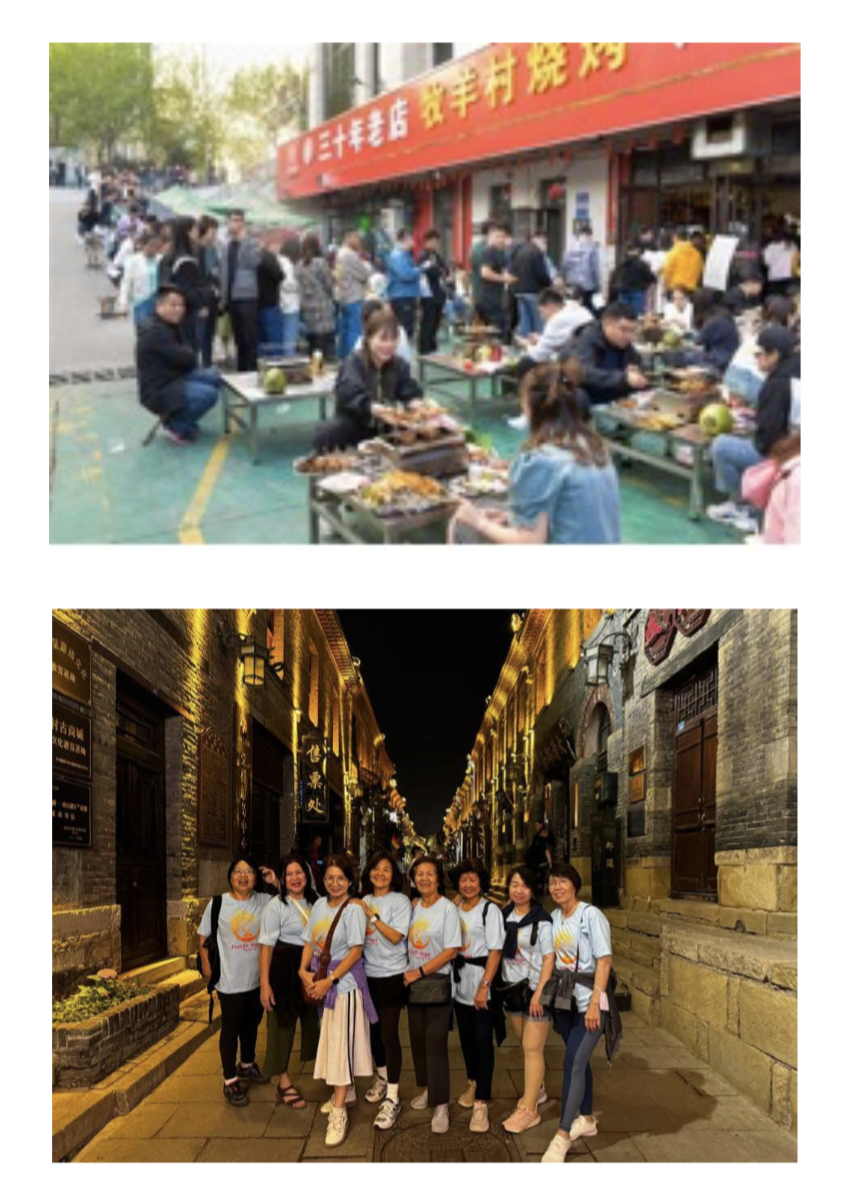
(L)Barbeque craze at Zibo / Photo : Zibo’s barbecue craze draws crowds and regulatory action – SHINE News  (R) At Zhouchun Ancient City / Photo : Eric Lim

(6) Qufu 曲阜

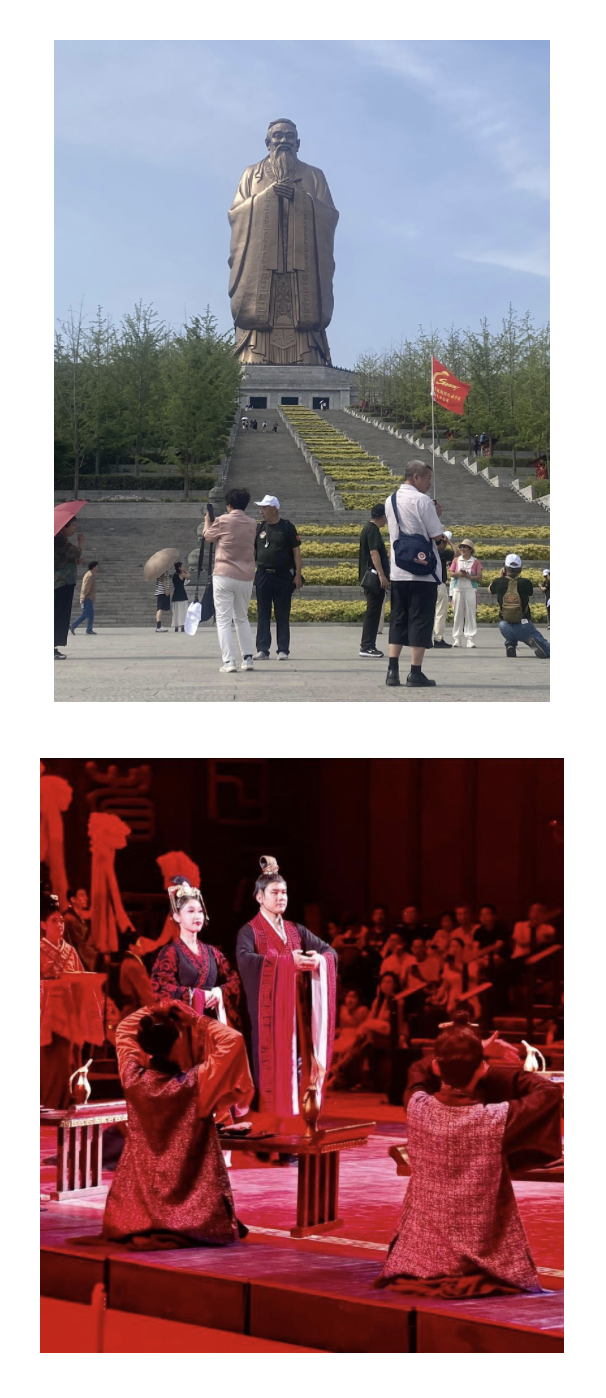
After a night of merriment, we headed next to Qufu, the capital of the small independent state of Lu which flourished from the 6th to 4th BCE. Qufu is also best known as the birthplace and place of residence of the great Chinese philosopher and founder of Confucianism, Confucius (Kong Fuzi, Kong Zi) 551 – 479 BCE. We stopped for two days to visit the Temple and Cemetery of Confucius and the Kong Family Mansion, together these sites have been listed as a UNESCO Heritage Site since 1994. These three sites are collectively known in Qufu as San Kong  (三孔). It is also rated as a 5A tourist attraction. We also visited Nishan Sacred Land, situated in the Nishan Cultural Tourism Resort on Nishan Mountain.

The Temple was built in 478 BCE to commemorate him, and has been destroyed and reconstructed over the centuries. Today it comprises more than 100 buildings while the Cemetery contains Confucius’s tomb and the remains of more than 100,000 of his descendants.

The Kong Family Mansion developed from a small house into a gigantic aristocratic residence of which 152 buildings remain. The most prominent landmark on Nishan Cultural Tourism Resort is the world’s highest sculpture of Confucius standing at 72 meters high. It also features a cultural complex consisting of a lecture hall, study centre, temple of Confucius and a performance centre. 

At Nishan Sacred Land / Photo : Eric Lim

(7) Taian 泰安

Taian City is located at the center of Shandong province and is regarded as the place of origin for Chinese civilization. Traces of human existence date back to more than 500,000 years ago. Modern humans (homo sapiens) appeared in the area 50,000 years ago and in the Neolithic Age (New Stone Age), several cultures namely Beixin culture, Dawenkou culture and Longshan culture, emerged where they had lived in settlement and started farming and domestication of animals. Today, Taian is one of the north-south transportation hubs in China. Taian is a key producer of plaster, sulphurite and granite. And Taian granite has been used in many well known Chinese buildings like the Great Hall of the People, Tiananmen Square and the Monument to the People’s Heroes at Tian’anmen Square. 

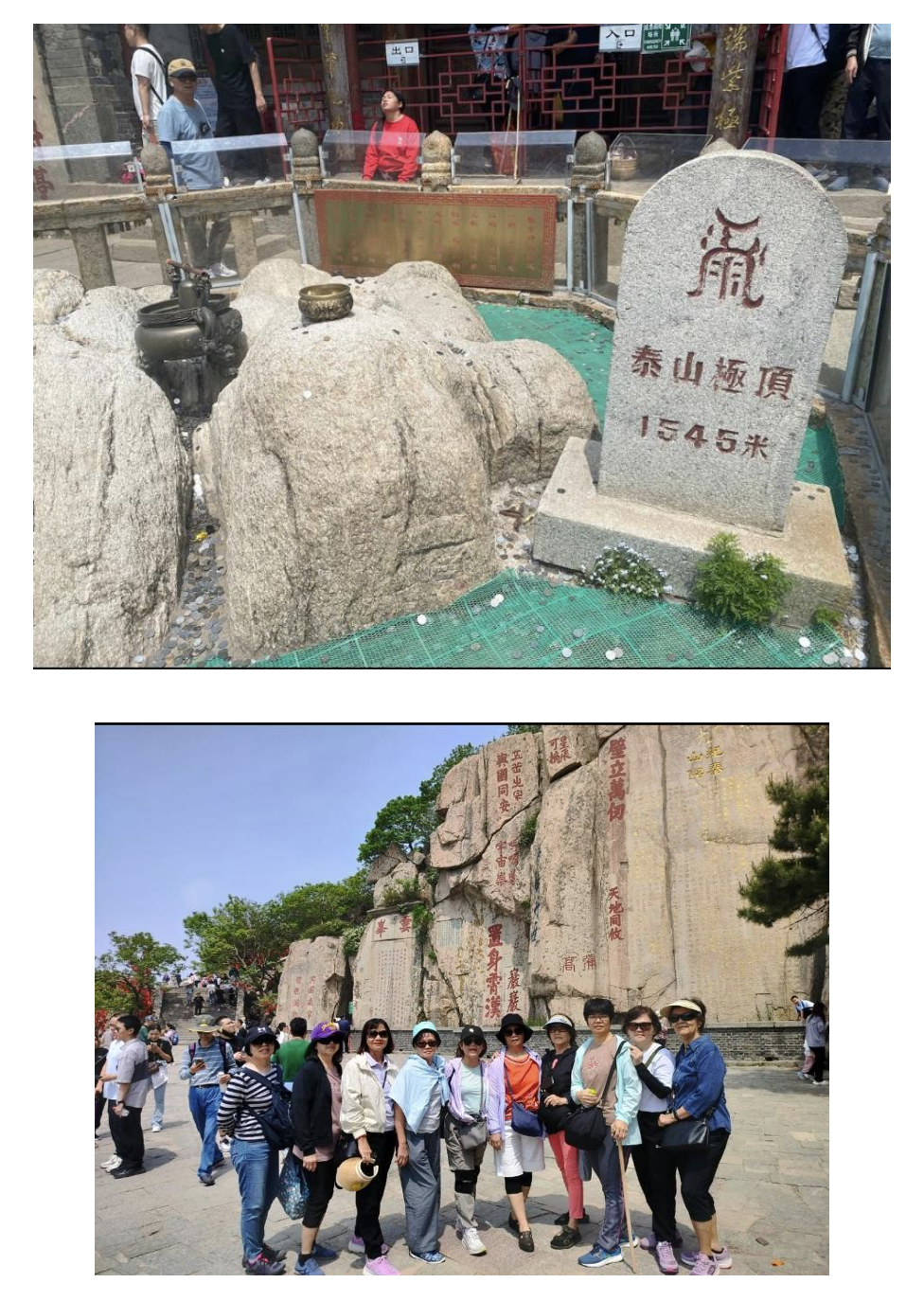
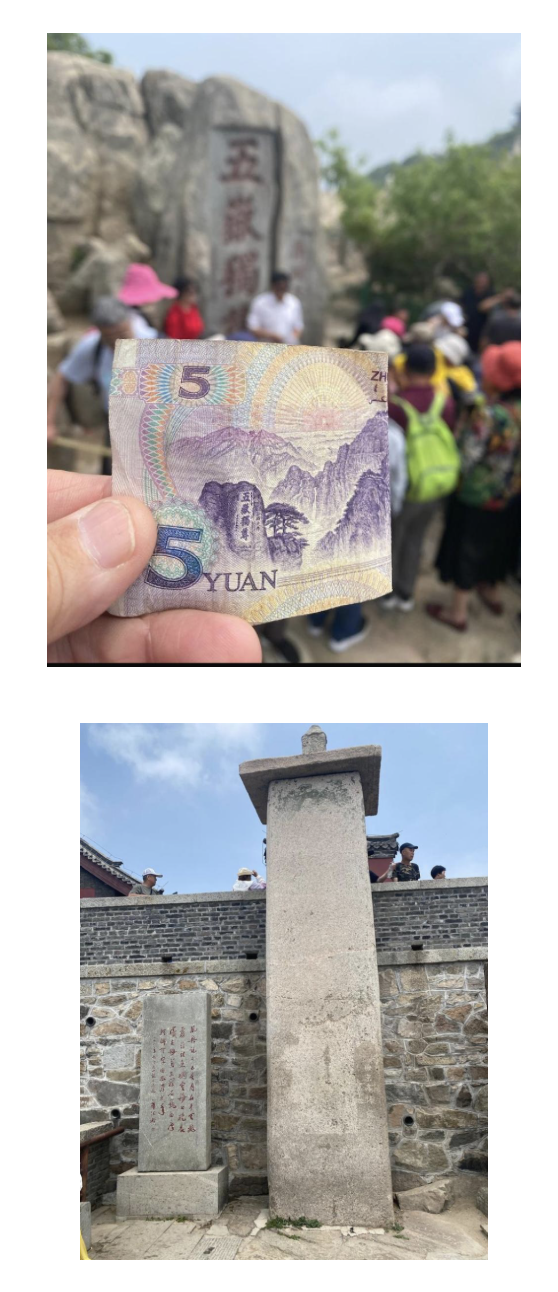
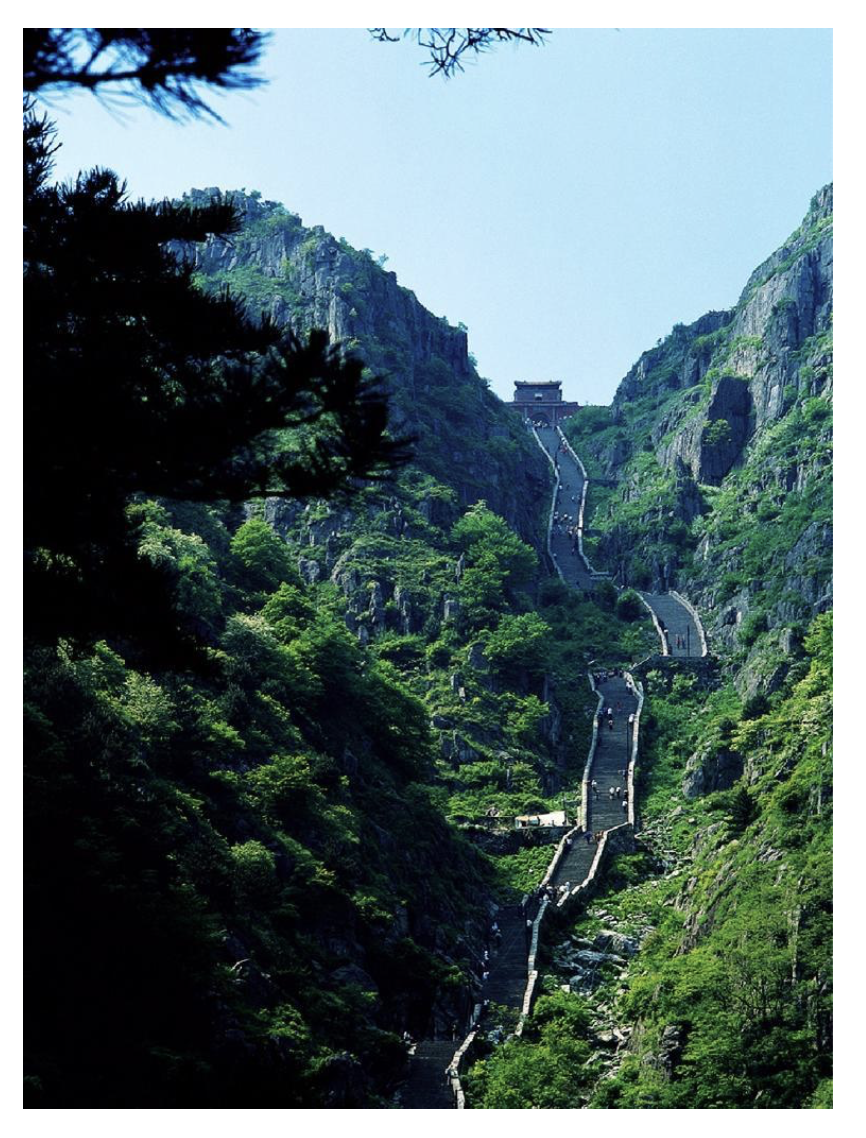
Taian is the home to Mount Tai (泰山), originally known as Daishan / Daizong, is the most famous of the five sacred mountains in China. For 2,000 years, it was one of the principal places of worship where the Emperor paid homage to Heaven and Earth in the Fengshan sacrifices (Feng – offerings to Heaven and Shan – offerings to Earth). On the mountain, there are 12 historically recorded Fengshan ceremonies, about 1,800 stone tablets and inscriptions and 22 temples. Its highest peak is referred to as the Jade Emperor Peak and is 1545 metres above sea level. Mount Tai has been designated a UNESCO World Cultural and Natural Heritage Site since December 1987 and rated 5A tourist attraction. There are two ways to reach the summit –  by foot, which would take from two and a half to six hours to climb up the 6,660 stone steps or by a combination of bus and cable car.

(L) Summit stone at Jade Emperor Peak  (R) Cliff inscription / Photo : Eric Lim

(L) Mount Tai appear on the reverse side of the five Yuan banknote  (R) Wordless Monument in front of the Jade Emperor Peak / Photo : Eric Lim

Climbing up to the summit of Mount Tai  / Photo :By Charlie fong – Own work, Public Domain, https://commons.wikimedia.org/w/index.php?curid=5327850

(8 )Jinan 济南

We have finally arrived at the provincial capital city of Jinan. Jinan is also known by its nickname City of Springs because of the artesian wells that bubble up within the city limits. There is a list of 72 springs within the city that has been kept and updated since the times of the Jin, Ming and Qing dynasties. The water from these springs flows north towards the main landmark, Daming Lake and onwards to the Yellow River. Baotu Spring, which is ranked first in the list, has been known as the ‘Number 1 spring under the heavens’ is located in the southwest of the ancient town of Jinan. It is one of three springs (the other two are Black Tiger Spring and Five Dragon Pond Spring), one river (the Moat), one lake (Daming Lake) and four parks (Baotu Spring Park, City Ring Park, Five Dragon Pond Park and Daming Lake Park) that make up the World’s Best Spring Scenic Area which is graded 5A tourist site and Key National Park. After dinner, we were taken to QuShuiting Street (Winding Water Pavillion Street in English). The history of the street can be traced back to the 4th-6th century CE, during the Northern Wei Dynasty. It was named after the Qushui Pavilion which used to be frequented by scholars and the literate during that time. Coincidentally, it was China’s 520 Day, a public holiday celebrated on May 20 as ‘I Love You Day’ as the numeral date sounds like ‘I Love You‘ in Mandarin. It is yet another Chinese Valentine’s Day as the country celebrates the Western Valentine’s Day on February 14 and the traditional Chinese lover’s day, Qixi on Lunar 7th day of the 7th month. The day made for a perfectly fitting end to our sojourn in the Province of Shandong and to cherish the happy moments with our spouses.

Daming Lake / Photo : Wikimedia Commons

Reference

Visa-free travel extended till 2025 | The Star

Shandong | History, Population, Map, Cuisine, & Facts | Britannica

Introduction to Shandong Province

Mou’s Manor | Interesting times

Yantai – Suocheng District 所城里 – live2makan

Penglai, land of fairy tales

Seeking Immortals in Penglai | The World of Chinese

Temple and cemetery of Confucius and Kong mansion

Mount Taishan – UNESCO World Heritage Centre

Which fashion campaigns for China’s 520 Day hit the mark? | Jing Daily.

Focus Talk: Sixteen Naked Indians by Dr. Lim Teckwyn

Written by Manjeet Dhillon

22 June 2024: History often focuses on the conquering heroes, the explorers who plant flags and claim new lands. But what about the quiet first meetings with the indigenous communities?

This often-forgotten chapter in history was recently brought to life at our focus talk thanks to Dr. Lim Teckwyn. His talk, titled “Sixteen Naked Indians: First Contact Between the British and the Orang Asli in the Late 16th Century off the Coast of Penang,” challenged our understanding of the island’s earliest encounters with Europeans.
Dr. Lim Teckwyn, an Honorary Associate Professor at the University of Nottingham, Malaysia, whose work focuses on the interface between forests, wildlife, and people, spoke about this historic encounter between British sailors and the indigenous inhabitants off the coast of Penang in the late 16th century.
Early European Arrivals
Dr. Lim first discussed the possibility of earlier European arrivals, including a Greek sailor named Alexandros in the 6th century and a possible Roman vessel around the same period. Additionally, Marco Polo’s potential voyage past the Malay Peninsula during his explorations in China is explored.
The audience is presented with a trivia question: Did the renowned explorer Sir Francis Drake visit Malaysia? The answer is no, as his circumnavigation steered south of Java on the return trip.
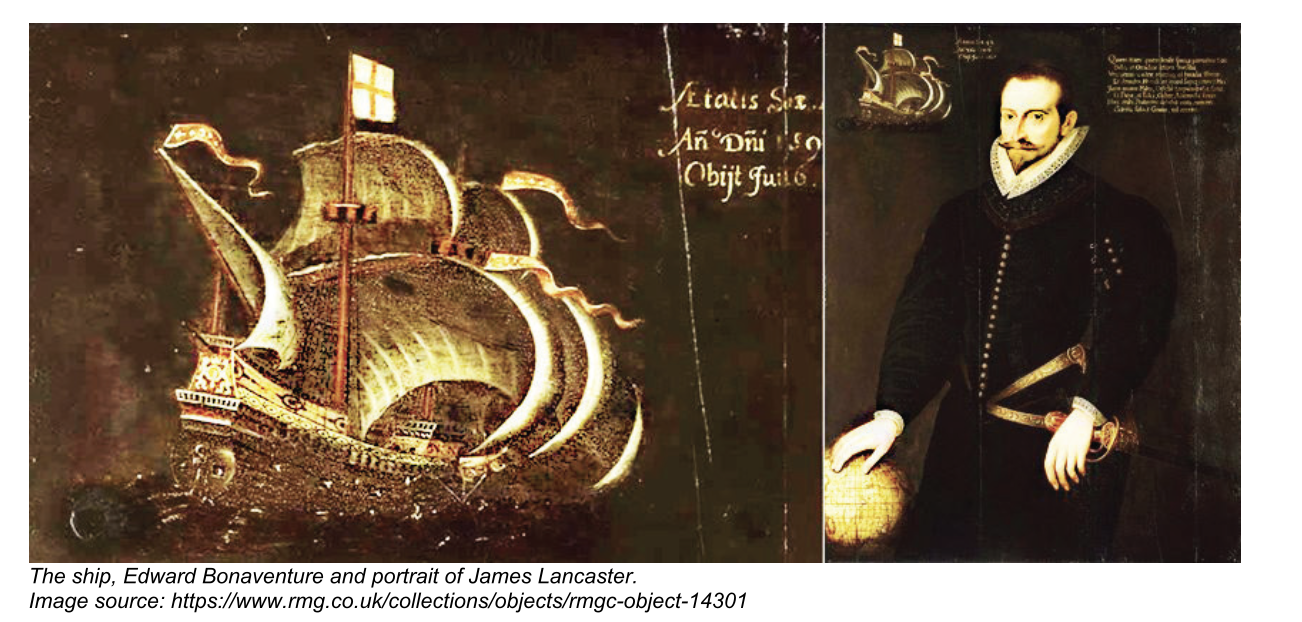
While a lesser-known figure, Ralph Fitch, holds the distinction of being the first Briton documented in Malaysia (though he arrived on a Portuguese vessel in 1588), Dr. Lim’s talk focused on Captain James Lancaster, a key figure in early British exploration of the region.

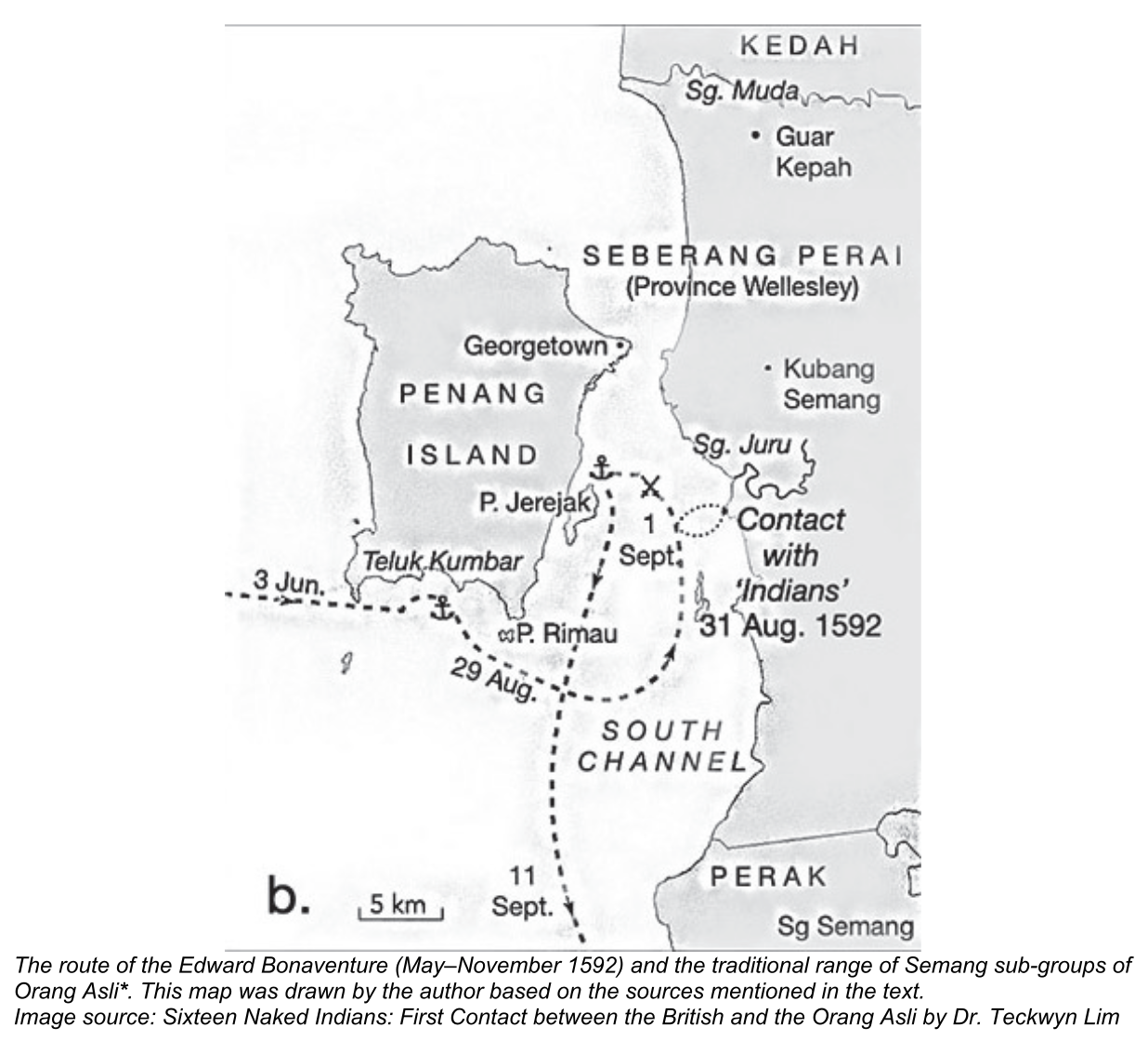
In June 1592, Lancaster arrived in Southeast Asia aboard the Edward Bonaventure, one of the first English vessels to venture into the region. His fleet, initially consisting of three vessels, was reduced to one by the time it reached Penang, largely due to the ravages of scurvy (an illness caused by vitamin C deficiency) and the loss of ships during the journey.

The Encounter
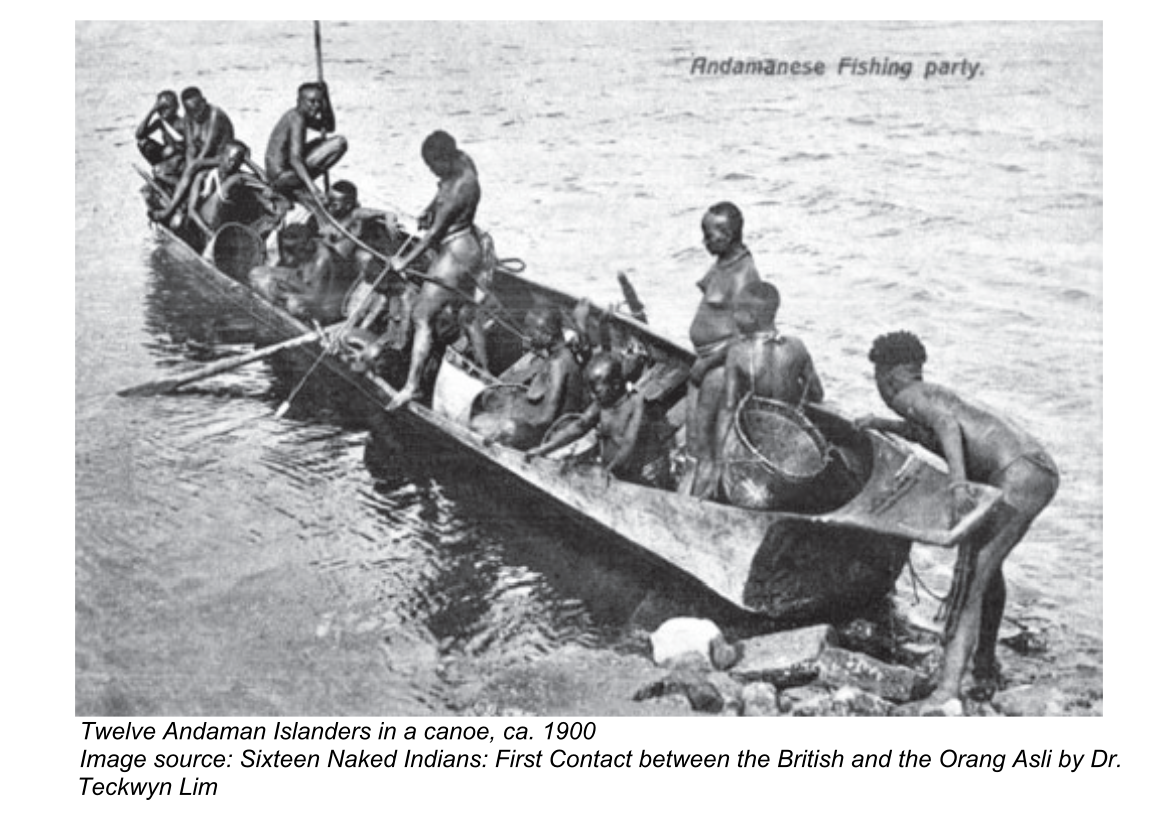
The first recorded interaction between Lancaster’s crew and the indigenous people occurred on the mainland near Penang on August 31, 1592. According to the journal of Lancaster’s first mate, Edmund Barker, the British sailors initially observed signs of recent human activity, such as burning fires, but encountered no people until the following day. When they finally met the locals, they described them as “sixteen naked Indians” in a canoe. This brief encounter, however, offered valuable clues about the identity of the islanders.

Dr. Lim clarified that the term “naked” in Elizabethan English often referred to people who were not fully dressed by contemporary European standards, rather than being completely unclothed. These indigenous people, likely wearing minimal attire, engaged in a friendly exchange with the British sailors, promising to provide fresh victuals (fresh fruit) to help restore the sailors’ health and allow them to continue their voyage.
Dr. Lim’s research suggests that this encounter proved to be a valuable learning experience. On a subsequent voyage, Lancaster implemented a preventative measure by regularly providing his crew with lemon juice, effectively combating the illness.

Orang Asli or Malay? Examining the Clues
The identity of these “naked Indians” became a subject of exploration for Dr. Lim. He suggested that the term “Indians” in this context referred broadly to non-Muslim inhabitants of the region, as opposed to the Muslim Malays, who were often referred to as “Moors” by European explorers of that era. This distinction is crucial in understanding the nature of the encounter and the cultural background of the indigenous people involved.
The canoe described in Barker’s journal, likely a dugout with an outrigger, is consistent with those used by the Orang Asli and other indigenous groups in the region.

Dr. Lim’s extensive research into the Orang Asli provides further context, suggesting that these people were part of the diverse and complex network of indigenous communities inhabiting the Malay Peninsula.
While the evidence for this encounter may be circumstantial, it holds significance as the first recorded contact between the British and the Orang Asli. It offers a glimpse into a period where European influence in the region was nascent and the Orang Asli way of life remained relatively undisturbed.
A More Inclusive Narrative
The Orang Asli, the indigenous people of Peninsular Malaysia, were likely the first to greet the European sailors. Their presence sheds light on a facet of Penang’s history that has been overshadowed by later colonial narratives. This chance encounter, though brief, reminds us to consider the perspectives of the Orang Asli, who inhabited these lands long before European arrival. Understanding these early interactions allows for a more complete and nuanced understanding of Malaysia’s past.

Q&A Session Highlights

The talk was followed by a Q&A session that shed further light on Dr. Lim’s research and the broader context of European exploration in Southeast Asia. Here are some key takeaways:
● Captain James Lancaster’s Voyages: An audience member inquired about Captain Lancaster’s other voyages. Dr. Lim confirmed that Lancaster undertook several expeditions, and the encounter with the Orang Asli likely occurred on an earlier voyage before his more famous exploits aboard the Dragon, a ship funded by the East India Company. He also mentioned that Captain Lancaster was likely knighted for his achievements on a separate voyage.
● The Use of the Term “Malay” Another interesting question explored the possible use of the word “Malay” by Europeans at that time. Dr. Lim suggested that while contact with Malay-speaking people in other parts of the archipelago likely occurred, the term “Malay” in the English language might have been introduced by explorers like Magellan, whose journals were translated soon after their voyages.
● Denisovans The discussion briefly touched upon Denisovans, an ancient human relative. Dr. Lim acknowledged ongoing research on their possible presence in Southeast Asia (referencing twelve skulls found near the Solo River in Indonesia). Their presence is hinted at through DNA markers. Aboriginal Australians, Papuans, and some Filipinos possess Denisovan DNA, suggesting interbreeding between these ancient humans and early modern humans in the region.
Recent genetic studies paint a fascinating picture of human migration in Southeast Asia. The Orang Asli share DNA with people from Melanesia, suggesting ancient connections.

Note:

The Orang Asli (meaning “original people” in English) are the indigenous communities of Peninsular Malaysia. They encompass a diverse network of sub-ethnic groups, each with its own language and cultural practices.
Traditionally, many Orang Asli groups have lived semi-nomadic lifestyles, attuned to the rhythms of the rainforest and practising activities like shifting cultivation, hunting, and gathering.
This encounter with the British sailors in 1592 sheds light on a period when their way of life thrived in relative isolation. Today, the Orang Asli face challenges related to land rights and modernisation, yet their culture and connection to the environment continue to be celebrated.