MV Focus Talk with Emna Esseghir
Written by Noriko Nishizawa
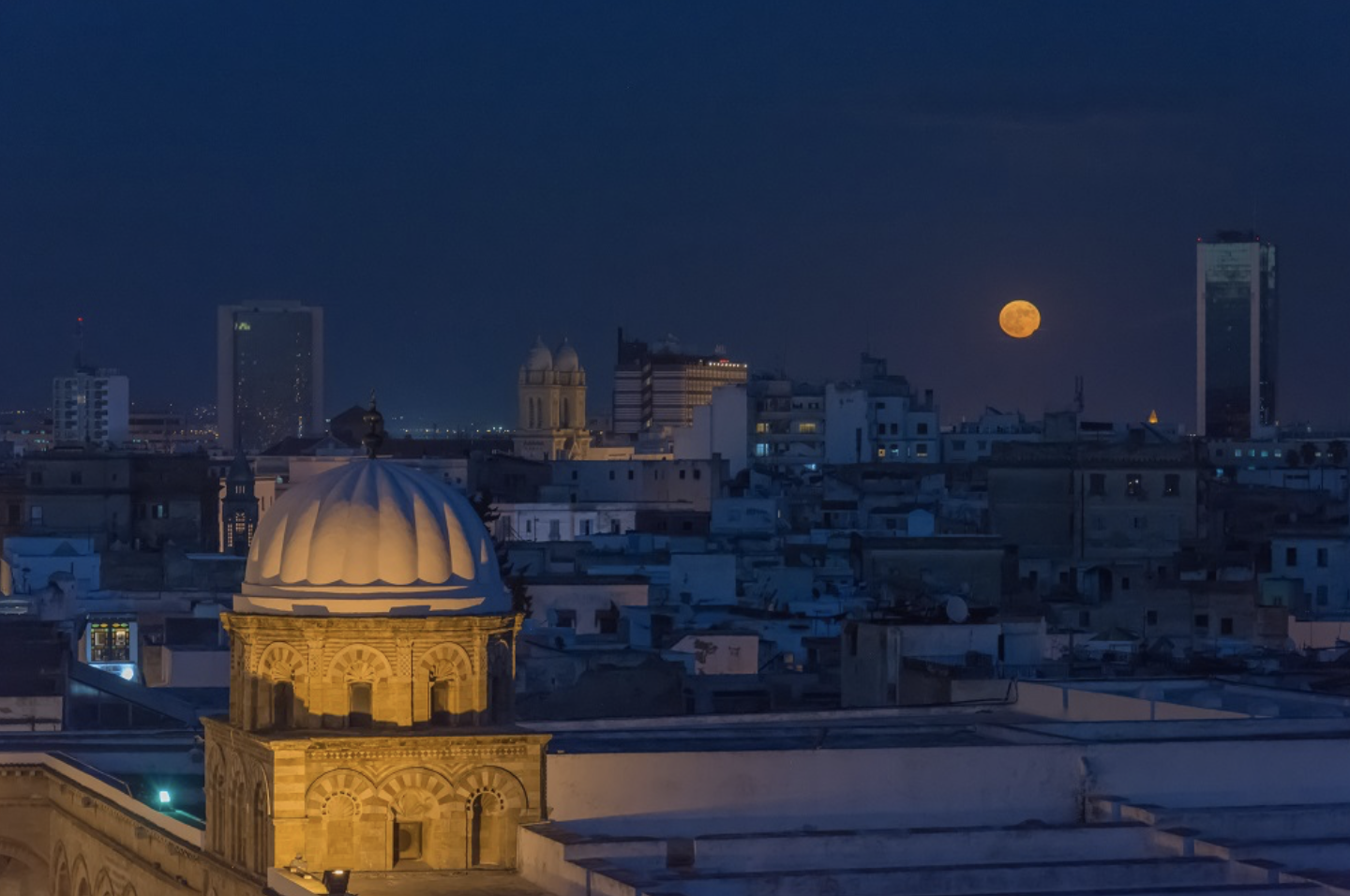
Zitouna mosque in Tunisia with full moon view (photo : http://www.tunisi.info)
On the eve of Ramadan 2024, our fellow museum volunteer, Emna Esseghir, gave us a very insightful talk about Ramadan. Emna hails from Tunis, Tunisia, and has been residing in Malaysia for the past six years. She has been a passionate volunteer guide at Muzium Negara since 2023. We affectionately refer to her as our Tunisian ambassador to Malaysia, as she has generously shared her knowledge of Tunisia and its culture with us. Her presentation provided a unique perspective on Islam, encompassing not only Tunisia and Malaysia but also offering a cross-cultural examination of Ramadan and Eid al-Fitr traditions and practices.
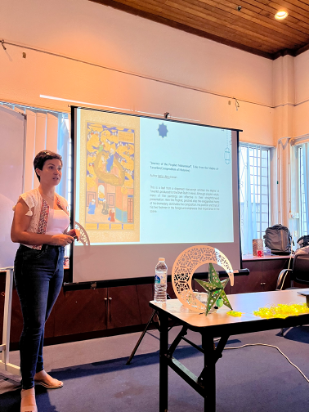
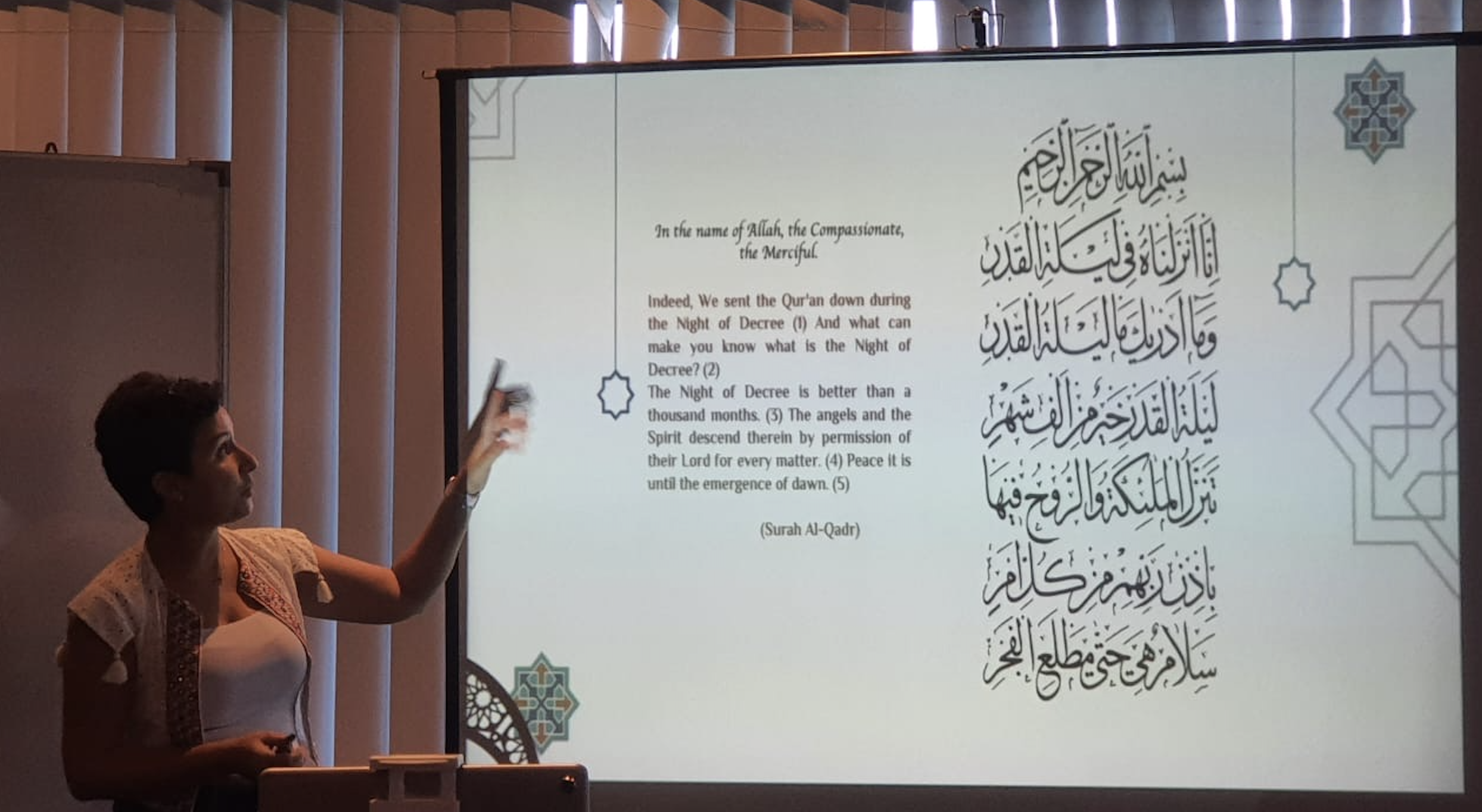
Emna Esseghir (photos: Noriko Nishizawa)
Brief History of Islam
It is believed that Islam started in 610 CE when 40-year-old Muhammad, who was born in Mecca in western Arabia, received his first revelation from the angel Gabriel. The night Gabriel appeared to him in a cave during a retreat is called the Night of Power/Destiny (Laylat al-Qadr).
Gabriel said to Muhammad, “Read in the name of your Lord…” until he learned the words by heart. The messages from Gabriel continued for the rest of his life, and these revelations were subsequently collected and codified as the Qur’an (literally “to read/recite” in Arabic), the Muslim holy book. The essence of Gabriel’s messages was simple: it affirmed the existence of one god, Allah, and declared that Muhammad was his appointed messenger. The messages also provided guidelines for proper behavior within the framework of a just and equitable society. Around that time, Mecca, the religious center, was a prosperous city, and the Kaaba, then a shrine and a place of pilgrimage housing the pagan deities, was worshipped by the Arabs. The Prophet Muhammad’s messages weren’t well received among the leaders of Mecca. In the face of opposition and persecution in Mecca, Muhammad and his followers emigrated north to another oasis town, Medina (Yathrib) in 622. This event, referred to as Hijrah/Hegira, proved to be a turning point for Islam because it marks the formation of the first community of Muslims. Muhammad continued to attract followers in Medina and also to fight off attacks against him and the faith with his army. Within a few years, Mecca largely embraced Islam as well, and the first thing Muhammad did upon his return to Mecca was to remove idols and rededicate the Kaaba to Allah. The Kaaba, which is a stone building, has become Islam’s holiest site, the Masjid al-Haram, and no matter where they are, Muslims always face in the direction of the Kaaba for prayer.
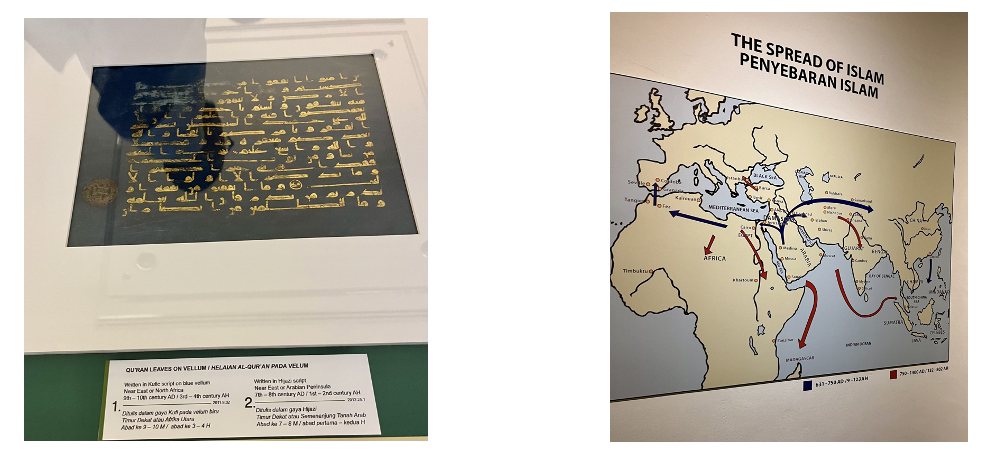
Leave from the Blue Qu’ran and The Spread of Islam at IAMM (photo: Noriko Nishizawa)
Muhammad died in 632, and the following 30-year period is called the Rashidun (rightly guided) Caliphate, led by a series of four caliphs. A caliph (a successor) is a representative of the Prophet who governs the Muslim community, both politically and religiously in the early period, and a caliphate is a political community governed by a caliph. First, Abū Bakr, who was Muhammad’s father-in-law and a close associate, was elected as the first caliph and then followed by Umar, Uthamān, and Alī. Under their commands, the Arab armies expanded the new faith and leadership in the Arabian Peninsula and beyond. They then conquered Syria, Palestine, and Egypt from the Byzantine Empire, and Iraq and Iran from the Sasanian Empire. The next caliphate, the Umayyad, conquered territory from Spain and Portugal all the way to India and Pakistan by the end of 750. The Ayyubid Caliphate became the largest and most powerful empire in the world by developing a religious, political, and cultural commonwealth. Interestingly, the conversion to Islam in the early period was quite slow because the expansion of the empires happened so fast. On the other hand, the spread of Islam in regions where Muslims are quite numerous today, like Indonesia, Malaysia, and sub-Saharan Africa, happened between the 13th and the 15th centuries quite quickly, through merchants and religious scholars.
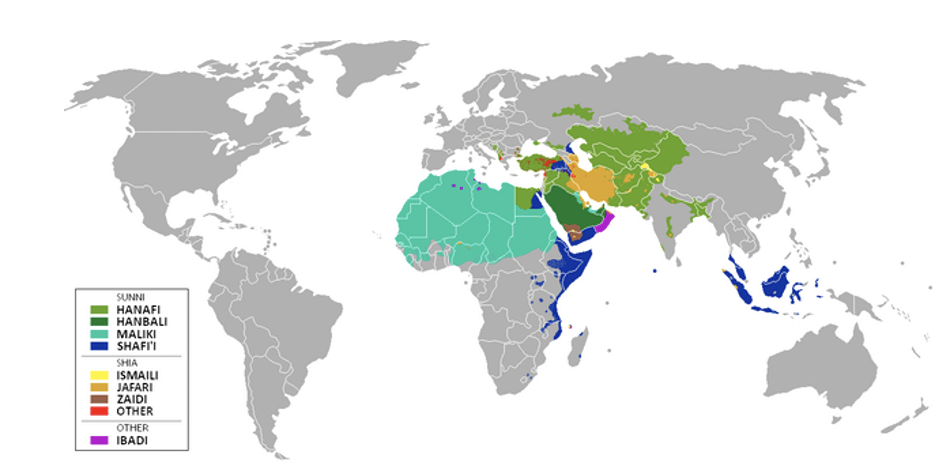
(Source: Wikimedia.org, this file is licensed under the Creative Commons Attribution-Share Alike 4.0 International license)
Emna showed us this map: Map of the Muslim World With the Main Madhhabs. She emphasized that as of 2020, there were 1.8 billion people, more than 25% of the world’s population, who practiced Islam, and Muslims were not only in Arab countries but also everywhere. Then she touched on the two main branches of Islam and some madhhabs/mazahib, referring to Islamic schools of thought. Sunni and Shia/Shīʿa are the two main branches of Islam, and around 85% of the Muslim population are Sunnis, with 15% being Shias (source: the Council on Foreign Relations). While Shias are concentrated mainly in Iran, Iraq, and Lebanon, Sunnis are the majority in more than 40 other countries. These two sects within Islam share most of the fundamental beliefs and practices of the religion, but they differ in doctrine, law, ritual, and religious organization.
The roots of the Sunni-Shia division can be traced back to the seventh century, soon after the death of Muhammad. Shias believe that Muhammad publicly designated Alī, his cousin and son-in-law, as the first in line of hereditary Imams (“leaders” in Arabic) from his family, whereas Sunnis believe that Muhammad did not explicitly declare a successor. Sunnis viewed the caliphs as both religious and political leaders in the early period. Over time, the caliphs functioned as political rulers, while the scholars (Ulamā/Ulema) were considered religious authorities and interpreters. For Sunnis, Imam is most commonly used as the title for a prayer leader at a mosque. In contrast, for most Shias, Imams are absolute leaders of the Islamic communities, since they believe that Imams should be spiritual descendants of Muhammad and are responsible for interpreting the faith, as well as improving the quality of their lives.
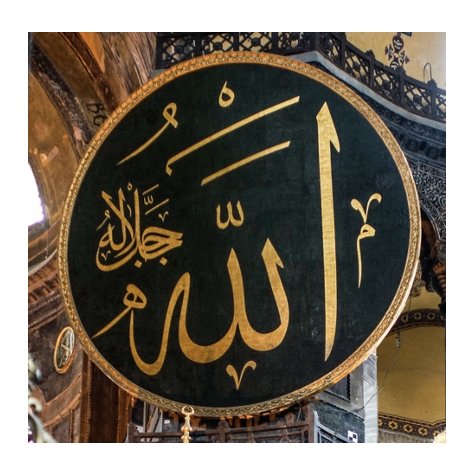
(Source: Calligraphy showing the word Allah in Arabic in Hagia Sophia, Istanbul, Turkey by Adam Kliczek, http://memoriesstay.com)
Madhhab means ‘a way’, and it is a method of interpreting the religion that binds a group or school of scholars together. Today, there are four major Sunni madhhabs: Hanafī, Hanbalī, Mālikī, and Shafi’i. For example, Tunisia is mostly Mālikī and Malaysia is Shafi’i. According to Emna, we don’t really see differences between Mālikī and Shafi’i in our daily life, but Mālikī, also called the ‘school of Medina’, could be a little more flexible in terms of customs and traditions compared to other Sunni madhhabs.
Understanding Ramadan: What You Need to Know About Ramadan
Overall:
(1) The term “Ramaḍān (رَمَضَان)” originates from an Arabic root denoting “extreme heat” or “dryness”.
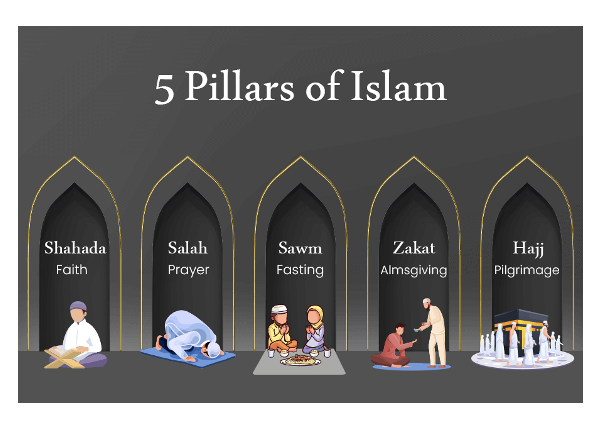
(2) Ramadan is the ninth month in the Islamic calendar and is considered one of the holiest months because it is devoted to fasting, one of the Five Pillars of Islam which are the core beliefs and practices of Islam.
(3) Ramadan existed before Islam. Ramadan is said to have been an important and holy month for the Arabs long before Muhammad introduced Islam. They stopped fighting and tried to meditate at temples and caves during that time. Muslims believe that the Night of Power happened during Ramadan.
The Islamic Calendar/The Hijri Calendar:
(4) The Islamic calendar plays an important role in the life of Muslims as it specifies the time for Ramadan, Eid al-Fitr, Hajj, etc. Little is known about the pre-Islamic calendar; however, some historians maintain that it was similar to the modern Islamic calendar. Although Arabs were already using the calendar based on lunar months, they didn’t have a specific number or term to register the year, and it became quite confusing. As a result, the second caliph, Umar, introduced the new calendar in 639. The Islamic calendar is a lunar calendar, and the Hijrah in 622 marks the beginning of the calendar. It symbolises the Muslim’s journey to fulfill all the Five Pillars of Islam: renewing the faith constantly, performing prayers, paying annual Zakat (a financial obligation to donate to charitable causes), fasting in Ramadan, and fulfilling the Hajj (a once-in-a-lifetime pilgrimage made to the Kaaba).
Fasting
(5) Fasting was already a common religious practice among the pre-Islamic Arabs, and they used to fast on Āshūrā (the tenth day of Muharram) to observe the day God parted the Red Sea to allow Moses and his people to escape Egypt. Muhammad also used to fast on Ashura. Actually, Ashura has become an important mourning day for Shias, because it was the day Imam Husayn ibn Ali, the grandson of Muhammad, was martyred in the battle. Even today many people still fast on Ashura. As for the fasting during Ramadan, it is believed that Muhammad received a revelation regarding Sawn (fasting) from the angel Gabriel two years after Hijrah, and then he established fasting as one of the holy month’s (Ramadan) practices.
(6) Food and drink aren’t the only things Muslims have to abstain from. There are other activities they also cannot participate in to cleanse their mind and soul. Fasting is obligatory for all Muslims who have reached the age of puberty, who are of sound mind, and who have good health. However, those who are in pre-puberty, old and frail, sick, pregnant, breastfeeding, menstruating or travelling are excused, but there are other requirements they must abide by.
(7) Sunni and Shia practice fasting slightly differently. Sunnis break their fast as soon as the prayer (maghrib) starts as the sun is no longer visible on the horizon. Whereas Shias wait until the end of the prayer which starts when the last ray of light vanishes and the sky becomes totally dark.
(8) Fasting is an act of worship bringing one closer to God, as well as a form of spiritual discipline and a means to empathize with those less fortunate.
How to Observe Ramadan:
(9) Ramadan begins 10-12 days earlier each year because the Islamic calendar year is shorter than the Gregorian calendar, allowing it to fall in every season throughout a 33-year cycle. The Islamic calendar follows the literal cycles of the moon, and each month of the calendar begins with the sighting of the early crescent moon. Telescopes as well as astronomical calculations and technology are used to establish the moon’s appearance. Consequently, the exact start of Ramadan is not confirmed until the day before, although an approximate start date is calculated in advance. Also the exact timing varies from country to country, depending on when local Islamic authorities in each country declare the sighting of the new moon. It is the same for the end of Ramadan. Emna told us that in Tunisia’s case, the country still sent out someone in each state to a higher place to sight the moon. It would be good enough to start Ramadan if even one of them (24 states) spots the moon.
(10) Ramadan is not all about fasting. Some of the special practices during Ramadan include eating a special pre-dawn meal called suhoor/suḥūr before starting the daily fast at dawn, and then eating another meal called Ifṭār to break the fast at sunset. During Ramadan Muslims also take part in extra worship such as Tarāwīḥ/Taraweehprayers (night prayers) observed by Sunnis in addition to the five daily prayers: Fajr (dawn), Zuhr (afternoon), Asr (late afternoon), Maghrib (after sunset), and Isha (night time). Also, towards the end of Ramadan, many Muslims make a special charitable donation which goes to the less fortunate.
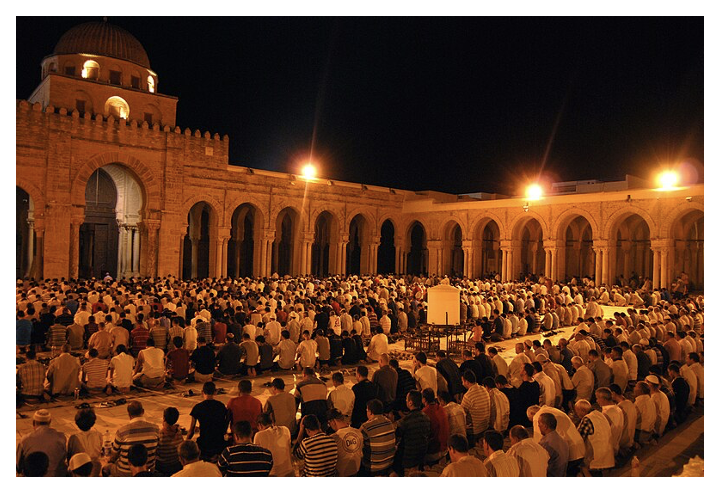
(11) The Night of Power is one of the most sacred nights in the Islamic calendar, and it is believed to be a night of great reward and significance. This night falls within Ramadan’s last 10 days. Although it commonly considered as the 27th night, the exact date is unknown. As a result, Muslims are encouraged to intensify worship and devotion during the last 10 nights of Ramadan, especially during the odd nights (21st, 23rd, 25th, 27th, and 29th ).
Ramadan Customs and Traditions:
(12) It is customary for many Muslims to break their daily fast and celebrate Eid al-Fitr by eating dates. Of course, dates grow in many Muslim countries and are quite nutritious. This custom goes back to the beginning of Ramadan, as it is said that Muhammad ate dates to break his fast.
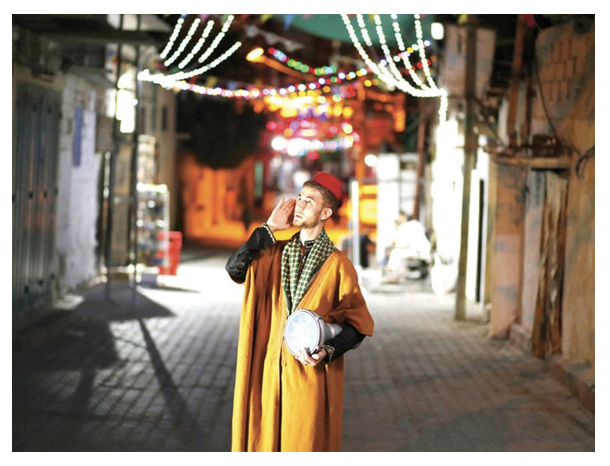
(13) The Ramadan drummers called Musaherati are one of the most important markers of Ramadan. Every year these volunteer drummers would roam the streets in their neighborhoods an hour before dawn to wake up people to have suhoor, by drumming, calling out people’s names, and even reciting poems. In the Ottoman and Andalusia cultures, the drummers even competed to claim who was the best! Musaherati is another tradition that almost disappeared in most cities.
(14) The adhān/azan (“announcement” in Arabic) is the Islamic call to prayer, usually recited by a muezzin who chants from a minaret five times a day. It is not Ramadan specific, but it is important particularly during Ramadan because people wait for maghrib to break their daily fast. According to Emna, although the call to prayer in each country sounds quite different, the words spoken in prayer are the same or very similar. The most notable difference in wording are the slight variations between Sunni and Shia. The beauty of the adhan lies in its melody – the rhythm and tone of the words captivate the listeners and make each adhan sound different. The adhan was developed during the Ottoman Empire as a creative way for listeners to be able to tell the time of prayer just by hearing the tone of the adhan.
Eid al-Fitr:
(15) Eid al-Fitr known as the “festival of breaking the fast” marks the end of Ramadan and is celebrated during the first three days of Shawwāl, the 10th month of the Islamic calendar. On the first day, people attend a special communal prayer at mosques during the day and then enjoy a feast with families and friends.
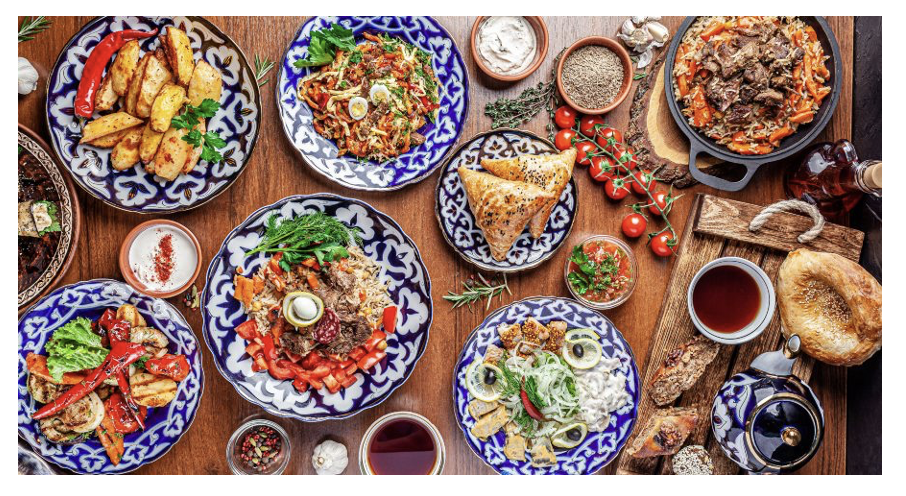
Emna shared many of her own personal experiences of Ramadan and described how festive Tunis was during this special time. All the shops and restaurants were open throughout the night, and there were many concerts as well. She said Cairo was even more festive than Tunis!
Emna enjoyed her mother’s cooking, and during Ramadan her mother made special dishes. Her mother also prepared a lot of food to share with other people, especially those in need. In Tunis, sometimes cannons were used for the call to prayer. We could still experience all of them today.
Emna concluded her talk emphasizing that Ramadan was not just about fasting, but was rather a time to help each other share joy.
References:
Suzan Yalman, The Birth of Islam https://www.metmuseum.org/toah/hd/isla/hd_isla.htm
Introduction to Islam, Khan Academy https://www.khanacademy.org/humanities/world-history/medieval-times/spread-of-islam
Sarah Pruitt, Islam’s Sunni-Shia Divide, Explained https://www.history.com/news/sunni-shia-divide-islam-muslim
Ramadan, Britannica https://www.britannica.com/topic/Ramadan
Indlieb Farazi Saber, The art of the adhan: The multiple melodies of the Muslim call to prayer https://www.middleeasteye.net/discover/adhan-muslim-call-prayer-melodies-maqams
UstazMuhammad Abdul Mateen Bin Hisham, 4 Intriguing Things You May Not Know About the Islamic Hijri Calendar https://muslim.sg/articles/4-intriguing-things-you-may-not-know-about-the-islamic-hijri-calendar
Dima Al-Sharif, AL Musaherati Tradition https://www.dimasharif.com/musaherati-ramadan-drummers/#:~:text=While%20during%20those%20days%20the,created%20specifically%20for%20the%20occasion.

 Museum Volunteers, JMM