By Marianne Khor
This year marks the 80th anniversary of the end of a terrible war that affected the entire world.
Brave men and women tried to withstand the horrors in their respective countries by joining the resistance and helping those most at risk to suffer from their oppressors, even at the danger of losing their own lives.
In Malaya, the Japanese occupation was a time of extreme hardship for the people.
Arrests and torture were happening daily, and people lived in fear of the unpredictable actions of the Japanese army, particularly the Kempeitai, under whose terror Sybil Kathigasu suffered physical and mental torture.
Sybil Kathigasu was born Sybil Medan Daly in Medan, Sumatra, on September 3rd,1899. Her father, Joseph Daly, was an Irish-Eurasian planter, and her mother, Beatrice Matilda Martin, was a French-Eurasian midwife.
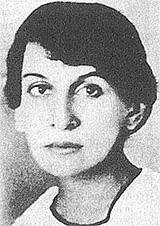
Sybil trained as both a midwife and nurse, and her fluency in Cantonese proved invaluable in the medical practice that she and her husband established together.
Sybil’s husband, Dr Arumugam Pillay, was a second-generation Malayan Tamil. To be able to get married in church, Dr Pillay converted and was christened Abdon Clement Kathigasu. They married in Kuala Lumpur on January 7th, 1919, in St John’s Church on Bukit Nanas.
After their first child died only 19 hours after his birth, the couple adopted William, an infant at the time. They later had two daughters of their own, Olga, who was born in 1921, and Dawn in 1936. The family then moved to Ipoh along with Sybil’s mother, where they established their own private practice.
When the Japanese forces, who had advanced from the North, reached Ipoh and started bombing, Sybil decided to move with her children and mother to Papan, a small mining town near Ipoh, while her husband stayed in Ipoh to continue to work in his practice.
Life became harder day by day, and many people in Papan needed Sybil’s help but were quite destitute. Sybil therefore decided to treat those who could not afford much free of charge.
All this while the people of Malaya were quite cut off from any news, as they were not allowed to own any radios or any type of communication with the outside world. Despite this, Sybil managed to get her hands on a shortwave radio to listen to news from the BBC daily. Only her family and a close friend knew about the radio, which she eventually replaced with another two sets. She nicknamed these shortwave radios ‘Josephine’.
They would listen to the radio every evening, after which it would be taken apart and hidden away in a secret compartment under the floorboards to be assembled again the next day. Her family warned her if the Japanese found out about the radios, it would be disastrous.
But she insisted on the need for this sole connection to the world. Her strong faith in God and her belief that the British would soon return to Malaya convinced her to take these risks. Unfortunately, the existence of these radios contributed to Sybil’s arrest.
The Kempeitai immediately arrested anyone who was suspected of committing any crime against the laws they had imposed. Suspects were subjected to various methods of interrogation. Many prisoners endured severe beatings and water torture, leaving them in excruciating pain and barely clinging to life.
Sybil was always very careful not to disclose any of her actions to anyone who was not necessarily involved. She did not want to put them in a situation where they would be forced to give away information under torture.
The area around the town of Papan was where one of the local headquarters for MPAJA (Malayan People’s Anti-Japanese Army) detachments operating in Perak was located.
Despite the dangers, Sybil and her family became increasingly involved in the resistance against the Japanese occupation.
These guerrillas had to hide in the jungle and often needed medical assistance, which was when Sybil was approached to treat them. The sick and wounded guerrillas were brought in through the back entrance of her dispensary, often under the cover of night to avoid detection.
This was extremely dangerous for her and her family, but she strongly believed that it was her duty to help them. The guerrillas trusted her, and she became very close to them, passing on messages and medication.
All this while Sybil was aware of the risk she was taking and was prepared to be captured and put to death by the Kampetei. Her only fear was that anything might happen to her family, and she prayed for their safety daily. Her unwavering faith kept her strong and firm in voicing her opinions and continuing her secret work against the Japanese.
When Sybil was eventually detained by the Japanese police, it was the beginning of two long years of physical and mental torture, but she never gave away any information. Even when her husband and son were arrested, she remained unresponsive to any questioning under torture and kept praying for strength.
Only when Sybil’s youngest daughter Dawn was captured and taken to her in prison did she nearly lose her resolve. The Kempeitai strung the little girl from a tree with a fire burning below while Sybil was forced to watch. The child begged her mother not to give in. After Sybil’s desperate pleading, some Japanese soldiers took pity, cut the rope and freed the child.
Sybil was then sent to Batu Gajah prison, which provided slightly better conditions than the Ipoh Kempeitai facility. At this time, she was already suffering from an injured spine and a broken jaw caused by the boot of a Kempeitai soldier. Sybil eventually lost her ability to walk.
When Sybil, her husband, and son faced trial, she was prepared for the possibility of receiving the death penalty. She was, however, given a life sentence, while her husband was sentenced to 15 years in prison and her son to just 3 years.
On August 15th, 1945, the Japanese capitulated, and the British were back in Malaya. British officers from the military intelligence became aware of Sybil’s experience and offered their help. She asked for her husband and son to be released from Taiping Gaol and for medical treatment for herself.
Sybil was then flown to Britain, where she was treated at the government’s expense. During this time, she began to write her memoirs, “No Dram of Mercy”.
On November 7th, 1947, Sybil Kathigasu was awarded the George Medal by King George VI
at Buckingham Palace for her bravery during the Japanese occupation. She is the only Malayan woman who received this award.
While doctors in Britain treated her for two years, she was eventually able to walk again.
Before she could make a full recovery, septicaemia resulting from her fractured jaw, led to her death in June 1948. She was 49 years old. Sybil was initially buried in Lanark, Scotland. In 1949 her body was returned to Ipoh where she was laid to rest at the cemetery of St. Michael’s Church.
There is very little firsthand knowledge of women’s lives during the Japanese occupation. Sybil Kathigasu’s memoirs are therefore an important source of information. Her remarkable story of strength and courage should not be forgotten.
Sybil Kathigasu died of the injuries inflicted on her by the Japanese Kempeitai. They broke her body, but they could not break her mind.
The House of Sybil Kathigasu in Papan, which housed her clinic, has been turned into a museum and can be visited upon request. Sybil Kathigasu’s story was adapted into a TV drama titled ‘The Price of Peace’ as well as a 10-part miniseries called ‘Apa Dosaku’ starring Sybil’s grandniece Elaine Daly.
Bibliography
- No Dram of Mercy, Sybil Kathigasu G.M.
- Wong Soak Koon, Trauma and Narrating in Sybil Kathigasu’s No Dram of Mercy
- Dictionary of Christian Biography in Asia
- Visit Perak https://visitperak.com.my/sybils-clinic-papan-museum

 Museum Volunteers, JMM