En Nadzrin with one of the keris’ in his collection
The presenter for the topic of keris which is a Malay weapon was En Mohd Nadzrin bin Abdul Wahab, who among his other editing and translation credentials, is the founder of several Malay culture-themed blogs and websites. Of mixed heritage ranging from Yemeni, Iranian, Indian, Malay and Portuguese, he has studied seven silat forms (Malay art of self-defence) and trains in three of them. He has won several silat competitions in Gold, Silver and Bronze categories. He has a day job as a corporate trainer at Accenture Solutions. En Nadzrin arrived in full Malay traditional costume complete with gold-black sarong, “songkok” (a Malay hat) and traditional sandals, a sparring partner for silat demo purposes and his personal collection of keris and books on silat.
En. Nadzrin discussed the history, origin, design rationale, ownership, care, myths and geographical implication of the keris.
There are many theories on the origin of the keris. One of this states that it originated in AD 1361 in the Malay Archipelago of Majapahit at Nusantara on the island of Java. In 2005, UNESCO designated the Indonesian keris as the “Masterpiece of Oral and Intangible Heritage of Humanity”. According to En Nadzrin, his silat master Guru Jamaludin Shahadan stated that the keris is the most scientifically designed weapon (2004).
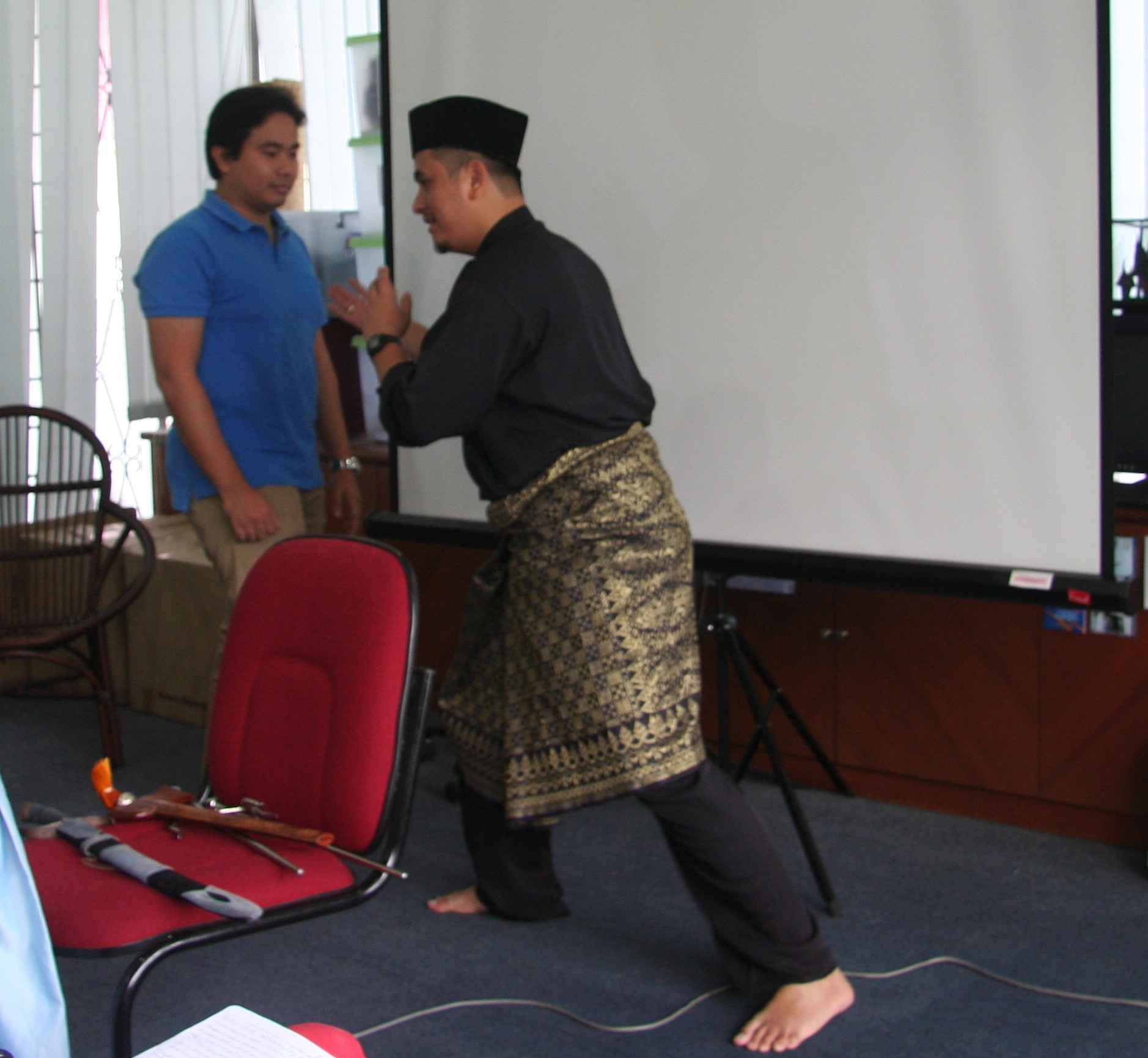
Encik Nadzrin demonstrating the teratai movement of silat
Silat masters requested the blacksmiths to design a weapon that could be used as a secondary instrument at close combat and that does not need any form of training in its usage. It must be simple to use and conforms to the ergonomics and utility of the hand. En Nadzrin demonstrated how the “teratai” (lotus) movement of the silat allows the keris to penetrate into critical organs with just one stab. The most important parts of the keris are the two last “lok”(waves) of the blade that allows it to penetrate into the nape of the neck, the lung, stomach, heart and the part between the anus and scrotum and bring immediate death to the victim with just one jab. Traditionally the blade of the keris is made of 2 metals, usually nickel and iron but now also steel. The hilt must be rough and non-slip and the sheaths can be made of wood, ivory, horn of female buffalo and bone.
The hilt of the Malay keris is pistol shaped and less ornate than that of the Indonesian kris. The Indonesians prefer to work in metal to allow for a more ornate design thus increasing the value of the keris whilst the Malay keris is commonly sheathed in wood. Traditionally, Brunei, Singapore and Sumatra prized their keris as a form of weapon whilst Bali and Madura considered them as a magical talisman. The Bugis, being taller and bigger in physique, designed the hilt of their keris to be bigger, wider and longer. Sulu keris, being heavy, was used for slashing. In Brunei, Singapore, Malaysia, the keris is either treasured by aficionados as collectors’ or heirloom pieces or preserved by silat practitioners which means there is smaller demand of keris as a whole but those being sought are specially commissioned at a higher price. These are usually made in Kelantan. A good keris sells about RM600. Some master craftsmen still have a backlog of orders by several years. By contrast, Indonesia has a demand for simple keris as it is considered more of a talisman. Only the Malay royalty still regards the keris as a symbol of prestige and power. The Sultan has a personal keris and the longer keris panjang (long) or keris kuasa (power) which are passed down through the royal generations. In the olden days, the keris panjang was used as a messenger tool by the king’s emissary and also for execution.
Legends of the keris having magical powers includes re-directing fire, killing by pointing, warning the owner of danger. Although the keris is capable of maiming its victims and causing death, ironically in Malaysia, it is not considered illegal to possess one. To-date, En Nadzrin stated there has been no case of injuries or deaths by keris in Malaysia in modern times.
The Keris can be cleaned with brasso or by the traditional method of dipping in coconut water, then rubbing the blade with lemon and smoking it with incense which does not leave a white residue.
The presentation was very engaging as we had the chance to watch a silat demo and how the keris is used in close combat and the opportunity to touch and see the the keris up close and personal.
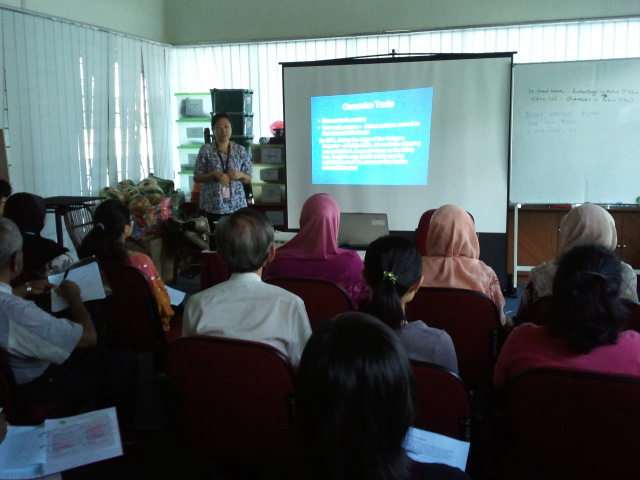
This week, our schedule was a bit changed and we started by listening to Professor Dato’ Dr Nik Hassan Shuhaimi bin Nik Abdul Rahman, discussing the early kingdoms in Malaysia before the rise of Islam; covering topics in Gallery B of Muzium Negara.
Professor Dato’ Dr Nik Hassan discussing Early Malay Kingdoms with Batch 16 on 9 Oct 2012
Professor Dato’ Dr Nik Hassan is the President of the Association of Malaysian Archaeologists and the author of a number of books on archaeology. He has been (in his own words) a “contractor” to the museum for the past 17 years and is an authority in the field of archaeology and pre-Islamic Malay Culture and Civilisation.
He started his talk with a short overview of the tools available for reconstructing the history of this period from various sources and highlighted the difficulty of combining archaeological evidence with evidence from literature into a coherent story that is reliably dated.
He then introduced the different Malay kingdoms, their rise as well as insights into the evidence of the existence of these kingdoms (inscriptions, statues, candi, graves …). He went through a series of pictures of artefacts and maps of this period, giving us a nice visual impression of this extensive overview. He ended his talk with a quick overview on the current debate on the foundation of Melaka in 1262 vs 1400s.
After Dr Nik’s presentation, our team did a series of 3-minutes presentations, from the coconut tree, to the Gupta Stone, the tin animal money, the Ming export ceramics to the arrival of Islam to Melaka.
We ended our session by a Tour of Gallery B with Lee Choo Sim, an engaging story-teller.
Herbs, of the tongkat ali variety, usually spring to my mind when traditional medicine is mentioned. Hence the ongoing exhibition on traditional medicine at Muzium Negara was a real eye opener. Titled “The Magic of Traditional Medicine”, the exhibits range from conventional herbs (and maybe some not so conventional) to demon exorcism ceremonies.
On Monday 8 October, a group of us from Museum Volunteers were fortunate to be taken on a guided tour by Hayati, a curator with the museum who had been heavily involved in the research behind the exhibition. Hayati explained that the exhibits were grouped into 7 main areas showcasing the different aspects of traditional healing including soul healing songs, incantations, dreams and meditation, physical reflection, trance and possession, charms for protection as well as herbs and other material used for recovery. There is magic and there is science – both the rational and irrational are combined to make an exhibition that has something of interest to all.
In readiness for a spot of black magic
The exhibit on the right is what first greets visitors entering the exhibition. It has nothing to do with healing but it depicts a magician preparing to summon evil spirits to help him fulfill the request of his client. A must in this ritual is the skull of a pregnant woman who died while still carrying her first child. Thankfully, as this requirement is not easily fulfilled, not too many of these ceremonies would have been performed.
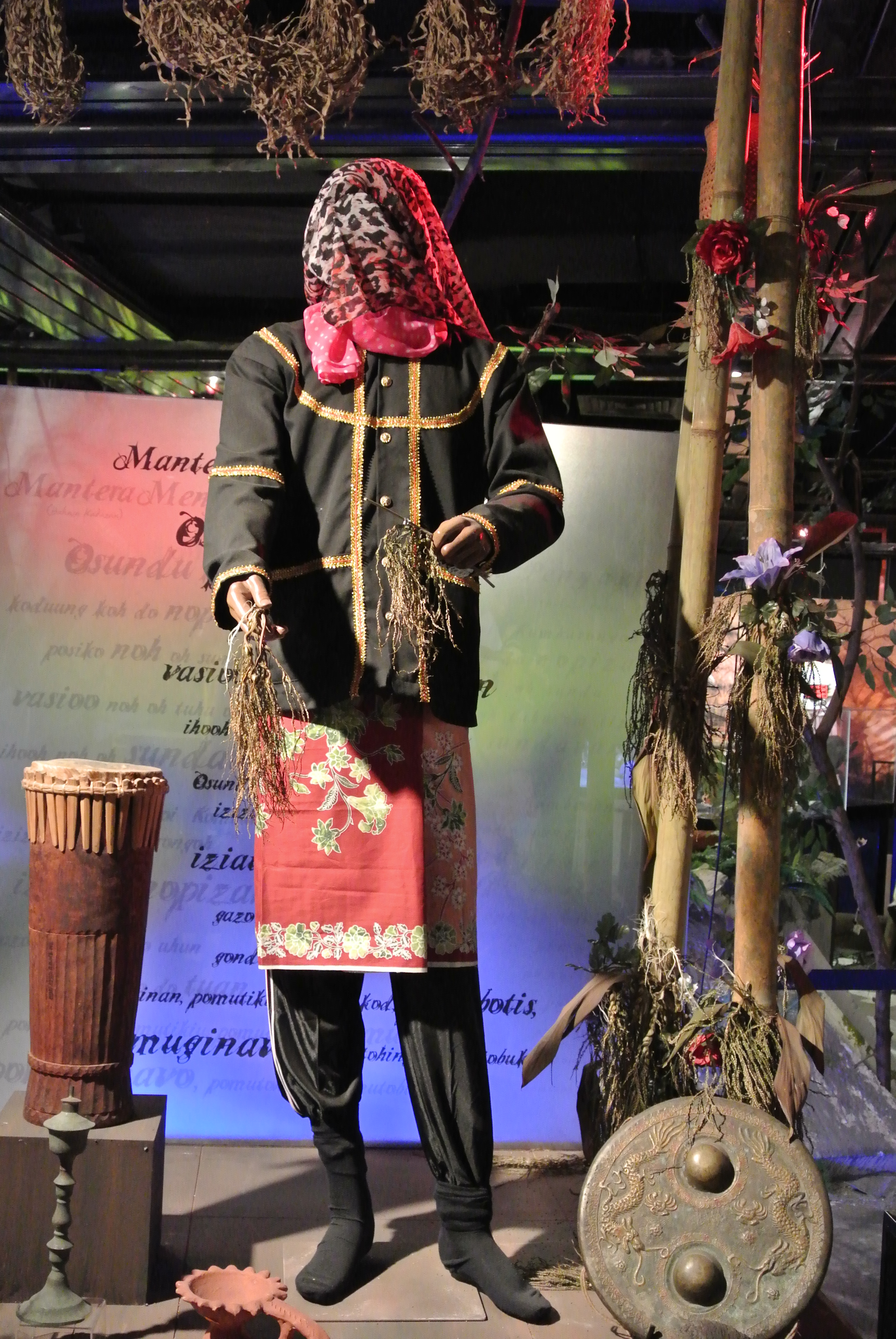
Barasik Ritual
Main Puteri is a healing ceremony which used to be carried out in Kelantan and that uses music and dance in the healing ritual. The bomoh (witch doctor), while dancing and acting out, communicates with the spirits that had been causing the illness of his patient. The Main Puteri can be performed without the healing component as it is theatrical and as such, entertaining by itself.
Barasik healing is carried out by the Murut tribe from the Tenom district in Sabah. In this healing ceremony, the witch doctor known as the Babalian wears a special black gear (as shown in the picture on the right) that includes covering his face. Music is also key to this ceremony with the drum forming the main musical instrument.
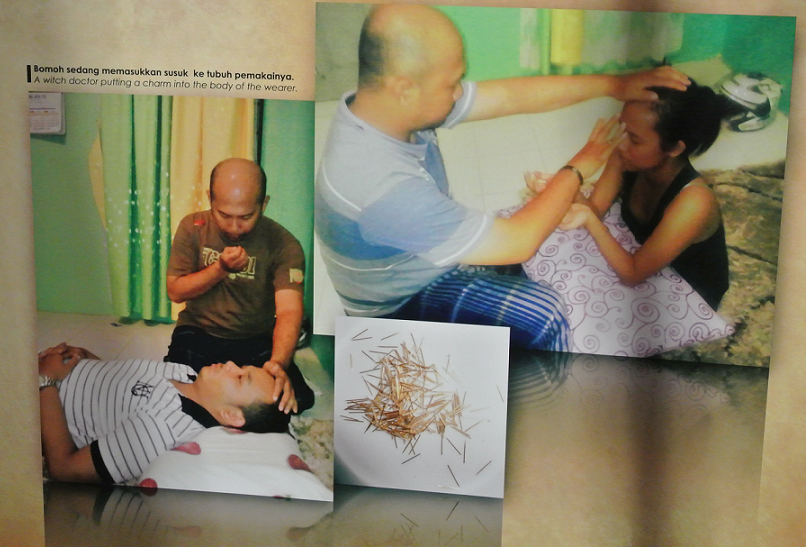
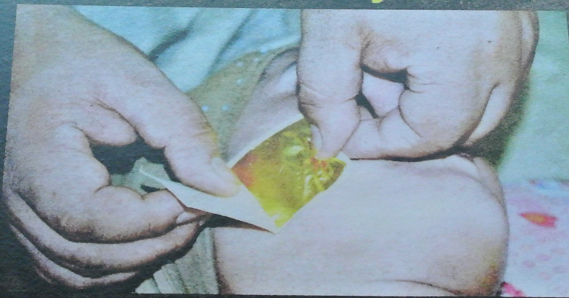
Susuk witch doctors inserting the implants into their patients
The desire to look beautiful is universal. Long before there was plastic surgery, there was Susuk, which is a process through which charms in the form of foreign substances are inserted into the body. The implants include gold, silver, iron and even diamonds. Unlike plastic surgery, susuk does not change the appearance of the patient but it makes the patient appear beautiful to others.
The picture on the left shows the implants being removed. They must be removed before death or the patient will suffer a slow, agonizing death.
Apologies if you were having a meal while reading this.
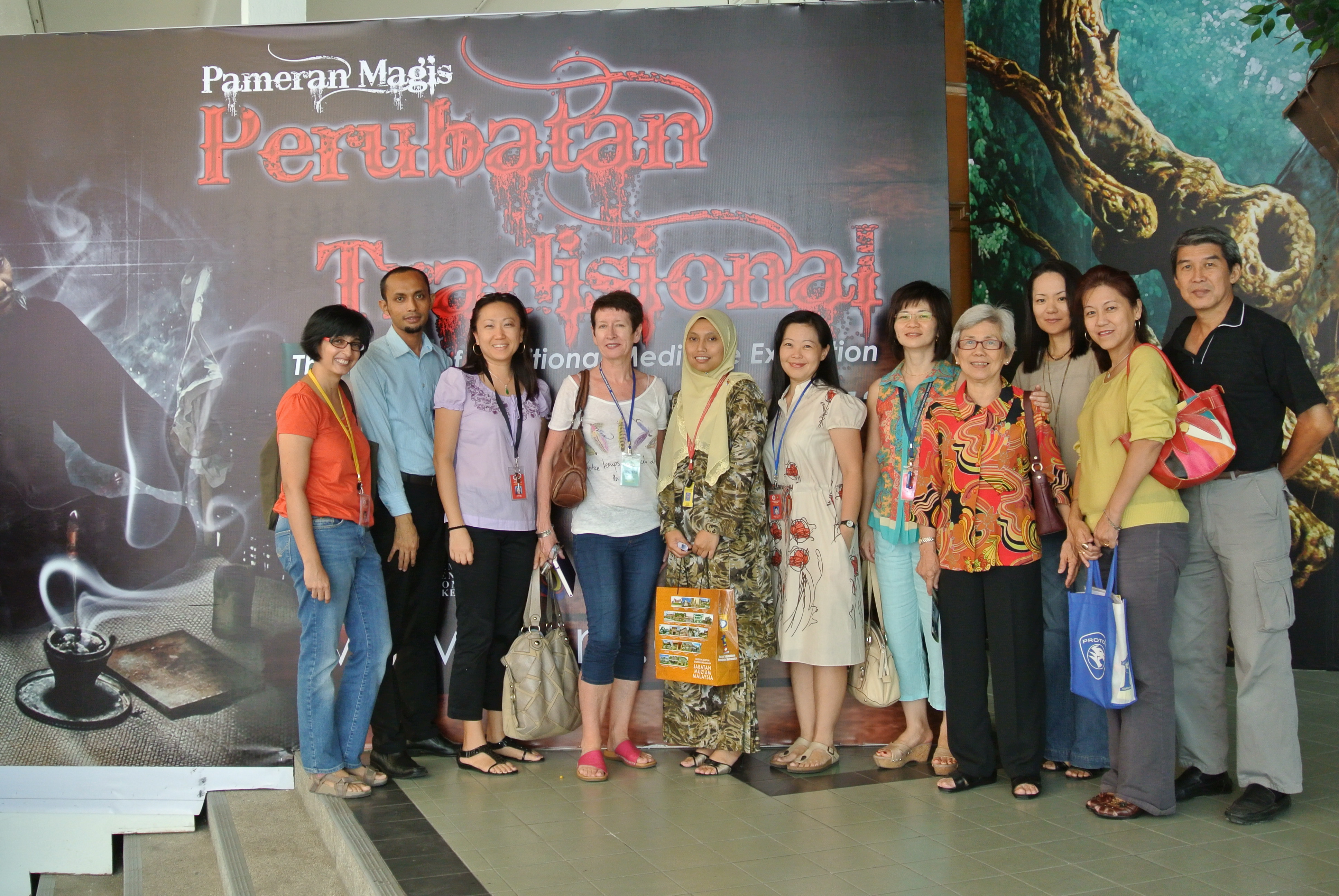
The group that attended the guided tour. The curator, Hayati, is fifth from the left.
All in all, it was an excellent exhibition and a very good tour. For MV volunteers, if you want to catch the tour, there will be another session on Monday 5th Nov at 10.00am. Please do send an email to mvmqueries@yahoo.com to book a spot.
One of the speakers on Tuesday 02 Oct was En. Ahmad Hakimi Khairuddin who is with the Department of Malay Socio-Culture / Fine Arts, Academy of Malay Studies, University of Malaya. En. Hakimi defined the meaning of archaeology and took us through the early phases of man, the Stone Age (Palaeolithic, Mesolithic and Neolithic) and the Metal Age (Copper, Bronze and Iron). Although archaeology can mean different things to different people depending on their perspective be it a historical perspective, art history, antiquarian or anthropology, it is essentially a reconstruction of the past, to understand a way of life, to then preserve this knowledge for future generations being mindful not to do so for personal gain or for sensationalism.
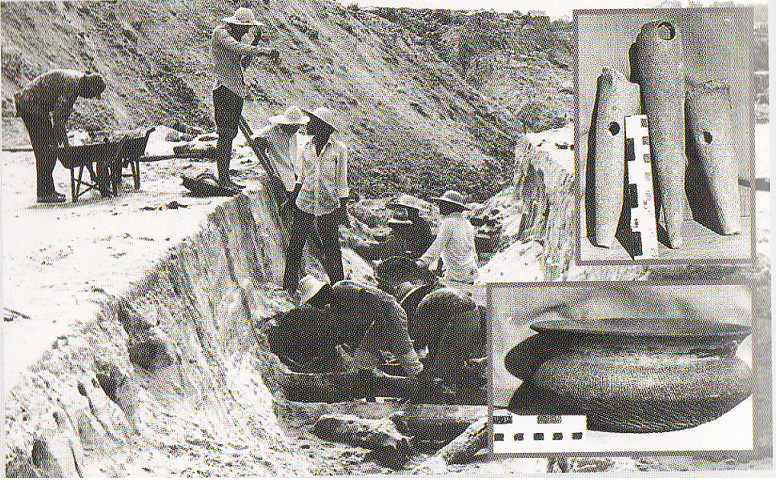
Neolithic artefacts discovered at an open site at Jenderam Hilir, Selangor (photo taken from the Encyclopedia of Malaysia – Early History, pp20)
Archeology provides through the study of the material remains, how man made sense of his environment and by providing a context through the material evidence, the study of archaeology can be streamlined by providing both the sequence of events and through stratigraphy, documenting as well as dating the sequence, thus providing a detailed analysis.
In Malaysian Archeology the three main time differences are Prehistory – a time period before the existence of written documents, roughly 2.5 million years ago until 1 B.C.E, history a time period with clear documentation, roughly 1,000 C.E until yesterday and Proto-History, a time period between Prehistory and History (i.e 1 C.E until 1,000 C.E), where history of the area can be reconstructed from external writings (mostly Indian, Arabian, Greek and Chinese) but local records do not exist.
En. Ahmad Hakimi then took us through the tools that were created during these early ages and the many sites in Malaysia where such evidence can still be found.
Two interesting presentations had been planned as part of the MV training on 29 Sept and the trainees arrived bright and early.
First off was Karen Loh with an interesting talk titled Mysteries of Malaysian Shipwrecks. Karen is the President of Museum Volunteers as well as the Director of Nanhai Marine Archaeology, which has salvaged 10 shipwrecks off the coast of Malaysia in collaboration with the Department of Museums and Antiquities.
Karen, presenting Mysteries of Malaysian Shipwrecks
She discussed some of the shipwrecks found around Malaysian waters as well as the reasons behind the many shipwrecks found in the region. Most of the sunken ships excavated had been carrying ceramics from China, Thailand and Vietnam and Karen discussed the importance of these ceramics as time markers. The designs and styles of the ceramics change over time and hence can be used to ascertain the time-period of an archaeological dig. Karen also discussed the consequences of the Ming ban which saw a decrease in the supply of chinese goods.
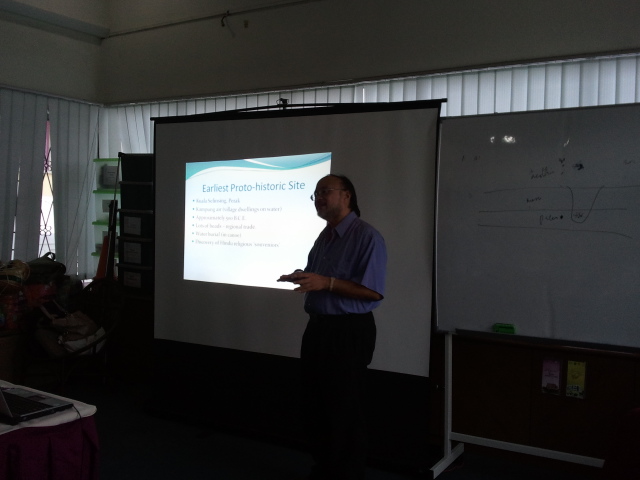
Encik Ahmad Hakimi bin Khairuddin then discussed Archaeology in Malaysia. Encik Hakimi is a lecturer with Universiti Malaya (Department of Malay Culture) with a keen interest in cultural anthropology as well as archaeology. Encik Hakimi has a Masters of Arts in Anthropology from the Wichita State University and is currently pursuing his PhD.
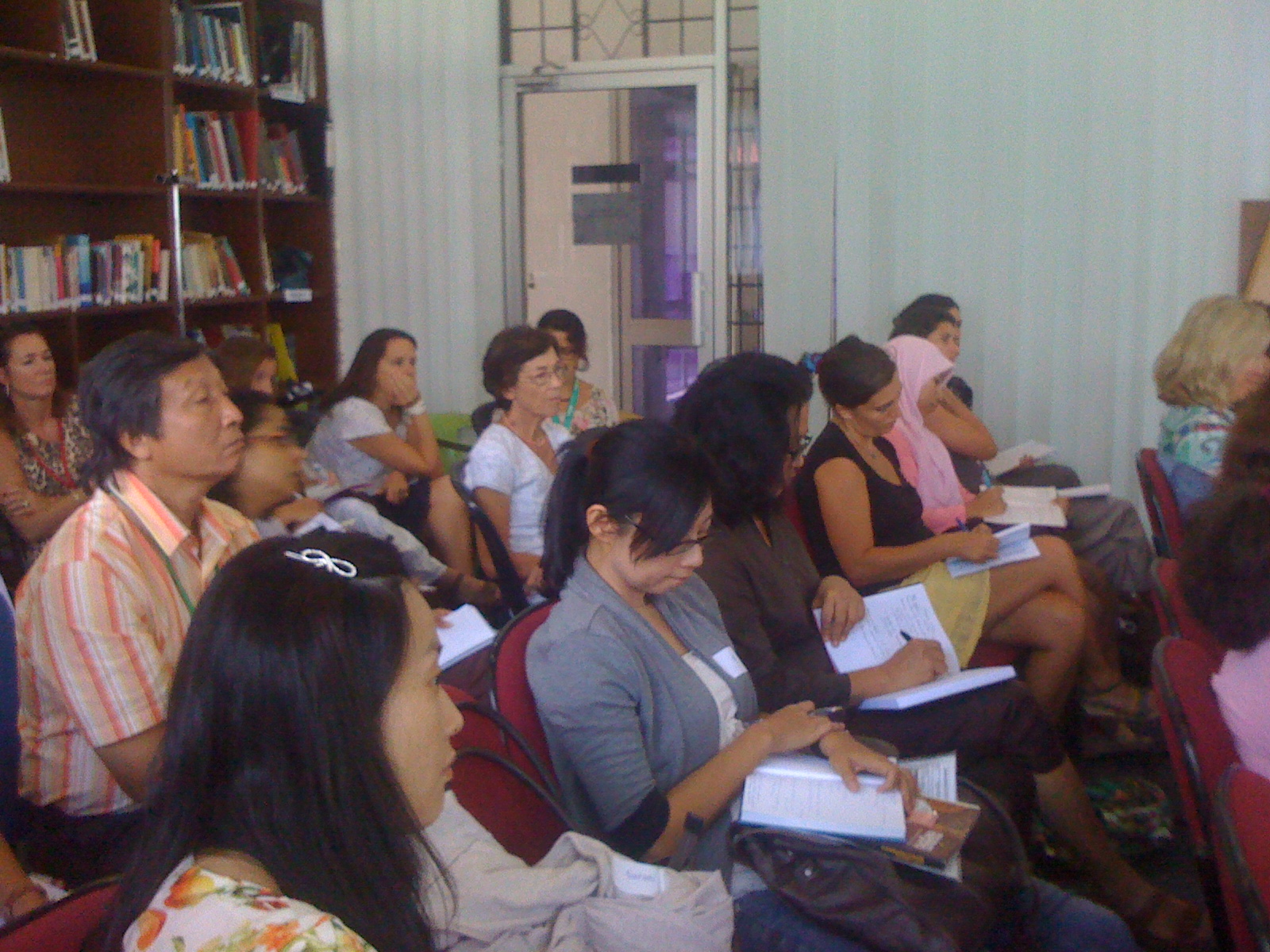
En Hakimi with his riveting talk on archaeology in Malaysia
En. Hakimi started off by explaining the difference between prehistory, protohistory and history. He then briefed the trainees on the stone and metal ages in Malaysia touching on possible homo erectus sites in Malaysia, the Gua Cha burial site and Kuala Selinsing, the earliest proto-historic site in the peninsula. He rounded off with a discussion on Lembah Bujang, the earliest Malay Kingdom in the peninsula. Throughout the presentation, En Hakimi stressed the importance of looking at a broader context to explain an archaeological find as well as the importance of not jumping to conclusions but taking the time to understand all the variables associated with a find. En. Hakimi left the audience with some thought provoking questions.
The trainees were engaged throughout both presentations and had lots of questions for both presenters. Next Saturday 6 October, the trainees can expect two more interesting talks – a presentation on Gallery A of Muzium Negara by Lawrence Maille, vice president of MV and a talk on presentation skills by Stuart Wakefield, secretary of MV.
MV runs a special programme for schools whereby schools, organising trips to Muzium Negara, can request MV’s help. The volunteers will engage the students in activities that are fun and educational. Led by Cay Maru, the MV School Programme Group has responded to the requests of many schools, both local and international. Below are MV’s interaction with two of these schools in 2012.
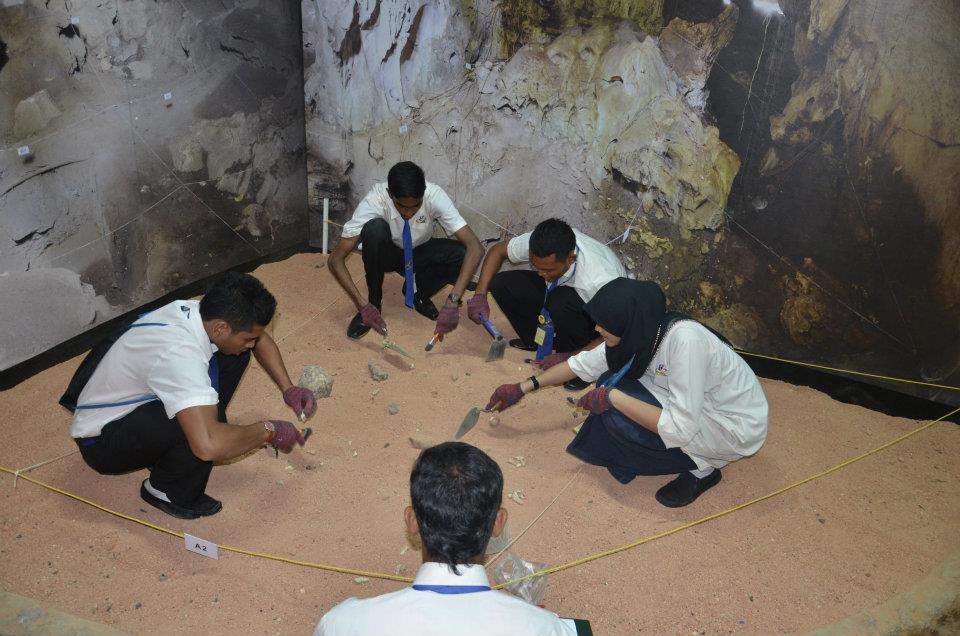
Bukit Jalil Students having a go at Archaeology
84 students and 4 teachers from Bukit Jalil Sports School visited Muzium Negara on 25 April 2012 and they were treated to a fun packed day.
In addition to interesting activities in the indoor galleries which included working through an activity worksheet, the students also had the opportunity to experience working as an archaeologist at the Discovery Room.
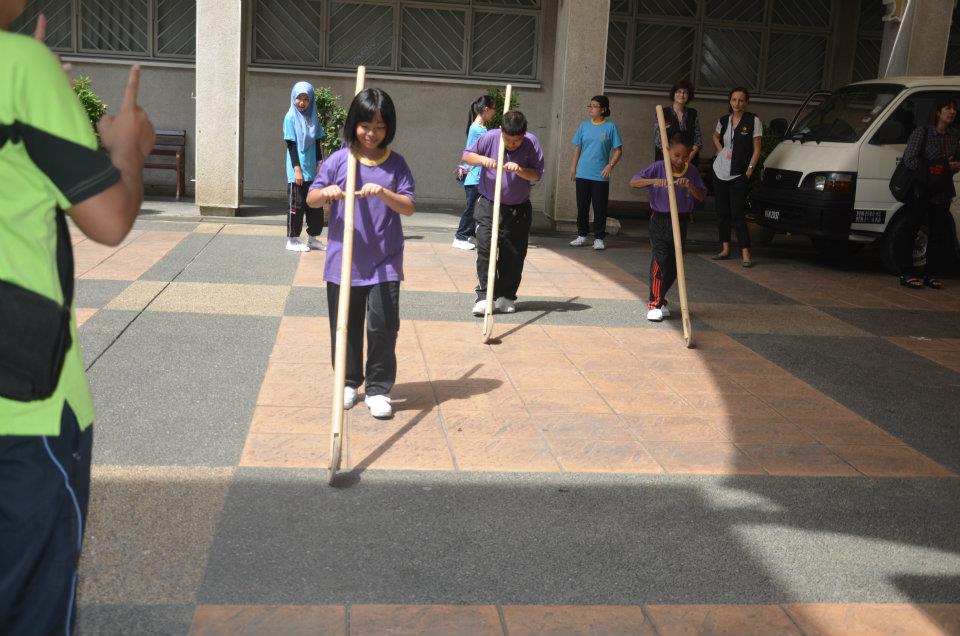
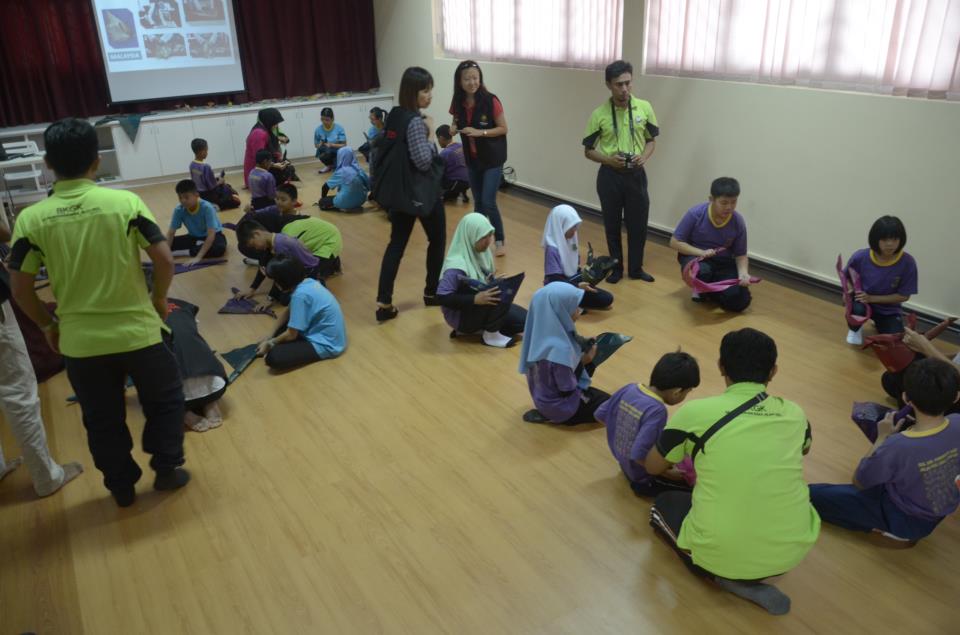
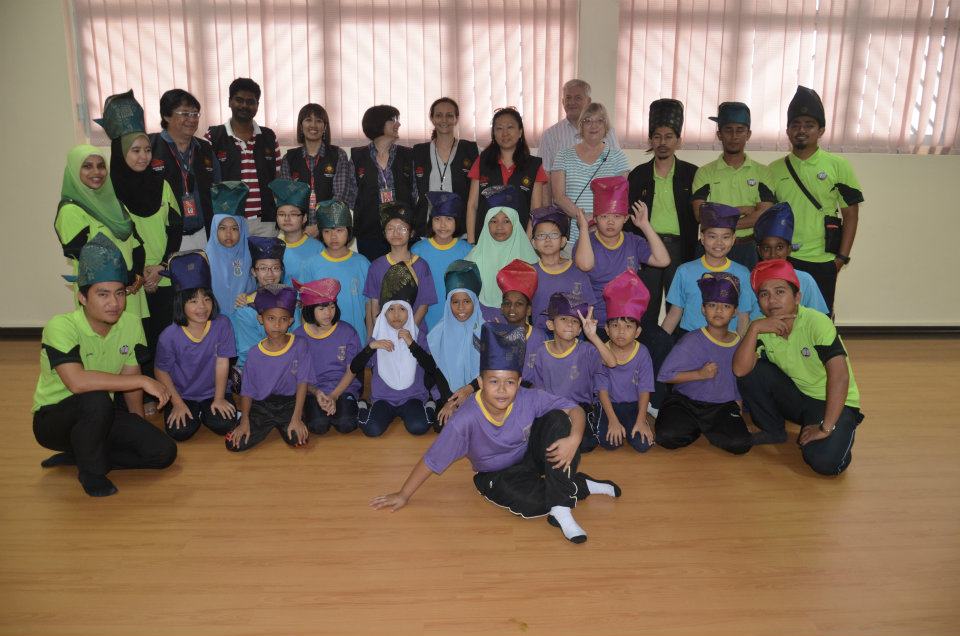
On 5 July 2012, MV played host to 21 students and 6 teachers from the Sekolah Kebangsaan Jalan Peel KL, which is a school for hearing impaired students. The students were treated to a guided tour of the indoor galleries. Other activities included folding a tengkolok at the Discovery Room and participating in traditional games at Dataran Muzium.
SK Jalan Peel students having fun with traditional gamesSK Jalan Peel students folding tengkolok at the Discovery roomVolunteers posing with students of the SK Jln Peel for a group photo
Batch 16 is now well settled into its course, having just enjoyed our second session of training. It was another full programme with the usual information overload. By the time 12.30 came round we were all extremely hungry (does brain work burn so many calories?) and our heads were spinning! But it had been a fun and rewarding morning’s work.
First up were Asma and Marie-Christine, who introduced the Whole Brain Principle and gave us the results of our Whole Brain questionnaires. Thankfully we all have them (brains, that is!) but unfortunately none of them are complete. Everyone tends to favour one of four aspects: Facts, Form, Future, or Feelings. This will, of course, impact the way in which we approach research, planning and presentation. To correct this imbalance, we have now put ourselves into groups based on the results, mixing the brain types. Would that perhaps be a re-working of the old adage: ‘4 brains are better than one?’ With any luck we may now be able to put our heads together with our new partners to be more effective learners!
Rose and Hayley then gave specimen 3 minute presentations: Rose showing how not to do it by overrunning the time (hey, I had quite a task summing up the Bugis AND The Minangkabau in 3 minutes!) I promise to be more organized next time! Well done, Hayley, for being spot on 3 minutes with your interesting talk on gambier.
Our first main speaker was Encik Kamarul, the Director of Muzium Negara, who took us on a lively journey through the museums of Malaysia and the history of Muzium Negara. It was a thorough and enlightening talk. Thank you so much for giving so freely of your time – and even keeping the transport ministry officials waiting on our behalf!
The session was rounded off by Stuart with an in-depth study of the presentation skills we require for guiding. His talk was crammed with useful hints and very pertinent examples of the practical side of taking a tour, delivered in his usual charming, laid back style. There was so much that we needed to hear – thank you for preparing the notes and showing us how it’s done! By the way, I did notice that you broke one of your golden rules…’be interesting but not amusing’. Personally, I love your witty asides. It always makes it easier to learn when one is entertained as well as informed!
September saw the start of the 2012 MV new guide training. A very big welcome to all our new trainees. Batch 18, our Japanese Group, kick-started the training with 20 trainees on 12 September.
This was followed by Batch 16 which commenced training on Tuesday 18 September with 19 trainees and with another 8 expected next week. This group consists of 8 different nationalities. Although Malaysians make up the majority, there is a large contingent of French enthusiasts as well. We are also lucky to count among our new recruits experienced guides who previously volunteered at museums in Italy, Indonesia and Singapore.
The Tuesday Batch 16 had a very clear introduction of Gallery A by Laurence Maille, MV vice President. Laurence gave an insightful overview of the archaeological dating system and the history of Malaysia with a focus on the storyline of Gallery A of Museum Negara which focuses on Prehistoric as well as Proto-historic Malaysia.
Puan Zanita Anuar giving a riveting talk on the history and structure of Muzium Negara and Jabatan Muzium Malaysia to Batch 17 on 22 September 2012.
Batch 17 commenced training on Saturday 22 September with 21 trainees. This group consists of Malaysians and 1 Polish national. Batch 17 received a wonderful start with a welcome address and absorbing talk by Puan Zanita Anuar, Director of Museums Innovation on the history and structure of Muzium Negara and Jabatan Muzium Malaysia.
If you are a member of MV JMM and would like to refresh your knowledge, Laurence will be addressing the Saturday Batch 17 on October 6th. Many other interesting talks have also been scheduled and the complete training schedule can be viewed on Yahoo Groups. All current guides are welcome to these sessions but, if you are coming, please do register your attendance with mvmqueries@yahoo.com.
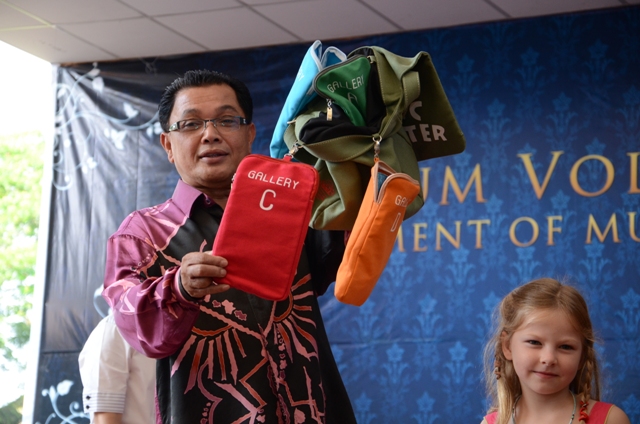
En. Wan Jamaluddin showing the contents of the slings bags during the official launch.
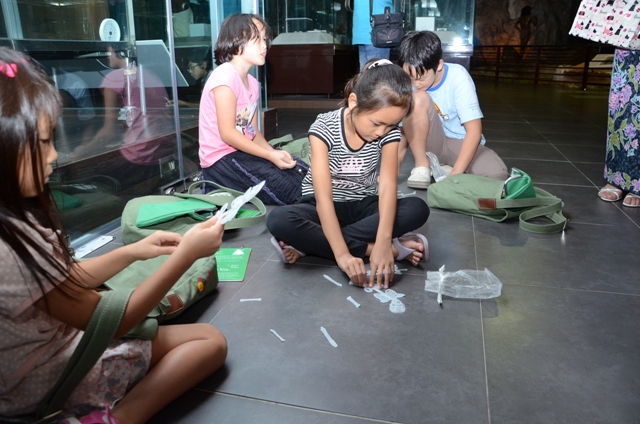
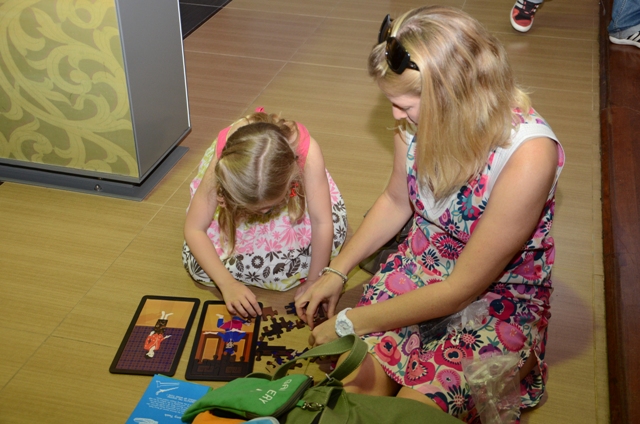
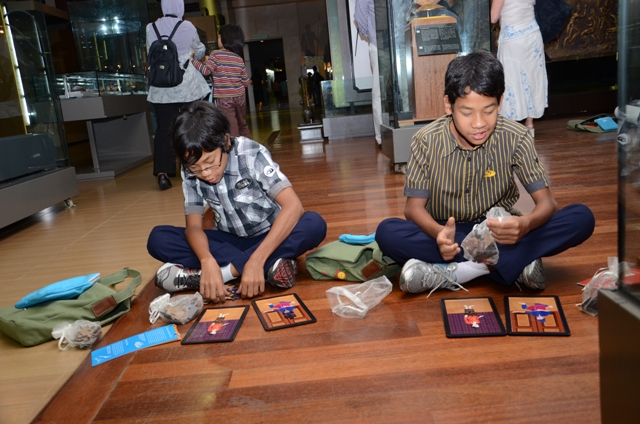
Sling Bags for families with young children was launched during the 6th Graduation Ceremony in Feb 2012. This marked the culmination of two years of effort by Karen Loh and Zahara Shariman to make the museum more interactive, fun and educational for children.
The sling bags contain games and puzzles and families can borrow the bags from the front desk at Muzium Negara.
Young volunteers tried out the slings bags during the launch and gave a thumbs up.