Recently, a reader of this blog wrote in asking for the actual site of Sir Henry Gurney’s assassination. Prior to this, I had been asked the same question by my ex-classmate’s husband while doing a guided tour at the National Museum last year. In addition, recently there was a news report on the development of a new multi-storey hotel resort in Fraser’s Hill and Badan Warisan Malaysia, a national heritage NGO, had initiated a petition to stop the demolition of heritage buildings on Fraser’s Hill.
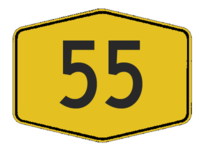
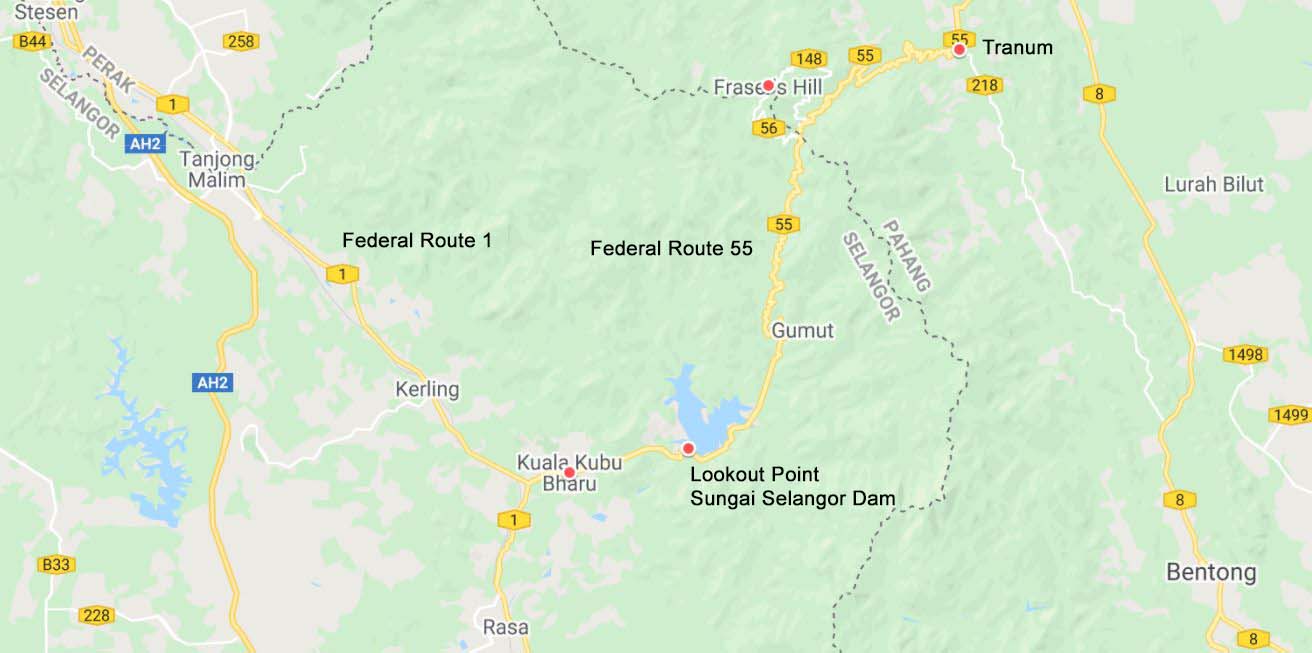
These events are closely related to Federal Route 55. Sir Henry Gurney was assassinated on 6 October 1951 by communist terrorists (CT) at Mile 56 ½, Kuala Kubu Road (90.91 km, distance measured from Kuala Lumpur), about 8 miles (12.87 km) from Fraser’s Hill and about 2 miles (3.22 km) before The Gap. Federal Route 55 is the main access route to Fraser’s Hill, whether from Pahang or Selangor.
This stretch of road was the first federal route constructed in Pahang, thus putting the final jigsaw in linking all four states in the Federal Malay States (FMS). It was opened on 13 January 1899, and it initially connected Kuala Kubu to Kuala Lipis, the then capital of Pahang. Today, Federal Route 55 starts at the intersection of Federal Route 1, the main North-South trunk road, with Kuala Kubu Bharu and ends at Teranum in Raub district.
With these two issues on my mind, I decided to drive up to Fraser’s Hill using Federal Route 55 from the Selangor side. My last trip to our country’s third hill station was for a tai chi retreat many years ago. The drive was a breeze on a Saturday early morning except for the occasional braking and overtaking of cyclists. On weekends, particularly, Federal Route 55 is a favourite with cyclists, who challenge themselves on its uphill, downhill and winding circuit.
Photo source : Eric Lim
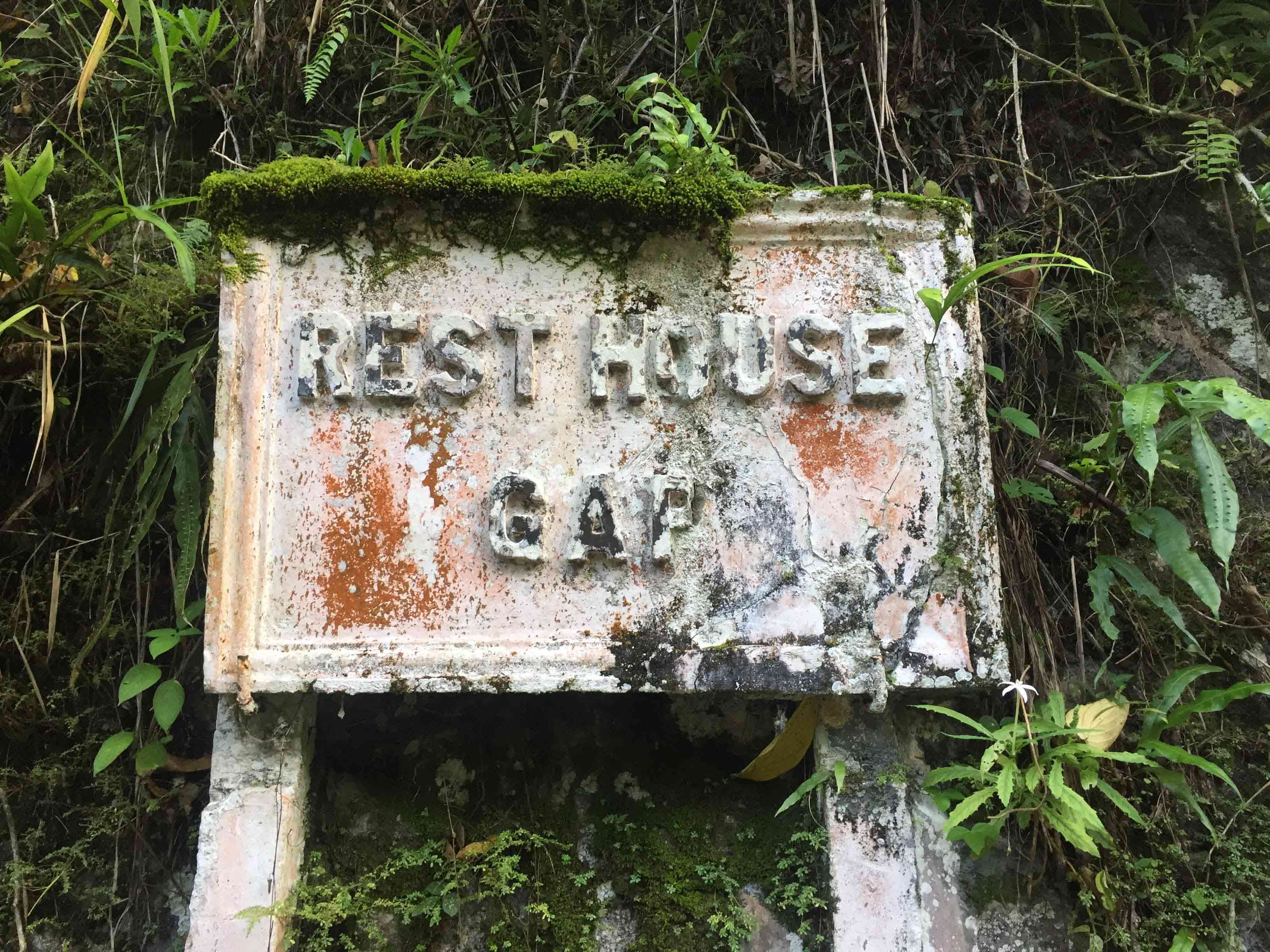
I do recall seeing on the internet, a photo of a signboard that was erected at the site of Gurney’s assassination. Hence, as I approached The Gap, I slowed down to look for it but alas, I could not locate it even though I went back and forth several times. Since it was still early, I decided to pull over at The Gap, to check the old Rest House. Incidentally, The Gap is still in the state of Selangor. What once used to be a fine stone Tudor style rest house where visitors could drop by for scones and tea, relax and admire the flowers and as well as enjoy the mountain fresh air before continuing their journey to Fraser’s Hill, it is now in decrepit condition. In 2008, it underwent refurbishment with a budget of RM 500,000. A second phase costing RM 1.5 million was planned for 2011 but the project was cancelled. Since then, the building has been left untouched and is under threat from the elements and vandalism. Looks like the glory days of the Rest House would not be making a return for a long time to come.
Rest House, Gap (before 2008)
Rest House, Gap (August 2020)
Rest House, Gap (before 2008)
Rest House, Gap (August 2020)
Before 2008, photo source: www.fraserhill.info After 2008, photo source: Eric Lim
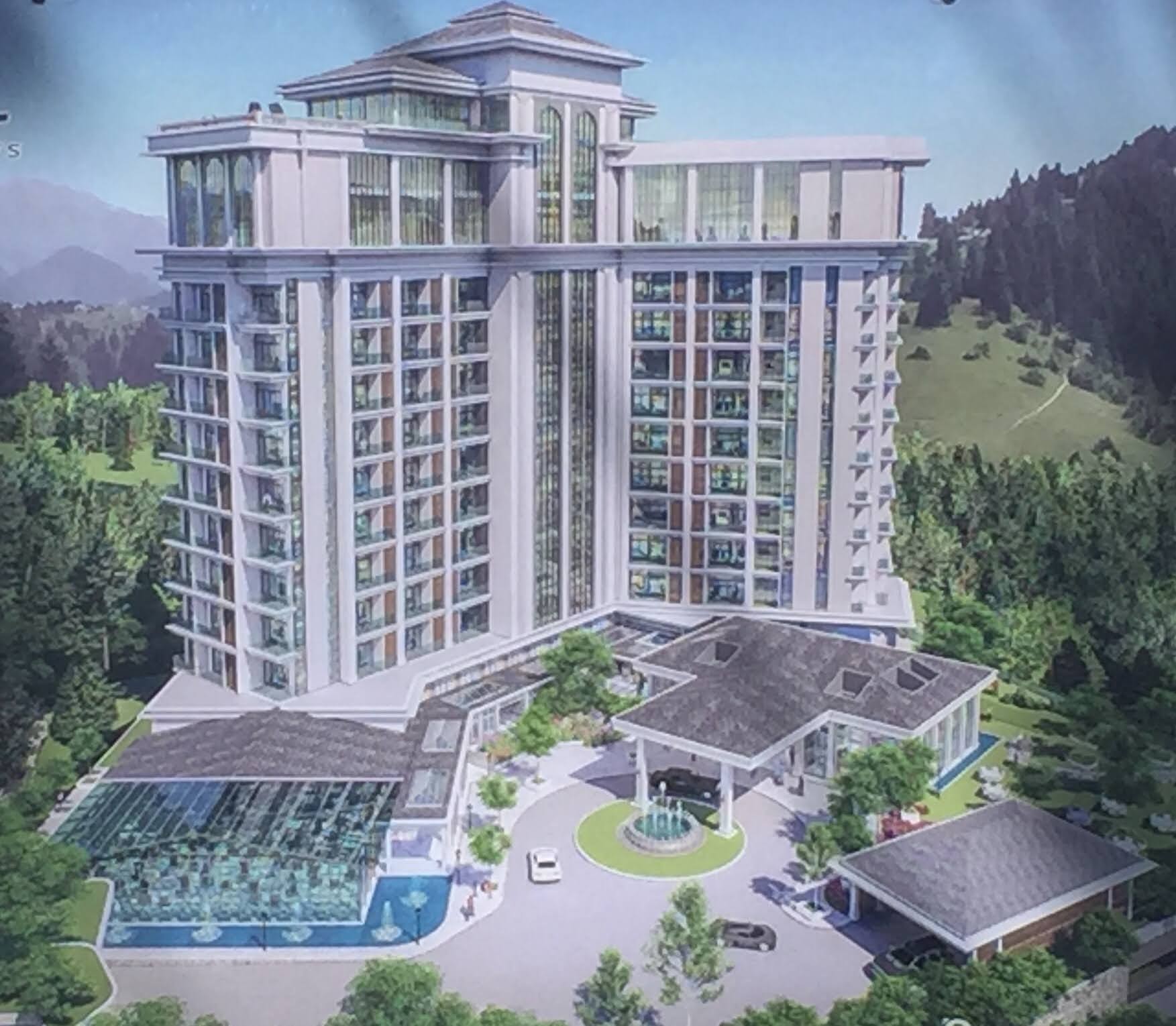
The trend of losing heritage buildings continued to rear its ugly head when I reached the site of the proposed 15-storey resort and spa in Fraser’s Hill. Two colonial bungalows, Maybank Lodge and Jelai Resort, had been completely demolished two weeks earlier as part of the project. The project is expected to be completed in 2026. When the Silver Park Resort was built, another two bungalows namely Mentakab Bungalow and Bishop House (earlier called The Retreat) were destroyed to make way for that project. Another important landmark in Fraser’s Hill is the Jeriau Waterfall. It is now a pale shadow of its former glory after the development of an 18-hole golf course nearby. The golf course did not survive for long and it has been abandoned for many years now.
The proposed 15-storey resort and spa. Photo source : Eric Lim
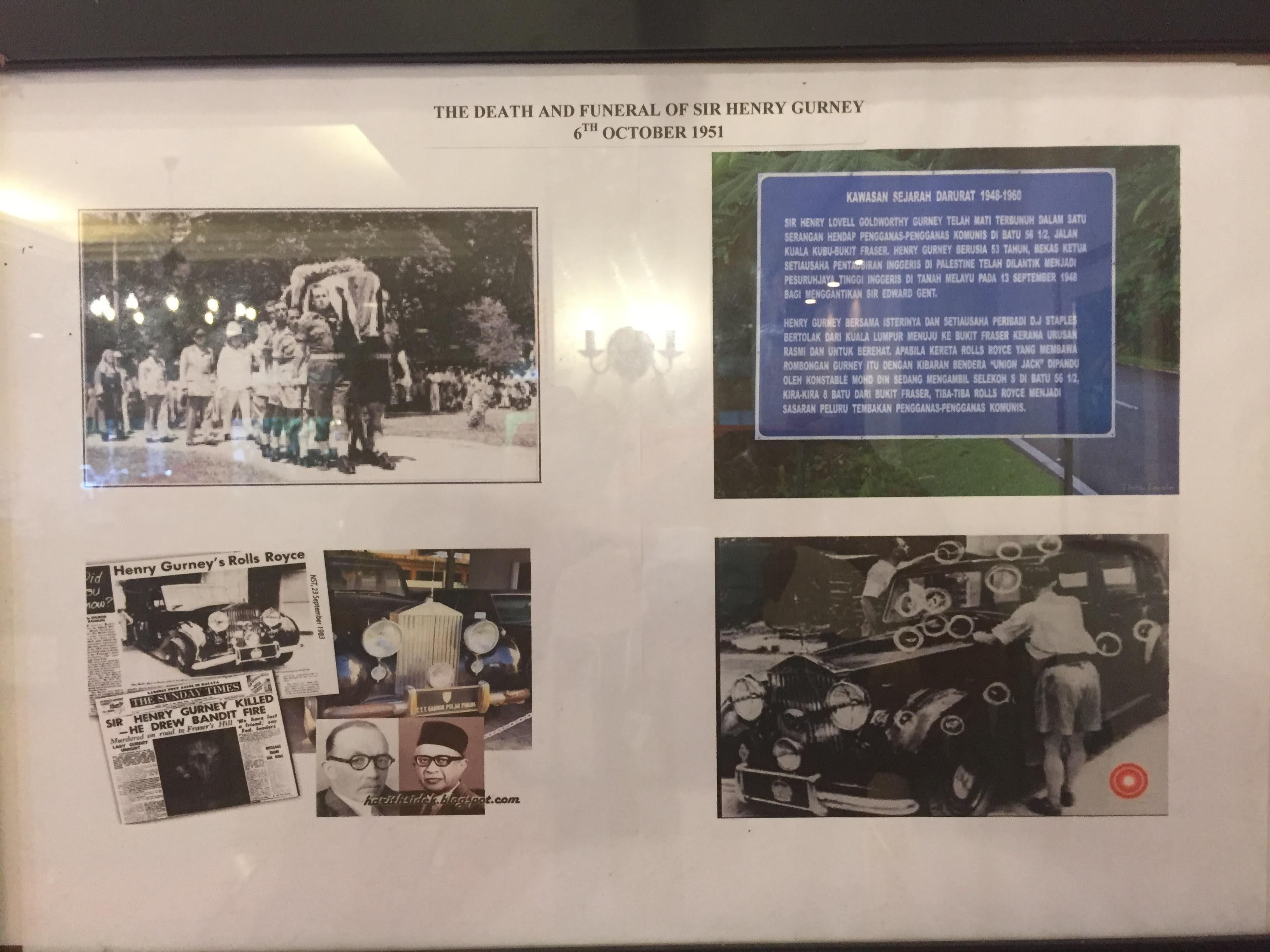
Moving away from the news of destruction to a more positive note, I have succeeded in locating the photograph of the memorial signboard. In addition, I also found photographs of Gurney’s Rolls Royce that was riddled by bullet holes (a total of 35 bullet holes were counted), Gurney’s funeral procession held on 8 October 1951 and the news headline of the killing. I discovered these at the Shahzan Inn on Fraser’s Hill.
Photographs at Shahzan Inn Fraser’s Hill. Photo source : Eric Lim
In retaliation for the killing of the highest ranking British officer in the country, the entire population of the village of Tras near Fraser’s Hill, almost all Chinese, was rounded up onto lorries and sent to a detention camp in Ipoh. They were suspected of supporting the CTs. Thirty seven of them were arrested for possible involvement and the rest were released in batches but they were not allowed to return to Tras. They were finally permitted to return home in 1958, by which time, Tras looked more like a ghost town! Tras is also located on Federal Route 55, near Teranum.
Again, it looked like an easy and quiet ride leaving Fraser’s Hill. However, not for long as I could see a chasing pack of cyclists behind me. I stepped on the accelerator and I went speeding down the hill and round the hairpin bends but they were still close on my tail. It was like in the movies. When I finally broke free, it was close to the Sungai Selangor Dam and I decided to stop at the Lookout Point to view the massive lake. Treated water from the dam is supplied to Selangor and Federal Territories of Kuala Lumpur and Putrajaya.
As I was about to return to my car, I saw the cyclists speeding by and soon they were out of sight. It was a good race for them and a good day for my adventure on Federal Route 55.
References
Book / The Towns of Malaya : An illustrated urban history of the Peninsula up to 1957. By Dr Neil Khor, Mariana Isa and Maganjeet Kaur.
Henry Gurney’s final flight by Alan Teh Lean Seng / 7 October 2018 New Straits Time. www.nst.com > lifestyle >sunday-vibes
Once lords over a great empire known as Champa, the Chams have been relegated to ethnic minority status in the very lands over which they once lorded. Today, they inhabit parts of southern Vietnam and Cambodia.
The Chams are an Austronesian group and the history of Champa begins with their migration to mainland South East Asia. Patterns and chronology of migration suggest that the Cham arrived via Borneo (this assumption is still being debated) in the early centuries CE. What is today the South China Sea was known to ancient navigators as the Champa Sea, named for the great empire that controlled the seas off central and south Vietnam. Existing between the 2nd and 15th century CE, Champa was actually a collection of polities; at the peak of its power, Champa lands included parts of eastern Cambodia and Laos.
Champa and its neighbours around c. 1100 CE. Champa is shaded in green, the Khmer Empire in violet, and Dai-Viet in yellow. Major polities are marked. Image credit: Wikimedia Commons (public domain)
Their culture was heavily influenced by Hinduism, mainly Shaivism, represented by a linga with temple carvings depicting Hindu deities. Later, Hindu doctrines were blended with local beliefs and Buddhism.
The Chams have left traces of their existence in the lands they occupied. Archaeologists have identified Cham citadels and temple sites along Vietnam’s coast. Recent explorations suggest that hundreds of ruined sites may line rivers leading into the Central Highlands and beyond, to eastern Cambodia.
I have always been fascinated by lost kingdoms and ancient civilisations. I first came across the Chams when I was travelling in central Vietnam in 2006, and again in 2007. Although most Chams now live in Cambodia, the kingdom of Champa flourished in southern Vietnam and this is where the architectural legacy of the Cham people is located.
The Chams were greatly influenced by Funan (precursor to the Khmer Empire) from whom they adopted the Hindu religion and art. Sandstone pillars and red brick flooring of temples and royal burial sites are features of Cham architecture. The oldest artefacts with these distinct characteristics found together with pottery in Tra Kieu, date to the 2nd century CE.
The people of Champa kept written records in Sanskrit and the old Cham language. They wrote on palm leaves and inscribed on stone steles. Their records on perishable materials are all gone but numerous stone inscriptions have been preserved and transcribed.
Cham culture is believed to have started thriving from the 4th century CE. Its spiritual centre was at My Son, which was established by King Bhadravarman. Over 70 temples – red brick structures – have been excavated here. The buildings within the My Son temple complex were constructed over a period of 1000 years, from the 4th to 14th century CE, making this complex one of the longest-occupied archaeological sites in the world. My Son is located about 70 kilometres southwest of Da Nang and close to Champa’s ancient capitals Simhapura (Tra Kieu) and Indrapura (close to Dong Duong). Within these three locations, more than 30 stelas dated between the 5th to 12th centuries CE have been discovered. The stele inscriptions focus mainly on political and religious topics, written from the perspective of kings to affirm their legitimacy and their relationship with the divine.
My Son was discovered during the construction of telegraph lines in Central Vietnam in 1889 when Camille Paris stumbled upon its ruins. Decades of research revealed it as the religious centre of the long-forgotten Champa Kingdom. Sadly, much of this site was devastated by B52 bombing from 1969 to 1972 during the Vietnam War as the Viet Cong had set up base there. What is left was saved when President Nixon declared the area off-limits on the advice and urging of a Chan art expert, Philippe Stern. Bomb craters still punctuate the monument grounds, and land mines lurk beneath the surrounding jungle. However, many structures have been restored, giving visitors a glimpse into the spiritual life of the ancient Chams.
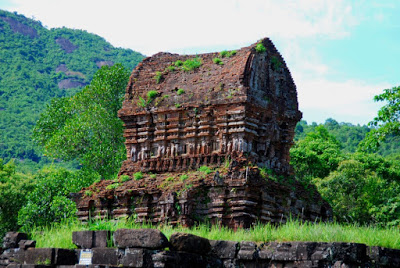
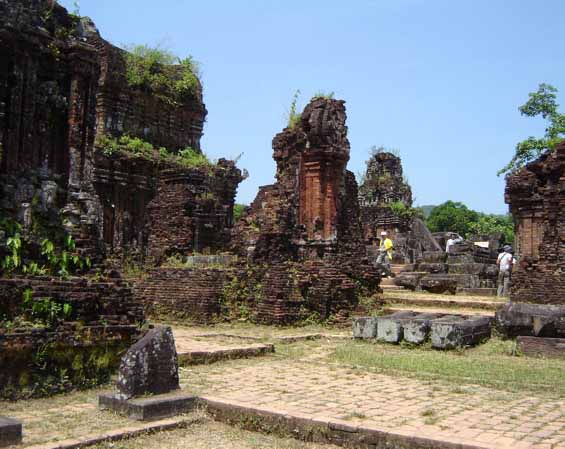
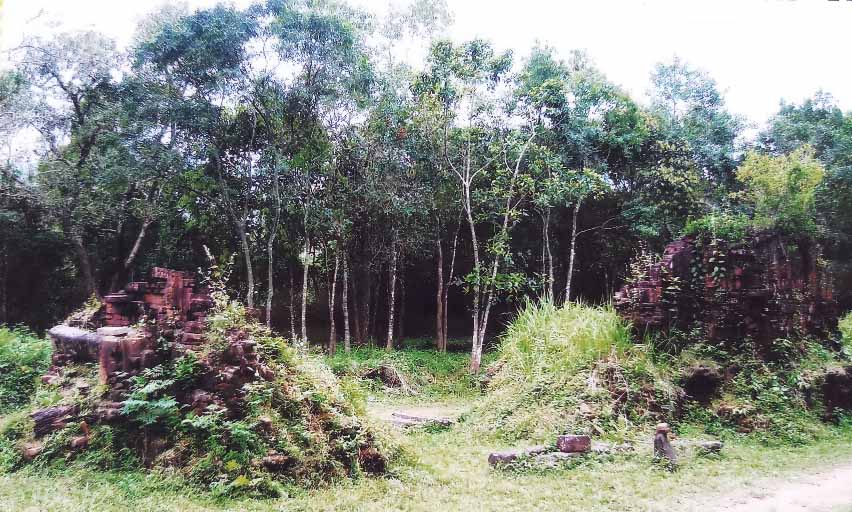
2006 – crumbled structures awaiting restoration. Image: from author’s collection
My Son Sanctuary, the ancient architectural ruins in the middle of a forest near Hoi An, is preserved as a World Cultural Heritage site. Inscribed on the UNESCO World Heritage List in 1999, it is worth visiting for those seeking the exotic, away from mainstream Asian tourist destinations. During my visit in 2006, a ride in an archaic military vehicle, a war relic left behind by the Americans after the Vietnam War, took us through rough terrain to the lush valley, overshadowed by the holy mountain, Mount Mahaparvata (known to the locals as Cat’s Tooth Mountain). Visitors today can now expect easier access – it has been more than a decade since my visit.
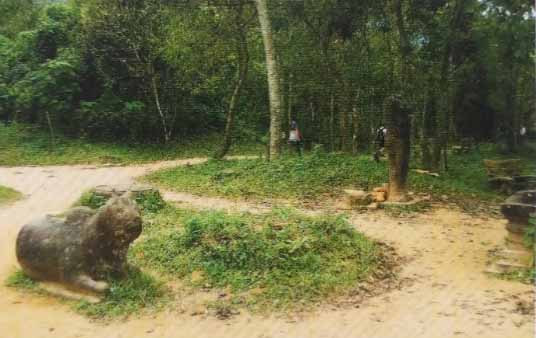
During my visit in 2006, the ride in an archaic military vehicle brought me to the entrance of the complex; the ruins were about 1.5 km from this entrance. Images: from author’s collection
left: Nandi, vehicle of Shiva, faithfully standing guard at the My Son sanctuary; right: lingga and yoni (Hindu symbols of fertility) had not been removed from their original spots. Images: from author’s collection
Several international organisations have backed restoration projects, painstakingly re-assembling the bombed-out monuments and planning for increased on-site security. Ecole Francaise d’Extreme Orient (EFEO) of which Henri Parmentier, a prominent archaeologist was a member, was responsible for the establishment of the Danang Museum of Champa Sculpture, which opened in 1919. This museum, though small, has the best collection of Cham art that survived looting and decay. These masterpieces are a wonderful complement to My Son and Po Nager.
Inside the Museum of Cham Sculpture at Da Nang. Image: from author’s collection
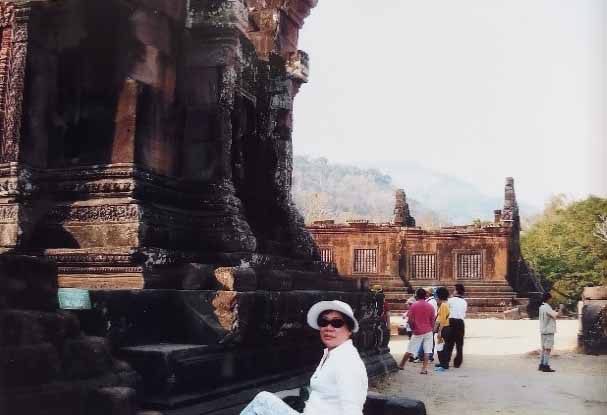
My travels in 2007 across Indo-China, approximately along the 18th parallel, took me from Nong Khai in northeast Thailand to Hue in Central Vietnam and back to Thailand, to Mukdahan in Nakhon Phanom, crossing the then completed Thai-Laos Friendship Bridges across the Mekong. Along the journey were pockets of Cham villages and ruins, the most significant being Wat Phu in Champasak in southern Laos.
Between the first and ninth centuries CE, Champasak Province was part of Funan (which influenced early Champa) and then the Chenla Kingdoms before falling to the Khmers. Archaeological research has identified the ancient city as Shrestrapura, a 5th-century CE, pre-Khmer site. The city was at one time the capital of the Chenla and Champa Kingdoms.
Aerial view of Wat Phu as seen from mid-level. Image: from author’s collection
Although Wat Phu is considered Khmer, elements of Champa art, culture and architecture are recognisable within the temple complex. The UNESCO site includes Phu Kao mountain and the remains of the ancient cities of Lingapura and Shrestrapura. Wat Phu, designated a UNESCO World Heritage Site in 2001 was an important Hindu temple dedicated to Shiva. During the 13th century CE, it became a centre of Theravada Buddhism and remains so until today.
left: These images bearing Cham facial features are still worshipped at Wat Phu. Votive offerings include incense sticks, flowers and constant change of saffron robes. right: From the tree stump I was sitting on, the panorama in every direction suggests the grandeur of the past. Images: from author’s collection
The final annihilation of Champa by Minh Mang’s troops in 1835 marked the end of two millennia of continuous Champ existence. The remnants of Champa in Kauthara (Nha Trang) and nearby Panduranga were fully incorporated into the Vietnamese realm. The marginalised Cham communities of Indo-China today are the last vestiges of Champa.
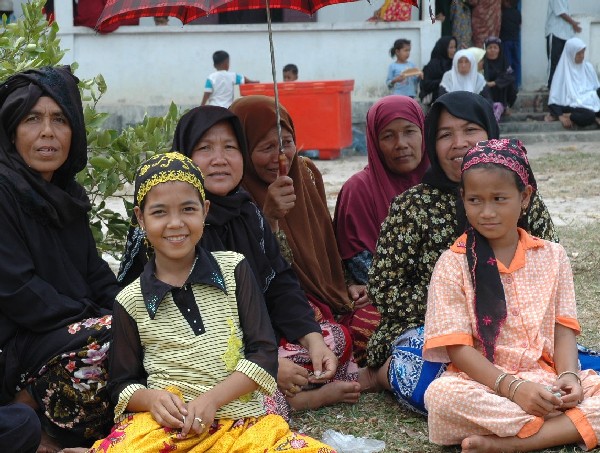
During the purge by Minh Mang, large groups of mainly Muslim Chams fled to Cambodia where they were given refuge. They settled around the area now known as Kampong/Kompong Cham and along the shores of the Tonle Sap. However, they struggled to retain their culture and language. The Chams were again severely persecuted, this time by the Khmer Rouge from 1975 to 1979. It is estimated that as many as half a million Chams were murdered to ‘ethnically cleanse Cambodia’.
In Phnom Penh, a small community of Chams still live on boats and stilted houses but with rapid land development in Cambodia’s capital, they are under constant threat of eviction. Today, there is a small Cham Muslim (some practising a blend of Hindu-Buddhist practices) community in Thailand and in Laos as well.
The majority of the 120,000 Chams who remained in Vietnam retained their Hindu faith but those who later converted to Islam still worship their gods at Po NagarCham Towersin Nha Trang during the religious festival of Thap Ba, which falls around April/May. The two major enclaves of Chams in Vietnam are in Nha Trang (ancient Cham city of Kauthara) and the highlands around Da Nang.
In the 8th century CE, the political centre of Champa moved from My Son south to Kauthara. At the site of modern Nha Trang, a temple was built in honour of Po Nagar, the indigenous Earth Goddess whom the Chams believed was the ‘Mother of the Country’ who taught agricultural and weaving skills to the Chams. Later historians identified Po Nagar with the Hindu goddesses Bhagavati, wife of Shiva, and with Durga, the buffalo-demon slayer.
Central stairway, for monks only, on mandapa leading to the main shrine of Po Nagar Temple
Pirates from Java burned the temple of Po Nagar and carried off the image of Shiva. Cham king Satyavarman pursued the raiders and defeated them in a naval battle in 781. This victory over the ‘dark-skinned savages who feed on cadavers’ was recorded on a stele erected by Satyavarman at Po Nagar. The Chams continued building – the tallest tower was completed in 817 CE. Further expansion continued until the 17th century CE when the Chams were gradually displaced by the Viets.
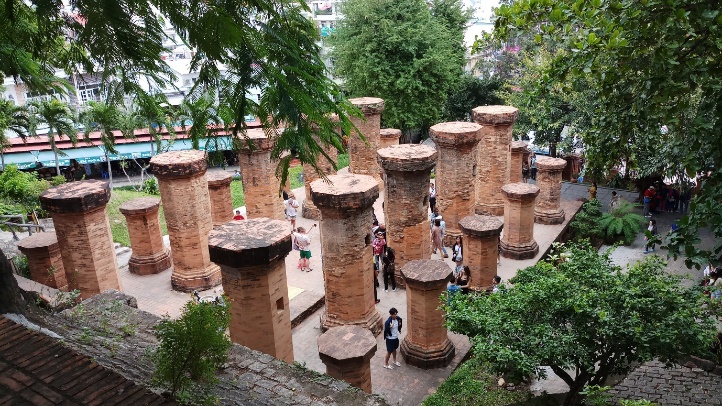
The building techniques from 8th century to 13th century remain a mystery. Scholars still do not understand how the Cham people placed 20×20 cm bricks in close proximity without any adhesive. This unique feature attracts interest in the towers. My guide drew my attention to the Chams’ ingenuous use of red bricks without any binding mortar in the construction of these octagonal pillars, a technique that still baffles engineers and archaeologists.
Free standing red brick columns in artistic arrangement on the mandapa
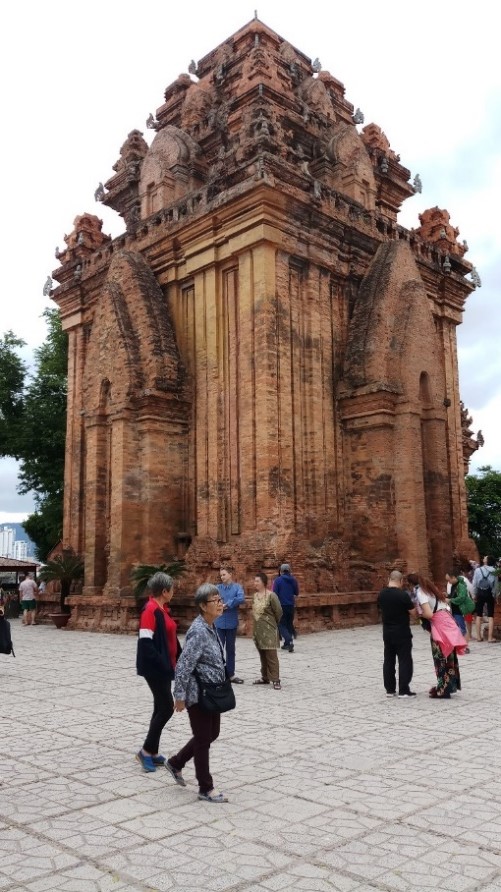
The kalan was the brick sanctuary, typically in the form of a tower, used to house the deity. The religious life of the Chams is evident from these extant monuments, which have syncretized elements of Shaivism, Buddhism and indigenous religious practices.
left: black statue of Yan Po Nagar heavily garlanded with strands of beads. right: this sanctuary contains a linga and a statue. Images: from author’s collection
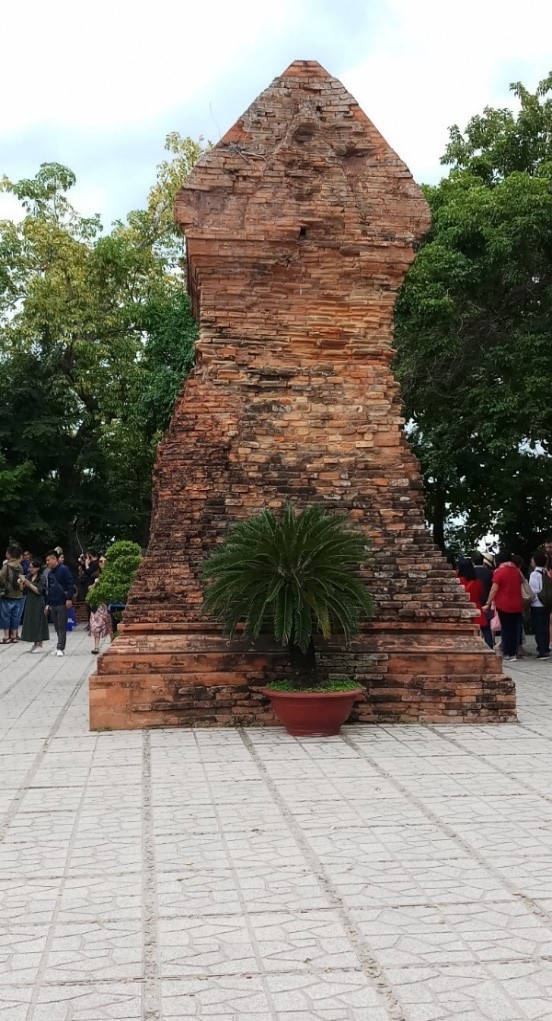
There were once ten towers, each dedicated to a different deity, but today only four remain to provide a fascinating glimpse into the region’s past and the locals’ present-day spiritual beliefs as pilgrims still come here to pray and offer incense.
Towers of Po Nagar, silent witnesses of the powerful Champa Kingdom. Images: from author’s collection
I spent half a day at this site in December 2019, admiring the temples, wandering around and finally sitting in the shadows of the soaring temple towers. I felt the serenity of the hillock and the greatness of antiquity while pondering over the past splendour of the Cham culture, much of it long lost to the world … but comforted by the thought that I had ventured on the trail of the Chams.
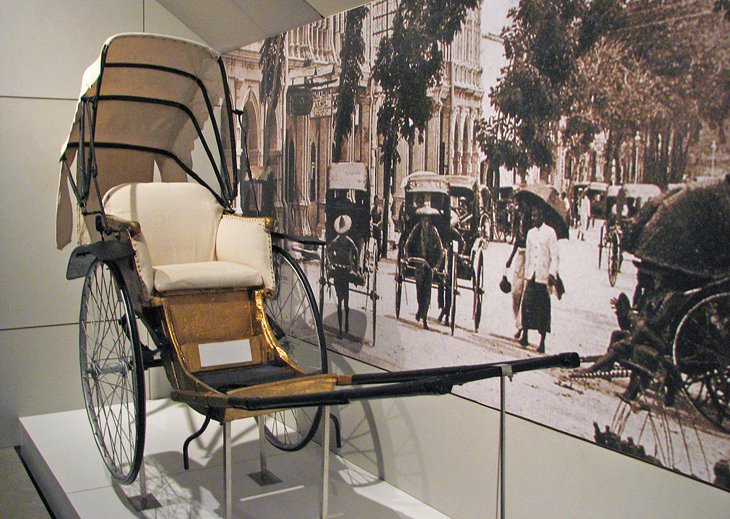
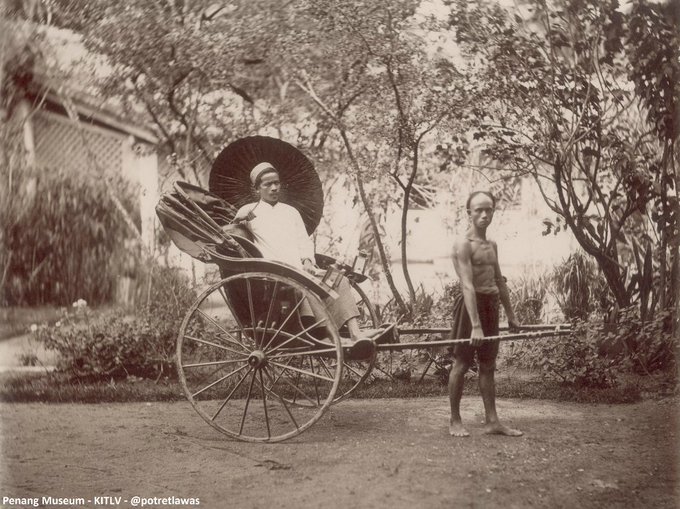
Nestled almost out of sight with attention diverted to the tin dredge in Gallery C, is a Jinrickshaw. Today, it may get passing mention during a guided tour but this solitary artefact used to be an institution in early Malaya. Known also as Jinricksha or simply as rickshaw, it was a key mode of transportation for many decades until it was literally ‘overtaken’ and ‘driven off the road’ by faster vehicles.
The rickshaw was a two-wheeled buggy-like cart pulled by a runner with the passenger seated in the cart. It was ubiquitous in Kuala Lumpur up to the late fifties, as it was cheap, easily available and comfortable. They could be seen plying the streets of old central Kuala Lumpur rain or shine, day and night catering to many users throughout the day.
It seems that a form of the rickshaw was actually developed in France as far back as the 17th century. However, it is generally accepted that around 1869, the Japanese developed the rickshaw, giving it the name through which we know it today. Others have also laid claim to having invented it. After all, it is not a complicated vehicle and specific needs would have led a simple handcart evolving to this type of vehicle. Nevertheless, the form that we know today is from Japan.
Outside of Japan, the rickshaw was used in many parts of the world including China and parts of Africa. It could be seen in India and it became iconic in Kolkata. Over the years, the rickshaw were either motorised or just phased out, with pockets remaining particularly for tourism. This article focuses on Kuala Lumpur although it was common in many of the other larger towns in Malaysia as well.
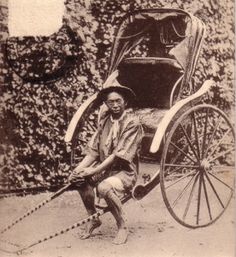
Source: Cheah Jin Seng (2011) Selangor: 300 Early Postcards, Singapore: EDM.
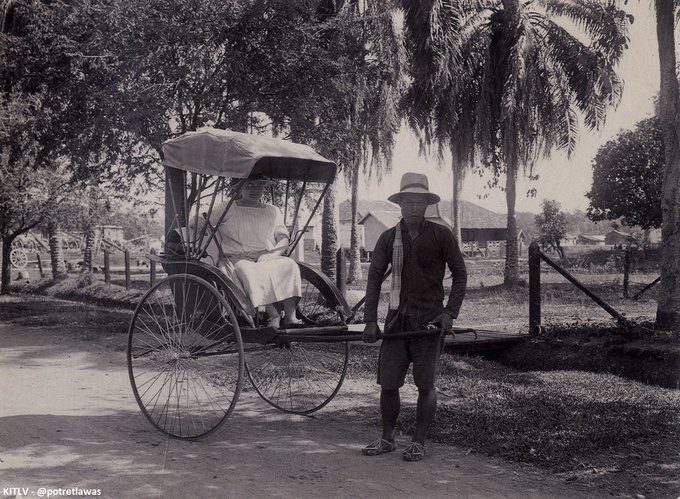
The rickshaw consists of a buggy-like cart with a seat resting on two thin wheels. Two long shafts, of around 1.5 metres, extended from the sides of the cart. The ends of the shafts were connected by a bar, used as a handle. The puller, or Rickshaw man, stood between the shafts and ran pushing the bar and therefore pulling the cart. The wheels were thin and made originally of iron; rubber-tyres came later.
The seat itself could have either been a simple wooden one or cushioned and it seated two at a time. It extended down to form a footrest, on which packages could also be placed. Some rickshaws had a cubbyhole under the seat that was used as storage. Attached to the back of the seat was an adjustable hood that could be lifted to provide protection against the scorching sun or rain; it lay collapsed otherwise. In addition, if it rained, a canvas sheet would be used to cover the front. Although simple and basic, some rickshaws were highly decorated with designs on the sides of the cart. They were generally clean and comfortable.
Before World War 1, the rickshaws were imported from Japan. After the war, with the advent of Depression, they were locally made. Cost of these rickshaws is not found. In most cases, an individual owned the rickshaws and hired them out to pullers. Rates of hire are available for Singapore – it was 35 cents per day in 1938. Well-to-do people are said to have owed their own rickshaws with hired pullers if they did not keep a carriage.
It is uncertain when the rickshaw was first imported into Malaya but by 1912, the rubber-tyre rickshaw was reported to be in use in Kuala Lumpur together with the iron-wheeled type. However, by the mid-1920s only the former was in common use. These operated in what was known as central Kuala Lumpur, which covered Petaling Street, Sultan Street, Central Market and extended around three kilometres outward. This is a flat area, easy for the puller to navigate. Many people lived within the city in those days.
Anyone and almost everyone used the rickshaw. Ladies and men used it to get around town. Children went to school on a contracted rickshaw, much like school buses today. Women went to the market and back in these. Even the British officers would use them, perhaps more as a novelty. Later in the evening, rickshaw pullers had certain ladies as customers who would sit in the rickshaw in certain parts of town, waiting for their own customers. In fact I was told that ladies and young girls never used the rickshaw alone at night. If they had to, they were accompanied by a male, even a young boy if need be.
The fare paid, of course, varied by distance but the figures for Kuala Lumpur are not known – it is simply stated as a few cents for short trips. A 1914 schedule of jinrikisha fares for the Straits Settlements, show fares of 3 cents for every half mile, 20 cents for an hour and detention (waiting) fee of 5 cents per hour. These fees are for the second class. First class fares were double. These first class rickshaws had superior ‘English wooden seating’ and rubber tyres. First class rickshaws also had a runner trotting behind the rickshaw for the safety of passengers. These runners were rare, if any, in Kuala Lumpur.
Fares of course went up in time. For comparison, the fare in 1920 in Singapore was set at 15 cents a mile (1.6 km.). The industry in Singapore was regulated – there was a Registrar of Rickshaws as well as a union.
The rickshaw pullers were a breed apart. They were mostly immigrants from China and they lived in lodging houses, which were popular then as many immigrants came alone. Most, if not all, smoked opium supplied by the lodging houses or in opium dens. Opium was made illegal after World War II but hard-core addicts still managed to get their supply. Some pullers only wore shorts while others wore dark shin-length shorts with, perhaps, a shirt. Almost all wore a hat made of matted straw or palm leaf. Some did not wear shoes. For those who did, old rubber tyres were cut to fit and tied to the feet with string. While waiting for fares, they would squat between the shafts or sit on the footrest.
In their day, rickshaws ruled the roads. They would weave in and out of traffic, pulling out to the centre of the road when they felt necessary; the passengers sat coolly in their seats, being used to this. When looking for passengers, they would dash from one side of the road to the other to grab the passenger before another rickshaw did. Other vehicles had to look out for them.
They faced many risks – being scolded by passengers, arguments on the fare, accidents, drunken night passengers and passengers running off without paying. Many suffered bad health; there are reported cases of some collapsing and dying on the road while pulling. Despite the rickshaw being looked back on as a novelty, the pullers led a hard life for meagre earnings. They did not seem to be able to break out of rickshaw pulling, unlike some Chinese mining coolies who managed to move out into starting small businesses.
In our younger days, it was common for parents or teachers to scold us when we sat sloppily “sit up straight, don’t sit like a rickshaw puller!” Or, “you better study hard or you will end up being a rickshaw puller.”
The rickshaw pullers drew some sympathy and attention from travellers to Malaya as can be seen with the below two references.
“The jinricksha, pulled by Chinese coolies, is the conveyance usually hired for short runs in and around the neighbourhood of the towns. They are comfortable, and usually fairly clean, but as the coolie who pulls it seldom understands any language but his own dialect, and is as a rule supremely ignorant of the rule of the road, it is well to keep a wary eye on his movements.”
The Handbook of the Federated Malay States, compiled by H. Conway Belfield
“Chinese coolies toiling in the shafts of jinrickshas occupied by fares sitting inside, and quite unconcerned at the efforts of these human horses, who are often sickly, and always striving to reach the end of their journey as quickly as possible, mopping their faces as they run along, and audibly panting from their exertions.”
Ambrose B. Rathborne in Camping and Tramping in Malaya
By the mid-1950s, trishaws started replacing the rickshaws. The trishaw is a tricycle with the passenger cart placed on its side. Some, particularly in Penang, had the passenger cart in front. The advent of buses, as well as growing affluence that afforded people cars and taxis sounded the death knell for both the rickshaw and the trishaw. By the mid-sixties, both had almost disappeared, although the Penang trishaws ruled the roads until the eighties.
While trishaws can still be seen on the streets today in places like Melaka, catering to the tourist industry, the jinrickshas are only found in museums. However, they are a part of our history and the stories they tell should not be forgotten.
H. Conway Belfield. Handbook of the Federated Malay States. London. Edward Stanford, 12-14 Long Acre W. C.
Ambrose B. Rathborne F. R. G. S. (1898). Camping and Tramping in Malaya, Fifteen Years Pioneering in the Native States of the Malay Peninsula. London. Swan Sonnenschein and Co.
Jim Warren (1984) Living on the Razor’s Edge: The Rickshawmen Of Singapore Between Two Wars, 1919–1939. Bulletin of Concerned Asian Scholars, 16:4, 38-51, DOI: 10.1080/14672715.1984.10412623
Warren, James Francis. (2003/05). Rickshaw Coolie: A People’s History of Singapore 1880 -1940 [Paperback]. Singapore University Press (US).
Relatives and friends – too many to name individually
Now and then, I get questions from visitors to the Museum on how, in the past, explorers, travellers, and others communicated with the peoples of the places they visited. Going to a country with a different language in today’s world is not a problem – with dictionaries available literally at your fingertips, with Google Translate, or even with applications on smartphones that translate one language to another on the fly. In any case, English is the universal language these days.
However, how about Christopher Columbus, Magellan, Vasco da Gama, and so many others during earlier times – how did they communicate with the locals they encountered? …………. read more
The simplest method to study the heavens is to stick a stick into the ground and observe its shadow at different times of day. This is the basis of sundials and the ‘stick’ is known as a gnomon. Apart from telling time of day, the resulting sun angles can also be used to tell the time of year.
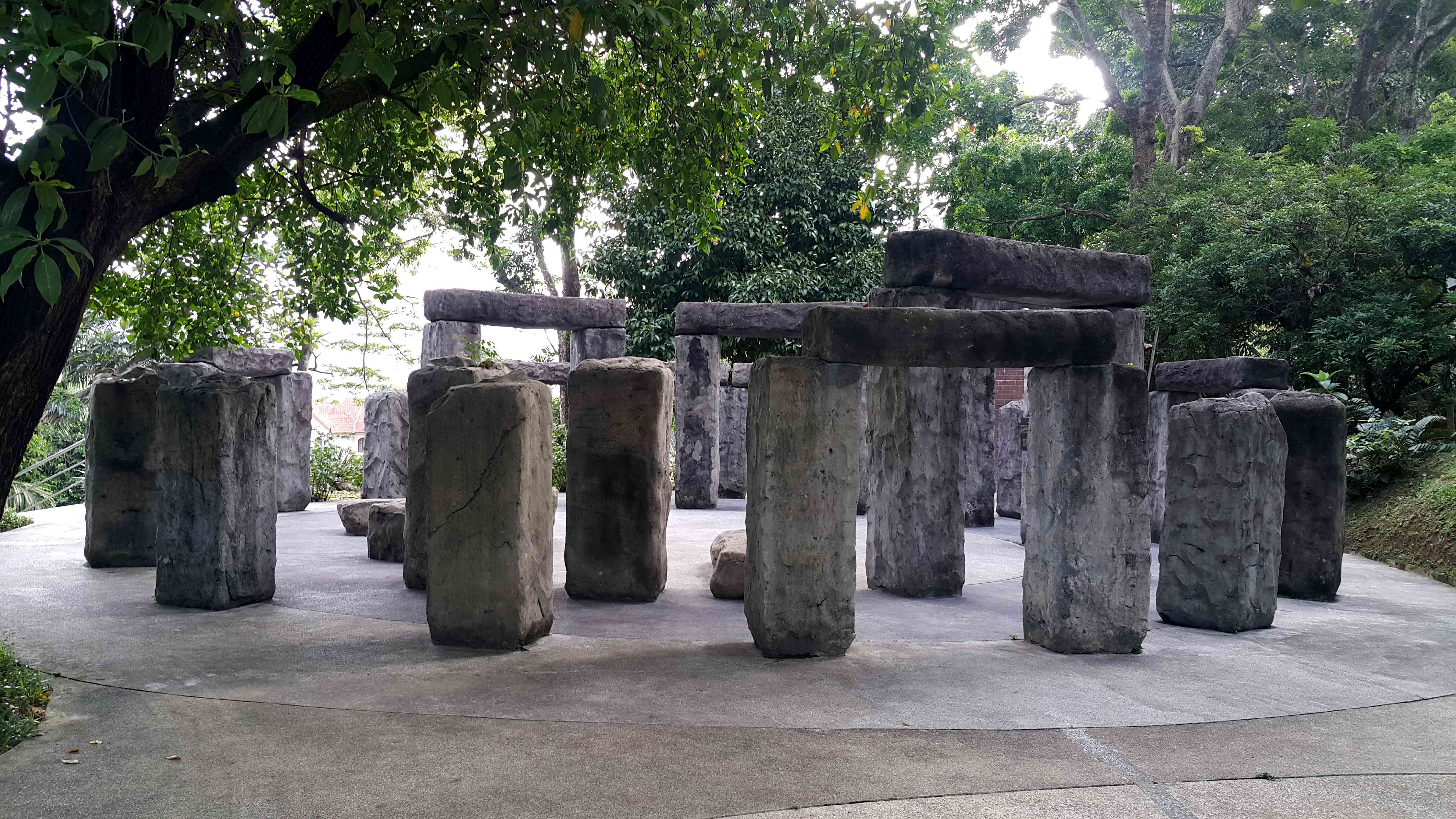
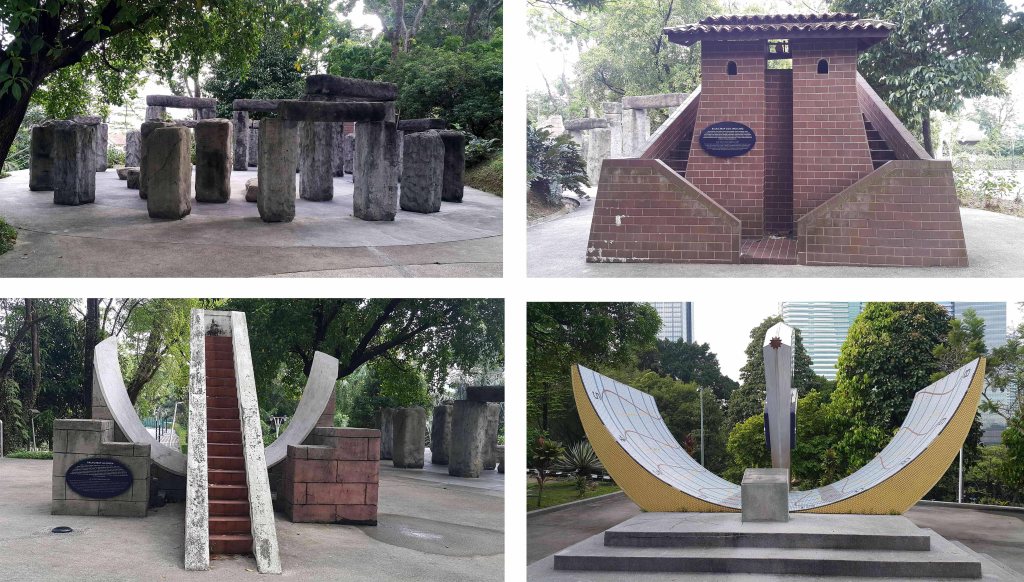
Residing in a serene corner on the grounds of the National Planetarium are miniaturised replicas of three famous astronomical observatories from different parts of the world together with Malaysia’s own iconic timepiece. These are more sophisticated than the stick but they function essentially as gnomons. The four timepieces tell different stories, each compelling in its own way. The mysterious Stonehenge continues to hide its secrets, defying the hundreds of researchers bent on probing its depths. As you walk the grounds, gaze at the Guo Shou Jing Observatory and be amazed at the astronomer that conceived this marvel. Imagine the intellectual discourses that would have taken place at the Jai Singh Observatory, not only among local astronomers but also among those from afar as Bavaria, France, and Portugal. Recapture the excitement of Merdeka at the Merdeka Sun Clock.
Stonehenge
Stonehenge replica at the National Planetarium, Malaysia
Stonehenge, one of England’s most visited sites, was once sold at an auction for £6600! On 21 September 1915, Cecil Chubb, a barrister, was sent to an auction by his wife, Mary, to buy dining chairs; he returned home, instead, as the proud owner of a few acres of ruins, much to Mary’s chagrin. Fortunately, Chubb’s intentions were to protect the monument and, three years later, he donated Stonehenge to the nation, receiving a knighthood in exchange.
While the experts agree that Stonehenge was built in different phases by different groups of people, possibly for different functions, there is no common consensus on the constitution of the phases and the functions of the stones. The structure dates to around 3000 BCE, reaching its present shape around 1800-1500 BCE. The original structure was a henge, a circular flat area surrounded by a ditch, with the only difference from other henges being in its size – a whopping 100 metres across. Outer and inner banks surrounded the ditch and 56 circular cavities ran along the inner bank. Named Aubrey holes after the person who first noticed them, the cavities were believed to have initially contained bluestones but were used in a later period for cremation burials.
The stones at the centre of the circle started being erected in different phases from around 2500 BCE, possibly beginning with the five trilithons. These were followed by the other stones including the bluestones, sarsen circle, heel stone, slaughter stone, and the four station stones. Attempts to link Stonehenge with observations of the heavenly bodies have mostly been refuted. It has been pointed out that it was not necessary to build a huge stone structure in order to make astronomical observations that could easily have be done using simpler tools. However, researchers acknowledge that Stonehenge is aligned on its northeast to southwest axis with the occurrences of solstices. There is also an interesting link between the heel stone and the midsummer solstice. There are a number of other connections with astronomy but a detailed discussion on the astronomical functions of the various stones, while fascinating, is outside the scope of this article.
The heel stone with Stonehenge in the background. This is a solitary piece of stone 4.7 metres tall with a tapered top. It sits outside the Stonehenge circle, at the start of an avenue that leads to Stonehenge. Image credit: Flicker (attribution: diamond geezer)
Guo Shou Jing Observatory
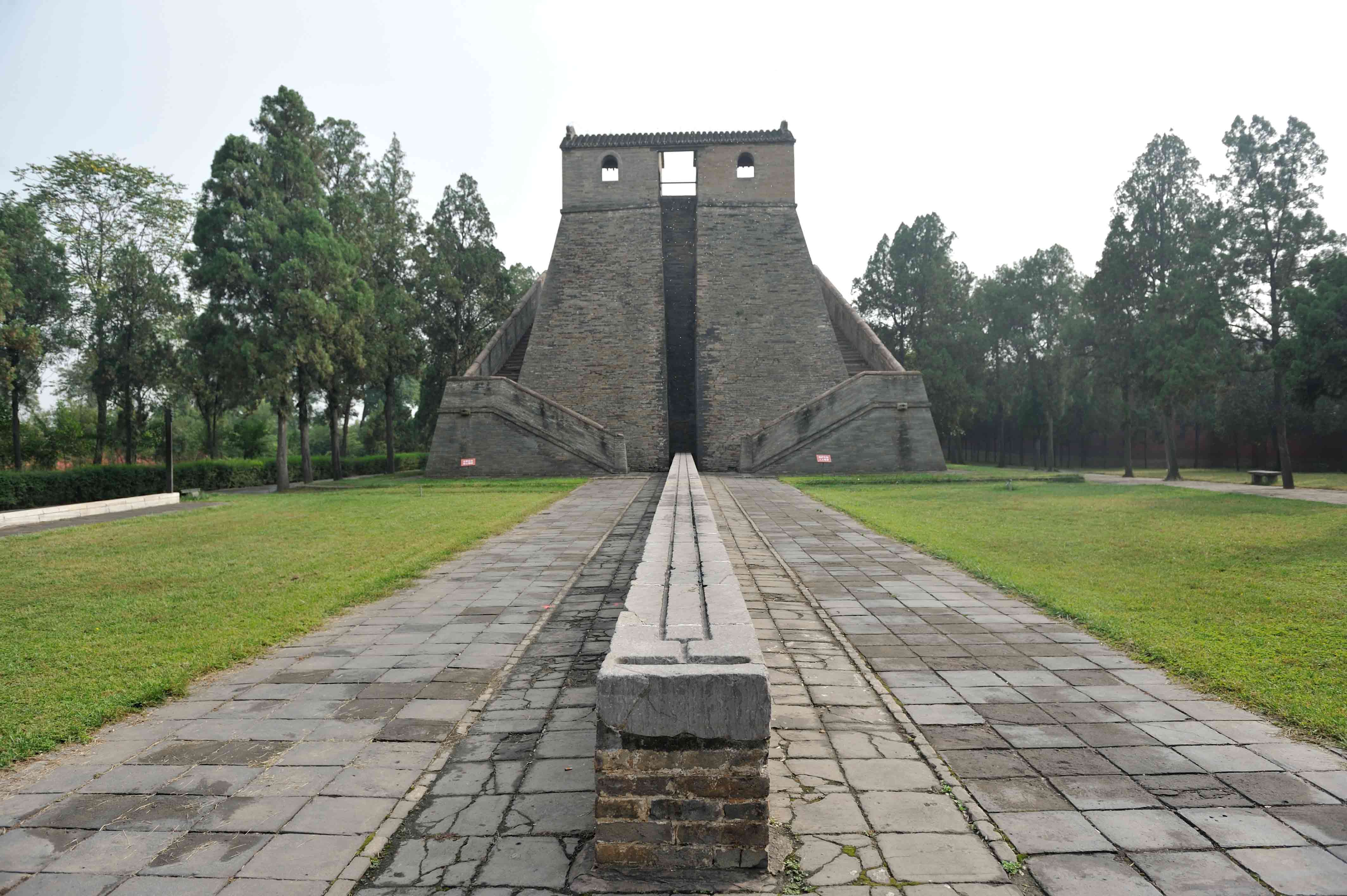
Replica of the Guo Shou Jing Observatory (Dengfeng Observatory) at the National Planetarium, Malaysia
This observatory was built in 1276 under orders by Kublai Khan, the founder of the Yuan dynasty in China. The observatory measures the sun’s shadow at noon and its variation throughout the year. It was named after the observatory’s creator, the renowned astronomer Guo Shoujing. The observatory lies near Gaocheng town, southeast of Dengfeng city in the Henan Province in China. Today, it is known as the Gaocheng Observatory or, more popularly, as the Dengfeng Observatory.
The observatory has two components: a platform formed by a truncated pyramid and a horizontal scale known as shigui.
The observatory at Gaocheng. Note the two components of the observatory: the large truncated platform and the horizontal scale in front of it. Image credit: Wikimedia Commons (attribution: Siyuwj, CC BY-SA 4.0)
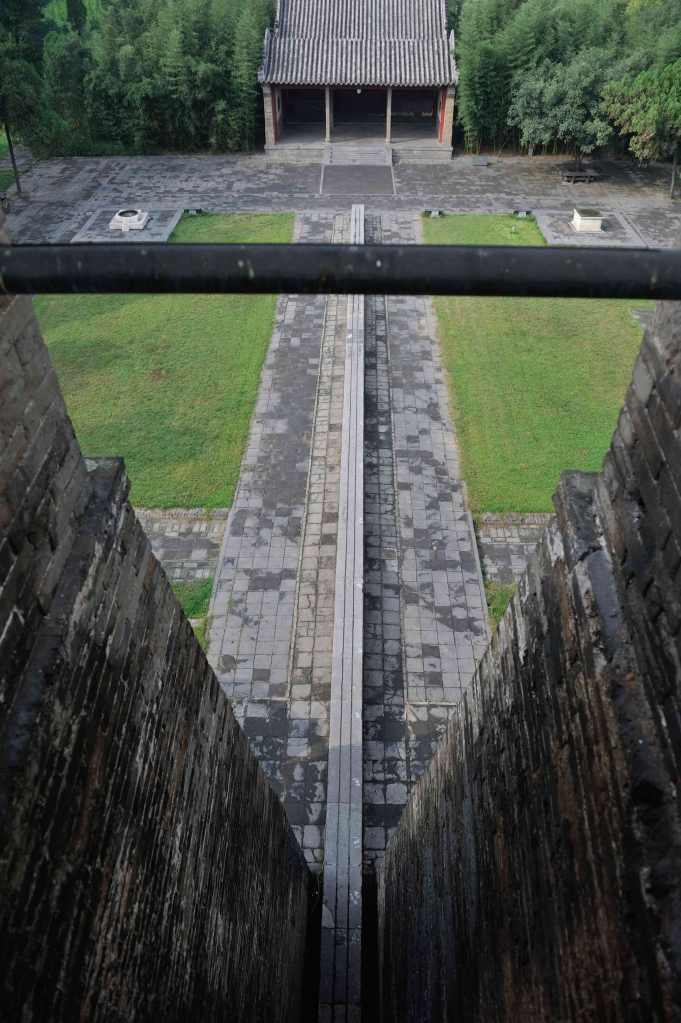
The platform is 9.45 metres above ground level. Two staircases run up to the platform, on which has been built two rooms, joined by a single roof. The rooms raise the height of the structure to 12.62 metres. Each room has a window facing north and overlooking the horizontal scale below. The rooms also have a second window facing each other; a horizontal rod connects the two rooms through these windows. This rod acts as the gnomon. The height of the structure from the base to this horizontal rod is 9.75 metres, which is exactly 40 chi, a standard unit of measure in ancient China. A typical Chinese gnomon at the time was 8-chi tall (1.98 metres) – an example is the Tang period gnomon close to the vicinity of the Dengfeng Observatory. However, Guo Shoujing recognised a link between the height of the gnomon and the accuracy of the measurements; the resultant 40-chi gnomon at Gaocheng was thus innovative. It is said that Guo Shoujing’s move to a 40-chi gnomon was inspired by Middle Eastern astronomy, which had innovated large instruments, e.g. the Maragheh Observatory (1259 CE) in Iran.
The horizontal scale extended to the north of the large platform. The horizontal rod (gnomon) installed on the platform cast a shadow on the scale and this was the basis of the astronomical measurements. The horizontal scale, poetically known as the ‘sky-measuring ruler’, measures 31.19 metres in length or 128 chi. Two parallel troughs, linked at the ends, would have held water to check its level.
The two rooms above the platform. Their windows look out to the north. Image credit: Wikimedia Commons (attribution: Siyuwj, CC BY-SA 4.0)
The Dengfeng Observatory became the first of 27 observatories built by Guo Shoujing in various places in China. He used his observatories to develop a new Shoushi (season-granting) calendar. However, most of the information on the length of the sun’s shadow for this calendar came from another 40-chi gnomon he built in Dadu. The calendar, which started in 1281, would continue to be used for 364 years – until the end of the Ming dynasty.
Left: A view from the platform looking down to the horizontal scale. The horizontal rod (gnomon) can be seen in the foreground. Image credit: Wikimedia Commons (attribution: Siyuwj, CC BY-SA 4.0) Right: A schematic showing the position of the shadow of the gnomon on the horizontal scale during (from left to right) the summer solstice, equinoxes, and winter solstice. Image credit: Wikimedia Commons (attribution: Aubry Gérard, CC BY-SA 4.0)
Jai Singh Observatory
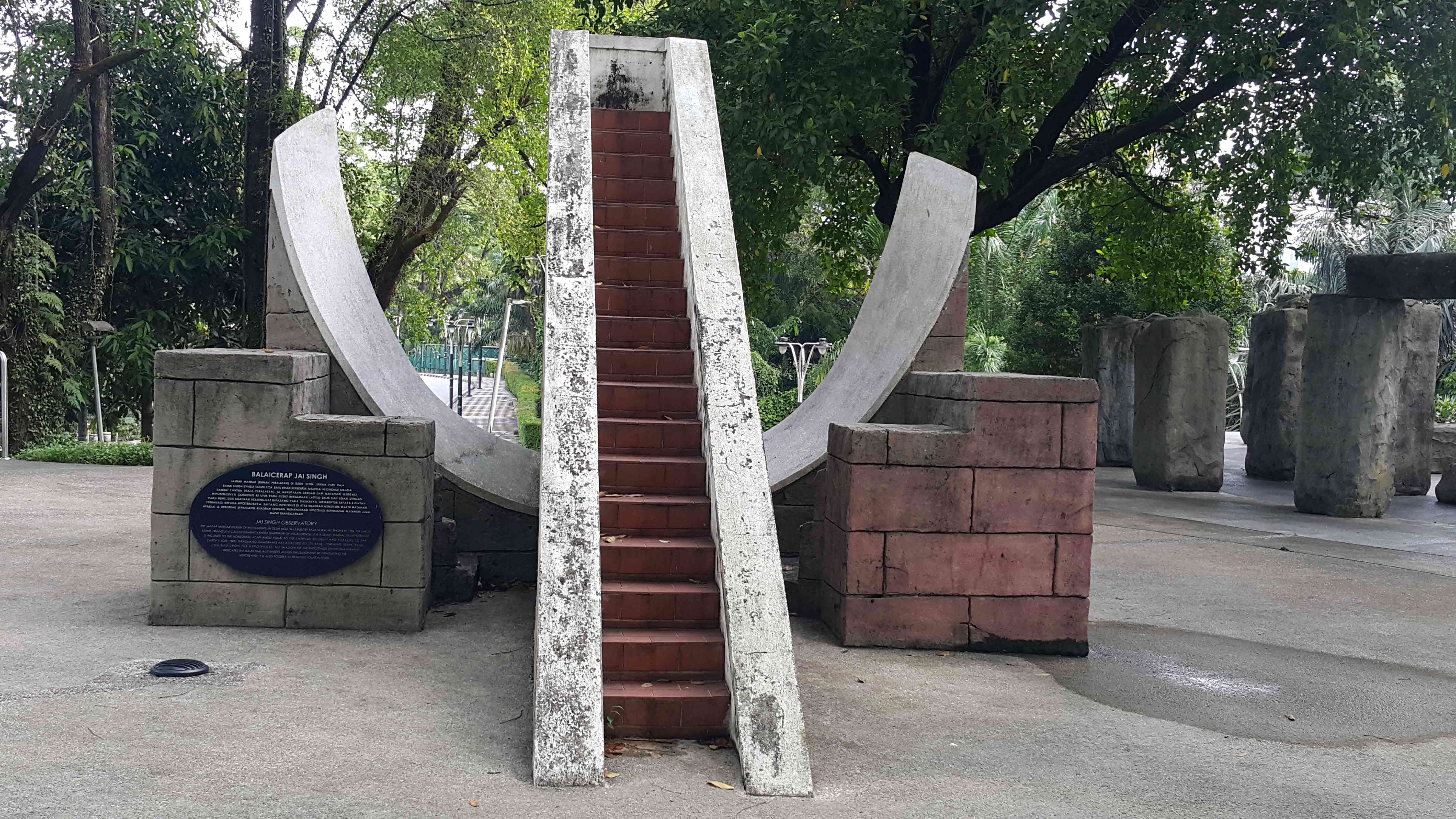
Replica of the Samrat Yantra (from the Jai Singh Observatory) at the National Planetarium, Malaysia
Pur means ‘city’ in Sanskrit and hence Jaipur, the breath-taking ‘pink city’, capital of Rajasthan, can be translated as the ‘City of Jai’. More specifically, it is the city of Maharaja Sawai Jai Singh II, who founded the city in 1726. Maharaja Jai Singh was an avid astronomer and he made a detailed study of Indian astronomical treatises. These go as far back as the Vedic texts (c. 1500-900 BCE), in which the study of stars and planets was known as Nakstravidya. He also studied Aryabhata’s famous treatise, Aryabhatiya (c. 476 CE), Varahmihira (c. 500 CE) and Brahmagupta (c. 598 CE). During the time that Jai Singh was carrying out his research, Middle Eastern and European knowledge of astronomy was very advanced and Jai Singh had their treatises translated into Sanskrit for his studies.
Sawar Jai Singh’s studies led him to recognise errors in the ephemerides, i.e. the trajectory of astronomical objects, used to calculate the imperial calendar and the astronomical tables. However, his existing brass instruments were not good enough for him to carry out the recalculations needed to correct the errors. Hence, he commissioned the construction of a jantar mantar (astronomical observatory) in Delhi. This would become the first of five observatories he would establish between circa 1721 and 1743. The others were at Jaipur, Ujjain, Varanasi, and Mathura. The observatory at Jaipur was the largest, in keeping with Jai Singh’s vision of his capital city having state-of-the-art architectural and astronomical edifices. With the exception of the observatory at Mathura, these observatories still exist and are heritage sites.
The information board at the planetarium specifies that the replica on its grounds is the Samrat Yantra (King of Instruments) from the Delhi Observatory. A Samrat Yantra is essentially a sundial usually with a triangular pyramid as its gnomon. It is flanked by two quadrants and the shadow of the gnomon on these quadrants measures the sun’s movement.
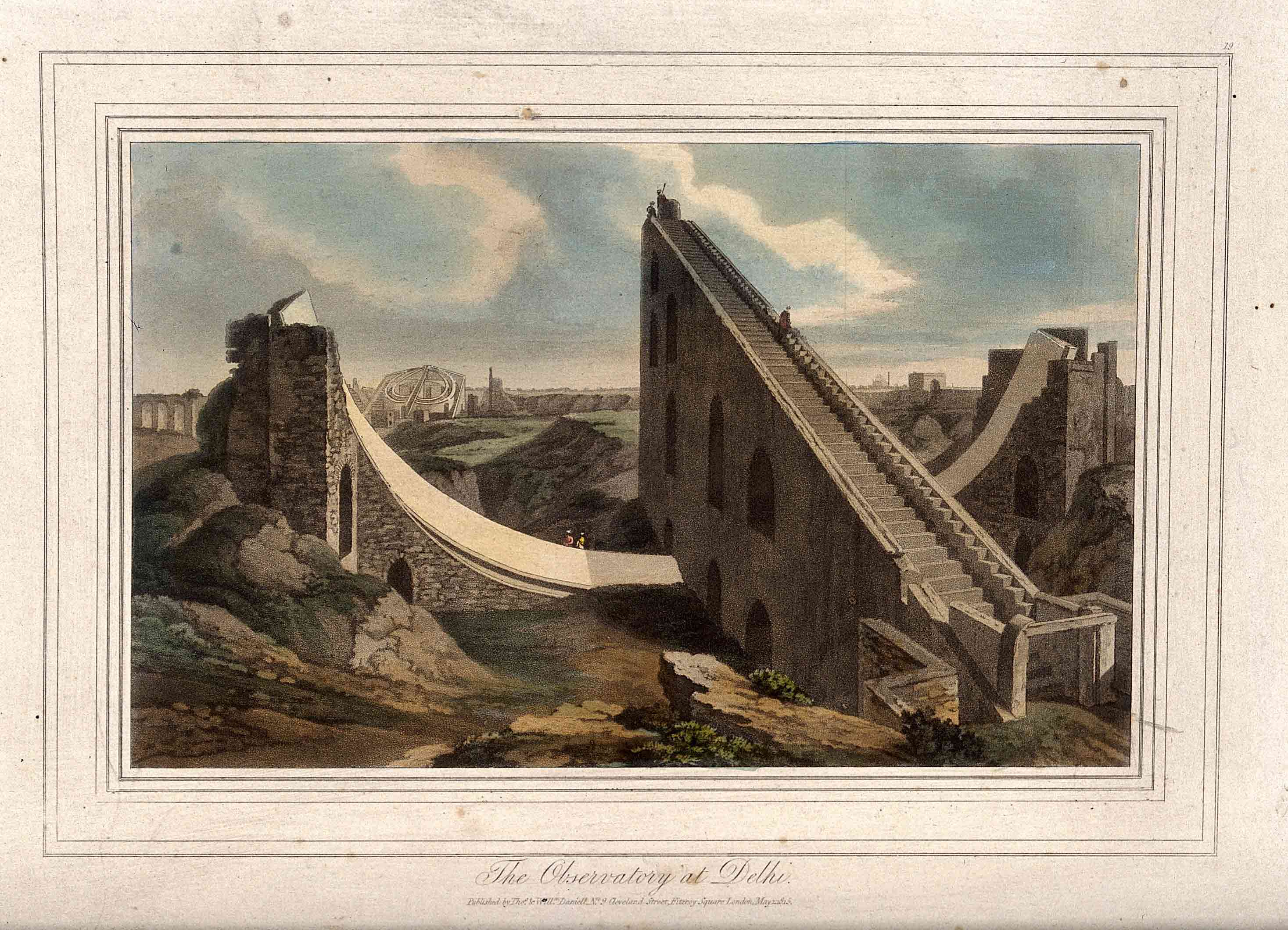
This drawing of the Delhi Samrat Yantra provides a good indication of its size. Illustrated by Thomas Daniell in 1815, currently in the collection of Wellcome Collection (Wikimedia Commons, CC BY 4.0)
The Samrat Yantra in Delhi has a colossal pyramid, measuring 21.3 metres in height. The hypotenuse of this right-angled triangular pyramid is parallel to the Earth’s rotation axis and the angle made by the hypotenuse and the horizontal is equal to the latitude of Delhi. The gnomon is flanked by two large quadrants, which lie on the plane of the equator. Their scales are graduated in a manner that allows the instrument to measure local time, right ascension, and declination. The Samrat Yantra allows measurements to a very high level of precision; both the Samrat Yantra at Delhi and Jaipur can measure time to an accuracy of two seconds.
Apart from the Samrat Yantra, the Observatory at Delhi has three other key instruments, each measuring different aspects of the movements of the heavenly bodies. These are: Misra Yantra, Jaya Prakasa Yantra and Rama Yantra. The Misra Yantra was built by Madho Singh, Jai Singh’s son. It is a compendium of five instruments including a Samrat Yantra.
Originally installed at Merdeka Park, the Merdeka Sun Clock was moved to the National Planetarium in 1997. The Merdeka Park, a public park opened on 20 April 1958, was located outside Merdeka Stadium, venue of the declaration of Independence on 21 August 1957.
This sundial was the brainchild of Dato’ Stanley E. Jewkes, who had designed the Merdeka Stadium, Merdeka Park and, later, the National Stadium. His decision to include a sundial in the park was inspired by the solar clocks in India and by Stonehenge.
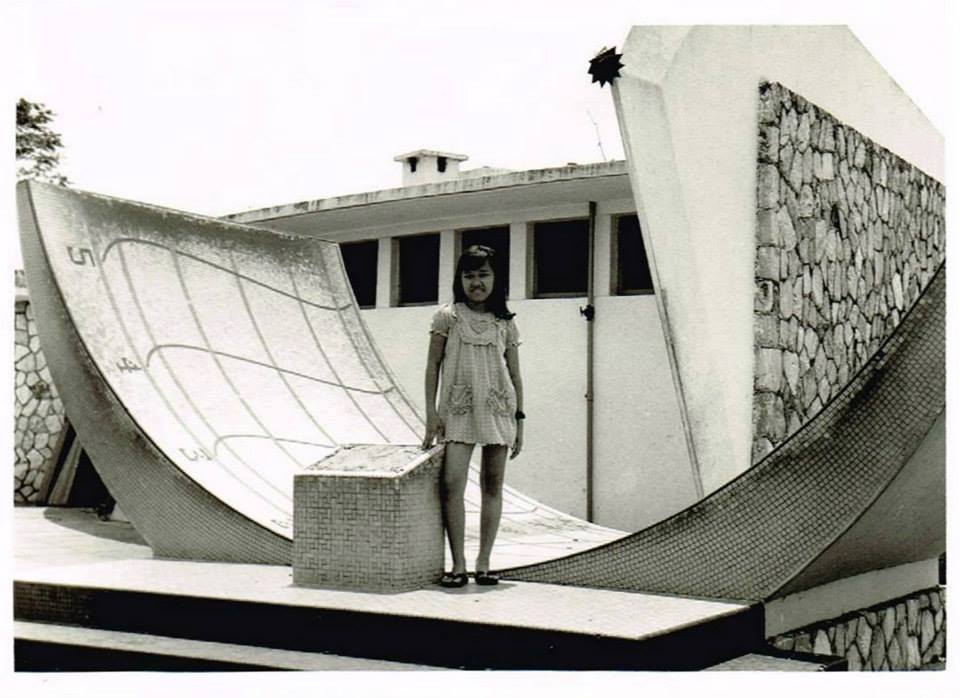
Malayan symbols have been weaved into both the gnomon and the bowl onto which the gnomon’s shadow is cast – the bowl is in the shape of a crescent and the pointer of the gnomon is an 11-pointed gold star representing the 11 states of Malaya (Sabah and Sarawak were not part of Malaya at that time). The clock measures time of year with zodiac signs used to represent months. Hour lines on a sundial are normally straight. However, the shape of the crescent bowl made this difficult and Jewkes compensated by building an equation of time into the lines. Two intersecting lines were drawn, differentiated by colour – one followed the sun as it moved north and the other as it moved south. An information board provides detailed instructions on measuring time using this solar clock.
Left: a section of the bowl, showing the intersecting lines and the zodiac signs. Right: Information board describing the method to read the sundial. Note that this information board mentions ‘Tunku Abdul Rahman Park’. This was the park’s original name before it was changed to Merdeka Park.
Bibliography
Castleden, Rodney (2004) The Making of Stonehenge, Taylor & Francis e-Library.
Johnson-Roehr, Susan N. (2015) Observatories of Sawai Jai Singh II in C.L.N. Ruggles (ed.) Handbook of Archaeoastronomy and Ethnoastronomy, New York: Springer, pp. 2018-2028.
Lai Chee Kien and Ang Chee Cheong (2018) The Merdeka Interviews: Architects, Engineers and Artists of Malaysia’s Independence, Kuala Lumpur: Pertubuhan Akitek Malaysia.
Pearson, Mike Parker (2013) Stonehenge – A New Understanding: Solving the Mysteries of the Greatest Stone Age Monument, New York: The Experiment.
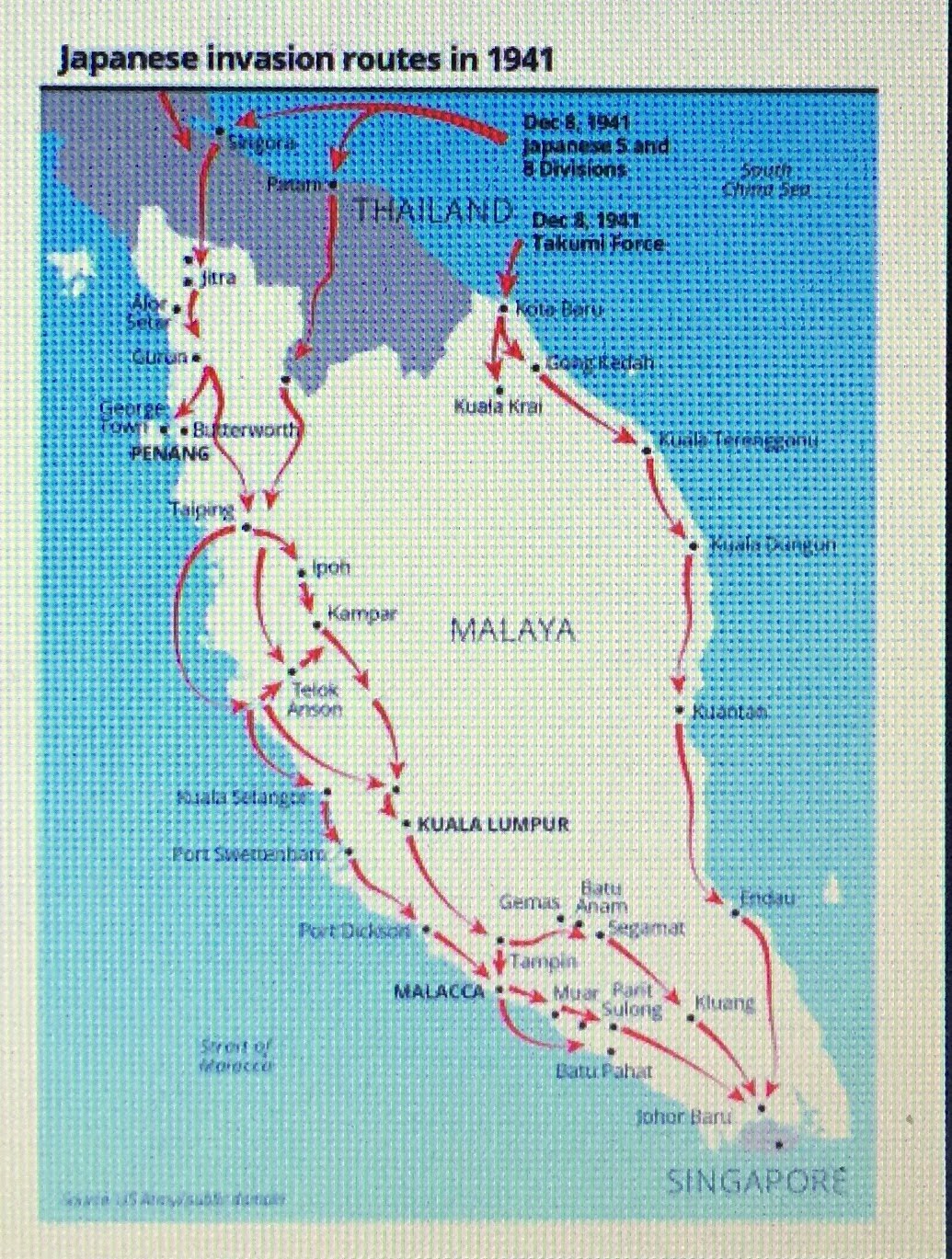
It was December 1941. The British in Malaya knew that the Japanese invasion was imminent. However, they had a secret plan in place, known as Operation Matador.The plan was to destroy the landing bays at Songkhla and Pattani in Thailand so that the Japanese could not land there. However, that plan failed to be activated.
On ‘Blue Monday’ 8 December 1941, just after midnight, the Japanese army landed at Kota Bharu and two other towns in Thailand, namely Pattani and Singora (a.k.a Songkhla). Approximately seventy minutes after the landing in Kota Bharu, Japanese warplanes attacked Pearl Harbour. These two attacks marked the start of the Pacific War and World War II in Asia.
Source: The Star Online
Japanese forces took two routes – one from the north at Jitra, making their way down the west coast, and the other from Kota Bharu, taking the east coast. They fought Allied Forces, comprising British, Indian and Australian armies, all the way down to the south, to their final destination ‘Fortress Singapore’, also nicknamed ‘Gibraltar of the East’.
In less than two months, Japanese forces had invaded the whole of the Malay Peninsula and made landfall in Singapore on 7 February 1942. The Battle of Singapore came to a halt after a week of fighting when British Lieutenant General Arthur Percival surrendered the island to the Japanese on 15 February 1942. It came as a great shock to PM Winston Churchill as it is recorded to be the largest British surrender in its history.
Immediately, Japanese Military Administration took over control and, on the very next day, Singapore was renamed Syonan-To (Light of the South). Less than a week later, Japanese forces started Operation Sook Ching (Chinese term meaning ‘purge through cleansing’). The Japanese term for the operation was ‘Dai Kensho’ meaning ‘great inspection’. Chinese males aged 18 to 50 were rounded up and brought to screening centres set up around the island. They were inspected by the Kempeitai (Japanese military police) and Imperial Guards Division; those suspected of being anti-Japanese were taken away to killing sites and executed, their bodies thrown into the sea. The operation was initially planned from 21 to 23 February 1942 but it was extended to 4 March 1942.
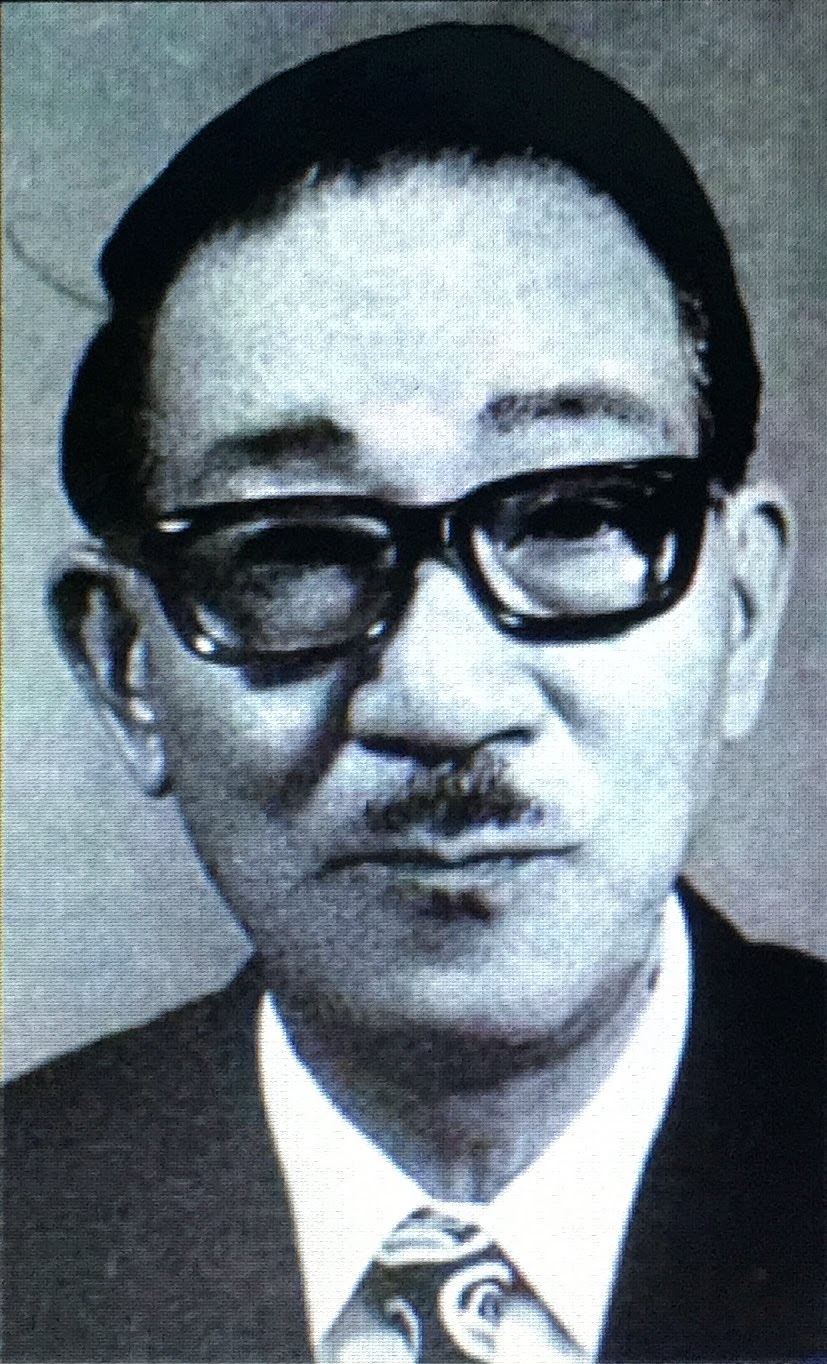
Mamoru Shinozaki
Source: Wikipedia
Mamoru Shinozaki started work in a Japanese news agency and was posted to Shanghai in 1934. Two years later, he joined the Japanese Foreign Office as press attaché. In 1938, he was transferred to the Japanese Consulate General in Singapore and his job was to report on local conditions and British military defence. In September of 1940, he brought two Japanese military officers to various locations on the island as well as in Malaya to survey military installations and study British defence capability.
His activities did not escape the eyes of the Special Branch and he was put on surveillance. On 21 September 1940, Shinozaki was arrested and convicted of espionage and sentenced to three and a half years of rigorous imprisonment. He was incarcerated in Changi prison. With the fall of Singapore, Shinozaki was released and he was appointed Adviser of Defence Headquarters. He was tasked to reassemble the documents of the Japanese Consulate and issue protection cards to diplomats and other foreigners from neutral countries.
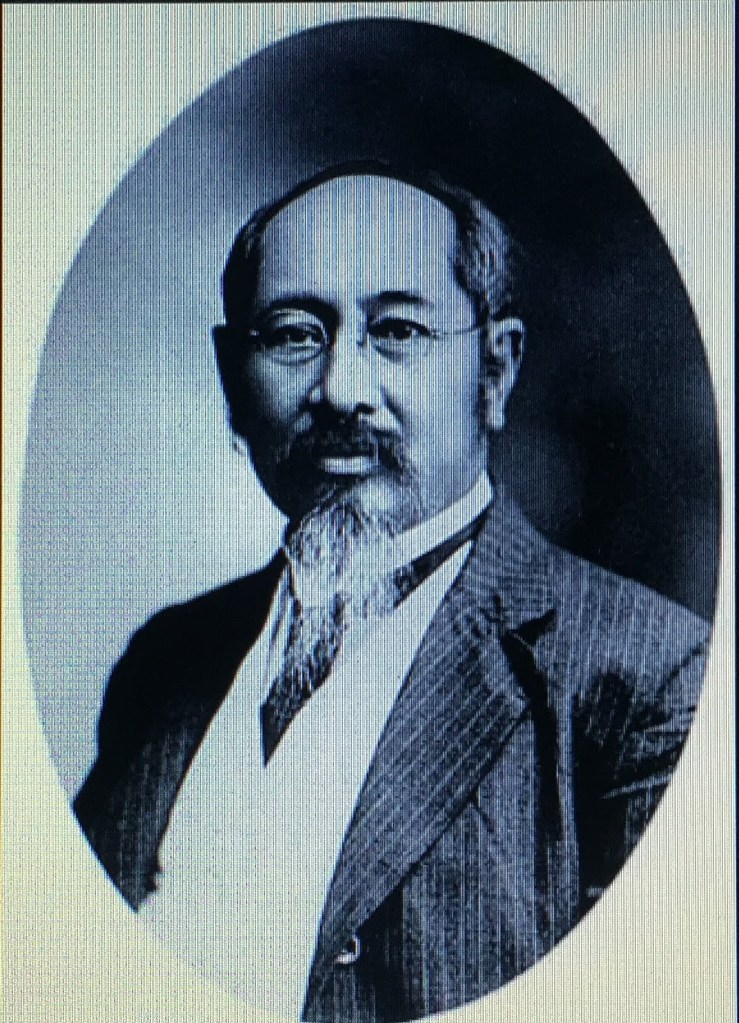
It was during the Sook Ching massacre that Shinozaki used his good connection with the Japanese chief and his position to issue personal protection cards to thousands of Chinese thus sparing their lives from execution. One of the men that he saved was Lim Boon Keng. Lim was a medical doctor and a strong advocate of social and educational reforms in Singapore. He was the president of the Xiamen University in China. He co-founded the first locally owned insurance firm in Singapore and the Oversea Chinese Banking Corporation (OCBC) Bank. He was well known in the Chinese community.
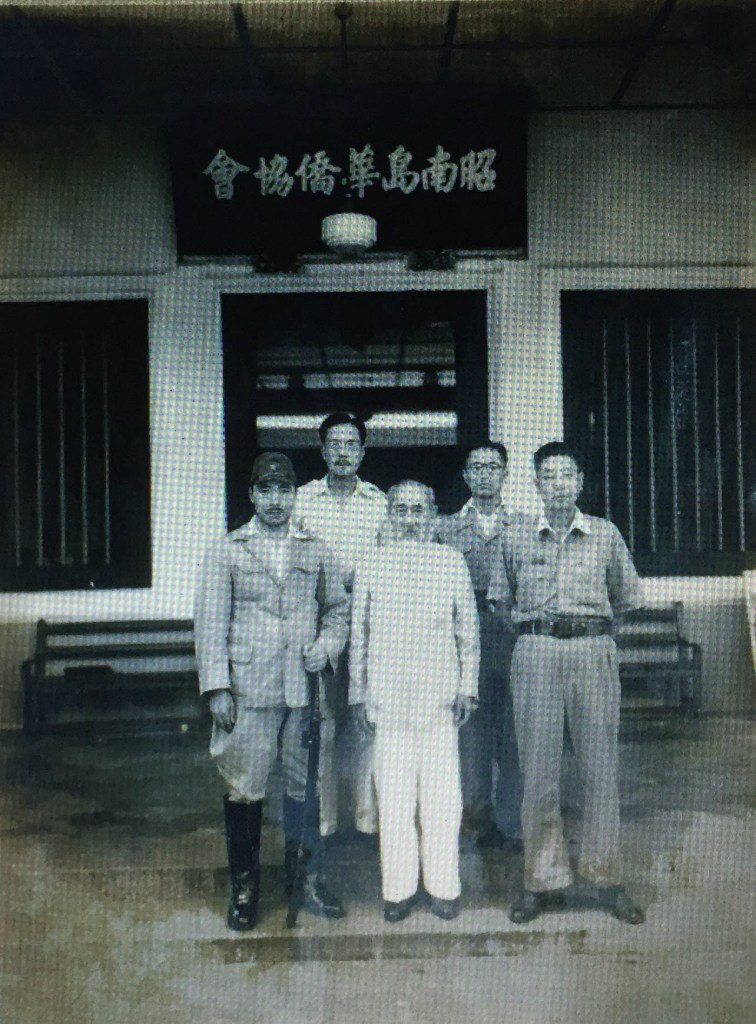
Left : Lim Boon Keng Right : Lim Boon Keng and Japanese officers in front of Syonan To OCA Images: from the National Archives of Singapore
In the midst of the Sook Ching operation, Shinozaki had asked Lim to be the leader of the Overseas Chinese Association (OCA). The OCA was the brainchild of Shinozaki; its function was to mediate between the Japanese Military administration and the local Chinese community. After much persuasion, Lim finally accepted the post and, at the same time, Shinozaki became its Adviser. It was formed on 2 March 1942. As soon as OCA was formed, Shinozaki was removed from his post and replaced by Toru Takase who used the Association to demand 50 Million dollars from the Chinese community. It was extremely difficult to meet the demand, even after two extensions. This prompted the Japanese administration to include Chinese communities from the states of Malaya into the Association. After another three extensions, the Association only managed to collect 28 Million dollars. Eventually, Takase allowed the Association to take a loan of 22 Million dollars from the Yokohama Specie Bank. The cheque of 50 Million dollars was presented to the Japanese by Lim and 57 Chinese leaders on 25 June 1942.
With that episode over, Shinozaki returned to OCA in August and again took the post as Adviser. In the same month, he was appointed as the Chief Welfare Officer and he helped in the setting up of the Eurasian Welfare Association (EWA). Similar to the OCA, EWA was the representative of the Eurasian community to the Japanese administration. A prominent surgeon in Singapore at that time, Charles Joseph Pemberton Paglar, was appointed as the President of EWA.
Japanese authorities foresee an eventual shortage of food to feed the island’s population of a million people. Hence, they immediately embarked on the promotion of the Grow More Food Campaign. People from all walks of life including school children and Government servants, were encouraged to grow their own food and be self-sufficient. However, the campaign failed to produce results. Moving forward, Japanese authorities took a tougher stance and one of the plans was the setting up of agricultural settlements outside the city. Again, the services of Shinozaki were required and he was tasked to oversee the resettlement project.
Shinozaki turned to the OCA and persuaded them to take up the offer. OCA was coaxed into the plan when Shinozaki made several promises to them – the settlement would be self-governing, the Japanese would not interfere, and the settlement was assured of constant rice supply until they become self-sufficient. With that assurance, a committee was formed and headed by Lim. A team was dispatched to survey a suitable site in Malaya. After much consideration, Endau in Johor was selected as the site for the new settlement. Endau was the choice because of the accessible supply of fresh water and arable land that was ideal for agriculture.
Endau
Endau is located on the northern tip of east Johor and close to the border with Pahang. The location of the town was already in the maps published by the British as early as 1793 and 1805. However, it was then known as Blair’s Harbour, named after Archibald Blair who was working for the Bombay Marine (Bombay Marine evolved into the Royal Indian Navy of today). He came to the South China Sea, did a survey, and reported that the site of Endau was potentially a ‘good harbour’. He did a similar survey of the Andaman Islands during that time and, today, the capital city of Andaman and Nicobar Islands is named after him, Port Blair.
The Endau settlement was also known as the New Syonan Model Farm and it was entirely for the Chinese community. Japanese authorities had targeted to evacuate 300,000 Chinese to the settlement. As the next step, OCA made efforts to raise money for the project and managed to raise one million dollars. This was followed by construction work – clearing the jungle, and building roads and houses. OCA also assigned suitable candidates to head the various departments set up to help the settlers. The departments were agricultural, medical and health, supply, public works, timber mill, and public peace and order. With all these in place, the pioneer settlers arrived in September 1943. The population grew and by the end of the first year, Endau attracted 12,000 settlers. Progressively, the settlement saw the establishment of a bank, school, paper factory, sawmill, and several restaurants. It was becoming a successful self-sufficient scheme and it attracted the attention of anti-Japanese guerrillas in Malaya, the Malayan People Anti-Japanese Army (MPAJA). They attacked the settlement and claimed the lives of several settlers. Again, Shinozaki came to the rescue when he managed to enter into a secret pact with the MPAJA guerrillas by offering rice in exchange for peace. The Endau settlement continued until 1945 when the Japanese Occupation ended.
Bahau
The Eurasian community also wanted to participate in the voluntary migration scheme primarily because the community felt that they were constantly being monitored by the Japanese Military Police and this created fear and insecurity. This prompted the Roman Catholic Bishop, Adrian Devals, and Herman De Souza Sr, a representative of the Eurasian community, to make the trip to Bahau in Negeri Sembilan to assess its suitability. The Eurasian community gave their thumbs up and it was reported to Shinozaki. However, Shinozaki had reservations about the new settlement. It was further away from Singapore and sending support from the island would be difficult – they would have to count on support from the Negeri Sembilan government. Furthermore, it was difficult to clear the vegetation and the land was unsuitable for agriculture.
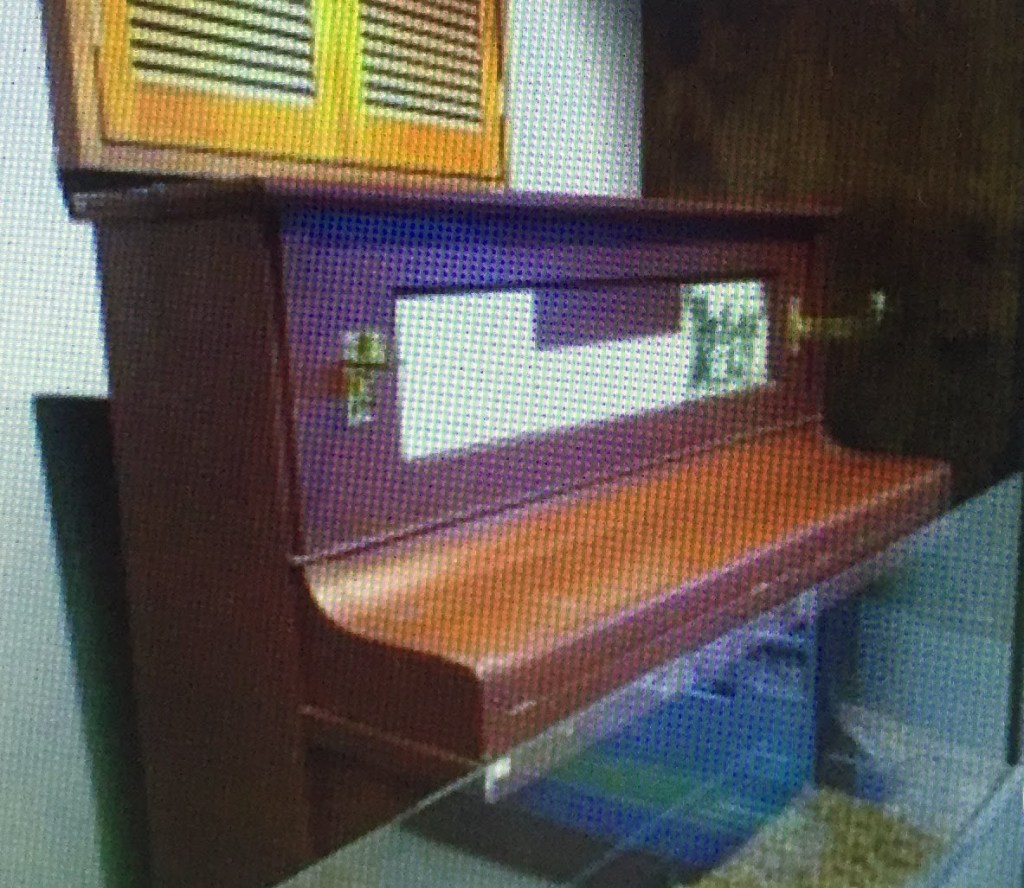
The plan went ahead and the Japanese named the new settlement Fuji-go, which means Fuji village or ‘beautiful village’. The first group to arrive consisted mainly of bachelors. They were selected by the Japanese to help lay the foundation of the new settlement as well as to set up a model farm and transfer farming techniques to the settlers. Between December 1943 and April 1944, some 2,000 Eurasians arrived at Bahau, and they brought with them curtains and pianos to furnish their new homes. Shinozaki and Paglar made frequent visits to Bahau, bringing with them food and medicines for the settlers. Life in the new settlement was no bed of roses, as most of them did have farming knowledge. Many suffered from malnutrition and diseases such as malaria. At the end of the Japanese Occupation, it was reported that the number of settlers was estimated to be around 3,000. Besides the main groups of Eurasian and Chinese Roman Catholics, there were also a small group of European Protestants and neutrals from countries such as Switzerland, Denmark, Romania, and Russia.
Piano brought to Bahau (Photo from The heartlander tourist / Lioncityboyzach)
At the end of Japanese Occupation in August 1945, the settlements were abandoned and the settlers returned to Singapore. Besides Endau and Bahau, the Japanese also created a settlement in Pulau Bintan (largest island in the Riau Province, Indonesia) for the Indians.
When the British returned to Singapore, Mamoru Shinozaki was interned in a Jurong camp but he was freed when the Chinese and Catholic communities petitioned the British for his release. He acted as a witness in a number of post-war trials in Singapore. He died in 1991.
The Malay Annals (known in Malay as Sejarah Melayu) is one of the most important works of traditional Malay literature. This work is known also as Sulalatus Salatin, which translates as Genealogy of Kings. This is an indication of the primary concern of the Malay Annals, i.e. the rulers of Melaka, the most famous kingdom in Malaysia’s history.
The extent of the Melakan Sultanate during the fifteenth century. Image: Wikimedia Commons, Gunawan Kartapranata (CC BY-SA 3.0)
A fairly large number of manuscripts of the Malay Annals have survived till this day. Some of these are found in Malaysia, under the custodianship of either the Perpustakaan Negara Malaysia (National Library of Malaysia) or the Dewan Bahasa dan Pustaka (Institute of Language and Literature). The majority of manuscripts, however, are kept in libraries or institutions outside Malaysia. According to a 1967 article by Roolvink, 11 manuscripts are held by the United Kingdom, 12 by the Netherlands, five by Indonesia, and one by Russia. Although the majority of the manuscripts are late copies dating to the nineteenth century, the fact that so many manuscripts were produced reflects the high regard in which the Malay Annals was held.
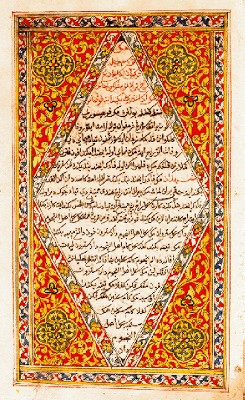
The Malay Annals was originally written in Classical Malay in the Old Jawi script (a script adapted from Arabic for the writing of the Malay language). Subsequently, the work has been Romanised, and translated. The first English translation of the Malay Annals, for example, was made by John Leyden, and was published posthumously in 1821. It may be mentioned that in addition to the better-known English translations of the Malay Annals, there is also an incomplete French one. It’s lengthy title, Le Sadjarah malayou (l’arbre généalogique malais), ou, Histoire des radjas et sultans malais : depuis les origines jusqu’à la conquête de Malaka par Alphonse d’Albuquerque, en 1511 translates as The Sejarah Melayu (The Malay Family Tree), Or, History of the Malay Rajas and Sultans: From the Origins to the Conquest of Melaka by Afonso de Albuquerque, in 1511.
Frontispiece of a Jawi edition of the Malay Annals. Image: Wikimedia Commons (public domain).
There are a number of questions surrounding the Malay Annals that have yet to be fully answered. For instance, the exact date of the text’s composition is unknown. According to Winstedt, the oldest copy of the Malay Annals is the Raffles MS No. 18, dating to 1612. Winstedt goes on to argue that the Raffles MS No. 18 was rewritten and compiled from an older manuscript, which he believes dates to before 1536. This manuscript is also believed to be the one closest to the original version of the text. Incidentally, the Raffles MS No. 18 resides today in London, at the Library of the Royal Asiatic Society.
The identity of the author of the Malay Annals is another unsolved mystery. Winstedt believes that the author of the original text was a Melakan at the court of Sultan Mahmud Shah, who ruled Melaka when it was conquered by the Portuguese in 1511. Winstedt is of the opinion that the writer survived the fall of the city, and that he continued writing until 1535. It is generally agreed that in 1612, the Bendahara Paduka Raja of Johor, Tun Muhammad bin Tun Ahmad, better-known as Tun Sri Lanang, was commissioned by Raja Bongsu (the future Sultan Abdullah Ma’ayat Shah of Johor) to rewrite, revise, and edit the Malay Annals.
The Malay Annals (Raffles MS No. 18) contains 31 chapters, beginning with a brief preface praising Allah, the Prophet, and his companions, as well as detailing the circumstances in which the manuscript was written. The story proper begins with Iskandar Zulqarnain (commonly identified as Alexander the Great), to whom the rulers of Melaka trace their ancestry, and ends with ‘Alauddin Ri’ayat Shah, the first Sultan of Johor. Apart from the rulers of Melaka, the pages of the Malay Annals are filled with many colourful characters, some of whom have become household names in Malaysia.
Despite its focus on the Melakan rulers, the Malay Annals is much more than a mere royal genealogy. This work sheds light on various aspects of the Melakan Sultanate, including its administration, foreign relations, economy, as well as social norms and customs. Having said that, it should also be noted that the Malay Annals was not meant to be a faithful record of historical events, and that many of its stories ought to be taken with a pinch of salt.
Still, the Malay Annals is a significant piece of work, not only as a work of Malay literature, but also for the information about the Melakan Sultanate it contains, and the strong influence it has exerted on the development of the Malay civilisation. Therefore, in 2001, the Malay Annals, following its nomination by Dato’ Haji A. Aziz Deraman, the former Director-General of Dewan Bahasa dan Pustaka,was inscribed on UNESCO’s Memory of the World Register.
The ‘Tales from the Malay Annals‘ series on this blog will look at some of the stories contained within this manuscript. Do look out for these articles.
References
Raslin, A. B. & Effah, I. Z. (2013) ‘Sulalatus Salatin: Karya Agung Melayu di Institusi Simpanan Dunia’ in Seminar 400 Tahun Sulalatus Salatin. Kuala Lumpur, 29-30 October 2013.
Roolvink, R. (1967) The Variant Versions of the Malay Annals. Bijdragen tot de Taal-, Land- en Volkenkunde, 123(3), pp. 301-324.
Sejarah Melayu [Cheah, B. K. (comp.), Abdul Rahman, Hj. Ismail (transcr.), 2009. Sejarah Melayu. Kuala Lumpur: The Malaysian Branch of the Royal Asiatic Society.]
Historical societies in our country have existed since the time of the Straits Settlements. The earliest was the Straits Asiatic Society formed at a meeting on 4 November 1877 at the Raffles Library and Museum in Singapore with its parent organisation, the Asiatic Society of Bengal.
The Asiatic Society of Bengal was founded on 15 January 1784 by Sir William Jones who was a lawyer and Orientalist. When he came to Calcutta (now Kolkata) on 25 September 1783, he took up the post as a Supreme Court judge and five months later, he formed the society, receiving strong support and encouragement from the Governor General of Bengal at that time, Warren Hasting. The setting of the society was to encourage Oriental studies.
The meeting on the formation of the Straits Asiatic Society was chaired by Archdeacon George Frederick Hose, who later became Bishop. It was attended by prominent members from the expatriate communities in the three Straits Settlements states including D.F.A. Hervey (Resident Councillor of Malacca), Charles John Irving (Lieutenant General of Penang), and William A. Pickering (first Protector of Chinese of the Chinese Protectorate based in Singapore). The society started with an enrolment of 150 members. The Society’s mission was ‘to produce the collection and record of information relating to the Straits Settlements and the neighbouring countries’. Its other aims included producing a journal and establishment of a library.
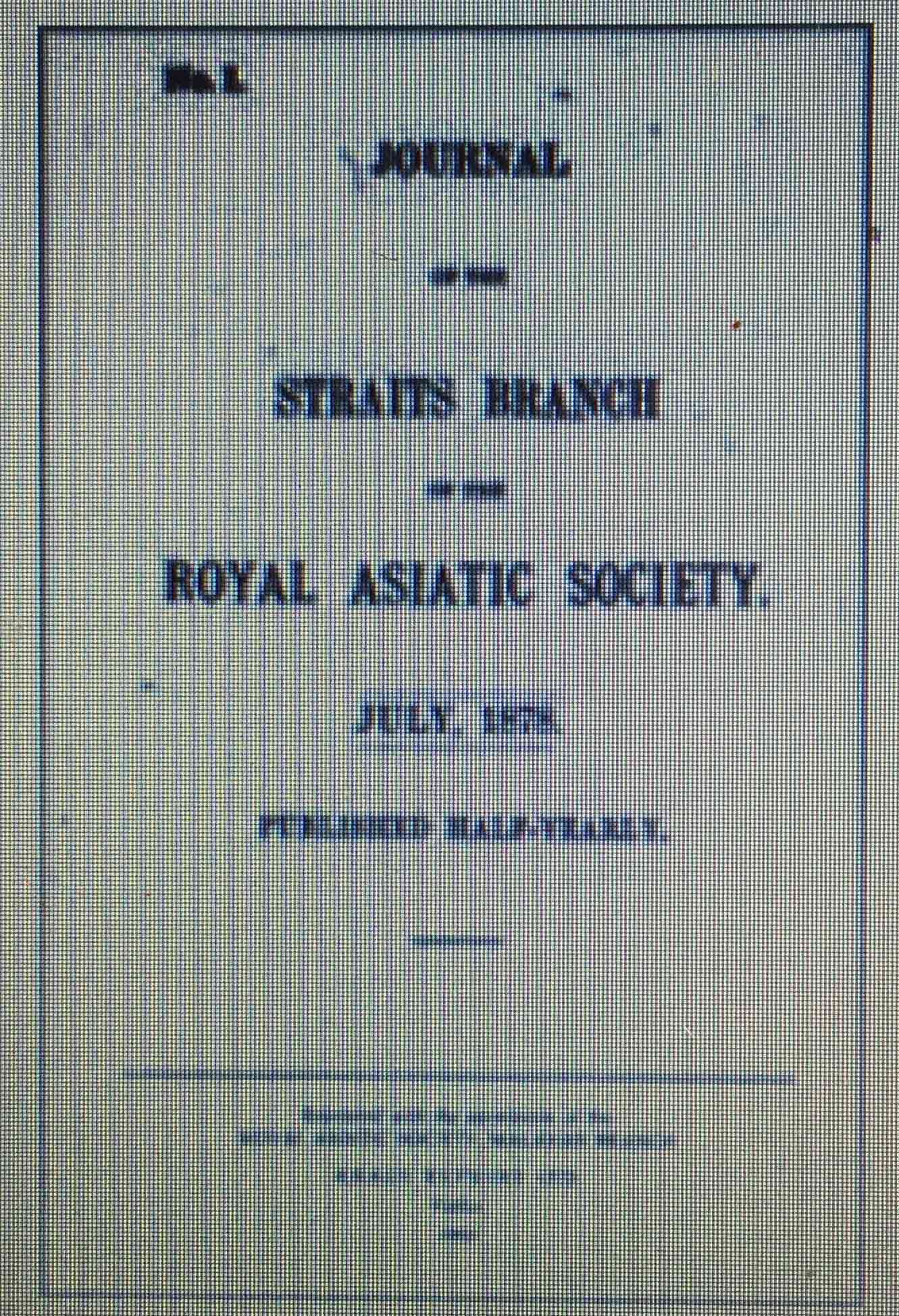
The following year, the society was renamed Straits Branch of the Royal Asiatic Society when its affiliation with the Royal Asiatic Society of Great Britain and Ireland or commonly known as Royal Asiatic Society, was confirmed on 6 May 1878. Bishop Hope was appointed as the first President of the Society and he went on to become one of the longest serving Presidents, from 1878 to 1908. The other founding members also took up appointments in the Society and contributed actively to its journal. The first journal was named Journal of the Straits Branch of the Royal Asiatic Society; it was dated July 1878 but it was published in September 1878.
The society then went through name-change on two occasions in accordance to the political situation of the time. In 1923, it was renamed Malayan Branch of the Royal Asiatic Society when the British influence went beyond the Straits Settlements; and in 1964, it was renamed Malaysian Branch of the Royal Asiatic Society, after the formation of Malaysia. The name remains until today. Its office was moved from Singapore to Kuala Lumpur. The name of the journal also changed in accordance to the renaming of the society. Some of its past illustrious members were Sir Hugh Clifford, Sir Frank Swettenham, Sir Ernest Woodford Birch, Alfred Dent, and Henry Nicholas Ridley to name just a few.
Alfred Dent
Henry Nicholas Ridley
Sir Hugh Clifford
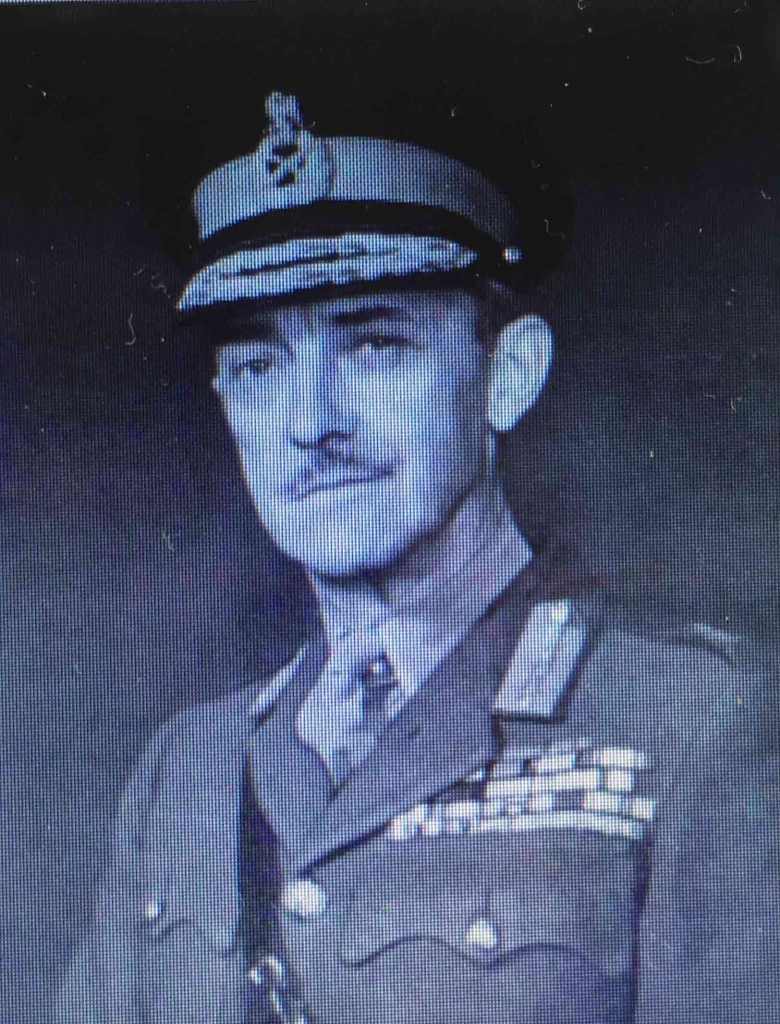
In 1930, of two more organisations were formed, namely the Malacca Historical Society and the Penang Historical Society. This was no coincidence as both states were under the Straits Settlements and had strong Western influence. Twenty-three years on, in 1953, the Malayan Historical Society (MHS) was formed, based in Kuala Lumpur. It was officially formed on 30 April 1953 at its first meeting held at the Kuala Lumpur Town Hall on Jalan Raja (the old City Hall). It was a grand inauguration attended by the British High Commissioner in Malaya, General Sir Gerald Templer, and the Malay Rulers – Sultan of Pahang, Yang DiPertuan Besar of Negri Sembilan, Sultan of Kedah, Sultan of Terengganu, Tengku Mahkota of Johor, Regent of Perak, and Deputy Raja of Perlis. Also in attendance were 200 local dignitaries – Datuk Onn Jaafar, Datuk Thuraisingam, Datuk Nik Ahmad Kamil, Datuk Tan Cheng Loke, and Tuan Za’aba, to name a few.
General Sir Gerald Templer
Datuk Mahmood Bin Mat
Tun Hussein Onn
General Sir Gerald Templer in his speech emphasized that the Society is an effort to bring all the people of Malaya together to become a unified nation in the face of time and destiny of independence. He said ‘a nation which does not look back with pride upon its past, can never look forward with confidence towards its future’. He also tasked the Society ‘to ensure that things of beauty and historic value, old and new, find their way to a place where they’ll be properly cared for, and are not allowed to moulder, forgotten and unappreciated’. He also wanted the Society to work together with other organisations and the knowledge gathered about the history to be widely disseminated to the people: ‘This is not a Society for the Government, for the educated or for any class or section of the populations, it is for everybody, and everybody has something to contribute to it’.
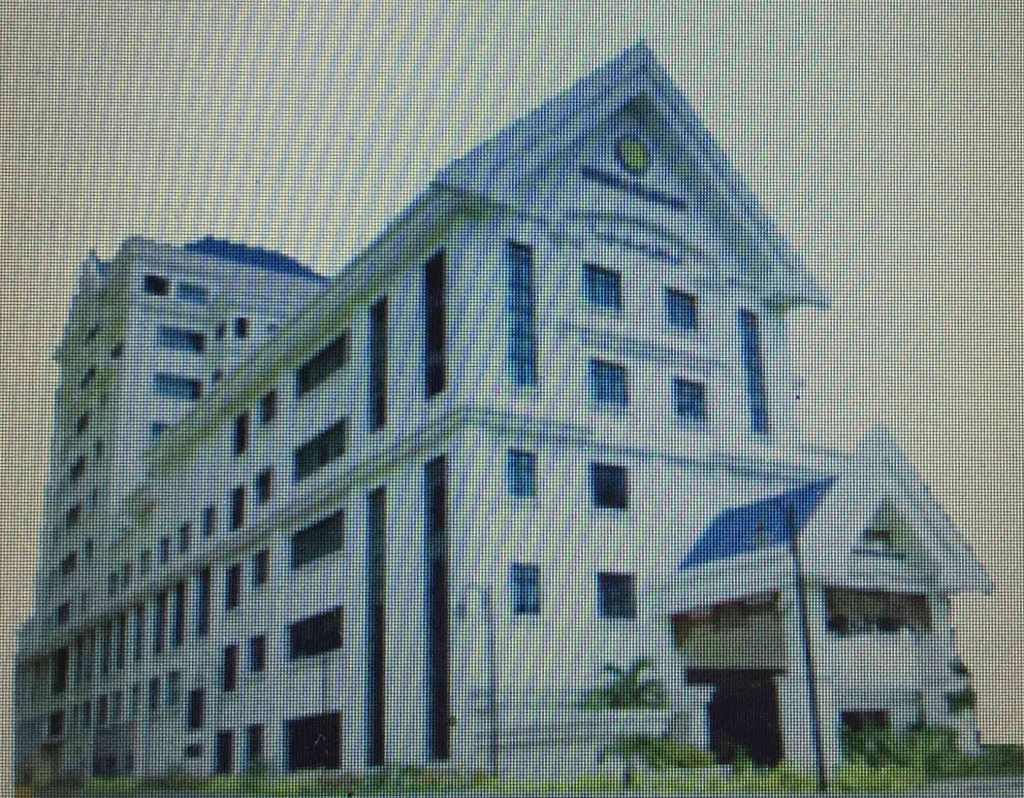
At the end of the meeting, a Council was formed and it was headed by the first President, Datuk Mahmood Bin Mat. Its office was initially housed at the National Museum, but it was later moved to Dewan Bahasa dan Pustaka. In 1976, the Government provided a Government house located at No.958, Jalan Hose, Kuala Lumpur to be utilised as MHS’s headquarters. Tun Hussein Onn, the then Prime Minister, officially opened the building on 31 August 1976. Later, Tun Hussein Onn managed to secure a plot of prime land in Kuala Lumpur and awarded it to MHS. On 1 December 2003, MHS officially relocated to its new headquarters at Wisma Sejarah, No.203, Jalan Tun Razak, opposite the Institut Jantung Negara/National Heart Institute.
No.958, Jalan Hose, KL
Wisma Sejarah, No.203, Jalan Tun Razak,KL
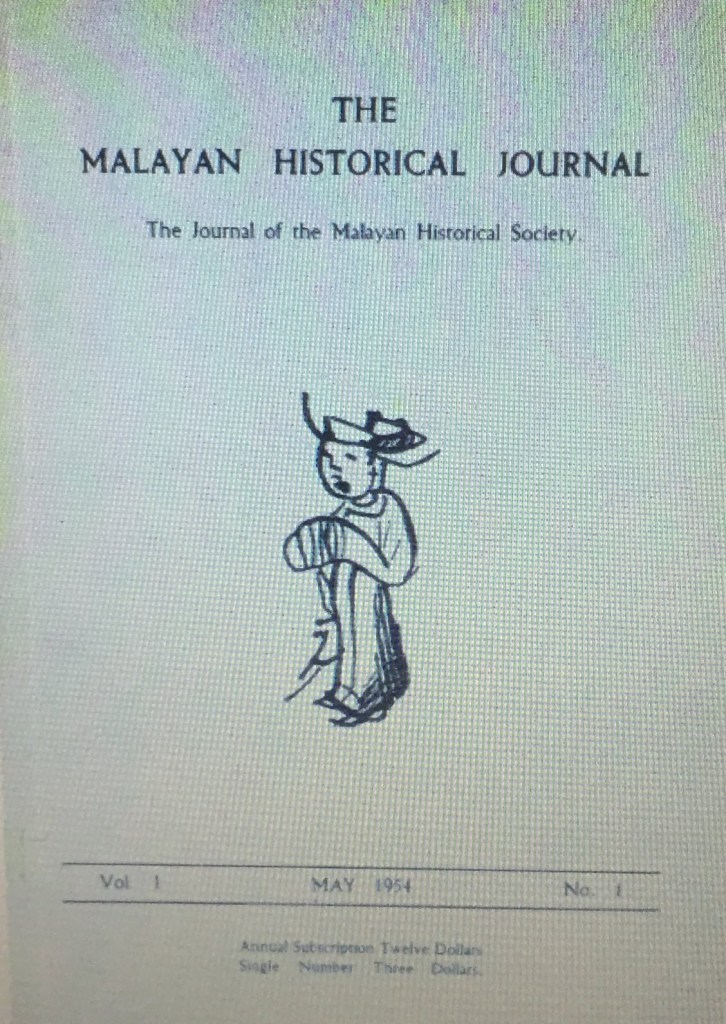
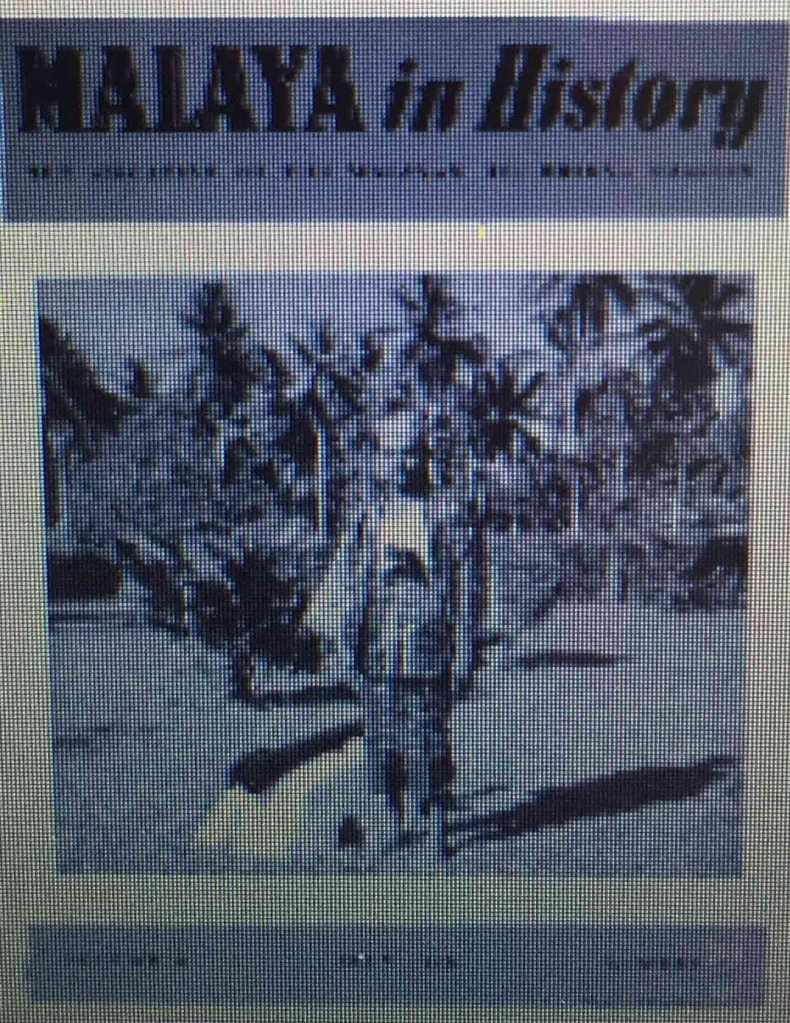
The first publication by MHS was entitled The Malayan Historical Journal; it was published in May 1954 and the editor was J.C. Bottoms. The annual subscription was twelve dollars and a single number (per issue) was priced at three dollars. In 1957, Tan Sri Mubin Sheppard took over from J.C. Bottoms and the journal was renamed Malaya in History. This journal went on for 15 years until April 1972, when Prof. Zainal Abidin Wahid took over, but from this time on (until today), the journal is produced in the Malay language and given a new name Malaysia dari segi Sejarah (Malaysia in History, in English). The late Prof. Emeritus Khoo Kay Kim was next in line to hold the editorial chair when he came on board in 1978 until 1989; he was then replaced by Prof. Dr. Nik Hassan Shuhaimi.
In addition to the journals, MHS also publishes books and monographs. Some of the bestsellers include Lembah Bujang (published in 1980), Historia (1984), Changi, the lost years (1989), Duri dalam daging (2001) and The Malay Civilization (2007). Today, the Malaysian Historical Society (Persatuan Sejarah Malaysia in Malay) maintains branch offices in all the states.
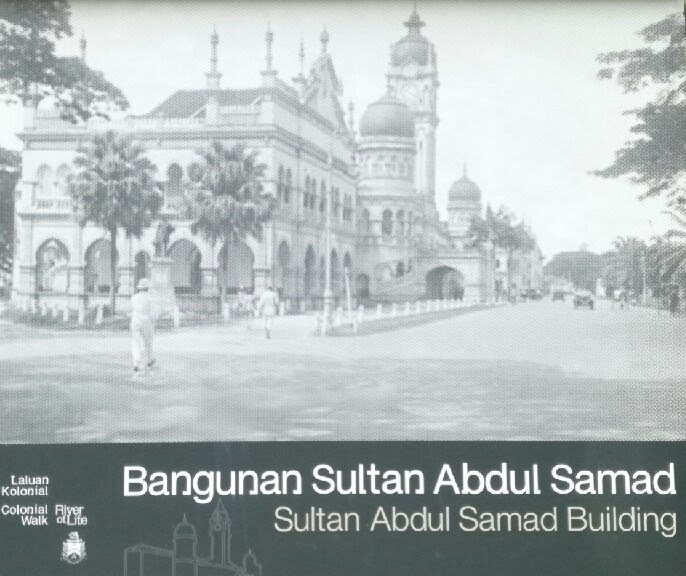
In my last article, I wrote about two Colonial monuments that were initially located at the Government Offices, now renamed as Sultan Abdul Samad Building, at Dataran Merdeka. First, the King Edward VII bronze bust on a marble pedestal, which was positioned right in front of the building and unveiled on 16 April 1912. The second monument is the bronze statue of Sir Frank Swettenham, erected on the front right-hand corner of the building and facing Gombak River. It was announced publicly for the first time on 19 January 1921 and it was a grand occasion attended by the Rulers from the Federated Malay States and top ranking British officials at that time.
Left: bust of King Edward VII Right: Photo showing the original position of Sir Frank Swettenham’s statue (left, in between the two trees)
During the Japanese Occupation, both monuments were removed and hidden away. After the war, the monuments were returned to their original sites. Today, they are standing tall at the grounds of the National Museum. Besides these two monuments, which originated at Jalan Raja, another monument still exits at Jalan Raja – at Dataran Merdeka.
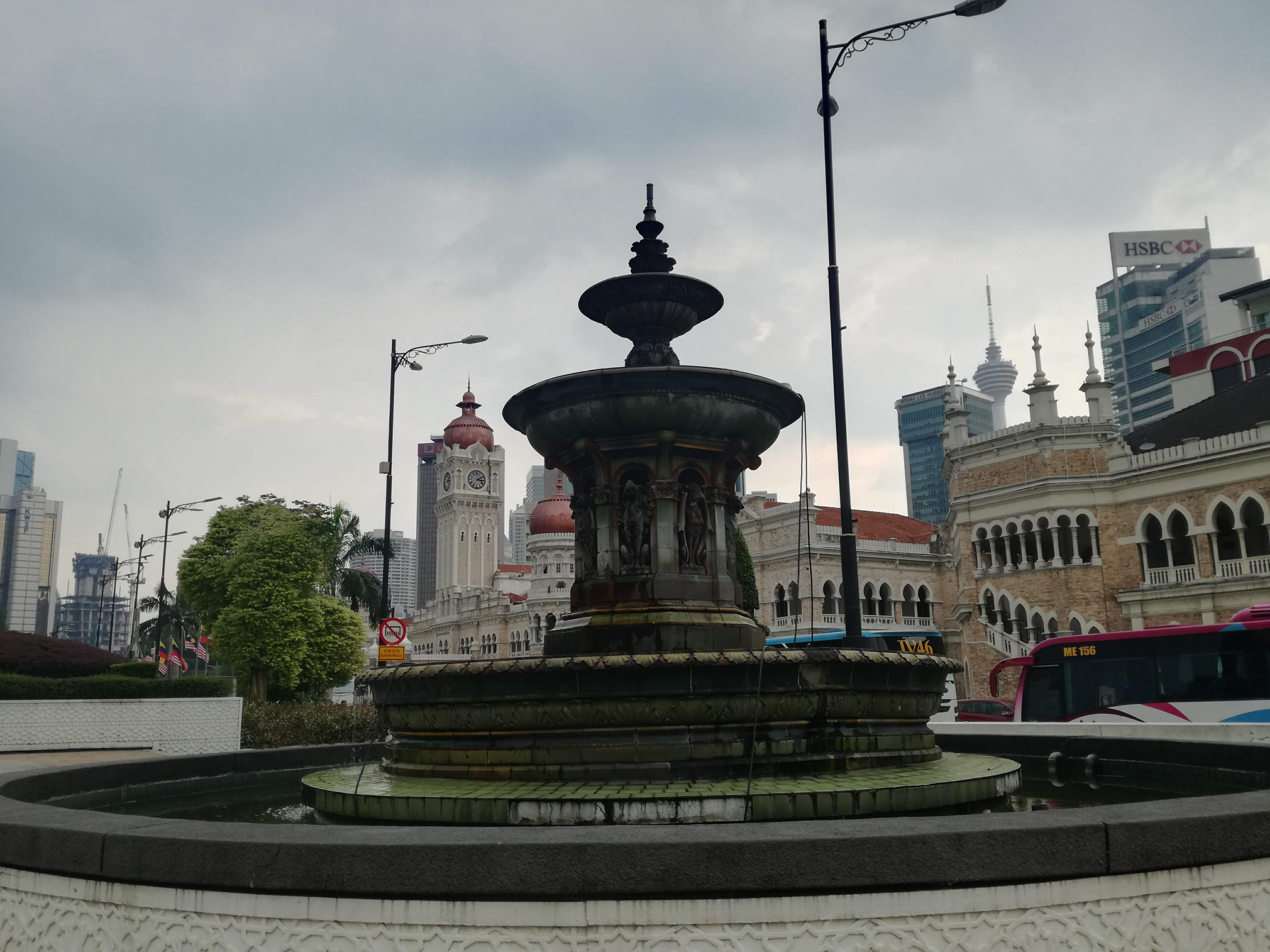
This only surviving monument is the Fountain, located at the southern end of Dataran Merdeka, close to the 95 metres tall flagpole and near the intersection between the old General Post Office, the current Textile Museum and the former National History Museum, which was closed in November 2007. Prior to becoming the museum, the building housed the Chartered Bank of India, Australia and China (today they are known as Standard Chartered Bank).
Information board next to the fountain
A close scrutiny of the information on the board next to the Fountain, facing Jalan Raja only provides a one line introduction – `At the corner of the square stands a fountain that was built in 1897`. It was no surprise with the absence of facts of its origin and history because since it was erected, it was already shrouded in mystery. This prompted the Malayan Historical Society in Kuala Lumpur to put the record right with the help of the National Archives. They published their findings in their half-yearly magazine called `Malaya in History` volume VIII / number 1 / December 1962 issue.
When the Fountain was completed, KLites believed it was built to commemorate the Chief Inspector of Police, Steve Harper of the Selangor Military Police who died at home in 1896. He was at his prime at the time of his passing. Steve was popularly known to the locals as `Tuan Steeb`. Steve was one of three brothers who were very popular and successful in Selangor. There was Alfred Harper who was the Chief Clerk of the Courts and it was reported that he died at about the same time as Steve. And the third brother, Archie Harper, who founded the well-known firm of A.C Harper & Co. Ltd., which were agents for the Straits Steamship Company and importer for Peter Dawson`s Scotch whisky. Archie was one of the early members of Selangor Club (now Royal Selangor Club) and he was the first and best three Honorary Secretaries of the club. Archie retired in 1906.
The fountain
The publication at that time, the Malay Mail (newspaper) and Selangor Journal (periodical), appeared to support this tradition. The former reported that a fund was started in January 1897 to commemorate the late Steve Harper and it went on to receive contributions from KLites. The newspaper also published the list of contributors from time to time and it further reported that the memorial should take the form of a drinking fountain to be erected at the central market (built in 1888, it is still called Central Market, located at Jalan Tun Tan Cheng Lock. However, it is no longer a wet market but now houses mostly arts and craft, and souvenir shops). The Fountain was finally completed later that year but it was constructed at the Padang (now Dataran Merdeka). KLites concluded that it was the cop’s fountain and believed it was moved from the central market to the present site at an earlier date.
A year later after the start of the collection of subscription for the Steve Harper memorial, the Malay Mail reported in its 18 April 1898 issue that Mr Bellamy, the Selangor State Deputy Superintending Engineer, had informed in a meeting that the Fountain at the Padang was built by the Kuala Lumpur Sanitary Board at a cost of four thousand dollars. He recommended that the contributions toward the Steve Harper memorial fund be used for other schemes. One of them was to buy school books for the underprivileged students attending the prestigious Victoria Institution.
The Malay Mail followed up on this pending issue and reported in its 2 May 1898 publication that a meeting was organized on 30 April and it was decided after a vote count that the scheme for the purchase of school books was adopted. The three who voted namely Towkay Loke Yew (wealthy businessman), Thambusamy Pillai (leader of the Tamil community and businessman) and Mr Shaw (Headmaster of the Victoria Institution) were appointed the trustees of the fund. (For the record, Towkay Loke Yew voted against the book scheme, instead proposed for another fountain to be erected).
The project to erect the Fountain was given out to an engineering firm Messrs Riley, Hargreaves & Co, which carried out the work in October and November 1897. The materials were imported from England. The company was also involved in the building of two bridges in Kuala Lumpur, on Market Street and High Street (today, they are Leboh Pasar Besar and Jalan Tun HS Lee respectively).
The Malayan Historical Society concluded that the Fountain was erected by the Kuala Lumpur Sanitary Board with their own funds and not erected to commemorate the late Steve Harper.
(The current location of the Fountain is not its original site. It was moved to the current position when the Dataran Merdeka project was completed in late 1989)
(The Kuala Lumpur Sanitary Board was formed on 14 May 1890 and their responsibilities include sanitation, upkeep of roads, lighting of streets, planning and other functions. It would eventually become the Kuala Lumpur Municipal Council (Majlis Perbandaran Kuala Lumpur) and now Kuala Lumpur City Hall (Dewan Bandaraya Kuala Lumpur).
References
Three Memorials on Jalan Raja, Kuala Lumpur – A note on their History from the National Archives, Malaya in History, vol. VIII (1), December 1962, pp. 39-40.
Rimba (1922) Bygone Selangor: A Souvenir, Kuala Lumpur: Charles Grenier & Son.
An hour’s drive north from Kuala Lumpur on the North-South Expressway lies the town of Kalumpang. Situated in Hulu Selangor near Tanjung Malim, not many have heard of this small town much less its location. Founded by a tin miner, Kalumpang was unknown until the early 1900s and much of its development was due to the perseverance of one man – Cheong Ah Peng.
Cheong Ah Peng with his famous walking stick
Hailing from Guangdong, China, Cheong Ah Peng @ Chong Mun Peng or Cheong Hoong made his way to Malaya sometime around 1895 in search of tin. Cheong was fluent in Mandarin and Cantonese. He eventually learnt to speak Malay and a bit of English whilst living in Malaya. It is unclear how many places Cheong looked for tin in the early days but he eventually struck big in a hill at Hulu Selangor. The mine was in the hill itself and miners had to walk up the hill every morning to enter the mine.
As more tin was mined from this hill generating much profit, Cheong built a row of nine double-story shophouses in Kalumpang (and similarly in Tanjung Malim), a Chinese temple close by, and a school for boys with male teachers. Later as the town of Kalumpang grew, more shophouses and houses were built together with a marketplace, a bus station, and a police station. Cheong even managed to secure five acres of land for a Chinese cemetery from the government. He became very rich, had two wives and three sons. He was recognised for his achievements by the Sultan of Selangor, who presented him with a walking stick and with this walking stick, the story goes that he would reprimand youths who dared to misbehave in his town. In 1924, Sultan Ibrahim of Johor also wrote a letter of commendation recognising Cheong as a progressive miner in Hulu Selangor. Such were his contributions that a road was named after him in Tanjung Malim.
Left: one of the original rows of shophouses in Kalumpang still standing today. Right: The road named after Cheong in Tanjung Malim. ‘Chong’ and ‘Cheong’ have been used synonymously.
The Chinese temple in Kalumpang
A Chinese newspaper; Malayan Thung Pau Daily News, published an article in October 1975 about Cheong Ah Peng, the town he built, and the tin miners who worked and settled there from early 1900. Here are excerpts from some of the tin miners’ stories:
A “My name is Yap. I came to Malaya when I was 14 years old. I came to work for Cheong Pak (uncle) who had a very big tin mine in the hill. I had to walk for 9 hours to reach the mine. The hilltop is a very lovely place to be on as the scenery is beautiful. From the top, one can even see the Straits of Melaka. The air is very cold around the hill. Cheong Pak was a very smart and nice man. Even though we were not allowed to take a day off from work, we had a big feast every time there was a festival. We culled chickens and ducks for the feasts and celebrated the festivals together. Some of the workers had to stay up in the hill to guard the mines. Cheong Pak built a long house for us to live in. Our days consisted of daily shifts of 4 hours per shift and we were paid every half year. During each payday, we used some of the money to gamble and Cheong Pak would join us too.
Left: location of the mine on the hill Right: entrance to the mine
Besides working in the mines, we also grew vegetables during our free time. There were wild animals up in the hills. We encountered a black bear once and fortunately, no one was harmed. In 1926, the Government ordered the mine to be closed due to a very heavy thunderstorm that resulted in a severe landslide. It was rumoured that at least 10 men drowned but the workers were not from our mine. In fact, the people in our village were all very healthy and those who got sick were likely to have visited a prostitute den! Though we appealed to the Government not to close the mine as it still had tin deposits, we were still ordered to close it.”
B “I am Wong and 70 years old this year. I came to Malaya when I was 17 years old to look for work. My first job here was to dig out tin ore from the drains. The early miners believed that there were white crocodiles around the village but I have only ever caught one. With the help of 14 youths, we managed to trap the crocodile under a wooden bridge when the water was shallow. The crocodile was not white but grey in colour like any ordinary crocodile; it was 8 feet (2.4m) long and weighed over 100 kati (60 kg). Catching crocodiles seemed to be a favourite hobby for the people. Some even used dead chickens to lure the crocodiles though they often succeeded in catching only the smaller crocodiles weighing 10 kati (6 kg). We were paid every half year and I was the perfect gentleman as I did not go for the ‘dirty stuff’ (vices). With the money I saved, I got married and had eight children: 4 boys and 4 girls. Unfortunately, my wife passed away a few months ago.”
C “I am Siew and I remember that Cheong Pak was the person who lobbied for Chinese translation to be printed on railway tickets for our convenience, as most of us did not read English. Cheong Pak’s nickname was Sun Tai Wong (Mountain King). I was employed by Cheong Pak to guard and look after his buses. Cheong Pak owned a few buses and each bus could sit 23 passengers. Those days, a bus could travel 18 miles (29 km) with one gallon of petrol. Once there was a Japanese man who opened a photograph shop in Kalumpang. He turned out to be a spy. My second job with Cheong Pak was as a storekeeper in his mine. Everybody feared Cheong Pak, including Government officers as he was a fierce person and kept a revolver with him, which was a present from the Sultan at that time. Today, I believe that one of his daughters-in-law is living in Petaling Jaya and two of his grandsons, Cheong Loong Seng and Cheong Chap Ching are in Kuala Lumpur.
Today, there is only a small road in Kalumpang with 30 shophouses remaining and a population of about 3000 people. The original row of nine shophouses built by Cheong Pak was destroyed in a fire 50 years ago. The Cheong Fong Coffee Shop has a photograph of Cheong Pak with his friends. In this photograph, Cheong Pak is dressed in white, standing next to a car with his friends. It is believed that one of the people in the picture is Shuen Choong Sun (great man of China also known as Dr. Sun Yat Sen).”
Cheong, dressed in white, standing next to the cars in Kalumpang
D Leow, 74 years old. “I came to Kalumpang when I was 14 years old. When I arrived, Cheong Pak was already 50-60 years old. I remember my life with him around. He built two rows of houses at the Kuala Lumpur to Ipoh trunk road. When the houses were completed, many of the residents there rented the houses from him to start new businesses in the town. He was called Penghulu of Kalumpang.
Cheong Pak was a very nice and generous man. He did everything he could to keep us happy. He even attended court sessions with us. We adored him. Wherever he went, he would carry his walking stick, which was given to him by the Sultan. He built the (Chinese) temple in Kalumpang, which Dr. Sun Yet Sen visited and stayed a few nights while in Malaya. The temple has since been renovated three times. Cheong Pak donated a lot of money for the renovation. There is a plaque in the temple, which list him as a major donor. In 1907, Cheong Pak received $6000 from the Government for a major renovation. An important deity in this temple is the Malay Datuk statue, which stands 3 feet (0.91 m) tall. Nobody knows his actual name but it was believed that he was Cheong Pak’s good friend. When he died, Cheong Pak commissioned a statue in his form to remember him.”
Left: plaque with a list of donors for the Chinese temple, with Cheong listed as the biggest donor. Right: the statue of the Malay Datuk in the temple.
Cheong decided to return to China after a few unfortunate incidents, taking his first wife with him. Maybe it was bad luck, cruel fate or maybe it was just an accident when a big fire burnt down his shophouses and much of the town. A severe thunderstorm also caused his mine to flood and collapse. He never recovered from these losses. His daughter-in-law, Choo Yuen Heng shares her story:
I married into the Cheong family when I was 20 years old. I lived with my husband, Cheong Po Seng in Kalumpang before moving to Ipoh. My father-in-law was a very nice, humble and generous man who was liked by all the people in Kalumpang. Even though he could only speak a few words of English, he managed to get along with government people and during each festive season, he gifted them food and wine. Those who worked with him became very rich but my father-in-law was unfortunate. First, his tin mine collapsed due to a big flood and then his shophouses burnt down. To rebuild the houses, he took a loan from a bank but as he could not repay the loan, he ended up selling his shophouses in Tanjung Malim. When his businesses failed, he returned to China leaving his second wife and myself behind in Malaya. My husband died shortly after the war (WWII). My father-in-law died at the age of 83. My son never knew his grandfather. We were only informed of Cheong Pak’s death by some sources in China.
Choo Yuen Heng, Cheong’s daughter-in-law
Although Cheong Ah Peng returned to China, his descendants here in Malaysia and the people of Kalumpang today remember Cheong’s legacy as the tin-miner who developed the town, built a famous temple, a school, a cemetery, created jobs, and was much revered by the people of Kalumpang.
Letter of commendation from the Sultan of Johor in 1924.