How does a city move from being merely liveable to truly lovable: inclusive, sustainable, and deeply human?
After living in London and travelling to more than thirty countries, people often ask me, “Why Kuala Lumpur (KL)?” My answer is simple: KL feels like a city that breathes with me. It’s not just liveable—it’s lovable because every street corner carries a story, every back lane speaks of resilience. For me, KL is a city of unexpected warmth, where history and humanity meet in the most ordinary spaces, and this day in late December 2025 was no exception.
KL was recently designated a UNESCO Creative City of Design. But creativity isn’t just about skyscrapers; it’s about the layers of stories embedded in the pavement beneath our feet.
A Richly-Layered City: Experiencing the Pulse of Kuala Lumpur
A Sunday of Discovery
On a quaint Sunday in late December, I joined my fellow trainees for a field session to explore Chinatown and its surrounding area. We were led by Eric, a trainer at MVJMM. This followed four months of intensive training and passing rigorous exams, in a programme designed to deepen our understanding of Malaysia’s layered heritage and interpret it for global audiences at Muzium Negara.
Our 8,000-step journey began at 8:00 am, fuelled by my favourite drink, cham (coffee-tea mix). We started walking at a building in Pudu, once left derelict by the Asian Financial Crisis. A stark reminder of the city’s economic scars. From there, we wound through sacred temples, vibrant backlanes, and the historic streets of Chinatown, ending at Stadium Merdeka.
Watching people reclaim the streets during KL Car Free Morning (a DBKL eco-friendly initiative enacted every Sunday) gave me a surge of energy. I realised then that through the “lenses” of Eric and my diverse companions, the Chinatown I thought I knew was being transformed. The intentional reinterpretation of history creates emotional attachment. It is how personal memories make a city “lovable.”
Melding modernity with old charm (left to right: Merdeka 118 towering over the abandoned, derelict Plaza Rakyat in Pudu; Maybank: once fondly named as “Coffee Bank”, as kopi stalls are usually nearby; and a comforting Malaysian breakfast: kaya toast, soft-boiled eggs, and cham.)
The Beauty of Hybrid Identity: Designing Beyond Boundaries
KL is a city of “and”, not “or”. Our collective lenses brought the city’s various perspectives into focus. Along one street, elegant Art Deco facades echo London’s sophistication. Just steps away, a humid backlane carries the scent of Indian curry simmering in a giant pot, offering a stark yet beautiful contrast. One trainee shared how Chinese gold shops once placed mirrors at their entrances as a security design, enlightening me of the thoughtful wisdom behind this act. Moreover, I finally understood why badminton is a national obsession. Introduced by the British, badminton became a symbol of Malaysian identity through the seeds planted by the legendary exploits of Tan Aik Huang, who was the world champion back in 1965.
I could go on and on about these amusing stories. But what struck me most was not the facts themselves, but how naturally they coexist. Do you know that the red post box in front of Chinatown was green during the colonial era? Or that many of the visual records of early Malayan life we have today were captured by a Japanese photographer, Nakajima? We even discussed the late Endon Mahmood (the wife of the 5th Prime Minister during 2003–2005), whose Japanese-Malay heritage helped transform the kebaya into a symbol of national pride. KL truly embodies inclusive design by being able to hold all these micro-histories.
A tapestry of daily life amidst urban change. (left to right: elegant Art Deco architecture; a giant pot of simmering Indian curry; and murals at Pasar Lee Lam Thye: a resilient pocket of heritage standing firm against the city’s rapid redevelopment.)
The “Five-Foot Way”: A Stage for Informal Inclusion
A unique architectural signature of Malaysia is the kaki lima (five foot pathway). This mandate from the British era, combined with Southern Chinese shophouse styles, created a buffer zone where private life and public commerce meet. The kaki lima is a masterclass in informal inclusion, a place which welcomes the placement of a barber’s chair, a sudden conversation, or even a shared kopi. This reminds us that the best cities may not be perfectly designed, but gently shaped through these “in-between” moments.
For a brief moment, this brought to my mind the Japanese “engawa” (a traditional wooden veranda or hallway in Japanese homes that bridges indoors and outdoors), not as a comparison, but as a shared sensibility of spaces that invite people to linger between inside and out.
The architecture of “In-between”. (left to right: kaki lima; a hidden backlane mural of Yap Ah Loy; and street signs guiding our journey towards Dataran Merdeka.)
Repurposing the “Shadows”: From Muddy Confluence to Urban Living Room
The name “Kuala Lumpur” means “muddy confluence”, and nowhere is this more visible than at the River of Life. For years, these riverbanks were neglected. However, through intentional design, they have been revitalised as a vibrant waterfront. The name is a powerful reminder to not just look at the river for its beauty today, but to also reflect on a river’s importance — considering that 97% of Malaysia’s raw water supply comes from our rivers. Urban regeneration, therefore, is not just about aesthetics; it is about ensuring resilience by protecting the lifeblood of the city for future generations.
This spirit of resilience started with Yap Ah Loy, a poor immigrant who arrived in Malaya at a young age of 17 years old. He started with humble beginnings as a gritty pig trader, rising into prominence to be the third Kapitan China of KL. He was instrumental in the development of KL, including rebuilding KL after fires ravaged the capital in January 1881 and floods struck KL within the same year, in December 1881. His perseverance has inspired generations, which is why, to this day, Petaling Street is still fondly called “Tapioca Flour Street” in Chinese (Tapioca Flour is one of the industries developed through Yap Ah Loy’s efforts).
Just a stone’s throw away, Medan Pasar has undergone a similar ‘rebirth’ or transformation. Once a hub for gambling, Medan Pasar has been repurposed into an Urban Living Room. By adding greenery and swings, the city has dissolved psychological boundaries, turning a once-avoided area into an inclusive space. Similarly, Kwai Chai Hong uses murals to recreate the daily life of 1960s migrants, proving that “shadows” can become “light” when art invites the public back into these once-shunned spaces.
Resilience and Responsibility: transforming our urban waterfront. (left to right: Medan Pasar, once a hub for gambling, now reborn as an inclusive “Urban Living Room”; and educational signboards at the River of Life (Masjid Jamek), emphasizing rivers provide 97% of our clean water.)
The “Third Place”: Sanctuaries of Belonging
Around Chinatown, certain spaces function as true “Third Places”, sanctuaries beyond home and work:
Sin Sze Si Ya Temple (History and Personal Prayer): Founded by Yap Ah Loy, this temple was built as a spiritual anchor for Chinese laborers exhausted by civil wars and mining life. The temple was born from his gratitude toward his mentors and his wish for his comrades’ peace. Today, the flames of wishes for success, business, and even ‘eternal youth and beauty’ still flicker, connecting the founder’s vision to modern prayers.
Court Hill (Ganesar Temple): A sanctuary that opened its doors to all during the 1969 racial riots, providing safety and food regardless of ethnicity. Today, it continues to feed the hungry with daily free vegetarian meals, linking historical rescue to modern compassion.
Kota Raya Shopping Complex: In the 60s, this was the “Pavilion” of its time. Today, that nostalgia lives on alongside a new story: “Little Manila.” For the Filipino community, this is “Home”, a place to find the taste of their homeland and a sense of peace.
Sanctuaries of Belonging: More than just landmarks (left to right: Sin Sze Si Ya Temple, a spiritual anchor since KL’s founding; the queue for free vegetarian meals at Court Hill (Ganesar Temple), a legacy of compassion; and a Tagalog sign at Kota Raya Shopping Complex, a modern “home” for the Filipino community.)
Where We End, Where We Start
Our walk concluded at Stadium Merdeka, where the open-air ventilation mirrors the “open” spirit of 1957 independence. Looking up, Merdeka 118 pierces into the sky, echoing the rakyat’s raised hands during the declaration of independence, bridging past struggles with future aspirations.
What started as a journey to learn about Chinese history did not end with a single conclusion. Instead, the more voices I listened to, the more “lenses” I gained. In KL, histories, cultures, and people are deeply connected, often without clear boundaries.
Owing to these often-forgotten, in-between spaces, travellers are open to interpret and engage in dialogue with the meaning behind such spaces from their own lenses. Thus, the city’s charm quietly deepens, underneath the footsteps of various personages from all walks of life. This inviting sense of openness I felt is why I once asked a local Malaysian, “why does diversity work here in Malaysia?”. The answer wasn’t from a government policy, but from a simple and warm invitation: “Jom minum kopi!” (Let’s go grab a coffee!)
UNESCO recognises KL as a City of Design, but the most important design is the one we create together. None of these insights would have been as sharp without the collective wisdom of our trainer, Eric, and my fellow trainees, Malaysian professionals with experience in Singapore, the USA, the UK, and China. Sharing this journey reminded me that a city is not just built by planners, but by the diverse souls who choose to call it home.
So, tell us: what is the story within five metres of where you are standing? Let’s start a dialogue over a kopi!
From historical roots to collective futures. (left to right: Stadium Merdeka, the site where the first Prime Minister, Tunku Abdul Rahman, declared independence; our final dialogue at Guan Di Temple, where our diverse lenses met; and the “Mozek Malaysia” display at Central Market, representing the many souls who make KL truly lovable.)
Note: Image source for all photos: Kasumi Shirahata (author)
Dr. Saw Chaw Yeh is a Malaysian archaeologist specializing in prehistoric rock art and cultural heritage. She is the author of The Rock Art of Kinta Valley, a comprehensive examination of one of Malaysia’s most significant prehistoric art regions.
Rock art offers a profound glimpse into the lives, beliefs, and artistic ingenuity of ancient communities. According to Dr. Saw, the long-held belief that artistic expression originated in the West has been challenged by discoveries in Southeast Asia, particularly in Indonesia. Caves in Sulawesi and Borneo have revealed animal paintings and hand stencils dating back at least 40,000 years. These findings demonstrate that artistic expression flourished independently in multiple regions, contesting the Eurocentric narrative that art originated in Europe. This shift in perspective underscores Southeast Asia’s vital role in the history of human creativity, further evidenced by the abundance of prehistoric art found in Malaysia.
The Kinta Valley, located in central Perak between the Titiwangsa and Kledang Ranges, is rich in alluvial tin deposits and archaeological treasures. Excavations in its caves and rock shelters have uncovered human remains, stone tools, and pottery shards, indicating human activity spanning at least 10,000 years. Over time, these sites have served diverse purposes for various groups, including the Orang Asli, villagers, traders, and soldiers. Today, some caves have been repurposed as temples, while others face threats from quarrying activities.
Gua Tambun, a limestone rock shelter perched on a cliff in the Kinta Valley near Ipoh, is among Southeast Asia’s most extraordinary prehistoric rock art sites. It features over 600 paintings, providing a window into the lives and artistic expressions of ancient communities.
The vibrant reddish-orange hues of the paintings, derived from hematite, a natural iron oxide, stand out against the limestone surface. Ancient artisans ground hematite into powder and mixed it with water or organic binders to create durable pigments. The protective overhang of the cliff, combined with the enduring quality of these pigments, has preserved the artwork for millennia. The techniques employed reflect remarkable ingenuity, with fine lines and intricate details suggesting the use of brushes made from plant fibers or animal hair. Broader strokes may have been applied by hand or with pads. The sheer scale and positioning of the paintings, some located at significant heights, imply the use of scaffolding or ladders, indicating a deliberate effort and considerable skill in their creation.
Estimated to date back to the Neolithic period, the Gua Tambun rock art reflects a profound connection to nature and spirituality. The depictions include animals such as deer, tapirs, and fish, often portrayed in dynamic poses suggesting vitality. Human figures, typically shown in ritualistic postures, hint at communal activities or spiritual beliefs. Hand stencils, created by spraying pigment around a hand placed on the rock surface, add a personal dimension, symbolizing identity, community, or spiritual protection. The rare depictions of elephants stand out for their potential symbolic significance. In Southeast Asian traditions, elephants are often associated with power, wisdom, and memory, suggesting these images held special ceremonial or narrative importance.
Other Malaysian sites studied by Dr. Saw further reveal the diversity and complexity of prehistoric rock art. For example, Lumuyu Rock in Sabah, a sandstone outcrop nestled within dense rainforest, features intricate geometric patterns and stylized anthropomorphic figures. These abstract designs, characterized by interlocking lines and symmetrical forms, may carry ritualistic or cosmological meanings. For the local Dusun community and other indigenous groups, Lumuyu Rock remains culturally significant. Beyond its archaeological importance, it symbolizes ancestral heritage, often embedded in oral traditions that preserve community identity and history.
The Niah Caves in Sarawak contain rock art predominantly painted in red hematite, depicting anthropomorphic figures, boats, and abstract motifs. These images resonate with artefacts found within the caves, including boat-shaped coffins and canoe burials, underscoring the cultural and symbolic importance of boats as tools for travel, trade, and spiritual journeys.
Photos of cave art at NIAH CAVES, by courtesy of KAREN LOH
Photo of boat-shaped coffins and cave art at GUA KAIN HITAM, NIAH by courtesy of YUN TENG
The Pengkalan Kempas megaliths in Negeri Sembilan add another dimension to Malaysia’s prehistoric art. These standing stones, adorned with enigmatic carvings, likely served as burial markers or ceremonial artefacts. Their arrangement in clusters suggests a communal purpose, reinforcing their role as focal points of memory and identity. The three-dimensional nature of these carvings offers a contrast to the predominantly two-dimensional imagery of rock art, showcasing the diversity of artistic expression in prehistoric Malaysia.
The choice of specific locations for rock art is deeply rooted in phenomenology, a concept that explores human sensory experiences and interactions with the art, its location and the surrounding landscape. Many sites are near water sources, elevated vantage points, or within naturally sheltered areas, suggesting that their selection was purposeful and symbolic. The acoustics, light, and accessibility of these locations likely enhanced their ceremonial or communal significance. The positioning of Gua Tambun, overlooking the Kinta Valley, imbues it with prominence, likely making it a focal point for community gatherings.
Dating Malaysian rock art presents challenges, particularly in the humid, tropical environment, where organic pigments rarely survive, and weathering accelerates rock surface degradation. Direct dating methods, like radiocarbon analysis, are often impractical, leaving researchers to rely on relative dating techniques. These include stylistic comparisons with other Southeast Asian sites and the analysis of associated artefacts, such as tools or pottery. While current estimates suggest that the rock art at Gua Tambun dates back between 2,500 and 5,000 years, these remain approximations, highlighting the need for advanced, non-invasive dating methods tailored to tropical conditions.
Interpreting prehistoric rock art remains inherently complex. Abstract or ambiguous motifs defy straightforward identification. For instance, some animal depictions lack anatomical precision, prompting debates about whether they represent specific species, imagined creatures, or abstract symbols.
The ambiguity surrounding such depictions underscores a broader challenge in rock art interpretation. Dr. Saw suggests that the artistic choices of prehistoric communities may not have aimed at creating literal representations of their world. Instead, the motifs may have served symbolic, ritualistic, or narrative purposes, conveying meanings that are now largely inaccessible to modern observers.
Dr. Saw’s research identifies parallels between the motifs found in rock art and Orang Asli material culture, hinting at cultural continuity or shared symbolism. However, even these connections are difficult to substantiate fully. According to her, the only direct ethnographic evidence of rock art creators comes from the Lenggong Valley, Perak, where the Lanoh Negrito Orang Asli were historically associated with certain rock art. Dr. Saw deduced that earlier rock art depicting wild animals, large human figures, and geometric shapes aligns with the hunter-gatherer traditions found throughout Southeast Asia. However, determining the creators and meanings of rock art from later periods remains an elusive task .
The Kinta Valley, with its rich history of human occupation, illustrates this complexity. While traditionally inhabited by the Temiar and Semai Orang Asli, direct links between their material culture and the valley’s rock art remain unproven. Unfortunately, modern Orang Asli communities are generally unaware of the origins or meanings of these ancient artworks, reflecting the gradual loss of cultural connections over time.
In addition to these prehistoric examples, some Malaysian rock art sites feature imagery from more recent periods. These include depictions of flags, human figures holding weapons, ships with sails, and individuals with hands on their hips. Such motifs reflect the dynamic and adaptive nature of rock art traditions, capturing moments of cultural contact, conflict, and transformation. Flags may symbolize colonial or national identity, while weapon-bearing figures evoke themes of resistance or dominance. Ships with sails highlight the region’s maritime connections, emphasizing trade, exploration, or migration. The assertive postures of figures with hands on their hips suggest changing social hierarchies or power dynamics.
Dr. Saw emphasizes the urgent need to preserve rock art in the face of environmental and human threats. Malaysia’s tropical climate, with its high humidity and heavy rainfall, accelerates pigment and rock surface degradation. Urban development, quarrying, unregulated tourism, and vandalism further jeopardize these fragile sites.
Photos of GUA BADAK, LENGGONG VALLEY – by courtesy of YEE CHUN WAH
Malaysia’s National Heritage Act provides a legal framework for protecting cultural sites, but enforcement remains inconsistent. Designating rock art sites as protected heritage zones can help shield them from development and exploitation. Enhanced surveillance, stricter penalties for vandalism, and public awareness campaigns can deter damage and promote respect for these cultural treasures.
Digital technologies, including high-resolution imaging, photogrammetry, and 3D scanning, offer invaluable tools for conservation. These methods create detailed records, enabling researchers to monitor changes, explore restoration options, and make rock art accessible through virtual archives.
Effective site management can mitigate environmental damage. Protective shelters, such as canopies or rain-diversion systems, can shield rock art from direct exposure to the elements. Controlling vegetation and water runoff around sites helps minimize erosion and biological growth. Additionally, barriers and designated viewing areas can prevent direct human contact with the artwork.
Indigenous communities, particularly the Orang Asli, are key to effective preservation. Their involvement in monitoring programs, workshops, and educational initiatives fosters a sense of ownership and pride, ensuring sustainable heritage management.
Tourism can be both a threat and an opportunity for rock art preservation. Sustainable tourism models prioritize heritage conservation while offering meaningful engagement for visitors. Visitor centers with digital replicas, guided tours, and interpretive signage provide alternative ways to experience rock art without compromising its physical integrity. Revenue from such initiatives can benefit local communities and fund conservation efforts.
Interdisciplinary collaborations between archaeologists, conservationists, and cultural organizations are vital. Innovative techniques, such as non-invasive graffiti removal, offer promising solutions. International partnerships can bring resources and expertise to address unique challenges in preserving rock art in tropical environments. Although Malaysia’s rock art heritage is in a fragile state, the advent of rapidly advancing technology and wider community involvement offers hope for their protection.
A group of Museum Volunteers (MV) gathered bright and early on a Tuesday morning, 19 November 2024, to explore the National Textile Museum’s special exhibit, Telepuk: The Art of Gold Leaf (Pesona Telepuk: Seni Perada Emas). Adding to the buzz of the day, a telepuk-making workshop was in full swing, with our very own MV’s Hani and Farah, rolling up their sleeves and getting hands-on with the craft.
MV group photo, taken by Kulwant Kaur
Puan Salmiah ushered us to Gallery Saindera, where the textile exhibit is being showcased from 28 October to 31 December 2024. It’s divided into five segments, showcasing a whopping 183 collections. Among these, you’ll find 49 stunning examples of telepuk textiles, 130 intricately designed telepuk stamps, and a handful of manuscripts and publications that tie it all together.
In ancient Malay literary texts, telepuk originally referred to a type of lotus, the nymphaea stellata. Over time, the word became closely tied to the textile itself. Some believe it refers to the floral stamps used in the process, while others think it describes the shimmering golden patterns on the fabric, reminiscent of sunlit lotuses glistening on a calm lake. (https://telepuk.com/history/)
The first segment focused on the history of telepuk. This traditional technique involves creating motifs and designs on fabric, especially woven cloth, using a stamping technique with gold leaf. Artisans stamp Arabic gum onto the forearm, followed by the telepuk stamp carved with motifs. The gum acts as an adhesive for the gold leaf, which is then pressed onto the fabric. Kulwant asked why the forearm is used, and Puan Salmiah explained that its temperature is ideal for stamping. If the forearm isn’t used, the thigh is the alternative.
The table below highlights the diverse names and practices of telepuk in Malaysia, Indonesia, and Korea, emphasising its royal connections and the use of gold leaf in textile decoration.
Country
Name
Details
Malaysia
Telepuk / Kain Serasah
Uses 24k gold leaf (often imported from Thailand) and is applied on woven fabrics like limar and satin, but not songket, as the latter already incorporates gold threads, making the combination visually excessive. Note:Gold leaf is imported from Thailand for its superior quality. It is produced in Thailand because it is traditionally used in the royal attire of the King of Thailand.
Indonesia
Perada
Shares similarities with telepuk; the exact application and materials may vary.
Korea
Gyumbak
Reserved for royalty (Joseon Period, 1392~1910), often adorning fine textiles with gold leaf or foil.
Sri Lanka
Use gold water instead of gold leaf
India
Varak
In Rajasthan, particularly in Jaipur, Sanganer, Jodhpur, Sawai Madhopur, and parts of Gujarat, artisans practise a technique called varak, where delicate sheets of gold leaf, known as patra, are adhered to textiles. This is done using a special glue called safeda or saresh, made from powdered resin. A later variation, known as khari, uses gold powder instead of leaf, giving the textiles a slightly different but equally striking effect.
Among the displays was Sultan Abdul Hamid’s baju sikap, an outer garment worn over bajumelayu, adorned with telepuk and featuring five gold buttons, typically a baju sikap has only one button. This piece was worn during King George V’s installation ceremony in 1911. Another was a baju sikap decorated with telepuk, belonging to Sultan Abdul Samad, the fourth Sultan of Selangor. Estimated to be 170 years old, this garment was also featured in a photo of his grandchild wearing it. Sultan Iskandar of Perak was also known to wear a headdress made of telepuk, while the late Sultan Hishamuddin of Selangor donned a baju layang, a cape-like garment that forms part of Selangor’s royal dress code.
We learned that telepuk was especially prominent in states like Selangor, Pahang, Terengganu, Perak, and Johor. Its historical significance is captured in Malay manuscripts such as Syair Siti Zubaidah Perang Chik, where it is referred to as perada.
The exhibits also included a fascinating reference to The Malays: A Cultural History by R.O. Winstedt, which documented telepuk production in Pahang and Pattani. The book describes the process as practised in these regions, as well as in Selangor, noting its similarities to a technique from the state of Punjab, India. (excerpt from book: Patani, Pahang and Selangor produce cloths (kain telepuk) guided by a technique practised also in the Punjab. Cotton with a small pattern on a dark green or dark blue ground is polished (with cowry shells), stamped with armed wooden blocks that have been smeared with gum, and then covered with gold leaf that adheres to the gummy pattern.)
Twentieth Century Impressions of British Malaya: A historical reference capturing the art of telepuk, offering a glimpse into its cultural significance.
We now moved on to view collections, starting with one from Selangor. This piece stood out with its motifs of flora, fauna, and calligraphy. There’s even a section featuring the mirror image of a calligraphy inscription saying Bismillah ir Rahma ir Rahim (In the name of God, the Most Gracious, the Most Merciful), as well as Allah Muhammad, in a mirrored script. The designs aren’t just limited to nature and words, cosmic and geometric patterns also make appearances.
Kain telepuk with a mirror image of a calligraphy inscription saying Bismillah ir Rahma ir Rahim. Image source: www.https://tangankraf.com/
Baimi asked about the function of kain setangan, and Puan Salmiah explained that it’s folded into a headpiece for men, known as a tengkolok or tanjak. Kulwant chimed in, remarking how each wooden carving of the motifs is painstakingly detailed – definitely a lot of craftsmanship and precision goes into making these pieces!
A piece of sarong cloth from the collection of the late Tan Sri Mubin Sheppard was on display, donated by his wife to the legendary craftsperson Norhaiza Nordin. Each kain sarong is usually split into three parts:
Kepala (head of the cloth), often placed at one end of the sarong. It serves as a focal point when the cloth is worn or displayed. For the sarong cloth below this is where the motif is made up of two types of pucuk rebung (bamboo shoot): one with bamboo shoots, the other floral.
Tepi hati tengah (middle of the cloth), this central section connects the kepala and kaki kain. It usually contains repeating patterns or simpler motifs to complement the boldness of the kepala.The sarong below features scattered flowers and a mangosteen motif.
Kaki kain (end of the cloth), this is the bottom or border of the fabric. It often features a band of more intricate or bold designs, framing the entire sarong.
From the collection of the late Tan Sri Mubin Sheppard
The MVs were further amused to learn that where you place the kepala kain on a woman’s attire actually symbolises her marital status! If it’s at the back, she’s married. In the front means she’s single, to the left is a divorcee (janda), and to the right is a widow (balu). The same idea applies to the samping worn with the baju Melayu: below the knee means the wearer is married, while above the knee signals they’re single.
Moving on, we took a look at the stamps used to create the motifs. The main design we saw was a scattered flower pattern, and the stamps are typically made from kayu jelutong or kayu celah wood. Hani pointed out that some of the stamps had a metal-like top, which Puan Salmiah explained is a unique feature of a few stamps, but traditionally, they’re carved entirely from wood. The stamps on display, provided by the Department of Museums Malaysia, included both traditional ones and some whose origins could not be traced to a specific state.
Gold leaf is applied on these stamps to create the telepuk effect. The second vitrine featured stamps used for the kepala kain, often showcasing the pucuk rebung (bamboo shoot) design. We were all amazed by the intricacy of these carvings—each one carefully polished and varnished to a gleam. Next, we saw stamps for the tepi hati tengah section of the cloth, featuring a flower-in-a-box design. There were also stamps for bunga inti, smaller flowers placed between the pucuk rebung.
Continuing, we found stamps for the borders and kaki kain, known as sikat kain (comb stamps). These had more geometric, fence-like motifs (pagar istana) and some featuring awan larat (cloud patterns), ombak ombak (waves), and ulam raja (herbs).
One particularly special vitrine had double sided stamps, making it easier for the craftsman to switch from one side to the other when working on the telepuk design. This collection used both metal and wood.
MV Kulwant asked if these materials are still available for sale, and Puan Salmiah mentioned that Adiguru Norhaiza Nordin in Besut, Terengganu, would have some pieces for sale, as well as Gerakan Langkasuka.
We then explored the kebaya, where the gold leaf motif featured bunga kamunting cina. There was also a kain lepas(unstitched cloth) on display, typically used as a shawl or to cover one’s head. This was an example of wrap ikat (ikat tenun loseng) that incorporated telepuk. We also saw weft ikat pieces, like ikats limar, kebaya, and kain sarong (which didn’t include the tepi hati tengah motif).
One of the highlights was a pantaloon decorated with gold leaf. Then, we came across a 19th-century baju kurung cekak musang, covered in a full floral pattern. It’s said that it takes anywhere from 6 months to a year to complete the full telepuk pattern on such a piece. Most of the collection is about 100 years old because telepuk production stopped after WWII, making this craft a dying art. But now, with efforts from the Gerakan Langkasuka, Yayasan Hassanah, and collaborations with the National Textile Museum, there are workshops and knowledge-sharing sessions to revive it.
Baju kurung cekak musang
Hani shared an interesting piece of history—back in the day, artisans would view their fabric printing as an offering to God. It wasn’t just a craft; it was a gift, a present that was made with deep care. This heart and soul commitment resulted in pieces that were beautifully straight and exquisitely crafted.
We also checked out the tools of the trade. There was a sample of the wood block used to carve telepuk stamps, made from cengal or jelutong wood. We saw a carving knife, as well as sketches by AdiguruNorhaiza Nordin and collections from the Department of Museums Malaysia.
We then looked at a Bugis cloth from Indonesia, which had a distinctive chequered pattern. The shiny finish comes from a calendering process known as gerus. Along with that, there were several examples of kain setangan featuring both calligraphy and floral motifs.
The third segment focused on the calendering process, with a detailed step-by-step explanation. A key element of this process is the use of siput bintang (cowry shells) as gerus. An exhibit demonstrated how the woven cloth is placed along a stick, with the bottom of the stick covered in cowry shells. The stick is then glided across the fabric, polishing it, enhancing its durability, and compressing the weaving yarns. Typically, one cowry shell can be used to calendar 2 to 3 pieces of cloth, each about 4 metres in length.
Before the gerus process begins, the woven cloth is washed with soap nuts (buah kerang) for pest control. The cloth is then dried, and a layer of wax is applied before the calendering process starts. This process can take up to a week, depending on the length of the cloth, after which the telepuk process can begin.
The telepuk process involves several materials: gold leaf, woven cloth, telepuk stamps, Arabic glue, and bamboo spatulas (used on the forearms). The process starts with applying Arabic glue to the forearms. Once the glue is in place, the telepuk stamp is pressed onto the forearm and then transferred to the fabric. After leaving it for a short while, the gold leaf is applied, and any excess is carefully brushed away with a fine brush.
We went upstairs for a showcase of carefully-selected collections from the Department of Museums Malaysia and exhibition partners consisting of state museums and individuals. Among them are collections of telepuk from the Terengganu Museum Board, Kedah Museum Board, Selangor Malay Customs and Heritage Corporation (PADAT), Johor Heritage Foundation and Mr. Norhaiza Noordin.
The final segment focuses on the sustainability of telepuk, featuring the latest creation: a long kebaya worn by Tengku Permaisuri Selangor, Tengku Permaisuri Hajah Norashikin, during her husband’s (9th Sultan of Selangor, Sultan Sharafuddin Idris Shah Alhaj) birthday in 2021. Recognising Selangor as one of the states renowned for telepuk, the Tengku Permaisuri is committed to uplifting and reviving this heritage in Selangor.
Our last insight highlights the traditional method of caring for textiles, known as wukuk kain. This special technique, akin to dry cleaning, involves placing the cloth over a basket, with a pot of incense burning beneath it. Pandan leaves, flowers, and sugar cane are added to the incense, emitting a fragrance that is transferred to the telepuk fabric. This process helps preserve the fabric’s colour and acts as a natural pest control measure.
As we concluded our exploration of the art of telepuk, we would like to express our heartfelt gratitude to Puan Salmiah for her invaluable insights and detailed explanations, which deepened our understanding of this traditional craft. A special thank you to all the artisans and curators who preserve and share these rich cultural legacies.
We left with a deeper appreciation for the artistry, history, and ongoing efforts to keep these traditions alive.
Melentur buluh biarlah daripada rebungnya (bend a bamboo while it is still a shoot)
This proverb, rooted in Malaysian culture, speaks to the importance of nurturing skills and traditions from a young age. In the world of Malaysian crafts, this wisdom holds true, as artisans have passed down their expertise in fibre weaving through generations. Just as a bamboo is shaped when it is still a tender shoot, so too are the hands of young artisans guided to transform natural fibres into works of art that embody both utility and heritage.
Plaited Art
Nestled in Malaysia’s lush rainforests, lies a heritage rich in natural resources. These landscapes provide the raw materials that have shaped centuries-old fibre crafting traditions. Skilled artisans harness these natural fibres, weaving them into objects that are both functional and imbued with cultural significance.
The legend of Madame Pele, the volcano goddess of Hawaii, adds a touch of mystique to the story of pandanus, a key material in local craft. When Madame Pele initially arrived, the branches of the pandanus tree entangled her canoe. In her rage, she tore the tree to shreds and scattered the pieces across the earth. Wherever they landed, they took root, providing people with a vital source for basket-making materials. Though this tale hails from afar, it highlights the widespread importance of pandanus and its role in crafting.
In Malaysia, particularly in states like Sabah and Terengganu, pandanus is prized for its use in plaiting mats and other delicate objects. The flexibility of its fibres, which bear a resemblance to palm fibre, makes it ideal for creating both practical and decorative items.
The table below summarises the variety of plant materials that are the lifeblood of Malaysian fibre crafts, alongside the objects crafted from them:
Types of Fibres
Crafts
Description
Pandanus (pandan & mengkuang)
Baskets, Mats
Shorter, finer pandan leaves for delicate baskets and high-quality mats. Broader, longer mengkuang leaves for sturdier mats and woven objects.
Rattan & Bamboo
Baskets, Mats, Furniture, Hats
Strong and versatile. Rattan (more durable) and bamboo (split into strips) used for intricate baskets, sturdy mats, furniture, and even hats. Careful harvesting and treatment is crucial for bamboo longevity. Bamboo’s versatility extends beyond hats. It finds uses in: Musical instruments (flutes, mouth organs like the Sabah sompoton)Animal traps (various designs, made from bamboo and rattan) Decorative containers with incised designs (quivers, tobacco pouches)
Plants (bundusan, bemban, ferns)
Baskets, Mats, Containers
Bundusan (aquatic plant) for sleeping mats and drying pads. Bemban (similar to bamboo) for mats, hats, and baskets. Fern fibres for small baskets, containers, and decorative accents when combined with rattan or bamboo.
Palms (sago, coconut, nipa, bertam, silad, polod)
Baskets, Mats, Hats, Tools
Sago palms, coconut trees offer materials for household items and decorations. Nipa and coconut leaves for baskets and serving containers. Bertam and silad leaves for hats and baskets. Polod palm for tools and implements.
The museum’s collection offers a starting point into the world of fibre crafts. By studying the materials and stories behind these objects, we gain a deeper appreciation of the relationship between art, environment, and cultural identity.
As we transition to the Museum of Malay Ethnography, we are transported to a scene reminiscent of traditional kampung life. Here, a woman’s focused expression reveals the artistry involved as she skilfully weaves strips of pandanus into a beautifully crafted mat (tikar).
Mats were among the earliest surface coverings, serving as a barrier between people and the earth during the Neolithic period. For the indigenous people of Sarawak, the forest provided essentials – reeds, creepers, and leaves for mats and baskets. A longhouse family’s room was traditionally furnished with mats for sitting and sleeping and baskets for storage, transport, and rituals. Common sleeping mats, woven from pandan leaves, are soft but not durable. Stronger mats are made from bemban canes, often with self-coloured motifs. The most resilient, crafted from split rattan and bark fibre, are used to cover and strengthen longhouse floors during festivals.
Aside from mats, the scene includes various other crafts made using natural fibres. Hanging at the edge of the veranda roof is a birdcage, crafted from bamboo or similar reed-like materials. The design of these cages varies according to the species of birds they are intended for, such as zebra doves (burung merbok) or white-rumped shamas (murai batu). While some choose to display these cages empty as a statement against keeping birds in confinement, the craft itself remains a noteworthy example of intricate handiwork.
Nearby, positioned next to the entrance door, is a barrel-shaped fish trap (bubu), also made of bamboo and secured with rattan rings. This trap, wider at one end and tapering into a cone at the other, is fitted with a separate funnel at the mouth, allowing fish to enter in one direction. These traps are particularly efficient, as they require minimal attention once set up along the riverbanks, enabling multiple traps to be placed simultaneously.
Along the left side of the kampung scene, an upside-down basket known as a bamboo chicken cage (serkap ayam buluh) is displayed. This round basket, traditionally used for trapping chickens, is crafted from bamboo, rattan, or bemban.
Rounding the corner, you are greeted by a display panel featuring five distinct trays (dulang) and baskets (bakul). The craft on display here is part of a lineage that reaches back to the very origins of weaving in nature itself.
Just as Mother Nature is the first basketmaker – consider how a bird intricately constructs its nest using only its beak—so too have human hands continued this legacy, crafting objects of both utility and beauty. The winnowing tray, a vital household tool, exemplifies this perfect blend of form and function. These shallow, pear-shaped, or round baskets were traditionally used to separate the paddy chaff from the grain.
Artisans would weave them from a combination of plant fibres, with bamboo, rattan, or bemban forming the surface and rim, all securely bound with sturdy rattan twine or other resilient fibres. Yet, like the natural fibres themselves, the craft faces an uncertain future as deforestation threatens the very plants essential to its practice. The decline of these materials risks not only the loss of an art form but also the cultural knowledge embedded in their creation.
Close to the exit, a section dedicated to traditional games draws your attention, featuring a display of spinning tops (gasing). Historically, the strings for these tops were crafted from the bark of the bebaru tree, along with yarn and terap rope, showcasing the resourcefulness of utilising forest materials. However, in recent times, these natural fibres have been largely replaced by nylon, highlighting the broader shifts affecting traditional practices. To the right of the vitrine display is the sepak raga, a game where “sepak” in Malay means “kick” and “raga” refers to the rattan ball used. In this game, players form a circle and keep the ball in the air by skilfully kicking it with their feet, knees, and heads.
Orang Asli Craft Museum
To gain a broader perspective on fibre crafts, a visit to the Orang Asli Craft Museum is invaluable. While their focus extends beyond mats and basketry to include a variety of intricate fibre-based handicrafts, the museum offers insights into the diverse applications and cultural significance of these arts across different communities.
One standout example is the Bunga Moyang, a remarkable display of Mah Meri craftsmanship. These delicate ornaments, woven from palm leaves, hold significant spiritual value and are used in important rituals such as the Hari Moyang (Ancestor Day) festival and wedding ceremonies.
The palm leaf folding technique is evidence of the expertise of Mah Meri women. With over 30 distinct folds inspired by nature, these creations hold profound spiritual meaning, providing insight into the cultural traditions of this indigenous group.
Orang Asli traditional clothing, made from the bark of the Terap or Ipoh tree, reflects their deep resourcefulness and close bond with nature. Today, these garments are mainly worn for ceremonial events.
The Orang Asli’s accessories reflect their deep connection with nature and their creative ingenuity. Crafted from natural fibres like bamboo and tapioca stalks, these accessories are not only decorative but also serve as talismans believed to protect the wearer from natural disasters and malevolent spirits. The intricate designs of chains, bracelets, and other adornments highlight the community’s artistic expression and cultural heritage.
Weave Type
Weaving patterns play a crucial role in the functionality and aesthetics of forest-fibre crafts. A notable weave from Southeast Asia is the “mad weave” (anyam gila), or triaxial (hex) weaving, which involves weaving strips of material in three directions to create complex patterns. While I won’t explore the technical details here, let me share a fascinating tale behind this pattern:
Legend speaks of Sang Kelembai, a goblin who, troubled by humanity’s growth, tried to flee to the sky. After burning his belongings and disappearing, his woven baskets were examined by human folk who struggled to replicate the designs. Eventually, a fairy appeared, teaching them the intricate process, and thus the “mad weave” was born. The name reflects the pattern’s complexity, which demands great skill and perseverance. This story highlights how art and legend are intertwined, adding depth to the craft.
Patterns and Motifs
In the world of mat weaving, patterns are built from a series of motifs, each with its own story and significance. Commonly used motifs among the East Coast Malays are inspired by familiar flora and fauna, such as bamboo shoot, frangipani, clove blossom, and durian flower.
For the Iban, their monochrome sleeping mats tell tales of legendary heroes (e.g., Kumang), with designs like ‘leopard claw stealing fruit’ and ‘bird’s nest fern.’ The Penan, known for their tightly woven rattan mats, often incorporate motifs that reflect their close relationship with nature, such as fish and palm shoots.
Tools of trade
Creating these patterns requires more than just imagination; it demands the skilled use of traditional tools. The tools of the trade are as vital to the craft as the materials and motifs themselves. From simple knives and awls to more specialised instruments like bamboo splitters.
As we move from examining these patterns and motifs to understanding the tools that bring them to life, it’s essential to remember that these crafts begin with the earth itself. Natural fibres, whether they come from the forests, fields, or rivers, are the lifeblood of this art. They are shaped by skilled hands into objects of beauty and function, carrying with them stories of the land and its people. But as these materials face threats from environmental change, the future of these crafts hangs in the balance.
Finding Art in the Everyday Weaves
In our daily lives, we are often surrounded by these weavings without even realising it. Consider the checker weave on a ketupat, woven from tender coconut leaves to the thoranam decorations at Hindu temples, and even the traditional Chinese bakul sia – woven baskets used for various purposes – these everyday weavings are more than mere decorations; they are a part of our cultural fabric. So, which other hidden patterns and stories might you uncover in your daily life? Keep an eye out, and you may find that art and tradition are woven into more aspects of our world than you ever imagined.
To learn more about craft work from Orang Asli communities in Malaysia:
Mrs. Bland. “A few notes on the “Anyam Gila” Basket Making at Tanjong Kling, Malacca” Journal of the Straits Branch of the Royal Asiatic Society No. 46 (December, 1906), pp. 1-8. https://www.jstor.org/stable/41561637
Do you know Johor is the first state in the Malay Peninsula to introduce the constitutional monarchy system through the Constitution? Through this law, it was decided that the Sultan of Johor should be a descendant of Sultan Abu Bakar and the heir to the throne of Johor with the title of Tunku Mahkota. This law also touches on the appointment of magistrates, ministers and government meetings.
The law that we are speaking about is the Johor State Constitution, which was promulgated on 4 April 1895. It is a written law that has become the basic constitution to explain the government system in the state of Johor. This law was enacted by Sultan Abu Bakar together with state officials at Istana Besar Johor. It is written in Jawi by a law firm called Messrs Rodyk and Davidson in Singapore.
Biography of His Majesty Sultan Ibrahim, King of Malaysia
His Majesty Sultan Ibrahim was born on November 22, 1958, at the Sultanah Aminah Hospital, Johor Bahru. He is the eldest son and third child among four children of Almarhum Sultan Iskandar Sultan Ismail and Almarhum Enche’ Besar Khalsom Abdullah.
Sultan Ibrahim began his basic education at the Tunku Ampuan Mariam Children’s Education Centre, Johor Bahru before starting his primary education at Temenggong Abdul Rahman(1) Primary School, Johor Bahru. He then attended Trinity Grammar School in Melbourne, Australia from 1968 to 1970. Subsequently, he continued his secondary studies at English College (Maktab Sultan Abu Bakar) from 1971 to 1975. He also received religious education at Ayer Molek Religious School, Johor Bahru.
After finishing secondary school, the young prince began military training at the Army Training Centre (PULADA), Kota Tinggi and was appointed as a platoon commander before attending military training for young officers at Fort Benning, Georgia, USA.
His Majesty also underwent Airborne and Ranger training for infantry officers, and continued American Special Forces and Pathfinder training. He has made 19 parachute jumps, eight of them at night. He was then selected and recognised with wings, subsequently gaining recognition as a commando.
Sultan Ibrahim is also recognised as a member of the SEAL team (army, sea and air). His Majesty has also performed several dives in Bandung Indonesia before being recognised as an honorary member of the Special Forces Command (KOPASSUS), Indonesia. He has also undergone helicopter pilot training with the Royal Malaysian Air Force and was given wings on April 26, 1982 from Almarhum Sultan Iskandar. He also underwent naval training at the Royal Malaysian Navy Base in Lumut, Perak. His Majesty is thus rightly a land sea and air force officer.
Upon His Majesty’s return from the United States, he was appointed as the Deputy Commander of Askar Timbalan Setia Negeri Johor (ATSN), which is the Johor Military Force. He underwent helicopter flight training at RMAF Kluang, and then went to Fort Whacker United States for further training at the Advanced Helicopter Flying School.
His Majesty then continued his studies at the Fletcher School of Law and Diplomacy in Boston, Massachusetts, United States by completing two courses, namely the Southeast Asian Strategic Studies course and the International Law of the Seas course.
His Majesty had also served with the Johor state government and was placed in various departments to learn aspects of management and state administration. On July 3 1981, the then young prince was proclaimed Tunku Mahkota Johor. On September 22 1982, he married a princess from the state of Perak, Raja Zarith Sofiah Almarhum Sultan Idris Shah. They are blessed with five sons and one daughter.
From April 25, 1984 to April 25, 1989, His Majesty was appointed as the Regent of Johor when his father, the late Sultan Mahmood Iskandar, was appointed as Yang di-Pertuan Agong VIII. He was proclaimed the Sultan of Johor on January 23, 2010 after his father’s demise. His Majesty’s coronation ceremony was held on March 23, 2015 at Istana Besar Johor.
Passions and Interests
Sultan Ibrahim has keen interest in sports, especially polo, which has led him to participate in various tournaments up to the international level. His Majesty is also interested in tennis, water surfing, shooting, driving sports cars, and parachuting. His Majesty has also created history and received recognition from the Malaysia Book of Records (MBOR) by obtaining a Class 26 Train Driving License after completing an 86-tonne locomotive turning event using a turntable on June 29, 2010 at the Gemas Train Station. He is also a qualified and licensed pilot for rotary, fixed-wing and jet aircrafts.
Biography of Her Majesty Raja Zarith Sofiah, Queen of Malaysia
Her Majesty Raja Zarith Sofiah was born on August 14, 1959 at the Batu Gajah Hospital, Perak. She is the second daughter and third child of Almarhum Sultan of Perak, Paduka Seri Sultan Idris Shah II and Almarhum Raja Perempuan Muzwin Almarhum Raja Dato’ Sri Arif Shah.
Raja Zarith Sofiah received her early education at Datin Khadijah National School, Kuala Kangsar, and then continued her secondary education at Raja Perempuan Kalsom Girls’ National School, also in Kuala Kangsar, Perak. In September 1972, she continued her studies at the Chaltenham Ladies College in England, and then pursued her undergraduate studies at Somerville College, University of Oxford, England in 1979.
Her Majesty is also known as a linguist, having studied several languages such as French, Italian and Mandarin. She was awarded the degree of Bachelor of Arts with Honors in Chinese Studies on November 26, 1983.
Her Majesty was betrothed to His Majesty Sultan Ibrahim and wedded on September 22, 1982. Their Majesties are blessed with five sons and one daughter.
Passions and Interests
Raja Zarith Sofiah also inherited her late father’s artistic interest and talent, especially in painting. Her Majesty has been involved in several art exhibitions, such as the Johor Heritage Foundation Art Gallery in 2003 and an art exhibition organised by Maybank Kuala Lumpur in 2004, which paid tribute to three generations of Johor artists.
Her Majesty is also a prolific writer who had her own column in major newspapers, and written various children’s story books. In 1995, Her Majesty authored and published four children’s books.
Her book entitled On Common Ground:A Collection of Articles, was launched in October 2013 by Seri Baginda Yang di-Pertuan Agong XIV. It is a collection of Her Majesty’s articles in the column ‘On Common Ground’ and ‘Mind Matters’ that were published in newspapers like New Straits Times and The Sunday Star from 2000 to 2011.
Pictures
Pix 1: His Majesty playing polo at Istana Pasir Pelangi.
Pix 2: Tiger-striped Harley Davidson Motorcycle – This tiger-striped Harley Davidson motorcycle is a personal collection of His Majesty and was often used in the Kembara Mahkota Johor tour series and Malaysian Motor Week programme.
Pix 3: The Morgan Three Wheeler – This British-made Morgan Three Wheeler was specially designed in conjunction with KMJ 2017, according to His Majesty’s specifications, and it became an attraction for the public and the people of Johor throughout the four-day programme that crossed several districts. Featuring green in colour, it has no doors or roof, and the coat of arms of Sultan Ibrahim is displayed on its body.
Pix 4: A storybook on Puteri Gunung Ledang by Raja Permaisuri Agong.
Pix 5: An abstract painting of three sad women by Raja Permaisuri Agong.
Pix 6: His Majesty Sultan Ibrahim and Her Majesty Raja Zarith Sofia after the Crowning Ceremony on March 23, 2015.
References
1. Commemorative book for Pameran Raja Kita (2024) in conjunction with the installation of Kebawah Duli Yang Maha Mulia Seri Paduka Baginda Yang Di-Pertuan Agong Ke-17, Sultan Ibrahim.
2. Image source: Commemorative book from Raja Kita exhibition, 2024.
Amidst the slow beats of the Nobat (royal orchestra), Malaysia’s first Yang di-Pertuan Agong (Paramount Ruler), the late Tengku Abdul Rahman Putra, took his oath on 1 September 1957 at the former Istana Negara, now the Royal Museum. This ceremony marked not just the beginning of a new reign but the dawn of a nation’s unity under a shared symbol of sovereignty.
A Symbol of National Identity Malaysia’s monarchy, a cornerstone of its national identity, holds a special place in the hearts of its people. Enshrined in the Rukun Negara (National Principles) as “Kesetiaan kepada Raja dan Negara” (loyalty to king and country) is a guiding tenet that underscores the monarchy’s integral role in the nation’s fabric.
The Rotating Monarchy and the Conference of Rulers The concept of a rotating monarchy, formalised with the formation of the Federation of Malaya in 1957, was inspired by the tradition of Negeri Sembilan, based on the Undang Undang Yang Empat, where the ruling chiefs of four districts elect the state ruler (Yang di-Pertuan Besar). Each Malay state has its own sultan, with succession determined by bloodline or lineage. To ensure fair representation among the royal houses, and after considering the views of the Malay Rulers, the title of Yang di-Pertuan Agong was chosen for the ruling king, avoiding confusion with the title of Negeri Sembilan’s Ruler. Central to this system is the Conference of Rulers (Majlis Raja-Raja), established to deliberate on matters of common interest among the Malay states. Comprising the nine Malay sultans and the Yang di-Pertua Negeri (heads of state in states without rulers), the Conference preserves the monarchy’s significance while ensuring equitable representation across the royal houses. Notably, all our rulers can read Jawi, and the minutes of their meetings are recorded in this script.
The Selection and Role of the Yang di-Pertuan Agong
The Yang di-Pertuan Agong, officially titled Duli Yang Maha Mulia Seri Paduka Baginda Yang di-Pertuan Agong, is selected from among the nine royal rulers, including seven sultans, a Raja (Perlis), and a Yang di-Pertuan Besar (Negeri Sembilan). The selection follows a rotational cycle: the first, from 1957 to 1994, included Negeri Sembilan, Selangor, Perlis, Terengganu, Kedah, Kelantan, Pahang, Johor, and Perak. The second cycle continues based on the seniority of states as outlined in the Federal Constitution’s Third Schedule. After each election, the state of the newly elected Yang di-Pertuan Agong is moved to the end of the list.
In the inaugural selection, tradition dictated that the Sultan of Johor should have been the first to ascend the throne, in accordance with the principle of kekanan bahtera. However, given that the Sultan was 84 years old at the time, the Rulers’ Seal Office initiated a discussion to determine if he wished to take on the role. Ultimately, the Sultan of Johor declined the opportunity.
As the process continued, the next in line was the Sultan of Pahang. Despite being the next eligible ruler, he did not secure the minimum number of votes required during the Rulers’ Conference. Consequently, the first King of Malaysia was instead the Yang di-Pertuan Besar of Negeri Sembilan.
The election is carried out through a secret ballot.If a ruler is unable to attend the Election Meeting, he may designate another ruler as his proxy to cast his vote, including for the selection of the Timbalan Yang di-Pertuan Agong. Each ruler votes using an unnumbered ballot paper marked with the same ink, placed in a ballot box. After the results are announced, the ballots are destroyed in the presence of the rulers. The ruler with the shortest reign, who is not a candidate, and the Keeper of the Rulers’ Seal count the ballots. A candidate must receive a majority of five votes to be elected. If no candidate achieves this or declines, the process is repeated with the next senior ruler until an acceptance is reached. The new Yang di-Pertuan Agong, serving a five-year term, is then formally declared by the Conference of Rulers.
The Timbalan Yang di-Pertuan Agong exercises the functions and has the privileges of the Yang di-Pertuan Agong under specific circumstances laid out in the Federal Constitution. He also continues to exercise all his functions as ruler of his state during his tenure, hence does not appoint a Regent to govern his home state.
The Royal Seal and Formalisation of Results
Once the ballot process concludes, the results are formalised in official documents, such as the letter of appointment, and are authenticated using the Royal Seal, which is kept at the Keeper’s Office of the Rulers’ Seal. This seal, featuring the coats of arms of the nine Malay States and inscribed with “Mohor Besar Raja-Raja Negeri Melayu” in Jawi script, includes a primary larger seal and a smaller, portable version.
The Royal Seal is used to authenticate critical documents, including the instrument detailing the election results of the Yang di-Pertuan Agong and the Timbalan Yang di-Pertuan Agong. These results are then formally communicated to key officials, specifically the Speaker of the Senate (Dewan Negara), the Speaker of the House of Representatives (Dewan Rakyat), and the Prime Minister.
Preserving Royal Traditions and Heritage
The sultans inherit a wealth of knowledge passed down through generations, encapsulated in manuscripts of which among the most important works are the Sulalatus Salatin (The Genealogy of Kings), with its original manuscript housed at the Institute of Oriental Manuscripts in St. Petersburg, and the Misa Melayu, an 18th-century text by Raja Chulan. The Misa Melayu offers a detailed account of the coronation ceremonies and royal customs of the Perak Sultanate, providing valuable insights into the rituals, etiquette, and symbolic meanings behind the regalia and practices of Malay royalty. These guides ensure that these traditions are meticulously preserved and passed down through the ages.
This unique system of governance is accompanied by an equally distinctive royal heritage. The “Raja Kita” exhibition, held at the National Museum from 26 July to 29 September 2024, offers a rare opportunity to explore this heritage in depth. Gallery One showcases royal regalia, which are not merely beautiful objects but symbols that embody the stories, communities, and cultures that shaped the nation.
Malaysia’s Crown Jewels
There are three royal symbols of power that form an integral part of the authority of the Government of Malaysia. The first of these is the Cogan Alam (Mace of the Universe), symbolising temporal power. It features an orb, topped with a crescent and gold star, mounted on a long shaft. Encircling the orb are the crests of the eleven states of Malaya, embossed in gold. The orb is supported by four tigers, while the handle of the sceptre is adorned with six paddy stalks, carved in gold.
The second symbol is the Cogan Agama (Mace of Religion), representing spiritual power. Slightly shorter than the Cogan Alam and crafted from silver, it has a large conical head crowned with a five-pointed gold star. Verses from the Quran are embossed on the handle and hilt, emphasising their sacred significance. These verses, from Surah Al-Imran (verse 26), convey the message: “You give authority to whom You please and remove it from whom You please; You honour whom You please and disgrace whom You please—all good is in Your Hands.“
The third symbol is the Cokmar – two war clubs, each over two feet in length, featuring a circular fluted orb of plain silver, mounted on a short silver staff.
These three symbols collectively represent the authority bestowed upon the Yang di-Pertuan Agong by the Malaysian Government.
The Keris Panjang Diraja
One of the most symbolic items in the regalia is the Keris of the Government, also known as the Keris Panjang Diraja (Keris of State or Royal Long Keris). This ceremonial weapon is sheathed in a silver scabbard, with a hilt shaped like a horse’s hoof and with decorations resembling the jering (archidendron pauciflorum) fruit. During the installation ceremony, the keris is presented to the new ruler on a silver tray, who then ceremoniously unsheaths it as a symbol of assuming royal authority.
Royal Ceremonial Symbols
The Payung Ubur-ubur Kuning (Royal Umbrella) and Tombak Berambu (Fringed Spears) are significant symbols of the Malaysian monarchy, carried by the rank and file of the Malaysian Armed Forces during royal ceremonies. Twenty members carry the Payung Ubur Kuning, umbrellas made of royal yellow silk—a colour deeply symbolic of royalty. Each umbrella features an 11-pointed Federation star.
Another key symbol is the Tombak Berambu, or fringed spears. These spears have blades with three carved indentations, made from ancestral tombak (spears) collected from the 11 states of the Federation. According to ancient tradition, the tufts that adorn these spears were originally made from human hair, with the thickness of the tuft indicating the prowess of the warrior who wielded it.
Also integral to the royal regalia are the Pedang (sword), the Keris Panjang (long keris), and the Sundang Diraja (royal sword keris). These three weapons represent the traditional arms of Malay royalty, and each carries its own historical significance.
Ceremonial Attire
For the installation ceremony, the Yang di-Pertuan Agong wears the Tengkolok di-Raja (royal headgear), folded in the style known as Dendam Tak Sudah (unfulfilled longing). This headgear is adorned with a crescent and an 11-pointed star, both crafted from platinum and encrusted with 66 sparkling diamonds. The Tengkolok di-Raja can have variations in its patterns according to the Sultan’s personal preferences; for example, the Sultan of Johor’s tengkolok features gambir (gambier) and lada hitam (pepper).
Around his waist, he wears a belt of sakhlat cloth, embroidered with a floral motif in gold thread. The belt is complemented by the Pending di-Raja (royal waist buckle)—a splendid gold piece set with eleven rubies and engraved with the Federation crest at its centre. The Pending can be retained by the Agong at the end of his reign.
Tucked into the King’s samping is the Keris Pendek Di-Raja (royal short keris), featuring an intricate ivory handle and hilt shaped like a garuda’s head and encased in a sheath. The ceremonial attire is completed by the Muscat, a robe of office made from black wool. This robe, inspired by the Kedah Civil Service dress, has traditional awan larat and hibiscus patterns, extending to a thigh-length with long sleeves, and is typically paired with matching embroidered trousers. Initially, when the first Agong ascended, there was no official attire available, so he used what was at hand. The Muscat was introduced as official attire during the reign of the third Yang di-Pertuan Agong.
Jewels of the Raja Permaisuri Agung
The Raja Permaisuri Agung wears the Gendik Diraja, a versatile tiara that can be disassembled to create a locket and two bracelets. She also wears the Kalung Diraja, a necklace crafted from platinum and studded with diamonds. This necklace can be separated into a set of earrings, brooches, and a choker, offering several stylish alternatives.
The Sound of Royal Tradition
Every installation ceremony is incomplete without the Nobat, the royal orchestra that is integral to the event. This traditional Malay musical ensemble, closely tied to royalty, derives its name from the Persian word “naubat,” meaning nine instruments. The nobat has been a vital component of royal ceremonies for centuries.
The ensemble includes instruments such as the gendang (drum), nafiri (clarinet), serunai (flute), and gong. The gendang, in particular, holds significant importance and is primarily used for royal events, though the Sultan may also order its use for other ceremonies.
For the installation of the Sultan of Johor, the Nobat orchestra from Perak was featured. The musicians are from specific families known as the Orang Kalur. Historically, the Nobat hall was heavily guarded and even protected by a fence of cock feathers, with severe consequences for trespassers. The leader of the Nobat held the title Toh Setia Guna, while their assistant was known as Toh Setia Indera. The Nobat is present in Perak, Kedah, Selangor, and Terengganu, with rulers from states without a Nobat typically borrowing from one of these four states. It should be noted that the Raja Permaisuri Agong hails from the Perak Royal family, and the Perak Nobat was also performed at their Royal wedding.
The “Raja Kita” exhibition not only highlights Malay royal regalia but also invites us to reflect on the traditions and historical significance of the Malay monarchy. Each object tells a story, connecting us to the cultural heritage and ceremonial practices that have shaped Malaysia’s royal identity. As we wrap up this journey through royal history, we gain a deeper understanding from these collections of references to the Institution of Yang di-Pertuan Agong.
Reference:
Commemorative book for Pameran Raja Kita (2024) in conjunction with the installation of Kebawah Duli Yang Maha Mulia Seri Paduka Baginda Yang Di-Pertuan Agong Ke-17, Sultan Ibrahim
Guided walk by Puan Miti Fateema Sherzeella bt. Mohd Yusoff, Director of Corporate Communications, Jabatan Muzium Malaysia on 1st August 2024
Encyclopaedia of Malaysia: Performing Arts, volume editor Prof. Dr. Ghulam-Sarwar Yousuf
Encyclopaedia of Malaysia: The Rulers of Malaysia, volume editor Tun Ahmad Sarji bin Abdul Hamid
Encyclopaedia of Malaysia: Peoples and Traditions, volume editor Prof. Dr. Hood Salleh
The National Museum of Kuala Lumpur’s west wall isn’t just a surface; it’s a window into Malaysian craftsmanship. Artist Cheong Lai Tong’s iconic mural, “Malayan Crafts and Craftsmen,” goes beyond individual figures. It’s a thematic map, inviting us to explore the core elements that bind these crafts together: earth, fibres, metals, textiles, and wood.
Through this exploration, we’ll unlock a conversation between nature and human ingenuity.
This bi-weekly series will feature seven articles, each focusing on a specific element. We’ll appreciate the mural’s artistry while discovering corresponding collections housed within the museum’s walls.
A Legacy from Earth
The story of Malaysian pottery is a fascinating journey that begins with the earth itself. As early as the Neolithic period, when nomadic hunter-gatherers transitioned to a more agricultural lifestyle, the need for storage and transport vessels arose.
A key element in this tale is clay. Its remarkable malleability allowed these early artisans to shape the earth with their hands, creating vessels that could hold their form after drying and transform into permanent fixtures through the application of fire.
The museum’s collection reveals the multifaceted nature of Malaysian pottery. It’s a story not just of form and function but also of cultural heritage, technological advancements, and artistic expression. It facilitated early barter trade systems, as these functional objects became valuable commodities exchanged across the region.
Location
Pottery type
Description
Museum of Malay Ethnography
Bacong
Large, wide-mouthed jars traditionally used for storing water and rice.
Labu Sayong
Gourd-shaped water bottles made from terracotta feature ribbed bodies and are often adorned with incised geometric patterns. Traditionally, they were hand-moulded without the use of a potter’s wheel.
Buyong
Large, wide-bodied water containers with a narrow neck, often decorated with floral motifs.
Bekas Ubat (Medicine Container)
Small, lidded containers used for storing traditional Malay medicines. This double-spouted kendi is a water container used in Southeast Asian rituals. The name “kendi” comes from the Malay term derived from the Sanskrit word “kundika,” meaning “water vessel.” Unlike most kendi, which lack handles, this specific example features a small handle connecting the two spouts. Their use was prominent in important ceremonies like weddings and funerals. Water from a kendi would be sprinkled during these rituals.
Terenang
Crafted from earthenware, these cooking pots feature a rounded bottom and a wide rim. Decorated with stamped and incised geometric motifs around the body and rim. Terenang’s name derives from the word “tunang,” signifying its original role as a container for engagement rings in Pahang. Notably, Terenang is one of the few types of Tembeling pottery, and the “tali air” refers to the border separating each section of this potteryware.
Periuk Tanah Berkaki (Legged / Footed Claypot)
Clay cooking pot raised on three or four legs, designed for even heat distribution.
Photo credit: Manjeet Dhillon
Location
Pottery type
Description
Gallery A
Neolithic Pottery
The earliest forms of Malaysian pottery date back thousands of years. Includes utilitarian vessels, shards with plain, tri-colour, or patterned decorations, unearthed from archaeological sites like Gunung Cha in Kelantan.
Gallery C
Ceramic Latex Holder
Container crafted from glazed ceramic, specifically designed to hold latex collected from rubber trees.
Photo credit: Manjeet Dhillon
Gallery A: Burial Vitrine
While these clay jars in Gallery A’s burial vitrine might seem like local creations, they were transported to Borneo through maritime trade routes, highlighting the interconnectedness of different cultures in the region.
These impressive clay jars, known as Martaban jars, were prized by the Iban people for both practical and symbolic reasons. They served not only as storage containers but also as markers of wealth and status. Interestingly, these jars, also called “tajau” by the Dayak people of Kalimantan, weren’t produced locally.
Some Martaban jars even feature moulded dragons on their sides, earning them the name “dragon jars.”
[Historical Connection]: Martaban is the name of a port on the east side of the Irrawaddy Delta in present-day Myanmar. This port became well known for its trade in huge storage jars. The association was so strong that “Martaban” eventually became synonymous with the name of the jars themselves.
[Cultural Insight]: Traditionally, potters evaluated the quality of Martaban jars by their sound. When struck with the hand or a wooden stick, a high-quality jar would produce a clear, ringing tone. This indicated the jar’s strength, density, and ability to properly store valuable goods. Hence, Martaban jars are often referred to as “talking jars.”
[Cultural Insight]: Among the indigenous communities in Sarawak, Martaban jars also serve as funerary equipment. Within a family home, an upside-down jar might stand out conspicuously. This signifies that an older woman has reserved it for her own burial, indicating her wish that it not be used for its more common purpose of fermenting wine. For further reading, you can explore Trade Objects by Lucas Chin.
With the museum’s collection as our guide, let’s explore some of the broader threads that define Malaysian pottery:
1- Sarawak Pottery: Here, we find two distinct pottery traditions.
Chinese potters near Kuching and Sibu craft stoneware jars (tempayan) in hues of brown, green, and blue with embossed and incised patterns. The pottery industry in Kuching nowadays can be found clustered together on Penrissen Road, Kuching. You can watch a video of Sarawak pottery.
In contrast, the Iban, Murut, and Kelabit communities produce a distinct type of pottery: simple and fired at a low temperature. This pottery is often used in their weaving ceremonies. Interestingly, the style of this pottery bears a striking resemblance to Neolithic pottery found in Sarawak, hinting at a long-standing tradition that may stretch back thousands of years.
Image source: Borneo Post Online
A potter’s toolkit, crafted from natural materials, is laid out here. From left to right:
i) Penempa: a carving tool carved from belian, a strong and durable ironwood.
ii) Batu segala or batu bulat: smooth stones used for shaping the clay.
iii) Simpai and bemban: these tools are made from rattan. The simpai is used for shaping or coiling the clay, while the bemban functions as a stand for the pots.
2- Malay Pottery: Characterised by four distinct forms:
3- Chinese Dragon Kiln Pottery: Over a century ago, Teochew immigrants brought a symbol of Chinese ingenuity – the long, roofed kilns. Fueled by the rubber boom’s demand for latex cups, families from Swatow (Guangdong, China) established clusters like those north of Ipoh near clay deposits. Today, these kilns have shifted their focus, primarily producing stoneware flower pots and water jars for a global audience. You can watch a video of these kilns in action here.
4- Indian Pottery: In Kampung Kedah (Parit Buntar) and Batu Dua (Kuala Selangor), potteries specialise in low-fired terracotta ware. These items are primarily used for religious and ceremonial purposes, such as oil burners and incense holders. One example of such pottery is the pannai pot, a traditional cooking vessel favoured for preparing Pongal, a dish of rice boiled in milk and raw sugar cane.
Pots, typically shaped like belanga or periuk, are decorated with simple stamped designs that reflect their utilitarian purpose. You can watch a video to see the pot-making process in Kuala Selangor.
photo credit : Manjeet Dhillon
Figures on the museum’s mural:
A central figure in the museum’s mural is a potter, busily working amidst a display of finished and in-progress earthenware forms. In the background, a kiln suggests the process of firing these ceramic creations.
From the Neolithic era to the present day, earth has served as a crucial element in shaping Malaysian crafts. As we move through the museum’s collection, we’ll discover how other elements – fibres, wood, textiles, and metals – contribute to this remarkable story of human ingenuity and artistic expression. In our next series, we’ll learn more about crafts made from Malaysian fibres, where bamboo, rattan, and pandanus leaves take centre stage.
As we all know, Federal Territory Day has been celebrated on 1 February every year since its inception in 1974 when Kuala Lumpur was transferred to the Federal Government. Of late, areas around Kuala Lumpur Chinatown have come under close scrutiny. Authorities have launched a security operation to curb the influx of foreigners to the area. The area is also affected by the increasing presence of homeless individuals and the worsening rubbish problem.
The relocation of the popular Pasar Karat / flea market to a new location which was supposed to have been carried out at the start of the new year has met with objections from traders of both locations.
I had the opportunity to participate in an early morning walking tour covering the heritage sites in and around Chinatown, and probably get a first hand impression of the issues as mentioned above.
Construction site of Plaza Rakyat, photo taken on 17/3/2023 – Photo source : Wikimedia Commons
The first site was (1)Plaza Rakyat which is located on Jalan Pudu. When the project was first announced in 1993, it was to be a large-scale mixed use development in prime CBD location. Following the 1997 Asian financial crisis, the developer faced financial difficulties and the project was halted. In 2014, DBKL took over possession of Plaza Rakyat and in the following year, it was sold to a new developer. However, there has been little progress in the project until today. With the completion of commercial developments within the city like Tun Razak Exchange (TRX) and Menara Merdeka 118, Plaza Rakyat will have a huge task to market its office and commercial space, and that again, if the project ever sees the light of day.
Prior, the site was a football ground for the Selangor Chinese Recreation Club (SCRC). The club had produced many Chinese footballers who went on to don state and the black and yellow national jerseys. The most illustrious player was the late Wong Choon Wah. He was the first Malaysian player to play professional football in Hong Kong, from 1972 to 1974 and was a member of the national team that played in the 1972 Munich Olympic (the only time that we played in the Olympic). In all, he won 88 caps and scored 20 goals for the country.
UTC KL (Pudu Sentral / Puduraya Terminal) / Photo source : Eric Lim
Sitting next to Plaza Rakyat is what is known today as the (2)Urban Transformation Centre KL (UTC KL). It is one of the initiatives undertaken by the government in providing the urban community with key government and private sector services under one roof. The building was originally built to be a bus terminal / interchange and was known at that time as Puduraya Terminal (Hentian Puduraya in Malay). It was officially opened in 1976 by the late Prime Minister Tun Hussein Onn, the third Prime Minister of Malaysia. It soon became the major transportation hub in the city and as a result, it created massive congestion in the area. Bus operators were then gradually moved to inter-regional hubs in other parts of the city, namely Jalan Duta bus terminal (or Hentian Duta) and Bandar Tasik Selatan Integrated Transport Terminal (BTS ITT) which started operation on 1 January 2011. In 2011, Puduraya was renamed as Pudu Sentral after it had undergone major renovations and upgrading works. The following year, it became the Urban Transformation Centre for Kuala Lumpur.
According to Teo Chee Keong, a researcher, architect and co-author of the book “The Disappearing Kuala Lumpur”,the site of the current UTC KL was once a dam. He backed this up with a photo of the dam which he believes to be taken in the 1910’s and an old map showing a stream that flowed from Bukit Bintang (near Jalan Alor) to the dam, and continued westward towards the Central Market area and finally merged into the Klang River. Later, the British built a railway track and a road next to the dam (right and left respectively). The road eventually turned into an arterial thoroughfare connecting Jalan Pudu to Cheras. Further checking on the progress of the dam over the years, there are two historical records from Malaysia National Archives (see link below). The first document is a Minutes of Meeting dated 9/4/1903 which recorded the call for tenders for the Pudoh (the initial name) Dam Fish Farm. This confirmed the fishing activity that can be seen in the photograph taken from the book. And the second record is a document dated 17/7/1914 on the reclamation of Pudoh Dam which by this time, was downsized to a pond and accordingly called Pudoh Pond.
Kota Raya and Wisma Fui Chiu (building on the far left) / Photo source : Eric Lim
We walked across the busy Jalan Pudu intersection towards Jalan Tun Tan Cheng Lock and stopped in front of (3)Kota Raya. Tun Tan Cheng Lock was the first President of Malayan Chinese Association (MCA). It was said that the building was built in the 1960’s but this information could not be true as the first shopping complex built in the country was Ampang Park Shopping Complex which was built in 1973 (sadly, Ampang Park ceased operations on 31 December 2017). Boosted by its high street location, Kota Raya soon became a popular shopping complex when it was opened. Overtime and with the emergence of newer and bigger shopping malls particularly around neighboring Bukit Bintang, it saw a major shift in clientele and it faded into oblivion. Today, the retail podium and kiosks in Kota Raya are mainly operated by foreigners and the fifth floor has been repurposed and converted into a budget hotel. Kota Raya has acquired a reputation as the hub for workers and tourists from the Philippines and is tagged as “Little Manila’.
Jalan Tun Tan Cheng Lock was previously known as Foch Avenue. There were two landmarks along this road, and the first was the (4) Fui Chiu Association Building. The original building was four-storey high and was built in the 1930’s. One of the tenants during its early days was the Communist Party of Malaya (or Malayan Communist Party / MCP). The party stayed on until it was declared illegal in 1948. It also houses the Tsun Jin High School when its campus was destroyed by the Japanese during the war. In November 1985, the building was torn down for the construction of a new (4)Wisma Fui Chiu. The project was delayed and only received the Certificate of Fitness in 1992. The top two floors are being used by the clan association until today.
Drawing of Foch Avenue in the 1970’s, showing the exact location of Kota Raya before it was built (1) which was then a bazaar with a row of stalls and next to it on the background was Fui Chiu Association Building (2) / Photo source : Eric Lim
The second landmark was the (5) Sultan Street Railway Station. It was the second station built in Kuala Lumpur, after the first Kuala Lumpur station which was nicknamed Resident Station. The line connecting the first KL Main Station to Pudu through Sultan Street Railway Station was opened on 1 June 1893, and was followed by the extension to Sungai Besi in 1895 and Kajang in 1897. The beginning track between the first KL Main Station and Sultan Street Railway Station ran across the Klang River and between two busy carriageways located at Foch Avenue. This railway track was dismantled in the 1910’s and Sultan Street Railway Station became a terminus station. It remained until 1972 when it was closed for the construction of Puduraya Terminal. Some part of the old route is still being used by LRT Ampang Line
Sultan Street Railway Station in the 1950’s. Photo source : Asian Railways
1908 KL Map showing the railway track from the first KL Main Station to Sultan Street Railway Station (1) and location of the Pudoh Dam / Pond (2) / Photo source : Asian Railways
We have reached the intersection between Jalan Tun Tan Cheng Lock and Jalan Petaling, standing directly opposite the (6) arch / gate entrance to Petaling Street. This bustling section of Petaling Street has recently been given another boost when it was voted as one of the coolest streets in the world’s best cities by global magazine, Time Out. The last few years have seen a renaissance rollicking through this part of old Kuala Lumpur with the emergence of trendy, bold and creative food, drink, and nightlife scenes. We continued our walk on the other section of Petaling Street to its end point and at the junction, it connects to High Street that runs across and a bit further down the road, Pudu Street intersects and joins Jalan Petaling, forming a triangle of sorts. And rightfully, this area was known in the early days as (7) The Triangle. However, for the Chinese, they called it ‘Ng Jee Dang’ (five lamps). This area encompasses mostly goldsmiths and pawn shops and the set up of these lamps had helped to improve visibility and security for the area. At that time, it was believed that it was the most brightly lit area in town.
(8)High Street was so named because of its elevated position above the average flood water level of the nearby Klang River and it stretches across old Kuala Lumpur.
Today, there are many changes to the name of the areas and the streets in Kuala Lumpur. Pudu Street at The Triangle is now changed to (9) Lebuh Pudu. Still, there are a rare few that still maintain its original names and a good example is Petaling Street. Of course, today it is Jalan Petaling. But still, the Chinese, until today, prefer to call it Chee Cheong Kai / Tapioca Factory Street (茨厂街) in reference to the tapioca factory that was owned by Kapitan Yap Ah Loy and was located along the street. The Triangle / Ng Jee Dang is today known as the (7)Historic Triangle. Most of the goldsmiths and pawn shops have moved out or ceased operations, and the area is strewn with rubbish. Many homeless folks are seen in the area too. Save for some newly planted trees and shrubs that add some greenery, the Historic Triangle will never catch up to the other triangle i.e KL Golden Triangle. High Street was later changed to Jalan Bandar, and followed by another change in 1988, to be known until today as (8)Jalan Tun HS Lee. It is in honour of Colonel Tun Sir Henry Lee Hau Shik who passed away in 1988 and he was our country’s first finance minister (1957 – 1959). He was one of the representatives of the Independence Group to London which met officials from the British Colonial Office to demand independence for the Federation of Malaya.
There are several historical landmarks particularly places of worship that are more than 100 years old, located along Jalan Tun HS Lee –
(10) Sin Sze Si Ya Temple(仙四师爷庙)
The temple that Kapitan Yap Ah Loy built in 1864 is believed to be the oldest Chinese temple in Kuala Lumpur. Last year, they started a museum on the top floor of the shophouses in front of the temple, that showcases the history of Kuala Lumpur and Sin Sze Si Ya Temple. The museum is open daily, from 10.00 am to 5.00 pm (effective 1 April 2024).
(11) Guan Di Temple (关帝庙)
In 1886, Chinese immigrants from two prefectures namely Guangzhou and Zhaoqing, both in Southern China, got together and formed the Kwong Siew Association. The following year, Guan Di Temple was built and is dedicated to the God of War / God of Righteousness. Besides the temple, the association also runs a Library (now called Zhou Yu Library and Information Centre after one of its founding members) which started in 1924 and a free school that provides tuition classes in Mandarin since 1927. One of the main attractions is the Guan Dao (Long Knife) which was brought in from China and is more than 100 years old. It will be on display at the centre court on certain festivals.
(12) Sri Maha Mariamman Temple
Initially used by Thamboosamy Pillai (prominent leader of the Tamil community during the pre-Independence years) and his family as a private shrine before it was moved to the current site in 1885. It transformed from attap structure to brick building in 1887 and to the current temple building in 1968. Visitors to the temple will be greeted by an impressive 5 tiered gopuram (temple gateway) which is 22.9m / 75 feet high, decorated with depictions of Hindu gods sculpted by artisans from southern India. During the annual Thaipusam festival, the silver chariot which is kept in the temple will be used to transport the statue of Lord Muruga and his consorts through the streets of KL to Batu Caves. The temple is open daily from 6.00 am to 9.00 pm.
(13) Madras Theater
Opposite Sri Maha Mariamman Temple is a small alley which used to be called by the name of Madras Lane. It was called in conjunction with the Madras Theater which was sited inside. The theater shows only Chinese movies despite its name and was run by Shaw Brothers. It was burned down in a fire in 1978 but was never rebuilt and has since turned into an open air car park. And this is the new site for the relocation of the Pasar Karat / flea market which was to be carried out at the start of the year but it did not happen.
Moving ahead, we have arrived at another intersection where Jalan Yap Ah Loy is directly opposite where we stood. It is a short street and probably the most distinct structure located here is the (14) Maybank Tun HS Lee Branch. This corner lot, seven storey building is where Maybank first started its operations on 12 September 1960, becoming the first homegrown bank to serve Malaysian society. In its early years, Maybank was nicknamed ‘coffee shop bank’ because their branches mostly occupied shop lots that were formerly coffee shops or were situated next to one! Maybank Tun HS Lee Branch continues to operate, thus making it the oldest Maybank branch in the country. Opposite the bank and next to a red building is an alleyway called (15) Lorong Yap Ah Loy, and this is where a colourful information board depicting the life of Kapitan Yap Ah Loy is located. Lorong Yap Ah Loy was one of the laneways around the vicinity that was upgraded in a project in 2018 by DBKL and Think City (a community based organization) that aimed at creating clean, safe and vibrant spots for pedestrians and tourists. Also sited here is a pushcart lady offering cake, swiss roll and kaya puff; and farther down, a popular Chinese noodle eatery which was established before Independence.
Maybank Tun HS Lee Branch (left) and the red building (right) / Photo source : Eric Lim
We stopped for a breather on Leboh Pasar Besar, before we continued on until we reached the front of Pacific Express Hotel. Looking across the street, we have a clear view of the (16) Medan Pasar Clock Tower. And it was here at Medan Pasar that the first few wooden huts, stalls and a market were set up and it soon developed to become the commercial hub of the town. During the late 1800’s, most of the businesses were controlled by Kapitan Yap Ah Loy and the street was then known as Hokkien Street or Macao Street by the Chinese community. In 1884, Kapitan Yap Ah Loy built the first two storey brick shophouses here and some of these buildings are still standing until today. Later, under the British administration, the street name was changed to Old Market Square. The clock tower at the centre of the public square was erected in 1937 in commemoration of the coronation of King George VI but the original plaques have been removed sometime after Independence. The structure was designed by Arthur Oakley Coleman who also designed a number of buildings in Kuala Lumpur including the Odeon Cinema which was designed in 1936. Returning to the (17) Pacific Express Hotel, it was believed that it was once the location of Kapitan Yap Ah Loy’s house and Leboh Pasar Besar was then called Market Street. Leboh Pasar Besar continues past the Klang River Bridge, to the west bank of the river until it meets Jalan Raja. At the right side of the Klang River Bridge, there is a platform that offers a wonderful view of the confluence of Gombak River and Klang River (left and right respectively) with Masjid Jamek Sultan Abdul Samad (renamed in 2017) nestled in-between. In 2011, both rivers were roped in to the River of Life project which aimed at transforming its river basin areas from a previously uncompetitive and dirty river to a dynamic and habitable waterfront icon with high economic value. In the evening, the fog and lighting effects will further enhance the vicinity by transforming it into a Blue Pool. This lookout point is fast becoming a popular area for locals and tourists to gather.
2 storey brick shophouses built by Kapitan Yap Ah Loy / Photo source : KL City Gallery
Confluence of Gombak and Klang river and Masjid Jamek Sultan Abdul Samad lookout point / Photo source : Eric Lim
We then returned to the other side of the road to Jalan Benteng that runs along the embankment of Klang River, to our next destination, (18) Central Market or now known as Pasar Seni. The Central Market was to replace the earlier wet market that was built by Kapitan Yap Ah Loy at Medan Pasar. It was built at the same location and still functions as a wet market. It opened in 1888. Since then, it had undergone many expansions and upgrades until it was declared obsolete in 1930. The new Central Market was moved to the current site and a new building was constructed and was ready in 1937. It is built in the Art Deco architecture which was trendy during that era. The two structures mentioned earlier i.e Medan Pasar Clock Tower and Odeon Cinema are also of the Art Deco style. Art Deco comes from the French word ‘Arts decoratifs’ which literally means Decorative Arts. It was used until the 1970’s, and due to the rapid development and the massive traffic congestion in the city centre, of which the neighbouring Puduraya bus terminal which was opened in 1976 contributed much to the traffic woes, a new market was deemed necessary, thus Pasar Borong Selayang (Selayang Wholesale Market) came into being. Plan was afoot to re-develop Central Market and the surrounding area by the new owner but it was saved by concerned citizen groups including the Heritage of Malaysia Trust (Badan Warisan Malaysia), and the building was saved and declared a heritage site. In 1985, it underwent renovations and transformed to a centre for Malaysian cultures, arts and handicraft. It was officially opened by Dato Seri Rafidah Aziz who was then the Minister of Public Enterprises in 1986, in conjunction with the PATA Conference. There are new additions made to this popular tourist attraction, which include added mezzanine floors in the main building, Central Market Annexe which is located at the back of the building and Kasturi Walk; a covered pedestrian sidewalk market which took part of Jalan Kasturi (thus the name) which was formerly known as Rodger Street (named after the first British Resident of Pahang 1888-1896, Sir John Pickersgill Rodger). The Central Market / Pasar Seni is a successful example of the adaptive reuse of a historical building.
Postcard showing the first Central Market that was built in 1888 at Medan Pasar. The description from this photo source also went on to inform that the rotunda (round building with a dome on top) in the foreground is the approximate location of the Medan Pasar clock tower.
Photo source : Wikimedia Commons
Interestingly, there is an old British Colonial Post Box erected on the left side of the main entrance. According to the information available, it was placed there in 1989 and it is one of 27 such post boxes that still remain in our country. The cast iron pillar post box was made / crafted by McDowell, Steven And Company Limited, an iron foundry which was established in Glasgow, Scotland. It went on to say that the markings on the post box indicates that it was made during the reign of King George V i.e from 1910 to 1936. However the ‘GR’ insignia indicating the reign is missing. Pillar boxes were first installed on the island of Jersey, Channel Island on 23 November 1852 before it moved to the British mainland the following year. They were painted green and only changed to red in 1874 when people complained that they were difficult to find the green post boxes! By the end of the 19th century, red pillar post boxes were distributed to other Commonwealth nations.
The red pillar post box at Central Market / Photo source : Eric Lim
We are now coming to the last leg of the tour as we made our way through Jalan Tun HS Lee, passing by Guan Di Temple, Sri Maha Mariamman Temple and turning left at the MRT Pasar Seni Entrance A gate to Jalan Panggong, then to Kafei Dian for our lunch. This cafeteria is housed in an (19) old Post Office that was established in 1911. The cafeteria is conveniently located next to (20) Kwai Chai Hong which is just across the road and (21) Gurdwara Sahib Polis, located in front, on the connecting Jalan Balai Polis. And located just next to the Sikh temple is the Four Points by Sheraton Kuala Lumpur, Chinatown hotel.
Kwai Chai Hong is in the Cantonese dialect which translates to mean ‘Ghost Lane’ or ‘Little Demon Alley’, was launched in 2019 and has since been attracting visitors with its insta-worthy interactive murals,many instagrammable spots and interesting seasonal art installations. Incidentally, one can see a century old lamp post here, and it may probably be the same type as the ones installed at Ng Jee Dang!
Gurdwara Sahib Polis was originally known as Gurdwara Sahib Police High Street and it was built in 1898 by the Federated Malay States Police. At that time, more than half of the FMS Police were Sikhs. It is the second Police Gurdwara to be built in KL, the first being Gurdwara Sahib Police Jalan Parliament (previously Club Road). It was reported that there have been no major changes to the original structure of Gurdwara Sahib Polis.
Old Post Office @ Jalan Panggong / Photo source : Eric Lim
Gurdwara Sahib Polis / Photo source : Eric Lim
Now turning to the (22) southern end of Jalan Petaling which the Chinese community once referred to as Coffin Street due to the appearance of numerous funeral coffin shops along this section of the street. One of the participants remembered seeing one such shop in the 1980’s. It is the beginning point of Jalan Petaling for motorists coming in from Bulatan Merdeka. And situated at the corner, next to Lorong Petaling, is (23) Chan She Shu Yuen Clan Ancestral Hall. Looking at the facade, many would have guessed it is a Chinese temple but it is actually a clan association building. It is an association for Chinese people with the surname ‘Chan’, ‘Tan’ and ‘Chin’, all of which are written in the same Chinese characters. The association was founded in 1896 and in the following year, one of the founding members, Chan Sow Lin won a bid for seven adjoining shoplots (current location) from the Selangor Government. Construction of the building which follows the original association hall in Guangzhou, was delayed several times and was finally completed in 1906. In a recent restoration work, grey roof tiles were used in deference to the original model in Guangzhou.
Just a short distance away and situated on a hill to the right of Chan She Shu Yuen Clan Ancestral Hall is (24) Kuan Yin Temple. This temple was originally built by the Hokkien Chinese in the 1890’s and it served as a place to offer prayers for those buried in the graveyard that was once located on the hill. And right behind Kuan Yin Temple, is Menara Merdeka 118 which is currently the second tallest building and structure in the world, standing at a height of 678.9 m.
We made the last stop in front of the former (25) Rex Theater. It opened on 28 July 1947 and was operated by Shaw Brothers. It caught fire in 1972 and Golden Screen Cinemas (GSC) took over from 1976. Another fire destroyed the building in 2002 and it ended its glory days as a cinema. It came back to life in 2007 as a hostel but in the same year, fire again brought it down on its knees. In 2018, the building was repurposed into a cultural and creative hub known as REXKL. It also featuresF&B outlets, a bookstore and the newest addition of a digital art gallery on the first floor.
Rex Theater in its early days / Photo source : RXPKL
The past six months have been an enriching and transformative experience for me as a Museum Volunteer (MV) intern. From September 2023 to March 2024, I embarked on this journey, alongside fellow trainees who completed the program at varying paces.
The MV Program
The MV program consisted of a comprehensive 16-week curriculum. Every week, we attended four-hour lectures by trainers and seasoned speakers who were experts in their fields. For Tuesday’s Batch 42, our trainers were Dato Patricia, Rama, Debbie, Marie, Young-ju, Jenny and Ee Lin. Afidah is our current MV President at the Department of Museums Malaysia.
The trainers and speakers covered the rich tapestry of Malaysian history and culture, as succinctly summarised and displayed on the two external mosaic murals of the National Museum. We were a colourful tapestry ourselves, woven together from diverse ages, backgrounds, nationalities and levels of appreciation.
In Class with Speaker “Lee Su Kim” on Baba Nyonya heritage (photo: Sarjit Kaur)
Assignments and presentations followed a structured progression. First, we explored specific artefacts, delving into their significance and context. Next, we tackled half a gallery, curating exhibits that resonated with our newfound knowledge. The final build-up was a comprehensive presentation of a full gallery, putting together our learnings and creativity.
“A whole new world unfolded, a dazzling place I’ve never been”
Princess Jasmine’s words from the movie Aladdin echoed in my ears. Stories of trade weaved in each gallery; echoes of the rise and fall of empires were heard and soulful blend of cultures felt in hearts. My newfound museum world!
Moment of Truth
The moment of truth arrived during our presentations. Another skill we had to develop through hours of practice! As we stood before our trainers and the vitrines in the museum, hearts racing, we awaited their judgment. And then, like a magic charm, we heard those two words – “You passed!” Yes! It was a validation of our hard work and commitment.
But sometimes, our trainers would add a gentle caveat – “It’s good, but we’d like you to refine it further and present again.” In other words, we hadn’t quite hit the mark. Some took this feedback in stride, while others grappled with disappointment and sadness.
I marvelled at my non-native English-speaking Korean and French course mates who had to work extra hard, to not only get the history, but the right choice of words at some juncture. If I had put in five hours of studying, I know they had doubled the time for sure. I salute them for their perseverance and devotion.
Mentors would also pose thought-provoking questions that left us momentarily stumped. How could we not know the answer? Those probing questions made our research quest even more purposeful! Yet, we learned to gracefully admit, when the scope of questioning by visitors exceeded the confines of our museum information boards.
Enthusiastic course mates in front of the MV room (photo: Sarjit Kaur)
Student vs Adult Learner
Reflecting on my history books, I realise they often focused on the ‘what’ and ‘when ‘. The dates, events and names were etched into our memory. But what about the ‘whys’ and ‘how’s’? Some questions were left unanswered.
How did Parameswara, the founder of Melaka, attract marine traffic to the Straits of Melaka. What strategic moves did he employ?
And the colonial powers, why did they vie for control over Melaka?
What were the British’s original plans for Malaya, what ignited their territorial expansion and how did they eventually acquire Malaya?
The answers lie beyond mere facts; they reside in the complex web of strategic motivations, decisions and historical context. As an adult learner, I now seek not just the surface knowledge but the underlying narratives – the stories behind the story.
My MV journey has ignited this curiosity, and I find myself exploring history with fresh and eager eyes, ears and spirit. In the halls of the museum, I continue my quest – a voyage that transcends dates and embraces the essence of the human experience.
Following MV Guides
We were required to attend a total of three MV guides, at the minimum. I eagerly learnt from each. Every guide possessed a distinct brilliance. And yet beneath their uniqueness, a common thread bound them all – the MV credential! It was more than a badge, it was a mark of dedication earned through countless hours of exploration, study and training.
MV Guiding in process (photo: Sarjit Kaur)
It’s My Story Too
As I delved into the museum’s exhibits, I realized that it wasn’t just ‘His-Story’, it was My-Story too! The rubber diorama and the mining displays, held echoes of my ancestors’ lives. Reading about their migration journey to Malaya stirred a profound sense of honour and appreciation. Their struggles, sacrifices and vision for a lasting legacy that became tangible. And that was my conviction – to learn and know more, as I was part of them.
Eye for Detail
My first assignment which centred around the Dutch East India Company armchair, opened my eyes to the intricacies of craftsmanship. The iconography of eagle, flora, fauna, dragon and grounded claws spoke of cultural fusion, blending Javanese and Dutch influences. It was like deciphering a hidden language embedded in its wooden and rattan materials. I see works of art in a different light now, appreciating the details that would have escaped my senses before.
The dutch heritage – an armchair (photo: Sarjit Kaur)
Building Research Capability
Our assignments demanded rigorous research. While the museum boards provided authoritative information, our additional research added depth. My greatest hurdle was connecting the dots, the stories. The ‘what, when, why and how’. That’s when I turn to my trainers and mentor who patiently guided me through.
I didn’t know where to begin on my 7-minute assignment on ‘Education in Malaysia’ in Gallery D. And where do I end … education being the catalyst to creating writers and poets who opened minds? Or education paving the way to independence?
I approached Rama outside the corridor of our MV room. He had delved and written much on this topic. With his scholarly aura, he shared his treasured weapon – the Andaya & Andaya book on ‘A History of Malaysia’. “Read it”, he urged and explore the various themes and angles that await you. Like a guardian of wisdom, his time was precious, yet he generously shared the essence that just roller coaster-ed me to research and read more.
Nurturing the Love for Reading
Historical reading materials and books have steadily become my companions. The MV Library and ‘Kinokuniya’ in KLCC were the harbour for historical collections. Our helpful and knowledgeable MV librarians, Lai Meng and Jean guided us to the right books for our assignments and leisure reading.
Becoming a Storyteller
Relating history through story-telling is definitely an art. Further, the intricate dance of weaving continuity in the story-line from one artefact to another, and one gallery to another, is another skill to master. Over time, I moved from a mere historical fact regurgitator into a storyteller.
Animation and drama have been my family traits, often unravelling during our gatherings. Coming from a family of ten siblings, only the best story tellers had the luxury of extra time and space at the family’s hall of fame. Now, I channel this feature into the museum. Witnessing my audience becoming immersed in the subjects – whether discussing the weighty Gallery C’s Colonial era or other captivating chronicles, brings me great joy.
Inquiries
Visitors’ questions have become my compass for further exploration. One recurring inquiry is, “Is this real or a replica?” Other questions like “Who were the early map makers or cartographers for East Indies?” has led me down to fascinating research paths. It’s a reminder that curiosity fuels learning.
The Museum Comes Alive
I realise that gradually, the museum was coming alive for me. Well, a symbolical representation of ‘Night at the Museum’ on the silver screen. I began to see them in reality. They took shape and form in my world, outside the museum.
Take the 35-kilometer stretch between Bali and Lombok divided by the Wallace line. A mere sea tranche separates them, yet it contrasts ecosystems. I was brought to Sanur, Bali’s eastern embrace in January this year, and stood there appreciating the subtle distinction etched by tides and currents. I saw varying Makaras adorning Balinese homes, hotels, and shopfronts – a testament to their enduring Hindu culture.
And then, an adventure trip to Perak including ‘Gua Tempurung’ manifested, inspired by the numerous visits to the cave diorama in Gallery A with the almost complete skeleton of a homo sapien called ‘Perak Man’.
Together with my daughter, our tour guide led us to venture into the cave’s depths with cave paintings whispering ancient sagas and high burial grounds echoing forgotten rites. In pitch-black corners, where history hid during the Japanese occupation, I glimpsed resilience in the ordinary folks who had to leave their homes to find salvage there.
Mentorship: A Guiding Light
The mentor is silent yet pivotal, who threads through our museum journey. My mentor was Deborah or Debbie, who invested precious time, dedication and commitment. Together, she navigated mentees, through the labyrinth of galleries and refined our presentations. When we lacked substance for certain vitrines, she shared materials and guided a revisit of narratives until they bore the quality stamp of an MV guide. Her encouraging smile and silent clap in the background, always lights us up!
In those hallowed and dim halls, mentors assessed our presentations. They listened patiently, as we stumble through explanations, shaping us into storytellers. Their dedication mirrors the artefacts – the unseen support that upholds the museum’s magic.
The final stamp of – You Passed! from Debbie came when I completed all 4 galleries in March 2024. It was a milestone, manifesting what seemed like a distant dream! It slowly opened doors to the MV community group and focus talks.
After a mentoring session by Debbie (photo: Sarjit Kaur)
A Grateful Journey
My journey has been woven with threads of inspiration, resilience and growth. Amidst the twists and turns, there stands a pivotal figure who had shaped my path. Kulwant, an MV, encouraged me to explore this trail.
She is my sister, confidante and teacher! Whether it was poring over research materials or books, she stood by me and guided all the way. As I reflect on this journey, I am filled with gratitude. Our shared voyage in the museum, is etched in my heart as one of life’s cherished highlights.
My Guiding Journey
As MVs, we embrace the essence of the ‘Tepak Sirih’ or betel nut set caricature – extending warm hospitality to those who step into our historical haven.
On my maiden guide, a visitor from Arizona pleasantly remarked, “You brought the museum alive.” The 6-month odyssey, the midnight toil, the stress – it was worth every moment! My guiding journey has just begun. I see a trove of learning, exploration and deepening wisdom lying ahead.
The Secret
“Let the vitrines speak through you”
Our legendary lecturer, Jega once shared a secret, “Let the vitrines speak through you”. While I am not there yet, I can feel the vibration of his words lighting my path. Like ancient sages, the vitrines whisper their tales through us. Their voices echo across time, carrying a gentle breeze of curiosity and wonderment. Each glass case becomes an energetic portal, just waiting for the guide to unleash the mystery behind the history.
Batch 42 interns and trainers (photo: Astrid Belliot)
Model of a Manila galleon sitting proud at the ACM, constructed by master ship modeller Máximo Agudo Mangas, and historical researchers Iván Valdez-Bubnov, Jorge Loyzaga
During our MV Training Programme, we learn about the Treaty of Tordesillas of 1494 when an imaginary demarcation line was drawn 370 leagues to the west of Cape Verde islands, from pole to pole, dividing the world between Portugal and Spain to explore new lands outside Europe. In this treaty, it was agreed that the Portuguese would sail east while the Spanish sail west. While we are familiar with what happened to Melaka when the Portuguese arrived after sailing south of the West African coast, around the Cape of Good Hope and then India, we do not know as much on how the Spanish fared. Well, maybe except for Ferdinand Magellan, who had a personal servant (/slave) and interpreter called Enrique of Melaka, or Henry the Black, believed to be the first person to actually circumnavigate the world.
Sailing west, Ferdinand Magellan, a Portuguese who changed allegiance and worked for Spain under King Charles, arrived at the islands later known as the Philippines (named after King Phillip II) in 1521. Magellan had sailed south of the Americas and made a courageous voyage across the Pacific Ocean. Meanwhile, in the same year, the Spanish conquered the Aztecs and captured their city of Tenochtitlan, capital of the Mexica.
The Spanish soon found their way overland to the port of Acapulco located on the west coast, but it would take another 44 years before the Manila galleon Transpacific trade began.
The Spanish could not find a favourable route back to Acapulco. For example, while it generally took around 40 days from Acapulco to Manila, the return journey took around 6 months, if the ships survived the rough and turbulent Pacific Ocean. It would take many failed Spanish expeditions before they found a route with agreeable winds to take them home. From 1565 -1815, a period of 250 years saw thriving trade between these two ports, carried on Manila galleons. The galleons only made one return journey per year and were funded by the Spanish royal treasury.
In 1571, Miguel López de Legazpi conquered Manila for Spain. Manila became Spain’s only link to Asia since the other route through the Indian Ocean was controlled by the Portuguese and later the Dutch and the British. It was an important link for several reasons. Not only were the Spanish able to purchase much sought-after commodities from China, Japan, Southeast Asia and India to import to Mexico, the Americas and Spain, but the galleons also brought silver, gold, and new types of food (especially chocolate) to Asia. Furthermore, they had a spiritual mission: to spread the Christian faith, carrying priests onboard these galleons.
This special exhibition entitled: Manila Galleon, from Asia to the Americas at the Asian Civilisations Museum in Singapore focuses on the trading network of goods and commodities. Through its 130 exhibits collected from the 16th-20th centuries, the exhibition features the trading network not only of goods like porcelain, silk, textile, tea, spices, silver, and other commodities, it also tells the story of the people and the exchange of their technologies and cultures. What was most interesting for me were the food and animals from the Americas. Did you know that maize (corn), chilli, papaya, pineapple, peanuts, cassava (tapioca), tomato, sweet potato, avocado, turkey, and chocolate made from the cacao bean were brought from the Americas?
This Tree of Life has photos of people of African, Chinese, Filipino, Mexican, and Spanish descent, most of them mestizos, which means people of mixed heritage besides cutouts of food and luxury items carried on the Manila galleons
Mancerina. A Mancerina is a cupholder attached to a large saucer, used to serve hot chocolate. The saucer makes the hot chocolate easier to hold avoiding burnt fingers, serves to catch any hot chocolate which may spill over and also to hold pastries! Mancerinas come in many designs and can be made in porcelain, silver, brass etc. This mancerina with crab legs is one of my favourite designs
John the Evangelist, Mexico 17th century. I found this exhibit very interesting as it is made out of feathers! Painted paper or gild is sometimes added to add brilliance. Take a closer look. Can you see the gold halo?
A silver bird ornament with silver picks and a Spanish dollar. As China demanded to be paid in silver, and Spain had access to it through its conquest of the Americas, which produced this white metal, huge amounts of silver came on the Manila galleons. It was the first global currency! The Spanish dollar, also known as ‘pieces of eight’ because it was worth eight reals, was also minted in silver
Life-sized portrait of Hasekura Tsunenaga c1616. Hasekura Tsunenaga (1571-1622) was a samurai who was sent to Rome by the feudal lord of Sendai. He met with Pope Paul V in 1615. This portrait was painted to commemorate the event. Look at the fine details of Hasekura’s outfit, the ship representing his voyage and angels above the ship representing his faith
Afidah and I, taken at the Manila Galleon Exhibition
The Manila Galleon Exhibition at the ACM is on until 17 March 2024. Do PM me if you have any questions.
References:
Oon, Clement (Exhibition curator) (2023). Manila Galleon: From Asia to the Americas. Oxford Graphic Printers
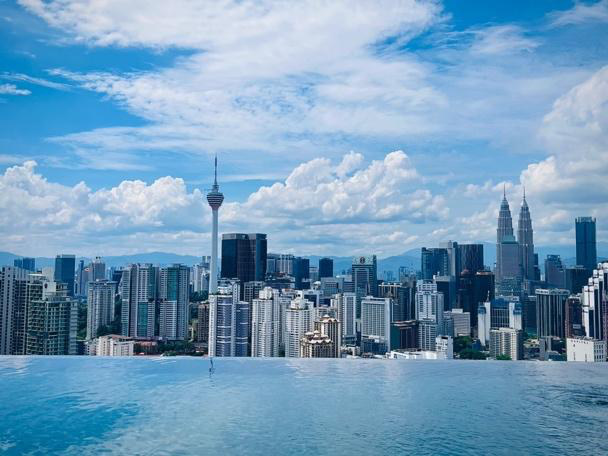
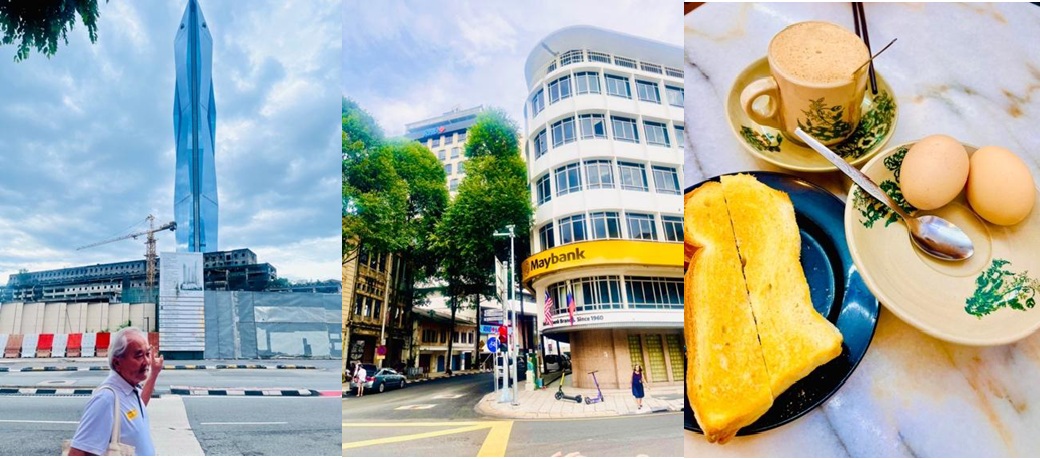
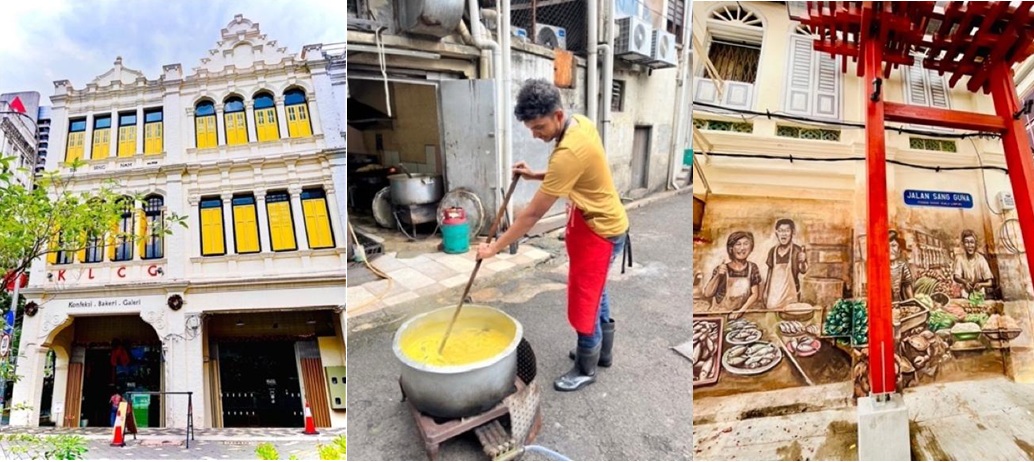
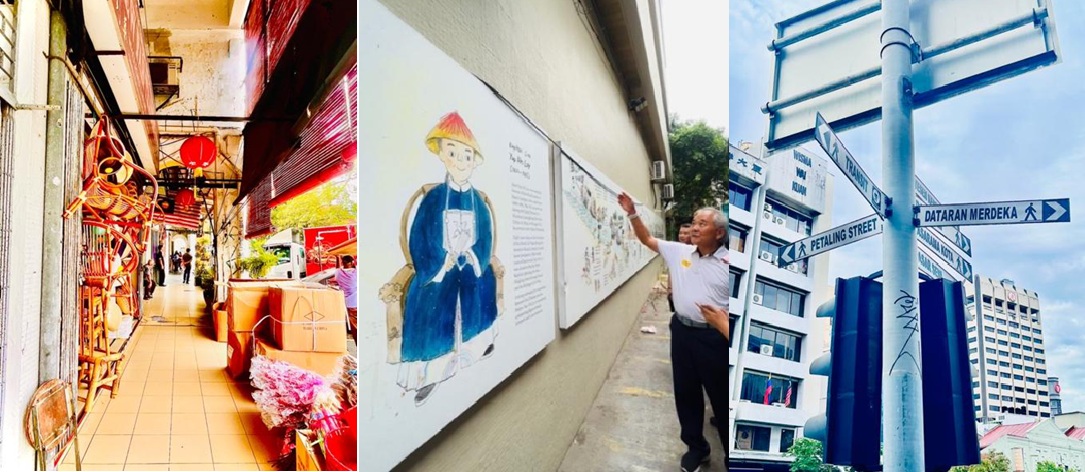

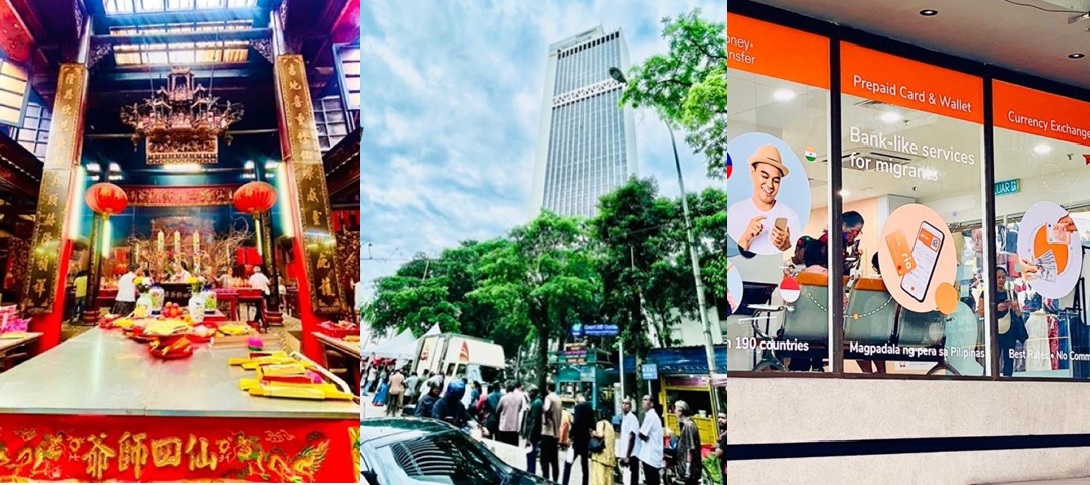
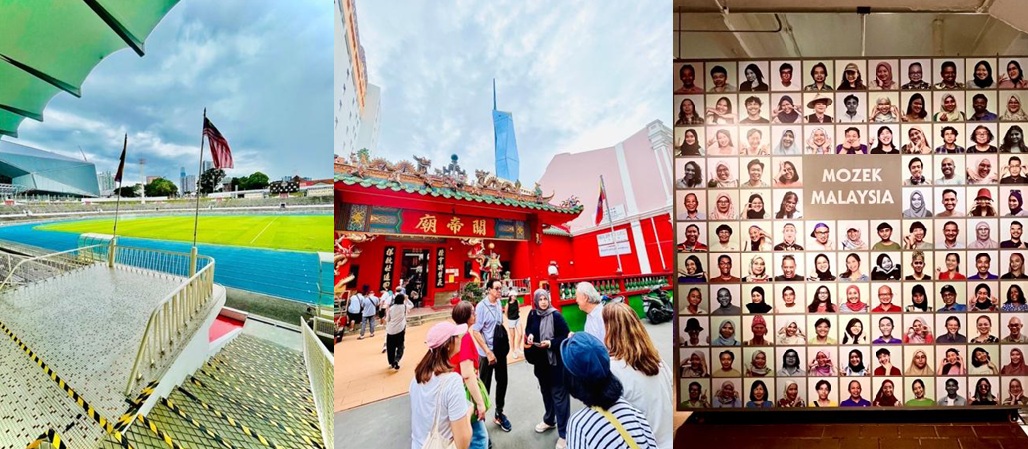
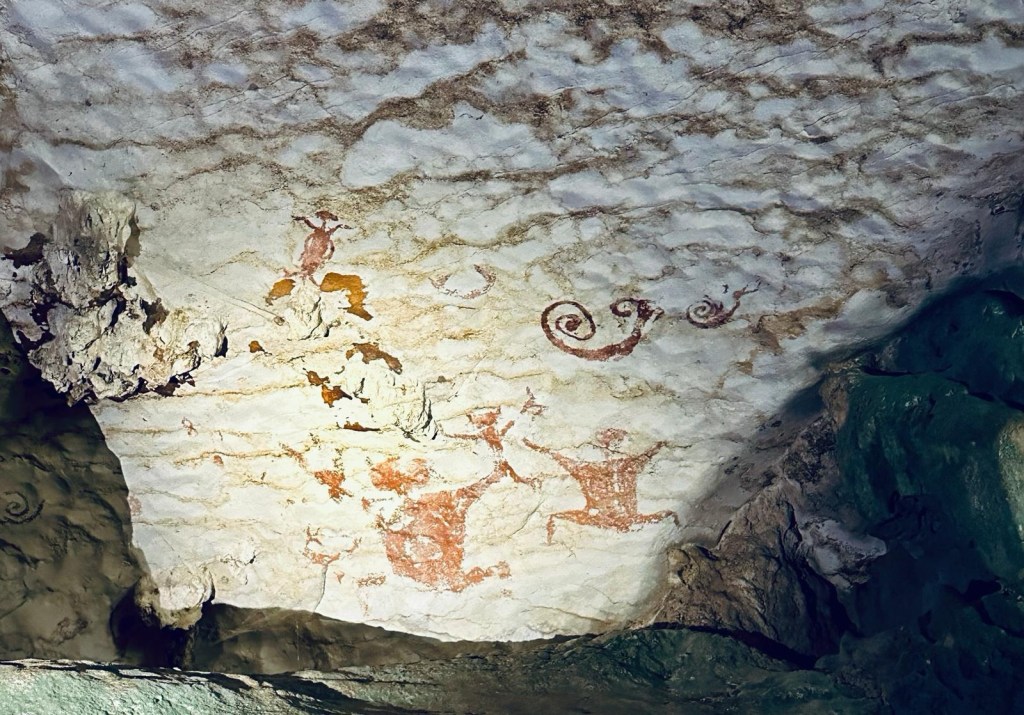
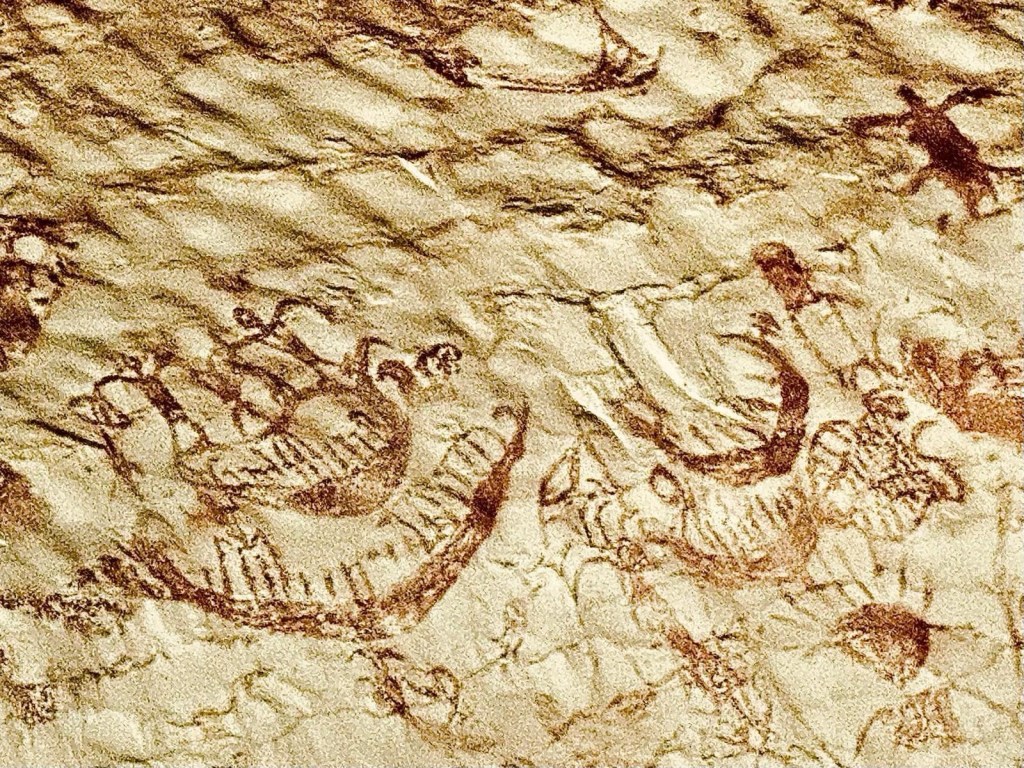
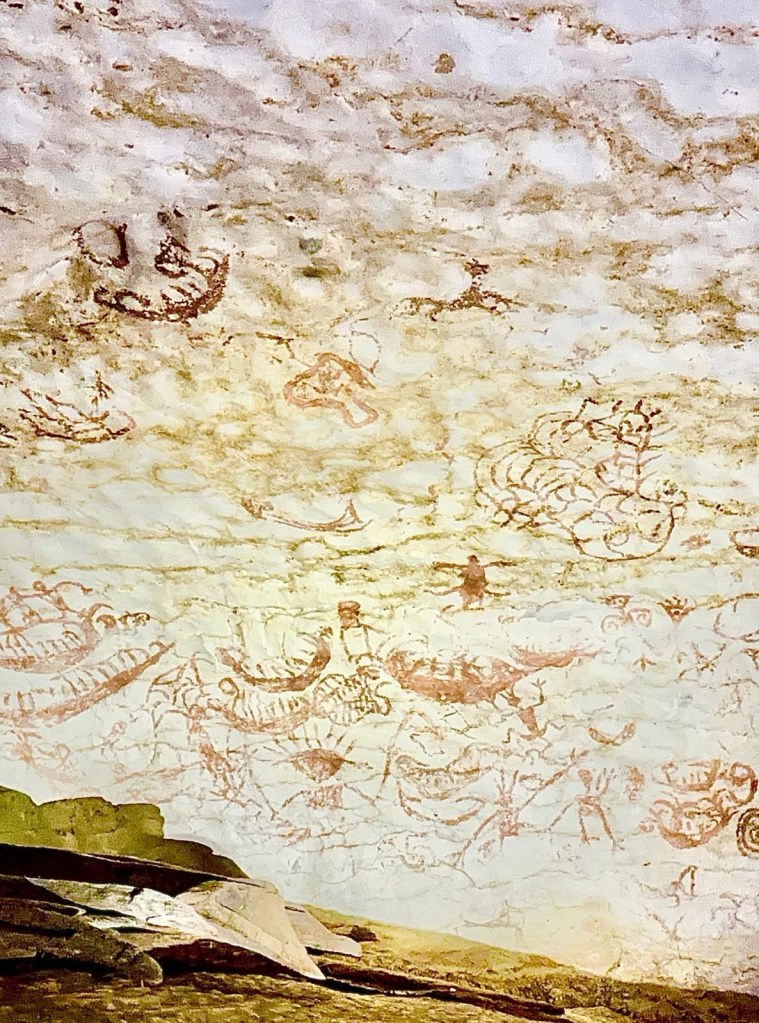
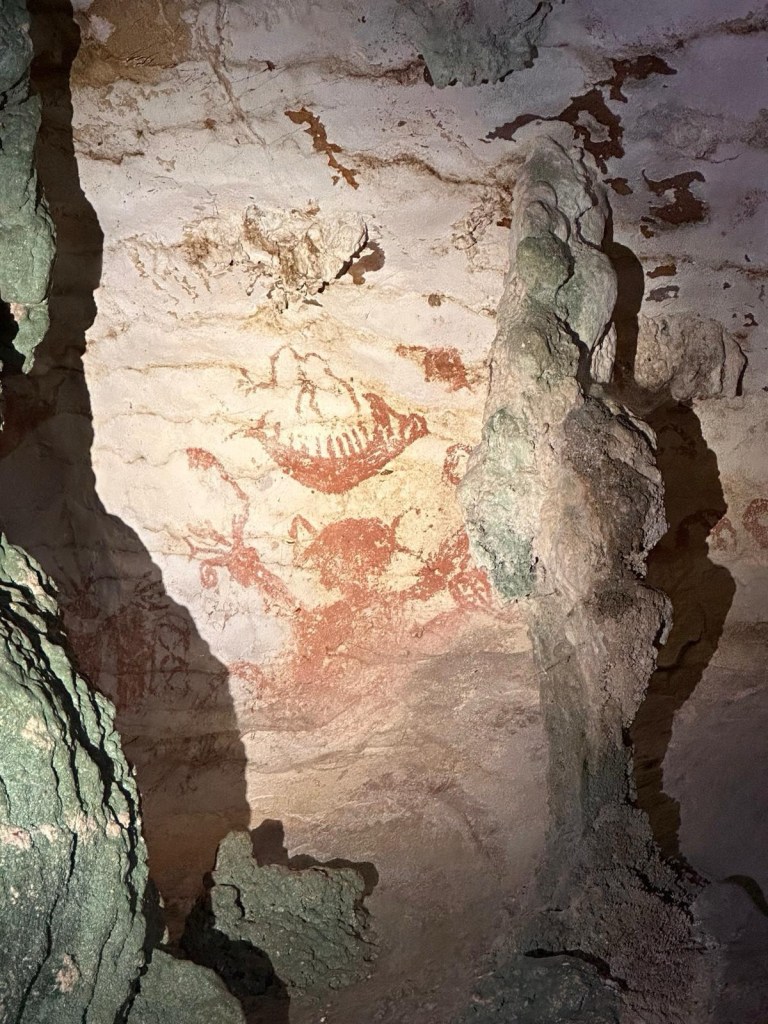
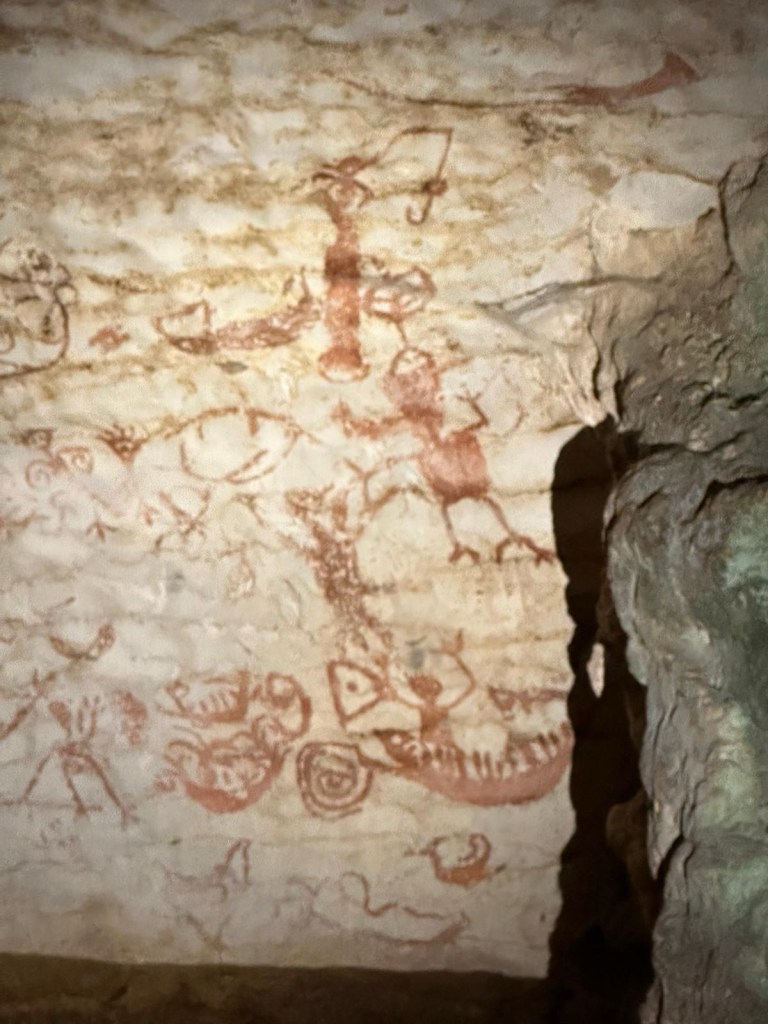
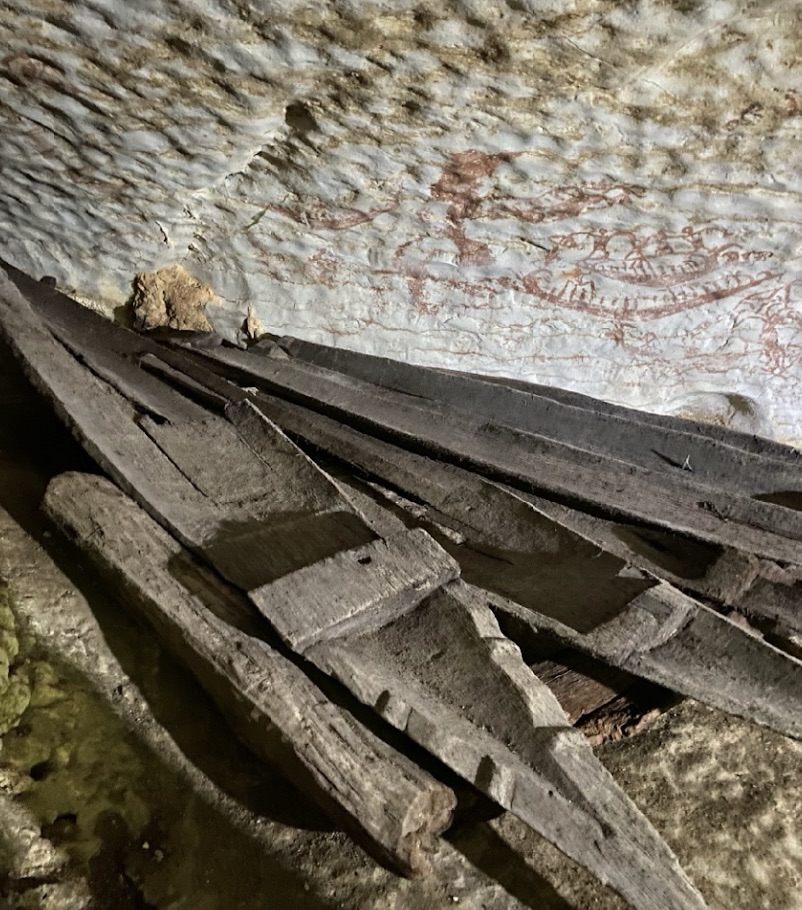
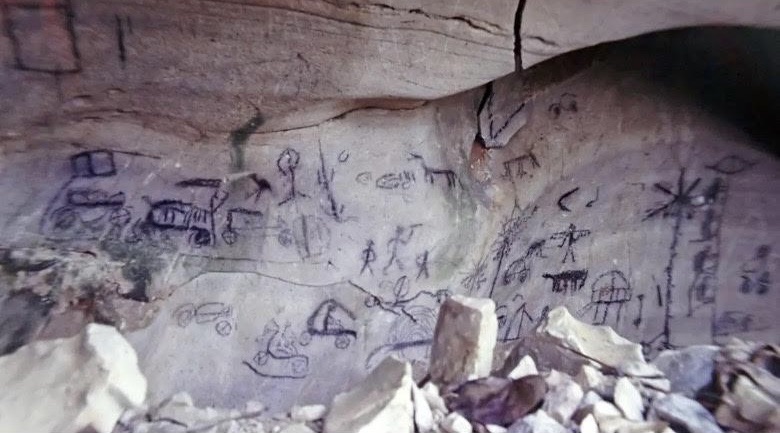
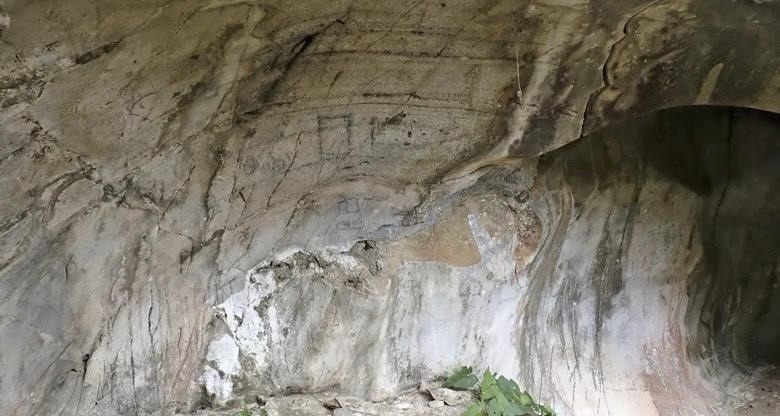
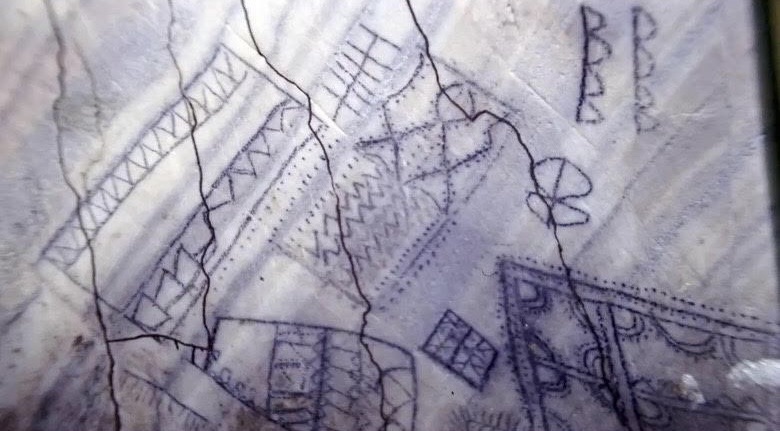
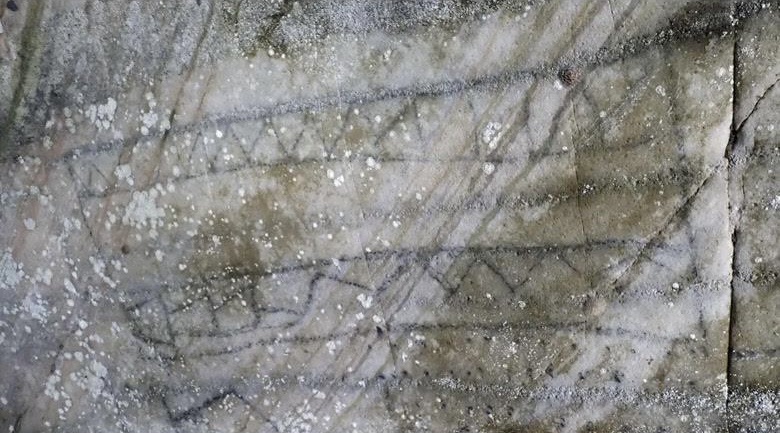
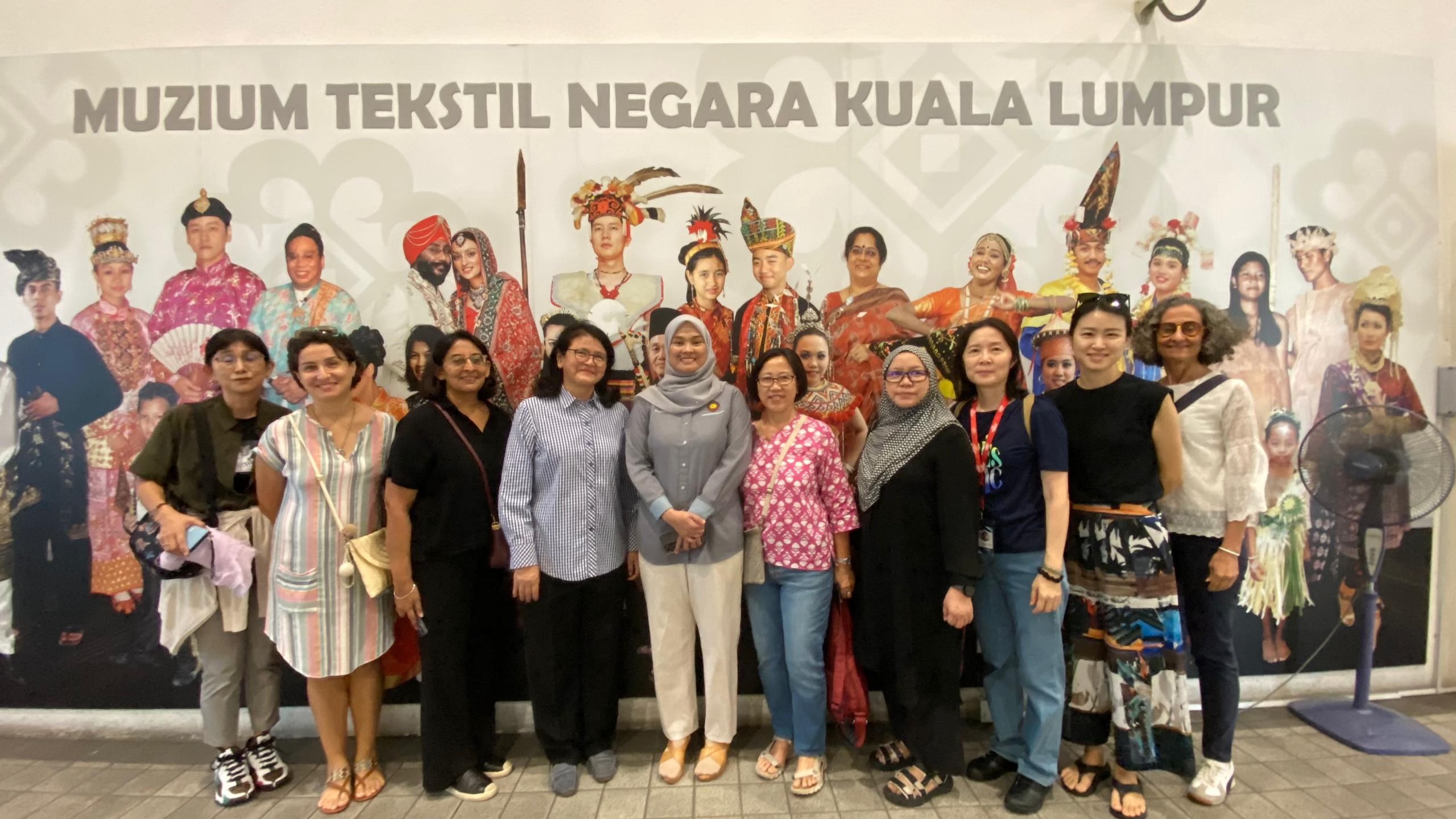
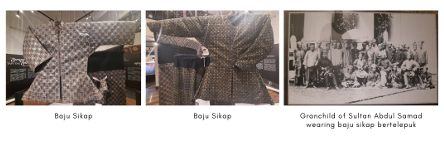
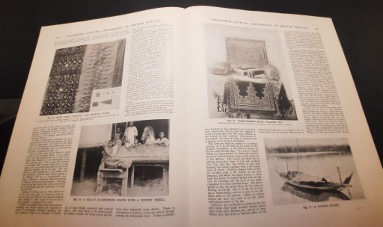
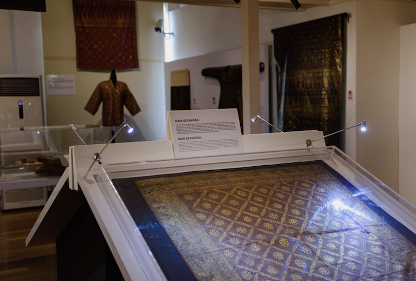
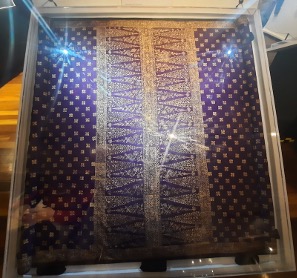
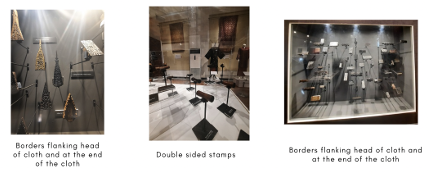
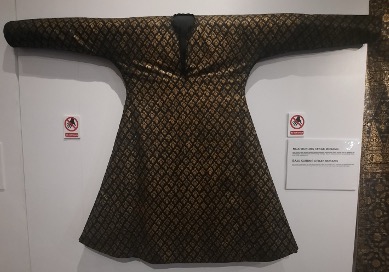
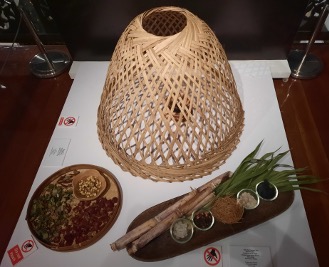
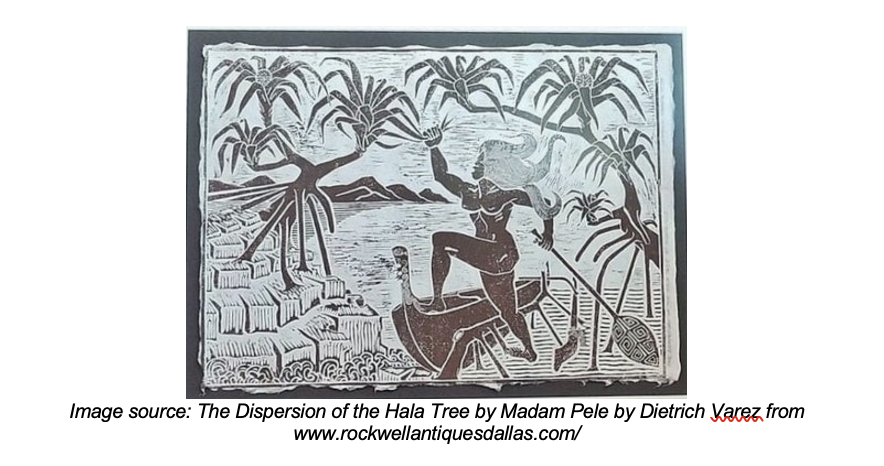
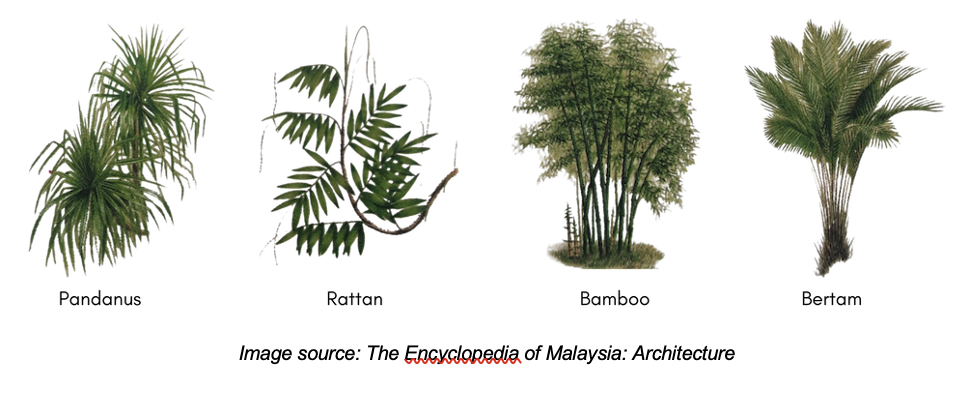
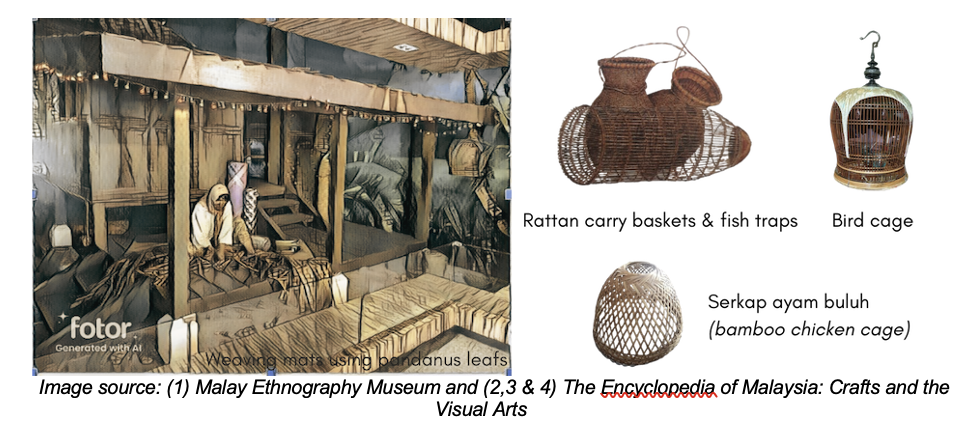
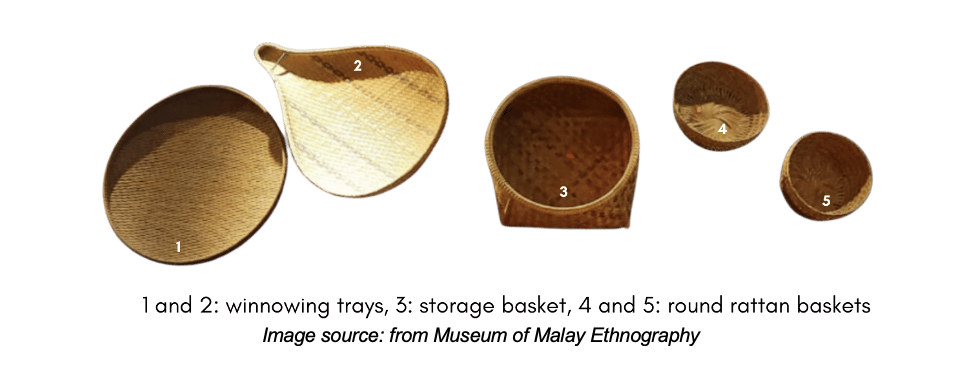
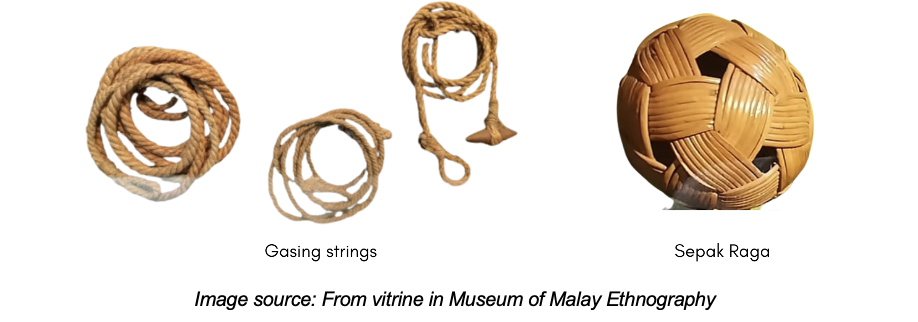
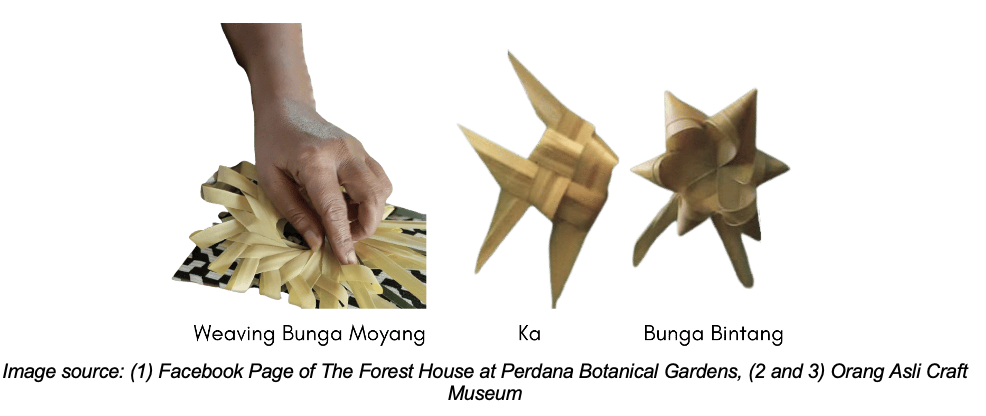
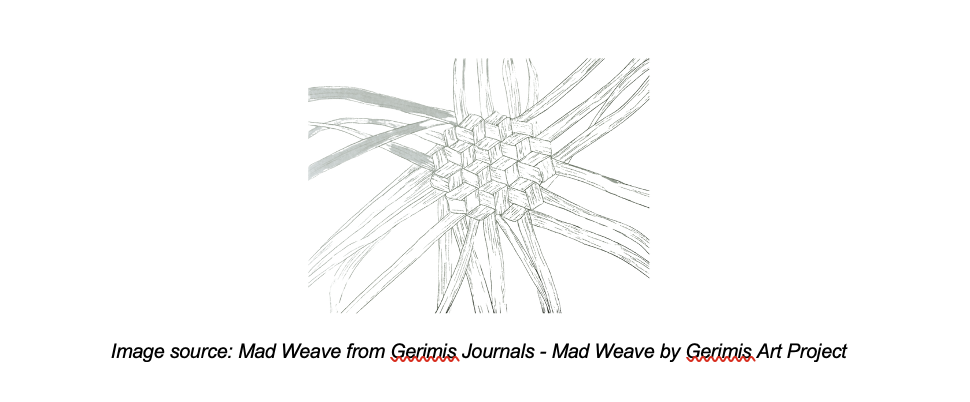
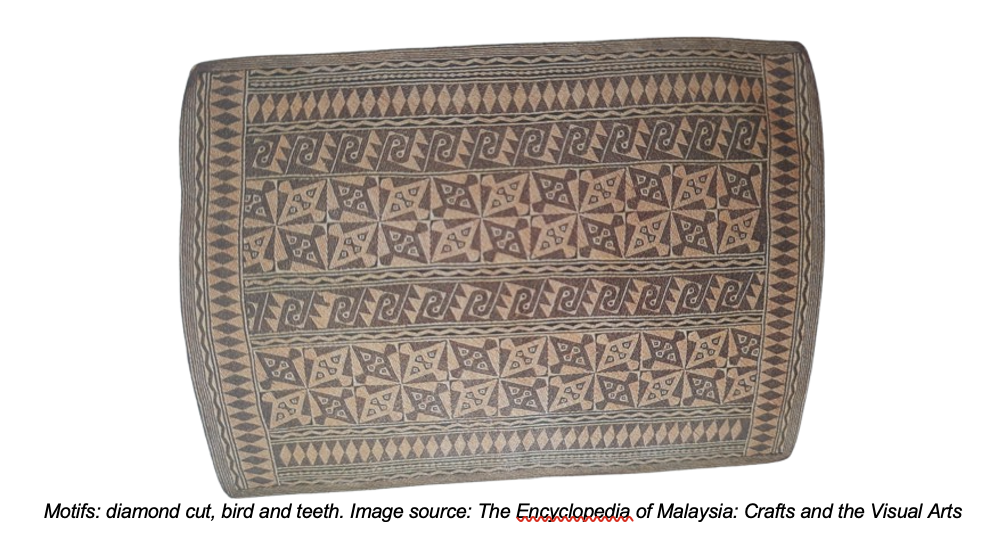
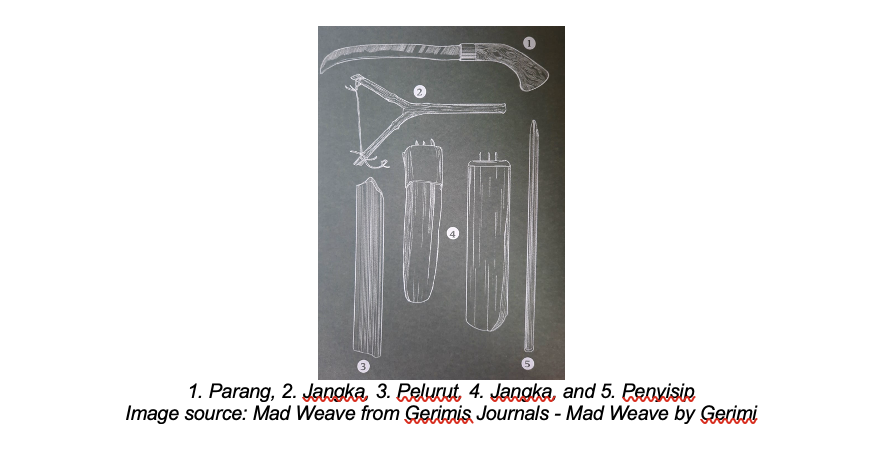
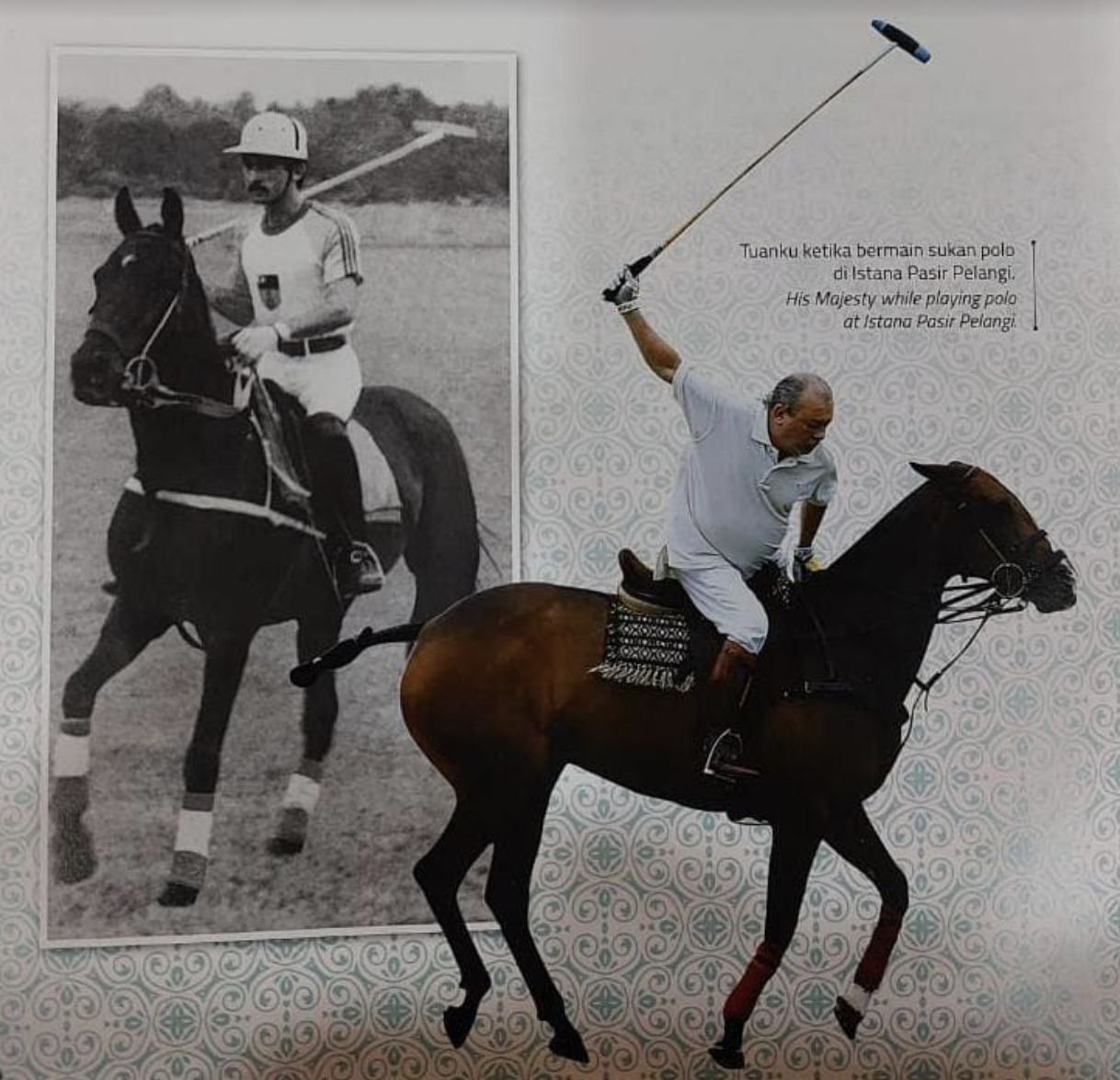
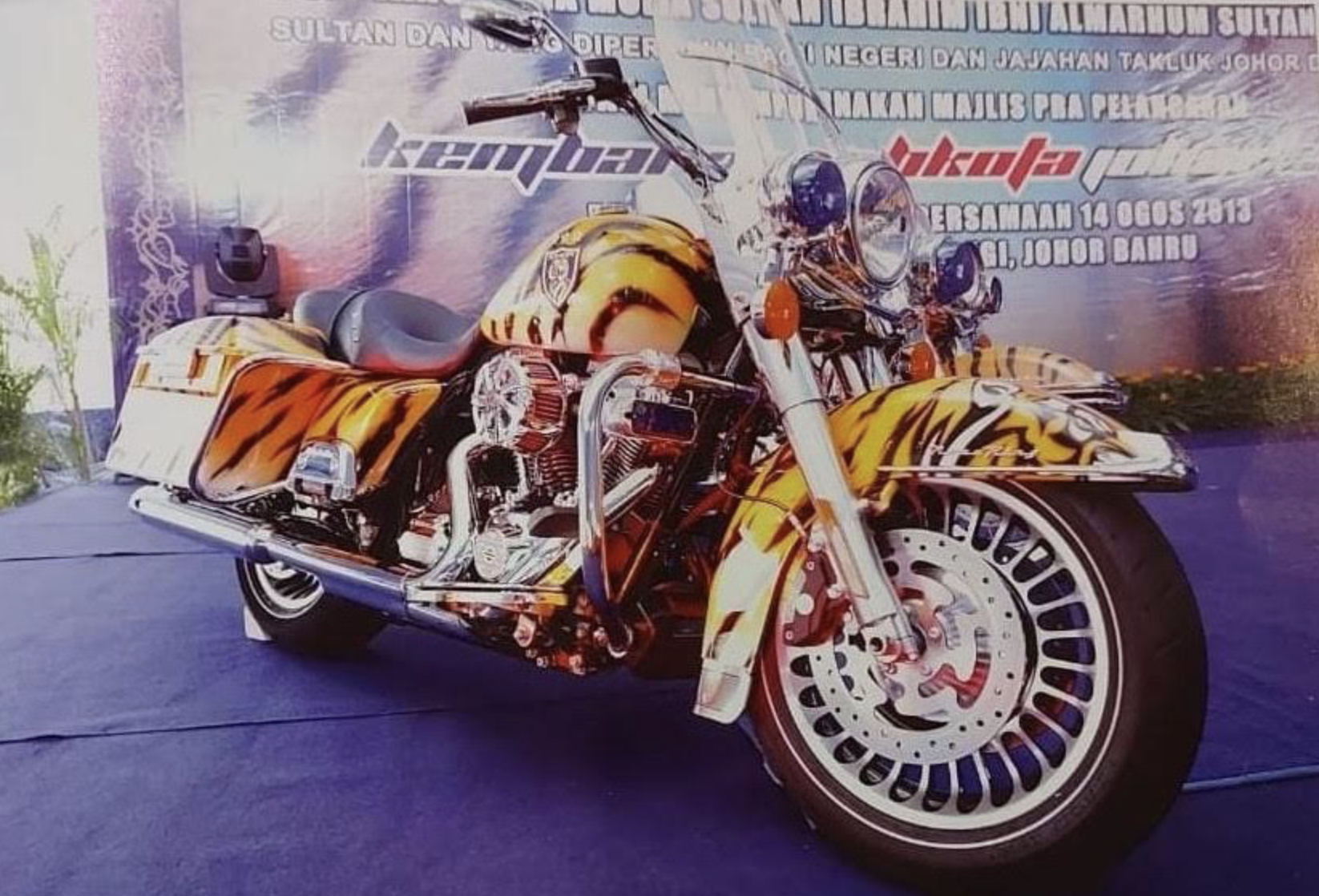
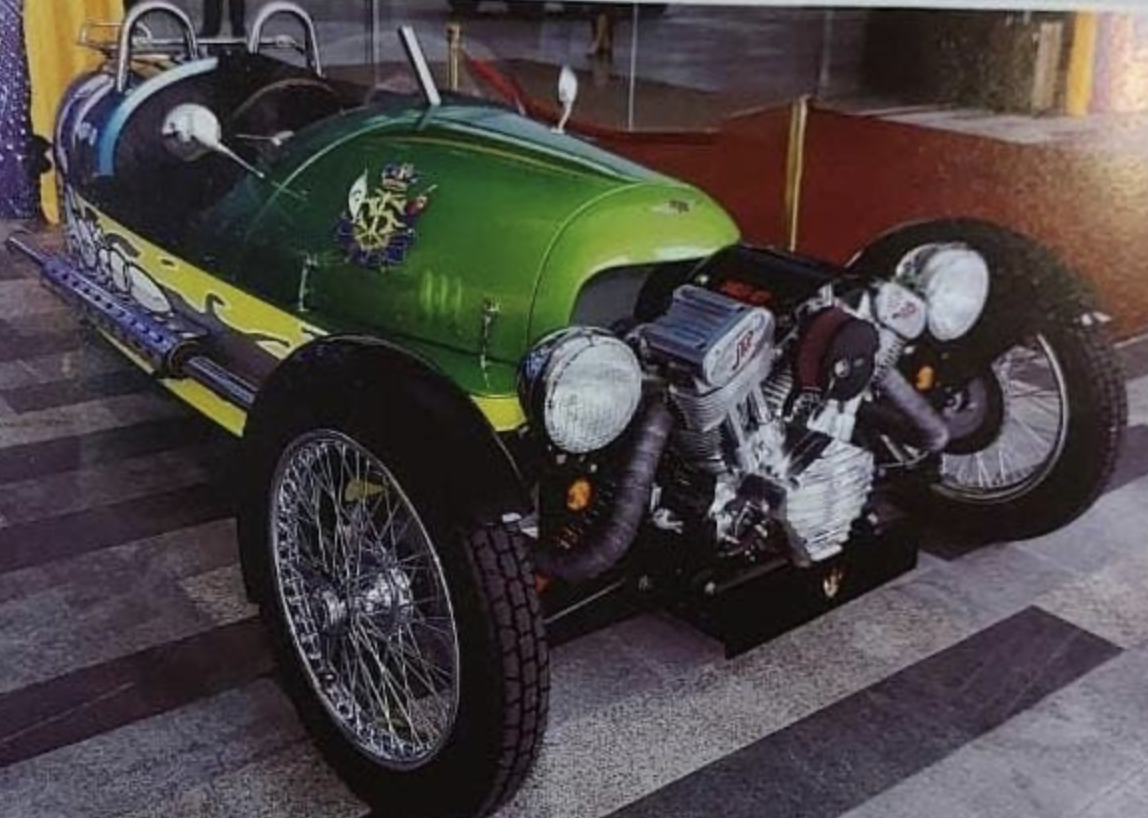
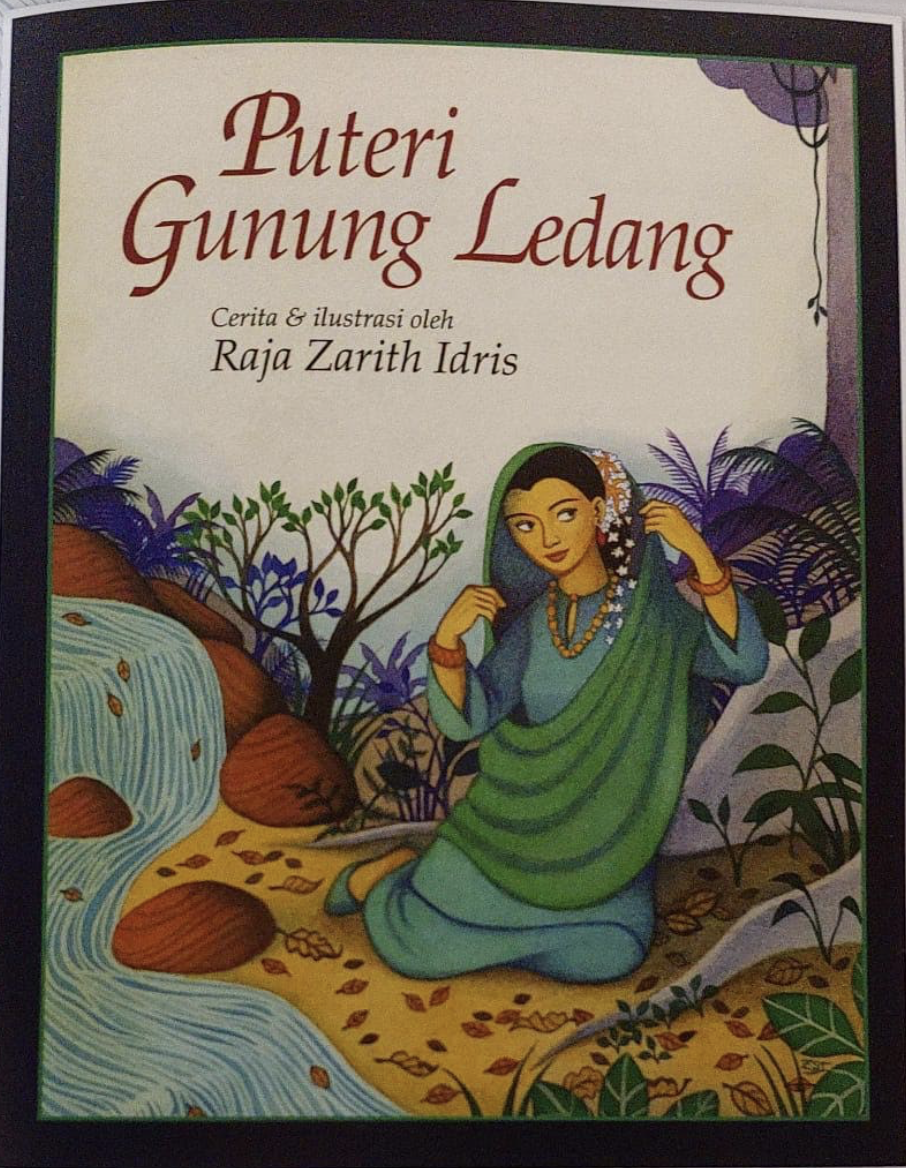
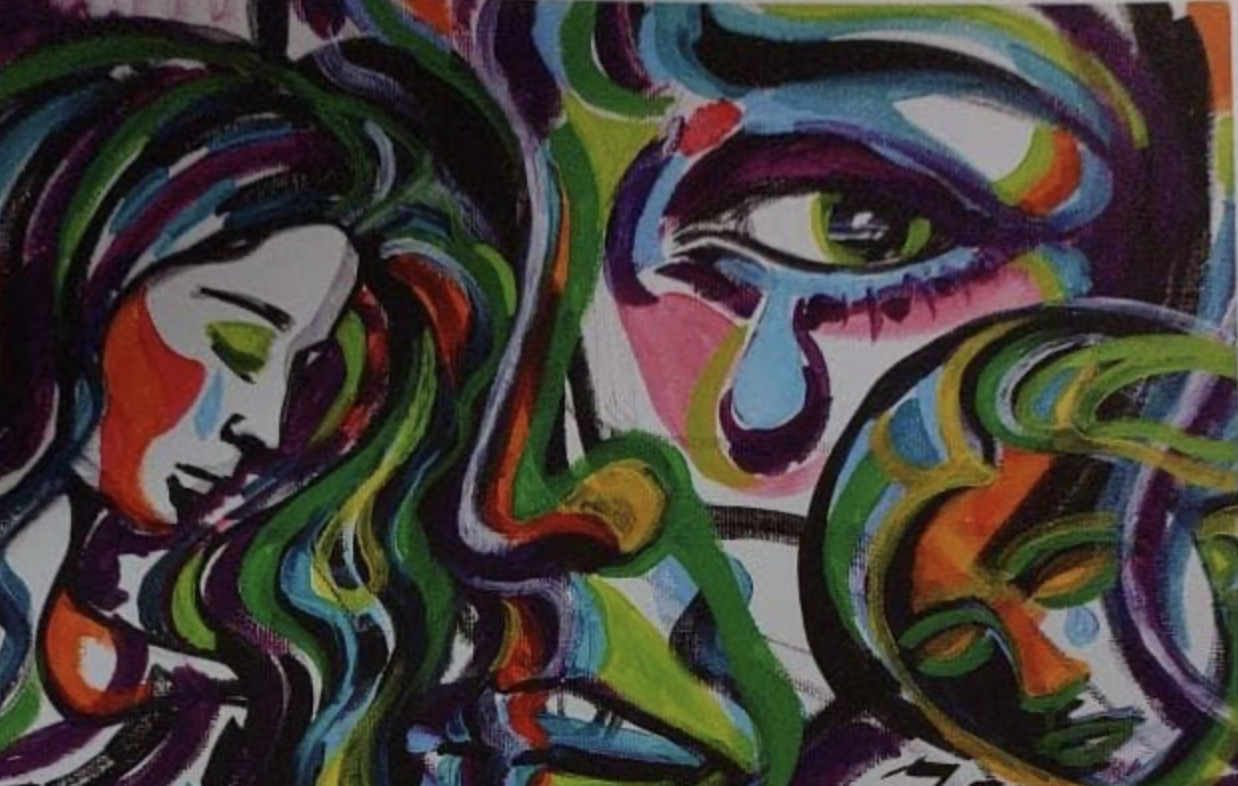
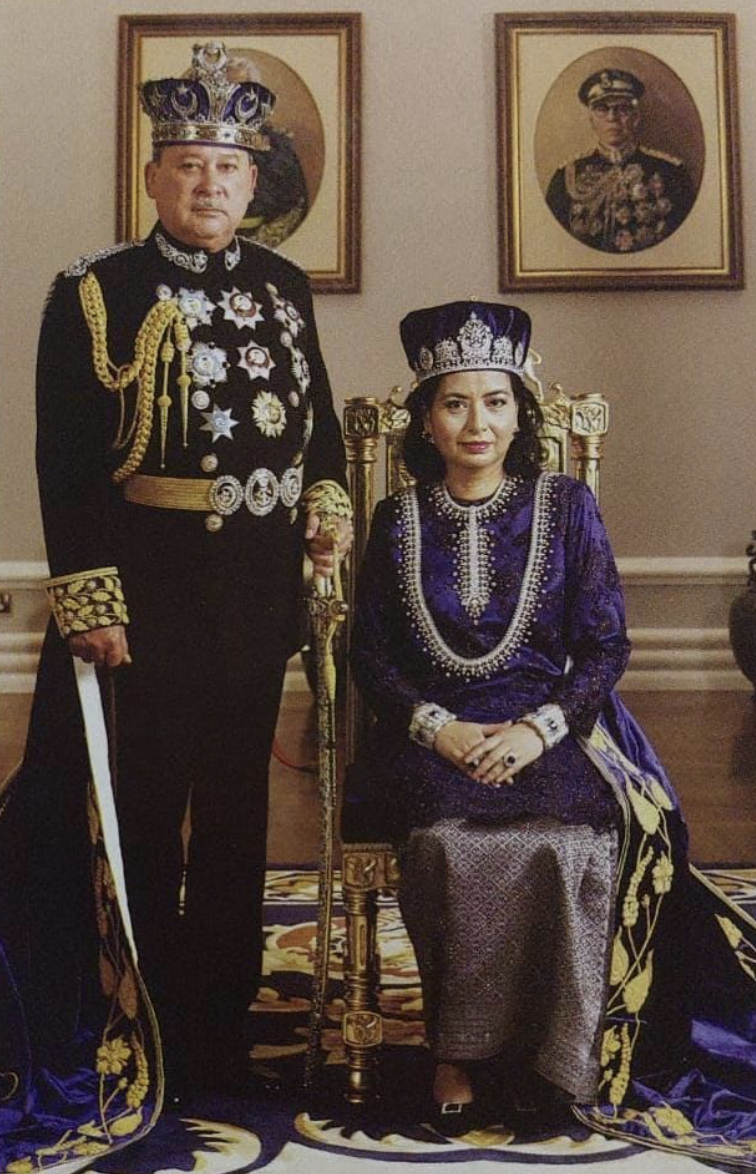
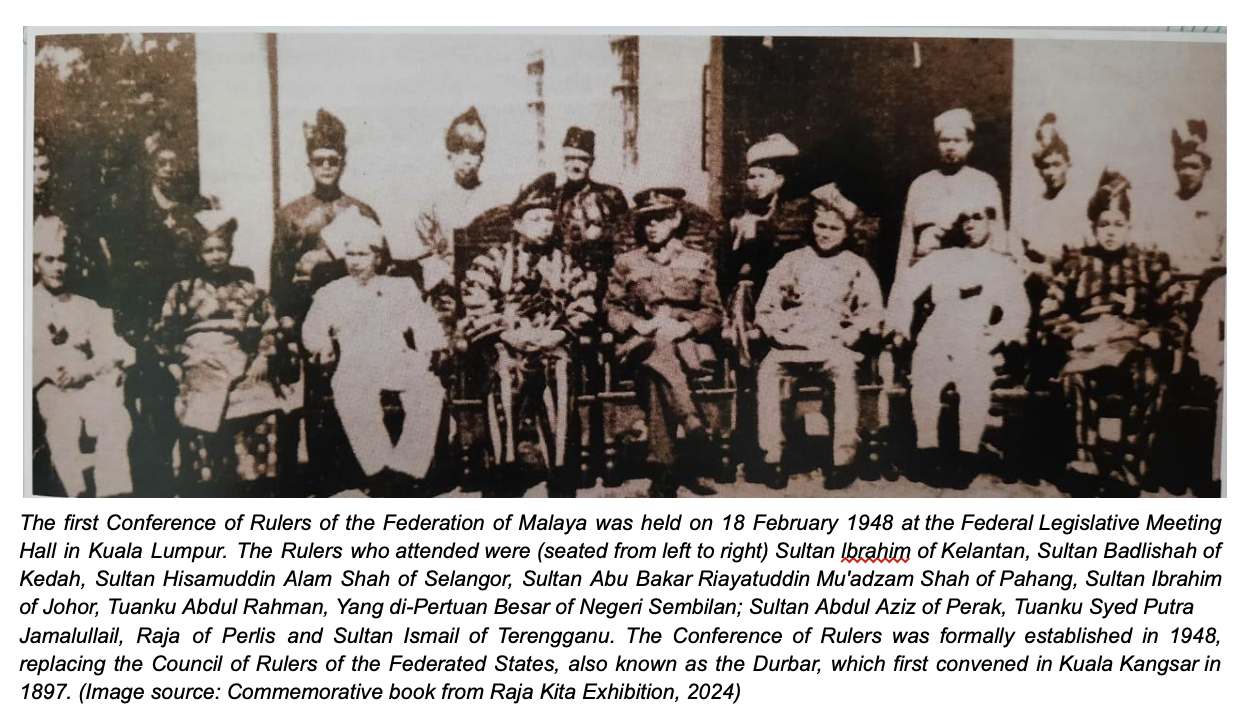
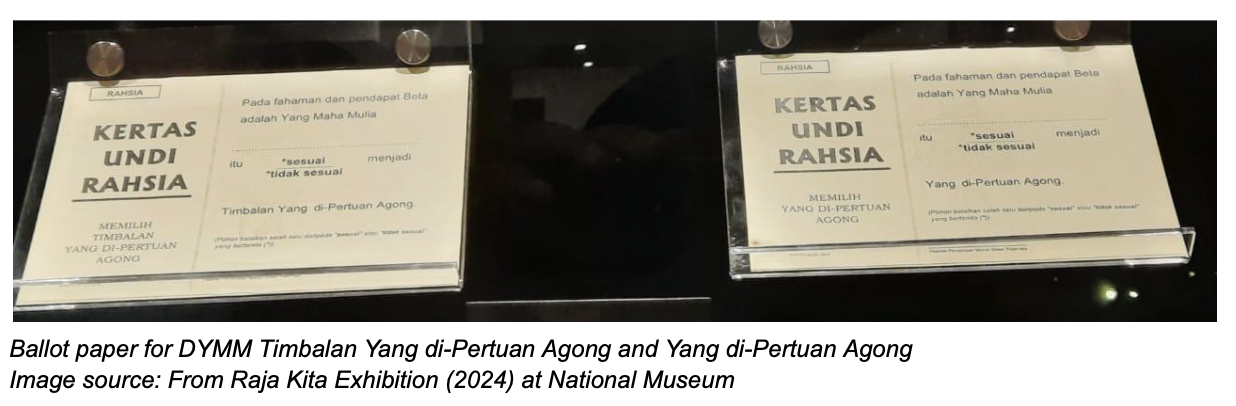
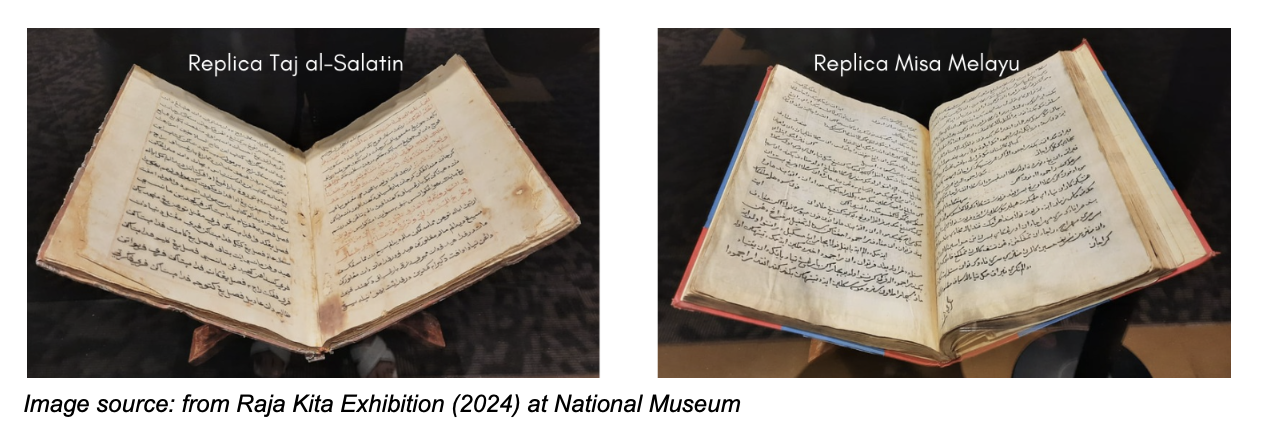
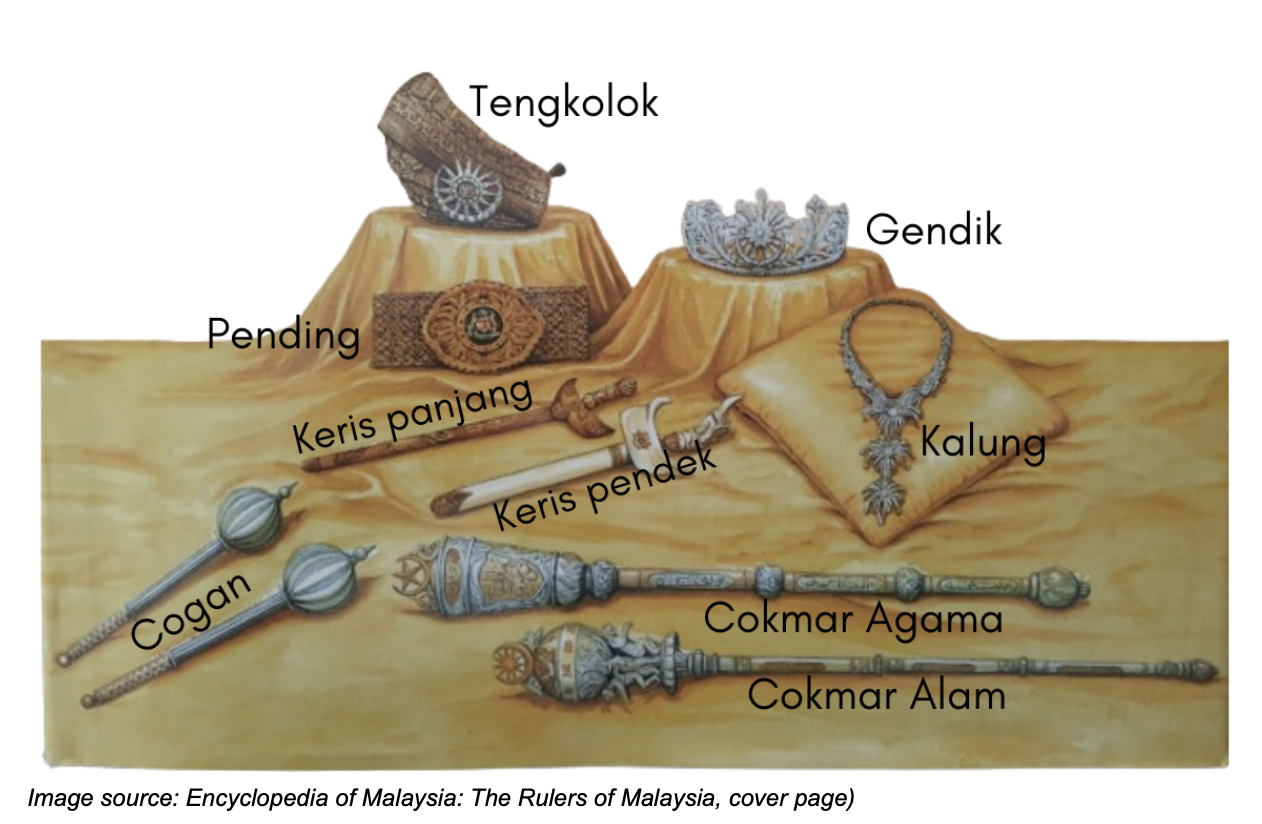
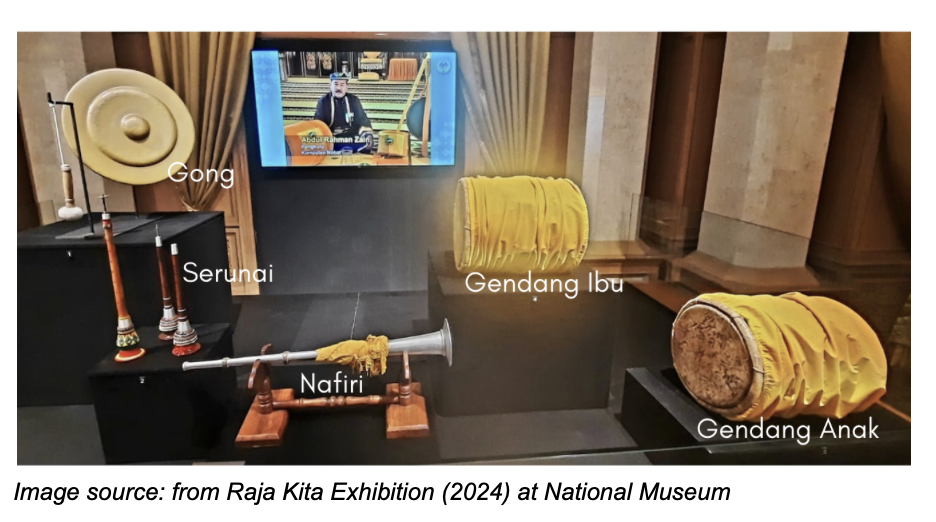
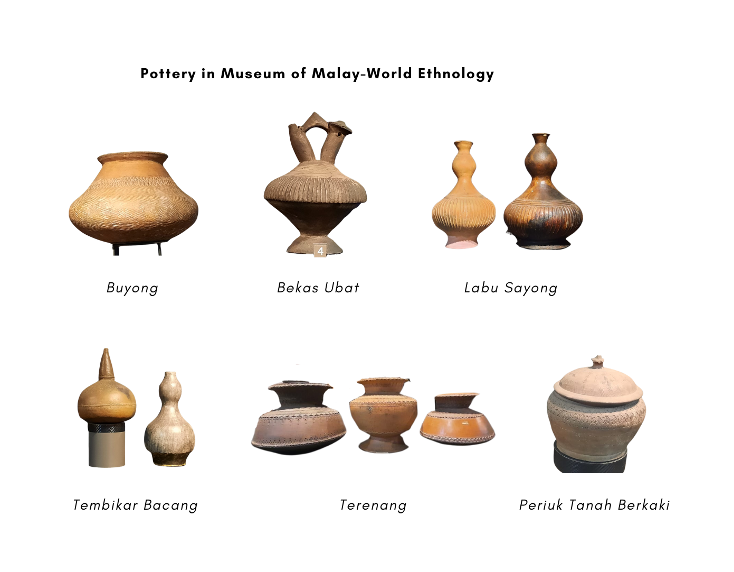
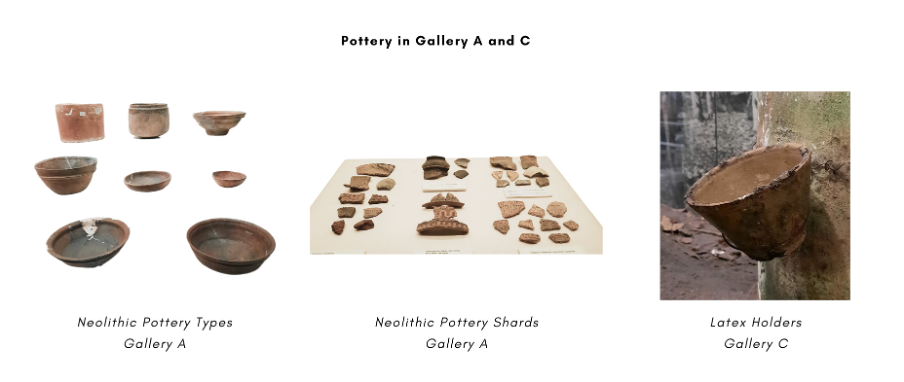


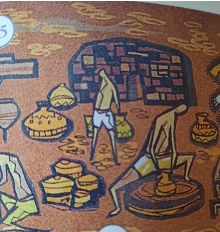
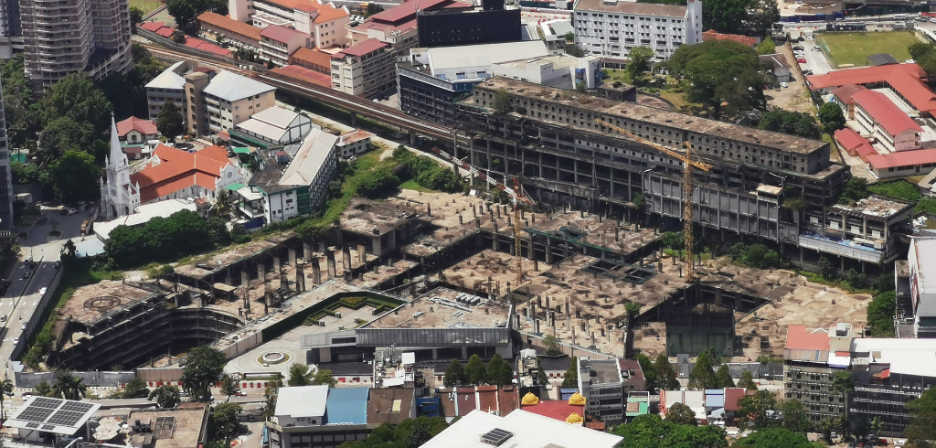

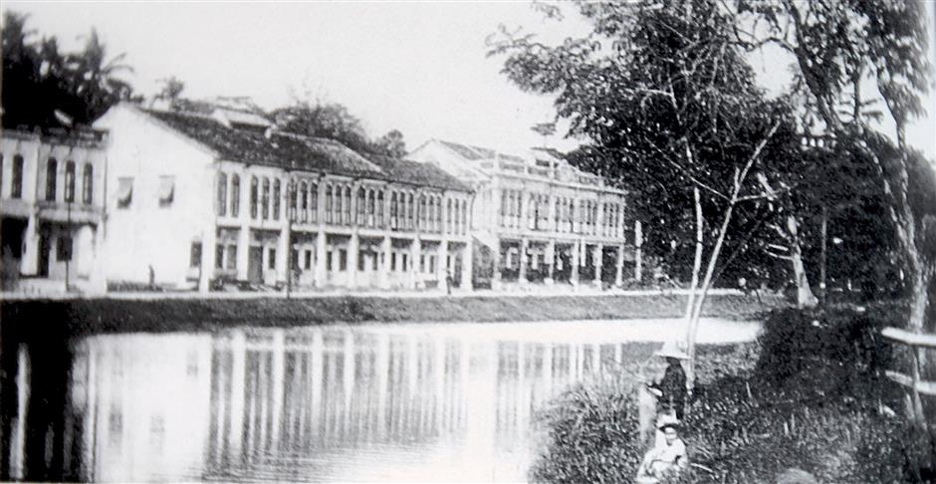
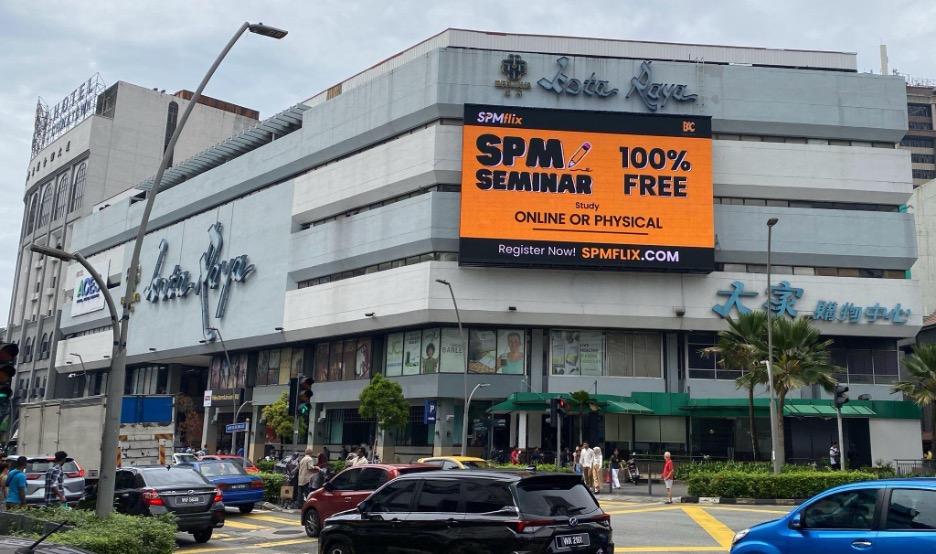
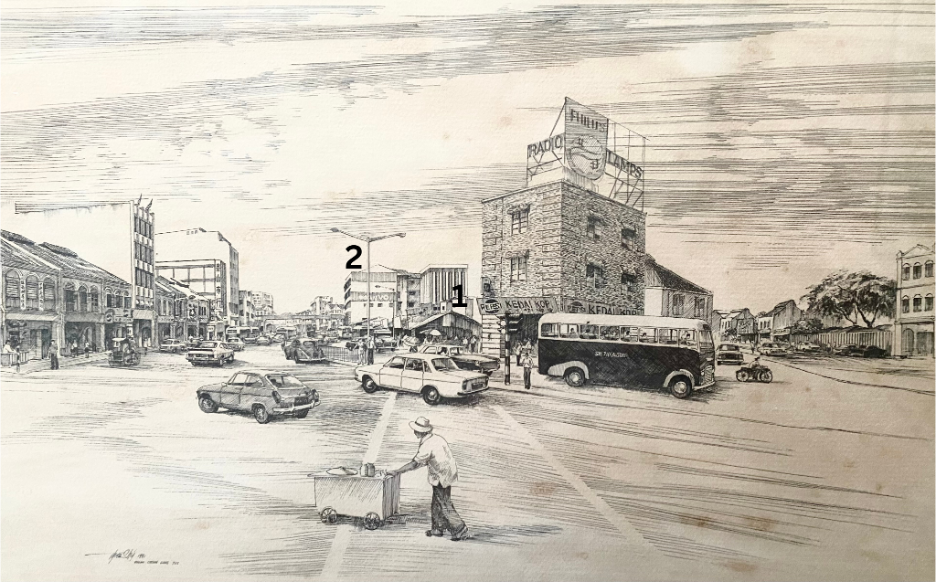


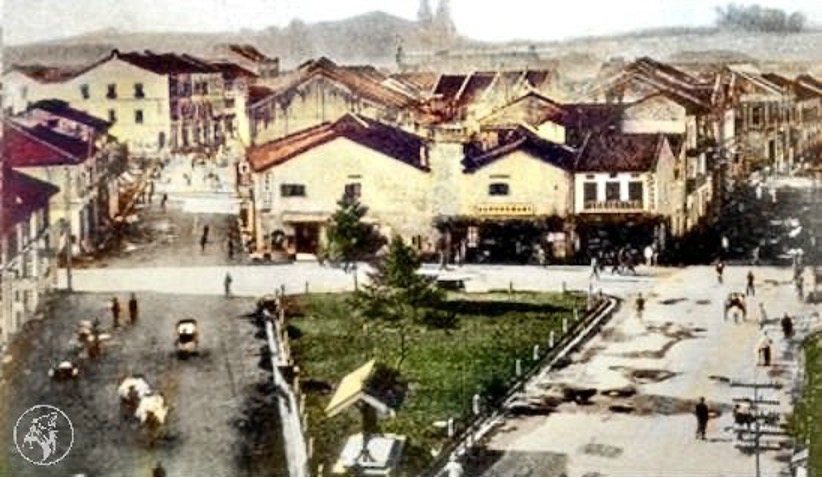
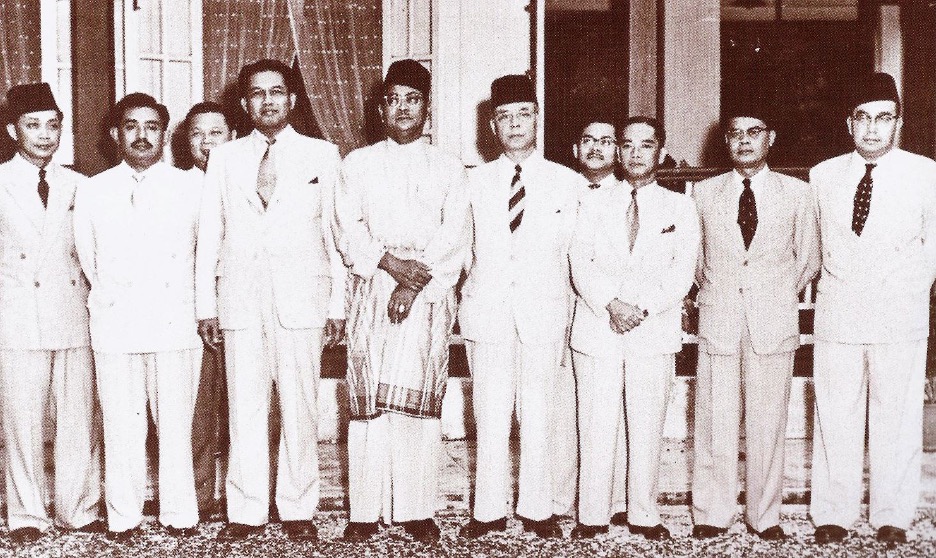
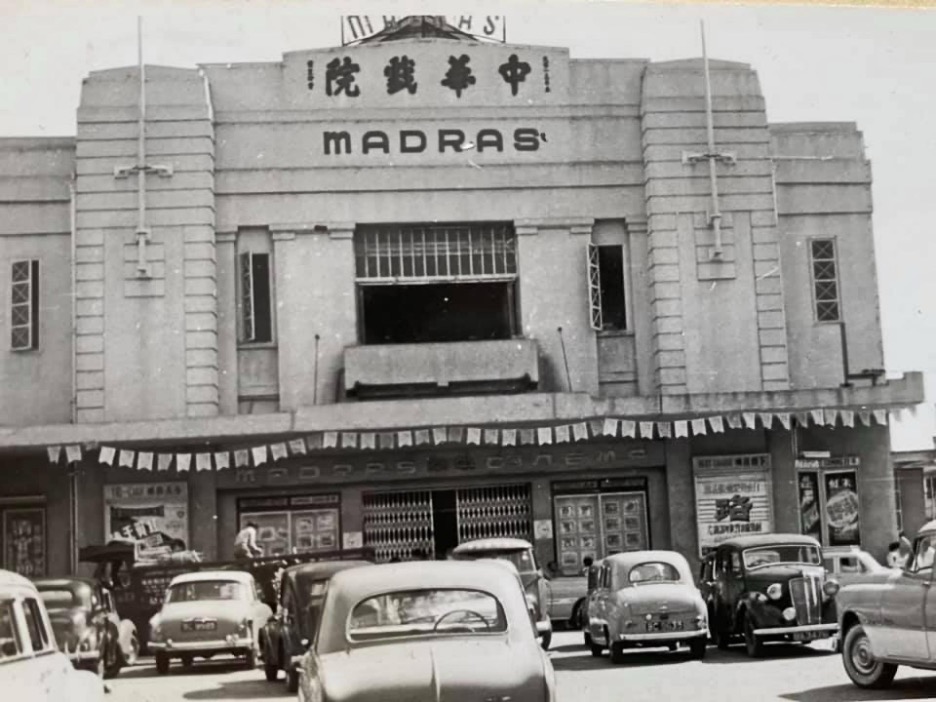

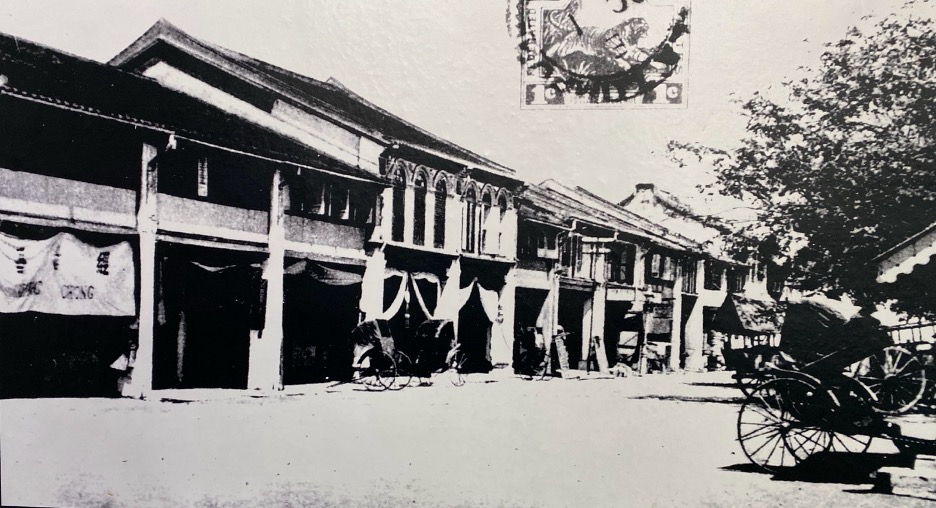

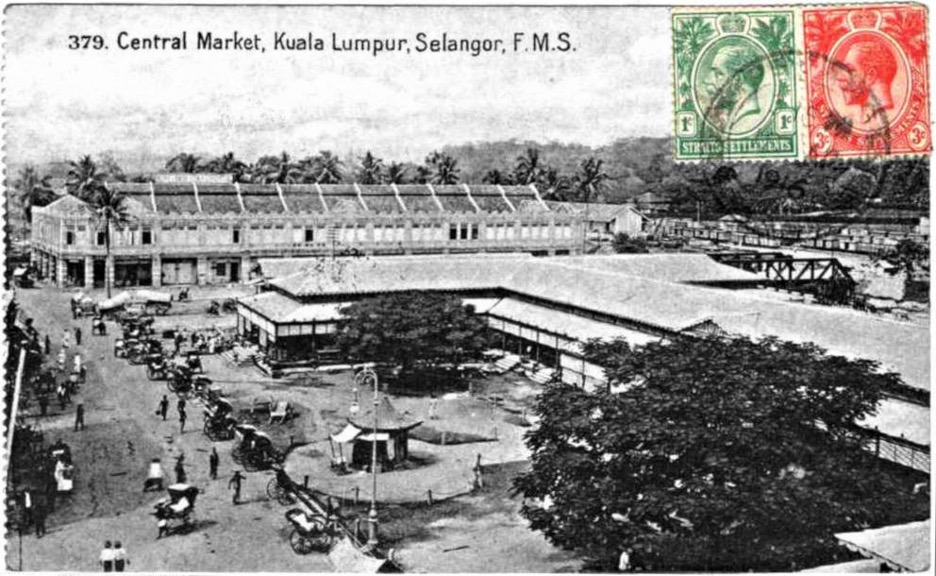
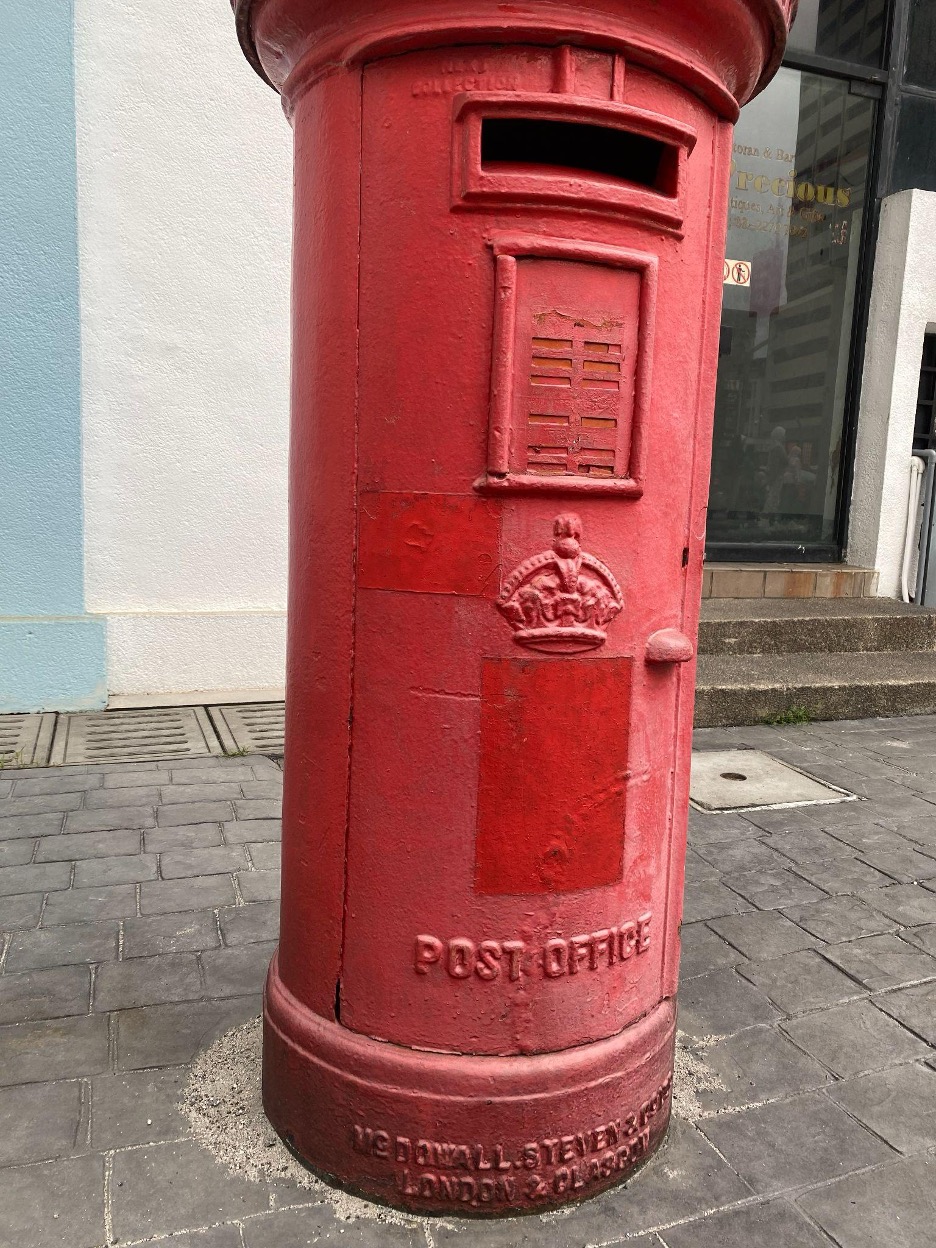

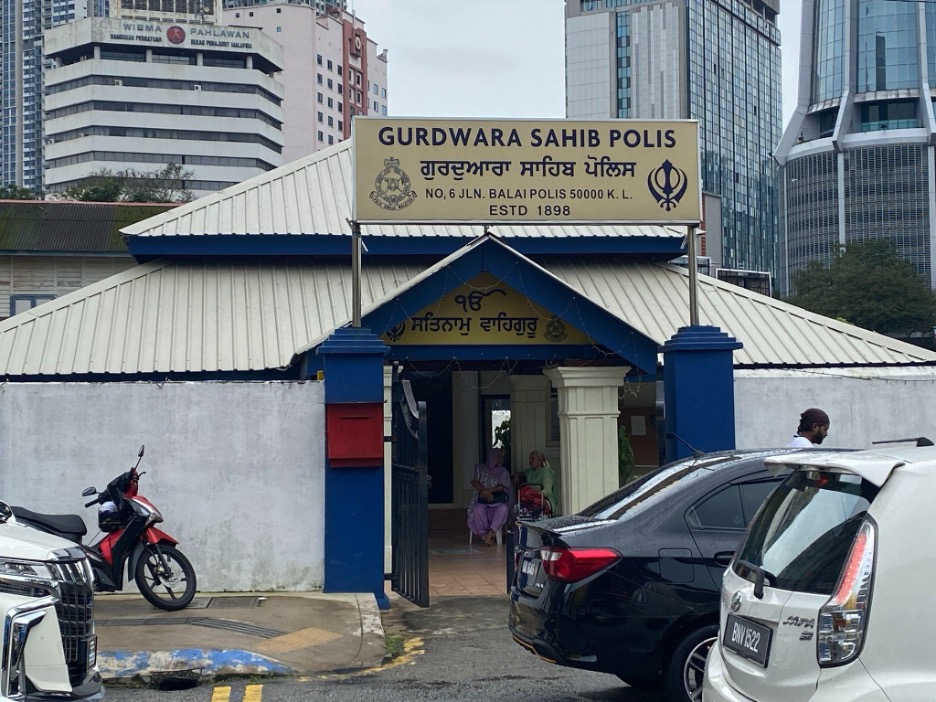
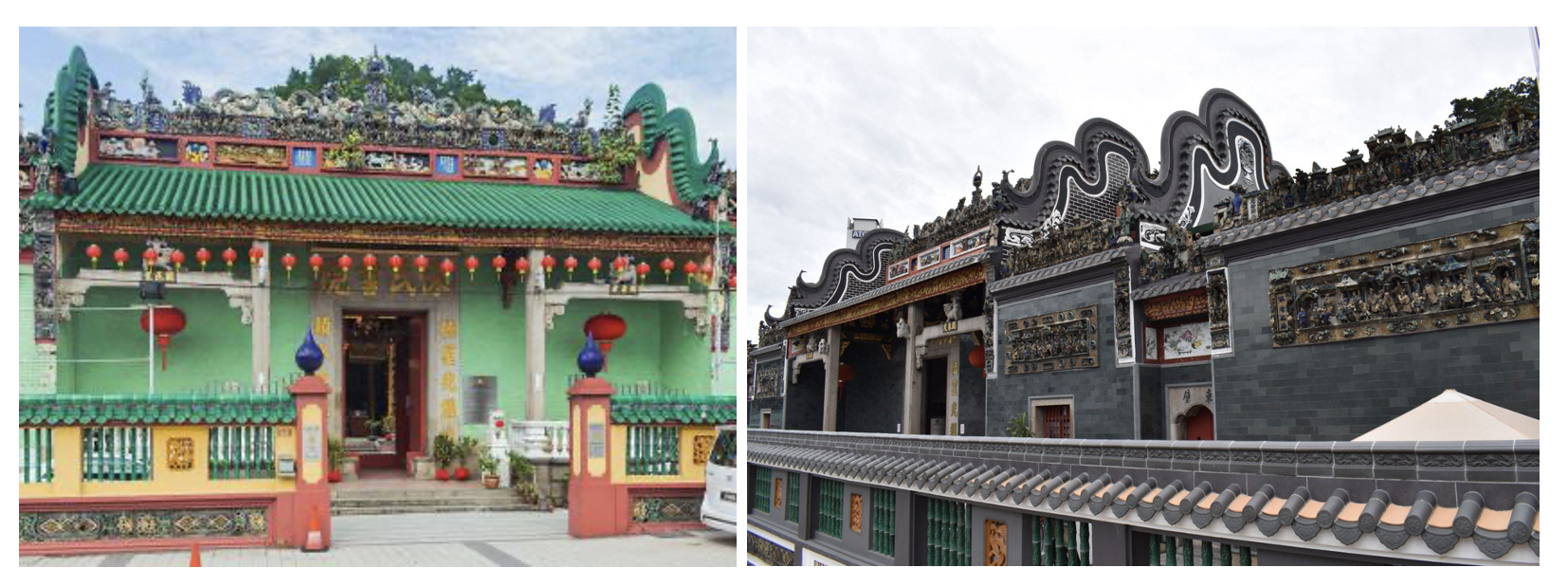
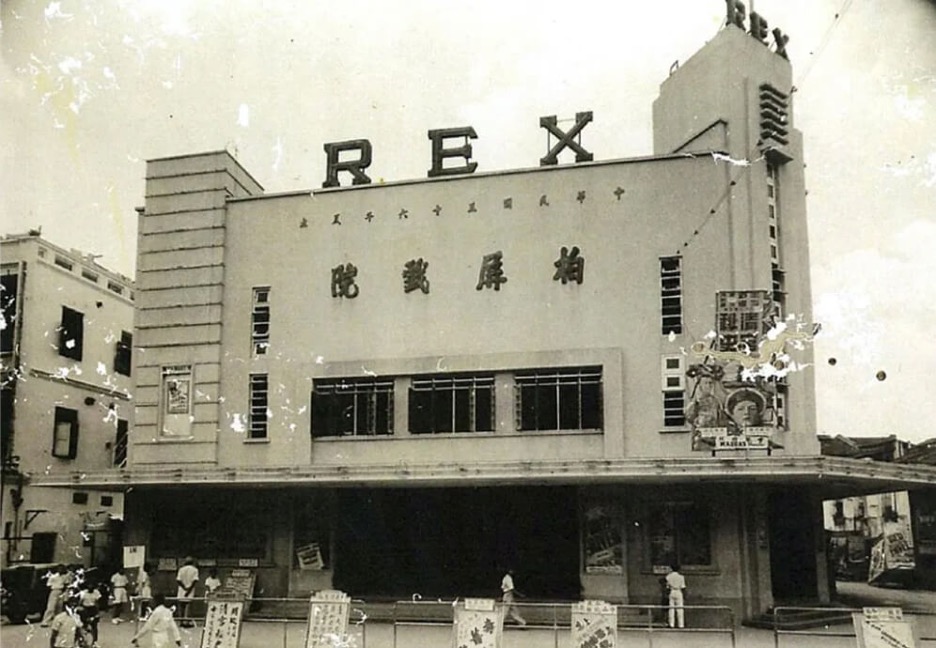
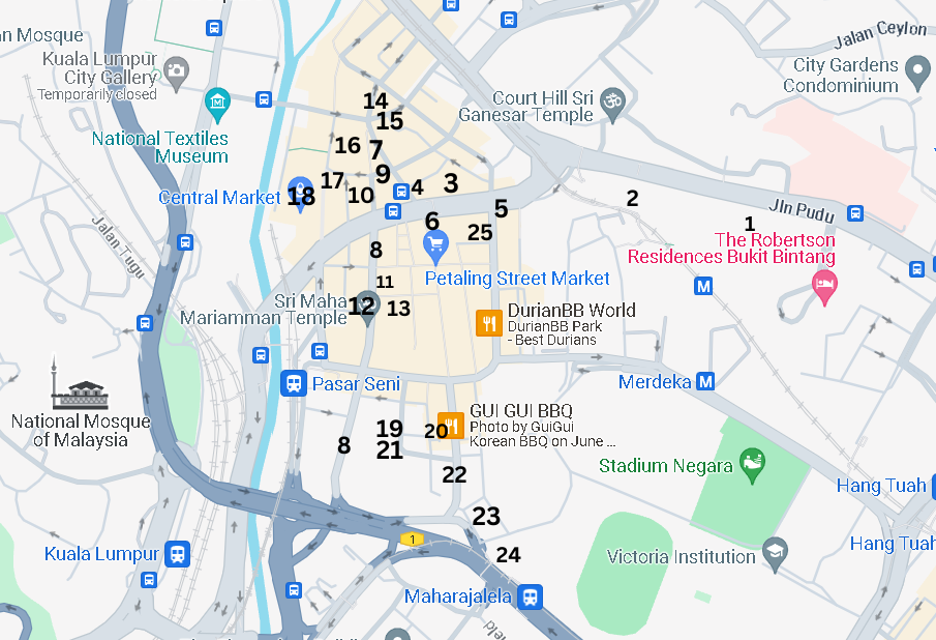
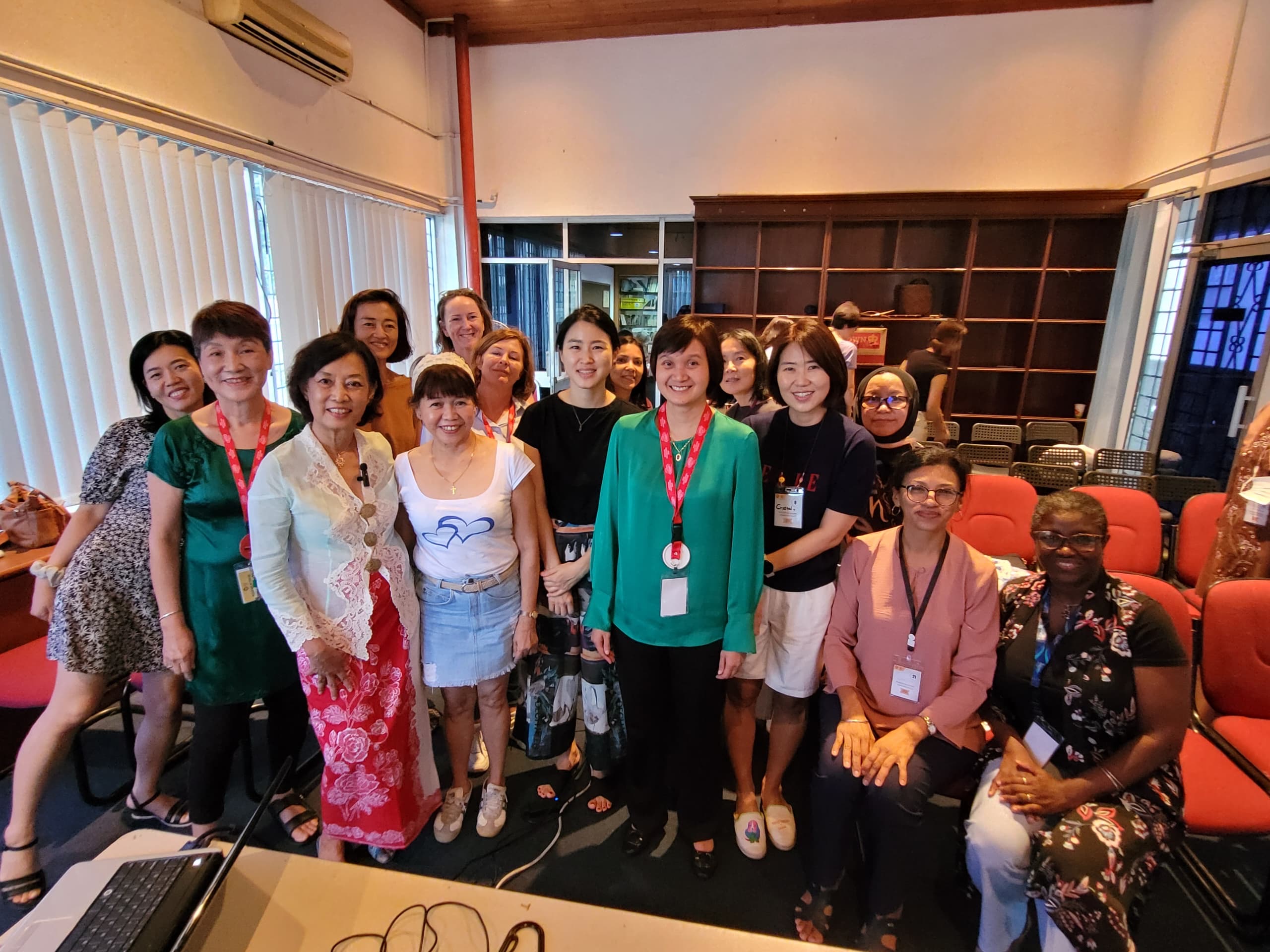

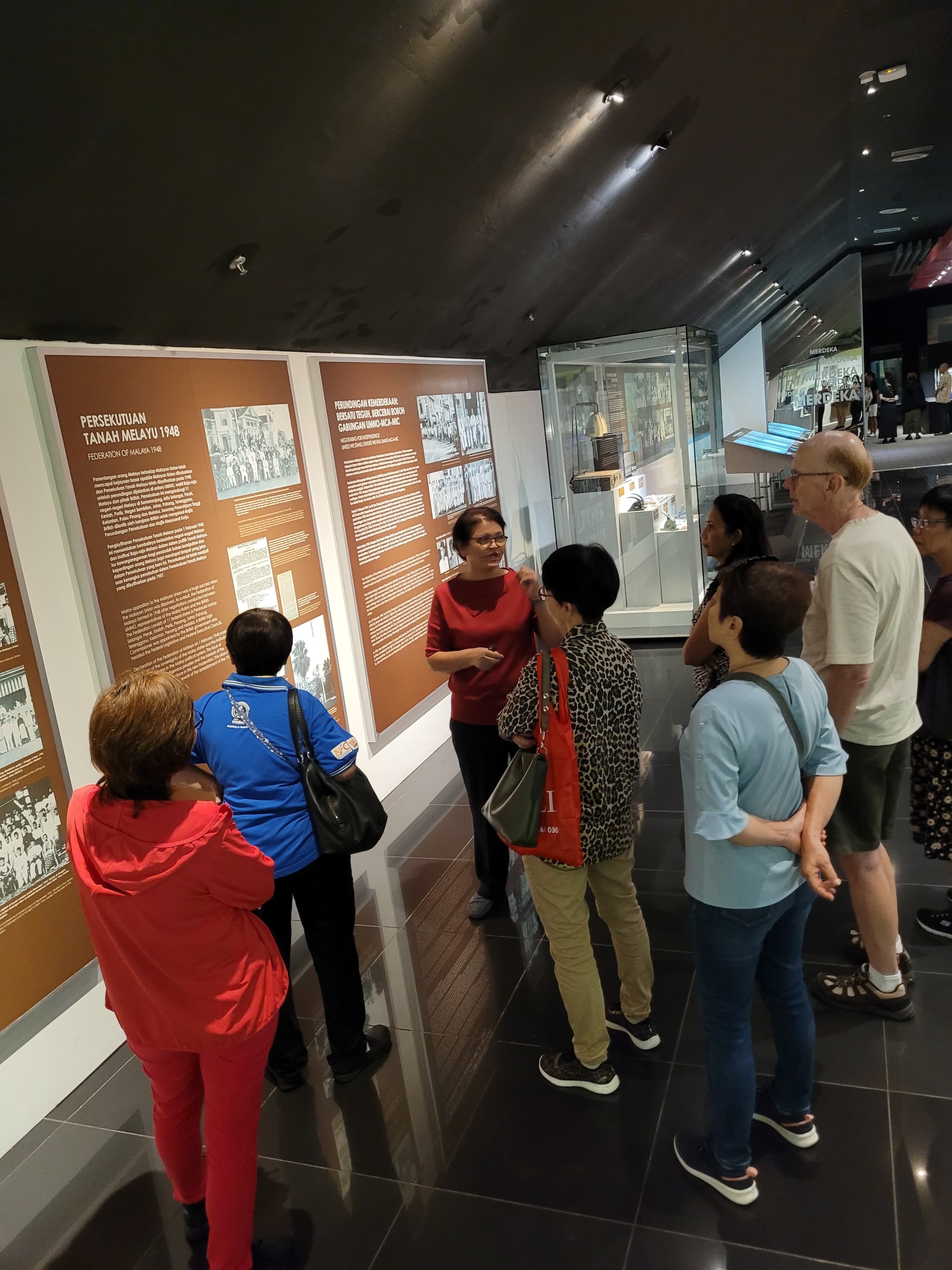
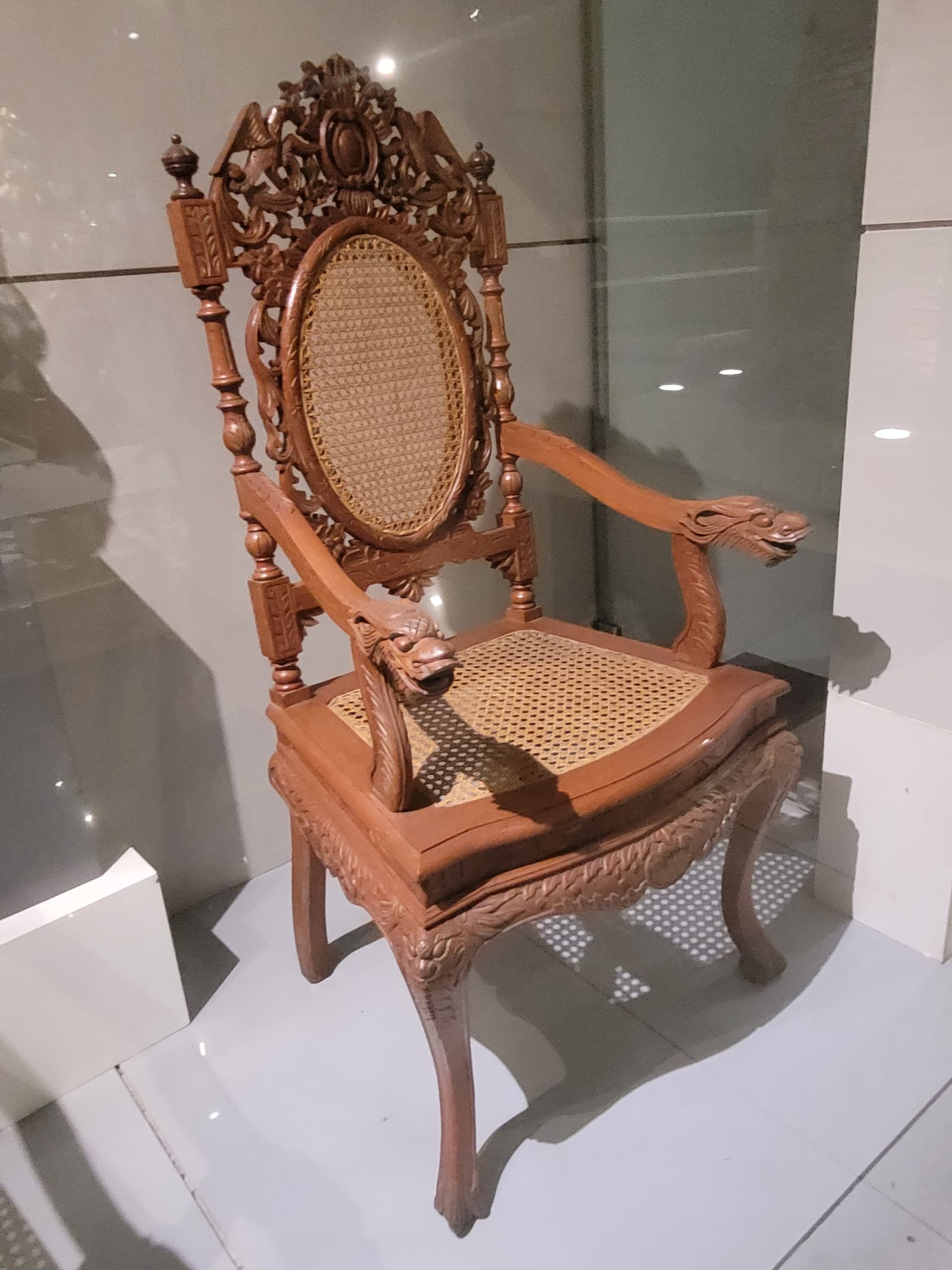
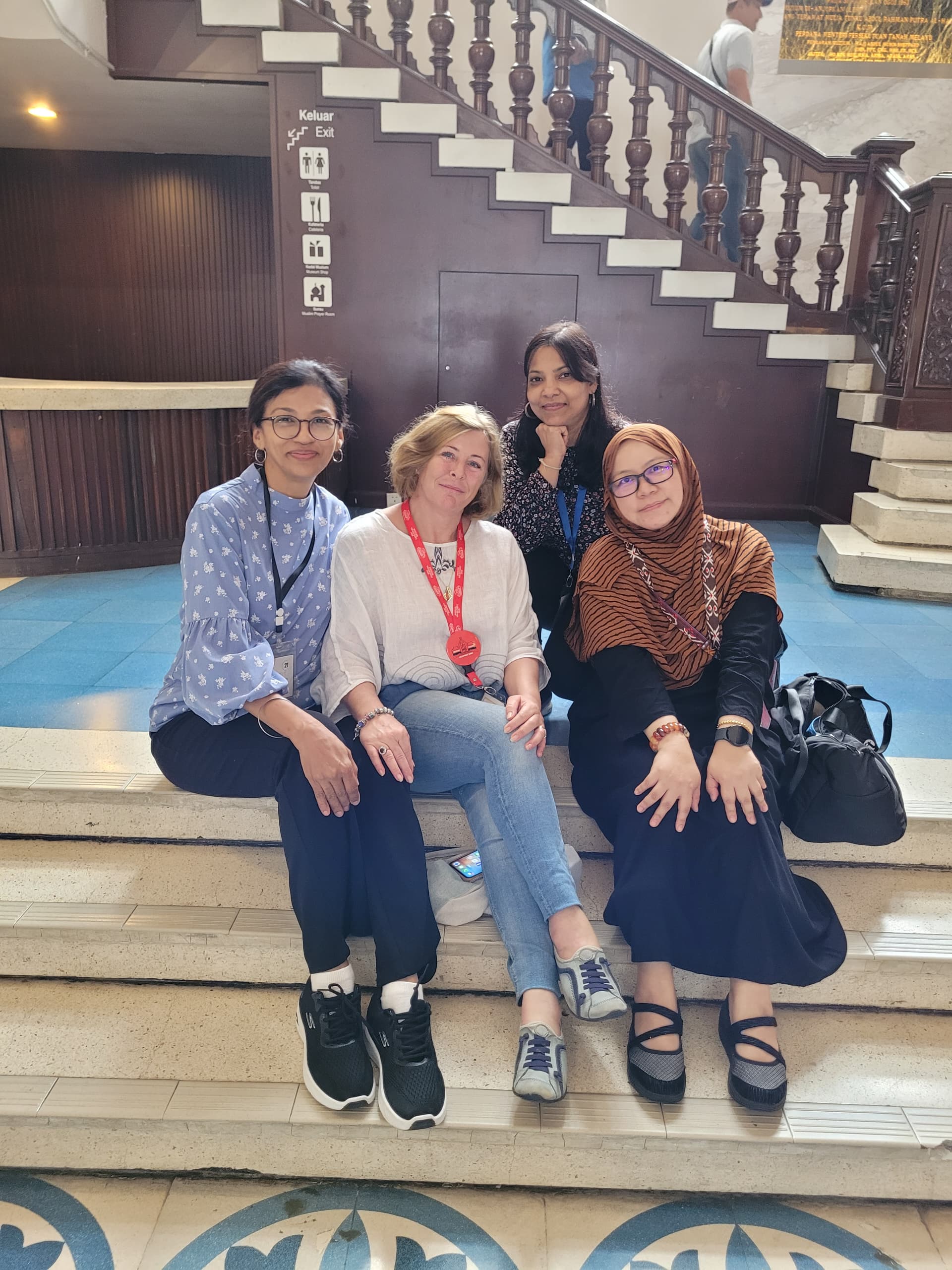


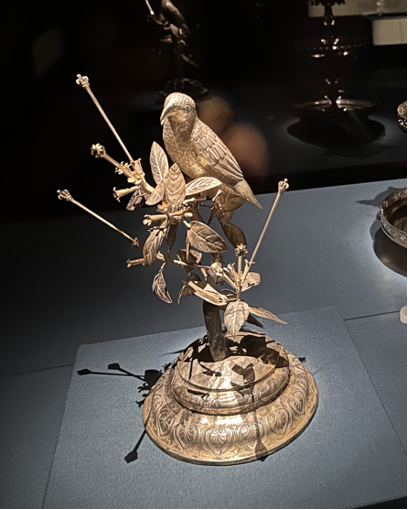


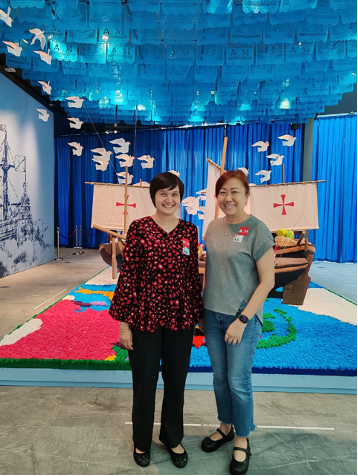
 Museum Volunteers, JMM