A kendi is a drinking or pouring vessel with two distinctive openings and a handle-less form. The two openings are the wider mouth on top of the vessel, where liquid can be poured in, and a spout to pour out from. It may or may not have a neck or lid. Liquid cools very quickly in the kendi. To drink from a kendi, the neck of the vessel is held and the liquid is poured without touching the lips. The vessel’s shape makes it easily transportable either on foot or by boat.
Whilst it is unknown when the kendi first appeared, etymological evidence suggests that such vessels were first used in Asia. This is evidenced from the various names used in Indonesia, such as ‘kandi’ in Toba and ‘kondi’ in Acheh, Sumatra, as well as ‘gendi’ in Java and ‘gandi’ in Macassar, Sulawesi. In South India, kendi was known as ‘gindi’ and ‘kindi’ in Kerala. Buddhist ceremonies in Sri Lanka utilized an earthen or metal ‘kendiya’ or ‘kotala’ (kotayala). The Sanskrit name for the container is ‘kundi’, which means a pot without a spout, and this is probably where the vessel’s name originated. It is also referred to as a ‘kundi-ka’; ‘ka’ meaning small in Sanskrit. The smaller kundika usually serves as a sprinkler. In addition, it is called “kamandalu” in Hindi, which means water jug or container used by Buddhist monks and priests.
Kendis have been produced and traded widely in South East Asia since early times. Thailand, Indonesia, the Philippines and Vietnam became major sources, although kendi were also produced in China from the Tang Dynasty (618-906CE), primarily for export. The discovery of ceramic ware, such as celadon and brown-glazed ware, fine paste bottles and kendi was made from artefacts recovered from the Intan Wreck (930 CE), Cirebon Wreck (11th century), Java Sea Wreck (c1275 CE), and Bakau Wreck (15th century). Such discoveries underline the demand and use of the kendi. By the 17th century, kendis were made in Japan, the Netherlands and Germany, and Dutch blue-and-white delftware kendis depicted pictures of nature and everyday scenes.
The kendi is functional and utilitarian, being used for everyday storage, cooking as well as in spiritual ceremonies. Besides water, kendis were also used to decant wine, administer medicine, and as alterware for rituals, such as pouring or sprinkling ‘holy water’ during religious ceremonies. The practice of sprinkling holy water from kendis was widely used in Hindu and Buddhist ceremonies from the 7th to the 15th centuries. The kendi is one of the eighteen sacred items carried by Buddhist pilgrims, and Buddhist statues of Avalokitesvara and Maitreya (the future Buddha) are depicted holding such jugs. Similarly, Hindu statues and images of deities such as Brahma and Shiva are also depicted with kendis. The kendi is made of metal in Pakistan and is named the lota, and is still used by Muslims for ablutions before praying. The pots were also used to ward off evil and given as wedding gifts. In traditional Indonesian and Philippine societies, kendis were offered as funerary items and used in ritual ceremonies for pouring libations of holy water collected from sacred rivers. Archipelago rulers cleansed themselves with holy water poured from a kendi as a symbol of purification during their installation ceremony. Europeans also made use of kendis and even manufactured them, which they referred to as a ‘goglet’, from the Portuguese word ‘gorgoleta’, (with ‘gorja’ meaning throat).
Kendis can be either plain or patterned. The form can be either male or female: a male form taking an angular shape with square shoulders, while the female form is round. There was no tradition that dictated which form should be used for any specific purpose, although in remote Sumatran agrarian villages, men drink from a female kendi while women drink from a male kendi, to symbolize the importance of procreation and fertility. Another type of kendi which is a symbol of fertility is the kendi susu (milk kendi), which has a squat body and a spout in the form of a female breast.
Plain kendis usually have a flat base and take the shape of either a pumpkin or an onion, having either a mammiform or an elongated body with a tall neck, while others have short, straight necks. Kendis normally have a lipped mouth at the end of the neck and a spout on the shoulder. Bulbous kendis are the most common shape, usually made from unglazed fired clay or earthenware. Patterned kendis are often more elaborately shaped, taking the form of a creature such as a dragon, crocodile, frog, elephant, or goose, and can be scored with floral patterns or geometrical strokes. Some kendis have stylized leaf, floral or botanic scrolls, still life motifs or Buddhist emblems. Such ornate pieces are usually made either of precious metals such as gold, silver or bronze, or of fine porcelain or celadon. The kendi maling or thieves’ kendi is an interesting and unusual variety that originates from Indonesia. Also known as valalu kotalaya (secret jug) in Sri Lanka, this type has no upper aperture, and is filled by means of a funnel in the base when the inverted vessel is submerged.
If you have been following this blog, you may recall that yours truly wrote about visiting Kuala Kubu Bharu or KKB in short, in September. Well, guess what, I was back to good old KKB just last week (November 16) to participate in a golf competition organized by K.G.C.K.K.B ie Kelab Golf & Country Kuala Kubu Bharu.
Entrance of K.G.C.K.K.B
Blue skies and everything nice
The last time around, the whole country was facing the haze problem and it peaked at A.P.I reading of 367 “hazardous” level in Sri Aman, Sarawak on September 17. At this juncture, our country was fourth on the World Air Quality Index’s list of countries with the worst air quality. Just for the record, Mexico was reported to be numero uno on the list at that time with a reading of 882!
With the haze issue gone, we are now smack right at the beginning of the monsoon season, the North East monsoon to be precise. It usually starts in the middle of October to the end of March. It brings a lot of rain to the East coast of the Peninsular and resorts located in Pulau Perhentian, Pulau Redang and Pulau Tioman are closed during the monsoon season. In ancient times, the North East monsoon would bring traders from China to South East Asia. The Chinese came as early as the 8th century c.e, at about the time of the Song Dynasty, then through the Yuan Dynasty and the great Ming Dynasty. At Gallery B in the National Museum, visitors can see display of old time and antique pottery that Chinese traders brought for trading. These pottery were discovered from shipwrecks, mostly Chinese junks, in the South China Sea.
Shipwrecks in the South China Sea and display of old time and antique pottery from China at Gallery B National Museum.
The golf game was scheduled in the afternoon and most of the players were anticipating rain to stop the game at some point but it turned out to be “blue skies and everything nice” throughout. Even then, many players were still complaining about their high score at the end of the round. Unlike basketball, football or hockey, in the game of golf, you need low score to win. As a non-contender, I had expected the highs and lows and was satisfied with the end result. More importantly, I was happy to finish the game.
KGCKKB was officially registered as a club in 1969, and this year is the club’s 50th Anniversary Celebration. Incidentally, Sesame Street, US children’s television series also celebrate its 50th Anniversary, it premiered on November 10, 1969. They have lined up a series of events, like Show Special, Fan Games etc to mark its Golden 50th celebration. For KGCKKB, it is practically non-existent and many members are not even aware of its significance. Vijaya, a long time staff here, confirmed that the club was registered in 1969 and had its official opening on 3 July 1971 by the then Second Prime Minister of Malaysia, Tun Abdul Razak. Vijaya also said that the plaque is no longer in the club and it may have been stolen. It is hoped that the piece of history did not land up as scrap metal. The first President of the club was the late YB Tan Sri Khaw Kai Boh who managed it from 1968 to 1972 and this was followed by YB Encik Chan Keong Hon (1972 – 1980).
Left: Opening by Tun Abdul Razak in 1971 ; Right: Earliest Life Members of KGCKKB
The idea for the formation of a golf club in the Ulu Selangor district actually came from YB Tan Sri Khaw Kai Boh way back in 1965 when he was a Member of Parliament for Ulu Selangor (P078). YB Tan Sri Khaw was a strongman from MCA and he was also Minister for Local Government and Housing in Tunku Abdul Rahman’s cabinet. He went on to be the MP for two terms ie 1964 – 1969 and 1969 – 1972. Barely two years later, KCKKB was in full swing and the course was ready for play. In 1968, he was made the First President of KGCKKB. A close scrutiny of YB Tan Sri Khaw initials reveal that it is KKB, and what a perfect union! KKB heading KKB. On another front, YB Tan Sri Khaw and the late Tun Tan Siew Sin were instrumental in the setting up of Tunku Abdul Rahman College (TARC) in Setapak, KL. Today, two of the buildings in the campus are named after them. By coincidence, November 16 was the by-election at Tanjung Piai in Johor and one of the key factors on the minds of the voters was the issue concerning TARC, now known as TAR UC. YB Encik Chan Keong Hon together with Kien Toh set up Selangor Dredging Berhad (SDB) when Chan was given a mining lease for his involvement in getting independence for Malaya. SDB went on to become the first Malaysian company to have its own tin dredge in 1967, and was then regarded as the largest in the world. In those days, only British companies were able to own tin dredges that cost millions of dollars. SDB’s tin dredge was put to use at a village specially built for tin mining and it is aptly called Kampung Selangor Dredging. This village still stands today in Dengkil, Selangor. Six years later, another tin dredge was commissioned close to the first site. Today, the site is known as Paya Indah Wetlands. YB Encik Chan was the Selangor State Assembly Representative for Kuala Kubu Bharu from 1969 – 1974. Currently, the District Officer of Ulu Selangor district automatically becomes the President of the club.
Some of the earliest Life Members of the club include the who’s who in KKB town like Wong Swee Soon who was a two term Selangor State Assembly Representative for KKB (1959 to 1964 and 1964 to 1969); local businessmen Ngui Thong Ling, Lee Siak Wah and Sia Yew; Coates Theater owner Lim Yau Tuan and S.M.J.K (Ing) K.K.B former Headmaster, the late A.M Francis. Moving forward to 1974, a swimming pool was built next to the club house as a remembrance of YB Tan Sri Khaw for the founding of the club as well as his sacrifices and contributions made to the club. YB Tan Sri Khaw’s wife came to declare it open to club members and the public. The pool was used for underwater filming for the making of a Malay movie entitled “Potret Mistik” on 21 April 2004.
Left: The famed suspension bridge ; Right: Filming of “Potret Mistik”
By the 80’s, KGCKKB was growing in status as a premier 9 hole golf course in the country. The design of the course had made full use of its natural surroundings and as a result, it had a hilly character which was very demanding and challenging for golfers, with some golfers calling it a commando course. Another special feature at KGCKKB is the suspension bridge that link the clubhouse to the golf course. It was then a landmark for KKB. Today, the bridge is hardly used due to the use of golf buggies.Golfers who insist on using the bridge are advised to cross with caution. Yet another special feature of the club is its wide affiliation agreements with other clubs in the country, including major clubs like Royal Perak GC, Royal Pahang GC, Royal Johore GC and Seremban International GC. Today, the club still keeps affiliation arrangements with more than 20 clubs in the country as well as three overseas clubs; in Singapore, in Zhuhai, China and in the Hunter Valley, Australia. As a matter of fact, this affiliation list may put a lot of big clubs in the country to shame.
Come the 90’s, there were huge transformations in KGCKKB, akin to the coming of the Neolithic Age. The exploits of members of the club who did very well in local competitions and these put the club very much in the limelight. P.Gunasagaran who used to be caddying at the club to earn pocket money during his younger days, represented the country in the 1989 SEA Games in KL and he won the Gold medal in the Team event. He then turned professional in 1992. His moments of “near “ glory came in March 1994 where he nearly captured the prestigious Malaysian Open that was staged at the Royal Selangor Golf Club in KL. He lost out in an eight-hole playoff to Sweden’s Joakim Haeggmann. Later that year, Guna, as he was popularly known, partnered his uncle M.Ramayah in the World Cup of Golf held in Puerto Rico and they came out in ninth position, the best finishing for the country in this event. They were paired again for the 1999 edition that was held at the Mines Resort and Golf Club in Seri Kembangan. Sadly, Guna had passed away in 2017 at the age of 53.
KGCKKB became the talk of the local golf fraternity when the club came out top in the 2nd Petronas Inter Club Team Championship in 1995. It was held over two days (7th and 8th April) at two different courses, namely Perangsang Templer Golf Club and Templer Park Country Club, Rawang. KGCKKB beat 49 other teams to be the Champion and the victorious quartet comprises of Wilson Liew (Captain), A.Durairaj, Jefferson Tan and R. Nachimuthu. It was even sweeter when the same quartet retained the team title the following year, held on 19 and 20 March 1996 at the Tropicana Golf and Country Club. They beat the second placed team, Kajang Hill Golf Club by a massive 10 strokes. They were not satisfied with just the team title as R.Nachimuthu captured the individual title when he carded an 8-over 152 to take home the title. Nachimuthu is still actively competing in the local Professional Golf Malaysia circuit.
Winning the Petronas Inter-Club Team Championship in 1995 and 1996 – Press coverage.
A new wing was opened in 1993 and by now, there was talk of developing the second nine holes. As far as club competitions were concerned, there were easily two or three every month and practically, members were spending most of their weekends at the club. I could remember very well that a Malay golfer friend told me that GOLF means Golongan Orang Lupa Famili (Group of people who forget their family). One particular competition that yours truly remember and find it to be interesting was the Ulu Semangkok Trophy. It was a team competition and competed amongst four clubs namely, Bentong GC, Raub GC, Frasers Hill GC and KGCKKB. It was held annually and each club would take turns to host the event and most of the time, the hosting club would win the trophy (talking about home advantage!). Incidentally, Ulu Semangkok is a name of a mountain that sits on the Main Ranch, within the borders of Pahang and Selangor and its height is 1,394 metres. It is a popular destination among hikers in and around the Klang Valley. Golfers from Klang Valley were making a beeline to join the club and soon, the new second nine holes were opened to upgrade the course into a full 18-hole course. It had its soft opening of the second nine holes on 31 December 1999.
New wing
Hole No.10.
For a rural club to come this far is indeed no small feat. For that, due recognition must be given to the Committee Members who have been working tirelessly to ensure that the course is kept well and that scheduled competitions are run come rain or shine. Yours truly know of bigger clubs who have stopped organizing Monthly Medal competitions for their members for many years now. Also, KGCKKB is lucky to have members who are still active playing in the club competitions and supporting all the club’s activities. At the just concluded Deepavali Golf Classic event, the organizing committee generously handed over a cash sum of RM 10,000.00 to the club. It is hoped that such contributions from the members would continue to keep the club moving forward to achieve the next ten years just as the country is targeting to achieve the Shared Prosperity Vision 2030.
There is no better way to start the Colonial Walk around Dataran Merdeka than to start at Sultan Abdul Samad Building (SASB) – the most iconic and instagrammable landmark in KL. The building was officially opened on 3 April 1897 by Sir Frank Swettenham who was then the Resident General of the Federated Malay States (FMS), and it was at the time known as The Government Offices. The name changed to Sultan Abdul Samad Building sometime after independence in honour of Sultan Abdul Samad, the fourth Selangor Sultan (1857-1898) who reigned when the building was constructed.
The famous features of the building include a 43.6-metre clock tower with a large magnificent copper dome, two smaller staircase towers also with copper domes at either side and smaller domes made of white cement on top of pillars in front of the building. The building’s design is a blend of Indian and European architecture. On record, the building was designed by British architects Arthur Charles Alfred Norman, Arthur Benison Hubback and Regent Alfred John Bidwell of the Public Works Department. The SASB now houses the office of the Ministry of Information, Communication and Culture.
Next stop – the Old Supreme Court. This two-storey building was built on the bank of Gombak River and it took 2 years and 9 months to complete – in 1915 to the cost of $208,500.00 Straits Dollars. It replaced the first High Court building located at Court Hill (currently where Menara Maybank is situated). A.B. Hubback did the design and Ang Seng Mooi was the contractor. Ang was also the contractor for the Government Offices. Hubback designed it in the Indo-Saracenic style, which blended well with other buildings of similar style in its vicinity. This building is now being used by the Ministry of Tourism and Culture.
Located next to the Old Supreme Court is the Old City Hall. Again, it was A.B. Hubback who was given the responsibility to design the building. Construction began in 1896 and it was completed in 1904. Again, Hubback used the Indo-Saracenic eclectic style including the use of different arches and chatri (domed-shaped pavilions) on the roofline. It was occupied for a time by Panggung Bandaraya DBKL to stage plays and musicals. The interior of the theater was destroyed by fire in 1992 and City Hall restored it soon after. The building is vacant at the time of writing.
Moving across the busy street of Jalan Raja on the north of Dataran Merdeka is the Saint Mary’s Anglican Cathedral. The original St Mary’s was a simple wooden building, built in 1887 and located on a hill on Bluff Road (now known as Bukit Aman). In order to cater to a larger expatriate congregation, the church was moved to the current site where the first brick church in the Federated Malay States (FMS) was built in 1894, designed by none other than A.C.A. Norman. The following year, a pipe organ built by Henry Willis was installed in the church. Willis also made the organ for St Paul’s Cathedral in London as well as the grand organ of the prestigious Royal Albert Hall. Today, the church conduct services in English, Iban, Nepali, Bahasa Malaysia and Mandarin.
The Royal Selangor Club was my next stop. It was originally known as The Selangor Club, and opened in a tiny wooden building with attap roof in October 1884. Five years later, a two-storey Clubhouse was completed at the current location thanks to a donation made by the Selangor Government. By 1910, the Clubhouse had been extended and redesigned in mock Tudor-style. The original building was designed by A.C.A Noman while A.B. Hubback redesigned it to mock-Tudor. In its early years, the club was fondly known as “The Spotted Dog”, purportedly named after the two Dalmatian dogs owned by the wife of one of its founding members, Captain Harry Charles Syers. Over time, the club was simply called “The Dog”. At its 100th Year Anniversary in 1984, it was granted a royal charter by DYMM Sultan Selangor and from thereon, it is known as the Royal Selangor Club. The club was further expanded with the opening of the Royal Selangor Club’s Kiara Sports Annexe at Bukit Kiara in 1998. Today, RSC is regarded as one of Asia’s oldest sporting institutions.
Moving past the 100-metres flag pole and large outdoor screen, and located next door to Perpustakaan Kuala Lumpur (KL Library) is the Old Government Printing Office (GPO). The Selangor Printing Office was initially established on Bluff Hill (now Bukit Aman) in 1890. John Russell who arrived from England was put in-charge of the Selangor Printing Office, and he helped A.C.A. Norman to design an ideal building to fit the large printing machines and this building was completed in 1899. The Perak Printing Office, established earlier in 1888 in Taiping, was consolidated with the Selangor Printing Office in 1904 and the single Federal department was housed in this building. In 1961, the Ministry of Labour took over the building until 1977 when it was converted to the Metropolitan Postal Security Office. DBKL purchased the building in 1986 for a sum of over RM3 million and turned it into Memorial Library, then renamed it KL Library in 2000. In 2004, a new building was constructed for the KL Library. The Old GPO now houses the Kuala Lumpur City Gallery and has become a popular tourist destination.
Just before reaching the traffic lights, the building on the right is the Old Chartered Bank Building. The Chartered Bank of India, Australia and China (later known as Chartered Bank and today, Standard Chartered Bank) was the first bank in KL. It started operations in 1888 at Clarke Street (Jalan Mahkamah Tinggi), then shifted to Market Street (Lebuh Pasar Besar) before moving to the current site in 1891. It then expanded into a three-storey building designed by A.C.A. Norman in 1909. In the 1960’s, it housed the National History Museum before it was turned into a restaurant and later, became the Music Museum in August 2014. Floods in this part of the town were very frequent due to the close proximity to the Gombak and Klang River, right behind Sultan Abdul Samad Building. During a flood in December 1926, the strong room of the bank was inundated. After the flood water receded, currency and documents had to be taken out to the Padang (now Dataran Merdeka) and dried in the sun. Again, bank staff had to do the same when another flood disaster happened in January 1971, even though they had moved to a new location!
After crossing the traffic lights, I reached the Old Central Railway Offices & North Goods Yard. The previous building on this site was single storied that housed the Railway’s offices and it was designed by A.C.A. Norman. The building was extended in 1905 to cater for the expansion of the tin industry and railway requirements. This time, it was designed by A.B. Hubback and built by contractor Ang Seng for $116,122.00 Straits Dollars. Besides the North Goods Yard, there was a South Goods Yard located at Brickfields where KL Sentral stands today. The Railways Central Offices then moved to the present KTM Headquarters in 1917, subsequently FMS Public Works Department occupied the building. From 1959 to 1971, this building was the first headquarters of Bank Negara Malaysia. It is now the National Textile Museum, having started its operations in 2010.
And the last stop of the Colonial Walk is the giant field now known as Dataran Merdeka / Merdeka Square / Independence Square that sits at the centre surrounded by the colonial buildings that I had visited earlier. The British called it the Parade Ground when it was cleared in 1884 but it later evolved into the Malay word “Padang”. DBKL acquired the field in 1987 and named it Dataran Merdeka in October 1989, to coincide with the Visit Malaysia Year 1990 campaign. History was made here at 12.01 am of 31 August 1957 when the Union Jack flag was lowered for the very last time and the flag of the Federation Of Malaya was hoisted up for the very first time to the world. It marked the end of British rule of our country and the end of colonisation. Since then, many of our Independence Day parades were held here. Also located at the Dataran Merdeka, is the Queen Victoria Fountain. It was supposedly built to commemorate Queen Victoria’s Diamond Jubilee in 1897 but it was only assembled in 1904 by which time Queen Victoria had passed away. Queen Victoria was Victoria Regina and she lived from 1837 to 1901. There is another Queen Victoria Fountain in Melaka, this one was erected by the people of Melaka.
Top – Queen Victoria Fountain at Dataran Merdeka. At a glance, the top of the fountain looks similar to the top of KL Tower in the background.
Do not miss this spot when you visit Dataran Merdeka.
I had finally completed my morning run and Colonial walk, with a time of 1 hour 59 minutes. And that was the time it took Eliud Kipchoge to complete the marathon (42 km) run recently. Eliud is the first man to run the marathon in under 2 hours, and for this great effort, he is now the Greatest Marathon Runner of All Time. With that, it was time for me to enjoy my breakfast.
“Hi
hi hi, beautiful Sunday. This is my, my, my beautiful day”,
lyrics from the song “Beautiful Sunday” sung by British pop singer
Daniel Boone, and it became a hit song in 1972.
Moving forward to November 2, 2019, it was also a Sunday and it was to be a beautiful day for me as I managed to complete two of my favourite activities in just under two hours. For the first part, I ran in the KL Car Free Morning and right after, took a walk round Dataran Merdeka, marvelling at the colonial buildings surrounding it.
Starting point @ Dataran DBKL
KL
Car Free Morning was introduced in 2013. Over the years, this initiative by
DBKL has received good support from KLites/Kuala Lumpurians and currently, it
attracts about 3,000 participants each time. It is held on the first and third
Sunday of each month and the circuit is approximately 7 kms long, covering the
major streets of KL Golden Triangle. Participants can walk, jog, cycle (free
rental of bicycles provided by OCBC Bank), hand-cycle, roller skate,
rollerblade and even go skateboarding, including using of two-wheel smart
self-balancing scooters drifting board.
When I reached the starting point at Dataran DBKL, it was already crowded and participants were all eagerly waiting for the start of the event. We were flagged off at exactly 7.00 am; for safety reasons, joggers had to keep to the left and cyclists as well as skaters to the right.
The start of the circuit took us through the straight stretch along Jalan Raja Laut, passing Sekolah Kebangsaan (L) Jalan Batu, formerly known as Batu Road School (BRS) [1]. BRS was established in 1930 to serve as the preparatory school for Victoria Institution. Today, part of its premises has been converted into a school for students with special needs and visual impairment. At the intersection, we turned right into Jalan Sultan Ismail and at the first intersection, we turned right again into Jalan Tuanku Abdul Rahman, KL’s Golden Mile. Two KL landmarks are located at this road’s intersection with Jalan Dang Wangi. On the right is Pertama Complex [2]. It is one of the earliest shopping malls in KL and I remember having bought my first pair of Adidas sports shoes here. On the left, is the building of the old OdeonCinema [3]. This cinema was designed by architect A.O. Coltman and it opened in 1936. It closed temporarily in 2010 but reverted to screening movies a year later with a new management until it was finally shut down in 2015. The building is slated to be demolished to make way for a retail-apartment building.
Pertama Complex
Old Odeon Cinema
Next, we turned left into Jalan Dang Wangi and passed by Campbell Complex [4], Dang Wangi Police Station [5] and Kompleks Wilayah [6], all located on the right. Jalan Dang Wangi was previously known as Campbell Road. Straight ahead is Bukit Nanas [7], where KL Tower is located. It is here in this small hill that one can see the only virgin tropical rainforest left in the city of KL; this rainforest dates to 1.3 million years. At the T-junction, we turned left into Jalan Ampang and, at the next intersection, we turned right into Jalan Sultan Ismail where we soon arrived at Hard Rock Café [8] and Concorde Hotel [9] on the left; and Shangri-La Hotel [10] further up, on the right. Fans of Michael Jackson will remember that The King of Pop came to KL to perform as part of his History World Tour, a solo concert tour that spanned the globe with concerts in 57 major cities in 35 countries, on 5 continents! MJ was in KL from October 27 to 29, 1996 and he stayed at Concord Hotel.
Bukit Nanas Waterfall
View of KL Tower
At the traffic lights, we then turned left into Jalan P.Ramlee, one of
the nightlife hotspots in the city. It was known as Jalan Parry until the name
changed in 1982. About 500 metres ahead is the iconic Petronas Twin Towers
[11], once the tallest skyscraper in the world (1998 to 2004) and now the
tallest standing twin towers in the world (at 452 metres). In the olden days,
the area surrounding KLCC used to be the site of the Selangor Turf Club.
At the next traffic lights, we turned left into Jalan Ampang and headed towards
its intersection with Jalan Sultan Ismail. We turned right at this intersection
and headed towards Jalan Tuanku Abdul Rahman intersection. On the way, we could
see Quill City Mall KL [12] on the right and Sheraton Imperial KL
[13] on the left.
At the same intersection that we passed earlier on, we turned left back
to KL’s Golden Mile (Jalan TAR) and this time, we went straight to the end of
the street. Another standalone cinema is located at this section of the street,
and it is none other than the Coliseum Theatre [14]. It was built by
businessman and philanthropist Chua Cheng Bok in 1920 to become the first
cinema to open in Malaya; it opened in 1921. Today, the cinema specialises in
screening Hindi and Tamil films. Located next door is the Coliseum Cafe and
Hotel [15],which opened at the same time as the cinema. It was a
popular social hub for British planters and miners. It is here that KLites come
to do their festive shopping, at places such as Globe Silk Store, Emporium
Selangor and Mun Loong.
Coliseum Theatre
Coliseum Cafe and Hotel
At the end of Jalan TAR, we arrived at Jalan Tun Perak where we turned right and just a short distance away, we turned right to Jalan Raja Laut to the finishing point at Dataran DBKL. I took about 42 minutes to complete the circuit, averaging 6 minutes for one kilometre and I was quite pleased with the timing. Then I went over to get a cup of free refreshing isotonic drink and hurried across the busy Jalan Tun Perak to Jalan Raja for my next activity, the Colonial Walk.
“Social Unity through Culture, Art and History: The Museum Challenge“
This gripping theme prompted me to sign up for the first
conference of its kind in Malaysia. I was excited to hear and learn from the
experiences of National Museums across Asia. Luckily, Jega said he would hold
up the fort for training the new volunteers so thanks to my fellow Tuesday
trainers for releasing me.
Premiera Hotel was a bustling place on the morning of October
29th. Around 10MVs were dotted around the conference hall. I met
some Korean representatives from ICHCAP, UNESCO whom I quickly introduced to
Angela Oh, our Korean MV trainer.
The opening ceremony was grand with a spectacular cultural
performance by our tourism dancers. The Deputy Minister of Tourism graced the
occasion and delivered the keynote address. He acknowledged the challenges to
the role of museums in promoting social unity considering the competition from
other forms of entertainment available.
Subsequently, session one began. The representative from
Mongolia shared a list of overseas exhibitions they had run since 1989, mainly
with the Genghis Khan tagline. The most notable development he mentioned was
the barcode inventory project they undertook between 2017-18, which has greatly
eased storage and retrieval of their massive artefact collection.
The Japanese rep focused on the Asian Gallery at the Tokyo National Museum which houses 20% of their total collection. They connect viewers with artworks through exhibitions and related events. The goal is to provide the experience of different cultures towards a greater understanding of cultures. They hold multi-faceted events on unique themes eg. special tours by curators and Indonesian wayang kulit performance on the theme of love. Also, yoga sessions were held at the museum for better appreciation of Buddhist artefacts.
Our Penang State Museum rep shared her cross-cultural
project, ‘Silang Budaya’ which redefines the museum perspectives through the
interpretation of artefacts by young people. For example, students had used a
tiffin box as inspiration for creating a multi-level phone accessories carrier.
The project has instilled a love of history amongst polytechnic students, whose
core subjects would be more technical. Museum staff supported the students to
set up and curate their exhibition. She welcomed collaborations with other
museums for future projects.
A cultural performance at the start of the conference
Next, the Philippines rep shared the experience of heritage
building restoration at their National Museum. Even though there were many
challenges, the restoration has brought recognition and appreciation of museums
by the public through partnerships and donations. She also shared how they
disseminated their national hero stories via a tour for school teachers, who
could then translate their passion for the hero on to their students. So many
ideas shared in just one morning!
Lunch time was networking time again. We sat with a
gentleman from UiTM who has initiated the survey on Muzium Negara; and also,
with some police officers who are now administering the Police Museum in KL.
Session 2 was moderated by a well-spoken Malaysian lady. In
fact, we were impressed by all 3 moderators who were of retirement age. Next, China
astounded us with its exponential growth of museum visitors. Customer service
is at the top of their agenda. We were treated to a video on their Joint Asian
Civilisation exhibition.
The Indonesian reps showed how their culturally diverse 700
ethnic groups considered themselves “different but still one”. Museums feature
traditional games, batik workshops and theatre stories to engage their
audience. There are dance performances every Sunday and university students
play traditional musical instruments. Their outreach programme allows the blind
to touch artefacts with gloves.
Social inclusion through multi-disciplinary aspects are
echoed at the National Museum of Nepal. Homestays are offered to enhance their
cultural experience.
The Malaysian Ministry of Tourism held a “keretapi sarong”
movement, which encouraged millenials to wear their sarongs on the train to a
secret destination– a nod to traditional wear in a fun environment.
The annual Sabah Craft Exotica programme has been running
since 2005. It features local handicraft by Sabah’s 35 ethnic groups. The
Korean rep was impressed by the bottom-up approach to culture-sharing in Sabah.
With 115 sub-ethnic groups, Sabahans are eager to demonstrate their particular
crafts, enabled by Craft Exotica. This programme also helps to preserve ethnic
crafts.
Vietnam has 54 ethnic groups, unified in diversity. Their
museum connects communities in order to build a cultural identity and to
preserve national cultural values. However, they face difficulties in
approaching the public in terms of budget for IT since young people would
connect better with ancient objects through technology. Also, their staff needs
training to obtain professional skills and to overcome language barriers. They
are keen to cooperate with foreign museums and to combine museum with other
social and cultural activities.
In session 3, the rep from Thailand introduced us to the ancient city of U Thong, located in central Thailand. With 20 sites found along with many Dvaravati (Indian-influenced) artefacts, U Thong museum is now a cultural hub. The museum serves as a learning centre, which develops critical thinking skills, encourages innovation and instils a love for history amongst the public, especially children. They organise family activities on Sundays and integrate efforts with the local government in experiential learning. Also, their museum places importance on social media presence.
Personally, I found the final presentation by South Korea
most impressive. In an increasingly multi-cultural Korea, museums have
increased their role in diversity education. They have embraced these changes
by offering targeted activities for immigrant workers, marriage immigrants and
members of the international community. Also, to encourage mutual understanding
and respect, their folk museum has culture discovery boxes for children, which
can be loaned to schools, libraries and kindergartens. The National Museum of
Korea has many exhibition exchanges with numerous countries around the world,
bringing a myriad of cultural diversity experience to its people.
We left the conference with plenty of food for thought. There is no doubt that the ANMA executive closed-door meeting can build on the conference proceedings. Hearty congratulations to Department of Museums, Malaysia (JMM) for a successful conference!
As
I am writing this article, the Air Pollutant Index reading in four stations had
recorded very unhealthy levels yesterday. Johan Setia in Klang, Selangor was
the highest with a reading of 229.
The
API was hovering around the 100 level a week earlier when I brought a couple
from Hong Kong to a half-day tour of Kuala Kubu Bharu. I met Rochas and Alexis
Tse during my call of duty at the National Museum on 2 September 2019. At the
end of the tour, they had enquired about other museums in the city and we
communicated using social media. When I mentioned about visiting Kuala Kubu
Bharu, they immediately said yes. So off we went on an early Wednesday morning,
leaving KL city centre at 7.00 am.
(L-R) Rochas & Alexis
Kuala Kubu Bharu or affectionately known as KKB, is 60km north of the city using the trunk road known as Federal Route One. The journey is now made easier and faster with the use of the Rawang Bypass, which was opened to traffic on 28 November 2017. In less than an hour, we had reached our destination and our first stop was for breakfast. Alexis had ordered a bowl of Laksa noodles, which I thought was adventurous for someone from Hong Kong. Then we went to the nearby wet market where I was told that bananas from our country are better than imported bananas that are available in HK. A local elderly Chinese woman who was standing beside us gave us some in-depth information about the dokong and duku langsat and Rochas decided to buy some dokong to take home. We returned to the car to keep all the purchases and off we went to explore KKB.
History of Kuala Kubu
KKB and its surrounding area, collectively
known as Ulu Selangor, were inhabited since the Neolithic Age 4,000 years ago
(discovery of slab stone burials in the Bernam Valley in the North of Ulu
Selangor) and through the Metal Age 3,000 – 2,500 years ago, with the discovery
of iron artefacts and bronze celts in nearby Rasa and Kerling. Moving forward, the
18th century CE saw the arrival of people from Sumatra, the Rawa and
Mendailing, who came in search of new land and for tin. Sungai Selangor was the
main river that transported goods including tin, to Kuala Selangor, which was
then the royal capital of Selangor. It became an important route and it even
prompted the Dutch to set up post to collect taxes from the Malays when they
managed to capture Kuala Selangor towards the later part of the 18th century CE.
The Malays in Ulu Selangor were involved
in the Selangor Civil War (1867-1874) and it was during this turbulent time
that the town got its name. The conflict separated the Malays into two
factions, on one side led by Raja Abdullah, Raja Ismail and, later, Tengku
Kudin. The opposing faction comprised Raja Mahadi, Raja Mahmud and Syed
Mashhor. The Chinese rival groups also joined the fight with Hai San led by Yap
Ah Loy, throwing their support for Tengku Kudin while Ghee Hin led by Chong
Chong offered support to Raja Mahadi. The Malays in Ulu Selangor supported Raja
Mahadi. As a defence against his rivals, Raja Mahadi had built an earthen fort
near the mouth of a river and that was how the town got its name – Kuala Kubu (fort at the mouth of the river). Raja
Mahadi managed to capture Kuala Lumpur in March 1872 but a year later, Tengku
Kudin together with reinforcement from Pahang and Hai San came charging back to
retake Kuala Lumpur. Raja Mahadi fled to Singapore while Syed Mashhor retreated
to Perak. Years later, both men were given pardons by Sultan Abdul Samad but
Raja Mahadi died in Singapore while Syed Mashhor returned to Kerling as a Penghulu
(chieftain). He developed the place by opening up lands for tin mining and he
died in 1917.
Selangor became a British Protectorate at
the conclusion of the Selangor Civil War. At that time, tin mining activities
in Kuala Kubu was second only to Kuala Lumpur and this prompted Frank
Swettenham as the First Assistant Resident of Selangor to visit Kuala Kubu in
1875. He commented that the huge dam constructed by the Malays with the help of
the Orang Asli in the 1700s as gigantic in size. Tin mining was carried out
just below the dam.
In
July 1883, Cecil Ranking, a young man of 26, started work as Tax Collector and
Magistrate and he immediately got down to serious work wanting to show his
capabilities to impress the Resident. However, his work was cut short because
three months later, on the fateful evening of 29 October 1883, the huge dam
broke and flooded the town. It was recorded that floodwaters rose as high as 10
feet; 38 houses were destroyed and 50 people perished, including Cecil Ranking.
Local legend has it that Cecil Ranking had on that day, shot a sacred white
crocodile believed to be the guardian of the dam. As a result, the dam broke.
However, there were other factors more likely to have caused the tragedy.
The dam was more than 100 years old and the wood was already rotting away.
Cecil Ranking was seen dropping three dynamites on the dam ten days before the tragedy for the purpose of killing fish and this action could have shaken the foundations of the dam.
It was raining non-stop few days before the flood.
It may be linked to the Krakatoa volcanic eruption on 26 and 27 August 1883 in Indonesia. The tremor was felt in Kuala Kubu. It was to be one of the deadliest and destructive volcanic events in recorded history.
The
new township was built nearer the left bank of Selangor River and the British
were by now leading the development. In a short span of four years, the
population grew to 7,580 making Kuala Kubu the third largest town in Selangor.
Tin mining continued to be the main activity of the town and more lands were
opened up for mining including Peretak, which is on the Main Ranch. By 1887,
tin output for the year had doubled that of 1885. Also in 1887, British
announced its “greatest undertakings in road making ever essayed in the
Federated States” with the start of the construction of a bridle track from
Kuala Kubu to Kuala Lipis in Pahang (capital of Pahang at that time as well as
a gold mining centre). It was to be the earliest federal road ever constructed
in Pahang. With this massive undertaking, Kuala Kubu became known as the
Gateway to Pahang. It was on this very road that another historical event took
place – the assassination of Sir Henry Gurney on 6 October 1951 by the Malayan
Communist Party terrorists. Gurney was travelling in a convoy to Fraser’s Hill.
Today, this road is known as Federal Route 55.
Mail service using motor vehicle in 1910. The vehicle is passing through Jalan Kuala Kubu on the way to Kuala Lipis.
Train service arrived in 1894 when the final section of the railway track was completed linking Kuala Kubu to Serendah, Rawang and Kuala Lumpur. In 1906, bus service from Kuala Kubu train station to Kuala Lipis was made available.
Kuala Kubu railway station in 1900
Also available in Kuala Kubu was a nearby hill station called Treacher’s Hill (a.k.a Bukit Kutu), named after Willam Hood Treacher who ventured into the place in 1893. W.H. Treacher was the British Resident of Selangor from 1892 to 1896. There were two bungalows serving as a sanatorium at the peak of the hill until its closure on 31 December 1932 due to soil movement that rendered the resort unsafe. There was also an army training camp set up in 1915 to recruit volunteers for World War I in Europe.
Sanatorium on Treacher’s Hill
However, the improvements done to Kuala Kubu did not last long as the
township was constantly ravaged by floodwaters. There were floods in 1885,
1913, 1917 and by 1921, the District Officer of Ulu Selangor announced the
abandonment of Kuala Kubu and shifted its district headquarters to Rasa.
Between 1923 and 1926, Kuala Kubu was flooded a number of times and finally
upon the advice of the Public Works Department at the end of 1926, the
Government decided to move the town to a new site up river and to higher land.
Flooded area of Kuala Kubu in 1926
Kuala Kubu in the 1920’s
Kuala Kubu Bharu – 1930 to present
Charles Crompton Reade, a town planner from New Zealand, who was employed
by FMS, was given the task to plan the new town – Kuala Kubu Bharu. Reade planned the town along the
garden city concept, such as distinctive use of zoning, angular visual entry to
the town centre, and a compact town centre to allow space for the parkland
separating the residential areas and hospital. Today, KKB is recognized as the
first garden township in Asia.
Earliest shophouses in KKB. Post office on the right.
Charles Crompton Reade
One of the earliest shophouses built in the commercial sector of the
town has the year 1930 embossed on its top front façade, which marks the birth
of KKB. Other significant structures built in the 1930s:
The former Land Office built in 1931 by the British on top of the administrative sector, overlooking the town.
The clock tower commemorating the coronation of King George VI.
The stone monument commemorating the Silver Jubilee of King George V.
The former Holy Ascension Church, which is now being used as the Hulu Selangor Traffic Police Headquarters.
KKB Post Office (neoclassical architecture with round gable window and round tribe casement window).
Old Fire Station built in 1931.
Shophouse No 1 & 2 at Jalan Dato Tabal (formerly Bowen Street).
Commemorative clock tower
Besides
these structures and buildings, it was recorded that an airfield was set up on
the outskirts of the town in 1931 as a means of transport for high-ranking
officials as well as for goods. The airfield was used during the Malayan
Emergency (1948-1960) for the landing of Taylorcraft Auster light aircraft.
In
the book “Tarikh Kuala Kubu 1780 –
1931” published by Persatuan
Sejarah Kuala Kubu, it revealed a letter written by the District Officer of Ulu
Selangor to the Resident about the naming of streets in KKB. The British
discarded the local names written in Malay and mentioned about the unavailability
of “well known Asiatic gentlemen connected with Kuala Kubu”. He then forwarded
a list of five names of “Europeans who have been intimately connected with
Kuala Kubu”:
Ranking (as in Cecil Ranking, the first Tax Collector and Magistrate to be stationed at Kuala Kubu)
Bowen (long serving District Officer of Ulu Selangor)
Davidson (who made Kuala Kubu his home for about the last 25 years of his life)
Stonor (who was the District Officer, then the Secretary to the Resident and finally the British Resident of Selangor)
Maxwell (possibly William George Maxwell who was Resident of Perak and after whom Maxwell Hill was named before the name changed to Bukit Larut or his father, William Edward Maxwell, who was Resident of Selangor).
The
four main streets in KKB were named after Bowen, Davidson, Stonor and Maxwell,
only Ranking was not selected. Today, they have all changed to local names –
Jalan Dato Tabal, Jalan Dato Balai, Jalan Mat Kilau and Jalan Dato Muda Jaafar
respectively.
A sketch of Kuala Kubu Bharu and surrounding areas. Taken from Kamalruddin Shamsudin (2015) Charles Reade: Town Planning British Malaya 1921-1929, pp. 291
Next,
we shall look at some “well known Asiatic gentlemen connected with Kuala Kubu
Bharu”.
Jawaharlal Nehru made two visits to Malaya i.e in 1937 and 1946. Both visits were to look at the welfare of Indians in the country. It was during the second trip when he visited KKB at the invitation of one of his family members who were then working in KKB.
Rehman Rashid wrote the book “Peninsula – A story of Malaysia”. In one of the sections, he wrote about small towns in the country. After he retired, he came and stayed in KKB and immediately fell in love with the place. He then wrote a book Small town as a special tribute to KKB.
Popular Malay singer, the late Sudirman Haji Arshad also sang about KKB. In his song entitled Joget Kenangan Manis, he sang “kalau pergi Kuala Kubu, tulis nama atas batu”, which translates to “if you go to Kuala Kubu, write your name on a rock”.
David Chin, owner of Dave Deli restaurants owned a shophouse in KKB. Whenever he came to cycle with his buddies, he will open his shophouse for them to enjoy their meals and to rest. He called his place “Bicycle Stopover”.
B.Rajkumar is a local-born athlete. He broke the national men’s 800m record by clocking 1.47.37 to win the gold medal in the Asian Track and Field (ATF) Championship held in Jakarta in 1985. It remains a national record.
The late P.Gunasegaran was a top local golfer and he made his name at the 1994 Malaysian Open where he lost an epic eight-hole playoff to Joakim Haeggmann of Sweden at the Royal Selangor Golf Club in KL. Until today, no other local golfers have ever come close to his achievements in the Malaysian Open history.
Today,
KKB remains the main administrative town of Hulu Selangor district. And there
are plenty of training centres around the town such as Royal Malaysian Police
Academy, Central Region Fire and Rescue Training College, Royal Malaysian Signals
Army Unit, AsiaCamp (Team Building Camp), Kem Bina Semangat Ampang Pecah, just
to name a few.
The following are some of the main attractions in KKB:
Sungai Selangor dam
St. Paul Catholic Church
Former Coates Theatre built in 1953
KKB Hot Spring @ Taman Arif
Chilling Waterfalls
Kampung Orang Asli in Pertak
Bukit Kutu
Old Chinese Temple at Ampang Pecah
By the time we left Galeri Sejarah Kuala Kubu, after our last stop of looking
at old photographs of KKB, it was almost noontime. We went straight to Teo Kee
stall to have our lunch. They serve delicious Teochew dishes and porridge.
After lunch, we took a last look of Kuala Kubu Bharu town before heading back
to the city.
Kuala Kubu circa 1910. Photo taken from Cheah Jin Seng (2008) Malaya: 500 Early Postcards, Singapore: EDM, pp. 52
Note: I forwarded a copy of this writeup to Alexis and this is what he wrote in return:
“Kuala Kubu Bharu is absolutely a strange city to me. After being guided through various historic sites within the city, a strong sense of similarity floated. Vaguely, KKB seems like one of the New Zealand cities, which I have visited. Would it be like Port Chalmers, Picton or Napier?Eric told me that KKB was the first city in Malay Peninsular with town planning initiative by Charles Reade, a colonial town planner. We are lucky and privileged to be guided to this special city for an in-depth understanding of the history of Malaya”.
References:
Persatuan Sejarah Kuala Kubu – Tarikh Kuala Kubu 1780 – 1931
The on-going exhibition at Muzium Negara is a fascinating look at the ancient history and culture of the nomadic peoples from the Eurasian Steppe. During the Iron Age, around the 9th century BCE to the 2nd century CE, the Scythian culture flourished in the steppes and the exhibition showcases many artefacts from this culture. The showpiece of the exhibition is Altyn Adam, the Golden Man. This is the name given to a skeleton discovered together with 4000 gold ornaments in 1969 in a burial mound near Issyk. It has become the symbol of Kazakhstan, from where this exhibition originated.
Was the Golden Man really a man? Could it possibly have been a woman? Find out at Muzium Negara where Museum Volunteer guides will be on hand to take you on a guided tour through this exhibition. Our tours start on Thursday 10 October at 11:30 am and these will be on a daily basis (except Sundays) until the end of the exhibition on 31 October. Tours will also be conducted in French on two of these days. Please find the tour schedule at the link below (you will need to scroll down).
Photographs of some exhibits are shown below. Find out their stories from the museum volunteers. Also find out the symbology behind the design of a yurt (tent) and the Zoroastrianism practices behind the burial of the Taksai princess. A touch-screen display examines some of the cultural practices such as the ritual to cut a rope when a child reaches the age of one.
The Steppe culture was equestrian-based and each piece of the saddle has symbolic meaning.Akinak dagger decorated with heads of two griffins in profile. Dated to the 4th/3rd century BCE.This necklace consists of pendants with garnet insets. The exquisite workmanship is dated to the 3rd/2nd century BCE.An image of an elk in yellow metal framed by a metal ribbon. Dated to the 4th/3rd century BCE.
Charcoal is a controversial fuel these days due to climate change and atmospheric pollution fears. Nevertheless, this fuel was a standard feature in the kitchens of most Malaysian houses. It is still being used although on a much reduced scale. Making charcoal is not a matter of just heating wood until it is burnt. It is more involved than that requiring the right type of wood and the right method. However, it is still a very basic process with no high tech blast furnaces or machinery. A recent visit to the Khay Hor Holdings Sd. Bhd. Charcoal Factory provided me with good insight on how charcoal is made.
This signboard is of the dealership but it involves the same people
The factory is located in Kuala Sepetang, formerly and better known as Port Weld. Kuala Sepetang is within the Matang mangrove forest reserve, which at 40,000 hectares is the largest and best-managed mangrove forest in Malaysia. The west coast of the peninsula has many other mangrove forests, Kuala Selangor for example, but they do not replant the chopped trees thus depleting the forest. Matang, however, is recognised as a good model of sustainable mangrove forestry and conservation.
There are a few factories in the area, but the one we visited was the only factory that gave a tour. This was led by Mr. K. Y. Chuah, a member of the owning family, who, in his work clothes of a sports shirt, shorts and sandals, gave us a spirited and engaging tour of the factory and its operations.
Mr Chuah explaining the process
Among the mangrove, the two species most commonly used are Rhizophora apiculata and Rhizophora mucronata. Mangrove trees are locally referred to as bakau. Any wood can be made into charcoal. However, these species can withstand high heat. The charcoal-making process involves high heat to remove the water content in the wood. This is smoked out rather than burnt out. It also gives a shine to the charcoal.
The wood from these trees is initially very heavy, as we found out when carrying one of the logs, because of high water content. In fact, this wood will sink in water and not float like other woods, because there is no air space due to water saturation. It is after all a mangrove swamp tree.
The kiln is igloo shaped and there are six of them located in a large shed. The bricks used are of the same type as used in housing. The structure is plastered with very fine clay and sand to seal the kiln completely. It does take an expert to do this perfectly. The kilns are all 7m in height by 6.7m in width. These sizes are specified by the Forestry Department to make it easy to calculate the duty to be paid.
The igloo-shaped kiln
Inside the kiln
Wood is stacked to fill up the kiln. It will weigh some 50 tons inside. This is high because of the water content of the wood and when the process is completed, it will weigh some 10 tons only. The fire is not inside as the wood is not burnt. The fire is on the outside and it is the heat that slowly goes in to heat the wood and remove the water content. There are six flues or vents around the kiln to allow the vapour to escape. Simply put, heat goes inside and heats the wood to release the water content.
Wood stacked in the kiln
The first stage large fire
This is just the first stage with the fire burning for 14 days. Workers in three shifts have to check every 3 to 4 hours to top up the wood and keep the fire consistently going. If not topped up and the fire lowers, the oxygen leaks inside and the fire follows inside and burns the wood.
A close-up of the fire just outside the kiln
Vapour coming out of the vent
The vapour comes out of the vents. It is in fact steam, which is very hot and has a strong pungent odour. Expertly smelling and seeing the colour, as well as using a thermometer to be sure, the workers will know when it is ready to reduce the fire to a smaller one. Through experience, the workers know how to control the slow fire. It is still hot inside but the vapour is reduced and, thus, not as hot as before. This will continue for another 11 days after which there is no longer any vapour. The workers then shut down the fire and seal the kiln completely. It will take another 7 days to cool it down completely.
The second-stage slow fire
Third-stage cooling off
Finally, the kiln opening will be hacked, the bricks removed and the charcoal taken out. The six kilns in this factory are used in turn to continuously produce charcoal.
The condensed vapour is referred to as vinegar; it is liquid oil, which is collected. Mr. Chuah extolled the virtues of this and of other products, which can be used as mosquito repellents and soaps with no chemicals added.
Mr Chuah holding a bottle of the Charcoal Vinegar
The factory is in a swamp area and the stench takes some getting used to. The canal by the side is used to bring in the wood from the forest. It is a tidal canal and therefore used on certain days only. Contract workers are paid to cut and transport the wood and are paid after delivery. As the forest is harvested, the cutters have to go in deeper and so it takes longer to bring the wood in.
The canal in the dry
Water comes up to the jetty edge
The Forestry Department annually allots the specific lots for harvesting and they have to use their allotment. Otherwise, the following year’s allotment will be reduced or the licence cancelled. The replanting is also managed by the Forestry Department but tendered to contractors.
Mr. Chuah explained that Japan buys 70% of the production and they insist on these species. According to him, the Japanese despite being very high tech still believe in charcoal. They use it as barbeque fuel as more people prefer traditional methods. For those who can afford it, houses are built with a layer of charcoal beneath to keeps the houses warm in winter and it absorbs odour. In addition, among its many other uses, charcoal is also used as an absorbent.
All in all, it was a very interesting tour and appreciation of charcoal. Questions were in our minds as to whether charcoal is environmentally friendly to use. It is not fossil fuel and it is touted as being green. However, how much of the carbon released is recaptured by reforestation?
Recently, an exhibition with the theme “A History of Malaysia – Sino Interactions” was held at The Mines 2, Sri Kembangan, Selangor. It was organized by The Federation of Hokkien Associations of Malaysia and supported by the Embassy of The People’s Republic of China in Malaysia.
The exhibition highlighted the good ties between The People’s Republic of China and Malaysia. Diplomatic relations between the two countries started in 1974 when the then Prime Minister Tun Abdul Razak visited China and met Chairman Mao Zedong and Premier Chou Enlai. Today, China is one of our major trading partners and our export to China has increased to record highs. Local Musang King durians and white coffee are sought-after items in China.
The
exhibition covered four sections as listed below. Exhibits were mostly in
pictures with information written in Chinese and English, plus a few records
and publications.
2000 years of Malaysian-Sino interactions before 1974,
Ethnic Hokkien Chinese and their roles in Malaysian-Sino cultural exchanges,
A historical review of the 45 years of Malaysian-Sino diplomatic relations, and last but not least
Sheer endeavour to reform the Divine Land of the People’s Republic of China and the formation of Malaysia.
Section 1
In this section, we learn about the historical and cultural interactions between the two countries that took place nearly 2000 years ago. The Chinese record, Di Li Zhi Hanshu, mentions a kingdom named Duyuan, which some researchers believed to be at Kuala Dungun. However, some researchers also believe that it could be located in Kra Isthmus. This was the earliest Chinese record of contact with the Malay Peninsula and it was during the reign of the Western Han Dynasty. In the Songshu record during the Yuanjia Period in the 5th Century CE, there were mentioned of two ancient kingdoms, Pohuang and Gantuoli. Other records include a book written by Zhu Fan Zhi in the Song Dynasty and Dao Yi Zhi Lue written by Wang Da Yuan during the Yuan Dynasty.
When Malacca grew in stature from a little fishing village to an international entrepôt during the 15th Century CE, China played an important part in its transformation. It was during the time of the Ming Dynasty that the Chinese fleet under Admiral Zheng He made visits to over 30 countries spanning the west Pacific to the Indian Ocean; Malacca was a major stopover for the Chinese. It was also during the Ming Dynasty that saw the earliest Chinese immigration to our country. Contributions of early Chinese immigrants were mentioned and one of the notables was Cheong Fatt Tze (1840-1910). He was initially based in Penang but later shifted to Singapore when it became established as a well-known trading port. Later, he was summoned by the Emperor of China and was promoted to be the Minister of Agriculture, Industries, Roads and Mines for the provinces of Fujian and Guangdong.
Moving forward to the era of The Republic of China, the exhibition showed pictures of local support for the Chinese Revolution led by Dr. Sun Yat Sen in overthrowing the Qing Dynasty in 1912 and in the fight with the Japanese in the Second Sino-Japanese War from 1937-1945. Tan Kah Kee responded positively by setting up funds for the Chinese to fight in the war. Besides parting with their money and valuables, Malayan Chinese were even willing to fight in the battlefields. One picture showed an advertisement in a Chinese newspaper of the recruitment of volunteer drivers and mechanics to serve in China. They were tasked to transport ammunition and supplies travelling the treacherous road linking Burma (Myanmar) and Yunnan with a section consisting of twenty-four bends.
Section 2
This section talks about the formation and role of the Federation of Hokkien Associations Malaysia (FHAM) and the contributions made by its members. The FHAM was formed in 1957 and today it comprises 211 member associations. Some of the well-known members include:
Tan Kah Kee (1874-1961). He was born in Xiamen, Fujian
Province and became a successful businessman, leader and philanthropist. He
contributed financially to the building of Chinese schools in British Malaya,
Singapore and China. Xiamen University is one of them. He returned to China in
1950 and passed away in Beijing.
Robert Kuok. He was born in Johor Bharu in 1923 and he
is of Fuzhou origin. In his autobiography, he mentioned his love for China. He helped
China overcome its sugar crisis and he became one of the overseas capitalists
who invested in China and helped its economic growth since the reform in 1978.
YB Tan Sri Dato Michelle Yeoh. Born in Ipoh in 1962, she
is of Hokkien descent from Tong An county. Michelle is an international actress
who made her name first in Hong Kong acting with Jackie Chan in the “Police
Story” movie series. She struck stardom in the “Crouching Tiger, Hidden Dragon”
movie in 2000. Then on to Hollywood where she starred in a James Bond movie and
the recent “Crazy Rich Asians” (2018).
Datuk Lee Chong Wei. Born in Perak in 1992, his ancestral
hometown is Nan’an. He is considered a legend in badminton having being ranked
No.1 for a consecutive of 349 weeks. He won three silver medals in the
Olympics. His rivalry with Lin Dan of China has always been heated topics for
badminton fans all over the world.
The above is a highlight of just four of its members. The exhibition also included an expanded list of successful business people, educators, entrepreneurs and many more.
Section 3
Section 3 tells us of the relationship between both countries for over 45 years. In 1971, The People’s Republic of China or commonly known as China today, was admitted to the United Nations after the 21st time of voting on its application. Malaysia was one of the 76 countries who voted in favour of China. In May of 1971, Tan Sri Tengku Razaleigh Hamzah who was then the chairperson of PERNAS led a team of delegates to the Canton Fair and they were received by the Premier of the State Council of China, Chou Enlai and the Vice Premier Li Xianian. This meeting marked the establishment of bilateral trade relations between the two countries. This was followed by a visit by Chinese officials to our country in the same year.
The historical visit to China by Tun Abdul Razak was held from 28 May to 2 June 1974. Malaysia was the first nation in Southeast Asia to take steps to normalise ties with China. Since then, every Prime Minister of Malaysia had paid official visits to China. For the record, Tun Dr Mahathir had made nine visits to China, the last time was in April 2019. Five of our Yang Di Pertuan Agongs also paid official visits to China. They include the late Sultan Azlan Shah of Perak, Tuanku Ja’afar of Negri Sembilan, the late Sultan Salahuddin Abdul Aziz Shah of Selangor, Tuanku Syed Sirajuddin of Perlis and Sultan Mizan Zainal Abidin of Trengganu.
Chinese leaders also made official visits to our country. They include Jiang Zemin, Hu Jintao, Xi Jinping, Li Peng, Zu Rongji, Wen Jiabao, Li Keqiang and the then Vice Premier of the State Council of China Deng Xiaoping who came in 1978. During his stay in our country, Deng paid respect to Almarhum Tun Abdul Razak at the National Mosque.
Section 4
The last section, starts by focussing on Modern China. In 1979, the setting up of Shenzhen Special Economic Zone marked an important step forward in China’s opening up to the outside world. On October 10, 1987 saw the opening of the first KFC outlet in Beijing. Then on 16 October 2003, Yang Liwei became the first Chinese “taikonaut” who completed China’s first space trip. At 8.00 pm on 8/8/2008, the opening ceremony of the 29th Summer Olympic Games was held at the Beijing National Stadium a.k.a Bird’s Nest. In 2022, Beijing will host the Winter Olympic and Paralympic for the first time. The last row of pictures at Section 4 put the spotlight on the Formation of Malaysia. It revealed some interesting information that may not be available in mainstream media. Some of these are highlighted below.
It was said that just before our independence, over 2
million Chinese in Malaya felt neglected due to many restrictions when applying
for citizenship. This prompted Lim Lian Geok to set up the National Congress of
Chinese Societies at a gathering held at the Chin Woo Stadium; it generated
support from Chinese all over Malaya. A memorandum was signed by 1,094 Chinese
associations. In it was a demand for constitutional reform with three main
suggestions – Chinese language as an official language, adoption of the
principle of Jus Soli and equal rights and obligations. It further
stressed that it was “reflecting the views of Chinese opinion generally in
the country”. Chinese Malayans were defined as Chinese who treated this
country as their permanent homeland. This was a significant event of Chinese
awakening in the history of Malaya.
Did you know that the first Alliance rally was held on
20 January 1955 in Kajang, a town where the Chinese were the majority?
The first general election in our country was held on
27 July 1955 and the Alliance Party won 51 out of 52 seats. However, only 20%
of the population were eligible voters, and out of this number, Chinese voters
were a mere 11% as compared to 84% of Malay voters. With that in mind, UMNO
demanded to contest in 90% of the seats. The move was opposed by Tunku who had
threatened to resign, and after negotiations, it was decided that UMNO would
contest in 35 seats, MCA in 15 and MIC in 2.
The first day cover to commemorate the Independence of
Federation of Malaya on 31 August 1957 shows a picture of three men – Malay,
Chinese and Indian, representing the three main races in our country. A closer
look shows Chinese characters written on the left side of the envelope.
The Declaration of Independence was made available in
three different languages, namely English, Chinese and Jawi and it was signed
by Tunku Abdul Rahman. The Chinese version is believed to be the only one
available in the world apart from similar ones in China. It ends with the
following “….with God’s blessing shall be forever a sovereign democratic
and independent State founded upon the principles of liberty and justice”.
A patriotic song entitled “Song of a New Born
Malaya”. The lyrics tell about the deep feeling of love for the Motherland
and the earnest hopes for the new-born nation. This song was discovered in
Broga New Village.
The
exhibition provided a good understanding of the relationship enjoyed by both
countries. It also highlighted the contributions of local Chinese to Malaysia
and their fostering of greater relationships with The People’s Republic of
China.
This was a long day. The first stop was theArmy Museum Port Dickson. It is a small museum but filled with interesting displays and exhibitions. For airplane buffs, there is an armed Canadair CL-41G, locally renamed Tebuan, the first fighter jet of the Royal Malaysian Air Force. There is also a de Havilland Canada DHC-4 Caribou transporter and an A4 Skyhawk. For artillery gun buffs, there is a good display of artillery guns.
The Tebuan
Caribou
A4 Skyhawk
Among the many displays, there were exhibition halls portraying the Melaka Sultanate, the British era and some others. However, the main attraction is a full replica of a communist tunnel system. As you walk along inside, you can see the medical supplies they had, the various arms used, a diorama of a surgery and a meeting room. This is very impressive but you must be cautious if you have a problem in closed spaces.
The tunnel
The surgery
The meeting room
We then had a long drive to Kampar and a lunch pack to nourish us on the way. Kampar is along the old trunk road south of Ipoh and it is the first real location where the British forces put up a reasonable defence against the Japanese advance. The British plan was to stop or delay the advance and the Japanese plan was to seize it for the Emperor as a New Year’s gift. However, the Emperor only got his gift on 2nd January 1942.
The town has hills opposite overlooking the town and this provided a good place for an attack on the Japanese from high ground. Here we had the assistance of Encik Shaharom Ahmad, a Malaysian Military Historian and Researcher and his colleague, Hisham, dressed in period uniform. Also assisting was Mr. Santokh Singh, a retired teacher and another enthusiast in present day casuals. Shaharom, Hisham and Rizal are members of the Malaysian Historical Group. Though members are not academics, their keen interest and knowledge is a credit to them all. With metal detectors, they have found artefacts and have also spent money to buy the period uniforms.
The ridges are not very high, about 120m as we were told. There are three ridges i.e. Thomson Ridge, which is now a housing estate; Cemetery Ridge, which remains as such; and the Green Ridge, which has been left alone, so far. On 30th December 1941, the Japanese arrived and the battle started. Ultimately, the Japanese suffered heavy losses of about 500 or an unknown number. At one point, they even had to withdraw but the British pulled back because of Japanese reinforcements coming in from Teluk Anson (now Teluk Intan). This was considered a success for the British as the advance was delayed but the British still had to retreat to Slim River.
We climbed the Green Ridge and saw the trenches that remain, though overgrown. There the remnants of the artillery gun positions and trenches leading higher up to a larger area where the headquarters was set up. From here supplies were sent down to the positions. Now looking so serene and quiet, it must have been hell on those four days in the past.
A trench, now shallow
Shaharom explaining the gun pit together with Santokh
Take away the vegetation and that is how it was
A section of Kampar, now such a peaceful place
After Kampar we made another ‘Quantum Leap’ and proceeded to the Sungai Siput Estate, formerly known as the Phin Soon Estate, now well known as the spot where two of three British Planters were shot sparking the Emergency. The bungalow is no more but a monument and a gallery have been erected. The gallery had many posters and pictures. We were assisted by Mr. Harchand Singh Bedi, a Military Historian Researcher, with his immense knowledge. The monument was placed by the Malaysian Palm Oil Association. The estate is owned by the National Land Finance Cooperative Society, which is maintaining the gallery.
The gallery at Sungai Siput Estate
A typical poster
The monument
It was already late evening and on the way we stopped at the entrance of Elphil Estate now owned by Sime Darby. This was the scene of the first shooting of the British Planter and now there is only a board at the entrance marking the area. Unfortunately, the name on the board is Walter instead of Walker. This board was put up by the Army Museum Port Dickson and I am making attempts to contact them to correct this error.
It was a long day and we checked into the Weil Hotel just after 9pm. At Kampar we had been joined by 4 officials from Tourism Malaysia and the Director of the Northern Region Tourism Malaysia. They accompanied us for the same earlier reason to get to know the various sites so that they can create memorials or plaques to permanently recognise and remember these historical sites.
Tour – Day 4
The next day saw us at the nearby Ipoh Railway Station, which the older locals will remember for the lamb chops in its first class ‘dress for dinner type’ restaurant and later on, in ‘casuals allowed’.
In front of the station, there is the Cenotaph erected in 1927 commemorating Remembrance Day in honour of the fallen in World War 1, but now including those fallen in the World War 2, the Malayan Emergency and the Confrontation. We then moved nearby, Ipoh being a small city, to the Saint John’s Anglican Church. This place suffered some damage in Japanese aerial bombing meant for the railway station, intending to destroy the trains carrying ammunition of the retreating British forces. The church also has a small air raid shelter.
The Cenotaph
Inside the air raid shelter
Air raid shelter
The St. Michael’s Institution in Ipoh also has a place in the war. Retreating from Jitra downwards, the British 11th Indian Infantry division suffered heavy losses. Within this this division the 2nd East Surrey and the 1st Leicestershire Regiment were so badly reduced that they had to be amalgamated to form the British Battalion. This unit remained till the end in Singapore. This amalgamation was done at St. Michael’s and later the school became a Japanese Prisoner of War camp.
We then travelled to Batu Gajah where the famous cemetery known as God’s Little Acre is situated. Here are graves of the three planters who were killed during the Emergency, as well as graves of many civilians, military and police who fell during the Emergency. This is a very old cemetery and there are also many graves of very early residents of Batu Gajah; the oldest that I saw was dated 1886.
At the entrance of God’s Little Acre
The Roll of Honour
Next stop was a town called Papan where the Malayan heroine, Sybil Karthigasu, lived during World War 2. She helped the communist soldiers of the Malayan Peoples Anti-Japanese Army and was tortured for it by the Japanese. After the war she was sent to England for medical treatment where she died after some years. Later she was reburied in the cemetery next to the St. Michael’s Church. She was awarded the George Medal for Bravery. The house is sadly in total disrepair and Mr. Law Siak Hong, President of the Ipoh Heritage Society, has taken a great interest to restore the house to a decent form. Nothing belonging to the family remains and the only reminder is the hole under the staircase where they hid the radio set, radios being banned then with serious consequences if found. Later on Sybil’s daughter donated a cabinet.
Sybil’s house in Papan
Hole under the staircase in which the radio set was hidden
Mr. Law Siak Hong giving a tour
After lunch in a nearby Pusing, we left for Taiping. Passing the well-known beautiful Lake Gardens, still peaceful despite very large crowds of people, we arrived at the Taiping War Cemetery. Here are the graves of those killed in action during the war, the Japanese Occupation and those posted here after the war but before the Emergency. Among some 800 graves, about 500 are unidentified. The Christian and non-Christian graves are in two separate sections; they are maintained by the Commonwealth War Graves Commission.
Some members of the Taiping Heritage Society were at hand to meet us, led by their President Mr. Yeap.
A formal ceremony was held at the Cross of Freedom with a prayer and a short sermon by Reverend Dr. Philip Mathius. This was followed by the Oath by Lt. Col. John Morrison accompanied by the Last Post by three buglers of a local Scout Troup. A wreath was laid by Commodore (Rtd.) Arasaratnam of the Royal Malaysian Navy accompanied by Colonel Dr. Robert Likeman.
The Taiping Heritage Society then hosted us to tea at the New Club, which had been founded in 1892 by members of the Perak Club (founded in 1885) in protest of the Perak Club’s rule of restrictive membership to high-ranking officials. We returned at night for our dinner here.
Tour – Day 5
The next morning was a mix of history and places of general interest. We started at the Spritzer Plant, in case you did not realise, a Malaysian company producing natural mineral water. Water is pumped from an aquifer 400 feet below, purified and bottled. The Plant is situated just below the hills, which are behind it.
We stopped at the Matang Museum, a historical building built by Orang Kaya Menteri Ngah Ibrahim, the son of Cek Long Jaffar who is credited for opening up the Larut district for tin mining. The building has variously been a Teachers College, Japanese Army headquarters, a Malay school and now a museum.
The Matang Museum
stone stele
This museum is off the beaten track and is well worth a visit. One side of the perimeter wall was damaged when a Japanese fighter plane crashed into it. There are many displays and artefacts including about tin. But at the back are stone pillars, or stele, which is a Japanese memorial to their soldiers killed in the invasion at the Thai Malayan border.
We stopped at a charcoal factory in Kuala Sepetang, or once known as Port Weld. Mr. Chuah from the factory gave us a tour. This factory produces high quality charcoal from bakau, a swamp wood. Much of it is exported to Japan. The bakau is cut from the surrounding swamps. But it is well controlled with replanting and is monitored by the forestry department. Incidentally, making charcoal is not just burning the bakau. It’s a much longer and involved process. Another blog another day.
Mr. Chuah explaining how charcoal is made
Inside the empty oven
We then travelled on to Penang and checked into the Royale Chulan Georgetown. This is in the old Boustead building, which were once offices and warehouses by the quay.
Tour – Day 6
On this day, we went to the Convent Light Street. Here we observed in a classroom the names of Prisoners of War from the American submarine USS Grenadier. This submarine was sunk near Phuket and some of the prisoners were interned for 108 days in this school, which was then the Japanese Naval Headquarters. The names were etched using their belt buckles on the door and walls of a classroom. The school has preserved these by putting a glass casing over them. A plaque has also been installed.
This school was not always a school. It was built around the bungalow of Sir Francis Light, the Founder of modern Penang. It was later the Government House and the offices of the early Penang Government. There is even a well in the compound used for Francis Light and another for the public.
Francis Light’s personal well in the school compound
The next stop was the Cenotaph at the Penang Esplanade. This is placed by the Penang Veterans Association in honour of the fallen in the wars from the First World War to the Communist Re-Insurgency.
The Cenotaph at the Esplanade Penang
Fort Cornwallis was not to be missed. Exhibits are sparse and only a part of the wall exists. But it is well maintained and conservation works promise new discoveries.
On the fort
Sri Rambai cannon
Excavation works
The final stop was the Penang War Museum in Batu Maung. Having lived in Penang in the early sixties, this place was for me and I am sure many other Penangites, a total surprise, not having known of its existence all this time. Located in the south east corner of Penang, it was built in the early 1930’s and was equipped with anti-aircraft guns, cannons, barracks, pillboxes, tunnels and facilities for the occupants. It was evacuated by the British in their retreat in December 1941. It was taken over and used by the Japanese to protect shipping, as well as a prison. After the war, it was abandoned and disappeared in the overgrowth.
However, in the 1990s, an entrepreneur, Johari Shafie, started a company and with the Penang State Government restored the fort and created a war museum. It was opened in 2002. I personally found it to be an interesting place and spent quite some time such that I was the last back on the bus.
One of the tunnels
The escape tunnel
Underground ammunition storage
Anti-aircraft gun emplacement
Lunch was at the Queensbay Mall where we separately wandered in the food court for a variety of not just Penang fare. We returned to the hotel and gathered again for dinner. This was at the TOP View Restaurant Lounge on the top (of course), 59th floor of the KOMTAR Penang. Participants were given a Certificate of Participation. One of the group, Colonel Dr. Robert Likeman, was inducted as a member of the Council of Fellows of the War History Institute. There was Malaysian Cultural dance by four dancers organised by the Tourism Malaysia.
We boarded the bus back to the hotel with farewells to mark the end of a very well planned and enjoyable tour of the Malayan battle sites. An eye opener even to me as a Malaysian with a keen interest in our history.
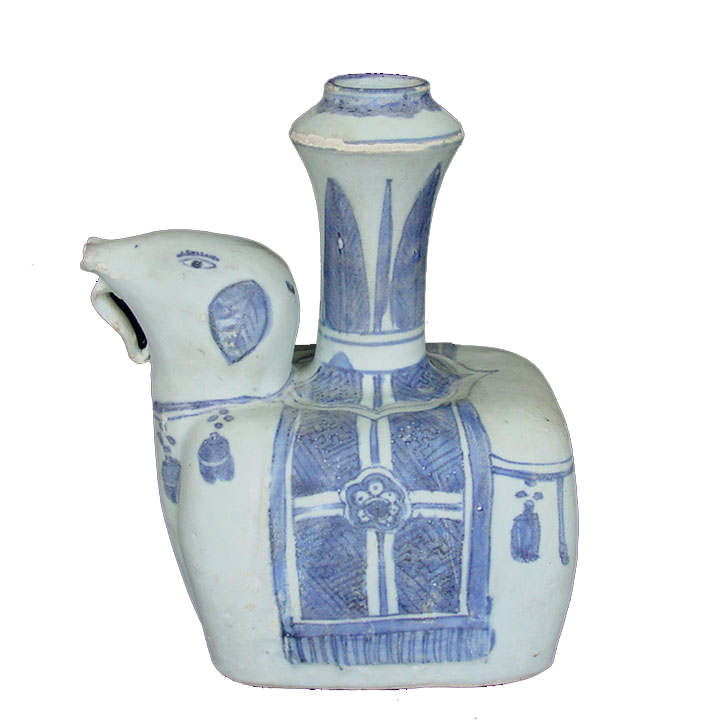
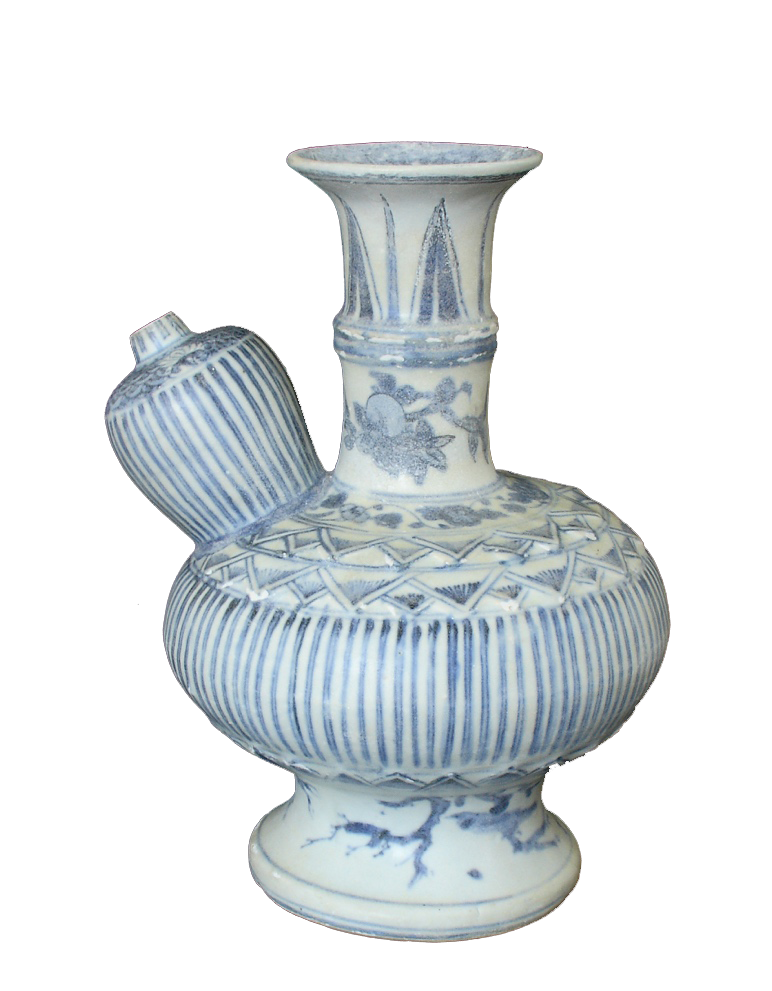
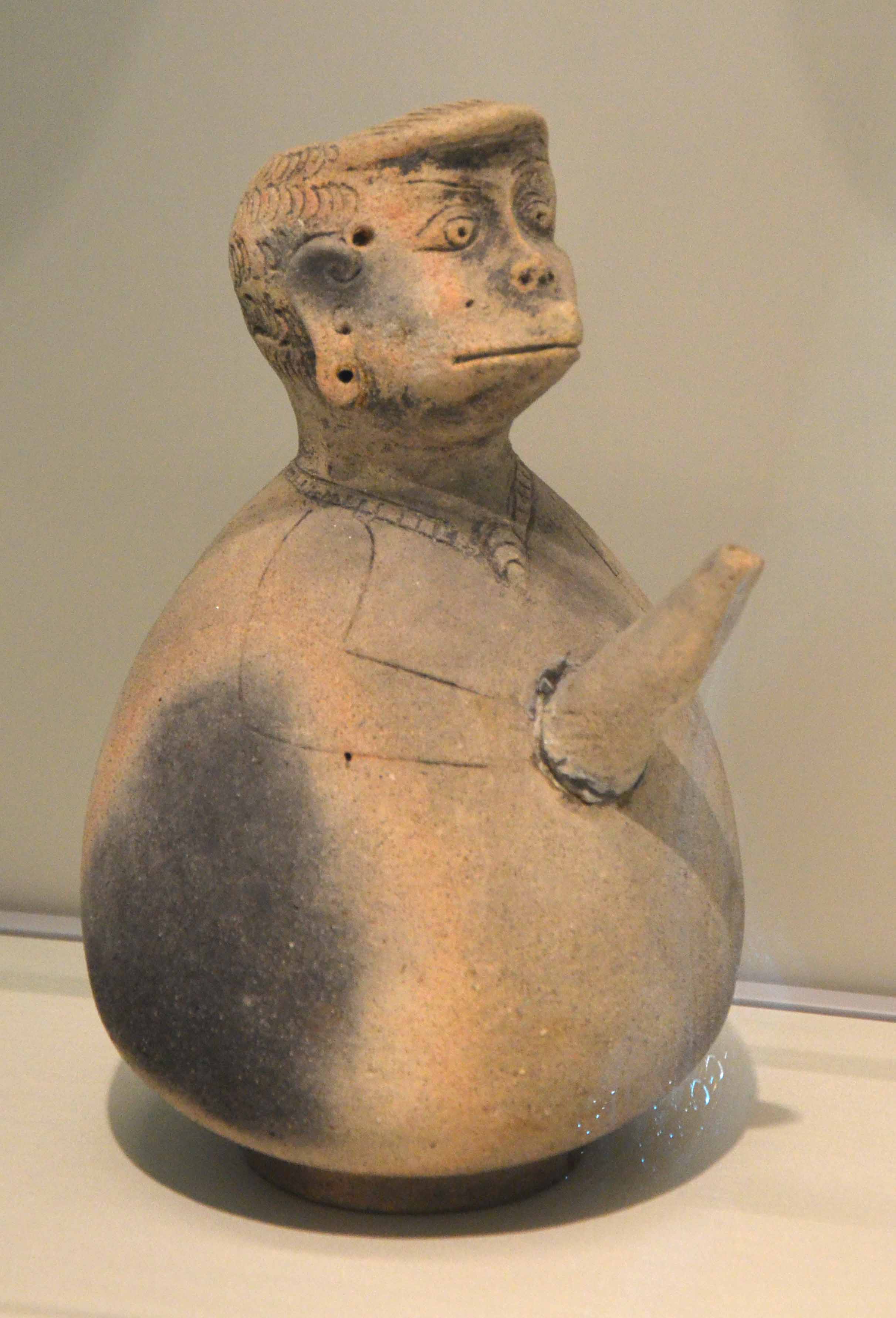
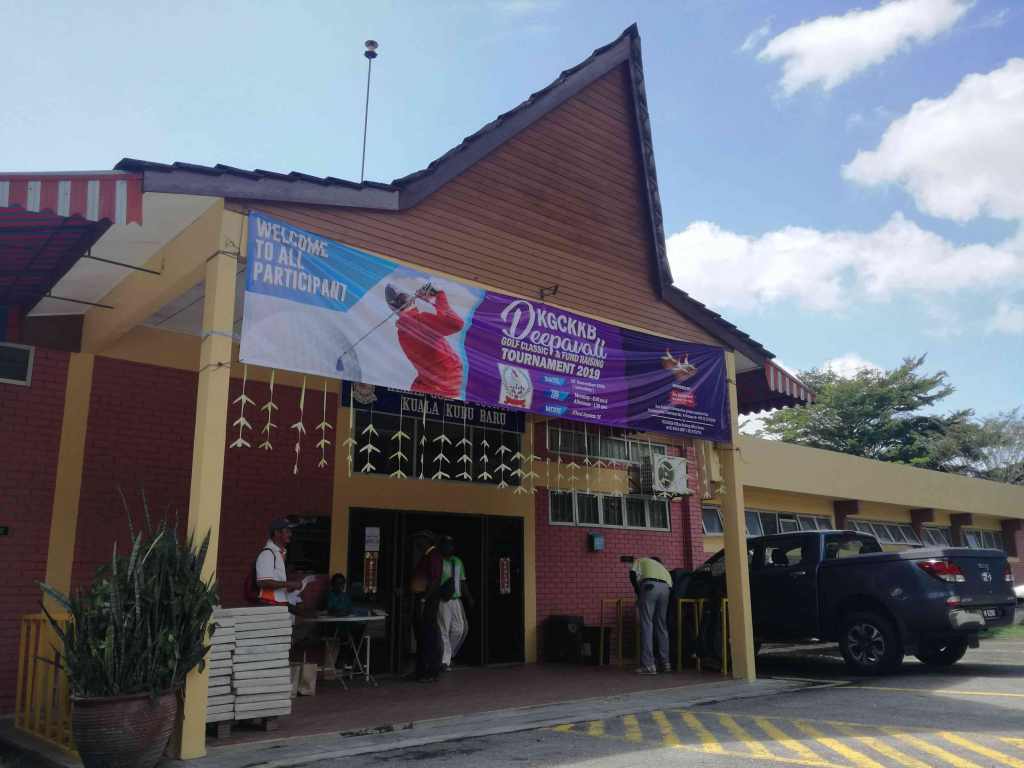
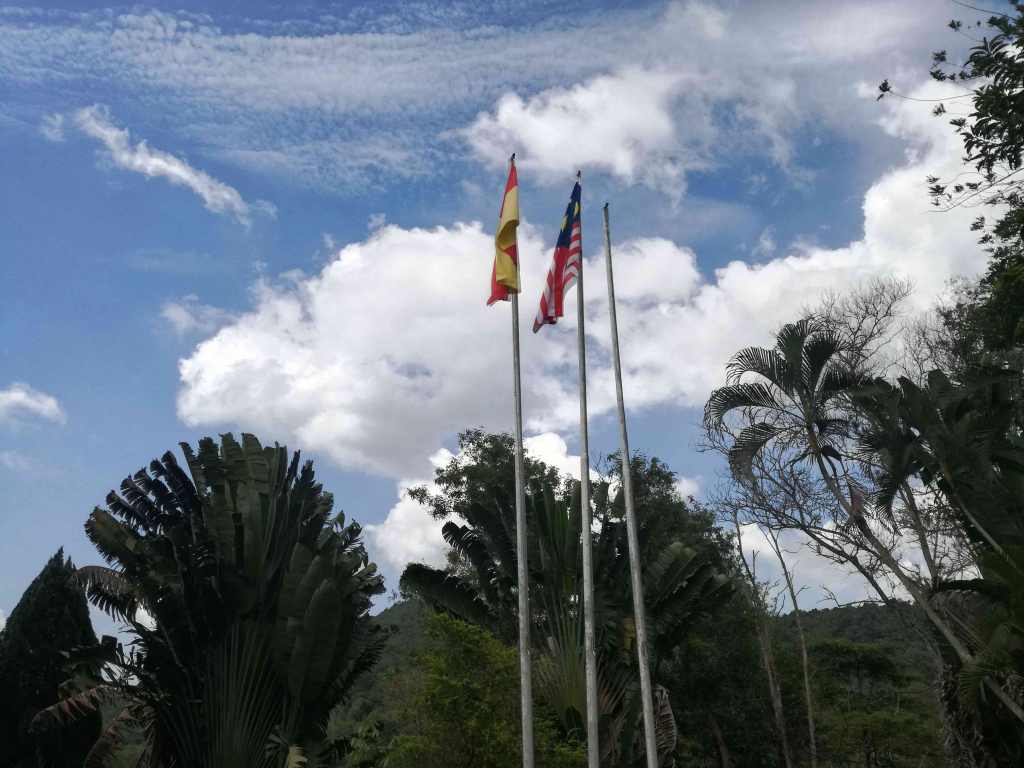
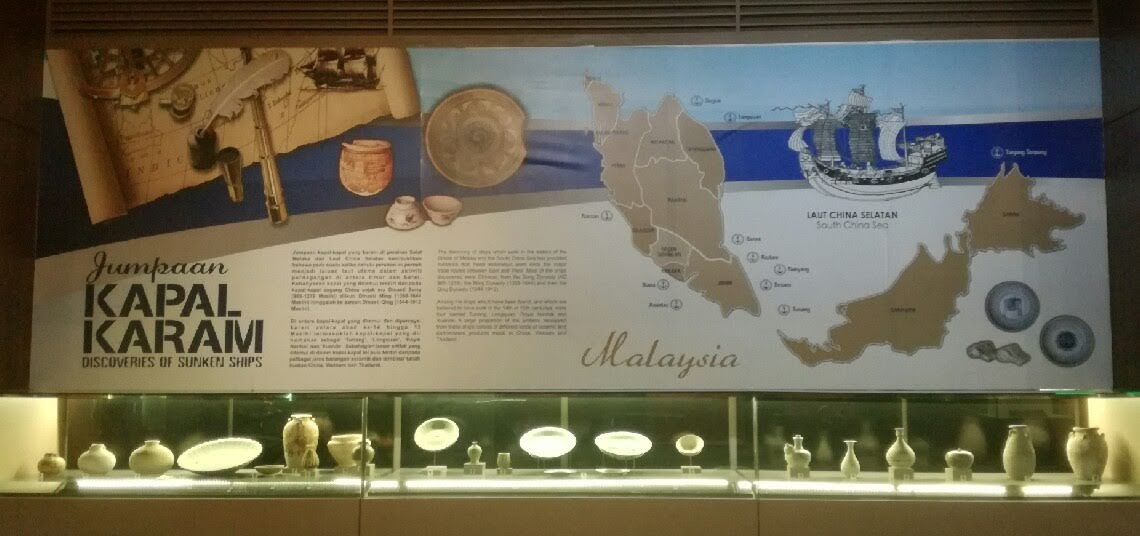


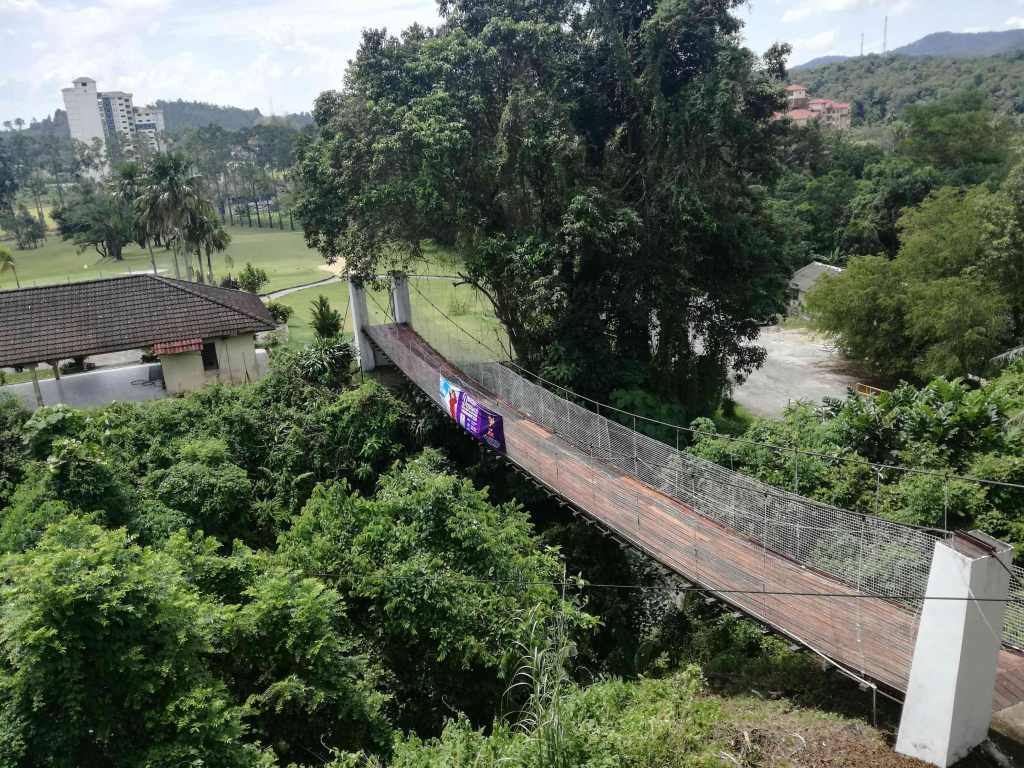
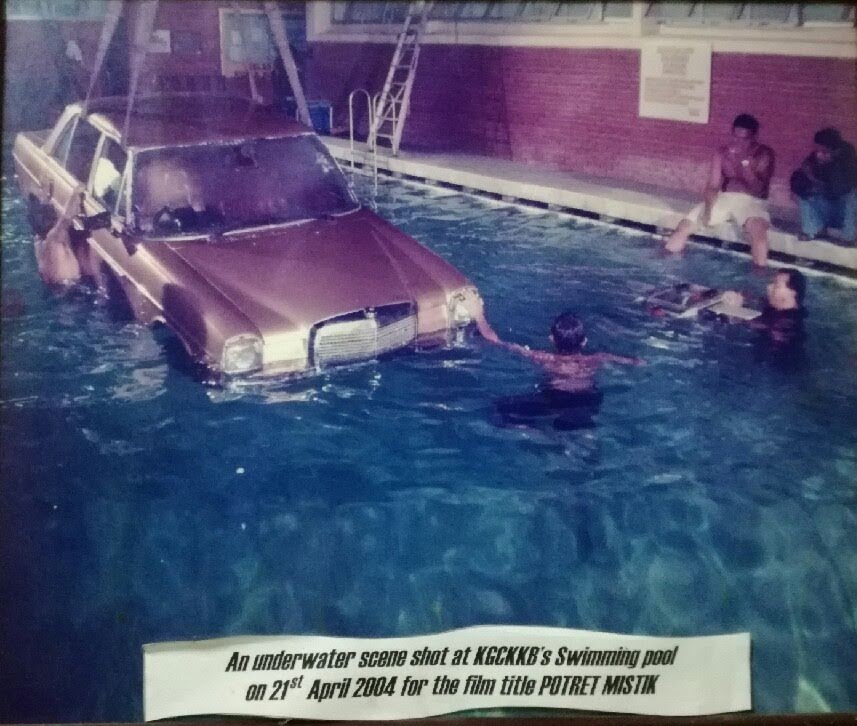
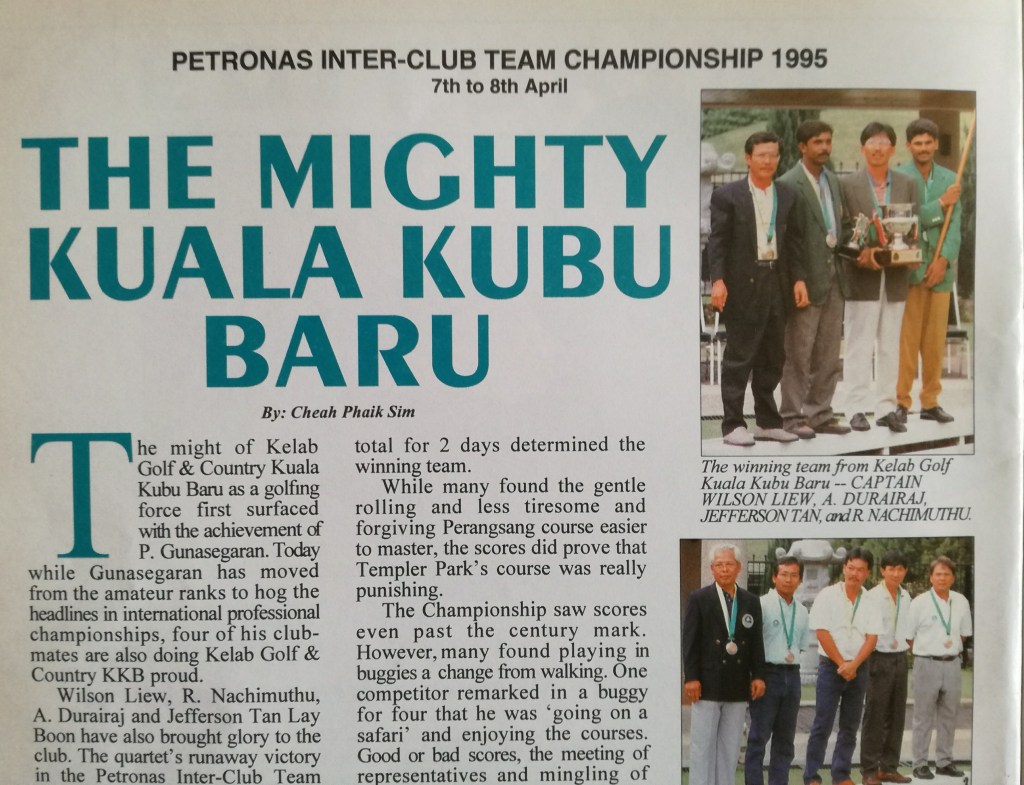
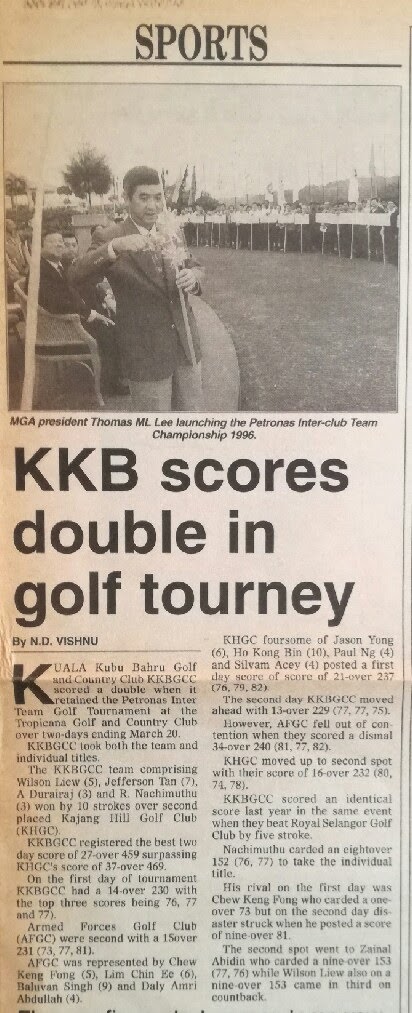


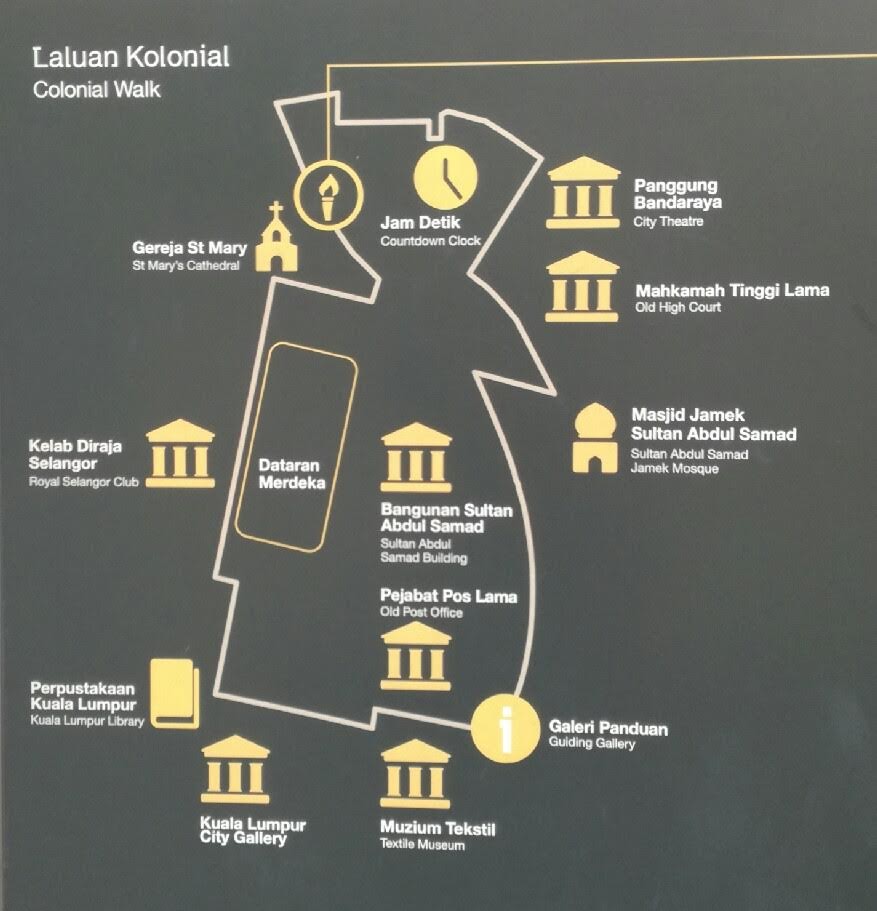
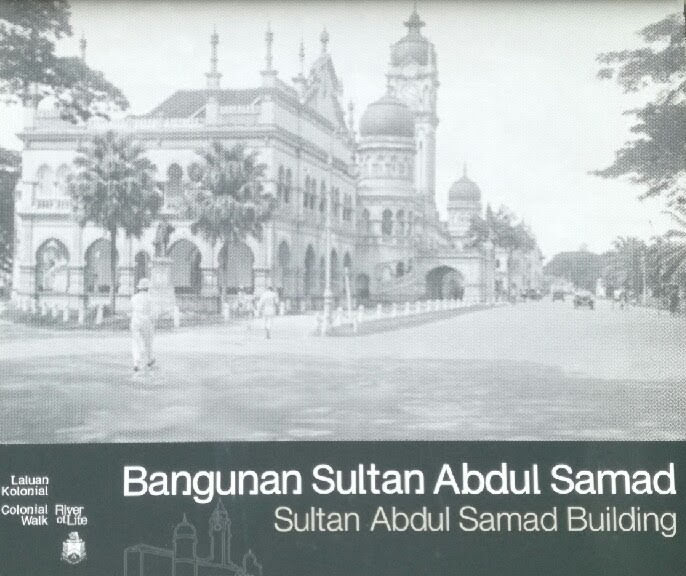
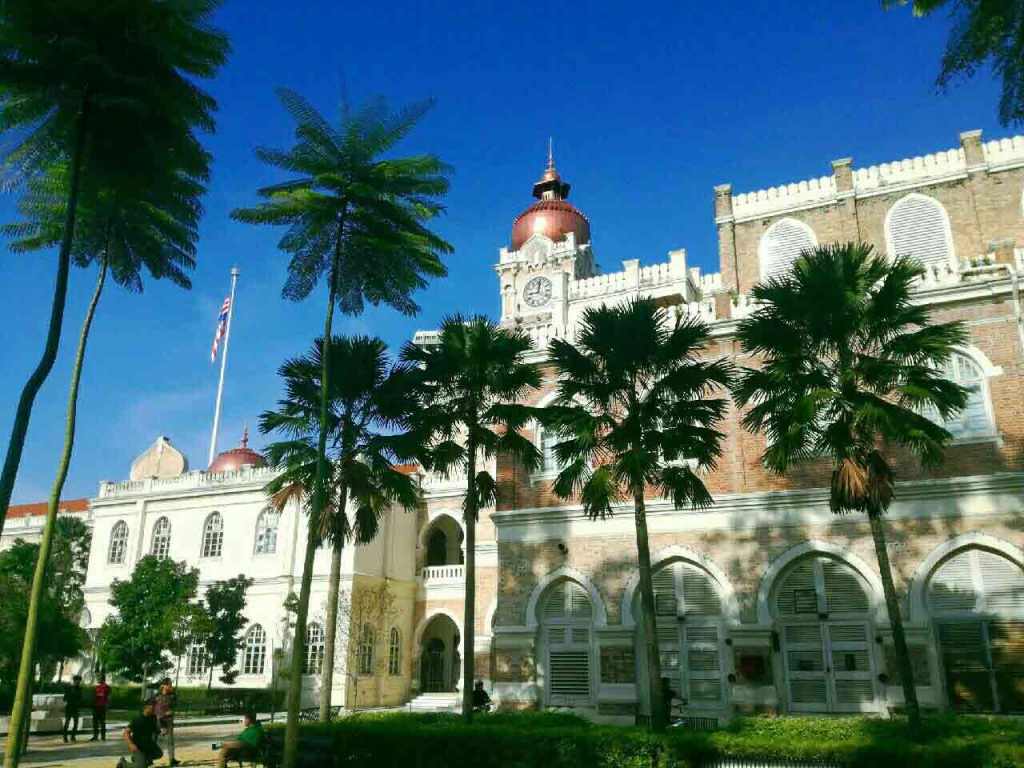
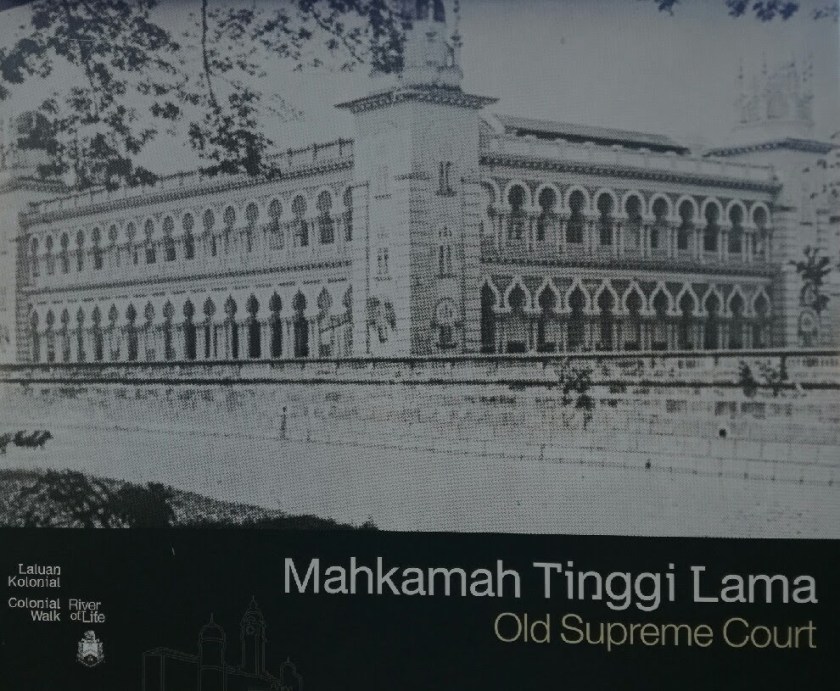
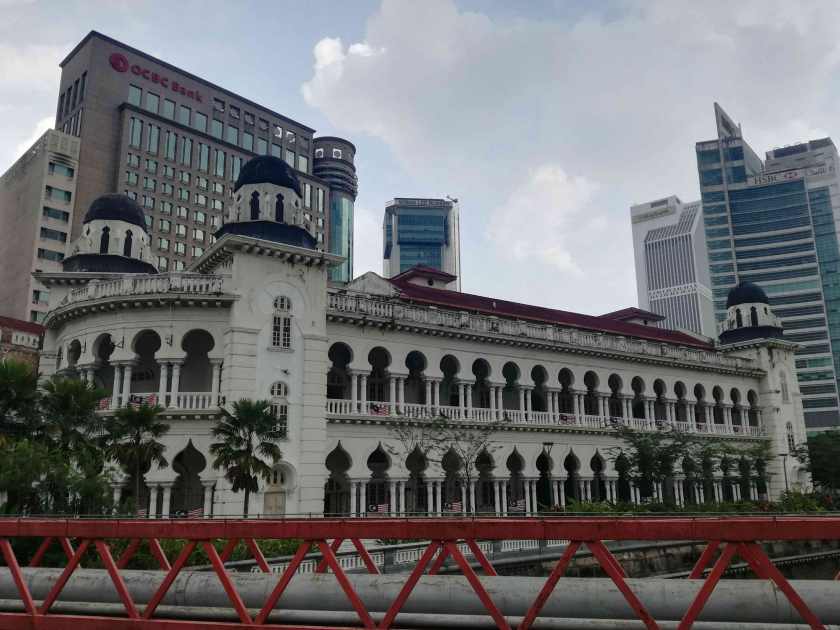
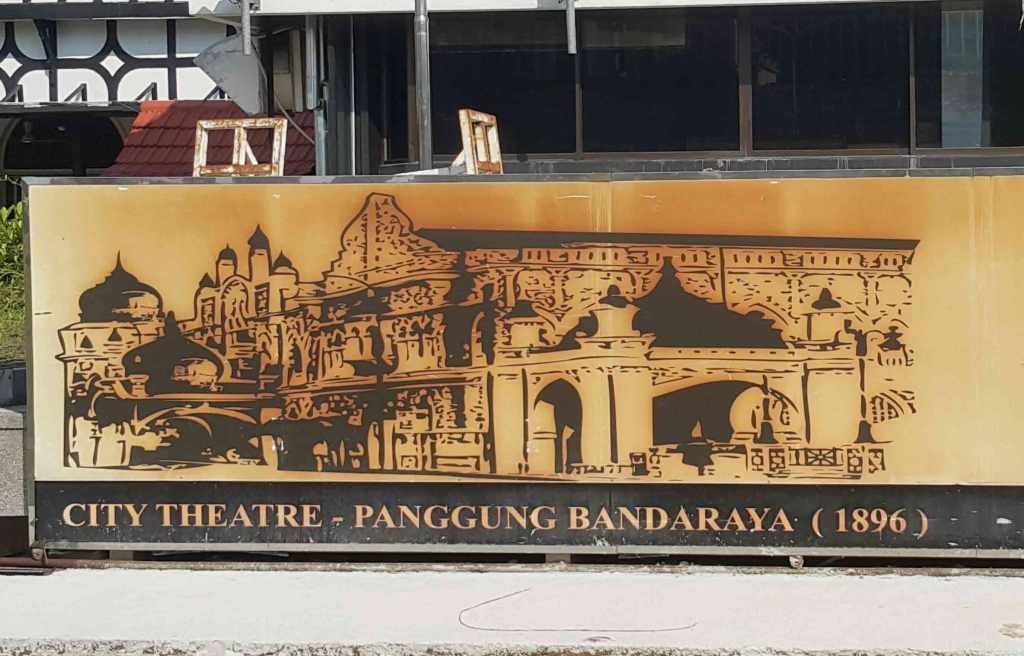

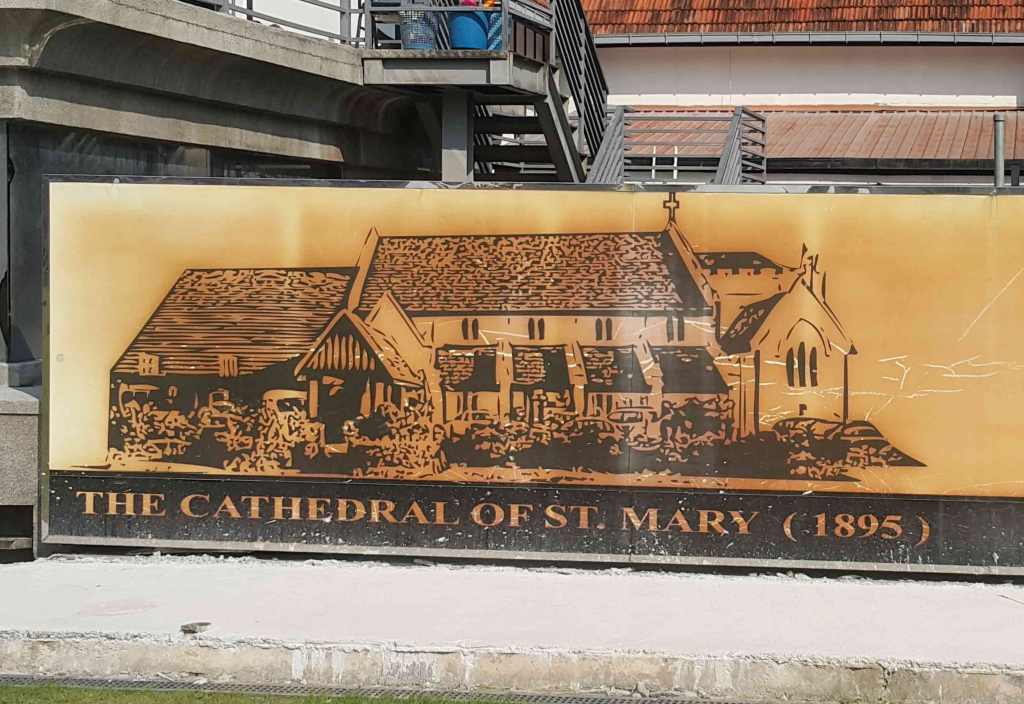
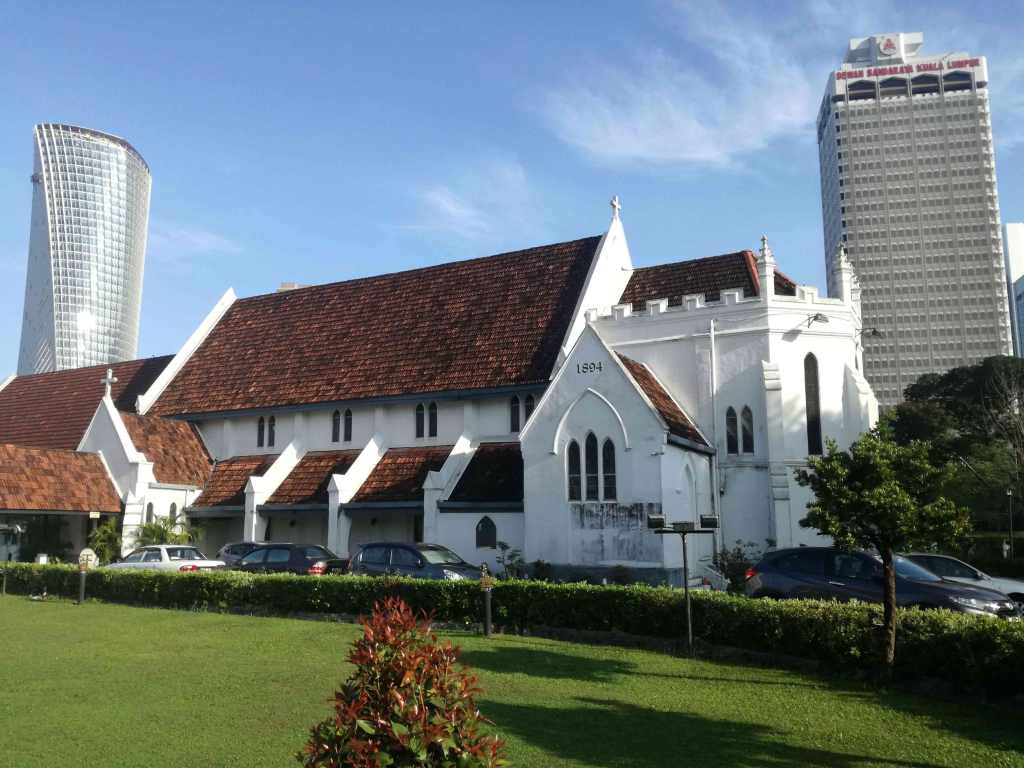

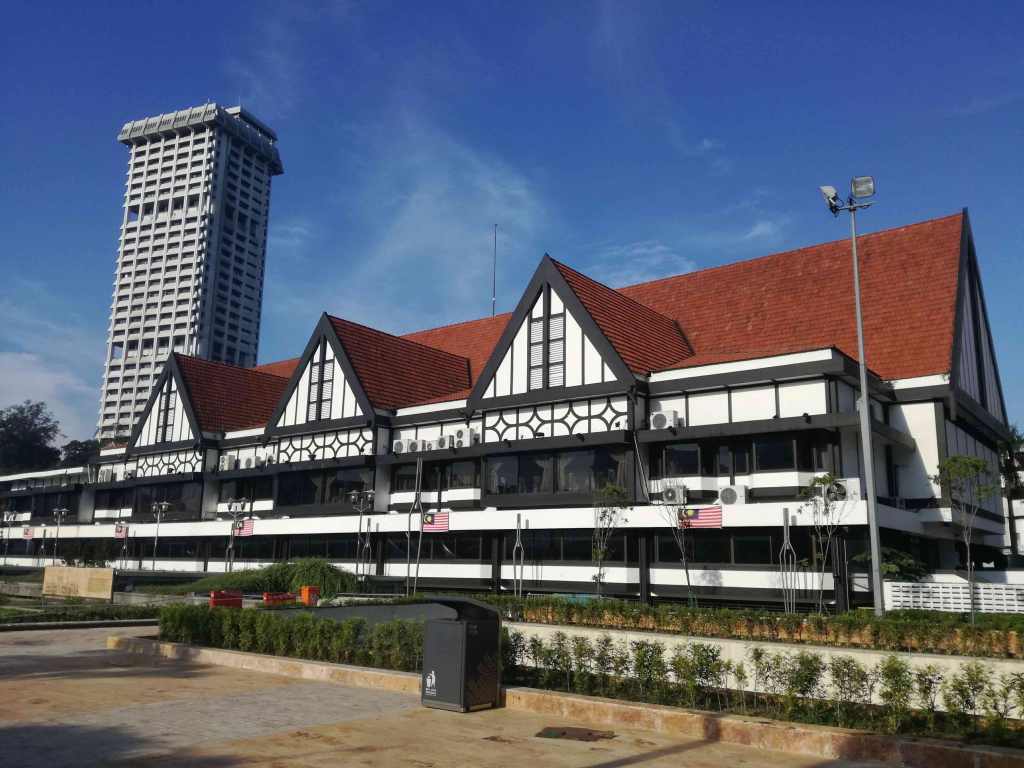
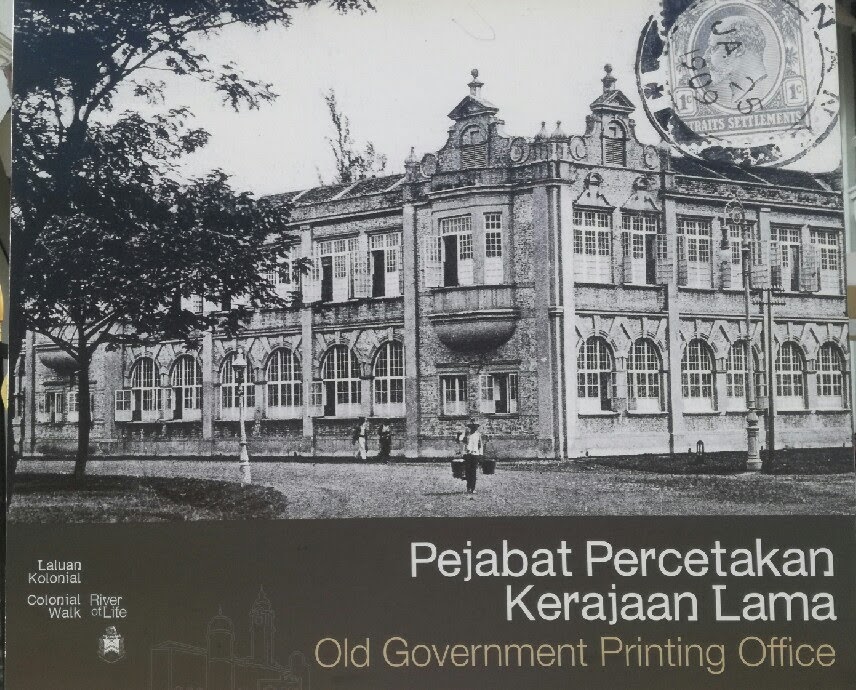
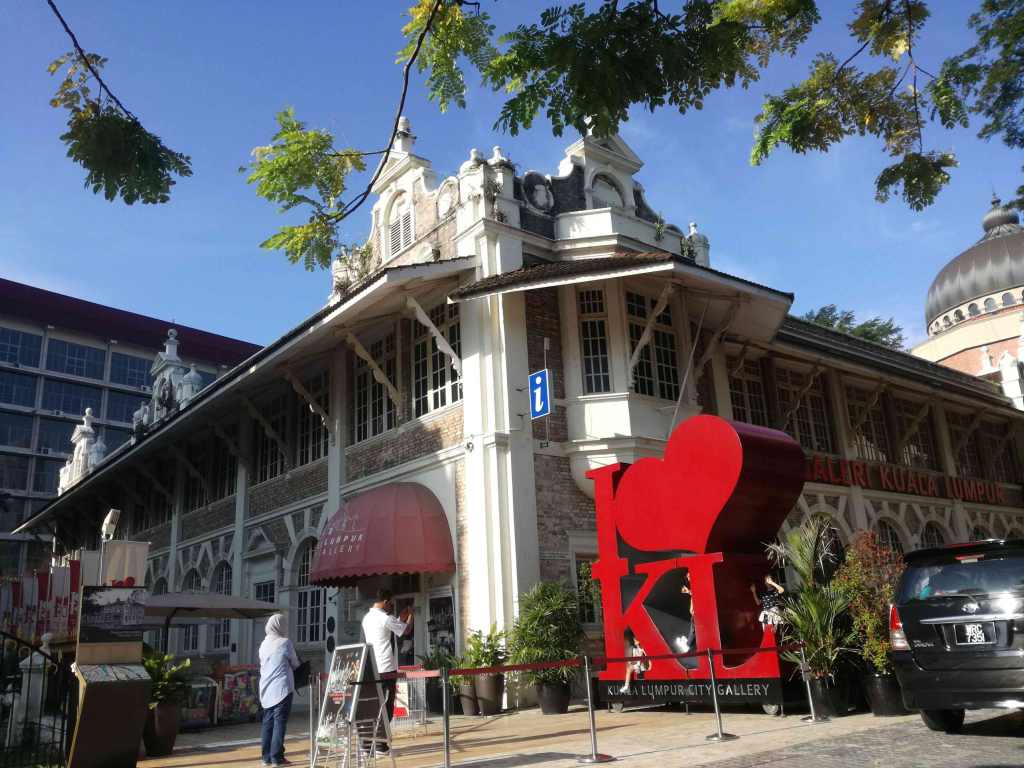
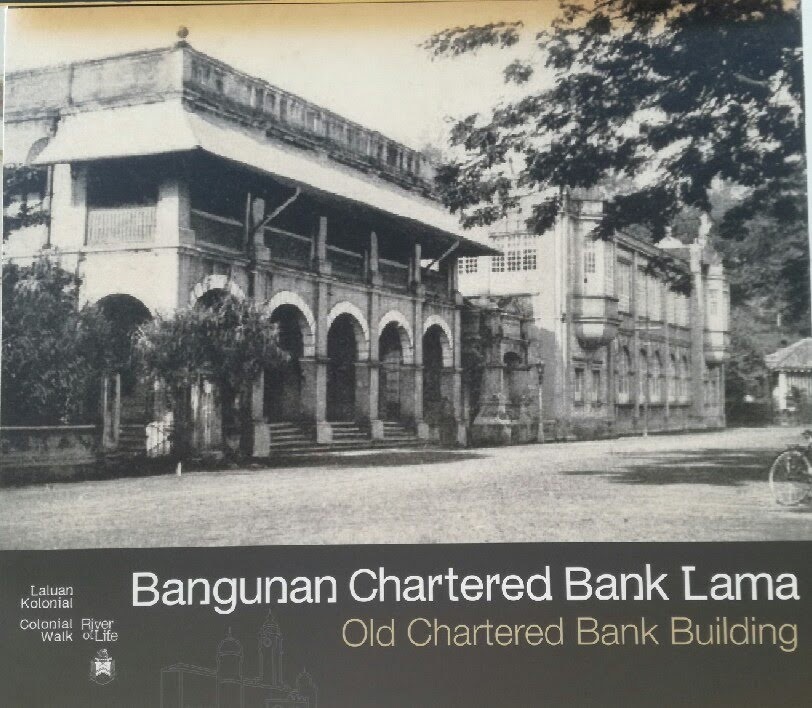
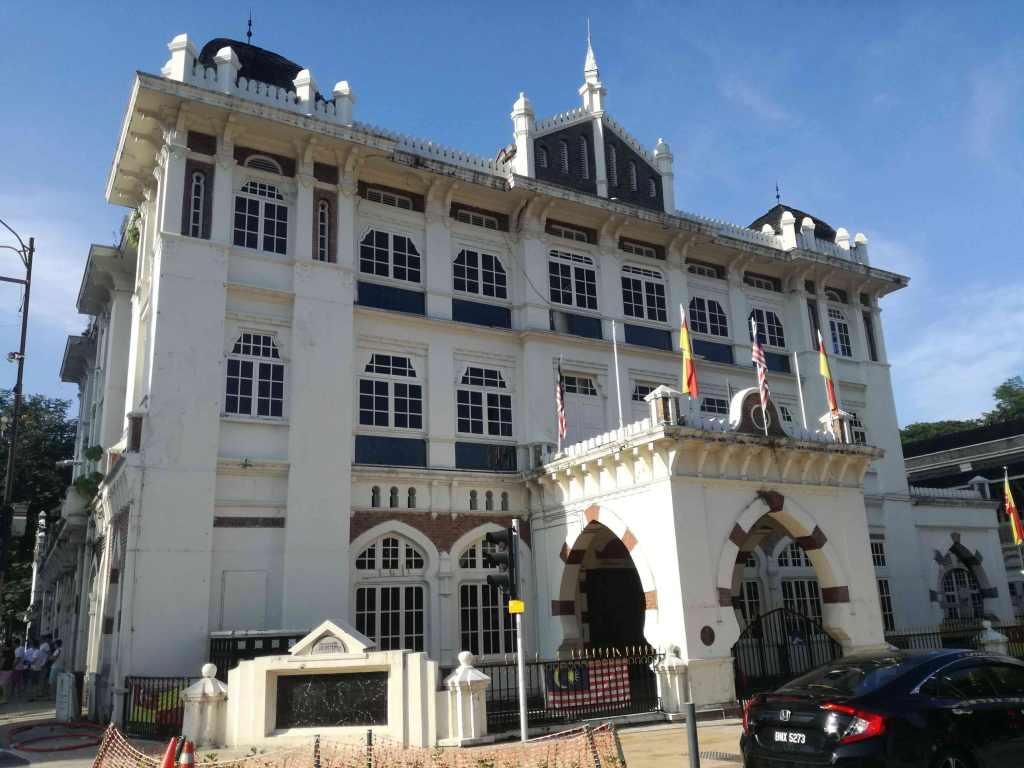
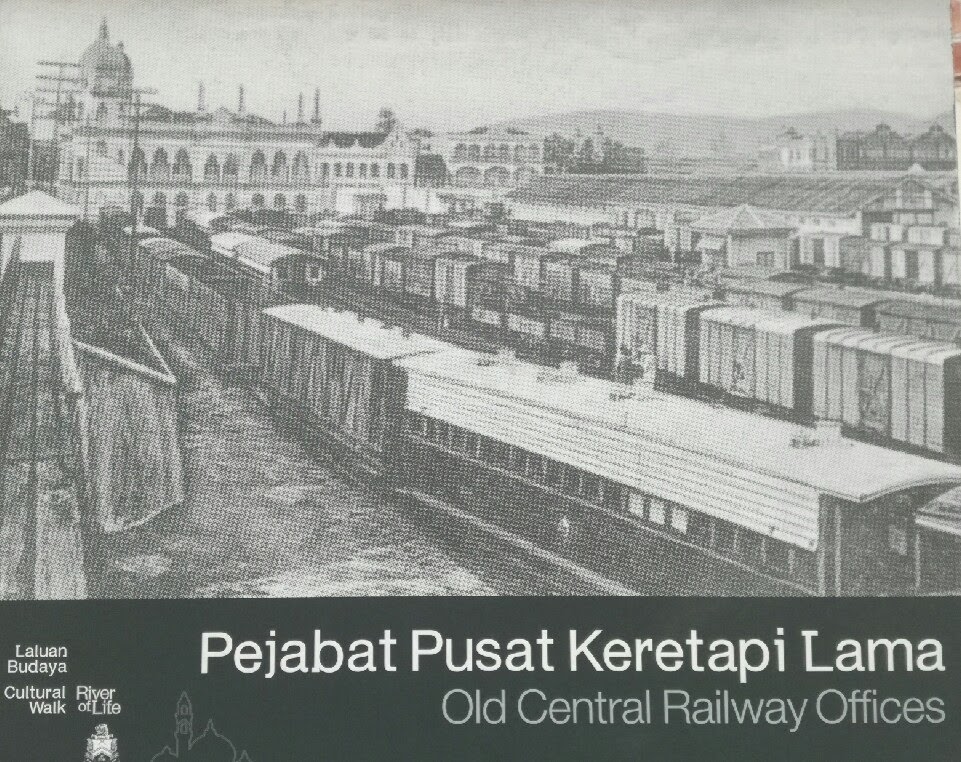
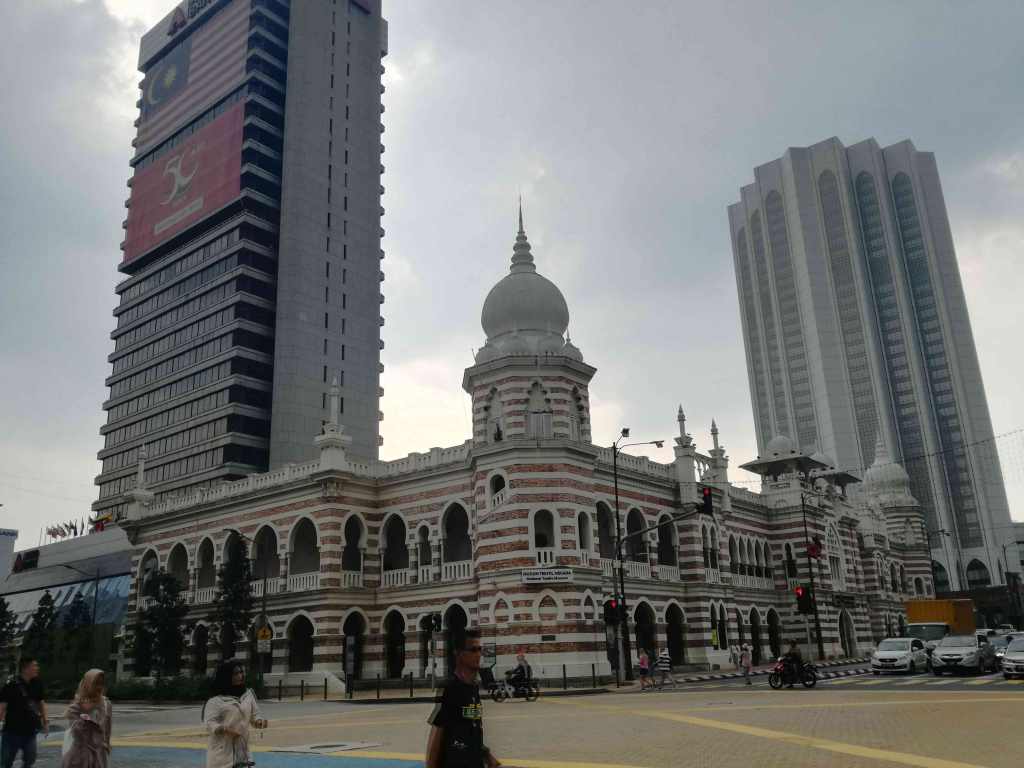

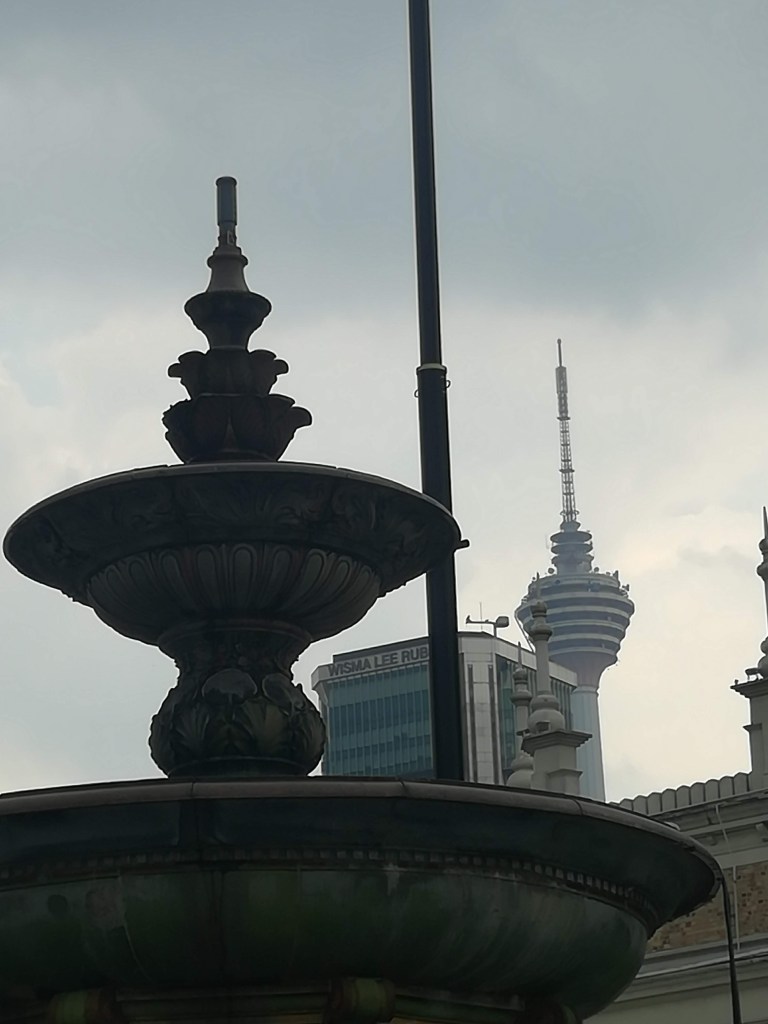
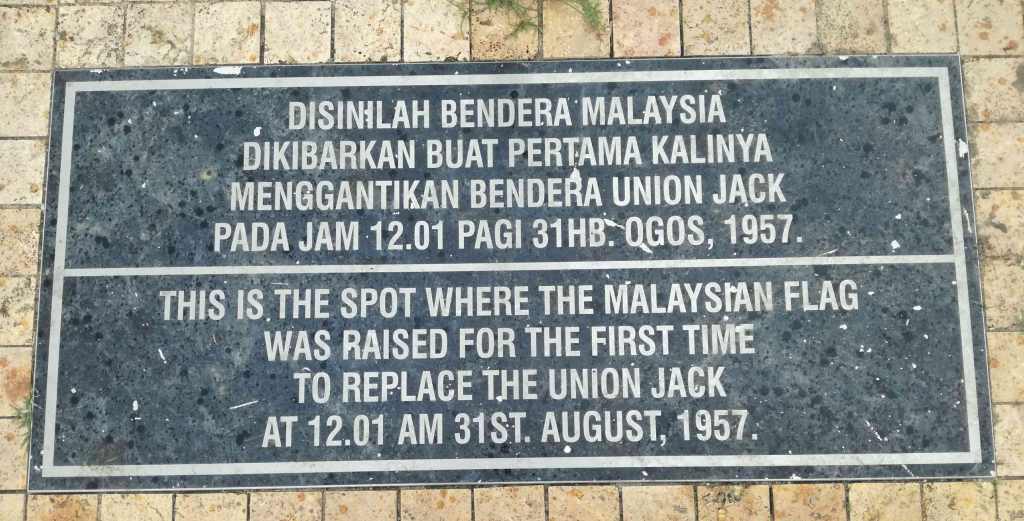


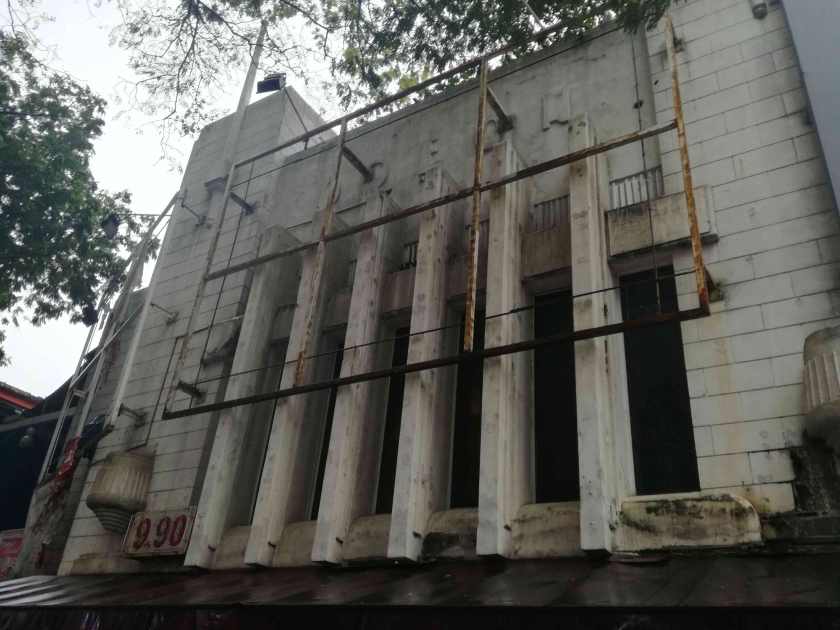
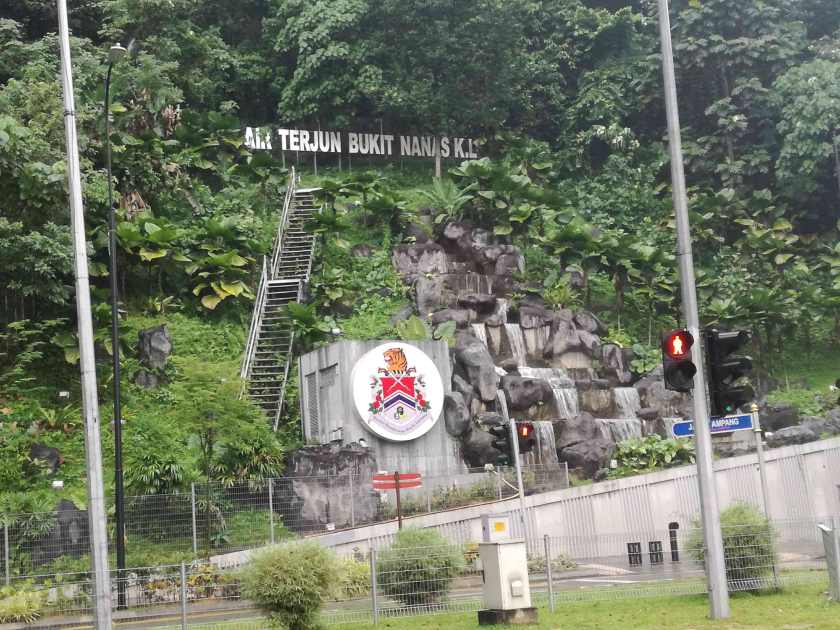


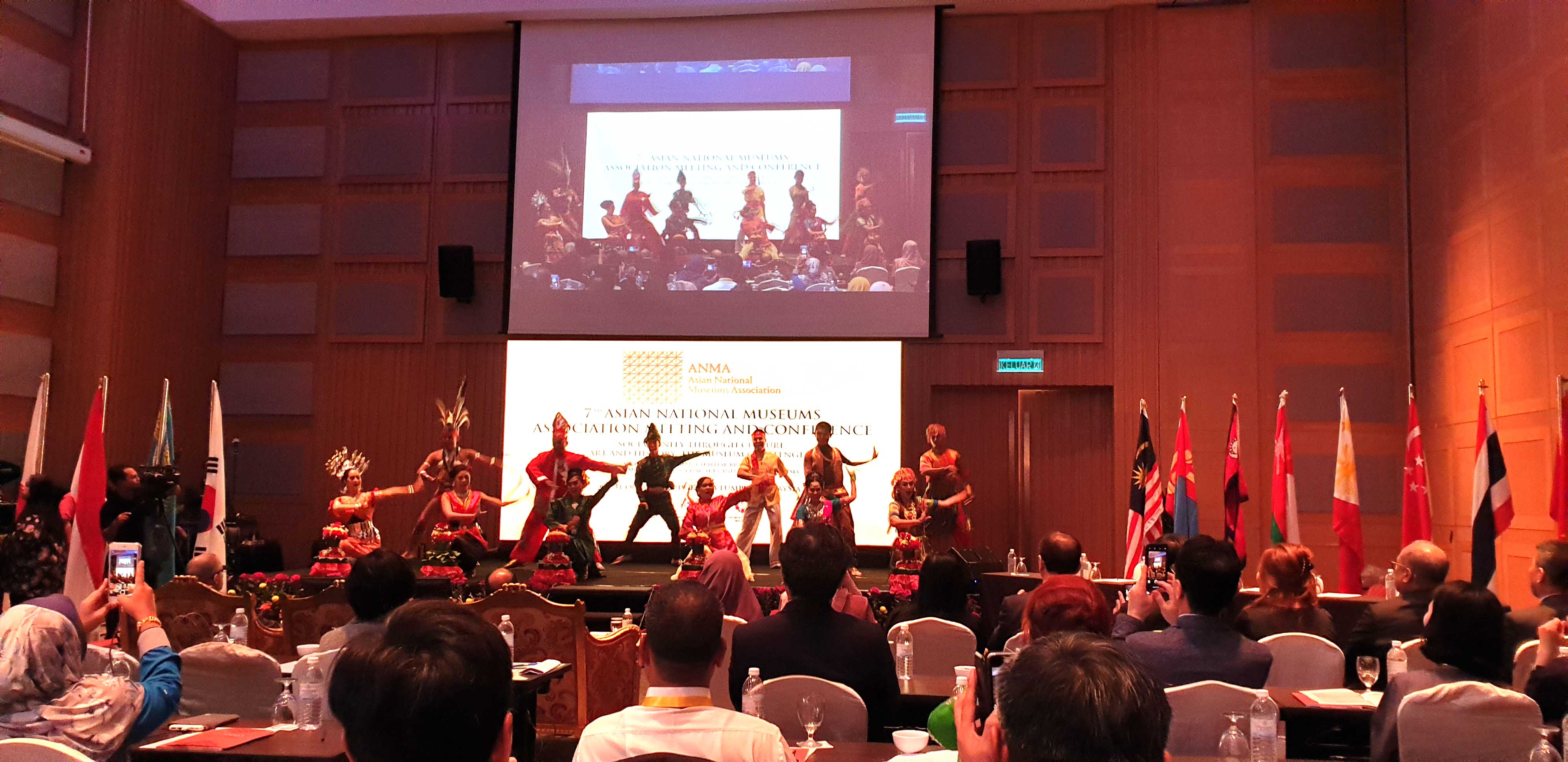
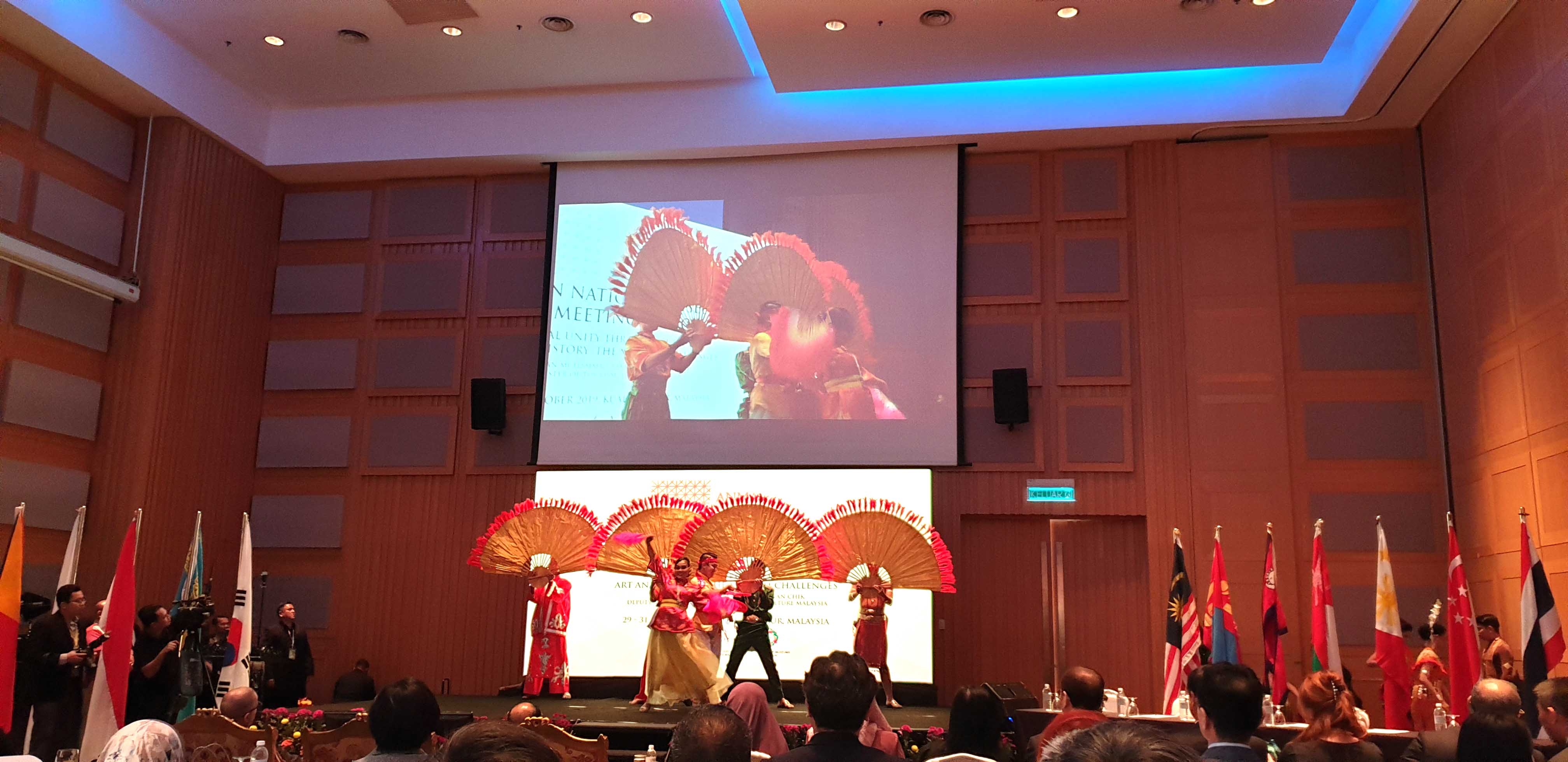
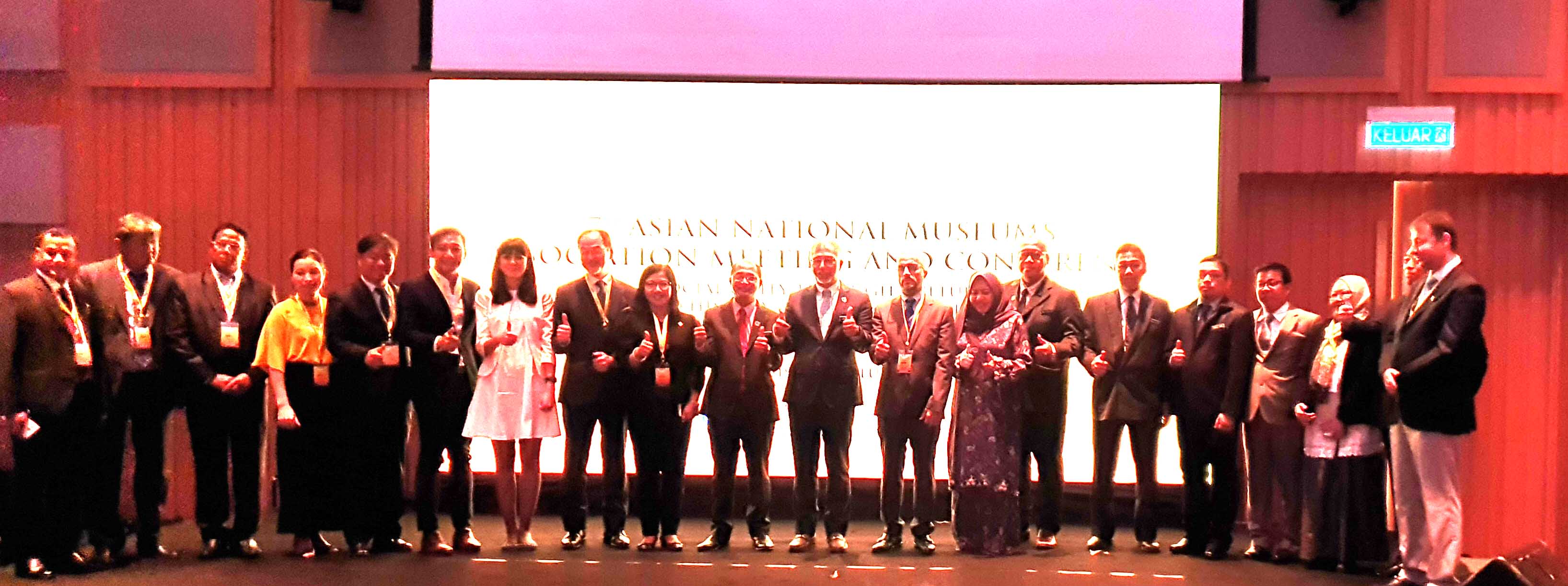
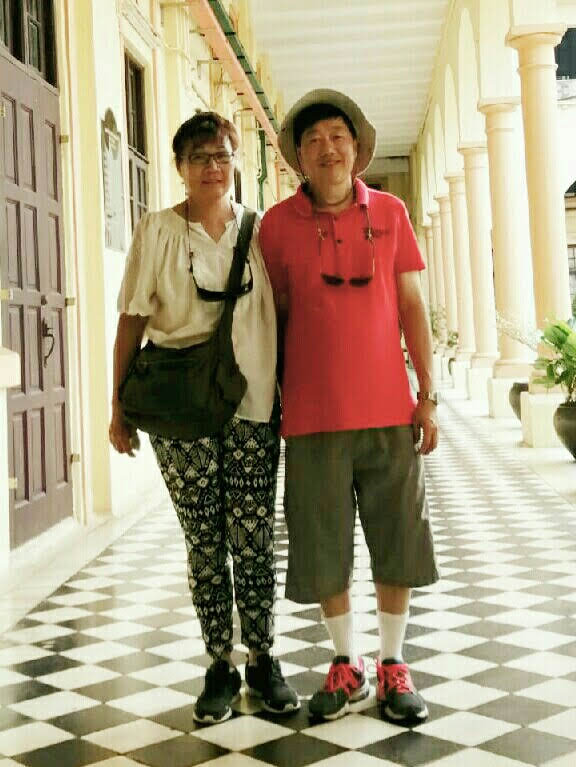
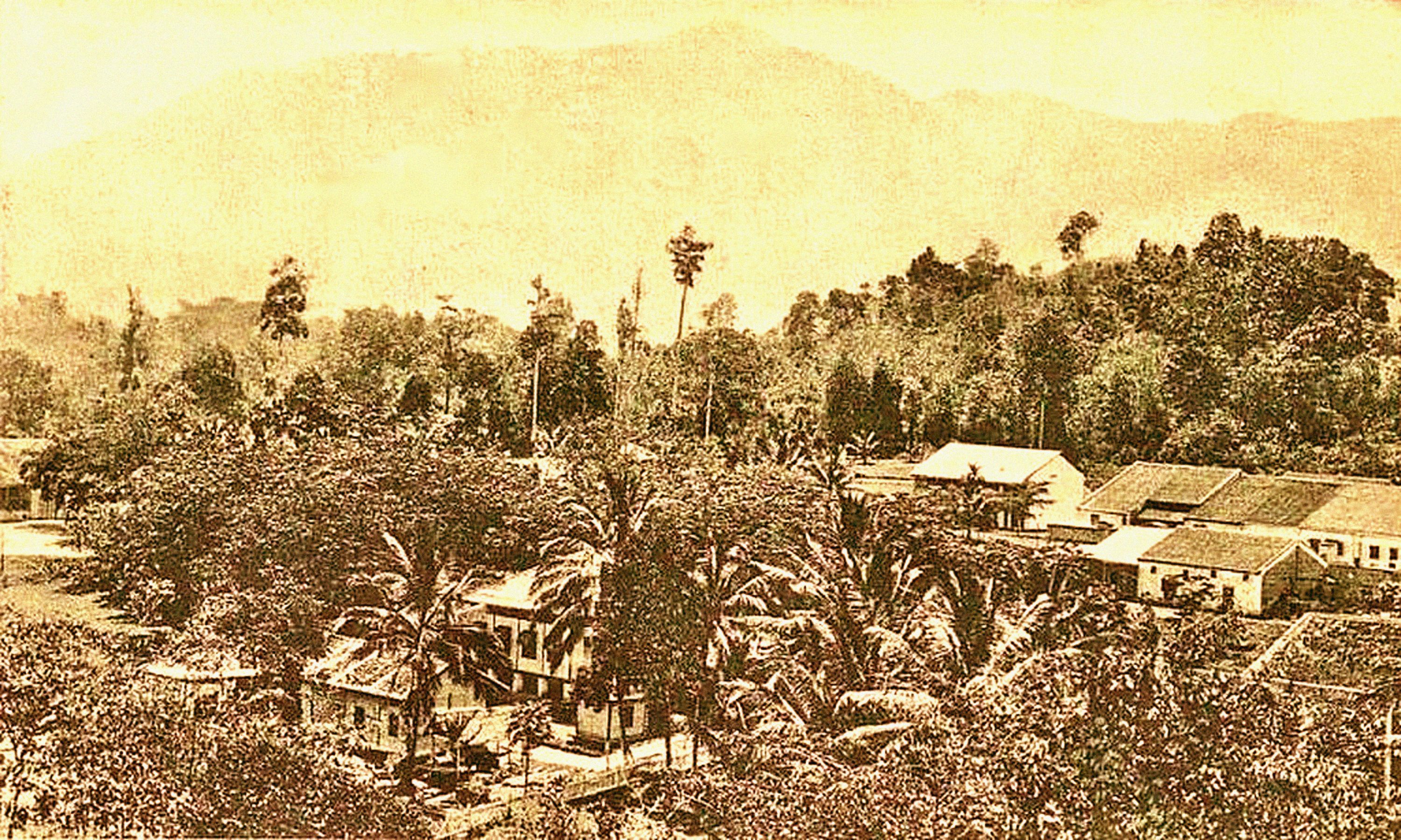
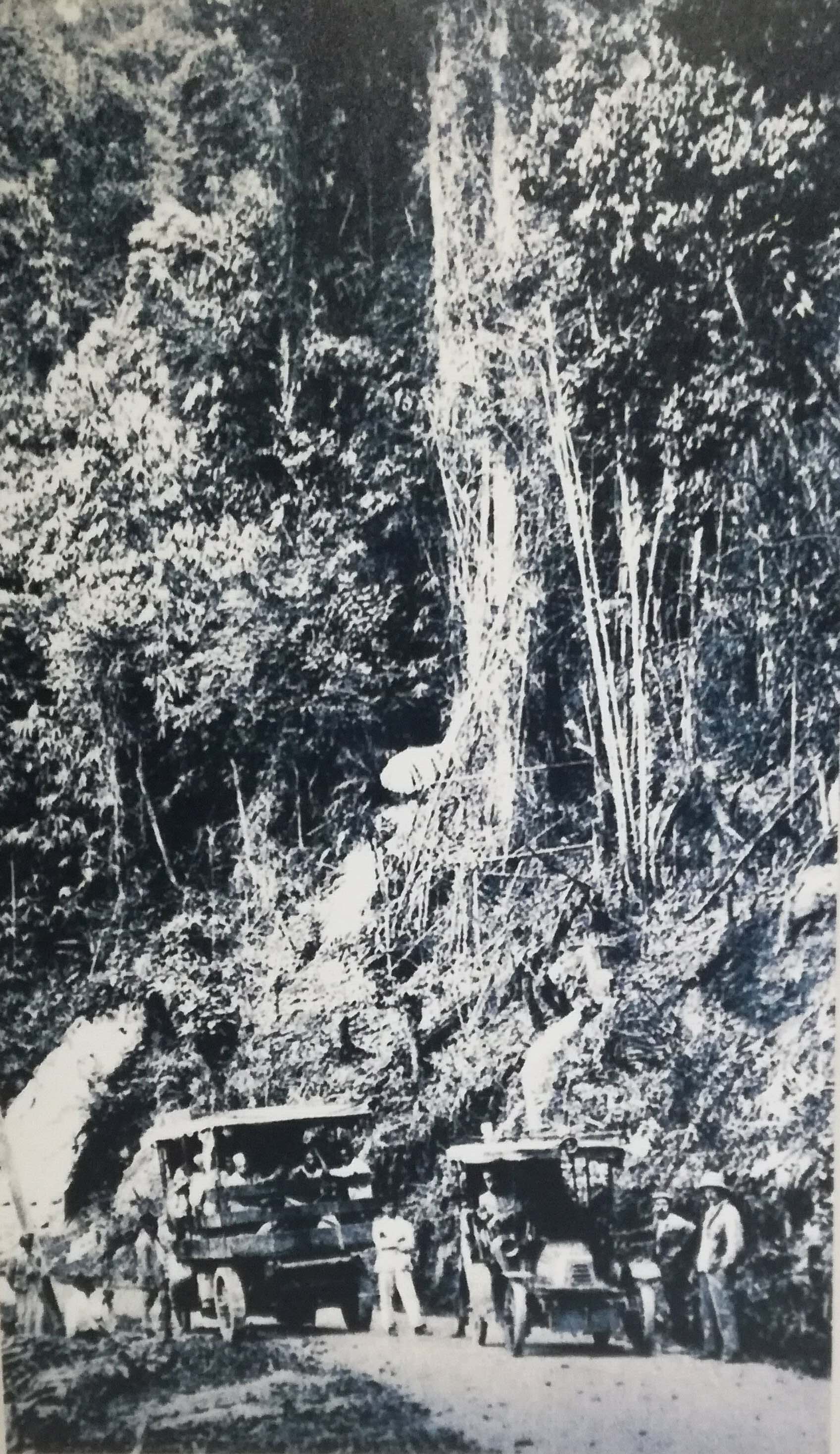
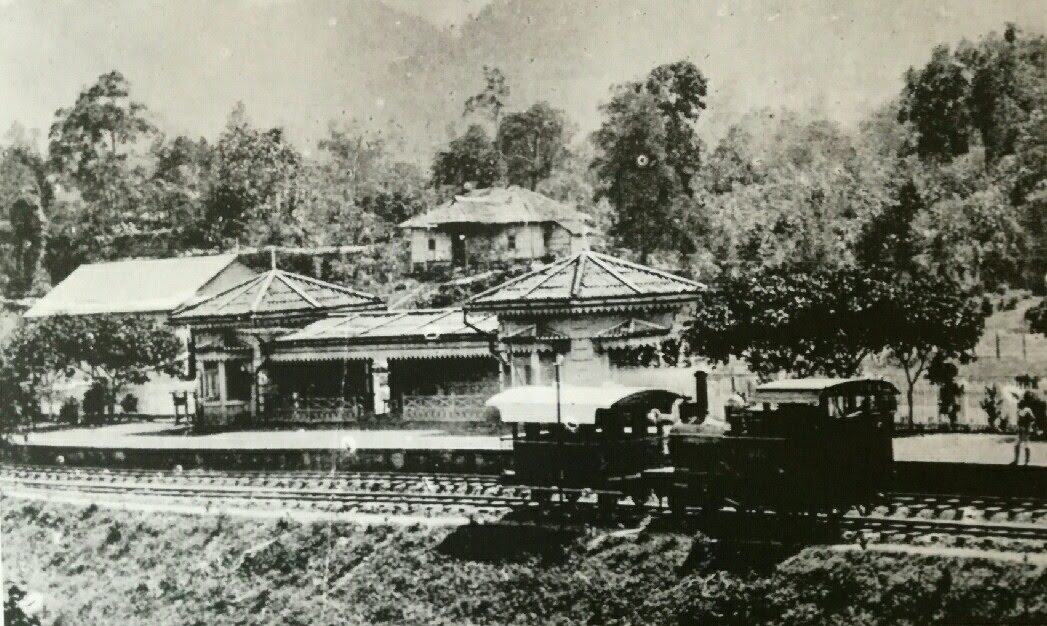
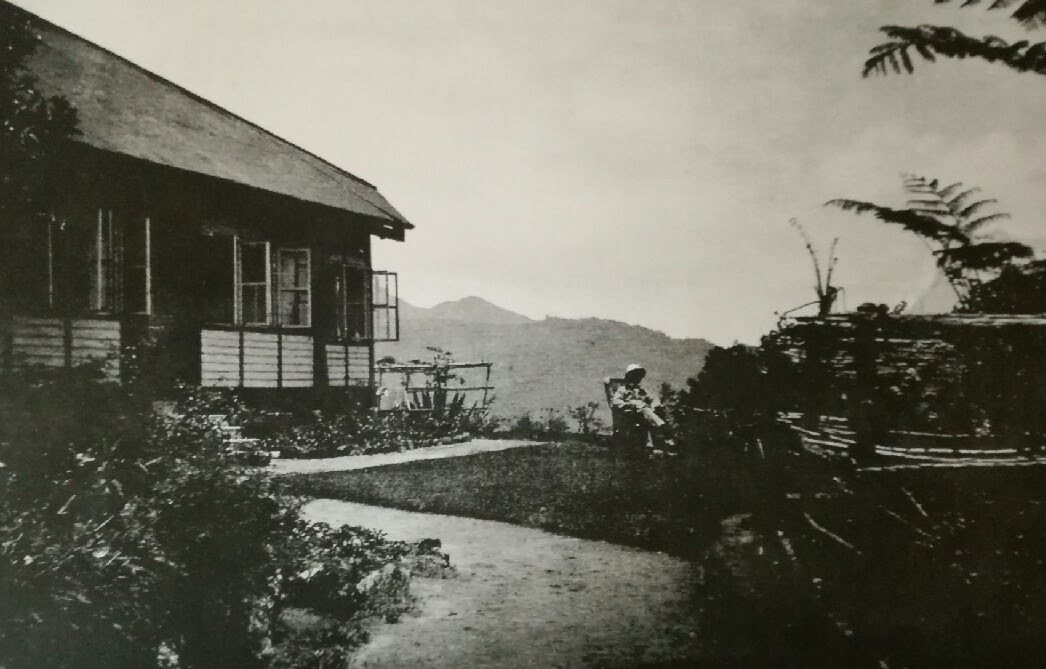
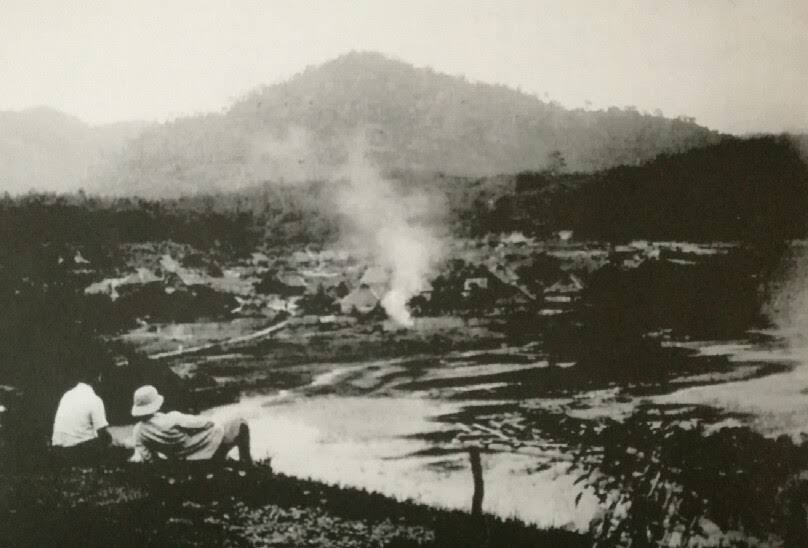
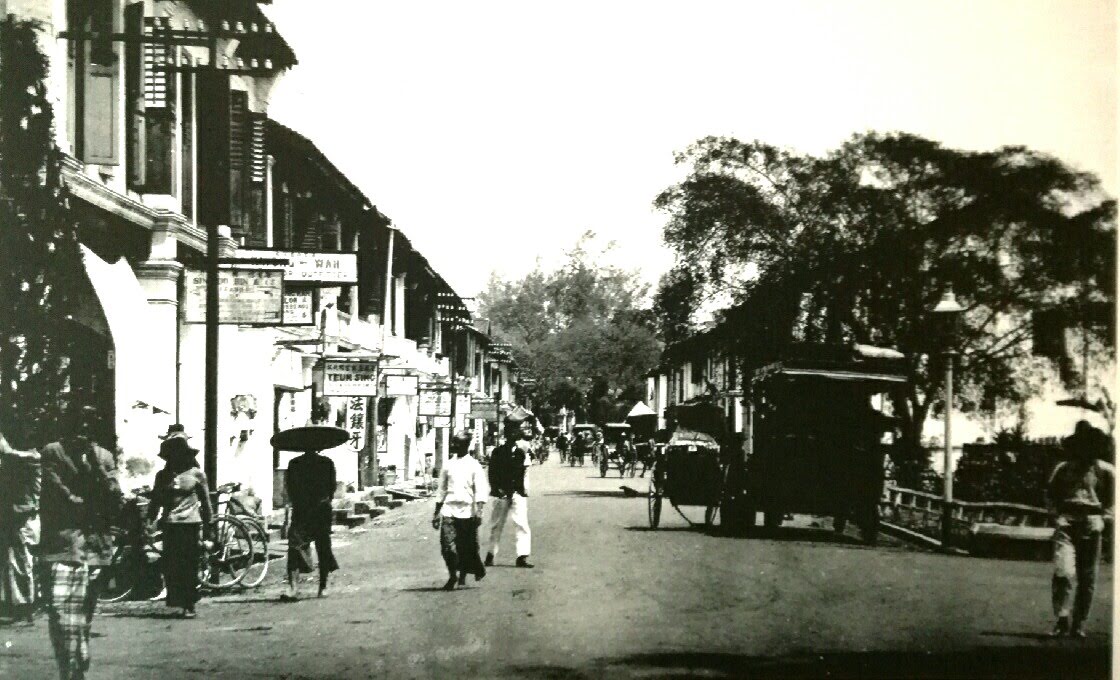
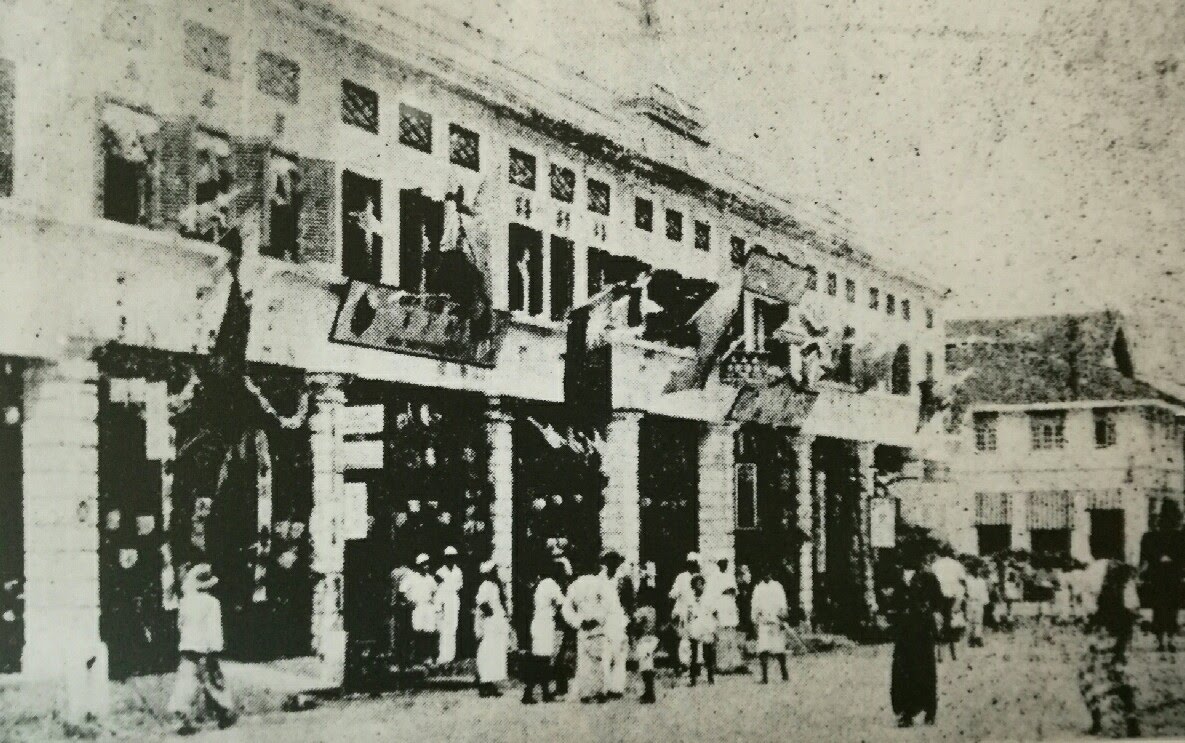
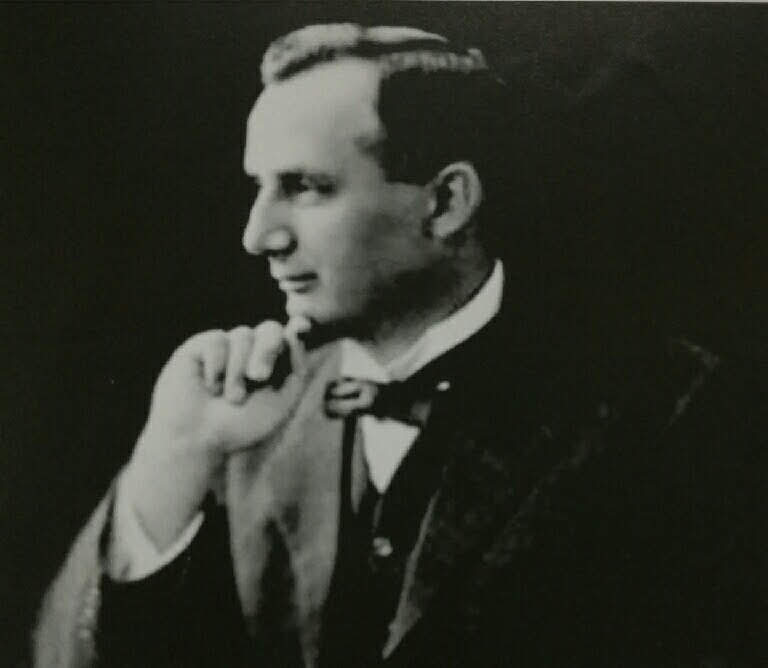
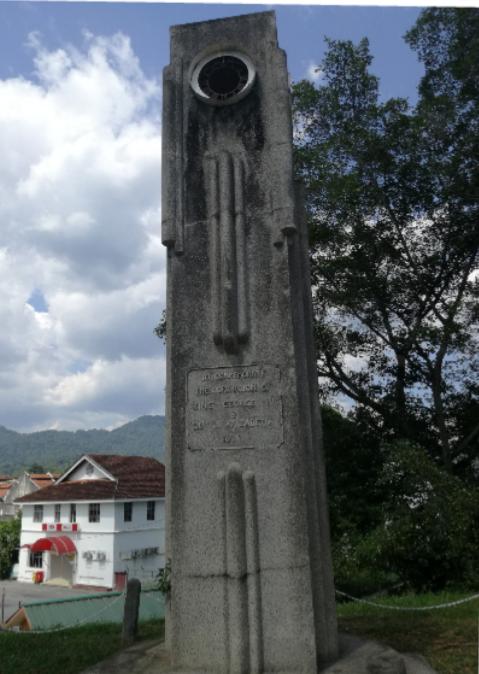
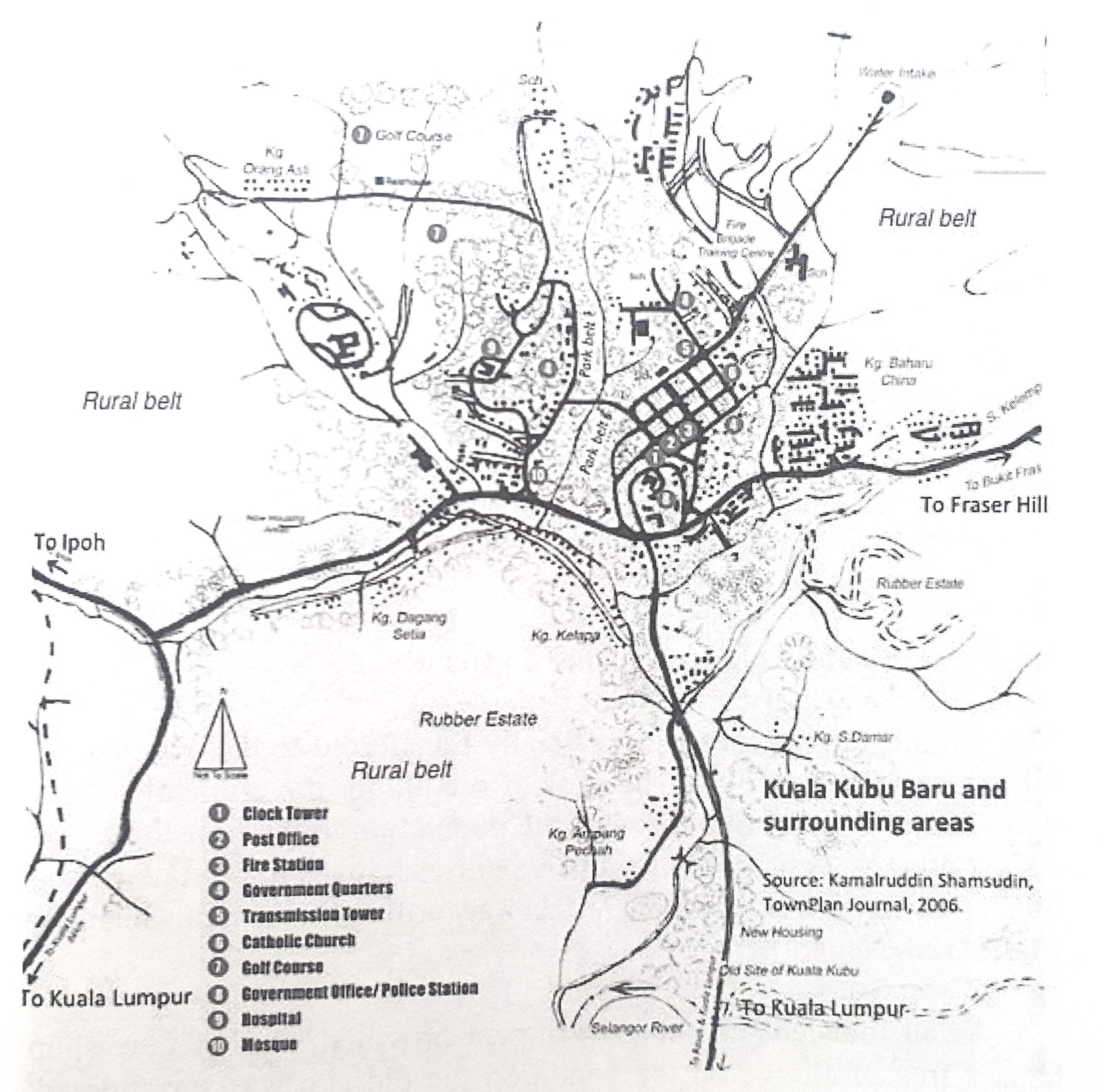
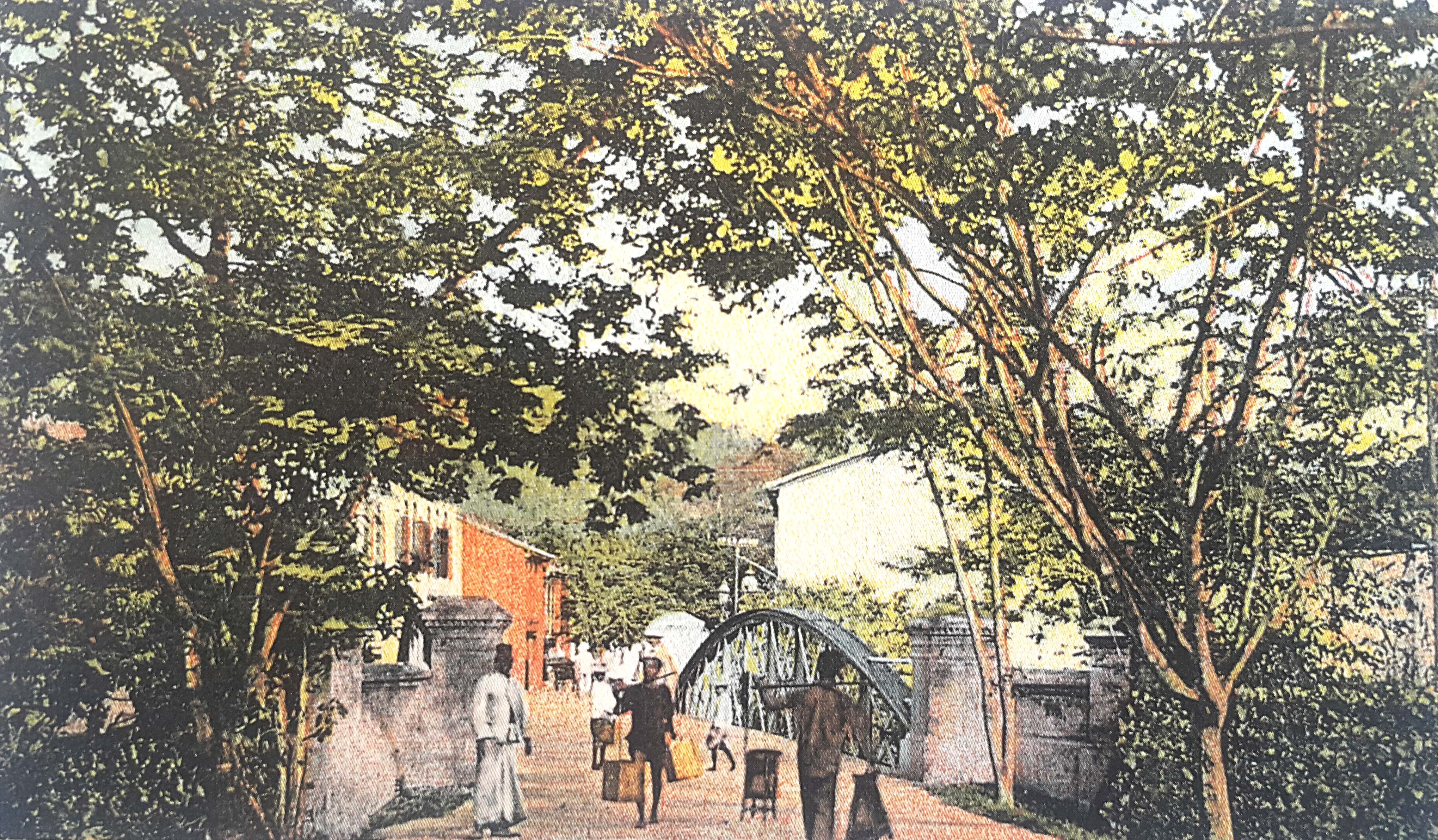
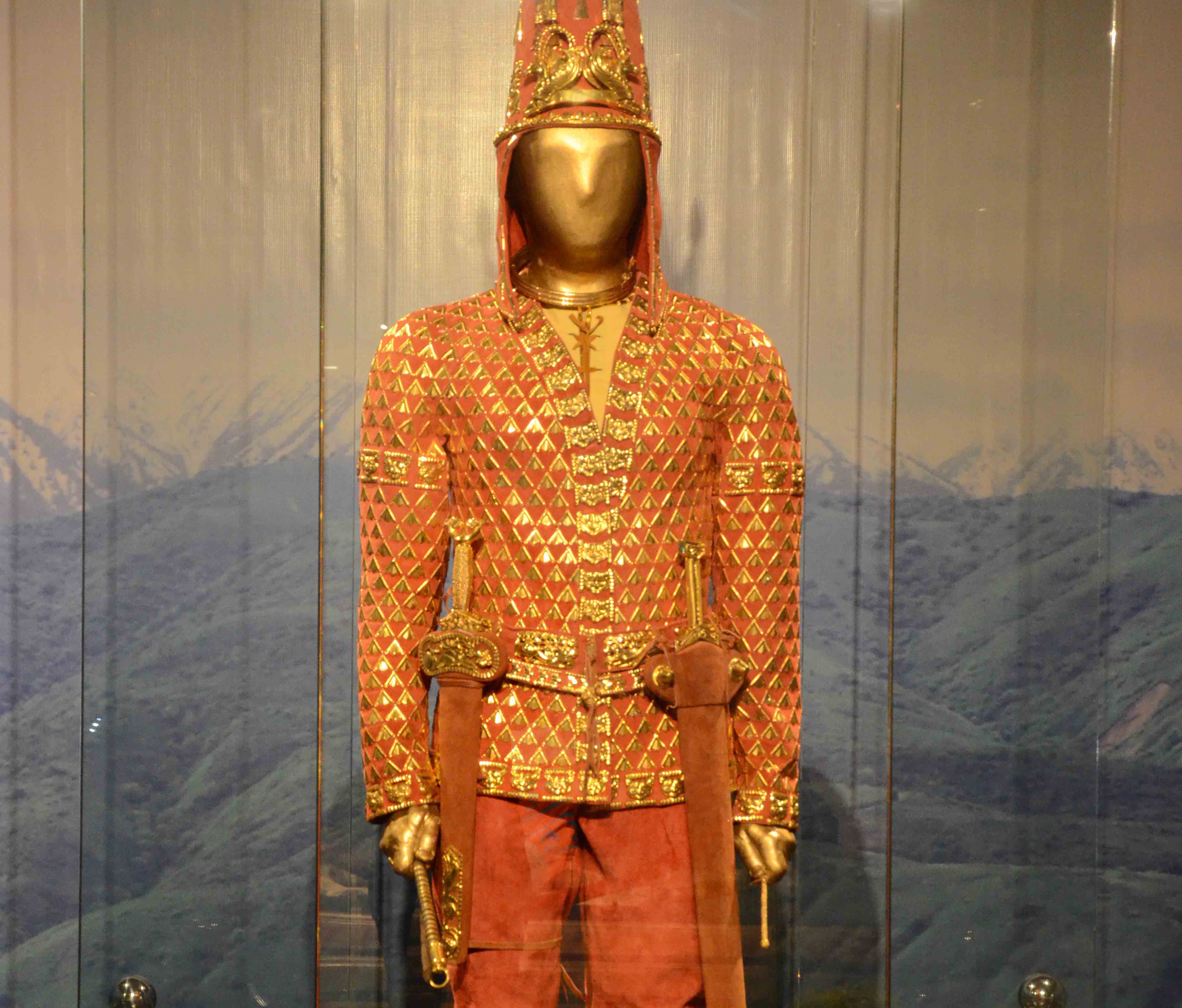
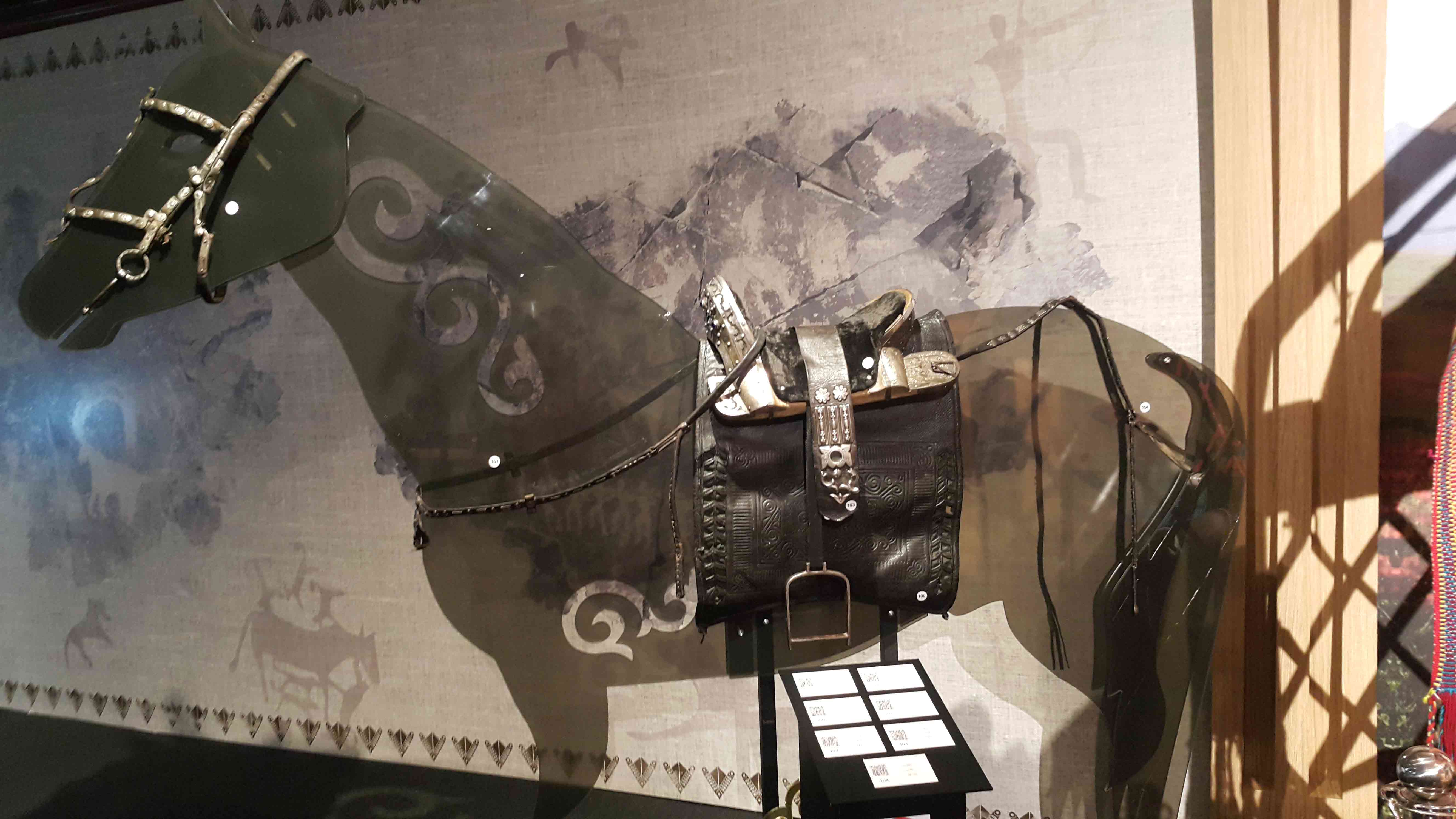
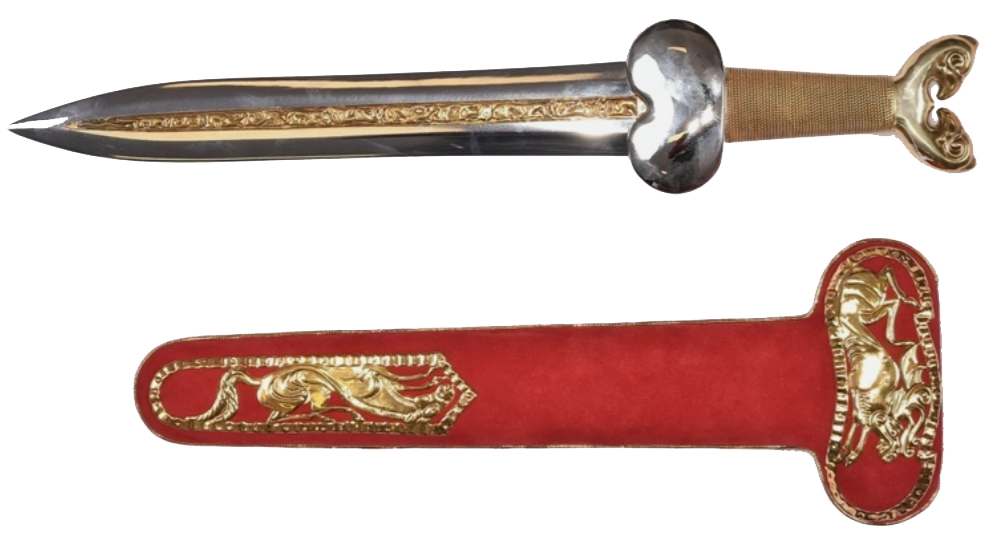
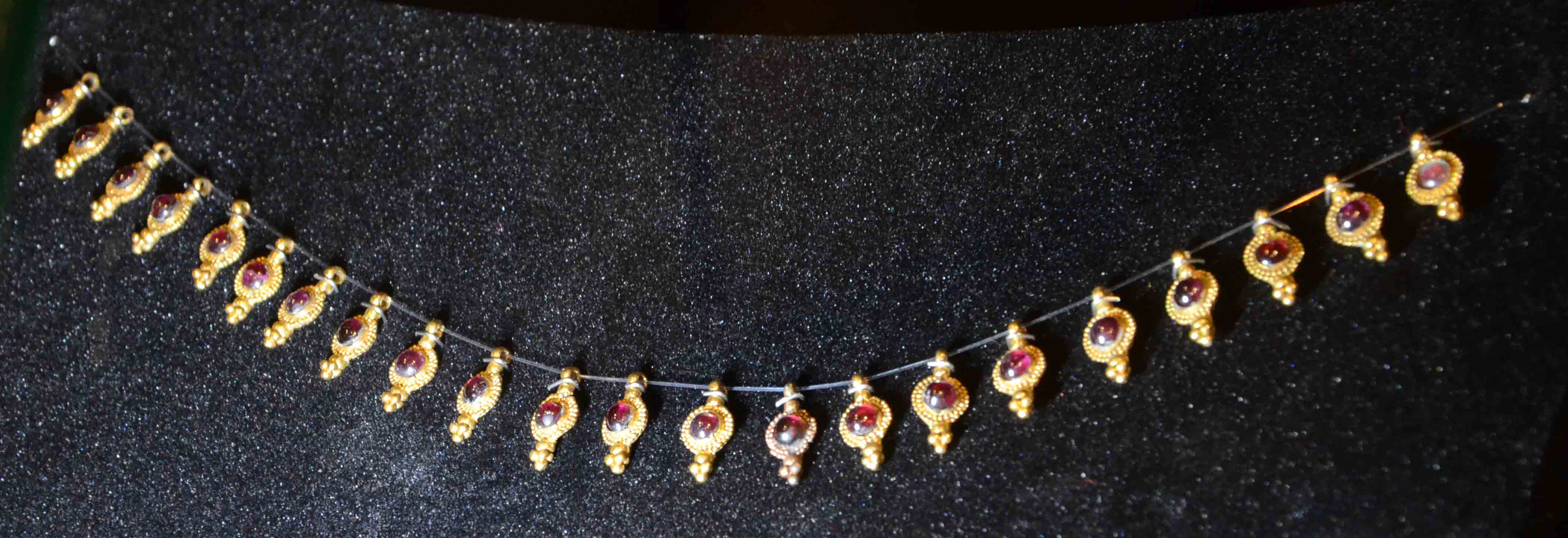
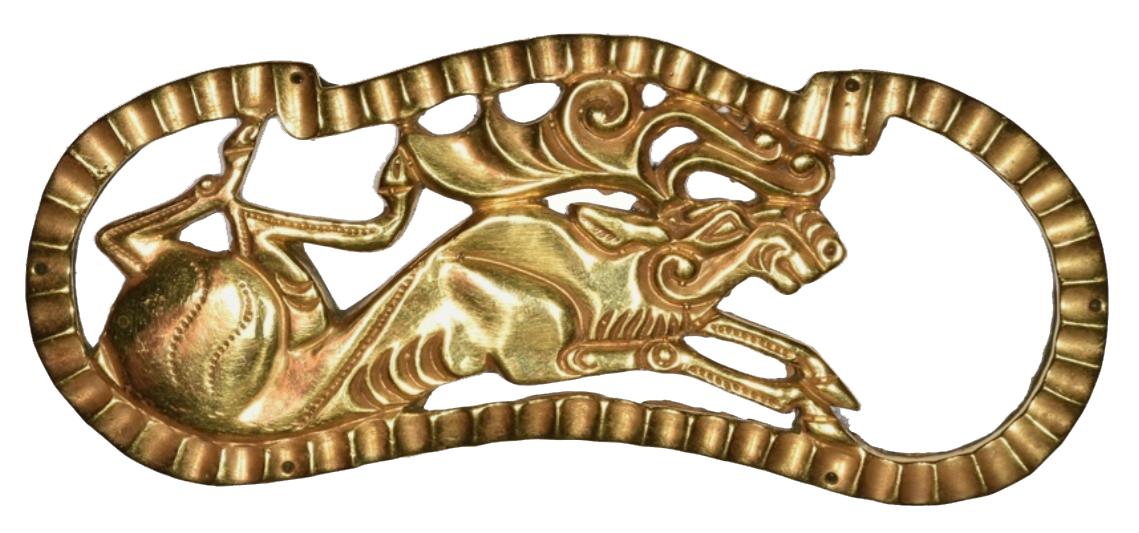
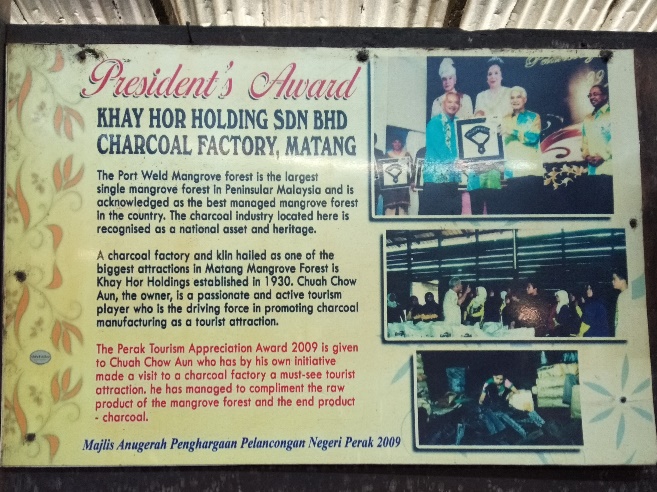


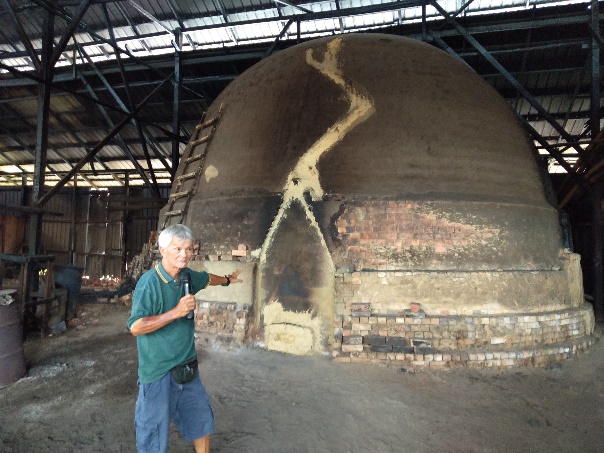



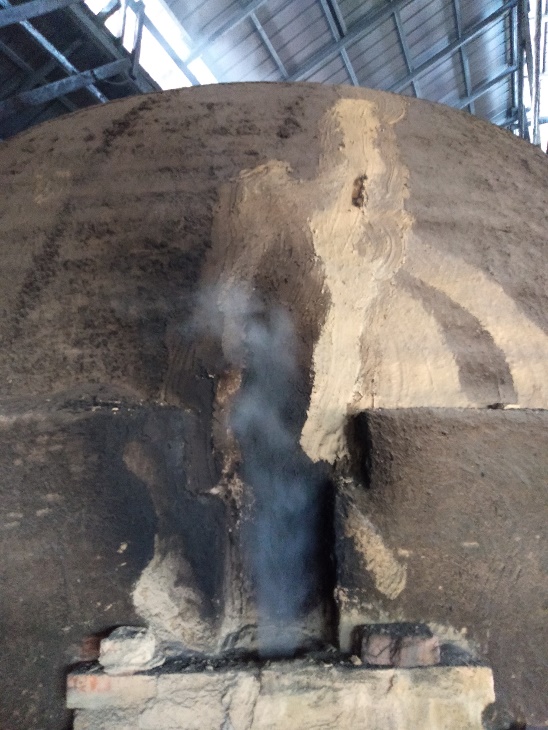
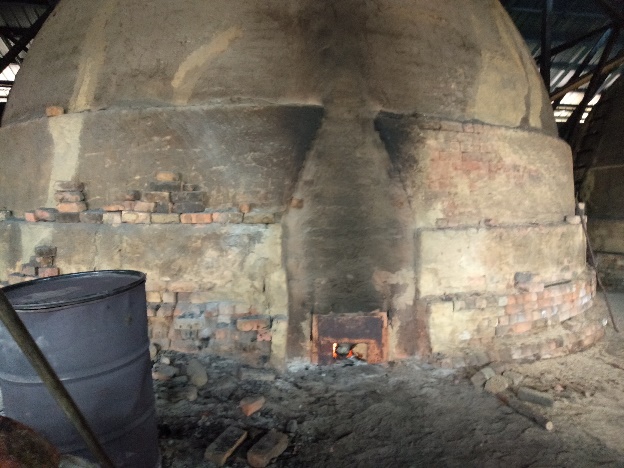

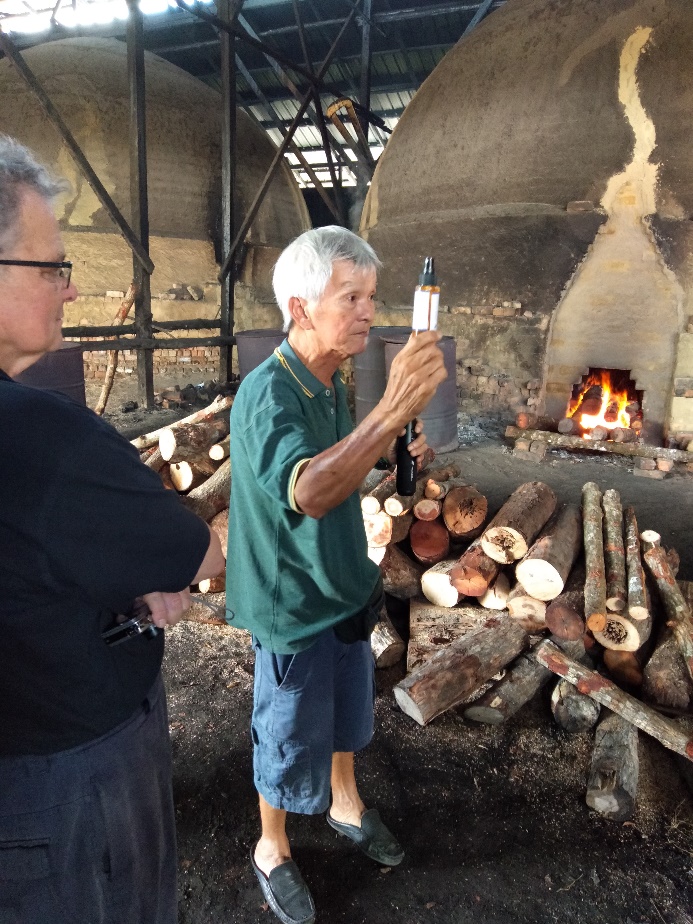

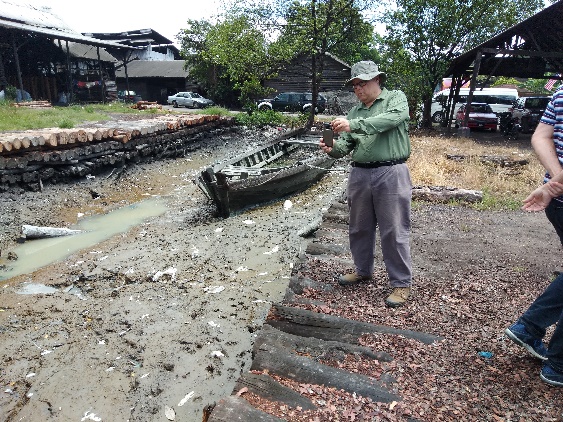
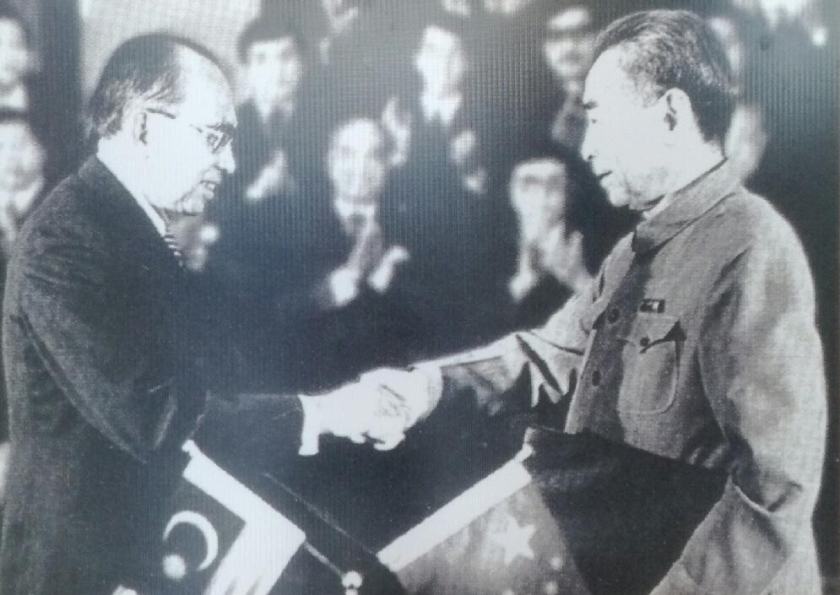
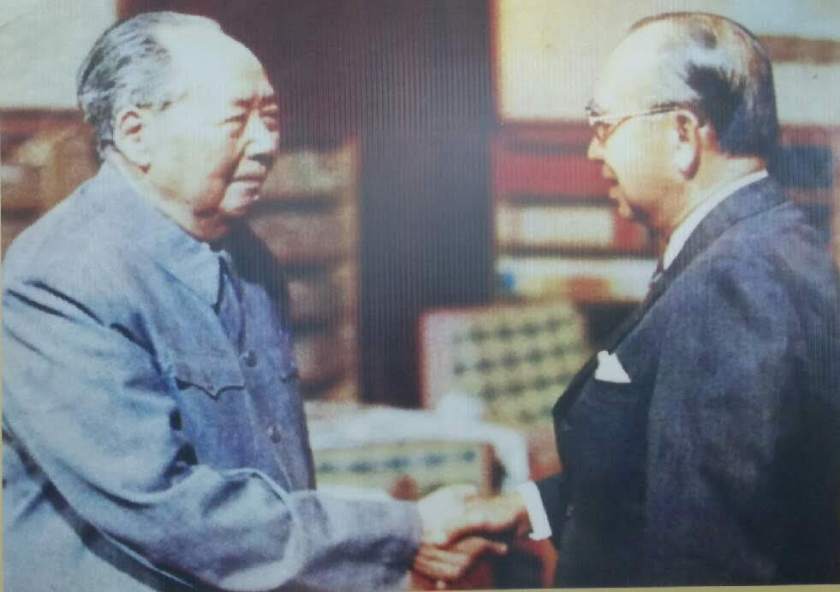
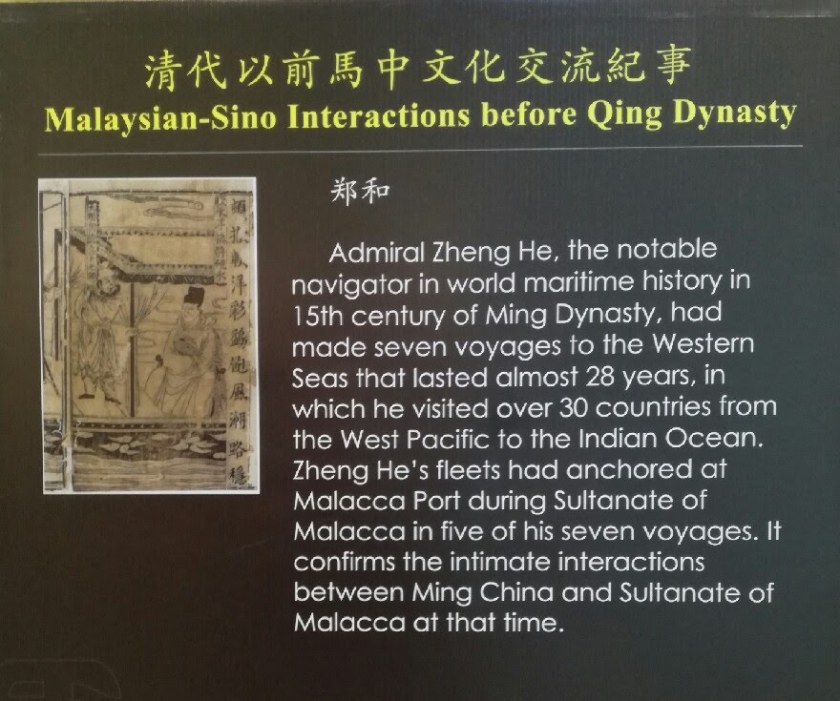
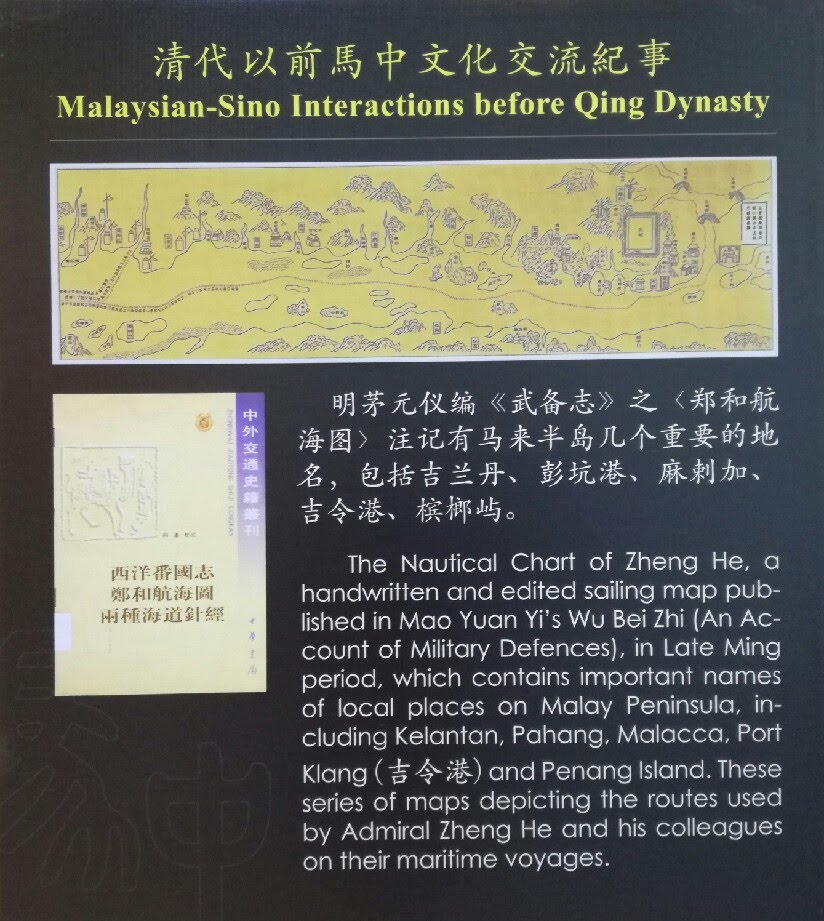
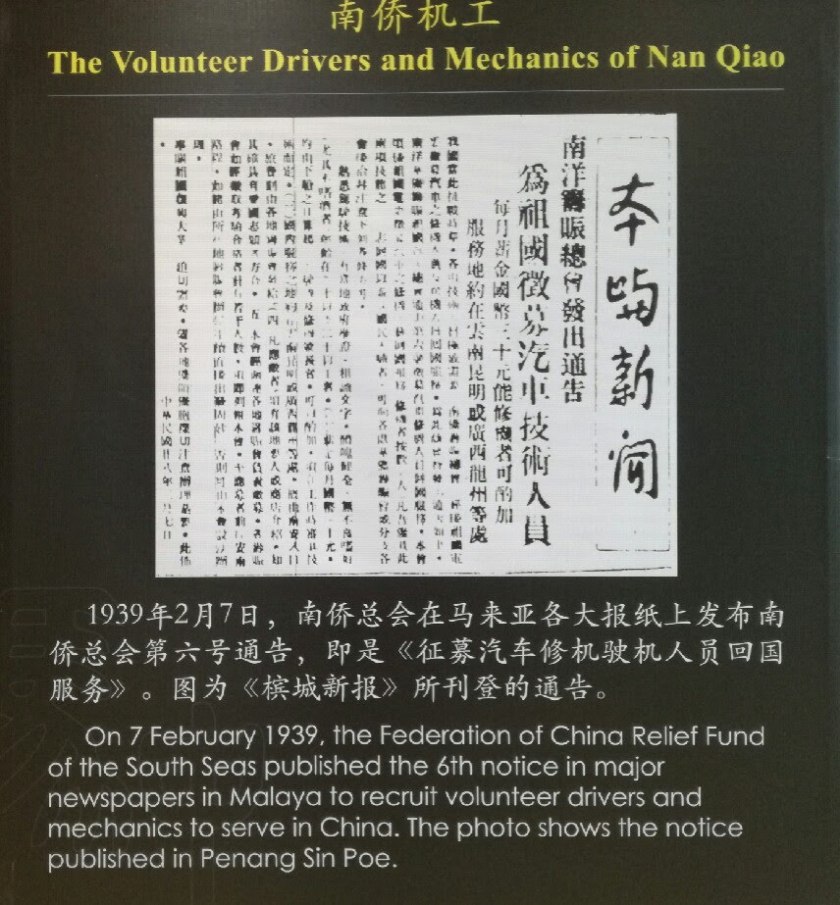
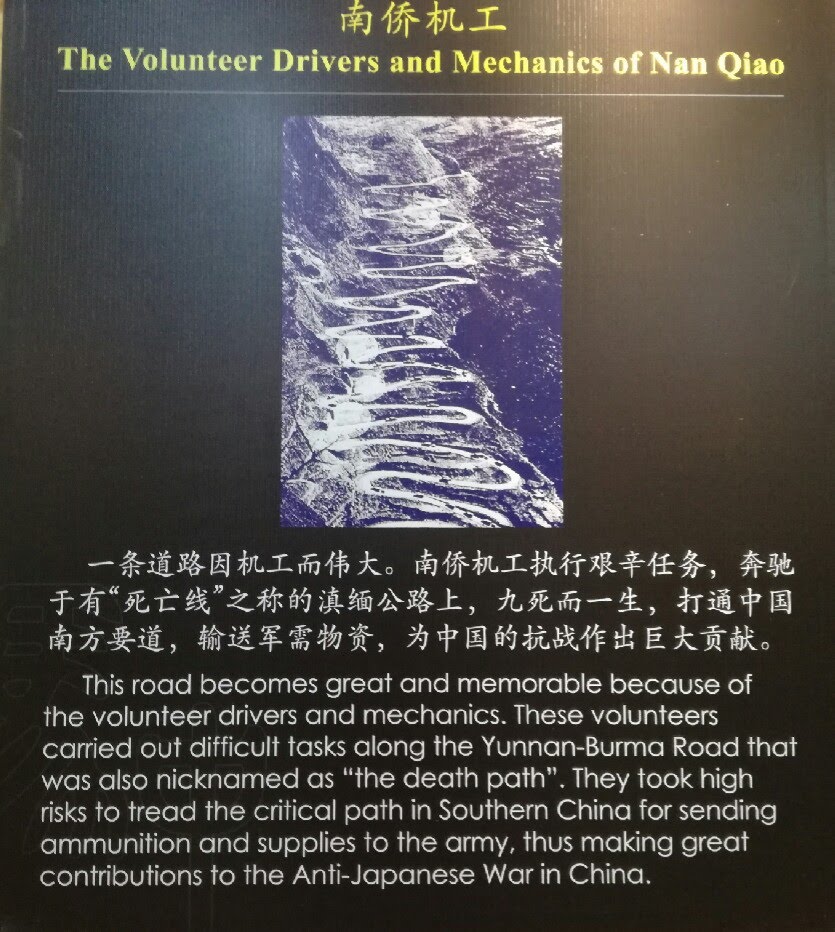
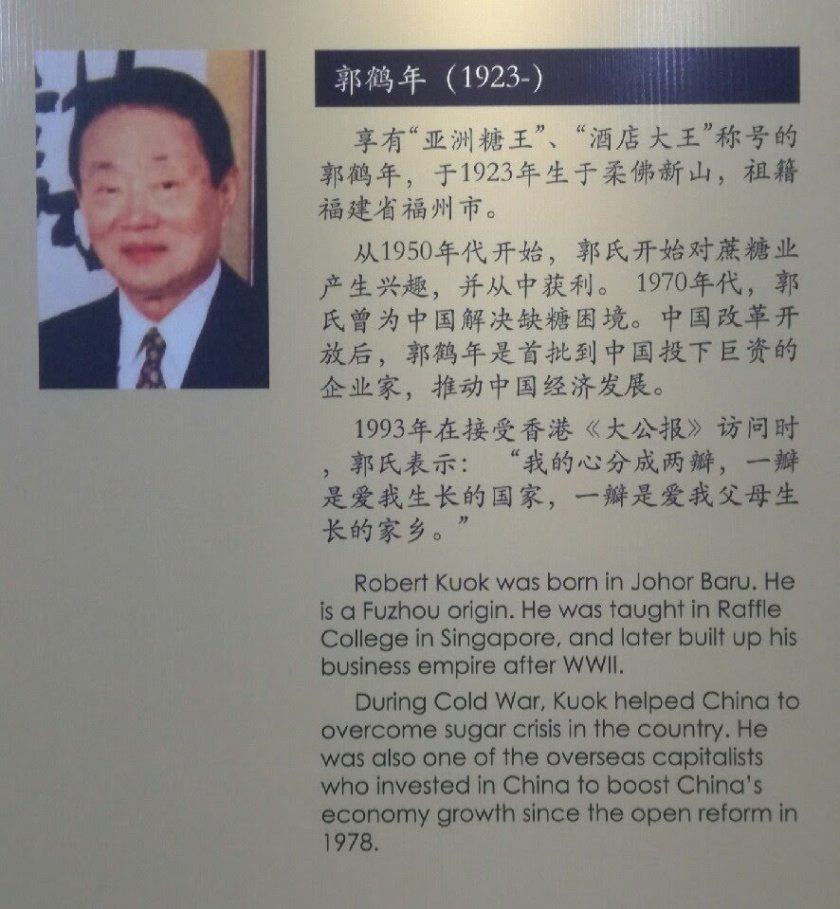
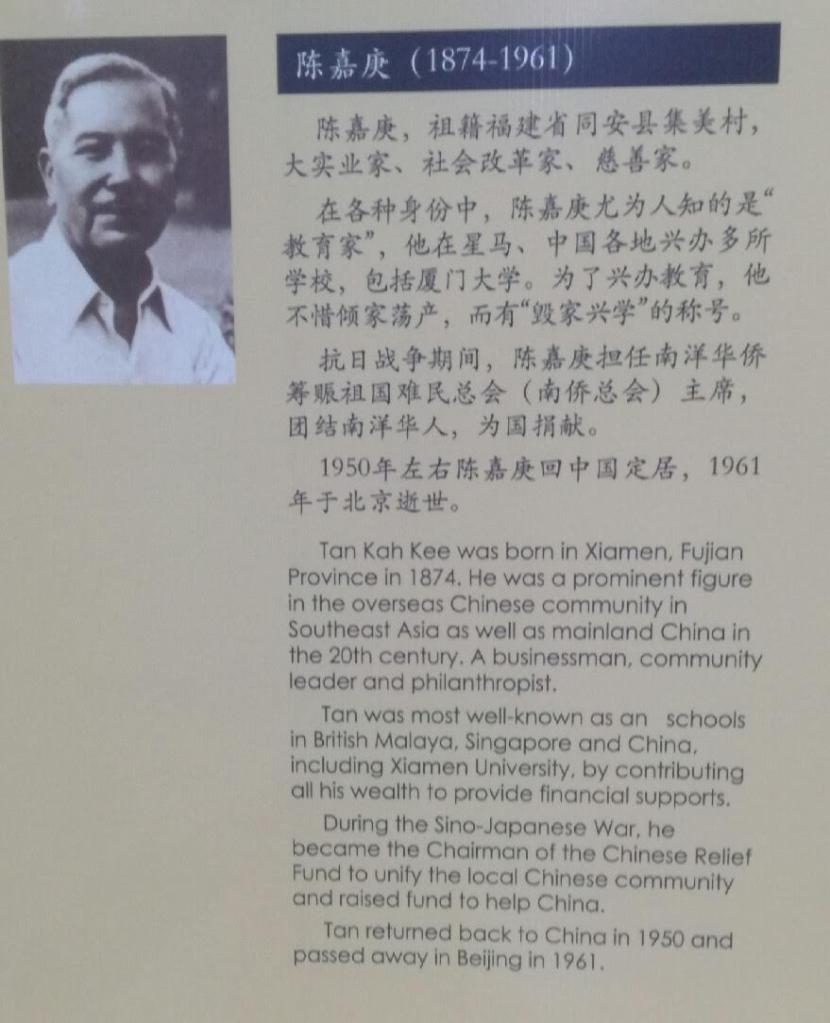
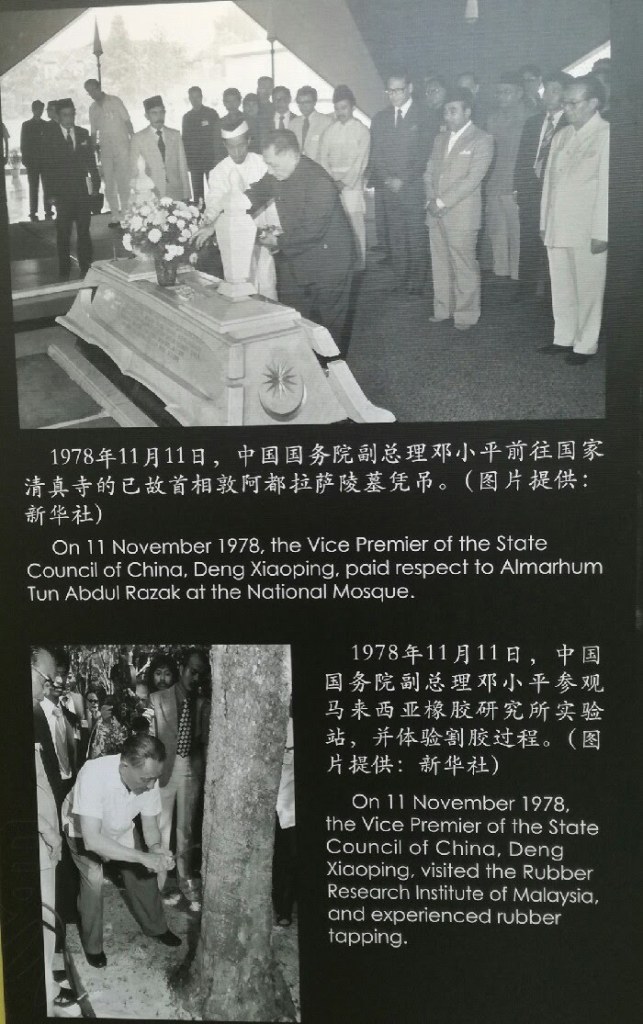
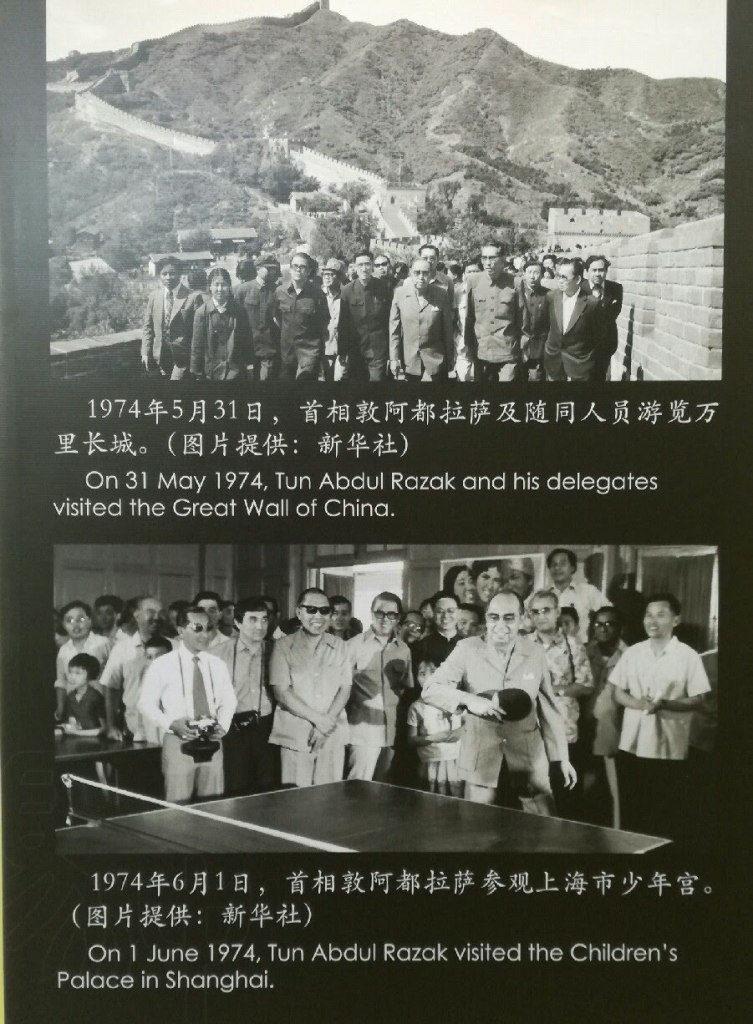
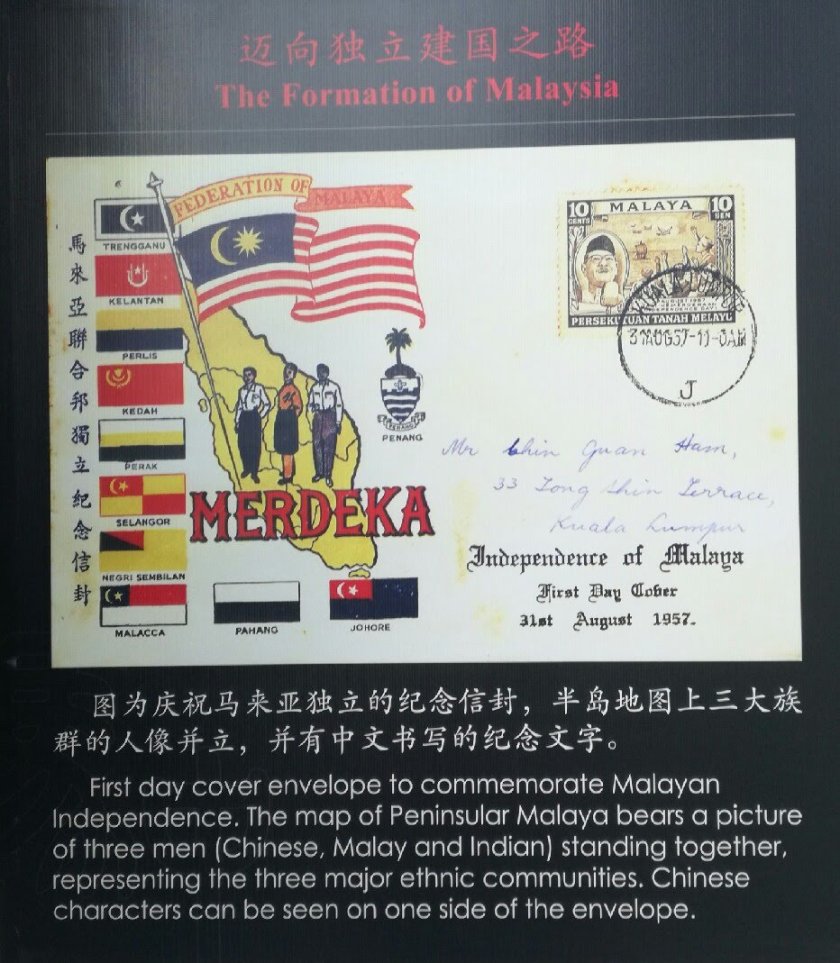
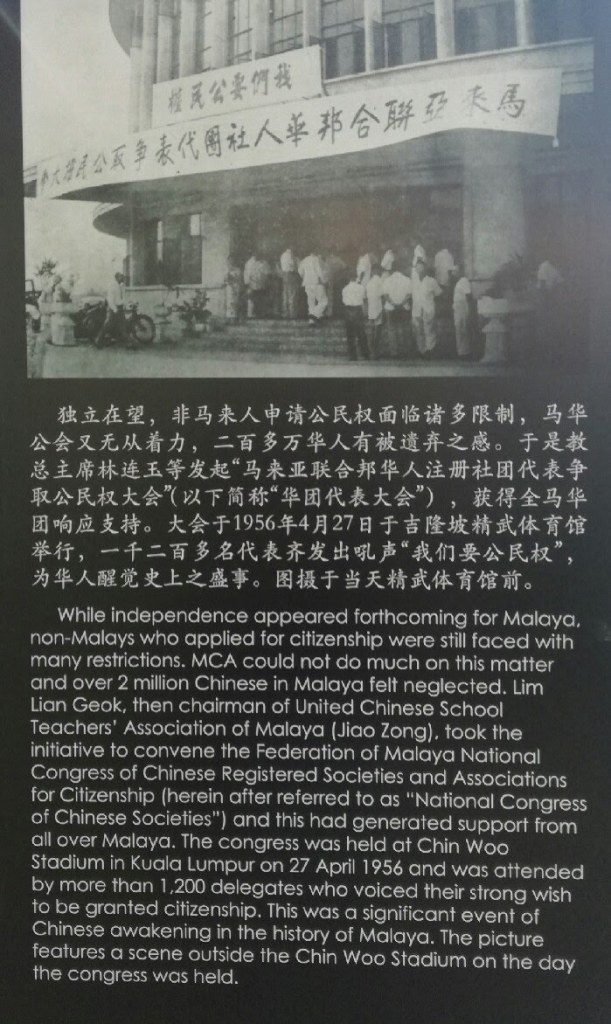
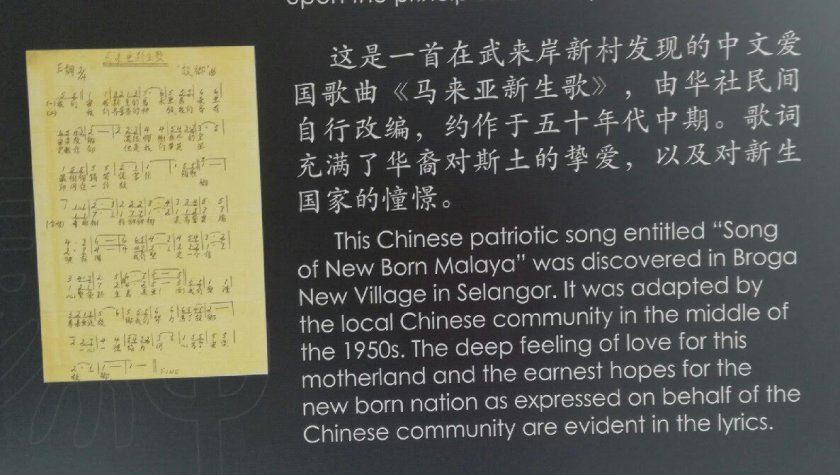
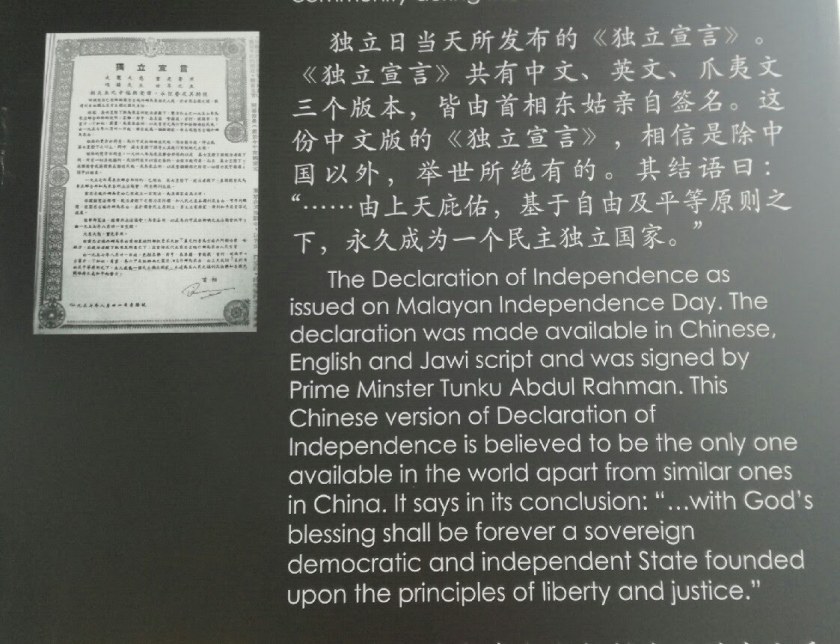
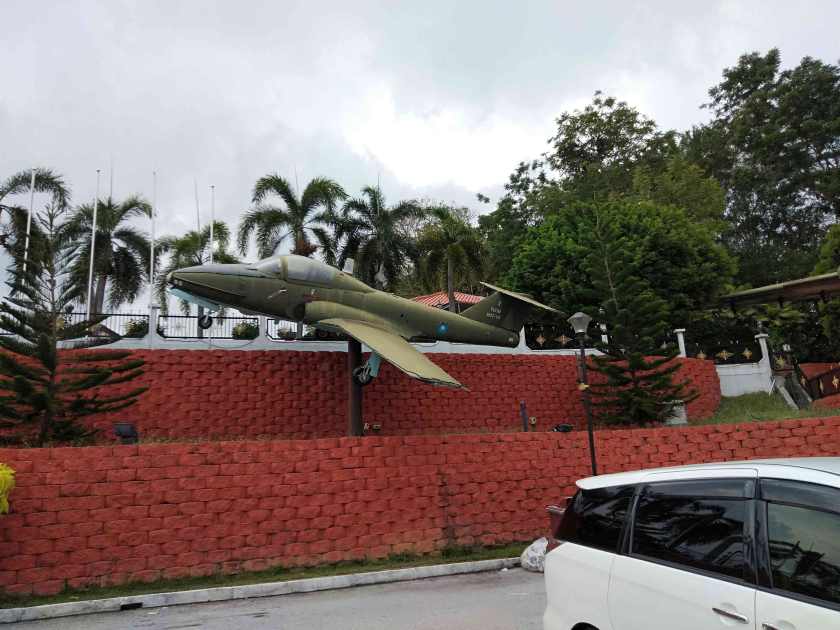
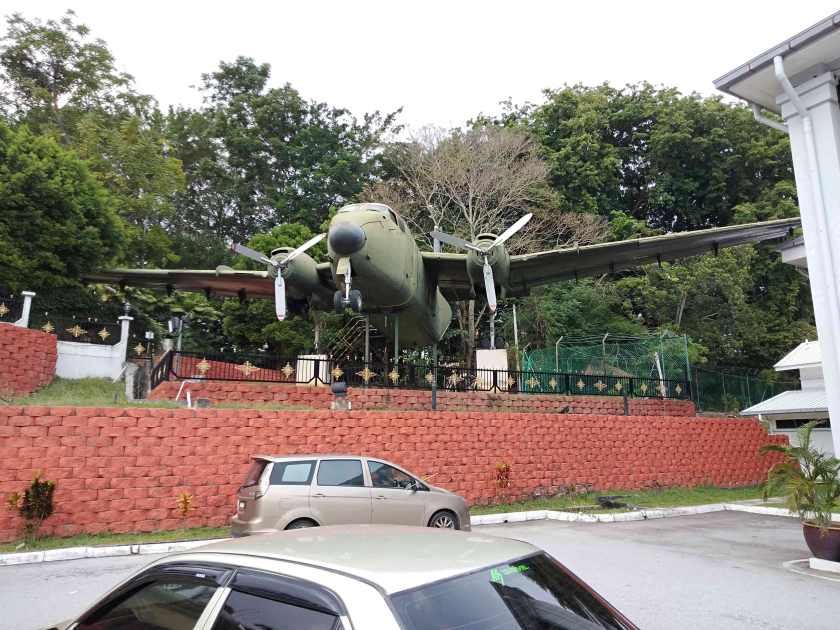
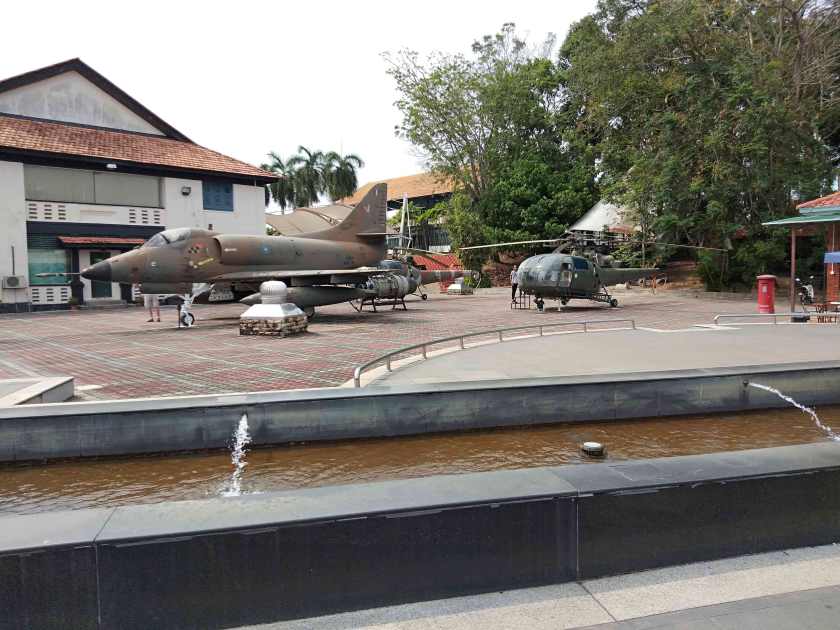
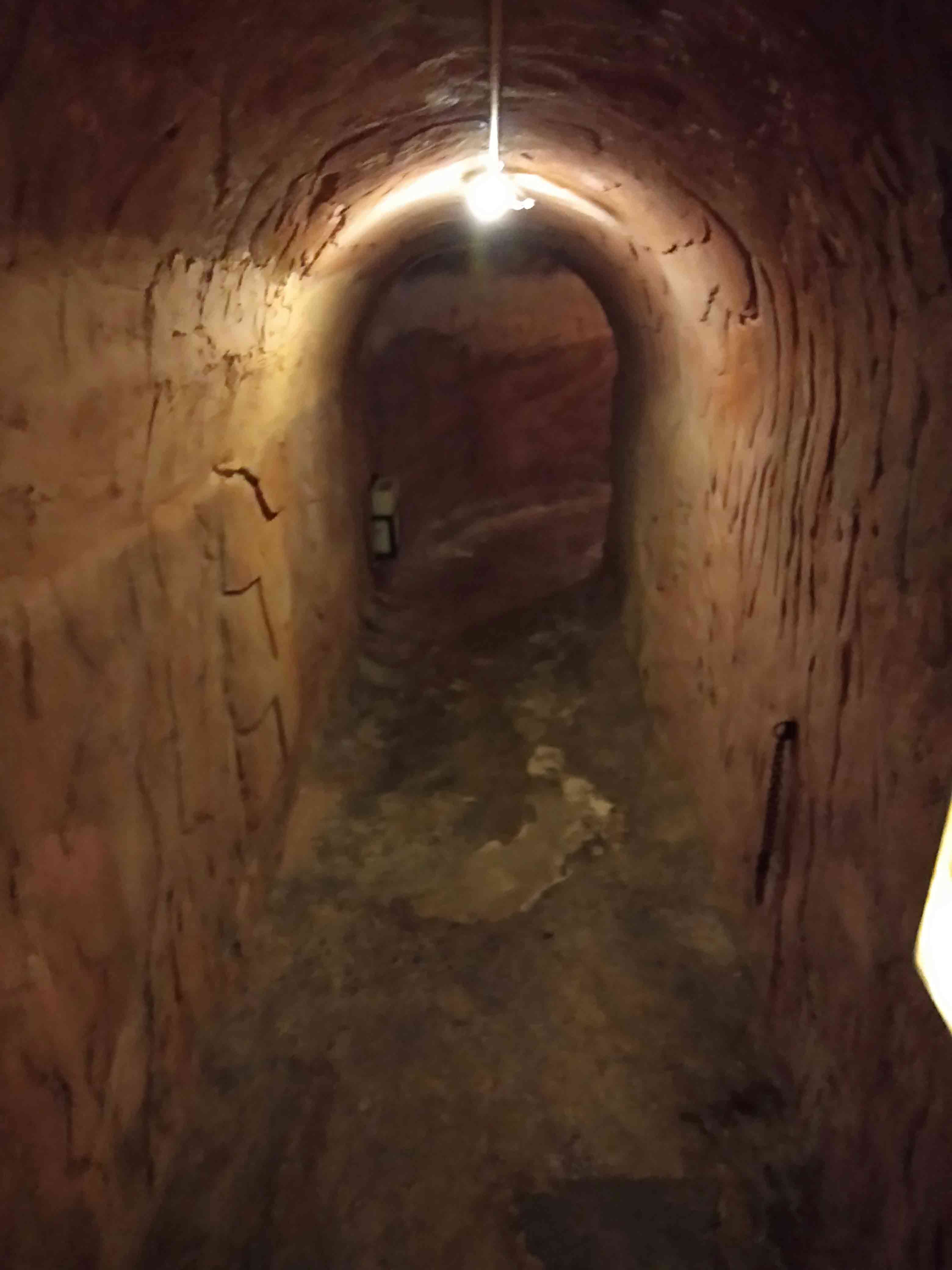
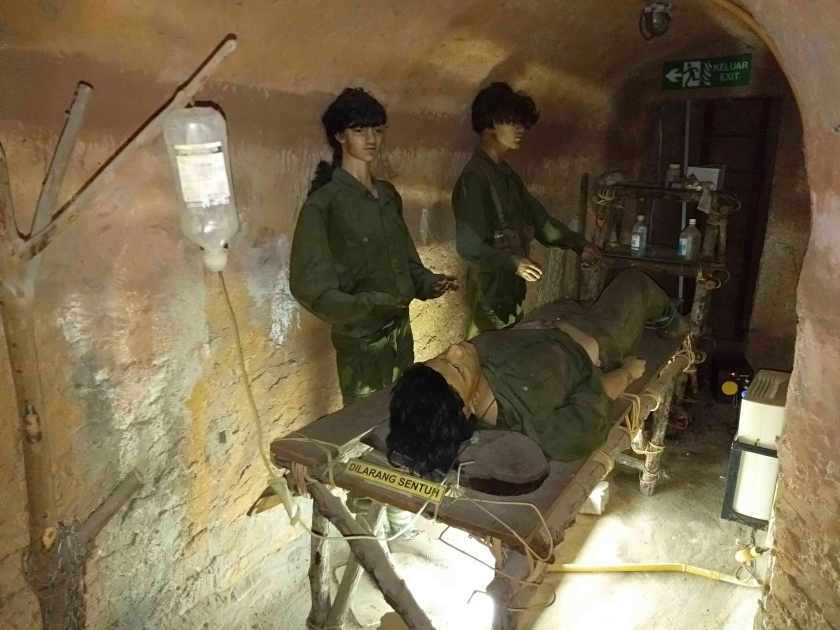
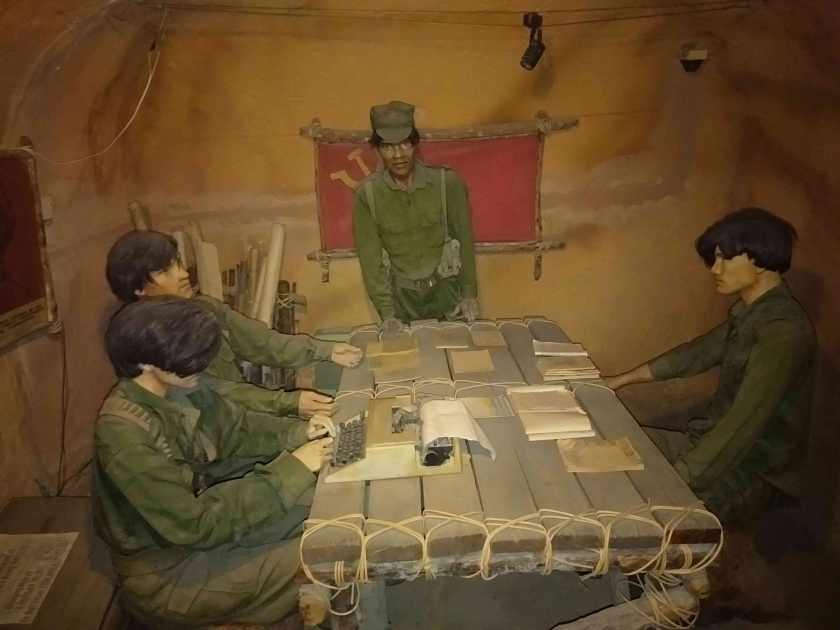
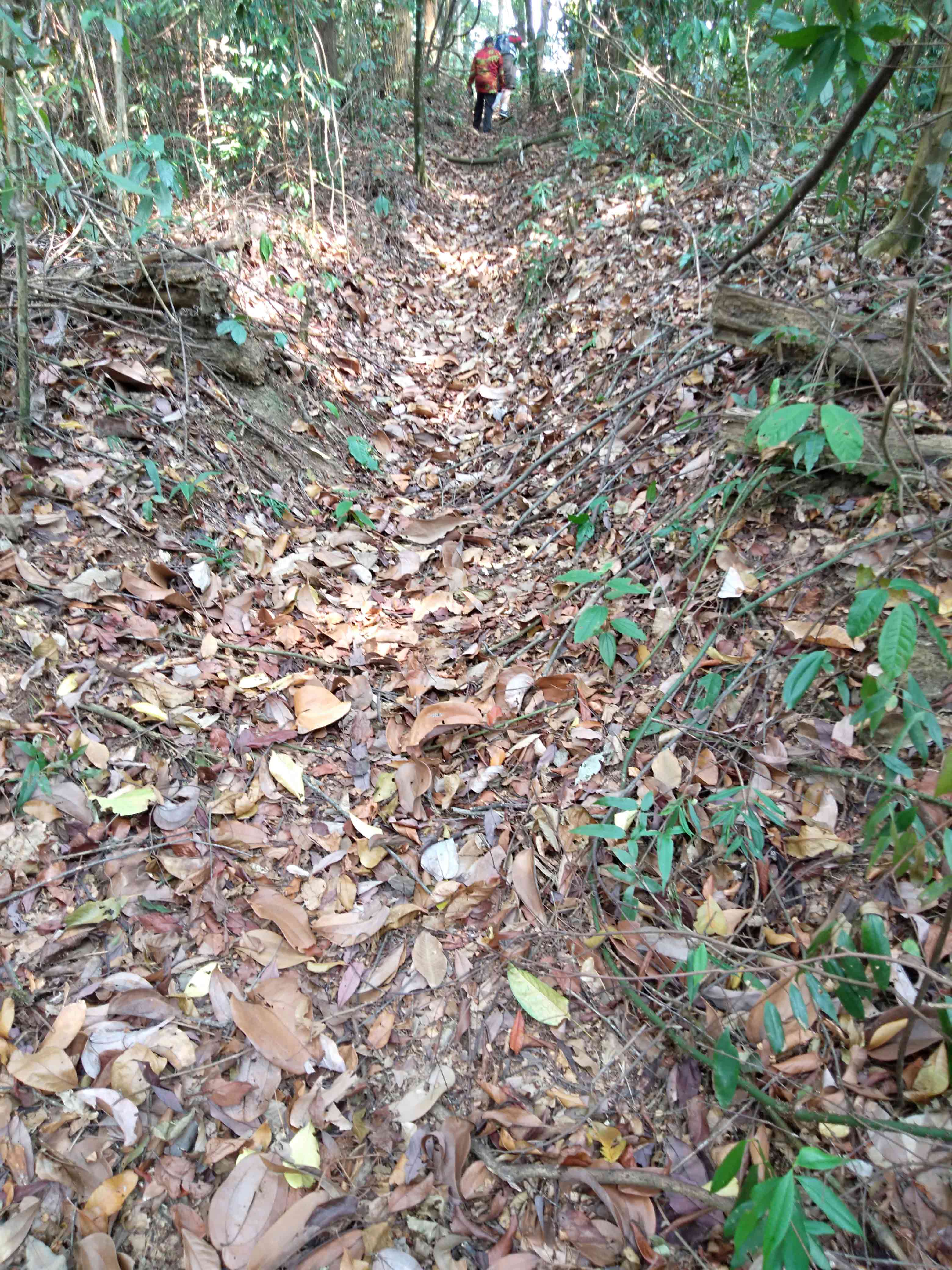
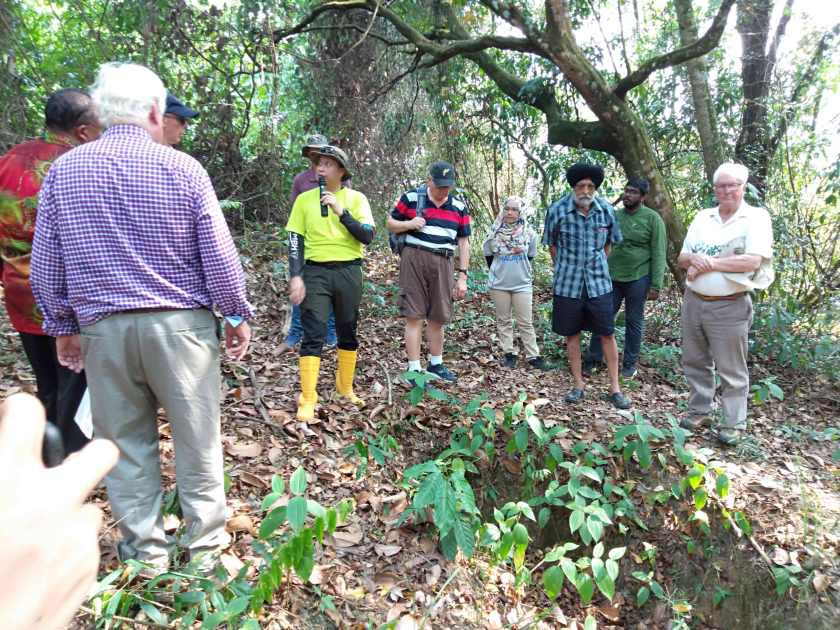
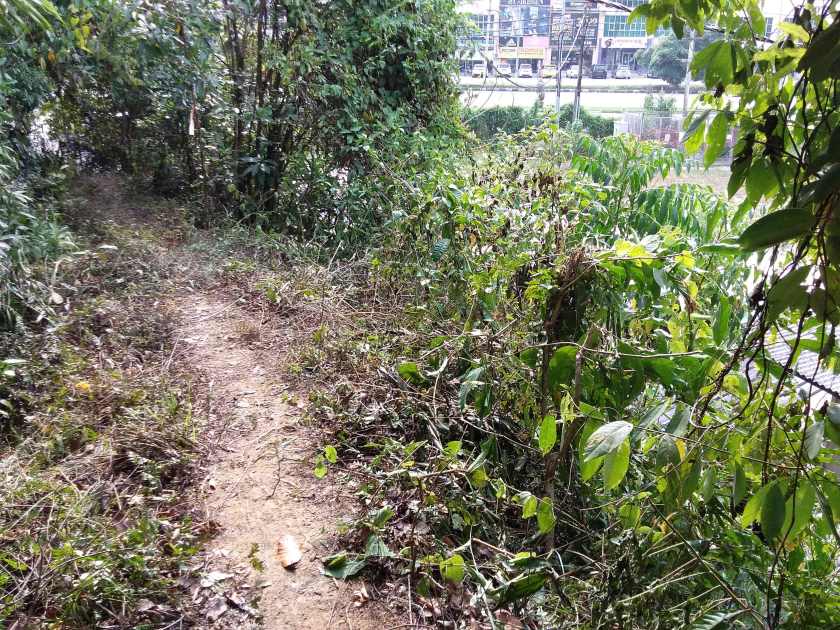
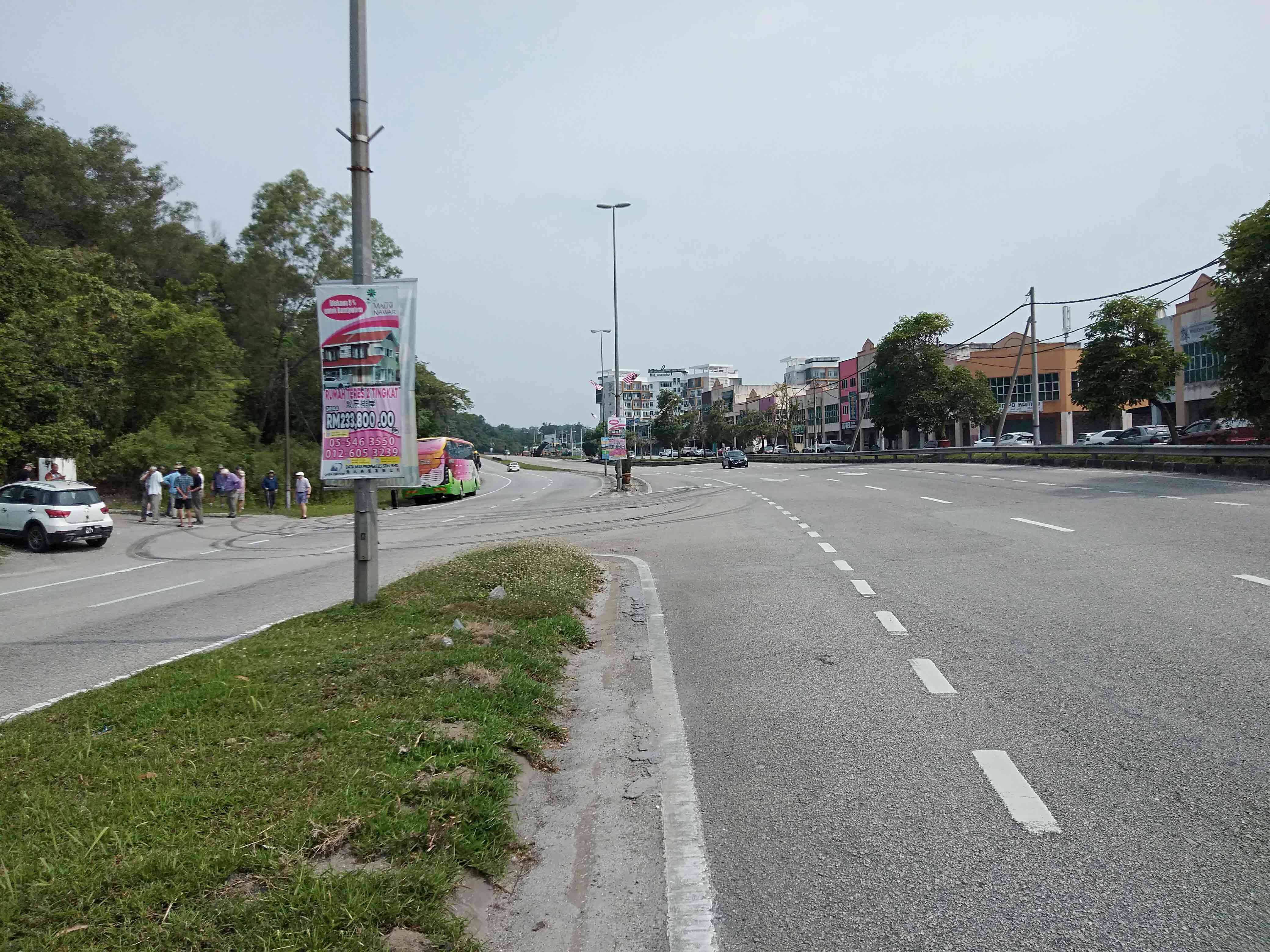
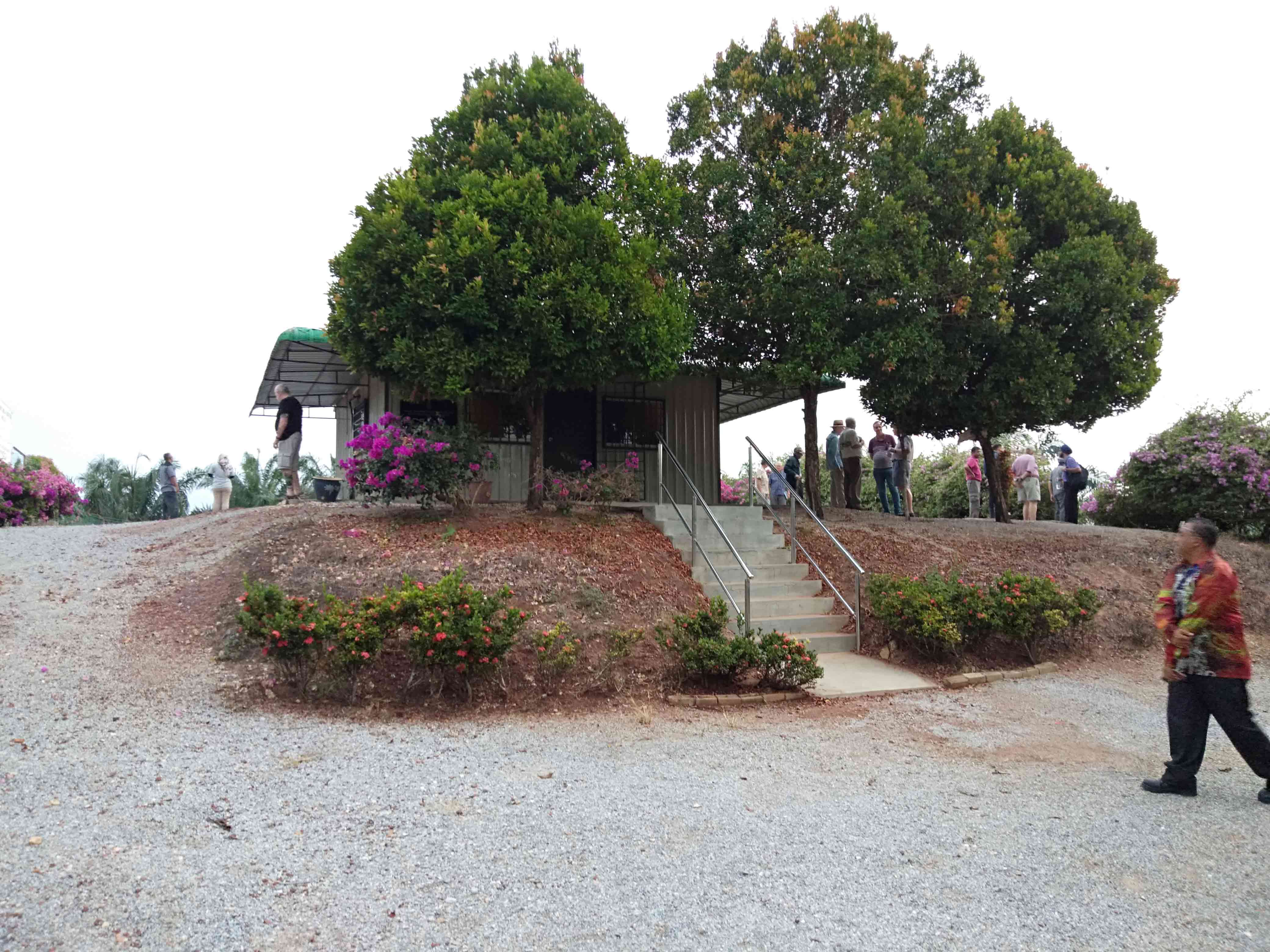
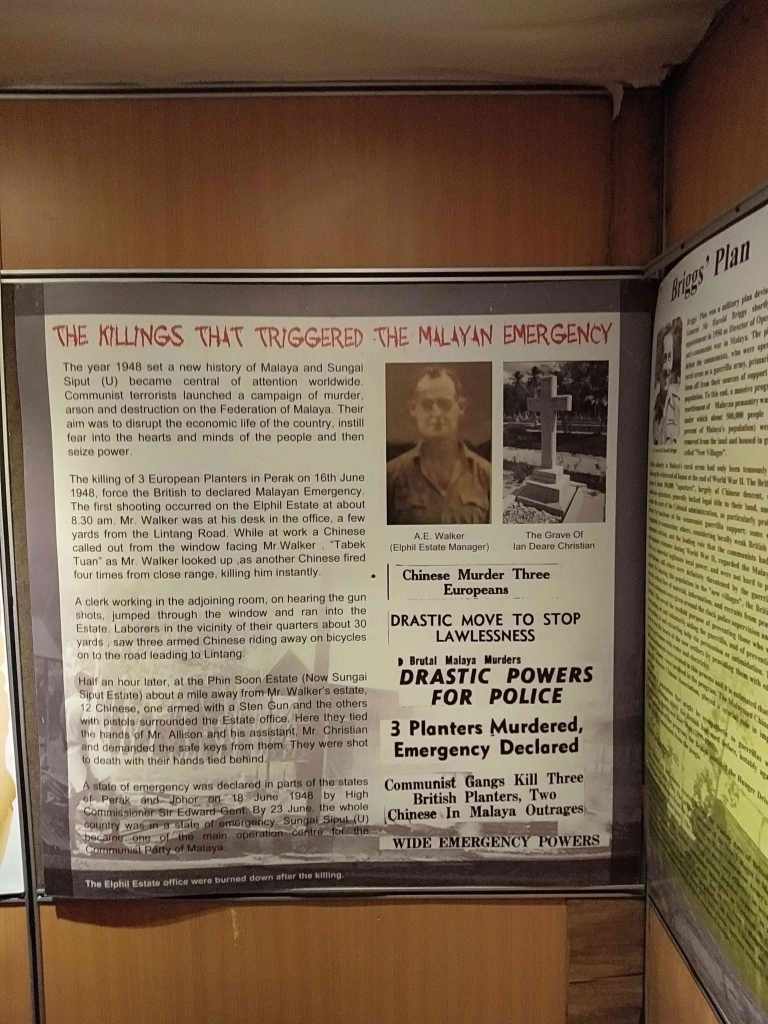
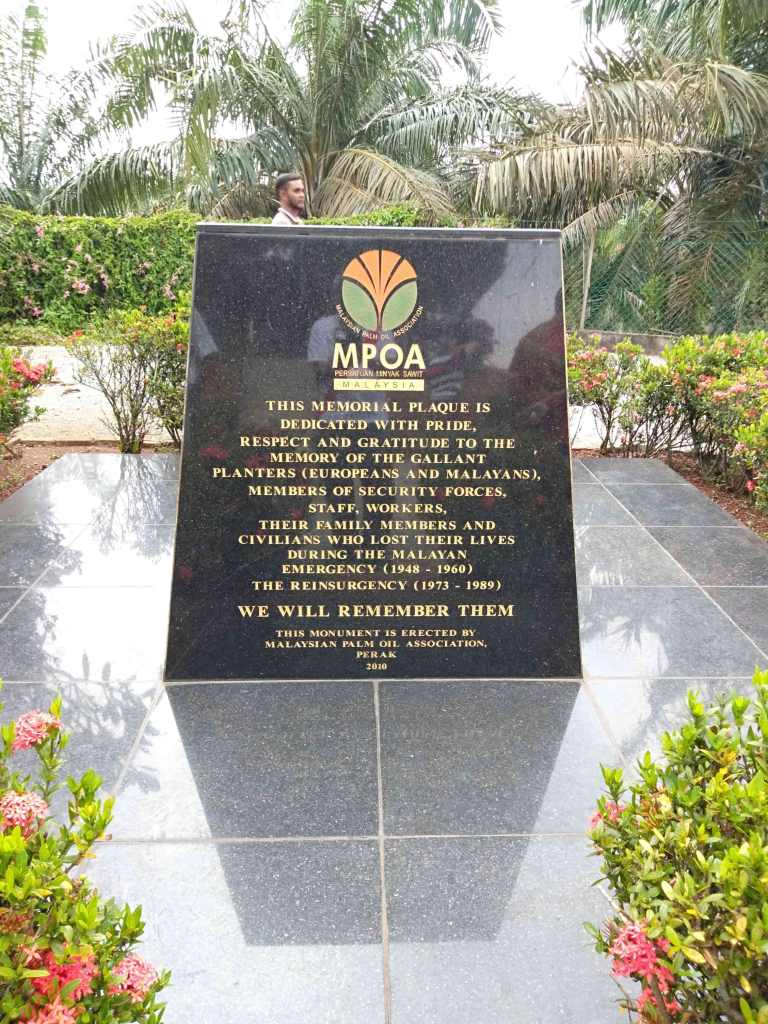
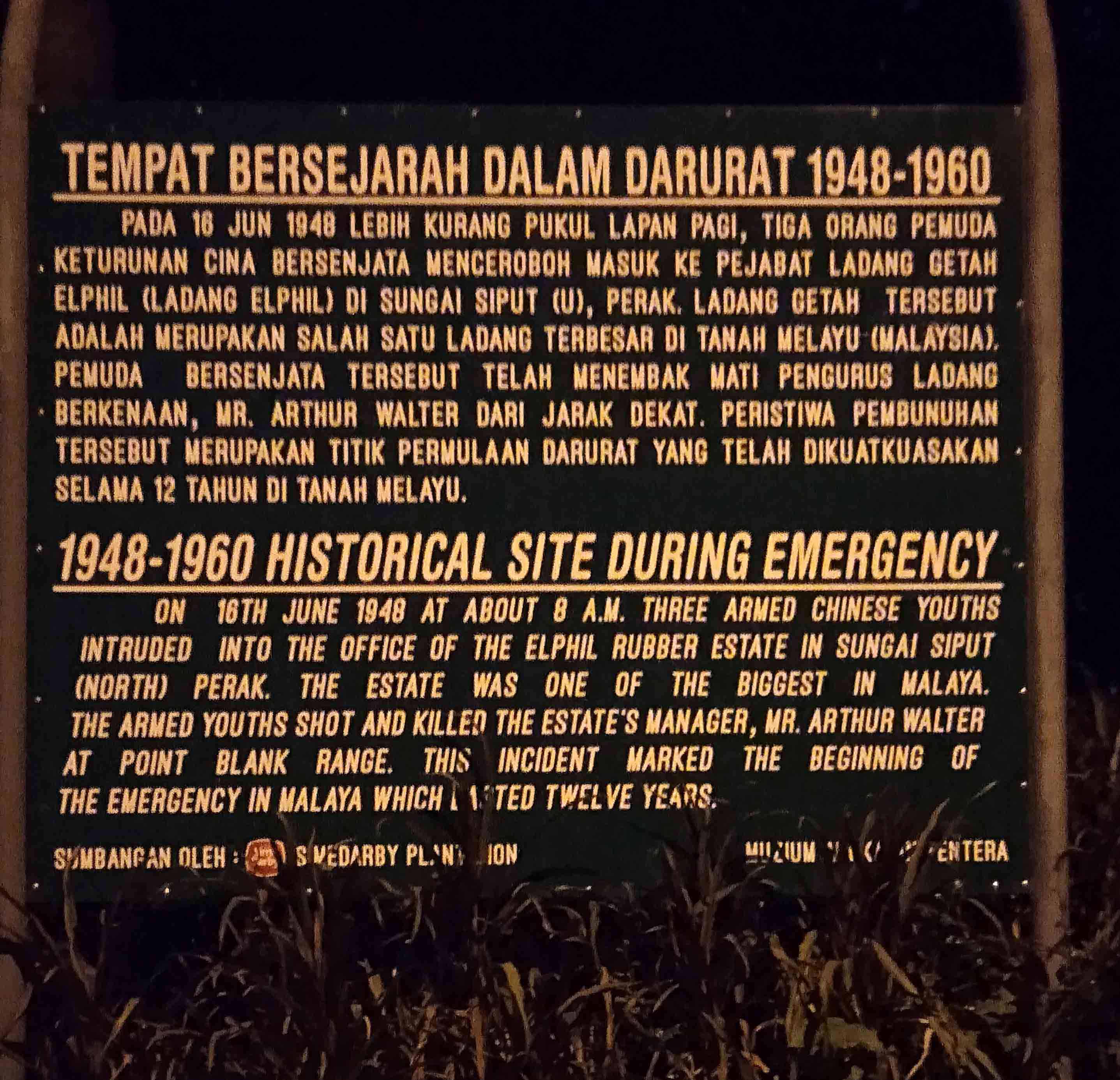
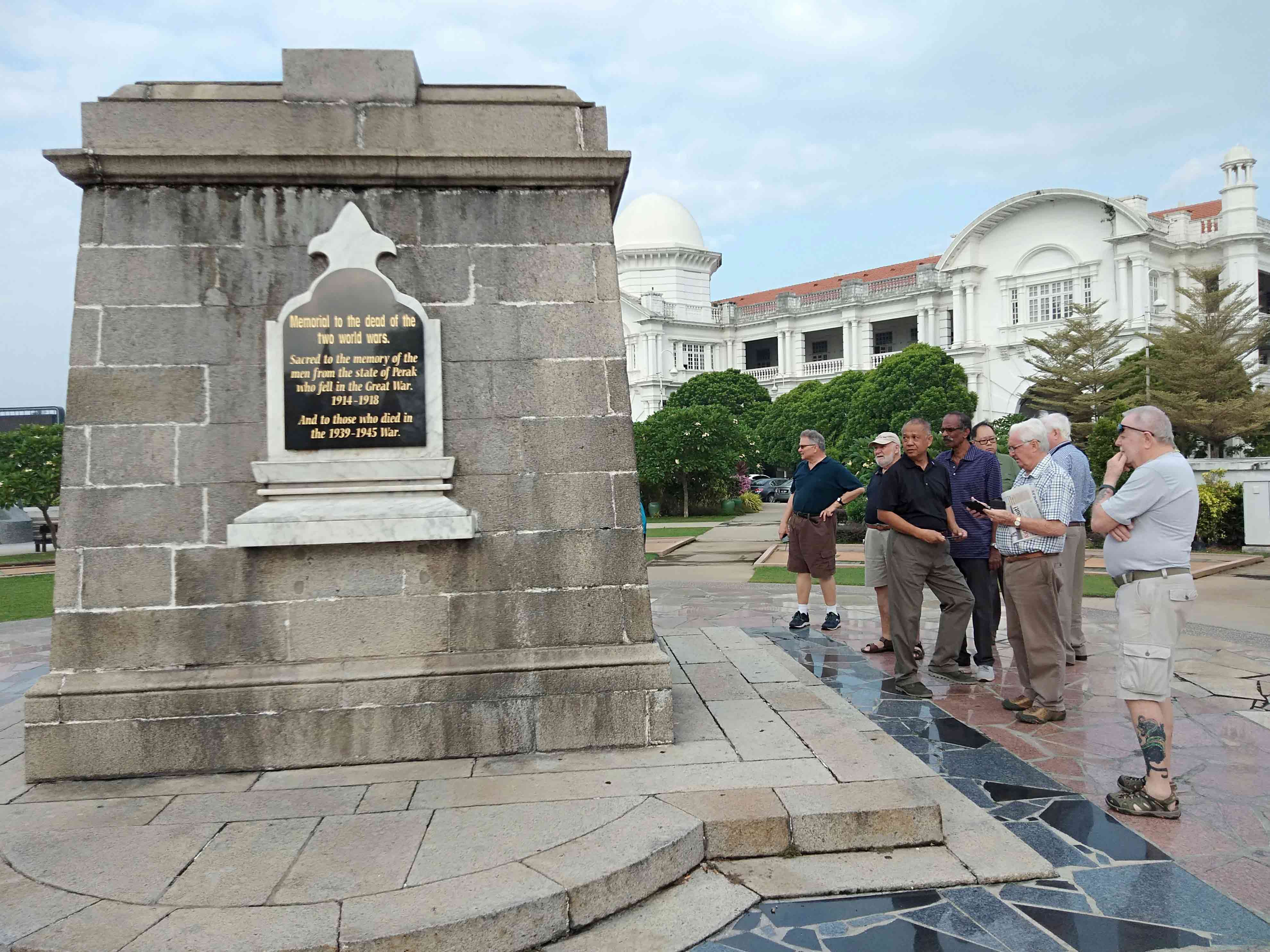
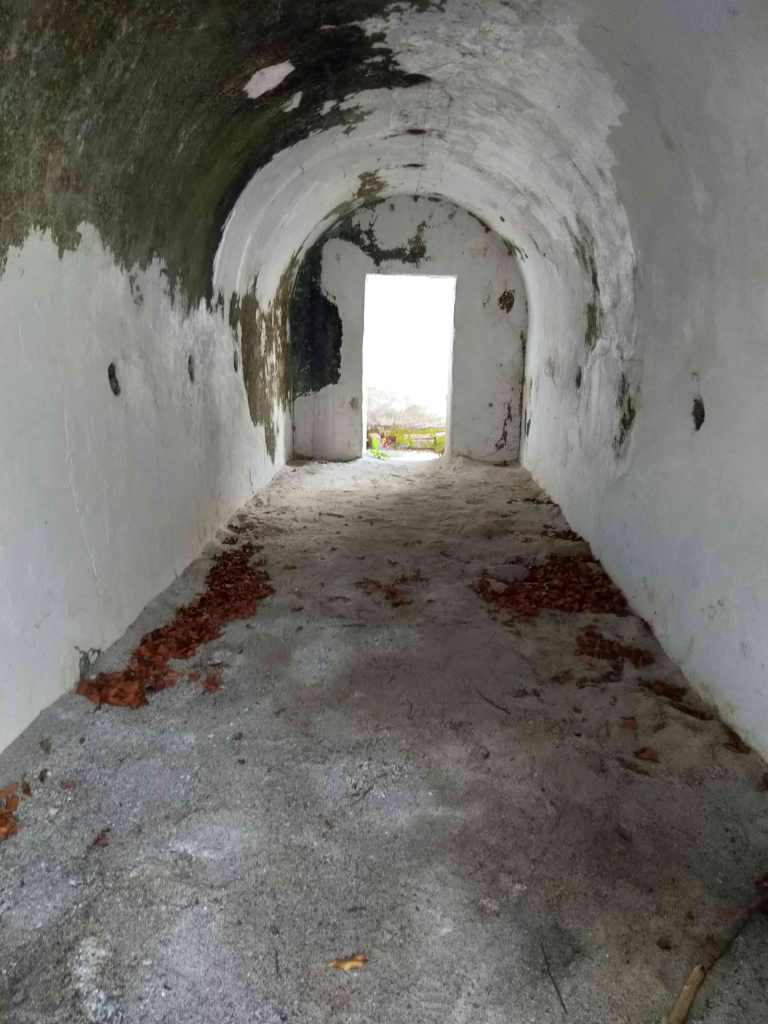
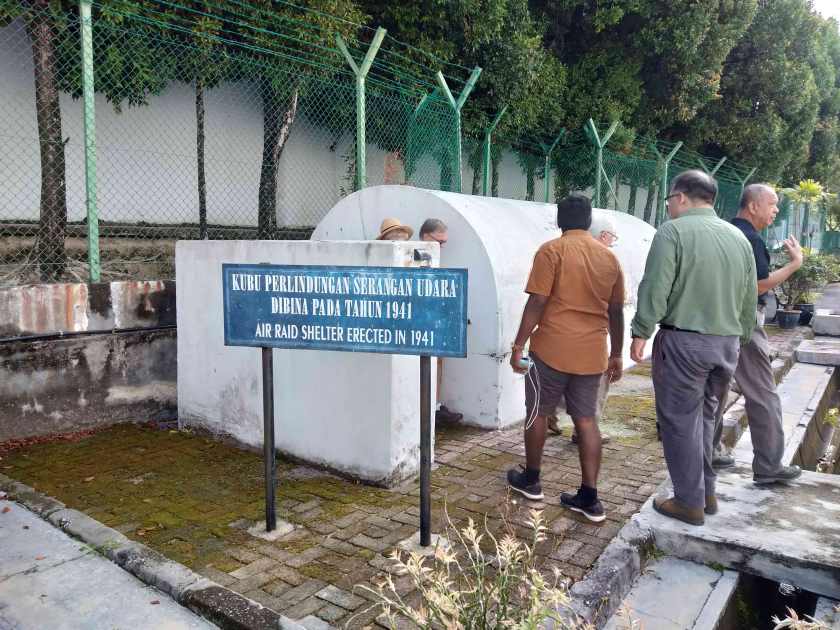
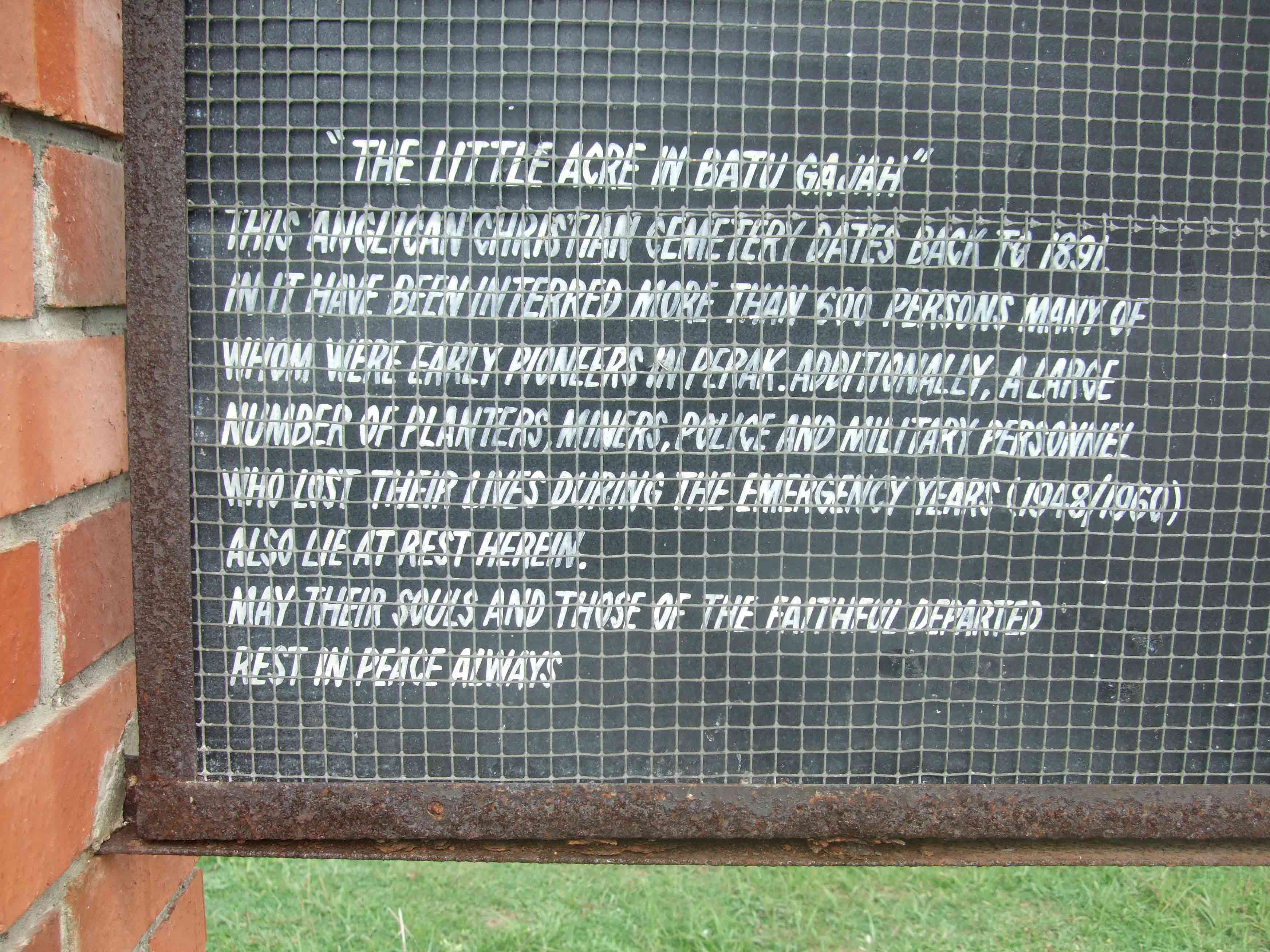
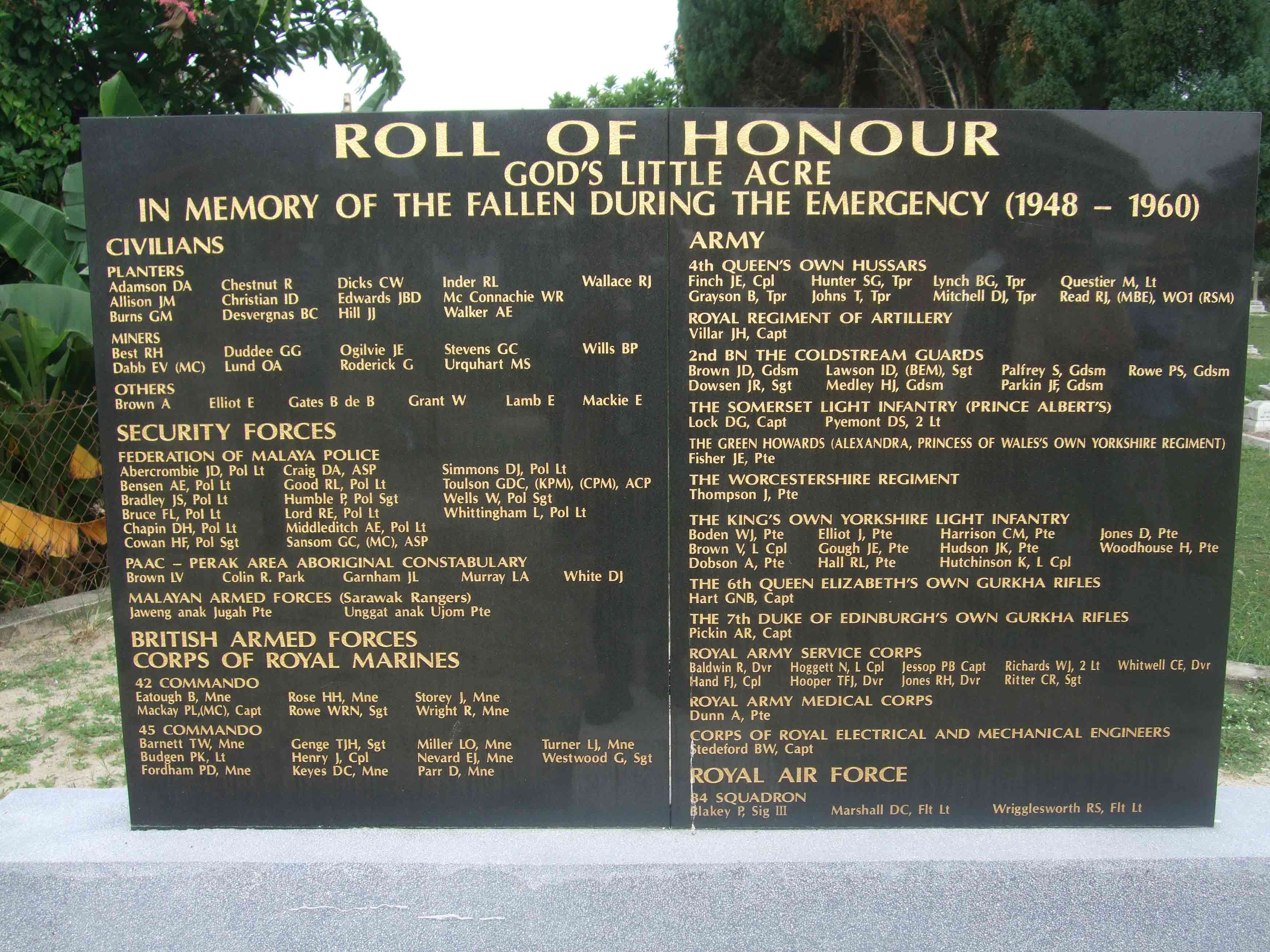
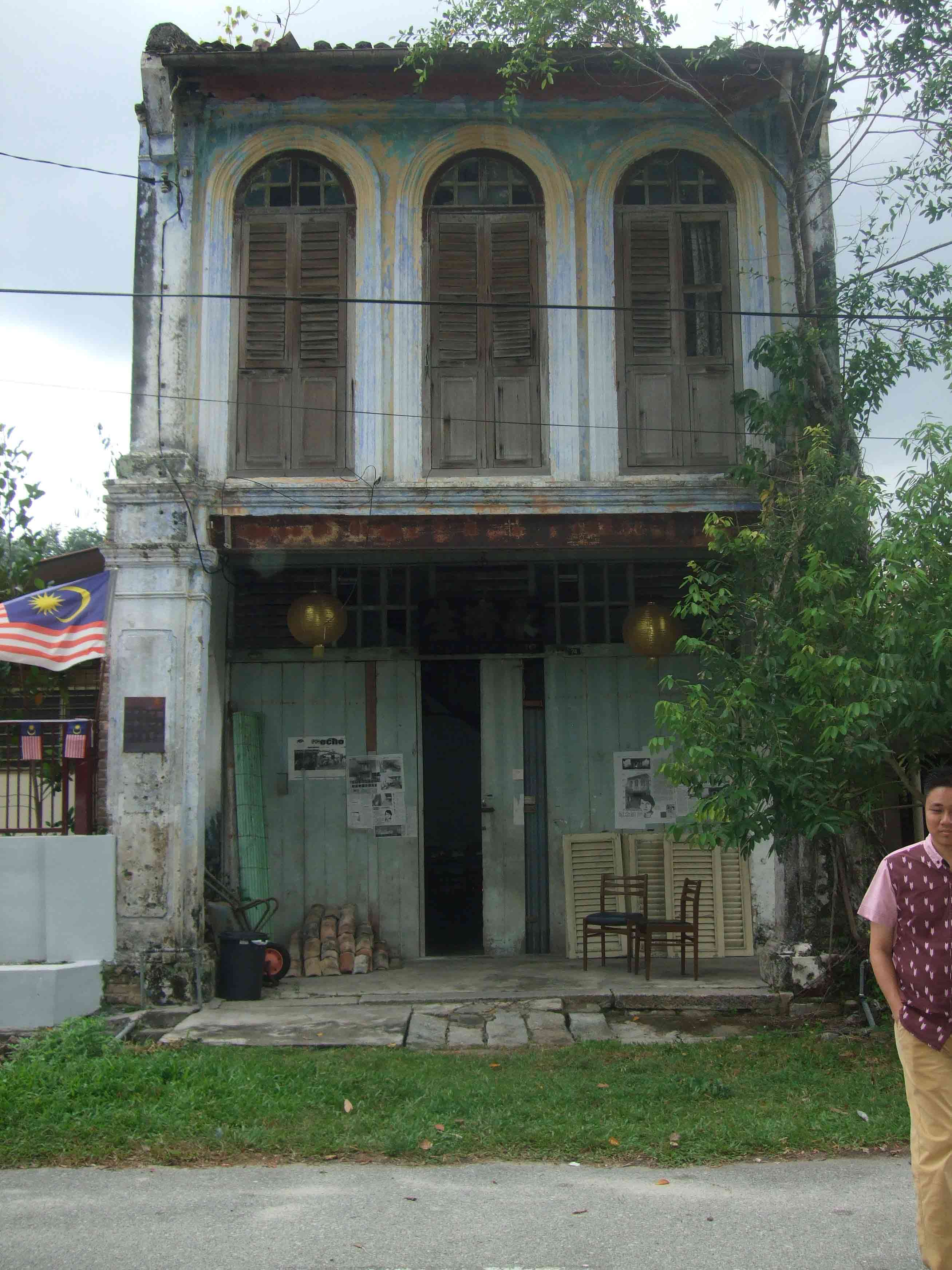
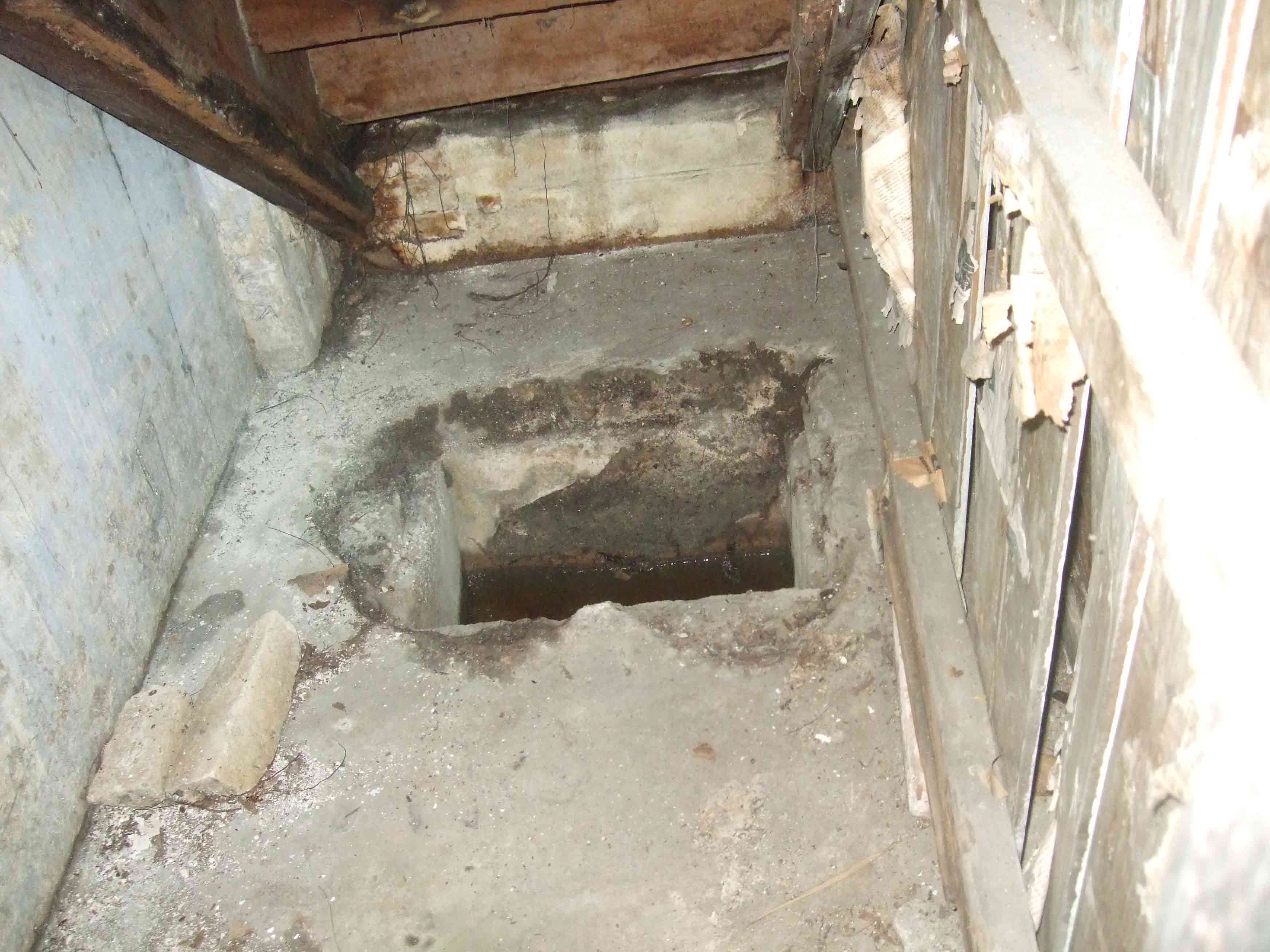
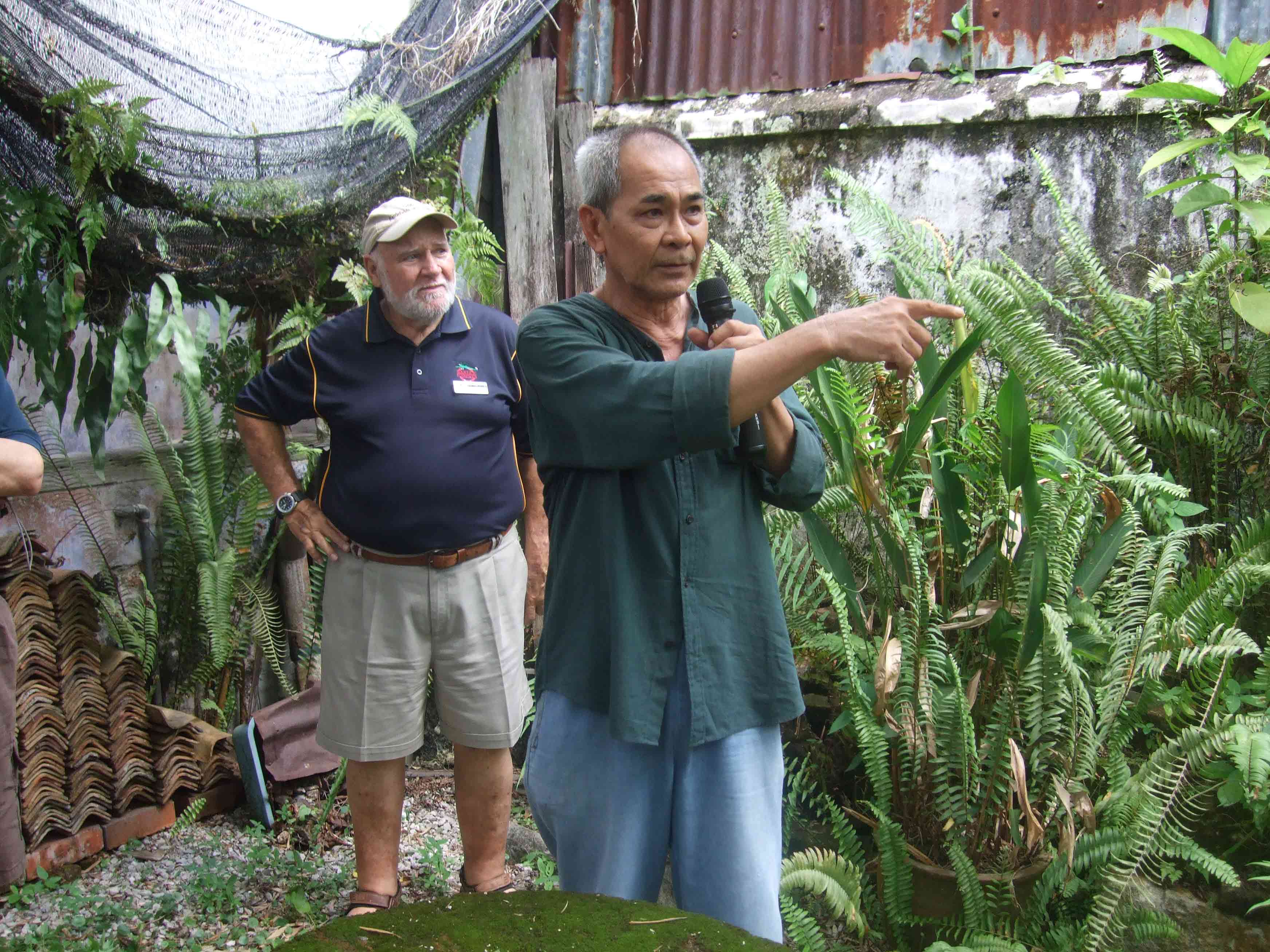
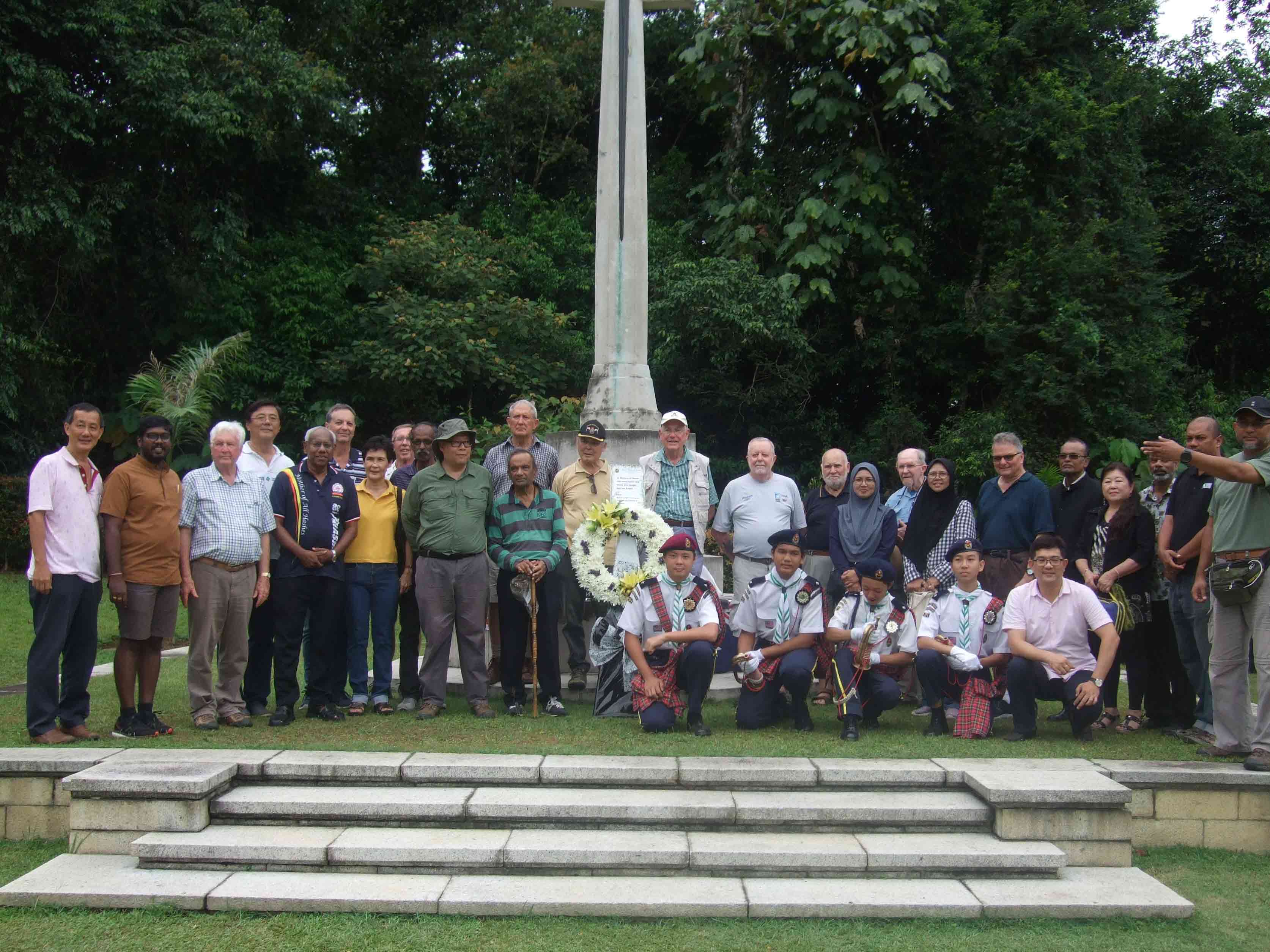
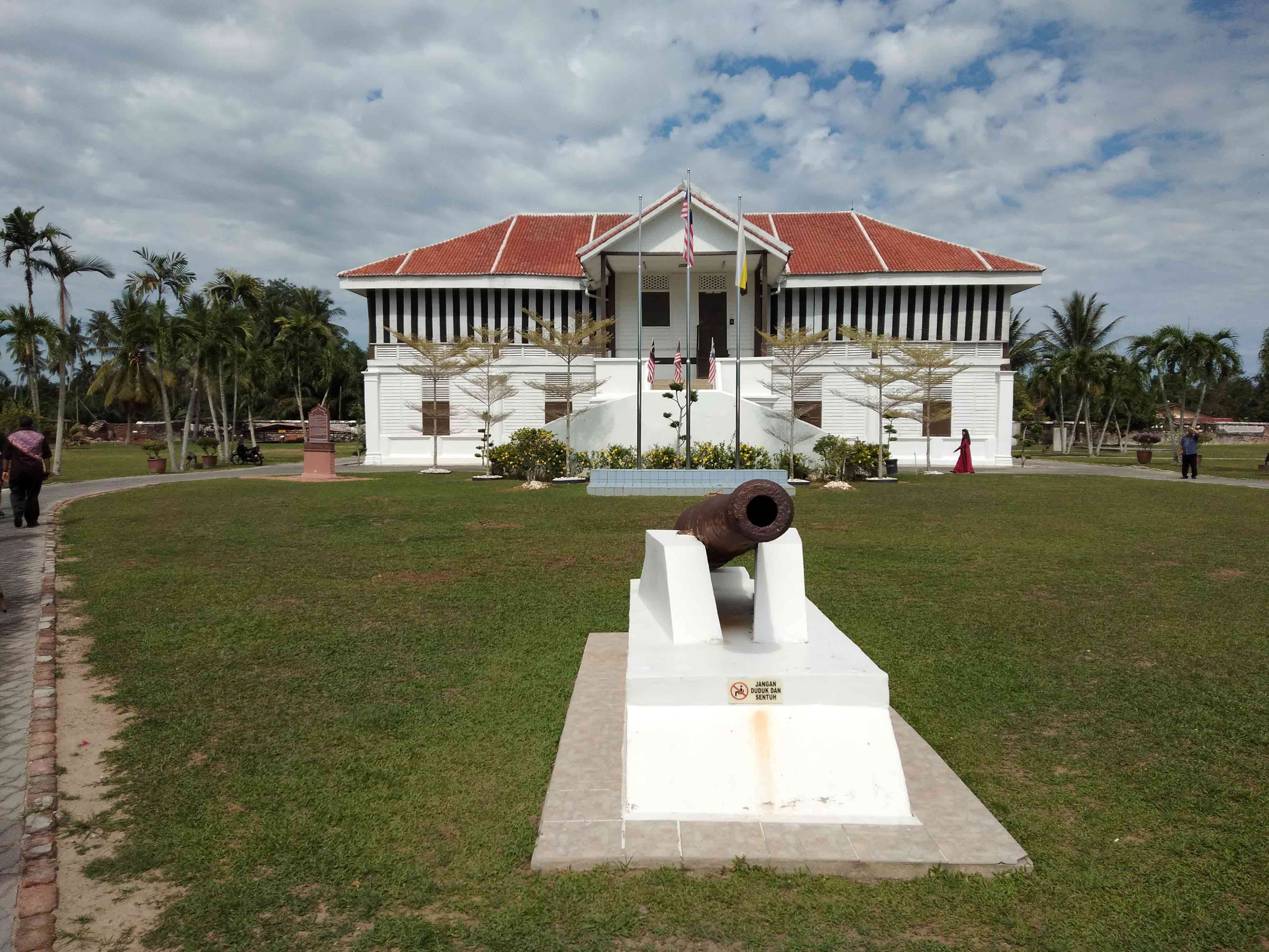
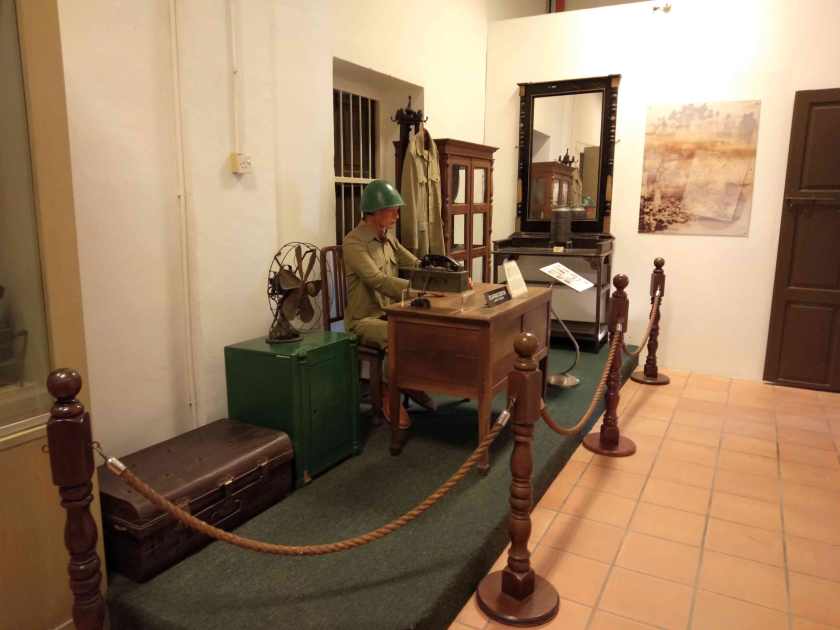
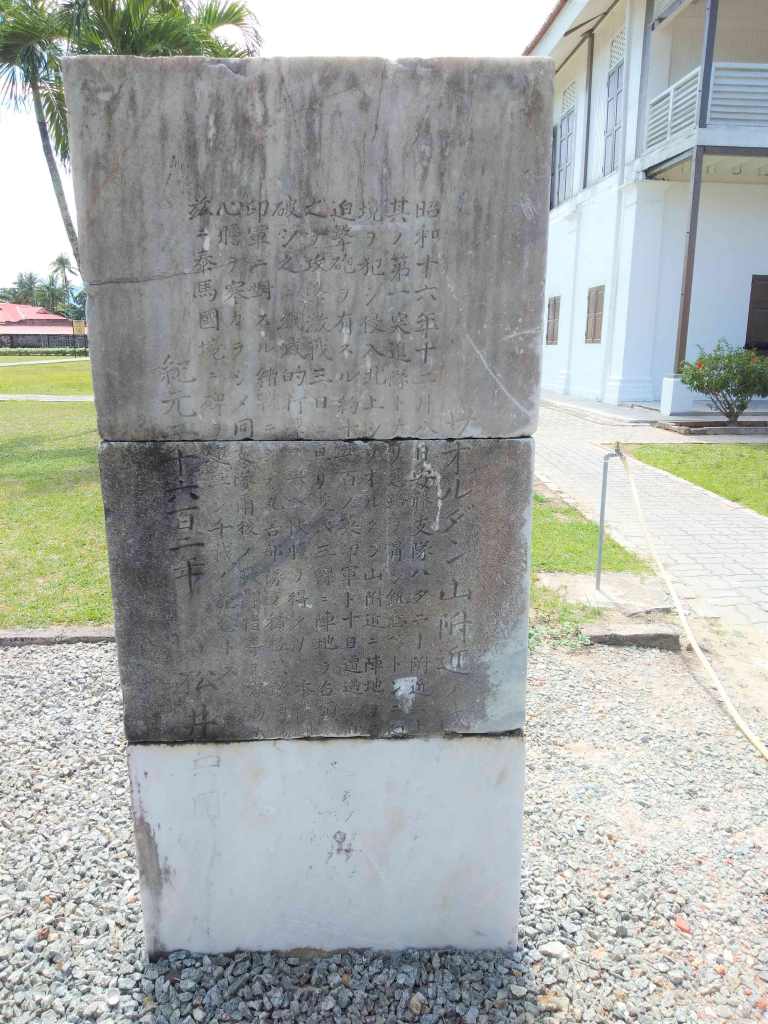
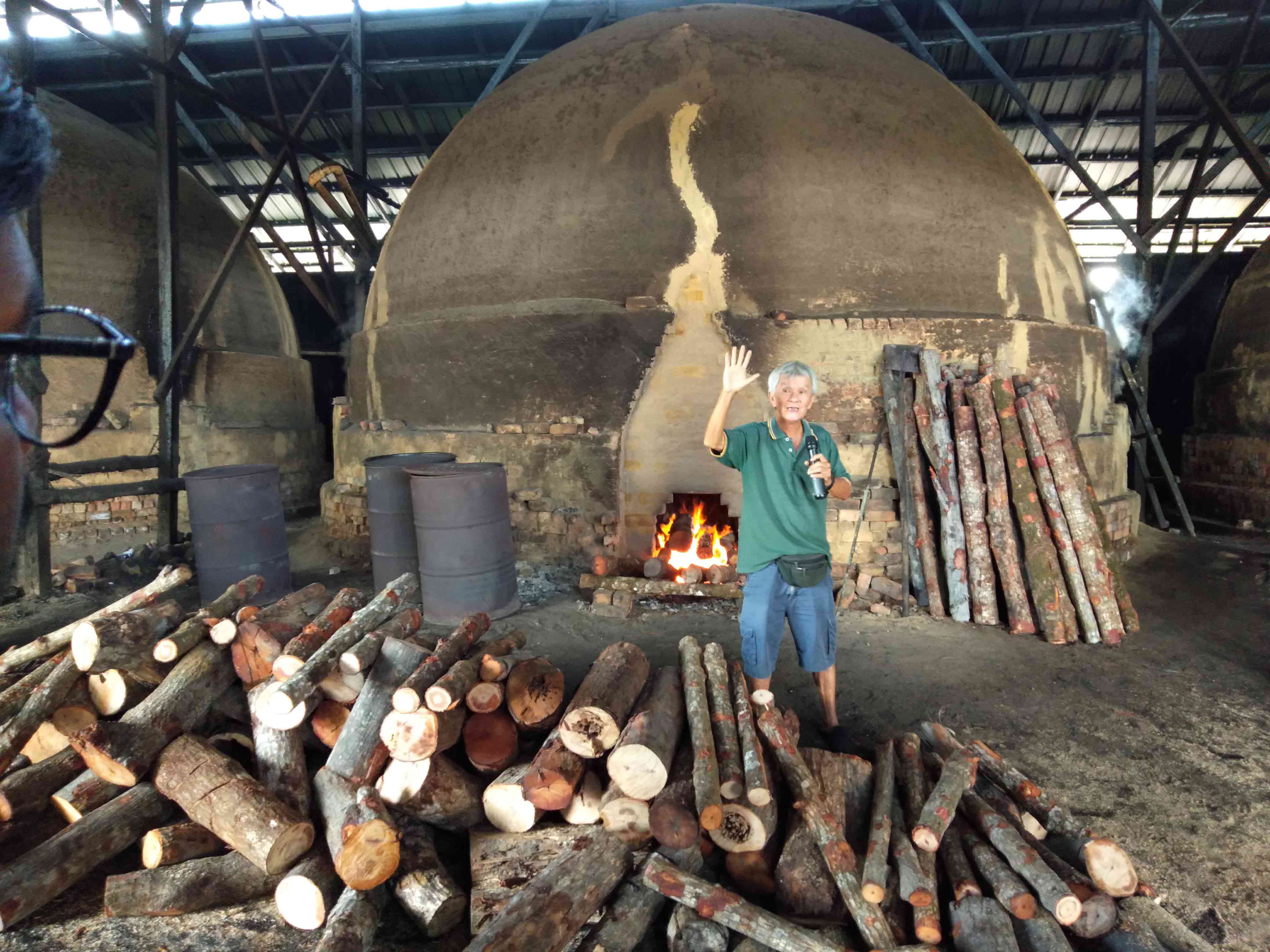
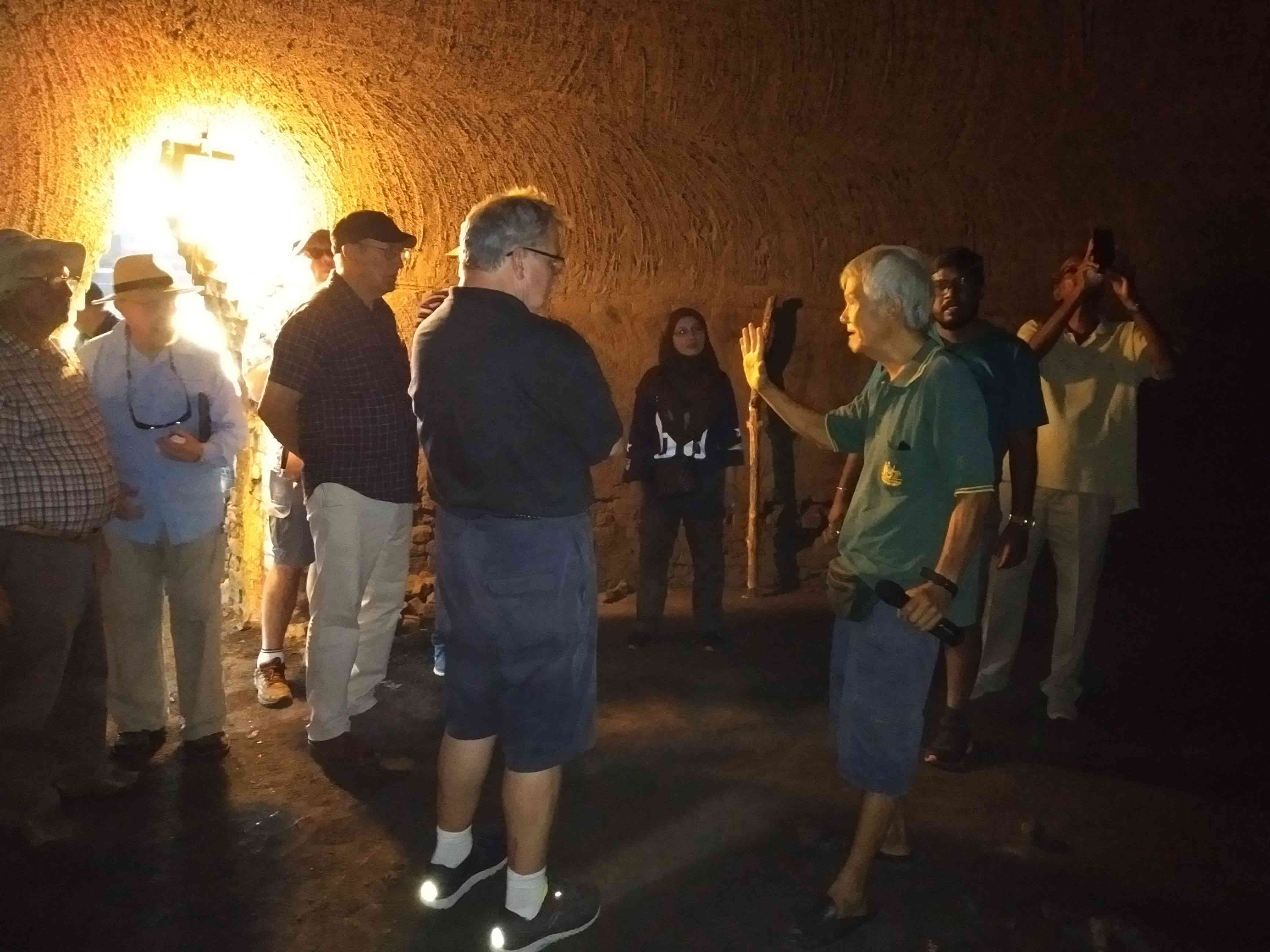
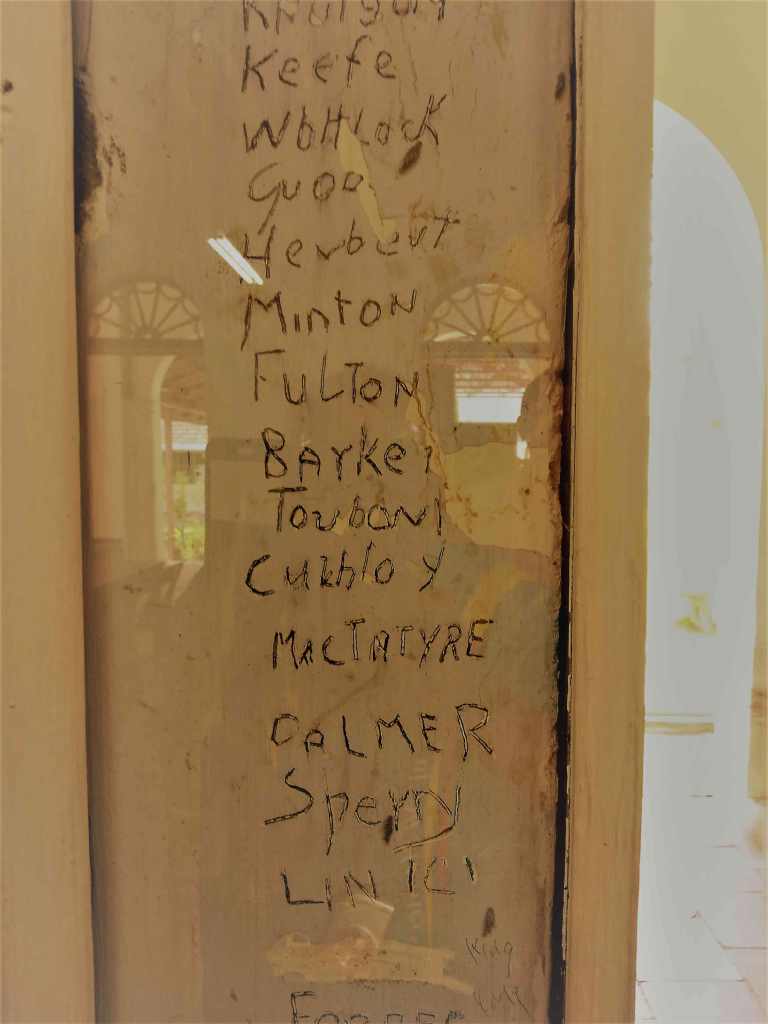
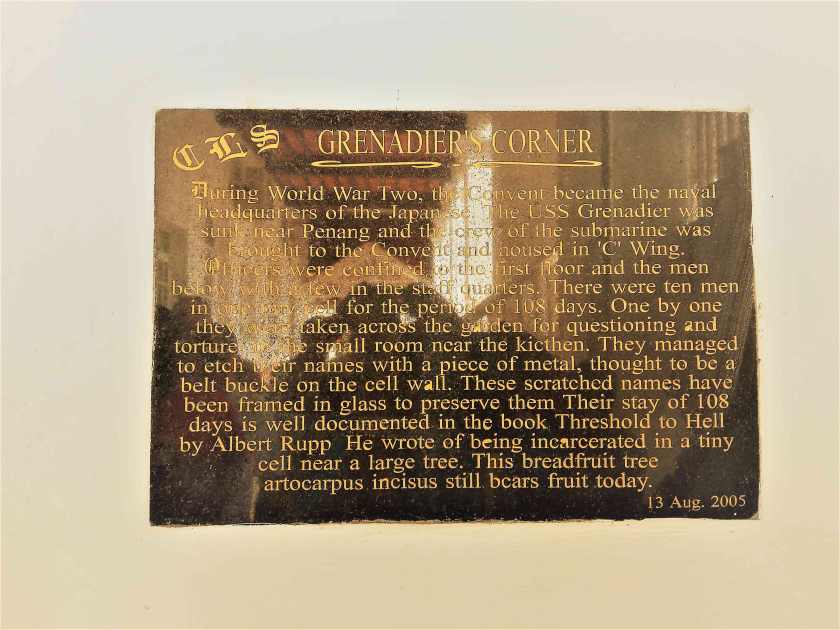
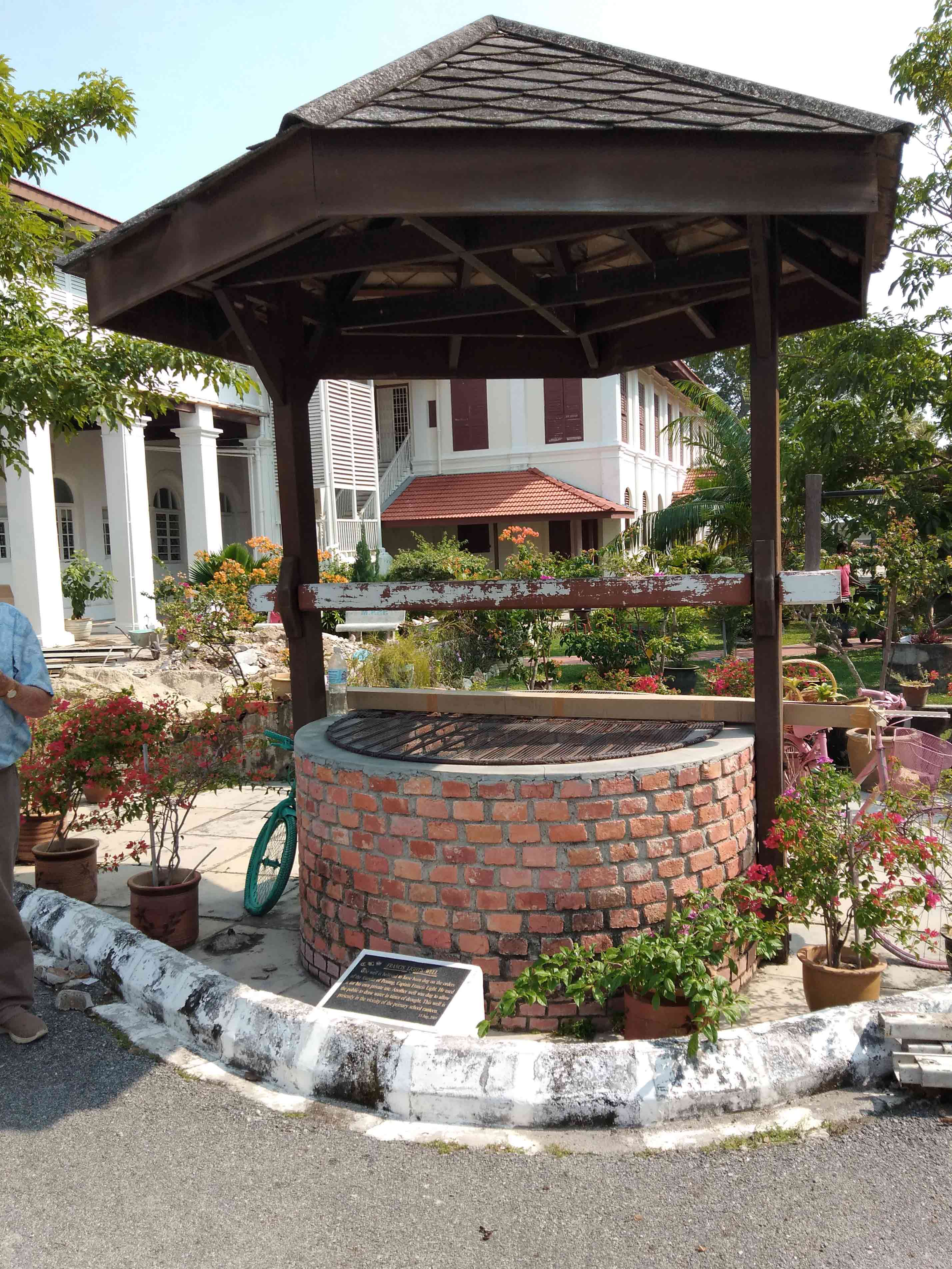
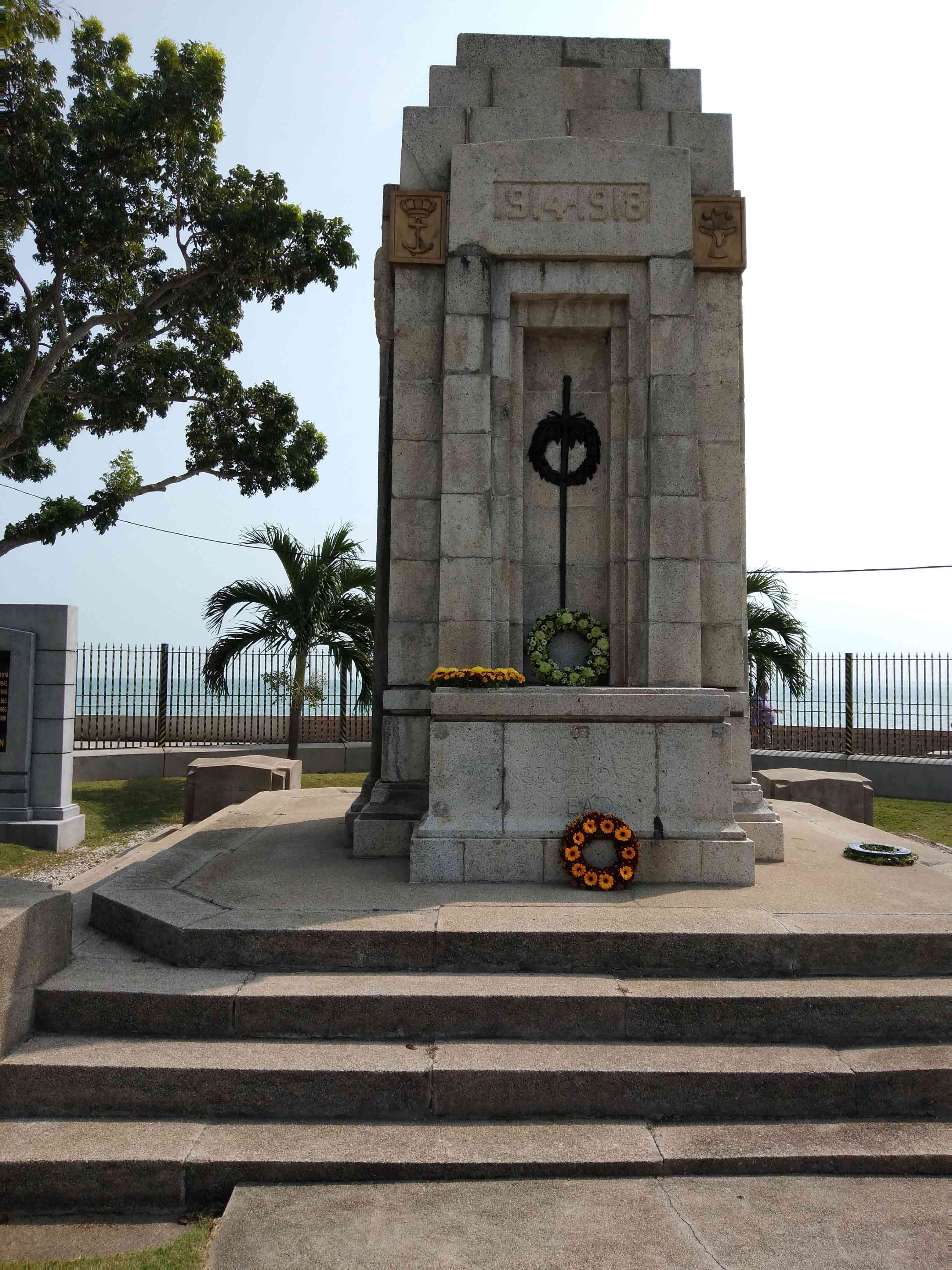
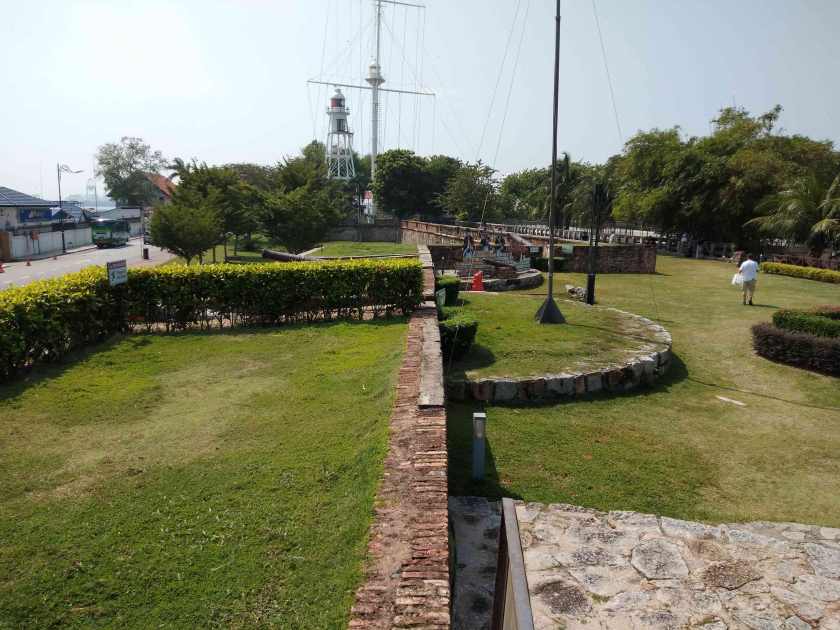
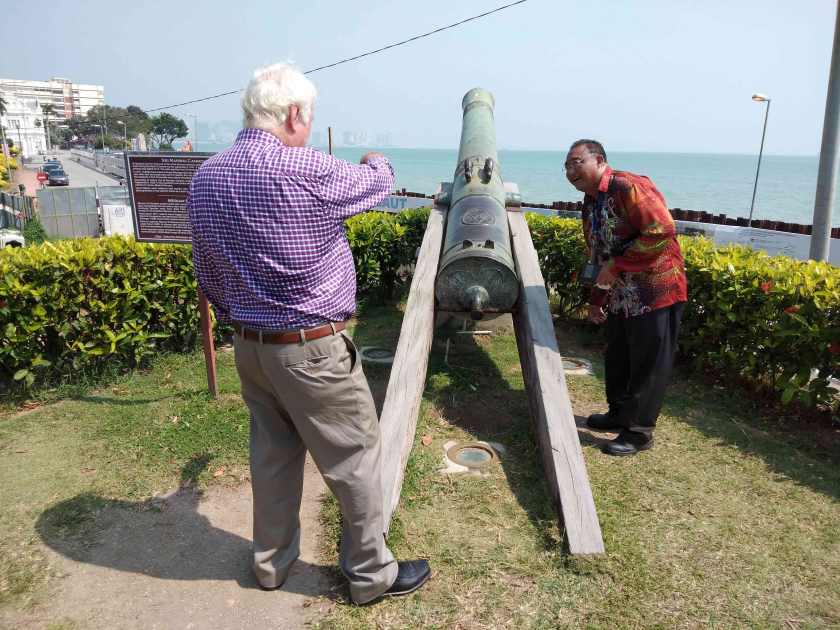
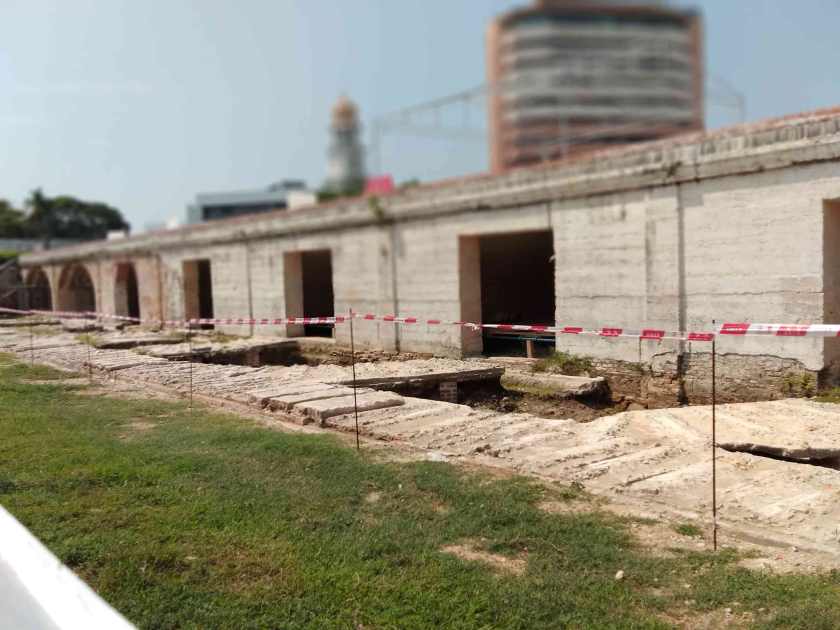
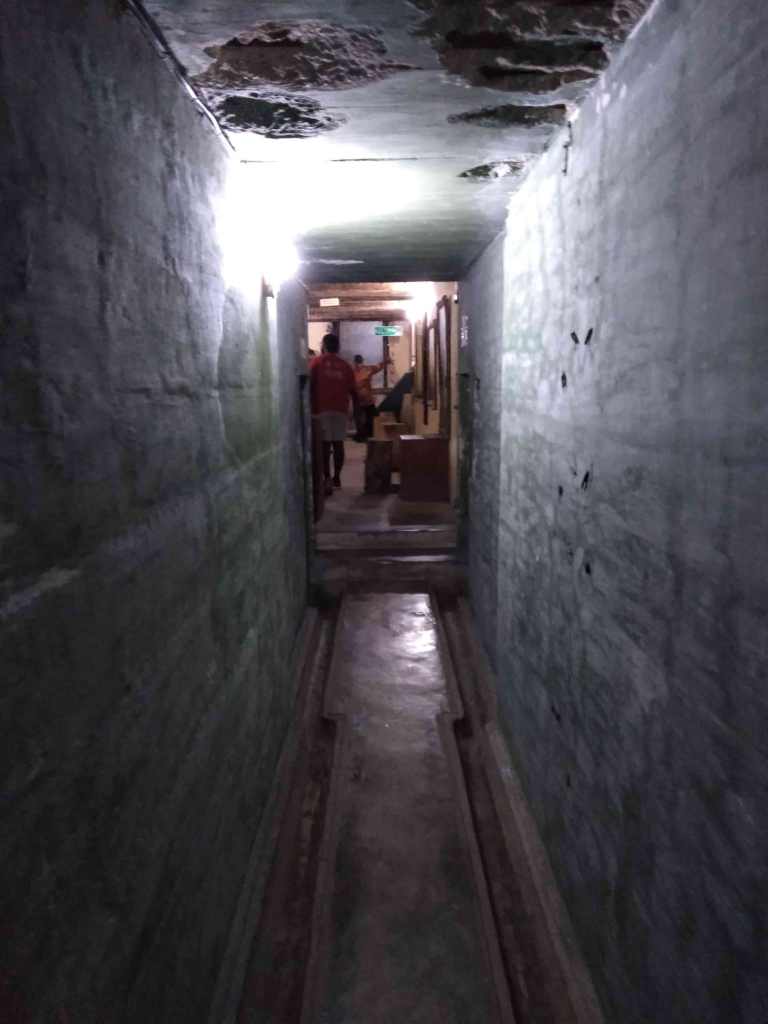
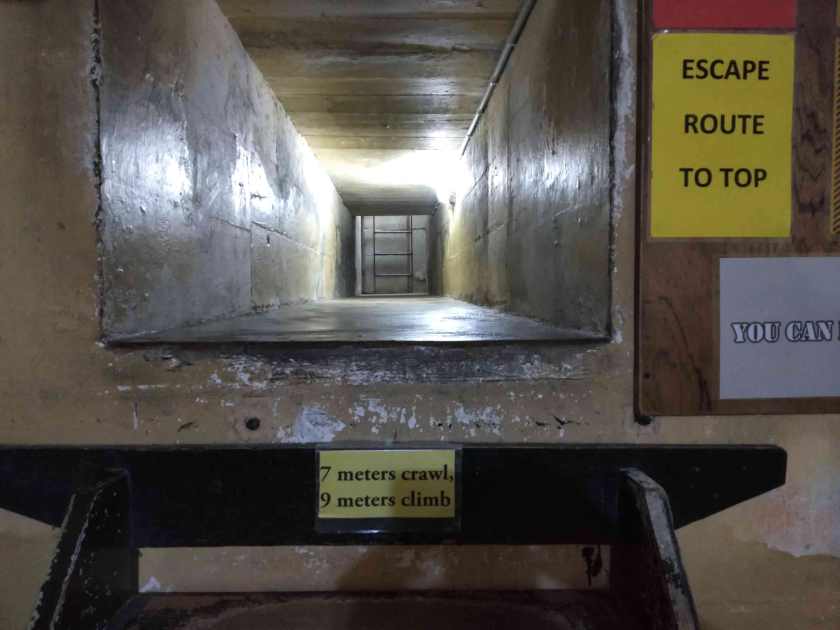
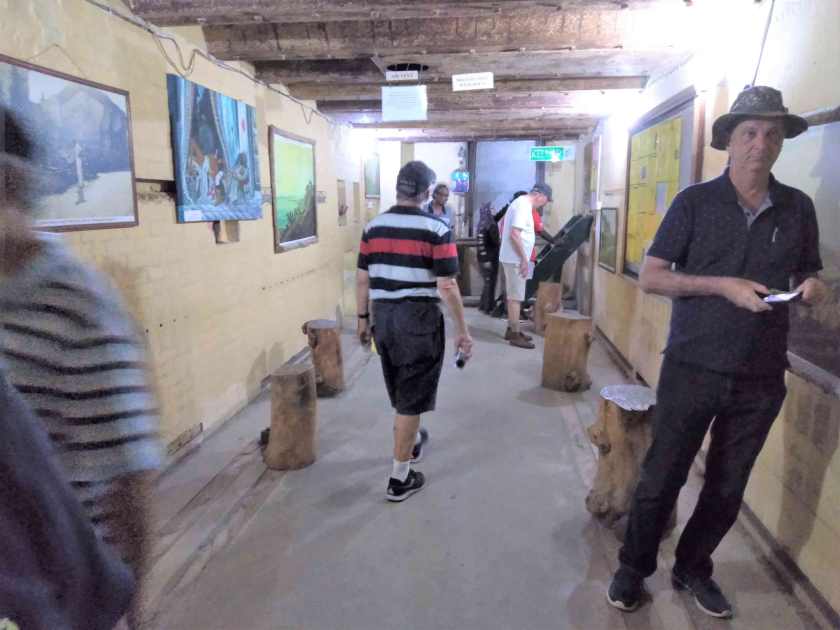
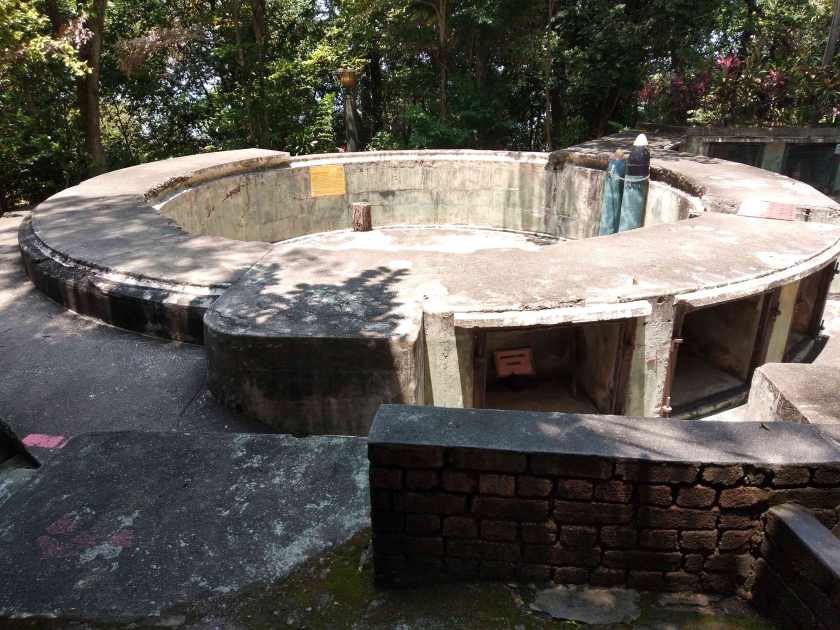
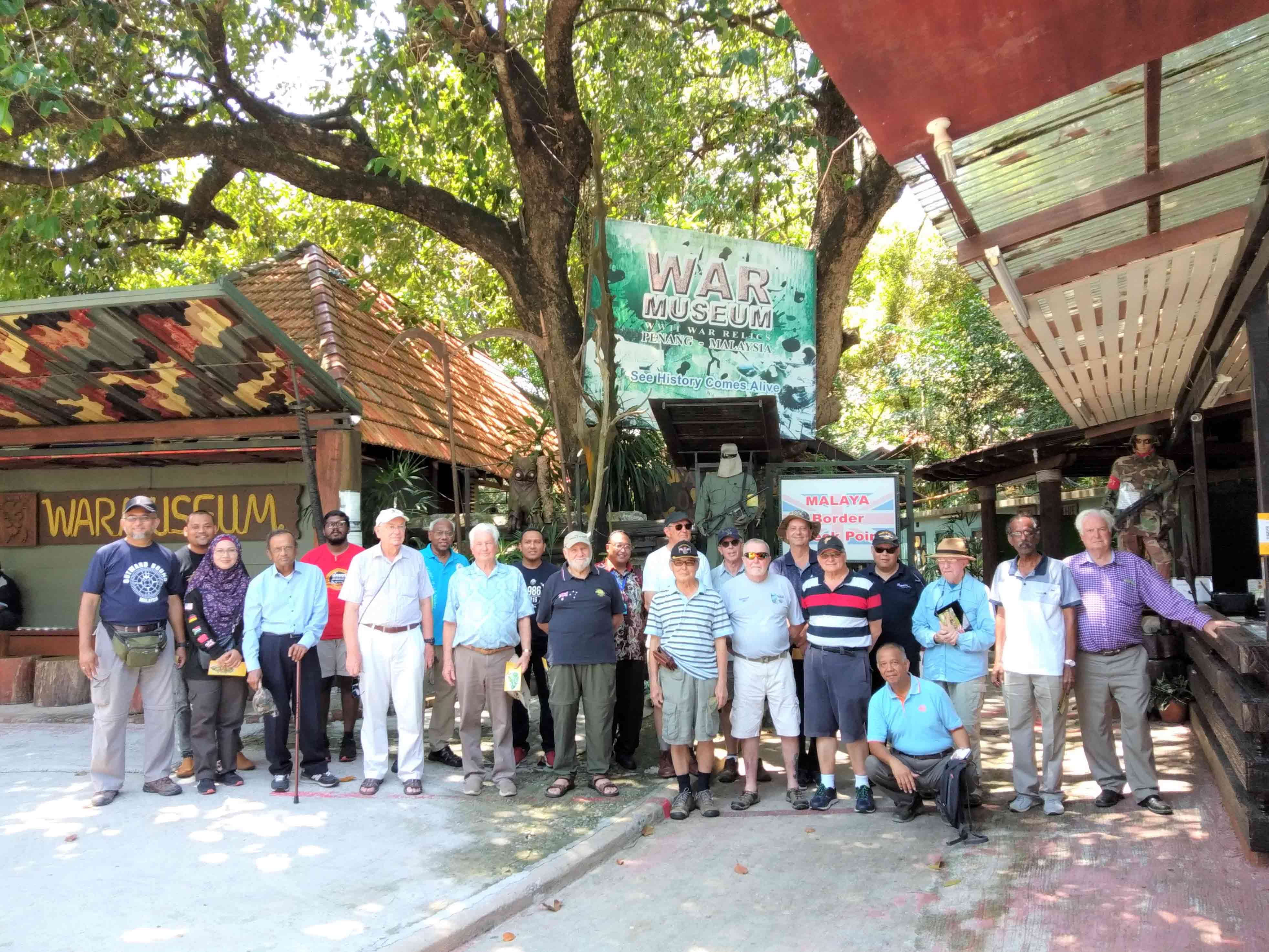
 Museum Volunteers, JMM