Malaya at War (part 1)

by V. Jegatheesan

‘Malaya at War’ was the title of a conference held in Kuala Lumpur on 10th and 11th August 2019. It was organised by the War History Institute, Holiday Tours & Travel Sdn. Bhd. and the Malaysian British Society. As the Research Director of the War History Institute, Mr. Seumas Tan, mentioned, there should be more stories about local war heroes as this would lead to more interest in Malaysia’s war history and consequently more visits to places associated with it. This will, in turn, generate military history tourism.

The Conference

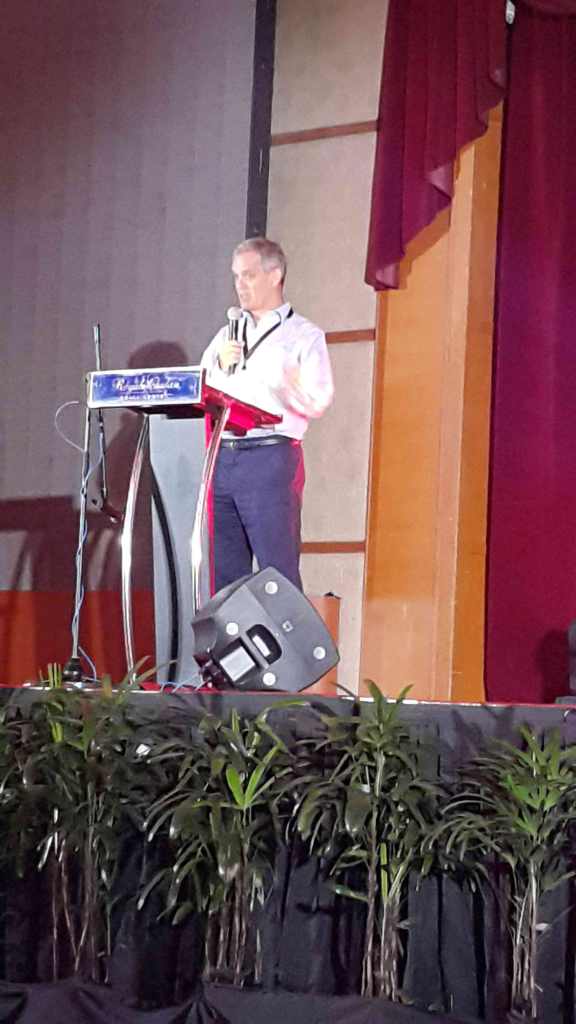
The Keynote Address was by our first Royal Malaysian Navy Chief, Rear Admiral Tan Sri Dato’ Seri (Dr) K. Thanabalasingam. This was followed by Professor Brian P. Farrell of the National University of Singapore on the Defence of Malaya 1941-1942. An interesting first person account of the sinking of the Repulse was given by a survivor – Rear Admiral Guy Richmond Griffiths AO DSO DSC RAN (Rtd.). He is currently the Patron of the HMS Repulse Survivors Association. Kuala Lumpur at War 1939-1945 was covered by Andrew Barber, a Military History Researcher.
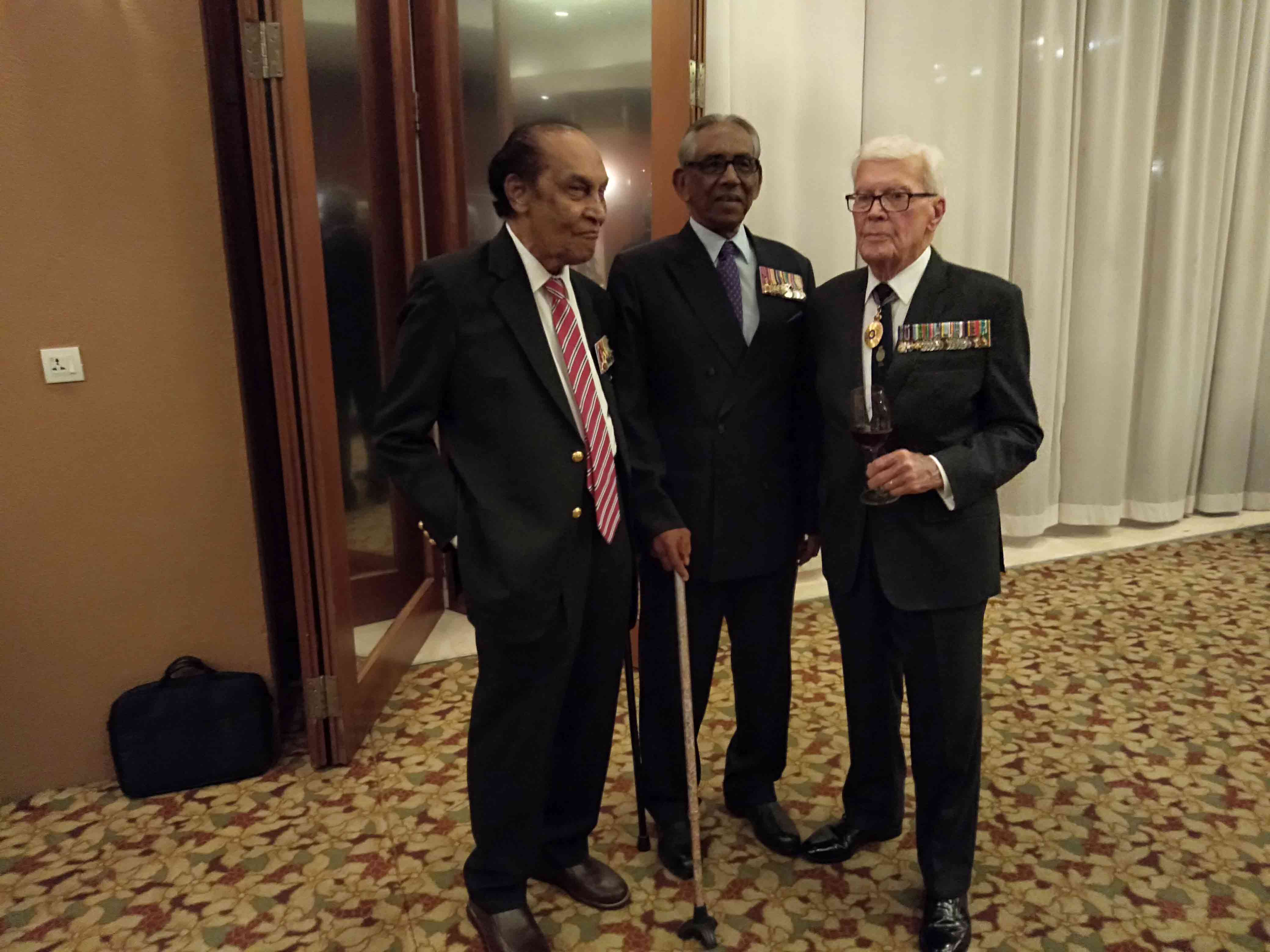
Most distinguished (looks belie their age):                                                      
L- R: Tan Sri J. J. Raj Jr,
Rear Admiral Tan Sri Dato’ Seri (Dr) K. Thanabalasingam
Rear Admiral Guy Richmond Griffiths AO DSO DSC RAN (Rtd.
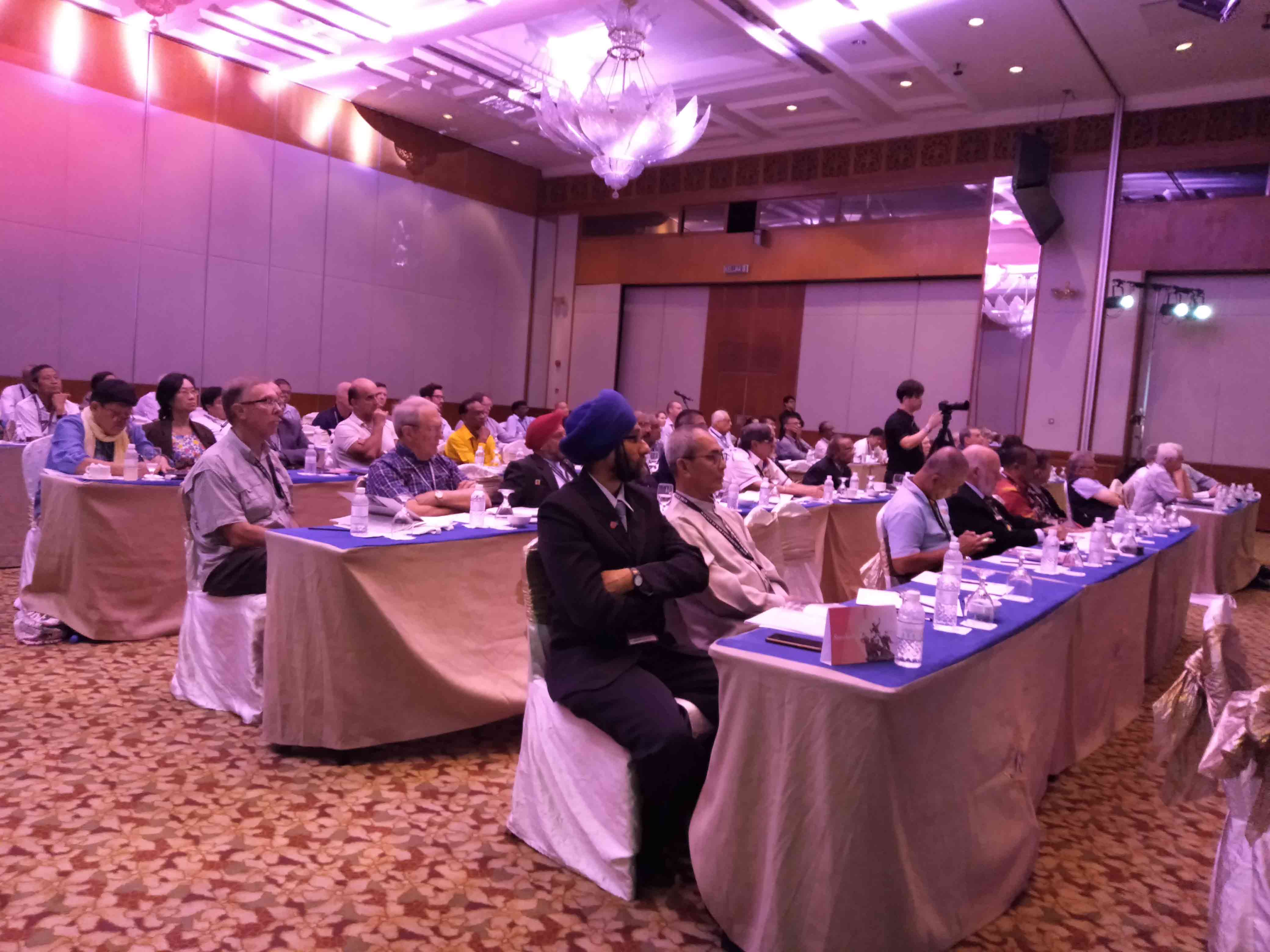
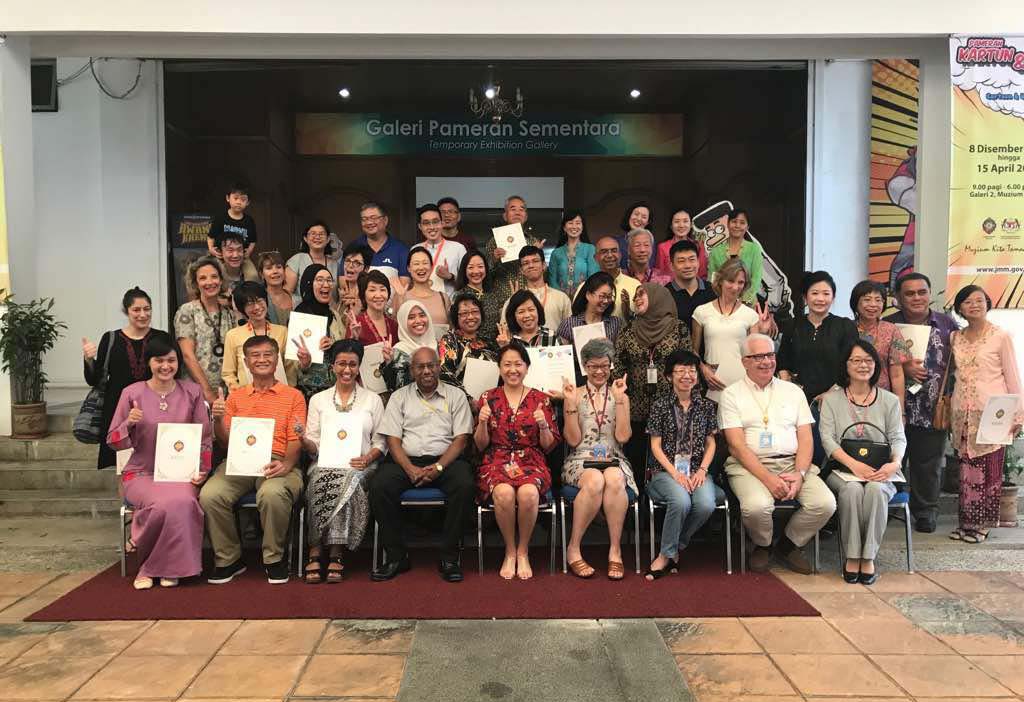
The participants

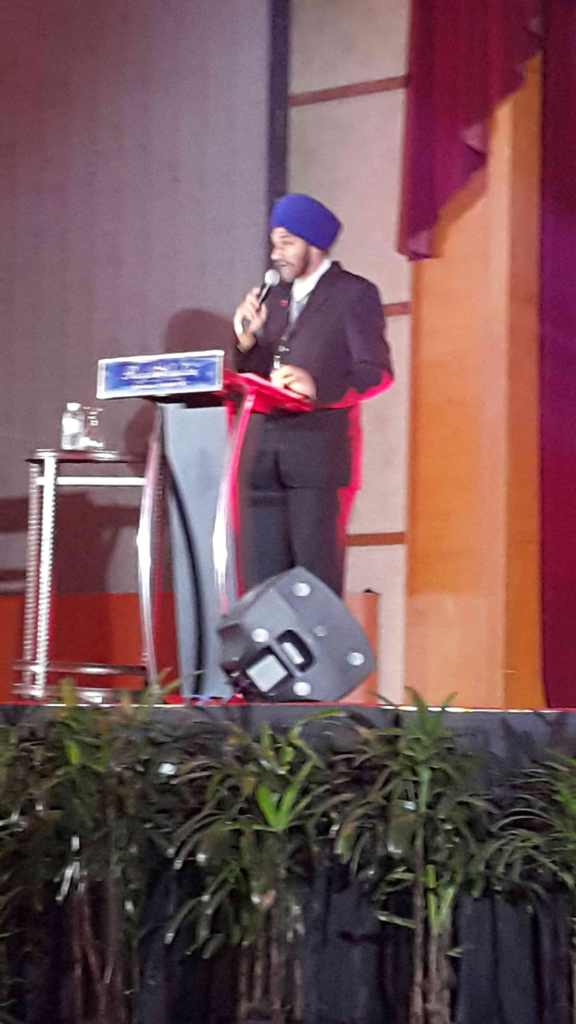
Malaysian speakers were next starting with Mr. Harchand Singh Bedi, a Military History Researcher, who spoke on the Battle of Kampar 1941-1942. The story of Sybil Karthigasu was presented by Mr. Law Siak Hong, President Ipoh Heritage Society. War leaves behind a trail of wreckages and relics and Encik Shaharom Ahmad, a Malaysian Military Historian and Researcher, gave an illustrated description of airplane wreckages, bridges and pillboxes. A panel of speakers then gave their viewpoints on battlefield tourism and their involvement in promoting this. The panel comprised of Seumas Tan, Research Director War History Institute Sydney Australia, who acted as the moderator; George Yong and Zafrani Arifin, Malaysian Battlefield Guides; Henry Ong, Head Business Development Holiday Tours & Travel Sdn. Bhd.; and Dennis Weatherall, Australian Military Historian and Accredited Battlefield Guide.

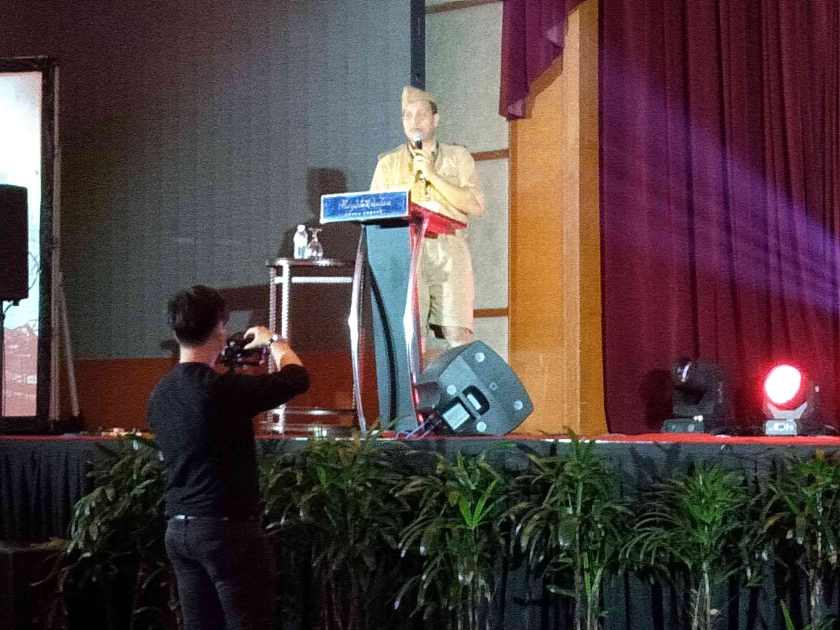
The next day began with the topic on the Malayan Emergency (1948-1960) which was very much a war but for various reasons called an emergency. This was covered by Mr. Christopher Hale who is a documentary producer and non-fiction writer. The famous Bukit Kepong Incident was described by Tan Sri J. J. Raj Jr., a Retired Commissioner of Royal Malaysian Police. He was the Officer in Charge of the Police District and was involved in the incident. From the Nanyang Technological University Singapore, Associated Professor Dr. Kumar Ramakrishna spoke on the Role of British Propaganda during the Emergency. The Conference was closed with a skit describing how a couple of Communists pressured a local couple for food. However, they were ambushed and killed. This skit was by the Malaya Historical Group all in period dress and uniform.
Tan Sri J. J. Raj Jr

The Tour

The Conference was followed immediately by a 6-day tour of the battle sites and memorials as well as a few other places of interest. The group comprised organisers Seumas Tan and Henry Ong, guide Zafrani Arifin and 2 officers from Tourism Malaysia. There were fourteen other participants, of which five were Malaysians. The remainder nine participants were Australians including one who had been here during the Emergency and another during the Confrontation.

The following is a description of the tour and a brief explanation of the battlefields, the battles and memorials. It is not meant to be a detailed description of the various battles as this will be too lengthy. The description also follows the tour route and not the specific battle routes as this involved a lot of criss-crossing and backtracking; it was not a straightforward fall back. These intricate details can be read from numerous books and the internet.

The route for the first day follows the start of the Australian forces’ involvement against the advancing Japanese army. As Australian Lieutenant General Gordon Bennet wrote in his book Why Singapore Fell, “Australians go in to bat”, a cricketing term. Their objective was to stop this advance and even drive the Japanese back, if not to delay the onslaught. The Japanese had been rapidly advancing down south largely on the west coast road with forces spread out on the fringes of the road, in the rubber estates and in the jungle, in fact everywhere in a broad sweep. They also had air cover in many places operating from occupied airports. Surprisingly, they also seized boats in Penang and Muar to get ahead and behind the British lines. The Forces, i.e. British Army, may have delayed the Japanese slightly and caused some losses, inflicted heavy damage, but they ultimately had to retreat into Singapore.

While this is where the Australian forces joined the war, the entire army here comprised of Australian, Indian and British units. Many units have been retreating from up north and were exhausted. Units had to be regrouped as each suffered losses.

Tour – Day 1

On the first day, we set off for Sungai Kelamah War Memorial in Gemencheh. This is along the old road south and close to Gemas. The Japanese, who had rumbled down at speed, arrived here on 14 January 1942. An Australian ambush party had already laid explosives under the bridge and awaited the Japanese. Bridges were routinely destroyed in war to stop or delay the advancing enemy forces.
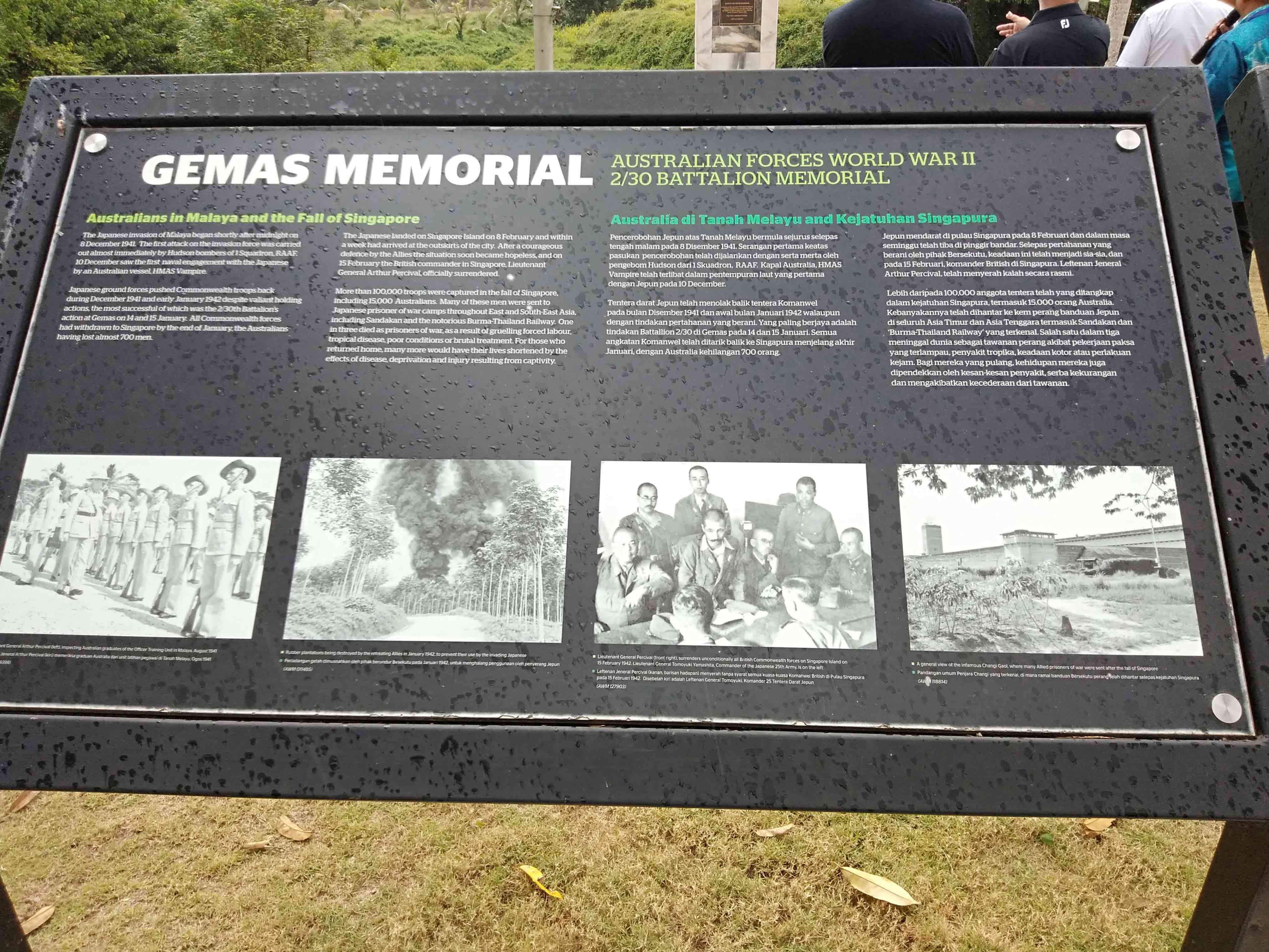
The memorial at Gemencheh

At 4.10 pm, after some 300 Japanese troops had crossed, the Australians blew up the bridge killing about 30 Japanese on the bridge. Australians were also ranged along hillsides further back and fired on Japanese who had crossed. It is estimated that nearly 500 to 700 were killed with minimal losses for the allied troops. As far as they were concerned, the ambush was a success.
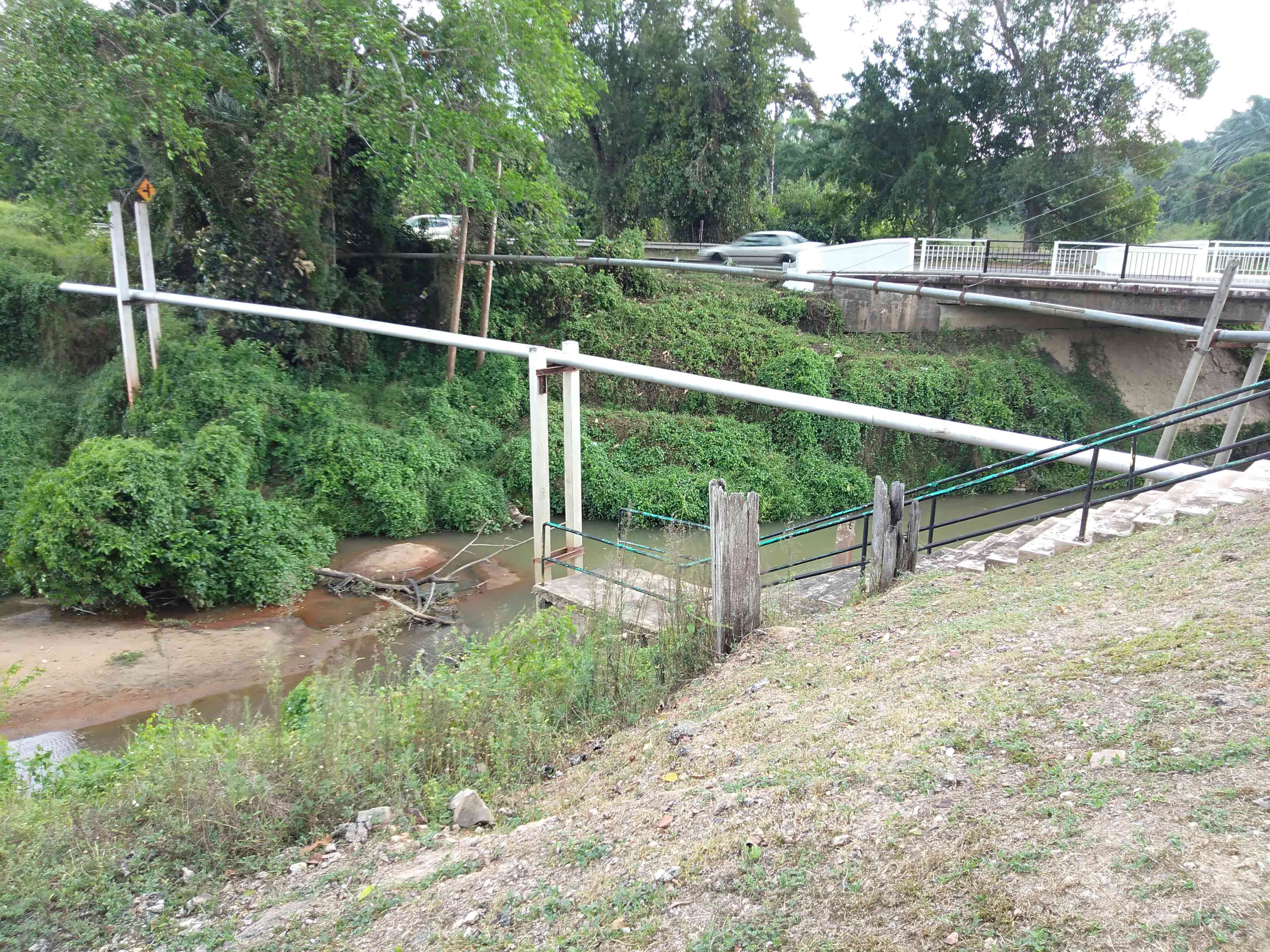
Remnants of the bridge. A new bridge can be seen in the background.

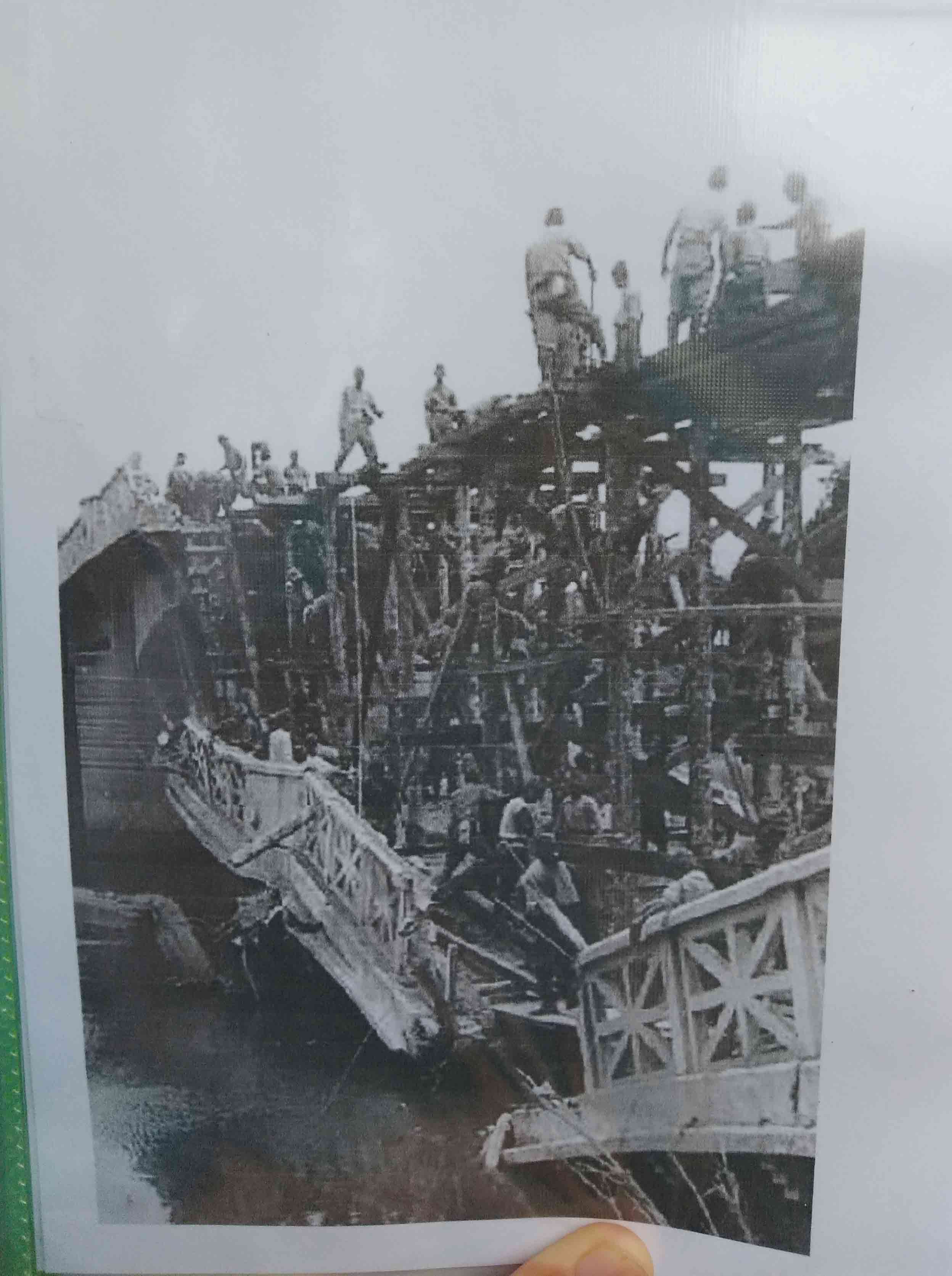
Nevertheless, in due course, the Japanese had gotten ahead behind them as the Australian ambush party withdrew towards Gemas, continuously avoiding Japanese advance parties who got behind Australian lines. Generally, withdrawal was not a simple matter in war as they were constantly harassed and fought with by the Japanese behind the lines and by heavy aerial bombings. Many units or soldiers become lost or trapped and had to find their way to their units or other units. The bridge was quickly rebuilt by the Japanese using timber from a local sawmill. Retreating forces destroyed the machinery but did not think the timber would be useful. In war, fuel, machinery, vehicles even street signs or anything that will give an advantage to the enemy is removed or destroyed.

Today we see a memorial site and the remnants of the bridge. Further away we also saw anti-tank cylindrical concrete blocks intended to halt advancing tanks.
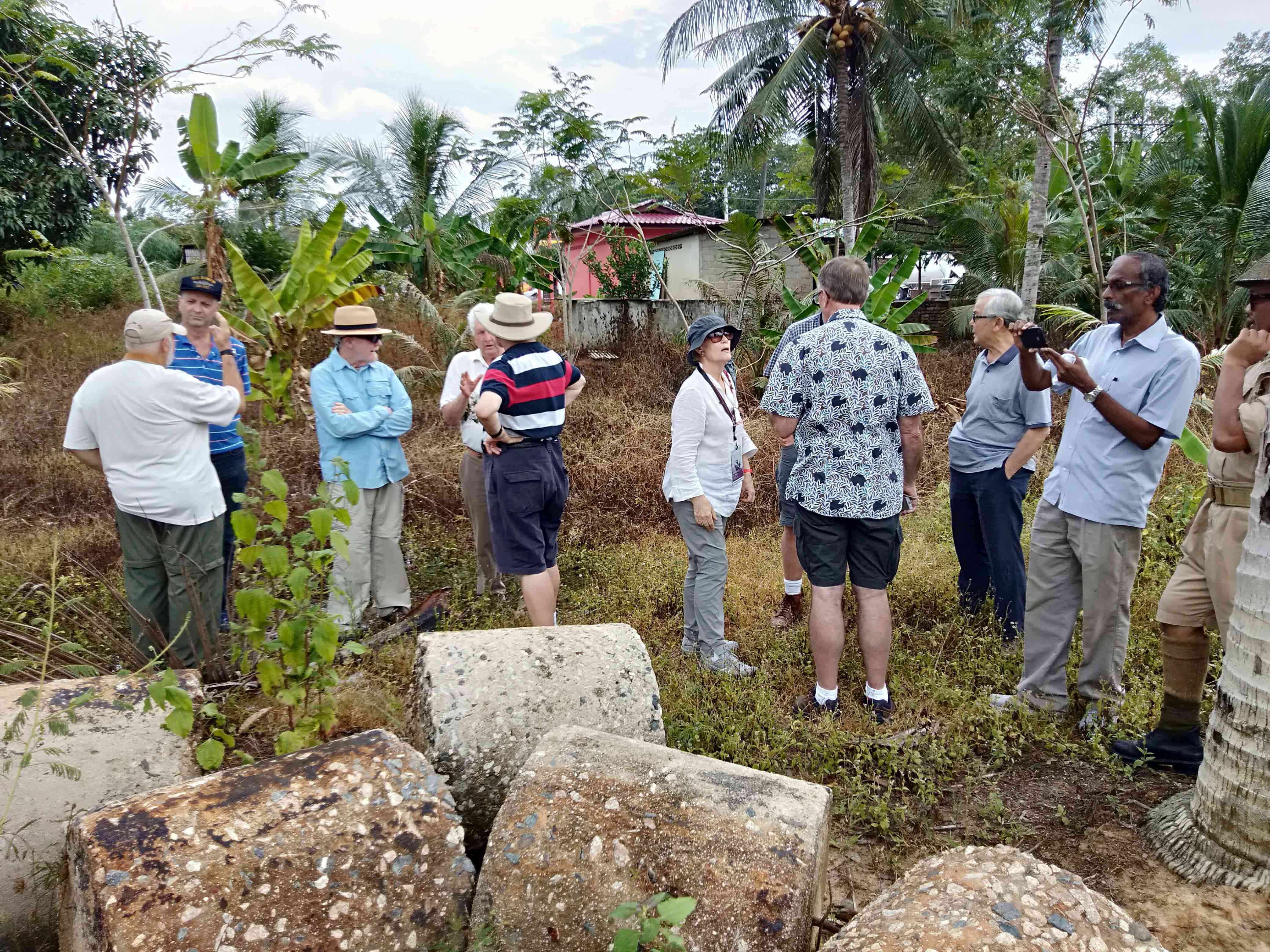
Anti-tank blocks and us

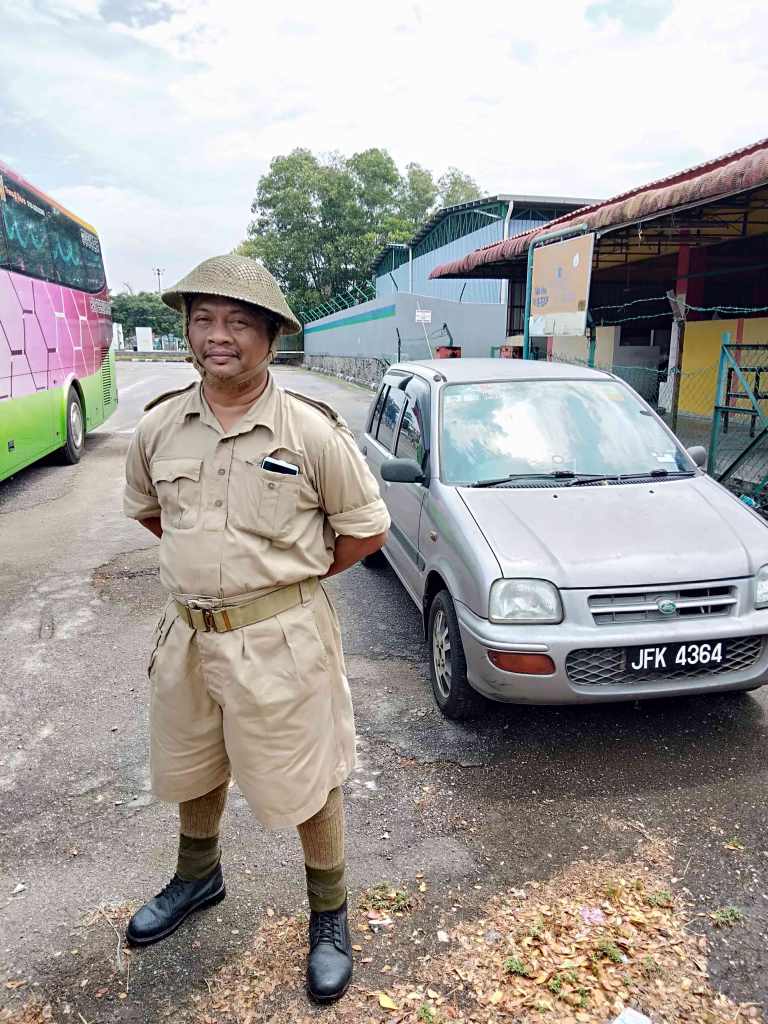
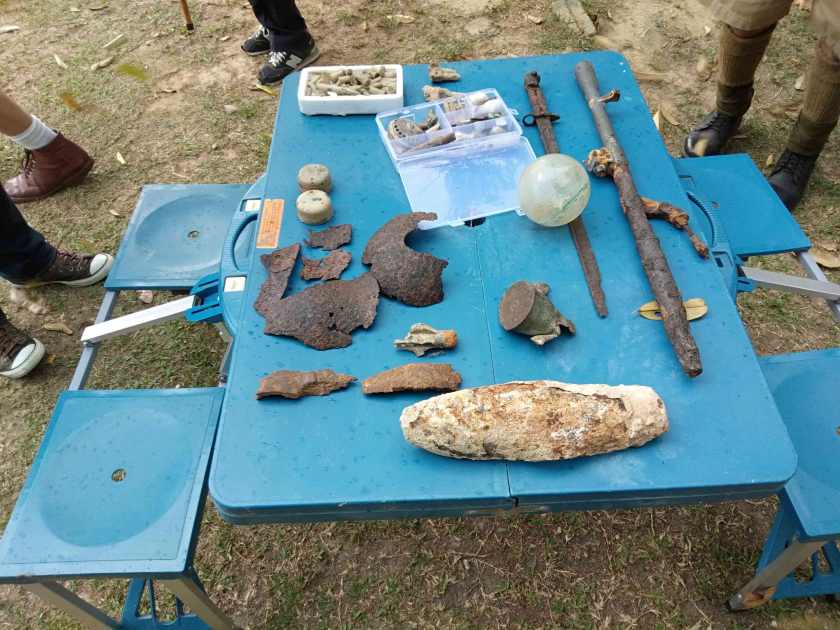
A local enthusiast, Rizal, showed us around dressed in the Commonwealth Forces uniform. This uniform was worn by Australian soldiers on the way to the Middle East and when they were diverted to Malaya, they fought in this uniform. Over time Rizal has collected many artefacts, all rusted with time.
Today, the road has been realigned and a new bridge built.

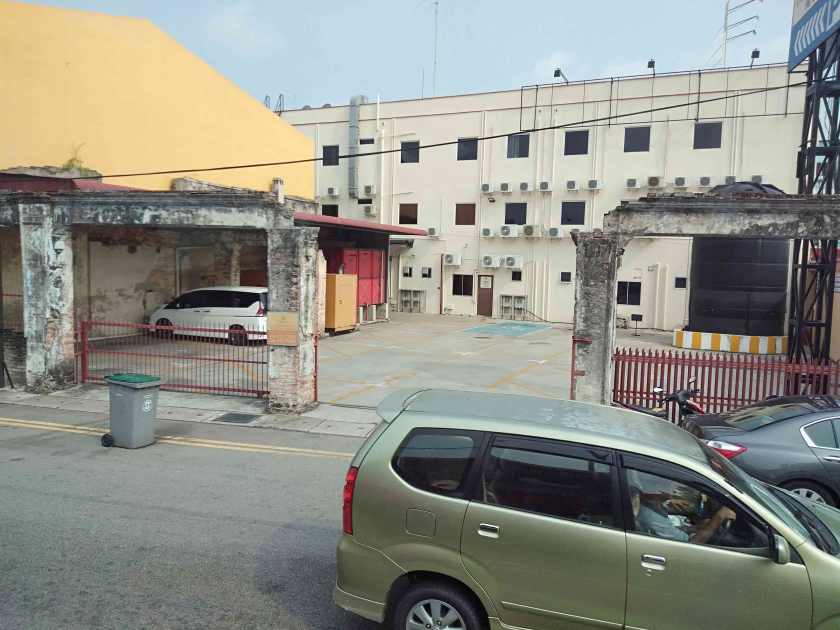
We proceeded to the Gemas Railway Station. We were shown a photo of Japanese troops crawling along the lines anticipating enemy attacks.
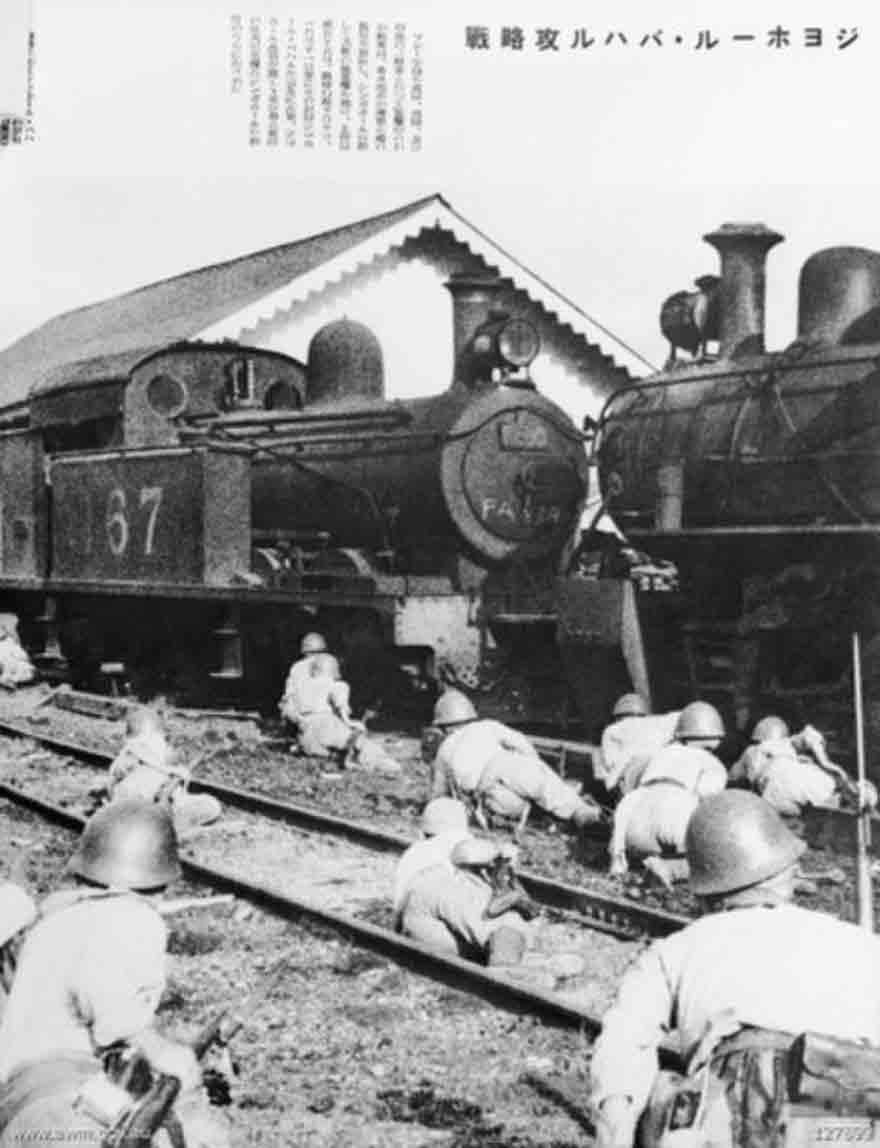
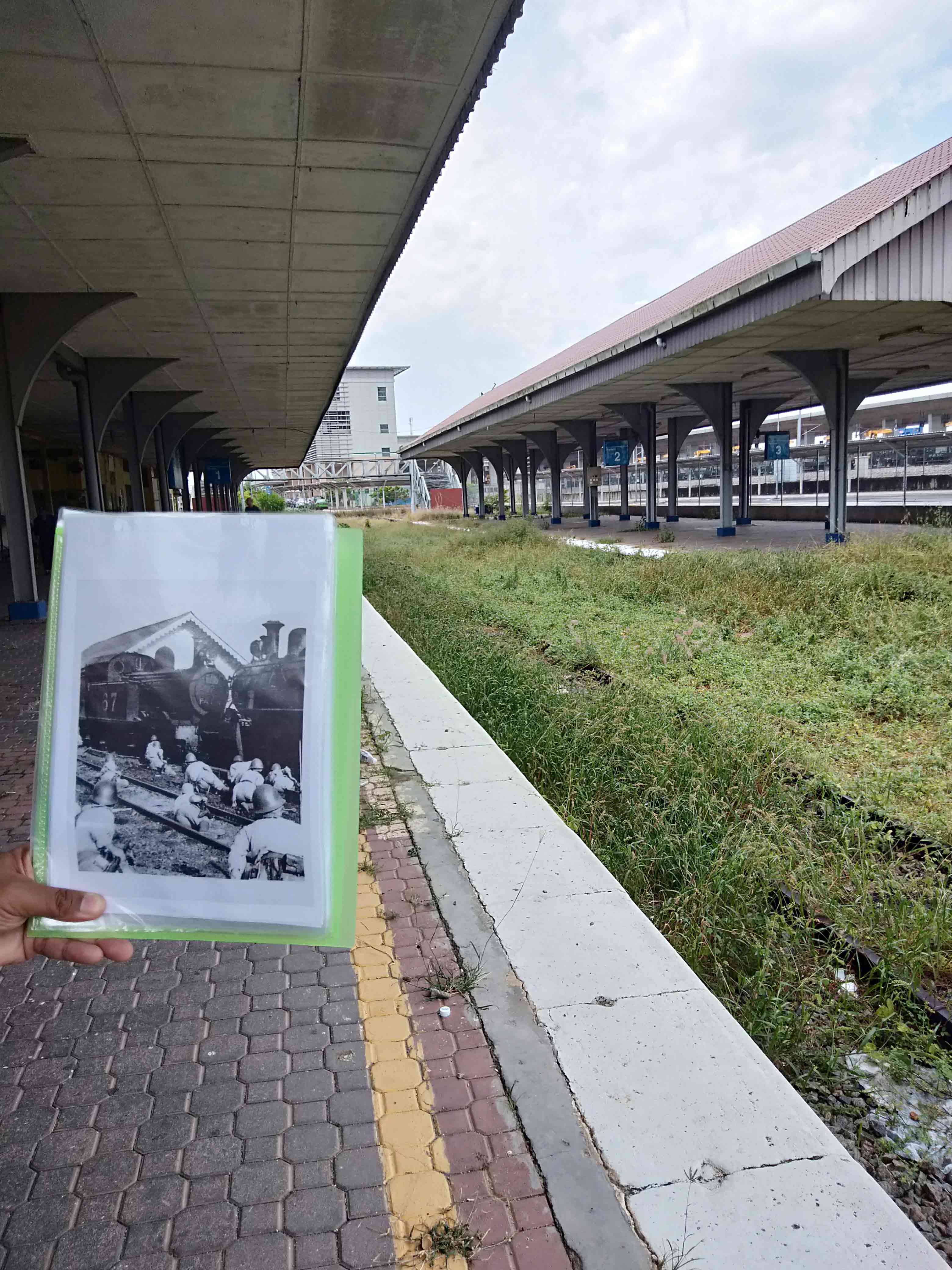
The Gemas Railway Station – then and now

The next stop was the Gemas Broken Bridge. Today you can still see the remnants as seen in the photo below while a new bridge has been built nearby.
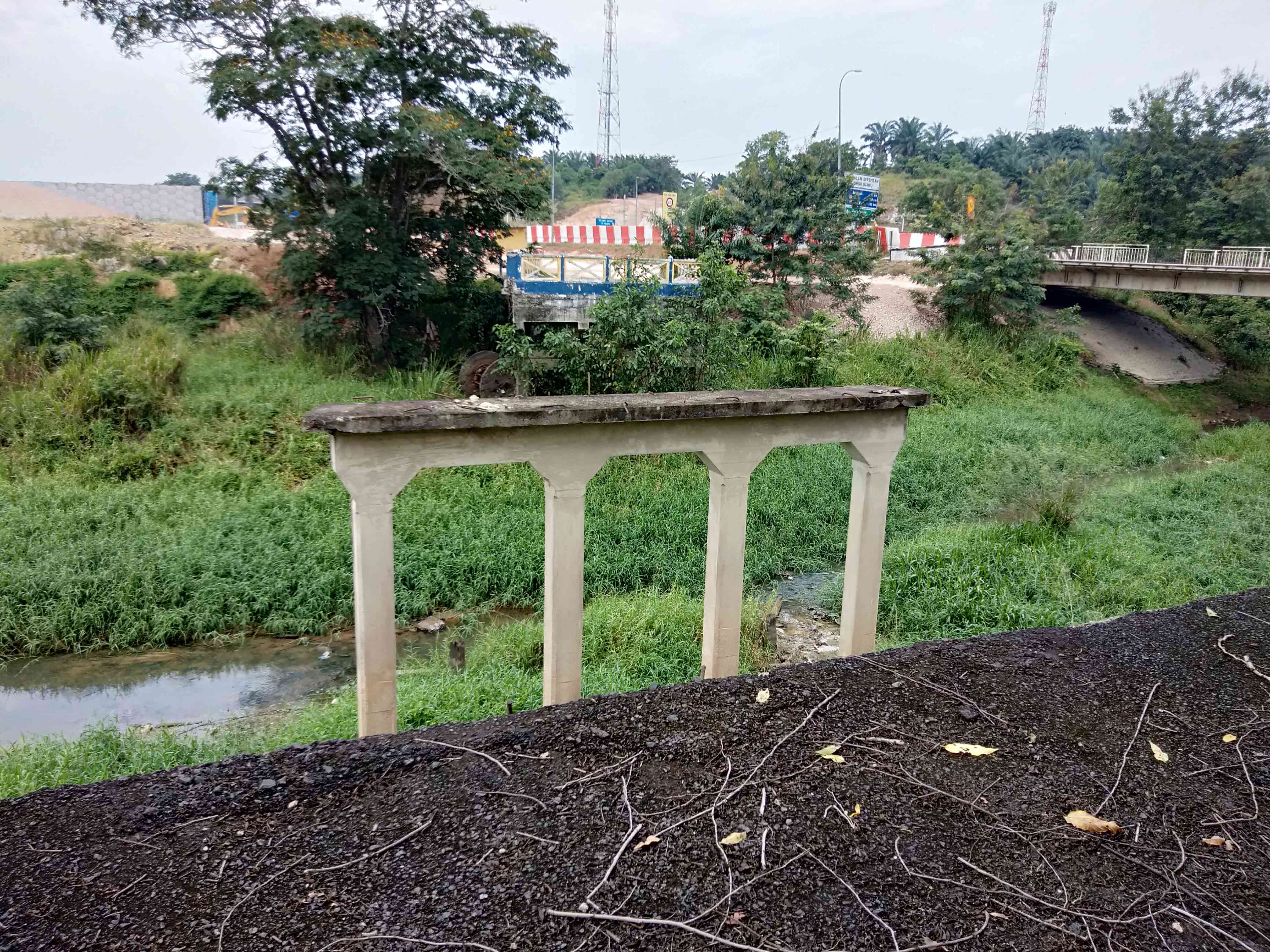
Gemas Broken Bridge

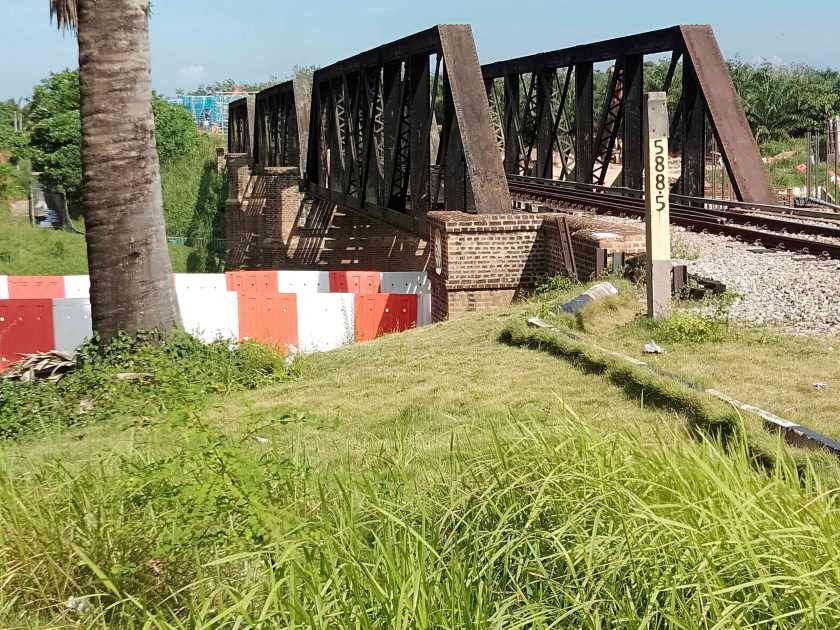
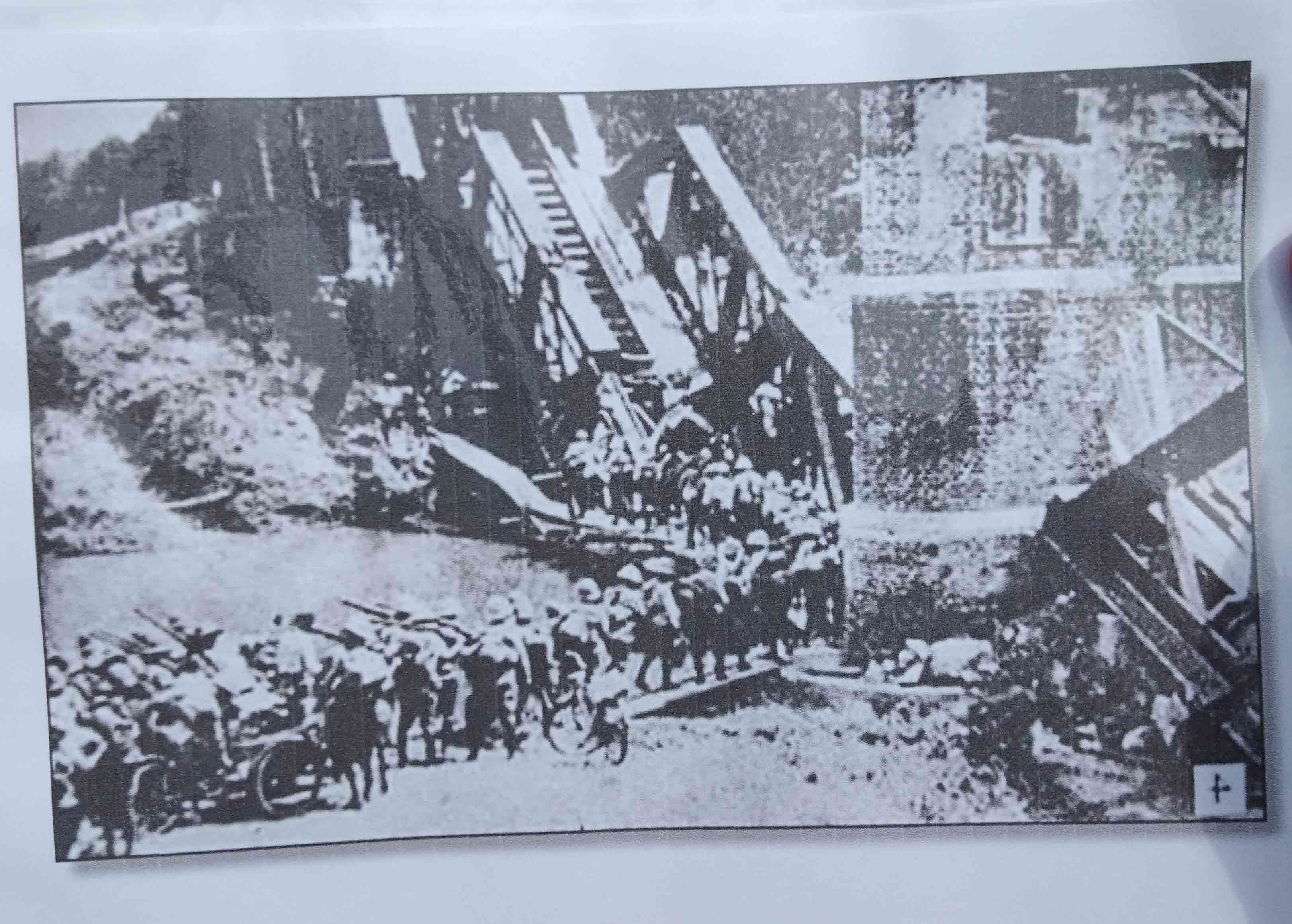
Next was the Buloh Kasap Bridge, which shared the same fate as the other bridges. A then and now photo shows how the bridge was rebuilt at speed by the Japanese. The ends of the bridge are still intact today. On one side damage from artillery shells can be seen. Markings on the concrete pillars below show that the bridge was built in March 1926.
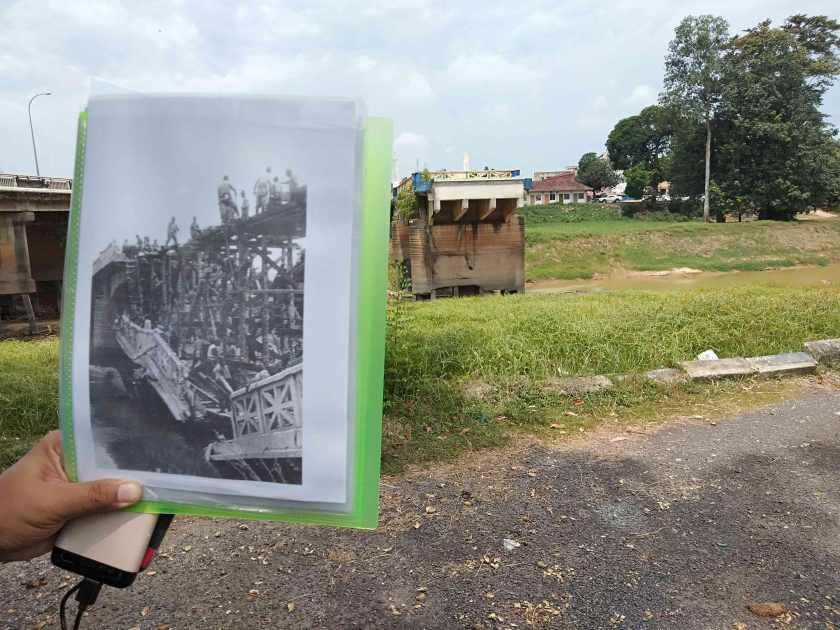
Photo of the Japanese rebuilding Buloh Kasap Bridge

Both these unusable bridges seem to be painted and maintained by the local Council, but attempts to contact the Council to confirm this is still ongoing. Before the next bridge, we stopped for lunch at the VIP Hotel, a small yet beautiful hotel.

The Segamat Railway Bridge was also blasted and quickly rebuilt. Any advancing army will expect bridges to be blown up and are therefore prepared to rebuild them. It is a matter of speed to get it up and let the forces cross onward. Materials are usually sourced locally as in Gemencheh.
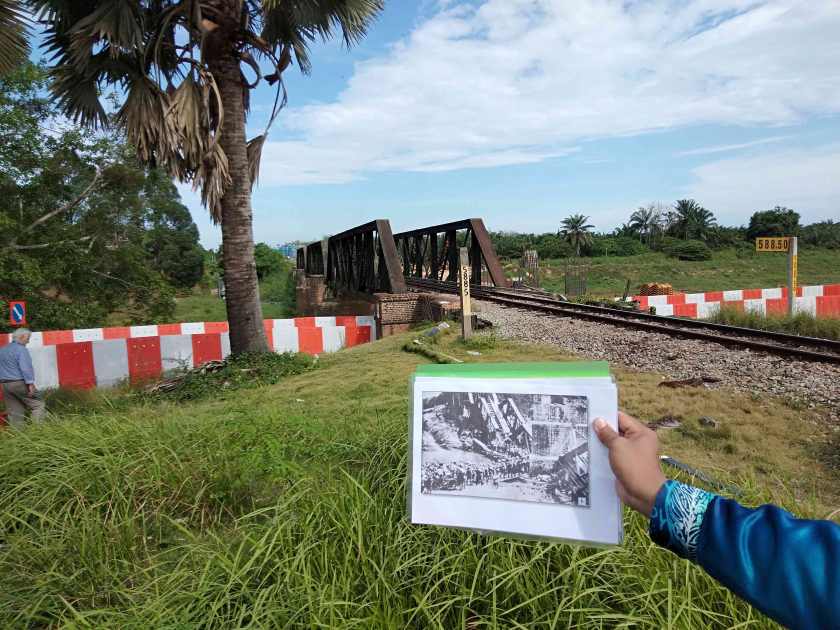
The photo shows the Japanese rebuilding the Segamat Railway Bridge

It is fortunate to have the then and now photos as it helps in imagining the various happenings. Unlike other bridges that have been replaced with realigned roads and new bridges, the Segamat Railway Bridge was repaired after the war and it is still in use. Our night stop was at the Ramada in Melaka.

Tour – Day 2

The second day saw us in Muar town. The local Tourism Officer boarded the bus and gave us a tour of the town. Of interest was the remains of the bombed out building behind the present Streetview Hotel.
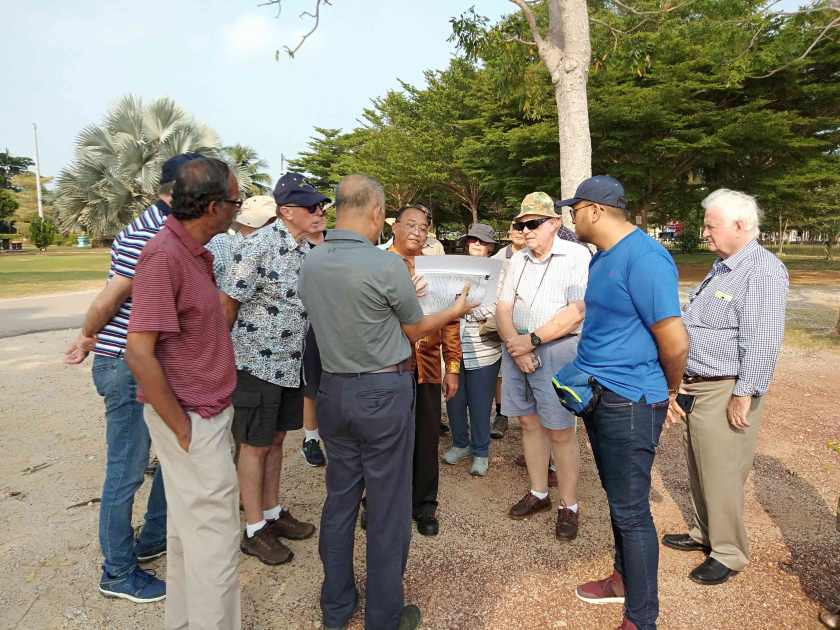
We then got on the road, headed southeast and after 5kms arrived outside of Bakri. This is the location of the famous photo of 2 gunners with the anti-tank gun. They managed to do damage to the advancing tanks. Below I quote the caption to the photo from the Australian War Memorial website. (https://www.awm.gov.au/collection/040367/). This caption and the photo say it all.

BAKRI, MALAYA, 1942-01-15 (actually 1942-01-18). GUNNERS OF 13TH AUSTRALIAN ANTI-TANK BATTERY USING A 2 PDR (pounder) ANTI-TANK GUN ACTION AGAINST JAPANESE TYPE 94 LIGHT TANKS AT A ROAD BLOCK. THE FORWARD TANK HAS BEEN SET ON FIRE WHILST OTHER TANKS ON THE OTHER SIDE OF ROAD BLOCK, WHICH IS A FELLED RUBBER TREE, HAVE BEEN DISABLED.
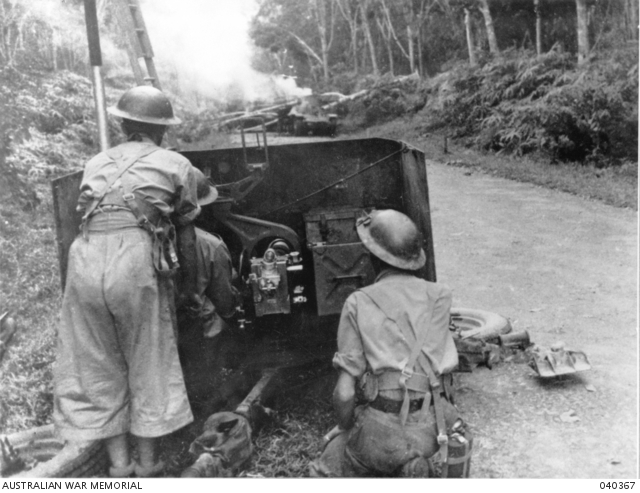
The caption to this photo in Wikipedia reads “Australian 2 pounder gun of 13th Battery, 4th Anti-Tank Regiment, firing on Japanese Type 95 Ha-Go light tanks of the 14th Tank Regiment on the Muar-Parit Sulong road on 18 January 1942. [1] Sergeant Charles Parsons and his crew were credited with destroying six of the nine tanks in this engagement.” (https://en.wikipedia.org/wiki/Battle_of_Muar).

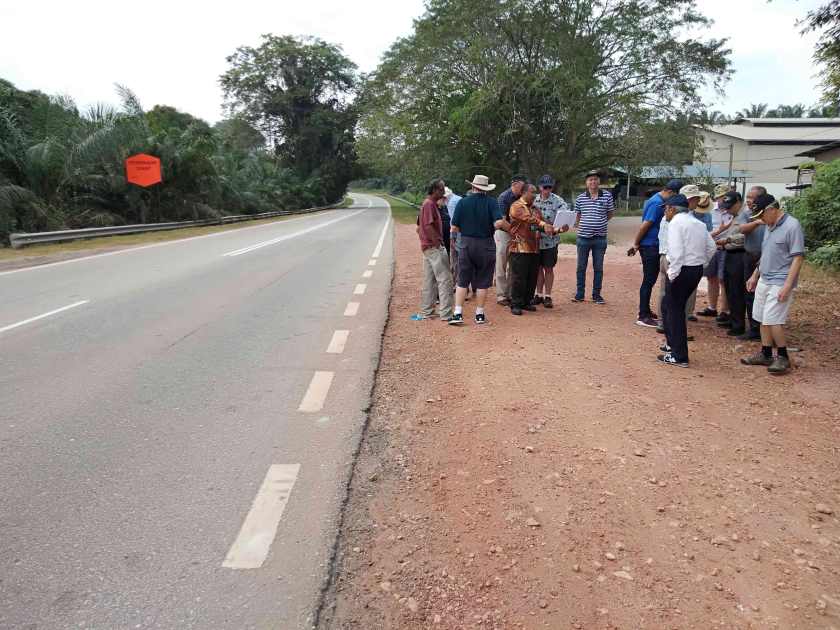
The hillock on the right is all that remains of the original as in the photo. A huge swath of land has been cleared behind this for a large industrial estate. We hope this location will at least be marked. This was the purpose of having the two officers from the Tourism Malaysia so they will appreciate the locations and provide feedback on the importance of this and other locations and place a memorial or a plaque.

Interestingly, the gunner, Sergeant Charlie Parsons, mentioned is connected to the family of the daughter-in-law of one of our participants on tour. He found this out when he posted pictures of the tour in his Facebook and she informed him!!

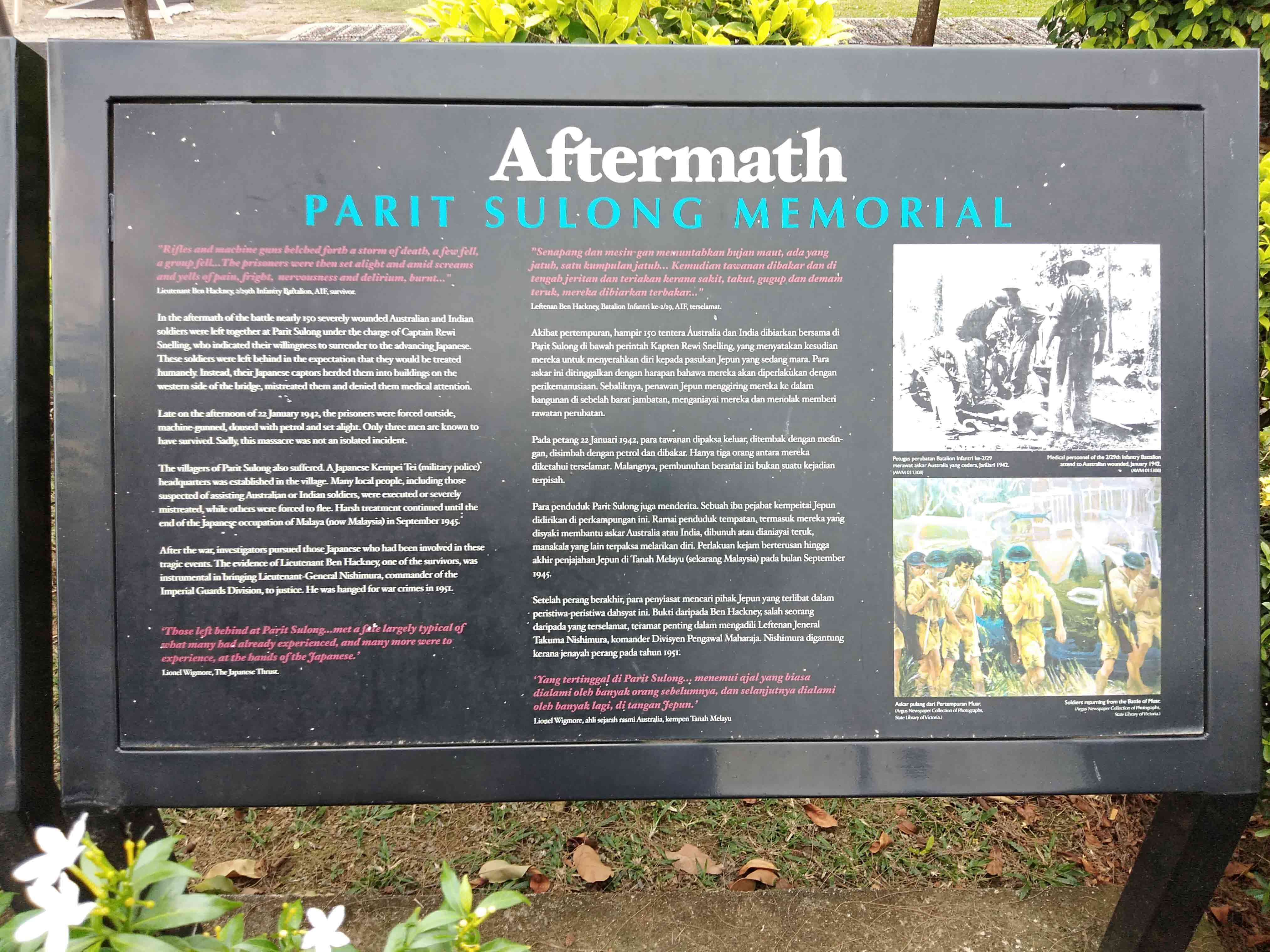
Further south at Parit Sulong, which was taken by the Japanese on the 21st January 1942, we stopped at the Parit Sulong Memorial. A memorial ceremony was held and the following oath recited by Colonel Dr. Robert Likeman, who was one of our group. This is always recited at Australian memorial services.

They shall grow not old, as we that are left grow old:
Age shall not weary them, nor the years condemn. 
At the going down of the sun and in the morning 
We will remember them.

Lest we forget.

(A Verse from For the Fallen by Laurence Binyon)
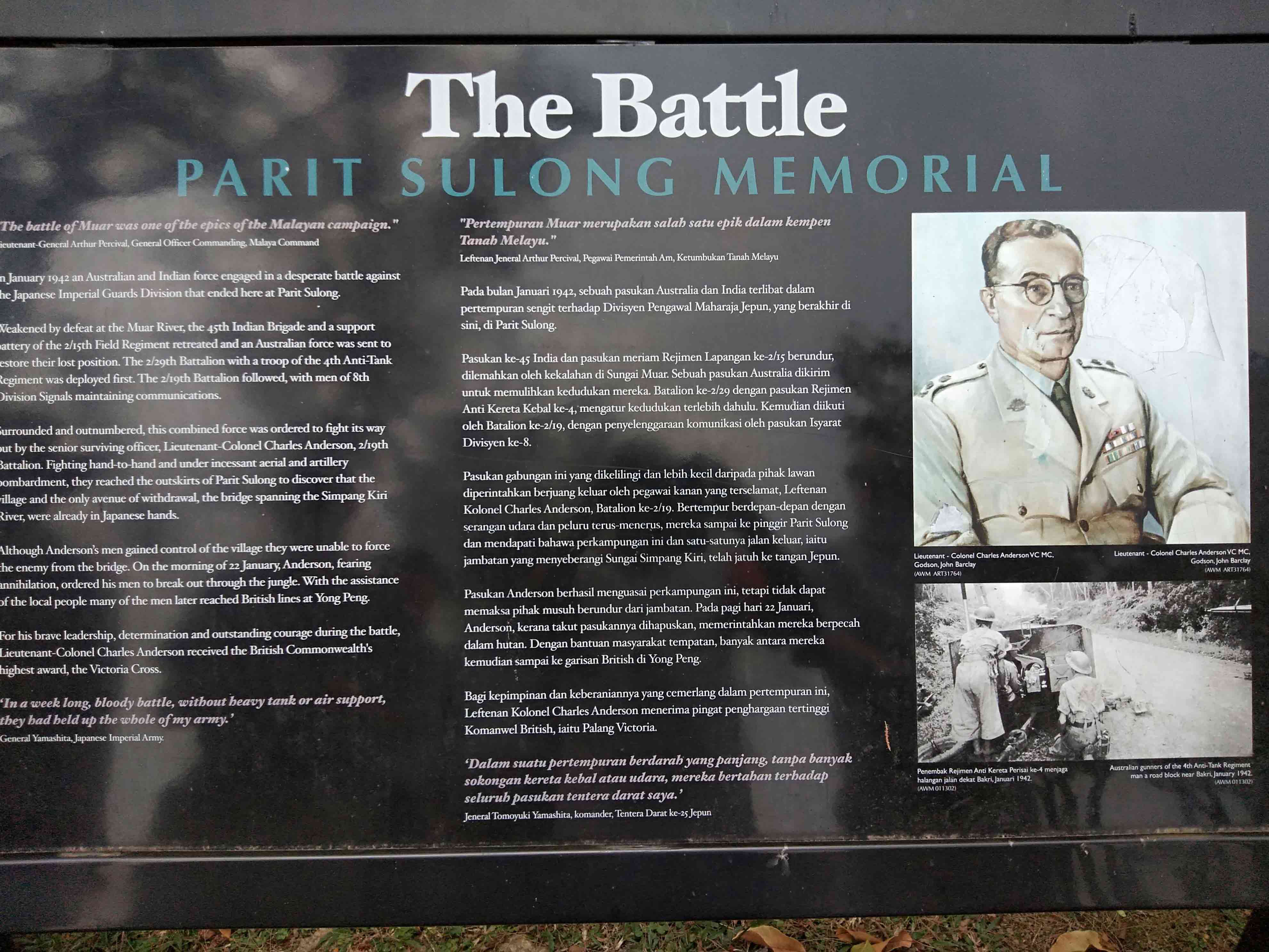
Small Australian flags were placed on the memorial. We then crossed the road to an area that contained abandoned JKR quarters. It was in this area that some 150 prisoners and wounded Australian and Indian soldiers were held captive and then massacred. The Japanese General Takuma Nishimura was later sentenced to death for this.
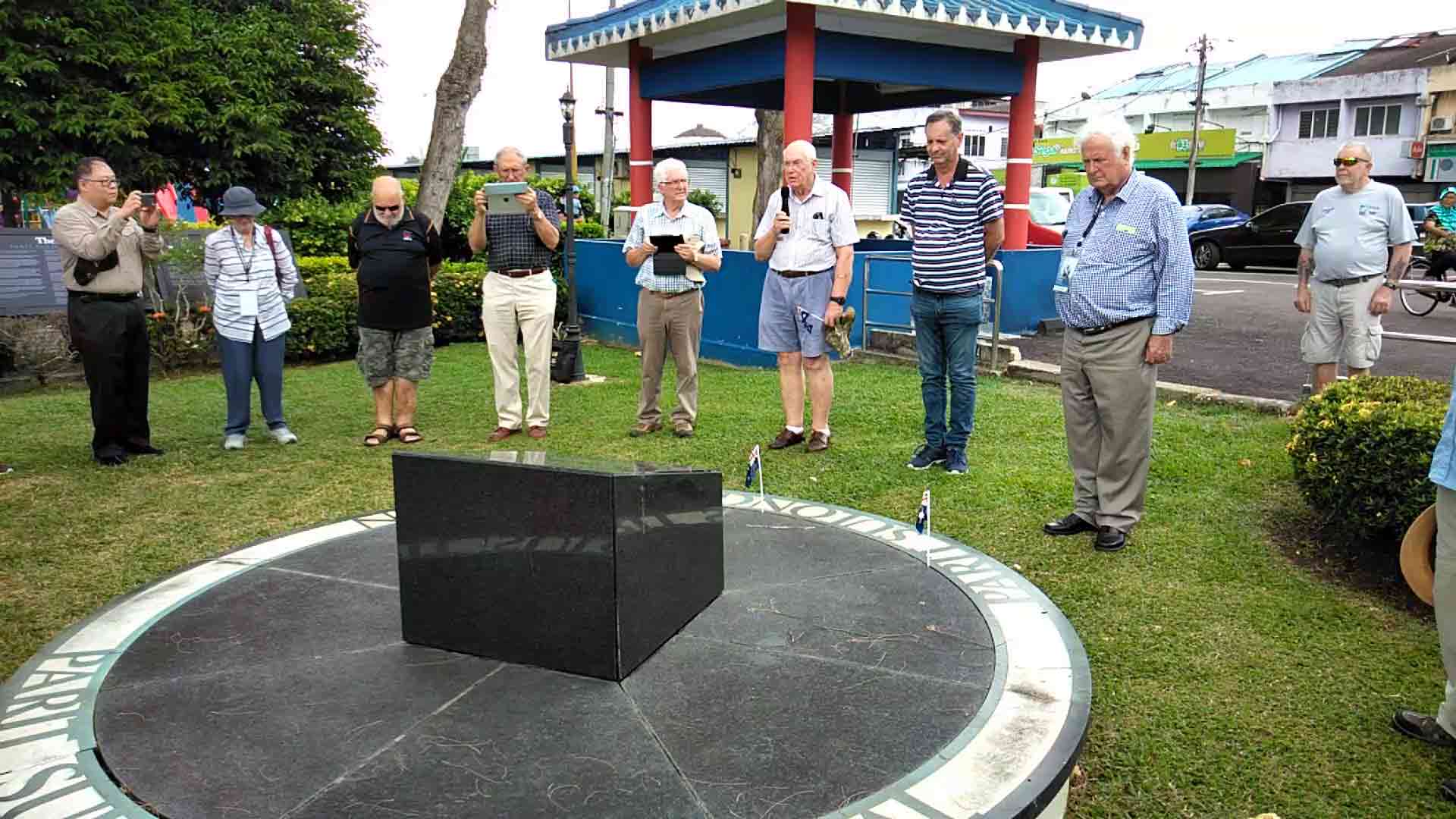
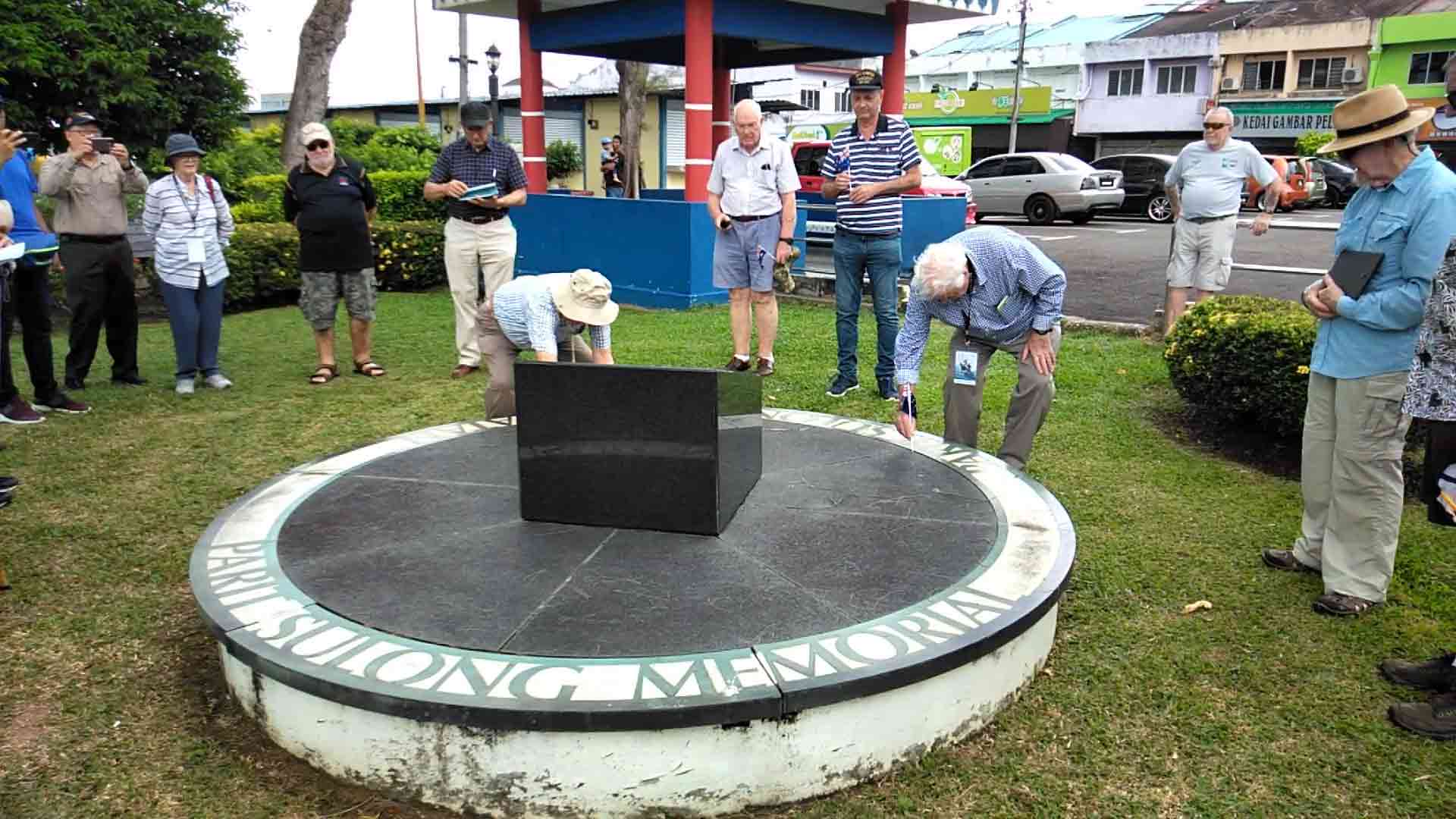
The Oath by Colonel Dr. Robert Likeman
Placing of flags

After Parit Sulong and many other small battles, the British forces had to withdraw to Singapore.
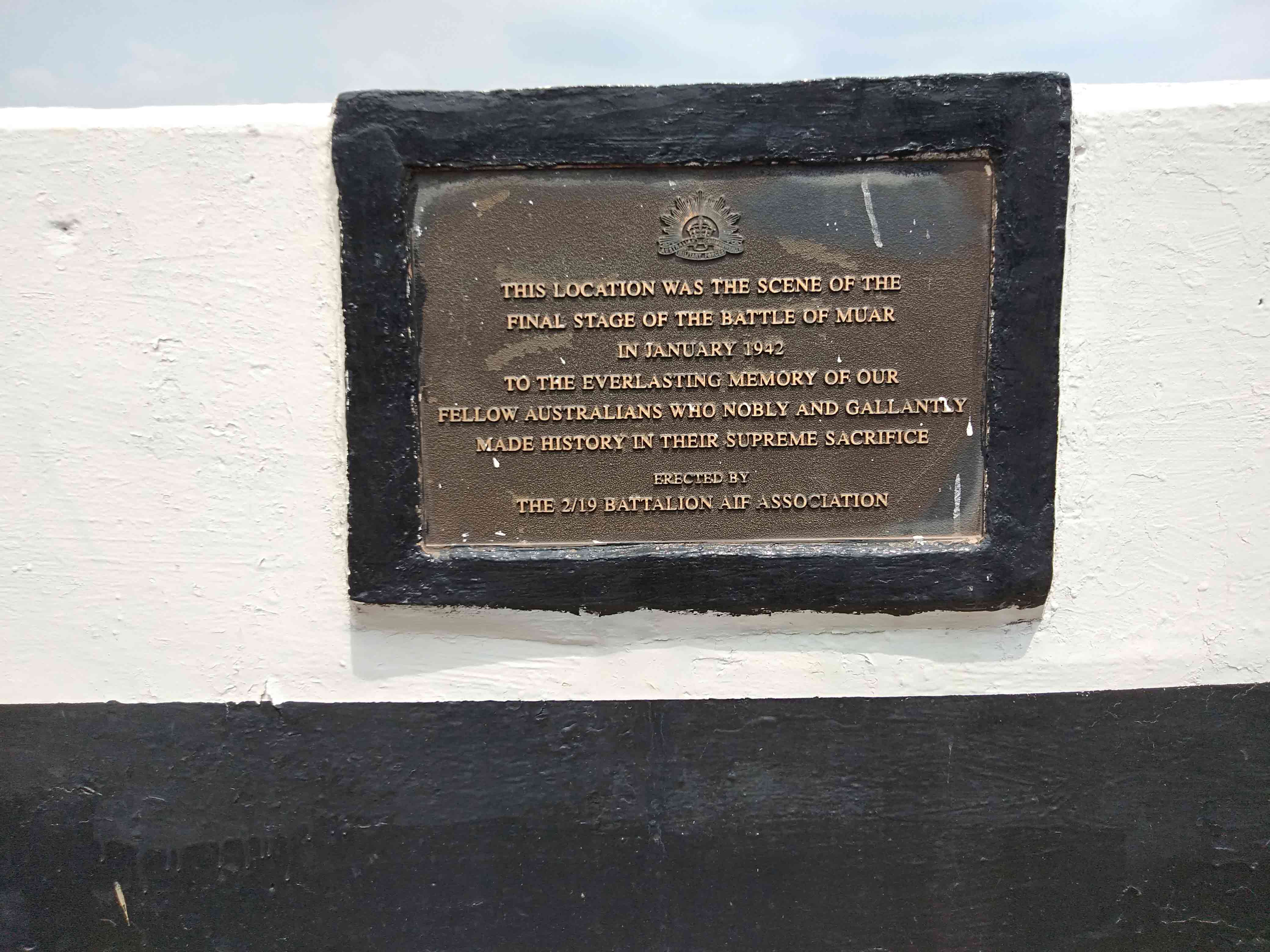
The plaque on the bridge at Parit Sulong

It is a simple to read about battle sites. It can be another matter to visit them and see the actual spots where it all happened. War is a terrible thing in itself. Being at the sites can evoke emotions though it all happened in the past. We see and we move away.
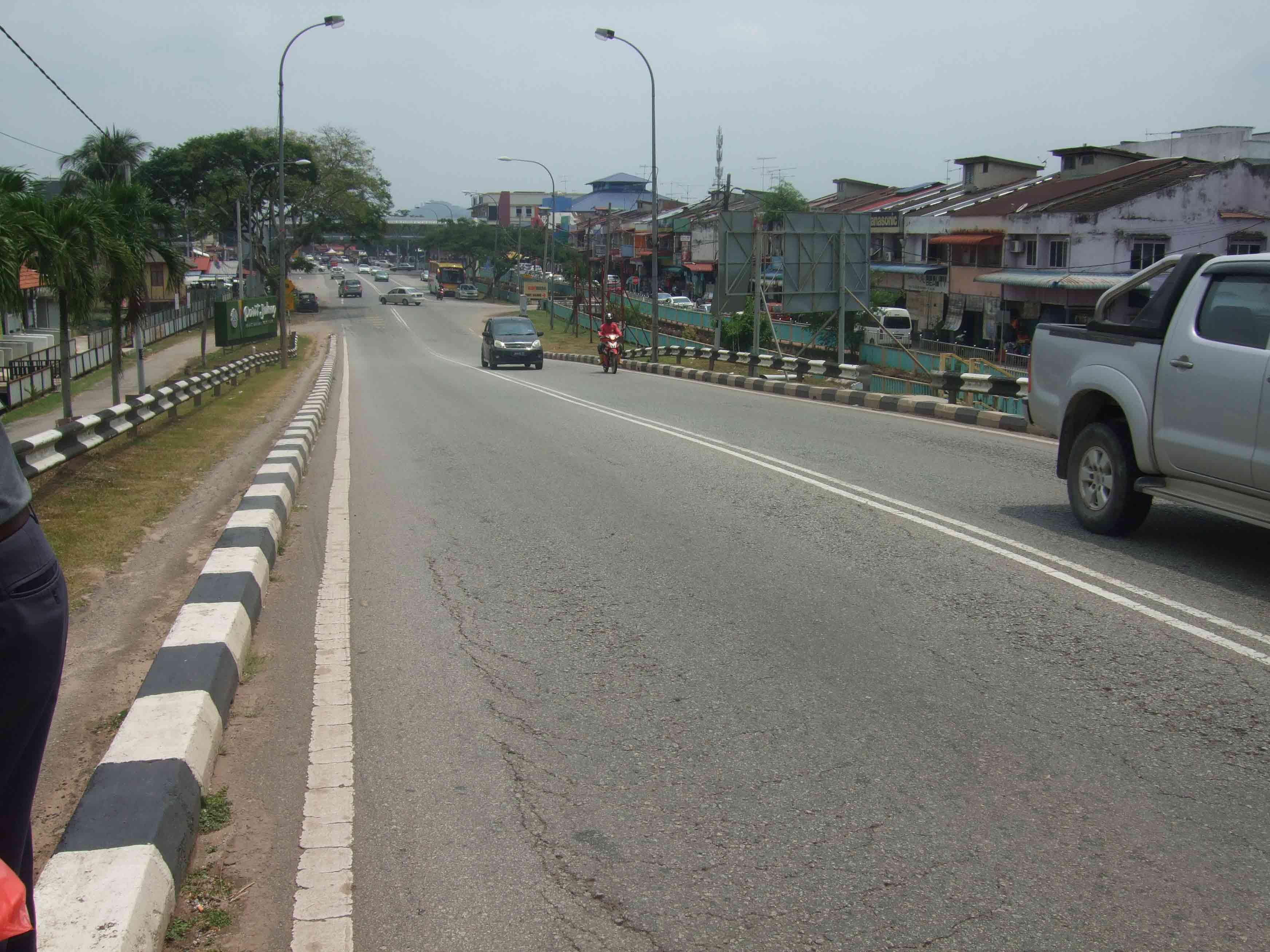
Parit Sulong – how many know the past of this town

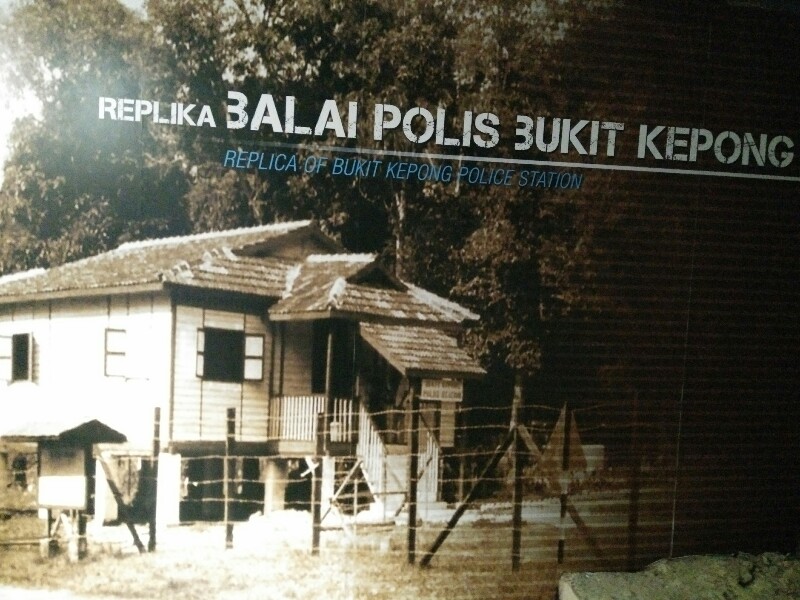
Then we made a “Quantum Leap” (refer old TV series) from the War to the Emergency – to Bukit Kepong, the scene of the annihilation of the wooden riverside police station by the communists on 23rd February 1950. Bukit Kepong is about 60km from Muar town. From the hillside across the station about 180 communists led by Muhammad Indera, looked down on the police station. In the police station were 25 policemen led by Sergeant Jamil Mohd. Shah. At 4.15am, the firing started. The police stood their ground, refusing surrender despite their families being killed as well. The station was set on fire and through all this the police defended the station. After 5 hours, it was over and the communists left leaving only four policemen and nine family members as survivors. This story as with the others is overwhelming.

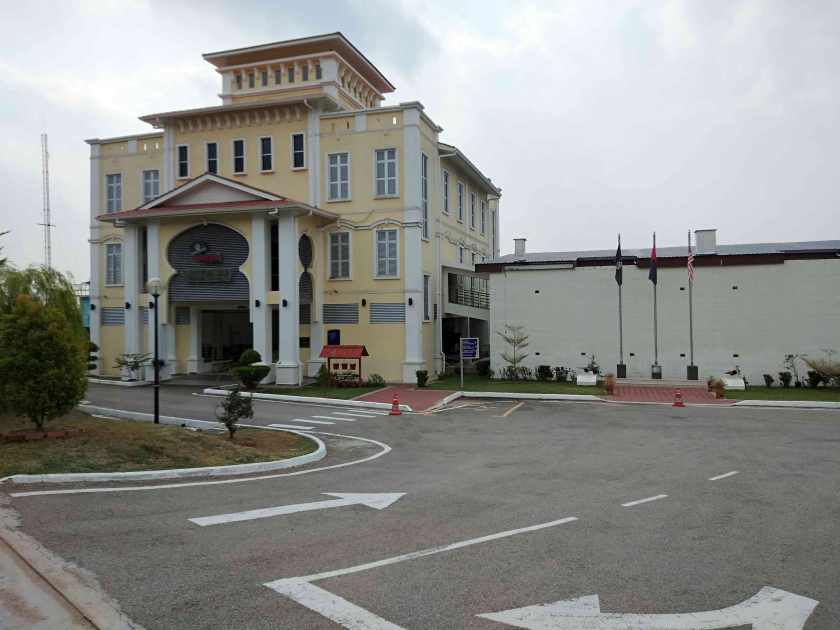
Today, unfortunately the station has not been rebuilt. However, a gallery has been set up – Galeri Darurat Bukit Kepong or Emergency Gallery Bukit Kepong. On display are pictures and videos not just about the incident but also a lot more about the emergency, the independence, guns etc. There are also personal artefacts of the policemen and their families on display such as the household items of cups and saucers etc. etc.
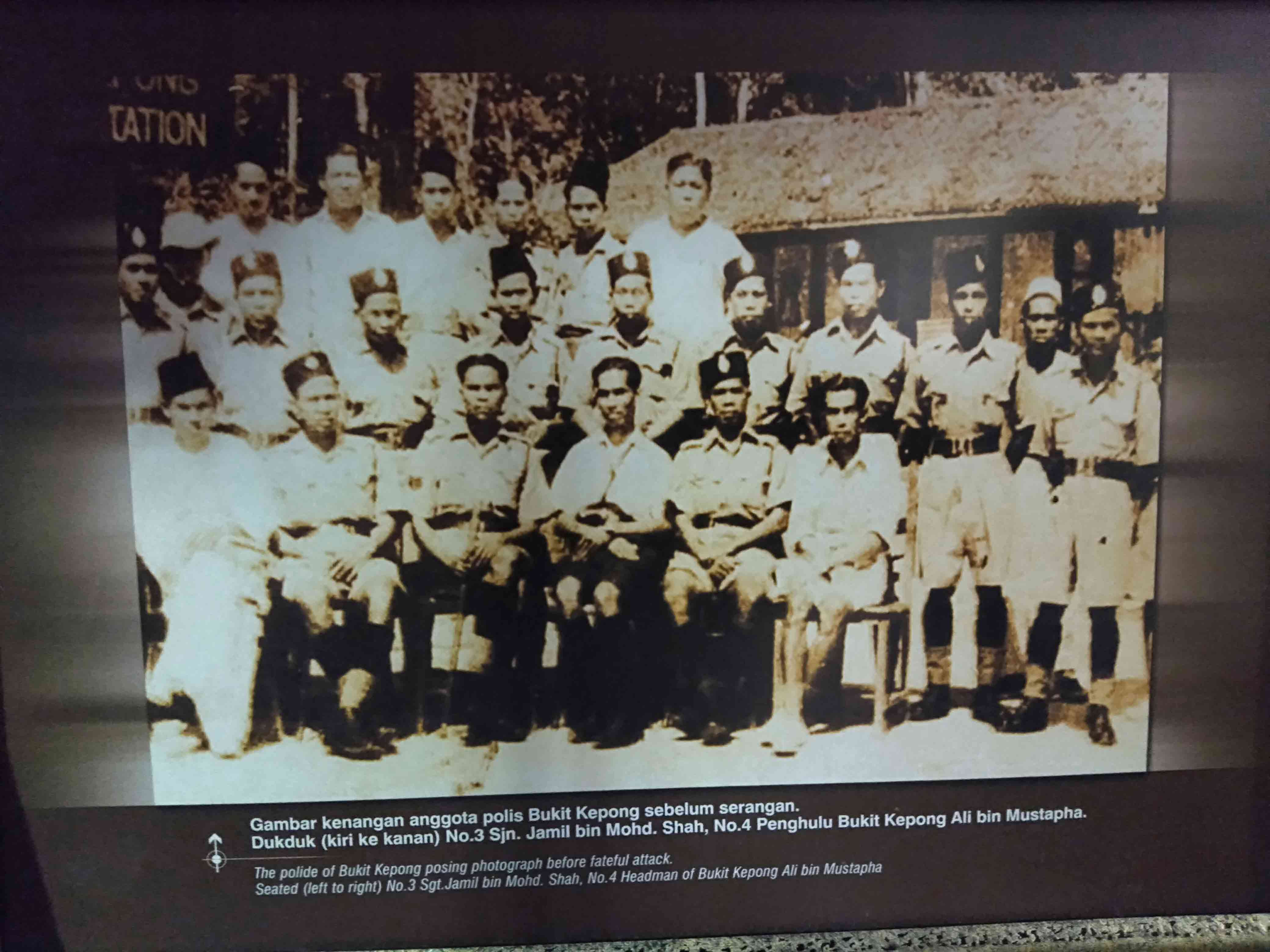
The police at Bukit Kepong before the attack. Sergeant Jamil Mohd. Shah is seated third from left.

The day finished with our travel back to the Ramada and a good night’s rest before the next day’s events.

This report continues to Part 2 covering days 3-6. It can be viewed at https://museumvolunteersjmm.com/2019/09/02/malaya-at-war-part-2/

Visiting Sapporo Beer Museum

by Eric Lim

Tourists visiting Japan have been increasing on a yearly basis. Japan National Tourism Organization (JNTO) in an earlier posting mentioned that approximately 2.7 million foreigners visited Japan in January 2019, an increase of 7.5% year on year. Come 2020, one can expect a record number of tourists to Japan as Tokyo will play host to the summer Olympics.

July is the start of summer time in Japan and they have a full line up of events around the country like the Kyoto Gion Festival held at the Gion area in Kyoto; the Shonan Hiratsuka Tanabata Festival a.k.a Star Festival at Kanagawa Prefecture, outside Tokyo and Tenjin Festival in Osaka. There are also numerous Music Festivals, Fireworks Festivals and beer gardens. It is also time to hit the beaches and to go hiking.

Over in Hokkaido, the second largest island in Japan, tourists congregate at Furano City, situated in the central part of the island, to enjoy the scenic rolling hills of colourful flowers, especially the lavender flowers. Then off to Hokuryu, to see the Sunflower field before reaching the capital city of Sapporo. I have mentioned earlier of the coming summer Olympics in Tokyo, so it is fair for me to inform that Sapporo was the venue for the winter Olympics in 1972. My family of four visited these popular destinations plus a few more, during our recent holiday here in Hokkaido.

The popular attractions in Sapporo include Nijo Market (a seafood market), Tanukikoji Shopping Street (walk from Street 1 to Street 7; full of game arcades, F&B outlets, hotels, drug stores that open for 24 hours); Sapporo TV Tower (height of 147.2 metres / 483 ft) and Odori Park, which is right in the heart of the city and when we arrived here, it was the first day of Sapporo Odori Beer Garden Festival. It is dubbed as the nation’s largest beer garden as it stretches for a distance of 1 km and has a capacity to provide 13,000 seats! And talking about beer, I looked forward to visiting the Sapporo Beer Museum on day two of our stay in the city.
Sapporo Beer Museum (SBM) or Sapporo Biru Hakubutsukan is located at Sapporo Garden Park. Besides the museum, the park also encompasses several dining halls and restaurants, a shopping complex and an indoor practice field for the city’s baseball team. SBM was officially opened in July 1987 and was registered as one of the Hokkaido Heritage sites on October 22, 2004.

The history of brewing of beer in Japan began at a time when Japan was embarking on its modernisation journey. It was at the start of the Meiji Empire and Edo was renamed as Tokyo, which became Japan’s new capital. Japan opened its doors to Western cultures and customs. The Hokkaido Development Commission, Kaitakushi, initially wanted to build a new brewery facility in Tokyo in 1875 but the plan was shelved and instead moved to Sapporo. Two key personnel were given the credits for the move to Sapporo – 1) Seibei Nakagawa who was appointed as the Chief Engineer. He left Japan at a tender age of 17 and studied the brewing of beer in Germany. Upon his return to Japan and through a recommendation from a high ranking Government officer whom he met in Germany, he was appointed to the post. He made it known that ice was required for the fermentation and aging of beer. 2) Hisanari Murahashi was employed as the manager and he petitioned for the move to Sapporo where ice and snow were readily available. The petition was approved.

At the inauguration of Kaitakushi Beer Brewery. Beer barrels stacked up on the right.

A two-storey wooden brewery was completed within three months and it was to be the first brewery in Hokkaido. It was named Kaitakushi Beer Brewery and the year was 1876. At its inauguration, piles of beer barrels were stacked up in front of the brewery and the following words were written in white text “Ceremony : combining barley and hops yields a spirit called beer”. The replica beer barrels are now stacked next to SBM. This marked the start of Sapporo Beer and it went on sale in September 1877 in Tokyo. The Kaitakushi logo of the North Star was featured in the label and it became the logo of Sapporo Beer until today. The North Star symbol was also used on the Clock Tower and the former Hokkaido Government office building which the local called Akarenga which mean “red brick”, two landmarks in Sapporo. Today, the Sapporo Museum is housed in Akarenga.

In 1886, the brewery turned from state-owned to private enterprise when Kihachiro Okura took over and called it Okuragumi Sapporo Beer Brewery. Shortly after, it was transferred to two entrepreneurs namely Eiichi Shibuzawa and Soichiro Asano – Sapporo Beer Company (Sapporo Bakushu Kaisha) was established and later, it became known as Sapporo Breweries. From then on, the company started modernizing beer brewing and further boosted manufacturing capacity to deal with intense price wars between the major players: Nippon Beer, Japan Brewery Company (Kirin Beer) and Osaka Beer (Asahi Beer). In 1903, Sapporo Breweries made its foray into Tokyo and became the biggest brewery in Japan. In the month of May the same year, it acquired the Sapporo Sugar Company (Sapporo Seito Kaisha), a sugar mill and converted it into a plant for the malting of barley used in beer; it used the building until 1965. The current SBM is housed in this building.

Today, SBM is the one and only beer museum in Japan. Upon entry into the red brick building, visitors are greeted by a sign on how to approach the facility. For the Premium Tour, a Brand Communicator will guide your through in Japanese and the duration is about 50 minutes. The fee is Yen 500, inclusive of premium theater and special beer tasting at the end of the tour. We had no choice but to explore the museum on our own, on our own pace and of course, it’s free-of-charge but we have to buy our own beer at the end of the tour.

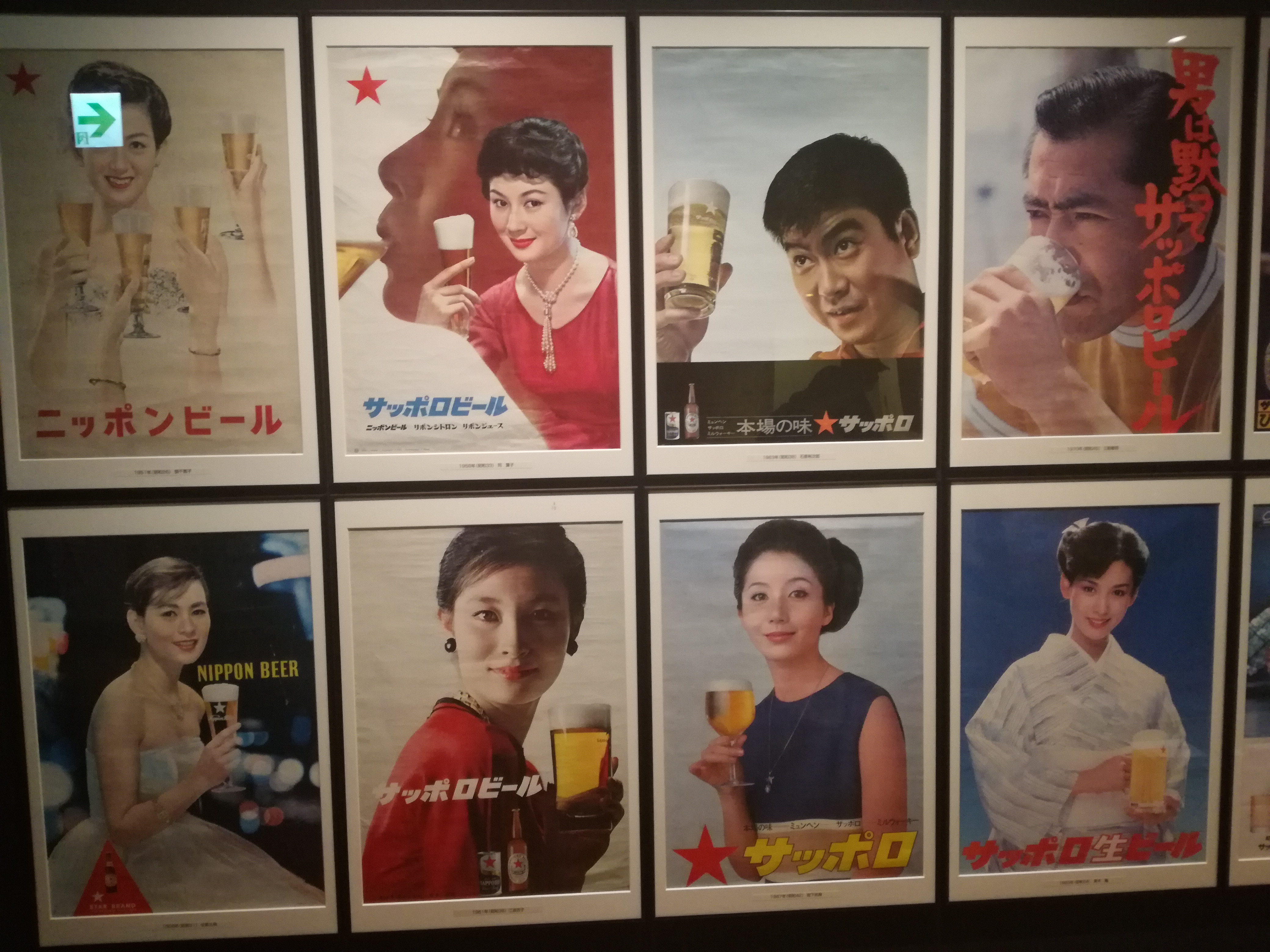
Both tour starts at the third floor. As we were walking down the slope, we could see a huge copper kettle for boiling beer wort which was still in use until 2003. The gallery is on the second floor. There are altogether 12 panels displaying the history of the beer industry in Japan. Information is in Japanese but they do provide translation sheets in Chinese, English and Korean, placed at the side of the panel. The panels are well placed and allows for plenty of walking space. As we approached the centre of the gallery, we could see an additional long panel on the left side, and this highlights the collection of advertisements and original posters of Sapporo Beer, used over the years. This panel also provides an opportunity for visitors to learn about the fashion and design that was popular in Japan during those days. A collection of advertisements and original posters are shown below.

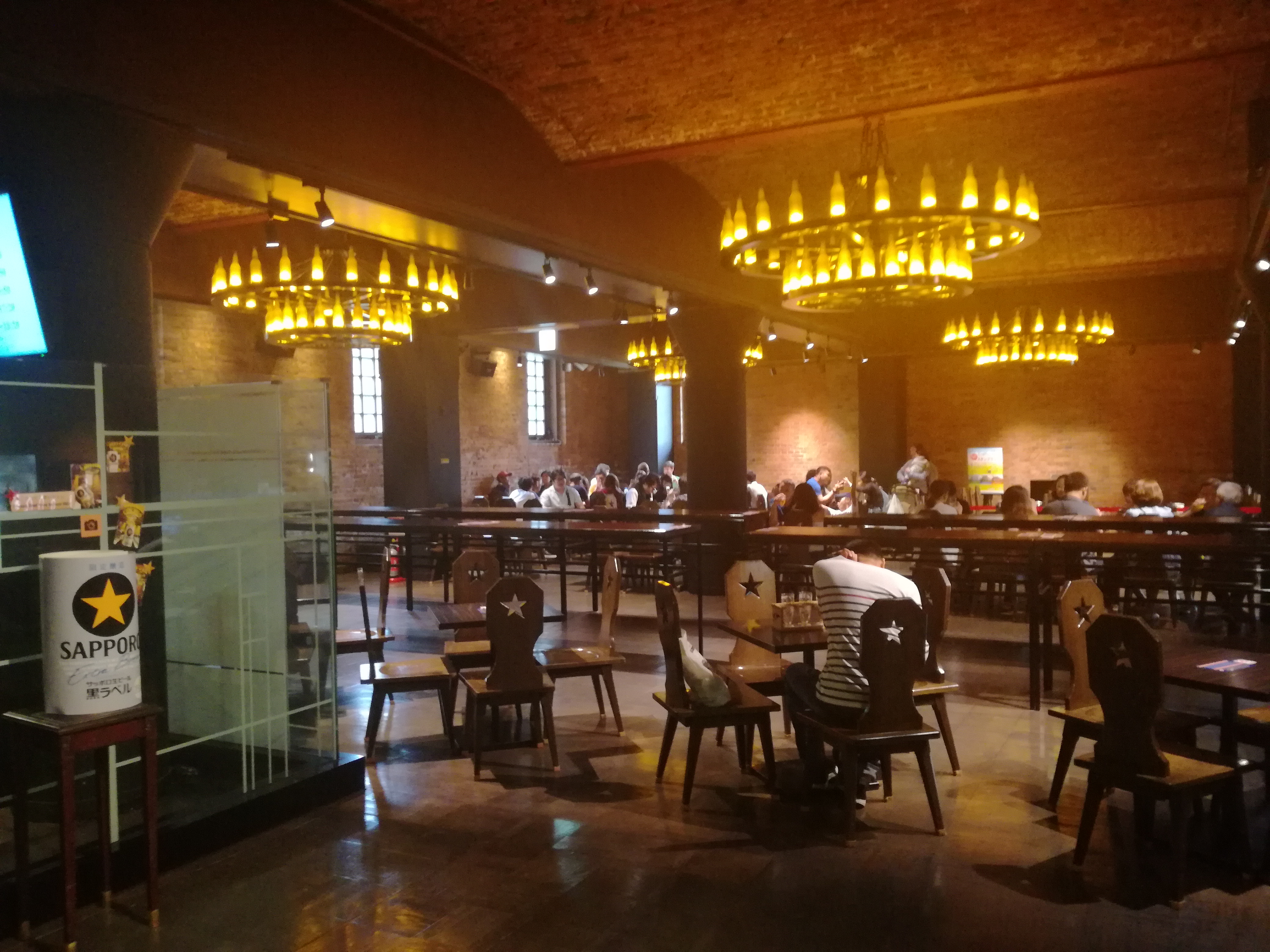
We are then led to a staircase to the first floor, to the Star Hall. And there is no better way to end the tour than by tasting freshly brewed beer shipped directly from the brewery. For me, this part of the tour was definitely the highlight. Back home, l would call it “Happy Hour” but since we are in The Land of the Rising Sun, it’s “Kanpai time”. For a fee of Yen 800, we could get a 3-variety Beer Flight, consisting of Sapporo Draft Beer Black Label, Sapporo Classic and Sapporo Kaitakushi Brewery Pilsner. Meantime, for the Premium Tour, participant is given Sapporo Beer, brewed by strictly following the original recipe used way back in 1881. As in any good museums, there is a Museum Shop. Here, one could buy unique and original merchandise, also Kaitakushi Beer which is only available in Sapporo.

The Star Hall

It was a wonderful family trip and more so for yours truly as it was my first time visiting a beer museum and also my first time tasting fresh Japanese beer. It was a wonderful experience. How I wish to be drinking Sapporo Beer now, on a hot and hazy afternoon in Kajang.

Penang Botanic Gardens

by Eric Lim

photo source: Penang Botanic Gardens website

The definition of the idiom “old habits die hard” is that it is hard to stop doing things that one has been doing for a long time. This is actually what happens every time I visit Penang, The Pearl of The Orient. I will go to the Penang Botanic Gardens, “come rain, come shine” and always between 7.00 and 9.00 in the morning, the best time of the day to achieve that daily 10,000 step goal. I was in Penang last month with friends and, of course, we visited Penang Botanic Gardens.

An information board located outside the garden’s office building mentions that the Penang Botanic Gardens were established in 1884. It may come as a surprise even to Penangites that the Botanical Gardens on the island goes back earlier than that, in fact, to the 18th century when the island was under the control of British East India Company. Francis Light declared British rule in the island and named it Prince of Wales Island in the year 1786; eight years later, in 1794, saw the setting up of the first Botanical Gardens in Penang. A Kew Gardens-trained botanist by the name of Christopher Smith was given the task to establish the gardens. The first Botanical Gardens was essentially a spice garden as Smith brought in specimens of nutmeg, clove, canary nuts and sugar palm from the Moluccas Island (Maluku Islands) in Indonesia, which were known as the Spice Islands. These grew very well. However, Smith did not enjoy the fruits of his labour as he died unexpectedly in 1805. The Company decided to close the Gardens and it sold off the Gardens’ contents.

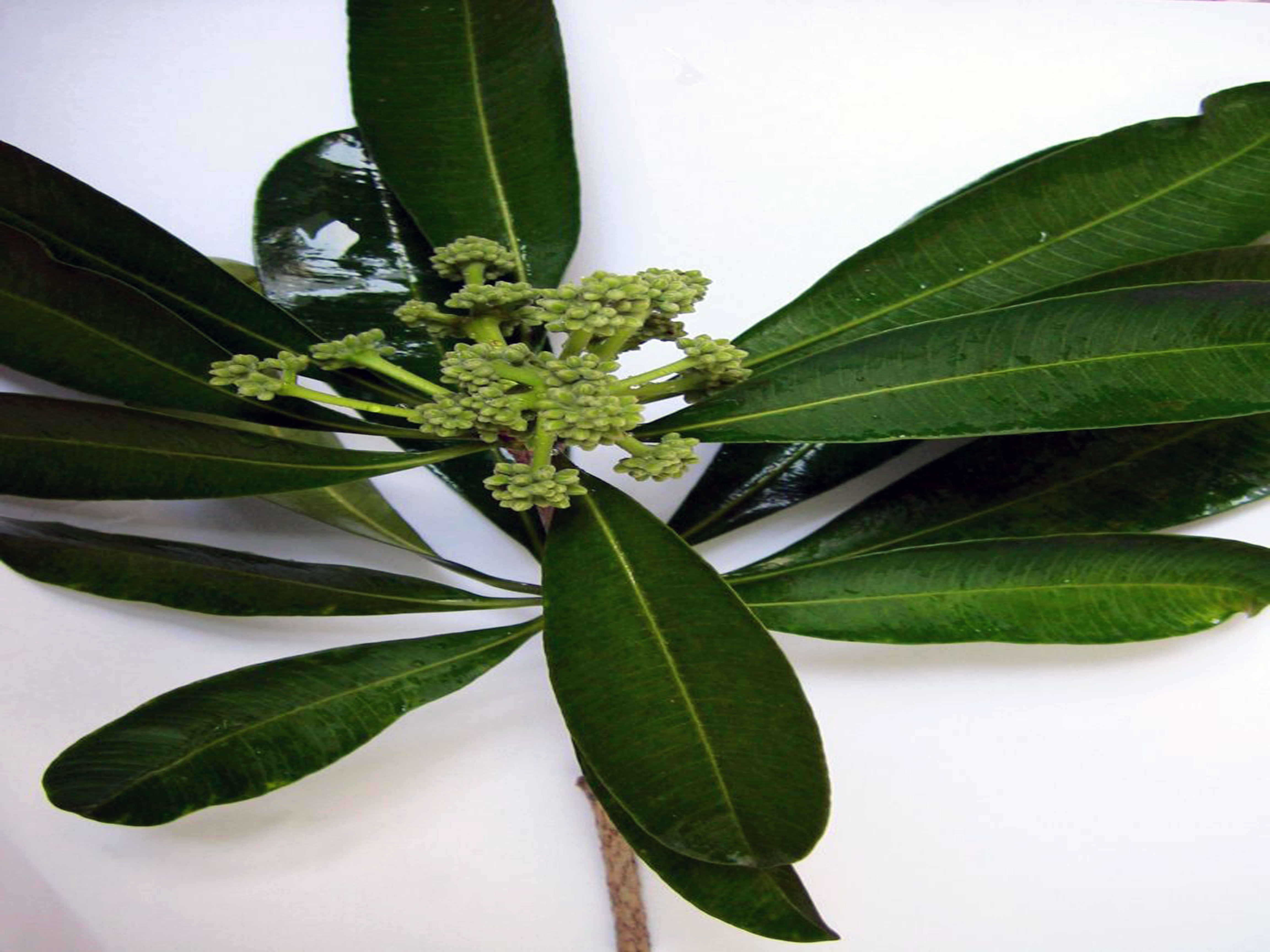
Alstonia sp. (Pulai), photo source: Penang Botanic Gardens website

After a lapse of 17 years, the second Botanical Gardens took shape in 1822, due to the urging of Sir Stamford Raffles who had a keen interest in Botany and was at that time the superintendent of the Singapore Botanical Gardens. Sir Stamford Raffles is best known for the founding of modern Singapore in 1819 and this year, the Republic is celebrating its 200th Anniversary. George Porter who was working as the headmaster at Penang Free School was recommended to manage the Gardens. He managed the Gardens for 12 years and once again, it suffered the same fate as the earlier Gardens, as in 1834 the then Governor Kenneth Murchison decided to sell it off for a sum of 1,250 rupees. With the closure, Porter returned to his job as headmaster.

These two earlier Gardens are believed to have been sited at Air Hitam valley and at Sungai Keluang in Bayan Lepas; however the actual locations cannot be identified. It would take another 54 years, i.e in the year 1884, as stated in the information board, for the creation of the third Botanical Gardens. This time, the running of the Gardens came under the Strait Settlements Department of Gardens and Forests with its parent establishment, the Singapore Botanic Gardens. One of its responsibilities was to conduct research on tropical plants for their economic use. One of the success stories was the promotion of rubber trees (Hevea Brasiliensis) to be planted in the Malay Peninsular by British botanist Henry Nicholas Ridley who was at that time working for Singapore Botanical Gardens.

Schima Wallichii, photo source: Penang Botanic Gardens website

The third Botanical Gardens were established at the site of an abandoned granite quarry that lies deep in a tropical valley, at the foot of a big waterfall. Additionally, a river meanders through the valley. Due to a cascading waterfall, the Penang Botanic Gardens were also popularly known as the Waterfall Gardens. Charles Curtis, an avid botanist and a devoted plant collector, was appointed as the first superintendent of the Botanical Gardens. Under his supervision, the Gardens transformed from an old quarry into a magnificent garden – due his great vision in landscaping and his ability to blend into a tropical rain-forest settings. Curtis also focused his research in native plants as well as introduced non-native exotic plants to Penang and Singapore. He continued his good work for the Garden until December of 1903 when he formally retired due to health issues.

All was well until 1910 when there was a proposal to turn the valley into a massive reservoir that would serve the needs of the majority of households on the island. Fortunately, the plan was abandoned and instead, a small reservoir was constructed at the foot of the waterfall. This reservoir is still in operations today and it is supplying water to about 10-15% of the population of the state. During the Second War World, the Japanese army took over and immediately went into excavating tunnels, which were turned into assembling and storage facilities. After the war, Penang Botanic Gardens was separated from its parent establishment in Singapore. The year 1956 saw the appointment of the first local, Cheang Kok Choy as the curator of the Penang Botanic Gardens. Earlier on, Cheang was trained by the British and he continued on the good works of his predecessors until he retired in 1976.

Canon Ball Tree, photo source: Penang Botanic Gardens website

Today, the operations of the Penang Botanic Gardens come under Jabatan Taman Botani Pulau Pinang (Penang Botanical Gardens Department), an arm of the Penang State Government. It is divided into 11 sections namely Aquatic Garden, Economic Garden, Quarry Garden, Secret Garden, Herbs Garden, Aroid Trail, Lily Pond, Curtis Trail, Formal Garden, Sunken Garden and Japanese Garden. There are also four plant houses – Fern House, Cactus & Succulent House, Orchidarium and Bromeliad House. And among the flora that visitors can see includes Cannon Ball tree (botanical name: couroupita guianensis / origin: Guyana), Argus Pheasant tree or commonly called Sengkuang tree (dracontomelon dao / Indo-Malesia), Pinang palm (areca catechu, from which Penang got its name), black lily (tacca integrifolia), Ipoh tree (antiaris toxicaria, from which Ipoh got its name), angsana (Burmese rosewood), Rain tree (samanea saman / South Africa) and many more. The fauna includes the dusky leaf monkeys, long tailed macaques, squirrels and many insects and butterflies.

Apart from the department’s involvement in conservation efforts, research developments and educating the public on nature and gardening, the department is also targeting on the tourism aspects by adding new attractions and organizing events to make the park a popular destination for locals and tourists. Dataran Teratai is one of the attractions; it opened in June 2011 and it features the giant water lilies of the Amazon River basin. It is the venue for the annual International Flora Festival (in May) and Penang Orchid Show (this year, it is scheduled for 11 – 18 August). It is the starting point for the many Penang Hill trails and a non-governmental organization called The Friends of the Penang Botanical Gardens organizes monthly visits to the waterfall which is now privately owned. On a daily basis, visitors can join in the practice of Tai Chi, Qigong and aerobics or go jogging and strolling around the park.

With so much to do and with activities scheduled throughout the year, it is my hope that the next time you visit Penang you will visit the Penang Botanic Gardens/Waterfall Gardens, just like I do. It is open every day, from 5.00 am to 8.00 pm and is just about 8 km from Georgetown city. If you are driving, there are plenty of parking bays. Penang Botanic Gardens, here I come, again.

The large rain tree (Pukul lima) at the Gardens’ entrance (at the centre of the photo) was planted in 1887 to commemorate the Golden Jubilee of Queen Victoria. It stood tall for 130 years. Unfortunately, it had to be chopped down in 2017 as the dying tree posed a danger. This photo was taken circa 1910. Photo source: Cheah Jin Seng (2012) Penang: 500 Early Postcards, Singapore: EDM.

Malay Architecture in Terengganu

by Ong Li Ling

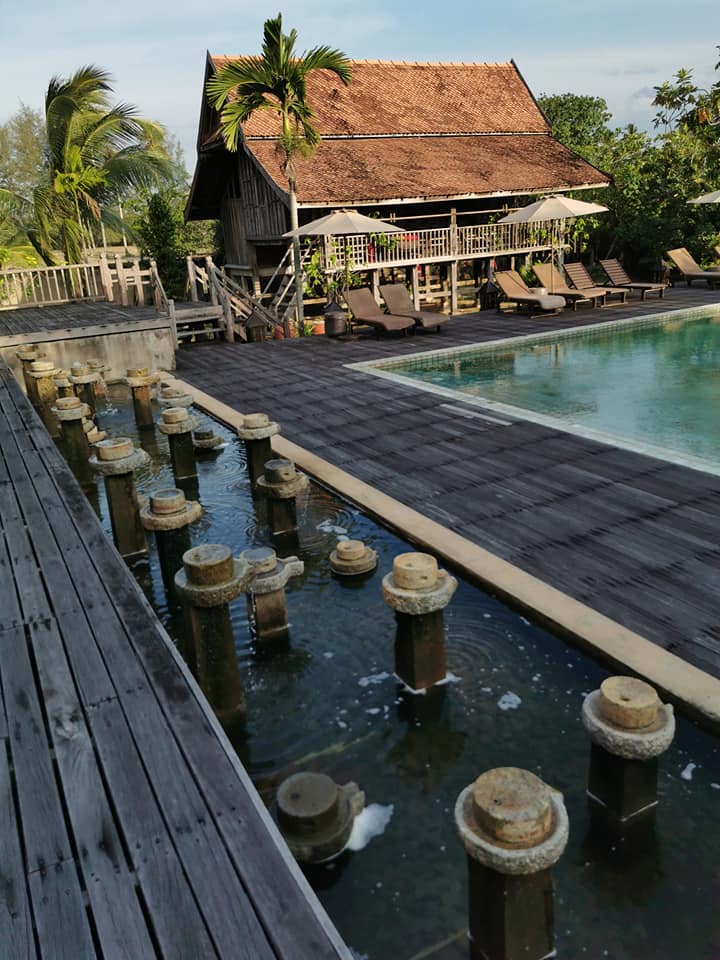
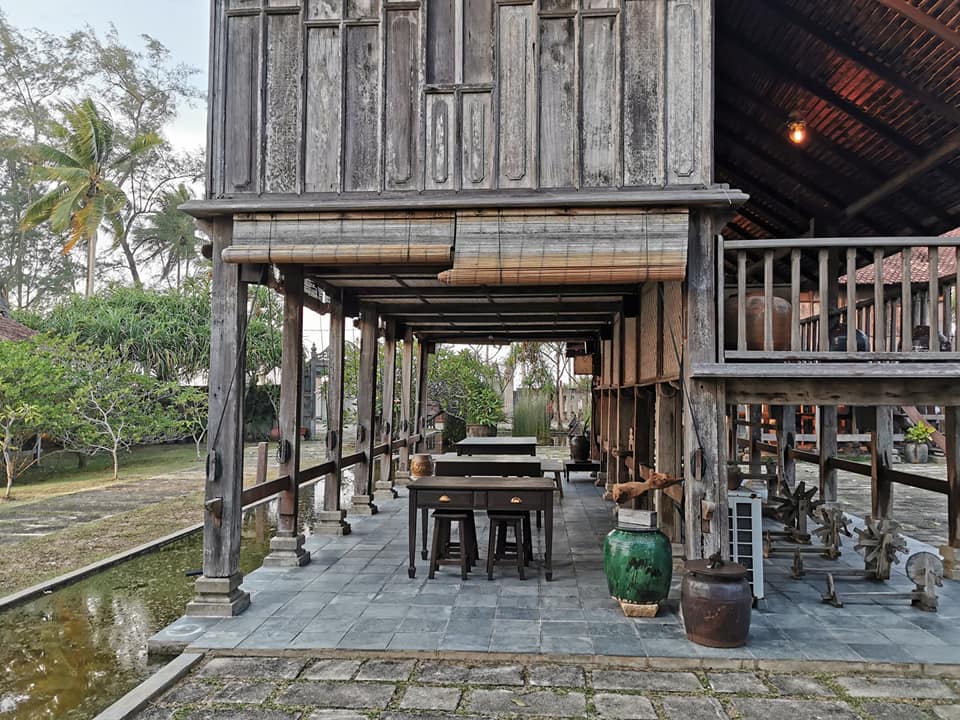
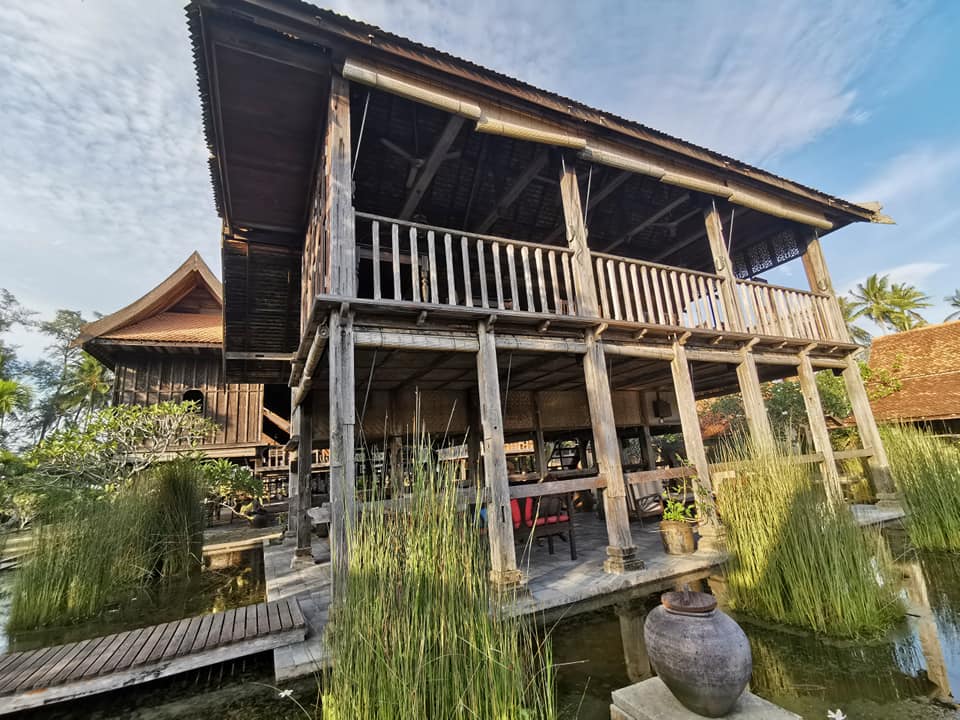
I attended a talk on Malay Architecture at Petronas Gallery recently. I was so impressed by the slides shown by Mr Alex Lee that I decided to visit his resort – Terrapuri (The Land of Palaces) at Pantai Penarik, Terengganu.

Mr Alex is a Peranakan who grew up in Marang. He has been collecting old Malay houses since he was 20 years old. In order to build Terrapuri Heritage Village, he secured an 8-acres piece of freehold land in Setiu in 2005. Alex took 4.5 years to build this resort. The resort has 22 villas but only 15 are open at present. The resort usually has full occupancy in the months of July and August. Alan Hoh was employed as the conceptual artist and Oon Soon designed the logo of the resort based on the ancient Istana arch.

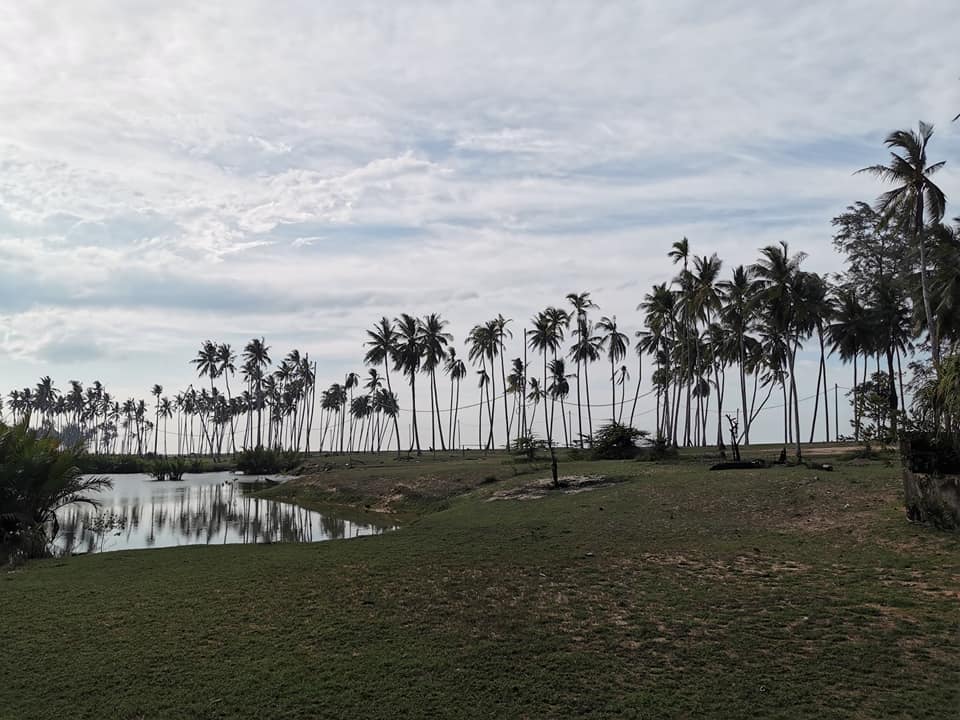
Kampung Kuala Baru is part of the Setiu wetlands, which is why the climate is so hot. There are nine ecosystems present including mangrove forest, beach, lagoon and BRIS forest.

The local ulama chooses the suitable location for the house. Old Malay houses are constructed using traditional Malay Geomancy principles. The house is based on the length of the matriarch’s outstretched arms, which is called a depa (wingspan). For example, a house can be 10 depa wide. The owner needs to take accurate measurements; “crow measurements” may result in the owner falling sick. On the other hand, prosperity will ensue if the ular cinta mani measurement is followed, i.e. the height of the main pillar (tiang seri) is an exact round number.

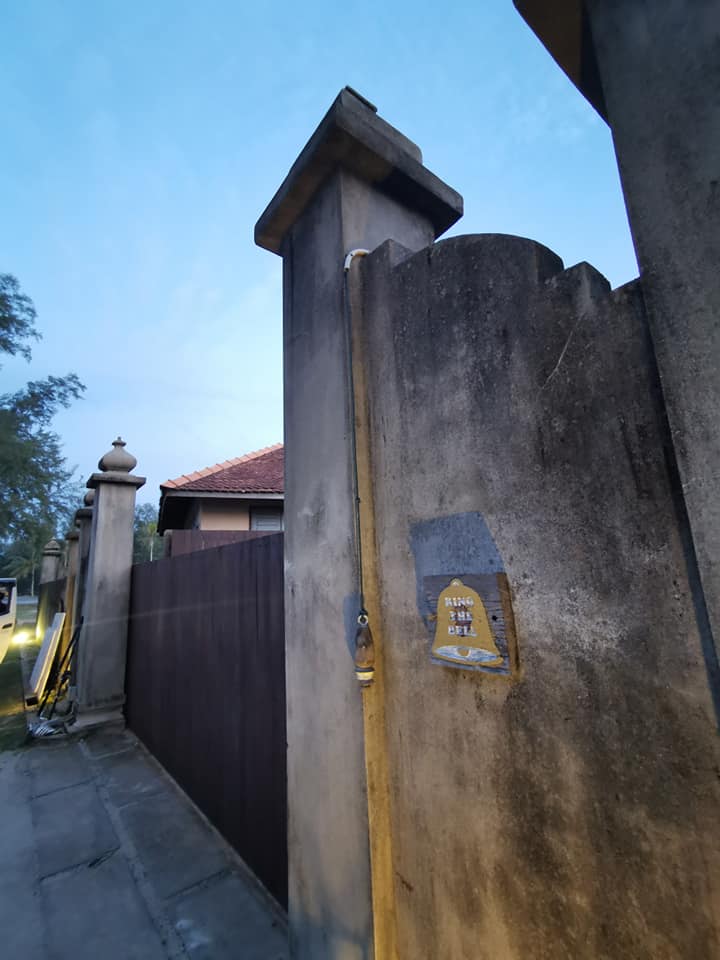
I flew to Kuala Terengganu airport and my Grabcar took around 45 minutes to get to Setiu. After ringing the bell, the resort staff opened the gate to let us in.

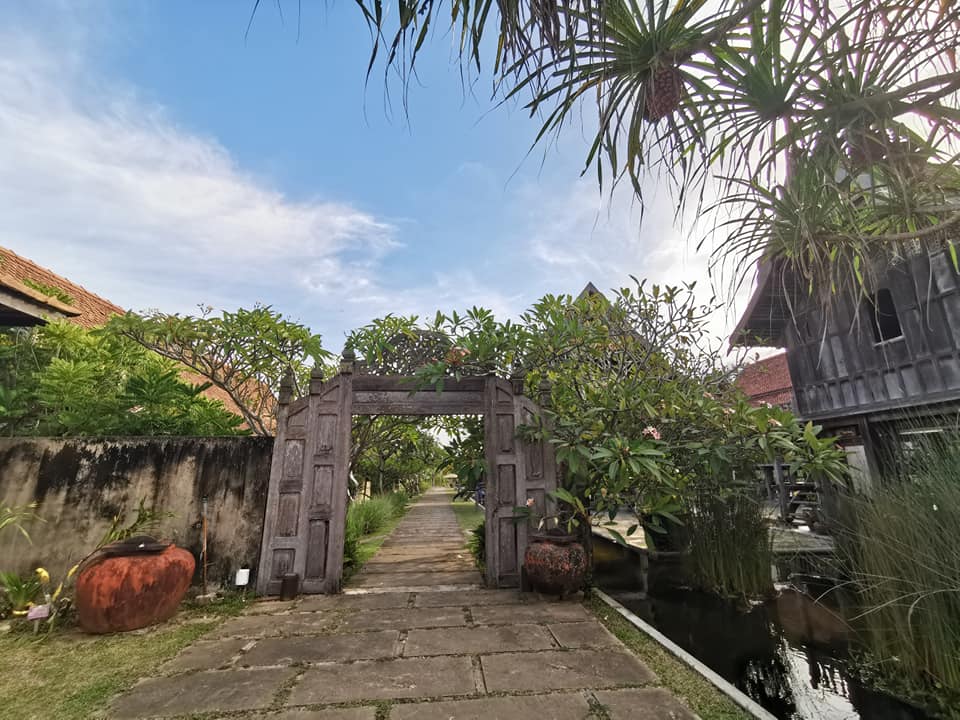
The first thing I noticed was the Double Gater layout, a typical architecture during the Langkasuka period. The Langkasuka Kingdom is believed to have been established in the 2nd century CE. It lasted till the 15th century when it was replaced by the Pattani Kingdom.

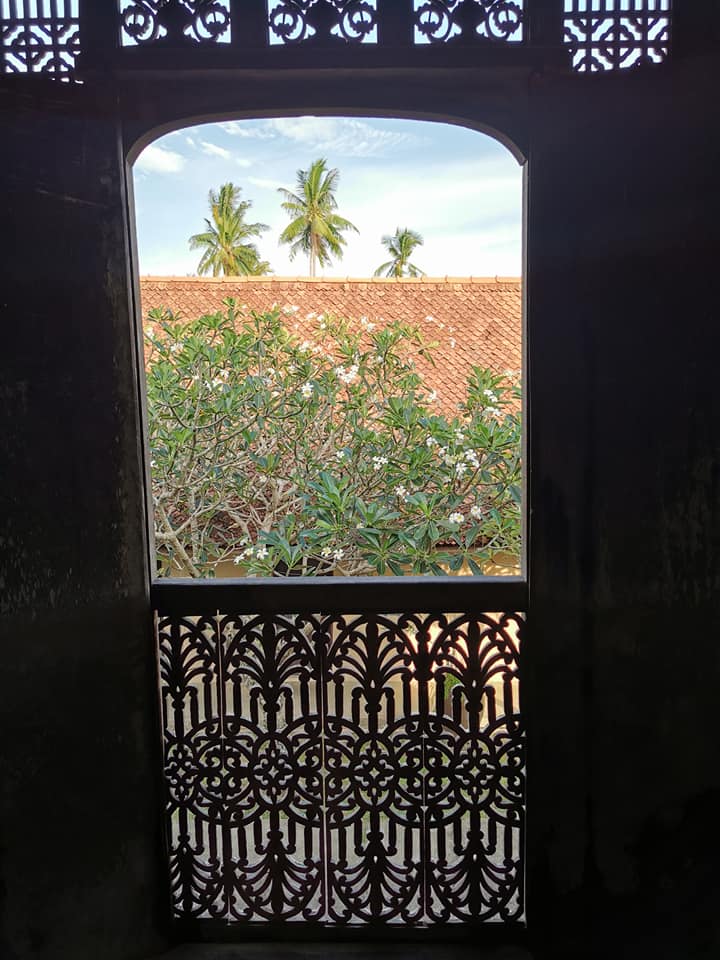
I admired the sobek (filigree-like woodcarving with old floral carving), which was popular back then. In the old days Kala was used to ward off evil. I also saw several stupa influenced by Buddhism.

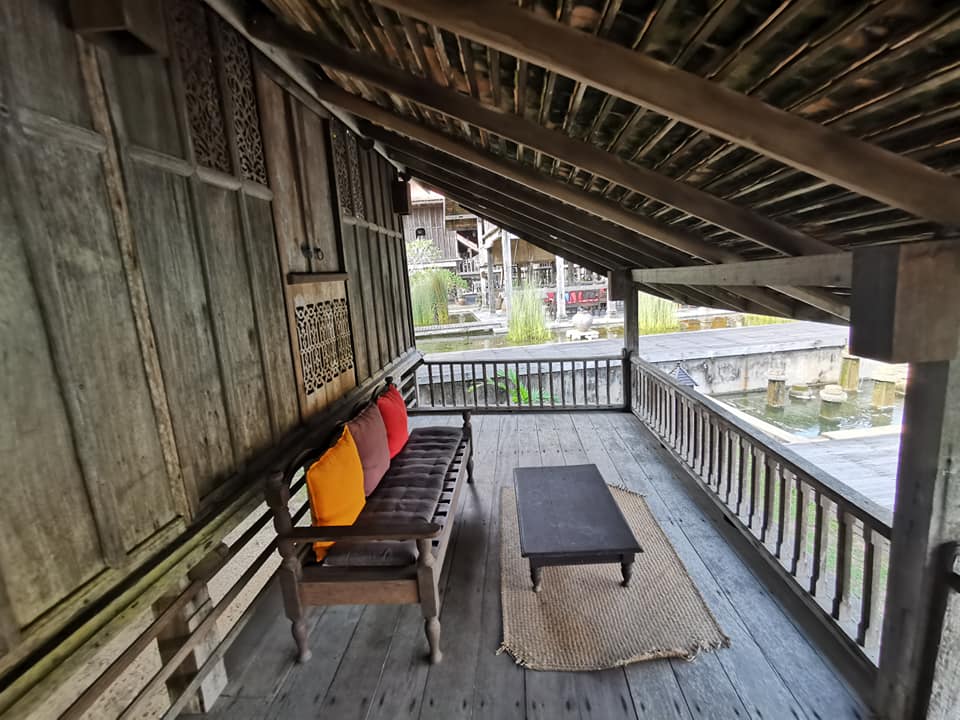
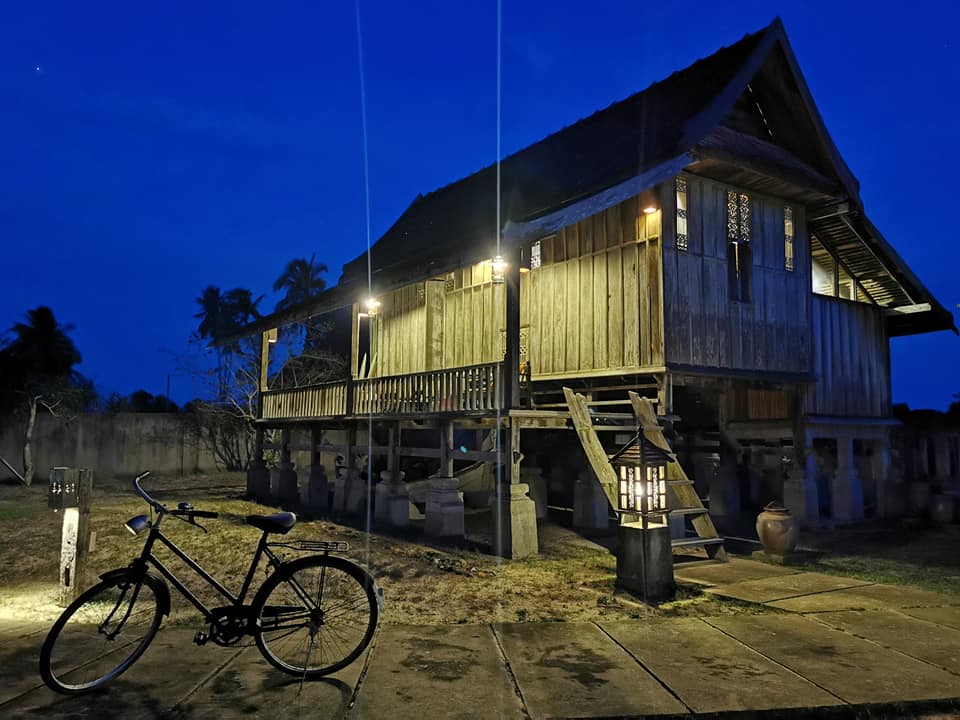
I checked into my villa, known as Rumah Binjai Rendah. The typical Terengganu house is known as the Rumah Bujang. It has a gable roof and the outline of a makara. The makara is a mythical half terrestrial, half aquatic animal and it is the vehicle of Ganga, the River Goddess. It is also a symbol of fertility. The Singgora roofs represent the scales of the Makara. Grooved windows are usually reserved for royalty.

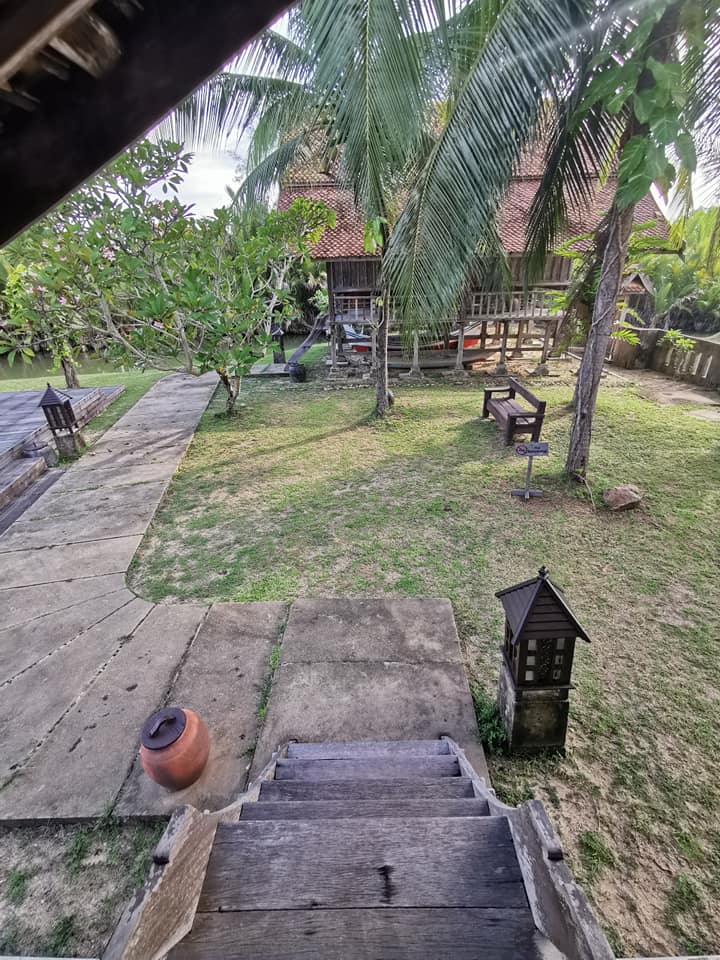
The number of steps of the staircase is always an odd number. You step with your right foot first and want to end up on your right foot. This is also the belief in Hinduism.

There are 6 units of Malay houses in the central courtyard. The resort can organise makyong, wayang kulit, main puteri (trance) and gamelan performances upon request.

The Rumah Berang (from Kuala Berang) houses a table used by Tunku Abdul Rahman. The 8-seater hardwood table was the very same one used by our first prime minister when he chaired a meeting with folks from Kampung Atas Tol in Kuala Terengganu.

The Resort Gallery is housed in Rumah Teluk Pasu which is a Rumah Tiang Enam (6 pillars). All houses in this resort are more than 100 years old.

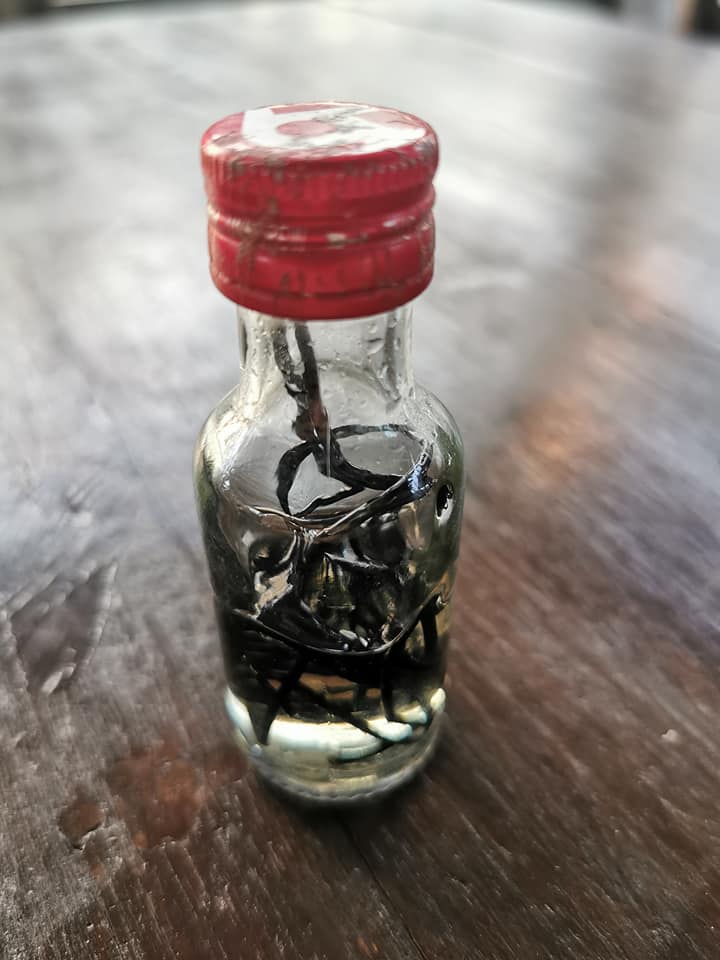
It is customary for the owner to place a needle or coin made of iron under the main pillar (tiang seri) of the house as it is a symbol of semangat waja (courage, strength). This is an old practice. The bangau or egret carving has two faces. In the Mahabharata, the bangau is a makara and it is a symbol of money. The Perahu Bangau is carved with images of characters from the Mahabharata epic. The sanga can be found at the back of boat and it is carved in the shape of a bangau.

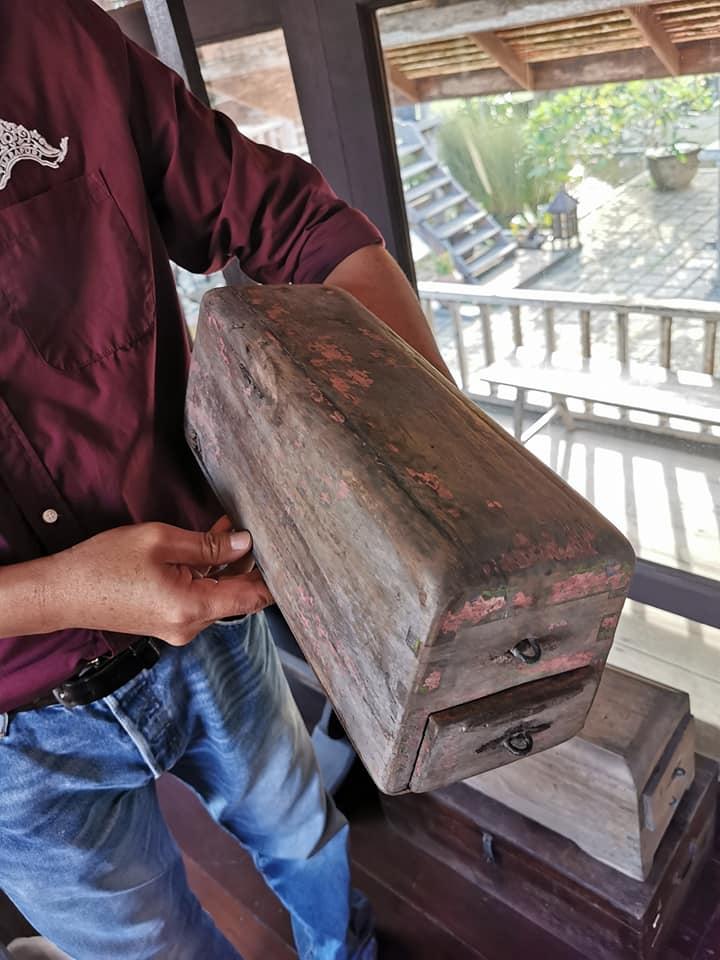
The kotak kelaut is where fishermen place their cigarettes and other personal items. This box can be used as a flotation device or safety tool should the boat capsize.

A laksa maker. In addition, brass-ware can be seen at the bottom of the stand.

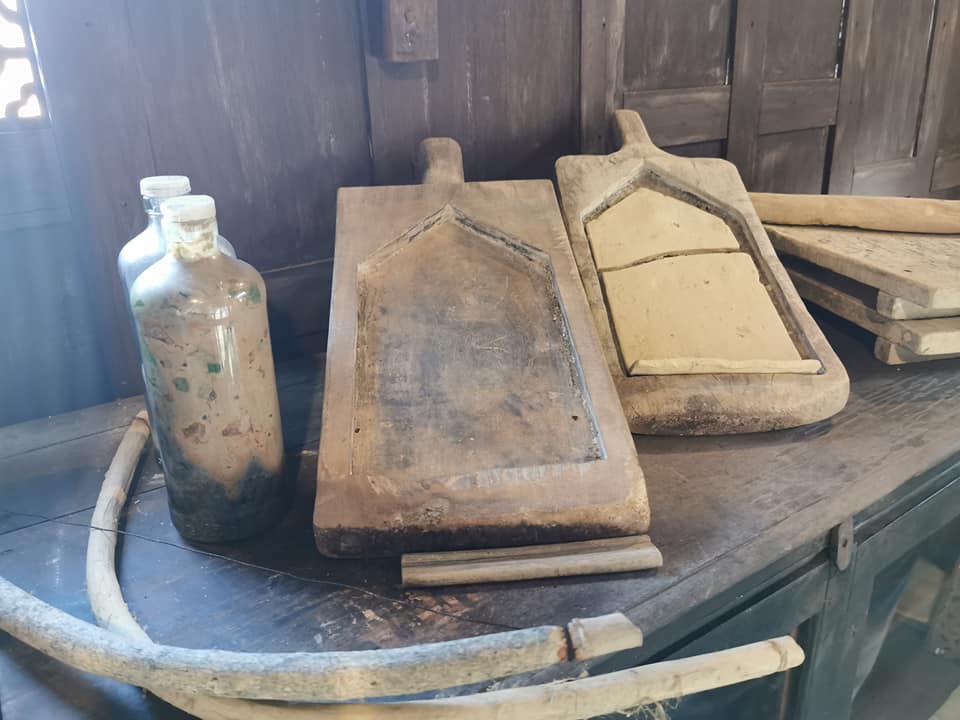
This mould was used to make Singgora roof tiles.

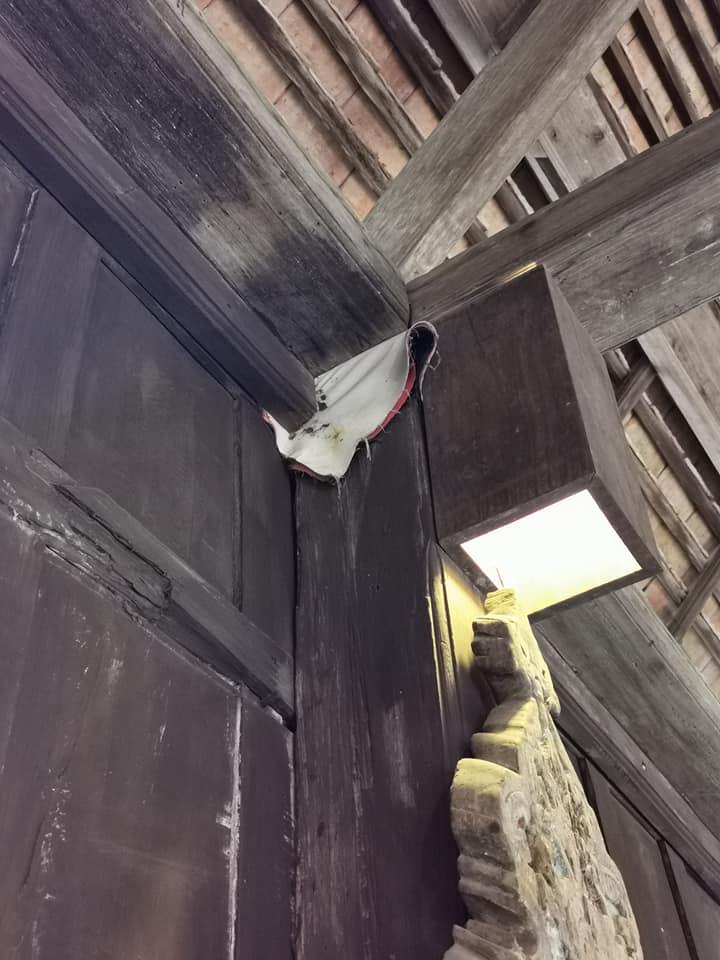
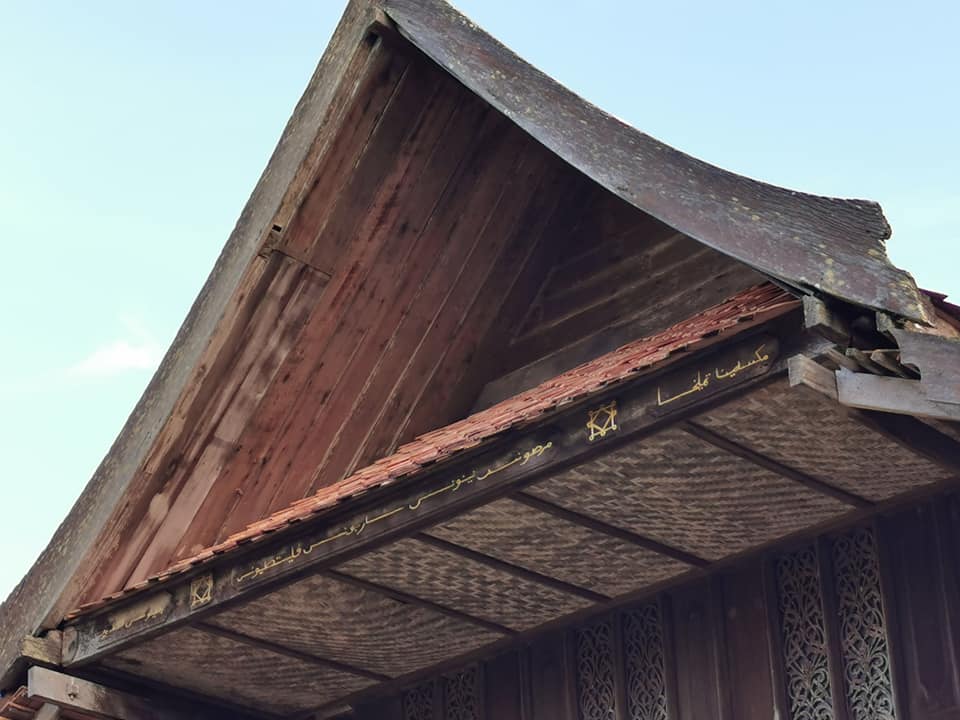
This cloth is called the bunga halang or bendera pendekar (warrior flag). It protects the house from evil spirits. Every pillar has this cloth tied at its top. Later, due to Islamic influence, Arabic words were inscribed on top of the white cloth.

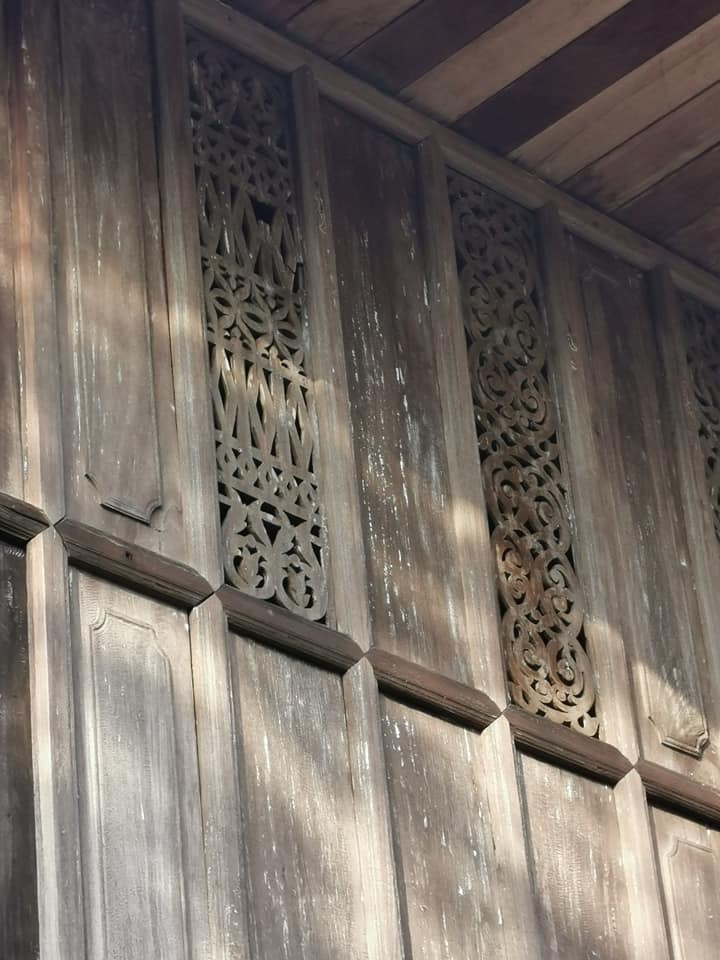
The carving on the left is geometrical. It has the bunga cina motif. The unduk unduk (seahorse) motif at the bottom protects the house from bad spirits. The carving on the right resembles two eyes and a mouth. It is a kala motif.

A few other design elements can be seen below.

The Baris Laksamana originates from the Ramayana epic in which it protects Sita from dangers. It is now used as a pagar rumah and has the lam alif Islamic wording (there is only one God).
This is a Pagar Musang. It looks like a door but we cannot walk out.
This beautiful wall is known as Dinding Janda Berhias.
Some houses have bamboo walls or dinding pelupuh.

Rumah Tanjung is an 8-pillar house. It was used for the shooting of the movie Merung Mahawangsa and Legenda Budak Setan. The kerecut grass installation in front of the house was designed by famous water colour artist Chang Fee Ming. He called this artwork Standing Proud. Kerecut grass can be used to make mats.

The Kisaran Semangat installation looks like a grinder or mill wheel.

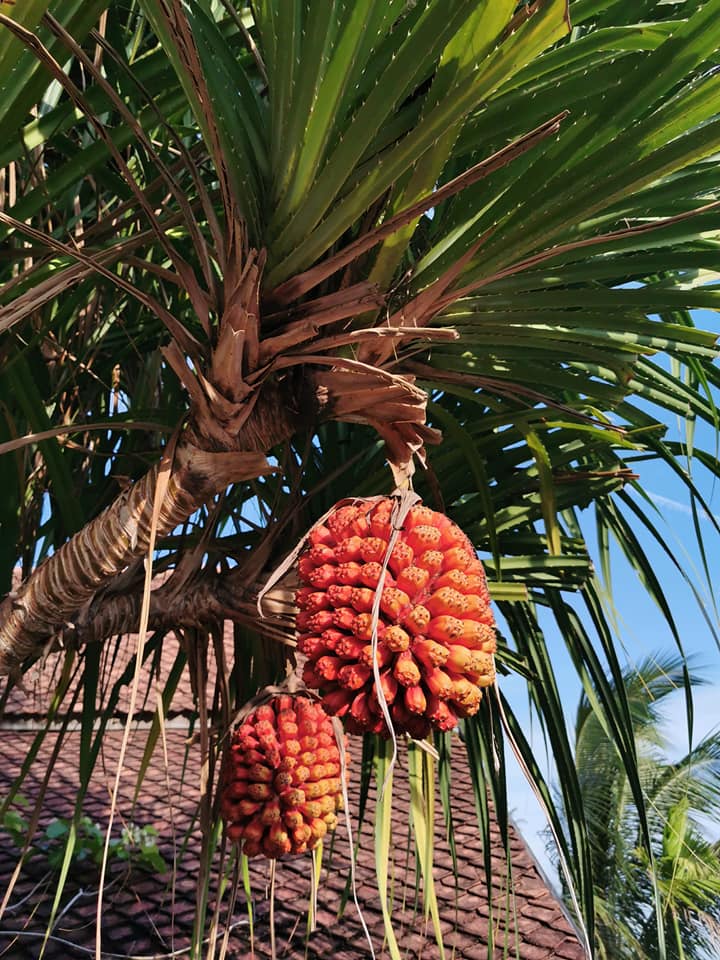
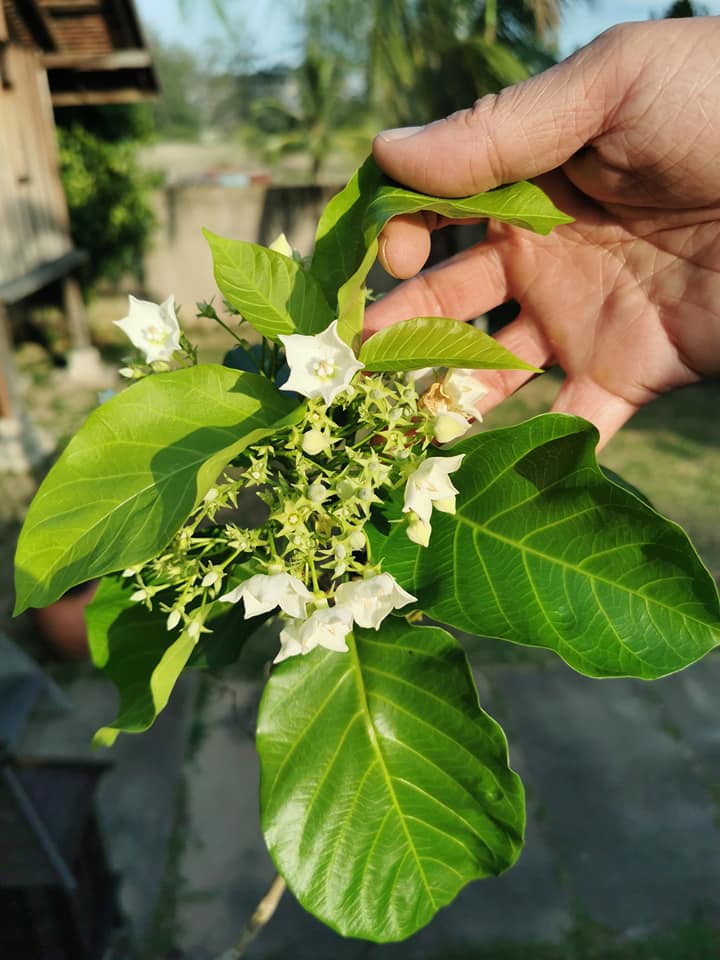
I admired the orange pandan fruit (right). It is called Pandan Laut as it grows by the sea. The white Bunga Keledang or Bunga Kerak Nasi can be found on the resort. In Terengganu it is called Bunga Tikam Seladang.

The Rumah Jeram has a Chinese Peranakan interior design. It is believed that Cheng Ho on his 4th journey to Malaya instructed his men to go into Kampung Jeram to get water.

Boats, the main form of transportation in the past, were stored below the house.

This is a Baloh rice barn to store paddy.

An arch from the Istana at Jalan Kota in Kuala Terengganu.

A spa house where guests can enjoy mandi bunga and massage. Notice the stupa at the top; it indicates Buddhist origins.

Jawi inscription related to the Wali Tujuh.

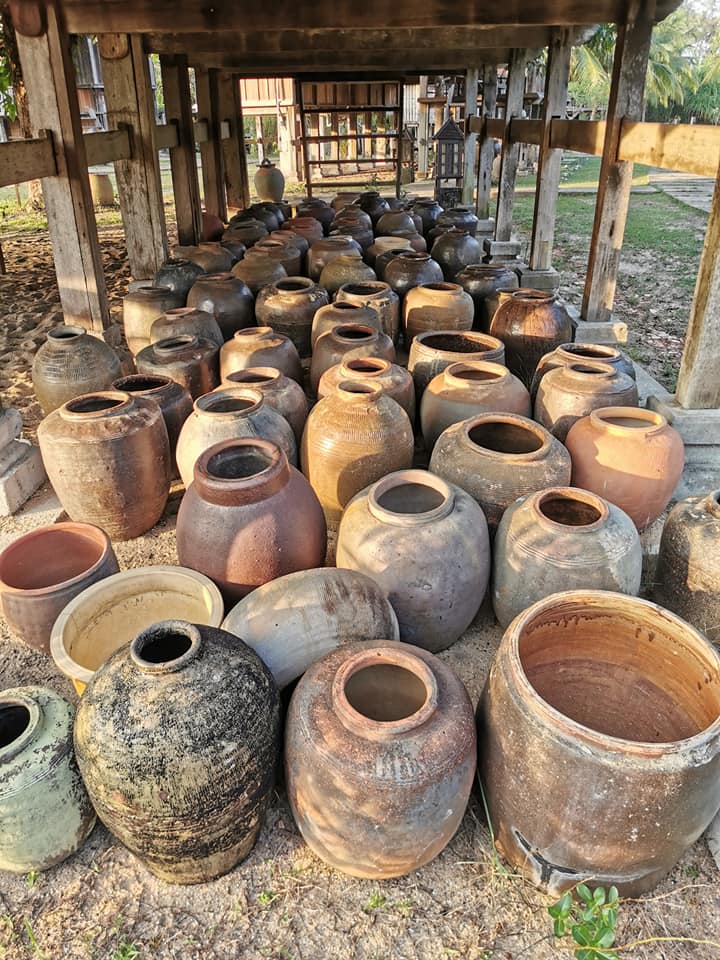
Salted fish and preserved mangoes were stored in urns. There were no freezers back then and salt was expensive.

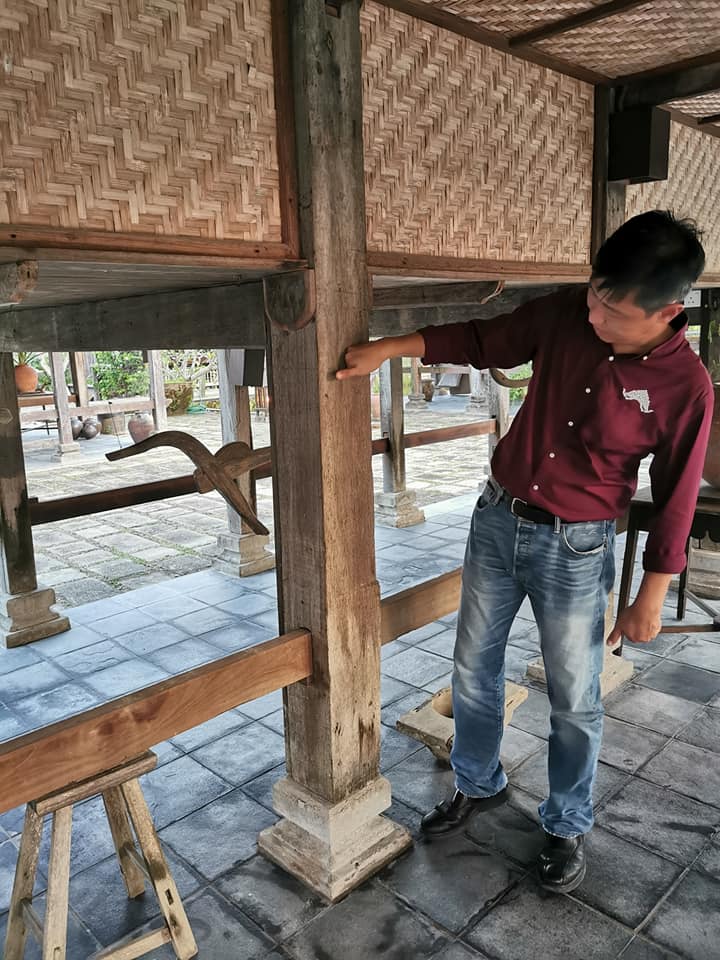
The tiang seri is usually the middle pillar underneath the rumah ibu. Minyak Canuar Kampung or Minyak Seri is placed at this pillar. It is made from coconut oil. It serves to bring radiance (berseri) to the people in the house.

The houses are constructed with bendul beams. Nails are not used in the construction of the houses.

Terrapuri in the evening. A big thank-you to Mr Alex Lee for showing me around his lovely resort.

The Batek People

by Ong Li Ling

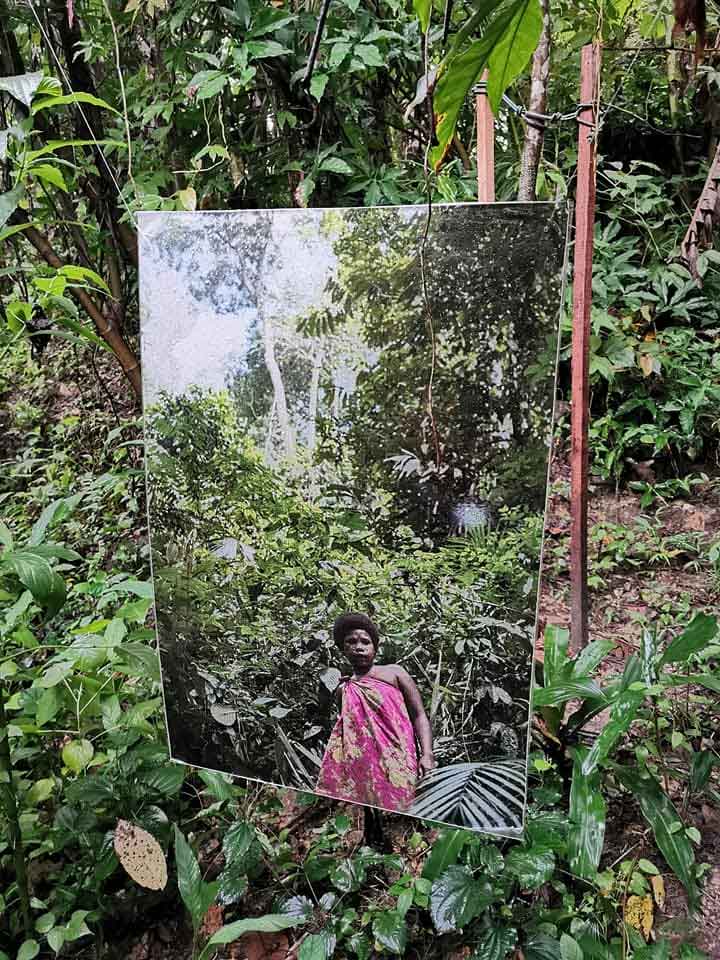
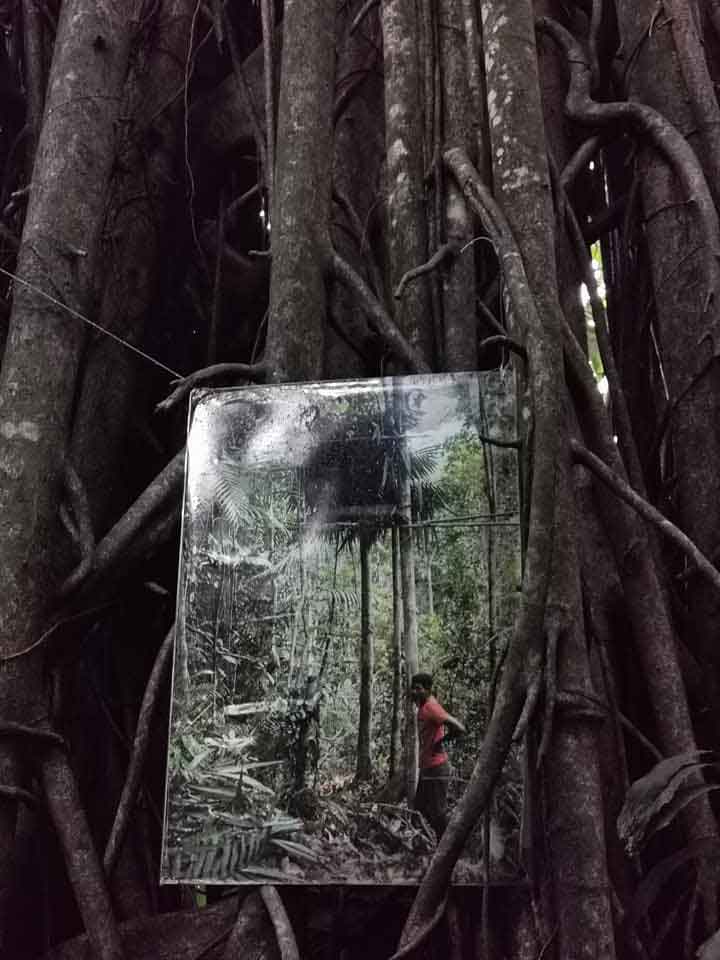
I recently attended a curatorial tour of Mahen Bala’s Ceb Bah Heb Elders of Our Forest exhibition at the Taman Tugu Nursery Trail. This exhibition is part of a documentary looking at the life of Batek people. The exhibition is on until the 21st of July; do go check it out. The documentary itself looks at the relationship between the forest and its people. You can find more details on the documentary here.

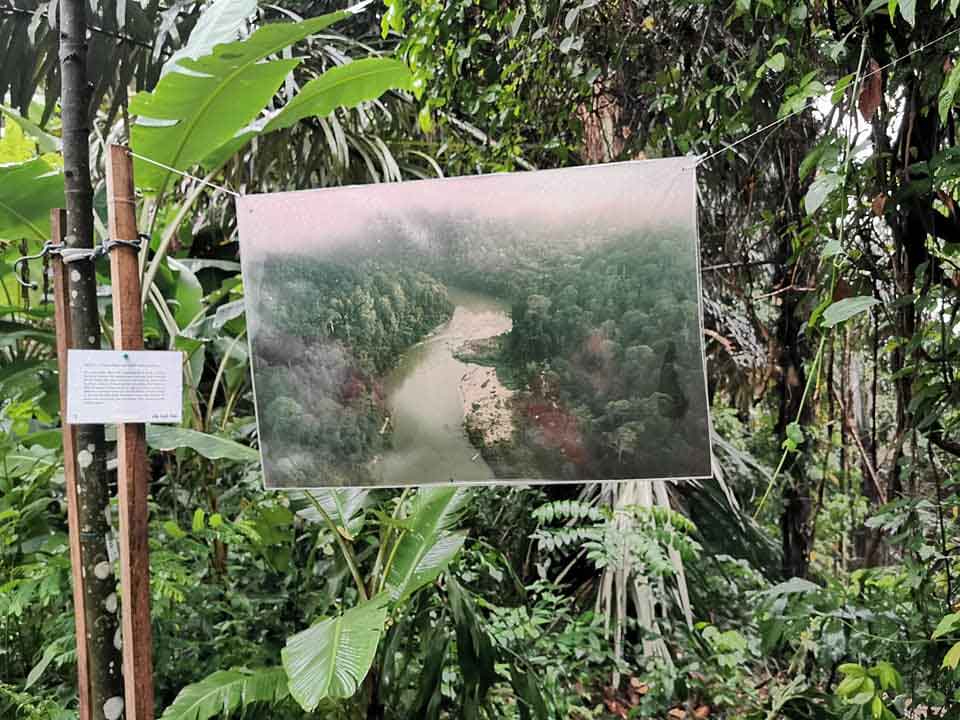
Below is an aerial photograph of Sungai Tembeling. At present, the left hand side of the river is still properly preserved. Unfortunately, the right side has been exploited. If you only live in the jungle, you will never see land this way. The Batek do not see land the way Google Maps, Waze and city folk see land. The Batek use trees and mountains as markers. The coloured structures in the photograph are Batek settlements.

Traditionally the Batek are nomadic and hence they had no proper settlements. Due to pressures from outside and their inability to continue living off the forest, they are changing their lifestyles. Our government is telling them to stay put in order to participate in the lucrative eco-tourism business. This is against their ancestral practice as they are used to travelling and foraging. This photograph shows what the typical Batek person does all day. They are waiting for tourists to pop over so that the curious tourist can take photos with them. Reminds me of the Long Neck women I saw in Myanmar. The tour guides will give them a token amount to “add to the authenticity” of the jungle tour. This shows how hard it is for the Batek people to live off the forest today.

The Batek only take what they need from the forest. Whatever they hunt or forage will be brought back to the village to be shared. They have respect for the animals they kill. They believe bad luck will befall them if they break the taboos.

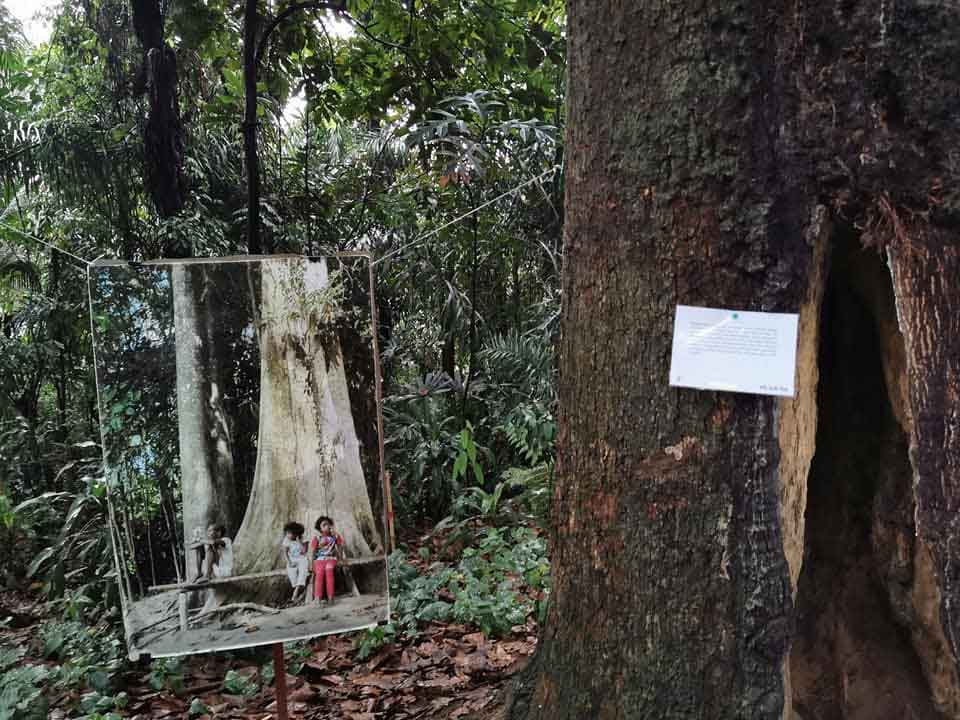
This photograph shows a typical Batek family and the structures they build. This structure is called a Hayak, Lintus or Lean To. Once they decide where to spend the night, the whole family is involved in setting up their home for the night. When they are ready to move, the shelter is returned to the forest and so their impact on the jungle is minimized. The Batek view the seasons differently than we do. During the fruiting season, they live entirely on fruits. During the flower season, they survive by harvesting honey.

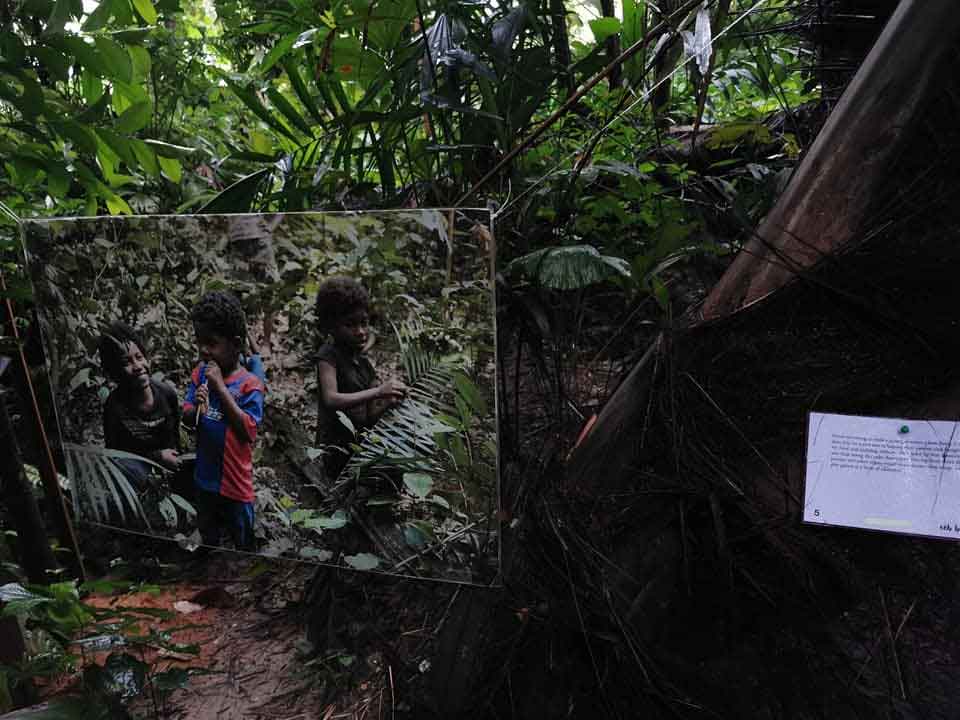
The children are involved with the running of the community from a young age. As soon as they are able, they learn survival skills such as how to use the parang and how to weave batik. This period is also an important time for bonding, as the elders will tell the children folk tales. The children are taught that every member of the family is important.

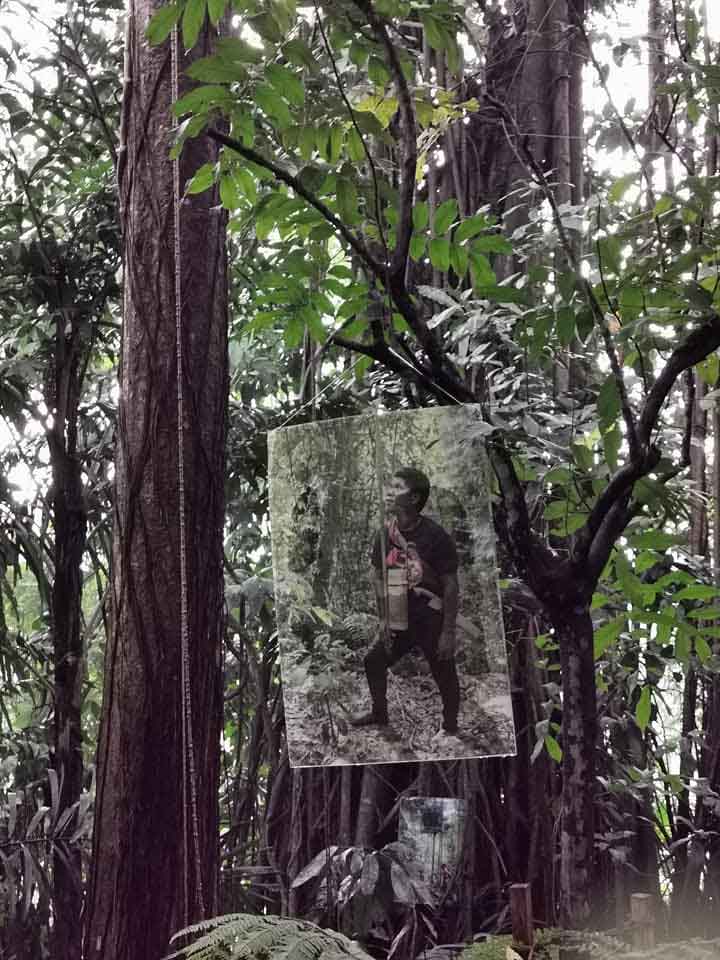
This is a photograph of Mr Di. He is holding a blowpipe and he carries a canister of darts around his neck. The blowpipe is an important asset to the Batek and they keep their blowpipe from cradle to grave. It is the most important of their material possessions. Batek people are egalitarian in that they consider both genders as equals. Women can also hunt and forage food and men can take care of children. This equal partnership relationship is now changing as they are forced to stay in one place and men are forced to do work requiring hard labour. Hence, the women stay at home to look after their kids. We can see the damage that this has done to their community. Modern civilisation is forcing our ideas and our “modern” ways of life on them and they have no other choice but to follow.

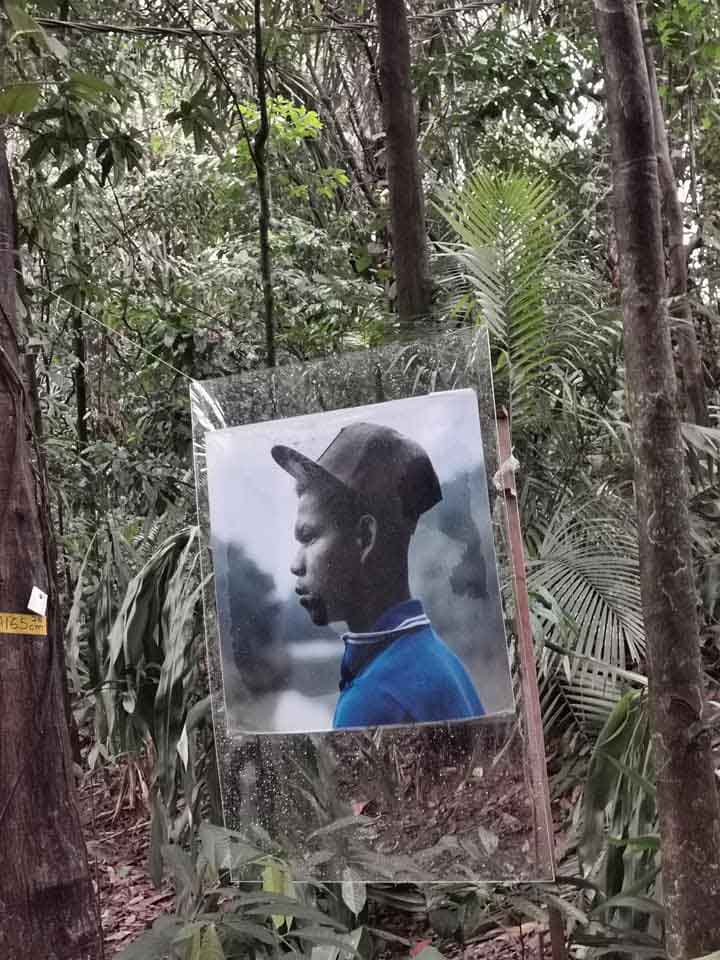
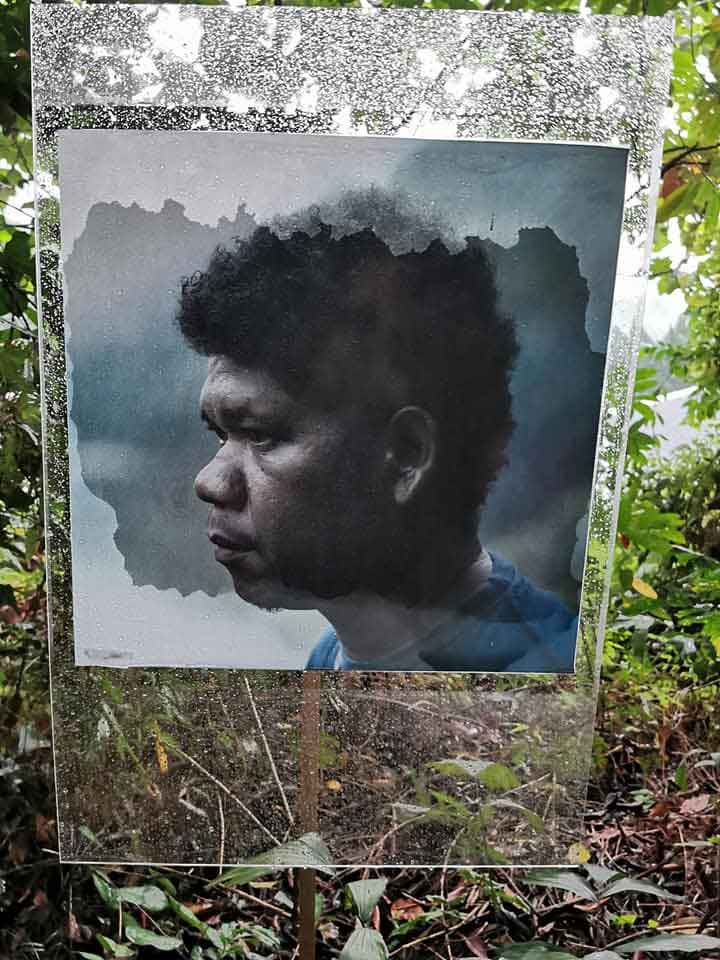
This is a photograph of Mr Di’s son. In general, the Orang Asli are depicted negatively in the media. We often see them when there is negative news e.g. protest against deforestation. The way these articles are written are so negative towards the Orang Asli that many think that “they have not caught up with our modern world”. Mahen made sure that his photographs show that the Batek as dignified and empowered. Some Orang Asli groups have traditional costumes and they wear these with pride. However, they have been directed to wear the costumes for the sake of tourism and that is not a good practice. Just in case you are wondering, the Batek do not have a traditional costume.

This is an important photograph as it shows the burial site of a deceased Batek. They will choose the highest tree that they can climb and they will build a simple structure. They will then start a fire to keep animals away. The Batek believe that the soul will fly to heaven. This location is kept a secret, as they do not want outside disturbance. It was reported in the news recently that the Kelantan government exhumed the body of a Batek, did a post mortem and then buried the body according to Islamic rites!

The Batek gather and share stories whilst hunting e.g., “I saw a herd of elephants next to the river”. This allows them to form a shared mental map of the area. They have a ground view of the land and whenever people share stories, they can imagine what else is happening on their land. The Batek use trees that really stand out as waypoints to navigate the terrain.

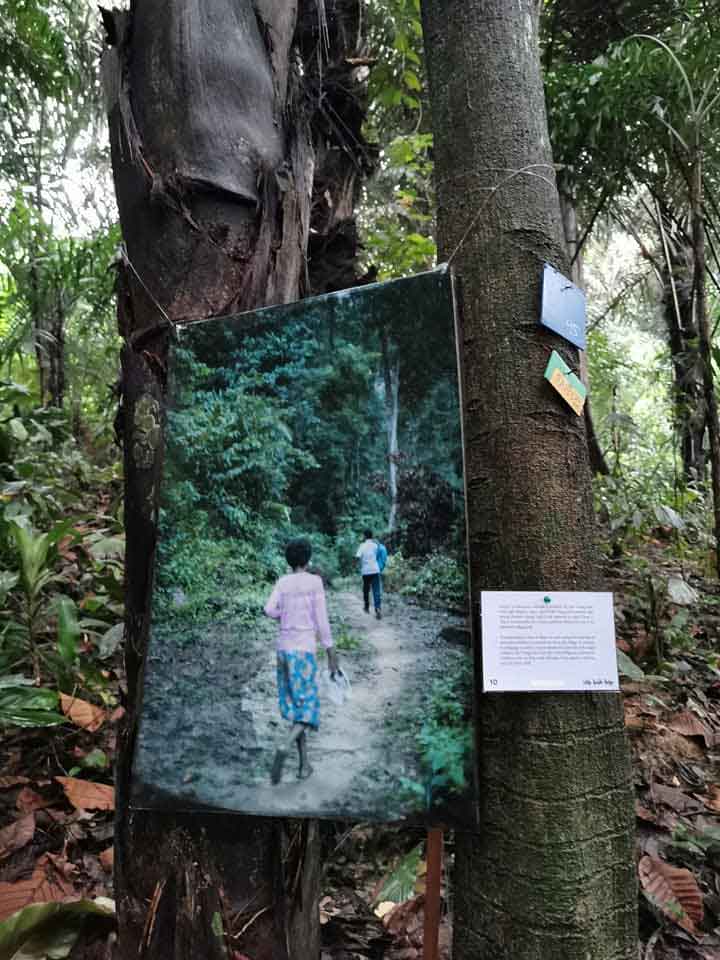
This photograph shows some Orang Asli children going to school. Most of them have trouble getting to school due to transportation. Some Orang Asli kids travel 12 hours per day to receive an education and so it takes amazing determination and grit. The cost is another challenge, as their parents cannot afford shoes and uniforms. They are sometimes discriminated against by teachers and hence they do not find school enjoyable. After a while, they feel so discouraged they prefer to stay at home and help their parents. Mahen met many bright Batek kids. Some quit school before the age of 14 due to these challenges. The statistics show that out of 100 who attend primary school, only six are expected to finish Form 5.

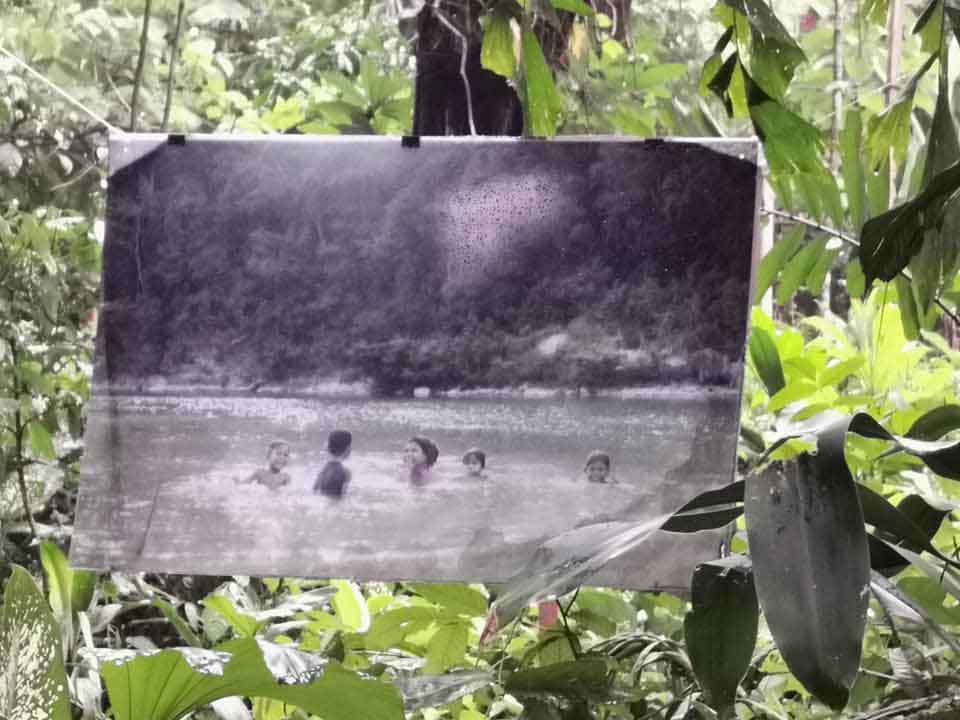
This photograph shows the Orang Asli children happily bathing in the river. Most of us will find it difficult to swim in these rivers due to the currents.

This final photograph depicts Mr Di against the backdrop of construction and development. It encourages us to reflect on the Batek way of life versus our way of life. We can still live as Malaysians and go back home and practise our traditional way of life. So why is it that we force Batek people to change and adapt to our way of life? According to the statistics, there are only 1500 Batek people left. It is only fair that we acknowledge their customary rights to their land. The Batek are well versed in the medicinal values of forest plants but if you are a researcher, it may not be in the Batek people’s best interest to publish these secrets in journals. We can assume that greedy pharmaceutical companies will come and grab the knowledge and then patent this knowledge for their commercial benefit. When that happens, there is little else left for the Batek to survive on.

Nam Hooi Wooi Koon – a Cantonese Clan Association

by Ong Li Ling

Several site excursions were organised as part of the Georgetown Heritage Celebrations 2019. I was fortunate enough to join the tour of the Nam Hooi Wooi Koon Cantonese Clan Association. Mr Adrian Pak (President of the Association) and Mr Johnny Yee (Honorary Secretary) led the informative tour and also provided the background information for this blog piece.

Our guides explained to us that Nanhai District is located in Foshan City China and has a history of 2,000 years. In 214 BC this place in Guangdong China was known as Nanhai County and, in 1992 it was renamed Nanhai District. The Nam Hooi Wooi Koon is a Cantonese Clan Association with members comprising of immigrants from Nanhai. It has been estimated that there are around 400,000 Nanhai Chinese living outside China and they are scattered around the world.

Some famous Nanhai figures that you may have heard of are revolutionary leader Kang Youwei, reformer Kang Tongbi, martial artist Wong FeiHung, martial artist Ip Man, actor Leung Ka-Fei and father of Engineering Zhan Tianyou. During the 1890s, Nanhai immigrants, Chen Yuqin and Zhou Xingyang, controlled the Penang opium market. They were the founding members of the Kwangtung Association, Nam Wah Ee Hospital, Chinese Town Hall and the Ng Fook Tong School in Penang.

Nam Hooi Wooi Koon was established in 1828, which means it will celebrate its 192nd anniversary come October 2019. Nam Hooi Wooi Koon is the oldest Overseas Establishment certified by the Nanhai Association in China. Within 77 years after its establishment, Nam Hooi Wooi Koon occupied its own building and it also operated 4 other shop houses and a funeral parlour. Coincidentally, the 1st (Bai Yupei), 11th (Bai Yuzhan), and the 21st President who is also the sitting President (BaiYubin) are from the Bai (Pak) family.

To make it easier for members to stay informed, Nam Hooi Wooi Koon started a Facebook Page and an official website in 2002. They also established a brotherhood Association with 2 other clan associations namely the PunYue (Panyu District) and Soon Tuck (Shunde, District).

Georgetown is a UNESCO World Heritage Site with more than 5000 buildings of interest. Nam Hooi Wooi Koon is one of 82 Category 1 buildings, reflecting the authenticity of its cultural landscape. The length of this building is 200 feet, which is rare in Penang. The front faces Chulia Street and the back faces Kampung Malabar.

We started our tour at the front door. The words Nam Hooi Wooi Koon (in Cantonese) is solidly moulded on a concrete style signboard above the door. Instead of using gold coloured paint, “gold leaves” were stuck onto the letterings to make the words stand out. You can see with a pair of 7 lettered Chinese couplets on either side of the door. It reads Nan Yu De Zhi Peng Cheng Yuan  and Hai Guo Tong Xin Yan Hui Zhang. This phrase was composed by Lingnan calligrapher Lin Qihan in 1904. The roofing and engraving on the exterior beams has a unique wooden flowery architectural design and showcases the expert craftsmanship of the artisan.

Once you enter the front door, you will see a Tai Pak Kong (Fu De Zheng Shen) on your left. It is also known as Tudi Gong (Diety of the Earth). Everything except the deity was repainted in early 2019. A specialist was hired to do the repainting and lacquering and he replicated the same colouring style as indicated in the archived photos. You will notice that this is the typical style adopted from Southern China. Tudi Gong is the Main Protector of the Community and Land.

Moving on, we were shown the United Nam Hoi Association Affiliates plaque on the left wall. This initiative was launched in Oct 2017. Members can establish trade with China via the Malaysia Nam Hoi Commercial Division.

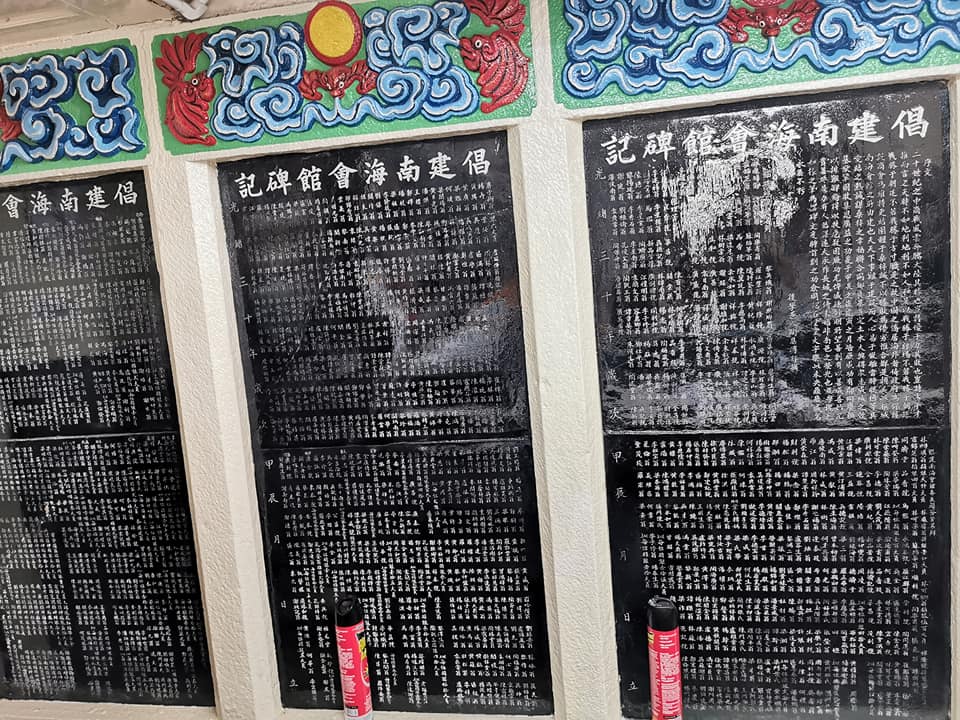
We noticed the black tablets behind the counter on the right. In the 30th Year of Emperor Guangxu many enthusiastic members donated to the building fund, and their names were engraved in white lettering against a black background stone tablet. Carving a list of names onto a stone is a common practice in clan houses and kongsi. If you look carefully you may find the names of your great-great-grandfathers, great grandfathers or grandfathers engraved on the tablets. Members contributed not more than a few ringgit but it meant a lot to the association, as the value of money was big back then.

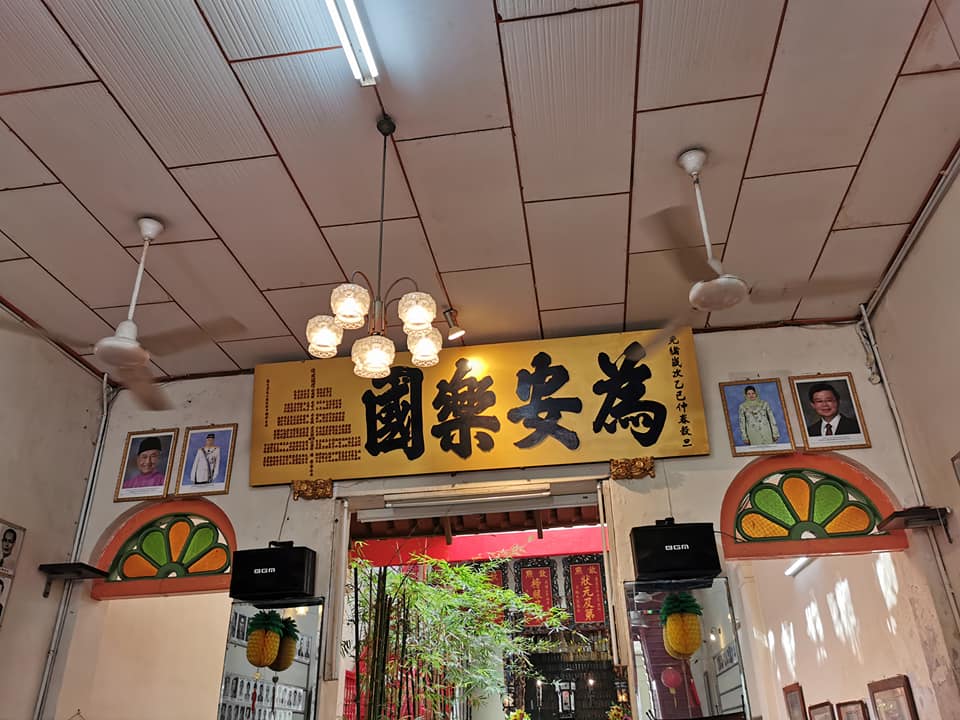
We looked up to admire the Golden Congratulatory Plaque. The previous plaque which was put up in 1905 collapsed in 2000  due to termites  and a replica was put in its place .The board is engraved with the 4 letters of ‘Wei An Le Guo’.

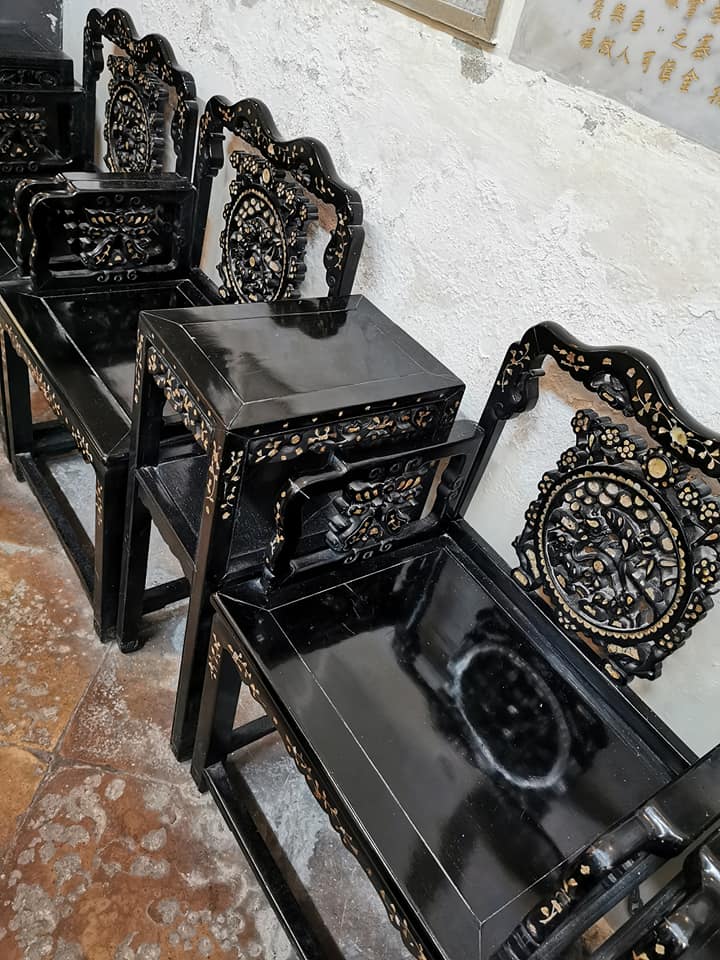
There are lots of rosewood Ching Dynasty and Guangxu era antique furniture in the Hall. Rose wood is strong and free of termites. The more you sit on the chairs the more it shines and it will also cool you down when ambient temperatures are high.

There used to be 2 large Qing Dynasty vases on the stage. Unfortunately these priceless artefacts were stolen. The Association has since installed a CCTV to prevent future occurrence of theft.

We were brought to the inside section of the building where we admired the 2nd air well. As this air well has not been sealed, rainwater pours in when it rains.

Netting has been installed to prevent bats and swallows from coming in.

We looked up and noticed 5 red plaques hanging from the ceiling. These plaques are the pride of Association as they are given only to outstanding Chinese Scholars. These 5 pieces were originally from Nan Hai and they were bestowed to Nan Hai children who got into the Honorary List after sitting for the Qinghai Imperial Examination (example The Champion Zhuangyuan and The Flower Tanhua). These Scholars were eventually promoted to senior positions such as Ministers in the Imperial Palace.

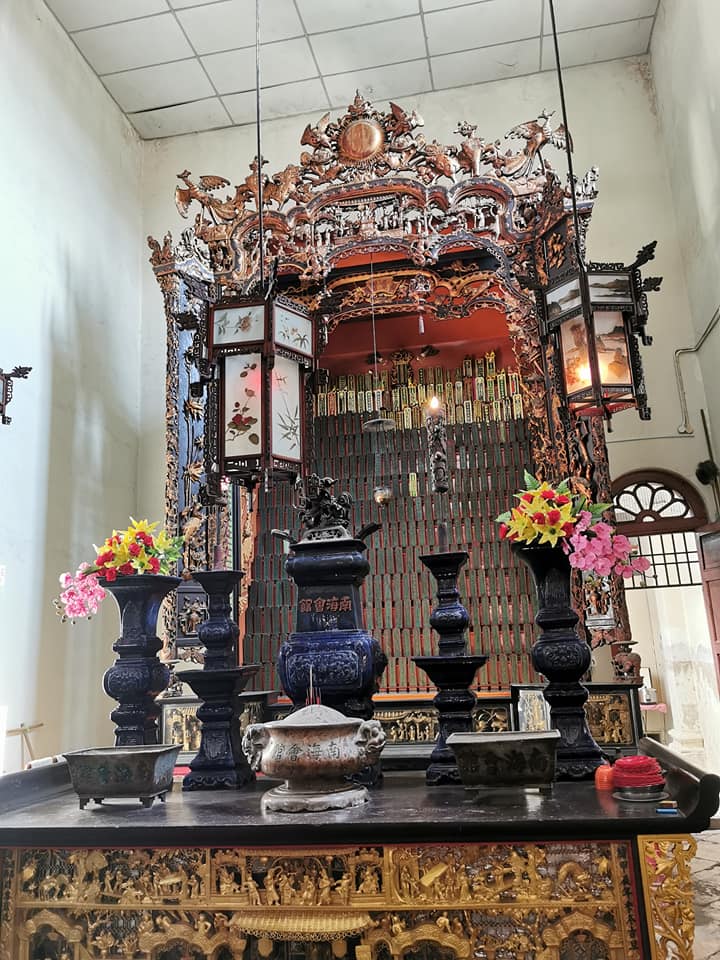
At the end of the inner hall, there stood a high Chinese-style altar with numerous ancestral tablets. These tablets commemorate the dead. Their families often come to this alter during the Cheng Beng Festival instead of visiting the tomb.

The altar is more than 2 stories high. It is rare to find wooden structures of that height especially after the Communist rule in China. On the altar, we admired exquisite carvings of deities that told of Chinese folk tales. We also saw flowers, fishes and others of wooden frameworks with golden leaves stuck on. This altar is one of the prominent antique pieces in Nam Hooi Wooi Koon. Nanhai was famous for porcelain making and the vases at the front of the altar were imported many years ago to decorate the altar. The vases are made of single porcelain pieces and are deemed as priceless antiques.

Visitors can go to the praying area at the back of the building to ask for their blessings. There is a stone altar with the Sheji Zhi Shen (God of Society) and Bai Hu Ye (White Tiger God). If you make an offering to the God of Society/Community, you will be blessed with good weather and a good millet harvest. The White Tiger God is a Protector God. If you feel you are experiencing a bout of bad luck, you can pray to the White Tiger God for a smooth sailing year ahead. This God is said to open its mouth during certain times of the year. Devotees rub the mouth of the Tiger with a piece of lard for good luck.

This stone altar is visited by many Penangites and is open to the public throughout the year. There is no entrance fee and all are welcome to visit and pray for good luck. Many come at the start of the Chinese New Year. The Cantonese come in droves to ‘Ta Siew Yan’ (Da Xiao Ren) i.e. “Beat up the Villain”. Those who hinder your progress and growth, those who oppose you and are obstacles to your progress are deemed as ‘siew yan’ villains.

Some visitors will engage the services of the Resident Lady who is well versed in chanting poetic mantras, which get rid of bad luck. She will hit a red paper cutting representing the human shape of the villain. The ‘villain’ will be beaten up using a Chinese wooden clog while she chants the Mantras. An angpow can be given to the Lady as an appreciation for her services. You can also present an offering to the Tiger God.

We admired the side of building from the outside; 200 feet is considered long for a Penang building. The Association would like to commission a mural on this wall to depict Nanhai history and culture sometime in the near future.

We then walked upstairs to the 1st floor and admired the red staircase which is over 100 years old.

On the upper level, we saw 2 more altars with ancestral tablets. These tablets are exclusive to the Nan Hai people and they can purchase a tablet for nominal amount.

From the upper level, we can see a big ball on the rooftop, which represents a Pearl. This pearl radiates light in all directions. Next to the pearl are fishes, which symbolise abundance to fengshui believers.

Ceiling is old style
This sink has been in use since British colonial days. The tap is the original tap and it is still in good working condition.
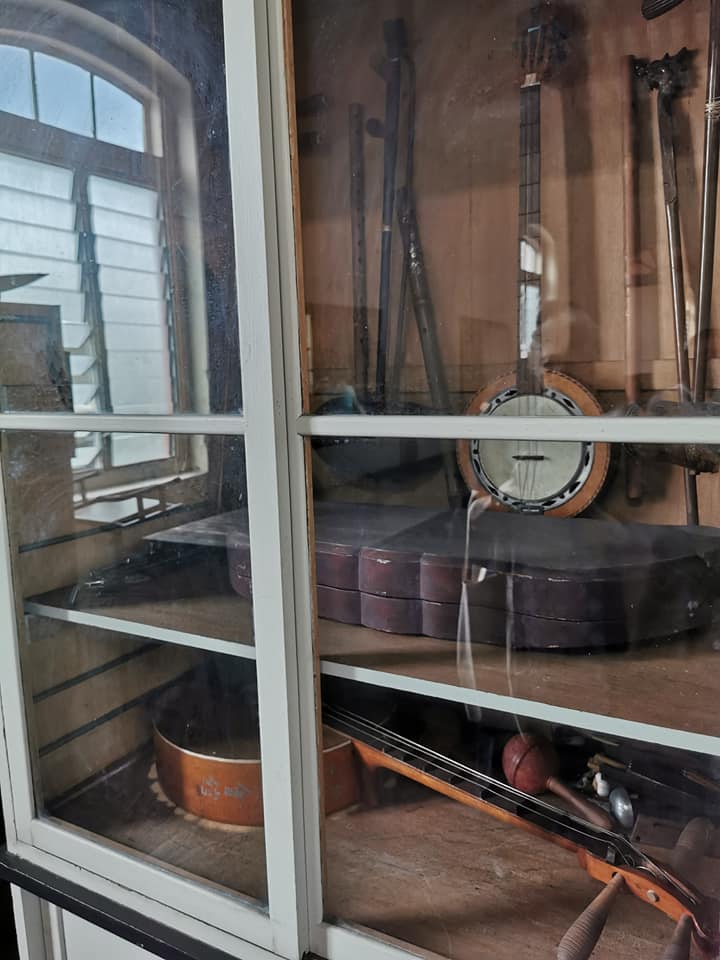
Old Chinese musical instruments, now museum-quality pieces. Members can participate in the Chinese Opera Group, which uses newer musical instruments.

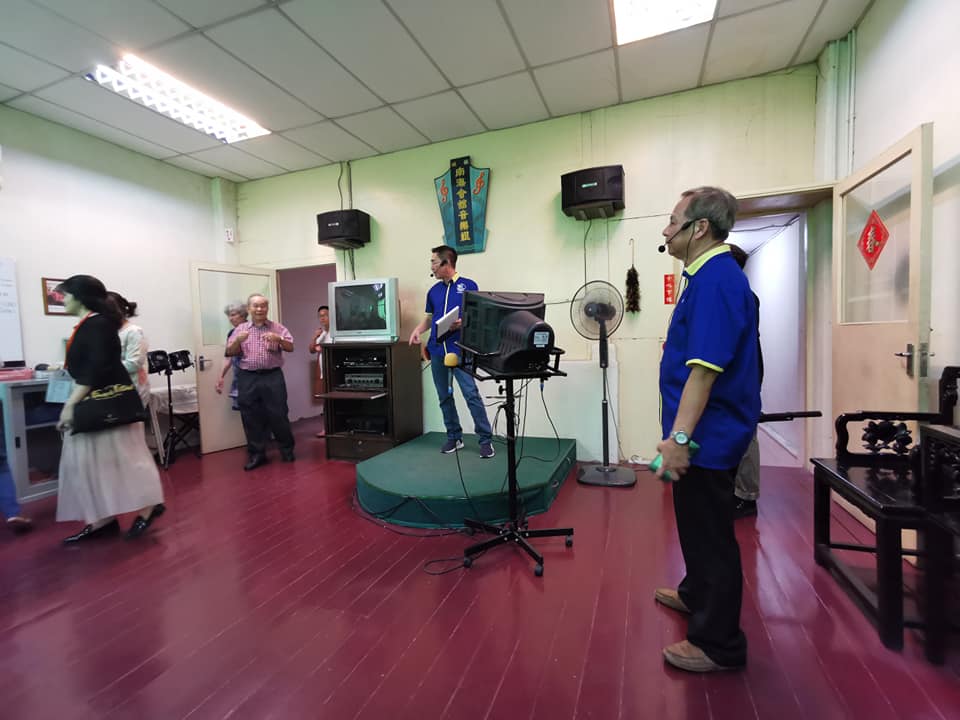
We were then brought to the air-conditioned karaoke room, which is location at the back portion of the upper level. Initiated by the Association’s Past President, Mr. Lee GH, karaoke is an effective way to engage teachers and members alike. A competition is organised once a year to showcase budding talents.

The third altar located upstairs.

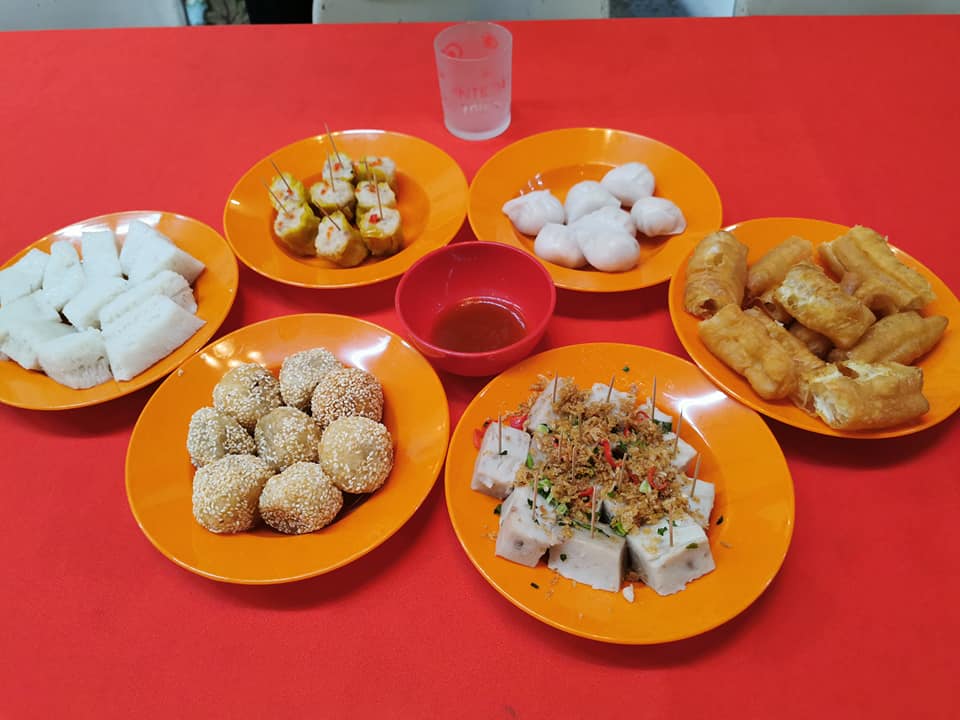
We were treated to yummy Cantonese snacks whilst we enjoyed the Chinese opera karaoke performed on stage. Big thanks to Mr Adrian Yap, Mr Johnny Yee and the association members for the educational tour and warm hospitality.

Cultivation and use of Opium before the 16th century

by Stuart Wakefield

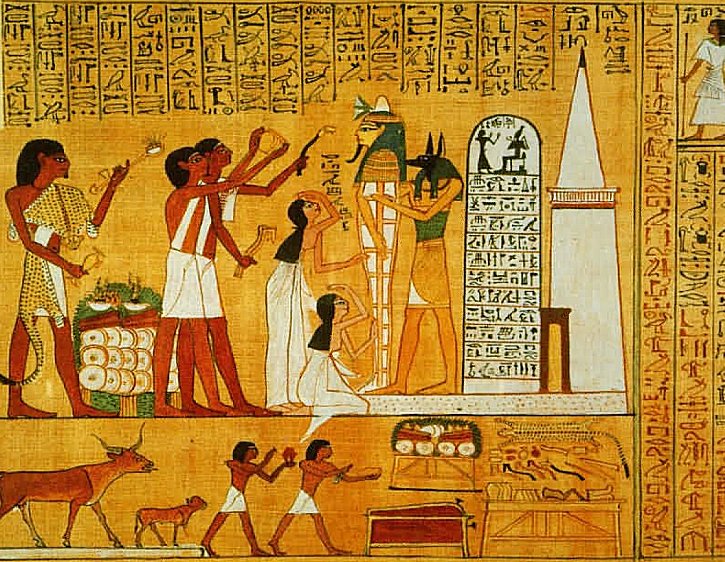
Opium is derived from the seeds of the papaver somniferum plant, which is related to the common cabbage. Fossilised poppy seeds have been found that date back over 30,000 years to Neanderthal man. The first written record of poppies was written on Sumerian clay tablets that have been dated at around 5,000 BCE. These referred to opium as hul gil, the ‘joy plant’ that was used to produce opium in Mesopotamia.[i] As opium gained in popularity, it was first traded westwards to Assyria and Egypt before spreading along established land trade routes, (which subsequently became known as Silk Roads).[ii] An early Egyptian medicinal text, the Ebers Papyrus, dated around 1,550 BCE, records opium being mixed to produce a children’s sedative, and was specifically used as a remedy for infant teething problems. It has been suggested that mother’s offered their nipple to suckling babies smeared with poppy juice to stop them crying, and this practice spread over time to both Europe and India. Whilst its pleasurable effects were known, it was also used to overcome bowel disorders, and was even claimed to be an antidote for poison. By the fourteenth century, maritime trade dominated due to a lack of political control along the land route, which increased opium availability in South East Asia.

A page from the Ebers Papyrus scroll, which was an encyclopedia of medicine in ancient Egypt. Photo taken from http://www.ancientpages.com/2016/02/03/the-ebers-papyrus-most-famous-plant-medicine-encyclopedia-of-ancient-egypt/

Opium was undoubtedly a valued trade good, and being easy to grow with a relatively low cost of production, extensive cultivation resulted in many regions. Poppy plants take approximately three months to produce opium and thrive in warm climatic conditions that are common in the Middle East, though they can be grown in a wide variety of locations. One acre of poppies can produce from three to five kg of raw opium, although both quality and yield deteriorate in less than ideal growing conditions. The flowers are normally coloured red or orange, although the colour may vary from white to purple, and the four petals are initially hidden within two outer sepals.[iii] The calyx is thrown off as the flower develops, and, following fertilization, the petals drop away to reveal from five to eight poppy capsules, which have the appearance of miniature pomegranates.[iv] The capsules are lightly lanced a few times to avoid damaging the interior cavities. The puncturing causes the milky latex to ooze out, which is then scraped off and then air dried when it turns dark brown.[v]

The historical significance of the opium trade is open to debate, with some claiming that it played a key role in major historical events including wars fought by Alexander the Great, The Huns and the Mongols.[vi] The first contact between the west and China occurred when a Greek expedition came to Kashgar around 200 BCE.[vii] It is apparent that opium use in Asia had been well established by the fifteenth century as a consequence of trade from the Middle East and India. However, after the fifteenth century, Asian trade and use of opium increased dramatically under the influence of European Charter Companies such as the Dutch VOC (Vereenigde Oost-indische Compagnie) and the English East India Company.

Some historians suggest that opium may have been introduced into China by returning sailors or Tibetan Buddhist priests from Africa or India as the early as the first century BCE. However, it is generally accepted that Arabic merchants brought opium first to India and subsequently to China between 400 and 900 BCE.[viii] Opium was produced by some ethnic minorities in southern China to raise money to pay tributes to the Han Chinese Emperors.  Chinese traders also introduced opium growing to South East Asian minority cultures.

Opium smoking in China in the 19th century. Photo taken from
https://dissolve.com/stock-photo/Opium-smoking-China-19th-century-After-19th-century-rights-managed-image/102-D869-77-835

Some sources suggest that opium was primarily used by the lower classes, although it is quite possible that its wide availability and broad based appeal as a medicine led to its widespread use. An Indian folktale relating to opium suggests that recreational users will become ‘[…] as mischievous as a mouse, as fond of milk as a cat, as quarrelsome as a dog, as unclean as a monkey, as savage as a boar, as strong as an elephant and, as spirited as a queen!’ A 10th century CE Chinese poem advised of the opium poppy being made into a drink “fit for Buddha”. The 1916 China Year Book stated that ‘The poppy has been known in China for 12 centuries, and its medicinal use for nine centuries,’ and was introduced by Arab traders.[ix] Textual evidence in an eight century Chinese Pharmacopoeia manual suggests that ‘[…] Muslim traders were carrying opium from West to East Asia […] the medicine was prescribed for diarrhoea […] and for that frequent complaint in traditional medical lore, male impotence.”[x] Some historians have drawn parallels between the trades in opium to China and in tea from China. Both were regarded as desirable and worthy of consumption, with the Dutch Physician Cornelis Bontekoe making extravagant claims for the medicinal properties of tea and recommending consumption of up to fifty cups a day. However, unlike opium, tea joined tobacco, coffee and cocoa as luxury products in a lucrative but limited European market.[xi]

Historians have pointed out that smoking was unknown before Columbus returned from the New World with tobacco, and conclude that, prior to the sixteenth century, opium had always been taken orally.[xii] Whilst not being contradictory, other sources point out that opium smoking was well established in Java by 1690.[xiii] Others suggest that a smoking culture appeared in China during the seventeenth century, although the Chinese initially considered the practice to be barbaric.


Opium Den by Vincent G. Stiepevich. Photo taken from
http://www.johncoulthart.com/feuilleton/2012/03/03/opium-dens/

[i] Dr. Anil Aggrawal, Narcotic Drugs, The Story of opium, Ch 2, (New Delhi, 1995); <https://www.opioids.com/narcotic-drugs/chapter-2.html&gt;, [accessed 6 June 2017].

[ii] Drug Enforcement Administration, Museum & Visitor Centre; <https://www.deamuseum.org/ccp/opium/history.html&gt;,

[iii] Study, Flower Sepals; <http://study.com/academy/lesson/flower-sepals-function-definition-quiz.html&gt;,

[iv] Study, Calyx in flowers; <http://study.com/academy/lesson/calyx-in-flowers-definition-form-quiz.html&gt;,

[v] Frontline, <http://www.pbs.org/wgbh/pages/frontline/shows/heroin/etc/history.html>, [accessed 12 June 2017]

[vi] All Empires History Forum, Ancient Opium Trade Routes; <http://www.allempires.com/forum/forum_posts.asp?TID=23558 >, [accessed 7 June 2017].

[vii] British Museum, Chinese Trade; <http://www.britishmuseum.org/pdf/Chinese_trade.pdf >,

[viii] Facts and Details; Opium in China; <http://factsanddetails.com/china/cat11/sub74/item139.html&gt;, [accessed 11 June 2017].

[ix] Ellen La Motte, Schaffer Library of Drug Policy, The Opium Monopoly, XV The History of the Opium Trade in China; <http://www.druglibrary.org/schaffer/history/om/om15.htm&gt;, [accessed 6 June 2017].

[x] Opium Regimes: China, Britain, and Japan, 1839-1952, Part III, Drugs Taxes and Chinese Capitalism in SE Asia, edited by Timothy Brook and Bob Tadashi Wakabayashi, University of California Press, 2000.

[xi] Frank Dikötter, Lars P. Laamann, Zhou Xun ‘Narcotic Culture: A History of Drugs in China’ Hurst, London, 2004, 11

[xii] CBS News

[xiii] Englebert Kaempfer

Visit to Islamic Arts Museum Malaysia – 16 May 2019

by Lam Lai Meng

The MV Focus Team organised a visit to the Islamic Arts Museum Malaysia (IAMM) on Thursday 16 May 2019 for around 20 MVs. For many MVs, it was their first time at the IAM. What a fascinating visit it turned out to be. A tour of two hours was definitely not long enough to fully appreciate and absorb the beauty of the artefacts on display. IAM curator En Zulkifli and his team (Hariz, Dalia and Amin) showed us around the special exhibition on Qajar Ceramics and the main galleries.

At the end of the tour, organiser Mona Tan presented the book “The Chitties of Melaka” authored by Karen Loh and Jega (our very own MVs) to En Zulkifli.

Arabesque Design

En Zulkifli explained to us what arabesque design is all about. Arabesque is a style of decoration characterised by intertwining plants and abstract curvilinear motifs. The ‘circular’ intertwining arrangement of the motifs signifies something that has no beginning and has no end. According to Encyclopaedia Britannica, arabesque was originally derived from Hellenistic craftsmen working in Asia Minor, and originally included birds in their natural setting. This style of decoration became highly formalised when Muslim artisans adapted this form around 1000 CE. The arabesque became a very essential part of the decorative tradition in Islamic cultures. While there is widespread understanding that for religious reasons, no birds, beasts nor human figurines are allowed, representations of Islamic religious figures are found in some manuscripts from cultures such as Ottoman Turkey and Mughal India. These pictures were meant to illustrate the story and not to infringe on the Islamic prohibition of idolatry, but many Muslims regard such images as forbidden. In secular art of the Muslim world, representations of human and animal forms historically flourished in nearly all Islamic cultures, although, partly because of opposing religious sentiments, figures in paintings were often stylized, giving rise to a variety of decorative figural designs.

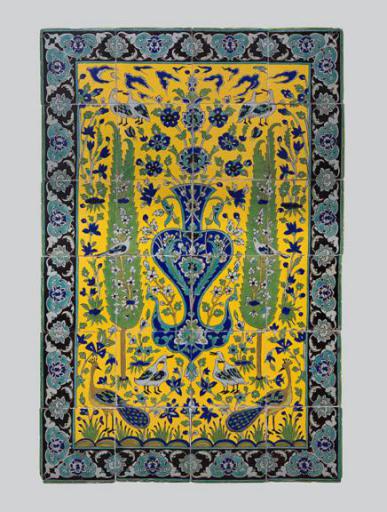
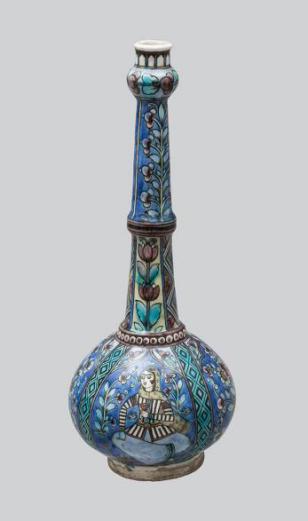
Qajar Ceramics : Bridging Tradition and Modernity

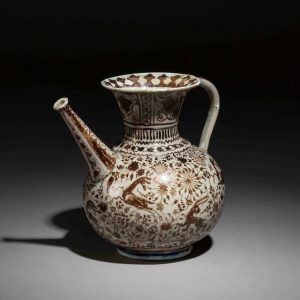
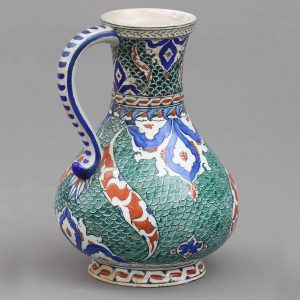
This special exhibition is on from 21 March 2019 – 31 December 2019. The exhibition features Qadari ceramics from Iran, from the 19th to early 20th century. The Qadari dynasty saw seven Shahs ruling in the northern part of Iran (then Persia). The Qajari era saw a lot of contact with European countries, and Qajari paintings of this period exhibit some European influences. The colour blue features prominently in Qajari ceramics. Qajari ceramics are very densely decorated with figurative images of humans, fauna and flora.

The IAM – Southeast Asia’s largest museum of Islamic Art

It has 12 spacious, well lit, comfortable main galleries:

  • Architecture
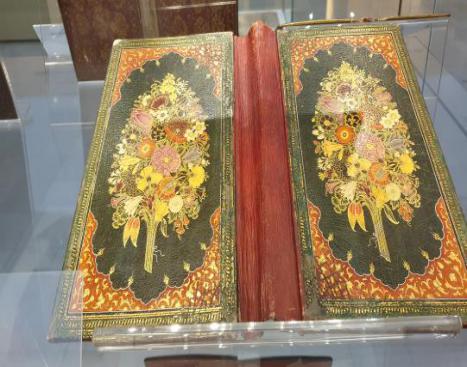
  • Qur’an and Manuscript
  • India
  • China
  • Malay World
  • Jewellery
  • Textile
  • Living With Wood
  • Arms & Armour
  • Coin & Seal
  • Metalwork
  • Ceramics

Architecture Gallery

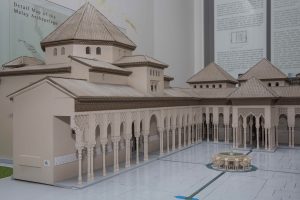
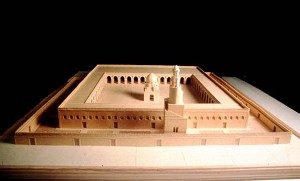
This gallery features the diverse architecture of famous mosques and mausoleums from the Islamic world. Visitors are able to see scale models of the Grand Mosque in Mecca, the mud mosque in Timbuktu, the Alhambra in Granada, the Taj Mahal in Agra, the Kampung Laut Mosque in Kelantan (wooden mosque built without using nails), and many more. From these designs, it was obvious that domes are not an essential part of the architecture of mosques. En Zulkifli explained that domes were introduced more for acoustic effects in the ages before the advent of sound systems.

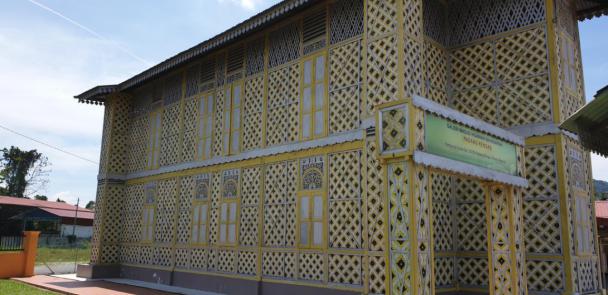
Whilst touring the Architecture Gallery, Lai Meng informed En Zukiflee about a unique little mosque found in Padang Rengas, Perak.  It was built in 1936 and is the only mosque in the country made of wood and woven bamboo.The colours of the woven panels were in black, yellow and white, reflecting the colours of the Perak flag. It was in use until 1976 when it fell into disrepair. The National Heritage Department restored it in 2008 and in 2017 it was turned into a gallery called Galeri Masjid Ihsaniah Iskandariah. A picture of this mosque is below.

Qur’an & Manuscript Gallery

This gallery highlights the development and emergence of different Arabic script styles.

India Gallery

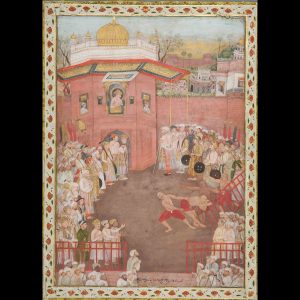
The Mughal era (1526 – 1828) is considered as the most brilliant period of Islamic art in India. Many features of Mughal art diverged from mainstream Islamic art with figural representations and production of detailed miniature paintings.  The Mughal era saw the Islamic tradition of metalworking taken to extreme levels of opulence. Gilded silver, brass, enamels and jewel-inlaid gold were commonly used for objects used in the royal court.

China Gallery

This gallery displays many ceramic artefacts, which reveal Muslim influence. Traditionally, calligraphy did not play an important part in Chinese ceramics. However, Arabic Islamic calligraphy made a significant appearance in blue and white ceramics during the Ming dynasty (1368 – 1644) inscribed on ceramic ware and scroll paintings.

Malay World Gallery

Subjects of Islamic expression were found in stylised plants, fruits and clouds and in a variety of media such as textiles, paintings and objects.

Textile Gallery

Textiles in the Islamic world were objects that portrayed status, wealth and religious allegiance. The richness of these textiles were much sought after beyond the borders of the Islamic empires.  Expertise in the production of textiles shifted from Arabia to the eastern end of Islam, to countries like India where the Mughals were responsible for some of the greatest advances in textile production. Textiles were used for decorative and sartorial purposes.

Arms & Armour Gallery

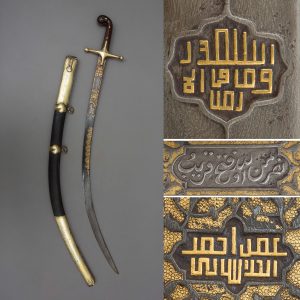
This gallery displays many types of weapons used in Islamic countries, mainly swords and daggers with beautifully carved or etched hilts and scabbards. The swords usually bore the name of its maker as a brand. These beautifully decorated weapons were usually used for ceremonial occasions by Islamic leaders of the era.

Jewellery Gallery

The Islamic lands produced some of the most magnificent and finest jewellery  in the world. Islamic jewellery falls into two broad groupings – the exclusive and the ethnic (among tribal groups). Lavish and opulent use was made of gold and gem stones. The Mughal period in India was an era of opulent jewellery designs.

Coin & Seal Gallery

Islamic coins were highly calligraphic with religious inscriptions. Portraiture was eventually removed in most parts of the Islamic world in keeping with religious teachings. The IAM has a wide-ranging collection of seals that date back several centuries. These seals were used for official or personal purposes.

Metalwork Gallery

Craftsmen of the Islamic world were experts in metalwork, creating beautiful a vessels in base alloys like brass and bronze. Vessels of gold are almost non-existent due to religious disapproval and destruction due to political upheavals and economic crisis. The craftsmen were exceptionally skilled in metalwork with exquisite inlays of precious metals like gold, silver and copper. Iran from the 9th and 10th century onwards became the leader in metalwork with intricate inlays. The art of metalwork with inlays spread to countries like Syria, Egypt and China. In China, copper alloys were supplemented by cloisonne.

Living with Wood Gallery

Islamic craftsmen also excelled in woodworking. Crafts of wood exhibited intricate carvings and were often inlaid with precious materials like mother-of-pearl, tortoiseshell and ivory.

Ceramics Gallery

Ceramics were an outstanding component of Islamic art. Influences came from many directions, particularly China, but each Muslim region stamped its own identity on the wares produced. Islamic ceramics have in turn influenced ceramics produced in Europe.

Becoming a Museum Volunteer

by Eric Lim

I was reading a local daily when I was attracted by something at the corner of my eye – “Want to be a Museum Volunteer”. It was December 2016 and I was recently made redundant in the workforce and the saying “the grass is always greener on the other side” may not ring true this time. I may have reached the end of the lawn.

Then drawing inspiration from the late John F. Kennedy who once said “ask not what your country can do for you, ask what you can do for your country”, it was time for my humble self to make a little contribution to my beloved country by becoming a Museum Volunteer. A total of 30 newbies registered for the training programme that was conducted from February to June of 2017. Right after, to continue the learning development, we were put through the mentorship programme. Another few more months went by and l finally completed the programme in November 2017.

Graduation Day

I can still remember vividly that at the end of my last tour with my mentor, I said “With that, I have come to the end of the tour” and my mentor immediately replied “ With that, you have completed the mentorship programme”. Yes, I have completed the full programme and now eagerly looking forward to taking my first tour.

The day of reckoning came soon enough, it was on Tuesday 19 December 2017. I had arrived early and managed to assemble a small group of visitors for the tour. And at exactly 10.00 am, I started my maiden tour. In keeping with the time limit, I had brought the group to the end of Gallery D and it was time for my signature line “With that, it’s the end of the tour”. I was very satisfied with the result and truly happy seeing the smiling faces as they head toward the exit. I took another three tours the very same month to wrap up for the year 2017.

For 2018, I had planned to take in more tours to coincide with my motto in life. When the Portuguese captured Melaka, it can be summed up in 3G – Glory, Gold and God. For me, it is 3D – Determination, Dedication and Discipline, plus the expression “the harder you practice, the luckier you get”.

School Visit on Tues 28/8/18 – University Malaya, Centre for Continuing Education, 25 pax
The group showed up unexpectedly and requested for guides. Since no tourists showed up, Josianne together with Eric helped to guide this group. The actual group was more than 40, but we only took on 25.

So the numbers just added up. I recall taking the morning and afternoon tours on a Thursday; and numerous occasions where I took tours on consecutive days. For the record, I took a total of 55 tours in 2018. And for that, I was recently awarded by JMM for my outstanding service as a Museum Volunteer. Also, getting compliments from the TripAdvisor website really made it all worthwhile and special.

Moving forward to 2019, the figures for the first quarter are still very much intact, averaging one tour per week. Here’s looking forward to my next tour tomorrow, wanna join my tour?

Batu Caves’ Hindu Temples Visit

by Tan Chuan Leng

On 9 April 2019, the MV Focus Team organised a tour to the Batu Caves complex, one of the most revered Hindu pilgrimage locations outside of India and also one of the most cherished Hindu shrines for the Thaipusam festival in Malaysia.

By 9am, 18 MVs had gathered in front of the staircase (ground level) leading to the main cave right behind the tallest Lord Murugan statue. Our guide for this visit was the knowledgeable Mr Rasianthiran Menayah (Mr Rajan) who took the group through the temples and imparted his knowledge on Hinduism. The sketch below summaries the order of places we visited.

Mr Rajan informed us that the Hindu deities take on myriad forms; they are sometimes attended by their Shakti (spouse in common parlance). They are usually identified by their specific animal mount (referred to as vahana). They can also be identified by physical characteristics and symbolic implements or weapons they hold or wear.

1. Vishnu Temple (next to KTM Komuter side exit)
2. Hanuman Statue
3. Ganesh, Siva, Shakti Temples
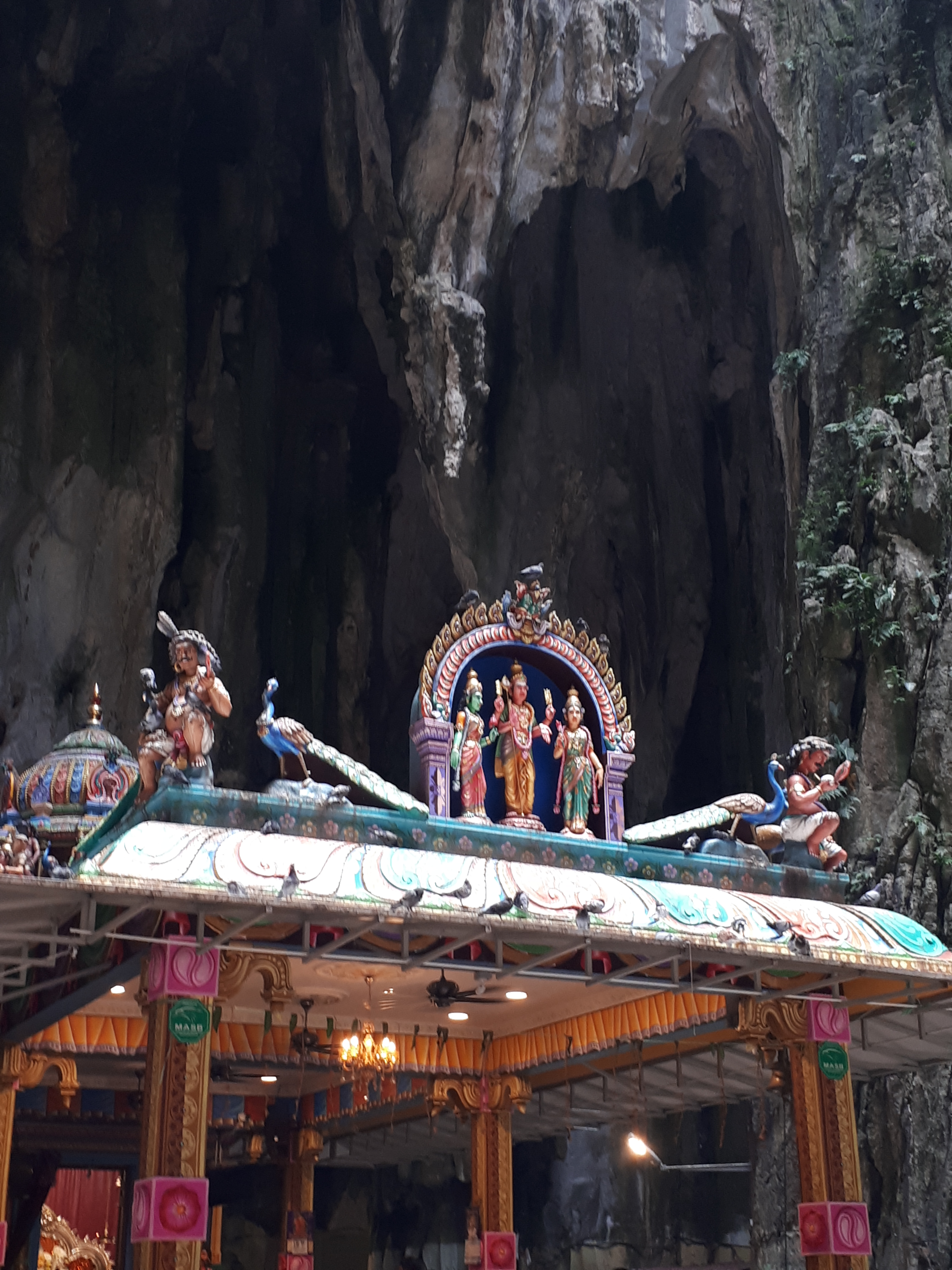
4. Main Temple, Lord Murugan Temple
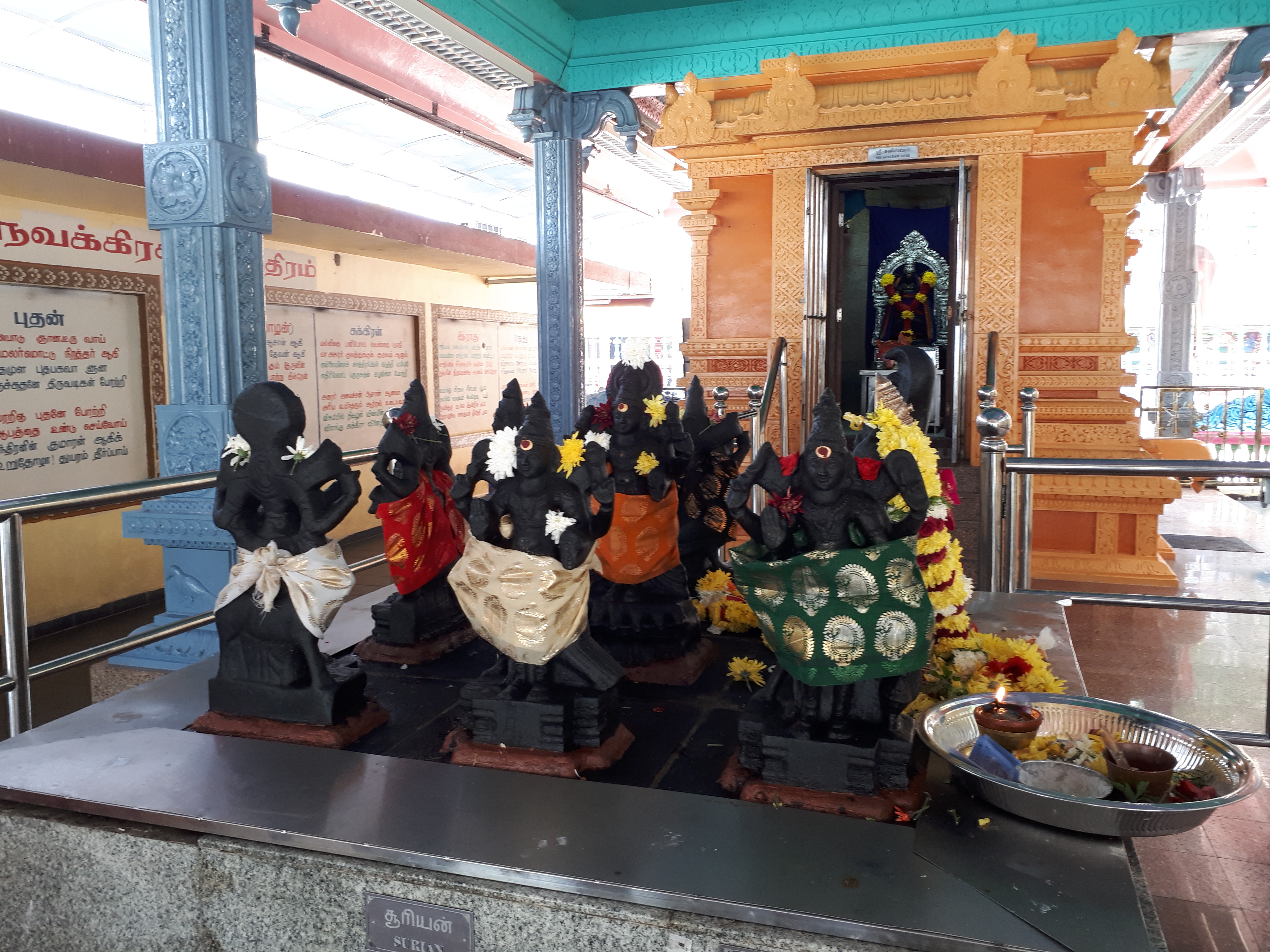
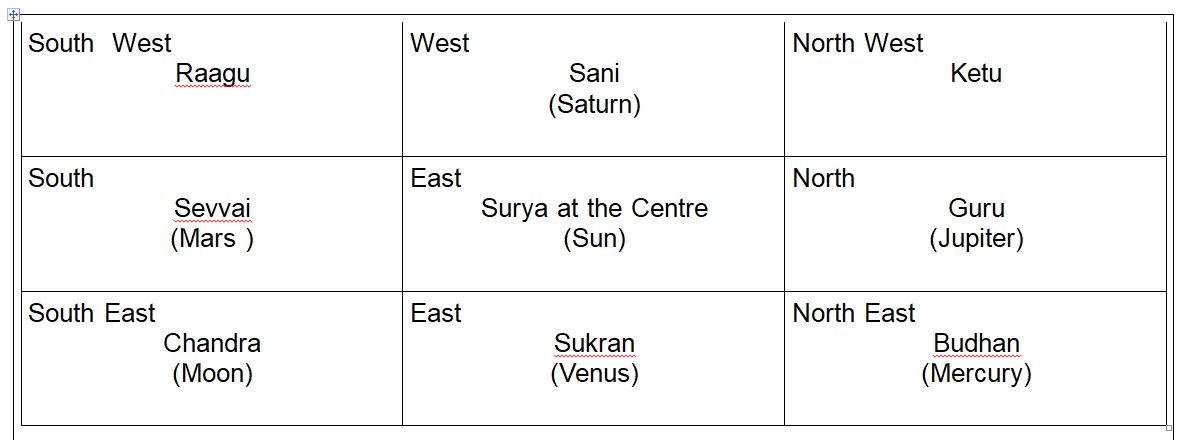
5. Navagraha Sannathi (Temple of Nine Planets)

In Hinduism, the worship of the different gods is not mutually exclusive but in fact is complementary though often devotees would identify with one as their supreme God. The common sects are Vaishnavism (Vishnu), Saivism (Siva), and Shaktism. The most popularly worshipped by Hindus in Malaysia are Vishnu, Shiva, and the Goddess Shakti in her various aspects, and Shiva’s two sons, Ganesha and Murugan.

Mr Rajan told the MVs that one can tell exactly which school of theology a devotee is coming from by the colour and shape of the tilaka marks that is placed on their foreheads. Shaktas, followers of Shakti wear a large red dot on their foreheads.

Left: A Vaishnav Hindu with a long vertical tilaka intercepted by an elongated ‘U’.
Right: A Shaiva Hindu with a tilaka of 3 horizontal bands and one vertical band in the centre
Photo credit: https://en.wikipedia.org/wiki/Tilaka

The temples visited are described below in the order visited:

1. Vishnu Temple

This temple is known as Sri Venkatachalapathy Swamy Sannadhi. It is dedicated to Lord Vishnu, who is distinguished by a discus (chakra) and a conch-shell trumpet (shankha). In the picture below, we see the chakra and conch at the top of the shrine. Vishnu’s vahana (vehicle) is the eagle-like Garuda, placed in a separate niche in front of the main sanctum.

Vishnu is the deity that preserves and protects the universe and he has appeared on the earth many times through his avatars (incarnations) to save humankind from natural disasters or from tyranny. Some of Vishnu’s well-known avatars are Rama (as in the Ramayana epic)’ Krishna, who destroyed the wicked and established a new order; and Buddha, the founder of Buddhism.

Vishnu’s consort is Lakshmi, the goddess of wealth and good fortune, who is offered special worship during Deepavali. She is also represented as the wife of each of Vishnu’s incarnations, including Sita, wife of Prince Rama, and Rukmini, wife of Krishna. Vishnu is also represented in sculpture and paintings in human form, often painted blue. According to Mr Rajan, Lord Vishnu, the preserver, is considered by his worshippers to be the greatest among the gods.

At this temple, the MVs experienced their first pooja where the priest:

  • offered a lighted flame and worshippers wave the flame towards their face,
  • next he put some scented water on our palms for us to sip and
  • he then placed a silver cap on our heads before putting pottu onto the forehead. Mr Rajan informed that the silver cap is called a shasthari and that is represents God’s feet; it is symbolically touched to the head of worshippers as a blessing. Although a red pottu is commonly worn and associated with a married woman, it can also be used to ward off bad luck.
The priest placing the shasthari on one of the volunteers’ head.

Located perpendicular to the Vishnu temple is a temple dedicated to Gajah Lakshmi, know as Sri Alarmelmanga Thayar Sannathi. In this aspect of Lakshmi, she is flanked by elephants.

2. Hanuman Statue

The second place we visited was where a large towering statue of Hanuman stood. Hanuman is a semi-god, he is regarded as the perfect symbol of selflessness and loyalty for his bravery, strength, perseverance, and devoted service to Lord Rama. During our visit, the place was undergoing major upgrading and plastic sheets were placed over the temple area.

An individual worships Hanuman to ward off /counter bad karma brought about by selfish actions and the believer seeks Hanuman to grant him/her with fortitude and strength in one’s journey through life.

3. Ganesh/Ganapathi, Sivan and Shakti Temples

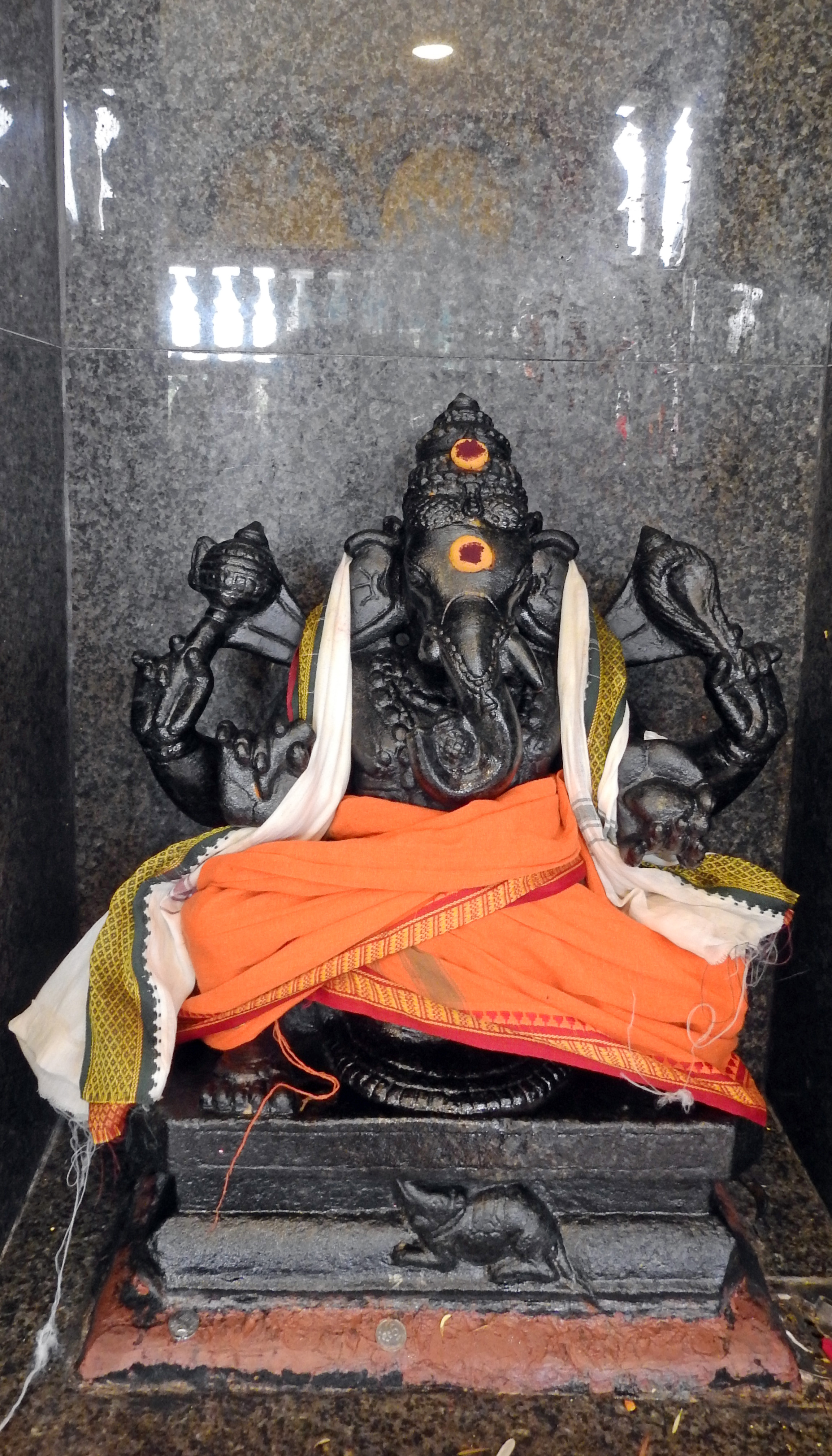
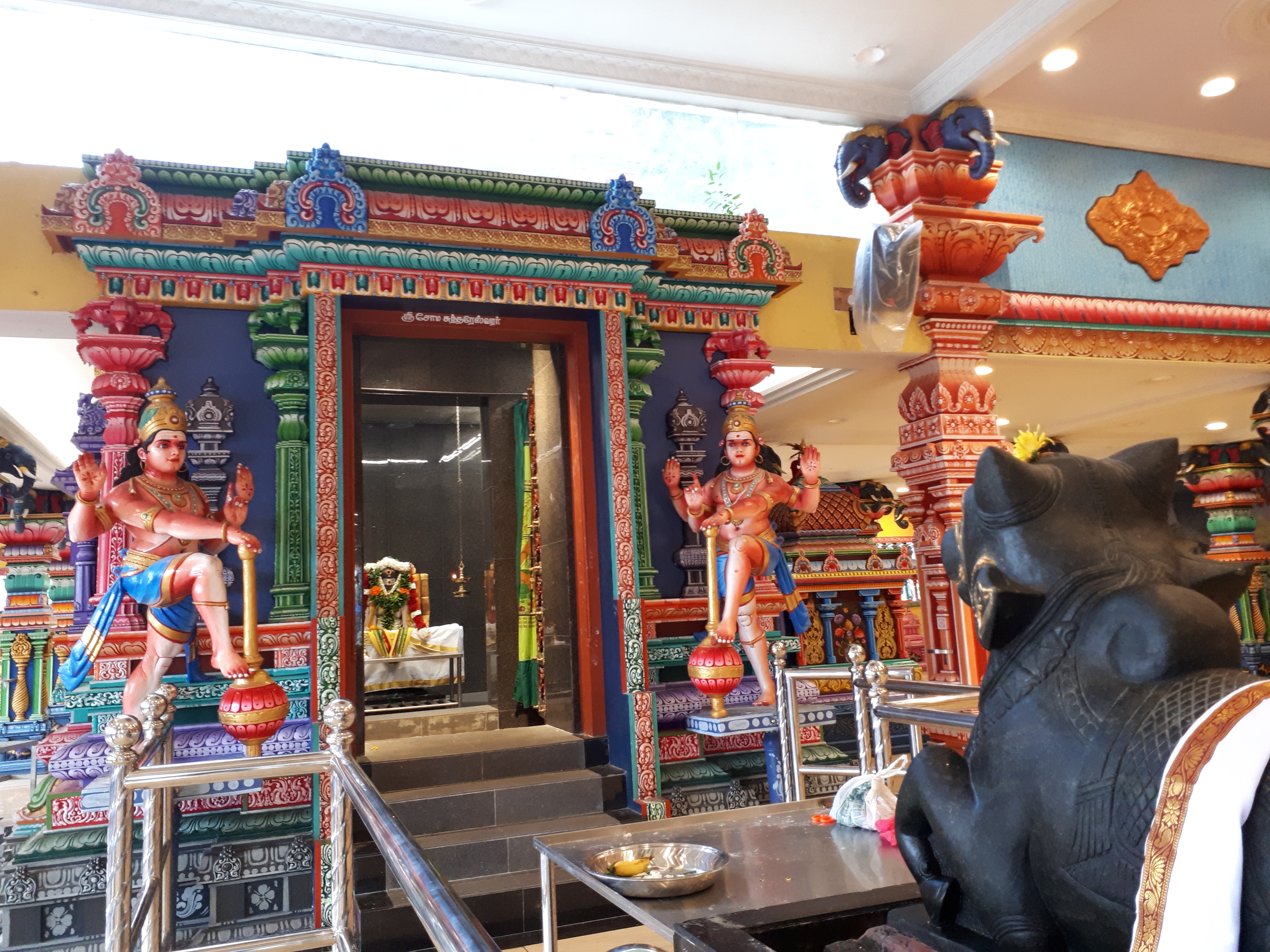
We next made our way to this colourful building. In it, we find Lord Ganesha or Ganapathi, who is also popularly accepted as the first son of Siva and Parvati.


Mr Rajan informed us that the elephant-headed Lord Ganesha is worshipped at the start of any undertaking; and his vahana is the mouse.  The reason Lord Ganesha is the first deity worshipped is to help ward off obstacles that might get in our paths while worshipping other deities.

Mr Rajan highlighted that a daily ritual to Lord Ganesha should include the thoppu karanam. This requires the person to first cross their arms and holding the ear lobes between the tips of the fore and middle finger, then they bend their knees and get-up doing this three times before he/she sits down to meditate. This is now accepted as “super brain yoga” as the activity improves one’s focus and brain’s development.

Photo credit: https://padmum.wordpress.com/2011/04/30/exercise-for-memory-call-it-yoga-if-you-will/

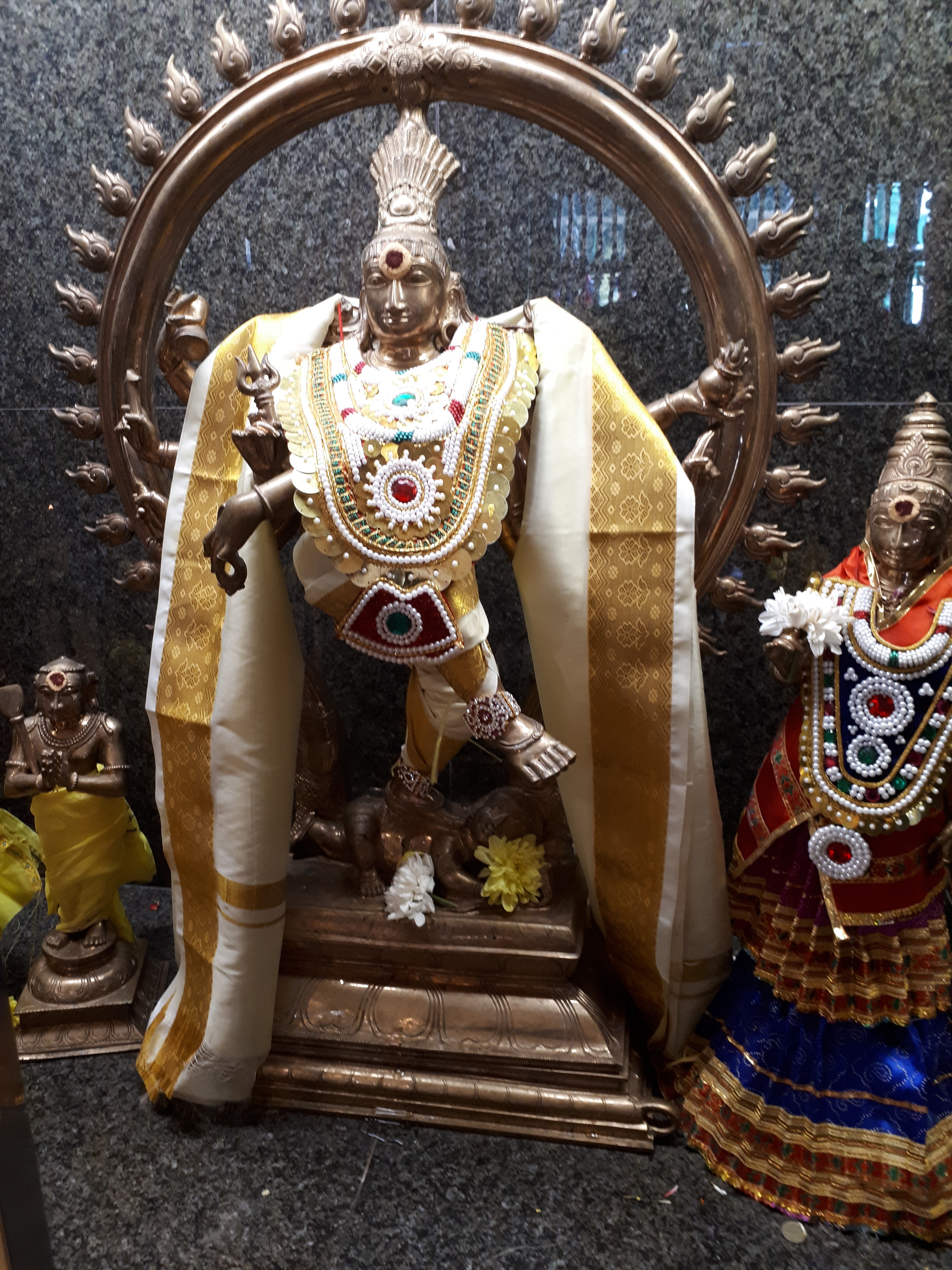
Next, the group moved upstairs to the Sri Sivan Temple where Lord Siva shrine is located and  MV group were invited to another pooja by the priest. Here in this shrine, we see Siva’s vahana the bull.

As we circumbulate Lord Siva’s shrine clockwise, the first niche held an image of Ganesha and as we complete the circumbulation, we saw a deity that was garlanded with lime in the last niche. This Goddess Durga; she is worshipped to ward off evil spirits by her devotees. Lime is believed to help remove evil spirits, and thus the lime garland is associated to Durga and offered to her during worship. Durga is said to be able to slay demons that the other gods are unable to control. One of her most celebrated feats is the destruction of the buffalo demon Mahishasura. Her vahana is a lion and in the picture below, she is seen subduing the buffalo demon.

Next, Mr Rajan directed our attention to a Lord Nataraja (Lord of the Dance) image located in another corner of the upper floor. This particular statue shows Lord of the Dance lifting his right foot. Who is this Lord of the Dance? It is another representation of Siva and as Lord of the Dance he controls the movement of the universe. He is also associated with fertility. Sculptures of Lord Nataraja typically show him dancing in an aureole of flames, lifting his left leg and balancing on his right foot over a demon or dwarf who symbolises ignorance.

Nataraja is commonly depicted with his left leg raised; he dances while balancing on his right leg. This rare image showing his right leg raised comes from an incident when the Pandya King Rajasekhara requested him to raise his right leg as the King was afraid that Nataraja, balancing only on his right leg, may damage the said leg.

Earlier, one of the priest  had reminded us that the Batu Caves temples would be closed for lunch break at 1 pm and as such, by 11.45 am, we quickly made our way to the base of the 43 metre Lord Murugan statue to ascent the steps.

4. Sri Velayuthar Temple (Main Temple) and Lord Murugan Temple

My initial thought of the 272 steps climb up was it would be challenging. In actuality, it was not very difficult and I was delighted to achieve the journey to the top in less than 5 minutes. Visitors are reminded to be mindful of the monkeys on the journey up as the monkeys are reported to snatch items and dangling plastic bags from visitors.

As I walked into the cave at the top, I found myself standing below a massive open area with a ceiling that is said to be over 100 meters in height. After descending some steps and just on the left of the cave before entering the Main Temple (Sri Velayuthar Temples) is the Temple Cave. It was in 1890 that K Thamboosamy Pillai installed the murti (consecrated statue) of Sri Murugan Swami in this cave.

After spending some time here observing the priests performed poojas for some devotees, we ascended the next short flight of steps, and arrived at the most sacred Lord Murugan Temple.

Lord Murugan Temple

This simple  yet colourful Lord Murugan temple is illuminated with natural light from a big hole at the top.  For a token fee, visitors can seek for a personalised pooja from the priest.

There were several other shrines in this temple including one of Lord Nataraja in the usual left foot raised in dance pose together with his consort, Parvati on his left.

By 12.45pm,  we made our way down the 272 steps and rewarded ourselves with a sumptuous vegetarian set lunch at one of the many vegetarian restaurants in the complex.

5. Temple of the Nine Planets (Navagraha Sannathi)

After lunch, we made our final stop at the Temple of the Nine Planets, located towards the left of the 43-metre Lord Murugan statue. Here we find nine colourfully clothed deities or Navagrahas.  The Navagrahas comprise of five true planets that are visible to the naked eye (Venus, Mars, Jupiter, Saturn), the Sun, the Moon, Rahu (north lunar node) and Ketu (south lunar node). In this temple, Surya (Sun) is in the centre facing east; around him are the rest of the planets facing in different directions, but not towards each other.

Positions of the Navagraha and the directions they are facing

Astronomically, Rahu and Ketu denote the points of intersection of the Sun and the Moon as the Sun and Moon move on the celestial space. Eclipses occur when the Sun and the Moon are at one of these points, thus giving rise to the myth of the swallowing of the Sun by the Moon.

We were told Hindu astrology is based upon the configuration of the Navagrahas (nine planets) and their collective influence on the world in general and on each individual in particular during our birth. They are worshipped in Hinduism either to bring good luck or to overcome adversity, bad luck or misfortune arising from past karmas.

By 2.15 pm, we had come to the end of the tour. After a group photo, we thanked Mr Rajan for his enlightening tour providing us with finer-grained details about the oldest religion in the world. Bravo too to the MV Focus team, Mona Tan and Alwin Woon, for organising this hands-on educational tour.