OMEGA watches museum..

Monday May 30, 2011

Museum for Omega watches


A VISIT to the Omega Museum is a must if you want a peek into the brand’s rich heritage, which dates back to 1848 when watchmaker Louis Brandt started his business on a bench.

Located across Omega’s headquarters in Biel, Switzerland and opened in 1984, it is the oldest watch museum dedicated to the history of a single brand. Along with some 4,000 watches, the remarkable collection includes movements, clocks, instruments, tools, photos, engravings, posters, signs, awards and certificates.

The first watch, which had the name “Omega” on its dial was produced in 1894 and featured the 19-ligne calibre created by Francois Chevillat. Incidentally, the first special orders came from railroad administrators who wanted to time the trains, and shooting associations, which purchased watches for their members and winners of their competitions.

 Since 1995, any actor who takes on the James Bond role immediately becomes one of Omega’s brand ambassadors. All the watches used by special agent 007 are on display at the museum.

“Our first wristwatch appeared in 1900, which was also the world’s first industrially manufactured wristwatch. Omega’s strength lies in its ability to industrialise watches so that it can be repaired anywhere in the world,” says curator Brandon Thomas.

Over the years, Omega’s Speedmaster watches have been to the moon and back with Apollo astronauts. Edwin Aldrin wore the first watch on the moon in 1969 when he followed Neil Armstrong onto the lunar surface. Since then, Omega watches have accompanied American astronauts on all their space missions.

“We make the watches for NASA and we’re constantly improving the Speedmaster to withstand the extreme range of temperatures on the lunar surface. The numbers can go from –148°C to 260°C ,” explains Thomas.

On display at the museum, along with these “Moon Watches” are models of space shuttles, a lunar rover model, an astronaut’s spacesuit, photographs taken from the moon and sew-on NASA patches.

If you’re a fan of 007, then there’s no better place to view the collection of watches worn by the various actors who starred as James Bond in the movies. Since 1995, any actor who takes on the Bond role immediately becomes one of Omega’s brand ambassadors. Currently, Daniel Craig’s posters and pictures dominate the “Bond” area. The curator proudly points out that Omega also lends its watches to many film companies.

Besides the watches, visitors can view the numerous tools, watchmaker’s lathes, large-scale models of escapements and devices used to test water-resistance.

The entire spectrum of time measurement devices for athletic events is also comprehensively displayed. These include the slender Muybridge threads that were snapped by racehorses as they sprinted to the finish line, automatic triggers, electrical starting pistols, light barriers, time recorders and the photofinish system, which was introduced in 1949.

Part of Omega’s palette is the debut of a 24-ligne watch for the 1932 Olympic Games in Los Angeles, the United States. There is an impressive display at the museum of how the timepieces work as athletes race to beat the clock.

“We were the first company to time every event in the Olympics using chronographs and stop watches. In 1932, almost every record was broken. To reduce human error, we now have one timepiece at the start and another at the finish line. For example, in swimming, the athlete has to touch the contact pad to stop the clock. This simple new technology reacts only to the touch of the swimmer and is not affected by water splashes,” explains Thomas.

Omega’s most recent development in timing technology was to bring sports timekeeping into the Internet age with live timing of swimming events, which allows anyone with Internet access to view swimming and diving competition results in real time on the Omega Timing Internet site, www.omegatiming.com.

Today, Omega watches can be seen on the wrists of kings, queens, presidents, explorers, visionaries and celebrities.
Information Morning for 2011 Training Programme on May 24

Our 2011 Training Programme starts in September and will run through until December 2011. If you are interested in signing up, then email mvmqueries@yahoo.com or come to one of our information morinings at the Muzium Negara on Tuesday May 24 10-12noon

Tuesday September 6 10-12noon

Saturday September 10 10-12 noon

Places are limited so early applications are encouraged

Training at the Muzium Negara (National Museum) is on Tuesdays and Saturdays in English and on Wednesdays in Japanese.

Training at the Muzium Tekstil (Textiles Museum) is on Thursday in English.

In order to qualify for the MV training programme, you must have an interest in Malaysia, history and museums and undertake to serve as a volunteer guide once you have graduated from the training programme. In general terms, you will need to guide at the museum once a month. As the MV is a volunteer organization, you will also be encouraged to get involved in research, the schools programme and in the creation of pamphlets and booklets for use in the museums. There is no restriction on the nationality or gender of applicants. The courses are delivered in English and Japanese. There is also a French language group that organizes tours and talks in French

Muzium Negara – Guide Volunteers Training Programme Frequently Asked Questions

What Is The Training Objective ? To provide Guide Volunteers with a broad understanding of the fascinating and complex Malaysian culture and history that can be used when undertaking guided tours of Muzium Negara.

How Is The Training Objective Achieved ? By exploring topics relating to the rich heritage and religions of the peoples of Malaysia and S.E. Asia based upon artefacts exhibited in Muzium Negara.

When Is The Training Carried Out ? Two parallel thirteen week training programmes are provided on Tuesdays and Saturdays, and Guide Volunteers can choose which day they wish to attend.

Where Is The Training Carried Out ? Guide Volunteers meet at Muzium Negara, Jalan Damansara in one of the Meeting Rooms and in the Museum.

What Is The Training Commitment ? All Guide Volunteers must commit themselves as follows :

* to attend the full training programme

* to read the background training material

* to deliver presentations to fellow Guide Volunteers in the Museum without the use of notes: – 3 minutes – one Muzium artefact – 7 minutes – two Muzium artefact – 15 minutes – one Muzium Gallery

* to provide a formal paper upon each of the three presentations

* to attend three guided tours of Muzium Negara prior to graduation

* to be prepared to provide positive and meaningful guided tours of Muzium Negara

Who Provides The Training ? Guide Volunteers, Muzium Negara Staff plus outside experts with specialist knowledge present topics relating to the Training Objective.

What Happens After The Training Has Been Successfully Completed ? After successful completion of the training, Guide Volunteers are invited to attend a Graduation Ceremony with their families where they receive their Graduation Certificate.

What Tasks Do Volunteer Guides Undertake ? Guide Volunteers are involved in one or more of the following areas :

§ Guiding – presenting free scheduled tours plus on-demand tours of Muzium Negara: guiding special exhibitions, presentations and visits.

§ Schools Programme – organising special tours of Muzium Negara for school children plus presentations about Malaysian culture in schools.

§ Research -locating and organising material to help fellow Guide and School Program Volunteers; helping with material for the publication of booklets for the general public and for children; helping with the translation service and providing information for Special Exhibitions.

§ Operations & IT – supporting general administration requirements; administering the MVM / MCG Library; maintaining ‘mvmqueries’ e-mail; by maintaining the MVM Website.

§ Communication – assisting with the production of the MVM Newsletter, MVM Press Releases and media events.

Where Can I Find Out More Information ? All queries should be forwarded to: mvmqueries@yahoo.com Or come to our information morning

French Language Week 2011 in Kuala Lumpur

The Francophonie represents more than 200 million French-speakers on the 5 continents!

Every year, the French Language Week is celebrated worldwide. It will be the 16th edition in Malaysia this year from 20th to 27th March.

The French Language Week is an initiative taken every year in Malaysia by 23 diplomatic missions who are members of the OIF: Albania, Austria, Belgium, Cambodia, Canada, Croatia, Czech Republic, Egypt, France, Ghana, Guinea, Laos, Lebanon, Morocco, Mauritius, Poland, Romania, Senegal, Slovakia, Switzerland, Thailand, Ukraine and Vietnam.

The Alliance Française of Kuala Lumpur and Penang, the Association Museum Volunteers Malaysia hosted by Muzium Negara Kuala Lumpur, the Association des Francophones en Malaisie (Association of French-speakers in Malaysia, AFM) and the AMPF (the Malaysian French Teachers Association) as well as the French school in Kuala Lumpur are also associated to the project in Malaysia to make this event an unforgettable week.

French Language Week in Museum Negara :

Guided tours in French
Date:
From 21st to 23rd March
Time: 9.00 am to 12.30 pm
Lieu: Muzium Negara, Jalan Damansara
Only for students and scholarsFree admission – Please registrer flwmalaysia2011@gmail.com / 03 20 53 55 00

Explore treasures of Malaysia at the Muzium Negara thanks to the French-speaking guides from the association Museum Volunteers(MV).

Night guided tour and talk in French
Date: Tuesday 22nd March
Time: 7.00 pm
Lieu: Muzium Negara, Jalan Damansara

Free admission – Please registrer regards.croises@hotmail.fr
A night at the museum, is that fine with you? Mr Po Dharma Quang, expert of history and civilization of Campa, has proposed to share his knowledge (it will be in French of course) to make us discover all the secrets of this civilization. Then, accompanied by the French-speaking guides from the association MVM, the Museum Negara opens its doors to the public after nightfall.

Folk tales to the Cham people at Mid Vietnam
By Po Dharma Quang, French School of Far East (EFEO)

The Cham people, descendants of the ancient kingdom of Champa at Mid Vietnam, speak like the Malays people, a language belonging to the Austronesian family. The close relations with the Malay civilisation involved reciprocal influences.

The Cham people have a great literary treasure even though this domain is relatively unknown in South-East Asia and worldwide. This civilisation likes telling stories and tales are an integral part of the popular literature. Diffused in all social classes, folk tales are recited by the common people during a vigil, a period of relaxation or during a festival.


About the expert
Po dharma Quang is working in cooperation with the Ministry of Culture, the Muzium Negara, the University of Malaya and the National University on a program officially established by the EFEO ( French School of Far East) in 1987. The main objectives concern the Malay culture and civilisation and the West Austroasians dialects. The first specific results of this program are the publication of a Malay dictionary from XVII based on 7 Cam manuscripts and the writing of a dictionary integrating 6 Austroasians languages of the Indochinese and Malaysian peninsulas.


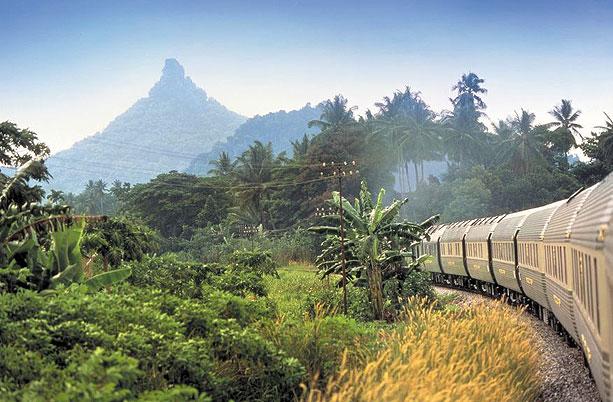
Eastern and Oriental Express special tour 17 Jan 2011

The Eastern and Oriental Express has launched a new train ride from Singapore to Bangkok, which stops in Kuala Lumpur. The inaugural trip took place in January and on 17 January, a group of six passengers came for a special trip to the museum. These were all journalists, working for various publications in Europe and the region. Lorien Holland gave them a tour of Galleries B&C and hopefully we will good publicity from the visit — and more train passengers in the future.


Camping and Tramping: The Museum in Malaya

The National University of Singapore has an exhibition on the making of the museum in Malaya, based on a range of colonial archives. If anyone has a chance to visit (it runs to Jan 2012) please post a comment below. It sounds interesting

Camping and Tramping Through the Colonial Archive: The Museum in Malaya

13 Jan 2011 – 2012

NUS Museum New*

The term Camping and Tramping is inspired by a lesser known 19th century document compiled by a British officer describing the field work and travails of his time with the colonial office in Malaya. This exhibition traces the rise of the Museum in British Malaya not just as an indicator of power over what was gazed upon as the exotic but by acknowledging that the very advent of the Museum resulted in a staging ground for a project of accumulation and the ordering of knowledge. Writings and artefacts have been mobilized from the Raffles Museum of Biodiversity Research (NUS), Asian Civilizations Museum, National Museum of Singapore, National Library Board Singapore, Singapore Press Holdings, Singapore National Archives, NUS Museum, and the Ivan Polunin and Mohammad Din Mohammad collections.

Heritage Walking Tour of KL December 11, 2010


MV Batch 12’s Heritage Walk on Saturday 11 December 2010

By Kon Cze Yan

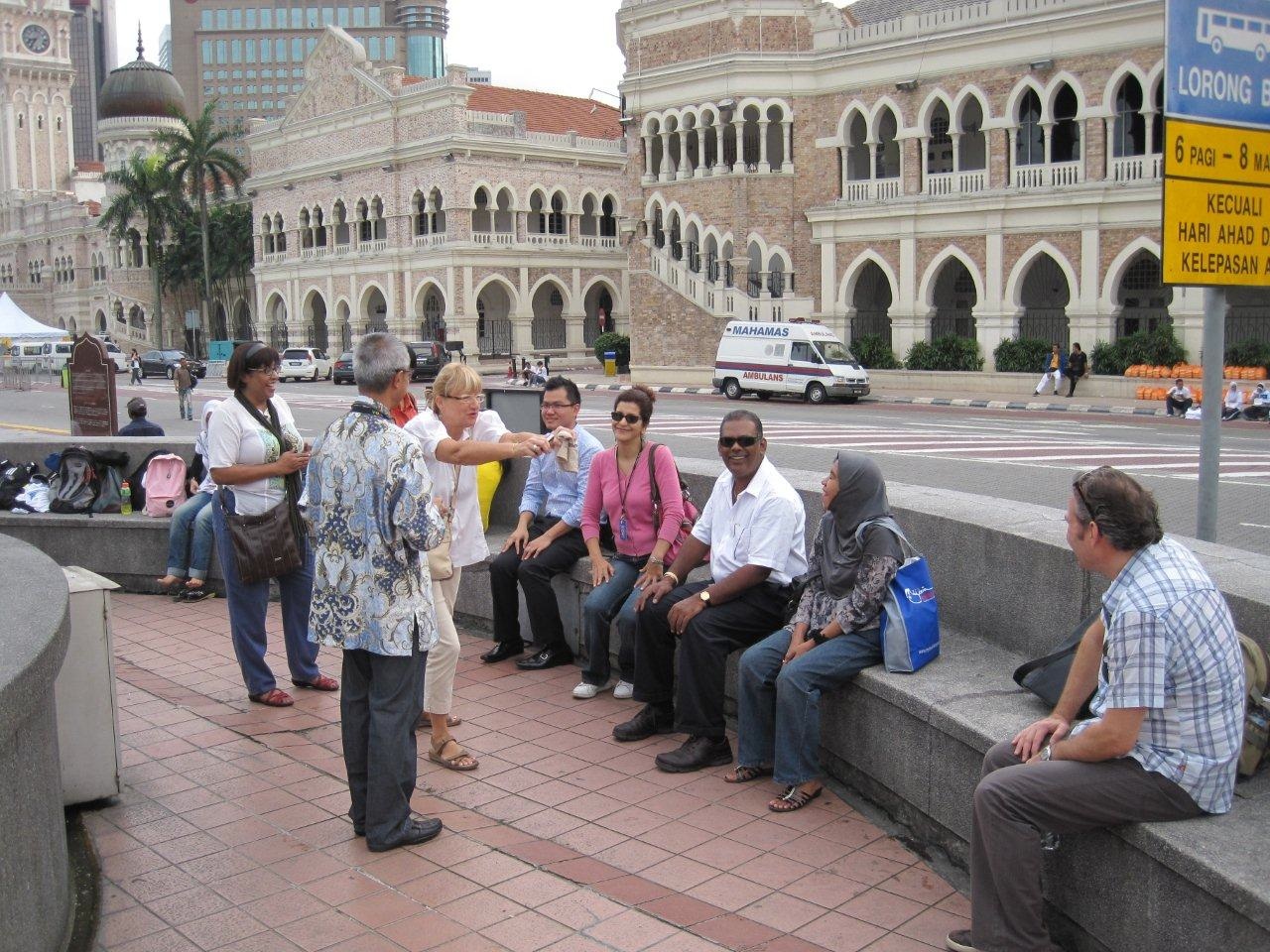
It was an end of term treat for Batch 12.  An outing instead of another classroom lecture. The day began quite badly with the closure of Dataran Merdeka to traffic because of a 1Malaysia Run and traffic diversions because of demonstrations regarding Selangor’s water problems. The organiser (me!) was late from trying all possible routes to enter the Royal Selangor Club. Luckily all the other 13 participants turned up fairly punctually around 8.30am. They cleverly came by public transport or parked away from Dataran Merdeka.

Our guide for the 1.5 hour walk was the most knowledgeable Lee Choo Sim. Choo Sim took us from Dataran Merdeka to “Kuala Lumpur” to Medan Pasar. At the Dataran, he regaled us with numerous stories about the buildings around Dataran Merdeka & how life was during colonial times. He gave us little snippets of some interesting characters – who had an affair with whom & who was in love with whom! When we moved on to the river area where the Gombak & Klang Rivers meet, Choo Sim pointed out a few obscure facts like the meaning of Kuala Lumpur, which was the Klang & which was the Gombak River(!) & that the river had a little family of otters. Things started getting steamy in Medan Pasar with stories of drugs/opium dens and sex/brothels. Luckily by then it was time to cool off at the historic Royal Selangor Club.

The Royal Selangor Club (RSC) was established in 1884 – 126 years ago. It was founded by J.P. Rodger, Resident of Selangor, A.R. Venning, Selangor Treasurer, Captain Charles Syers, Commissioner of the Selangor Police,  H.F. Bellamy, Superintendent of the Selangor Public Works Department & K. Thamboosamy Pillai, businessman. It was the social hub of KL during colonial times and almost every big event would be held there.

The MV members had tea, coffee and sandwiches next to the famous Long Bar, the bar which is still off limits to women. Chrissy Lioe, husband & son joined us for refreshments. They had just returned from India. Ismail of the RSC then took us for a short tour of the Club’s premises which was rather like a pub crawl – nearly every room in the Club has a bar!

MV members who attended:

Kon Cze Yan

Karen Loh

Chrissy Lioe

Bahyah Mohd Noor

Chris Clifton

Dany Picot

Jaleh Chegini

Joseph Arputhaswamy

Justin Lai Lye Kim

Low Mei May

Magan Karapal

Stuart Wakefield

Sudha Nair

Lee Ah Chai

Muzium Negara pocket guide – English version

The Muzium Negara pocket guide English version is now finished. It should be available soon in the Muzium Negara (once it is printed out). Many thanks to E. Bonnet and E. Michel for writing the original French version, for Marie Tseng and Lorien Holland for translating and editing the English version and for Weronika Rudkiewicz for the fab layout.

Other versions in Bahasa Malaysia, Japanese and other languages are coming.

Museum Negara pocket guide – English version (draft)


FOCUS back with added strength!

I hope you have noticed that our FOCUS meetings are back with added interest. Please check our yahoo! group for details and how to sign up.

Thank you to Kokkie who has so far organized

Oct 4, 2010 Treasures of the World: Jewelled Arts of India

Nov 15, 2010 Human Skeletal Material

Nov 29, 2010 Chinese temples and deities

Jan 27, 2011 Masjid Wilayah Persekutuan

Coming up we have

March 1, 2011 Malaysian jungle

March 12, 2011 Science and Innovation in the Islamic World

MV Schools Programme takes on 350 kids in one day!

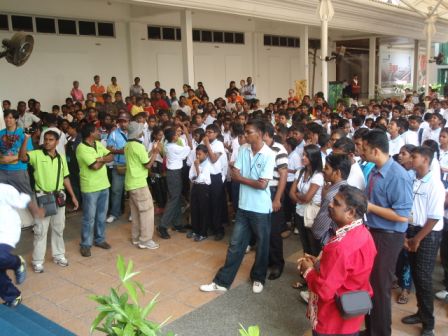
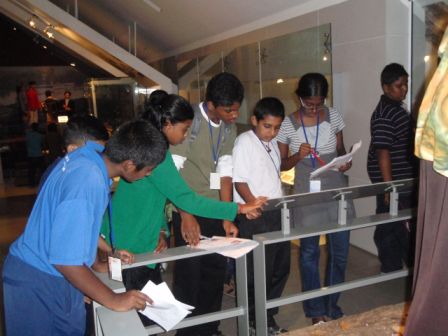
On November 27, 2010, the schools programme took on its biggest challenge yet , by hosting 350 kids in one day.

The children were all standard 6 ethnic Tamil school students from 10 different schools in the Klang Valley. Their excursion was funded by EWRF, an NGO dedicated to assisting less privileged Malaysian Indians. You can click here to visit their website and see all the work the group does.

MV’s Karen Loh mobilized 25 MV volunteers to run a morning of activities and investigation in the Muzium Negara. Bravo!


New MV Committee 2011

Here is the line up of our new MV committee, who will take “office” at the start of March 2011 for a two-year term. The MV committee is chosen through a nomination and discussion process that is run by the old committee. You will remember that the MV committee called for nominations back in October 2010, and is delighted to have this line up of existing and new members on the MV committee.

MV Committee 2011

  • President                   Karen Loh (Batch 2)
  • Vice President          Laurence Maille (Batch 10)
  • Secretary                    Stuart Wakefield (Batch 10)
  • Treasurer                    Kon Cze Yan (Batch 3)
  • Training
  • Angela Naylor (Batch 1) – Textile Muzium
  • Cindy Bell (Batch 10) – Muzium Negara (weekday)
  • Jo Thesiger (Batch 10)  – Muzium Negara (weekday)
  • Susan Haveman (Batch 10) – Muzium Negara (weekday)
  • Kon Cze Yan (Batch 3) – Muzium Negara (weekend)
  • Publicity                    Lorien Holland (Batch 2) & Chris Lee (Batch 10)
  • Schools                      Cay Maru (Batch 2)  & Karen Loh (Batch 2)
  • Library                       Chrissy Lioe (Batch 2) & Zahara Shahriman (Batch 1)
  • French Liaison        Elisabeth Clouzeau (Batch 6)
  • Japanese Liaison    Ayako Ohno (Batch 8)
  • Focus                           Kokkie Pauuw (Batch 2)

ANY QUERIES OR ISSUES, EMAIL OUR PRESIDENT at karenllc @ yahoo.com  OR OUR GENERAL QUERIES at mvmqueries @ yahoo.com

(when you type in the email address, you need to take out the spaces on each side of the @, which are there to stop spam)


Happy MVM-ing!