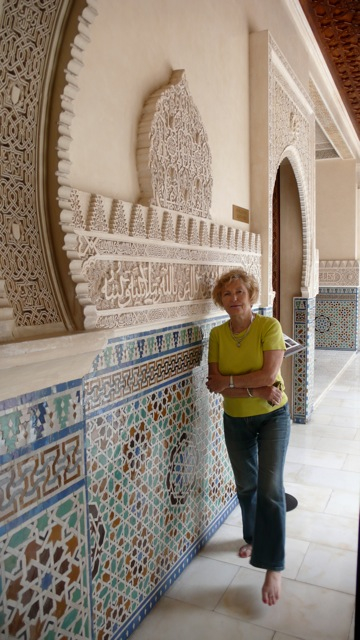
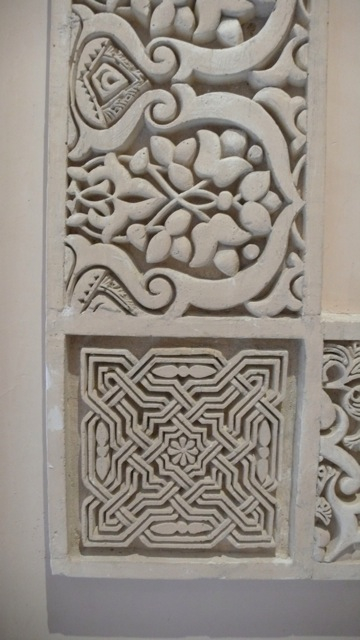
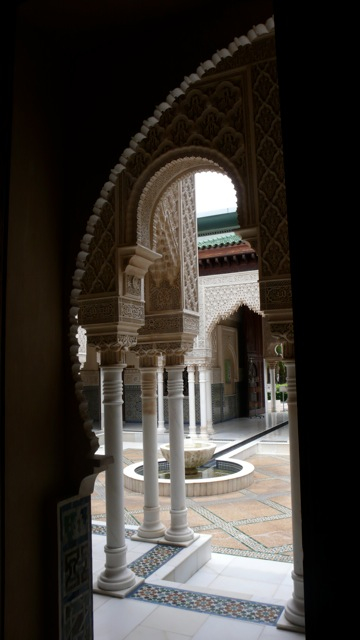
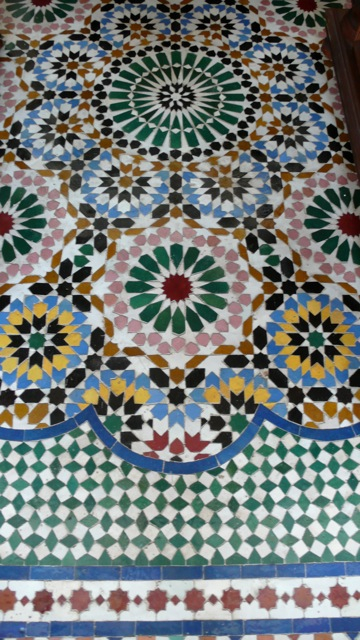
In the Putrajaya Botanical Gardens, there is the most remarkable Moroccan Pavillion. I found it by chance when I visited with my parents. It is stuck down in the corner, between the carpark and the lake and it is a total gem of Moroccan Islamic architecture, with several beautiful rooms around a courtyard. The RM3 entrance fee is most definitely worth it, and its almost worth driving all the way to Putrajaya just to see it. I could find out very little about its history, so please email me at lorienholland@me.com if you have any information.
Day trip to Ipoh
Day trip to Ipoh by Marie Tseng
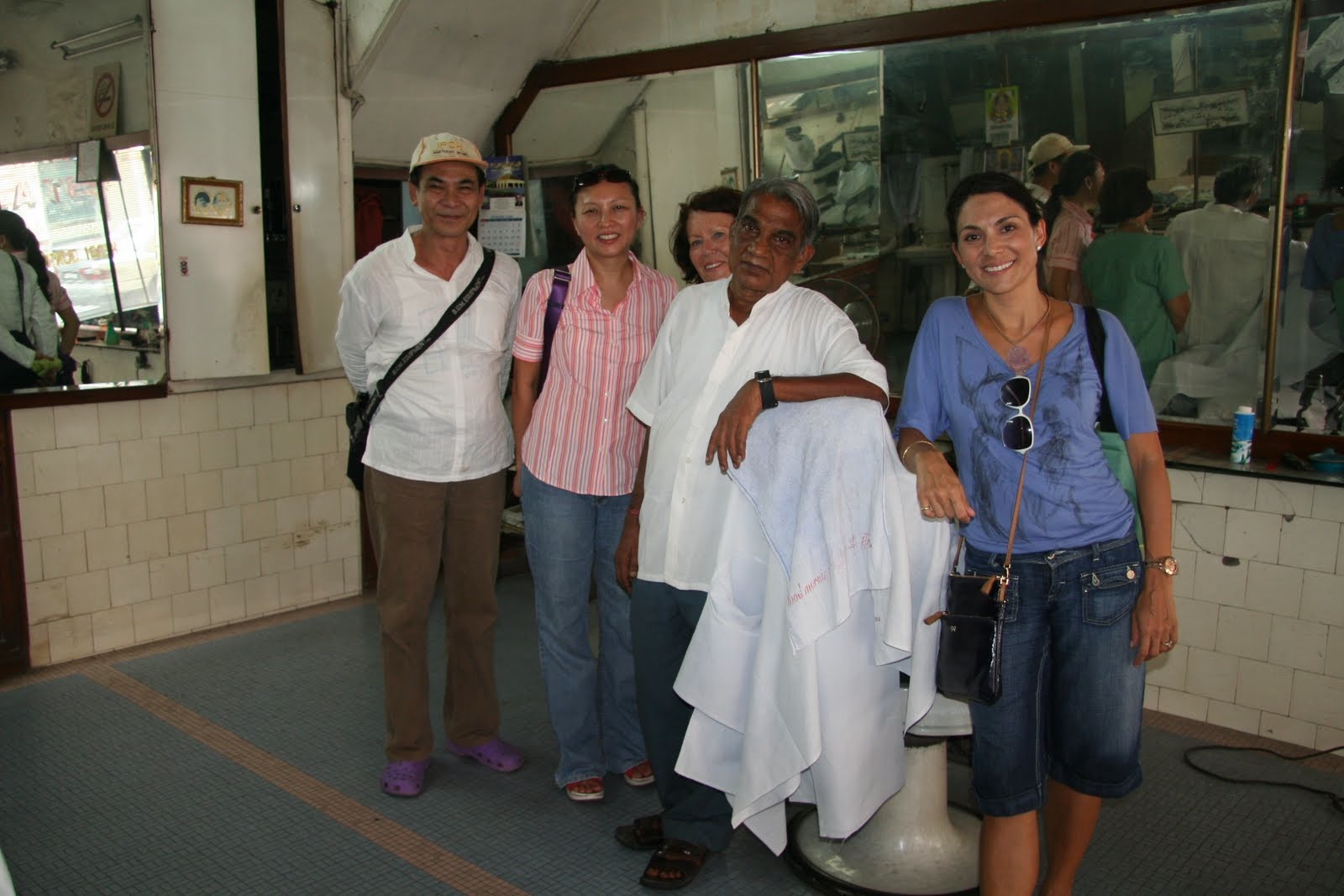
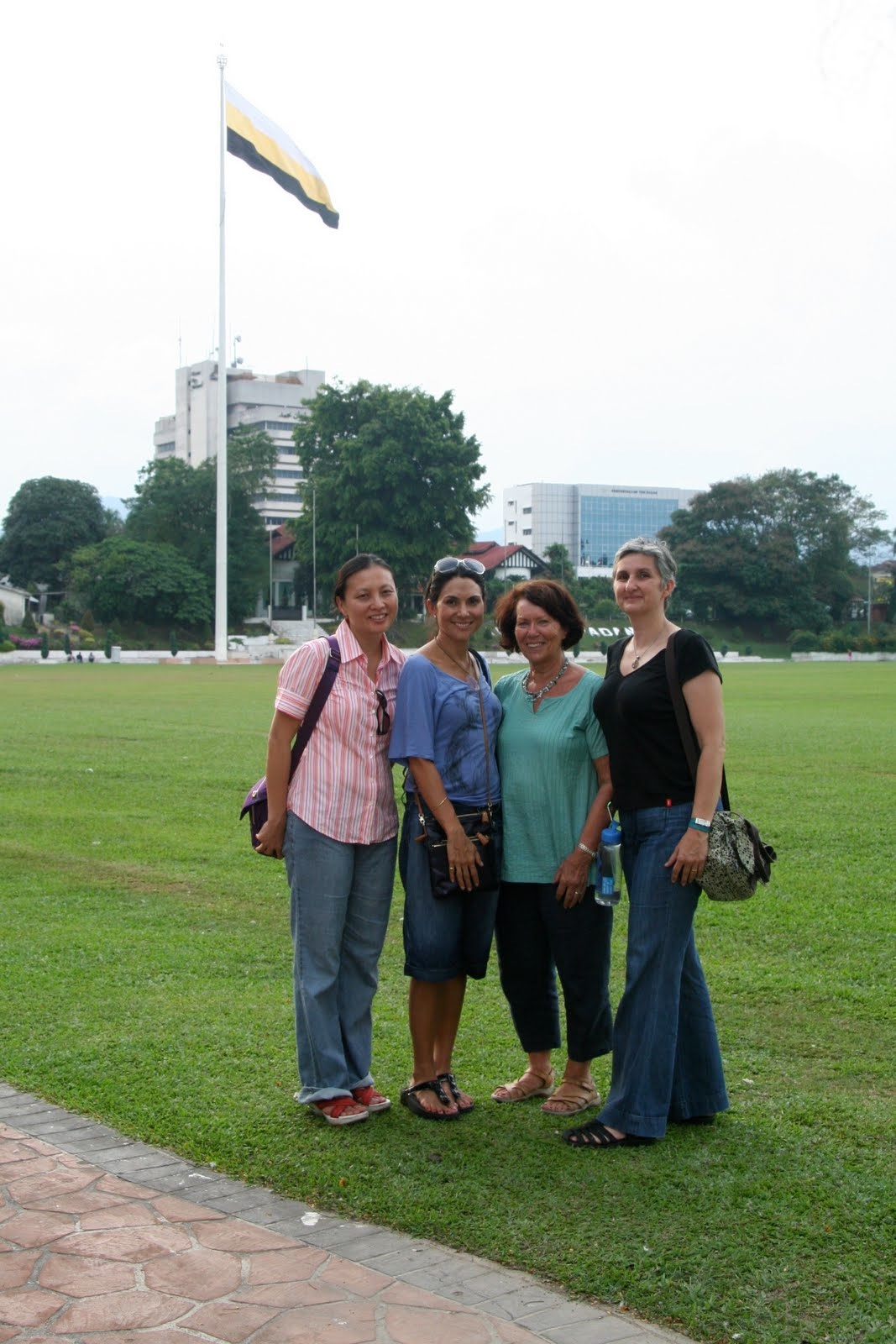
Right before Hayley Holle’s departure for England in August, a small group of MV members set off on a day trip to Ipoh – Seeting, Diane, Hayley and myself.
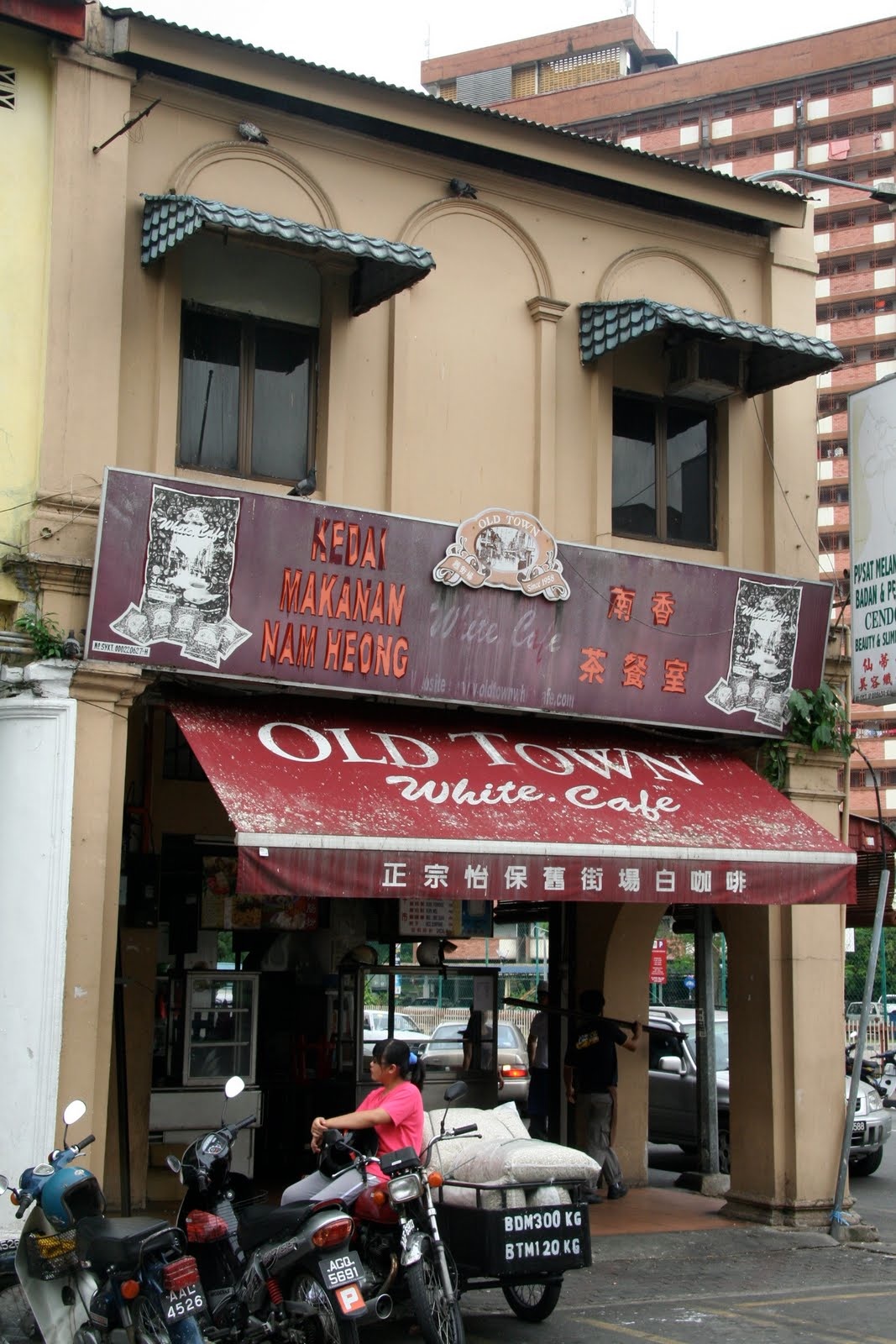
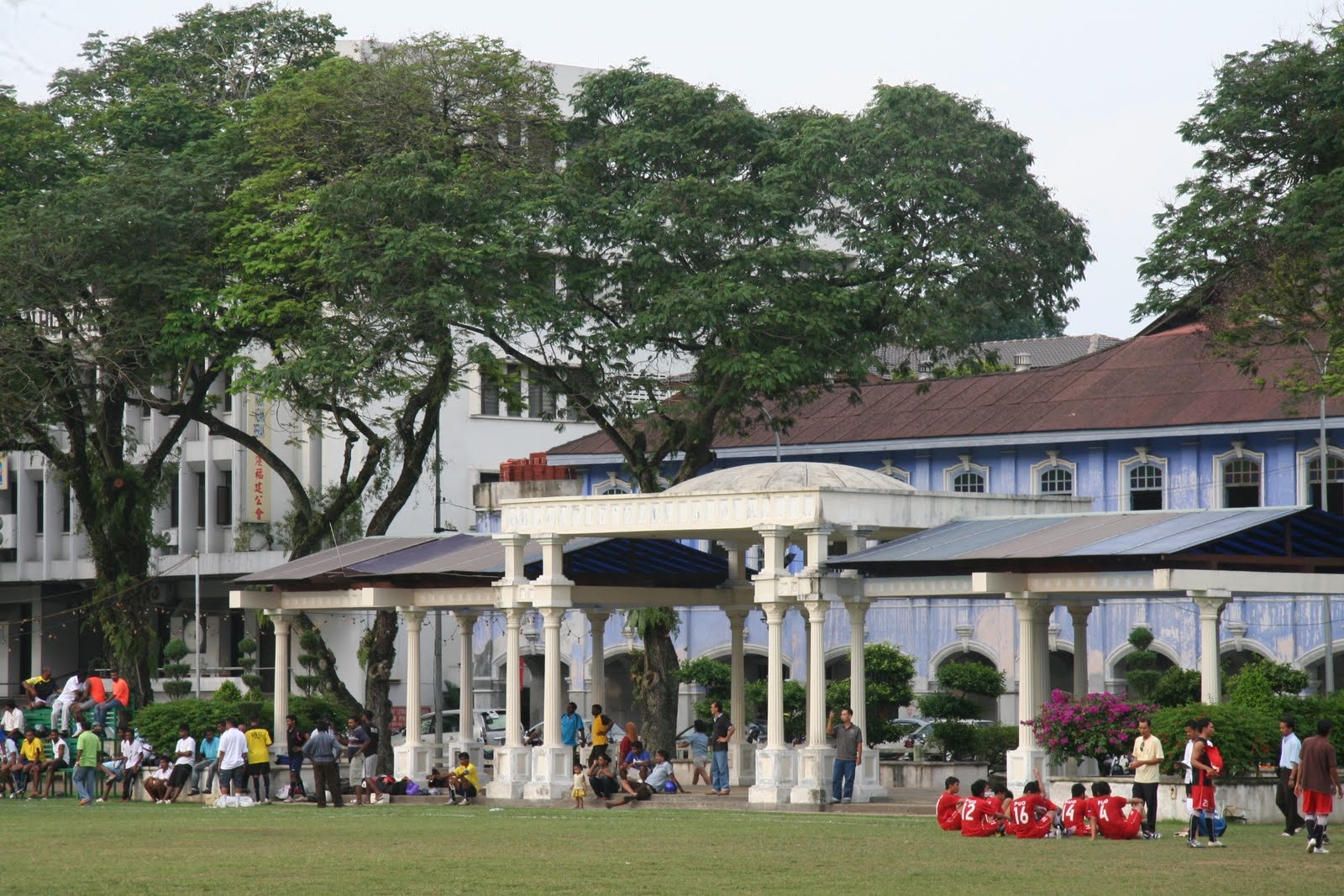
Our trip started in Kelly’s Castle where we were warmly welcomed by the curator/guard of the castle. The unfinished castle has been recently restored to enable visitors to visit safely almost every accessible part of the building.From the roof, you have a great view of the surrounding plantations. We continued on with a visit to the last tin dredge in Malyasia. Having seen the real dredge will definitely enhance our guided tours at the Muzium Negara. Next stop was Batu Gajah, a colonial town that has kept most of its original buildings and a has a very interesting cemetery. After a quick lunch of fresh river prawns, we ended the day by a 3 hour walk in Ipoh.
I would highly recommend this easy trip to all guides. Vera recommended us a great heritage Guide in Ipoh, Mr Law Siak Hong (siakhongstudio@yahoo.com) who met us in Kelly’s castle and took us on a very informative tour of Batu Gajah and Ipoh.


Farewell Lunch June 2010
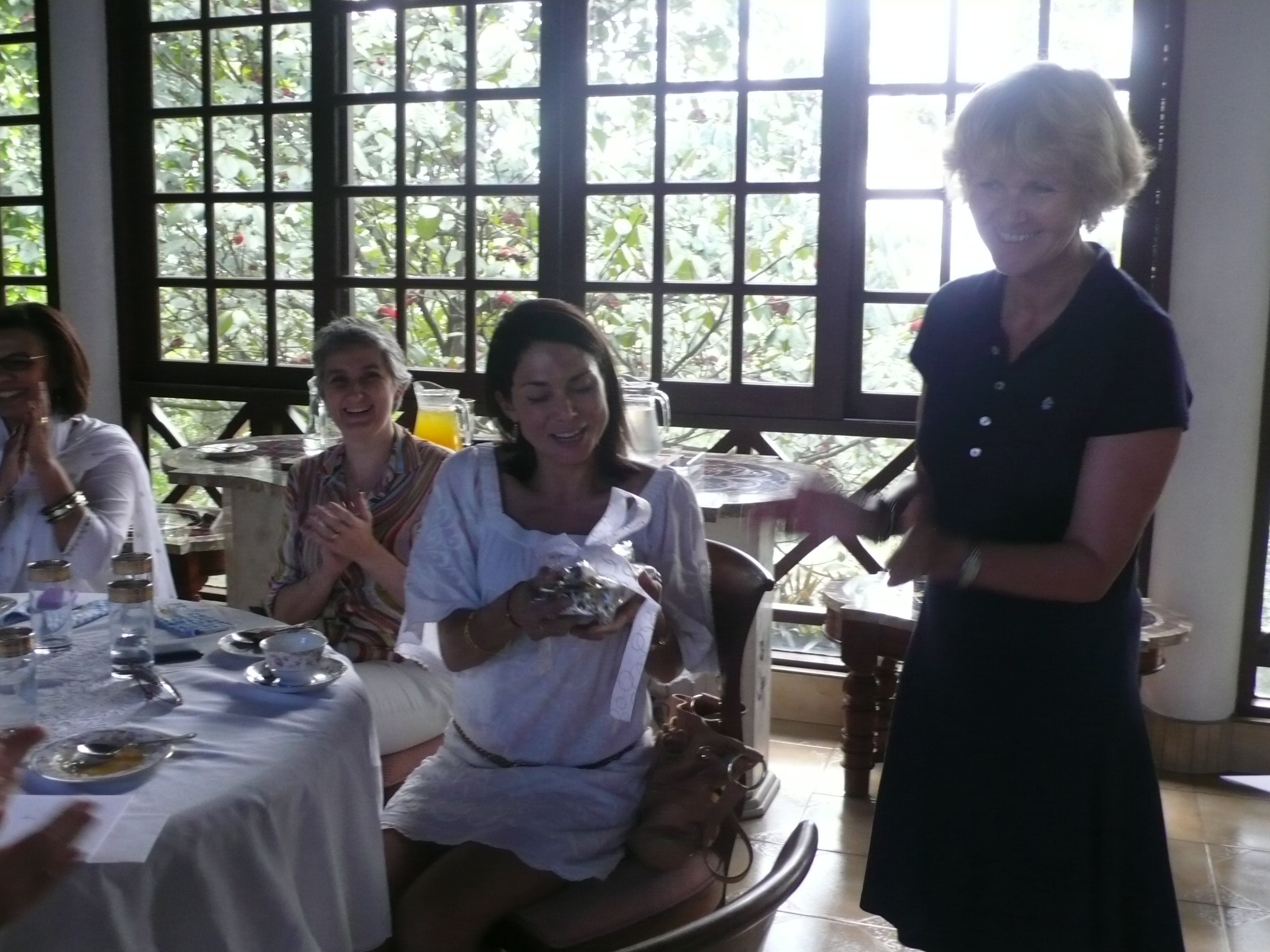
On June 24, we had a thank you and farewell lunch to several
MV volunteers who were leaving
Malaysia for other countries. In particular Hayley Holle, who has done so much with the schools programme and been a very active member of MV, and also Alison Fletcher and Marie Bouis who have also been very active.
Our deputy president, Zahara Shariman, most generously hosted lunch at her mother’s house and we ate delicious Malay food.
Both MV President Chrissy Lioe and MV Training Programme Organizer Angela Naylor spoke about the great works that have been achieved so far. The leavers got Malay betel siri sets from the East coast.
Baba Nyonya Wedding
Thursday October 7, 2010
A colourful wedding steeped in tradition

IT had all the trappings of a traditional Baba Nyonya wedding although it was just a demonstration.
The one-hour showcase was complete with traditional costumes, decorated bridal bed, tea ceremony, Nyonya dance and a joget session.
It was beautifully staged by Focal Concepts Sdn Bhd at the central atrium of Queensbay Mall in Penang as part of The Star’s Now & Forever – A Carnival of Love bridal event.
The Peranakan Bridal Showcase started off with the groom’s entourage, comprising five Babas, going on the stage with siah nah (dowry trays) containing jewellery,
a pair of dragon and phoenix candles (hong leng chek in Hokkien), wedding biscuits, rock sugar and charcoal.
The charcoal is to remind the bride to boil water to make tea for her parents-in-law and for them to wash their face in the morning while the rock sugar is to bless her with a sweet marriage.
Five Nyonyas then went on stage with their siah nah containing four pairs of slippers, hong leng chek, wedding biscuits and liquor to exchange dowries with the Babas.
The groom and umbrella man (best man) then led a troupe of sedan chair carriers, banner holders and musicians on a procession to fetch the bride at her ‘house’.
After consuming a birds nest drink, the groom passed his bride the flower ball and led her to take her seat on the sedan chair before the troupe left for his ‘house’.

During the unveiling ceremony, the bride unbuttoned the groom’s collar button to symbolically undress him while the groom untied her red waist sash that symbolises virginity.
The couple then sat on a bed under which the matron of ceremony placed a basket containing a cock and a hen.
According to traditional belief, if the cock comes out first, it signifies that the first born will be a boy, but if it is the hen that emerges, the first born will be a girl.
The spectators stretched their necks in anticipation. After much prompting and when the hen finally emerged, with feathers shedding, the crowd burst into laughter as the shy cock
remained crouched inside the basket.
Master ofceremony Michael Cheah, who is also Focal Concepts’ Baba Nyonya wedding consultant, said a typical Baba-Nyonya wedding used to last a whole month.
“However, the ceremony is cut short these days with only the key elements being practised, ” he said.
During the tea ceremony, Penang Tourism and Culture Committee chairman Danny Law Heng Kiang, The Star’s regional manager (operations) Chung Chok Yin and his wife were invited
on stage as the ‘parents’ to symbolically launch the bridal event.
Also present were Japanese deputy consul-general Hiroko Matsuo and The Star’s regional editor (North) Choi Tuck Wo.
Law said Penang, with its affordable cost of living, was one of the best wedding destinations for local and foreign couples.
He said the heritage buildings within the George Town World Heritage Site provided unique backdrops for wedding photos, adding that the state’s beautiful beaches were also good for photo
shoots and a perfect place for wedding dinners.
MV Fourth Anniversary Dinner
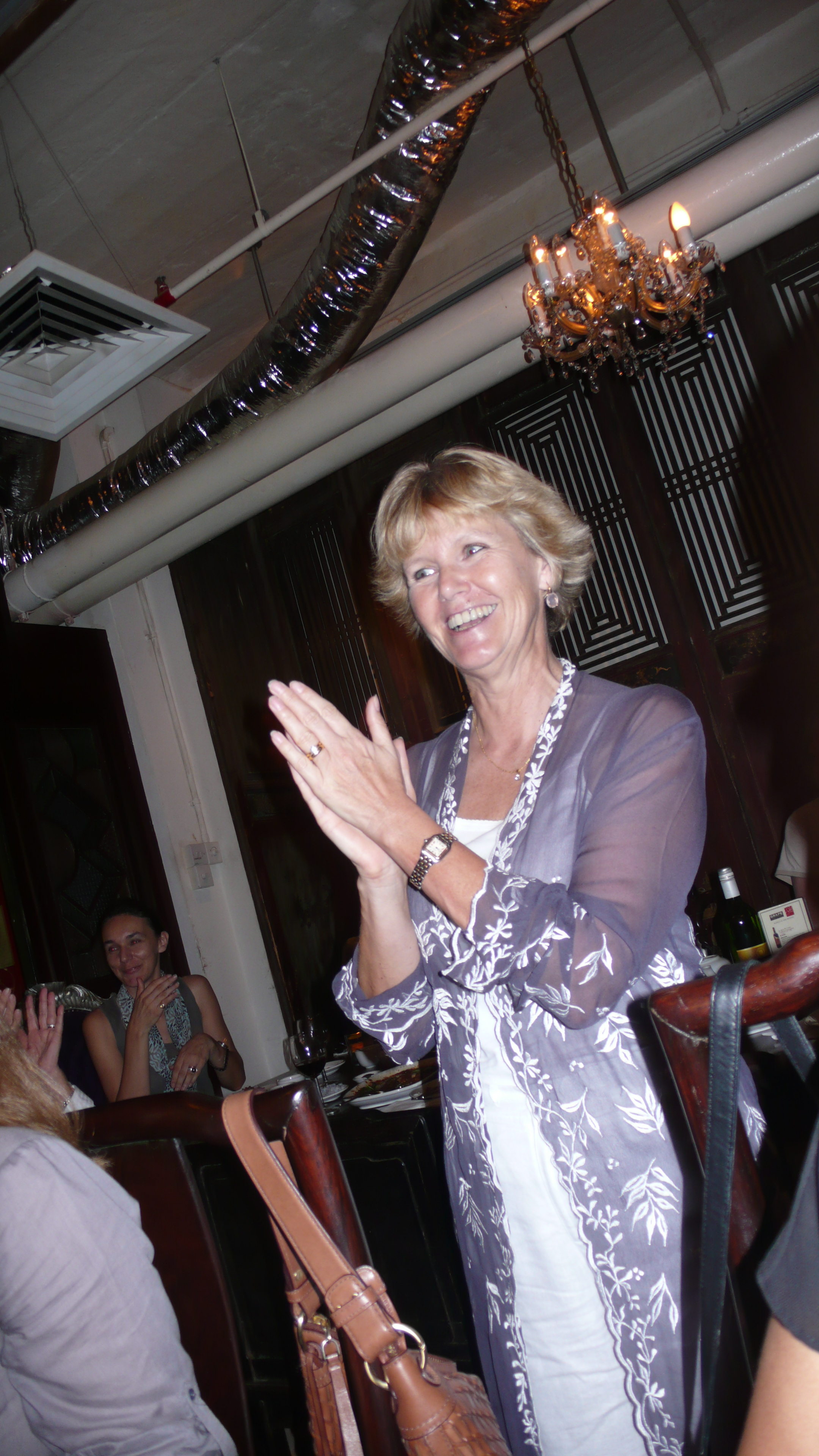
Around 40 MV members came along to our 4th Anniversary Dinner on October 13 in Precious Restaurant in Central Market. The food was most excellent Nonya cuisine and we were all very happy to welcome in the fifth year of Museum Volunteers. Our president Chrissy Lioe gave a short speech, and called for new MV members to step forward and take up responsibilties in our lovely MV. We have come a long way in a short time!
Sarong
Sunday October 10, 2010
Pieces of heritage
“I’ve been wearing the sarong since I was small,” says Dr Zulkifli, better known as Zubin Mohamad, currently a Fulbright scholar at the dance department (Southeast Asia) of University of California’s Arts Faculty.
He started wearing it to religious classes. “I can’t remember clearly when, but in Kelantan we had to study the Quran from kindergarten, if not earlier,” Zubin says in an email interview.
What he remembers well is that because his mother had a little business in textiles and jewellery in the village, “we got to wear the best pelikat – Chap Gajah – from Arab Street, Singapore. I got my first sampin songket, a songket Terengganu, probably when I was
seven.”

In 1985, Zubin bought his first songket – an all-black bunga penuh songket Kelantan from Che Bidah Penambang (a songket brand). He paid RM400 for it.
By then, he knew quite a bit about kain batik Jawa (Javanese batik), tulis (handwritten technique for material) and kain pelikat, having accompanied his mother on shopping trips – “more like work, actually” – to Singapore during the school holidays.
It was a matter of time before he started his own collection, by digging into his cupboard for the pelikat, songket and tenun which he had been wearing.
“I got my first collection of pua kumbu from my student’s mother in Kuching. Apparently that was how he paid his fees every semester. I was in Sarawak for five years and travelled all over Borneo as part of the Borneo Research Council group.”
Naturally, he picked up textiles/sarongs from Brunei, Pontianak, Sambas, Banjarmasin and Samarinda.
“Then I started writing for textile conferences in Java, the World Batik Conference in Jogja and the Singapore Textile Conference at Nanyang Academy. I started looking at Indonesian and Malaysian batik and collected more along the way.”
Men go for kain pelikat with checked patterns, and Ooi Poh Khoon has many such pieces in his collection.Zubin’s collection expanded when he moved to Bangkok in 1998.
“I was passionate about research on Langkasuka, as my mother was originally from Pattani. My ancestors were probably from Champa – typical of many Kelantanese. It then that I went on a textile adventure along the Mekong river, and all over Indo China, getting to
know not only textile scholars, collectors and dealers but also weavers.
“I would go to Scot market in Yangoon and buy a gunny sack of sarongs as they are so beautiful and so cheap. Or, I would go crazy in Vientienne and Luang Prabang, the Russian Market in Phnom Penh, the Chatuchak weekend market in Bangkok and smalls markets like
Batambang in Cambodia.
“First, you will want to get new pieces for their colours and patterns. Then you’d get one piece of an old textile to keep,” he adds.
Presently, his focus is on Southeast Asia. But nothing can compare with the kain limar (limar cloth) given him by his mother, “the most valuable piece” he owns.
“She said it would be mine before she passed away. She asked that we cover her with the kain limar. She is gone, but she is always with me.
“I’m trying to develop my collection with pieces from Kelantan, Pattani, Terengganu and Pekan, the kain limar, songket and tenun. What I would like to do is compile a book on my collection.
“Now that I am in California, I’m also trying to understand the Indian and Mexican textiles. I wish to visit the Mayan Temple in Cancun and, hopefully, organise a Mexican textile exhibition in the future!”
For Zubin, the sarong represents civilisation. He says: “We were travellers of the world; the Malays were a civilised race, well travelled, well mannered. An old textile give us a taste of tradition and heritage. Looking at old works reminds me of our glorious past.”
Penang-based graphic artist Ooi Poh Khoon became interested in the kain pelikat when, as a young boy, the bus that took him to school daily passed by Tanjung Tokong, a predominantly Malay community.
“What I liked seeing was the men wearing kain pelikat around the house or the surau. Or, sarongs hanging on fences to dry. I admired their colours and designs. Of course I wanted to buy one for myself, but I couldn’t afford it then. I was too short to wear it too.”
Today, 12 years after he started buying sarongs, he has 350 pieces in his collection.
“I have to hold myself back from buying more. There are just too many to keep in my room and my mum nags me about, saying, ‘Even the Malays don’t have so many sarongs as you do!’”
Ooi, 30, likes the bigger checked designs, and favours the colour blue.
“The material is the most important factor when choosing what to buy,” he says. “In our climate, cotton sarongs are preferable to the tetron/polyester/cotton combinations. Cotton sarongs are mainly from India while the mixed fabric ones come from Indonesia.”
But Indian cotton sarongs are slightly narrower and shorter than those from Indonesia, thus they may not be as comfortable for those who are bigger. The colours for Indonesian sarongs are more vivid too, he adds.
Ooi gets his sarongs from the Penang Bazaar at Penang Road. To him, the sarong transcends borders.
“It can be part of a heritage or tradition depending on your culture or race. It’s the uniqueness of wearing the sarong that makes us all Malaysians.”
Trip to Mughal Art Exhibition at Islamic Arts Museum
| Focus on Treasury of the World: Jewelled Arts of India in the Age of the Mughals | ||
| Date: | Monday October 4, 2010 | |
| Time: | 10:00 am – 12:00 pm | |
| Location: | Islamic Art Museum Malaysia | |
| Notes: | Treasury of the World: Jewelled Arts of India in the Age of the Mughals Guided tour by Adline binti Abdul Ghani This is the most lavish display of historic jewellery ever seen in Malaysia. The pieces in this exhibition exemplify the artistic sophistication and technical finesse of Indian craftsmen in the age of the Mughals, especially during the 16th to the 18th century. Over the past ten years the exhibition has travelled to a number of leading cultural institutions, including the Louvre and the British Museum. Kuala Lumpur will be the last stop on this global tour. MV members only. Please sign up with our Focus coordinator Kokkie. |
|
2010-2011 training programmes now underway at National Museum and Textiles Museum
The Museum Volunteer Training Programmes for 2010 are all now underway. We have 50 volunteers training at the Muzium Negara (National Museum) and the Muzium Tekstil (Textile Museum). If you are interested in joining this programme for next year, September 2011, please click on the tag above labelled “MV Training”
Malacca and Penang history…
Saturday July 24, 2010
Malacca and Penang: History in abundance
THE REAL ESTATE WITH ANGIE NG
angie@thestar.com.my
Among the things that appreciate over time are family relationships, friendships and the value of some tangible things like real estate.
Many so-called “city folks” in Kuala Lumpur and Petaling Jaya actually do not hail from the city; their hometowns are in other parts of the country.
Home is where the heart is and many of us have set up homes in places where we work, after settling down with our own family, and have children attending schools or colleges in the city.
The Malacca government has turned the once old and quiet Jonker Street into the now vibrant and ‘happening’ Jonker Walk.With passing time and wisdom, we learn to appreciate our loved ones better.
And despite the “rat race” of city life, it is important to stay connected with our loved ones and old friends back in the kampung or in other places.
Likewise in the built environment, we can find many undiscovered gems around, which, in spite of their old physical exterior, are actually hidden treasures with strong history and many untold stories within their walls.
The first thing that comes to mind is the many pre-war houses and buildings that can be found in large numbers in the inner cities of Penang and Malacca.
Despite being old and dilapidated, many have the potential to be restored and given a new lease of life.
Some of the ways to reuse these buildings and “monetise” them include turning them into museums, heritage hotels, alfresco dining and restaurants specialising in local fares.
It is interesting to compare Penang and Malacca as they share many similar traits and history.
Both will benefit by learning from each other new ways to improve and manage their built and unbuilt environment.
Since my other half is a Malaccan, I must admit that I tend to compare my hometown, Penang’s George Town, with Malacca whenever I’m back for holidays or family events.
After all, both have been declared Unesco World Heritage Sites and have many interesting buildings and structures that are reminiscent of their rich history and heritage.
Penang and Malacca are both former Straits Settlement states with a long history of early settlers from various parts of the world converging there for trade.
And both are renowned for their Baba/Nyonya culture and heritage.
Being port states, both also have strong foreign connection and influence.
Penang was a bastion of trade for the English and the East India Company after it was founded by Captain Francis Light in 1786, while Malacca was a confluence of Portuguese, Dutch and English influence.
Those influences can still be clearly seen in the architecture of the buildings today.
It is evident that both Penang and Malacca have their own distinctive assets and attractions that have endeared them to many loyal visitors who throng the cities in droves whenever there is a long stretch of holidays.
This could be one of the reasons for the traffic-choked roads during the holiday season and major festivities.
It is common to find many outstation cars among the long lines of cars on the roads during such times.
To give a boost to their intrinsic value as natural tourist attractions, there is a need to improve the public transport system in the two heritage cities to ensure that the different modes of transport are well integrated and connected to each other.
Being on the radar screen of tourists is one thing, but it is equally important to ensure that visitors have convenient access to a good public transport network.
More should also be done to further boost the alluring old world charms of these cities while at the same time, revitalise the inner cities and keep them alive as living heritage.
To achieve this, the old and new attractions and facilities should co-exist and blend seamlessly with one another to make them relevant and refreshing to the people.
Malacca has made some interesting headway in this regard with many old buildings and “once quiet” historical enclaves being given a new lease of life.
One just needs to hop over to the happening and vibrant Jonker Walk, which comes alive every evening, teeming with traders and visitors.
Penangites can certainly take a leaf from their Malaccan counterparts to liven up George Town’s dilapidated inner city.
■ Deputy news editor Angie Ng is keeping her fingers crossed that the old and new charms of our cities will be the pride of our present and future generations.
New Museum in Kelantan
Kelantan to build wau museum in Bachok
2010/07/20
// BACHOK: Kelantan, home of the country’s traditional kites or wau, will finally get its own kite museum next year.State Local Government, Tourism and Culture Committee chairman Datuk Takiyuddin Hassan said it would be housed temporarily in a government quarters until a permanent building was constructed.
“We felt is appropriate that a kite museum be built in the state as the wau is well known locally and internationally. It will be able to attract visitors as there are many kite fans around the world.
“Bachok has been chosen to house the museum as it will be the new permanent site for the annual Kelantan International Kite Festival.
“The wau will also become the district’s icon and used widely to promote Bachok,” he said after the closing of the Kelantan Invitational Kite Festival at Pantai Irama here on Sunday. Deputy Menteri Besar Datuk Ahmad Yaakob represented Menteri Besar Datuk Nik Aziz Nik Mat at the ceremony.
Takiyuddin said the museum would showcase the many types of wau from the state, besides kites and accessories from all over the world.
“We have many wau enthusiasts who are keen to hand their collections to the museum.”
On the kite festival at Pantai Irama, Takiyuddin said it was not opened to participants from other countries this year as it was held for the first time there and the organisers were uncertain of the infrastructure and other facilities.
“Even though it was not opened to international participants, we managed to attract nearly 300 people from all over the country.
“However, we hope to organise it on a grander scale next and extend our invitation overseas. Last year, we managed to attract participants from 20 countries,” he said.
Kelantan emerged overall champion in the four day competition which started on July 15.