Written by Serena Yee
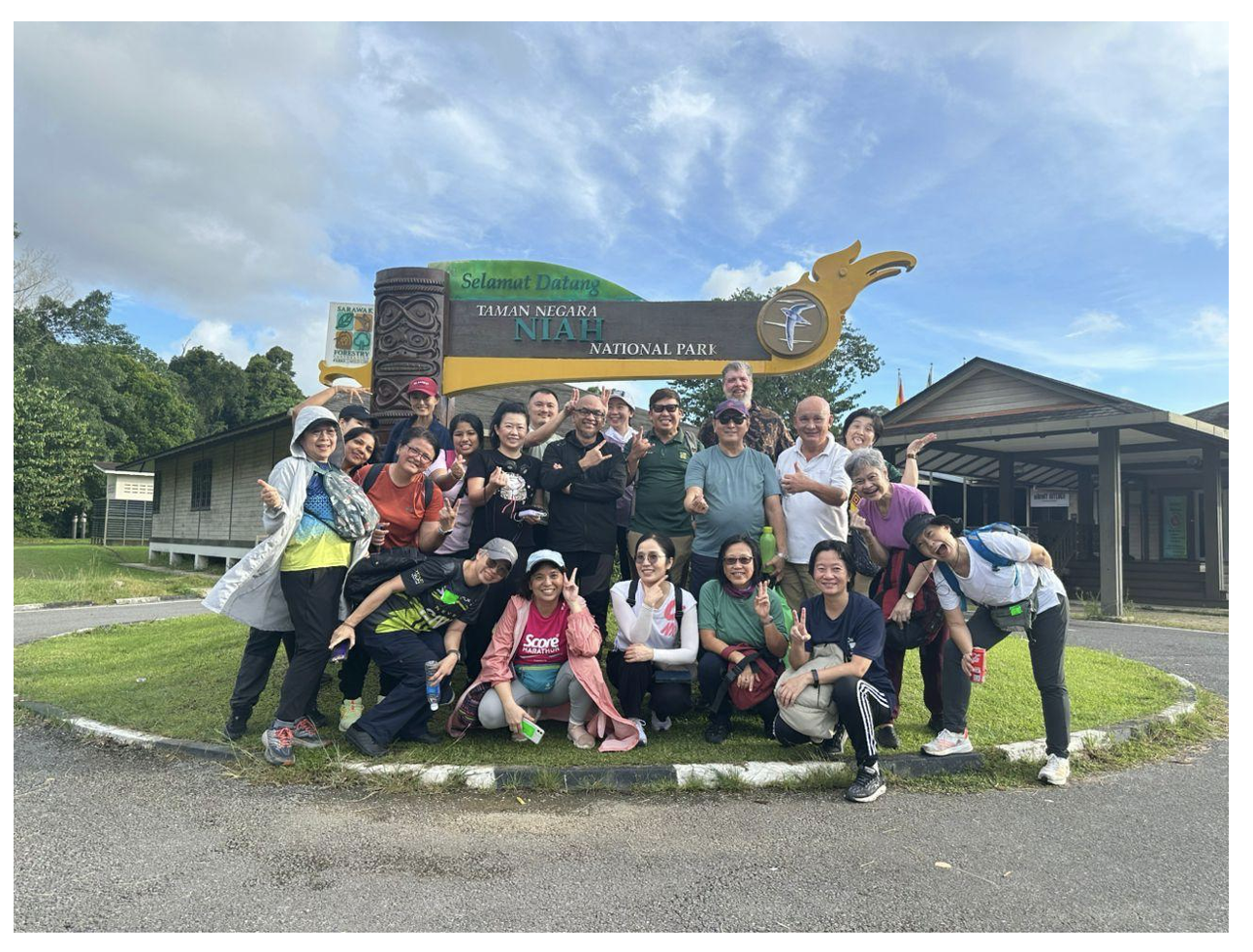
In October, 21 MVs made their way to Miri for the much-anticipated visit to Gua Niah National Park in Sarawak.
Niah National Park was established in 1974 within the Bukit Subis Protected Forest that was established under the Forest Ordinance in 1951. It is protected by the National Parks and Nature Reserves Ordinance and the Wildlife Protection Ordinance of 1988. At the state level, the property is protected by the Sarawak Heritage Ordinance 2019. The Sarawak Forestry Corporation takes the lead in managing the park in collaboration with the Sarawak Museum Department, who is responsible for the conservation of the cultural heritage. The management system is supported and advised by the Special Park Committee for Niah National Park.
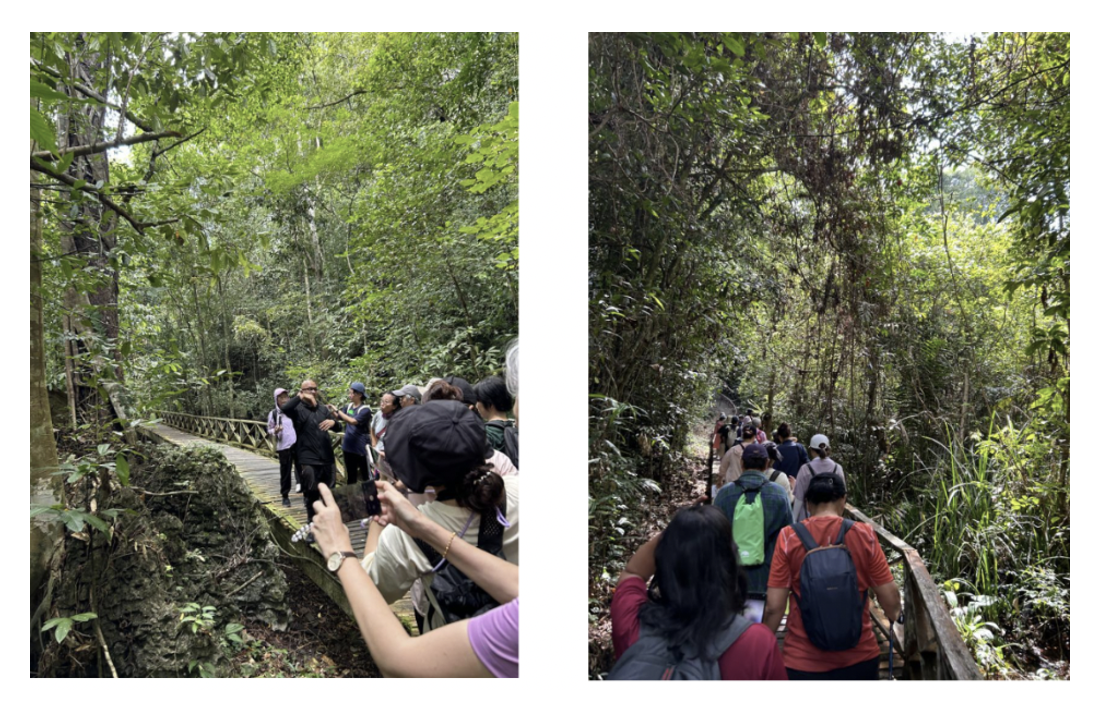
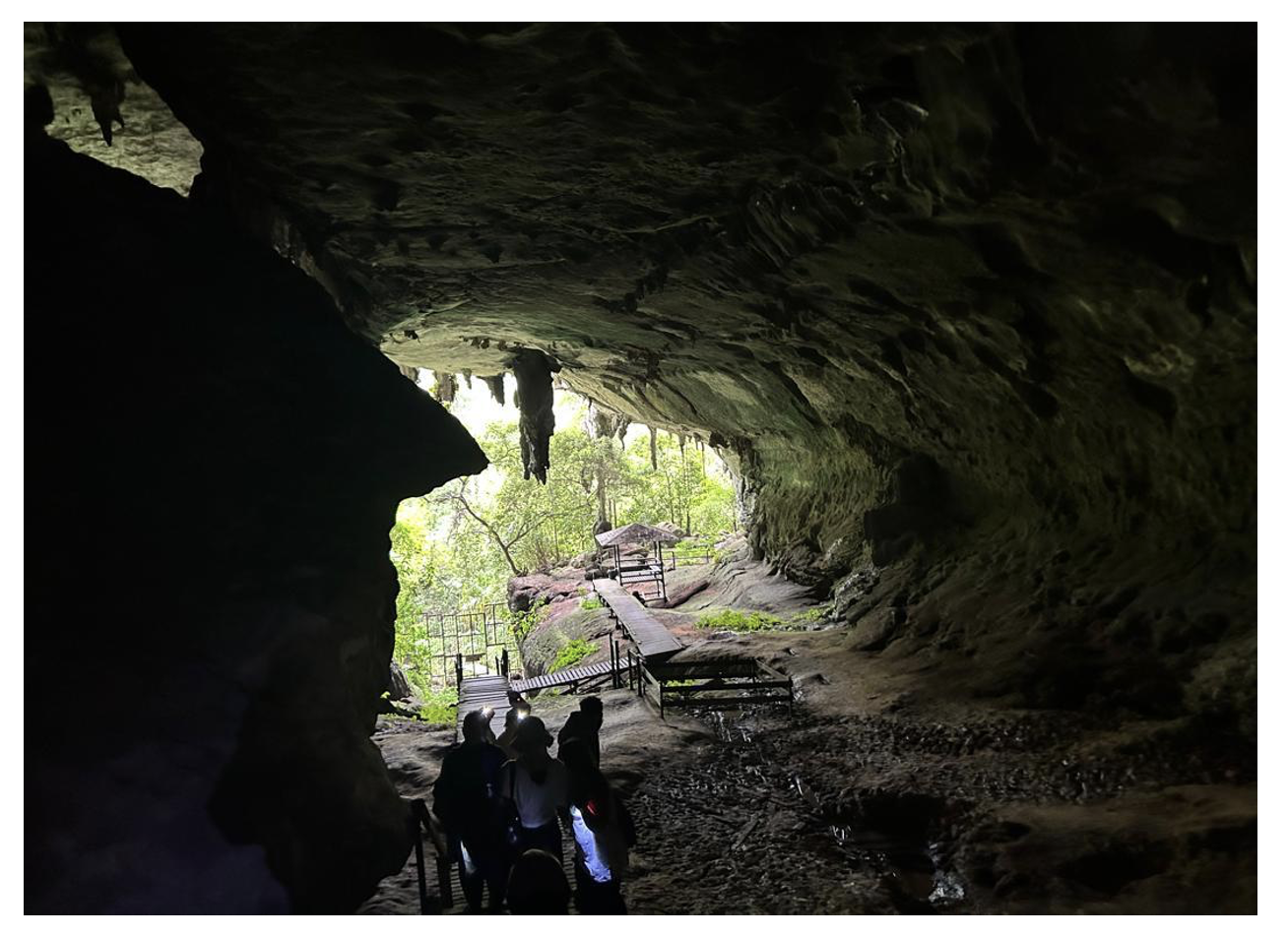
A chartered bus ride of an hour plus long brought us to the park headquarters from our hotel in Miri town. Together with Assistant Curator of the Sarawak Museum, Mohd Sherman Sauffi and 3 Sarawak forest rangers, we set out with a slightly anxious albeit enjoyable 3-minute boat ride across the croc-infested Niah River to the start of the trail. Careful to limit each trip to 10 persons so as not to capsize the boat!
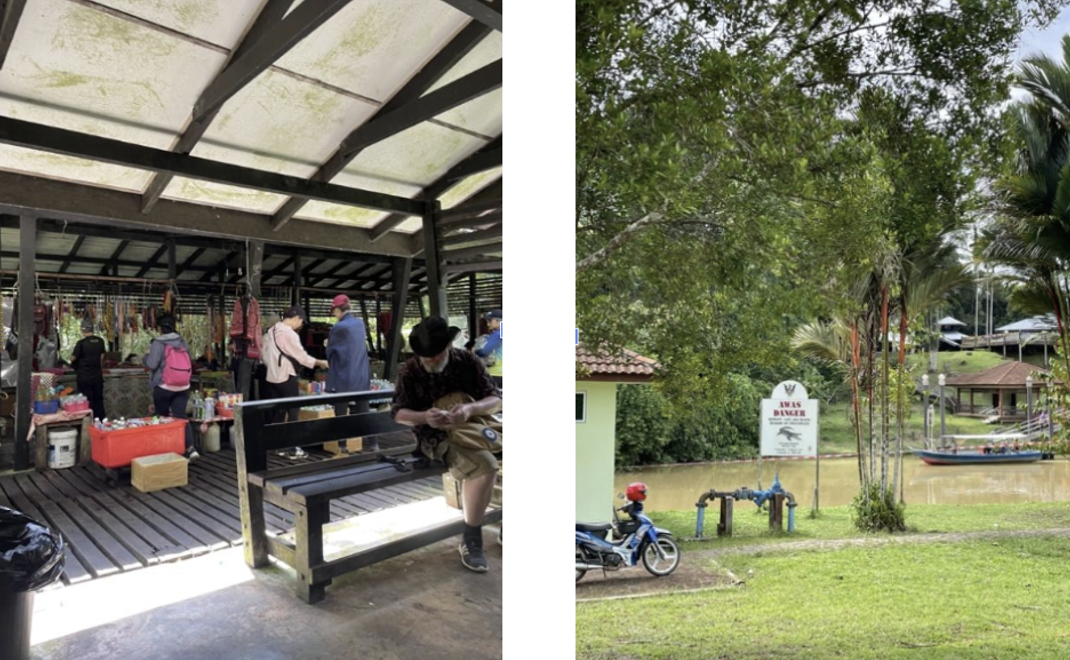
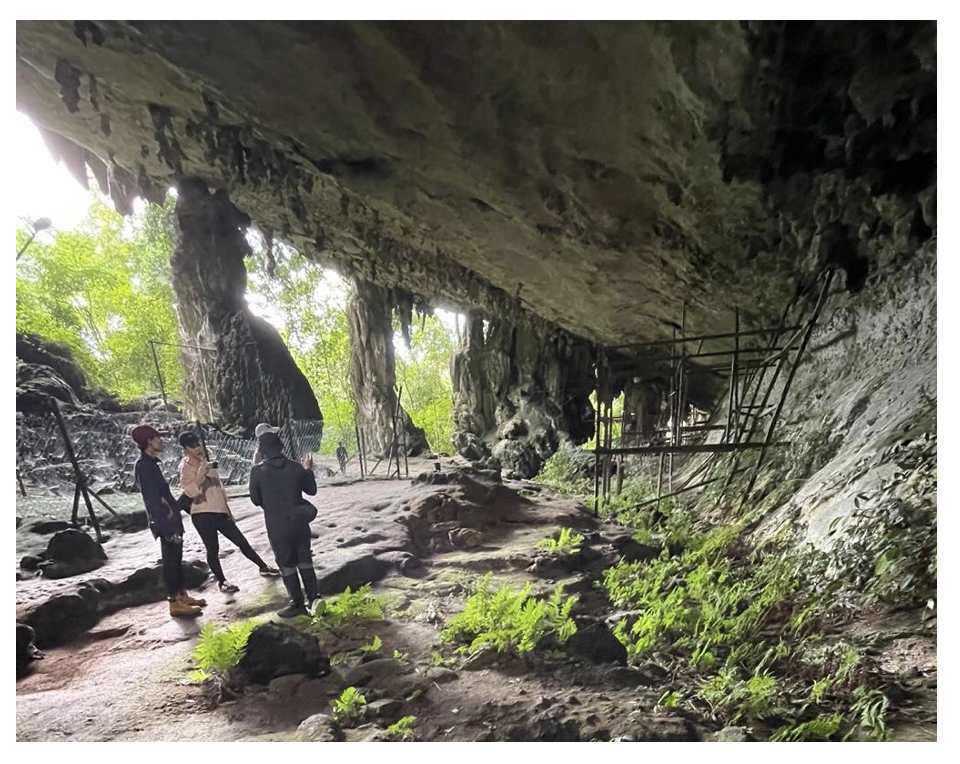
Pleasantly traipsing on hardwood raised boardwalks and cement paths in alternation, resting briefly at the Tangap Community Craft Stalls and Washrooms, we soon arrived at the Traders Cave. Like eager little beavers, we pushed on towards the Great Cave Complex, leaving this for later.
Moon Cave
The Great Cave Complex was really very dark. Within it was the Moon Cave (Lobang Bulan) one of the darkest caves in Niah, which was surveyed in 2014-2015. Millions of years ago it was underwater, evidenced by the salt residue, seashells and an ancient riverbed.
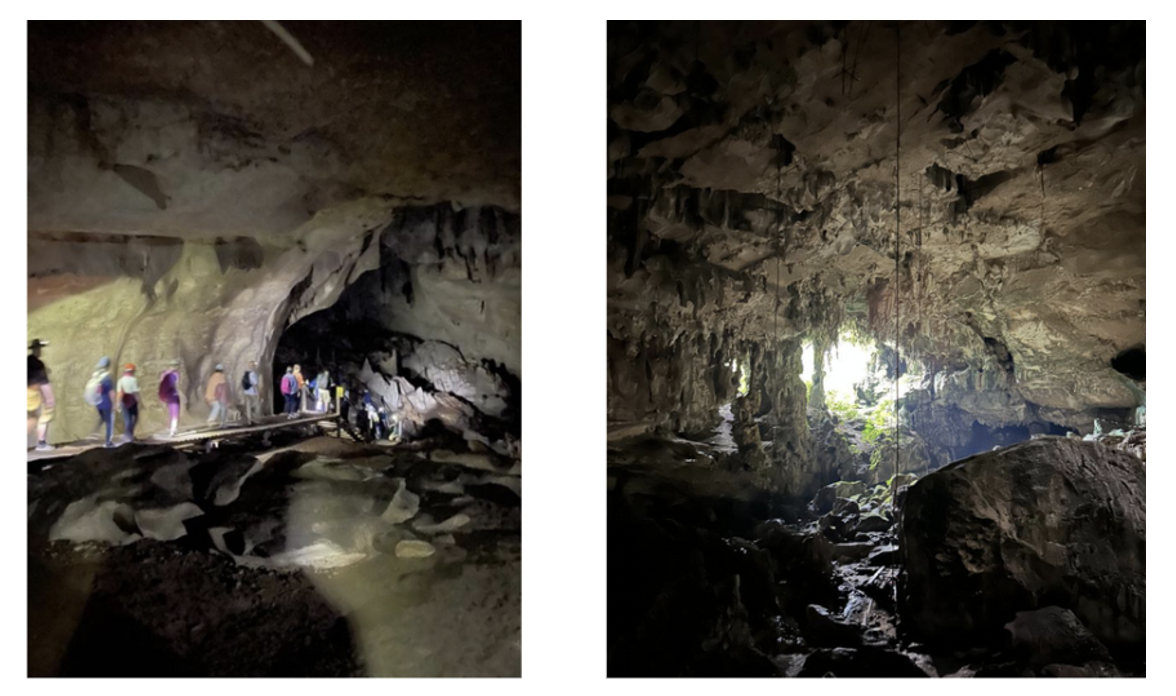
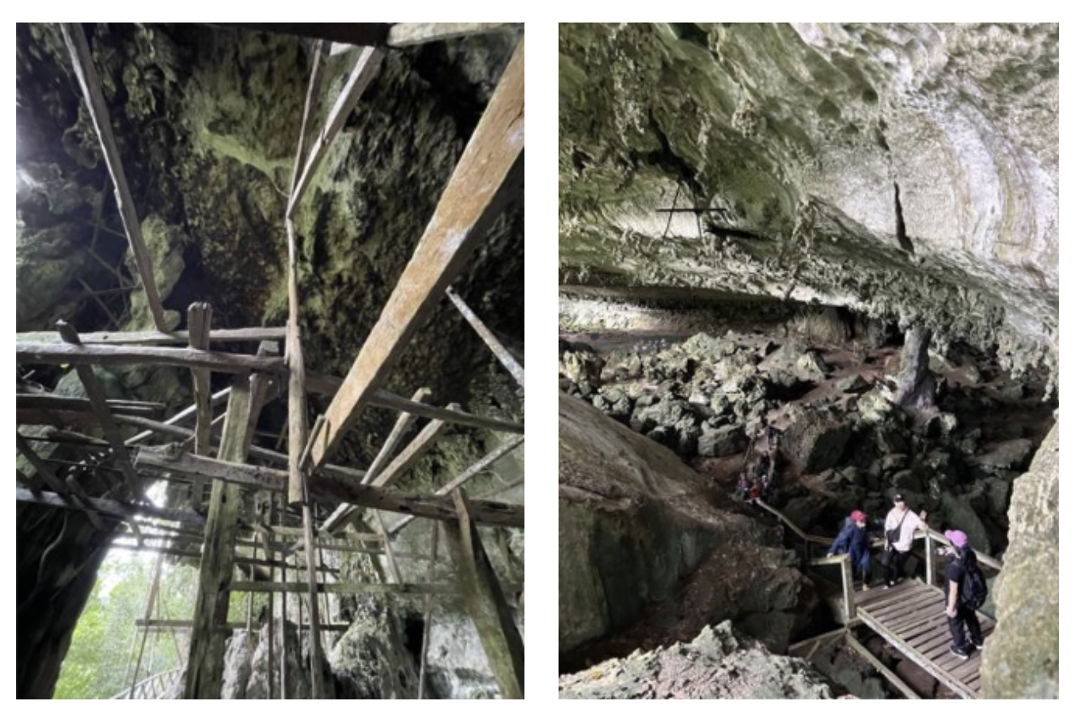
The prehistoric people knew how to select the right spots to settle and this was not one of them. They preferred rock shelters and cave openings. This was however the main cave for the collection of edible birds nests, made from the saliva of swiftlets high up in the roof and walls of the cave. The incessant chirping and squeaking of swiftlets and bats (apparently there are 7 or 8 kinds here!) accompanied us as we laboured up and down multiple flights of steps through the cave at an elevation of 3000+m. Here and there were metres-long ropes, wooden/bamboo poles and flimsy-looking ladders extending from eye level to the roof erected by the birds’ nest collectors. It was a sight to see! And to spare a moment for those who lost their lives pursuing this profession in the dead of night.
Before arriving at the Painted Cave, we passed by Gan Kira (no one knows the origin of this name) where the soil/clay is harvested to make the prehistoric pottery found in this area. Adjacent is where Barbara Harrisson discovered the mysterious headless skeletal remains of a prehistoric female, hence the name Murder Cave.
Painted Cave
A few more kilometres after that we arrived at the Painted Cave (Gua Kain Hitam), the furthest point today. The famous murals of the Niah Caves were discovered here, featuring images of the ships of death, which serves as a prominent drawing on the cave wall. The remains of the ships of death (boat-like coffins that were used to contain the bodies of the dead) have been transferred to the Sarawak Museum.
Sherman produced the magic key and we felt great privilege entering the fenced off area, eyes eagerly scanning the walls for the red ochre (hematite) drawings we had seen many times in Gallery A, at the National Museum. He then directed us to the back of the cave and when he shone his torch on the wall, there was a collective gasp as we saw many drawings there in greater clarity! The 45m long wall is divided into 4 sections, 3 and 4 being the furthest in. 1 and 2 being on the outer part of the cave more exposed to the elements, hence the drawings are comparatively less clear there.
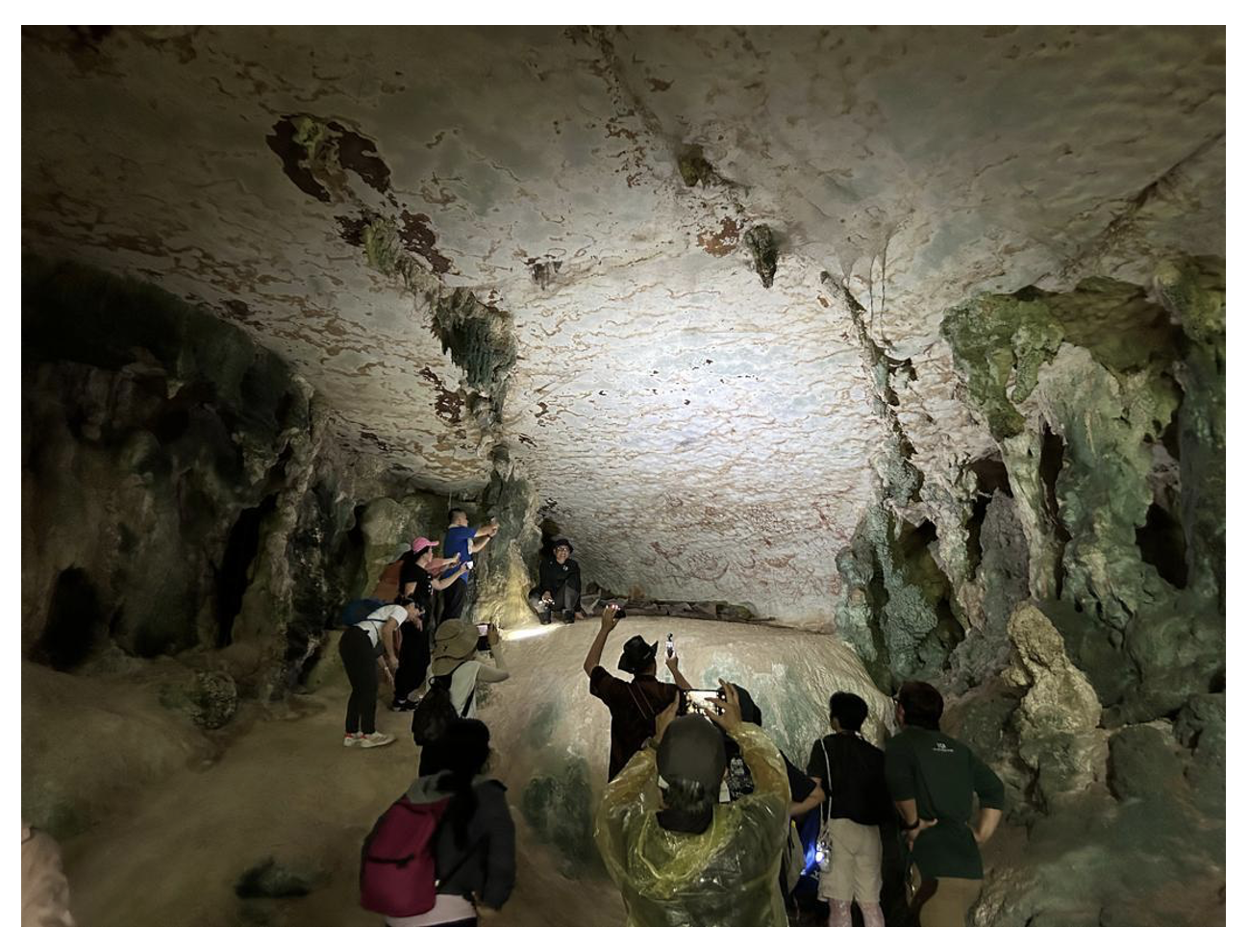
122 drawings, dating from 1800 to 800 years old, were catalogued by Barbara Harrisson in 1959 but in 2016-2017, using a spectrum camera, archaeologists re-catalogued a total of 164. Encompassing anthropomorphic, zoomorphic and geometry, there were drawings of boats (Ships of Death), symbolising the journey to the afterlife, animals, a shaman, a symbol of the universe to name a few. We are currently restricted from sharing any photos of these drawings due to the ongoing research and analysis that has yet to be completed.
A number of wooden coffins were also found here used in the practice of secondary burials. There were three sizes : sub-adult, teenager, and adult. The body is first laid there upon death where the holes at the ends allow bodily fluids to flow out. After a few years the bones are collected and buried in another place. A joint team led by Associate Professor Stephen Chia in 2007-2008 discovered 6 Neolithic skeletal remains nearby, dating 2000 – 3000 years old, beyond the fence, in an area referred to as Cave B. They were buried within a depth of 1-1.5m. Why were they not buried in the Painted Cave? Because it was primarily a dwelling as the soil layer was only 5-7cm deep, after which one would hit bedrock, thus not suitable for burials.
An unusual watermark is seen on the ceiling of the Painted Cave. Researchers hypothesise that it could be due to the mist, moisture, humidity, air circulation, temperature fluctuations, the wet and dry seasons coming from the opening of the cave.
The Great Cave
We then headed back to the dark Great Cave, through the ups and downs again, to enter another locked area at the West Mouth (Lobang Kuala) of the cave. Here, Sherman had to bring us 5 at a time due to the fragility of the walking planks, sharing with us in detail the discovery of the 40,000 year old Deep Skull in Hell Trench below a few metres of guano. Deep Skull is a fragment of a skull discovered in February 1958 in the first Niah excavation led by Tom and Barbara Harrisson after a tip-off from the locals. This area near the mouth is pre-Neolithic.
Further in is the excavation of a Neolithic ‘cemetery’ dating from 2800 to 1200 years ago, showing their awareness of the differentiation between the living and the dead. 200 individuals were found in 7 different burial methods/positions, namely, flexed, seated, cremated, mutilated, burnt, layered and supine. Some even had different hand positions. The many variations of mortuary treatments represent one of the Outstanding Universal Values (OUV) of The Archaeological Heritage of Niah National Park’s Caves Complex that accorded it its UNESCO World Heritage Status on 1st August 2024.
Another unique find was a jade earring (lingling-o) which was excavated on 29 March 1977 by Dato Professor Zuraina from a burial. Recent analysis showed that its mineralogical characteristics resemble those of Fengtian nephrite from eastern Taiwan, about 2500 km to the north. Similar earrings were found in Batanes and Palawan in the Philippines where it could have been manufactured and then traded in Borneo.
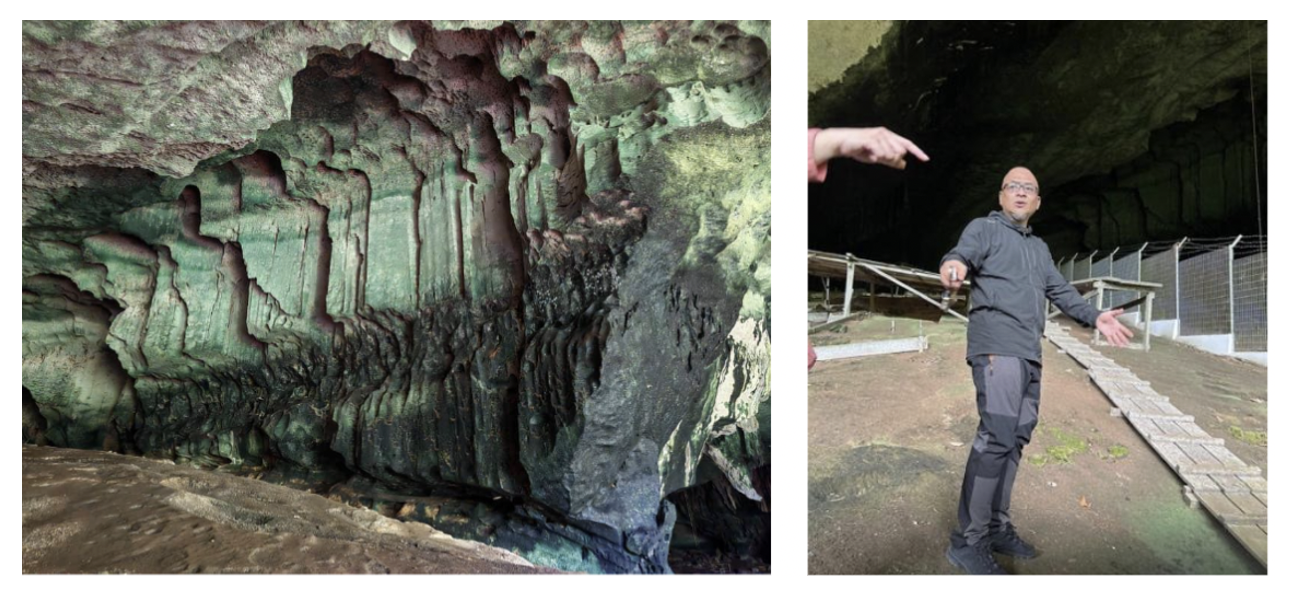
With evidence of long-term human habitation and near continuous occupation from 40,000 – 2,000 years ago, Niah is among the most important sites in Southeast Asia. Meanwhile, MVs waiting their turn were in stitches regaled by Kulwant with stories from the Milo Chronicles!!
Traders Cave
Finally we made it back to the Traders Cave, previously known as the Small Cave, but renamed for the traders of guano and birds nests who conducted their business here in the 1950s. Their lashed-lug (pasak) stalls were constructed with ironwood (belian). Excavations were carried out here in 2017 and 2019 with the University of New South Wales. 14 trenches were dug, 6 layers identified. Hitherto findings are roughly illustrated in the following table.
Traders Cave, Niah Caves Complex : Archaeological Findings and Age Estimates
| Layer Depth | Age Range (Years Ago) | Findings | Significance |
| Top Layer (10 cm) | 40,000 | – | Surface layer, recent deposits |
| Lower Layer | 55,000 – 65,000 | – Human tooth | Indicates early human presence |
| – Human skull piece | Important for understanding mortality and health | ||
| Layer 3 | 75,000 – 85,000 | – Seashells | Evidence of marine environment |
| – Fish bones | Signifies dietary practices | ||
| – Crocodile back plate | Adds to knowledge of local fauna | ||
| Layer 4 (2.5m down) | 120,000 | – Bedrock | Indicates the base of the site |
| Oyster Layer | 75,000 – 85,000 | – Oyster remains | Shows that the area was underwater |
| – Microlithic tools | Suggests human tool-making activity |
These findings are under peer review and research is still ongoing. Hopefully in the near future, researchers will be able to piece together the story of the ancient settlements here.
Therein lies Niah’s main Outstanding Universal Value (OUV) – the continuity of the prehistoric occupation, the longest-known records of human interaction with rainforests within a colossal complex of caverns and caves of the Integrated Niah Cave Complex. With evidence dating as far as 65,000 years, extending to a more recent period of activity just 800 years ago. Who knows what will be discovered in the future. For certain, we were all privileged to have visited it.
References:
 Museum Volunteers, JMM