Malayan Crafts and Craftsmen Mural – Fibres

Written by Manjeet Dhillon

Melentur buluh biarlah daripada rebungnya (bend a bamboo while it is still a shoot) 

This proverb, rooted in Malaysian culture, speaks to the importance of nurturing skills and traditions from a young age. In the world of Malaysian crafts, this wisdom holds true, as artisans have passed down their expertise in fibre weaving through generations. Just as a bamboo is shaped when it is still a tender shoot, so too are the hands of young artisans guided to transform natural fibres into works of art that embody both utility and heritage.

Plaited Art

Nestled in Malaysia’s lush rainforests, lies a heritage rich in natural resources. These landscapes provide the raw materials that have shaped centuries-old fibre crafting traditions. Skilled artisans harness these natural fibres, weaving them into objects that are both functional and imbued with cultural significance.

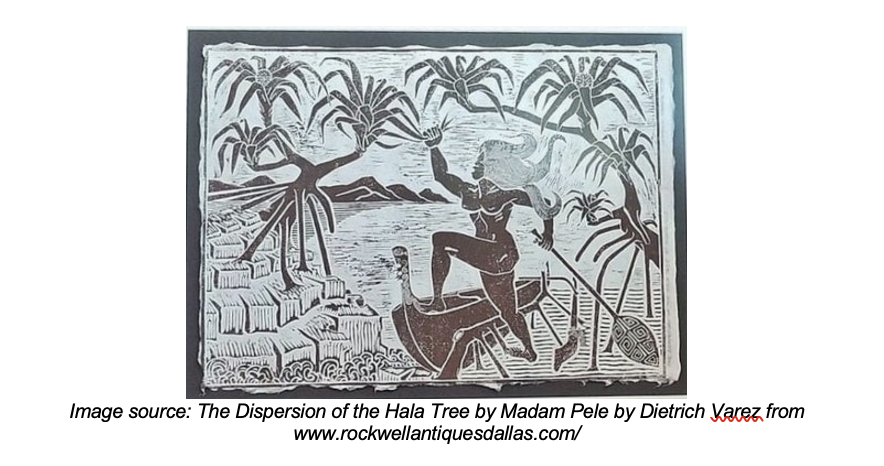
The legend of Madame Pele, the volcano goddess of Hawaii, adds a touch of mystique to the story of pandanus, a key material in local craft. When Madame Pele initially arrived, the branches of the pandanus tree entangled her canoe. In her rage, she tore the tree to shreds and scattered the pieces across the earth. Wherever they landed, they took root, providing people with a vital source for basket-making materials. Though this tale hails from afar, it highlights the widespread importance of pandanus and its role in crafting.
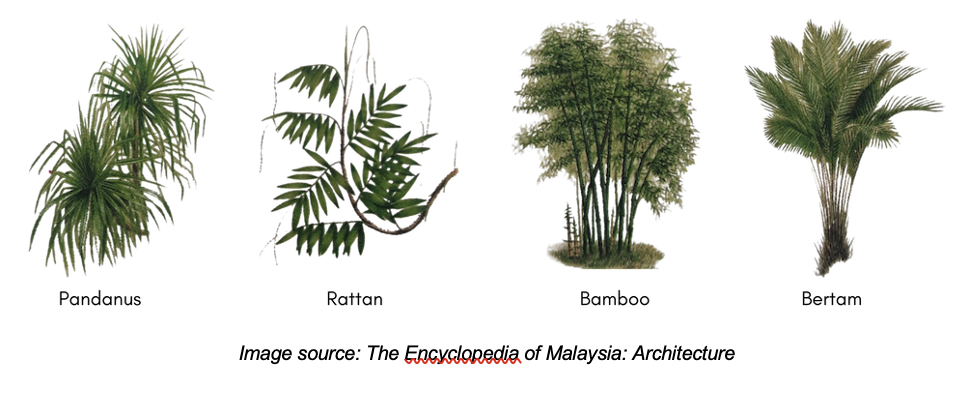
In Malaysia, particularly in states like Sabah and Terengganu, pandanus is prized for its use in plaiting mats and other delicate objects. The flexibility of its fibres, which bear a resemblance to palm fibre, makes it ideal for creating both practical and decorative items.

The table below summarises the variety of plant materials that are the lifeblood of Malaysian fibre crafts, alongside the objects crafted from them:

Types of FibresCraftsDescription
Pandanus (pandan & mengkuang)Baskets, MatsShorter, finer pandan leaves for delicate baskets and high-quality mats.  Broader, longer mengkuang leaves for sturdier mats and woven objects.
Rattan & BambooBaskets, Mats, Furniture, HatsStrong and versatile. Rattan (more durable) and bamboo (split into strips) used for intricate baskets, sturdy mats, furniture, and even hats. Careful harvesting and treatment is crucial for bamboo longevity. Bamboo’s versatility extends beyond hats. It finds uses in: Musical instruments (flutes, mouth organs like the Sabah sompoton)Animal traps (various designs, made from bamboo and rattan) Decorative containers with incised designs (quivers, tobacco pouches)
Plants (bundusan, bemban, ferns)Baskets, Mats, ContainersBundusan (aquatic plant) for sleeping mats and drying pads. Bemban (similar to bamboo) for mats, hats, and baskets. Fern fibres for small baskets, containers, and decorative accents when combined with rattan or bamboo.
Palms (sago, coconut, nipa, bertam, silad, polod)Baskets, Mats, Hats, ToolsSago palms, coconut trees offer materials for household items and decorations. Nipa and coconut leaves for baskets and serving containers. Bertam and silad leaves for hats and baskets. Polod palm for tools and implements.

The museum’s collection offers a starting point into the world of fibre crafts. By studying the materials and stories behind these objects, we gain a deeper appreciation of the relationship between art, environment, and cultural identity.

As we transition to the Museum of Malay Ethnography, we are transported to a scene reminiscent of traditional kampung life. Here, a woman’s focused expression reveals the artistry involved as she skilfully weaves strips of pandanus into a beautifully crafted mat (tikar).

Mats were among the earliest surface coverings, serving as a barrier between people and the earth during the Neolithic period. For the indigenous people of Sarawak, the forest provided essentials – reeds, creepers, and leaves for mats and baskets. A longhouse family’s room was traditionally furnished with mats for sitting and sleeping and baskets for storage, transport, and rituals. Common sleeping mats, woven from pandan leaves, are soft but not durable. Stronger mats are made from bemban canes, often with self-coloured motifs. The most resilient, crafted from split rattan and bark fibre, are used to cover and strengthen longhouse floors during festivals.
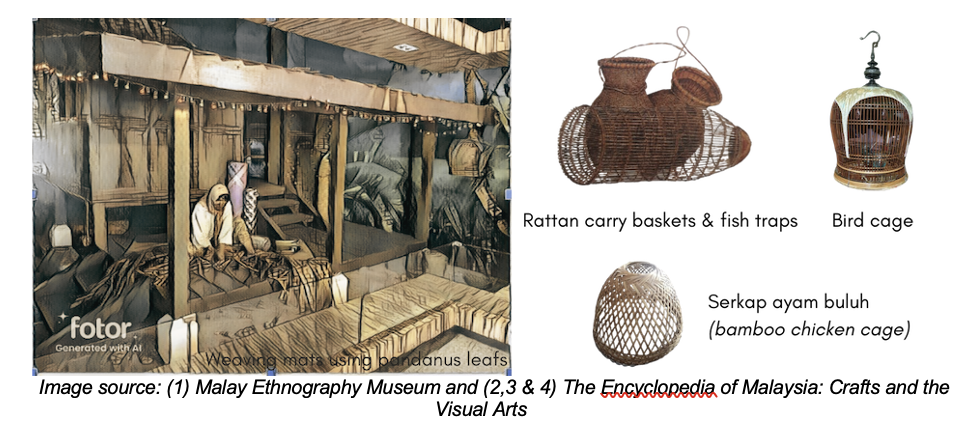
Aside from mats, the scene includes various other crafts made using natural fibres. Hanging at the edge of the veranda roof is a birdcage, crafted from bamboo or similar reed-like materials. The design of these cages varies according to the species of birds they are intended for, such as zebra doves (burung merbok) or white-rumped shamas (murai batu). While some choose to display these cages empty as a statement against keeping birds in confinement, the craft itself remains a noteworthy example of intricate handiwork.

Nearby, positioned next to the entrance door, is a barrel-shaped fish trap (bubu), also made of bamboo and secured with rattan rings. This trap, wider at one end and tapering into a cone at the other, is fitted with a separate funnel at the mouth, allowing fish to enter in one direction. These traps are particularly efficient, as they require minimal attention once set up along the riverbanks, enabling multiple traps to be placed simultaneously.

Along the left side of the kampung scene, an upside-down basket known as a bamboo chicken cage (serkap ayam buluh) is displayed. This round basket, traditionally used for trapping chickens, is crafted from bamboo, rattan, or bemban.

Rounding the corner, you are greeted by a display panel featuring five distinct trays (dulang) and baskets (bakul). The craft on display here is part of a lineage that reaches back to the very origins of weaving in nature itself.

Just as Mother Nature is the first basketmaker – consider how a bird intricately constructs its nest using only its beak—so too have human hands continued this legacy, crafting objects of both utility and beauty. The winnowing tray, a vital household tool, exemplifies this perfect blend of form and function. These shallow, pear-shaped, or round baskets were traditionally used to separate the paddy chaff from the grain.
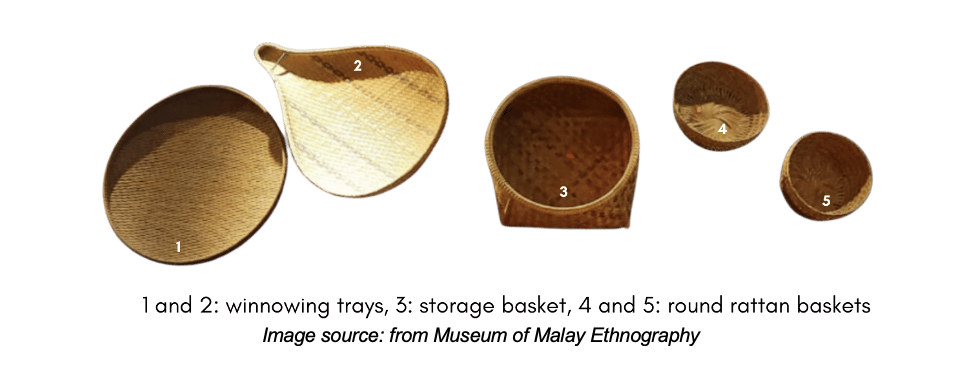
Artisans would weave them from a combination of plant fibres, with bamboo, rattan, or bemban forming the surface and rim, all securely bound with sturdy rattan twine or other resilient fibres. Yet, like the natural fibres themselves, the craft faces an uncertain future as deforestation threatens the very plants essential to its practice. The decline of these materials risks not only the loss of an art form but also the cultural knowledge embedded in their creation.

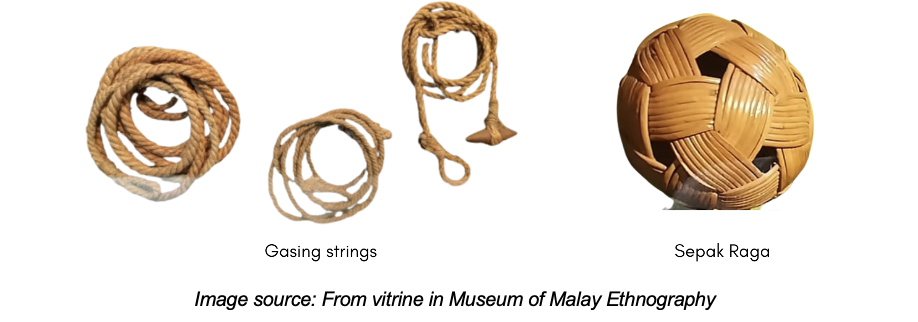
Close to the exit, a section dedicated to traditional games draws your attention, featuring a display of spinning tops (gasing). Historically, the strings for these tops were crafted from the bark of the bebaru tree, along with yarn and terap rope, showcasing the resourcefulness of utilising forest materials. However, in recent times, these natural fibres have been largely replaced by nylon, highlighting the broader shifts affecting traditional practices. To the right of the vitrine display is the sepak raga, a game where “sepak” in Malay means “kick” and “raga” refers to the rattan ball used. In this game, players form a circle and keep the ball in the air by skilfully kicking it with their feet, knees, and heads.
Orang Asli Craft Museum

To gain a broader perspective on fibre crafts, a visit to the Orang Asli Craft Museum is invaluable. While their focus extends beyond mats and basketry to include a variety of intricate fibre-based handicrafts, the museum offers insights into the diverse applications and cultural significance of these arts across different communities.

One standout example is the Bunga Moyang, a remarkable display of Mah Meri craftsmanship. These delicate ornaments, woven from palm leaves, hold significant spiritual value and are used in important rituals such as the Hari Moyang (Ancestor Day) festival and wedding ceremonies.
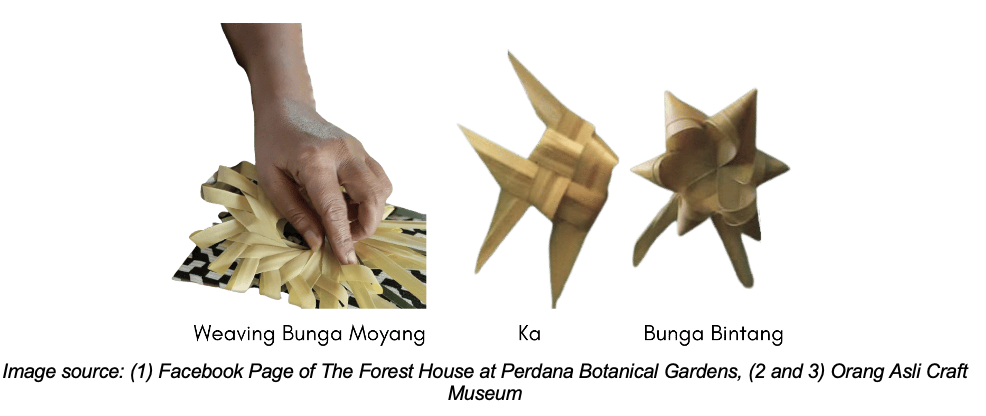
The palm leaf folding technique is evidence of the expertise of Mah Meri women. With over 30 distinct folds inspired by nature, these creations hold profound spiritual meaning, providing insight into the cultural traditions of this indigenous group.

Orang Asli traditional clothing, made from the bark of the Terap or Ipoh tree, reflects their deep resourcefulness and close bond with nature. Today, these garments are mainly worn for ceremonial events.

The Orang Asli’s accessories reflect their deep connection with nature and their creative ingenuity. Crafted from natural fibres like bamboo and tapioca stalks, these accessories are not only decorative but also serve as talismans believed to protect the wearer from natural disasters and malevolent spirits. The intricate designs of chains, bracelets, and other adornments highlight the community’s artistic expression and cultural heritage.

Weave Type

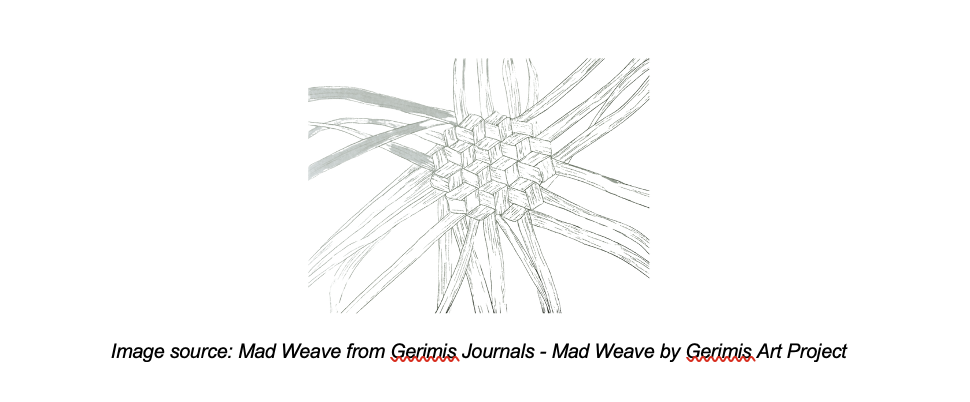
Weaving patterns play a crucial role in the functionality and aesthetics of forest-fibre crafts. A notable weave from Southeast Asia is the “mad weave” (anyam gila), or triaxial (hex) weaving, which involves weaving strips of material in three directions to create complex patterns. While I won’t explore the technical details here, let me share a fascinating tale behind this pattern:

Legend speaks of Sang Kelembai, a goblin who, troubled by humanity’s growth, tried to flee to the sky. After burning his belongings and disappearing, his woven baskets were examined by human folk who struggled to replicate the designs. Eventually, a fairy appeared, teaching them the intricate process, and thus the “mad weave” was born. The name reflects the pattern’s complexity, which demands great skill and perseverance. This story highlights how art and legend are intertwined, adding depth to the craft.
Patterns and Motifs

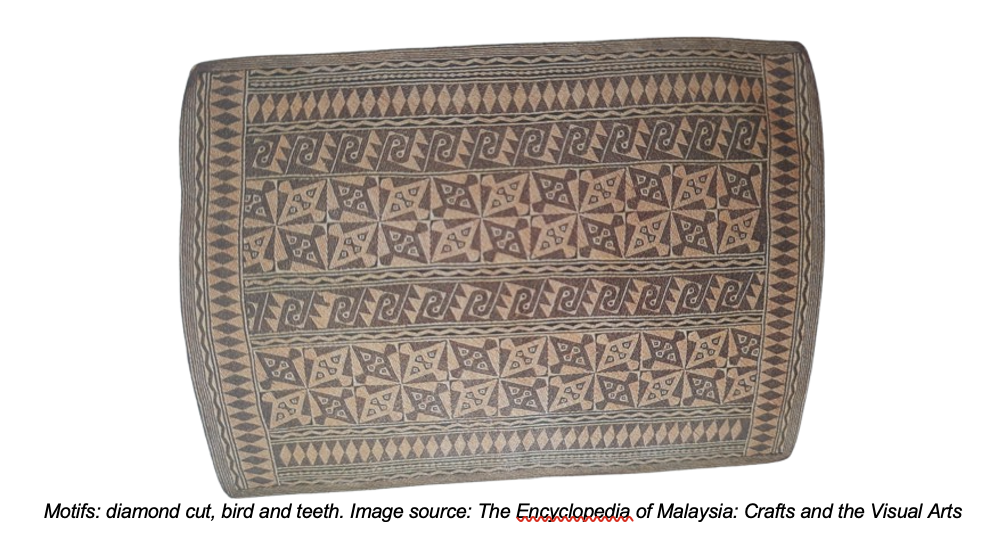
In the world of mat weaving, patterns are built from a series of motifs, each with its own story and significance. Commonly used motifs among the East Coast Malays are inspired by familiar flora and fauna, such as bamboo shoot, frangipani, clove blossom, and durian flower.

For the Iban, their monochrome sleeping mats tell tales of legendary heroes (e.g., Kumang), with designs like ‘leopard claw stealing fruit’ and ‘bird’s nest fern.’ The Penan, known for their tightly woven rattan mats, often incorporate motifs that reflect their close relationship with nature, such as fish and palm shoots.
Tools of trade

Creating these patterns requires more than just imagination; it demands the skilled use of traditional tools. The tools of the trade are as vital to the craft as the materials and motifs themselves. From simple knives and awls to more specialised instruments like bamboo splitters. 
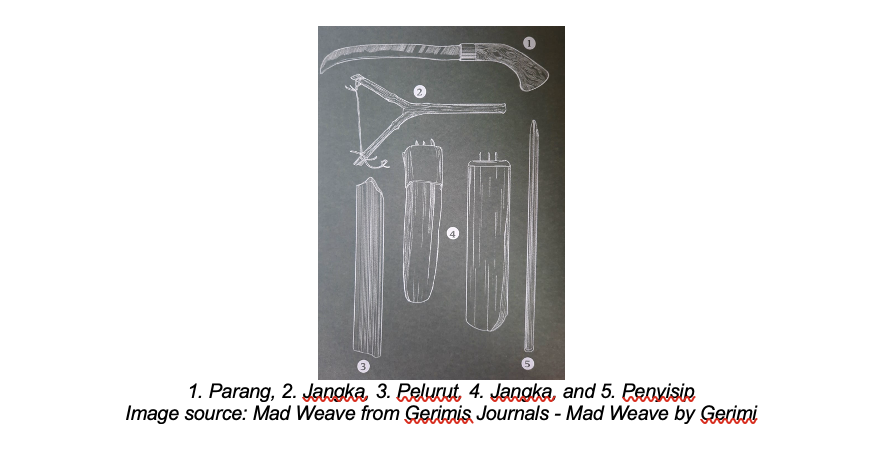
As we move from examining these patterns and motifs to understanding the tools that bring them to life, it’s essential to remember that these crafts begin with the earth itself. Natural fibres, whether they come from the forests, fields, or rivers, are the lifeblood of this art. They are shaped by skilled hands into objects of beauty and function, carrying with them stories of the land and its people. But as these materials face threats from environmental change, the future of these crafts hangs in the balance.

Finding Art in the Everyday Weaves

In our daily lives, we are often surrounded by these weavings without even realising it. Consider the checker weave on a ketupat, woven from tender coconut leaves to the thoranam decorations at Hindu temples, and even the traditional Chinese bakul sia – woven baskets used for various purposes – these everyday weavings are more than mere decorations; they are a part of our cultural fabric. So, which other hidden patterns and stories might you uncover in your daily life? Keep an eye out, and you may find that art and tradition are woven into more aspects of our world than you ever imagined.

To learn more about craft work from Orang Asli communities in Malaysia:

Reference:

  1. A Malaysian Tapestry – Rich Heritage at the National Museum
  1. The Encyclopedia of Malaysia: Crafts and the Visual Arts by Hood Salleh
  1. The Crafts of Malaysia by Sulaiman Othman and Others
  1. Sarawak Style by Luca Invernizzi Tettoni and Edric Ong
  1. The Kampung Legacy: A Journal of North Borneo’s Traditional Baskets by Jennifer P. Linggi
  1. Basketry: A World Guide to Traditional Techniques by Bryan Sentance. 
  1. Gerimis Journals – Mad Weave by Gerimis Art Project
  1. A Documentation of Mah Meri Indigenous Ceremonial Attire and Ancestral Day Event Stages. https://www.scirp.org/journal/paperinformation?paperid=131710
  1. Rahim, Reita and Tompoq Topoh. Chita’ Hae – Culture, Crafts and Customs of the Hma’ Meri in Kampung Sungai Bumbon, Pulau Carey. https://www.coac.org.my/dashboard/modules/cms/cms~file/0e582556e1031b29bc5a39d0ba82f11a.pdf
  1. Barnes, Ruth. “South-East Asian Basketry” Journal of Museum Ethnography, no. 4 (1993): 83–102. http://www.jstor.org/stable/40793522
  1. Sellato, Bernard. “Basketry Motifs, Names, and Cultural Referents in Borneo.” https://hal.science/hal-02904063v3/document
  1. Mrs. Bland. “A few notes on the “Anyam Gila” Basket Making at Tanjong Kling, Malacca” Journal of the Straits Branch of the Royal Asiatic Society No. 46 (December, 1906), pp. 1-8. https://www.jstor.org/stable/41561637
  1. Mason, Otis T. 1909a. “Vocabulary of Malaysian Basketwork: A Study in the W.L. Abbott Collections.” https://archive.org/details/biostor-79164/page/n9/mode/2up
  1. Mason, Otis T. 1909b. “Anyam Gila (Mad Weave): A Malaysian Type of Basket
Work.” https://archive.org/details/biostor-176496

Ningyo; Japanese beauty of art and culture

Written by Shizuko HOSOKAWA / Miyoko ARIYAMA

A special exhibition of Japanese dolls is now being held in the Central Hall of the National Museum from May 7 to July 8.

The exhibition is supported by the Embassy of Japan in Malaysia and the Japan Foundation, and 67 dolls are on display.

This special exhibition of Japanese beauty of art and culture has been held in many countries around the world.

The exhibition is divided into four sections.

The first section is ‘ningyo to pray for children’s growth’, doll culture in Japan developed out of rites to protect children against misfortune and to pray for their happiness.

The unique Japanese culture of praying to these dolls has been passed down to the younger generations even today.

Traditional Hina dolls were mainly decorated with seven tiers. 

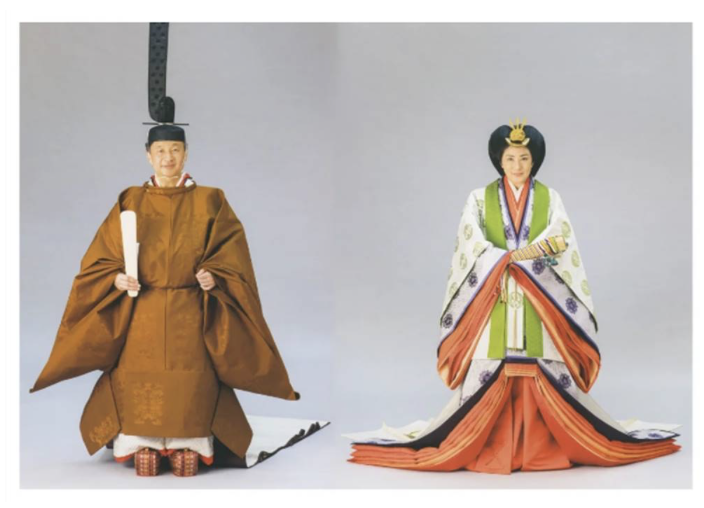
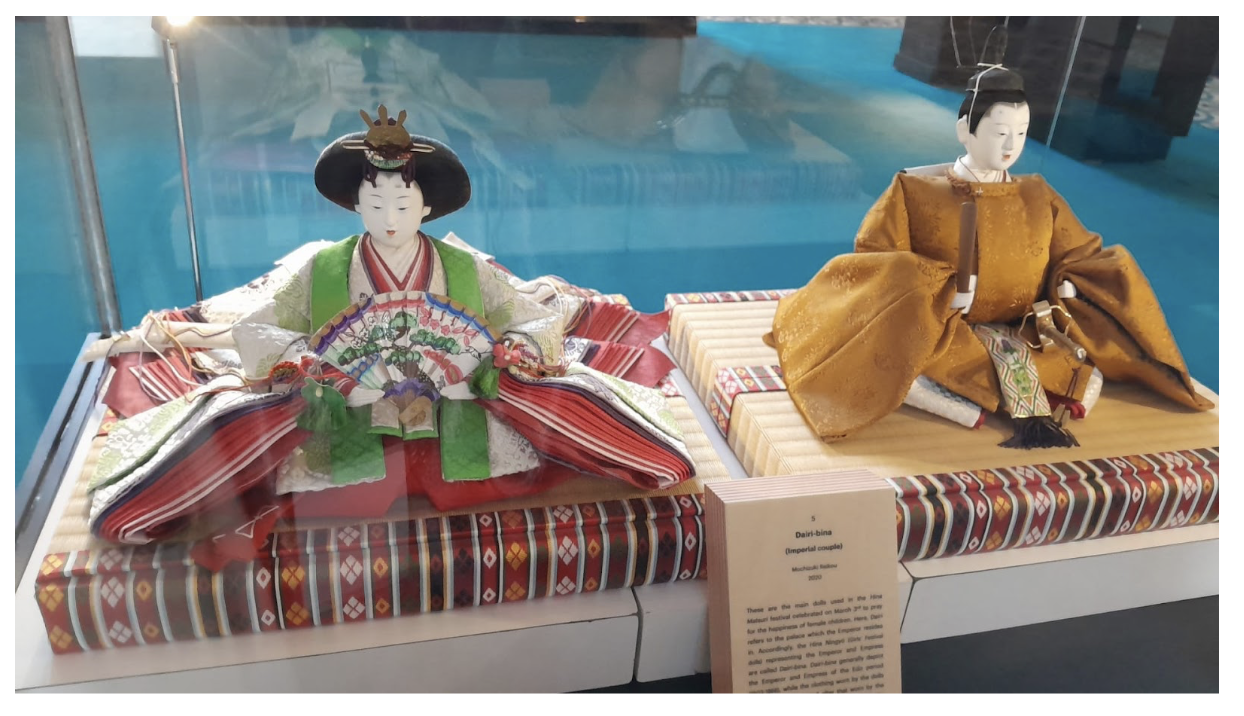
You will see Hina Ningyo of the Hina Matsuri festival at the center of the hall.  They are called ‘Dairi-bina (Imperial couple)’ they are the main dolls used in the Hina Matsuri festival celebrated on March 3rd to pray for the happiness of girls.

The clothing worn by the doll shown here is designed after that worn by the current Emperor and Emperess during a special imperial rites called the Enthronement Ceremony; Sokui no rei in 2019.


Many of you may have remembered the visit of the current Emperor when he was a prince to the National Museum in 2017.

https://www.nst.com.my/news/nation/2017/04/230953/prince-naruhito-fascinated-exhibits-national-museum-kl

The second section is ‘ningyo as fine art’, the evolution of the doll making techniques. Around from the 17th century, sculpting techniques, delicate colours, and finely produced clothing evolved so much.

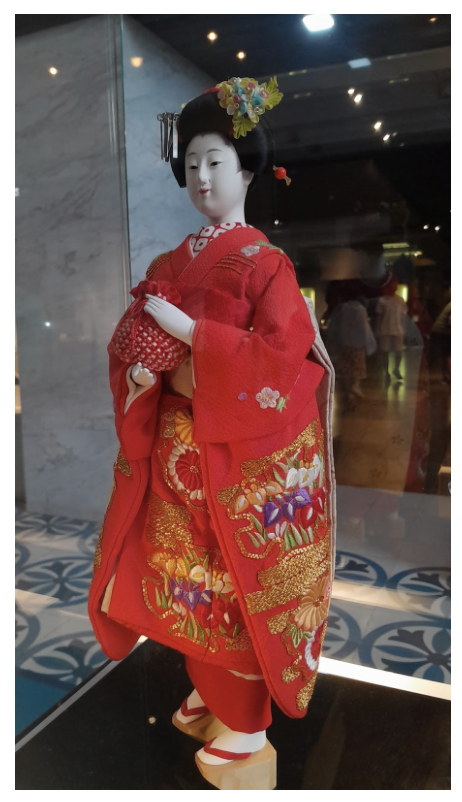
One of the great production is ‘Isho Ningyo; Maiko.’ Maiko is a young girl who performs professionally at traditional banquets in Kyoto.

The same weave, clothing and needlework is used with the same materials and methods to make the doll’s clothing as is used for actual clothes worn by Maiko.    

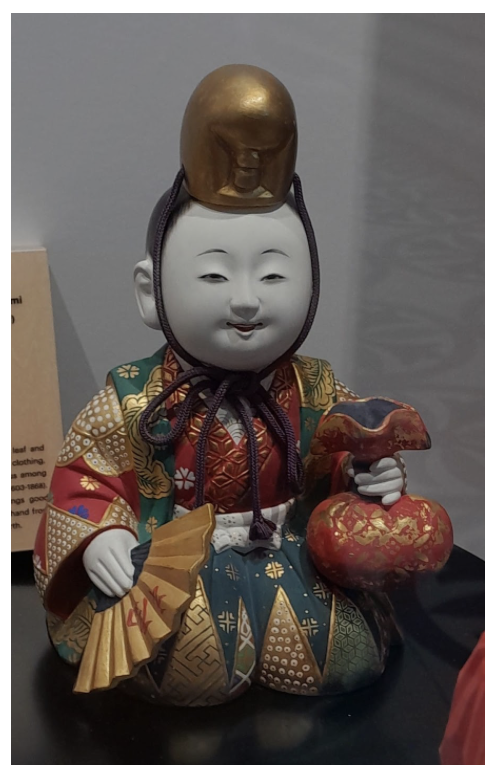
The other doll called ‘Saga Ningyo; Enmei fuku no Kami’, the God of happiness and longevity. 

Fuku no Kami is a God who brings good fortune. In his left hand he holds a bag that is filled with all sorts of treasures.

Saga Ningyo are one of the most luxurious Japanese dolls from the Edo period(1603-1868). Its distinctive feature is the finely applied gold leaf and paint on the costumes.

The third section is ‘ningyo as folk art’, featuring traditional dolls from all over Japan.

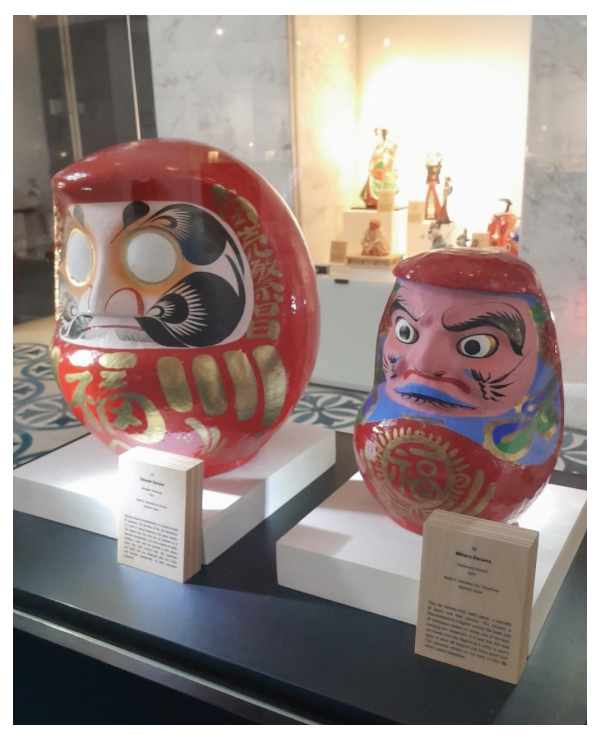
One of the most eye-catching dolls is the bright red, ball-like round doll Daruma.

The Daruma is a traditional Japanese doll that has been worshipped in Japan for centuries as a symbol of luck, success, and perseverance.

If the Daruma is said to bring good luck, how do we make use of it?

In fact, both eyes of the Daruma are empty when purchased.

After purchase, one eye is painted black when a wish is made. When this wish comes true or a goal is achieved, the other eye can be painted as well. 

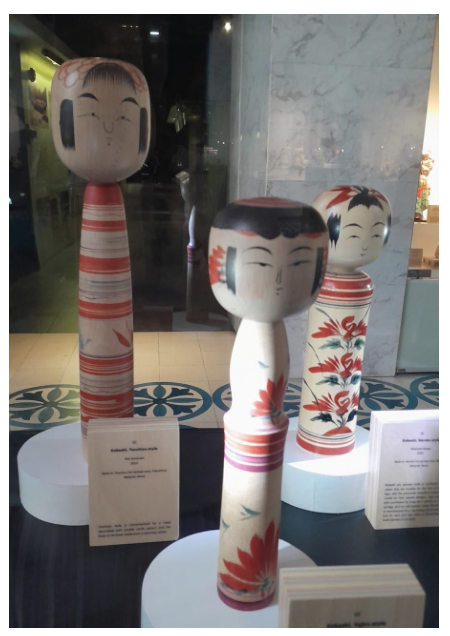
Similar to Darumas, the Kokeshi is a doll with no arms or legs, sold as a souvenir at hot spring resorts in the Tohoku region.

In some regions, it is believed that kokeshi dolls were created as a good-luck talisman to wish for the birth and healthy growth of a child. 

Finally, the last section introduces the spread of Ningyo culture.

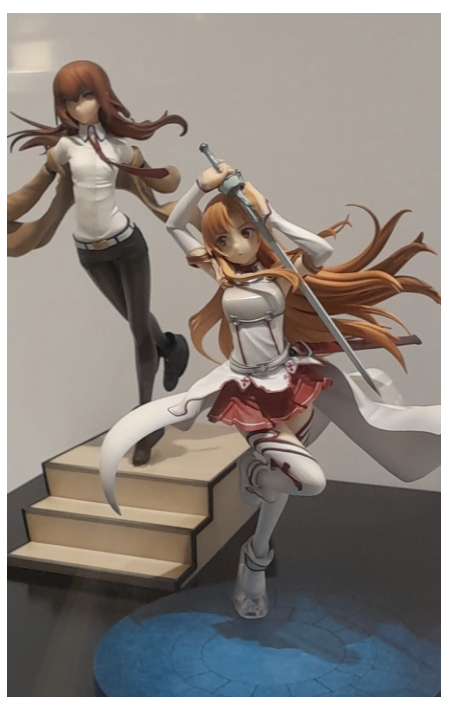
The reappraisal of dolls as art in modern times drove the emergence of many talented doll creators as works of art. As such, Japan’s doll culture further gave rise to the creation of collector figures which are popular throughout the world today.

Collector figures represent popular characters from games and animation. It is actually very difficult to recreate the 2D characters into 3D in a way that satisfies the expectations of the fans.

Come to the museum if you would like to know more about Japan’s Doll! There are many beautiful dolls for you to see and learn about. 

It will surely be an enjoyable time for you.

>More videos from Japan Foundation (Japanese/English)

>The staff and curator of the National Museum gave an overvies to volunteer guids.

Malayan Crafts and Craftsmen Mural – Earth

By Manjeet Dhillon

Tanah galian hasil bumi,

Di tangan cekap menjadi periuk,

Warisan lama takkan mati,

Seni budaya turun temurun. 

The National Museum of Kuala Lumpur’s west wall isn’t just a surface; it’s a window into Malaysian craftsmanship. Artist Cheong Lai Tong’s iconic mural, “Malayan Crafts and Craftsmen,” goes beyond individual figures. It’s a thematic map, inviting us to explore the core elements that bind these crafts together: earthfibresmetals, textiles, and wood.

Through this exploration, we’ll unlock a conversation between nature and human ingenuity. 

This bi-weekly series will feature seven articles, each focusing on a specific element. We’ll appreciate the mural’s artistry while discovering corresponding collections housed within the museum’s walls.

A Legacy from Earth

The story of Malaysian pottery is a fascinating journey that begins with the earth itself. As early as the Neolithic period, when nomadic hunter-gatherers transitioned to a more agricultural lifestyle, the need for storage and transport vessels arose. 

A key element in this tale is clay. Its remarkable malleability allowed these early artisans to shape the earth with their hands, creating vessels that could hold their form after drying and transform into permanent fixtures through the application of fire. 

The museum’s collection reveals the multifaceted nature of Malaysian pottery. It’s a story not just of form and function but also of cultural heritage, technological advancements, and artistic expression. It facilitated early barter trade systems, as these functional objects became valuable commodities exchanged across the region.

LocationPottery typeDescription
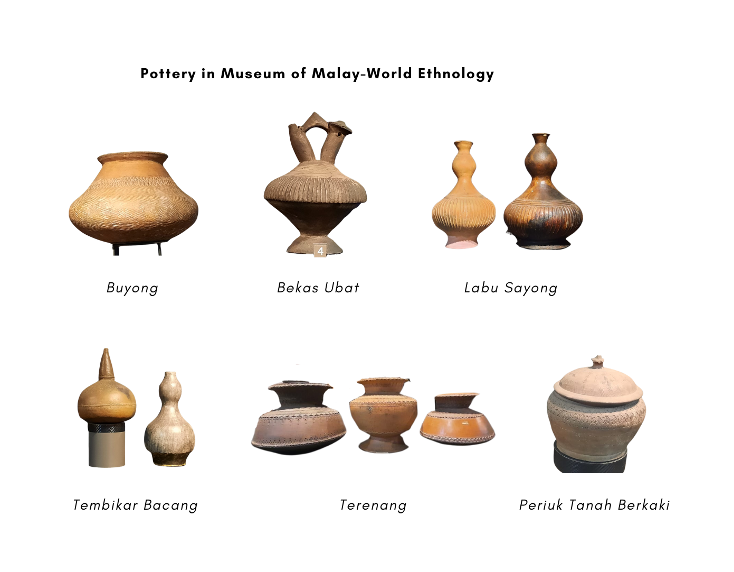
Museum of Malay EthnographyBacongLarge, wide-mouthed jars traditionally used for storing water and rice.
Labu SayongGourd-shaped water bottles made from terracotta feature ribbed bodies and are often adorned with incised geometric patterns. Traditionally, they were hand-moulded without the use of a potter’s wheel.
BuyongLarge, wide-bodied water containers with a narrow neck, often decorated with floral motifs.
Bekas Ubat (Medicine Container)Small, lidded containers used for storing traditional Malay medicines. This double-spouted kendi is a water container used in Southeast Asian rituals. The name “kendi” comes from the Malay term derived from the Sanskrit word “kundika,” meaning “water vessel.” Unlike most kendi,  which lack handles, this specific example features a small handle connecting the two spouts. Their use was prominent in important ceremonies like weddings and funerals. Water from a kendi would be sprinkled during these rituals.
TerenangCrafted from earthenware, these cooking pots feature a rounded bottom and a wide rim. Decorated with stamped and incised geometric motifs around the body and rim.  Terenang’s name derives from the word “tunang,” signifying its original role as a container for engagement rings in Pahang.  Notably, Terenang is one of the few types of Tembeling pottery, and the “tali air” refers to the border separating each section of this potteryware.
Periuk Tanah Berkaki (Legged / Footed Claypot)Clay cooking pot raised on three or four legs, designed for even heat distribution.

Photo credit: Manjeet Dhillon

LocationPottery typeDescription
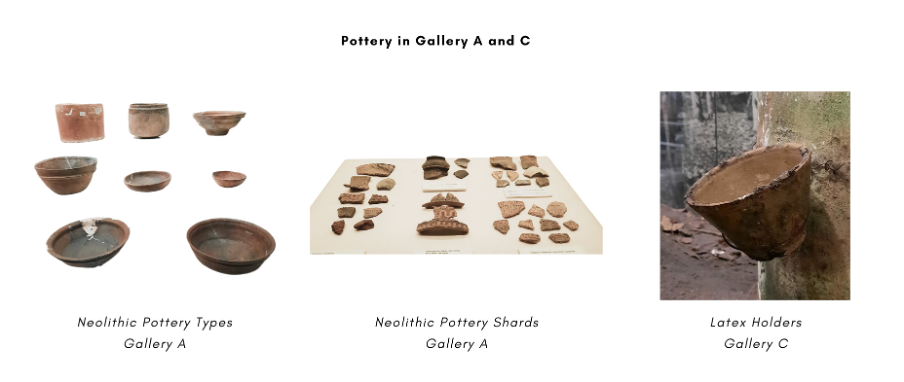
Gallery ANeolithic PotteryThe earliest forms of Malaysian pottery date back thousands of years. Includes utilitarian vessels, shards with plain, tri-colour, or patterned decorations, unearthed from archaeological sites like Gunung Cha in Kelantan.
Gallery CCeramic Latex HolderContainer crafted from glazed ceramic, specifically designed to hold latex collected from rubber trees.

Photo credit: Manjeet Dhillon

Gallery A: Burial Vitrine

While these clay jars in Gallery A’s burial vitrine might seem like local creations, they were transported to Borneo through maritime trade routes, highlighting the interconnectedness of different cultures in the region. 

These impressive clay jars, known as Martaban jars, were prized by the Iban people for both practical and symbolic reasons. They served not only as storage containers but also as markers of wealth and status. Interestingly, these jars, also called “tajau” by the Dayak people of Kalimantan, weren’t produced locally.

Some Martaban jars even feature moulded dragons on their sides, earning them the name “dragon jars.”

[Historical Connection]: Martaban is the name of a port on the east side of the Irrawaddy Delta in present-day Myanmar. This port became well known for its trade in huge storage jars. The association was so strong that “Martaban” eventually became synonymous with the name of the jars themselves.

[Cultural Insight]: Traditionally, potters evaluated the quality of Martaban jars by their sound. When struck with the hand or a wooden stick, a high-quality jar would produce a clear, ringing tone. This indicated the jar’s strength, density, and ability to properly store valuable goods. Hence, Martaban jars are often referred to as “talking jars.”

[Cultural Insight]: Among the indigenous communities in Sarawak, Martaban jars also serve as funerary equipment.  Within a family home, an upside-down jar might stand out conspicuously. This signifies that an older woman has reserved it for her own burial, indicating her wish that it not be used for its more common purpose of fermenting wine. For further reading, you can explore  Trade Objects by Lucas Chin.

With the museum’s collection as our guide, let’s explore some of the broader threads that define Malaysian pottery: 

1- Sarawak Pottery: Here, we find two distinct pottery traditions. 

  • Chinese potters near Kuching and Sibu craft stoneware jars (tempayan) in hues of brown, green, and blue with embossed and incised patterns. The pottery industry in Kuching nowadays can be found clustered together on Penrissen Road, Kuching. You can watch a video of Sarawak pottery.
  • In contrast, the Iban, Murut, and Kelabit communities produce a distinct type of pottery: simple and fired at a low temperature. This pottery is often used in their weaving ceremonies. Interestingly, the style of this pottery bears a striking resemblance to Neolithic pottery found in Sarawak, hinting at a long-standing tradition that may stretch back thousands of years.

Image source: Borneo Post Online

A potter’s toolkit, crafted from natural materials, is laid out here. From left to right:

i) Penempa: a carving tool carved from belian, a strong and durable ironwood.

ii) Batu segala or batu bulat: smooth stones used for shaping the clay.

iii) Simpai and bemban: these tools are made from rattan. The simpai is used for shaping or coiling the clay, while the bemban functions as a stand for the pots.

2- Malay Pottery: Characterised by four distinct forms: 

  • labu (gourd-shaped water bottle) 
    • buyong (large water container)
  • geluk (a smaller, rounded pitcher) 
  • belanga (wide-rimmed cooking pot)

Source: Keindahan Tembikar Tradisional Terenang Warisan Negeri Pahang by Mohd Zamani Mohd Nor Pea and https://artisenivisual.blogspot.com/2011/10/kraf-tradisional-tajuk-tembikar-sejarah.html

3- Chinese Dragon Kiln Pottery: Over a century ago, Teochew immigrants brought a symbol of Chinese ingenuity – the long, roofed kilns. Fueled by the rubber boom’s demand for latex cups, families from Swatow (Guangdong, China) established clusters like those north of Ipoh near clay deposits. Today, these kilns have shifted their focus, primarily producing stoneware flower pots and water jars for a global audience. You can watch a video of these kilns in action here

Image source: The Ceramic School via https://ceramic.school/singapores-last-dragon-kiln/

4- Indian Pottery: In Kampung Kedah (Parit Buntar) and Batu Dua (Kuala Selangor), potteries specialise in low-fired terracotta ware. These items are primarily used for religious and ceremonial purposes, such as oil burners and incense holders.  One example of such pottery is the pannai pot, a traditional cooking vessel favoured for preparing Pongal, a dish of rice boiled in milk and raw sugar cane.

Image source: Pannai pottery from http://www.malaysiakini.com

Pots, typically shaped like belanga or periuk, are decorated with simple stamped designs that reflect their utilitarian purpose. You can watch a video to see the pot-making process in Kuala Selangor. 

photo credit : Manjeet Dhillon

Figures on the museum’s mural:

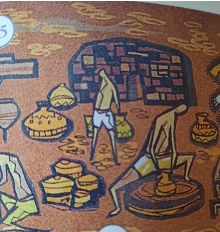
A central figure in the museum’s mural is a potter, busily working amidst a display of finished and in-progress earthenware forms. In the background, a kiln suggests the process of firing these ceramic creations.

From the Neolithic era to the present day, earth has served as a crucial element in shaping Malaysian crafts. As we move through the museum’s collection, we’ll discover how other elements – fibres, wood, textiles, and metals – contribute to this remarkable story of human ingenuity and artistic expression. In our next series, we’ll learn more about crafts made from Malaysian fibres, where bamboo, rattan, and pandanus leaves take centre stage.

Translation of pantun:

Earth dug from the land’s bounty,

In skilled hands, becomes a clay pot,

A legacy that will never die,

Passed down through generations

Additional Reading

  1. Papers on Indigenous Southeast Asian Pottery Production from https://www.iseas.edu.sg/centres/nalanda-sriwijaya-centre/research-tools/sea-ark/pottery-papers/
  1. The Talking Jars from https://canadiansocietyforasianarts.org/wp-content/uploads/2019/10/Catalogue-The-Talking-Jars-Oct-Nov-1971-optimized.pdf

Reference:

  1. A Malaysian Tapestry – Rich Heritage at the National Museum
  1. The Encyclopedia of Malaysia: Crafts and Visual Arts by Hood Salleh
  1. The Crafts of Malaysia by Sulaiman Othman and Others
  1. Sarawak Style by Luca Invernizzi Tettoni and Edric Ong
  1. Heritage Hands from https://h-paper.hplhotels.com/heritage-hands/
  1. Ipoh’s dragon kiln master from https://goingplaces.malaysiaairlines.com/ipohs-dragon-kiln-master/
  1. Into The Dragon’s Hearth – The Story Of Clay from https://wadd.asia/page/316/into-the-dragon-s-hearth—the-story-of-clay
  1. Legacy of ‘clay man’ from China — Lee Yew Meng from https://www.malaymail.com/news/what-you-think/2016/06/15/legacy-of-clay-man-from-china-lee-yew-meng/1141307
  1. Sarawak Crafts: The Dying Art of Iban Pottery – https://borneoadventure.com/blog/2022/03/sarawak-crafts-the-dying-art-of-iban-pottery/
  1. Iban Pottery: Nanga Sumpah, Sarawak from https://museum.um.edu.my/iban-pottery-nanga-sumpah-sarawak
  1. Keeper of a dying art from https://www.theborneopost.com/2013/07/07/keeper-of-a-dying-art/
  1. Ritual Water Vessel from https://www.roots.gov.sg/Collection-Landing/listing/1110825
  1. A Study Toward the Influences Affecting Design and Motifs of Terenang Pottery from https://www.researchgate.net/publication/340300713_A_Study_Toward_the_Influences_Affecting_Design_and_Motifs_of_Terenang_Pottery/fulltext/5e8354dda6fdcca789e55a3e/A-Study-Toward-the-Influences-Affecting-Design-and-Motifs-of-Terenang-Pottery.pdf
  1. Trade Objects: Their Impact on the Cultures of the Indigenous Peoples of Sarawak, Borneo by Lucas Chin,  Expedition Magazine 30, no. 1 (March, 1988): from https://www.penn.museum/sites/expedition/trade-objects/
  1. Hidden Gems: Prehistoric Burials from https://museumvolunteersjmm.com/2018/07/16/hidden-gems-prehistoric-burials/

The Talking Jars from https://canadiansocietyforasianarts.org/wp-content/uploads/2019/10/Catalogue-The-Talking-Jars-Oct-Nov-1971-optimized.pdf