M & M – From Menara Condong to Sky Mirror

By Eric Lim

This year, we commemorate our 67th Independence Day  with the theme ‘Malaysia Madani : Jiwa Merdeka”. And we took full advantage of the extended public holiday to visit the state of Perak, which incidentally is embarking to boost and revitalize its tourism sector by promoting the “Visit Perak Year 2024” campaign.

We took off early in the morning and exited Bukit Lanjan to join E1, the North South Expressway – Northern Route. Together with E2 which heads the Southern Route, it forms a section of the Asian Highway 2 (AH2) that connects Denpasar in Indonesia, through Singapore, Malaysia, Thailand, Myanmar, India, Bangladesh, Nepal, Pakistan and finally ends at Khosravi in Iran. We made a stop at Bidor for breakfast. The town’s claim to fame can be pinpointed to the discovery of the standing statue of the eight-armed Bodhisattva Avalokiteshvara which is permanently on display at the National Museum. The statue was found in a tin mine belonging to the Anglo Oriental company in 1936 and one of the arms was already broken when it was found. The bronze statue stands at 93 cm and weighs 63 kilograms. It is believed to date back to the 8th – 9th CE during the period of the Gangga Negara, a Hindu kingdom which was centered at Beruas. This artifact has been categorized as an Important Object among the 173 heritage items (and counting) declared as National Heritage in our country.

Statue of Bodhisattva Avalokiteshvara 

                    Photo : Avalokiteshvara | Official National Museum Website.

From Bidor, we travelled about 43 km west to the town of Teluk Intan, the administrative centre for the Hilir Perak district and the largest town in the south of Perak. Navigating through the town, we can use the Teluk Intan Fun Map as our guide to explore the key historical sites and landmarks. Each landmark is numbered based on the Fun Map, making it easy to follow along as we discover each location. The area was first explored at around the beginning of the 19th CE by a Mandailing trader by the name of Mak Intan who subsequently named the settlement Pekan Mak Intan. After the signing of the Pangkor Treaty in 1874, the town was made the administrative center and base for the British. Later, when Hugh Low was the British Resident of Perak, he requested for the creation of a new administrative town. General Sir Archibald Edward Harbord Anson took the task and drew up plans for its expansion. He was then made the First District Officer. When he retired in 1882, the town was named after him, Teluk Anson (Anson Bay). Next came the railway service. Despite an initial dispute on the route, it was finally settled after the construction of a bridge across Bidor River (No.10) that reduced travelling time from Teluk Anson to Tapah Road. With a total length of 550 ft (168 metres), the railway bridge was the longest ever constructed at that time. The line was opened in May 1893, linking the town to the network to the north and south of the peninsula. A year later, on 17 September 1894, a night mail train was derailed after a bull elephant charged at it while defending its herd (No.12). Meanwhile, Teluk Anson continued to develop into a busy port, so much so that it was the second most important port after Port Klang (Port Swettenham) from 1934 to 1940. It was also used as a processed oil storage terminal for Shell after the port overhauls in 1947. At the centenary celebration of the town’s establishment in 1982, Sultan Idris Shah renamed it back to Teluk Intan (Diamond Bay).

The railway bridge across Bidor River in 1893 / Photo : BERPETUALANG KE ACEH: The old railway bridge at Teluk Intan

The derailment on 17 September 1894 / Photo : 127 Years Ago, An Elephant Literally Fought A British Steam Engine Train In Perak | TRP

Today, one can visit the numerous historical sites located around the town – some are well preserved, some in need of restoration and others are missing or lost. 

Talking of the latter, the railway service ended its run in 1991 due to the shortage of passengers and the train station is repurposed into a driving academy. The old railway gate can still be seen in the town (No.11). The railway bridge across Bidor River has been converted for pedestrian and motorcycle use and Shell has relocated its processed oil storage operations to Lumut. The skull of the elephant that rammed into the train in 1894 is currently on display at the Perak Museum in Taiping. 

Of the many tangible heritage sites in the town, the Leaning Tower of Teluk Intan (No.1) must surely be the most iconic. Originally built as a water tower in 1885 by a local contractor by the name of Leong Choon Cheong, it started to tilt four years after its completion due to an underground stream. In July 1941, a decision was made to demolish the tower ahead of the impending war but two months later, the decision was reversed and it survived through the war. Now it serves as a clock tower. The first clock installed in 1894 was bought from the world famous clockmaker, James Wilson Benson of Ludgate Hill, London. The adjacent street (Jalan Ah Cheong) is named after the contractor in honour of his contribution to the town. The tower was declared a National Heritage Building by the Malaysian Heritage Department in September 2015.

Leaning Tower of Teluk Intan / Photo : Eric Lim

Also situated at the town centre, is the War Memorial (No.9) which is in the form of a boulder that sits on top of a base made of solid stone. It was unveiled to commemorate former residents of Hilir Perak district who fell in the Great War of 1914 – 1918 (World War 1).

The building of Teluk Intan’s old Courthouse (No.8) was completed in 1893 and besides providing judicial functions for the district, it was also used as a church for the Anglican Christians community on every Sunday for their weekly prayer service. It lasted until 1912 when a new church, Church of Saint Luke the Evangelist was inaugurated. It was a small wooden building until it was renovated in 2001. Other places of worship that stood the test of time are –

St. Anthony Of Padua (No.5) which was originally built in 1894 but it was destroyed in a fire in 1914. The current church was built in 1922 and was consecrated by Bishop Jean Marie Merel the following year. 

Hock Soon Keong Temple (No.4) was built in 1883 on a piece of land that was offered by General Sir Archibald Edward Harbord Anson when he was still in office. The generous offer was a sign of appreciation to  the community when he made a miraculous recovery from his serious illness. The temple was built according to architectural concepts from Southern China.

The Sri Thendayuthapani Temple (No.6) was built in the late 1890s with contribution from the local Chettiar community. They brought in the finest teak wood from Myanmar to be used for the foundation of the temple and also a silver chariot from India in 1932 for their annual festival.

Also located in the town is the Indian Muslim Mosque which is believed to be built in the late 19th CE or early 20th CE. It is the oldest mosque built in Teluk Intan.

These sites continue to play an important role in the local community. However, the following two sites are currently in need of restoration:

Old Police Station (No.7). Built in 1882, the building was initially used as a tax collection center and customs office. Later it was changed to a police station. During the war, the Japanese Military Police turned it into an interrogation centre..

The Old Palace of the Young Raja of Perak (Istana Lama Raja Muda Perak) was built in 1924 at a cost of $24,000. The first Raja Muda of Perak to reside here was the late Sultan Abdul Aziz who became the 31st Sultan of Perak while the last was the late Raja Muda Ahmad Siffuddin Ibni Almarhum Sultan Iskandar who died in 1987.The current Sultan of Perak, Sultan Nazrin Shah was due to stay here but he stayed at the palace in Ipoh instead. While the palace was in use, Teluk Intan was known as a Royal Town.

Besides the heritage sites, Pulau Bangau (No.2) or Stork Island, in Sungai Perak is a new attraction. Currently home to more than 30,000 birds of various species and amongst them, there are ten species of stork (shorebirds) like Bangau Besar (Great Egret), Bangau Batu (Pacific reef Egret), Bangau Bakau (Great billed Heron), Banbau Cina (Chinese Egret), Bangau Kecil (Little Egret), Bangau Kendi (Medium Egret), Bangau Kerbau (Cattle Egret), Bangau Paya (Purple Heron), Asian openbill heron and Striated Heron. There are also other interesting locations to explore like the shipyards, fish breeding farms, furnace of a sunken ship, just to name a few. 

For those who take the evening cruise, an added attraction is to watch fireflies light up the night with a display of flashing lights. The Pulau Bangau fireflies are of the Pteroptyx tener variety.

Teluk Intan Fun Map / Photo : Portal Rasmi Majlis Perbandaran Teluk Intan – Latar Belakang

After the river cruise, we drove to Bagan Datuk (previously Bagan Datoh). Bagan Datuk was upgraded into a full district in 2016, the 12th district in the state of Perak. It was once a major coconut producer around the end of the 19th CE until the middle of the 20th CE. We made a brief photo stop at Dataran Bagan Datuk. And located within walking distance from the square is the Tuminah Mosque Complex. This floating mosque concept on the banks of the Perak River is the latest and unique attraction in the district. It is the third floating mosque in Perak.

Photo stop at Bagan Datuk / Photo : Eric Lim 

Tuminah Mosque Complex / Photo : Portal Rasmi Majlis Perbandaran Teluk Intan – Latar Belakang

It was another 10 km drive from Bagan Datuk to our resort at Sungai Burung, located on the coast. As it was still early after our check-in, we decided to visit the Sunflower Garden. This garden was established in 2020 and since its inception, has garnered a lot of interest through social media. Some commented that they do not have to go abroad to look at the sunflowers as there is one in our very own backyard. The owners have also decorated the garden with many visually appealing props that made the place very instagrammable. Some interesting fun facts about sunflower –

*The binomial name for the common sunflower is helianthus annuus, and it is indigenous to Mexico, central and eastern North America. It was brought  to Europe by the Portuguese in the 16th century and by the 19th century, commercialization of the plant took place in Russia, Ukraine and South east Europe until today. The sunflower is the national flower of Ukraine.

*Sunflowers can remove toxic elements from soil like lead and uranium, and have been used in clean up operations at both Chernobyl and Fukushima.

*Sunflowers have developed an internal clock in their system where they track the sun movement akin to humans with the circadian rhythm. At dawn, sunflowers face east to greet the first rays and continue to move with the sun until sunset in the west. Overnight it swings back to the east. This movement is called heliotropism, but it only happens when sunflowers are still young. A matured sunflower (when it blooms) will remain steadfast facing the east. This is to promote pollination. 

Sunflower Garden at Sungai Burung / Photo : Perak Sky Mirror / Nine Island Agency Sdn Bhd | Bagan Datoh

Later, we were offered buggy rides to visit the small fishing village of Sungai Burung. Then it was time for dinner where we had a wide variety to choose for our D.I.Y seafood steamboat. As it was a public holiday, the restaurant was filled to the brim with tourists. Happily, we had filled our tummies and were all set for the next item on our itinerary i.e the Blue Tears tour (it is mentioned as Blue Sand tour in the pamphlet). We were taken out to sea and after a while, the boat was kept in an idle state, and suddenly, as if by magic, the guide scooped flashing sand out of the water using a net. Yes, it was stunning  to see that the sand was flashing blue lights however not for long, as soon as it touched the deck, the lights just faded out.

The Blue Tears / Photo : 7 Dreamy Locations To Catch Sight Of Blue Tears In Malaysia – Klook Travel Blog

The Blue Tears is a natural phenomenon caused by Dinoflagellates, a type of plankton (microscopic marine organism) and they are traditionally classified as algae. They have characteristics of both animals and plants, and live near the water surface where there is sufficient light to support photosynthesis. The blue light glow by dinoflagellates is a result of it being bioluminescence. Bioluminescence is light emitted by living things through chemical reactions in their bodies. Luciferin is the compound that actually produces light and dinoflagellates produce it on its own through photosynthesis. Dinoflagellates bioluminesce in a bluish-green colour. When the water becomes fertile, the algae will reproduce and will result in a  rapid and excessive growth of plankton population known as algal bloom. The algal bloom will cause the surface of the ocean to illuminate at night (Blue Tears). Fireflies are also bioluminescent organisms and they glow in the yellow spectrum.

Though we were quite disappointed not able to experience the maximum impact of the Blue Tears, the main highlight was still ahead, just under twelve hours away. The next morning, we were advised to wear vibrant, multi-coloured outfits. After a hearty breakfast and a cup or two of ‘kopi’, we relaxed in the sea breeze before heading out to the Straits of Malacca to experience and enjoy the Sky Mirror.

The Sky Mirror is simply a large, flat area with water that reflects the sky. The concept of Sky was inspired by Bolivia’s Salar de Uyuni, the world’s largest salt flat, which spans  4,000 square miles. At 3,656 metres above sea level, the flat holds 10 billion tons of salt, and beneath it lies 70% of the world’s lithium reserves, used in batteries for electric cars and mobile devices. Visitors flock to capture the striking mirror effects and perspective photos.

The introduction of Sky Mirror as a tourist destination in our country started less than ten years ago in Selangor. Since then, it has garnered a huge following thanks to the uploading of ‘crazy photos’ on social media. In our case, the mirror effect takes place in the Straits of Malacca, on a seabed that appears above sea level at low tide thus exposing vast sand flat for a few hours in the morning. Here are some ‘crazy photos’ that we took during our trip. If you do not want to miss these fun activities, you know where to go. Now, you do not have to travel halfway around the globe to do it, just do the ‘cuti cuti Malaysia’ way.

Photos by kind courtesy of Jane Ng, Everfit Yoga.

References

Avalokiteshvara | Official National Museum Website.

Taiping Museum to feature elephant skull from historic 1894 collision

Portal Rasmi Majlis Perbandaran Teluk Intan – Latar Belakang

In Perak, Pulau Bangau attracts domestic, foreign tourists | Malay Mail
Common sunflower | Kew

How sunflowers track the sun

Bioluminescence

Salar de Uyuni

Sky Mirror – Tourism Selangor

MV Focus 2024 Trip To Gua Niah National Park, Sarawak

Written by Serena Yee

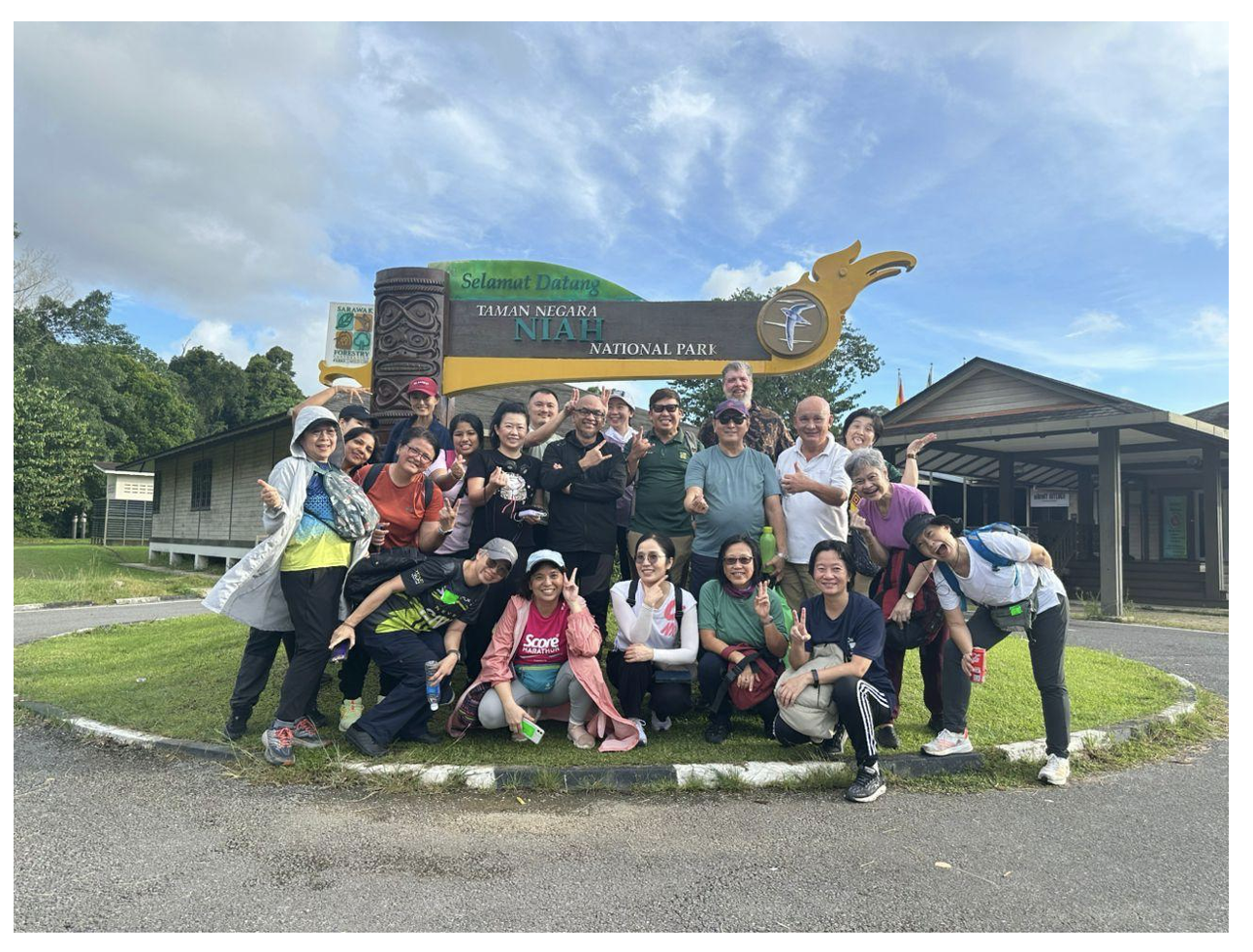
In October, 21 MVs made their way to Miri for the much-anticipated visit to Gua Niah National Park in Sarawak. 

Niah National Park was established in 1974 within the Bukit Subis Protected Forest that was established under the Forest Ordinance in 1951. It is protected by the National Parks and Nature Reserves Ordinance and the Wildlife Protection Ordinance of 1988. At the state level, the property is protected by the Sarawak Heritage Ordinance 2019. The Sarawak Forestry Corporation takes the lead in managing the park in collaboration with the Sarawak Museum Department, who is responsible for the conservation of the cultural heritage. The management system is supported and advised by the Special Park Committee for Niah National Park.

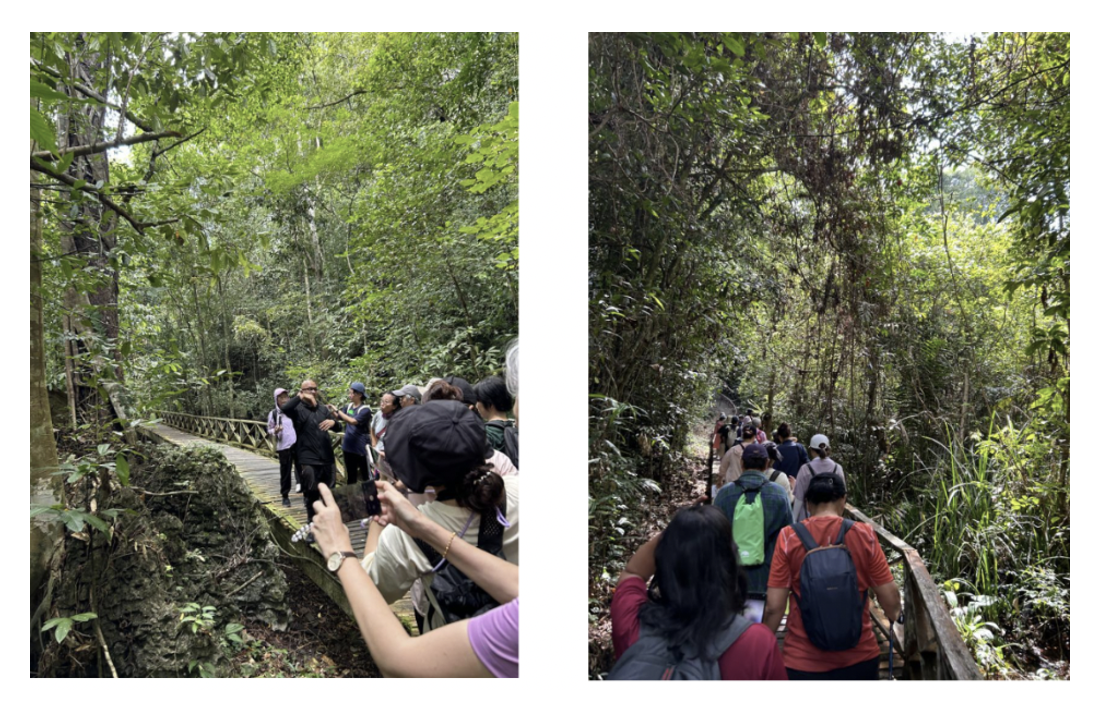
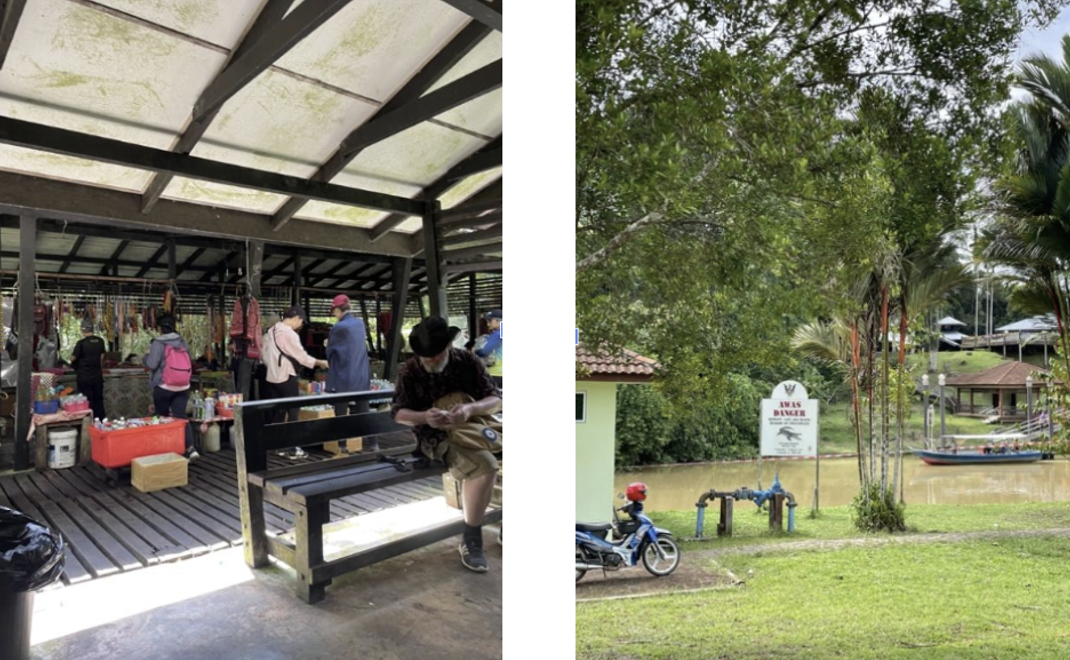
A chartered bus ride of an hour plus long brought us to the park headquarters from our hotel in Miri town. Together with Assistant Curator of the Sarawak Museum, Mohd Sherman Sauffi and 3 Sarawak forest rangers, we set out with a slightly anxious albeit enjoyable 3-minute boat ride across the croc-infested Niah River to the start of the trail. Careful to limit each trip to 10 persons so as not to capsize the boat! 

Pleasantly traipsing on hardwood raised boardwalks and cement paths in alternation, resting briefly at the Tangap Community Craft Stalls and Washrooms, we soon arrived at the Traders Cave. Like eager little beavers, we pushed on towards the Great Cave Complex, leaving this for later.

Moon Cave

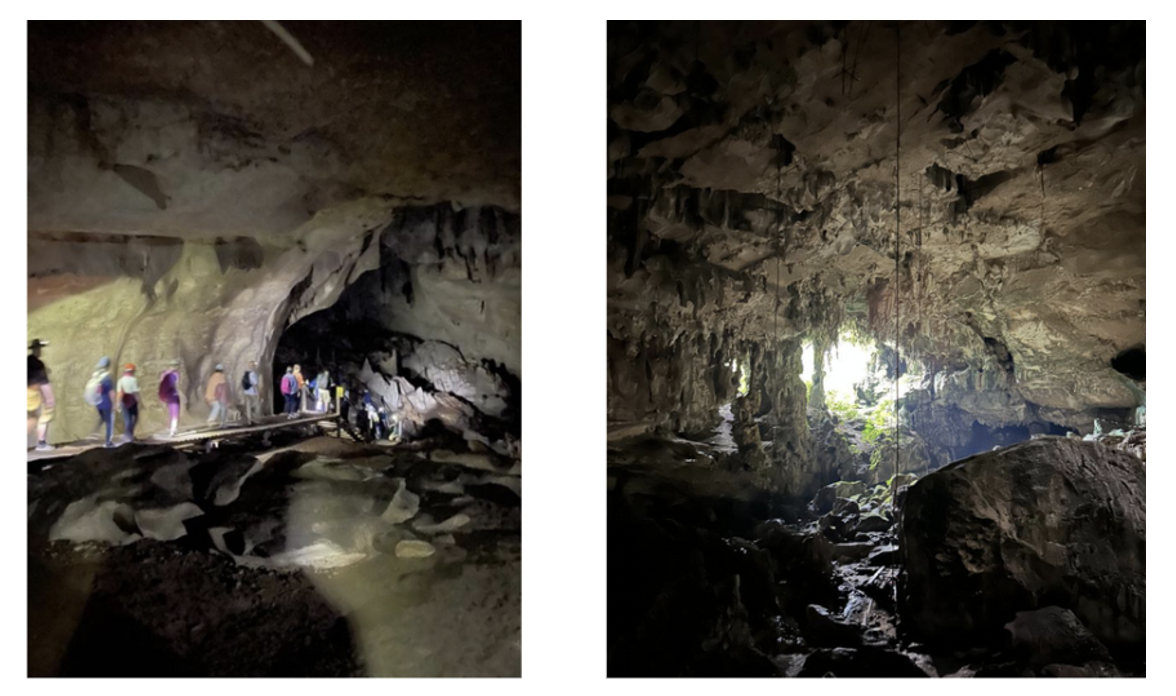
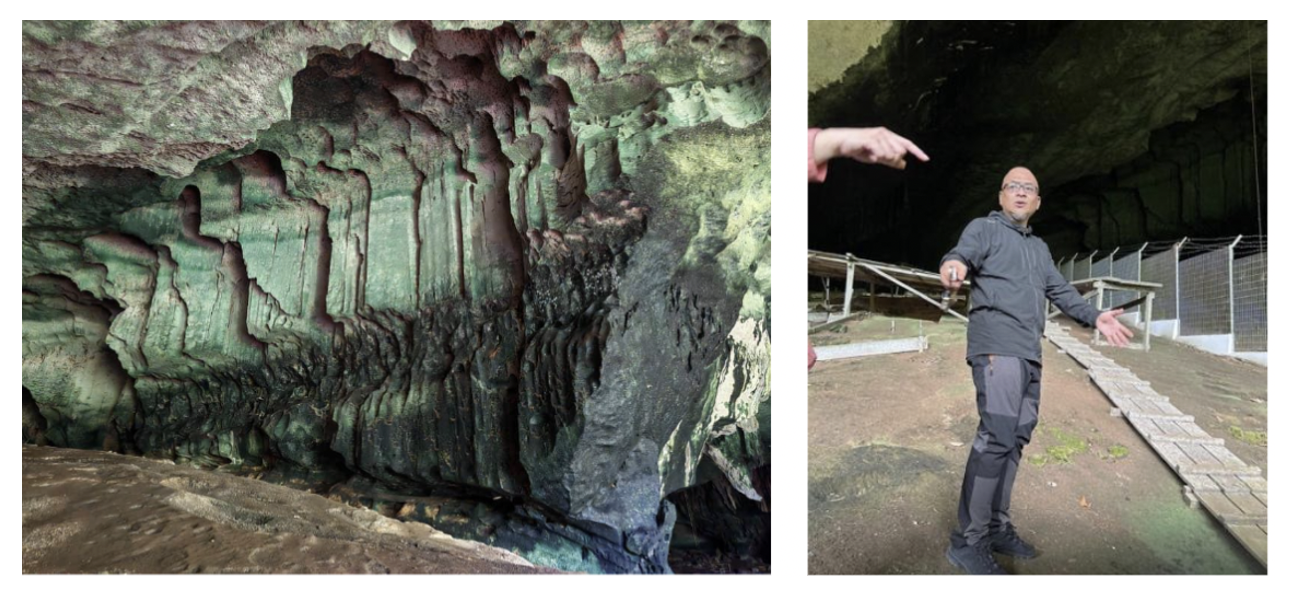
The Great Cave Complex was really very dark. Within it was the Moon Cave (Lobang Bulan) one of the darkest caves in Niah, which was surveyed in 2014-2015. Millions of years ago it was underwater, evidenced by the salt residue, seashells and an ancient riverbed. 

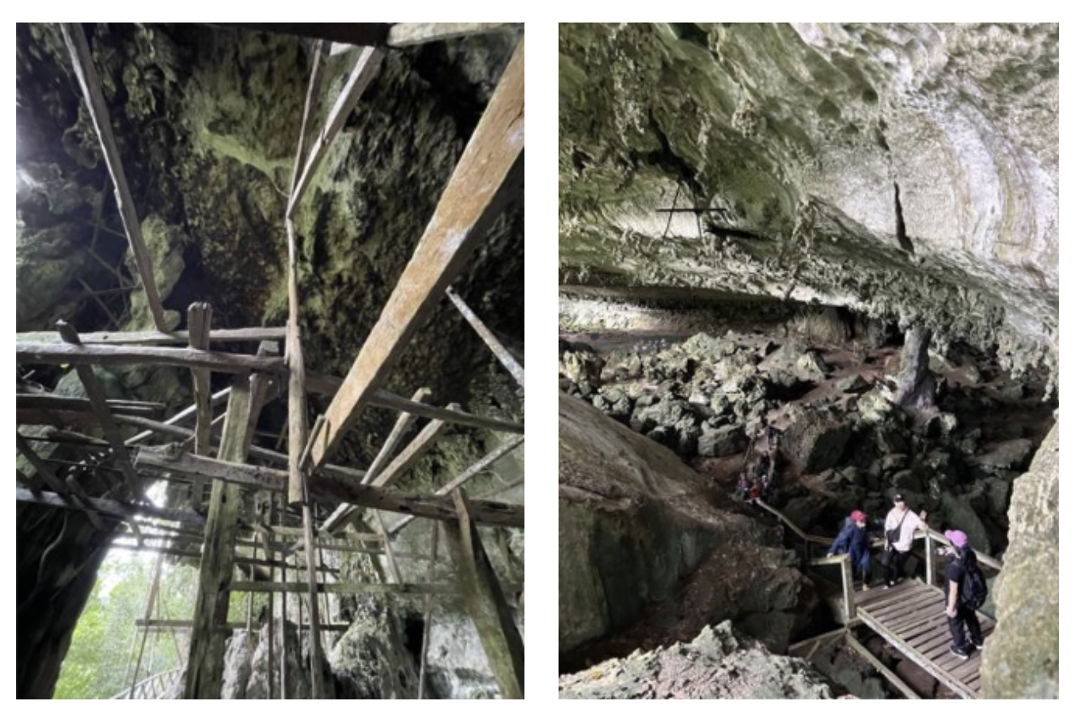
The prehistoric people knew how to select the right spots to settle and this was not one of them. They preferred rock shelters and cave openings. This was however the main cave for the collection of edible birds nests, made from the saliva of swiftlets high up in the roof and walls of the cave. The incessant chirping and squeaking of swiftlets and bats (apparently there are 7 or 8 kinds here!) accompanied us as we laboured up and down multiple flights of steps through the cave at an elevation of 3000+m. Here and there were metres-long ropes, wooden/bamboo poles and flimsy-looking ladders extending from eye level to the roof erected by the birds’ nest collectors. It was a sight to see! And to spare a moment for those who lost their lives pursuing this profession in the dead of night.

Before arriving at the Painted Cave, we passed by Gan Kira (no one knows the origin of this name) where the soil/clay is harvested to make the prehistoric pottery found in this area. Adjacent is where Barbara Harrisson discovered the mysterious headless skeletal remains of a prehistoric female, hence the name Murder Cave.

Painted Cave

A few more kilometres after that we arrived at the Painted Cave (Gua Kain Hitam), the furthest point today. The famous murals of the Niah Caves were discovered here, featuring images of the ships of death, which serves as a prominent drawing on the cave wall. The remains of the ships of death (boat-like coffins that were used to contain the bodies of the dead) have been transferred to the Sarawak Museum.

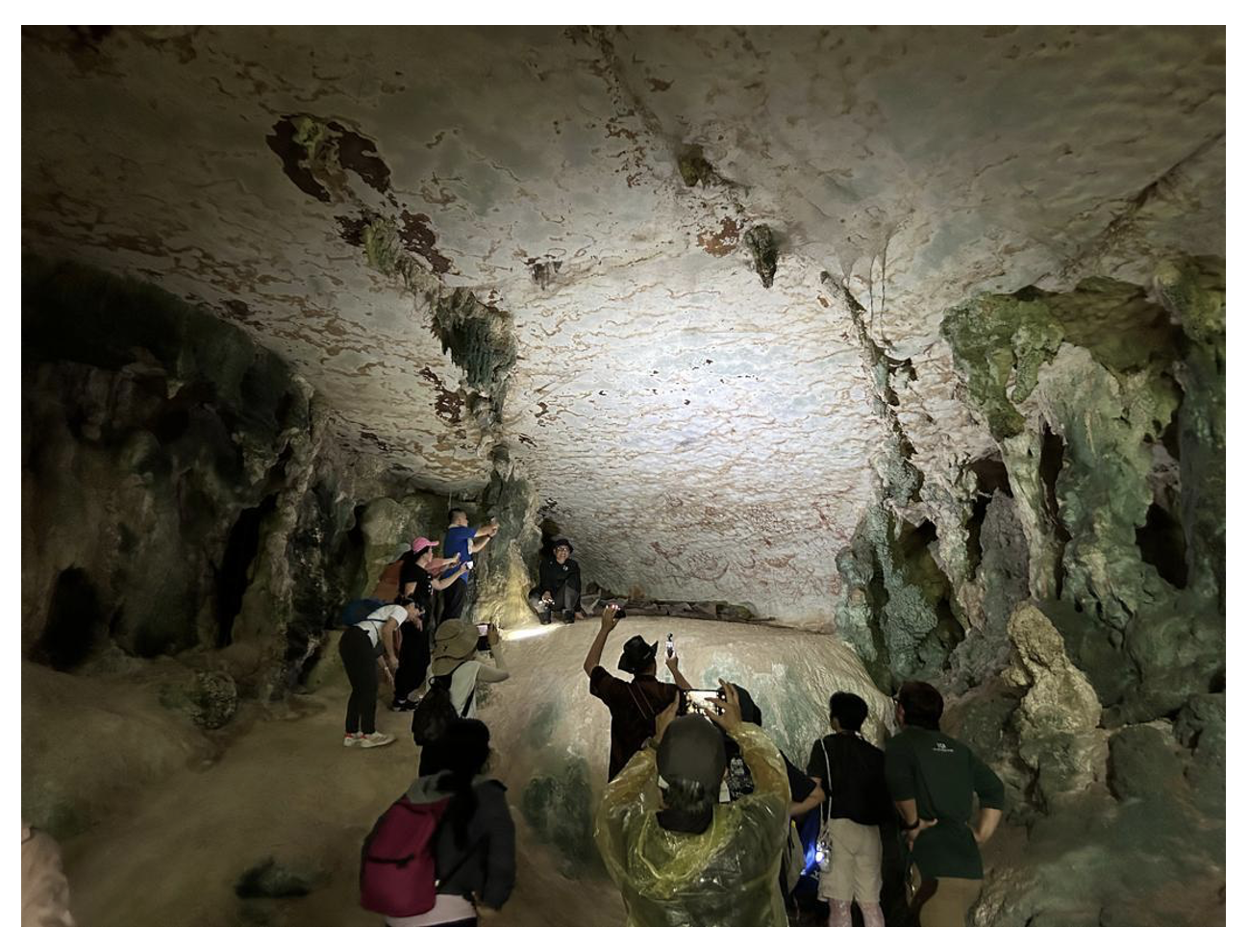
Sherman produced the magic key and we felt great privilege entering the fenced off area, eyes eagerly scanning the walls for the red ochre (hematite) drawings we had seen many times in Gallery A, at the National Museum. He then directed us to the back of the cave and when he shone his torch on the wall, there was a collective gasp as we saw many drawings there in greater clarity! The 45m long wall is divided into 4 sections, 3 and 4 being the furthest in. 1 and 2 being on the outer part of the cave more exposed to the elements, hence the drawings are comparatively less clear there.

122 drawings, dating from 1800 to 800 years old, were catalogued by Barbara Harrisson in 1959 but in 2016-2017, using a spectrum camera, archaeologists re-catalogued a total of 164. Encompassing anthropomorphic, zoomorphic and geometry, there were drawings of boats (Ships of Death), symbolising the journey to the afterlife, animals, a shaman, a symbol of the universe to name a few. We are currently restricted from sharing any photos of these drawings due to the ongoing research and analysis that has yet to be completed.

A number of wooden coffins were also found here used in the practice of secondary burials. There were three sizes : sub-adult, teenager, and adult. The body is first laid there upon death where the holes at the ends allow bodily fluids to flow out. After a few years the bones are collected and buried in another place. A joint team led by Associate Professor Stephen Chia in 2007-2008 discovered 6 Neolithic skeletal remains nearby, dating 2000 – 3000 years old, beyond the fence, in an area referred to as Cave B. They were buried within a depth of 1-1.5m. Why were they not buried in the Painted Cave? Because it was primarily a dwelling as the soil layer was only 5-7cm deep, after which one would hit bedrock, thus not suitable for burials. 

An unusual watermark is seen on the ceiling of the Painted Cave. Researchers hypothesise that it could be due to the mist, moisture, humidity, air circulation, temperature fluctuations, the wet and dry seasons coming from the opening of the cave.

The Great Cave

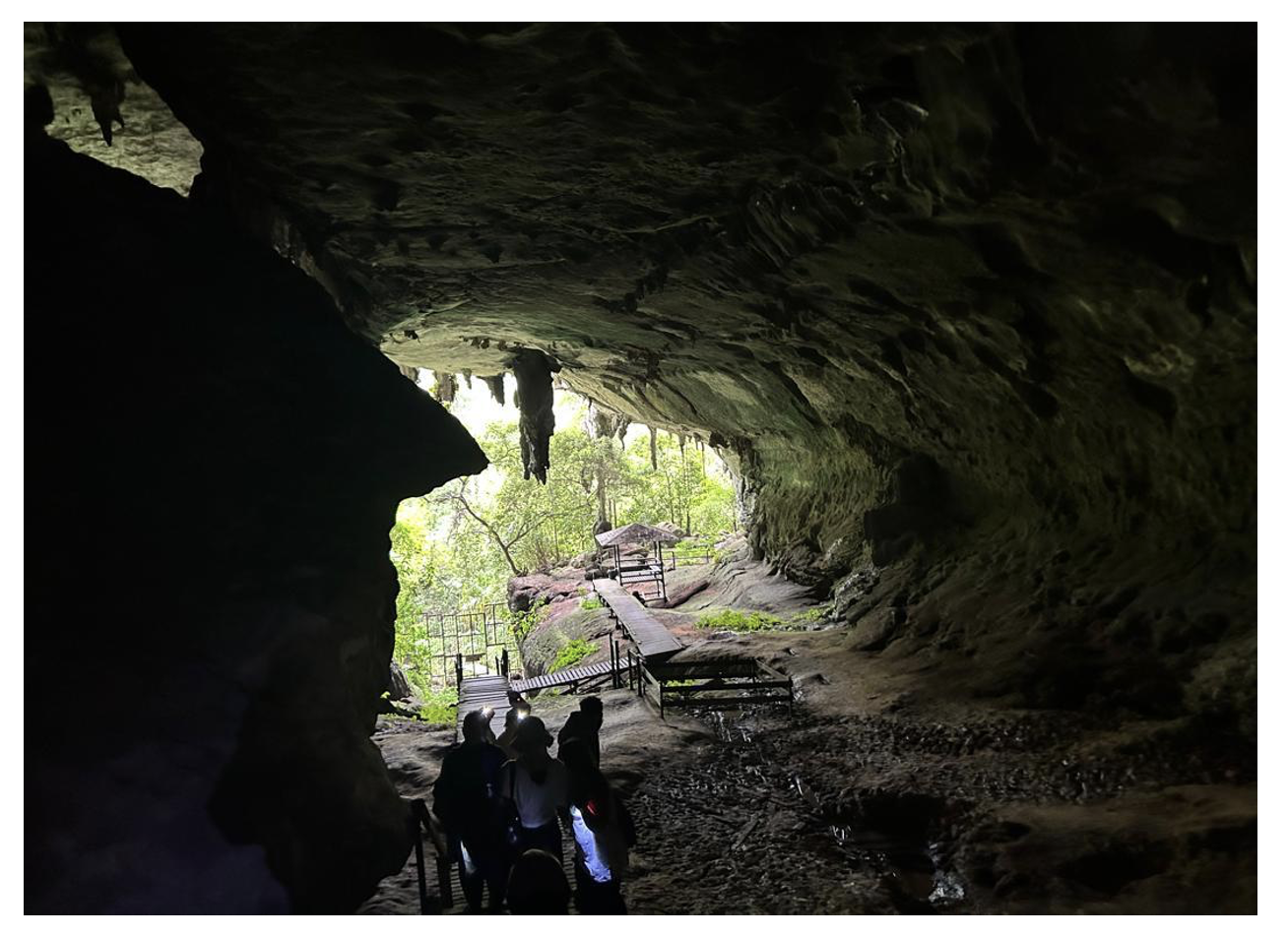
We then headed back to the dark Great Cave, through the ups and downs again, to enter another locked area at the West Mouth (Lobang Kuala) of the cave. Here, Sherman had to bring us 5 at a time due to the fragility of the walking planks, sharing with us in detail the discovery of the 40,000 year old Deep Skull in Hell Trench below a few metres of guano. Deep Skull is a fragment of a skull discovered in February 1958 in the first Niah excavation led by Tom and Barbara Harrisson after a tip-off from the locals. This area near the mouth is pre-Neolithic.
Further in is the excavation of a Neolithic ‘cemetery’ dating from 2800 to 1200 years ago, showing their awareness of the differentiation between the living and the dead. 200 individuals were found in 7 different burial methods/positions, namely, flexed, seated, cremated, mutilated, burnt, layered and supine. Some even had different hand positions. The many variations of mortuary treatments represent one of the Outstanding Universal Values (OUV) of The Archaeological Heritage of Niah National Park’s Caves Complex that accorded it its UNESCO World Heritage Status on 1st August 2024. 

Another unique find was a jade earring (lingling-o) which was excavated on 29 March 1977 by Dato Professor Zuraina from a burial. Recent analysis showed that its mineralogical characteristics resemble those of Fengtian nephrite from eastern Taiwan, about 2500 km to the north. Similar earrings were found in Batanes and Palawan in the Philippines where it could have been manufactured and then traded in Borneo. 

With evidence of long-term human habitation and near continuous occupation from 40,000 – 2,000 years ago, Niah is among the most important sites in Southeast Asia. Meanwhile, MVs waiting their turn were in stitches regaled by Kulwant with stories from the Milo Chronicles!!

Traders Cave

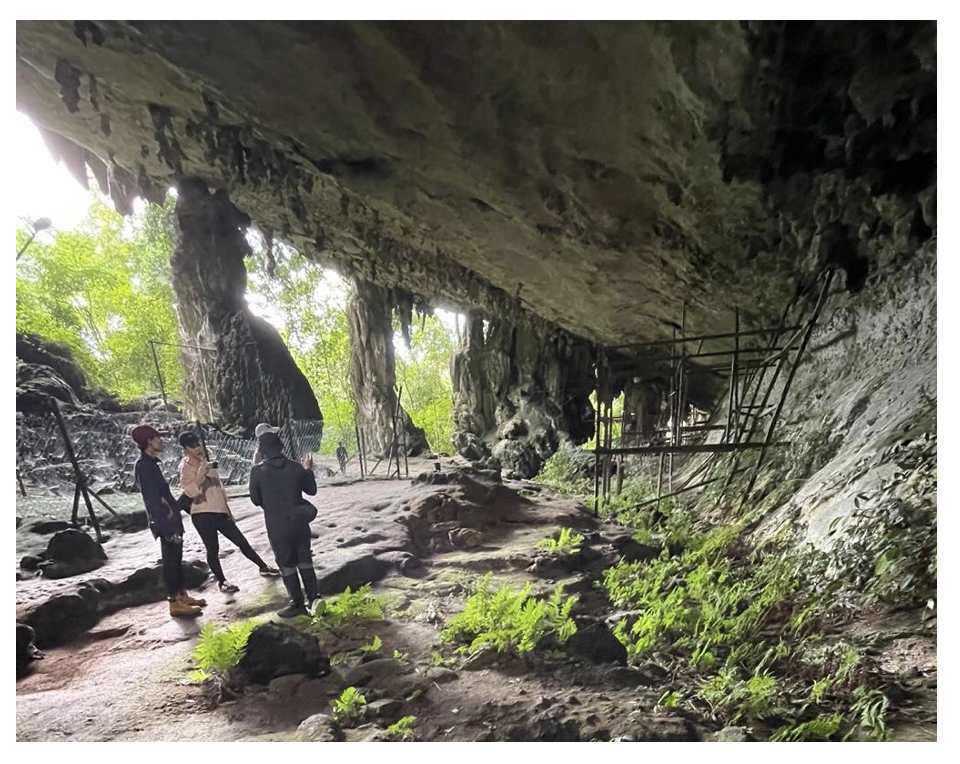
Finally we made it back to the Traders Cave, previously known as the Small Cave, but renamed for the traders of guano and birds nests who conducted their business here in the 1950s. Their lashed-lug (pasak) stalls were constructed with ironwood (belian). Excavations were carried out here in 2017 and 2019 with the University of New South Wales. 14 trenches were dug, 6 layers identified. Hitherto findings are roughly illustrated in the following table.

Traders Cave, Niah Caves Complex : Archaeological Findings and Age Estimates 

Layer DepthAge Range (Years Ago)FindingsSignificance
Top Layer (10 cm)40,000Surface layer, recent deposits
Lower Layer55,000 – 65,000– Human toothIndicates early human presence
– Human skull pieceImportant for understanding mortality and health
Layer 375,000 – 85,000– SeashellsEvidence of marine environment
– Fish bonesSignifies dietary practices
– Crocodile back plateAdds to knowledge of local fauna
Layer 4 (2.5m down)120,000– BedrockIndicates the base of the site
Oyster Layer75,000 – 85,000– Oyster remainsShows that the area was underwater
– Microlithic toolsSuggests human tool-making activity

These findings are under peer review and research is still ongoing. Hopefully in the near future, researchers will be able to piece together the story of the ancient settlements here.

Therein lies Niah’s main Outstanding Universal Value (OUV) – the continuity of the prehistoric occupation, the longest-known records of human interaction with rainforests within a colossal complex of caverns and caves of the Integrated Niah Cave Complex. With evidence dating as far as 65,000 years, extending to a more recent period of activity just 800 years ago. Who knows what will be discovered in the future. For certain, we were all privileged to have visited it.

References:

https://whc.unesco.org/en/list/1014/

Malayan Crafts and Craftsmen Mural – Fibres

Written by Manjeet Dhillon

Melentur buluh biarlah daripada rebungnya (bend a bamboo while it is still a shoot) 

This proverb, rooted in Malaysian culture, speaks to the importance of nurturing skills and traditions from a young age. In the world of Malaysian crafts, this wisdom holds true, as artisans have passed down their expertise in fibre weaving through generations. Just as a bamboo is shaped when it is still a tender shoot, so too are the hands of young artisans guided to transform natural fibres into works of art that embody both utility and heritage.

Plaited Art

Nestled in Malaysia’s lush rainforests, lies a heritage rich in natural resources. These landscapes provide the raw materials that have shaped centuries-old fibre crafting traditions. Skilled artisans harness these natural fibres, weaving them into objects that are both functional and imbued with cultural significance.

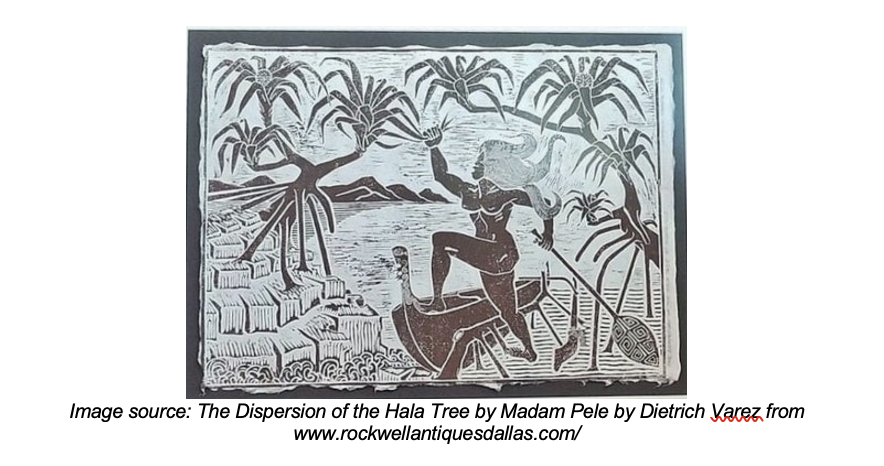
The legend of Madame Pele, the volcano goddess of Hawaii, adds a touch of mystique to the story of pandanus, a key material in local craft. When Madame Pele initially arrived, the branches of the pandanus tree entangled her canoe. In her rage, she tore the tree to shreds and scattered the pieces across the earth. Wherever they landed, they took root, providing people with a vital source for basket-making materials. Though this tale hails from afar, it highlights the widespread importance of pandanus and its role in crafting.

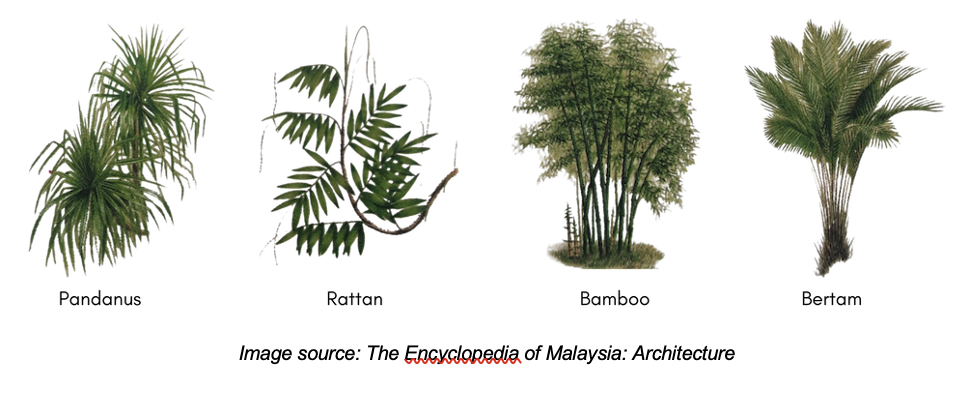
In Malaysia, particularly in states like Sabah and Terengganu, pandanus is prized for its use in plaiting mats and other delicate objects. The flexibility of its fibres, which bear a resemblance to palm fibre, makes it ideal for creating both practical and decorative items.

The table below summarises the variety of plant materials that are the lifeblood of Malaysian fibre crafts, alongside the objects crafted from them:

Types of FibresCraftsDescription
Pandanus (pandan & mengkuang)Baskets, MatsShorter, finer pandan leaves for delicate baskets and high-quality mats.  Broader, longer mengkuang leaves for sturdier mats and woven objects.
Rattan & BambooBaskets, Mats, Furniture, HatsStrong and versatile. Rattan (more durable) and bamboo (split into strips) used for intricate baskets, sturdy mats, furniture, and even hats. Careful harvesting and treatment is crucial for bamboo longevity. Bamboo’s versatility extends beyond hats. It finds uses in: Musical instruments (flutes, mouth organs like the Sabah sompoton)Animal traps (various designs, made from bamboo and rattan) Decorative containers with incised designs (quivers, tobacco pouches)
Plants (bundusan, bemban, ferns)Baskets, Mats, ContainersBundusan (aquatic plant) for sleeping mats and drying pads. Bemban (similar to bamboo) for mats, hats, and baskets. Fern fibres for small baskets, containers, and decorative accents when combined with rattan or bamboo.
Palms (sago, coconut, nipa, bertam, silad, polod)Baskets, Mats, Hats, ToolsSago palms, coconut trees offer materials for household items and decorations. Nipa and coconut leaves for baskets and serving containers. Bertam and silad leaves for hats and baskets. Polod palm for tools and implements.

The museum’s collection offers a starting point into the world of fibre crafts. By studying the materials and stories behind these objects, we gain a deeper appreciation of the relationship between art, environment, and cultural identity.

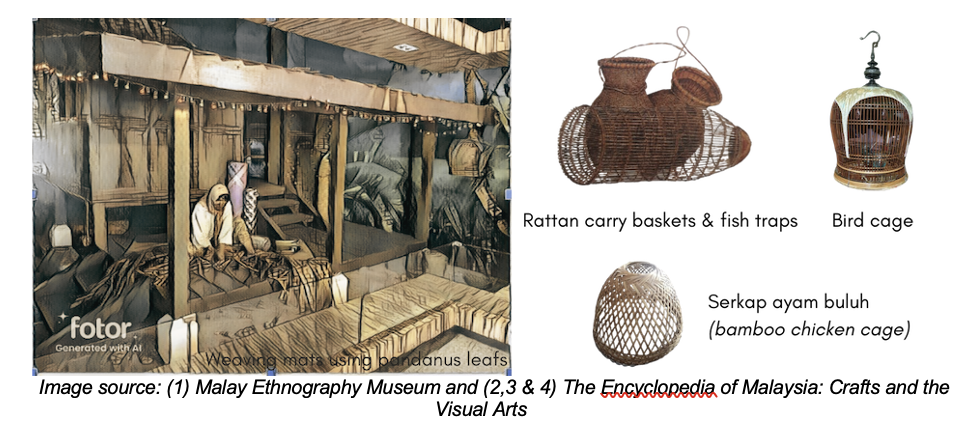
As we transition to the Museum of Malay Ethnography, we are transported to a scene reminiscent of traditional kampung life. Here, a woman’s focused expression reveals the artistry involved as she skilfully weaves strips of pandanus into a beautifully crafted mat (tikar).

Mats were among the earliest surface coverings, serving as a barrier between people and the earth during the Neolithic period. For the indigenous people of Sarawak, the forest provided essentials – reeds, creepers, and leaves for mats and baskets. A longhouse family’s room was traditionally furnished with mats for sitting and sleeping and baskets for storage, transport, and rituals. Common sleeping mats, woven from pandan leaves, are soft but not durable. Stronger mats are made from bemban canes, often with self-coloured motifs. The most resilient, crafted from split rattan and bark fibre, are used to cover and strengthen longhouse floors during festivals.

Aside from mats, the scene includes various other crafts made using natural fibres. Hanging at the edge of the veranda roof is a birdcage, crafted from bamboo or similar reed-like materials. The design of these cages varies according to the species of birds they are intended for, such as zebra doves (burung merbok) or white-rumped shamas (murai batu). While some choose to display these cages empty as a statement against keeping birds in confinement, the craft itself remains a noteworthy example of intricate handiwork.

Nearby, positioned next to the entrance door, is a barrel-shaped fish trap (bubu), also made of bamboo and secured with rattan rings. This trap, wider at one end and tapering into a cone at the other, is fitted with a separate funnel at the mouth, allowing fish to enter in one direction. These traps are particularly efficient, as they require minimal attention once set up along the riverbanks, enabling multiple traps to be placed simultaneously.

Along the left side of the kampung scene, an upside-down basket known as a bamboo chicken cage (serkap ayam buluh) is displayed. This round basket, traditionally used for trapping chickens, is crafted from bamboo, rattan, or bemban.

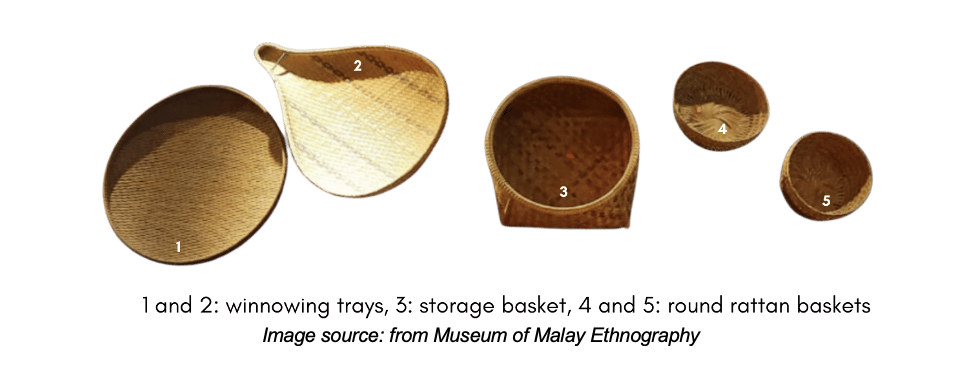
Rounding the corner, you are greeted by a display panel featuring five distinct trays (dulang) and baskets (bakul). The craft on display here is part of a lineage that reaches back to the very origins of weaving in nature itself.

Just as Mother Nature is the first basketmaker – consider how a bird intricately constructs its nest using only its beak—so too have human hands continued this legacy, crafting objects of both utility and beauty. The winnowing tray, a vital household tool, exemplifies this perfect blend of form and function. These shallow, pear-shaped, or round baskets were traditionally used to separate the paddy chaff from the grain.

Artisans would weave them from a combination of plant fibres, with bamboo, rattan, or bemban forming the surface and rim, all securely bound with sturdy rattan twine or other resilient fibres. Yet, like the natural fibres themselves, the craft faces an uncertain future as deforestation threatens the very plants essential to its practice. The decline of these materials risks not only the loss of an art form but also the cultural knowledge embedded in their creation.

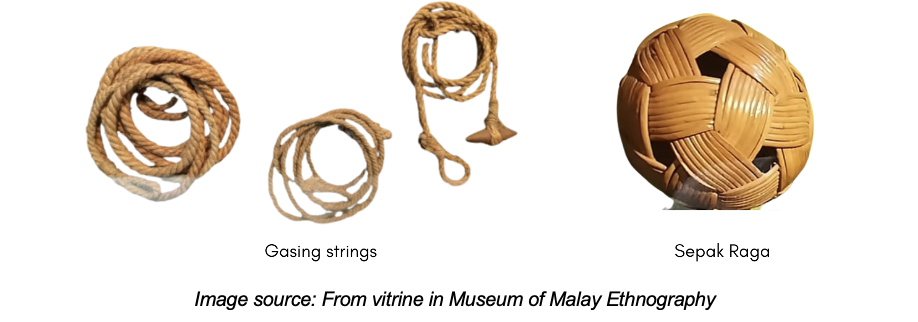
Close to the exit, a section dedicated to traditional games draws your attention, featuring a display of spinning tops (gasing). Historically, the strings for these tops were crafted from the bark of the bebaru tree, along with yarn and terap rope, showcasing the resourcefulness of utilising forest materials. However, in recent times, these natural fibres have been largely replaced by nylon, highlighting the broader shifts affecting traditional practices. To the right of the vitrine display is the sepak raga, a game where “sepak” in Malay means “kick” and “raga” refers to the rattan ball used. In this game, players form a circle and keep the ball in the air by skilfully kicking it with their feet, knees, and heads.

Orang Asli Craft Museum

To gain a broader perspective on fibre crafts, a visit to the Orang Asli Craft Museum is invaluable. While their focus extends beyond mats and basketry to include a variety of intricate fibre-based handicrafts, the museum offers insights into the diverse applications and cultural significance of these arts across different communities.

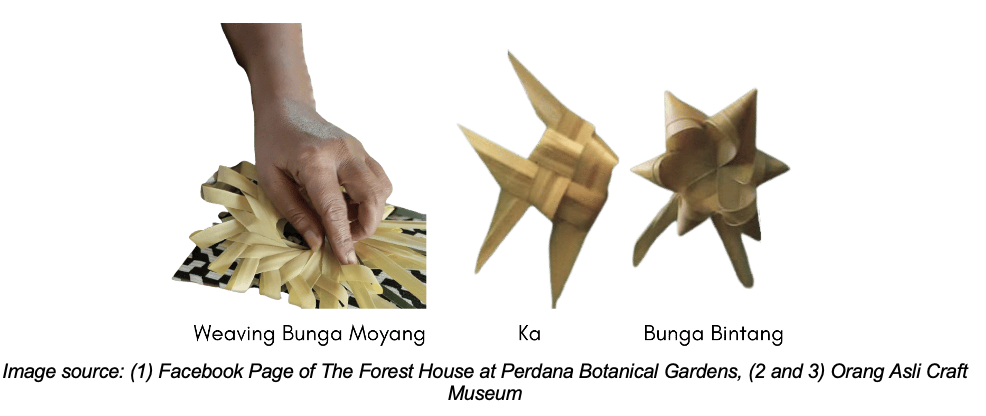
One standout example is the Bunga Moyang, a remarkable display of Mah Meri craftsmanship. These delicate ornaments, woven from palm leaves, hold significant spiritual value and are used in important rituals such as the Hari Moyang (Ancestor Day) festival and wedding ceremonies.

The palm leaf folding technique is evidence of the expertise of Mah Meri women. With over 30 distinct folds inspired by nature, these creations hold profound spiritual meaning, providing insight into the cultural traditions of this indigenous group.

Orang Asli traditional clothing, made from the bark of the Terap or Ipoh tree, reflects their deep resourcefulness and close bond with nature. Today, these garments are mainly worn for ceremonial events.

The Orang Asli’s accessories reflect their deep connection with nature and their creative ingenuity. Crafted from natural fibres like bamboo and tapioca stalks, these accessories are not only decorative but also serve as talismans believed to protect the wearer from natural disasters and malevolent spirits. The intricate designs of chains, bracelets, and other adornments highlight the community’s artistic expression and cultural heritage.

Weave Type

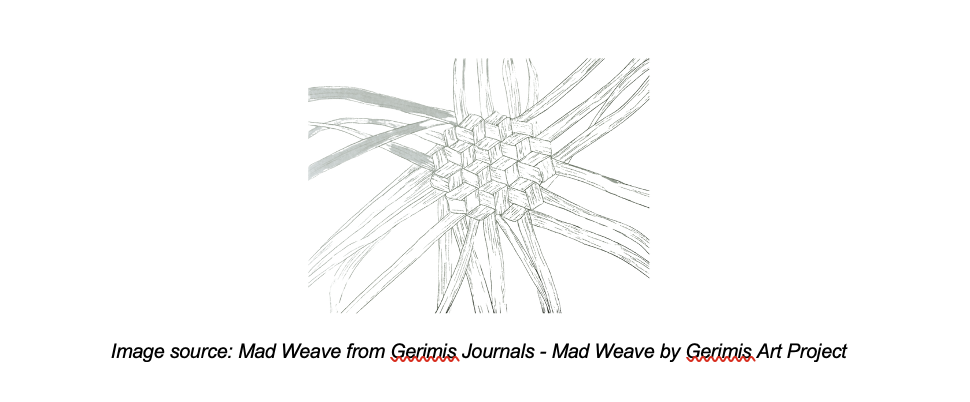
Weaving patterns play a crucial role in the functionality and aesthetics of forest-fibre crafts. A notable weave from Southeast Asia is the “mad weave” (anyam gila), or triaxial (hex) weaving, which involves weaving strips of material in three directions to create complex patterns. While I won’t explore the technical details here, let me share a fascinating tale behind this pattern:

Legend speaks of Sang Kelembai, a goblin who, troubled by humanity’s growth, tried to flee to the sky. After burning his belongings and disappearing, his woven baskets were examined by human folk who struggled to replicate the designs. Eventually, a fairy appeared, teaching them the intricate process, and thus the “mad weave” was born. The name reflects the pattern’s complexity, which demands great skill and perseverance. This story highlights how art and legend are intertwined, adding depth to the craft.

Patterns and Motifs

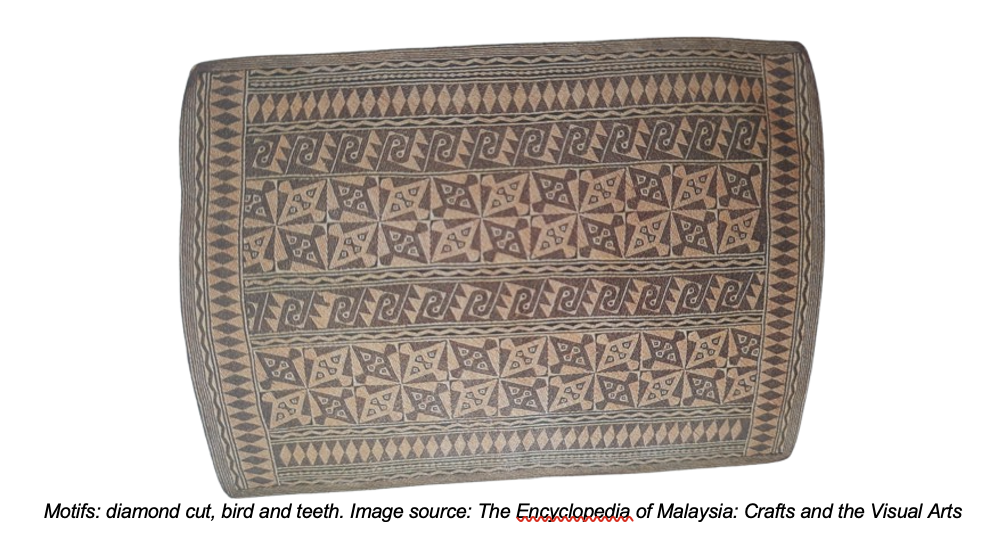
In the world of mat weaving, patterns are built from a series of motifs, each with its own story and significance. Commonly used motifs among the East Coast Malays are inspired by familiar flora and fauna, such as bamboo shoot, frangipani, clove blossom, and durian flower.

For the Iban, their monochrome sleeping mats tell tales of legendary heroes (e.g., Kumang), with designs like ‘leopard claw stealing fruit’ and ‘bird’s nest fern.’ The Penan, known for their tightly woven rattan mats, often incorporate motifs that reflect their close relationship with nature, such as fish and palm shoots.

Tools of trade

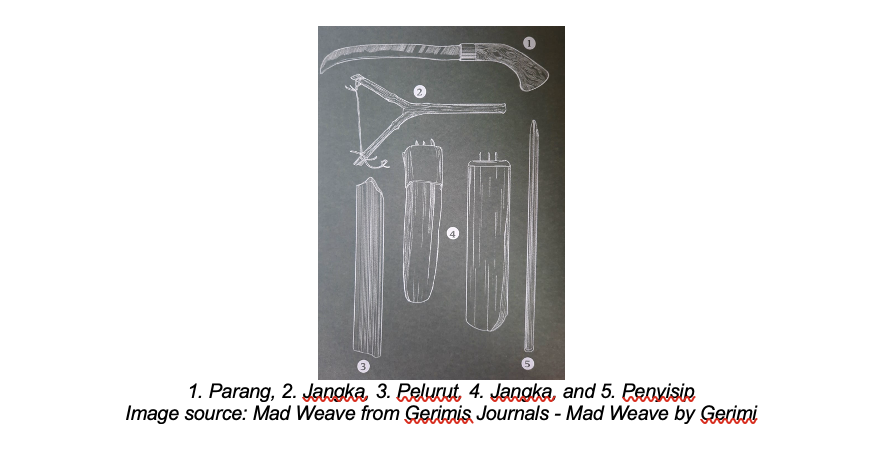
Creating these patterns requires more than just imagination; it demands the skilled use of traditional tools. The tools of the trade are as vital to the craft as the materials and motifs themselves. From simple knives and awls to more specialised instruments like bamboo splitters. 

As we move from examining these patterns and motifs to understanding the tools that bring them to life, it’s essential to remember that these crafts begin with the earth itself. Natural fibres, whether they come from the forests, fields, or rivers, are the lifeblood of this art. They are shaped by skilled hands into objects of beauty and function, carrying with them stories of the land and its people. But as these materials face threats from environmental change, the future of these crafts hangs in the balance.

Finding Art in the Everyday Weaves

In our daily lives, we are often surrounded by these weavings without even realising it. Consider the checker weave on a ketupat, woven from tender coconut leaves to the thoranam decorations at Hindu temples, and even the traditional Chinese bakul sia – woven baskets used for various purposes – these everyday weavings are more than mere decorations; they are a part of our cultural fabric. So, which other hidden patterns and stories might you uncover in your daily life? Keep an eye out, and you may find that art and tradition are woven into more aspects of our world than you ever imagined.

To learn more about craft work from Orang Asli communities in Malaysia:

Reference:

  1. A Malaysian Tapestry – Rich Heritage at the National Museum
  1. The Encyclopedia of Malaysia: Crafts and the Visual Arts by Hood Salleh
  1. The Crafts of Malaysia by Sulaiman Othman and Others
  1. Sarawak Style by Luca Invernizzi Tettoni and Edric Ong
  1. The Kampung Legacy: A Journal of North Borneo’s Traditional Baskets by Jennifer P. Linggi
  1. Basketry: A World Guide to Traditional Techniques by Bryan Sentance. 
  1. Gerimis Journals – Mad Weave by Gerimis Art Project
  1. A Documentation of Mah Meri Indigenous Ceremonial Attire and Ancestral Day Event Stages. https://www.scirp.org/journal/paperinformation?paperid=131710
  1. Rahim, Reita and Tompoq Topoh. Chita’ Hae – Culture, Crafts and Customs of the Hma’ Meri in Kampung Sungai Bumbon, Pulau Carey. https://www.coac.org.my/dashboard/modules/cms/cms~file/0e582556e1031b29bc5a39d0ba82f11a.pdf
  1. Barnes, Ruth. “South-East Asian Basketry” Journal of Museum Ethnography, no. 4 (1993): 83–102. http://www.jstor.org/stable/40793522
  1. Sellato, Bernard. “Basketry Motifs, Names, and Cultural Referents in Borneo.” https://hal.science/hal-02904063v3/document
  1. Mrs. Bland. “A few notes on the “Anyam Gila” Basket Making at Tanjong Kling, Malacca” Journal of the Straits Branch of the Royal Asiatic Society No. 46 (December, 1906), pp. 1-8. https://www.jstor.org/stable/41561637
  1. Mason, Otis T. 1909a. “Vocabulary of Malaysian Basketwork: A Study in the W.L. Abbott Collections.” https://archive.org/details/biostor-79164/page/n9/mode/2up
  1. Mason, Otis T. 1909b. “Anyam Gila (Mad Weave): A Malaysian Type of Basket

Work.” https://archive.org/details/biostor-176496

Focus Talk: Sixteen Naked Indians by Dr. Lim Teckwyn

Written by Manjeet Dhillon

22 June 2024: History often focuses on the conquering heroes, the explorers who plant flags and claim new lands. But what about the quiet first meetings with the indigenous communities?

This often-forgotten chapter in history was recently brought to life at our focus talk thanks to Dr. Lim Teckwyn. His talk, titled “Sixteen Naked Indians: First Contact Between the British and the Orang Asli in the Late 16th Century off the Coast of Penang,” challenged our understanding of the island’s earliest encounters with Europeans.
Dr. Lim Teckwyn, an Honorary Associate Professor at the University of Nottingham, Malaysia, whose work focuses on the interface between forests, wildlife, and people, spoke about this historic encounter between British sailors and the indigenous inhabitants off the coast of Penang in the late 16th century.
Early European Arrivals
Dr. Lim first discussed the possibility of earlier European arrivals, including a Greek sailor named Alexandros in the 6th century and a possible Roman vessel around the same period. Additionally, Marco Polo’s potential voyage past the Malay Peninsula during his explorations in China is explored.
The audience is presented with a trivia question: Did the renowned explorer Sir Francis Drake visit Malaysia? The answer is no, as his circumnavigation steered south of Java on the return trip.
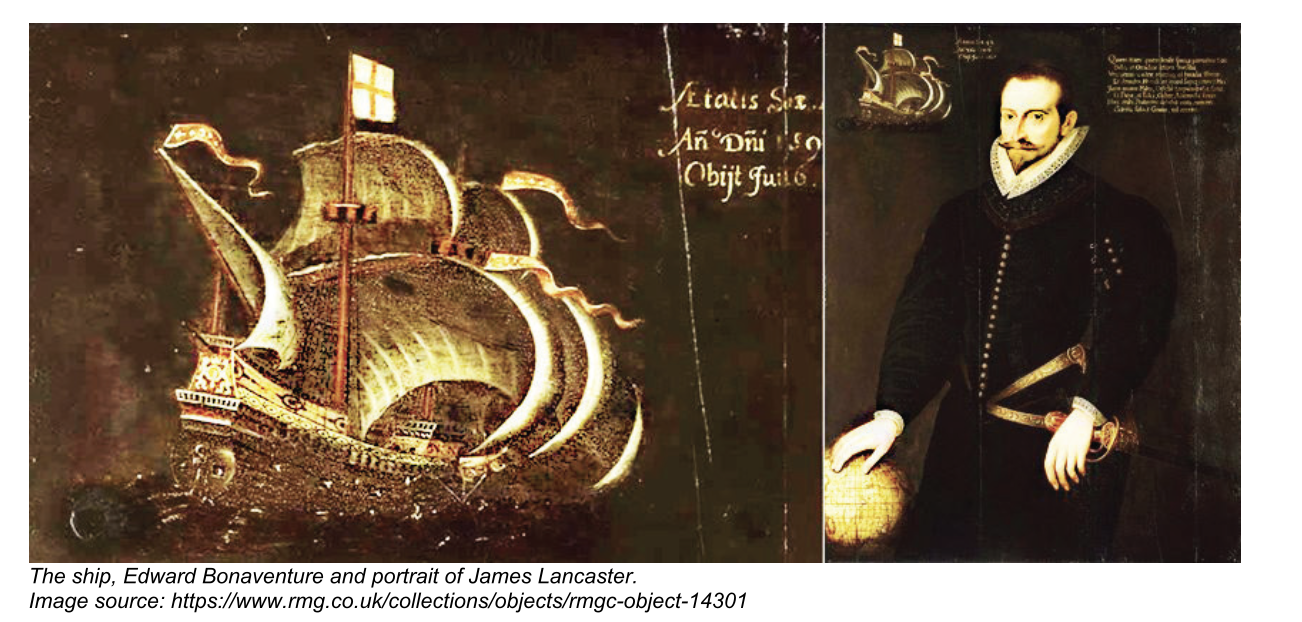
While a lesser-known figure, Ralph Fitch, holds the distinction of being the first Briton documented in Malaysia (though he arrived on a Portuguese vessel in 1588), Dr. Lim’s talk focused on Captain James Lancaster, a key figure in early British exploration of the region.

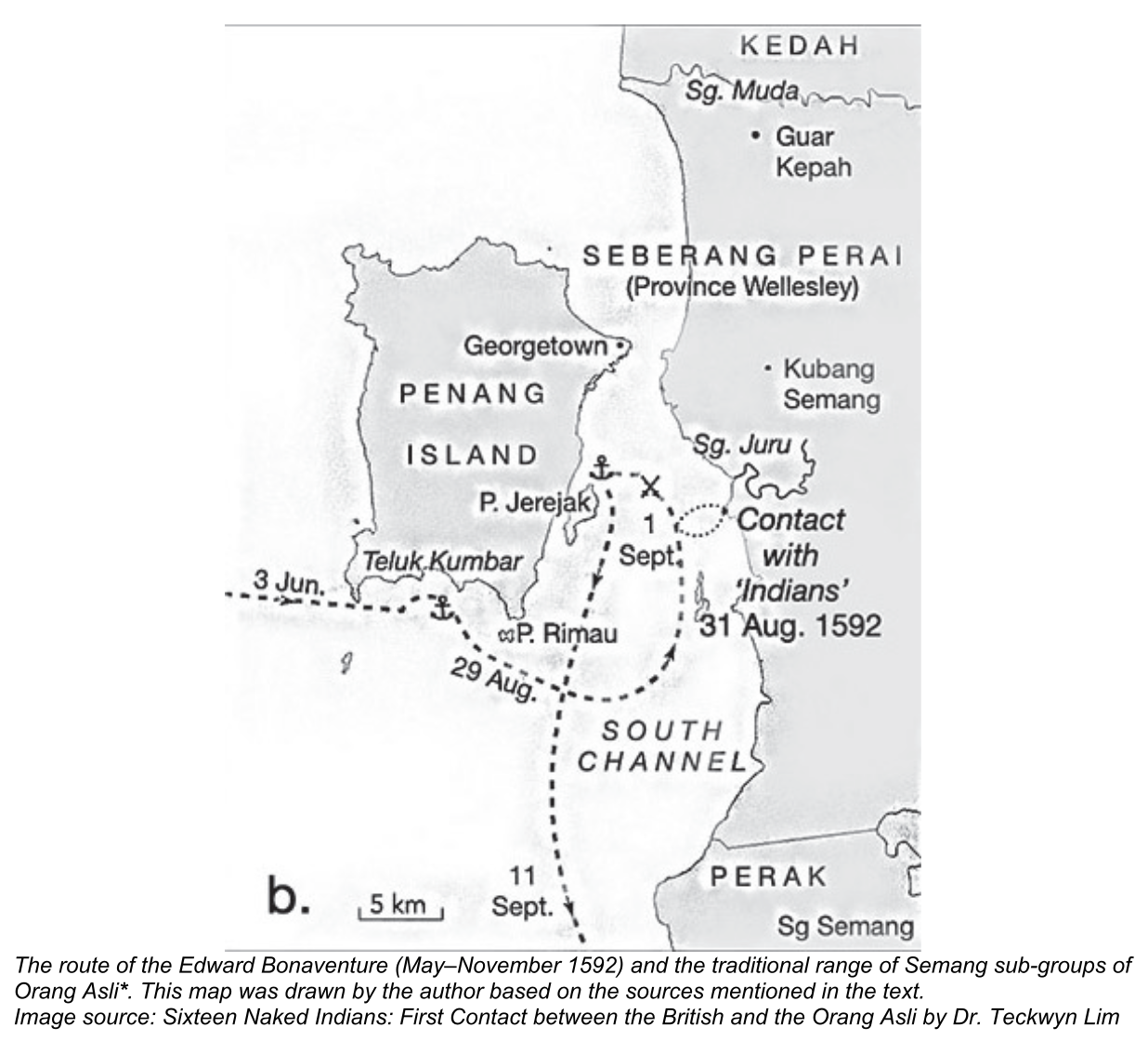
In June 1592, Lancaster arrived in Southeast Asia aboard the Edward Bonaventure, one of the first English vessels to venture into the region. His fleet, initially consisting of three vessels, was reduced to one by the time it reached Penang, largely due to the ravages of scurvy (an illness caused by vitamin C deficiency) and the loss of ships during the journey.

The Encounter
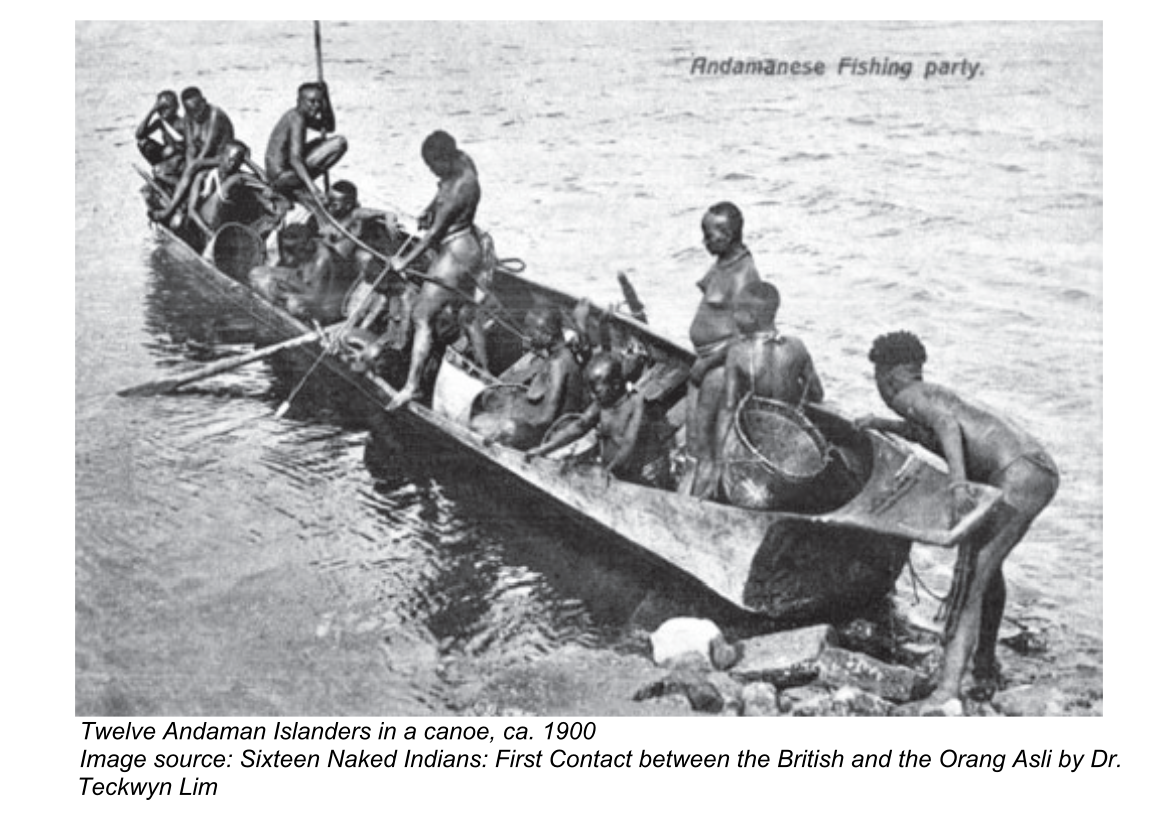
The first recorded interaction between Lancaster’s crew and the indigenous people occurred on the mainland near Penang on August 31, 1592. According to the journal of Lancaster’s first mate, Edmund Barker, the British sailors initially observed signs of recent human activity, such as burning fires, but encountered no people until the following day. When they finally met the locals, they described them as “sixteen naked Indians” in a canoe. This brief encounter, however, offered valuable clues about the identity of the islanders.
Dr. Lim clarified that the term “naked” in Elizabethan English often referred to people who were not fully dressed by contemporary European standards, rather than being completely unclothed. These indigenous people, likely wearing minimal attire, engaged in a friendly exchange with the British sailors, promising to provide fresh victuals (fresh fruit) to help restore the sailors’ health and allow them to continue their voyage.
Dr. Lim’s research suggests that this encounter proved to be a valuable learning experience. On a subsequent voyage, Lancaster implemented a preventative measure by regularly providing his crew with lemon juice, effectively combating the illness.

Orang Asli or Malay? Examining the Clues
The identity of these “naked Indians” became a subject of exploration for Dr. Lim. He suggested that the term “Indians” in this context referred broadly to non-Muslim inhabitants of the region, as opposed to the Muslim Malays, who were often referred to as “Moors” by European explorers of that era. This distinction is crucial in understanding the nature of the encounter and the cultural background of the indigenous people involved.
The canoe described in Barker’s journal, likely a dugout with an outrigger, is consistent with those used by the Orang Asli and other indigenous groups in the region.

Dr. Lim’s extensive research into the Orang Asli provides further context, suggesting that these people were part of the diverse and complex network of indigenous communities inhabiting the Malay Peninsula.
While the evidence for this encounter may be circumstantial, it holds significance as the first recorded contact between the British and the Orang Asli. It offers a glimpse into a period where European influence in the region was nascent and the Orang Asli way of life remained relatively undisturbed.
A More Inclusive Narrative
The Orang Asli, the indigenous people of Peninsular Malaysia, were likely the first to greet the European sailors. Their presence sheds light on a facet of Penang’s history that has been overshadowed by later colonial narratives. This chance encounter, though brief, reminds us to consider the perspectives of the Orang Asli, who inhabited these lands long before European arrival. Understanding these early interactions allows for a more complete and nuanced understanding of Malaysia’s past.

Q&A Session Highlights

The talk was followed by a Q&A session that shed further light on Dr. Lim’s research and the broader context of European exploration in Southeast Asia. Here are some key takeaways:
● Captain James Lancaster’s Voyages: An audience member inquired about Captain Lancaster’s other voyages. Dr. Lim confirmed that Lancaster undertook several expeditions, and the encounter with the Orang Asli likely occurred on an earlier voyage before his more famous exploits aboard the Dragon, a ship funded by the East India Company. He also mentioned that Captain Lancaster was likely knighted for his achievements on a separate voyage.
● The Use of the Term “Malay” Another interesting question explored the possible use of the word “Malay” by Europeans at that time. Dr. Lim suggested that while contact with Malay-speaking people in other parts of the archipelago likely occurred, the term “Malay” in the English language might have been introduced by explorers like Magellan, whose journals were translated soon after their voyages.
● Denisovans The discussion briefly touched upon Denisovans, an ancient human relative. Dr. Lim acknowledged ongoing research on their possible presence in Southeast Asia (referencing twelve skulls found near the Solo River in Indonesia). Their presence is hinted at through DNA markers. Aboriginal Australians, Papuans, and some Filipinos possess Denisovan DNA, suggesting interbreeding between these ancient humans and early modern humans in the region.
Recent genetic studies paint a fascinating picture of human migration in Southeast Asia. The Orang Asli share DNA with people from Melanesia, suggesting ancient connections.

Note:

The Orang Asli (meaning “original people” in English) are the indigenous communities of Peninsular Malaysia. They encompass a diverse network of sub-ethnic groups, each with its own language and cultural practices.
Traditionally, many Orang Asli groups have lived semi-nomadic lifestyles, attuned to the rhythms of the rainforest and practising activities like shifting cultivation, hunting, and gathering.
This encounter with the British sailors in 1592 sheds light on a period when their way of life thrived in relative isolation. Today, the Orang Asli face challenges related to land rights and modernisation, yet their culture and connection to the environment continue to be celebrated.

Ningyo; Japanese beauty of art and culture

Written by Shizuko HOSOKAWA / Miyoko ARIYAMA

A special exhibition of Japanese dolls is now being held in the Central Hall of the National Museum from May 7 to July 8.

The exhibition is supported by the Embassy of Japan in Malaysia and the Japan Foundation, and 67 dolls are on display.

This special exhibition of Japanese beauty of art and culture has been held in many countries around the world.

The exhibition is divided into four sections.

The first section is ‘ningyo to pray for children’s growth’, doll culture in Japan developed out of rites to protect children against misfortune and to pray for their happiness.

The unique Japanese culture of praying to these dolls has been passed down to the younger generations even today.

Traditional Hina dolls were mainly decorated with seven tiers. 

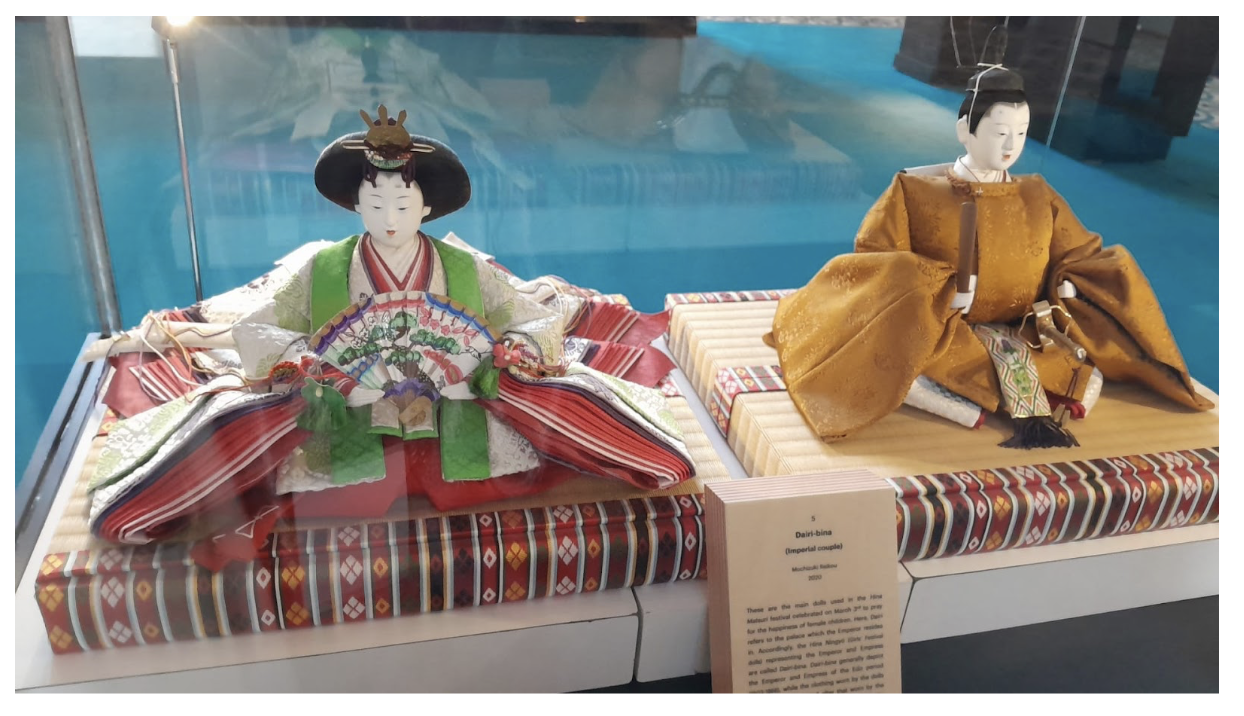
You will see Hina Ningyo of the Hina Matsuri festival at the center of the hall.  They are called ‘Dairi-bina (Imperial couple)’ they are the main dolls used in the Hina Matsuri festival celebrated on March 3rd to pray for the happiness of girls.

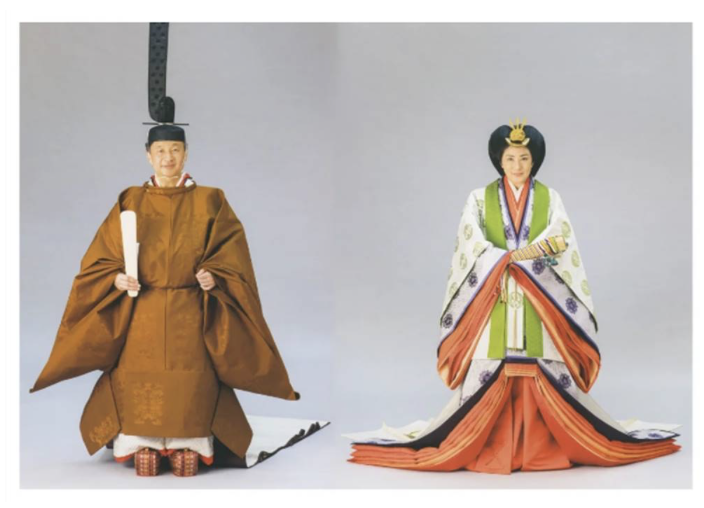
The clothing worn by the doll shown here is designed after that worn by the current Emperor and Emperess during a special imperial rites called the Enthronement Ceremony; Sokui no rei in 2019.


Many of you may have remembered the visit of the current Emperor when he was a prince to the National Museum in 2017.

https://www.nst.com.my/news/nation/2017/04/230953/prince-naruhito-fascinated-exhibits-national-museum-kl

The second section is ‘ningyo as fine art’, the evolution of the doll making techniques. Around from the 17th century, sculpting techniques, delicate colours, and finely produced clothing evolved so much.

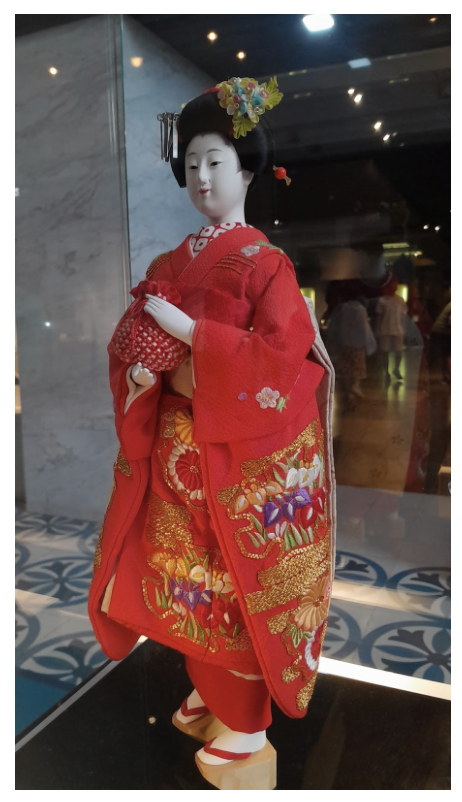
One of the great production is ‘Isho Ningyo; Maiko.’ Maiko is a young girl who performs professionally at traditional banquets in Kyoto.

The same weave, clothing and needlework is used with the same materials and methods to make the doll’s clothing as is used for actual clothes worn by Maiko.    

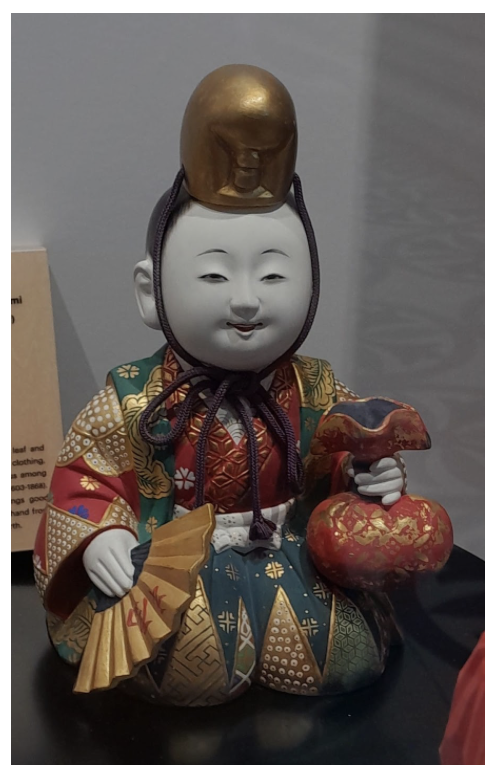
The other doll called ‘Saga Ningyo; Enmei fuku no Kami’, the God of happiness and longevity. 

Fuku no Kami is a God who brings good fortune. In his left hand he holds a bag that is filled with all sorts of treasures.

Saga Ningyo are one of the most luxurious Japanese dolls from the Edo period(1603-1868). Its distinctive feature is the finely applied gold leaf and paint on the costumes.

The third section is ‘ningyo as folk art’, featuring traditional dolls from all over Japan.

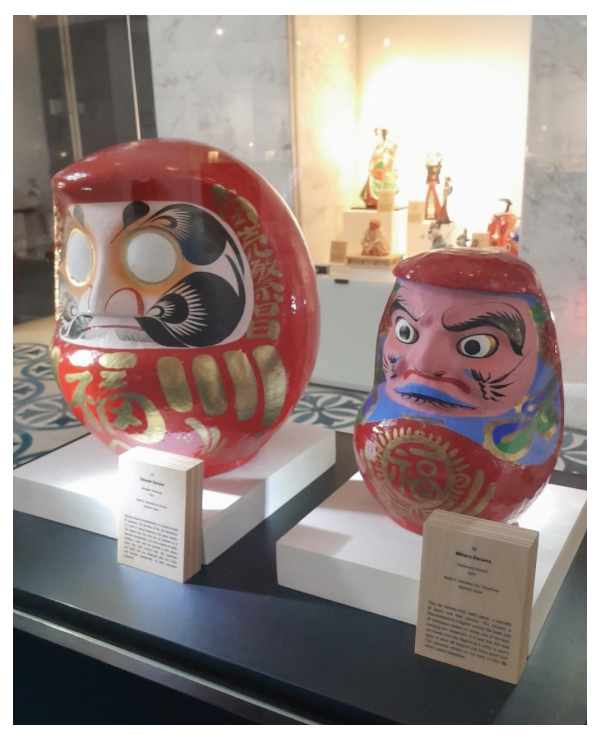
One of the most eye-catching dolls is the bright red, ball-like round doll Daruma.

The Daruma is a traditional Japanese doll that has been worshipped in Japan for centuries as a symbol of luck, success, and perseverance.

If the Daruma is said to bring good luck, how do we make use of it?

In fact, both eyes of the Daruma are empty when purchased.

After purchase, one eye is painted black when a wish is made. When this wish comes true or a goal is achieved, the other eye can be painted as well. 

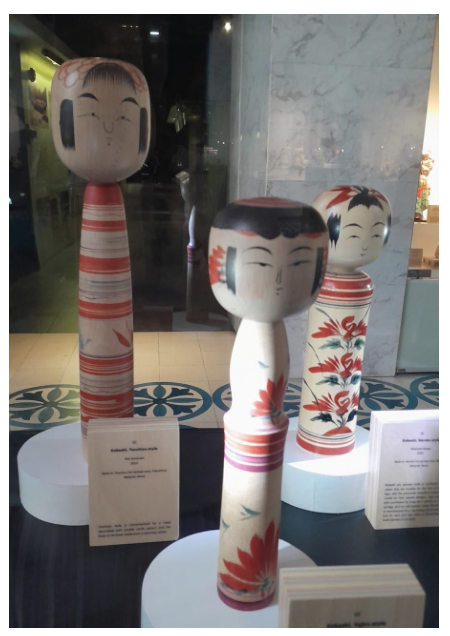
Similar to Darumas, the Kokeshi is a doll with no arms or legs, sold as a souvenir at hot spring resorts in the Tohoku region.

In some regions, it is believed that kokeshi dolls were created as a good-luck talisman to wish for the birth and healthy growth of a child. 

Finally, the last section introduces the spread of Ningyo culture.

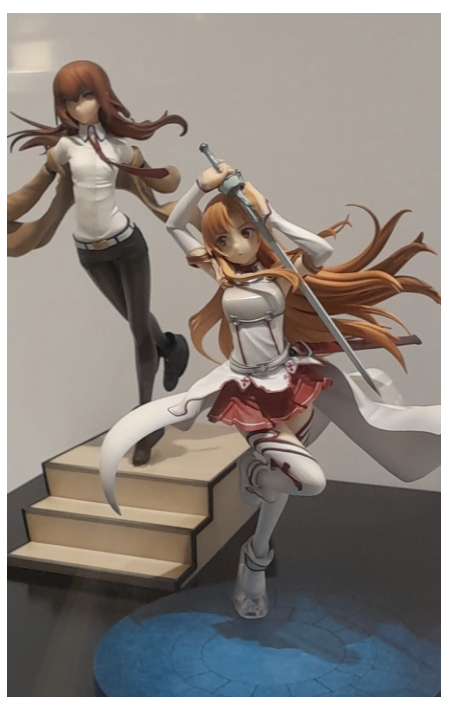
The reappraisal of dolls as art in modern times drove the emergence of many talented doll creators as works of art. As such, Japan’s doll culture further gave rise to the creation of collector figures which are popular throughout the world today.

Collector figures represent popular characters from games and animation. It is actually very difficult to recreate the 2D characters into 3D in a way that satisfies the expectations of the fans.

Come to the museum if you would like to know more about Japan’s Doll! There are many beautiful dolls for you to see and learn about. 

It will surely be an enjoyable time for you.

>More videos from Japan Foundation (Japanese/English)

>The staff and curator of the National Museum gave an overvies to volunteer guids.

New Research into the History of the Patani Sultanate in the 16th-17th centuries.

A MV FOCUS TALK by Professor Daniel Perret (27th May 2024)
By Hani Kamal

Professor Daniel Perret, the head of the French School of Asian Studies at the Faculty of Arts and Social Sciences, History Department, Universiti Malaya, is currently serving as a visiting professor at the same institution. His research specialises in the history of epigraphy and archaeology in proto-urban sites throughout Southeast Asia. His presentation, titled “New Research into the History of the Patani Sultanate in the 16th-17th Centuries,” focused on investigating the historical aspects of Patani.

Perret and Jorge Santos recently conducted a translation of a substantial collection of articles sourced from European, Japanese, and Chinese historical records. These sources shed light on the extensive trade relationships established by European powers such as the Portuguese, Dutch, and British in Patani during the 16th and 17th centuries. Through their study “Patani Through Foreign Eyes: Sixteenth and Seventeenth Centuries,” published in 2022, Perret and Santos meticulously translated and re-analysed these foreign historical manuscripts detailing the dynamic events within the Patani Sultanate, particularly the reign of four successive queens.

Perret’s presentation emphasised the significance of combining physical evidence, such as monuments and artefacts, with information extracted from ancient manuscripts. These elements provide valuable insights into the events unfolding in the 16th and 17th centuries, showcasing Patani as a pivotal trading hub in the Eastern Seas under the influential rule of these queens. Examples of such artefacts include ancient royal tombstones such as Batu Acheh gravestones, a sketch of the old citadel and manuscripts documenting the legacy of the Patani queens.

Background of Patani

The word Patani originated from the Malay word “pantai ini” (this beach), and as mentioned in Hikayat Patani, it is where a white mouse deer was spotted. In the early days, Patani covered the entire Thai provinces of Patani, Yala, and Narathiwat and included parts of northern Kelantan in Malaysia. According to Hikayat Patani, which was recorded by various authors between 1690 and 1730, the early history of Patani must have been established in the early 2nd century when the strategic cape of Patani was sought after by ships travelling straight from the Gulf of Siam across from the Vietnamese point before going to the Malay Peninsula ports. According to Teeuw and Wyatt’s translated version of the “Hikayat Patani: The Story of Patani”, published in 1970, Patani was believed to be Langkasuka (208BC), situated in a very strategic location geographically ideal for a very complex Asian trade system. Professor Wheatley, in his book The Golden Khersonese, A Study of Asian Historical Geography, concludes that Langkasuka transitioned into Kota Mahligai (now Yarang). But it became almost non-existent when the Srivijaya empire became powerful in the 8th and 9th centuries, dominating the Malay Peninsula. There were major power struggles among the Siamese, Khmer Empire, the Burmese Mon/Pagan Empire, the Cholas, and the Javanese in Southeast Asia during the same period. It is not clear as to when Kota Mahligai became Patani before 1500. However, three main themes emerged in the literary sources on Patani: Siamese influence, its conversion to Islam and its economic rise. (Bougas, 1990: Pg 114)

The peak period in Patani’s history is typically identified as the 16th and 17th centuries. However, by the latter part of the 17th century, the influences of Siamese Sukhothai and Ayuthaya began to dominate the region. In 1902, Siam further weakened Patani’s authority by dividing it into seven districts. The Treaty of Bangkok in early 1909 officially acknowledged Siam’s sovereignty over all the northern Malay territories, thus sealing the fate of Patani ever merging with the peninsula Malay states. Consequently, the Sultanate of Patani was dissolved, and its heir resided in exile in Kelantan. Following World War II, the Treaty of Songkhla in 1949 solidified the inclusion of Patani and the other northern Malay states into Thailand. The ongoing conflict and struggle for independence in Patani persist to this day amid continuing disputes.

The organisation of the Patani capital in early 17th CE

No maps portraying Patani during the 16th and 17th centuries have been discovered. The sole visual representation from that era is a depiction of the city, displayed in Figure 1, which was crafted by Jacob van Neck during his visit to Patani. An intriguing account from 1678 suggests that two trading officers from the British East India Company voyaged to Patani specifically to procure this city map, subsequently dispatching it to their office in Ayutthaya. Regrettably, Perret noted the absence of this document in the British Archives.

The illustration or sketch of the Patani capital, featured in Figure 1, offers a broad overview of the city during the 16th century. Jacob van Neck’s rendering highlights key locales such as the palace, the citadel, various town districts, the merchants’ quarters, and the harbour. This visual portrayal of the Patani capital’s layout is derived from on-site surveys, oral traditions and written accounts documented by diverse sources, including the Malay, Dutch, Portuguese, British, Japanese, and Chinese. Based on field data, it is inferred that this depiction dates back no further than 1584, a pivotal year marking the ascension of the first queen.

In Figure 1, Panarican—which appears eight times in the rutter—or “Penarekan” in Malay, denotes the dragging of boats across the river. “Tanjung Lulo”, appearing seven times in the rutter, is described as a headland on the sandy coastline with two bastions, including the largest in the city and its main gate. Tanjung Lulo is certainly the Tanjung Lulup mentioned once in the Hikayat Patani. Kuala Baca, a sandy beach area, was a town in Patani—it is the “Kuala Becha” mentioned in Hikayat Patani, as well as Dutch and Portuguese sources. On the west coast of the citadel, Garzen, which is frequently mentioned, is likely “Kerisik”, meaning coarse sand. This location fits well with the current location of Ban Kru Se (Kerisik). The “PINTU GARBA” mentioned is the Pintu Gerbang (main gate) in Hikayat Patani, large enough for elephants to pass through, also referred to as Pintu Besar (Big Gate) at the west of the Citadel. Kuala Saba (river mouth of Saba River), north of Panarican, has disappeared in the last four centuries.

Fig. 1. Sketch map of the city of Patani (late sixteenth – early seventeenth centuries) (adapted from Perret et al. 2004).

Portuguese sources—recounting a Portuguese attack on Patani in 1524—recorded Chinese living in brick houses in Patani. Dutch sources cite that Dutch lodges were built with bricks and that the English and Dutch lodged near the bay. The rutter also described the city as having a defence system that served as a channel for communication. According to the sources, the citadel walls were about eleven feet high and seemingly had a very imposing fort. Foreign sources also noted the formidable size of a cannon placed near the Pintu Gerbang. The royal family and Orang Kaya lived within the citadel. A small mosque was also located near the citadel. Salt pans, where salt was produced, were situated north of the citadel.

Similar sources also mentioned how the palace walls were adorned with gilded panels and other wood carvings. This is probably the earliest mention of woodcarving in the northeast state of the Malay Peninsula. The balairung (main royal hall) was described as abundantly decorated with gilded material and velvet-trimmed dais, and the queen sat by a large gilded window. A royal graveyard is also mentioned, and, based on oral tradition, the first Sultan of Patani could have been buried there. The tombstone could have been moved out of the city.

Unfortunately, the city was destroyed by fire four times between 1524 and 1613. By 1786, the Siamese had destroyed the entire city in retaliation to Patani’s assertion of independence.

Ancient Islamic Tombstones

Perret divided the tombstones he found in Patani into three styles: Batu Acheh, Batu Patani Brunei and Bai Sema.

The Batu Acheh tombstones, found across the Malay world, offer a unique insight into the region’s Islamic history. Characterised by sophistication and widespread distribution, these tombstones hold rich epigraphical data. Originating possibly in the 15th century around Pasai, these sandstone monuments signified a departure from local traditions. Although sharing similarities with architectural styles from Central Java and Siamese funerary monuments, batu Acheh was primarily reserved for sultans, high-ranking individuals, their relatives, and possibly affluent merchants. Despite a decline in the 18th and 19th centuries, a resurgence of batu Acheh can still be observed in regions like north Sumatra (Barus), Kedah, Pahang, and Penang.

Batu Acheh tombstones are generally made of sandstone, granites, quartz, river pebbles, marble, cement and wood. The types of material used for the tombstones also give an indication of the economic strength of the state—intricate quartz was used during the 17th century while wood and natural stone were used when the state was in decline. The Batu Acheh tombstones were imported from Acheh and had different shapes, motifs and Islamic Khad inscriptions. The grave of Raja Kuning (the last Queen of Patani) is marked with quartz markers found in Kubo’ Barahom.

Batu Patani Brunei (Figure 2) are tombstones brought in from Brunei. Brunei and Patani were trading partners between the 15th and 17th centuries. Two such grave sites were identified with Batu Patani Brunei in Kampung Parit and Kampung Pintu Gajah. The design was very specific to that found only in Patani and Brunei. It has Chinese motifs, such as clouds. One of the tombstones is believed to be that of the son of the founder of the Sultanate of Patani in the 15th century. It has an Arabic calligraphic inscription stating the son of the sultan on the south side and “Malik bin Mohamad” on the north direction. Unfortunately, no dates were found. Perret postulates that these tombstones could belong to the Brunei people who lived and were buried in Patani.

Fig. 2. Tombstone at Kuboʼ Barahom (D. Perret-EFEO, 1999)

Roeloefsz (1601-2) mentioned the existence of royal graves on the Seberang peninsula and this is the only source citing this interesting information. There were few tombstones found but no indication of a royal one. Ludvik Kalus (2004: 193-206).cited that there were two tombstones found and one of them believed to be the grave of the first Sultan of Patani (Fig.2).

According to oral tradition, Raja Ijau’s tombstone was made in the Bai Sema style (Figure 3), which is heavily influenced by Thai-Buddhist engravings. Originating from India, the Bai Sema designs resemble the Kala-Makara design, which is commonly found in the entrances of temples in Thailand and India. This style may have reached Patani from Trowulan, Surabaya. In Patani, Bai Sema tombstones are very rare.

Fig. 3 Raja Ijau Bai Sema Tombstone (Bougas: Pg 39)

Queen of Patani “The Rainbow Queens”

Female Rulers in the Malay World

When James Brooke visited the Bugis state of Waco, Brooke observed that six out of the eight prominent chiefs were female (Brooke, 1848 I, 74-5). In Islamic Southeast Asia, the presence of female rulers appeared to be a common occurrence. Notably, female Muslim rulers were intricately connected to the realm of commercial trading. Throughout the 15th to 17th centuries, women in these regions played a significant role in engaging in trade activities. For instance, Pasai, the first Muslim state in Southeast Asia, had two queens during its prosperous trading era (1405-1434). Similarly, Japara in North Java emerged as a key naval and commercial hub under the rule of its female queen, Kali Nyamt, in the 16th century.

“Similarly, the women rulers of the diamond-exporting centre of Sukadana in Southwest Borneo (c. 1608-22), pepper-rich Jambi in East Sumatra (163~. 1655), and the sandalwood base of Solor, to the East of Flores (c. 1650-70), were on the throne during the brief period these states were important commercial centres.” (Reid, 2020, Pg 641)

In her research on “Ratu Acheh,” Sher Banu explored the lives of the four Queens of Acheh in the 17th century. The first queen, Sultanah Safiatuddin (1612-1675), took the throne following the death of her husband, Sultan Iskandar Muda. She was succeeded by her daughter, and four Acheh Queens ruled the kingdom for sixty years.

Similarly, a comparable scenario unfolded in Patani during the 16th and 17th centuries, with the kingdom being governed by four consecutive queens. Patani served as a significant trading post, particularly with China, during this period. The preference for female rulers stemmed from the cooperation of the Orang Kaya (male royal councillors and religious ulama) with the queens, recognising their adeptness as rulers with business acumen rather than because they were running out of males to inherit the thrones. During the reign of Raja Ijau:

“Patani the first queen has reigned very peaceably with her councillors … so that all the subjects consider her government better than that of the dead king. For all necessities are very cheap here now, whereas in the king’s time (so they say) they were dearer by half, because of the great exactions which then occurred.” (Van Neck, 1604:206)

Patani, under Raja Kuning, the Orang Kaya, paid less levies as Raja Kuning was a wealthy heiress and a capable businesswoman. The Orang Kaya saw how female rulers were more businesslike and profitable for themselves. They were also mild in ruling the states compared to male rulers.

Raja Ijau, the eldest daughter of Sultan Patik Siam, took power in Patani after the sudden deaths of many male family members. During her 32-year rule, Raja Ijau led an army against Pahang and defended Patani against Ayutthaya, fostering diplomatic relations and promoting culture and art. She is credited with the origins of the Mak Yong dance. Raja Biru continued her mother’s diplomatic legacy and was an adept mediator between the Dutch VOC and British EIC. Raja Ungu defied Siamese rule, aligning with Portugal, Pahang and Johor to repel a Siamese force and further solidify alliances through strategic marriages. Raja Kuning enhanced Patani’s economic prosperity and established it as a prosperous Malay trading post. Following her overthrow by a minister, she retired to Kuantan, Pahang, marking the end of female rule in Patani.

As outlined by Perret, the era of female rulers in Patani was characterised by a decrease in violent incidents and massacres within the royal families. This period was notably peaceful, fostering a sense of safety that encouraged traders to conduct business with relative security. However, following the reign of these queens, the Patani throne shifted to male lineages, possibly influenced by conservative factions aiming to enforce Islamic practices that restrict female leadership over men. The subsequent male rulers exhibited intense competition and a diminished focus on trade, leading to a decline in safety and profitability for Patani as a trading hub during their governance.

The Queens’ Title

Perret noted the Patani Queens used the Indian Sanskrit male title “raja” instead of the Islamic “sultanah” or the Malay “ratu.” Historical sources from Patani do not provide evidence of the title “Sultanah” being used. The discovery of a gold coin inscribed with the words “al-sultana-al muazam” (the great Sultanah) and “Khalada Mulkaha” (May God preserve her government) has led some to speculate that it may have been associated with one of the Patani Queens. Perret pointed out discrepancies between this coin’s inscription and those on coins issued by the Sultanah of Aceh, as well as the absence of coinage from the Queens of Sukadana and Jambi in the 17th century. He further questioned the authenticity of the claim that the Patani Queens ever adopted the Islamic title of Sultanah and pondered why there is a lack of mention in Malay sources regarding minted gold coins.

The Color Names

The Patani Queens were named after colours, and thus, the acronym ‘’Rainbow Queens of Patani’’ was coined by Teuuw and Wyatt. Some scholars likened it to how in Malay tradition, females were given names associated with colours, or that green is an Islamic colour, and Raja Kuning (yellow) had yellow skin and was given the colour yellow. Jocelin de Jong’s documentation in 1961 highlighted the prevalent use of colour names among Malays. For instance, titles like Tun Hitam or Tun Putih were commonly bestowed upon Malay women in Sejarah Melayu. 

Professor Perret suggested that the tradition of using names based on colour could be rooted in religious or traditional beliefs associated with auspicious symbolism. For example, the Katika Lima system—where a day is divided into five periods, and each period is associated with a colour—is directly related to a Hindu god. Each colour represents the time of birth of the queen. A second possibility is that the colour was related to the day/time of birth, like the zodiac. It could also be related to Buddhist influence. In Buddhism, each cardinal points are related to a colour as also with the Chinese belief. It is also believed that names with colours are linked to the traditional culture of Chinese zodiac practises:

“The centre of the system is Vairocana, associated with the white colour, while interestingly, the colours of the four cardinal points correspond to the names of the four queens: North is associated with Amoghasiddi and the green colour; East is associated with Akṣobhya and the blue colour; West is associated with Amitābha and the red colour; South is associated with Ratnasaṃbhawa and the yellow colour. Moreover, the colours are associated with the same cardinal points in traditional Chinese culture.” (Damais 1969: 83-84: extracted from Perret’s article, 2022) 

Perret also found through the sources that the use of colours for the queens was only used within the palace, and as for the foreigners, the queens were referred to merely as “old queen” or “young queen.” These colour names are definitely not by chance but linked with greatness for the royal household, or they were intentionally meant to legitimise the queen’s sovereignty in the state of Patani.

Power Sharing

Perret also noted the unique power-sharing practised by the four queens. The old queen is assisted by a young queen who acts as a regent and is the next in line. This power-sharing system seems to have worked for the Queens, as during their reigns, Patani flourished economically and politically.

Chronology of the Queens

Perret suggested that the dates of the Patani queens require further investigation since dates were never mentioned in Malay writings (namely Hikayat PataniSejarah PataniSyair Patani and Kelantan). However, when various sources written in foreign records surfaced, this suggested that the periods or dates as deduced in Hikayat Patani were different and required re-examination. Some foreign sources cited Christian years while others utilised the Muslim calendar, and confusion emerged.

More confusion arose when understudying the Patani sources as the use of colours for the Queens was only for the internal royal court; thus, for foreigners, it’s either the Old Queen or Young Queen, as names of the queens were never cited in any foreign sources. It was quite a task to identify the period of rule of the Queens also because the Malay sources did not include dates/periods. However, a letter surfaced, the correspondence between one of the queens and the King of Portugal dated 31 March 1637. This threw new light into the confusion of the chronology of the queens. According to Perret, the dates of ruling for the queens require some rearrangement. Perret summed up these reigns as follows:

  • Raja Ijau (Old Queen: r. 1584 – 28/08/1616; d. 28/08/1616)
  • Raja Biru (Young Queen: r. ≤ 1601 – 28/08/1616; Old Queen: r. ca. 09/1616 – ca. 03/1636; d. ca. 03/1636)
  • Raja Ungu (Young Queen: r. ≤ 1629 – 1634; d. between 1636 and 1638)
  • Raja Kuning (Young Queen: r. end of 1634 or 01/1635 – ca. 03/1636; Old Queen: r. ca. 03/1636 – ≥ 1642; d. ≥ 1642)

Fig. 4 Chronology of Patani Rulers 

Patani’s Emergence as a Trading Hub

Following Malacca’s fall to the Portuguese in 1511, Patani emerged as a lucrative alternative trading centre. It was also a strategic port for sailors travelling from China to Java to stop at Patani for shelter, repairs and trading. The region attracted a diverse array of merchants, including Chinese, Malay, Siamese, Persians, Indians, Arabs, Portuguese, Japanese, Dutch, and English traders. The peak of Patani’s trading significance is often associated with the reign of Raja Ijau. Chinese entrepreneurs played a pivotal role in Patani’s rise as they exchanged goods like porcelain, silk, and lacquer for cloves, nutmeg, sandalwood, and pepper sourced from the spice islands.

Historical records indicate that Patani’s influence as a trade hub extended beyond local waters. Patani junks engaged in trade with Banda for nutmeg and mace as early as 1526, while Chinese junks from Fujian frequented Southeast Asian ports like Pahang and Patani in the late 1520s. Indian traders also participated in the exchange, offering textiles in return for pepper, gold, and food items. Chinese and Indian goods brought to Patani were further distributed by Malay traders across Thailand and the Indonesian archipelago. Additionally, the Kingdom of Ryukyu served as a crucial intermediary linking China, Japan, and Patani, facilitating trade growth in the region.

“Like all major coastal trading places at the time in Southeast Asia, Patani was home to a cosmopolitan population. It is thus reasonable to suggest that some twenty languages were in daily or occasional use in Patani during the sixteenth and seventeenth centuries. (Perret, 2022: Pg 143)

However, Perret summarised that Patani’s position as a trading hub declined by the mid-17th century as trade restrictions limited the movement of Japanese traders and hindered Chinese-Japanese trade interactions. Furthermore, shifts in market demands led to a decreased interest in local spices like pepper and a decline in the popularity of Indian cotton materials. Patani struggled to adapt to changing trade dynamics during this period, failing to sustain its earlier prosperity and meet evolving commercial challenges.

Conclusion

Perret and Santos’ examination of foreign sources proved useful in shedding light on how Patani emerged as a significant state during the 16th and 17th centuries. These sources offered insights into the queens’ chronology, Patani’s administrative system, the layout of the old city, and its economic, political, and social structures during that era.

Determining the precise timeline of the queens proved challenging due to discrepancies in various historical texts. Foreign sources often referred to the queens generically as ‘old queen’ or ‘young queen’ and not by their names. Perret’s meticulous analysis allowed for the reorganisation of the queens’ chronology based on available manuscripts.

Once again, foreign sources are abundant and detailed in their description of the city’s location and design, but they are also confusing or, on many occasions, contradictory. Perhaps as suggested by Bougas, where only by excavation of the city/citadel location, artefacts excavated will provide evidence to support the history of Patani. The old city has never been excavated, nor have any archaeological methods been used to verify the sites and compare them with historical narratives.

The extent of real power wielded by the Patani Queens within the kingdom remains a subject of inquiry. Questions arise regarding whether the queens held substantive authority or if the influence lay with other figures like the Orang Kaya, councillors, Islamic leaders, Chinese merchants, or Javanese traders. While Malay sources like Hikayat Patani and Syair Patani remain silent on the queens’ authority, foreign accounts highlight their roles in trade management.

It is possible that the real power was with the court councillors, while the queens handled foreign traders. But then again, the four female rulers reigned for almost a century. It could not have lasted 100 years if it had not been for their skilful manoeuvring of the Orang Kaya and social-economic skills when dealing with foreign merchants.

Perret and the foreign sources may not have found the answers to establish the use of the queens’ titles. However, these sources are able to clarify many questions concerning the presence of female rulers in Patani. They can probably inspire the people of Patani today.

Fig. 5. Salt ponds, Ban Pa Re (D. Perret, June 1997)

References:

MV Focus Talk by Professor Daniel Perret on 27th May 2024, MV Room, JMM.

https://journals.openedition.org/archipel/2849 The Sultanate of Patani: Sixteenth-Seventeenth Centuries Domestic Issues by Daniel Perret

https://www.eksentrika.com/pattani-queen-southeast-asia-ratu-kuning/Legendary queens of Pattan

Teeuw, A. and David K. Wyatt, 1970. Hikayat Patani = The story of Patani. The Hague: Martinus Nijhoff, Pg 1-13.

https://play.google.com/store/books/details?id=V_mPBAAAQBAJ&rdid=book-V_mPBAAAQBAJ&rdot=1Origin islam in Patani before Melaka (Pg 12)

https://www.academia.edu/35716822/Hikayat_Patani_pdf

Hikayat Patani Diselengara oleh Siti Hawa Hj Salleh, DBP, 2010

https://journals.openedition.org/archipel/2799 Patani and the Luso-Asian Networks (1516-1642)

Jorge Santos Alves , 2022

https://www.persee.fr/doc/arch_0044-8613_1990_num_39_1_2624. Wayne Bougas Patani in the early 17th century

https://angkordatabase.asia/publications/female-roles-in-pre-colonial-southeast-asia. ://about.jstor.org/terms

Modem Asian Studies 22, 3 (1988), pp. 62!r645. Printed in Great Britain. Female Roles in Pre-colonial Southeast Asia ANTHONY REID 

https://k4ds.psu.ac.th/ebook/pdf/b002.pdf Wayne Bougas “Islamic cemeteries in Patani” 1988 (pg 28-48)

Sher Banu A.L. Khan, Sovereign Women in a Muslim World, NUS Press, 2017 

(2007) https://www.researchgate.net/publication/233132109_Some_reflections_on_ancient_Islamic_tombstones_known_as_Batu_Aceh_in_the_Malay_world.Some reflections on ancient Islamic tombstones known as Batu Aceh in the Malay world: Daniel Perret

From Seed to Spirit: Tadau Ka’amatan

By Manjeet Dhillon

Celebrating the Harvest

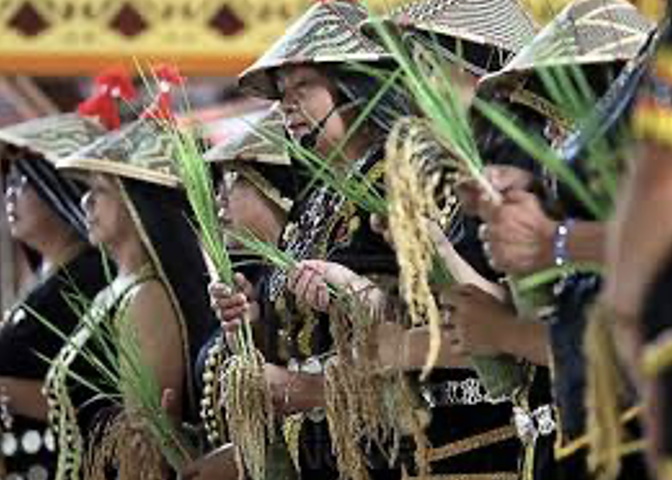
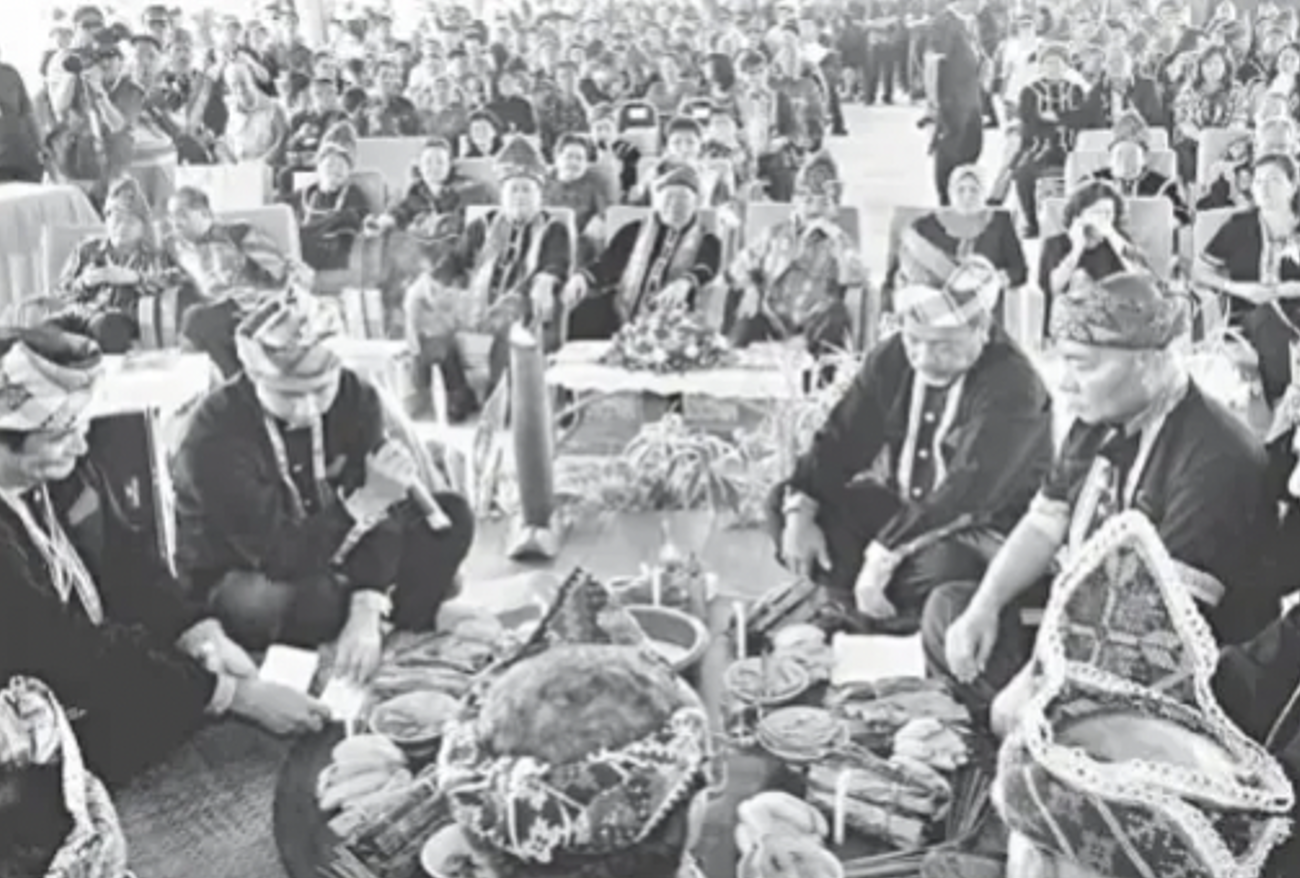
Sabah’s annual harvest festival, Tadau Kaamatan, is a celebration deeply rooted in the Kadazandusun community’s cultural heritage. Centred around the rice harvest, the month-long event features rituals, traditions, and myths that highlight the grain’s significance. These myths, though diverse in origin, often share a unifying theme: the sacrifice of a beloved female relative. 

Historically and traditionally, Kaamatan was held at the first sighting of the full moon following the harvesting season. This period, known as “tawang” (literally meaning “full moon”), signified the perfect timing for the festival. The month-long celebration culminates on May 30th and 31st, highlighting the profound significance of rice for the indigenous communities of Sabah.

Credit: Sabah Tourism / Tsen Lip Kai

Rooted in Legend

The roots of Kaamatan stretch back centuries, intertwined with the Kadazan legend of Huminodun. This tale tells of a time when harmony reigned between a benevolent god, Kinoingan, and his people on earth. However, Kinoingan’s son, Ponompulan, disrupted this peace, leading to his banishment to Kolungkud, or the underworld, and a series of devastating plagues upon humanity.

Credit: Sunduan Do Huminodun (The Spirit of Huminodun) by Pangrok Sulap

Faced with drought and famine, Huminodun, Kinoingan’s daughter, made the ultimate sacrifice, she offered her own body to nourish the people. Through Huminodun’s sacrifice, her body transformed into various food sources: rice from her flesh, coconuts from her head, tapioca from her bones, ginger from her toes, maize from her teeth, and yams from her knees. and a variety of other edible plants sprang forth, ensuring the community’s survival.  

This bountiful harvest marked a turning point, and Kaamatan became an annual celebration to honour Huminodun’s sacrifice and express gratitude for the blessings of the land.

While the details differ, a similar theme of sacrifice for the community’s well-being emerges in the Murut (tagal) genesis myth of siblings, Olomor and Sulia. In this narrative, Olomor sacrifices his sister Sulia, following a vision during their rice field clearing. Seven days later, various plants sprout, including rice, highlighting the theme of sacrifice for the community’s well-being.

(While the details differ, a similar theme of sacrifice for the community’s well-being emerges in the Murut (Tagal) genesis myth of siblings, Olomor and Sulia. In this narrative, Olomor sacrifices his sister for the same purpose. As the story goes, Olomor and Sulia were clearing land to cultivate rice. Later that day, while resting, Olomor had a vision in which he saw Sulia being sacrificed to produce rice seedlings. Despite his guilt, he felt compelled to follow through with the vision. He brought Sulia to the clearing and killed her. Her body rolled on the ground, and her blood flowed to every corner of the cleared land. Seven days later, Olomor returned to find that various plants had sprouted, one of which was rice.)

Both Kadazan and Murut legends tell of sacrifices made for the community’s well-being. These stories highlight the deep respect these cultures have for the land and the rice harvest it provides.

A Journey of Rituals

The heart of Tadau Kaamatan unfolds through a series of rituals performed by the Bobohizan, a traditional priest or priestess. The six distinct rituals described below are typical of the Kadazandusun community of the “tangara” in the Penampang-Papar area.

  • Kumogos: Before harvest, a Bobohizan (priest/priestess) chooses the seven best rice stalks. These are left scattered in the field to appease any spirits and promise an offering after harvest.
  • Kumotob: Following Kumogos, the Bobohizan selects the best unharvested rice stalks. These are tied together and stored in a tadang (rice basket) for next season’s planting.
  • Posisip: The Bobohizan carries seven tied rice stalks to the rice hut and inserts them into a bamboo pole kept in the tangkob (container) while chanting prayers for Bambaazon, the rice spirit, to stay and bless the harvest.
  • Poiib: the Bobohizan carefully pours rice into the tangkob within the hut. This continues until all the rice is transferred, accompanied by chants beseeching the rice spirits to watch over the stored harvest.
  • Magavau: The most significant ceremony, Magavau restores Bambaazon’s spirit and offers food as a gesture of respect.
  • Humabot: This final stage explodes with joyous celebrations, featuring traditional dances, sports competitions, and the crowning of the Unduk Ngadau, a maiden who embodies the spirit of Huminodun.

Credit: https://mpu2015kadazandusun.blogspot.com/

Credit: The Borneo Post

A Look at Specific Traditions

The Kadazandusun are not alone in celebrating this bountiful season. There are other indigenous communities that have each developed unique traditions to express gratitude for a bountiful crop and appease the spirits who ensure their success.

The names for the harvest festival vary across ethnicities. The Rungus call it “kokotual” and the Timugon Murut celebrate “orou napangaan nanantab.” While the festival’s core message of gratitude remains constant, the names and traditions vary across ethnicities. The Lotud Dusun of Tuaran focuses on intimate rituals with animal sacrifices and symbolic dances, while the Timugon Murut of Tenom holds a communal feast with “mansisia” celebrations. The Tagal Murut holds a lively seven-day celebration with activities like cockfighting and dancing. Meanwhile, The Rungus of Kudat perform rituals involving animal sacrifices and a “mongigol sumundai” dance throughout the night. Despite these ethnic variations, all celebrations share a common thread of thanksgiving and respect for the land.

A Celebration of Community

As Tadau Kaamatan reaches its peak, the Unduk Ngadau pageant takes centre stage. Held on May 31st, contestants from various districts embody the spirit and grace of Huminodun, the mythical figure who sacrificed herself for the harvest.  Through their elegance and cultural knowledge, they compete to be crowned the Unduk Ngadau, literally meaning “the sun at its zenith—the brightest point of the day” in Kadazandusun. 

While the Unduk Ngadau pageant captures the spotlight, Kaamatan also celebrates the rich musical heritage of the Kadazandusun people through a vibrant singing competition known as Sugandoi. The Sugandoi competition features age-group categories, ensuring traditional music resonates across generations.

Credit : Jabatan Penerangan Sabah

Fun Fact: The Spirit Behind the Song: Did you know Sugandoi has a fascinating history?  For the KadazanDusun community, Sugandoi was once a “spirit” invoked by the Bobohizan (priestess) and housed in a large jar called a “Kakanan” by the Kadazan Tangaah tribe. This spirit was believed to watch over families and bring good fortune through a ceremony called “Moginakan.” During this ritual, the Bobohizan would chant incantations called “Monugandoi,” which praised the creator (Kinoingan) and the spirit of Sugandoi. These chants laid the foundation for the modern Sugandoi singing competition. No wonder the name stuck!

Adding to the atmosphere are traditional games and competitions. From displays of strength in arm wrestling (mipulos) and knuckle wrestling (mipadsa) to showcasing skills in blow piping (monopuk) and catapulting (momolositik), these games provide a fun and interactive way to experience Kadazan Dusun culture. Teamwork is tested in tug-of-war (migayat lukug), while balance and agility are on display during bamboo stilt walking (rampanau).

Credit: https://makangang2015.blogspot.com/

A Feast for the Senses

No festival is complete without a feast for the senses, and Tadau Kaamatan doesn’t disappoint. From the tangy zing of Hinava (raw fish) to the textures of Butod (sago grubs), the flavours of Pinasakan (braised fish), the tart tang of ambangan (wild mango), and the earthy warmth of Tuhau (wild ginger), Tadau Kaamatan is a feast for the senses. Lihing, a rice wine made from fermented rice and stored in clay jars, adds a special touch to the celebratory spirit.

Credit: https://borneonews.net/

A Legacy Endures

Tadau Kaamatan is more than just a harvest festival; it’s a cornerstone of Kadazandusun identity and other ethnicities in Sabah. These age-old traditions, a vital link to the past, ensure their shared cultural heritage continues to thrive for generations to come. It’s a celebration of the land, its bounty, and the enduring spirit of these communities. 

References

  1. Kaamatan Special: The Rituals of Tadau Kaamatan (Harvest Festival) from http://www.e-borneo.com/insideborneo/leisure0205.shtml
  1. Huminodun: The Mystical Origin of the Kadazandusun People from https://www.flyingdusun.com/004_Features/010_Kaamatan02.htm
  1. Sabah’s Culture (Harvest Festival) from https://sourcesofknowledge.wordpress.com/2013/06/02/sabahs-culture-harvest-festival/
  1. Keningau, The Guide from https://pubhtml5.com/xvgw/junm/Keningau_The_Guide_2023/18
  1. Apa It Sugandoi from http://www.sentiasapanas.com/2019/05/sejarah-sugandoi.html#ixzz7UwYVDatb
  1. The Anthropological Profile of the Kadazandusuns of Borneo: The Kaamatan Rituals compiled by Allan G Dumbong from https://wayaantokou.blogspot.com/2005/12/
  1. Who is Huminodun?. Sumandak. Sino. Kadazan from http://borneobonita.blogspot.com/2017/01/who-is-huminodun.html
  1. Barlocco F., 2011. A Tale of Two Celebrations: The Pesta Kaamatan as a Site of Struggle between a Minority and the State in Sabah, East Malaysia. Asian Journal of Social Science from https://www.jstor.org/stable/43497845?seq=1
  1. Dusunology from https://www.facebook.com/sundayak777northborneo
  1. Kaamatan highlights spirit of peace and friendship this season by By Mariah Doksil from https://www.pressreader.com/malaysia/the-borneo-post/20160514/282411283538614
  1.  The Encyclopedia of Malaysia: Peoples and Traditions