S is for Sukhothai & Si Satchanalai

by Karen Loh

The Cities

Location of the old cities of Sukhothai and Si Satchanalai.
Image credit: Kamarul Shah B. Bakar, Maritime Archaeology and Shipwreck Ceramics in Malaysia.

The old city of Sukhothai is situated along the Yom River, one of the main tributaries of the Chao Phraya River, in the northeastern part of modern day Thailand. The city started out as a small settlement outpost under the Khmer Empire (802-1431 CE), with the design of its temples, building structures and canals very much influenced by Angkor, the capital city of the Khmer empire. The Empire began to weaken in the early 13th century, following the death of their ruler, Jayavarman VII (1181-1218 CE). Seeing a weakened regime, the people of Sukhothai soon started challenging their overlords. Under the leadership of Si Inthrahit (also known as Pho Khun Bang Klang Hao), and together with his friend and ally, Pho Khun Pha Meung, the people of Sukhotai started to gather their forces, rose up and revolted against Khmer rule. They finally succeeded in driving the Khmers out in 1250 CE, thereafter establishing the Kingdom of Sukhothai. The capital city was also called Sukhothai, meaning Dawn of Happiness, and Si Inthrahit was crowned their first king. In Thai historiography, Sukhothai is considered the first kingdom in Thailand.
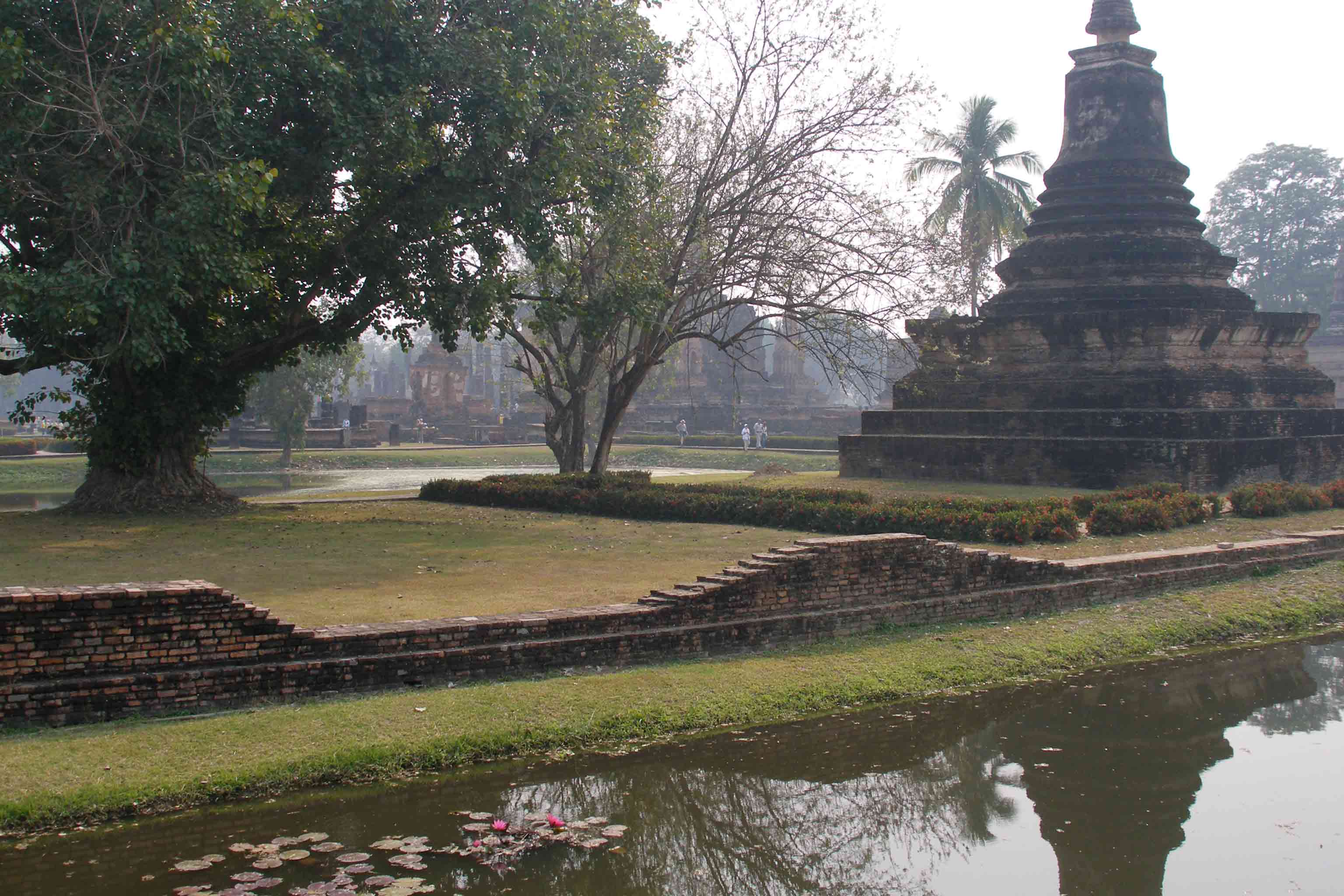
Sukhothai. Image credit: © Vyacheslav Argenberg / http://www.vascoplanet.com/, CC BY 4.0, via Wikimedia Commons.

Sisatchanalai or Si Satchanalai was another Khmer outpost located 55 kilometres north of Sukhothai city, along Yom River. This city was formerly called Chalieng, meaning “city of good people”. Si Satchanalai rose to importance as an associated city to Sukhothai after the people’s independence from the Khmers. However, it was not until the reign of the kingdom’s third king, Pho Khun Ram Kham Haeng (1279-1299 CE) that the society, administration, religion and arts in the kingdom of Sukhothai flourished. In addition, the invention of the Thai alphabet in 1283 marked this period as Sukhothai’s Golden Era. Si Satchanalai reached her peak prosperity during the reign of Phra Maha Dhamaraja I (1347-1374 CE).

The 13th Century Thai City of Si Satchanalai. Image credit: Gary Todd, CC BY-SA 4.0, via Wikimedia Commons.

Sukhotai & Si Satchanalai: export-oriented pottery centres
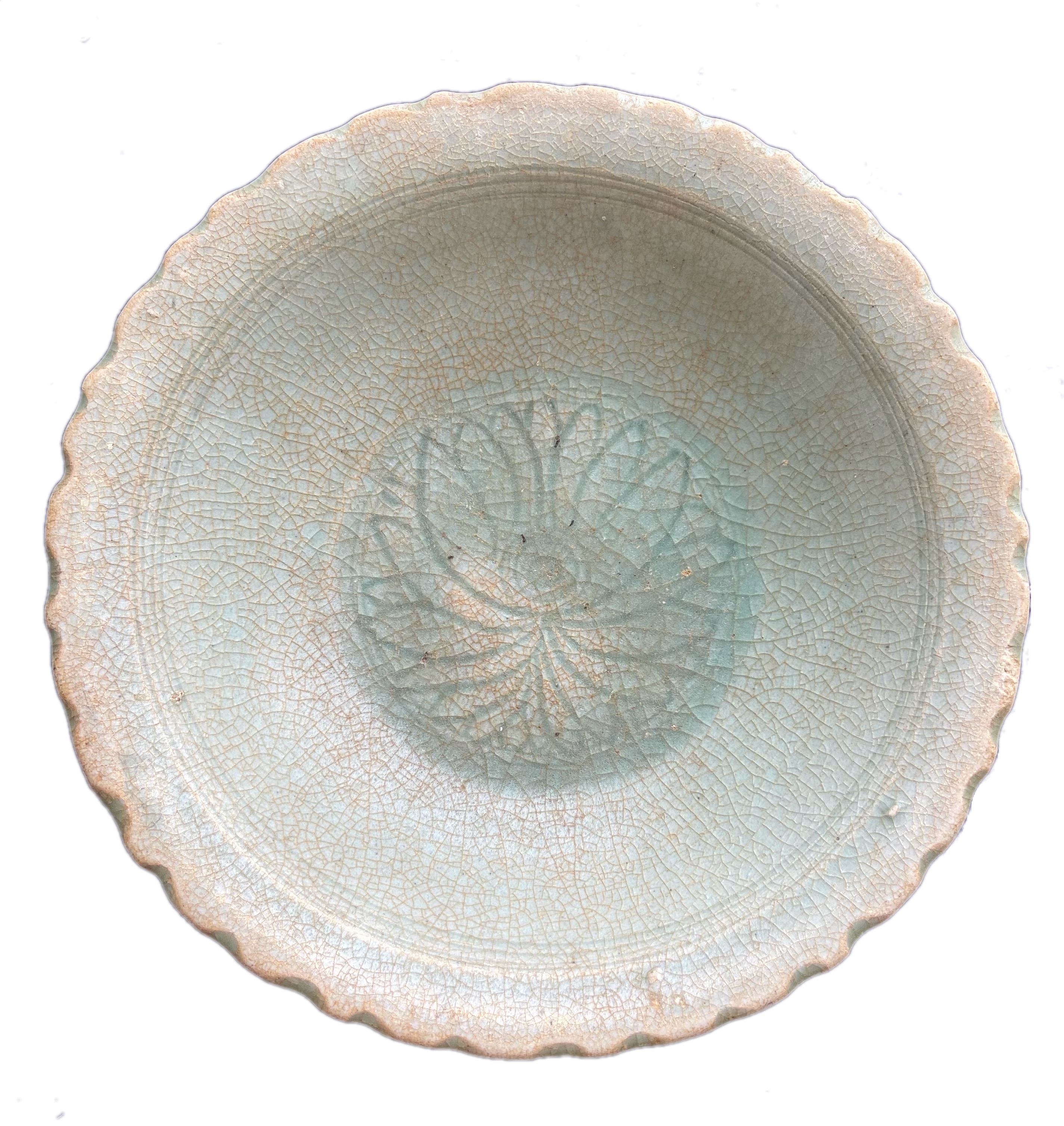
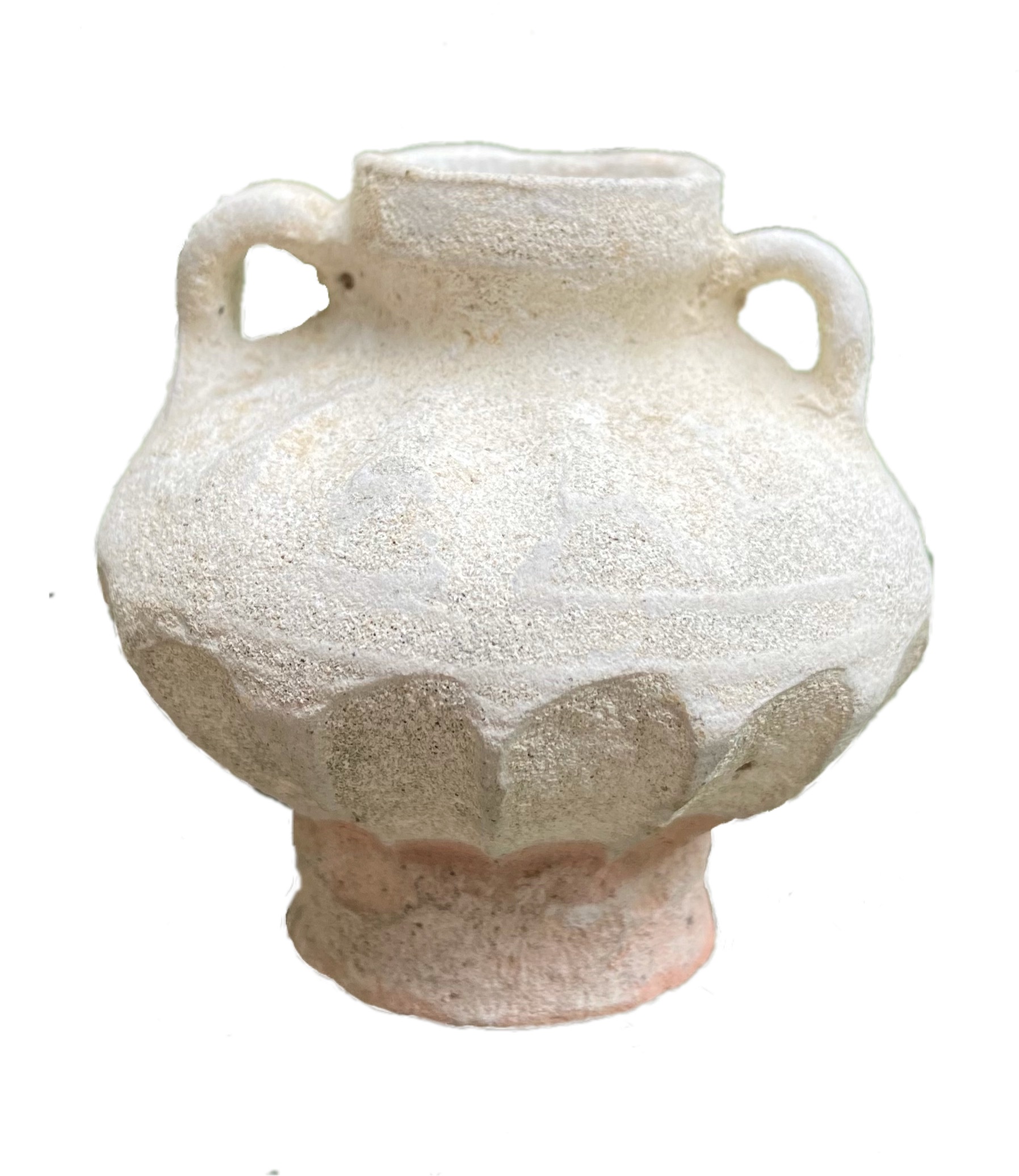
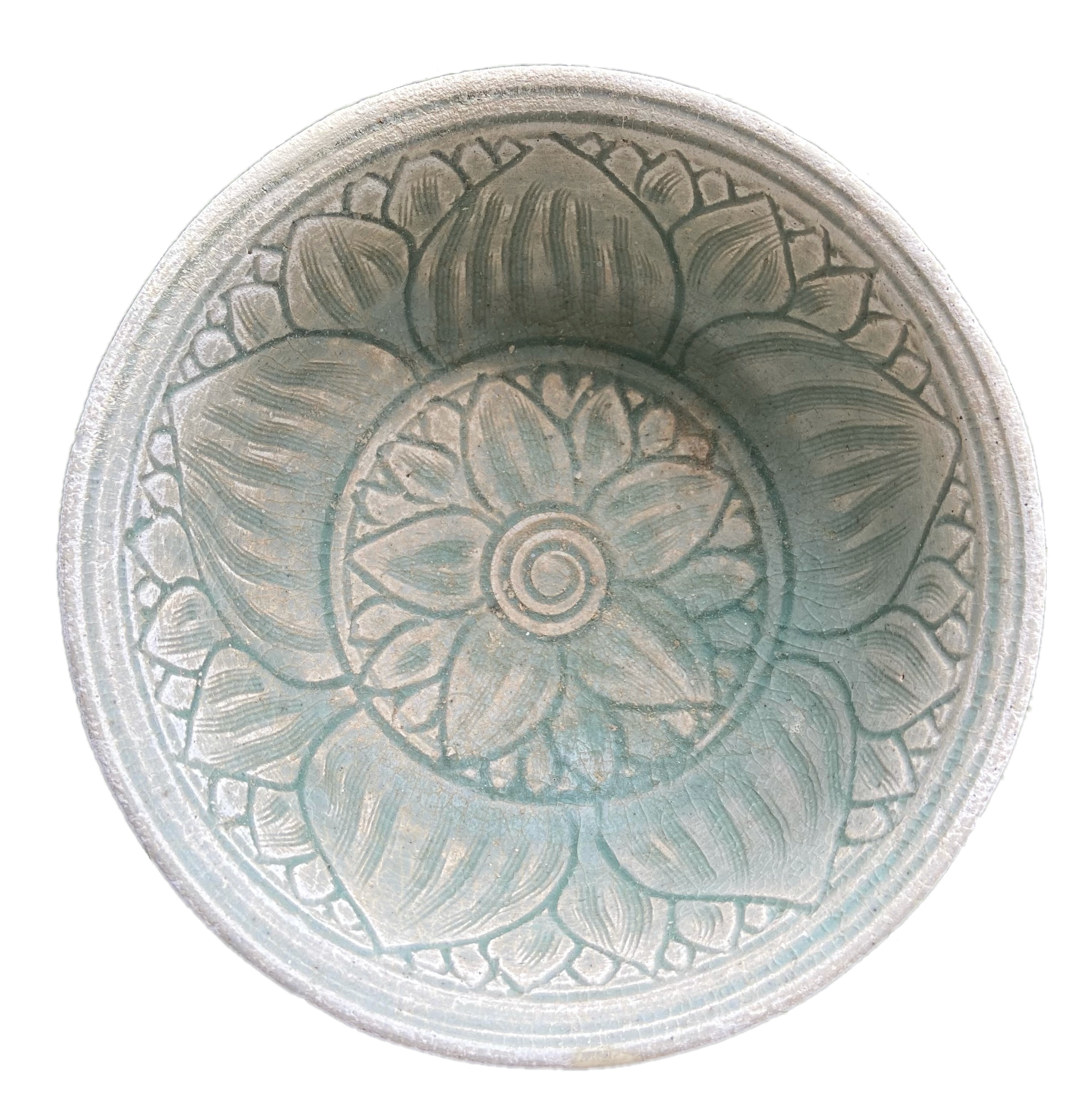
Left and centre: Si Satchanalai Celadon dish, and jarlet recovered from the Royal Nanhai shipwreck c1460 CE. Right: Si Satchanalai bowl recovered from the Nanyang shipwreck c1380 CE.
Note: Please refer to L is for Longquan to look at more Si Satchanalai ceramics

The 14th and 15th centuries saw many large potting centres producing Thai ceramics, mainly stoneware, scattered across the northern part of Thailand. During this time, the Thai kilns around the city of Sukhothai and Si Satchanalai (also known as Sawankhalok) flourished, exporting ceramics in large quantities as evidence of Thai ceramics can be found across South East Asia and from shipwrecks salvaged around the region. Sukhothai kilns produced mostly underglaze black ware, which were very similar in design and decoration to the pots made in the Cizhou kilns in northern China centuries earlier. Popular designs from the Sukhothai kilns were underglaze black plates decorated with lively fish with an arched back and tail thrown upwards, flower or cakra or starburst motifs, and various upright shapes like vases, bottles, jars with underglaze black fish or flower motifs.

The Si Satchanalai kilns on the other hand produced mostly celadon ware: dishes, bowls, and ring-handled jars in various sizes. At the height of its celadon production, the Si Satchanalai potters were producing high quality celadon ware, decorated with incised lotus petals, lotus blossoms, and chrysanthemum flowers on dishes with foliated mouth rims and similar incised lotus and chrysanthemum flowers on the bigger ring-handled jars. Many of these jars were completed with beautifully carved vertical striations on the lower body.

Other famous kiln sites producing Thai ceramics, mainly storage jars, were situated at Singburi (also known as Maenam Noi) and Suphanburi.
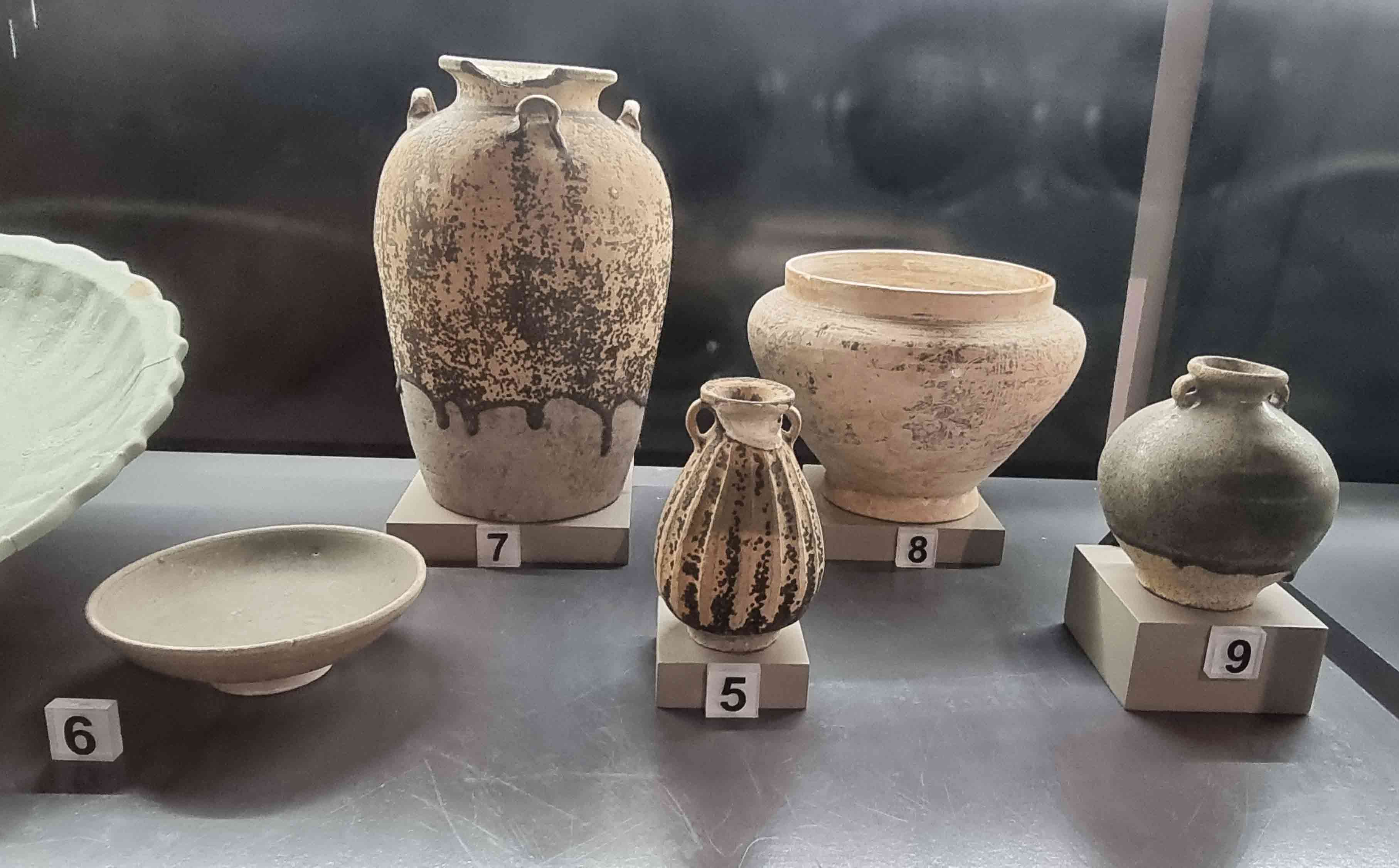
Sukhothai and Si Satchanalai ceramics at Gallery B, Muzium Negara, recovered from the Turiang (c. 1370).
5: Si Satchanalai vase with vertical striations.
6: Sukhothai black glazed decorated flower dish.
7: Si Satchanalai black glazed ring-handled jar.
8: Sukhothai black glazed decorated jar.
9: Si Satchanalai green glazed ring-handled bottle.

The Ming Gap

Questions have been raised on why Thai ceramics only began to be exported towards the end of the 14th century. One of the reasons might be due to the first Haijìn (Ming ban or Sea ban;1371-1509 CE), a policy ordered by Ming Dynasty’s first Emperor, Hongwu in 1371 CE where all exports and private overseas trading were prohibited. The Emperor proclaimed that all merchant ships were to be destroyed and anyone caught smuggling goods out of China would be executed. It is believed that these isolationist policies caused many of the Chinese potters and Chinese shipbuilders to migrate to various cities or towns in Southeast Asia to continue their trade. In her book, The Ceramics of South-East Asia, Their Dating and Identification, Roxanna Brown wrote that the migration of the potters may have actually started earlier, i.e. during the Yuan Dynasty (1279-1368 CE) under Mongol rule, where many Song Chinese sought refuge in the Sukhothai kingdom. Evidence of this could be found through the trade route. She wrote in her book, “It is about this time, the end of the thirteenth or by the middle of the fourteenth century, at any rate, that Sukhothai’s ceramics industry moves from being purely domestic to testing itself on international South-East Asian market. The local potters could not have done this on their own. Somehow they were linked to the Chinese Trade network; and this must have been done by the Chinese. For Thai ceramics appear at the same South-East Asian sites as Chinese wares; the Thai did not forge new trading routes”.

There is an ongoing study on whether the trading of Thai ceramics began before or after the founding the new Thai kingdom of Ayutthaya(1351-1767 CE). It is also interesting to note that there was an absence of blue and white ware from the Thai kilns. A valid explanation may be that cobalt, the blue pigment used by Chinese kilns at Jingdezhen from around the 1320s to produce blue and white porcelain, is a relatively rare mineral. Cobalt may have been difficult to acquire and was expensive, while iron, the black oxide used in underglaze black ware was common and plentiful in Sukhothai. The last of the kilns in the old kingdom of Sukhothai finally closed down after the Burmese invasion in the 1580s. It is reported in the Glass Palace Chronicle of Burma that their ruler, King Bayinnaung (1516-1581 CE) ordered all the artists, artisans, and craftsmen of Sukhothai kingdom to be relocated and settled in Pegu (today Bago).
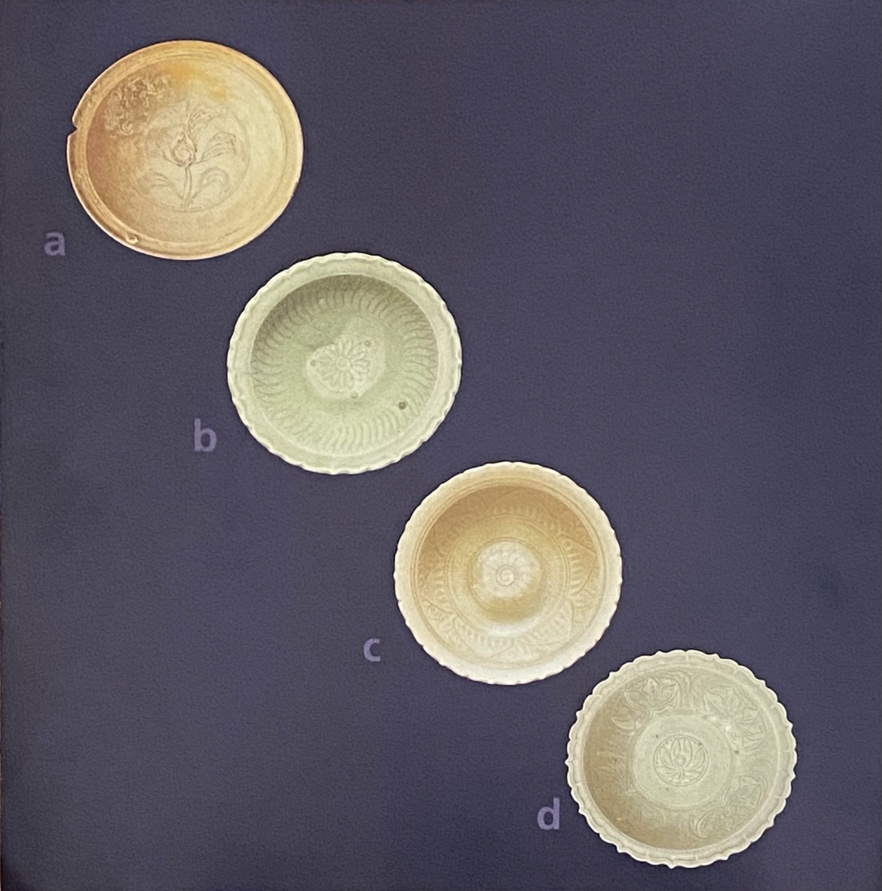
Stylistic evolution of Si Satchanalai dishes from four shipwrecks arranged in chronological order (from the Kildegaard Galbo collection):
a) Turiang c1370 CE
b) Nanyang c1380 CE
c) Longquan c1400 CE
d) Royal Nanhai c1460 CE
Image credit: Sten Sjostrand, Maritime Archaeology and Shipwreck Ceramics in Malaysia.

References

Brown, Roxanna M. (2000). The Ceramics of South-East Asia: Their Dating and Identification. Art Media Resources.

Brown, Roxanna & Sjostrand, Sten. (2004). Maritime Archaeology and Shipwreck Ceramics in Malaysia. RECCEX Sdn Bhd.

Miksic, John (Ed.). Southeast Asian Ceramics, New Light on Old Pottery (pp. 27-33). Editions Didier Millet, 2009.

Siripon, Nanta (ed), Thai Heritage – World Heritage. Thailand, Graphic Format Ltd, 2000.

Tan, Heidi (Ed.). (2012). Marine Archaeology in Southeast Asia, Innovation and Adaptation (pp. 23-29). Asian Civilisations Museum.

Vecchia, Stefano. (2007). The Khmers, History and Treasures of an Ancient Civilization. WS White Star Publishers.

In this Series

Click HERE for a list of articles in the ‘A-Z at Muzium Negara’ series.
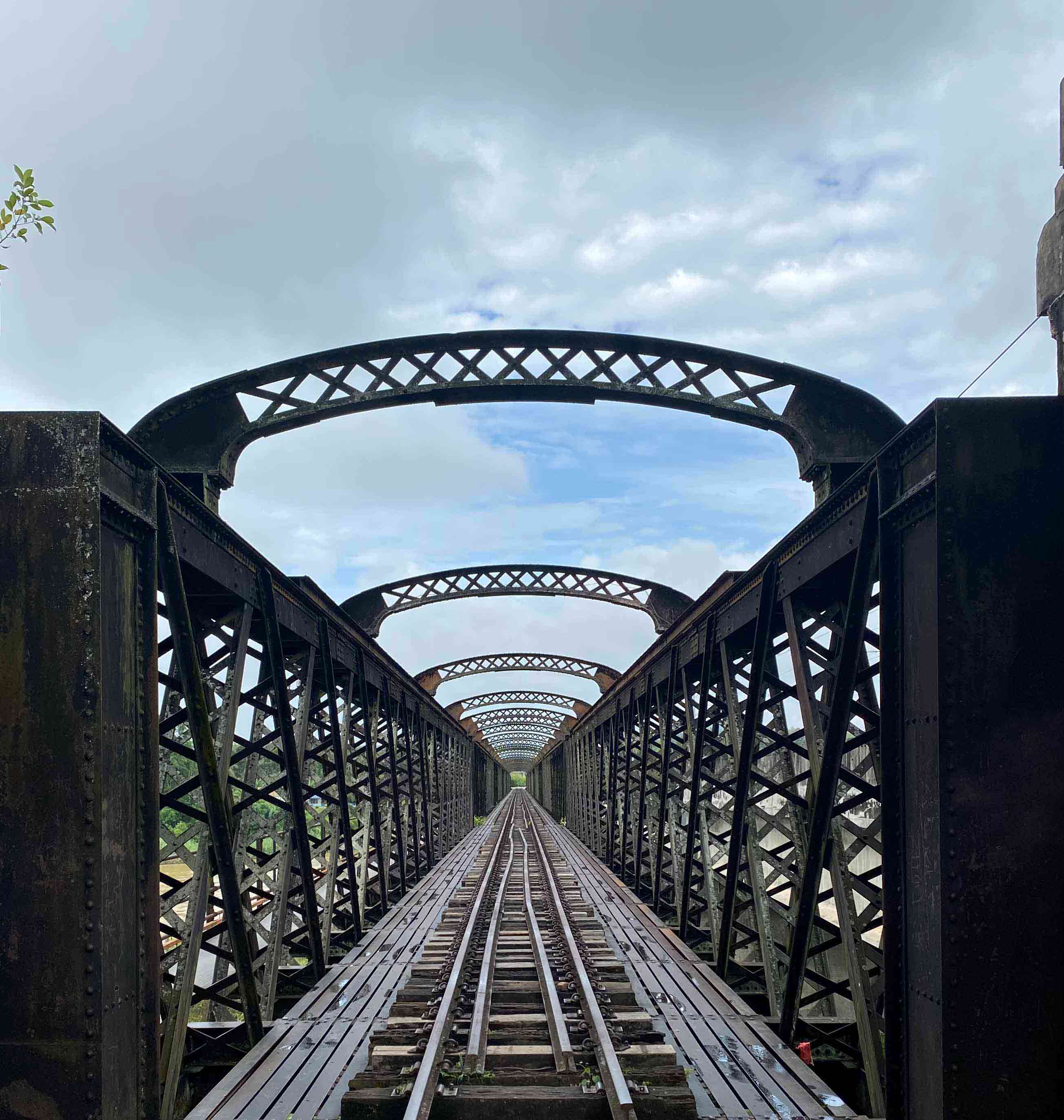
Victoria Bridge, Karai

by Hani Kamal

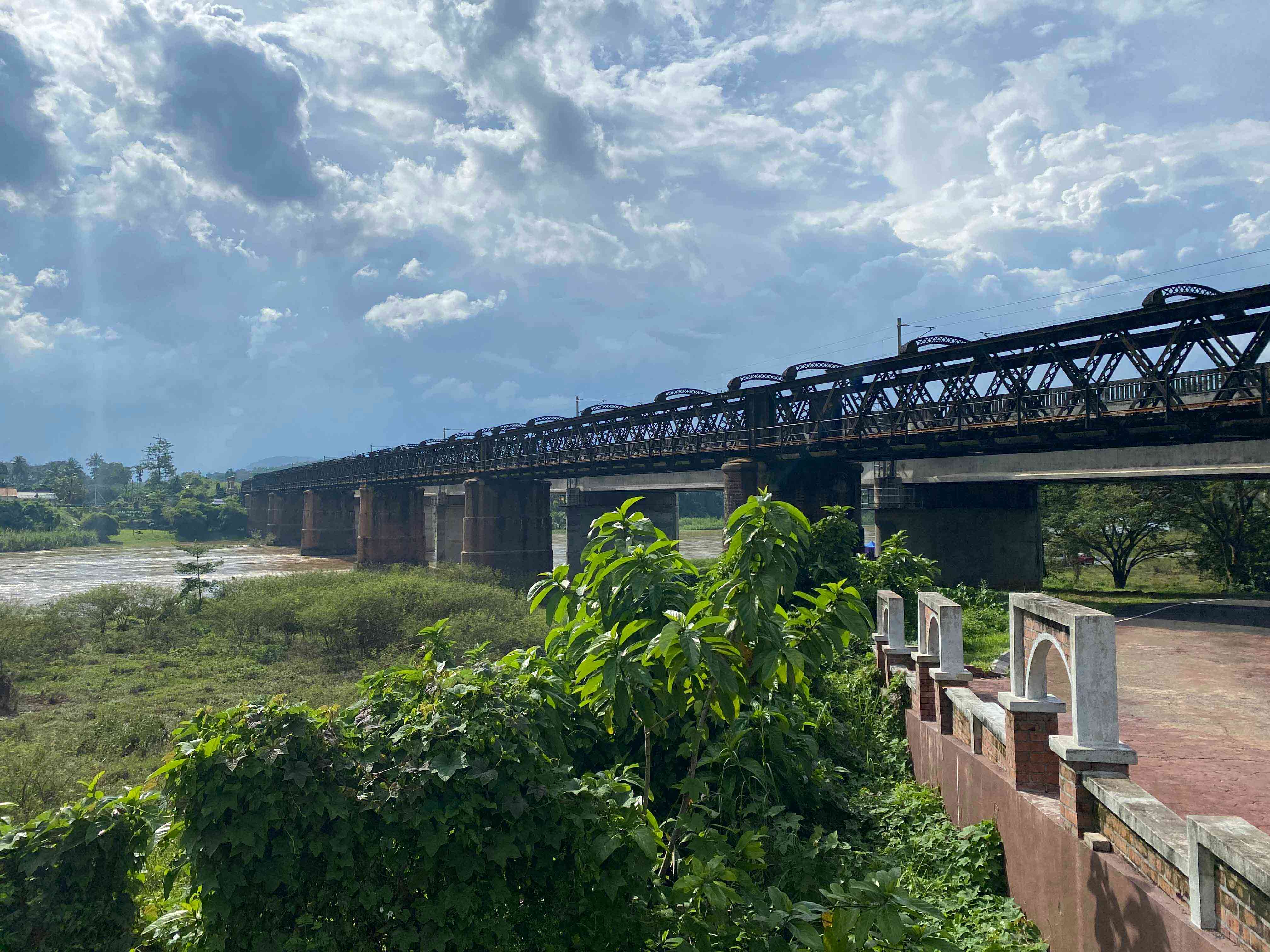
Victoria Bridge in Karai, Perak is one of the oldest bridges in Malaysia. It was built in 1897 and completed in 1900. The Victoria Bridge was built across the Perak River linking it to the rail line in Sungai Siput and Kuala Kangsar in the north. This is a single-track railway built to transport natural resources from the interior all the way to Singapore for export.

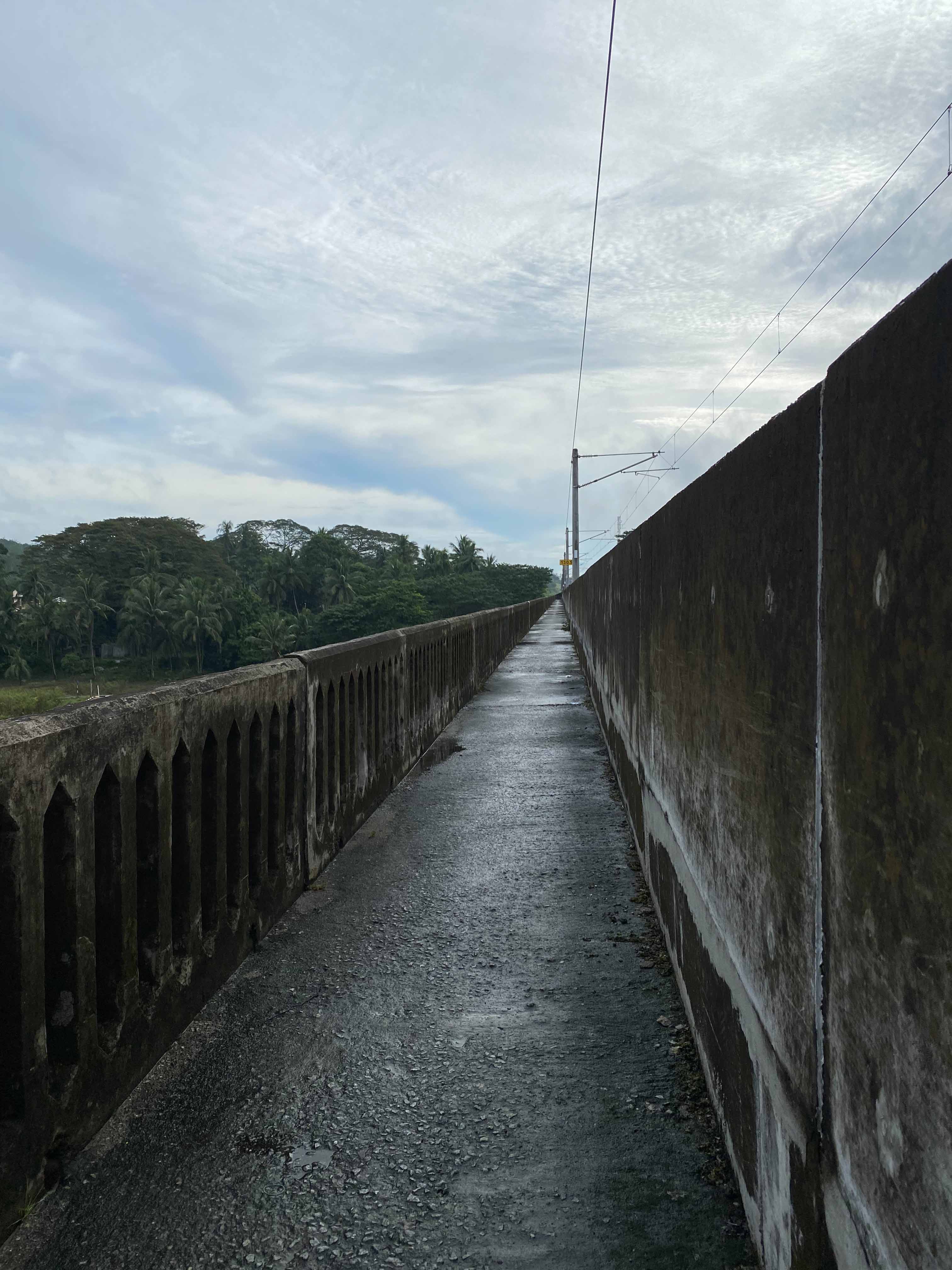
The Victoria Bridge today. Image credit: Hani Kamal

Karai – Coal Mining Town

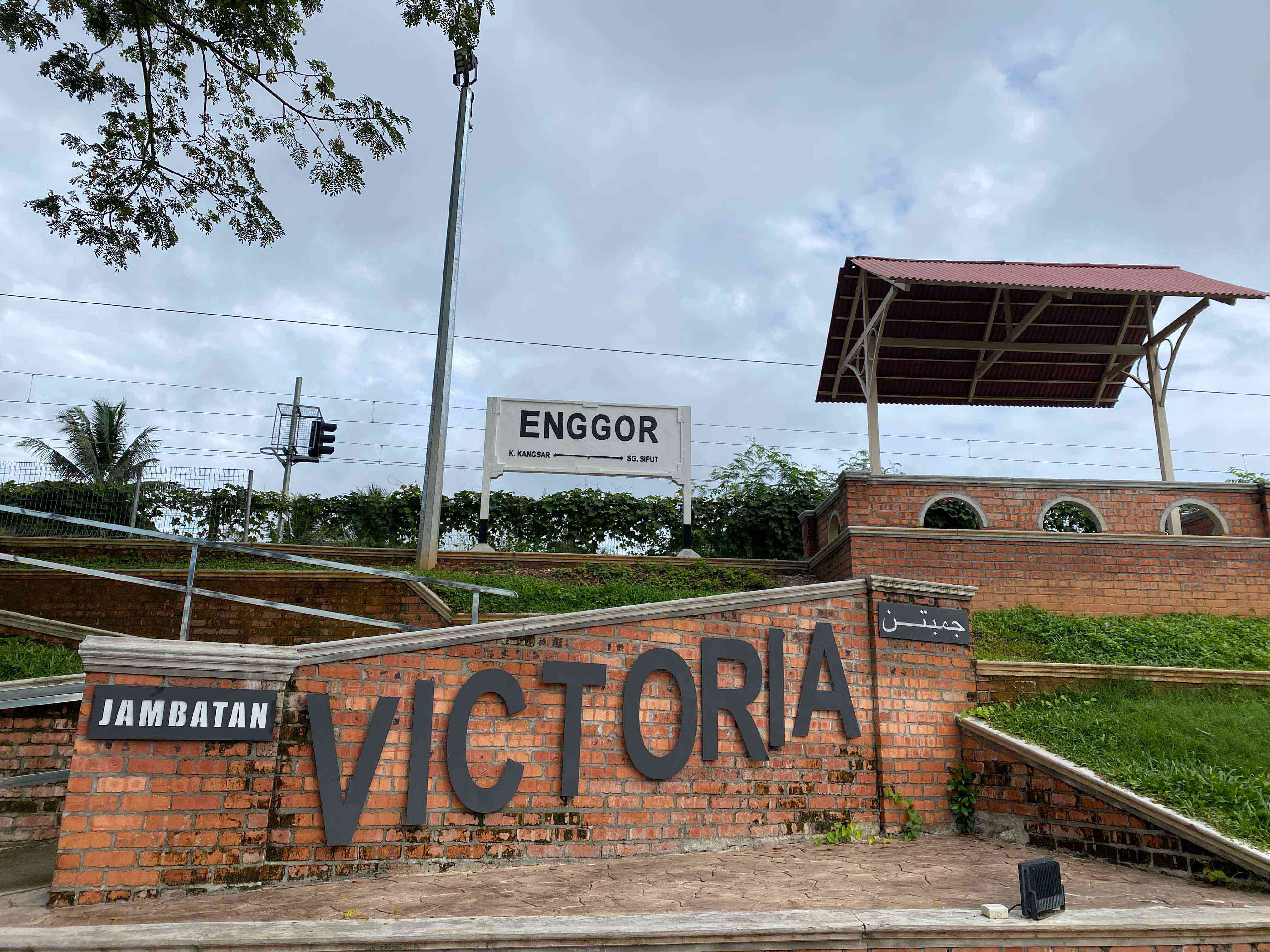
Karai is located 9 kilometres from the royal town of Kuala Kangsar, and about 250 kilometres from Kuala Lumpur; it takes approximately 3 hours to reach. People are often confused with the location or name of the sleepy town of Karai where Victoria Bridge is located. The bridge is situated in both the Karai and Enggor towns. The British wanted to name the entire place Enggor, fashioned after Enggor Street in Singapore.  However, the village folks wanted to retain its name Karai. So, it became Victoria Bridge in Karai and the station is called Enggor Station.

The Enggor Station to Victoria Bridge. Image credit: Hani Kamal

In the 1890s, coal was first discovered by a Chinese planter Hok Hin Hoh while planting rubber trees on a leased plot of land. The discovery of coal in this sleepy town turned it into one of the busiest towns up north. Coal was in demand at that time for locomotives and other industrial usage.

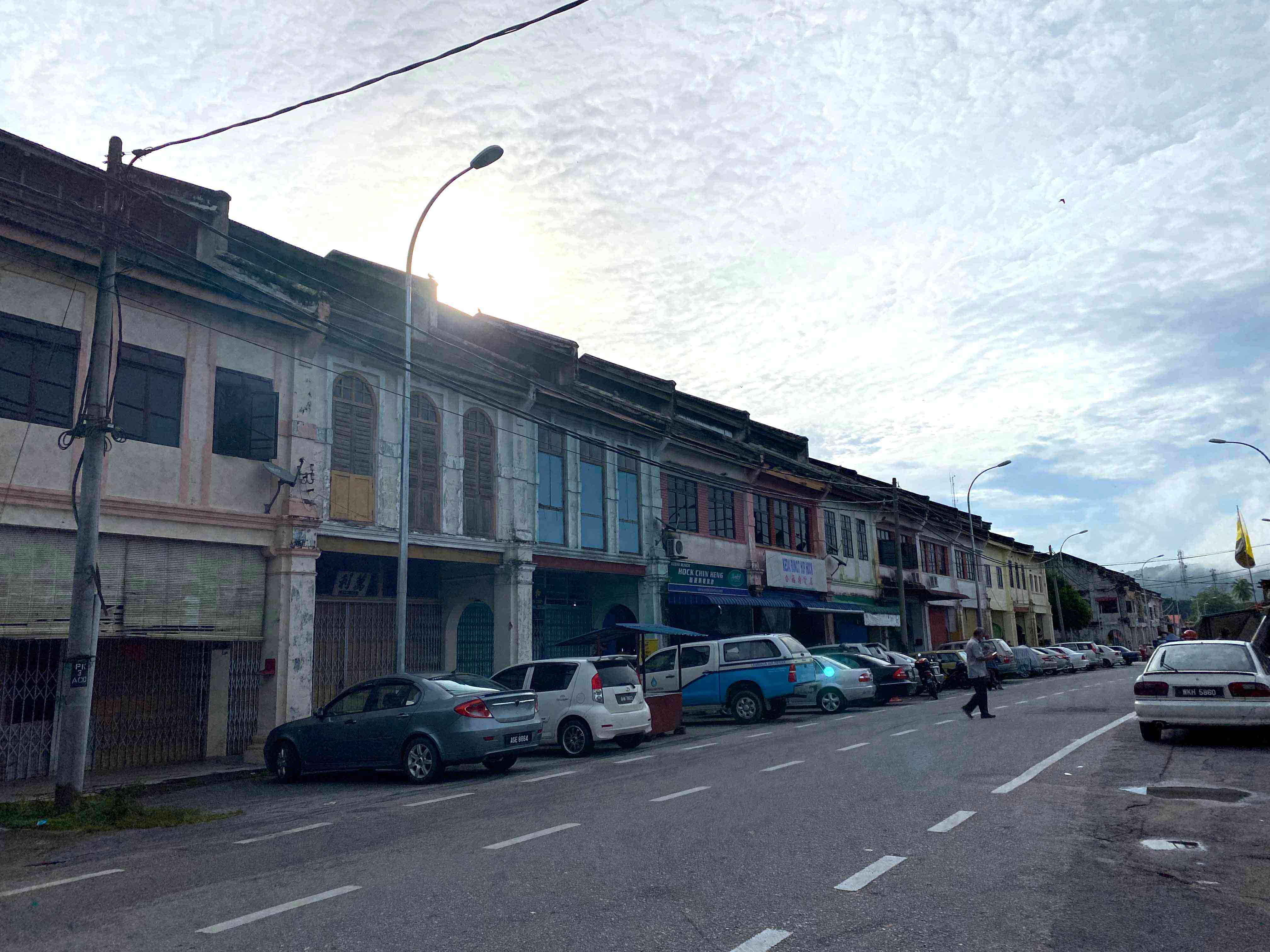
During the prosperous period of coal mining between 1905 and 1930s, and with the completion of Victoria Bridge, several shop houses were built along the railway station road. These shops were used as wholesale rubber trade, sundry shop, eateries, pawnshop, liquor outlet, places to smoke opium and gambling dents. These pre-war shop houses remain until today but minus its once boisterous activities.

The Karai shoplots today. Image credit: Hani Kamal

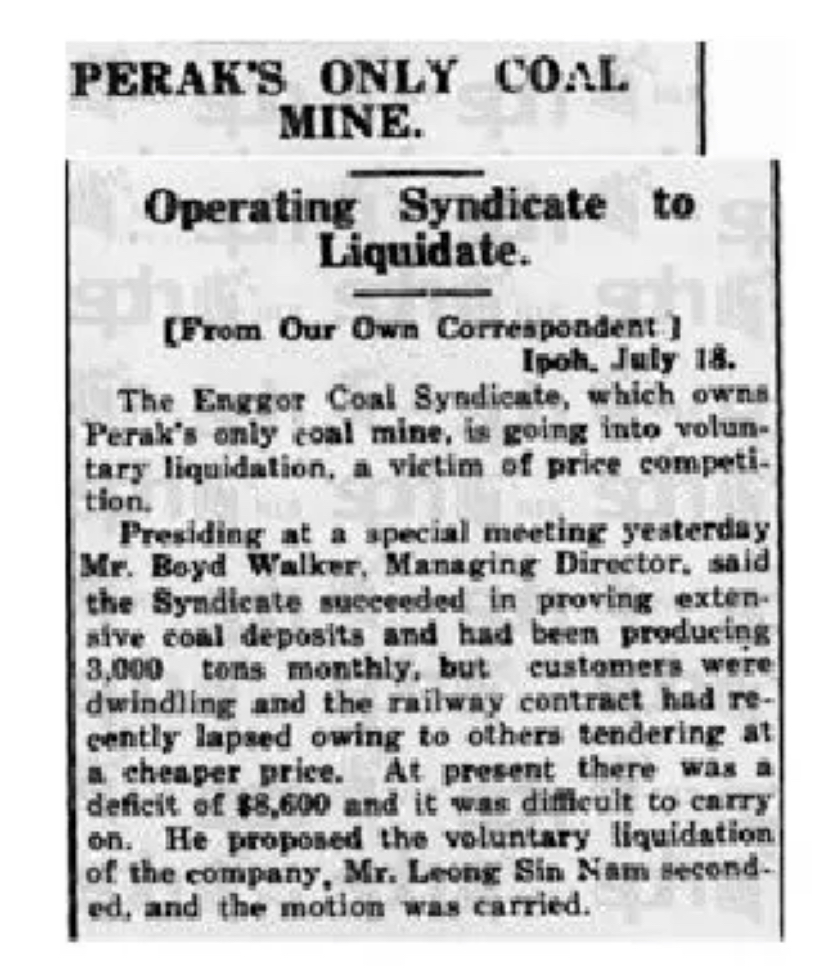
When coal was first discovered in Karai, the concession was awarded to the Enggor Coal Syndicate Ltd. The Enggor mine ceased operation in 1928 when coal prices and demand went down. The low demand for coal and its low price was due to the discovery of newer technology utilizing petroleum.

Newspaper article announcing the closure of Enggor Coal Syndicate Ltd Company. The Singapore Free Press and Mercantile Advertiser, 19 July 1928, Page 9. https://tinyurl.com/2p93f9p6

Construction and Launch of the Bridge

Before the completion of the Victoria Bridge rail, pontoons were used to transport coal across the Perak River. Due to several adverse floods, most of the pontoons were washed away. These big floods expedited the administration to build a bridge high enough to avoid the overflowing river. The Victoria Bridge was constructed twelve meters from the surface of the Perak River. 

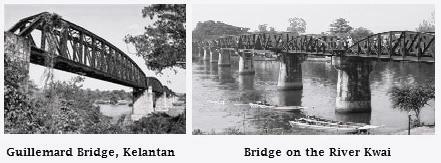
The overall length of the Victoria Bridge is 351 meters with each length of the beam measuring 305 meters. Its width is 3.6 meters wide. It is completely constructed with steel beams and six meters deep concrete foundation. There are 6 columns elevated 12 meters from the level of the river surface. The cost of construction was $325,000. Construction of Victoria Bridge commenced in November 1897 and the date of completion was recorded as March 1900. This bridge was fully functional for 102 years (1900-2002). The engineers from Railway Division were G.W. Fryer (Design Engineer) and C.R. Hanson (Resident Engineer), working under the supervision of Happlestone. The bridge is said to be similar to the “Bridge on the River Kwai” and Guillemard Bridge in Kelantan.

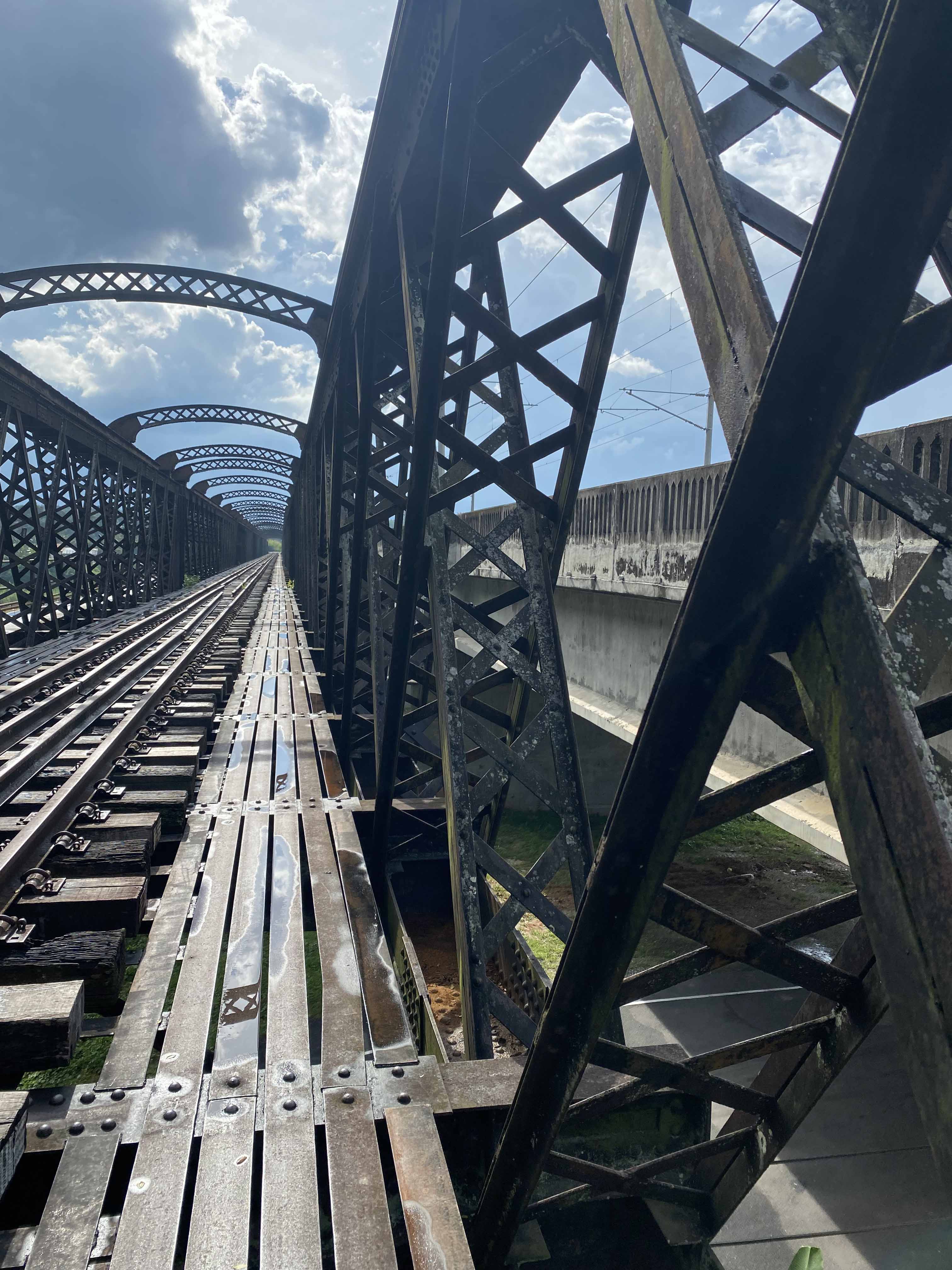
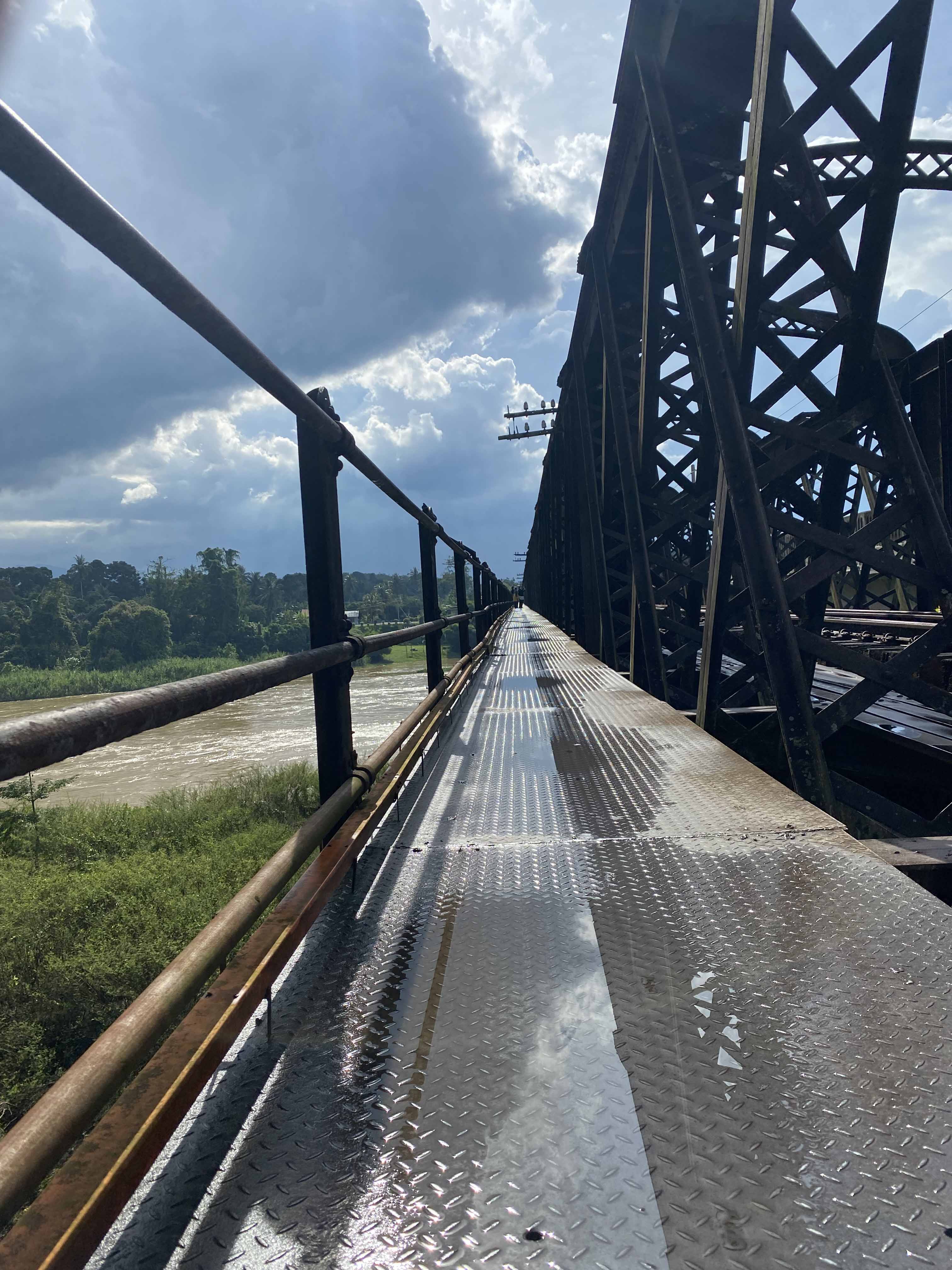
The Victoria Bridge was designed for a single-track carriage with 500 millimetres service lanes on both sides of the line. Both pedestrian and motorbikes/bicycles can use it to cross the river. These paths are still in use until today by people to cross the river.

The Victoria Bridge. Today tourists can walk in between the rails.The pedestrian crossings on both sides of the Victoria Bridge still functional till today to cross the river. Image credit: Hani Kamal

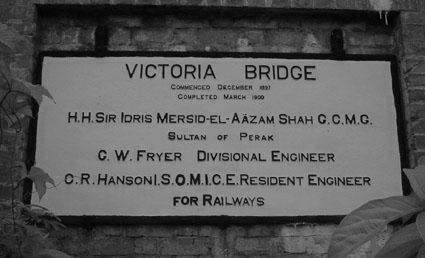
The Victoria Bridge was officially launched on 21 March 1900 by the late Sultan Idris Murshidul Azzam Shah (28th Sultan of Perak) at a ceremony which was also attended by Sir Frank Swettenham, the Resident-General for the Federated Malay States, and Sir John Pickersgill Rodger, the acting British Resident for Perak. Sir Frank Swettenham, in his speech during the opening of the bridge, regarded Victoria Bridge as the largest bridge in the East outside of India.  This bridge was named after Queen Victoria, the ruler of the British Empire at the time.

Official opening plaque

Today

Construction of the Victoria Bridge served the purpose of connecting this small town with other towns from Malaya and Singapore. However, when coal-mining activities discontinued, the town also loss its glory. The bridge ceased its function and it was only used to connect the two villages.

During the war, the Victoria Bridge was partly bombed by the British in order to delay the Japanese advancement from the north via Kelantan. After the war, the bridge was repaired and it functioned as usual. Added securities and barracks were built in lieu of local threats from the Malayan Communist Party.

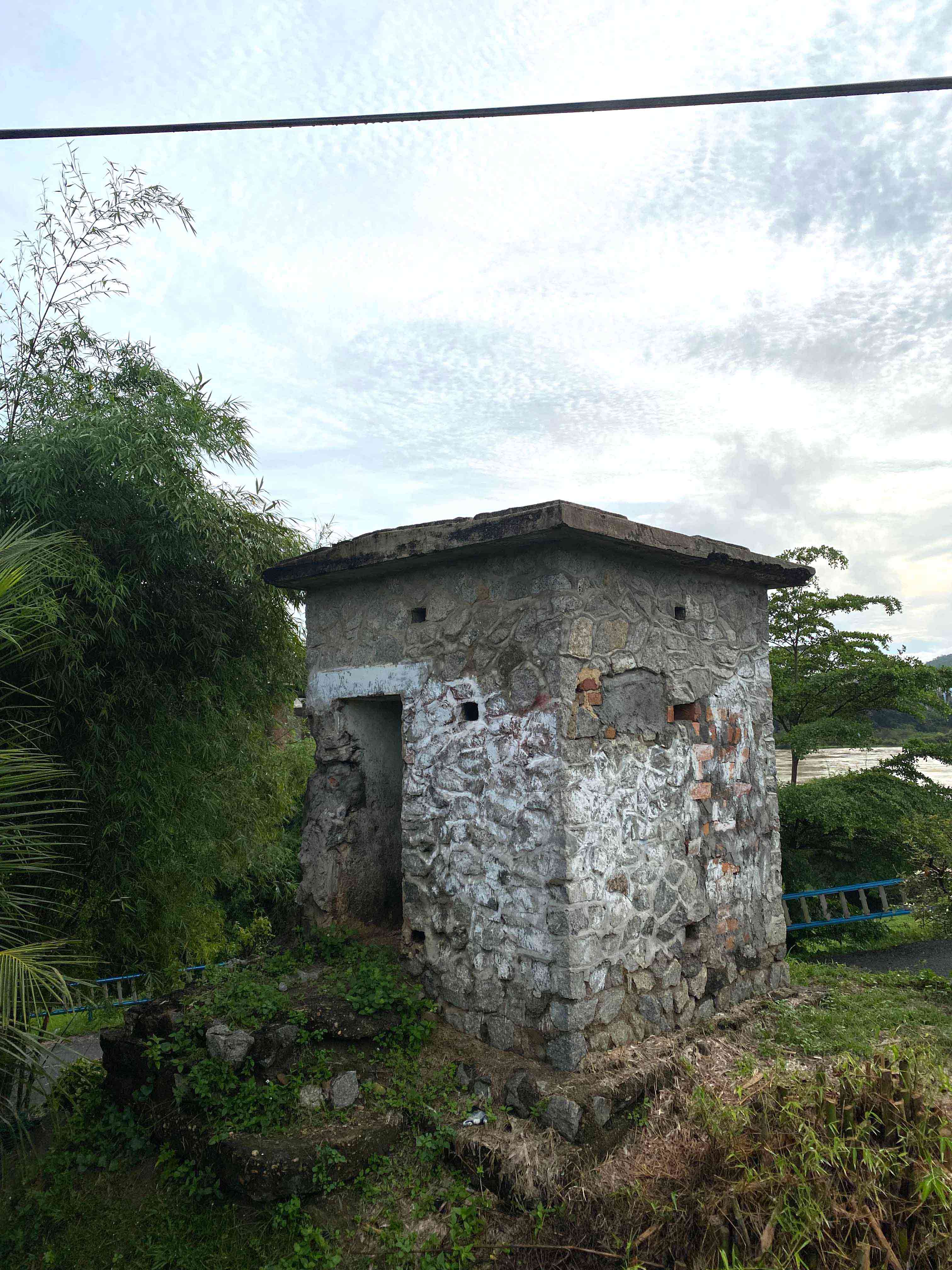
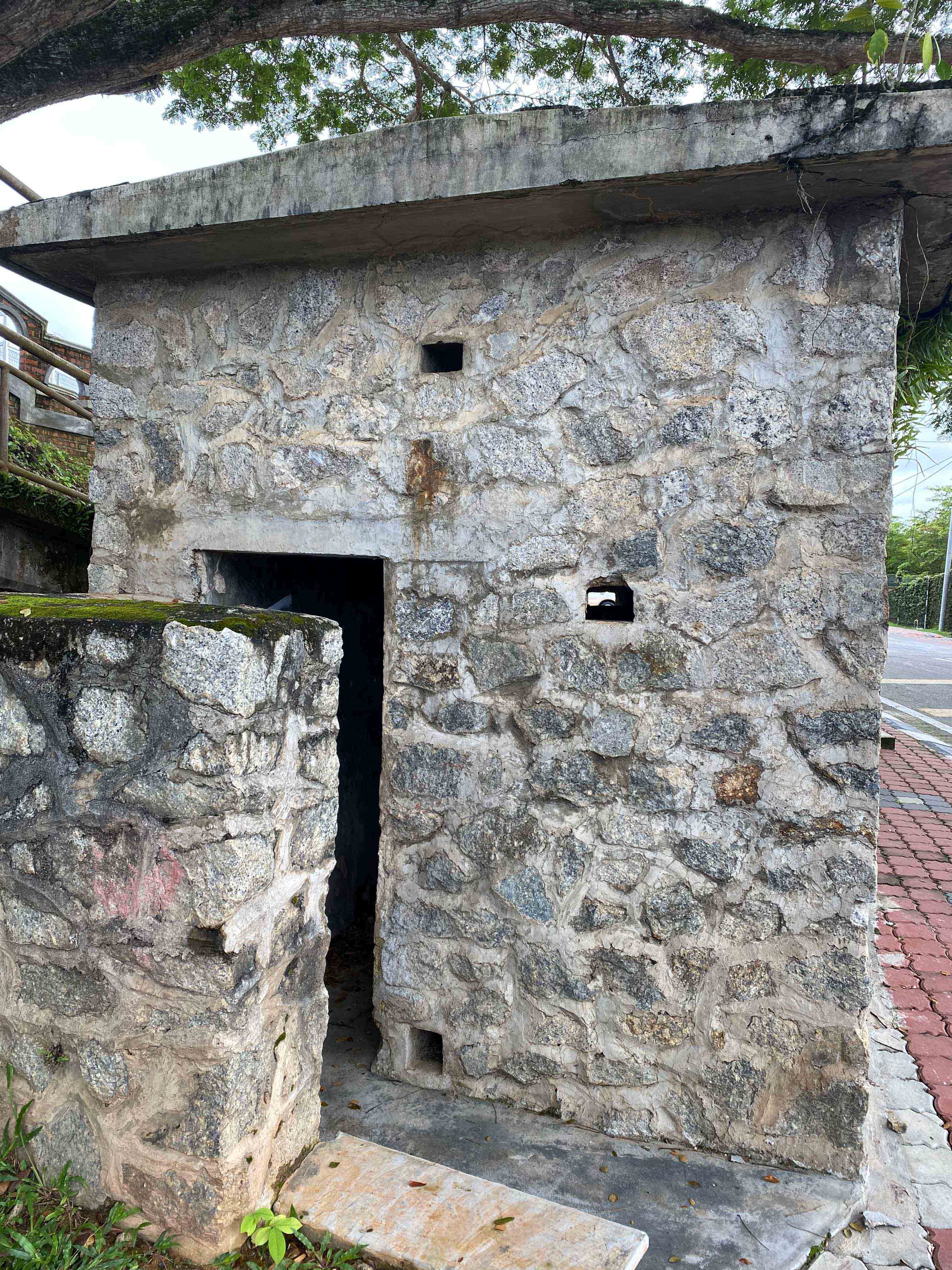
Barracks were built to guard the Victoria Bridge during the period of Emergency. Two post guards were placed on each side of Victoria Bridge. 

By 2002, the Victoria Bridge railway track was abandoned for the new two-way rail track. Overgrowth and weeds ate into its surrounding and it was left unattended until in 2013 when the authorities cleared the area to rebuild it as a tourist attraction. By 2016, The Victoria Bridge was officially registered as a National Heritage under the Department of National Heritage Malaysia.

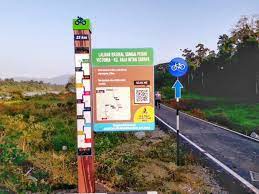
Sungai Perak Bike Trail to Kampung Raja Intan Suraya (25 km)

The RM2 million Living River Bike Trail Project from Chenderoh to Victoria Bridge was completed on Dec 6, 2020. The Sg Perak bike trail starts from the Victoria Bridge to Kampung Raja Intan Suraya. It was initiated by the state authority in order to maintain its beauty and cleanliness of the river and its villages. It covers 25 kilometres of cycling through fiercely independent old villages along the riverbank of the Perak River.  The starting point is from the Victoria Bridge itself.  Tourists can rent bicycles near the D’Village Resort opposite the Victoria Bridge.  The trail is surrounded by beautiful greens and you can catch people fishing on the side.  The roads are well tarred and highly conducive if you are looking for a “kampong ride”. You can almost imagine how hulubalangs who used to live in these villages jumping into river sampans at the call of das meriam* from the Kuala Kangsar Palace.   There are not many of such charming kampong surroundings left to tell their stories.

*Note:  Hulubalangs or soldiers of Sultans lived along the river banks of Sg Perak are known to be very loyal towards the monarch.  When hulubalangs are wanted at the palace in Kuala Kangsar, canon shots are made as a signal or call for their presence at the palace.  They would jumped into the boats (sampan) and row upstream towards the palace to report for duties. This was narrated by an ex hulubalang many years ago.  He lived in one of the villages and he retired as a silat (martial arts) master.

References

Haji Mior Haji Zawari. (2020). Karai: Teman dan Senibina. Akitek Suria, Ampang, Selangor.

Mohd Hasrol Haffiz Bin Aliasak, Mhd. Nor Bin Osman, Siti Rahayu Binti Zakaria, Mohd Farid Bin Sa’ad & Nur Lesya Firsya binti Johaimi Ling. Town of Karai : The only coal mining site in Perak and its contribution to the urban development. Academia.edu. https://www.academia.edu/9531628/Town_of_Karai_The_only_coal_mining_site_in_Perak_and_its_contribution_to_the_urban_development

SembangKuala. (2010, August 15). Victoria Bridge, Kuala Kangsar. https://sembangkuala.wordpress.com/2010/08/15/victoria-bridge-kuala-kangsar/

Victoria Bridge, Malaysia. (2021, October 15). In Wikipedia. https://en.wikipedia.org/w/index.php?title=Victoria_Bridge,_Malaysia&action=history

Zahratulhayat Mat Arif. (2021, March 23). Living River Bike Trail along Sungai Perak now open. NST. https://www.nst.com.my/news/nation/2021/03/676228/living-river-bike-trail-along-sungai-perak-now-open

R is for Rebab

by Rose Gan

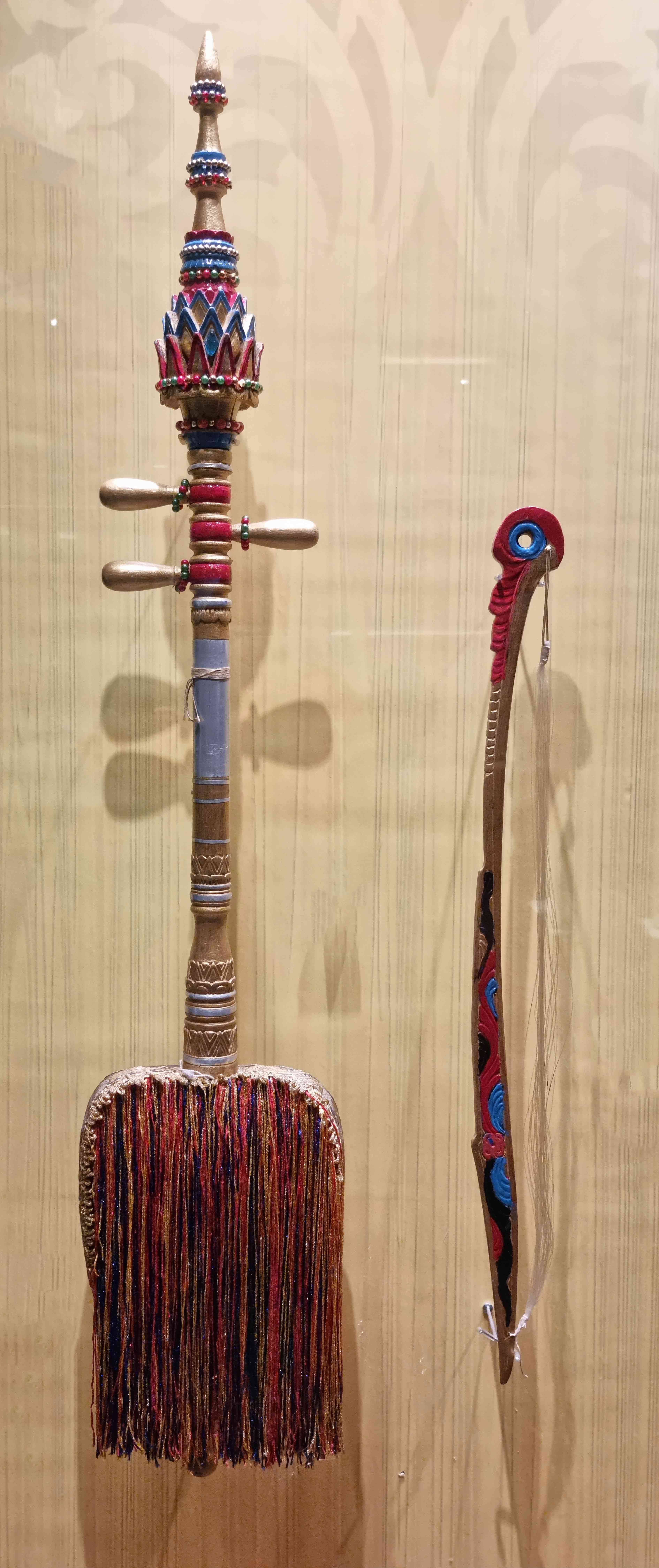
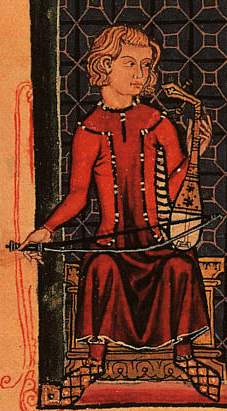
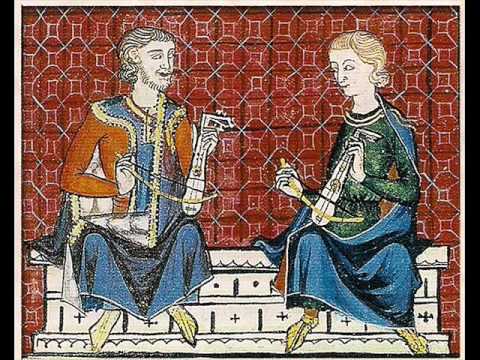
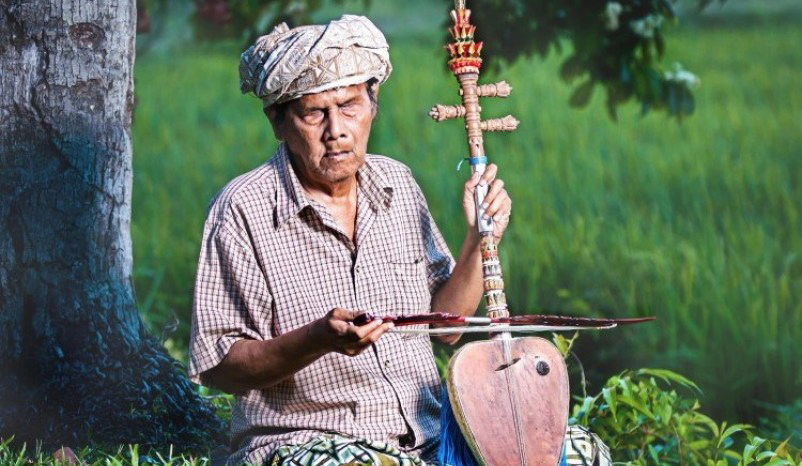
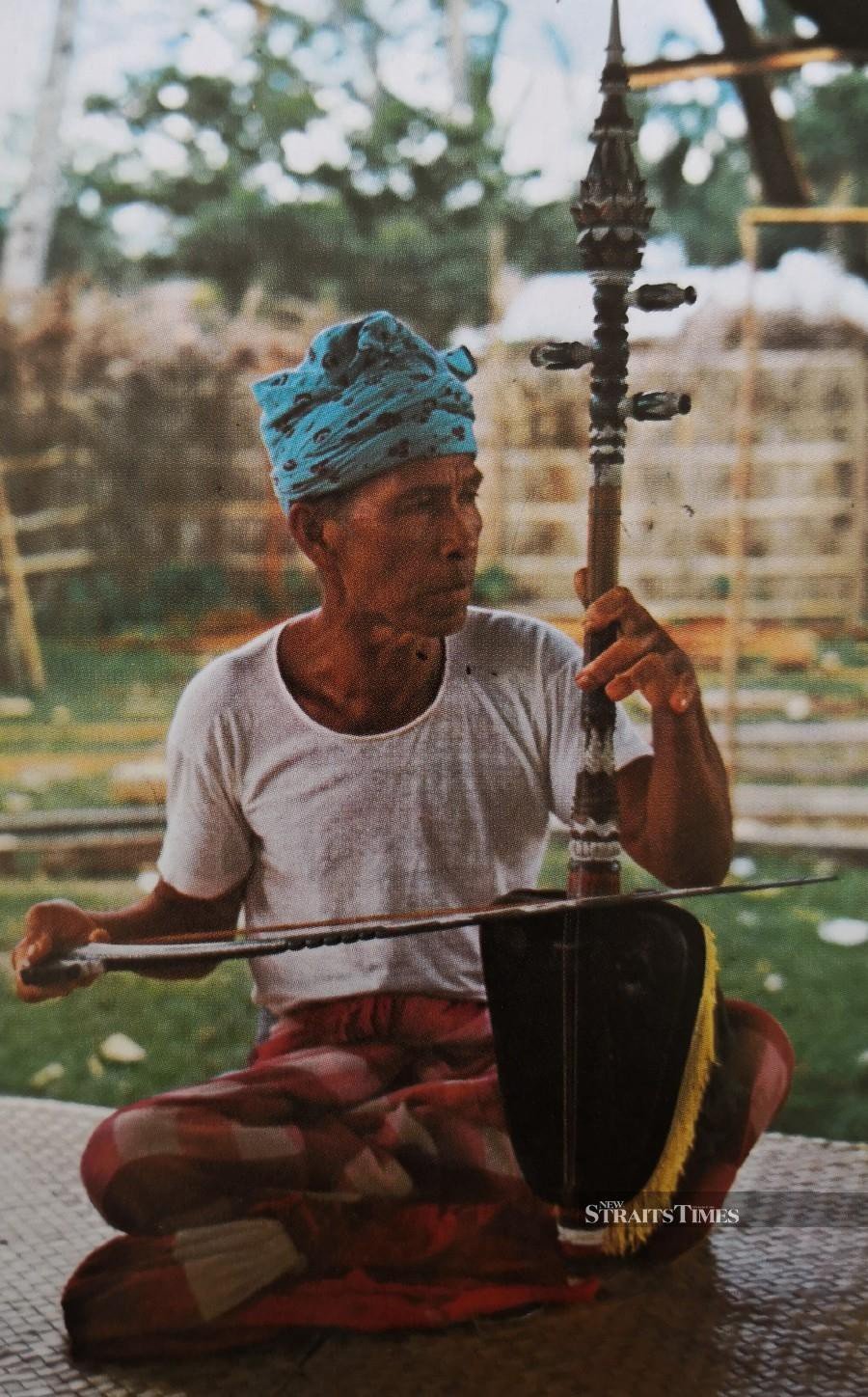
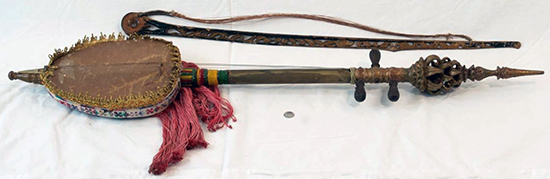
This colourful rebab is a stringed instrument more than eighty years old, part of the gamelan orchestra of the court of Kelantan that accompanied traditional wayang performances. In the same vitrine there are also examples of Kelantanese wayang kulit figures. A rebab is similar to the medieval lute. It originated in the Middle East by the eighth century CE, if not much earlier, where it is widespread in many regions.  From the Arab world, this early instrument travelled both east and west along Islamic trade routes, In Europe, the rebab was the ancestor of the lute, the rebec, and ultimately the guitar, having been introduced in Spain during the medieval Islamic period. In each region, the rebab developed its own particular characteristics.

Rebab at Gallery B

Left to right:
Medieval rebab player c 1250. Image credit: public domain via Wikimedia Commons
Medieval rebab by unknown artist from 13th century. Image credit: https://miguelmorateorganologia.wordpress.com/introduccion-a-los-cordofonos-compuestos-o-familia-de-los-laudes/
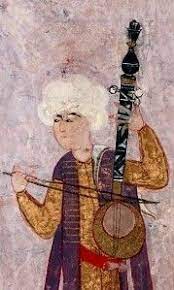
Persian rebab player. Image credit: https://www.pinterest.com/pin/436708495107772315/

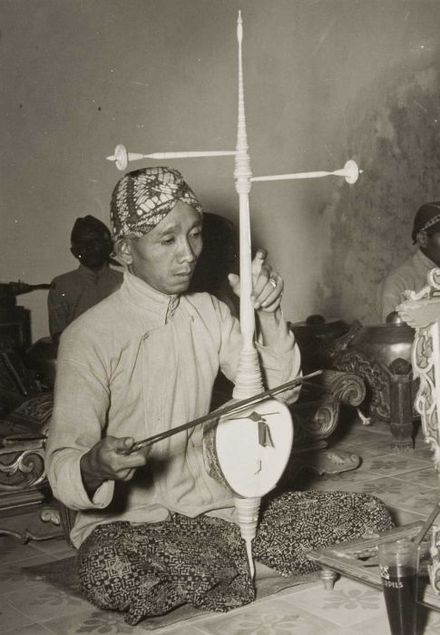
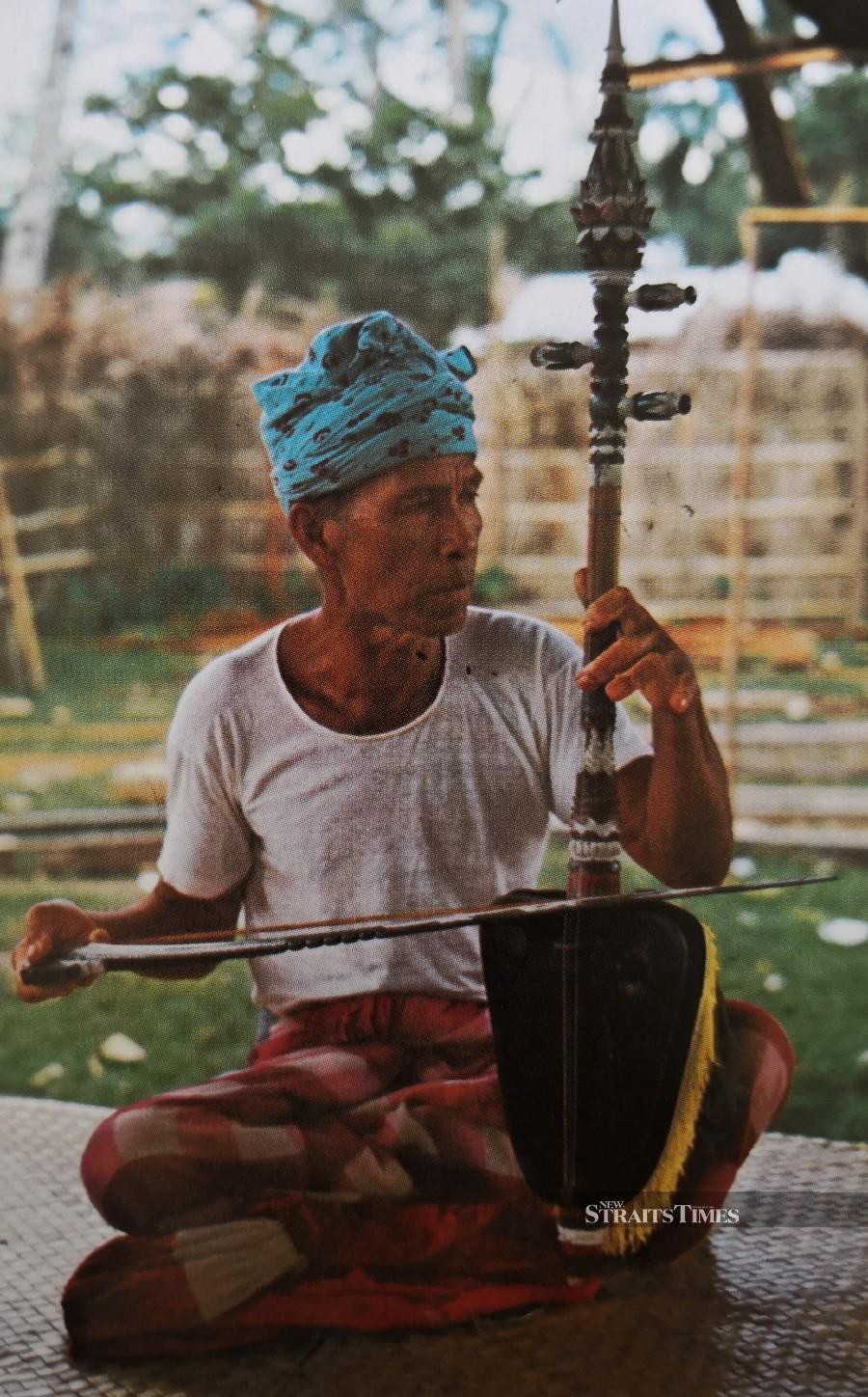
The rebab reached South East Asia with the coming of Islam to Sumatra, Java and the Peninsula, and bears marked similarities to the early Persian version. It is a singularly difficult instrument to play because it has neither fingerboard nor fret, and its bow is loosely strung, unlike the taut bow of the violin. It also has a limited range of little more than one octave. In a gamelan orchestra, the rebab acts as an ornamentation to the basic melody, but it also has a function as the main accompaniment in other cultural traditions of the peninsular East coast, particularly Main Puteri, Mak Yong and Tarek Selampit.

K.P.H. Notoprojo, Javanese rebab player. Image credit: Tropenmuseum, part of the National Museum of World Cultures, CC BY-SA 3.0, via Wikimedia Commons.

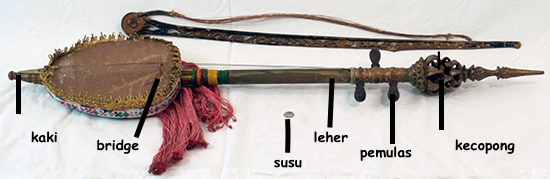
In South East Asia, the rebab has a distinctive and unique shape, indicating that it evolved significantly from its earliest Arabic origins. Traditionally, the structure of the rebab represents a stylised human form with triangular crowned head (kecopong), long thin neck (leher) and a round body resting on a spiked foot (kaki).   The head is adorned with a brightly painted pucuk rebung motif (bamboo shoot), a typical design found on batik and songket textiles; the top is oddly stupa-like, which may be a throwback to decorative forms of an earlier time. Three pegs (pemulas) can be observed on the upper part of the neck; these are the tuning pegs connected to the strings that are sometimes referred to as ‘ears’ (telinga).  In Java the rebab has two strings, but in Kelantan it has three.

Malay Rebab. Background Image credit: Asza, https://www.asza.com/graphics/Gallery/irebabMalay.jpeg; annotations by Rose Gan.

The body, here hidden beneath a decorative fringing, was originally made of a coconut shell and later wood, with a piece of buffalo intestine or bladder stretched tightly over the front face.  Fabric is used to cover the back.  There is a small moveable bridge on the body. A ball of beeswax (susu), attached near the bridge, mutes the sound reverberations. A wooden foot (known as the spike) protrudes at the base; rebabs of this type are sometimes known as ‘spike fiddles’ in English. The rebab is played upright (like a cello), and is secured on the ground by the ‘foot’.  The bow was originally strung with coconut fibres, but now nylon is used; the strings are coated with resin to smoothen the intricate bowing. The South East Asian rebab may also have been influenced by the Chinese erhu, a similar two-stringed spiked fiddle of very ancient origin; its sound is similar.

Main Puteri was an ancient healing tradition of Kelantan conducted by a bomoh (shaman), involving trances and other ritualistic practises accompanied by the rebab. There was a time when it was even performed in hospitals on the East coast to ensure a safe recovery!   Tarek Selampit, a traditional story telling form in Kelantan, was also accompanied by the rebab. Mak Yong, however, is perhaps one of the most notable Kelantanese traditions connected to the rebab. An ancient dance and drama theatre performed in Kelantan and the Pattani region of southern Thailand, the heyday of Mak Yong was in the 19th- early 20th centuries, although its roots probably stretch back to a much earlier time. The tales performed in Mak Yong theatre reflect very ancient myths and legends, many with roots in the Hindu-Buddhist past. In fact, some believe that Mak Yong may even have originally represented the rice goddess Dewi Sri. During a performance, the rebab is the main instrument that accompanies the dancers, singers and the spoken word, although the orchestra also includes drums and percussion. Today Mak Yong is no longer performed in Kelantan but performances are sometimes held at ASWARA (The National Academy of Arts, Culture and Heritage) and Istana Budaya (The National Theatre).

References

Hood Salleh (Vol. Ed.). (2006). The Encyclopaedia of Malaysia Volume 12: Peoples and Traditions. Archipelago Press.

Fiddling Around UK websitehttp://www.fiddlingaround.co.uk/med/Med+mid%20frame.html

JMM. (2014) Koleksi Museum Negara. OMR Press Sdn Bhd.

Matusky, Patricia. (2015). Malaysian Journal of Performing and Visual Arts Vol I:  Mak Yong Music of Malaysia: Negotiating Complex Musical Content Within Periodicity. University of Malaya.

Syed Ahmad Jamal (Vol. Ed.). (2007). The Encyclopaedia of Malaysia Volume 14: Crafts and the Visual Arts. Archipelago Press.

In this Series

Click HERE for a list of articles in the ‘A-Z at Muzium Negara’ series.
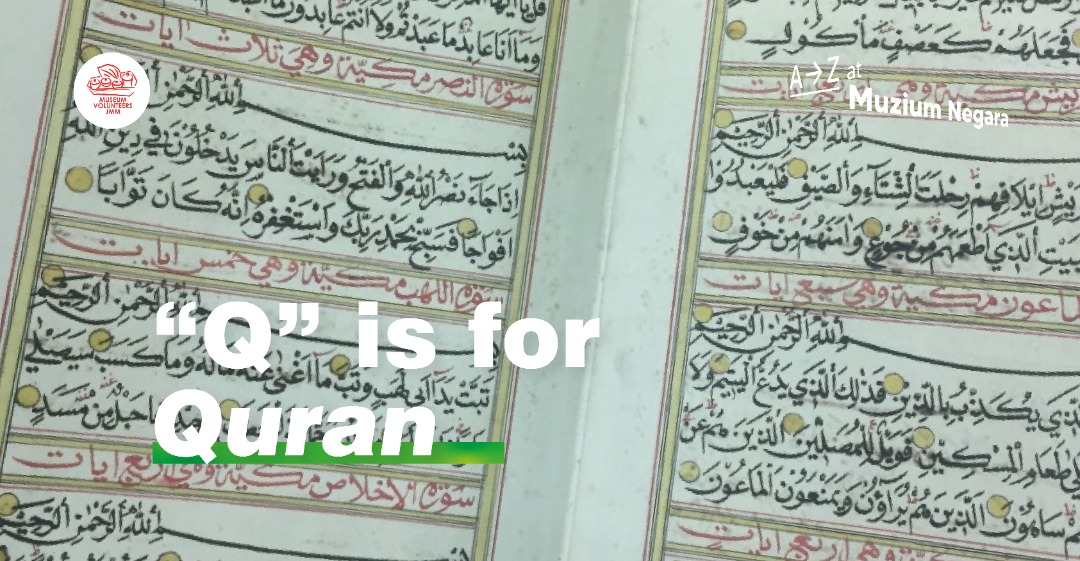
Q is for Quran

Muhammad Azam Adnan (author), Afidah Rahim (translator)

This article is a translation of an essay written in Malay by Muhammad Azam Adnan and first published in Muzings 2021. You can read the original (in the Malay language) here.

Translator’s Note: There are two copies of the Quran on display in Gallery B. My previous blog article ‘The Quran and the Sunnah’ refers to these artefacts but does not examine the manuscripts in detail. Considering that the Muzings 2021 article ‘Manuskrip Al-Quran Melayu Terengganu’ written by the curator of Gallery B details one of the manuscripts, I have translated the said article below. I would like to express our sincere gratitude to En. Azam for kindly permitting this translation. and for allowing us to use his images. – Afidah Rahim

Terengganu Quran Manuscript

Al-Quran is the Muslim Holy Book, revealed by God through angel Gabriel to prophet Muhammad (s.a.w.) during the 7th century CE in Arabia. The revelations occurred gradually over 23 years, since prophet Muhammad (s.a.w.) was chosen as the messenger of God, responsible for proselytising to his people. The writing of Al-Quran amongst his companions began when prophet Muhammad appointed them to record his revelations and continued up to the rule of Rashidun Caliphs by the followers of the prophet’s companions.

The arrival of Islam in the Malay world as early as the 13th century not only resulted in the conversion of the local population but also placed Al-Quran as an important material culture of the Malays. According to the article written by Annabel Gallop (2007), ‘The Art of the Quran in Southeast Asia’, the writing of Malay Quran manuscripts began at the end of the 13th century CE when the Sultan of Pasai of northern Sumatra embraced Islam. Most 19th century Malay Quran manuscripts are currently held in museum or library collections such as the Islamic Arts Museum Malaysia (IAMM), Malay Manuscripts Centre, Muzium Negara and state museums of Terengganu, Kelantan and Melaka. There are also manuscripts in personal collections.

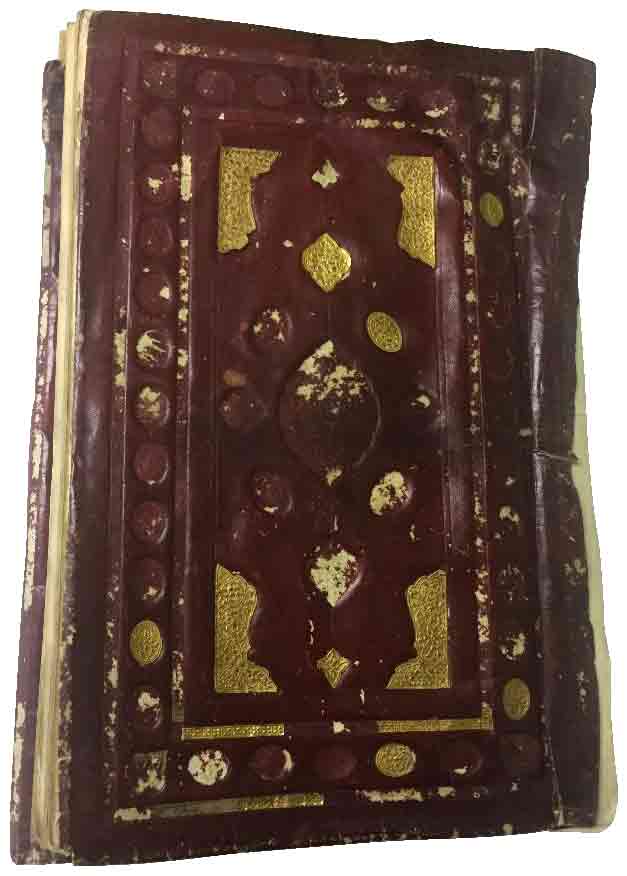
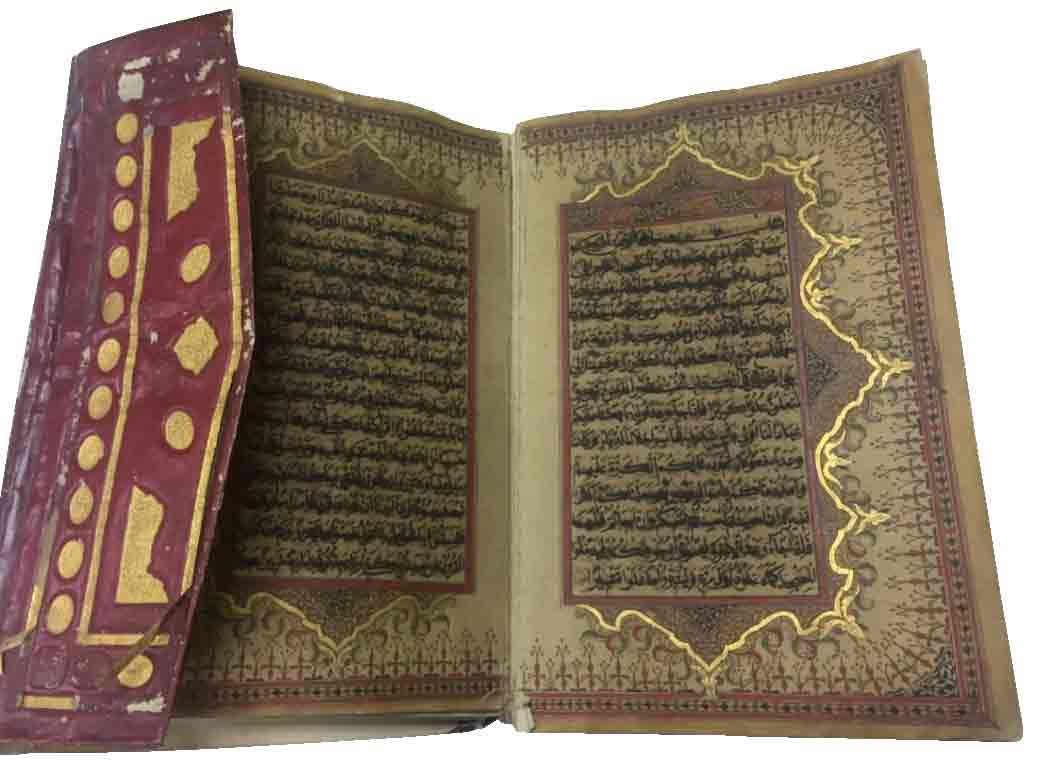
Left: The red cover of this Terengganu Quran is made from goatskin. This cover is no longer in good condition – most of its gold leaf decorations are damaged or missing. Right: Central illuminations of the Terengganu Quran manuscript. The handwritings in black ink on both these pages are damaged. Image credits: Muhammad Azam Adnan

Muzium Negara has owned the copy of Terengganu Quran manuscript on display in gallery B: Malay Kingdoms since the National History Museum closed in 2007. It was registered in 1992 as MSN32.1992. According to Riswadi Azmi (2020) in his book ‘Manuskrip Al-Quran Emas: Warisan Kesultanan Terengganu’ (Golden Quran Manuscripts: Terengganu Sultanate Heritage), the contents of this manuscript has been repeatedly researched by Malay Quran manuscript researchers. Measuring 40cm x 30cm, this is the second largest after Terengganu Quran manuscript IAMM1998.1.3.3427 (43cm x 28cm) kept at the IAMM. Manuscript MSN32.1992 excludes a colophon i.e. a directory at the back listing the scribe, year and location of writing. This is because Quran manuscript scribes believe that these verses are revealed by God and so their role is merely to copy the holy Quranic verses.

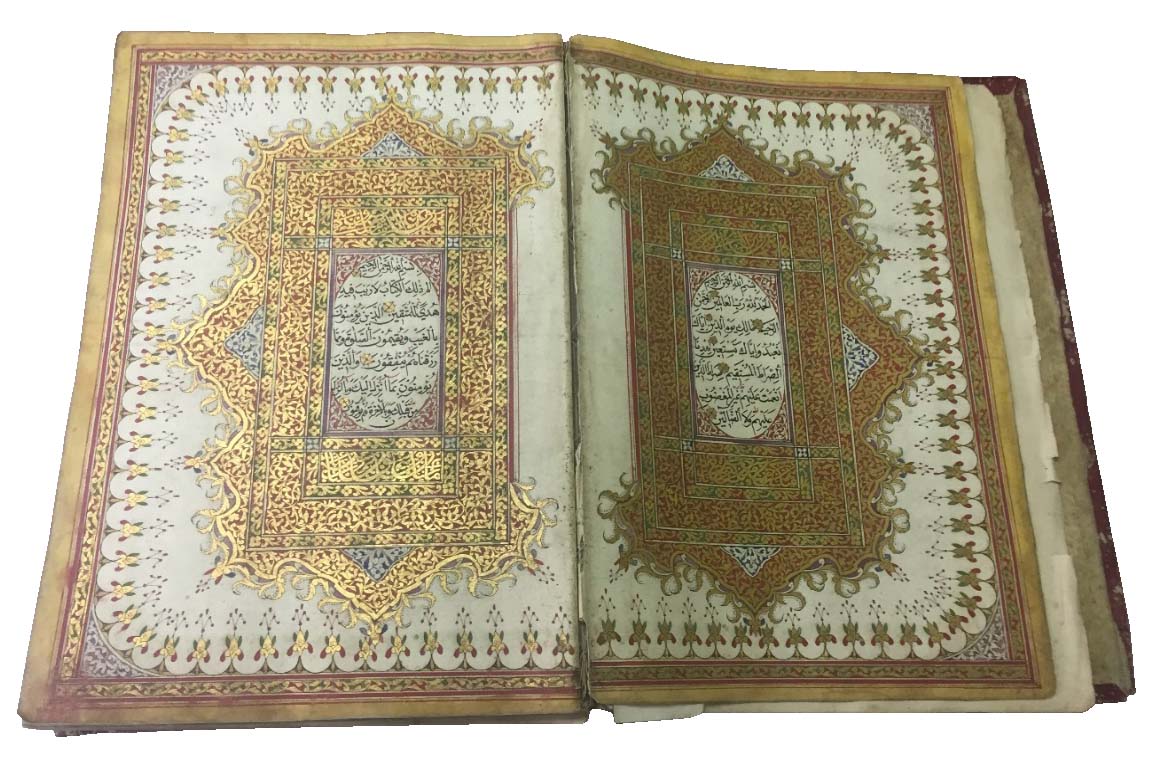
Initial pages of the Terengganu Quran manuscript. Image credit: Muhammad Azam Adnan

Manuscript MSN32.1992 is categorised as a Terengganu Quran manuscript since its features reveal its origin. This can be seen by the illumination or decorations on its pages. According to Annabel Gallop (2012) in her article ‘The Art of the Malay Quran’, the Terengganu Quran manuscript was prized by other Malay kingdoms for its exquisite workmanship – shaped like a shining jewel, embellished with fine artwork and gold leaf. In addition, several pages contain double decorated frames, usually only found at the opening pages of Surah Al-Fatihah and initial verses of Surah Al-Baqarah. The decoration of Terengganu Quran manuscripts would also include double decorated frames at its end pages and sometimes, in the central pages. Red, blue and green on manuscript MSN32.1992 also reflect the special colours synonymous with the decorations of Terengganu Qurans.

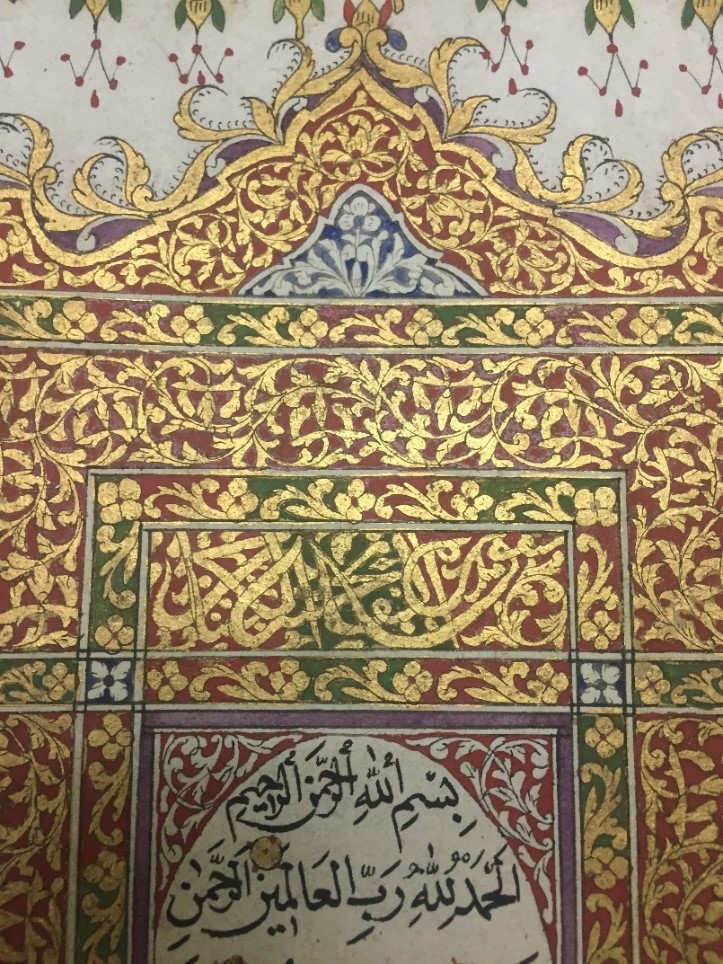
The gunungan motif used in manuscript MSN32.1992 is also a special decorative feature of Terengganu Quran manuscripts. This motif originally has Hindu influence, symbolising the mountains of the Malay archipelago in Java, Sumatra and the Malay Peninsula. Even with the arrival of Islam, the gunungan motif remains in Malay artistic culture, including in decorations of Quran manuscripts and woodcarving.

Gold leaf illumination of the gunungan motif on the manuscript. Image credit: Muhammad Azam Adnan

Gold leaf is a special element in Terengganu Quran manuscripts, considering that it is not found in any other Malay Quran manuscripts. Riswadi Azmi (2020) in ‘Manuskrip Al-Quran Emas: Warisan Kesultanan Terengganu’ says that the use of gold leaf is a special decorative feature. The golden yellow colour does not come from turmeric but instead comes from pure gold pressings, which function as ‘finishing touches’ to the beautiful Terengganu Quran manuscripts. Hasnira Hassan (2013) in ‘The Second International Archaeological Seminar, History and Culture in the Malay World’, wrote that gold symbolises the supremacy and might of the Creator.

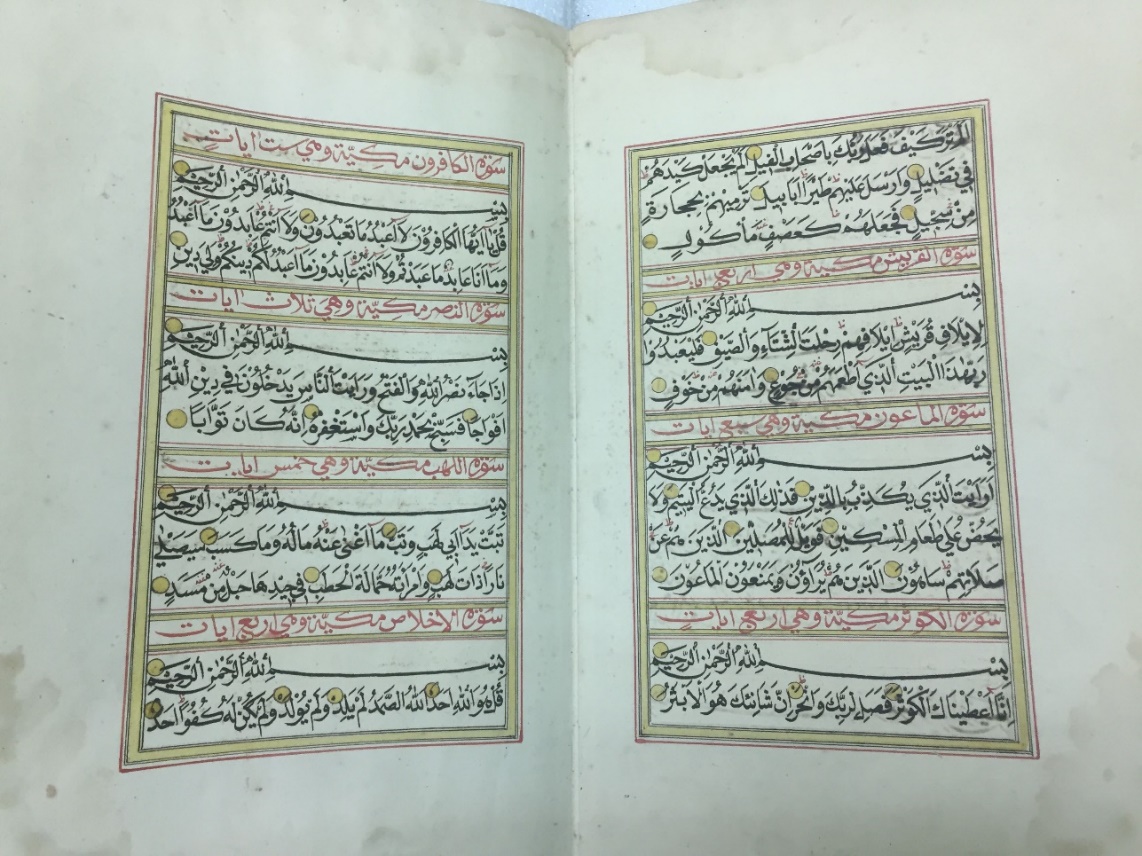
Several surah (chapters) towards the end of the Quran manuscript. Each surah heading is written in red ink whereas gold leaf is used at the end of each verse within the surah. Image credit: Muhammad Azam Adnan

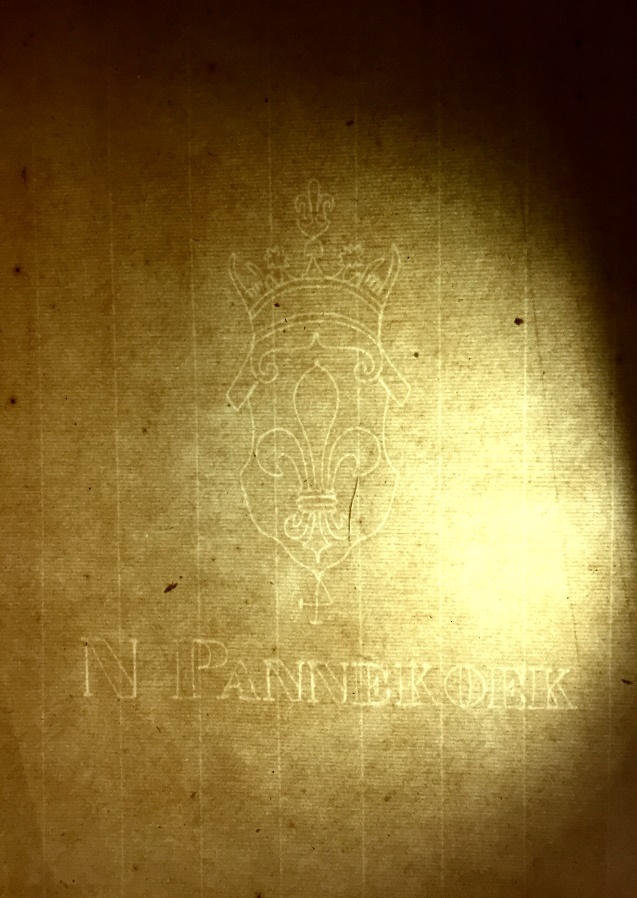
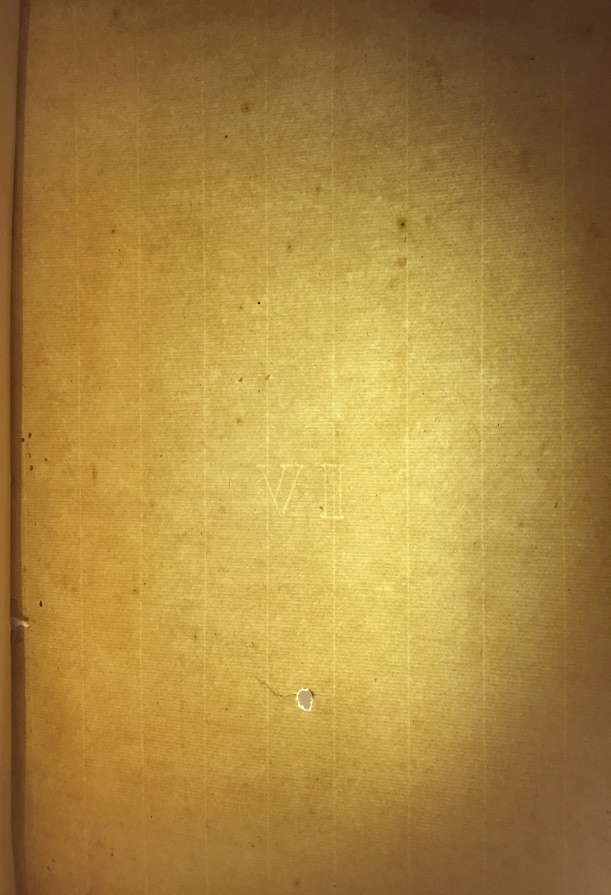
The paper of manuscript MSN32.1992 is European-made, identified by its two watermarks. The first watermark is a lotus flower symbol above the words ’N Pannekoek’, whereas the second watermark is the Roman numeral symbol ‘VI’. Jelle Samshuijzen (2017) in his book ‘A unique collection of watermarks from the Smoorenburg collection: 165 watermarks on 143 blank paper sheets’  wrote that both these symbols are watermarks from 19th century CE Dutch paper mills.

Watermarks on manuscript MSN32.1992 paper. Image credits: Muhammad Azam Adnan

The Terengganu Quran Manuscript (MSN32.1992) displayed at Muzium Negara is evidence of invaluable legacy from previous Malay society. It needs constant care so that current and future generations may continue to value the artistic legacy of Malay material culture forever more.

In this Series

Click HERE for a list of articles in the ‘A-Z at Muzium Negara’ series.