By Katia Luccin
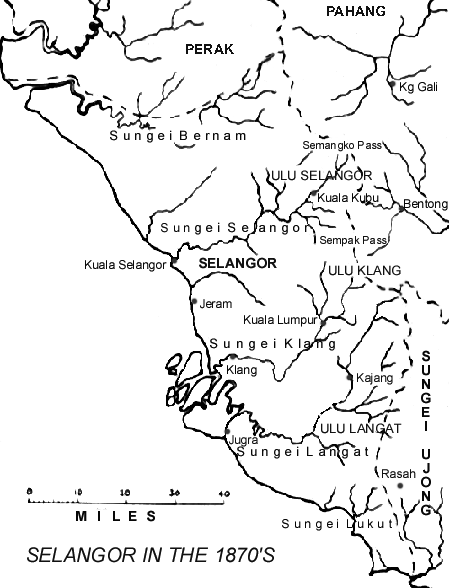
Selangor in the 1870’s – source: https://yapahloy.tripod.com/the_selangor_civil_war.htm
Tin, an attractive resource
Tin has been extracted for centuries in the Malay world. Less precious than gold but found in larger quantities, cassiterite is the ore that made Malaya known. Alloyed with copper to become bronze, it was used for the making of tools, weapons, bells and statues. At the beginning of the 19th century, the Industrial Revolution witnessed the birth of the tin can industry (invented by the Frenchman Nicolas Appert (1749-1841)), marking the beginning of the tin rush in Malaya.
In the Klang Valley and around Kuala Lumpur, tin was already extracted before the 19thcentury but it was rudimentary, with no permanent installation. By 1824, several mines existed in the Klang Valley: Penaga, Petaling, Serdang and Gua Batu (Batu Caves).
Kanching, the first mine
Tin mining played a pivotal role in the development of Kuala Lumpur. In 1840, the discovery of a Chinese tin mine in Kanching attracted activity in the area. This mine was located a few kilometers north of Kuala Lumpur, in the northern part of the Selangor basin, distinct from the Klang River Valley that now runs in the city.
At that time, miners rowed upstream along the rivers to their sources, navigating the Selangor River until they reached Kanching. Boats were left at the bandar (as the port was known then) and miners walked the short distance to the Kanching mine. Although moderate, the success of the Kanching mine showed interest for the mining of possible deposits in adjacent rivers, notably, upstream Klang river. That was how the Ampang mine, located east of Kuala Lumpur City Center (KLCC), started. The production rapidly became so substantial that soon, trade regulations for Kuala Lumpur were established. This success contributed to the development of the kampung of Kuala Lumpur; likewise for the Pudu kampung and the Batu kampung, with the discovery of tin in those areas. Chinese traders and shopkeepers flocked to Kuala Lumpur. They came from every part of South China to escape the misery of their country.
The war for the control of the mines (Selangor war 1867-1873) created economic disorder and a decline in investment, paving the way for British control in 1874. This new historical chapter saw the appointment of British colonial officers (Residents) in Perak and later Selangor along with the establishment of a police force by the British to restore order. J.G Davidson, the first British Resident, was appointed at Klang, while Sir Frank Swettenham, was sent as an adviser to Sultan Abdul Samad. Swettenham will play a crucial role in developing Kuala Lumpur to increase the social and economic benefits from tin mining.
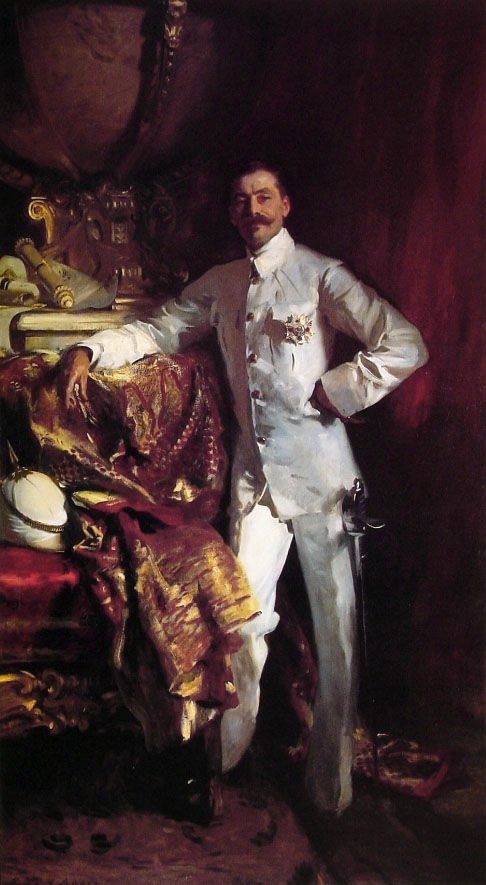
Sir Frank Swettenham, 1904, by John Singer Sargent, Oil on canvas, 258 x 142.5 cm (101.57 x 56.10″), National Museum in Singapore – Source Wikimedia
Kuala Lumpur, the new heart of Selangor development
After the war ended in 1873, Kuala Lumpur was to prosper again. Between 1880 and 1890, the population increased from 4,500 to 20,000 driven by the boom in tin mining. Consequently, Kuala Lumpur became the largest city in Selangor. Bloomfield Douglas, the second British Resident of Selangor, moved to Kuala Lumpur in 1880, officially making the city the capital of the state.
Tin production reached such levels that it became necessary to develop infrastructure for transporting tin ore to meet the rising global demand for tin. Frank Swettenham, now British Resident, recommended the construction of a railway spanning 30 kilometers between Kuala Lumpur and Bukit Kuda. The purpose was to connect inland mining activities and trade centers to the west coast port of Klang. Initially, the manpower for this project was Indian labourers. They were reinforced by Chinese coolies to speed up the completion. The railway line was inaugurated on 10th September 1886, becoming the second line built by the British in Malaya. The line was extended from Bukit Kuda across the river to Klang town in 1889 and subsequently extended to Port Swettenham (now Port Klang/Pelabuhan Klang) when it opened in 1901.

Kuala Lumpur-Bukit Kuda line inauguration. Source: serial.malayanrailways.com
Today, Port Klang remains as one of the main ports on Malaysia’s west coast and holds significance as an international port. The city has grown along the Kuala Lumpur-Port Klang axis in the “Klang valley” throughout the 20th century. With a population of eight million, it constitutes a quarter of Malaysia’s overall population. The new infrastructures around Kuala Lumpur (roads, waterways and railways) were mostly financed by taxes on tin. Other developments stemming from the tin industry include the implementation of water piping and electricity in Kuala Lumpur.
To meet the growing demands of American and European industries, tin production must modernize. The British introduced new technologies like the tin dredge in 1912 and the gravel pump.
In 1937, a new mine was opened near Kuala Lumpur and the “Berjuntai Tin Dredging Bhd” factory was built at Sungei Selangor, north of Kuala Lumpur.
By the beginning of the 1990s, Malaysia produced around two million tons of tin, with approximately 90% originating from the West Coast belt. This production was divided between the Kinta Valley in Perak (at the center of the peninsula) and Selangor, mostly concentrated in Kuala Lumpur.
Tin mines and rehabilitation, a second life!
In the 1980s, the price of tin began to drop due to the emergence of new producing countries such as Brazil. Over 300 mines, including those around Kuala Lumpur, were closed. The intensive mining activities had left these sites wide open, with wells and tin residues rendering the fields unsuitable for agriculture.
For an extended period, these plots were neglected, leading to issues like degradation and illicit occupation. It wasn’t until the boom in Malaysia’s economy that the government took an interest in these lands, whose real estate value had increased over time. Major projects were then entrusted to the private sector to develop parks, hotels, and golf courses.
Titiwangsa park
Created by Rio Takahashim, a Japanese architect, in 1980, the garden of Titiwangsa lake was built as an alternative to Taman Botanic Perdana in central Kuala Lumpur. The park is 95 ha, half of it occupied by a lake, heritage of a tin mine from the British era.

Titiwangsa Park, photo taken by Katia Luccin
Sunway City Kuala Lumpur
Developed by Jeffrey Cheah Fook Ling (13th wealthiest person in the country?), the theme park of Sunway City Kuala Lumpur was built on a former site that he had mined until 1980`s. The park, with an area of 30ha, is today one of the favorite destinations of Malaysian families.
The Mines complex
Formerly the largest open mining center in the world, the site, called Sungei Besi, is located in the South-East periphery of Kuala Lumpur, spanning both the Federal territory of Kuala Lumpur and the state of Selangor. Tin was produced there for several centuries before the involvement of British in mining in 1911, and ending in the 1980s. In 1990 a private entrepreneur, Lee Kim Yew, was mandated by the government to transform the mines of Hong Fatt at Sungei Besi into a tourist site including a five-star hotel, artificial beach and a golf course.
Lee had the mine flooded to make a huge lake. The estate project, The Mines, is arranged around the lake to give birth to The Mines Wellness City, Golf Club and Mines Resort.
If Kuala Lumpur city is so green, it owes it to those projects!
One of Malaysia’s wealth is the diversity of its population acquired following several waves of immigration; (one of which was attributed to tin mining). A good example of “vivre ensemble” despite the difficulties met to build a nation.
References
Kuala Lumpur, Wkipedia, Wikipedia.org/wiki/Kuala_Lumpur, read on 22/12/2020
“L`etain: 1100 mines et des cours fluctuants » Le Monde Diplomatique, monde-diplomatique.fr ?1969/08/A/29171, read on21/12/2020
A history of Malaysia, barbara Watson Andaya, Leonard Y. Andaya, Red Globe Press 3rdedition, 2017
Journal of the Malayan Branch of The Royal Asiatic Society n28, J-M Gullick, Malaya Publishing house, 1955, Myrepositori.pnm.gov.my/bistream/123456789/2265//1/JB1865_MBRA.pdf, read on 21/12/2020
Interview with Datin Paduka Chen Mun Kuen, Director of Royal Selangor international Sdn Bhd news.sma.org.sg/4211/Datin_ChenMK.pdf, read on 24/12 2020
Southeast Asia: A historical Encyclopedia, from Angkor Wat to East Timor, Kin Gin Ooi, ABC Clio, 2004
Young Koon, Royal Selangor Heritage, eu.royalselengor.com/heritage, read on 22/12/2020
Sir Franck Swettenham, British colonial officer, Britannica, Britannica.com/biography/Frank-Athelstane-Swettenham, read on 22/12/2020
The imperial locomotive: A Study of the Railway System in British Malaya, Tse Siang Lim, 2010, academia.edu/1517283/The_Imperial_Locomotive_A_Study_of_Railway-System_in_British_Malaya_1885_1942, read on 28/12/2020
Sunway Lagoon Resort, sunway.com.my/sunway-at-a-glance, read on 23/12/2020

 Museum Volunteers, JMM