Raja Kita: The Legacy of Malaysia’s Monarchy

Written by Manjeet Dhillon

Amidst the slow beats of the Nobat (royal orchestra), Malaysia’s first Yang di-Pertuan Agong (Paramount Ruler), the late Tengku Abdul Rahman Putra, took his oath on 1 September 1957 at the former Istana Negara, now the Royal Museum. This ceremony marked not just the beginning of a new reign but the dawn of a nation’s unity under a shared symbol of sovereignty.


A Symbol of National Identity
Malaysia’s monarchy, a cornerstone of its national identity, holds a special place in the hearts of its people. Enshrined in the Rukun Negara (National Principles) as “Kesetiaan kepada Raja dan Negara” (loyalty to king and country) is a guiding tenet that underscores the monarchy’s integral role in the nation’s fabric.


The Rotating Monarchy and the Conference of Rulers
The concept of a rotating monarchy, formalised with the formation of the Federation of Malaya in 1957, was inspired by the tradition of Negeri Sembilan, based on the Undang Undang Yang Empat, where the ruling chiefs of four districts elect the state ruler (Yang di-Pertuan Besar). Each Malay state has its own sultan, with succession determined by bloodline or lineage. To ensure fair representation among the royal houses, and after considering the views of the Malay Rulers, the title of Yang di-Pertuan Agong was chosen for
the ruling king, avoiding confusion with the title of Negeri Sembilan’s Ruler.
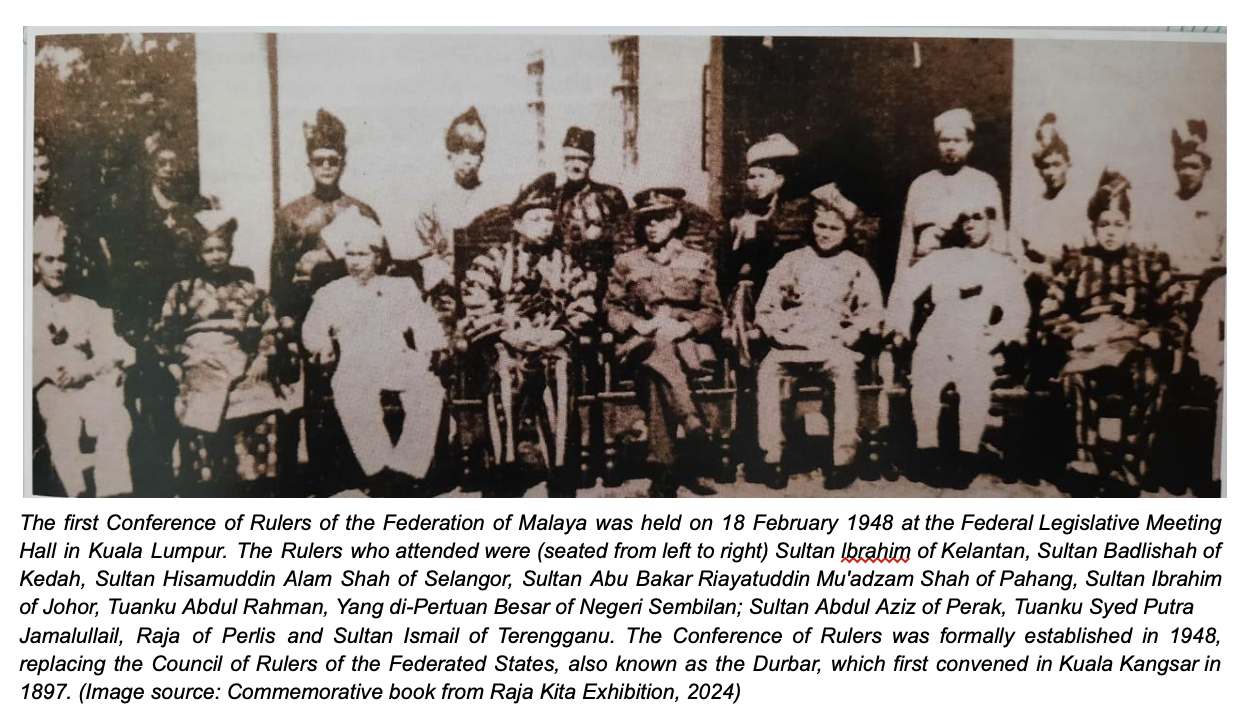
Central to this system is the Conference of Rulers (Majlis Raja-Raja), established to deliberate on matters of common interest among the Malay states. Comprising the nine Malay sultans and the Yang di-Pertua Negeri (heads of state in states without rulers), the Conference preserves the monarchy’s significance while ensuring equitable representation across the royal houses. Notably, all our rulers can read Jawi, and the minutes of their meetings are recorded in this script.

The Selection and Role of the Yang di-Pertuan Agong

The Yang di-Pertuan Agong, officially titled Duli Yang Maha Mulia Seri Paduka Baginda Yang di-Pertuan Agong, is selected from among the nine royal rulers, including seven sultans, a Raja (Perlis), and a Yang di-Pertuan Besar (Negeri Sembilan). The selection follows a rotational cycle: the first, from 1957 to 1994, included Negeri Sembilan, Selangor, Perlis, Terengganu, Kedah, Kelantan, Pahang, Johor, and Perak. The second cycle continues based on the seniority of states as outlined in the Federal Constitution’s Third Schedule. After each election, the state of the newly elected Yang di-Pertuan Agong is moved to the end of the list.

In the inaugural selection, tradition dictated that the Sultan of Johor should have been the first to ascend the throne, in accordance with the principle of kekanan bahtera. However, given that the Sultan was 84 years old at the time, the Rulers’ Seal Office initiated a discussion to determine if he wished to take on the role. Ultimately, the Sultan of Johor declined the opportunity.

As the process continued, the next in line was the Sultan of Pahang. Despite being the next eligible ruler, he did not secure the minimum number of votes required during the Rulers’ Conference. Consequently, the first King of Malaysia was instead the Yang di-Pertuan Besar of Negeri Sembilan.

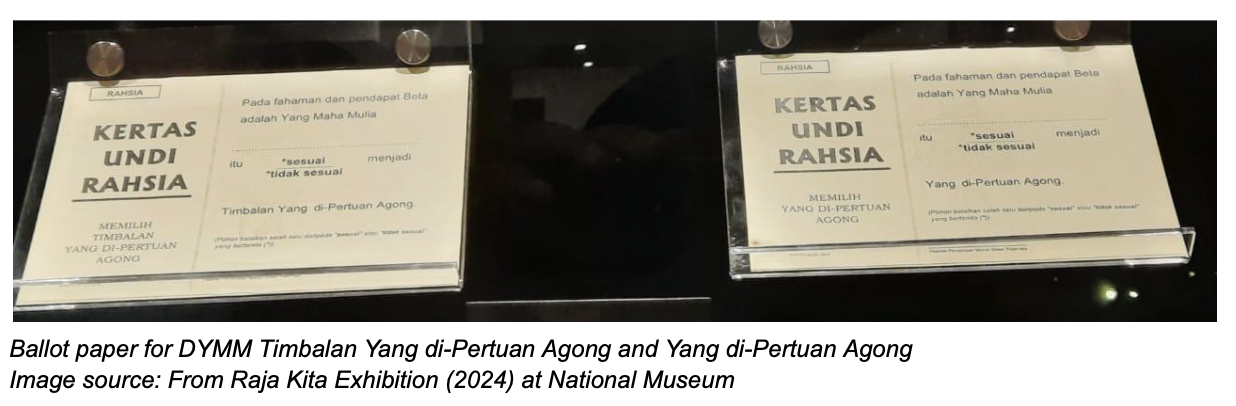
The election is carried out through a secret ballot.If a ruler is unable to attend the Election Meeting, he may designate another ruler as his proxy to cast his vote, including for the selection of the Timbalan Yang di-Pertuan Agong. Each ruler votes using an unnumbered ballot paper marked with the same ink, placed in a ballot box. After the results are announced, the ballots are destroyed in the presence of the rulers. The ruler with the shortest reign, who is not a candidate, and the Keeper of the Rulers’ Seal count the ballots. A candidate must receive a majority of five votes to be elected. If no candidate achieves this or declines, the process is repeated with the next senior ruler until an acceptance is reached. The new Yang di-Pertuan Agong, serving a five-year term, is then formally declared by the Conference of Rulers. 

The Timbalan Yang di-Pertuan Agong exercises the functions and has the privileges of the Yang di-Pertuan Agong under specific circumstances laid out in the Federal Constitution. He also continues to exercise all his functions as ruler of his state during his tenure, hence does not appoint a Regent to govern his home state. 

The Royal Seal and Formalisation of Results

Once the ballot process concludes, the results are formalised in official documents, such as the letter of appointment, and are authenticated using the Royal Seal, which is kept at the Keeper’s Office of the Rulers’ Seal. This seal, featuring the coats of arms of the nine Malay States and inscribed with “Mohor Besar Raja-Raja Negeri Melayu” in Jawi script, includes a primary larger seal and a smaller, portable version.

The Royal Seal is used to authenticate critical documents, including the instrument detailing the election results of the Yang di-Pertuan Agong and the Timbalan Yang di-Pertuan Agong. These results are then formally communicated to key officials, specifically the Speaker of the Senate (Dewan Negara), the Speaker of the House of Representatives (Dewan Rakyat), and the Prime Minister.

Preserving Royal Traditions and Heritage

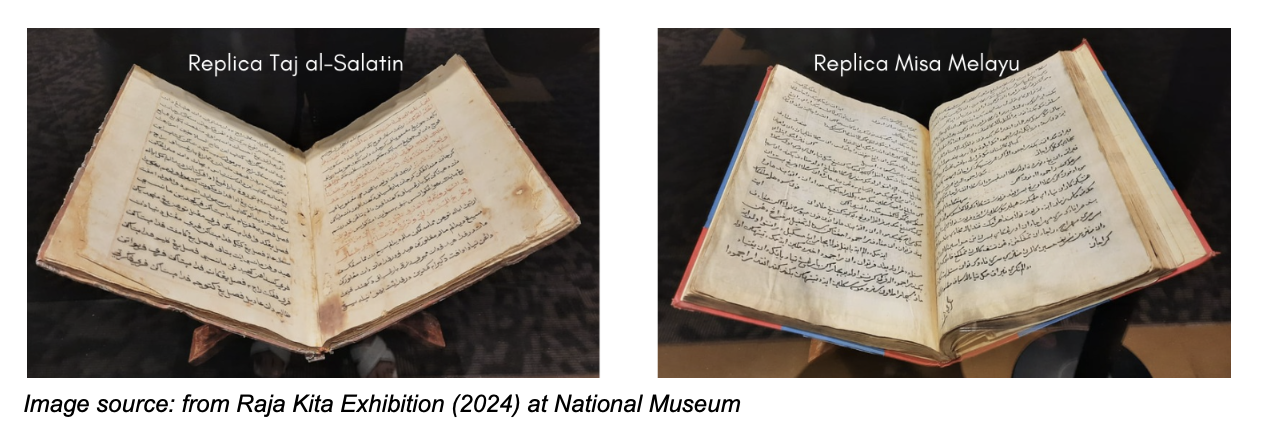
The sultans inherit a wealth of knowledge passed down through generations, encapsulated in manuscripts of which among the most important works are the Sulalatus Salatin (The Genealogy of Kings), with its original manuscript housed at the Institute of Oriental Manuscripts in St. Petersburg, and the Misa Melayu, an 18th-century text by Raja Chulan. The Misa Melayu offers a detailed account of the coronation ceremonies and royal customs of the Perak Sultanate, providing valuable insights into the rituals, etiquette, and symbolic meanings behind the regalia and practices of Malay royalty. These guides ensure that these traditions are meticulously preserved and passed down through the ages.

This unique system of governance is accompanied by an equally distinctive royal heritage. The “Raja Kita” exhibition, held at the National Museum from 26 July to 29 September 2024, offers a rare opportunity to explore this heritage in depth. Gallery One showcases royal regalia, which are not merely beautiful objects but symbols that embody the stories, communities, and cultures that shaped the nation. 

Malaysia’s Crown Jewels

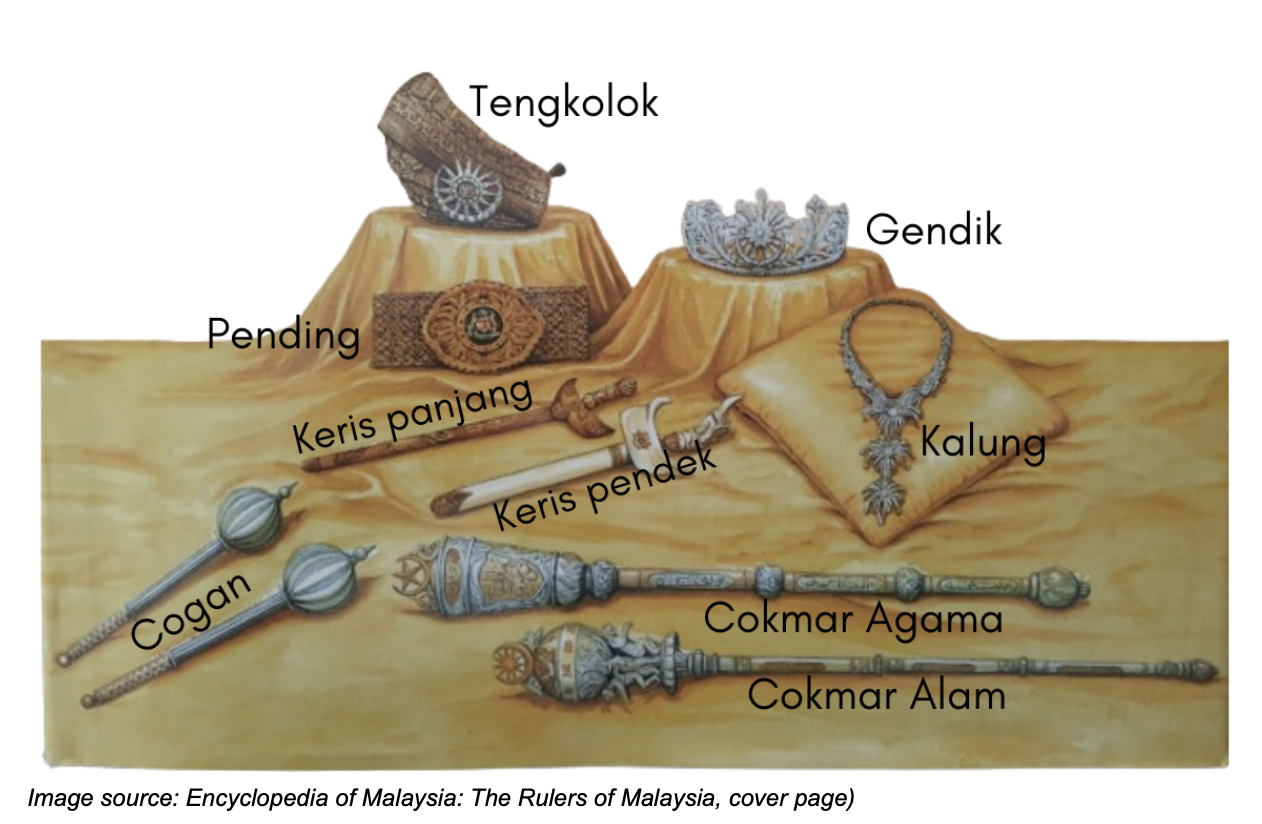
There are three royal symbols of power that form an integral part of the authority of the Government of Malaysia. The first of these is the Cogan Alam (Mace of the Universe), symbolising temporal power. It features an orb, topped with a crescent and gold star, mounted on a long shaft. Encircling the orb are the crests of the eleven states of Malaya, embossed in gold. The orb is supported by four tigers, while the handle of the sceptre is adorned with six paddy stalks, carved in gold. 

The second symbol is the Cogan Agama (Mace of Religion), representing spiritual power. Slightly shorter than the Cogan Alam and crafted from silver, it has a large conical head crowned with a five-pointed gold star. Verses from the Quran are embossed on the handle and hilt, emphasising their sacred significance. These verses, from Surah Al-Imran (verse 26), convey the message: “You give authority to whom You please and remove it from whom You please; You honour whom You please and disgrace whom You please—all good is in Your Hands.

The third symbol is the Cokmar – two war clubs, each over two feet in length, featuring a circular fluted orb of plain silver, mounted on a short silver staff. 

These three symbols collectively represent the authority bestowed upon the Yang di-Pertuan Agong by the Malaysian Government.

The Keris Panjang Diraja

One of the most symbolic items in the regalia is the Keris of the Government, also known as the Keris Panjang Diraja (Keris of State or Royal Long Keris). This ceremonial weapon is sheathed in a silver scabbard, with a hilt shaped like a horse’s hoof and with decorations resembling the jering (archidendron pauciflorum) fruit. During the installation ceremony, the keris is presented to the new ruler on a silver tray, who then ceremoniously unsheaths it as a symbol of assuming royal authority.

Royal Ceremonial Symbols

The Payung Ubur-ubur Kuning (Royal Umbrella) and Tombak Berambu (Fringed Spears) are significant symbols of the Malaysian monarchy, carried by the rank and file of the Malaysian Armed Forces during royal ceremonies. Twenty members carry the Payung Ubur Kuning, umbrellas made of royal yellow silk—a colour deeply symbolic of royalty. Each umbrella features an 11-pointed Federation star.

Another key symbol is the Tombak Berambu, or fringed spears. These spears have blades with three carved indentations, made from ancestral tombak (spears) collected from the 11 states of the Federation. According to ancient tradition, the tufts that adorn these spears were originally made from human hair, with the thickness of the tuft indicating the prowess of the warrior who wielded it.

Also integral to the royal regalia are the Pedang (sword), the Keris Panjang (long keris), and the Sundang Diraja (royal sword keris). These three weapons represent the traditional arms of Malay royalty, and each carries its own historical significance.

Ceremonial Attire

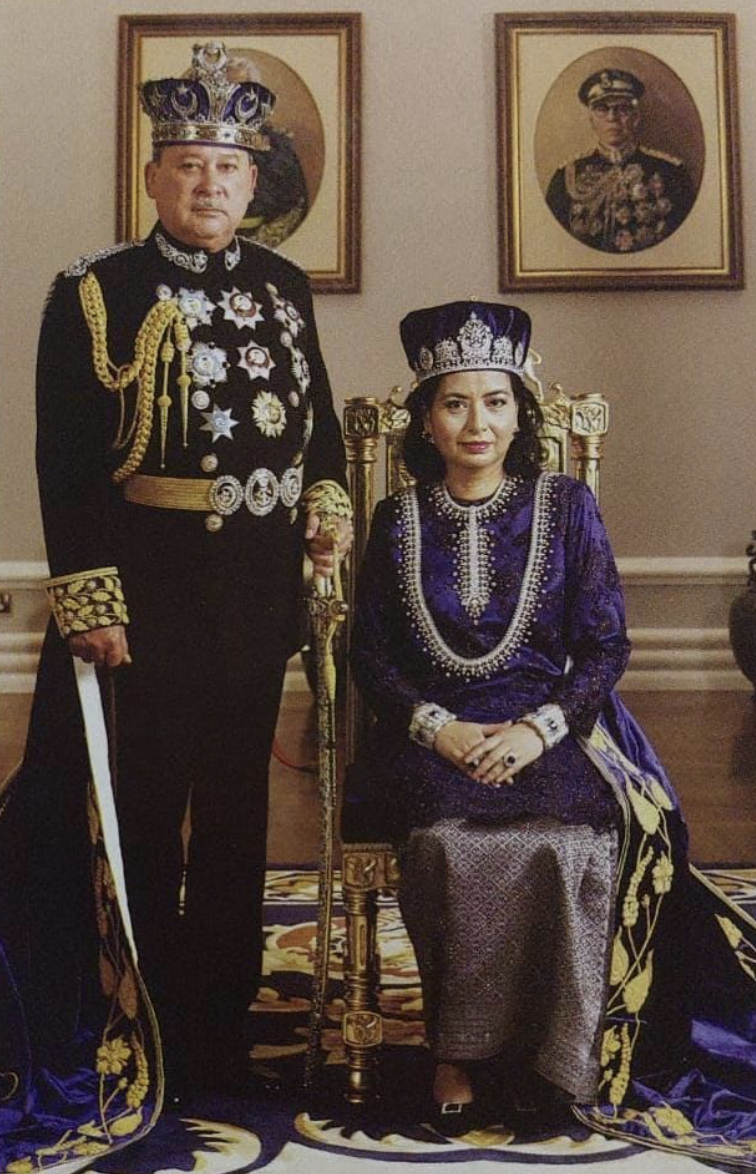
For the installation ceremony, the Yang di-Pertuan Agong wears the Tengkolok di-Raja (royal headgear), folded in the style known as Dendam Tak Sudah (unfulfilled longing). This headgear is adorned with a crescent and an 11-pointed star, both crafted from platinum and encrusted with 66 sparkling diamonds. The Tengkolok di-Raja can have variations in its patterns according to the Sultan’s personal preferences; for example, the Sultan of Johor’s tengkolok features gambir (gambier) and lada hitam (pepper).

Around his waist, he wears a belt of sakhlat cloth, embroidered with a floral motif in gold thread. The belt is complemented by the Pending di-Raja (royal waist buckle)—a splendid gold piece set with eleven rubies and engraved with the Federation crest at its centre. The Pending can be retained by the Agong at the end of his reign.

Tucked into the King’s samping is the Keris Pendek Di-Raja (royal short keris), featuring an intricate ivory handle and hilt shaped like a garuda’s head and encased in a sheath. The ceremonial attire is completed by the Muscat, a robe of office made from black wool. This robe, inspired by the Kedah Civil Service dress, has traditional awan larat and hibiscus patterns, extending to a thigh-length with long sleeves, and is typically paired with matching embroidered trousers. Initially, when the first Agong ascended, there was no official attire available, so he used what was at hand. The Muscat was introduced as official attire during the reign of the third Yang di-Pertuan Agong.

Jewels of the Raja Permaisuri Agung

The Raja Permaisuri Agung wears the Gendik Diraja, a versatile tiara that can be disassembled to create a locket and two bracelets. She also wears the Kalung Diraja, a necklace crafted from platinum and studded with diamonds. This necklace can be separated into a set of earrings, brooches, and a choker, offering several stylish alternatives.
The Sound of Royal Tradition

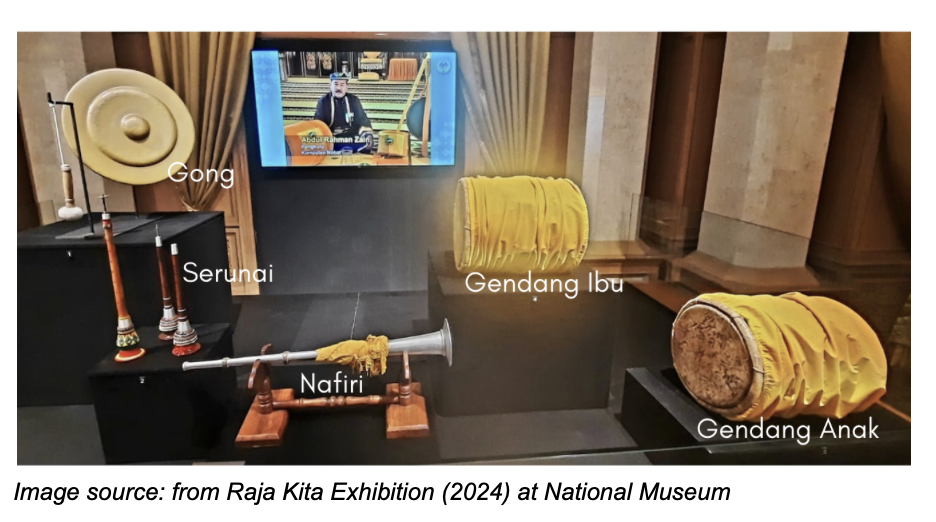
Every installation ceremony is incomplete without the Nobat, the royal orchestra that is integral to the event. This traditional Malay musical ensemble, closely tied to royalty, derives its name from the Persian word “naubat,” meaning nine instruments. The nobat has been a vital component of royal ceremonies for centuries.
The ensemble includes instruments such as the gendang (drum), nafiri (clarinet), serunai (flute), and gong. The gendang, in particular, holds significant importance and is primarily used for royal events, though the Sultan may also order its use for other ceremonies.

For the installation of the Sultan of Johor, the Nobat orchestra from Perak was featured.  The musicians are from specific families known as the Orang Kalur. Historically, the Nobat hall was heavily guarded and even protected by a fence of cock feathers, with severe consequences for trespassers. The leader of the Nobat held the title Toh Setia Guna, while their assistant was known as Toh Setia Indera. The Nobat is present in Perak, Kedah, Selangor, and Terengganu, with rulers from states without a Nobat typically borrowing from one of these four states. It should be noted that the Raja Permaisuri Agong hails from the Perak Royal family, and the Perak Nobat was also performed at their Royal wedding.

The “Raja Kita” exhibition not only highlights Malay royal regalia but also invites us to reflect on the traditions and historical significance of the Malay monarchy. Each object tells a story, connecting us to the cultural heritage and ceremonial practices that have shaped Malaysia’s royal identity. As we wrap up this journey through royal history, we gain a deeper understanding from these collections of references to the Institution of Yang di-Pertuan Agong. 

Reference:

Commemorative book for Pameran Raja Kita (2024) in conjunction with the installation of Kebawah Duli Yang Maha Mulia Seri Paduka Baginda Yang Di-Pertuan Agong Ke-17, Sultan Ibrahim

Guided walk by Puan Miti Fateema Sherzeella bt. Mohd Yusoff, Director of Corporate Communications, Jabatan Muzium Malaysia on 1st August 2024

Encyclopaedia of Malaysia: Performing Arts, volume editor Prof. Dr. Ghulam-Sarwar Yousuf

Encyclopaedia of Malaysia: The Rulers of Malaysia, volume editor Tun Ahmad Sarji bin Abdul Hamid

Encyclopaedia of Malaysia: Peoples and Traditions, volume editor Prof. Dr. Hood Salleh

Keeper Of The Rulers’ Seal Office – https://www.majlisraja-raja.gov.my/en/ 

Official website of the Office of D.Y.M.M. Paduka Seri Sultan of Perak (Tab: Nobat)

https://sultan.perak.gov.my/index.php/informasi-kesultanan-tepi/alat-kebesaran-negeri-perak

Tales from the Malay Annals: A Brief Introduction by Alvin Chua – https://museumvolunteersjmm.com/2020/04/10/tales-from-the-malay-annals-a-brief-introduction/ 

Process of electing the Agong – https://thesun.my/local-news/process-of-electing-the-agong-HB407966

Crowning of 5th Johor sultan – https://www.nst.com.my/news/2015/09/crowning-5th-johor-sultan 

Invitation to King’s Installation Ceremony Steeped In Tradition – https://www.bernama.com/en/news.php?id=2315896 

History of the Yang di-Pertuan Agong – https://www.thestar.com.my/news/nation/2024/07/20/history-of-the-yang-di-pertuan-agong 

Orang Kalur – Hereditary Musicians of the Perak Court – http://discol.umk.edu.my/id/eprint/8962/1/Paper%202.pdf 

Eastern pioneers: The first Russian explorers of Malaysia – https://www.rbth.com/multimedia/history/2016/09/13/eastern-pioneers-the-first-russian-explorers-of-malaysia_629465 

Collection Of Manuscripts From Malacca Kept In London With Special Emphasis On Adat Raja-Raja Melayu – https://jurnal.dbp.my/index.php/MalayLiterature/article/download/3762/1278/

The Secret of The Moon

MV Focus Talk with Emna Esseghir

Written by Noriko Nishizawa 

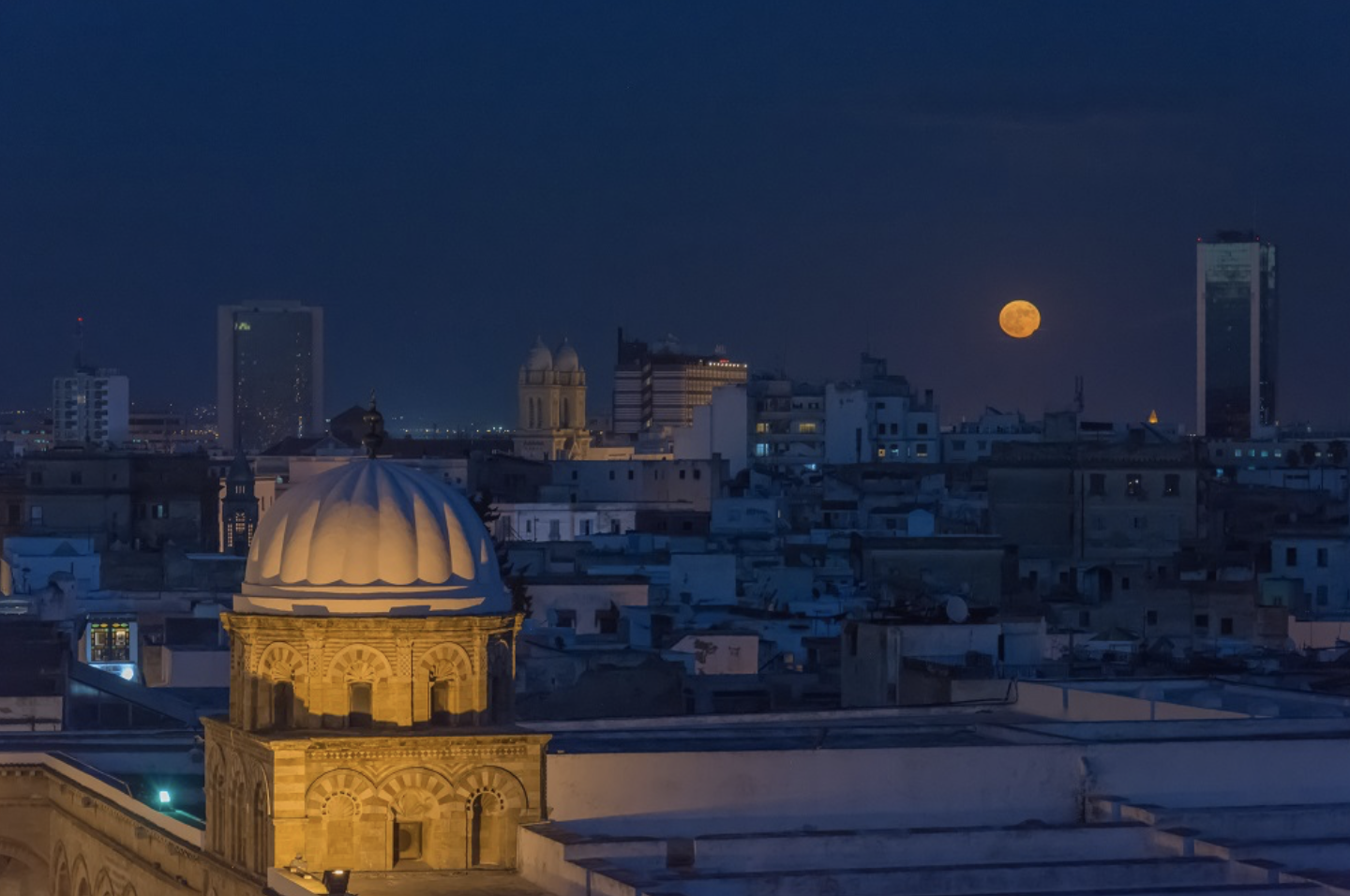
Zitouna mosque in Tunisia with full moon view (photo : http://www.tunisi.info)

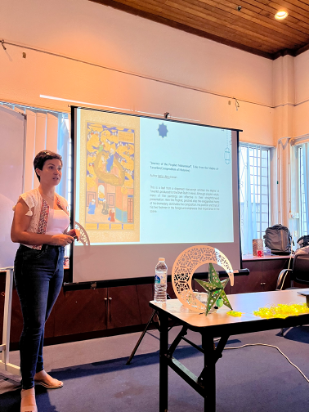
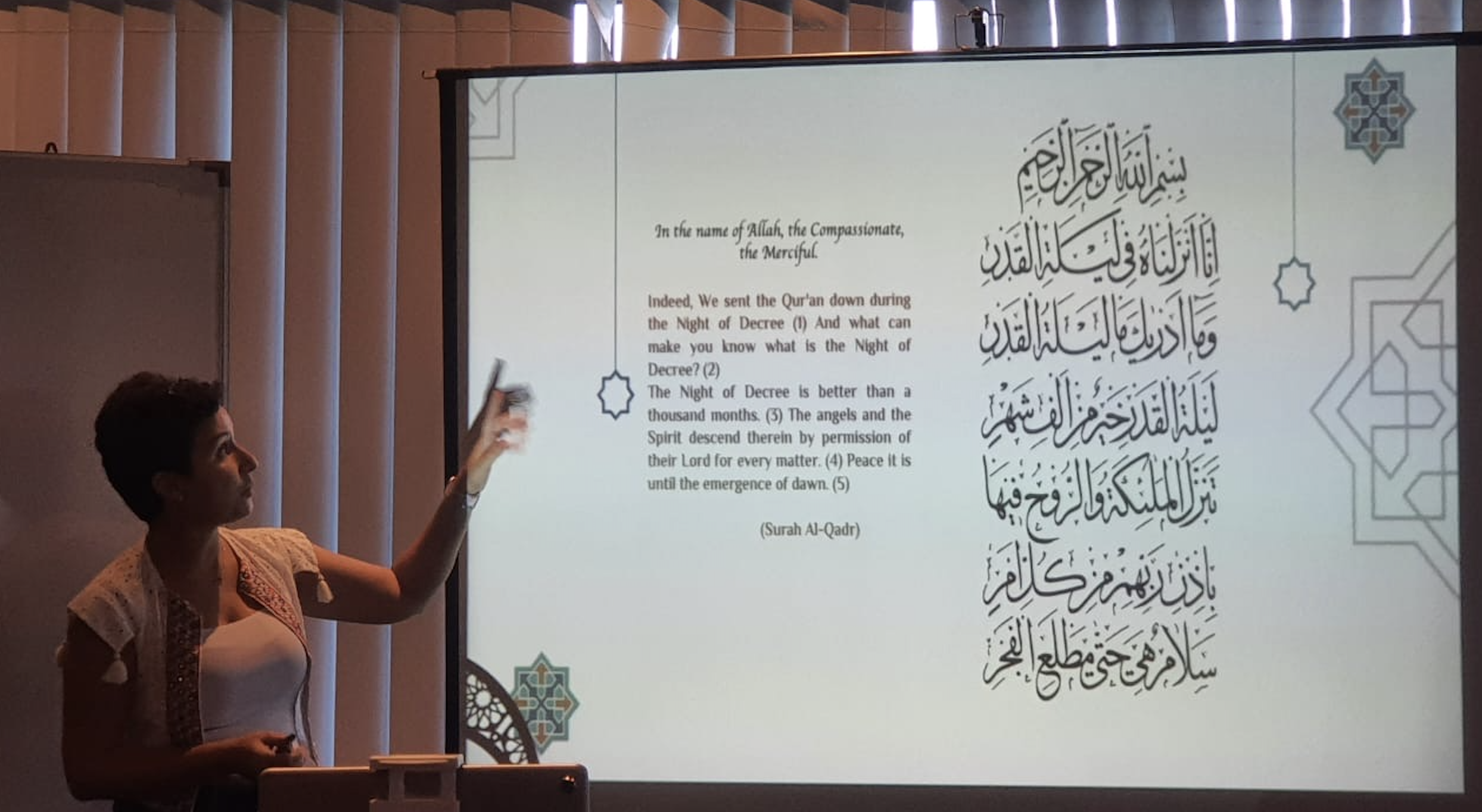
On the eve of Ramadan 2024, our fellow museum volunteer, Emna Esseghir, gave us a very insightful talk about Ramadan. Emna hails from Tunis, Tunisia, and has been residing in Malaysia for the past six years. She has been a passionate volunteer guide at Muzium Negara since 2023. We affectionately refer to her as our Tunisian ambassador to Malaysia, as she has generously shared her knowledge of Tunisia and its culture with us. Her presentation provided a unique perspective on Islam, encompassing not only Tunisia and Malaysia but also offering a cross-cultural examination of Ramadan and Eid al-Fitr traditions and practices.

Emna Esseghir (photos: Noriko Nishizawa)

Brief History of Islam

It is believed that Islam started in 610 CE when 40-year-old Muhammad, who was born in Mecca in western Arabia, received his first revelation from the angel Gabriel. The night Gabriel appeared to him in a cave during a retreat is called the Night of Power/Destiny (Laylat al-Qadr).

Gabriel said to Muhammad, “Read in the name of your Lord…” until he learned the words by heart. The messages from Gabriel continued for the rest of his life, and these revelations were subsequently collected and codified as the Qur’an (literally “to read/recite” in Arabic), the Muslim holy book. The essence of Gabriel’s messages was simple: it affirmed the existence of one god, Allah, and declared that Muhammad was his appointed messenger. The messages also provided guidelines for proper behavior within the framework of a just and equitable society. Around that time, Mecca, the religious center, was a prosperous city, and the Kaaba, then a shrine and a place of pilgrimage housing the pagan deities, was worshipped by the Arabs. The Prophet Muhammad’s messages weren’t well received among the leaders of Mecca. In the face of opposition and persecution in Mecca, Muhammad and his followers emigrated north to another oasis town, Medina (Yathrib) in 622. This event, referred to as Hijrah/Hegira, proved to be a turning point for Islam because it marks the formation of the first community of Muslims. Muhammad continued to attract followers in Medina and also to fight off attacks against him and the faith with his army. Within a few years, Mecca largely embraced Islam as well, and the first thing Muhammad did upon his return to Mecca was to remove idols and rededicate the Kaaba to Allah. The Kaaba, which is a stone building, has become Islam’s holiest site, the Masjid al-Haram, and no matter where they are, Muslims always face in the direction of the Kaaba for prayer.

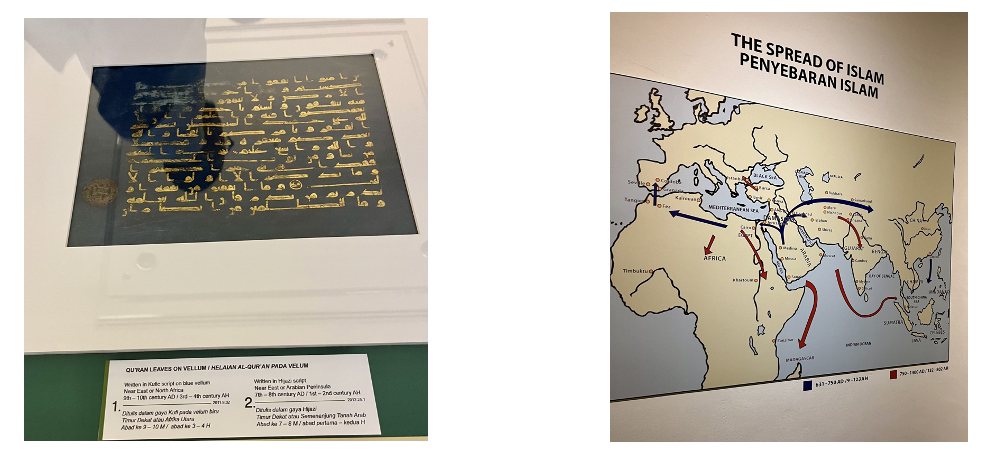
Leave from the Blue Qu’ran and The Spread of Islam at IAMM (photo: Noriko Nishizawa)

Muhammad died in 632, and the following 30-year period is called the Rashidun (rightly guided) Caliphate, led by a series of four caliphs. A caliph (a successor) is a representative of the Prophet who governs the Muslim community, both politically and religiously in the early period, and a caliphate is a political community governed by a caliph. First, Abū Bakr, who was Muhammad’s father-in-law and a close associate, was elected as the first caliph and then followed by Umar, Uthamān, and Alī. Under their commands, the Arab armies expanded the new faith and leadership in the Arabian Peninsula and beyond. They then conquered Syria, Palestine, and Egypt from the Byzantine Empire, and Iraq and Iran from the Sasanian Empire. The next caliphate, the Umayyad, conquered territory from Spain and Portugal all the way to India and Pakistan by the end of 750. The Ayyubid Caliphate became the largest and most powerful empire in the world by developing a religious, political, and cultural commonwealth. Interestingly, the conversion to Islam in the early period was quite slow because the expansion of the empires happened so fast. On the other hand, the spread of Islam in regions where Muslims are quite numerous today, like Indonesia, Malaysia, and sub-Saharan Africa, happened between the 13th and the 15th centuries quite quickly, through merchants and religious scholars.

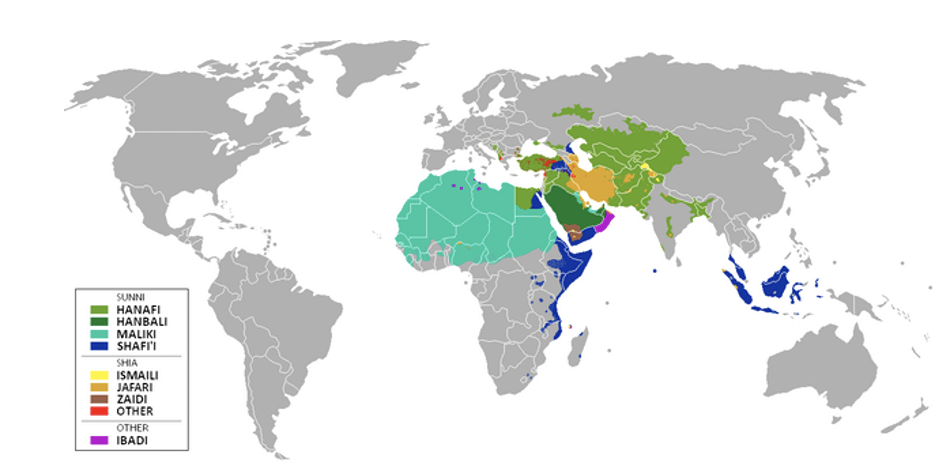
(Source: Wikimedia.org, this file is licensed under the Creative Commons Attribution-Share Alike 4.0 International license)

Emna showed us this map: Map of the Muslim World With the Main Madhhabs. She emphasized that as of 2020, there were 1.8 billion people, more than 25% of the world’s population, who practiced Islam, and Muslims were not only in Arab countries but also everywhere. Then she touched on the two main branches of Islam and some madhhabs/mazahib, referring to Islamic schools of thought. Sunni and Shia/Shīʿa are the two main branches of Islam, and around 85% of the Muslim population are Sunnis, with 15% being Shias (source: the Council on Foreign Relations). While Shias are concentrated mainly in Iran, Iraq, and Lebanon, Sunnis are the majority in more than 40 other countries. These two sects within Islam share most of the fundamental beliefs and practices of the religion, but they differ in doctrine, law, ritual, and religious organization.

The roots of the Sunni-Shia division can be traced back to the seventh century, soon after the death of Muhammad. Shias believe that Muhammad publicly designated Alī, his cousin and son-in-law, as the first in line of hereditary Imams (“leaders” in Arabic) from his family, whereas Sunnis believe that Muhammad did not explicitly declare a successor. Sunnis viewed the caliphs as both religious and political leaders in the early period. Over time, the caliphs functioned as political rulers, while the scholars (Ulamā/Ulema) were considered religious authorities and interpreters. For Sunnis, Imam is most commonly used as the title for a prayer leader at a mosque. In contrast, for most Shias, Imams are absolute leaders of the Islamic communities, since they believe that Imams should be spiritual descendants of Muhammad and are responsible for interpreting the faith, as well as improving the quality of their lives.

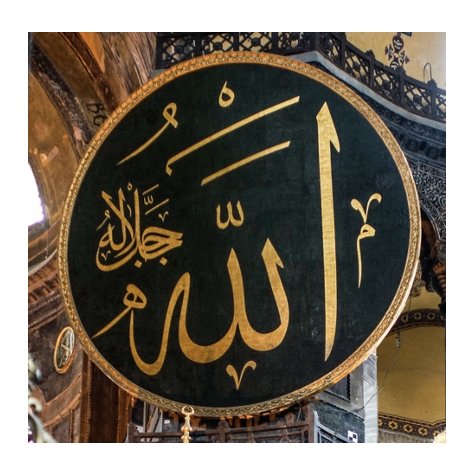
(Source: Calligraphy showing the word Allah in Arabic in Hagia Sophia, Istanbul, Turkey by Adam Kliczek, http://memoriesstay.com)

Madhhab means ‘a way’, and it is a method of interpreting the religion that binds a group or school of scholars together. Today, there are four major Sunni madhhabs: Hanafī, Hanbalī, Mālikī, and Shafi’i. For example, Tunisia is mostly Mālikī and Malaysia is Shafi’i. According to Emna, we don’t really see differences between Mālikī and Shafi’i in our daily life, but Mālikī, also called the ‘school of Medina’, could be a little more flexible in terms of customs and traditions compared to other Sunni madhhabs.

Understanding Ramadan: What You Need to Know About Ramadan

Overall:

(1) The term “Ramaḍān (رَمَضَان)” originates from an Arabic root denoting “extreme heat” or “dryness”. 

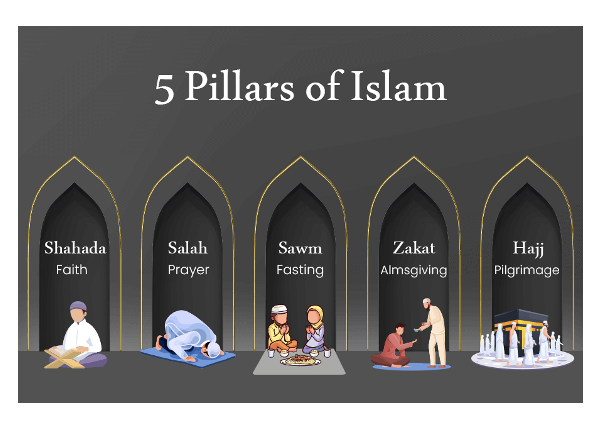
(2) Ramadan is the ninth month in the Islamic calendar and is considered one of the holiest months because it is devoted to fasting, one of the Five Pillars of Islam which are the core beliefs and practices of Islam.

(Source:  The Ultimate Guide to The 5 Pillars of Islam by Resala Academy)

(3) Ramadan existed before Islam.  Ramadan is said to have been an important and holy month for the Arabs long before Muhammad introduced Islam.  They stopped fighting and tried to meditate at temples and caves during that time.  Muslims believe that the Night of Power happened during Ramadan.

The Islamic Calendar/The Hijri Calendar:

(4) The Islamic calendar plays an important role in the life of Muslims as it specifies the time for Ramadan, Eid al-Fitr, Hajj, etc.  Little is known about the pre-Islamic calendar; however, some historians maintain that it was similar to the modern Islamic calendar.  Although Arabs were already using the calendar based on lunar months, they didn’t have a specific number or term to register the year, and it became quite confusing.  As a result, the second caliph, Umar, introduced the new calendar in 639.  The Islamic calendar is a lunar calendar, and the Hijrah in 622 marks the beginning of the calendar.  It symbolises the Muslim’s journey to fulfill all the Five Pillars of Islam: renewing the faith constantly, performing prayers, paying annual Zakat (a financial obligation to donate to charitable causes), fasting in Ramadan, and fulfilling the Hajj (a once-in-a-lifetime pilgrimage made to the Kaaba).

Fasting

(5) Fasting was already a common religious practice among the pre-Islamic Arabs, and they used to fast on Āshūrā (the tenth day of Muharram) to observe the day God parted the Red Sea to allow Moses and his people to escape Egypt.  Muhammad also used to fast on Ashura.  Actually, Ashura has become an important mourning day for Shias, because it was the day Imam Husayn ibn Ali, the grandson of Muhammad, was martyred in the battle.  Even today many people still fast on Ashura.  As for the fasting during Ramadan, it is believed that Muhammad received a revelation regarding Sawn (fasting) from the angel Gabriel two years after Hijrah, and then he established fasting as one of the holy month’s (Ramadan) practices.

(6) Food and drink aren’t the only things Muslims have to abstain from.  There are other activities they also cannot participate in to cleanse their mind and soul. Fasting is obligatory for all Muslims who have reached the age of puberty, who are of sound mind, and who have good health.  However, those who are in pre-puberty, old and frail, sick, pregnant, breastfeeding, menstruating or travelling are excused, but there are other requirements they must abide by.

(7) Sunni and Shia practice fasting slightly differently.  Sunnis break their fast as soon as the prayer (maghrib) starts as the sun is no longer visible on the horizon.  Whereas Shias wait until the end of the prayer which  starts when the last ray of light vanishes and the sky becomes totally dark.

(8) Fasting is an act of worship bringing one closer to God, as well as a form of spiritual discipline and a means to empathize with those less fortunate. 

How to Observe Ramadan:

(9) Ramadan begins 10-12 days earlier each year because the Islamic calendar year is shorter than the Gregorian calendar, allowing it to fall in every season throughout a 33-year cycle.  The Islamic calendar follows the literal cycles of the moon, and each month of the calendar begins with the sighting of the early crescent moon.  Telescopes as well as astronomical calculations and technology are used to establish the moon’s appearance.  Consequently, the exact start of Ramadan is not confirmed until the day before, although an approximate start date is calculated in advance.  Also the exact timing varies from country to country, depending on when local Islamic authorities in each country declare the sighting of the new moon.  It is the same for the end of Ramadan.  Emna told us that in Tunisia’s case, the country still sent out someone in each state to a higher place to sight the moon.  It would be good enough to start Ramadan if even one of them (24 states) spots the moon.

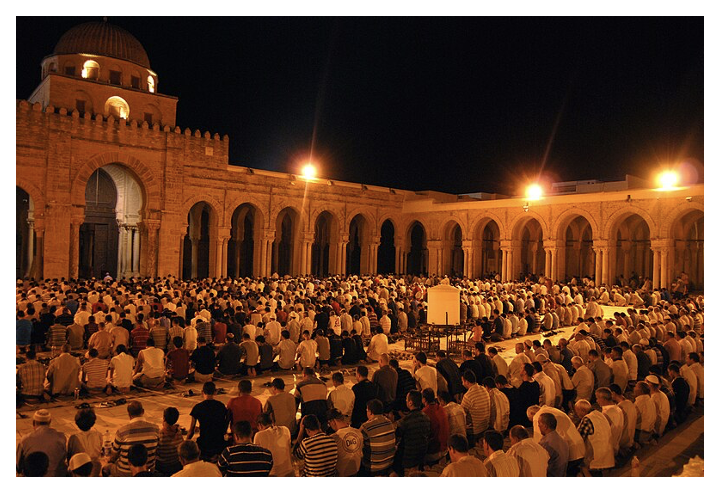
(10) Ramadan is not all about fasting.  Some of the special practices during Ramadan include eating a special pre-dawn meal called suhoor/suḥūr before starting the daily fast at dawn, and then eating another meal called Ifṭār to break the fast at sunset.  During Ramadan Muslims also take part in extra worship such as Tarāwīḥ/Taraweehprayers (night prayers) observed by Sunnis in addition to the five daily prayers: Fajr (dawn), Zuhr (afternoon), Asr (late afternoon), Maghrib (after sunset), and Isha (night time).  Also, towards the end of Ramadan, many Muslims make a special charitable donation which goes to the less fortunate.

(Source: Tarawih prayer at the Great Mosque of Kairouan, Tunisia by Zied Nsir – this file is licensed under the Creative Commons Attribution-Share Alike 3.0 Unported license.)

(11) The Night of Power is one of the most sacred nights in the Islamic calendar, and it is believed to be a night of great reward and significance.  This night falls within Ramadan’s last 10 days.  Although it commonly considered as the 27th night, the exact date is unknown.  As a result, Muslims are encouraged to intensify worship and devotion during the last 10 nights of Ramadan, especially during the odd nights (21st, 23rd, 25th, 27th, and 29th ).

Ramadan Customs and Traditions:

(12) It is customary for many Muslims to break their daily fast and celebrate Eid al-Fitr by eating dates.  Of course, dates grow in many Muslim countries and are quite nutritious.  This custom goes back to the beginning of Ramadan, as it is said that Muhammad ate dates to break his fast.  

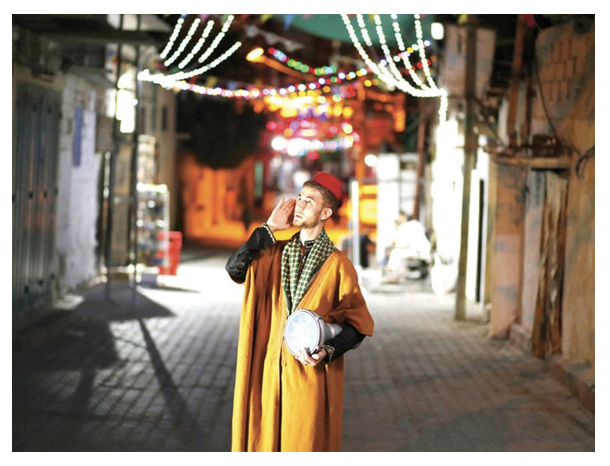
(13) The Ramadan drummers called Musaherati are one of the most important markers of Ramadan.  Every year these volunteer drummers would roam the streets in their neighborhoods an hour before dawn to wake up people to have suhoor, by drumming, calling out people’s names, and even reciting poems.  In the Ottoman and Andalusia cultures, the drummers even competed to claim who was the best!  Musaherati is another tradition that almost disappeared in most cities.  

(Source: Musaherati by Gulf News credited social media)

(14) The adhān/azan (“announcement” in Arabic) is the Islamic call to prayer, usually recited by a muezzin who chants from a minaret five times a day.  It is not Ramadan specific, but it is important particularly during Ramadan because people wait for maghrib to break their daily fast.  According to Emna, although the call to prayer in each country sounds quite different, the words spoken in prayer are the same or very similar.  The most notable difference in wording are the slight variations between Sunni and Shia.  The beauty of the adhan lies in its melody – the rhythm and tone of the words captivate the listeners and make each adhan sound different.  The adhan was developed during the Ottoman Empire as a creative way for listeners to be able to tell the time of prayer just by hearing the tone of the adhan.

Eid al-Fitr:

(15) Eid al-Fitr known as the “festival of breaking the fast” marks the end of Ramadan and is celebrated during the first three days of Shawwāl, the 10th month of the Islamic calendar.  On the first day, people attend a special communal prayer at mosques during the day and then enjoy a feast with families and friends.

(Source:  Ramadan Food by NetCost Market)

Emna shared many of her own personal experiences of Ramadan and described how festive Tunis was during this special time.  All the shops and restaurants were open throughout the night, and there were many concerts as well.  She said Cairo was even more festive than Tunis!  

Emna enjoyed her mother’s cooking, and during Ramadan her mother made special dishes.  Her mother also prepared a lot of food to share with other people, especially those in need.  In Tunis, sometimes cannons were used for the call to prayer.  We could still experience all of them today.  

Emna concluded her talk emphasizing that Ramadan was not just about fasting, but was rather a time to help each other share joy.

References:

Suzan Yalman, The Birth of Islam https://www.metmuseum.org/toah/hd/isla/hd_isla.htm

Introduction to Islam, Khan Academy https://www.khanacademy.org/humanities/world-history/medieval-times/spread-of-islam

Sarah Pruitt,  Islam’s Sunni-Shia Divide, Explained https://www.history.com/news/sunni-shia-divide-islam-muslim

Ramadan, Britannica  https://www.britannica.com/topic/Ramadan

Indlieb Farazi Saber, The art of the adhan: The multiple melodies of the Muslim call to prayer https://www.middleeasteye.net/discover/adhan-muslim-call-prayer-melodies-maqams

UstazMuhammad Abdul Mateen Bin Hisham, 4 Intriguing Things You May Not Know About the Islamic Hijri Calendar https://muslim.sg/articles/4-intriguing-things-you-may-not-know-about-the-islamic-hijri-calendar

Dima Al-Sharif, AL Musaherati Tradition https://www.dimasharif.com/musaherati-ramadan-drummers/#:~:text=While%20during%20those%20days%20the,created%20specifically%20for%20the%20occasion.

Visit to the Province of Shandong, China

Written By Eric Lim

Introduction

In May 2024, I embarked on a journey to Shandong, China, with a group of 31 Malaysians. Our goal was to explore the cultural heritage and historical sites of this province. From the ancient significance of Mount Tai to the legacy of Confucius in Qufu, each destination revealed a unique aspect of Shandong’s history. Our itinerary included coastal cities like Qingdao and Yantai, known for their historical charm, as well as inland cities like Jinan and Zibo, where traditional customs thrive alongside modern developments. This narrative recounts our travels through Shandong, offering insights into its historical richness and cultural diversity.


Province of Shandong

Photo : Google map

Shandong (山东) is a coastal province located in the north east of China. Shandong, which means ‘East of the mountains’ consists of two distinct segments – inland zone, bounded by the provinces of Hebei, Henan, Anhui and Jiangsu respectively from north to south; and the Shandong / Jiaodong Peninsula, located between Bohai Sea to the north and Yellow Sea (Huanghai) to the south.  And lying across these vast stretches of sea is the Korean Peninsula. The Yellow River (Huang He) runs through the province and empties into the Bohai Sea. It is the second longest river in China, after the Yangtze River.

Shandong is now a major grain producer in China and its major crops include wheat, corn, soybean, kaoliang, spiked millets, sweet potatoes and the cash crops are peanuts, cotton, tobacco and fruits. Some of you may have eaten Shandong peanuts which are large in size, and are well suited for oil pressing, turning into peanut cooking oil. Shandong is rich in natural resources particularly crude oill (Shengli oil field) and coal (around Yanzhou and Tengzhou). There are also major iron ore deposits located near Zibo and Laiwu, and some bauxite is mined near Nanding, Zibo. Edible salt is produced on the coasts of the Shandong Peninsula. Shandong is also a cradle for many national giants in light industry such as brands like Haier Electronics, Hisense Electronics, Tsingtao Beer, Jinan Qingqi Motorcycle, Konfujia Liquor, Yangtai Dongyue, Jinan Heavy Truck, just to name a few.

The history of Shandong dates back to over 400,000 years with the discovery of the Yiyuan Man, the earliest Shandong human known by far, in the center of the province. Yiyuan Man is classified as archaic humans of the genus homo erectus from the middle Pleistocene age. Moving to the Neolithic Age, civilizations developed one after another, with the Longshan Culture noted for its highly polished black pottery (or egg-shell pottery). Shandong formed part of the territory of the Shang and Zhou dynasty. Shandong is also the birthplace of two great philosophers, Confucius (Kong Qiu / 551-479 BC) and Mencius (Meng Ke, Mengzi / 372-290 BC). The famous Venetian, Marco Polo, was appointed as Governor of Yanzhou in Jining Prefecture in the 1280’s by Kublai Khan, during his reign as the first emperor of the Mongol-led Yuan Dynasty of China. During the Qing Dynasty, a series of treaties and agreements were signed in which China was forced to concede many of its territorial and sovereignty rights to foreign imperialist powers especially Great Britain, France, Germany, United States, Russia and Japan. Shandong / Jiaodong Peninsula was occupied briefly by Japanese troops after the Sino-Japanese War 1894-1895. In 1898, Germany seized the port of Qingdao while the British gained control of the coastal town of Weihai. And with the advent of World War I, Japan took over German interests in the peninsula and made the Twenty One Demands compelling the Chinese to give official recognition to the renewed occupation. This took effect from 1919 to 1922. The Japanese continued their domination during the Sino- Japanese War of 1937 to 1945. After the war, it was a fight between Chinese Communists and the Nationalists, which resulted in the former taking control of Shandong by the end of 1948.

Another Shandong native that became the talking point of the whole nation was Jiang Qing. She was the third wife of Chairman Mao Zedong who rose to become the most influential woman in the People’s Republic of China, coinciding with the Cultural Revolution that was gripping the nation from1966 until 1976. After the death of Mao in 1976, Jiang and three others who formed the radical ‘Gang of Four’ alliance were arrested for their role of fomenting widespread civil unrest during the country’s turbulent history. She spent many years in jail and finally committed suicide in 1991.

We began our trip to the Province of Shandong by visiting the Shandong Peninsula – covering the coastal cities of Qingdao, Qixia, Yantai and Penglai – before moving to the Inland Zone, to Weifang, Zhoucun in Zibo, Qufu, Taian (Mount Tai scenic area) and completing the trip at Jinan, the provincial capital.

(1)Qingdao 青岛

We touched down at the Qingdao Jiaodong International Airport which is currently the largest airport in the province. It was officially opened to the public on 12 August 2021 and the terminal is designed in the form of a starfish with five connected airside concourses. This design is similar to the Beijing Daxing International Airport. For comparison, Qingdao Jiaodong International Airport is twice the size of Heathrow Airport. The International Air Transport Association or IATA code for this airport is TAO and it is located about 32 km from the city proper.

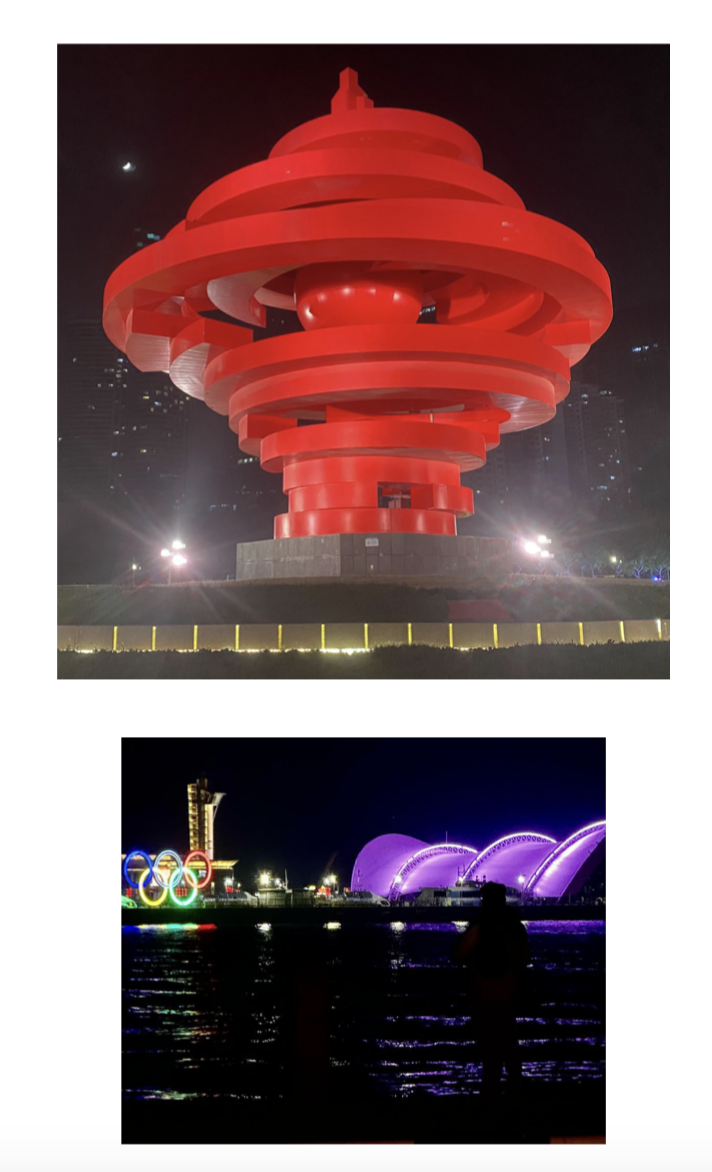
Qingdao has a rich history and offers several interesting sites for visitors. Notable places include the Tsingtao Brewery, founded in 1903, which is currently the sixth largest brewery in the world. Another key site is the May 4th Square, a large public square with a focal red sculpture called the May Wind, offering a panoramic view of the CBD, with government buildings to the north, the ocean to the south, and high-rises on the other two sides. Opposite the square is the Qingdao Olympic Sailing Centre, where the 2008 Summer Olympics sailing events were held.

(L) May Wing at May 4th Square / (R) Qingdao Olympic Sailing Centre. Photo : Eric Lim

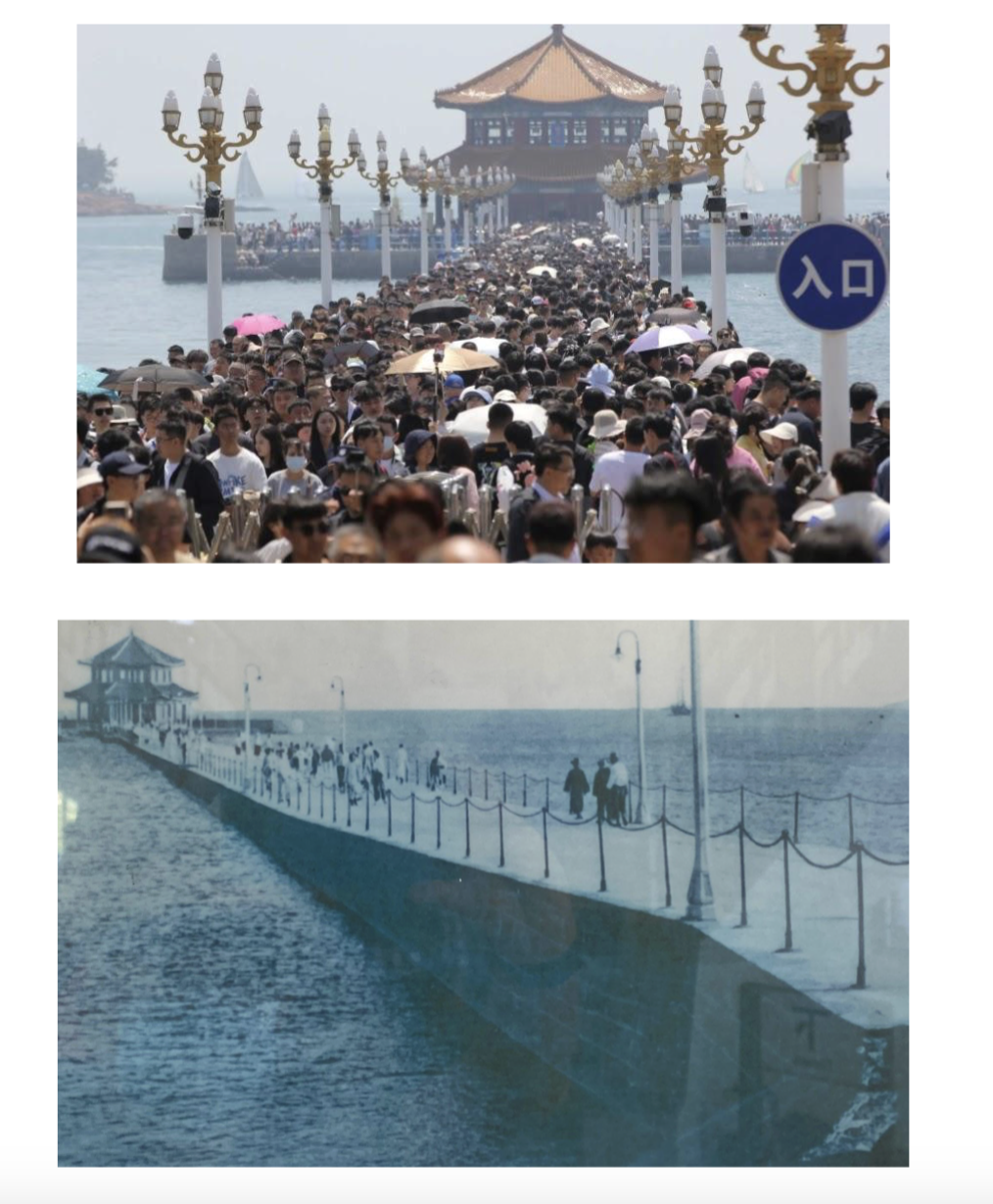
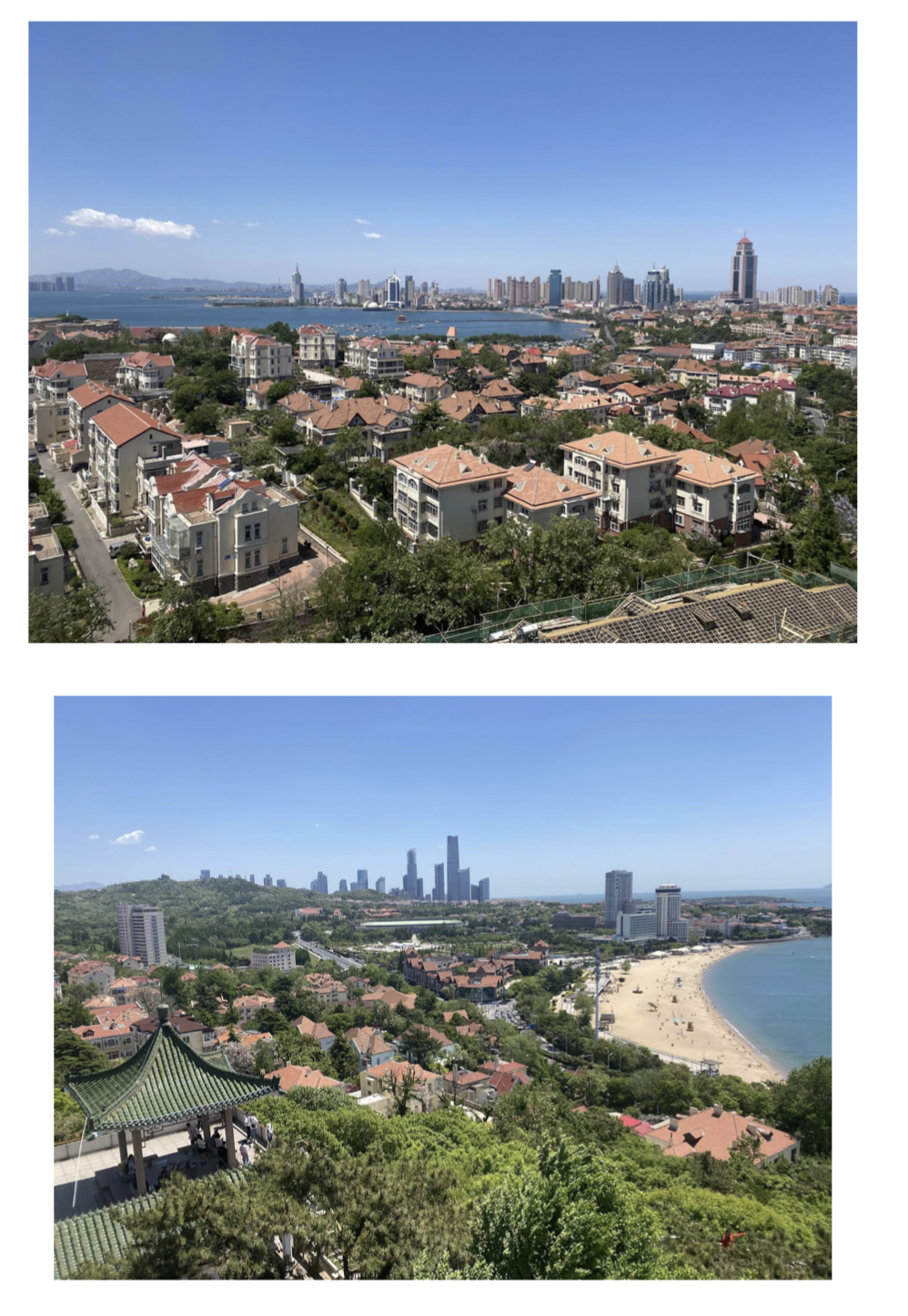
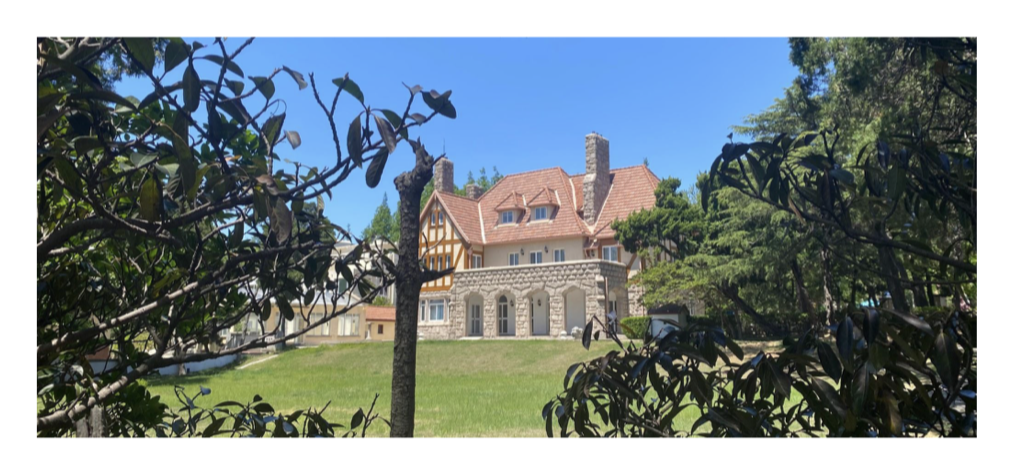
The next morning after breakfast, we went to West Shinan CBD where we visited Zhan Qiao, Xiaoyushan Park and Badaguan. Zhan Qiao is a famous pier and is the iconic symbol of Qingdao. Founded during the reign of the Qing Dynasty in 1891 and known then as Changhong Yuanyin, was originally built as a military dock and later, extended by the Germans to 440 meters long. At the end of the pier is the two-storey Huilan Pavilion which was built in 1931. Huilan Pavillion is the logo of Tsingtao Beer. Xiaoyushan Park (Little Fish Hill) was built in traditional Chinese style in 1983, offering a hilltop view of Qingdao. Badaguan scenic area was built in the early 20th century. The eight roads in the area were all named after China’s great ancient military forts. Most buildings in the area are villas with courtyards, typical of the modern European architectural style. Badaguan is a popular destination for wedding photography.

(L) Zhan Qiao during the recent May Day celebration, just like the old Chinese saying, “人山人海 ren shan, ren hai” (people mountain, people sea) (R) Old photo of Zhan Qiao / Photo: SCMP

View from Xiaoyushan Park / Photo : Eric Lim

European architectural villa at Badaguan / Photo : EricLim

(2) Qixia  栖霞 and Yantai 烟台

Still remaining within the Shandong / Jiaodong Peninsula, we continued our journey to the  neighbouring Yantai Prefecture where we visited Qixia, Yantai and Penglai. At the stopover at landlocked Qixia, which won the title of “The Apple Capital of China”, we visited the other famous attraction of the town, the Mou Family Manor

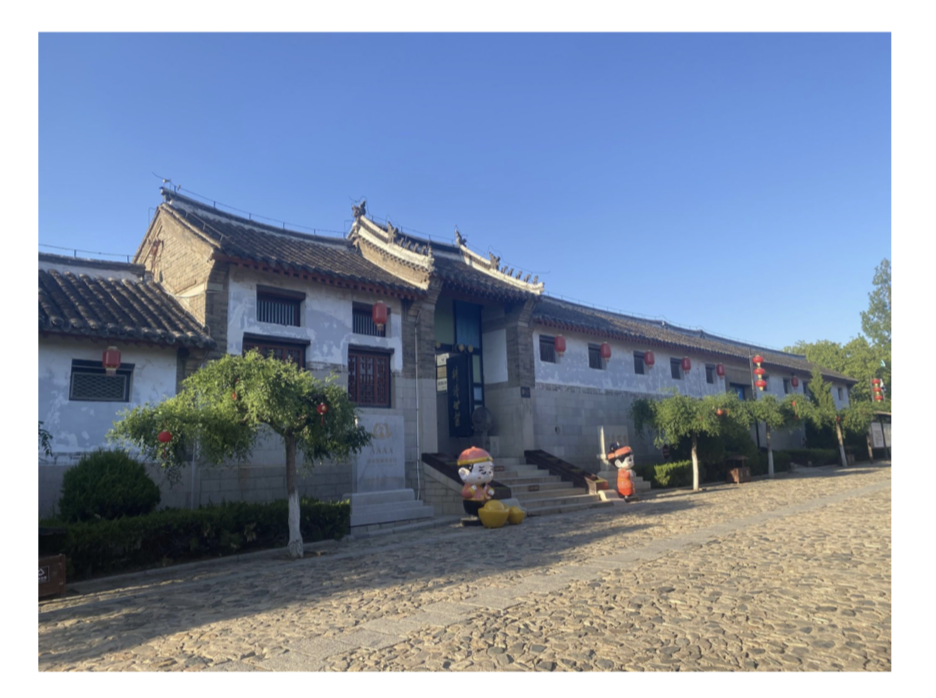
The residential complex that belonged to landlord Mou Molin was built during the Emperor Yongzheng period (1723-1735) of the Qing Dynasty (1644-1911). Since then, it had undergone 200 years of continuous addition, expansion and repair; and finally completed in the current form in 1935. Today it covers an area of more than 20,000 square meters with more than 480 rooms, and is one of the well preserved and largest family manors in China. The manor was used as the site for a popular television series aired in China in 2010 about the Mou family, appropriately titled “Mou Family Manor / 牟氏莊園 / Mou Shi Zhuang Yuan”.

The port city of Yantai was traditionally known as Zhifu (Chefoo). It was during the Ming Dynasty that the prototype of Yantai city was recorded when the Ming government proceeded to set up the Qishan Garrison in order to strengthen its coastal defense. In 1861, Yantai was opened to international commerce as a treaty port. However, Yantai and other ports of northern Shandong stagnated due to the rapid development of Qingdao by the Germans after 1898. Moving forward to 1958, Yantai Special Zone was established and in 1983, Yantai was set up as a prefecture-level city. 

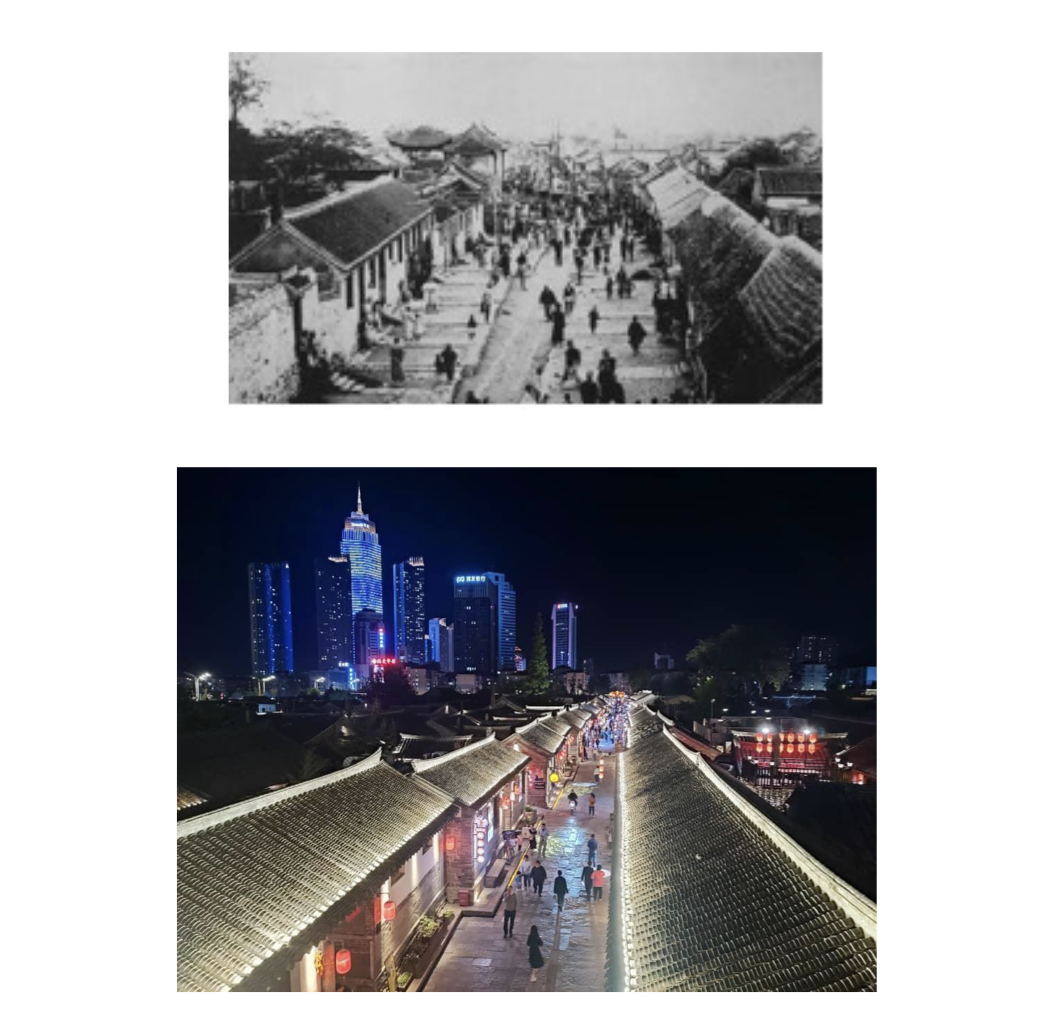
In 2017, Shandong Provincial government made a decision to restore and develop the entire old section of the city i.e. Suochengli district  into a AAAA rated tourist attraction (tourist attractions in China were graded according to criteria on a scale of A to the highest 5A). The opening was delayed due to the Covid pandemic and officially opened to the public during the Spring Festival in 2021. There are more than 280 restored cultural relics (buildings) and many of the old housing were converted into restaurants.

Entrance to Mou Family Manor / Photo source : Eric Lim

Old and new Souchengli District at Yantai / Photo source : Yantai – Suocheng District 所城里 – live2makan and Eric Lim.

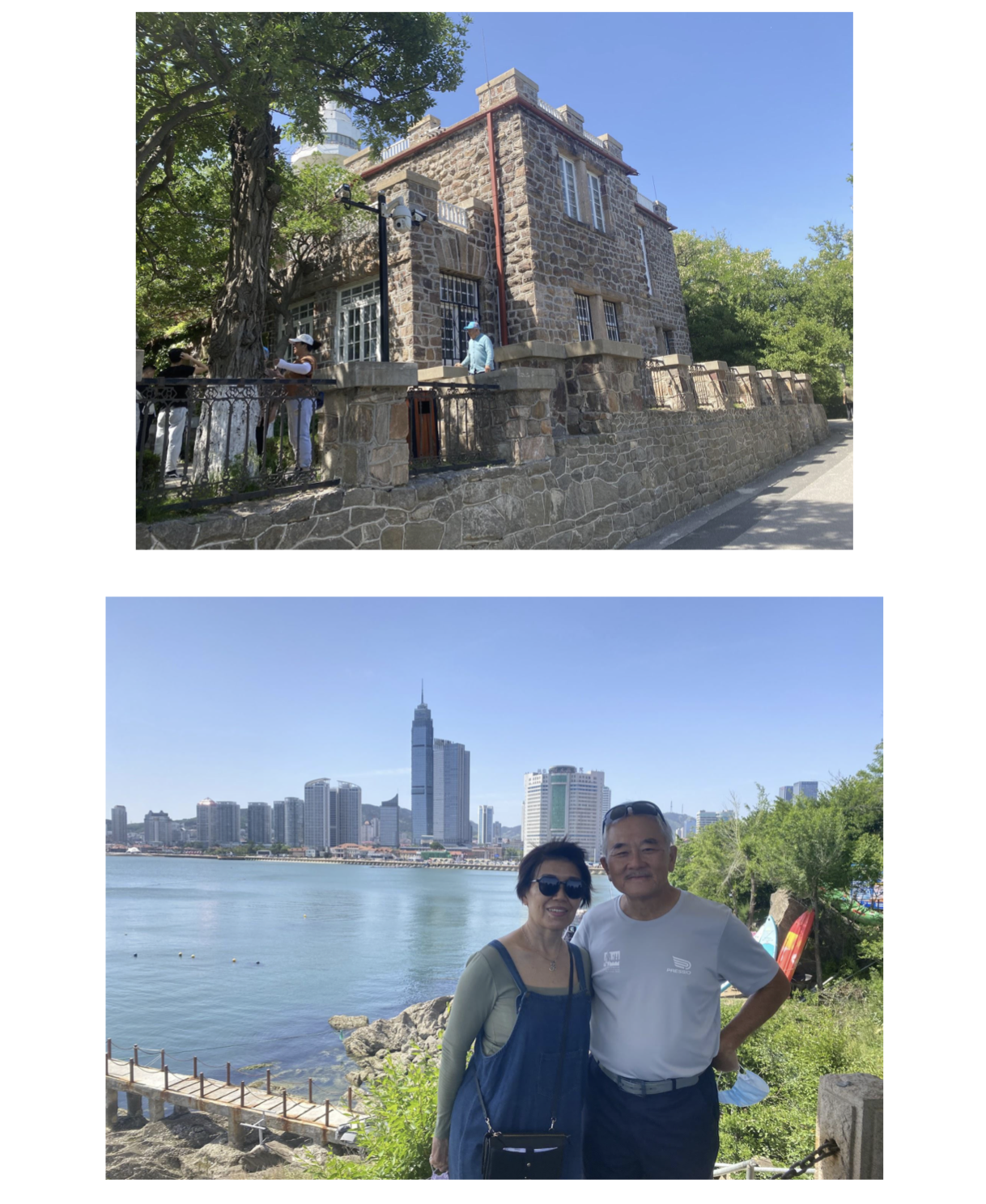
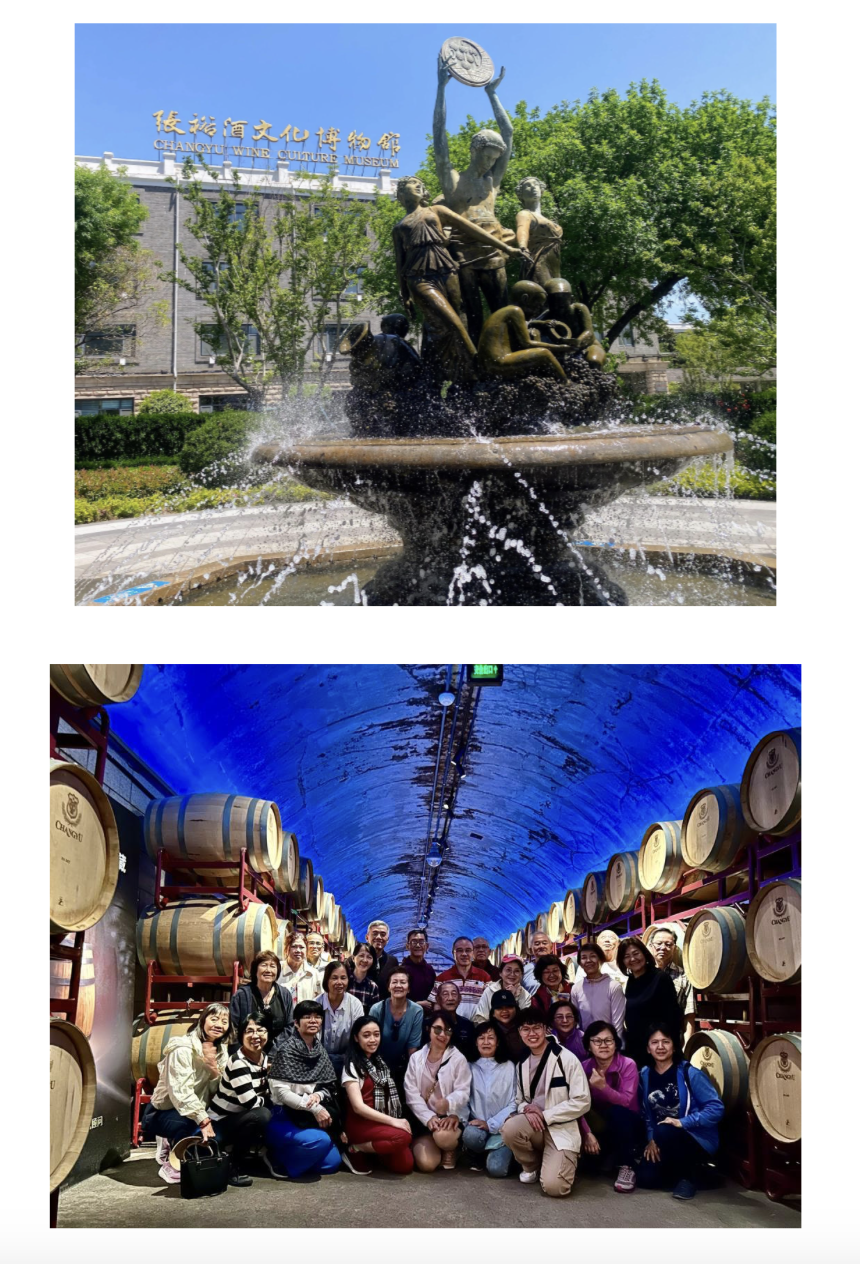
Yantai, which literally means ‘beacon tower’, derives from a lookout beacon built on a hill as part of a 15th century coastal defense system erected against Japanese pirates. Yantai Hill Park is one of the highest hills in the city and a popular tourist attraction. The peak of Yantai Hill  was the location of the old lookout beacon. Surrounding the hill are a large collection of historical Western architecture buildings including the former consulates and residence of the UK, US, Japan and Denmark which date from the 19th century. Today, these buildings are mostly converted into museums, with one specially dedicated to Yantai Beijing Opera art. Next on the itinerary was a visit to the ChangYu Wine Culture Museum, at the site of the former ChangYu Wine Company. Cheong Fatt Tze, a name most Malaysians are familiar with, founded the winery in 1892. Today, it is China’s oldest and largest Western-style winery which produces grape wines as well as brandy and a Chinese health liquor. An underground cellar was built in 1894 and it became the first underground wine cellar in Asia when it was completed in 1903. The cellar is still in use for wine storage. 

(Cheong Fatt Tze (Zhang BiShi) came to the Malay peninsula at a young age of 16. He went on to become a successful and powerful Nanyang business magnate, and was once regarded as the richest man in Malaya. He built a mansion on Leith Street in Georgetown and was dubbed ‘La Maison Bleu’ (the Blue House). In 1990, it was acquired and went into restoration to its authentic original form and it won the National Architecture Award for Conservation 1995, followed by winning the UNESCO Conservation Award 2000.)

Views of Yantai Hill Park / Photo : Eric Lim

ChangYu Wine Culture Museum  / Photo source : Eric Lim

(3) Penglai 蓬莱

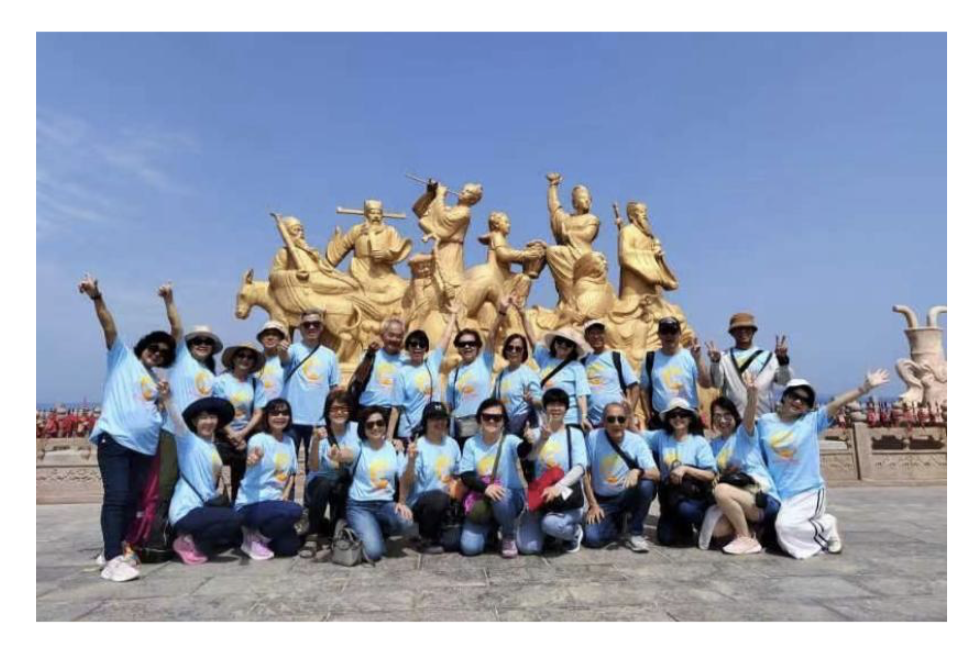
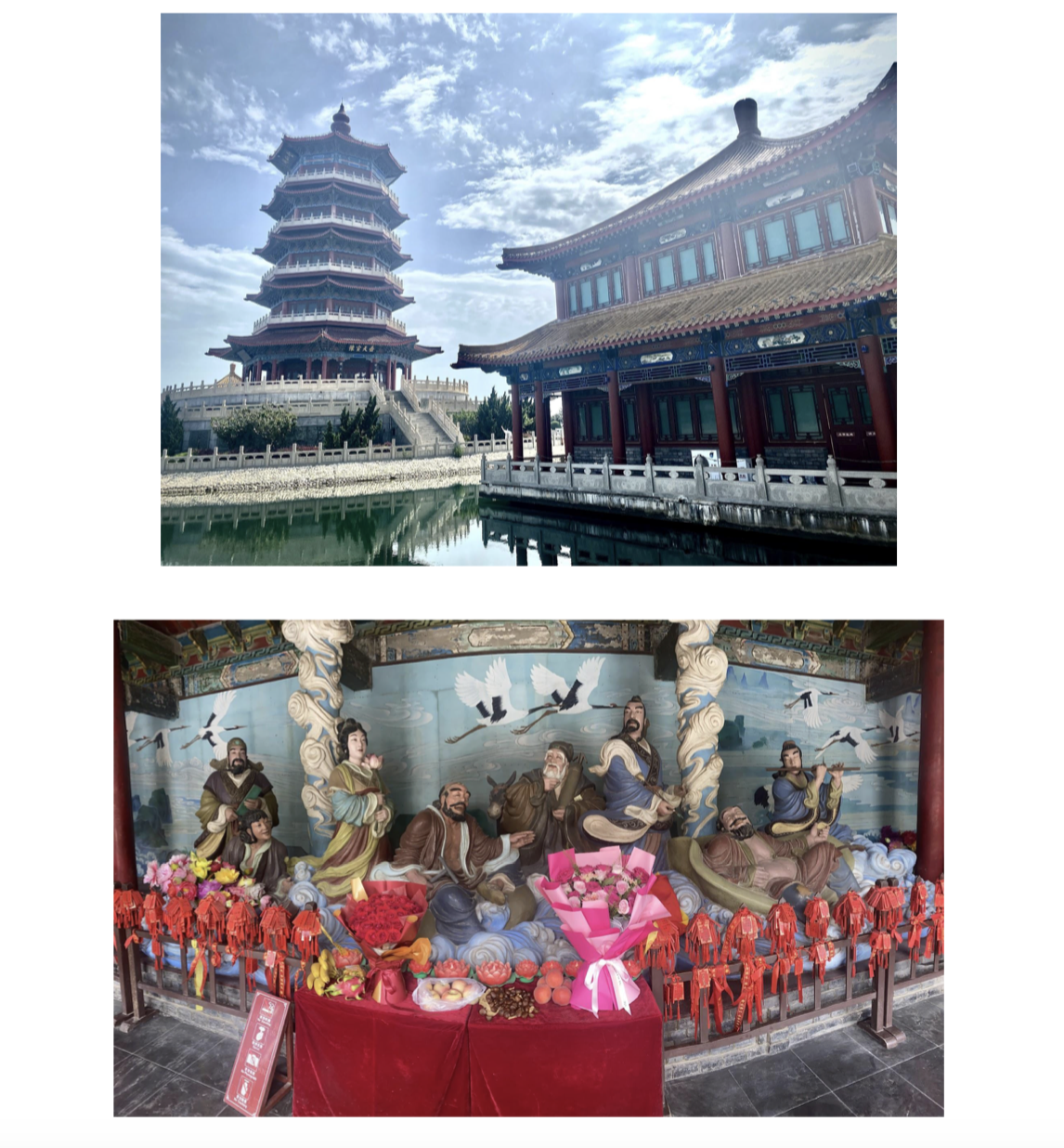
Penglai is about 75 km from Yantai, lying on the northwest corner of the Shandong Peninsula. It was formerly known as Dengzhou or Tengchow. It was the first port in the Shandong Peninsula to be opened to foreigners in 1858. And since ancient times, Penglai has been known as ‘Wonderland on Earth”. Penglai Pavilion scenic area is one of the earliest tourist sites in Shandong that is awarded the 5A rating (most important and best maintained tourist attractions in People’s Republic of China).It is a large park of ancient buildings, temples, palaces and towers. It was first constructed in 1061 during the Song Dynasty (960-1279). Penglai Pavilion is one of the ancient Four Great Towers of Ancient China, together with Yellow Crane Tower, Pavilion of Prince Teng and Yueyang Tower. It is famous for the Taoist legend of ‘8 immortals crossing the sea’. The legend goes that the eight immortals crossed the sea by using their unique powers after they got drunk in Penglai Pavilion. This magic inspired a popular saying in China that goes like this “when the eight immortals cross the sea, each one shows his special feat. Each tries to outwit the other”. In the modern context, it would mean “that everybody has his or her own way of dealing with things”. The site also attracts countless tourists to witness the wonders of mirages phenomenon known as ‘the Fata Morgana mirage’.The different temperature of the sea water and the coast line has resulted in the appearance of this optical illusion. 

Not too far from Penglai Pavilion is the newer attraction called the Eight Immortals Crossing The Sea / Penglai Baxian scenic area  The entire site is built on a man made island that is shaped like a magic gourd floating above the sea. There are two major structures in the scenic area, namely  the majestic Wangying Tower and an ancient style pagoda Huixian Pavilion, that houses the statues of the Eight Immortals and other Taoist great masters.

Statue of the Eight Immortals at Penglai / Photo : Eric Lim

Eight Immortals Crossing The Sea / Penglai Baxian scenic area / Photo : Eric Lim

(4) Weifang 潍坊

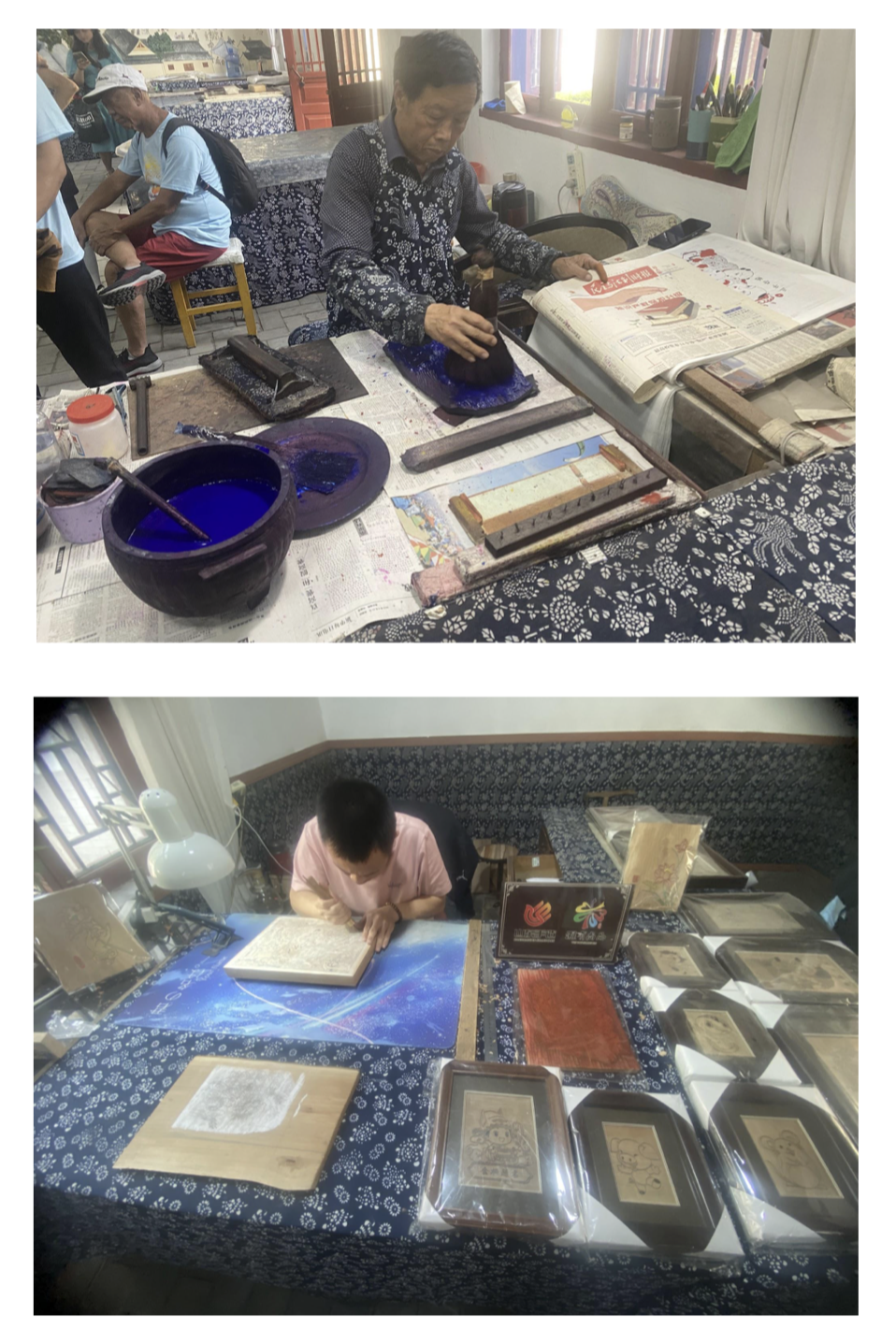
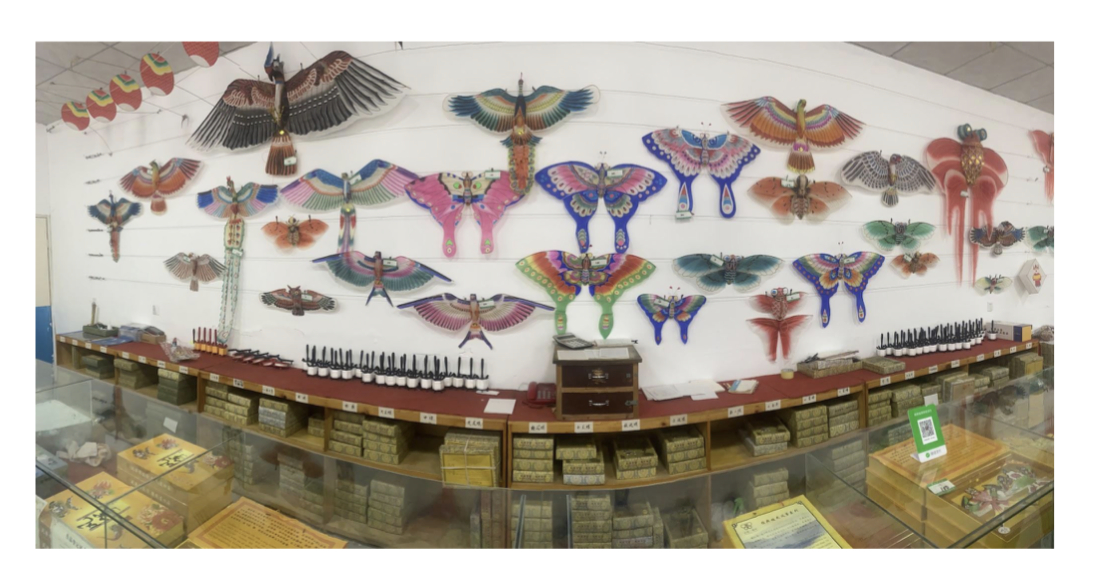
Having completed the coastal cities route, we next moved to the Inland Zone to the prefecture-level city of Weifang,which has a population of 9.3 million at the 2020 census. The city is also known as the ‘capital of kites / city of kites’.The first kite festival was held here in 1984 which attracted kite lovers from all over the world, and since then, the Weifang International Kite Festival is held every April. We made a stopover at the Hanting District of Weifang to visit the Yangjiabu Folk Art Grand View Garden. This site mainly exhibits the artistic style and delicate craftsmanship of Chinese New Year paintings, woodblock printings, kite production and Chinese paper cuttings. At the kite museum, one can learn the origin, research and development of Yangjiabu kites until today which have profound influence both in China and abroad. Weifang kites, represented by Yangjiabu kites, was named as’ National Intangible Cultural Heritage’ by the State Council of China in 2006. 

(Incidentally, we have our annual Pasir Gudang World Kite Festival in Johor. This year, the event was scheduled from February 24 to March 3. It was first held in 1995)

At Yangjiabu Folk Art Grand View Garden / Photo : Eric Lim

(5) Zibo 淄博

After the visit to Yangjiabu Folk Art Grand View Garden, we travelled to the next prefecture-level city of Zibo. Zibo was the centre of the ancient State of Qi during the Spring and Autumn (770-476 BCE) and Warring States (475-221 BCE) periods. Its capital Linzi was the most populous city in China at its peak. It became a centre of an important ceramic and glass industry. During the period of the Silk Route, Zibo was a major centre of silk supply. It then developed into a major industrial complex when the railway linking Qingdao and Jinan which was completed in 1904 passed through important market towns within Zibo. Today, it is home to petrochemicals, textiles and porcelain factories. Zibo’s greatest claim to fame came when the then FIFA President Sepp Blatter proclaimed the city as the birthplace of soccer based on its link to an ancient ball game.

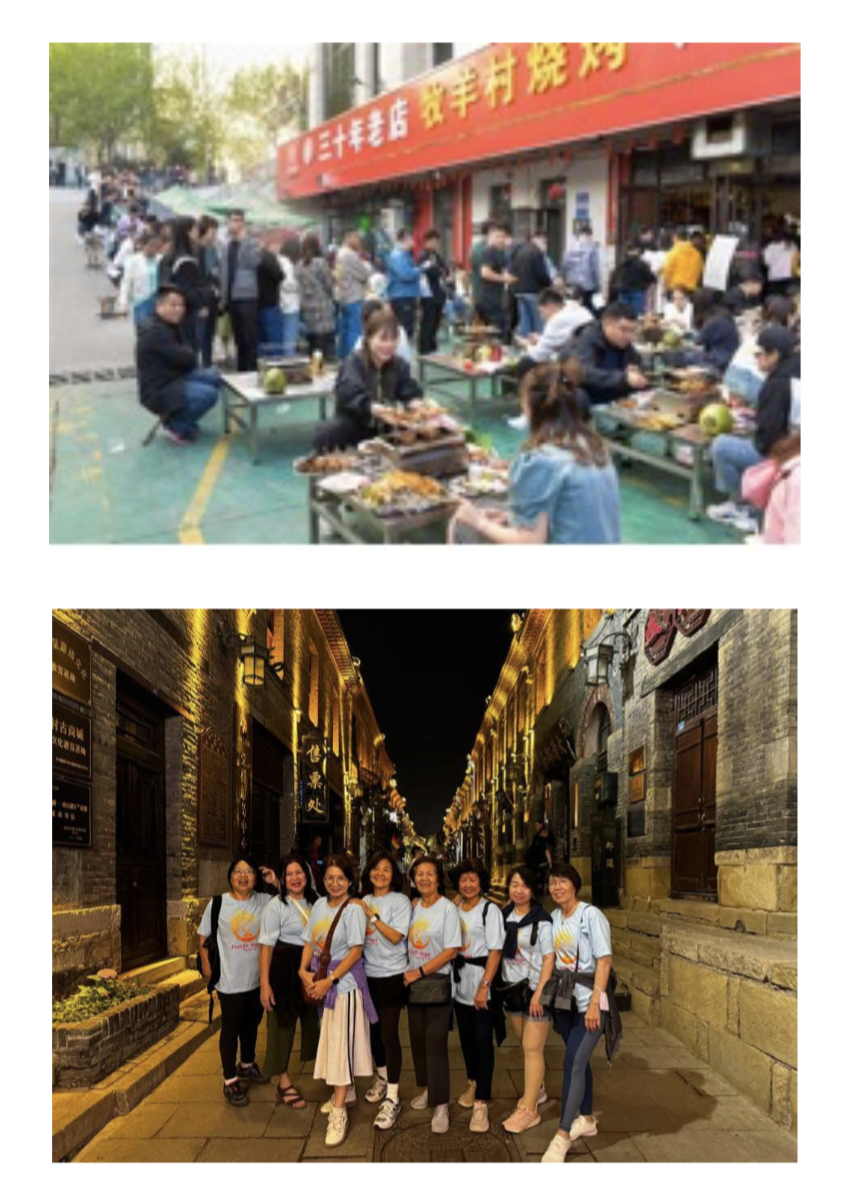
It was quite late when we arrived at Zhouchun Ancient City, one of the urban districts governed by Zibo. During the Ming and Qing Dynasty, Zhouchun developed to be a major commercial town known as ‘No. 1 village in the world’ and its famous local product i.e Shaobing / Sesame Seed cake is also known as the ‘No. 1 Shaobing / Sesame Seed cake in the world’. Zhouchun Ancient City is currently regarded as a ‘living museum of ancient commercial architecture’. Unfortunately on the evening of our visit, we could not savour the famous Shaobing.

(L)Barbeque craze at Zibo / Photo : Zibo’s barbecue craze draws crowds and regulatory action – SHINE News  (R) At Zhouchun Ancient City / Photo : Eric Lim

(6) Qufu 曲阜

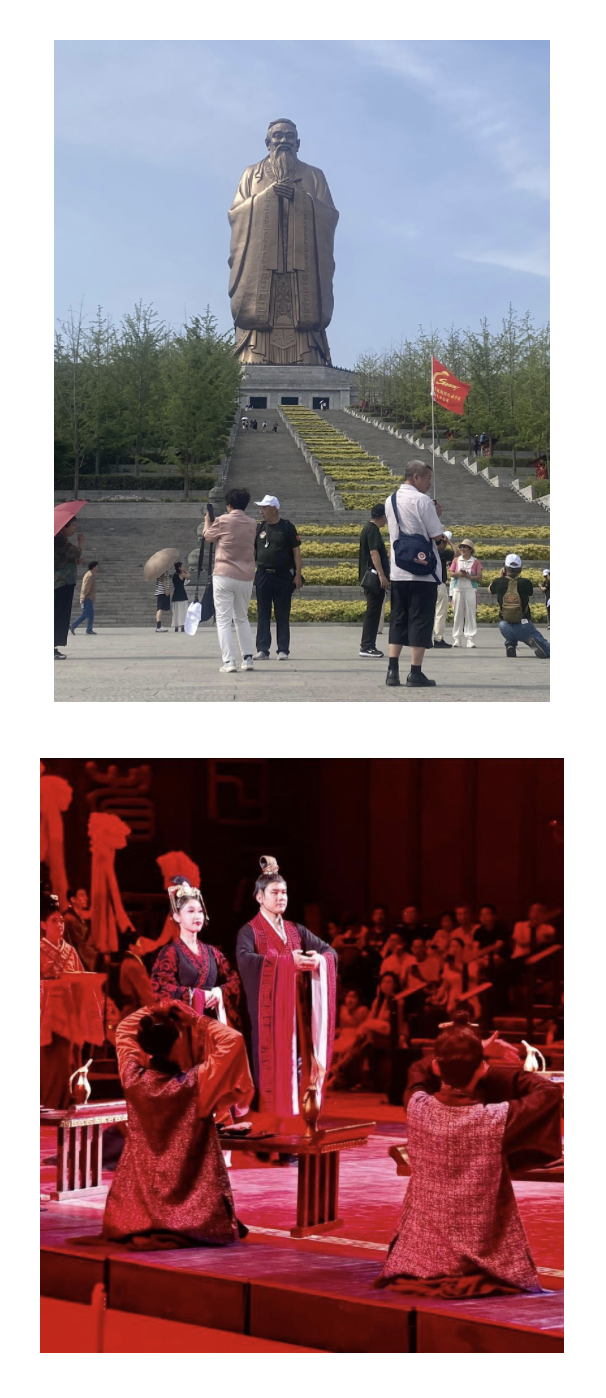
After a night of merriment, we headed next to Qufu, the capital of the small independent state of Lu which flourished from the 6th to 4th BCE. Qufu is also best known as the birthplace and place of residence of the great Chinese philosopher and founder of Confucianism, Confucius (Kong Fuzi, Kong Zi) 551 – 479 BCE. We stopped for two days to visit the Temple and Cemetery of Confucius and the Kong Family Mansion, together these sites have been listed as a UNESCO Heritage Site since 1994. These three sites are collectively known in Qufu as San Kong  (三孔). It is also rated as a 5A tourist attraction. We also visited Nishan Sacred Land, situated in the Nishan Cultural Tourism Resort on Nishan Mountain.

The Temple was built in 478 BCE to commemorate him, and has been destroyed and reconstructed over the centuries. Today it comprises more than 100 buildings while the Cemetery contains Confucius’s tomb and the remains of more than 100,000 of his descendants.

The Kong Family Mansion developed from a small house into a gigantic aristocratic residence of which 152 buildings remain. The most prominent landmark on Nishan Cultural Tourism Resort is the world’s highest sculpture of Confucius standing at 72 meters high. It also features a cultural complex consisting of a lecture hall, study centre, temple of Confucius and a performance centre. 

At Nishan Sacred Land / Photo : Eric Lim

(7) Taian 泰安

Taian City is located at the center of Shandong province and is regarded as the place of origin for Chinese civilization. Traces of human existence date back to more than 500,000 years ago. Modern humans (homo sapiens) appeared in the area 50,000 years ago and in the Neolithic Age (New Stone Age), several cultures namely Beixin culture, Dawenkou culture and Longshan culture, emerged where they had lived in settlement and started farming and domestication of animals. Today, Taian is one of the north-south transportation hubs in China. Taian is a key producer of plaster, sulphurite and granite. And Taian granite has been used in many well known Chinese buildings like the Great Hall of the People, Tiananmen Square and the Monument to the People’s Heroes at Tian’anmen Square. 

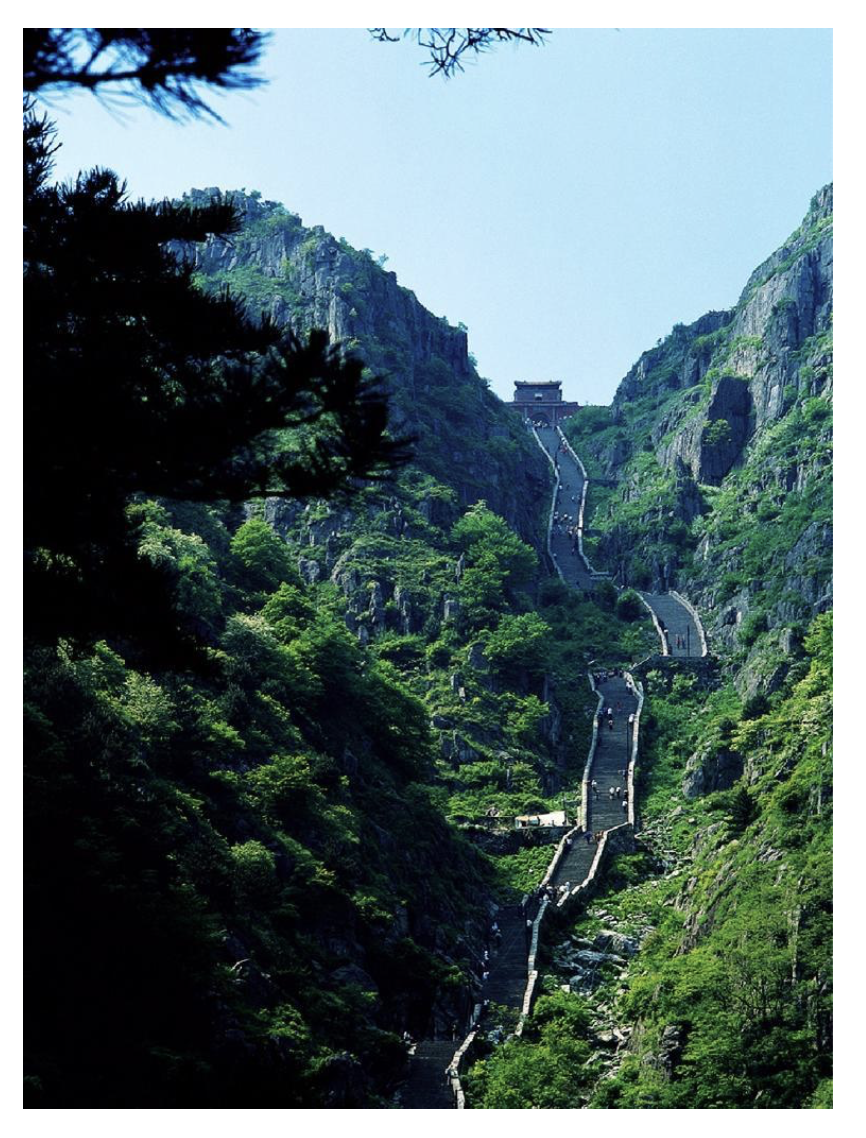
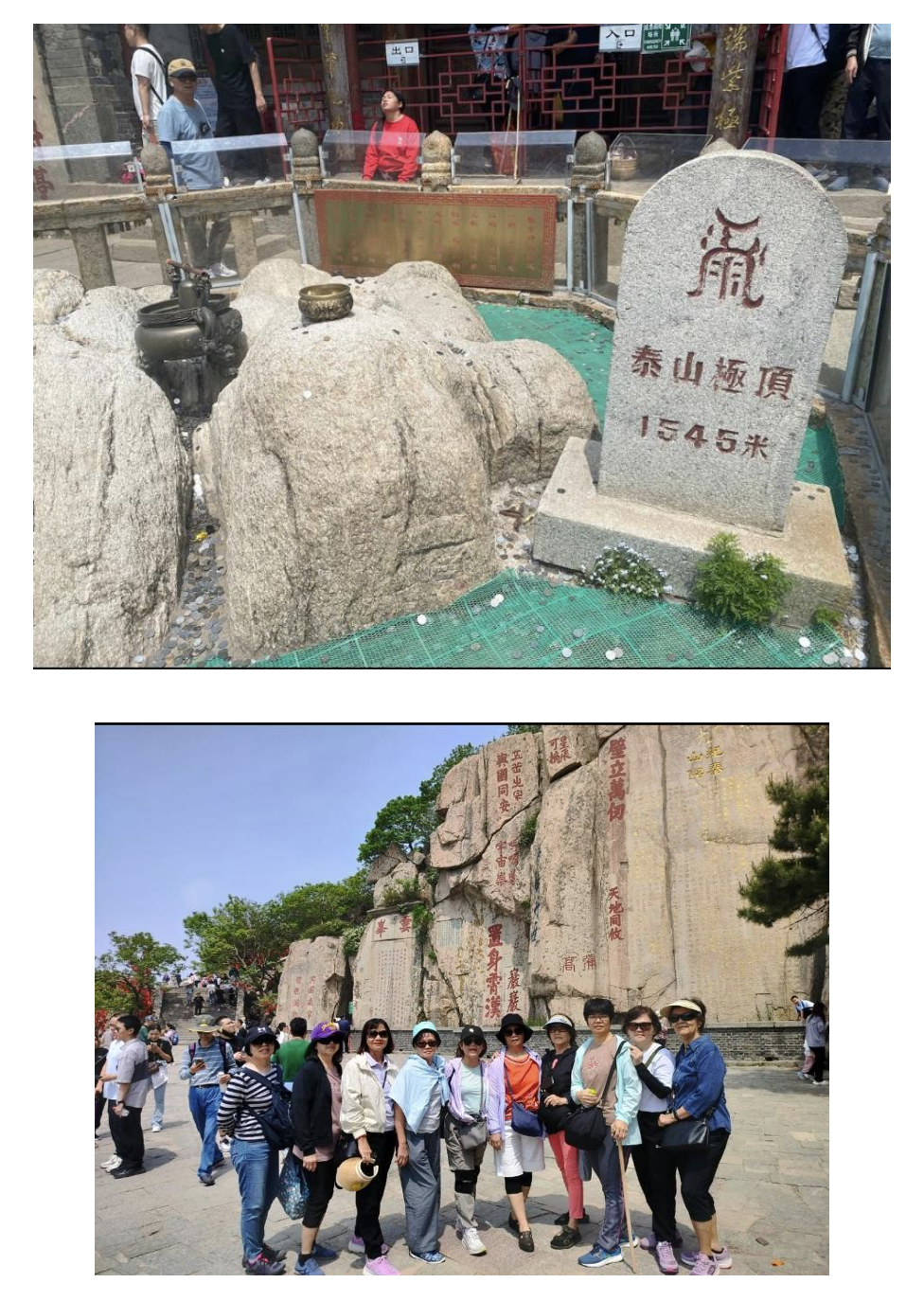
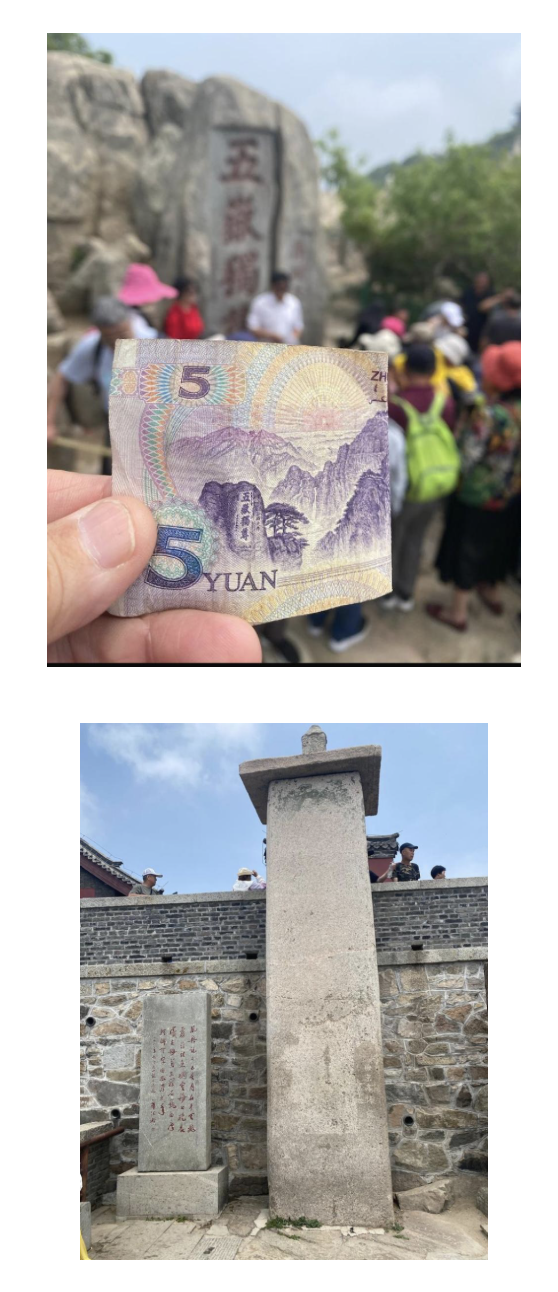
Taian is the home to Mount Tai (泰山), originally known as Daishan / Daizong, is the most famous of the five sacred mountains in China. For 2,000 years, it was one of the principal places of worship where the Emperor paid homage to Heaven and Earth in the Fengshan sacrifices (Feng – offerings to Heaven and Shan – offerings to Earth). On the mountain, there are 12 historically recorded Fengshan ceremonies, about 1,800 stone tablets and inscriptions and 22 temples. Its highest peak is referred to as the Jade Emperor Peak and is 1545 metres above sea level. Mount Tai has been designated a UNESCO World Cultural and Natural Heritage Site since December 1987 and rated 5A tourist attraction. There are two ways to reach the summit –  by foot, which would take from two and a half to six hours to climb up the 6,660 stone steps or by a combination of bus and cable car.

(L) Summit stone at Jade Emperor Peak  (R) Cliff inscription / Photo : Eric Lim

(L) Mount Tai appear on the reverse side of the five Yuan banknote  (R) Wordless Monument in front of the Jade Emperor Peak / Photo : Eric Lim

Climbing up to the summit of Mount Tai  / Photo :By Charlie fong – Own work, Public Domain, https://commons.wikimedia.org/w/index.php?curid=5327850

(8 )Jinan 济南

We have finally arrived at the provincial capital city of Jinan. Jinan is also known by its nickname City of Springs because of the artesian wells that bubble up within the city limits. There is a list of 72 springs within the city that has been kept and updated since the times of the Jin, Ming and Qing dynasties. The water from these springs flows north towards the main landmark, Daming Lake and onwards to the Yellow River. Baotu Spring, which is ranked first in the list, has been known as the ‘Number 1 spring under the heavens’ is located in the southwest of the ancient town of Jinan. It is one of three springs (the other two are Black Tiger Spring and Five Dragon Pond Spring), one river (the Moat), one lake (Daming Lake) and four parks (Baotu Spring Park, City Ring Park, Five Dragon Pond Park and Daming Lake Park) that make up the World’s Best Spring Scenic Area which is graded 5A tourist site and Key National Park. After dinner, we were taken to QuShuiting Street (Winding Water Pavillion Street in English). The history of the street can be traced back to the 4th-6th century CE, during the Northern Wei Dynasty. It was named after the Qushui Pavilion which used to be frequented by scholars and the literate during that time. Coincidentally, it was China’s 520 Day, a public holiday celebrated on May 20 as ‘I Love You Day’ as the numeral date sounds like ‘I Love You‘ in Mandarin. It is yet another Chinese Valentine’s Day as the country celebrates the Western Valentine’s Day on February 14 and the traditional Chinese lover’s day, Qixi on Lunar 7th day of the 7th month. The day made for a perfectly fitting end to our sojourn in the Province of Shandong and to cherish the happy moments with our spouses.

Daming Lake / Photo : Wikimedia Commons

Reference

Visa-free travel extended till 2025 | The Star

Shandong | History, Population, Map, Cuisine, & Facts | Britannica

Introduction to Shandong Province

Mou’s Manor | Interesting times

Yantai – Suocheng District 所城里 – live2makan

Penglai, land of fairy tales

Seeking Immortals in Penglai | The World of Chinese

Temple and cemetery of Confucius and Kong mansion

Mount Taishan – UNESCO World Heritage Centre

Which fashion campaigns for China’s 520 Day hit the mark? | Jing Daily.

Focus Talk: Sixteen Naked Indians by Dr. Lim Teckwyn

Written by Manjeet Dhillon

22 June 2024: History often focuses on the conquering heroes, the explorers who plant flags and claim new lands. But what about the quiet first meetings with the indigenous communities?

This often-forgotten chapter in history was recently brought to life at our focus talk thanks to Dr. Lim Teckwyn. His talk, titled “Sixteen Naked Indians: First Contact Between the British and the Orang Asli in the Late 16th Century off the Coast of Penang,” challenged our understanding of the island’s earliest encounters with Europeans.
Dr. Lim Teckwyn, an Honorary Associate Professor at the University of Nottingham, Malaysia, whose work focuses on the interface between forests, wildlife, and people, spoke about this historic encounter between British sailors and the indigenous inhabitants off the coast of Penang in the late 16th century.
Early European Arrivals
Dr. Lim first discussed the possibility of earlier European arrivals, including a Greek sailor named Alexandros in the 6th century and a possible Roman vessel around the same period. Additionally, Marco Polo’s potential voyage past the Malay Peninsula during his explorations in China is explored.
The audience is presented with a trivia question: Did the renowned explorer Sir Francis Drake visit Malaysia? The answer is no, as his circumnavigation steered south of Java on the return trip.
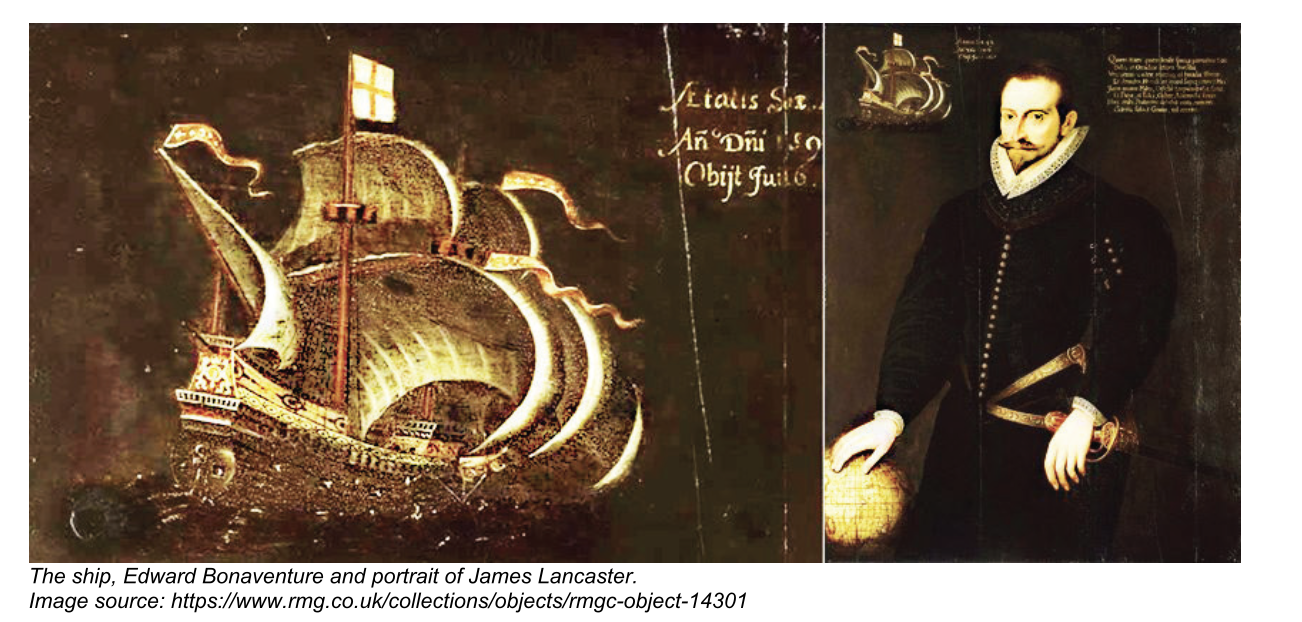
While a lesser-known figure, Ralph Fitch, holds the distinction of being the first Briton documented in Malaysia (though he arrived on a Portuguese vessel in 1588), Dr. Lim’s talk focused on Captain James Lancaster, a key figure in early British exploration of the region.

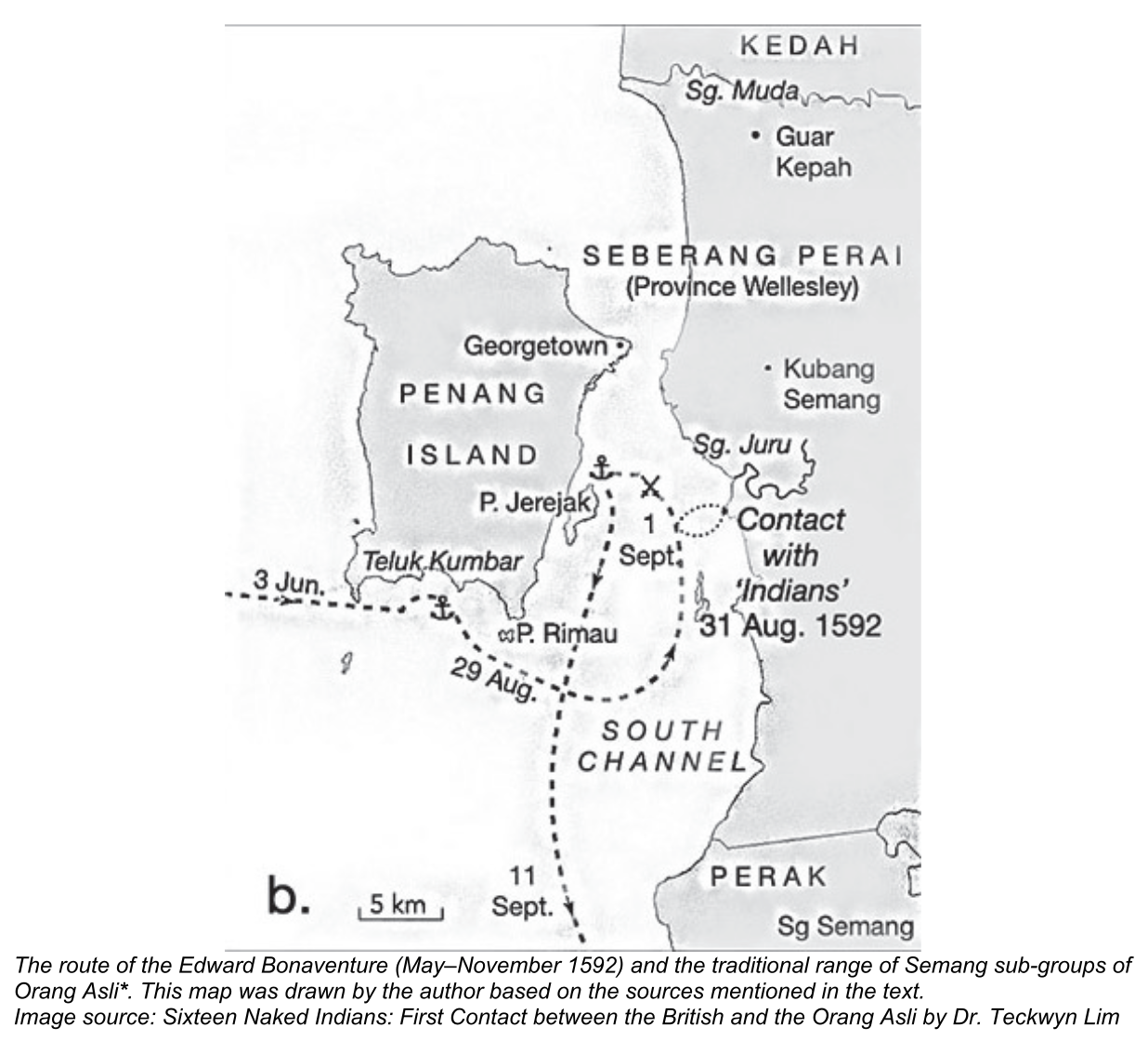
In June 1592, Lancaster arrived in Southeast Asia aboard the Edward Bonaventure, one of the first English vessels to venture into the region. His fleet, initially consisting of three vessels, was reduced to one by the time it reached Penang, largely due to the ravages of scurvy (an illness caused by vitamin C deficiency) and the loss of ships during the journey.

The Encounter
The first recorded interaction between Lancaster’s crew and the indigenous people occurred on the mainland near Penang on August 31, 1592. According to the journal of Lancaster’s first mate, Edmund Barker, the British sailors initially observed signs of recent human activity, such as burning fires, but encountered no people until the following day. When they finally met the locals, they described them as “sixteen naked Indians” in a canoe. This brief encounter, however, offered valuable clues about the identity of the islanders.

Dr. Lim clarified that the term “naked” in Elizabethan English often referred to people who were not fully dressed by contemporary European standards, rather than being completely unclothed. These indigenous people, likely wearing minimal attire, engaged in a friendly exchange with the British sailors, promising to provide fresh victuals (fresh fruit) to help restore the sailors’ health and allow them to continue their voyage.
Dr. Lim’s research suggests that this encounter proved to be a valuable learning experience. On a subsequent voyage, Lancaster implemented a preventative measure by regularly providing his crew with lemon juice, effectively combating the illness.

Orang Asli or Malay? Examining the Clues
The identity of these “naked Indians” became a subject of exploration for Dr. Lim. He suggested that the term “Indians” in this context referred broadly to non-Muslim inhabitants of the region, as opposed to the Muslim Malays, who were often referred to as “Moors” by European explorers of that era. This distinction is crucial in understanding the nature of the encounter and the cultural background of the indigenous people involved.
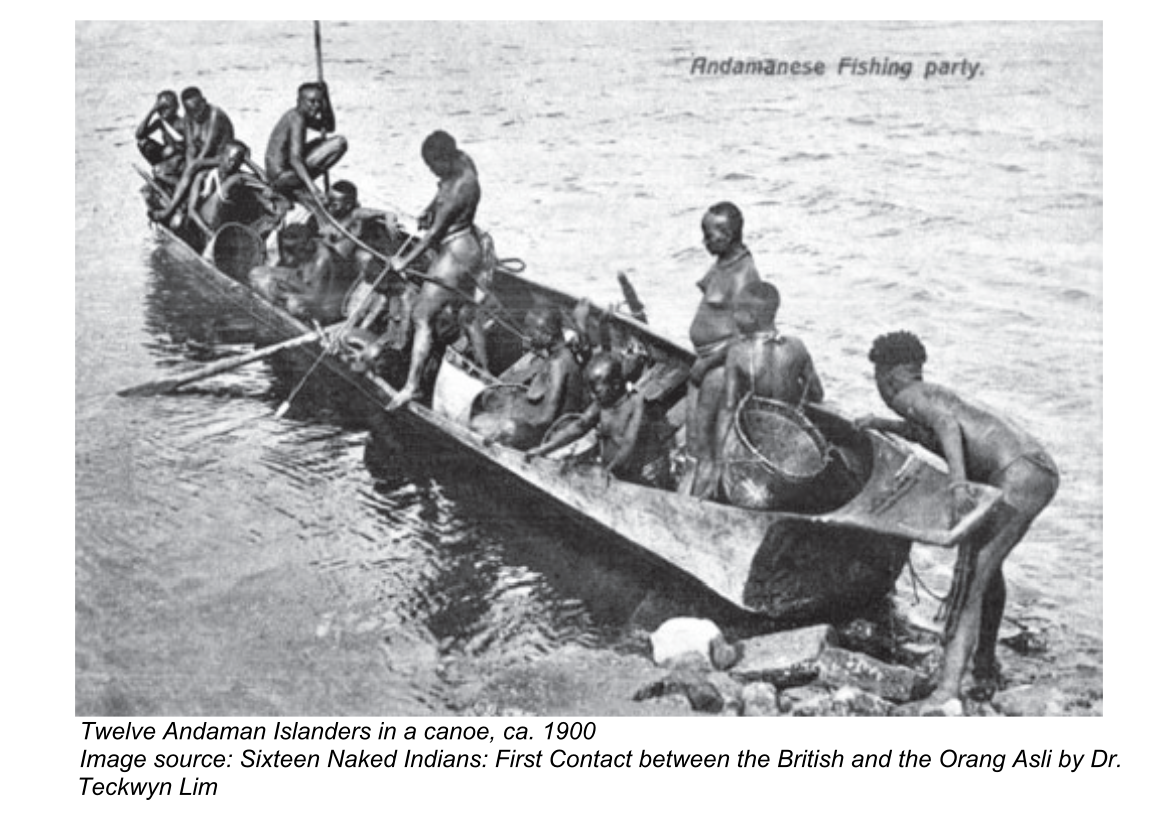
The canoe described in Barker’s journal, likely a dugout with an outrigger, is consistent with those used by the Orang Asli and other indigenous groups in the region.

Dr. Lim’s extensive research into the Orang Asli provides further context, suggesting that these people were part of the diverse and complex network of indigenous communities inhabiting the Malay Peninsula.
While the evidence for this encounter may be circumstantial, it holds significance as the first recorded contact between the British and the Orang Asli. It offers a glimpse into a period where European influence in the region was nascent and the Orang Asli way of life remained relatively undisturbed.
A More Inclusive Narrative
The Orang Asli, the indigenous people of Peninsular Malaysia, were likely the first to greet the European sailors. Their presence sheds light on a facet of Penang’s history that has been overshadowed by later colonial narratives. This chance encounter, though brief, reminds us to consider the perspectives of the Orang Asli, who inhabited these lands long before European arrival. Understanding these early interactions allows for a more complete and nuanced understanding of Malaysia’s past.

Q&A Session Highlights

The talk was followed by a Q&A session that shed further light on Dr. Lim’s research and the broader context of European exploration in Southeast Asia. Here are some key takeaways:
● Captain James Lancaster’s Voyages: An audience member inquired about Captain Lancaster’s other voyages. Dr. Lim confirmed that Lancaster undertook several expeditions, and the encounter with the Orang Asli likely occurred on an earlier voyage before his more famous exploits aboard the Dragon, a ship funded by the East India Company. He also mentioned that Captain Lancaster was likely knighted for his achievements on a separate voyage.
● The Use of the Term “Malay” Another interesting question explored the possible use of the word “Malay” by Europeans at that time. Dr. Lim suggested that while contact with Malay-speaking people in other parts of the archipelago likely occurred, the term “Malay” in the English language might have been introduced by explorers like Magellan, whose journals were translated soon after their voyages.
● Denisovans The discussion briefly touched upon Denisovans, an ancient human relative. Dr. Lim acknowledged ongoing research on their possible presence in Southeast Asia (referencing twelve skulls found near the Solo River in Indonesia). Their presence is hinted at through DNA markers. Aboriginal Australians, Papuans, and some Filipinos possess Denisovan DNA, suggesting interbreeding between these ancient humans and early modern humans in the region.
Recent genetic studies paint a fascinating picture of human migration in Southeast Asia. The Orang Asli share DNA with people from Melanesia, suggesting ancient connections.

Note:

The Orang Asli (meaning “original people” in English) are the indigenous communities of Peninsular Malaysia. They encompass a diverse network of sub-ethnic groups, each with its own language and cultural practices.
Traditionally, many Orang Asli groups have lived semi-nomadic lifestyles, attuned to the rhythms of the rainforest and practising activities like shifting cultivation, hunting, and gathering.
This encounter with the British sailors in 1592 sheds light on a period when their way of life thrived in relative isolation. Today, the Orang Asli face challenges related to land rights and modernisation, yet their culture and connection to the environment continue to be celebrated.

Ningyo; Japanese beauty of art and culture

Written by Shizuko HOSOKAWA / Miyoko ARIYAMA

A special exhibition of Japanese dolls is now being held in the Central Hall of the National Museum from May 7 to July 8.

The exhibition is supported by the Embassy of Japan in Malaysia and the Japan Foundation, and 67 dolls are on display.

This special exhibition of Japanese beauty of art and culture has been held in many countries around the world.

The exhibition is divided into four sections.

The first section is ‘ningyo to pray for children’s growth’, doll culture in Japan developed out of rites to protect children against misfortune and to pray for their happiness.

The unique Japanese culture of praying to these dolls has been passed down to the younger generations even today.

Traditional Hina dolls were mainly decorated with seven tiers. 

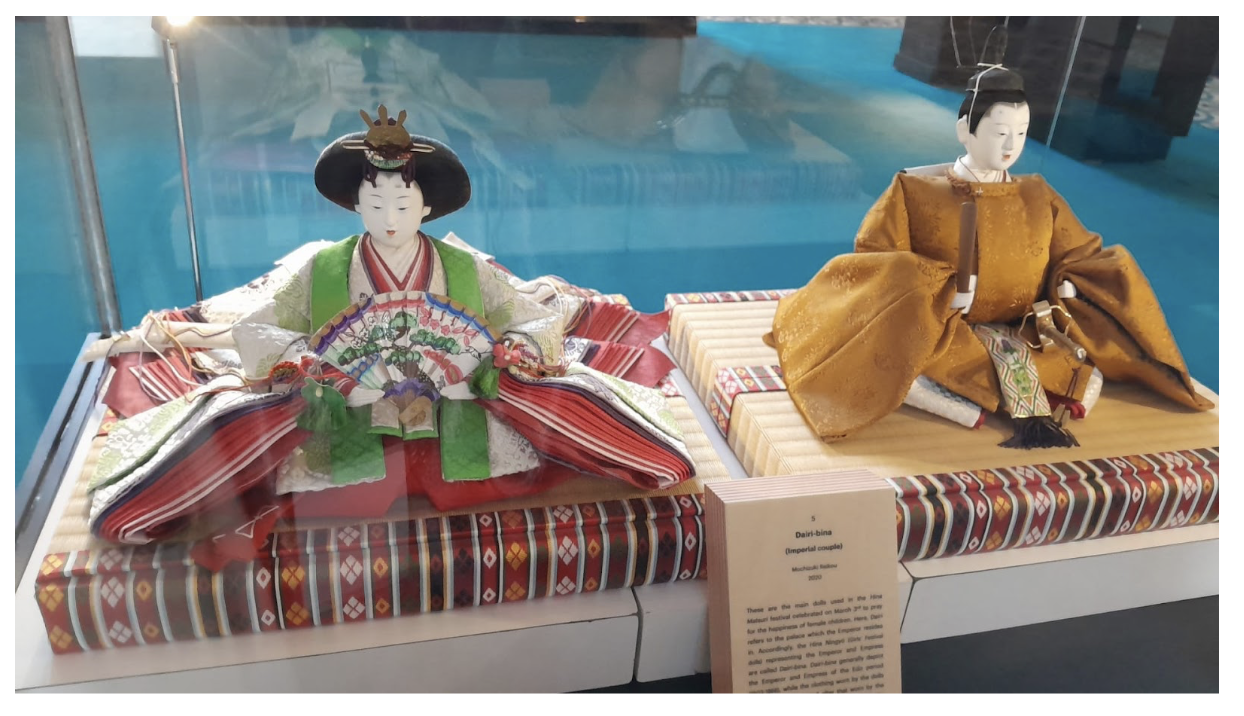
You will see Hina Ningyo of the Hina Matsuri festival at the center of the hall.  They are called ‘Dairi-bina (Imperial couple)’ they are the main dolls used in the Hina Matsuri festival celebrated on March 3rd to pray for the happiness of girls.

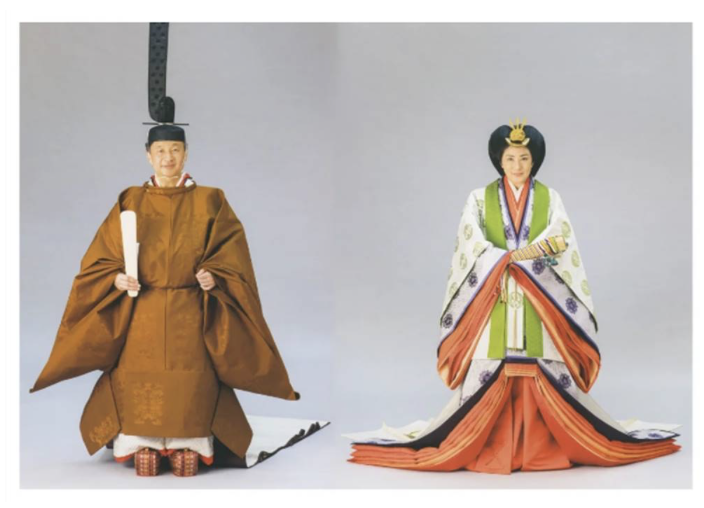
The clothing worn by the doll shown here is designed after that worn by the current Emperor and Emperess during a special imperial rites called the Enthronement Ceremony; Sokui no rei in 2019.


Many of you may have remembered the visit of the current Emperor when he was a prince to the National Museum in 2017.

https://www.nst.com.my/news/nation/2017/04/230953/prince-naruhito-fascinated-exhibits-national-museum-kl

The second section is ‘ningyo as fine art’, the evolution of the doll making techniques. Around from the 17th century, sculpting techniques, delicate colours, and finely produced clothing evolved so much.

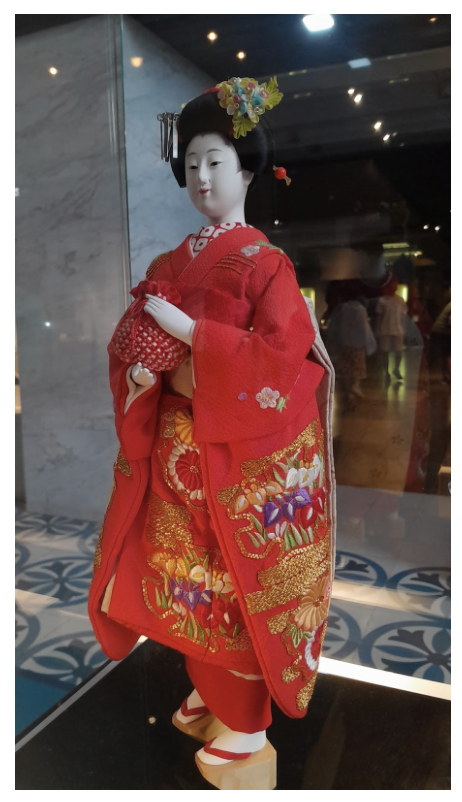
One of the great production is ‘Isho Ningyo; Maiko.’ Maiko is a young girl who performs professionally at traditional banquets in Kyoto.

The same weave, clothing and needlework is used with the same materials and methods to make the doll’s clothing as is used for actual clothes worn by Maiko.    

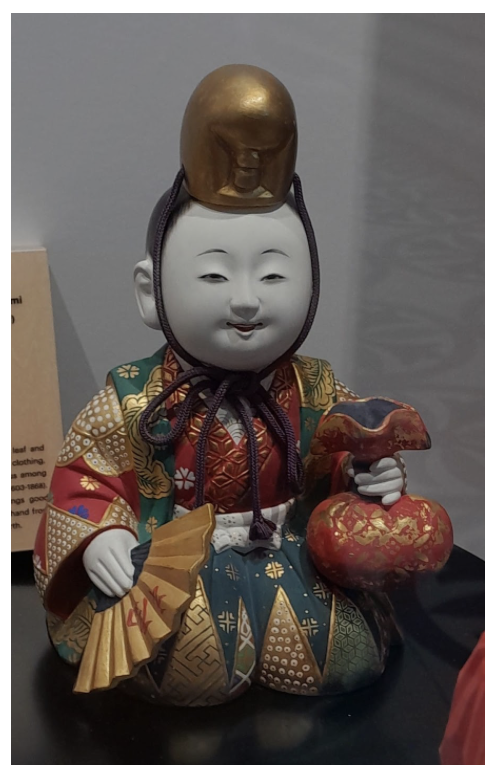
The other doll called ‘Saga Ningyo; Enmei fuku no Kami’, the God of happiness and longevity. 

Fuku no Kami is a God who brings good fortune. In his left hand he holds a bag that is filled with all sorts of treasures.

Saga Ningyo are one of the most luxurious Japanese dolls from the Edo period(1603-1868). Its distinctive feature is the finely applied gold leaf and paint on the costumes.

The third section is ‘ningyo as folk art’, featuring traditional dolls from all over Japan.

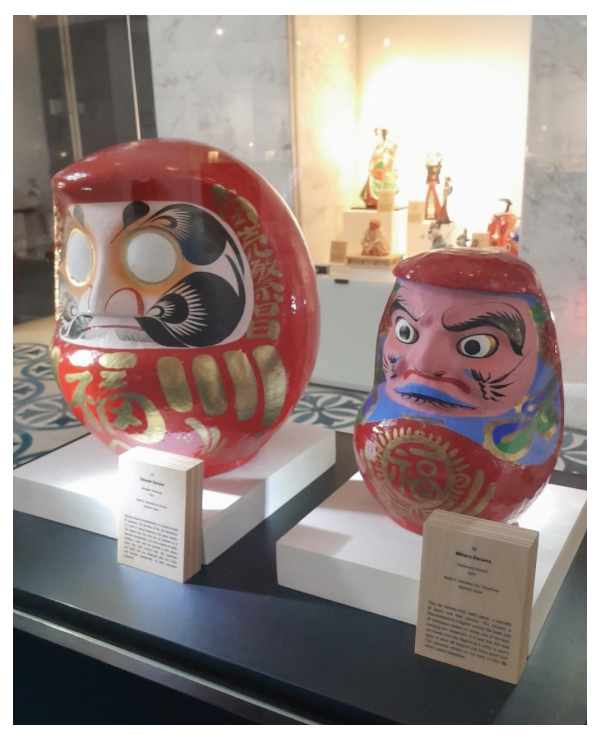
One of the most eye-catching dolls is the bright red, ball-like round doll Daruma.

The Daruma is a traditional Japanese doll that has been worshipped in Japan for centuries as a symbol of luck, success, and perseverance.

If the Daruma is said to bring good luck, how do we make use of it?

In fact, both eyes of the Daruma are empty when purchased.

After purchase, one eye is painted black when a wish is made. When this wish comes true or a goal is achieved, the other eye can be painted as well. 

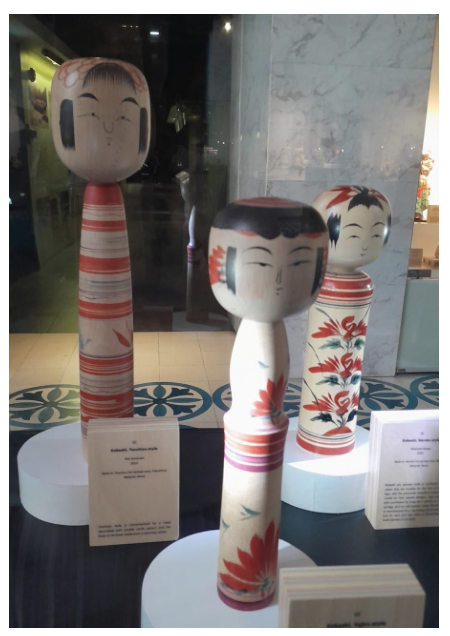
Similar to Darumas, the Kokeshi is a doll with no arms or legs, sold as a souvenir at hot spring resorts in the Tohoku region.

In some regions, it is believed that kokeshi dolls were created as a good-luck talisman to wish for the birth and healthy growth of a child. 

Finally, the last section introduces the spread of Ningyo culture.

The reappraisal of dolls as art in modern times drove the emergence of many talented doll creators as works of art. As such, Japan’s doll culture further gave rise to the creation of collector figures which are popular throughout the world today.

Collector figures represent popular characters from games and animation. It is actually very difficult to recreate the 2D characters into 3D in a way that satisfies the expectations of the fans.

Come to the museum if you would like to know more about Japan’s Doll! There are many beautiful dolls for you to see and learn about. 

It will surely be an enjoyable time for you.

>More videos from Japan Foundation (Japanese/English)

>The staff and curator of the National Museum gave an overvies to volunteer guids.

New Research into the History of the Patani Sultanate in the 16th-17th centuries.

A MV FOCUS TALK by Professor Daniel Perret (27th May 2024)
By Hani Kamal

Professor Daniel Perret, the head of the French School of Asian Studies at the Faculty of Arts and Social Sciences, History Department, Universiti Malaya, is currently serving as a visiting professor at the same institution. His research specialises in the history of epigraphy and archaeology in proto-urban sites throughout Southeast Asia. His presentation, titled “New Research into the History of the Patani Sultanate in the 16th-17th Centuries,” focused on investigating the historical aspects of Patani.

Perret and Jorge Santos recently conducted a translation of a substantial collection of articles sourced from European, Japanese, and Chinese historical records. These sources shed light on the extensive trade relationships established by European powers such as the Portuguese, Dutch, and British in Patani during the 16th and 17th centuries. Through their study “Patani Through Foreign Eyes: Sixteenth and Seventeenth Centuries,” published in 2022, Perret and Santos meticulously translated and re-analysed these foreign historical manuscripts detailing the dynamic events within the Patani Sultanate, particularly the reign of four successive queens.

Perret’s presentation emphasised the significance of combining physical evidence, such as monuments and artefacts, with information extracted from ancient manuscripts. These elements provide valuable insights into the events unfolding in the 16th and 17th centuries, showcasing Patani as a pivotal trading hub in the Eastern Seas under the influential rule of these queens. Examples of such artefacts include ancient royal tombstones such as Batu Acheh gravestones, a sketch of the old citadel and manuscripts documenting the legacy of the Patani queens.

Background of Patani

The word Patani originated from the Malay word “pantai ini” (this beach), and as mentioned in Hikayat Patani, it is where a white mouse deer was spotted. In the early days, Patani covered the entire Thai provinces of Patani, Yala, and Narathiwat and included parts of northern Kelantan in Malaysia. According to Hikayat Patani, which was recorded by various authors between 1690 and 1730, the early history of Patani must have been established in the early 2nd century when the strategic cape of Patani was sought after by ships travelling straight from the Gulf of Siam across from the Vietnamese point before going to the Malay Peninsula ports. According to Teeuw and Wyatt’s translated version of the “Hikayat Patani: The Story of Patani”, published in 1970, Patani was believed to be Langkasuka (208BC), situated in a very strategic location geographically ideal for a very complex Asian trade system. Professor Wheatley, in his book The Golden Khersonese, A Study of Asian Historical Geography, concludes that Langkasuka transitioned into Kota Mahligai (now Yarang). But it became almost non-existent when the Srivijaya empire became powerful in the 8th and 9th centuries, dominating the Malay Peninsula. There were major power struggles among the Siamese, Khmer Empire, the Burmese Mon/Pagan Empire, the Cholas, and the Javanese in Southeast Asia during the same period. It is not clear as to when Kota Mahligai became Patani before 1500. However, three main themes emerged in the literary sources on Patani: Siamese influence, its conversion to Islam and its economic rise. (Bougas, 1990: Pg 114)

The peak period in Patani’s history is typically identified as the 16th and 17th centuries. However, by the latter part of the 17th century, the influences of Siamese Sukhothai and Ayuthaya began to dominate the region. In 1902, Siam further weakened Patani’s authority by dividing it into seven districts. The Treaty of Bangkok in early 1909 officially acknowledged Siam’s sovereignty over all the northern Malay territories, thus sealing the fate of Patani ever merging with the peninsula Malay states. Consequently, the Sultanate of Patani was dissolved, and its heir resided in exile in Kelantan. Following World War II, the Treaty of Songkhla in 1949 solidified the inclusion of Patani and the other northern Malay states into Thailand. The ongoing conflict and struggle for independence in Patani persist to this day amid continuing disputes.

The organisation of the Patani capital in early 17th CE

No maps portraying Patani during the 16th and 17th centuries have been discovered. The sole visual representation from that era is a depiction of the city, displayed in Figure 1, which was crafted by Jacob van Neck during his visit to Patani. An intriguing account from 1678 suggests that two trading officers from the British East India Company voyaged to Patani specifically to procure this city map, subsequently dispatching it to their office in Ayutthaya. Regrettably, Perret noted the absence of this document in the British Archives.

The illustration or sketch of the Patani capital, featured in Figure 1, offers a broad overview of the city during the 16th century. Jacob van Neck’s rendering highlights key locales such as the palace, the citadel, various town districts, the merchants’ quarters, and the harbour. This visual portrayal of the Patani capital’s layout is derived from on-site surveys, oral traditions and written accounts documented by diverse sources, including the Malay, Dutch, Portuguese, British, Japanese, and Chinese. Based on field data, it is inferred that this depiction dates back no further than 1584, a pivotal year marking the ascension of the first queen.

In Figure 1, Panarican—which appears eight times in the rutter—or “Penarekan” in Malay, denotes the dragging of boats across the river. “Tanjung Lulo”, appearing seven times in the rutter, is described as a headland on the sandy coastline with two bastions, including the largest in the city and its main gate. Tanjung Lulo is certainly the Tanjung Lulup mentioned once in the Hikayat Patani. Kuala Baca, a sandy beach area, was a town in Patani—it is the “Kuala Becha” mentioned in Hikayat Patani, as well as Dutch and Portuguese sources. On the west coast of the citadel, Garzen, which is frequently mentioned, is likely “Kerisik”, meaning coarse sand. This location fits well with the current location of Ban Kru Se (Kerisik). The “PINTU GARBA” mentioned is the Pintu Gerbang (main gate) in Hikayat Patani, large enough for elephants to pass through, also referred to as Pintu Besar (Big Gate) at the west of the Citadel. Kuala Saba (river mouth of Saba River), north of Panarican, has disappeared in the last four centuries.

Fig. 1. Sketch map of the city of Patani (late sixteenth – early seventeenth centuries) (adapted from Perret et al. 2004).

Portuguese sources—recounting a Portuguese attack on Patani in 1524—recorded Chinese living in brick houses in Patani. Dutch sources cite that Dutch lodges were built with bricks and that the English and Dutch lodged near the bay. The rutter also described the city as having a defence system that served as a channel for communication. According to the sources, the citadel walls were about eleven feet high and seemingly had a very imposing fort. Foreign sources also noted the formidable size of a cannon placed near the Pintu Gerbang. The royal family and Orang Kaya lived within the citadel. A small mosque was also located near the citadel. Salt pans, where salt was produced, were situated north of the citadel.

Similar sources also mentioned how the palace walls were adorned with gilded panels and other wood carvings. This is probably the earliest mention of woodcarving in the northeast state of the Malay Peninsula. The balairung (main royal hall) was described as abundantly decorated with gilded material and velvet-trimmed dais, and the queen sat by a large gilded window. A royal graveyard is also mentioned, and, based on oral tradition, the first Sultan of Patani could have been buried there. The tombstone could have been moved out of the city.

Unfortunately, the city was destroyed by fire four times between 1524 and 1613. By 1786, the Siamese had destroyed the entire city in retaliation to Patani’s assertion of independence.

Ancient Islamic Tombstones

Perret divided the tombstones he found in Patani into three styles: Batu Acheh, Batu Patani Brunei and Bai Sema.

The Batu Acheh tombstones, found across the Malay world, offer a unique insight into the region’s Islamic history. Characterised by sophistication and widespread distribution, these tombstones hold rich epigraphical data. Originating possibly in the 15th century around Pasai, these sandstone monuments signified a departure from local traditions. Although sharing similarities with architectural styles from Central Java and Siamese funerary monuments, batu Acheh was primarily reserved for sultans, high-ranking individuals, their relatives, and possibly affluent merchants. Despite a decline in the 18th and 19th centuries, a resurgence of batu Acheh can still be observed in regions like north Sumatra (Barus), Kedah, Pahang, and Penang.

Batu Acheh tombstones are generally made of sandstone, granites, quartz, river pebbles, marble, cement and wood. The types of material used for the tombstones also give an indication of the economic strength of the state—intricate quartz was used during the 17th century while wood and natural stone were used when the state was in decline. The Batu Acheh tombstones were imported from Acheh and had different shapes, motifs and Islamic Khad inscriptions. The grave of Raja Kuning (the last Queen of Patani) is marked with quartz markers found in Kubo’ Barahom.

Batu Patani Brunei (Figure 2) are tombstones brought in from Brunei. Brunei and Patani were trading partners between the 15th and 17th centuries. Two such grave sites were identified with Batu Patani Brunei in Kampung Parit and Kampung Pintu Gajah. The design was very specific to that found only in Patani and Brunei. It has Chinese motifs, such as clouds. One of the tombstones is believed to be that of the son of the founder of the Sultanate of Patani in the 15th century. It has an Arabic calligraphic inscription stating the son of the sultan on the south side and “Malik bin Mohamad” on the north direction. Unfortunately, no dates were found. Perret postulates that these tombstones could belong to the Brunei people who lived and were buried in Patani.

Fig. 2. Tombstone at Kuboʼ Barahom (D. Perret-EFEO, 1999)

Roeloefsz (1601-2) mentioned the existence of royal graves on the Seberang peninsula and this is the only source citing this interesting information. There were few tombstones found but no indication of a royal one. Ludvik Kalus (2004: 193-206).cited that there were two tombstones found and one of them believed to be the grave of the first Sultan of Patani (Fig.2).

According to oral tradition, Raja Ijau’s tombstone was made in the Bai Sema style (Figure 3), which is heavily influenced by Thai-Buddhist engravings. Originating from India, the Bai Sema designs resemble the Kala-Makara design, which is commonly found in the entrances of temples in Thailand and India. This style may have reached Patani from Trowulan, Surabaya. In Patani, Bai Sema tombstones are very rare.

Fig. 3 Raja Ijau Bai Sema Tombstone (Bougas: Pg 39)

Queen of Patani “The Rainbow Queens”

Female Rulers in the Malay World

When James Brooke visited the Bugis state of Waco, Brooke observed that six out of the eight prominent chiefs were female (Brooke, 1848 I, 74-5). In Islamic Southeast Asia, the presence of female rulers appeared to be a common occurrence. Notably, female Muslim rulers were intricately connected to the realm of commercial trading. Throughout the 15th to 17th centuries, women in these regions played a significant role in engaging in trade activities. For instance, Pasai, the first Muslim state in Southeast Asia, had two queens during its prosperous trading era (1405-1434). Similarly, Japara in North Java emerged as a key naval and commercial hub under the rule of its female queen, Kali Nyamt, in the 16th century.

“Similarly, the women rulers of the diamond-exporting centre of Sukadana in Southwest Borneo (c. 1608-22), pepper-rich Jambi in East Sumatra (163~. 1655), and the sandalwood base of Solor, to the East of Flores (c. 1650-70), were on the throne during the brief period these states were important commercial centres.” (Reid, 2020, Pg 641)

In her research on “Ratu Acheh,” Sher Banu explored the lives of the four Queens of Acheh in the 17th century. The first queen, Sultanah Safiatuddin (1612-1675), took the throne following the death of her husband, Sultan Iskandar Muda. She was succeeded by her daughter, and four Acheh Queens ruled the kingdom for sixty years.

Similarly, a comparable scenario unfolded in Patani during the 16th and 17th centuries, with the kingdom being governed by four consecutive queens. Patani served as a significant trading post, particularly with China, during this period. The preference for female rulers stemmed from the cooperation of the Orang Kaya (male royal councillors and religious ulama) with the queens, recognising their adeptness as rulers with business acumen rather than because they were running out of males to inherit the thrones. During the reign of Raja Ijau:

“Patani the first queen has reigned very peaceably with her councillors … so that all the subjects consider her government better than that of the dead king. For all necessities are very cheap here now, whereas in the king’s time (so they say) they were dearer by half, because of the great exactions which then occurred.” (Van Neck, 1604:206)

Patani, under Raja Kuning, the Orang Kaya, paid less levies as Raja Kuning was a wealthy heiress and a capable businesswoman. The Orang Kaya saw how female rulers were more businesslike and profitable for themselves. They were also mild in ruling the states compared to male rulers.

Raja Ijau, the eldest daughter of Sultan Patik Siam, took power in Patani after the sudden deaths of many male family members. During her 32-year rule, Raja Ijau led an army against Pahang and defended Patani against Ayutthaya, fostering diplomatic relations and promoting culture and art. She is credited with the origins of the Mak Yong dance. Raja Biru continued her mother’s diplomatic legacy and was an adept mediator between the Dutch VOC and British EIC. Raja Ungu defied Siamese rule, aligning with Portugal, Pahang and Johor to repel a Siamese force and further solidify alliances through strategic marriages. Raja Kuning enhanced Patani’s economic prosperity and established it as a prosperous Malay trading post. Following her overthrow by a minister, she retired to Kuantan, Pahang, marking the end of female rule in Patani.

As outlined by Perret, the era of female rulers in Patani was characterised by a decrease in violent incidents and massacres within the royal families. This period was notably peaceful, fostering a sense of safety that encouraged traders to conduct business with relative security. However, following the reign of these queens, the Patani throne shifted to male lineages, possibly influenced by conservative factions aiming to enforce Islamic practices that restrict female leadership over men. The subsequent male rulers exhibited intense competition and a diminished focus on trade, leading to a decline in safety and profitability for Patani as a trading hub during their governance.

The Queens’ Title

Perret noted the Patani Queens used the Indian Sanskrit male title “raja” instead of the Islamic “sultanah” or the Malay “ratu.” Historical sources from Patani do not provide evidence of the title “Sultanah” being used. The discovery of a gold coin inscribed with the words “al-sultana-al muazam” (the great Sultanah) and “Khalada Mulkaha” (May God preserve her government) has led some to speculate that it may have been associated with one of the Patani Queens. Perret pointed out discrepancies between this coin’s inscription and those on coins issued by the Sultanah of Aceh, as well as the absence of coinage from the Queens of Sukadana and Jambi in the 17th century. He further questioned the authenticity of the claim that the Patani Queens ever adopted the Islamic title of Sultanah and pondered why there is a lack of mention in Malay sources regarding minted gold coins.

The Color Names

The Patani Queens were named after colours, and thus, the acronym ‘’Rainbow Queens of Patani’’ was coined by Teuuw and Wyatt. Some scholars likened it to how in Malay tradition, females were given names associated with colours, or that green is an Islamic colour, and Raja Kuning (yellow) had yellow skin and was given the colour yellow. Jocelin de Jong’s documentation in 1961 highlighted the prevalent use of colour names among Malays. For instance, titles like Tun Hitam or Tun Putih were commonly bestowed upon Malay women in Sejarah Melayu. 

Professor Perret suggested that the tradition of using names based on colour could be rooted in religious or traditional beliefs associated with auspicious symbolism. For example, the Katika Lima system—where a day is divided into five periods, and each period is associated with a colour—is directly related to a Hindu god. Each colour represents the time of birth of the queen. A second possibility is that the colour was related to the day/time of birth, like the zodiac. It could also be related to Buddhist influence. In Buddhism, each cardinal points are related to a colour as also with the Chinese belief. It is also believed that names with colours are linked to the traditional culture of Chinese zodiac practises:

“The centre of the system is Vairocana, associated with the white colour, while interestingly, the colours of the four cardinal points correspond to the names of the four queens: North is associated with Amoghasiddi and the green colour; East is associated with Akṣobhya and the blue colour; West is associated with Amitābha and the red colour; South is associated with Ratnasaṃbhawa and the yellow colour. Moreover, the colours are associated with the same cardinal points in traditional Chinese culture.” (Damais 1969: 83-84: extracted from Perret’s article, 2022) 

Perret also found through the sources that the use of colours for the queens was only used within the palace, and as for the foreigners, the queens were referred to merely as “old queen” or “young queen.” These colour names are definitely not by chance but linked with greatness for the royal household, or they were intentionally meant to legitimise the queen’s sovereignty in the state of Patani.

Power Sharing

Perret also noted the unique power-sharing practised by the four queens. The old queen is assisted by a young queen who acts as a regent and is the next in line. This power-sharing system seems to have worked for the Queens, as during their reigns, Patani flourished economically and politically.

Chronology of the Queens

Perret suggested that the dates of the Patani queens require further investigation since dates were never mentioned in Malay writings (namely Hikayat PataniSejarah PataniSyair Patani and Kelantan). However, when various sources written in foreign records surfaced, this suggested that the periods or dates as deduced in Hikayat Patani were different and required re-examination. Some foreign sources cited Christian years while others utilised the Muslim calendar, and confusion emerged.

More confusion arose when understudying the Patani sources as the use of colours for the Queens was only for the internal royal court; thus, for foreigners, it’s either the Old Queen or Young Queen, as names of the queens were never cited in any foreign sources. It was quite a task to identify the period of rule of the Queens also because the Malay sources did not include dates/periods. However, a letter surfaced, the correspondence between one of the queens and the King of Portugal dated 31 March 1637. This threw new light into the confusion of the chronology of the queens. According to Perret, the dates of ruling for the queens require some rearrangement. Perret summed up these reigns as follows:

  • Raja Ijau (Old Queen: r. 1584 – 28/08/1616; d. 28/08/1616)
  • Raja Biru (Young Queen: r. ≤ 1601 – 28/08/1616; Old Queen: r. ca. 09/1616 – ca. 03/1636; d. ca. 03/1636)
  • Raja Ungu (Young Queen: r. ≤ 1629 – 1634; d. between 1636 and 1638)
  • Raja Kuning (Young Queen: r. end of 1634 or 01/1635 – ca. 03/1636; Old Queen: r. ca. 03/1636 – ≥ 1642; d. ≥ 1642)

Fig. 4 Chronology of Patani Rulers 

Patani’s Emergence as a Trading Hub

Following Malacca’s fall to the Portuguese in 1511, Patani emerged as a lucrative alternative trading centre. It was also a strategic port for sailors travelling from China to Java to stop at Patani for shelter, repairs and trading. The region attracted a diverse array of merchants, including Chinese, Malay, Siamese, Persians, Indians, Arabs, Portuguese, Japanese, Dutch, and English traders. The peak of Patani’s trading significance is often associated with the reign of Raja Ijau. Chinese entrepreneurs played a pivotal role in Patani’s rise as they exchanged goods like porcelain, silk, and lacquer for cloves, nutmeg, sandalwood, and pepper sourced from the spice islands.

Historical records indicate that Patani’s influence as a trade hub extended beyond local waters. Patani junks engaged in trade with Banda for nutmeg and mace as early as 1526, while Chinese junks from Fujian frequented Southeast Asian ports like Pahang and Patani in the late 1520s. Indian traders also participated in the exchange, offering textiles in return for pepper, gold, and food items. Chinese and Indian goods brought to Patani were further distributed by Malay traders across Thailand and the Indonesian archipelago. Additionally, the Kingdom of Ryukyu served as a crucial intermediary linking China, Japan, and Patani, facilitating trade growth in the region.

“Like all major coastal trading places at the time in Southeast Asia, Patani was home to a cosmopolitan population. It is thus reasonable to suggest that some twenty languages were in daily or occasional use in Patani during the sixteenth and seventeenth centuries. (Perret, 2022: Pg 143)

However, Perret summarised that Patani’s position as a trading hub declined by the mid-17th century as trade restrictions limited the movement of Japanese traders and hindered Chinese-Japanese trade interactions. Furthermore, shifts in market demands led to a decreased interest in local spices like pepper and a decline in the popularity of Indian cotton materials. Patani struggled to adapt to changing trade dynamics during this period, failing to sustain its earlier prosperity and meet evolving commercial challenges.

Conclusion

Perret and Santos’ examination of foreign sources proved useful in shedding light on how Patani emerged as a significant state during the 16th and 17th centuries. These sources offered insights into the queens’ chronology, Patani’s administrative system, the layout of the old city, and its economic, political, and social structures during that era.

Determining the precise timeline of the queens proved challenging due to discrepancies in various historical texts. Foreign sources often referred to the queens generically as ‘old queen’ or ‘young queen’ and not by their names. Perret’s meticulous analysis allowed for the reorganisation of the queens’ chronology based on available manuscripts.

Once again, foreign sources are abundant and detailed in their description of the city’s location and design, but they are also confusing or, on many occasions, contradictory. Perhaps as suggested by Bougas, where only by excavation of the city/citadel location, artefacts excavated will provide evidence to support the history of Patani. The old city has never been excavated, nor have any archaeological methods been used to verify the sites and compare them with historical narratives.

The extent of real power wielded by the Patani Queens within the kingdom remains a subject of inquiry. Questions arise regarding whether the queens held substantive authority or if the influence lay with other figures like the Orang Kaya, councillors, Islamic leaders, Chinese merchants, or Javanese traders. While Malay sources like Hikayat Patani and Syair Patani remain silent on the queens’ authority, foreign accounts highlight their roles in trade management.

It is possible that the real power was with the court councillors, while the queens handled foreign traders. But then again, the four female rulers reigned for almost a century. It could not have lasted 100 years if it had not been for their skilful manoeuvring of the Orang Kaya and social-economic skills when dealing with foreign merchants.

Perret and the foreign sources may not have found the answers to establish the use of the queens’ titles. However, these sources are able to clarify many questions concerning the presence of female rulers in Patani. They can probably inspire the people of Patani today.

Fig. 5. Salt ponds, Ban Pa Re (D. Perret, June 1997)

References:

MV Focus Talk by Professor Daniel Perret on 27th May 2024, MV Room, JMM.

https://journals.openedition.org/archipel/2849 The Sultanate of Patani: Sixteenth-Seventeenth Centuries Domestic Issues by Daniel Perret

https://www.eksentrika.com/pattani-queen-southeast-asia-ratu-kuning/Legendary queens of Pattan

Teeuw, A. and David K. Wyatt, 1970. Hikayat Patani = The story of Patani. The Hague: Martinus Nijhoff, Pg 1-13.

https://play.google.com/store/books/details?id=V_mPBAAAQBAJ&rdid=book-V_mPBAAAQBAJ&rdot=1Origin islam in Patani before Melaka (Pg 12)

https://www.academia.edu/35716822/Hikayat_Patani_pdf

Hikayat Patani Diselengara oleh Siti Hawa Hj Salleh, DBP, 2010

https://journals.openedition.org/archipel/2799 Patani and the Luso-Asian Networks (1516-1642)

Jorge Santos Alves , 2022

https://www.persee.fr/doc/arch_0044-8613_1990_num_39_1_2624. Wayne Bougas Patani in the early 17th century

https://angkordatabase.asia/publications/female-roles-in-pre-colonial-southeast-asia. ://about.jstor.org/terms

Modem Asian Studies 22, 3 (1988), pp. 62!r645. Printed in Great Britain. Female Roles in Pre-colonial Southeast Asia ANTHONY REID 

https://k4ds.psu.ac.th/ebook/pdf/b002.pdf Wayne Bougas “Islamic cemeteries in Patani” 1988 (pg 28-48)

Sher Banu A.L. Khan, Sovereign Women in a Muslim World, NUS Press, 2017 

(2007) https://www.researchgate.net/publication/233132109_Some_reflections_on_ancient_Islamic_tombstones_known_as_Batu_Aceh_in_the_Malay_world.Some reflections on ancient Islamic tombstones known as Batu Aceh in the Malay world: Daniel Perret

Malayan Crafts and Craftsmen Mural – Earth

By Manjeet Dhillon

Tanah galian hasil bumi,

Di tangan cekap menjadi periuk,

Warisan lama takkan mati,

Seni budaya turun temurun. 

The National Museum of Kuala Lumpur’s west wall isn’t just a surface; it’s a window into Malaysian craftsmanship. Artist Cheong Lai Tong’s iconic mural, “Malayan Crafts and Craftsmen,” goes beyond individual figures. It’s a thematic map, inviting us to explore the core elements that bind these crafts together: earthfibresmetals, textiles, and wood.

Through this exploration, we’ll unlock a conversation between nature and human ingenuity. 

This bi-weekly series will feature seven articles, each focusing on a specific element. We’ll appreciate the mural’s artistry while discovering corresponding collections housed within the museum’s walls.

A Legacy from Earth

The story of Malaysian pottery is a fascinating journey that begins with the earth itself. As early as the Neolithic period, when nomadic hunter-gatherers transitioned to a more agricultural lifestyle, the need for storage and transport vessels arose. 

A key element in this tale is clay. Its remarkable malleability allowed these early artisans to shape the earth with their hands, creating vessels that could hold their form after drying and transform into permanent fixtures through the application of fire. 

The museum’s collection reveals the multifaceted nature of Malaysian pottery. It’s a story not just of form and function but also of cultural heritage, technological advancements, and artistic expression. It facilitated early barter trade systems, as these functional objects became valuable commodities exchanged across the region.

LocationPottery typeDescription
Museum of Malay EthnographyBacongLarge, wide-mouthed jars traditionally used for storing water and rice.
Labu SayongGourd-shaped water bottles made from terracotta feature ribbed bodies and are often adorned with incised geometric patterns. Traditionally, they were hand-moulded without the use of a potter’s wheel.
BuyongLarge, wide-bodied water containers with a narrow neck, often decorated with floral motifs.
Bekas Ubat (Medicine Container)Small, lidded containers used for storing traditional Malay medicines. This double-spouted kendi is a water container used in Southeast Asian rituals. The name “kendi” comes from the Malay term derived from the Sanskrit word “kundika,” meaning “water vessel.” Unlike most kendi,  which lack handles, this specific example features a small handle connecting the two spouts. Their use was prominent in important ceremonies like weddings and funerals. Water from a kendi would be sprinkled during these rituals.
TerenangCrafted from earthenware, these cooking pots feature a rounded bottom and a wide rim. Decorated with stamped and incised geometric motifs around the body and rim.  Terenang’s name derives from the word “tunang,” signifying its original role as a container for engagement rings in Pahang.  Notably, Terenang is one of the few types of Tembeling pottery, and the “tali air” refers to the border separating each section of this potteryware.
Periuk Tanah Berkaki (Legged / Footed Claypot)Clay cooking pot raised on three or four legs, designed for even heat distribution.

Photo credit: Manjeet Dhillon

LocationPottery typeDescription
Gallery ANeolithic PotteryThe earliest forms of Malaysian pottery date back thousands of years. Includes utilitarian vessels, shards with plain, tri-colour, or patterned decorations, unearthed from archaeological sites like Gunung Cha in Kelantan.
Gallery CCeramic Latex HolderContainer crafted from glazed ceramic, specifically designed to hold latex collected from rubber trees.

Photo credit: Manjeet Dhillon

Gallery A: Burial Vitrine

While these clay jars in Gallery A’s burial vitrine might seem like local creations, they were transported to Borneo through maritime trade routes, highlighting the interconnectedness of different cultures in the region. 

These impressive clay jars, known as Martaban jars, were prized by the Iban people for both practical and symbolic reasons. They served not only as storage containers but also as markers of wealth and status. Interestingly, these jars, also called “tajau” by the Dayak people of Kalimantan, weren’t produced locally.

Some Martaban jars even feature moulded dragons on their sides, earning them the name “dragon jars.”

[Historical Connection]: Martaban is the name of a port on the east side of the Irrawaddy Delta in present-day Myanmar. This port became well known for its trade in huge storage jars. The association was so strong that “Martaban” eventually became synonymous with the name of the jars themselves.

[Cultural Insight]: Traditionally, potters evaluated the quality of Martaban jars by their sound. When struck with the hand or a wooden stick, a high-quality jar would produce a clear, ringing tone. This indicated the jar’s strength, density, and ability to properly store valuable goods. Hence, Martaban jars are often referred to as “talking jars.”

[Cultural Insight]: Among the indigenous communities in Sarawak, Martaban jars also serve as funerary equipment.  Within a family home, an upside-down jar might stand out conspicuously. This signifies that an older woman has reserved it for her own burial, indicating her wish that it not be used for its more common purpose of fermenting wine. For further reading, you can explore  Trade Objects by Lucas Chin.

With the museum’s collection as our guide, let’s explore some of the broader threads that define Malaysian pottery: 

1- Sarawak Pottery: Here, we find two distinct pottery traditions. 

  • Chinese potters near Kuching and Sibu craft stoneware jars (tempayan) in hues of brown, green, and blue with embossed and incised patterns. The pottery industry in Kuching nowadays can be found clustered together on Penrissen Road, Kuching. You can watch a video of Sarawak pottery.
  • In contrast, the Iban, Murut, and Kelabit communities produce a distinct type of pottery: simple and fired at a low temperature. This pottery is often used in their weaving ceremonies. Interestingly, the style of this pottery bears a striking resemblance to Neolithic pottery found in Sarawak, hinting at a long-standing tradition that may stretch back thousands of years.

Image source: Borneo Post Online

A potter’s toolkit, crafted from natural materials, is laid out here. From left to right:

i) Penempa: a carving tool carved from belian, a strong and durable ironwood.

ii) Batu segala or batu bulat: smooth stones used for shaping the clay.

iii) Simpai and bemban: these tools are made from rattan. The simpai is used for shaping or coiling the clay, while the bemban functions as a stand for the pots.

2- Malay Pottery: Characterised by four distinct forms: 

  • labu (gourd-shaped water bottle) 
    • buyong (large water container)
  • geluk (a smaller, rounded pitcher) 
  • belanga (wide-rimmed cooking pot)

Source: Keindahan Tembikar Tradisional Terenang Warisan Negeri Pahang by Mohd Zamani Mohd Nor Pea and https://artisenivisual.blogspot.com/2011/10/kraf-tradisional-tajuk-tembikar-sejarah.html

3- Chinese Dragon Kiln Pottery: Over a century ago, Teochew immigrants brought a symbol of Chinese ingenuity – the long, roofed kilns. Fueled by the rubber boom’s demand for latex cups, families from Swatow (Guangdong, China) established clusters like those north of Ipoh near clay deposits. Today, these kilns have shifted their focus, primarily producing stoneware flower pots and water jars for a global audience. You can watch a video of these kilns in action here

Image source: The Ceramic School via https://ceramic.school/singapores-last-dragon-kiln/

4- Indian Pottery: In Kampung Kedah (Parit Buntar) and Batu Dua (Kuala Selangor), potteries specialise in low-fired terracotta ware. These items are primarily used for religious and ceremonial purposes, such as oil burners and incense holders.  One example of such pottery is the pannai pot, a traditional cooking vessel favoured for preparing Pongal, a dish of rice boiled in milk and raw sugar cane.

Image source: Pannai pottery from http://www.malaysiakini.com

Pots, typically shaped like belanga or periuk, are decorated with simple stamped designs that reflect their utilitarian purpose. You can watch a video to see the pot-making process in Kuala Selangor. 

photo credit : Manjeet Dhillon

Figures on the museum’s mural:

A central figure in the museum’s mural is a potter, busily working amidst a display of finished and in-progress earthenware forms. In the background, a kiln suggests the process of firing these ceramic creations.

From the Neolithic era to the present day, earth has served as a crucial element in shaping Malaysian crafts. As we move through the museum’s collection, we’ll discover how other elements – fibres, wood, textiles, and metals – contribute to this remarkable story of human ingenuity and artistic expression. In our next series, we’ll learn more about crafts made from Malaysian fibres, where bamboo, rattan, and pandanus leaves take centre stage.

Translation of pantun:

Earth dug from the land’s bounty,

In skilled hands, becomes a clay pot,

A legacy that will never die,

Passed down through generations

Additional Reading

  1. Papers on Indigenous Southeast Asian Pottery Production from https://www.iseas.edu.sg/centres/nalanda-sriwijaya-centre/research-tools/sea-ark/pottery-papers/
  1. The Talking Jars from https://canadiansocietyforasianarts.org/wp-content/uploads/2019/10/Catalogue-The-Talking-Jars-Oct-Nov-1971-optimized.pdf

Reference:

  1. A Malaysian Tapestry – Rich Heritage at the National Museum
  1. The Encyclopedia of Malaysia: Crafts and Visual Arts by Hood Salleh
  1. The Crafts of Malaysia by Sulaiman Othman and Others
  1. Sarawak Style by Luca Invernizzi Tettoni and Edric Ong
  1. Heritage Hands from https://h-paper.hplhotels.com/heritage-hands/
  1. Ipoh’s dragon kiln master from https://goingplaces.malaysiaairlines.com/ipohs-dragon-kiln-master/
  1. Into The Dragon’s Hearth – The Story Of Clay from https://wadd.asia/page/316/into-the-dragon-s-hearth—the-story-of-clay
  1. Legacy of ‘clay man’ from China — Lee Yew Meng from https://www.malaymail.com/news/what-you-think/2016/06/15/legacy-of-clay-man-from-china-lee-yew-meng/1141307
  1. Sarawak Crafts: The Dying Art of Iban Pottery – https://borneoadventure.com/blog/2022/03/sarawak-crafts-the-dying-art-of-iban-pottery/
  1. Iban Pottery: Nanga Sumpah, Sarawak from https://museum.um.edu.my/iban-pottery-nanga-sumpah-sarawak
  1. Keeper of a dying art from https://www.theborneopost.com/2013/07/07/keeper-of-a-dying-art/
  1. Ritual Water Vessel from https://www.roots.gov.sg/Collection-Landing/listing/1110825
  1. A Study Toward the Influences Affecting Design and Motifs of Terenang Pottery from https://www.researchgate.net/publication/340300713_A_Study_Toward_the_Influences_Affecting_Design_and_Motifs_of_Terenang_Pottery/fulltext/5e8354dda6fdcca789e55a3e/A-Study-Toward-the-Influences-Affecting-Design-and-Motifs-of-Terenang-Pottery.pdf
  1. Trade Objects: Their Impact on the Cultures of the Indigenous Peoples of Sarawak, Borneo by Lucas Chin,  Expedition Magazine 30, no. 1 (March, 1988): from https://www.penn.museum/sites/expedition/trade-objects/
  1. Hidden Gems: Prehistoric Burials from https://museumvolunteersjmm.com/2018/07/16/hidden-gems-prehistoric-burials/

The Talking Jars from https://canadiansocietyforasianarts.org/wp-content/uploads/2019/10/Catalogue-The-Talking-Jars-Oct-Nov-1971-optimized.pdf

From Seed to Spirit: Tadau Ka’amatan

By Manjeet Dhillon

Celebrating the Harvest

Sabah’s annual harvest festival, Tadau Kaamatan, is a celebration deeply rooted in the Kadazandusun community’s cultural heritage. Centred around the rice harvest, the month-long event features rituals, traditions, and myths that highlight the grain’s significance. These myths, though diverse in origin, often share a unifying theme: the sacrifice of a beloved female relative. 

Historically and traditionally, Kaamatan was held at the first sighting of the full moon following the harvesting season. This period, known as “tawang” (literally meaning “full moon”), signified the perfect timing for the festival. The month-long celebration culminates on May 30th and 31st, highlighting the profound significance of rice for the indigenous communities of Sabah.

Credit: Sabah Tourism / Tsen Lip Kai

Rooted in Legend

The roots of Kaamatan stretch back centuries, intertwined with the Kadazan legend of Huminodun. This tale tells of a time when harmony reigned between a benevolent god, Kinoingan, and his people on earth. However, Kinoingan’s son, Ponompulan, disrupted this peace, leading to his banishment to Kolungkud, or the underworld, and a series of devastating plagues upon humanity.

Credit: Sunduan Do Huminodun (The Spirit of Huminodun) by Pangrok Sulap

Faced with drought and famine, Huminodun, Kinoingan’s daughter, made the ultimate sacrifice, she offered her own body to nourish the people. Through Huminodun’s sacrifice, her body transformed into various food sources: rice from her flesh, coconuts from her head, tapioca from her bones, ginger from her toes, maize from her teeth, and yams from her knees. and a variety of other edible plants sprang forth, ensuring the community’s survival.  

This bountiful harvest marked a turning point, and Kaamatan became an annual celebration to honour Huminodun’s sacrifice and express gratitude for the blessings of the land.

While the details differ, a similar theme of sacrifice for the community’s well-being emerges in the Murut (tagal) genesis myth of siblings, Olomor and Sulia. In this narrative, Olomor sacrifices his sister Sulia, following a vision during their rice field clearing. Seven days later, various plants sprout, including rice, highlighting the theme of sacrifice for the community’s well-being.

(While the details differ, a similar theme of sacrifice for the community’s well-being emerges in the Murut (Tagal) genesis myth of siblings, Olomor and Sulia. In this narrative, Olomor sacrifices his sister for the same purpose. As the story goes, Olomor and Sulia were clearing land to cultivate rice. Later that day, while resting, Olomor had a vision in which he saw Sulia being sacrificed to produce rice seedlings. Despite his guilt, he felt compelled to follow through with the vision. He brought Sulia to the clearing and killed her. Her body rolled on the ground, and her blood flowed to every corner of the cleared land. Seven days later, Olomor returned to find that various plants had sprouted, one of which was rice.)

Both Kadazan and Murut legends tell of sacrifices made for the community’s well-being. These stories highlight the deep respect these cultures have for the land and the rice harvest it provides.

A Journey of Rituals

The heart of Tadau Kaamatan unfolds through a series of rituals performed by the Bobohizan, a traditional priest or priestess. The six distinct rituals described below are typical of the Kadazandusun community of the “tangara” in the Penampang-Papar area.

  • Kumogos: Before harvest, a Bobohizan (priest/priestess) chooses the seven best rice stalks. These are left scattered in the field to appease any spirits and promise an offering after harvest.
  • Kumotob: Following Kumogos, the Bobohizan selects the best unharvested rice stalks. These are tied together and stored in a tadang (rice basket) for next season’s planting.
  • Posisip: The Bobohizan carries seven tied rice stalks to the rice hut and inserts them into a bamboo pole kept in the tangkob (container) while chanting prayers for Bambaazon, the rice spirit, to stay and bless the harvest.
  • Poiib: the Bobohizan carefully pours rice into the tangkob within the hut. This continues until all the rice is transferred, accompanied by chants beseeching the rice spirits to watch over the stored harvest.
  • Magavau: The most significant ceremony, Magavau restores Bambaazon’s spirit and offers food as a gesture of respect.
  • Humabot: This final stage explodes with joyous celebrations, featuring traditional dances, sports competitions, and the crowning of the Unduk Ngadau, a maiden who embodies the spirit of Huminodun.

Credit: https://mpu2015kadazandusun.blogspot.com/

Credit: The Borneo Post

A Look at Specific Traditions

The Kadazandusun are not alone in celebrating this bountiful season. There are other indigenous communities that have each developed unique traditions to express gratitude for a bountiful crop and appease the spirits who ensure their success.

The names for the harvest festival vary across ethnicities. The Rungus call it “kokotual” and the Timugon Murut celebrate “orou napangaan nanantab.” While the festival’s core message of gratitude remains constant, the names and traditions vary across ethnicities. The Lotud Dusun of Tuaran focuses on intimate rituals with animal sacrifices and symbolic dances, while the Timugon Murut of Tenom holds a communal feast with “mansisia” celebrations. The Tagal Murut holds a lively seven-day celebration with activities like cockfighting and dancing. Meanwhile, The Rungus of Kudat perform rituals involving animal sacrifices and a “mongigol sumundai” dance throughout the night. Despite these ethnic variations, all celebrations share a common thread of thanksgiving and respect for the land.

A Celebration of Community

As Tadau Kaamatan reaches its peak, the Unduk Ngadau pageant takes centre stage. Held on May 31st, contestants from various districts embody the spirit and grace of Huminodun, the mythical figure who sacrificed herself for the harvest.  Through their elegance and cultural knowledge, they compete to be crowned the Unduk Ngadau, literally meaning “the sun at its zenith—the brightest point of the day” in Kadazandusun. 

While the Unduk Ngadau pageant captures the spotlight, Kaamatan also celebrates the rich musical heritage of the Kadazandusun people through a vibrant singing competition known as Sugandoi. The Sugandoi competition features age-group categories, ensuring traditional music resonates across generations.

Credit : Jabatan Penerangan Sabah

Fun Fact: The Spirit Behind the Song: Did you know Sugandoi has a fascinating history?  For the KadazanDusun community, Sugandoi was once a “spirit” invoked by the Bobohizan (priestess) and housed in a large jar called a “Kakanan” by the Kadazan Tangaah tribe. This spirit was believed to watch over families and bring good fortune through a ceremony called “Moginakan.” During this ritual, the Bobohizan would chant incantations called “Monugandoi,” which praised the creator (Kinoingan) and the spirit of Sugandoi. These chants laid the foundation for the modern Sugandoi singing competition. No wonder the name stuck!

Adding to the atmosphere are traditional games and competitions. From displays of strength in arm wrestling (mipulos) and knuckle wrestling (mipadsa) to showcasing skills in blow piping (monopuk) and catapulting (momolositik), these games provide a fun and interactive way to experience Kadazan Dusun culture. Teamwork is tested in tug-of-war (migayat lukug), while balance and agility are on display during bamboo stilt walking (rampanau).

Credit: https://makangang2015.blogspot.com/

A Feast for the Senses

No festival is complete without a feast for the senses, and Tadau Kaamatan doesn’t disappoint. From the tangy zing of Hinava (raw fish) to the textures of Butod (sago grubs), the flavours of Pinasakan (braised fish), the tart tang of ambangan (wild mango), and the earthy warmth of Tuhau (wild ginger), Tadau Kaamatan is a feast for the senses. Lihing, a rice wine made from fermented rice and stored in clay jars, adds a special touch to the celebratory spirit.

Credit: https://borneonews.net/

A Legacy Endures

Tadau Kaamatan is more than just a harvest festival; it’s a cornerstone of Kadazandusun identity and other ethnicities in Sabah. These age-old traditions, a vital link to the past, ensure their shared cultural heritage continues to thrive for generations to come. It’s a celebration of the land, its bounty, and the enduring spirit of these communities. 

References

  1. Kaamatan Special: The Rituals of Tadau Kaamatan (Harvest Festival) from http://www.e-borneo.com/insideborneo/leisure0205.shtml
  1. Huminodun: The Mystical Origin of the Kadazandusun People from https://www.flyingdusun.com/004_Features/010_Kaamatan02.htm
  1. Sabah’s Culture (Harvest Festival) from https://sourcesofknowledge.wordpress.com/2013/06/02/sabahs-culture-harvest-festival/
  1. Keningau, The Guide from https://pubhtml5.com/xvgw/junm/Keningau_The_Guide_2023/18
  1. Apa It Sugandoi from http://www.sentiasapanas.com/2019/05/sejarah-sugandoi.html#ixzz7UwYVDatb
  1. The Anthropological Profile of the Kadazandusuns of Borneo: The Kaamatan Rituals compiled by Allan G Dumbong from https://wayaantokou.blogspot.com/2005/12/
  1. Who is Huminodun?. Sumandak. Sino. Kadazan from http://borneobonita.blogspot.com/2017/01/who-is-huminodun.html
  1. Barlocco F., 2011. A Tale of Two Celebrations: The Pesta Kaamatan as a Site of Struggle between a Minority and the State in Sabah, East Malaysia. Asian Journal of Social Science from https://www.jstor.org/stable/43497845?seq=1
  1. Dusunology from https://www.facebook.com/sundayak777northborneo
  1. Kaamatan highlights spirit of peace and friendship this season by By Mariah Doksil from https://www.pressreader.com/malaysia/the-borneo-post/20160514/282411283538614
  1.  The Encyclopedia of Malaysia: Peoples and Traditions

The Sounds of Museum

By Sarjit Kaur

As visitors walk through the halls of the museum, they become enveloped in a symphony of sounds that pulse with centuries’ past. Each artefact and diorama emit a vibration, a sensation, telling stories of triumph and defeat, rituals and practices, layering and blending of cultures. Every journey is the start of a story… and what better way to pay homage to our stories than through the art of listening. 

Whispers of Stones and Ancient Artworks

The museum walls hold a world of ancient mysteries and forgotten civilizations, with stone tools and ancient artworks offering glimpses into the lives of our ancestors. Stones, once raw and jagged were skillfully crushed, smoothened, sharpened and refined, like a Chef’s set of knives that crush, cut and slice. 

Rock art, that adorn cave walls speak of a time when black charcoal and red hematite were splashed across limestone canvas, like a mural, capturing and documenting rituals and ceremonies. Each whispered their stories, the heart-beat of the people. 

Larger rocks were artistically sculpted into stone tablets, makaras and statues of beauty and grace. Towering megaliths, inscribed with salient iconography stand as silent custodians, bearing witness to the diverse layering yet harmonious practices that bound humanity.  

The sounds of diversity and harmony

Dong Son Drum and Bell

The Dong Son bronze drum and bell, found in various states of the Peninsular, bear motifs similar to those from Dong Son, North Vietnam, indicating long-distance land trade in South East Asia.

The Dong Son drum, a sacred instrument, was used during harvest festivals, weddings and burials to call upon nature and ancestral spirits. When struck, it produced a powerful, resonating vibration that filled the air.

The bell, likely hung around a ceremonial animal’s neck, served as a war warning and also used to store food for the wealthy. The bell’s rich, resonant tones marked its value and the social class of its owner, similar to today’s luxury items. 

The resonance of the Dong Son bell and drum

Gamelan: A Percussive Symphony

The Malay palace door invites visitors with its tranquil and grounding sound of the gamelan. Echoes of this ancient melody resonate with the soul of the Malay world. Where it was once the exclusive domain of aristocrats; the gamelan is now enchanting music for all!

Meanwhile… accompanied by an orchestra of gamelan music, the ‘Tok Dalang’ weaves epic tales in his Shadow Play; as audience cheered, laughed and reflected on the moral and spiritual lessons conveyed. 

The enchanting sounds of ancient instruments

The Sounds of Trade

The bustling trade activity in the Straits of Malacca resonated with the voices of Captains as they navigated and competed for harbouring space amongst ships. In this maritime symphony, traders conversed in 84 languages, striking deals and exchanging goods from distant lands. 

Spices like pepper, cloves, nutmeg and cinnamon were measured meticulously with conventional weighing instruments for proper governance. These aromatic treasures were sought-after in the markets of Europe, their scents mingling with the salty sea breeze. Silk fabrics and gold brocade, known for their luxurious feel and vibrant colours, were another commodity transported from the Silk route of China. Delicate and beautifully crafted porcelain ceramics exchanged hands, their chime ringing through the marketplace. 

Within the hustle and bustle, foreign traders forged connections with the land and its people. They fell in love not only with the promise of prosperity but also with the allure of the local women. While they settled amidst the shifting winds of trade and romance, they blended and became part of this vibrant Malay Archipelago. 

Waves of Tales

Seafarers braved and navigated open and treacherous seas. Their courage come alive through the sounds of their flowing sails and crashing waves on uncharted waters.  Their heroic journeys were threaded with peril and adventure, heavily relying on monsoon winds as their compass and invisible force.  

Stars twinkle overhead in the limitless sky, reflecting their aspirations for trade opportunities in distant lands. Yet, some never reach their destinations, as storms and hidden reefs swallow their voyage quest. Their ships sank together with their precious cargoes. 

The marine gateway of South China Sea holds treasures of countless blue cobalt porcelains. Though discoloured, they stood the test of time, telling sunken tales of their journey. Yet many goods were never discovered and remain thrones of the sea. Maybe they needed to be laid to rest, closer to their home…

Arms of Conflict

Iron ore which were smelted under fiery heat, gave birth to the legendary ‘keris’ Local artisans carved each sheath into superior pieces of art. Each blade carried stories of origin and purpose, evoking accounts of power, loyalty and friendship. The clashing of metal on metal, tells of battles fought and victories won or redeemed. 

Weapons evolved into modern instruments of war such as guns and large cannons, which ultimately met the same fate of devastation, whether it was the conquest of Melaka or the devastation of Pearl Harbour.  These events underscored the transformation of humanity from ‘hunters for survival’ to ‘conquering hunters’, driven by the pursuit of power and wealth. However, history teaches us that every rising power eventually faces its downfall…

Turning Wheels: A Twist of Fate

The wheels of the bicycle tirelessly spin in the terrains of rubber estates accompanied by a sonata of insect sounds. Where needed, the bell attached to the bicycle rings out, signalling the arrival of workers to tend to the rubber trees. The latex from the cup is collected and poured into a metal container, flowing like thick milk. Each drop was precious. Amidst the tranquillity of the estates, the occasional rustle of leaves and movements of wild animals, remind visitors of the natural yet tough conditions surrounding them. 

The industrious sounds of bicycle and latex

As the nation’s income surged from the export of rubber and tin, Malaya embarked on a transformative journey of infrastructure development, constructing railway tracks and roads to facilitate the transportation of these vital commodities. The rhythmic clatter of steel wheels on tracks and the hum of engines became the soundtrack of progress, echoing the promise of prosperity. This era witnessed an influx of migrant workers, their voices mingled with the sounds of construction, embodying the spirit of resilience and determination.  

However, a shadow loomed over Malaya on 8 December 1941. Bicycles – once the symbol of peaceful transportation; were swiftly transformed into instruments of war, as infantry soldiers mounted on them for battle. It forever altered the landscape of Malaya. The terror of war wounded many, a stark reminder of how fragile life can be, when peace is robbed of humanity. 

Education – The Song of Catalyst 

Schools served as reservoirs of knowledge, sparking enlightenment and offering a future, brighter than that of their ancestors. Within the walls of Malayan classrooms, a symphony of languages reverberated, celebrating diversity. 

Education served as the catalyst and bridge for expanding minds, fostering awareness and laying the groundwork for Malaya’s independence. From these halls, emerged writers, poets, activists and peacemakers who reshaped societal norms and fuelled the collective dream that – “We too can be the Masters of our Land!”

The liberating sounds of typewriter-keys clacking

Timeless Reminders of Songs

Amidst the echoes of the past, cultural songs and anthems serve as reminders of the more recent history.  ’Dondang Sayang pantuns’ and ‘Jingling Nona’ songs represent the rich cultural tapestry of Baba Peranakans and Portuguese Peranakans respectively – the blend of various cultures with the Malay culture.

‘Negaraku’ – our national anthem, symbolised the birth of a nation and became a uniting force among the people. It echoes thru the halls of the museum, for all to hear. And yet it brings goose bumps to older visitors and people of the land, who walked the pre-independence journey with courage and strength. 

The sounds of unison of an independent nation

The Sounds of Silence and Rhythm

In the silence of the museum, the sounds of history come alive, inviting us to immerse in the richness and diversity of the human history. 

Each sound, each note tells a story.  As visitors pause and listen, they become part of that story. Their own experiences merging with those of the past. It is a testament to the power of sound – both the silence and rhythm, to connect with our shared heritage, learnings from the past and into the future. The sounds of museum echoes thru the walls … a moving reminder of the beauty and resilience of the human spirit. 

Photo credit: Sarjit Kaur

Lost Diversity of Sundaic Borneo New Findings from Sarawak

Focus Talk with Professor Dr. Masatoshi Sone

Written by Manjeet Dhillon

Introduction: Unveiling Lost Diversity in Borneo

At the MV Focus Talk series, the subject of the day was ‘Lost Diversity of Sundaic Borneo: New Findings from Sarawak.’ Our speaker was Dr. Masatoshi Sone, who shared insightful findings from his recent expedition where he spent a good ten days in the coal fields of Ulu Rajang looking for fossils. The talk began with an exploration of Sundaland, the name of the ancient continent that once included Borneo, Peninsula Malaysia, Sumatra, and Jawa Island. Geologically, Kuala Lumpur is situated in the heart of this vast continent.

Sundaland: A Fragmented Ancient Continent

About 11,000 years ago, this was one big piece of land. As sea levels rose, Borneo became separated from mainland Asia and other islands.  The Wallace Line, named after Alfred Russell Wallace, a British naturalist who explored the region over a century ago, marks a transition zone between the distinct fauna of Asia and Australasia. This imaginary line runs from the Lombok Strait between Bali and Lombok in the south, all the way up through the Makassar Strait between Kalimantan (Borneo) and Sulawesi in the north.  The islands on one side, like Sumatra, are mostly volcanic within a subduction zone with tectonic plates. This goes all the way to the east, including the Komodo islands, Timor Leste, Papua New Guinea, and Australia.

Plate 1: Wallace’s Line

Following Wallace’s Lead: Biogeography and Island Evolution

During his expeditions, Alfred Wallace, a naturalist with a keen eye for geology, noticed a peculiar phenomenon. Many animals, including birds of the same species, were present in Sumatra but seemed to disappear as you moved towards Lombok and the regions west of it. Wallace identified a significant biogeographic boundary between Bali and Lombok. Surprisingly, this invisible line had a profound impact on the distribution of various bird species. Many birds, it appeared, were reluctant to cross even the narrowest stretches of open ocean water. Essentially, Wallace believed that species change over time so they could fit into new environments.

This led Wallace to observe that in Bali, you’d find thrushes, woodpeckers, barbets, trogons, paradise flycatchers, paradise shrikes, minivets, blue drongos, pheasants, and jungle fowl, but colourful exotic birds were a rare sight. In contrast, in Sulawesi, Papua, and Timor, parrots, cockatoos, and lories were abundant.

The Wallace Line extends further between Borneo and Sulawesi, although this boundary is not visible to the human eye. However, animals seem to sense or perceive this invisible division. It’s important to note that Wallace’s discoveries were primarily based on biological observations (where he spent many years obtaining samples of birds, insects and animals) rather than in-depth geological knowledge of the islands. His research led him to a conclusion: animals evolve by adapting to their specific environments rather than by migrating to new ones.

Fueled by a passion to understand how new species arise, Wallace joined an Amazon expedition in 1848 (with Henry Bates). Sadly, a shipwreck in 1852 claimed most of their collected specimens. Undeterred, Wallace embarked on a groundbreaking Southeast Asian voyage (1854) that spanned eight years. His meticulous collection efforts yielded a staggering 125,000 specimens, including the iconic flying frog, and significantly advanced our understanding of the natural world.

A Glimpse into Earth’s Geological Timeline

Next ,we looked into the Earth’s geological timeline, which spans an immense 4.6 billion years. A particularly noteworthy period within this timeline is the Cenozoic era, which commenced approximately 66 million years ago. During this era, we witnessed the emergence of mammals and birds, along with the gradual evolution of primates and early hominids.

In the midst of the Cenozoic era (at the boundary between the Cretaceous and Paleogene periods), a large meteorite crashed into our planet, specifically in the  area of the Caribbean Sea. This catastrophic impact spelled doom for the dinosaurs and many other species, opening the door for mammals to flourish and diversify.

As we consider Earth’s geological timeline, we find a key division between the Quaternary and Tertiary eras. This shift hinges on the transition from the Tertiary period, encompassing epochs like the Pliocene and earlier, to the Pleistocene and Holocene epochs of the Quaternary. This change mirrors significant shifts in climate, marked by a warming trend and rising sea levels. It’s also notable for the emergence of Homo sapiens, making it a pivotal juncture in our planet’s history.

Furthermore, the shift from the Pleistocene to the Holocene epochs indicates a transition from the last ice age, characterised by glaciers atop Mount Kinabalu. Interestingly, this transition aligns with Earth’s broader climatic cycle, suggesting that we’re gradually heading towards the next ice age in the grand scheme of geological time.

Plate 2: Geological Time Scale

Fossil Fuels: A Legacy of the Cenozoic Era in Malaysia

In the context of Malaysian geology, the Cenozoic period takes on paramount importance. This geological era witnessed the formation of numerous oil and gas (hydrocarbon) resources within the country. Throughout this time, a series of geological processes transpired, which included the accumulation of organic material and the creation of suitable conditions for the development of oil and gas reservoirs.

These developments have solidified Malaysia’s standing as one of the key regions for oil and gas production in Southeast Asia. Notably, substantial reserves can be found both onshore and offshore, underlining the nation’s significance in the oil and gas industry.

Borneo: From Sundaland to Fragmented Islands

Before the end of the ice age, Southeast Asia was part of a landmass known as Sundaland. This area connected many of today’s islands (Peninsula Malaysia, Sumatra and Borneo but also Java, Bali, parts of the Malay Peninsula, and other smaller islands in the region) into a single landmass due to lower sea levels caused by the extensive ice sheets.

As the Ice Age concluded, the rising sea levels, about 110 metres higher, submerged much of Sundaland, including the lowlands between the elevated regions of Peninsula Malaysia, Sumatra, Jawa, and Borneo. This flooding led to the formation of rivers like the Chao Phraya, Pahang, Pekan, Kuching, and Rajang rivers, which were previously part of the terrestrial landscape.

Sarawak’s Caves: A Treasure Trove for Prehistory

Looking at Sarawak, we have some famous caves such as Niah cave, and also Mulu. The caves in this region have been of interest to palaeontologists due to the discovery of prehistoric fossils and archaeological artefacts. These findings have contributed to our understanding of the region’s prehistoric past.

In archaeology,  the Niah caves (Sarawak – discovery of skulls in 1958) and Madai caves (eastern Sabah), contain remains of prehistoric human activity, where Niah is famous with coffins together with animal remains, These caves also hold animal remains alongside human artefacts, otherwise for most of Sarawak there is no paleontological record. Evidence suggests human activity in the area began around 30,000 years ago. Fossils, including those of tigers and tapirs, have also been found. Notably, these animals are no longer present in Borneo, having disappeared naturally before human arrival.

The third largest city in Sarawak is Sibu, where we can journey along the Rajang River (longest river in Malaysia) to Kapit, a town located inland along the river. The Rajang river also flows in the general direction towards the largest dam in Malaysia, the Bakun Dam which is located on the Balui River (a tributary of the Rajang River).  Here we now have two smaller rivers or tributaries merging with the Rajang River in Kapit, then continuing downstream towards the river’s estuary, where it meets the South China Sea. This is where the fresh water from the river mixes with the saltwater of the sea. 

Plate 3: Rajang river basin

Unearthing Borneo’s Past: The Rajang River and Fossil Discoveries

The Rajang River’s characteristics stand out in contrast to typical slow-flowing and meandering rivers in Malaysia, where it is a straight course and fast flowing. This might be because it originates in or flows through areas with steeper terrain, where the river descends more rapidly. As it approaches Sibu, the river transforms into smaller channels, creating a delta structure. This delta is the product of sediment deposits and the river’s interactions with the sea. It provides a favourable environment for a notable population of large crocodiles, making Sibu their known habitat.

Here at this delta, many fossil remains have been discovered such as spines, fins or ribs of fish. Fossils are often found in black or brown hues, indicating they have undergone the fossilisation process including phosphatisation.

Island Endemism: The Case of the Bornean Banteng

Fascinating fossil discoveries in Sabah include the premolars of the Banteng or Tembadau in Malay (species: bos javanicus), a wild cow species, which we understand has been here before humans and during Sundaic time as well. Bornean bantengs are smaller due to a phenomenon called “insular dwarfism” or “miniaturisation.”, where island-dwelling mammals tend to evolve smaller body sizes over time (same applies for African elephants and Asian elephants). This phenomenon is a remarkable example of how isolated island environments can influence the evolution of species, leading to unique adaptations and characteristics. The Banteng is facing a gradual decline in Sarawak and is on the brink of extinction in Malaysia. Currently, Cambodia hosts the largest population, followed by Australia. It’s important to note that these populations in Cambodia and Australia are not native but were introduced by humans.

Plate 4: Banteng (wild cow)

Echoes of the Past: Fossil Tapirs and Their Relatives

Fossils of tapirs, identified as a type of metatarsal belonging to the extinct Tapirus sp., have been found in the Niah and Madai Caves. However, these tapirs are not directly ancestral to the present-day Malayan tapir. While they may have shared similar black and white stripes, these extinct tapirs inspired legends of a mythical creature that came through China and could eat our trees.

There are four species (four genus) of Tapirs in the world:

  • Lowland Tapir (Tapirus terrestris)
  • Baird’s Tapir (Tapirus bairdii)
  • Mountain Tapir (Tapirus pinchaque)
  • Malayan Tapir (Tapirus indicus)

Plate 5: Tapir

Today’s DNA studies confirm the Malayan tapir as the sole surviving Asian tapir species, with its closest relative being the American tapir.  Evidence suggests tapirs originated in Eurasia, where they are now extinct.  The split between Malayan and American tapirs likely occurred around 25 million years ago, predating the most recent ice age.  This time frame coincides with periods of lower sea levels that exposed land bridges, allowing many mammal migrations  like horses, sheep, and even some Asian monkeys to move from Eurasia to North America and eventually South America.  While the tapir story might not directly involve the most recent ice bridge, it highlights how continental movements and changing sea levels have shaped the distribution of animals throughout history.

Extinct Tapir Diversity and Zooarchaeology

While the Malayan tapir is the only survivor in Asia, evidence suggests a greater diversity of tapirs once existed. A striking example comes from the Lubang Jeriji Saléh cave in East Kalimantan, Borneo. This prehistoric limestone cave, dating back to the Pleistocene epoch, features a large reddish-orange figurative cave drawing of animals. These depictions, alongside fossil remains like those of tigers now absent from Borneo, highlight the valuable role of zooarchaeology in reconstructing past ecosystems. By studying animal remains and artistic representations, we can gain insights into species that no longer roam these regions.

Plate 6: Cave drawing at Lubang Jeriji Saléh, East Kalimantan, Indonesian Borneo

Uncertain Fossil Identity and Regional Rhino Extinction

Some fossils unearthed in East Malaysia reveal animal hooves that could belong to either tapirs or rhinoceroses. Unfortunately, differentiating between them solely based on hoof characteristics is challenging. Sadly, rhinoceroses are already regionally extinct in East Malaysia. The last recorded Sumatran rhinoceros in Sabah died in 2015, prompting the government to declare its local extinction. However, there’s a glimmer of hope.  A small population of 10 to 20 individuals was discovered in East Kalimantan in 2016, highlighting the importance of conservation efforts for this critically endangered species.

Fossil Evidence of Sea Cows (Sirenia) in Sarawak

Aquatic mammal fossils, identified as sea cows (Sirenia) or dugongs, have also been unearthed in Sarawak.  These gentle giants, related to manatees found in Central America and the Caribbean, once thrived in the coastal regions.  They fed primarily on seaweeds.  Sadly, sea cows are now locally extinct in Sarawak.

One key characteristic that aids in identifying Sirenia fossils is their density.  Due to their composition of calcium carbonate, these bones are significantly heavier than most other animal remains.  This weight factor alerted Dr. Sone’s team to the possibility of a Sirenia fossil upon discovery.

The Enigma of the Tambun Cave Dugong

The Tambun limestone cave in Ipoh boasts archaeological paintings, estimated to be around 5,000 years old, featuring an image resembling a dugong. This poses a fascinating puzzle considering the significant distance between the current coastline and the cave’s inland location. Further research, potentially involving geological studies and a deeper analysis of the cave paintings, might shed light on this intriguing mystery.

Plate 7: Tambun (Ipoh) cave painting: dugong

The Story of the Suidae Family and the Bearded Pig

The Suidae family, encompassing wild pigs and boars, boasts a global distribution across Eurasia, North Africa, and the Greater Sunda Islands.  Evidence suggests their origin lies in Southeast Asia during the Pleistocene epoch (1.4 million to 11,000 years ago).  From this ancestral homeland, they likely migrated outwards into other parts of Eurasia.

Wild Pigs of Borneo: Bearded Natives and Introduced Relatives

Borneo boasts two distinct wild pig species, both belonging to the genus Sus. The first, and likely more familiar, is the wild boar (Sus scrofa).  While not native to Borneo, this species can interbreed with domestic pigs.  The second, and truly indigenous pig, is the bearded pig (Sus barbatus).  Fossil evidence, particularly differences in molar morphology, helps differentiate these two species.

Distribution patterns paint a clear picture.  The common wild boar, also known as the Eurasian wild boar, dominates across Eurasia, with introduced populations in Australia and northern South America.  In contrast, the bearded pig reigns supreme in Borneo, with a smaller presence in Peninsular Malaysia.  Interestingly, fossils from the Niah Caves reveal no evidence of the common wild boar, only the bearded pig.  This suggests that the wild boars currently found in Borneo were likely introduced by humans.

However, there’s a twist! Fossil discoveries in central Sarawak showcase the presence of both pig species even before human arrival.  This intriguing find remains an active area of research.

Summary

Understanding Borneo’s rich biodiversity, both past and present, is crucial for informing conservation efforts and protecting this irreplaceable natural heritage. Dr. Masatoshi’s team is currently exploring fossils of a fly and plant fossils in a coal mine in Sarawak.

Reading material from MV Library

Here are some books that would likely be excellent reading material for further exploration:

1. Borneo Biodiversity: Tropical Rainforests from the Heart of Southeast Asia (ISBN 9789811073447) by Eric D. Wikramanayake, Michael D. Sorenson, and Thomas J. Conway

2. Island Biogeography: Theory and Conservation Practice (ISBN 9780691166488) by David Wright

3. A Field Guide to the Mammals of Borneo (ISBN 9789834280635) by J. Payne, C. Francis, and K. Phillipps

4. The Quaternary Period (ISBN 9780131174749) by John A. Quaternary

5. Encyclopaedia of Malaysia: Volume 4. Early History by Dato’ Nik Hassan Shuhaimi Nik Abdul Rahman

6. The Malay Archipelago by Alfred Russell Wallace