The Batek People

by Ong Li Ling

I recently attended a curatorial tour of Mahen Bala’s Ceb Bah Heb Elders of Our Forest exhibition at the Taman Tugu Nursery Trail. This exhibition is part of a documentary looking at the life of Batek people. The exhibition is on until the 21st of July; do go check it out. The documentary itself looks at the relationship between the forest and its people. You can find more details on the documentary here.

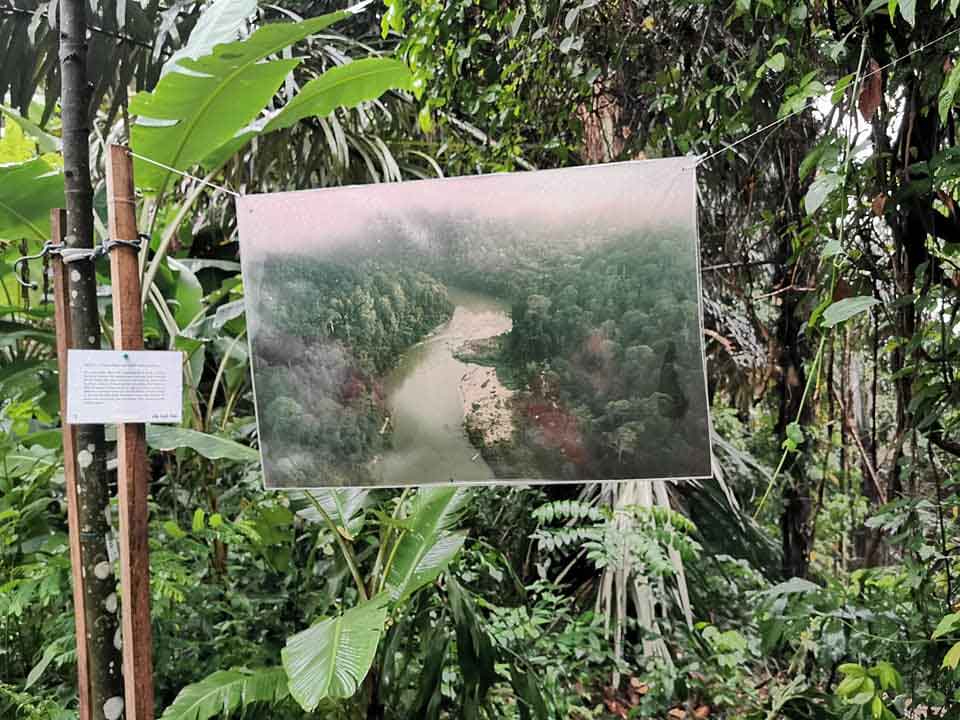
Below is an aerial photograph of Sungai Tembeling. At present, the left hand side of the river is still properly preserved. Unfortunately, the right side has been exploited. If you only live in the jungle, you will never see land this way. The Batek do not see land the way Google Maps, Waze and city folk see land. The Batek use trees and mountains as markers. The coloured structures in the photograph are Batek settlements.
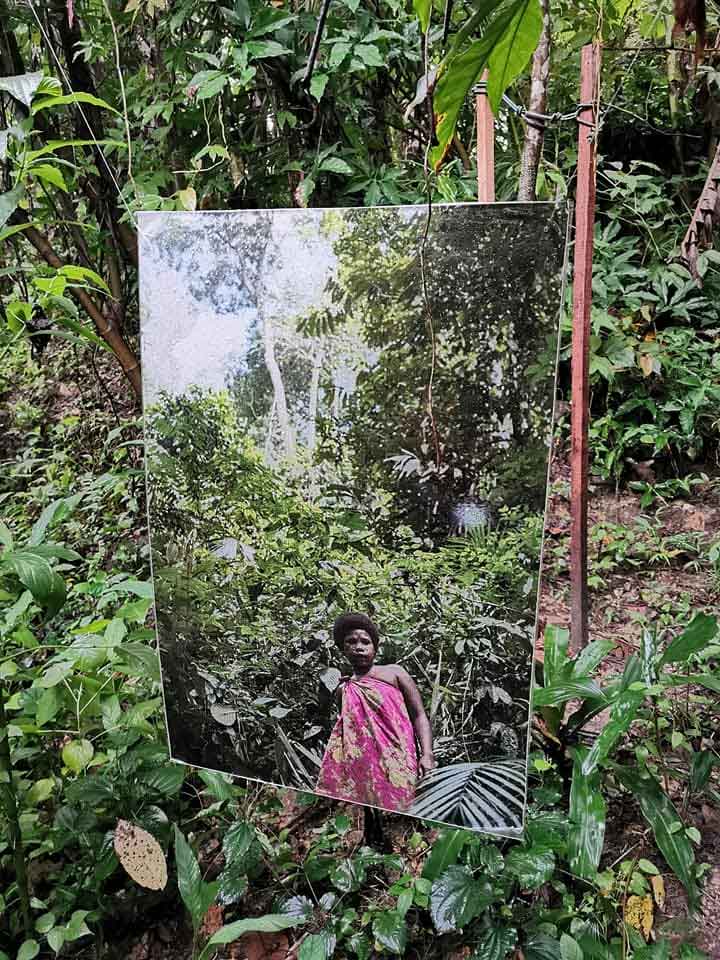
Traditionally the Batek are nomadic and hence they had no proper settlements. Due to pressures from outside and their inability to continue living off the forest, they are changing their lifestyles. Our government is telling them to stay put in order to participate in the lucrative eco-tourism business. This is against their ancestral practice as they are used to travelling and foraging. This photograph shows what the typical Batek person does all day. They are waiting for tourists to pop over so that the curious tourist can take photos with them. Reminds me of the Long Neck women I saw in Myanmar. The tour guides will give them a token amount to “add to the authenticity” of the jungle tour. This shows how hard it is for the Batek people to live off the forest today.
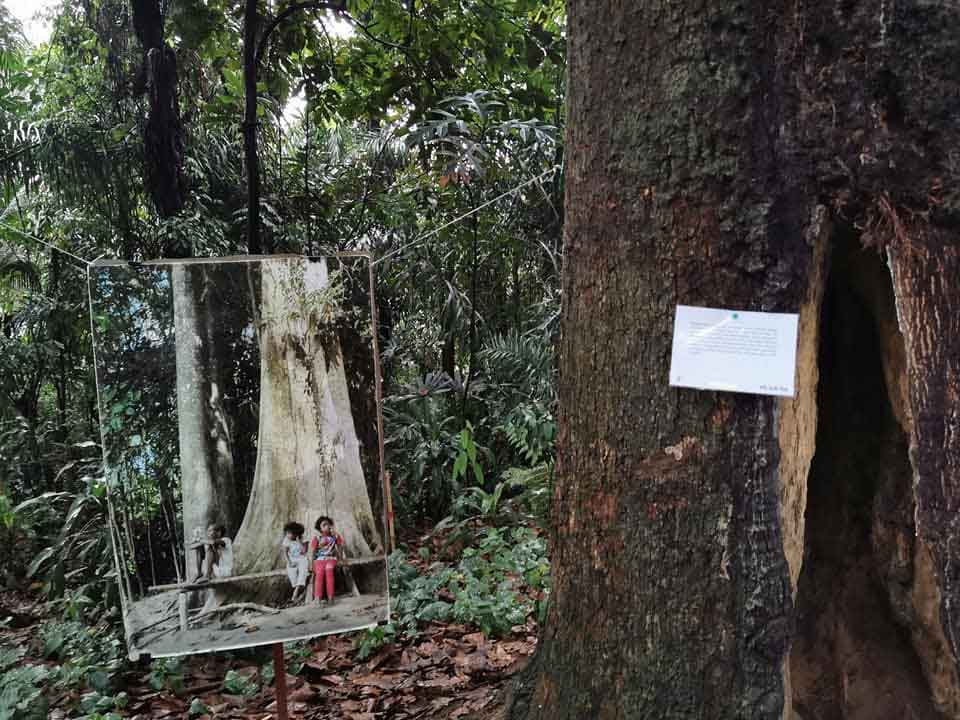
The Batek only take what they need from the forest. Whatever they hunt or forage will be brought back to the village to be shared. They have respect for the animals they kill. They believe bad luck will befall them if they break the taboos.
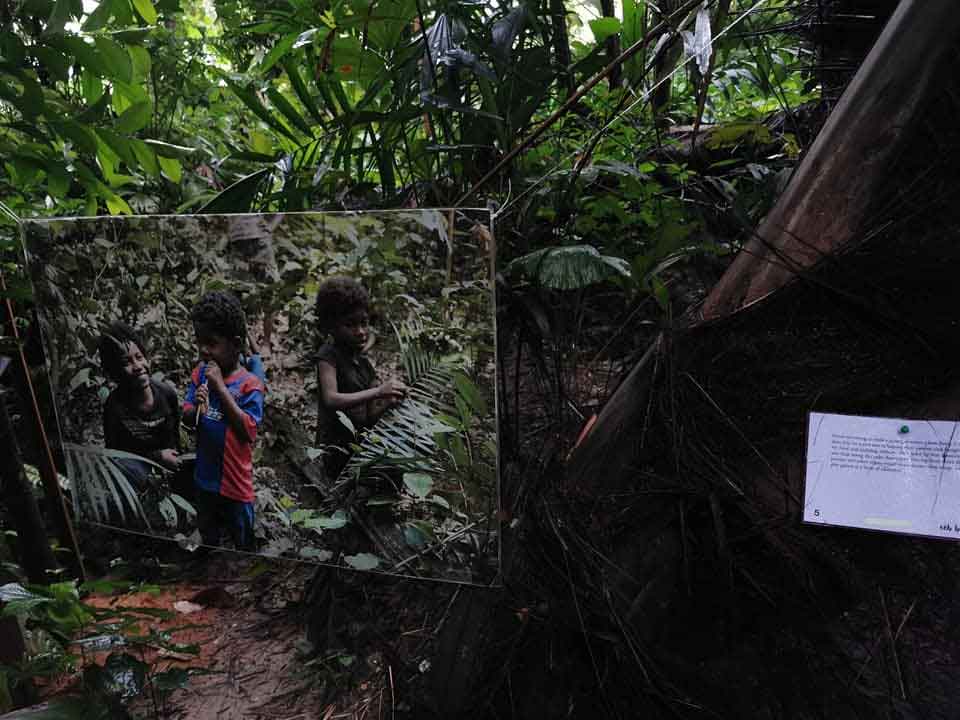
This photograph shows a typical Batek family and the structures they build. This structure is called a Hayak, Lintus or Lean To. Once they decide where to spend the night, the whole family is involved in setting up their home for the night. When they are ready to move, the shelter is returned to the forest and so their impact on the jungle is minimized. The Batek view the seasons differently than we do. During the fruiting season, they live entirely on fruits. During the flower season, they survive by harvesting honey.

The children are involved with the running of the community from a young age. As soon as they are able, they learn survival skills such as how to use the parang and how to weave batik. This period is also an important time for bonding, as the elders will tell the children folk tales. The children are taught that every member of the family is important.
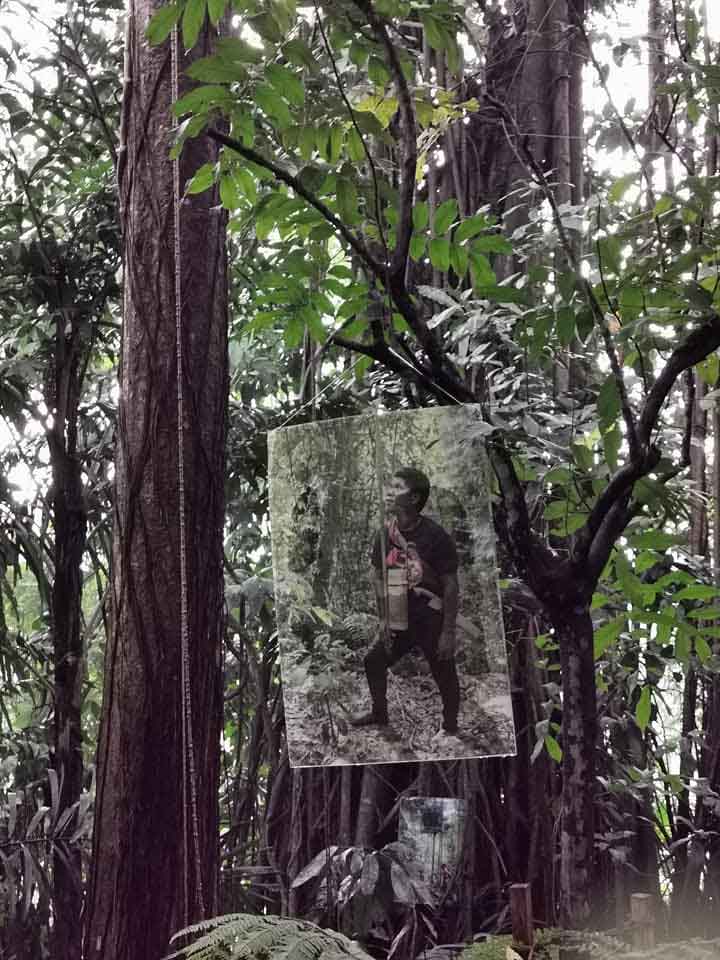
This is a photograph of Mr Di. He is holding a blowpipe and he carries a canister of darts around his neck. The blowpipe is an important asset to the Batek and they keep their blowpipe from cradle to grave. It is the most important of their material possessions. Batek people are egalitarian in that they consider both genders as equals. Women can also hunt and forage food and men can take care of children. This equal partnership relationship is now changing as they are forced to stay in one place and men are forced to do work requiring hard labour. Hence, the women stay at home to look after their kids. We can see the damage that this has done to their community. Modern civilisation is forcing our ideas and our “modern” ways of life on them and they have no other choice but to follow.
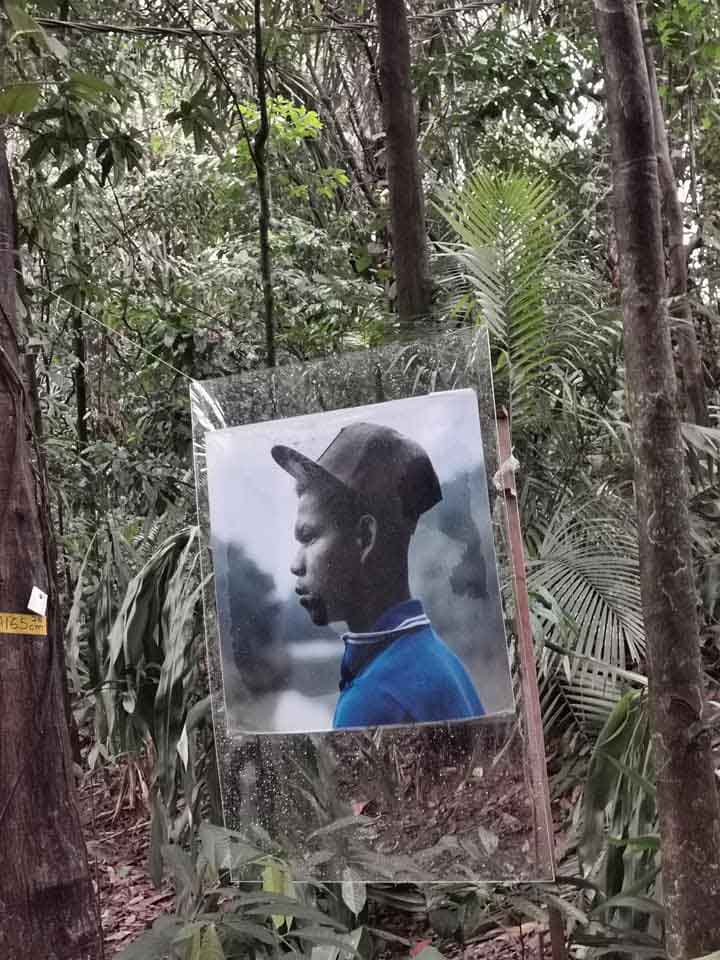
This is a photograph of Mr Di’s son. In general, the Orang Asli are depicted negatively in the media. We often see them when there is negative news e.g. protest against deforestation. The way these articles are written are so negative towards the Orang Asli that many think that “they have not caught up with our modern world”. Mahen made sure that his photographs show that the Batek as dignified and empowered. Some Orang Asli groups have traditional costumes and they wear these with pride. However, they have been directed to wear the costumes for the sake of tourism and that is not a good practice. Just in case you are wondering, the Batek do not have a traditional costume.
This is an important photograph as it shows the burial site of a deceased Batek. They will choose the highest tree that they can climb and they will build a simple structure. They will then start a fire to keep animals away. The Batek believe that the soul will fly to heaven. This location is kept a secret, as they do not want outside disturbance. It was reported in the news recently that the Kelantan government exhumed the body of a Batek, did a post mortem and then buried the body according to Islamic rites!
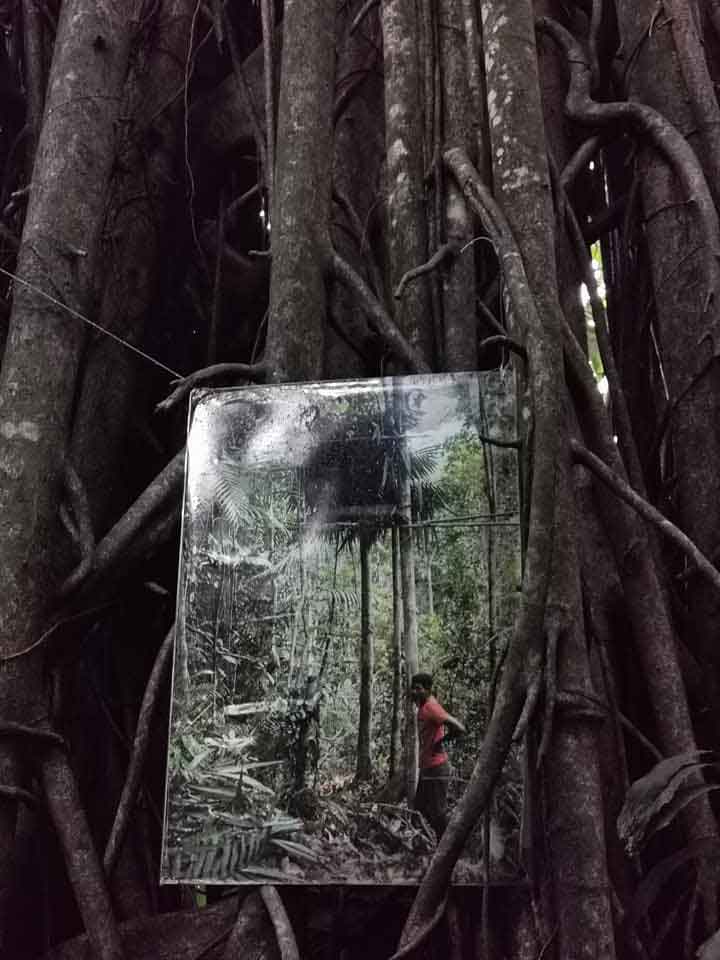
The Batek gather and share stories whilst hunting e.g., “I saw a herd of elephants next to the river”. This allows them to form a shared mental map of the area. They have a ground view of the land and whenever people share stories, they can imagine what else is happening on their land. The Batek use trees that really stand out as waypoints to navigate the terrain.

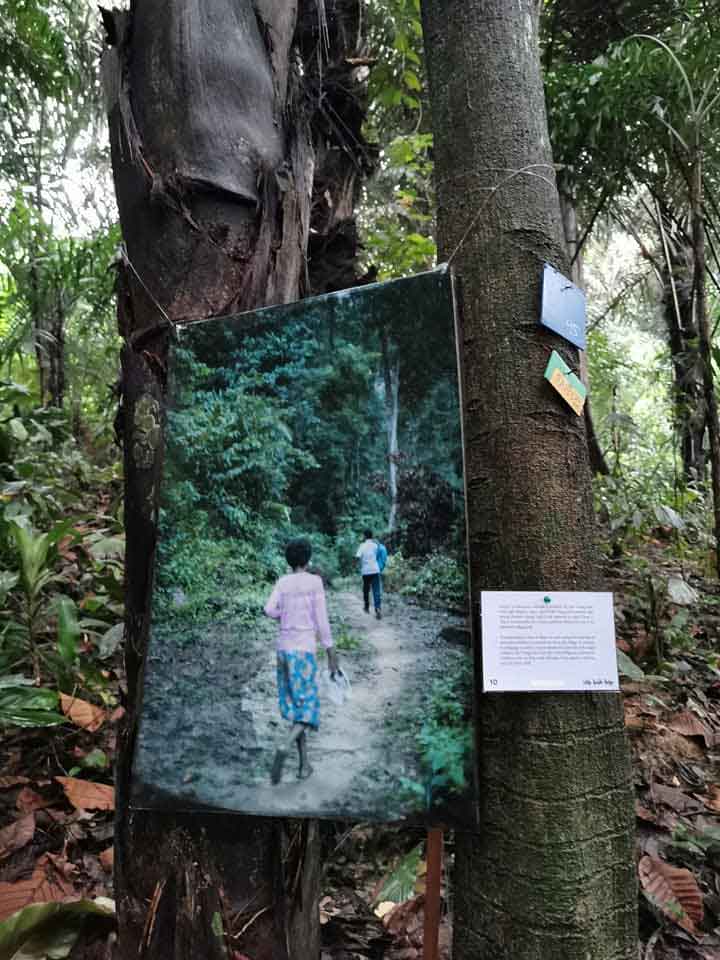
This photograph shows some Orang Asli children going to school. Most of them have trouble getting to school due to transportation. Some Orang Asli kids travel 12 hours per day to receive an education and so it takes amazing determination and grit. The cost is another challenge, as their parents cannot afford shoes and uniforms. They are sometimes discriminated against by teachers and hence they do not find school enjoyable. After a while, they feel so discouraged they prefer to stay at home and help their parents. Mahen met many bright Batek kids. Some quit school before the age of 14 due to these challenges. The statistics show that out of 100 who attend primary school, only six are expected to finish Form 5.
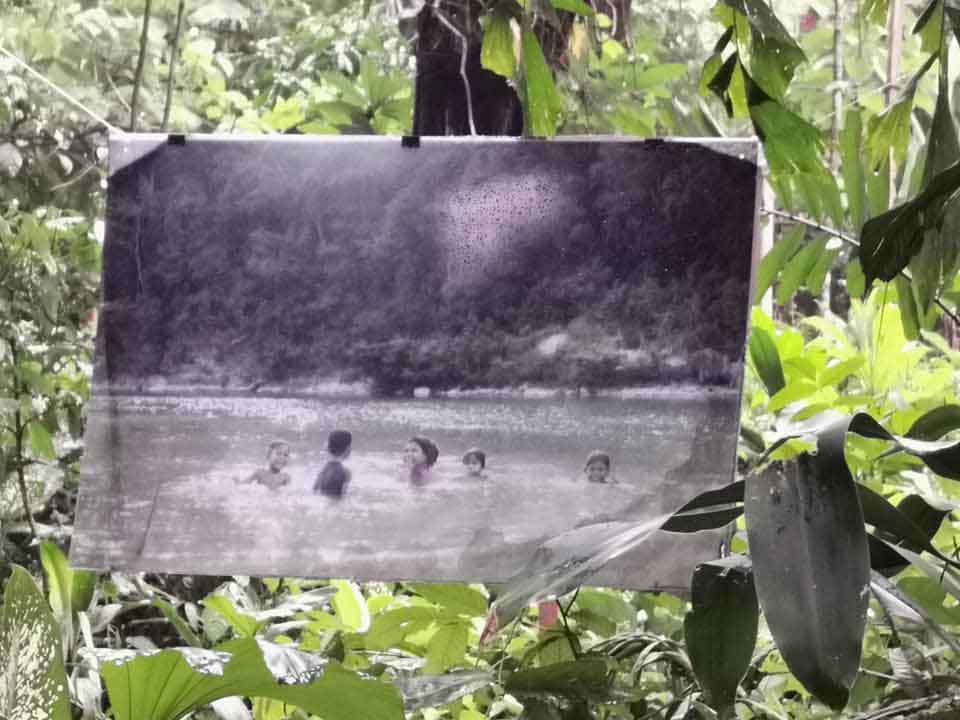
This photograph shows the Orang Asli children happily bathing in the river. Most of us will find it difficult to swim in these rivers due to the currents.
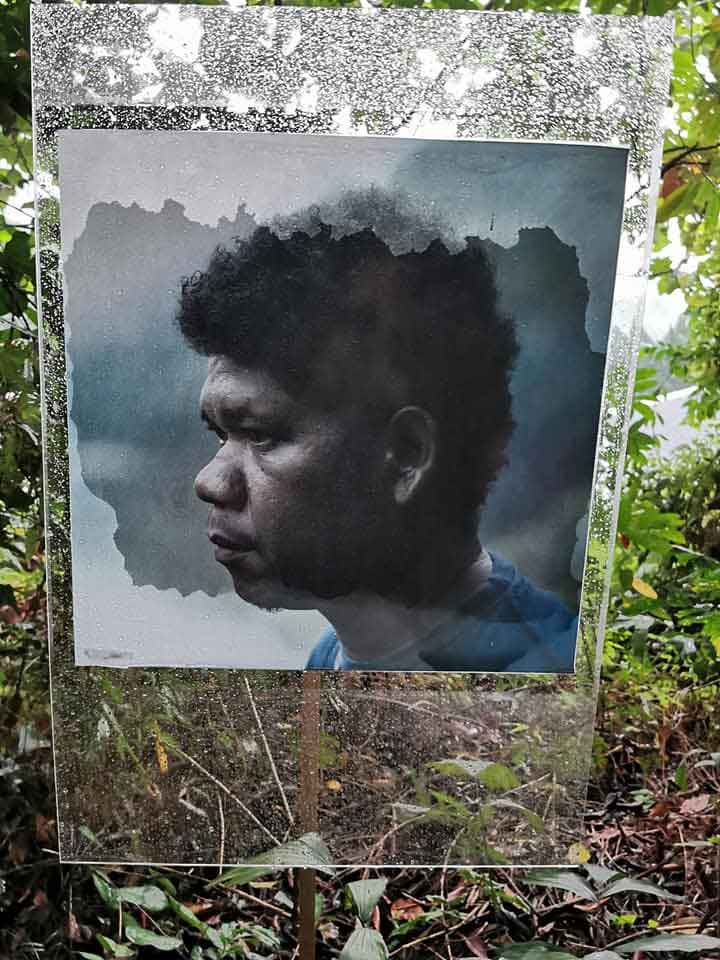
This final photograph depicts Mr Di against the backdrop of construction and development. It encourages us to reflect on the Batek way of life versus our way of life. We can still live as Malaysians and go back home and practise our traditional way of life. So why is it that we force Batek people to change and adapt to our way of life? According to the statistics, there are only 1500 Batek people left. It is only fair that we acknowledge their customary rights to their land. The Batek are well versed in the medicinal values of forest plants but if you are a researcher, it may not be in the Batek people’s best interest to publish these secrets in journals. We can assume that greedy pharmaceutical companies will come and grab the knowledge and then patent this knowledge for their commercial benefit. When that happens, there is little else left for the Batek to survive on.
Nam Hooi Wooi Koon – a Cantonese Clan Association

by Ong Li Ling

Several site excursions were organised as part of the Georgetown Heritage Celebrations 2019. I was fortunate enough to join the tour of the Nam Hooi Wooi Koon Cantonese Clan Association. Mr Adrian Pak (President of the Association) and Mr Johnny Yee (Honorary Secretary) led the informative tour and also provided the background information for this blog piece.

Our guides explained to us that Nanhai District is located in Foshan City China and has a history of 2,000 years. In 214 BC this place in Guangdong China was known as Nanhai County and, in 1992 it was renamed Nanhai District. The Nam Hooi Wooi Koon is a Cantonese Clan Association with members comprising of immigrants from Nanhai. It has been estimated that there are around 400,000 Nanhai Chinese living outside China and they are scattered around the world.

Some famous Nanhai figures that you may have heard of are revolutionary leader Kang Youwei, reformer Kang Tongbi, martial artist Wong FeiHung, martial artist Ip Man, actor Leung Ka-Fei and father of Engineering Zhan Tianyou. During the 1890s, Nanhai immigrants, Chen Yuqin and Zhou Xingyang, controlled the Penang opium market. They were the founding members of the Kwangtung Association, Nam Wah Ee Hospital, Chinese Town Hall and the Ng Fook Tong School in Penang.

Nam Hooi Wooi Koon was established in 1828, which means it will celebrate its 192nd anniversary come October 2019. Nam Hooi Wooi Koon is the oldest Overseas Establishment certified by the Nanhai Association in China. Within 77 years after its establishment, Nam Hooi Wooi Koon occupied its own building and it also operated 4 other shop houses and a funeral parlour. Coincidentally, the 1st (Bai Yupei), 11th (Bai Yuzhan), and the 21st President who is also the sitting President (BaiYubin) are from the Bai (Pak) family.

To make it easier for members to stay informed, Nam Hooi Wooi Koon started a Facebook Page and an official website in 2002. They also established a brotherhood Association with 2 other clan associations namely the PunYue (Panyu District) and Soon Tuck (Shunde, District).

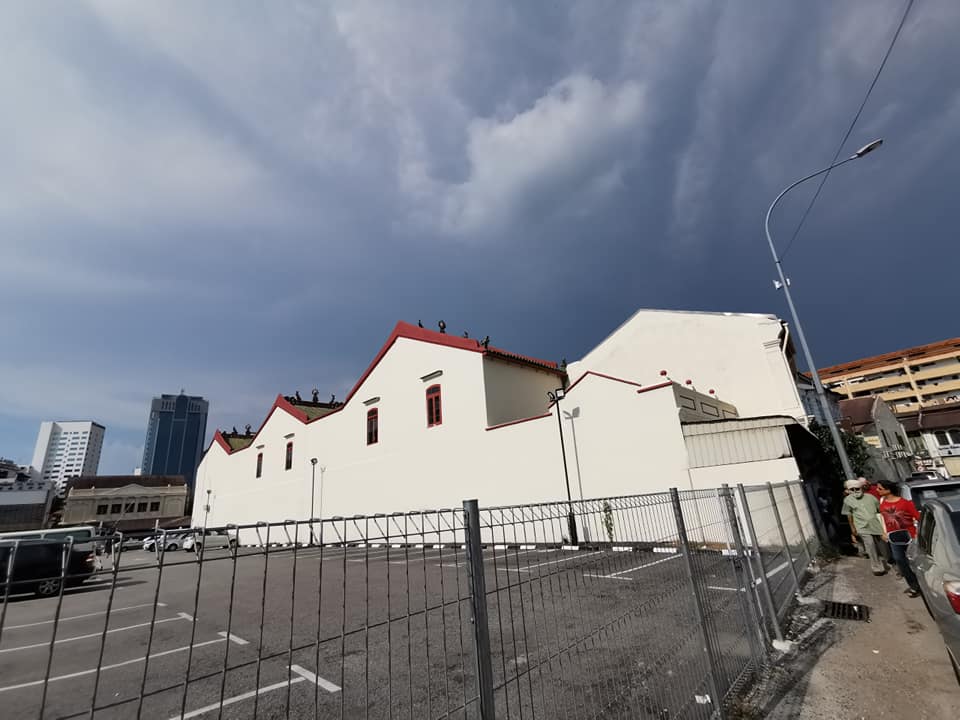
Georgetown is a UNESCO World Heritage Site with more than 5000 buildings of interest. Nam Hooi Wooi Koon is one of 82 Category 1 buildings, reflecting the authenticity of its cultural landscape. The length of this building is 200 feet, which is rare in Penang. The front faces Chulia Street and the back faces Kampung Malabar.

We started our tour at the front door. The words Nam Hooi Wooi Koon (in Cantonese) is solidly moulded on a concrete style signboard above the door. Instead of using gold coloured paint, “gold leaves” were stuck onto the letterings to make the words stand out. You can see with a pair of 7 lettered Chinese couplets on either side of the door. It reads Nan Yu De Zhi Peng Cheng Yuan  and Hai Guo Tong Xin Yan Hui Zhang. This phrase was composed by Lingnan calligrapher Lin Qihan in 1904. The roofing and engraving on the exterior beams has a unique wooden flowery architectural design and showcases the expert craftsmanship of the artisan.

Once you enter the front door, you will see a Tai Pak Kong (Fu De Zheng Shen) on your left. It is also known as Tudi Gong (Diety of the Earth). Everything except the deity was repainted in early 2019. A specialist was hired to do the repainting and lacquering and he replicated the same colouring style as indicated in the archived photos. You will notice that this is the typical style adopted from Southern China. Tudi Gong is the Main Protector of the Community and Land.

Moving on, we were shown the United Nam Hoi Association Affiliates plaque on the left wall. This initiative was launched in Oct 2017. Members can establish trade with China via the Malaysia Nam Hoi Commercial Division.

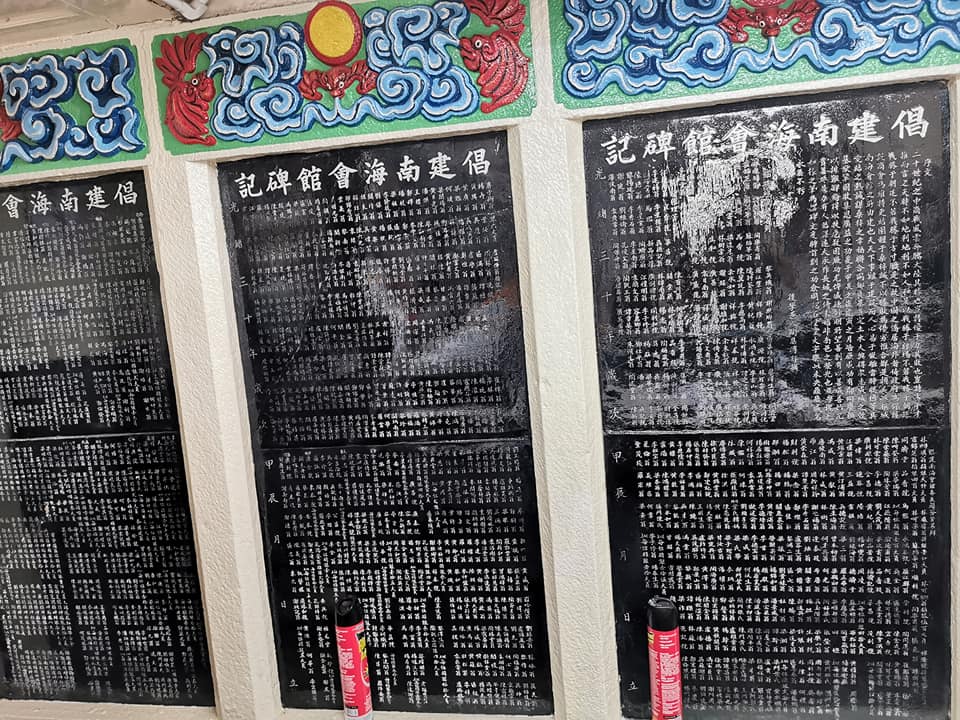
We noticed the black tablets behind the counter on the right. In the 30th Year of Emperor Guangxu many enthusiastic members donated to the building fund, and their names were engraved in white lettering against a black background stone tablet. Carving a list of names onto a stone is a common practice in clan houses and kongsi. If you look carefully you may find the names of your great-great-grandfathers, great grandfathers or grandfathers engraved on the tablets. Members contributed not more than a few ringgit but it meant a lot to the association, as the value of money was big back then.

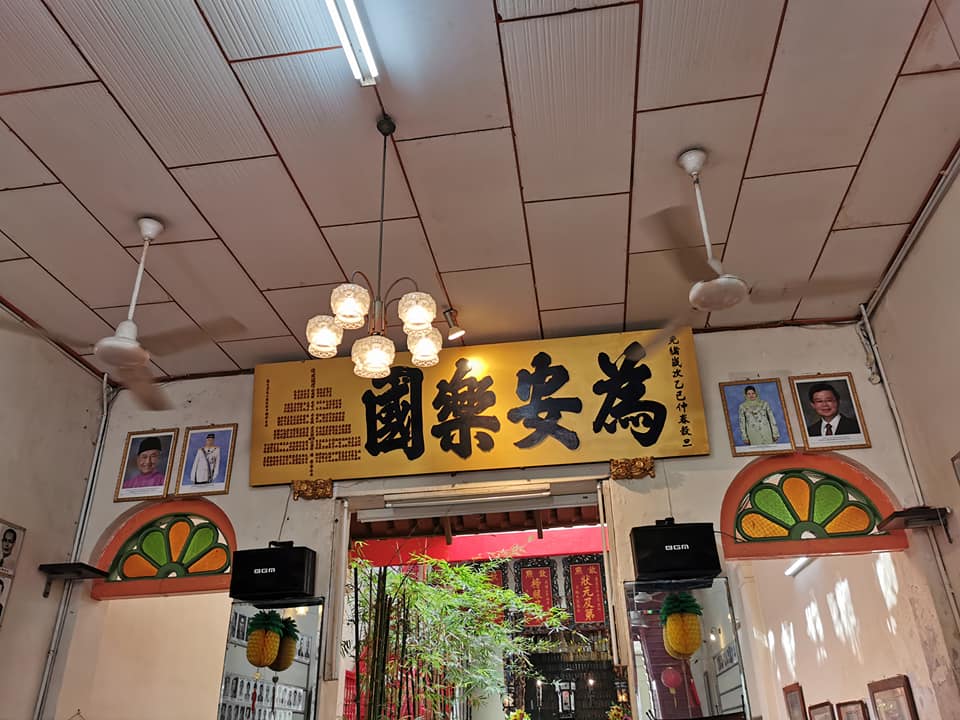
We looked up to admire the Golden Congratulatory Plaque. The previous plaque which was put up in 1905 collapsed in 2000  due to termites  and a replica was put in its place .The board is engraved with the 4 letters of ‘Wei An Le Guo’.

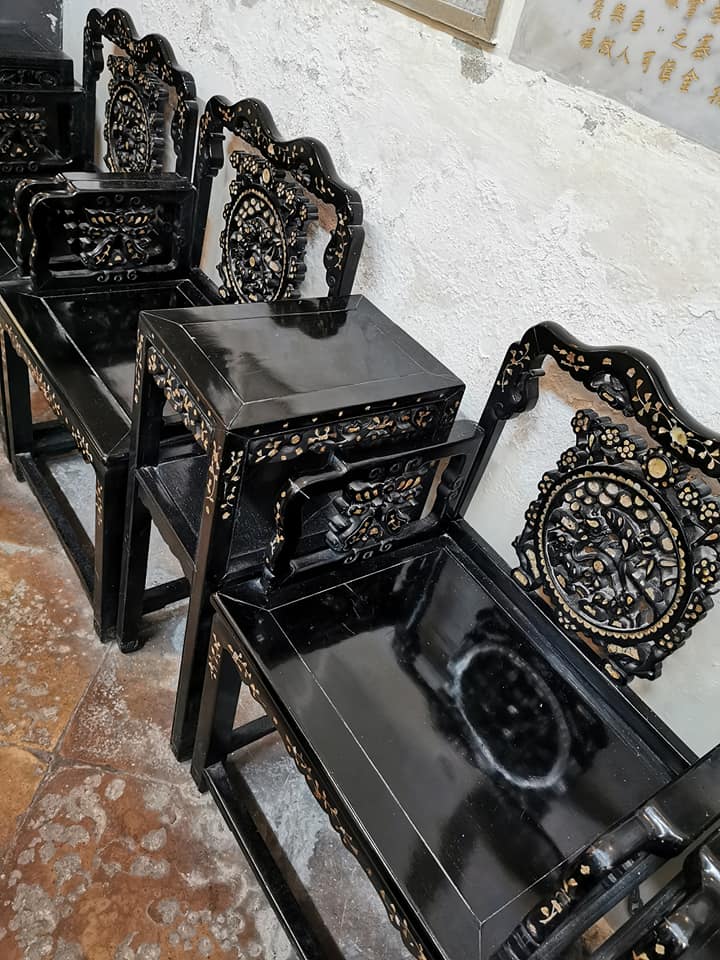
There are lots of rosewood Ching Dynasty and Guangxu era antique furniture in the Hall. Rose wood is strong and free of termites. The more you sit on the chairs the more it shines and it will also cool you down when ambient temperatures are high.

There used to be 2 large Qing Dynasty vases on the stage. Unfortunately these priceless artefacts were stolen. The Association has since installed a CCTV to prevent future occurrence of theft.

We were brought to the inside section of the building where we admired the 2nd air well. As this air well has not been sealed, rainwater pours in when it rains.

Netting has been installed to prevent bats and swallows from coming in.

We looked up and noticed 5 red plaques hanging from the ceiling. These plaques are the pride of Association as they are given only to outstanding Chinese Scholars. These 5 pieces were originally from Nan Hai and they were bestowed to Nan Hai children who got into the Honorary List after sitting for the Qinghai Imperial Examination (example The Champion Zhuangyuan and The Flower Tanhua). These Scholars were eventually promoted to senior positions such as Ministers in the Imperial Palace.

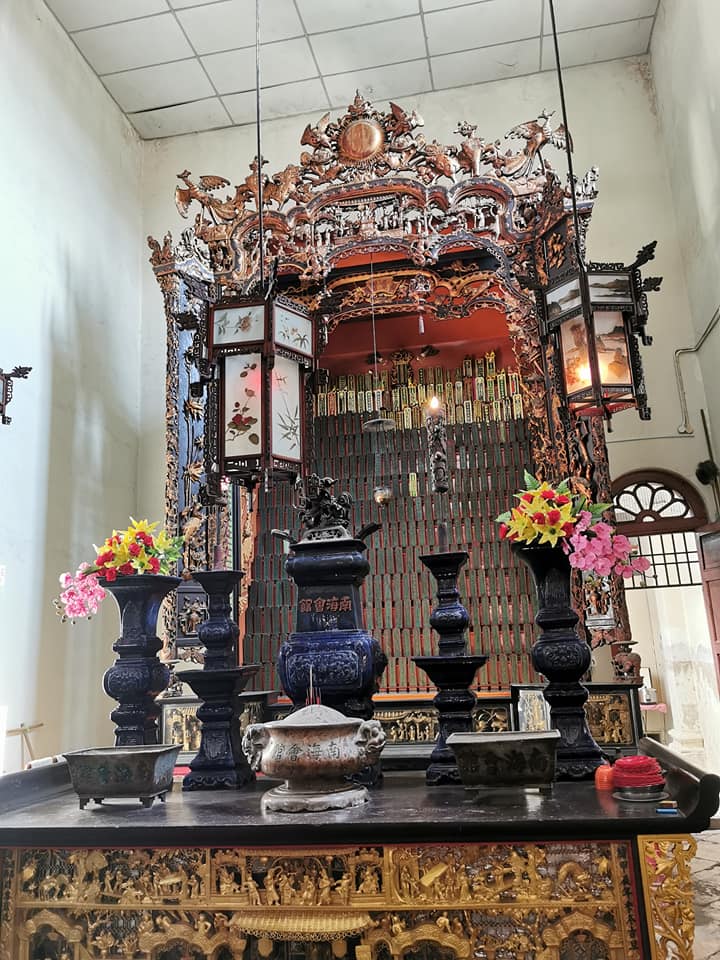
At the end of the inner hall, there stood a high Chinese-style altar with numerous ancestral tablets. These tablets commemorate the dead. Their families often come to this alter during the Cheng Beng Festival instead of visiting the tomb.

The altar is more than 2 stories high. It is rare to find wooden structures of that height especially after the Communist rule in China. On the altar, we admired exquisite carvings of deities that told of Chinese folk tales. We also saw flowers, fishes and others of wooden frameworks with golden leaves stuck on. This altar is one of the prominent antique pieces in Nam Hooi Wooi Koon. Nanhai was famous for porcelain making and the vases at the front of the altar were imported many years ago to decorate the altar. The vases are made of single porcelain pieces and are deemed as priceless antiques.
Visitors can go to the praying area at the back of the building to ask for their blessings. There is a stone altar with the Sheji Zhi Shen (God of Society) and Bai Hu Ye (White Tiger God). If you make an offering to the God of Society/Community, you will be blessed with good weather and a good millet harvest. The White Tiger God is a Protector God. If you feel you are experiencing a bout of bad luck, you can pray to the White Tiger God for a smooth sailing year ahead. This God is said to open its mouth during certain times of the year. Devotees rub the mouth of the Tiger with a piece of lard for good luck.

This stone altar is visited by many Penangites and is open to the public throughout the year. There is no entrance fee and all are welcome to visit and pray for good luck. Many come at the start of the Chinese New Year. The Cantonese come in droves to ‘Ta Siew Yan’ (Da Xiao Ren) i.e. “Beat up the Villain”. Those who hinder your progress and growth, those who oppose you and are obstacles to your progress are deemed as ‘siew yan’ villains.

Some visitors will engage the services of the Resident Lady who is well versed in chanting poetic mantras, which get rid of bad luck. She will hit a red paper cutting representing the human shape of the villain. The ‘villain’ will be beaten up using a Chinese wooden clog while she chants the Mantras. An angpow can be given to the Lady as an appreciation for her services. You can also present an offering to the Tiger God.
We admired the side of building from the outside; 200 feet is considered long for a Penang building. The Association would like to commission a mural on this wall to depict Nanhai history and culture sometime in the near future.

We then walked upstairs to the 1st floor and admired the red staircase which is over 100 years old.

On the upper level, we saw 2 more altars with ancestral tablets. These tablets are exclusive to the Nan Hai people and they can purchase a tablet for nominal amount.

From the upper level, we can see a big ball on the rooftop, which represents a Pearl. This pearl radiates light in all directions. Next to the pearl are fishes, which symbolise abundance to fengshui believers.

Ceiling is old style
This sink has been in use since British colonial days. The tap is the original tap and it is still in good working condition.
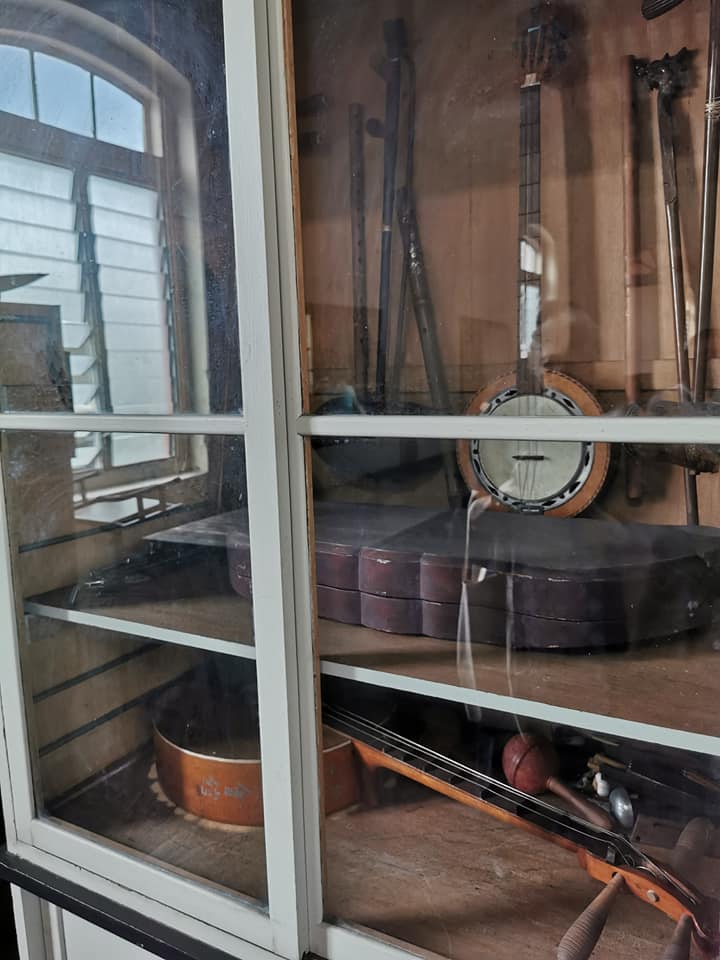
Old Chinese musical instruments, now museum-quality pieces. Members can participate in the Chinese Opera Group, which uses newer musical instruments.

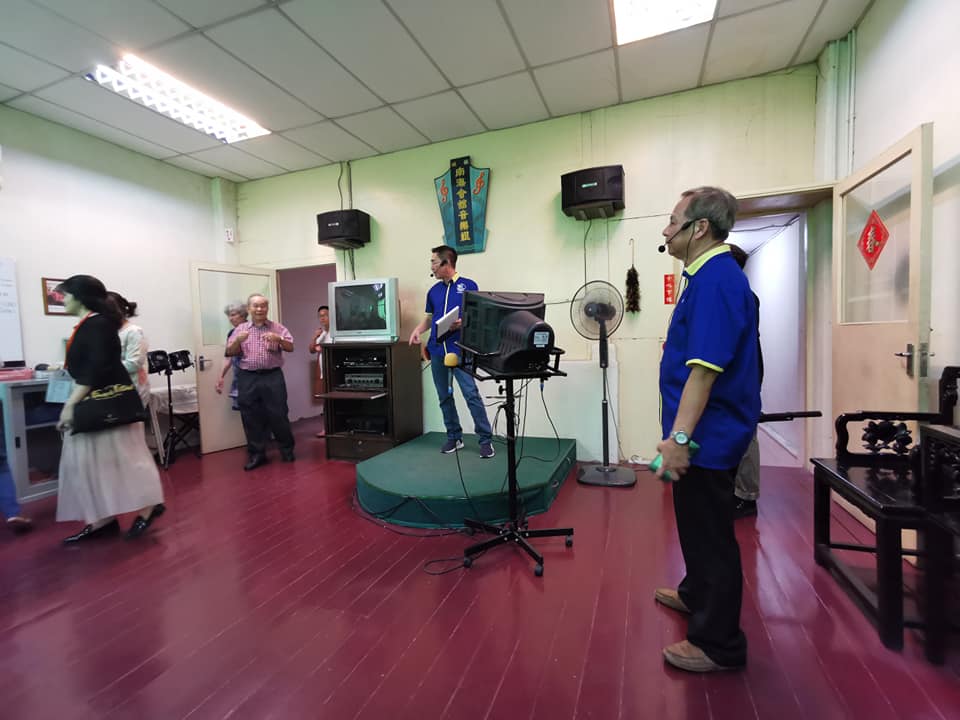
We were then brought to the air-conditioned karaoke room, which is location at the back portion of the upper level. Initiated by the Association’s Past President, Mr. Lee GH, karaoke is an effective way to engage teachers and members alike. A competition is organised once a year to showcase budding talents.

The third altar located upstairs.

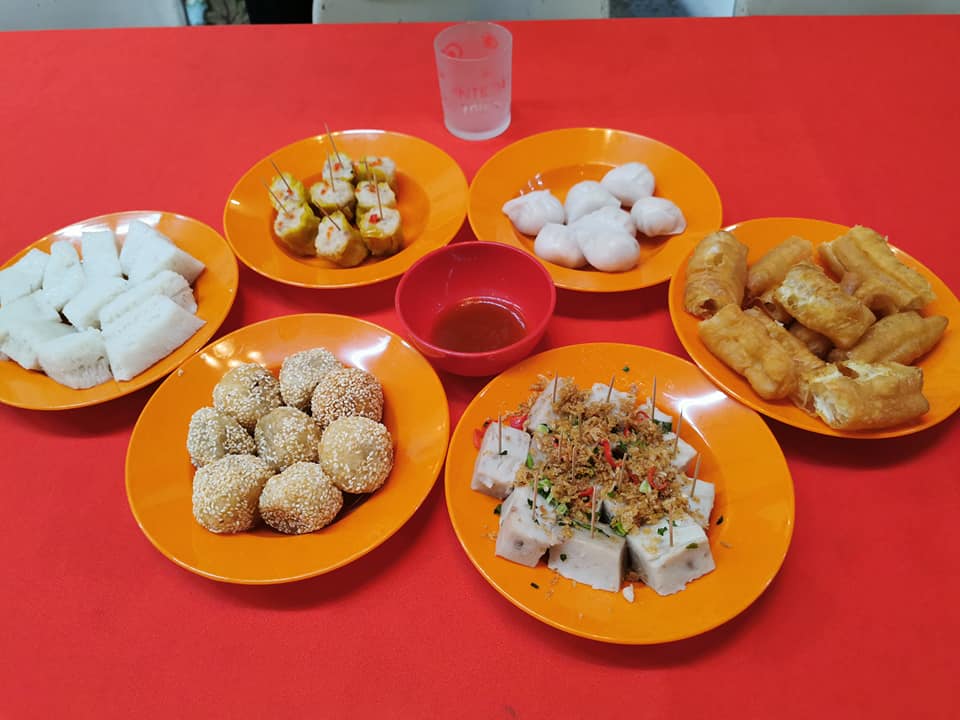
We were treated to yummy Cantonese snacks whilst we enjoyed the Chinese opera karaoke performed on stage. Big thanks to Mr Adrian Yap, Mr Johnny Yee and the association members for the educational tour and warm hospitality.

Cultivation and use of Opium before the 16th century

by Stuart Wakefield

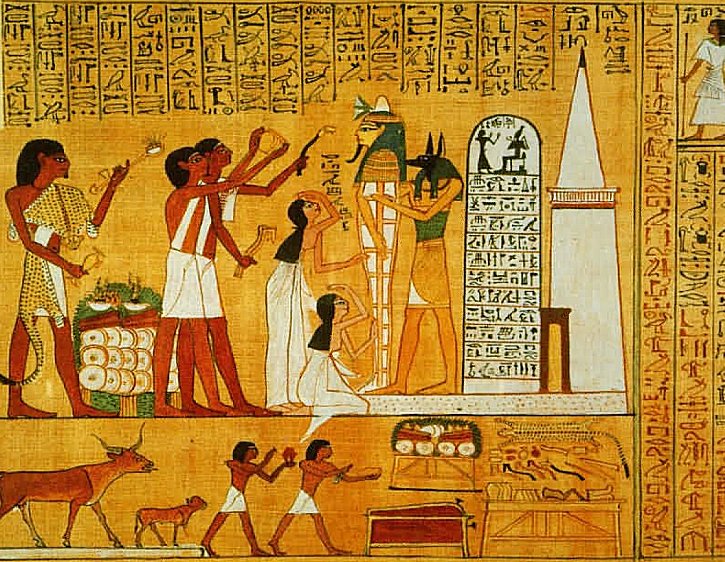
Opium is derived from the seeds of the papaver somniferum plant, which is related to the common cabbage. Fossilised poppy seeds have been found that date back over 30,000 years to Neanderthal man. The first written record of poppies was written on Sumerian clay tablets that have been dated at around 5,000 BCE. These referred to opium as hul gil, the ‘joy plant’ that was used to produce opium in Mesopotamia.[i] As opium gained in popularity, it was first traded westwards to Assyria and Egypt before spreading along established land trade routes, (which subsequently became known as Silk Roads).[ii] An early Egyptian medicinal text, the Ebers Papyrus, dated around 1,550 BCE, records opium being mixed to produce a children’s sedative, and was specifically used as a remedy for infant teething problems. It has been suggested that mother’s offered their nipple to suckling babies smeared with poppy juice to stop them crying, and this practice spread over time to both Europe and India. Whilst its pleasurable effects were known, it was also used to overcome bowel disorders, and was even claimed to be an antidote for poison. By the fourteenth century, maritime trade dominated due to a lack of political control along the land route, which increased opium availability in South East Asia.

A page from the Ebers Papyrus scroll, which was an encyclopedia of medicine in ancient Egypt. Photo taken from http://www.ancientpages.com/2016/02/03/the-ebers-papyrus-most-famous-plant-medicine-encyclopedia-of-ancient-egypt/

Opium was undoubtedly a valued trade good, and being easy to grow with a relatively low cost of production, extensive cultivation resulted in many regions. Poppy plants take approximately three months to produce opium and thrive in warm climatic conditions that are common in the Middle East, though they can be grown in a wide variety of locations. One acre of poppies can produce from three to five kg of raw opium, although both quality and yield deteriorate in less than ideal growing conditions. The flowers are normally coloured red or orange, although the colour may vary from white to purple, and the four petals are initially hidden within two outer sepals.[iii] The calyx is thrown off as the flower develops, and, following fertilization, the petals drop away to reveal from five to eight poppy capsules, which have the appearance of miniature pomegranates.[iv] The capsules are lightly lanced a few times to avoid damaging the interior cavities. The puncturing causes the milky latex to ooze out, which is then scraped off and then air dried when it turns dark brown.[v]

The historical significance of the opium trade is open to debate, with some claiming that it played a key role in major historical events including wars fought by Alexander the Great, The Huns and the Mongols.[vi] The first contact between the west and China occurred when a Greek expedition came to Kashgar around 200 BCE.[vii] It is apparent that opium use in Asia had been well established by the fifteenth century as a consequence of trade from the Middle East and India. However, after the fifteenth century, Asian trade and use of opium increased dramatically under the influence of European Charter Companies such as the Dutch VOC (Vereenigde Oost-indische Compagnie) and the English East India Company.

Some historians suggest that opium may have been introduced into China by returning sailors or Tibetan Buddhist priests from Africa or India as the early as the first century BCE. However, it is generally accepted that Arabic merchants brought opium first to India and subsequently to China between 400 and 900 BCE.[viii] Opium was produced by some ethnic minorities in southern China to raise money to pay tributes to the Han Chinese Emperors.  Chinese traders also introduced opium growing to South East Asian minority cultures.

Opium smoking in China in the 19th century. Photo taken from
https://dissolve.com/stock-photo/Opium-smoking-China-19th-century-After-19th-century-rights-managed-image/102-D869-77-835

Some sources suggest that opium was primarily used by the lower classes, although it is quite possible that its wide availability and broad based appeal as a medicine led to its widespread use. An Indian folktale relating to opium suggests that recreational users will become ‘[…] as mischievous as a mouse, as fond of milk as a cat, as quarrelsome as a dog, as unclean as a monkey, as savage as a boar, as strong as an elephant and, as spirited as a queen!’ A 10th century CE Chinese poem advised of the opium poppy being made into a drink “fit for Buddha”. The 1916 China Year Book stated that ‘The poppy has been known in China for 12 centuries, and its medicinal use for nine centuries,’ and was introduced by Arab traders.[ix] Textual evidence in an eight century Chinese Pharmacopoeia manual suggests that ‘[…] Muslim traders were carrying opium from West to East Asia […] the medicine was prescribed for diarrhoea […] and for that frequent complaint in traditional medical lore, male impotence.”[x] Some historians have drawn parallels between the trades in opium to China and in tea from China. Both were regarded as desirable and worthy of consumption, with the Dutch Physician Cornelis Bontekoe making extravagant claims for the medicinal properties of tea and recommending consumption of up to fifty cups a day. However, unlike opium, tea joined tobacco, coffee and cocoa as luxury products in a lucrative but limited European market.[xi]

Historians have pointed out that smoking was unknown before Columbus returned from the New World with tobacco, and conclude that, prior to the sixteenth century, opium had always been taken orally.[xii] Whilst not being contradictory, other sources point out that opium smoking was well established in Java by 1690.[xiii] Others suggest that a smoking culture appeared in China during the seventeenth century, although the Chinese initially considered the practice to be barbaric.


Opium Den by Vincent G. Stiepevich. Photo taken from
http://www.johncoulthart.com/feuilleton/2012/03/03/opium-dens/

[i] Dr. Anil Aggrawal, Narcotic Drugs, The Story of opium, Ch 2, (New Delhi, 1995); <https://www.opioids.com/narcotic-drugs/chapter-2.html&gt;, [accessed 6 June 2017].

[ii] Drug Enforcement Administration, Museum & Visitor Centre; <https://www.deamuseum.org/ccp/opium/history.html&gt;,

[iii] Study, Flower Sepals; <http://study.com/academy/lesson/flower-sepals-function-definition-quiz.html&gt;,

[iv] Study, Calyx in flowers; <http://study.com/academy/lesson/calyx-in-flowers-definition-form-quiz.html&gt;,

[v] Frontline, <http://www.pbs.org/wgbh/pages/frontline/shows/heroin/etc/history.html>, [accessed 12 June 2017]

[vi] All Empires History Forum, Ancient Opium Trade Routes; <http://www.allempires.com/forum/forum_posts.asp?TID=23558 >, [accessed 7 June 2017].

[vii] British Museum, Chinese Trade; <http://www.britishmuseum.org/pdf/Chinese_trade.pdf >,

[viii] Facts and Details; Opium in China; <http://factsanddetails.com/china/cat11/sub74/item139.html&gt;, [accessed 11 June 2017].

[ix] Ellen La Motte, Schaffer Library of Drug Policy, The Opium Monopoly, XV The History of the Opium Trade in China; <http://www.druglibrary.org/schaffer/history/om/om15.htm&gt;, [accessed 6 June 2017].

[x] Opium Regimes: China, Britain, and Japan, 1839-1952, Part III, Drugs Taxes and Chinese Capitalism in SE Asia, edited by Timothy Brook and Bob Tadashi Wakabayashi, University of California Press, 2000.

[xi] Frank Dikötter, Lars P. Laamann, Zhou Xun ‘Narcotic Culture: A History of Drugs in China’ Hurst, London, 2004, 11

[xii] CBS News

[xiii] Englebert Kaempfer

Becoming a Museum Volunteer

by Eric Lim

I was reading a local daily when I was attracted by something at the corner of my eye – “Want to be a Museum Volunteer”. It was December 2016 and I was recently made redundant in the workforce and the saying “the grass is always greener on the other side” may not ring true this time. I may have reached the end of the lawn.

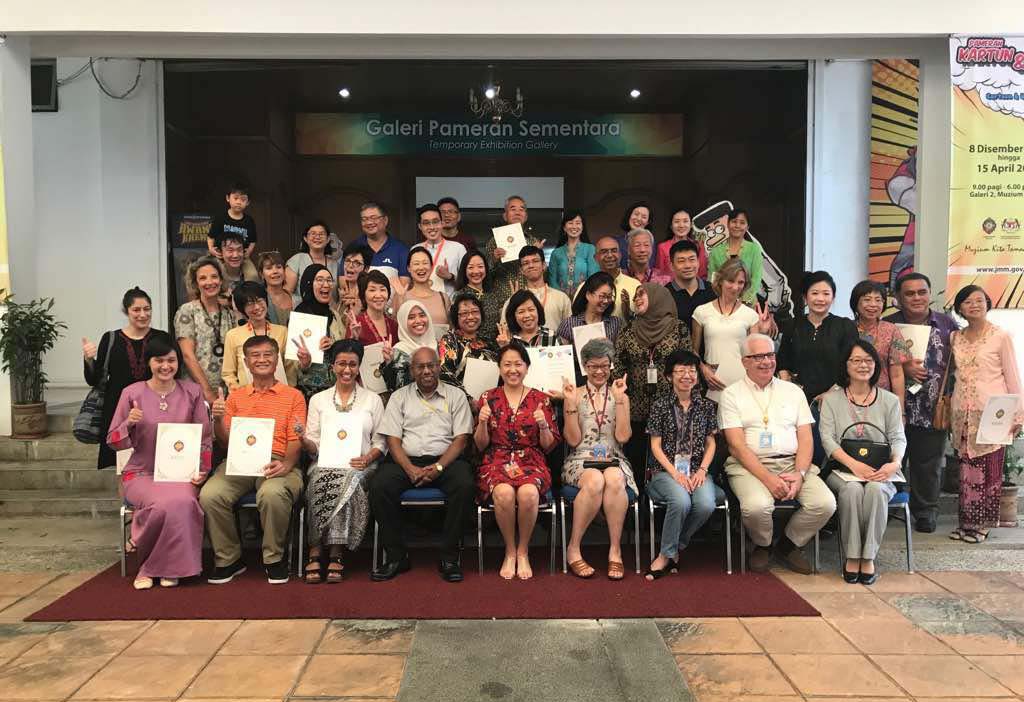
Then drawing inspiration from the late John F. Kennedy who once said “ask not what your country can do for you, ask what you can do for your country”, it was time for my humble self to make a little contribution to my beloved country by becoming a Museum Volunteer. A total of 30 newbies registered for the training programme that was conducted from February to June of 2017. Right after, to continue the learning development, we were put through the mentorship programme. Another few more months went by and l finally completed the programme in November 2017.

Graduation Day

I can still remember vividly that at the end of my last tour with my mentor, I said “With that, I have come to the end of the tour” and my mentor immediately replied “ With that, you have completed the mentorship programme”. Yes, I have completed the full programme and now eagerly looking forward to taking my first tour.

The day of reckoning came soon enough, it was on Tuesday 19 December 2017. I had arrived early and managed to assemble a small group of visitors for the tour. And at exactly 10.00 am, I started my maiden tour. In keeping with the time limit, I had brought the group to the end of Gallery D and it was time for my signature line “With that, it’s the end of the tour”. I was very satisfied with the result and truly happy seeing the smiling faces as they head toward the exit. I took another three tours the very same month to wrap up for the year 2017.

For 2018, I had planned to take in more tours to coincide with my motto in life. When the Portuguese captured Melaka, it can be summed up in 3G – Glory, Gold and God. For me, it is 3D – Determination, Dedication and Discipline, plus the expression “the harder you practice, the luckier you get”.

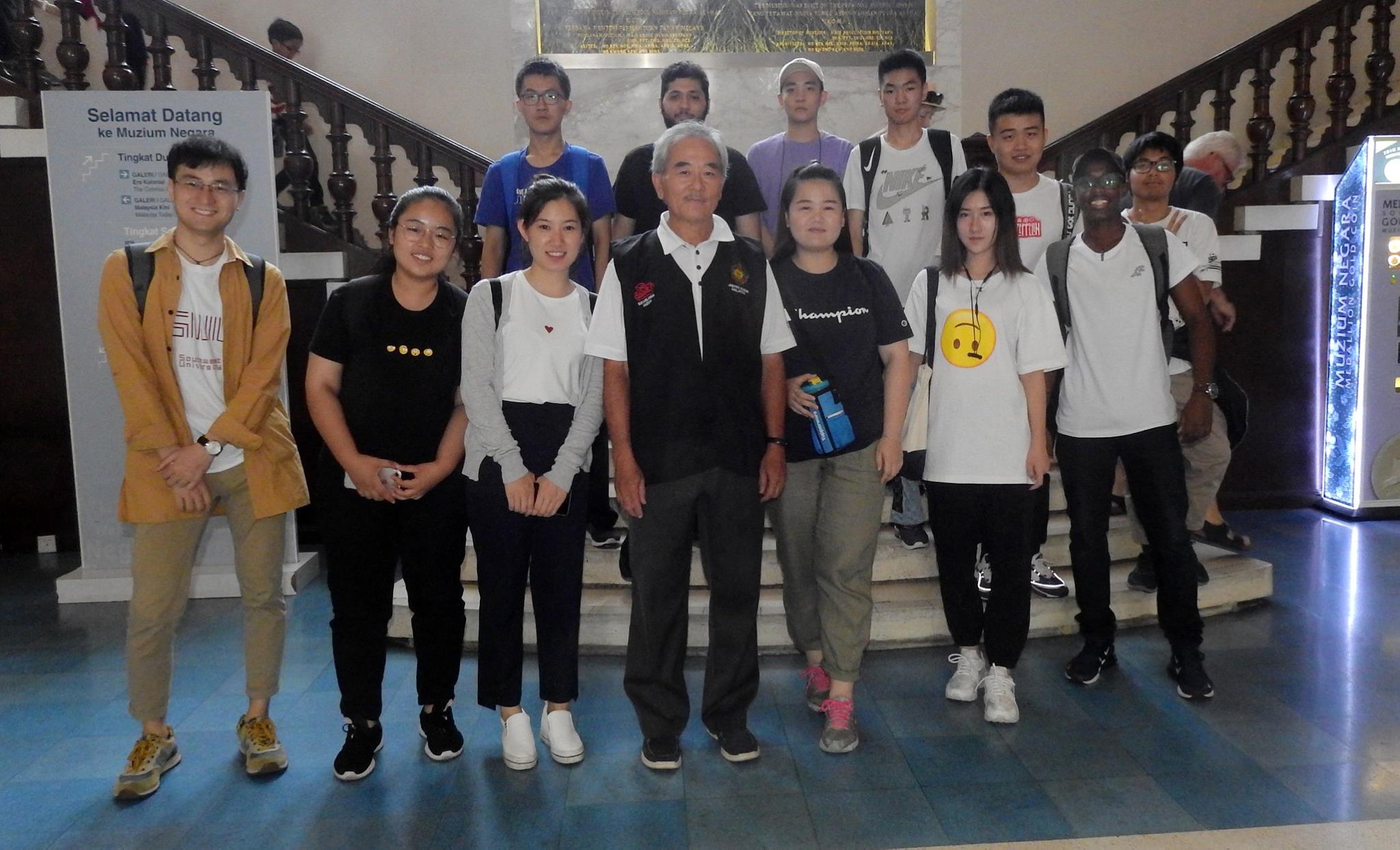
School Visit on Tues 28/8/18 – University Malaya, Centre for Continuing Education, 25 pax
The group showed up unexpectedly and requested for guides. Since no tourists showed up, Josianne together with Eric helped to guide this group. The actual group was more than 40, but we only took on 25.

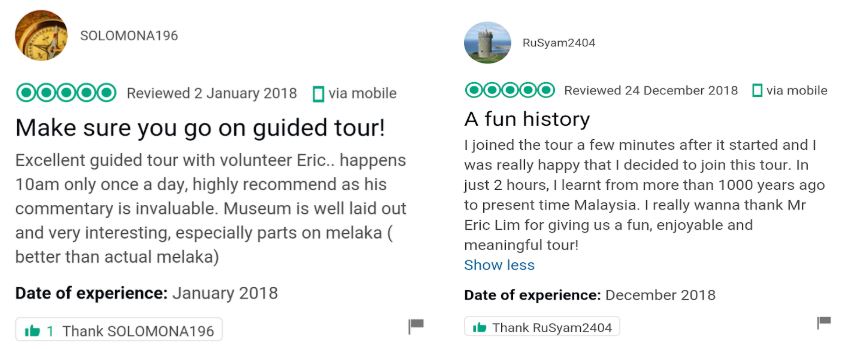
So the numbers just added up. I recall taking the morning and afternoon tours on a Thursday; and numerous occasions where I took tours on consecutive days. For the record, I took a total of 55 tours in 2018. And for that, I was recently awarded by JMM for my outstanding service as a Museum Volunteer. Also, getting compliments from the TripAdvisor website really made it all worthwhile and special.

Moving forward to 2019, the figures for the first quarter are still very much intact, averaging one tour per week. Here’s looking forward to my next tour tomorrow, wanna join my tour?

Eunos Abdullah – An Early Malay Nationalist

by Hani Kamal

Mohammad Eunos Abdullah (1876-1933) was a campaigner for the Malay cause in Singapore. He was also known as the father of modern Malay journalism. Eunos fought hard for Malay rights especially in education. He died at the age of 57; he was a journalist, a politician and founder of the Singapura Malay Union (Kesatuan Melayu Singapura,KMS). His passion in championing Malay rights in Singapore went on to inspire future Malay nationalists in Malaya.

Eunos was born in Singapore to a successful Minangkabau trader from Sumatera, Indonesia. He had his early education in a Malay school in Kampong Glam and he was among the very few Malays who studied at Raffles Institution. Upon graduation, he joined the government service. His early career in Singapore was that of an attendant at the Harbour Master’s office; he was later promoted as Harbour Master in Muar, Johore.

A portrait of Mohammad Eunos Abdullah. Photograph from the display boards of National Museum of Singapore

In the early 19th century, Munshi Abdullah, the father of modern Malay literature, was also a renowned Islamic scholar with his modernistic interpretation of Islam in the region. Eunos was inspired by his writings. At the age of 31, Eunos was offered a job as an Editor for the Utusan Malayu, a Malay language version of the English newspaper in Singapore. Thus, was the beginning of his opinionated voice on racial nationalism of “bumiputra” son of the soil issues. He also spoke up against the Muslim Arab descendants who were monopolizing the social and economic environment in Singapore. From literary work, he instantly became a political activist representing the Malay voice during the colonial era.

In 1922, he was appointed as Justice of Peace and subsequently appointed as a member to the municipal commission. He was the first Malay given this position in Singapore. Following the British’s administration policy to increase local representation in the Legislative Council of the Straits Settlement, Eunos was made a Legislative Councillor in 1924. He was the first Malay councillor. In his first public appearance, Eunos stood up to condemn the government’s education policy that side lined the Malay youth. Eunos concluded:

“Being unable to swim, he sinks and is lost in the swelling sea of unemployment. Surely, Sir, this is not a thing to be desired among the original son of the soil? I am confident, Sir, ways and means can be found which will enhance the prospects of boys of the soil and remove forever the penalization which oust them from their own markets simply because they happen to be the imperfect products of an imperfect system of education”.

The minutes of this Legislative Council’s proceedings recorded that there was an immediate applause from his friends and Asian councillors in the audience.

Empress Place. Meetings of the Legislative Council were held here. Eunos Abdullah became an unofficial member of the Council on 14 April 1924 and delivered his first speech at the following meeting on 30 June. Photograph from the display boards of National Museum of Singapore

In 1926, Eunos and his associates formed the Kesatuan Melayu Singapura (KMS) or the Singapore Malay Union; he was made its President. KMS was the first political organisation set up to champion Malay rights such as increasing Malay representation in the government service, upholding Malay interests, and promoting higher education for the Malays. 

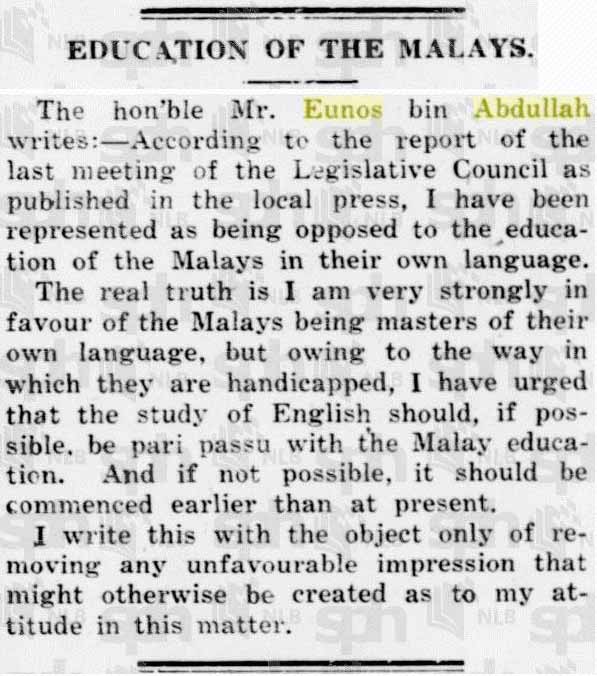
A letter from Eunos Abdullah to The Straits Times. During the legislative meetings, Eunos Abdullah also pushed for Malay children to be taught English from a younger age so they would not be handicapped when transiting from vernacular to English schools. From The Singapore Free Press and Mercantile Advertiser, 7 November 1924, Page 6.

He wanted a strong sense of Malay nationalism and called for the preservation of its culture or roots to be known and recognised. Eunos pushed to increase the education budget so that Malays could enter into the medical college and attend Malay vernacular or trade schools. He also advocated for better living conditions and sanitation for the Malay community. He proposed to build a settlement of Kampung Melayu to uphold the Malay values. Eunos was eventually given a grant to purchase and build the settlement. It was named Kampung Melayu or Kampung Eunos. In 1981, the settlement paved way for the construction of Pan Island Expressway and development of housing estates. To commemorate Eunos’s legacy, one of the local residential districts near Kampung Eunos was named EUNOS.

A procession at Jalan Eunos Malay Settlement in the 1930s. Photograph from the display boards of National Museum of Singapore

Eunos retired in early 1933 and passed away in December 1933. He was laid to rest in the Bidadari Cemetery, Singapore.

References:

  1. eresources.nib.gov.sg
  2. National Museum Singapore- Board Captions
  3. Marx Ravinder Frost & Yu-Mei Balasingamchow (2009) Singapore: A Biography, Singapore: EDM & National Museum of Singapore

Hidden Gems: Gene Ang and his Hawaiian Crackers

by Karen Loh

One night in the early ‘70s. It is past midnight. The stage is set. The crowd waits in anticipation. Gene Ang and his Hawaiian Crackers are playing popular Hawaiian music of the day, performing for one night only at the Chinese New village in Taiping for the legendary striptease artiste, Rose Chan. Suddenly she appears from behind the curtains. The band works hard to keep their music in tempo to Rose’s moves as she gyrates and teases her audience. Unbeknownst to the audience, Rose is wearing three pairs of undergarments. Excitement builds as Rose takes off the first of three of her brassieres and swings it to the audience. She then takes off her second brassiere and again throws it to the crowd. And just as Rose is removing her third brassiere, Gene snaps a string of his lap steel guitar. It was all too much for him.

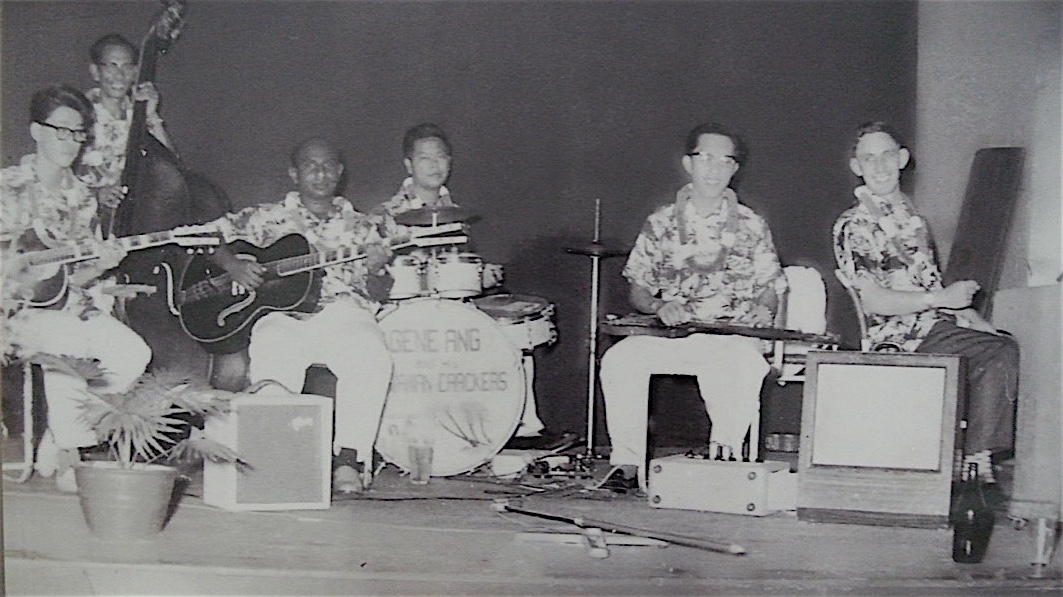
Gene Ang (2nd from the right) and his Hawaiian Crackers in the late ‘50s.

1958: What do a postman, surveyor, storekeeper, optical shop assistant and bank teller have in common? Nothing much, except that they all were all once members of the same band! Gene Ang and his Hawaiian Crackers was the only performing band in Taiping from the late ‘50s up to 1976. The band comprised of Gene’s neighbour, Zain, who was a postman; Poh Kee who worked in Chartered Bank (now known as Standard Chartered Bank after the 1969 merger with Standard Bank); Singgam, an Army storekeeper; ‘T.A.’ who worked in an optician’s; and Gene whose day job was with the Government Survey Department.

Hawaiian songs and the hits of Elvis Presley were very popular back then so the band concentrated on playing these songs. Most of the music was learnt by ear after listening to vinyl records. They did not have the luxury of music sheets. As the only band around, Gene Ang and his Hawaiian Crackers was in high demand performing at weddings, private evening functions and birthday parties. And during the weekends, they sometimes performed for doctors’ private functions, the police inspectors’ mess, nurses’ dances, and in private clubs. The band even played at the cinema before showings of Elvis Presley movies. One of Gene’s fondest memories is performing in the band which was chosen to play during the opening of Parliament in 1962. Gene’s instrument of choice was the lap steel guitar (a.k.a. Hawaiian guitar), but he could play almost all stringed instruments including the guitar, ukulele, double bass, mandolin, and violin, as well as the gendang (double-headed drum). How and when did Gene develop this passion for playing and performing?

Here is his story…

1929: Ang Leong Tooi was born in Ipoh to a Baba family from Medan. He would later adopt the name Gene after Gene Autry, the Singing Cowboy who was popular in the 1940s. Gene’s father worked as a Chief Customs Officer while his mother tended to their six children. Even from the early age of five, Gene was drawn to music. His first instrument was the violin, which he learnt to play from a Ronggeng (Javanese dance) troupe. His family moved to Teluk Intan when he was 7 years old where he was introduced to a friend of his father who played for a Chinese Opera troupe in Taiwan. From him, Gene learned to play the big drum and also observed how to lead a band. But life took a different turn in 1942 during the Japanese Occupation when most of the schools and shops were closed, a period where Gene also stopped playing music.  In 1943, his family moved to Taiping. After the war, Gene resumed his studies at the King Edward School there (now SMK King Edward VII), starting Standard 4 at the age of 17 years old. He would later complete his education at the age of 20 years in Penang in 1949. Sadly, Gene’s father fell ill in December the same year and passed away at the beginning of 1952. With no means of supporting himself through further education, Gene joined the Government Survey Department in Taiping and worked his way up to be a land surveyor.

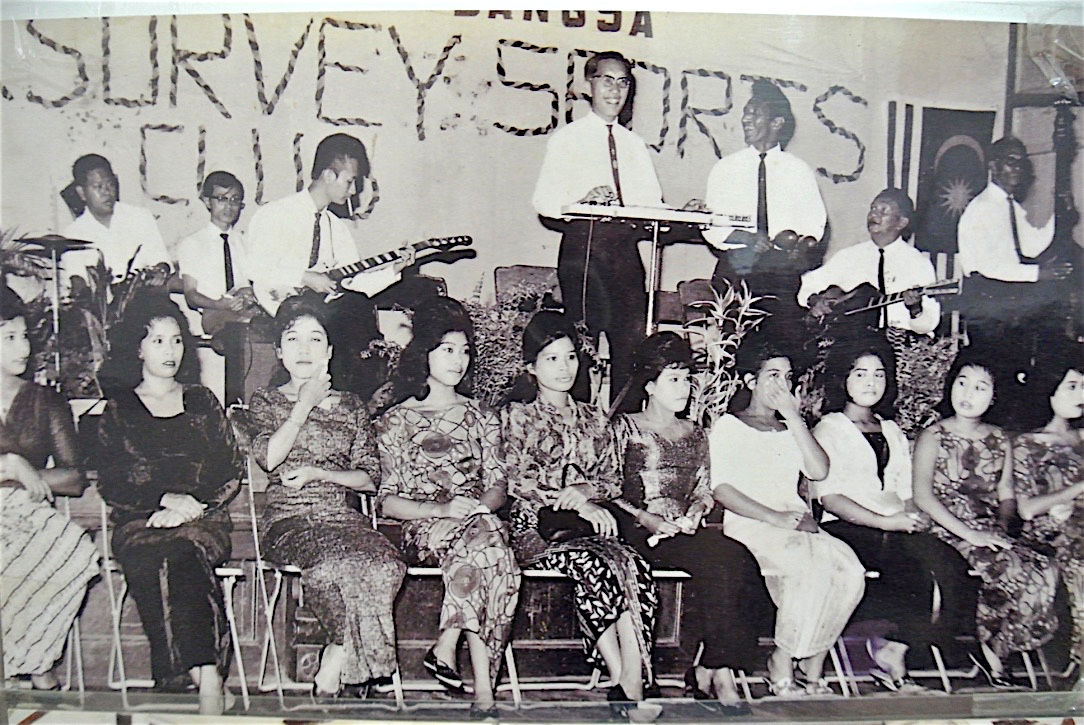
Photo taken at Town Hall in Taiping during a party for the Survey Sports Club. It was popular then to hire girls from Kampung Pinang as dance partners for joget and ronggeng. The dancers were paid RM15 per person and the band would get RM200. Gene is playing the lap steel guitar in this photo.

As luck would have it, soon after the war, while Gene was still at school in Taiping, he met Emile Nicholas who later became a Major (then Colonel) in the army. The duo played guitar at weekly Saturday campfires and sing-a-longs. It was also during these weekly campfires that Gene met his future wife, Judy Foo, who was only 15 years old when they met. She was his sister’s classmate. They dated for 7 years before getting married in 1954.

In the early ‘50s, Gene was invited to play for the British at the Military Club, the Australian and New Zealand clubs in Kamunting, the Customs Recreational Club, and the New Club near Lake Gardens in Taiping. When Nicholas was transferred to Ipoh, he invited Gene to play the double bass in his band at St. John’s Red Cross Hall and at joget (traditional Malay dance) dances in Perak. After his experiences in Nicholas’ band, Gene finally formed his own troupe in 1958, calling themselves The Hawaiian Crackers with Gene Ang as the band leader. The band performed together until 1976 when Gene had to move to Pahang as the land surveyor for a Federal Land Development Authority (Felda) scheme.

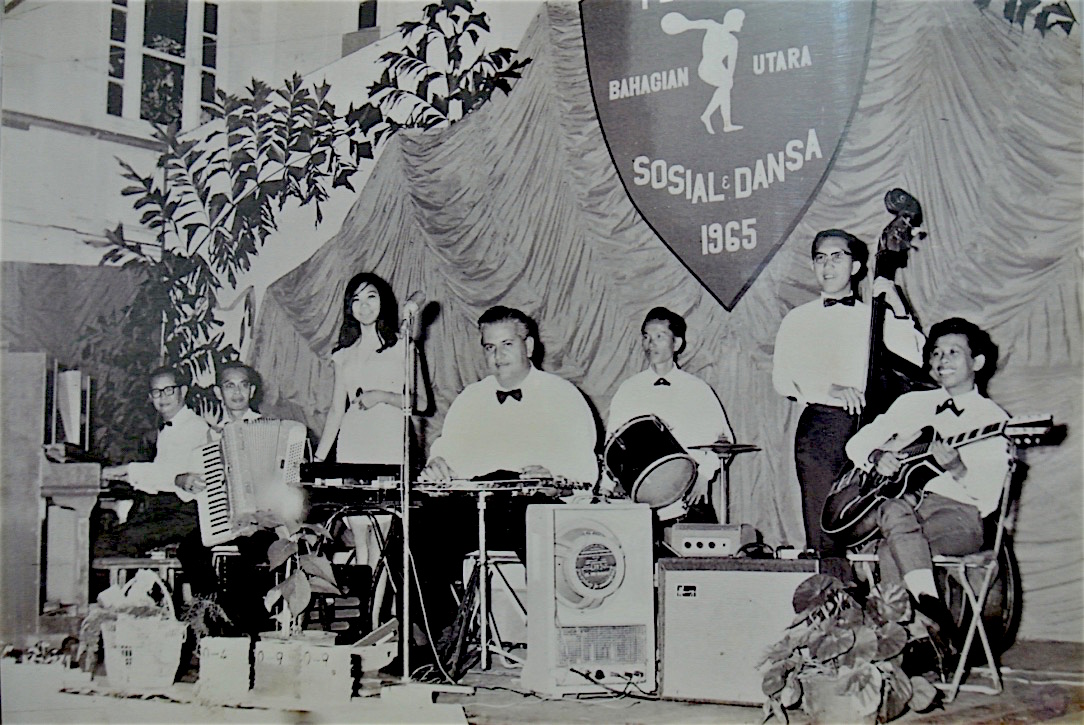
Photo taken in 1965 at the Town Hall in Taiping for Perak Amateur Athletic Association (AAA) with Gene (2nd from the right) playing the double bass, Sultan Idris’ brother on guitar and Nicholas playing the lap steel guitar.

Gene still remains sprightly and full of energy to this day. He does his daily exercises by walking every morning and evening. After he stopped playing music, his passion turned to cooking and baking.

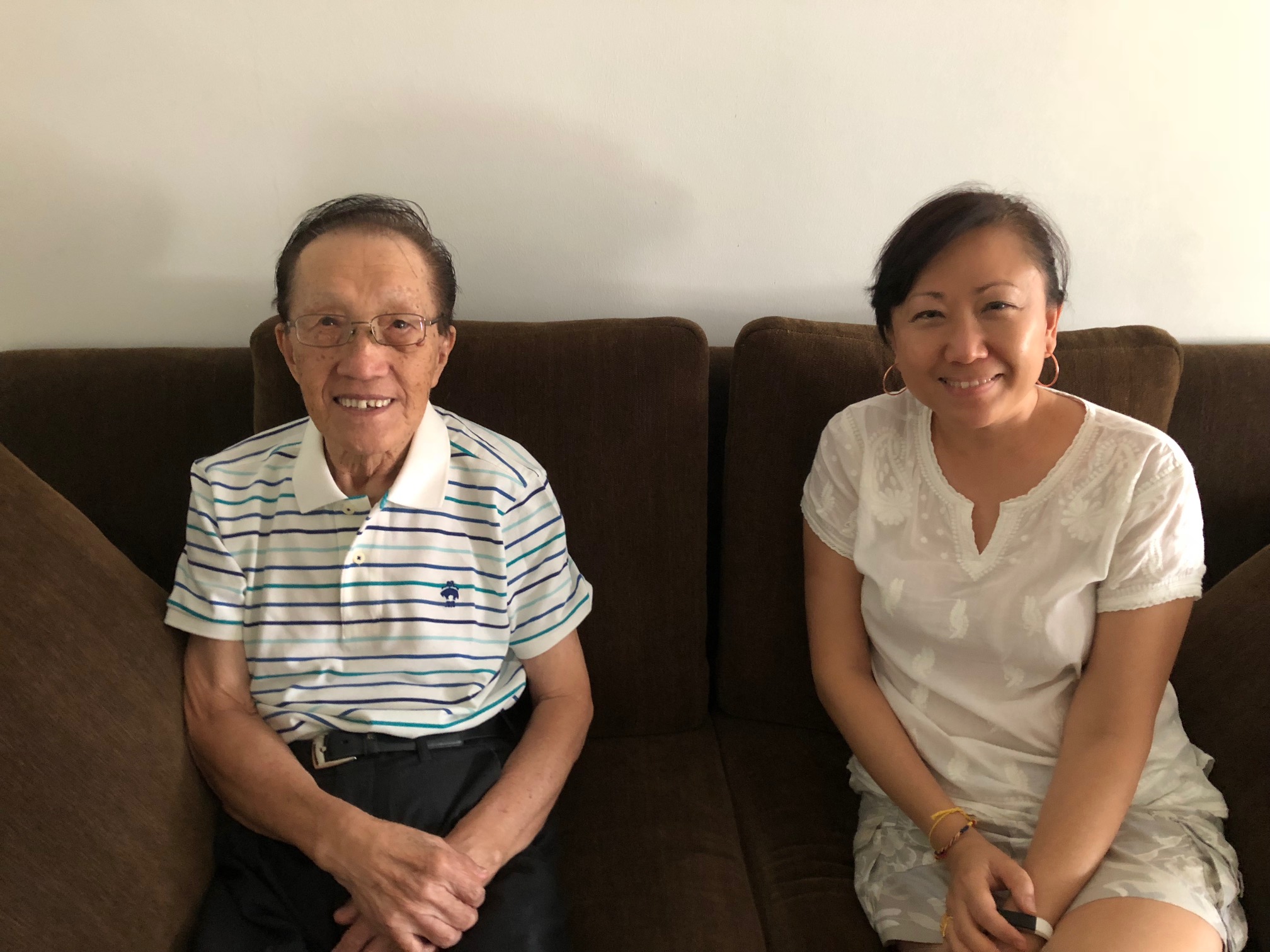
Gene Ang today with the author

Experiencing Cultural Heritage at Batang Kali

by Ong Li Ling

Batang Kali is located along the route to Genting Highlands. It has a dark past being the place where the Seventh Platoon, G Company, 2nd Scots Guard shot dead 24 unarmed villagers. This incident took place in 1948 during the Malayan Emergency at a rubber estate in Sungei Rimoh, Batang Kali.

Today, Batang Kali is a quiet place but this predominantly Hokkien town has a unique cultural experience to offer its visitors. I participated in a tour recently through Lokalocal. The tour guide was Tek Eng Seng, a local resident of Batang Kali who is passionate about promoting the town.

The group met at KL Sentral before 10am and we made our way to Batang Kali. After an hour on the road, Eng Seng greeted us at Econsave and he gave us some local cucur udang (prawn fritters) to try. We had a fun-filled educational trip that is best told in photos.

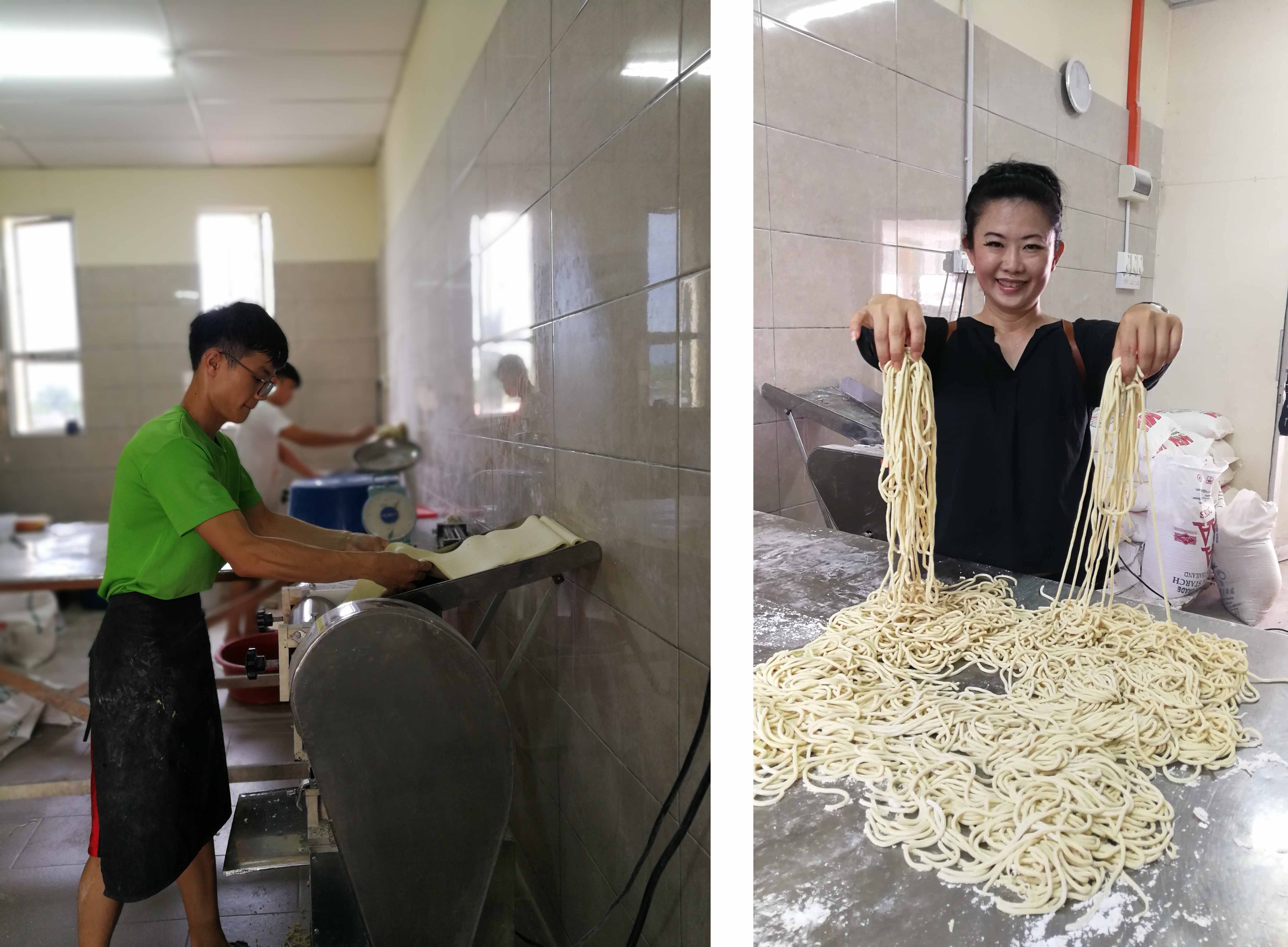
Our first stop was at Five Q Brothers Enterprise where we learned how to make loh mee from scratch. These noodles are a signature dish of Batang Kali and are traditionally cooked in a thick and starchy broth with a touch of black vinegar to give it a zing. Our noodle-making session was followed by a sumptuous lunch of Loh Mee (of course), Hokkien Mee and Lor Bak at the Hokken Town restaurant.

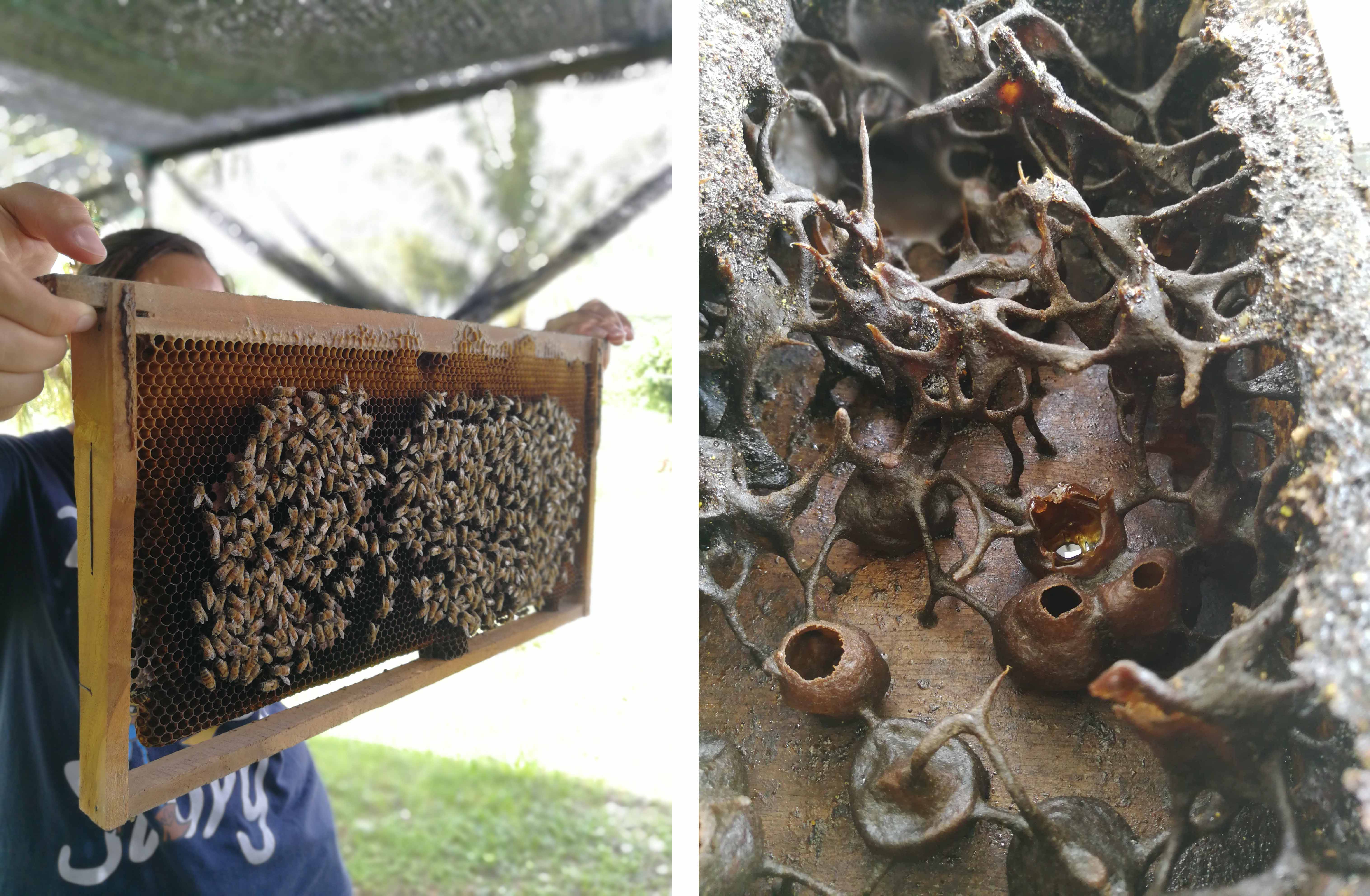
We then made our way to the organic Guava Fruit Farm. There is also a bee farm on the premises and we tried out various types of honey. I bought a box of wax honey.

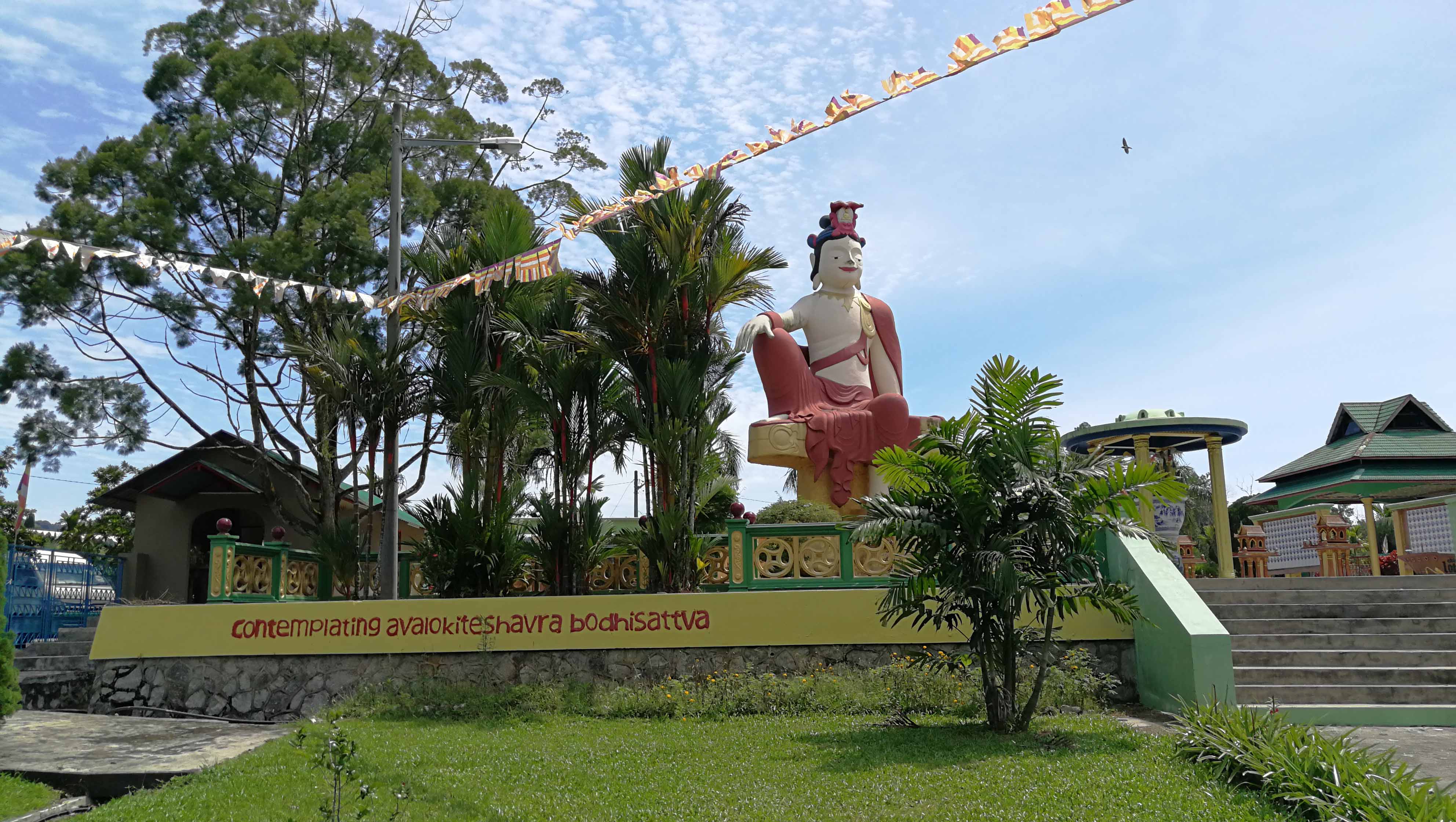
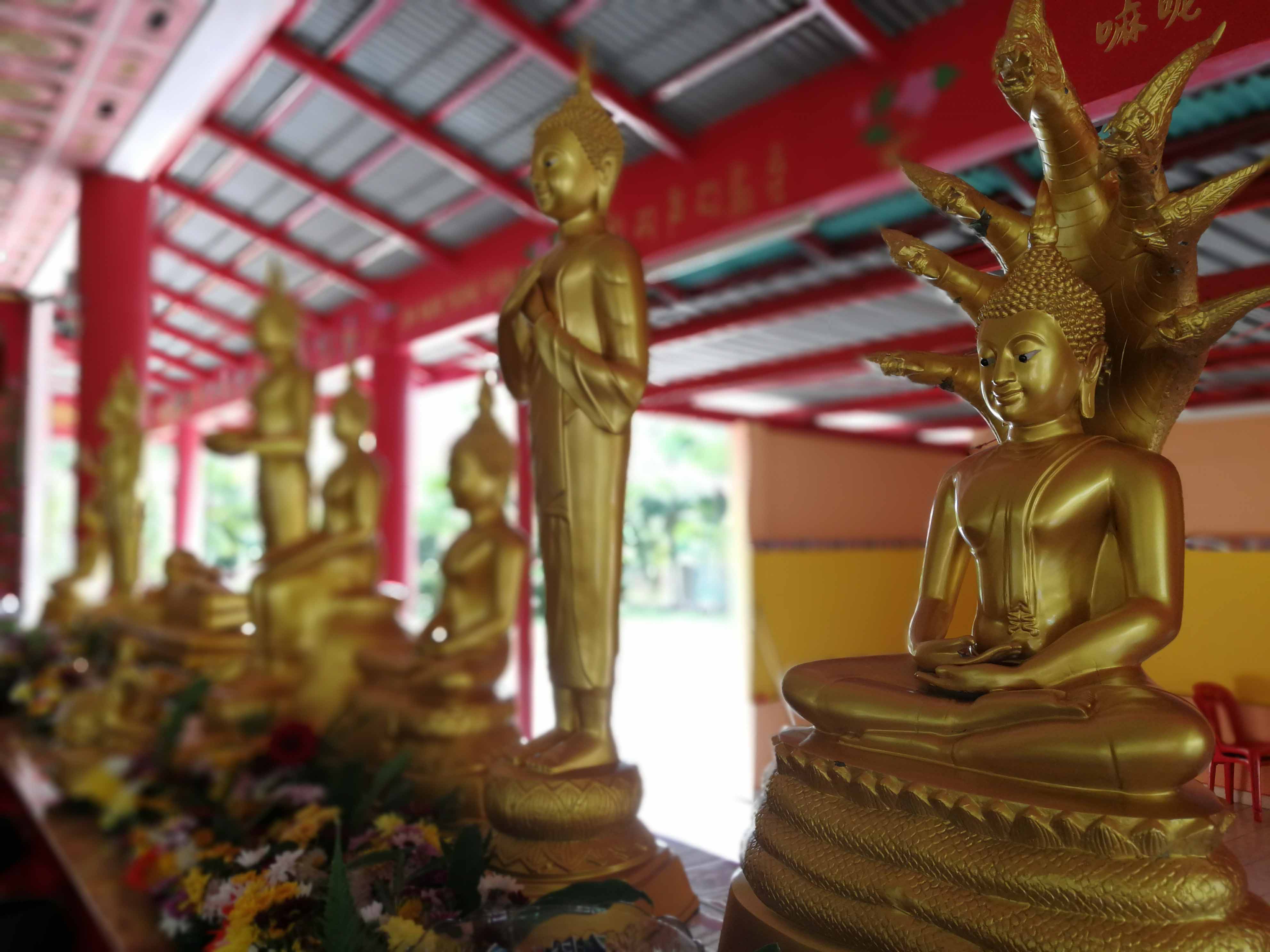
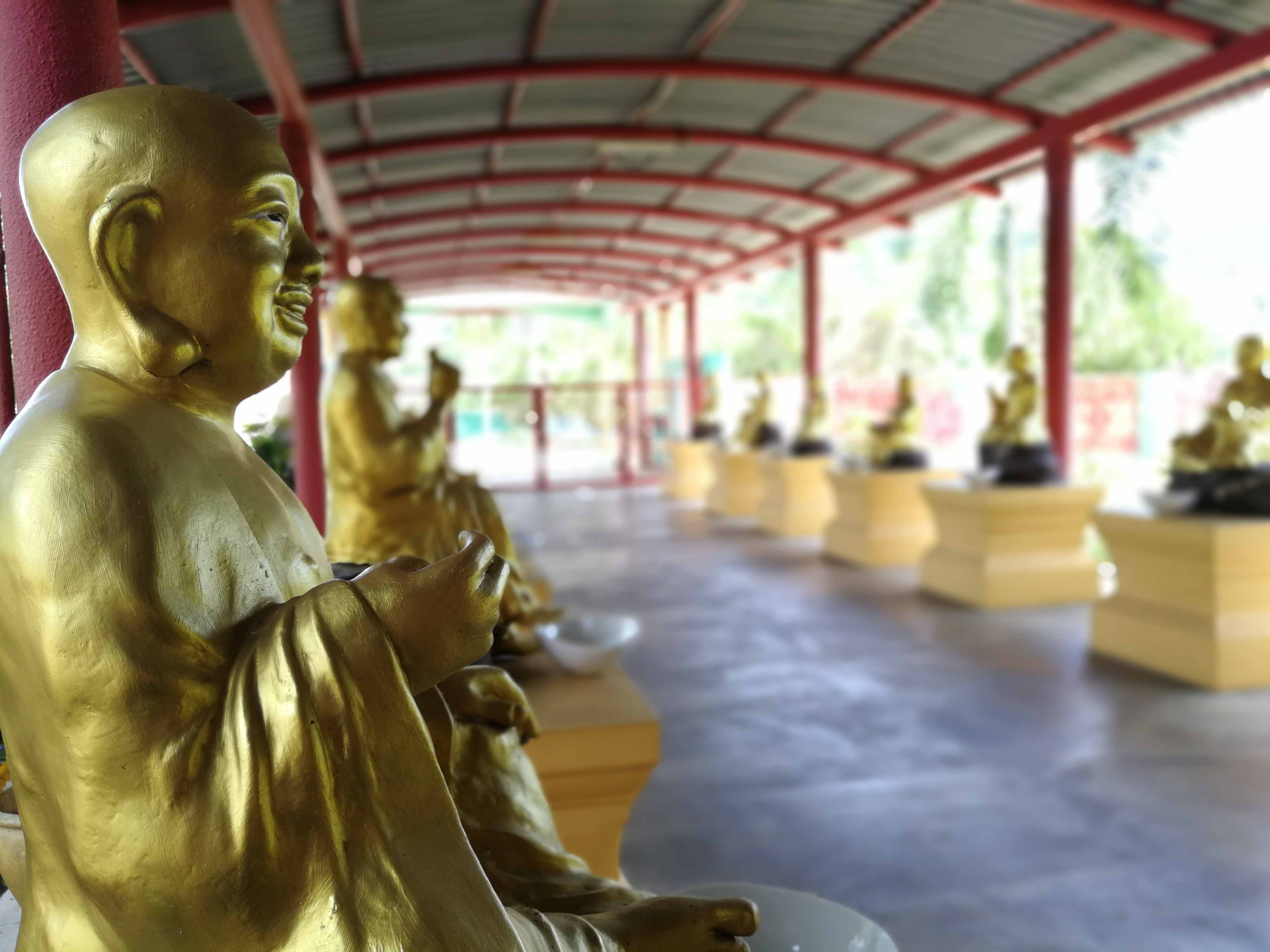
We then went to Kuil Siam Buddha Sakya Tharig Centre, which is actually a Tibetan Buddhist monastery. This was followed by a coffee break at Zhen Zhen Restaurant. Eng Seng bought various type of pau for us to sample.

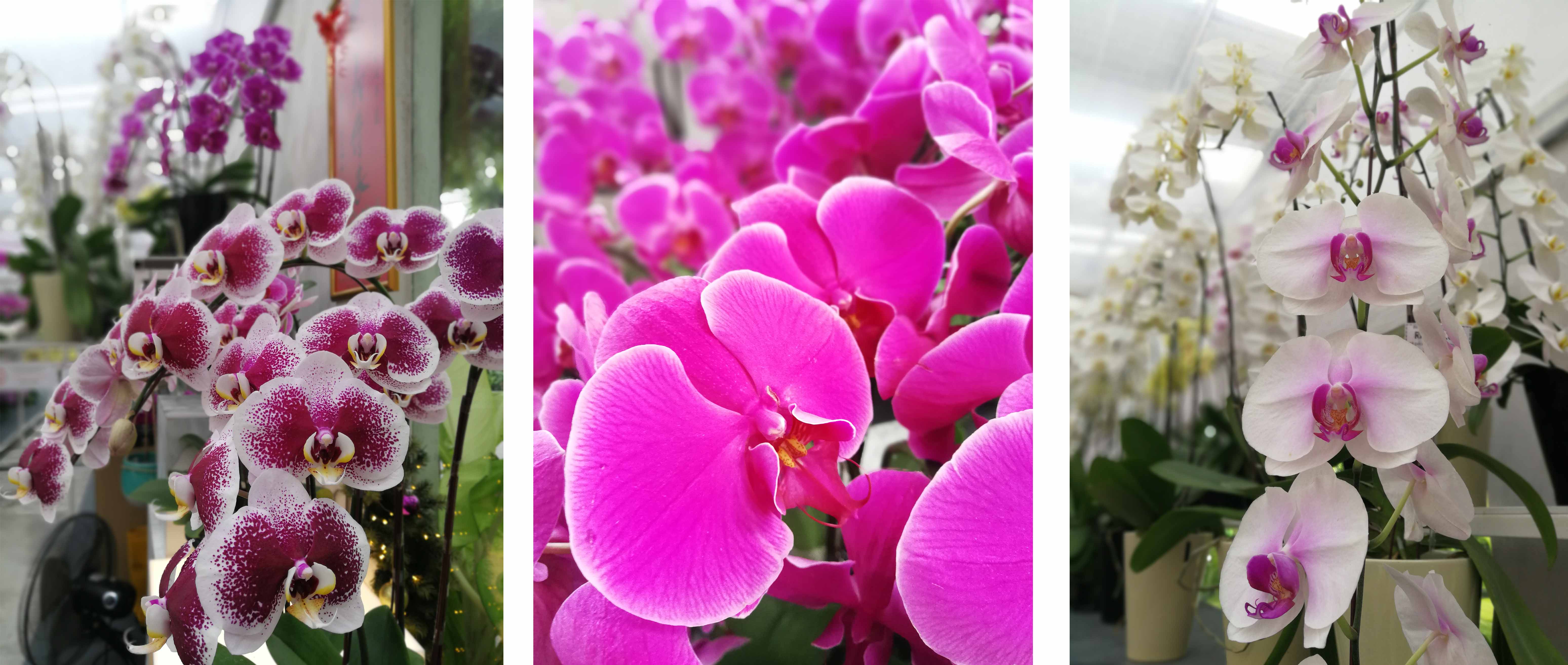
Our next stop was at the World of Phalaenopsis where we took lots of pictures of the orchids. Phalaenopsis is the scientific name for a genus of orchids, known commonly as the moth orchid. Many species of multi colours are grown at the World of Phalaenopsis.

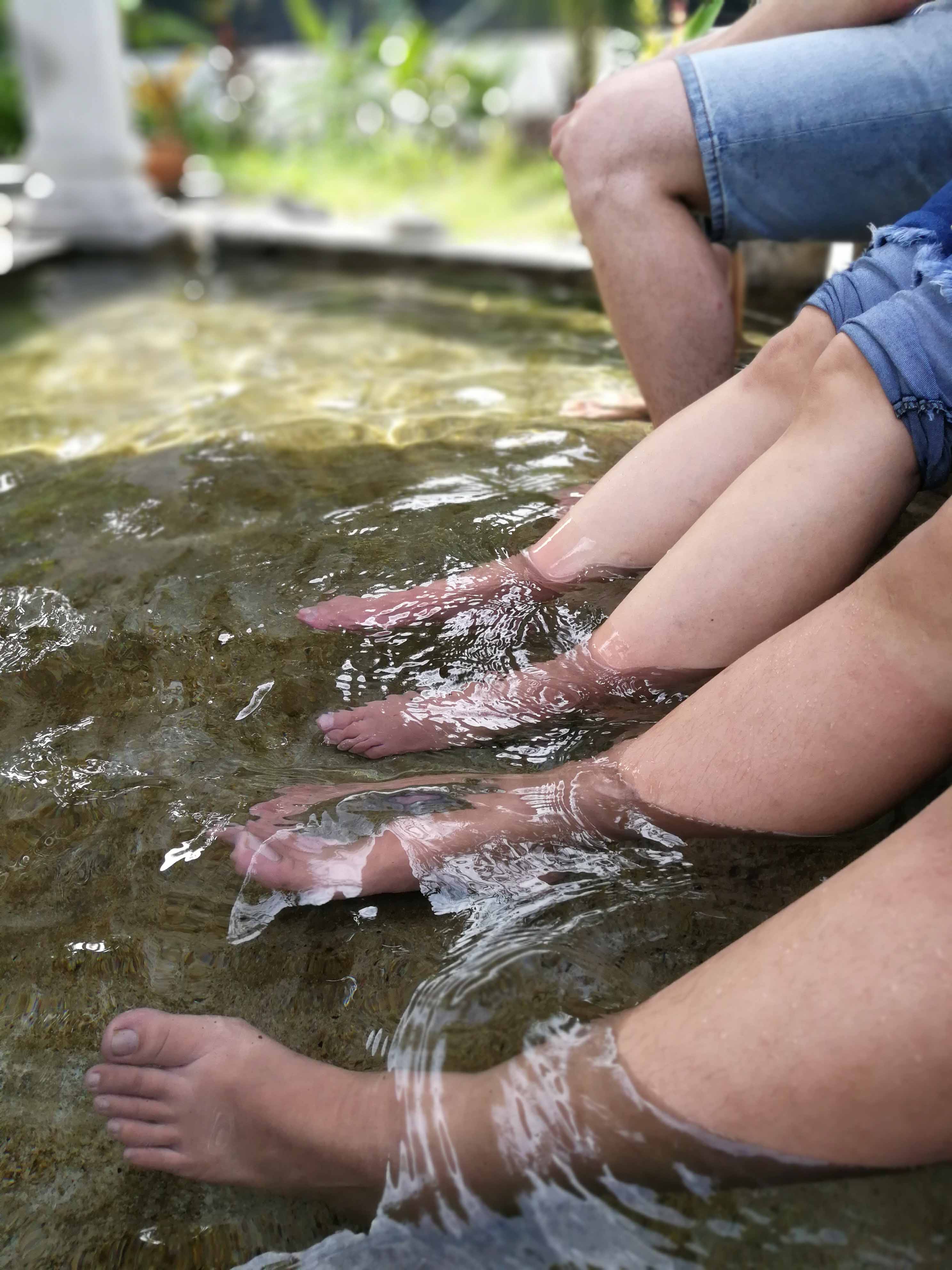
We then soaked our feet in the sulfur ponds at Cholo Cholo Hot Spring. Some of us had lobster feet but it was a good rejuvenation session even though the sulfur gas made my eyes smart. Eng Seng is such a gentleman that he bought me some eye drops.

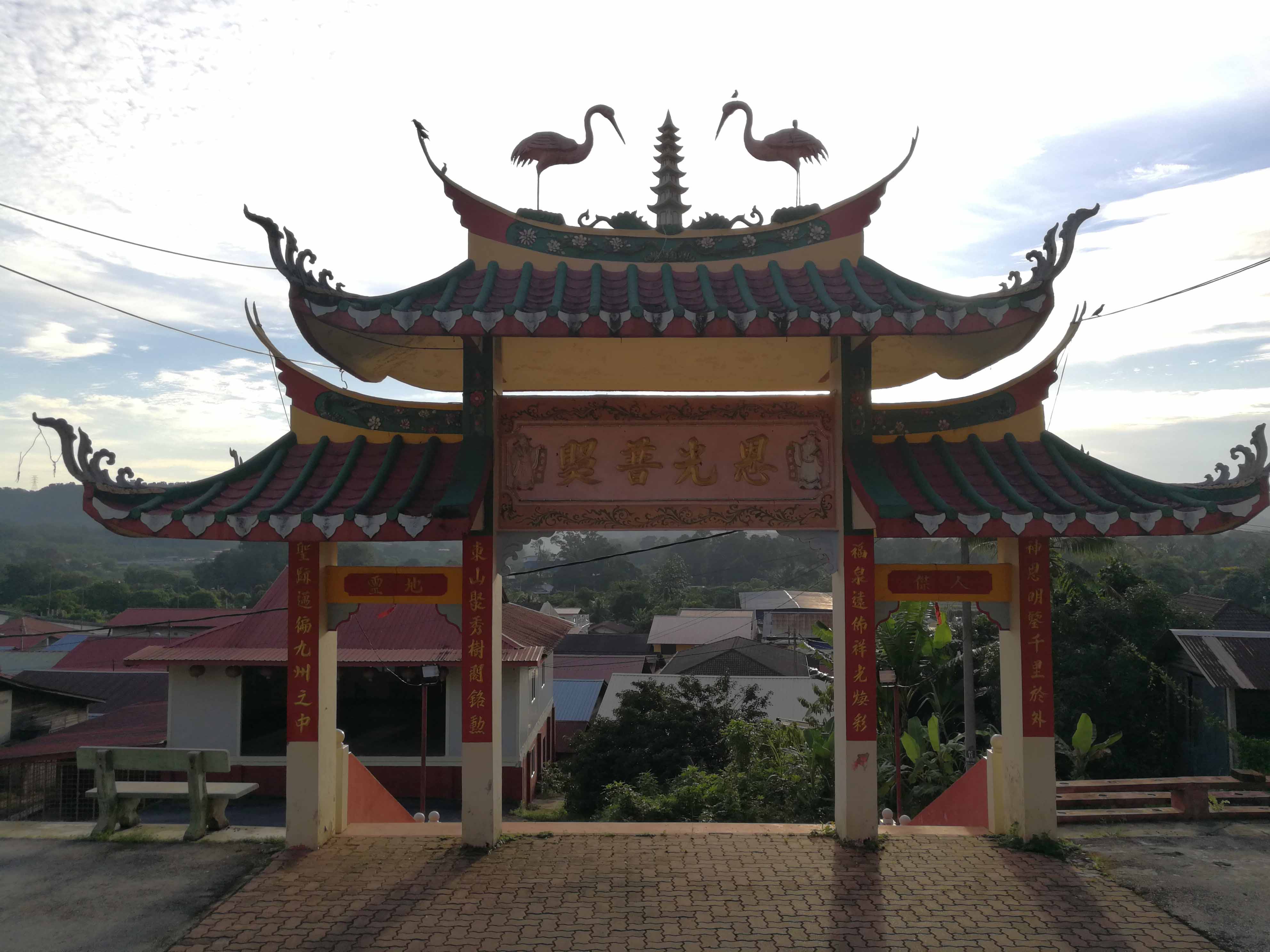
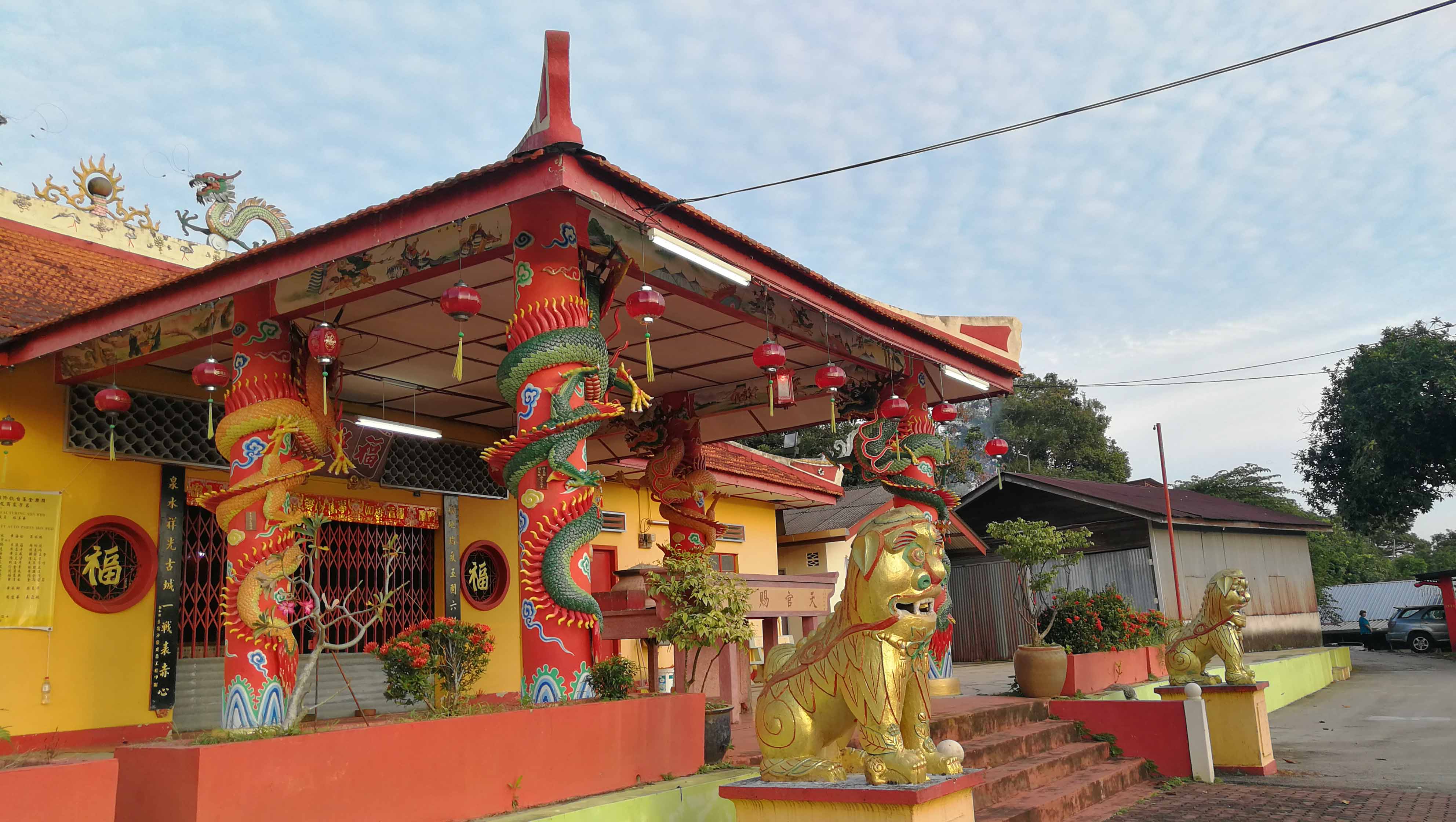
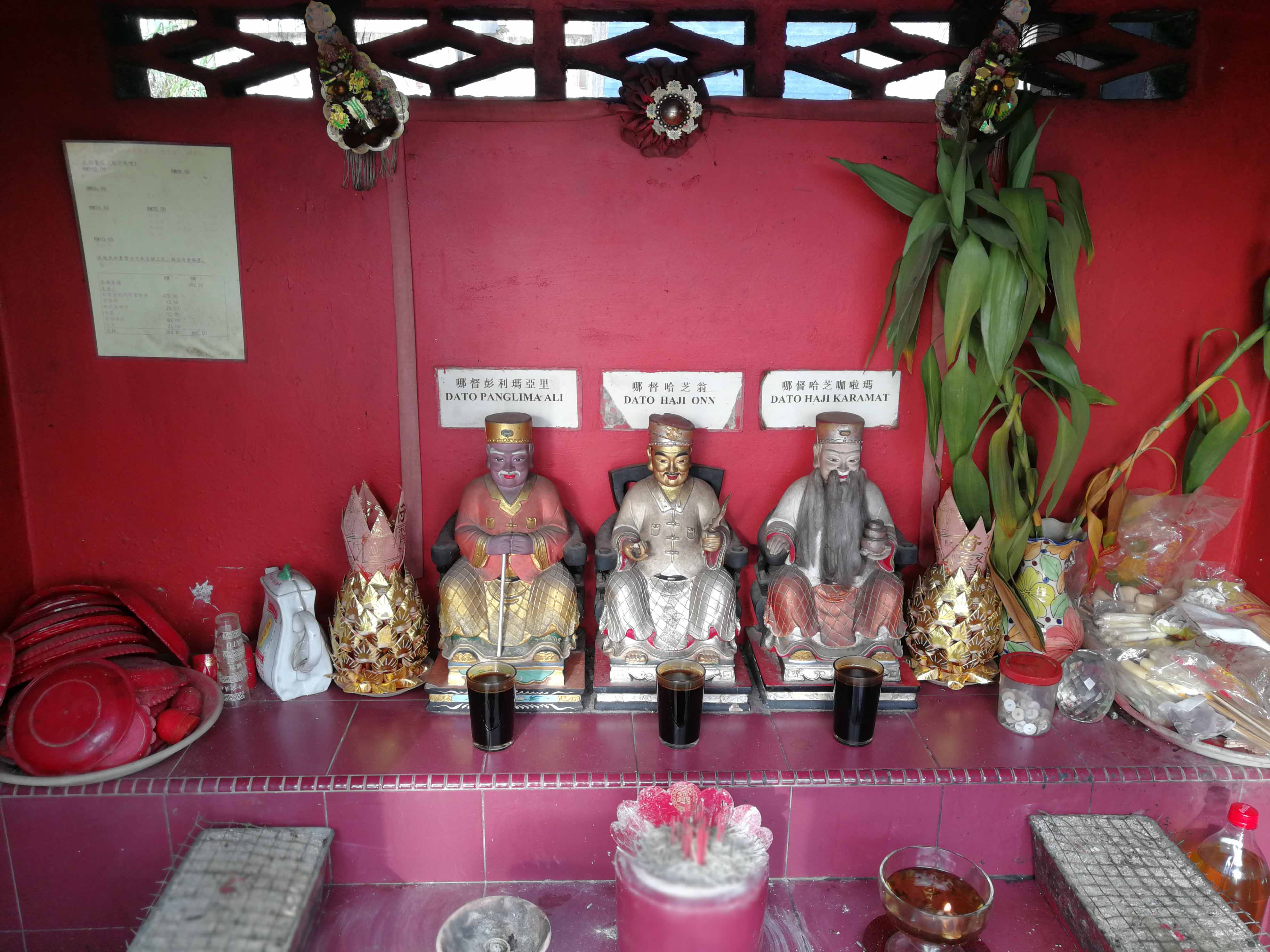
Next, we visited the Fu Quan temple, which is located on a hill. This is the main temple of Batang Kali. We had quite an adventure here having been got locked out of our van. Luckily a local mechanic came to our rescue.

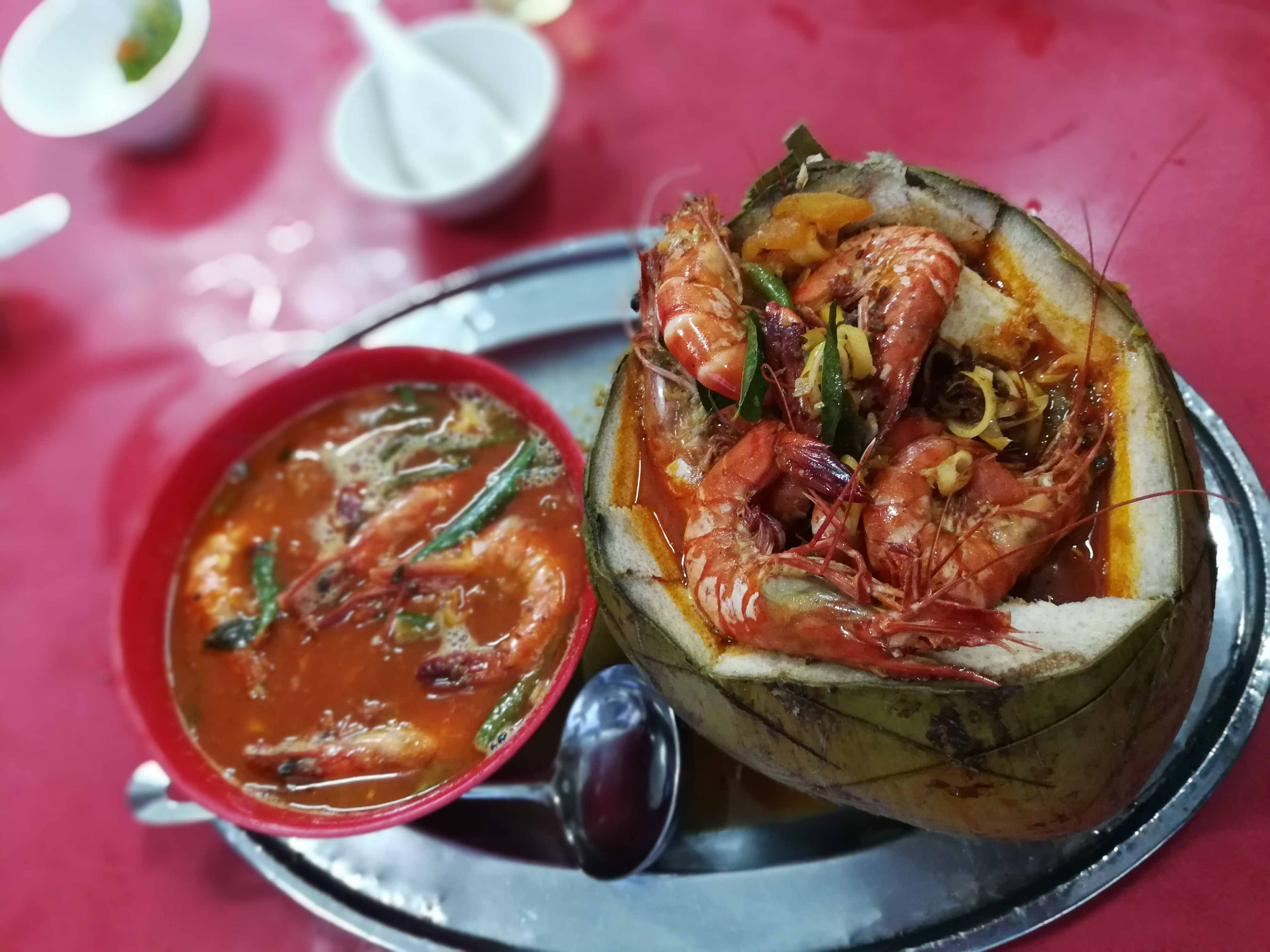
We ended the day with a sumptuous dinner at Hock Lay Restaurant. Eng Seng treated us to a delicious meal of Boned Pork, Fried Tofu, Tom Yum Prawns and Claypot Veggy.


Bersih, Cekap, Amanah

The Practical Side of Melaka’s “Golden Age”

by Muhammad Adib bin Mohd Faiz

Although other ports on the Malayan Peninsula and in Sumatra existed along the Straits of Malacca, none of these ports could rival Melaka itself in its heyday, with the entrepôt attracting traders from all over the world.[1] Those who look back upon this period often express nostalgia for a “Golden Age”, with Melaka’s power, wealth, and cultural refinement evoking the image of a distant kingdom, imbibed with majesty and magic. But nostalgia can often cast too strong a spell, and Melaka’s legendary status can obscure the actual reasons for the empire’s success. Though Melaka’s success was partly due to its strategic location, it was largely Melaka’s efficient administration that was central to its success as an international trading hub. The term “administration” does not merely refer to a group of officials, but to “the process or activity of running a business, organization, etc.”.[2] Melaka’s efficient administration was the result of two things: a clear system of law and an efficient system of governance. The region also benefited from effective communication and mutual cooperation, points that will be touched on toward the end of this article.

Spices – a source of wealth for the Melaka Sultanate. Photo taken at the Hang Tuah Centre in Melaka

Melaka had an effective legal justice system, which provided a clear framework for the facilitation of trade. Melaka has a clear legal system, with the region having two important legal codes that governed the affairs of the region. The first was the “Laws of Melaka” (Undang-Undang Melaka), a combination of customary and Islamic law that covered the special rights of the ruling family, dignitaries’ duties, government protocol, and both criminal and civil offences. This meant that there was a clear system that determined the state’s internal affairs, providing a stable basis for the day-to-day activities that took place in the area. But Melaka’s system also encompassed matters of trade, with the “Maritime Laws of Melaka” (Undang-Undang Laut Melaka) providing “rules for the proper conduct of trade, rules governing accidents at sea and regulations for boats and ships”. A clear system of taxation, import duties, customs duties, and gifts was outlined, with the details “varying according to the trader’s country of origin”. These laws provided a clear framework for the functioning of trade, minimizing the potential for large disputes with regards to transactions. The laws also applied the same principles governing affairs on land to those at sea, with captains “possessing power and authority akin to that of the ruler on land”.[3] In a world where so much human activity took place aboard ships, these laws greatly reduced the potential for chaos that could disrupt trade. The laws also covered safety regulations, covering “regulations for the safety of a prahu while at sea”. The law even detailed how sailors should deal with cargo in the midst of “a violent storm”, stating that the nakhodah must hold “a general consultation” of the crewmembers and not “indiscriminately” dispose of the cargo.[4] The clarity and detail of these codes meant that traders “understood what kinds of laws governed their trade”, with the “element of arbitrariness” being “removed” from commercial activity.[5] This provided a sense of security that encouraged traders from all over the world to bring their merchandise to Melaka.

However, a legal system is useless without an executive body to implement it, and Melaka possessed a clear system of governance to implement the region’s laws. Melaka had a clear bureaucratic system that managed the affairs of the region. Authority was centred on the sultan, whose sovereignty was not to be challenged. This notion of sovereignty or daulat was the cornerstone of Melaka’s social order: “without a king there could be no kingdom; without a kingdom there could not be ordered social life”. However, the king was at the summit of a larger governmental system, with the task of managing the country being regulated by a larger bureaucratic structure. Beneath the king were four principal officials:

  • The Bendahara – The Prime Minister or vizier
  • The Penghulu Bendahari – The state treasurer
  • The Temenggong – Head of Security and Law and Order
  • The Laksamana – Admiral of the Navy and chief emissary of the Sultan[6]

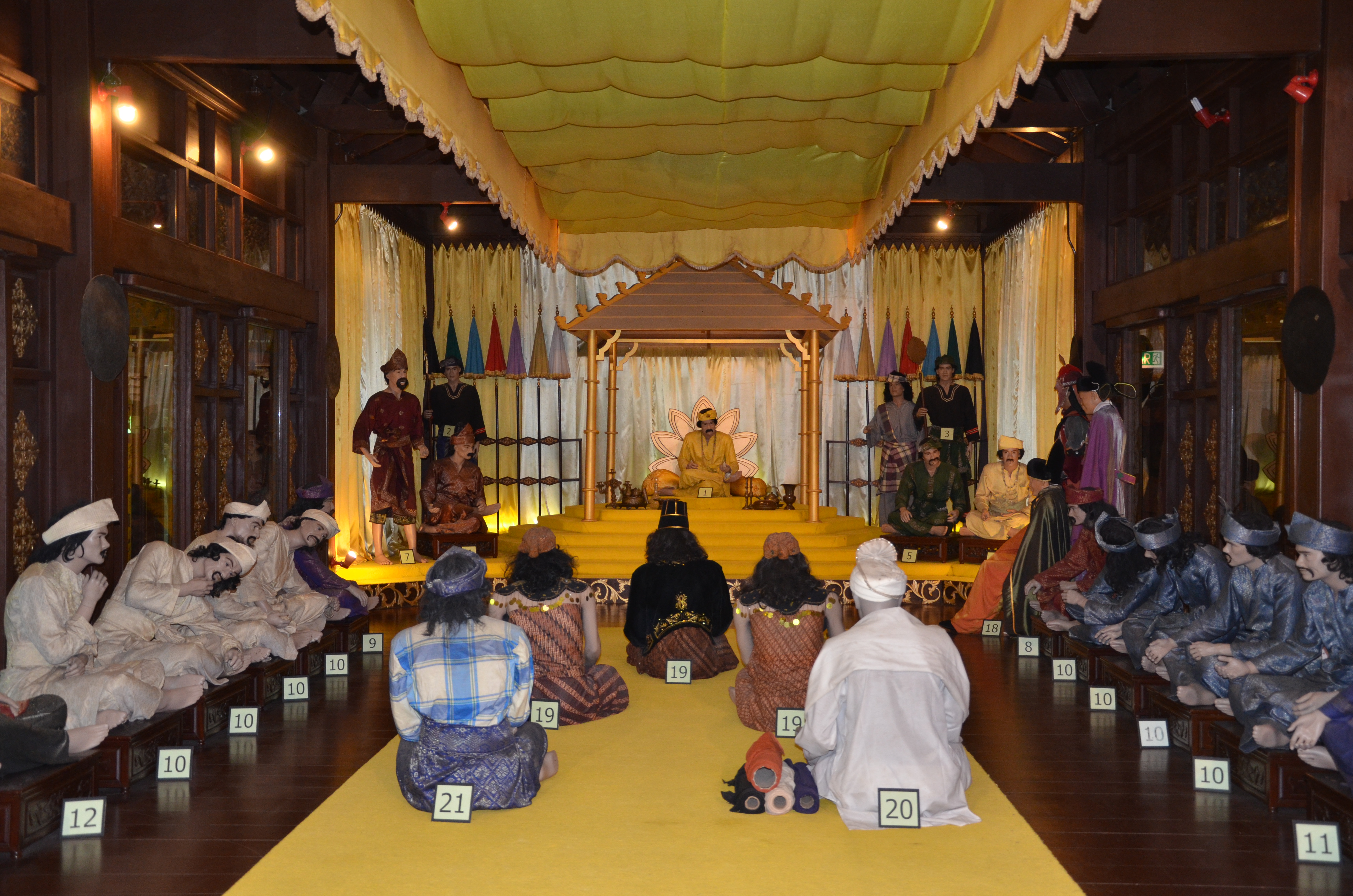
Diorama showing the seating positions of the various officials when paying homage to the Sultan. Positions of the four principal officials: Bendahara (5), Penghulu Bendahari (8), Temenggong (9), Laksamana (4 – seated, next to 7). Photo taken at the Melaka Sultanate Palace museum.

These officials existed with the framework of a larger governmental system called “The Fourfold System of Officials” (Sistem Pembesar Empat Lipatan). Beneath the four principal officials were eight lower-ranking officials, beneath these eight were another sixteen officials, and beneath these sixteen another thirty-two. This created a chain of command for the execution of orders, distributing power across a system akin to a civil service.[7]

The regulation of the traders themselves fell to four harbour masters (shahbandars), each of whom regulated the traders from a particular region such as Gujerat or the Malay Archipelago. The shahbandar was “often a foreign merchant who had acquired the trust of the ruler” who would “mediate between merchants of his home area and the ruler”. They also were responsible for many tasks, such as managing transport and making sure that the weights and measures were accurate. But the Malay rulers along the Straits of Malacca also understood the need for cooperation with the more nomadic elements in the society, who possessed skills important to the region as a whole. For instance, the Malay rulers established an alliance with the Orang Laut, “nomadic boat dwellers” that were a large percentage of the population. By establishing alliances with this group, the Malay rulers were able to maintain the safety of Melaka, with the Orang Laut using their seafaring skills to help “keep piracy within limits”. Similarly, the Malay rulers formed alliances with the hinterland dwellers, “gatherers of forest products” who were the “ancestors of the … Orang Asli”. The “bonds of personal loyalty” forged between these two groups resulted in “commercial and military benefits”.[8]

Justice, efficiency, and a willingness to work with others: these three components were ultimately the underlying factors that determined the overall administration of Melaka. It was this form of administration that ultimately brought about Melaka’s success as an entrepôt, making it a meeting place between cultures and civilizations. As we look back upon this “Golden Age”, the centrality of these principles in the proper functioning of Melaka are worth bearing in mind. For after visiting the kingdoms of the past, we must ultimately return to the shores of the present. And what good is a journey if you don’t return home with something useful?

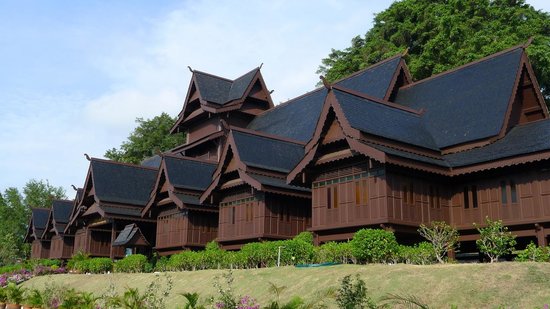
Melaka Sultanate Palace museum. Photo taken from https://www.tripadvisor.co.uk/LocationPhotoDirectLink-g306997-d451317-i63893106-Malacca_Sultanate_Palace-Melaka_Central_Melaka_District_Melaka_State.html

[1] Osman, 114.

[2] Oxford Living Dictionaries, s.v. “administration,” accessed November 3, 2017, https://en.oxforddictionaries.com/definition/administration.

[3] Osman, 115.

[4] Raffles’ translation, as quoted in Reddie, 483 & 486.

[5] Syed Farid Al-Attas. “Prof Farid Alatas on Islam and Democracy.” Lecture, Liber TV, Malaysia, July 18, 2014, 2:57, https://www.youtube.com/watch?v=fe6mEbKnMRs (accessed November 3, 2017).

[6] Osman, 115; Velupillay, 106.

[7] Ismail, 8.

[8] Osman, 114-5; Miksic, 116.


REFERENCE LIST:

Al-Attas, Syed Farid. “Prof Farid Alatas on Islam and Democracy.” Lecture, Liber TV, Malaysia, July 18, 2014. https://www.youtube.com/watch?v=fe6mEbKnMRs (accessed November 3, 2017).

Ismail, Akashah. Visual Pelangi Sejarah Tingkatan Lima. Bangi: Pelangi ePublishing, 2010. https://books.google.com.my/books?id=TPkGCgAAQBAJ&pg=PA8&dq=melaka+lipatan&hl=en&sa=X&ved=0ahUKEwjW_u-90ZzXAhVKpY8KHXWOB6AQ6AEIMDAB#v=onepage&q=melaka%20lipatan&f=false

Miksic, John. “Entrepôts along the Melaka Strait.” In The Encyclopedia of Malaysia: Early History, edited by Prof. Dato’ Dr Nik Hassan Shuhaimi Nik Abdul Rahman, 116–7. Singapore: Editions Didier Millet, 1998.

Osman, Mohd Taib. “Trade and administration.” In The Encyclopedia of Malaysia: The Rulers of Malaysia, editorial advisory board chaired by Tun Ahmad Sarji bin Abdul Hamid, 114–5. Singapore: Editions Didier Millet, 2011.

Oxford Living Dictionaries, s.v. “administration,” accessed November 3, 2017, https://en.oxforddictionaries.com/definition/administration.

Raffles, Stamford. As quoted in James Reddie, An historical view of the law of maritime commerce. Edinburgh: William Blackwood and Sons, 1935. https://books.google.com.my/books?id=3CE1AAAAIAAJ&printsec=frontcover&source=gbs_ge_summary_r&redir_esc=y#v=onepage&q&f=false

Velupillay, Jegatheesan. “The Golden Age of Melaka.” In A Malaysian Tapestry: Rich Heritage at the National Museum, edited by Rose Gan and Maganjeet Kaur, 99–109. Kuala Lumpur: Department of Museums Malaysia, 2015.

Hidden Gems: The Melaka Tree

by Anne Deguerry Viala

We are all familiar with the legend of Prince Parameswara fleeing from Srivijaya to Temasek and then to a place named after the tree he sat under. Much less is known about the tree itself: the Melaka tree. Phyllanthus emblica, known as the Āmalaka or Āmelaki tree in Sanskrit, is very common in India, Nepal and South-East Asia and has given its name to Melaka city and the Straits. Its common name in English is Emblic myrobalan (Myrobolan emblique in French) and it produces a fruit called the Indian or Nepalese Gooseberry. When dried, the powder is known as ‘amla’. The importance of the Melaka tree is both symbolic and economic.

Myrobalan fruit

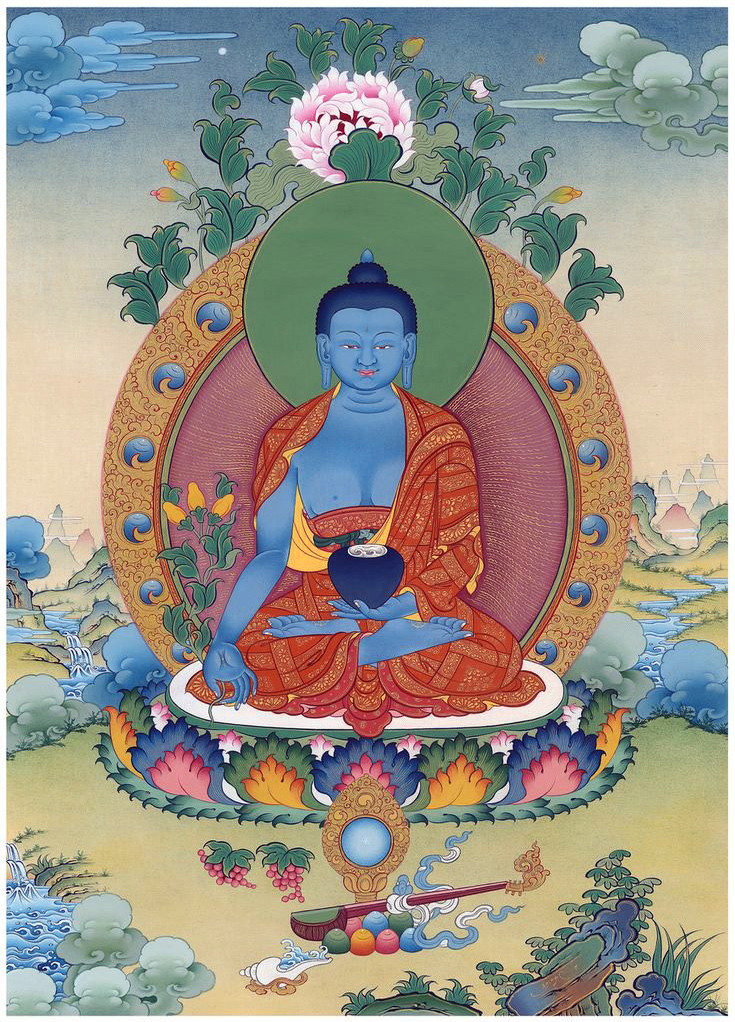
In Buddhist statuary art and sculpture, the Medicine Buddha is depicted, delicately holding the myrobalan plant between his thumb and middle finger.  This symbolic gesture stems from the healing properties of the myrobalan. It entered the Persian pharmacopeia from early times: myrobalan is mentioned in the medical handbook of Avicenna (Ibn Sīnā) in the early 11th century. It was also used in Europe. No later than during the Middle Age, it was a valued ingredient which apothecaries prescribed almost as a universal remedy. It should be noted that, apart from its use in traditional and Ayurvedic medicine, amla has recently aroused a growing interest from modern medicine where it is use in diabetic treatments and to prevent cancer, among other properties.

Buddha holding the myrobalan plant

All parts of the Melaka tree are full of tannins[1], which make myrobalan a very useful ingredient. In the natural dyeing process, myrobalan can be used either as a mordant (a substance which helps fix the pigments into the fibres) or as a dye itself, rendering blackish colours. In addition to dyeing, myrobalan has many other applications.  It is used both for tanning leather and also in the manufacture of Damascus steel.

It is clear that Prince Parameswara was wise to choose this place and this beneficial tree, to establish his new realm!

[1] Tannins are vegetable substances of the family of polyphenols, most often water-soluble, which have the ability to precipitate proteins and other chemical substances. For trees and flowering plants, this is a chemical defence against pests. Tannins can be found in some drinks such as tea, coffee, beer and wine.

Melaka Tree

References:

Bonnemain Bruno. Médecine arabe : Paul Mazliak, Avicenne et Averroès. Médecine et biologie dans la civilisation de l’Islam. In: Revue d’histoire de la pharmacie, 92ᵉ année, n°344, 2004. pp. 650-652. www.persee.fr/doc/pharm_0035-2349_2004_num_92_344_5736_t1_0650_0000_2

Gatellier Marie. L’image du Buddha dans la statuaire birmane. In: Arts asiatiques, tome 40, 1985. pp. 32-40. www.persee.fr/doc/arasi_0004-3958_1985_num_40_1_1178

Jazi Radhi, Asli Farouk Omar. La pharmacopée d’Avicenne. In: Revue d’histoire de la pharmacie, 86ᵉ année, n°317, 1998. pp. 8-28. www.persee.fr/doc/pharm_0035-2349_1998_num_86_317_4582

Halleux Robert. Sur la fabrication de l’acier dans l’Antiquité et au Moyen Âge. In: Comptes rendus des séances de l’Académie des Inscriptions et Belles-Lettres, 151ᵉ année, N. 3, 2007. pp. 1301-1319. www.persee.fr/doc/crai_0065-0536_2007_num_151_3_91356

The Soul of Tin

How tin mining struck deep into Malayan soil and left its mark upon a nation

by Muhammad Adib Mohd Faiz

To the average modern person, tin is merely a metal – dead matter fit for industrial purposes. The Malays, however, traditionally believed that tin possesses a soul. The ‘soul of tin’ took the shape of a water buffalo, an animal used to plough the rice fields that were a major source of provision.[1] Whatever our personal beliefs may be, there can be little doubt that tin would plough its way through 19th and early 20th century Malaya, becoming a source of wealth for those involved in its production. The important economic role of tin in this period would have a long-lasting effect on the social, political, and infrastructural landscape of Malaya.

Collection of tin hat and animal money at Muzium Negara (Galleries C and D)

Tin mining had existed amongst the Malays as early as the 15th century, with tin currency going back to at least the time of the Melakan king Sultan Muzaffar Shah (1445-9). Other than the simple method of panning for tin with a dulang, Malays used a combination of pits, dams, sluice boxes, and other components to extract tin ore. This system could produce an amount “sufficient for local use as well as export”.[2] However, the Malay rulers often lacked funds to open these mines and began to rely on Chinese merchants for capital in the early 19th century. The Malay chiefs then used Chinese labour to work the mines, with the Chinese having been involved in tin mining as early as the late eighteenth century. While the initial numbers were small, the rise of the tin canning industry after 1830 and the discovery of rich tin deposits in Selangor and Perak in the 1840s led to a massive influx of Chinese immigrants, swelling the population of the mining towns.[3] It seems likely that the sudden increase in demand would have influenced the decision of Chinese mine owners to switch to new forms of technology such as opencast or lombong mining. For instance, Chinese mine-owners began to use the chin-chia, a chain pump that drained water from the mines more quickly than traditional methods.[4] Yet in spite of the technological changes and diaspora population, tin-mine opening ceremonies remained “purely Malay in character”. A pawang or “mining wizard”, often a Malay and occasionally a Sakai, was often called upon to use a combination of spells and talismans for protection and an auspicious start.[5] This contrast between the old and the new embodies the nature of tin mining in this period: a modern industry in the midst of a traditional world.

An Open Cast Tin Mine in Selangor (KITLV Universiteit Leiden)

The involvement of Chinese merchants and the large influx of Chinese labour had a number of social consequences. While immigrants may have initially intended to be temporary, direct settlement eventually arose, with family structures emerging in the early 20th century in places such as Ipoh. The accounts of an Englishwoman living in Ipoh in 1914 bear witness to the role of female miners, who played central economic and social roles in the town. Waking up before dawn, these women would prepare the day’s meals, chop wood, and “[draw and carry], often from a distance, quantities of water”. Breakfast with their husbands was followed by “very thoroughly” bathing and dressing their “generally numerous” quantities of children. They would then see to the grandfather and grandmother, “who will then look after the babies” as the women work on the tin mines alongside their husbands.[6] This last piece of information clearly indicates the presence of extended families, showing that large social structures existed in mining towns. The ability to raise families was made even more remarkable by the sheer difficulty of the work in question; these people laboured for hours in cold, stagnant water up to their ankles, with the female dulang washers having to bend over to obtain tin ore.

Paraphernalia at the Story Museum,  SJK (C) Serdang Baru 1

However, there was a less admirable side to this history of immigration, namely the exploitation connected with the kongsi organizations, the colonial authorities, and the system in general. Though often referred to as “secret societies”, the kongsi had a public political and social role in nineteenth century tin-mining areas. They were cooperative associations that originated from China’s “illegal mining communities and sea-merchant kingdoms”. Theoretically, the kongsi were democratic organizations designed to share profits between members and “[enable] immigrants to pursue their primary purpose of making a living and supporting their families in China”. As Tan Pek Leng notes, the lack of “effective formal governance” caused these societies to act as arbitrators in the midst of disputes, while the “bonds of brotherhood” in a kongsi provided a formidable force against the colonial authorities. However, the ideal form of the kongsi was rarely realized in Malaya, with these powerful organizations exploiting others for personal economic gain. The various kongsi often controlled labourers before they had even left China, with recruiters placing labourer’s names on kongsi membership rolls “without their knowledge”.[7] Once in Malaya, the labourers were totally dependent on the “advancers” for everything from food to opium, all of which had to be bought at the advancer’s price. The colonial authorities were complicit in the exploitation. Though the British had some admirable officials who introduced some regulations, British law courts recognized the fines imposed by advancers. Colonial contradictions could be jarring; although the Perak Government insisted on a “discharge ticket” so labourers could “seek employment elsewhere” upon contract completion, they subjected labourers who absconded to “a fine, flogging or imprisonment, and to have the wages due to them forfeited”. This last detail meant that such workers would have to start from scratch, locking them into their contract for an even longer time. It is difficult to disagree with Ho Tak Ming’s conclusion that this “was no better than a modified form of slavery”.[8]

falim-house-2
Paraphernalia at Falim House, Ipoh

Power leads to conflict, and rival kongsi often came into armed conflict with each other “to protect the interests of their towkays and headmen”.[9] In a world mostly centred on kongsi control, these confrontations were effectively civil wars, engulfing whole towns in chaos. The most famous of these were the Larut wars in Perak (1861-74), where the Ghee Hin and Hai San societies engaged in bloody battles over tin mines. With the Malay rulers lacking control of the situation – the Mentri Larut “was forced to side with whichever side was mining at the time” – the British eventually stepped in to settle the disputes. The result was the signing of the Pangkor Treaty in 1874, which forced the rival factions to maintain peace at the expense of a $50,000 penalty and demanded that the Sultan follow the “advice” of a British officer called a “Resident” in all matters except Malay customs and religion. The treaty also stated that British residents would regulate “all revenues and the general administration”.[10] This began a pattern of indirect rule that would spread to other states in Malaya.

Diorama showing the signing of the Pangkor Treaty by Raja Abdullah and Sir Andrew Clarke (representing the British Crown). Photo taken at Pasir Salak Historical Complex.

It was with the introduction of the dredge ship that European power would gain a firm foothold in Malaya’s tin mining industry. In the years after 1915, the earlier sources of tin were gradually depleted. With fewer “easily accessible deposits”, it became necessary to dig deeper into areas that could not be reached through existing methods. Around this time, European companies began introducing new forms of technology that could reach the “deeply buried deposits” that were previously inaccessible.[11] An example of such technology was the dredge or kapal korek, with the example referred to in the National Museum being capable of digging 31.5 meters deep.[12] Moreover, the dredge could do the same work with a far smaller labour force, shifting the tin mines away from labour-intensive methods to capital-intensive methods. Coupled with the increase of British administrative control over Malaya, the dredge and other machines gradually weakened the Chinese hold over the industry.[13] Although they did not have the same societal effect as the Chinese, European economic domination would have a developmental – and environmental – effect. In an attempt to link the economic centres of Malaya together, a system of transportation was eventually devised with trunk roads and railways connecting tin mining areas on the West coast. Yet while Malay transportation systems had been developed in harmony with nature, the new modes of transportation were built with little concern for environmental effects. While seas and rivers had previously served as “natural highways”, railways were an artificial imposition that altered the landscape. While elephants had previously been used to transport goods, wild elephants were now injured by oncoming trains.[14] Though hardly matching the environmental catastrophe that exists in Malaysia today, these early developments may be seen as beginning a venomous trend, namely the love of “progress” with no regard for the earth and its creatures.

Tanjung Tualang Dredge No.5 (TT5), located south of Batu Gajah, was originally operated by the Southern Malaya Tin Dredging company.

The soul of tin turned the soil of Malaya into a dramatic history, with a cast of immigrants, mothers, bullies, and machines. What traces remain of that drama today? The tin mines of Malaya are now mere pools of water, and Malaysia’s economy is a whole other beast. The soul of tin has clearly moved on, perhaps to plough other fields or else to rest in a faraway swamp. Yet in its wake, it has left a furrow filled with the experiences and emotions of an era. Out of that furrow, new crops have grown, surrounding us as a part of our Malaysian experience.

[1] Loh, “Early,” 20.

[2] Loh, “Early,” 20-1.

[3] Champion, Odyssey, 102; Loh, “Chinese immigration,” 72.

[4] Loh, “Chinese immigration,” 73.

[5] Skeat, Magic, 250; Tin Animal Currency display board, Gallery C, National Museum, Malaysia.

[6] Mrs JG Withycombe. Lady. 1914. As quoted in Ho, Ipoh, 381.

[7] Tan, “Chinese secret societies,” 48.

[8] Ho, Ipoh, 31-4.

[9] Tan, “Chinese secret societies,” 49.

[10] Tan, “Long Jaafar,” 47.

[11] Tan, “Long Jaafar,” 47.

[12] Tin Dredges display board, Gallery C, National Museum, Malaysia.

[13] Loh, “Chinese immigration,” 73.

[14] Ho, Ipoh, 2; Kaur, “railways”, 120.

BIBLIOGRAPHY

Champion, Marissa. Odyssey: Perspectives on Southeast Asia – Malaysia & Singapore, 1870-197. Singapore: SNP Panpac, 2001.

Ho, Tak Ming. Ipoh: When Tin Was King – Volume 1. Ipoh: Perak Academy, 2014.

Kaur, Amarjit. “The development of railways.” In The Encyclopedia of Malaysia: Early Modern History [1800-1940], edited by Cheah Boon Kheng, 120–1. Singapore: Editions Didier Millet, 2001.

Loh, Francis Kok-Wah. “Chinese immigration and tin mining.” In The Encyclopedia of Malaysia: Early Modern History [1800-1940], edited by Cheah Boon Kheng, 72–3. Singapore: Editions Didier Millet, 2001.

Loh, Francis Kok-Wah. “Early Malay tin mining.” In The Encyclopedia of Malaysia: Early Modern History [1800-1940], edited by Cheah Boon Kheng, 20–1. Singapore: Editions Didier Millet, 2001.

Mrs JG Withycombe. Lady. 1914. As quoted in Ho Tak Ming. Ipoh: When Tin Was King – Volume 1. Ipoh: Perak Academy, 2014.

Skeat, Walter William. Malay Magic: An Introduction to the Folklore and Popular Religion of the Malay Peninsular. London: Frank Cass and Co. Ltd., 1900.

Tan, Pek Leng. “Chinese secret societies.” In The Encyclopedia of Malaysia: Early Modern History [1800-1940], edited by Cheah Boon Kheng, 48–9. Singapore: Editions Didier Millet, 2001.

Tan, Pek Leng. “Long Jaafar and the Chinese tin miners in Larut.” In The Encyclopedia of Malaysia: Early Modern History [1800-1940], edited by Cheah Boon Kheng, 46–7. Singapore: Editions Didier Millet, 2001.

Tin Animal Currency display board, Gallery C, National Museum, Malaysia.

Tin Dredges display board, Gallery C, National Museum, Malaysia.