Tea – History, Culture, and Trade by the Potful

by Chen Poh Leng

A healthy lunch with tea as an ingredient in all its dishes was indeed a perfect way to start my journey of knowledge into tea culture and history. As we savoured our lunch, we were informed by Katharine Yip, our fellow MV and event organiser, that Purple Cane, the organisation that was hosting this afternoon’s presentation, was a home grown tea merchant (since 1987) which also incorporated the promotion of tea culture into its marketing strategy.

We were introduced to Ms Hooi, our teacher, and her team of tea art instructors (incidentally all ladies; I wonder why…) who collectively have decades of experience in the world of tea. Ms Hooi proceeded with her story in Mandarin and Katharine acted as our translator.

15259184_1243615795700682_8254735246897402622_o
Ms. Hooi and her team of trainers with Katherine (right most) who acted as our translator
lu-yu-and-the-classic-of-tea
Lu Yu with his ‘Classic of Tea’. Image taken from http://origins-of-tea.blogspot.my/2012/10/lu-yu-and-classic-of-tea.html

The recorded history of tea goes all the way back to the 9th century CE during the Tang Dynasty in China. The earliest record was by Lu Yu, writer of the ‘Classic of Tea’. He was attributed as the first person to advocate consuming tea on its own. Before that, tea was taken as a blended infusion with other ingredients, such as ginger, spring onion and peppers used in everyday cooking. Special tea brewing utensils were documented.

In the early days, harvested tea leaves were made into compressed tea cakes for easy storage. During the Tang dynasty, these tea leaves were first crushed then boiled with water before it was drunk. Later, during the Sung dynasty, crushed and ground tea leaf powder were added to boiling water using a whisk; hence, the foamy infusion.

Back then, tea drinking was a pastime for nobles. It was purely for high society. Tea drinking was introduced to the commoners only during the Ming dynasty. Tea preparation was simplified in that the crushing and whisking processes were eliminated. Tea leaves were simply infused as whole leaves in boiling water; a much simpler and practical process.

As the story of tea continued, a process known as fixation was introduced to stop harvest leaves from oxidation that would change their colour, texture and aroma. This could be done by first steaming the leaves then applying heat to stop oxidation; or ‘pan-frying’ the leaves in a big iron wok by stirring them quickly with the hands to prevent the leaves from being burnt.

Tea leaves were commonly used as a trading commodity. Among the earliest tea trading during the Tang dynasty was a unique way of trading known as the Tea-Horse Barter Trade, whereby tea leaves grown in the Southwestern China was barter traded across the Mongolian borders for horses.

15_ruta_del_te_05
The ancient Tea-Horse Barter Trade route. Photo taken from http://confuciusmag.com/ancient-tea-horse-road-linking-civilizations

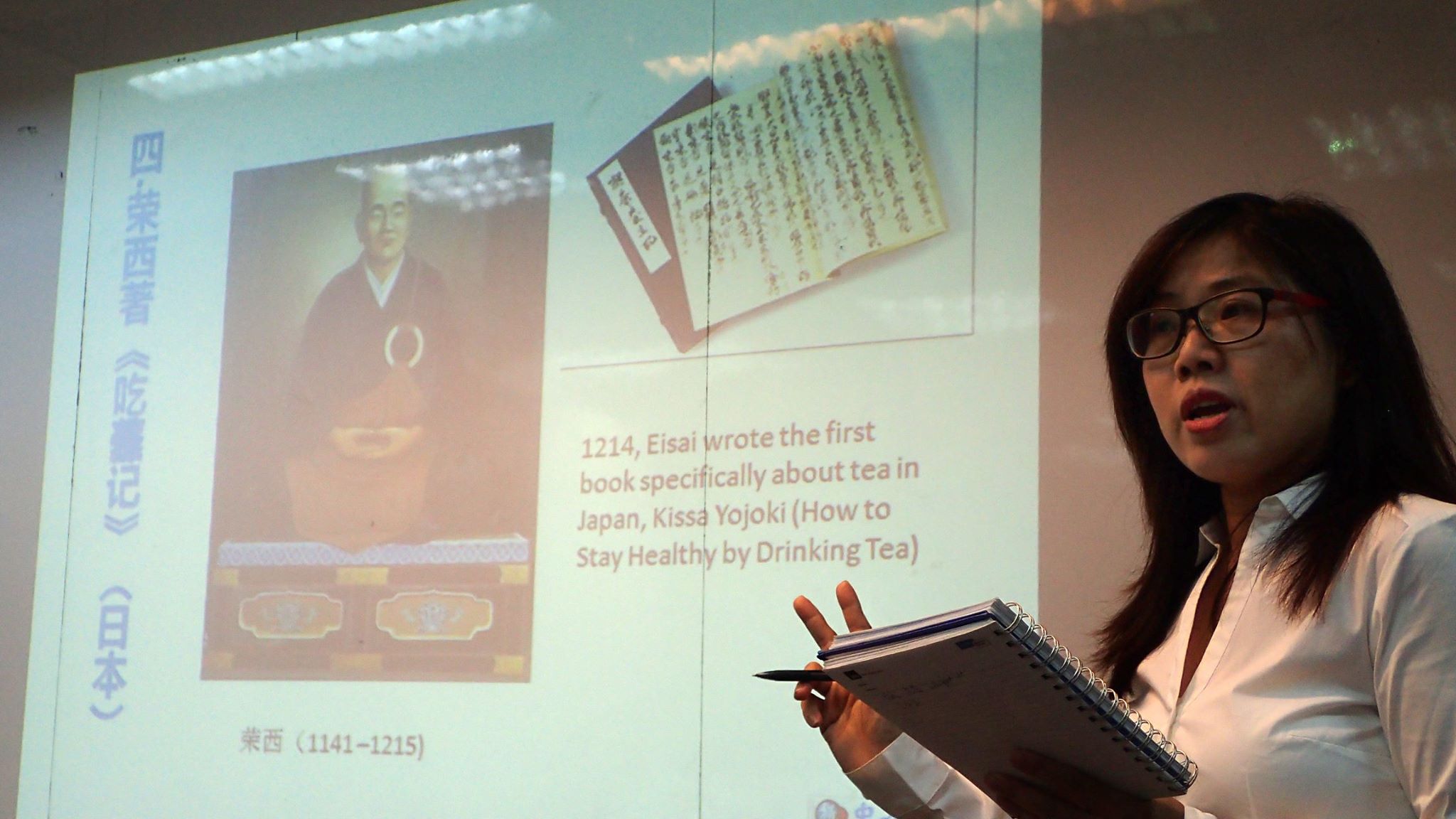
Tea spread to Japan as early as the Tang Dynasty, but it was the Zen Buddhist monk Eisai who first introduced the healthy benefits of drinking tea to the Japanese. He brought tea seeds as well as the Chinese tea culture from China back to Japan during the Sung dynasty; over time, this culture subsequently developed into the very unique Cha-no-yu, the Japanese Tea Ceremony.
15235779_1346050432092411_476977841596925462_o

During the Ming dynasty, another Japanese Zen Buddhist monk, Rikyu, made great strides in Japanese tea culture from which little has changed to this day. He is revered as the greatest master of Japanese tea culture. From here, there was a split into three schools of practices, one of which has been passed down 16 generations to present day.

In Korea, the tea culture was introduced by a Zen Buddhist monk named Cho Ui, who is also the author of the famous tea book, ‘Ode to Eastern Tea’.

Tea reached the West in the 17th Century. Based on written journals, the Portuguese have been identified as the first Westerners who introduced tea to the western world. They brought it home for their own consumption. Later, the Dutch made tea a trading commodity and they were the ones who first distributed tea leaves in Europe. The English soon developed their love for tea. A lady-in-waiting of Queen Victoria by the name of Anna Maria Russell was credited for starting the afternoon tea tradition in the 19th century. It was specifically for the nobles when it was first started, because of the long gap between lunch and late evening meals normally served after 8pm.
purple-cane-house-brand-purple-clay-gourd-teapotFrom the early 1900s to 1970s, development of the tea culture came to a halt in China for various reasons. This interest was however revived in Taiwan in the 1980s. Publications on tea culture and tea art masters emerged. The use of small tea pots became popular.

In Malaysia, tea consumed by Malaysians fall into 2 main categories, i.e. black tea and Chinese tea. Sources of black tea include those harvested and produced by the 4 tea plantations in Malaysia, the notable ones being Boh tea in Cameron Highlands and Sabah tea. Black tea is used very commonly as teh tarik served at the Mamak food stalls and Malay eateries, as well as in Chinese Kopitiams largely started by the Hainanese in the early days.

15194536_1243616219033973_3132294669911746597_o
Serving tea

The habit of drinking Chinese tea traces its origin to Chinese migrants to Malaya. They brought tea along for making their daily beverage. Decades on, Chinese tea is still being brought in. Consumption of Chinese tea is popular among different communities, and typically, the choice of teas has a lot to do with their clans, villages or towns of origin.

In the past, Chinese tea consumed in Malaysia used to be sourced through Singapore.  The Tea Merchant’s Association, Federation of Malaya (now Tea Trade Association of Malaysia) was established in 1955.  Nowadays, up to 88% percent of tea leaves are directly imported into Malaysia from China. Much of the import is conducted through tea associations.  We were told, globally, black tea is the highest in demand now.

Modern tea culture is characterised by modern day tea houses and new trends such as bubble tea, etc. This was spearheaded by Taiwan back in the 1980’s. Purple Cane, established in 1987, continues to ride on this, actively promoting modern day tea culture as proven with this specially organised activity for the MVs, for which the MVs are truly grateful.

333
Image taken from http://esgreen.com/info/history-of-tea-in-china/

ASEAN Songket Exhibition

20161028_130430
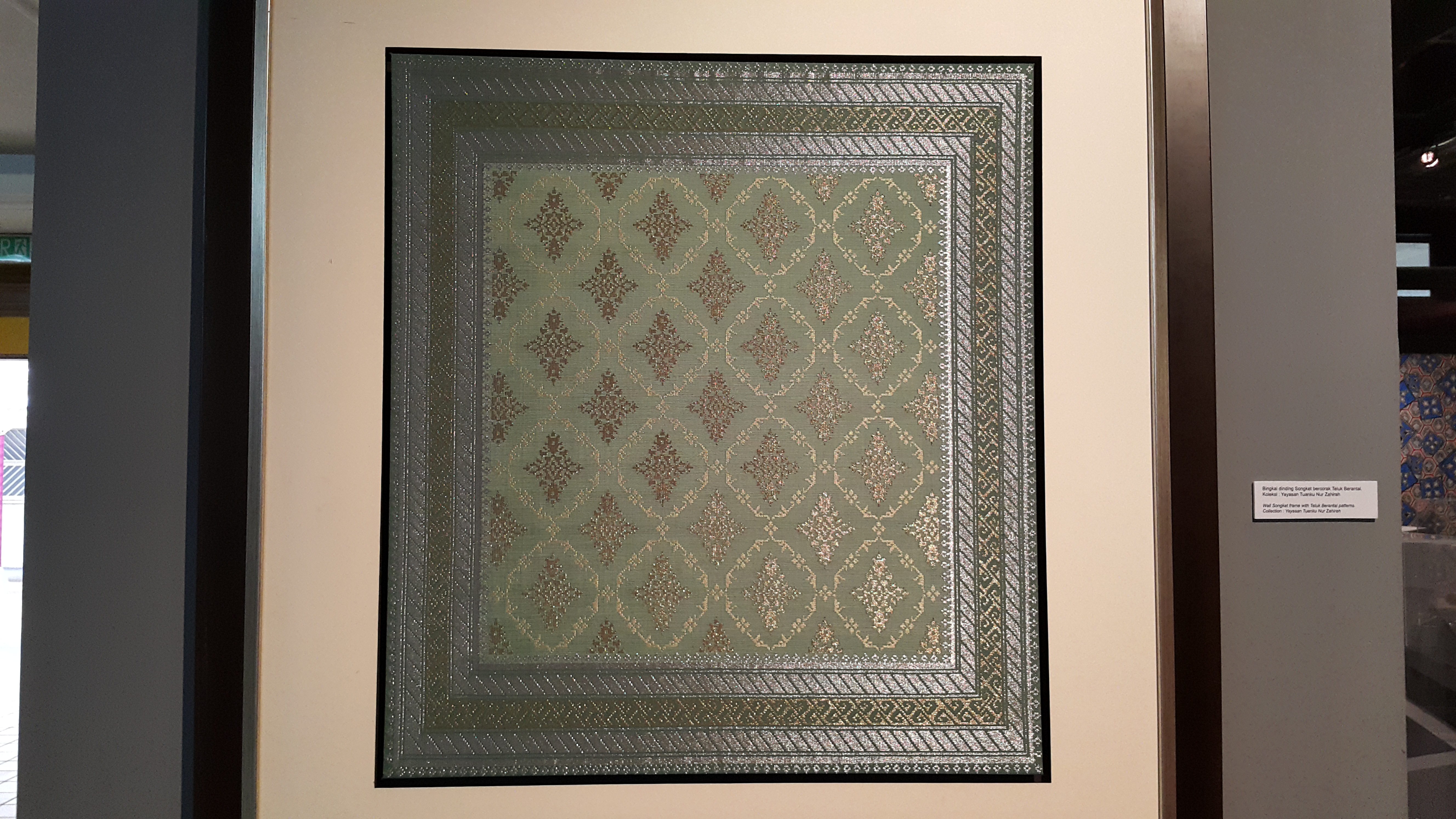
Wall hanging. From the private collection of Yayasan Tuanku Nur Zahirah

The on-going exhibition at Muzium Negara, titled “Songket: The Queen of Fabrics – 1Family 1Heritage”, showcases songket pieces from around ASEAN countries. Do try to catch this very interesting exhibition before it ends on 31st December 2016.

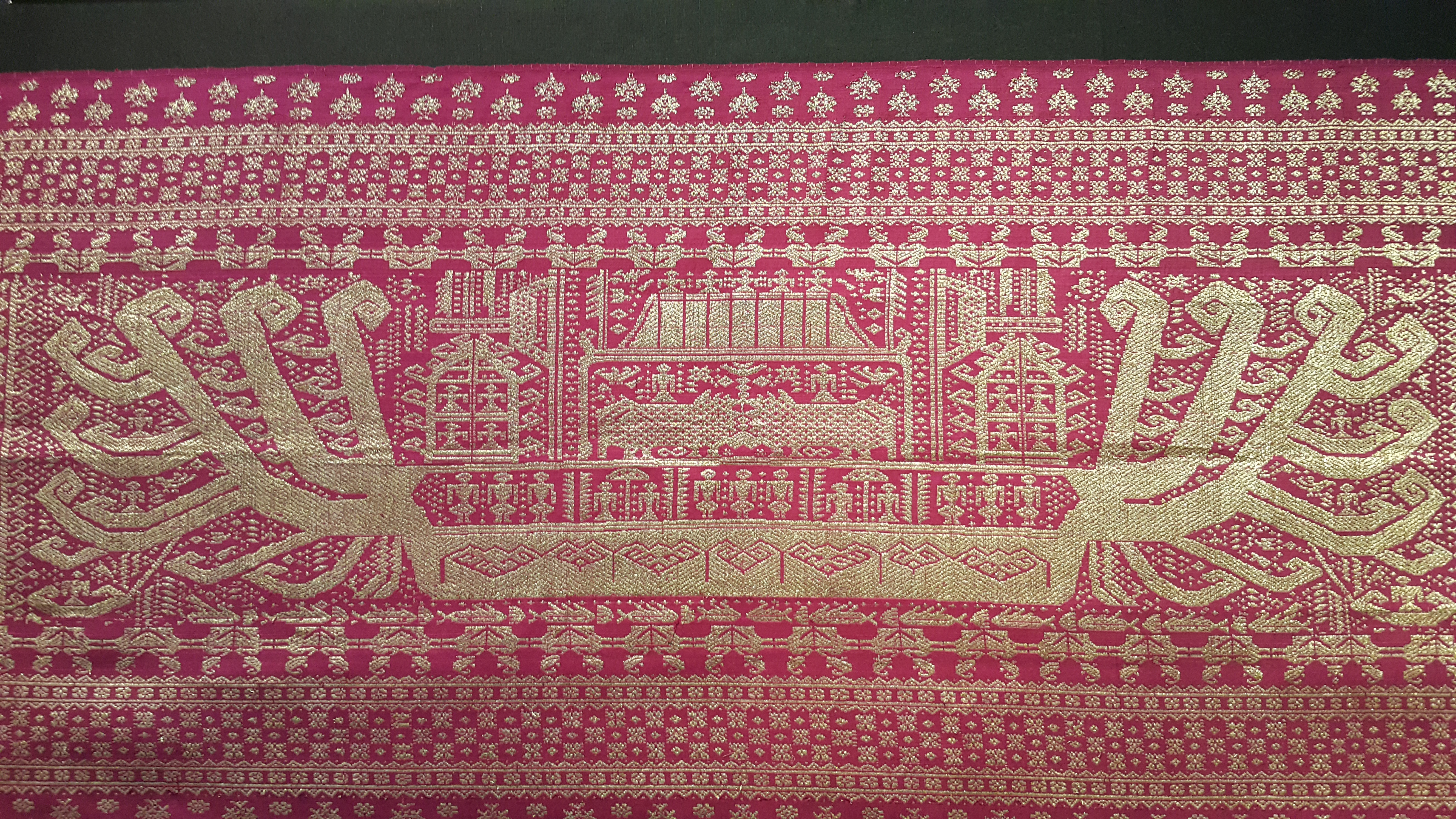
Songket is brocade and its designs are usually inspired by nature where the weavers turn into art their impressions of the environment, as well as of the flora and fauna around them. However, the songket pieces on display also include some unique expressions such as the piece below which describes the contents of Noah’s ark.

20161028_120036
Songket Lampung from South Sumatra illustrating Noah’s ark and its contents

Other interesting pieces include a shoulder cloth whose pattern is taken from the Durga stone statue at Singasari and a songket piece which combines Minangkabau and Bugis patterns.

20161028_120445
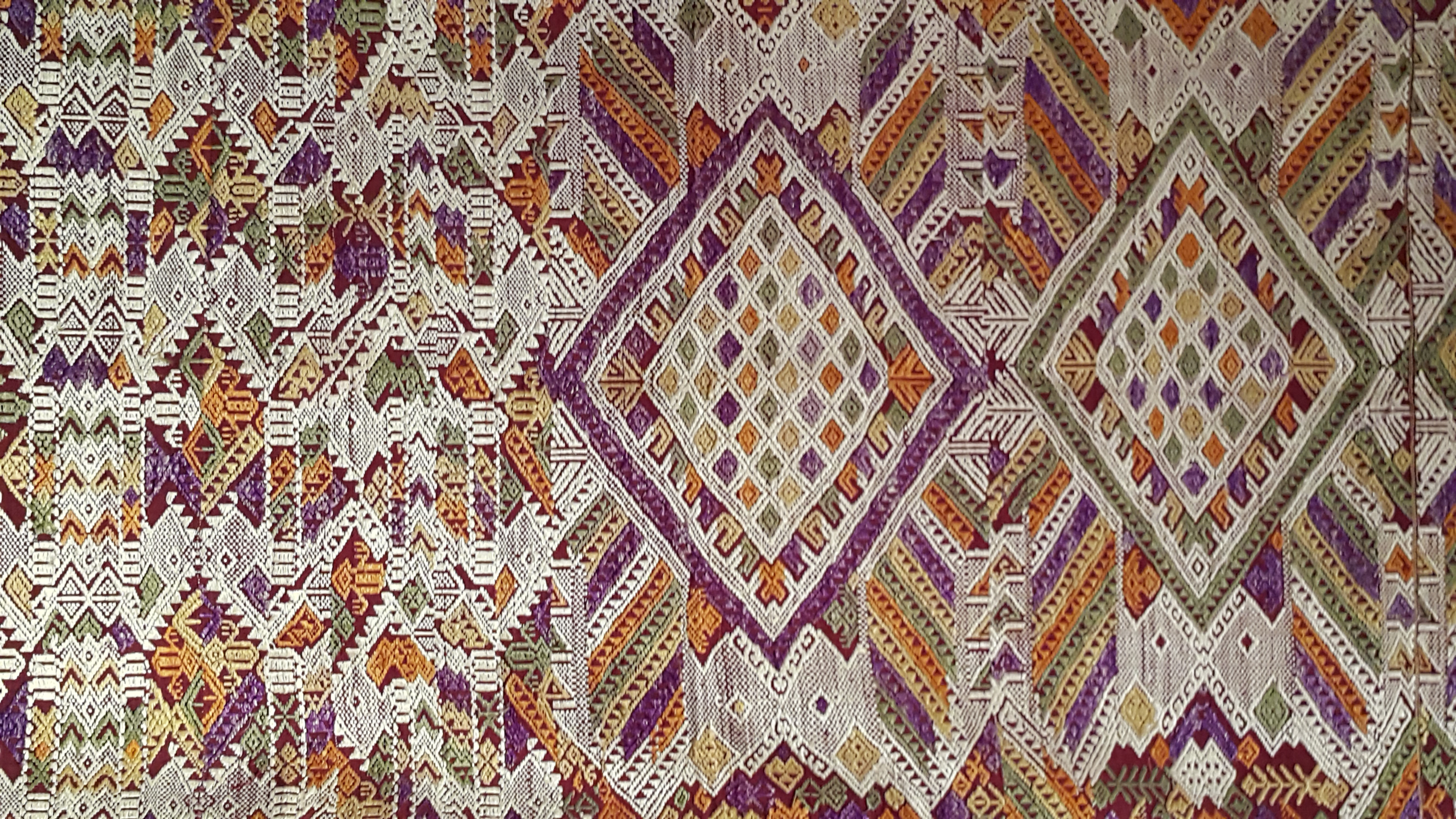
Short sarong cloth with geometric patterns from Laos

The cotton material weaved by the Rungus community in Kudat, Sabah incorporate designs found on Dongson drums (bronze drums that originated in Northern Vietnam). To date, remains of only one Dongson drum have been unearthed in Sabah and, hence, the designs on the Rungus material provides an important means of elucidating the designs on these drum.

20161028_133602
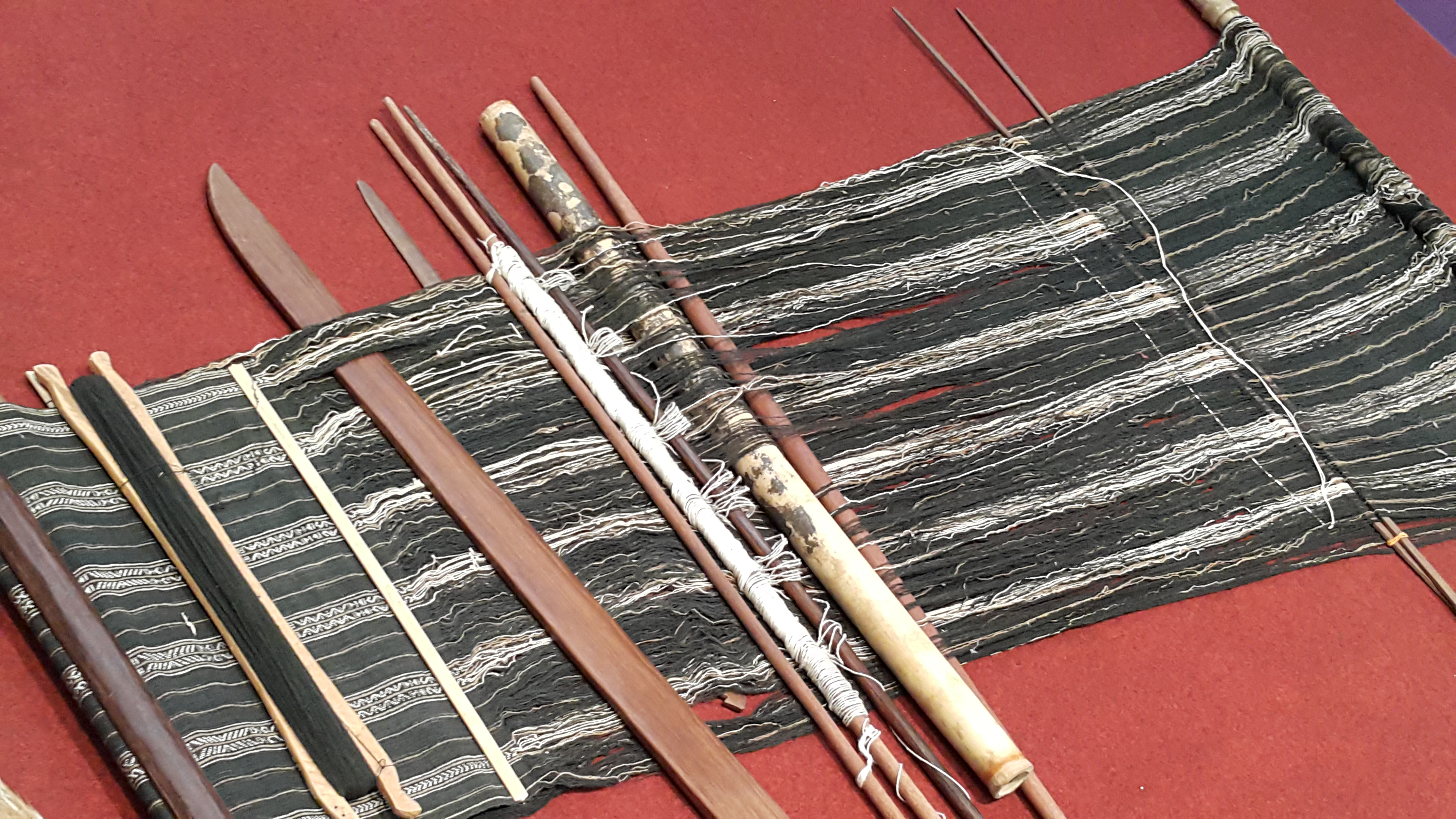
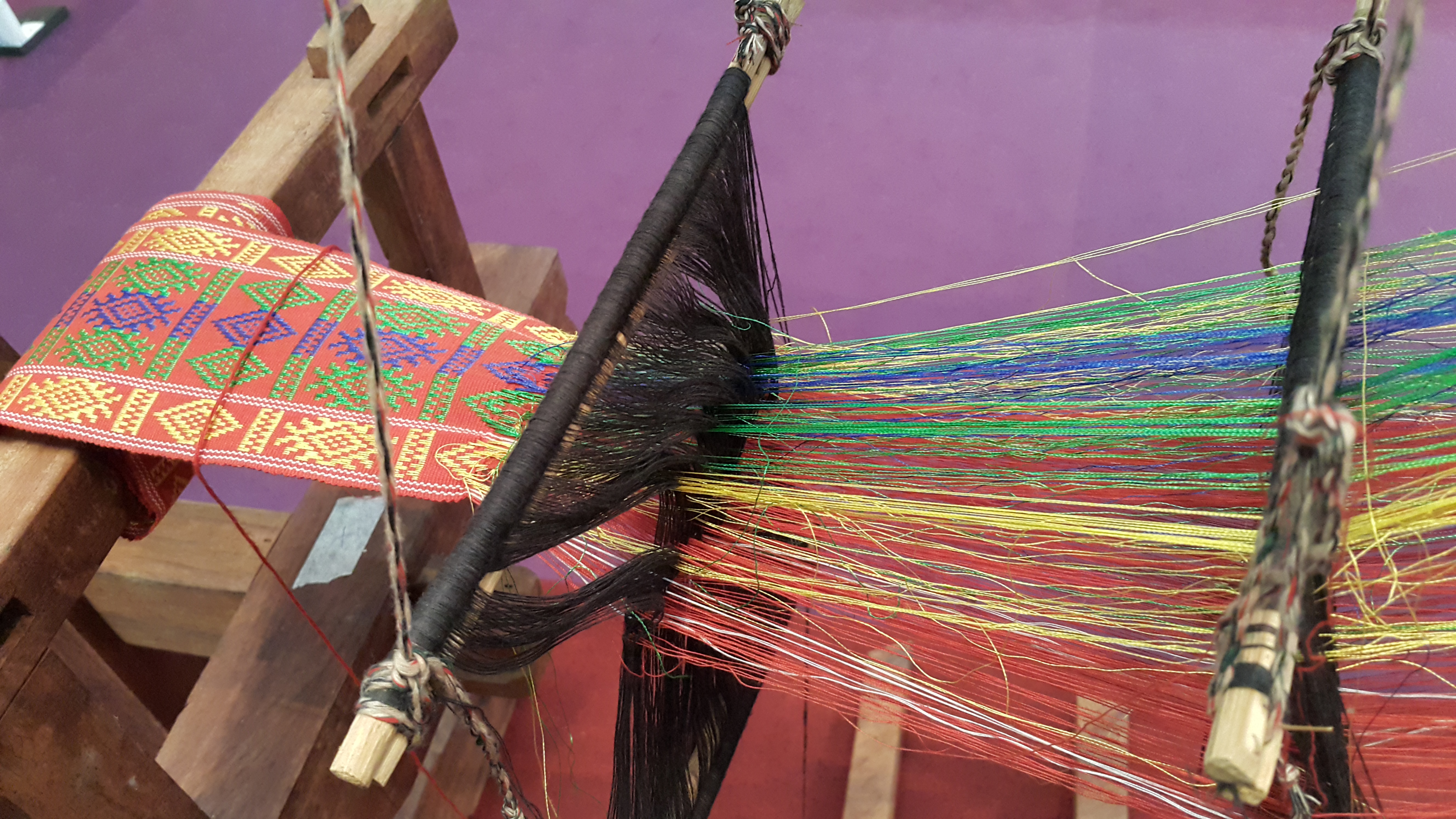
Babaal, a back strapped loom used by the Rungus community in Sabah to weave cotton yarns
20161028_131253
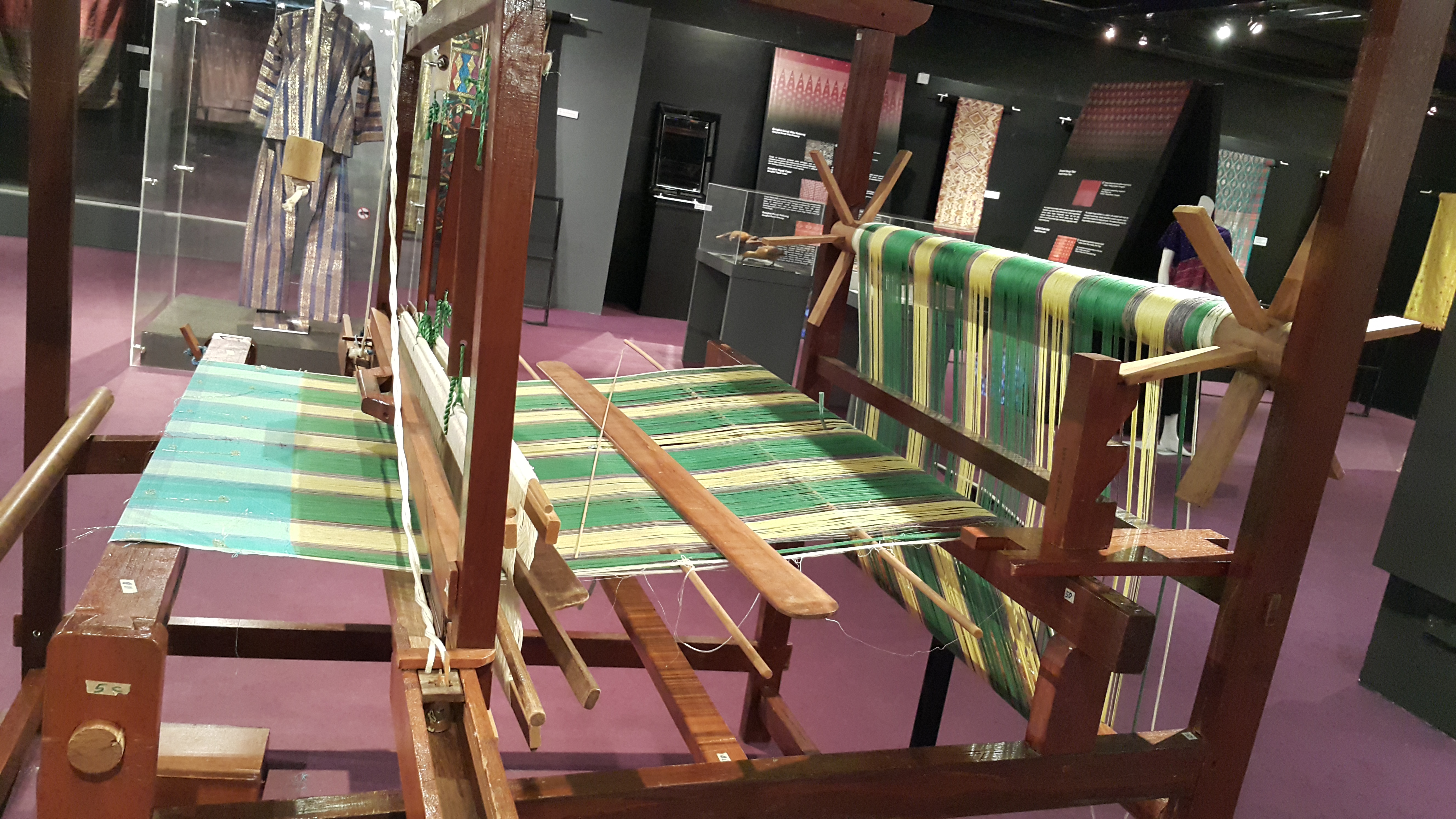
A ‘kek’ (a type of loom) used by Malay weavers

Apart from songket pieces (sarong, samping, selendang, and tengkolok), there are also a number of looms on display showcasing production techniques.


20161028_133719
A loom for cotton threads used by the Cham community in Chao Doc, Vietnam to weave jihdalah (tassels and belts) as well as siaip (scarves)

The Forgotten Duo

by Maganjeet Kaur

Raja Abdullah and Yap Ah Loy have been pushed centre-stage to battle it out as founders of Kuala Lumpur, relegating to the background the two entrepreneurs who had developed a trading post at the confluence of Klang and Gombak Rivers, a trading post that would grow to become Kuala Lumpur. No street names laud their contributions but Hiu Siew was the first Kapitan Cina (Chinese Captain) of Kuala Lumpur and Ah Sze could have been either the second or third Kapitan had he wanted the job.

Their story starts in Lukut where they were joint owners of a tin-mine. It was here that they contracted a friendship with Sutan Puasa, a Mandailing trader servicing the Ampang tin mines, on whose advice they moved to the future Kuala Lumpur. Lukut was, until the border treaty of 1878, a part of Selangor and under the control of Raja Jumaat, an enterprising and capable leader. In 1857, Raja Abdullah, brother of Raja Jumaat, took 87 Chinese miners from Lukut and they started mining activities at Ampang, about five kilometres inland from the confluence. Raja Abdullah’s men were by no means the first miners at Ampang; this honour belongs to the Sumatrans who were probably there from as early as the 1820s. However, the increased activity brought about by Raja Abdullah’s team saw traders from Lukut moving to Ampang where they supplied the miners with food, essential items, opium, and spirits.

tin-mine-at-ampang
A tin-mine at Ampang. Source: KITLV Universiteit Leiden

Goods bound to and from Ampang were loaded/unloaded at the confluence and, in all likelihood, a settlement existed there from an early period. However, the trading post had to be expanded rapidly in order to keep pace with the increased activity at Ampang and Sutan Puasa succeeded in persuading Hiu Siew and Ah Sze to relocate there. He also paved the way for them by introducing them to the local Malays and their acceptance by the Malay community saw Hiu Siew being appointed as the first Kapitan Cina of Kuala Lumpur.

The exact location of this trading centre has not been identified. However, it is said that when Yap Ah Loy became the third Kapitan, he appropriated the property of Liu Ngim Kong, the second Kapitan, who had himself appropriated the property of Hiu Siew. We know that Yap Ah Loy’s house was located near the river, at the present site of the Pacific Express Hotel, and it is possible that Hiu Siew’s property was at this same location and that Yap Ah Loy’s ‘market’ was originally Hiu Siew’s.

yap-ah-loys-houses
Yap Ah Loy’s properties (around Medan Pasar) after they were rebuilt in brick following the 1881 fire. This was possibly also the original location of Hiu Siew’s properties. Source: Arkib Negara

The head panglima (commander) to Hiu Siew was Liu Ngim Kong. Liu had previously been panglima to the Kapitan Cina of Sungei Ujong and Yap Ah Loy had acted as his assistant during that time. When Hiu Siew passed away in 1861/62, Liu took over his role as Kapitan Cina as well as, purportedly, his private property. Liu invited Yap Ah Loy, who was Kapitan Cina at Sungei Ujong, to join him in Kuala Lumpur. The wealth of Kuala Lumpur induced Yap Ah Loy to move and he took over the position of Kapitan Cina after Liu’s death in 1868.

Ah Sze, in the meantime, had become among the wealthiest traders in Selangor. He also had mining concerns in Kanching which, together with Ampang (and Kuala Lumpur), were the only Chinese enclaves in Selangor north of Lukut at the time. Ah Sze was kingmaker. He had twice rejected offers to be Kapitan Cina: first after the death of Hiu Siew and again after the death of Liu. However, the selection of Liu Ngim Kong and Yap Ah Loy as the second and third Kapitans respectively were made in consultation with Ah Sze. The relatives of Liu Ngim Kong were unhappy with the ascension of Yap Ah Loy to the position of Kapitan and his appropriation of Liu’s property. Their attempt to redress the situation saw the murder of Ah Sze, seen as a powerful ally of Yap Ah Loy. This was done in order to weaken Yap’s position.

Kuala Lumpur was already a rich and flourishing settlement before Yap Ah Loy moved there. This was in large part due to the efforts of Hiu Siew, Ah Sze, and Liu Ngim Kong who come across as very capable leaders. However, information on them is scarce as they have largely been ignored in historical writings. One possible explanation for this is that the bulk of historical records come from the British whose official involvement in the Selangor state starts only after the treaty of 1874. They had involved interactions with Yap Ah Loy but only cursory dealings, if any, with the other three.

klv001011882-bridge-over-sungai-klang-in-kl-c1880
Klang River, circa 1880. Source: KITLV Universiteit Leiden

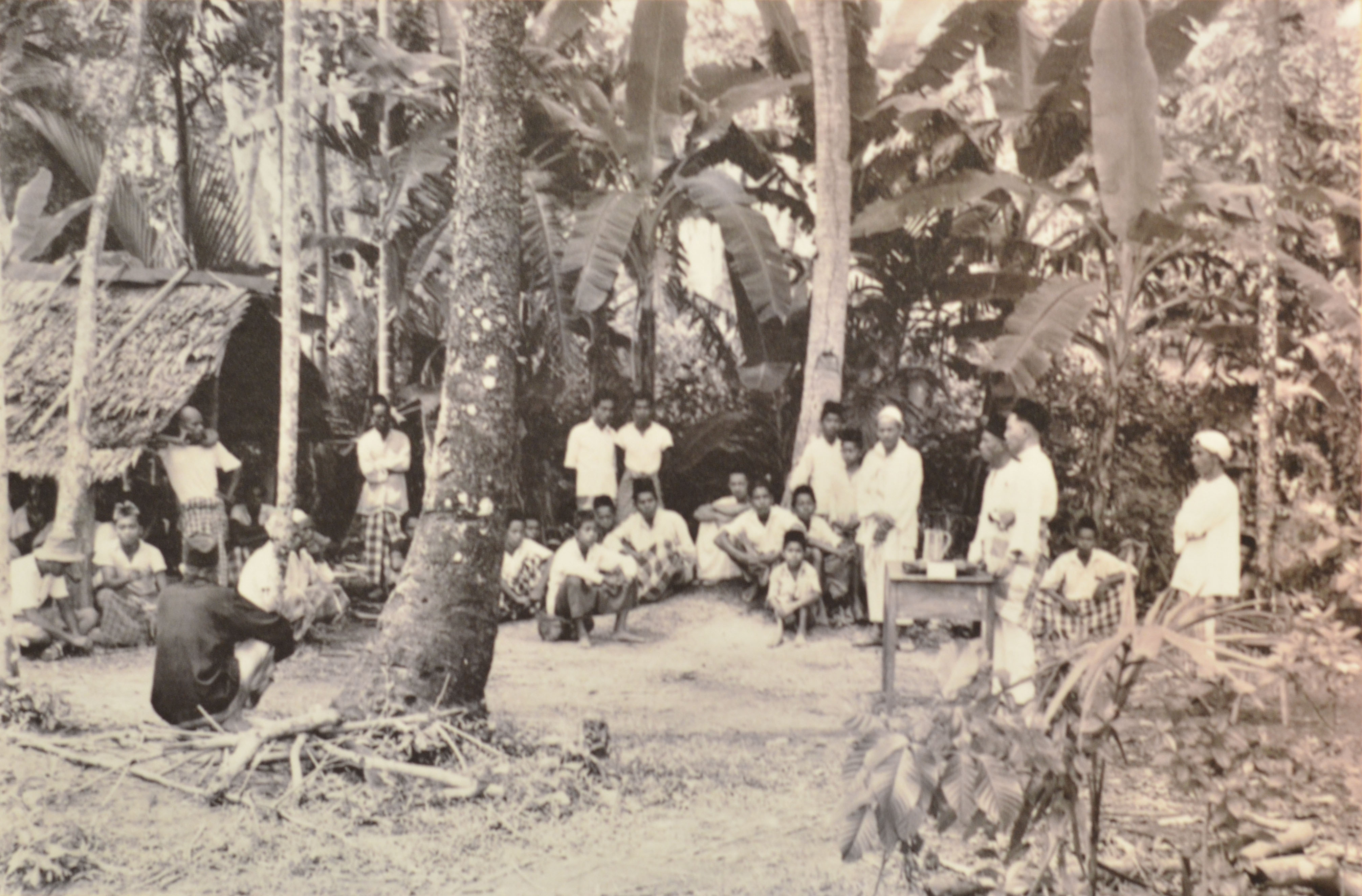
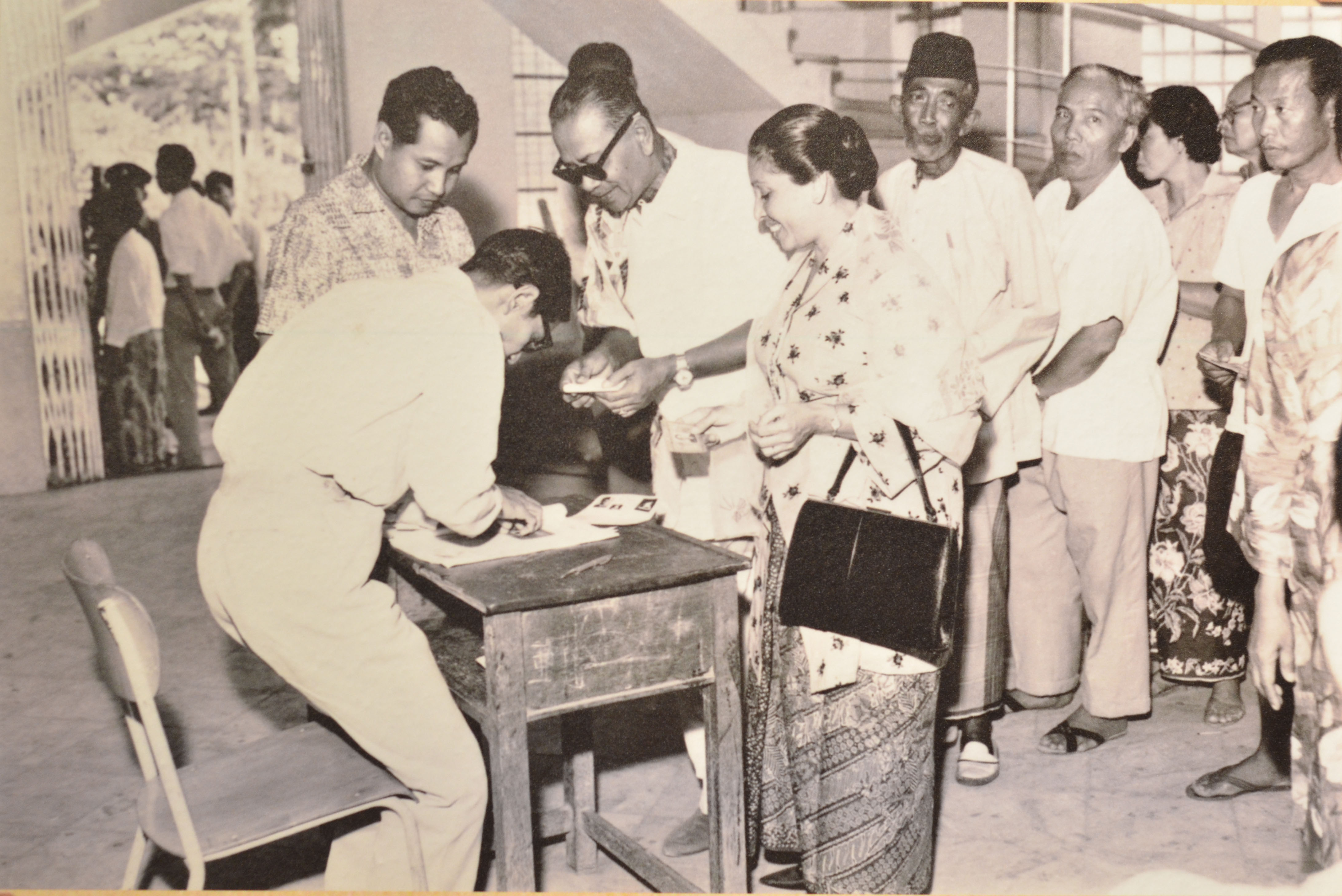
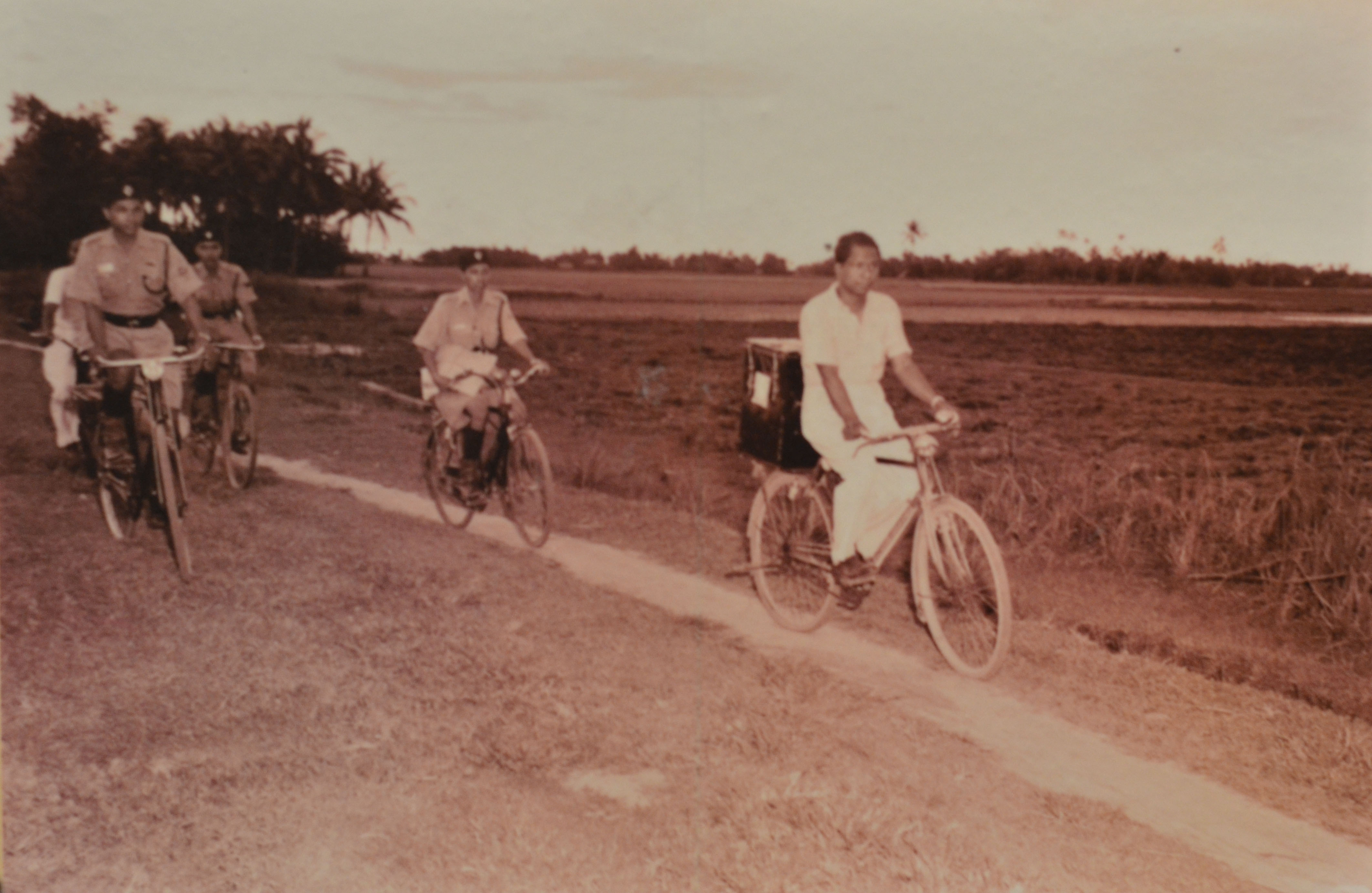
Exhibition : One Malaysia, One Story

20160810_114635There is an on-going exhibition at Muzium Negara in conjunction with National Day 2016 titled One Malaysia, One Story. It showcases the history of the country from Emergency to Independence and includes the formation of the Malayan Union, formation of the Federation of Malaya, the elections of 1955, the formation of Malaysia, and the confrontation with Indonesia. A large part of the story is told via old photographs and this is the charm of the exhibition. Many of these photos are from the National Archives’ collection. Do head down to Muzium Negara – the exhibition runs until 30 September at Gallery 2, Department of Museums building.

Some photos at the exhibition:

DSC_0224
Campaigning for the 1955 elections
DSC_0197
Casting votes


DSC_0191
Ballot boxes being carried to the counting stations


DSC_0203
Tunku Abdul Rahman at Dato’ Sir Tan Cheng Lock’s house before leaving for Padang Bandar Hilir, Malacca


Fruit Parachu Ceremony

by V. Jegatheesan

Fruit Parachu, or Parachu Buah Buahan as it is called in Malay, is the second form of ancestral worship that the Chitties observe in a year. The first is the Bhogi Parachu in January. This second Parachu is observed for a month between June 15th and July 15th. The time period is fixed and the individual can observe the Parachu anytime within this period. Many tend to observe it on a Sunday for convenience.

This article records a visit to Gajah Berang, Melaka, on 3rd July 2016 to observe the Fruit Parachu ceremony held in the home of Nadarajan Raja, an elder of the Chitty community.

The house was full of activity by the time we arrived at 2 pm. The ondeh ondeh was being prepared by Nadarajan’s wife and sister-in-law. Ondeh Ondeh is brown palm sugar wrapped in a rice paste coloured green from pandan (screwpine), then boiled and smothered with grated coconut. His brother, Raj, was preparing the chili to make the chili cucumber with onions. Others were frying fish, making the fish curry and the roe with belimbing (carambola). Those who finished some of these then started cutting the fruits. All this was done in a friendly atmosphere with a lot of bantering with each other. The main event, to call it that, is the making of the pulut tekan.

DSCF2667
Family members at rest and at work

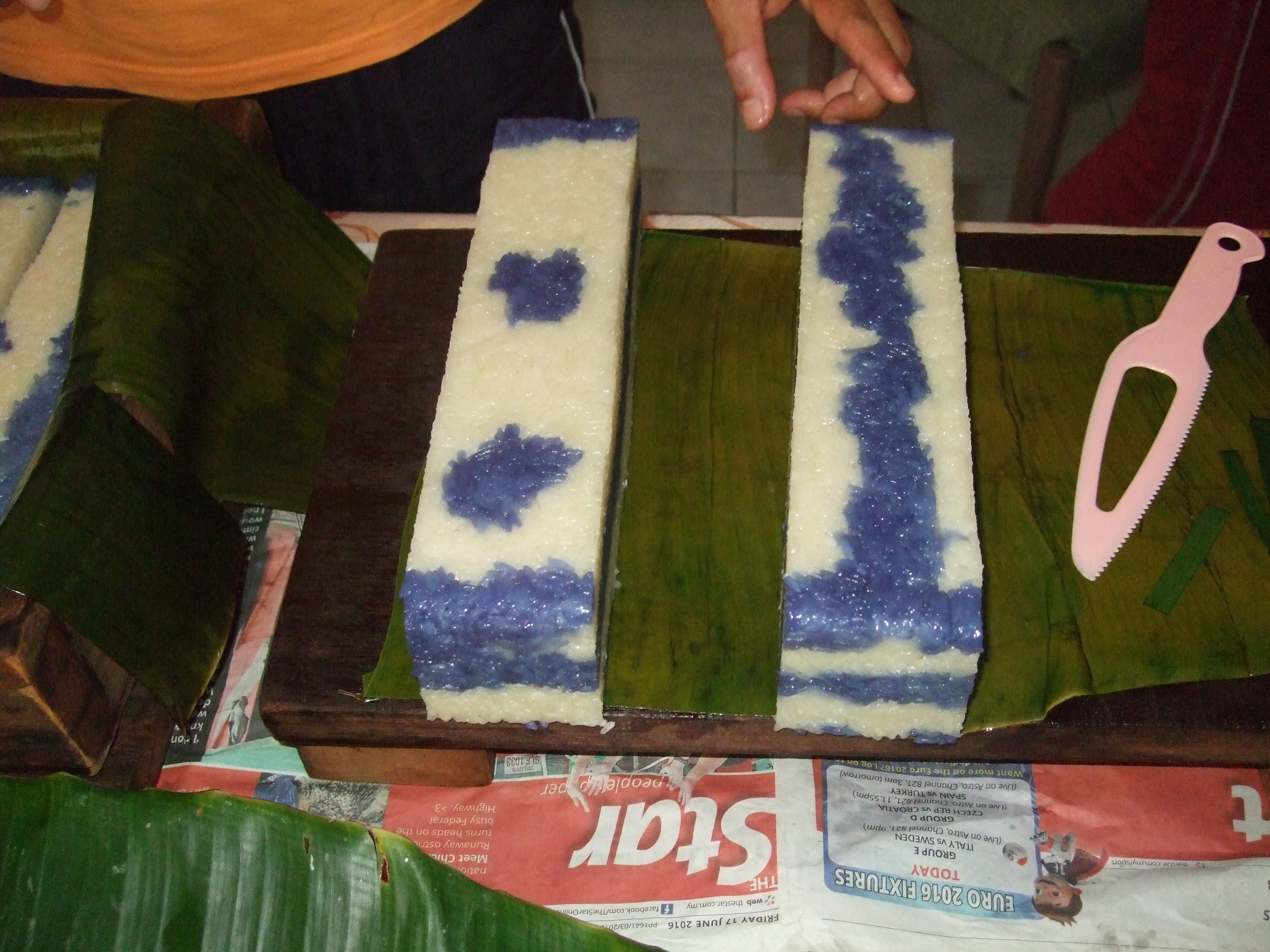
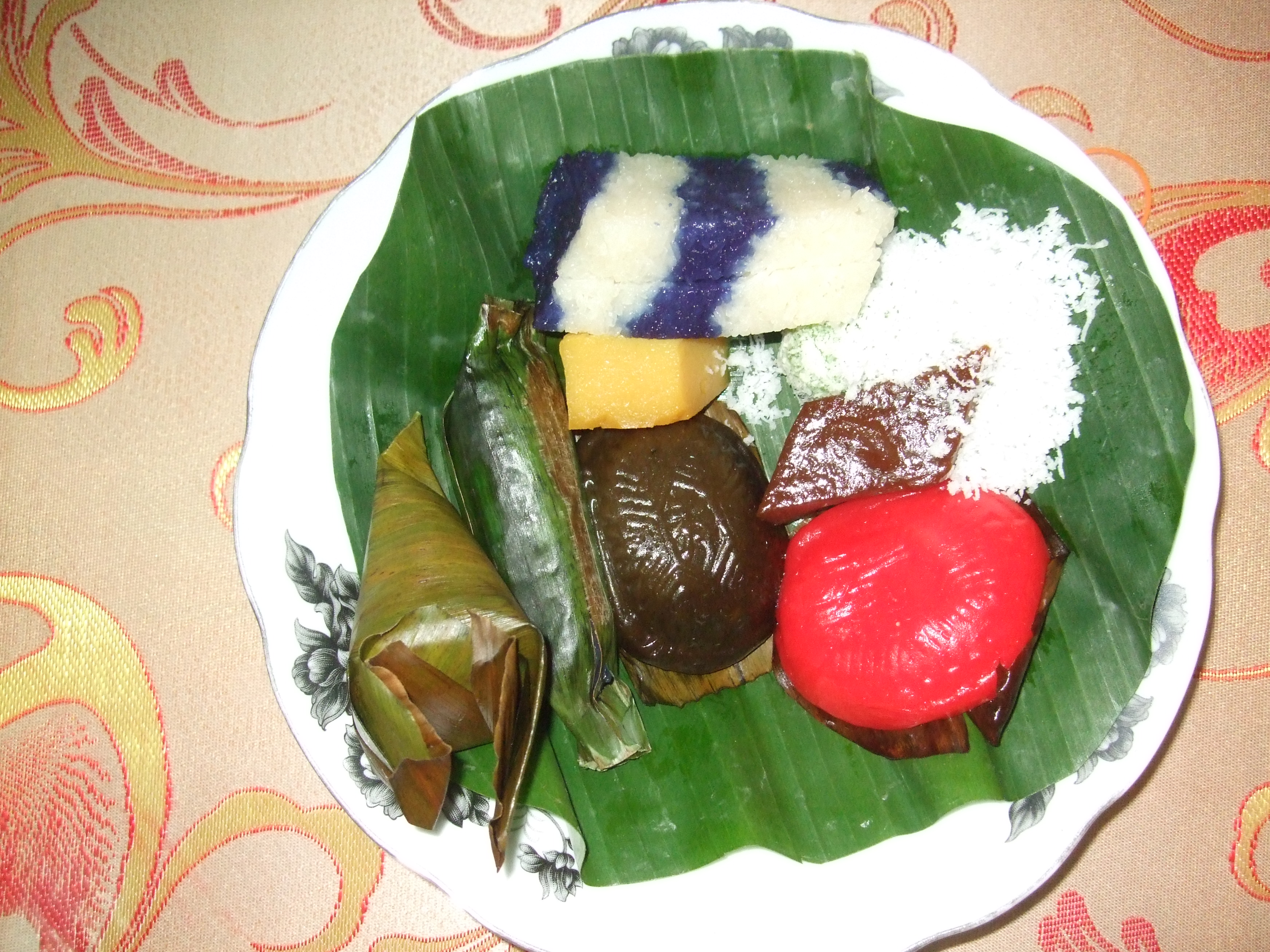
The preparation of the day usually starts with making the pulut tekan. This is a white glutinous rice cake pressed firm, parts of which are with a blue tint to form a design. The whole process can take some seven hours. The rice is first cooked. Then the coconut milk is added and the rice steamed. A portion of this rice will have a blue colouring added. This colouring is from the blue coloured bunga telang (blue pea or butterfly pea). The rice is continually tested for the right consistency and when the rice is steamed to the right softness, it is drained and pressed into a 10 cm deep wooden square box. It is spread out in layers between the white and the blue rice to give the desired design. The inside of the box is lined with banana leaves. A wooden cover is placed on top and weights are laid on the cover to slowly press the contents of the box into a hard cake. The usual weights are two grindstones.

DSCF2656
The box with the pulut being pressed

full pic of pulut tekanWhen it is ready after some hours, the weights are removed and the box is taken and placed on the table. The hardness is tested and if not right, it is placed back under the weights. When ready, the top of the box is lifted off. The sides of the box are removed and this leaves the cake on the base. The banana leaves are then carefully removed.

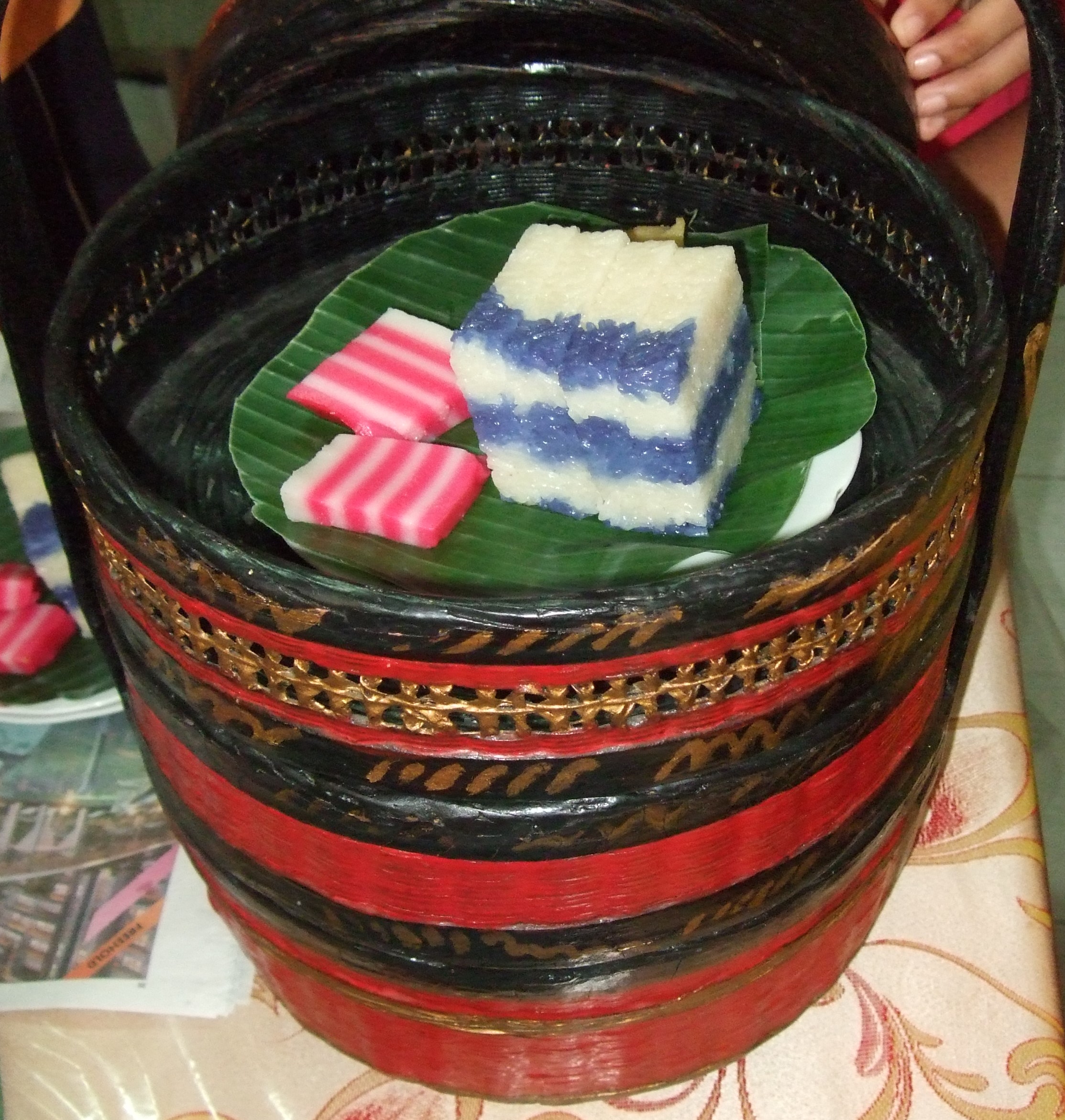
An approximate 5 cm thick block has to be cut which will have a nice design of the white cake with blue colour. This is left to the individual, in this case, Shanmugam, another of Nadarajan’s brothers. The selected block of pulut is placed on a tray covered with a banana leaf cut to the shape of the tray. The blocks that are not used for the offering, are cut into smaller portions and placed in a bakul siah, a tiered lacquered wooden basket.

DSCF2662
The specially cut pulut blocks for the offering
DSCF2659
Seri Kaya
Kuih Ginggang
Kuih Ginggang

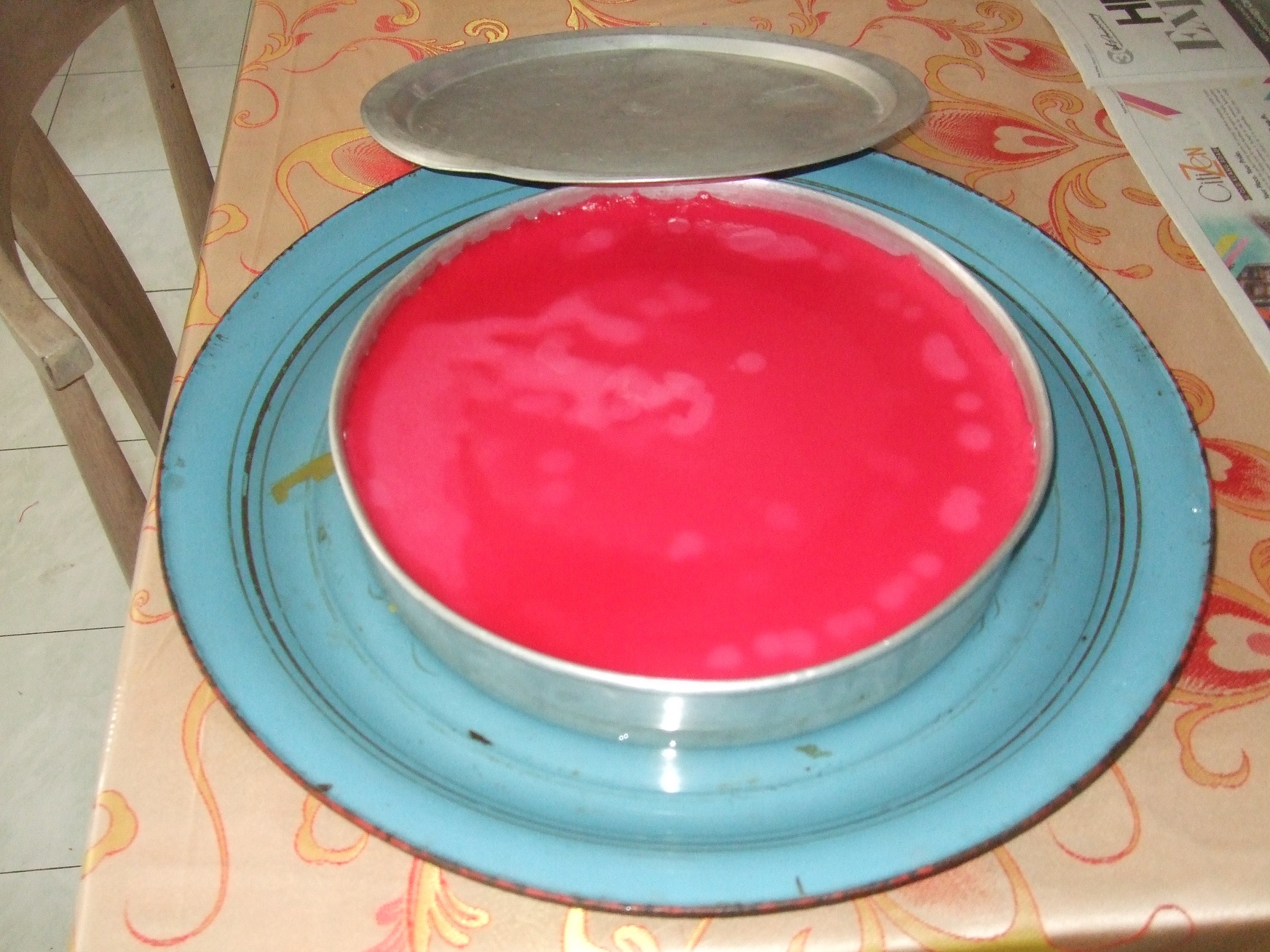
The seri kaya is also prepared earlier. This is coconut jam but a firmer type. A portion is cut and placed beside the pulut tekan for the offering. Another portion is placed in the bakul siah. A portion of the kuih ginggang, red and white layered cake is cut for the offering as well as a portion to be put in the bakul siah.

A few bakul siah are prepared in a similar way. The children then take these and present it to various close relatives or friends living in the neighbourhood. They, in turn, give some of their preparation if they are observing on the same day.

DSCF2675
Bakul Siah with the pulut and kuih

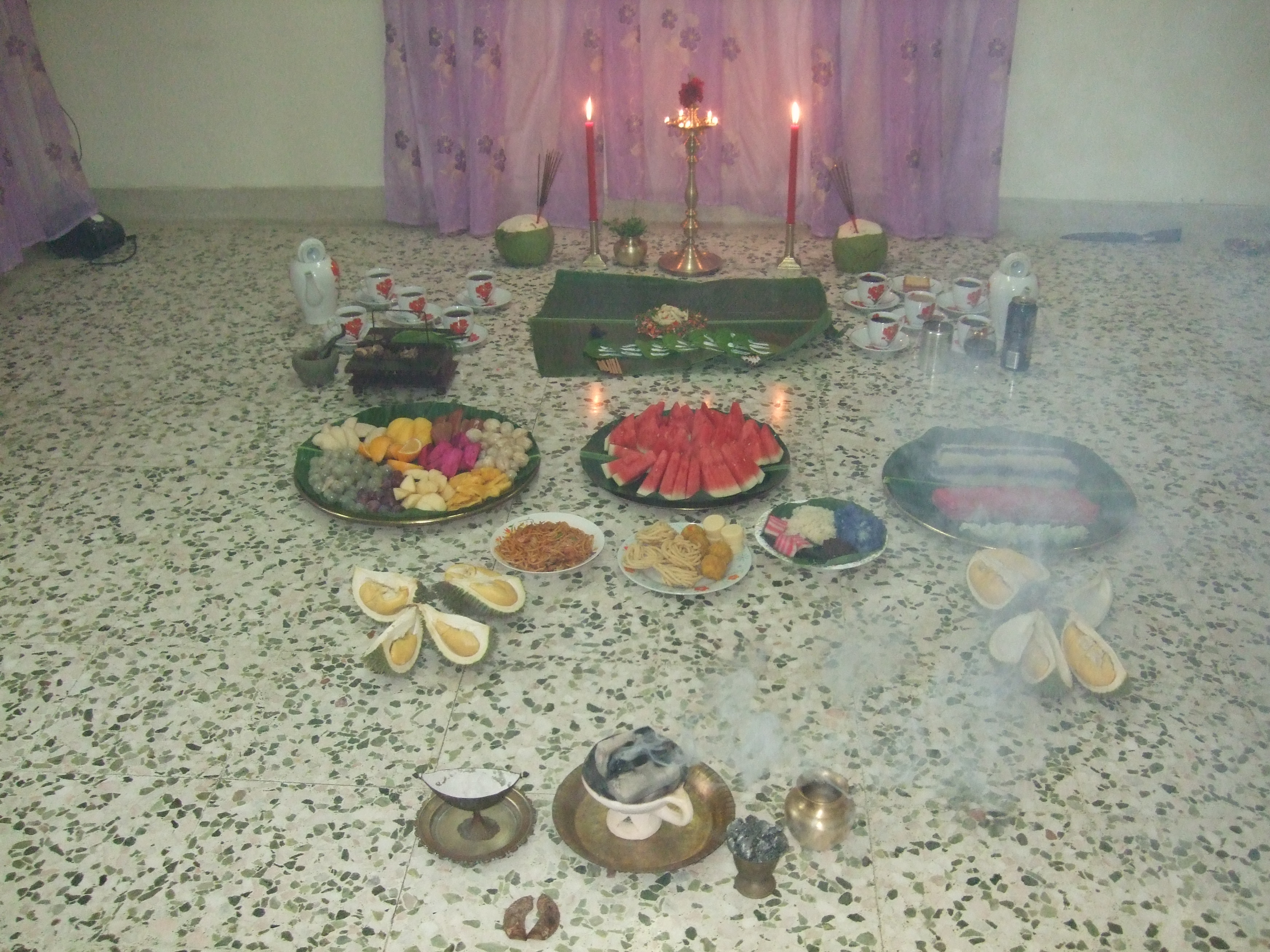
Nadarajan then got the front living room floor cleaned. One by one, Nadarajan and Shanmugam placed the various items on the floor.

The complete display of the offerings

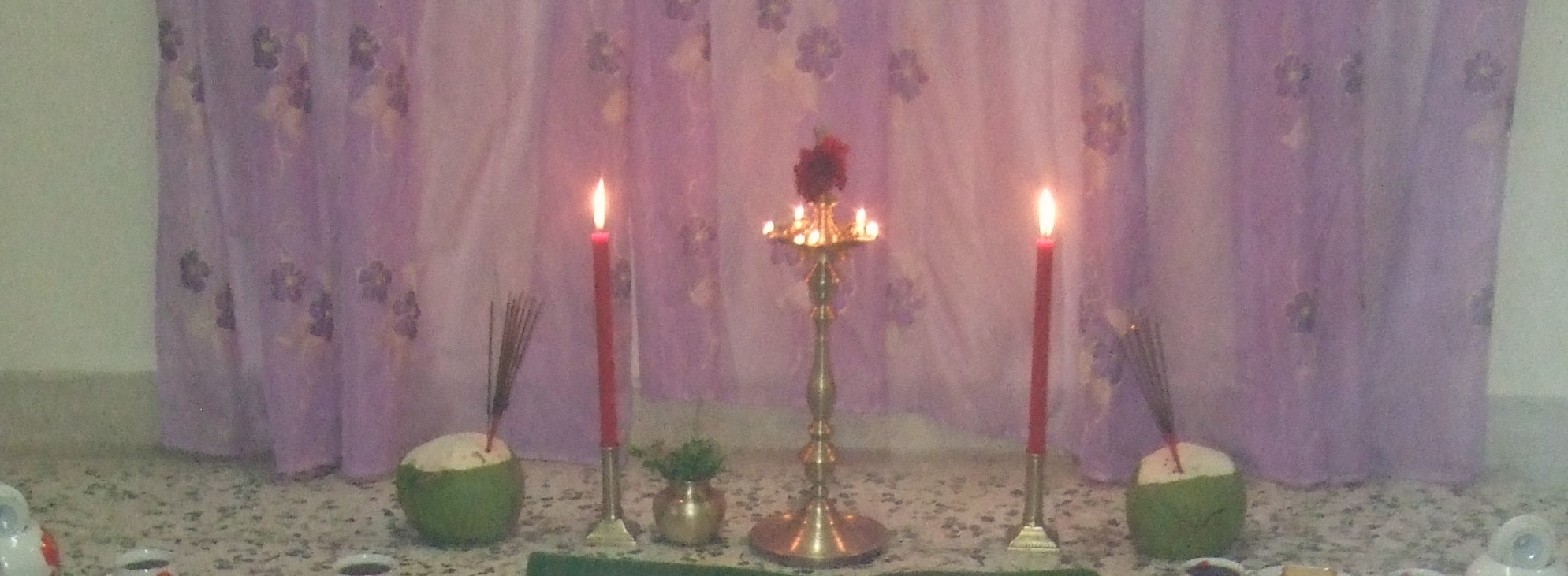
The display is laid out on the left of the entrance of the house. Two red candles with a kuthu vilakku, (Indian oil lamp) in between are placed in the centre. On the centre of the oil lamp is a hibiscus flower for decoration. There is a brass bowl (chembu) with tulasi (holy basil) in between the candles. These are flanked by two young shaved coconuts with incense sticks stuck in as shown below.

DSCF2701aIn the front centre is a large banana leaf laid with the head on the right. The head is the top of the banana leaf, or the narrowing part. In the centre is a bowl of bunga rampai, scented flowers. There are also seven betel leaves lightly smeared with lime powder. In front on the left are seven cigarettes of tobacco wrapped in tobacco leaf and on the right are five modern cigarettes. This is seen below.

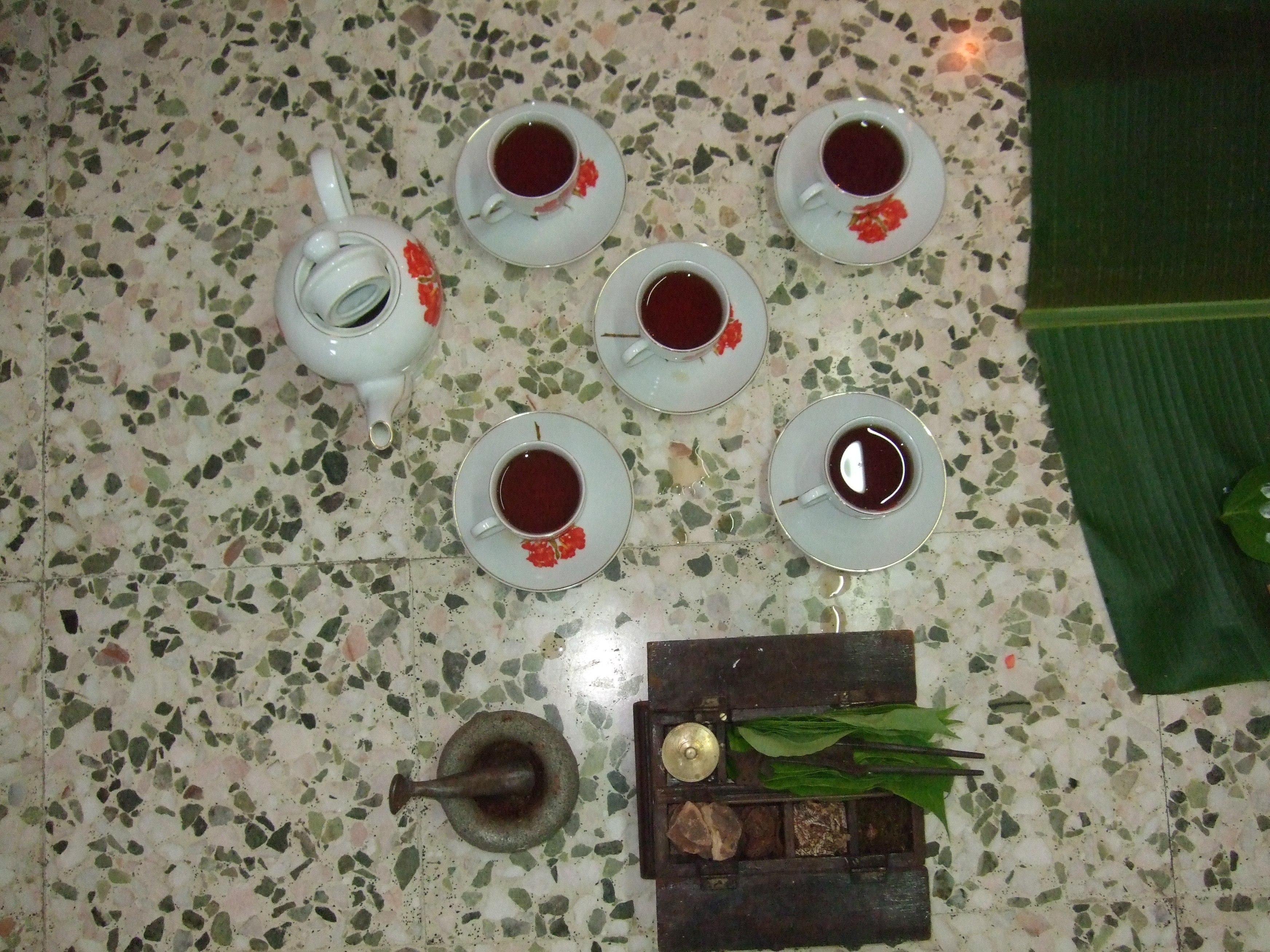
DSCF2697On the floor on the left, there is an arrangement of five cups and a teapot with tea. Next to this is a tumbuk (stone pestle and mortar) and an old wooden tepak sireh set (betel leaf and betel nut set). Three betel leaves are smeared with lime paste and wrapped with a piece of pekak. Pekak is a pink hard powder which turns red when eaten with the betel leaf. This wrap is then crushed in the tumbuk (mortar) and placed among these.

DSCF2695On the right is an arrangement of four cups with black coffee and one with Milo. There is also a tin of coffee with milk and a can Guinness stout.

DSCF2696In front of this is the tray of fruits, a tray of watermelon, the kuih,  a plate of fried noodles, kuih from the neighbours, some Indian savouries and three opened durian fruits.

The fruits that Nadarajan prepared were jackfruit, mata kuching (related to the longan or soapberry), mangoes, dragon fruit, jambu air (water apple or water rose apple), salak, watermelon, durians, grapes, apples, oranges and pears. Local fruits are used as much as possible but nowadays, common foreign fruits are also added. This also depends on the availability of the fruits.

DSCF2690The variety of kuih served were, the pulut tekan, seri kaya, kuih ginggang and ondeh ondeh. Offerings included some additional kuih sent by neighbours. These were the same glutinous rice but the white and blue being separate, angku (red tortoise cake), wajih (glutinous rice with sugary syrup and other local kuih.

DSCF2693
The seri kaya, pulut tekan, kuih ginggang and ondeh ondeh
Further variety made by others

The fruits and other edible items are usually the favourites of the ancestors and are presented in odd amounts.

In front of these are a brass bowl of vibuthi (wood ash), a brass bowl of water, an earthenware holder for smouldering charcoal and benzoin resin. This latter gives off smoke. There are also two pieces of kidney shaped wood.

Other items presented

The ceremony starts when the nearby temple bell is sounded off at 6.30pm. Nadarajan as the head of the household, takes the earthenware holder and goes to the outside of the house. He holds the holder up and invites his parents and ancestors to come and partake in the offerings.

He then comes into the house and shows the holder to the items on the floor, circling over all the offerings. Next, he goes to the pictures of his father, his aunt and his grandfather and circles the pictures with the holder. These pictures are decorated with the jasmine flowers and incense sticks. He comes back to the living room and places the holder on the floor. His brothers and other male relatives or close friends will do the same. This is followed by the females in the family and close friends.

Finally, Nadarajan will cut the young coconut open. With this the ceremony is over.

The guests are then invited to dinner. Nadarajan served rice with fried fish, fish gravy, watercress, chili cucumber and fish roe with belimbing.

Despite Malacca being a small place, Chitty practices vary from which part they come from. Those at Gajah Berang and Bacang use milk rice while those from Tranquerah use nasi lemak.

The kuih here are referred to as wet cakes. Others prepare dry cakes, as in not oily, such as kuih bakul, kuih bahulu, kuih kacang soya etc. Admittedly, there is now a mix which includes Nyonya, Malay and perhaps Portuguese kuih as well. This is the result of the many years of assimilation and intermarriages between them. It must be remembered that these groups have been together for 500 years.
Generally speaking, one wonders about the origin and the reason behind the use of the various items. One simple reason is that these are the things most commonly found in the vicinity. Some have magical or mystical properties ascribed to them from so long ago that the meaning or reason is lost today.

There must be some explanation as to why rituals are being performed and certainly not simply for the sake of doing something. Again the routine has caused the significance to be eroded with time. After all, the Hindu religion has been practised for thousands of years and the Chitties have been performing these for some 500 years. Many rituals have been performed by the temple priests only, as only they were educated in these matters. The ordinary folk followed and believed in what was done.

But now we live in an age where education levels have vastly increased resulting in individual thinking and questioning or in fact, re-inventing all things. While we continue to perform and believe in these rituals, it is now left to the current generation to study the religion, history and reintroduce the rituals so that when these are performed, it is done with a greater understanding and this in turn reinforces the faith.

Tambun & Ipoh Heritage Trip

by Julia Stanbrook

Bright and early on Saturday 18th June, forty of us set off for a mini adventure in and around Ipoh. The temperature in the morning was perfect for scaling limestone hills and standing outside; not too hot and not too cold and defiantly not raining! It looked like it could be a perfect day.

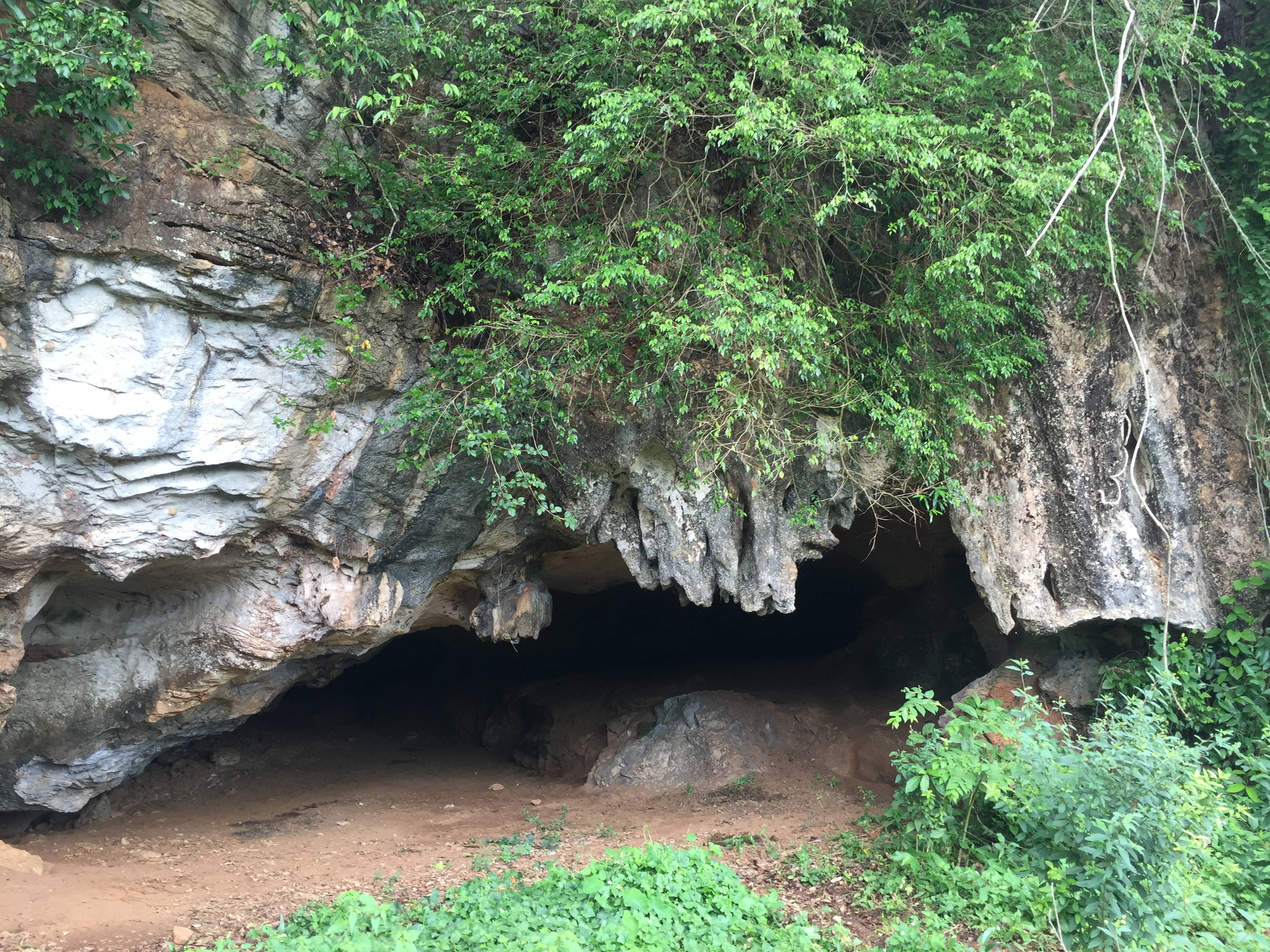
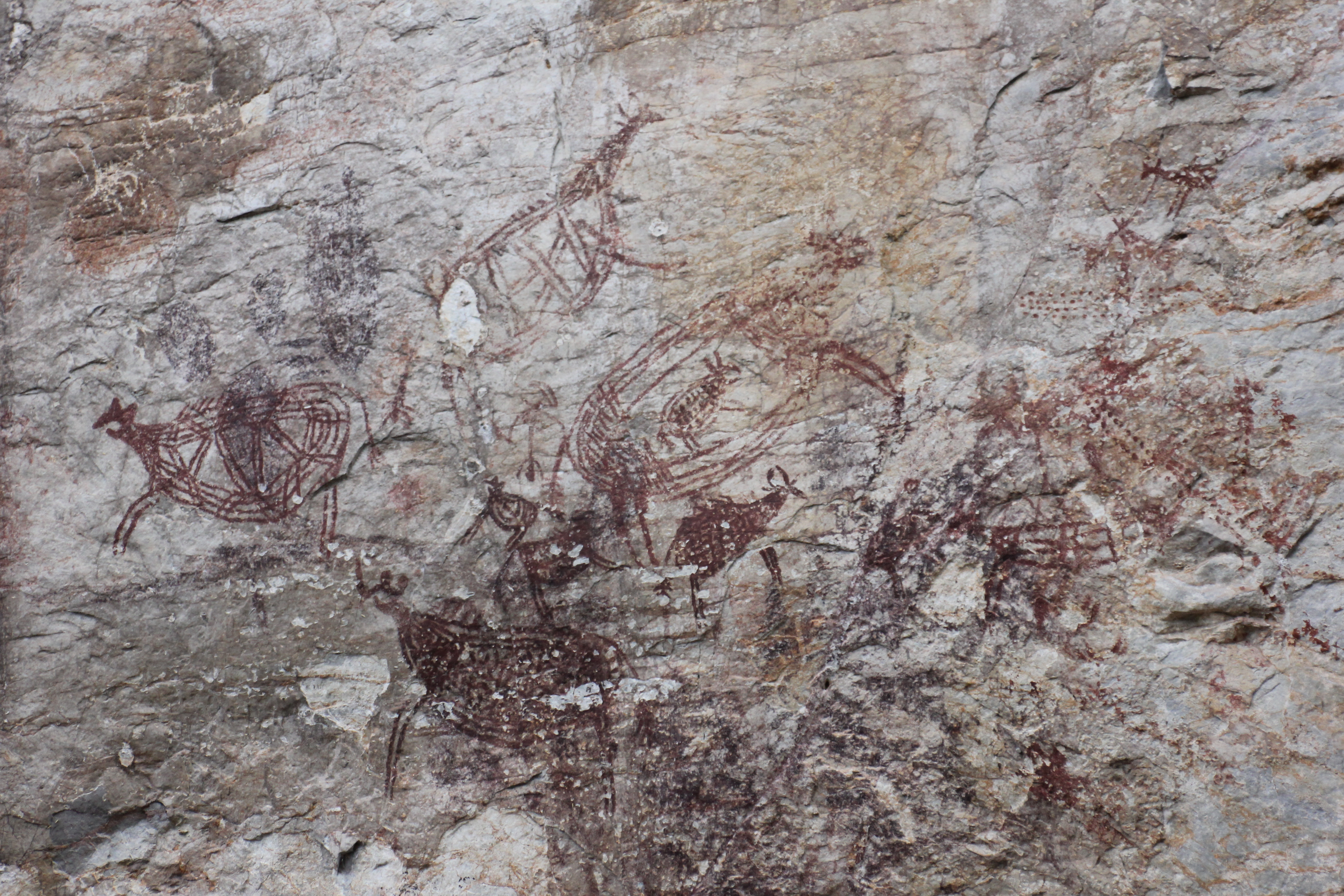
IMG_4318We began with a tour of Gua Tambun, looking at how Prehistoric man lived. Very quickly, we found evidence of one of their meals, clearly there were no bins around at the time. Many small shells were just thrown onto the floor with the ends snapped off so they could suck the juicy morsel out from within. We explored caves on the lower levels of the limestone hill – the only evidence of ancient man was his food remains. But then they had lived here nearly 9,000 years ago – what did we expect to find?

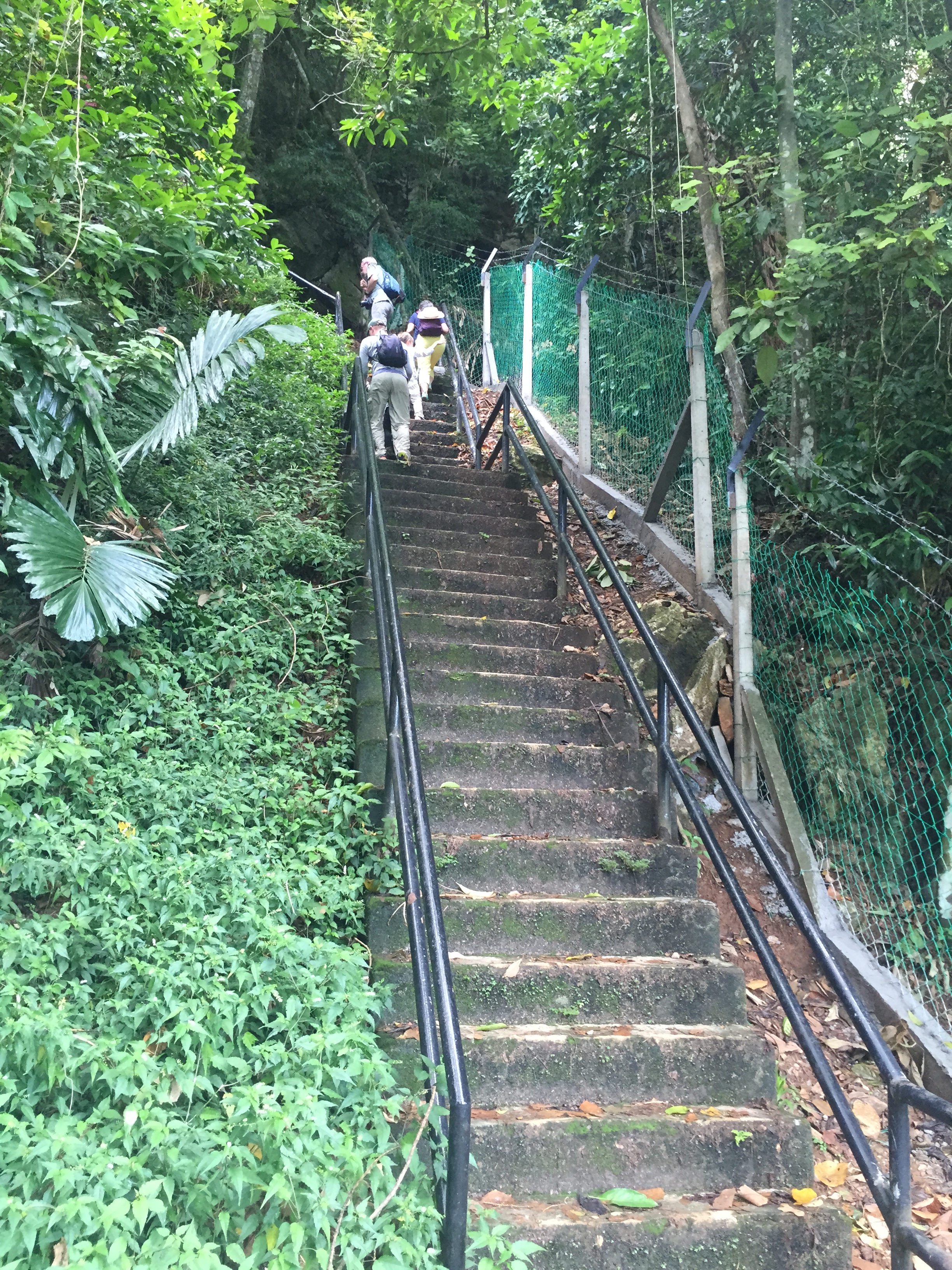
IMG_4313We tracked Neolithic man’s movements and worked our way up the limestone hill. It seems that for some reason, and they don’t know precisely why yet, man moved up the hill and started living higher. We climbed the 130+ steps up to see the evidence left from 4,000 years ago. Of course, we knew this would be cave art, we’d read Elizabeth’s emails!

I, for one, eagerly looked around, hmm… some modern graffiti, some bird nests, some overhanging rocks. Where’s the rock art?! It was only when we were split into teams and given a little treasure hunt, looking for the rock art, that we found our first piece of art – after that the wall came alive; shapes, swirls, arrows, dancing people (anthropomorphs), animals (zoomophs). Over 600 to be seen. Sadly, most of the teams only managed to identify about 10-15 of the 50 or so art pieces we’d been asked to find, although in our defence, some of the paintings had faded and it’s not as easy as we made it look, standing there with one’s head tilted right back!

Tambun_Pictoglyphs_June2016 071These paintings were made in the most gorgeous reds and purples, from crushed up hematite mixed with resin, spit, urine or animal fat as a binder. These, we were told by our archaeologist and his student who is studying the paintings, are the only Neolithic red paintings to survive in modern Peninsula Malaysia.

They were first discovered and studied in 1959, when 80 forms of rock art were identified along with 49 stone tools; but in 1984 more rock art pieces were discovered along with some Neolithic pottery sherds. In 2009, using more sophisticated technology, over 600 rock art pieces were discovered on hitherto unknown panels.

To end our visit at the rock art, we all had the opportunity to create some rock art of our own using hematite and a modern form of binder (which was a relief, I didn’t fancy using spit or urine!!) and a small disk of plaster that had also been prepared earlier. Most of us tried to re-create the cave art we could see, but one or two more adventurous painters painted rather beautiful landscapes! Pre-historic man would have been very impressed; I know I was!

After this we gathered up our cars and travelled in convoy to Ipoh. Having parked and got our instructions, we were free to roam the area known as Concubine Alley and have a tasty lunch. The specialty was bean sprouts cooked in soy sauce! Yummy.

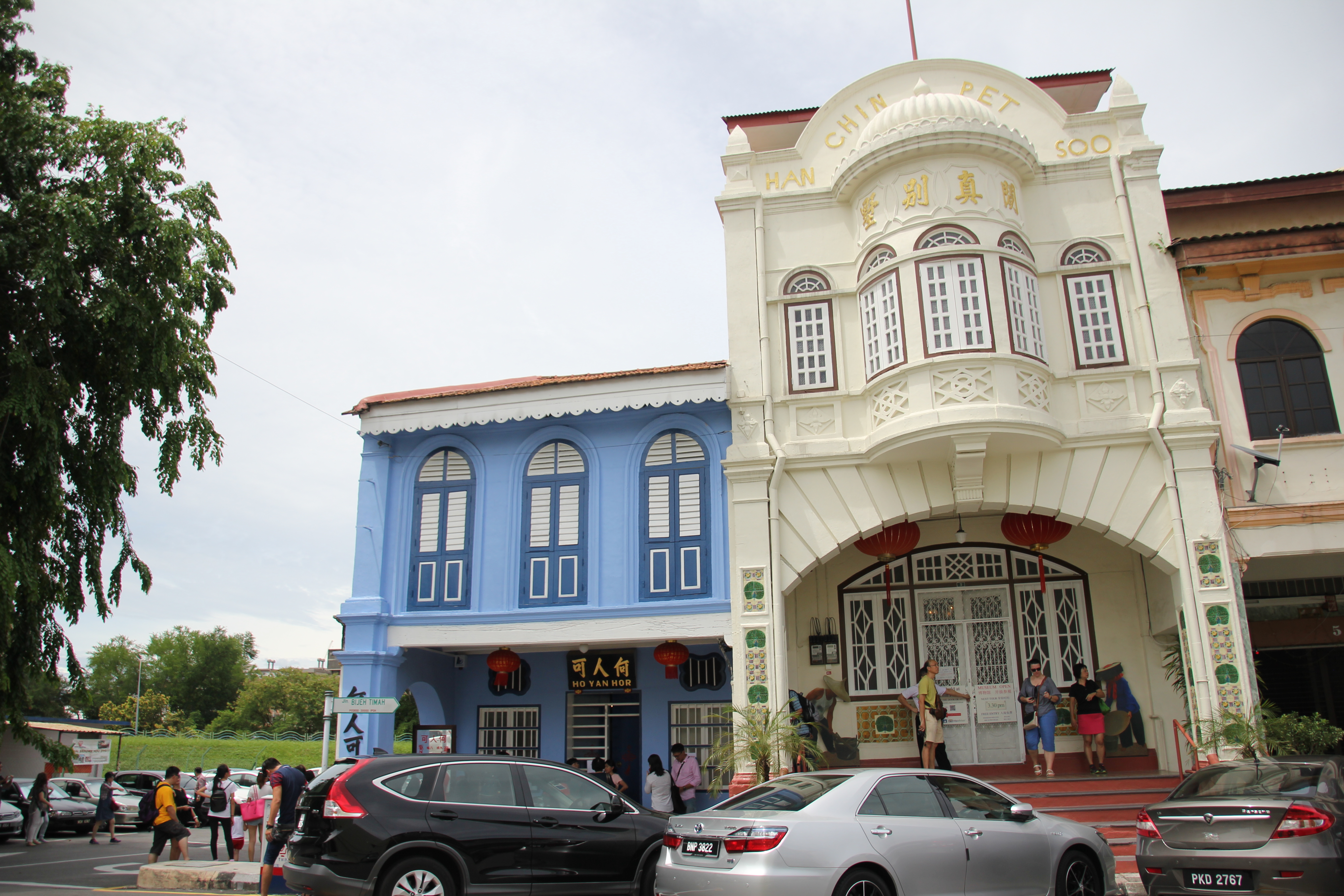
Tambun_Pictoglyphs_June2016 128At 2 pm prompt, we started our tour of the Han Chin Pet Soo museum. Han Chin Pet Soo, translated, means: Entertainment & Leisure Villa. It was a club for the very rich Hakka Chinese tin miners – it was invite only and no wives allowed (we found out why later…..!) The club was set up on 5th May 1893 and the building was donated by Towkay Leong Fee, a very rich tin mine owner.

Leong Fee came from China to Penang as a poor teenager. He heard that there may be tin in Ipoh, so he and 15 of his friends came to Ipoh where very soon he made enough money to buy his own tin mine; and the rest, as they say, is history. By 1893, he had 4 wives and 2 concubines. This was pretty normal for the time and this is also why these rich men decided they needed a place to get away from all those women (I guess it gave all the women a break from them too – a win, win).

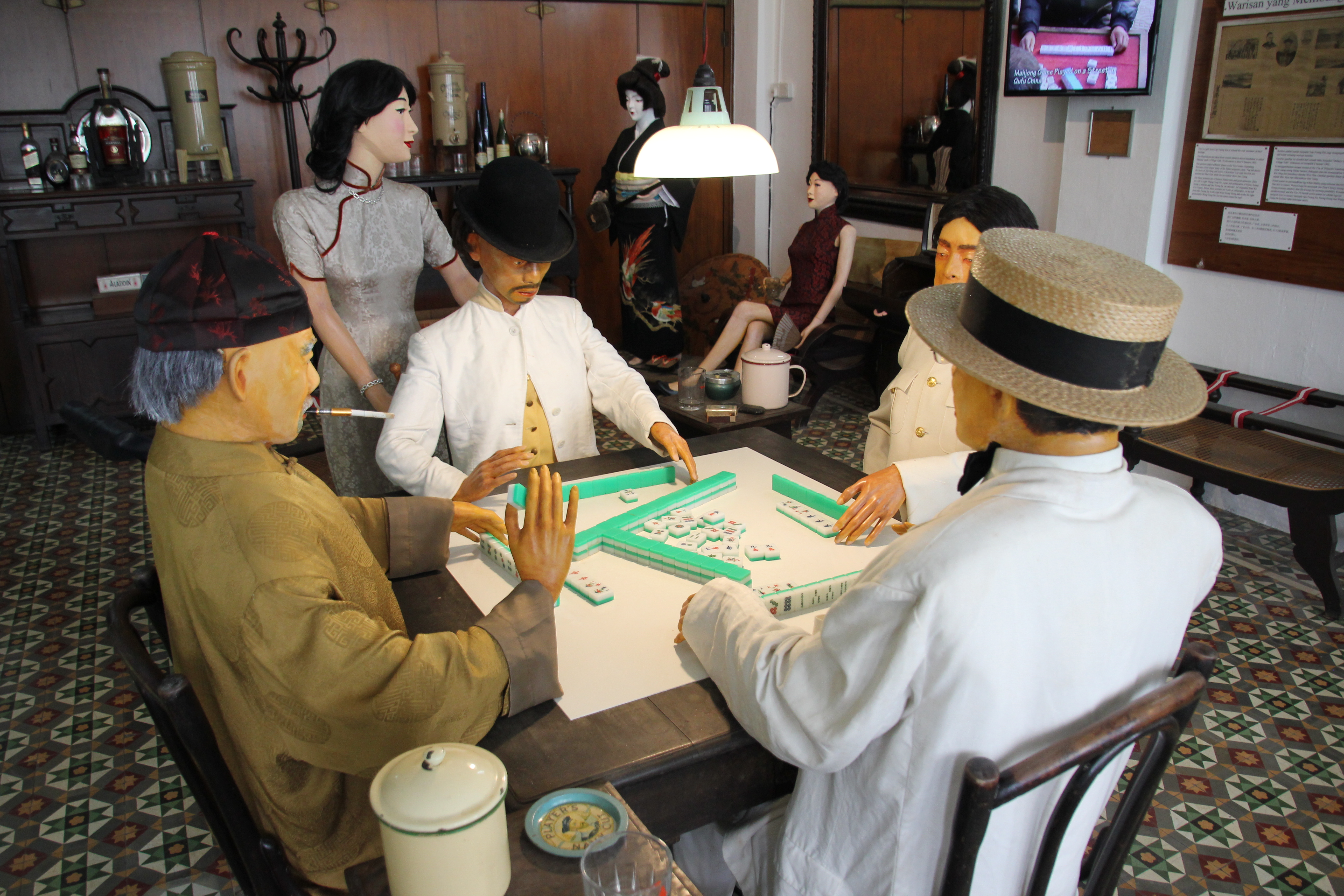
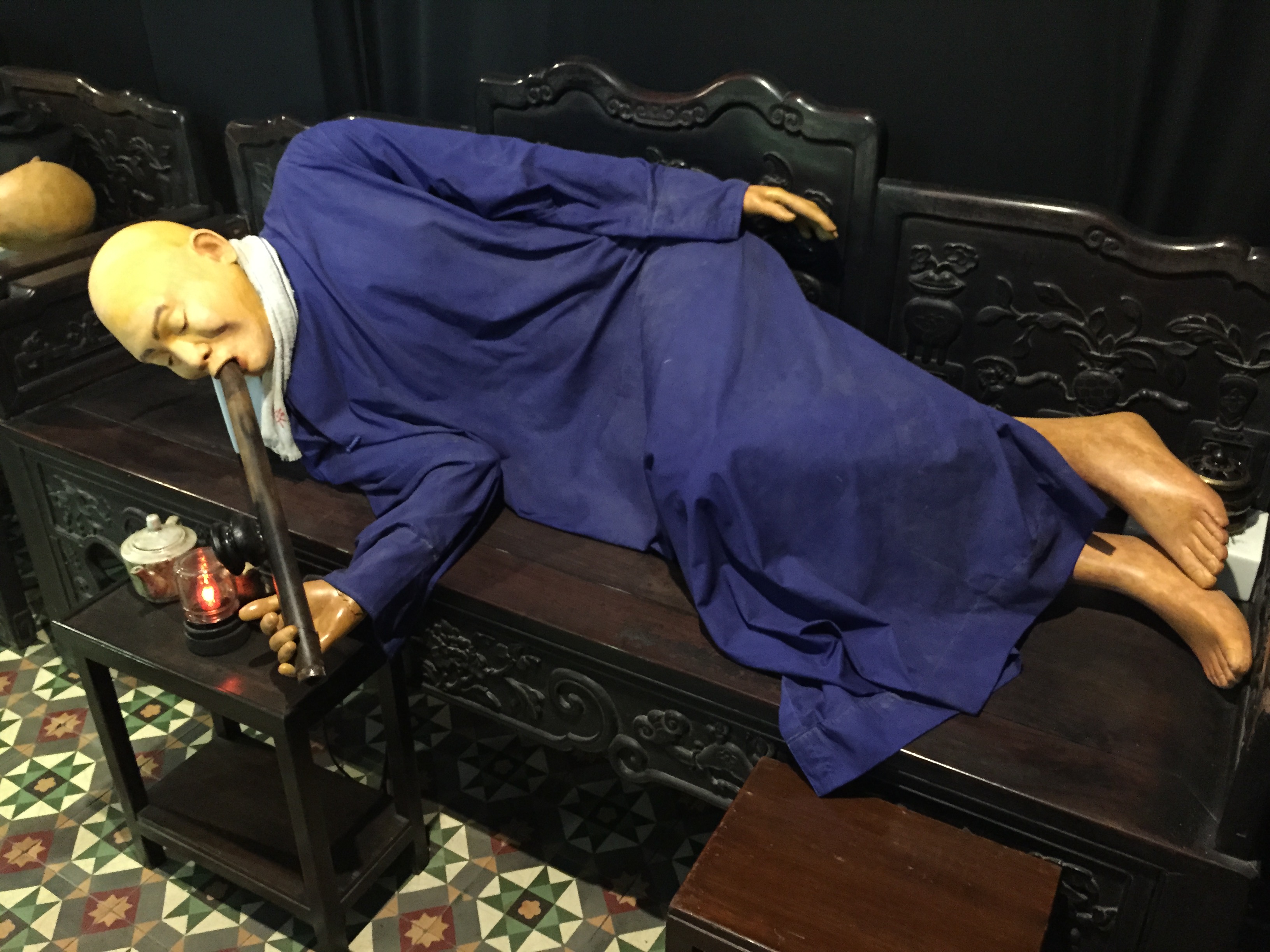
In 1929 the small building that Leong Fee had originally donated was knocked down and the building we see today was constructed. Upstairs was the leisure and pleasure area. It was described to us as the Four Evils – Gambling, Opium, Prostitutes & Secret Societies.

Tambun_Pictoglyphs_June2016 174There was a large gambling area for the men to play Mahjong or Russian Poker, along with many other card games. The prostitutes would wait on them, or entertain them with music and song and of course other prostitute activities, shall we say….. The majority of the prostitutes came over from Japan, but sadly when times got hard for the miners it got hard for these ladies too and many of the prostitutes found themselves begging on the streets to try and make ends meet.

IMG_4331We had an explanation of the opium habit. I had always wondered why hard porcelain pillows were used by opium users, they never look that comfortable. It was so they could put their possessions into the hollow of the pillow and then rest their heads back and enjoy their opium state and not have to worry about their personal items being stolen. I’m not sure what would stop a sober thief from lifting the stoned opium users head up, stealing their worldly goods and placing the unaware head back on the now empty porcelain pillow, but there you go, one probably doesn’t think logically when stoned!

The secret societies were seen as one of the evils as they really left people with no choice. You were told to join; you were told to fight until your death, if necessary; you were told what to do, when to do it and when to stop! And none of this was negotiable. Possibly OK if you were high up in the society, but if you were a lowly participant it can’t have been that good for you.

The average Chinese mine worker earned $1 a day. But as they could only work on days when it was not raining, this meant they didn’t have a steady income. That said, $1 was a lot of money then, a meal would cost about 1 cent, so these men would have probably felt pretty flush.

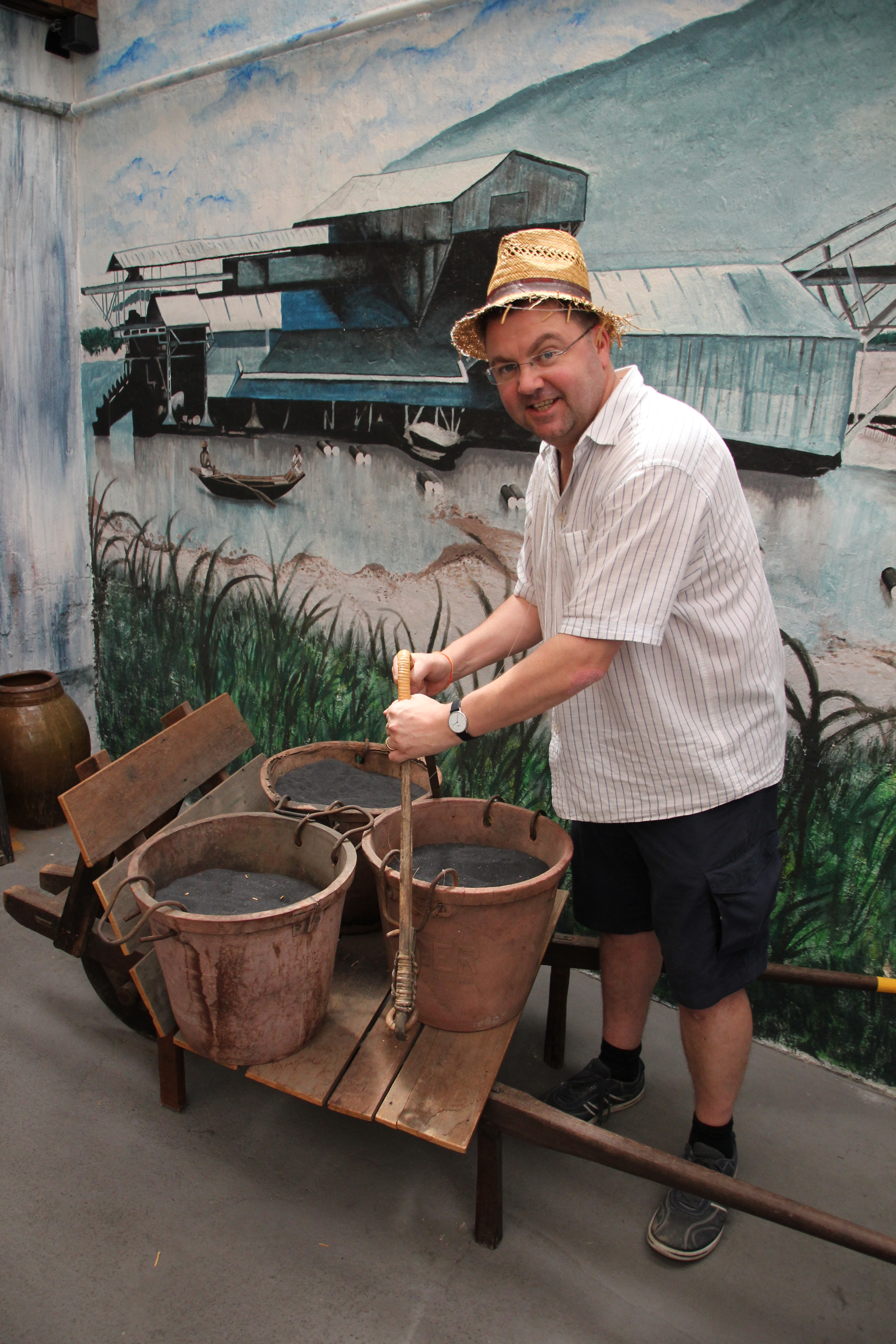
Tambun_Pictoglyphs_June2016 172You would think to carry the tin around, from mine and around the market place to be sold, they would use tin buckets, but no! Tin buckets were too heavy, even when empty, so rubber buckets were used instead, handy that by this time rubber plantations had really taken off.

Out of interest the last dredger to be built in Malaysia was in 1985. It’s still working today, but has been moved to Indonesia.

We finished our day with a trip around the Hor Yan Hor Herbal museum where we learned about the medicinal uses of all sorts of plants. We finished with a cooling brew which was perfect for the hot afternoon.

On our drive back home, my husband and I pondered on all we had seen. For such a new nation, there is very old history to be proud of and I would like to thank both Elizabeth & Yeow for bringing it to life for us and organising such a full, interesting and fun packed day. I can’t wait for the next tour!

Royal Selangor Visit (16 May 2016)

by Chen Poh Leng

As I approached the Royal Selangor Visitor Centre located in the light industrial suburb of Setapak, KL, I thought to myself how nice it would to be in a location with so much greenery all around. The building gave me a good first impression in that it had a pleasant look, had high ceilings, and was very airy and spacious. As I walked in, an elderly lady dressed elegantly in a bright red cheongsam wearing pretty beaded shoes caught my eye from a distance. Katherine, our event organiser, warmly greeted me and immediately introduced me to this lady, Datin Chen, who gave me the sweetest smile. It turns out that she is the director of the fine establishment and the granddaughter of the founder of this establishment. She was to be our gracious host.

IMG_20160516_101956
Datin Chen recounting highlights of the Royal Selangor history. Above her is an image of founder Yong Koon

The roots of the business goes way back to 1885 when a young man by the name of Yong Koon came all the way from Shantou, China to seek better fortunes.  It was tin that attracted him here. He brought with him pewter smith skills which he applied and improvised making beautiful high quality handcrafted items admired by many. Over the years, these skills were taught and passed down to both family and employees. The variety of items also grew exponentially over the years. The history of the country impacted the growth of the business. When the colonial masters were here, their demand for new items was introduced.  Over time, customer preferences changed and the business changed accordingly enabling it to thrive despite two world wars and four generations. As with many other family businesses, there were indeed family feuds but the strong and sensible ones pulled through and persevered to make it the fine establishment it is today. The colonial masters and foreign visitors were very impressed with the quality of the beautifully handcrafted items. Their purchases and good testimonials became a major factor in making it a global brand. It was precisely this that earned the business the right to use the word ‘Royal’ for its brand.

IMG_20160516_104027
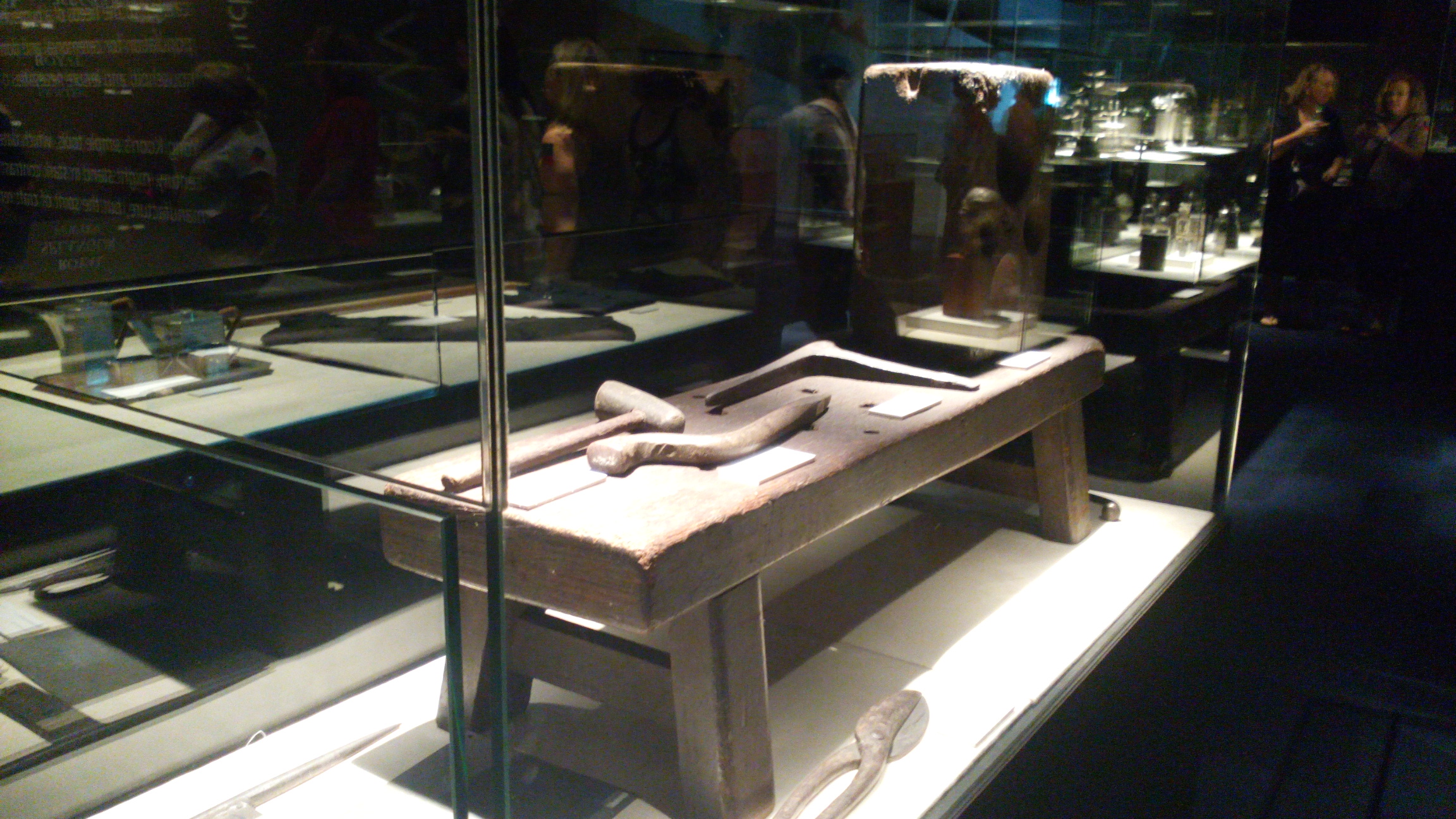
Some original hand tools used by early pewtersmiths
IMG_20160516_104013
….and the moulds!

The true story has it that during a visit to Perth Australia, the Sultan of Selangor then, the late father of the current Sultan of Selangor, was asked by a sales assistant from where he came. When he said Selangor, the sales assistant in turn asked ‘Selangor’ as in the brand ‘Selangor Pewter’? Yes, the Sultan replied. Of course, the Sultan was impressed that the brand was able to bring fame to his state and, so, he decreed that the business should include word ‘Royal’ in its brand name. With that, the brand value moved up higher.

Royal Selangor is world famous now with retail outlets all over the world. It has built a very strong brand and has contributed much in making Malaysia known globally as well. Every single one of their products is handcrafted and one hundred percent made in Malaysia and this brings us back to our visit.

IMG-20160518-WA0035
Hand imprints of employees

Datin Chen started our tour by taking us up a ‘walkalator’ that led us up to the first floor of the building where a small museum is housed. She first showed a wall displaying hand imprints of all the staff that had worked there for at least 5 years. New imprints are added to the wall every five years. I thought what a pleasantly creative way to symbolize one’s loyalty. We could see on the walls also, enlarged old photographs of the founder, his family including his descendants, and his employees going about their business in the earlier days. Viewing these photos conjured up nostalgic emotions in me. They reminded me of my own family’s collection of old photos. Both my parents were born and bred in KL. There were also photographs that showed famous visitors including that of American actor, William Holden and Bill Clinton. Other notable visitors included Martha Stewart, Christin Lagarde and of course, the late Sultan of Selangor.

IMG-20160518-WA0027
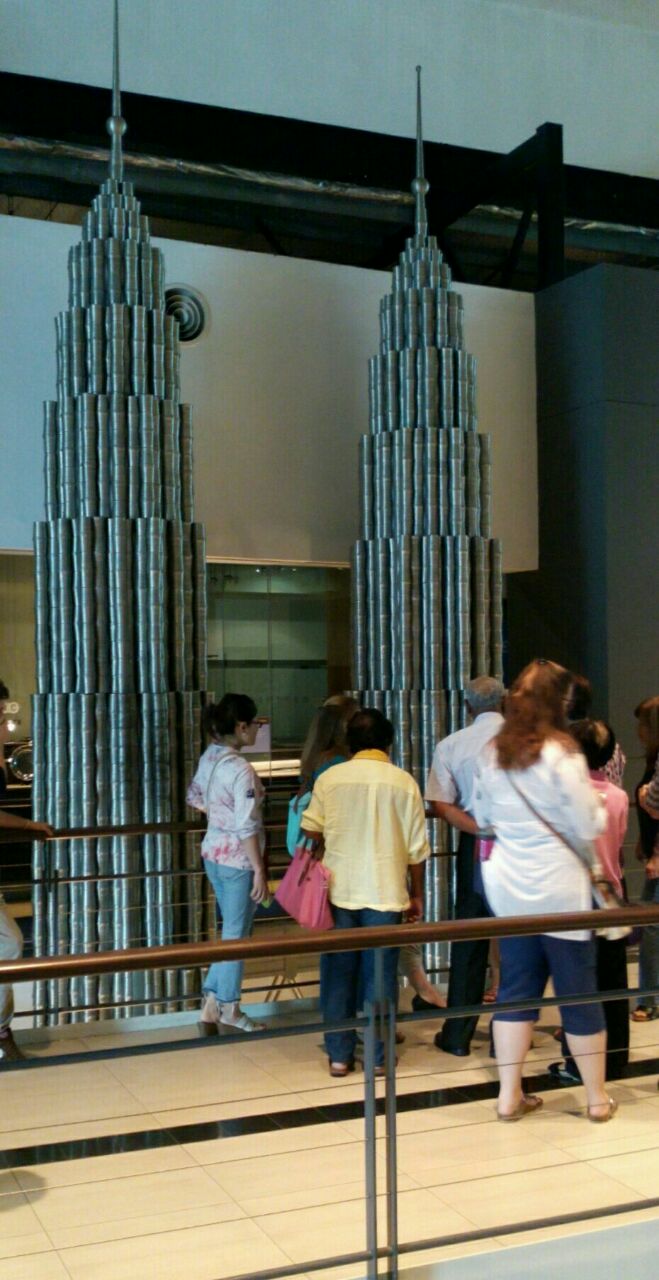
Model of Petronas Twin Towers

Next, we were introduced to exhibits of the old tools used in the early days. We also got to view items that were made in the earlier days such as incense burners, joss stick and candle holders plus other prayer items on Chinese altars plus everyday items such as teapots. There is also a model of the Petronas Twin Towers constructed entirely with pewter beer mugs about one fiftieth of the actual height of the twin towers.

We were privileged to enter into a glass enclosed area at the museum which is not opened to the public. Datin Chen said only special guests were allowed in. This area exhibits some of the finest silver sterling made under the brand Comyns. Royal Selangor acquired the London silver company Comyns in 1993. Along with this, came thousands of beautiful designs dating back to the 17th century. We were all awed by these lovely European designs.

IMG_20160516_105927
Inside the ‘silver room’ where precious moulds, tools, patterns and drawings representing the Comyns’ legacy are kept

Just before we entered the place where all the action was, i.e. the factory, we were served cold refreshing isotonic drinks in small pewter mugs. Datin Chen explained pewter properties did a good job keeping cold drinks cold. And for hot drinks, pewter ware is very good at retaining the heat. Having been refreshed, we were then able to witness how some of the work was carried out in the factory. Processes in the factory included casting, filling, scotching, hammering, polishing, buffing, soldering etc, most of which had to be done by hand. Each worker specialised in a specific process. Datin Chen explained that many of the senior workers had been working with the establishment from their teenage years right up to retirement where many had become grandparents.

IMG_20160516_112510
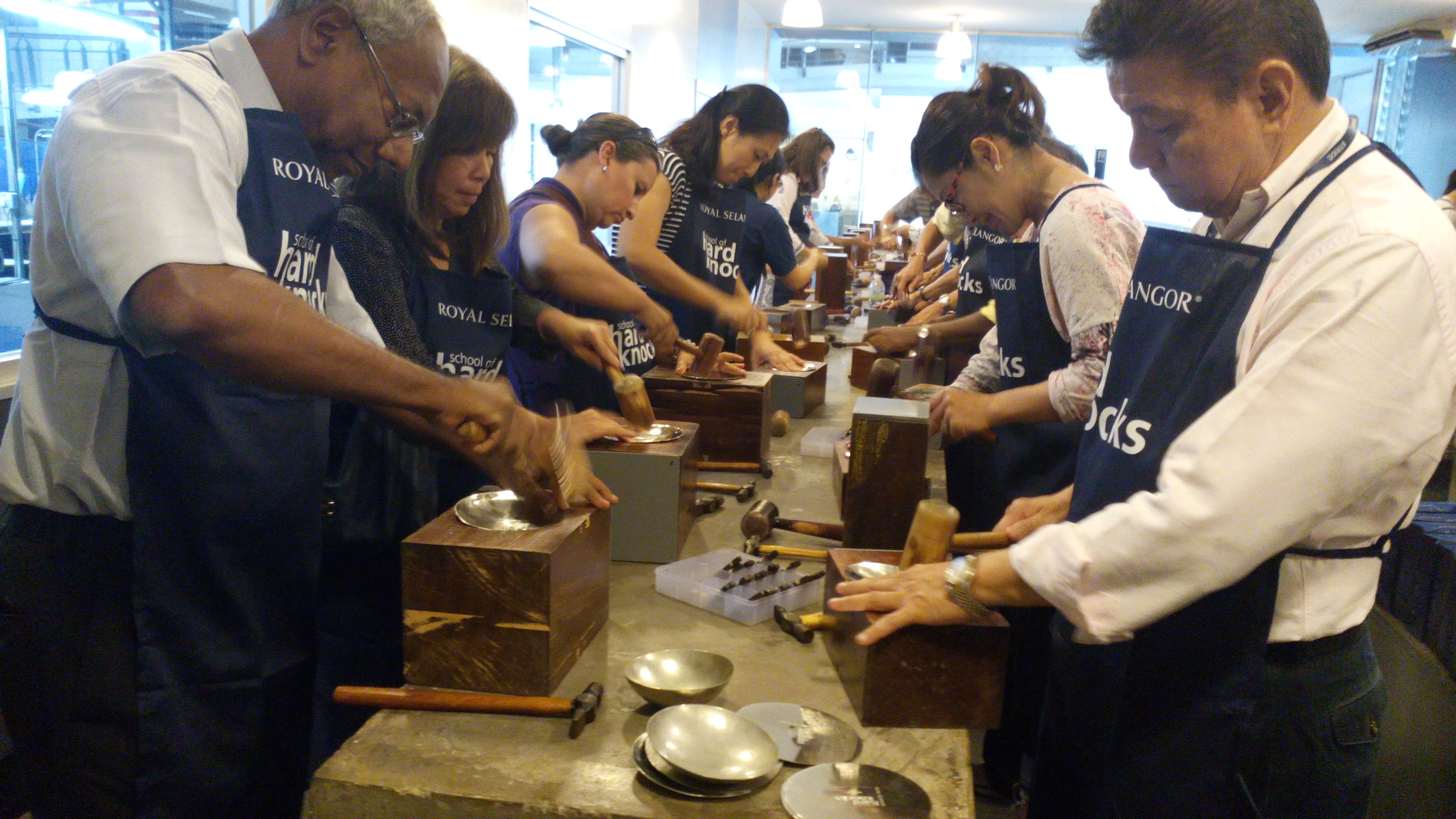
Trying our hands at hammering, a traditional way of pewter decoration

Following this was the most exciting part of our tour. We entered an enclosed area called the School of Hard Knocks where we all got into action. We were each given an apron, a pewter disc (much like a CD), a hammer and a wooden block which is actually the mould for the pewter bowls which we were to make ourselves. All the noise from the hammering then started. It was fun and exciting making our own bowls engraved with our initials. What a lovely souvenir to bring home. We got to keep the aprons with the words ‘School of Hard Knocks’ too! There is no way I can forget this exceptional experience. As we left, we were informed that visitors could also make their own hand accessories at the Foundry for a fee.

IMG_20160516_113938
Creating personalised pewter bowls at The School of Hard Knocks

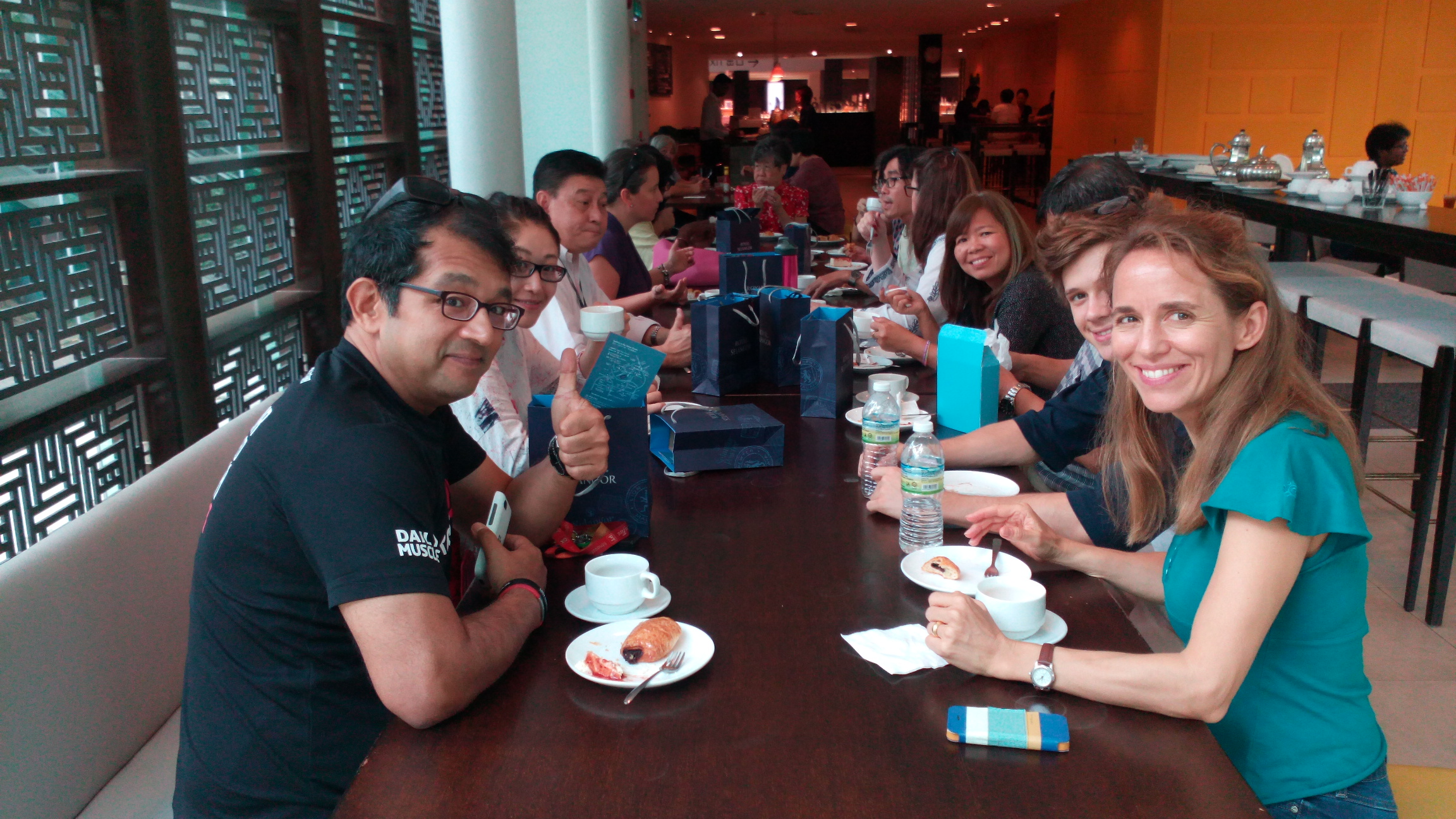
Having used much of our energy knocking hard, we were then brought to the in-house café where we were served delicious refreshments with hot coffee and tea. This café is clean and comfortable. It has a lovely ambience surrounded by lots of greenery. Datin Chen continued to entertain us with interesting stories relating to the business as we ate and drank. I noted that by the time we finished, the coffee and tea which was served with pewter pots, was still very hot. This is  proof of what Datin Chen claimed earlier about pewter’s property on heat retention.

IMG_20160516_120845
Sharing a great time at the Cafe over tea and refreshments

With contented tummies, we were then led to our final stage of the visit – retail therapy. There was a huge variety of items on display, all of them of good quality and beautifully crafted. Apart from pewter ware, there was silver sterling (under Comryns brand) plus fine jewellery (under Selberan brand). In 1972, Royal Selangor diversified into the manufacture of European jewellery when they started a joint venture business with a Swiss jeweller Eberhard and an Austrian gem setter, Angelmahr. The diversification into fine jewellery and silver sterling, Datin Chen explained, was the reason why the word pewter was dropped, making it just Royal Selangor today. Personally, I think pewter ware from here makes a perfect gift for foreigners as it is not only 100 percent handcrafted in Malaysia, but of good quality too.

We ended our visit with a group photo with Datin Chen taken with the biggest pewter tankard on earth just outside the visitor centre. Just before we left, we conveyed our deep gratitude to Datin Chen for her courteousness, warmth and generosity (her time, souvenirs from School of Hard Knocks and the refreshments at the café). Now I know we have this gem in my very own backyard, a must visit for any foreign visitor.

IMG_20160516_130119
MVs with Datin Chen and the record-breaking pewter tankard

(With thanks to Katherine Yip for photos and captions.)

On the Path of Prehistoric Migrations

by Maganjeet Kaur

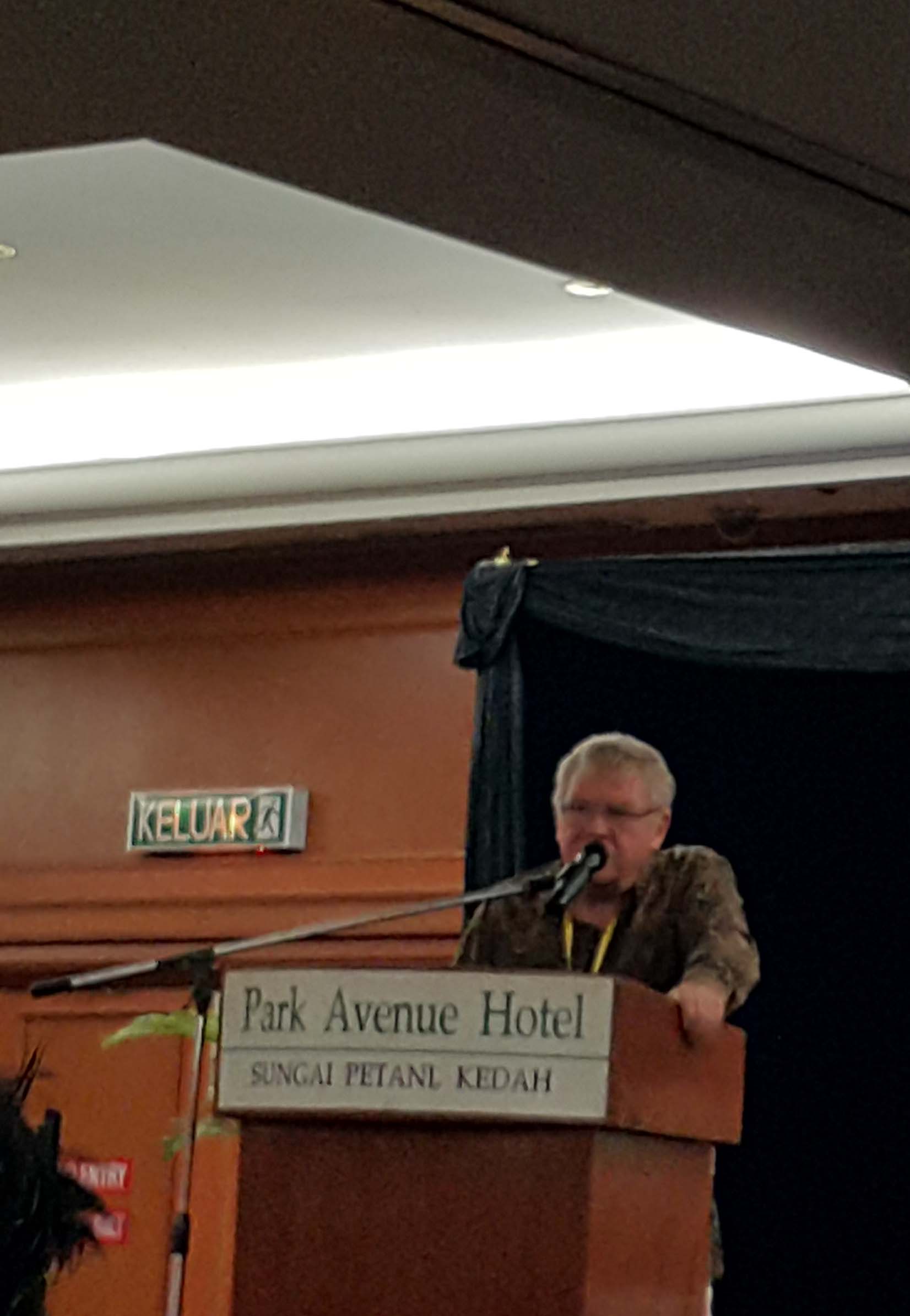
20160521_105656The Kedah Tua International Conference (KTIC) in Sungai Petani kick-started on 21 May 2016 with Dr Stephen Oppenheimer presenting the first keynote address. His presentation focused on using genetic phylogeography to trace the migration patterns in South East Asia. Two pieces of DNA are used to build a gene network: mitochondrial DNA (mtDNA) which is passed from mother to daughter and Y-chromosome (NRY) which is passed down the male line. As these two pieces of DNA do not recombine during reproduction, they are transmitted unchanged through the generations allowing scientists to trace human migrations through random mutations that occur in these DNA strands.

009
Three distinct worldwide sea-level rises (around 14 000, 11 500, and 8000 years ago), due to melting of the ice caps, caused the sinking of Sundaland. Photo taken from the display boards of Gallery A, Muzium Negara

A large part of Dr Oppenheimer’s presentation centred on a recently published paper that used genetic methods to study the ancestry of inhabitants in island South East Asia (ISEA). For the past 30 years, the Out of Taiwan theory has held sway to explain these origins. This theory is based primarily on linguistic evidence; the antecedents of Austronesian languages spoken in ISEA can be traced to the aboriginal population of Taiwan. By extension, Southern China is theorised as their original homeland. The Austronesian speaking population is said to have arrived in Taiwan from Southern China around 6500 ya. From Taiwan, they moved into the Philippines around 5000 ya and reached southern Philippines by 4000 ya. From here, there was rapid dispersal to the rest of ISEA and Oceania with arrival in the Pacific by 3000 ya.

A model that combines this Holocene colonisation with an earlier Pleistocene colonisation from Southern China via the mainland has successfully withstood attacks from detractors who favour a homeland from within the Sunda shelf. The Out of Sunda theory proposes that the inhabitants of ISEA originated from within ISEA itself and that it was the sinking of the Sunda platform which provided the impetus for dispersal. This turns things around and places insular South East Asians as ancestors of the aboriginal Taiwanese. Genetic evidence has been employed by scientists on both sides of the divide to support their views. The recent study conducted by a group of international scientists, of which Dr. Stephen Oppenheimer was a part, is the most comprehensive undertaken to date. It uses a combination of mtDNA, NRY, and published genome-wide data. The results are surprising in that while they mostly support the Out of Sunda theory, the study also detected minor migrations during the Late Holocene from Taiwan, corresponding to the Out of Taiwan time-frame. However, the study noted that these migrations did not have much influence on the ISEA gene pool and that the impact was mostly cultural and linguistic.

migration
Taken from http://www.bradshawfoundation.com/journey/

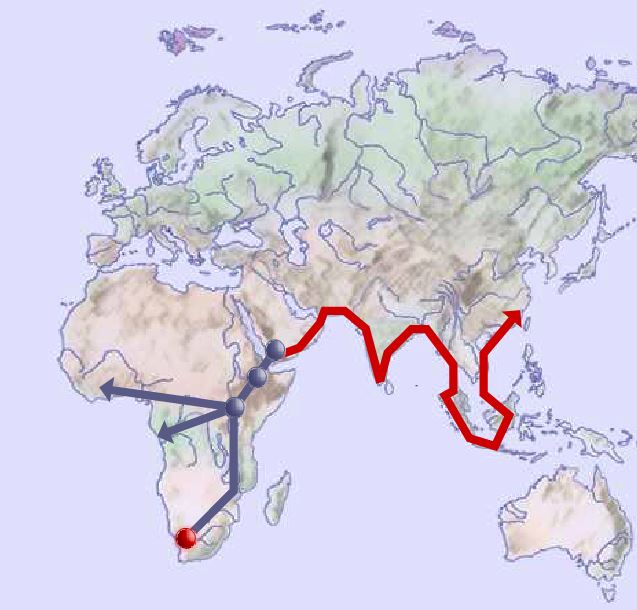
The story of human migration starts around 85 000 ya in East Africa when a group of Homo sapiens (modern humans) crossed the Red Sea into the Arabian Peninsula and then travelled along its coastline into the Indian subcontinent. All humans outside Africa are descended from this single exit. These beach-combers continued around the Indian Ocean coast to arrive at Lenggong Valley in the Malayan Peninsula by at least 74 000 ya. They then traversed the edge of the Sunda platform before moving north into Indo China and Southern China as well as south into Australia. It should be noted that an earlier migration out of Africa arriving at the Levant around 125 000 ya failed to populate the world as the onset of an ice-age either killed the population or forced them back into Africa.

20160521_110838
Taken during Dr Oppenheimer’s presentation

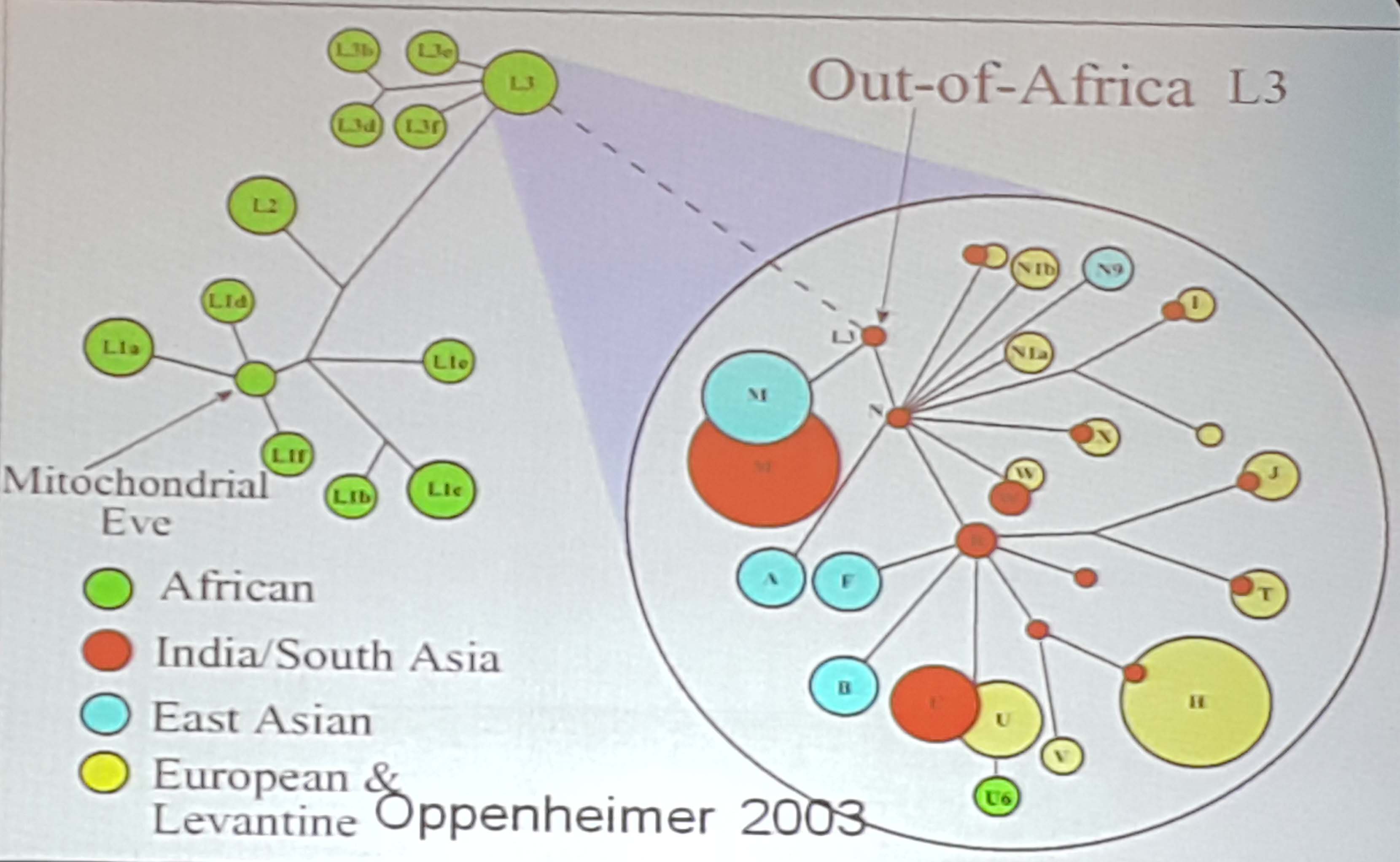
The diagram above shows clusters of gene types (mtDNA). The green circles represent gene types in Africa and the large circle on the right shows gene types in the rest of the world. The single exit out of Africa is represented by the haplogroup L3 which gave rise to two important branches outside Africa. The M branch evolved in present day India and is found in all humans outside Africa except Europeans and Levantines. The N branch evolved around present day Pakistan/Iran and is found in all humans outside Africa including Europeans and Levantines. The M supergroup gave rise to M9 which evolved in SEA around 50 000 ya. M9, in turn, gave rise to the haplogroup E which developed in Sundaland around 23 000 ya. This haplotype is widely dispersed and some of its daughters can be found in Taiwan; 15% of all gene lines in ISEA and Taiwan belong to haplogroup E.

One of the main reasons behind the wide dispersal of haplogroup E was the sinking of the Sunda platform caused by three rapid rises in sea levels between 15 000 and 7000 ya. The effects of these sea level rises can be seen in the genetic record – genetic drift, equivalent to extinction, corresponds to the three distinct rises in sea levels. The extinctions were followed by a major expansion of haplogroup E which expanded throughout ISEA, as far north as Taiwan, and east of Guinea. As the land halved and the coastline doubled, the population adapted itself to maritime activities allowing them to carry their genes far and wide.

The Austronesian migration can be seen through mtDNA haplotype M7c3c. It has a similar distribution as E but goes in the opposite direction. Coming from China into Taiwan, it spread from Taiwan into SEA around 4000 ya. This haplotype is present in around 8% of Indonesians.

20160521_111146
Taken during Dr Oppenheimer’s presentation

The diagram above shows that, along the route out of Africa, Sundaland has the highest number of founding branches, 30 in total, making it the most diverse place outside Africa. If we look at the indigenous populations of the Malayan Peninsula, 86% of their lineages come from locally founding Sunda lineages and 14% from East Asian lineages. For the Malay population, around 58% of their lineage is from local Sunda founding lineages, 38% from East Asia, and 4% from South Asia. Of the local Sunda lineages, 33% of these lineages go back 60 000 – 25 000 ya. Of the East Asia lineages, only 7% are from Taiwan.

14
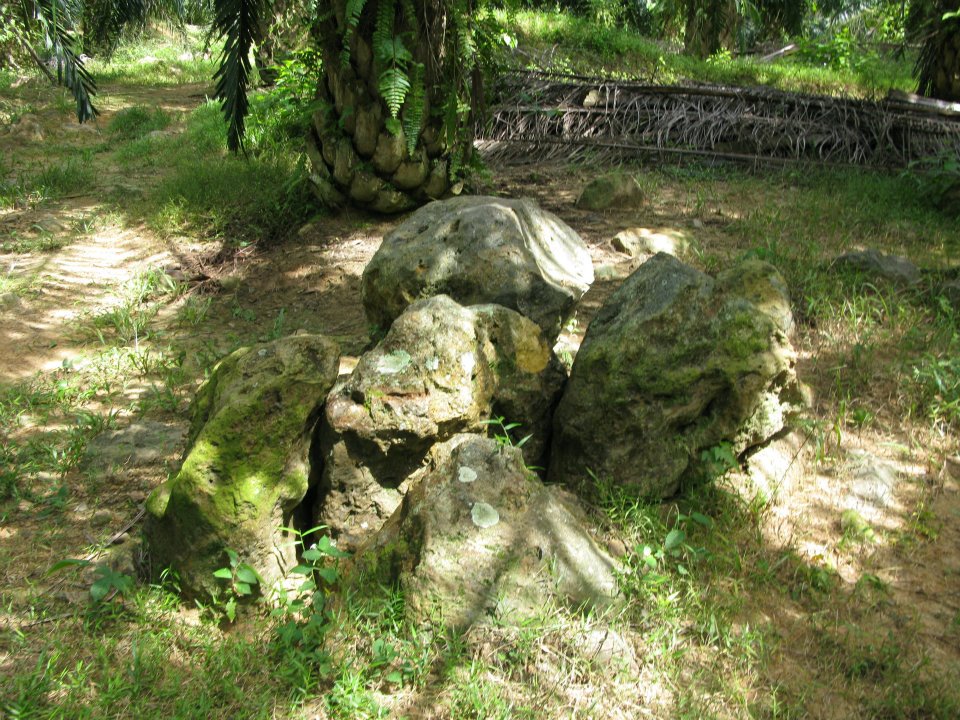
Suevite at Bukit Bunuh. Suevite is rock that has been transformed due to the high temperatures and pressure of a meteorite impact

The Malayan Peninsula not only facilitated movements from Indo China and East Asia to ISEA (the spread from Indo-China to ISEA associated with Hoabinhian culture is about 20 000 ya), it also facilitated movements from Africa to Indo China, East Asia, and Australia.

Archaeological evidence supports the assertion that Lenggong Valley was a key area on the migration path of humans. Kota Tampan in Lenggong Valley has yielded a stone tool making workshop covered in ash from the volcanic eruption that created Lake Toba in Sumatra. This ash dates to 74 000 ya attesting that modern humans must have arrived in Lenggong Valley before this eruption took place. The Lenggong Valley has also shown continuous settlement from 40 000 ya to present. The finding of a stone hand-axe dated to 1.83 million ya at Bukit Bunuh, about 1 km away from Kota Tampan, shows that Lenggong was also on the migration path for Homo erectus, an earlier species of the Homo genus. This hand-axe was found buried in suevite. Its discovery puts Lenggong Valley on the migration path of Homo erectus, whose best known representatives are the Java Man (700 000 years old) and Peking Man (500 000 – 300 000 years old).

MV Trip to Kuala Terengganu – Day 3

by Natalia Gutierrez

The agenda for the day 3 (Thursday 21.04.2016) in Kuala Terengganu included a visit to the Islamic Civilization Park and a photo stop at the Crystal Mosque as part of the highlights of the day. But at the end of the day, more landmarks were added to our agenda, and we were definitely delighted about all we had seen and learnt during the third day’s excursion in Kuala Terengganu.

It was almost 9:00 am when we started boarding the JMM bus. We thought we were heading directly to the Islamic Civilizations Park, but we made instead a detour and our first stop was: Shopping! And the question followed: Again?… Yet, this was a different type of shopping.

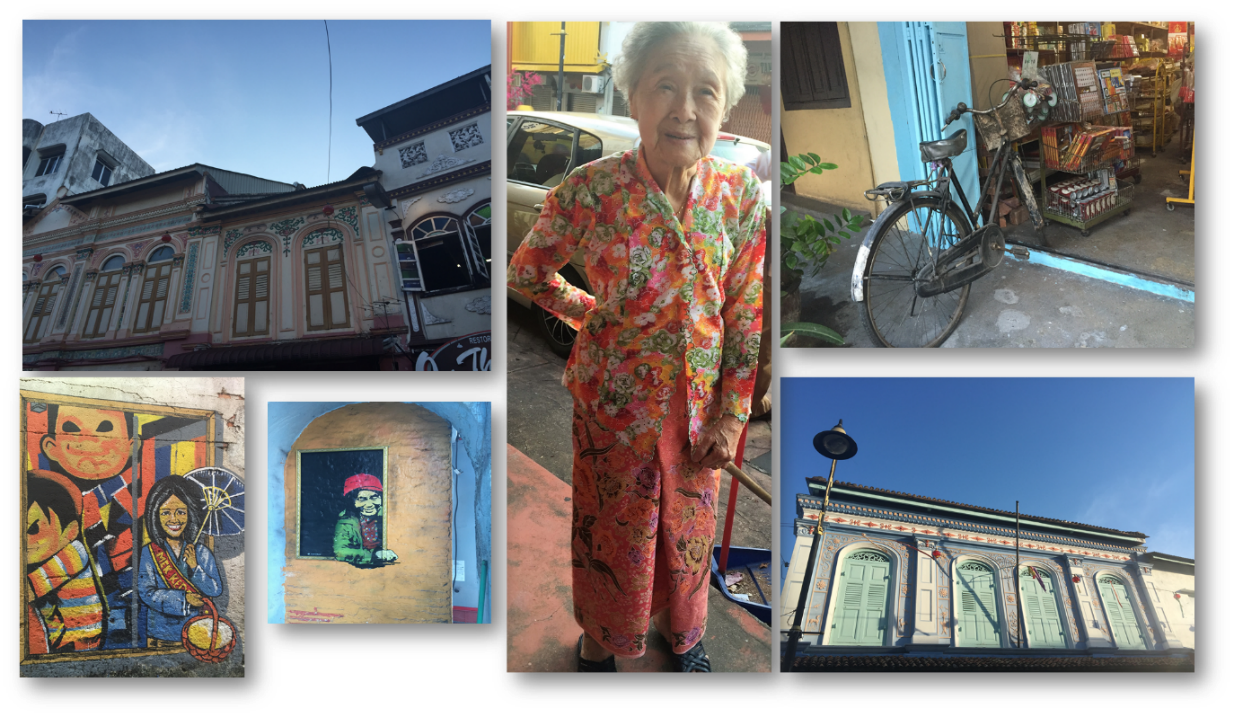
We headed to the old market ‘Kampong Tiong’ located within the boundaries of the Kampong Cina.

view from old mkt of kg tiong
View of the small old market of Kampong Tiong in Kampong Cina

Regarded as a heritage landmark in Kuala Terengganu, Kampong Cina, as it is named by the locals, or Chinatown as it is most commonly known, has maintained its features and traits since the late 19th century. The attractiveness of the centuries-old buildings along Jalan Bandar, granted the area a place on the Watch list of the World Monument Fund. Under the name of Kampong Cina River Frontage, the World Monument Fund helped to support the conservation of Malaysia’s historic waterfront district with the aim of “revitalizing Kampong Cina and upgrading the capabilities of the traditional structures, so growth could be accomplished while a unique way of life is preserved” (Wmf.org, 2015).

kg cina
Traditional structures and a gracious representative of Kampong Cina in Kuala Lumpur

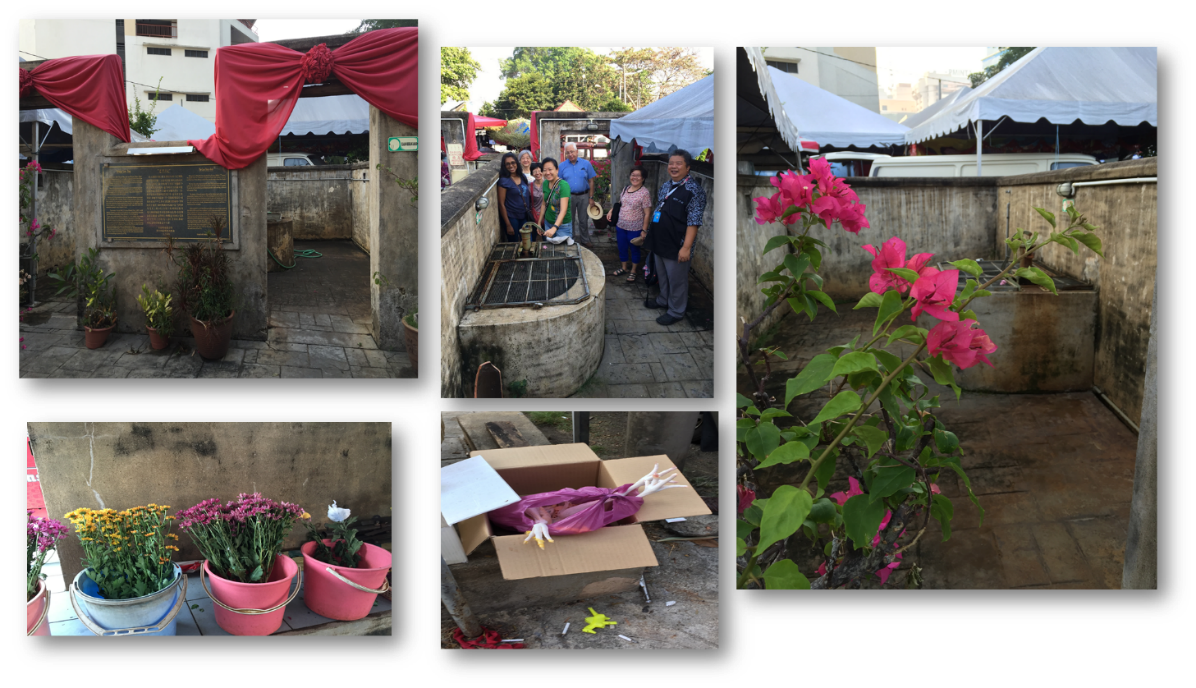
The arrival of the first Chinese migrants to Kuala Terengganu and the founding of the city’s Chinatown cannot be specifically dated “but some records indicate that Chinese settlers arrived here as early as the 16th century” (Hogan Jr, 2015). As we learned from the inscription on the wall in front of the Low Tiey´s well, the migration of Chinese came from the province of Fujian and started during the late Ming dynasty and early Ching dynasty (Yaw in Chinese Assembly Hall of Terengganu, 2004). Among the wanderers, there was a particular Chinese clan, who had travelled south from China about 300 years ago and settled in the area now known as Kuala Terengganu. The clan’s name was Lim, they were farmers and to cultivate the land, they dug up a well for the supply of water for the farm and for their domestic needs. The interesting story behind this well, which makes it a cultural and historical attraction in Kampong Cina, is that in 1875 the town of Kuala Terengganu experienced drought causing most of the wells to dry up except for the well of the Lim clan. They were kind enough to share theirs well’s water with the rest of the town’s folks. Mr Lim Keng Hoon was the family’s patriarch and was holding the post of Low Tiey at that time. The term Low Tiey can be understood as Chinese community leader (Myfareast.org, 2016). The Low Tiey’s well was named after Mr Lim in recognition of his family’s generosity during that period of time. The well was divided in two sections, male and female, to ease the bathing etiquette of the conservative society of the time.

The Low Tiey’s well at Kampong Cina

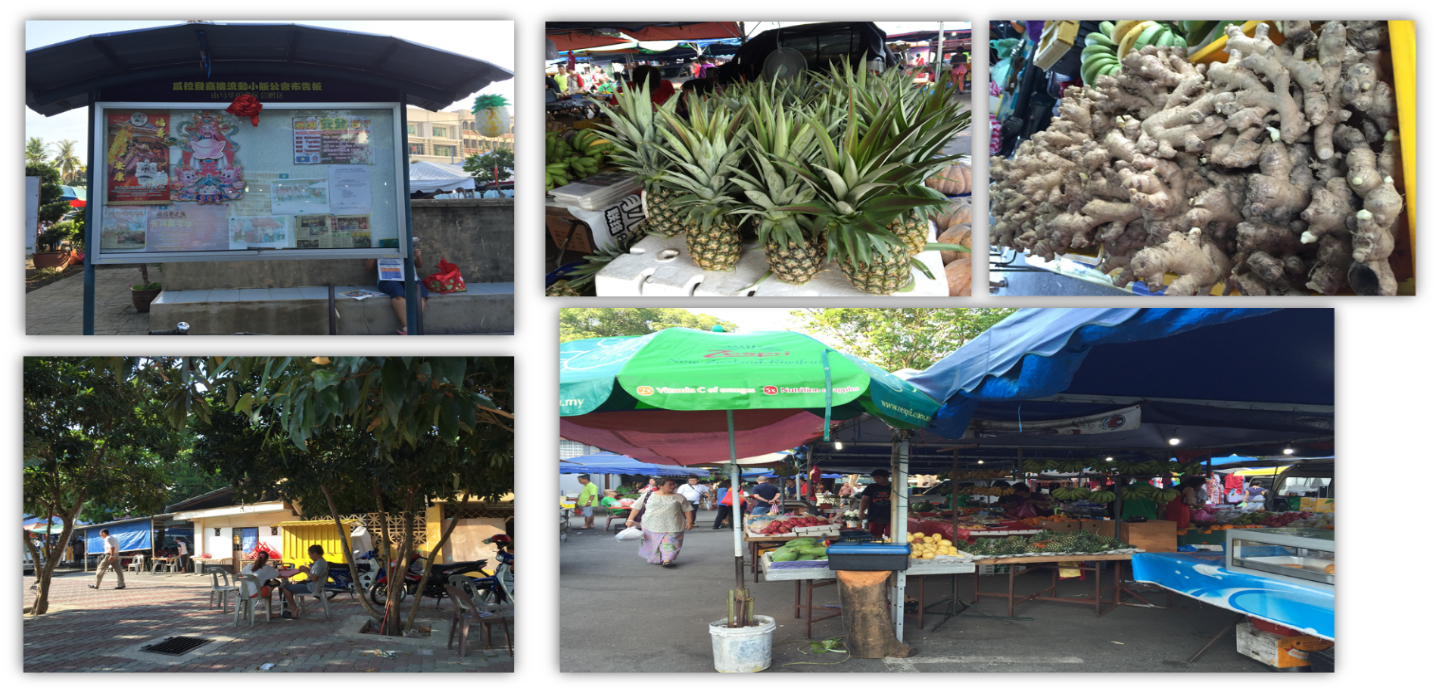
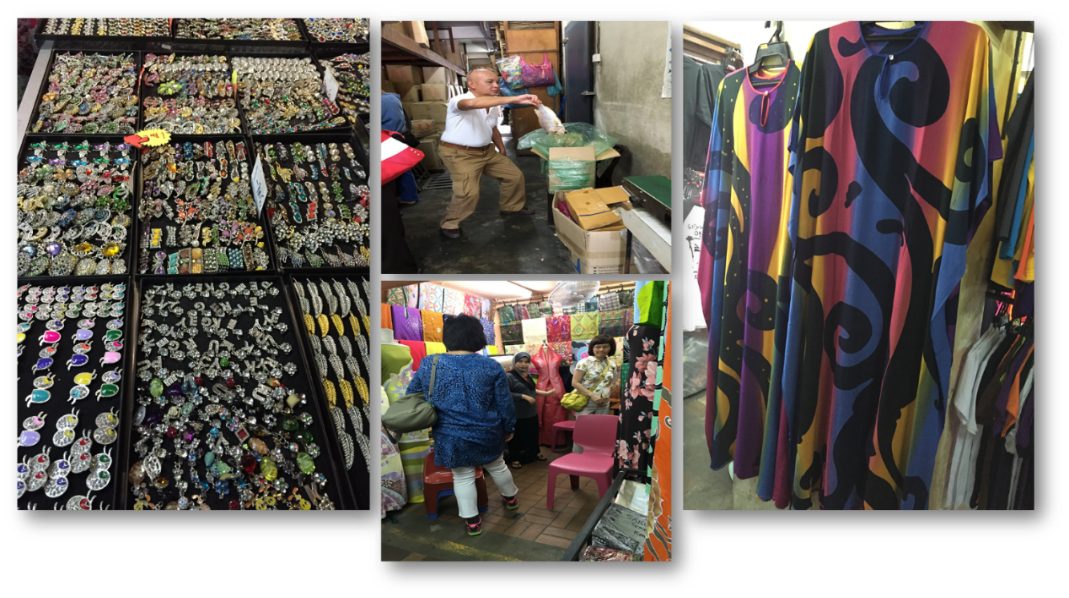
The Pasar Besar Payang was the next spot we visited. Housed in a two-storey building, the market has a wide range of products, from fishes, vegetables and fruits to regional handicrafts, such as batik and songket textiles, which were reasonably cheap and offered us early retail therapy for the day. As locals frequently do their shopping at the Pasar, this gives outsiders, the opportunity to experience local culture as well.

Impressions of the Pasar Besar Payang

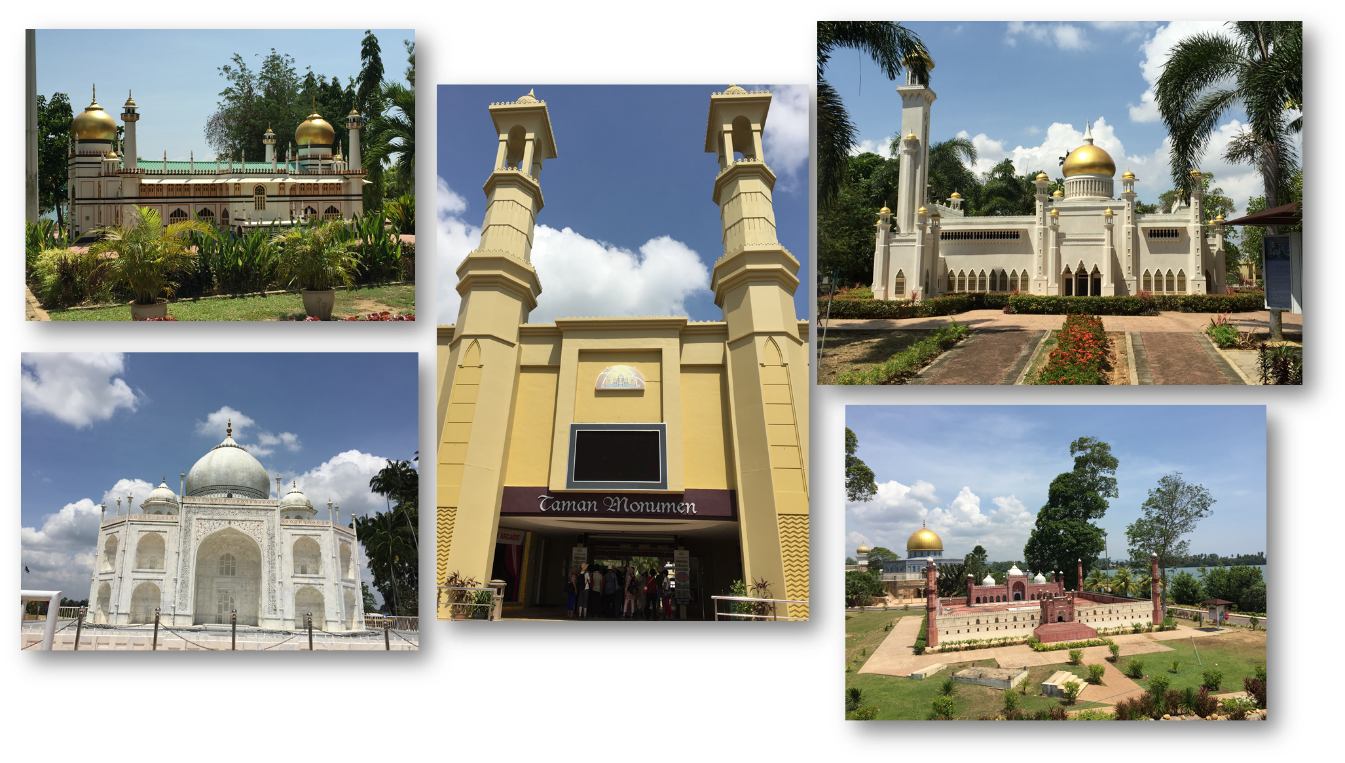
Right after we finished the shopping spree at the pasar, we moved forward in our tour schedule and continued our journey to the Islamic Civilizations Park. The park is promoted as an edutainment park with the mission to “provide alternative family recreational and educational activities based on the Islamic principles” (Tti.com.my, 2016). The Monument Park is a tourist attraction that showcases 22 replicas of Islamic architectural structures which are mostly places of worship for the Muslim community. The edutainment park also includes the Taman Tamandun Islam Water Wheel, which re-creates the theory of early Muslim engineering stored in the books of the Arab Muslim scholar and engineer Al-Jazari (Famous Inventors, 2016).

The Islamic buildings featured at the park are considered “glories of Islamic civilization from all over the world” (TTI.Org, 2016).  The visitors to this impressive Theme Park can get a glimpse of the iconic buildings of Islamic history through the meticulous replicas of 22 remarkable mosques, tombs and citadels from around the world. A documentary screening, available at some of the attractions, can be watched before proceeding with the visit of the whole structure. The documentaries and exhibition galleries add extra knowledge on the history behind each of the Islamic architectural masterpieces.

islamic civilization
Replicas of monuments of Islamic Civilization from around the world at the Taman Tamandun Islam

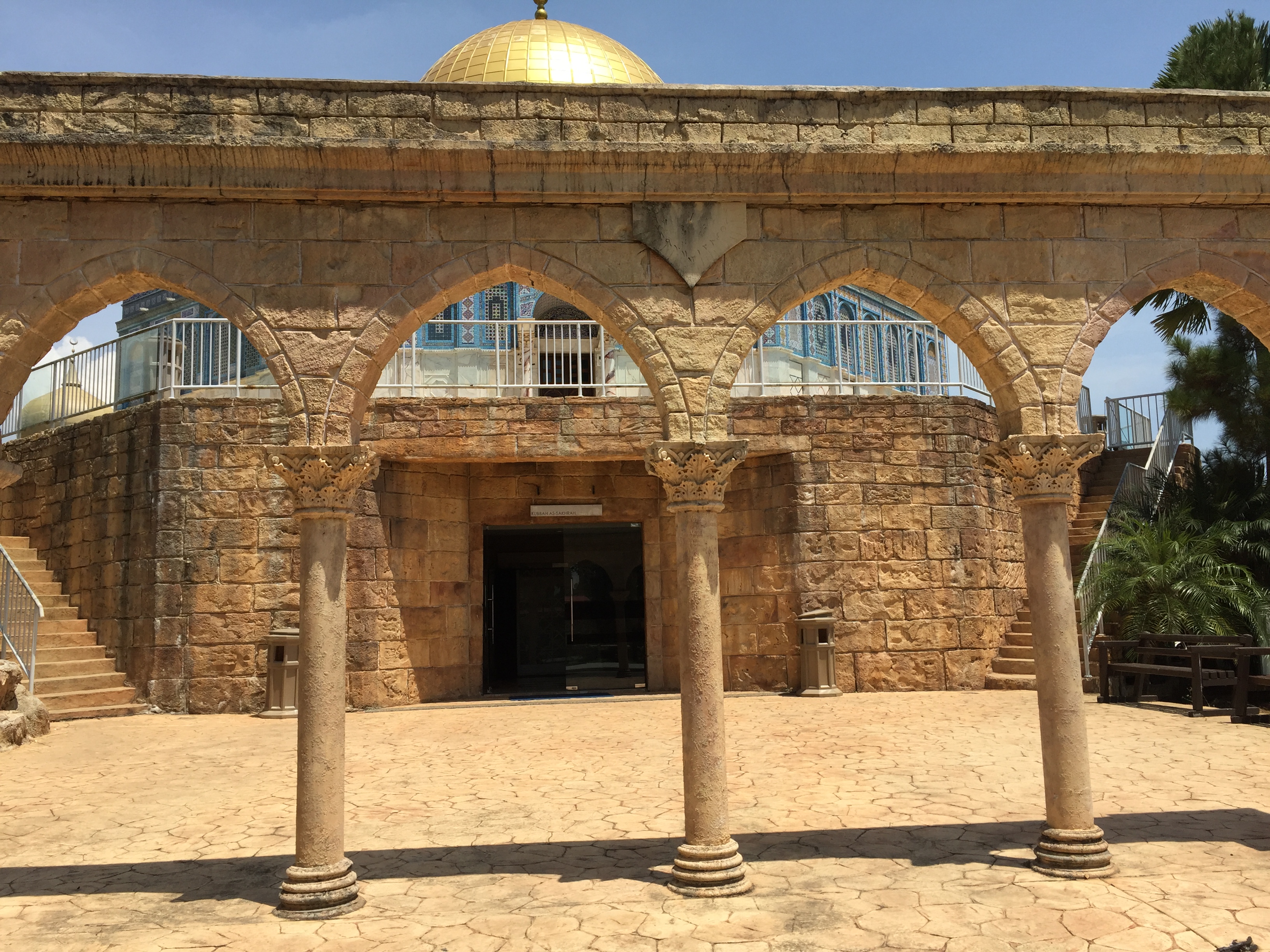
Among the replicas, the Dome of the Rock is one of a very impressive character. The shrine is located within the Al Masjid Al Aqsa area or Noble Sanctuary of Al Aqsa in in the Old City of Jerusalem. Under its Arabic names, the building is well-known as Masjid As-Sakhrah and Qubbat As-Sakhrah (Visitmasjidalaqsa.com, 2016).  It is situated in the middle of the plateau of Al Masjid Al Aqsa and was built in 692 C.E. by Al Malik ibn Marwaan. The Dome of the Rock building preserves the Sacred Rock commemorating “the Prophet’s Muhammad’s Ascension to Heaven accompanied by the angel Gabriel” (Newworldencyclopedia.org, 2016).

IMG_3953
An impressive replica of the Dome of the Rock, a marvelous monument of Islamic culture

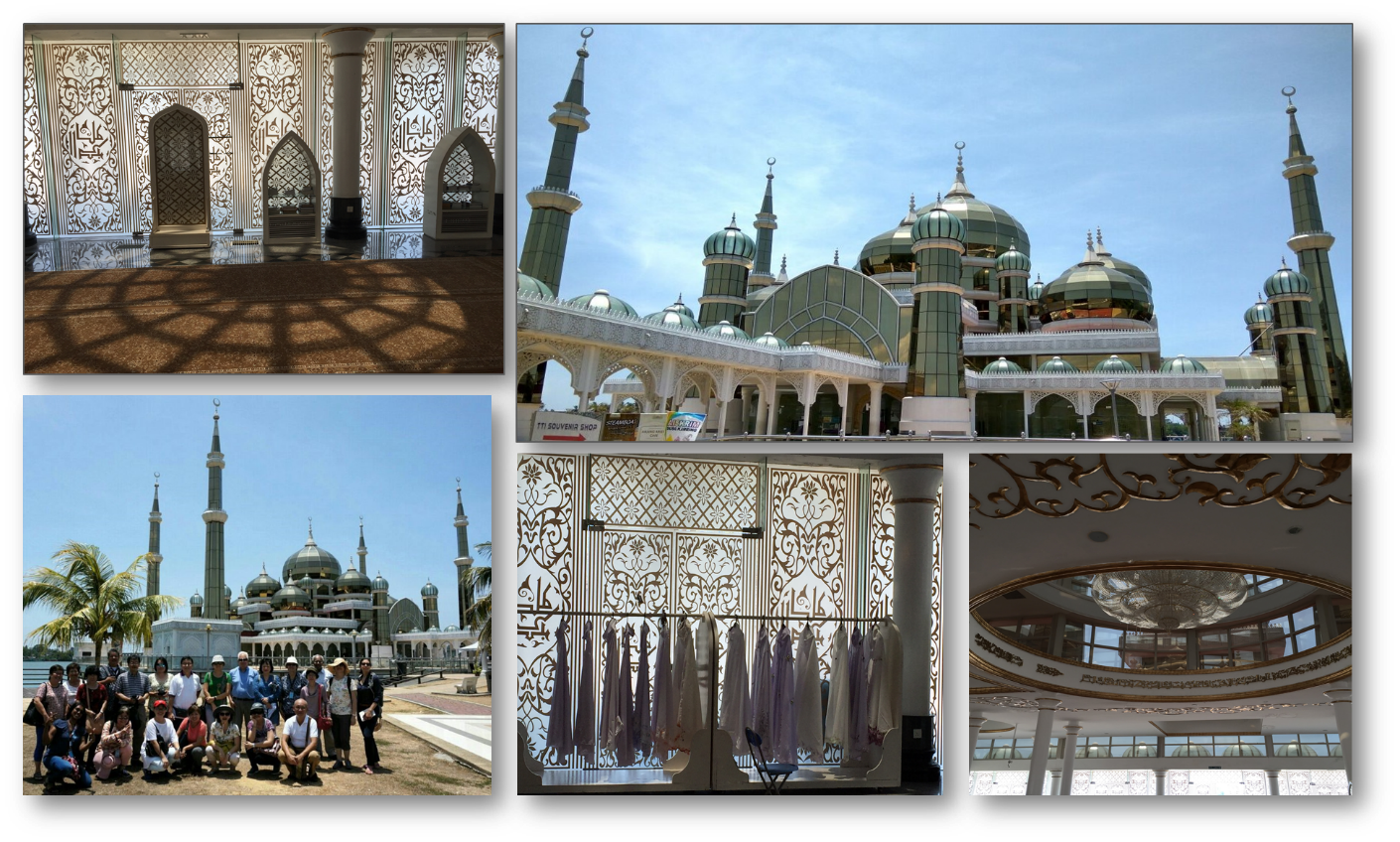
Another imposing construction in the vicinity of the park is the Crystal Mosque. Its construction started in 2006 and it was inaugurated in 2008. The outside structure is made of glass and steel, which gives its crystal-like appearance and therefore its name. The architectural style is basically contemporary but traces of Moorish and Gothic architecture were incorporated as well.  According to the Islamic Tourism Centre (2016) the Crystal Mosque is the country’s first ‘intelligent’ mosque with a built-in IT infrastructure and wifi connection, providing visitors with internet access.

crystal mosque
The stunningly beautiful Crystal Mosque

The excursion to the Taman Tamadun Islam concluded with a quick look at the souvenir arcade. Luckily, the shop also provided us with most needed snacks and drinks.  By the time we have finished the tour, we were hungry and quite overworked after touring the park at a ‘melting’ temperature of 38 degrees Celsius. We then ambled towards the photo stop at the Crystal Mosque to take de rigueur group photo before driving to the hawker center where we had our long awaited lunch.

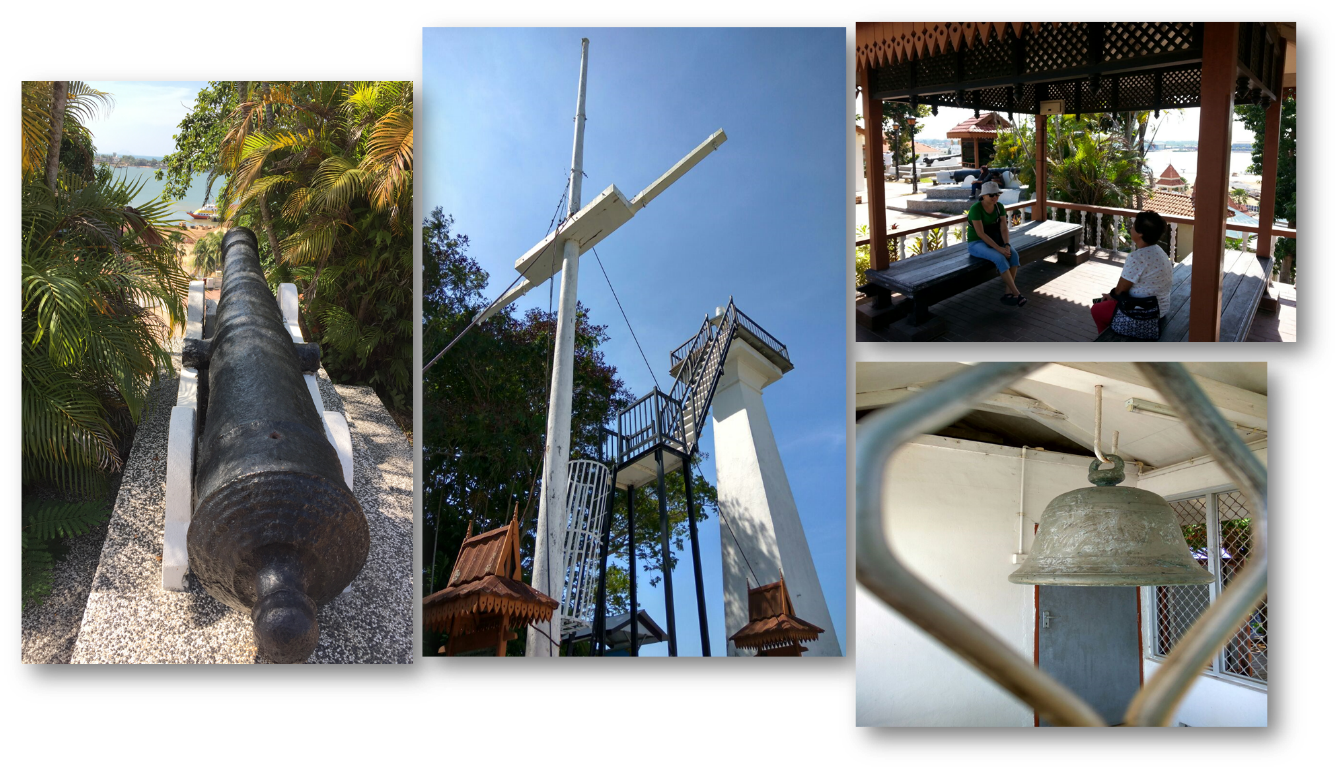
The last place of interest in our agenda was the Bukit Puteri or Princess Hill. We took the stairs and climbed up to the top of the hill. Elevated towards the Terengganu river and the South China Sea, the Princess Hill “has been a witness of the historical development of Kuala Terengganu” (Official Portal of Malaysia National Archives, 2016).  The breeze and the view of the Istana Maziah were most enjoyable.  The hill was used as a fortress during times of civil wars. Historical artifacts can be found at the top of the hill, among those: the Bell, made in 1908 to replace the original bell called ‘Negara’ which was made in 1853 during the reign of Sultan Umar. The Bell was used to alert the people about danger. The Throne of Sultan Umar can also be found at the fort. Last but not least, a lighthouse, which guided the fishermen and seaman to get to the port of Kuala Terengganu in past times, is placed at the hilltop.

bukit puteri
Views from Bukit Puteri

The day 3 of our MV trip to Kuala Terengganu ended with new experiences and brains fuller with knowledge.

well
Well at Low Tiey


References

Famous Inventors. (2016). Al-Jazari. [Online] Available at: http://www.famousinventors.org/al-jazari [Accessed 4 May 2016].

Myfareast.org. (n.d.). Terengganu. [Online] Available at: http://www.myfareast.org/Malaysia/terengganu.html [Accessed 4 May 2016].

Hogan Jr, D. (2015). Time-travel to Kuala Terengganu’s Chinatown. Free Malaysia Today. [Online] Available at: http://www.freemalaysiatoday.com/category/leisure/2015/10/28/time-travel-to-kuala-terengganus-chinatown/ [Accessed 4 May 2016].

Islamic Tourism Centre. (2016). Masjid Kristal (Crystal Mosque). [Online] Available at: http://www.itc.gov.my/mosque/masjid-kristal-crystal-mosque/ [Accessed 10 May 2016].

Newworldencyclopedia.org. (2016). Dome of the Rock. [Online] Available at: http://www.newworldencyclopedia.org/entry/Dome_of_the_Rock [Accessed 5 May 2016].

Official Portal of Malaysia National Archives. (2016). Bukit Puteri. [Online] Available at: http://www.arkib.gov.my/en/web/guest/bukit-puteri [Accessed 10 May 2016].

Tti.com.my. (2016). Mission & Vision | Taman Tamadun Islam. [Online] Available at: http://www.tti.com.my/about/company/missionvision [Accessed 10 May 2016].

Visitmasjidalaqsa.com. (2016). Islamic History of Al Masjid Al Aqsa. [Online] Available at: http://www.visitmasjidalaqsa.com/islamic-history-of-al-masjid-al-aqsa/ [Accessed 10 May 2016].

Wmf.org. (2016). Kampung Cina River Frontage. World Monuments Fund. [Online] Available at: https://www.wmf.org/project/kampung-cina-river-frontage [Accessed 4 May 2016].