Royal Selangor Visit (16 May 2016)

by Chen Poh Leng

As I approached the Royal Selangor Visitor Centre located in the light industrial suburb of Setapak, KL, I thought to myself how nice it would to be in a location with so much greenery all around. The building gave me a good first impression in that it had a pleasant look, had high ceilings, and was very airy and spacious. As I walked in, an elderly lady dressed elegantly in a bright red cheongsam wearing pretty beaded shoes caught my eye from a distance. Katherine, our event organiser, warmly greeted me and immediately introduced me to this lady, Datin Chen, who gave me the sweetest smile. It turns out that she is the director of the fine establishment and the granddaughter of the founder of this establishment. She was to be our gracious host.

IMG_20160516_101956
Datin Chen recounting highlights of the Royal Selangor history. Above her is an image of founder Yong Koon

The roots of the business goes way back to 1885 when a young man by the name of Yong Koon came all the way from Shantou, China to seek better fortunes.  It was tin that attracted him here. He brought with him pewter smith skills which he applied and improvised making beautiful high quality handcrafted items admired by many. Over the years, these skills were taught and passed down to both family and employees. The variety of items also grew exponentially over the years. The history of the country impacted the growth of the business. When the colonial masters were here, their demand for new items was introduced.  Over time, customer preferences changed and the business changed accordingly enabling it to thrive despite two world wars and four generations. As with many other family businesses, there were indeed family feuds but the strong and sensible ones pulled through and persevered to make it the fine establishment it is today. The colonial masters and foreign visitors were very impressed with the quality of the beautifully handcrafted items. Their purchases and good testimonials became a major factor in making it a global brand. It was precisely this that earned the business the right to use the word ‘Royal’ for its brand.
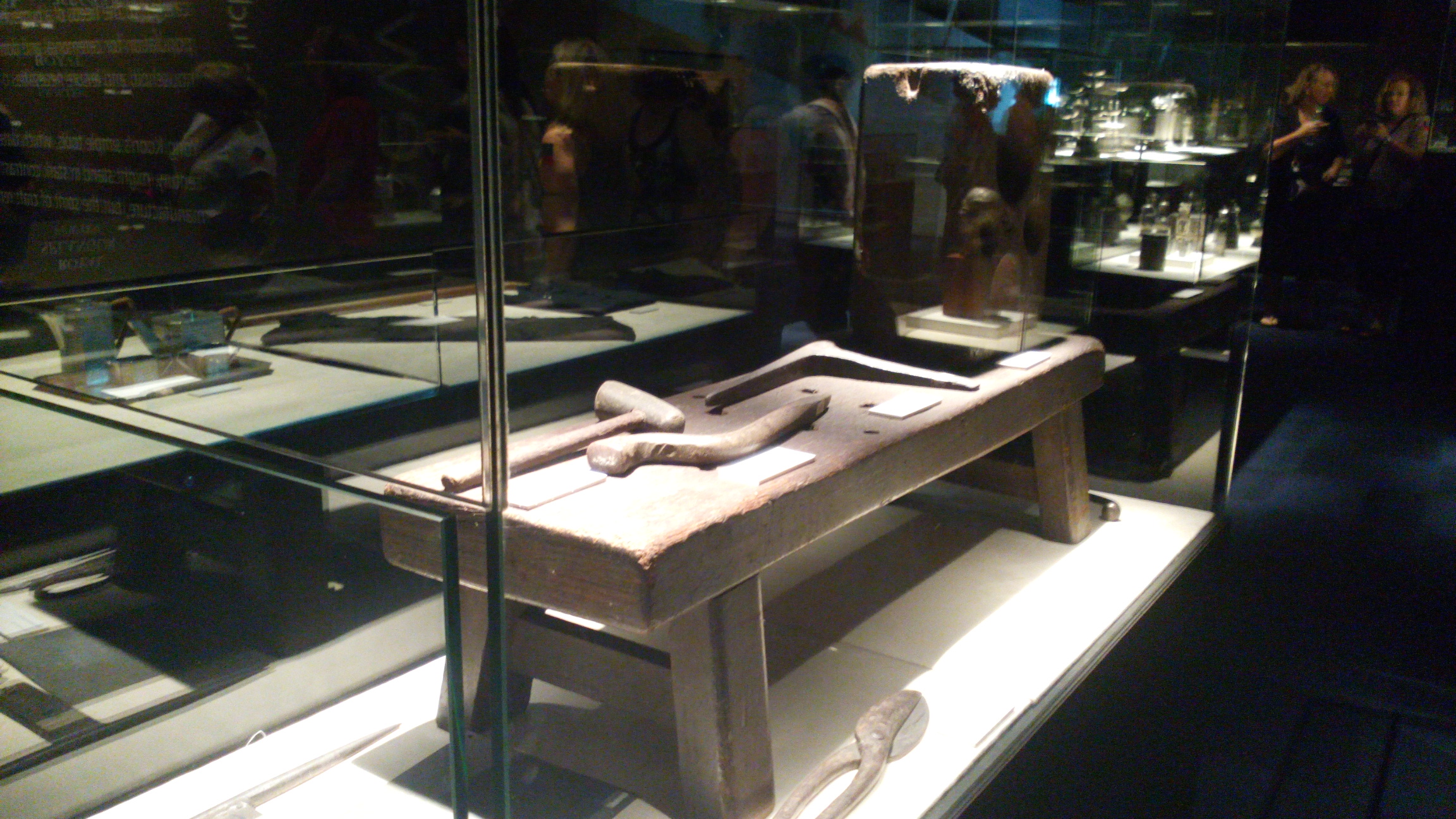
IMG_20160516_104027
Some original hand tools used by early pewtersmiths
IMG_20160516_104013
….and the moulds!

The true story has it that during a visit to Perth Australia, the Sultan of Selangor then, the late father of the current Sultan of Selangor, was asked by a sales assistant from where he came. When he said Selangor, the sales assistant in turn asked ‘Selangor’ as in the brand ‘Selangor Pewter’? Yes, the Sultan replied. Of course, the Sultan was impressed that the brand was able to bring fame to his state and, so, he decreed that the business should include word ‘Royal’ in its brand name. With that, the brand value moved up higher.

Royal Selangor is world famous now with retail outlets all over the world. It has built a very strong brand and has contributed much in making Malaysia known globally as well. Every single one of their products is handcrafted and one hundred percent made in Malaysia and this brings us back to our visit.

IMG-20160518-WA0035
Hand imprints of employees

Datin Chen started our tour by taking us up a ‘walkalator’ that led us up to the first floor of the building where a small museum is housed. She first showed a wall displaying hand imprints of all the staff that had worked there for at least 5 years. New imprints are added to the wall every five years. I thought what a pleasantly creative way to symbolize one’s loyalty. We could see on the walls also, enlarged old photographs of the founder, his family including his descendants, and his employees going about their business in the earlier days. Viewing these photos conjured up nostalgic emotions in me. They reminded me of my own family’s collection of old photos. Both my parents were born and bred in KL. There were also photographs that showed famous visitors including that of American actor, William Holden and Bill Clinton. Other notable visitors included Martha Stewart, Christin Lagarde and of course, the late Sultan of Selangor.
IMG-20160518-WA0027
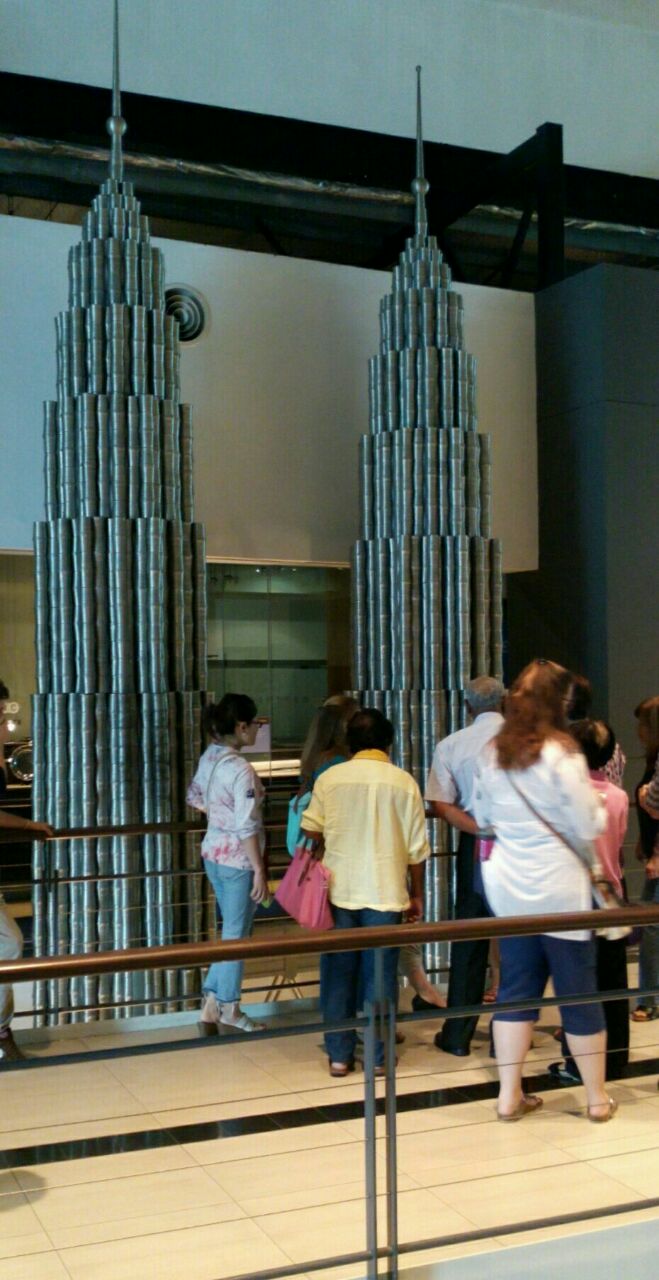
Model of Petronas Twin Towers

Next, we were introduced to exhibits of the old tools used in the early days. We also got to view items that were made in the earlier days such as incense burners, joss stick and candle holders plus other prayer items on Chinese altars plus everyday items such as teapots. There is also a model of the Petronas Twin Towers constructed entirely with pewter beer mugs about one fiftieth of the actual height of the twin towers.

We were privileged to enter into a glass enclosed area at the museum which is not opened to the public. Datin Chen said only special guests were allowed in. This area exhibits some of the finest silver sterling made under the brand Comyns. Royal Selangor acquired the London silver company Comyns in 1993. Along with this, came thousands of beautiful designs dating back to the 17th century. We were all awed by these lovely European designs.

IMG_20160516_105927
Inside the ‘silver room’ where precious moulds, tools, patterns and drawings representing the Comyns’ legacy are kept

Just before we entered the place where all the action was, i.e. the factory, we were served cold refreshing isotonic drinks in small pewter mugs. Datin Chen explained pewter properties did a good job keeping cold drinks cold. And for hot drinks, pewter ware is very good at retaining the heat. Having been refreshed, we were then able to witness how some of the work was carried out in the factory. Processes in the factory included casting, filling, scotching, hammering, polishing, buffing, soldering etc, most of which had to be done by hand. Each worker specialised in a specific process. Datin Chen explained that many of the senior workers had been working with the establishment from their teenage years right up to retirement where many had become grandparents.

IMG_20160516_112510
Trying our hands at hammering, a traditional way of pewter decoration

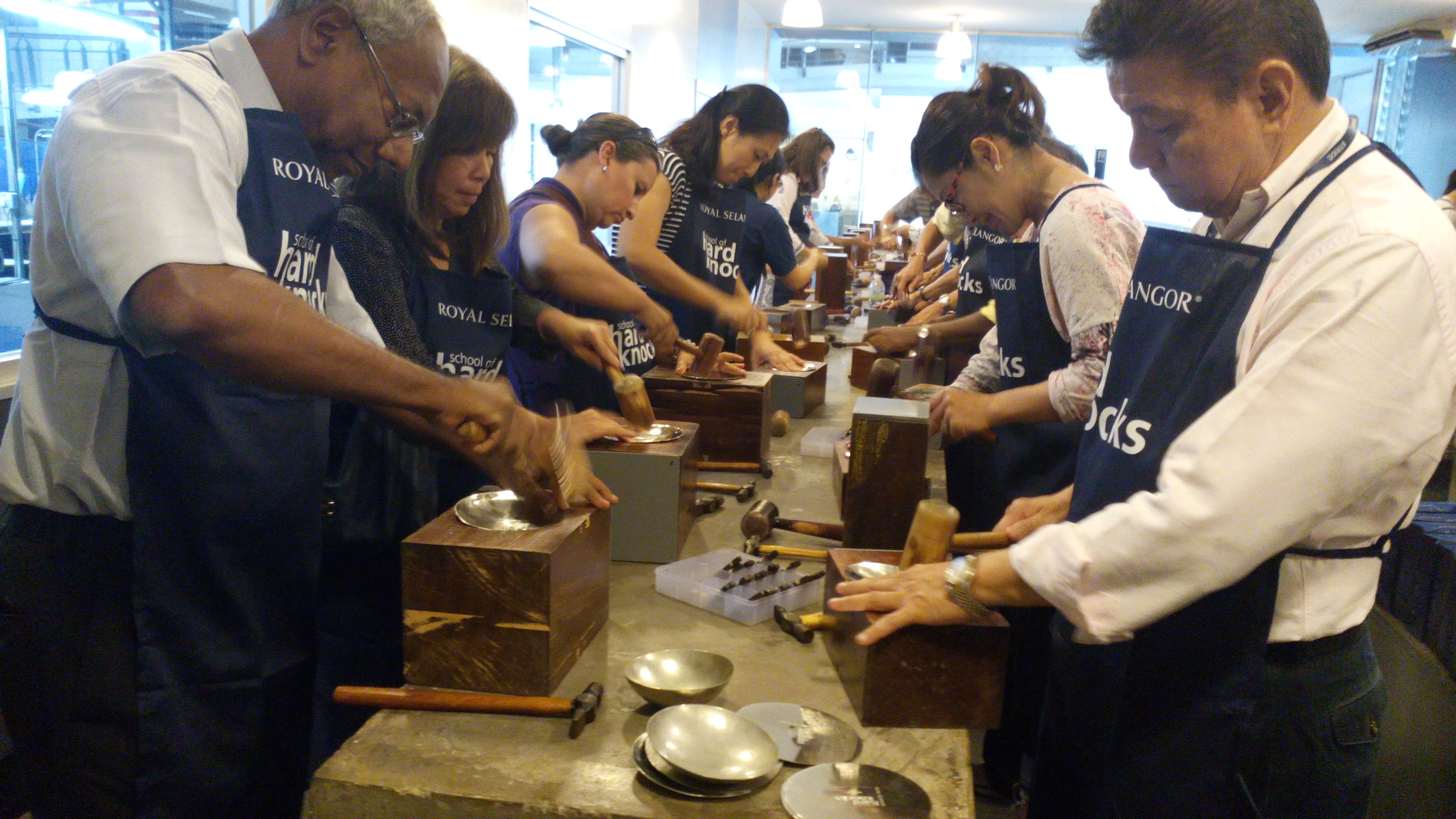
Following this was the most exciting part of our tour. We entered an enclosed area called the School of Hard Knocks where we all got into action. We were each given an apron, a pewter disc (much like a CD), a hammer and a wooden block which is actually the mould for the pewter bowls which we were to make ourselves. All the noise from the hammering then started. It was fun and exciting making our own bowls engraved with our initials. What a lovely souvenir to bring home. We got to keep the aprons with the words ‘School of Hard Knocks’ too! There is no way I can forget this exceptional experience. As we left, we were informed that visitors could also make their own hand accessories at the Foundry for a fee.
IMG_20160516_113938
Creating personalised pewter bowls at The School of Hard Knocks

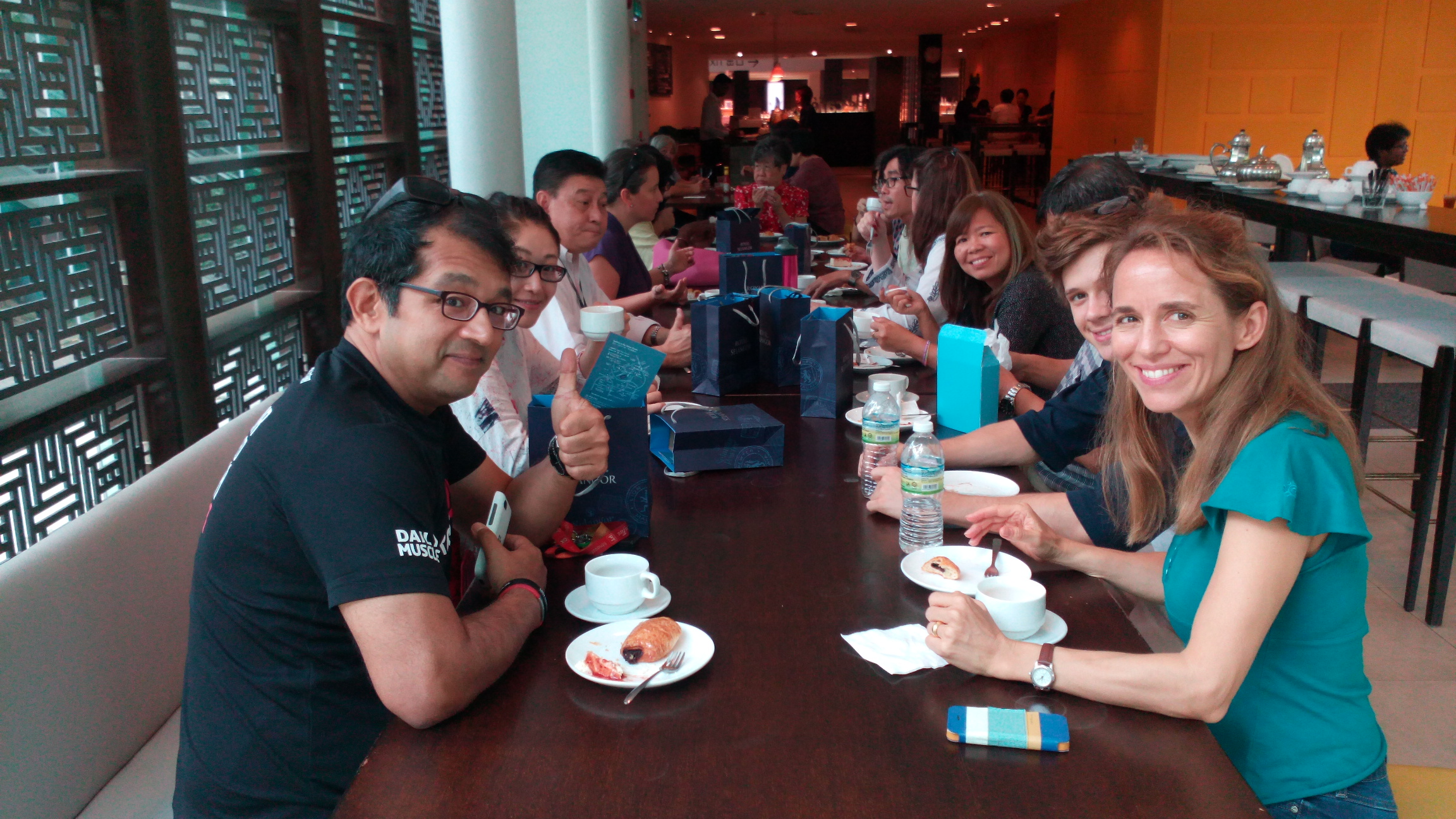
Having used much of our energy knocking hard, we were then brought to the in-house café where we were served delicious refreshments with hot coffee and tea. This café is clean and comfortable. It has a lovely ambience surrounded by lots of greenery. Datin Chen continued to entertain us with interesting stories relating to the business as we ate and drank. I noted that by the time we finished, the coffee and tea which was served with pewter pots, was still very hot. This is  proof of what Datin Chen claimed earlier about pewter’s property on heat retention.
IMG_20160516_120845
Sharing a great time at the Cafe over tea and refreshments

With contented tummies, we were then led to our final stage of the visit – retail therapy. There was a huge variety of items on display, all of them of good quality and beautifully crafted. Apart from pewter ware, there was silver sterling (under Comryns brand) plus fine jewellery (under Selberan brand). In 1972, Royal Selangor diversified into the manufacture of European jewellery when they started a joint venture business with a Swiss jeweller Eberhard and an Austrian gem setter, Angelmahr. The diversification into fine jewellery and silver sterling, Datin Chen explained, was the reason why the word pewter was dropped, making it just Royal Selangor today. Personally, I think pewter ware from here makes a perfect gift for foreigners as it is not only 100 percent handcrafted in Malaysia, but of good quality too.

We ended our visit with a group photo with Datin Chen taken with the biggest pewter tankard on earth just outside the visitor centre. Just before we left, we conveyed our deep gratitude to Datin Chen for her courteousness, warmth and generosity (her time, souvenirs from School of Hard Knocks and the refreshments at the café). Now I know we have this gem in my very own backyard, a must visit for any foreign visitor.

IMG_20160516_130119
MVs with Datin Chen and the record-breaking pewter tankard

(With thanks to Katherine Yip for photos and captions.)
On the Path of Prehistoric Migrations

by Maganjeet Kaur

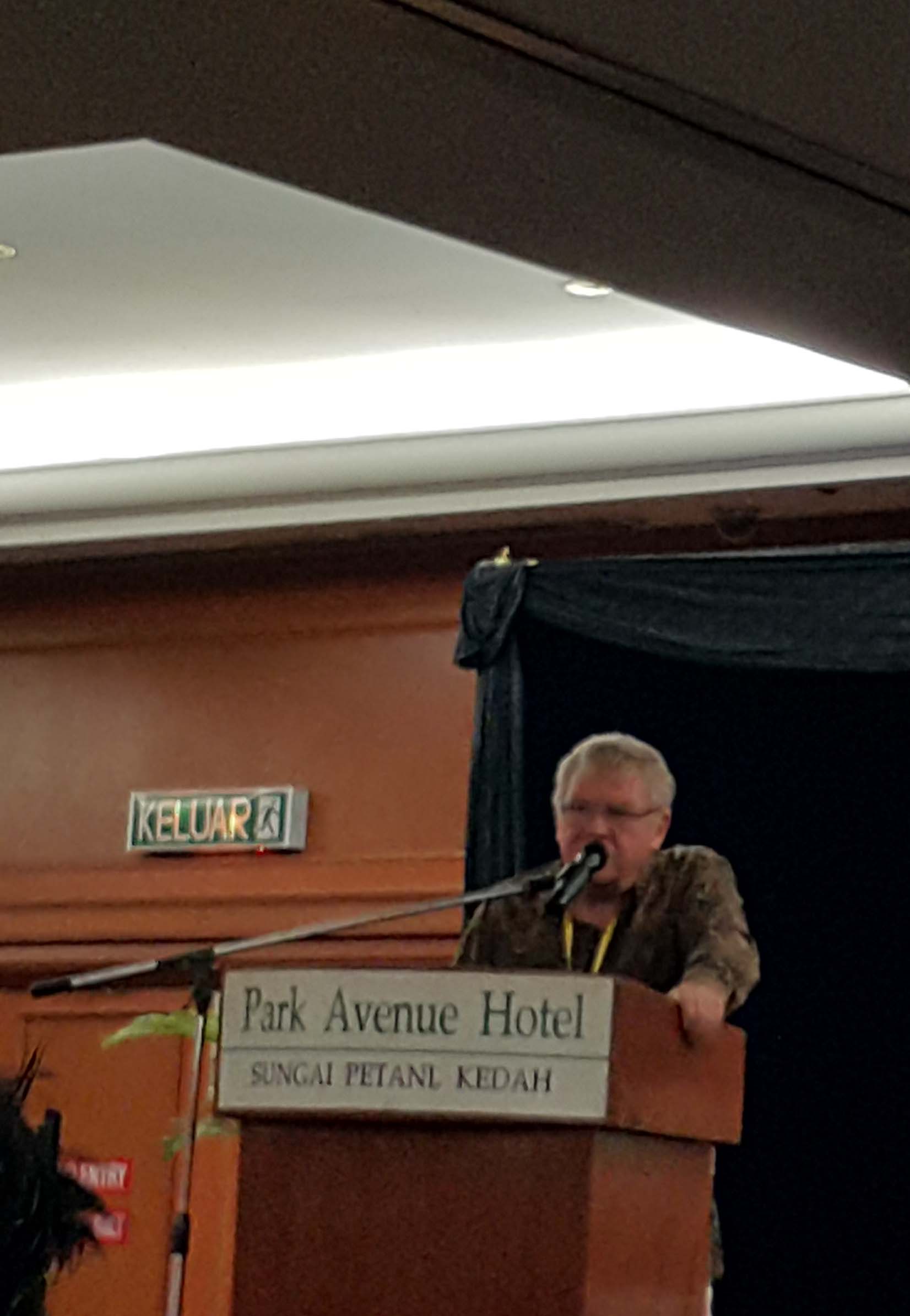
20160521_105656The Kedah Tua International Conference (KTIC) in Sungai Petani kick-started on 21 May 2016 with Dr Stephen Oppenheimer presenting the first keynote address. His presentation focused on using genetic phylogeography to trace the migration patterns in South East Asia. Two pieces of DNA are used to build a gene network: mitochondrial DNA (mtDNA) which is passed from mother to daughter and Y-chromosome (NRY) which is passed down the male line. As these two pieces of DNA do not recombine during reproduction, they are transmitted unchanged through the generations allowing scientists to trace human migrations through random mutations that occur in these DNA strands.

009
Three distinct worldwide sea-level rises (around 14 000, 11 500, and 8000 years ago), due to melting of the ice caps, caused the sinking of Sundaland. Photo taken from the display boards of Gallery A, Muzium Negara

A large part of Dr Oppenheimer’s presentation centred on a recently published paper that used genetic methods to study the ancestry of inhabitants in island South East Asia (ISEA). For the past 30 years, the Out of Taiwan theory has held sway to explain these origins. This theory is based primarily on linguistic evidence; the antecedents of Austronesian languages spoken in ISEA can be traced to the aboriginal population of Taiwan. By extension, Southern China is theorised as their original homeland. The Austronesian speaking population is said to have arrived in Taiwan from Southern China around 6500 ya. From Taiwan, they moved into the Philippines around 5000 ya and reached southern Philippines by 4000 ya. From here, there was rapid dispersal to the rest of ISEA and Oceania with arrival in the Pacific by 3000 ya.

A model that combines this Holocene colonisation with an earlier Pleistocene colonisation from Southern China via the mainland has successfully withstood attacks from detractors who favour a homeland from within the Sunda shelf. The Out of Sunda theory proposes that the inhabitants of ISEA originated from within ISEA itself and that it was the sinking of the Sunda platform which provided the impetus for dispersal. This turns things around and places insular South East Asians as ancestors of the aboriginal Taiwanese. Genetic evidence has been employed by scientists on both sides of the divide to support their views. The recent study conducted by a group of international scientists, of which Dr. Stephen Oppenheimer was a part, is the most comprehensive undertaken to date. It uses a combination of mtDNA, NRY, and published genome-wide data. The results are surprising in that while they mostly support the Out of Sunda theory, the study also detected minor migrations during the Late Holocene from Taiwan, corresponding to the Out of Taiwan time-frame. However, the study noted that these migrations did not have much influence on the ISEA gene pool and that the impact was mostly cultural and linguistic.

migration
Taken from http://www.bradshawfoundation.com/journey/

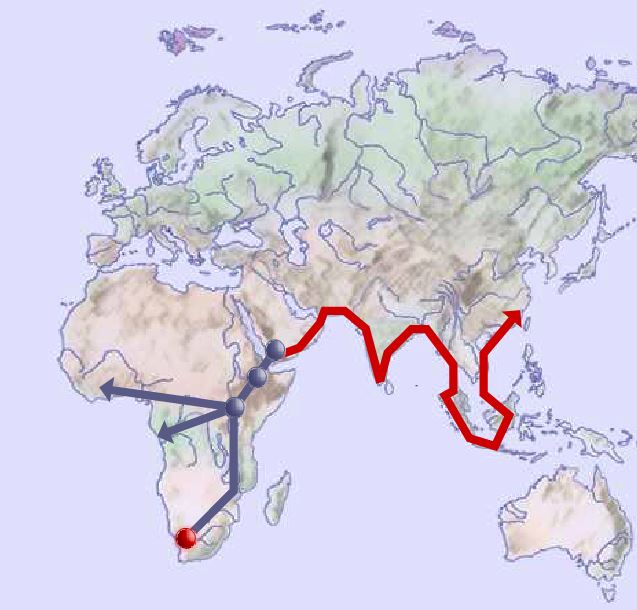
The story of human migration starts around 85 000 ya in East Africa when a group of Homo sapiens (modern humans) crossed the Red Sea into the Arabian Peninsula and then travelled along its coastline into the Indian subcontinent. All humans outside Africa are descended from this single exit. These beach-combers continued around the Indian Ocean coast to arrive at Lenggong Valley in the Malayan Peninsula by at least 74 000 ya. They then traversed the edge of the Sunda platform before moving north into Indo China and Southern China as well as south into Australia. It should be noted that an earlier migration out of Africa arriving at the Levant around 125 000 ya failed to populate the world as the onset of an ice-age either killed the population or forced them back into Africa.

20160521_110838
Taken during Dr Oppenheimer’s presentation

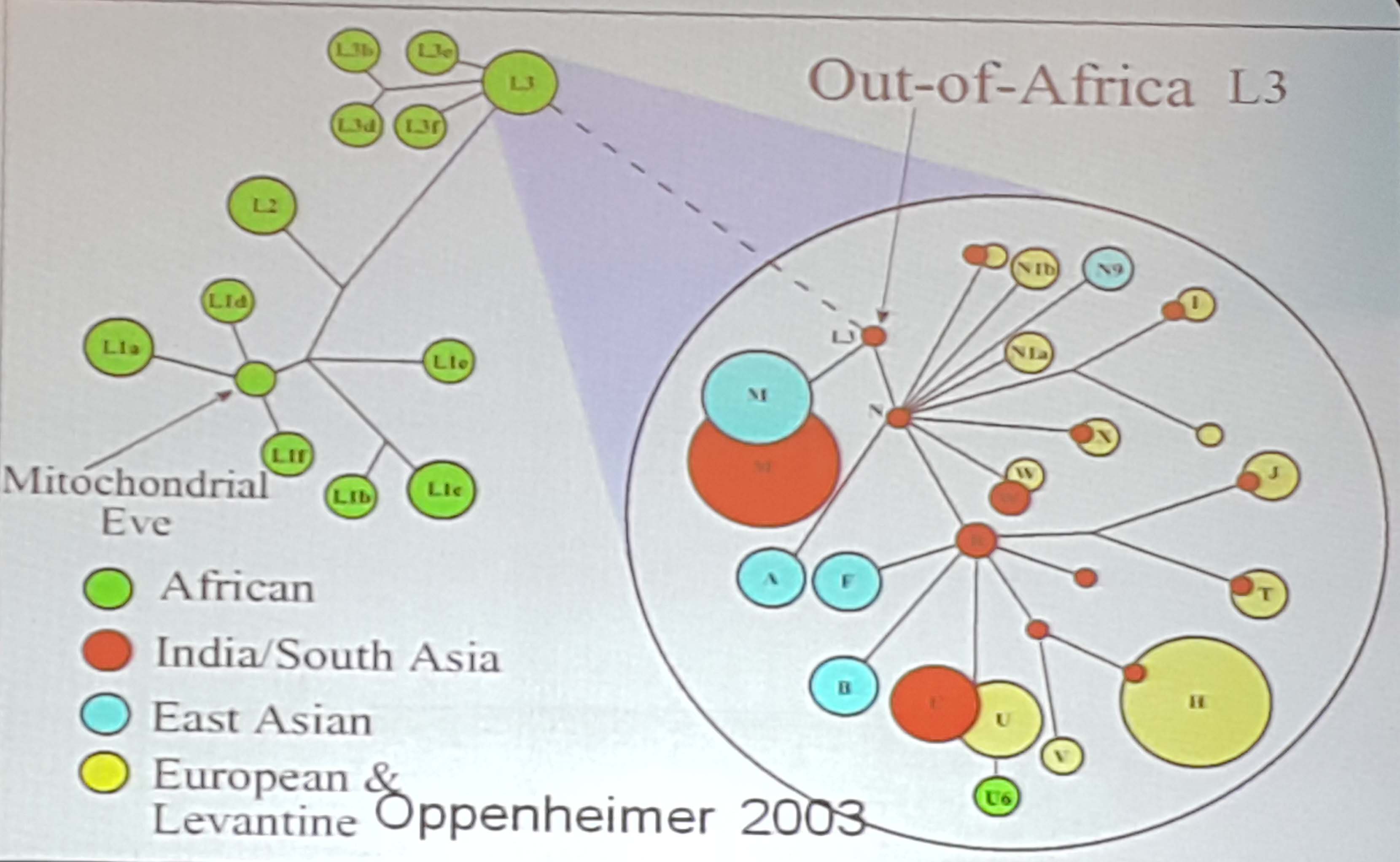
The diagram above shows clusters of gene types (mtDNA). The green circles represent gene types in Africa and the large circle on the right shows gene types in the rest of the world. The single exit out of Africa is represented by the haplogroup L3 which gave rise to two important branches outside Africa. The M branch evolved in present day India and is found in all humans outside Africa except Europeans and Levantines. The N branch evolved around present day Pakistan/Iran and is found in all humans outside Africa including Europeans and Levantines. The M supergroup gave rise to M9 which evolved in SEA around 50 000 ya. M9, in turn, gave rise to the haplogroup E which developed in Sundaland around 23 000 ya. This haplotype is widely dispersed and some of its daughters can be found in Taiwan; 15% of all gene lines in ISEA and Taiwan belong to haplogroup E.

One of the main reasons behind the wide dispersal of haplogroup E was the sinking of the Sunda platform caused by three rapid rises in sea levels between 15 000 and 7000 ya. The effects of these sea level rises can be seen in the genetic record – genetic drift, equivalent to extinction, corresponds to the three distinct rises in sea levels. The extinctions were followed by a major expansion of haplogroup E which expanded throughout ISEA, as far north as Taiwan, and east of Guinea. As the land halved and the coastline doubled, the population adapted itself to maritime activities allowing them to carry their genes far and wide.

The Austronesian migration can be seen through mtDNA haplotype M7c3c. It has a similar distribution as E but goes in the opposite direction. Coming from China into Taiwan, it spread from Taiwan into SEA around 4000 ya. This haplotype is present in around 8% of Indonesians.

20160521_111146
Taken during Dr Oppenheimer’s presentation

The diagram above shows that, along the route out of Africa, Sundaland has the highest number of founding branches, 30 in total, making it the most diverse place outside Africa. If we look at the indigenous populations of the Malayan Peninsula, 86% of their lineages come from locally founding Sunda lineages and 14% from East Asian lineages. For the Malay population, around 58% of their lineage is from local Sunda founding lineages, 38% from East Asia, and 4% from South Asia. Of the local Sunda lineages, 33% of these lineages go back 60 000 – 25 000 ya. Of the East Asia lineages, only 7% are from Taiwan.

14
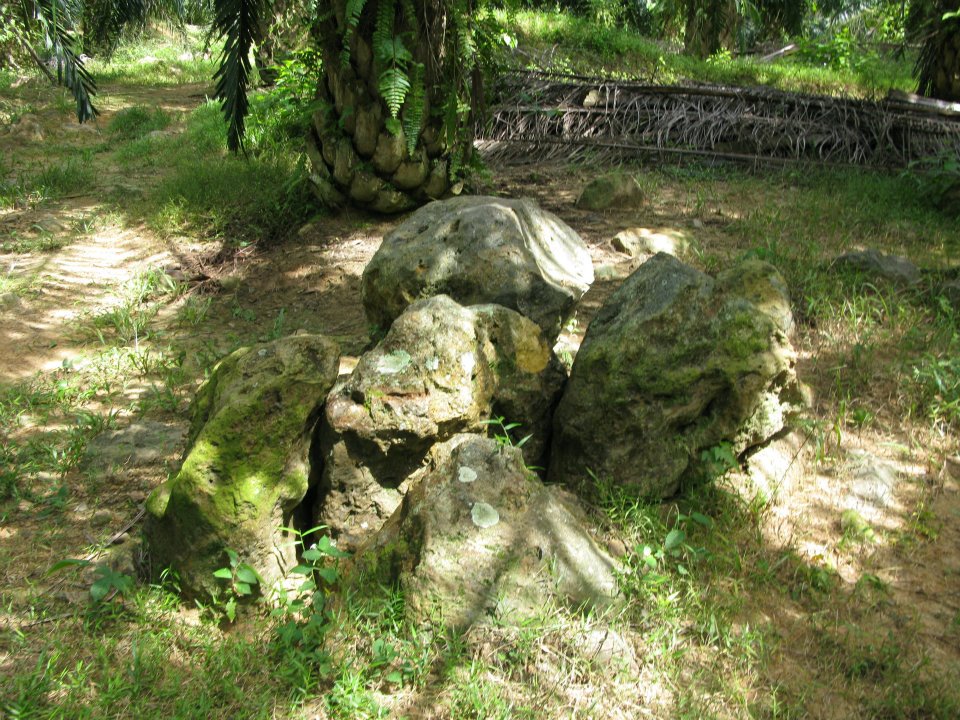
Suevite at Bukit Bunuh. Suevite is rock that has been transformed due to the high temperatures and pressure of a meteorite impact

The Malayan Peninsula not only facilitated movements from Indo China and East Asia to ISEA (the spread from Indo-China to ISEA associated with Hoabinhian culture is about 20 000 ya), it also facilitated movements from Africa to Indo China, East Asia, and Australia.

Archaeological evidence supports the assertion that Lenggong Valley was a key area on the migration path of humans. Kota Tampan in Lenggong Valley has yielded a stone tool making workshop covered in ash from the volcanic eruption that created Lake Toba in Sumatra. This ash dates to 74 000 ya attesting that modern humans must have arrived in Lenggong Valley before this eruption took place. The Lenggong Valley has also shown continuous settlement from 40 000 ya to present. The finding of a stone hand-axe dated to 1.83 million ya at Bukit Bunuh, about 1 km away from Kota Tampan, shows that Lenggong was also on the migration path for Homo erectus, an earlier species of the Homo genus. This hand-axe was found buried in suevite. Its discovery puts Lenggong Valley on the migration path of Homo erectus, whose best known representatives are the Java Man (700 000 years old) and Peking Man (500 000 – 300 000 years old).

MV Trip to Kuala Terengganu – Day 3

by Natalia Gutierrez

The agenda for the day 3 (Thursday 21.04.2016) in Kuala Terengganu included a visit to the Islamic Civilization Park and a photo stop at the Crystal Mosque as part of the highlights of the day. But at the end of the day, more landmarks were added to our agenda, and we were definitely delighted about all we had seen and learnt during the third day’s excursion in Kuala Terengganu.

It was almost 9:00 am when we started boarding the JMM bus. We thought we were heading directly to the Islamic Civilizations Park, but we made instead a detour and our first stop was: Shopping! And the question followed: Again?… Yet, this was a different type of shopping.

We headed to the old market ‘Kampong Tiong’ located within the boundaries of the Kampong Cina.

view from old mkt of kg tiong
View of the small old market of Kampong Tiong in Kampong Cina

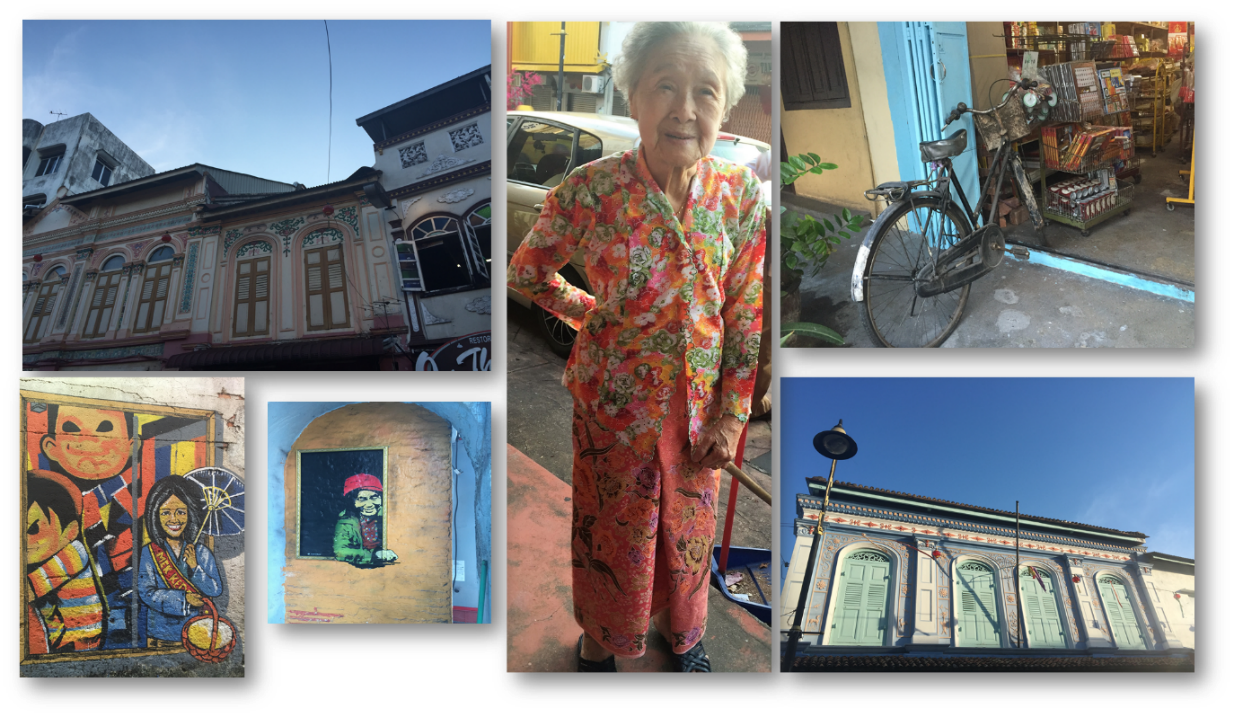
Regarded as a heritage landmark in Kuala Terengganu, Kampong Cina, as it is named by the locals, or Chinatown as it is most commonly known, has maintained its features and traits since the late 19th century. The attractiveness of the centuries-old buildings along Jalan Bandar, granted the area a place on the Watch list of the World Monument Fund. Under the name of Kampong Cina River Frontage, the World Monument Fund helped to support the conservation of Malaysia’s historic waterfront district with the aim of “revitalizing Kampong Cina and upgrading the capabilities of the traditional structures, so growth could be accomplished while a unique way of life is preserved” (Wmf.org, 2015).

kg cina
Traditional structures and a gracious representative of Kampong Cina in Kuala Lumpur

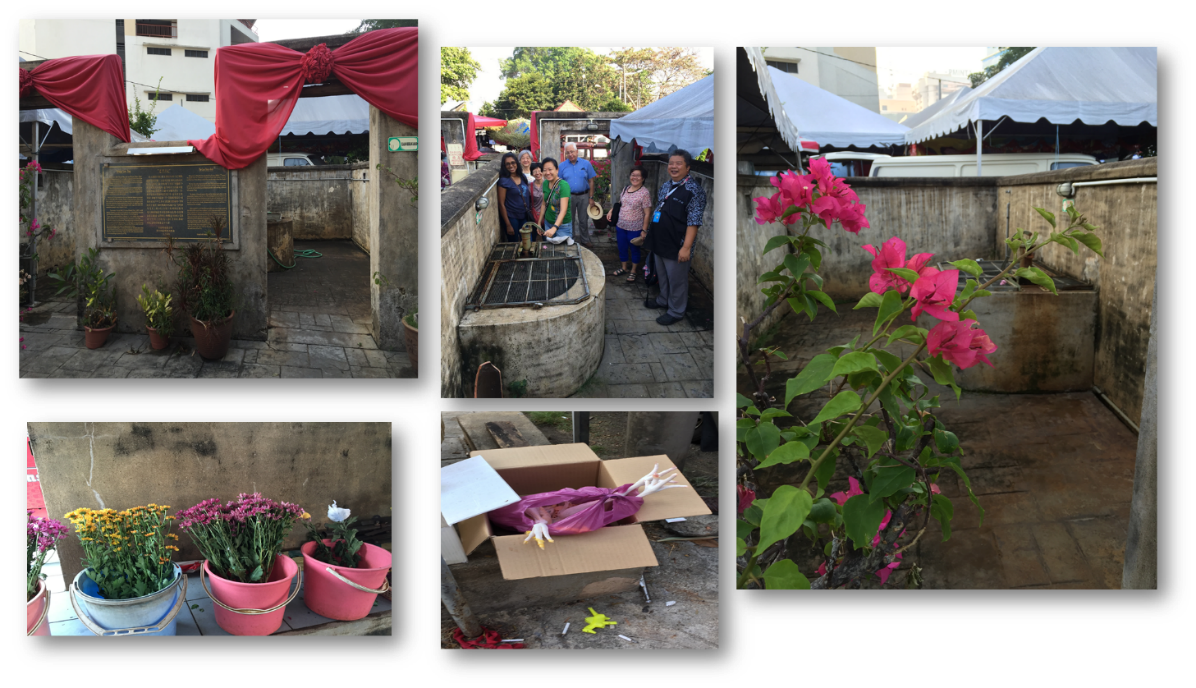
The arrival of the first Chinese migrants to Kuala Terengganu and the founding of the city’s Chinatown cannot be specifically dated “but some records indicate that Chinese settlers arrived here as early as the 16th century” (Hogan Jr, 2015). As we learned from the inscription on the wall in front of the Low Tiey´s well, the migration of Chinese came from the province of Fujian and started during the late Ming dynasty and early Ching dynasty (Yaw in Chinese Assembly Hall of Terengganu, 2004). Among the wanderers, there was a particular Chinese clan, who had travelled south from China about 300 years ago and settled in the area now known as Kuala Terengganu. The clan’s name was Lim, they were farmers and to cultivate the land, they dug up a well for the supply of water for the farm and for their domestic needs. The interesting story behind this well, which makes it a cultural and historical attraction in Kampong Cina, is that in 1875 the town of Kuala Terengganu experienced drought causing most of the wells to dry up except for the well of the Lim clan. They were kind enough to share theirs well’s water with the rest of the town’s folks. Mr Lim Keng Hoon was the family’s patriarch and was holding the post of Low Tiey at that time. The term Low Tiey can be understood as Chinese community leader (Myfareast.org, 2016). The Low Tiey’s well was named after Mr Lim in recognition of his family’s generosity during that period of time. The well was divided in two sections, male and female, to ease the bathing etiquette of the conservative society of the time.

The Low Tiey’s well at Kampong Cina

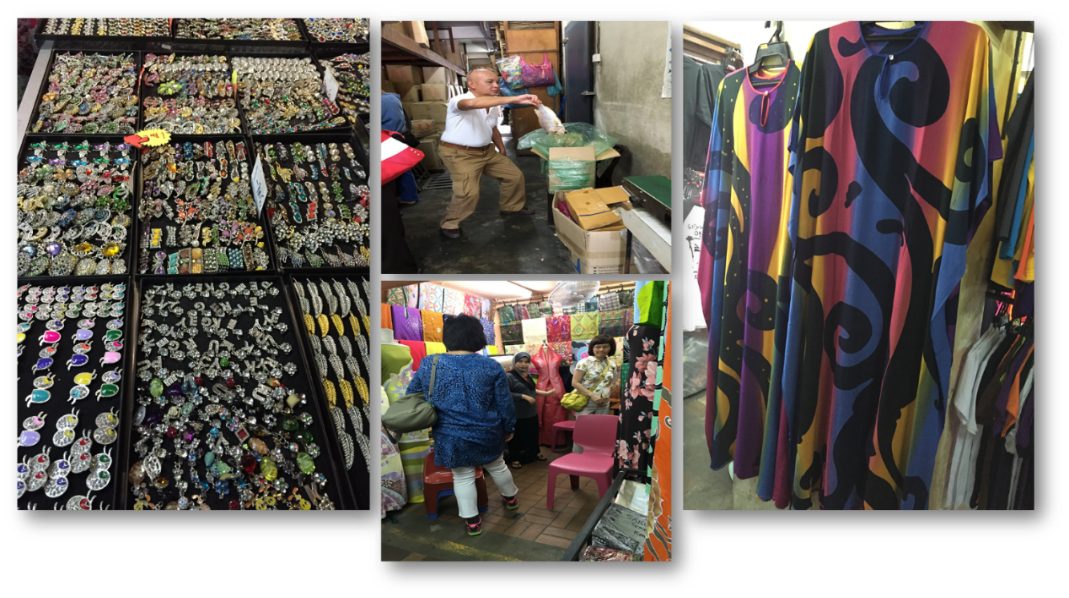
The Pasar Besar Payang was the next spot we visited. Housed in a two-storey building, the market has a wide range of products, from fishes, vegetables and fruits to regional handicrafts, such as batik and songket textiles, which were reasonably cheap and offered us early retail therapy for the day. As locals frequently do their shopping at the Pasar, this gives outsiders, the opportunity to experience local culture as well.

Impressions of the Pasar Besar Payang

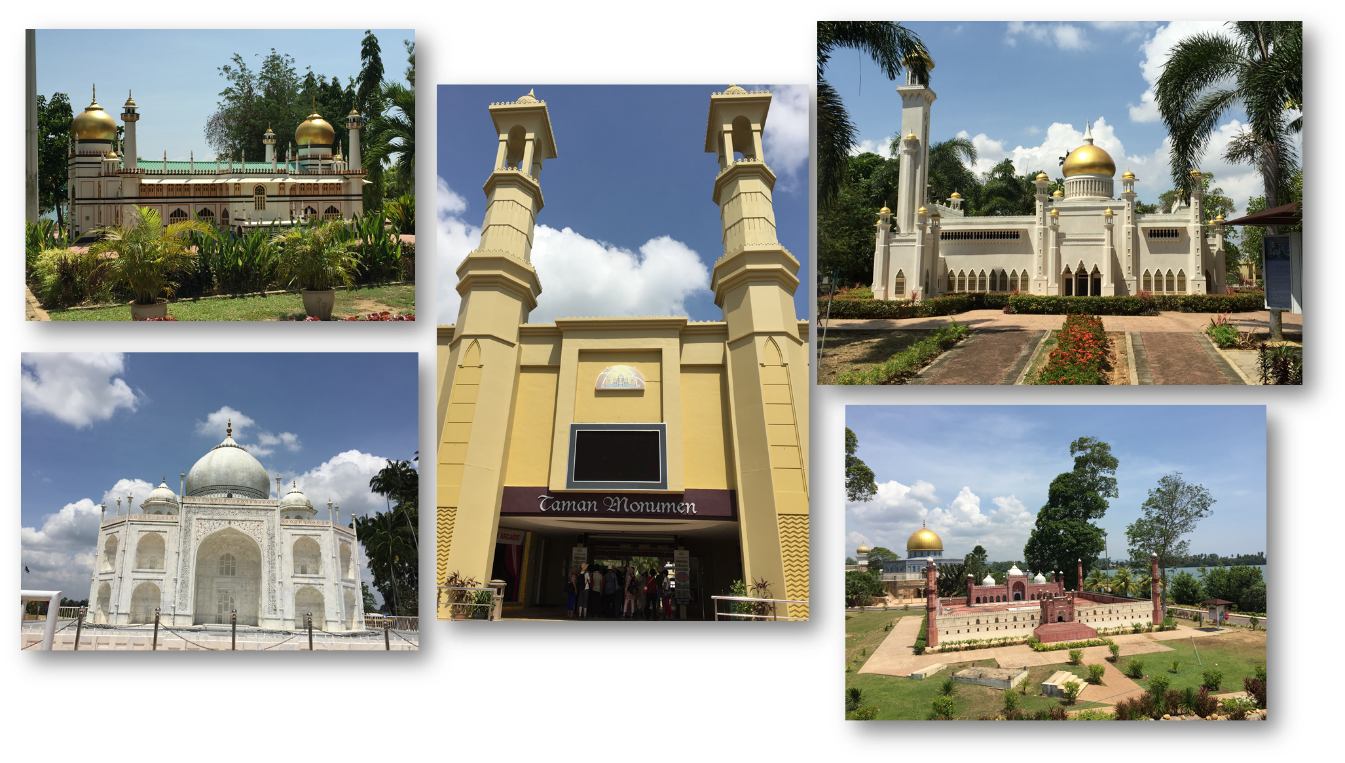
Right after we finished the shopping spree at the pasar, we moved forward in our tour schedule and continued our journey to the Islamic Civilizations Park. The park is promoted as an edutainment park with the mission to “provide alternative family recreational and educational activities based on the Islamic principles” (Tti.com.my, 2016). The Monument Park is a tourist attraction that showcases 22 replicas of Islamic architectural structures which are mostly places of worship for the Muslim community. The edutainment park also includes the Taman Tamandun Islam Water Wheel, which re-creates the theory of early Muslim engineering stored in the books of the Arab Muslim scholar and engineer Al-Jazari (Famous Inventors, 2016).

The Islamic buildings featured at the park are considered “glories of Islamic civilization from all over the world” (TTI.Org, 2016).  The visitors to this impressive Theme Park can get a glimpse of the iconic buildings of Islamic history through the meticulous replicas of 22 remarkable mosques, tombs and citadels from around the world. A documentary screening, available at some of the attractions, can be watched before proceeding with the visit of the whole structure. The documentaries and exhibition galleries add extra knowledge on the history behind each of the Islamic architectural masterpieces.

islamic civilization
Replicas of monuments of Islamic Civilization from around the world at the Taman Tamandun Islam

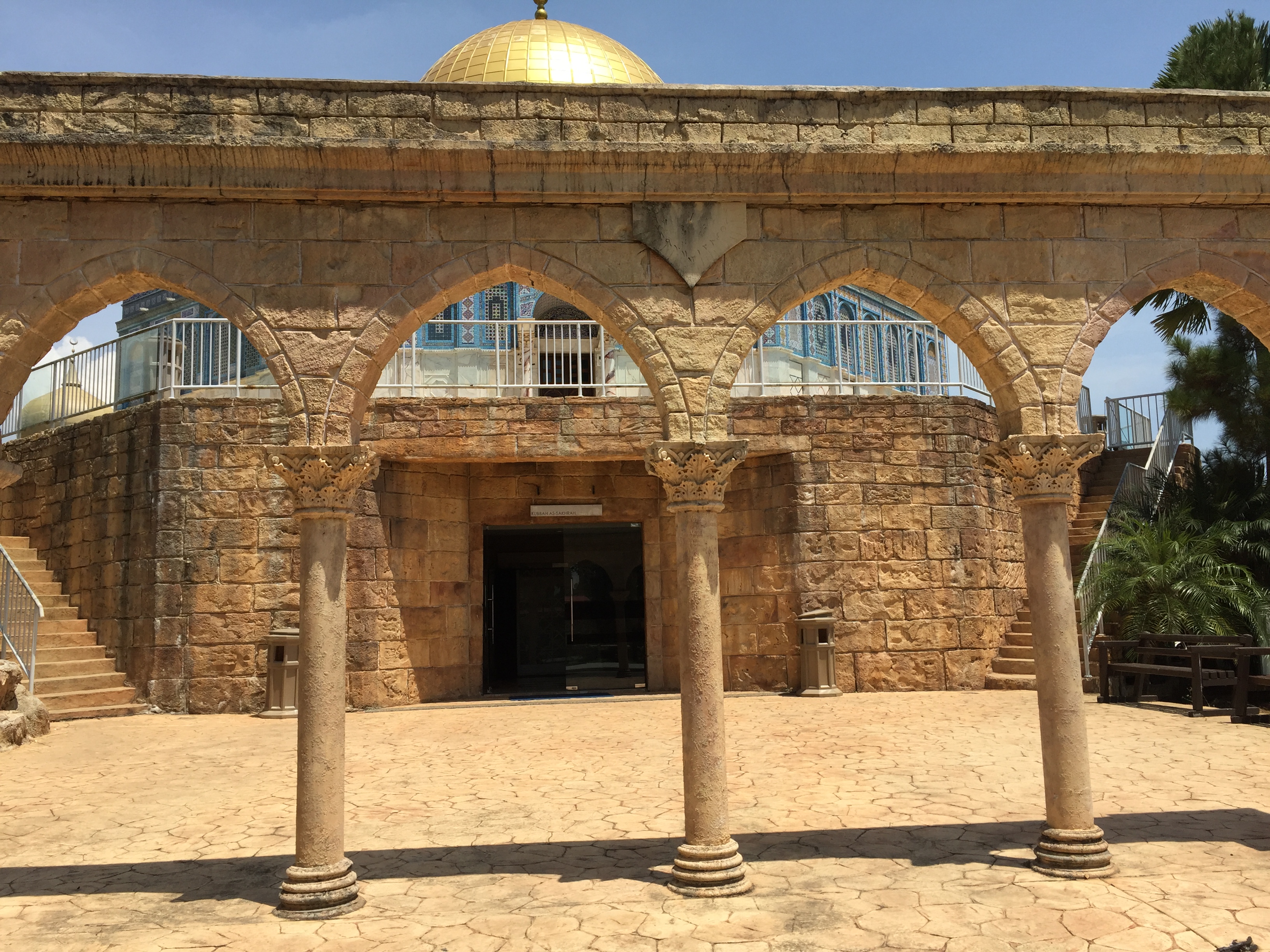
Among the replicas, the Dome of the Rock is one of a very impressive character. The shrine is located within the Al Masjid Al Aqsa area or Noble Sanctuary of Al Aqsa in in the Old City of Jerusalem. Under its Arabic names, the building is well-known as Masjid As-Sakhrah and Qubbat As-Sakhrah (Visitmasjidalaqsa.com, 2016).  It is situated in the middle of the plateau of Al Masjid Al Aqsa and was built in 692 C.E. by Al Malik ibn Marwaan. The Dome of the Rock building preserves the Sacred Rock commemorating “the Prophet’s Muhammad’s Ascension to Heaven accompanied by the angel Gabriel” (Newworldencyclopedia.org, 2016).

IMG_3953
An impressive replica of the Dome of the Rock, a marvelous monument of Islamic culture

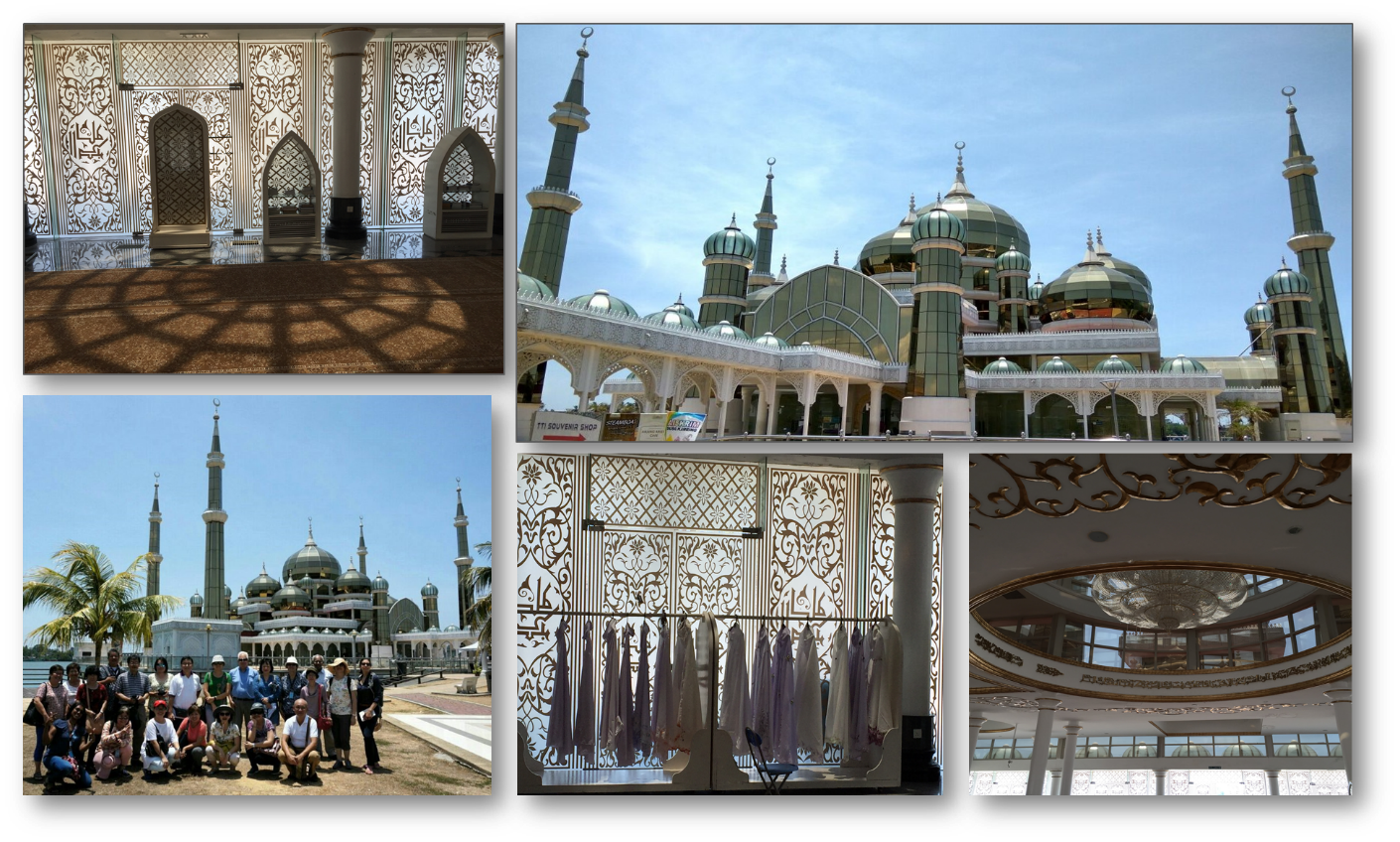
Another imposing construction in the vicinity of the park is the Crystal Mosque. Its construction started in 2006 and it was inaugurated in 2008. The outside structure is made of glass and steel, which gives its crystal-like appearance and therefore its name. The architectural style is basically contemporary but traces of Moorish and Gothic architecture were incorporated as well.  According to the Islamic Tourism Centre (2016) the Crystal Mosque is the country’s first ‘intelligent’ mosque with a built-in IT infrastructure and wifi connection, providing visitors with internet access.

crystal mosque
The stunningly beautiful Crystal Mosque

The excursion to the Taman Tamadun Islam concluded with a quick look at the souvenir arcade. Luckily, the shop also provided us with most needed snacks and drinks.  By the time we have finished the tour, we were hungry and quite overworked after touring the park at a ‘melting’ temperature of 38 degrees Celsius. We then ambled towards the photo stop at the Crystal Mosque to take de rigueur group photo before driving to the hawker center where we had our long awaited lunch.

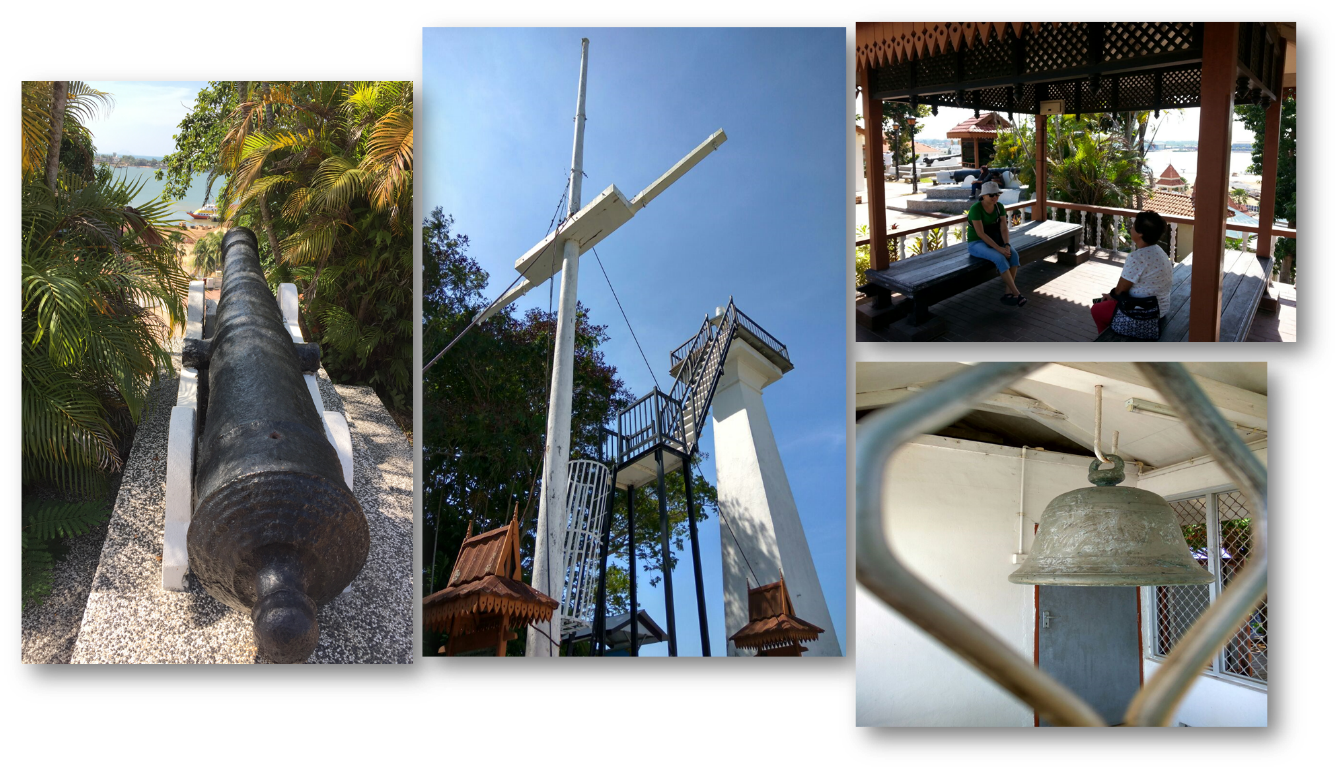
The last place of interest in our agenda was the Bukit Puteri or Princess Hill. We took the stairs and climbed up to the top of the hill. Elevated towards the Terengganu river and the South China Sea, the Princess Hill “has been a witness of the historical development of Kuala Terengganu” (Official Portal of Malaysia National Archives, 2016).  The breeze and the view of the Istana Maziah were most enjoyable.  The hill was used as a fortress during times of civil wars. Historical artifacts can be found at the top of the hill, among those: the Bell, made in 1908 to replace the original bell called ‘Negara’ which was made in 1853 during the reign of Sultan Umar. The Bell was used to alert the people about danger. The Throne of Sultan Umar can also be found at the fort. Last but not least, a lighthouse, which guided the fishermen and seaman to get to the port of Kuala Terengganu in past times, is placed at the hilltop.

bukit puteri
Views from Bukit Puteri

The day 3 of our MV trip to Kuala Terengganu ended with new experiences and brains fuller with knowledge.

well
Well at Low Tiey


References

Famous Inventors. (2016). Al-Jazari. [Online] Available at: http://www.famousinventors.org/al-jazari [Accessed 4 May 2016].

Myfareast.org. (n.d.). Terengganu. [Online] Available at: http://www.myfareast.org/Malaysia/terengganu.html [Accessed 4 May 2016].

Hogan Jr, D. (2015). Time-travel to Kuala Terengganu’s Chinatown. Free Malaysia Today. [Online] Available at: http://www.freemalaysiatoday.com/category/leisure/2015/10/28/time-travel-to-kuala-terengganus-chinatown/ [Accessed 4 May 2016].

Islamic Tourism Centre. (2016). Masjid Kristal (Crystal Mosque). [Online] Available at: http://www.itc.gov.my/mosque/masjid-kristal-crystal-mosque/ [Accessed 10 May 2016].

Newworldencyclopedia.org. (2016). Dome of the Rock. [Online] Available at: http://www.newworldencyclopedia.org/entry/Dome_of_the_Rock [Accessed 5 May 2016].

Official Portal of Malaysia National Archives. (2016). Bukit Puteri. [Online] Available at: http://www.arkib.gov.my/en/web/guest/bukit-puteri [Accessed 10 May 2016].

Tti.com.my. (2016). Mission & Vision | Taman Tamadun Islam. [Online] Available at: http://www.tti.com.my/about/company/missionvision [Accessed 10 May 2016].

Visitmasjidalaqsa.com. (2016). Islamic History of Al Masjid Al Aqsa. [Online] Available at: http://www.visitmasjidalaqsa.com/islamic-history-of-al-masjid-al-aqsa/ [Accessed 10 May 2016].

Wmf.org. (2016). Kampung Cina River Frontage. World Monuments Fund. [Online] Available at: https://www.wmf.org/project/kampung-cina-river-frontage [Accessed 4 May 2016].

Sailing the Terengganu River

Jane Chan shares her views on the river cruise that marked the start of the Museum Volunteers’ visit to Kuala Terengganu (19 Apr 2016)

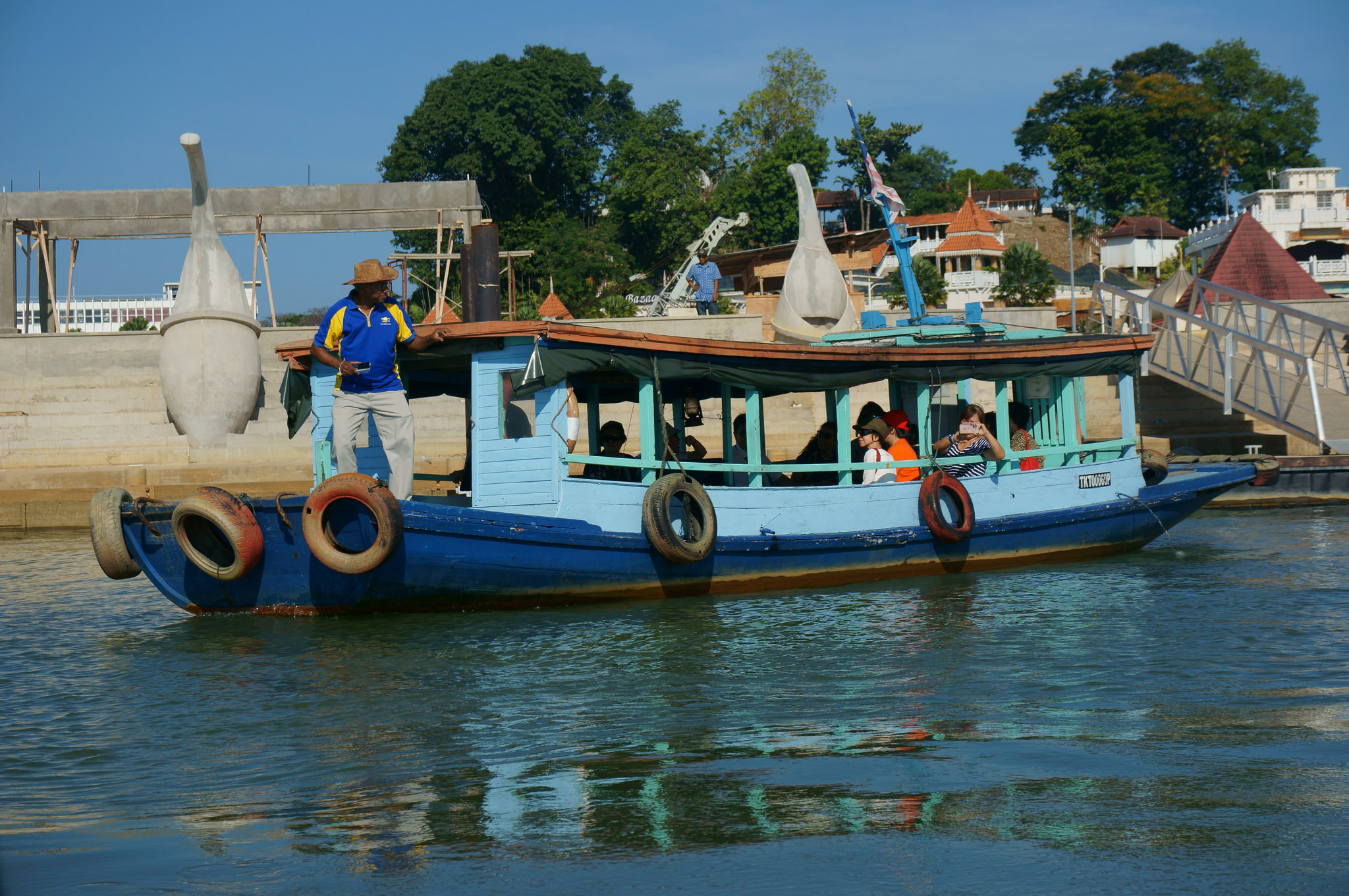
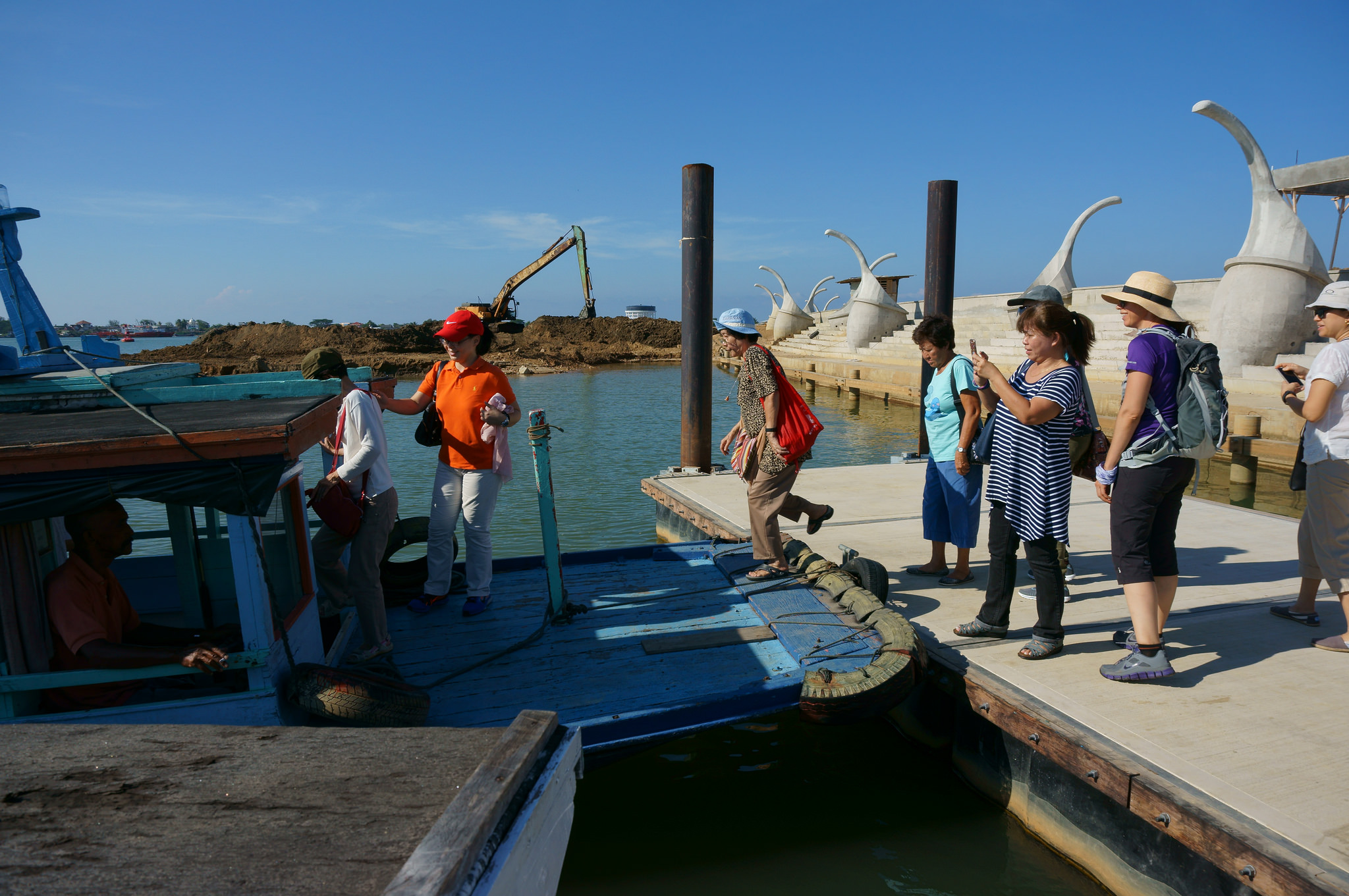
26016044143_5929e4a697_kIt was hot and sunny when we started the cruise in two fishermen taxis from near Duyong Island (Pulau Duyong). We separated ourselves into two groups, each occupying a taxi boat with a distance of 50m between us so that we will have a calmer sail.  As we travelled inland towards the Terengganu State Museum and Islamic Civilization Miniature Centre, we could feel the soft breeze kissing our cheeks giving a cooling effect.

26526337512_a8cd5b2280_k
The white constructions in the background resembles the seagulls on the head of a boat aiming to fish

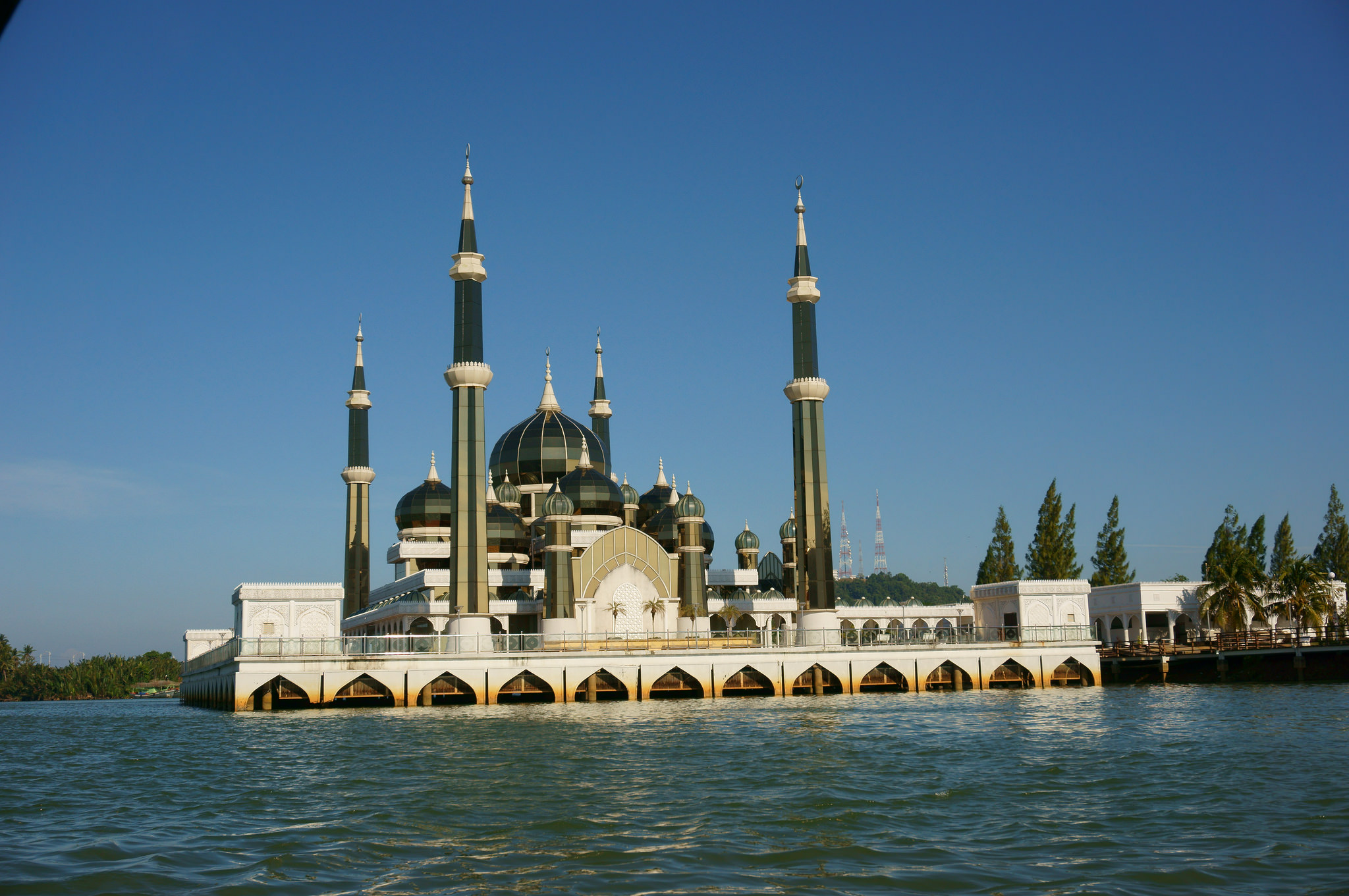
Our local guide was in the same taxi as Elizabeth, Cze Yan, Julie, Mariea, Wai Mun, Yeow, myself, together with few others that left the jetty ahead of the President, Jega, and the rest.  Without noticing that we were actually by the open museum marine exposition site, we who sat at the engine corner just concentrated ahead of us towards the Islamic Civilization Centre and Crystal Floating Mosque. It was only on the following day that we realized that we were at the riverbank adjacent to the museum. We also learned that the reason the Crystal Mosque was constructed as such  was because the architect wanted to reflect the people of Terengganu living on tilted houses along the river bank.

26553667931_31bfcd5f11_k
The beautiful Crystal Mosque

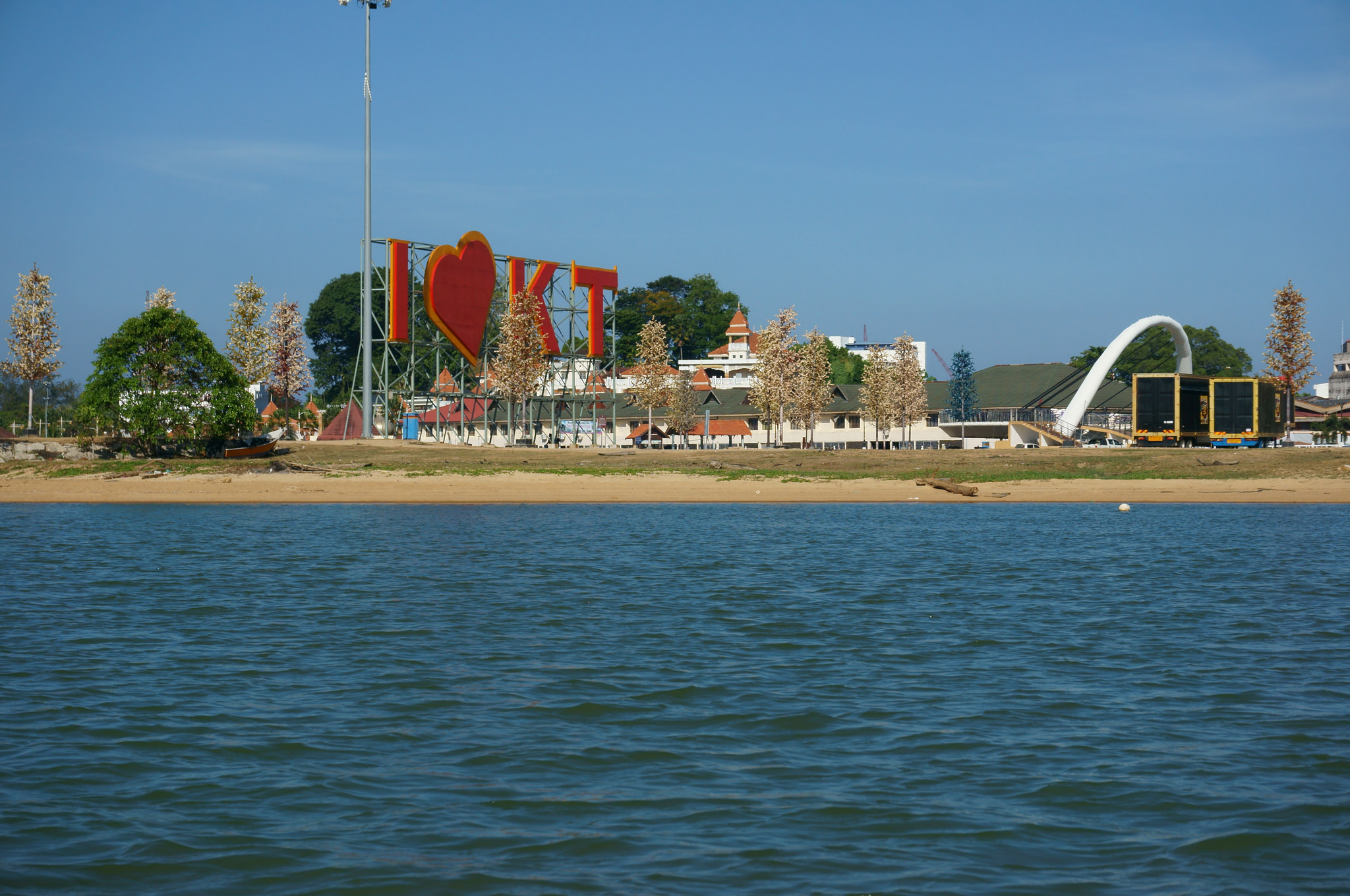
The view of the riverbank is magnificent under the bright sun beam; despite the intense heat with two dry months, the river is not muddy. The money spent to reclaim and beautify the once fishermens’ shoreline is worth more than my words.

20160419_170503
The bridge that links Duyong Island to the mainland

26553675091_839330c1bb_k

MV Trip to Kuala Terengganu – Day 2

The Museum Volunteers organised a study trip to Kuala Terengganu between 19 – 22 Apr 2016. Chen Poh Leng has the story for Day 2 (20 Apr).

Day 2 of our visit started with a hearty buffet breakfast at the hotel that included delicious local fare such as nasi dagang (rice) with gulai ikan tongkol (fish in gravy), pulut kelapa (coconut covered glutinous rice balls) with salted fish and cucur ikan bilis (fried dough with anchovies). With much stored energy, we headed off to the Terengganu State Museum, the highlight of our trip.

26015979223_d3947da737_k
Muzium Negeri Terengganu

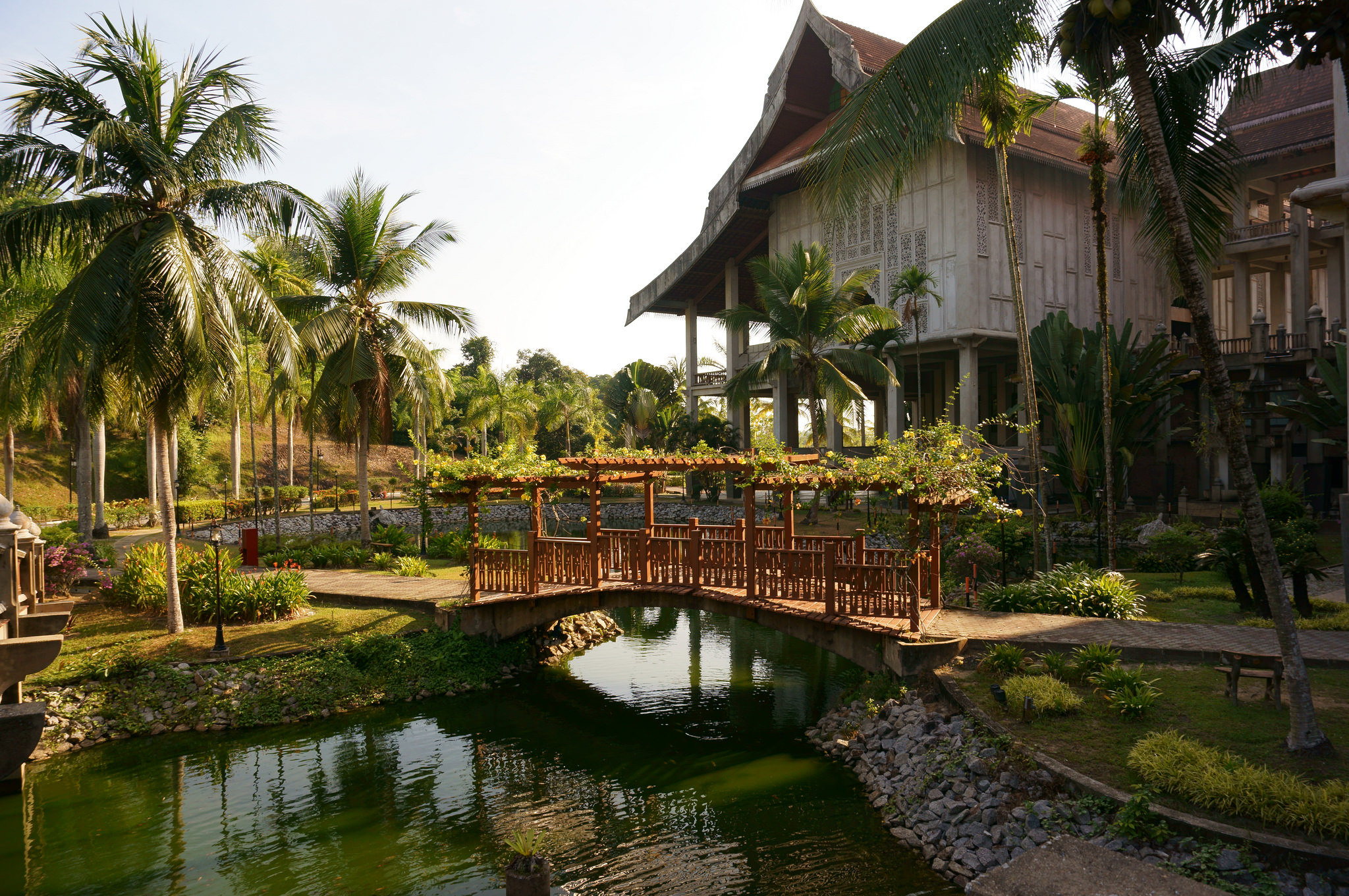
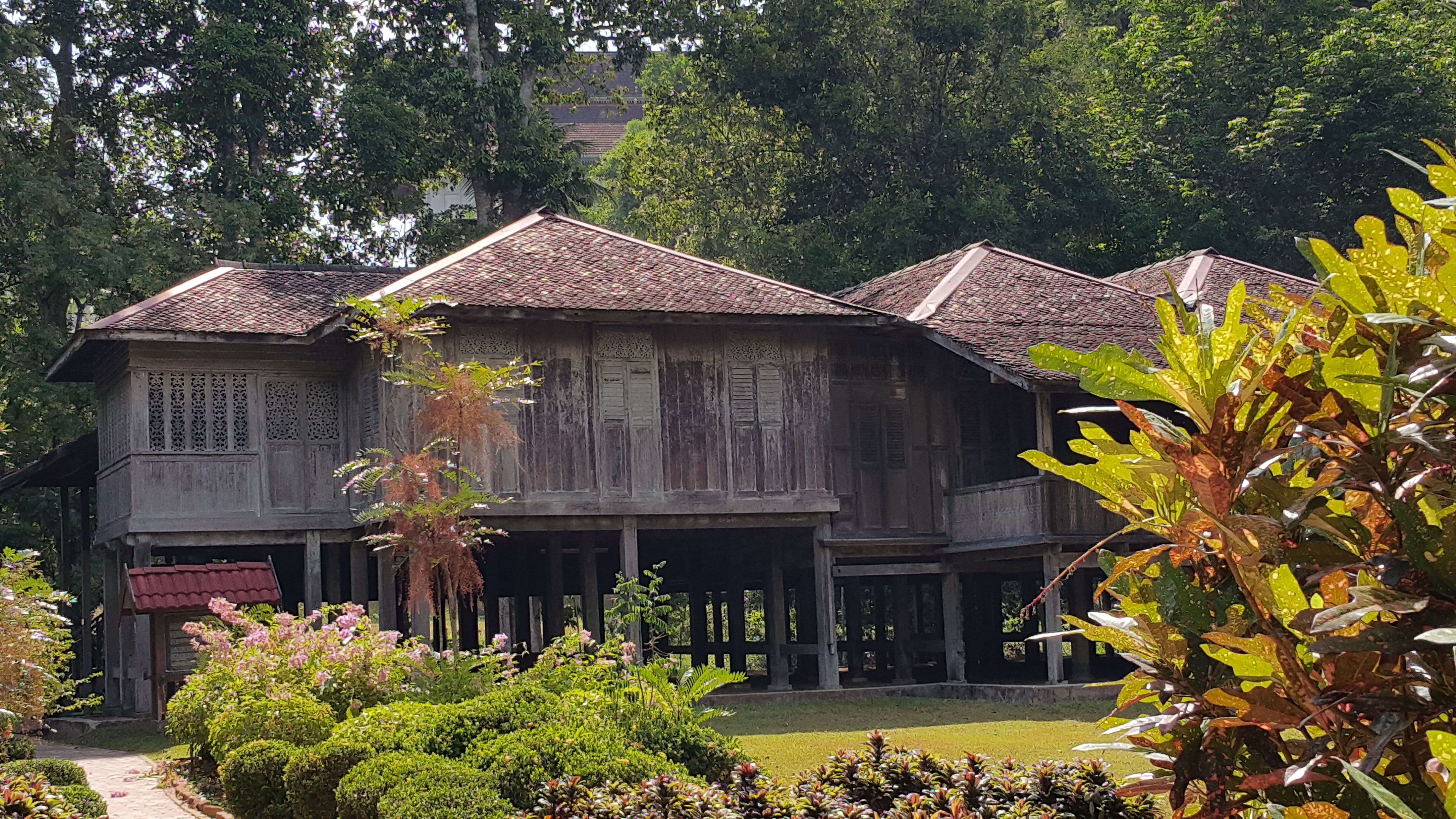
We were all awed by the main museum building’s beautiful architecture and the very first thing we did was to take a group photo with this beauty. The architect, Raja Dato’ Kamarul Baharin Shah, incorporated Terengganu’s old palace design into this creation. The museum complex spans over a land area of 27 hectares and consists of a main museum, a fisheries museum, a maritime museum, four traditional houses with herbs and botanic gardens. The grounds of the museum is so beautiful we were told that wedding photography is a common occurrence there. There are a total of 9 galleries covering textiles, royal, Islamic, craft, petroleum, natural history, seafaring and trade and finally, fisheries and marine park.

20160420_092336_2
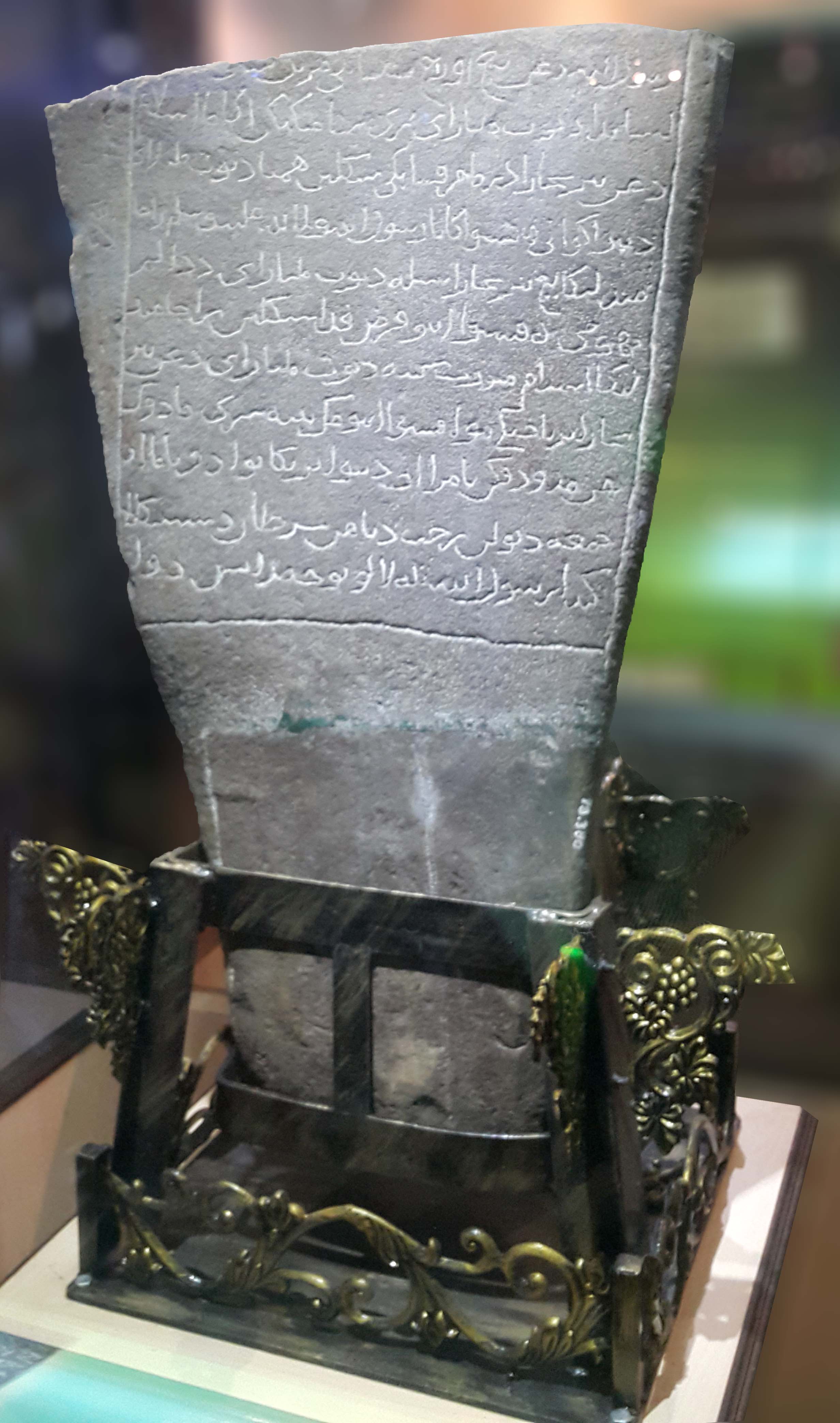
Batu Bersurat Terengganu

We were privileged to be warmly welcomed and guided by the director of the museum, Tuan Haji Mohd Yusof bin Abdullah. He told us that the concept of the architecture was based on the local dwelling concept where houses could easily be extended and connected with corridors as families grew. The houses could just as easily be dismantled. He shared with us that the main purpose of building the state museum had to do with the inscribed stone Batu Bersurat first discovered in 1887 in Terengganu. This is the most famous artefact of the state. It has the Malay language inscribed using Jawi script on dolomite stone. He highlighted that one of the main reasons of the ease of the spreading of Islam in the Malay Archipelago was the writing of the Malay language in Jawi script. According to him, the Malay language had additional 5 Jawi ‘symbols’ or characters compared with the Arabic language.

26593019206_d5bee08185_kAs we moved into the craft gallery, we learned:

  • the use of natural dye in the making of batik material
  • Malay traditional cloth weaving, although with a weaving machine, was labour intensive
  • the use of brass ware in everyday life was common while that of silver ware was less common

In the maritime museum, we climbed into an actual cargo boat on display and were introduced to some sea faring facts within the south east Asian region. We were also introduced to various types and characteristics of different types of perahu (boats), the most famous being perahu payang. We were told that the boat building skill was special in that no plans were drawn. It was all ‘within the head’ passed down from one generation to another.

26013436804_59d647ea53_k
Walking the museum grounds

As we moved along the grounds we could see many different fertile flora around us. We were introduced to various fruits trees and herbal plants by Tuan Haji Mohd Yusof who shared the benefits of consuming them. He had special interest in this subject and thought preserving these plants would complement the museum complex’s grounds while being environment friendly. Fruit trees we saw included the belimbing, the tropical fig as well as tropical olive trees.

20160420_102224
Istana Tengku Long. This traditional house was relocated to the museum’s grounds from its original location at Sungai Besut.

The museum excursion took up the whole morning and by the time we finished, it was time to refill our tummies. The authentic Peranakan lunch we had at On The Way Kopitiam, located in Chinatown, was most enjoyable. Everyone was delighted with the delicious local Peranakan fare. Dishes included, laksa, laksam, rojak as well as lekor (fish cake) served in 2 versions; steamed and fried. The satisfying meal was finished off with a bowl of ice kacang desert which helped cool down our bodies.

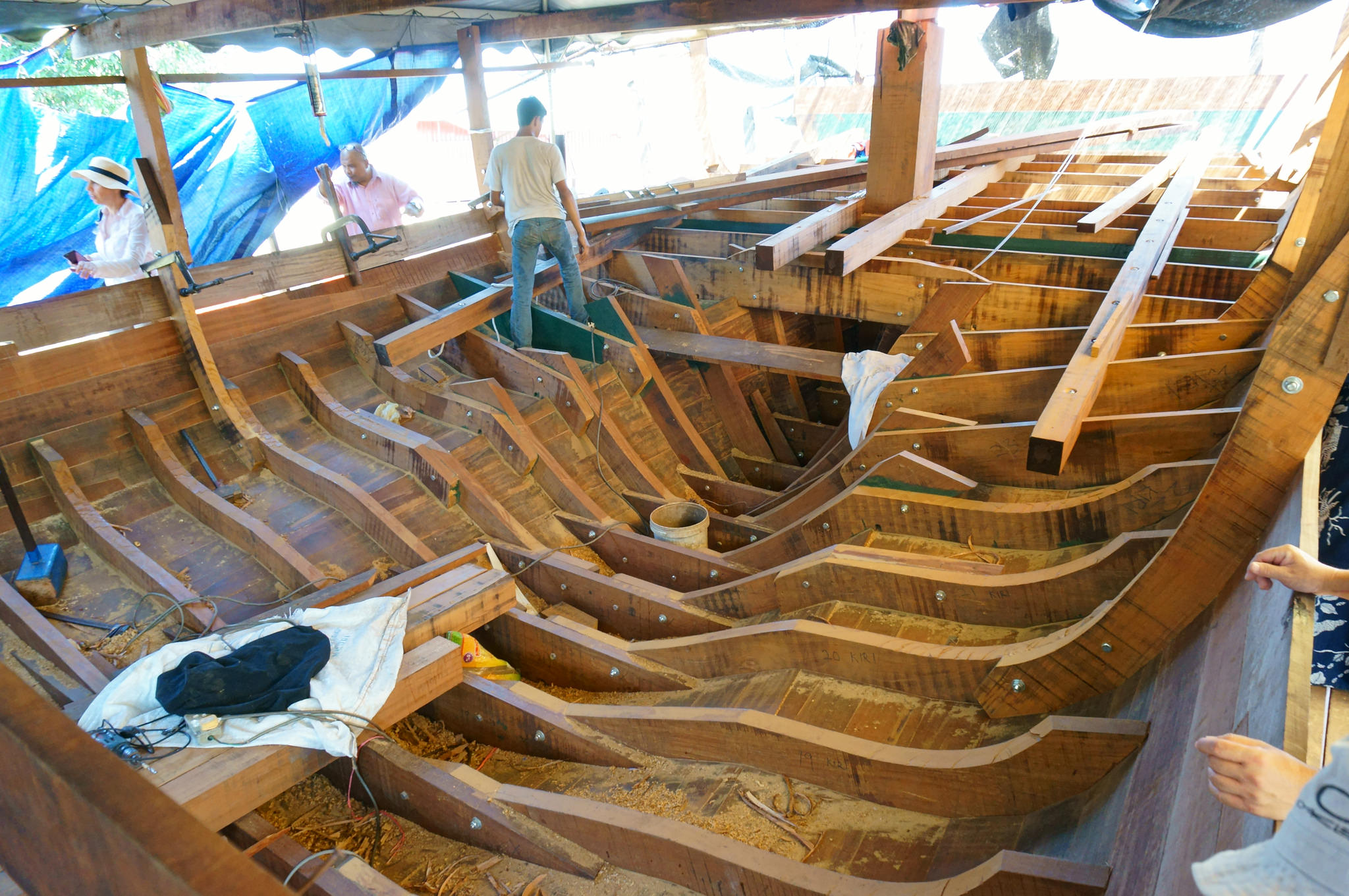
Following lunch, we were led to Pulau Duyung by the museum staff to witness the building of a wooden perahu (boat) the traditional way. The type of wood used was the cengal which is a type of hardwood. The wood type is also used to build Malay houses. The cengal, just like teak wood, is able to withstand harsh weather and does not attract insects. The visit ended with warm appreciation and goodbye wishes extended to the hospitable museum staff from the MV group.

26404728400_1fa0aae6f4_k
At Pulau Duyung – a boat in the process of being built

Our next stop was that of Masjid Tengku Tengah Zaharah, the floating mosque. It was built by the late Sultan Mahmud Al-Muktafi Billah Shah, father of the current sultan of Terengganu in 1993 and opened in 1995. Named after the mother of the current Sultan, it was yet another beautiful mosque and a photo snapping spot for us.

26585334052_c6cc73b0f1_k
Masjid Tengku Tengah Zaharah
26678338305_af14082eb5_k
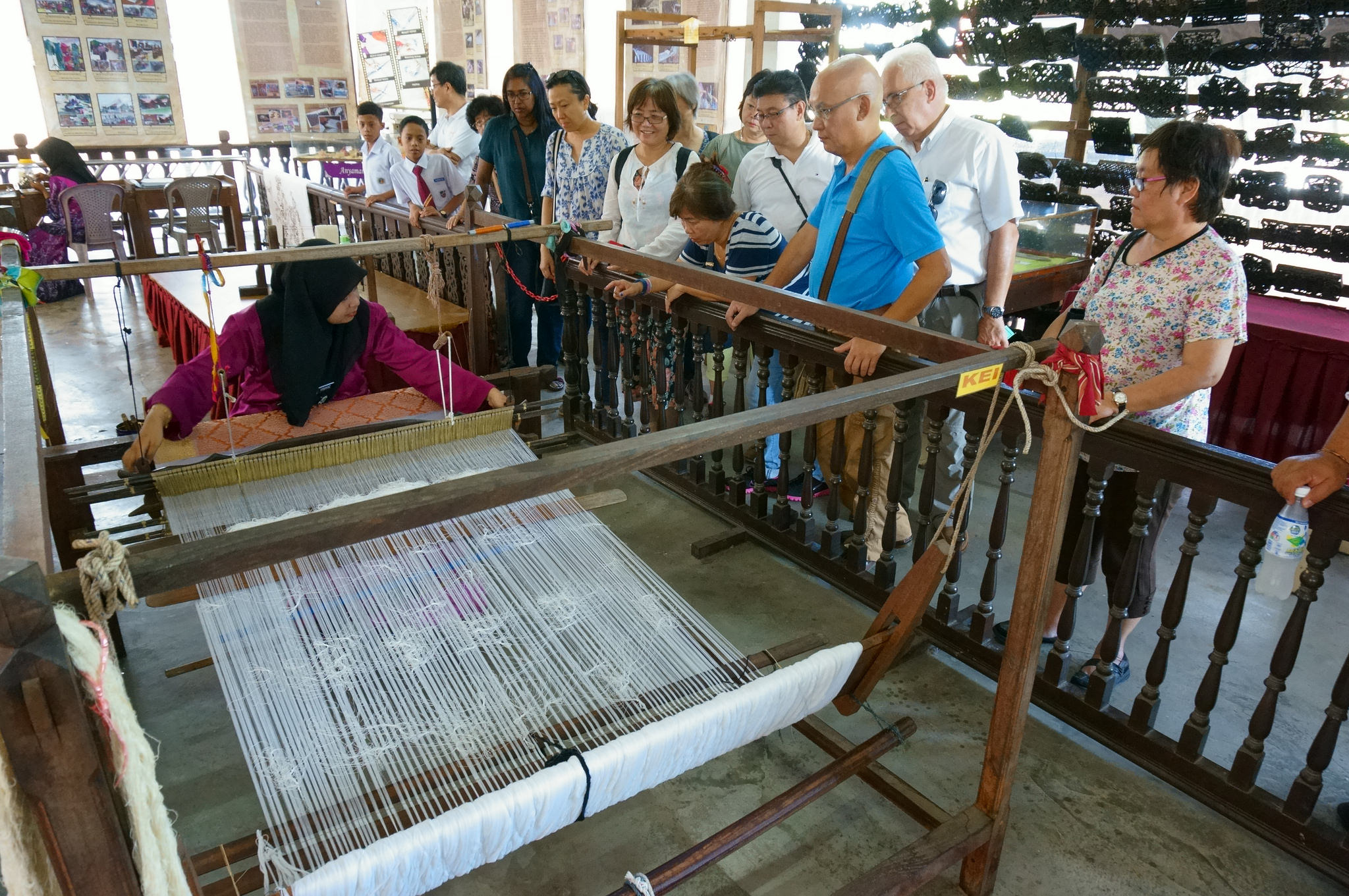
Weaving at Nor Arfa Craft Complex

Next on our itinerary was the Nor Arfa Craft Complex where we witnessed 2 demonstrations relating to the cloth industry – the printing of batik as well as the weaving of the songket cloth. After this, our retail therapy commenced. Most of us ended the visit with items to bring home. The combined purchases entitled us to some complimentary items which were then given to the lucky ones resulting from a lucky draw following this visit.

26678332145_a86692ebfe_k
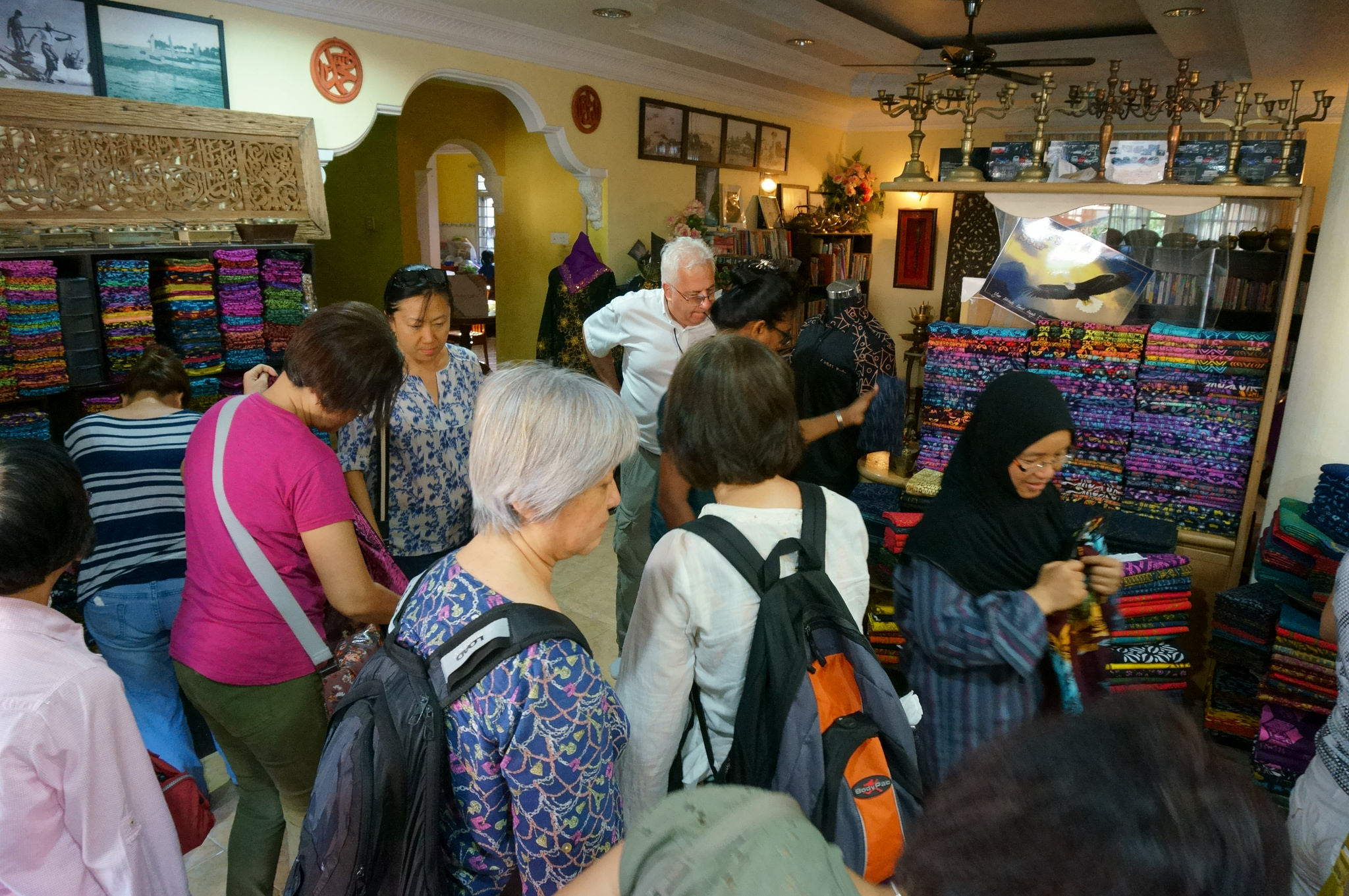
Batik galore!

The last visit for the day was to a home family business. This is the home of a young family that is in the batik business. We were welcomed into more retail therapy. This time a warmer welcome as we were served local snacks and drinks. I was impressed with the young children helping out their parents in conducting business.

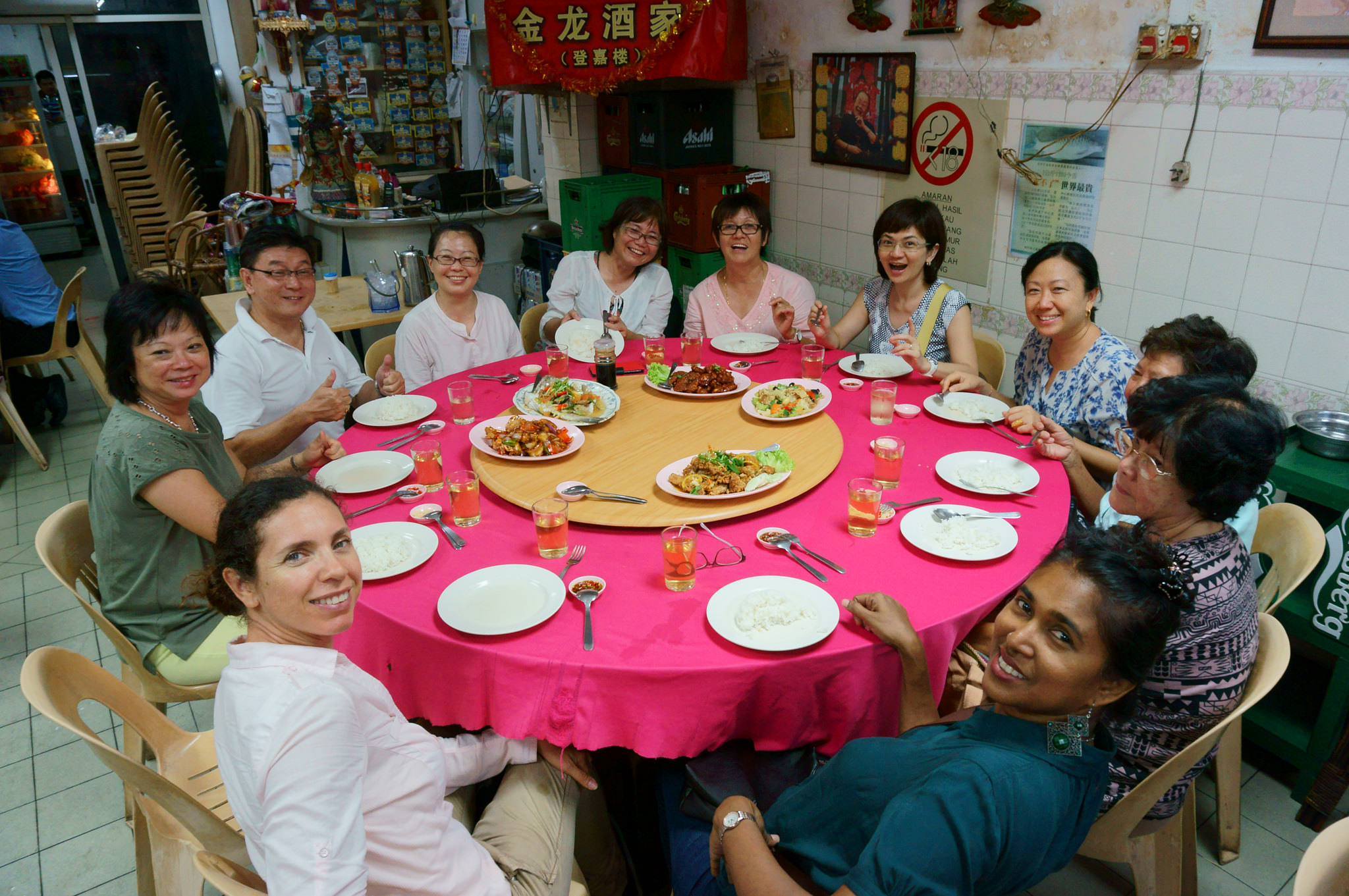
The day ended with yet another but final meal for the day. Our dinner was at the Golden Dragon Restaurant, also in Chinatown, before heading back to the hotel for much a needed shower and a good rest. While it was tiring, the day was indeed enjoyable. We were enriched knowledge wise, experience wise, vitamin D wise (due to the intense sun) but NOT wallet wise, thanks to retail therapy. At day end, we were a happy bunch for sure – a day well spent and money well spent.

26074225733_77cdf3b21a_k
A satisfying end to Day 2

The Minangkabau of Negeri Sembilan

by Rose Gan

The state of Negeri Sembilan lies south of Kuala Lumpur International Airport. Its original founders were ethnic Minangkabau émigrés from Sumatra who probably arrived during the heydays of the Melaka sultanate, which attracted Muslims from around the region to seek their fortune. Negeri Sembilan possibly refers to the people of nine townships of West Sumatra that settled the area. The present sultan and his family are all of Minang ancestry, their culture is matrilineal, and their palace is a grand version of the distinctive bull-horned Minangkabau Rumah Gadang house.

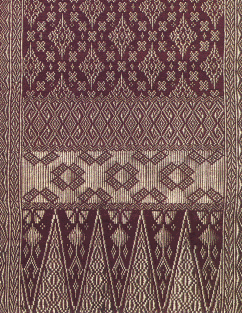
8-3 Minang Songket
Songket (wikiwand.com)

The Minangkabau ethnic group occupies the province of West Sumatra, famed for its beautiful landscapes of lakes, tropical rainforests, and the Bukit Barisan mountain range. They speak Bahasa Minangkabau, which shares many common features with Malay. Most Minang are farmers; those living in the coastal areas work as fishermen. They are known for their handicrafts such as cane work, silverware, embroidery and most of all, woven traditional textiles, particularly songket cloth.

The Minangkabau embraced Islam early on; they were one of the first conversions in the archipelago, following Aceh. Islam is central to their culture, distinguishing their adat from that of other animist ethnic groups. However, following Islamic law, representations of human forms are not allowed and animals feature only in stylised form. Unlike other ancient cultures of Sumatra, the Minangkabau have been in contact with outside influences for centuries, widely assimilating from cultures with which they came into contact. Arabic, Indian and Chinese influences can be observed in their textiles and arts, particularly those of the coastal areas.

West Sumatra is divided into nagari (negeri or autonomous townships). Their culture is matrilineal, unusual especially within an Islamic community. Kinship and inheritance are passed down through the female line, giving the women of the Minangkabau a unique importance and great respect. The Minangkabau people are also distinguished by their arts and philosophy which are both expressive and dynamic, yet hold closely to their prevailing traditional values and the belief of ‘alam takambang jadi guru’ (nature is mankind’s best teacher), meaning that the natural world should guide their lives.

In a Minangkabau extended family, children belong to the maternal line. It is the responsibility of the mother’s brother to raise them. Throughout his married life, a husband maintains close contact with his own mother’s family, often leaving his work tools and other possessions at her home and helping out his own family in agricultural tasks. After marriage, he gradually moves his belongings to his wife’s home and increases the time spent there only when the marriage seems secure, i.e. after daughters are born. Divorce is common usually instigated by the woman if her husband fails to provide her with a daughter, without which the kinship line would be broken.  Men tend to hold little property themselves because of complications arising in inheritance matters, especially after a divorce, when they can lose everything to their wife.

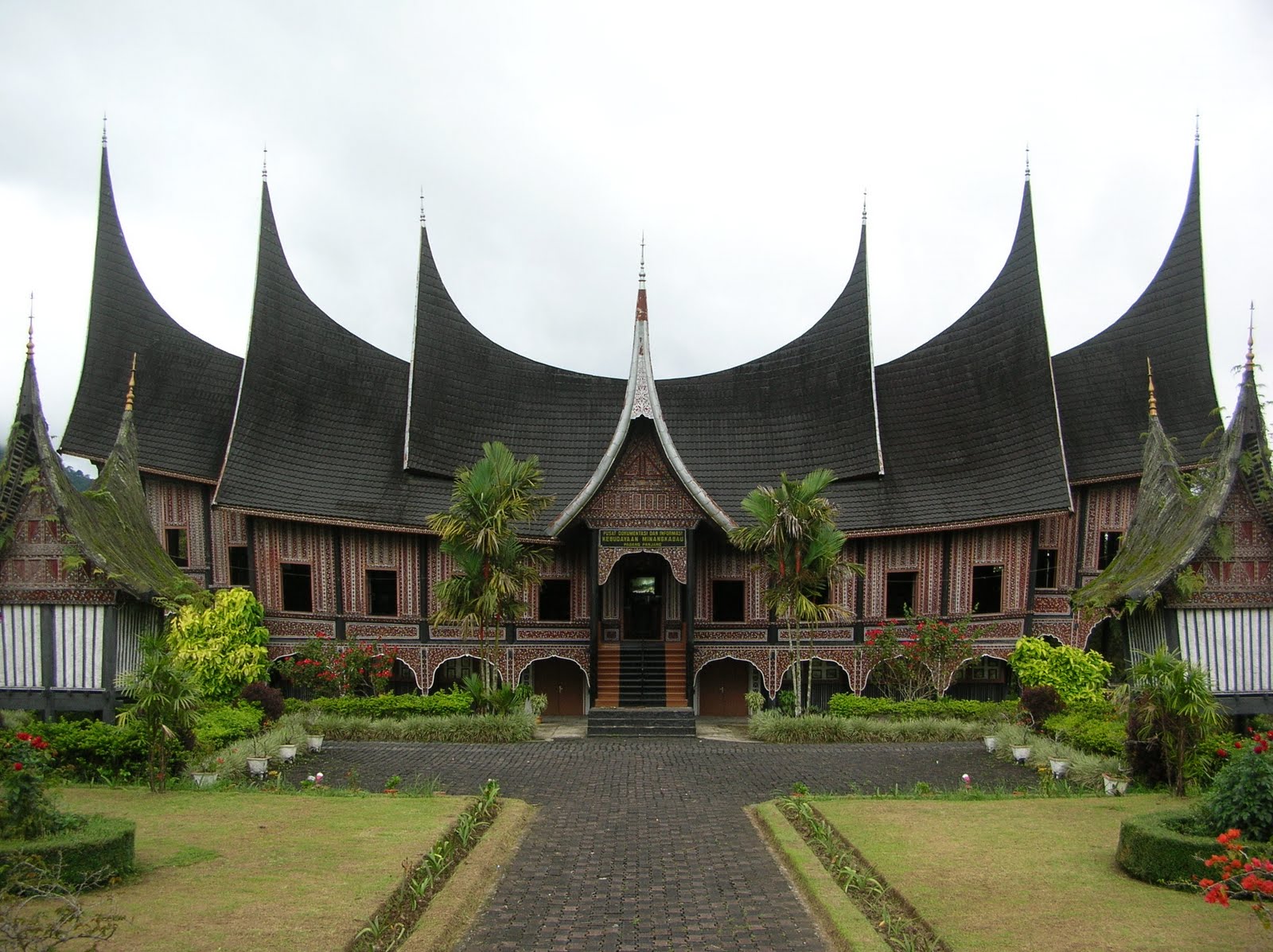
8-9 ns
An example of a Rumah Gadang in Sumatra (photo sourced from pinterest.com)

The Rumah Gadang, or Big House, is a communal home shared by the extended matrilineal Minangkabau family. This type of house is often lyrically referred to as gajah menyusu anak (‘elephant suckling her offspring’), referring to the juxtaposition of the large house with its soaring upswept roof and the miniature rice barn nestled in its shade. The unusual roof shape is often compared to a mountain, perhaps reflecting the towering peaks of the surrounding Bukit Barisan range. The ornate wall panels are adorned with richly coloured stylised plant and animal motifs symbolising such qualities as bravery (buffalo), co-operation (duck), alertness (cat), good luck (cicak) taken from the domestic animals that feature in their daily lives, typical of the homespun folklore of the Minang people.

The buffalo horn gonjong decorative feature on the roof is a distinctive element of Minangkabau design, referencing the legend of their origin as well as demonstrating the importance of daughters. The gonjong is associated with women: the traditional female Minang headdress, the tengkuluk tanduk has a similar shape. This is particularly unusual because in most cultures the bullhorn has male connotations. The number of bullhorns on the roof of a Rumah Gadang indicates the number of married daughters belonging to the house.

8-2 Female Headress
Female headdress – tengkuluk tanduk (atonaru.blogspot.my)

West Sumatra is regarded as one of the most notable regions for the production of songket cloth; historically Koto Gadang, Payakumbuh and Bukittinggi in the highlands were at the centre of manufacture. The songket from Koto Gadang is considered to be the best quality in terms of technical skills, materials and the various and distinctive motifs that make them difficult to copy.

The uniqueness of songket lies in the supplementary weave of gold and silver thread and the complexity of its designs, rich in motifs of an affirmative and natural theme. Songket weaving is commonly done by women. Motifs on Minangkabau songket conform both to their philosophy of the natural world, and their folklore, steeped in traditional wisdom. The common sense of women is noticeable in the symbolism of their songket designs and in the wearing of the cloth. The male sisamping (Malay: samping), the short sarong, must be tied with a large hanging fold at the front, shaped like a tongue. This is a warning to men to guard what they say in public. One can almost hear the admonitory voice of a wife! Many Minangkabau songket motifs retain delightful meanings that have probably been lost elsewhere. The teluk berantai linked chain motif, known to the Minang as saluak berantai, signifies the strength of a community when its members cooperate and work together. Itiak pulang patang ‘ducks returning home at dusk’ reminds that wherever one travels in life, one always returns to one’s home or traditional values. The ubiquitous triangular pucuak rabuang, or young bamboo shoot, represents the usefulness of bamboo in all its stages just as members of the community should be ‘useful in youth and beneficial in old age’.

songket patterns
Songket patterns: (left to right) Itiak Pulang, Pucuak Rebuang, Saluak Berantai. Sketched by Daniel Gan

The Minang people have a great respect for learning, demonstrating an openness to external ideas and influences that is rare in traditional cultures. One interesting practice is the tradition of merantau, where young men are encouraged to leave their home villages and travel either to other islands, or even further afield. In modern times this has even extended to young women. This temporary exile exposed the young to fresh ideas and new skills, which on their return would benefit the community at large.  The Minang are a dynamic culture, and although their population is small, they have made an exponentially large contribution to the archipelago. In Indonesia and Malaysia, many professionals, politicians and intellectuals were traditionally of Minang origin, particularly women of note. Minangkabau communities are to be found all over the archipelago, set up by those who travelled and settled elsewhere, hence the prevalence of Padang food (nasi padang, a speciality of the region) on many other islands. The famous dish beef rendang is arguably of West Sumatran origin although many Malaysians might disagree!

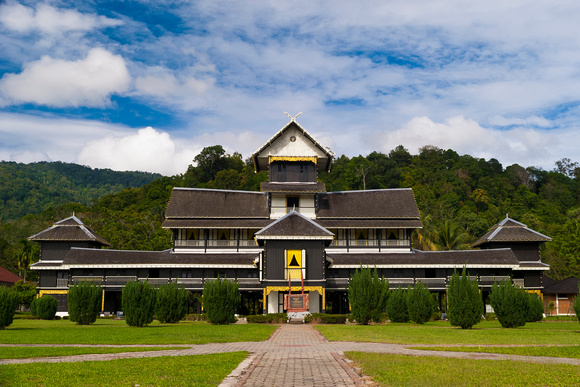
sri menanti
Sri Menanti (virtualmalaysia.com)

The Minangkabau people of Negeri Sembilan maintain a matrilineal customary system unique amongst Malay, called the adat perpatih, Although in Islamic law the husband of the matriarch would be the ultimate authority, amongst the Minangkabau he is considered orang semanda (an outsider). The authority of the family stays firmly with the maternal side, although the husband would support and assist in decision-making. This might appear to be unworkable arrangement but amongst Minangkabaus it becomes a courteous social collaboration that encourages cooperation and discussion between the two families.

In Negeri Sembilan and other parts of Malaysia, one can still see examples of the gonjong or bullhorn finials on upswept roofs in the Minang house style both on private houses and public buildings. A stylised version, known as ‘silang gunting’ or crossed scissors, is more common as can be seen on the gable ends of Sri Menanti, the old palace of the sultans of Negeri Sembilan.

8-7 Bunga Suntiang
Bunga Suntiang (pinterest.com)

Although songket of fine quality is produced in Malaysia, it is still customary for Malays of Minangkabau descent to source their cloth from the Bukittinggi region, especially for weddings. The Chinese-inspired Minangkabau wedding headdress, bunga suntiang has also become popular for brides.

The matrilineal Minangkabau have made a distinctive mark on Peninsular Malaysia, not the least in the example of female empowerment within a Muslim community. Their dynamic influence has enriched Malay culture until today it has become an integral part of the Malaysian identity.

Pepper and Gambier in Malaya

by Elizabeth Khoo

When European colonists reached the part of the Malay Archipelago consisting of the Malay Peninsula and the island of Singapore, they found that only 2 of the spices that they sought would grow well in this region.  These were pepper and gambier, which were then cultivated and became lucrative crops.

PEPPER (Lada)

Pepper known as the “King of Spices”, is one of the oldest and most popular spices in the world. Indigenous to Malabar, West Coast of India, it was already traded during the Roman and Greek period. It was the search for pepper that led early sailors eastward, which influenced the history of Asia Pacific.

Black-Pepper-2649
photo taken from http://www.daleysfruit.com.au/Black-Pepper.htm

The name pepper comes from the Sanskrit word pippali, meaning berry; it is called “lada” in Bahasa Malaysia. Pepper is used to cure meats, as a preservative and to flavour food. It has medicinal uses in Chinese, Indian and certain other communities.  In medieval Europe, pepper was worth its weight in gold and often used as currency for rent, dowry and taxes. Indians brought pepper to Java; it then gradually spread throughout the archipelago.

Pepper vines grows best near the equator in moist, hot climate with evenly distributed rainfall of about 100 inches.  It requires fertile, flat or gently sloping land, rich in humus with good drainage and light shade.  The pepper plant is a perennial woody vine growing up to about 4 metres in height on support poles, trees or trellises. The pepper plant is propagated by cuttings. It starts fruiting at between 3 to 5 years and will continue to do so every 3rd year for up to 40 years.  It fruits looks like slim long cluster of berries and harvest is done by hand.

Pepper fruits known as peppercorns are processed to be available in various forms.  The 3 most popular being Black Pepper, White Pepper and Green Pepper.

  • Black pepper (Lada Hitam) is produced from green, unripe drupes (fruit with stone) which are scaled to release its enzymes. The drupes are dried on mats and raked several times a day for a week, until they are wrinkled and black.
  • White pepper (Lada Puteh) is processed from ripe peppercorns. The red and orange berries are packed in sacks and soaked for a week under slow running water.  This rots the outer husks which is then removed by rubbing.  The dried husked berries are white peppercorn.
  • Green pepper (Lada Hijau) is occasionally available fresh, still on its long stem. Green peppercorns are available pickled in brine or vinegar, or freeze dried.

Today Malaysia is one of the largest producer of pepper in the world together with Vietnam, Indonesia, India and Brazil. The main pepper producing area is in the State of Sarawak which accounts for 95% of the total production in Malaysian. Other pepper producing states are Johor and Sabah.

GAMBIER

Gambier is native to the Malay Archipelago and was traded in the 17th century.  Interestingly, both pepper and gambier share a symbiotic relationship; they are often grown together and are seen entwined. Gambier leaves compost act as fertiliser for the pepper plants and offers protection for its roots.

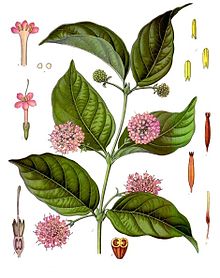
Uncaria_gambir_-_Köhler–s_Medizinal-Pflanzen-275
Uncaria gambier. Photo taken from Wikipedia

Gambier is also known Catechu (India), Er Cha or Gou Teng (China) or Cat’s Claw. It is from the Rubiaceae family and the native variety is the Uncaria gambier. Gambier shrubs are climbers of slender woody vines.  They grow as bushes up to about 2.5 metres. Gambier is prepared by boiling the young leaves and pressing them to extract its juice.  The concentrated juice is dried into a semi solid paste and moulded into cubes, which are then dried in the sun.

In medicine, Gambier has anti-inflammatory and sedative properties.  It dilates blood vessels and lowers blood pressure. In Traditional Chinese Medicine (TCM), gambier is used to treat hypertension, dizziness and anxiety. It is also effective to calm wind; to relieve convulsions; calm the liver; and remove (or clear away) heat. Excess consumption can cause diarrhoea, kidney damage, swollen feet and nausea. It is not recommended for long term use.

Gambier is most commonly used today as a condiment in betel nut chewing, tanning of hides and in dyeing where it yields the colour ‘khaki’.

Gambier was first grown in Johor in the late 1840s and exported to China and Europe.  The plantations were highly profitable and successful, providing employment to many locals and immigrants. However with the advent of the automobile industry, rubber replaced gambier as the most important cash crop by the turn of the 20th century.

Setting up Museum Volunteers in Malaysia

Marie Tseng and Janet Tee reminisce on forming the Museum Volunteers group 10 years ago.

From the first meeting I had in September 2006 with Janet Tee, then Deputy Director of Muzium Negara, we both knew that this was going to be the start of an amazing journey in the field of volunteerism with Muzium Negara, Kuala Lumpur. Malaysia was one of the few countries in South East Asia at that time that did not have a group of museum volunteers; similar groups had already existed for more than 30 years in neighbouring countries, such as Indonesia, Singapore and Thailand. They are also, of course, common throughout Europe and America.

6-1-1-First Batch
Launching of the Museum Volunteers with the first batch of volunteers

Janet and I wanted to initiate a docent programme at Muzium Negara. By October 2006, we had brought together 10 museum enthusiasts and we forwarded a proposal to the late Dato’ Dr Adi, at that time Director-General of the Department of Museums, Malaysia. We obtained his approval to go ahead with the training programme to prepare volunteers to guide at Muzium Negara. We were very lucky to gain the interest of a group of illustrious people – soon to be known as Batch One – the pioneers of Museum Volunteers.

With the support of the Director-General, the Deputy Director and curators of Muzium Negara, we set up a pro-tem committee to design a three-month training programme. We approached Malaysian scholars, journalists and curators as well as persons active in the preservation of Malaysian heritage to support us and volunteer their time to familiarise the volunteers in the history and culture of Malaysia. The Indonesian Heritage Society and the Friends of the Museum in Singapore were also a great help in sharing with us their experience and expertise.

While training as volunteer guides, we had also to organise and promote our group.  We prepared a communications plan, designed a logo and organised a ceremony for our first graduation. By March 2007 we were ready to announce the launch of the Museum Volunteer Programme.

We chose to call ourselves ‘volunteers’ rather than ‘friends’ as we wanted to make it clear to people joining our group that this was about contributing to the activities of the museum and not simply learning by attending interesting lectures. The most important aspect was in giving back and sharing the knowledge that we had acquired by leading guided tours; involvement in school programmes; or undertaking marketing and promotion activities.

From the inception of our project, we met many sceptics who told us that Malaysians do not have a culture of volunteerism. Yet following our first article in The Star newspaper, we received over 100 phone calls from people expressing interest in our project- proving the doubters wrong! In September 2007, we had sufficient numbers to run two training programmes, including a weekend course for working people.  The rest is history: since 2007 we have trained over 300 guides. Today, the Museum Volunteers provide guided tours in English from Mondays to Saturdays; in French and Japanese on Tuesdays and Thursdays; and in Malay and Mandarin during Malaysian school holidays. We are also actively involved in school and outreach programmes with the museums.

IMGP0359
Volunteers participating in the Raub Heritage Camp activities. Forty-six participants, aged 13 to 17, learned the importance of heritage in this Museum Volunteers programme led by Aurelie Bosc

Success of Museum Volunteer group!

Museums are the keepers of history and identity. For Malaysians, Museum Volunteers (MV) is a unique way to share the history and story of their country; for foreigners, it is an excellent route to understanding our host country and to connecting with Malaysian people and culture.

Voluntary work can sometimes be thankless, but as a Museum Volunteer the reward is intrinsic: the more you give and share, the more you learn and receive! It provides the perfect opportunity to meet, share and exchange with people of similar interests, no matter where they come from. As a foreigner, it as been an amazing opportunity to learn more about a country I now call home, and to make new friends and acquaintances.

mv logo
We selected the tepak sirih as our logo. The tepak sirih symbolises hospitality and, with this, we welcome visitors to the museum

From Batch One, we would like to acknowledge in particular:  Sabrinah Morad, for connecting MV with eminent speakers and scholars, Angela Naylor for organising and running the training sessions; Zahara Shariman and Aurelie Bosc for setting up the school programmes; Wong Siaw Ming and Sylvie Gradeler for organising the first ‘Regards Croisés’ that would later become the ‘Focus’ sessions; and Catherine Bossis for managing our first media communication campaign. It is through their tireless effort and commitment that MV is what it is today. Syabas to all those involved!


When we first came to Malaysia

by Susan Haveman

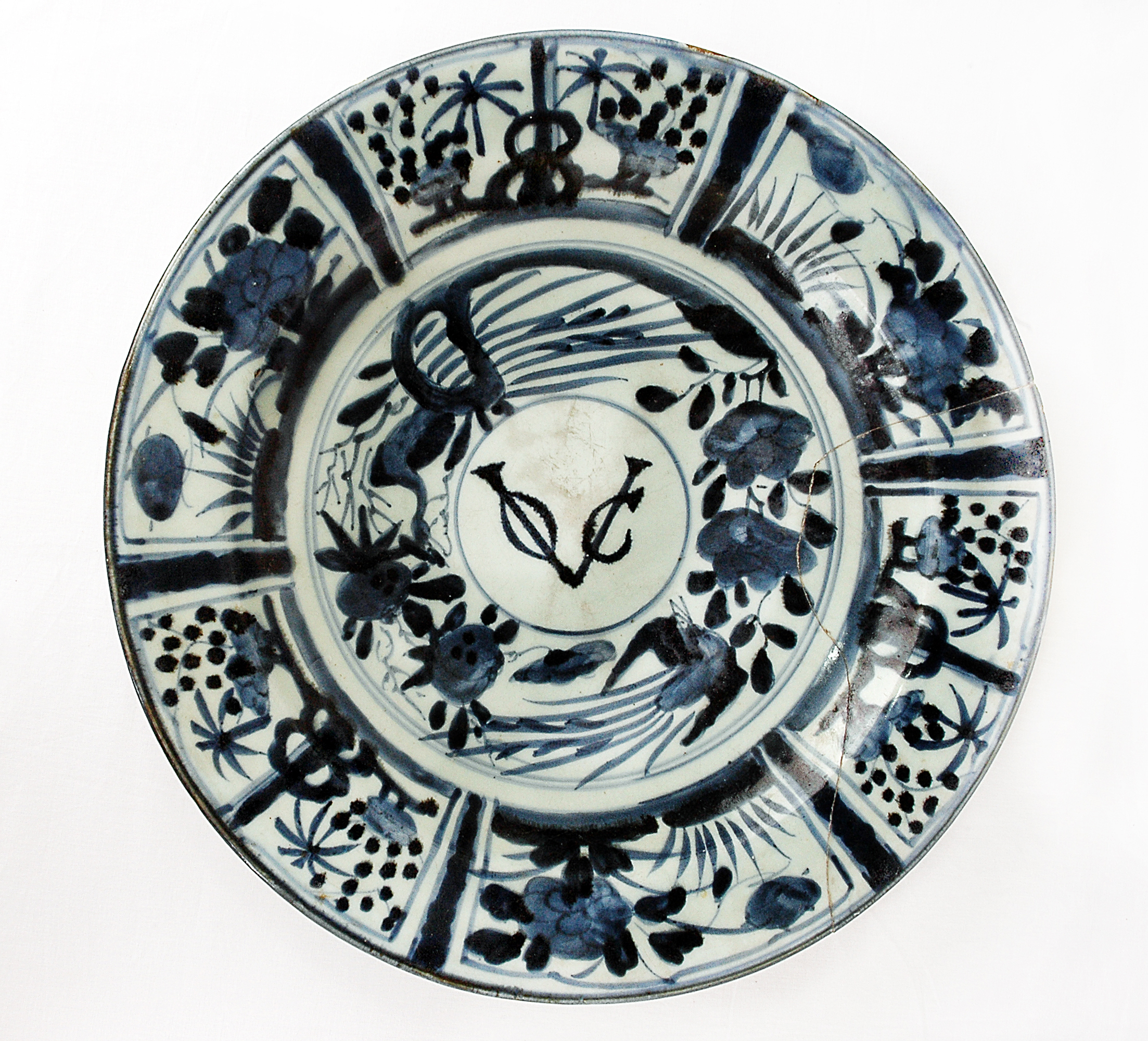
I have to admit I didn’t have the faintest image of Malaysia when my husband asked me whether I would consider moving our family there. Still, I like a new challenge and when the company my husband works for gave us a choice between Singapore and Kuala Lumpur, my vote was for Kuala Lumpur – because it sounded more exotic, more foreign, more unknown. And it is. There’s nothing here to remind you of Holland… or so I thought, until I came to Muzium Negara.  On my very first guided tour through the museum, our guide brought us to gallery C, to the Porta di Santiago – and surprised me with the VOC emblem. The VOC? In Malaysia? Why? And when? It might sound ridiculous, but I had never heard of the Dutch being in Malaysia. It is not something you learn about in school in Holland.

41-1Batavia (Jakarta), of course, served as the VOC headquarters in Asia, I knew that much. I’d heard of Jan Pieterszoon Coen and about the Spice Trade. But I never knew that the Dutch only founded Batavia as an alternative to Melaka. I didn’t know that the first plans to capture that strategically and commercially important port were made 13 years before Coen’s founding of Batavia. I never knew that between 1606-1641 there were two large-scale and numerous smaller attacks on Melaka, before captain Minne Willemszoon Kaartekoe finally managed to capture the town. Or that, after having conquered Melaka, the Dutch stayed in Malaysia longer than any of the other European powers. I just didn’t know!

Ceramic dinner plate with an emblem of Melaka

Now – and this might sound a bit strange from a Dutch volunteer guide in a Malaysian museum – I thought it was very embarrassing hearing new things about my country’s history from the mouth of a non-Dutch person. So since then, I’ve tried to get my hands on as many books on the subject as I possibly can. In Dennis De Witt’s ‘History of the Dutch in Malaysia’ I came across many names that sound familiar – but only because the local governments back home had decided to name streets after them: De Houtman, Van Riebeeck and Van Heemskerk, to name a few. Here in Malaysia I came to know the story behind the street signs, 10 000 kilometres away from the towns where they are erected.

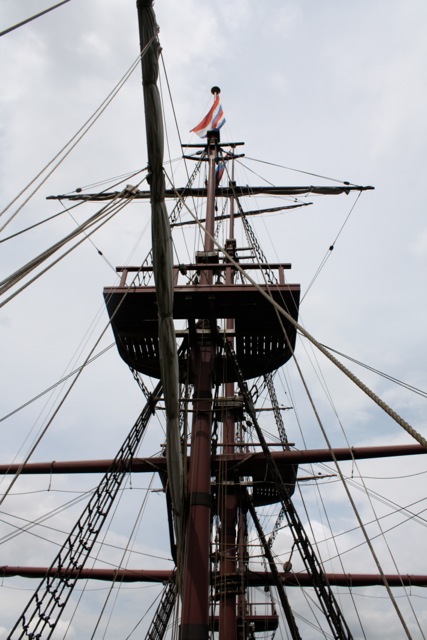
6-3-1On our home trip, I dragged my husband and children with me to the National Maritime Museum in the old Naval Entrepôt in Amsterdam. The building, designed in 1655 by Daniel Stalpaert, shed a light on all aspects of Holland’s maritime history. In the museum shop I found ‘In pursuit of pepper and tea – The Story of the Dutch East India Company’ by Els M. Jacobs, a beautifully illustrated book on the VOC. We also visited the replica of the Amsterdam, one of the four first Dutch ships to set sail to South East Asia in order to break the Portuguese monopoly of the spice trade, and imagined travelling back to KL in that ship, taking 15 months to reach our destination instead of 13 hours.

My latest quest is to discover what exactly happened before 1824, when the British ‘temporarily’ took care of Dutch overseas possessions. That wasn’t just a Dutch-British affair.  It had to do with everything else that was going on in Europe at that time. This time the Internet brought me the solution: Yale University offers free online courses on a wide variety of subjects, history among them. So now I listen to Professor John Merriman, explaining ‘European History from 1648 until 1945’.

Dutch ceramic plate with “VOC” inscribed. On display at Gallery C, Muzium Negara

See what a Museum Volunteer training course can bring about? Well, at least I will have interesting tales to tell when (if ever) we go home- not just about about nasi lemak and mani/pedis, but also about Parameswara and Cornelius Mattelief De Jonge, amongst others! Most of all, however, is the recognition that everything in the world is inter-connected with everything else – no matter how far apart we may seem.

The Chitties of Melaka

by V. Jegatheesan

He looked Malay, he spoke Malay, but he is not Malay.

He looked Malay, he spoke an Indian dialect, but he is not Malay.

She looked Indian, she spoke an Indian dialect, but she is not Indian.

They look Indian, they look Malay, they look Chinese, they speak Malay, they speak Indian dialects and they are the Melaka Chitties.

They look mixed, they speak a mix of these languages and they are the Chitties.

When we speak or read of the ‘Peranakan’ community in Malaysia, we firstly think of the descendants of the Chinese who settled in Melaka during the Sultanate days. However, few Malaysians have heard of the Melaka Chitties.

These are the Indian descendants of those who also came to Melaka during the Sultanate days. Many moved on to Singapore and the community in Melaka was reduced. But why is it that most Malaysians do not know about them? Is it because the Chitties did not preserve their own culture too well, but instead dissipated into the other communities they married into? Is it because they did not ‘market’ their culture as did the Peranakan Chinese? This article endeavours to find out how or why the Chitties are not such a well-known community as well as take a peek into their life.

DSCF2501
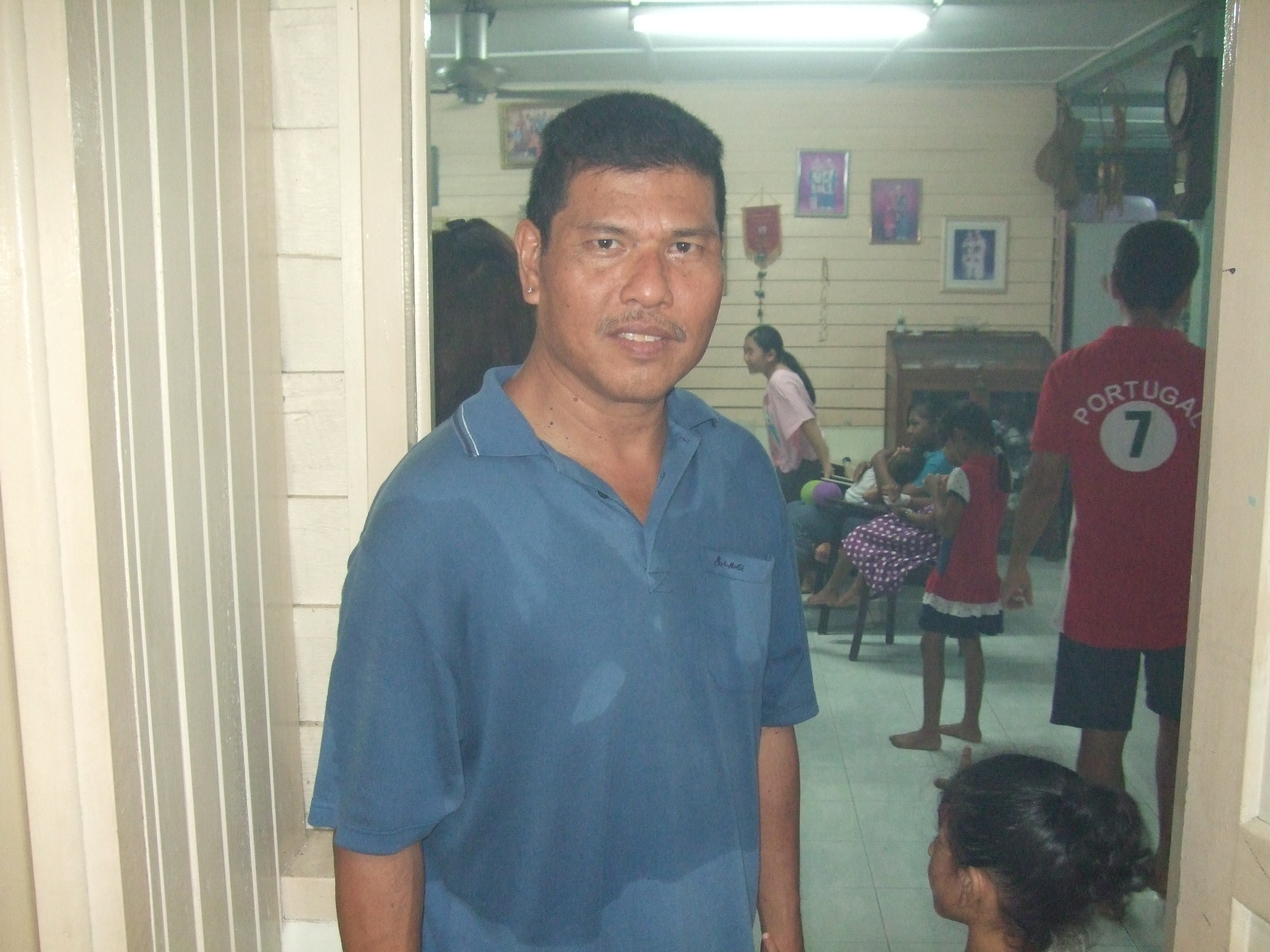
My host, Mr. Nadarajan Raja

There is a fair bit of information on the Chitties today on the web and it is easy to summarise an article from these. But it would not give the spirit and reality, nor satisfy my own curiosity, so the best way was to meet and visit a Chitty family. I got in touch with Mr. Nadarajan Raja, the Chairman of the Chitty Living Gallery. He has also taken the task of being a historian of the Chitties. I had a ‘culture shock’ when I first saw him. I was somehow expecting an Indian looking man and so did not acknowledge this Malay/Chindian looking person who came up to me. Then I was put in place when I realised I was after all meeting a Chitty! “I am a Chitty, not an Indian!” he proudly told me.

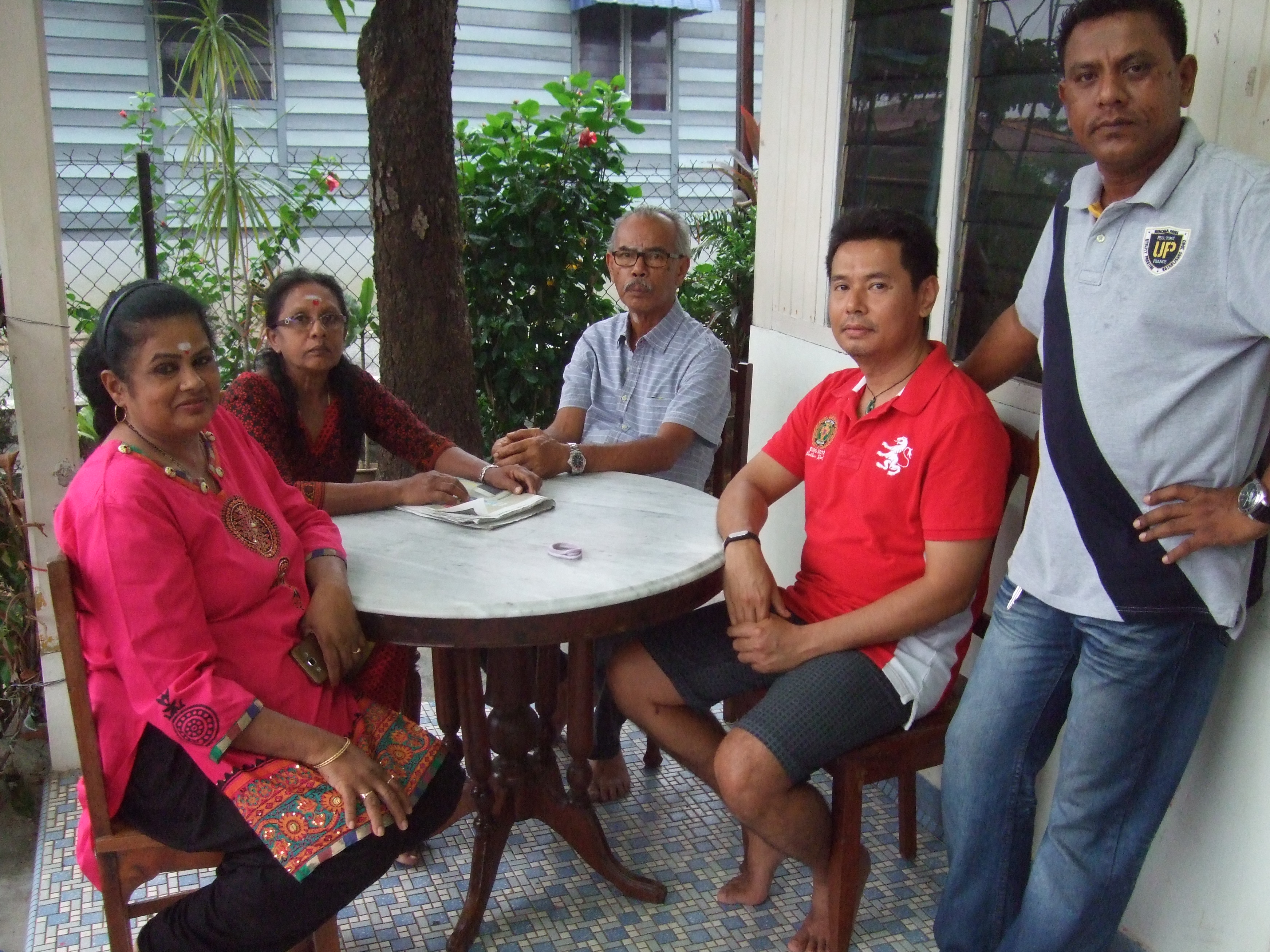
He was very kind and helpful and took me to his house where he and his family were preparing for a religious ceremony and yet had the time to talk to me about his community. He is really representative of the Chitties.

He explained why the Chitties are not as well-known as the Peranakan Chinese. Chitties kept a low profile and this is largely due to the contentment of the people. The Peranakan Chinese also achieved success in politics and this may have helped to project them into the limelight. The later migration of Indians saw the Chitties as different and remained separate and did not associate themselves much with the Chitties. Perhaps this is a good thing as it might have made them disappear into the newer generation of Indians.

With tourism a major industry in Melaka as a result of the rich history, the Peranakan Chinese, being part of this history took advantage and created a ‘brand’. The food, which everyone enjoys, was the main attraction and this helped to project their image. They promoted their form of dressing as well and publicised their events.

Furthermore, presently, there are a few members of the Chitty community. In the British days, when they needed personnel to populate Penang and Singapore, many Chitties migrated to these places. This left a small community behind after all these years. Perhaps, intermarriage led to a diversion to the other races.

Family ancestry is not known because, though they bury their dead, only in recent years do graves have names.

While the original Indians who came in the Sultanate days were rich and influential being traders, administrators and even members of the royal court, the years of the foreign rule, has made a change in their status. With lost influence, they moved into farming, fishing and government jobs. In more recent years, many have found work in the private sector as well. Education was a drawback in the past years. Nowadays, they have joined the thirst for further education. In fact, a younger relative of Nadarajan is an economics graduate and is a lecturer in a private university. In time, the Chitties, will move to different occupations and the professions and with this, it may mean many will move away to work elsewhere, returning once or twice a year for festivals. This in turn could have a diminishing effect on the community numbers over time.

DSCF2494
Plaque at the entrance of  Kampung Chitty
DSCF2482
The main road in Kampung Chitty

Presently, there is a Kampong Chitty (Chitty Village) built by the government. Water and electricity are provided free. There are 25 homes in the area, at the entrance of which is a plaque describing their community. There are however, many others who live elsewhere in Melaka and Malaysia. At one end of the settlement is the Angala Parameswari temple built in 1888.

Chitty food has an Indian base. Added on are Malay and Chinese influences to the point a dish is difficult to place. The average Chitty is now an average Malaysian and eats any kind of food, so it is not usual to eat traditional food daily. But on ceremonial occasions, the full range is prepared and laid out. Such food would include kerisik (grated coconut with fish), nasi lemak (milk rice) and lauk pindang, a fish dish. The traditional cakes, or kueh, are Malay. While ordinarily rice is just boiled, for occasions the rice is nasi lemak. Food is eaten with the hands.

DSCF2480
Nadarajan and wife’s wedding photo in traditional dress

None of the family members I met were wearing traditional attire, all being in modern clothing. But for formal traditional occasions the ladies would wear the baju kebaya and the men the dhoti. The ladies baju kebaya is a Malay adoption and now common to the Nyonyas as well.

Nadarajan Raja is as current a name as you can imagine. Names have somehow been maintained and not changed over the many years. One would have expected the form and spelling to have changed, but the spelling is quite standard, at least for the current Chitties. The nameplate on his house is Kandasamy Raja, another example.

Among those who have become Christians, many retain their Indian name, such as Alfred Pillai for example. But today, names are found on the internet and tend to be more traditional and Sanskrit based.

Looks of course are diverse. They are Malay looking generally, but differ according to their marriages. One brother told me he has a problem eating lunch in a restaurant each Ramadan because of his Malay looks! Over the years, the original Indians married Chinese and Malays and perhaps Melaka Portuguese. It is not unusual to see very Chinese-looking (and speaking) person introducing himself as Prasanth Veerasamy Chitty! (another friend of mine). Marriage with other races is still common. But Nadarajan feels there are more marrying Indians and this will strengthen the culture.

DSCF2499
Pictures of family members
DSCF2497
Pictures of family members

The spoken language is Malay. But the accent is not the Malay accent as spoken by the Malays. Nadarajan says that since their grandfather’s time, some learnt Tamil and now many speak Tamil. Generally in this family, they speak Malay, Tamil and English interchangeably among themselves.

Language, being what it is, absorbs other words and over time, loses it purity on the one hand but enriches it as well. Even as they speak Malay at home, many words are unused in daily Malay today. For example, crabs are not ketam but kepiting. Box is kepok, not peti. Kopia is a cap. Words have been adopted too. From Chinese we have kuntow for a dustpan, loteng for upstairs and bimpo for handkerchief. They also refer to the grinding stone as batu belingan.

As for religion they are Hindus, following tradition closely. They observe festivals such as the Ponggal (January/February), Deepavali (October/November) and Bhogi Parchu (ancestral worship) in January. Fruit Parchu (Parchu Buah Buahan) is observed for a month between June 15th and July 15th. This is also an ancestral worship and the dates are fixed with local fruits being offered.

Hindus refer to the Hindu almanac for auspicious dates and times as they are crucial to any event. So do the Chitties in the case of weddings, engagements (parasam), moving into a new house and also when the deceased body is to leave the house for burial. They refer to the pandaram, the priest at the temple, who in turn would refer to the almanac.

Temples are many and the most famous is the Sri Poyatha Moorthi Temple dedicated to Vinayagar in Melaka town. This is the oldest temple built in 1780. This is despite the fact that the community came in the 1400’s. It is said that in the very early days, worship was in houses and any temple would have been of wood and so not survive the times.

Food offerings at ceremonies include nasi lemak, pulut inti (glutinous rice with sweetened grated coconut), penggat pisang (banana preparation) and others. Sandalwood ash (beehuthi) is also used with the pottu, the red spot, on the forehead.

Nadarajan was preparing a memorial ceremony for an aunt who had passed away a month ago, at the age of 96. This is the 31st day ceremony. At this ceremony, a large variety of their food was prepared as an offering. It gave me a chance to see this ceremony and as well as partake in the rich food culture.

The 31st day ceremony was the end of earlier ceremonies. They are vegetarians, featuring bitter gourd for the first 8 days after the bereavement. After the 8th day they can eat fish till the 15th day. On the 16th day, they have a cleansing ceremony, the puniathalam. They can then visit the temples. After the 31st day ceremony, meat can then be eaten again. What fascinated me is the ornate layout of the food, fruits and other offerings.

ms_pg06shanmugam
(Photo taken from The Star Online – January 27, 2012)

The food was on banana leaves. There were 14 varieties of curry, some mentioned above, around a serving of nasi lemak. Local fruits like jackfruit and salak were on a platter and another had wet cakes such as kueh lapis, pulut inti and doughnut made of tapioca and crusted with sugar. After the prayers, members of the family gather around the leaves and eat off it. Others would eat similar food at the table.

Nadarajan timed our interview to this 31st day ceremony so that I could observe the event, partake in the food and meet the family. Being a Tamil of a more recent migration, it was an eye opening occasion for me to meet some members of this historical community and be a part of it even for some hours. With traces of similarities, the differences were greater. It dawned on me that perhaps in a hundred years or so, the Indians of today will probably be just like them.

I wish to thank Mr. Nadarajan Raja, as well as his family, for hosting me at their home and making me feel very welcome.