Museum Volunteers – A welcome sight

The Star newspaper interviewed 4 museum volunteers guides and the interview was published as a center-spread on 4 Feb 2013.  This article is copied below.  You can also read the article at the following.

http://thestar.com.my/lifestyle/story.asp?file=/2013/2/4/lifeliving/12624042&sec=lifeliving

http://thestar.com.my/lifestyle/story.asp?file=/2013/2/4/lifeliving/12624055&sec=lifeliving

Museum Volunteers – A welcome sight

They come from different backgrounds and nationalities, but their love for history, culture and heritage brings them together for a good cause.

LAST year, the National Museum in Kuala Lumpur received over 500,000 visitors comprising Malaysians and tourists from all over the world.

With the constant stream of visitors, the presence of docents or volunteers who help out at the museum is a welcome sight.

These volunteers provide an hour’s guided tour for free in English, French, Japanese, Malay and Mandarin on selected days of the week, while tours in other languages are available on request.

Among the crowd, you can spot a volunteer from their black vest with the National Museum logo, guiding a tour or manning the front desk at the entrance of the museum.

The museum volunteers are made up of a group of Malaysians and expatriates from various countries. These history enthusiasts have been working relentlessly behind the scenes and in the front line to ensure that visitors enjoy their outing.
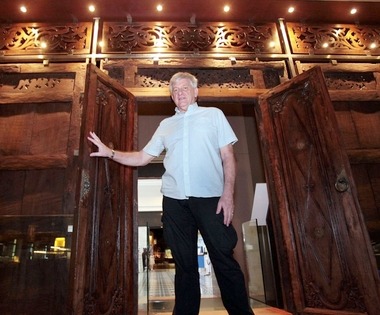
Stuart Wakefield, who has made Malaysia his temporary home, has been a museum volunteer for the past two years.

When retiree Stuart Wakefield arrived in Kuala Lumpur with his wife under the MM2H (Malaysia My Second Home) programme in 2010, he had plenty of time on his hands. Wakefield, who made a living managing contracts for the operation of helicopters, met an expat who volunteered at the National Museum.

 “She told me that the best thing she had done in Malaysia was to get involved as a museum volunteer, so I got involved, too!” says Wakefield, 69.

Wakefield, who hails from Tetbury in England, had lived in various cities around the world before he decided to settle down in Malaysia.

Asked if he had done volunteer work previously, he quips: “I’m not a serial volunteer, if that’s what you mean!”

Back home in England, Wakefield had served as a volunteer for several years, looking after children who were going to be sent to prison. His job was to ensure that these children, aged 16 and below, received fair treatment.

Wakefield, who serves as secretary and sits on the National Museum volunteers committee, is one of the few male volunteers.

“It is very interesting working with so many women.  If men led, it would be a very formal setting where it is all about rules. These women will disagree, then debate and without taking a vote, they seem to come to a consensus easily,” he points out.

Apart from guiding a tour once a month, Wakefield does just about everything: answer e-mail messages, handle visits from schoolchildren, and organise talks and training for volunteers, check captions (in English) for artifacts in the museum.

“The challenge lies in finding ways to get visitors interested and involved during a tour. It’s about understanding what the visitor wants and giving them something that matters,” Wakefield explains.

So, how does a tour begin?

“Before I start, I usually find out if there is a historian among the visitors. If there is, I will ask him or her to leave!” he says in jest. “Seriously, if I know there is a Malaysian among the visitors, I am kept on my toes as they are likely to know if I have gotten my facts wrong!”

Wakefield had the honour of leading a tour for the Fijian President in 2010.

“When I turned up that day, I had no idea that I was about to take the President of Fiji around the museum and it was amusing to see how flustered everyone at the museum was. I managed to engage the President during the 90-minute tour,” he recalls.

Wakefield is accustomed to working with heads of states and dignitaries, prior to his retirement. “They just want to be treated like normal people; you cannot afford to be over-awed.”

As a trainer, Wakefield basically provides volunteer trainees with tips gleaned from his experience.

“People are entitled to the best possible tour and we are here to enhance their experience. Whilst I do give a list of tips to the trainees, I often find that I break these rules!” he says with a laugh.

Each group that he leads requires a different type of tour and script. Wakefield fondly remembers a delegation of Danish students who were studying the export market and trade.

“I gave them a full tour of the history of trade and that provided them with a vital link of the countries some 3,000 years ago,” he says.

“Anyone who would like to come in as a volunteer needs to find out as much as possible what the commitment entails, and what they need to do. If leading a guided tour is not for you, you can always discuss with the committee and they can recommend something that you’ll enjoy doing,” he says.

Unfortunately for the museum, Wakefield will be leaving Malaysia soon to return to England to spend more time with his grandchildren.

“I will miss my role as a museum volunteer when I leave,” says Wakefield who has committed his two years in Malaysia to volunteering at the museum.

All abuzz over the past
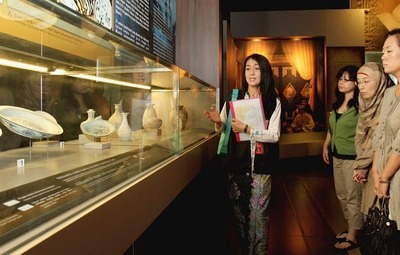
ully involved: Museum volunteer Reiko Sato (left) does a lot of research to prepare for the guided tours that she gives visitors
Fully involved: Museum volunteer Reiko Sato (left) does a lot of research to prepare for the guided tours that she gives visitors

When Reiko Sato, 44, shows up as volunteer guide for Japanese tourists, she is always well received.

“Japanese tourists love the fact that a fellow native is leading the tour as they appreciate having a guide who speaks their language,” says Sato, in perfect English.

“Most of the Japanese tourists are amazed that the history of Malaysia goes back a long way and there is a connection between our two countries from as early as the 15th century,” says the homemaker and mother of two teenage girls.

Sato, who was born in Osaka, used to live in Johor Baru. In 2010, Sato and her husband – who works for a Japanese company in KL – returned to Malaysia for the second time.

Like Wakefield, Sato had a Japanese friend who was a museum volunteer; she was introduced to the group during a coffee session in June 2010.

“I’m fond of meeting and talking with people, and I’m interested in history, so becoming a museum volunteer really appealed to me,” says Sato.

According to Sato, some volunteers prefer a fixed script when they are guiding a tour, but she prefers to improvise along the way.

“I research on various topics and read books to keep improving. Also, it depends on the group of tourists, whether they are elderly, residents or couples with young kids. I customise the tour according to their interests,” Sato says.

Aside from meeting people, Sato says the nicest thing about volunteering is when visitors tell her that they found the tour interesting and informative.

“There are 26 Japanese volunteer guides. This year, we have 18 trainees so there will be a total of 44 members under the Japanese group,” says Sato.
Therapeutic
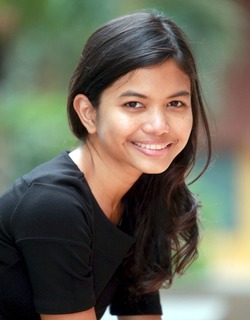
Mariana Isa is an architect on weekdays and a museum volunteer on weekends.

“Volunteering is really good therapy for me!” says Mariana Isa, 32, who volunteers at the National Museum on Saturdays.

“There is so much negativity in the news. Leading a tour gives me a chance to say good things about my country. It’s my way of contributing to society. At the same time, it reminds me about the good things that we have,” says Mariana, an architect.

“Since young I’ve always wanted to be a guide at a museum, so when I saw the ad in the papers, I signed up in 2008,” says Mariana who returned to KL in 2008 after studying in the United States and England.

“The challenge in guiding is to present Malaysian history and culture in a more interesting format so that visitors will have a memorable experience,” says Marina, who majored in historic buildings and holds a masters in conservation of historic buildings.

Through talks by experts, the volunteers learn new things all the time. Marina says the tours are never stagnant and the script evolves along the way.

“Volunteering as a guide has helped build my confidence in talking with people. It’s great meeting tourists from around the world who are interested in Malaysia; their feedback helps open up my mind,” says Marina, who is on the Malaysian Institute of Architects heritage committee.

“I was telling a group about our nine kings who each take turns to be the King of Malaysia and how they make decisions through a council. This Arab visitor commented that it’s such a good system and pointed out that they only have one king and they cannot get rid of him!” she recalls with a laugh.

Mariana fondly remembers a group of elderly Italian women who were so impressed and grateful for her guiding that they offered her tips. It is the policy of the museum volunteers to decline tips, so Mariana refused and thanked them.

“They are so used to tipping in their country so they were shocked that I wouldn’t accept their tip! They all hugged me and asked me to visit them in Italy,” she says.

In another incident, Mariana was taking a group of Japanese tourists around when she felt awkward at the gallery that displayed the colonial period.

“I didn’t want to offend the Japanese visitors so I didn’t use my usual story about the Japanese Occupation during WWII. Sensing that they weren’t keen on hearing about this, I sped things up and moved on to the independence period!” she says.

Being a volunteer also gives them access to unusual opportunities such as a visit to the House of Parliament that Mariana proposed for the volunteers in 2009.

“It was a fascinating experience because we have foreigners and locals among the volunteers. The foreigners could follow the session through headphones which translated what was going on,” she says.

Through researching for her volunteer work, Mariana has enjoyed discovering things like why the kijang (barking deer) is included in the Malaysian currency; she has learned that there is a reason and history behind it.

According to Mariana, the legendary Kelantanese Queen Cik Siti Wan Kembang, who ruled during the 14th century, had her favourite pet, a barking deer, immortalised on her royal gold coins.

The “Kijang Emas” motif from these ancient Kelantan gold coins became the official logo of Bank Negara Malaysia.

“In the olden days, the Malays believed that every metal has its own spirit so the spirit of gold is the deer, and so the barking deer appears on our currency until today,” she says with delight.

Her parting advice for interested parties?

“Be prepared to read a lot and do a lot of research. Being a guide helps build up your knowledge, and you learn to appreciate your country more,” adds Mariana.

A Passion for Artifacts
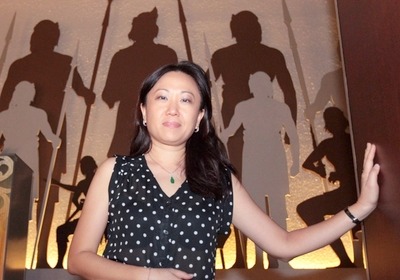
Karen Loh, president of the museum volunteers at the National Museum in Kuala Lumpur.

SHIPWRECK antiques are things that Karen Loh is not only familiar with, they have become her life’s pursuit. Her interest in these artifacts and wreckage has led her to an unexpected path in volunteer work.

Noting that the National Museum in Kuala Lumpur had a gallery that featured shipwreck artifacts, Loh decided to get involved in some way.

“I wanted to share my knowledge about shipwrecks and artifacts, and decided to become a museum volunteer. As soon as I became a trainee volunteer, the museum closed the shipwreck antiques gallery!” says Loh, 43. Today, she is president of the museum volunteers under the Department of Museums Malaysia.

Loh’s interest in shipwreck anti-ques grew into a passion over time.

“In 2006, a French woman, together with a few Malaysians, approached Janet Tee, the then deputy director of the National Museum, to start a museum volunteers group,” says Loh, a director with Nanhai Marine Archaeology, a company which specialises in the search for historical shipwrecks, underwater excavations and research into the ships and cargo.

The group started with just 15 members; Loh joined in 2008 under the second batch of volunteers.

“Today we have 180 volunteers – half are Malaysians and the rest are expats from Canada, France, Germany, Holland, Italy, Japan, Poland, Switzerland and Britain,” she says.

“The Malaysian volunteers are made up of retired civil servants, history teachers and college students, while homemakers make up the majority of the expat volunteers. Besides making good use of their free time, these expats get to learn more about Malaysia,” Loh explains.

She adds that they hold “coffee mornings” in English, French and Japanese to create awareness of museum volunteers and to rope in new ones.

Volunteers are also recruited through advertisements in international schools and clubs, the local media and radio, as well as their blog and Facebook page.

“There is more awareness now compared to the early days, and we are happy that more Malaysians are stepping up. When we started, I was one of only two Malaysian volunteers!” Loh points out.

Museum volunteers are not confined to giving guided tours, says Loh. “A volunteer can be involved in library duties, secretarial work, proof-reading, translation work, or even research and conservation, which has a new team that we started last year.”

Those who work full-time but would like to get involved, can also work from home.

On her own volunteering experience, Loh recalls handling a group of 350 low-performing students a year ago. They came for a tour under the Educational, Welfare and Research Foundation which was set up to improve the social, educational and economic welfare of marginalised Indians, particularly students from poor homes.

The students were introduced to the history of Malacca through a creative presentation and participated through worksheets to answer questions.

Loh dressed up as Hang Li Po, the fourth wife of Malaccan Sultan Mansur Shah, while other volunteers came as Hang Jebat and other popular historical figures.

“We were expecting a challenging bunch but to our surprise, they were very attentive and interested. I felt a big sense of accomplishment to see such positive response,” says Loh. “The joy on the children’s faces was really rewarding to see and I just got sucked into the spirit of volunteerism. If anyone is thinking of joining as a volunteer, please come and see us!”

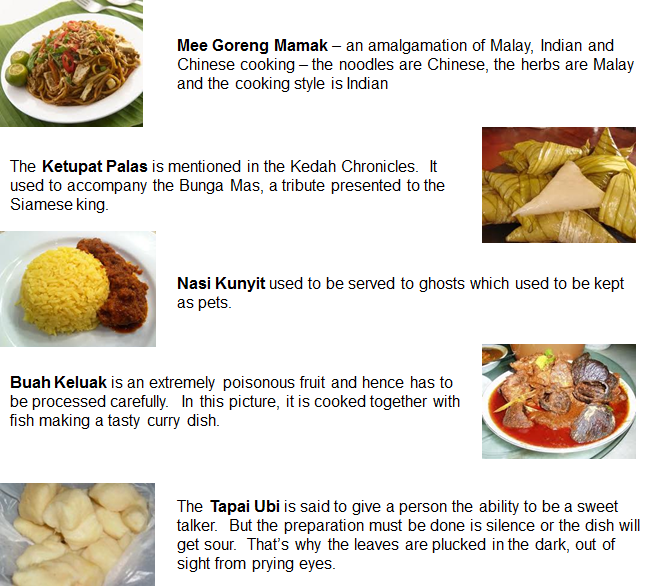
Culinary Heritage of Malaysia

As Malaysians we think we know a lot about food.  Whether they are Malay, Indian or Chinese dishes, we know them all and love them all.  We are even a little arrogant as a lot of concoctions are truly Malaysian; a fusion of food from different cultures.

Harith Jamaludin giving a talk to museum volunteers

On 26th Jan 2013, Harith Jamaludin gave a talk to the museum volunteers on Malaysian food and it was a humbling experience to learn that there is a lot about Malaysian cuisine we don’t know.  For example, nasi pattaya does not come from Pattaya, Thailand.  Possibly a local invention?

Harith Jamaludin is the Program Manager for the School of Hospitality & Culinary Arts, Kolej PTPL Sungai Petani. He obtained a Diploma in Food Service Management and Bachelor of Science in Food Service Management from Universiti Teknologi Mara (UiTM). Currently based in Sungai Petani, Harith is undergoing his Masters Degree in Gastronomy at the same University.

Harith started the talk by explaining how history influenced Malaysian cuisine.  It was interesting to know that the Malay words ‘ubi’ (potato), ‘keladi’ (yam) and ‘babi’ (pig) are the only food related words not linguistically influenced from elsewhere.  With 143 mouth watering pictures of heritage food and drinks, Harith went through the cooking of the Malays, Indian, Chinese, Orang Asli, natives of Sabah & Sarawak as well as Peranakan and Eurasian cooking.  He also talked about European influenced cooking.  Laksa Johor, for example, uses spaghetti.

Some dishes

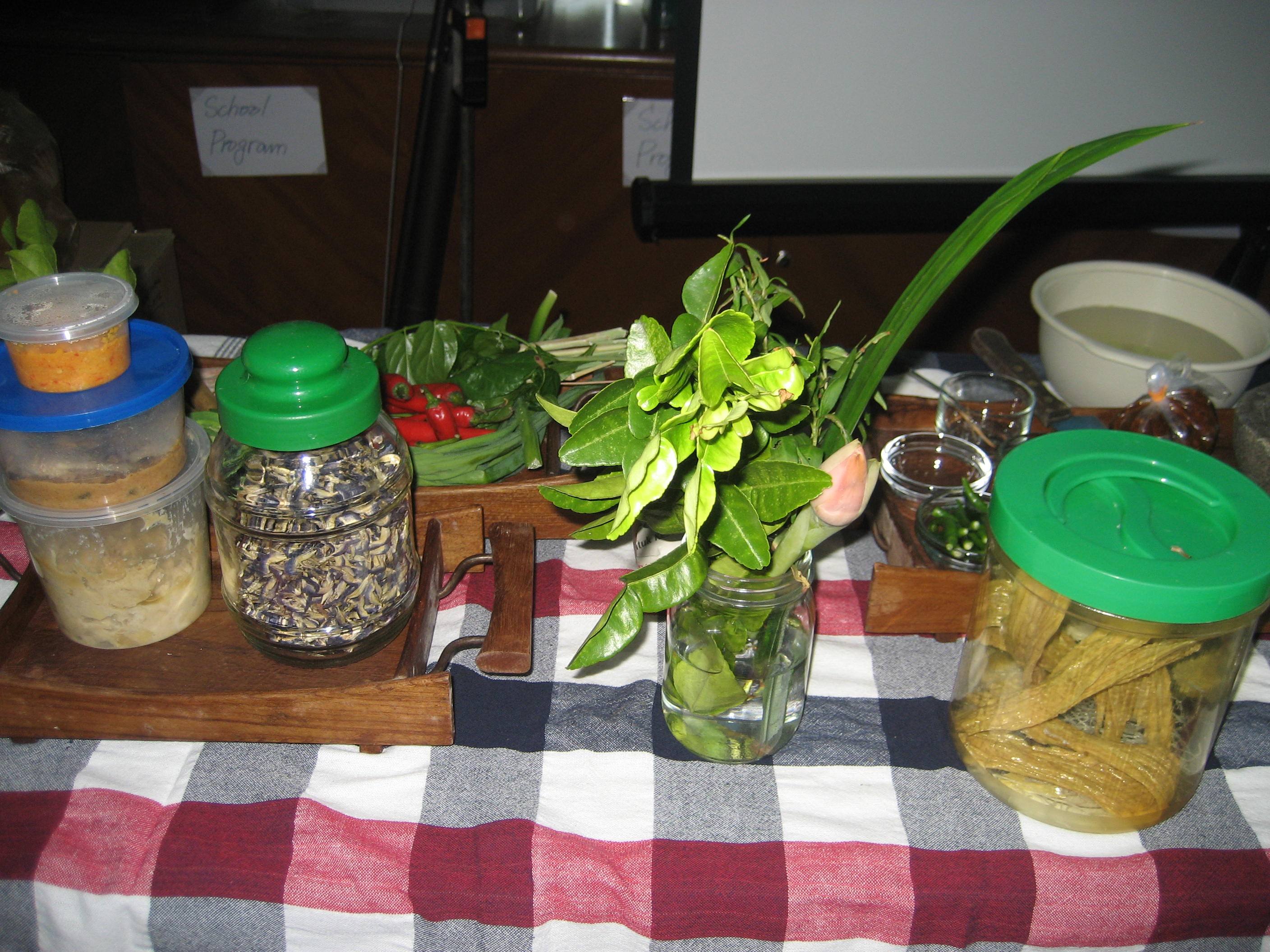
Sample herbs, plants and food brought by Harith

Harith also brought along herbs, spices as well as cooked and uncooked food in a show-and-tell.

We got the feel of texture and smells of herbs and plants which we usually only taste in the finished product.

The volunteers also had hands-on experience in making sambal belacan and many tried this with relish.

Lawrence having a go at making sambal belacan with the other volunteers waiting their turn.

The talk was a good prelude to the New Year potluck.  Appetites whetted by sights and smells of Harith’s presentation, the sumptuous lunch that followed was a good end to the morning.

Masks of the World

Exhibition at Muzium Negara                                                                                            20 December 2012 to 20 March 2013                                                                                      9.00 am to 6.00 pm

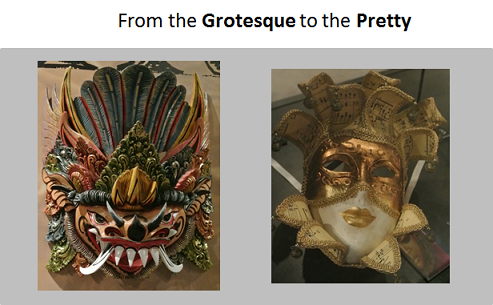
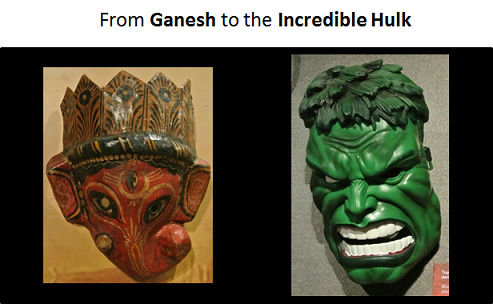
If there is one thing that all cultures and civilisations share, it is the love for masks.  The materials used, the designs and the purpose for the masks may differ between cultures but the fascination is universal and continues till today.

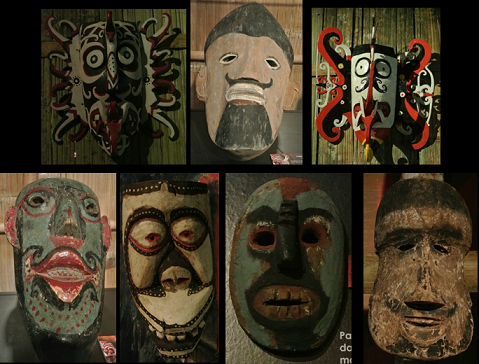
Come down to Muzium Negara and be prepared to be awed by the hundreds of masks on display.  Learn about the history and heritage of masks not only from Malaysia but from around the world.  The display starts with masks from Sarawak and the variety of masks from here is amazing.  A selection is shown below.

Masks of Sarawak

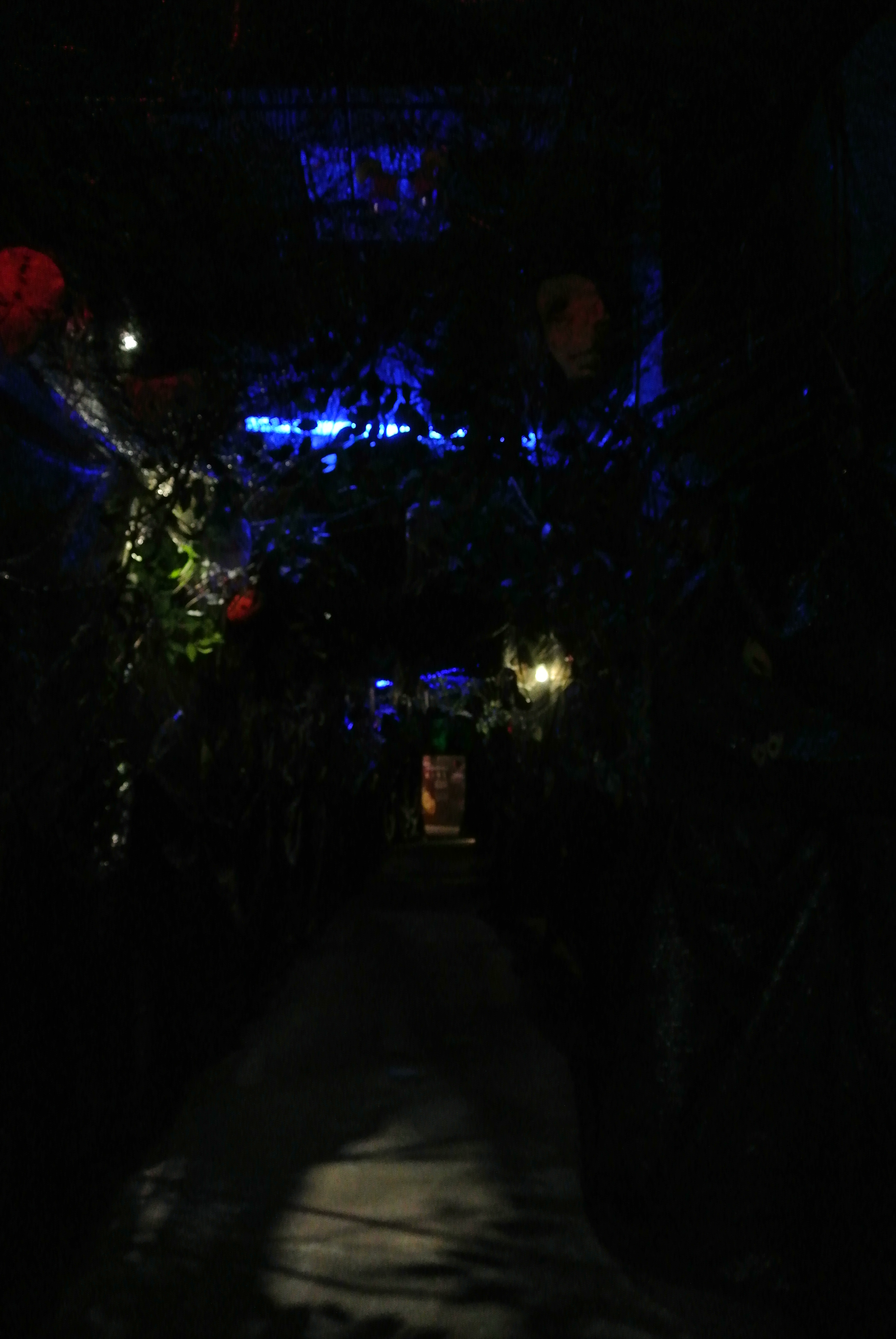
105There are two galleries of masks.  These two galleries are connected via a dark eerie tunnel lined with masks that glower at you from all directions.

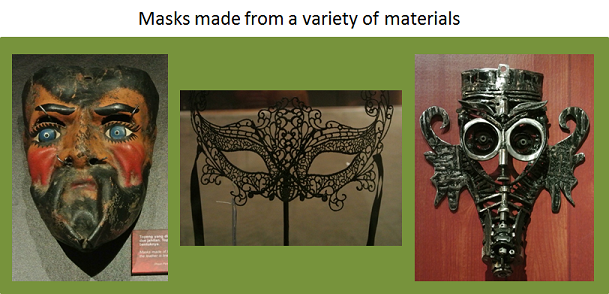
While wood is the main material used in crafting masks, masks made from other materials such as clay, animal hide, paper mache, metal and rubber are also on display.

The display boards give a wealth of information and from one of these boards you learn that the earliest examples of mask usage were found in Altamira (Spain) as well as Lascaux and Dordogne (France) where cave paintings dated to about 30,000 years ago showed examples of mask wearing.

Masks of all sorts are on display.  Enjoy the pictures of the masks below and come down to Muzium Negara to learn more.

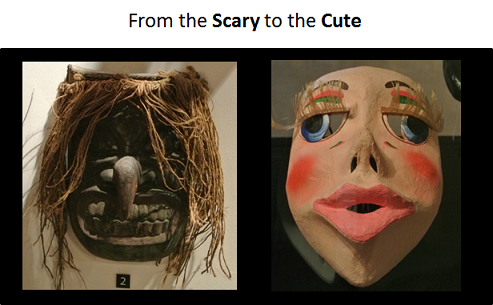
Scary to Cute

Grotesque to Pretty

Ganesh to Hulk

Variety of Materials

047

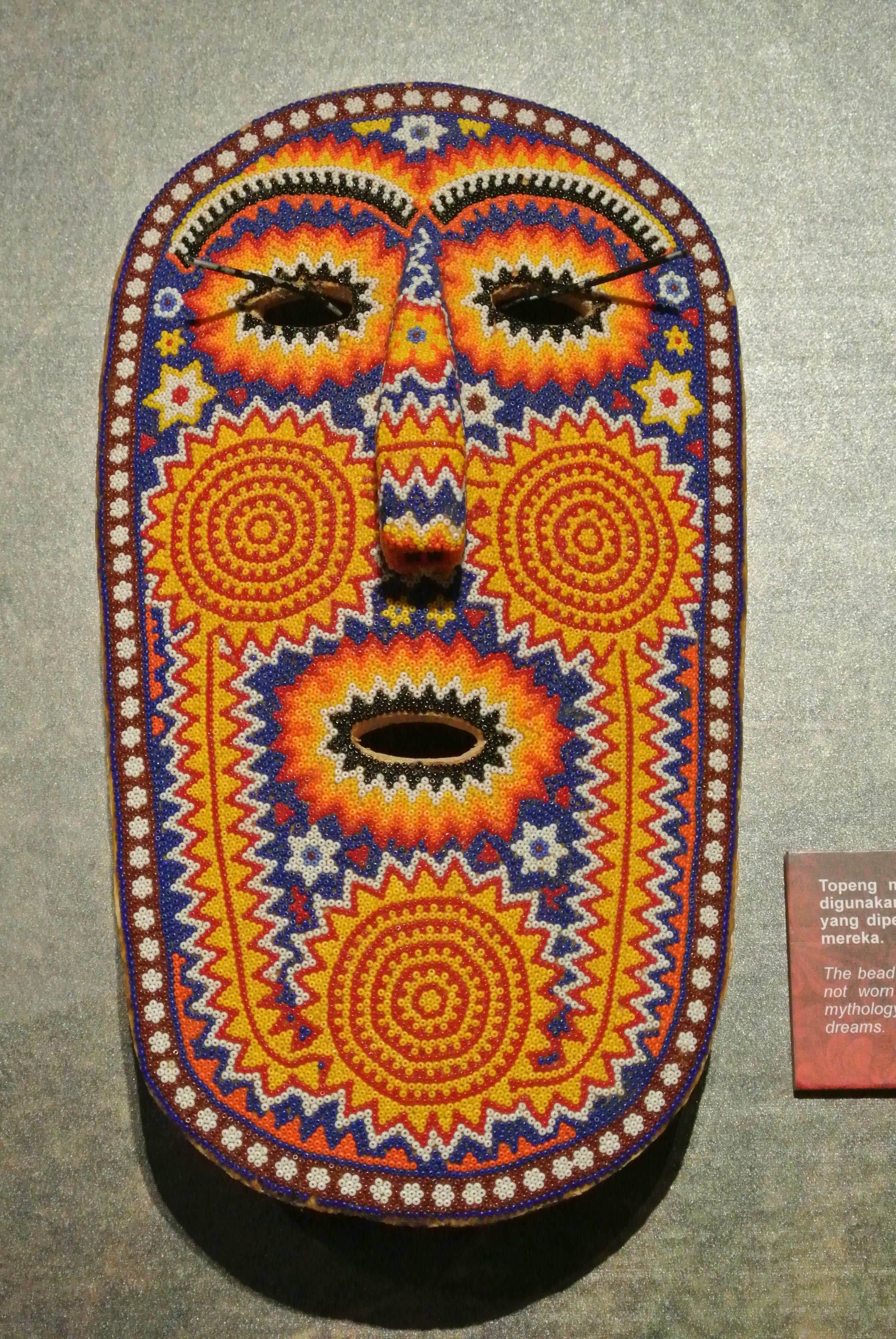
My personal favourite is the beaded mask made by the Huichol people of Mexico.

122

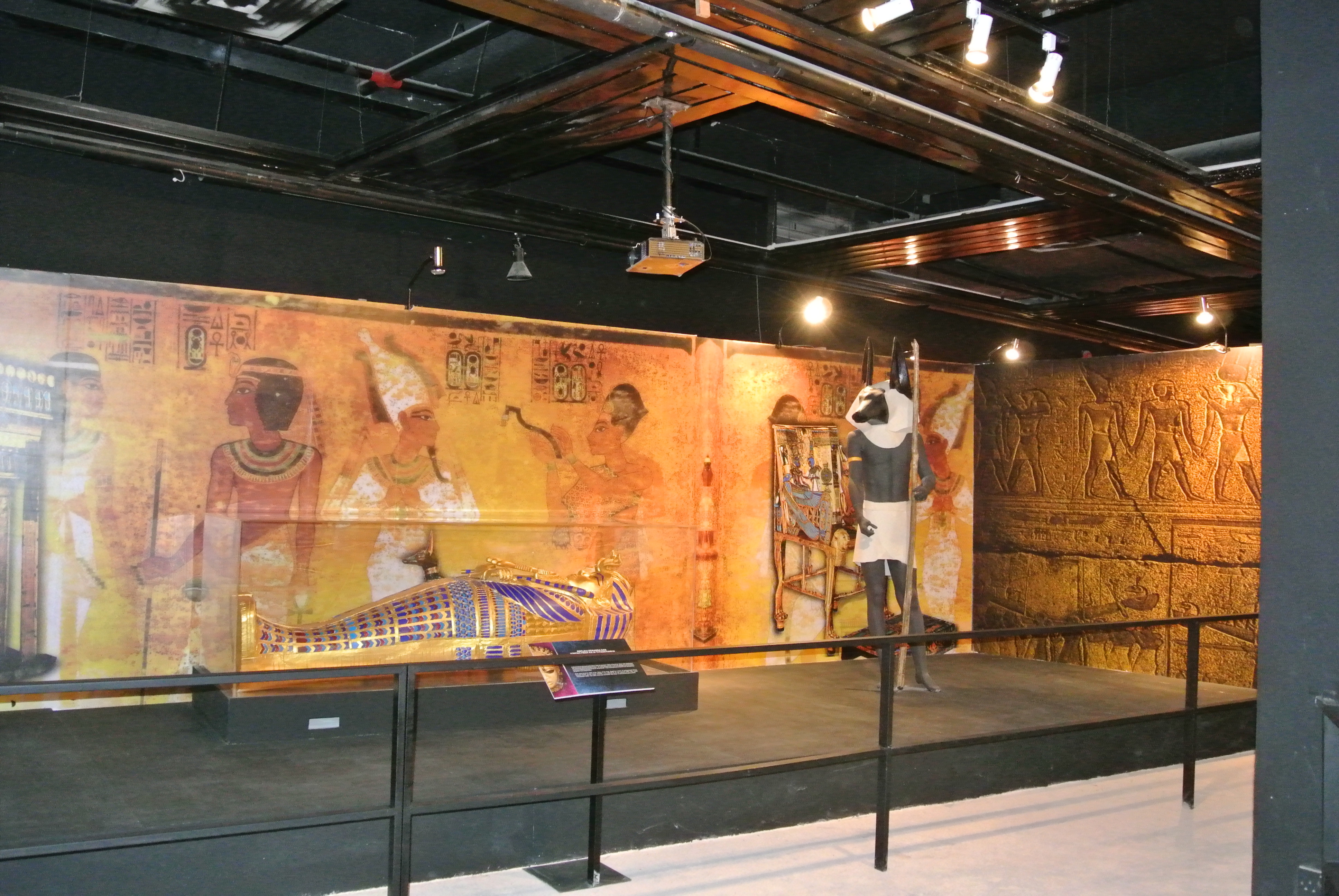
The star attraction of the 2nd gallery is probably the replica of King Tutankhamun’s coffin and his golden Death Mask (shown in the picture above).  In ancient Egypt, a mask was placed over the deceased’s face to prevent the face from fading.

Flor de la Mar

by Eriko Shima-Tsuno

Flor de la Mar_gallery C
A replica of the Flor de la Mar at Gallery C in Muzium Negara

Flor de la Mar, laden with treasures stolen from the Melaka kingdom, sank in 1512 in the Aru Strait in the region of North Eastern Sumatera.  Although marine archaeologists and treasure hunters have made numerous attempts to recover the ship, its location remains a mystery.

Flor de la Mar is entwined in the history of the Portuguese endeavor to control the maritime trade in the East and as such, is also part of the history of Melaka.

Melaka was founded around the year 1400 and its strategic location between the maritime trade routes of East and West enabled it to grow into an internationally known port city. The economic power of Melaka depended on trade and the most important commodity traded was spices. At that time spices were very much needed, not only to add flavors in cooking, but also for preserving raw food such as meat, especially for winter. As such, spices fetched a very high price in Europe; for example, 1kg of pepper had the same value as 1kg of gold, and 1 ounce of nutmeg was equivalent to 7 oxen.

In those days, the Portuguese bought spices from the Venetians, who bought spices from Muslim traders in Egypt and Syria. The tight control that the Venetians had over the flow of spices into Europe was the reason for the high prices making the Portuguese determined to find a direct route to the source of the spices.  Thus in the 15th century, Portuguese rulers initiated voyages of discovery.

In 1498 Vasco da Gama reached the Malabar Coast of India – the source of pepper.  Here, he heard about Melaka and of the spice islands further east.  In 1511, Portugal attacked Melaka with 18 ships; one of which was the Flor de la Mar.  The Portuguese made their first attack on the port of Melaka on 25 July 1511 but failed.  On 10 August 1511, they tried again and on 24 August 1511, the Portuguese finally captured Melaka. At this time, the armada was led by Alfonso de Albuquerque.

A replica of the Flor de la Mar which houses the Maritime Museum in Melaka

After looting Melaka, Albuquerque wanted to send the looted treasure to the court of the Portuguese king, King Manuel 1.  The Flor de la Mar, at 400 tons, was the largest ship in the fleet and hence it was chosen to transport the treasure back to Portugal.  The treasure included bronze lions, jewelry, gold-plated palanquins, precious stones, Melakan embroidery as well as young slaves. The Flor de la Mar, along with 3 other ships, namely the Enxobregas, Trinidade and Jong Jawa sailed for Goa, India on 20 January 1512 with Albuquerque at the helm. It never made it to Goa. After 6 days at sea, it was caught in a storm and sank just off Sumatra, taking down with it the riches of the Melaka kingdom.

Till today the location of the ship remains a mystery. Some maritime archaeologists say that their team’s ultimate challenge would be to embark on the recovery of the Flor de la Mar. I really hope that this shipwreck would be found and the treasures restored to the Malaysian people someday.

President’s Year-End Message

Karen Loh                                                                                                                                 President, Museum Volunteers, JMM

As 2012 draws to a close, I would like to take this opportunity to thank each and every one of you for your time, contribution and volunteer work this year. Besides guiding, it was a year full of activities and events. We began the year with a New Year potluck get-together in January, followed over the year by talks by Najib Arrifin, Rosey Ma, Dennis de Witt, Dr Farid, Jim Baker, the Magis Exhibition guided tour, Kampung Baru walking tour, trips to Ipoh, Batu Gajah and Melaka. And I am sure many will not forget our Odissi Anniversary dinner event at the Olive Tree recently. Thank you so much to our Focus Team; Kokkie, Stuart, Mariana and Cze Yan for organising these events. Our Book Club kick started this year with around 15 people who meet once a month. Led by Zahara and Reiko, the book selections with an Asian theme have not been disappointing. The book club is open to all volunteers who wish to join. Our MV blog has also been revived recently and constantly updated by Magan. If you wish to contribute to the blog, do forward your article/write-up to Magan.

From 20, we currently have 180 members in our volunteer group today. A warm welcome to our new 52 volunteers in Batches 16, 17& 18 who are currently in training. I look forward to your guided tours in English, Japanese, French, Mandarin and Bahasa Melayu next year. Our School Program Team had their hands full with 13 school visits and for the first time, visits by home-schooled children and hearing-impaired children from SK Pendidikan Khas (special education school) to the museum. Much thanks to Cay and her team, Ms Kiew and the museum education department for organising these visits

I hope next year will be just as busy and eventful. Happy guiding, Merry Christmas, Happy Holidays and Happy New Year!

Museum Volunteers’ Annual Dinner – Bollywood Style

By Hani Abdullah

The Museum Volunteers (MV), a non-profit organisation hosted under the Department of Museums Malaysia, has been operating for six years now and chose to celebrate its anniversary recently in an annual dinner themed “Odissi Night”.

Stuart tying a turban with Karen looking on

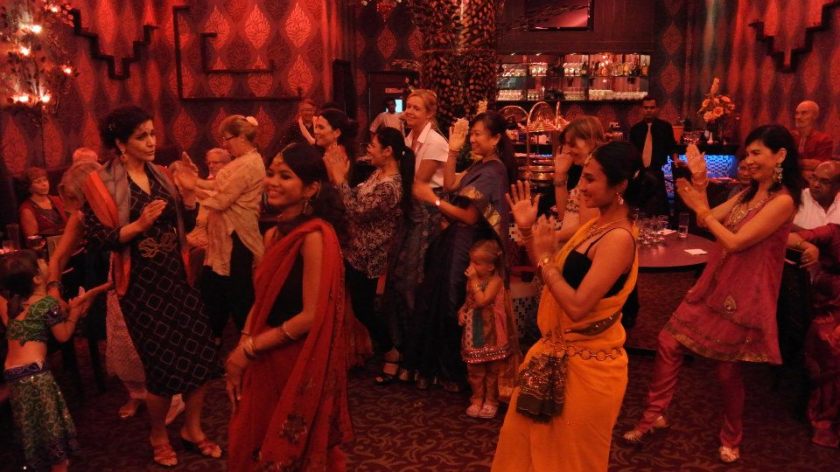
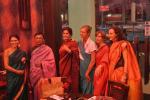
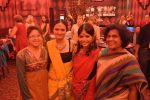
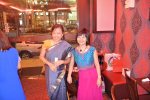
Volunteers from all the training batches came together, dressed in Bollywood-style with garlands, pottu, headgear and all, and were treated to a delectable array of Indian cuisine – vegetarian, halal and non-vegetarian – as well as a night of fun-filled entertainment complete with prizes, all provided for by among their own volunteers.

At first, the 50 adults and 7 children were given a saree-tying demonstration, where three different styles were shown, before a competition was held for the most decent-looking saree tied within 5 minutes.

Mariana and Effa dancing to "Chammak Challo"
Mariana and Effa dancing to “Chammak Challo”

Then the song “Chammak Challo”, one of the most famous Bollywood songs, filled the air while two volunteers gave a captivating, hip-gyrating, dance performance that could put the likes of Kareena Kapoor to shame, and which managed to pull the crowd to the floor to join them in a surreal Hindi movie-like flash-mob performance.

Volunteers strutting their stuff
Volunteers joining in the dance

Later a tricky museum gallery quiz was distributed to tease the volunteers more than test them with its cheeky questions, and later the best dressed female and male received their 2 minutes of fame.

A night to remember!!  Enjoy the photos below which can also be viewed on F481728_499527256744737_2023752662_nacebook386382_499527650078031_214705043_n.270142_499527230078073_1960988390_n

61677_499527426744720_1313197485_n61969_499527090078087_910247221_n76192_499526990078097_1360312376_n

Baba Nyonya Culture – MV Training Tues 27 Nov

By Hani Abdullah (Batch 16)

Display at Gallery B

Today we learnt the acronym OCBC refers not to the bank, but the way mainstream Chinese may look upon the Baba Nyonya community in Malaysia – as Orang Cina Bukan Cina (Chinese yet not Chinese).

This is because as the community took root and evolved in Malaya, slowly at first perhaps in the 12th century and flourishing from the 18th to 20th centuries, these Malay speaking descendants of Chinese immigrants to Malaya were seen as forsaking their own culture in order to assimilate.

Not only did they seemingly lose command of the Chinese language by choosing to speak in Malay, they also seemed to abandon patriotism for their homeland China, preferring to swear allegiance to the ruler of the day, be it the Dutch, British or Japanese.

To dilute their roots further, the men (Babas) began to dress more and more Western, and sound as English as the English, while the women (Nyonyas), who already spoke mostly Malay, dressed more and more, well, Malay. But all throughout this time, according to Cedric Tan who presented on the subject, the Baba-Nyonyas remained steadfastly Chinese at heart.

What may be confusing at first is that the Baba-Nyonyas celebrate every festival under the sun, regardless of race, religion or culture. As Chinese, they take part in the myriad of Chinese festivals, ancestral worship and customs practiced, which come from a mix of Buddhism, Taoism and Confucianism. However the Baba-Nyonyas also personally participate in Hindu rituals, pray to Jesus and abstain from pork on certain days of the Muslim calendar. Because you see, “We don’t rely on Chinese deities only,” was Cedric’s rationale.

In a presentation as vibrant as the community itself, Cedric went into great detail on the quirky history and evolution of the community; the development of the Baba-Nyonya language (which really is the fusion of 4-5 different languages); the subtle differences between the terms Peranakan, Straits Chinese and Baba/Nyonya; and the intricacies of each festival celebrated, each custom practiced and the whys.

Thanks to Cedric, we know why the community produced in their heyday such a rich tapestry of cultural products from the clothing and embroidery found in the Nyonya kebaya and other linens, to jewellery, ceramics, furniture, elaborate architecture, and not least their epic cuisine.

Cedric also gave us many insider tips, for instance, “Buy the sarong first, then select the kebaya top material, but keep the colours bright!” He also said that while the community has in recent years gained more public interest and awareness, Media Corp Singapore’s production Little Nyonya makes the mistake of making the characters speak in Mandarin and not localised Hokkien, or even Malay for that matter.

Thanks Cedric, we had a great time.

Heat and Dust

by Magan

MV Book Club Meeting                                                                                                             7 November 2012

Since October, when we discussed Please Look After Mum, the book clubbers have been meeting at Dr Cafe, Publika and the general consensus is that this place is more conducive for discussion compared to the MV room.  You will  first need to recover from the traffic jam with a good cup of coffee, though.

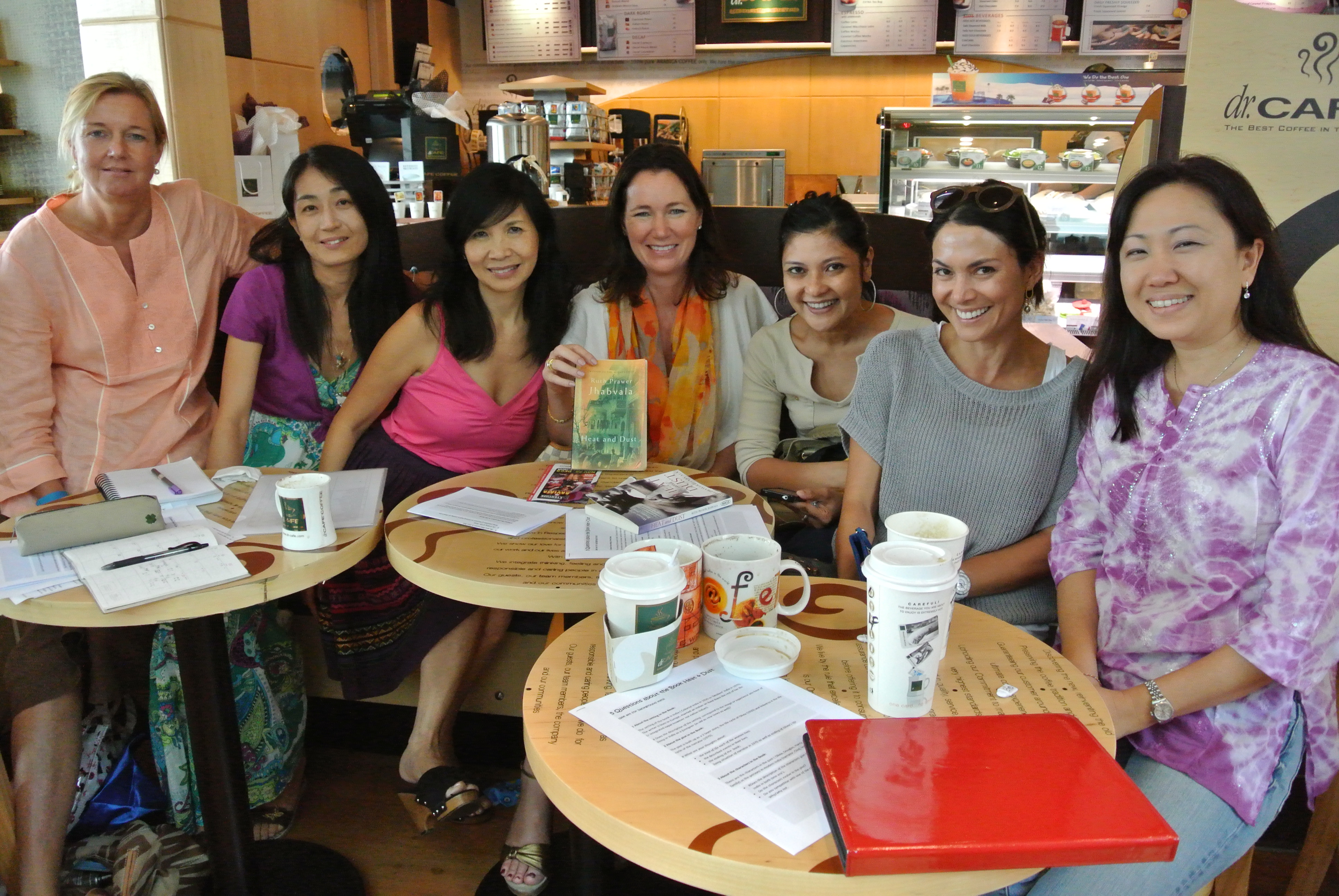
MV Book-Clubbers discussing Heat and Dust at Dr Cafe

Today, we discussed “Heat and Dust” by Ruth Prawer Jhabvala.  The story is set in India and it parallels the lives of two English women living 50 years apart – one is the married Olivia, living during the time of the British Raj and the other is the narrator, grandchild of Olivia’s husband, living during the flower power era of the hippies.

The discussion was led by Mique who had prepared a list of questions before-hand and she shepherded us back to these when we strayed, which we did very often.  The animated discussion certainly generated a lot of ‘heat’ and emotion, in contrast to the book which uses a very matter-of-fact tone.  There was mixed reaction to the book – from a rating of 2/10 to 8/10.  One thing we did agree on was that none of the main characters were likable, although there was some sympathy for Olivia.  The Nawab’s manipulative character did not endear him to us nor did the narrator’s permissiveness.  Ironically, the book club meeting event has been titled ‘Heat&Lust’ in the Yahoo calendar.  A Freudian slip?

For me personally, it was an interesting read as the book is well written with very good portrayal of people, places and events both of the British Raj and of India after independence.  However, the rather bland tone used did not evoke any emotions and hence this is a story that will not stay with me – a good read but easily forgotten.

We are reading Pramoedya Ananta Toer’s “This Earth of Mankind” for the next meeting scheduled on 5th of December.  See you there!

An Inordinate Fondness for Beetles

by Stuart Wakefield

Lecture by Paul Spencer Sochaczewski on his book “An Inordinate Fondness for
Beetles: Campfire Conversations with Alfred Russell Wallace”

The joint meeting attended by more than 50 MVM / MCG members and their guests was held at the Meritz condominium on 17-Oct-12.  The author provided a fascinating overview of Wallace’s formative years and his self funded travels, both in Brazil and in the Malay Archipelago, during the 19th Century.  It was evident that Wallace was more than an explorer cum naturalist, as he wrote many papers on subjects including ‘arrogance and the roles of ego and greed’, ‘women’s rights’, ‘why nature must be controlled which leads to its destruction’ and ‘our relationship with other species’.  He also identified what became known as ‘the Wallace Line’, which separates Asia’s fauna and flora from that of Australia and has withstood the test of time.

Paul at the joint MCG/MVM event

Notwithstanding his many significant achievements, Wallace is often best remembered for independently developing his theory of natural selection.  Wallace sent a copy of his paper to Charles Darwin who had arrived at virtually identical conclusions over a number of years, but had yet to circulate his writings beyond his close associates.  Darwin was advised to publish without further delay and thereby gained considerable fame and a not insignificant fortune, whilst Wallace graciously sat on the sidelines.  However, Darwin’s theory was by no means universally accepted by traditional Victorian thinkers, and he was subject to a degree of ridicule and contempt, which Wallace avoided.

MV Odissi Night

MV ANNUAL Dinner at THE OLIVE TREE

DATE : Sunday 18 November

TIME : 7:00pm onwards

VENUE : THE OLIVE TREE, B-2-6 Plaza Damas 3 (opposite Hartamas shopping centre & next door to Agung’s palace)                          

COST: RM35 nett (children 4-12: RM17.50 nett. Children below 4: free)

The Cuisine

The Olive Tree is a Halal restaurant.

The buffet is suitable for vegetarians. Meat dishes are placed in a separate section

An Odissi to Remember

Please dress up in your favourite saree, kurta, gamchha, sherwani, sharara, lehenga, etc.  There will be a prize for the best dressed!

There will also be party games suitable for museum volunteers – charades based on Muzium Negara artifacts, saree tying competition, etc.

Come for the food and stay for the fun.

Registration

Please register at focusmv@yahoo.com by Sunday 4 November 2012.
Please do register sooner rather than later so that we can plan better.
The Olive Tree is a very popular (no joke) North Indian restaurant & wants us to confirm our number of diners 2 weeks beforehand with a deposit.