Day 3 – Bujang Valley Archaeological Museum

by Yong Khee Chong (KC)

Having experienced field activities the day before, we were all excited and looking forward to visiting the Bujang Valley Archaeological Museum. Along the route, the presence of Gunung (Mount) Jerai and the padi-fields were mesmerizing and helped set the mode for more excitement ahead. It is the first archaeological museum in Malaysia and it was opened on January 23rd 1980 by His Royal Highness Tuanku Abdul Halim Mu’adzam Shah, the Sultan of Kedah. It was built to exhibit proto-history artefacts found in Bujang Valley which was considered  a leading entreport in its time.

575
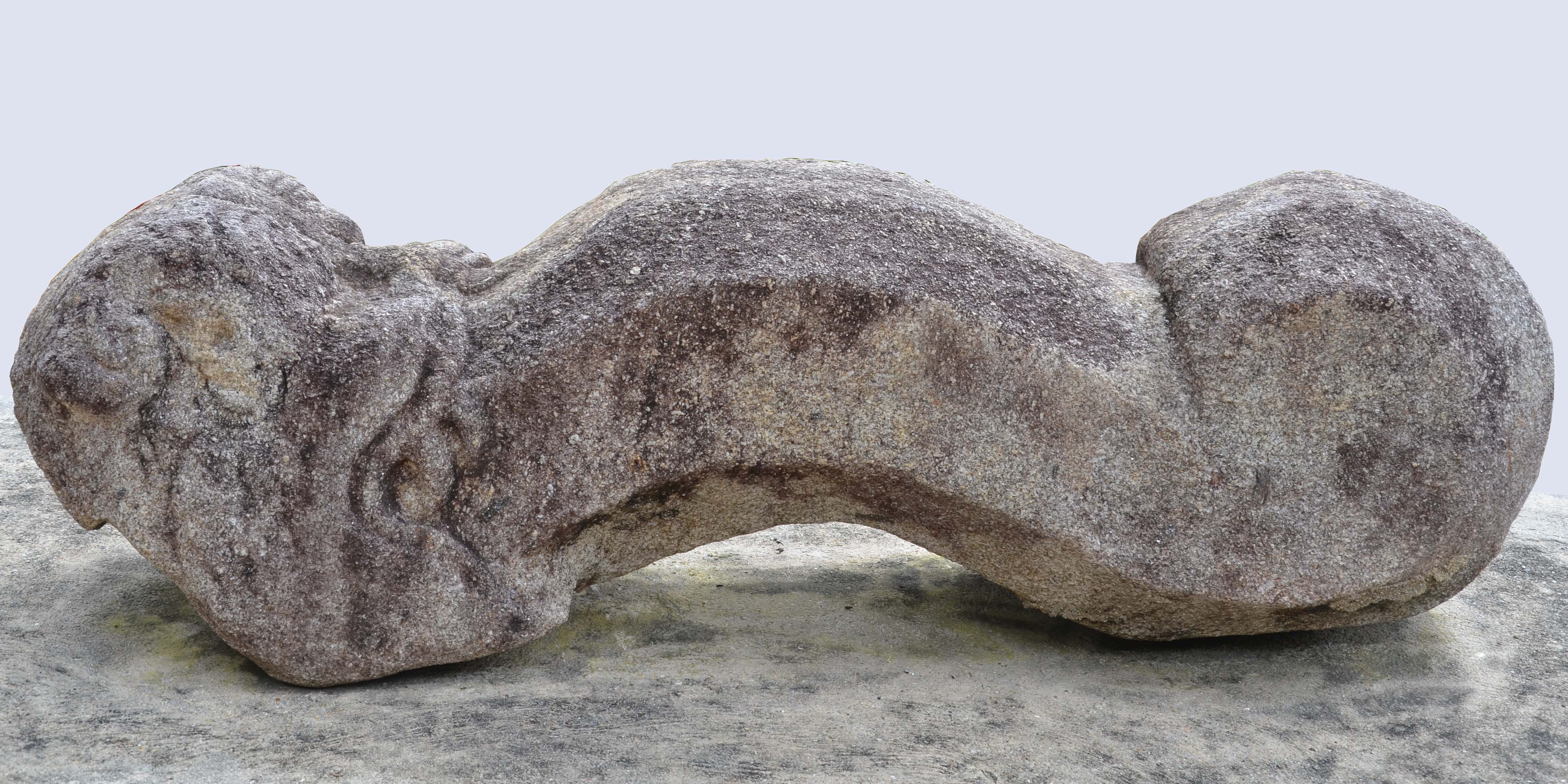
Singha Mukha

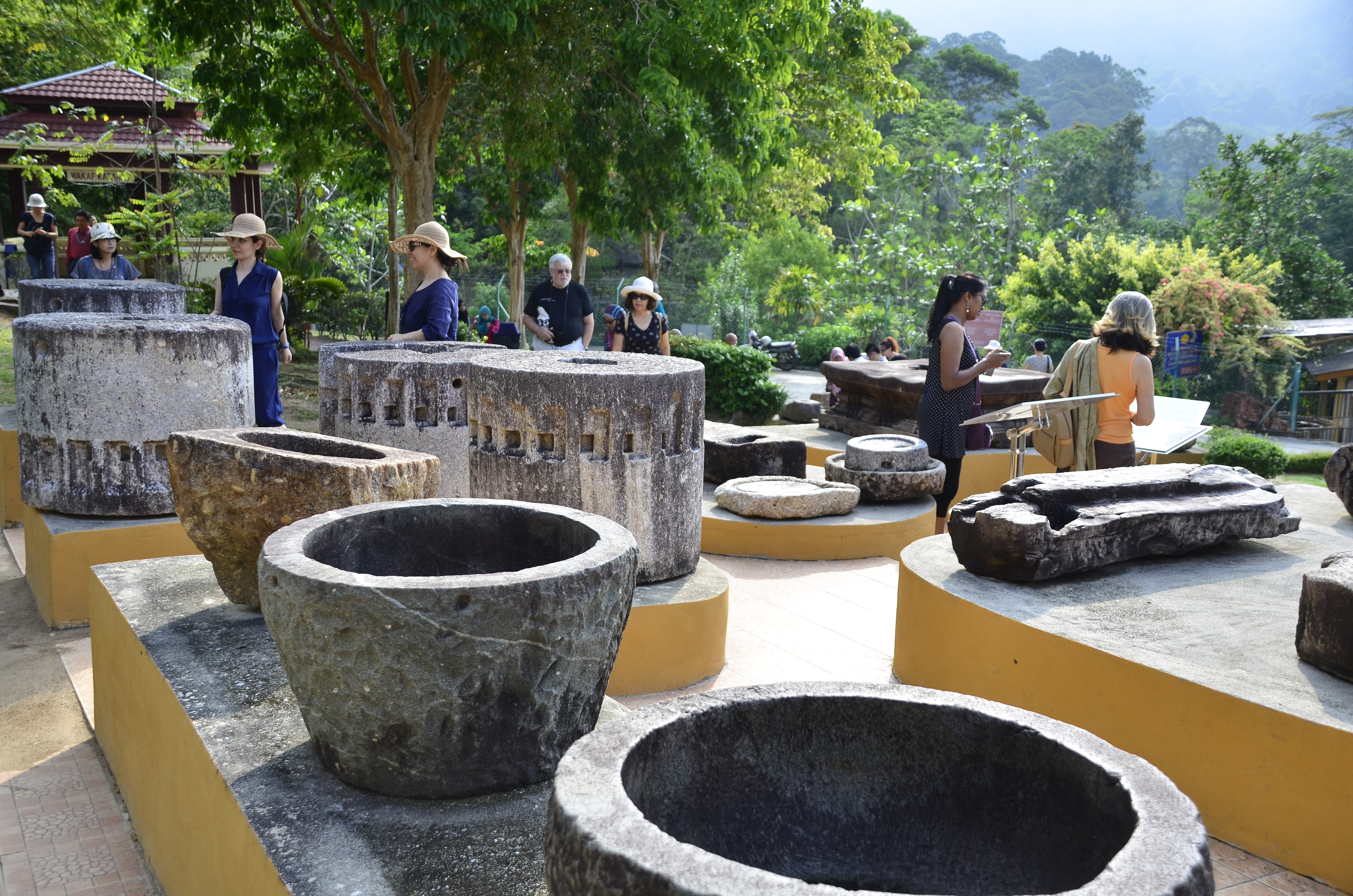
Upon arrival, we were warmly greeted by the museum staff and the sunny weather. After group photos, we started with an outdoor walk, admiring those ancient stone artefacts and the reconstructed candi from the glorious Bujang Valley era. Among the stone artefacts on display are the Singha Mukha (carved stone with face of a lion that served as the guardian of temple), various types of pillar and statue bases, granite blocks, stone mortars, and even giant sugarcane juicers from 19th CE.

Amidy252

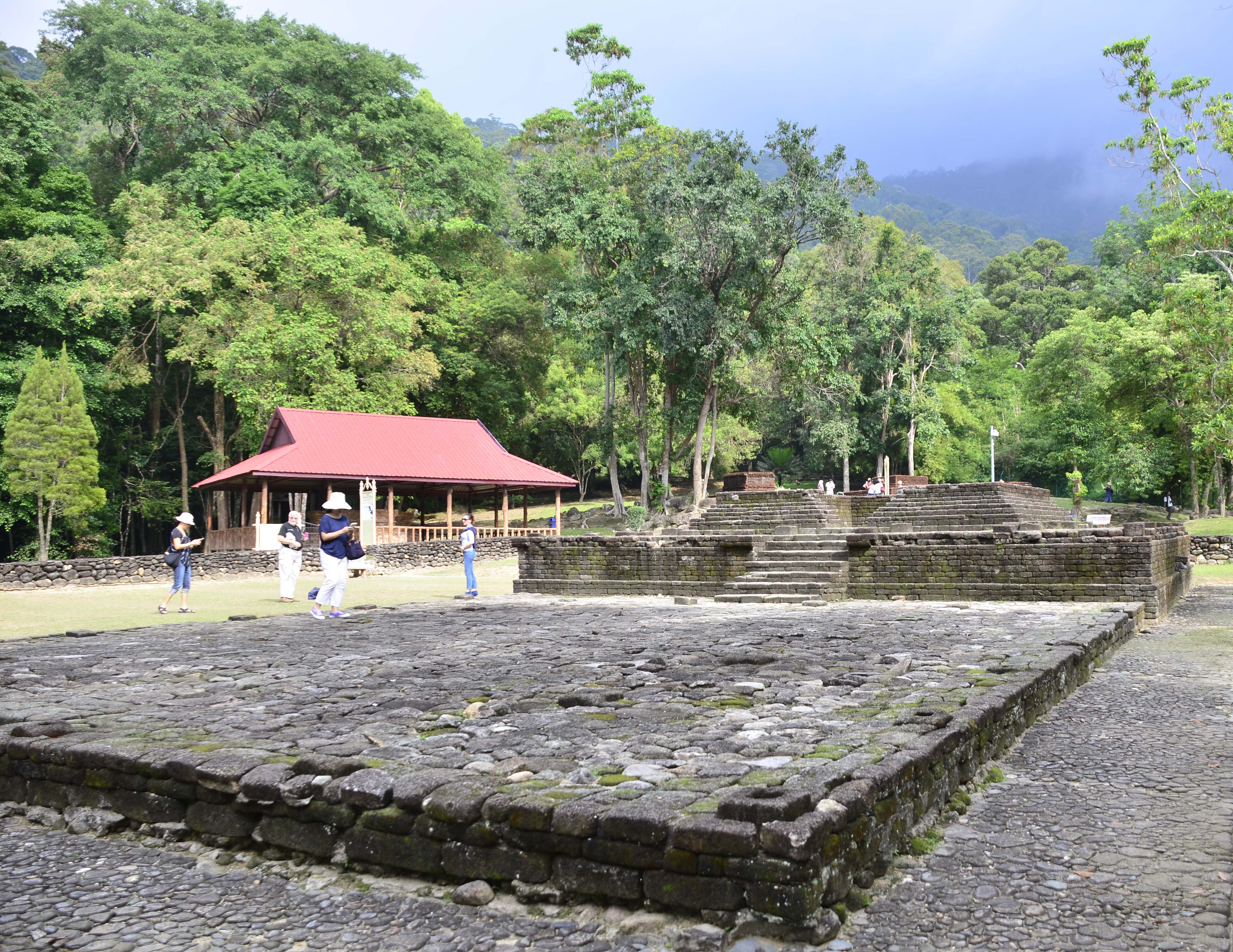
There are 4 temple ruins or candi within the museum compound and we followed the walking trail that led to them.

Amidy293
Candi Bukit Batu Pahat

Candi Pendiat (Site 16) was discovered in 1940 by Quaritch Wales at Kampung Pendiat and it was relocated to the museum compound in 1974.

Candi Bukit Batu Pahat (Site 8) is the most well-known candi in Bujang Valley. It was excavated by Quaritch Wales from 1936 to 1937 and was reconstructed in 1960 at its original place.

Candi Pengkalan Bujang (Site 21), also discovered by Quaritch Wales in 1936 as a pair with Site 22 at Kampung Pengkalan Bujang, was relocated here in 1976.

Candi Bendang Dalam (Site 50), excavated sometime in 1960s at Kampung Bendang Dalam, was relocated to the museum in 1976.

En. Azman, who is the museum curator, guided us through the walk and patiently explained the various candi, their components and functions. He had to repeatedly point out the position of mandapa (lower platform), vimana (higher platform which housed with lingga and yoni), and somasutra (the flow of holy water) – we were like a bunch of school kids all over again.

The Gallery

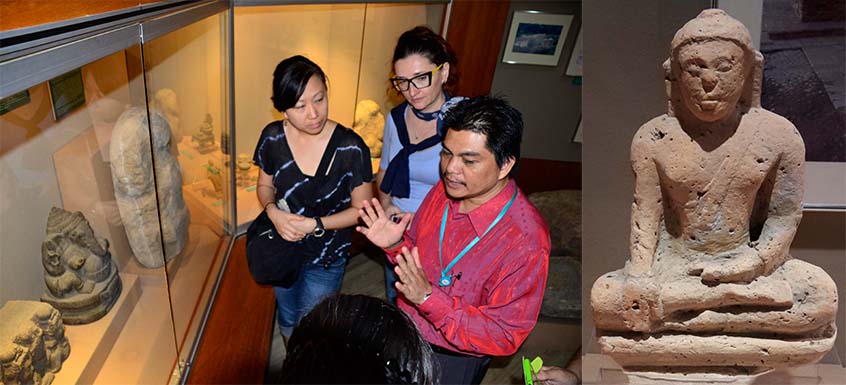
We were then ushered to the main building and given a tour of the objects on display. A model of a map of Bujang Valley is placed at the entrance to give visitors an idea of the geographical landform.

Remnants of various religious artefacts as well as inscription stones are displayed at the gallery. Hindu figurines, Buddha statues and inscription stones highlight the influence of Hindu-Buddhism in the early era. Various other treasures such as ceramics, porcelain, beads and coins indicate that Bujang Valley was indeed a thriving entreport.

combined

As we departed, the museum not only reminded us of the architectural and archaeological marvels found in Bujang Valley but the surrounding lush tropical rainforest and the magnificent Gunung Jerai backdrop left us with a lasting impression and a peaceful mindset.

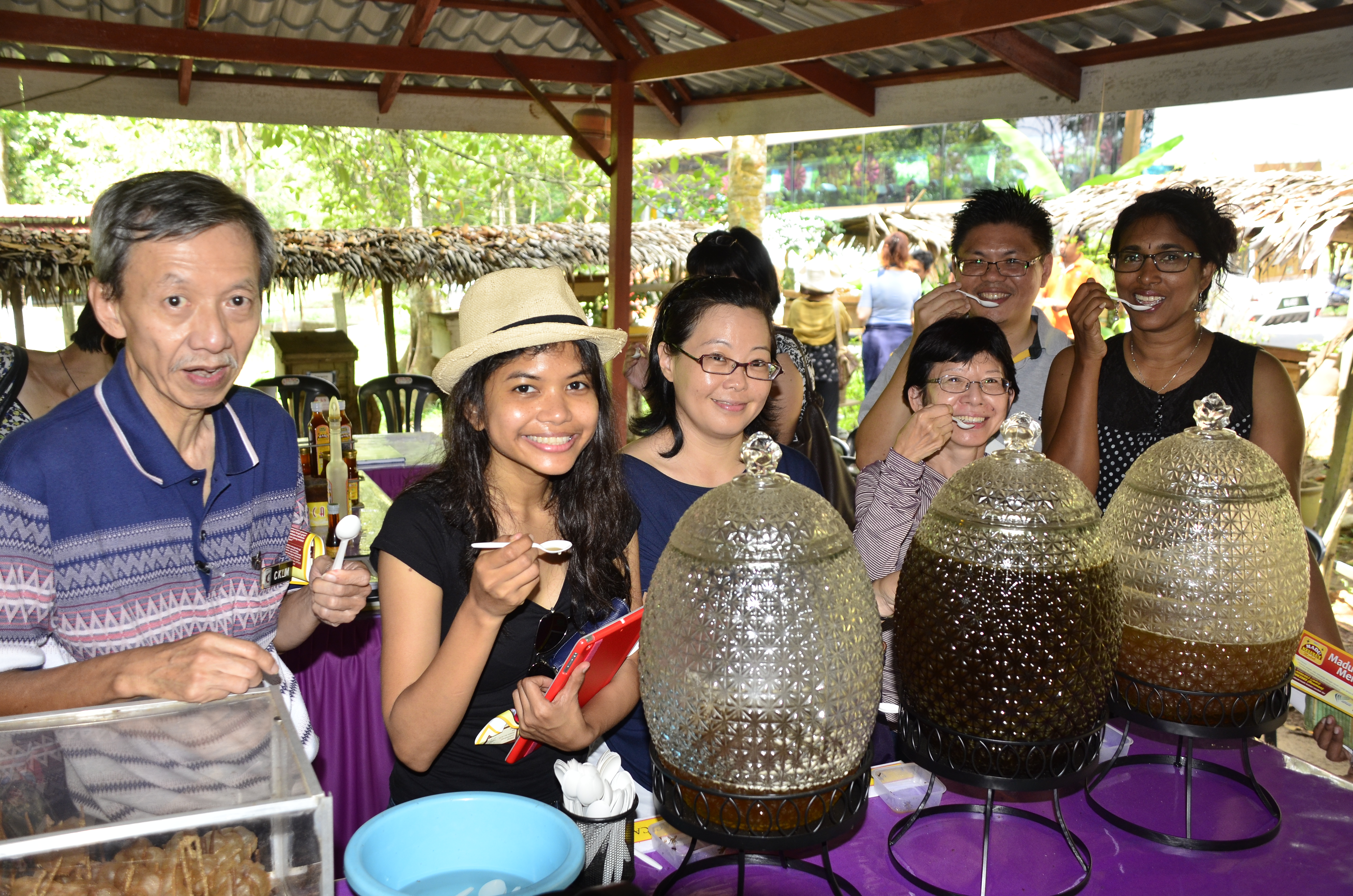
Soon after leaving the museum, we were treated to some nice surprises before our journey back to Kuala Lumpur: a quick stop at the Kelulut Honey Farm in Merbok followed by a lunch stop at Tanjung Dawai for seafood.

We, as Museum Volunteers, are certainly a privileged lot with all the warm welcomes and hospitality received throughout the journey. As the bus headed south to Kuala Lumpur, we felt blessed that we now have more stories to share with the rest of our museum friends and visitors.

Until the next journey then…

Amidy325
Honey tasting at the Kelulut Honey Farm

Museum Volunteers at Sungai Batu

by Deanna How

A visit to Sungai Batu excavation site is the menu for day 2 of our field trip to Lenggong and Bujang.  Oil Palm plantations whizzes past and excitement was already in the air as excavation sites started coming into view.  Sg Batu came into prominence in 2009 when excavation works unearthed evidence of the existence of a civilisation predating the Langkasuka Kingdom of the 2nd century in Kedah. Covering a four square kilometer, carbon dating done on the site suggest that civilisation could have existed as early as 50 BC.

SAM_6659Upon arrival we were met by Associate Professor Mokhtar Saidin, Director of USM Global Archaeology Centre (PPAG).  According to Prof. Mokhtar, “We have proof of civilisations existing as early as 50 BC, but we do not rule out an earlier time period.  Therefore, the Sungai Batu site, based on the estimated timeline, appears to be the oldest civilisation in South East Asia”.

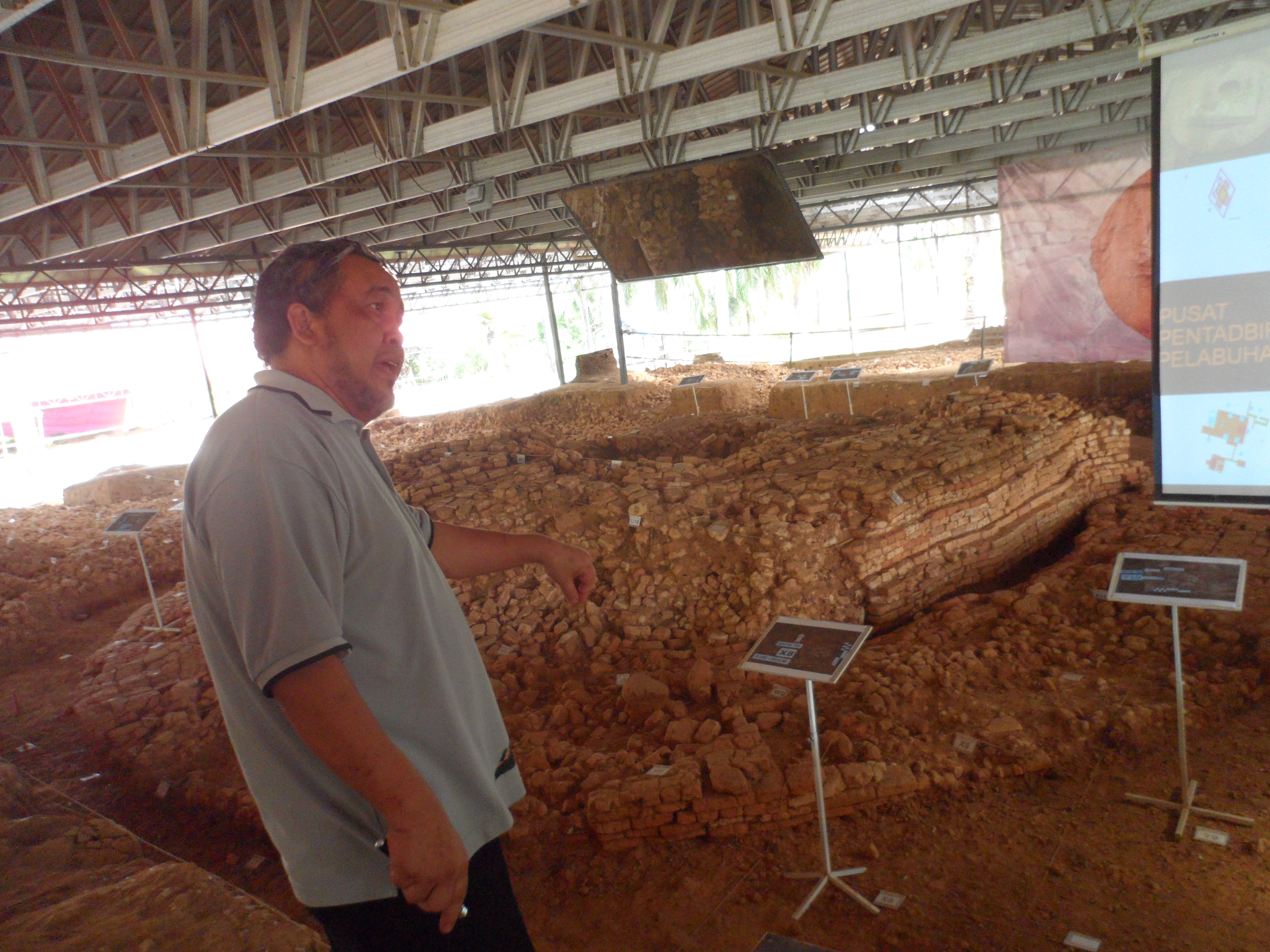
97 sites were identified and within these sites were discovered remnants of a ritual site which had a circular base with a square structure built on top of it. Strong evidence of early Hindu-Buddhist influences were evident with entrances aligned towards the East West direction facing Mount Jerai, the highest peak in Kedah at 1217m above sea level.

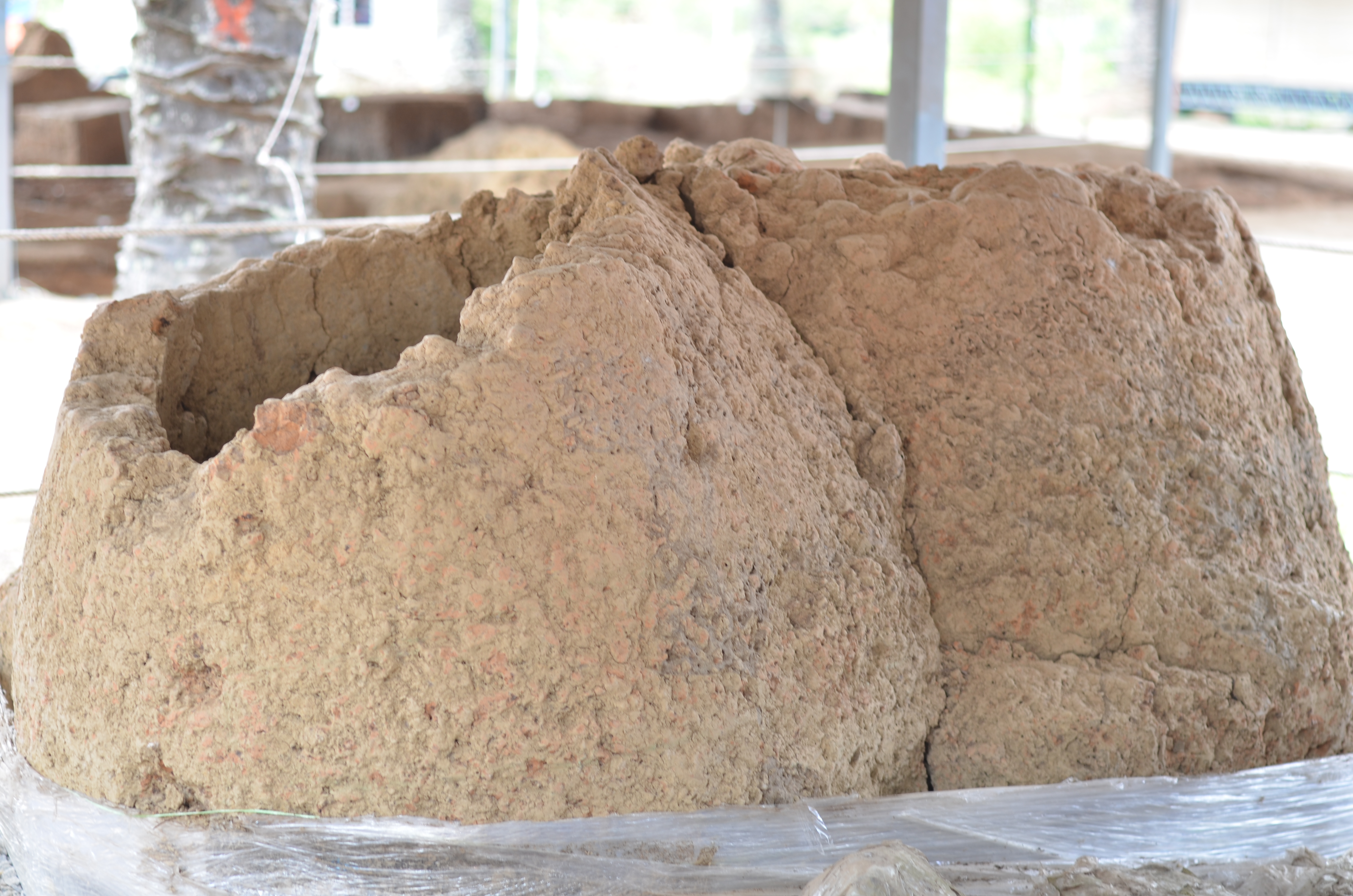
Iron smelting remnants were also found in abundance at these sites, pointing to strong evidence of trading and economic activities that were conducted here during those days. Not too far were discovered remnants of structures resembling its adminstrative functions with differing sizes of rooms, in total 12 buildings.  To further strengthen the theory of an iron smelting industry that could have existed back then, iron smelting furnaces were also discovered, much to archaeologists amazement, fully intact.

DSC_8700

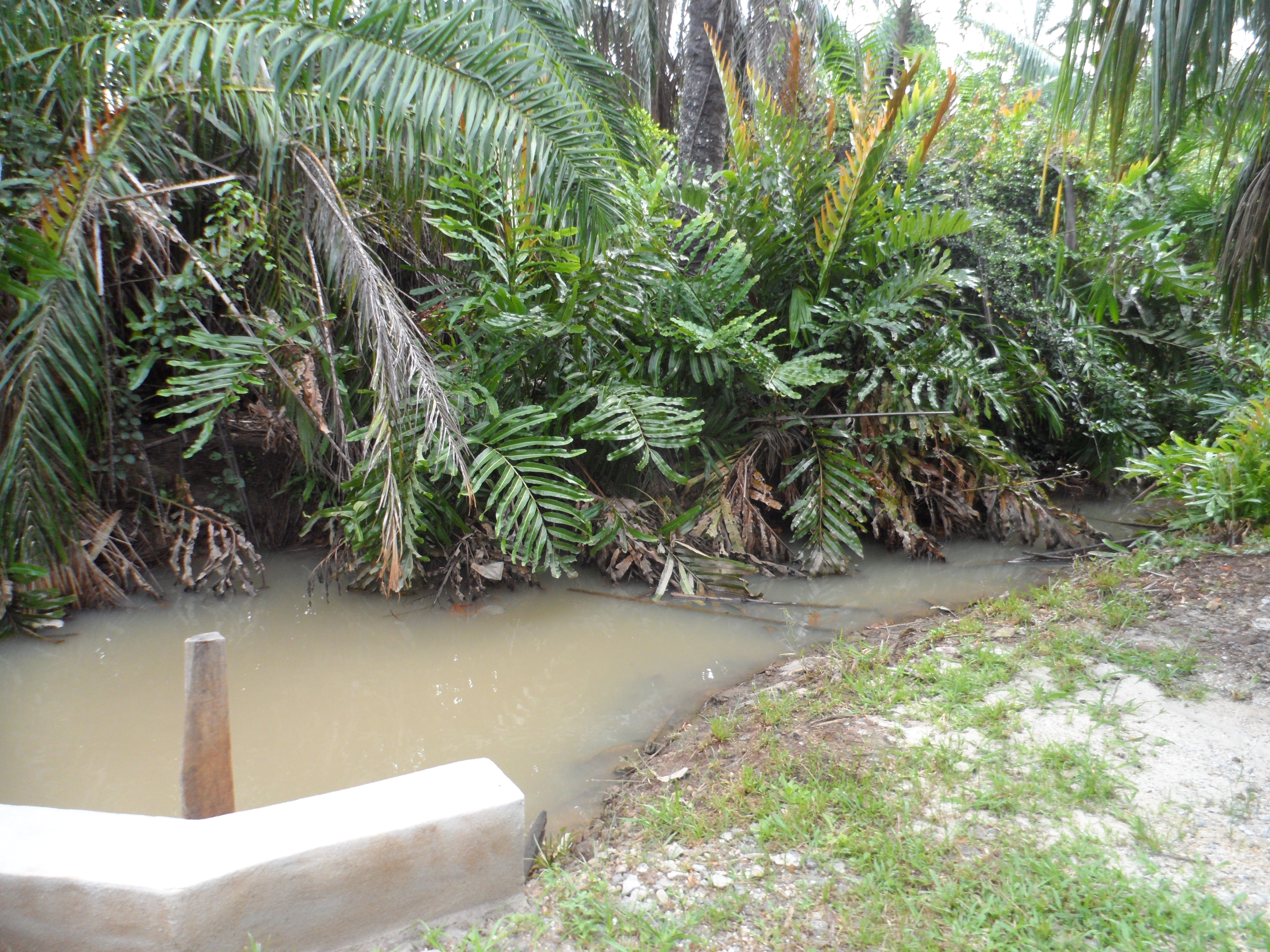
SAM_6670According to Prof. Mokhtar, the river could be very much closer that what it is today as some of the remaining brick structures resemble jetties, thereby confirming the theory that Sg Batu may have once been a prosperous iron smelting entrepot. Today a swamp and a tiny stream are the only indications of its past.

Why this civilisation disappeared could be attributed to a tsunami which hit around the 9th century, according to Professor Mokhtar. Underwater excavations were also conducted and ship wrecks were discovered.

As we walked through the sites, small iron remnants could be seen strewn all over the ground, along the path.  What looked like normal stones to untrained eyes like ours, is actually iron.

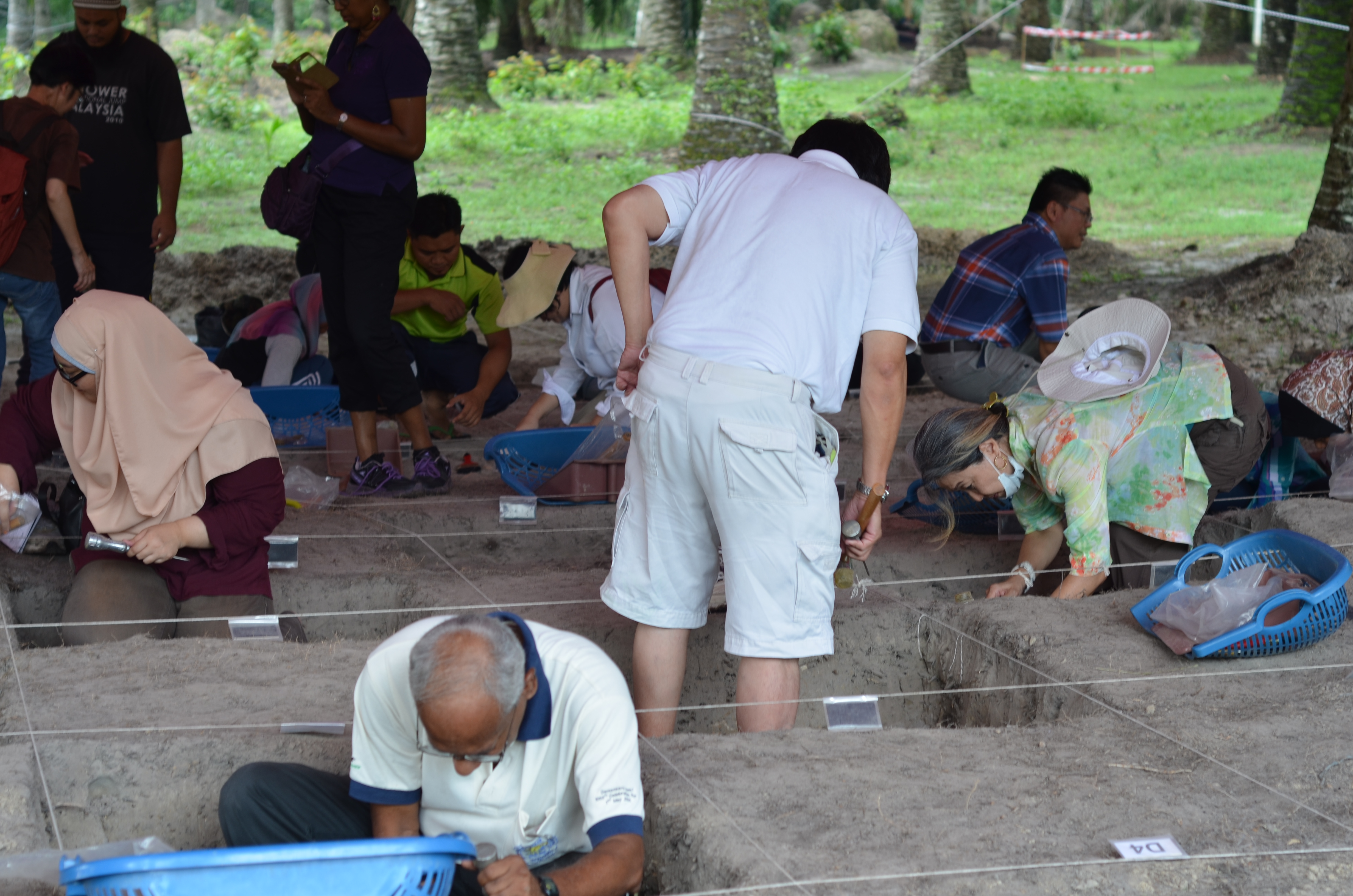
The most exciting activity for the day must be the hands-on experience of being an archaeologist.  Prof. Mokhtar introduced us to his team of students who are presently studying for their masters and PHDs at USM. At the site, we were introduced to archaeological terms like, site, trenches and quadrants. Once a site has been identified by archaeologists for excavation, it is  carved into trenches of 1 metre by 1 metre.  From this trench, it is further divided into 4 quadrants of 50 cm by 50 cm. Archaeologists would then meticulously work on one quadrant at a time, patiently and painstakingly recording their findings with every 10 cm downwards.  Students were given a specific site as their responsibility for their research on their papers.

So when Professor Mokhtar told us that we were given this hands-on opportunity to get down on our knees, boy! were we excited!  We could also pick our own trench! As no shoes were allowed in the trench, many of us sportingly kicked off our shoes, ready to “start work” as an “archaeologist” for a moment! Armed with the tools for the day, mallet, brush, scrapper, and a dust pan, we clumsily imitated the movements of archaeologists, brushing off dust, sand and what-have-you into the dustpan provided.  It was certainly no fun, if passion is not the underlying emotion of the task, I discovered.  Having gone through this back breaking experience, though short, gives us an appreciation of the work of archaeologists in uncovering our history. Kudos to them!

DSC_8664

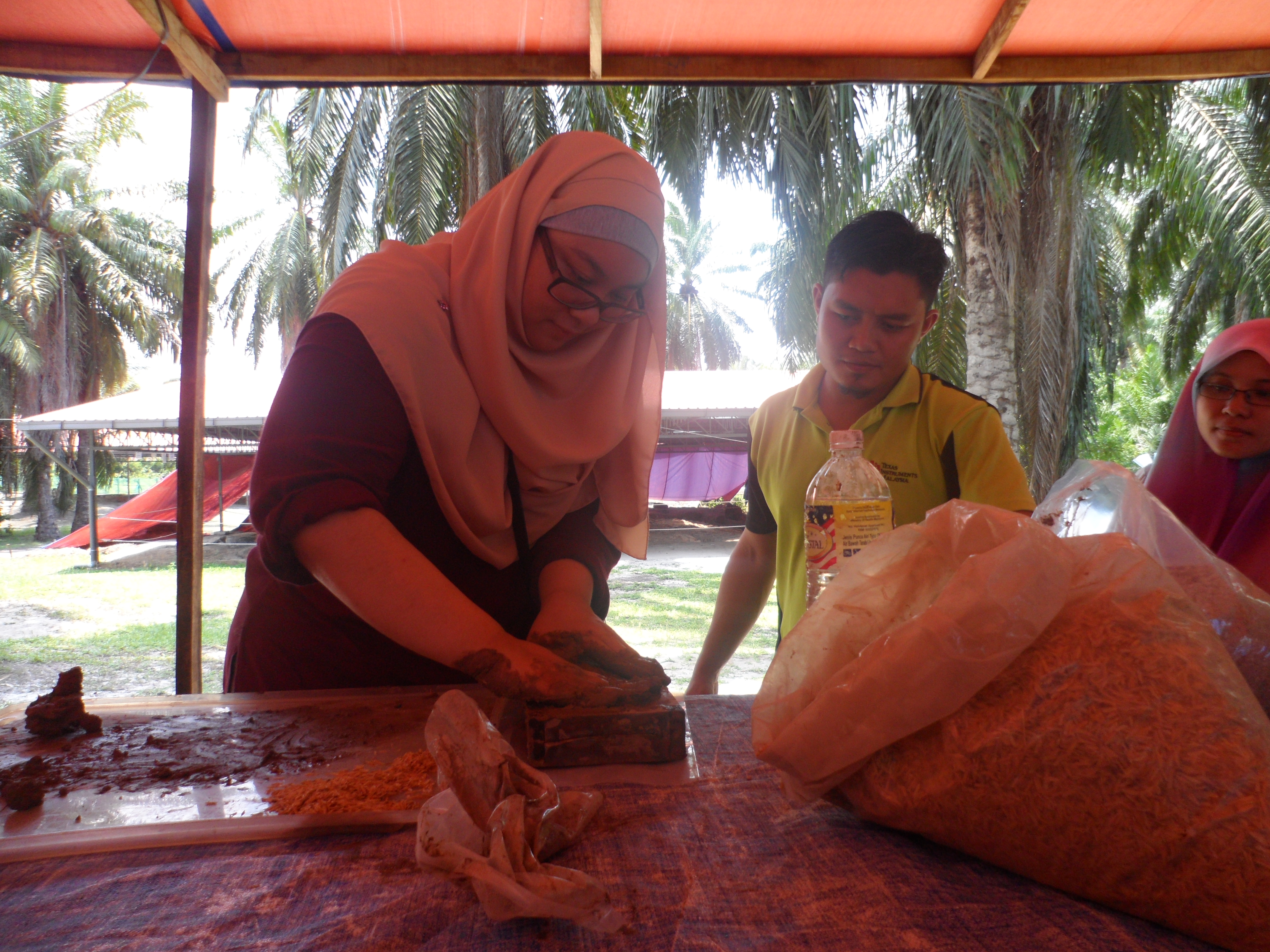
After lunch, we had the opportunity to try our hands at brick making, which was taken SAM_6706up by only a handful of us.  Very much like making bread, clay is the main ingredient utitilised. It is then mixed with sand and paddy husk and kneaded into a dough and placed into the brick mould to be allowed to dry for at least 2 days. It is then baked in open fire of 600 degrees till reddish brown. Voila! there is your completed brick, your own masterpiece which you can display in your home.  A point to note is, it will take at least 2 weeks for this process to complete.  For that, you will have to make a return trip to Sungai Batu to collect it if you really want to. That’s something for the individual to ponder.

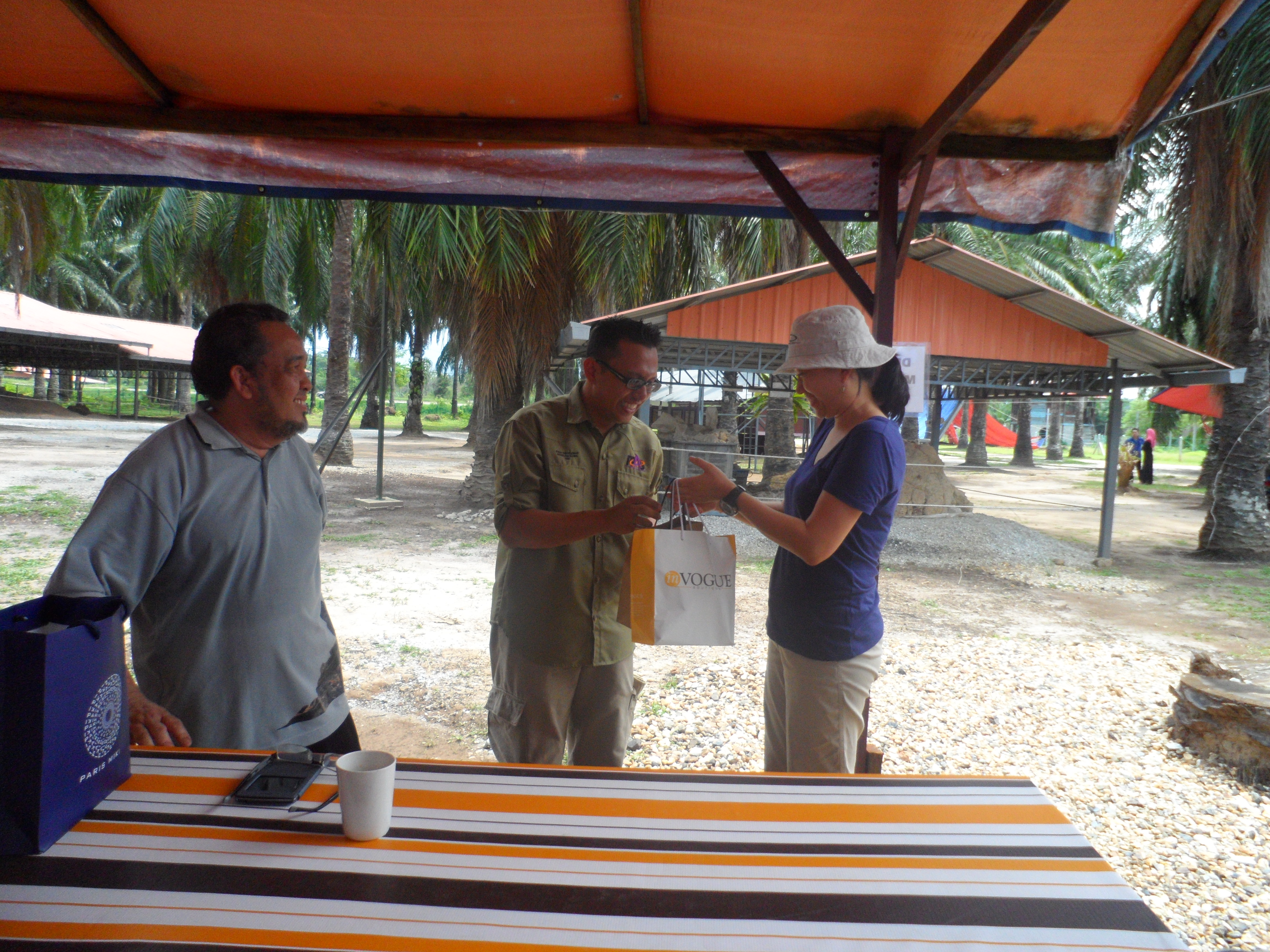
SAM_6691In appreciation of Professor Mokhtar and his team for their warm hospitality, Karen, our MV President presented tokens to them.

Continuing our archaeological trail, we visited Site 23. Artefacts discovered in the site includes Arabic lamp glass fragments. Carbon dating indicates that this site was there even before the arrival of Islam in this region.

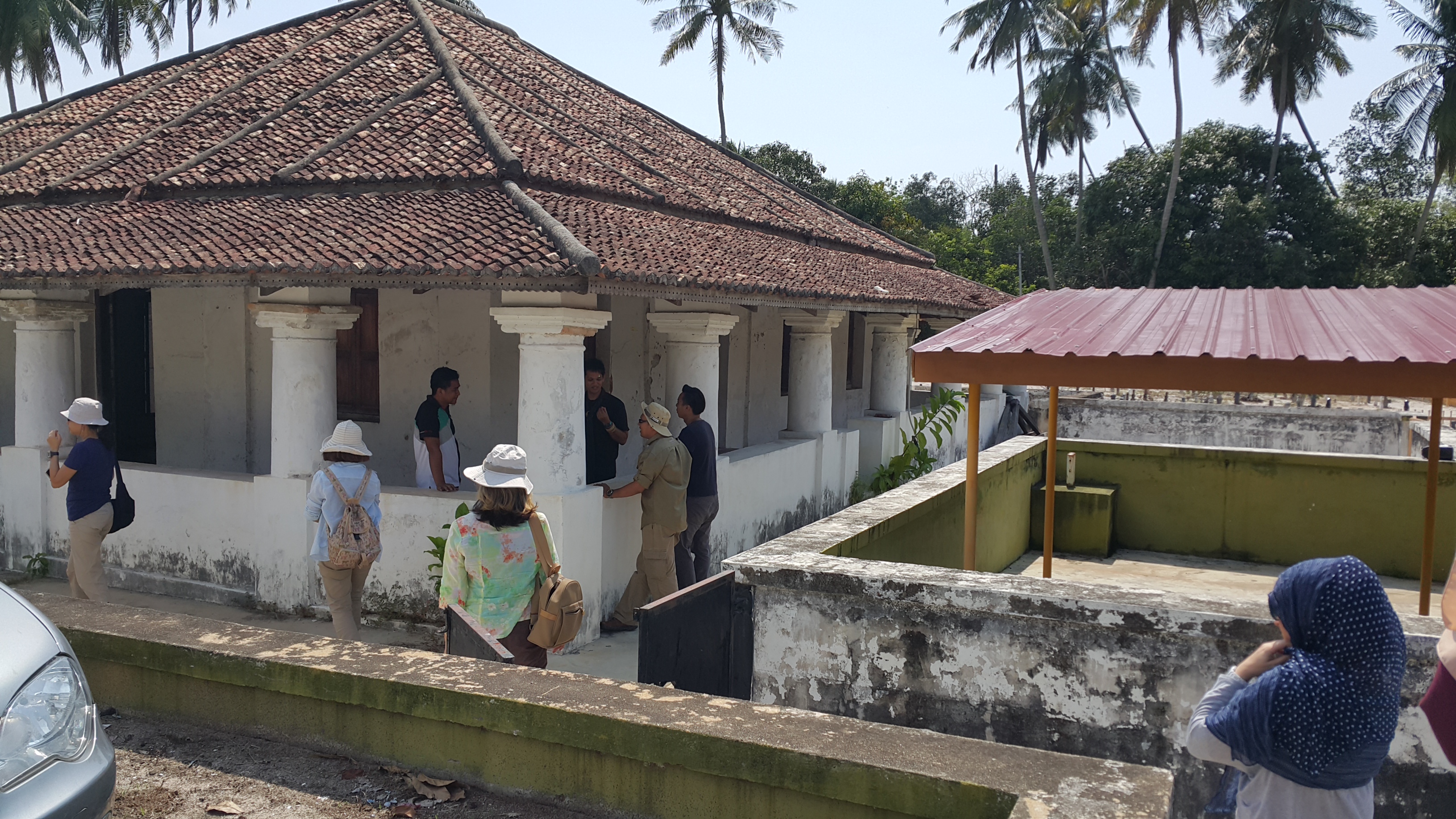
Before we headed back to the hotel, we made a last stop along the way to one of the oldest mosque here in Kedah, located in the village of Pengakalan Kakap in the Kuala Muda District.  Known as the Masjid Lama Pengkalan Kakap, it was built around the 1800s. Located slightly below street level, it underwent successful conservation works by the Department of Museums and Antiquity in 1994.  Unfortunately this mosque is not in use anymore as there was a newer mosque constructed just next to it.

20150419_152122

As we made our journey back to the hotel, flashing back on the day’s activities , it has indeed been an eye opening and informative day all rolled into one word—EDUCATIONAL!

Visit to the Royal Malaysian Police Museum

by Chen Poh Leng

IMG-20150131-WA0009Our very first focus event for 2015 (on 29 January) was a visit to the Royal Malaysian Police Museum which is located near the National Mosque (Masjid Negara) and many other interesting tourist spots in KL city. We were very warmly welcomed by police officers who served us a hearty breakfast of local delights consisting of rice cooked in coconut milk (nasi lemak), curry puffs and local Malay cakes (kuih) with coffee/tea.

With filled tummies we started the museum tour by listening to a short briefing about the museum. We were informed that visits were free and they open everyday during normal working hours except on Mondays. On Fridays, it is closed from 12:30pm to 2:30 pm for Friday prayers. The museum consists of 3 galleries. Gallery A focused on the early history of the police force that spanned from the Malacca Sultanate period right up to the time of the Dutch colonisation. Gallery B exhibits were based on the period of the British rule. This covered the Straits Settlement, the Federated Malay States, the Unfederated Malay States plus Sarawak and Sabah. Gallery C’s exhibits were of the Malayan Emergency era and thereafter. We were then treated to a 7 minute video on the history of the Royal Malaysian Police Force.

Enjoying our breakfast

Gallery A’s tour started with exhibits of the uniforms (females inclusive) that changed over time. Arms in the early days such as the keris, the Portugese helmet and sword, the Dutch pistols and guns and even a canon ball were on display. As we entered Gallery B our attention was brought to a lockup door that was curved which was how the lockup doors were those days. Items such as handcuffs, a very old typewriter, a gong (functioned as a siren) and an old Berkefeld water filter could be seen as we moved along. There were also exhibits of the different modes of transport used by the police such as the water buffalo, bicycles and motorbikes.

IMG-20150131-WA0046Various weaponry on display included those used by the police plus those used by captured criminals. These included those that were handmade. Uniforms used specifically for pomp and splendour, ceremonial events, and by the police band were also on display. We also discovered that the wives of the police force were entitled to become a member of a special police wives association but there isn’t any association for husbands of female police.

Due recognition was awarded to the heroes of the force. The highest of which is the Supreme Gallantry Award while the second highest is the Star of the Commander of Valour. Awardees of these awards were proudly displayed. Policemen who excelled in the field of sports were also included in the exhibits.

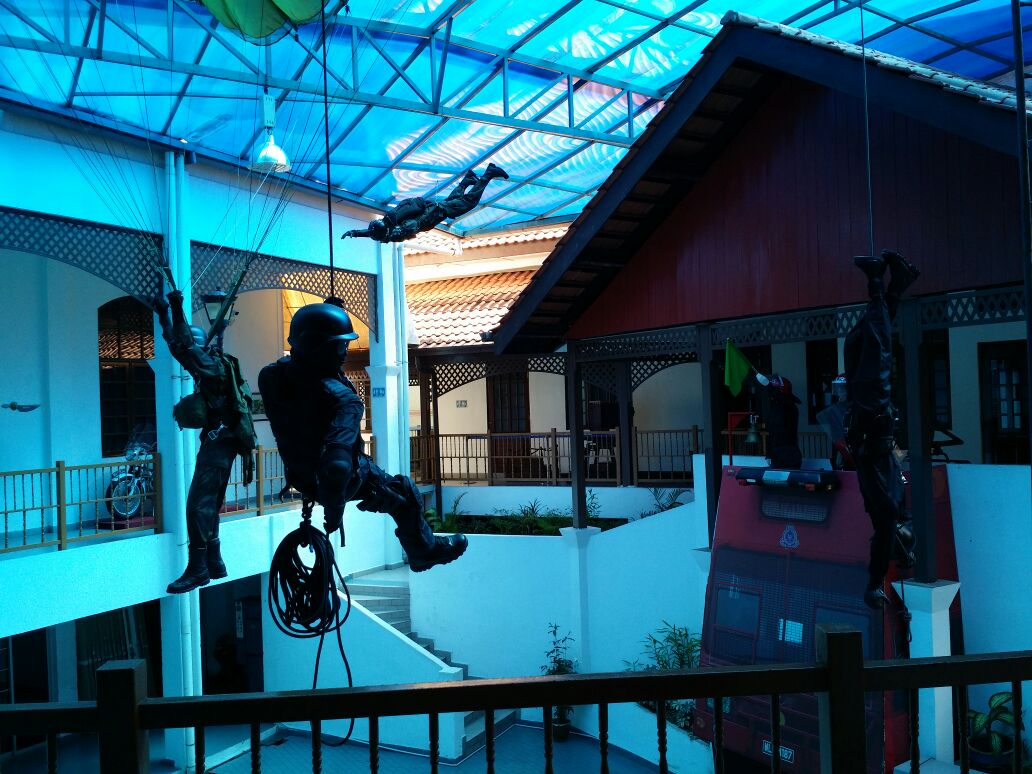
IMG-20150131-WA0044Gallery C started off with exhibits of the paraphernalia and contrabands of the Malayan Communist Party during the emergency. These included medical tools, some used for abortion, tools to make counterfeit money as well as tools to manufacture drugs. An item of interest included handkerchiefs with pornographic paintings that could be folded tiny enough to be easily hidden and passed on without being caught. In this gallery, there were also photographs of the police tattoo shows, performance/stunts accompanied with music that engage the public, a display of the identity cards used by members of the force plus all the ranks in the force. Finally, our tour ended with a 7 minute video on the emergency period between 1940s and 1960s.

Before we said our goodbyes, we extended our gratitude to our gracious police hosts who presented us a goody bag each consisting of the museum flyer and little museum souvenirs. It was indeed a morning well spent for all of us.

Gaya Street (a.k.a Bond Street), Kota Kinabalu

By Sharifah Seri Lailah (Sherry)

Gaya Street, Kota Kinabalu’s most famous tourist destination, lies in the commercial district of the city.  It was known as Bond Street during the British colonial era when Sabah was known as North Borneo. Bond Street started as a railway track in 1902 for the transportation of rubber all the way from Sapong and Melalap rubber estates in Tenom and ended at the wharf. The Jesselton Harbour was then the gateway to the rest of the world until the arrival of passenger planes.

In 1887, Mat Salleh, a local chieftain who rebelled against the British, burned the original settlement at Gaya Island. It was from that incident, the capital was named “Api-Api” (Fire-Fire). It was renamed as Jesselton in 1899 after Charles Jessel, a Director of the British North Borneo Company.  Jesselton suffered severe destruction when it was razed by the British on retreat from the Japanese and suffered more destruction when the Allied Forces bombed it in 1945.

After the war, the British North Borneo Company returned to administer Jesselton. However, as the costs of reconstruction was colossal; the Company then was on the fringe of bankruptcy, gave control of North Borneo to the British Crown on 15 July 1946.

When North Borneo together with Sarawak, Singapore and the Federation of Malaya formed the Federation of Malaysia in 1963, it became known as Sabah, and Jesselton remained its capital. On 22 December 1967, State Legislative Assembly under Chief Minister Tun Mustapha bin Datu Harun, passed a bill renaming Jesselton to Kota Kinabalu. The city was upgraded to city status on 2 February 2000.

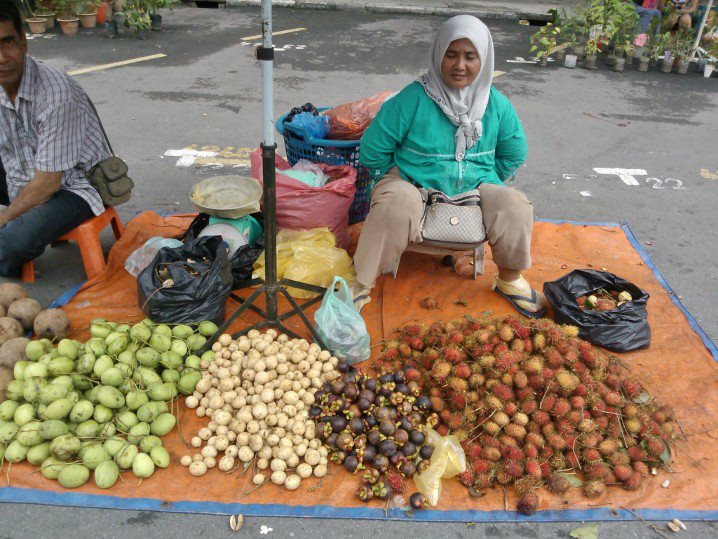
Local fruits2


Sunday Market (Tamu)

In the early 20th century, farmers from the highlands and fishermen from coastal areas met once a week at Bond Street to barter their local products with the immigrant Chinese, Indonesian and Filipino traders. The locals traded fruits, vegetables, rattan, poultry, deer and wild boar meat, and local handicrafts for cotton and silk, spices, medicinal ointment, jewellery and kitchen utensils. This weekly Sunday Market is known locally as Tamu (Fair). The word Tamu is derived from the word ‘temu’ which means “to meet”.

fruit treeStrolling along Gaya Street is like walking down memory lane as we can still see some evidence of the bygone era. The old Jesselton Post Office which has now been converted into the main office of Sabah Tourism Corporation (STC) is located at this street and it still maintains its colonial architecture. This building was originally built by the British to house the Government Printing House. Another remnant of the colonial era is the Jesselton Hotel established in 1954, where a genuine London Taxi cab is available for the exclusive use of hotel guests. The Atkinson Clock Tower, a landmark of the city, was built on the slope of a hill in 1903 where at one time it had a view overlooking Bond Street. It survived the World War 2 bomb raids though riddled with bullets.

Today, Gaya Street has become a favourite hang-out for both locals and tourists alike due to its vibrant and bustling commercial activities. The Gaya Street Tamu (Gaya Street Fair) starts as early as 5.30 am until 1.00 pm in the afternoon every Sunday. You can get anything and everything from pets to souvenirs, herbs, medicinal roots, antiques and brass wares, coins and collectibles, local beads and cultured pearls, crystals and accessories as well as clothes, food, vegetables, fruits and plants. For orchid enthusiasts, wild orchids as well as hybrid orchids are also available.

Tourists are awed by local exotic fruits such as Bambangan, Tarap, Belunu, Rambai which are found only in Borneo. It’s interesting to watch local vendors cajoling the foreign tourists to taste the local fruits and be amazed that language is not a problem as they would simply communicate via gestures or signs. During festive seasons, one can watch local entertainers singing and performing traditional dances.  Tired with walking, one can get a foot reflexology massage right at the pavement of Gaya Street.

tapioca yam ginger etcThe fun is in the mingling of people moving at a snail’s pace along the narrow stretch of Gaya Street. The aroma of Tenom coffee freshly grinded and the local delicacies fried on the spot, is simply tantalizing and irresistible for one’s taste buds. The competing human sounds, colours and smells are just awesome; making Gaya Street Fair… a must visit place of interest for tourists. Even if it rained, the fair would still go on. It is simply packed with people either to shop, to meet friends or just to be there and savour the “tamu” experience.

Gaya Street is Kota Kinabalu’s own cultural heritage of keeping up and maintaining the local trademark of a bustling Sunday weekly market where trades go on since historic past.

President’s New Year Message

Dear volunteers,

This year has gone by so quickly, it is hard to belief that we are at the end of 2014 already. It has been another eventful year for our volunteer group. A record number of 72 new trainees joined our training program this year with 11 course leaders supervising.  Afiq from Unit Latihan did a commendable job of arranging for the guest speakers. I am sure many will agree that the most interesting lecture was the talk given by Professor Nordin from UKM on the Golden Age of Melaka. For Focus, we visited Tun Razak Memorial and the underground tin mine at Sungai Lembing, which was very interesting and educational. Similarly, our Japanese and French groups were also active with their Focus activities. And what could have been a more fitting end to the year but with a party at the palace, Halloween themed!

However, our committee saw a few changes this year. Ashok Sheth had to step down from his secretarial position due to work commitments. Our new secretary is Leng Wai Mun, who recently completed his training course at the beginning of 2014. Hayley Holle, who has served 3 years as course leader, also had to step down due to a new job. We thank Ashok and Hayley for their years of service and wish them the best of luck. On the JMM side, the new head of the Corporate Communications Department, which our MV group is under, is Puan Zuriana Zanziba.

I wish to thank all of our committee members for their commitment and contributions, without which we will not be able to function efficiently and effectively (committee members and their positions are listed on our mv blog). Last but not least, a Big Thank You to all of you, our volunteers for your continued monthly support. The feed back from visitors are encouraging. Keep up the good work!

Happy holidays and wishing all a Happy New Year!

Sincerely,

Karen Loh

My Favourite Museum

by Louise Macul

“His Highness the Rajah intends on a future day to establish a museum, for which a suitable building will be constructed at Kuching by the Government.” Sarawak Gazette 28 March 1878

This place being Sarawak, it took thirty-five years for the museum to be officially opened in a new building on 4 August 1891. The original Queen Anne style building is now believed to have been a copy of a children’s hospital in Adelaide. Further extensions brought it to its present day form in 1911. This building, and its entire collection, complete with Victorian cabinets and specimens preserved with methods of that same era, belongs in a museum itself. Many visitors have commented that it is a museum of a museum. Thus lies its charm and thus it has drawn me into its world from the darkest recesses of Borneo. The Rajah was encouraged to establish a museum by the evolutionary theorist, Alfred Russell Wallace, who did research here from 1854 to1856. The first collection of ethnographic specimens was purchased from H. Brooke Low, a Sarawak Government Servant and author of The Natives of Sarawak and British North Borneo. Some of that original collection is still on display on the first floor.

“The objectives of the museum were then as now, to be an all-round museum and not to over-specialize; to try and be interested in everything; and to collect everything – plants, snakes, butterflies, as well as arrange them in a way that even illiterate people from the ulu can enjoy them….” T. Harrison 1959.

Sometimes a museum appeals to us because it offers an exploration of something we have never seen before. Sometimes we walk into a museum because it reminds us of something. For me the appeal was both: a new world, the island of Borneo, and a pleasant memory. For me, walking into the Sarawak Museum reminded me of the very first museum I ever walked into as a child – the Abbe Museum of Bar Harbor, Maine (U.S.A.) An early 20th century museum with old wooden cases filled with the personal archeological collections from Mount Desert Island and 10, 000 years of cultural history of the Wabanaki Nation of costal Maine, complete with a teepee! I remember peering into the corners of the dusty exhibits with wonder at the how, when, and who of times gone by.  Wondering to myself “How did this stuff get here?” And so it is with the Sarawak Museum; I wonder how things got there as I look at the old specimens of things endangered (culturally and naturally). One of my favourite collections is of the seashells of Mary Saul, the wife of a British officer posted in Sarawak and Sabah some fifty years ago. I have so many favourites from boat coffins to beads to baskets in the galleries that contain the 47,000-year-old cultural heritage of a vibrant present-day people.  I now walk beneath the heads of an authentic replica of a longhouse built by Ibans just as I did as a little girl trying to crawl into a teepee built by the Penobscot.

For me, the appeal is in the totality of this museum and not just the objects displayed. To me, the museum as a whole is greater than the sum of its collections. The Sarawak Museum is the only single repository for Borneo collections: zoological, botanical, ethnological, and archeological in the entire world.  “All Things Borneo” should be its tag line. Today it is comprised of 12 museums in and outside of Kuching showcasing collections of Dayak material culture including textiles, Malay Islamic heritage, Chinese history and culture, archaeology, local contemporary art, and local historical material.

There is a place in our world and communities for all the bells and whistles of modern museums replete with interactive exhibits that can take us back hundreds, or thousands of years in time with a push of a button and the donning of a headset. There is also a place for historical museums that display to us people’s interests, research, and a desire for preservation and education from many generations ago. All museums start with people and their collections; the museums within each of us to share with others.

Longhouse_gallery_of_Sarawak_museum
“Longhouse” Gallery


Photo credits: http://en.wikipedia.org/wiki/Sarawak_State_Museum


Tun Abdul Razak Memorial – A trip down memory lane

by Kavitha Subaramaniam

10641206_836872183010241_6034203107118408668_nThe Museum Volunteers (MV) focus group organised a trip to the Tun Abdul Razak Memorial on Thursday, 25th September 2014 as members were curious and keen to enrich their understanding of the second Prime Minister of Malaysia, the late Tun Abdul Razak bin Hussein Al-Haj. We gathered at the main entrance of the memorial at 10 o’clock in the morning and were led by an experienced guide, Encik Saladdin Merican, from the memorial itself.

The late Tun Abdul Razak has the sobriquet ‘Father of Development’ although he only held the tenure of Prime Minister for six years, from 1970 to 1976, before he lost a battle to leukaemia. This building, which was originally his official residence when he was in office and converted to a memorial on 6th May 1982, is situated at Lake Garden, Kuala Lumpur. This iconic structure commemorates Tun Abdul Razak’s significant contribution in developing the country coupled with uniting its unique pluralistic society.

TAR 009When we stepped into his ‘house’, it was simple and yet had the atmosphere of serenity despite its location at the hub of the city. Encik Merican guided us around the house (living room, dining hall, kitchen, lounge area, bedrooms, private office, reading room, courtyard) and gave elaborate explanations on the various possessions and souvenirs that belonged to Tun Abdul Razak. The placement of the furniture, carpets, books and personal collections was preserved as when the late Tun Abdul Razak’s lived there, so that visitors could better appreciate the icon’s life. The visit not only gave us a glimpse of his personal life with his wife Tun Rahah Mohammad Noah and his five sons but it also showed us the early days of the present Prime Minister, Datuk Seri Najib, who is his eldest son. No doubt this tour has made us realise and appreciate the sacrifices made by the former Prime Minister for this country.

10413340_836872209676905_6844233493242631880_n

MV Trip to Sg. Lembing (16 Oct 2014)

Written by Lim Eee Lin, Wong Fui Min and Ursula Davertzhofen

Edited by Lim Ee Lin; Photos by Karen Loh

Journeying to Sungai Lembing, Pahang

by Lim Ee Lin

DSC_2546As with any of the museum volunteers trips out of KL, the day started early with over 30 volunteers and JMM staff members gathering at 6.30 a.m. for the estimated 4 hour journey to Sg Lembing. Despite a later than planned start; our bus arrived at Sg Lembing in good time, 10.30 a.m. MVs Zakaria and Jacky kindly took the lead roles as our guides on the coach, managing the group logistics with CK as well as entertaining us with anecdotes. Karen also kindly brought some educational DVDs for us to watch on the journey but of course, we mostly used the time to catch some extra forty winks!

At the Muzium Sg Lembing, the group was warmly welcomed by Puan Rebiah Mohd Yusof and her team. She gave the team an extensive introduction to the Muzium and history of mining in the town followed by a video screening. The video allowed visitors to hear direct accounts from the former miners and visualise the working conditions that they had to bear (read more in the account by Fui Min).

DSC_2610Immediately after this, MVs had an opportunity to quickly walk around the displays before we were ushered to board the bus in order to visit the Living Museum of Sungai Lembing run by the Kuantan Local Council before lunch. However, before leaving the museum, it was of course imperative we take a group photo to record the occasion. With everyone wanting a picture on their personal cameras and smartphones – it became the usual drawn out process of “wait…hold the pose… don’t forget that camera/phone…” before we could get on the bus!

At the Living Museum, MVs were charged a discounted rate for the visit with a further discount for senior citizens – this was one time people had no qualms owning up to their age! The group spent about an hour here exploring the tunnels – as described by Ursula – and generally testing out all the interactive displays. As members trickled out into the sunlight and gathered to wait for all the MVs to regroup, it was selfie time at the outdoor displays. Many agreed that this museum was most well displayed and offered an interesting experience for visitors.

DSC_2571As usual with Malaysian trips, meals are always one of the highlights and the simple buffet lunch organised by the JMM was a veritable feast for our senses! After this meal, MVs had the option to return to the Museum to check out the displays we had to rush through earlier in order to go to the Living Museum before lunch or walk down to the town centre. Walking down the main street, it was clear that Sungai Lembing was awakening as a tourist destination with number of homestays advertised and renovation works in progress.

Before the group bid adieu to this town, the group swarmed a local biscuit shop and practically cleared the shelves of the local delicacies – fried egg twists and coconut biscuits. Despite the rain, it was an uneventful drive back to the National Museum. Thank you again to the Focus Team for another successful programme!

The Sungei Lembing Museum

by Wong Fui Min

The museum of Sungei Lembing, Pahang, is located up on a hill facing the Kenau River. This museum was once the tin mine’s General Manager’s living quarters. It was built in a mix of colonial and local architecture styles and suitable for living in our climate. Since 2001, it has been renovated and converted into a museum to showcase artefacts, mainly tools for Underground mining, for the public to view. Sungei Lembing is home to the only and largest Underground Tin Mine in Malaysia.

DSC_2570MVs got the opportunity to watch a video on the history of tin mining in the museum where we learnt a lot about the development of mining and heard personal accounts from the retired workers. This history of mining in the area started circa 1886, when the Sultan of Pahang granted a concession to the British company called Pahang Consolidated Company Limited (PCCL).

PCCL was run and managed by the British, who brought their expertise of underground mining from Cornwall, located at the Southern part of England. Many of their miners were locals and immigrants from China during the early days. The underground mining job was very dangerous. This was compensated through the higher wages paid to the miners.

DSC_2578There are many artifacts displayed at the Museum, which tells the history of the mine and the managing culture of the Colonial British. For example, the game of Cricket, which is the British number one sport, was shown in the photographs hanging on the walls. In addition, there were displays on the geology of soils found in the mine including the impact of the volcanic eruption on Jawa island in the 20th century.

DSC_2562The Model of the Underground Tin Mine Tunnel shown and explained by Puan Rebiah, the curator, was very interesting. She informed MVs that there were more than 300 km of tunnels inside the mining cave. It had 23 levels and the deepest level is around 700meters deep. She also explained and clearly detailed the importance of safety procedures for the workers. This procedure had to be strictly followed in moving the miners down and out of the mining cave.

The other artifacts displayed are mainly showing the living standard of the General Manager, where colonial cutleries were shown, like silver spoon and butter knife, winding wall clock, bed side alarm clock for waking up early in the morning. Old manual typewriters with QWERTY keyboard can be seen as well as the telex machines for sending urgent messages back to England. These items displayed were of interest as an eye opener for younger visitors who may not have the chance to use such equipment with today’s modern technology.

DSC_2577Many of the former managers upon hearing of the conversion of the bungalow into a Museum, had come back to pay a visit to their former living quarters and had many stories to share with the museum staff. During the Japanese invasion of Malaya, this building was used as a Japanese Headquarters. One of the former managers revealed that one of the galleries was used as a lock-up room and prison.

This mine stopped operation in the year 1987 as PCCL was of the view that the operation was no longer economical with the high cost of operations and the low world market price for tin. From almost 100 years of operation, the Sungei Lembing underground mine had yielded more than 100,000 tonnes of tin ore!

We, as VM members, were very fortunate to have this opportunity with the JMM organizing such an educational field trip for our visit to Sungei Lembing.

The Visit to “The Great Tin Mines of Sungai Lembing”

by Ursula Davertzhofen

This mine, located about 48 km from Kuantan, Pahang, is also known as the “El-Dorado” of the East. Our tour to the underground mine started with a short ride on an original train from the active days of the mine; we immediately felt like miners on their way to work.

DSC_2597After this nice start we had to continue our way by foot. Every step brought us deeper and deeper into the rocks. The visitor tunnel was high enough to walk, but still it was very narrow, very dark. Of course there were lights every 20m and at the side there were panels which explained the history of the mines.

After walking a while, we suddenly arrived at the “1 Million Cave”, a huge man-made cave. Here we could see different kinds of rocks, and a nice video display explained the history and the name of the cave. There was a time when illegal miners could make RM2,000 – RM3,000 per night! Altogether the amount was estimated of RM 1 Million.

In the labyrinth of the tunnels were also some interactive parts, e.g. visitors could try out some of the activities that would be carried out by the miners themselves. For instance, we could check our strength while trying to pull a block of tin – by the way tin is very heavy. I never understood physics in school but here I realized how the mechanical advantage of block and tackle really matters in the daily life of a worker.

DSC_2603At the end of the tunnel, steep stairs were waiting for us to go the “kiew”; how the miners called the lift. In the hall where the workers used to depart to their work was a lift-simulator with space for 6-8 workers. The miners had to go down up to 700 feet and had to work at temperatures around 42°C. In the older times there were no mobile phones. The miners had to rely on the man in charge of the lift and the only way of communication was a code of ringing a bell. Each ringing was a code which determines the distance to be moved and also the direction going up or down.

The visit of the underground mine was a great experience and there were a lot of interesting things to see and to try.

Something Evil’s Lurking in the Dark

by Maganjeet Kaur

OLYMPUS DIGITAL CAMERASaturday 1st November was not for the weak hearted as ghouls from every land and clime descended on Muzium DiRaja (Istana Lama) and started to walk in their masquerade. Yes, it was the annual dinner of the museum volunteers; a night filled with fun activities and ending with a Thriller dance choreographed by Mariana and performed by CK, Cze Yan, Effa, Karen, Kayla, Kuan Yong, and Mariana. You can catch the dance by clicking here.

The ghouls started arriving at 5pm but were stopped at their tracks with a quiz. Although termed a treasure hunt, this really was a straight forward quiz which could be answered by poking around Muzium DiRaja. Answers to the quiz can be found here. Marking was lenient but the only treasure hunt-like question (question 16) stumped everyone. Let’s discuss this question: Stinted madly but gave a crown. In which room can you find this? In treasure hunt parlance, “madly” is an anagram indicator. An anagram of “stinted” is “dentist” and a dentist gives a crown. So both parts of the question give “dentist”. Where can you find the dentist – at the Royal Clinic and this is the answer. Another question worth mentioning is: What are the different moods available to the Agung in his bedroom? If you went on the tour, the guide would have shown you the different moods – spring, summer, autumn, and winter. This is achieved via lights controlled by a panel on the wall. Overall, the ghouls did very well. Congrats to Sham and Ned for tying at the highest score.

038

As darkness fell across the land, the ghouls sat down to enjoy a spicy dinner catered from Pakeeza. But unknown to them, the Chief Ghoul was checking them out to see if they met the high standards set for scariness. Edwin, the little count Dracula, got the nod as did Harith, the British officer from days gone by.  The Pontianak Effa was lauded as the scariest female around. Approval was also given to Nisrin for the chilling photo booth backdrop and to Kinga for the grisly cake that the ghouls relished to the last bit.

020 OLYMPUS DIGITAL CAMERA 075 OLYMPUS DIGITAL CAMERA

Dinner was not a picnic as the ghouls had to toil during this meal and come up with terror inducing centerpieces; the prize for the best went to Hayley.  They also had to write stories using horror film titles – Robin and Ng Wei had the best. Let’s enjoy these two stories while reliving the night – another feather in the witch’s hat for Cze Yan.

(more photos have been uploaded onto Facebook)

—————————————————————————————————————————-

094Robin

Martin wanted to borrow Jacob’s Ladder to Come and See The Birds and The Fly that were living on The Thing on the side of The Orphanage. Kwaidan had also told Martin to paint a picture of a Peeping Tom on The Old Dark House. “What colour?” Martin asked, using the same voice he had used in his Audition. “Deep Red”, Kwaidan replied. “That is a Suspiria colour,” Martin said, feeling a bit Braindead. So Martin climbed up the ladder, but as he climbed past a shot of the bloke who had cornflakes before killing The Abominable Dr Phibes, Henry: Portrait of a Serial Killer, he thought up a better plan then The Wicker Man had come up with. “Let’s Scare Jessica to Death”, he chuckled as The Fog started to close in. Martin was worried though. Jessica’s mother, Carrie, might not open the window to Let the Right One In. He got to the top of the ladder and The Mist had lifted. He stopped and looked into a window. Inside he saw Eyes Without a Face watching The Black Cat. He shivered and had a quick drink of Wolf Creek to settle his beating Angel Heart. The Vanishing mist allowed him to peer closer into the room without Repulsion. He looked at his watch, a Cronos Videodrome which had been in his Possession since that “Daughter of Darkness” incident. 28 days Later, it was still working and played Black Sabbath’s famously unpublished song Black Christmas Freaks in the Dead of Night. Maybe looking for Jessica wasn’t such a good idea. Polite Society would never forgive him. He climbed down the ladder and walked off to see Father Psycho, his favourite priest. He tapped on Father Psycho’s door using the Eraserhead knocker. Father Psycho was busy practicing his magic tricks, his best one being The Vanishing Ring. Father Psycho walked towards the door and turned The Shining door handle.  “Don’t Look Now”, he said to Martin. “The house is in a mess. It feels like I have had an Invasion of the Baby Snatchers”. “We are all Martyrs to our religion, Father”, replied Martin, entering the Halloween themed hallway. Rubbing his Jaws, which still ached after that Switchblade Romance with The Haunting woman Salo, Father Psycho looked at Martin. He was worried that Martin was spending too much time with The Freaks who were A Nightmare on Elm Street. “I’m sorry Father,” Martin said. “I wanted to Come and See you, not The Others. “I am sorry Martin, I am too busy today. I am doing a wedding. I am marrying Professor Frankenstein and The Bride of Frankenstein”. Saddened Martin left, still worrying about Jessica. “God Told Me To help her,” he thought.

087Ng Wei

It’s a dark dark night. Two kids are staying in the house. Suddenly… “Shhh… Oh no! There’s something outside the window. The Thing is crying like old Rosemary’s Baby. Come and See, Martin,” said the Daughters of Darkness. “Come on, Ms. Darkness. There’s no such thing as ghosts. If so, I will be The Texas Chainsaw Massacre and God Told Me to marry the Bride of Frankenstein”, answered Martin. As soon as they looked out of the window, they heard something whispering, Don’t Look Now… It’s the Night of the DemonKill, Baby…Kill!” Then both of them saw a pair of Deep Red Eyes Without a Face. Martin and Ms. Darkness screamed. “Oh, come on… you two are always so dramatic…”, said Frankenstein and Dracula as they came in through the door. “Ha ha ha. We knew it was you. Happy Halloween! Let’s enjoy this Phantasm night.” Soon the Others joined in and started to dance like The Devil’s Backbone.

Evolution of Weapons – An Exhibition

223_modWith close to 10,000 exhibits on display, it would be hard not to find a piece to hold your interest in the on-going exhibition at Muzium Negara. Aptly titled ‘Evolution of Weapons’, the exhibition showcases a wide range of  weapons used by humans from prehistoric times through to modern times.

Primitive stone axes and adzes give way to spears, blowpipes, and throwing weapons. Malay weapons including the keris, golok, tumbuk lada, and sundang mingle with Viking helmets and axes. On display also are small but sharp hair accessories used by Malay women to pin their hair into buns. Accessories, such as the semar, are beautifully carved but the sharp pins double as weapons that could be used for self-defence. These small weapons contrast with European and Japanese swords whose purpose were never covert.

Weapons used for traditional healing, magic ceremonies, cultural performances, and religious ceremonies are either on display or explained through the display boards. The keris, especially, stands out as a versatile weapon used not only as a conventional weapon but also in traditional healing, magic ceremonies and cultural performances such as the silat and wayang kulit. There is a wide selection of keris on display including keris from Majapahit, Sulawesi, Bali, Riau-Lingga and Lombok, Bugis keris, and the Surakata Kraton Kris.

Collection of Keris

163A large collection of beautifully designed shields complement the equally beautiful body armours bringing to mind a bygone era eclipsed by present day weapons that emphasise function and form. Modern day weapons on display include tanks, machine guns, pistols and rifles.

229

The bulk of the exhibits are from Muzium Negara’s stores thus affording an opportunity to view a rarely seen collection. Exhibits also come from other museums in the country such as the Army Museum as well as from outside the country including from Korea, the United States and the La Galiga Museum in South Sulawesi. Do get down to Muzium Negara but remember to allocate sufficient time to give the (close to) 10,000 pieces justice.

misc weapons

165