A Journey on Malay Culture: Exploring the Malay World Ethnology Museum

by Sarjit Kaur

Introduction

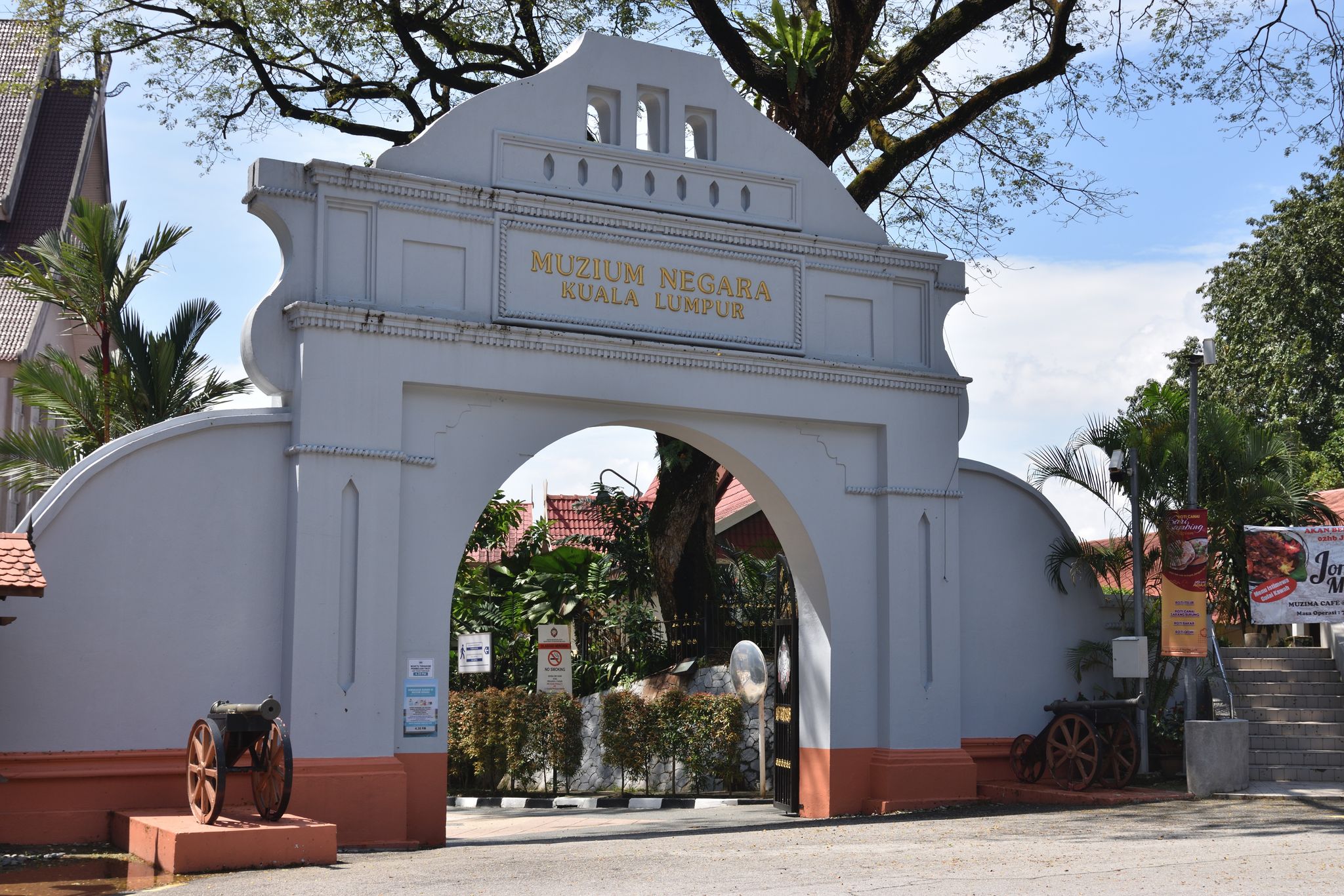
On Saturday 21 December 2024, 30 Museum Volunteers were treated to an educational guided tour of the Malay World Ethnology Museum (MEDM), situated above the Orang Asli Craft Museum and within the vicinity of the National Museum. This museum was officially opened to the public in March 2002 and fun fact, it occupies the first floor of a former Japanese Restaurant, Fima Rantei.

The idea for MEDM was mooted by the first Director General of Museums Malaysia, the late Dato’ Shahrum Yub, following a resolution at the 1989 Malay Civilisation Convention. The architecture of this building is similar to the National Museum. The museum provides visitors with a deeper understanding of Malay arts and culture.

Museum Scope

While the scope of the Malay world encompasses the Nusantara or Malay Archipelago, the MEDM focuses on Malay arts and culture in Malaysia. It:

  • builds upon and expands the content in Gallery B of the National Museum, offering a detailed exploration of the Malay world artefacts and unique traditions by state.
  • features and interprets the crafts and traditions depicted on the National Museum’s external West Mural on Malayan Crafts and Craftsmen. 
  • reflects the evolution of the belief systems and practices in the Malay world, transitioning from animism to Hindu-Buddhist influences and finally to Islam, as seen in the essence of the exhibits, its iconography and representations. Islamic elements became the most dominant in shaping the final metamorphosis of Malay thought and culture. 

Many Malay customs and traditions have stood the test of time, serving as a source of inspiration for contemporary practices, whether in the original, modernized or evolving form, while preserving their core essence.

Roots of Malaysian Culture

Various governments or Malay Sultanates once occupied the coastal areas of Peninsula Malaysia and to date, there exists nine Malaysian states with a monarchy in place (Perlis, Kedah, Perak, Selangor, Negeri Sembilan, Johor, Pahang, Terengganu and Kelantan).

The Malay people in Malaysia comprise the Kelantan Malays, Kedah Malays, Perak Malays, Sarawak Malays, Kedayan, Jakun and Temuan, as well as other groups originating from other islands in the Archipelago such as the Javanese, Minang, Banjar, Rawa, Bugis, Bawean, Bangkahulu, Kampar and Achenese.

Malaysia is a successor of the Malayo-Polynesian civilisation, and its culture encompasses both physical and spiritual aspects, including tangible creations like buildings, clothing and weapons; and intangible elements like language, literary works and traditions.

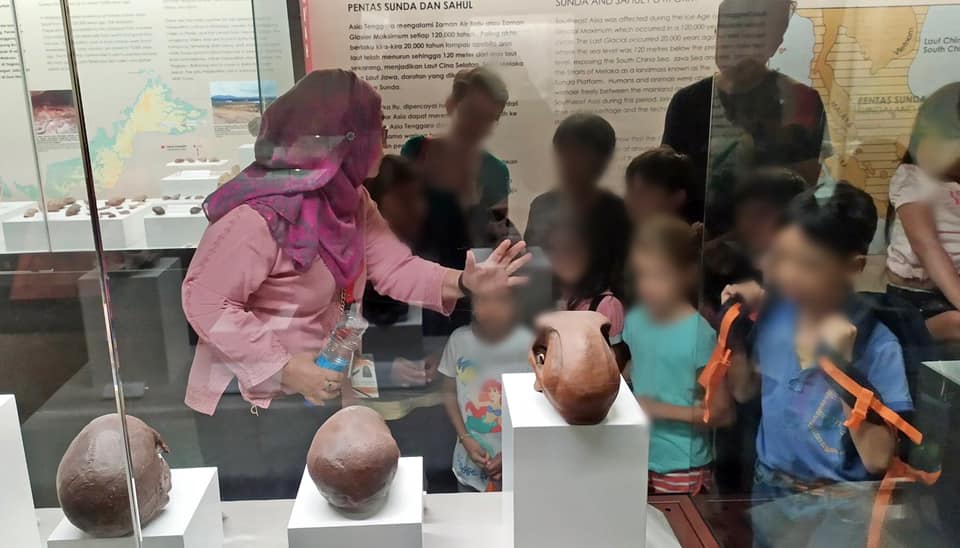
Our visit began with a warm welcome from Puan Wan Noazimah Wan Kamal, Director of the MEDM. We were then guided through the museum’s exhibits by Puan Nik Maziela Idura, the Assistant Curator. 
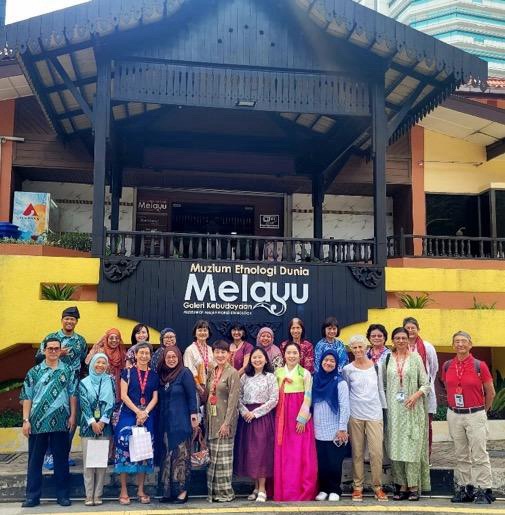
Group picture of MVs with the Director, Assistant Curator and MEDM staff

A. The Heart of Malay Culture: A Visual Exploration via Dioramas

There are six dioramas which showcase the importance of traditional crafts and deep-rooted values of family and community.

Diorama 1: Weaving and Traditional Kampung Life
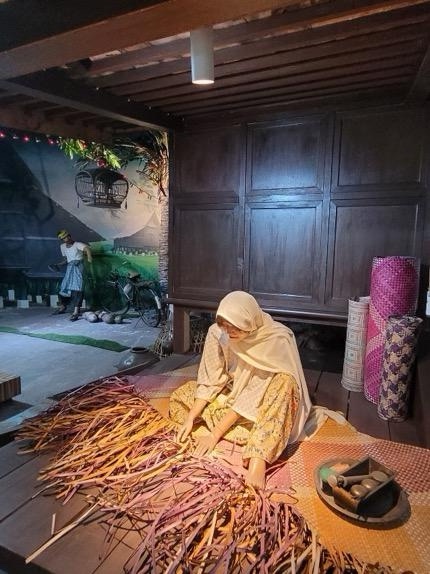
The first diorama takes us to a serene Malay kampung or village, which can be seen in all parts of Malaysia particularly the rural areas. An elderly lady sits on the veranda, skilfully weaving a tikar (mat) from mengkuang leaves, used for sleeping, dining and social gatherings.

The traditional Malay house is raised above the ground to protect from floods especially for the eastern coastal areas. The space beneath the house is used to store boats; vital for transportation in riverside villages. 

The kampung house features three main areas:

  • The Serambi (Verandah or Front Hall) for welcoming guests and family gatherings
  • The Rumah Ibu (Mother’s Room), the heart of the home
  • The Dapur (Kitchen) at the rear

This diorama illustrates the architectural heritage and practical design of Malay kampung houses, which exist in harmony with its surroundings.

Diorama 2: The Art of Wau Making
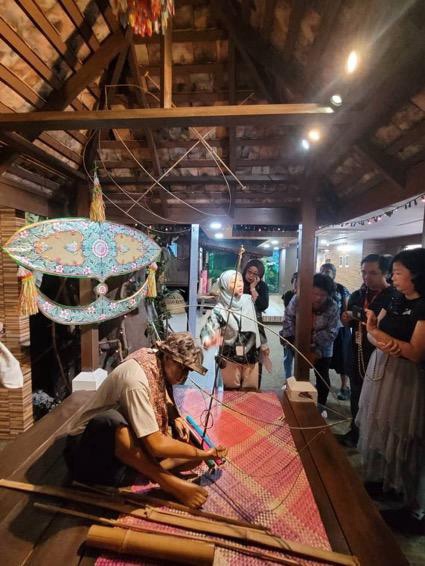
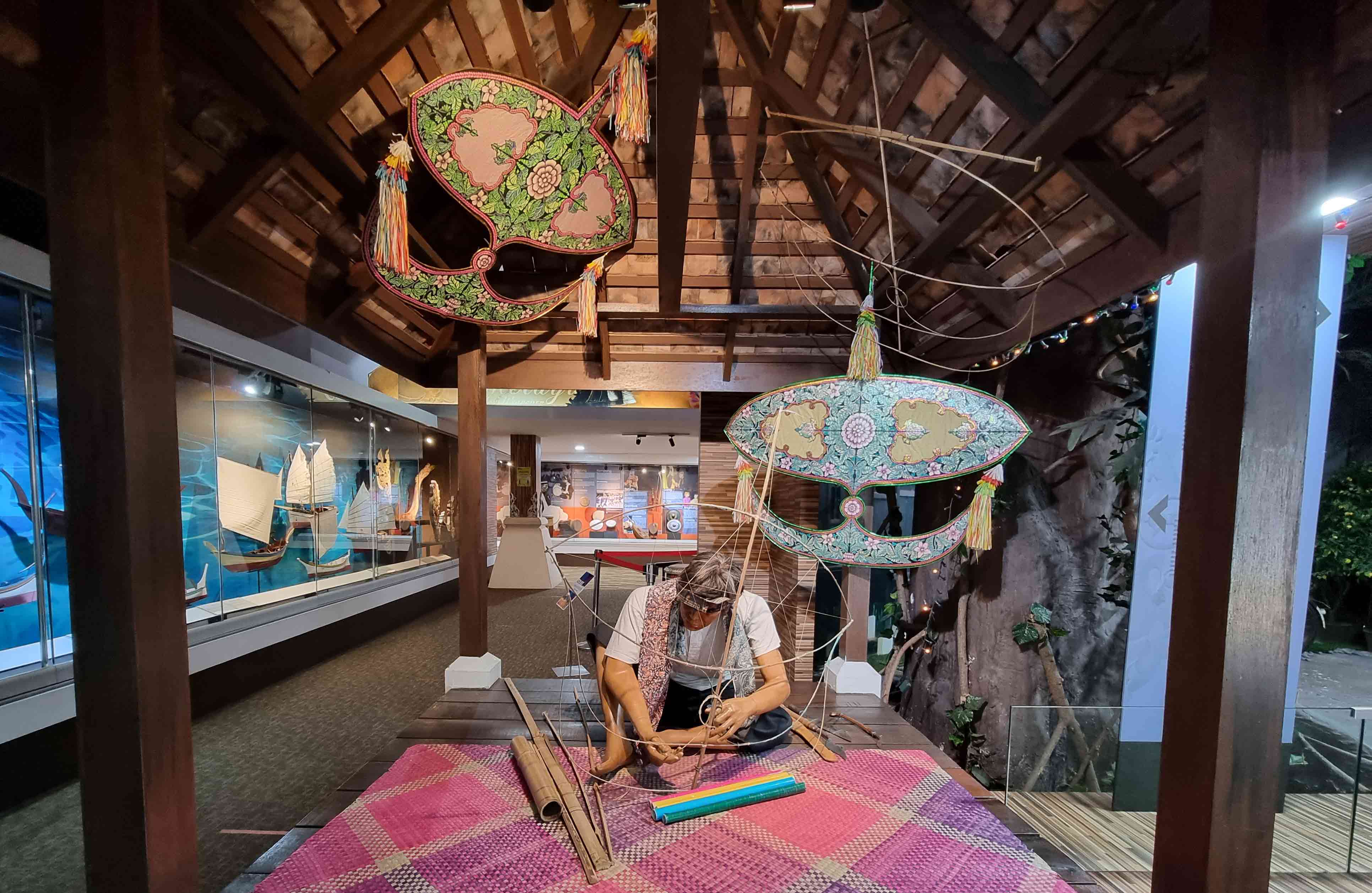
The second diorama exhibits the intricate art of wau (kite) making. A skilled craftsman is seen constructing a wau using strips of bamboo, cut with a carving knife. Cut coloured paper is glued on, with designs that reflect the aesthetics of Malay art. 

An important aspect of wau making is in ensuring the frame is symmetrically balanced so the wau will fly gracefully through the sky. With a distinctive head, body and tail, it symbolises a bird in flight and represents freedom and aspirations. 

Each state boasts its own unique wau designs, such as the “Wau Kapal” of Selangor and the “Wau Bulan” of Kelantan. For frequent flyers, this Wau Bulan icon would be a familiar feature.  Our local carrier, Malaysian Airlines’ iconic logo draws inspiration from the traditional Wau Bulan.
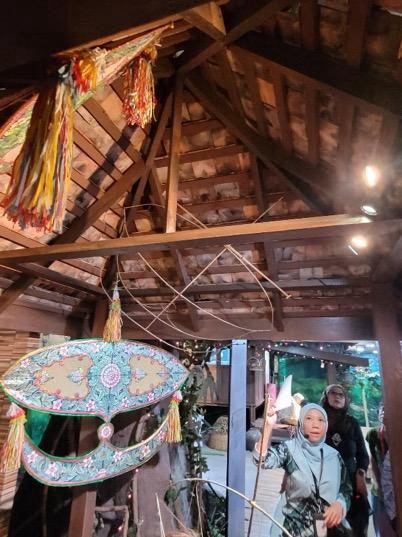
The diorama also features a traditional Singgora roof, originating from Thailand, featuring the cultural exchange that has enriched Malay architecture. These clay tiles are fired and placed on the rooftop to give a natural cooling effect. We see a harmonious integration of traditional building techniques with the natural environment.

Diorama 3: The Magic of Wayang Kulit
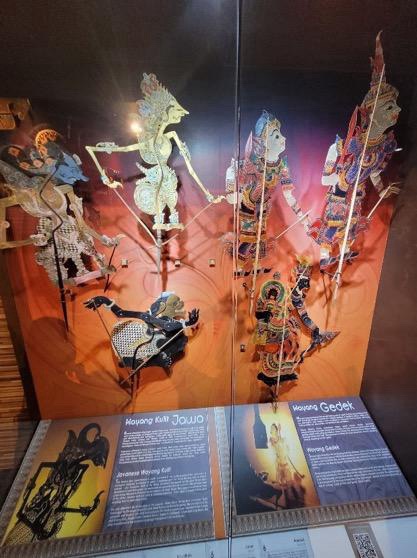
The third diorama brings us to the world of Wayang Kulit, a traditional shadow puppet theatre and entertainment. An ensemble of gamelan drums and other musical instruments fill the air as the Tok Dalang, the master puppeteer, weaves a captivating narrative. 

Based on ancient Hindu epics of Ramayana and Mahabharata, the stories unfold as the carved leather puppets, mounted on banana trunks, are manipulated against a brightly lit white screen, using a kerosene lamp. 

The Tok Dalang is a skilful vocal master who employs at least ten distinct voice tones to bring the diverse characters to life – heroes, villains, kings and even a jester, who adds a touch of comic relief. And this is where the magic begins, with the Tok Dalang bringing each character alive! 

The diorama displays three styles of Wayang Kulit:

  • Kelantanese: Characterised by puppets and manipulated with a single central stick or arm, often depicting the character riding a dragon-like vehicle. The performance begins with a symbolic gesture of waving the Pohon Beringin or Tree of Life, representing a tribute to mother nature, to start the theatrical journey.
  • Javanese: Influenced by Javanese traditions, these puppets are manipulated with both hands. The character’s eyes provide clues about their nature – good or evil. They are commonly found in Johor, a state in southern Malaysia, located near the island of Java, separated by the Straits of Malacca. 
  • Gedek Talung: Found predominantly in northern states like Perlis and Kedah, this style reflects Siamese influences, employing a Siamese dialect and featuring puppet designs influenced by Thai aesthetics.

While traditional stories remain central, adaptations have emerged, incorporating elements of popular and current culture, such as Star Wars, Musang King and even using contemporary languages like Japanese and Korean, to connect with current audiences.

Diorama 4: A Celebration of Love: A Malay Wedding
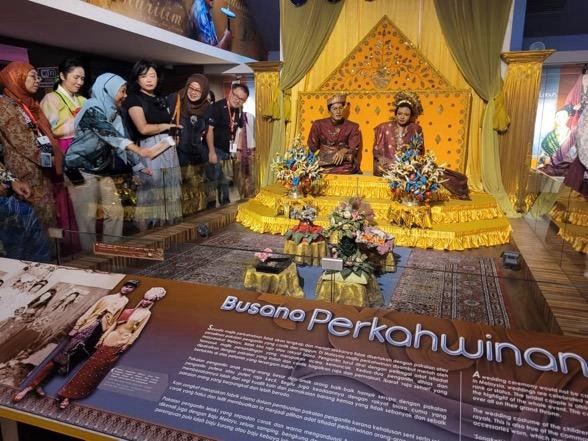
The fourth diorama captures the vibrant and colourful atmosphere of a traditional Malay wedding ceremony. The bride and groom, adorned in exquisite songket attire, receive blessings as rose water and potpourri are gently sprinkled upon them. 

The exchange of hantaran, or wedding gifts, is a momentous ritual, with the bride typically presenting trays of gifts, reciprocated by the groom at a lesser number, symbolising the greater contribution of the bride to the marriage. The offering of bunga telang flowers with hard-boiled eggs to guests, signifies fertility and good wishes for the newlyweds. 

This diorama portrays the significance of customs, tradition and community in celebrating the union of two souls. The hantaran custom continues to be observed, even in modern day weddings today.

Dioramas 5 and 6: The Game of Congkak and Spinning Gasing
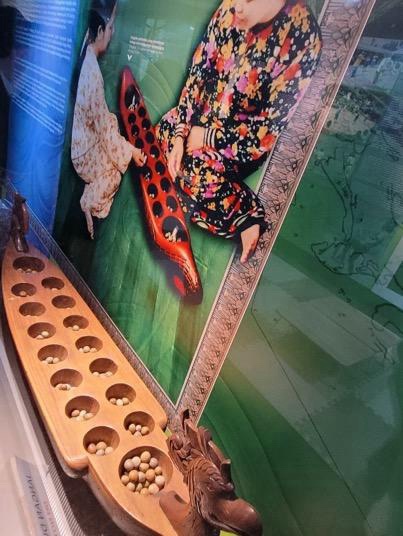
The fifth diorama features the traditional game of congkak. A young woman sits gracefully, her fingers moving as she plays the game on a carved wooden board. Congkak involves two players competing to collect the most seeds or marbles in their respective “homes”. In older times, holes were dug in the ground to create a natural congkak playing board. 

The sixth diorama shows a man engaging in the traditional game of spinning the gasing or top spinning. Tops are also made from wood. 

These dioramas depict the social and recreational aspects of Malay culture, showing how games like congkak and gasing, have not only been a source of entertainment but social interaction and intellectual stimulation. A pastime that has enriched the lives of communities for generations, it also emphasises the artistry and craftsmanship involved in developing these instruments. 

B. The Vitrines: A Window into Malay Culture

Next, we explore the vitrines that showcase key themes of the Malay world.

1. Sailing and Seafaring
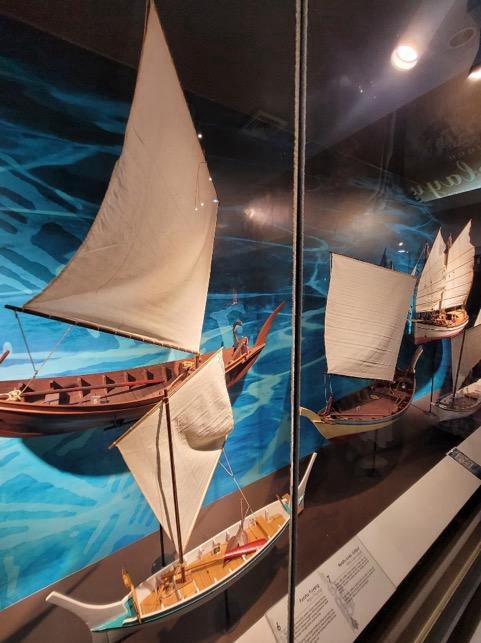
The different types of sea vessels

This vitrine explores the profound influence of the sea on Malay culture, evident in the concept of Motherland or Tanah Air – a connection to both land and sea. Skilled navigators, like Panglima Awang, navigated voyages by relying on the water, wind and stars, demonstrating remarkable seafaring skills without relying on compasses.

Malay boatbuilding was a sophisticated art. Vessels ranged from perahu (small fishing boats) to larger boats for deep-sea fishing and jongs capable of carrying hundreds of tons which played a vital role in regional trade. These vessels were meticulously crafted using wooden pegging, showcasing impressive engineering skill. Some of the key ports along their seafaring routes included Aceh, Padang, Palembang and Banten. 

The vitrines reveal fascinating details. A wooden box, likely made from cengal or alternatively jackfruit wood, holds hooks, gadgets, knives and even a first aid kit. Carvings of rice grains and flowers adorn the box. Next to it, is a utility box in rectangular shape which also functions as a seat and a food box which is round in shape, possibly designed for the royalty, as it features intricate decorations. 
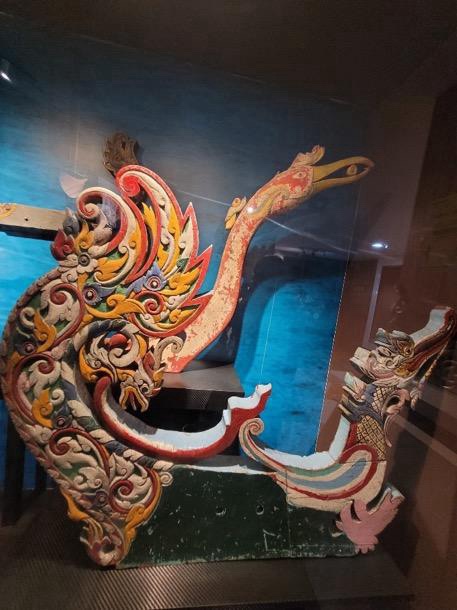
Motifs adorning the vessels

Cultural influences, from early indigenous beliefs to Islamic symbolism, are evident in the ornate carvings and mythical motifs adorning the vessels. We see the heads of boats ornamented with bangau (stork), okok and also makaras (mythical sea creatures). Historical accounts from China and the Netherlands attest to the scale and sophistication of Malay maritime activities.

2. The Sound of Music: Musical Instruments
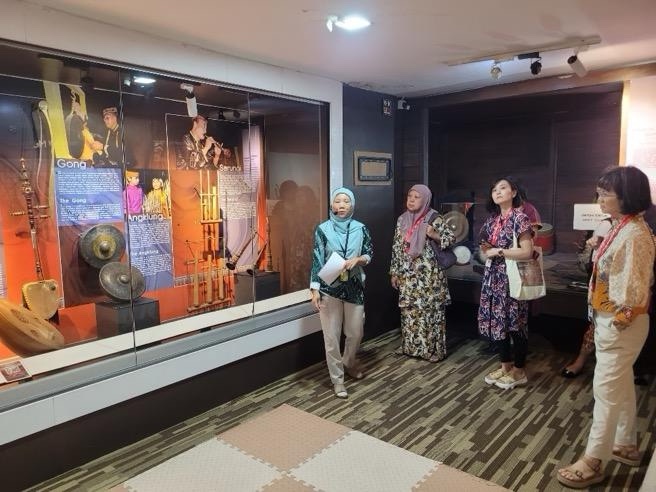
Musical instruments explained 

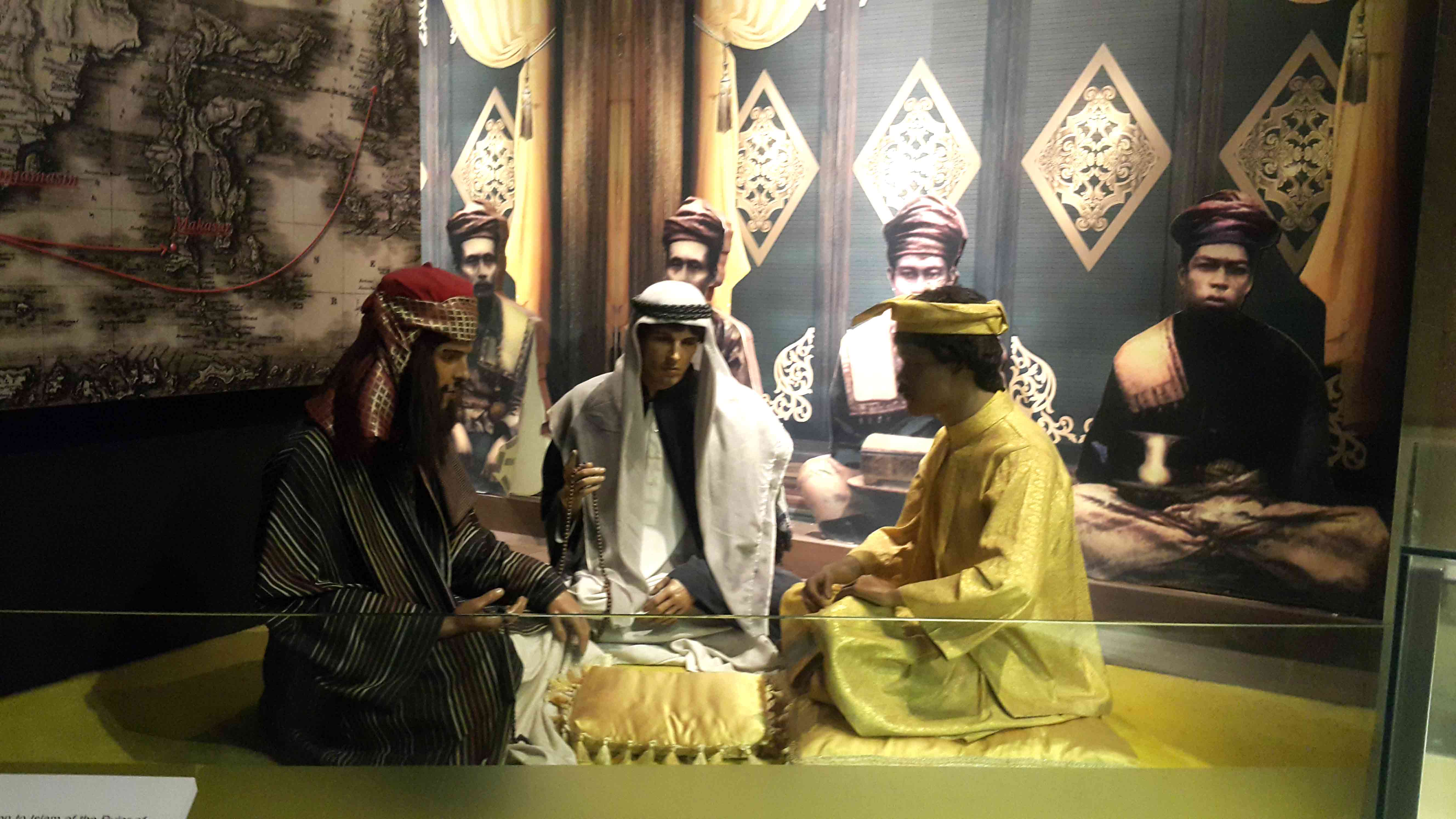
Musical instruments in the Malay culture were significantly influenced by Arab merchants who arrived in Melaka. These instruments were assimilated and found their place in various ceremonies, including weddings, the coronations of Sultans and Kings and traditional performances.

  • The gendang is a drum made from animal skin, played with hands or sticks. It comes in various sizes and types, including single-sided and double-sided drums. Gendang are commonly used in ceremonies and cultural events.
  • The kompang is a drum made from cow skin and was traditionally used to gather local people’s attention to their wares during trade activities. 
  • The rebab is a bowed string instrument, originally from the Middle East but became prominent in Malay music. It is worth noting that the rebab tunes were likely influenced by interactions among traders at various stopovers along a combination of maritime and overland trade routes.
  • The gambus is a plucked lute from the Middle East, popular in Malaysia. It has 3-12 strings and a distinctive half-pear shape. It’s often used for entertainment, accompanying zapin dances and ghazal singing.
  • Gong comprises large and small gongs, the integral components of gamelan and Wayang Kulit performances.
  • The angklung is a traditional Indonesian bamboo instrument that produces sound when pulled and shaken at the bottom and often played in groups, accompanying dances like Kuda Kepang and Barongan.
  • The serunai or flute is a woodwind instrument with Sumatran roots from Minang immigrants, often played during weddings, pencak silat martial arts and wayang kulit shows.

3. Malay Accessories and Ornaments
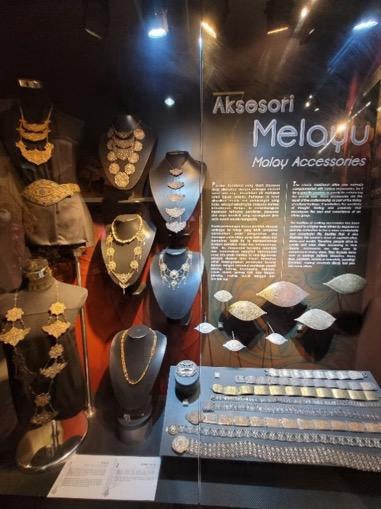
Malay Accessories

This section showcases selected elements of traditional Malay accessories and ornaments:

  • Pending cutam: These are traditional buckles used in Malay attire, with the silver pending featuring ornate floral motifs worn by women, often indicating high social standing. The nielloware pending is used as a buckle for men’s silver belts and are crafted with ornate floral designs and the use of gold.
  • Artisan Jewellery Brooch: The three-piece brooch holds symbolic or cultural significance, perhaps related to status or lineage.
  • Caping: A silver protective covering functioning like a modesty cover for genitals worn by young children under the age of three, common among wealthy Malay families on the East Coast. These were associated to fertility beliefs or protection, reflecting religious and cultural practices. 
  • Pillow-End Plates: These decorative items, stitched with silver and gold-plated thread, further highlight the emphasis on aesthetics and wealth within the upper classes.

These accessories, along with their intricate designs, reflect the social stratification of the time, where access to fine clothing and adornments were often reserved for the wealthy. 

4. Traditional Costumes
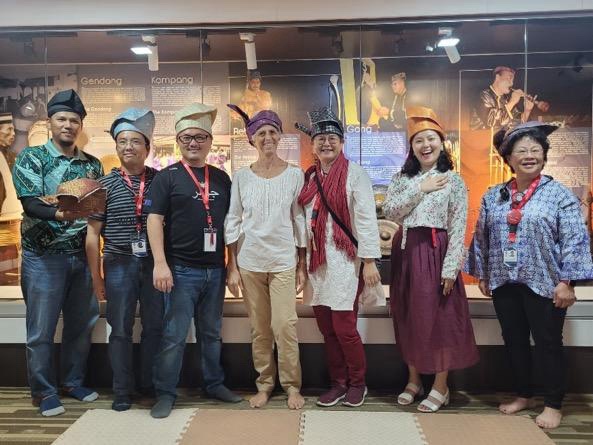
MVs adorning their creation after a demonstration and successful hands-on session on folding a Dendam Tak Sudah tengkolok/destar

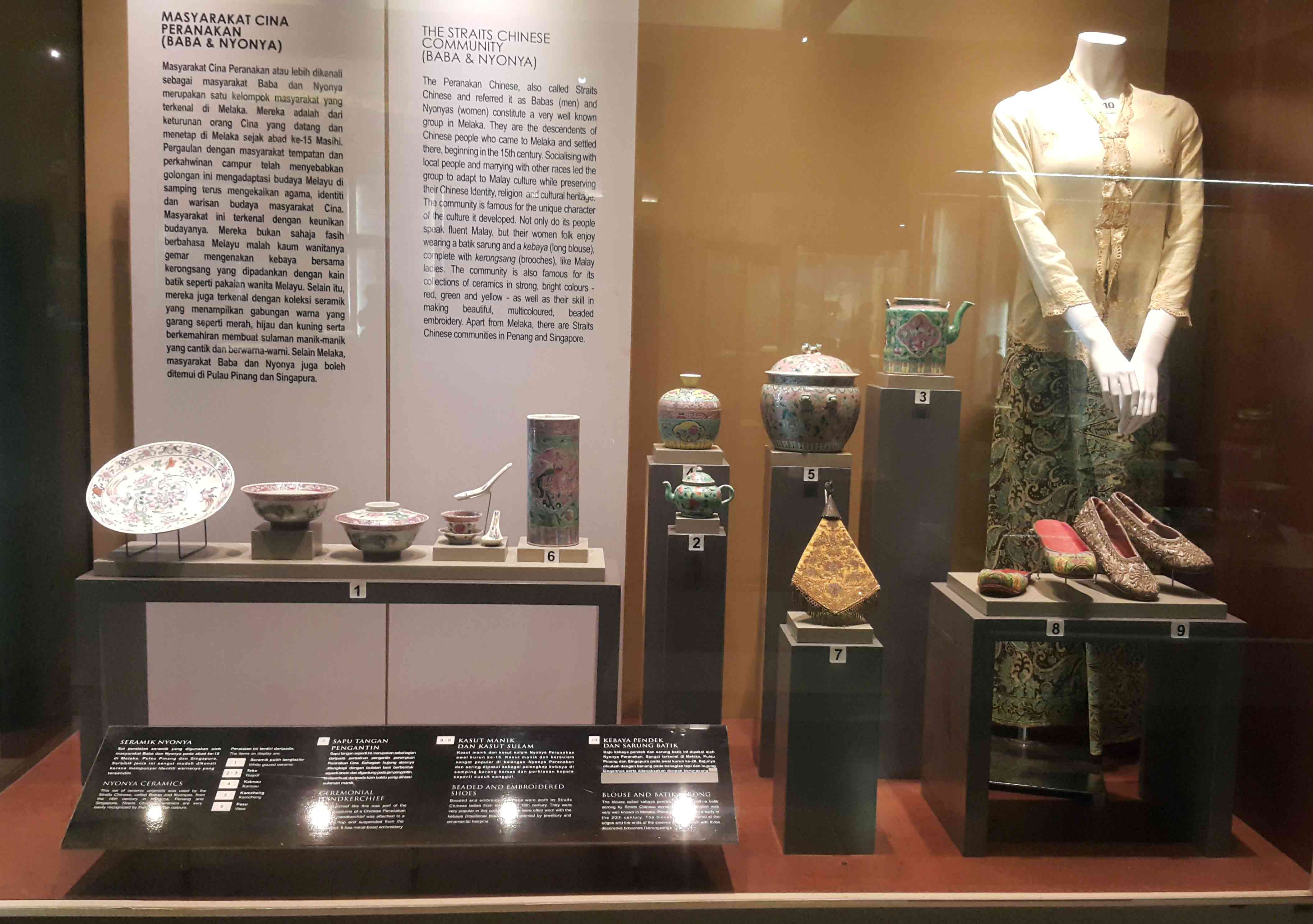
Malay attire reflects trade and cultural exchange, evident in the use of fabrics like Chinese Silk and Indian Petola. Songket, a prestigious woven fabric with intricate gold or silver threads, is particularly prominent in Kelantan and Terengganu. 

Various traditional clothing styles, including Kebaya Labuh, Cik Siti Wan Kembang, Baju Kurung Teluk Belanga and Cekak Musang, each have unique characteristics and regional associations. Overall, Malay attire showcases the enduring influence of cultural traditions and craftsmanship.

5. Weaponry: Malay Arms and Armour

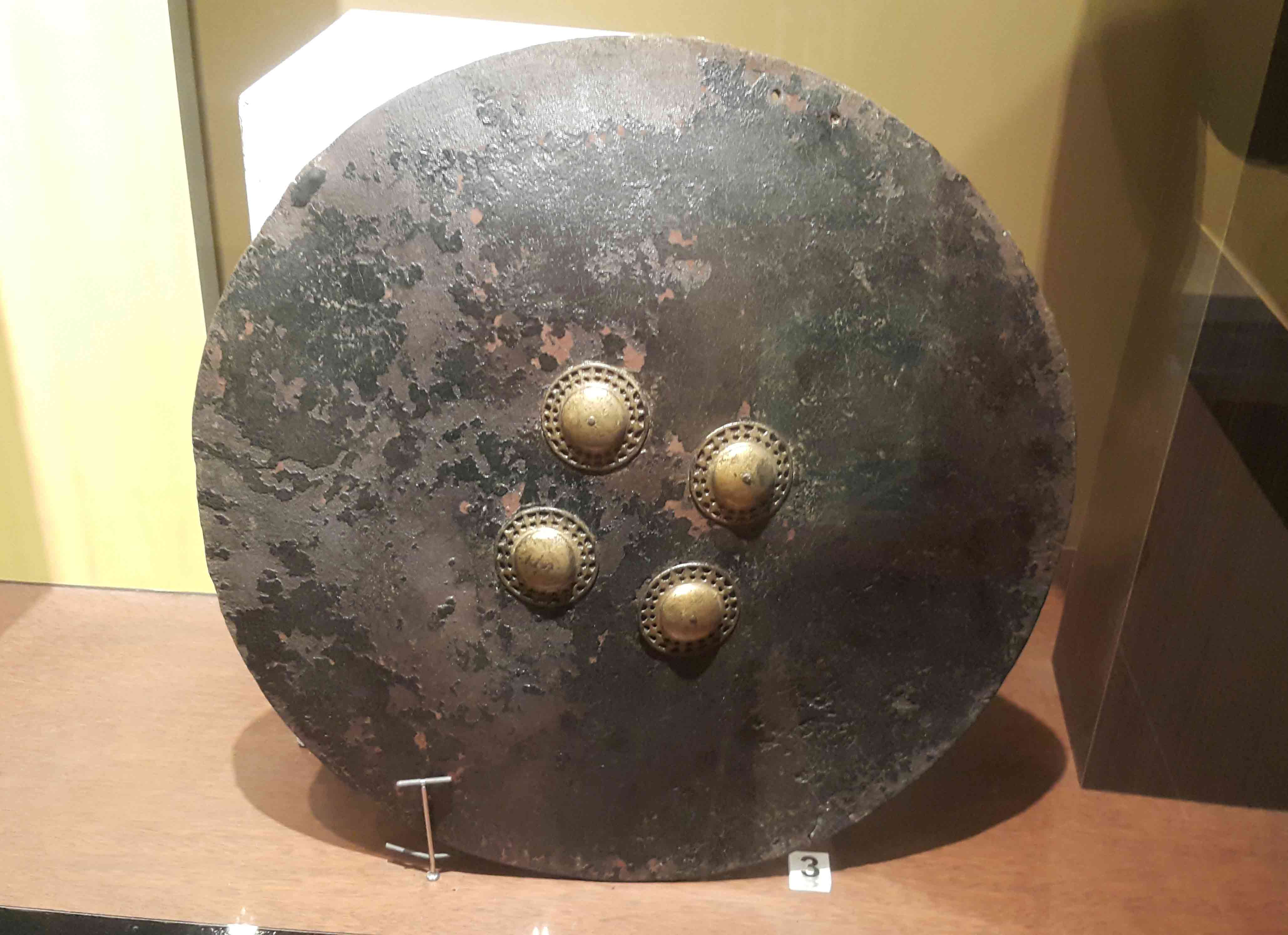
This exhibit showcases the martial traditions of Malay society through a display of weaponry, including cannons, short weapons and long weapons.

  • Cannons: Originally from Sumatra, these weapons were designed for portability and warfare. Smaller versions were even used as wedding gifts in Brunei.
  • Short Weapons: The most notable is the Keris, a traditional dagger with a head, body and sheath. It served as a status symbol and weapon
  • Long Weapons: The exhibit includes the tombak and the lembing, both types of spears used in warfare.

The Palace’s strict monitoring of weapons’ production highlights the importance of controlling weaponry within the royal court to maintain social order.

6. Utensils
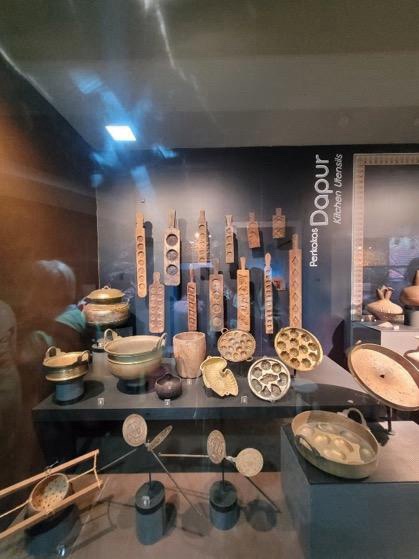
Traditional Malay utensils

Traditional Malay utensils, often crafted from metals like silver and brass, are adorned with niello, a technique of inlaying metal. These functional pieces such as moulds for putu, bahulu and kuih kapit or love letters, hold cultural significance and evoke nostalgic childhood memories.

7. Pottery

Pottery is a traditional Malay craft with key production centres in Kelantan, Kuala Kangsar, Pahang and Sarawak. One of the better-known pottery products is the Labu Sayong, used to store cool drinking water. It’s made from processed clay, shaped and fired to increase its durability and water resistance. The design of pottery often reflects its intended function.

8. Brassware

Malay brassware, a testament to skilled artisans, particularly in Terengganu, plays a vital role in Malay culture. From ornate ceremonial pieces used in royal courts such as betel leaf boxes, trays and tiered serving dishes, to functional household items like kettles, pots and decorative lamps, brassware reflects the rich Malay heritage and artistic traditions.

9. Nielloware

Nielloware, a luxurious silverware from southern Thailand, was traditionally used by royalty. Crafted from silver alloy often with gold, it features elaborate designs. It is common especially in Kedah, Kelantan, Perak and Pattani. Nielloware items include bowls, jars and accessories.

10. Silverware

Malay silversmithing, with a history rooted in royal patronage, produced exquisite items for both ceremonial and everyday use. From ornate royal regalia like sceptres and crowns to functional household items such as betel containers, trays, teapots and even decorative items like jewellery and hairpins, these silverwares often feature refined designs, reflecting the wealth and status of their owners.

11. Woodcarving

Malay woodcarving is a significant cultural art form, characterised by delicate designs inspired by nature, religion and philosophy. Skilled artisans utilise techniques such as ukiran timbul (raised carving) and ukiran tebuk tembus (perforated carving) to create stunning works of art. 

These carvings adorn palaces, homes and religious structures, often featuring motifs like floral patterns, calligraphy and geometric shapes. Examples include ornate door panels, intricately carved window frames and decorative elements on furniture and household items.

Summary

The Malay World Ethnology Museum offers a captivating journey through the heart of Malay culture, providing valuable insights into the rich heritage, traditions and artistic expressions that define this vibrant civilisation. Through a combination of dioramas, artefacts and informative displays, the museum effectively communicates the legacy of Malay culture.

Visitors are encouraged to visit and immerse themselves in the museum’s diverse exhibits. This allows them to connect with the past, link to the present, and reflect on their own experiences, to gain a deeper understanding and appreciation of Malay values and traditions.
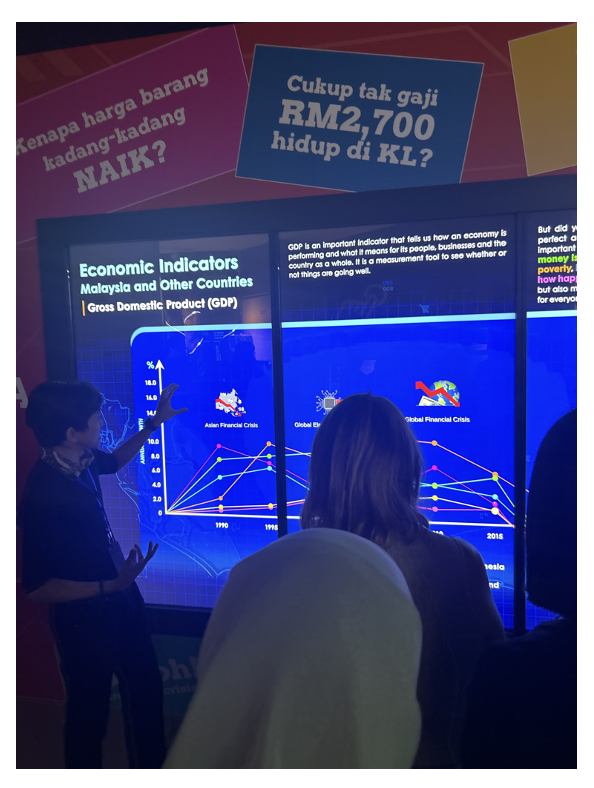
Bank Negara Museum tour 

By Aishah Nadirah

One Thursday morning, more than 20 MV’s gathered at the lobby of the Bank Negara Museum (BNM). I’ve often heard many good things about the museum and was incredibly grateful to be able to join this tour. Visitors were greeted by the grand spiral staircase in the middle of the museum’s hallway and by 10a.m., it was packed with tourists and buses of school children.

The tour was divided into 3 galleries: the Economics Gallery, the BNM Numismatic Gallery, and the latest gallery Masih Ada Waktu.

It kicked off with the first gallery led by En Nazran; the gallery’s definitely a boon for any economics’ enthusiast or those curious about Malaysia’s trading history. Immediately it became clear why there were so many school children in the museum. The interactive exhibits were an essential part of the museum, bringing life to the serious numbers and statistics all over the wall. En Nazran noted that the interactivity is key in the museum, which allows communicating with visitors more efficiently so they won’t have to rely wholly on a museum guide. 

The history of Malaysia’s economic growth started with Malaysia’s natural resources, a history of which parallels that in Gallery C of Muzium Negara. It then transitions to Malaysia’s modern-day economics, displaying a switch from a resource-mixed economy to a financial information sector. 

Another standout display was the history of trading currency used in the Malay archipelago following the arrival of international traders from Spain, Holland, Portugal and Great Britain to the East Indies in the 16th century. Here, Encik Nazran shared the etymology of the word ‘ringgit’, which came from the jagged edge of a coin or in Bahasa Malaysia, ‘beringgit’.

The last 3 exhibits focused mainly on the nation’s modern economy, from Malaysia’s financial sectors’ development e.g. the prestigious institutions of Maybank, RHB, to the Asian financial crisis and a quick skim of the past governors at the helm during the crisis. The penultimate display was a history of all recorded world economic crises up to the last 2020 Covid crisis. Encik Nazran pointed out the arguably most interesting one: the tulip and bulb craze in the 1630s, where people would go so far as to sell 12 acres of their land for just one bulb of tulip. This led to a tulip and bulb bubble, which wasn’t sustainable and short-lived.

Next came the highlight gallery of the museum: the BNM Numismatic Gallery. Located on the second floor, this tour was guided by Puan Ilyana. It opened with the golden era of the Malay archipelago as the strategic centre of trade, a piece of history familiar to the MVs. There was a wall decorated with a reimagination illustration of Melaka as a trading centre and beside it, an exciting simulation game teaching on the barter trade system.

The next exhibit featured currencies found during the old Malay kingdoms. Displayed in a glass case, as well as its information projected on to the screen above it, many coins were on display in the dark room, giving it an important atmosphere. This flow, Puan Ilyana informed us, was inspired by the Malaccan river, where some of those very coins were discovered. This part of the gallery was a little narrow for the 20 or so of us museum volunteers but the screen was a welcome visual aid for those who weren’t able to catch a peek of the coins. The main attraction in the numismatic exhibit was the Kelantanese coin from the 17th-18th century used during the reign of legend Che Siti Wan Kembang. It was of a kijang emas (deer) which is now emblazoned as Bank Negara Malaysia’s corporate logo –– the first gold coin from Kelantan. Given its gold content, the coin is also valued at current gold prices.

Pn Ilyana took the time to answer each and every question from us. One interesting fact shared by her was that animal tokens, as seen in Gallery C of Muzium Negara of Muzium Negara, were not for transactional use. Instead, it was used as symbolic tokens for belief. For example, a trader would carry around the tortoise token with the belief for longevity.

The walls in the numatic gallery were lined with even more interactive games, bringing the history of coins to life. A personal favourite was one interactive wall featuring historic currencies used in the Malay archipelago, where we match the comically large token to its facts. Not only do we learn these interesting facts, we also get to admire the different currency designs from the different states. One that came to mind is the Johor currency during Sultan Sulaiman Badrul Alam Shah’s reign – it had a doughnut hole in the middle reminiscent of modern Danish currency 1 krone.

Another exhibit that stuck out was the wall of commemorative currency displaying the huge RM600 bill created in conjunction with the 60th anniversary of the signing of the Federation of Malaya Independence Agreement. According to the Guiness World Records, this was the world’s largest legal banknote in production.

The creation process of the ringgit also was featured, where it involved blending a special mix including polymer and cotton. Pn Ilyana pointed out that’s why the ringgit doesn’t get destroyed in the wash! Interestingly, the raw material blend were available as souvenir pens in their BNM Giftshop at the ground floor.

The numismatic gallery ended with a feature of international currency notes, arranged in alphabetical order. Here, Pn Ilyana shared how any Malaysian ringgit with a scratch on the Agong’s face is considered damaged and holds zero value.

The final exhibit was BNM’s temporary exhibit, Masih Ada Waktu: Sediakan Payung Sebelum Hujan (‘There’s Still Time’), an exhibit aimed to encourage young ones to save. This tour was led by one of the exhibit’s curators, Ms Gabrielle. Walking in was a huge contrast to the previous gallery: unlike the numismatic gallery’s dark and serious atmosphere, this one was brightly coloured and felt incredibly welcoming to children. Ms Gabrielle explained that due to the heavy nature of the content, the exhibit was divided into 4 sections: history of saving boxes, Malaysia’s history of saving, the kids corner featuring tips and tricks for daily savings, and lastly the technical details of saving.

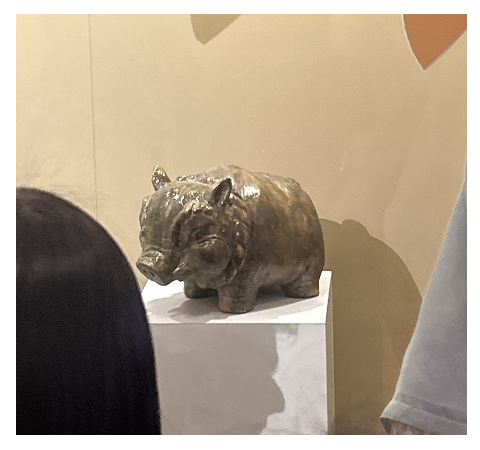
In the first part of the exhibit, we learnt about the piggy bank –– specifically, the ‘celengan’ or the Javanese piggy bank. Most of these piggy banks were originally found in the capital of Majapahit and in the shape of a pig, a symbol of strength and prosperity.

The most interesting thing in the Masih Ada Waktu exhibit, personally, was Malaysia’s history of saving, showing the government’s efforts in encouraging saving nationwide, especially in rural areas. Saving stamps were used at post offices to make saving more convenient for folks staying in the outskirts as banks were located too far away in the city. Interestingly, banking books all over the peninsular differed in design by states. Majority of MVs were also excited at the mention of kootu funds, especially when Ms Gabrielle pointed out that it was illegal when more than 10 contribute or the ibu kutu (leader of the kootu funds) charges interest. It then trails to other collaborations with individuals such as Malaysia’s beloved illustrator Dato’ Lat in the saving campaign, as well as smaller artists selling money banks up to RM2,000.

Finally, the campaign ends with a poppy coloured lifesized snakes-and-ladders game for children to learn as they play about saving habits and even debt. Overall it’s an exhibit that should not be missed, especially for parents, teachers and guardians of young ones. Ms Gabrielle, who also is part of the BNM Marketing team, proudly notes that other central banks visit BNM for guidance on how to make their museums more engaging such as those from Czech Republic and Pakistan. BNM has also several international museum awards under their belt, as well as Accessibility Sejagat award by DBKL. The tour was a highly recommended experience and would definitely be paying another visit to the BNM museum very soon.

Tanjung Tualang Tin Dredge No. 5 (TT5) – A Refurbished Dredge in All its Glory

By V. Jegatheesan

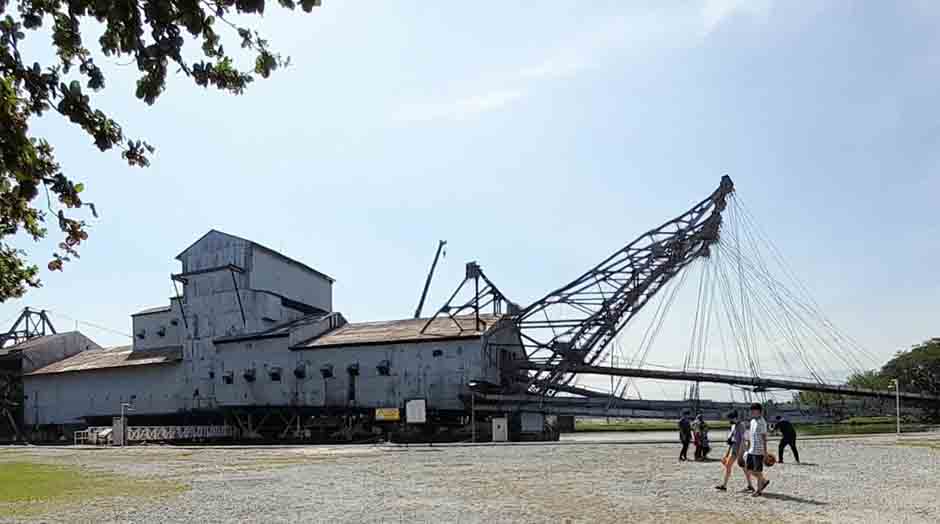
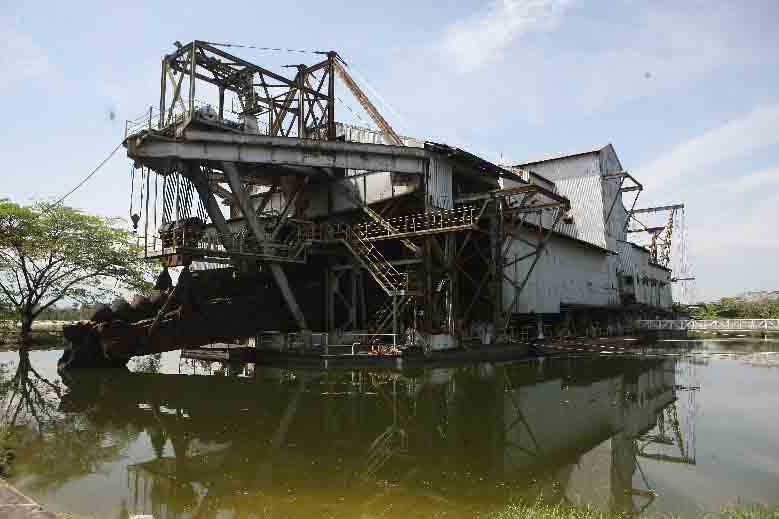
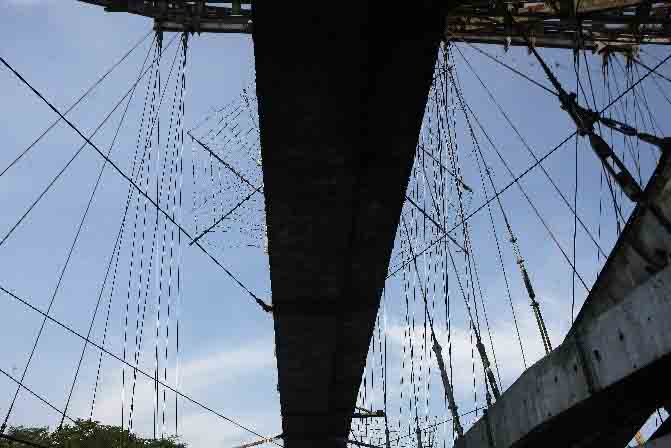
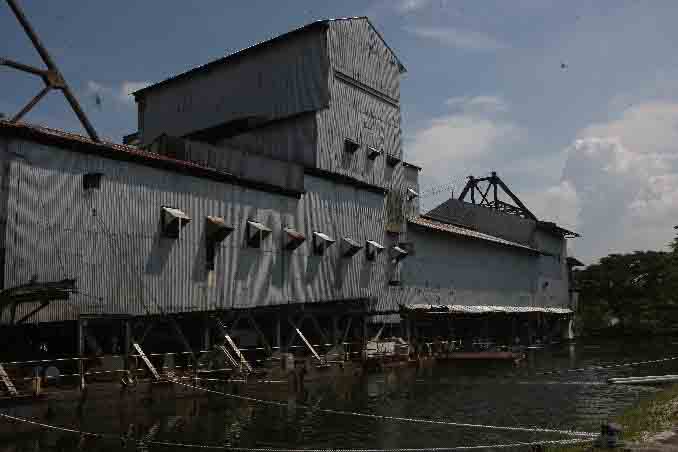
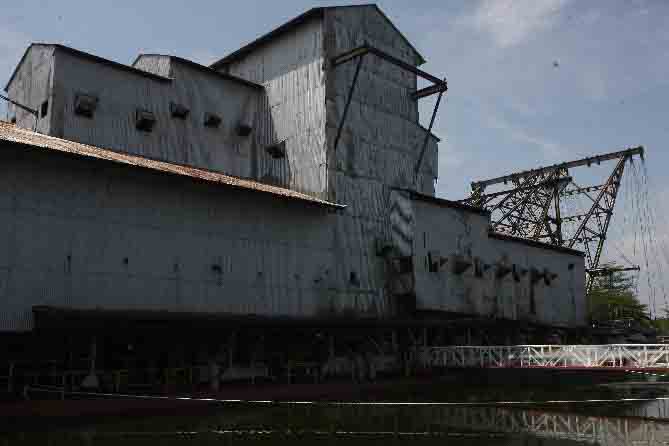
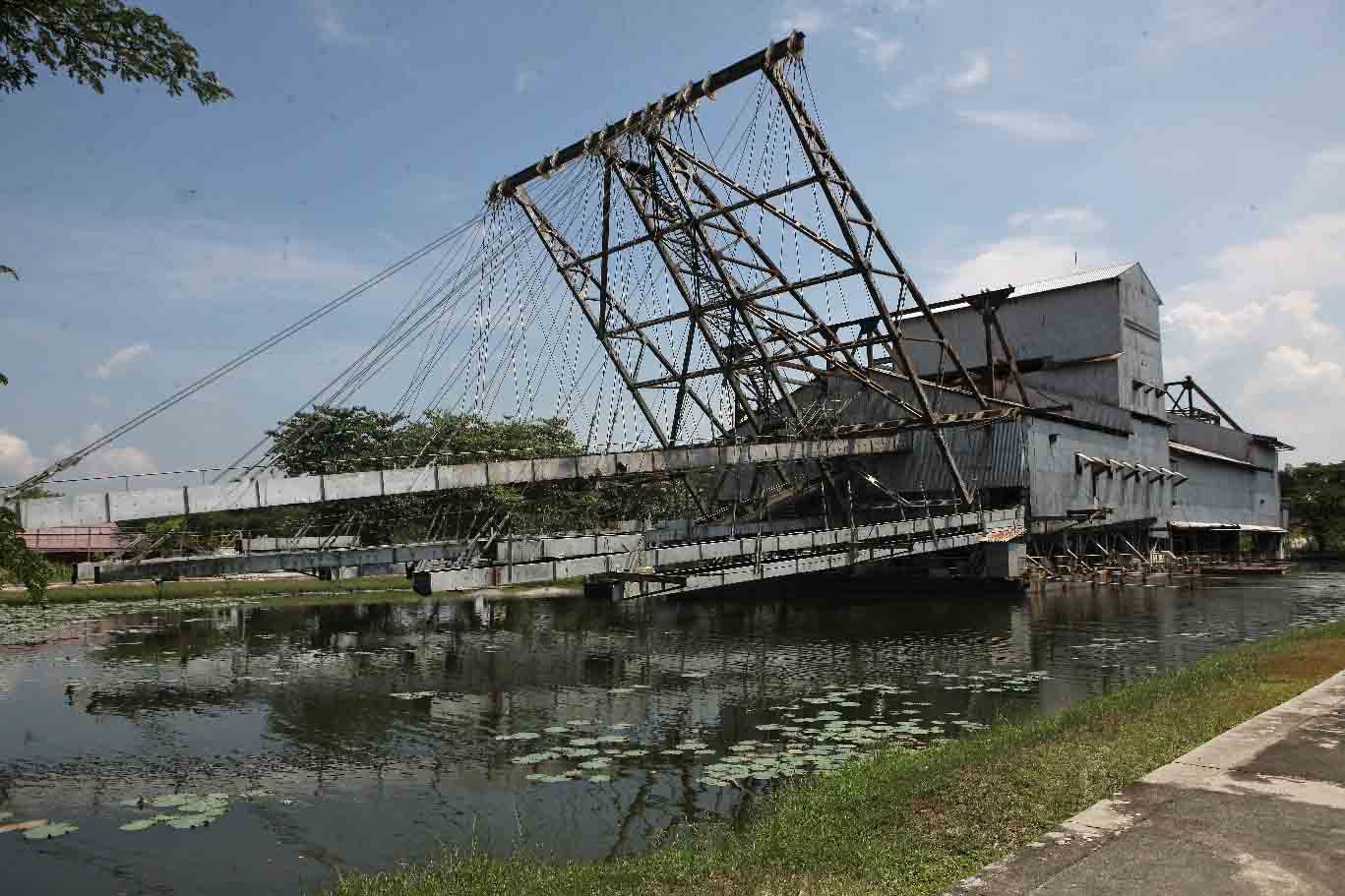
Tanjung Tualang Dredge No. 5. Image credit: V. Jegatheesan.

The Tanjung Tualang tin dredge, also popularly referred to as TT5, is an old dredge that went out of use as the tin industry faded away in the 1980s, with tin giving way mainly to aluminium. Nostalgia and a keen interest in preserving this machinery, led to its refurbishment, so as to give the populace a chance to see how it worked and how it helped the tin mining industry. It is now located on the 9th Km, Jln Tanjung Tualang, 31000 Batu Gajah.

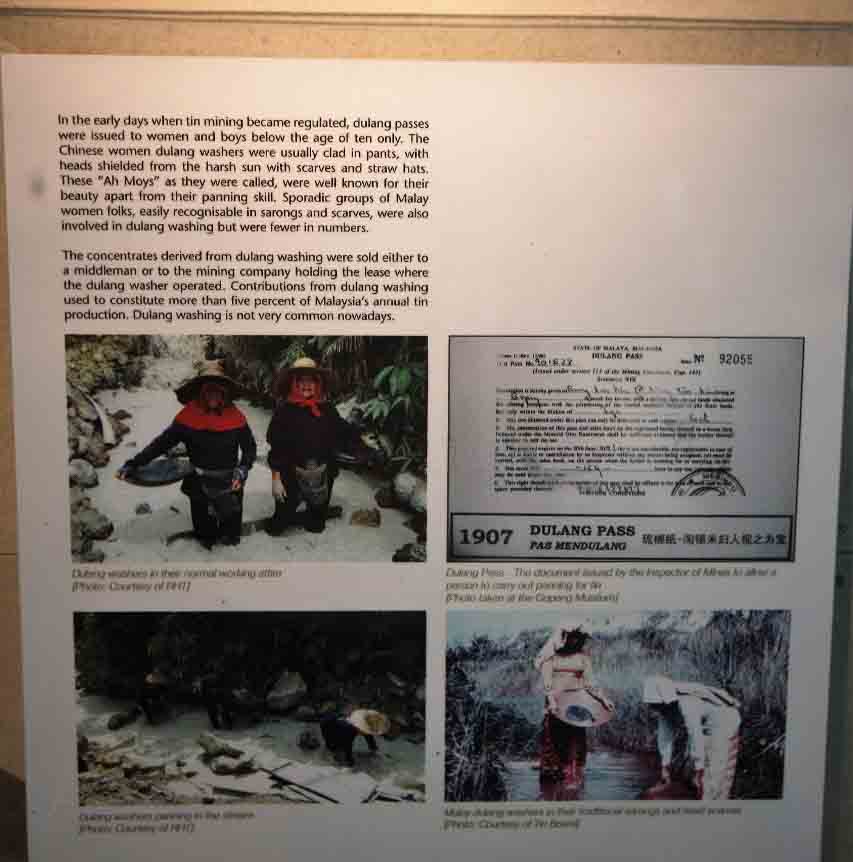
Tin has been a lucrative product in Malaya for a long time. The Dutch of the 18th century were well known to have negotiated agreements for tin supplies from the areas around Pulau Pangkor and Kuala Selangor. However, mining methods, such as panning, were very basic. A large tray or dulang, was used to scoop water and sand in the rivers. The sand and earth would be filtered out and the heavy ore would remain. This would be further processed to make ingots and then sold, ending up ultimately as tin products. Tin has had many uses. Its main usage was in the canning industry, making bullets and, nowadays, in the electronic industry in solder. Interestingly, while many think a tin can is all tin, it is actually a tinned can – a steel can, which gives it strength, plated with tin, which prevents corrosion!

Dulang washing was of course an arduous process and not very productive. Subsequently, better technology emerged including opencast tin mining in which pumps shoot water at high pressure onto the sloping ground. The loosened earth or slurry is conveyed to the top of a sluice – palong – andwater pushes it down trellises; the heavier ore is held back by wooden slats while the rest of the earth and sand flows into a large lake. The recovered ore is then sent to a smelter for further processing and export. This was still labour-intensive. These methods were used until the end of the large-scale tin-producing era. Dulang washing is back in practice with the current rise in demand for tin.

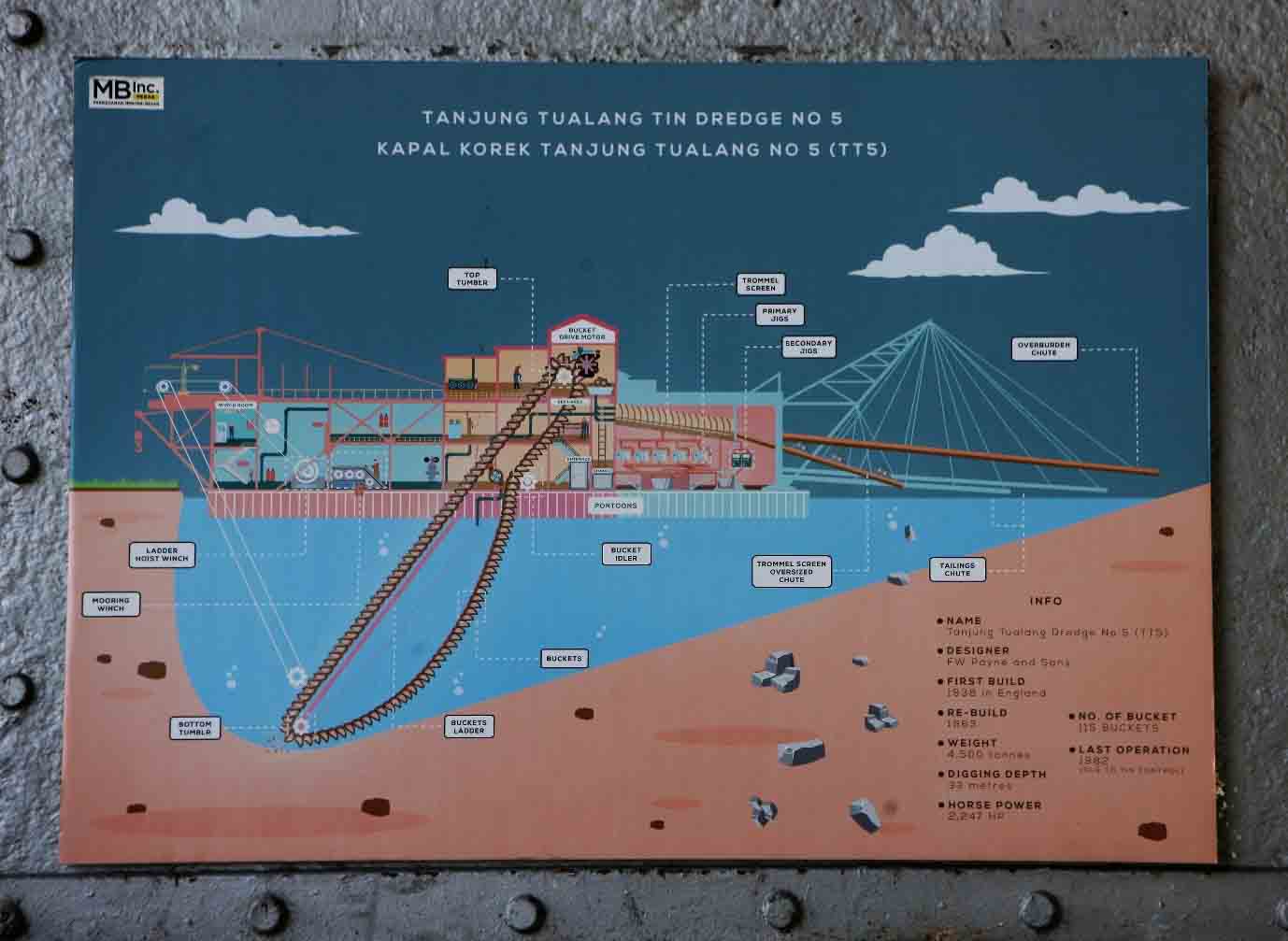
Image credit: A poster in the TT5 Visitor Centre

The dredge evolved from a simple ‘spoon dredge’ in 1862 through to the bucket dredge of the 1880s used in New Zealand and Australia. Since 1891, attempts were made to construct a dredge in Kinta, but all failed. In January 1913, Malayan Tin Dredging Ltd. initiated the first operational dredge in Batu Gajah; it later owned six of them. These were steam-operated. The TT5 is one of the five owned by its sister company, Southern Malayan Tin Dredging Ltd. It was built in 1938 by F. W. Payne and Company. Upgraded and electrified in 1963, it ceased operations in August 1982. In 1997, the Malaysian Mining Corporation (MMC), which subsequently owned the dredge, donated TT5 to the Perak State Government, which, since 2017, has spent almost Rm 10 million on its repair and maintenance.

A dredge in those days typically cost Rm 40 million to build. At today’s prices, a dredge would cost Rm 200 million. This behemoth could scrap up tin-bearing earth, 24/7, as is said nowadays. In very large quantities too. However, the cost was prohibitive so only companies with the ability to lay out large capital could afford the dredge. These were usually European companies, mainly British. This is why, other tin-mining methods continued. In due course, 123 dredges produced 60% of the tin, while other methods produced the remaining 40%. In 1912 some 80 per cent of Malaya’s tin production was under Chinese management, by 1931 British firms accounted for more than 60 per cent of total tin production.

Those who travelled along the Penang Singapore trunk road would remember seeing these dredges. But we all drove past assuming they would always be there. But not so. Over the years, greater use of aluminium, falling tin prices as well as increased production in Indonesia and China adversely affected the production in Malaysia. It was simply not economically viable.

TT5 is now restored to showcase how these mighty machines worked to contribute to the economy of Malaysia. Its actual operation area was not far off from where it is now located. A guided tour is provided and takes about 30 minutes. In fact this article transcribes the tour by Volunteer Guide, Encik Hafizal Arif. Note that this article describes TT5 only as other dredges will differ in size and equipment.

The process in its elements is very simple. Large quantities of tin-bearing earth were continuously scrapped from the ground by a conveyor made up of large metal buckets, processed mechanically to separate the tin from the earth, collect the tin and discharge the rest back into the lake on which it floats. A more detailed description, avoiding technicalities, is transcribed from the guided tour.

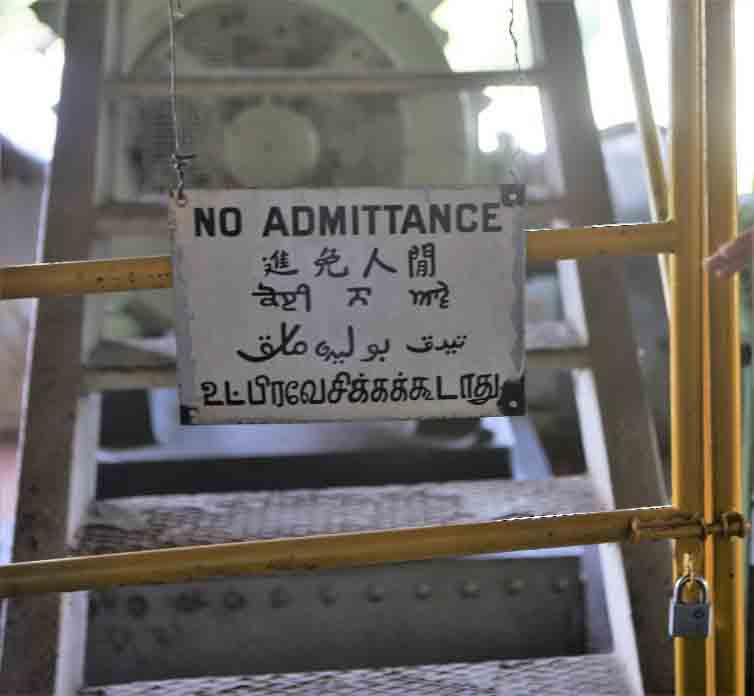
The dredge weighs 4500 tons and is 75m in length, 19.5m in width and four floors in height. A NO ADMITANCE signage at the entrance is in English, Chinese, Punjabi, Jawi and Tamil, reflecting the various groups of people working on this dredge.

Signage reflecting the various groups working on the dredge.
Image credit: V. Jegatheesan.

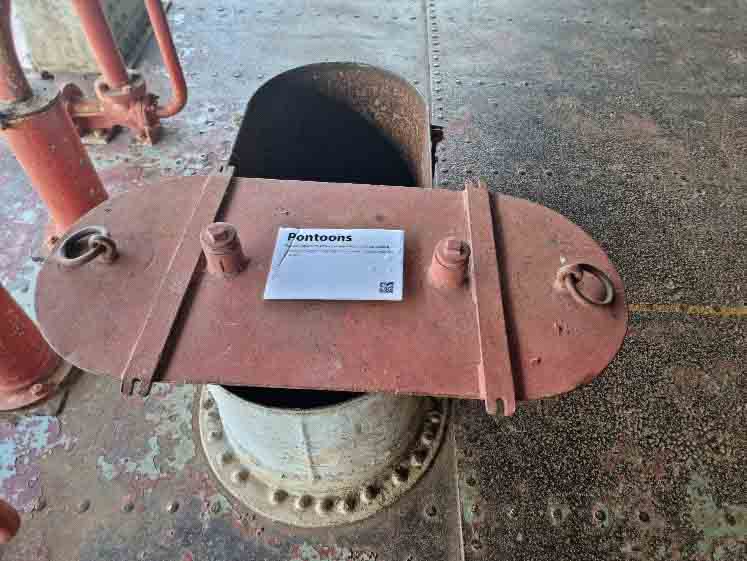
The entire structure floats on 47 pontoons. These are hollow tanks which keep the dredge afloat in the water. In this dredge, the pontoons are 3.1m deep and are accessible for maintenance, mainly patching leaks.

           Pontoon top with the cover off. Image credit: Maganjeet Kaur.

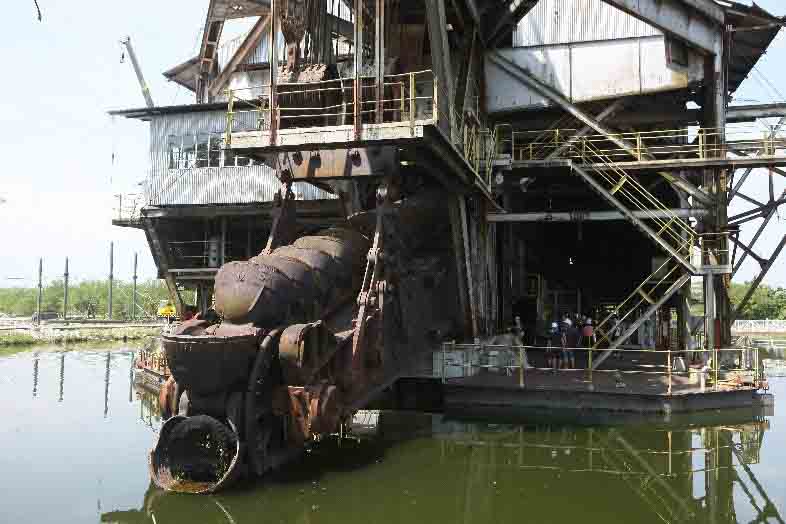
TT5 has 115 buckets. These two-ton buckets are set on a looping chain, or ladder, in the front of the dredge. The ladder continuously circulates and can be lowered for the buckets to scrape the lake bed or the earth face on the lakesides beneath the water. Being a moderately-sized dredge, TT5 can scrape down to 33m. Other dredges can go down to even 100m.

Buckets on the looping chain. Image credit: V. Jegatheesan.

As the now three-ton buckets move up the ladder, they carry the scooped earth to the top of the dredge into trommel screens. These screens are cylindrical and perforated.

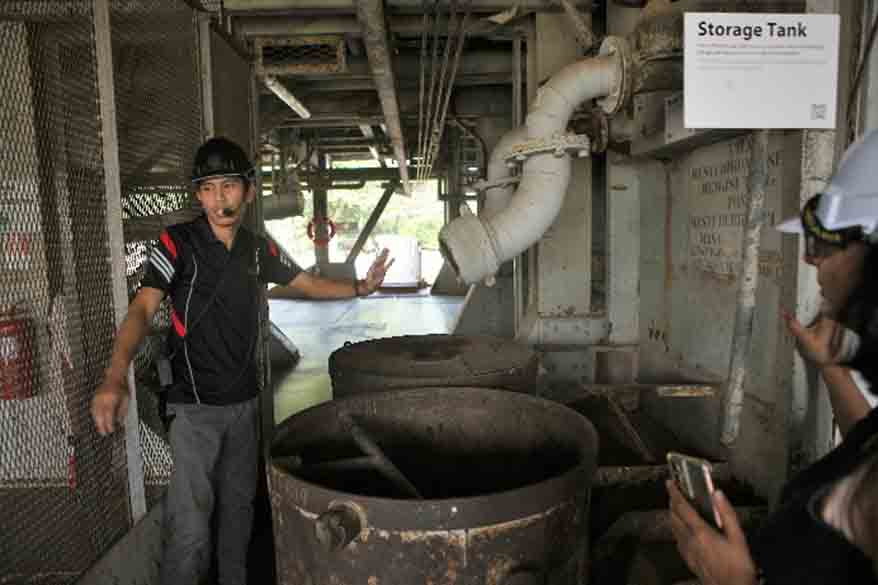
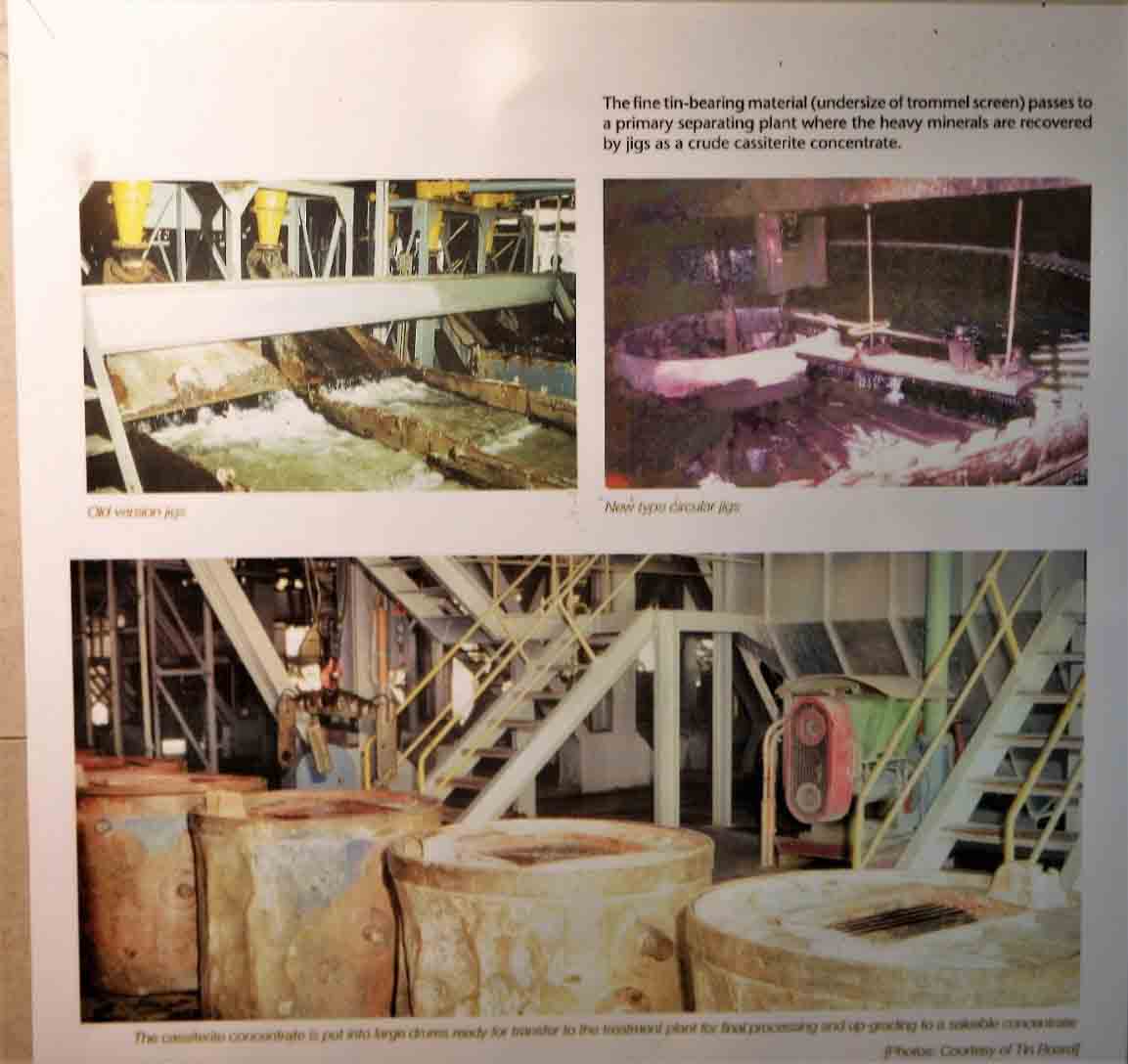
Jets of water wash through the earth in the trommel screen to separate the heavier tin ore. The ore is passed into vibrating jigs to further filter the ore. The jig is equipped with a screen or sieve that allows smaller particles to pass through while retaining the larger, denser particles. After a second jig, the purer ore (Cassiterite Concentrate) is channelled to be stored in tanks. We were restricted from visiting this area. The water used in the screen and jigs is pumped up from the lake itself. The sand and unwanted material after these processes, called tailings, are discharged through the chutes out at the back of the dredge into the lake.

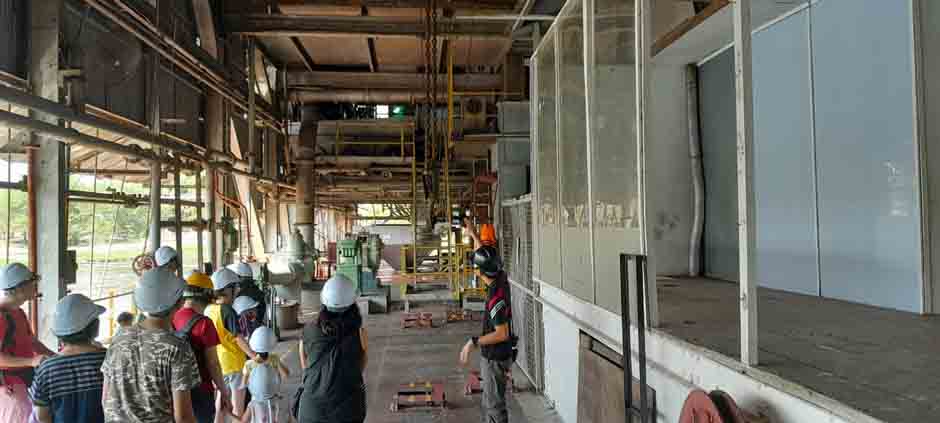
The tank can hold one ton and one day’s dredging produced 30 tons. A crane on either side will carry the tanks out to the lakeside. It is later sent to the smelting plant in Penang. The resulting ingots are then exported.

A rough estimate values a day’s production at 30,000 to 35,000 USD of the time. It seems that a year’s production could recover the cost of the dredge! This is the reason that the tank area access is limited only to authorized personnel to prevent theft by stuffing ore into pockets or helmets. Even the discharge chutes for the tailings have a spider web netting to prevent anyone from climbing in.

Hafizal Arif explaining the storage tank for the ore. Image credit: V. Jegatheesan

Spider netting encircling the discharge chutes. Image credit: V. Jegatheesan.

A description of the dredging process. Image credit: Maganjeet Kaur

              Poster in the Visitor Centre. Image credit The Tin Board.

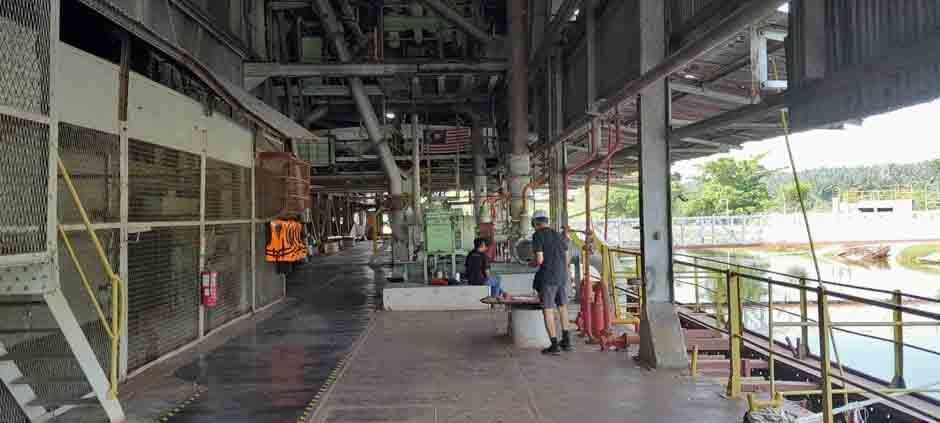
The operation is managed by a Dredge master. Employees work in three shifts and do not live on board. They are ferried by a small boat. Each shift has 20 people. There is a pantry area for them to rest and have their meals, which are brought by them as there are no cooking facilities. There is a toilet at the back, over the lake.

Pantry at the top. Image credit: Maganjeet Kaur.

Though TT5 is tethered to the lakeside by ropes today, the dredge had cables in front and sides. The cables were attached to a mooring winch. The dredge could be moved by winching in or out.

Tethering of dredge to the side. Right image shows the gangway to the dredge. Image credit: V. Jegatheesan.

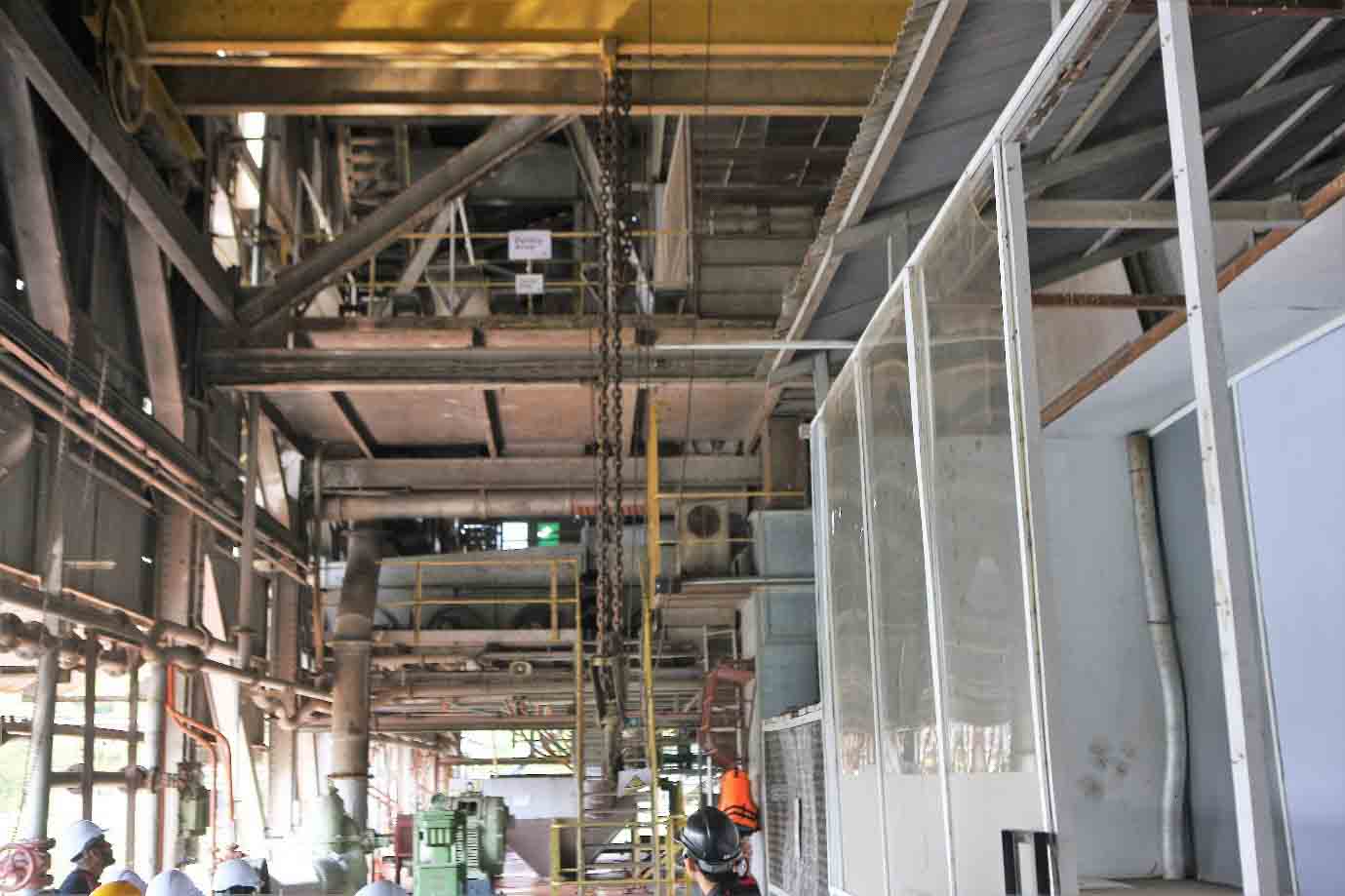
Views of either side of the dredge decks. Image credit: V. Jegatheesan.

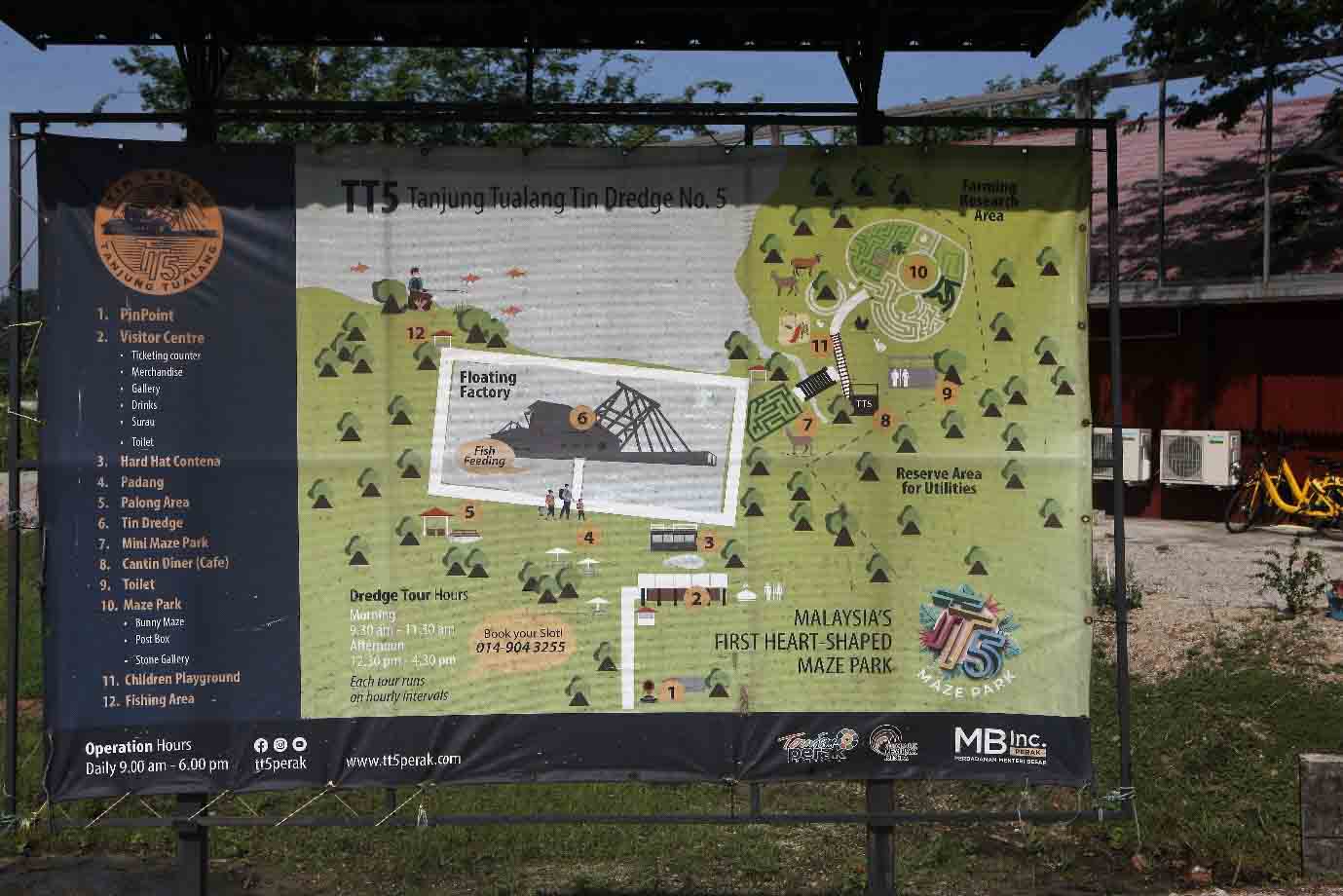
Over the years, dredges have been sold to Thailand or Indonesia, while some have even been scrapped.In 2015, the Perak State Government mandated the Menteri Besar Incorporated (MB Inc.) to conserve the TT5. Visitors can go onto the dredge and its workings are explained by guides. Visits can be made by calling ahead and specifying a time slot or walking in to join the next group.

Board showing layout of the TT5 Park. Image credit: V. Jegatheesan.

Since 2018, TT5 has been part of the Kinta Valley National Geopark. The Visitors Centre and TT5 tours are managed by the Operation Executive, Encik Aizad Azeli.

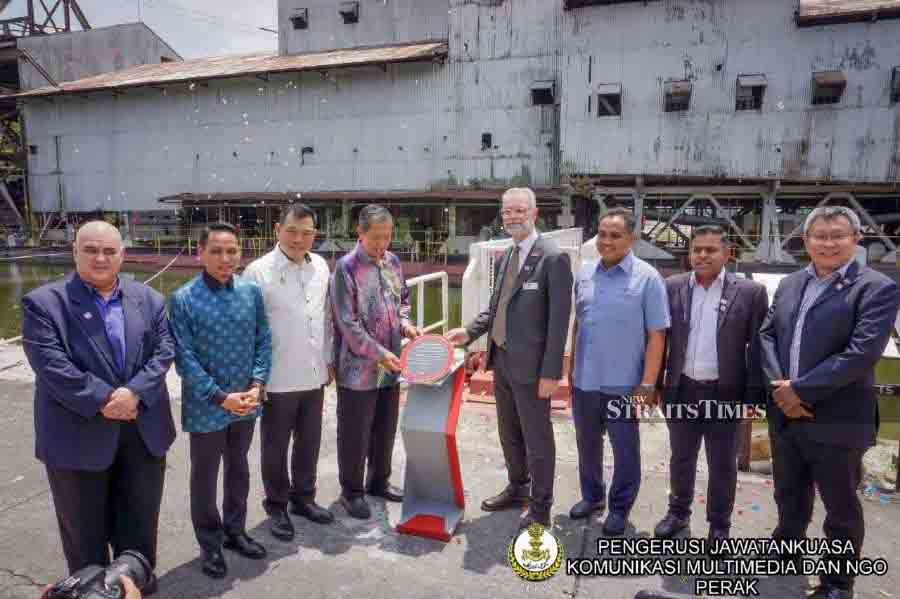
To cap the extensive works to preserve the TT5, in March 2023, the Institution of Mechanical Engineers United Kingdom, presented Tanjung Tualang Tin Dredge No.5 an Engineering Heritage Award for being well-maintained, contributing to the state and national economy and having its own heritage characteristics. It is the first tin mining dredge to receive such an award.

Image credit: New Straits Times 2023, March 23

In 2023, TT5 received the Travellers Choice Award from Tripadvsor.

TT5 is well worth a visit.

References:

Last surviving tin dredge TT5 receives IMechE award from UK. (2023, March 23). The New Straits Times. https://www.nst.com.my/news/nation/2023/03/892188/last-surviving-tin-dredge-tt5-receives-imeche-award-uk#:~:text=BATU%20GAJAH%3A%20The%20iconic%20Tanjung,Engineers%20(IMechE)%20United%20Kingdom.

EARLY 20TH CENTURY TIN MINING DEVELOPMENT. In Economic Heritage Malaya. https://www.ehm.my/publications/articles/about-tin-mining#:~:text=EARLY%2020TH%20CENTURY%20TIN%20MINING,much%20of%20the%2020th%20century.

A gold mine in tin. (2007, August 30). In Malaysian Bar. https://www.malaysianbar.org.my/article/news/legal-and-general-news/general-news/a-gold-mine-in-tin

Tanjung Tualang Tin Dredge. (2023). httpstt5perak.com

Museums in Malaysia

by Maganjeet Kaur

As we know, the Dongson drum displayed in the burial section of Gallery A is one of two found face down in a boat burial at Kampung Sungai Lang, Selangor. What about the second drum? Where is it located? It rests closer to home at the Jugra Insitu Museum in Kuala Langat.

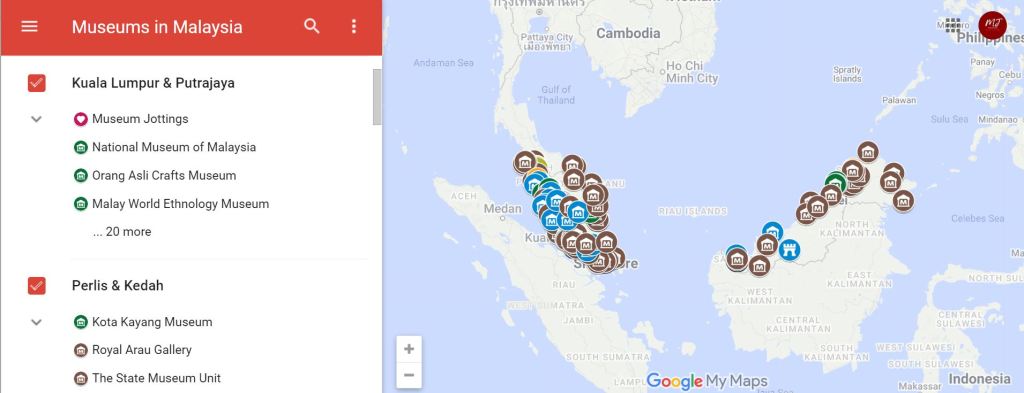
Examining historical artefacts complements textual research and, hence, knowing what artefacts are available in museums is an important step for historians and researchers. Using Google My Maps as the database, 209 museums and galleries have been identified pertinent to the history, culture, heritage and natural history of Malaysia. Although work is still ongoing to obtain information on the collections, this database is a good starting point to understand the museum scene in Malaysia.

List of 209 museums pertinent to history, culture, heritage and natural history of Malaysia

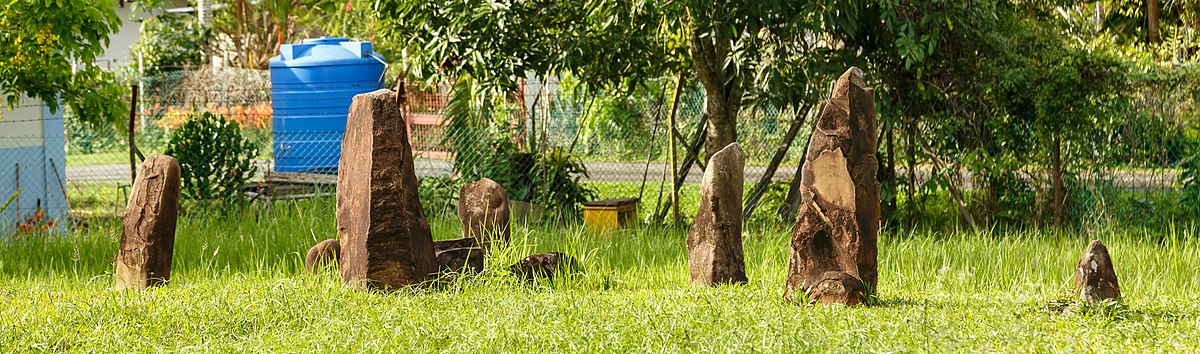
Each state in the country has its own museum showcasing the history and heritage of the state, generally starting from prehistoric times up to the modern era. There are also smaller museums within a state that focus on a district or a town; examples include the Petaling Jaya Museum, Rembau Museum in Negeri Sembilan, the Kemaman District Museum in Terengganu and the Baram Regional Museum in Sarawak. Museums such as the Chitty Museum in Melaka, the Murut Cultural Centre in Sabah and the Sapan Puloh Melanau Museum in Sarawak, celebrate the uniqueness of local communities. The Pogunon Community Museum in Sabah was built in-situ on an ancient megalith site to showcase the archaeological discoveries in the area.

Megaliths fronting the Pogunon Community Museum. Image credit: CEphoto, Uwe Aranas, via Wikimedia Commons.

Skimming through the list of museums, you will find that there are three museums dedicated to the kite – Muzium Wau in Kelantan as well as a Muzium Layang Layang in both Johor and Melaka – attesting to the popularity of this pastime. Previously, kites were used to establish contact with the heavens. Hence, they were beautifully shaped and decorated to find favour with the sky and wind spirits. Kites featured in the three museums have shapes and decorations unique to the state, providing valuable insight into kite research.

A diorama on making a wau (kite in Kelantan) at the Malay World Ethnology Museum

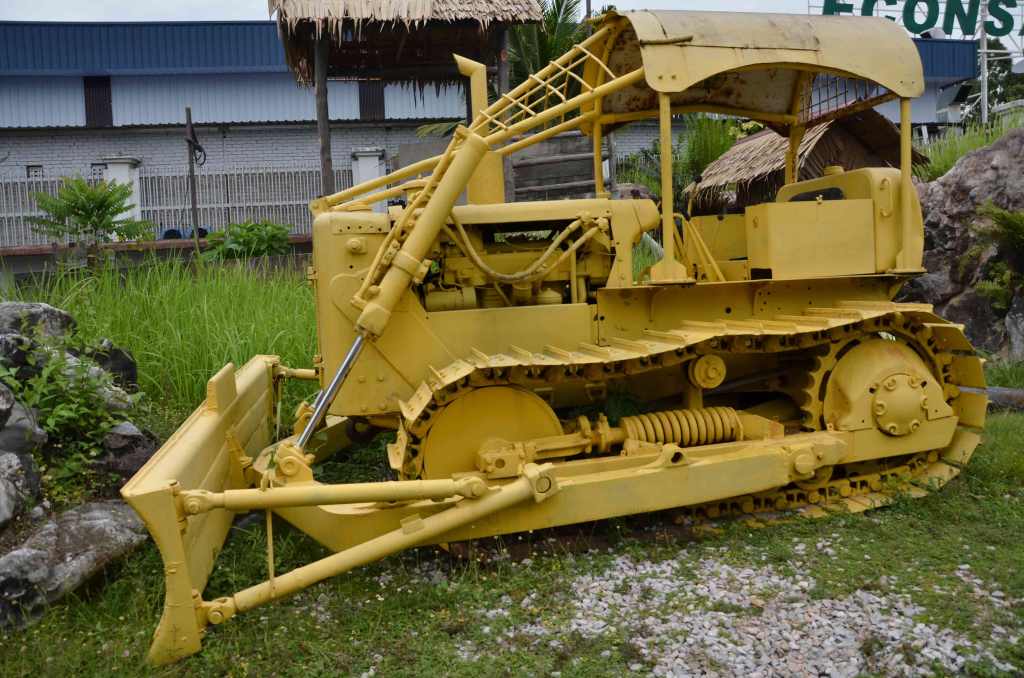
There are quite a number of other special-purpose museums. Museums such as the Pineapple Museum (Johor), Timber Museum (Sarawak), Petroleum Museum (Sarawak) and the Tanjung Balau Fisherman Museum (Johor) are industry specific while the Ho Yan Hor Museum (Perak) showcases the history of a company. The Bank Kerapu Second World War Memorial in Kota Bharu preserves the memory of the Japanese Occupation. The Mersing Museum, although conceived to showcase the history and culture of Mersing, also provides information on the naval engagement, popularly known as the Battle of Endau, that took place off its shores between the Allied forces and the Japanese Army. The Watercraft and Boat Gallery in Pahang would be an interesting one to visit for those interested in boats, both ancient and contemporary. Melaka is a treasure throve for speciality museums – Submarine Museum, Malaysia Prison Museum, Melaka Stamp Museum and Beauty Museum, to name a few.

Malaysian waters have its fair number of shipwrecks. While the National Museum has a large collection of shipwreck ceramics, some pieces from the Wanli Shipwreck are displayed at the Dungun District Museum while the Tanjung Balau Fisherman Museum provides information on the Desaru Shipwreck.

Tin mining machinery at the Kampar Tin Mining Museum
Mural at the Paddy Museum in Alor Setar
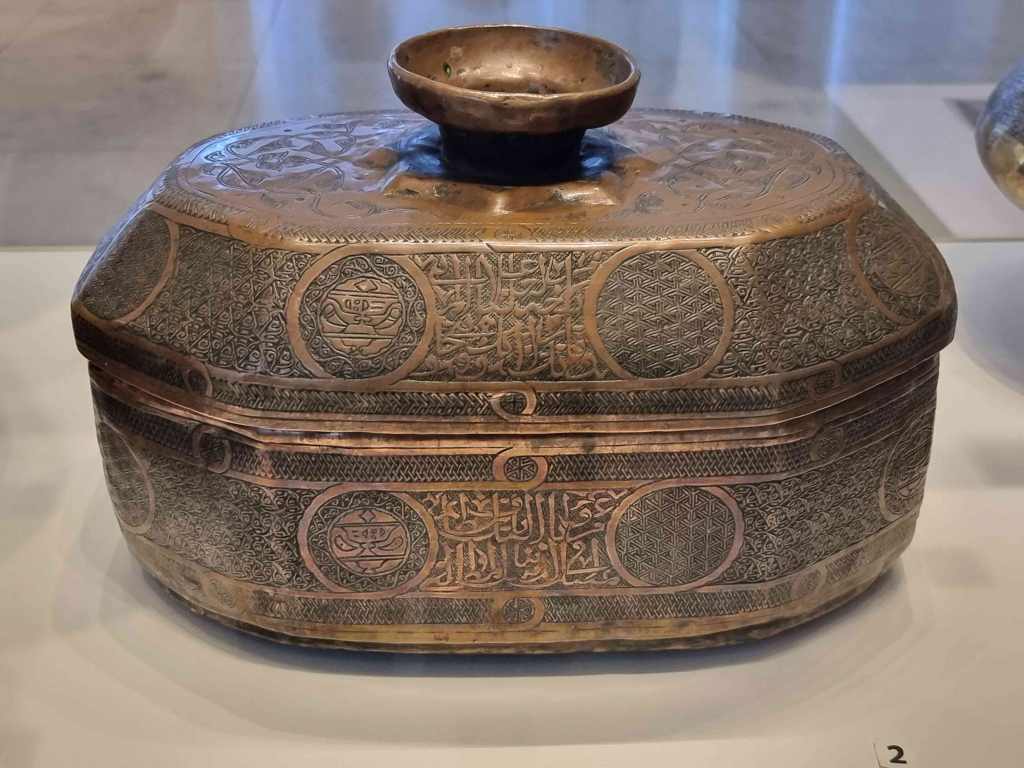
Metal bowl from the Mamluk Sultanate at the Islamic Arts Museum Malaysia
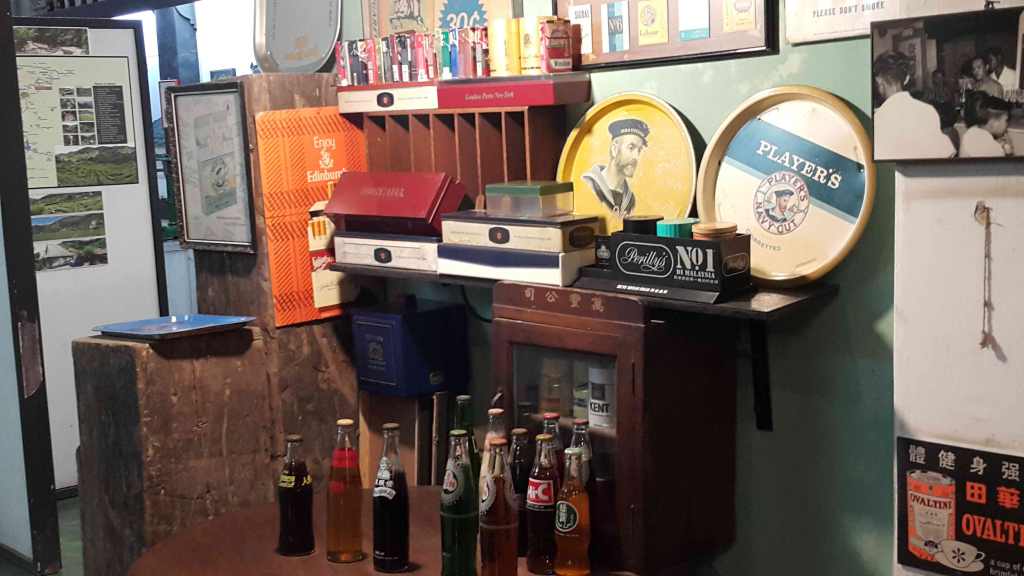
A display at the Time Tunnel Museum in Cameron Highlands
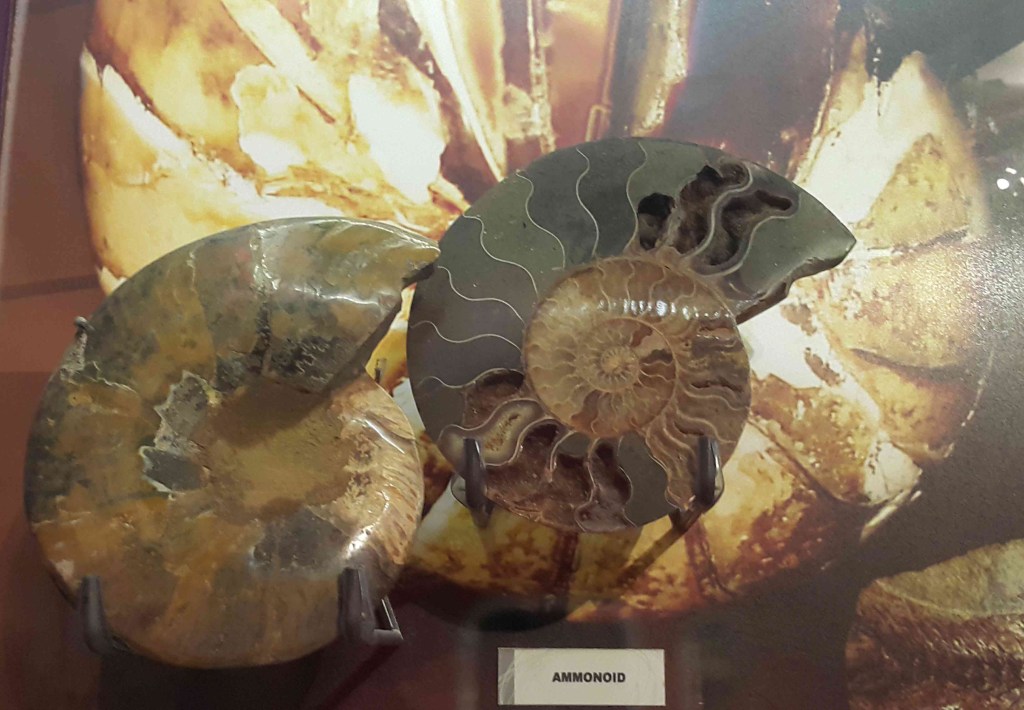
Fossils at the Geology Museum in Ipoh

The National Archives of Malaysia manages a number of galleries dedicated to honouring the contributions of selected individuals to the country, mainly political figures such as former Prime Ministers. However, local communities have also established museums to honour local heroes, such as the House of Sybil Kathigasu in Papan (Perak) and the Mat Kilau Gallery Complex in Pulau Tawar (Pahang). The Bentong Gallery in Pahang is dedicated to Loke Yew’s role in developing this tin mining town.

Big or small, elaborate or simple, each museum/gallery in the list has a story to tell. Click the button below to explore the list of museums on Google My Maps.

Central Illuminations of Malay Qurans

by Afidah Rahim

The Islamic Arts Museum Malaysia (IAMM) has an extensive collection of Malay Qurans, from which two samples will be examined here. Malay Qurans are only ornately decorated at the beginning, the middle and the end. Considering that my previous blog article had highlighted the illuminated pages found at the beginning and end of Malay Qurans, this article features the central illuminations instead. In his forward to Al-Quran: The Sacred Art of Revelation Vol. II (2014), the Chairman of IAMM invites us to contemplate the beauty of both the meaning and physical appearance of these manuscripts. This is because embellishment of the Malay Quran is done to assist recitation and to bring forth emotions, for Muslims believe the Quran relates specifically to the heart of man. Hence, building on ‘The Quran and the Sunnah’, we will briefly touch upon tafsir (Quran exegesis) of the central illuminated pages.

Malay Qurans are sometimes decorated in the middle, possibly influenced by Uzbek, Kashmiri and Indian Qurans. This is done to celebrate the reader’s arrival at the halfway point – the ‘heart’ of the holy text. The decoration style is similar to the front and back pages. A Javanese Quran, for example, could feature batik-style motifs throughout its illuminated pages. Different scribes and illuminators may use different methods to indicate the centre e.g. letter, verse, surah or word count. According to the tradition of Quran reading in the Malay world, the word ‘wa-l-yatalattaf’ in Surah Al-Kahf verse 19 is accepted as the centre word of the Quran. This translates to ‘and let him be careful’ that means to conceal himself as much as possible. Malay Qurans, like Terengganu Quran 2012.13.6, may emphasise this word with enlarged or gilded script to mark its midpoint.

As far as illumination is concerned, Surah Al-Kahf (the Cave) can be said to be the central marking. Both the Malay Qurans featured here are illuminated at the start of Surah Al-Kahf. With reference to Tafsir ibn Kathir, Al-Hakim recorded from Abu Said that the Prophet (s.a.w) said “Whoever recites Surah Al-Kahf on Friday, it will illuminate him with light from one Friday to the next”. Tafsir ibn Kathir is the most widely accepted explanation of the Quran, based on other parts of the Quran itself as well as hadith i.e. ‘tradition’ referring to the narration, account and record of actions and sayings of Prophet Muhammad (s.a.w.).

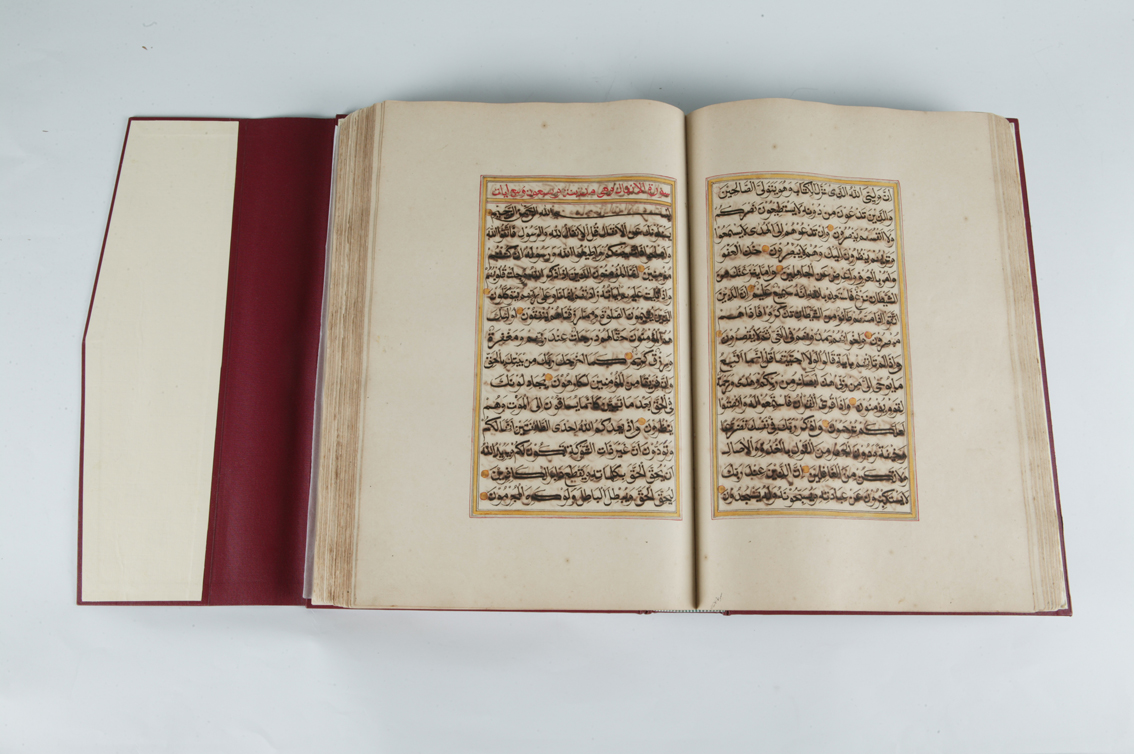
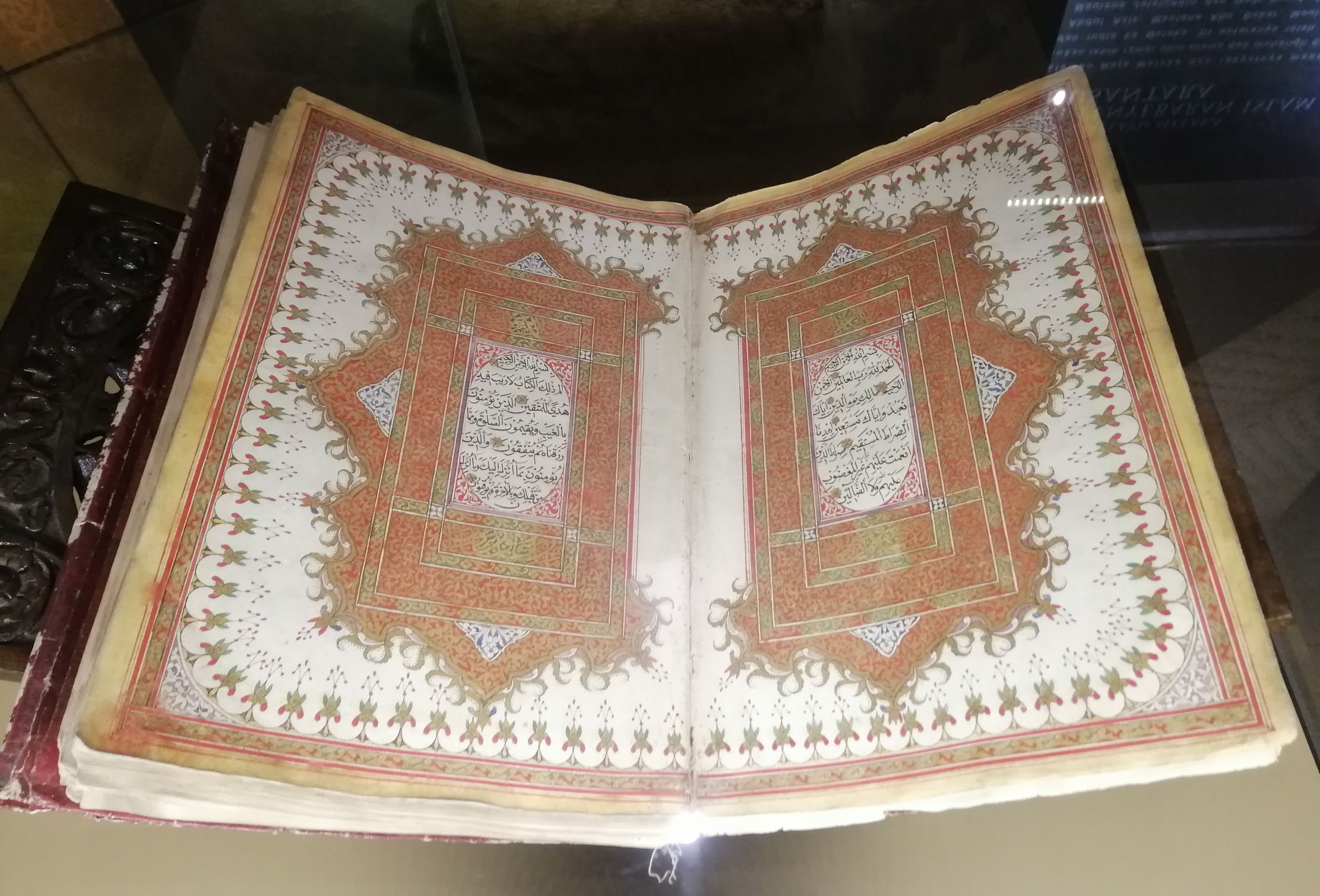
Our first artefact is a Royal Terengganu Quran 1998.1.3427 dated 1871CE/ 1288AH. It is considerably large, measuring 43cm by 28cm and uses naskh script for clarity. Terengganu style is deemed the finest and most delicate of Malay Qurans. This artefact would have been copied during the reign of Sultan Baginda Omar (ruled 1831; 1839-76) who attracted foreign students and artisans to Terengganu by encouraging learning and industry. Foreign artisans then passed on their skills to the locals.

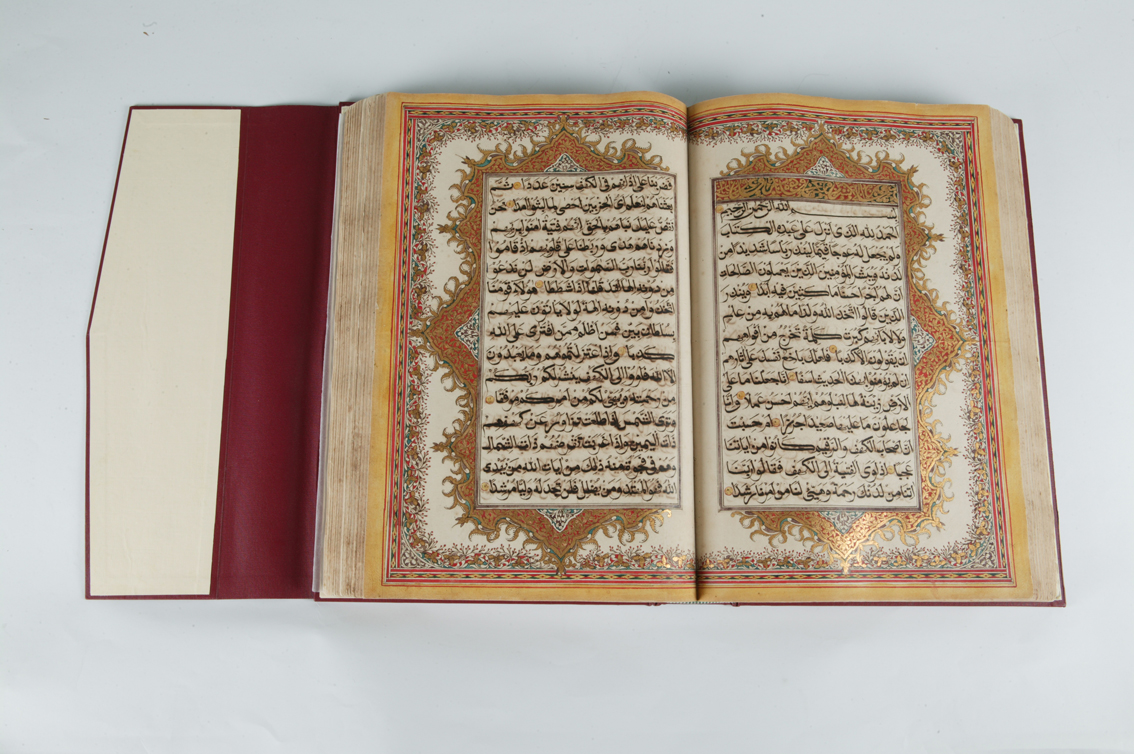
Central illuminated pages of Royal Terengganu Quran 1998.1.3427 dated 1871CE/1288AH Size 43 x 28 cm. Image credit: © Islamic Arts Museum Malaysia

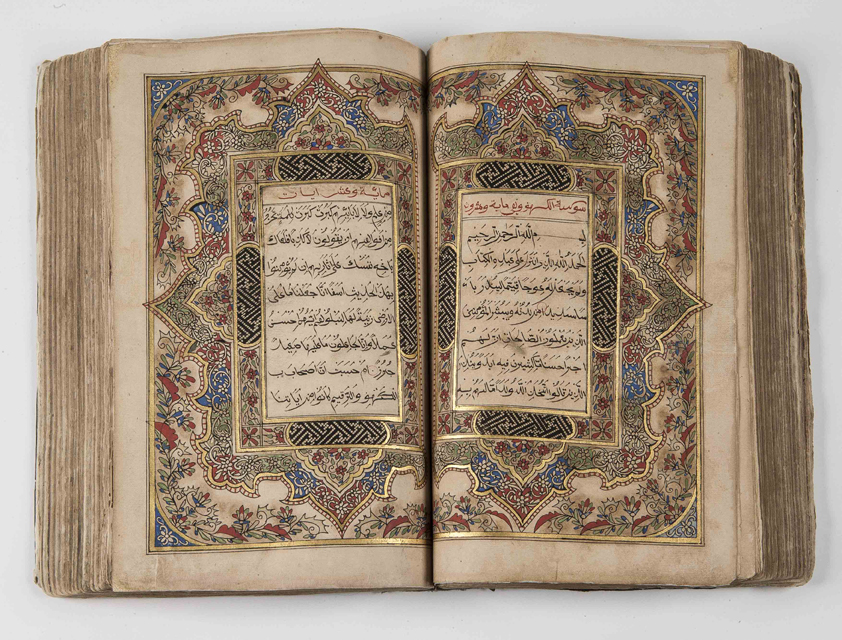
Malay Qurans have rich and symmetrical decorations. Both our artefacts have double-decorated frames illuminating the central pages. Similar to Malay woodcarving, these decorations include sulur-suluran (vegetal scrolls) and gunungan (mountain-shaped) motifs. Arabesques and geometric designs from the broader Islamic world are complemented with the permissible plant-motifs; avoiding figural representations. The arch-shaped gunungan motif is a legacy from the region’s Hindu past, which continued into the Islamic era since it reflects the natural landscape.
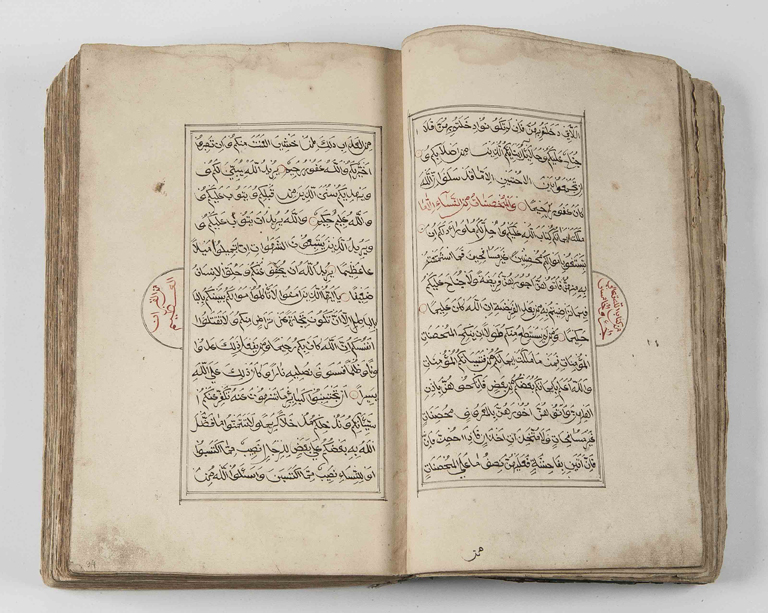
Colours too were produced from nature. The most popular colours used on Malay Qurans were red (from brazil-wood), black (from soot or charcoal) and yellow (from turmeric). Our Terengganu Quran features much gold, traditionally reserved for royal patronage.

In Southeast Asia, copying the Quran was only entrusted to professional, religious scribes. These scribes were occasionally under the supervision of a royal atelier. The design of our Royal Terengganu Quran suggests a foreign artisan. The clues lie in the noticeable use of lapis lazuli blue along with non-local choice of floral and vegetal decorations. Lapis lazuli was imported from Afghanistan or China and was no doubt an expensive pigment. Nonetheless, typical of Terengganu style, there is an outer frame i.e. a border running along the exterior edges with curved corners.
Normal pages of Royal Terengganu Quran 1998.1.3427 with Surah Al-Anfal heading in red and text in black naskh script. Image credit: © Islamic Arts Museum Malaysia

The central pages here include verses 1 to 17 of Surah Al-Kahf. It is noteworthy that some Qurans have abridged tafsir annotations written in the white margins of the illuminated pages, even though such is not the case here. The main theme of this surah is letting go of materialism. It begins with praise to Allah for sending us the Quran. The first passage warns of great trials ahead but gives glad tidings to the believers. Subsequently, the story of the youths who fled to a cave is told. According to Tafsir ibn Kathir, these youths were sons of Byzantine leaders who lived under a tyrannical king called Decianus, who tried to dictate their religion. Refusing to believe in multiple gods, these youths hid in a cave and they were protected by Allah. In other words, the youths defied worldly authority to guard their tawheed (belief in the one and only God) and they were thus saved from persecution.

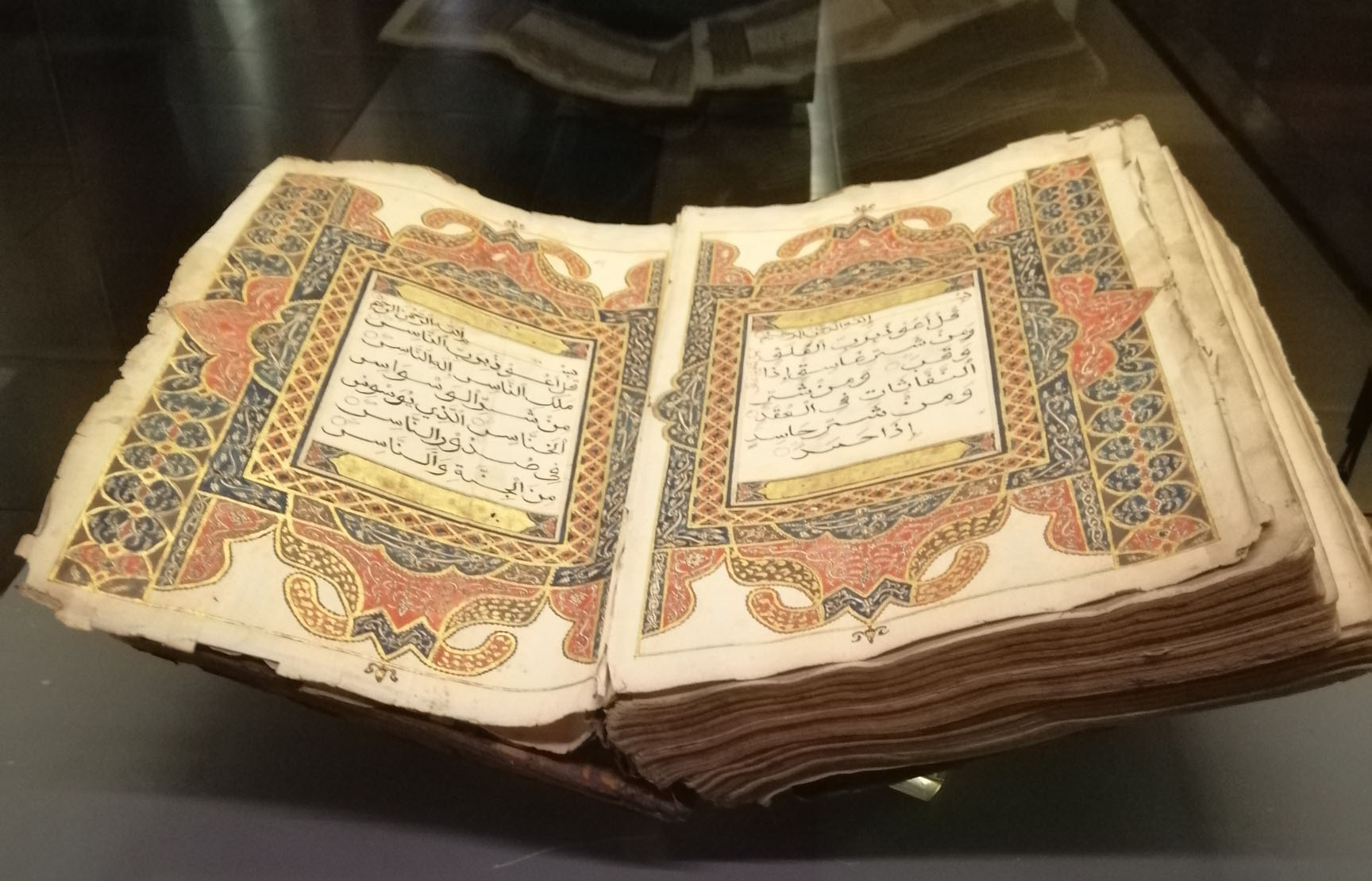
The central illumination of our second artefact, Quran 2004.2.3, also includes an outer frame with curved corners, which is unusual for Javanese Qurans. This Quran measures 30cm by 20cm and is therefore, smaller than our first artefact. Our Javanese Quran displays similar motifs to the Terengganu Quran including gunungan, floral and vegetal scrolls. In addition, this artefact shows an interlocking black pattern within its innermost frame, known as ‘banji’, suggesting its Cirebon (West Javan) origin. In Javanese Qurans, the banji (swastika) motif derives from the island’s Hindu-Buddhist history and is present because it resembles the regional craft of rattan weaving.
Central illuminated pages of 19thcentury CE Javanese Quran 2004.2.3 Size 30 x 20 cm. Image credit:© Islamic Arts Museum Malaysia

This Javanese Quran uses red, gold and black, along with a more striking blue. Blue is more prominent in Javanese Qurans in a variety of shades including indigo to light sky blue. The surah headings are in red thuluth script while its text is in black naskh. The European paper watermark shows a lion within a roundel, topped off by a crown, which dates this Quran to the 19th century CE. Synthetic (French) ultramarine as a substitute to lapis lazuli was available during this time, which may have been used here.

The illuminations here surround verses 1 to 9 but one word of Surah Al-Kahf. The word ‘al-kahfi’, which gives the surah’s name, occurs in verse 9. With the addition of verse 10, the illuminated pages and missing word ‘ajaban’ (wonders) would protect its reader from the false messiah. Referencing Tafsir ibn Kathir, Imam Ahmad recorded from Abu Ad-Darda’ that the prophet (s.a.w.) said, “Whoever memorizes ten ayat from the beginning of Surah Al-Kahf will be protected from the Dajjal”.

Normal pages of Javanese Quran 2004.2.3 with text in naskh script. Image credit:© Islamic Arts Museum Malaysia

It is now clear that these central pages hold particular benefits for the Quran reader. Surah Al-Kahf is appropriately illuminated since spiritually, its reader can be illuminated with light for up to a week. The illuminated pages are indeed arresting amidst the normal pages of text. Nonetheless, even the normal pages may have ornamentation at regular intervals along the margins to indicate the reader’s position within the holy text e.g. juz’ or nisf markers. Both artefacts showcased above represent the exquisite craftsmanship and artistry of nineteenth century CE Malay manuscripts.

Marginal ornament marking nisf (half a juz’ or hizb) in Terengganu ‘tapered-tendril’ style from Quran 1998.1.3427 Image credit:© Islamic Arts Museum Malaysia

References

The Noble Quran translated by Dr Muhammad Taqi-ud-Din Al-Hilali and Dr Muhammad Muhsin Khan (1997) Riyadh: Darussalam

Abdullah Zakaria Ghazali (2011) Terengganu Sultanate, The Encyclopedia of Malaysia, The Rulers of Malaysia Vol. 16. KL: Editions Didier Millet

Gallop A.T. (2012) The Art of the Malay Quran. Arts of Asia. Jan-Feb 2012

IAMM (2020) Mirrors of Beauty. KL. IAMM

IAMM (2016) Introduction to Islamic Arts – Calligraphy. KL: IAMM

IAMM (2014) Al-Quran: The Sacred Art of Revelation Vol. II. KL: IAMM

IAMM (2008) Malay Manuscripts: An Introduction. KL: IAMM

IAMM (2006) Al-Quran: The Sacred Art of Revelation. KL: IAMM

Natasha Kamaluddin (2020)The Halfway Point. KL: Natasha Kamaluddin

Rajabi Abdul Razak (2009) The 19th Century Malay World Qurans in the Collection of IAMM. An Application and Analysis of the Colourants.

Ros Mahwati Ahmad Zakaria (2005) Manuscripts: The Word Made Manifest. The Message and the Monsoon, KL: IAMM

IAMM gallery storyboards & Wikipedia

IAMM curator – Dalia Mohamed

https://www.alim.org/quran/tafsir/ibn-kathir/surah/18/0/

https://www.britannica.com/topic/al-Dajjal

Through the Loops: Forts at Gallery C

by Grazia Daminelli

A fort is any construction work erected to strengthen a position against an attack. What was to be defended? Was there any attack, siege, or capitulation? The answer to these questions may help shed light on key events in Malaysia’s history.

In Gallery C of Muzium Negara we find major and minor references to five forts: A Famosa and Fort St. John, both in Melaka; Kuala Kedah Fort on the estuary of the Kedah river; Fort Cornwallis in George Town, Penang; and ‘pillboxes’ in Kelantan. Through them, we can read the colonial history of peninsular Malaysia. But there are many other forts in Malaysia, some of which go back to pre-Islamic history … (continue reading)

Replica of Kacapuri Gateway (Kuala Kedah Fort) at the carpark entrance to Muzium Negara
Image copyright: Jörg Widany

The Importance of Taking Children to Museums

by Melissa Pereira

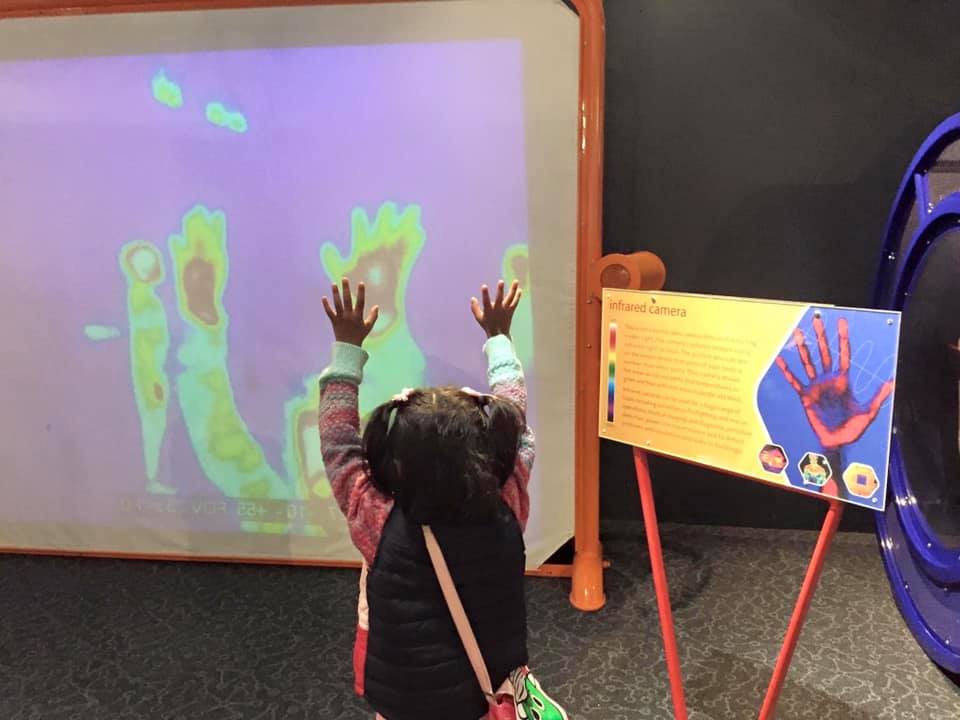
I remember it well – the day I took my daughter on her first visit to a museum. It was the National Science Centre in Bukit Kiara. She was two years old, barely out of her toddler’s gait, excitedly walking up and down the aisle, absorbing, gazing all around with wonder, taking it all in. I’m not sure what it was – the colours, the buttons to press, the lit up exhibits, the big pictures on the walls – the visit seemed like fun to her from the get go. She was too young then to have me explain much, or any, of the content, so we simply roamed the museum as I let her lead. It was truly memorable.

Many more visits followed, later with her younger brother in tow. As my children grew, our museum and gallery visits grew as well – in frequency, in the time spent as well as in attention to the exhibits.

Melbourne Museum. Image credit: Melissa Pereira

Something about their response to our trips propelled me to make these trips part of their growing up years. I found that museums did something to kids that books could not. While books inform and educate, museums, through large installations, interactive displays and the like, have the ability to capture the imagination and spark curiosity that written words on pages, cannot quite. The immersive learning experience museums and galleries provide are incomparable.

Numerous curators and directors of museums and galleries agree that exposure to museums among young children have tremendous benefits. “Bringing children to museums opens their eyes to different ideas and perspectives that are relevant to their lives. This kind of exposure can help develop higher critical and creative thinking skills, which are integral to future success.” —Rebecca Davidson, Manager of School and Educator Programs, Virginia Museum of Contemporary Art.

Maria Montessori put it beautifully when she said, “Our care of the child should be governed, not by the desire to make him learn things, but by the endeavour always to keep burning within him that light which is called intelligence.”

Museums, with their engaging exhibits, are a great place to spark a child’s curiosity. References to different places and times, displays of varying forms and styles and the weaving of captivating storylines around them, are powerful tools to capture a child’s imagination and can lead to lifelong learning.

Parents, teachers, curators and museum guides like ourselves, all play a pivotal role in making museum visits educational and fun for kids. For some children and students that visit Muzium Negara, especially from outside the Klang Valley, we must remember that the visit is one rife with opportunity – to engage and to inspire.

Below are some tips to keep in mind when guiding children in museums:

Be clear on what the main content will be.

  • Children have short attention spans. No matter how interesting the exhibits are, resists the urge to want to show them all off. Be clear on what the main message or learning topic is that you would like to share and stick to it.
  • It might help to do a quick brief on what to expect, before beginning the tour.
Children on tour at Gallery A, Muzium Negara. Image credit: Melissa Pereira

Pick pieces or exhibits that will allow bodily engagement. This does not necessarily have to be buttons to press or levers to pull. Large installations, the shape of which children can mimic or imitate with their bodies can have a tremendous impact too.

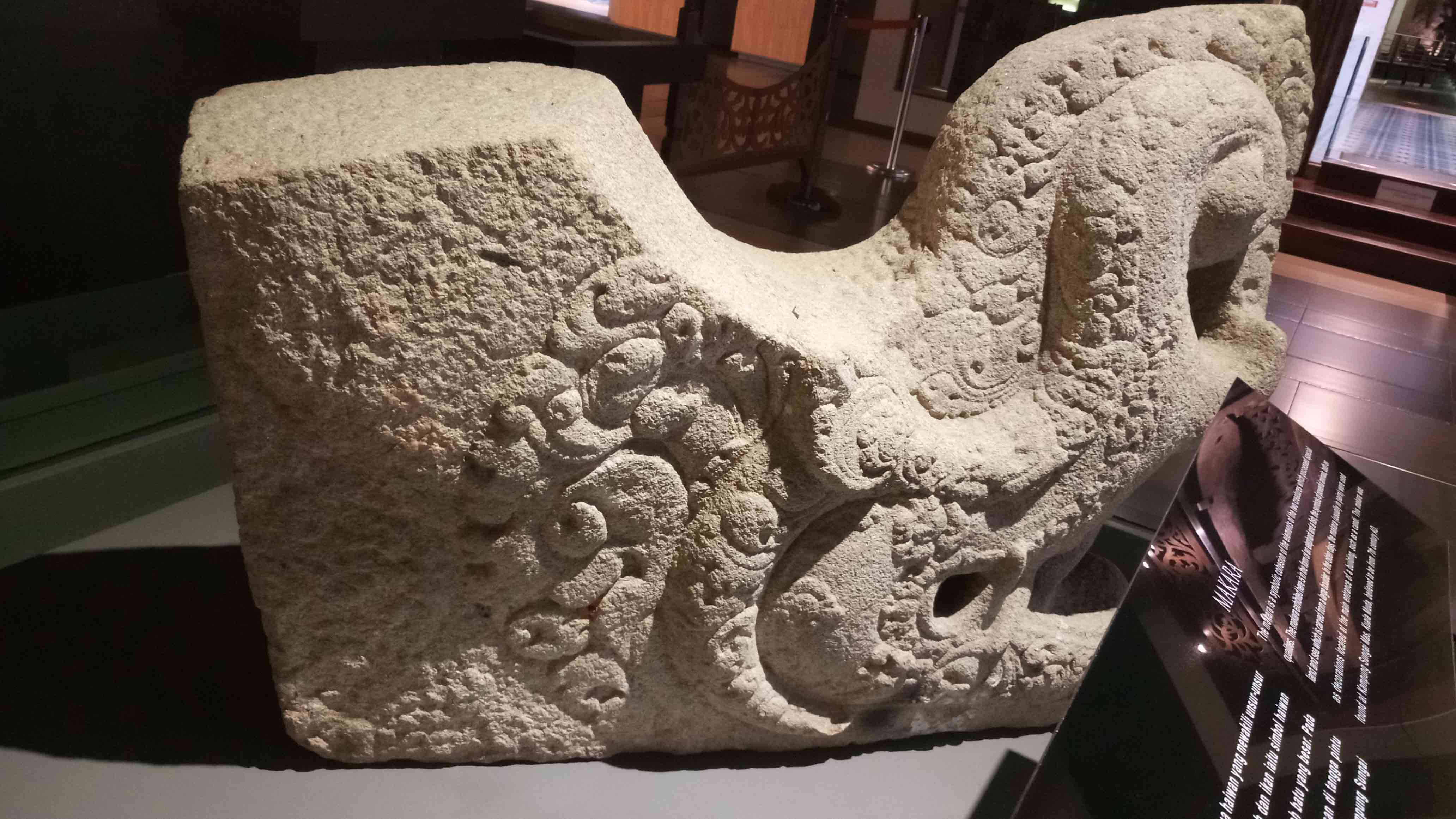
  • At the Makara, for instance, won’t it be fun to ask children how an elephant and a fish posing together might look like? Get a group of boys to show the others how Hang Tuah and his band of brothers might have looked together. Ask children to close their eyes and imagine what living in a New Village might have felt like. What modern cartoons or super hero would they depict with a Wayang Kulit puppet?
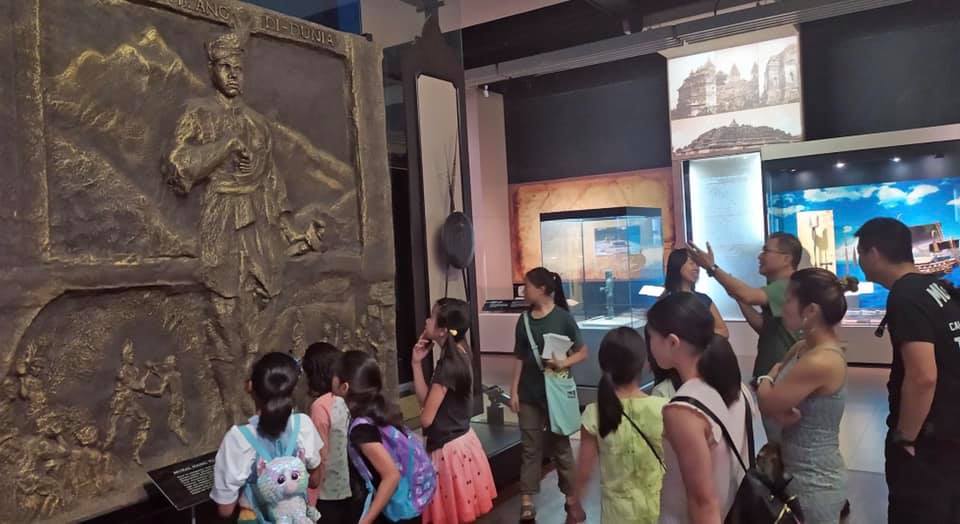
Hang Tuah mural, Gallery B, Muzium Negara. Image credit: Melissa Pereira
  • This is the time to have fun yourself! Embrace the child within and let your imagination be your guide. You’ll be surprised how refreshing the experience will be.
Scitech, Perth. Image credit: Melissa Pereira

Large exhibits over wordy signboards…. anytime!

  • Guide children toward larger exhibits to create a ‘wow’ moment, and one they are not likely to forget – the tin dredge and rubber tree in Gallery C, the diorama of the Melaka port in Gallery B and of the Pangkor treaty in Gallery C – these are sure to hold a child’s attention.
National Visual Art Gallery, Kuala Lumpur. Image credit: Melissa Pereira

Trust the child.       

  • Remember that learning is innate in human beings, especially so in children. Trust that they are whole, able and competent – capable of absorbing and processing information and making sense of what they see. History is a wonderful subject, filled with lessons to teach everyone, the young included. Do your best to prepare, but let the pieces, the content and the child’s natural learning desire, do the rest.
Children on tour at Muzium Negara. Image credit: Melissa Pereira

“It is very important to take children to museums and galleries. Exposing children to museums at a young age will inculcate a love for history and culture. A good museum is a great informal learning platform that can complement formal learning. For example, after learning about ancient civilizations in textbooks, it may be interesting for children to see the actual tools and ornaments used by people from those times. They might also be able to better picture scenes of daily life or important events from history by looking at relevant dioramas or exhibits; or listening to audio guides at various stops. Artefacts like actual fossils and dinosaur bones can also inspire awe and prod curiosity. This provides more learning touch points and better multi-sensory learning for children, versus just reading about something. It will fire up all their other senses, and lead to better retention and recall of important points.

Museums also provide opportunities for children to learn how to observe things carefully, digest information, and assess what they still need to find out and to ask relevant questions.

Guides play a role to enhance and optimize the experience by doing a little groundwork beforehand to help to set the scene for the visit. Without context to link what they see to what they know and what is important to them, children will just get bored very quickly looking at a bunch of “rusty and musty old things”! Activity sheets for kids also help.

Spend a few minutes thinking about how to relate the exhibits and artifacts to things children are learning about in school, what they are interested in. Encourage them to express their opinions. Ask them to compare and contrast what they see to things they use or do now. For parents, I think children will really value this kind of time spent with family. Just as we are curious about what our children think about things, they are also curious about our opinions and us. Creating a positive experience at the museum will also lead them to associate learning with happy experiences as a family. I think these visits to museums and galleries create a shared experience and memory as well as opportunities for family members to have real and meaningful conversations.”

Li Hsian, Co-Facilitator of Art Discovery Tours and Coordinator of Children’s Programmes, ILHAM Gallery

References

Website – https://www.arts.gov/stories/blog/2014/importance-taking-children-museums

Website – https://www.montessorieducation.com/montessori-quotes

The Quran and the Sunnah

by Afidah Rahim

There are two handwritten copies of the Quran in Gallery B. Both these Malay Qurans are from the 19th century CE. Our curator will be explaining these manuscripts in a journal article next year. As an addendum to my blog article regarding the Prophet’s traditions, this article highlights the content displayed on the Qurans in gallery B to illustrate the sunnah (the ‘way of the Prophet’). Prophet Muhammad (saw) recited these particular surahs (chapters) on different occasions. Sunnah denotes the actual actions, practices and sayings of the Prophet.

Muslims believe the Quran text is the divine, unaltered Word of God, as revealed orally to Prophet Muhammad (saw) via the Archangel Gabriel in the 7th century CE. Upon memorising the revelations, the Prophet’s closest companions proceeded to transcribe them on palm wood, parchment, bones and later, onto paper. Al-Quran derives from the Arabic word qara’a meaning ‘to read’ or ‘to recite’.

The act of writing occupies an esteemed place in Islamic tradition. Much effort is placed on glorifying the Word of God through calligraphy and manuscript art. Some Ottoman and Indian Qurans were illuminated on every page with gold and colours. Malay Qurans have a defining feature in that only the beginning, middle and end pages are ornately decorated. This is in keeping with Malay values of understatement, restraint and balance. Some Malay Qurans, as in the case of our Javanese Quran in gallery B, do not even make the central pages a feature. Looking at our gallery B Qurans, we note the significance of the four illuminated pages: two at the beginning and two at the end.

The Terengganu Quran in gallery B displays the first surah, Al-Fatihah (the Opener) on the right-hand side and the start of the second surah, Al-Baqarah (the Cow) on the left-hand side. Al-Fatihah is a summary of the entire Quran. Its key verse translates to ‘You (solely) we worship, and You (solely) we ask for help from’. This oneness of God is the essence of Islamic faith. The second verse of Al-Baqarah means ‘That is the Book, in which there is no doubt, guidance for the God-conscious’. Therefore, Muslims consider the Quran as the sacred book for complete guidance, relevant for all time.

Terengganu Quran displaying the first two pages

The Quran explains when and which direction one should pray, while Prophet Muhammad (saw) showed by example what words and movements to use during prayer. Following the Prophet’s sunnah, the Al-Fatihah is recited whilst standing within every prayer. There are exceptions and modifications to standing e.g. for the elderly and in certain circumstances. However, the words recited remain the same.

The Javanese Quran in gallery B exhibits the final two surahs, Al-Falaq (the Daybreak) and An-Nas (Mankind). Both these surahs are words of protection from evil: Al-Falaq against external elements and An-Nas against evil from within. These two surahs are known as al-Mu’awwidhat (the Refuges). According to Hadith Sahih Al-Bukhari 5016/7, the prophet’s wife Aisha’ narrated that Prophet Muhammad (saw) used to recite both these surahs when he became sick and also, before sleeping every night. Hence, these acts are examples of the Prophet’s sunnah, which Muslims should follow.

Javanese Quran showing the final two pages

In the shahada, Muslims profess that there is no god but God and that Muhammad is the Messenger of God. Muslims believe Prophet Muhammad (saw) was the best role model and the Quran confirms his exemplary character. We wish ‘peace be upon him’ by saying sallallahu alaihi wasallam (saw) after his name.

At Prophet Muhammad’s (saw) final sermon, he said: ‘I leave behind me two things, the Quran and the sunnah, and if you follow these you will never go astray’.

References

The Noble Quran translated by Dr Muhammad Taqi-ud-Din Al-Hilali and Dr Muhammad Muhsin Khan (1997) Riyadh: Darussalam

Gallop A.T. (2012) The Art of the Malay Quran. Arts of Asia. Jan-Feb 2012

Islamic Arts Museum Malaysia (2020) Mirrors of Beauty. KL. IAMM

M Uthman El-Muhammady (1998) The Quran and the Hadith. The Encyclopedia of Malaysia, Religions and Beliefs Vol. 10, KL: Editions Didier Millet

Natasha Kamaluddin (2018) The First Six: An Introduction to the Noble Quran. Back to Basics Vol. 2 KL: Dakwah Corner

Ros Mahwati Ahmad Zakaria (2005) Manuscripts: The Word Made Manifest. The Message and the Monsoon, KL: IAMM

Muzium Negara gallery storyboards & Wikipedia

Muhammad Azam Adnan, Muzium Negara Gallery B curator

https://www.bbc.co.uk/bitesize/guides/zj36gwx/revision/2

https://sunnah.com/urn/46900

Gantang and Censer: The Prophet’s traditions

by Afidah Rahim

The ancient East-West maritime trade surrounding the Malay archipelago brought imported cultures to the local people. Islamization of the Malay world has influenced Malay culture since the 13th century CE. In the 15th century CE, Melaka became the centre of Islamic learning for the region. As Muslims, the Malays are guided by the Holy Quran, Hadith and sunnah. There are two handwritten copies of the Quran in Gallery B. This article highlights artefacts relating to the Hadith.

Hadith is translated as ‘tradition’ referring to the narration, account and record of actions and sayings of Prophet Muhammad (SAW). Sunnah denotes the actual actions, practices and sayings of the Prophet. The chain of narrators of ahadith (the plural of hadith) has been meticulously traced to ensure authenticity. The Prophet’s tradition has given practical examples for Muslims to follow.

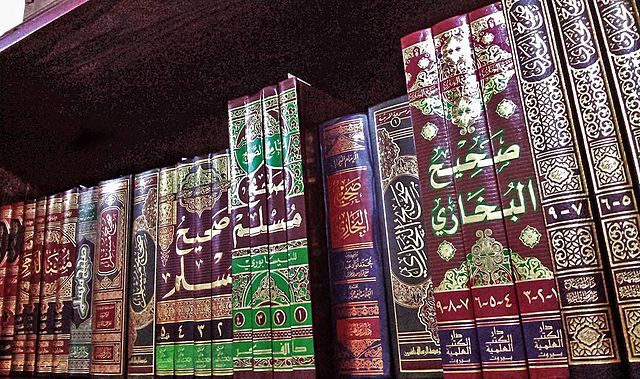
Ahadith were recorded under Caliph Umar’s orders and later, systematically compiled by the six imams: Al-Bukhari, Muslim, Abu Daud, al-Tirmizi, al-Nasa’i & Ibn Majah. Image credit: Wikimedia Commons, Bakkouz at Arabic Wikipedia

Gantang

The first type of zakat (charity tax) ordered by Allah was zakat fitrah on every individual Muslim with the means to give. It is taken mainly for the poor before the end of fasting in the holy month of Ramadan. Based on Hadith 1511 of the Book of Zakat from Sahih al-Bukhari, ‘Ibn Umar said, The Prophet SAW made incumbent on every male or female, free man or slave, the payment of one sa’ of dates or barley as zakat-ul-fitr’.

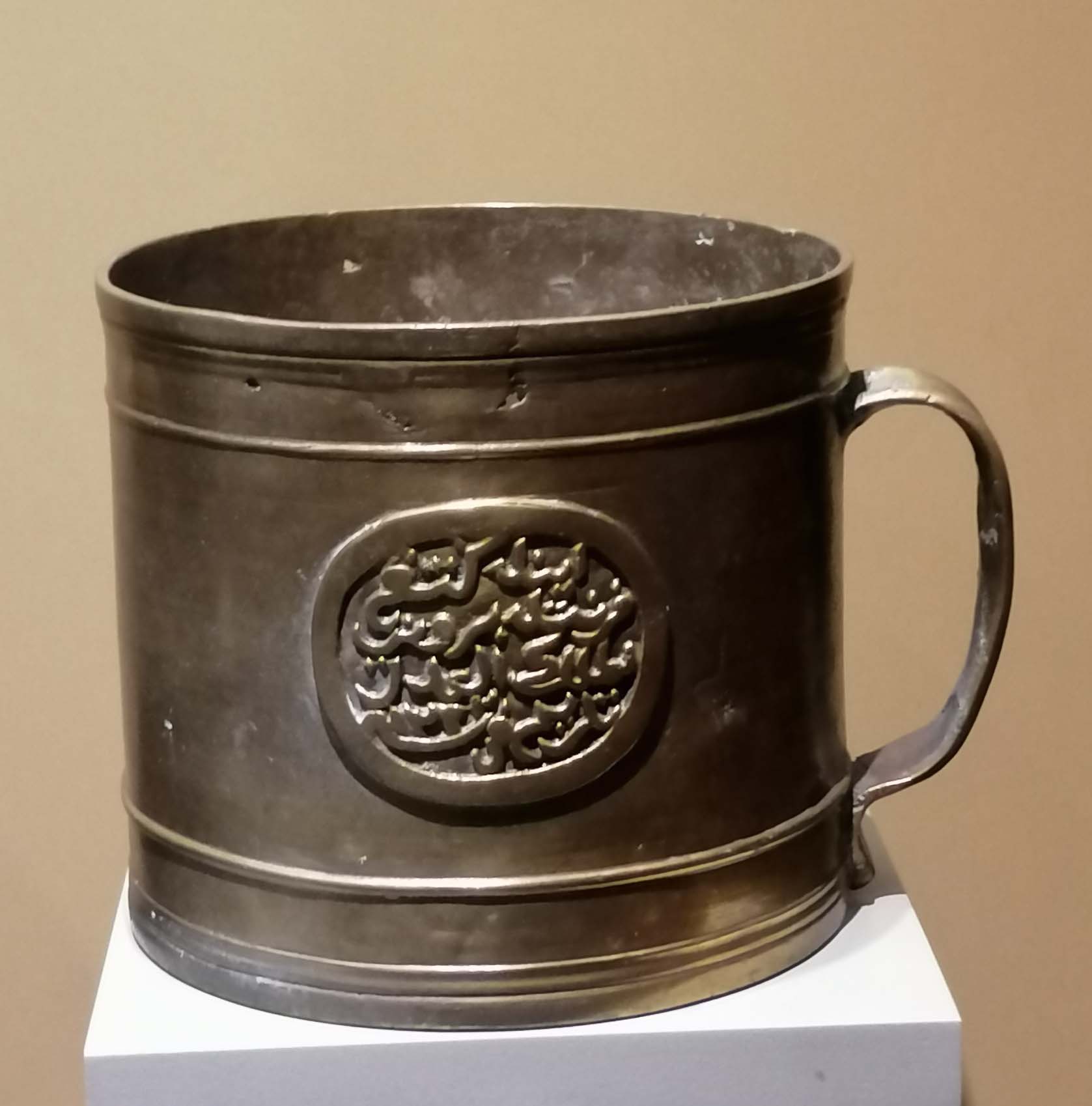
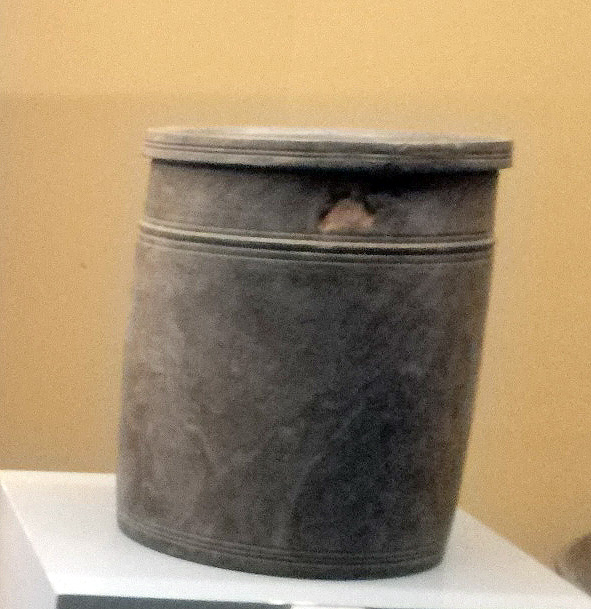
The Arabic word sa’ translates to ‘small container’. In the Malay world, the gantang is a traditional unit of volume and the container for measuring it. There are two such containers in Gallery B – a copper one and a wooden one. The copper container is inscribed in Jawi with the words ‘This is a Brunei government gantang, the Just King, 1322 AH’. This dates it to 1904 CE when Brunei was ruled by Sultan Hashim Jalilul Alam Aqamaddin. The copper container is 17cm high with a diameter of 19cm. The wooden gantang is from the Malay Peninsula and doubles up as a pounding mortar for rice flour. It is made from jackfruit wood and has been slightly decorated with a projecting ring at the top. It has the same height as the copper container but is smaller in diameter at only 13cm.

Copper gantang from Brunei dated 1322 AH/1904 CE. Image credit: Afidah Rahim

In the Malay world, dates or barley mentioned in the Hadith above may be substituted with rice, as the staple food of the region. The gantang differs in definition between Malay states. Azman et al (2015) explains the difference in gantang capacity is due to its various sizes and the different types of rice (density and size) used in the weighing process. It is worth noting that in the past, there had been studies on the differences in equivalent weight of sa’ by Baghdad and Madinah jurists. Ibn Malik had said that the sa’ is a measure of capacity and it cannot be converted into weight. This is similar to the English ‘bushel’ e.g. one bushel of oats equals 32 pounds whereas one bushel of malt equals 34 pounds.

Wooden gantang from the Malay Peninsula made from jackfruit wood. Image credit: Afidah Rahim

In modern Malaysia, the traditional measure of gantang has been converted to the metric system with different results. The zakat fitrah in Selangor is calculated based on one Baghdad gantang of rice at 2.7kg whereas in Johor it is at 2.6kg. Malaysia adopted the Hanafi school opinion to pay zakat in currency value instead of using food. Each state religious authority in Malaysia sets its own zakat fitrah rates, ranging from RM5 to RM21 in 2020 CE. The main factor for these different rates is the type of rice consumed.  Most people pay RM7 and those who pay above this rate may consider the balance as sedekah (charity). Hence, the spirit of giving as an obligation on every able Muslim is observed in keeping with the Prophet’s tradition.

Censer

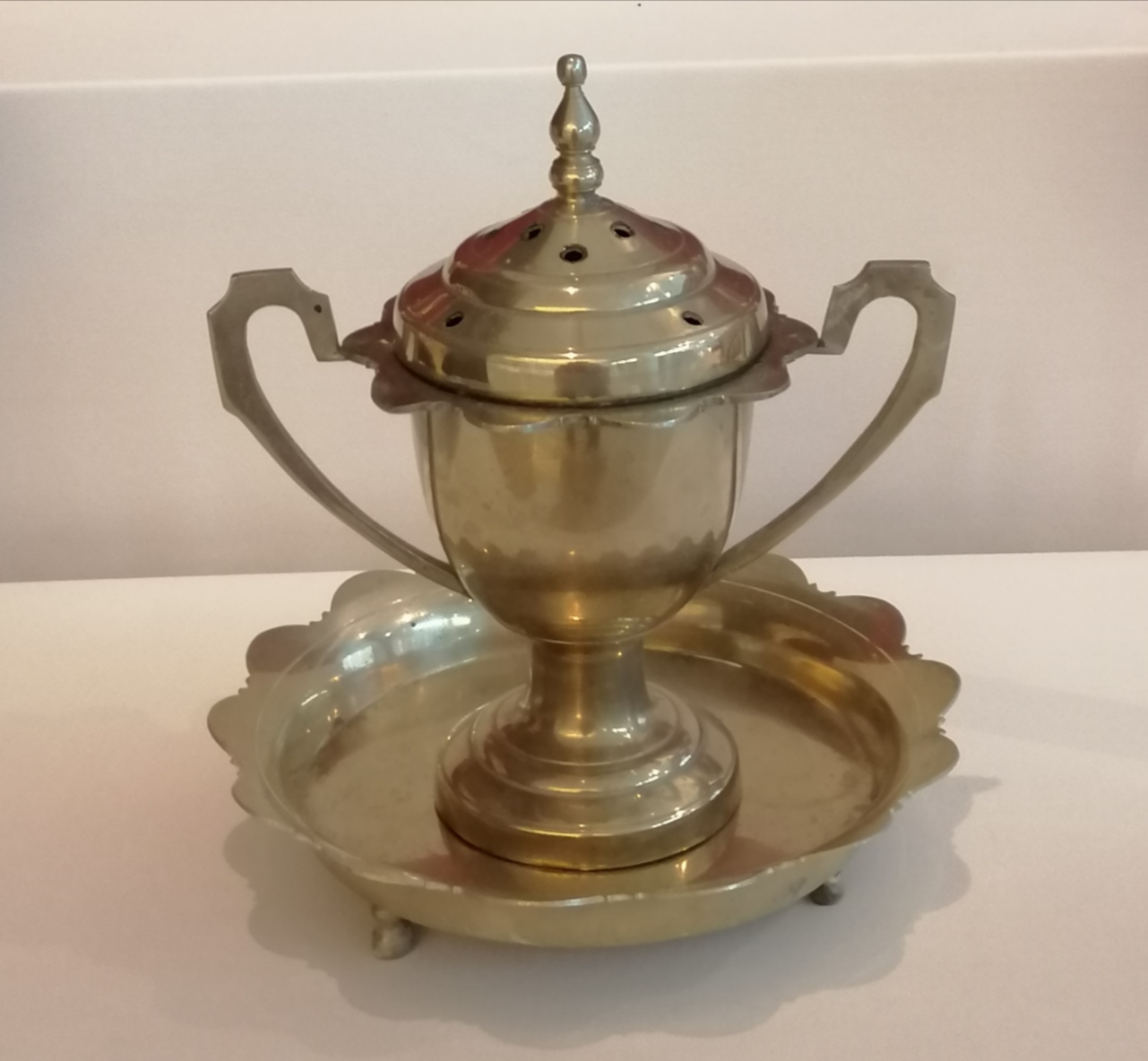
Muslims follow the Prophet’s tradition of burning incense in mosques and homes for purification. Censers are incense burners used in religious context. In the Malay archipelago, usually kemenyan (benzoin) is placed on hot coals to release fragrance. Most Malay households use brass incense burners. Both incense burners on display in Gallery B are from China.

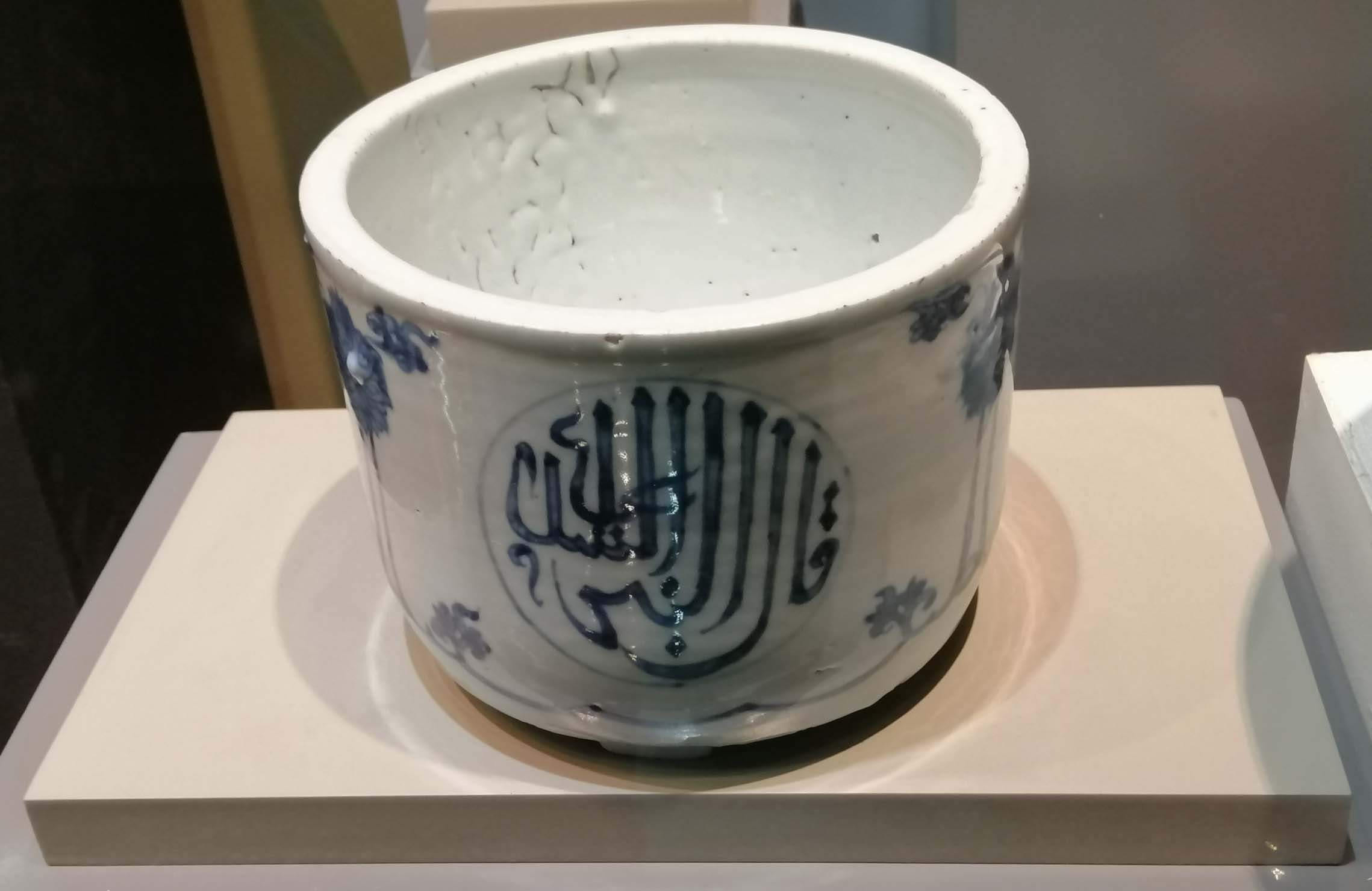
The cylindrical blue and white incense vase is marked with the seal of Emperor Cheng Hua of the Ming dynasty, who ruled from 1465 to 1487 CE. Chinese Muslim eunuchs were influential at court during the Ming era. This porcelain censer is decorated with three medallions enclosing Arabic inscriptions in underglaze blue. It is without a cover for use with stick incense, popular in China. The ‘Mohammedan’ blue (also known as hui hui qing) is a cobalt blue obtained from Persia. Blue and white porcelain was produced at the imperial kilns in Jingdezhen, South China from the early 14th century CE. It is believed that high quality Jingdezhen porcelain was for use at court and Chinese Muslims there. Some Jingdezhen pieces were exported to important Muslims outside of China. Most ceramics exported to Southeast Asia were of lower quality produced at Fujian, called Swatow ware. These were often imitations of blue and white porcelain, mass-produced for the middle class export market.

Blue and white Ming Porcelain Censer with Arabic inscription meaning ‘Said the Prophet of God’. Image credit: Afidah Rahim

Our porcelain censer is likely to be a Swatow, with the main clue being the Emperor’s mark. Arabic or Persian inscriptions were introduced during the late reign of Emperor Hongzhi and early reign of Emperor Zhengde.  Emperor Cheng Hua’s reign precedes this period. In addition, its inscription is not easy to read since the Fujian potters were unlikely to be well versed in Arabic and therefore, susceptible to mistakes when copying.

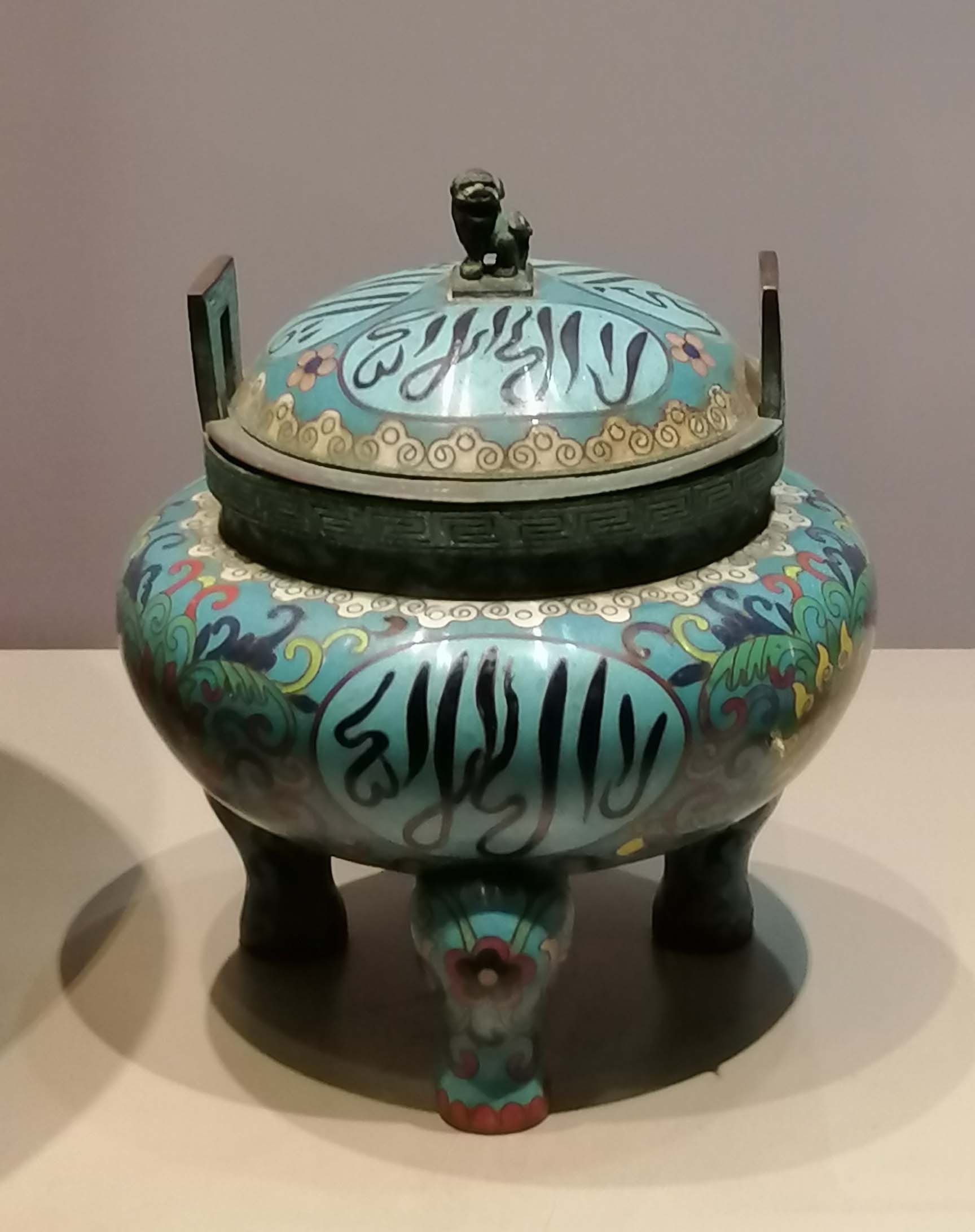
The colourful incense burner on display is estimated to be from the 18th century CE Qing dynasty. It is made of metal and enamelled with cloisonné decoration. Cloisonné, also known as Muslim ware (Dashi Yao), was probably crafted by the Arab settlers of Western Yunnan. The technique involves the application of coloured-glass pastes within pattern-shaping cells made of copper or bronze wires soldered on metal. It was introduced during the 14th century CE Yuan dynasty and peaked under the Xuande reign era of the Ming dynasty (1426-1436).

Colourful Qing incense burner with cloisonné enamel. Inscription is the first part of the shahada (Muslim profession of faith). Image credit: Afidah Rahim

The calligraphic inscriptions (la ilaha illallah) on the burner and its cover means ‘there is no God but God’. Its design is a combination of the Sini script of the Hui Muslims with the motifs and symbolisms of the Han Chinese (notice the ruyi borders and imperial guardian lion knob). This artefact shows the synthesis of the two cultures.

Incense was sold in specialised markets of the perfumers (suq at-attariyyin) in and around the medieval Islamic world. Frankincense and myrrh were among the trade goods along the Silk Road. The Arabs had written about aloeswood and camphor from Tiyumah (Tioman) island off the Malay Peninsula from their 9th century travels. The Chinese used galangal, sage and Chinese weeping cypress in their censers. To this day, scent promotes a sense of well-being and is encouraged by the Prophet’s tradition.

Malay brass incense burner at Islamic Arts Museum Malaysia. Image credit: Afidah Rahim

References

A. R. Azman et al (2015), Calibration of Gantang (Sa’) Based on Metric System for Agricultural Zakat in Malaysia, ASM Science Journal Volume 9(2)

IAMM (2009) Islamic Arts Museum Malaysia Volume II

IAMM (2020) Mirrors of Beauty: Islamic Arts Museum Malaysia Guide

L. de Guise & Z. Sutarwala (2006) Spice Journeys: Taste and Trade in Islamic World, IAMM

MAIS (2014) Az-Zakah; Spirit, Realisation and Obligation, IAMM

M. Uthman El-Muhammady (1998) The Quran and the Hadith, The Encyclopedia of Malaysia, Religions and Beliefs Vol. 10, KL Ed. Didier Millet

Othman Yatim (1989) Warisan Kesenian Dalam Tamadun Islam, KL Dewan Bahasa Pustaka

Othman Yatim (1998) The Early Islamic Period. The Encyclopedia of Malaysia, Early History Vol. 4, KL: Ed. Didier Millet

Wikipedia, Islamic Arts Museum Malaysia & Muzium Negara Gallery storyboards

Muzium Negara Gallery B curator – En. Azam

Fiqh-us-Sunnah 2.71 Keeping the mosques clean and scenting them https://www.iium.edu.my/deed/lawbase/fiqh_us_sunnah/vol2/fsn_vol2b.html

Various ‘Majlis Agama Islam’ websites

A walk through Gallery B, Muzium Negara

by Annie Chuah Siew Yen

Early Malay Kingdoms

As you enter Gallery B through the portal of a door from the Palace of Setul, you will be transported to the first millennium of the Common Era (CE) when small polities dotted the Malay World, some of which grew to become empires and shaped the world we know today.

Historical records and surviving artefacts provide evidence that these early Malay kingdoms possessed organised systems of government; they participated in the Indian Ocean trade and they had established relations with Arabia, China, India and Persia. The society was cosmopolitan, more so than what we would have imagined.

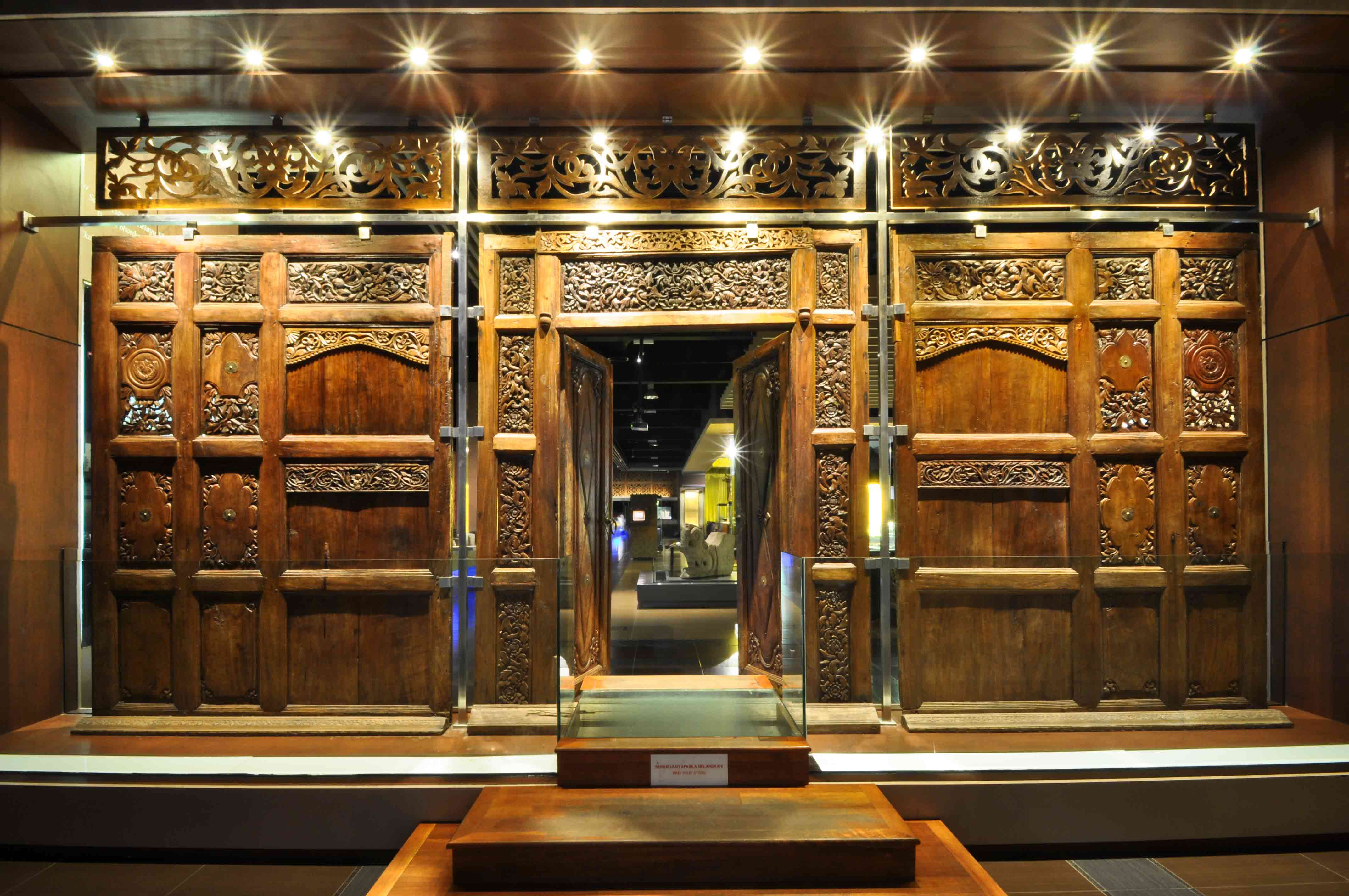
This 120- year- old wall and door is from the former palace of Setul. The state of Setul was located in southern Thailand and it was, between 1843 and 1909, governed by the Sultanate of Kedah. The wall and door are made of teak wood and decorated with floral motifs of Malay and Javanese design. Image @Maganjeet Kaur

Welcome to the Malay World

What and where is the Malay World where these kingdoms flourished? Jim Baker aptly describes it as archipelago South East Asia – comprising present day Malaysia, Indonesia, Singapore, Brunei, southern Philippines and south Thailand.

The people who founded these maritime polities and kingdoms were descended from the Malayic-speaking Austronesians. The kingdoms started as coastal city-states, developing as emporia to service traders from east and west. Their lifeline revolved around trade and each sought to dominate the region. The archipelago was rich in natural resources and its products, such as tortoise shells, gharuwood, rhinoceros horns and camphor were highly sought after in China, India and beyond. The strategic location of the region, between its key markets in the east and west, made it a suitable meeting place for traders from outside the region. The cultures of their trading partners, initially Hinduism and Buddhism and, later, Islam would also play a large part in shaping the local societies.

A notable early kingdom on the Malay peninsula was Langkasuka (2nd – 6th century CE). This name is of Sanskrit origin, and the kingdom was closely tied to the Indianised kingdom of Funan in Cambodia. Langkasuka, believed to be located in the Pattani-Songkla area, traded with China through ports on the east coast but it also had links with trading communities on the west coast, just across the isthmus. It was a rich and prosperous state and it may have founded the early settlements in the Bujang Valley. There are scant records on Langkasuka; its demise could possibly be linked to the rise of polities in Sumatra and Java.

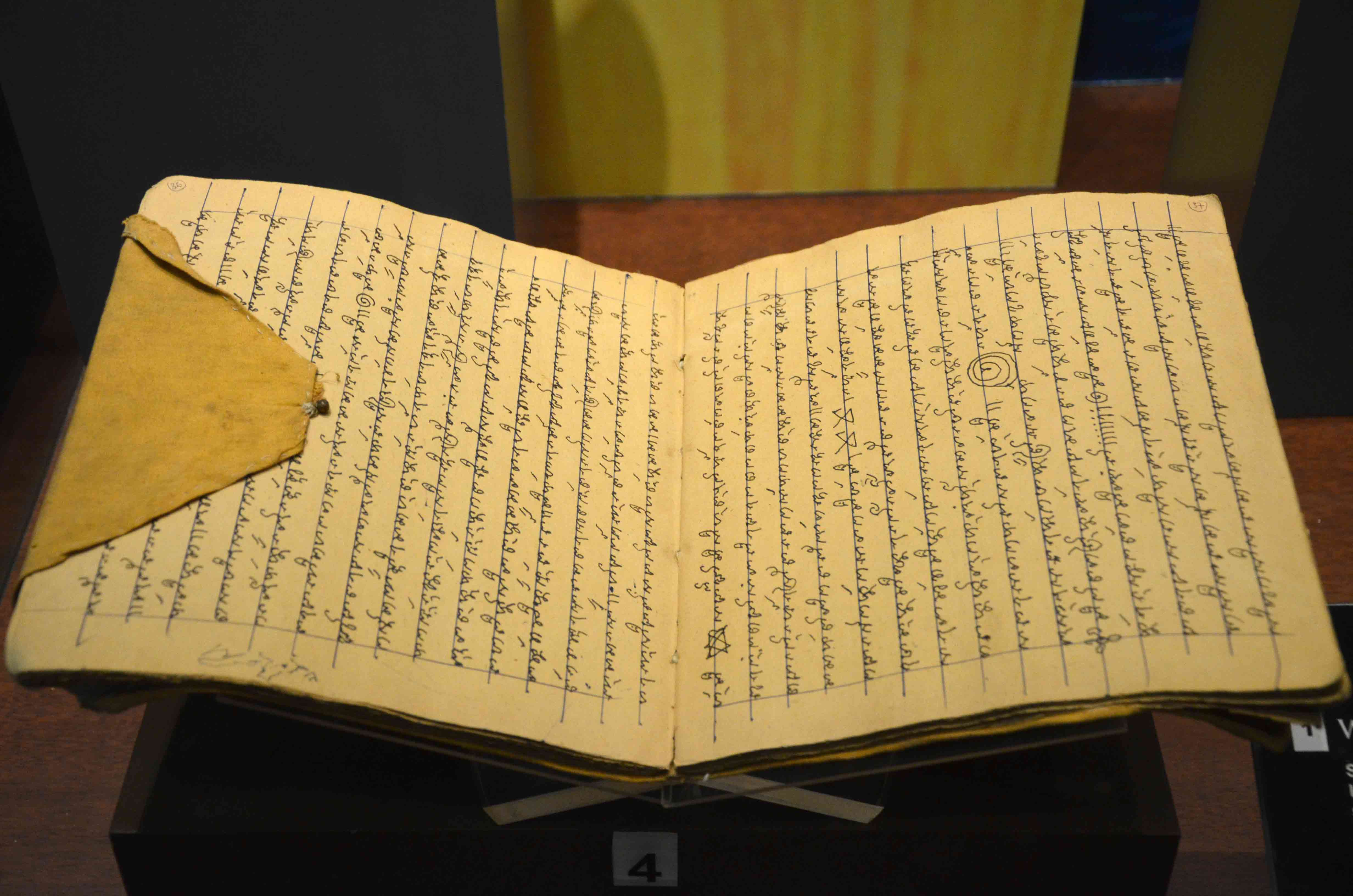
A Champa manuscript, dated to the early 18th century. The Champa kingdom was located at present-day Southern Vietnam and an overview of its history can be found here. Image @Maganjeet Kaur

The Bujang Valley civilisation was a significant trading kingdom in Kedah with iron smelting as its main activity. By 800 CE, Bujang Valley had come under the influence of Buddhist Srivijaya and, by the early 11th century, the Indian Chola Empire. We can see vestiges of this civilisation at excavation sites and in a museum at Merbok, Kedah; some artefacts are also displayed in Galleries A and B.

According to the Malay Annals, a Khmer prince founded the kingdom of Gangga Negara in the 8th century. Its location is uncertain, but believed to be at modern-day Beruas, Perak, through findings of various significant Buddhist bronzes in the Kinta Valley. The kingdom fell after the Chola attacks in the 11th century.

This stone artefact, a fusion of an elephant and a fish, representing land and sea was found in Bujang Valley. It is believed to be from the 7th century. Usually a pair of these auspicious symbols would be used to adorn the main entrance of a temple or palace.
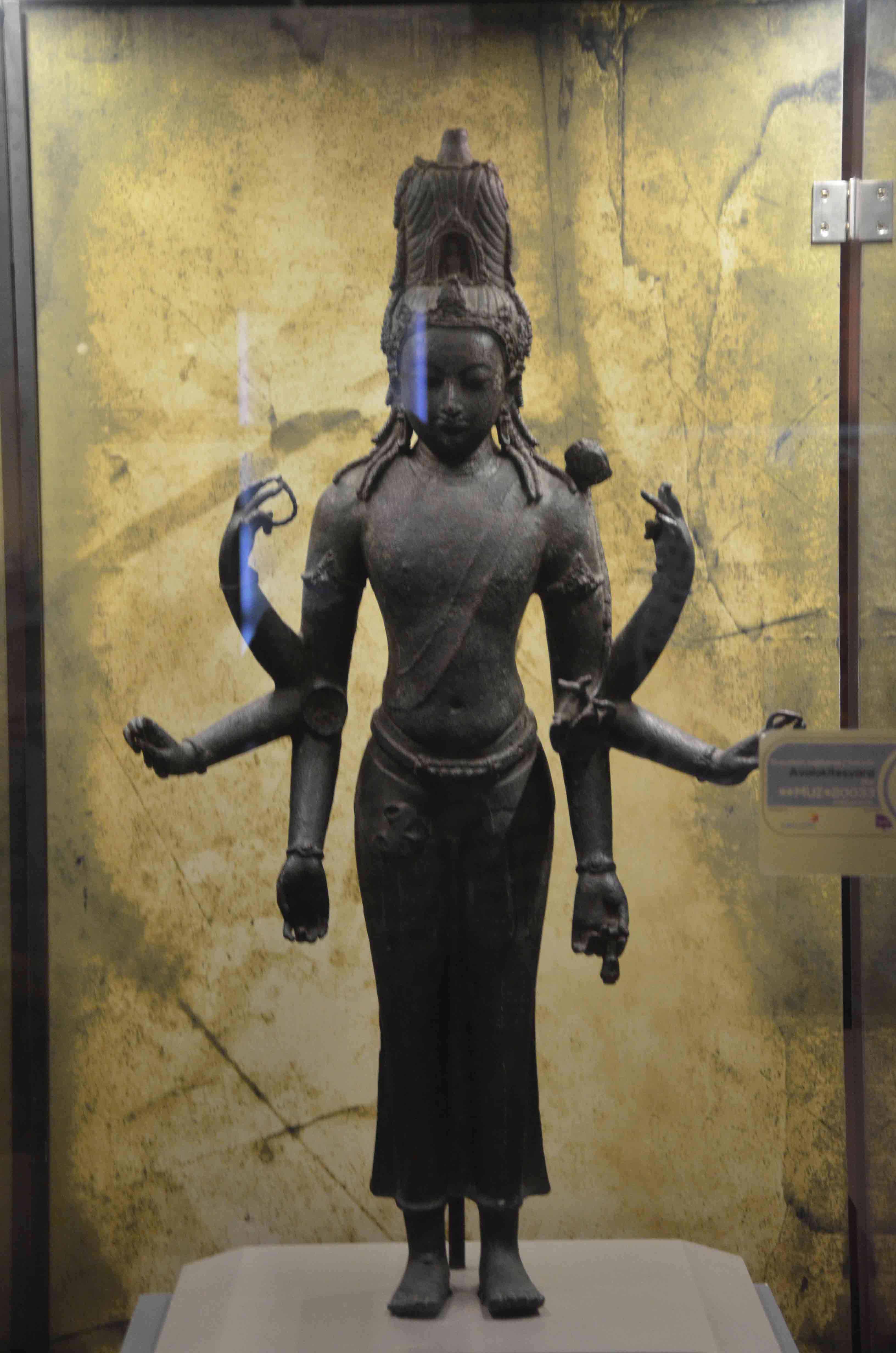
This beautiful bronze statue of Avalokitesvara was found in a tin mine in Bidor, Perak in 1936. It is dated between the 7th and 12th century, when the area was Hindu-Buddhist.

Into the Second Millennium

Srivijaya was a dominant maritime empire based in Sumatra, but influenced much of Southeast Asia. It was founded in the 7th century after the demise of Funan. The Chola attacks destroyed its capital at present-day Palembang, but its centre moved further north to Jambi where it lasted until the 13th century.

Majapahit was founded by Raden Wijaya in around 1293. It was the last major Hindu empire in the region and among the most powerful empires in the history of the archipelago. Majapahit society developed a high degree of sophistication in both commercial and artistic activities. Its capital was inhabited by a cosmopolitan population among whom literature and the arts flourished. Its power began to wane in the 15th century when Islam spread in the region. Sumatra resented Majapahit’s control, so the conversion to Islam was an opportunity to extricate from Hindu Majapahit. The Majapahit Empire was unable to compete with its Muslim neighbours, and began to disintegrate, finally collapsing in early 16th century. After the fall of the empire, Majapahit kings and nobles, priests and artisans took refuge in the interior mountains of East Java and across the narrow straits to Bali. It can be said that the kingdom of Bali was the successor of Majapahit.

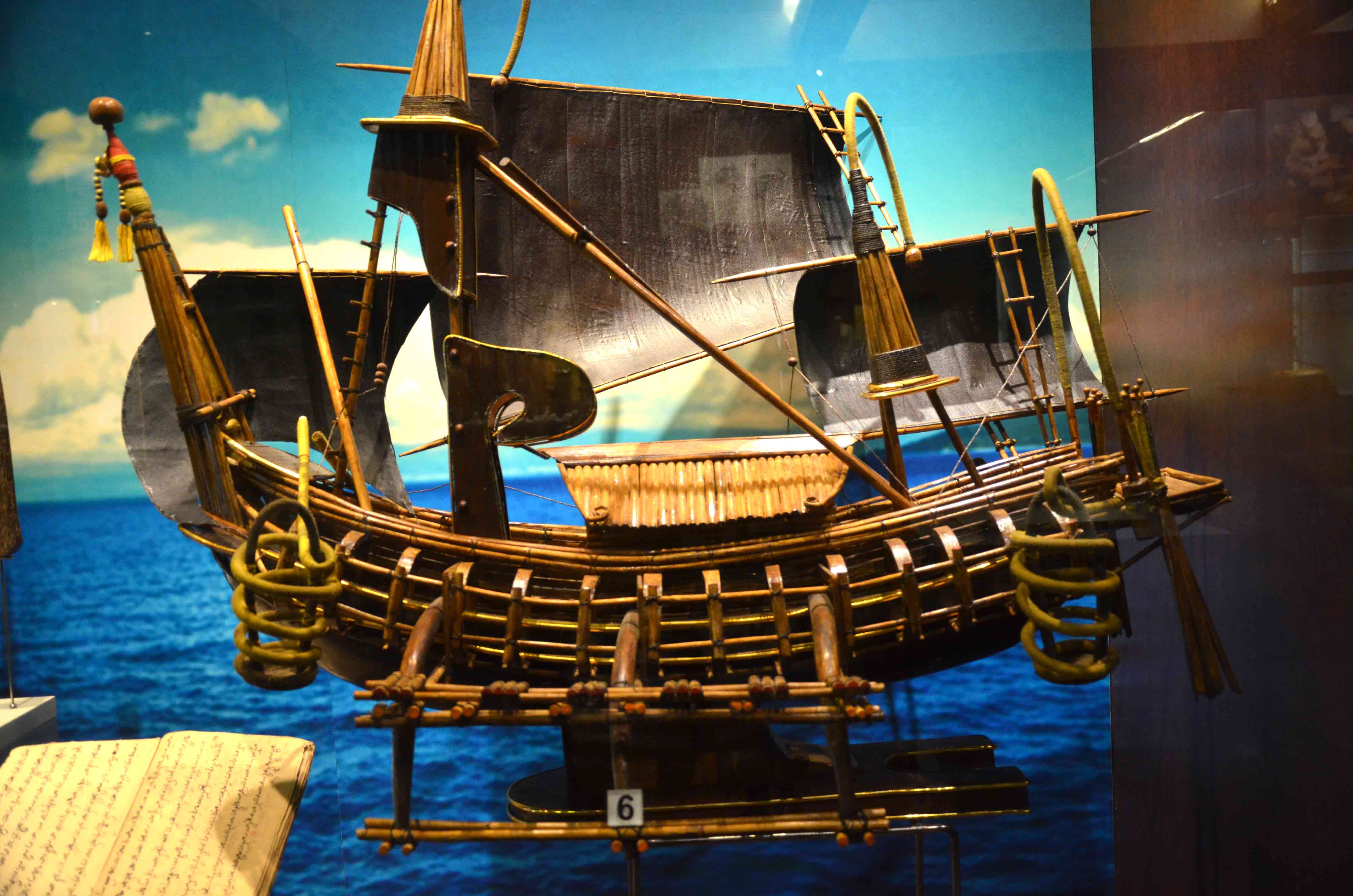
Replica of a Majapahit boat

The grandeur of some early kingdoms is evident in the monuments they left behind. Among these are Candi Borobodur, a 9th-century Buddhist temple in Central Java, the world’s largest Buddhist temple; and Candi Prambanan, the largest temple complex dedicated to the Hindu Trimurti, (Brahma, Vishnu, Shiva) also in Java, built in the 10th century.

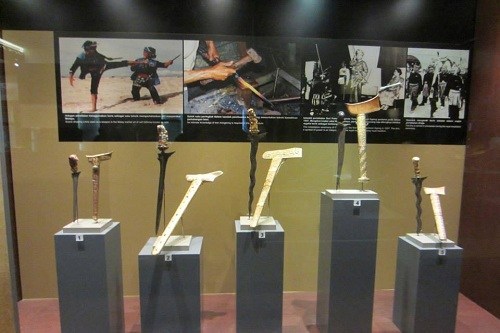
A collection of kris. This weapon has very important influence in the archipelago. They are symbols of power and authority of the warriors and rulers. It’s a revered object and forms part of the royal regalia of the Malay rulers in the archipelago. Image credit: http://top10hotelsmalaysia.com/listings/muzium-negara/

Melaka Sultanate, a later Malay Kingdom, was a celebrated Malay empire. Melaka was founded around 1400 by Parameswara, a prince who fled from Sumatra and established a port in the Straits of Malacca, which attracted trading ships from China, India and Arabia. It was a popular port as it was well administered by the Bendahara, Shahbandar, Laksmana and Temenggong.  At around this time, the Ming Emperor was sending out fleets to expand trade. Admiral Zheng He called at the port of Melaka on each of his seven voyages. In exchange for regular tribute, the Ming emperor offered Melaka protection from the constant threat of Siamese and Javanese attacks. The court of Melaka gave prestige to the Malay language and the language became the lingua franca of the region.

By the late 15th century, Islam became integrated in the daily life of the people in Melaka. The palace, mosques and religious schools became centres for the study of Islam. The Jawi script became widely used in the Malay Archipelago. Melaka’s growing commercial and political influence helped spread Islam to Melaka’s dependent territories. The Melaka kingdom lasted little more than a century, but during this time it became the established centre of Malay culture and identity, and of Islam.

Diorama showing Megat Iskandar Shah’s conversion to Islam by Saiyid Abdul Aziz, a religious scholar from Jeddah.

Brunei existed as early as the 6th/7th century; its power waxed and waned throughout the centuries. Once subjected by Java, it later became a vassal of Majapahit. Brunei was an independent kingdom from the 15th to the 17th century, reaching its height of power under its 6th Sultan, Sultan Bolkiah (1485 – 1524), when its domains included Sulu and southern Philippines.

When Melaka fell in 1511, traders who formerly traded in Melaka turned to Brunei, resulting in it becoming more prosperous. Brunei had influence over Sulu until the arrival of the Spanish in the 16th century. Brunei’s power began to decline in the 18th century and it lost a great deal of its territory – North Borneo and Sarawak – due to internal power struggles and foreign intervention, especially by the British.

A shield, dating to around 80 to 100 years ago, from the Kingdom of Sulu. This kingdom was founded in the middle of the 15th century . Centred on Jolo island, the kingdom in its heyday controlled the Sulu Archipelago, Zamboanga peninsula in Mindanao, southern Palawan, and the northern and eastern coasts of Borneo.

Setul Mambang Segara, was among the last of the kingdoms in the Malay peninsula. It was a traditional Malay kingdom founded in the northern coast in 1808 because of the partition between the rulers of the Royal House of Kedah. It was governed by the Malay Sultanate of Kedah from 1843 until 1909 when it was ceded to Thailand. The sovereignty of the kingdom ended in 1916, following the dissolution by the Siamese government. The state border was inherited by Satun, the successive province.

In this third millennium, the sovereign nations of archipelago South East Asia are the beneficiaries of the Malay kingdoms. The cultural blending of the different beliefs and practices of the Malay World has created a cultural compromise. The traditions that were brought into contact throughout the years of co-existence and assimilation have resulted in a common heritage which we see in the Kris, Wayang Kulit , Tepak Sireh, BatikSarong, among others. These are the shared heritage of the region, so should the people fight over their origins and ownership?

Wayang kulit is a traditional form of puppet-shadow play originally found in the cultures of Java, Bali, and Lombok in Indonesia. Image @Annie Chuah

Evolution of Demographic Composition

The demographic composition of Malaysia is represented by the multiple ethnic groups that exist in the country as a result of the migration and intermingling of the people in the archipelago through the past two millennia.

In the first, there was significant migration from Sumatra and movement from outside, in the form of Indian and Arab traders, many of whom intermarried and settled along the west coast.

The second millennium saw further migration of Malays to the peninsula from central Sumatra and the eastern archipelago. Muslim and Indian traders from India, the Arabs, Persians and Chinese, European missionaries, the Portuguese and Dutch of the colonial years, some of whom inevitably married local women, have all left their mark in the country. Indian Muslims, Baba-Nyonya, Chitties and Kristangs, Dutch and European Eurasians and Jawi Pekan have added to the demographic composition of multi-racial Malaysia.

A collection of Peranakan items

References

Videos: My South East Asia with Dr Farish

Book: Didier Millet Editions ̈Noor, Farish A: What Your Teacher Didn’t Tell You, (2009)

Book: Crossroads (1st Edition): A popular history of Malaysia & Singapore by Jim Baker

Book: The Encyclopaedia of Malaysia: Volume 4 Early History (1998);

Article: GLIMPSES INTO THE HISTORY OF MALAYSIA, New Nation, 22 February 1973, Page 8

Article: ASEAN Youth Organization – Malaysia  14 September 2015