One of Melaka’s most formidable foes was the Kingdom of Siam, now known as Thailand, whose power reached as far south as the Malay Archipelago. All the kingdoms of the region, with the exception of Melaka, acknowledged Siam as their overlord and paid tribute to the Siamese king.
When Bubunnya, the King of Siam, learned that the Melakans had not accepted Siamese suzerainty, he demanded a letter of obeisance from them. At that time, the ruler of Melaka was Sultan Muzaffar Shah. He rejected Bubunnya’s demand. When the Siamese king heard of the Sultan’s refusal to submit, he was furious and ordered his army to prepare for war. The Siamese army, which was placed under the command of Awi Chakra, marched down the Malay Peninsula until they arrived in Pahang.
Frontispiece of a Jawi edition of the Malay Annals. Image: Wikimedia Commons (public domain)
When Sultan Muzaffar Shah received news of the impending Siamese invasion, he assembled an army by ordering his vassals to bring their soldiers to Melaka. One of the vassals who responded to the sultan’s order was Tun Perak, a chieftain from Klang, Selangor. Unlike the rest of the Sultan’s vassals, Tun Perak brought not only his warriors, but also their wives and children. The men of Klang saw this as an inconvenience and complained about it during their audience with the Sultan.
Sultan Muzaffar Shah was intrigued by what he had heard so decided to get to the bottom of the matter. He summoned one of his heralds, Sri Imarat, who was originally from Pasai, northern Sumatra. Thanks to his wit and eloquence, he had been appointed as a herald at the court of Melaka. Sri Imarat was instructed by the Sultan to question Tun Perak about this issue when he came to present himself. A stool was then placed below the Sultan’s knees, Sri Imarat’s usual spot. When he sat on this stool, the herald carried the Sword of State and delivered the Sultan’s messages.
Once Sri Imarat had taken his seat, Tun Perak entered the court and presented himself to Sultan Muzaffar Shah. The herald addressed the chieftain, “Tun Perak, your men have complained thus to the Sultan: all the other vassals of the Sultan have brought only their warriors to Melaka, whilst we were commanded by our chief to bring our wives and children. Tun Perak, what is your explanation for this?” Tun Perak made no reply, so Sri Imarat repeated his question. Tun Perak maintained his silence.
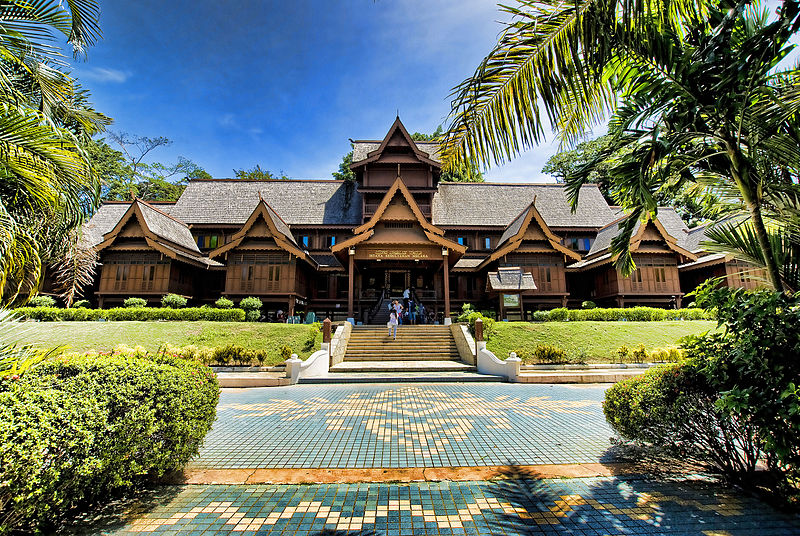
An artists depiction of Tun Perak; photo taken at the Malacca Sultanate Palace Museum. Image credit: Orhanghazi (CC BY-SA 3.0)
Sri Imarat questioned Tun Perak a third time, and only then did he respond, “Hey Imarat! Take good care of yourself and of the Sword of State that you bear. Let not its blade rust, nor its tip lose its sharpness. What do you know about the work of us fighting men? His Majesty resides here in Melaka with his wives, his children, and all his belongings. Do you think it would be right for a vassal to bring only his warriors to defend the city? Should anything happen to Melaka, what would it matter to us? That is why I instructed my men to bring along their wives and children, so that they would fight the Siamese to the utmost. Even if they lose their resolve to do battle for the Sultan, they will continue fighting in order to protect their families.”
Sultan Muzaffar Shah was impressed by Tun Perak’s wisdom and approved of his answer. As a reward, the Sultan gave Tun Perak some betel leaves from his own betel box. The Sultan also remarked that Tun Perak should not stay in Klang anymore but move to Melaka so that his services may be put to better use.
Eventually, the Siamese army arrived, and a great battle ensued. The battle lasted for a long time and many Siamese soldiers were killed. The invaders, however, failed to capture Melaka and were forced to retreat.
When the war was over, all the vassals of the Sultan returned to their homes. The Sultan, however, did not allow Tun Perak to return to Klang, but kept him in Melaka. As one might expect, the Siamese were not at all pleased with their defeat, and planned another attack on Melaka. That, however, is another story for another time…!
Rawang is located in Selangor and it is about 30 km from Kuala Lumpur city centre via the main trunk route. The arrival of Chinese immigrants in the 19th century started the tin mining industry in the area. The discovery of rich tin deposits made Rawang one of the heartlands in tin mining in the state at that time. The township developed in tandem with mining activities and along the way, Rawang contributed to some early implementations in the country.
Next came rubber and, together with tin, it became the economic contributor to Rawang until the 1970’s when rubber plantations were converted to oil palm plantations. When the country was on an industrialization drive, many industrial zones were set up on the fringes of the town. Rawang has been for a long time regarded as a satellite town of Kuala Lumpur and in the last few years, it became a favourite with developers, who moved in with their housing ventures. It is made even more attractive as Rawang has an upgraded KTM station and is accessible via several highways. Today, Rawang is a bustling town and continues with its expansion and rapid development.
History
Rawang is Malay for swamp forest (hutan paya). This general landscape welcomed the first Chinese Hakka immigrants who arrived in the early 1860s. During the Selangor Civil War/Klang War (1867-1874), Rawang was the scene of fierce fighting when Raja Mahdi’s camp led by Syed Mashhor and Chong Chong made their second attempt to capture Kuala Lumpur. However, they were intercepted by Tengku Kudin’s strong ally, Kapitan Yap Ah Loy in Rawang. Yap Ah Loy’s troop commanded by Chung Piang managed to stop the advance and Syed Mashhor retreated further north to Ulu Selangor while Chong Chong was chased to Serendah where he is believed to have been killed.
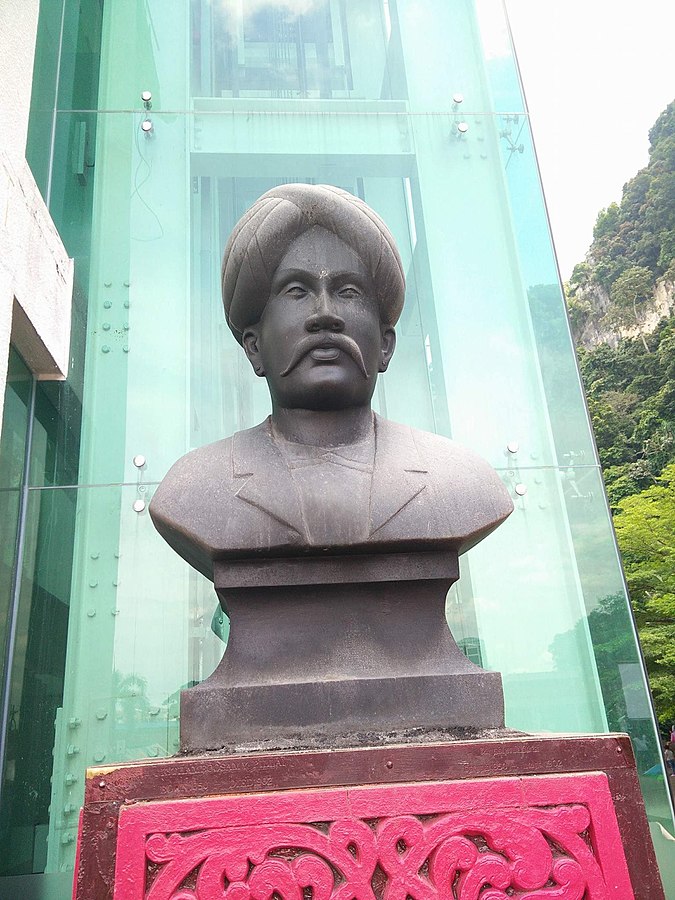
Moving forward to 1894, the Rawang Tin Mining Company concession was taken over by a partnership of two enterprising individuals, Loke Yew and K. Thamboosamy Pillai, and they went on to install the first electric generator in our country to operate their mines. This was a significant event as it marked the beginning of the story of electricity in our country. In the same year, electric supply was extended to Rawang town where streets were lighted up for the very first time.
In 1953, Malayan Cement built and operated the country’s first industrial-scale cement plant in Rawang. Five years later, the site was expanded with an inclusion of a second kiln to boost capacity. As of late 2019, YTL Cement Berhad, a unit of YTL Corporation Berhad, had acquired 51% of Malayan Cement (then known as Lafarge Malaysia Berhad).
In 1974, a re-delineation exercise was carried out for the General Election (GE4) held that year whereby Rawang was transferred from the district of Hulu Selangor to Gombak. A new federal constituency, Selayang, was created to replace Rawang. It was a stronghold of the Barisan Nasional alliance party and politicians that won here include women leaders Rafidah Aziz (GE5) and Zaleha Ismail (GE7 & GE8), as well as MCA’s former deputy president Chan Kong Choy (GE9, GE10 & GE11). However, since GE12 to GE14, the seat is held by PKR’s William Leong Jee Keen.
The next Today in History moment for Rawang came in 2005 and as fate has it, it was something to do with electricity supply! On Thursday afternoon of 13 January 2005, a major power cut brought some areas in Kuala Lumpur and four other states to a halt. Following this blackout, Tenaga Nasional Berhad (TNB) rolled out the Central Area Reinforcement (CAR) project to improve the transmission grid system and to meet the increasing demand of electricity supply in the country. Residents of Kampung Sungai Terentang (formerly known as Rawang New Village) had protested against the construction of high tension electric cable towers in their area citing the harmful electromagnetic fields. Due to the strong protest and support from the new State Government, the project was stalled in 2008. It lasted until 2016 when TNB finally agreed to use a new route for the remaining portion of the project. Incidentally, the Member of Parliament William Leong was one of the lawyers who fought the case for his constituents.
Places of Interest
Golf and Eco-Tourism
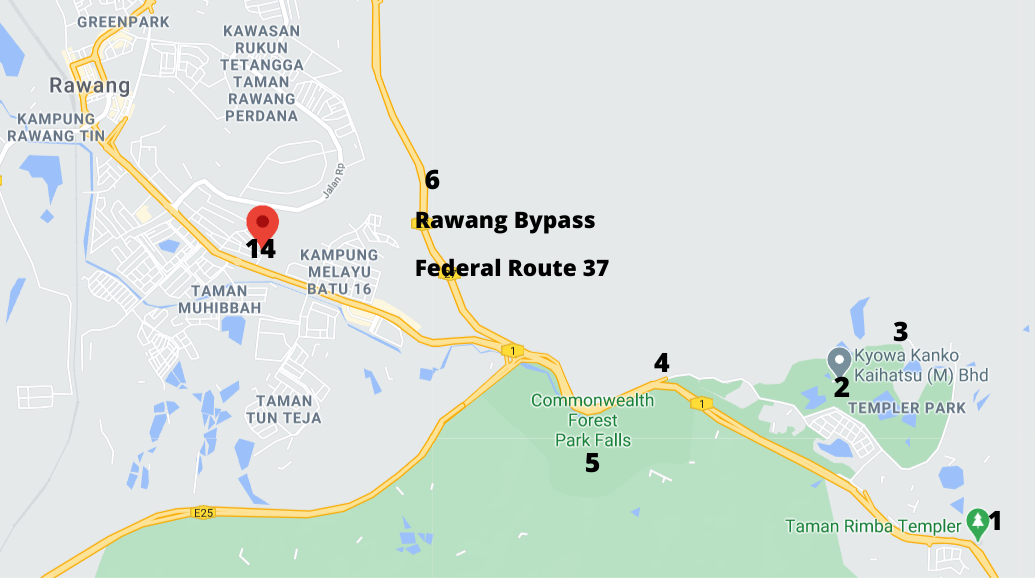
Lying on the same stretch of Federal Route 1, about 9 km South of Rawang town are a trio of eco-tourism spots, namely Templer’s Park (Taman Rimba Templer), Kanching Waterfalls (Taman Eko Rimba Kanching Waterfalls) and Commonwealth Forest Park (Taman Eko Rimba Komanwel).
Templer’s Park [1] is named in honour of Sir Gerald Templer, the British High Commissioner in Malaya from 1952 to 1954. The park was created in 1954 and gazetted as a ‘botanical garden and public park’. Today, its main attractions are the swimming pond, pristine river and the cascading waterfall, which is located 2 km from the car park.
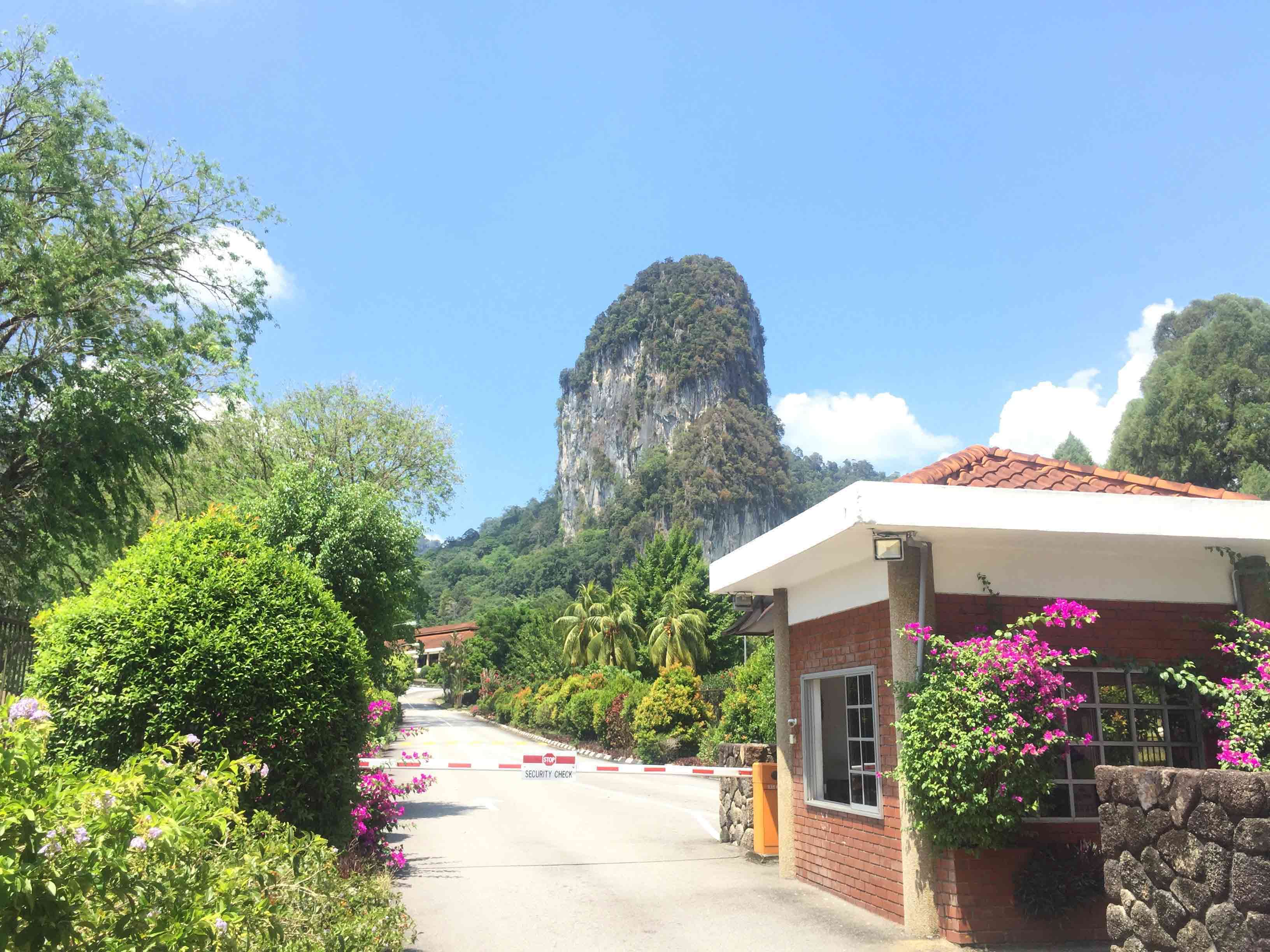
Main entrance to TPCC. Photo source: Eric Lim
When the word ‘Templer’s Park’ is mentioned to avid golfers, they would visualize playing a round of golf at the scenic Templer Park Country Club (TPCC) [2]. This 7,143 yards 18-hole Championship course was designed by the legendary Japanese professional golfer Masashi ‘Jumbo’ Ozaki and golf course architect, Kentaro Sato. TPCC was officially opened on 27 April 1991 and it went on to host the prestigious Malaysian Open three times – in 1995, 1996 and 2000. TPCC is owned and operated by a Japanese company, Kyowa Kanko Kaihatsu. It is acclaimed as being the first golf club in the country to offer buggies and lady caddies as well as the first club to debut the concept of night golfing. The course is set at the foothill of Bukit Takun and this towering attraction has been made the club logo since its inception.
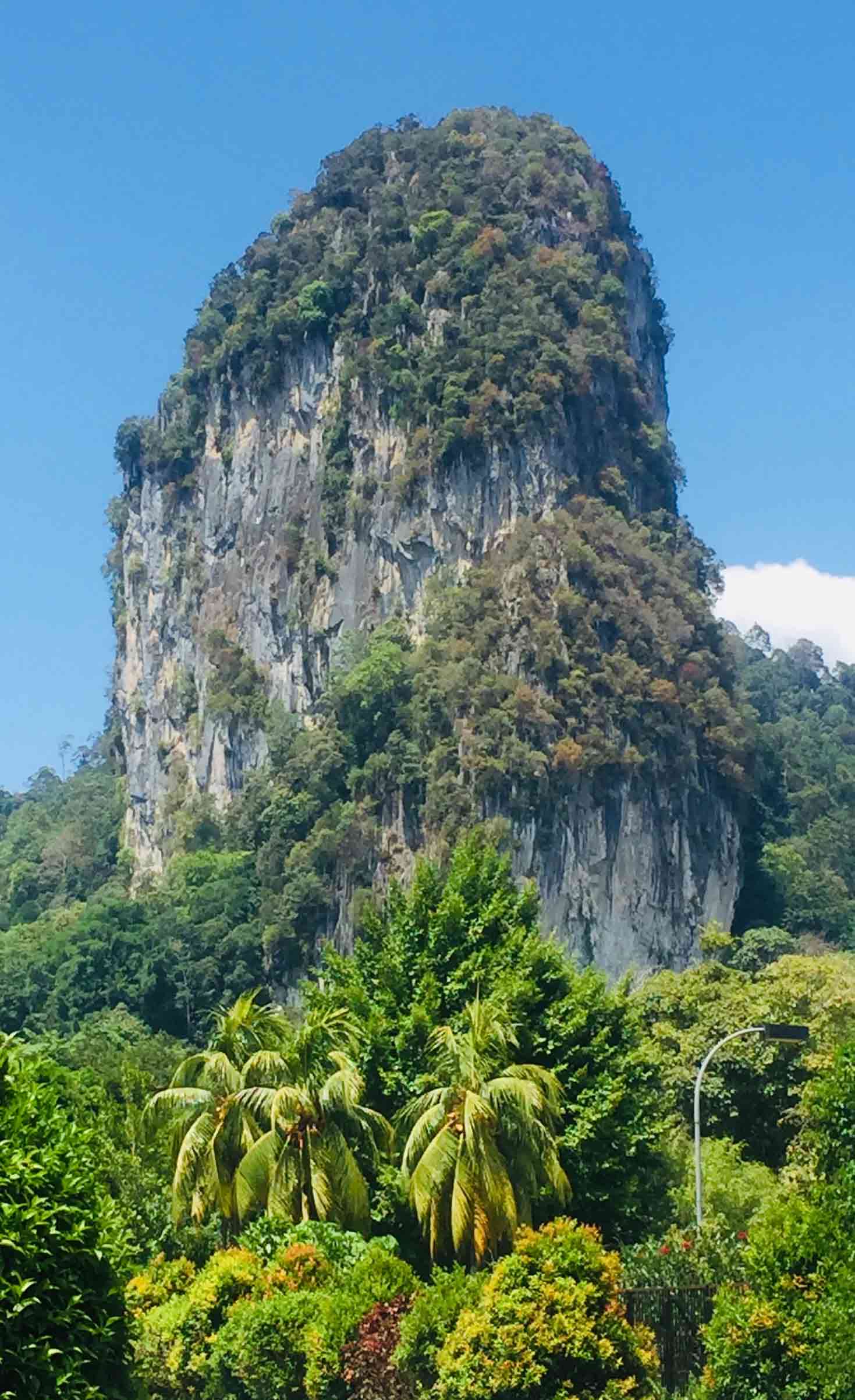
Bukit Takun [3], apart from dominating the landscape of TPCC, is also fast gaining popularity as a major rock-climbing site in the country. Bukit Takun is an enormous monolith around 300 metres in height and it has a limestone formation sitting on a granite base. Routes were bolted from 1985 and today there are about 32 bolted sport and traditional climbing routes.
Bukit Takun. Photo source: Eric Lim
Kanching Waterfalls [4] is located in the Kanching Forest Reserve. The star attractions here are the impressive seven-tier waterfall and Hopea subalata forest trees. For the convenience of visitors, concrete steps have been constructed up to Level 4 of the waterfall; however, to go to the upper levels, steep and rocky forest trails await. Visitors who make it are rewarded with a great view from the top. Hopea subalata is known locally as Merawan Kanching or Giam Kanching, and is a hyper-endemic species (plants and animals that exist only in one or a few isolated locations) from Kanching Forest Reserve. In 2010, this species was categorized as Critically Endangered in the Malaysia Red Plant List published by Forest Research Institute Malaysia (FRIM) and Ministry of Natural Resources and Environment.
The Commonwealth Forest Park [5] was formed in conjunction with the 14th Commonwealth Forest Conference in 1993; it sits on the northern part of the vast Bukit Lagong Forest Reserve. A private firm currently manages the park and it has added rooms, a multifunction hall, camping ground and forest treks. It also conducts motivational camps for students and corporations as well as organizes corporate training and guided nature walks.
Public Infrastructure
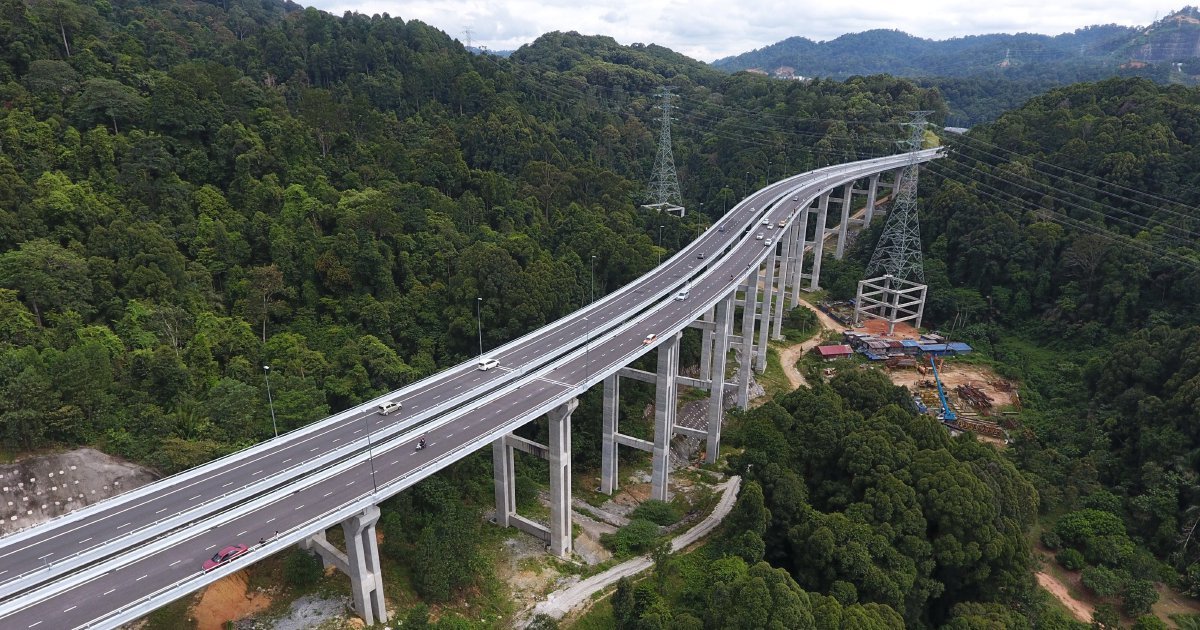
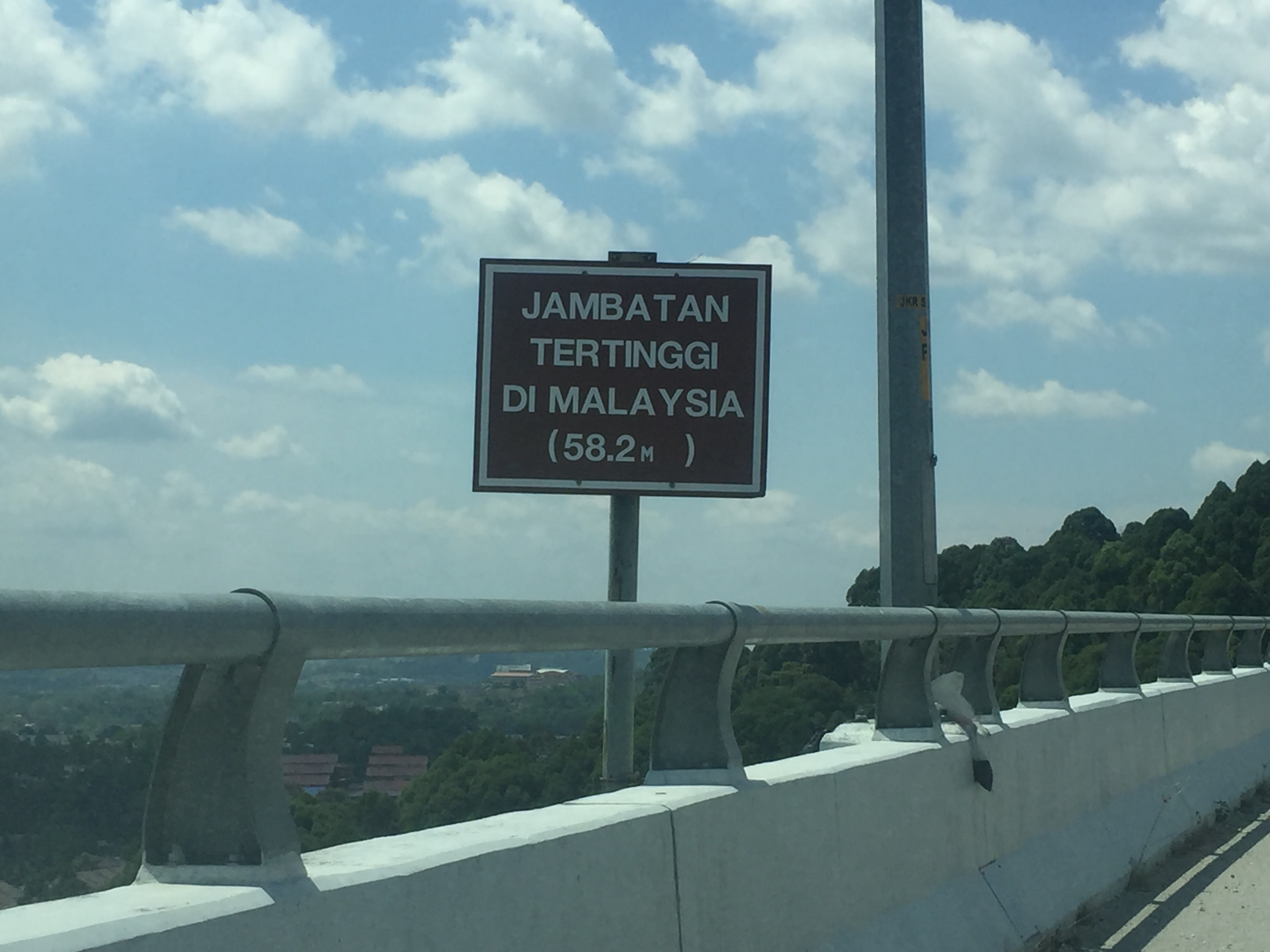
The Rawang Bypass [6] (also known as Federal Route 27) is another infrastructural project in recent times that put Rawang in the limelight. The bypass aimed to alleviate traffic congestion in Rawang town. The project was approved under the ninth Malaysia Plan and construction commenced in 2005. However, in 2007, the project was met with protests, as the highway would cut through a vast tract of Taman Warisan Negri Selangor (Selangor State Heritage Park), home to protected species of flora and fauna including the critically endangered Hopea subalata (Giam Kanching) trees. To solve this problem, a 2.7 km long elevated section was constructed using the Moveable Scaffolding Systems method, which was introduced in the country for the first time. It managed to minimize earthworks and deforestation. The elevated section involved the construction of pillar structures at the height of 58.2 meters and it is now recorded as the tallest highway in the country. The 10 km toll free highway was opened to traffic on 28 November 2017 and travelling time from Rawang to Kuala Lumpur during peak hours was reduced from two hours to just thirty minutes.
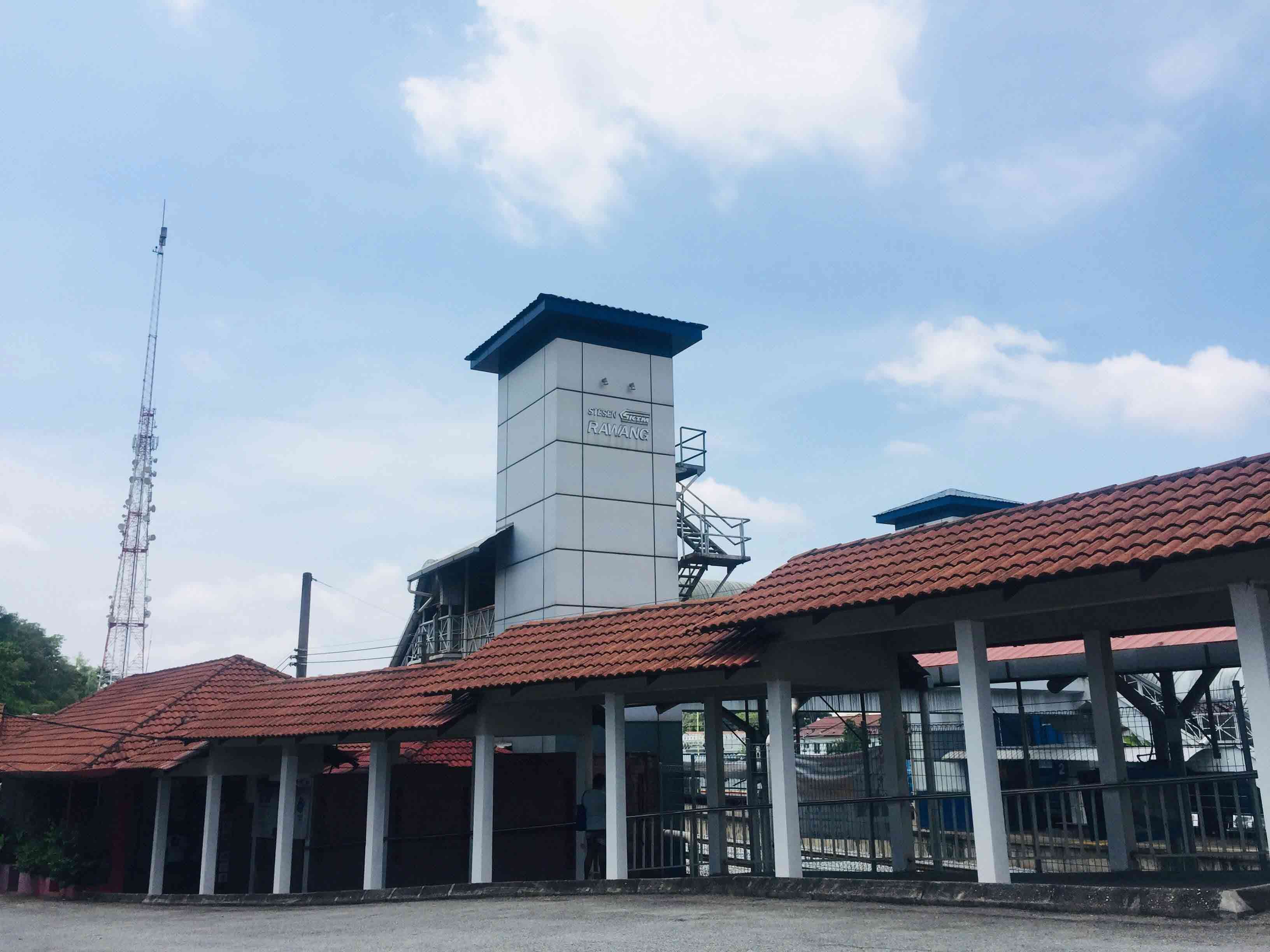
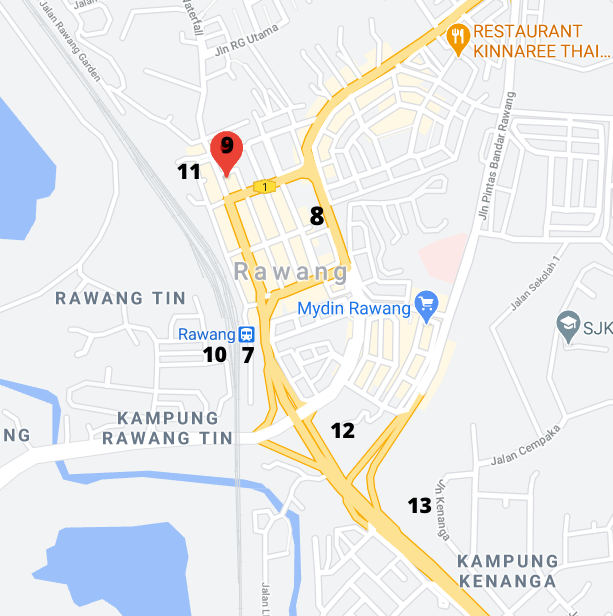
The first British-constructed railway line in our country was built in 1885 between Taiping and Port Weld. A year later, the railway system arrived at Selangor when the second line, between Kuala Lumpur and Bukit Kuda, was opened. On 7 November 1892, a line was extended to Rawang town from Kuala Lumpur. The Rawang railway station [7] was built in the centre of the town; in a short span of two years, it was the talk of the town when it became the first railway station in the country to enjoy electricity supply to power its lamps and fans. Railway stations in Kuala Lumpur only had electricity one year later. The station was rebuilt in 1995 and that marked the end of the century-old railway station. Today, the new station is served by the KTM Komuter (Tanjung Malim to Port Klang Komuter route) and the KTM ETS (Electric Train Service intercity rail service) train services.
(L) Rawang KTM station (R) Tallest highway sign. Photo source: Eric Lim
Religious Architecture
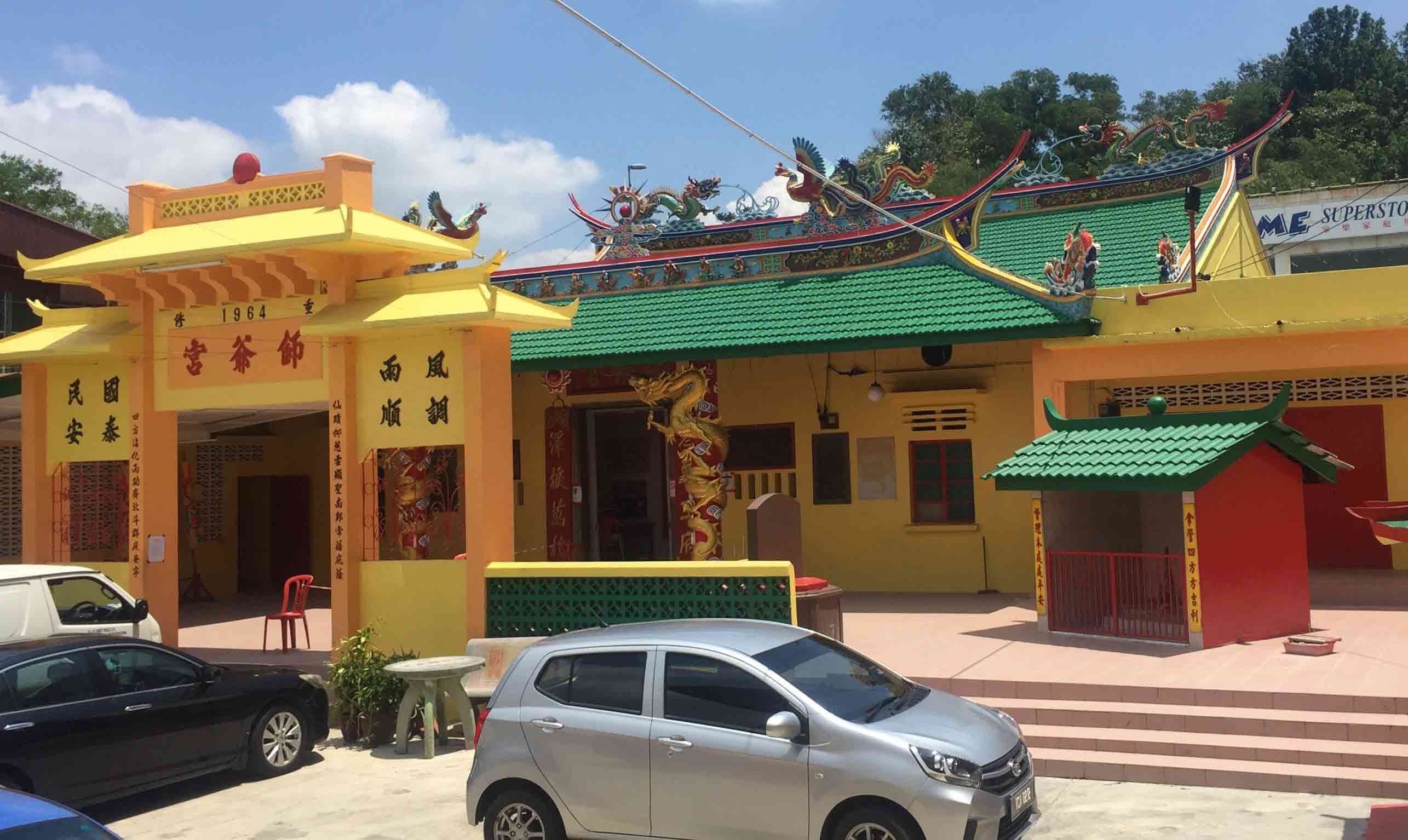
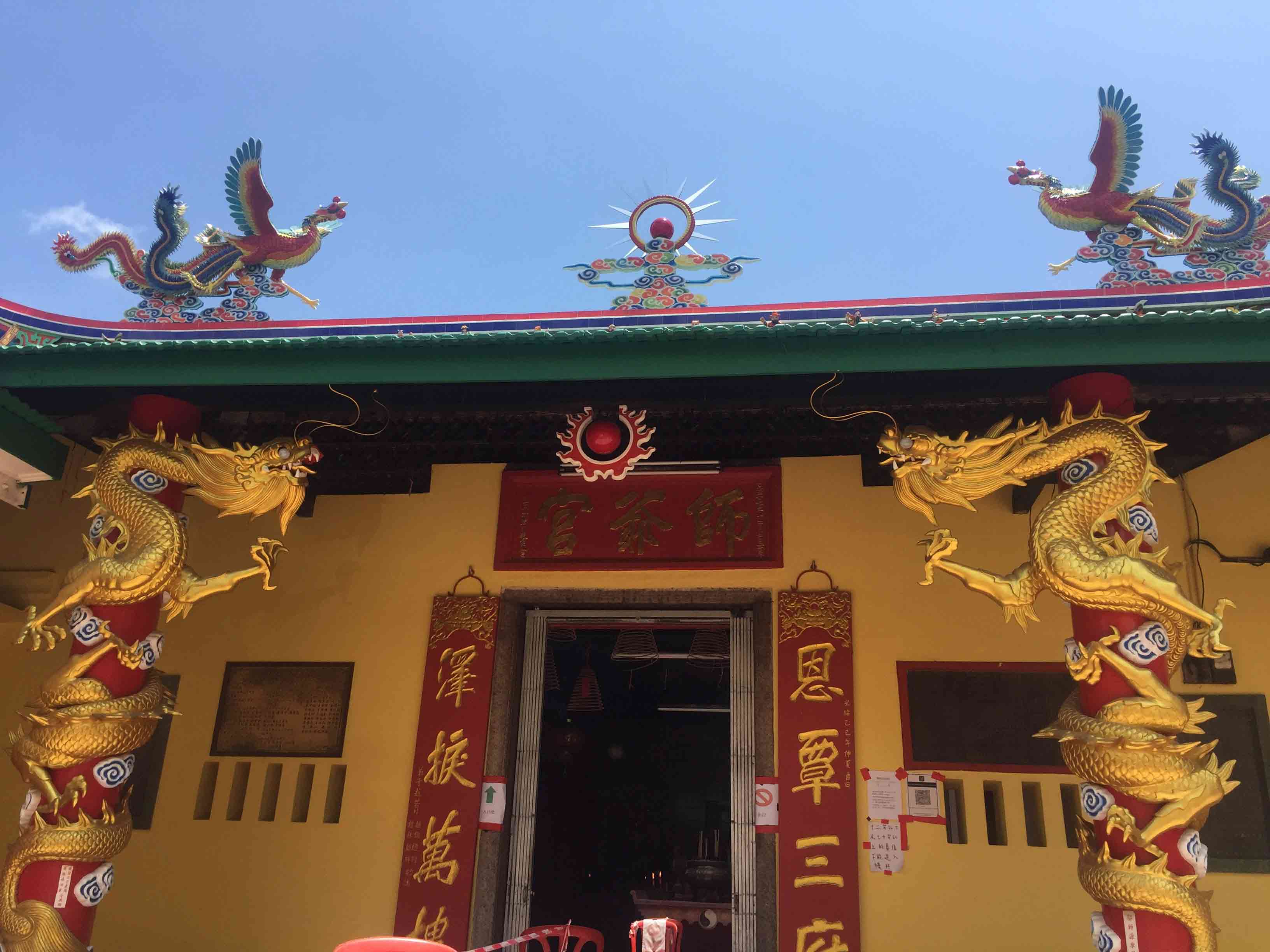
Places of worship were usually set up in the centre of town and naturally became the focus point where folk congregated. The old religious structures in Rawang survived until today, located in what is considered the old section of town. The oldest is Sze Yeah Kong Temple [8], which was built in 1869. There is a belief that Sze Yeah Kong temple was relocated from Kanching, the main mining centre prior to Rawang. The temple pays tribute to Xian Shi Ye and Si Shi Ye. The latter is believed to be deified Kapitan Sheng Meng Li (a.k.a Shin Kap, Kapitan of Sungai Ujong).
Sze Yeah Kong Temple. Photo source: Eric Lim
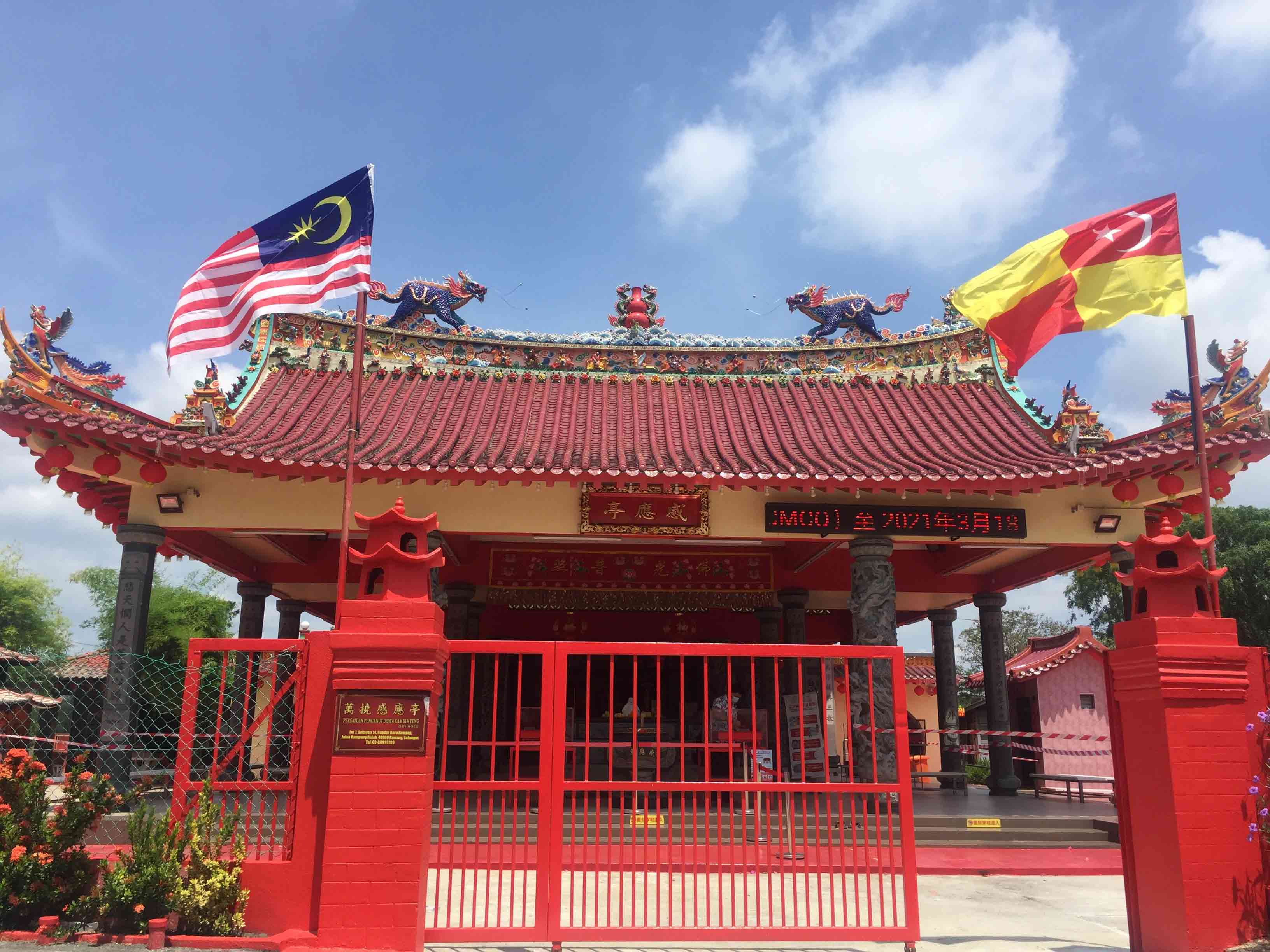
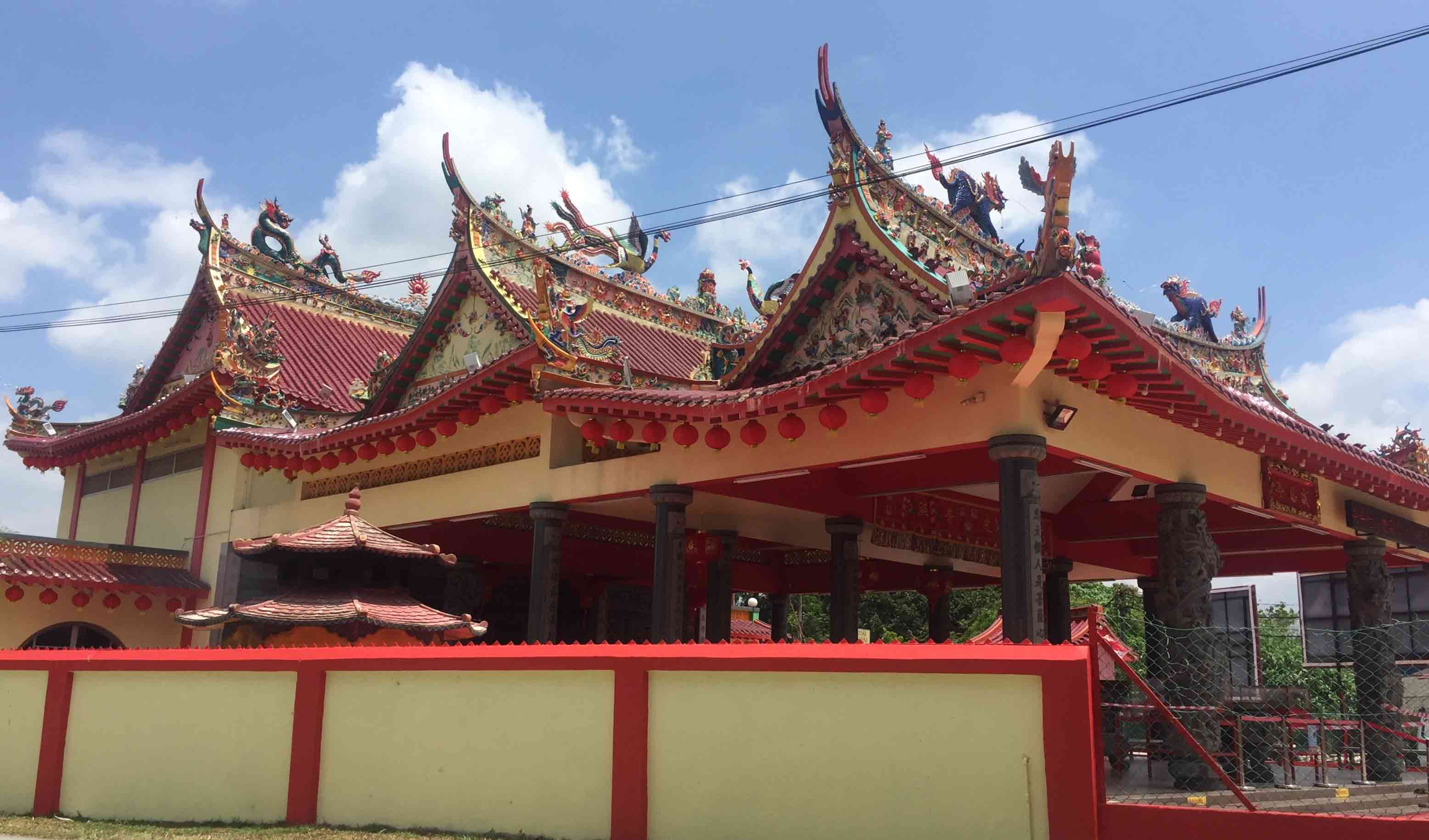
Located within walking distance from Sze Yeah Kong Temple is the Kam Yin Teng (Gan Ying Ting) Temple [9]. Based on the information found on the plaque at the main hall, this temple was built in 1905. It originally started as a Buddhist temple but is now a Buddhist-Taoist temple. Guan Yin Bodhisattva is enshrined in the main hall while Mazu (Heavenly Mother) and the founder of San Yi Jiao (Three-in-one religion) in the side hall.
Kam Yin Teng/Gan Ying Ting Temple. Photo source: Eric Lim
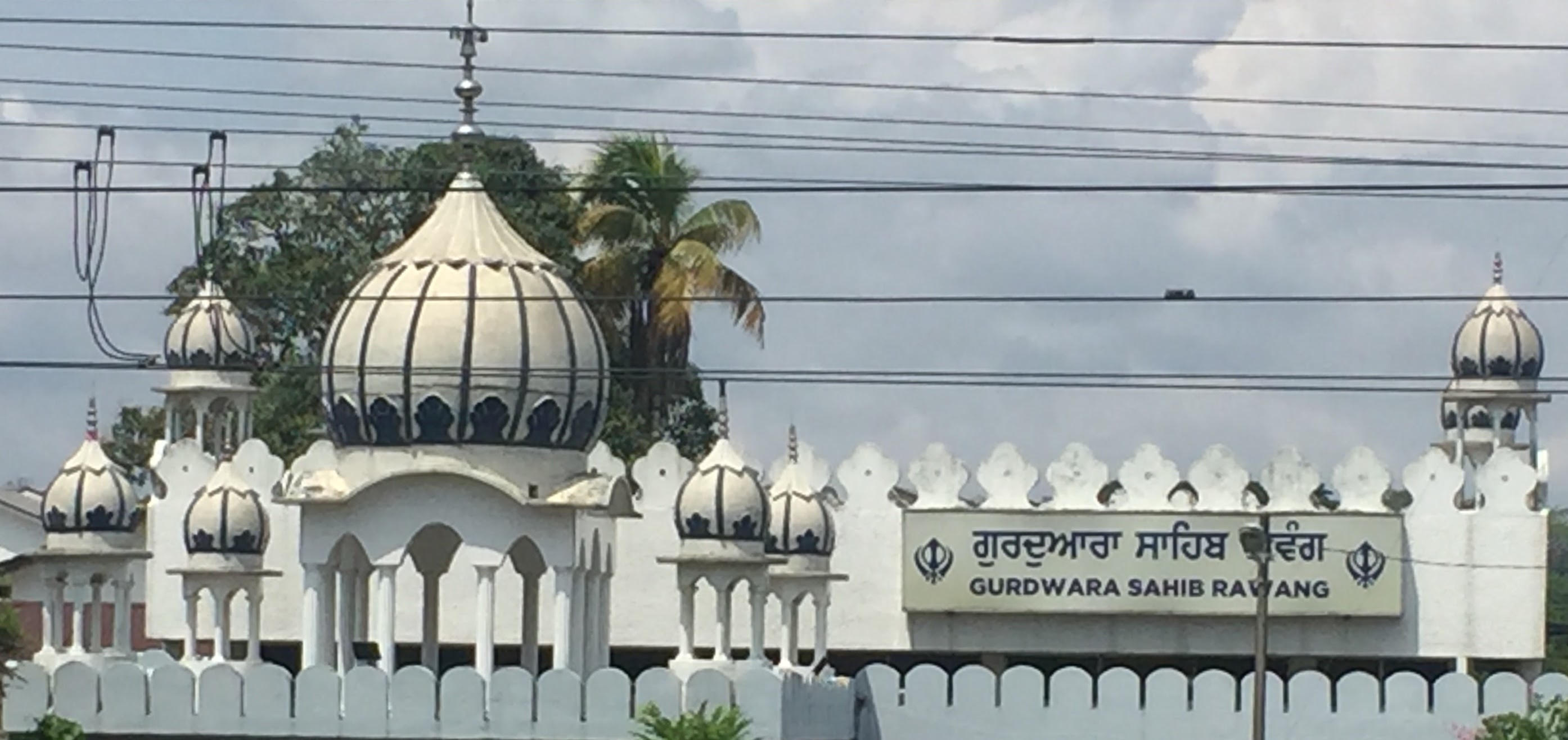
A small community of Sikhs were already residing in Rawang in the 1920’s and they were employed in the Police Force, security guards in various tin mines in and around Rawang, rubber estates and in the transport services. Babu Bachan Singh Gill who was a supervisor at the Rawang tin mines had requested his management to allocate a piece of land for the construction of a Gurdwara Sahib. It was approved in 1938 and it immediately saw the construction of a single storey semi brick and wooden Gurdwara Sahib Rawang [10]. Since then, it has gone through several expansion and upgrading works including the adding of domes on the roof in 1976. The Gurdwara is located at Rawang Tin Fields, just opposite the railway station.
Gurdwara Sahib Rawang. Photo source: Eric Lim
The Sri Veerakathy Vinayagar Temple [11] first started as a shrine that contained a statue of Lord Ganesha built under a banyan tree by a local philanthropist. Later, through the efforts and support from the townsfolk, an elegant temple was built in 1943. The following year, the first mahakumbhavishegam (Hindu temple sanctification ceremony) was held and it was during this ceremony that the temple got its name. The priest who was invited to perform the ritual had felt a strong connection with a similar temple in South India and urged the temple committee to name it accordingly.
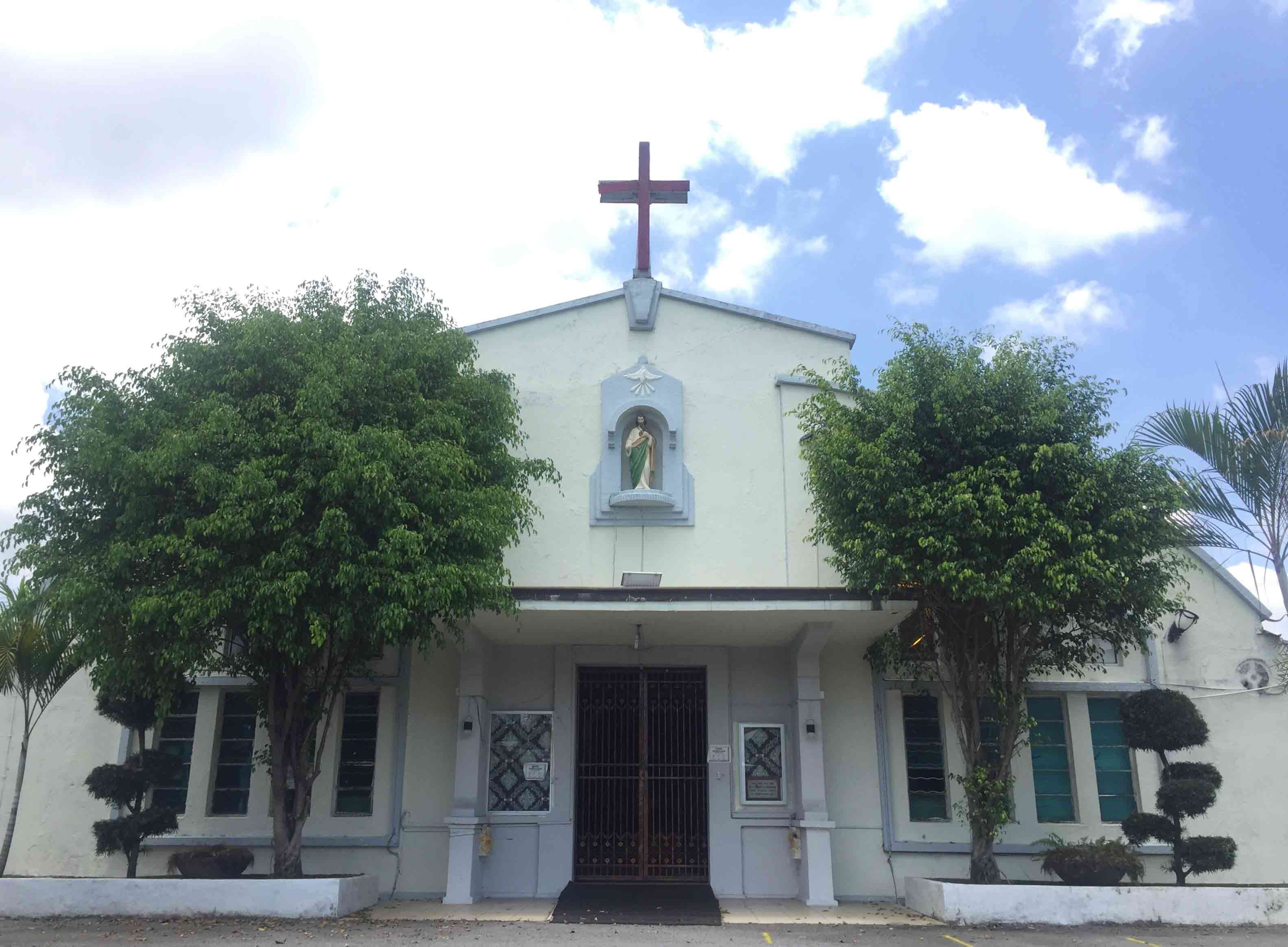
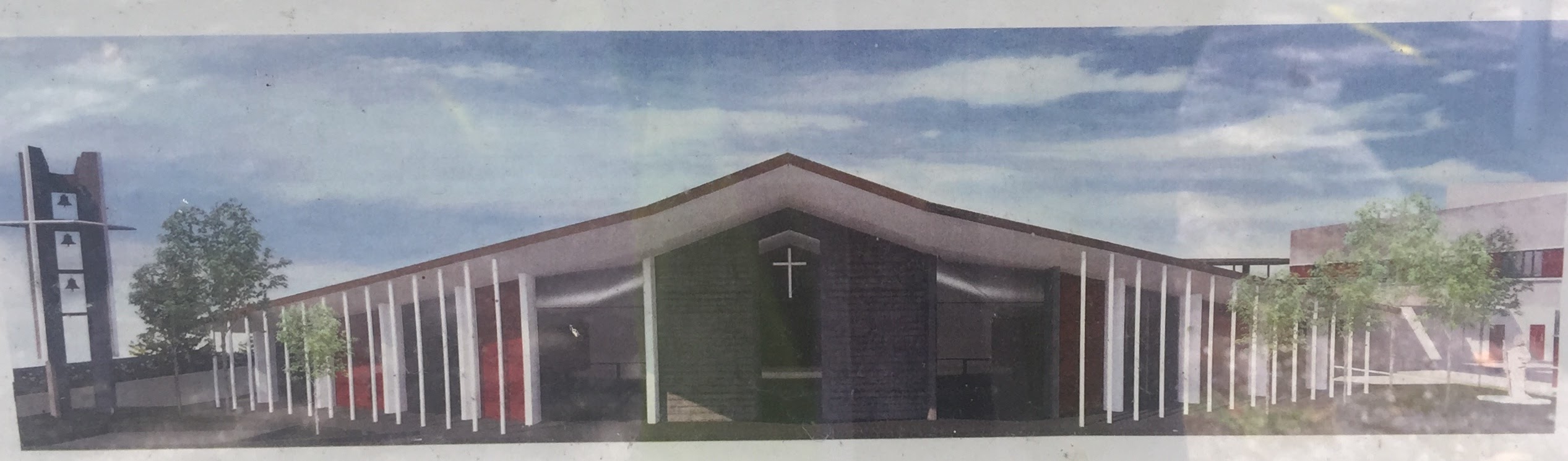
For the Catholic community, the first chapel was built in 1953 at Bukit Munchong Estate (today, near Bukit Beruntung), outside of Rawang. On 7 September the same year, Rev. Fr. Dominic Vendargon had applied to the state government for land to build a chapel/church in Rawang town. It was approved on 3 December and a piece of land on top of a hillock was allocated. They received overwhelming support and the earlier plan to build a chapel gave way for a proper church building. A local company, Sia Yew and Sons undertook the construction in 1956 at a cost of about 25,000 Malayan Dollars. The Church of St. Jude [12] was inaugurated on 28 October 1957 by Bishop Dominic Verdargon, who was then the Bishop of Kuala Lumpur Diocese. Today, the church has become prime land marked for development of a new township. The construction of the new church was to have started last year and the site is less than 3 km from the current church.
(Left) Current St Jude Church (Right) Drawing of the new church. Photo source : Eric Lim
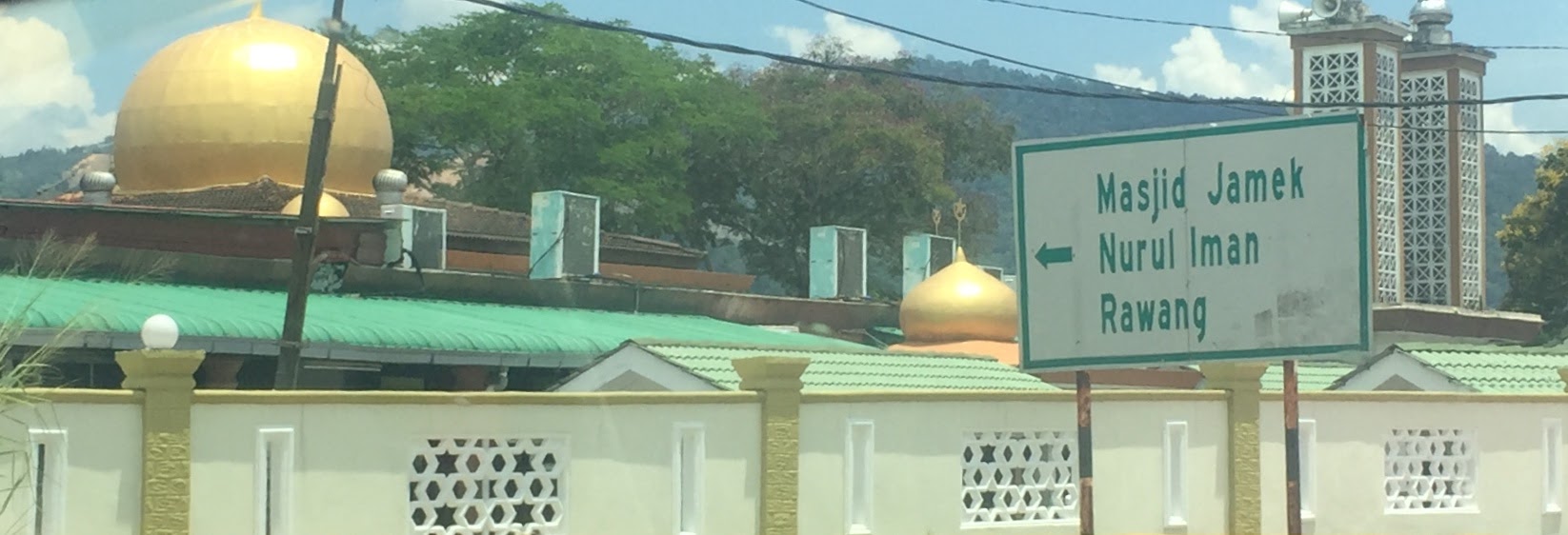
In 1969, a plan to build a new mosque to cater for an increasing Muslim congregation due to the population growth in Rawang was mooted. A site was identified and the new mosque was built. It was opened in 1970 and was called Masjid Nurul Iman Rawang. On 5 March 1971, the Sultan of Selangor officiated the upgrading of the mosque into a Masjid Jamek with a new name, Masjid Jamek Nurul Iman Rawang [13].
Masjid Jamek Nurul Iman Rawang. Photo source : Eric Lim
New Village
During the Malayan Emergency, the implementation of the Brigg’s Plan saw more than 400 newly constructed settlements known as ‘new villages’.Kampung Baru Rawang was one of these new villages. It was set up 2 km outside the town heading south to Kuala Lumpur and was established in 1951. The settlers were mainly Chinese; Hakka formed the majority, followed by Cantonese and Hokkien. It started with a population of 1,560 but by 1954, the population had dropped to just 486. Since then, the population grew over time and reached a figure of 6,100 in 1995. Later, the name of the settlement was changed to Kampung Sungai Terentang [14].
And the rest is history …
The earliest school in Rawang was San Yuk Public School, established in 1917 andlocated in two shop lots on Jalan Maxwell. When Kampung Baru Rawang was set up, a branch school was established to accommodate the growing number of students. Today, the school is known as SJK (C) San Yuk and the main school is located on top of a hill at Kampung Kenanga.
The only English school in Rawang up until 1950s was Clive Institution, also located on Jalan Maxwell. Jalan Welman and Jalan Maxwell are the two main streets in the old section of the town.
Getting There
From KL city centre, the easiest and shortest way to Rawang is via the main trunk road, Federal Route 1. Alternatively, one can use the North-South Expressway (E1), Guthrie Corridor Expressway (E35) and Kuala Lumpur-Kuala Selangor Expressway/LATAR Expressway (E25).
References
Bumi Satu Kampung Dalam 2 Negeri – i Kampung Baru . Imbasan Sejarah Kampung Baru Cina Selangor – Published by Jawatankuasa Tetap Pembangunan Kampung Baru Kerajaan Selangor -First edition 2012 – pp 176-177.
Saran Singh Sidhu – Gurdwara Sahib Mantin – Sikh Gurdwaras in Malaysia & Singapore. An Illustrated History 1873-2003 – Published by Sikh Naujawan Sabha Malaysia – First edition 2003 – pp 348 to 350.
Personal communication with Mr Lee Kim Sin – Director of Kajang Heritage Cent
Sultan Alauddin Riayat Shah was arguably one of the most hands-on rulers of Melaka. At one point during his reign, the sultanate was suffering from a plague of thieves. These ferocious men not only stole people’s belongings but also violently murdered their victims. This happened night after night, causing all the inhabitants of Melaka to live in fear.
Frontispiece of a Jawi edition of the Malay Annals. Image: Wikimedia Commons (public domain)
When the Sultan heard about the plight of his subjects, he was grief-stricken and resolved to deal with the problem himself. So, one night, Sultan Alauddin Riayat Shah disguised himself as a commoner and left his palace with two of his warriors, Hang Isap, also known as Hang Siak, and Hang Isak. The three men travelled incognito around Melaka to see for themselves the situation in the city.
During their patrol, the Sultan and his companions encountered a group of five robbers who were carrying a huge chest laden with valuables. The thieves, shocked by the unexpected appearance of the three men, dropped their loot, and fled the scene. The Sultan opened the chest and commanded Hang Isak to keep his eye on it, while he and Hang Isap gave chase to the robbers.
The two men followed the robbers up a hill, finally catching up with them under a large weeping fig tree. The Sultan attacked and succeeded in killing one of them. Using his parang, the Sultan slashed the criminal at his waist, splitting him in two like a cucumber. The rest of the thieves fled for their lives but Sultan Alauddin Riayat Shah still would not relent. At a bridge, the Sultan caught up with them again, and killed another. The three remaining thieves managed to escape from the Sultan by jumping into the river and swimming to the other side. The Sultan returned to Hang Isak, ordering him to bring the chest back to the palace. After a long and tiring night, the Sultan and his men finally reached home.
Parang Jengkok, Gallery B Muzium Negara
The following morning, Sultan Alauddin Riayat Shah held an audience attended by all the ministers and notables of Melaka. The Sultan asked the Temenggung, his minister of public security, whether he had been on duty the night before. When the Temenggung, Sri Maharaja, also known as Tun Mutahir, replied in the positive, the Sultan said, “I heard that two murders occurred last night, one on a hill and the other at a bridge. Might you know who the culprit was?” The Temenggung admitted that he had no idea and was thus reprimanded by the Sultan for sleeping on the job, quite literally so, perhaps.
Sultan Alauddin Riayat Shah then ordered Hang Isap and Hang Isak to bring in the chest that they had seized from the robbers. When the chest was brought in, the Sultan commanded the two warriors to tell the court all that had happened on the previous night. Hang Isap and Hang Isak did as the Sultan ordered. When they finished their story, everyone bowed to the Sultan in fear.
Fortunately, Sultan Alauddin Riayat Shah was not a tyrannical ruler so no one was punished that day. Neither was he a greedy ruler. Instead of keeping the chest of valuables for himself, which he could easily have done the Sultan ordered his men to investigate to whom it belonged. It was found that the owner of the chest was a merchant by the name of Ki Tirubalam. The Sultan had the stolen chest returned to the merchant after which everyone went back to their homes.
Melaka Sultanate Palace Museum. Image credit: Namimatisa (Wikimedia Commons)
When night fell, Tun Mutahir, who was still feeling the sting from the Sultan’s admonishment earlier that day, doubled his efforts in guarding Melaka. As the Temenggung was making his rounds, he bumped into a thief, whom he promptly attacked. Not to be outdone by his liege, Tun Mutahir chopped at the thief’s shoulder, hacking the man with such force that the severed limb was flung onto the tie beam of a nearby shop. Imagine the shopkeeper’s shock and horror when he came to work the next morning!
The actions of the Sultan and the Temenggung sent a clear message to any would-be thieves in Melaka. Hence, from that day onwards, Melaka was free from robbery. Sultan Alauddin Riayat Shah went on to enjoy a prosperous reign, while Tun Mutahir eventually attained the position of Chief Minister and became the Bendahara. That, however, is another story for another time!
Photo source : Bumi Satu Kampung Dalam 2 Negeri – i Kampung Baru . Imbasan Sejarah Kampung Baru Cina Selangor – Published by Jawatankuasa Tetap Pembangunan Kampung Baru Kerajaan Selangor -First edition 2012 – pp 158 – 159
Introduction
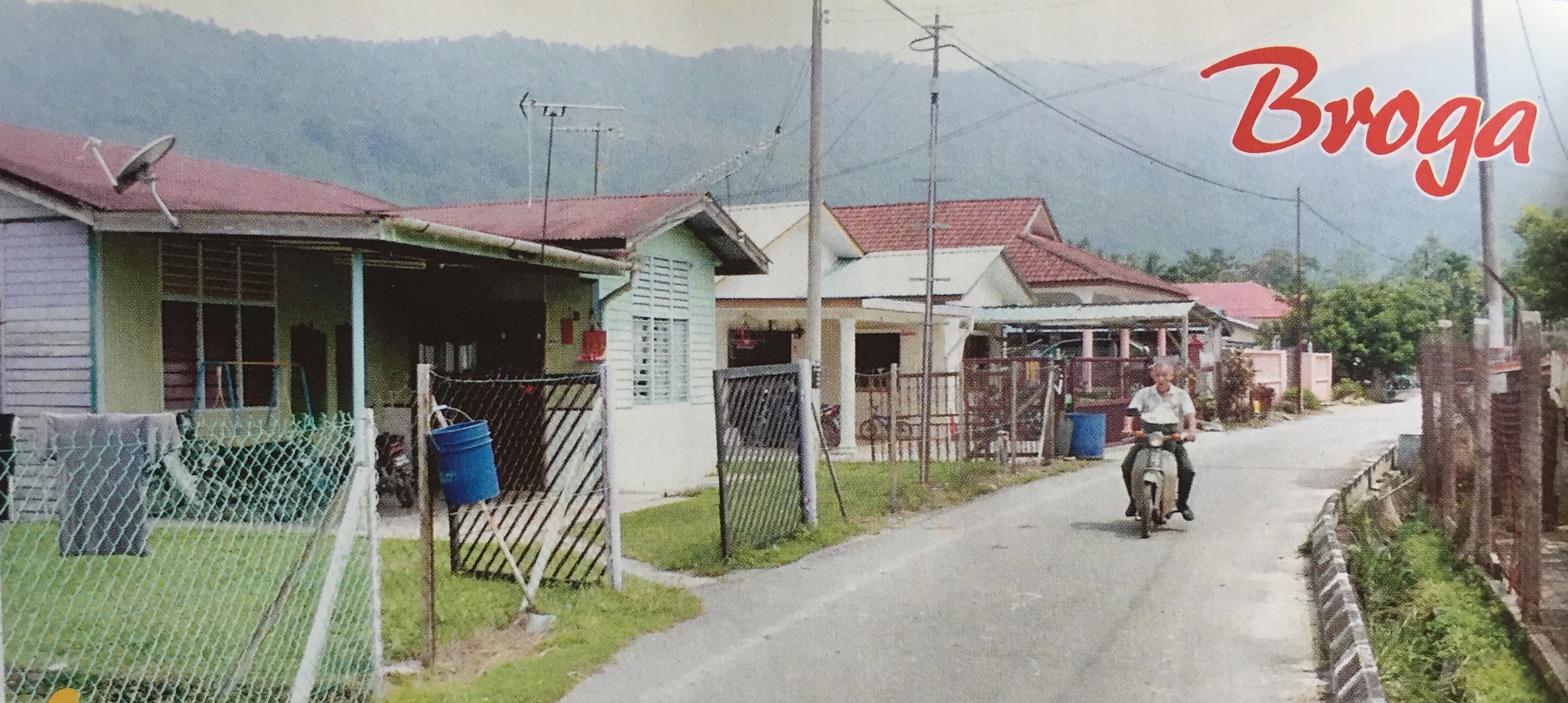
The little town of Broga is like a game of soccer, played in two halves. It is uniquely located within two states – one side is within the mukim of Semenyih, Hulu Langat, in Selangor and the other, falls under the mukim of Lenggeng, Seremban, Negri Sembilan (coordinates 2°56′14″N 101°54′40″E). A border agreement was administered during British administration (more details further down).
To differentiate between the two, the Selangor side is called Tarun Broga. Incidentally, there is a Kampung Tarun on the outskirts of Broga town at the Negri Sembilan side. Similar to many towns in the former Federated Malay States, Broga developed because of tin mining; subsequently rubber was cultivated and, later, farming activities were predominant. Today, it is a popular eco and agro tourism destination.
History
There are many versions as to how the name Broga came about. At the top on the list: it came from the word buragas, the name of an ancient mystical beast that lived in the surrounding forest. When tin was discovered, the area became berharga (‘precious’ in Malay). This was corrupted to ‘Beroga’ and subsequently, it became ‘Broga’. To the Orang Asli community, broga is the name of a bird that lives on top of the hill. It was also believed that Broga was the name of the river that flows through the area.
In the modern context, in America, the word broga is increasingly getting popular! The word combines ‘brother’ (Bro) and ‘yoga’ (Ga), the name of a new form of exercise regime particularly for men that combines fitness exercises with traditional yoga postures. The roles are now reversed, Broga (the exercise that is) is so popular that now women are queuing up to join the men in doing it. A check on the local scene, Broga the exercise, is still not available in Malaysia.
The town started as early as 1851 with the arrival of a group of Hakka immigrants from the neighbouring Jelebu district. Broga was under the jurisdiction of Sungai Ujong until 1883. In this year, the Selangor and Negeri Sembilan state boundaries were redrawn Lukut district in Selangor was exchanged for the Ulu Semenyih district, which also included Beranang and Broga. Lukut was among the earliest and tin producing areas in our country from 1830 to 1860 while Ulu Semenyih, at the time, was covered with virgin jungle and sparsely populated.
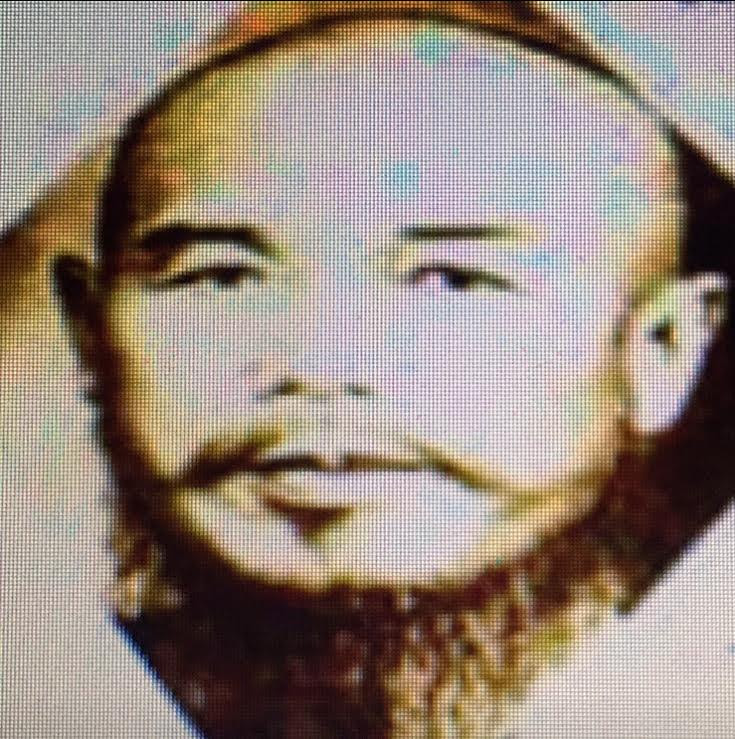
Towkay Goh Ah Ngee / Photo source : Parish History, Church of the Holy Family Kajang
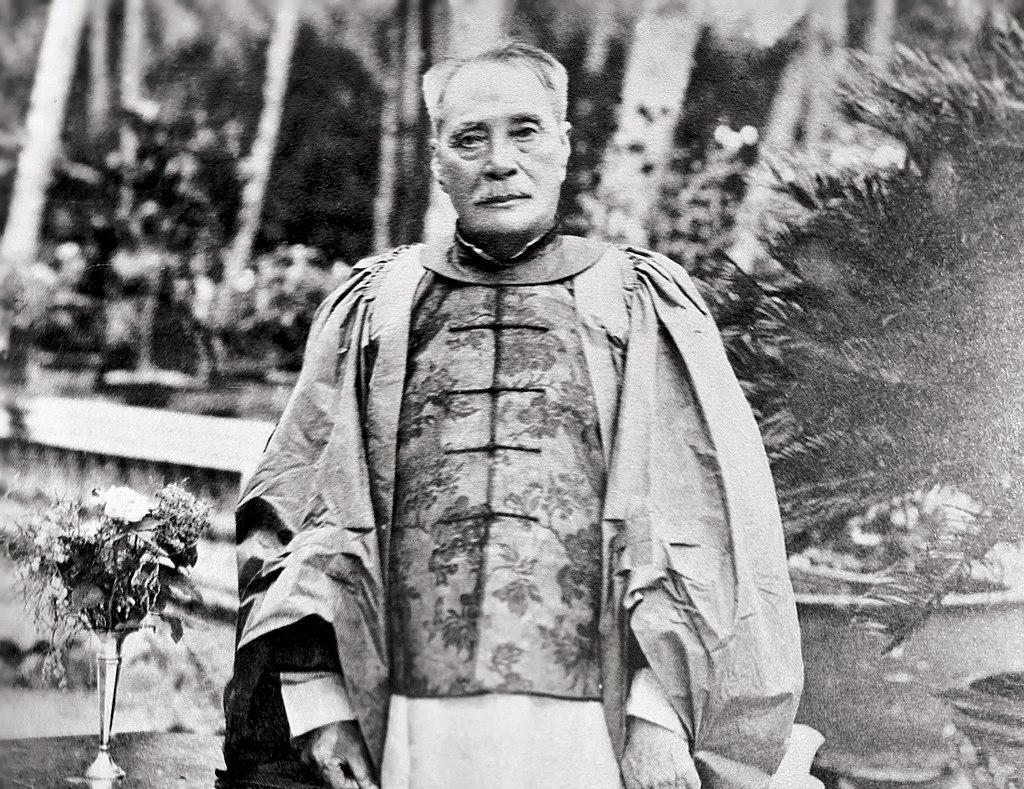
Towkay Goh Ah Ngee was the person credited for the start of tin mining in the district of Ulu Semenyih. Towkay Goh started as a businessman and contractor, and later put his faith in tin mining. He was successful in his first ventures at Rawang and Serendah in the 1880’s. He then moved to the Broga district and he was again successful in opening up a highly profitable mine. To reach his mine, he made an extension of a branch cart road from Semenyih and it was to be the very first road to Broga. Unlike many of his peers, Goh Ah Ngee was a Catholic convert. One of the important innovations that he brought to the mining industry was direct employment of labour. When British Resident W.H. Treacher made a tour of the area, he reported that it was a Chinese Catholic Settlement. Goh Ah Ngee later moved to Kajang to embark on coffee planting. He left the operation of the mines in Broga in the hands of his son-in-law, Lai Tet Loke. Tin mining activities in Broga continued into the early 20th century and saw the introduction of tin dredges in the area. The remnants of that era can be seen in the name of an existing road in the area aptly called Jalan Kampung Kapal.
The early 20th century, as in many places in Western Peninsula, saw the emergence of rubber as the main crop and the people of Broga switched to rubber cultivation. It continued until today albeit on a much smaller scale.
During the Malayan Emergency, a total of 993 residents in and around Broga were rounded up and resettled at the Broga New Village under the Briggs Plan in 1950. Three years later, 850 of them tried to escape from the village perimeter but all of them were arrested and remanded for ten days. In 1954, a Chinese primary school (today SJK (C) Kampung Baru Broga) was established within the new village and it started with an enrolment of 150 pupils. Earlier, it was believed that a Chinese school was set up in 1902 but it has ceased to exist.
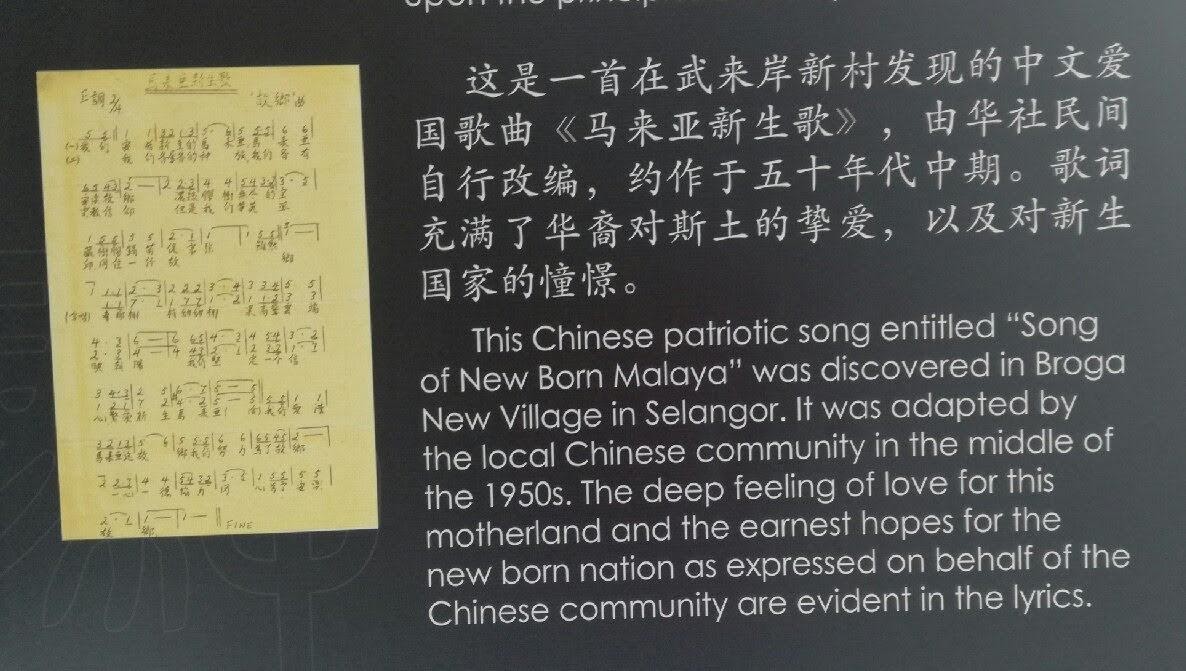
The ‘A history of Malaysia – Sino interactions’ exhibition held in 2019 revealed an interesting discovery in Broga. This was a Chinese patriotic song entitled ‘Song of a new-born Malaya’, a song about the deep feeling of love and longing of the Chinese community for their motherland and, at the same time, their earnest hopes and aspirations for the new nation of Malaya. The song was adopted by the Chinese community in Broga in the middle of the 1950s.
Photo source : A History of Malaysia – Sino Interactions exhibition
Moving forward to 2002, sleepy Broga was thrust into the limelight when it was named the new site for the RM 1.5 billion thermal incinerator project, which was relocated from Kampung Bohol, Puchong. The proposed site was on state land adjacent to the Sungai Lalang Forest Reserve, at the foothills of the Main Range. The proponent of the project was the Ministry of Housing and Local Government and Ebara Corporation, a Japanese waste management company, to build the incinerator. Upon completion, it would be the largest waste incinerator in Asia with the capability to incinerate 1,500 tonnes of rubbish a day. Broga-born Alice Lee Yoke Kim and some of the town folks immediately rose to protest the project amidst worries about pollution risks, disposal of toxin incinerator ash and they expressed concerns with the maintenance of the incinerator. They took the Government to court in 2003 and fought tooth and nail for four years until finally in July 2007, the court announced that the project was terminated. As a result, the Government had to pay RM 100 million as compensation to the equipment suppliers and contractors. The campaign to stop the Broga incinerator project (from 2002 to 2005) was recorded and made into a documentary entitled ‘Alice lives here’ by an independent production house, Reel Power Productions 2005.
Places of interest
University of Nottingham Malaysia Campus (UNMC)
Located along Jalan Broga (Selangor state road B34) which starts at the left turn off Federal Route 1 just after the town of Semenyih is the University of Nottingham Malaysia Campus (UNMC) (1). It would have been ‘living next door to the waste incinerator’ had the project been given the go ahead. UNMC was established in 2000 and it is a partnership between the university, Boustead Holdings Berhad and YTL Corporation Berhad. It opened at Wisma MISC in Kuala Lumpur and in September 2005, it moved to the current multi-purpose built park campus. Occupying a 101 acres site, it was the first ever branch campus of a British university established outside the United Kingdom. Currently, UNMC has over 4500 students from more than 70 countries. University of Nottingham has another branch campus at Ningbo, Zhejiang Province in China.
Just a short distance from UNMC is Broga Hill / Bukit Broga (2), a popular hiking destination. It is located at the edge of the Titiwangsa Range and at 400 metres (1312 feet) in altitude, it is rated as an easy hike, even for beginners. The actual name of Broga Hill is Bukit Lalang, which refers to the cogon grass that grows abundantly at the top of the hill in place of the missing trees. It has a unique appearance but it is proving to be the special feature of the hill as it provides an unobstructed and panoramic view of the land below. There are three peaks where visitors can hike up to for viewing but the first peak seems to be the crowd favourite. For those who want a challenge, they can continue hiking further 3.1 km to Gunung Tok Wan, which is 675 metres high and another 1.2 km to Puncak 18 at 809 metres high. Unlike the cogon grass at Broga Hill, these trails are surrounded by more familiar primary rainforest. The hill was given another boost when some scenes from a local hit movie ‘Ola bola’ were shot here.
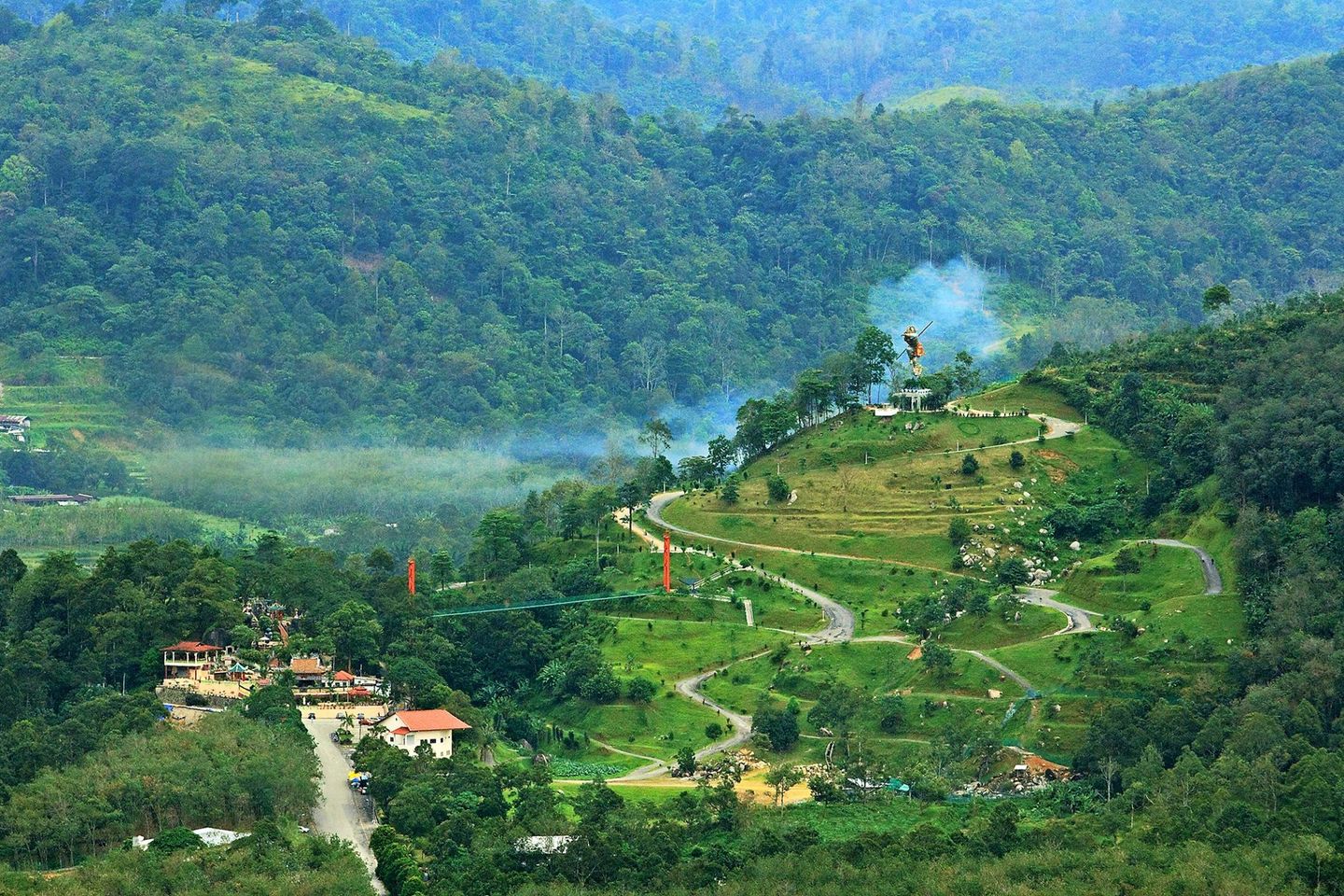
Unlike the earlier sites, which are located on the Selangor side, this site is located in Negri Sembilan and it is listed on top of the ‘Must Do’ list when visiting Broga. The place is Broga Shi Na Du / Sak Dato Temple ( (武來岸玉封石哪督廟) (3). This temple is believed to be more than 150 years old. The name is closely connected with the Orang Asli community living in the neighbouring village. Aman was his name and he was a miner. As he had many Chinese friends, he had wanted to adopt a Chinese name and finally decided on the surname ‘Shi’ (stone in Mandarin) and he became known as Shi Man. During the Japanese Occupation, Japanese army had planned a mass killing of residents of Broga but the action was not carried out when a mystery person suddenly appeared on the scene. The residents believed that the mysterious person was none other than Shi Man. When he died, he was deified as Shi Na Du (in Mandarin) or Sak Dato (in Cantonese).
A new temple was established at the current site in 1970 to replace the first temple. It has undergone several upgrading works, including a suspension bridge, a koi pond, various statues including the twelve Chinese zodiac animals, pavilions, an herb garden, a cultural centre, benches and a tarred path around the temple and park. There is also a huge statue of Sun Wukong (Monkey King of the ‘A journey to the West’ fame), which made its way into the Malaysia Book of Records as the tallest statue of Sun Wukong in the country.
Not too long ago, Sak Dato Temple was a popular filming location especially for the shooting of Chinese New Year music videos. It also became a place for divining lucky numbers. The temple is one of the largest full-sized Datuk Kong temples in the country and it is setting the trend in the pattern and design for future development of Datuk Kong temples in the country with an eye on the promotion of the tourism industry.
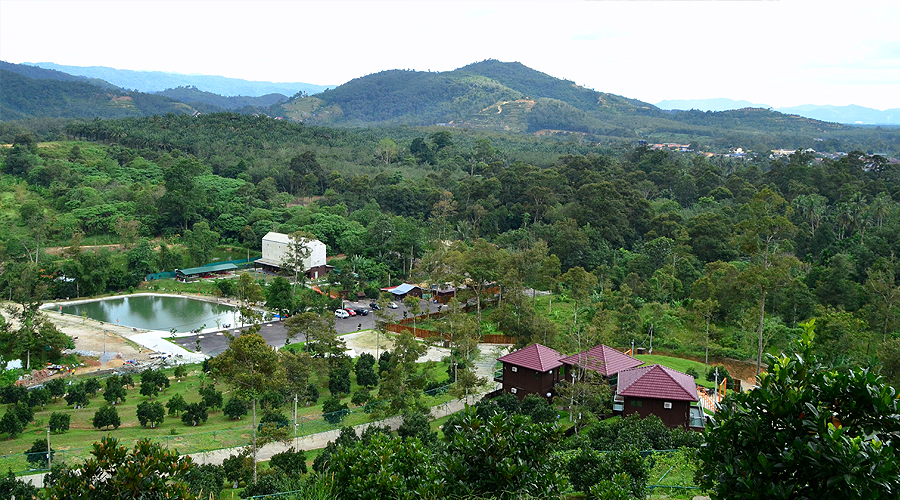
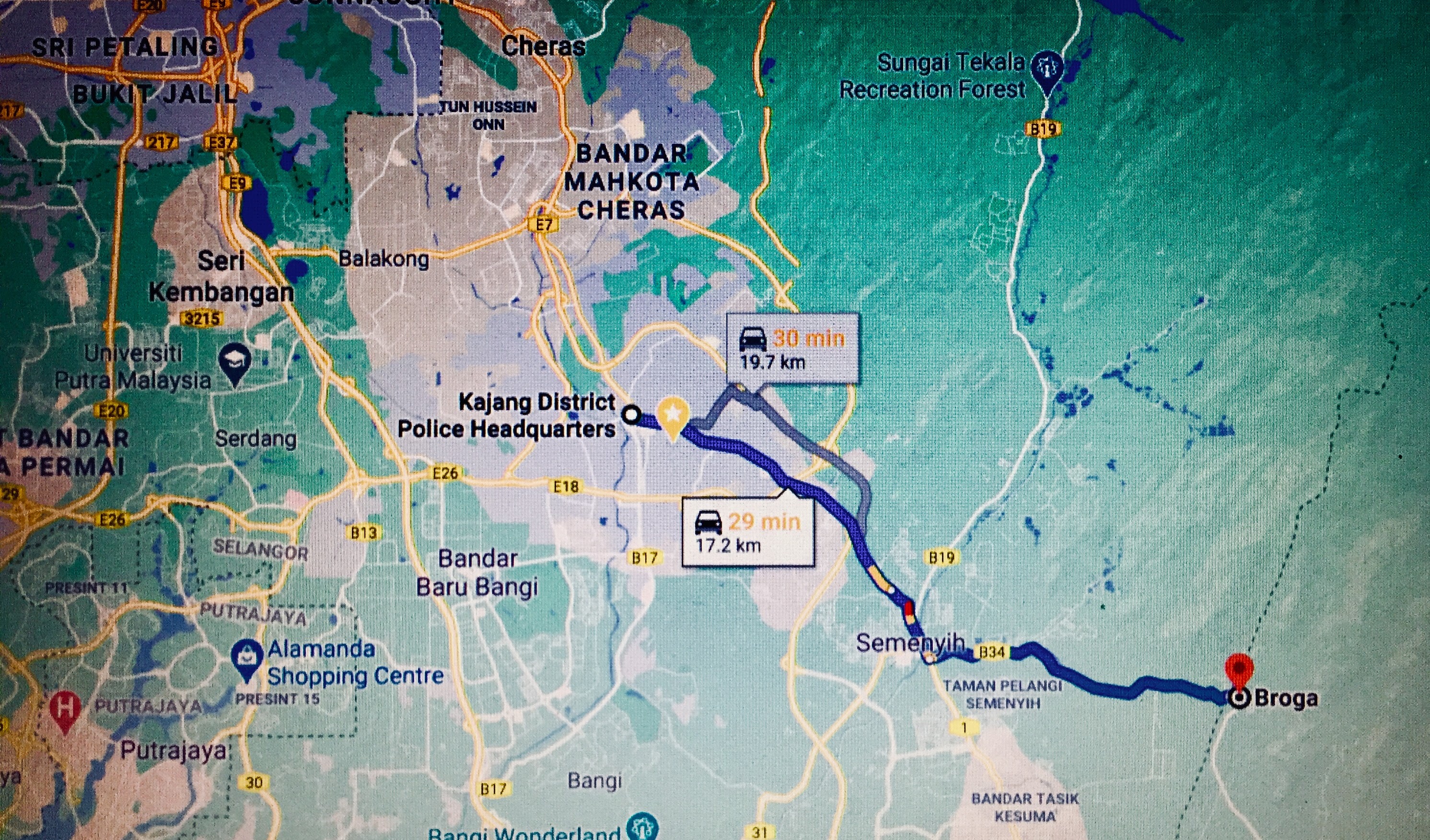
With a back-to-nature setting surrounded by lush forest, Broga is an ideal place for the setting up of training camps. Just within 42 km or about an hour drive from Kuala Lumpur, it is a perfect getaway from the hustle and bustle of city life. There are three main training camps that offer both on-site as well as off-site activities with various types of accommodations from VIP chalets, honeymoon deluxe chalets, deluxe rooms to dormitories. There are also multi-purpose halls, seminar rooms and food catering.
Outdoor Team Building Adventure Camp or OUTBAC Broga in short (4), located at Kampung Sri Broga is the training camp that is nearest to the town. Established in 2002, Outbac specialises in team building activities and caters to a wide range of clientele. Outbac is spread over an area of 6.5 acres and is an internationally accredited (NARTA certified) campsite in Malaysia.
Next is Excel Training and Country Resort (5) located at Kampung Kapal. This 18 acres camp is built by Dato Hj. Mohd Fadzilah Kamsah, prominent and renowned motivational and training speaker. Some of the facilities and activities provided by Excel are a swimming pool, open-air cafeteria, paintball park and fruit farm walkabout.
Last but not least is Paradise Valley (6), located at Jalan Tarun Broga. As the street name suggests, it is on the Selangor side of Broga. Apart from meetings and team building activities, it is a good location for church retreats, family gatherings and weddings and receptions. It also provides various day tour programmes like wall climbing, kayaking, abseiling, flying fox and obstacle courses. Its off-site activities include Broga Hill hiking, waterfall trekking and caving.
Located within walking distance to Sak Dato Temple is Broga Bliss Eco Garden (7).It is an ideal place for a family gathering, private event and a retreat and facilities include a pool, organic farm, BBQ pitch and kitchen. There is also a campsite. Interestingly, located close by to Broga Bliss is Doghouse Broga (8), a boutique hotel for pet dogs which features dog villas, outdoor and indoor play areas and a swimming pool. As an additional service (and additional cost, of course), Doghouse Broga also provides pet taxi, a pick-up and return service.
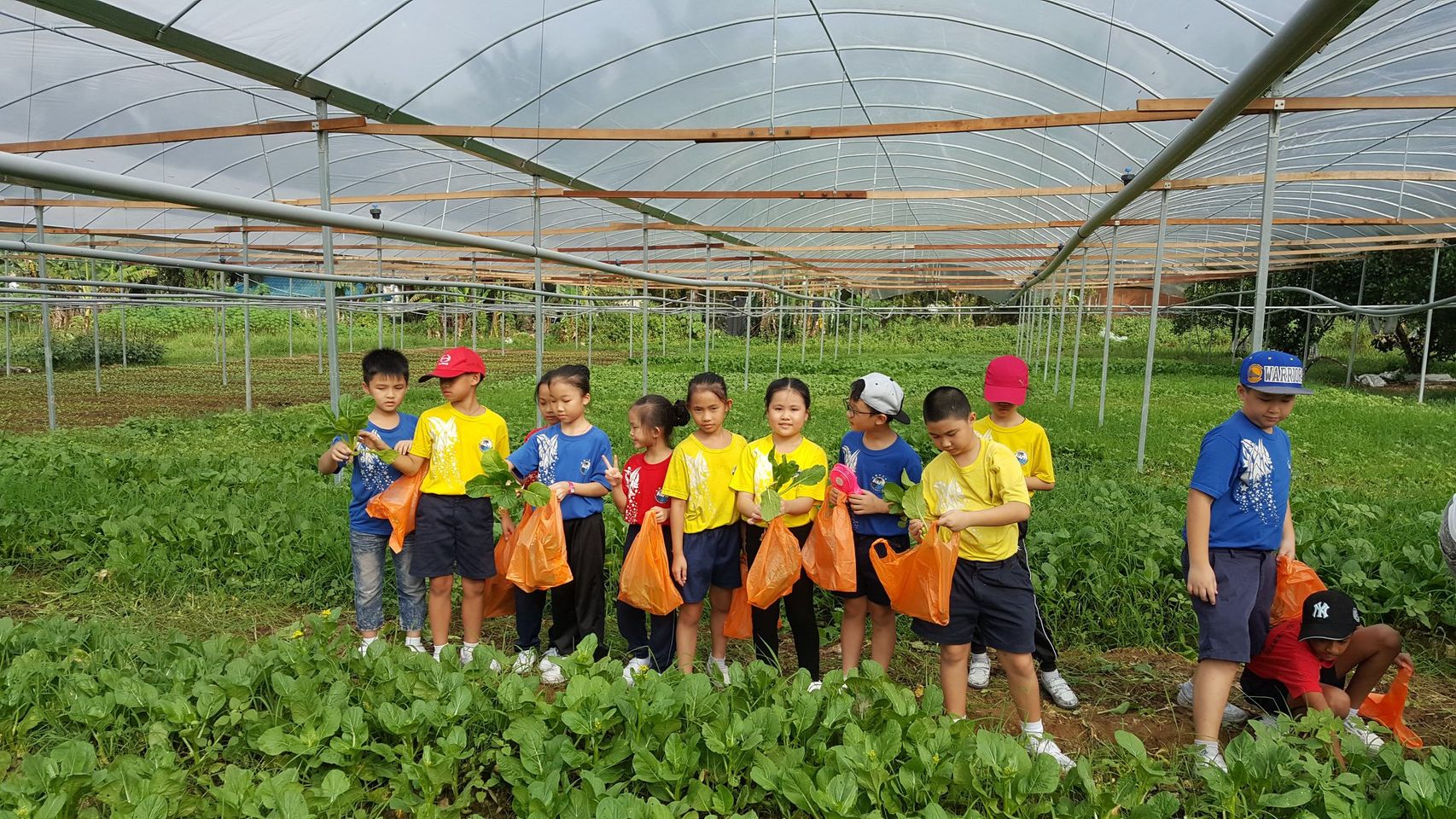
As for organic farms, there are Fireflies Organic Farm Broga(9) and Ladybird Organic Farm (10), both located along Jalan Broga. Both offer their produce for sale and conduct educational tours where visitors can experience organic vegetable farming, from seed sowing through harvesting. A Farm Agrotech (11) was formed in 2012 as an agricultural consultancy company and later included aquafarming into their repertoire when they started to grow Tor tambroides, or empurau in Malay, in captivity. Today, they offer a full range of services to aqua and agricultural companies.
From Cheras, use the Cheras – Kajang Expressway (E7) and exit to Kajang town. At the main intersection (between Stadium Kajang on the right and Police Station on the left), turn left to join Jalan Semenyih (this is Federal Route 1). Go all the way to Semenyih town, and at the T-junction just after the town, look out for signs to University of Nottingham and Broga (state route B34) and turn left. The distance is 8.2 km or about 11 minutes drive from this junction to Broga town.
References
Bumi Satu Kampung Dalam 2 Negeri – i Kampung Baru . Imbasan Sejarah Kampung Baru Cina Selangor – Published by Jawatankuasa Tetap Pembangunan Kampung Baru Kerajaan Selangor -First edition 2012 – pp 158 – 159.
Li Kheng Poh / In search of environmental justice in Malaysia: The cases of Broga and Bukit Merah / thesis submitted to University of Brighton for the degree of Doctor of Philosophy / pp 18-21 and 28-32
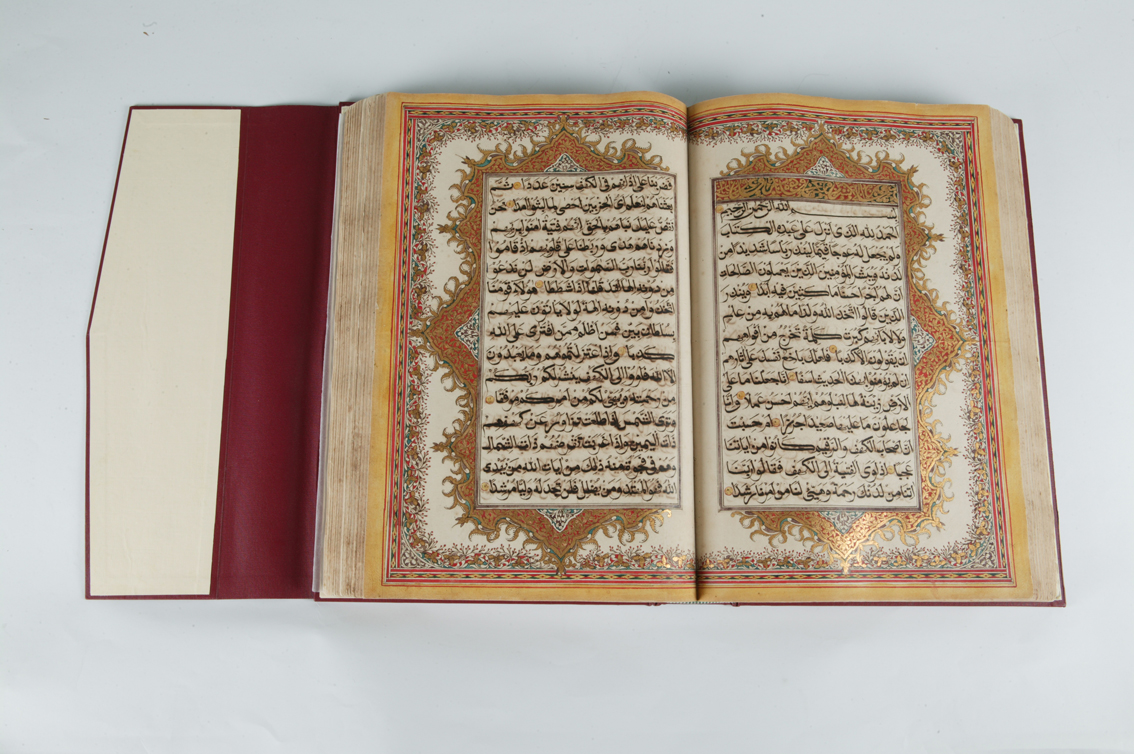
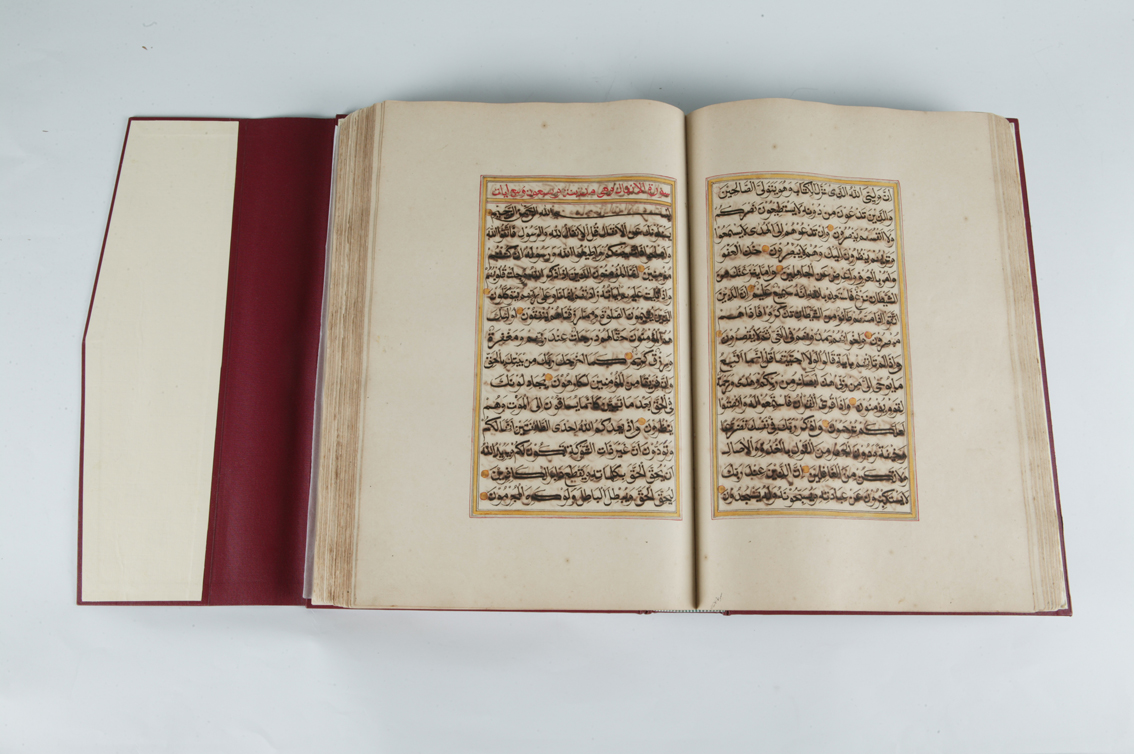
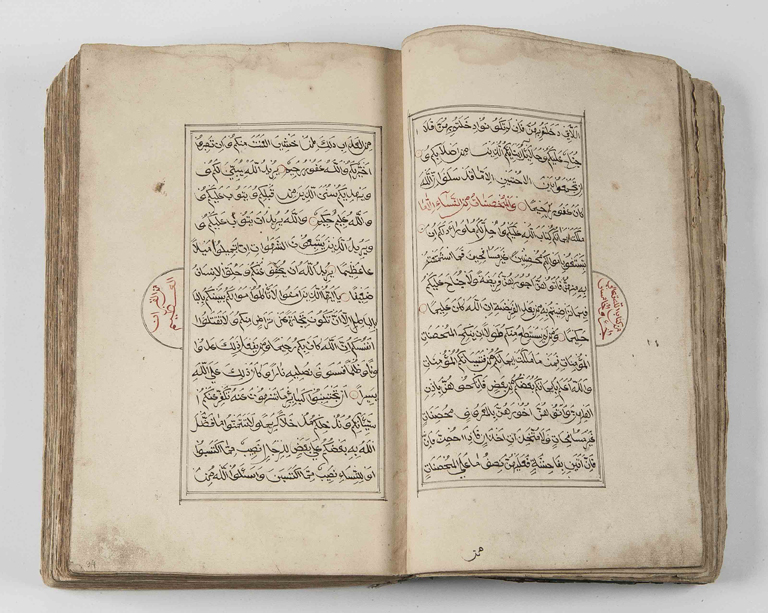
The Islamic Arts Museum Malaysia (IAMM) has an extensive collection of Malay Qurans, from which two samples will be examined here. Malay Qurans are only ornately decorated at the beginning, the middle and the end. Considering that my previous blog article had highlighted the illuminated pages found at the beginning and end of Malay Qurans, this article features the central illuminations instead. In his forward to Al-Quran: The Sacred Art of Revelation Vol. II (2014), the Chairman of IAMM invites us to contemplate the beauty of both the meaning and physical appearance of these manuscripts. This is because embellishment of the Malay Quran is done to assist recitation and to bring forth emotions, for Muslims believe the Quran relates specifically to the heart of man. Hence, building on ‘The Quran and the Sunnah’, we will briefly touch upon tafsir (Quran exegesis) of the central illuminated pages.
Malay Qurans are sometimes decorated in the middle, possibly influenced by Uzbek, Kashmiri and Indian Qurans. This is done to celebrate the reader’s arrival at the halfway point – the ‘heart’ of the holy text. The decoration style is similar to the front and back pages. A Javanese Quran, for example, could feature batik-style motifs throughout its illuminated pages. Different scribes and illuminators may use different methods to indicate the centre e.g. letter, verse, surah or word count. According to the tradition of Quran reading in the Malay world, the word ‘wa-l-yatalattaf’ in Surah Al-Kahf verse 19 is accepted as the centre word of the Quran. This translates to ‘and let him be careful’ that means to conceal himself as much as possible. Malay Qurans, like Terengganu Quran 2012.13.6, may emphasise this word with enlarged or gilded script to mark its midpoint.
As far as illumination is concerned, Surah Al-Kahf (the Cave) can be said to be the central marking. Both the Malay Qurans featured here are illuminated at the start of Surah Al-Kahf. With reference to Tafsir ibn Kathir, Al-Hakim recorded from Abu Said that the Prophet (s.a.w) said “Whoever recites Surah Al-Kahf on Friday, it will illuminate him with light from one Friday to the next”. Tafsir ibn Kathir is the most widely accepted explanation of the Quran, based on other parts of the Quran itself as well as hadith i.e. ‘tradition’ referring to the narration, account and record of actions and sayings of Prophet Muhammad (s.a.w.).
Our first artefact is a Royal Terengganu Quran 1998.1.3427 dated 1871CE/ 1288AH. It is considerably large, measuring 43cm by 28cm and uses naskh script for clarity. Terengganu style is deemed the finest and most delicate of Malay Qurans. This artefact would have been copied during the reign of Sultan Baginda Omar (ruled 1831; 1839-76) who attracted foreign students and artisans to Terengganu by encouraging learning and industry. Foreign artisans then passed on their skills to the locals.
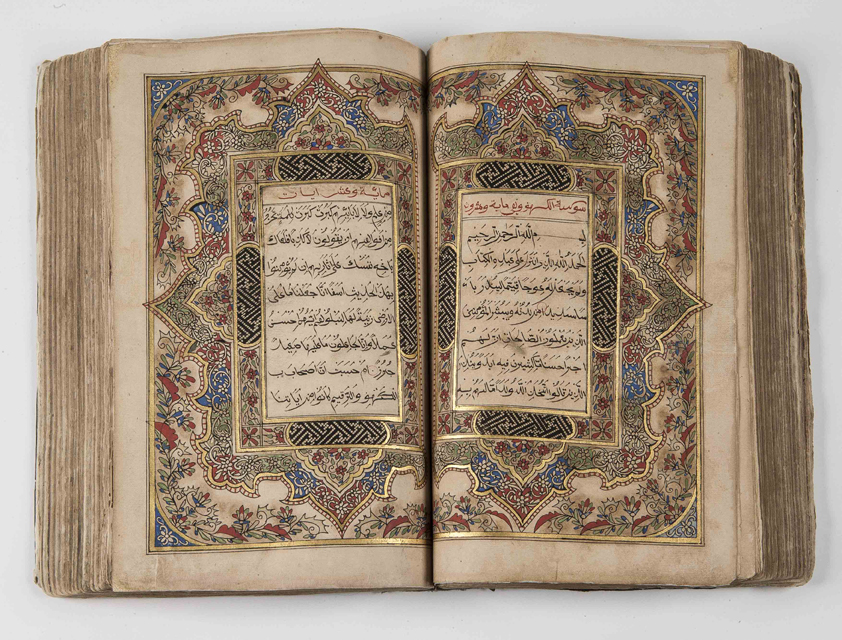
Malay Qurans have rich and symmetrical decorations. Both our artefacts have double-decorated frames illuminating the central pages. Similar to Malay woodcarving, these decorations include sulur-suluran (vegetal scrolls) and gunungan (mountain-shaped) motifs. Arabesques and geometric designs from the broader Islamic world are complemented with the permissible plant-motifs; avoiding figural representations. The arch-shaped gunungan motif is a legacy from the region’s Hindu past, which continued into the Islamic era since it reflects the natural landscape.
Colours too were produced from nature. The most popular colours used on Malay Qurans were red (from brazil-wood), black (from soot or charcoal) and yellow (from turmeric). Our Terengganu Quran features much gold, traditionally reserved for royal patronage.
In Southeast Asia, copying the Quran was only entrusted to professional, religious scribes. These scribes were occasionally under the supervision of a royal atelier. The design of our Royal Terengganu Quran suggests a foreign artisan. The clues lie in the noticeable use of lapis lazuli blue along with non-local choice of floral and vegetal decorations. Lapis lazuli was imported from Afghanistan or China and was no doubt an expensive pigment. Nonetheless, typical of Terengganu style, there is an outer frame i.e. a border running along the exterior edges with curved corners.
The central pages here include verses 1 to 17 of Surah Al-Kahf. It is noteworthy that some Qurans have abridged tafsir annotations written in the white margins of the illuminated pages, even though such is not the case here. The main theme of this surah is letting go of materialism. It begins with praise to Allah for sending us the Quran. The first passage warns of great trials ahead but gives glad tidings to the believers. Subsequently, the story of the youths who fled to a cave is told. According to Tafsir ibn Kathir, these youths were sons of Byzantine leaders who lived under a tyrannical king called Decianus, who tried to dictate their religion. Refusing to believe in multiple gods, these youths hid in a cave and they were protected by Allah. In other words, the youths defied worldly authority to guard their tawheed (belief in the one and only God) and they were thus saved from persecution.
The central illumination of our second artefact, Quran 2004.2.3, also includes an outer frame with curved corners, which is unusual for Javanese Qurans. This Quran measures 30cm by 20cm and is therefore, smaller than our first artefact. Our Javanese Quran displays similar motifs to the Terengganu Quran including gunungan, floral and vegetal scrolls. In addition, this artefact shows an interlocking black pattern within its innermost frame, known as ‘banji’, suggesting its Cirebon (West Javan) origin. In Javanese Qurans, the banji (swastika) motif derives from the island’s Hindu-Buddhist history and is present because it resembles the regional craft of rattan weaving.
This Javanese Quran uses red, gold and black, along with a more striking blue. Blue is more prominent in Javanese Qurans in a variety of shades including indigo to light sky blue. The surah headings are in red thuluth script while its text is in black naskh. The European paper watermark shows a lion within a roundel, topped off by a crown, which dates this Quran to the 19th century CE. Synthetic (French) ultramarine as a substitute to lapis lazuli was available during this time, which may have been used here.
The illuminations here surround verses 1 to 9 but one word of Surah Al-Kahf. The word ‘al-kahfi’, which gives the surah’s name, occurs in verse 9. With the addition of verse 10, the illuminated pages and missing word ‘ajaban’ (wonders) would protect its reader from the false messiah. Referencing Tafsir ibn Kathir, Imam Ahmad recorded from Abu Ad-Darda’ that the prophet (s.a.w.) said, “Whoever memorizes ten ayat from the beginning of Surah Al-Kahf will be protected from the Dajjal”.
It is now clear that these central pages hold particular benefits for the Quran reader. Surah Al-Kahf is appropriately illuminated since spiritually, its reader can be illuminated with light for up to a week. The illuminated pages are indeed arresting amidst the normal pages of text. Nonetheless, even the normal pages may have ornamentation at regular intervals along the margins to indicate the reader’s position within the holy text e.g. juz’ or nisf markers. Both artefacts showcased above represent the exquisite craftsmanship and artistry of nineteenth century CE Malay manuscripts.
A fort is any construction work erected to strengthen a position against an attack. What was to be defended? Was there any attack, siege, or capitulation? The answer to these questions may help shed light on key events in Malaysia’s history.
In Gallery C of Muzium Negara we find major and minor references to five forts: A Famosa and Fort St. John, both in Melaka; Kuala Kedah Fort on the estuary of the Kedah river; Fort Cornwallis in George Town, Penang; and ‘pillboxes’ in Kelantan. Through them, we can read the colonial history of peninsular Malaysia. But there are many other forts in Malaysia, some of which go back to pre-Islamic history … (continue reading)
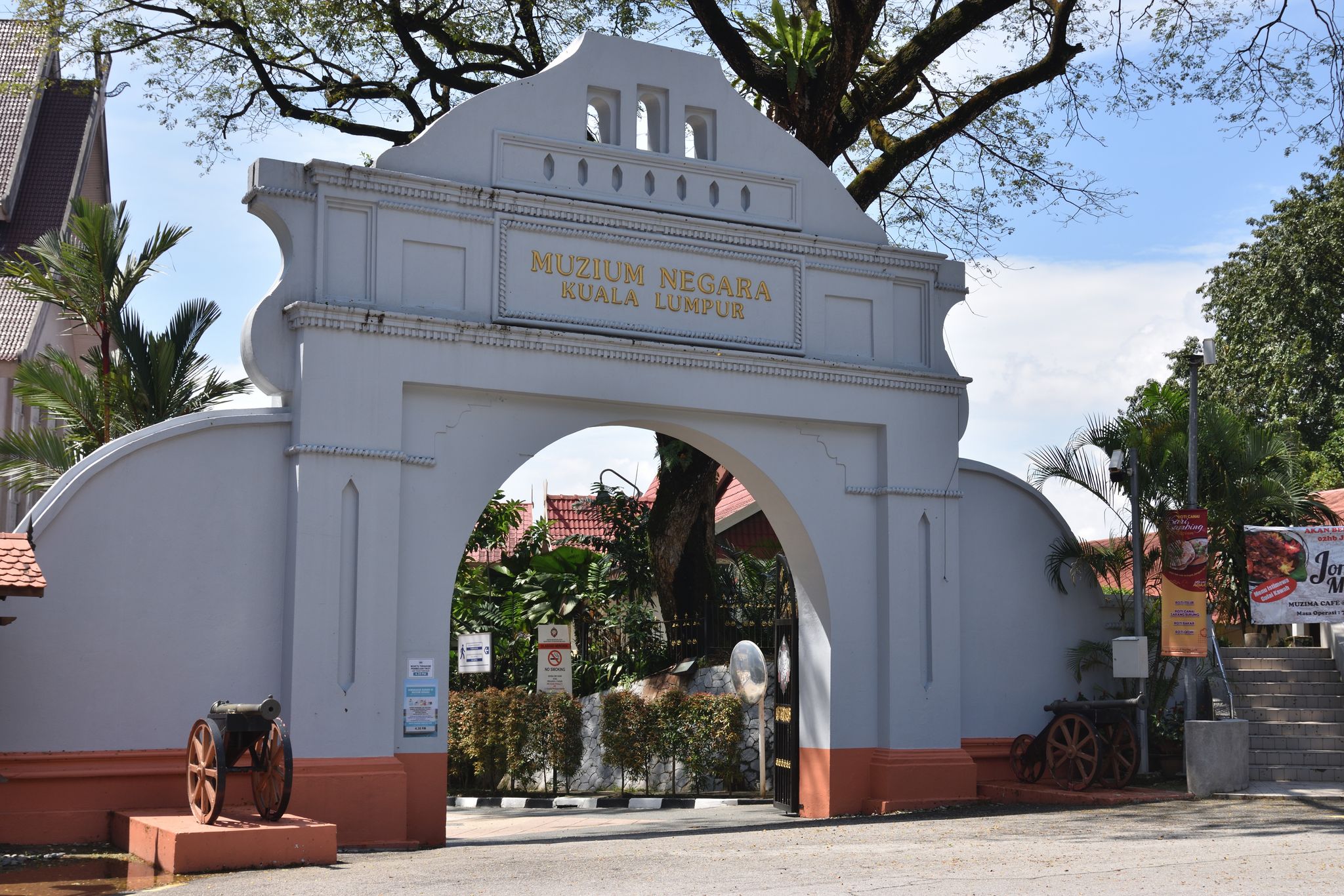
Replica of Kacapuri Gateway (Kuala Kedah Fort) at the carpark entrance to Muzium Negara Image copyright: Jörg Widany
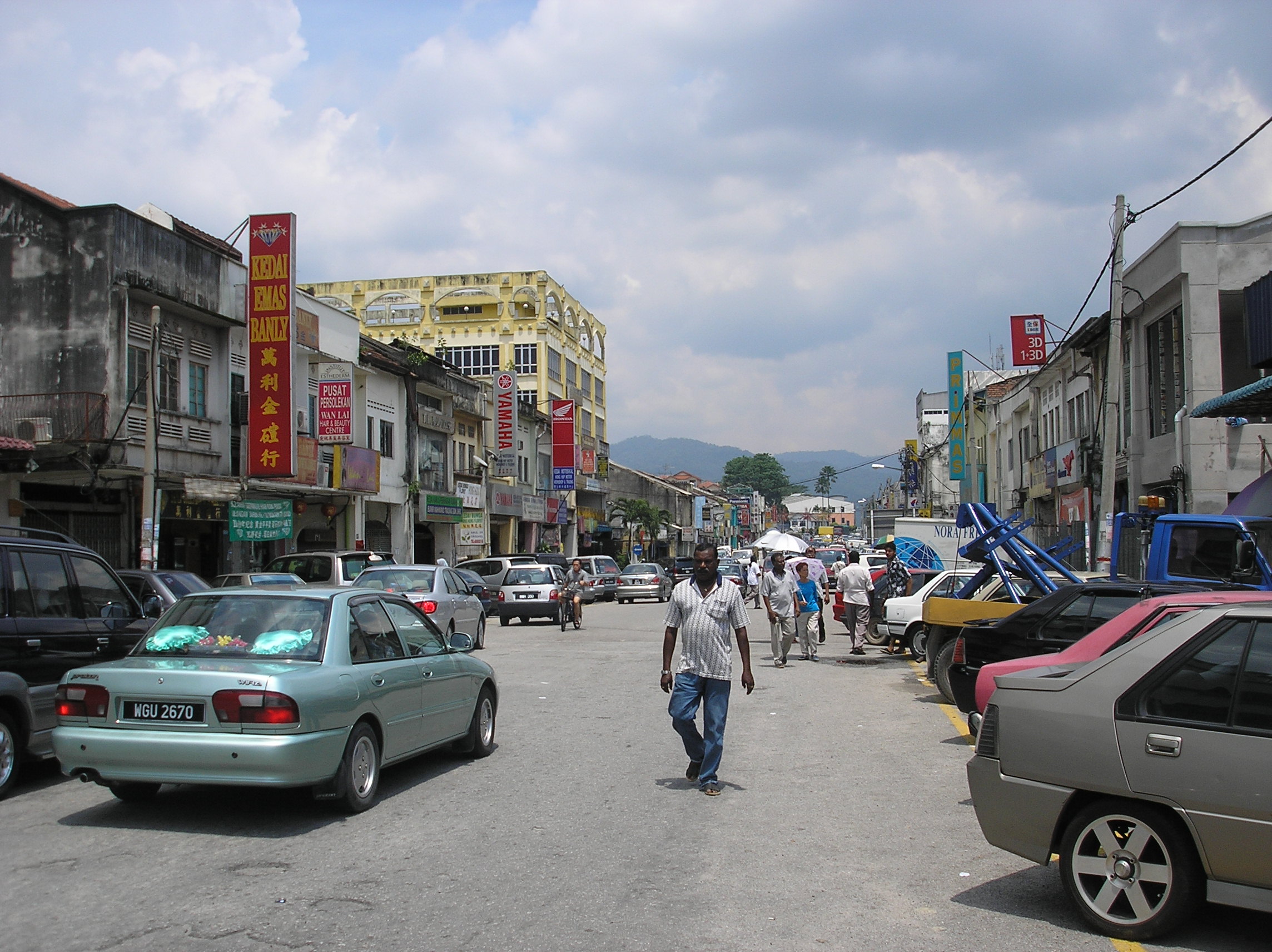
The town of Mantin, in the state of Negeri Sembilan, sits in a valley surrounded by hills. It is about 16 km northwest of the state capital, Seremban, lying close to the Negeri Sembilan-Selangor border. The town came into prominence as a tin mining town, then shifted to agriculture and today, it is known for a variety of produce such as jackfruit, mangosteen, rambutan and, of course, the King of Fruits, Durian.
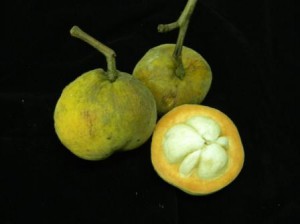
Originally, the town was known as Setul, the name of a fruit. This native fruit is also known locally as sentul or kecapi. Setul was located about eight miles away from Seremban. When the Kapitan Cina of Sungai Ujong, Sheng Meng Li, was killed in 1862, Chinese coolies decided to leave Sungai Ujong; many of them arrived and settled at a place slightly away from Setul, and the settlement eventually came be known as Mantin. Local legend has it that the name ‘Mantin’ came from a corruption of the words ‘mine tin’ or ‘many tin’, names which the British gave to the area with reference to its rich tin deposits. Subsequently, migrants from Huizhou, located on the southern Chinese province of Guangdong, came to work in the newly established tin mines in the area. They settled at Kampung Attap, which later became known as Kampung Hakka or Hakka Village.
On 1 February 1903, the Federated Malay States Railway line was opened from Bangi to Batang Benar, which is near Mantin. It was later extended to Seremban on 2 April the same year. The availability of train service brought new arrivals to the town and amongst them, the Sikhs who came to work as security guards in the mines. When the police station was established in 1910, another wave of Sikhs who worked in the police force arrived. Mantin was a favourite sanctuary and hiding place for refugees and, during the Japanese Occupation, Hakka groups from Titi in the interior Jelebu district came to seek refuge.
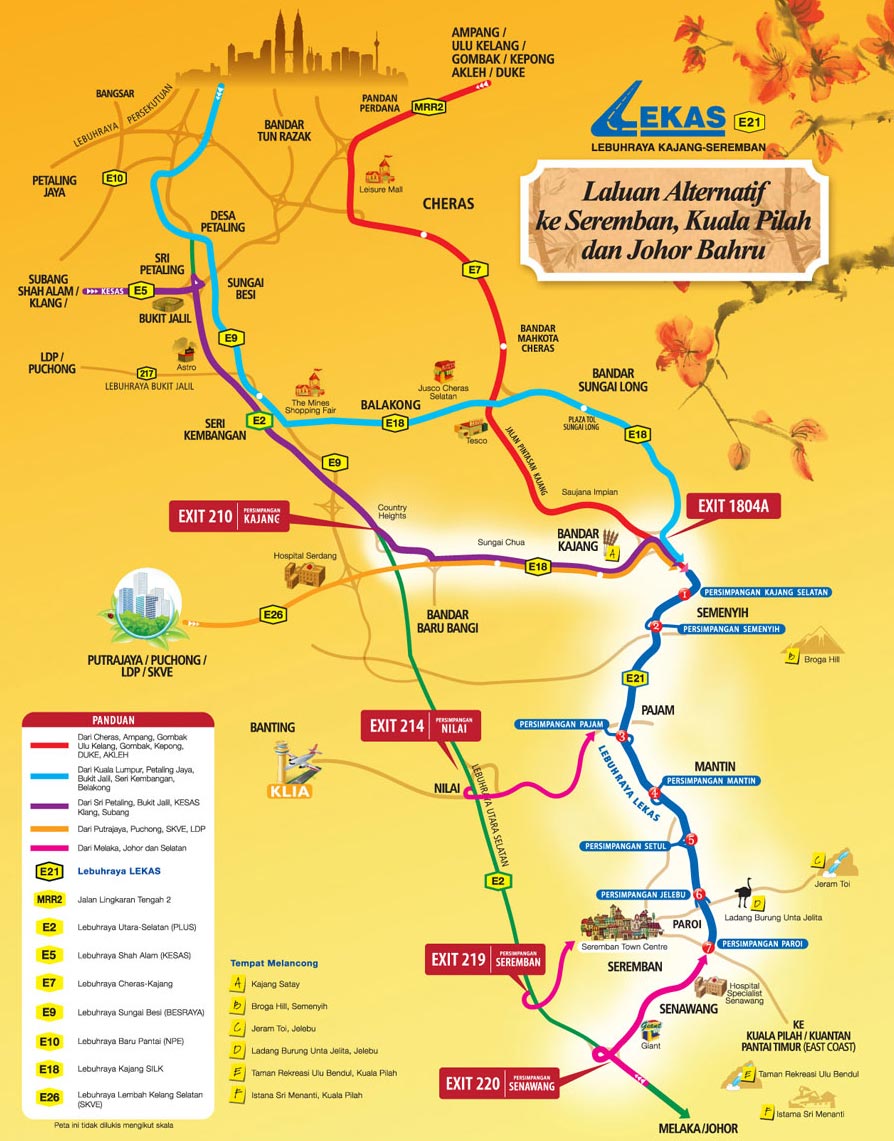
The town’s strategic location along Federal Route 1made Mantin a key pit stop for motorists plying the North-South trunk road. The town saw a decline when the North-South Expressway was opened in the early 1980’s but with the extension of LEKAS (highway connecting Kajang to Seremban) and the opening of the Mantin toll plaza on 31 December 2008, the town is regaining its glory.
Places of Interest
The Church of St. Aloysius
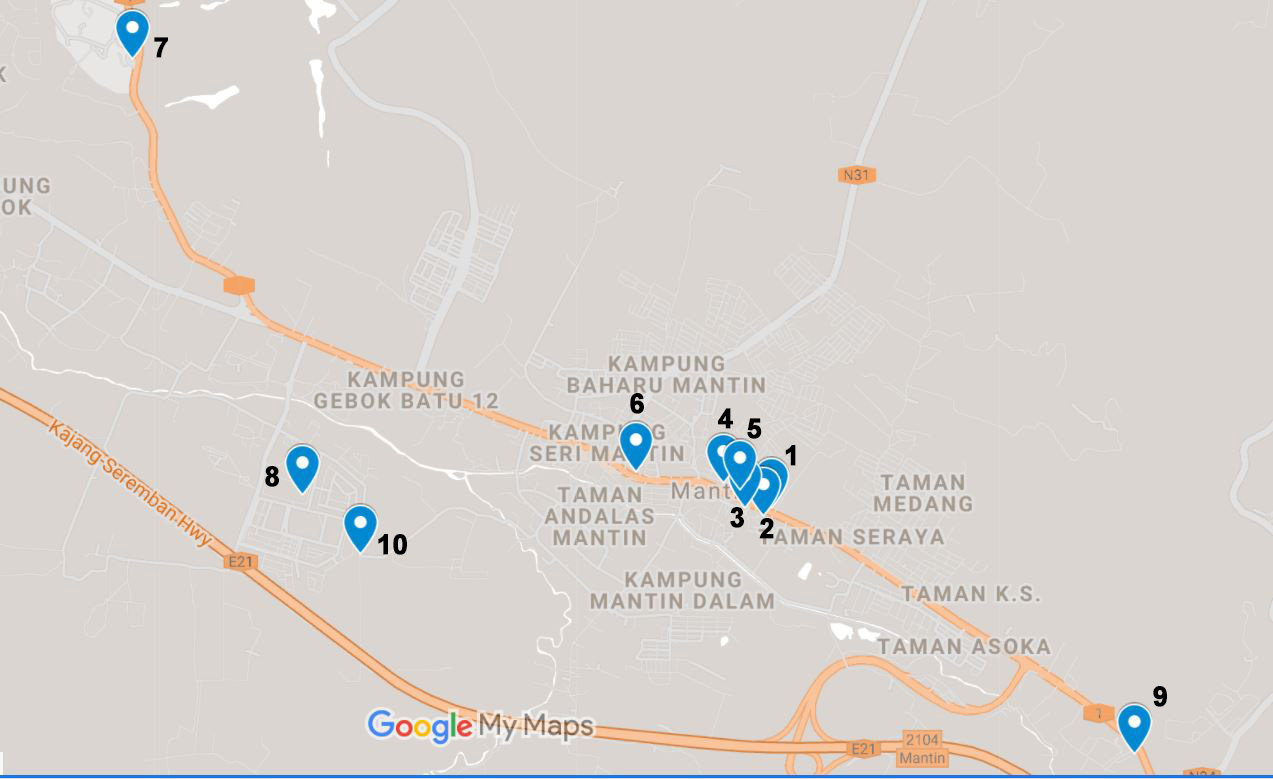
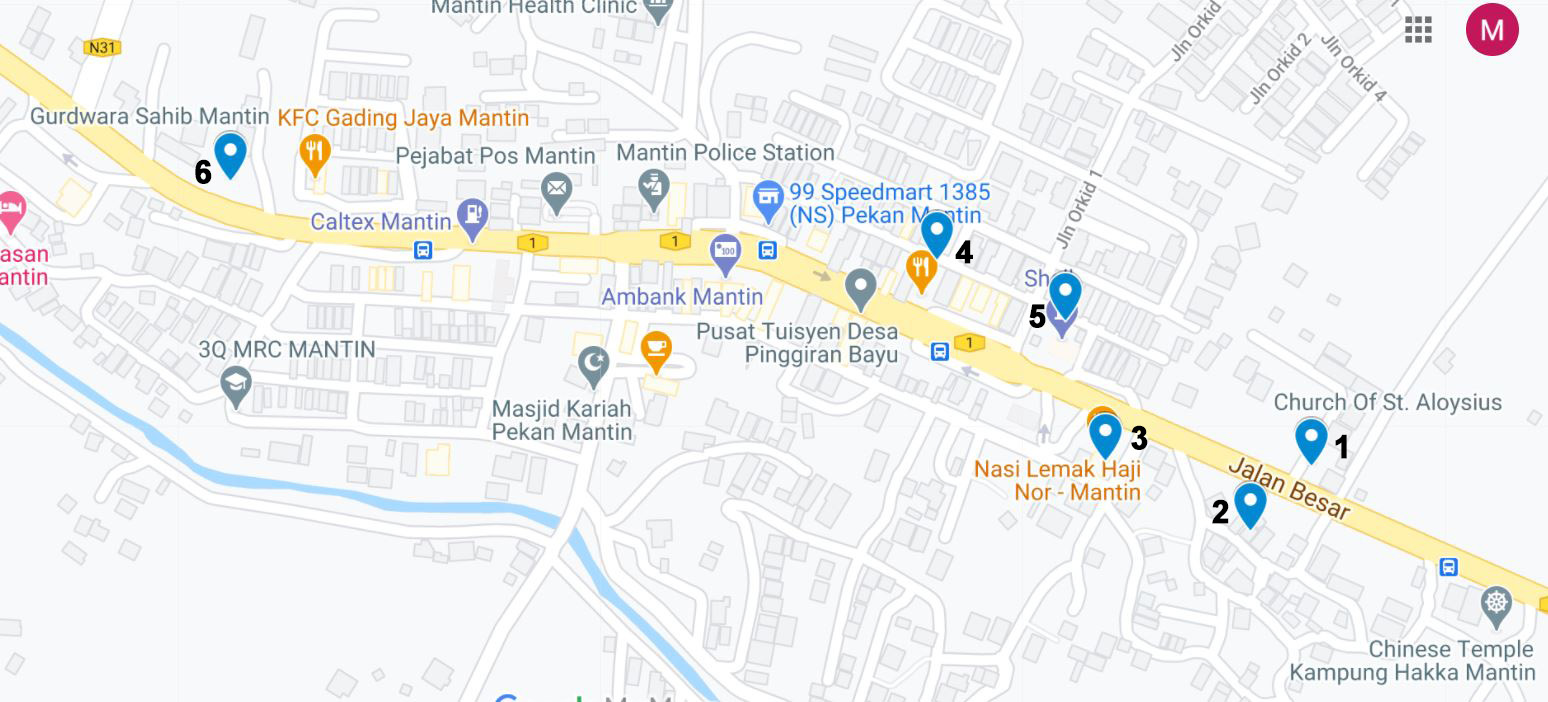
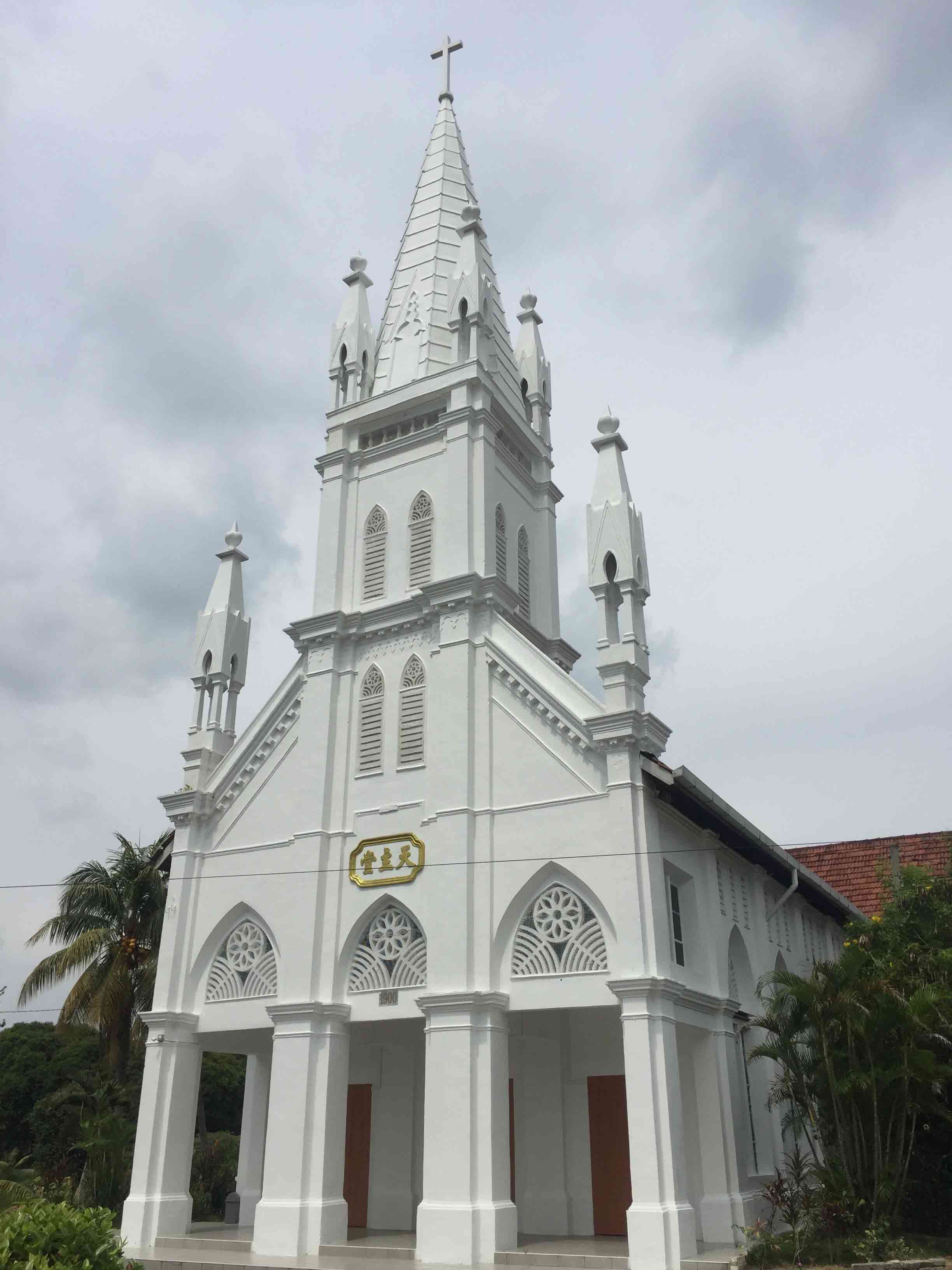
Located at Jalan Besar, the Church of St. Aloysius[1] has become the iconic landmark of Mantin. This neo-Gothic structure was erected in 1901 and it once housed a nunnery. The church is strategically located just opposite Kampung Hakka, the heartbeat of the town during its early years. Though it has been here for more than a century, the church is in good condition and is still an important place of worship for the local Catholic community. The Gereja Kebangkitan Kristus located at Kampung Belihoi, Mantin, is also under the administration of the Church. This chapel was established in 1950.
The Church of St. Aloysius. Image credit: Eric Lim
Kampung Hakka/Hakka Village
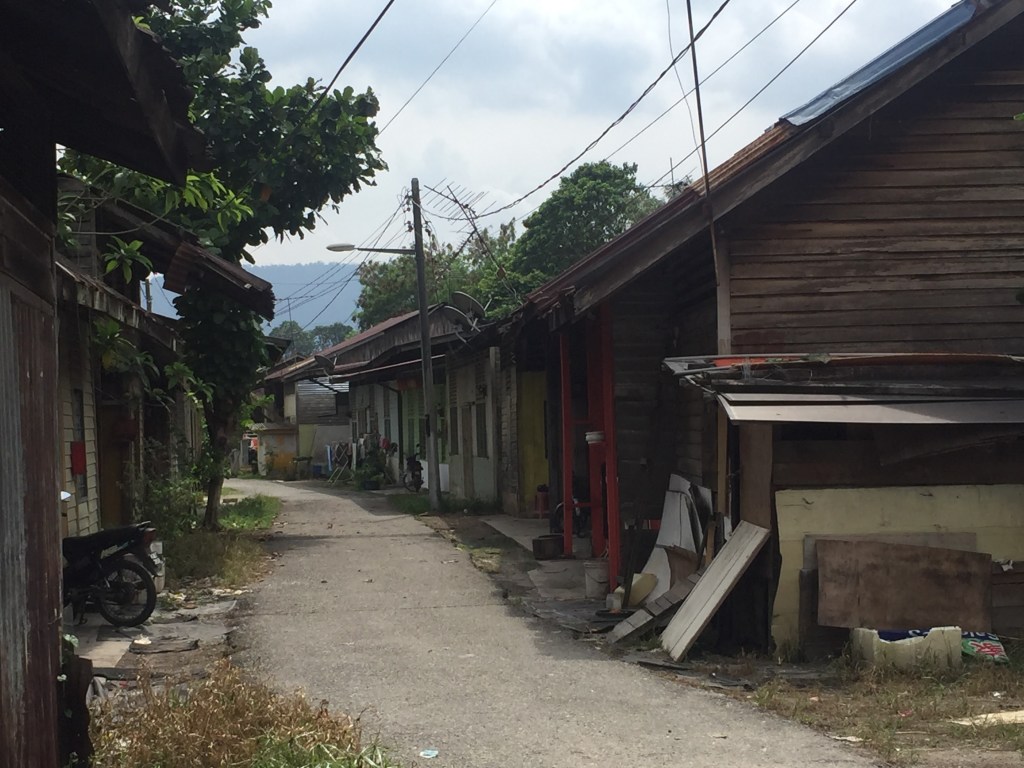
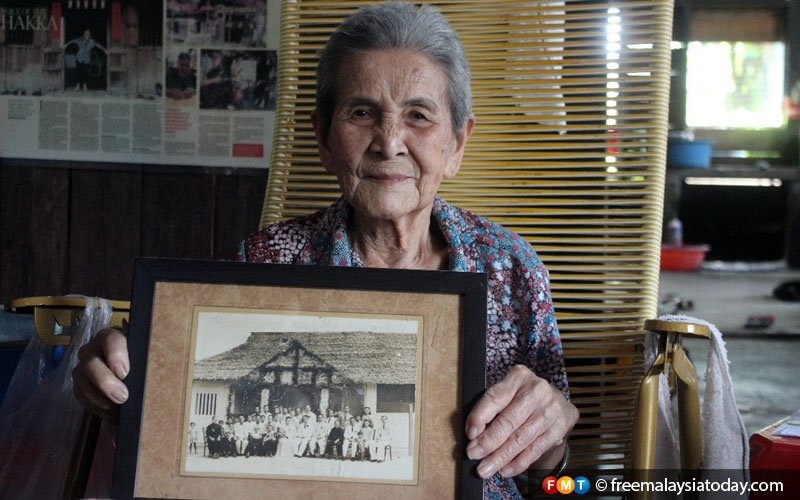
Just across the Church of St. Aloysius stand Kampung Hakka / Hakka Village[2]. It was the settlement of the pioneering Chinese coolies and, at its peak, Kampung Hakka was home to more than 300 families. It is situated along the banks of Sungai Setul and close to the heart of the mining activity. As the village grew, a school and a temple were added. The village was alienated to Majlis Perbadanan Nilai who later awarded the development of a new township to a private housing developer. Some of the villagers accepted compensation, abandoned their homes and left. Others decided to take their case to court. In 2013, the High Court ruled in favour of the developers but the villagers managed to obtain a stay order. The legal tussle is still going on and the villagers are awaiting clarifications from the state government. Kong Sook Koon, who at 93 could very well be the oldest resident, is determined not to be forced out. ‘Kampung Hakka is everything that matters’. Kampung Hakka is one of the oldest Hakka villages in our country.
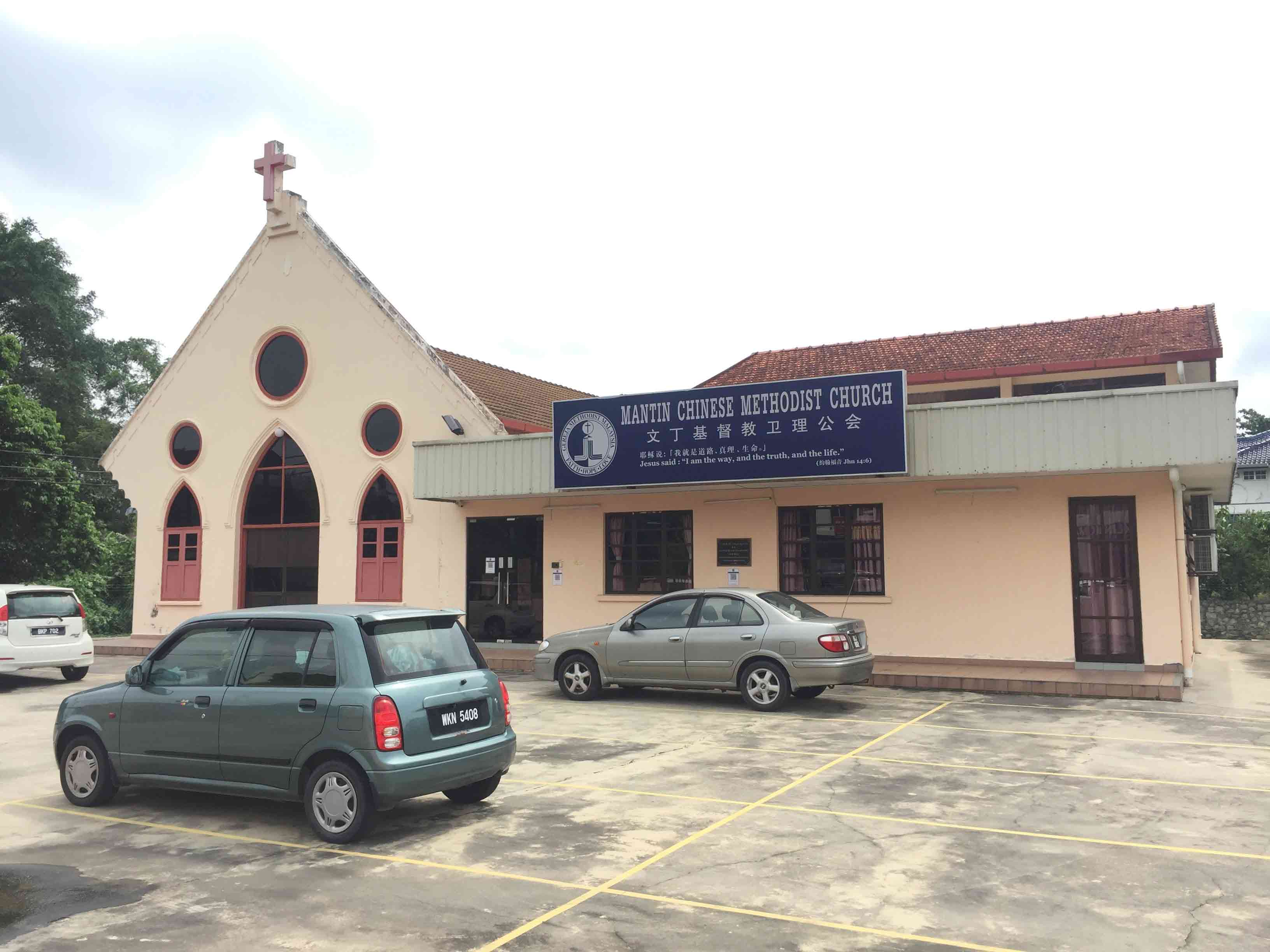
Just next to Kampung Hakka’ entrance is the location of the Mantin Chinese Methodist Church (CAC)[3]. This church was built in 1925 and the cost of the building was raised almost in full by the local congregation. As part of their expansion plan, the church also runs a kindergarten, Tadika Methodist Mantin, at nearby Taman Setul.
Mantin Chinese Methodist Church. Image credit: Eric Lim
Cinemas
If cinemas are used as an indication of a town’s success, then this small town can be rated as successful. There were two cinemas in Mantin, the first cinema was called Thai Wah [4] and later came Universal Theater[5], which was completed in 1961. The former was located at the current Old Mantin Hawker Centre while the latter was located between the hawker centre and the adjacent two rows of shophouses, both along Jalan Besar.
GurdwaraSahib Mantin
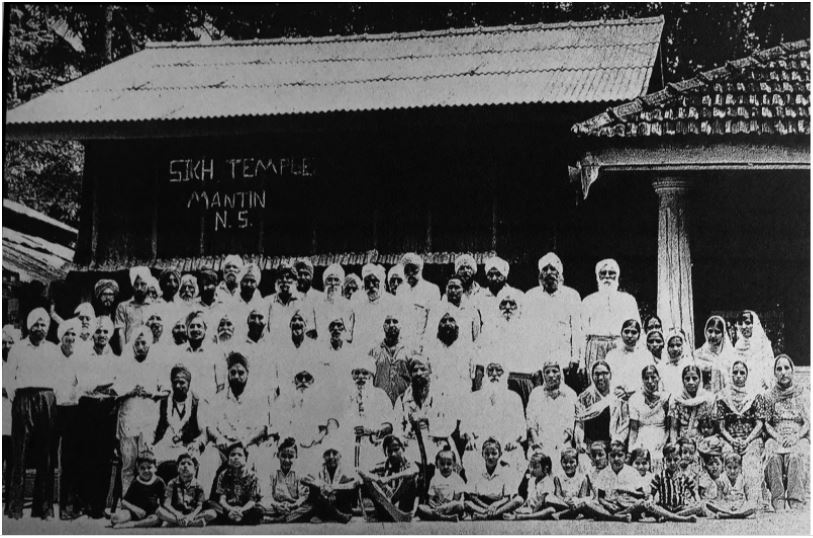
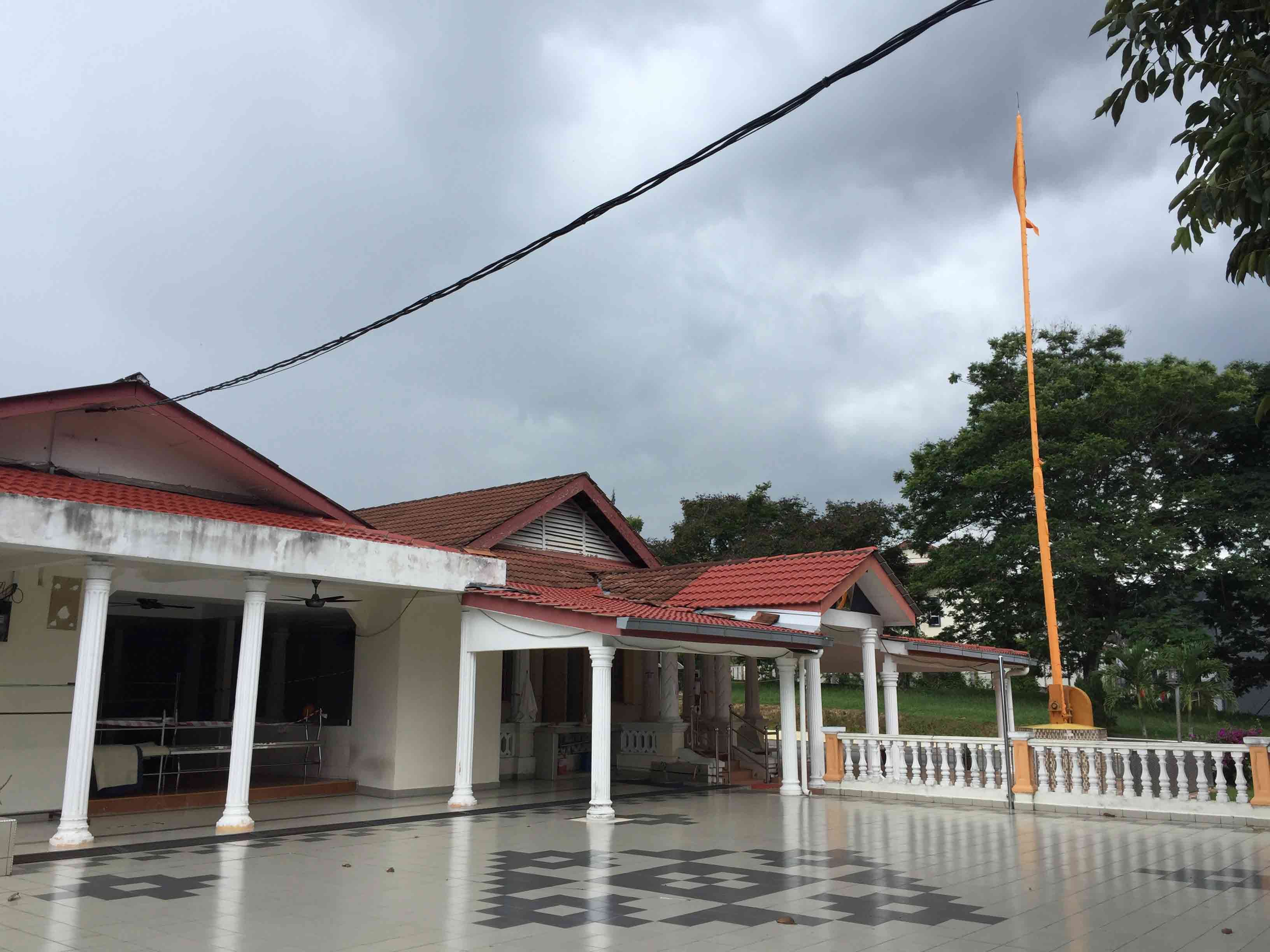
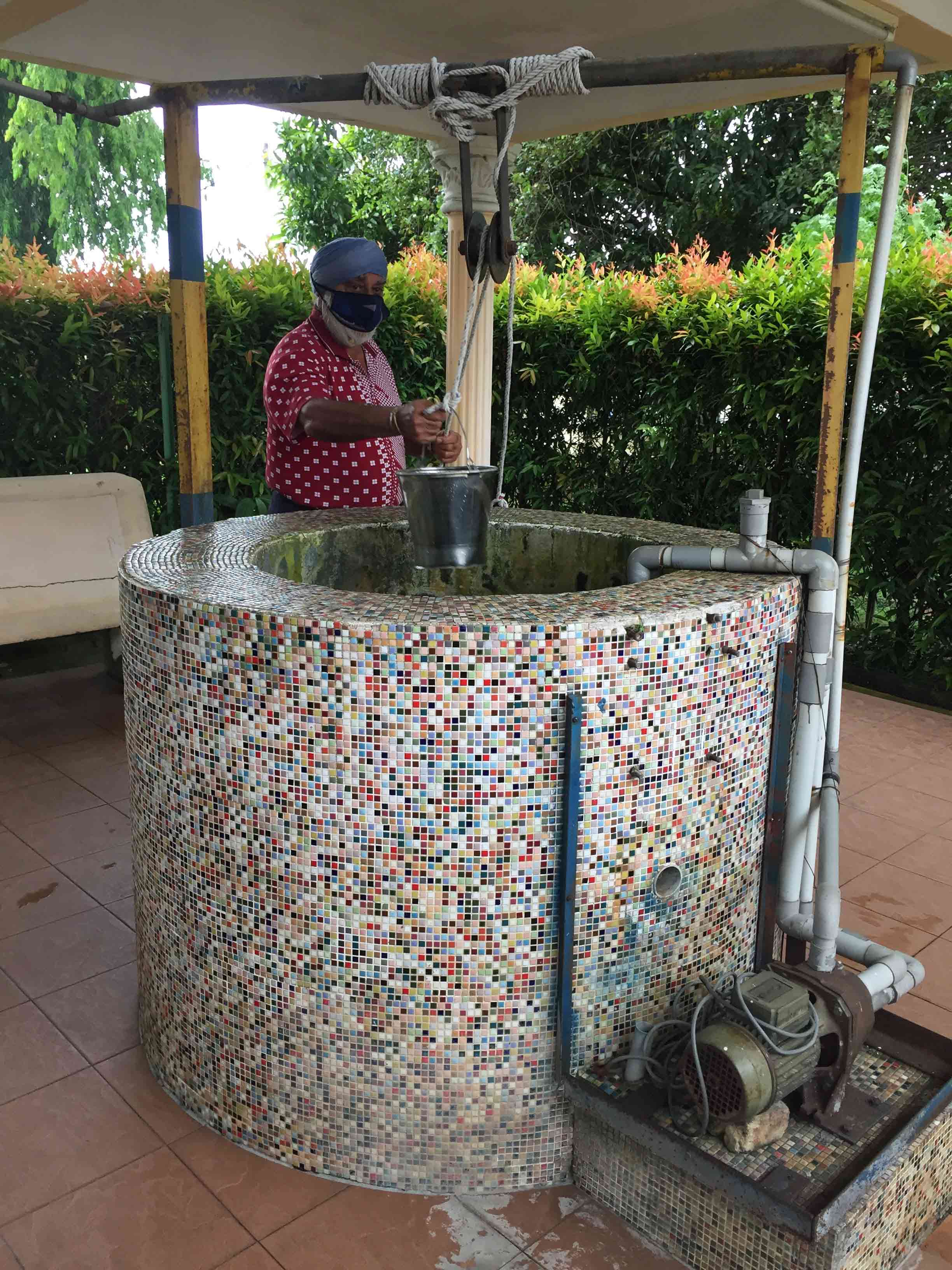
Still on the subject of places of worship, situated on elevated ground near the town’s T-junction is the Gurdwara Sahib Mantin [6]. Likely built in the early 1890’s, it is the oldest Sikh Gurdwara in Negeri Sembilan. The early Sikhs in the Mantin area were either employed as security guards in the various tin mines or they were policemen. A few of them raised cattle for their milk and owned bullock carts. The first temple building was made of wooden planks with an attap roof and later changed to zinc. In 1989, it was repaired and a new dining hall, kitchen and rooms were built to accommodate the Sikh sangat (congregation). A new single storey building was built at the back of the Gurdwara Sahib in July 2002. Mr Bagwan Singh mentioned an old discarded well on the premises, which was repaired and brought back to use again. He also said that the water from this well is believed to possess healing properties that could cure many ailments. The Gurdwara Sahib serves free food to its members and the public at its dining hall.
The first building with a zinc roof. Photo source: Saran Singh Sidhu – Gurdwara Sahib Mantin – Sikh Gurdwaras in Malaysia & Singapore. An Illustrated History 1873 – 2003 – Published by Sikh Naujawan Sabha Malaysia – First edition 2003 – pp 112 to 114.
(L) Gurdwara Sahib Mantin. (R) Mr Bagwan Singh at the well. Image credit: Eric Lim
Educational Institutions
Taking advantage of the conduciveness of the surrounding environment, many institutions of higher learning have set up bases in Mantin. The first to do so is Kolej Tuanku Jaafar [7], a co-educational international boarding school established in 1991. The school caters to pupils aged 3 to 19 and it has a diverse population of students from over 22 different countries. KTJ is spread across an 80-acre site just outside of Mantin.
(L) Entrance to KTJ, image credit: Eric Lim – (R) KTJ, photo source : https://www.ktj.edu.my/
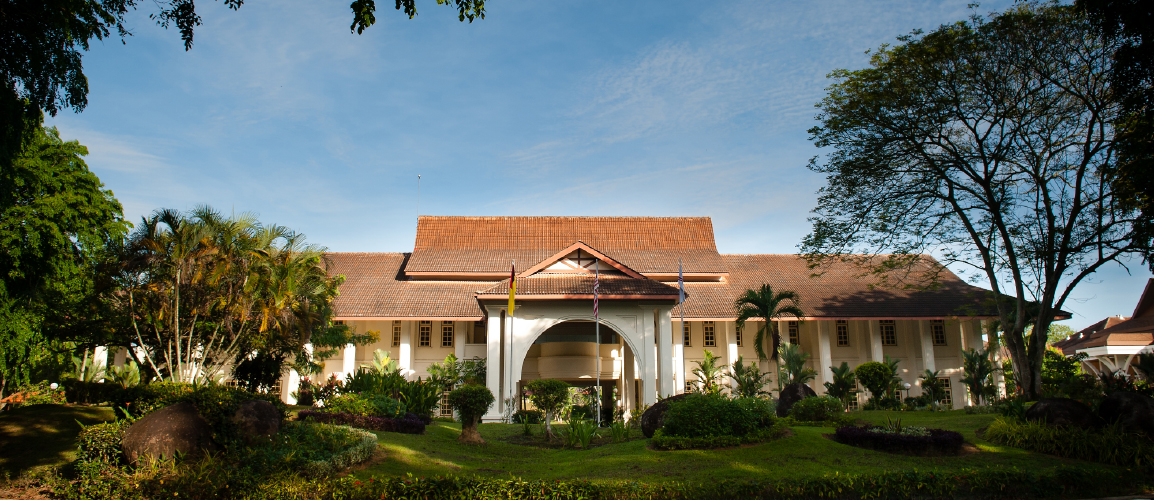
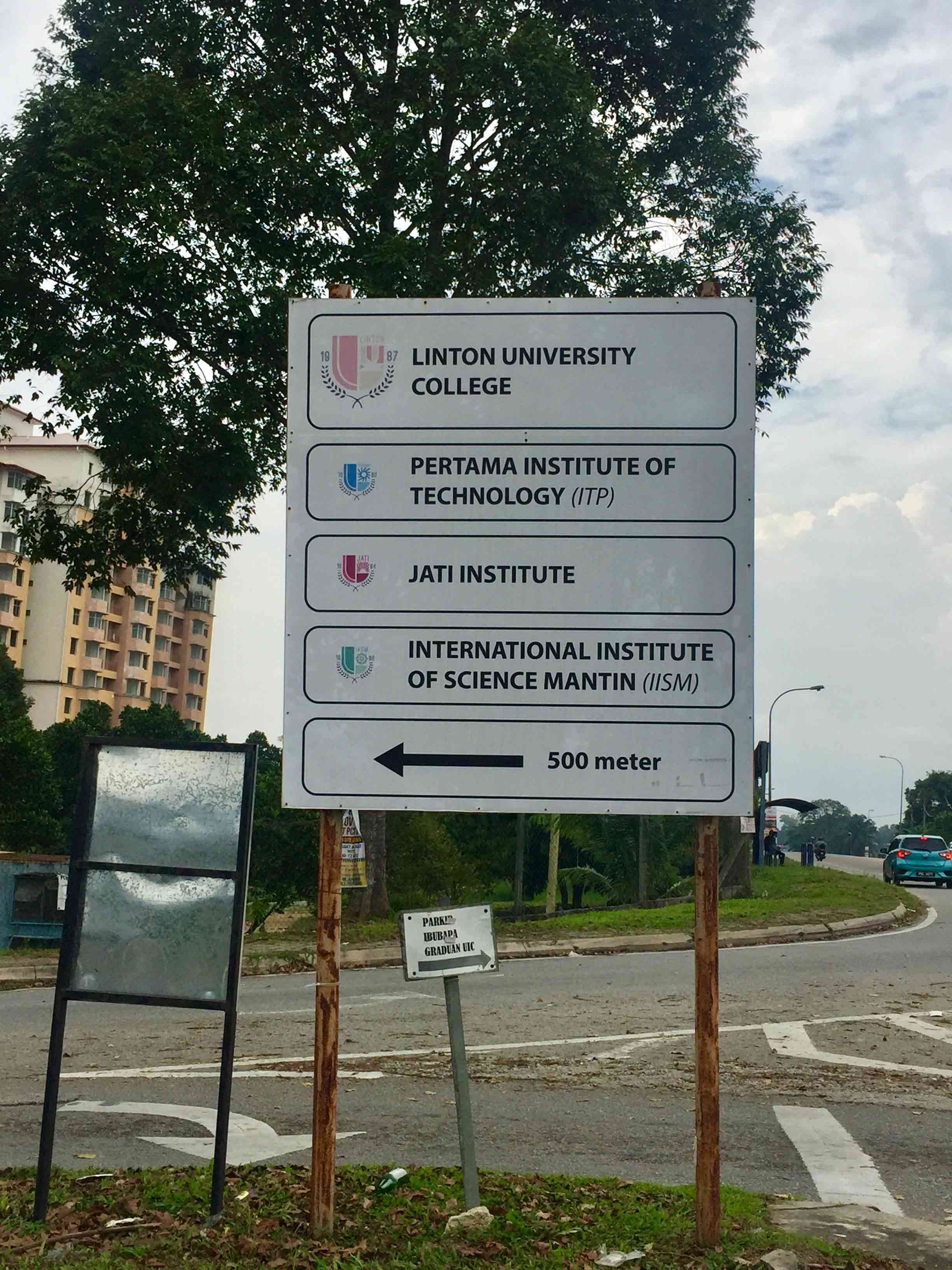
Next was Linton University College [8]. It was originally established in 1987 in Ipoh, Perak, and was known as Linton College. In 2005, Linton College was acquired by the KTG Education Group and the campus was relocated to the current location in Mantin. In March 2010, it attained university college status and was consequently renamed Linton University College. It provides programmes in Engineering, Built Environment, Information Technology, Business & Accounting and Applied & Visual Art. Today, the campus is also home to three of its affiliated institutes – Pertama Institute of Technology, Jati Institute and International Institute of Science Mantin. All four institutions provide programmes from Foundation right up to Masters.
Linton University College & Sign board pointing to Linton University College. Image credit: Eric Lim
On the other end of the town, located at the 8 ½ Mile, Jalan Seremban-Mantin is the Negeri Sembilan Skills Development Centre (NSSDC) [9]. This skill centre is a joint project initiated by the state government and a group of private industries in Negeri Sembilan.
Orchards
When the town was facing a downturn, the locals turned to agriculture. Today, there are many durian and fruit orchards around the fringes of the town. My Durian Orchard [10] located on the west side of the town offers visitors the opportunity to learn and taste the different varieties of durian. It also undertakes to export unopened whole fruit and seedless pulps to major cities in China. Apart from durian, fruits such as rambutan, mangosteen, langsat, jackfruit and many others can be purchased at stalls along the main road from the north leading to the town.
Getting There
You have three options:
1) From Cheras, use the Cheras-Kajang Expressway (E7) that links to Kajang Dispersal Link Expressway / SILK (E18). Look out for Exit 1804 Kajang Perdana, then link to LEKAS (E21) and look out for the exit to Mantin.
2) Alternatively, exit Kajang Dispersal Link Expressway / SILK (E18) at Exit 1805 Kajang Prima Interchange to link to Federal Route 1 (the North-South trunk road) to Semenyih, Beranang and Mantin.
3) From KL city centre, use Jalan Sungai Besi to go to the North-South Expressway (E2). Exit at Exit 214 Nilai, and follow the sign to Pajam. You can then decide to use Federal Route 1 to Mantin (toll-free) or use LEKAS (toll road) and exit at Mantin.
References
Saran Singh Sidhu – Gurdwara Sahib Mantin – Sikh Gurdwaras in Malaysia & Singapore. An Illustrated History 1873 – 2003 – Published by Sikh Naujawan Sabha Malaysia – First edition 2003 – pp 112 to 114.
In our museum, Bujang valley (BV) is presented as the first Malay kingdom in the Peninsula, but, as far as I know before beginning this research, we have yet to find any artefact showing it was indeed a kingdom. I wanted to be sure and began to investigate. During my research, I learned a lot about BV, not always directly related to my research but I will share it anyway.
A kingdom is a country ruled by a king or a queen, as per Oxford advanced learner’s dictionary 7th edition.
Bujang valley (Malay: Lembah Bujang) “is a sprawling historical complex and has an area of approximately 224 square kilometres (86 sq mi) situated near Merbok, Kedah, between Gunung Jerai in the north and Muda River in the south. It is the richest archaeological area in Malaysia.” (Wikipedia, https://en.wikipedia.org/wiki/Bujang_Valley)
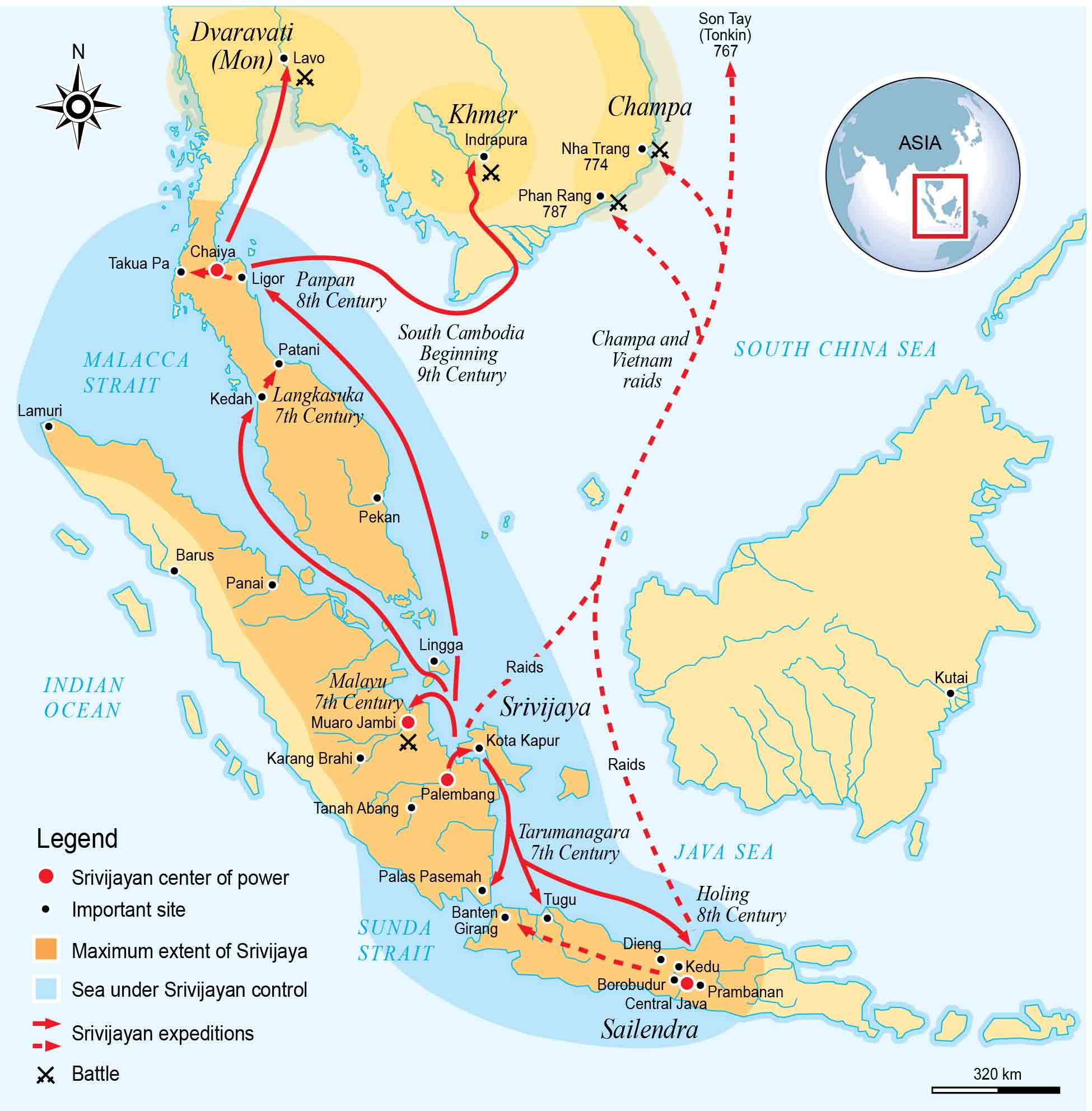
Srivijaya Kingdom was situated in South Sumatra, with its capital at present day Palembang. It was founded in the seventh century by Dapunta Hyang who led twenty thousand troops from Minanga Tamwan to Palambang, Jambi and Bengkulu. This event is recorded in the Kedukan Bukit inscription dated 16th June 683, setting its birth in the seventh century. Chinese sources called Srivijaya “Shi Li Fo Shi” and the Arabs “Sribuza”. Its wealth comes from trade with China, India and the Arabs. It extends to the Strait of Malacca up to Burma and part of Java, over kingdoms that had existed since the second century, if one believes Chinese sources. These kingdoms were trading local products such as benzoin, camphor, dammar, spices, aromatic woods, ivory, tin and gold with Srivijaya, who then sent all that farther. This way of ruling is often described as a mandala (explained later in this article).
In the eighth century, Srivijaya had links with the Sailendra, a Javanese dynasty (which built Borobodur). Srivijaya was a centre of Mahayana Buddhism studies and Sanskrit at least until the twelfth century. Some kings gave money not only to build a temple in South Thailand, but also to repair temples in India and Guangzhou. It had a very good administration with a datu (minister) for each kingdom.
The Indian Tamil Chola king attacked first Kedah then Srivijaya in the eleventh century. Srivijaya was clever enough to make believe that it was the other way around; Chinese envoys always thought that Chola was under Srivijaya rule! In a memorial presented to the Song emperor Huizong in 1106, the Song Shi (Song Annals) records: ‘The Chola kingdom is subject to Srivijaya. We wrote to its ruler on coarse paper’.
The capital of Srivijaya was moved from Palembang to Jambi, centre of the Melayu kingdom, which gave its name to the Malay language. It marks the beginning of the decline of Srivijaya who shared its power between Kedah, Kota Cina and Jambi, becoming Three Vijaya according to Chinese accounts. In 1292, Three Vijaya fell under the Singarasi (another kingdom of which little is known) who then quickly fell to Majapahit. Majapahit founded its wealth not only on trade but also on agriculture, being based on Java, a volcanic fertile soil area. It lasted until 1520 with the rise of Islam in Java.
Srivijaya around the 8th century. Image credit: Gunawan Kartapranata (CC BY-SA 3.0)
Indian written sources
The first to write about BV were the Indian. As early as the second century BCE, Indian writing related trade between BV and some ports of South India that lasted until the 10th century CE. Later, the inscriptions of Tanjore speak of a king of Kedah and Srivijaya and, in 1007, the Chola seemed to have already attacked Kedah. Scholars do not know why.
However, in 1025 the Chola king Rajendra, lobbied by Indian trading guilds fed-up of paying taxes to Srivijaya each time they send a boat in these waters, attacked Srivijaya. The description of this attack informed, “the Maharaja of Kedah and Srivijaya, named Samgramavijayottungavarman, was taken prisoner during the attack of Palembang”. Hence, it seems that, at this time, there was a king of Kedah, but ruling from Srivijaya since he obviously lived in Palembang. After the sacking of Srivijaya, a new Maharaja was enthroned – Sri Deva.
This new king could not “pay” anymore for the allegiance of his vassals and hence they sought independence. Among the first to do so was Kedah, who openly revolted in 1060. Sri Devi chose to make peace with the Chola Kingdom and sought their help to bring Kedah back into the Srivijaya mandala. In 1068, Virajendra, the ruler of Chola, attacked only Kedah, looted it and returned it, graciously, to Srivijaya. This uncommon event confused the Chinese who thought that Chola was under the rule of Srivijaya.
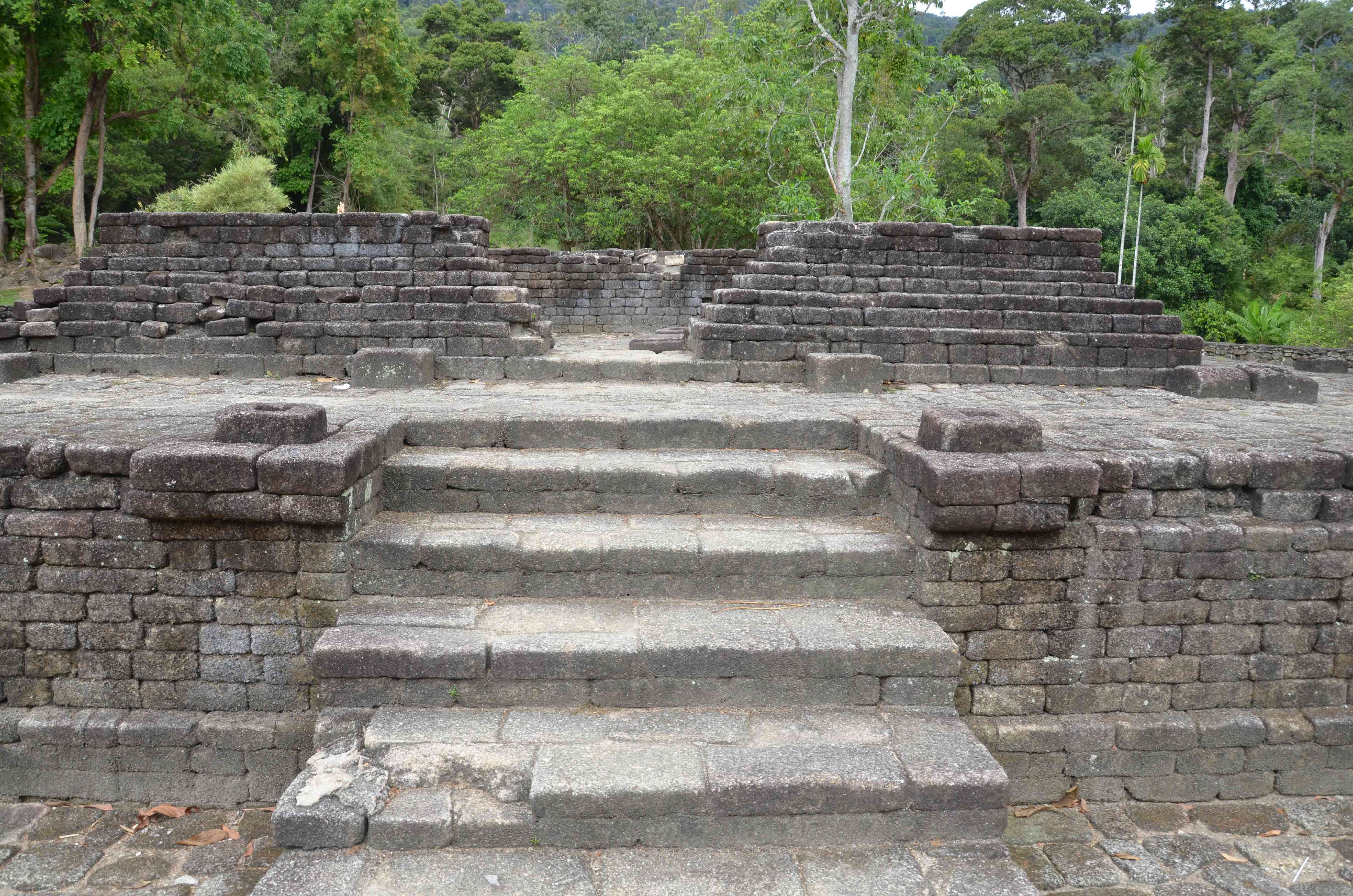
Candi Bukit Batu Pahat; the Merbok Archaeological Museum was built next to this candi
Chinese written sources
Chinese writings mention tributes given to China by the BV polity. In the Sui Shu (History of the Sui, completed in 636 CE), Kedah was called Chitu, Jietu, Geluo or Geluofashaluo. Two missions were sent from China in 607 and in 610. The first one left from Guangzou under the command of Chang Jun. It was bound for Chitu and Luocha. These two were the only destinations for the mission, showing the growing importance, at that time, of these transhipment centres for long distance Persian Gulf-India-China trade.
Chang Jun mentions that the capital of Chitu was named Sengzhi, perhaps located near the Muda River in what is now Kampung Sungai Mas. He describes it as a city surrounded by three concentric walls separated by one hundred paces each. “At each gate, there are painted flying spirits, fairies and Bodhisattva images… The king, we are told, is Li-Fu-Duo-Sai Qu-Tan (Riputro Gautama?). Behind his throne is a golden crouching bull and above it , one bejewel parasol and bejewelled fans left and right…Hundreds of Brahmans seated in rows facing each other on left and right. The practice of the residents was to respect Buddha and give special reverence to Brahmans. Indian music was played during the audience with the ruler. When the king sent a nayaka (leader or protector) as an emissary to China, with local products, he also sent a gold leaf letter”. Hence, it appears to be a Buddhist kingdom where Brahmans were key players advising the ruler and performing Indian-based ceremonies.
What is bothering me in this description is the presence of a triple enceinte. As far as I know, archaeologists never found any traces of these walls. Even, if their construction materials were used later as a source of stones or bricks for other constructions, they would have had some sort of foundations … that have not, yet, been found. So was Chitu really Kedah? In my opinion, it still needs to be proven. Other sources, including the Encyclopaedia of Malaysia: Early History, places Chitu in Kelantan. This makes more sense.
In the chronicles of the Tang dynasty (619 to 916 CE) translated by Winstedt, it seems that Kedah was called Kalah or Kora or Kala. It is said that this Kora has a king named Misi Pura Sri Pura and the customs of the people were the same as in Siam. But in the same book, Winstedt writes that Langkasuka was the former name of Kedah and that under the Liang dynasty (502 to 665 CE) people dated the birth of the country four hundred years earlier.
Seventy years after the Chitu mission, yet another name for Kedah in Chinese writing appears – Jietu, again a phonetic rendering of Kedah. In 671, the Chinese monk Yijing left Guangzhou and stopped over at Srivijaya where he studied Sanskrit. He then went to Kacha (probably Kedah) to board a boat to India. This was the first proof that Kedah may have been a major port of embarkation for the long journey to India. When he came back in 685, he noted that Kedah was now under Srivijayan rule. He explains that BV was the northern capital of Srivijaya, levying taxes on the merchandises coming from the West with Palembang, the southern capital, took care of the goods coming from the East.
There are also other sources showing that Jietu was an important port for merchants and monks on their way to India. The Xin Tang Shu notes that south of Panpan lay Geluo. Around 800, Jia Dan writes about Geluo, recording that it had 24 provinces – “It was a major trading port since the 9th century or earlier”. There is no evidence of diplomatic contact between Geluo and Tang China.
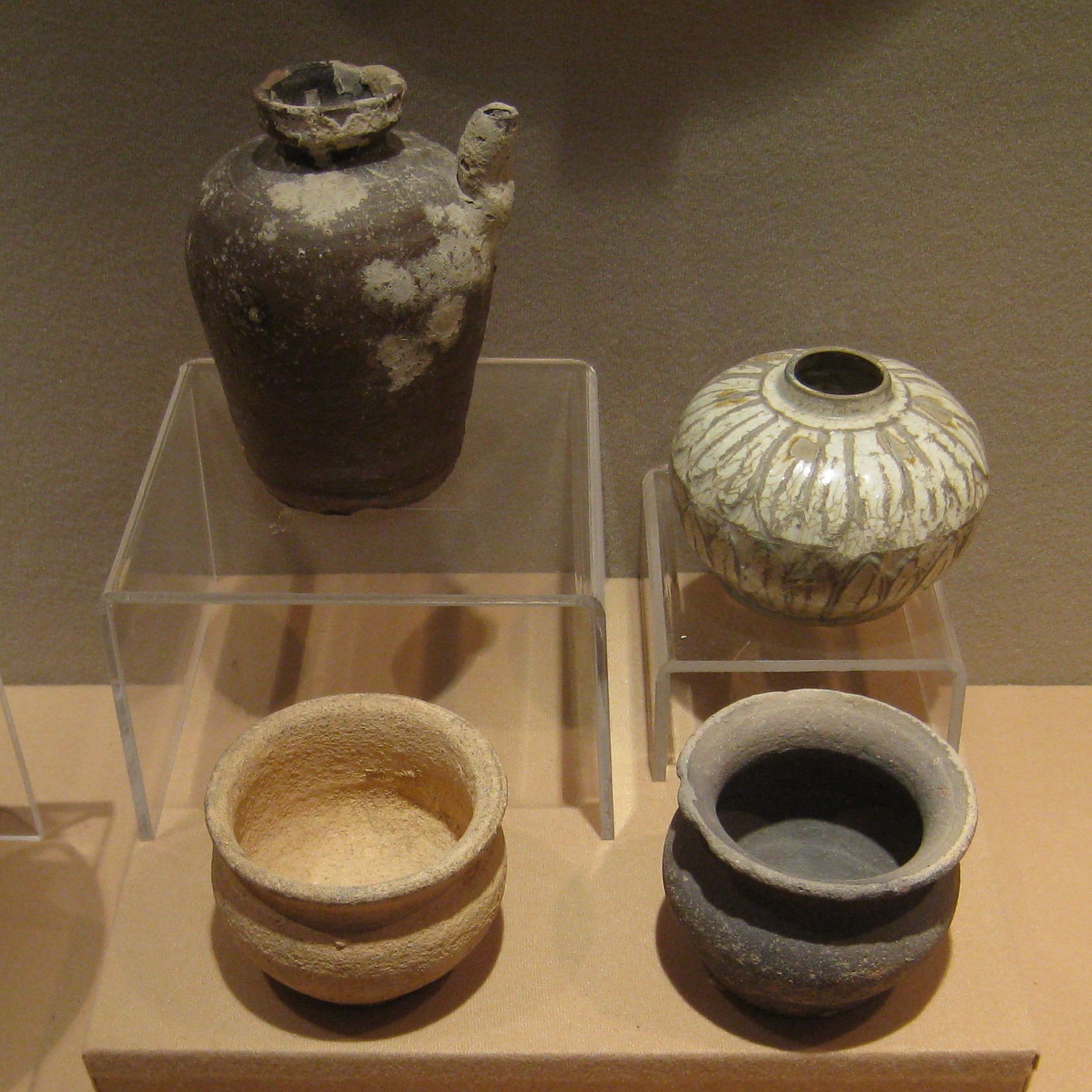
Bujang Valley pottery on display at the Merbok Archaeological Museum. Image credit: Anandajoti Bhikkhu (CC BY-SA 3.0)
Arab written sources
As early as the 8th century, Arabic navigational treaties mention Kalah. Several archaeologists have studied the writings of Arab or Persian merchants. According to as-Sin wa’l-Hind, Kalah was a kingdom located near the coast. Kalah-bar (government) was a kingdom under the control of al-Zabaj (Srivijaya). Sulayman describes Kalah as a colony of Srivijaya and an entrepôt trade centre where the traders called to obtain supplies of clean water. Abu Dalaf Misar stated that Kalah was a huge kingdom surrounded by walls, gardens, water, market and houses with a large population…”Kalah has its own social system that is really organised in terms of justice, treatment of offences and matters related to fines”… Katacha entrepôt developed rapidly since the fifth century and it is believed that the port existed since the early century CE. Kataha’s centre at that time was situated at today’s Sungai Mas. Various types of temple architecture and thousands of foreign ceramics are the best proof of it. Relative dating on inscriptions showed that Sungai Mas prospered since the fifth century. Later, the entrepôt was moved to Kampung Pengkalan Bujang.
Modern research
The discovery of glass fragments at site 18, Pengkalan Bujang, was reported by Quaritch-Wales in 1940. With the discovery of laterite stone blocks and bricks in the vicinity, Quaritch-Wales expects them to belong to a palace hall or a building structure in a palace. Ah! Finally proof of Kedah as a kingdom? … Not so sure.
Michel Jacq-Hergoualc’h explains in his Arts Asiatiques article in 1992 that Quaritch thought the main Indianisation of Kedah and South East Asia dated from 550 to 750 with a Pallava colonisation. Alastair Lamb restudied the same areas as Quaritch plus some others and concluded, “We can definitely not use periodization influenced by the too approximate and too partisan Quatrich work. For us, South Kedah is not a small kingdom created by Pallava, it is not even a Malay kingdom Indianised as Quatrich suggested.”
Overall, the study of Chinese ceramics shows that the trading activity moved to Kampung Sireh on Sungai Mudah for a few decades only. Then it moved to Melaka. Hence, from the fifth to eleventh century, BV was centred in Kampung Sungai Mas, South of Merbok River; it was mostly Buddhist if we believe the artefacts found at the candi. From the eleventh to early fourteenth century, the centre moved to Pengkalan Bujang, north of Merbok River and it became mainly Hindu. Beginning of the fourteenth century, it was moved again to Kampong Sireh, which silted at the same time Melaka became the predominant kingdom; so Kedah, as a port, started to decline.
In 2014, John Guy wrote on the formation of states in South East Asia. He does not know exactly how they functioned in term of political organization “whether they are best characterized by fiefdoms, polities, kingdoms or states is open to discussion”. O.W. Walters was the first to suggest they might work as a mandala-negara, an Indian model described in regional inscriptions as “radiating zone, strongest in its centre, weakest at the periphery with porous frontiers that intercepted adjacent tributary”. The peripheral states trade their local product with the more powerful one in the centre, who concentrate and finally send the goods further, creating a kind of loose federation based on trade.
I conclude by referring to Dr Nasha Rodziadi Khaw’s talk to the MV on 6th January 2021. He told us that Kedah trading ports existed from 6th century BC to 1371. It consisted of a confederation of trading polities for which no proof currently exists that they were kingdoms. Hence, so far, it seems we cannot conclude yet if BV was indeed a kingdom.
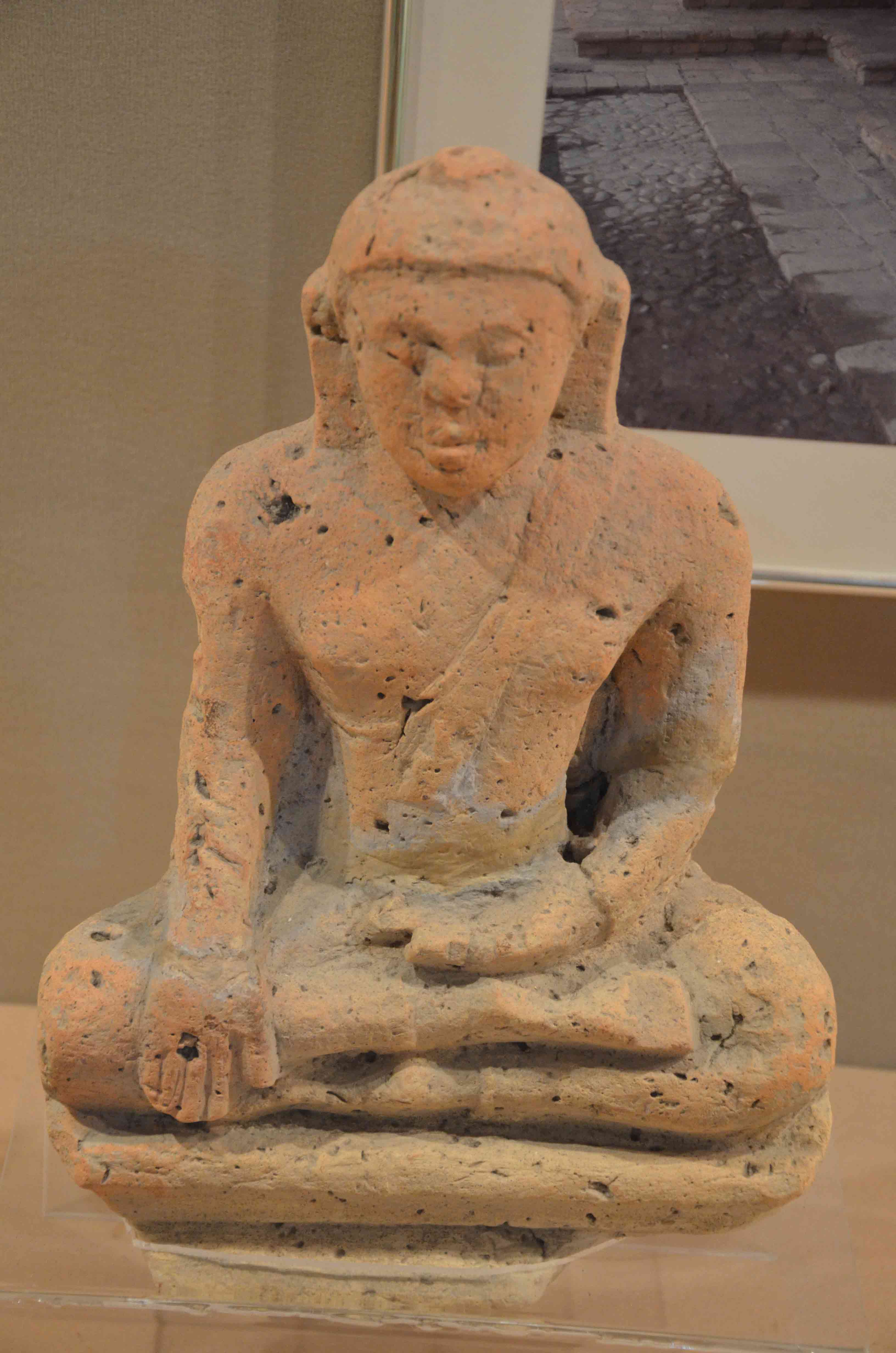
A sitting Buddha terracotta statue recovered at Site 21 Candi Pengkalan Bujang
References
Dr Cheah Boon Kheng, Early modern history, Archipelago press, 2001
Guy John, Last kingdoms. Introducing early Southeast Asia, 2014
Wade Geoff. Beyond the Southern Borders: Southeast Asia in Chinese texts to the 9th century
Sulitiyono, Journal of marine cultures, volume 7
Ramli, Shuaimi Nik Abdul Rhaman, Zain Musa, Samsudin, Rodzi Abdul Razak. Arab-Persian merchants in the Malay peninsula based on foreign sources and archaeological data, Institute of Malay world and civilisation, Faculty of social sciences and humanities, School of history, politics and strategy, The national university of Malaysia.
Selvakumar, V. Commercial interactions between India and Southeast Asia during medieval period and future Interactions between ASEAN and India.
Jacq-Hergoualc’h Michel. Art asiatiques. 1992
Oxford advanced learners’ Dictionary ,7th edition
Munoz, Paul Michel. Early kingdoms of the Indonesian archipelago and the Malay peninsula. Dr Nasha Rodziadi Khaw. MV focus: History and archaeology of ancient Kedah, a reflection of multiculturalism in the Malay Peninsula.
Do catch the ‘Pandemic, Epidemic and Endemic’ exhibition currently ongoing at Muzium Negara, scheduled to run until 31 March 2021. It is located in the hall between Galleries A and B. This is a small space but the exhibition packs a lot of information.
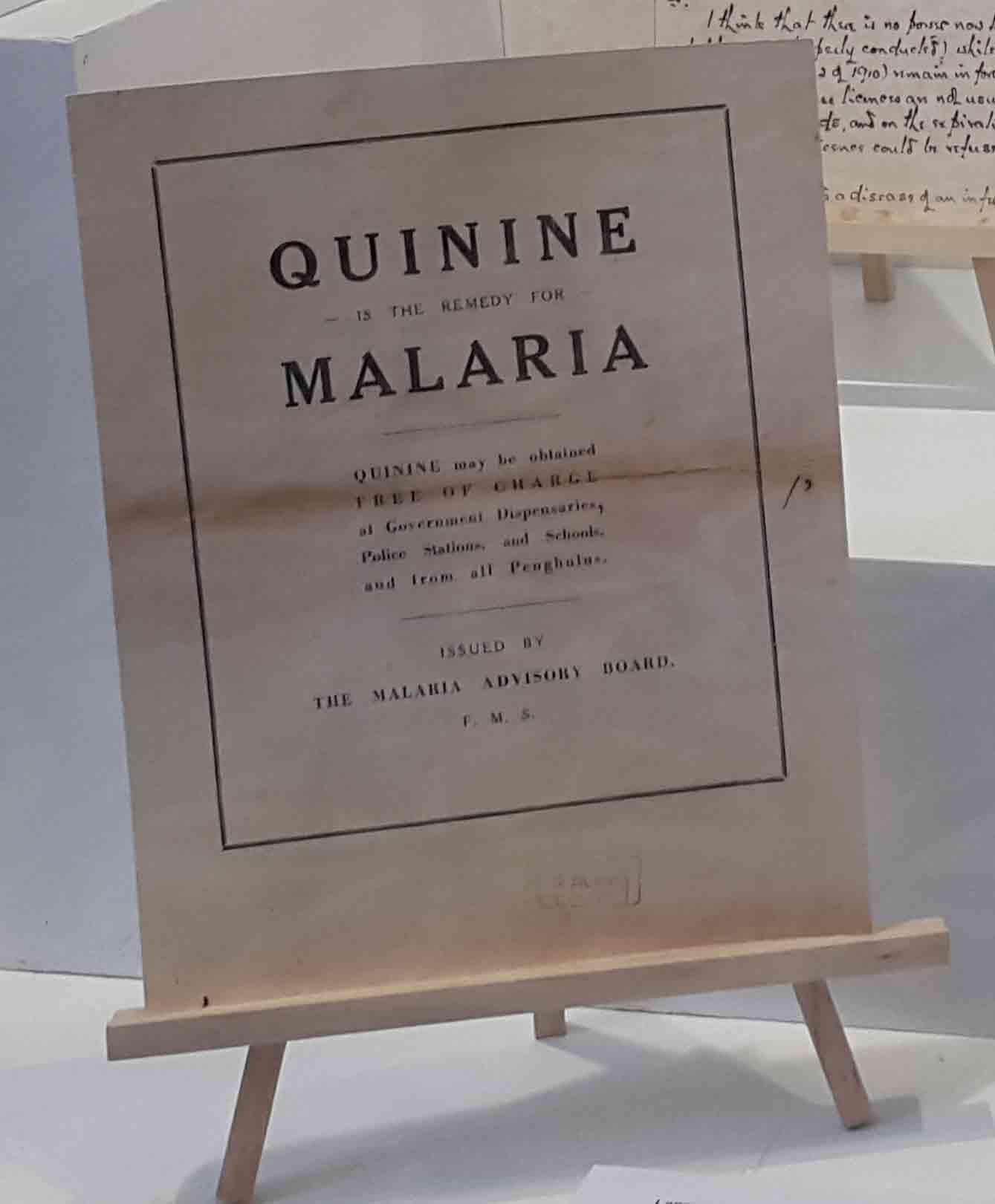
The bulk of the exhibits focus on the current Covid 19 pandemic, with display boards and dioramas tracing its history in Malaysia and globally. However, the exhibition also showcases other pandemics and epidemics including nipah, chikungunya, H1N1, H5N1, malaria, rabies and leprosy.
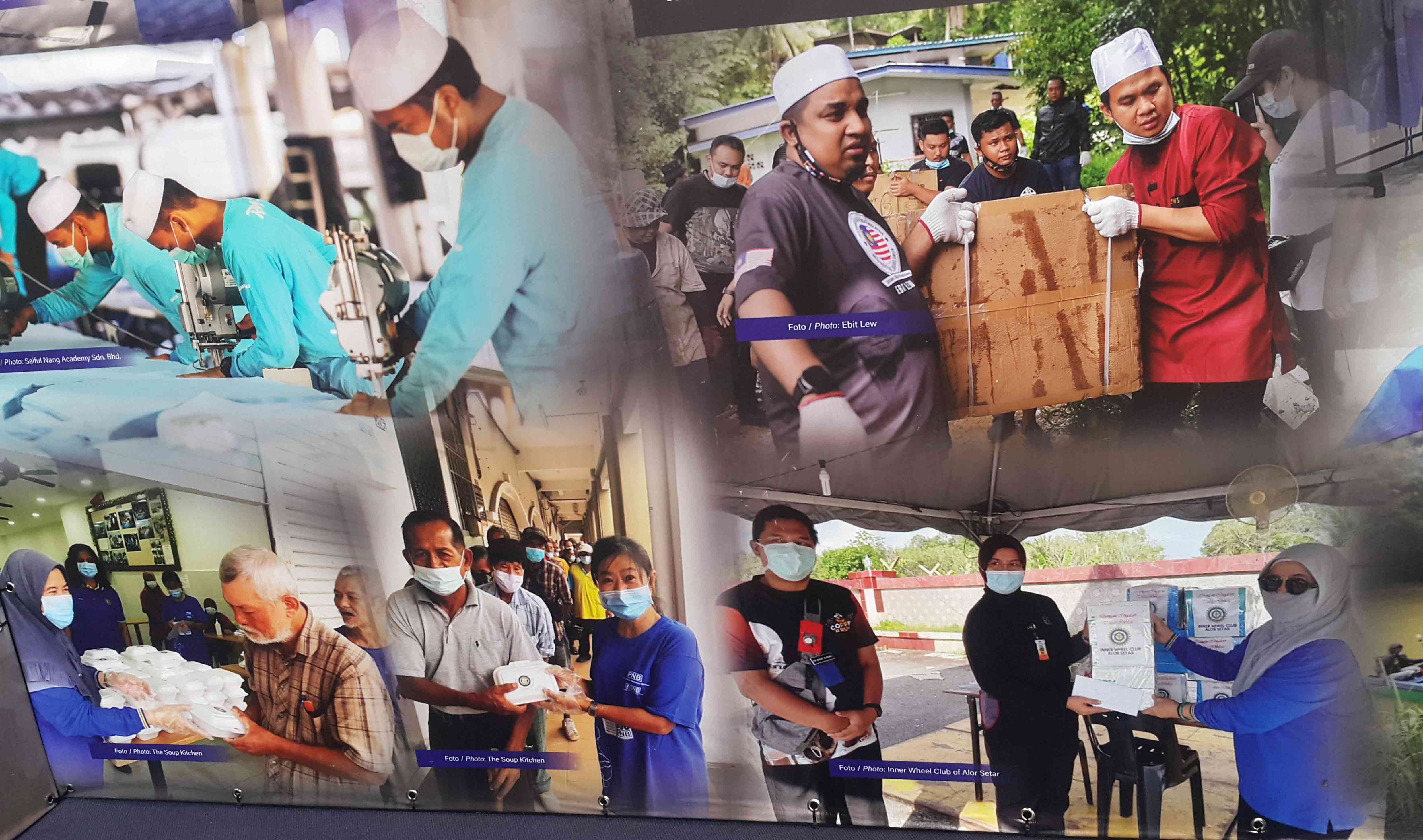
Having a heart… NGO’s helping the less privileged during the Covid-19 pandemic
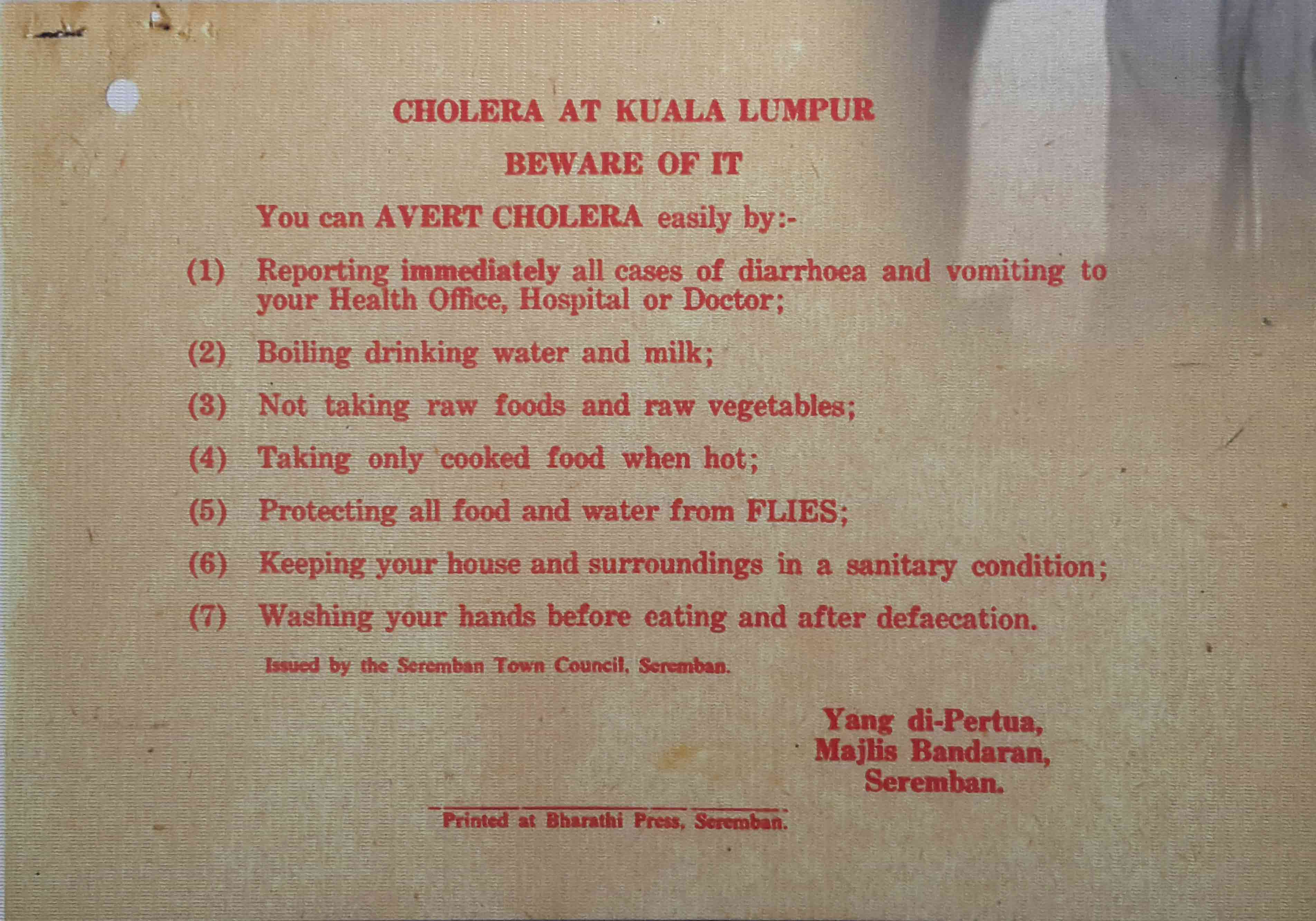
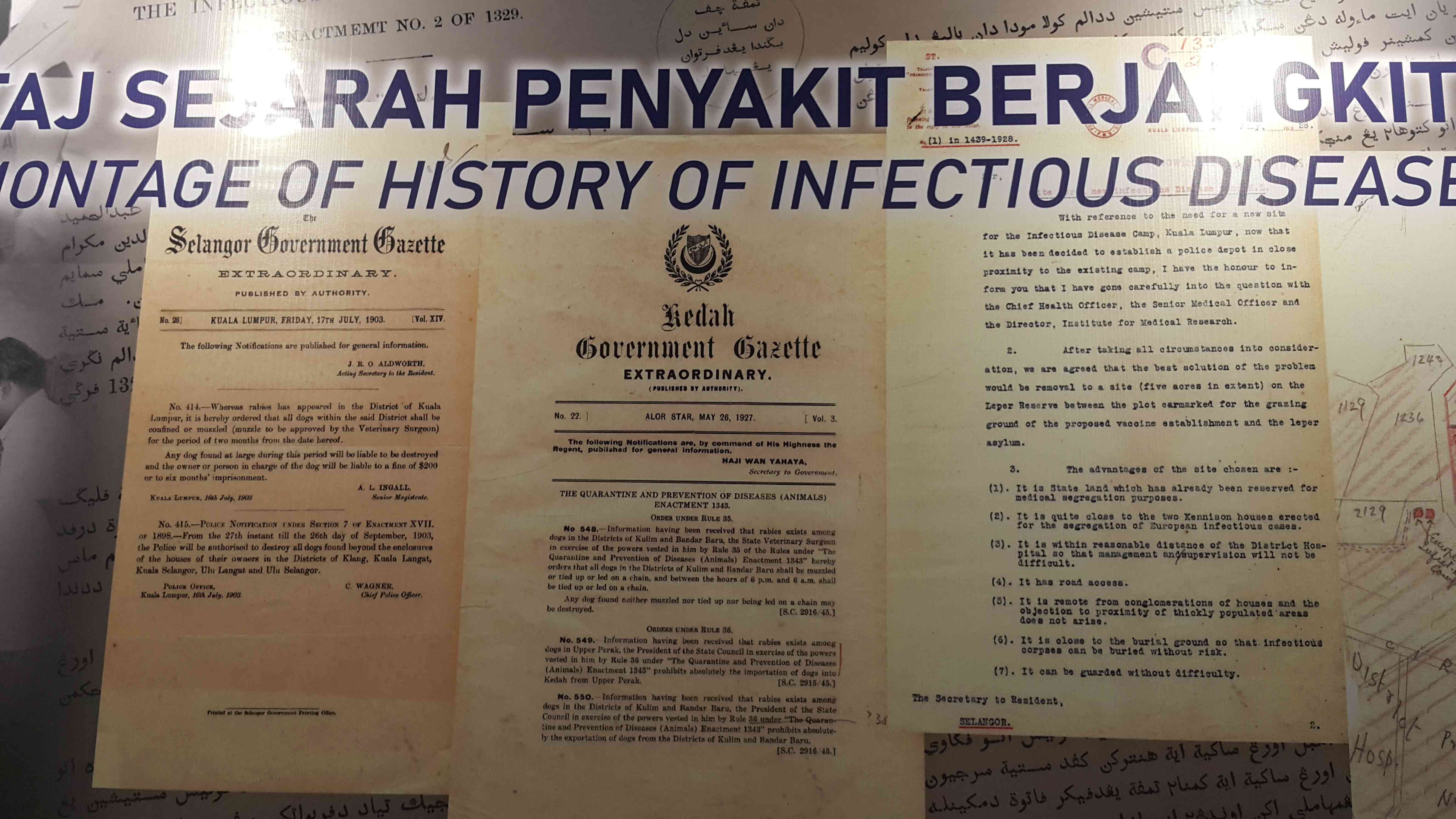
Interesting are the government gazettes and circulars of old in bids to contain the various outbreaks.
The exhibition also includes usage of alternative medicine such as pomegranate to cure cough, tapeworm as well as diarrhea, and hibiscus for fevers and as an antidote for poison.
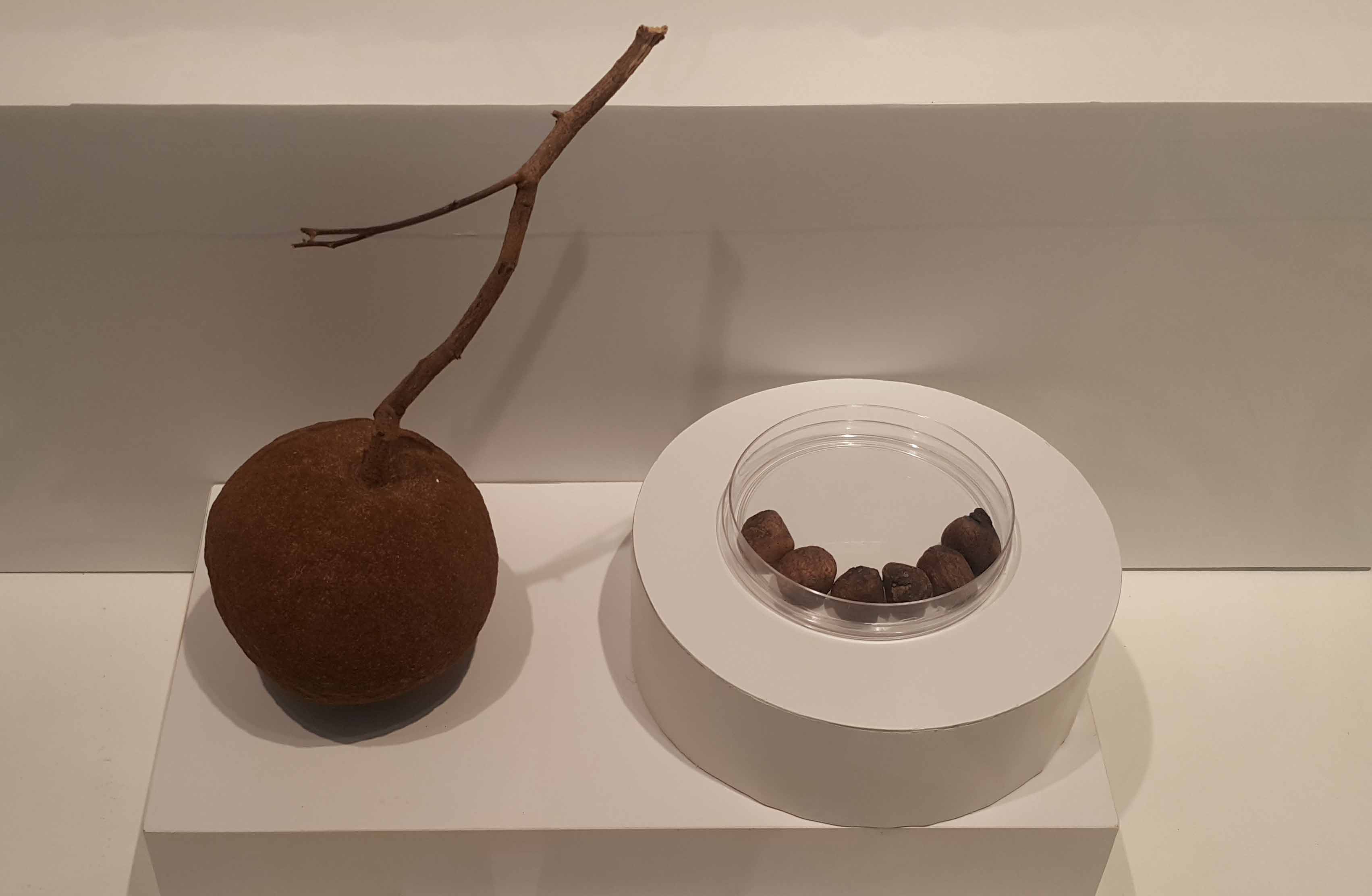
Chaulmoogra (Hydrocarpus wightianus) , known locally as buah kusta as it was used to treat leprosy before dapstone was formulated.
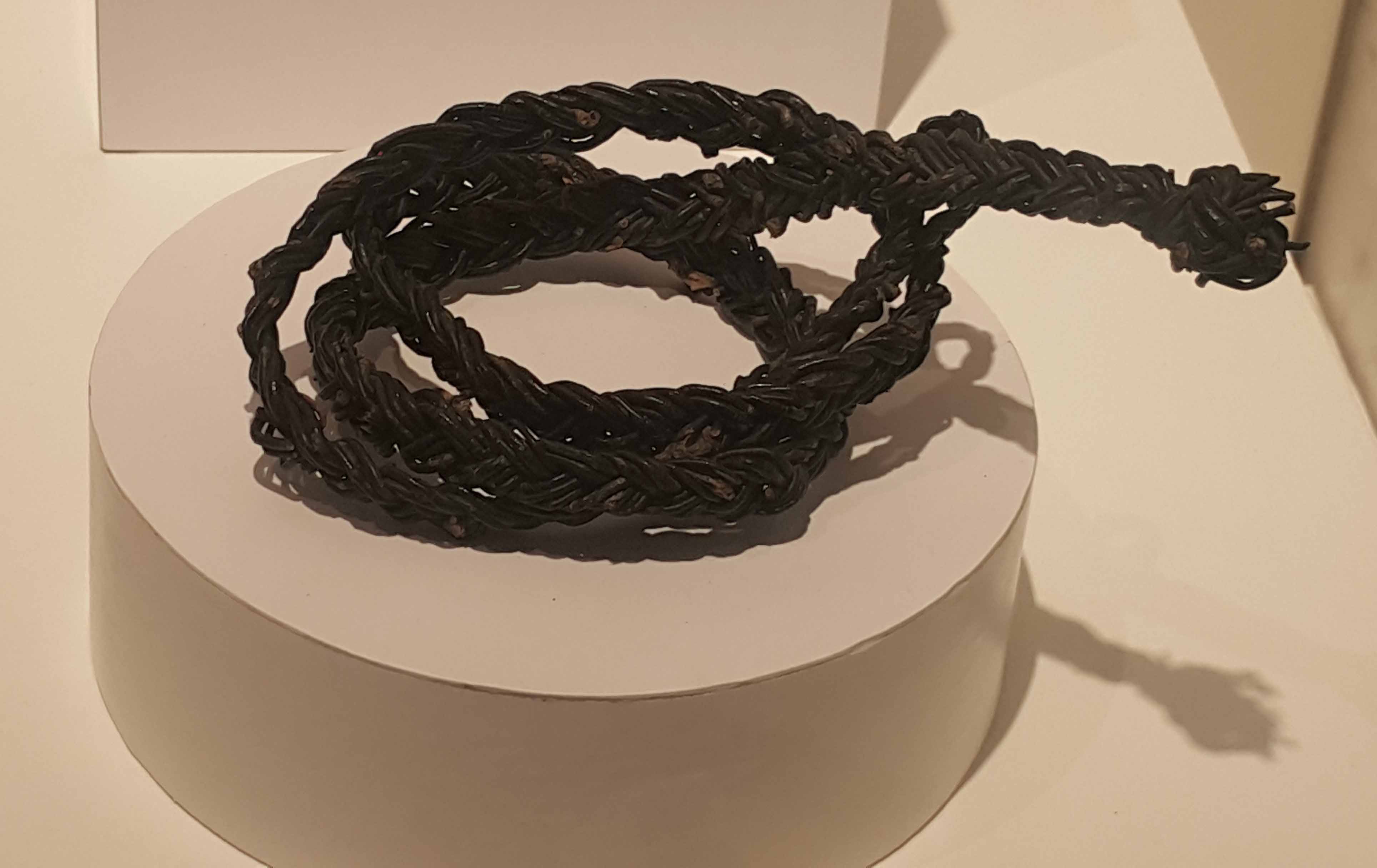
This belt is made from the sintok (Entada spiralis) root, used as a traditional medicine by the Orang Asli used to cure (among others) backache.
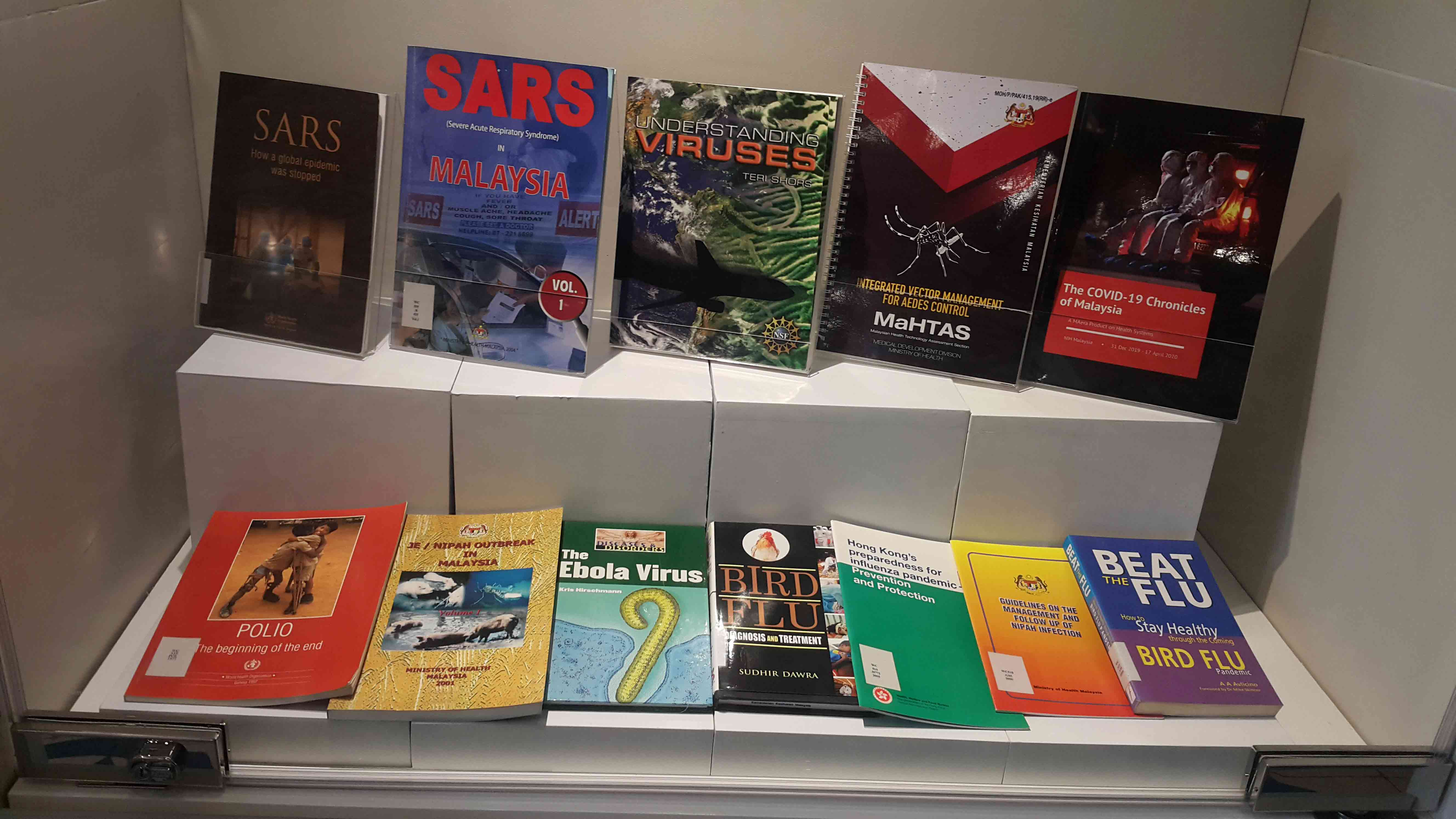
Some books on the various diseases
Many more interesting nuggets can be found at the exhibition. Do head to Muzium Negara where you can also catch another exhibition titled ‘The Power of Gold’ located at Gallery 1 in the JMM building.
Ulu Selangor was one of the major tin mining districts in Selangor during the Colonial era and Kuala Kubu was a key mining town in the district. After the dam in this town broke in 1883, a new township was built nearer the Selangor River. The population grew in tandem with tin production and it soon became the administrative centre for the district.
William Hood Treacher was the British Resident of Selangor from 1892 to 1896 and, in 1893, he came on an inspection tour of Ulu Selangor. When in Kuala Kubu, he spent a night at Gunong Kutu and later commented that the hill could be a possible site for a sanatorium. His comment was followed up in an article in the Straits Times Weekly Issue (1893) quoting an official report by Selangor Gazette that Gunong Kutu had several advantages as a sanatorium which include fair accessibility via the construction of a bridle road, a good spring near the park and cool temperature.
The British also considered possible hill stations in other Federated Malay States (FMS), namely Gunong Kledang in Ipoh, Gunong Angsi near Seremban and Gunong Tahan in Pahang. However, they remained undeveloped as they were not high enough and had limited flatlands to accommodate many visitors. In the case of Gunong Tahan, the project did not even begin because part of the hill was located in Kelantan, which was not part of the FMS.
Gunong Kutu was also known as Treacher’s Hill. It was later renamed Bukit Kutu, probably because it was more appropriate than being labelled a ‘gunong / mountain’. Bukit Kutu remains the official name until today. The first bungalow was erected by the Selangor Government in 1895 and this was followed by another bungalow constructed in 1904. It was reported that in each of the bungalows, there were four bedrooms, a dressing room, bathroom and a good-sized living room with a fireplace. Each bedroom had two beds, which were supplied with blankets. The bungalows were also fixed with telephones connected to the Kuala Kubu Exchange. Activities in the daytime included going for walks, playing tennis, croquet and stump cricket. Badminton and ping-pong were added in the later years. At night, there were card games like bridge and board games such as chess. On a clear day at Bukit Kutu, the naked eye could easily locate Kuala Kubu town, Rasa, Serendah and even faraway places like Fraser’s Hill, Pangkor Island, Port Swettenham and Morib. A telescope was also made available.
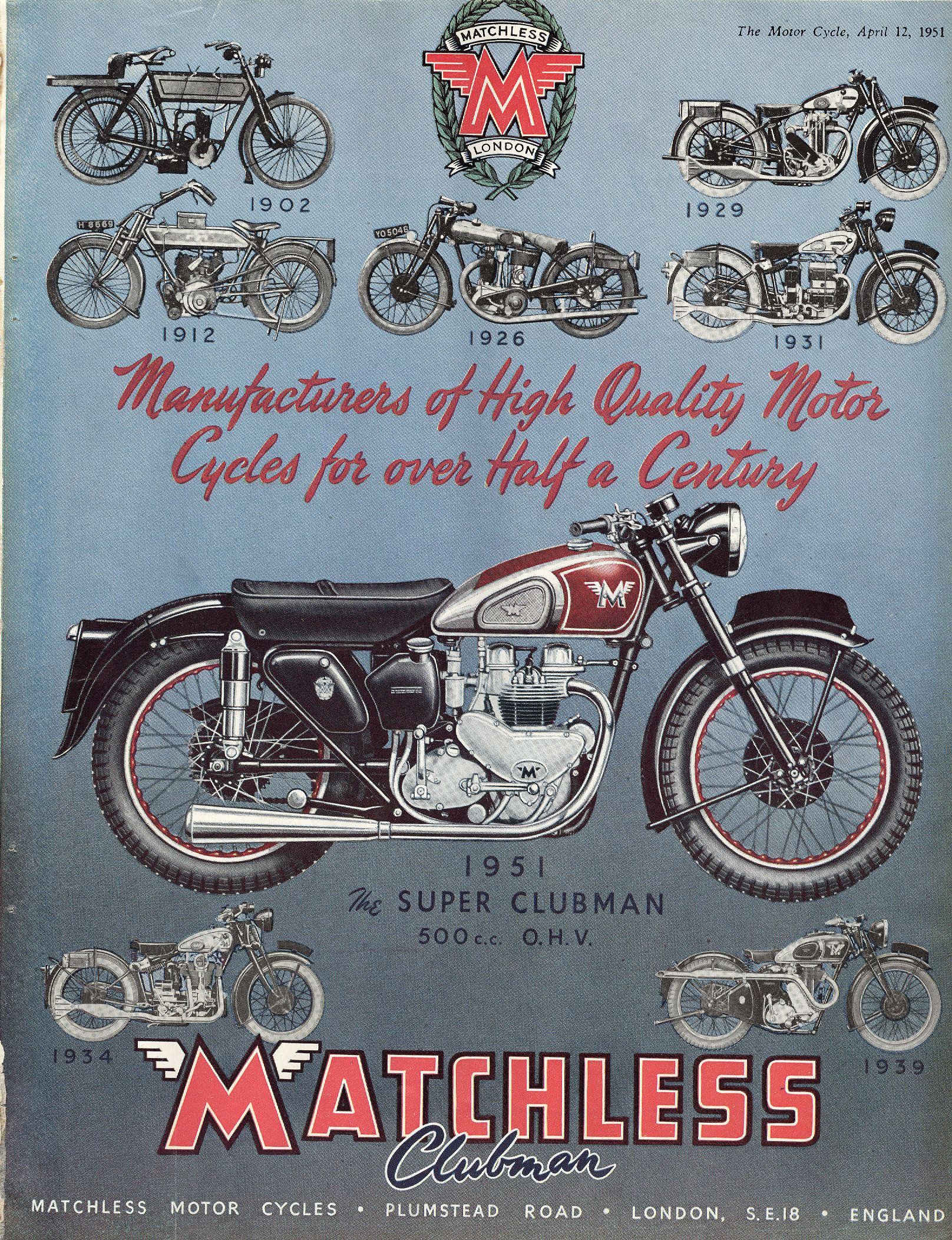
As for the location of Bukit Kutu, the Singapore Free Press and Mercantile Advertiser in 1923 reported that ‘distance-wise, the route from Kuala Kubu Rest House to Bukit Kutu peak where the two bungalows were located took 8 ½ miles and 8 ¾ via a well graded path up the hill’. Permission to use the bungalows had to be obtained beforehand from the District Officer of Kuala Kubu and the rent was $1.00 per day per bungalow. Government officers were given free usage of the bungalows. The journey to the peak took no longer than 3 ½ hours and about 2 ¾ hours coming down. The Straits Times reported on 15 April 1930 that Rex Duncan and J.L Ross climbed to the peak on their motorcycles and they used a Matchless 250 cc motorcycle, one of the oldest marques of British motorcycles. Three years earlier, Mackenzie also used the same make of machine to reach the top.
Matchless motorcycles. Photo source : Pinterest
The service of sedan chairs carried by coolies was also available for those who choose not to walk and the cost was $1.80 for each coolie. Separately, coolies could be engaged to carry provisions, letters, etc. and it cost $1.30 each. The train line to Kuala Kubu was established in October 1894 and this provided some convenience for visitors to Bukit Kutu. Prior arrangements could be made to send boxes of provisions, cold storage, etc. on stated days to the Kuala Kubu railway station and staff from the Rest House would collect them and deliver these up the hill.
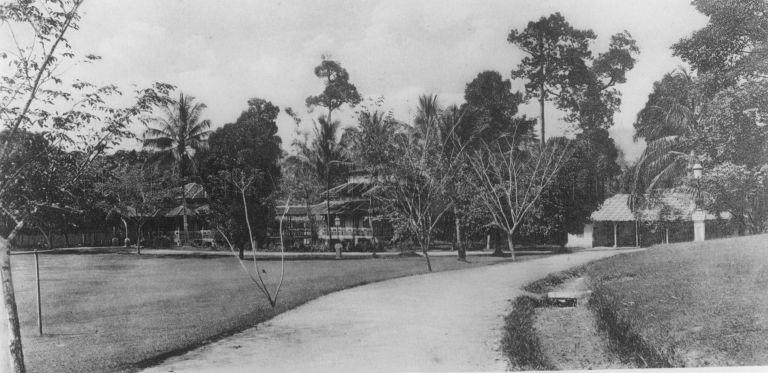
Kuala Kubu Rest House. Photo source : NATIONAAL ARCHIEF, THE HAGUE
It was reported in 1903 that a new breed of mosquito was found by Dr Daniel at Bukit Kutu, which closely resembled the malaria carrying Anopheles of Italy. It was named Anopheles treacheri. Bukit Kutu was rich in biodiversity with various kinds of flora and fauna and this led it being established as one of the earliest wildlife reserves in our country in 1922. The first in Chior, Perak was established in 1903, right after the Wildlife Animals and Wildlife Birds Protection Bill was formulated in 1902.
The popularity of Bukit Kutu started to decline when Fraser’s Hill opened to visitors in 1922. From 1926 onward, the site started facing problems of soil movement but requests for help from the state government did not materialize. Finally, on 31 December 1932, the resort ended its operations. In 1933, one of the bungalows was bought over by Mat Ripin at a price of $28.00 but, later, he had to return the property because he was a government servant. In 1936, the bungalows were again sold, this time at a price of $100.00 to T.E. Emmett who said he wanted it for his own private use. Since then, Bukit Kutu was abandoned and the path was lost in thick vegetation. A chimney and fireplace, main entrance steps and stone walls at the other end of the ridge are the only remnants of the bungalows.
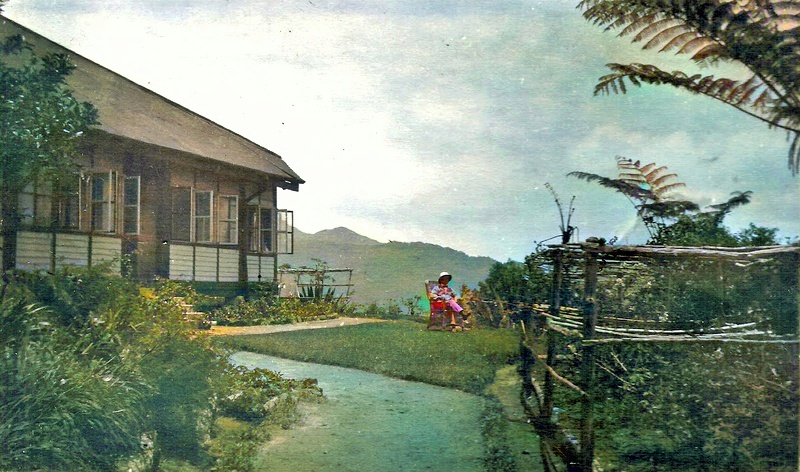
Bukit Kutu in 1921 (colorized edition of the black & white photo). Photo source : Wikimedia Commons
Today, Bukit Kutu is a popular hiking spot. The starting point is at Kampung Pertak, an Orang Asli settlement located near the Selangor Dam. The tradition of getting permission to visit Bukit Kutu since its inception is still in place until today whereby a permit is still necessary for the hike to the peak; it can be obtained from the Police Station in KKB town.
Siti Farrah Zaini, Zuraini Md Ali, Brit Anak Kayan. Site selection criteria for British Colonial Hill Stations in Malaya. Department of Building Surveyor, Faculty of Built Environment, University of Malaya. November 2017. https://umexpert.um.edu.my/public_view.php?type=publication&row=Njg3NzQ%3D









 Museum Volunteers, JMM