MV Trip to Sg. Lembing (16 Oct 2014)

Written by Lim Eee Lin, Wong Fui Min and Ursula Davertzhofen

Edited by Lim Ee Lin; Photos by Karen Loh

Journeying to Sungai Lembing, Pahang

by Lim Ee Lin
DSC_2546As with any of the museum volunteers trips out of KL, the day started early with over 30 volunteers and JMM staff members gathering at 6.30 a.m. for the estimated 4 hour journey to Sg Lembing. Despite a later than planned start; our bus arrived at Sg Lembing in good time, 10.30 a.m. MVs Zakaria and Jacky kindly took the lead roles as our guides on the coach, managing the group logistics with CK as well as entertaining us with anecdotes. Karen also kindly brought some educational DVDs for us to watch on the journey but of course, we mostly used the time to catch some extra forty winks!

At the Muzium Sg Lembing, the group was warmly welcomed by Puan Rebiah Mohd Yusof and her team. She gave the team an extensive introduction to the Muzium and history of mining in the town followed by a video screening. The video allowed visitors to hear direct accounts from the former miners and visualise the working conditions that they had to bear (read more in the account by Fui Min).

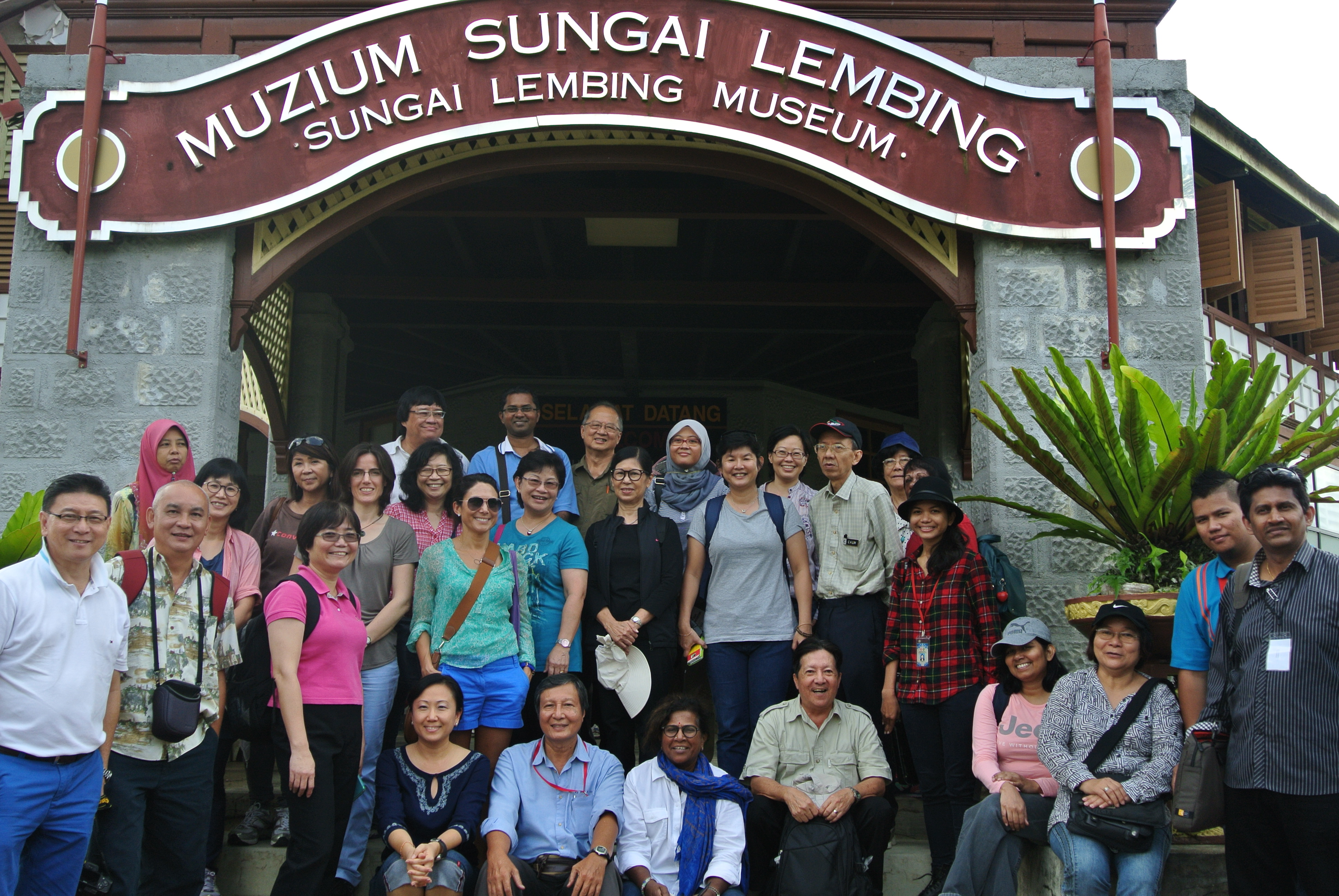
DSC_2610Immediately after this, MVs had an opportunity to quickly walk around the displays before we were ushered to board the bus in order to visit the Living Museum of Sungai Lembing run by the Kuantan Local Council before lunch. However, before leaving the museum, it was of course imperative we take a group photo to record the occasion. With everyone wanting a picture on their personal cameras and smartphones – it became the usual drawn out process of “wait…hold the pose… don’t forget that camera/phone…” before we could get on the bus!

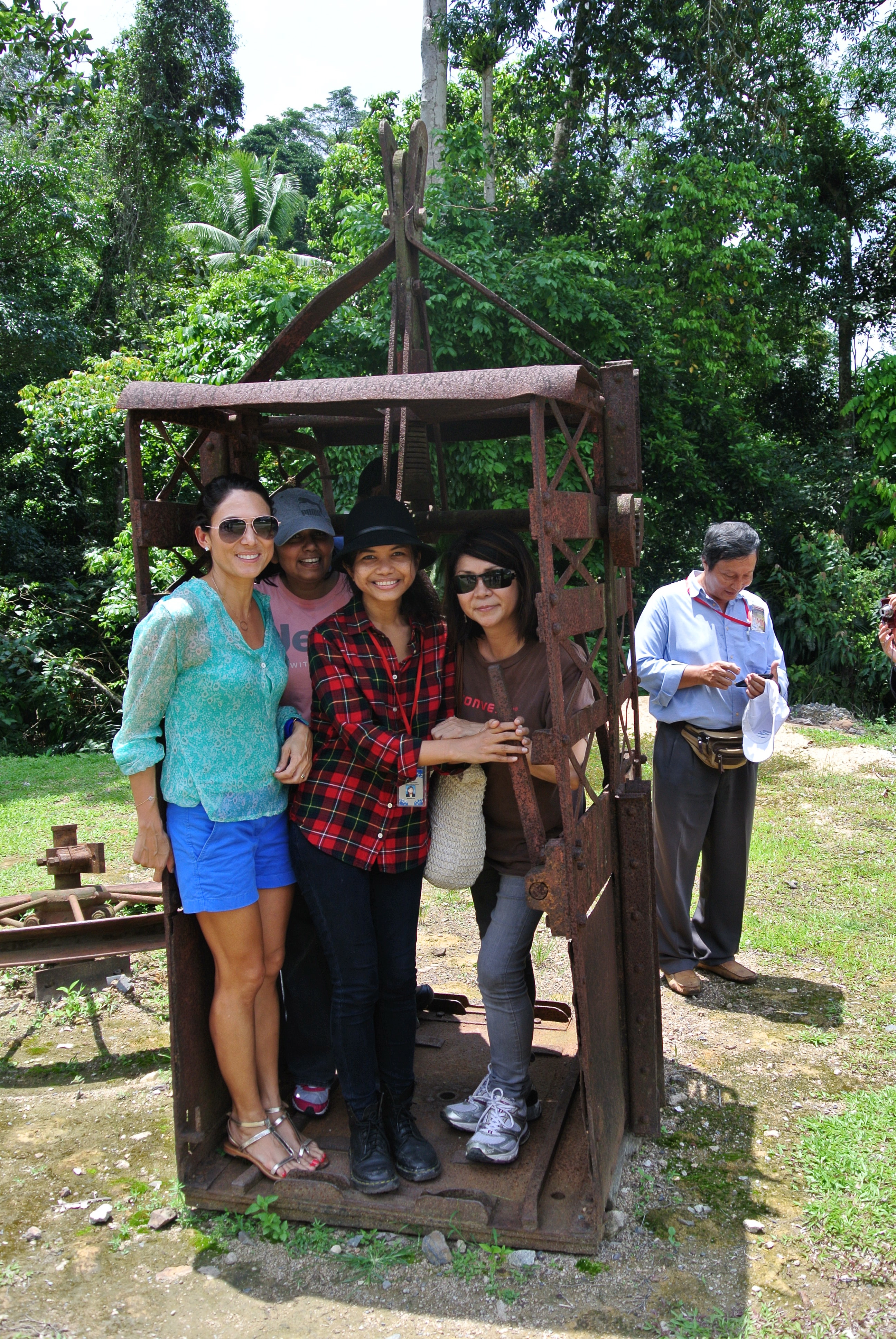
At the Living Museum, MVs were charged a discounted rate for the visit with a further discount for senior citizens – this was one time people had no qualms owning up to their age! The group spent about an hour here exploring the tunnels – as described by Ursula – and generally testing out all the interactive displays. As members trickled out into the sunlight and gathered to wait for all the MVs to regroup, it was selfie time at the outdoor displays. Many agreed that this museum was most well displayed and offered an interesting experience for visitors.

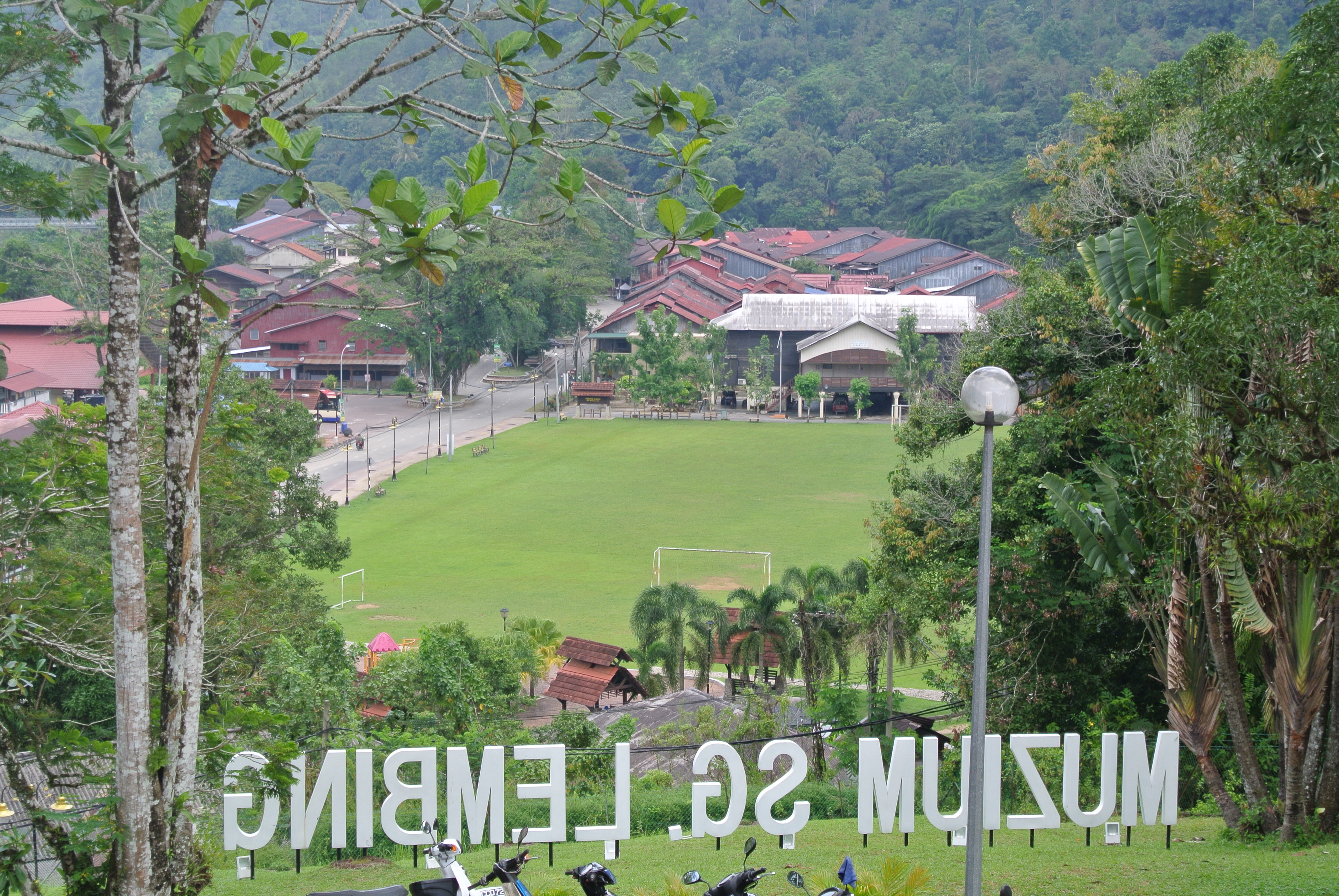
DSC_2571As usual with Malaysian trips, meals are always one of the highlights and the simple buffet lunch organised by the JMM was a veritable feast for our senses! After this meal, MVs had the option to return to the Museum to check out the displays we had to rush through earlier in order to go to the Living Museum before lunch or walk down to the town centre. Walking down the main street, it was clear that Sungai Lembing was awakening as a tourist destination with number of homestays advertised and renovation works in progress.

Before the group bid adieu to this town, the group swarmed a local biscuit shop and practically cleared the shelves of the local delicacies – fried egg twists and coconut biscuits. Despite the rain, it was an uneventful drive back to the National Museum. Thank you again to the Focus Team for another successful programme!

The Sungei Lembing Museum

by Wong Fui Min

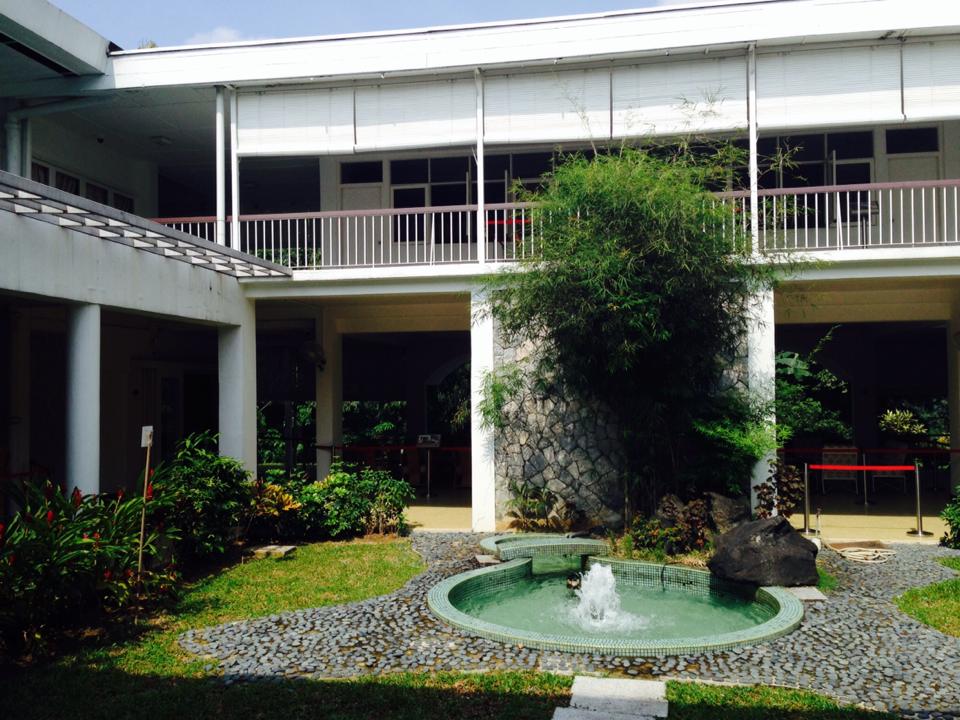
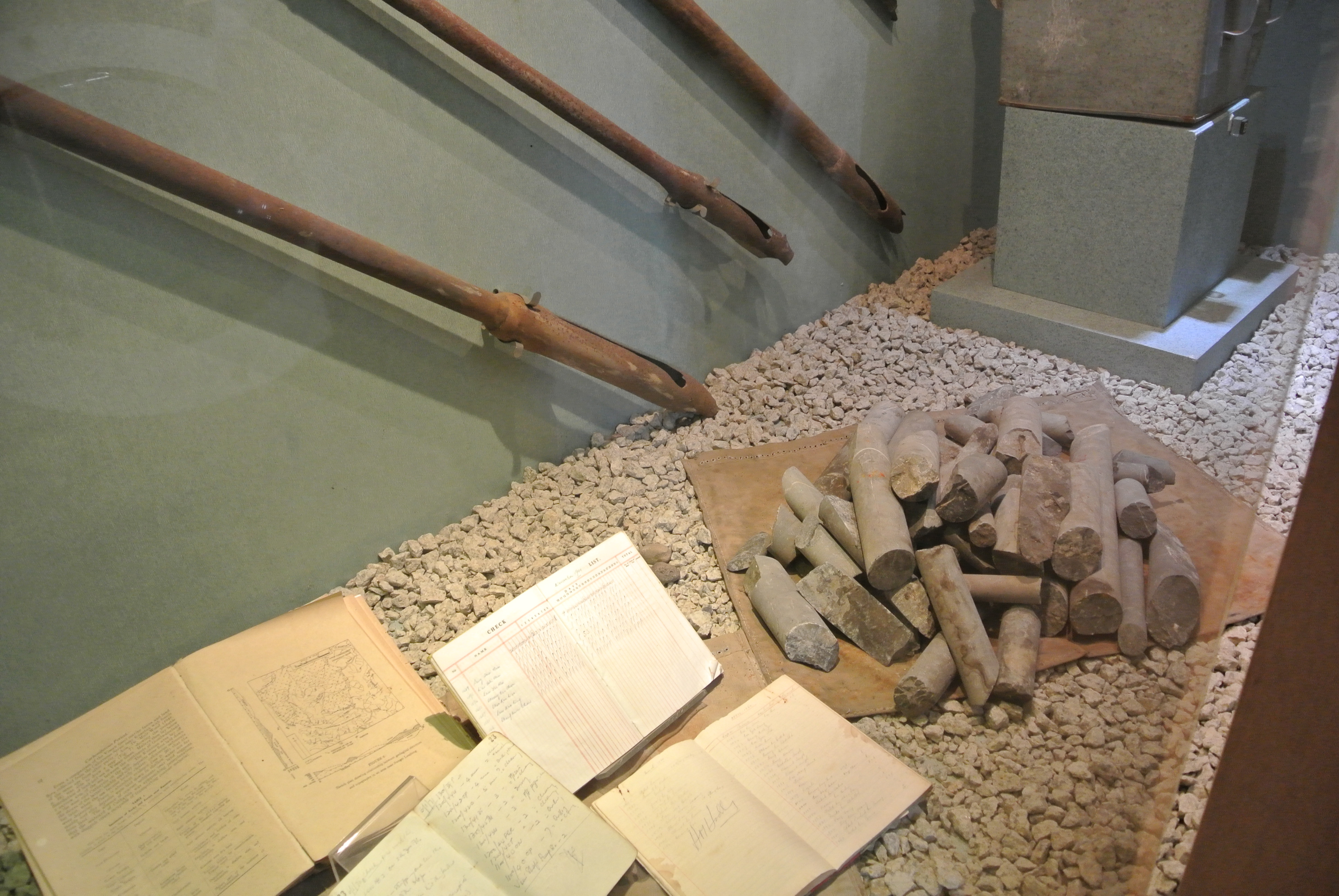
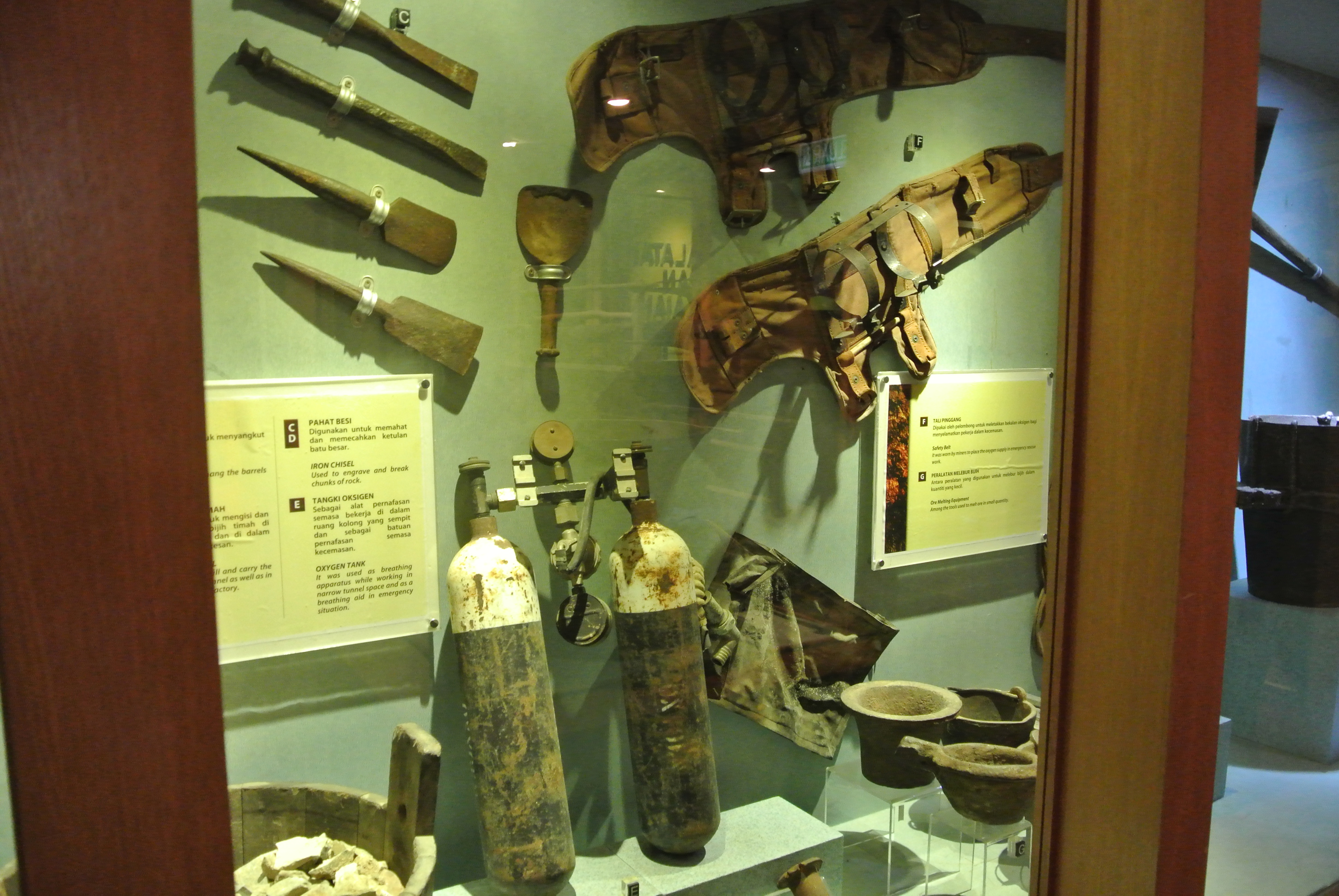
The museum of Sungei Lembing, Pahang, is located up on a hill facing the Kenau River. This museum was once the tin mine’s General Manager’s living quarters. It was built in a mix of colonial and local architecture styles and suitable for living in our climate. Since 2001, it has been renovated and converted into a museum to showcase artefacts, mainly tools for Underground mining, for the public to view. Sungei Lembing is home to the only and largest Underground Tin Mine in Malaysia.

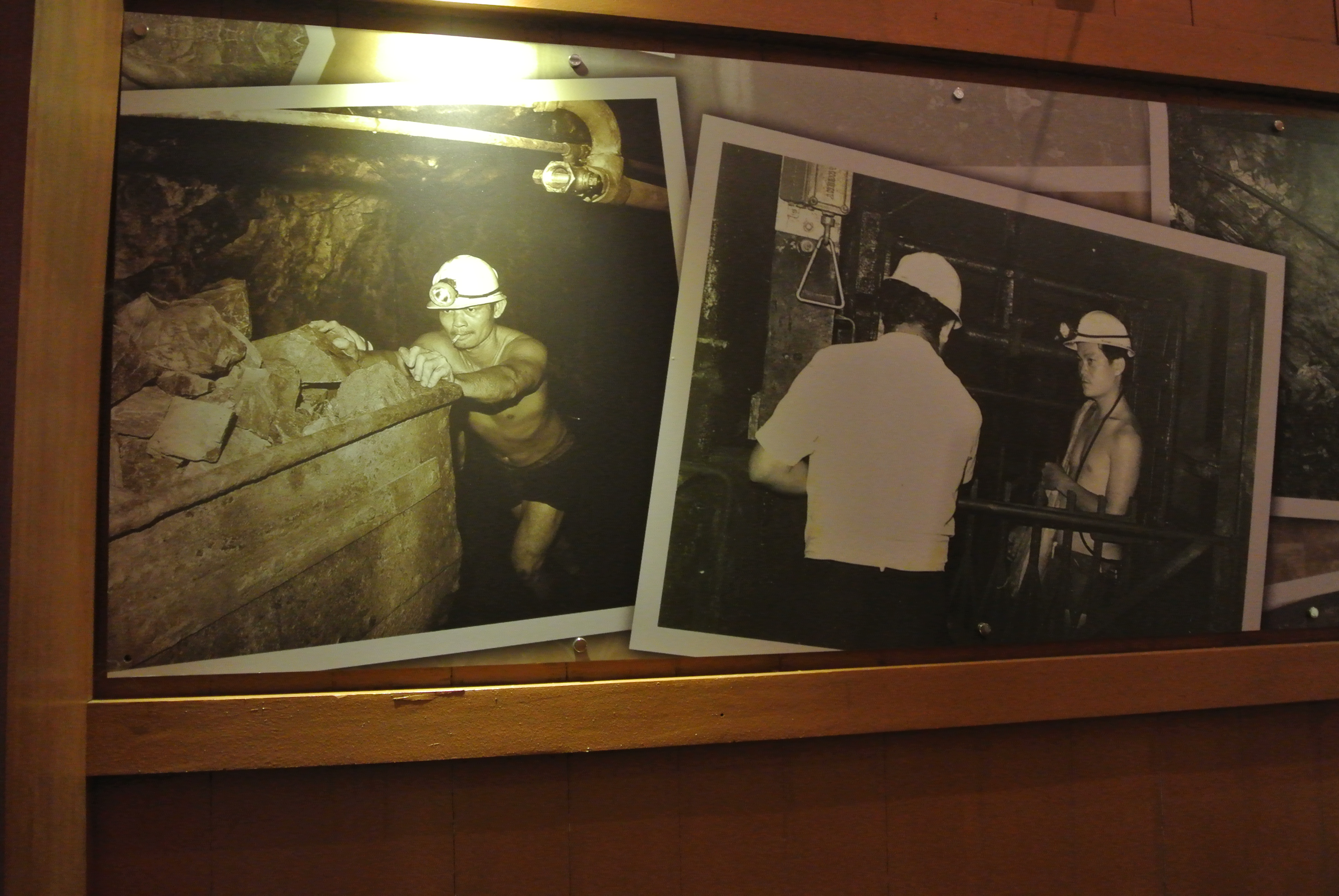
DSC_2570MVs got the opportunity to watch a video on the history of tin mining in the museum where we learnt a lot about the development of mining and heard personal accounts from the retired workers. This history of mining in the area started circa 1886, when the Sultan of Pahang granted a concession to the British company called Pahang Consolidated Company Limited (PCCL).

PCCL was run and managed by the British, who brought their expertise of underground mining from Cornwall, located at the Southern part of England. Many of their miners were locals and immigrants from China during the early days. The underground mining job was very dangerous. This was compensated through the higher wages paid to the miners.

DSC_2578There are many artifacts displayed at the Museum, which tells the history of the mine and the managing culture of the Colonial British. For example, the game of Cricket, which is the British number one sport, was shown in the photographs hanging on the walls. In addition, there were displays on the geology of soils found in the mine including the impact of the volcanic eruption on Jawa island in the 20th century.
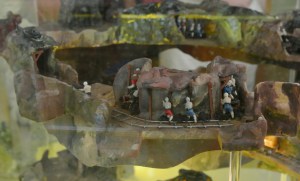
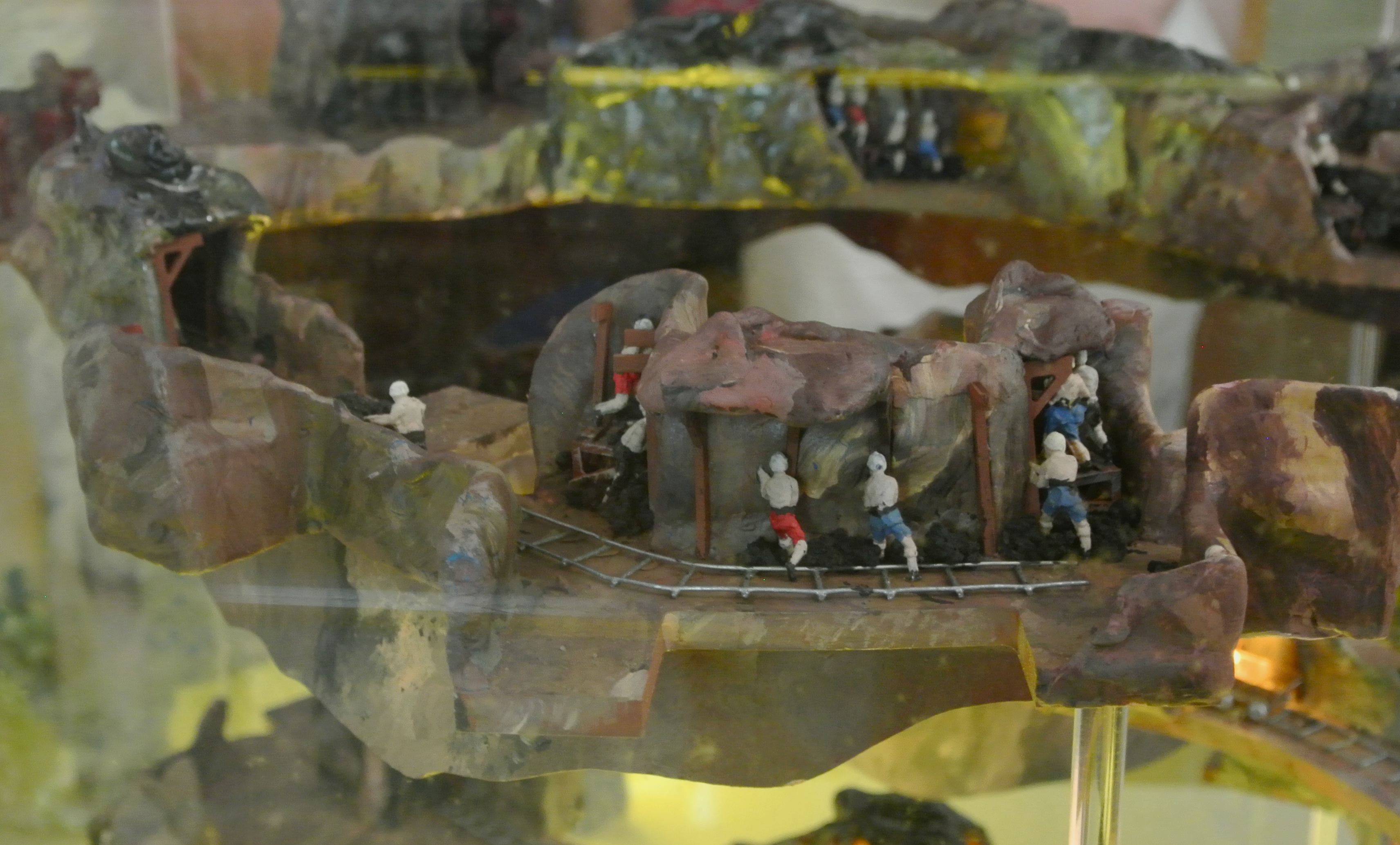
DSC_2562The Model of the Underground Tin Mine Tunnel shown and explained by Puan Rebiah, the curator, was very interesting. She informed MVs that there were more than 300 km of tunnels inside the mining cave. It had 23 levels and the deepest level is around 700meters deep. She also explained and clearly detailed the importance of safety procedures for the workers. This procedure had to be strictly followed in moving the miners down and out of the mining cave.

The other artifacts displayed are mainly showing the living standard of the General Manager, where colonial cutleries were shown, like silver spoon and butter knife, winding wall clock, bed side alarm clock for waking up early in the morning. Old manual typewriters with QWERTY keyboard can be seen as well as the telex machines for sending urgent messages back to England. These items displayed were of interest as an eye opener for younger visitors who may not have the chance to use such equipment with today’s modern technology.

DSC_2577Many of the former managers upon hearing of the conversion of the bungalow into a Museum, had come back to pay a visit to their former living quarters and had many stories to share with the museum staff. During the Japanese invasion of Malaya, this building was used as a Japanese Headquarters. One of the former managers revealed that one of the galleries was used as a lock-up room and prison.

This mine stopped operation in the year 1987 as PCCL was of the view that the operation was no longer economical with the high cost of operations and the low world market price for tin. From almost 100 years of operation, the Sungei Lembing underground mine had yielded more than 100,000 tonnes of tin ore!

We, as VM members, were very fortunate to have this opportunity with the JMM organizing such an educational field trip for our visit to Sungei Lembing.

The Visit to “The Great Tin Mines of Sungai Lembing”

by Ursula Davertzhofen

This mine, located about 48 km from Kuantan, Pahang, is also known as the “El-Dorado” of the East. Our tour to the underground mine started with a short ride on an original train from the active days of the mine; we immediately felt like miners on their way to work.
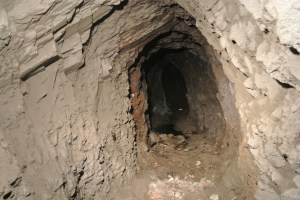
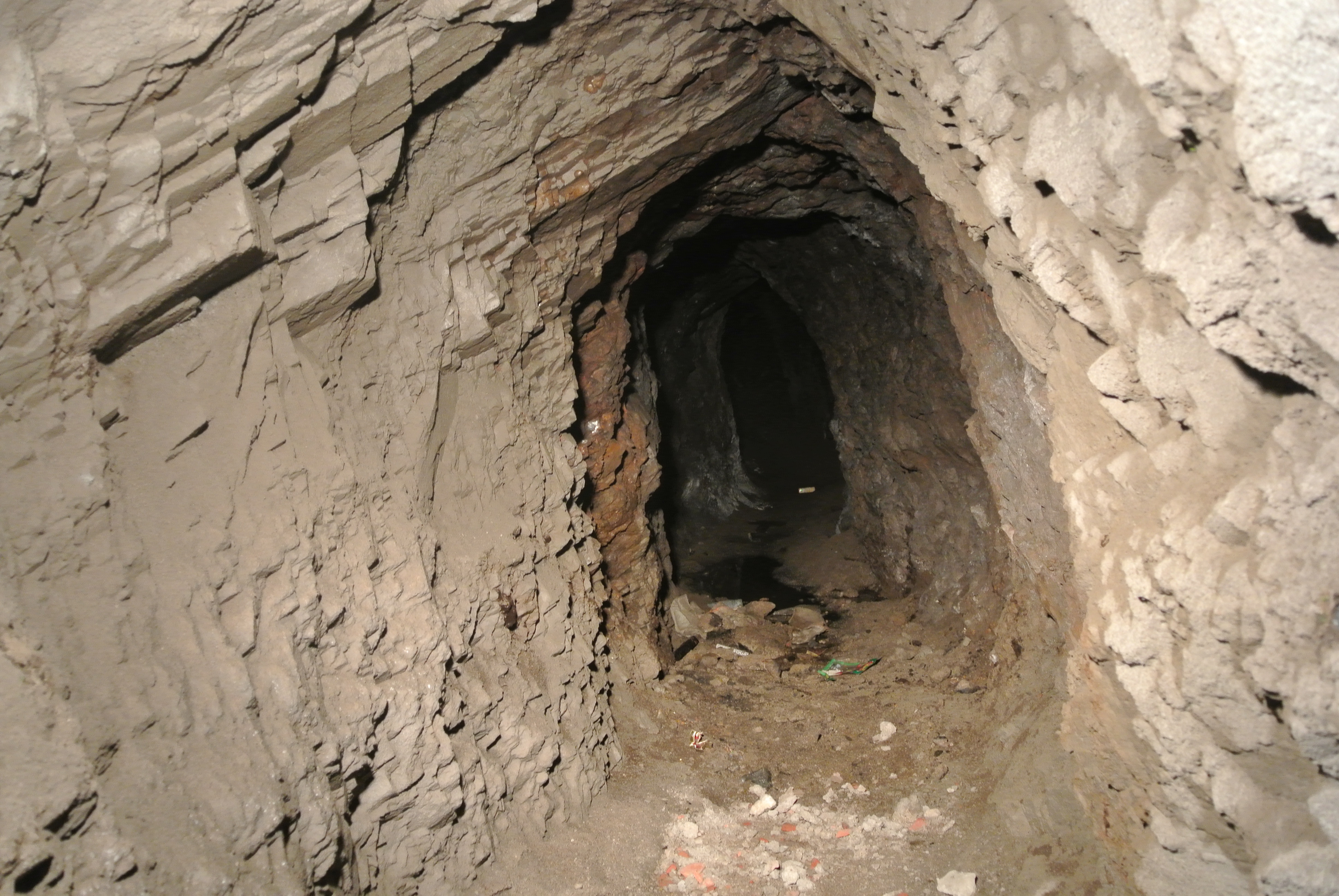
DSC_2597After this nice start we had to continue our way by foot. Every step brought us deeper and deeper into the rocks. The visitor tunnel was high enough to walk, but still it was very narrow, very dark. Of course there were lights every 20m and at the side there were panels which explained the history of the mines.

After walking a while, we suddenly arrived at the “1 Million Cave”, a huge man-made cave. Here we could see different kinds of rocks, and a nice video display explained the history and the name of the cave. There was a time when illegal miners could make RM2,000 – RM3,000 per night! Altogether the amount was estimated of RM 1 Million.

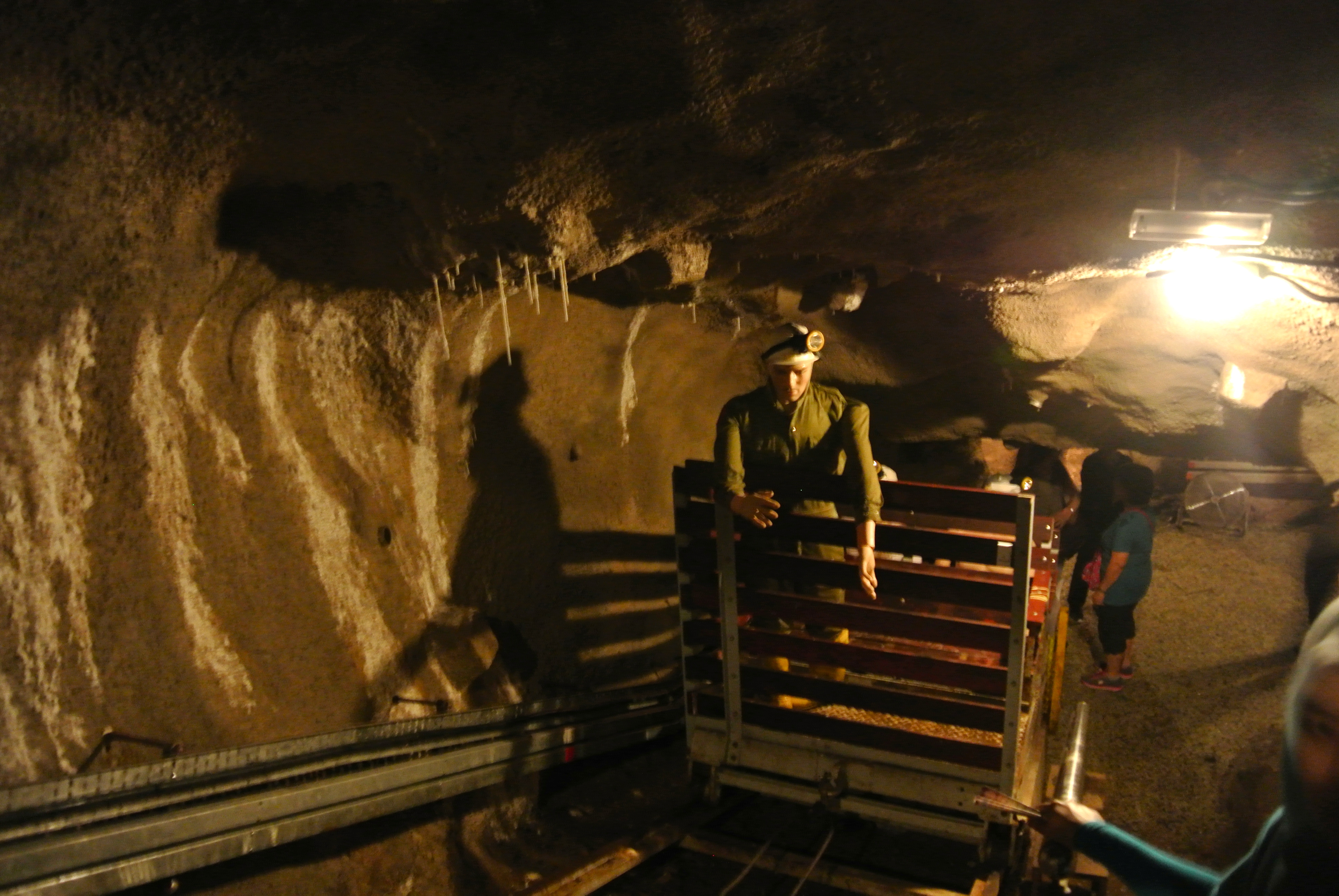
In the labyrinth of the tunnels were also some interactive parts, e.g. visitors could try out some of the activities that would be carried out by the miners themselves. For instance, we could check our strength while trying to pull a block of tin – by the way tin is very heavy. I never understood physics in school but here I realized how the mechanical advantage of block and tackle really matters in the daily life of a worker.

DSC_2603At the end of the tunnel, steep stairs were waiting for us to go the “kiew”; how the miners called the lift. In the hall where the workers used to depart to their work was a lift-simulator with space for 6-8 workers. The miners had to go down up to 700 feet and had to work at temperatures around 42°C. In the older times there were no mobile phones. The miners had to rely on the man in charge of the lift and the only way of communication was a code of ringing a bell. Each ringing was a code which determines the distance to be moved and also the direction going up or down.

The visit of the underground mine was a great experience and there were a lot of interesting things to see and to try.
Something Evil’s Lurking in the Dark

by Maganjeet Kaur

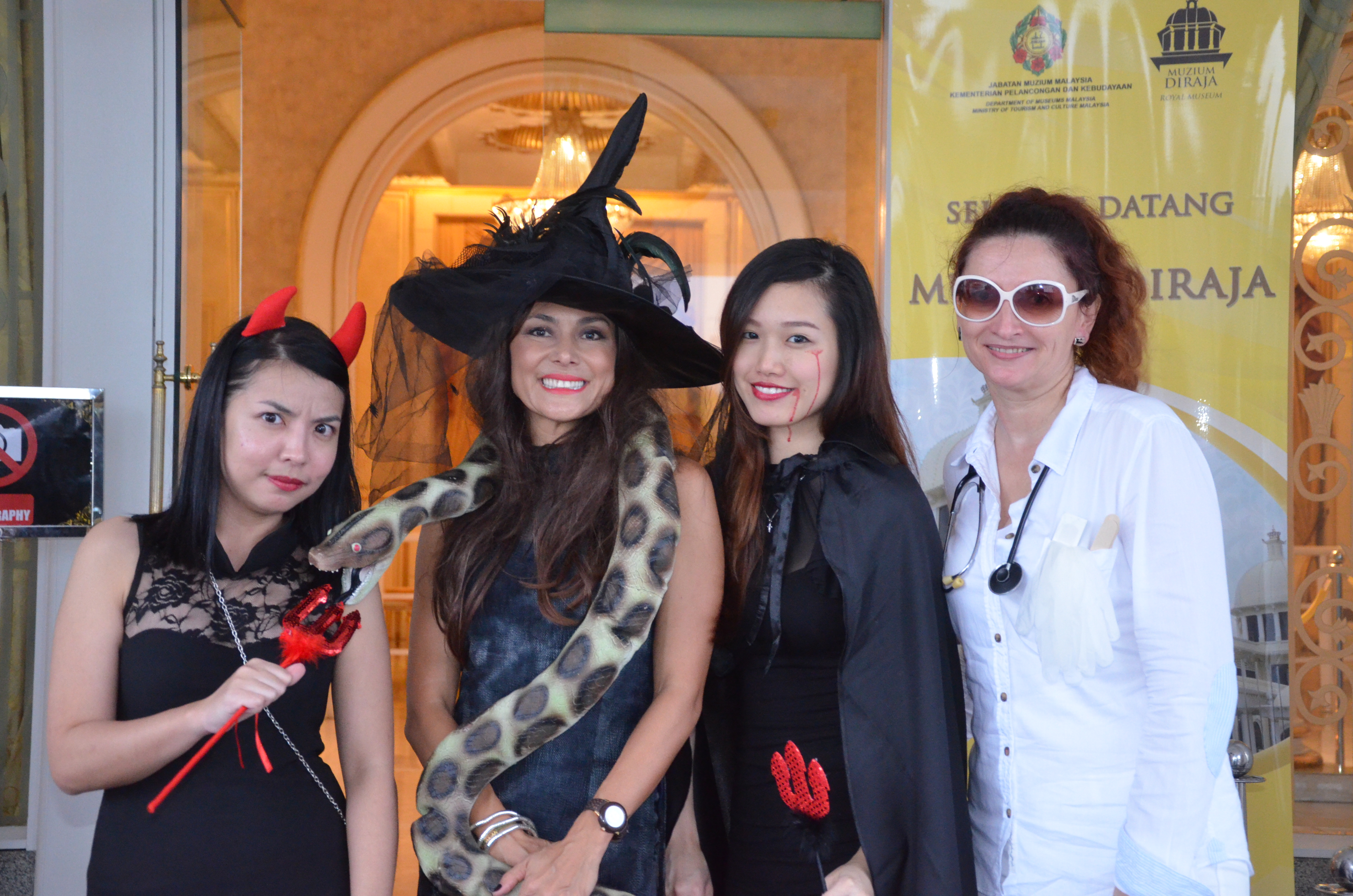
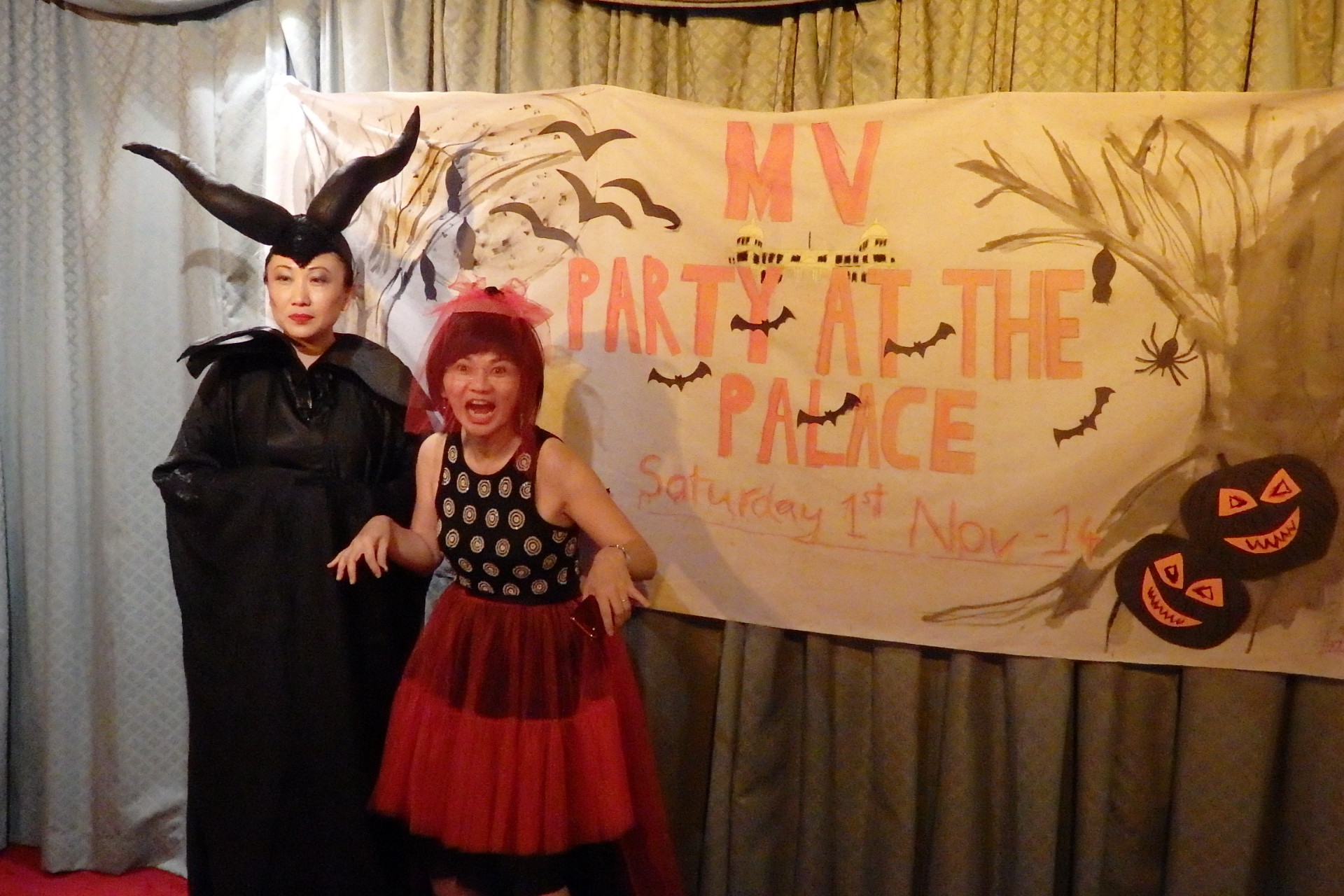
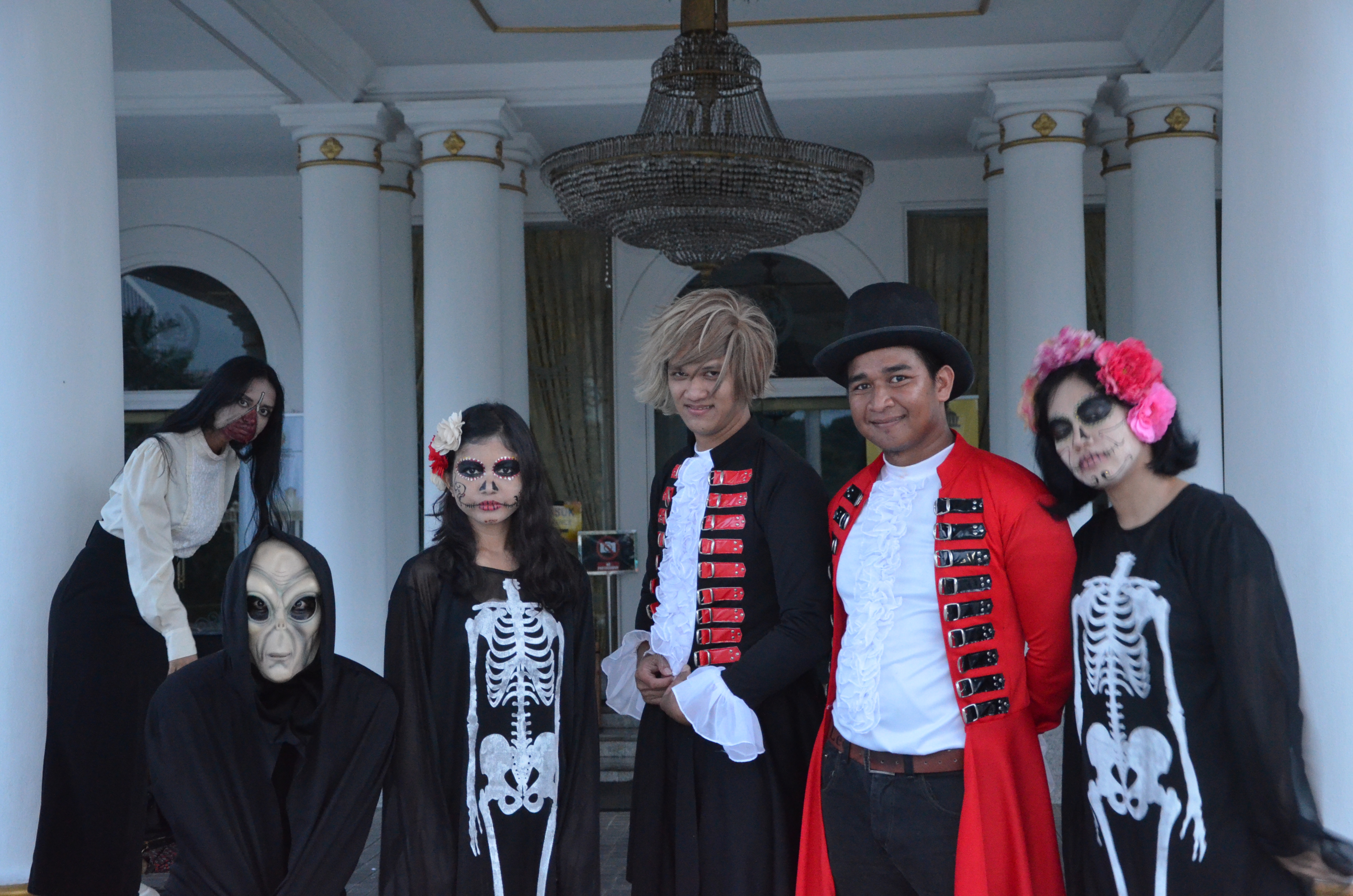
OLYMPUS DIGITAL CAMERASaturday 1st November was not for the weak hearted as ghouls from every land and clime descended on Muzium DiRaja (Istana Lama) and started to walk in their masquerade. Yes, it was the annual dinner of the museum volunteers; a night filled with fun activities and ending with a Thriller dance choreographed by Mariana and performed by CK, Cze Yan, Effa, Karen, Kayla, Kuan Yong, and Mariana. You can catch the dance by clicking here.
The ghouls started arriving at 5pm but were stopped at their tracks with a quiz. Although termed a treasure hunt, this really was a straight forward quiz which could be answered by poking around Muzium DiRaja. Answers to the quiz can be found here. Marking was lenient but the only treasure hunt-like question (question 16) stumped everyone. Let’s discuss this question: Stinted madly but gave a crown. In which room can you find this? In treasure hunt parlance, “madly” is an anagram indicator. An anagram of “stinted” is “dentist” and a dentist gives a crown. So both parts of the question give “dentist”. Where can you find the dentist – at the Royal Clinic and this is the answer. Another question worth mentioning is: What are the different moods available to the Agung in his bedroom? If you went on the tour, the guide would have shown you the different moods – spring, summer, autumn, and winter. This is achieved via lights controlled by a panel on the wall. Overall, the ghouls did very well. Congrats to Sham and Ned for tying at the highest score.

038

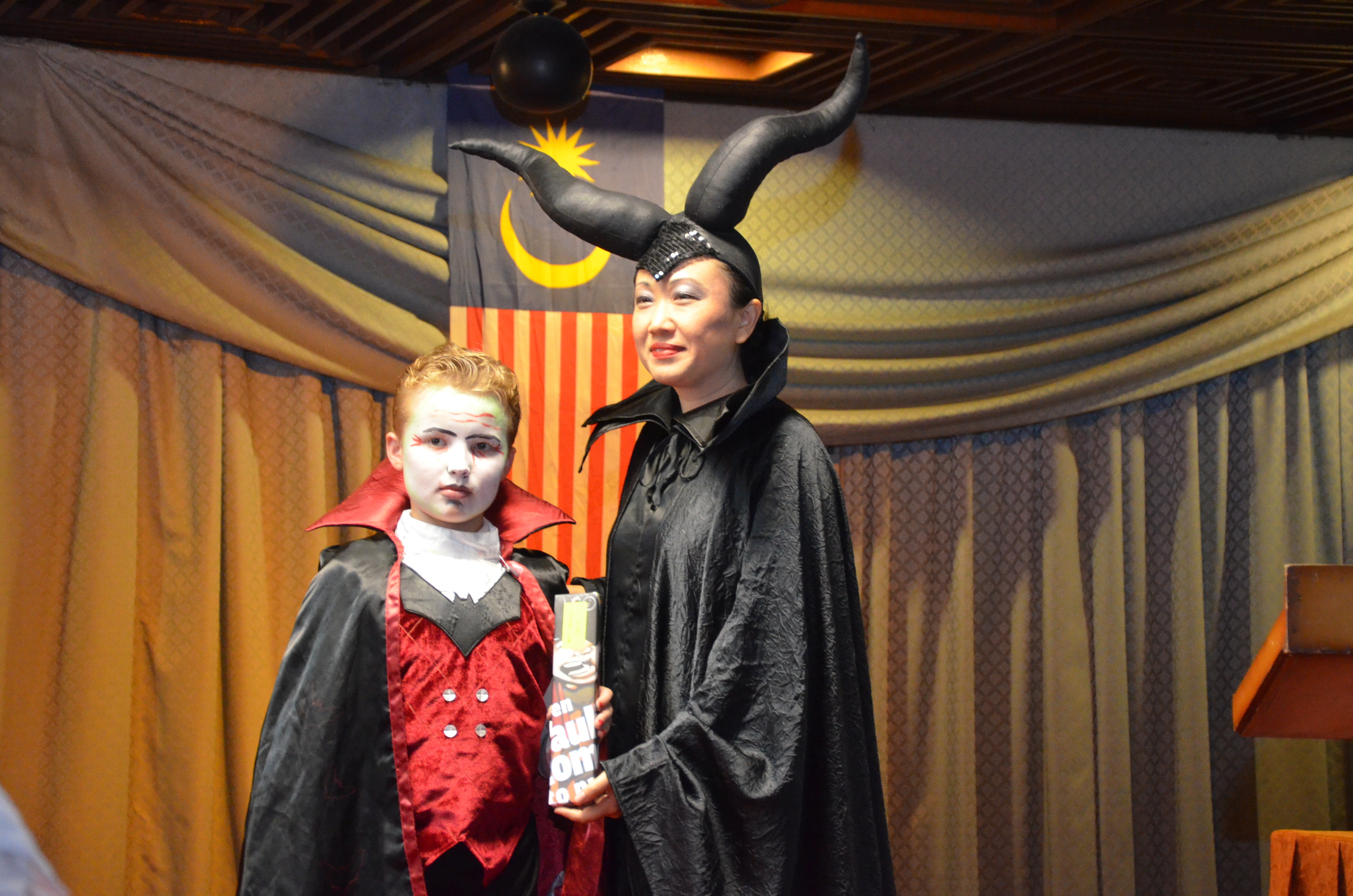
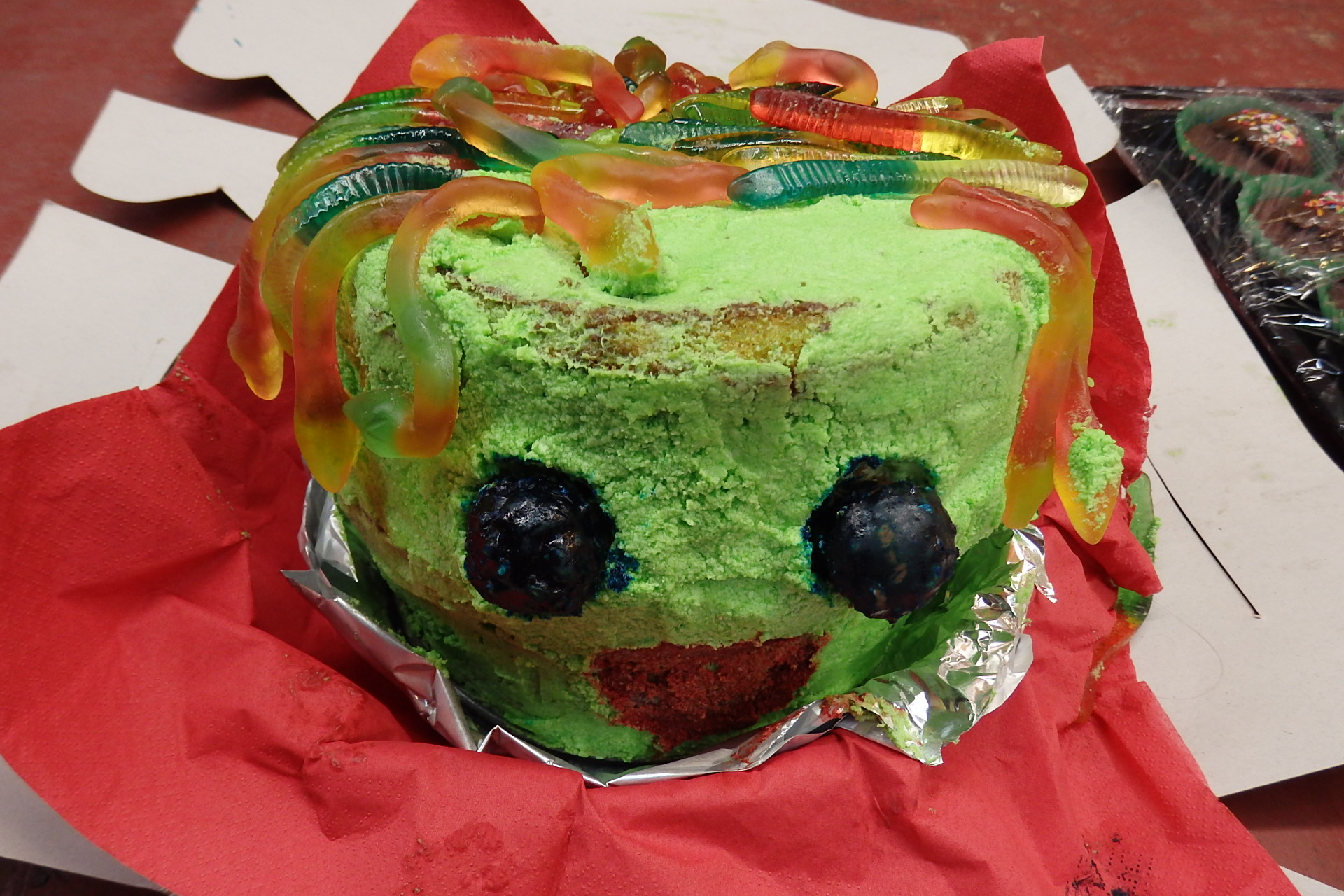
As darkness fell across the land, the ghouls sat down to enjoy a spicy dinner catered from Pakeeza. But unknown to them, the Chief Ghoul was checking them out to see if they met the high standards set for scariness. Edwin, the little count Dracula, got the nod as did Harith, the British officer from days gone by.  The Pontianak Effa was lauded as the scariest female around. Approval was also given to Nisrin for the chilling photo booth backdrop and to Kinga for the grisly cake that the ghouls relished to the last bit.

020 OLYMPUS DIGITAL CAMERA 075 OLYMPUS DIGITAL CAMERA

Dinner was not a picnic as the ghouls had to toil during this meal and come up with terror inducing centerpieces; the prize for the best went to Hayley.  They also had to write stories using horror film titles – Robin and Ng Wei had the best. Let’s enjoy these two stories while reliving the night – another feather in the witch’s hat for Cze Yan.

(more photos have been uploaded onto Facebook)

—————————————————————————————————————————-

094Robin

Martin wanted to borrow Jacob’s Ladder to Come and See The Birds and The Fly that were living on The Thing on the side of The Orphanage. Kwaidan had also told Martin to paint a picture of a Peeping Tom on The Old Dark House. “What colour?” Martin asked, using the same voice he had used in his Audition. “Deep Red”, Kwaidan replied. “That is a Suspiria colour,” Martin said, feeling a bit Braindead. So Martin climbed up the ladder, but as he climbed past a shot of the bloke who had cornflakes before killing The Abominable Dr Phibes, Henry: Portrait of a Serial Killer, he thought up a better plan then The Wicker Man had come up with. “Let’s Scare Jessica to Death”, he chuckled as The Fog started to close in. Martin was worried though. Jessica’s mother, Carrie, might not open the window to Let the Right One In. He got to the top of the ladder and The Mist had lifted. He stopped and looked into a window. Inside he saw Eyes Without a Face watching The Black Cat. He shivered and had a quick drink of Wolf Creek to settle his beating Angel Heart. The Vanishing mist allowed him to peer closer into the room without Repulsion. He looked at his watch, a Cronos Videodrome which had been in his Possession since that “Daughter of Darkness” incident. 28 days Later, it was still working and played Black Sabbath’s famously unpublished song Black Christmas Freaks in the Dead of Night. Maybe looking for Jessica wasn’t such a good idea. Polite Society would never forgive him. He climbed down the ladder and walked off to see Father Psycho, his favourite priest. He tapped on Father Psycho’s door using the Eraserhead knocker. Father Psycho was busy practicing his magic tricks, his best one being The Vanishing Ring. Father Psycho walked towards the door and turned The Shining door handle.  “Don’t Look Now”, he said to Martin. “The house is in a mess. It feels like I have had an Invasion of the Baby Snatchers”. “We are all Martyrs to our religion, Father”, replied Martin, entering the Halloween themed hallway. Rubbing his Jaws, which still ached after that Switchblade Romance with The Haunting woman Salo, Father Psycho looked at Martin. He was worried that Martin was spending too much time with The Freaks who were A Nightmare on Elm Street. “I’m sorry Father,” Martin said. “I wanted to Come and See you, not The Others. “I am sorry Martin, I am too busy today. I am doing a wedding. I am marrying Professor Frankenstein and The Bride of Frankenstein”. Saddened Martin left, still worrying about Jessica. “God Told Me To help her,” he thought.

087Ng Wei

It’s a dark dark night. Two kids are staying in the house. Suddenly… “Shhh… Oh no! There’s something outside the window. The Thing is crying like old Rosemary’s Baby. Come and See, Martin,” said the Daughters of Darkness. “Come on, Ms. Darkness. There’s no such thing as ghosts. If so, I will be The Texas Chainsaw Massacre and God Told Me to marry the Bride of Frankenstein”, answered Martin. As soon as they looked out of the window, they heard something whispering, Don’t Look Now… It’s the Night of the DemonKill, Baby…Kill!” Then both of them saw a pair of Deep Red Eyes Without a Face. Martin and Ms. Darkness screamed. “Oh, come on… you two are always so dramatic…”, said Frankenstein and Dracula as they came in through the door. “Ha ha ha. We knew it was you. Happy Halloween! Let’s enjoy this Phantasm night.” Soon the Others joined in and started to dance like The Devil’s Backbone.

Evolution of Weapons – An Exhibition

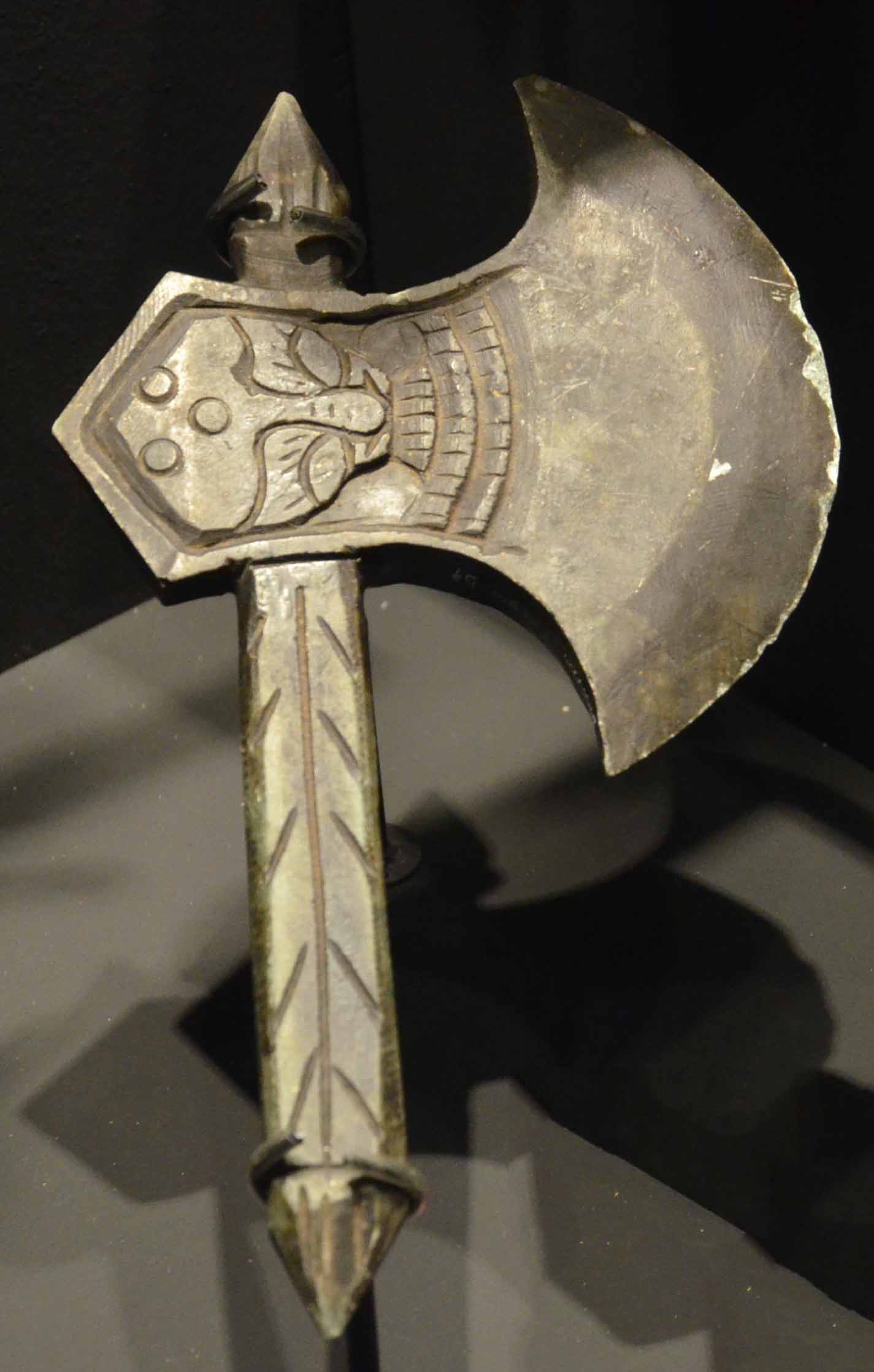
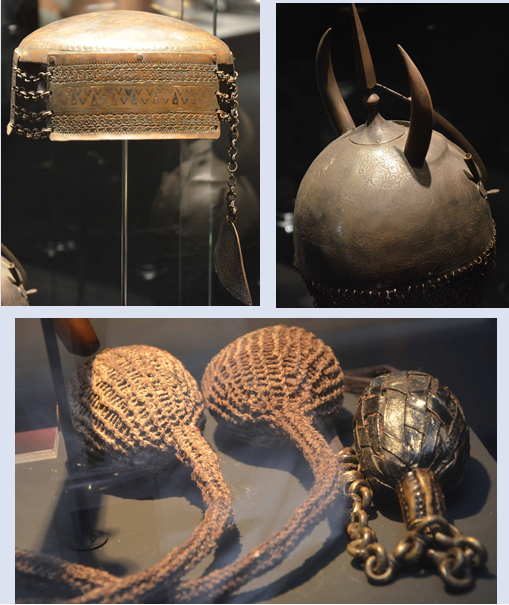
223_modWith close to 10,000 exhibits on display, it would be hard not to find a piece to hold your interest in the on-going exhibition at Muzium Negara. Aptly titled ‘Evolution of Weapons’, the exhibition showcases a wide range of  weapons used by humans from prehistoric times through to modern times.

Primitive stone axes and adzes give way to spears, blowpipes, and throwing weapons. Malay weapons including the keris, golok, tumbuk lada, and sundang mingle with Viking helmets and axes. On display also are small but sharp hair accessories used by Malay women to pin their hair into buns. Accessories, such as the semar, are beautifully carved but the sharp pins double as weapons that could be used for self-defence. These small weapons contrast with European and Japanese swords whose purpose were never covert.

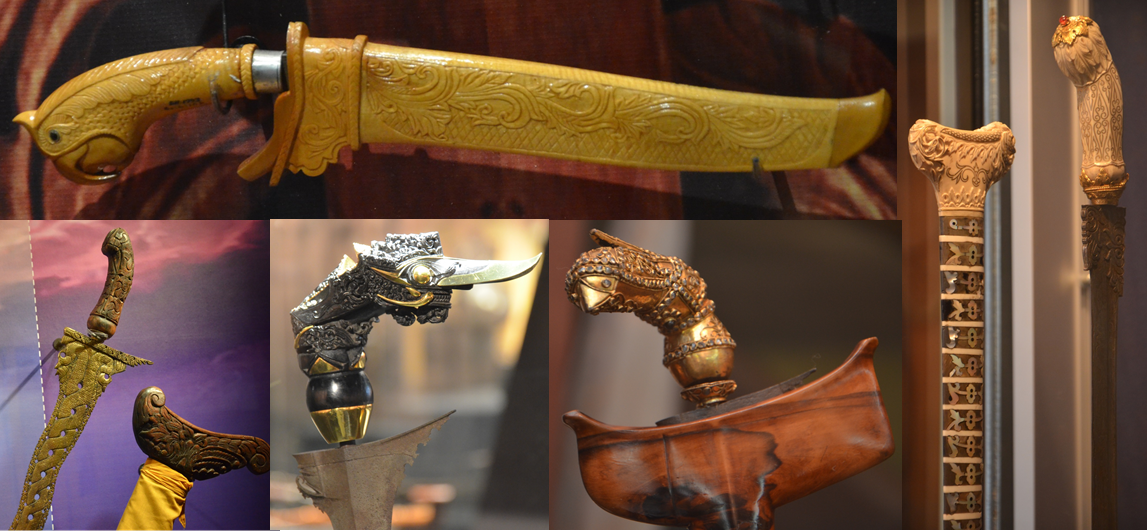
Weapons used for traditional healing, magic ceremonies, cultural performances, and religious ceremonies are either on display or explained through the display boards. The keris, especially, stands out as a versatile weapon used not only as a conventional weapon but also in traditional healing, magic ceremonies and cultural performances such as the silat and wayang kulit. There is a wide selection of keris on display including keris from Majapahit, Sulawesi, Bali, Riau-Lingga and Lombok, Bugis keris, and the Surakata Kraton Kris.

Collection of Keris

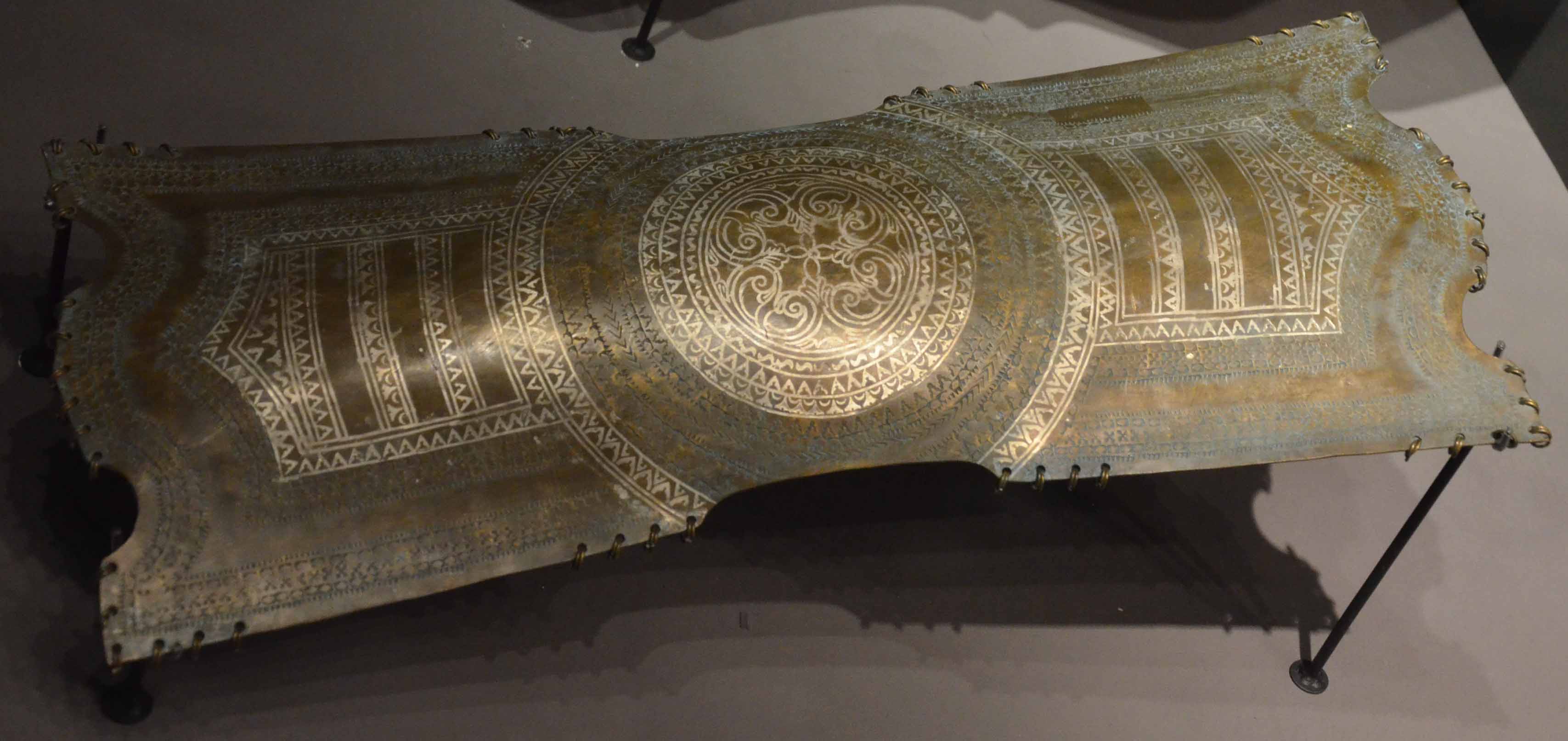
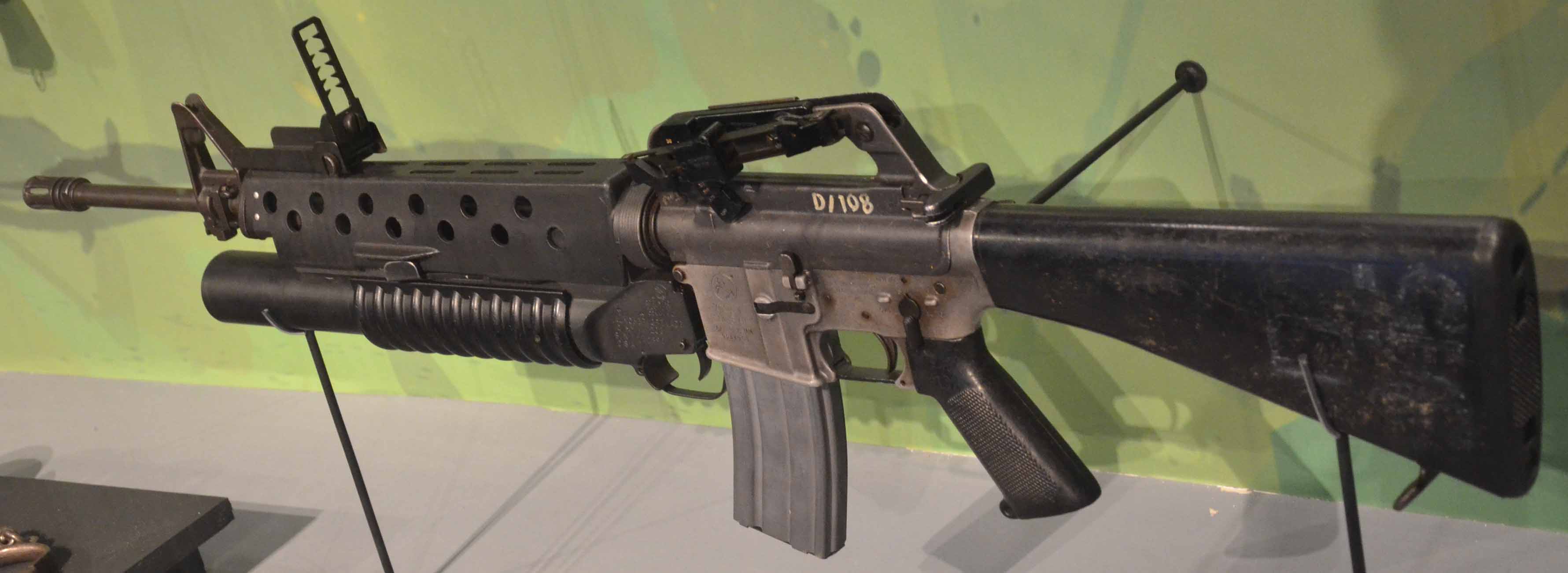
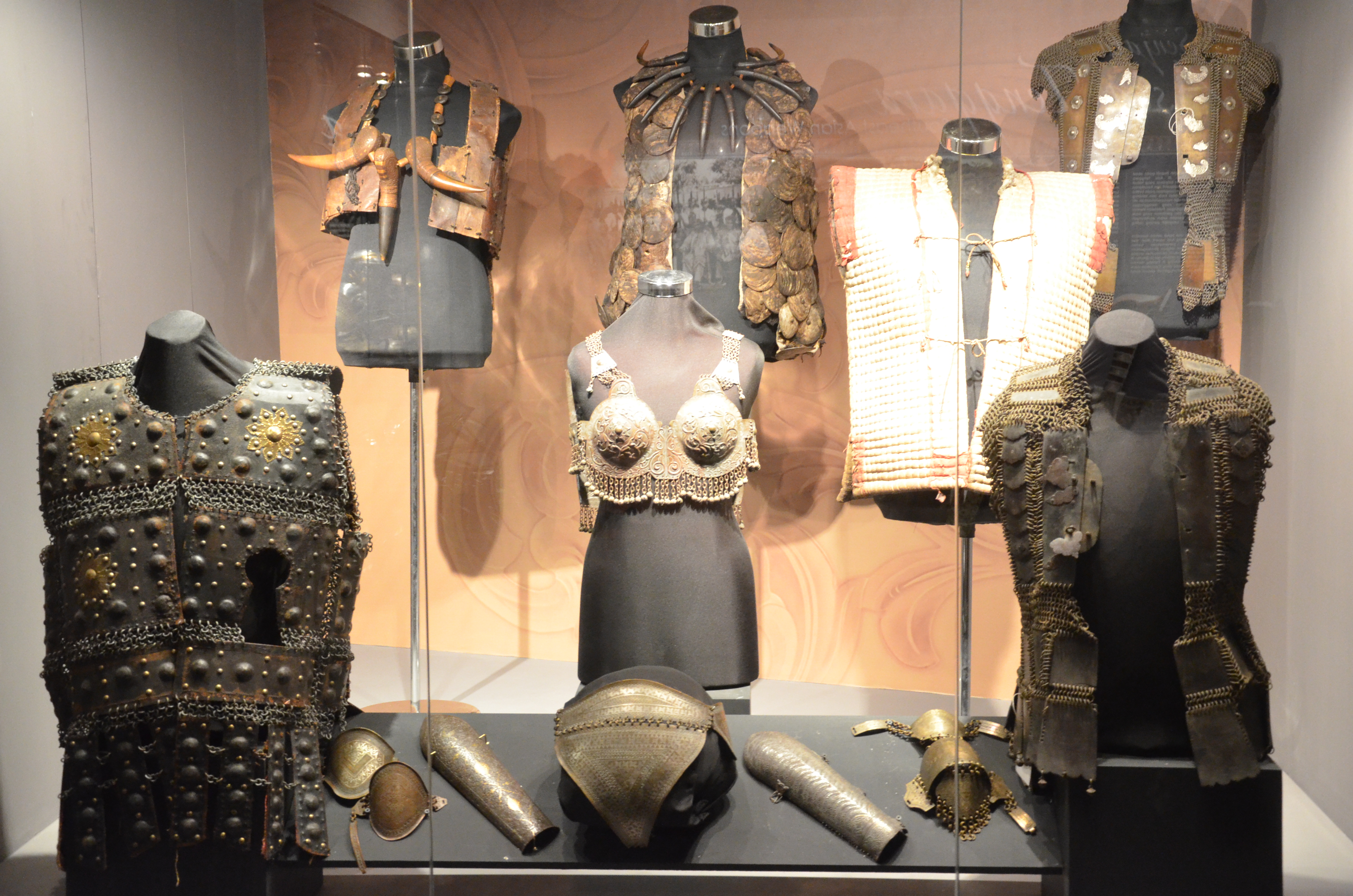
163A large collection of beautifully designed shields complement the equally beautiful body armours bringing to mind a bygone era eclipsed by present day weapons that emphasise function and form. Modern day weapons on display include tanks, machine guns, pistols and rifles.

229

The bulk of the exhibits are from Muzium Negara’s stores thus affording an opportunity to view a rarely seen collection. Exhibits also come from other museums in the country such as the Army Museum as well as from outside the country including from Korea, the United States and the La Galiga Museum in South Sulawesi. Do get down to Muzium Negara but remember to allocate sufficient time to give the (close to) 10,000 pieces justice.

misc weapons

165


Exploring Kuching: All about cats

By Karen Loh

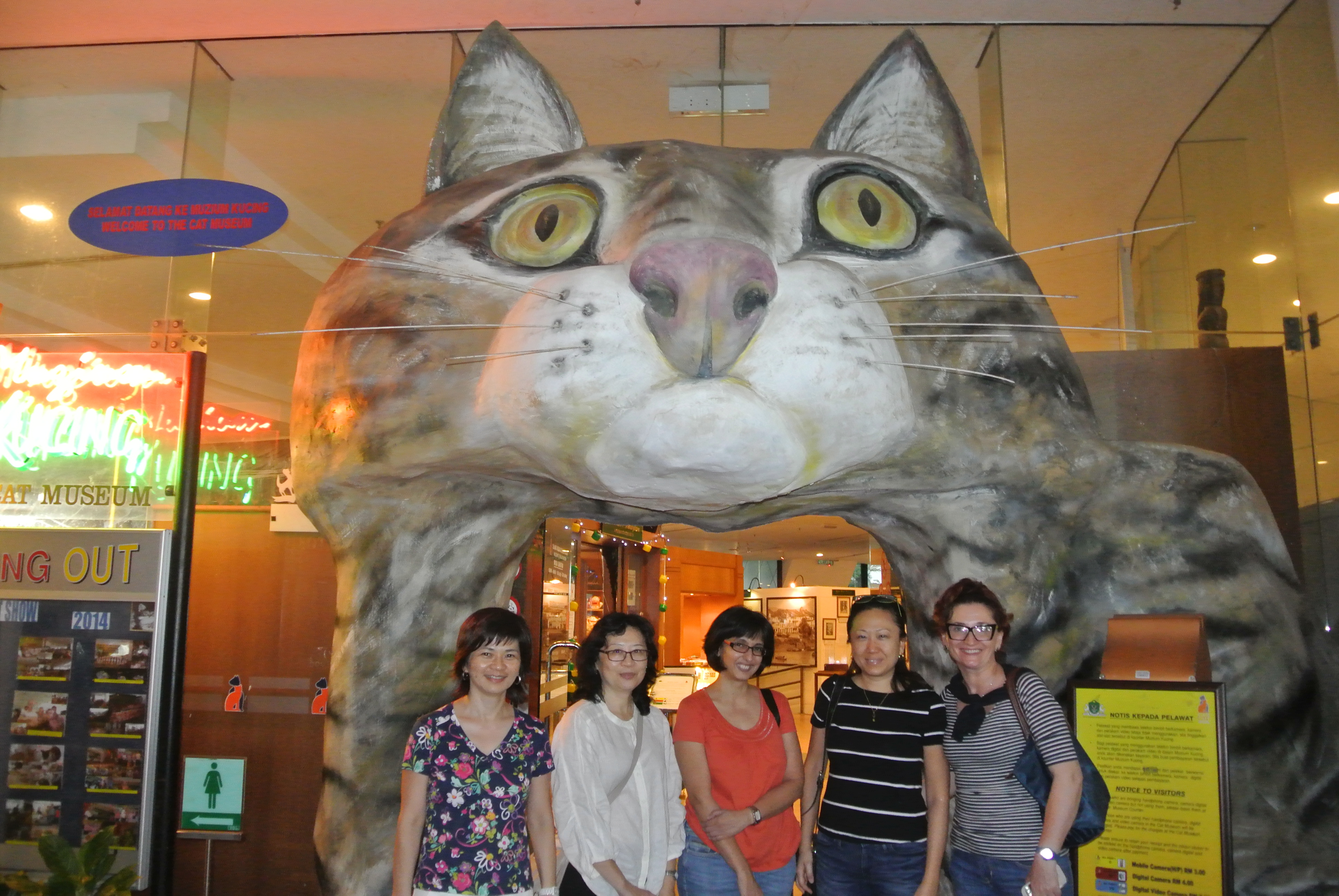
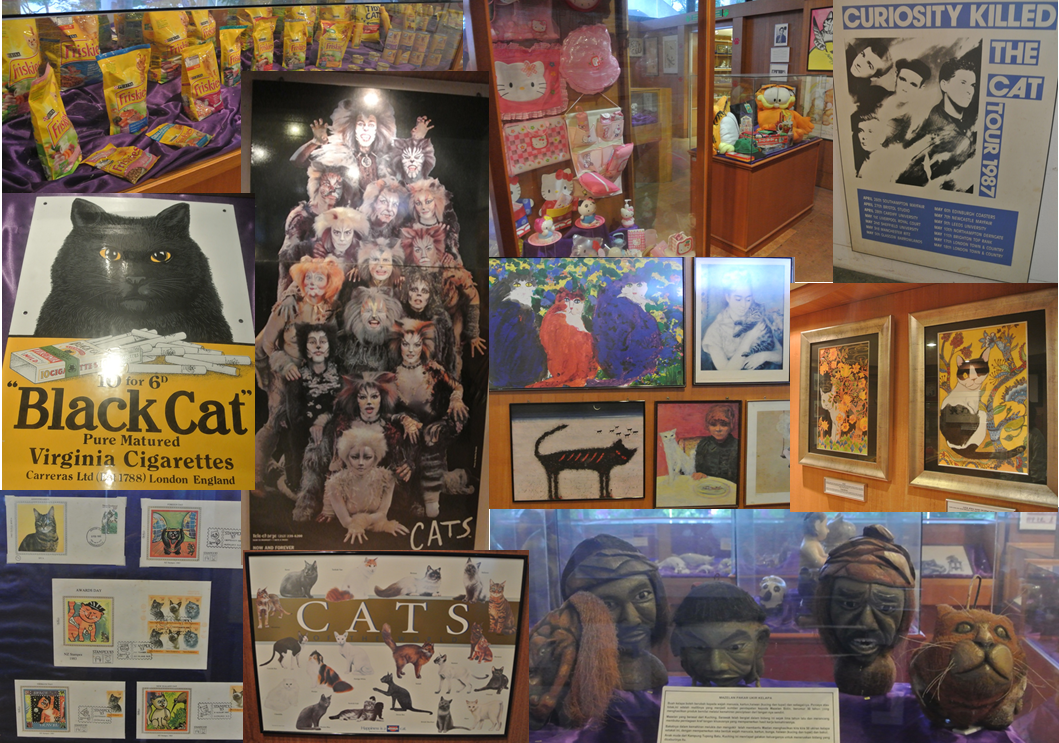
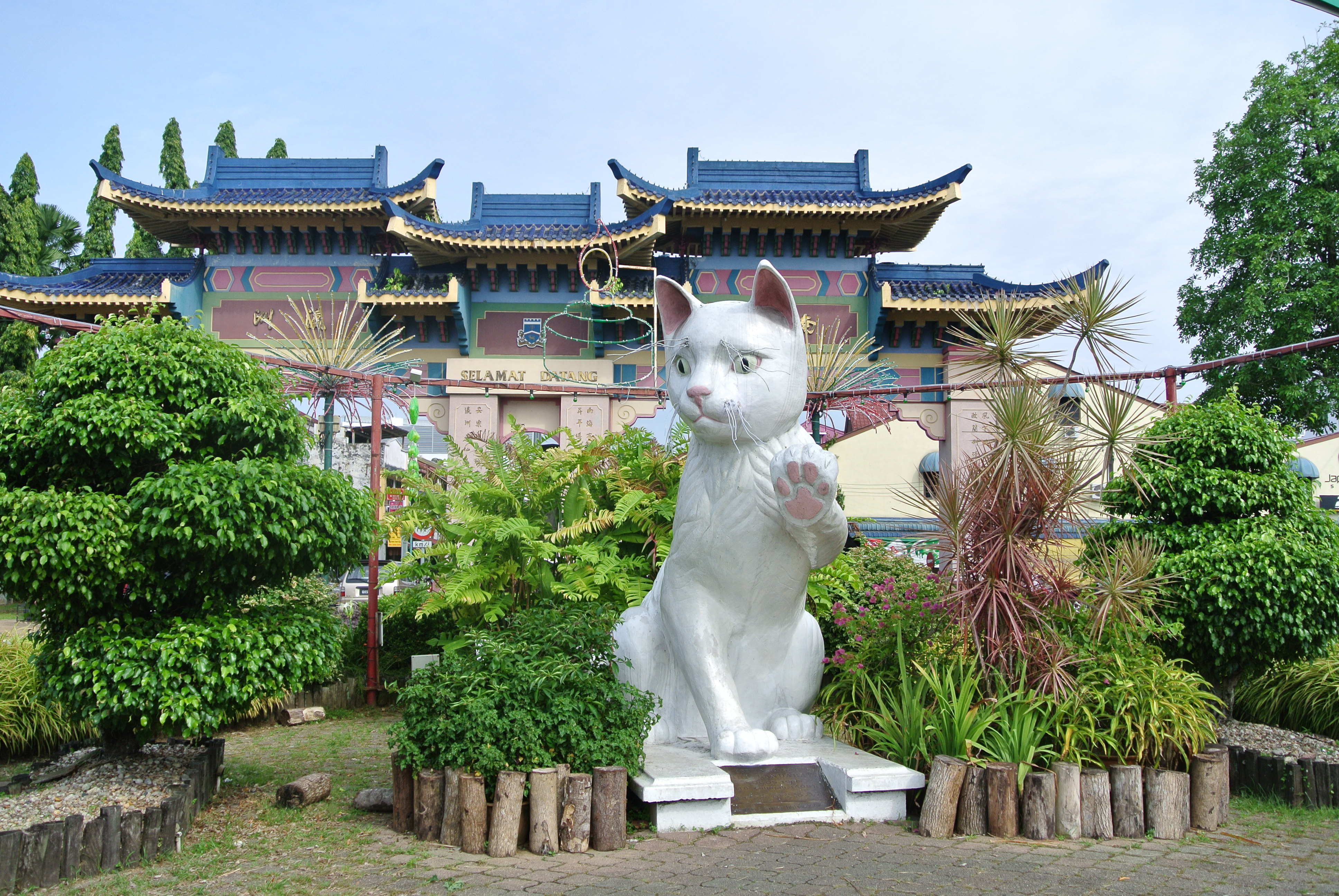
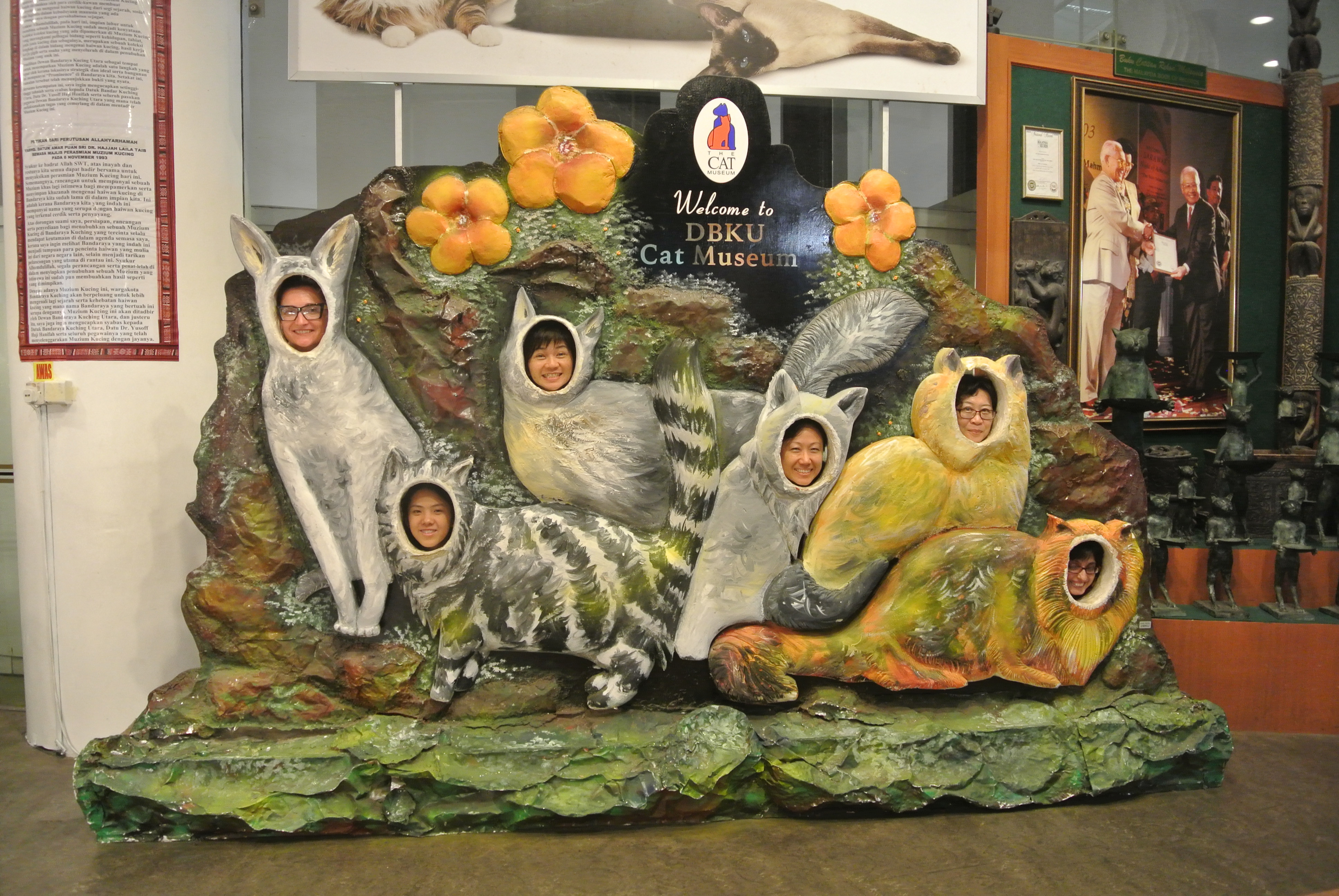
DSC_2303As first time visitors to Kuching, we (5 museum volunteers) decided to visit the Cat Museum during our visit in August, 2014. Built to promote tourism since ‘Kuching’ literally means ‘cat’ in Malay, the museum is the first of its kind in the world dedicated to cats. The brainchild of the former Chief Minister, Pehin Sri Hj. Abdul Taib Mahmud and his wife, this museum was opened in 1992 at the Dewan Bandaraya Kuching Utara (Kuching North City Hall) building on top of Bukit Siol (Siol Hill). Divided into four galleries, this great cat collection has 4,000 artifacts on anything and everything that has to do with cats; from clay and wrought iron figurines, posters, artists’ collection and artwork, cat cemetery, cat’s eyes, music labels, cats during the medieval period, sculptures, cat engraved coconut shells and graters, a cat cave, preserved cats, soft toys and many other curios.

all about cats


DSC_2348Nevertheless, Kuching was not named because it is a city of cats. One version for its name is that Kuching came from the Indian name ‘Cochin’, a term commonly referred to as ‘port’ by Indian traders. These Indian traders were one of the first to settle at the base of Santubong in Sarawak in the early days. Another famous version is the one of James Brooke, who was sailing down Sungai Kuching (Kuching River) from Bukit Mata Kuching (Cat’s eye Hill; cat’s eye or longan is a fruit and the hill was named after the abundance of longan trees which grew on the hill) when he saw a village. He asked a local for the name of the village and was answered ‘kuching’ because the person mistakenly thought that Brooke was asking about a passing cat. Founded in 1827 by Pengiran Indera Mahkota, Kuching is actually named after Sungai Kuching (Kuching River) and was the third capital of Sarawak under the Sultanate of Brunei. The city later flourished and grew as an administrative capital under the Brooke Government.

We had a ‘meowing’ good time.

DSC_2305

Exploring Kuching – The Chinese History Museum

by Kon Cze Yan

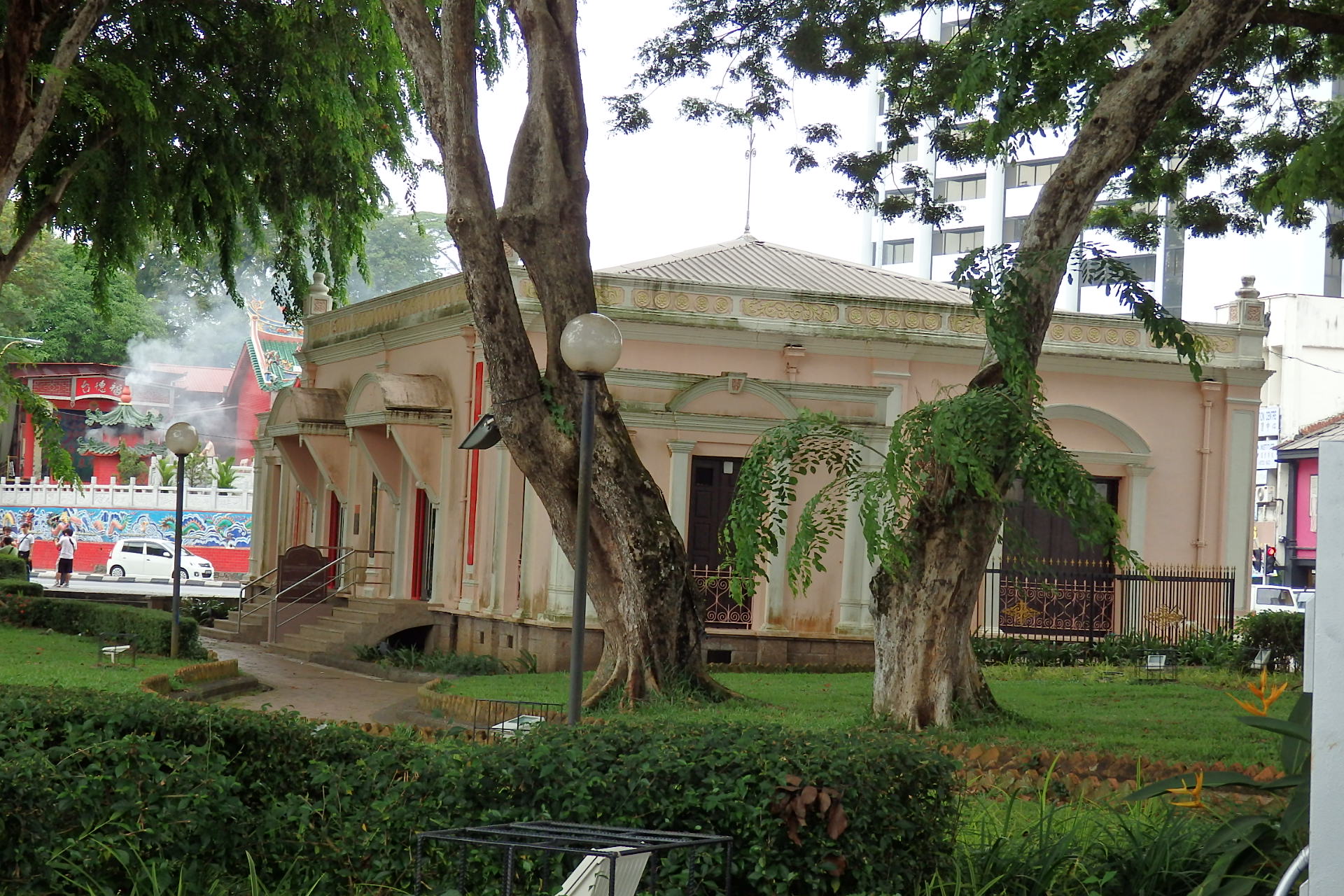
OLYMPUS DIGITAL CAMERAThis charming little museum is located on the Kuching Waterfront.  It was built in 1912 as a court by Chinese traders to enact their laws and customs. Thereafter it was taken over by the Chinese Chamber of Commerce and in 1993, it became the Chinese History Museum.

James Brooke, the first White Rajah of Sarawak, disliked the Chinese, but regarded them as a necessary evil. The Rajah detested people who had anything to do with money. ‘The Chinaman’, wrote Ludwig Verner Helms, the managing director of the Borneo Company, ‘must have his tea, tobacco, opium and samsu, and when he has ready money he must gamble. He is, therefore, an excellent subject to tax, and from the opium, arrack and gambling farms the Sarawak Treasury was largely replenished”.

And so the Chinese in Sarawak occupied a special place during the period of the White Rajahs. They formed a state within a state. They had their own temples and their own code of laws.

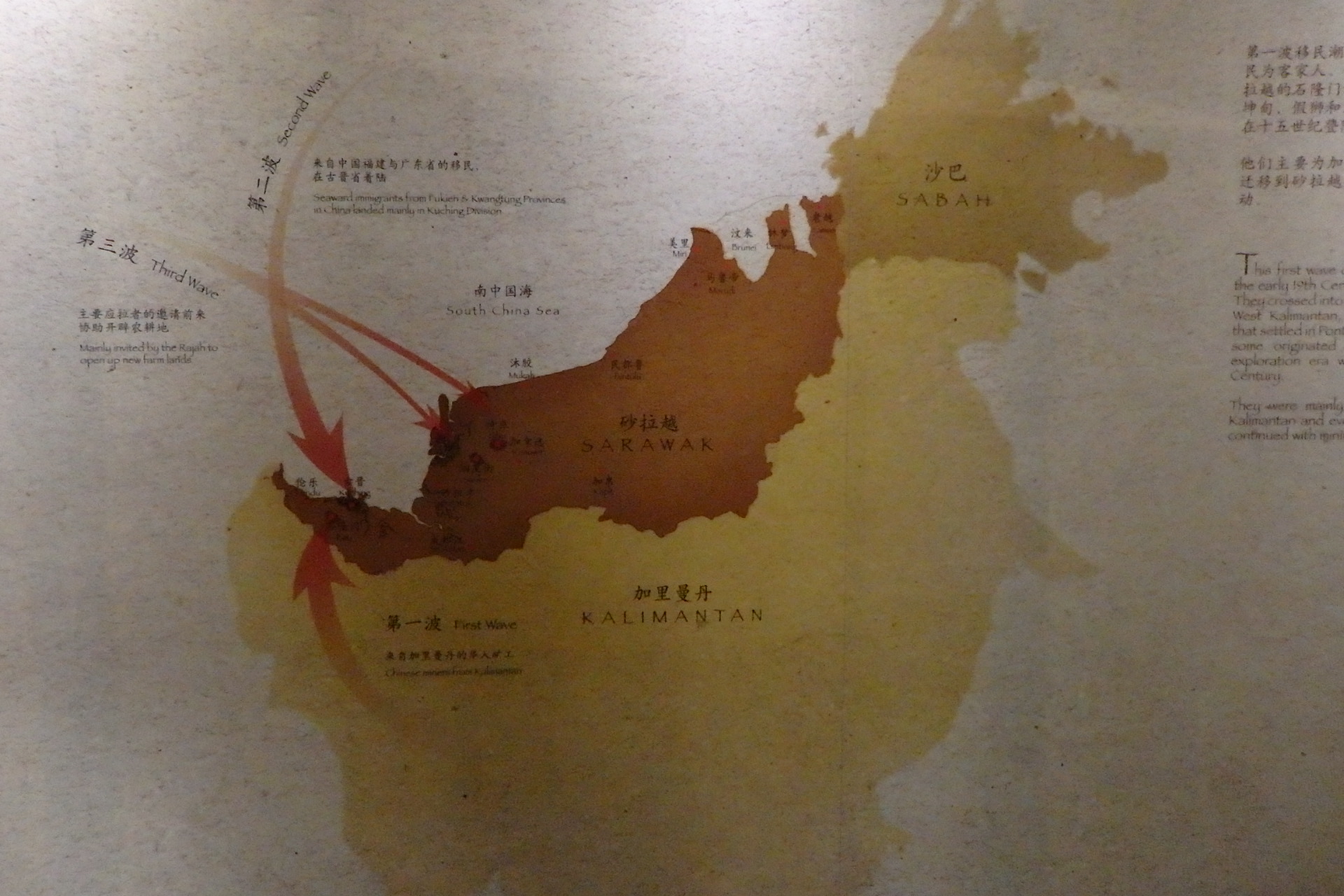
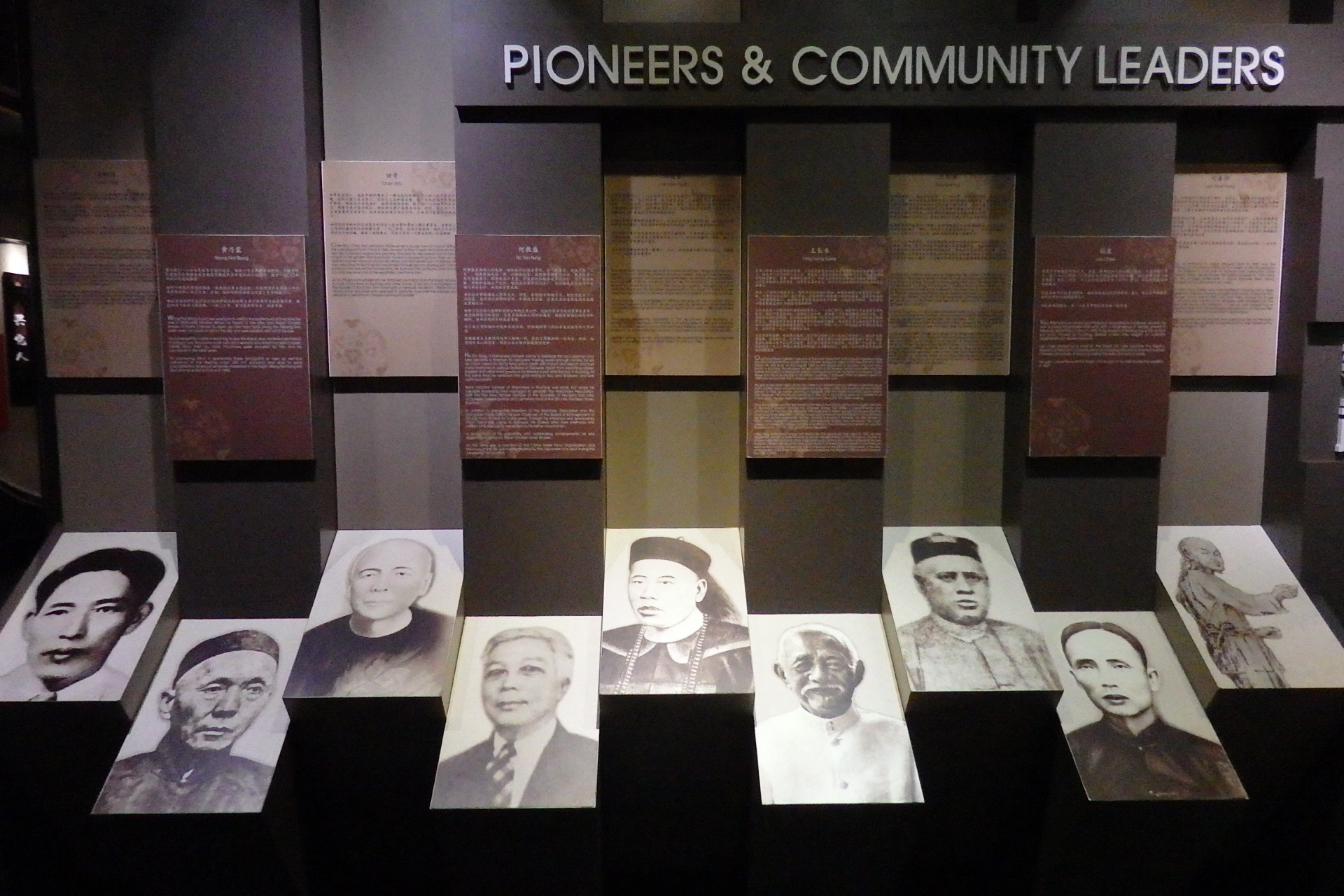
OLYMPUS DIGITAL CAMERAThe Chinese now make up about a quarter of the population of Sarawak and are Sarawak’s second largest ethnic group after the Ibans. The museum describes the 3 waves of migration of Chinese into Sarawak. The origin, destination and occupation of each major dialect group are detailed. It also highlights the early prominent pioneers and the current leaders of the community.

The 1st wave of immigration took place in the early 19th century.  These were mainly Hakka gold and antimony miners from Kalimantan. The 2nd wave of Chinese immigrants arrived by sea and consisted mainly of Hokkien, Teochew and Cantonese. These traders arrived before the 1st Rajah, James Brooke.  The 3rd and biggest wave of immigrants arrived mainly at the invitation of Rajah Charles Brooke to open up land for cultivation and provide labour for the mines.

An information panel on each of the Chinese immigrant groups who helped build Sarawak – Hakka, Cantonese, Hokkien, Teochew, Chao Ann, Henghua, Hainanese, Foochow, Luichew and Sankiang – forms the bulk of the displays in this little museum.

Two large sections of the museum are devoted to prominent Chinese leaders both past and present. Sadly there is no mention of the ‘Uncrowned King of Sarawak’, Wee Kheng Chiang. So influential and wealthy was he that Lady Sylvia Brooke, wife of Rajah Vyner Brooke, bestowed that title on him. When she often told him he was a rascal and rogue, it delighted him so much he would send for a bottle of champagne and drink to it!

OLYMPUS DIGITAL CAMERA

Petaling Jaya – a satellite township of Kuala Lumpur

by Soundaravalli Paraman

150px-MBPJIn Malaysia almost all new townships have a suffix, the word Jaya which in Malay means success in the hope that the town will live up to the given name. The city of Petaling Jaya has lived up to its name. Petaling Jaya lies alongside KL in the heart of Klang Valley and can be said to be the most advanced region in Malaysia. It is the leading growth centre of Selangor and arguably the foremost industrial hub in Malaysia.

When Kuala Lumpur was becoming overcrowded in the 1950s, squatter enclaves sprouted in and around the city. To solve this problem the British conceived the idea of a satellite settlement in the neighbouring Petaling area in 1952. The Selangor Government allocated 1200 acres of the Effingham estate and to attract people to this settlement it offered 1300, 50’x90’ lots at a nominal price to the landless. In 1953, residential areas of sections 1, 2 and 3 were developed. About 800 wooden houses were built around the area now known as “Old Town”. The only two main roads were Jalan 1 and Jalan 2, now renamed Jalan Templer and Jalan Othman respectively. Here, public amenities and facilities for commerce were developed. Lieutenant-General Sir Gerald Templer (High commissioner of Malaya, 1954-56) was made chairman of the Petaling District Council to plan the development of Petaling Jaya as a satellite town. Due to communist insurgency the earlier housing areas were fenced off from the surrounding areas to prevent the people from assisting the communists.

Initially the town was administered by the Kuala Lumpur District officer and the Petaling Jaya Board until the end of 1953.

1954            Under Ordinance No 36 a legislative body, Petaling Jaya Authority, took over

1964            Petaling Jaya Town Board was given financial autonomy    

1/2/1974      When KL became a Federal territory, Petaling Jaya became a township in the state of Selangor

1/1/1977      PJ Town Authority became PJ Municipal Council (Majlis Perbandaran Petaling Jaya, MPPJ)

20/6/2006    Petaling Jaya attained city status (Majlis Bandaraya Petaling Jaya,  MBPJ)

After 1954, rapid development took place. More land was acquired from rubber and oil palm plantations and refilled tin mines, for industry, infrastructure and housing. As of 1957 there were over 3200 houses, more than 100 shops and 28 operating factories. By 1964 Petaling Jaya expanded to 19.9 sq km and a population of 35 100.

As of 2003, PJ had grown to 51.4 sq km  and had a population of 450 000 consisting of 55% Malays, 30% Chinese and 13% Indians.

In 1954, the Federal Highway was developed to link the Federal capital to Port Klang and thus areas developed north of the highway came to be known as PJU or Petaling Jaya Utara and areas which started in 1953 onwards were known as PJS Petaling Jaya Selatan.

Petaling Jaya Selatan (PJS) refers to an area which started off around 1953 from section 8 to PJ Old Town. Petaling Jaya developed rapidly due to rural-urban drift in areas like Sungai Way, Subang Jaya and Seksyen 52.  PJ New Town is the central Business district of PJ with the landmark Menara MBPJ which acts as a focal point. Interestingly PJ New Town is called State because of the location of the first theater known as State.

In a realignment exercise in 1997, parts of PJ such as Subang Jaya, Putra Heights and Bandar Sunway came under jurisdiction of the newly created Subang Jaya Municipal Council (MPSJ).

Facts, Form, Feelings and Future in Museum Guiding

by Asma Abdullah

As volunteers we have to remember a lot of facts on the various artefacts, events, personalities and exhibits displayed in the four galleries of Muzium Negara, Malaysia.  So, how do we organise our presentation in an interesting (not amusing), informative (not teaching), stimulating (not astonishing), and convincing (not influencing) manner when we take our visitors through the museum?

One structured approach that I want to recommend is to use the whole brain thinking model based on the left and right brain research done by Ned Hermann.  This model states that we can segment our delivery by using the 4Fs of Facts, Form, Feelings and Future to sieve through the voluminous information that we have gathered from various sources.

4Fs

In the first segment, FACTS, we can include dates, numbers, and anything quantifiable relating to the specific artefact or event. It has to be logical and technically accurate as dates are important especially when we are describing a particular event. These facts are processed in the left hemisphere of our “thinking” brain.

For the second segment, FORM, we can describe the features, fixtures, format and if there is a  particular sequence on how and when the artefact was constructed.  It would also be useful to highlight the planning process, procedures involved and how the tasks were completed in giving shape to the object/event we are describing. These are processes in our left brain which likes order, system and sequence.

In the third segment, FEELINGS, we highlight the personalities involved in the construction of the artefact and the people involved in order to give it a human perspective. After all, there is always a personal attachment of a person to the artefact if we care to look for it. This takes place in our right emotional brain.

For the last segment, FUTURE, we can use a big picture or overview about the artefact/event and its meaning and significance to people who are associated with it. At this stage we can begin to draw some implications that the artefact may have in modern times. This is our “abstract” right thinking brain.

These 4Fs can be remembered through color coding: Blue for Facts, Green for Form, Red for Expressed emotions and Yellow for Future.

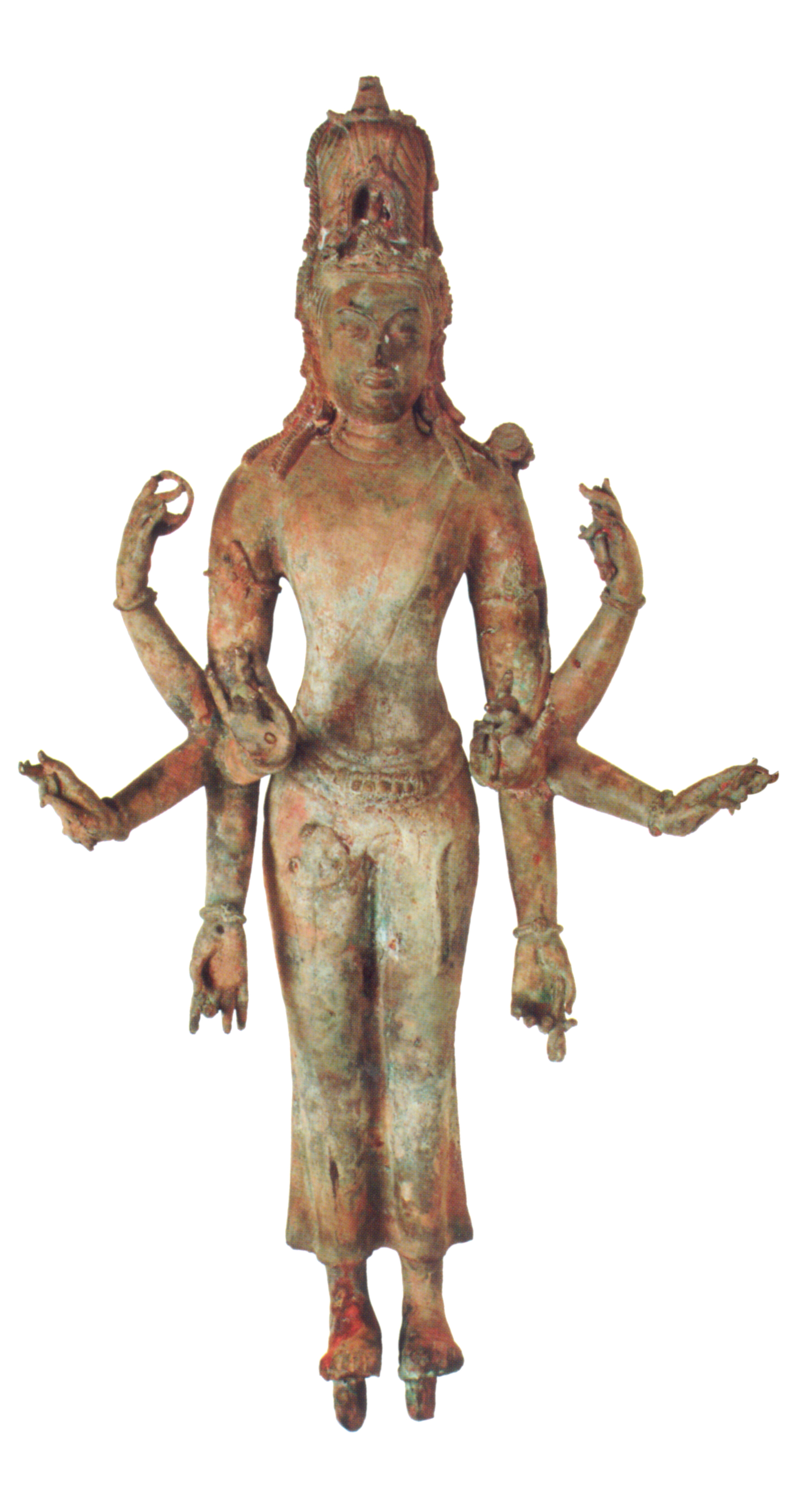
To illustrate the use of the 4Fs the national heritage artefact, Avalokiteswara, located in Gallery B will be used.

12-1 AvalokiteshwaraFACT: It is a Boddhisatva which is a Buddha-to-be.  Ava means down, Lokita means to notice/observe and Isvara means lord/master.  Avalokitesvara means the lord that looks down to observe in compassion those who are suffering. Avalokitesvara first appeared in Indian Buddhism as one of a number of Bodhisattvas who are personifications of various attributes of the Buddha relating to compassion. It was found in a tin mine belonging to Anglo Oriental at Bidor, Perak in 1936 and dated to being between the  7 – 12th centuries when the culture of the region was Hindu-Buddhist.

FORM:  The statue is made of bronze and has 8 arms, each arm representing a different aspect of his compassionate nature. One of its arms has broken off.

FEELINGS:  Avalokiteswara is shown as a female Boddhisatva, seen as a light for the blind, shade for those hot and weary, a stream for the thirsty, a remedy for the ill, father and mother to those who suffer and a guide for the beings in Hell. It has a mantra Om mani padme hum which translated means jewel (compassion) in the lotus (wisdom). This mantra is widely chanted in Tibet and carved onto stones, printed on flags and embossed onto prayer wheels.

FUTURE:  If you go to Ayer Itam in Penang there is a big statue of the Goddess of Mercy or Kuan Yin – an important deity to Buddhists on the island.  This deity is also found in the homes of Malaysian Chinese of Buddhist faith. Kuan Yin is a manifestation of Avalokiteswara.

So, the next time when you have to take visitors through the galleries in Muzium Negara, try using the 4Fs to remember your historical facts and information and to make your one hour guiding an easy task.  Good luck!

Hubback Walk

by Rose Chin with photos by Eunice Moss

The National Textile Museum

Last Saturday (14 June 2014), we participated in a walk that was organised as part of the ongoing Hubback Exhibition. The walk was led by Ar. Ahmad Najib Ariffin and Ar. Rosli Mohd. Ali and covered three heritage buildings designed by A. B. Hubback who was then an assistant architect at the Public Works Department. We started at the National Textile Museum (1905), then went on to the Sultan Abdul Samad building (1896) and ended at the Jamek Mosque (1907).

The purpose of the walk was to sensitise the lay-person to the unique architectural styles and construction techniques employed by Hubback and the state engineer he worked with, C. E. Spooner.

The highlights of the walk were:

1. Past Lives

The Sultan Abdul Samad building

The National Textile Museum (2007) started life as the Headquarters of the Federated Malay States Railways Service, then housed the FMS Public Works Department. From 1959-1971 it served as the Headquarters of Bank Negara Malaysia.

The Sultan Abdul Samad building was built as a Government building to house the FMS. Administrative Office. From 1957 it housed the High Court and the Supreme Court and today, since 2007, it houses the Ministry of Information, Communication and Culture.

2. Mughal Architectural Style

This is a north Indian Islamic style characterised by onion-shaped domes and chatris (spires). The domes of the Sultan Abdul Samad building are unique in that they are made of copper, the original ones having been donated by the Australian government.

3. ‘Blood and Bandages’

This is a term used to refer to the red and white banding pattern of the exterior walls, the result of alternating fair-faced bricks with plastered ones, so typical of Hubback.

IMG_4080 - Copy

4. Thick ‘load-bearing’ brick walls and columns

A good example are the ones used to support the 40 metre tall clock tower of the Sultan Abdul Samad building.

5. Cast iron columns

These are filled with concrete for added weight bearing strength.

6. Arches

Inside the Sultan Abdul Samad building

Pointed arches and horseshoe arches are predominant features.

7. Towers

All three buildings are characterized by their onion domed towers with their functionary purposes, one as a clock tower, four as watch towers and the two at the Jamek Mosque for the muadhins to call the people to prayer.

From halfway up one of the towers in the Jamek Mosque-note the many little chatris and the tower to the right

We came away from the walk a little wiser and very much more appreciative of the architectural legacy left by the British and, in particular, Arthur Benison Hubback.


Hubback Exhibition

Brig. Gen. Arthur Benison Hubback came to Malaya as the chief draughtsman with the Selangor Public Works department. He eventually became the chief architect and during his stay in Malaya, he designed 25 buildings; with Bangunan Sultan Abdul Samad being the first. An exhibition showcasing these 25 buildings is on-going at The Textile Museum and the exhibition will last till 30 June 2014.

The design concept for Malayan buildings of that time was laid down by the state engineer, C.E Spooner who shied away from classical European architecture for Malaya. Instead, Spooner introduced an eclectic style that had originated in British India; a style which combined various architectural traditions including Gothic, Hindu as well as Indian Muslim. Buildings in Malaysia incorporate more of the Mughal elements.

ipoh railway station
Ipoh Railway Station (image taken from: http://www.photomalaysia.com)

This eclectic style can also be described as neo-saracenic and the display boards at the exhibition describe the Ipoh Railway station as such. The style has the classical European design which includes domes, arches and gable designs. In addition, it also has non-European features such as Mughal chatri spires.

The Textile Museum was previously the FMS Railways Central Offices and this red-brick building with white plaster bands was built to include both cupolas and chatris. The chatri towers on the old KL Railway Station (previously FMS Survey Office) are said to resemble the chatris on the roof of the Taj Mahal. The Malay College in Kuala Kangsar is a little different as it is more of a Greco-Roman design.

The only thing common between the 25 Hubback buildings is that the buildings include elements from different architectural styles. Other buildings that A.B. Hubback designed include Carcosa Seri Negara, Masjid Jamek, Royal Selangor Club, Hospital Bahagia Ulu Kinta and the Ubudiah Mosque.

Below is the logo for the Hubback exhibition. The organisers have cleverly shaped the alphabets in his name using the structure of the buildings he designed. Try to figure out which alphabet comes from which building.

Hubback