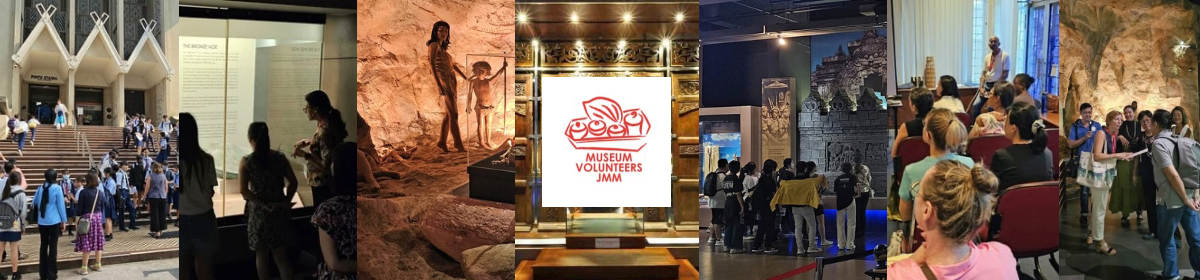
The Museum Volunteer Training Programmes for 2010 are all now underway. We have 50 volunteers training at the Muzium Negara (National Museum) and the Muzium Tekstil (Textile Museum). If you are interested in joining this programme for next year, September 2011, please click on the tag above labelled “MV Training”
Author: Museum Volunteers, JMM
Malacca and Penang history…
Saturday July 24, 2010
Malacca and Penang: History in abundance
THE REAL ESTATE WITH ANGIE NG
angie@thestar.com.my
Among the things that appreciate over time are family relationships, friendships and the value of some tangible things like real estate.
Many so-called “city folks” in Kuala Lumpur and Petaling Jaya actually do not hail from the city; their hometowns are in other parts of the country.
Home is where the heart is and many of us have set up homes in places where we work, after settling down with our own family, and have children attending schools or colleges in the city.
The Malacca government has turned the once old and quiet Jonker Street into the now vibrant and ‘happening’ Jonker Walk.With passing time and wisdom, we learn to appreciate our loved ones better.
And despite the “rat race” of city life, it is important to stay connected with our loved ones and old friends back in the kampung or in other places.
Likewise in the built environment, we can find many undiscovered gems around, which, in spite of their old physical exterior, are actually hidden treasures with strong history and many untold stories within their walls.
The first thing that comes to mind is the many pre-war houses and buildings that can be found in large numbers in the inner cities of Penang and Malacca.
Despite being old and dilapidated, many have the potential to be restored and given a new lease of life.
Some of the ways to reuse these buildings and “monetise” them include turning them into museums, heritage hotels, alfresco dining and restaurants specialising in local fares.
It is interesting to compare Penang and Malacca as they share many similar traits and history.
Both will benefit by learning from each other new ways to improve and manage their built and unbuilt environment.
Since my other half is a Malaccan, I must admit that I tend to compare my hometown, Penang’s George Town, with Malacca whenever I’m back for holidays or family events.
After all, both have been declared Unesco World Heritage Sites and have many interesting buildings and structures that are reminiscent of their rich history and heritage.
Penang and Malacca are both former Straits Settlement states with a long history of early settlers from various parts of the world converging there for trade.
And both are renowned for their Baba/Nyonya culture and heritage.
Being port states, both also have strong foreign connection and influence.
Penang was a bastion of trade for the English and the East India Company after it was founded by Captain Francis Light in 1786, while Malacca was a confluence of Portuguese, Dutch and English influence.
Those influences can still be clearly seen in the architecture of the buildings today.
It is evident that both Penang and Malacca have their own distinctive assets and attractions that have endeared them to many loyal visitors who throng the cities in droves whenever there is a long stretch of holidays.
This could be one of the reasons for the traffic-choked roads during the holiday season and major festivities.
It is common to find many outstation cars among the long lines of cars on the roads during such times.
To give a boost to their intrinsic value as natural tourist attractions, there is a need to improve the public transport system in the two heritage cities to ensure that the different modes of transport are well integrated and connected to each other.
Being on the radar screen of tourists is one thing, but it is equally important to ensure that visitors have convenient access to a good public transport network.
More should also be done to further boost the alluring old world charms of these cities while at the same time, revitalise the inner cities and keep them alive as living heritage.
To achieve this, the old and new attractions and facilities should co-exist and blend seamlessly with one another to make them relevant and refreshing to the people.
Malacca has made some interesting headway in this regard with many old buildings and “once quiet” historical enclaves being given a new lease of life.
One just needs to hop over to the happening and vibrant Jonker Walk, which comes alive every evening, teeming with traders and visitors.
Penangites can certainly take a leaf from their Malaccan counterparts to liven up George Town’s dilapidated inner city.
■ Deputy news editor Angie Ng is keeping her fingers crossed that the old and new charms of our cities will be the pride of our present and future generations.
New Museum in Kelantan
Kelantan to build wau museum in Bachok
2010/07/20
// BACHOK: Kelantan, home of the country’s traditional kites or wau, will finally get its own kite museum next year.State Local Government, Tourism and Culture Committee chairman Datuk Takiyuddin Hassan said it would be housed temporarily in a government quarters until a permanent building was constructed.
“We felt is appropriate that a kite museum be built in the state as the wau is well known locally and internationally. It will be able to attract visitors as there are many kite fans around the world.
“Bachok has been chosen to house the museum as it will be the new permanent site for the annual Kelantan International Kite Festival.
“The wau will also become the district’s icon and used widely to promote Bachok,” he said after the closing of the Kelantan Invitational Kite Festival at Pantai Irama here on Sunday. Deputy Menteri Besar Datuk Ahmad Yaakob represented Menteri Besar Datuk Nik Aziz Nik Mat at the ceremony.
Takiyuddin said the museum would showcase the many types of wau from the state, besides kites and accessories from all over the world.
“We have many wau enthusiasts who are keen to hand their collections to the museum.”
On the kite festival at Pantai Irama, Takiyuddin said it was not opened to participants from other countries this year as it was held for the first time there and the organisers were uncertain of the infrastructure and other facilities.
“Even though it was not opened to international participants, we managed to attract nearly 300 people from all over the country.
“However, we hope to organise it on a grander scale next and extend our invitation overseas. Last year, we managed to attract participants from 20 countries,” he said.
Kelantan emerged overall champion in the four day competition which started on July 15.
TRADITIONAL MALAY COSTUME
THE BAJU KURUNG
The Baju Kurung, or more specifically, the Baju Kurung Teluk Belanga, is the Pahang traditional Malay costume for women.
And in more “modern” times, we have the Baju Kebaya, more specifically the Baju Kebaya Turki (also known as Baju Riau-Pahang or Baju Belah), become another popular and favorite attire for ladies in Pahang.
Well, just go to any Malay house, open the cupboard of the lady in the house, and you can definitely find at least one Baju Kurung dress in the wardrobe, if not a full line of the traditional Malay women costume.
This is because even though some women prefer modern western attires, the Baju Kurung is still an elegant and sweet dress for women in Pahang and Malaysia.
And worn with matching shoes and handbag, well the lady will look… should I say… demure… charming and… with a well mannered poise — ahh, a real lady.
POPULAR ATTIRE FOR ALL
That is why in Pahang and in fact in Malaysia, we will find not only the Malay women dorning the Baju Kurung, but other Malaysian races too, like the Chinese, Eurasians, Indians, Ibans and Kadazans.
They put on the Baju Kurung not only when attending formal and ceremonial occasions, but also for the office.
Besides adding extra elegance, simple beauty and style to the wearer, the Baju Kurung, since it is loose fitting, is very comfortable to wear in the hot and humid weather of the equatorial climate.
Being a very loose fitting attire, even fat or pregnant ladies will look smart and elegant in the Baju Kurung.
So although it is the traditional Malay costume and appropriate wear and attire for traditional occasions like weddings, engagements and public functions, the Baju Kurung is also popular and worn daily by the masses for comfort.
More so to the Muslim women, the Baju Kurung also fits and conforms with the Islamic requirement to enclose the body (except the face and hands) and that clothes should not be tight and body hugging as to show the outlines of the wearer’s body.
BRIEF HISTORY OF BAJU KURUNG
The Baju Kurung for women, like the Baju Melayu for the men, is said to originate from the Malaysian state of Johore about 200 years ago and is said to be styled and fashioned by the late HRH Sultan Abu Bakar of Johore in 1866.
It was said that HRH fashioned and popularized the attire to reminisce and leave a legacy following the change of the Johore state capital from Teluk Belanga to Johor Bahru (new name for Bandar Tanjung Puteri).
This Baju Kurung Teluk Belanga for both men and women was popular during the Sultan’s reign as he regularly wore this style, and made it the official attire of the Johore Malays.
SIDE-NOTE
Teluk Belanga is located on the island of Singapore and was the administrative center of the Johore Sultanate before it moved to Johor Bahru.
Singapore was made a crown colony of Britain in 1867 and became part of Malaysia in 1963 until it left to be on its own in 1965.
END OF SIDE-NOTE
Although HRH Sultan Abu Bakar was credited as the designer of the Teluk Belanga style, there are also views that the loosely fitting Baju Kurung had been in existence and had been worn by Malay ladies since the times of the Malacca Empire in the 15th Century.
Perhaps it may be noted that in the old days, for protocol reasons, the wearing of attire during official ceremonies involving the Sultan and palace officials are guided by a dress code.
For instance, Malay women are prohibited from wearing the “takwa” dress. This is a long dress like the modern Baju Kebaya, and it has a row of loops for buttons at the front and also at the end of the long sleeves.
Jewel Muscat in Port Klang
Wednesday June 30, 2010
Traditionally-built ship pays a call on Port Klang
By EDWARD R. HENRY
edward@thestar.com.my
“Our crew of 17 men were courageous and we all pulled together to brave the treacherous waters, torrential rain and blistering heat.
“Our biggest test was when we crossed the Bay of Bengal on the way to Penang,” said the skipper who has 25-years of experience with the Omani navy.
Long journey: Saleh takes a break with the Jewel of Muscat in the background.The Jewel of Muscat is an exact replica of the a 9th century Arab ship found shipwrecked off the coast of Indonesia in 1998 and it was hand-built with timber-and-coconut rope with not a single nail used.
Saleh, 41, said the wind was the main cause for concern throughout the journey but his 17-member crew steered the boat in a careful, calculated manner.
The ship is a joint project between the Omani and Singaporean governments and set sail from Oman on Feb 16.
It was conceived as a historical and cultural exchange after Singapore bought over 60,000 pieces of Chinese pottery that were found on the shipwrecked Arab boat off Belitung, Indonesia, over a decade ago.
Saleh said the aim of the journey was to replicate the ancient traders as closely as possible and it meant not using any modern navigational, cooking or household appliances and devices.
For the father of four, the most difficult task was keeping a look out for cargo ships and the thousands of small fishing boats they encountered on the way.
The Jewel of Muscat wiil be docked at Port Klang until June 27 before sailing off to its final destination in Singapore.
Upon arrival in the Lion City, the ship will be presented to the Singaporean people as a gift from the Sultanate of Oman.
UNESCO status for Kuching, Miri?
Seeking Unesco heritage city status for Kuching, Miri
// // SARAWAK wants to seek Unesco heritage city status for Kuching and Miri.Assistant Tourism Minister Mong Dagang told the house yesterday that a team would be sent to Malacca and Penang soon.
This was in order to meet the relevant authorities for a better understanding of the criteria for the final assessment as required under the Unesco Heritage Convention, he added.
“The ministry has also met and discussed with the National Heritage Commission early this year to assist in the technicalities,” he said in reply to a question from Aidan Wing (BN-Lambir).
Mong said that Kuching and Miri had the criteria to be listed as heritage cities but the process was very tedious and lengthy.
The ministry had taken numerous initiatives especially for the old Kuching area to be kept as a Heritage City for Sarawak
He said among the initiatives taken since last year, included a public forum jointly organised by the Sarawak Tourism Federation and Sarawak Heritage Society, to raise public awareness on heritage matters.
Meanwhile, the house was told that public transportation would soon be seen as a prominent mode of transportation in urban areas.
Under the 10th Malaysia Plan, the Ministry of Housing and Urban Development has submitted a request to the Federal Government for funds to improve and revamp public transportation starting with Kuching City.
Replying to a question by Abdul Rahman Junaidi (BN-Pantai Damai), the minister Datuk Amar Abang Johari Tun Openg said the government had already commissioned consultants to undertake a study.
He said the Kuching public transportation study, which was completed in 2005, recommended that buses remain as the backbone of the public transport system in Kuching.
Rattan mats in danger
Getting to know your kasah
Story and photos by KERNI PUAH
sarawakstar@thestar.com.my
However, this Bidayuh mat-making heritage is dying slowly as the new generation has no interest in learning the art.
Because of this, the kasah is being overtaken by mats from Kalimantan.
New design: Hadran showing the kasah sagah emas.It is the most-sought-after item at the Serikin weekend market near Serian, especially among visitors from Peninsular Malaysia.
But as the mats become part of a lucrative business, their quality has declined noticeably.
The Indonesian traders seem to be out to make a fast buck due to the demand.
In the old days, when the mats were not highly valued or sought after, the craftsmanship was superior. The Bidayuhs used the mats to dry harvested padi in the sun.
The mats sold at the Serikin market is not as durable to the real kasah and should rightly be called tikar Kalimantan.
Hadran: He sells the rattan mats at the Serikin weekend market.Buyers should learn how to tell between a good and poor-quality rattan mat.
The highest-quality mat is the sagah emas which can last between 20 to 30 years, depending on how it is used. Another type of mat is made from a low-quality rattan called kelasah, which can break easily and is not durable.
Buyers should also know of the reasonable prices for the mat, so that they don’t get ripped off.
Usually, a 10 x 12 feet mat made from sagah rattan is sold for between RM180 and RM250 a piece.
A rattan mat trader at the Serikin market said recently the mat producers had come op with a new design which could fetch up to RM250 a piece.
Trader Hadran Effendi from Seluas in West Kalimantan said the lowest price for a sagah emas mat measuring 7 x 10 feet was RM200.
Mats made of kelasah measuring 7 x 10 feet would cost about RM120 each.
On a normal weekend, there are about 12 rattan mat traders in Serikin.
Due to the brisk business, each trader rakes in thousands of ringgit in sales every weekend.
Some of them are specially weaved with black-dyed rattan.
Hadran said the colour was extracted from a wild plant called daun anyam.
He said the rattan was boiled with the daun anyam and the sap from the plant turned the rattan black.
The black rattan is used to produce designs on the kasah mats.
Home decorations: A shop in Serikin selling various rattan products including baskets.On how to take care of a mat, Hadran said that varnish should not be applied and it should not be washed with water and detergents.
“The finished product belies the challenges of gathering the rattan. It can be arduous and dangerous and the processing is hard work,” he added.
In the jungle, the gatherers pull down the rattan in coils and sometimes dislodge wasp and ant nests. They also risk being lacerated by its spines and barbed whips. The leaves and leaf sheaves are removed by pulling them around or over a tree trunk.
While the women split the rattan, the mat weaving is usually done by the men. In the past, it was done between the rice planting seasons.
The unique design is achieved by laying split strips of rattan of about one centimetre wide, side by side. The strips are pierced and bound by braiding them with rattan fibre.
To secure the edge, the ends of the strips are crushed and plaited into a decorative border. The mats can be rolled but never folded.
A creatively woven mat will have designs that are spectacular, although of only two colours — black and beige of the undyed fibre.
Rattan mats have stood the test of time and becoming popular with modern decorators and homemakers seeking unusual, beautiful and long-lasting floor coverings.
Terengganu Stone listed with UNESCO
Our heritage etched in world memory 2010/05/26 New Straits Times
TWO of the country’s historical documents are being evaluated to be included under the United Nations Educational, Scientific and Cultural Organisation’s Memory of the World programme. The programme is aimed at preserving and disseminating valuable archive holdings and library collections worldwide. It facilitates the preservation of the world’s documentary heritage using the latest techniques and assists in universal access to documents. Heritage Commissioner Prof Datuk Dr Zuraina Majid said so far four of the country’s historical documents had been inscribed under the programme. “We have sent in two more documents for consideration this year and will know the result next year as documents are inscribed every two years.” The documents were recommended to Unesco as they were of world interest, she added. Locally, historical documents are preserved by several custodians, including the National Archives, National Library and Dewan Bahasa dan Pustaka. “The most recent document to be inscribed was Batu Bersurat Terengganu (Inscribed Stone of Terengganu) last year, and the custodian is the Terengganu Museum,” Zurina said. She said the department did not collect artefacts or documents as that was the role of the National Archives and Museums Department. “We only protect and preserve tangible, intangible and natural heritage. We also conserve important buildings and sites, create awareness and promote our heritage and nominate our heritage for world heritage inscriptions.” Museums Department director-general Datuk Ibrahim Ismail said historical artefacts were well-preserved at museums nationwide, including souvenirs given to former prime minister Tun Dr Mahathir Mohamad. “The Galeria Perdana in Langkawi houses the souvenirs and they are under conservation. Of course, the department has never sold off or given away its artefacts as they are valuable to the country.” He said besides the souvenir items, other artefacts related to Dr Mahathir’s life and his family were conserved at the Galeria Sri Perdana, run by the National Archives. Documents and artefacts belonging to other former prime ministers, such as Tunku Abdul Rahman and Tun Abdul Razak Hussein, are kept in their memorials under the supervision of the National Archives. Ibrahim said the National Museum sometimes exhibited the artefacts abroad but ensured that all items were brought back home safely after the exhibitions. Read more: Our heritage etched in world memory http://www.nst.com.my/nst/articles/20sehva/Article/#ixzz0srx5GhaB
UNESCO Status for Kuching and Miri?
Wednesday May 19, 2010
In search of heritage Sarawak seeks Unesco status for Kuching, Sibu
SARAWAK is planning to seek Unesco heritage status for Kuching and Miri.
Assistant Tourism Minister Mong Dagang told the State Legislative Assembly that a team would be sent to Malacca and Penang soon to meet the relevant authorities to get a better understanding of the criteria for the final assessment as required under the Unesco Heritage Convention.
“The ministry has also met and discussed with the National Heritage Commission early this year to assist in the technicalities,” he said in Kuching yesterday in reply to Aidan Wing (BN-Lambir) during question time.
Mong said that in general, Kuching and Miri had the ingredients to be listed as heritage cities but the process was very tedious and lengthy.
He said several initiatives had been held since last year, including a public forum jointly organised by the Sarawak Tourism Federation and Sarawak Heritage Society, to raise public awareness on heritage matters. – Bernama